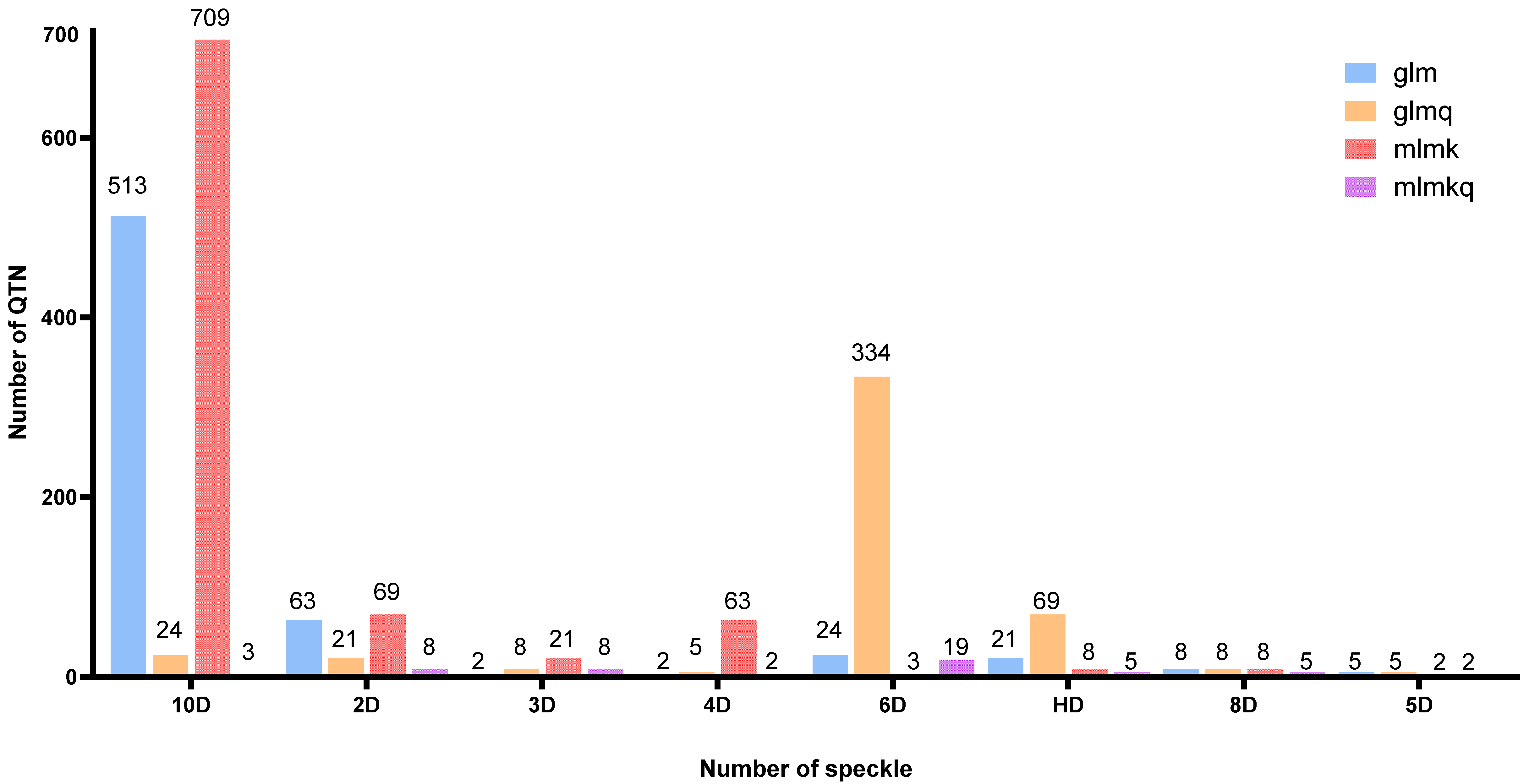
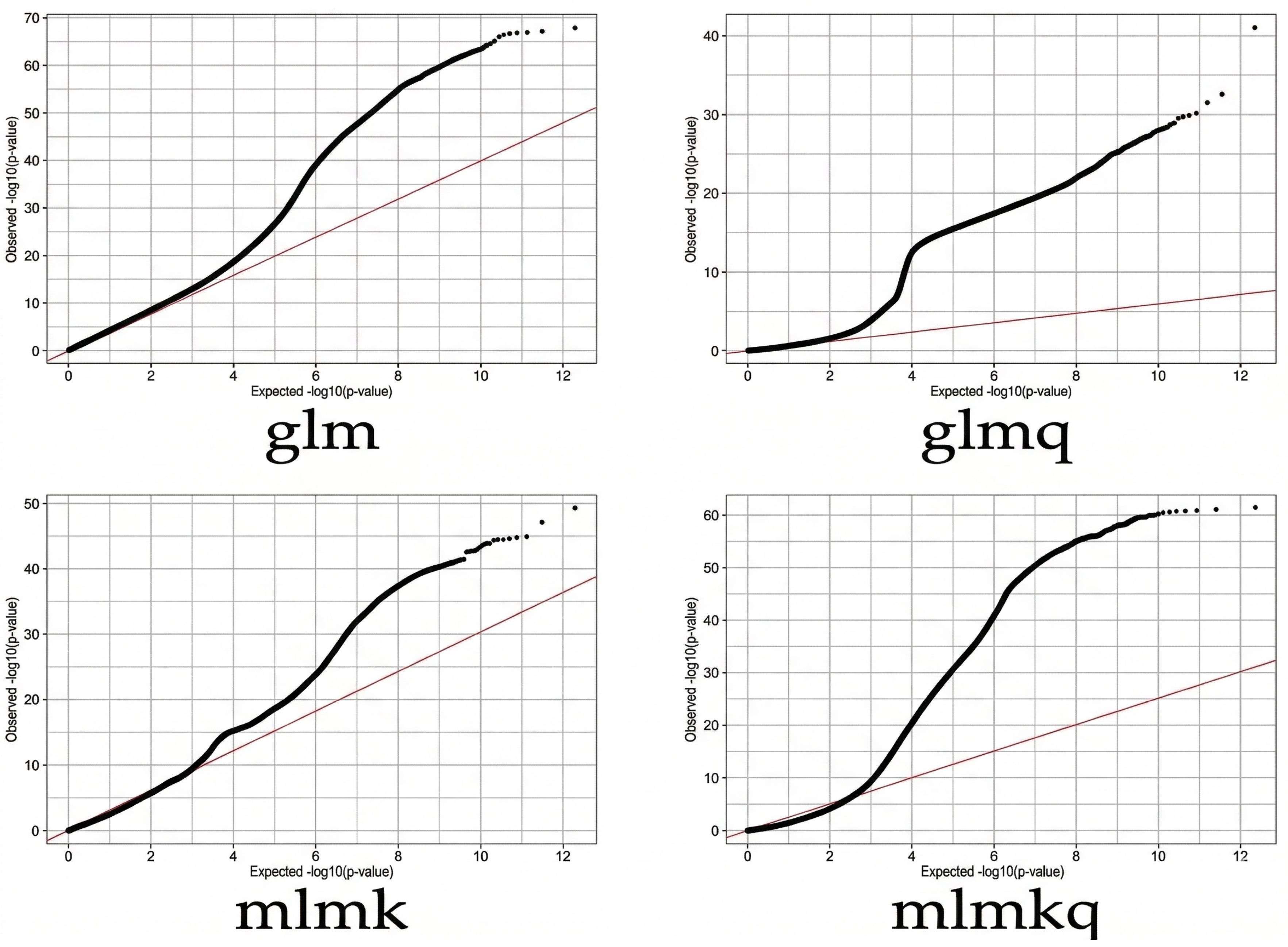
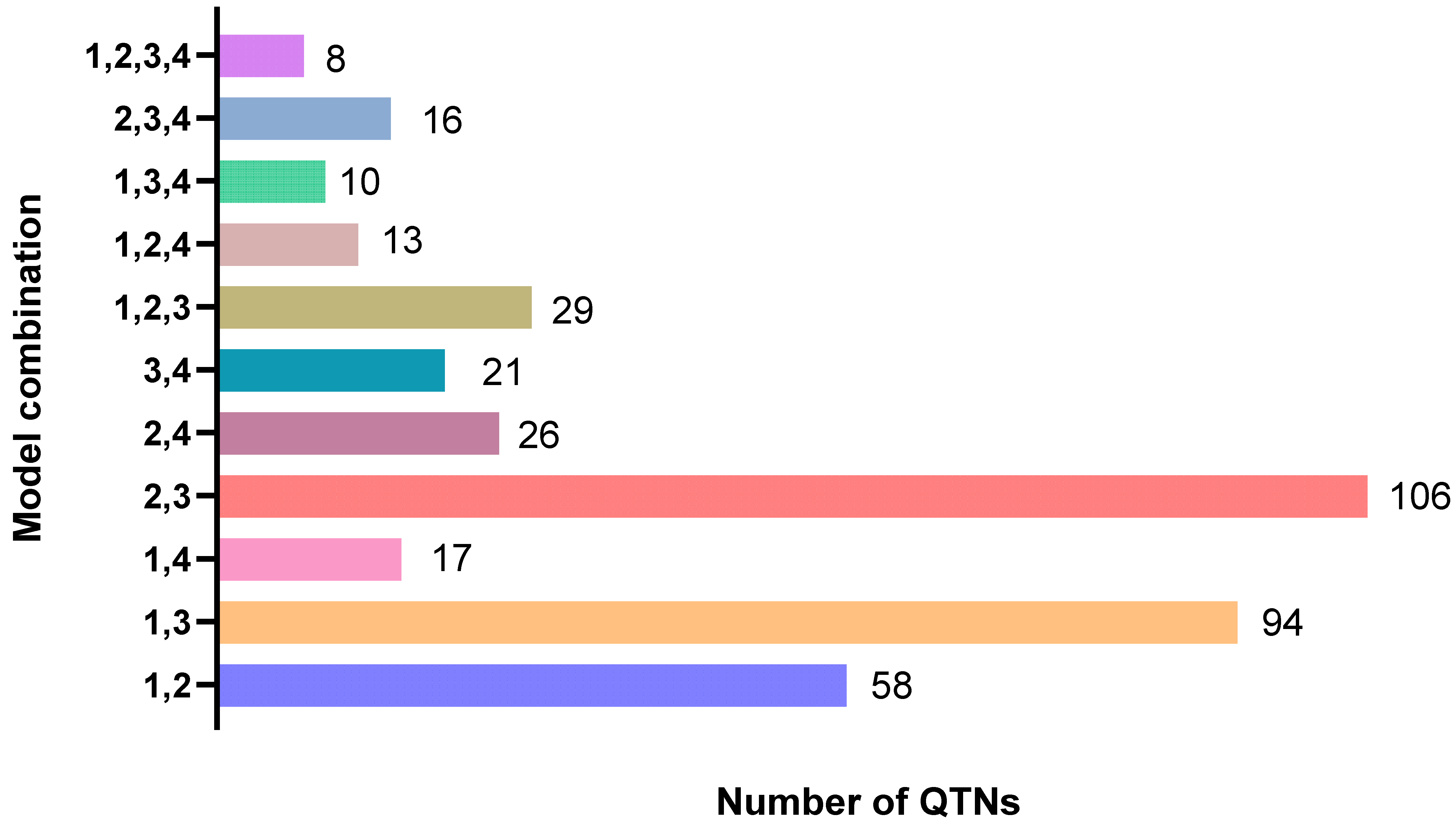
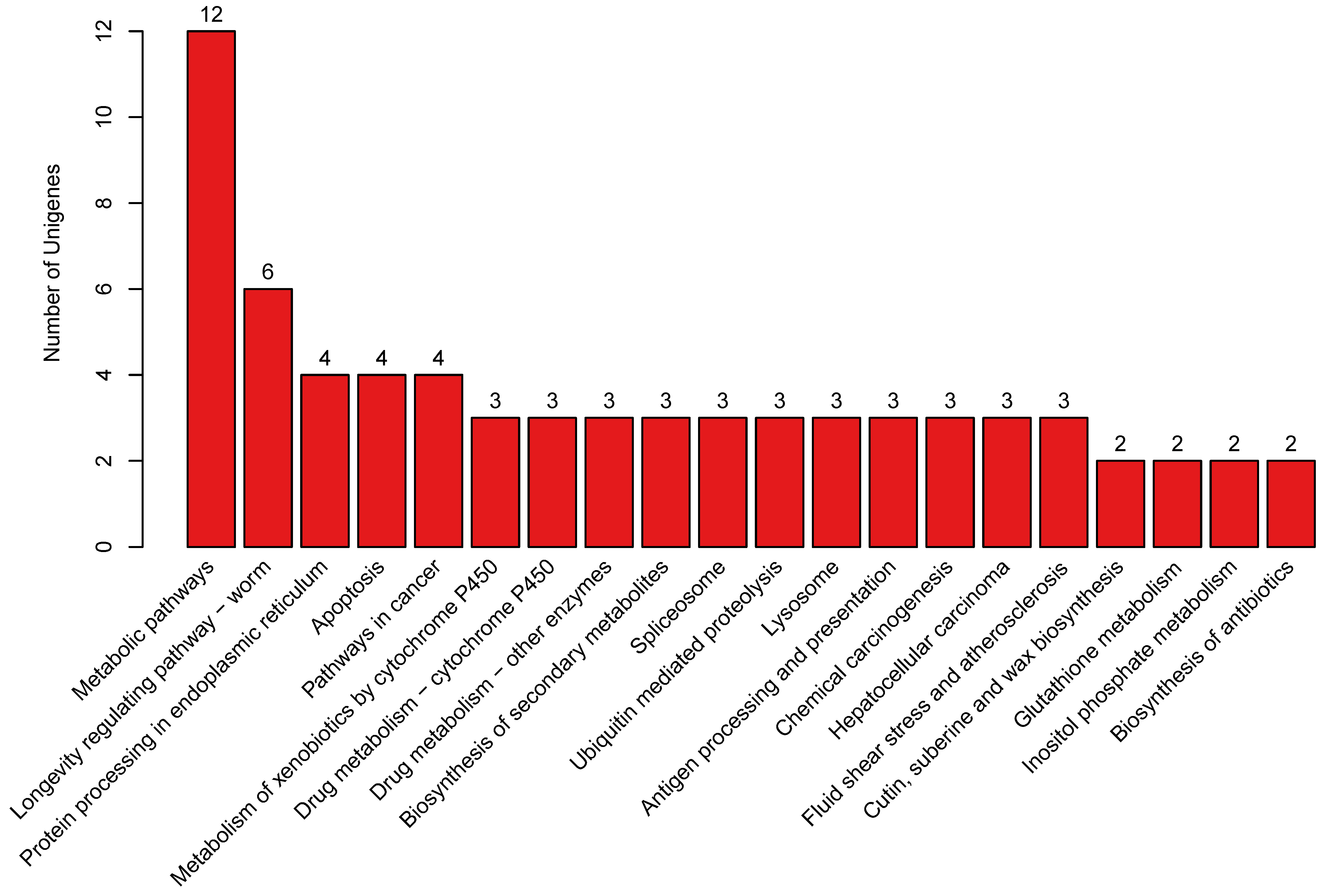
Exploring Speckle Change Genes of Rhynchophorus ferrugineus (Coleoptera: Curculionidae) Based on Genome-Wide Association Studies (GWASs)

 , , and
Simple Summary
Abstract
1. Introduction
2. Materials and Methods
2.1. Insect
2.2. Genetic Population Design
2.3. Phenotype Data Collection and Processing
2.4. Population Genetic Structure Analysis and Phylogenetic Tree Building Among Individuals
2.5. Linkage Disequilibrium Analysis
2.6. Genome-Wide Association Study
2.7. Candidate Gene Prediction
2.8. Candidate Gene Expression Level Analysis
3. Result and Analysis
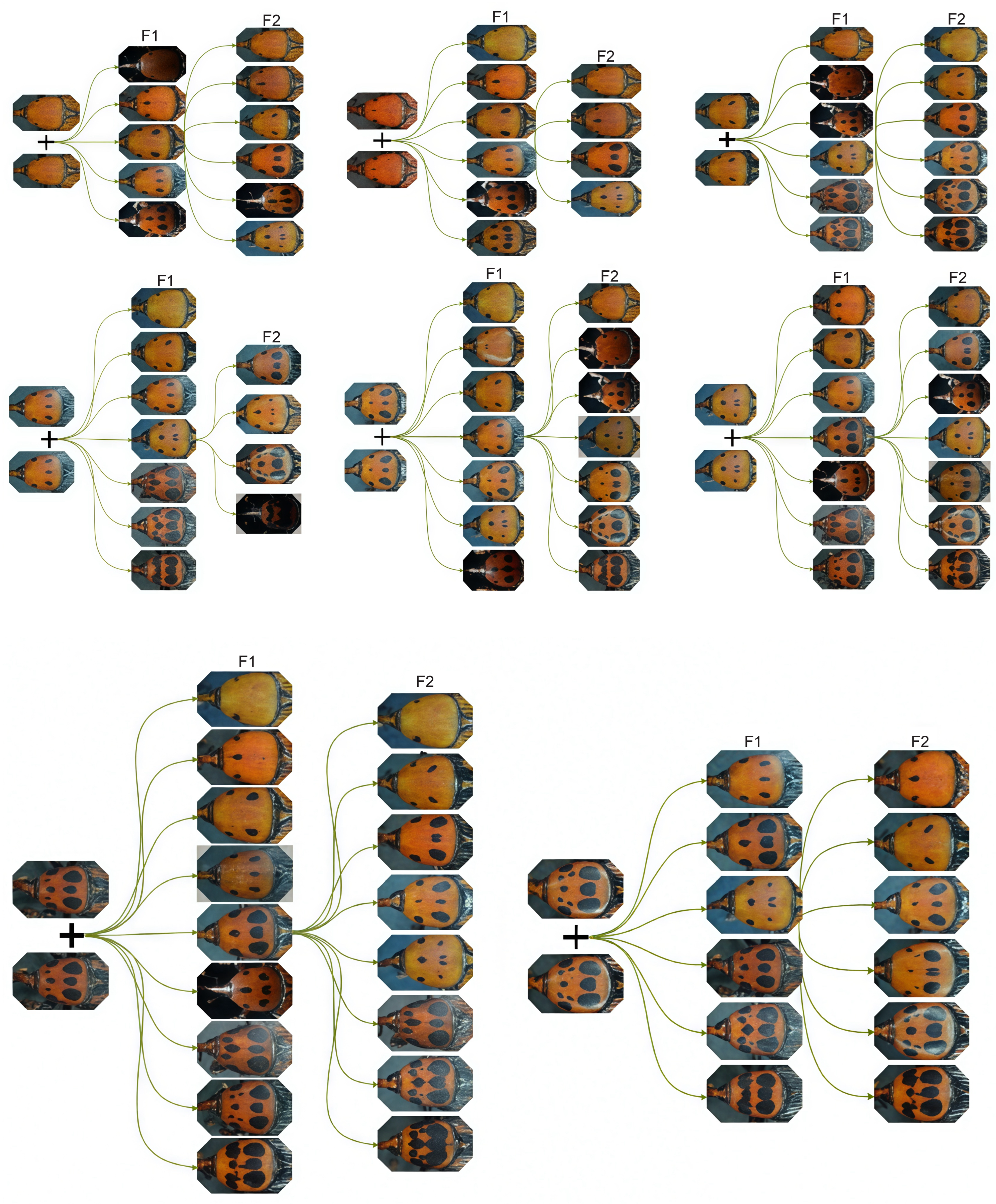
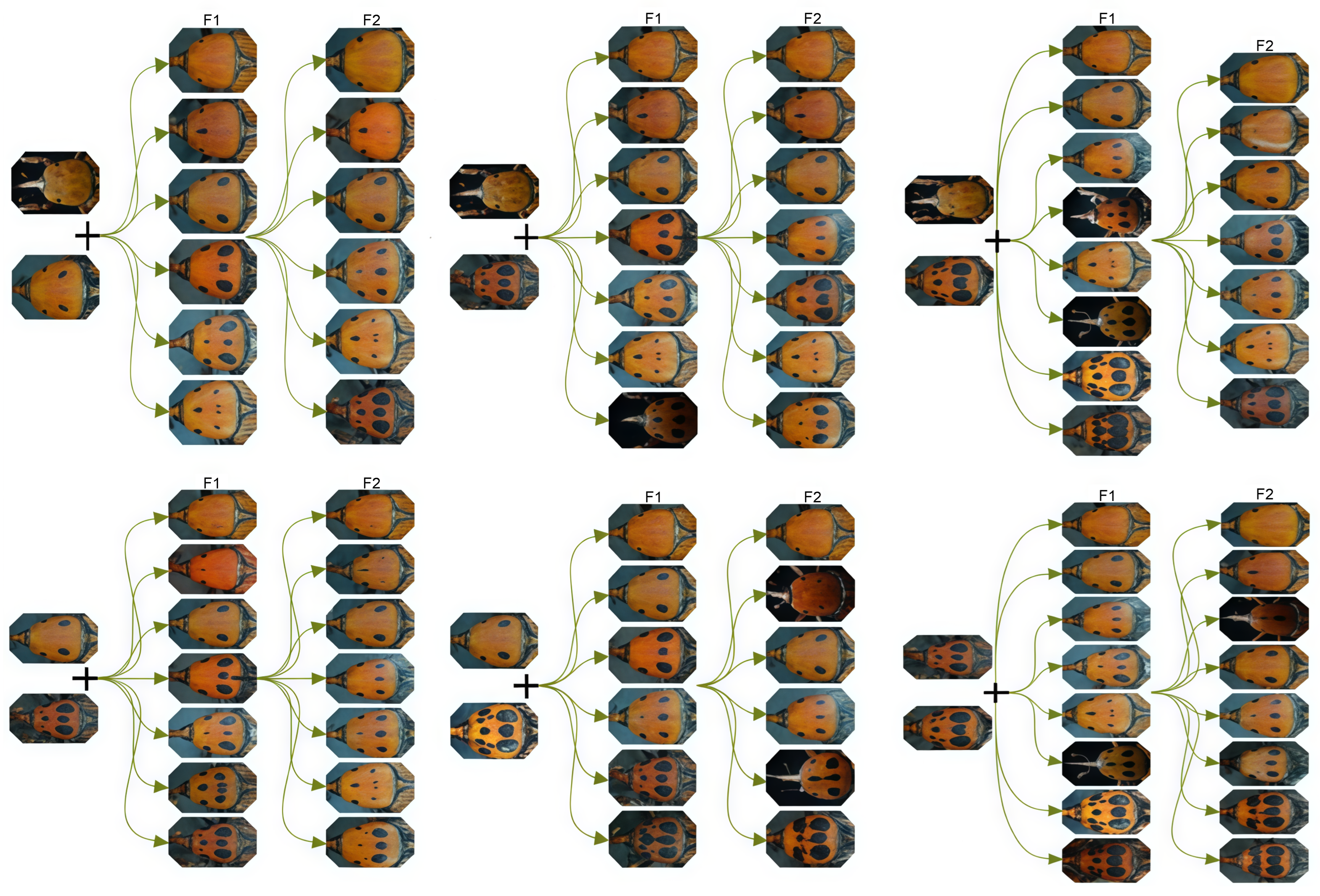
3.1. Analysis of Speckle Genetic Test Results
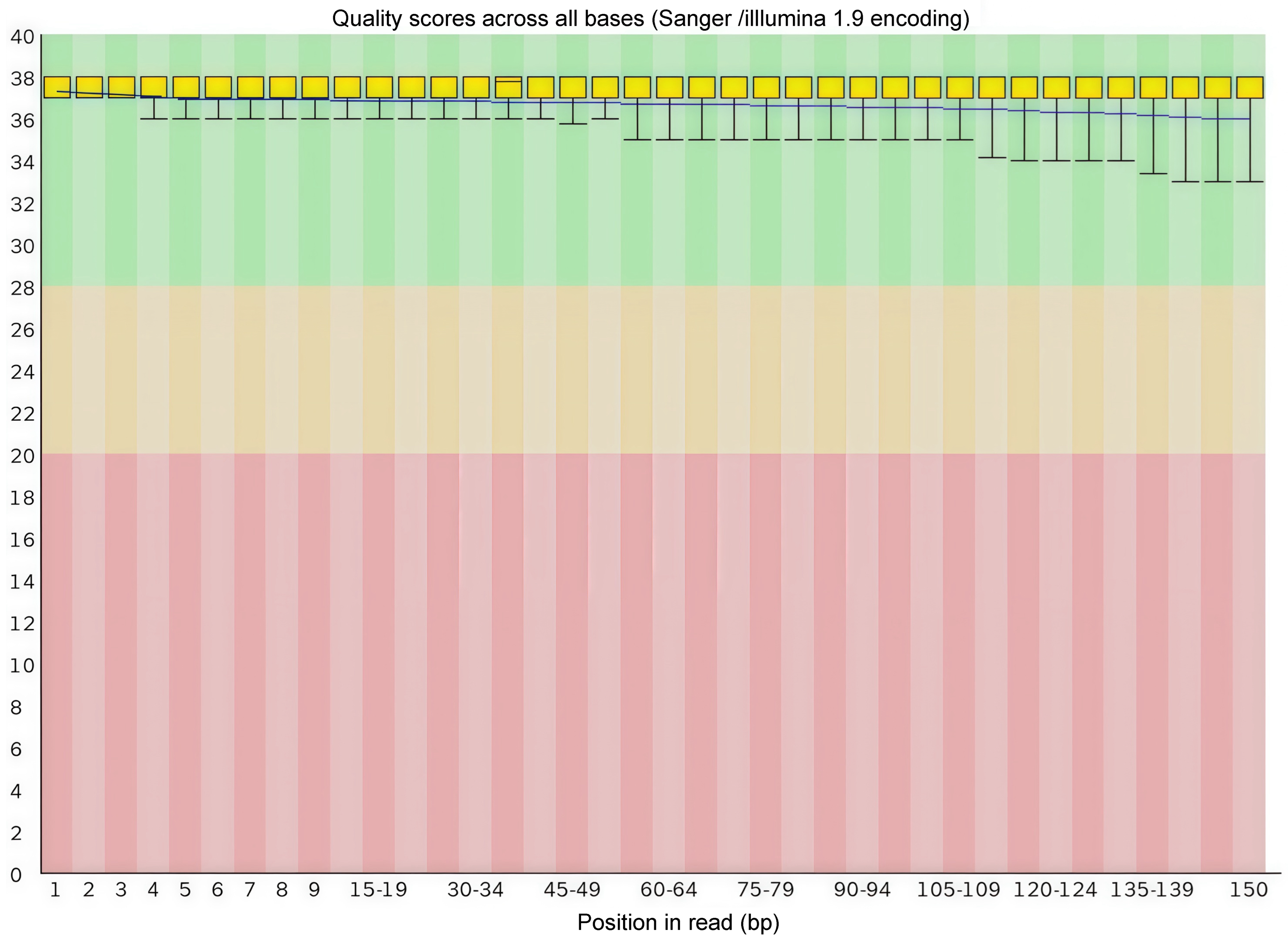
3.2. Quality Control Result and Individual Phylogenetic Tree Building
3.3. Population Structure Analysis and Linkage Disequilibrium Analysis
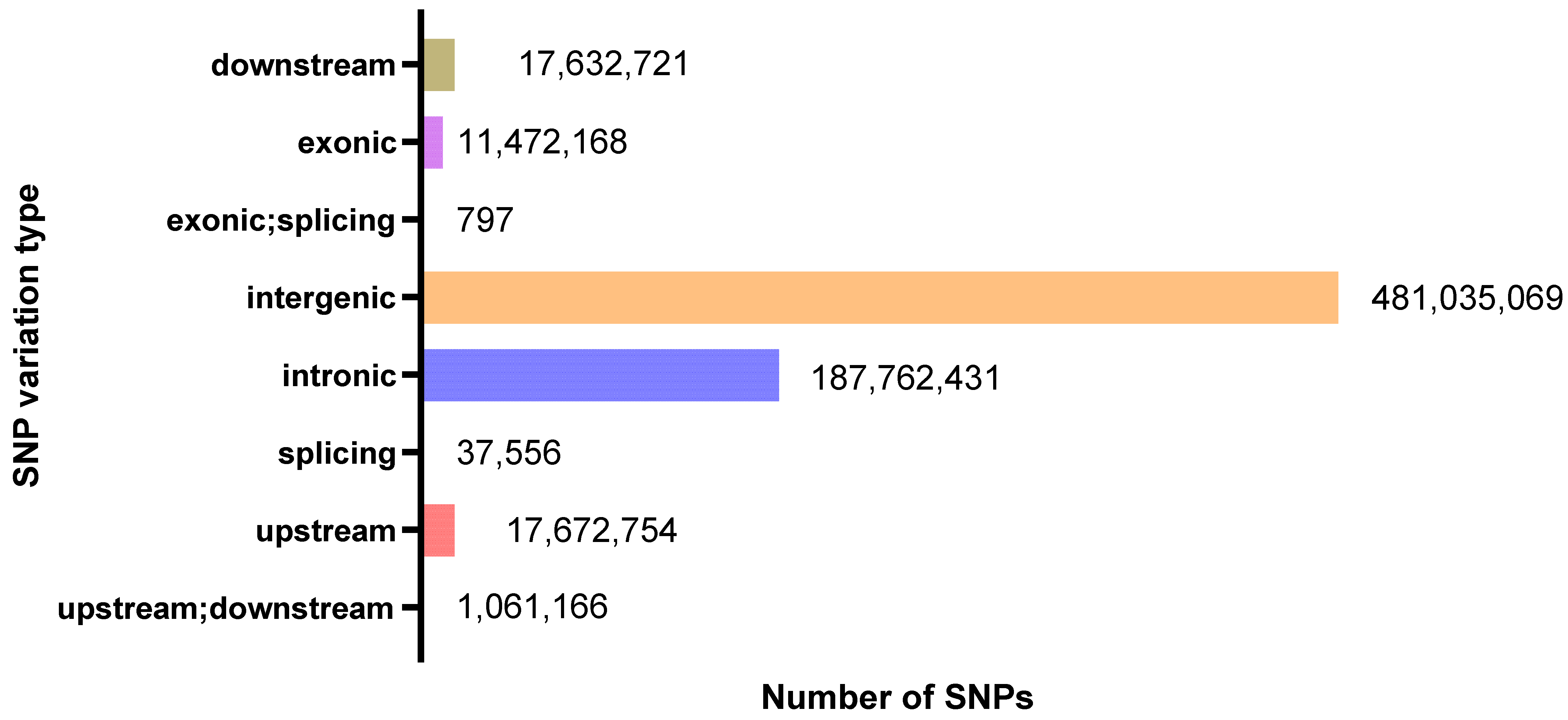
3.4. Genome-Wide Association Studies Result
3.5. Result from Combining Linkage Analysis with Association Analysis
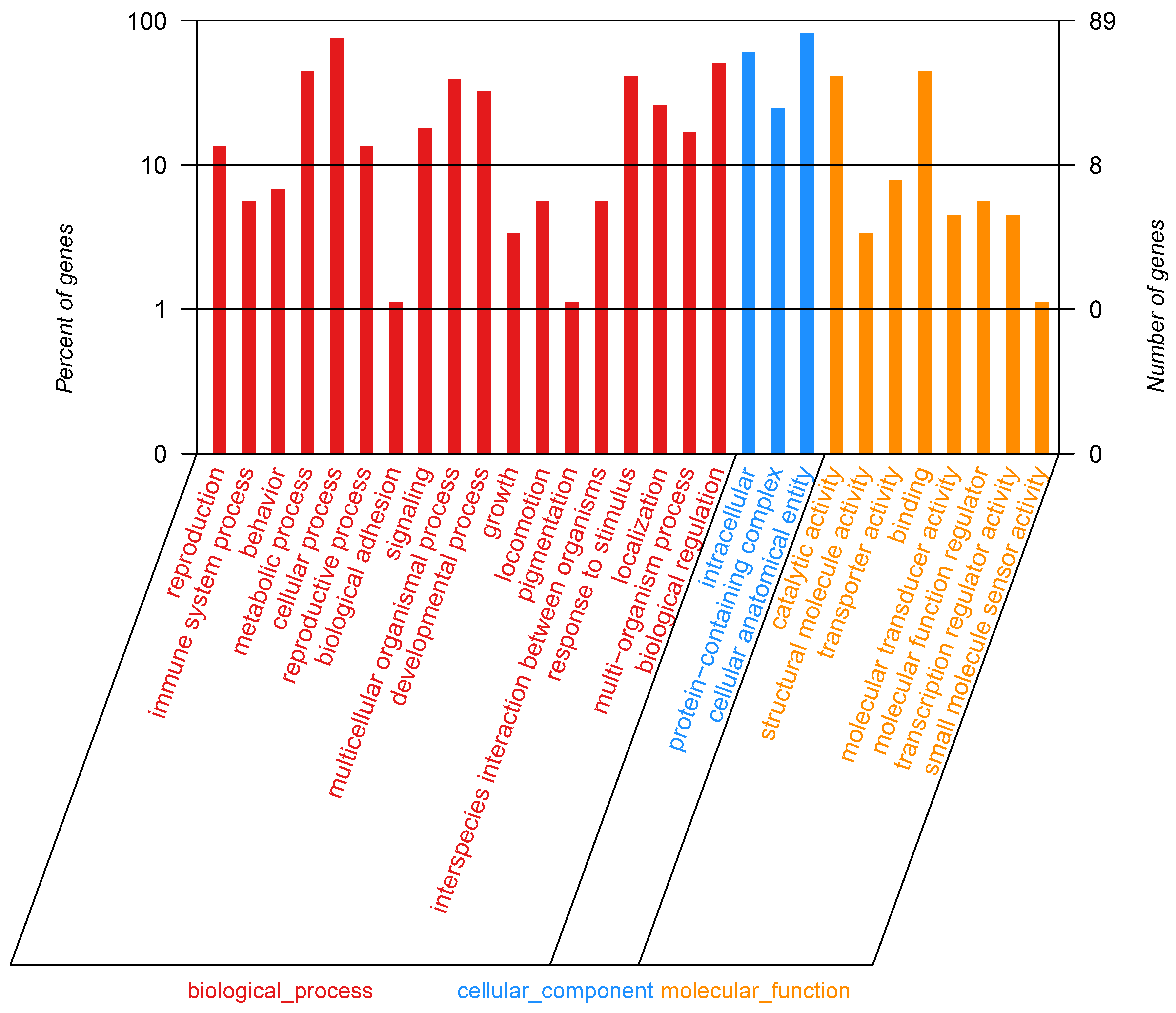
3.6. Determining Potential Candidate Genes Combining Linkage Analysis with GWAS
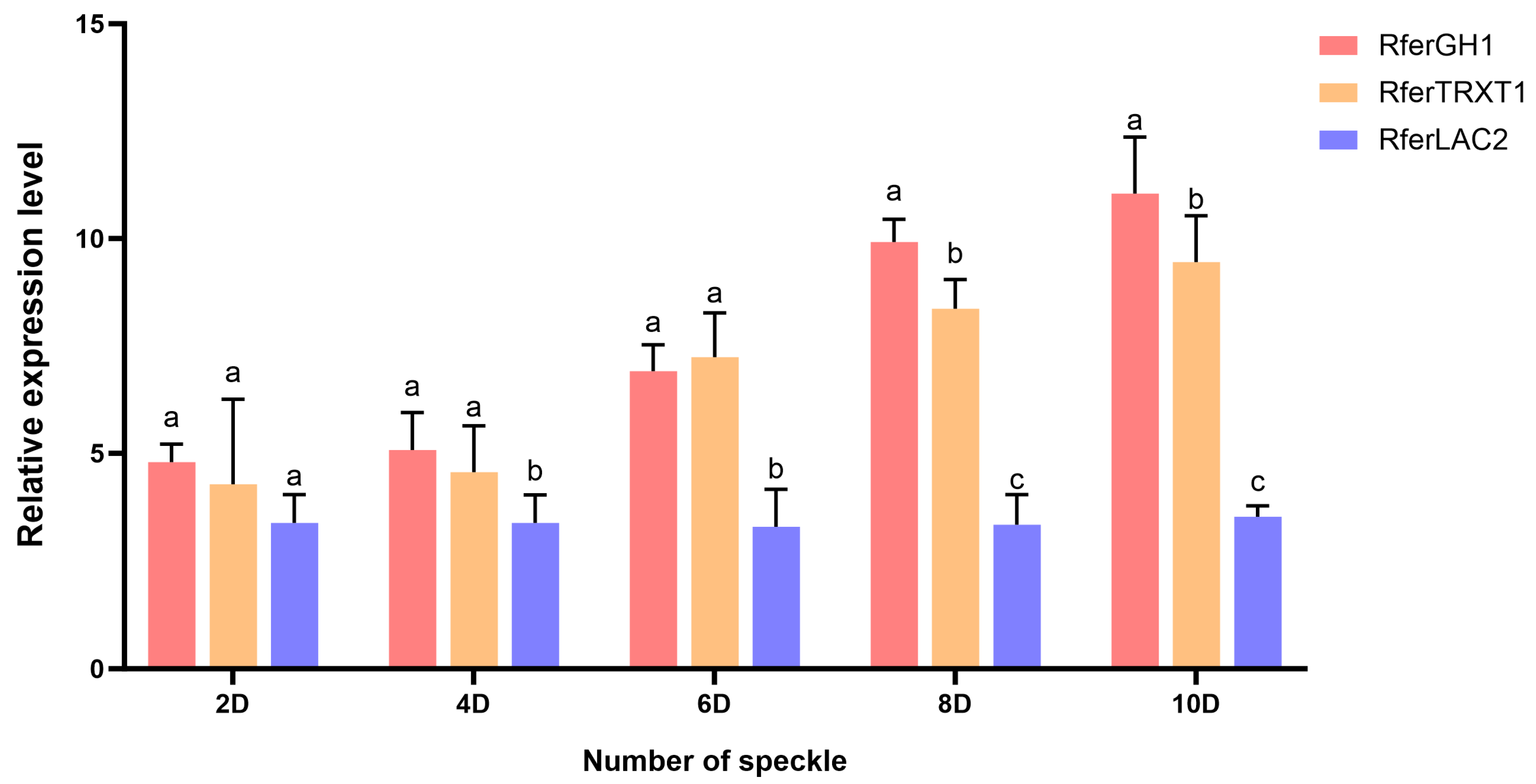
3.7. Analysis of Expression Level of Candidate Genes
4. Discussion
5. Conclusions
Supplementary Materials
Author Contributions
Funding
Institutional Review Board Statement
Informed Consent Statement
Data Availability Statement
Conflicts of Interest
References
- Janzen, D.H.; Hallwachs, W.; Burns, J.M. A tropical horde of counterfeit predator eyes. Proc. Natl. Acad. Sci. USA 2010, 107, 11659–11665. [Google Scholar] [CrossRef] [PubMed]
- Dasmahapatra, K.K.; Walters, J.R.; Briscoe, A.D. Butterfly genome reveals promiscuous exchange of mimicry adaptations among species. Nature 2012, 487, 94–98. [Google Scholar] [CrossRef]
- Wittkopp, P.J.; Carroll, S.B.; Kopp, A. Evolution in black and white: Genetic control of pigment patterns in Drosophila. Trends Genet. 2003, 19, 495–504. [Google Scholar] [CrossRef] [PubMed]
- Kronforst, M.R.; Barsh, G.S.; Kopp, A. Unraveling the thread of nature’s tapestry: The genetics of diversity and convergence in animal pigmentation. Pigment Cell Melanoma Res. 2012, 25, 411–433. [Google Scholar] [CrossRef]
- Wright, T.R. The genetics of biogenic amine metabolism, sclerotization, and melanization in Drosophila melanogaster. Adv. Genet. 1987, 24, 127–222. [Google Scholar]
- Gompel, N.; Prud’Homme, B.; Wlttkoppf, P.J. Chance caught on the wing: Cis-regulatory evolution and the origin of pigment patterns in Drosophila. Nature 2005, 433, 481–487. [Google Scholar] [CrossRef]
- Guan, H.; Chi, D.; Yu, J. ISSR Analysis of Genetic Diversity of Harmonia axyridis Pallas in Maoershan Area. J. Northeast For. Univ. 2007, 35, 64–66. [Google Scholar]
- Qin, J.; Luo, H. Identification and Control of High-risk Quarantine pests—Rhynchophorus ferrugineus. Plant Dr. 2007, 20, 34–35. [Google Scholar]
- Liu, H.; Zhao, D.; Xu, J. Pest Risk Analysis of Rhychophorus ferrugineus in Guangdong Area. Guangdong Acad. For. 2009, 25, 20–23. [Google Scholar]
- Ou, S.; Qin, L.; Wang, X. Morphologic Observation of Palm Rhychophorus ferrugineus and Damage Investigation. J. Anhui Agric. Sci. 2010, 38, 13810–13811. [Google Scholar]
- Zhong, Y.; Lan, S.; Liu, H. Diagnosis and Prevention of Harm Caused by red Rhychophorus ferrugineus. J. Anhui Agric. Sci. 2009, 37, 644–645, 704. [Google Scholar]
- Han, Z.; Zhou, J.; Zhong, F. Harm of Rhychophorus ferrugineus and its Prevention Research Advances. Guangdong Agric. Sci. 2013, 40, 68–71. [Google Scholar]
- Wattanapongsiri, A. A revision to the genera Rhynchophorus and Dynamis(Coleoptera: Curculionidae). Mccarthy 1965, 1, 328. [Google Scholar]
- Wang, F.; Ju, R.; Li, Y. Indoor Biological Characteristics and Morphological Observation of Rhychophorus ferrugineus. Chin. Bull. Entomol. 2009, 46, 556–560, 664. [Google Scholar] [CrossRef]
- Chen, Y.; Nian, X.; Chen, Q. Research Advances of Palm Plant Killer—Rhychophorus ferrugineus. Trop. For. 2011, 39, 24–28. [Google Scholar]
- Liang, Y.; Fang, X.; Jiang, J. Preliminary Research on Speckles of Rhychophorus ferrugineus. Guangxi Redai Nongye 2010, 3, 1–3. [Google Scholar]
- Ouyang, J. Revealing Combined Effect of Major Genes and Modificator Genes Determining the Black Fur Color at Both Ends of Chinese Local Pigs Using Genome-Wide Association Studies (GWAS). Ph.D. Thesis, Jiangxi Agricultural University, Nanchang, China, 2012. [Google Scholar]
- Ando, T.; Matsuda, T.; Goto, K. Repeated inversions at the pannier intron drive diversification of intraspecific colour patterns of ladybird beetles. Nat. Commun. 2018, 9, 3843. [Google Scholar] [CrossRef] [PubMed]
- Tu, X.; Shi, L.; Wang, F. Advances and Reflection on Genome-Wide Association Studies (GWAS). Prog. Physiol. Sci. 2010, 41, 87–94. [Google Scholar]
- Yan, W. Progress in Genome-Wide Association Studies of Complex Diseases—Genetic Statistical Analysis. Hereditas 2008, 30, 543–549. [Google Scholar]
- Hoorn, Q.A.; Zayas, G.A.; Rodriguez, E.E. Identific tion of quantitative trait loci and associated candidate genes for pregnancy success in Angus–Brahman crossbred heifers. J. Anim. Sci. Biotechnol. 2024, 15, 162–170. [Google Scholar]
- Pu, L. Genome-wide Association Study and Transcritome Analysis of mRNA for Feed Utilization Efficiency related traits in Durocs. Ph.D. Thesis, Chinese Academy of Agricultural Sciences, Beijing, China, 2016. [Google Scholar]
- Jiang, H.; Ma, B.; Qian, Q.; Dong, G. Application of Genome-Wide Association Study (GWAS) in Crop Agronomic Traits. J. Agric. Biotechnol. 2018, 26, 1244–1257. [Google Scholar]
- Wang, R.; Ren, Y.; Cheng, Y. Genome-Wide Association Studies of Flag Leaf related Trait of Wheat. Acta Agron. Sin. 2023, 49, 2886–2901. [Google Scholar] [CrossRef]
- Li, F.; Cheng, D.; Yu, X. Genome-Wide Association Studies of Canopy Activity Related Traits and Analysis of Their Genetic Effects on Yield Traits. Sci. Agric. Sin. 2024, 57, 627–637. [Google Scholar]
- Ren, N.; Lu, X.; He, C. Genome-Wide Association Studies of Prognosis of Gastric Cancer. Chin. J. Public Health 2023, 39, 151–157. [Google Scholar]
- Telonis-Scott, M.; Sgrò, C.M.; Hoffmann, A.A.; Griffin, P.C. Cross-Study Comparison Reveals Common Genomic, Network, and Functional Signatures of Desiccation Resistance in Drosophila melanogaster. Mol. Biol. Evol. 2016, 33, 1053–1067. [Google Scholar] [CrossRef]
- Wei, J. Preliminary Research on Control Technology of Rhynchophorus ferrugineus. Master’s Thesis, Hainan University, Haikou, China, 2010. [Google Scholar]
- Wei, J.; Qin, W.; Ma, Z. Research Progress on Harm Status and Main Prevention and Control Measures of Rhynchophorus ferrugineus. Guangdong Agric. Sci. 2009, 36, 110–112. [Google Scholar]
- Beaudoin-Ollivier, L.; Morin, J.P.; Prior, R. The Scapanes-Rhynchophorus complex, the main entomological problem on coconut in Papua New Guinea. Plant. Rech. Dév 1999, 8, 46–53. [Google Scholar]
- Wang, G.; Zhou, Y.; Lin, C. Analysis of Speckle Distribution on the pronotum of Rhynchophorus ferrugineus in Different Geographical Populations. Chin. Bull. Entomol. 2020, 57, 379–391. [Google Scholar]
- Li, L.; Qin, W.; Huang, S. Observation on Behaviors of Indoor Breeding Rhynchophorus ferrugineus. Chin. Bull. Entomol. 2009, 46, 926–929+1008. [Google Scholar]
- Mo, H. Genetic Analysis of Quality—Quantity Traits I. Genetic Composition and Identification of Major Gene Genotypes. Acta Agron. Sin. 1993, 19, 1–6. [Google Scholar]
- Wang, J.; Zhang, Y.; Du, Y. SEA v2.0: An R Software Package for Mixed Major Genes Plus Polygenes Inheritance Analysis of Quantitative Traits. Acta Agron. Sin. 2022, 48, 1416–1424. [Google Scholar] [CrossRef]
- Wang, W.; Pang, E. Comparison of BWA-MEM and NovoAlign Using Human Whole-Genome Next-Generation Sequencing Reads. J. Beijing Norm. Univ. Nat. Sci. 2021, 57, 8. [Google Scholar]
- Zhao, Y.; Li, X.; Chen, Z. Bioinformatics Analysis Method I: Overview of Genome-Wide Association Studies. Bull. Bot. 2020, 55, 715–732. [Google Scholar]
- Broman, K.W.; Hao, W.; Śaunak, S. R/qtl: QTL mapping in experimental crosses. Bioinformatics 2003, 19, 889–890. [Google Scholar] [CrossRef]
- Livak, K.J.; Schmittgen, T.D. Analysis of relative gene expression data using real-time quantitative PCR and the 2−ΔΔCt method. Methods 2001, 25, 402–408. [Google Scholar] [CrossRef] [PubMed]
- Hiruma, K.; Riddiford, L.M. Granular phenoloxidase involved in cuticular melanization in the tobacco hornworm: Regulation of its synthesis in the epidermis by juvenile hormone. Dev. Biol. 1988, 130, 87–97. [Google Scholar] [CrossRef] [PubMed]
- Liu, J.; Wu, Z.; Song, Y. Study on Trait Separation of F1 Hybrid of Cal.11 and Cal.22 in Caladium Bicolor. Chin. J. Trop. Crops 2017, 38, 792–796. [Google Scholar]
- Xing, J.; Zhang, R.; Zhao, J. Study on Trait Separation of DH Line of Maize from the Same Source. Crops 2012, 28, 25–28. [Google Scholar]
- Sima, Y.; Xu, H.; Zhao, A. Impact of Gender on QTL Mapping of Silkworm Cocoon Quality Traits. Acta Sericologica Sin. 2009, 35, 783–789. [Google Scholar]
- Liu, H.; Qin, L.; Du, P. Genetic Analysis of Phoma arachidicola Marasas Pauer & Boerema Resistance Based on Multi-Generational Segregation Population. Jiangsu J. Agric. Sci. 2022, 38, 326–333. [Google Scholar]
- Zhang, Y.; Xing, G.; Liu, M. Genome-Wide Association Studies: Opportunities and Challenges in Genomics Research. Biotechnol. Bull. 2013, 29, 1–6. [Google Scholar]
- Gai, J.; He, J. Characteristics, Common Questions, and Application Prospects of the Restricted Two-stage Multi-locus Genome-wide Association Analysis (RTM-GWAS) Method. Sci. Agric. Sin. 2020, 53, 1699–1703. [Google Scholar]
- Zhang, Y.M.; Jia, Z.; Dunwell, J.M. Editorial: The Applications of New Multi-Locus GWAS Methodologies in the Genetic Dissection of Complex Traits. Front. Plant Sci. 2019, 10, 100–105. [Google Scholar] [CrossRef]
- Liu, S.; Zou, W.; Lu, X.; Bian, J.; He, H.; Chen, J.; Ye, G. Genome-Wide Association Study Using a Multiparent Advanced Generation Intercross (MAGIC) Population Identified QTLs and Candidate Genes to Predict Shoot and Grain Zinc Contents in Rice. Agriculture 2021, 11, 70. [Google Scholar] [CrossRef]
- Zeng, A.; Chen, P.; Korth, K. Genome-wide association study (GWAS) of salt tolerance in worldwide soybean germplasm lines. Mol. Breed. 2017, 37, 30–43. [Google Scholar] [CrossRef]
- Boo, Y.C. Metabolic Basis and Clinical Evidence for Skin Lightening Effects of Thiol Compounds. Antioxidants 2022, 11, 503. [Google Scholar] [CrossRef] [PubMed]
- Cnubben, N.H.P.; Rietjens, I.M.C.M.; Wortelboer, H. The interplay of glutathione-related processes in antioxidant defense. Environ. Toxicol. Pharmacol. 2001, 10, 141–152. [Google Scholar] [CrossRef] [PubMed]
- Wang, Y.; Min, X.; Zheng, Z. Application of Thioredoxin Reductase in Diagnosis, Efficacy Prediction, and Prognosis of Malignant Tumors. Chem. Life 2024, 44, 614–620. [Google Scholar]
- Zhang, S.; Li, Z.; Nian, X. Sequence analysis, expression profiles and function of thioredoxin 2 and thioredoxin reductase 1 in resistance to nucleopolyhedrovirus in. Sci. Rep. 2015, 5, 15531. [Google Scholar] [CrossRef]
- Moore, E.C.; Reichard, P.; Thelander, L. Enzymatic Synthesis of Deoxyribonucleotides V. Purification and Properties of Thioredoxin Reductase from Escherichia coli B. J. Biol. Chem. 1964, 239, 3445. [Google Scholar] [CrossRef]
- Arnér, E.S.J.; Holmgren, A. Physiological functions of thioredoxin and thioredoxin reductase. FEBS J. 2000, 267, 6102–6109. [Google Scholar] [CrossRef] [PubMed]
- Kang, Z. The Role of NADPH Dependent Thioredoxin Reductase C in Plant Plastids. Chin. J. Biochem. Mol. Biol. 2019, 35, 121–130. [Google Scholar]
- Rozell, B.; Hansson, H.A.; Luthman, M. Immunohistochemical localization of thioredoxin and thioredoxin reductase in adult rats. Eur. J. Cell Biol. 1985, 38, 79–86. [Google Scholar]
- Schallreuter, K.U.; Lemke, K.R.; Hill, H.Z. Thioredoxin reductase induction coincides with melanin biosynthesis in brown and black guinea pigs and in murine melanoma cells. J. Investig. Dermatol. 1994, 103, 820–824. [Google Scholar] [CrossRef]
- Schallreuter, K.U.; Wood, J.M. Thioredoxin reductase in control of the pigmentary system. Clin. Dermatol. 1989, 7, 92–105. [Google Scholar] [CrossRef] [PubMed]
- Schallreuter, K.U.; Wood, J.M. The activity and purification of membrane-associated thioredoxin reductase from human metastatic melanotic melanoma. Biochim. Biophys. Acta 1988, 967, 103–109. [Google Scholar] [CrossRef] [PubMed]



| Primer Name | Primer Sequence |
|---|---|
| RferLAC2-qF | 5′-ACCGATATTCGCCACCATTAC-3′ |
| RferLAC2-qR | 5′-ATTGTCTGGATCAAGACCCTC-3′ |
| RferGH1-qF | 5′-CGCTTCTGGTAACATTATCCCAT-3′ |
| RferGH1-qR | 5′-ATGTTATTTTCGACGATACAGAAGTT-3′ |
| RferTRXR1-qF | 5′-CGCCTTCTGGTAATTCTATCGCCAT-3′ |
| RferTRXR1-qR | 5′-CGCTTCTGGTAACATTCTATCCCAT-3′ |
| RferGAPDH-F | 5′-CGCTTCTGGTAACATTATCCAT-3′ |
| RferGAPDH-R | 5′-CGTCGACAACGGCAACATGAC-3′ |
| Group | Female /Male | Mean | Standard Deviation | Variance | Skewness | Kurtosis | Correlation Coefficient (Pearson r) | t-Test p-Value |
|---|---|---|---|---|---|---|---|---|
| 2D | ♂ | 4.67 | 11.78 | 138.75 | 2.97 | 8.87 | 0.99 | 0.37 |
| ♀ | 5.22 | 13.43 | 180.44 | 2.99 | 8.94 | |||
| 3D | ♂ | 5.67 | 8.41 | 70.75 | 2.11 | 4.80 | 0.84 | 0.07 |
| ♀ | 10.67 | 12.44 | 154.75 | 1.09 | −0.24 | |||
| 4D | ♂ | 6.33 | 11.57 | 133.75 | 1.89 | 2.56 | 0.91 | 0.45 |
| ♀ | 9.00 | 19.44 | 378.00 | 2.83 | 8.16 | |||
| 5D | ♂ | 4.44 | 8.22 | 67.53 | 2.82 | 8.18 | 0.82 | 0.60 |
| ♀ | 5.33 | 7.75 | 60.00 | 1.30 | 0.52 | |||
| 6D | ♂ | 6.89 | 10.08 | 101.61 | 2.68 | 7.60 | 0.97 | 0.03 * |
| ♀ | 9.44 | 11.59 | 134.28 | 2.51 | 6.95 | |||
| 7D | ♂ | 5.22 | 7.05 | 49.69 | 1.67 | 2.55 | 0.88 | 0.70 |
| ♀ | 4.78 | 6.76 | 45.69 | 2.51 | 6.88 | |||
| 8D | ♂ | 7.89 | 11.52 | 132.61 | 2.50 | 6.47 | 0.90 | 0.12 |
| ♀ | 11.00 | 12.23 | 149.50 | 1.77 | 3.13 | |||
| 10D | ♂ | 8.56 | 12.95 | 167.78 | 2.01 | 3.87 | 0.91 | 0.69 |
| ♀ | 9.33 | 13.48 | 181.75 | 2.60 | 7.29 |
| Group | Female/Male | Mean | Standard Deviation | Variance | Skewness | Correlation Coefficient (Pearson r) | t-Test p-Value |
|---|---|---|---|---|---|---|---|
| 2D × 4D | ♂ | 15.00 | 23.44 | 549.50 | 1.49 | 0.97 | 0.12 |
| ♀ | 22.44 | 34.49 | 1189.28 | 1.65 | |||
| 2D × 8D | ♂ | 15.44 | 16.90 | 285.78 | 1.48 | 0.97 | 0.10 |
| ♀ | 27.78 | 35.56 | 1264.19 | 1.68 | |||
| 2D × 10D | ♂ | 8.89 | 7.62 | 58.11 | 0.93 | 0.83 | 0.67 |
| ♀ | 8.22 | 7.58 | 57.44 | 1.38 | |||
| 4D × 8D | ♂ | 13.78 | 15.17 | 230.19 | 0.93 | 0.98 | 0.22 |
| ♀ | 17.67 | 23.09 | 533.00 | 1.23 | |||
| 4D × 10D | ♂ | 8.56 | 13.06 | 170.53 | 1.84 | 0.97 | 0.87 |
| ♀ | 8.78 | 10.73 | 115.19 | 1.85 | |||
| 8D × 10D | ♂ | 18.22 | 18.20 | 331.19 | 0.79 | 0.90 | 0.88 |
| ♀ | 17.78 | 19.45 | 378.44 | 1.31 |
| Group | Model | Homogeneity Test | Smirnov Test nW2 | Kolmogorov Test Dn | ||
|---|---|---|---|---|---|---|
| U12 | U22 | U32 | ||||
| Inbred | 2MG-CD | 0.9479 | 0.8889 | 0.7600 | 0.9555 | 0.9216 |
| 2MG-EAD | 0.9998 | 0.9892 | 0.9577 | 0.9071 | 0.9277 | |
| MX2-EA-AD | 0.9855 | 0.9763 | 0.9615 | 0.8982 | 0.8973 | |
| MX2-A-AD | 0.2776 | 0.4756 | 0.1766 | 0.2582 | 0.1740 | |
| MX2-AD-AD | 0.9948 | 0.9866 | 0.9667 | 0.9051 | 0.9189 | |
| Hybrid | 2MG-EAD | 0.7245 | 0.9413 | 0.2844 | 0.8312 | 0.9296 |
| 1MG-AD | 0.9730 | 0.9535 | 0.7158 | 0.9769 | 0.9754 | |
| 1MG-EAD | 0.9862 | 0.9446 | 0.8326 | 0.9946 | 0.9949 | |
| 1MG-NCD | 0.3206 | 0.5712 | 0.1137 | 0.2663 | 0.3075 | |
| 2MG-EA | 0.9546 | 0.8833 | 0.7136 | 0.9745 | 0.9716 | |
| Random | 2MG-CD | 0.5659 | 0.6631 | 0.6306 | 0.8048 | 0.8074 |
| 2MG-EAD | 0.9943 | 0.9023 | 0.6434 | 0.9716 | 0.9769 | |
| MX2-EA-AD | 0.4009 | 0.4419 | 0.8591 | 0.6307 | 0.8118 | |
| MX2-A-AD | 0.5045 | 0.5662 | 0.7717 | 0.7706 | 0.9062 | |
| MX2-AD-AD | 0.9726 | 0.9104 | 0.7510 | 0.9763 | 0.9610 | |
| Group | Model | Max Likelihood Value | AIC Value AIC | MG-Genetic Variance MG-Var | MG-Heritability (%) |
|---|---|---|---|---|---|
| Inbred | 2MG-EAD | −114.9168 | 237.8335 | 484.9722 | 99.2722 |
| 1MG-NCD | −119.9981 | 249.9963 | 484.9722 | 99.2722 | |
| 1MG-EAD | −120.0112 | 250.0225 | 484.9722 | 99.2722 | |
| 2MG-EA | −121.671 | 251.3421 | 484.9722 | 99.2722 | |
| 1MG-AD | −119.9806 | 251.9612 | 484.9722 | 99.2722 | |
| Hybrid | 2MG-EAD | −159.1632 | 326.3264 | 4011.194 | 98.6231 |
| 1MG-NCD | −159.2551 | 328.5101 | 4011.194 | 98.6231 | |
| 1MG-AD | −158.7134 | 329.4267 | 4011.194 | 98.6231 | |
| 2MG-EA | −161.567 | 331.134 | 4011.194 | 98.6231 | |
| 1MG-EAD | −160.5901 | 331.1803 | 4011.194 | 98.6231 | |
| Random | 2MG-CD | −135.6873 | 281.3746 | 0 | 0 |
| 2MG-EAD | −143.1431 | 294.2862 | 3505.683 | 53.506 | |
| MX2-EA-AD | −146.7755 | 297.5511 | 2683.43 | 40.9562 | |
| MX2-A-AD | −146.2925 | 298.585 | 2875.761 | 43.8917 | |
| MX2-AD-AD | −145.588 | 301.176 | 3039.191 | 46.3861 |
| QTL Name | Method | Speckle | Left Position | Right Position | LOD Score | PVE Score | ADD1 | ADD2 | ADD3 | ADD4 |
|---|---|---|---|---|---|---|---|---|---|---|
| Q-Rf-2-2 | lod3 | 10D | GM_474026 | GM_471089 | 6.79 | 9.86 | 1.26 | −0.86 | 1.51 | −2.23 |
| Q-Rf-4-3 | lod3 | 10D | GM_124027 | GM_121090 | 4.57 | 10.31 | −1.19 | −0.98 | 0.98 | 1.23 |
| Q-Rf-5-4 | lod3 | 2D | GM_354028 | GM_411567 | 4.41 | 8.60 | 0.81 | 1.01 | −1.19 | −0.88 |
| Q-Rf-6-2 | lod3 | 3D | GM_440729 | GM_481092 | 4.29 | 7.25 | −0.14 | 1.11 | −0.34 | −0.46 |
| Q-Rf-4-6 | lod3 | 4D | GM_132330 | GM_156734 | 5.39 | 4.87 | −0.92 | 0.89 | −0.35 | 0.37 |
| Q-Rf-8-7 | lod3 | 6D | GM_304564 | GM_317109 | 5.23 | 5.05 | −0.45 | 1.42 | −0.19 | −0.78 |
| Q-Rf-1-10 | lod3 | MD | GM_185403 | GM_189671 | 6.24 | 5.14 | 0.97 | −0.87 | 1.01 | −1.52 |
| Q-Rf-2-9 | lod3 | 3D | GM_120303 | GM_124752 | 3.35 | 6.34 | −0.63 | 1.11 | −0.10 | −0.77 |
| Q-Rf-4-5 | Ranking | 4D | GM_154034 | GM_171097 | 5.21 | 4.61 | 0.41 | −0.49 | 1.01 | −1.15 |
| Q-Rf-2-11 | lod3 | MD | GM_454003 | GM_465010 | 3.58 | 8.22 | −0.18 | 0.65 | 1.21 | −0.46 |
| Q-Rf-6-8 | lod3 | 6D | GM_325947 | GM_365784 | 4.49 | 4.72 | 0.89 | 0.59 | 0.60 | −1.08 |
| Q-Rf-2-4 | lod3 | 8D | GM_164322 | GM_168493 | 5.57 | 5.35 | 1.07 | −0.23 | −1.83 | −0.01 |
| Q-Rf-7-10 | Ranking | 5D | GM_446742 | GM_449887 | 6.42 | 5.03 | 0.56 | −0.56 | 0.49 | −1.12 |
| Q-Rf-3-13 | lod3 | 2D | GM_278039 | GM_301102 | 5.43 | 7.92 | 1.23 | −0.47 | 0.67 | −0.68 |
| Q-Rf-14-4 | lod3 | 3D | GM_321626 | GM_345098 | 4.56 | 6.57 | 0.42 | −2.00 | −0.21 | −0.43 |
| Q-Rf-9-2 | lod3 | 10D | GM_178041 | GM_198461 | 6.57 | 5.09 | 0.66 | −0.97 | 1.45 | 0.27 |
| Q-Rf-4-11 | lod3 | 2D | GM_284735 | GM_285923 | 6.41 | 8.58 | 0.45 | −1.20 | 1.09 | −0.23 |
| Q-Rf-8-12 | lod3 | 4D | GM_361843 | GM_364616 | 4.29 | 5.62 | −0.37 | −0.67 | 0.30 | 0.87 |
| Q-Rf-13-5 | lod3 | MD | GM_428572 | GM_430899 | 4.39 | 6.47 | 0.09 | 0.32 | 0.65 | −0.59 |
| Method | Marker | Marker Position | SNP Number | QTN Effect | LOD Score | Phenotype Contribution Rate r2 (%) |
|---|---|---|---|---|---|---|
| Mlmk, glm | RferPSDX6 | 10,014,549 | 191,059 | 0.43 | 3.98, 5.96 | 3.28, 5.83 |
| mlmk, glmq | RferDDR1 | 10,000,408 | 125,779 | −1.30 | 3.41, 4.09 | 3.38, 5.22 |
| mlm, glmq | RferMAPK11 | 10,014,584 | 217,729 | −2.2 × 10−0.5 | 4.20, 4.26 | 3.72, 4.88 |
| glm, glmq | RferKLN | 10,000,002 | 198,098 | 0.36 | 4.16, 5.13 | 3.25, 4.70 |
| glm, mlmk | RferMAPK1 | 10,014,526 | 61,472 | 0.52 | 2.98, 4.10 | 2.74, 3.21 |
| glmq, mlmq | RferPY | 10,000,001 | 176,798 | −0.39 | 3.80, 4.54 | 2.82, 3.16 |
| mlm, glmq | RferNAT2 | 10,000,014 | 76,478 | −0.49 | 2.06, 3.68 | 1.83, 2.46 |
| glm, glmq | RferSFMBT1 | 10,000,078 | 139,910 | 0.29 | 4.62, 4.83 | 1.92, 2.77 |
| QTN Name | Method 1 | Method 2 | Marker Position | QTN Effect | LOD Score | Phenotype Contribution Rate (%) r2 (%) |
|---|---|---|---|---|---|---|
| RferGH1 | mlmk | lod3 | 401,077–427,946 | 0.81 | 6.53 | 3.84 |
| RferGRL | glm | Ranking | 1,636,749–1,657,369 | 1.22 × 10−0.5 | 4.41 | 3.25 |
| RferLAC2 | glm | lod3 | 1,178,945–1,210,902 | 0.70 | 3.49 | 4.14 |
| RferANKDR50 | mlmkq | lod3 | 81,434–98,424 | −0.89 | 6.19 | 3.54 |
| RferXPO5 | mlmk | lod3 | 1,384,686–1,395,915 | −0.82 | 5.25 | 4.61 |
| RferUP1 | glmq | lod3 | 304,883–322,655 | 0.37 | 5.28 | 5.23 |
| RferTRXR1 | mlmk | lod3 | 40,721–42,259 | 0.85 | 3.35 | 7.75 |
| RferTNPO3 | glm | lod3 | 608,721–617,890 | −1.00 × 10−0.3 | 6.21 | 4.85 |
| RferTBC1 | mlmk | Ranking | 587,270–598,384 | −0.65 | 3.88 | 5.60 |
| RferUP2 | glmq | lod3 | 70,476–84,976 | −0.67 | 4.79 | 3.92 |
| RferCDH1 | mlmkq | lod3 | 165,785–283,814 | 0.85 | 5.57 | 4.57 |
| RferLAC4 | glm | lod3 | 1,447,348–1,475,308 | −0.60 | 3.62 | 3.25 |
| Gene | K Number | Position (bp) | KEGG Annotation | GO Annotation |
|---|---|---|---|---|
| RferGH1 | K13728 | 401,077– 427,946 | DCE; dopachrome tautomerase | pigmentation; molecular function regulator; catalytic activity; |
| RferTRXR1 | K20409 | 40,721– 42,259 | DCE; dopachrome tautomerase | pigmentation; molecular function regulator; catalytic activity; |
| RferLAC2 | k30924 | 176,411– 1,210,902 | ALDH1L; formyltetrahydrofolate dehydrogenase | reproductive process; developmental process; |
Disclaimer/Publisher’s Note: The statements, opinions and data contained in all publications are solely those of the individual author(s) and contributor(s) and not of MDPI and/or the editor(s). MDPI and/or the editor(s) disclaim responsibility for any injury to people or property resulting from any ideas, methods, instructions or products referred to in the content. |
© 2026 by the authors. Licensee MDPI, Basel, Switzerland. This article is an open access article distributed under the terms and conditions of the Creative Commons Attribution (CC BY) license.
Share and Cite
Liu, L.; Chen, X.; Lin, C.; Yang, H.; Huang, Q.; Yang, C.; Li, S. Exploring Speckle Change Genes of Rhynchophorus ferrugineus (Coleoptera: Curculionidae) Based on Genome-Wide Association Studies (GWASs). Biology 2026, 15, 555. https://doi.org/10.3390/biology15070555
Liu L, Chen X, Lin C, Yang H, Huang Q, Yang C, Li S. Exploring Speckle Change Genes of Rhynchophorus ferrugineus (Coleoptera: Curculionidae) Based on Genome-Wide Association Studies (GWASs). Biology. 2026; 15(7):555. https://doi.org/10.3390/biology15070555
Chicago/Turabian StyleLiu, Long, Xin Chen, Cheng Lin, Hua Yang, Qiong Huang, Chunlin Yang, and Shujiang Li. 2026. "Exploring Speckle Change Genes of Rhynchophorus ferrugineus (Coleoptera: Curculionidae) Based on Genome-Wide Association Studies (GWASs)" Biology 15, no. 7: 555. https://doi.org/10.3390/biology15070555
APA StyleLiu, L., Chen, X., Lin, C., Yang, H., Huang, Q., Yang, C., & Li, S. (2026). Exploring Speckle Change Genes of Rhynchophorus ferrugineus (Coleoptera: Curculionidae) Based on Genome-Wide Association Studies (GWASs). Biology, 15(7), 555. https://doi.org/10.3390/biology15070555