Article

Genome-Wide Identification and Expression Analysis of the HCT Gene Family in Upland Cotton (Gossypium hirsutum L.) in Response to Verticillium wilt Infection

1
College of Agriculture, Xinjiang Agricultural University, Urumqi 830052, China
2
Engineering Research Centre of Cotton, Ministry of Education, Urumqi 830052, China
3
Institute of Economic Forestry, Xinjiang Academy of Forestry Sciences, Urumqi 830052, China
*
Author to whom correspondence should be addressed.
These authors contributed equally to this work.
Biology 2026, 15(7), 520; https://doi.org/10.3390/biology15070520
Submission received: 29 January 2026 / Revised: 10 March 2026 / Accepted: 18 March 2026 / Published: 25 March 2026
(This article belongs to the Special Issue Advances in Plant Genomics and Genome Editing)

Simple Summary

Cotton production is severely threatened by Verticillium wilt, a disease caused by the fungus Verticillium dahliae L. This study identified 74 HCT genes in the cotton genome and found that three—GhHCT2, GhHCT35, and GhHCT47—are rapidly and strongly activated in resistant plants upon infection, suggesting that they may serve as key defense candidates by regulating lignin biosynthesis. These findings provide valuable genetic resources for breeding cotton varieties with enhanced resistance to this devastating disease.

Abstract

Cotton, a globally vital cash crop, is severely constrained by V. dahliae. Lignin, a core structural component of plant cell walls, plays a crucial role in physical defense, with its biosynthesis regulated by hydroxycinnamoyltransferase (HCT)—a key enzyme in the phenylpropanoid pathway. However, the HCT gene family in upland cotton (Gossypium hirsutum) and its role in resistance to V. dahliae remain poorly understood. In this study, we performed a genome-wide identification of the HCT gene family in G. hirsutum, identifying 74 GhHCT genes that were classified into five evolutionary subfamilies. Bioinformatics analysis revealed that GhHCT proteins exhibit conserved functional domains but diverse gene structures, with promoter regions enriched in hormone-responsive and stress-responsive cis-acting elements. Expression profiling revealed that multiple GhHCT genes were significantly induced in response to V. dahliae infection. Three genes, GhHCT2, GhHCT35, and GhHCT47, showed significantly higher expression levels in resistant cultivars than in susceptible cultivars during early infection stages, suggesting pivotal roles in defense. These three candidate genes, which contain MeJA/SA-responsive elements in their promoters, may enhance resistance by regulating lignin synthesis to strengthen the cell wall barrier. In summary, this study provides the first comprehensive characterization of the HCT gene family in upland cotton. It identifies key candidates for improving resistance to V. dahliae, offering valuable genetic resources for molecular breeding.

1. Introduction

Cotton (Gossypium spp.) ranks among the most crucial cash crops globally, with its fibers occupying a central position in the global textile industry chain and playing a crucial role in both global and Chinese economic development [1,2]. However, throughout its entire growth cycle, cotton is severely constrained by V. dahliae. This pathogen produces highly resilient sclerotia that can survive in soil for over a decade without losing pathogenicity [3,4,5]. Owing to the lack of effective chemical control methods and the commercial availability of highly resistant varieties, V. dahliae is extremely difficult to manage, leading the industry to be nicknamed “cotton cancer” [2,5,6,7]. Consequently, unraveling the mechanisms of cotton disease resistance and identifying key resistance genes have emerged as critical scientific challenges in cotton molecular breeding.
Over time, plants have developed multilayered defense systems to counter pathogen invasion, with strengthened cell walls and physical barriers serving as key strategies for disease resistance [8,9]. Recent studies have indicated that lignin, the primary phenolic polymer in secondary cell walls, not only enhances the mechanical strength of cell walls to effectively prevent pathogen invasion and spread but also plays a central role in systemic plant defense responses [2,10]. From a molecular structural perspective, lignin is a complex reticular polymer formed by the polymerization of three cinnamyl alcohol monomers, and its deposition level directly affects cell wall permeability and mechanical properties [11]. Of particular note, during infection of cotton by V. dahliae, the rapid deposition impacts multiple biotic stresses, including pathogen infections, insect feeding, and weed competition, which significantly impair yield and fiber quality [2,12,13]. Verticillium wilt, caused by V. dahliae, ranks among the most severe diseases limiting cotton production [2,14,15]. Lignin in infected vessel walls acts synergistically with tylosis formation to establish a dual physical barrier that restricts the vascular spread of the pathogen [16,17,18].
Lignin biosynthesis relies on the highly conserved phenylpropanoid pathway, where hydroxycinnamoyl-CoA shikimate is the key rate-limiting enzyme in this pathway, whose catalytic activity directly determines the composition ratio and deposition pattern of lignin monomers [2,19,20,21,22]. Genomic studies have revealed that HCTs typically form multigene families in plants. The functional diversity among family members is achieved through structural variation, differential expression patterns, and specific protein interactions, characteristics that are of significant importance in plant secondary metabolic regulatory networks [22,23,24]. Recent functional studies indicate that HCTs not only participate in lignin biosynthesis but also play regulatory roles in plant responses to various abiotic stresses, such as nitrogen stress, low temperatures, and drought [2,24,25]. However, notably, in the allopolyploid G. hirsutum, the scale and characteristics of the HCT gene family, as well as the mechanisms underlying their functional differentiation under V. dahliae stress, remain poorly understood. In particular, the potential functional division of labor and synergistic regulatory networks among HCT genes originating from different subgenomes (At and Dt) have not been systematically elucidated.
Despite the established importance of HCT genes in lignin biosynthesis and stress responses across plant species, a systematic characterization of this gene family in allotetraploid G. hirsutum—particularly in the context of defense against the devastating pathogen V. dahliae—has been lacking. Therefore, this study conducted a genome-wide identification and systematic analysis of the HCT gene family in G. hirsutum, focusing on the following key tasks: comprehensively elucidating the physicochemical properties of its encoded proteins, their phylogenetic relationships, gene structures, and chromosomal distribution characteristics; investigating the expansion and differentiation patterns of HCT genes in tetraploid cotton through comparative genomics; and specifically utilizing transcriptome data to analyze the expression dynamics of this gene family in detail during V. dahliae infection. This study aimed to identify key GhHCT genes involved in cotton resistance to V. dahliae, providing new insights into the molecular mechanisms of cotton disease resistance and offering important candidate genes for genetic improvement in disease resistance in cotton.

2. Materials and Methods

2.1. Plant Materials and Treatments

The cotton materials used in this experiment were the hybrid lines disease-resistant material (10Q-11-2) and susceptible material (10Q-67) [26], which were preserved at the College of Agriculture, Xinjiang Agricultural University. The plants were cultivated in a greenhouse (23–28 °C, 16 h light/8 h dark). When the cotton plants reached the two-leaf-and-one-bud stage, we inoculated with a suspension of V. dahliae (107 CFU/mL, 20 mL per pot) using the root-cutting and dipping method [27]. Under identical cultivation conditions, samples were collected at 0 h, 3 h, 6 h, 9 h, 12 h, 24 h, and 48 h post-inoculation with V. dahlia (the V. dahliae strain used in this study was Vd991, provided by the Plant Pathology Laboratory of Xinjiang Agricultural University). The sampling sites are leaves, with three replicates per sample. The 0 h time point for each sample serves as the control group. Fresh samples were rapidly frozen in liquid nitrogen and stored at −80 °C in ultralow-temperature freezers. Additionally, at approximately 25 days post-inoculation, photographs were taken to document plant growth and disease symptoms (Supplementary Figure S1).

2.2. Identification of GhHCT Genes

The Arabidopsis thaliana HCT protein sequence (AT5G48930) was obtained from the TAIR database (https://www.arabidopsis.org/, accessed on 1 December 2025). G. hirsutum genome data, protein sequence data, and GFF3 annotation information (TM-1-T2T) were downloaded from CottonGen (https://www.CottonGen.org/, accessed on 6 December 2025) [28]. The A. Thaliana HCT protein sequence was used as the query, and BLASTP (2.17.0) was run with default parameters to search the G. hirsutum protein database (e-value < 0.001). Structural prediction was subsequently performed on the sequences obtained in the previous step using the Pfam database (http://pfam.xfam.org/, accessed on 6 December 2025) and the SMART website (http://smart.embl-heidelberg.de/, accessed on 8 December 2025). Sequences lacking the typical HCT protein domain were excluded, and the remaining protein sequences were considered to be members of the GhHCT family.

2.3. Physicochemical Properties and Chromosomal Localization Analysis of Proteins

ExPaSy (https://web.expasy.org/protparam/, accessed on 10 December 2025) was used to analyze the amino acid composition, average total hydrophilicity, isoelectric point, and molecular weight of GhHCT. WoLF PSORT (https://wolfpsort.hgc.jp/, accessed on 10 December 2025) was employed to predict the subcellular localization of the GhHCT protein. The chromosomal locations of all GhHCT genes in the G. hirsutum genome were extracted and visualized using Tbtools (v2.441) [29].

2.4. Gene Structure and Conserved Motif Analysis

The GhHCT gene structure information was downloaded from the G. hirsutum genome database (https://cottonfgd.org/, accessed on 10 December 2025). A phylogenetic tree was constructed from sequences using MEGA7.0 and saved in nwk format. Motif prediction was performed using MEME (http://meme-suite.org/tools/meme, accessed on 10 December 2025), set to search for 10 motifs, saved in XML format, and finally visualized using TBtools.

2.5. Analysis of Promoter Cis-Acting Elements

The Gff3 Sequence Extractor in TBtools was used to extract the 2000 bp promoter region upstream of the GhHCT gene’s start codon ATG. This sequence was subsequently submitted to the online promoter analysis tool Plant CARE (http://bioinformatics.psb.ugent.be/webtools/plantcare/html/, accessed on 23 December 2025) for cis-acting element analysis [28]. The predicted elements were curated and visualized via TBtools’ Simple BioSequence Viewer.

2.6. Phylogenetic Classification Analysis

A phylogenetic tree was constructed using the neighbor-joining (NJ) method in MEGA 7.0, including five species: 225 HCT protein sequences from five species: 74 from G. hirsutum, 1 from A. thaliana, 50 from Nicotiana tabacum, 50 from Theobroma cacao, and 50 from Oryza sativa. The number of bootstrap runs was set to 1000, while the other parameters used default settings. The resulting unrooted tree was submitted to ITOL (http://itol.embl.de/, accessed on 26 December 2025) to generate a circular phylogenetic tree.

2.7. Collinearity Analysis of the GhHCT Gene Family

To analyze collinearity among G. hirsutum, the model plant A. thaliana, and tobacco, an interspecies collinearity analysis was performed. The tobacco genome sequence and associated annotation files were downloaded from the IMP website (https://www.bic.ac.cn/IMP/, accessed on 14 December 2025). TBtools was used to visualize the collinearity relationships among A. thaliana, G. hirsutum, and tobacco, as well as collinearity within G. hirsutum.

2.8. Expression Analysis of the GhHCT Gene Family

Transcriptome sequencing data from G. hirsutum were utilized to obtain GhHCT gene expression levels at different time points during V. dahliae infection (for details on the sequencing methods, please refer to Supplementary Document S1). Heatmaps were generated via TBtools.
RNA was extracted from samples using the RNA Prep Pure Plant Plus Kit (TIANGEN BIOTECH, Co., Ltd., Beijing, China). Sample quality was assessed via agarose gel electrophoresis and spectrophotometric analysis. cDNA was obtained for each sample using the All-in-One First-Strand Synthesis MasterMix Reverse Transcription Kit (Yugong Biotech Co., Ltd., Lianyungang, Jiangsu, China) for subsequent gene expression analysis [30]. Primer Premier 5.0 was used to design specific primers (Supplementary Table S1). Cotton GthUBQ7 served as the internal reference gene for qRT-PCR analysis. Relative gene expression levels were calculated using the 2−ΔΔCt method, as detailed in reference [31]. Each dataset originated from 3 biological replicates and 3 technical replicates. The qRT-PCR reaction system comprised 1 μL of template cDNA, 0.2 μL of forward primer, 0.2 μL of reverse primer, 5 μL of SYBRPrimix ExTaqTM (2×), and ddH2O to a final volume of 10 μL. qRT-PCR was performed on an ABI 7500 (Applied Biosystems, San Francisco, CA, USA) instrument under the following conditions: 95 °C pre-denaturation for 30 s; 95 °C denaturation for 10 s; 60 °C annealing for 30 s; repeated for 40 cycles.

2.9. Prediction of the GhHCT Protein Interaction Network

To investigate HCT protein interactions, we used A. thaliana as the reference organism and uploaded the G. hirsutum HCT protein sequences to the STRING database (https://cn.string-db.org/, accessed on 15 December 2025). To investigate the protein–protein interactions within the GhHCT family, predictions of intra-family interactions were performed following the method of Yang et al. [32]. An interaction score threshold of 0.7 (high confidence) was applied. The results were visualized via Cytoscape 3.10.4 software [2,33].

3. Results

3.1. Identification of the GhHCT Gene Family and Analysis of Protein Physicochemical Properties

A total of 74 GhHCT genes were identified in the G. hirsutum genome. Additionally, the amino acid length, theoretical molecular weight, isoelectric point, instability coefficient, fat coefficient, hydrophobicity index, and subcellular localization of GhHCT were analyzed (Table 1). The results indicate that GhHCT proteins comprise 433–498 amino acid residues, with theoretical molecular weights ranging from 47 to 55 kDa and isoelectric points between 5.25 and 9.60. Half of the GhHCT proteins presented instability coefficients of less than 40. With the exception of GhHCT15, all other GhHCT proteins have lipid coefficients of less than 100, indicating that they are lipophilic. Except for nine GhHCT proteins (GhHCT15, GhHCT36, GhHCT37, GhHCT38, GhHCT66, GhHCT71, GhHCT72, GhHCT73, and GhHCT74), the hydrophobicity index (GRAVY) of the remaining GhHCT proteins was less than 0, indicating that they are hydrophilic proteins. Subcellular localization predictions revealed that 44 GhHCT proteins are localized to the cytoplasm, 14 to chloroplasts, 11 to the nucleus, 3 to mitochondria, and 2 to the cytoskeleton (Table 1).

3.2. Chromosomal Localization Analysis of the GhHCT Gene Family

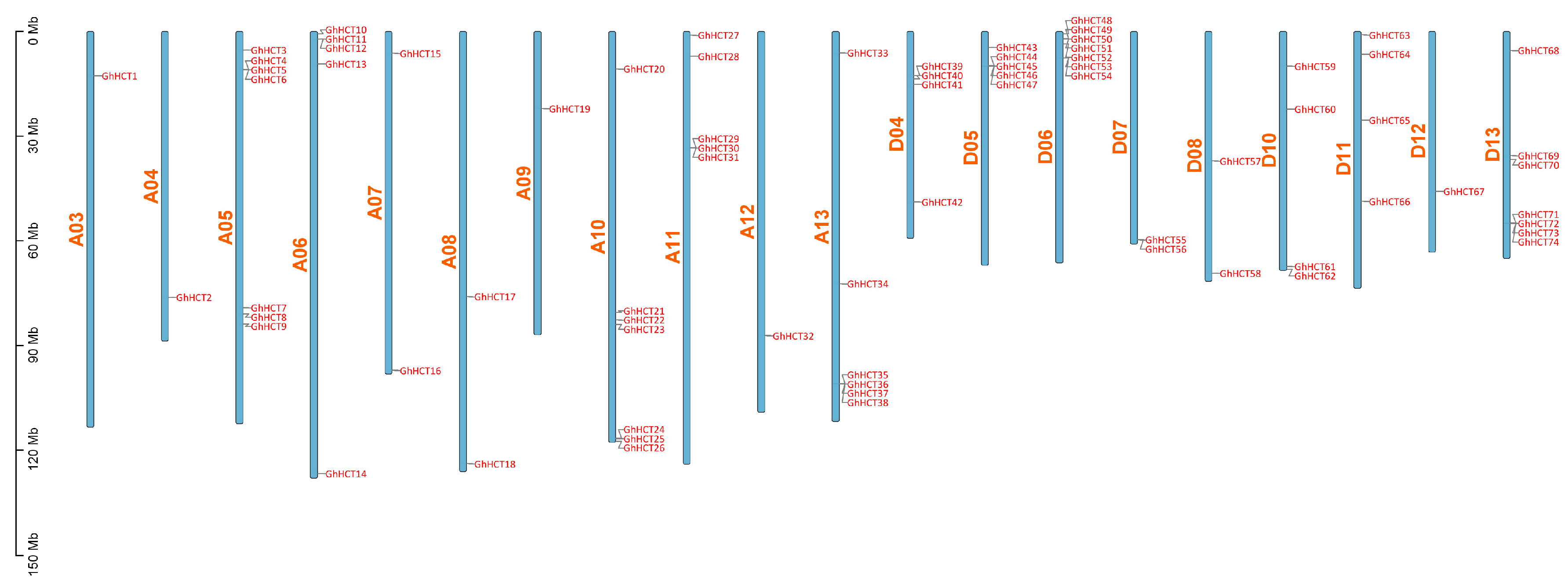
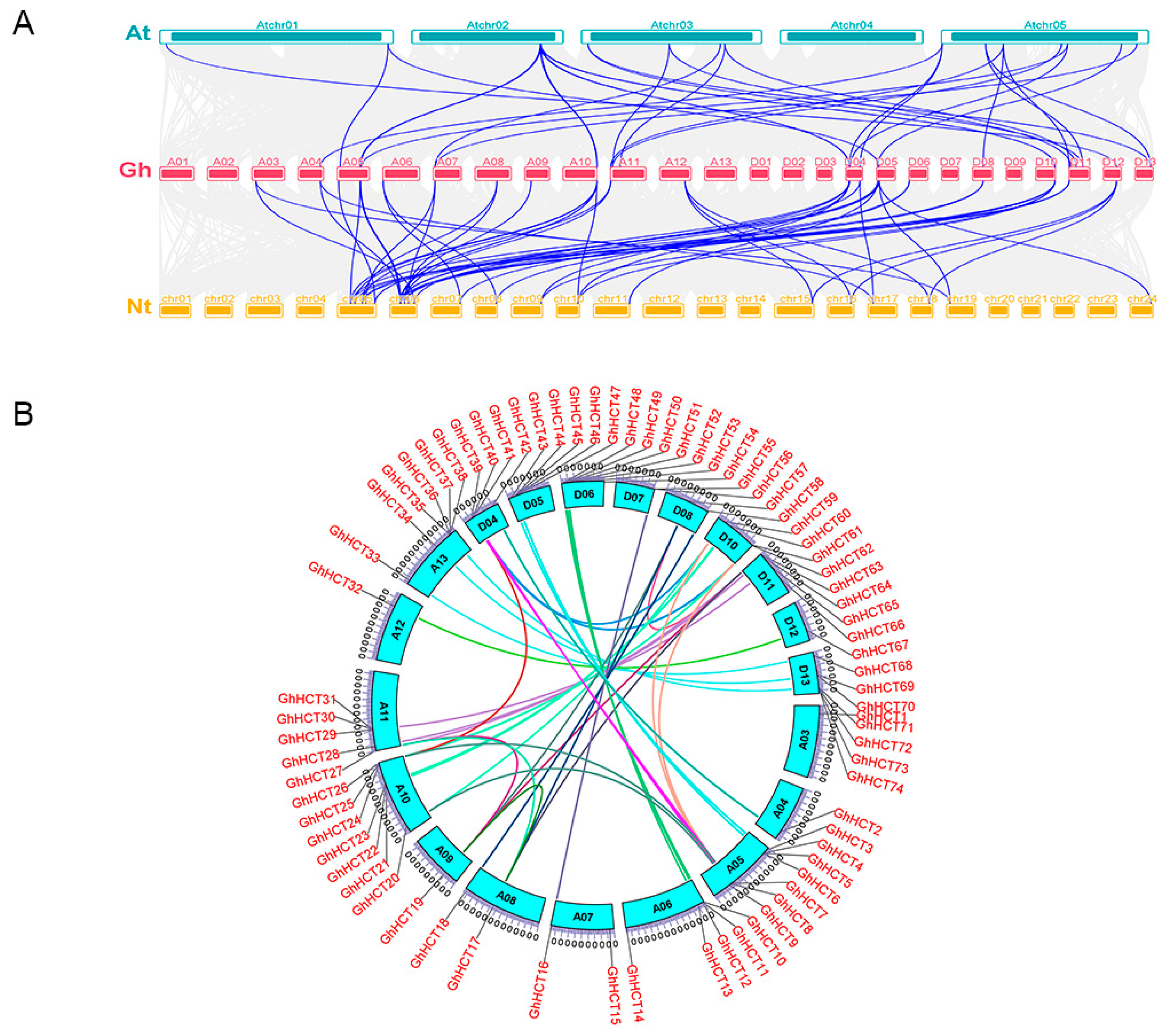
Members of the GhHCT family are distributed across 20 chromosomes of G. hirsutum and are unevenly distributed (Figure 1). Chromosomes A05, A10, D06, and D13 each harbor seven GhHCT genes. Chromosome A13 contains six GhHCT genes, whereas chromosomes A06, A11, and D05 each carry five GhHCT genes. Chromosomes D04, D10, and D11 each harbor four GhHCT genes, whereas chromosomes A07, A08, D07, and D08 each contain two GhHCT genes. Only one GhHCT gene is present on chromosomes A03, A04, A09, A12, and D12. Additionally, the GhHCT gene exhibited distinct tandem duplication patterns, forming ten tandem gene clusters on chromosomes. The largest tandem cluster contains four genes and spans chromosomes A13, D05, and D13.

3.3. Analysis of Conserved Protein Domains and the Gene Structure of the GhHCT Gene Family

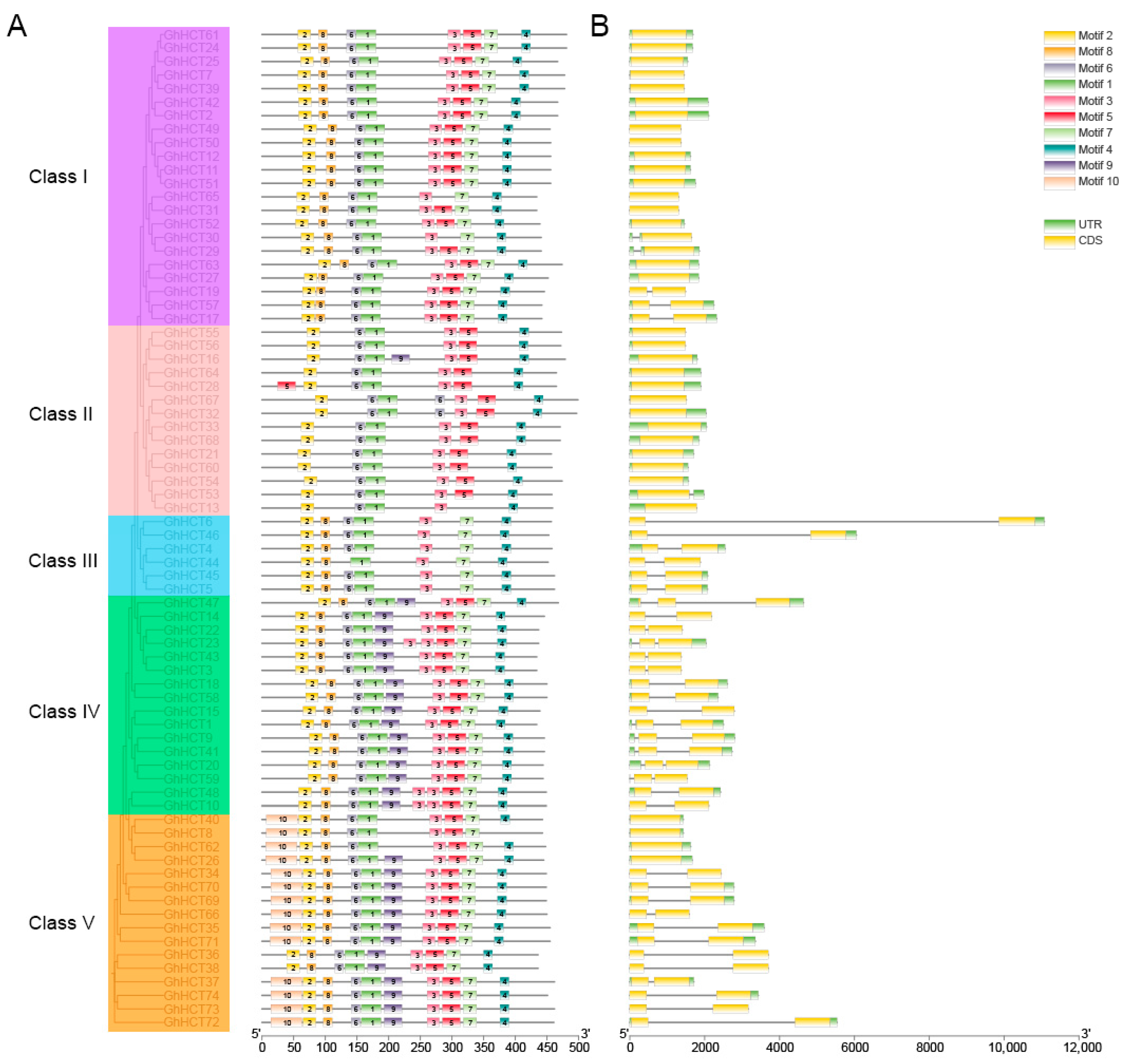
To further investigate the similarities and diversities of motifs among different GhHCT proteins, protein domain prediction was performed using the MEME (5.5.9) software. The results indicate that GhHCT protein structures are relatively conserved, with 10 motifs identified (designated Motifs 1–10). Among these, Motif 1, Motif 2, and Motif 3 presented the highest degree of conservation and were shared across all the subgroups (Figure 2A). In addition to these conserved motifs, each subgroup possessed specific motifs, such as Motif 10, which was unique to the Class V subgroup, and Motif 9, which was present only in the Class IV and Class V subgroups. These motif differences may correlate with the functional diversity of HCT genes.
To clarify the GhHCT gene structure, the CDSs of each GhHCT gene were obtained from the G. hirsutum genome, and exon–intron structure diagrams were constructed (Figure 2B). These results indicate that most GhHCT family members lack introns. Specifically, 30 members presented two exons and one intron; one member (GhHCT47) presented three exons and two introns; six members (GhHCT1, GhHCT9, GhHCT20, GhHCT23, GhHCT41, GhHCT59) presented two exons and two introns; and three members (GhHCT29, GhHCT30, GhHCT53) presented two exons and two introns, while another presented one exon and one intron, indicating diverse gene structures among GhHCT family members.

3.4. Analysis of cis-Acting Elements in GhHCT Promoters

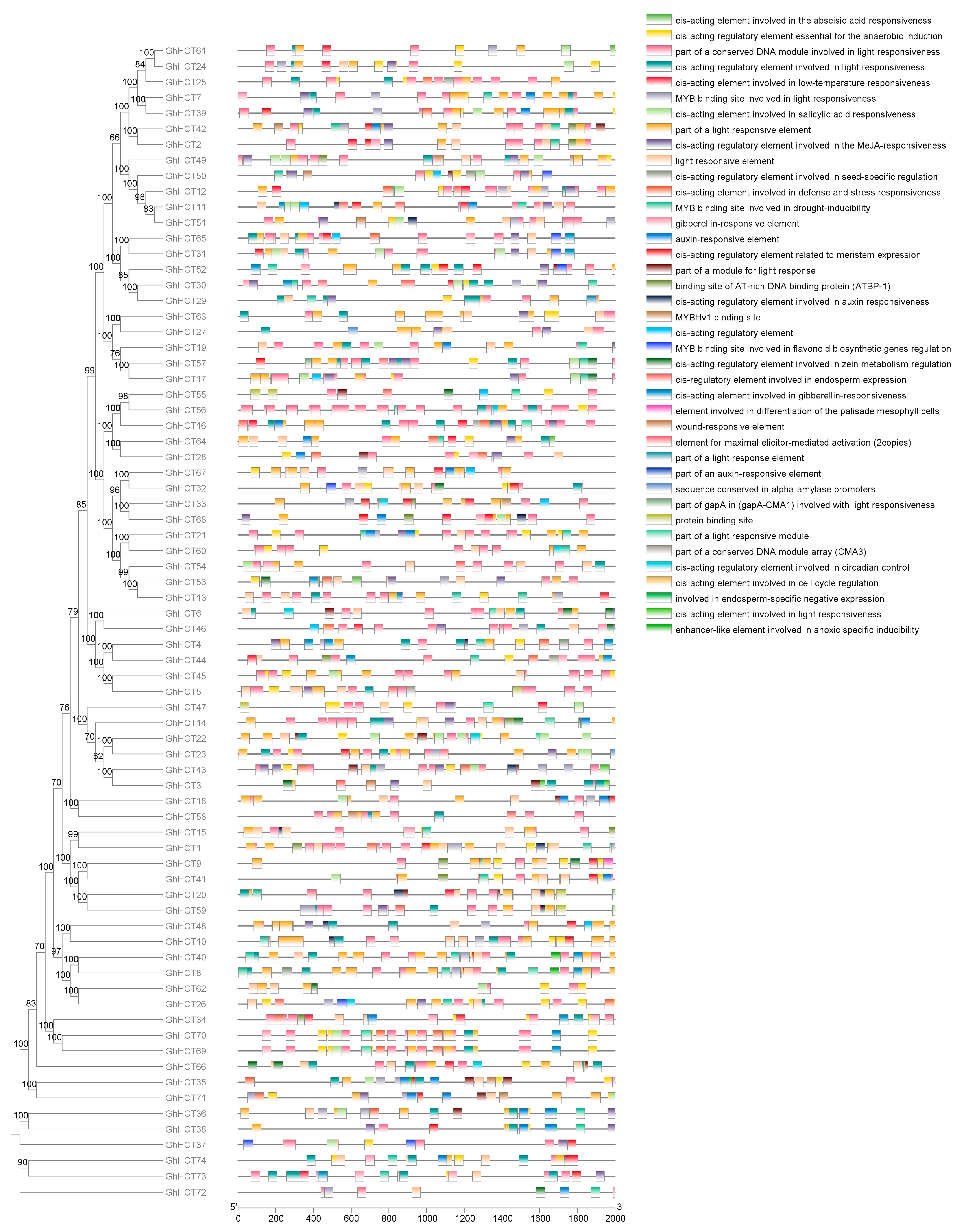
The core regulatory function of gene promoters is primarily governed by cis-acting elements located upstream of the transcription start site [2,33,34]. A total of 40 cis-acting elements were identified within the promoter regions, which were categorized into three major functional groups: growth and development, hormone response, and stress response (Figure 3). The stress response elements included anaerobic, cold, drought, and defense/stress responses. Hormone response elements are composed primarily of gibberellin, auxin, salicylic acid, and methyl jasmonate response elements. The presence of these cis-acting elements suggests potential roles for GhHCT genes in regulating plant growth and development, hormone responses, and stress responses, although experimental validation is required to confirm these predicted functions.

3.5. Phylogenetic Analysis of GhHCT Family Members

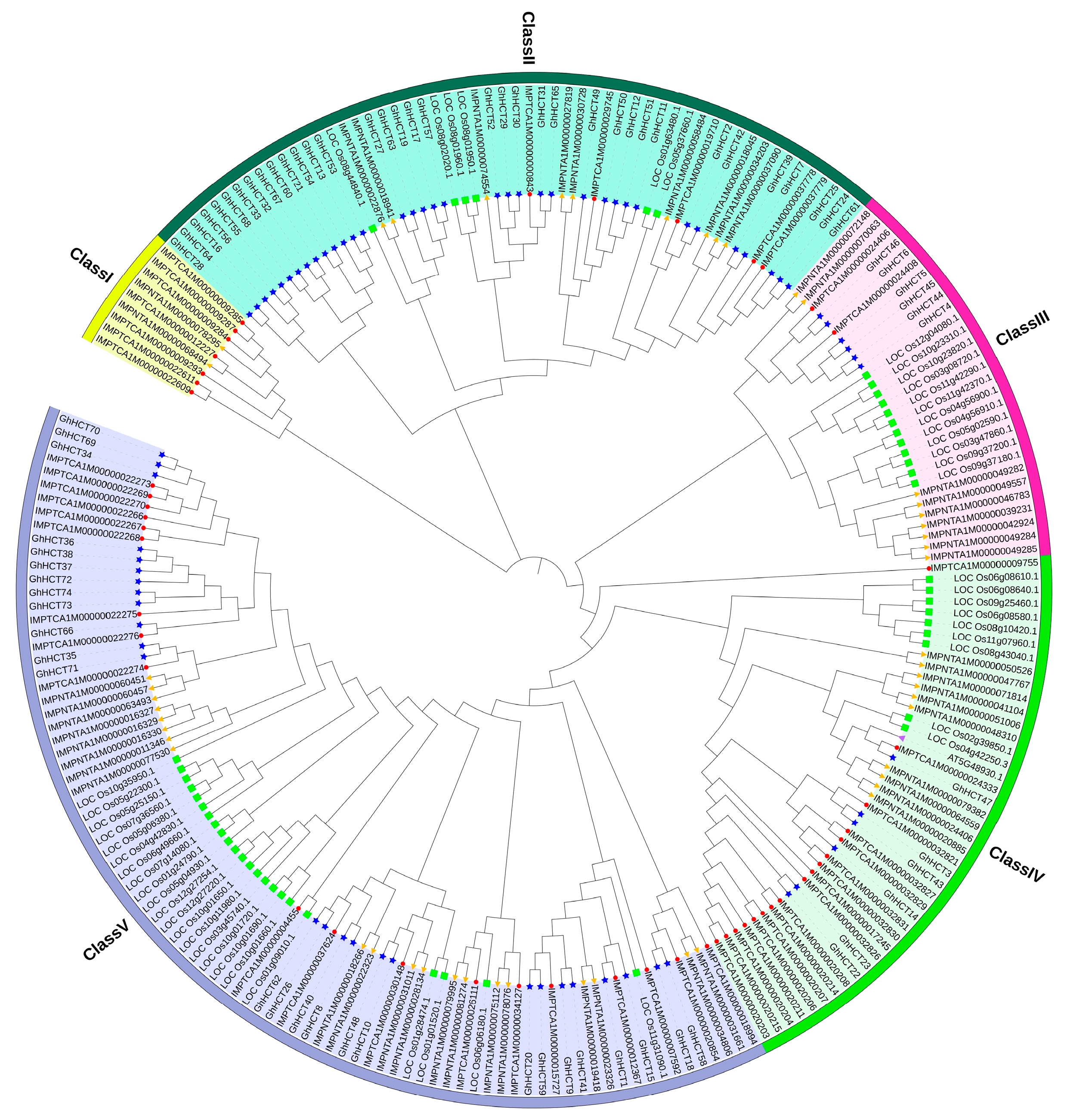
Phylogenetic analysis grouped the 225 HCTs into five subfamilies (Class I–V) (Figure 4). The Class I subfamily comprises nine HCT members, including two from tobacco and seven from cocoa; the Class II subfamily contains 56 HCT members: 9 from tobacco, 6 from rice, 5 from cocoa, and 36 from G. hirsutum; the Class III subfamily comprises 29 HCT members: 9 from tobacco, 12 from rice, 2 from cocoa, and 6 from G. hirsutum; the Class IV subfamily comprises 43 HCT members, including 10 from tobacco, 1 from A. thaliana, 9 from rice, 17 from cocoa, and 6 from G. hirsutum; and the Class V subfamily comprises 88 HCT members, including 20 from tobacco, 23 from rice, 19 from cocoa, and 26 from G. hirsutum.

3.6. Synteny Analysis of the GhHCT Gene Family

To further investigate the homology relationships among HCT genes, interspecies synteny analyses between G. hirsutum and A. thaliana, as well as between G. hirsutum and tobacco, were performed at the whole-genome level to explore the evolutionary origins of the G. hirsutum HCT gene family (Figure 5A). The analysis revealed 27 and 49 collinear gene pairs between the GhHCT, A. thaliana, and tobacco genomes, respectively, indicating homologous relationships among HCT family genes in G. hirsutum, A. thaliana, and tobacco. These homologous gene pairs may share similar functions.
Intraspecific synteny analysis within G. hirsutum revealed 35 syntenic relationships (Figure 5B). Chromosome A05 harbored the greatest number of homologous gene pairs (GhHCT3 with GhHCT43; GhHCT7 with GhHCT24, GhHCT39, and GhHCT61; GhHCT8 with GhHCT40 and GhHCT62; GhHCT9 with GhHCT20, GhHCT41, and GhHCT59). Chromosomes A10 (GhHCT20 with GhHCT9 and GhHCT59, GhHCT21 with GhHCT60, GhHCT24 with GhHCT7, GhHCT39, GhHCT61, and GhHCT26 with GhHCT62) and chromosome A08 (GhHCT17 with GhHCT19, GhHCT27, GhHCT57, GhHCT63, and GhHCT18 with GhHCT58) followed. These findings indicate that these chromosomal segments underwent duplication events during evolution, which likely played a significant role in the evolution and expansion of the GhHCT gene family.

3.7. Expression Analysis of GhHCT Family Genes in Response to V. dahliae Infection in Cotton

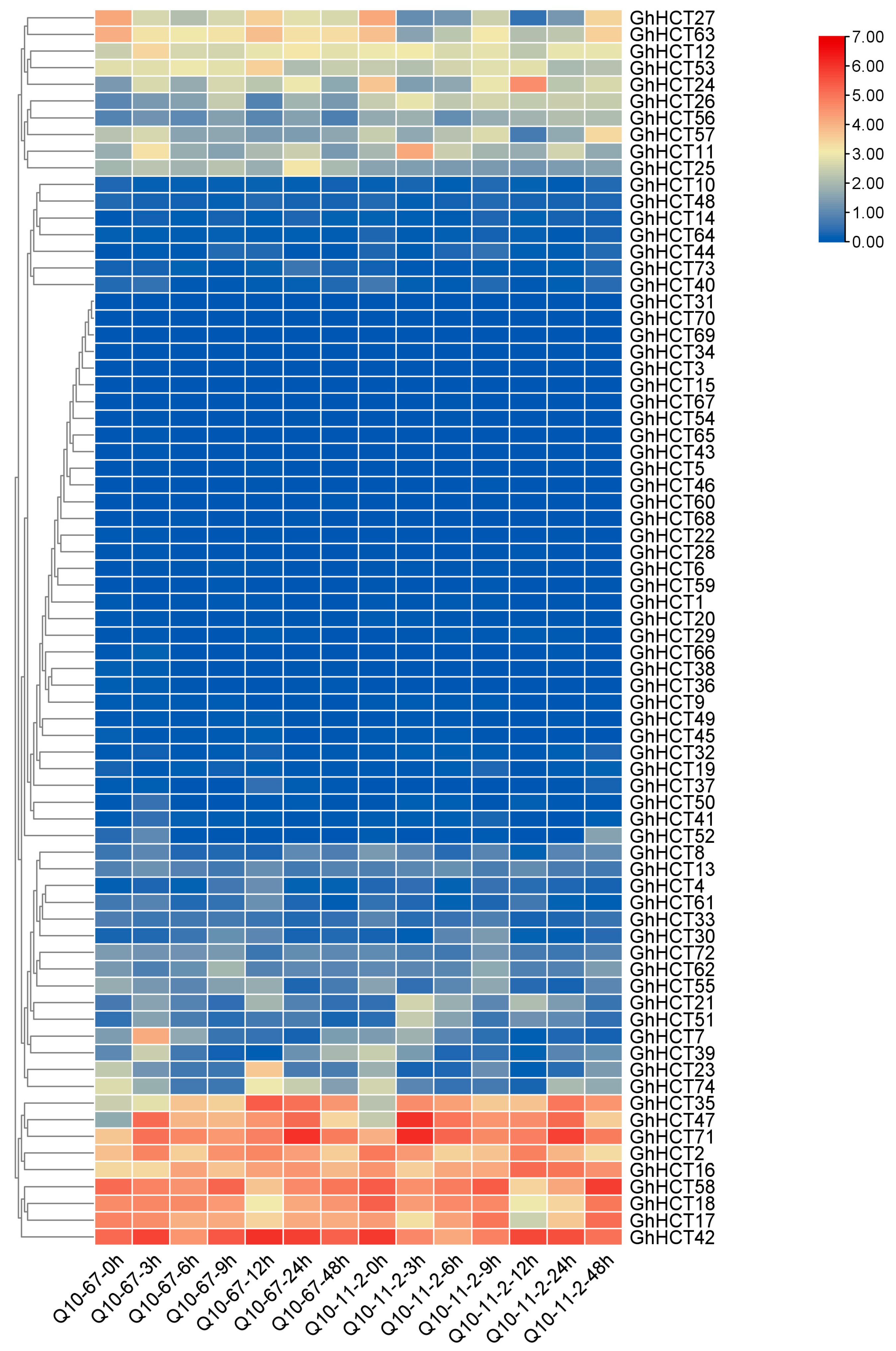
Transcriptome analysis of cotton responses to V. dahliae infection (Figure 6) revealed significant differences in the expression of GhHCT2, GhHCT35, GhHCT42, GhHCT47, GhHCT58, and GhHCT71.
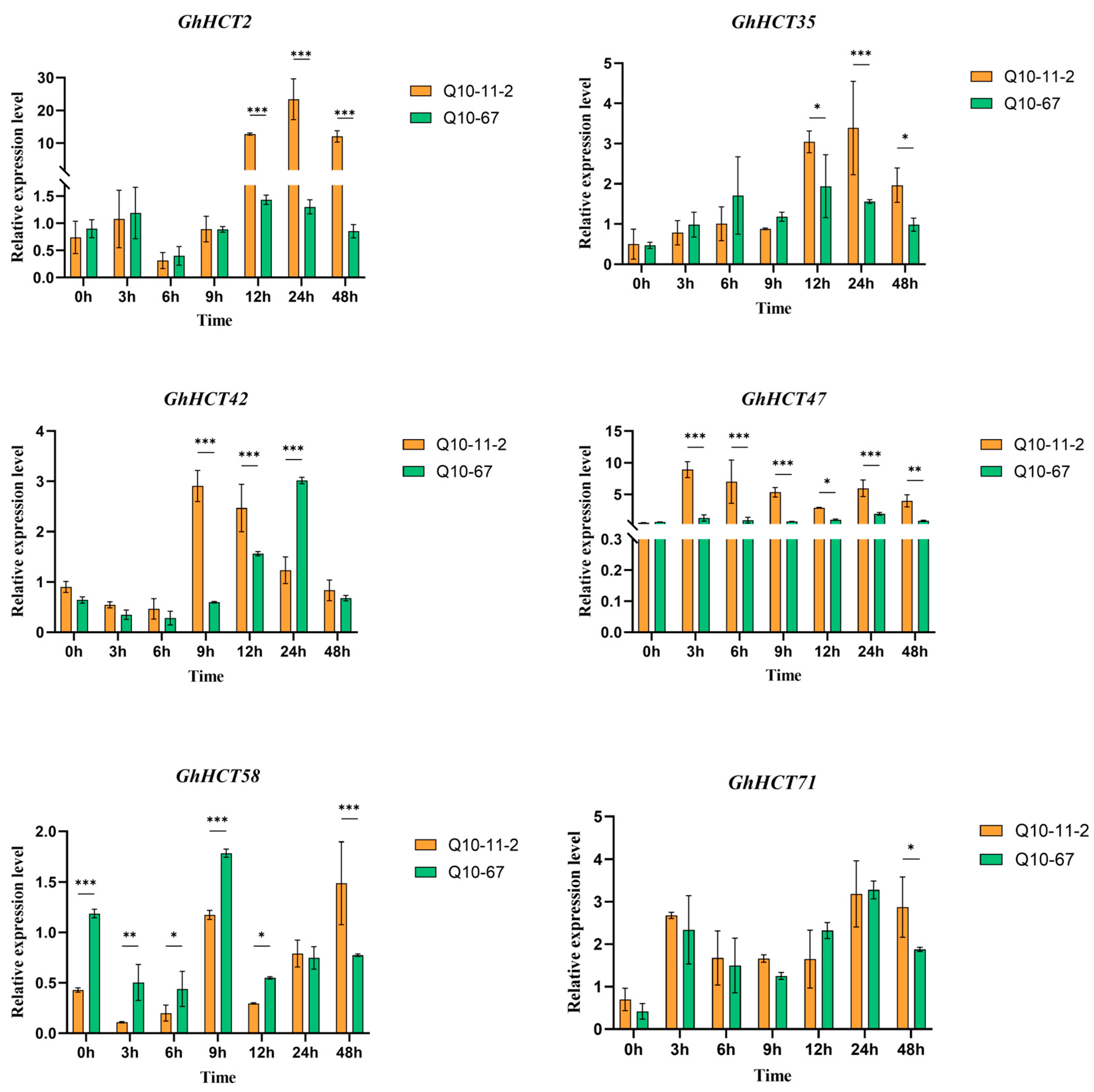
Further qRT–PCR analysis of these six GhHCT genes (Figure 7) revealed that the expression levels of GhHCT2, GhHCT35, GhHCT47 and GhHCT71 initially increased but then decreased after inoculation with V. dahliae. The results showed that at 12 h post-inoculation (hpi), the expression levels of GhHCT2, GhHCT35, and GhHCT47 were significantly higher in the resistant cultivar than in the susceptible cultivar (p < 0.05). Moreover, the induction fold change in these three genes in the resistant cultivar exceeded that in the susceptible cultivar by more than 2.5-fold at 24 hpi (p < 0.01). These statistical comparisons indicate that GhHCT2, GhHCT35, and GhHCT47 respond more rapidly and robustly to V. dahliae infection in the resistant variety, making them promising candidates for future functional studies aimed at elucidating their roles in early defense mechanisms.

3.8. Prediction of the GhHCT Protein–Protein Interaction Network

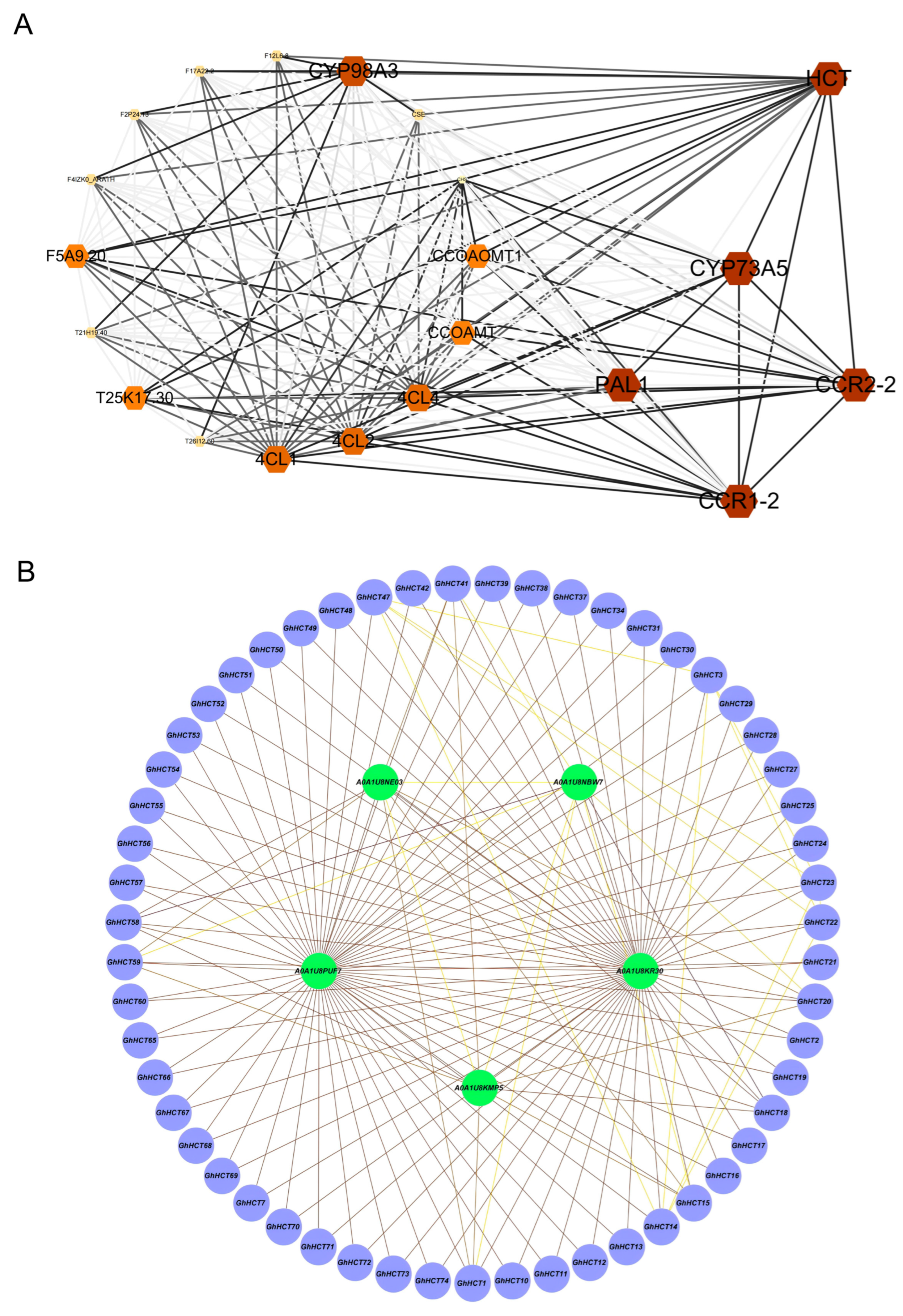
To further investigate the function of GhHCT, an interaction network analysis of its encoded protein was conducted via the STRING database. As shown in Figure 8, a total of 20 proteins were predicted to potentially interact with HCT, including three 4CL proteins, two CCOAMT proteins, and two CCR proteins. Additionally, PPI prediction revealed that the five members of the GhHCT gene family may have potential interactions with each other, and these proteins all belong to the Class IV subfamily (Figure 8B). The abbreviations used in Figure 8 are detailed in Supplementary Table S2.

4. Discussion

4.1. Identification and Evolutionary Characteristics of the G. hirsutum HCT Gene Family

Hydroxycinnamoyltransferase (HCT) is a key member of the BAHD acyltransferase superfamily, which not only catalyzes chlorogenic acid synthesis but also plays a central role in the phenylpropanoid pathway of lignin biosynthesis [24]. Lignin, a crucial structural component of the cell wall, plays a central role in plant responses to biotic and abiotic stresses [11,28,35]. The functional roles of the HCT gene family in lignin synthesis have been studied in plants such as cattail (Typha angustifolia L.) [36], Medicago sativa L. [37,38], Vitis vinifera L. [24], Gossypium barbadense [22], and Camellia sinensis [39], but its response mechanism to V. dahliae in G. hirsutum remains unclear.
This study provides the first comprehensive genome-wide analysis of the HCT gene family in allotetraploid upland cotton. This study first identified 74 GhHCT genes across the G. hirsutum genome and classified them into five subfamilies (Classes I–V) based on of phylogenetic relationships and domain characteristics (Figure 4). Protein domain predictions indicate that GhHCT proteins exhibit relatively conserved structures, with Motifs 1, 2, and 3 conserved across all subfamilies (Figure 2), suggesting functional conservation. However, significant variations in gene length and protein domains among subfamilies imply potential for functional diversification.

4.2. Regulatory Potential and Expression Specificity of GhHCT Genes

Within intricate regulatory networks, cis-acting regulatory elements serve as central commanders. By precisely orchestrating gene transcription, they govern the orderly progression of numerous biological processes [33,40,41]. This study revealed that the promoter region of the GhHCT gene is rich in elements associated with growth and development, hormone responses (including gibberellin, auxin, salicylic acid, and methyl jasmonate), and abiotic stress responses (including low temperature and drought). These findings hint at the possible involvement of the GhHCT gene in diverse regulatory networks, including those governing development and stress adaptation. However, as these predictions are based solely on sequence analysis (Figure 3), their functional relevance needs to be empirically tested. Tissue expression pattern analysis provides a theoretical basis for exploring the relationships between gene family members and growth and development [42]. Crucially, multiple GhHCT genes were strongly and rapidly induced by V. dahliae following inoculation. Among these genes, GhHCT2, GhHCT35, and GhHCT47 were significantly upregulated in the resistant cultivar compared to the susceptible one during the early infection phase (3–24 hpi). This expression pattern is consistent with the findings in A. thaliana, where HCT expression is rapidly induced upon pathogen challenge and correlates with enhanced disease resistance [22,24]. Similar observations have been reported in grapevine under low-temperature stress and in tea plants in response to biotic stress [24,39], suggesting that HCT-mediated defense responses are evolutionarily conserved across plant species.

4.3. Core Role and Mechanism of the GhHCT Gene in Resisting V. dahliae Stress

Lignin is a key structural component of cell walls and plays a central role in plant responses to biotic and abiotic stresses [35]. When plants are subjected to vascular pathogen invasion, complex defense mechanisms are activated. Cell wall lignification is a critical process in which physical barriers are formed to halt pathogen spread within vascular tissues [43,44]. Lignin deposition at infection sites acts as a physical barrier against pathogen invasion [16,18]. More recently, it has been demonstrated that enhanced lignification of vessel walls in cotton restricts the vascular spread of V. dahliae [5,18,44,45], highlighting the direct role of lignin in disease resistance. HCT regulates lignin biosynthesis, a finding validated across diverse plant species [2,19,22,23,46]. As a key “traffic controller”, HCT functions through a C3H-dependent double transesterification cycle (p-coumaroyl-CoA⇌p-coumaroylshikimic acid→caffeoylshikimic acid⇌caffeoyl-CoA) [47,48], precisely directing the flow of lignin monomers. The functions of HCT genes have been validated across multiple plant species. For example, disrupting its expression in poplar significantly alters lignin content and structure [23]; in A. thaliana and Medicago sativa L., HCT loss-of-function mutations were shown to reduce lignin content [49,50]. In A. thaliana specifically, HCT knockdown lines exhibit reduced lignin content and increased susceptibility to bacterial pathogens [49,51], providing direct evidence for the role of HCT in plant immunity. Collectively, these findings indicate that HCT is evolutionarily conserved in lignin synthesis across diverse plants, positioning it as a critical target for improving crop quality and biomass utilization.
A distinctive contribution of this study lies in its integration of genome-wide identification with cultivar-specific expression profiling under pathogen challenge. In plants, previous studies have confirmed that 4CL enhances resistance to V. dahliae by regulating lignin accumulation [52,53]. Functional analysis of the predicted interactors reveals that their corresponding gene families form the core regulatory network of the phenylpropanoid pathway: PAL and C4H initiate the pathway; 4CL determines metabolic branching; and HCT, CCR, and CCOAM synergistically regulate the synthesis of downstream metabolites, such as lignin [54,55]. Based on this network analysis, we hypothesize that GhHCT may contribute to plant disease resistance and promote lignin deposition by regulating the phenylpropanoid pathway. This hypothesis can be validated in subsequent studies using techniques such as yeast two-hybrid (Y2H) and Bimolecular Fluorescence Complementation (BiFC) assays. Based on the aforementioned theoretical framework and the expression profiling analysis conducted in this study, we focused on genes that showed sustained high expression following inoculation and were positively correlated with disease resistance. Through comprehensive evaluation of phylogenetic position, expression induction intensity, and promoter element characteristics, we identified three key candidate genes: GhHCT2, GhHCT35, and GhHCT47. The promoter regions of these genes are rich in methyl jasmonate (MeJA) and salicylic acid (SA) response elements—the core mediators of plant disease resistance signaling pathways. Therefore, we hypothesize that GhHCT2, GhHCT35, and GhHCT47 could be specifically activated by V. dahliae stress through MeJA/SA signaling, thereby enhancing lignification in vascular cells and ultimately limiting further pathogen spread. This hypothesis is consistent with recent studies showing that HCT-mediated lignin deposition contributes to resistance against V. dahliae in cotton and other crops [22,39].
In summary, this study represents the first genome-wide systematic analysis of the HCT gene family in upland cotton, comprehensively characterizing 74 GhHCT genes with respect to evolutionary relationships, structural diversity, and expression patterns. Three key candidate genes—GhHCT2, GhHCT35, and GhHCT47—were identified as specifically and rapidly induced in resistant cultivars upon V. dahliae infection, establishing a mechanistic link between HCT-mediated lignin biosynthesis and V. dahliae resistance. These findings have significant implications for cotton breeding, as these genes could serve as molecular markers for screening resistant germplasm or as direct targets for genetic improvement via overexpression, genome editing, or marker-assisted selection. Future studies should validate their functions in plants using genetic approaches such as VIGS, CRISPR/Cas9, and overexpression, combined with metabolomics analysis to investigate changes in lignin monomers, thereby fully elucidating the core role of the HCT gene family in cotton resistance to V. dahliae and providing a solid theoretical basis for disease-resistant breeding.

5. Conclusions

This study provides the first comprehensive characterization of the HCT gene family in allotetraploid upland cotton (G. hirsutum), identifying 74 members at the whole-genome level. These genes are unevenly distributed across the 20 chromosomes of G. hirsutum. Proteins within the GhHCT gene family exhibit relatively conserved structures, with Motif 1, Motif 2, and Motif 3 serving as conserved motifs shared across all subgroups. Gene structure analysis revealed that most members of the GhHCT gene family lack introns. Furthermore, the promoters of GhHCT family members contain cis-acting elements associated with plant growth and development, hormone responses, and stress tolerance. Phylogenetic tree and collinearity analyses revealed that 225 HCT genes are grouped into five subfamilies. G. hirsutum chromosome A05 harbors the greatest number of homologous gene pairs, which may share similar functions. RNA-seq and qRT–PCR analyses, combined with statistical comparison between resistant and susceptible cultivars, revealed that GhHCT2, GhHCT35, and GhHCT47 are significantly upregulated upon V. dahliae infection, with a faster and stronger response in the resistant genotype. The expression patterns of these genes, together with their promoter characteristics, suggest that they may contribute to defense responses by potentially interacting with defense signaling pathways and phenylpropanoid metabolic networks. However, direct functional validation through genetic and biochemical approaches is required to confirm their proposed roles in promoting lignin deposition and restricting pathogen spread. This study provides a solid foundation for further elucidating the functions of GhHCT genes and disease resistance mechanisms in cotton.

Supplementary Materials

The following supporting information can be downloaded at: https://www.mdpi.com/article/10.3390/biology15070520/s1.

Author Contributions

Conceptualization and writing—original draft preparation, Y.Z. and G.L.; methodology, B.L. and M.Z.; investigation, Y.H., S.W. and J.S.; writing—review and editing and funding acquisition, A.G. All authors have read and agreed to the published version of the manuscript.

Funding

This study was funded by the following institutions: Xinjiang Uygur Autonomous Region Key R&D Program (2024B02003-1); Xinjiang Uygur Autonomous Region “Tianshan Talents” Cultivation Program (2023SNGGGCC016); Xinjiang Cotton Industry Technology System Project, Department of Agriculture and Rural Affairs of Xinjiang Uygur Autonomous Region (XJARS-3); Demonstration and Promotion of Precision Green Pest and Disease Control Technologies for Cotton (2025650005000245); Graduate Student Scientific Research Innovation Project, Xinjiang Agricultural University (XJAUGRI2025007).

Institutional Review Board Statement

Not applicable.

Informed Consent Statement

Not applicable.

Data Availability Statement

The data presented in this study may be obtained from the corresponding author or first author upon request.

Conflicts of Interest

The authors declare no conflicts of interest.

References

  1. Zhao, Y.Y.; Wu, H.Y.; Zhao, T.; Huang, S.C.; Hao, Y.P.; Chen, Y.D.; Feng, S.L.; Wang, L.Y.; Zhu, Y.M.; Huang, K.; et al. Harnessing GhGRDP1 natural variation for enhanced cotton seed yield: A rhamnose-dependent strategy in breeding. J. Adv. Res. 2026, 82, 171–188. [Google Scholar] [CrossRef]
  2. Long, X.Q.; Nie, C.; He, J.Z.; Tian, Y.; Li, X.R.; Pi, X.; Wang, W.J.; Zhu, Q.K. Bioinformatics and Expression of Hydroxycinnamyl transferase Gene Family from Dendrobium officinale. Fujian J. Agric. Sci. 2022, 37, 492–502. [Google Scholar] [CrossRef]
  3. Zhuang, J.; Zhang, Y.D.; Sun, W.X.; Zong, J.; Li, J.J.; Dai, X.F.; Klosterman, S.J.; Chen, J.Y.; Tian, L.; Subbarao, K.V.; et al. The acyl-CoA-binding protein VdAcb1 is essential for carbon starvation response and contributes to virulence in Verticillium dahliae. Abiotech 2024, 5, 431–448. [Google Scholar] [CrossRef] [PubMed]
  4. Liu, Y.C.; Tang, Y.; Wu, J.H.; Song, X.L.; Liu, G. Research progress of biocontrol microbial strains in prevention of cotton wilt disease. Acta Microbiol. Sin. 2025, 65, 994–1006. [Google Scholar] [CrossRef]
  5. Wang, Y.J.; Qin, J.; Wei, M.M.; Liao, X.W.; Shang, W.; Chen, J.; Subbarao, K.V.; Hu, X. Verticillium dahliae Elicitor VdSP8 Enhances Disease Resistance Through Increasing Lignin Biosynthesis in Cotton. Plant Cell Environ. 2025, 1, 728–745. [Google Scholar] [CrossRef]
  6. Chen, Y.; Zhu, C.; Zhao, J.; Liu, T.; Gao, F.; Zhang, Y.; Duan, C. DNA methylation-dependent epigenetic regulation of Verticillium dahliae virulence in plants. Abiotech 2023, 4, 185–201. [Google Scholar] [CrossRef]
  7. Zhang, Y.; Xue, C.; Wang, X.; Zhang, J.H.; Wang, A.Y.; Yang, Y.X.; Jia, X.; Zhang, W.J.; Zhao, M. The control effect of endophytic fungus Fusarium equiseti FUS-8 on cotton Verticillium wilt and its effects on soil microbial communities. Plant Soil 2025, 512, 1221–1241. [Google Scholar] [CrossRef]
  8. Huang, S.; Wang, J.; Song, R.; Jia, A.; Xiao, Y.; Sun, Y.; Wang, L.; Mahr, D.; Wu, Z.; Han, Z.; et al. Balanced plant helper NLR activation by a modified host protein complex. Nature 2025, 639, 447–455. [Google Scholar] [CrossRef] [PubMed]
  9. Swaminathan, S.; Lionetti, V.; Zabotina, O.A. Plant Cell Wall Integrity Perturbations and Priming for Defense. Plants 2022, 11, 3539. [Google Scholar] [CrossRef]
  10. Mottiar, Y.; Karlen, S.D.; Goacher, R.E.; Ralph, J.; Mansfield, S.D. Metabolic engineering of p-hydroxybenzoate in poplar lignin. Plant Biotechnol. J. 2022, 21, 176–188. [Google Scholar] [CrossRef]
  11. Ma, L.; Wang, J.; Qiao, K.K.; Quan, Y.W.; Fan, S.L.; Wu, L.Q. Genome-Wide Analysis of Caffeoyl-CoA-O-methyltransferase (CCoAOMT) Family Genes and the Roles of GhCCoAOMT7 in Lignin Synthesis in Cotton. Plants 2024, 13, 2969. [Google Scholar] [CrossRef]
  12. Ngou, B.P.M.; Ding, P.; Jones, J.D.G. Thirty years of resistance: Zig-zag through the plant immune system. Plant Cell 2022, 34, 1447–1478. [Google Scholar] [CrossRef]
  13. Nawaz, M.; Sun, J.; Shabbir, S.; Khattak, W.A.; Ren, G.; Nie, X.; Bo, Y.; Javed, Q.; Du, D.; Sonne, C. A review of plants strategies to resist biotic and abiotic environmental stressors. Sci. Total Environ. 2023, 900, 165832. [Google Scholar] [CrossRef]
  14. Mi, X.; Li, W.; Chen, C.; Xu, H.; Wang, G.; Jin, X.; Zhang, D.; Guo, W. GhMPK9-GhRAF39_1-GhWRKY40a Regulates the GhERF1b- and GhABF2-Mediated Pathways to Increase Cotton Disease Resistance. Adv. Sci. 2024, 11, 2404400. [Google Scholar] [CrossRef]
  15. Zhang, W.W.; Zhang, H.C.; Liu, K.; Jian, G.L.; Qi, F.J.; Si, N. Large-scale identification of Gossypium hirsutum genes associated with Verticillium dahliae by comparative transcriptomic and reverse genetics analysis. PLoS ONE 2017, 12, 181609. [Google Scholar] [CrossRef]
  16. Dora, S.; Terrett, O.M.; Sánchez-Rodríguez, C. Plant-microbe interactions in the apoplast: Communication at the plant cell wall. Plant Cell 2022, 34, 1532–1550. [Google Scholar] [CrossRef] [PubMed]
  17. Zhang, M.J.; Wang, H.M.; Wang, S.Z.; Fan, P.; Xia, Q.Z. Research on the Mechanism of Plant Defense Against Vascular Pathogens. Plant Physiol. J. 2015, 51, 601–609. [Google Scholar] [CrossRef]
  18. Zhang, Y.L.; Zhao, L.H.; Li, D.P.; Li, Z.M.; Feng, H.J.; Feng, Z.L.; Wei, F.; Zhou, J.L.; Ma, Z.Y.; Yang, J.; et al. A comprehensive review on elucidating the host disease resistance mechanism from the perspective of the interaction between cotton and Verticillium dahliae. J. Cotton Res. 2025, 1, 5–19. [Google Scholar] [CrossRef]
  19. Zhao, X.; Zhao, Y.; Zeng, Q.; Liu, C. Cytochrome b5 diversity in green lineages preceded the evolution of syringyl lignin biosynthesis. Plant Cell 2024, 36, 2709–2728. [Google Scholar] [CrossRef] [PubMed]
  20. Chen, P.Z.; Wu, X.G.; Wei, Q.; Wu, X.; Ji, K.S. Research progress of lignin synthesis gene in Pinaceae. J. Nanjing For. Univ. 2017, 41, 169–176. [Google Scholar] [CrossRef]
  21. Kriegshauser, L.; Knosp, S.; Grienenberger, E.; Tatsumi, K.; Gütle, D.D.; Sørensen, I.; Herrgott, L.; Zumsteg, J.; Rose, J.K.C.; Reski, R.; et al. Function of the HYDROXYCINNAMOYL-CoA:SHIKIMATE HYDROXYCINNAMOYL TRANSFERASE is evolutionarily conserved in embryophytes. Plant Cell 2021, 33, 1472–1491. [Google Scholar] [CrossRef]
  22. Zheng, K.; Cai, Y.S.; Qu, Y.Y.; Teng, L.; Wang, C.Y.; Gao, J.; Chen, Q.J. Effect of the HCT Gene on Lignin Synthesis and Fiber Development in Gossypium barbadense. Plant Sci. 2023, 338, 111914. [Google Scholar] [CrossRef]
  23. Chao, N.; Qi, Q.; Li, S.; Ruan, B.; Jiang, X.N.; Gai, Y. Characterization and functional analysis of the Hydroxycinnamoyl-CoA: Shikimate hydroxycinnamoyl transferase (HCT) gene family in poplar. PeerJ 2021, 9, e10741. [Google Scholar] [CrossRef]
  24. Yan, W.; Chen, H.T.; Ye, Q.; Liu, G.C.; Liu, X.; Hou, L.X. Identification of the Grape HCT Gene Family and Their Responses toLow-temperature Stress. Biotechnol. Bull. 2025, 41, 175–186. [Google Scholar] [CrossRef]
  25. Wang, X.N.; Chai, X.F.; Gao, B.B.; Deng, C.; Günther, C.S.; Wu, T.; Zhang, X.Z.; Xu, X.F.; Han, Z.H.; Wang, Y. Multi-omics analysis reveals the mechanism of bHLH130 responding to low-nitrogen stress of apple rootstock. Plant Physiol. 2023, 191, 1305–1323. [Google Scholar] [CrossRef]
  26. Ma, Q.C. Molecular Marker-Assisted Selection for Resistance to Verticillium wilt in Cotton Breeding. Master’s Thesis, Xinjiang Agricultural University, Ürümqi, China, 2016. [Google Scholar]
  27. Ben, H.Y.; Qu, H.Y.; Huo, J.F.; Yao, Y.R.; Gao, W.; Hao, Y.J.; Wang, W.L.; Zhang, X.Y.; Hu, J.K.; Huang, R.R. Research on Inoculative Method of Eggplant Verticillium wilt and Evaluation of Resistance Source at Seedling Stage. Acta Agric. Univ. Jiangxiensis 2022, 44, 62–73. [Google Scholar] [CrossRef]
  28. Liu, B.; Kong, L.Y.; Ma, J.B.; Jiang, S.; Ma, L.L.; Xu, J.; Ren, W.C.; Ma, W. Systematic Analysis of the CCoAOMT Gene Family in Isatis indigotica and the Molecular Mechanism of CCoAOMT8-Mediated Flavonoid Synthesis Under Alkaline Stress Treatment. Biology 2025, 14, 1518. [Google Scholar] [CrossRef]
  29. Chen, C.J.; Wu, Y.; Li, J.W.; Wang, X.; Zeng, Z.H.; Xu, J.; Liu, Y.L.; Feng, J.T.; Chen, H.; He, Y.H.; et al. TBtools-II: A “one for all, all for one” bioinformatics platform for biological big-data mining. Mol. Plant 2023, 16, 1733–1742. [Google Scholar] [CrossRef] [PubMed]
  30. Zaman, Q.U.; Hussain, M.A.; Khan, L.U.; Cui, J.; Hui, L.; Khan, D.; Lv, W.; Wang, H. Genome-Wide Identification and Expression Pattern of the GRAS Gene Family in Pitaya (Selenicereus undatus L.). Biology 2022, 12, 11. [Google Scholar] [CrossRef] [PubMed]
  31. Wang, Y.Q.; Zheng, J.; Xu, Y.C.; Cai, X.Y.; Zhou, Z.L.; Hou, Y.Q.; Wang, K.B.; Wang, Y.H.; Chen, H.D.; Liu, F.; et al. Identification of cotton HDAC gene family and expression analysis of HDAC genes under Verticillium dahliae stress. Cotton Sci. 2021, 33, 469–481. [Google Scholar]
  32. Yang, Y.N.; Li, Y.; Guo, Z.Q.; Zhao, Y.X.; Zhou, X.K.; Han, Y.C.; Lin, X.H. Identification of DREB gene family in foxtail millet (Setaria italica) and analysis of its expression pattern in response to abiotic stress. Front. Plant Sci. 2025, 16, 1552120. [Google Scholar] [CrossRef]
  33. Deng, F.Y.; Zhang, Y.; Chen, Y.; Li, Y.X.; Li, L.; Lei, Y.X.; Li, Z.H.; Pi, B.; Chen, J.J.; Qiao, Z.Q. Genome-wide identification and expression analysis of the BBX gene family in Lagerstroemia indica grown under light stress. Int. J. Biol. Macromol. 2025, 297, 139899. [Google Scholar] [CrossRef]
  34. Hernandez-Garcia, C.M.; Finer, J.J. Identification and validation of promoters and cis-acting regulatory elements. Plant Sci. 2014, 217–218, 109–119. [Google Scholar] [CrossRef]
  35. Kai, K.; Mizutani, M.; Kawamura, N.; Yamamoto, R.; Tamai, M.; Yamaguchi, H.; Sakata, K.; Shimizu, B. Scopoletin is biosynthesized via ortho-hydroxylation of feruloyl CoA by a 2-oxoglutarate-dependent dioxygenase in Arabidopsis thaliana. Plant J. 2008, 55, 989–999. [Google Scholar] [CrossRef]
  36. Li, Y.; Su, L.; Huang, T.; Liu, H.; Tan, S.; Deng, Y.; Wang, Y.; Xiong, A. The telomere-to-telomere genome of Pucai (蒲菜) (Typha angustifolia L.): A distinctive semiaquatic vegetable with lignin and chlorophyll as quality characteristics. Hortic. Res. 2025, 12, uhaf79. [Google Scholar] [CrossRef] [PubMed]
  37. Zhou, Q.; Mao, P.; Luo, D.; Chai, X.T.; Deng, H.; Fang, Q.G.; Fang, L.F.; Nan, Z.B.; Wen, J.Q.; Liu, Z.P. Comparative transcriptome analyses reveal that the MsNST1 gene affects lignin synthesis in alfalfa (Medicago sativa L.). Crop J. 2022, 10, 1059–1072. [Google Scholar] [CrossRef]
  38. Thompson, A.L.; Pauli, D.; Tomasi, P.; Yurchenko, O.; Jenks, M.A.; Dyer, J.M.; Gore, M.A. Chemical variation for fiber cuticular wax levels in upland cotton (Gossypium hirsutum L.) evaluated under contrasting irrigation regimes. Ind. Crops Products 2017, 100, 153–162. [Google Scholar] [CrossRef]
  39. Chen, Y.F.; Yi, N.; Yao, S.B.; Zhuang, J.H.; Fu, Z.P.; Ma, J.; Yin, S.X.; Jiang, X.L.; Liu, Y.J.; Gao, L.P.; et al. CsHCT-Mediated Lignin Synthesis Pathway Involved in the Response of Tea Plants to Biotic and Abiotic Stresses. J. Agric. Food Chem. 2021, 69, 10069–10081. [Google Scholar] [CrossRef] [PubMed]
  40. Xia, C.Y.; Zhang, X.; Zuo, Y.W.; Zhang, X.X.; Zhang, H.; Wang, B.R.; Deng, H.P. Genome-wide identification, expression analysis, and abiotic stress response of the CBL and CIPK gene families in Artocarpus nanchuanensis. J. Agric. Food Chem. 2024, 267, 131454. [Google Scholar] [CrossRef]
  41. Wittkopp, P.J.; Kalay, G. Cis-regulatory elements: Molecular mechanisms and evolutionary processes underlying divergence. Nat. Rev. Genet. 2011, 13, 59–69. [Google Scholar] [CrossRef]
  42. Sun, J.L.; Cui, X.K.; Zhang, J.Q.; Meng, F.S.; Li, J.G.; Zhou, S.H.; Wu, C.G.; Zhou, P.; Sun, S.L.; Han, L. Genome-wide identification, tissue expression pattern, and salt stress response analysis of the NAC gene family in Thinopyrum elongatum. BMC Plant Biol. 2025, 25, 643. [Google Scholar] [CrossRef]
  43. Wei, C.Y.; Wang, C.F.; Zhang, X.; Huang, W.Y.; Xing, M.H.; Han, C.Y.; Lei, C.B.; Zhang, Y.P.; Zhang, X.Y.; Cheng, K.; et al. Histone deacetylase GhHDA5 negatively regulates Verticillium wilt resistance in cotton. Plant Physiol. 2024, 196, 2918–2935. [Google Scholar] [CrossRef]
  44. Cheng, G.F.; Li, C.Z.; Zhang, G.S.; Fernando, W.G.D.; Bi, Y.Q.; Lei, J.F.; Dai, P.H.; Su, X.F.; Li, Y. A Cotton Laccase Confers Disease Resistance Against Verticillium dahliae by Promoting Cell Wall Lignification. Mol. Plant Pathol. 2025, 26, e70125. [Google Scholar] [CrossRef]
  45. Guo, Y.T.; Qian, Y.M.; Fu, Y.R.; Miao, K.; Wang, X.; Tian, H.; Fu, R.; Yang, F.; Guo, J.; Li, K.; et al. The R2R3-MYB transcription factor GhMYB315 associates with GhVQ28 to enhance Verticillium wilt resistance in upland cotton by regulating phenylpropanoid metabolism. Plant J. 2025, 124, e70562. [Google Scholar] [CrossRef] [PubMed]
  46. Zhou, Z.; Zhang, H.; Yao, J.; Gao, Q.; Wang, Y.; Liu, Z.; Zhang, Y.; Tian, Y.; Yan, Z.; Zhu, Y.; et al. The MdERF61-mdm-miR397b-MdLAC7b module regulates apple resistance to Fusarium solani via lignin biosynthesis. Plant Physiol. 2024, 197, kiae518. [Google Scholar] [CrossRef]
  47. Ma, C. Cloning and Expressiong of Genesrelated to Stone Cells Andbioinformatic Analysis of Hct gene Family. Master’s Thesis, Nanjing Agricultural University, Nanjing, China, 2015. [Google Scholar]
  48. Wang, X.X.; Xue, Y.C.; Zhao, W.C. The research progress of C3H/HCT in lignin biosynthesis. Chem. Life 2008, 650–653. [Google Scholar] [CrossRef]
  49. Gallego-Giraldo, L.; Escamilla-Trevino, L.; Jackson, L.A.; Dixon, R.A. Salicylic acid mediates the reduced growth of lignin down-regulated plants. Proc. Natl. Acad. Sci. USA 2011, 108, 20814–20819. [Google Scholar] [CrossRef]
  50. Bhattarai, K.; Rajasekar, S.; Dixon, R.A.; Monteros, M.J. Agronomic Performance and Lignin Content of HCT Down-Regulated Alfalfa ( Medicago sativa L.). Bioenergy Res. 2018, 11, 505–515. [Google Scholar] [CrossRef]
  51. Jin, S.; Song, Y.; Wang, Y.; Guo, Y.; Fan, S.; Gan, Q.; Luo, N.; Fan, Y.; Ni, Y. MYB46 integrates cuticle and cell wall remodeling to coordinate drought tolerance and pathogen resistance in Arabidopsis. New Phytol. 2025, 248, 2764–2780. [Google Scholar] [CrossRef] [PubMed]
  52. Ma, Q.H. Lignin Biosynthesis and Its Diversified Roles in Disease Resistance. Genes 2024, 15, 295. [Google Scholar] [CrossRef] [PubMed]
  53. Liu, J.; Wang, Z.C.; Chen, B.; Wang, G.N.; Ke, H.F.; Zhang, J.; Jiao, M.J.; Wang, Y.; Xie, M.X.; Li, Y.; et al. Expression analysis of the R2R3-MYB gene family in upland cotton and functional study of GhMYB3D5 in regulating Verticillium wilt resistance. J. Integr. Agric. 2024, 23, 3294–3310. [Google Scholar] [CrossRef]
  54. Ninkuu, V.; Aluko, O.O.; Yan, J.; Zeng, H.; Liu, G.; Zhao, J.; Li, H.; Chen, S.; Dakora, F.D. Phenylpropanoids metabolism: Recent insight into stress tolerance and plant development cues. Front. Plant Sci. 2025, 16, 1571825. [Google Scholar] [CrossRef] [PubMed]
  55. Wagner, A.; Tobimatsu, Y.; Phillips, L.; Flint, H.; Torr, K.; Donaldson, L.; Pears, L.; Ralph, J. CCoAOMT suppression modifies lignin composition in Pinus radiata. Plant J. 2011, 67, 119–129. [Google Scholar] [CrossRef] [PubMed]
Figure 1. Chromosomal localization analysis of the GhHCT gene family. The scale on the left denotes chromosome length. Gene names are mentioned in red. GhHCT genes are distributed on 20 chromosomes of G. hirsutum.
Biology 15 00520 g001
Figure 2. Analysis of the conserved motifs and gene structure of the GhHCT gene family. (A) GhHCT conservative domain analysis. According to the similarity of gene conserved motifs, they are divided into five class, which are represented by different colors. (B) Exon–intron structure analysis.
Biology 15 00520 g002
Figure 3. The cis-acting elements of the promoter regions (2000 bp upstream of start codon) of GhHCT genes.
Biology 15 00520 g003
Figure 4. Phylogenetic analysis of the GhHCT gene family. The HCT genes are divided into Class I, Class II, Class III, Class IV, and Class V, which are represented by different colors. The HCT genes of Theobroma cacao are represented by red circles, the HCT genes of Nicotiana tabacum are represented by orange triangles, the HCT genes of G. hirsutum are represented by blue stars, and the HCT genes of Oryza sativa and Arabidopsis thaliana are represented by green squares and purple triangles.
Biology 15 00520 g004
Figure 5. Collinearity analysis of the GhHCT family genes. (A) Collinearity analysis of G. hirsutum with Arabidopsis thaliana and Nicotiana tabacum. Chromosomes of different species represented by colored bars; gray lines indicate all collinearity modules, while blue lines specifically highlight 76 collinear gene pairs. (B) Intraspecific collinearity analysis of the GhHCT genes.
Biology 15 00520 g005
Figure 6. Heatmap of GhHCT gene family expression at different time points during V. dahliae infection in different cotton varieties. The color gradient represents log2 fold change, ranging from higher (red) to lower (blue).
Biology 15 00520 g006
Figure 7. Expression analysis of the key GhHCT genes in response to V. dahliae treatment in different cotton varieties. qRT-PCR results for 6 differentially expressed GhHCT genes at 0 h, 3 h, 6 h, 9 h, 12 h, 24 h, and 48 h post-V. dahliae infection. The GAPDH gene serves as the internal control. The horizontal axis represents treatment time, and the vertical axis represents average expression levels. Statistical significance is indicated in the figures using asterisks (* p < 0.05, ** p < 0.01, or *** p < 0.001).
Biology 15 00520 g007
Figure 8. Protein–protein interaction network analysis of HCT gene family. (A) Inter-family interactions between HCT and other gene families; (B) intra-family interactions within HCT gene family. The intensity of interactions is represented by the circles’ darkness in the figure, with darker circles indicating stronger interactions and lighter circles indicating weaker ones.
Biology 15 00520 g008
Table 1. Physical and chemical properties of the GhHCT gene family in G. hirsutum.
Gene RenameGene NameProtein
Length
(aa)
Molecular Weight
(KDa)
Isoelectric
Point
Instability IndexAliphatic IndexGRAVYSubcellular
Localization
Predicted
GhHCT1GhChrA03G0712.143347.84 5.2532.1295.03−0.048Cytoplasm
GhHCT2GhChrA04G1205.146651.40 8.2433.881.14−0.195Chloroplast
GhHCT3GhChrA05G0578.143348.25 7.1644.1585.59−0.202Cytoplasm
GhHCT4GhChrA05G1241.145750.90 5.449.4890−0.053Cytoplasm
GhHCT5GhChrA05G1244.146151.41 5.3250.688.35−0.059Cytoplasm
GhHCT6GhChrA05G1245.145650.56 6.0449.6588.27−0.118Cytoplasm
GhHCT7GhChrA05G3785.147753.89 8.5938.9779.94−0.223Nucleus
GhHCT8GhChrA05G3821.144248.42 8.6831.6890.41−0.038Cytoplasm
GhHCT9GhChrA05G3901.144549.10 5.6435.3492.22−0.073Cytoplasm
GhHCT10GhChrA06G0077.144850.66 6.9538.5596.76−0.085Cytoplasm
GhHCT11GhChrA06G0199.145550.77 6.0242.5486.77−0.149Nucleus
GhHCT12GhChrA06G0200.145550.98 5.8943.0688.04−0.161Nucleus
GhHCT13GhChrA06G0589.145850.90 7.5745.8487.1−0.007Nucleus
GhHCT14GhChrA06G2600.144550.18 9.0637.3281.75−0.346Nucleus
GhHCT15GhChrA07G0597.143848.76 5.4831.59100.160.019Cytoplasm
GhHCT16GhChrA07G2867.147853.33 8.0337.0885.04−0.118Cytoplasm/Nucleus
GhHCT17GhChrA08G1431.144148.94 6.234.6481.79−0.284Cytoplasm
GhHCT18GhChrA08G3015.144950.09 5.5435.6288.82−0.106Cytoplasm
GhHCT19GhChrA09G0511.144549.60 635.3880.45−0.309Cytoplasm
GhHCT20GhChrA10G0715.144348.92 5.5930.3490.27−0.112Cytoplasm
GhHCT21GhChrA10G1754.145651.50 7.2843.5584.01−0.177Nucleus
GhHCT22GhChrA10G1819.143648.66 7.734.4685.21−0.263Cytoplasm
GhHCT23GhChrA10G1836.143648.55 6.0334.3595.05−0.147Cytoskeleton
GhHCT24GhChrA10G2916.148053.84 8.2342.9673.33−0.247Nucleus
GhHCT25GhChrA10G2917.146652.15 8.5744.0674.1−0.266Chloroplast
GhHCT26GhChrA10G2987.144448.91 9.631.6893.04−0.012Cytoplasm
GhHCT27GhChrA11G0125.145149.64 5.4832.0578.23−0.31Cytoskeleton
GhHCT28GhChrA11G0828.146451.45 7.1630.6786.81−0.124Cytoplasm
GhHCT29GhChrA11G2229.144049.08 6.3533.488.23−0.064Chloroplast
GhHCT30GhChrA11G2230.144048.76 6.6431.2884.68−0.177Chloroplast
GhHCT31GhChrA11G2231.143348.88 5.8338.8392.56−0.153Mitochondrion
GhHCT32GhChrA12G1811.149654.97 6.540.5382.94−0.047Chloroplast
GhHCT33GhChrA13G0475.147052.26 6.1543.686.62−0.029Cytoplasm
GhHCT34GhChrA13G1398.144849.99 6.3240.0391.65−0.113Cytoplasm
GhHCT35GhChrA13G2137.145450.44 7.5741.7791.06−0.027Cytoplasm
GhHCT36GhChrA13G2139.143548.41 6.3936.1898.670.139Cytoplasm
GhHCT37GhChrA13G2140.146151.23 7.9443.293.730.041Chloroplast
GhHCT38GhChrA13G2141.143548.51 6.3938.6599.10.12Cytoplasm
GhHCT39GhChrD04G0770.147753.69 8.239.3379.52−0.232Cytoplasm
GhHCT40GhChrD04G0805.144248.29 8.6731.8391.09−0.028Cytoplasm
GhHCT41GhChrD04G0868.144549.15 5.6435.891.35−0.086Cytoplasm
GhHCT42GhChrD04G1682.146651.47 7.9736.1581.97−0.182Chloroplast
GhHCT43GhChrD05G0573.143348.36 7.6242.1586.26−0.203Cytoplasm
GhHCT44GhChrD05G1224.145150.32 5.3750.0988.82−0.035Cytoplasm
GhHCT45GhChrD05G1225.146151.39 5.5350.4690.04−0.057Cytoplasm
GhHCT46GhChrD05G1226.145250.35 5.9351.1486.24−0.131Cytoplasm
GhHCT47GhChrD05G1240.146752.02 6.4734.7382.06−0.239Mitochondrion
GhHCT48GhChrD06G0074.144850.61 6.5938.7995.69−0.09Nucleus
GhHCT49GhChrD06G0183.145450.64 6.2848.1887.58−0.069Cytoplasm
GhHCT50GhChrD06G0188.145551.18 5.9349.6586.53−0.145Cytoplasm
GhHCT51GhChrD06G0195.145550.65 6.3242.4186.13−0.16Cytoplasm
GhHCT52GhChrD06G0321.143848.82 5.8435.0692.79−0.062Cytoplasm
GhHCT53GhChrD06G0565.145750.76 6.7946.4983.22−0.014Nucleus
GhHCT54GhChrD06G0566.147352.99 6.0745.1683.04−0.049Cytoplasm
GhHCT55GhChrD07G2756.147252.33 6.134.8883.03−0.136Nucleus
GhHCT56GhChrD07G2757.147152.10 5.9736.1986.73−0.136Chloroplast
GhHCT57GhChrD08G1324.144148.98 5.834.9680.68−0.317Cytoplasm
GhHCT58GhChrD08G2898.144949.79 5.5433.9389.47−0.072Cytoplasm
GhHCT59GhChrD10G0858.144348.99 5.9330.1390.93−0.108Cytoplasm
GhHCT60GhChrD10G1381.145751.59 8.6143.8984.68−0.177Nucleus
GhHCT61GhChrD10G2819.148053.86 8.3841.2574.75−0.247Chloroplast
GhHCT62GhChrD10G2879.144749.38 9.4132.0593.71−0.007Cytoplasm
GhHCT63GhChrD11G0113.147352.41 5.5730.0782.22−0.238Chloroplast
GhHCT64GhChrD11G0825.146451.38 6.4731.488.69−0.081Cytoplasm
GhHCT65GhChrD11G2217.143348.93 5.9340.9393.9−0.144Mitochondrion
Disclaimer/Publisher’s Note: The statements, opinions and data contained in all publications are solely those of the individual author(s) and contributor(s) and not of MDPI and/or the editor(s). MDPI and/or the editor(s) disclaim responsibility for any injury to people or property resulting from any ideas, methods, instructions or products referred to in the content.