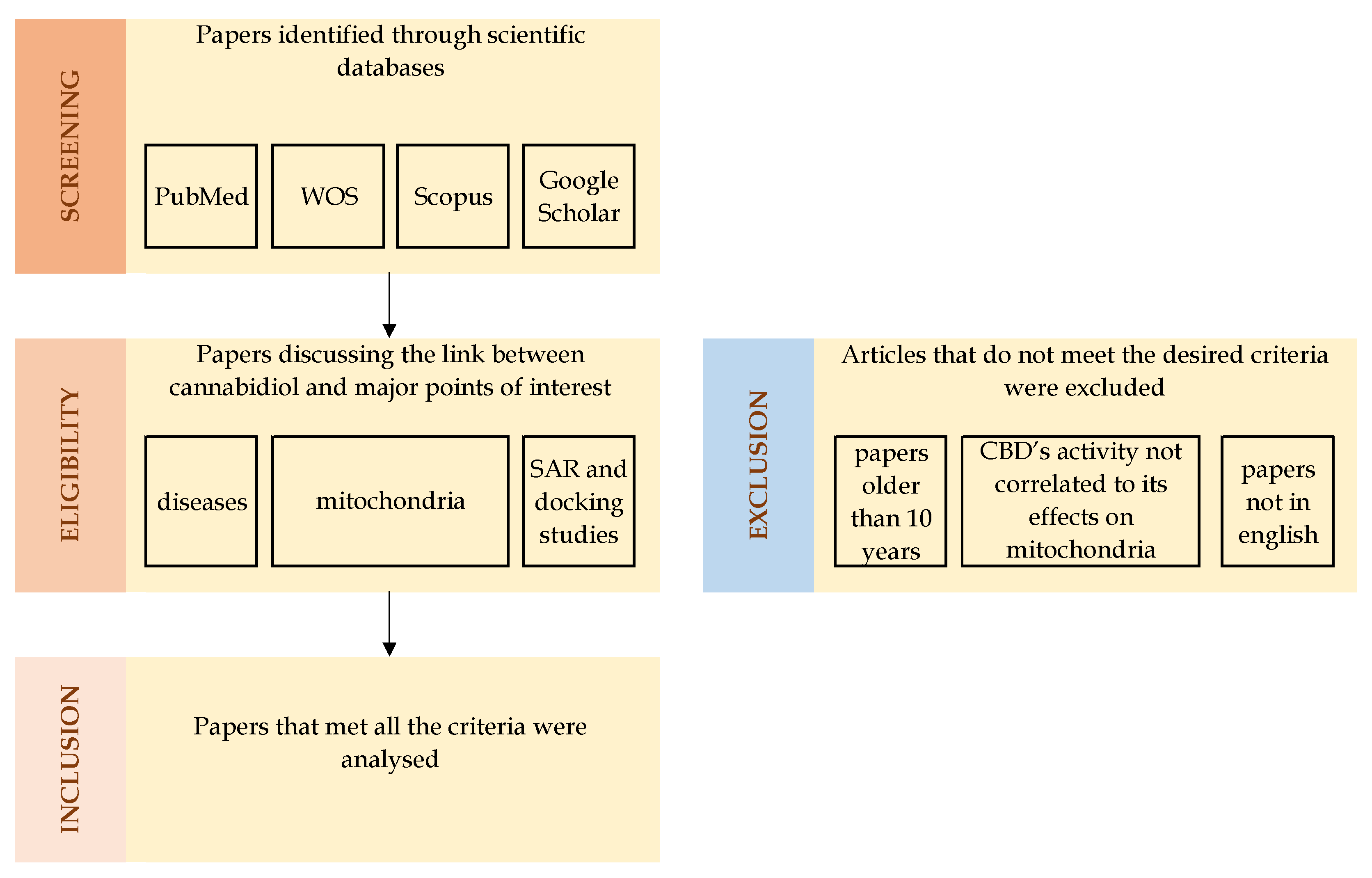
The Therapeutic Crossroad Between Mitochondria and Cannabidiol: A Mini-Review
 , ,
, , 
Simple Summary
Abstract
1. Introduction
2. Cannabidiol: Structure, Receptor Interactions, and Mitochondrial Effects
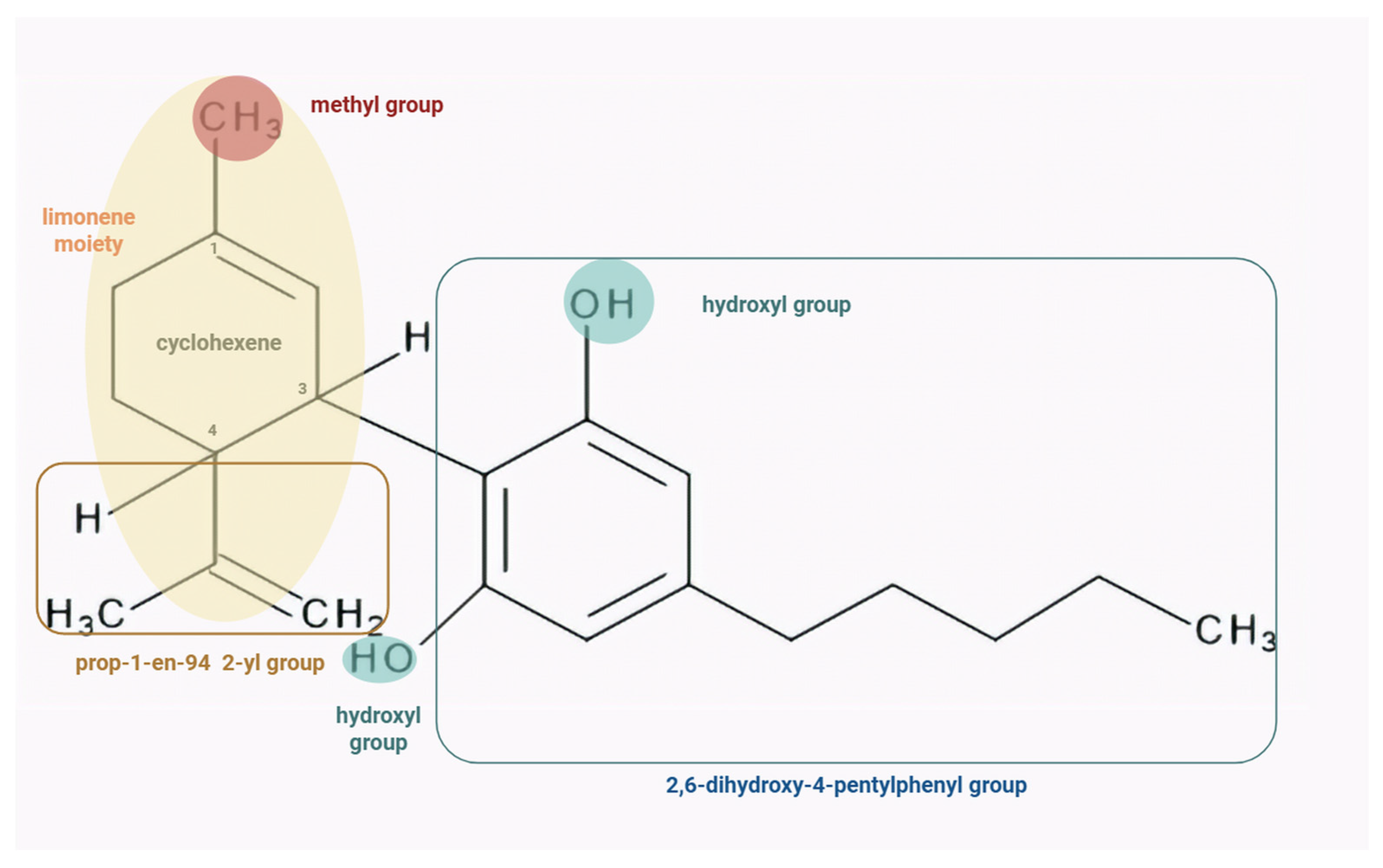
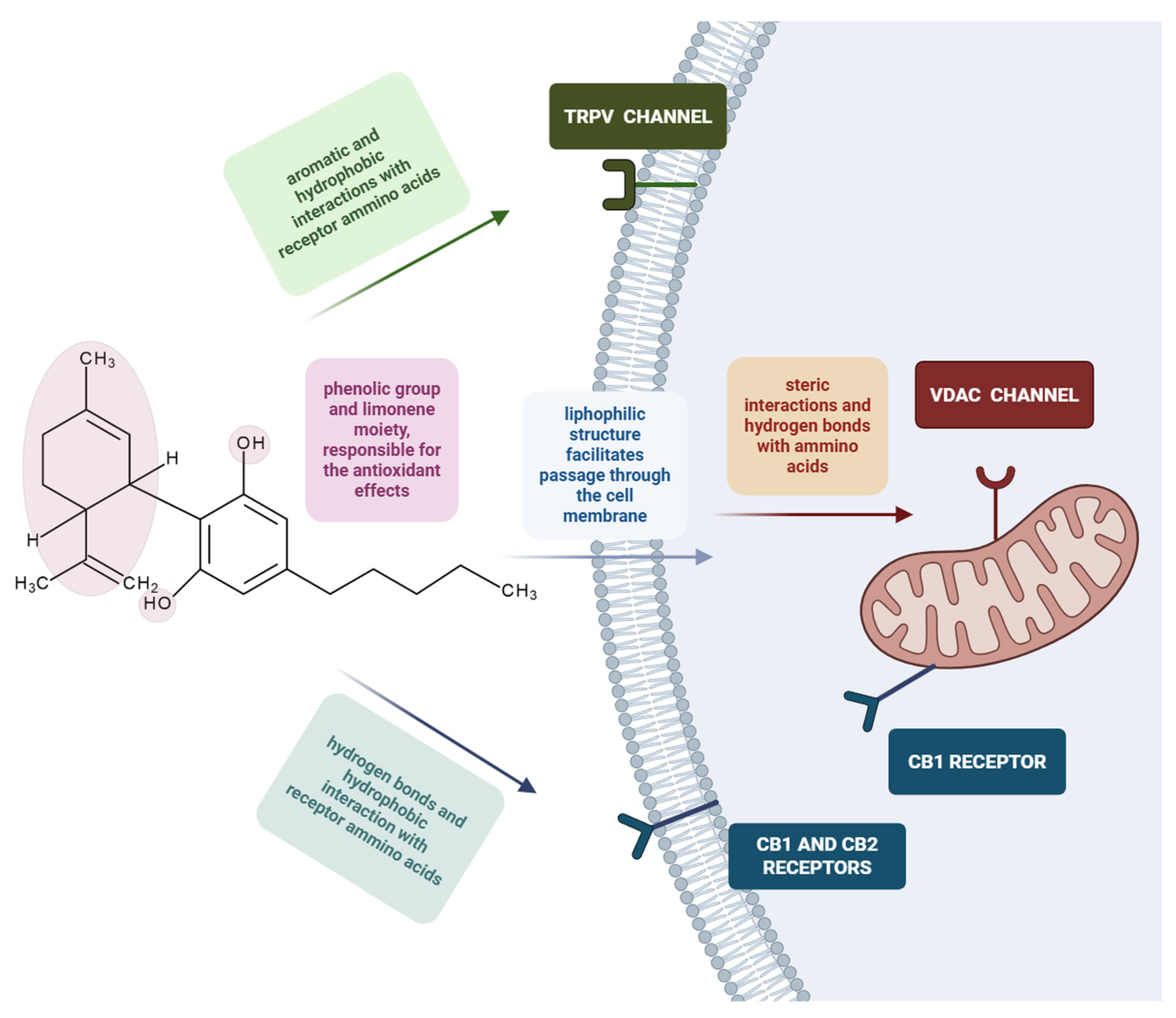
2.1. CBD Structure and Structure–Activity Relationship
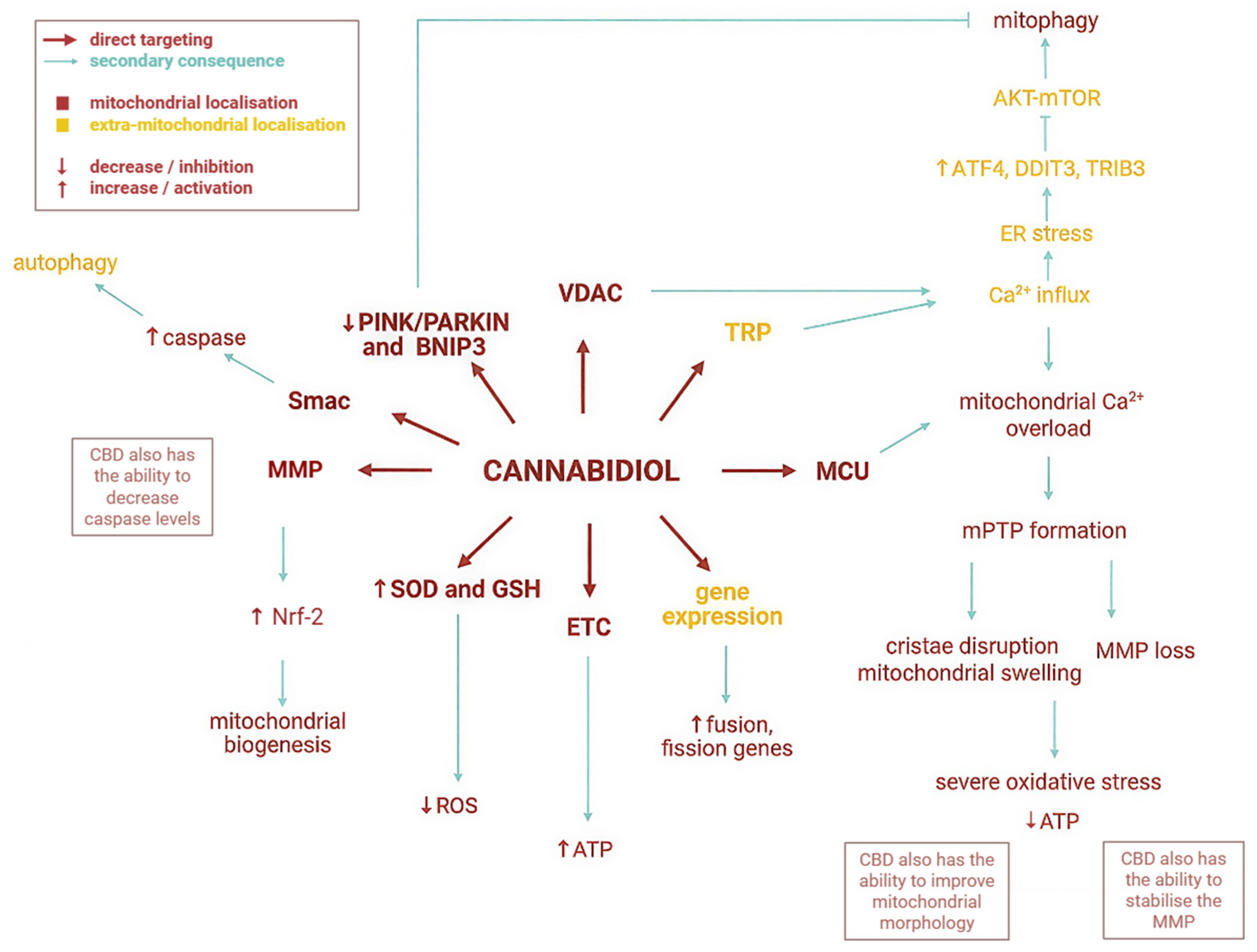
2.2. CBD-Mediated Mitochondrial Modulation

| Receptor Type | Receptor Subtype | Localisation | Binding | Binding Affinity | Effect | Effects on Mitochondria Due to CBD-Receptor Binding | Reference |
|---|---|---|---|---|---|---|---|
| Transient receptor potential Vaniloid receptor (TRPV) channels | TRPV1 | cell membrane (nervous system, epithelium). | Chain A of the receptor, (Phe, Val and Asn ammino acids) and chain B (Phe), through aromatic and hydrophobic interactions. | strong | agonist | CBD → TRPV1 activation → Ca2+ imbalance → ROS production → impaired MMP | [18] |
| TRPV2 | cell membrane (nervous system). | Hydrophobic pocket of the receptor (aromatic and hydrophobic residues in the S5 and S6 helices), through pi-stacking and hydrophobic interactions. | strong | agonist | CBD → TRPV2 activation → increase in intracellular Ca2+ levels → potential mitochondrial Ca2+-dependent effects. No direct evidence of mitochondrial effects via TRPV2. Mitochondrial Ca2+-dependent effects reported for CBD include altered mitochondrial Ca2+ homeostasis, modulation of mitochondrial Ca2+ transporters (NCX: alters Ca2+ flux depending on cell state; VDAC1: reduces channel conductance, promoting Ca2+ accumulation and apoptosis), bidirectional regulation of Ca2+ signalling (increasing basal Ca2+ in resting cells, reducing oscillations in highly excitable cells), and, under higher Ca2+ loads, mPTP and mitochondrial-driven apoptosis. | [8,18,19] | |
| TRPV4 | cell membrane (muscle tissue, epithelial tissue). | Chain A of the receptor (Tyr, Asn, Phe), through hydrophobic interactions. | strong | agonist | CBD → TRPV4 activation → increase in intracellular Ca2+ levels → mitophagy initiation through ER stress and the ATF4–DDIT3–TRIB3–AKT–mTOR axis, and other potential mitochondrial Ca2+-dependent effects. Mitochondrial Ca2+-dependent effects reported for CBD include altered mitochondrial Ca2+ homeostasis, modulation of mitochondrial Ca2+ transporters (NCX: alters Ca2+ flux depending on cell state; VDAC1: reduces channel conductance, promoting Ca2+ accumulation and apoptosis), bidirectional regulation of Ca2+. signalling (increasing basal Ca2+ in resting cells, reducing oscillations in highly excitable cells), and, under higher Ca2+ loads, mPTP and mitochondrial-driven apoptosis. | [8,18,20] | |
| Voltage-dependent anion channel (VDAC) | VDAC1 | outer mitochondrial membrane | CBD phenolic groups form steric interactions with Thr and Gly, and hydrogen bonds with Gln, His, and Leu. | strong | Stabilises VDAC1 in a Ca2+-permeable subconductance state | CBD → VDAC1 → increase in Ca2+ permeability → Entrance of Ca2+ into the intermembrane space → MCU-mediated mitochondrial matrix Ca2+ overload → mitochondrial permeability transition pore formation, mitochondrial membrane potential loss, cristae disruption, mitochondrial swelling → dysfunction of mitochondria, loss of ATP production, severe oxidative stress. | [11,18] |
| Cannabinoid receptors (CB) | CB1 | cell membrane, outer mitochondrial membrane | CBD hydroxyl group forms a hydrogen bond with Asp, while its alkyl chain forms hydrophobic contacts with Phe, Ile, Ile and Phe. | strong (predicted), low (experimental). | antagonist | CBD may indirectly modulate mitochondrial processes by antagonising CB1 receptor signalling, as CB1 activation has been shown to suppress mitochondrial respiration and energy metabolism; however, several mitochondrial effects of CBD have also been reported to occur independently of CB1. | [14,18,21,22] |
| CB2 | cell membrane | CBD hydroxyl group forms H-bond with Val and hydrophobic interactions with Phe, Ala and Trp. | strong (predicted), low (experimental). | partial agonist | No direct CB2-mediated mitochondrial effects of CBD have been identified in the available literature. | [23] |

3. CBD and Mitochondria in Disease
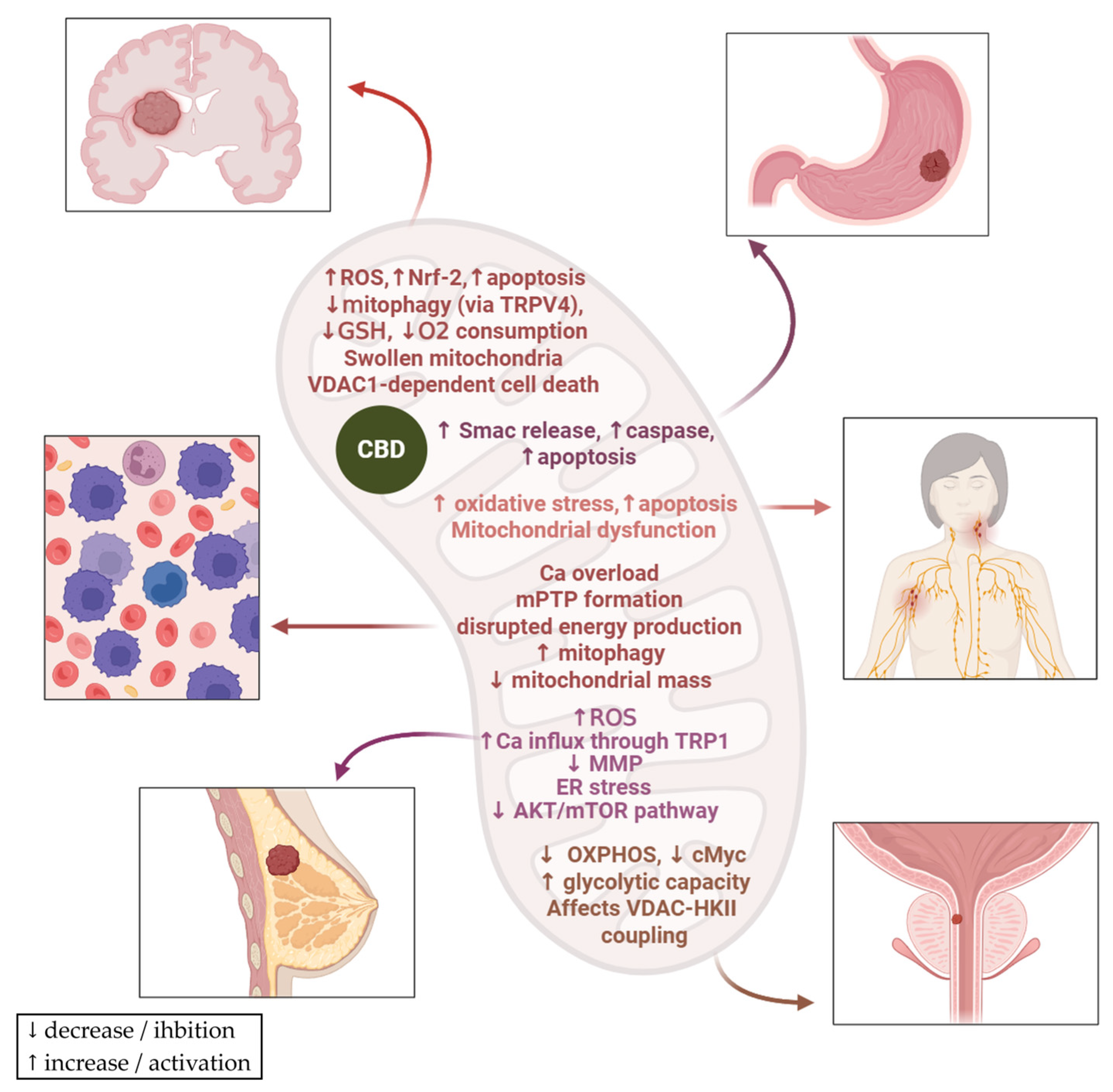
3.1. CBD and Mitochondria in Cancer
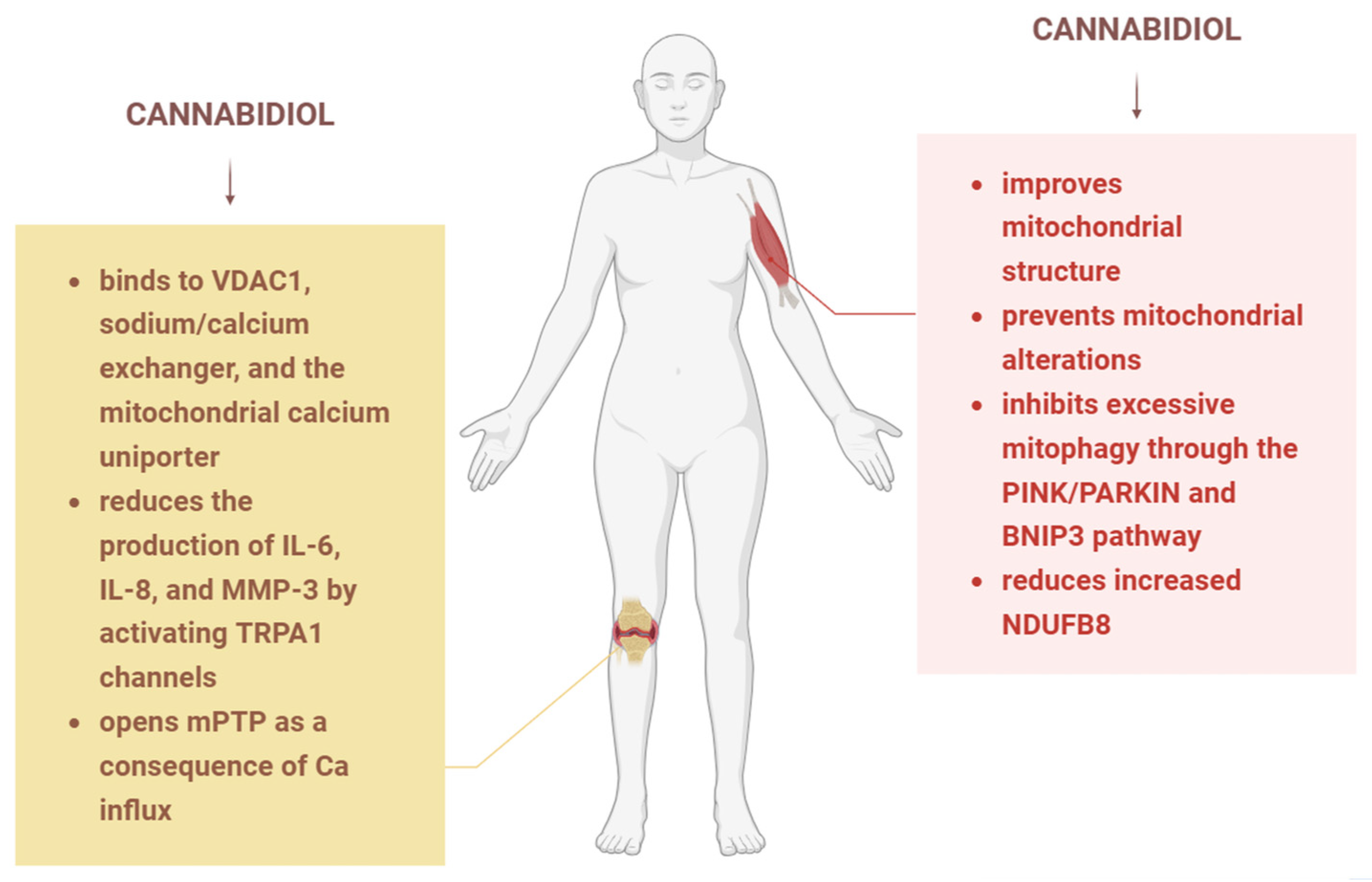
3.2. CBD and Mitochondria in Rheumatoid Arthritis
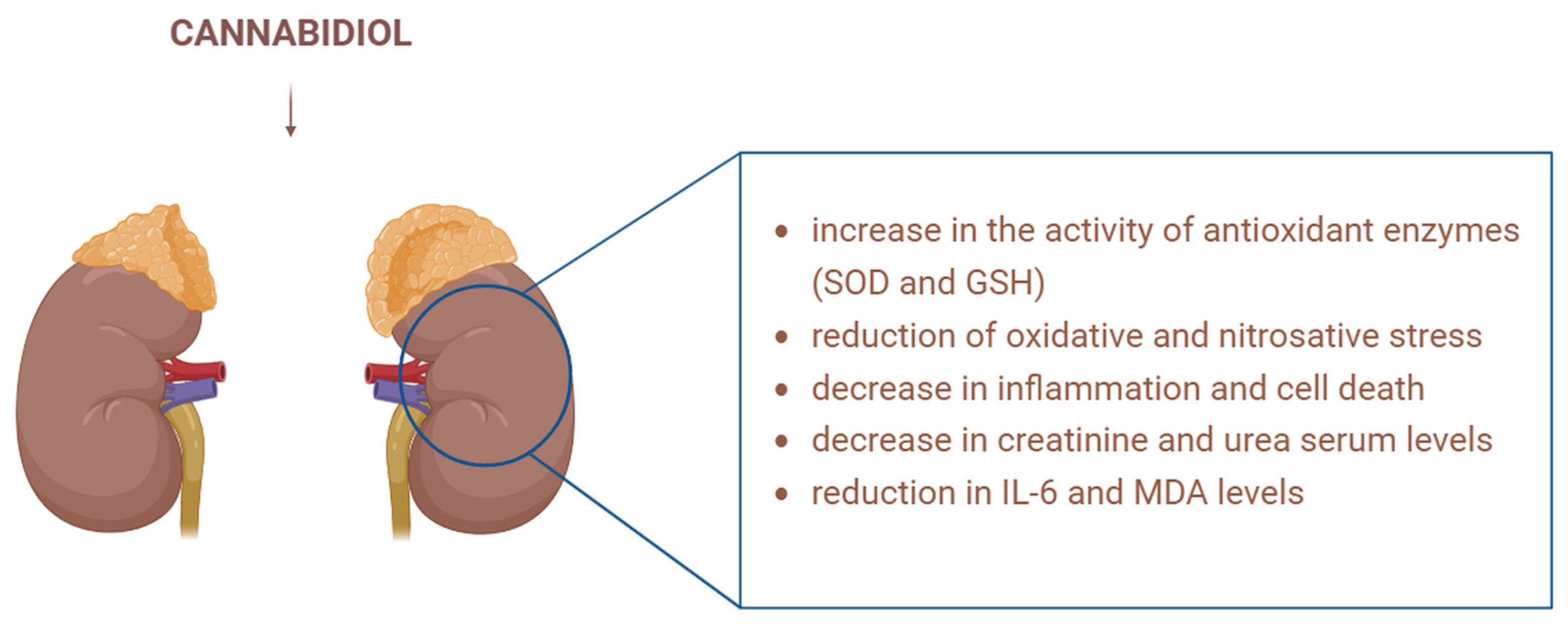
3.3. CBD and Mitochondria in Kidney Disease
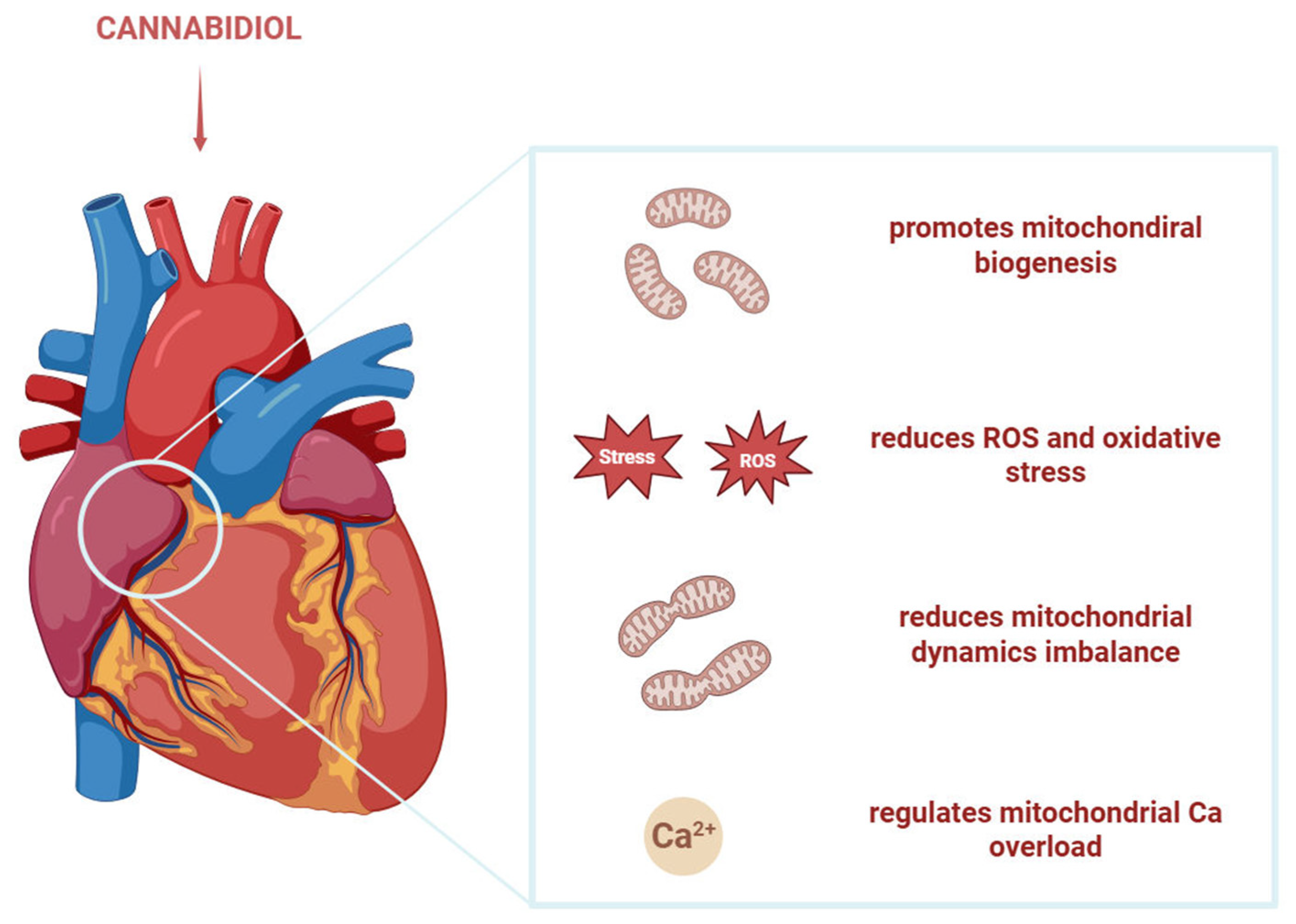
3.4. CBD and Mitochondria in Cardiomyopathies
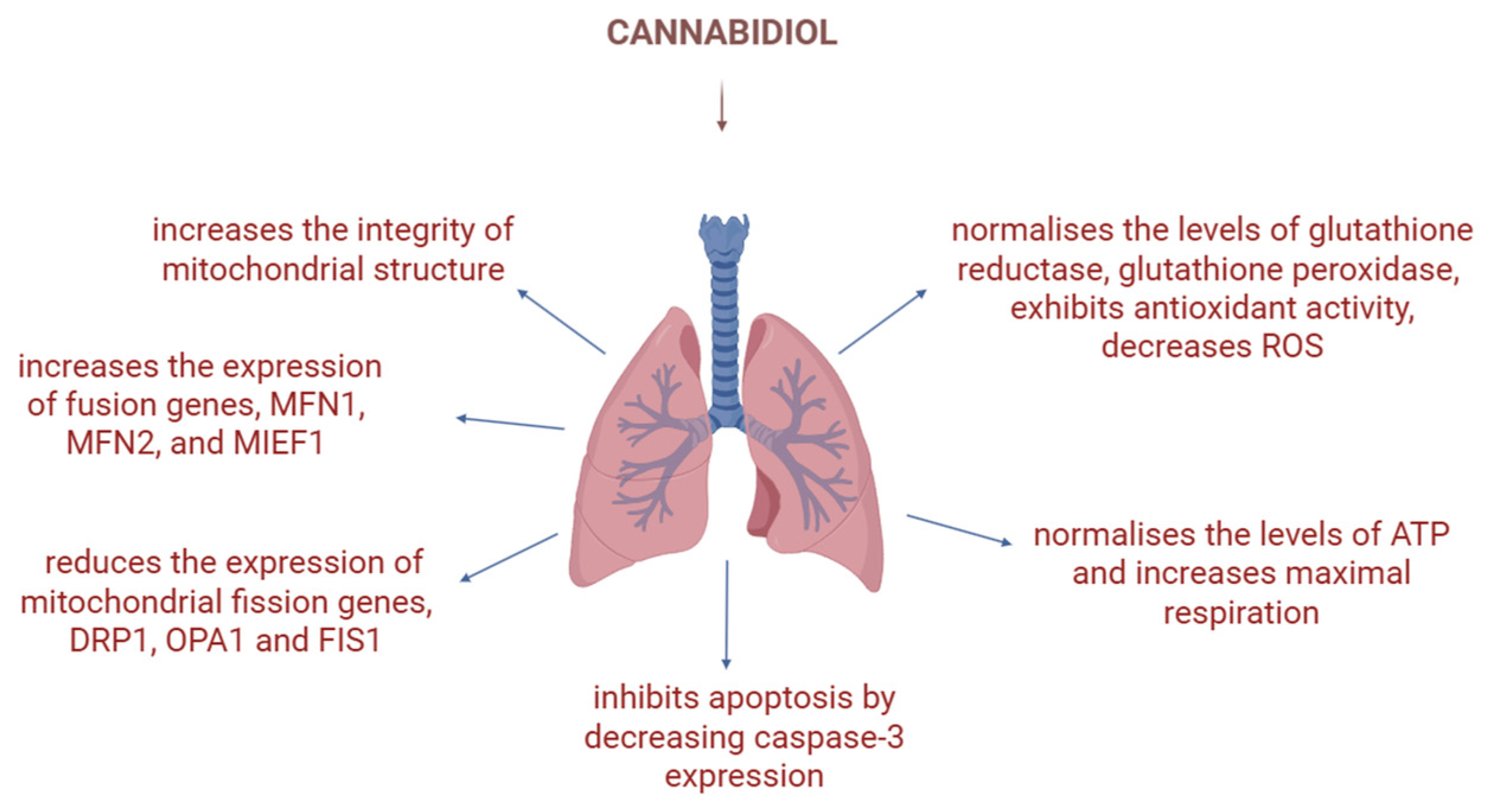
3.5. CBD and Mitochondria in Pulmonary Disease
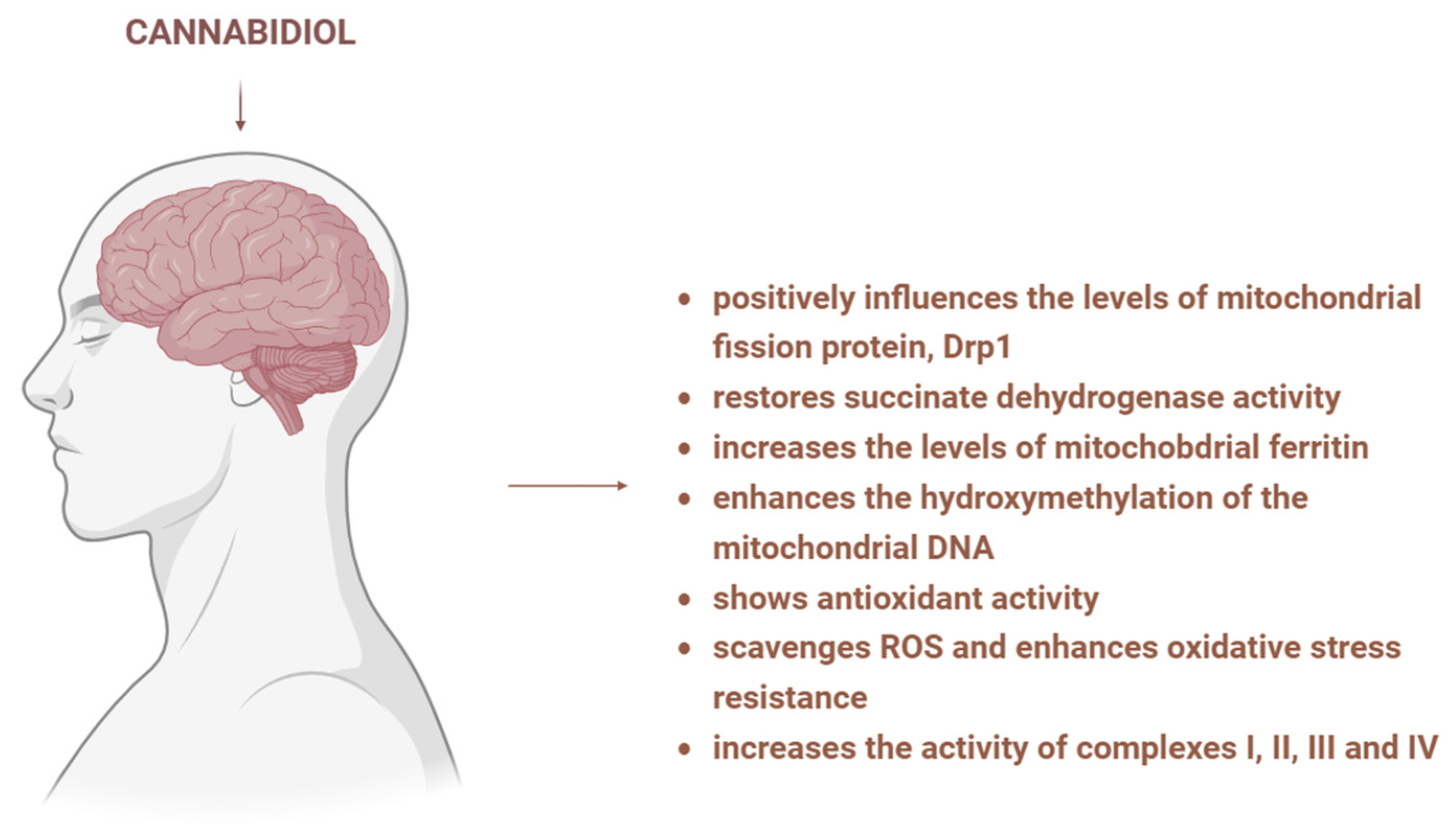
3.6. CBD and Mitochondria in Neuronal Pathologies
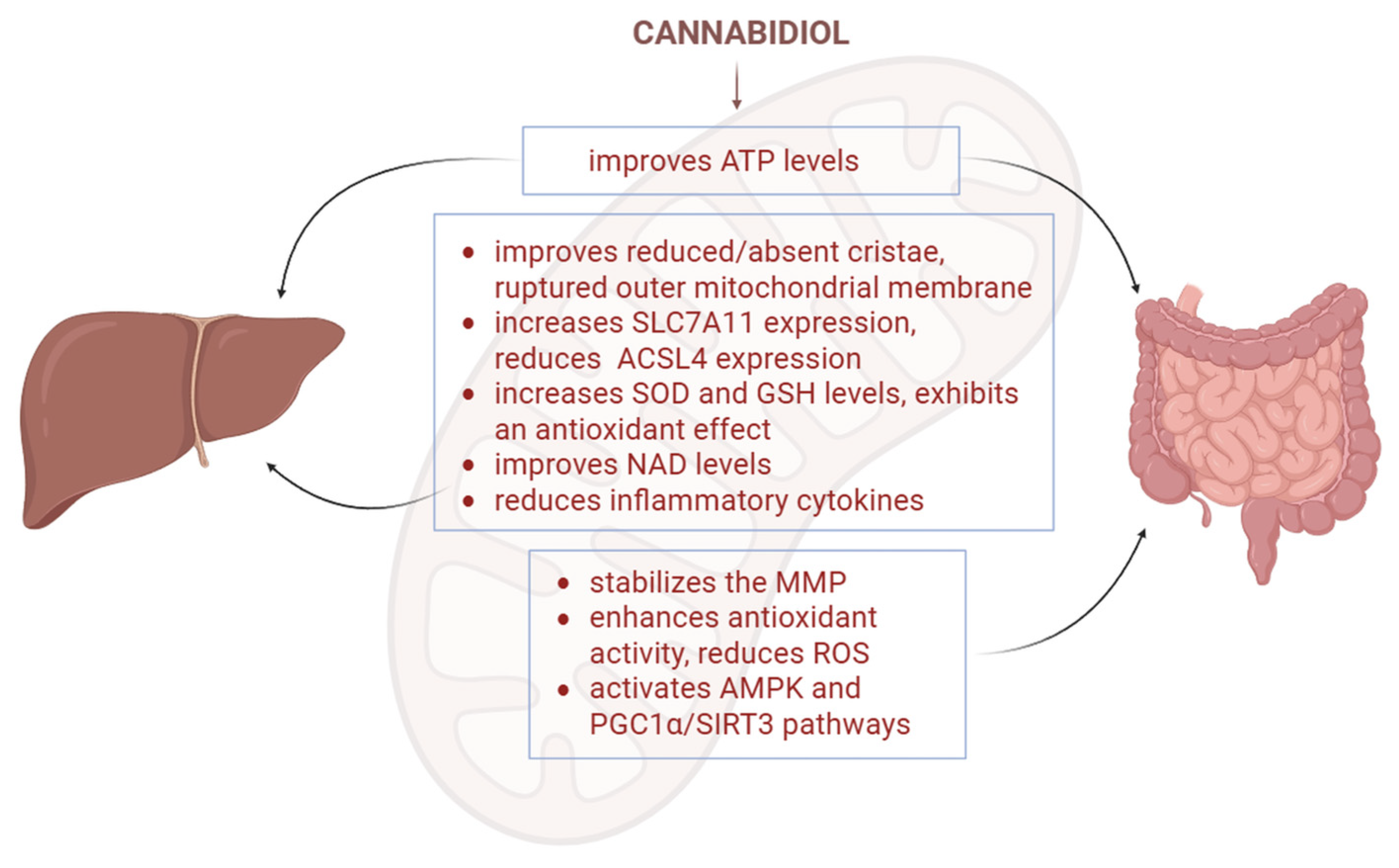
3.7. CBD and Mitochondria in Gastrointestinal Pathologies
3.8. CBD and Mitochondria in Liver Pathologies
3.9. CBD and Mitochondria in Muscle Conditions
4. Dose–Response Relationship
5. Formulations for Enhancing CBD’s Mitochondrial Activity
6. Future Directions
7. Conclusions
Author Contributions
Funding
Institutional Review Board Statement
Informed Consent Statement
Data Availability Statement
Conflicts of Interest
Abbreviations
| ATP | Adenosine triphosphate |
| CBD | Cannabidiol |
| CB1 | Cannabinoid receptor 1 |
| CB2 | Cannabinoid receptor 2 |
| FDA | Food and drug administration |
| GBM | Glioblastoma multiform |
| GSH | Glutathione |
| HKII | Hexokinase II |
| HRPC | Hormone-refractory prostate cancer |
| MAO | Monoamino oxidase |
| MCU | Mitochondrial calcium uniporter |
| MDA | Malondialdehyde |
| MMP | Mitochondrial membrane potential |
| mPTP | Mitochondrial permeability transition pore |
| MTTPP | Mitochondria-targeting triphenylphosphonium |
| NCX | Na/Ca exchanger |
| NHL | Non-Hodgkin lymphoma |
| PAH | Pulmonary arterial hypertension |
| RANKL | Receptor activator of NF-κB ligand |
| ROS | Reactive oxigen species |
| SOD | Superoxide dismutase |
| T-ALL | Acute lymphoblastic leukaemia |
| THC | Tetrahydrocannabinol |
| TNF | Tumour necrosis factor |
| TRPA1 | Transient receptor potential ankyrin |
| TRPV | Vaniloid receptors-transient receptor potential cation channel |
| UK | United Kingdom |
| VDAC | Voltage-dependent anion channel |
| XIAP | X-linked inhibitor of apoptosis protein |
References
- Naya, N.M.; Kelly, J.; Corna, G.; Golino, M.; Polizio, A.H.; Abbate, A.; Toldo, S.; Mezzaroma, E. An Overview of Cannabidiol as a Multifunctional Drug: Pharmacokinetics and Cellular Effects. Molecules 2024, 29, 473. [Google Scholar] [CrossRef]
- Naya, N.M.; Kelly, J.; Corna, G.; Golino, M.; Abbate, A.; Toldo, S. Molecular and Cellular Mechanisms of Action of Cannabidiol. Molecules 2023, 28, 5980. [Google Scholar] [CrossRef]
- Castillo-Arellano, J.; Canseco-Alba, A.; Cutler, S.J.; León, F. The Polypharmacological Effects of Cannabidiol. Molecules 2023, 28, 3271. [Google Scholar] [CrossRef]
- Chen, L.; Sun, Y.; Li, J.; Liu, S.; Ding, H.; Wang, G.; Li, X. Assessing Cannabidiol as a Therapeutic Agent for Preventing and Alleviating Alzheimer’s Disease Neurodegeneration. Cells 2023, 12, 2672. [Google Scholar] [CrossRef] [PubMed]
- Sun, S.; Hu, F.; Wu, J.; Zhang, S. Cannabidiol Attenuates OGD/R-Induced Damage by Enhancing Mitochondrial Bioenergetics and Modulating Glucose Metabolism via Pentose-Phosphate Pathway in Hippocampal Neurons. Redox Biol. 2017, 11, 577–585. [Google Scholar] [CrossRef]
- Chen, W.; Zhao, H.; Li, Y. Mitochondrial Dynamics in Health and Disease: Mechanisms and Potential Targets. Signal Transduct. Target. Ther. 2023, 8, 333. [Google Scholar] [CrossRef] [PubMed]
- Javadov, S.; Kozlov, A.V.; Camara, A.K.S. Mitochondria in Health and Diseases. Cells 2020, 9, 1177. [Google Scholar] [CrossRef]
- Chan, J.Z.; Duncan, R.E. Regulatory Effects of Cannabidiol on Mitochondrial Functions: A Review. Cells 2021, 10, 1251. [Google Scholar] [CrossRef]
- National Center for Biotechnology Information. PubChem Compound Summary for CID 644019, Cannabidiol. Available online: https://pubchem.ncbi.nlm.nih.gov/compound/Cannabidiol (accessed on 19 March 2026).
- Hossain, K.R.; Alghalayini, A.; Valenzuela, S.M. Current Challenges and Opportunities for Improved Cannabidiol Solubility. Int. J. Mol. Sci. 2023, 24, 14514. [Google Scholar] [CrossRef] [PubMed]
- Olivas-Aguirre, M.; Torres-López, L.; Valle-Reyes, J.S.; Hernández-Cruz, A.; Pottosin, I.; Dobrovinskaya, O. Cannabidiol Directly Targets Mitochondria and Disturbs Calcium Homeostasis in Acute Lymphoblastic Leukemia. Cell Death Dis. 2019, 10, 779. [Google Scholar] [CrossRef]
- Prandi, C.; Blangetti, M.; Namdar, D.; Koltai, H. Structure-Activity Relationship of Cannabis Derived Compounds for the Treatment of Neuronal Activity-Related Diseases. Molecules 2018, 23, 1526. [Google Scholar] [CrossRef]
- Hebert-Chatelain, E. Cannabinoids and Mitochondria. In Mitochondrial Physiology and Vegetal Molecules; Elsevier: Amsterdam, The Netherlands, 2021; pp. 247–265. [Google Scholar]
- Malheiro, R.F.; Carmo, H.; Carvalho, F.; Silva, J.P. Cannabinoid-Mediated Targeting of Mitochondria on the Modulation of Mitochondrial Function and Dynamics. Pharmacol. Res. 2023, 187, 106603. [Google Scholar] [CrossRef]
- Borges, R.S.; da Silva, A.B.F. Cannabidiol as an Antioxidant. In Handbook of Cannabis and Related Pathologies; Elsevier: Amsterdam, The Netherlands, 2017; pp. e122–e130. [Google Scholar]
- Li, H.; Liu, Y.; Tian, D.; Tian, L.; Ju, X.; Qi, L.; Wang, Y.; Liang, C. Overview of Cannabidiol (CBD) and Its Analogues: Structures, Biological Activities, and Neuroprotective Mechanisms in Epilepsy and Alzheimer’s Disease. Eur. J. Med. Chem. 2020, 192, 112163. [Google Scholar] [CrossRef] [PubMed]
- Pereira, S.R.; Hackett, B.; O’Driscoll, D.N.; Sun, M.C.; Downer, E.J. Cannabidiol Modulation of Oxidative Stress and Signalling. Neuronal Signal. 2021, 5, NS20200080. [Google Scholar] [CrossRef]
- Melo, E.S.A.; Asevedo, E.A.; Duarte-Almeida, J.M.; Nurkolis, F.; Syahputra, R.A.; Park, M.N.; Kim, B.; do Couto, R.O.; de A. Ribeiro, R.I.M. Mechanisms of Cell Death Induced by Cannabidiol Against Tumor Cells: A Review of Preclinical Studies. Plants 2025, 14, 585. [Google Scholar] [CrossRef]
- Luo, H.; Rossi, E.; Saubamea, B.; Chasseigneaux, S.; Cochois, V.; Choublier, N.; Smirnova, M.; Glacial, F.; Perrière, N.; Bourdoulous, S.; et al. Cannabidiol Increases Proliferation, Migration, Tubulogenesis, and Integrity of Human Brain Endothelial Cells through TRPV2 Activation. Mol. Pharm. 2019, 16, 1312–1326. [Google Scholar] [CrossRef] [PubMed]
- Phuong, T.T.T.; Redmon, S.N.; Yarishkin, O.; Winter, J.M.; Li, D.Y.; Križaj, D. Calcium Influx through TRPV4 Channels Modulates the Adherens Contacts between Retinal Microvascular Endothelial Cells. J. Physiol. 2017, 595, 6869–6885. [Google Scholar] [CrossRef] [PubMed]
- Jakowiecki, J.; Abel, R.; Orzeł, U.; Pasznik, P.; Preissner, R.; Filipek, S. Allosteric Modulation of the CB1 Cannabinoid Receptor by Cannabidiol—A Molecular Modeling Study of the N-Terminal Domain and the Allosteric-Orthosteric Coupling. Molecules 2021, 26, 2456. [Google Scholar] [CrossRef]
- Drummond-Main, C.D.; Ahn, Y.; Kesler, M.; Gavrilovici, C.; Kim, D.Y.; Kiroski, I.; Baglot, S.L.; Chen, A.; Sharkey, K.A.; Hill, M.N.; et al. Cannabidiol Impairs Brain Mitochondrial Metabolism and Neuronal Integrity. Cannabis Cannabinoid Res. 2022, 8, 283–298. [Google Scholar] [CrossRef]
- Pandey, P. Protein-Ligand Interaction Studies and Identification of New Drug Protein-Ligand Interaction Studies and Identification of New Drug like Hits as Cannabinoid Receptor Modulators. Ph.D. Thesis, University of Mississippi, University, MS, USA, 2015. [Google Scholar]
- Si, J.; Sun, L.; Qin, Y.; Peng, L.; Gong, Y.; Gao, C.; Shen, W.; Li, M. Cannabinoids Improve Mitochondrial Function in Skeletal Muscle of Exhaustive Exercise Training Rats by Inhibiting Mitophagy through the PINK1/PARKIN and BNIP3 Pathways. Chem. Biol. Interact. 2024, 389, 110855. [Google Scholar] [CrossRef]
- Huang, T.; Xu, T.; Wang, Y.; Zhou, Y.; Yu, D.; Wang, Z.; He, L.; Chen, Z.; Zhang, Y.; Davidson, D.; et al. Cannabidiol Inhibits Human Glioma by Induction of Lethal Mitophagy through Activating TRPV4. Autophagy 2021, 17, 3592–3606. [Google Scholar] [CrossRef]
- Jeong, S.; Jo, M.J.; Yun, H.K.; Kim, D.Y.; Kim, B.R.; Kim, J.L.; Park, S.H.; Na, Y.J.; Jeong, Y.A.; Kim, B.G.; et al. Cannabidiol Promotes Apoptosis via Regulation of XIAP/Smac in Gastric Cancer. Cell Death Dis. 2019, 10, 846. [Google Scholar] [CrossRef]
- Shrivastava, A.; Kuzontkoski, P.M.; Groopman, J.E.; Prasad, A. Cannabidiol Induces Programmed Cell Death in Breast Cancer Cells by Coordinating the Cross-Talk between Apoptosis and Autophagy. Mol. Cancer Ther. 2011, 10, 1161–1172. [Google Scholar] [CrossRef]
- Lu, X.; Zhang, J.; Liu, H.; Ma, W.; Yu, L.; Tan, X.; Wang, S.; Ren, F.; Li, X.; Li, X. Cannabidiol Attenuates Pulmonary Arterial Hypertension by Improving Vascular Smooth Muscle Cells Mitochondrial Function. Theranostics 2021, 11, 5267–5278. [Google Scholar] [CrossRef]
- García-Rivas, G.; Lozano, O.; Bernal-Ramírez, J.; Silva-Platas, C.; Salazar-Ramírez, F.; Méndez-Fernández, A.; Morales-Ochoa, C.; Alves-Figueiredo, H.; Ramos-González, M.R.; Rubio-Infante, N.; et al. Cannabidiol Prevents Heart Failure Dysfunction and Remodeling Through Preservation of Mitochondrial Function and Calcium Handling. JACC Basic Transl. Sci. 2025, 10, 800–821. [Google Scholar] [CrossRef] [PubMed]
- Zhang, X.; Gao, X.; Yi, X.; Yu, H.; Shao, M.; Li, Y.; Shen, X. Multi-Targeting Inulin-Based Nanoparticles with Cannabidiol for Effective Prevention of Ulcerative Colitis. Mater. Today Bio 2024, 25, 100965. [Google Scholar] [CrossRef] [PubMed]
- Valvassori, S.S.; Bavaresco, D.V.; Scaini, G.; Varela, R.B.; Streck, E.L.; Chagas, M.H.; Hallak, J.E.C.; Zuardi, A.W.; Crippa, J.A.; Quevedo, J. Acute and Chronic Administration of Cannabidiol Increases Mitochondrial Complex and Creatine Kinase Activity in the Rat Brain. Rev. Bras. Psiquiatr. 2013, 35, 380–386. [Google Scholar] [CrossRef] [PubMed]
- Yin, W.; Wang, J.; Jiang, L.; Kang, Y.J. Cancer and Stem Cells. Exp. Biol. Med. 2021, 246, 1791–1801. [Google Scholar] [CrossRef]
- Luo, Y.; Ma, J.; Lu, W. The Significance of Mitochondrial Dysfunction in Cancer. Int. J. Mol. Sci. 2020, 21, 5598. [Google Scholar] [CrossRef]
- Macasoi, I.; Mioc, A.; Mioc, M.; Racoviceanu, R.; Soica, I.; Chevereșan, A.; Dehelean, C.; Dumitrașcu, V. Targeting Mitochondria through the Use of Mitocans as Emerging Anticancer Agents. Curr. Med. Chem. 2020, 27, 5730–5757. [Google Scholar] [CrossRef]
- Fecker, R.; Buda, V.; Alexa, E.; Avram, S.; Pavel, I.Z.; Muntean, D.; Cocan, I.; Watz, C.; Minda, D.; Dehelean, C.A.; et al. Phytochemical and Biological Screening of Oenothera Biennis L. Hydroalcoholic Extract. Biomolecules 2020, 10, 818. [Google Scholar] [CrossRef]
- Mioc, M.; Prodea, A.; Racoviceanu, R.; Mioc, A.; Ghiulai, R.; Milan, A.; Voicu, M.; Mardale, G.; Șoica, C. Recent Advances Regarding the Molecular Mechanisms of Triterpenic Acids: A Review (Part II). Int. J. Mol. Sci. 2022, 23, 8896. [Google Scholar] [CrossRef] [PubMed]
- Aldape, K.; Brindle, K.M.; Chesler, L.; Chopra, R.; Gajjar, A.; Gilbert, M.R.; Gottardo, N.; Gutmann, D.H.; Hargrave, D.; Holland, E.C.; et al. Challenges to Curing Primary Brain Tumours. Nat. Rev. Clin. Oncol. 2019, 16, 509–520. [Google Scholar] [CrossRef]
- Massi, P.; Vaccani, A.; Bianchessi, S.; Costa, B.; Macchi, P.; Parolaro, D. The Non-Psychoactive Cannabidiol Triggers Caspase Activation and Oxidative Stress in Human Glioma Cells. Cell. Mol. Life Sci. 2006, 63, 2057–2066. [Google Scholar] [CrossRef]
- Gross, C.; Ramirez, D.A.; McGrath, S.; Gustafson, D.L. Cannabidiol Induces Apoptosis and Perturbs Mitochondrial Function in Human and Canine Glioma Cells. Front. Pharmacol. 2021, 12, 725136. [Google Scholar] [CrossRef]
- Rimmerman, N.; Ben-Hail, D.; Porat, Z.; Juknat, A.; Kozela, E.; Daniels, M.P.; Connelly, P.S.; Leishman, E.; Bradshaw, H.B.; Shoshan-Barmatz, V.; et al. Direct Modulation of the Outer Mitochondrial Membrane Channel, Voltage-Dependent Anion Channel 1 (VDAC1) by Cannabidiol: A Novel Mechanism for Cannabinoid-Induced Cell Death. Cell Death Dis. 2013, 4, e949. [Google Scholar] [CrossRef] [PubMed]
- Kanderi, T.; Munakomi, S.; Gupta, V. Glioblastoma Multiforme. In StatPearls [Internet]; StatPearls Publishing: Treasure Island, FL, USA, 2025. [Google Scholar]
- Giannotti, L.; Di Chiara Stanca, B.; Spedicato, F.; Vergara, D.; Stanca, E.; Damiano, F.; Siculella, L. Exploring the Therapeutic Potential of Cannabidiol in U87MG Cells: Effects on Autophagy and NRF2 Pathway. Antioxidants 2024, 14, 18. [Google Scholar] [CrossRef] [PubMed]
- Talebi, M.; Sadoughi, M.M.; Ayatollahi, S.A.; Ainy, E.; Kiani, R.; Zali, A.; Miri, M. Therapeutic Potentials of Cannabidiol: Focus on the Nrf2 Signaling Pathway. Biomed. Pharmacother. 2023, 168, 115805. [Google Scholar] [CrossRef]
- Rupprecht, A.; Theisen, U.; Wendt, F.; Frank, M.; Hinz, B. The Combination of Δ9-Tetrahydrocannabinol and Cannabidiol Suppresses Mitochondrial Respiration of Human Glioblastoma Cells via Downregulation of Specific Respiratory Chain Proteins. Cancers 2022, 14, 3129. [Google Scholar] [CrossRef]
- Chennamadhavuni, A.; Iyengar, V.; Mukkamalla, S.K.R.; Shimanovsky, A. Leukemia. In StatPearls; StatPearls Publishing: Treasure Island, FL, USA, 2023. [Google Scholar]
- Terwilliger, T.; Abdul-Hay, M. Acute Lymphoblastic Leukemia: A Comprehensive Review and 2017 Update. Blood Cancer J. 2017, 7, e577. [Google Scholar] [CrossRef]
- Olivas-Aguirre, M.; Torres-López, L.; Gómez-Sandoval, Z.; Villatoro-Gómez, K.; Pottosin, I.; Dobrovinskaya, O. Tamoxifen Sensitizes Acute Lymphoblastic Leukemia Cells to Cannabidiol by Targeting Cyclophilin-D and Altering Mitochondrial Ca2+ Homeostasis. Int. J. Mol. Sci. 2021, 22, 8688. [Google Scholar] [CrossRef]
- Benchikh, S.; Bousfiha, A.; El Hamouchi, A.; Soro, S.G.C.; Malki, A.; Nassereddine, S. Chronic Myeloid Leukemia: Cytogenetics and Molecular Biology’s Part in the Comprehension and Management of the Pathology and Treatment Evolution. Egypt. J. Med. Hum. Genet. 2022, 23, 29. [Google Scholar] [CrossRef]
- Maggi, F.; Morelli, M.B.; Tomassoni, D.; Marinelli, O.; Aguzzi, C.; Zeppa, L.; Nabissi, M.; Santoni, G.; Amantini, C. The Effects of Cannabidiol via TRPV2 Channel in Chronic Myeloid Leukemia Cells and Its Combination with Imatinib. Cancer Sci. 2022, 113, 1235–1249. [Google Scholar] [CrossRef] [PubMed]
- Mahmoud, A.M.; Kostrzewa, M.; Marolda, V.; Cerasuolo, M.; Maccarinelli, F.; Coltrini, D.; Rezzola, S.; Giacomini, A.; Mollica, M.P.; Motta, A.; et al. Cannabidiol Alters Mitochondrial Bioenergetics via VDAC1 and Triggers Cell Death in Hormone-Refractory Prostate Cancer. Pharmacol. Res. 2023, 189, 106683. [Google Scholar] [CrossRef]
- Esmaeli, M.; Dehabadi, M.D.; Khaleghi, A.A. Cannabidiol as a Novel Therapeutic Agent in Breast Cancer: Evidence from Literature. BMC Cancer 2025, 25, 772. [Google Scholar] [CrossRef] [PubMed]
- de la Harpe, A.; Beukes, N.; Frost, C.L. CBD Activation of TRPV1 Induces Oxidative Signaling and Subsequent ER Stress in Breast Cancer Cell Lines. Biotechnol. Appl. Biochem. 2022, 69, 420–430. [Google Scholar] [CrossRef] [PubMed]
- Sapkota, S.; Shaikh, H. Non-Hodgkin Lymphoma [Updated 2023 Feb 24]. In StatPearls [Internet]; StatPearls Publishing: Treasure Island, FL, USA, 2025. [Google Scholar]
- Omer, S.; Pathak, S.; Mansour, M.; Nadar, R.; Bowen, D.; Dhanasekaran, M.; Pondugula, S.R.; Boothe, D. Effects of Cannabidiol, ∆9-Tetrahydrocannabinol, and WIN 55-212-22 on the Viability of Canine and Human Non-Hodgkin Lymphoma Cell Lines. Biomolecules 2024, 14, 495. [Google Scholar] [CrossRef]
- Liu, G.; Li, R.; Gao, J.; Lin, C.; Li, H.; Peng, Y.; Wang, H.; Wang, X. Mitigating Cannabidiol’s Non-Selective Cytotoxicity via Subcellular Organelle Targeting: Exploring Mitochondrial Targeting Potential. Bioconjugate Chem. 2025, 36, 980–992. [Google Scholar] [CrossRef]
- Montes-de-Oca-Saucedo, C.R.; Perales-Martínez, J.E.; Arellano-Barrientos, J.C.; Rodríguez-Tovar, L.E.; Nevárez-Garza, A.M.; Garza-Arredondo, A.J.; Saucedo-Cárdenas, O.; Hernández-Vidal, G.; Soto-Domínguez, A.; Castillo-Velázquez, U. Targeting Human Cancer Cells with Cannabidiol (CBD): Apoptotic Cytotoxicity in HeLa, MDA-MB-231, and CaCo-2 Lines. Int. J. Mol. Sci. 2025, 26, 12136. [Google Scholar] [CrossRef]
- Matsuda, K.; Shiba, N.; Hiraoka, K. New Insights into the Role of Synovial Fibroblasts Leading to Joint Destruction in Rheumatoid Arthritis. Int. J. Mol. Sci. 2023, 24, 5173. [Google Scholar] [CrossRef]
- Lowin, T.; Tingting, R.; Zurmahr, J.; Classen, T.; Schneider, M.; Pongratz, G. Cannabidiol (CBD): A Killer for Inflammatory Rheumatoid Arthritis Synovial Fibroblasts. Cell Death Dis. 2020, 11, 714. [Google Scholar] [CrossRef]
- Dasari, S.; Tchounwou, P.B. Cisplatin in Cancer Therapy: Molecular Mechanisms of Action. Eur. J. Pharmacol. 2014, 740, 364–378. [Google Scholar] [CrossRef]
- Pan, H.; Mukhopadhyay, P.; Rajesh, M.; Patel, V.; Mukhopadhyay, B.; Gao, B.; Haskó, G.; Pacher, P. Cannabidiol Attenuates Cisplatin-Induced Nephrotoxicity by Decreasing Oxidative/Nitrosative Stress, Inflammation, and Cell Death. J. Pharmacol. Exp. Ther. 2009, 328, 708–714. [Google Scholar] [CrossRef]
- Ali, N.; AlAsmari, A.F.; Imam, F.; Ahmed, M.Z.; Alqahtani, F.; Alharbi, M.; AlSwayyed, M.; AlAsmari, F.; Alasmari, M.; Alshammari, A.; et al. Protective Effect of Diosmin against Doxorubicin-Induced Nephrotoxicity. Saudi J. Biol. Sci. 2021, 28, 4375–4383. [Google Scholar] [CrossRef]
- Soliman, N.A.; El Dahmy, S.I.; Shalaby, A.A.; Mohammed, K.A. Prospective Affirmative Therapeutics of Cannabidiol Oil Mitigates Doxorubicin-Induced Abnormalities in Kidney Function, Inflammation, and Renal Tissue Changes. Naunyn. Schmiedebergs. Arch. Pharmacol. 2024, 397, 3897–3906. [Google Scholar] [CrossRef] [PubMed]
- Garza-Cervantes, J.A.; Ramos-González, M.; Lozano, O.; Jerjes-Sánchez, C.; García-Rivas, G. Therapeutic Applications of Cannabinoids in Cardiomyopathy and Heart Failure. Oxidative Med. Cell. Longev. 2020, 2020, 4587024. [Google Scholar] [CrossRef]
- Hao, E.; Mukhopadhyay, P.; Cao, Z.; Erdélyi, K.; Holovac, E.; Liaudet, L.; Lee, W.-S.; Haskó, G.; Mechoulam, R.; Pacher, P. Cannabidiol Protects against Doxorubicin-Induced Cardiomyopathy by Modulating Mitochondrial Function and Biogenesis. Mol. Med. 2015, 21, 38–45. [Google Scholar] [CrossRef] [PubMed]
- Wang, X.; Xu, T.; Luo, D.; Li, S.; Tang, X.; Ding, J.; Yin, H.; Li, S. Cannabidiol Alleviates Perfluorooctanesulfonic Acid-Induced Cardiomyocyte Apoptosis by Maintaining Mitochondrial Dynamic Balance and Energy Metabolic Homeostasis. J. Agric. Food Chem. 2023, 71, 5450–5462. [Google Scholar] [CrossRef] [PubMed]
- Zhang, W.; Liu, B.; Wang, Y.; Zhang, H.; He, L.; Wang, P.; Dong, M. Mitochondrial Dysfunction in Pulmonary Arterial Hypertension. Front. Physiol. 2022, 13, 1079989. [Google Scholar] [CrossRef]
- Emre, A.S.; Mehtap, S.; Cem, D.; İlter, İ.; Melih, A.; Özlem, Ö.; Serdar, S.; Ekrem, Ç.H.; Rasih, Y. Cannabidiol Protects Lung against Inflammation and Apoptosis in a Rat Model of Blunt Chest Trauma via Bax/Bcl-2/Cas-9 Signaling Pathway. Eur. J. Trauma Emerg. Surg. 2025, 51, 95. [Google Scholar] [CrossRef]
- da Silva, V.K.; de Freitas, B.S.; Dornelles, V.C.; Kist, L.W.; Bogo, M.R.; Silva, M.C.; Streck, E.L.; Hallak, J.E.; Zuardi, A.W.; Crippa, J.A.S.; et al. Novel Insights into Mitochondrial Molecular Targets of Iron-Induced Neurodegeneration: Reversal by Cannabidiol. Brain Res. Bull. 2018, 139, 1–8. [Google Scholar] [CrossRef]
- Valdeolivas, S.; Sagredo, O.; Delgado, M.; Pozo, M.; Fernández-Ruiz, J. Effects of a Sativex-Like Combination of Phytocannabinoids on Disease Progression in R6/2 Mice, an Experimental Model of Huntington’s Disease. Int. J. Mol. Sci. 2017, 18, 684. [Google Scholar] [CrossRef] [PubMed]
- Zhang, Y.; Li, H.; Jin, S.; Lu, Y.; Peng, Y.; Zhao, L.; Wang, X. Cannabidiol Protects against Alzheimer’s Disease in C. elegans via ROS Scavenging Activity of Its Phenolic Hydroxyl Groups. Eur. J. Pharmacol. 2022, 919, 174829. [Google Scholar] [CrossRef] [PubMed]
- Gasparyan, A.; Navarro, D.; Navarrete, F.; Austrich-Olivares, A.; Scoma, E.R.; Hambardikar, V.D.; Acosta, G.B.; Solesio, M.E.; Manzanares, J. Cannabidiol Repairs Behavioral and Brain Disturbances in a Model of Fetal Alcohol Spectrum Disorder. Pharmacol. Res. 2023, 188, 106655. [Google Scholar] [CrossRef]
- Wu, P.; Yao, S.; Wang, X.; Yang, L.; Wang, S.; Dai, W.; Zhang, H.; He, B.; Wang, X.; Wang, S.; et al. Oral Administration of Nanoformulated Indoximod Ameliorates Ulcerative Colitis by Promoting Mitochondrial Function and Mucosal Healing. Int. J. Pharm. 2023, 637, 122813. [Google Scholar] [CrossRef]
- Wang, D.; Zhang, Y.; Yang, S.; Zhao, D.; Wang, M. A Polysaccharide from Cultured Mycelium of Hericium Erinaceus Relieves Ulcerative Colitis by Counteracting Oxidative Stress and Improving Mitochondrial Function. Int. J. Biol. Macromol. 2019, 125, 572–579. [Google Scholar] [CrossRef] [PubMed]
- Iniguez, A.B.; Sun, Q.; Cui, Q.; Du, M.; Zhu, M.-J. Cannabidiol Enhances Mitochondrial Metabolism and Antioxidant Defenses in Human Intestinal Epithelial Caco-2 Cells. Nutrients 2024, 16, 3843. [Google Scholar] [CrossRef]
- Chen, S.; Kim, J.-K. The Role of Cannabidiol in Liver Disease: A Systemic Review. Int. J. Mol. Sci. 2024, 25, 2370. [Google Scholar] [CrossRef]
- Huang, C.; Liang, H.; Liang, X.; Liu, Y.; Wang, J.; Jiang, H.; Kou, X.; Chen, J.; Huang, L. The Protective Role of Cannabidiol in Stress-Induced Liver Injury: Modulating Oxidative Stress and Mitochondrial Damage. Front. Pharmacol. 2025, 16, 1567210. [Google Scholar] [CrossRef]
- Yang, L.; Rozenfeld, R.; Wu, D.; Devi, L.A.; Zhang, Z.; Cederbaum, A. Cannabidiol Protects Liver from Binge Alcohol-Induced Steatosis by Mechanisms Including Inhibition of Oxidative Stress and Increase in Autophagy. Free Radic. Biol. Med. 2014, 68, 260–267. [Google Scholar] [CrossRef]
- Silvestri, C.; Paris, D.; Martella, A.; Melck, D.; Guadagnino, I.; Cawthorne, M.; Motta, A.; Di Marzo, V. Two Non-Psychoactive Cannabinoids Reduce Intracellular Lipid Levels and Inhibit Hepatosteatosis. J. Hepatol. 2015, 62, 1382–1390. [Google Scholar] [CrossRef]
- Pumain, L.; Patrac, V.; Saroul, N.; Walrand, S.; Bacquer, O.L. Chemotherapy-Dependent Effect of Cannabidiol on Skeletal Muscle Atrophy in a Model of Myotubes in Culture. Clin. Nutr. ESPEN 2024, 63, 1300–1301. [Google Scholar] [CrossRef]
- Child, R.B.; Tallon, M.J. Cannabidiol (CBD) Dosing: Plasma Pharmacokinetics and Effects on Accumulation in Skeletal Muscle, Liver and Adipose Tissue. Nutrients 2022, 14, 2101. [Google Scholar] [CrossRef]
- Iffland, K.; Grotenhermen, F. An Update on Safety and Side Effects of Cannabidiol: A Review of Clinical Data and Relevant Animal Studies. Cannabis Cannabinoid Res. 2017, 2, 139–154. [Google Scholar] [CrossRef]
- Kalvala, A.; Bagde, A.; Arthur, P.; Kulkarni, T.; Bhattacharya, S.; Surapaneni, S.; Patel, N.; Nimma, R.; Gebeyehu, A.; Kommineni, N.; et al. Cannabidiol-Loaded Extracellular Vesicles from Human Umbilical Cord Mesenchymal Stem Cells Alleviate Paclitaxel-Induced Peripheral Neuropathy. Pharmaceutics 2023, 15, 554. [Google Scholar] [CrossRef] [PubMed]
- Alcantara, K.P.; Malabanan, J.W.T.; Nalinratana, N.; Thitikornpong, W.; Rojsitthisak, P.; Rojsitthisak, P. Cannabidiol-Loaded Solid Lipid Nanoparticles Ameliorate the Inhibition of Proinflammatory Cytokines and Free Radicals in an In Vitro Inflammation-Induced Cell Model. Int. J. Mol. Sci. 2024, 25, 4744. [Google Scholar] [CrossRef] [PubMed]
- Mioc, A.; Mioc, M.; Ghiulai, R.; Voicu, M.; Racoviceanu, R.; Trandafirescu, C.; Dehelean, C.; Coricovac, D.; Soica, C. Gold Nanoparticles as Targeted Delivery Systems and Theranostic Agents in Cancer Therapy. Curr. Med. Chem. 2019, 26, 6493–6513. [Google Scholar] [CrossRef]
- Franczyk, B.; Bojdo, K.; Chłądzyński, J.; Hossa, K.; Krawiranda, K.; Krupińska, N.; Kustosik, N.; Leszto, K.; Lisińska, W.; Wieczorek, A.; et al. Rational Design of Mitochondria-Targeted Antioxidants: From Molecular Determinants to Clinical Perspectives. Drugs Drug Candidates 2026, 5, 9. [Google Scholar] [CrossRef]
- Zhang, X.; Yi, X.; Gao, X.; Li, Y.; Shen, X. Liver-Targeted Nanoparticles Loaded with Cannabidiol Based on Redox Response for Effective Alleviation of Acute Liver Injury. Foods 2024, 13, 2464. [Google Scholar] [CrossRef]
- Domenicotti, C.; Marengo, B. Paradox Role of Oxidative Stress in Cancer: State of the Art. Antioxidants 2022, 11, 1027. [Google Scholar] [CrossRef]
- McCormick, E.; Han, H.; Azim, S.A.; Whiting, C.; Bhamidipati, N.; Kiss, A.; Efimova, T.; Berman, B.; Friedman, A. Topical Nanoencapsulated Cannabidiol Cream as an Innovative Strategy Combating UV-A–Induced Nuclear and Mitochondrial DNA Injury: A Pilot Randomized Clinical Study. J. Am. Acad. Dermatol. 2024, 91, 855–862. [Google Scholar] [CrossRef]
- Paczkowska-Walendowska, M.; Trzaskoma, P.; Dziopa, A.; Moeini, A.; Soczawa, M.; Krasiński, Z.; Cielecka-Piontek, J. Innovative Strategies to Enhance the Bioavailability of Cannabidiol: Nanotechnology and Advanced Delivery Systems. Pharmaceuticals 2025, 18, 1637. [Google Scholar] [CrossRef]
- Banerjee, S.; Saharan, V.A.; Banerjee, D.; Ram, V.; Kulhari, H.; Pooja, D.; Singh, A. A Comprehensive Update on Cannabidiol, Its Formulations and Drug Delivery Systems. Phytochem. Rev. 2025, 24, 2723–2757. [Google Scholar] [CrossRef]
- Kang, S.; Li, J.; Yao, Z.; Liu, J. Cannabidiol Induces Autophagy to Protects Neural Cells From Mitochondrial Dysfunction by Upregulating SIRT1 to Inhibits NF-ΚB and NOTCH Pathways. Front. Cell. Neurosci. 2021, 15, 654340. [Google Scholar] [CrossRef] [PubMed]
- da Silva, V.K.; de Freitas, B.S.; da Silva Dornelles, A.; Nery, L.R.; Falavigna, L.; Ferreira, R.D.P.; Bogo, M.R.; Hallak, J.E.C.; Zuardi, A.W.; Crippa, J.A.S.; et al. Cannabidiol Normalizes Caspase 3, Synaptophysin, and Mitochondrial Fission Protein DNM1L Expression Levels in Rats with Brain Iron Overload: Implications for Neuroprotection. Mol. Neurobiol. 2014, 49, 222–233. [Google Scholar] [CrossRef] [PubMed]
- Wu, H.-Y.; Huang, C.-H.; Lin, Y.-H.; Wang, C.-C.; Jan, T.-R. Cannabidiol Induced Apoptosis in Human Monocytes through Mitochondrial Permeability Transition Pore-Mediated ROS Production. Free Radic. Biol. Med. 2018, 124, 311–318. [Google Scholar] [CrossRef] [PubMed]
- Singh, N.; Hroudová, J.; Fišar, Z. Cannabinoid-Induced Changes in the Activity of Electron Transport Chain Complexes of Brain Mitochondria. J. Mol. Neurosci. 2015, 56, 926–931. [Google Scholar] [CrossRef]


| In Vitro Studies | |||||
|---|---|---|---|---|---|
| Cell Type | Cell Line | Formulation | Dose | Effect | Reference |
| Glioma cells | U87 | CBD → ethanol → culture media | 0, 20, 30 and 50 µM | Dose-dependent decrease in viability. | [38] |
| 10 and 25 µM | A dose-dependent activity was observed: at the lower concentration (10 µM), there was no caspase-3, caspase-8 and caspase-9 activation, no citocrome c release, and no GSH depletion. On the contrary, the higher dose (25 µM) lead to caspase-3, caspase-8 and caspase-9 activation, citocrome c release, and GSH depletion. | ||||
| CBD → DMSO → culture media | 20, 30 μM | Dose-dependent cytotoxic activity, with an expression of autophagy biomarkers, and upregulation of endoplasmic reticulum stress markers. | [25] | ||
| CBD isolate and extract → DMSO → ethanol/ultra-pure water | 0, 0.5, 1, 2.5, 5, 7.5, 10 and 20 μM | Lower concentrations (0.5–7.5 μg/mL) did not exhibit cytotoxic effects, whereas higher concentrations (10–20 μg/mL) caused cell death. Still, a decrease in ATP production was observed at both lower and higher concentrations. | [39] | ||
| CBD → DMSO | 1, 5, 10, and 20 μM | Dose-dependent reduction in cell viability, with 1 μM being the minimal significant dose, causing an alteration of mitochondrial membrane potential, activation of apoptosis and an increase in Nrf-2 level. | [42] | ||
| U118 MG | CBD → DMSO → culture media | 20, 30 μM | Observed cytotoxic activity was dose-dependent. | [25] | |
| LN18 | CBD → DMSO → culture media | 20, 30 μM | The cytotoxic activity increased with increasing dose. | [25] | |
| J3TBG | CBD isolate and extract → DMSO → ethanol/ultra-pure water | 0, 0.5, 1, 2.5, 5, 7.5, 10 and 20 μM | A decrease in ATP production was observed at lower and higher concentrations; however, at 7.5 μg/mL, there was still no cytotoxic activity, 10 μg/mL being the first concentration to cause cytotoxic effects, and 20 μM being the most effective dose. | [39] | |
| SDT3G | CBD isolate and extract → DMSO → ethanol/ultra-pure water | 0, 0.5, 1, 2.5, 5, 7.5, 10 and 20 μM | Dose-dependent cytotoxic effect, starting at 10 μg/mL. Both lower and higher concentrations caused a decrease in ATP production. | [39] | |
| U373MG | CBD isolate and extract → DMSO → ethanol/ultra-pure water | 0, 0.5, 1, 2.5, 5, 7.5, 10 and 20 μM | Cytotoxic effects were observed at 10 μg/mL and 20 μg/mL; a decrease in ATP production was also observed in lower concentrations. | [39] | |
| Leukaemia cells | Jurkat | CBD → methanol → culture media | 1, 10, 30, 60 and 100 μM | A dose-dependent activity was observed: at the lowest tested concentration (1 μM), the compound led to the proliferation of Jurkat cells; at a higher dose (10 μM), the proliferation was stopped, but the cells remained alive; at doses higher than 30 μM, cell death by apoptosis was observed. Also, a dose-dependent increase in ROS, elevation of calcium levels and decrease in mitochondrial membrane potential were detected. | [11] |
| CBD → ethanol/methanol | 0–100 μM | Dose-dependent cytotoxic effects; the loss of mitochondrial membrane potential was observed at 30 μM. | [39] | ||
| CCFR-CEM | CBD → methanol → culture media | 1, 10, 30, 60 and 100 μM | Dose-dependent cytotoxic effects. | [11] | |
| CBD → ethanol/methanol | 0–100 μM | Dose-dependent cytotoxic effects. | [47] | ||
| MOLT-3 | CBD → methanol → culture media | 1, 10, 30, 60 and 100 μM | Dose-dependent cytotoxic effects. | [11] | |
| MOLM-6 | CBD → DMSO | Initial screening: 10–75 μM. Subsequent evaluations: IC50 doses (25 μM) | A dose-dependent reduction in cell viability via TRPV2 activation was observed. | [49] | |
| K562 | CBD → methanol → culture media | 1, 10, 30, 60 and 100 μM | Cytotoxic effects were observed only at higher doses (100 μM). | [11] | |
| CBD → DMSO | Initial screening: 10–75 μM. Subsequent evaluations: IC50 doses (KU812-15 μM, K562-20 μM, MOLM-6-25 μM) | A dose-dependent reduction in cell viability via TRPV2 activation was observed. | [49] | ||
| Reh | CBD → methanol → culture media | 1, 10, 30, 60 and 100 μM | Dose-dependent cytotoxic effects. | ||
| RS4 | CBD → methanol → culture media | 1, 10, 30, 60 and 100 μM | Dose-dependent cytotoxic effects. | [11] | |
| KU812 | CBD → DMSO | Initial screening: 10–75 μM. Subsequent evaluations: IC50 doses (KU812-15 μM, K562-20 μM, and MOLM-6-25 μM) | A dose-dependent reduction in cell viability via TRPV2 activation was observed. | [49] | |
| Prostate cancer cells | Non-HRPC TRAMP-C2 | Dose (µM): 1, 3, 6, 10, 15, 30, 100 | Cytotoxic effects were observed at doses higher than 6 µM. | [50] | |
| HRPC TRAMP-C2 | Dose (µM): 1, 3, 6, 10, 15, 30, 100 | At 6 µM, CBD caused mitochondrial fragmentation and swelling, ↑ mtROS, increased autophagy, mitochondrial fission/fusion changes, decreased maximal respiration (Complex I–IV); cytotoxic effects were observed at doses higher than 6 µM. | [50] | ||
| Gastric cancer cells | MKN45 | CBD → ethanol | 0–10 μM | Dose-dependent reduction in viability and apoptosis. | [26] |
| MKN74 | CBD → ethanol | 0–10 μM | Cell viability decreased in a dose-dependent manner. | [26] | |
| AGS cells | CBD → ethanol | 0–10 μM | Dose-dependent reduction in cell viability. | [26] | |
| Breast cancer cells | MDA-MB-231 | CBD → DMEM | 0–10 μM | Dose-dependent cell death, apoptosis, autophagy, and dissipation of mitochondrial membrane potential. | [27] |
| MCF-10A | CBD → DMEM | 0–10 μM | CBD led to a dose-dependent cell death. | [27] | |
| MCF-7 | CBD → DMEM | 0–10 μM | CBD reduced cell viability in a dose-dependent manner | [27] | |
| SK-BR-3 | CBD → DMEM | 0–10 μM | A dose-dependent reduction in cell viability was observed. | [27] | |
| ZR-75-1 | CBD → DMEM | 0–10 μM | Observed cytotoxic effects was dose-dependent. | [27] | |
| Lymphoma cells | Canine B-cell lymphoma 1771 | CBD → ethanol | 0.5–50.0 μM | At lower doses (0.5–1 μM) no cytotoxic effects were observed; doses higher than 25 μM led to a significant reduction in cell viability. Also, a dose-dependent increase in ROS generation, nitrite content and NADH, and decrease in glutathione were mentioned. | [54] |
| CLBL-1 | CBD → ethanol | 0.5–50.0 μM | Concentrations of 0.5 and 1 μM) caused a rise in cell viability; doses of 25 μM and 50 μM led to a significant reduction in cell viability. | [54] | |
| T-cell lymphoma CL-1 | CBD → ethanol | 0.5–50.0 μM | At lower doses (0.5–1 μM) no cytotoxic effects were observed; doses higher than 25 μM led to a significant reduction in cell viability. | [54] | |
| Human Burkitt’s lymphoma cell line Ramos | CBD → ethanol | 0.5–50.0 μM | At lower doses (0.5–1 μM), CBD exhibited a significant stimulatory effect; on the contrary, doses higher than 25 μM caused a reduction in cell viability. | [54] | |
| Cardiomiocytes | H9C2 | Not mentioned | 10 μM | A single concentration was used, which showed that CBD has cardioprotective effects | [65] |
| Neuronal cells | HT22 under ischemic conditions | Not mentioned | 1, 2.5, 5, or 10 μM | The most effective protection against oxygen–glucose-deprivation/reperfusion occurred at 5 μM | [5] |
| Primary rat DRG neurons | 12 µM free CBD or 12 µM CBD-extracellular vesicles (Evs) (after 3 µM paclitaxel) | At 12 µM, free CBD restored mitochondrial function by increasing MMP, ATP levels, and p-AMPK expression; at the same concentration, CBD-EVs showed similar but stronger effects | [82] | ||
| Colorectal cancer cells | Caco-2 | CBD hemp oil/CBD → DMSO | 10 μM | CBD can ameliorate ROS production at 10 μM. | [74] |
| Liver cells | HHL-5 induced model of hepatosteatosis | Not mentioned | 1–10 μM | Dose-dependent decrease in lipid levels. | [78] |
| Muscle cells | C2C12 | Not mentioned | 5 μM | A single tested concentration resulted in the prevention of cisplatin-induced atrophy and apoptosis, reducing NDUFB8 and parkin upregulation. | [79] |
| Chondrocytes | SW 1353 | CBD-loaded solid lipid nanoparticles | 0.125 to 1.0 μg/mL | Cytotoxic effects were observed only at the highest tested concentration, 1.0 μg/mL. A significant reduction in ROS occurred at 0.5 μg/mL, while IL-6 decreased in a dose-dependent manner. | [83] |
| Macrophages | RAW 264.7 | CBD-loaded solid lipid nanoparticles | 0.125 to 1.0 μg/mL | Cytotoxic effects were observed only at the highest tested concentration, 1.0 μg/mL. At an intermediate dose (0.5 μg/mL), a significant ROS inhibition was observed. | [83] |
| RAW264.7 | Not mentioned | 0.78125, 0.1, 0.2, 0.4, 0.8, 1.5625, 1.6, 3.125, 3.2, 6.25, 12.5, 25, 50, 100, 200 μg/μM | At lower doses (≤0.8 μg/mL), CBD did not exhibit cytotoxic activity; however, at doses higher than 1.5625 μg/mL, cell viability was significantly reduced (10%). | [30] | |
| In Vivo Studies | |||||
|---|---|---|---|---|---|
| Animal | Model | Specifics | Dose | Effect | Reference |
| Worms | CL4176 | - | 0–400 μM | At lower doses (0–100 μM), a dose-dependent delay of paralysis was observed. At the highest tested concentration (400 μM), CBD showed inferior activity than at 100 μM, probably by causing stress. | [70] |
| C. elegans | - | 100 μM | At 100 μM, CBD successfully decreased ROS. | [70] | |
| Mice | C57BL/6 | Mice with induced liver injury | 5 mg/kg, every 12 h for 5 days | Single-tested concentration; treatment-reversed ethanol-induced decline in ATP and reduced triglyceride levels. | [77] |
| Male mice with induced pulmonary arterial hypertension | 10 mg/kg and 20 mg/kg, e.g., for 13 days | After administering a 10 mg/kg dose, CBD successfully ameliorated pulmonary arterial hypertension; moreover, better efficacy was observed for 10 mg/kg than for 20 mg/kg. | [28] | ||
| Male mice with cisplatin-induced renal dysfunction | 2.5 to 10 mg/kg, every day, for 3 days, intraperitoneally | Dose-dependent amelioration of cisplatin-induced renal dysfunction. | [60] | ||
| Male mice with doxorubicin-induced cardiomyopathy | 10 mg/kg, once a day, for 5 days, intraperitoneally | A single concentration was tested and it showed that CBD protects against doxorubicin-induced cardiomyopathy. | [64] | ||
| Male mice with induced heart failure | 0.1, 1, or 10 mg/kg every third day, for 4 weeks. Afterwards, 1mg/kg, every third day, for 4 weeks | A dose-dependent reduction in cardiac fibrosis was observed; 1 mg/kg was the most effective concentration and the therapeutic effect appeared to plateau; alternatively, the highest tested concentration (10 mg/kg) did not lead to benefits compared to lower doses. | [29] | ||
| Perfluorooctanesulfonic acid (PFOS)-induced heart injury | 10 mg/kg | Single concentration was tested and it showed that CBD can improve the antioxidant capacity and PFOS-induced mitochondrial dynamics imbalance and energy metabolism. | [65] | ||
| Female, treated with paclitaxel | 5 mg/kg CBD (i.p.), ±paclitaxel, extracellular vesicles, WAY100135, or rimonabant, twice weekly for 6 weeks after the last paclitaxel dose, or daily 3 h after receptor blockers | Restored ATP and NAD+ levels; increased MMP; upregulated p-AMPK, SIRT1, SIRT3, Parkin, SOD2, Catalase, NRF1; mitoprotective effects stronger with CBD-extracellular vesicles; all mitochondrial effects observed only with these formulations after paclitaxel treatment. | [82] | ||
| BALB/c nude mice | Mice injected with MKN45 cells | 20 mg/kg/3 times per day/one week injected intraperitoneally | Single concentration was tested that led to a slower tumour growth. | [26] | |
| Rats | Sprague– Dawley rats | Male rats exposed to exhaustive exercise training | 50 mg/kg, 60 mg/kg, and 70 mg/kg, intraperitoneal injection, once a day, for 9 days | The best results regarding improvement of muscle mitochondrial dysfunction were observed at the highest dose (70 mg/kg). | [24] |
| Male rats that were administered doxorubicin | daily dose of 26 mg/kg, orally, for 2 weeks | One concentration was tested and it led to a protective effect against doxorubicin-induced kidney abnormalities. | [62] | ||
| Wistar rats | Male rats with or without induced pulmonary trauma | 5 mg/kg, single dose, intraperitoneally | One concentration was tested and it showed that CBD reduces lung damage. A use of higher doses for future research was proposed in order to increase the antioxidative effects. | [67] | |
| Clinical Studies | |||
|---|---|---|---|
| Patients | Dose | Effect | Reference |
| patients with rheumatoid arthritis → synovial tissue | 0.5–20.0 μM | At a lower dose (1 µM), CBD exhibited a stimulatory effect; at doses higher than 5 μM a decrease in cell viability, IL-6, IL-8, and MMP-3 levels and increase in intracellular calcium was observed. | [58] |
| Category | Advantages | Disadvantages |
|---|---|---|
| Free CBD | Oral bioavailability can increase up to four times when taken with an FDA/EMA-approved high-fat meal. | Very low oral bioavailability due to negligible water solubility and significant first-pass metabolism (~75% eliminated). |
| Non-psychoactive phytocannabinoid; well tolerated; may counteract THC intoxication. | Prone to light-induced degradation, limiting shelf life. | |
| Highly lipophilic, enabling integration into lipid environments. | Non-specific distribution; absorption/degradation in the upper GI tract before reaching the colon. | |
| Simple production processes. | Poor skin penetration in standard transdermal solutions (e.g., PEG 400). | |
| Extensive clinical data available. | Slow colorectal permeation after rectal administration. | |
| Vapourisation/sublingual administration may cause throat irritation; reduced efficiency if sublingual oils are swallowed. | ||
| CBD Nanoformulations | Oral (SNEDDS/nanoemulsions): markedly increased solubility and bioavailability. | Physical instability (CBD leakage, vesicle fusion, and lipid oxidation during storage). |
| Targeted oral nanoparticles (polymeric/inulin): enhanced GI stability; colon-specific release triggered by microbiota or redox conditions (GSH-responsive). | High surfactant concentrations (e.g., in SNEDDS) may cause GI irritation or cytotoxicity. | |
| Transdermal systems (liposomes/ethosomes): 2–4× higher skin permeability compared with standard solutions. | Advanced nanosystems (e.g., pro-nanolipospheres) may inhibit metabolic enzymes, potentially causing accumulation of co-administered drugs. | |
| Rectal delivery (transferosomes): ~70% increase in bioavailability; deep tissue penetration; ~95% release within 7 h. | Complex and costly scale-up; lack of standardised global toxicological guidelines. | |
| Intramuscular nanosuspensions: higher maximum concentration than oral oils. | Possible “burst effect” (~35% released within the first hour) in some polymeric systems. | |
| Lymphatic delivery (oleosomes): 26.5× higher CBD levels in lymph fluid; bypasses hepatic first-pass metabolism. | Limited long-term clinical studies for some nanosystems |
Disclaimer/Publisher’s Note: The statements, opinions and data contained in all publications are solely those of the individual author(s) and contributor(s) and not of MDPI and/or the editor(s). MDPI and/or the editor(s) disclaim responsibility for any injury to people or property resulting from any ideas, methods, instructions or products referred to in the content. |
© 2026 by the authors. Licensee MDPI, Basel, Switzerland. This article is an open access article distributed under the terms and conditions of the Creative Commons Attribution (CC BY) license.
Share and Cite
Jorgovan, M.; Maksimović, T.; Bătrîna, O.; Șoica, C.; Mioc, A.; Mioc, M. The Therapeutic Crossroad Between Mitochondria and Cannabidiol: A Mini-Review. Biology 2026, 15, 510. https://doi.org/10.3390/biology15060510
Jorgovan M, Maksimović T, Bătrîna O, Șoica C, Mioc A, Mioc M. The Therapeutic Crossroad Between Mitochondria and Cannabidiol: A Mini-Review. Biology. 2026; 15(6):510. https://doi.org/10.3390/biology15060510
Chicago/Turabian StyleJorgovan, Mihaela, Tamara Maksimović, Oana Bătrîna, Codruța Șoica, Alexandra Mioc, and Marius Mioc. 2026. "The Therapeutic Crossroad Between Mitochondria and Cannabidiol: A Mini-Review" Biology 15, no. 6: 510. https://doi.org/10.3390/biology15060510
APA StyleJorgovan, M., Maksimović, T., Bătrîna, O., Șoica, C., Mioc, A., & Mioc, M. (2026). The Therapeutic Crossroad Between Mitochondria and Cannabidiol: A Mini-Review. Biology, 15(6), 510. https://doi.org/10.3390/biology15060510