The Structure, Classification, Functional Diversity and Regulatory Mechanism of Plant C2H2 Transcription Factors

 , , , , , and
Simple Summary
Abstract
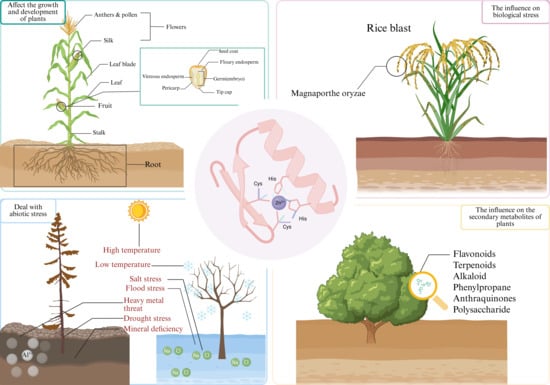
1. Introduction
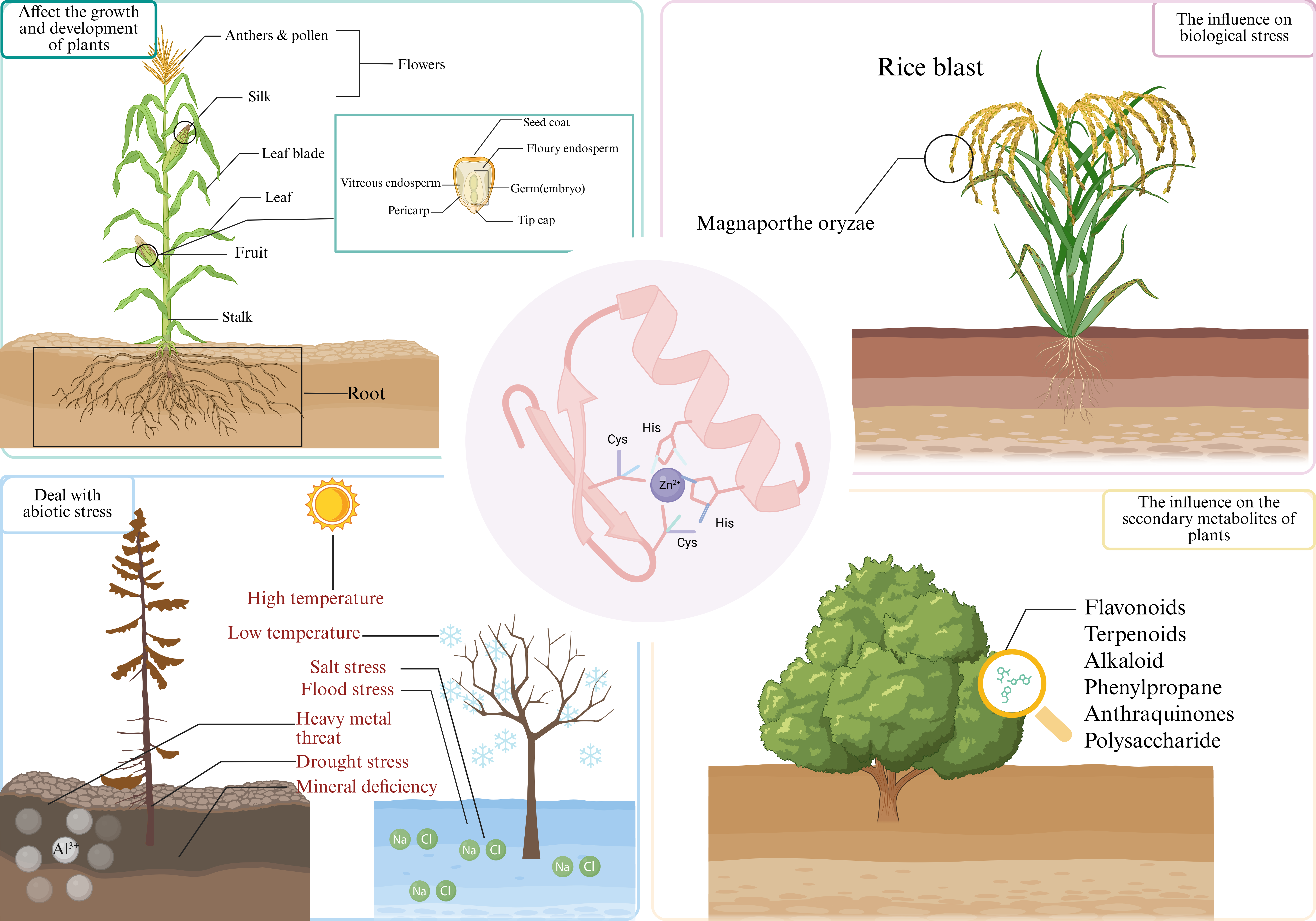
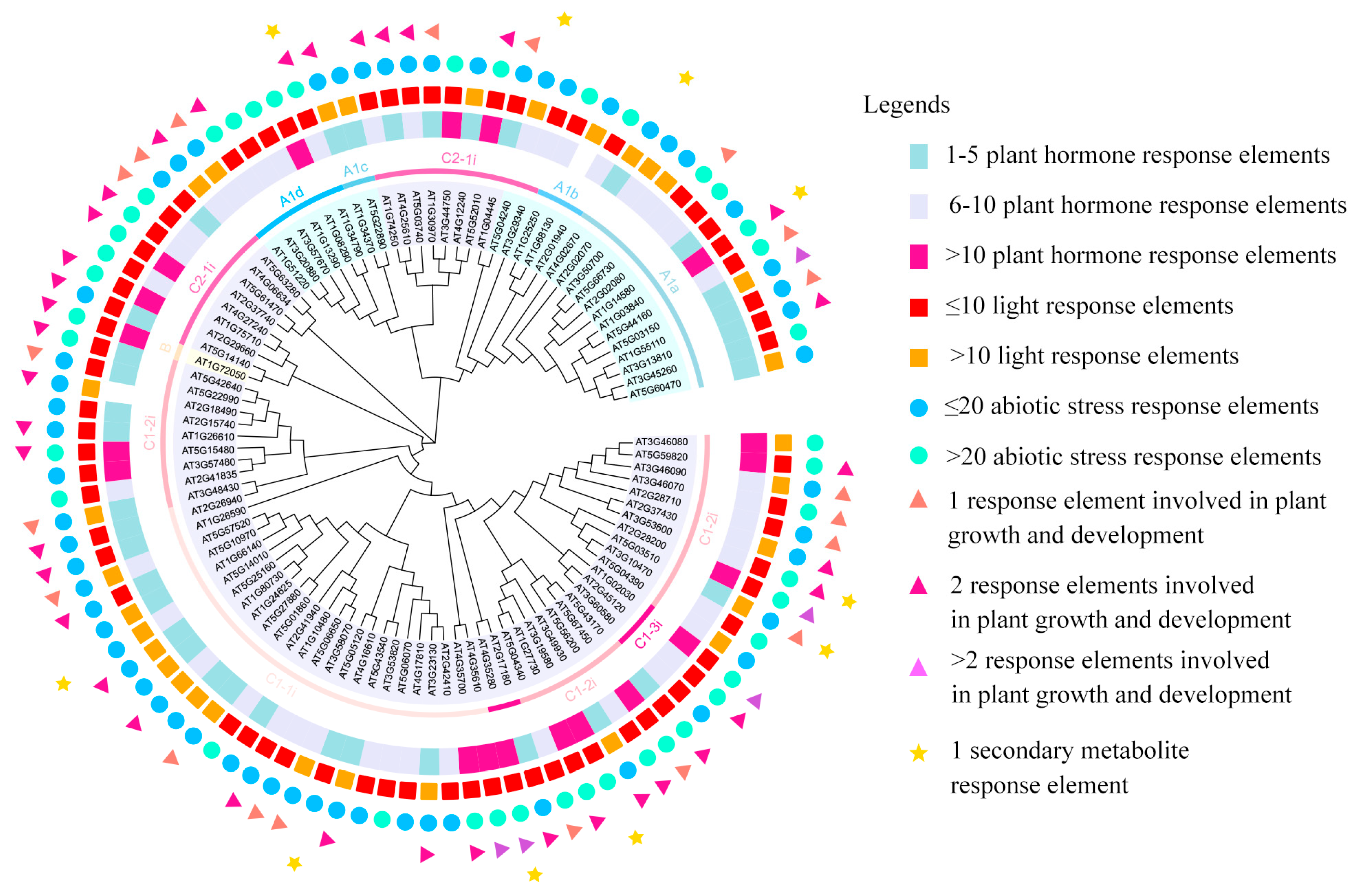
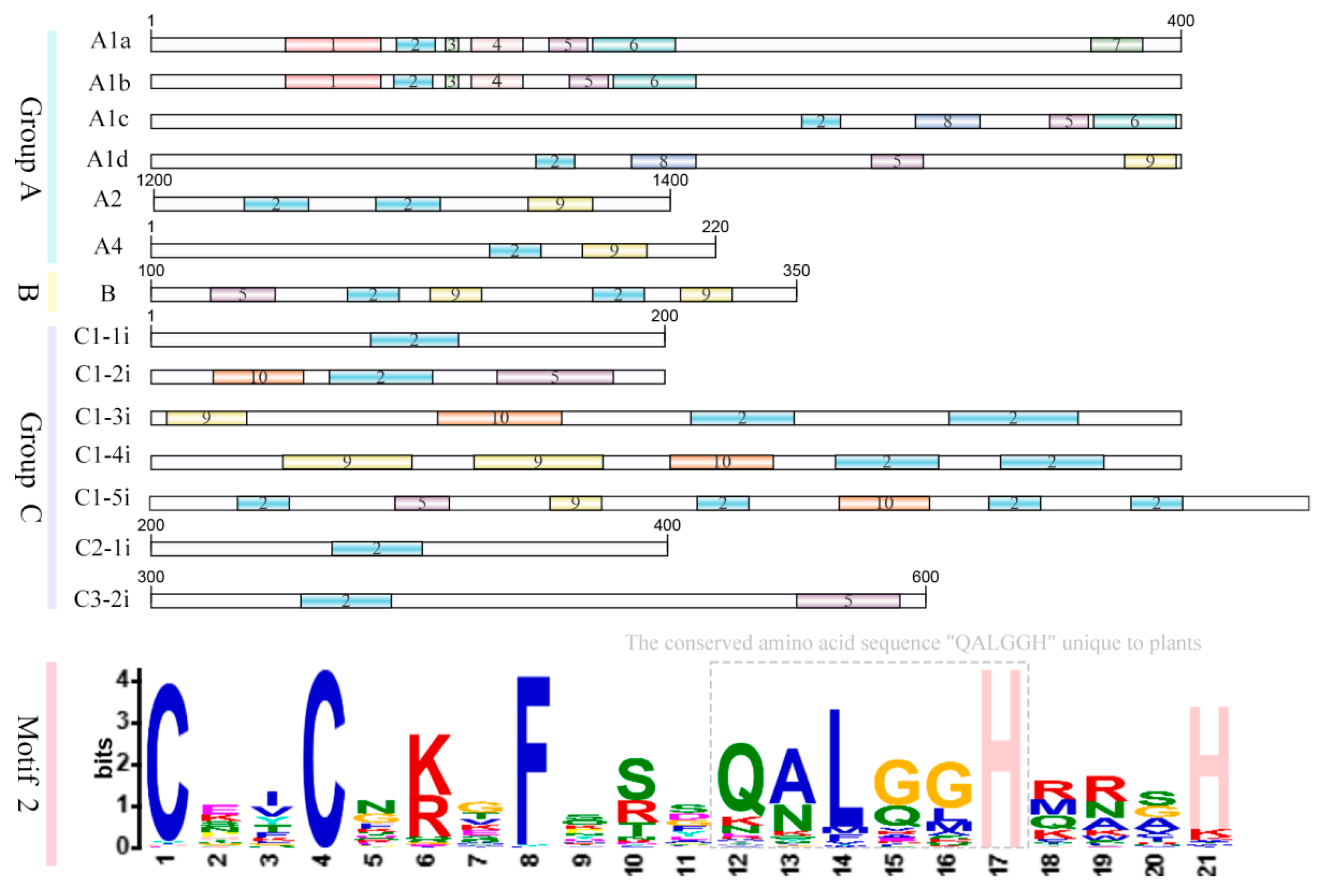
2. The Structure and Classification
3. The Role in Plant Growth and Development
3.1. The Influence on the Formation of Trichome
3.2. The Influence on the Development of Roots
3.3. The Influence on the Formation of Leaves
3.4. The Effects on Buds and Stems
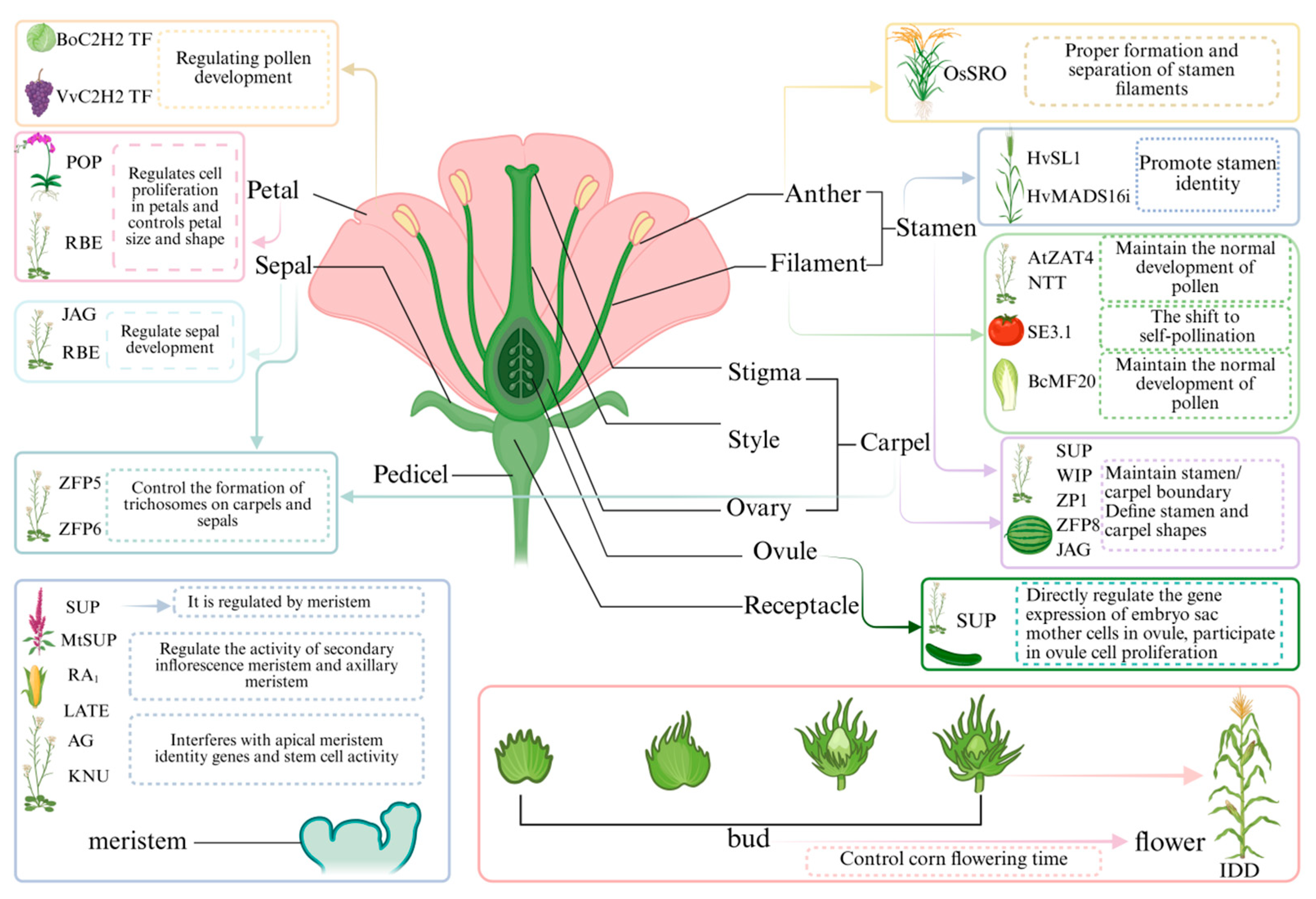
3.5. The Influence on the Formation of Flowers
3.6. The Influence on the Formation of Fruits
3.7. The Influence on the Seeds
3.8. The Influence on Plant Cell Walls
3.9. The Influence on Plant Hormones
4. The Role of Plants in Resisting Biotic Stress
5. The Role in Plant Resistance to Abiotic Stress
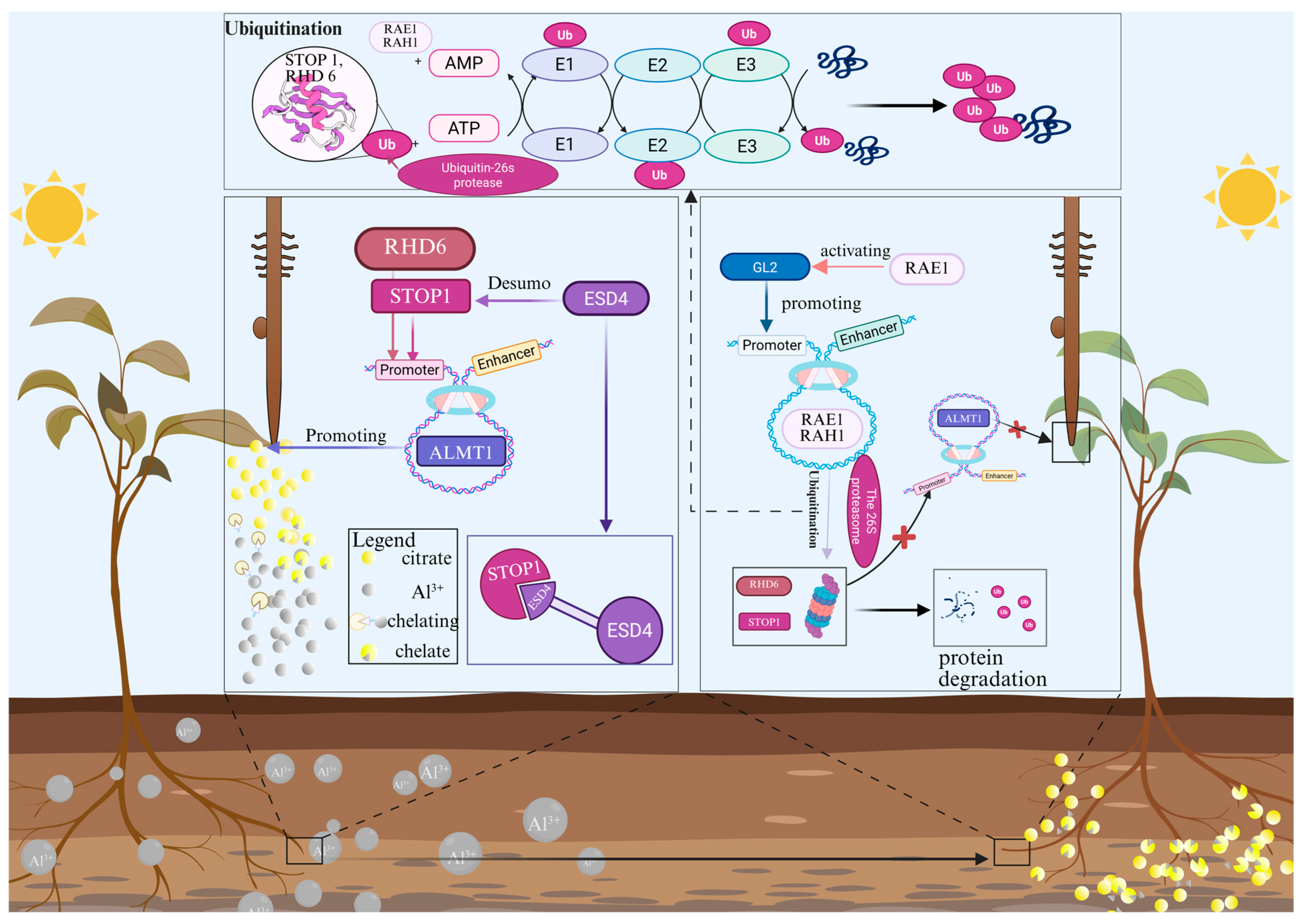
5.1. Reduce the Toxicity of Heavy Metals
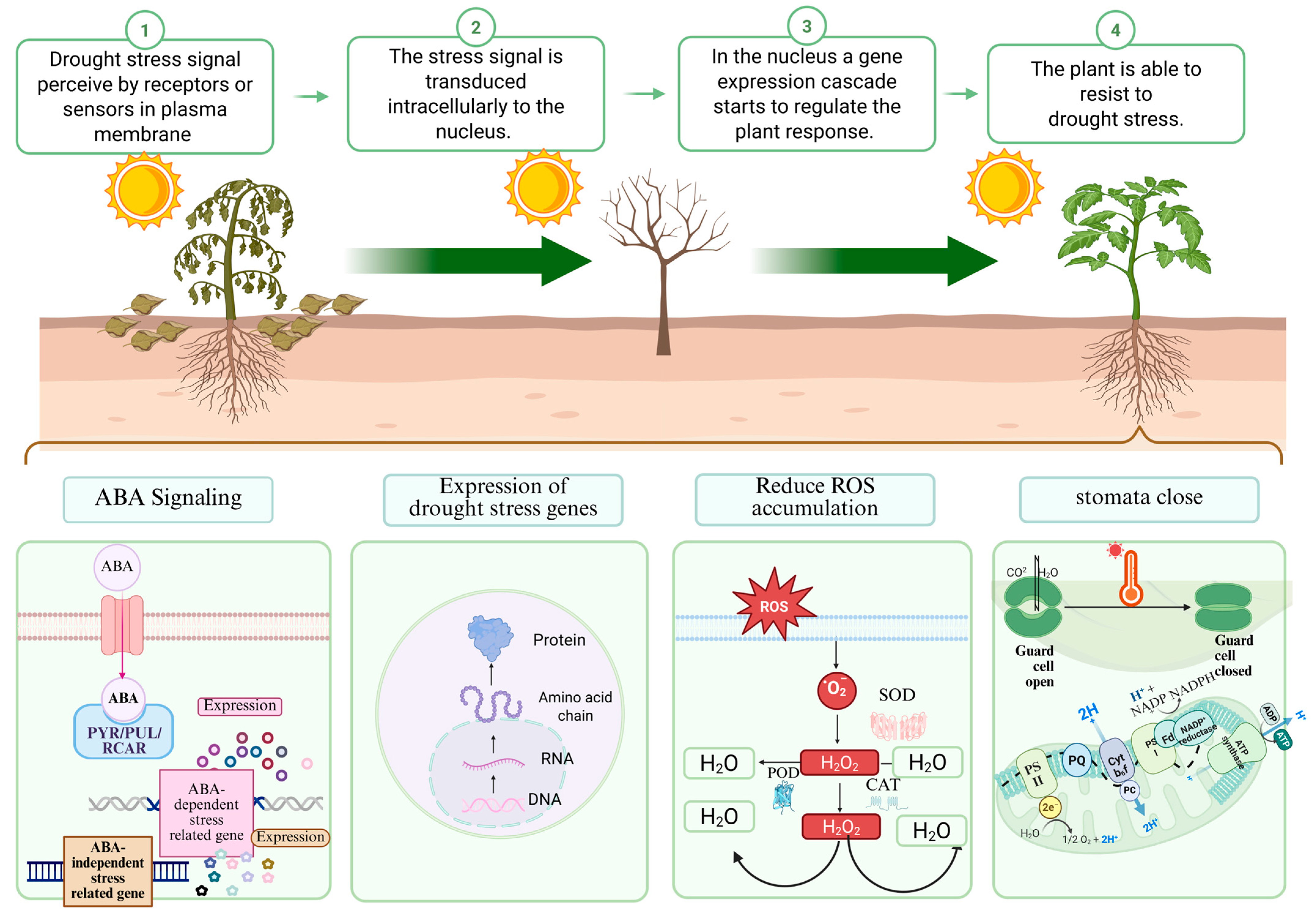
5.2. Adapt to Drought Stress
5.3. Deal with Salt Stress
5.3.1. Enhance Stress Resistance Capability
5.3.2. Increase in Tolerance Level
5.4. Deal with Temperature Stress
5.5. Others
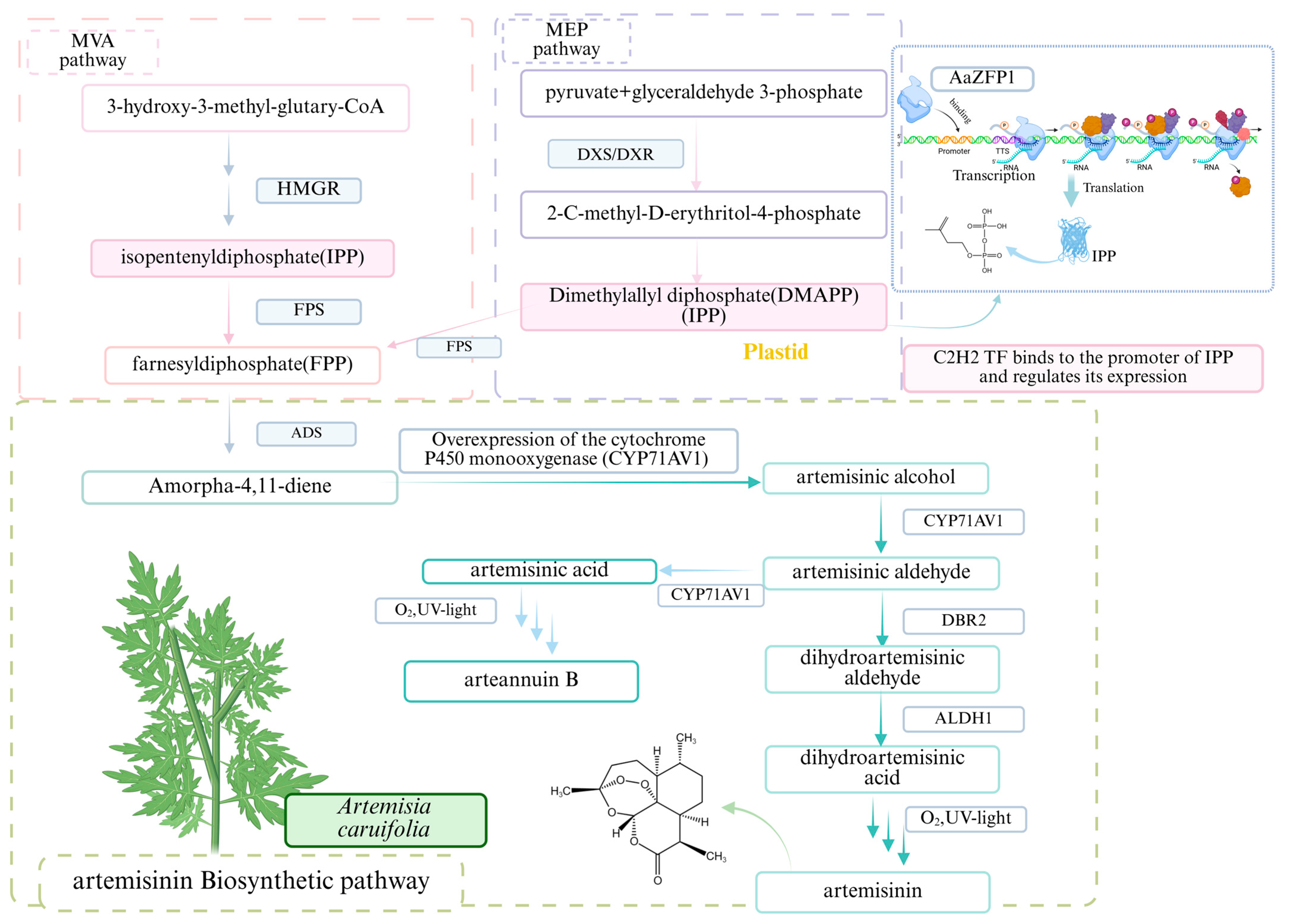
6. The Biosynthesis of Secondary Metabolites in Plants
7. Discussion
8. Conclusions
Author Contributions
Funding
Institutional Review Board Statement
Informed Consent Statement
Data Availability Statement
Conflicts of Interest
Abbreviations
| ZFS | Zinc finger structures |
| C2H2 TFs | Cys2-His2-type zinc finger transcription factors |
| ROS | Reactive Oxygen Species |
| EPSPS | 5-enolpyruvylshikimate-3-phosphate synthase |
| SUP | SUPERMAN |
| WIP | Wound-induced protein |
| JAG | JAGGED |
| EAR | Ethylene response element-binding factor-related |
| GA | Gibberellin |
| CTK | cytokinin |
| SIM | SIAMESE |
| H | HAIR |
| SH | SPARSE HAIR |
| CPC | CAPRICE |
| PCD | programmed cell death |
| FIS | Fertilization-independent seed gene |
| SCW | secondary cell wall |
| N | Nitrogen |
| P | Phosphorus |
| PT | phosphate transporter |
| AE | antioxidant enzymes |
| NUE | nitrogen use efficiency |
| Mg | magnesium |
| Ca | calcium |
| Zn | zinc |
| Fe | iron |
| Cu | copper |
| Al | aluminum |
| Mn | manganese |
| Ge | chromium |
| SUMO | small ubiquitin-like modifier |
| Pro | proline |
| FTSWc | fraction of soil water transpiration |
| INS | The inositol and its derivatives |
| RFO | raffinose oligosaccharide family |
| PAN | phosphatase |
| CAN | calcineurin |
| DREB | dehydration reaction element-to-binding protein |
| NR | no rhizomes at the seedling stage |
References
- Song, H.; Li, N.; Zhang, R.; Hu, X.; Zhang, W.; Zhang, B.; Li, X.; Wang, Z. Study on signal transmission mechanism of arbuscular mycorrhizal hyphal network against root rot of Salvia miltiorrhiza. Sci. Rep. 2023, 13, 16936. [Google Scholar] [CrossRef]
- Dossa, K.; Mmadi, M.A.; Zhou, R.; Zhang, T.; Su, R.; Zhang, Y.; Wang, L.; You, J.; Zhang, X. Depicting the Core Transcriptome Modulating Multiple Abiotic Stresses Responses in Sesame (Sesamum indicum L.). Int. J. Mol. Sci. 2019, 20, 3930. [Google Scholar] [CrossRef]
- Capote, T.; Barbosa, P.; Usié, A.; Ramos, A.M.; Inácio, V.; Ordás, R.; Gonçalves, S.; Morais-Cecílio, L. ChIP-Seq reveals that QsMYB1 directly targets genes involved in lignin and suberin biosynthesis pathways in cork oak (Quercus suber). BMC Plant Biol. 2018, 18, 198. [Google Scholar] [CrossRef] [PubMed]
- Persikov, A.V.; Wetzel, J.L.; Rowland, E.F.; Oakes, B.L.; Xu, D.J.; Singh, M.; Noyes, M.B. A systematic survey of the Cys2His2 zinc finger DNA-binding landscape. Nucleic Acids Res. 2015, 43, 1965–1984. [Google Scholar] [CrossRef] [PubMed]
- Li, L.; Xu, J.B.; Zhu, Z.W.; Ma, R.; Wu, X.Z.; Geng, Y.K. Genome-wide identification and expression analysis of the SPL transcription factor family and its response to abiotic stress in Pisum sativum L. BMC Genom. 2024, 25, 539. [Google Scholar] [CrossRef] [PubMed]
- Lv, T.Q. Evolution of the C2H2-Type Zinc Finger Protein Gene Family in Chinese Cabbage and the Study on the Transcriptional Regulation of Pollen Development by DAZ3. Doctoral Dissertation, Zhejiang University, Hangzhou, China, 2019. [Google Scholar]
- Pang, H.; Dai, X.; Yan, X.; Liu, Y.; Li, Q. C2H2 zinc finger protein PagIDD15A regulates secondary wall thickening and lignin biosynthesis in poplar. Plant Sci. 2024, 346, 112159. [Google Scholar] [CrossRef]
- Li, M.; Zhu, C.; Jiang, C.; An, Y.; Huang, L.; Chen, N.; Lu, M.; Tian, F.; Zhang, J. Diverse Functions of C2H2 Zinc-Finger Transcription Factors in Growth Regulation and Stress Adaptation in Woody and Perennial Horticultural Plants. Hortic. Plant J. 2025. [Google Scholar] [CrossRef]
- Li, Y.; Guo, D.; Wang, H.; Wang, Y.; Peng, S.; Dai, H.; Mei, W.; Zhu, J. Comprehensive investigation of the C2H2-type zinc finger protein transcription factor family in Aquilaria sinensis reveals the involvement of AsZFP9 in sesquiterpene biosynthesis. Int. J. Biol. Macromol. 2025, 318, 145119. [Google Scholar] [CrossRef]
- Wang, K.; Ding, Y.; Cai, C.; Chen, Z.; Zhu, C. The role of C2H2 zinc finger proteins in plant responses to abiotic stresses. Physiol. Plant 2019, 165, 690–700. [Google Scholar] [CrossRef]
- Razin, S.V.; Borunova, V.V.; Maksimenko, O.G.; Kantidze, O.L. Cys2His2 zinc finger protein family: Classification, functions, and major members. Biochemistry 2012, 77, 217–226. [Google Scholar] [CrossRef]
- Klug, A. The discovery of zinc fingers and their development for practical applications in gene regulation and genome manipulation. Q. Rev. Biophys. 2010, 43, 1–21. [Google Scholar] [CrossRef]
- Huang, J.; Wang, J.F.; Zhang, H.S. [Structure and function of plant C2H2 zinc finger protein]. Yi Chuan 2004, 26, 414–418. [Google Scholar] [PubMed]
- Laity, J.H.; Dyson, H.J.; Wright, P.E. DNA-induced alpha-helix capping in conserved linker sequences is a determinant of binding affinity in Cys(2)-His(2) zinc fingers. J. Mol. Biol. 2000, 295, 719–727. [Google Scholar] [CrossRef] [PubMed]
- Sugano, S.; Kaminaka, H.; Rybka, Z.; Catala, R.; Salinas, J.; Matsui, K.; Ohme-Takagi, M.; Takatsuji, H. Stress-responsive zinc finger gene ZPT2-3 plays a role in drought tolerance in petunia. Plant J. 2003, 36, 830–841. [Google Scholar] [CrossRef]
- Sakamoto, H.; Maruyama, K.; Sakuma, Y.; Meshi, T.; Iwabuchi, M.; Shinozaki, K.; Yamaguchi-Shinozaki, K. Arabidopsis Cys2/His2-type zinc-finger proteins function as transcription repressors under drought, cold, and high-salinity stress conditions. Plant Physiol. 2004, 136, 2734–2746. [Google Scholar] [CrossRef]
- Diaz-Ramirez, D.; Diaz-Garcia, U.S.; Magdaleno-Garcia, G.; Huep, G.; Appelhagen, I.; Sagasser, M.; Marsch-Martinez, N. Expression and Functional Analyses of the WIP Gene Family in Arabidopsis. Plants 2022, 11, 2010. [Google Scholar] [CrossRef]
- Kumar, M.; Le, D.T.; Hwang, S.; Seo, P.J.; Kim, H.U. Role of the INDETERMINATE DOMAIN Genes in Plants. Int. J. Mol. Sci. 2019, 20, 2286. [Google Scholar] [CrossRef]
- Roessner, C.; Griep, S.; Becker, A. A land plant phylogenetic framework for GLABROUS INFLORESCENCE STEMS (GIS), SUPERMAN, JAGGED and allies plus their TOPLESS co-repressor. Mol. Phylogenet Evol. 2024, 201, 108195. [Google Scholar] [CrossRef]
- Yu, J.F.; Hong, J.D.; Zhao, S.; Li, X.M.; Wen, D.D.; Cheng, L.J. Identification of EgrZFP-EARs of the C2H2 Zinc Finger Protein GeneFamily in Eucalyptus grandis and Analysis of Their Expression PatternUnder Abiotic Stresses. J. Agric. Biotechnol. 2024, 32, 1792–1808. [Google Scholar] [CrossRef]
- Nikraftar, S.; Ebrahimzadegan, R.; Majdi, M.; Mirzaghaderi, G. Genome-wide analysis of the C2H2-ZFP gene family in Stevia rebaudiana reveals involvement in abiotic stress response. Sci. Rep. 2024, 14, 6164. [Google Scholar] [CrossRef]
- Ren, G.; Li, L.; Huang, Y.; Wang, Y.; Zhang, W.; Zheng, R.; Zhong, C.; Wang, X. GhWIP2, a WIP zinc finger protein, suppresses cell expansion in Gerbera hybrida by mediating crosstalk between gibberellin, abscisic acid, and auxin. New Phytol. 2018, 219, 728–742. [Google Scholar] [CrossRef]
- Dong, J.; Wang, Z.; Si, W.; Xu, H.; Zhang, Z.; Cao, Q.; Zhang, X.; Peng, H.; Mao, R.; Jiang, H.; et al. The C(2)H(2)-type zinc finger transcription factor ZmDi19-7 regulates plant height and organ size by promoting cell size in maize. Plant J. 2024, 120, 2700–2722. [Google Scholar] [CrossRef]
- Yasin, M.U.; Sun, L.; Yang, C.; Liu, B.; Gan, Y. C2H2 Zinc Finger Proteins GIS2 and ZFP8 Regulate Trichome Development via Hormone Signaling in Arabidopsis. Int. J. Mol. Sci. 2025, 26, 7265. [Google Scholar] [CrossRef]
- Zhang, S.; Chen, H.; Guo, S.; Wang, C.; Jiang, K.; Cui, J.; Wang, B. Artemisia annua ZFP8L regulates glandular trichome development. Physiol. Plant 2024, 176, e14461. [Google Scholar] [CrossRef] [PubMed]
- Liu, Y.; Liu, D.; Khan, A.R.; Liu, B.; Wu, M.; Huang, L.; Wu, J.; Song, G.; Ni, H.; Ying, H.; et al. NbGIS regulates glandular trichome initiation through GA signaling in tobacco. Plant Mol. Biol. 2018, 98, 153–167. [Google Scholar] [CrossRef] [PubMed]
- Zhang, N.; Yang, L.; Luo, S.; Wang, X.; Wang, W.; Cheng, Y.; Tian, H.; Zheng, K.; Cai, L.; Wang, S. Genetic evidence suggests that GIS functions downstream of TCL1 to regulate trichome formation in Arabidopsis. BMC Plant Biol. 2018, 18, 63. [Google Scholar] [CrossRef] [PubMed]
- Wu, X.; Xia, M.; Su, P.; Zhang, Y.; Tu, L.; Zhao, H.; Gao, W.; Huang, L.; Hu, Y. MYB transcription factors in plants: A comprehensive review of their discovery, structure, classification, functional diversity and regulatory mechanism. Int. J. Biol. Macromol. 2024, 282, 136652. [Google Scholar] [CrossRef]
- Zhou, Z.; An, L.; Sun, L.; Gan, Y. ZFP5 encodes a functionally equivalent GIS protein to control trichome initiation. Plant Signal Behav. 2012, 7, 28–30. [Google Scholar] [CrossRef]
- Li, R.; Wang, X.; Zhang, S.; Liu, X.; Zhou, Z.; Liu, Z.; Wang, K.; Tian, Y.; Wang, H.; Zhang, Y.; et al. Two zinc-finger proteins control the initiation and elongation of long stalk trichomes in tomato. J. Genet. Genom. 2021, 48, 1057–1069. [Google Scholar] [CrossRef]
- Kim, S.Y.; Hyoung, S.; So, W.M.; Shin, J.S. The novel transcription factor TRP interacts with ZFP5, a trichome initiation-related transcription factor, and negatively regulates trichome initiation through gibberellic acid signaling. Plant Mol. Biol. 2018, 96, 315–326. [Google Scholar] [CrossRef]
- Zhou, Z.; Sun, L.; Zhao, Y.; An, L.; Yan, A.; Meng, X.; Gan, Y. Zinc Finger Protein 6 (ZFP6) regulates trichome initiation by integrating gibberellin and cytokinin signaling in Arabidopsis thaliana. New Phytol. 2013, 198, 699–708. [Google Scholar] [CrossRef] [PubMed]
- Chang, J.; Yu, T.; Yang, Q.; Li, C.; Xiong, C.; Gao, S.; Xie, Q.; Zheng, F.; Li, H.; Tian, Z.; et al. Hair, encoding a single C2H2 zinc-finger protein, regulates multicellular trichome formation in tomato. Plant J. 2018, 96, 90–102. [Google Scholar] [CrossRef] [PubMed]
- Chen, L.; Wang, R.; Hu, X.; Wang, D.; Wang, Y.; Xue, R.; Wu, M.; Li, H. Overexpression of wheat C2H2 zinc finger protein transcription factor TaZAT8-5B enhances drought tolerance and root growth in Arabidopsis thaliana. Planta 2024, 260, 126. [Google Scholar] [CrossRef] [PubMed]
- Ai, Y.; Qian, X.; Wang, X.; Chen, Y.; Zhang, T.; Chao, Y.; Zhao, Y. Uncovering early transcriptional regulation during adventitious root formation in Medicago sativa. BMC Plant Biol. 2023, 23, 176. [Google Scholar] [CrossRef]
- Du, Y.; Roldan, M.V.G.; Haraghi, A.; Haili, N.; Izhaq, F.; Verdenaud, M.; Boualem, A.; Bendahmane, A. Spatially expressed WIP genes control Arabidopsis embryonic root development. Nat. Plants 2022, 8, 635–645. [Google Scholar] [CrossRef]
- Lee, S.A.; Jang, S.; Yoon, E.K.; Heo, J.O.; Chang, K.S.; Choi, J.W.; Dhar, S.; Kim, G.; Choe, J.E.; Heo, J.B.; et al. Interplay between ABA and GA Modulates the Timing of Asymmetric Cell Divisions in the Arabidopsis Root Ground Tissue. Mol. Plant 2016, 9, 870–884. [Google Scholar] [CrossRef]
- Huang, L.; Jiang, Q.; Wu, J.; An, L.; Zhou, Z.; Wong, C.; Wu, M.; Yu, H.; Gan, Y. Zinc finger protein 5 (ZFP5) associates with ethylene signaling to regulate the phosphate and potassium deficiency-induced root hair development in Arabidopsis. Plant Mol. Biol. 2020, 102, 143–158. [Google Scholar] [CrossRef]
- Song, S.K.; Jang, H.U.; Kim, Y.H.; Lee, B.H.; Lee, M.M. Overexpression of three related root-cap outermost-cell-specific C2H2-type zinc-finger protein genes suppresses the growth of Arabidopsis in an EAR-motif-dependent manner. BMB Rep. 2020, 53, 160–165. [Google Scholar] [CrossRef]
- Han, G.; Wei, X.; Dong, X.; Wang, C.; Sui, N.; Guo, J.; Yuan, F.; Gong, Z.; Li, X.; Zhang, Y.; et al. Arabidopsis ZINC FINGER PROTEIN1 Acts Downstream of GL2 to Repress Root Hair Initiation and Elongation by Directly Suppressing bHLH Genes. Plant Cell 2020, 32, 206–225. [Google Scholar] [CrossRef]
- Feng, Q.; Cubría-Radío, M.; Vavrdová, T.; De Winter, F.; Schilling, N.; Huysmans, M.; Nanda, A.K.; Melnyk, C.W.; Nowack, M.K. Repressive ZINC FINGER OF ARABIDOPSIS THALIANA proteins promote programmed cell death in the Arabidopsis columella root cap. Plant Physiol. 2023, 192, 1151–1167. [Google Scholar] [CrossRef]
- Piya, S.; Pantalone, V.; Zadegan, S.B.; Shipp, S.; Lakhssassi, N.; Knizia, D.; Krishnan, H.B.; Meksem, K.; Hewezi, T. Soybean gene co-expression network analysis identifies two co-regulated gene modules associated with nodule formation and development. Mol. Plant Pathol. 2023, 24, 628–636. [Google Scholar] [CrossRef] [PubMed]
- Petricka, J.J.; Clay, N.K.; Nelson, T.M. Vein patterning screens and the defectively organized tributaries mutants in Arabidopsis thaliana. Plant J. 2008, 56, 251–263. [Google Scholar] [CrossRef] [PubMed]
- Jones, V.A.; Dolan, L. MpWIP regulates air pore complex development in the liverwort Marchantia polymorpha. Development 2017, 144, 1472–1476. [Google Scholar] [CrossRef] [PubMed]
- He, S.; Zhi, F.; Ge, A.; Liao, Y.; Li, K.; Min, Y.; Wei, S.; Peng, D.; Guo, Y.; Liu, Z.; et al. BnaC06.WIP2-BnaA09.STM transcriptional regulatory module promotes leaf lobe formation in Brassica napus. Int. J. Biol. Macromol. 2024, 271, 132544. [Google Scholar] [CrossRef]
- McConnell, J.R.; Emery, J.; Eshed, Y.; Bao, N.; Bowman, J.; Barton, M.K. Role of PHABULOSA and PHAVOLUTA in determining radial patterning in shoots. Nature 2001, 411, 709–713. [Google Scholar] [CrossRef]
- Liu, X.; Li, D.; Zhang, D.; Yin, D.; Zhao, Y.; Ji, C.; Zhao, X.; Li, X.; He, Q.; Chen, R.; et al. A novel antisense long noncoding RNA, TWISTED LEAF, maintains leaf blade flattening by regulating its associated sense R2R3-MYB gene in rice. New Phytol. 2018, 218, 774–788. [Google Scholar] [CrossRef]
- Li, Y.X. Functional Study on the C2H2 Zinc Finger Protein Gene LbZFP5 in Limoniumbicolor. Master’s Thesis, Shandong Normal University, Jinan, China, 2023. [Google Scholar]
- Dong, L.; Qin, L.; Dai, X.; Ding, Z.; Bi, R.; Liu, P.; Chen, Y.; Brutnell, T.P.; Wang, X.; Li, P. Transcriptomic Analysis of Leaf Sheath Maturation in Maize. Int. J. Mol. Sci. 2019, 20, 2472. [Google Scholar] [CrossRef]
- Chrispeels, H.E.; Oettinger, H.; Janvier, N.; Tague, B.W. AtZFP1, encoding Arabidopsis thaliana C2H2 zinc-finger protein 1, is expressed downstream of photomorphogenic activation. Plant Mol. Biol. 2000, 42, 279–290. [Google Scholar] [CrossRef]
- Morita, M.T.; Sakaguchi, K.; Kiyose, S.; Taira, K.; Kato, T.; Nakamura, M.; Tasaka, M. A C2H2-type zinc finger protein, SGR5, is involved in early events of gravitropism in Arabidopsis inflorescence stems. Plant J. 2006, 47, 619–628. [Google Scholar] [CrossRef]
- Du, Q.; Yuan, B.; Thapa Chhetri, G.; Wang, T.; Qi, L.; Wang, H. A transcriptional repressor HVA regulates vascular bundle formation through auxin transport in Arabidopsis stem. New Phytol. 2024, 243, 1681–1697. [Google Scholar] [CrossRef]
- Thapa Chhetri, G.; Du, Q.; Zhao, S.; Cui, X.; Qi, L.; Wang, H. RABBIT EARS directly regulates WOX4 transcription and inhibits secondary growth in Arabidopsis stem. New Phytol. 2025, 248, 3010–3023. [Google Scholar] [CrossRef] [PubMed]
- Lyu, T.; Liu, W.; Hu, Z.; Xiang, X.; Liu, T.; Xiong, X.; Cao, J. Molecular characterization and expression analysis reveal the roles of Cys(2)/His(2) zinc-finger transcription factors during flower development of Brassica rapa subsp. chinensis. Plant Mol. Biol. 2020, 102, 123–141. [Google Scholar] [CrossRef] [PubMed]
- Colasanti, J.; Yuan, Z.; Sundaresan, V. The indeterminate gene encodes a zinc finger protein and regulates a leaf-generated signal required for the transition to flowering in maize. Cell 1998, 93, 593–603. [Google Scholar] [CrossRef] [PubMed]
- Shen, L.; Zhang, Y.; Sawettalake, N. A Molecular switch for FLOWERING LOCUS C activation determines flowering time in Arabidopsis. Plant Cell 2022, 34, 818–833. [Google Scholar] [CrossRef]
- Weingartner, M.; Subert, C.; Sauer, N. LATE, a C(2)H(2) zinc-finger protein that acts as floral repressor. Plant J. 2011, 68, 681–692. [Google Scholar] [CrossRef]
- Xiao, J.; Yang, M.; Yang, J.; Tang, W.; Song, X.; Tang, Y.; Sun, B.; Zheng, Y.; Huang, Z.; Li, H. CaZAT5 delays the flowering time in tomato and affects pollen viability and anther dehiscence. PLoS Genet. 2026, 22, e1012016. [Google Scholar] [CrossRef]
- Dinneny, J.R.; Weigel, D.; Yanofsky, M.F. NUBBIN and JAGGED define stamen and carpel shape in Arabidopsis. Development 2006, 133, 1645–1655. [Google Scholar] [CrossRef]
- Resentini, F.; Cyprys, P.; Steffen, J.G.; Alter, S.; Morandini, P.; Mizzotti, C.; Lloyd, A.; Drews, G.N.; Dresselhaus, T.; Colombo, L.; et al. SUPPRESSOR OF FRIGIDA (SUF4) Supports Gamete Fusion via Regulating Arabidopsis EC1 Gene Expression. Plant Physiol. 2017, 173, 155–166. [Google Scholar] [CrossRef]
- Zhao, J.; Liu, M.; Jiang, L.; Ding, L.; Yan, S.S.; Zhang, J.; Dong, Z.; Ren, H.; Zhang, X. Cucumber SUPERMAN has conserved function in stamen and fruit development and a distinct role in floral patterning. PLoS ONE 2014, 9, e86192. [Google Scholar] [CrossRef]
- Huang, T.; López-Giráldez, F.; Townsend, J.P.; Irish, V.F. RBE controls microRNA164 expression to effect floral organogenesis. Development 2012, 139, 2161–2169. [Google Scholar] [CrossRef]
- Huang, T.; Irish, V.F. Temporal Control of Plant Organ Growth by TCP Transcription Factors. Curr. Biol. 2015, 25, 1765–1770. [Google Scholar] [CrossRef] [PubMed]
- Li, J.; Wang, Y.; Zhang, Y.; Wang, W.; Irish, V.F.; Huang, T. RABBIT EARS regulates the transcription of TCP4 during petal development in Arabidopsis. J. Exp. Bot. 2016, 67, 6473–6480. [Google Scholar] [CrossRef] [PubMed]
- Arrey-Salas, O.; Caris-Maldonado, J.C.; Hernández-Rojas, B.; Gonzalez, E. Comprehensive Genome-Wide Exploration of C2H2 Zinc Finger Family in Grapevine (Vitis vinifera L.): Insights into the Roles in the Pollen Development Regulation. Genes 2021, 12, 302. [Google Scholar] [CrossRef] [PubMed]
- Riechmann, J.L. A new negative link in flower development: Repression of ABC genes by Z factors-ZP1/ZFP8. Proc. Natl. Acad. Sci. USA 2023, 120, e2307429120. [Google Scholar] [CrossRef]
- Puentes-Romero, A.C.; González, S.A.; González-Villanueva, E.; Figueroa, C.R.; Ruiz-Lara, S. AtZAT4, a C(2)H(2)-Type Zinc Finger Transcription Factor from Arabidopsis thaliana, Is Involved in Pollen and Seed Development. Plants 2022, 11, 1974. [Google Scholar] [CrossRef]
- Han, Y.Y.; Zhou, H.Y.; Xu, L.A.; Liu, X.Y.; Fan, S.X.; Cao, J.S. The zinc-finger transcription factor BcMF20 and its orthologs in Cruciferae which are required for pollen development. Biochem. Biophys. Res. Commun. 2018, 503, 998–1003. [Google Scholar] [CrossRef]
- Chen, S.; Li, Y.; Zhao, Y.; Li, G.; Zhang, W.; Wu, Y.; Huang, L. iTRAQ and RNA-Seq analyses revealed the effects of grafting on fruit development and ripening of oriental melon (Cucumis melo L. var. makuwa). Gene 2021, 766, 145142. [Google Scholar] [CrossRef]
- Li, Y.; Xiong, H.; Guo, H.; Zhou, C.; Fu, M.; Xie, Y.; Zhao, L.; Gu, J.; Zhao, S.; Ding, Y.; et al. Fine mapping and genetic analysis identified a C(2)H(2)-type zinc finger as a candidate gene for heading date regulation in wheat. Theor. Appl. Genet. 2023, 136, 140. [Google Scholar] [CrossRef]
- Chen, Y.; Wang, G.; Pan, J.; Wen, H.; Du, H.; Sun, J.; Zhang, K.; Lv, D.; He, H.; Cai, R.; et al. Comprehensive Genomic Analysis and Expression Profiling of the C2H2 Zinc Finger Protein Family Under Abiotic Stresses in Cucumber (Cucumis sativus L.). Genes 2020, 11, 171. [Google Scholar] [CrossRef]
- Li, Y.; Chang, Y.; Wang, Y.; Gan, C.; Li, C.; Zhang, X.; Guo, Y.D.; Zhang, N. Protein phosphatase PP2C2 dephosphorylates transcription factor ZAT5 and modulates tomato fruit ripening. Plant Physiol. 2024, 197, kiaf017. [Google Scholar] [CrossRef]
- Dai, X.; Wang, Z.; Bao, Y.; Jia, C.; Bai, F.; Hasi, A.; Che, G. Identification and functional characterization of the C2H2 ZFP transcription factor CmSUP7 in regulating melon plant growth and fruit development. Plant Physiol. Biochem. 2025, 220, 109513. [Google Scholar] [CrossRef] [PubMed]
- Xing, Y.; Cao, Y.; Ma, Y.; Wang, F.; Xin, S.; Zhu, W. QTL mapping and transcriptomic analysis of fruit length in cucumber. Front. Plant Sci. 2023, 14, 1208675. [Google Scholar] [CrossRef] [PubMed]
- Zhao, L.; Yan, Y.; Yang, W.; Guo, M.; Ma, F.; Dou, J.; Yan, W.; Liu, B.; Yang, L.; Yang, S. The CsSBS1-CsTTG1 module contributes to fruit spine size via CsACO2-mediated ethylene biosynthesis in Cucumis sativus L. Plant Physiol. 2025, 199, kiaf596. [Google Scholar] [CrossRef] [PubMed]
- Sun, Q.; He, Z.; Ye, J.; Wei, R.; Feng, D.; Zhang, Y.; Chai, L.; Cheng, Y.; Xu, Q.; Deng, X. A novel C2H2-type zinc-finger transcription factor, CitZAT4, regulates ethylene-induced orange coloration in Satsuma mandarin flavedo (Citrus unshiu Marc.). J. Integr. Plant Biol. 2025, 67, 294–310. [Google Scholar] [CrossRef]
- Jamil, W.; Wu, W.; Gong, H.; Huang, J.W.; Ahmad, M.; Zhu, Q.G.; Jin, R.; Liu, X.F.; Yin, X.R. C2H2-Type Zinc Finger Proteins (DkZF1/2) Synergistically Control Persimmon Fruit Deastringency. Int. J. Mol. Sci. 2019, 20, 5611. [Google Scholar] [CrossRef]
- Hoang, G.; Jorly, J.; Constantinescu, D.; Martin, P.G.P.; Gadin, S.; Mauxion, J.P.; Brès, C.; Garcia, V.; Gonzalez, N.; Rothan, C.; et al. The zinc finger transcription factor SlZFP2 regulates locular tissue morphogenesis. Plant Physiol. 2025, 199, kiaf421. [Google Scholar] [CrossRef]
- Chung, K.S.; Lee, J.H.; Lee, J.S.; Ahn, J.H. Fruit indehiscence caused by enhanced expression of NO TRANSMITTING TRACT in Arabidopsis thaliana. Mol. Cells 2013, 35, 519–525. [Google Scholar] [CrossRef]
- Joseph, M.P.; Papdi, C.; Kozma-Bognár, L.; Nagy, I.; López-Carbonell, M.; Rigó, G.; Koncz, C.; Szabados, L. The Arabidopsis ZINC FINGER PROTEIN3 Interferes with Abscisic Acid and Light Signaling in Seed Germination and Plant Development. Plant Physiol. 2014, 165, 1203–1220. [Google Scholar] [CrossRef]
- Royo, J.; Gómez, E.; Barrero, C.; Muñiz, L.M.; Sanz, Y.; Hueros, G. Transcriptional activation of the maize endosperm transfer cell-specific gene BETL1 by ZmMRP-1 is enhanced by two C2H2 zinc finger-containing proteins. Planta 2009, 230, 807–818. [Google Scholar] [CrossRef]
- Li, Y.; Cao, M.Y.; Zou, X.X.; Liu, S.C.; Xiao, W.J.; Yin, Y.; Yin, H.P.; Li, Z.Q.; Li, Y.L.; Guo, X.H. Cloning and Functional Study of the C 2H 2-type Zinc FingerProtein Gene TaZFP38 in Wheat (Triticum aestivum L.). Life Sci. Res. 2024, 28, 562–571. [Google Scholar] [CrossRef]
- Sagasser, M.; Lu, G.H.; Hahlbrock, K.; Weisshaar, B. A thaliana TRANSPARENT TESTA 1 is involved in seed coat development and defines the WIP subfamily of plant zinc finger proteins. Genes. Dev. 2002, 16, 138–149. [Google Scholar] [CrossRef] [PubMed]
- Zhao, H.; Basu, U.; Kebede, B.; Qu, C.; Li, J.; Rahman, H. Fine mapping of the major QTL for seed coat color in Brassica rapa var. Yellow Sarson by use of NIL populations and transcriptome sequencing for identification of the candidate genes. PLoS ONE 2019, 14, e0209982. [Google Scholar] [CrossRef] [PubMed]
- Guan, M.; Shi, X.; Chen, S.; Wan, Y.; Tang, Y.; Zhao, T.; Gao, L.; Sun, F.; Yin, N.; Zhao, H.; et al. Comparative transcriptome analysis identifies candidate genes related to seed coat color in rapeseed. Front. Plant Sci. 2023, 14, 1154208. [Google Scholar] [CrossRef] [PubMed]
- Salih, H.; Odongo, M.R.; Gong, W.; He, S.; Du, X. Genome-wide analysis of cotton C2H2-zinc finger transcription factor family and their expression analysis during fiber development. BMC Plant Biol. 2019, 19, 400. [Google Scholar] [CrossRef]
- Liu, Y.; Ma, X.; Li, Y.; Yang, X.; Cheng, W. Zinc Finger Protein8 (GhZFP8) Regulates the Initiation of Trichomes in Arabidopsis and the Development of Fiber in Cotton. Plants 2024, 13, 492. [Google Scholar] [CrossRef]
- Wang, Z.; Rehman, A.; Jia, Y.; Dai, P.; He, S.; Wang, X.; Li, H.; Wang, L.; Qayyum, A.; Peng, Z.; et al. Transcriptome and proteome profiling revealed the key genes and pathways involved in the fiber quality formation in brown cotton. Gene 2023, 868, 147374. [Google Scholar] [CrossRef]
- Huang, D.; Zheng, Q.; Melchkart, T.; Bekkaoui, Y.; Konkin, D.J.F.; Kagale, S.; Martucci, M.; You, F.M.; Clarke, M.; Adamski, N.M.; et al. Dominant inhibition of awn development by a putative zinc-finger transcriptional repressor expressed at the B1 locus in wheat. New Phytol. 2020, 225, 340–355. [Google Scholar] [CrossRef]
- Hossain, Z.; Pillai, B.V.; Gruber, M.Y.; Yu, M.; Amyot, L.; Hannoufa, A. Transcriptome profiling of Brassica napus stem sections in relation to differences in lignin content. BMC Genom. 2018, 19, 255. [Google Scholar] [CrossRef]
- Huang, P.; Yoshida, H.; Yano, K.; Kinoshita, S.; Kawai, K.; Koketsu, E.; Hattori, M.; Takehara, S.; Huang, J.; Hirano, K.; et al. OsIDD2, a zinc finger and INDETERMINATE DOMAIN protein, regulates secondary cell wall formation. J. Integr. Plant Biol. 2018, 60, 130–143. [Google Scholar] [CrossRef]
- Li, S.; Wang, W.; Sun, L.; Zhu, H.; Hou, R.; Zhang, H.; Tang, X.; Clark, C.B.; Swarm, S.A.; Nelson, R.L.; et al. Artificial selection of mutations in two nearby genes gave rise to shattering resistance in soybean. Nat. Commun. 2024, 15, 7588. [Google Scholar] [CrossRef]
- Jiang, C.J.; Aono, M.; Tamaoki, M.; Maeda, S.; Sugano, S.; Mori, M.; Takatsuji, H. SAZ, a new SUPERMAN-like protein, negatively regulates a subset of ABA-responsive genes in Arabidopsis. Mol. Genet. Genom. 2008, 279, 183–192. [Google Scholar] [CrossRef] [PubMed]
- Li, T.; Wu, X.Y.; Li, H.; Song, J.H.; Liu, J.Y. A Dual-Function Transcription Factor, AtYY1, Is a Novel Negative Regulator of the Arabidopsis ABA Response Network. Mol. Plant 2016, 9, 650–661. [Google Scholar] [CrossRef] [PubMed]
- Zhang, N.; Zhao, B.; Fan, Z.; Yang, D.; Guo, X.; Wu, Q.; Yu, B.; Zhou, S.; Wang, H. Systematic identification of genes associated with plant growth-defense tradeoffs under JA signaling in Arabidopsis. Planta 2020, 251, 43. [Google Scholar] [CrossRef] [PubMed]
- Guo, X.; Zhou, M.; Chen, J.; Shao, M.; Zou, L.; Ying, Y.; Liu, S. Genome-Wide Identification of the Highly Conserved INDETERMINATE DOMAIN (IDD) Zinc Finger Gene Family in Moso Bamboo (Phyllostachys edulis). Int. J. Mol. Sci. 2022, 23, 13952. [Google Scholar] [CrossRef]
- Fukazawa, J.; Teramura, H.; Murakoshi, S.; Nasuno, K.; Nishida, N.; Ito, T.; Yoshida, M.; Kamiya, Y.; Yamaguchi, S.; Takahashi, Y. DELLAs function as coactivators of GAI-ASSOCIATED FACTOR1 in regulation of gibberellin homeostasis and signaling in Arabidopsis. Plant Cell 2014, 26, 2920–2938. [Google Scholar] [CrossRef]
- Duan, M.; Ke, X.J.; Lan, H.X.; Yuan, X.; Huang, P.; Xu, E.S.; Gao, X.Y.; Wang, R.Q.; Tang, H.J.; Zhang, H.S.; et al. A Cys2/His2 Zinc Finger Protein Acts as a Repressor of the Green Revolution Gene SD1/OsGA20ox2 in Rice (Oryza sativa L.). Plant Cell Physiol. 2021, 61, 2055–2066. [Google Scholar] [CrossRef]
- Yang, L.; Chen, Y.; Wang, M.; Hou, H.; Li, S.; Guan, L.; Yang, H.; Wang, W.; Hong, L. Metabolomic and transcriptomic analyses reveal the effects of grafting on blood orange quality. Front. Plant Sci. 2023, 14, 1169220. [Google Scholar] [CrossRef]
- Wang, D.R.; Yang, K.; Wang, X.; Lin, X.L.; Rui, L.; Liu, H.F.; Liu, D.D.; You, C.X. Overexpression of MdZAT5, an C2H2-Type Zinc Finger Protein, Regulates Anthocyanin Accumulation and Salt Stress Response in Apple Calli and Arabidopsis. Int. J. Mol. Sci. 2022, 23, 1897. [Google Scholar] [CrossRef]
- Wang, D.R.; Yang, K.; Wang, X.; You, C.X. A C2H2-type zinc finger transcription factor, MdZAT17, acts as a positive regulator in response to salt stress. J. Plant Physiol. 2022, 275, 153737. [Google Scholar] [CrossRef]
- Luo, M. Functional Characterization of C2H2 Type Zinc FingerDkZF6 in Persimmon Proanthocyanidins Biosynthesis. Master’s Thesis, Huazhong Agricultural University, Wuhan, China, 2021. [Google Scholar]
- Chu, M.; Wang, T.; Li, W.; Liu, Y.; Bian, Z.; Mao, J.; Chen, B. Genome-Wide Identification and Analysis of the Genes Encoding Q-Type C2H2 Zinc Finger Proteins in Grapevine. Int. J. Mol. Sci. 2023, 24, 15180. [Google Scholar] [CrossRef]
- Song, L. Regulation of Rice Blast Resistance by C2H2 Zinc Finger Protein ZAT; Sichuan Agricultural University: Ya’an, China, 2024. [Google Scholar]
- Xie, R.J. Function Analysis of the Wheat C2H2-Typezinc Finger Protein Gene TaZFP8 on Diseaseresistance. Master’s Thesis, Sichuan Agricultural University, Ya’an, China, 2024. [Google Scholar]
- Su, Y.; Yang, X.; Wu, C.; Jin, X.; Zhang, Y.; Zhang, Y.; Chen, K.; Yu, M.; Zhang, B. The C2H2-GGAT Regulatory Module Fine-Tunes Glutamate Homeostasis to Improve Fruit Flavour and Enhance Disease Resistance in Peach. Plant Biotechnol. J. 2026. [Google Scholar] [CrossRef] [PubMed]
- Chen, H.; Su, S.; Yang, S.; Zhao, T.; Tang, P.; Luo, Q.; Zhong, Y.; Yang, J. Effector MoSDT1 enhances Magnaporthe oryzae virulence and plays a dual role in regulating rice defense. Plant Physiol. 2024, 196, 1042–1063. [Google Scholar] [CrossRef] [PubMed]
- Yue, X.; Que, Y.; Xu, L.; Deng, S.; Peng, Y.; Talbot, N.J.; Wang, Z. ZNF1 Encodes a Putative C2H2 Zinc-Finger Protein Essential for Appressorium Differentiation by the Rice Blast Fungus Magnaporthe oryzae. Mol. Plant Microbe Interact. 2016, 29, 22–35. [Google Scholar] [CrossRef] [PubMed]
- Cao, H.; Huang, P.; Zhang, L.; Shi, Y.; Sun, D.; Yan, Y.; Liu, X.; Dong, B.; Chen, G.; Snyder, J.H.; et al. Characterization of 47 Cys2 -His2 zinc finger proteins required for the development and pathogenicity of the rice blast fungus Magnaporthe oryzae. New Phytol. 2016, 211, 1035–1051. [Google Scholar] [CrossRef]
- Soni, P.; Nayak, S.N.; Kumar, R.; Pandey, M.K.; Singh, N.; Sudini, H.K.; Bajaj, P.; Fountain, J.C.; Singam, P.; Hong, Y.; et al. Transcriptome Analysis Identified Coordinated Control of Key Pathways Regulating Cellular Physiology and Metabolism upon Aspergillus flavus Infection Resulting in Reduced Aflatoxin Production in Groundnut. J. Fungi 2020, 6, 370. [Google Scholar] [CrossRef]
- Bai, Q.; Niu, Z.; Chen, Q.; Gao, C.; Zhu, M.; Bai, J.; Liu, M.; He, L.; Liu, J.; Jiang, Y.; et al. The C(2) H(2) -type zinc finger transcription factor OSIC1 positively regulates stomatal closure under osmotic stress in poplar. Plant Biotechnol. J. 2023, 21, 943–960. [Google Scholar] [CrossRef]
- Ye, S.; Tang, Y. TaZFP 23, a new Cys2/His2-type zinc-finger protein, is a regulator of wheat (Triticum aestivum L.) growth and abiotic stresses. PeerJ 2025, 13, e18956. [Google Scholar] [CrossRef]
- Kaur, K.; Megha, S.; Wang, Z.; Kav, N.N.V.; Rahman, H. Identification and expression analysis of C2H2-zinc finger protein genes reveals their role in stress tolerance in Brassica napus. Genome 2023, 66, 91–107. [Google Scholar] [CrossRef]
- Zinati, Z.; Nazari, L. Deciphering the molecular basis of abiotic stress response in cucumber (Cucumis sativus L.) using RNA-Seq meta-analysis, systems biology, and machine learning approaches. Sci. Rep. 2023, 13, 12942. [Google Scholar] [CrossRef]
- Liu, H.; Liu, Y.; Liu, F.; Zeng, L.; Xu, Y.; Jin, Q.; Wang, Y. Genome-wide identification of the Q-type C2H2 zinc finger protein gene family and expression analysis under abiotic stress in lotus (Nelumbo nucifera G.). BMC Genom. 2024, 25, 648. [Google Scholar] [CrossRef]
- Wang, D.; Qiu, Z.; Xu, T.; Yao, S.; Chen, M.; Li, Q.; Agassin, R.H.; Ji, K. Transcriptomic Identification of Potential C2H2 Zinc Finger Protein Transcription Factors in Pinus massoniana in Response to Biotic and Abiotic Stresses. Int. J. Mol. Sci. 2024, 25, 8361. [Google Scholar] [CrossRef] [PubMed]
- Zhang, D.; Ding, X.; Wang, Z.; Li, W.; Li, L.; Liu, L.; Zhou, H.; Yu, J.; Zheng, C.; Wu, H.; et al. A C2H2 zinc finger protein, OsZOS2-19, modulates ABA sensitivity and cold response in rice. Plant Cell Physiol. 2025, 66, 753–765. [Google Scholar] [CrossRef] [PubMed]
- Zhong, C.J.; Peng, W.Y.; Wang, B.; Liu, S.M.; Dai, L.Y.; Li, W. Research Progress on C2H2-Type Zinc Finger Proteins Related to Plant Stress Responses. Plant Physiol. J. 2020, 56, 2356–2366. [Google Scholar] [CrossRef]
- Yuan, X.; Huang, P.; Wang, R.; Li, H.; Lv, X.; Duan, M.; Tang, H.; Zhang, H.; Huang, J. A Zinc Finger Transcriptional Repressor Confers Pleiotropic Effects on Rice Growth and Drought Tolerance by Down-Regulating Stress-Responsive Genes. Plant Cell Physiol. 2018, 59, 2129–2142. [Google Scholar] [CrossRef]
- Huang, J.; Zhu, M.; Li, Z.; Jiang, S.; Xu, S.; Wang, M.; Chu, Z.; Zhu, M.; Zhang, Z.; Huang, W. OsCactin positively regulates the drought stress response in rice. Plant Cell Rep. 2024, 43, 281. [Google Scholar] [CrossRef]
- Huang, K.; Liu, X.; Jiang, W.; Zhang, J.; Zhu, W.; Peng, X.; Wang, J.; Ma, X.; Du, X.; Hu, B.; et al. ZFP151 enhances drought tolerance in rice through direct activation of NCED4 expression. J. Genet. Genom. 2026. [Google Scholar] [CrossRef]
- Shi, H.; Wang, X.; Ye, T.; Chen, F.; Deng, J.; Yang, P.; Zhang, Y.; Chan, Z. The Cysteine2/Histidine2-Type Transcription Factor ZINC FINGER OF ARABIDOPSIS THALIANA6 Modulates Biotic and Abiotic Stress Responses by Activating Salicylic Acid-Related Genes and C-REPEAT-BINDING FACTOR Genes in Arabidopsis. Plant Physiol. 2014, 165, 1367–1379. [Google Scholar] [CrossRef]
- Qin, L.; He, H.; Yang, L.; Zhang, H.; Li, J.; Zhu, Y.; Xu, J.; Jiao, G.; Xiang, C.; Wang, C.; et al. AtZAT10/STZ1 improves drought tolerance and increases fiber yield in cotton. Front. Plant Sci. 2024, 15, 1464828. [Google Scholar] [CrossRef]
- Cordoba-Novoa, H.; Zhang, B.; Guo, Y.; Aslam, M.M.; Fritschi, F.B.; Hoyos-Villegas, V. Whole plant transpiration responses of common bean (Phaseolus vulgaris L.) to drying soil: Water channels and transcription factors. Plant Physiol. Biochem. 2025, 222, 109759. [Google Scholar] [CrossRef]
- Yin, M.; Wang, Y.; Zhang, L.; Li, J.; Quan, W.; Yang, L.; Wang, Q.; Chan, Z. The Arabidopsis Cys2/His2 zinc finger transcription factor ZAT18 is a positive regulator of plant tolerance to drought stress. J. Exp. Bot. 2017, 68, 2991–3005. [Google Scholar] [CrossRef]
- Kam, J.; Gresshoff, P.M.; Shorter, R.; Xue, G.P. The Q-type C2H2 zinc finger subfamily of transcription factors in Triticum aestivum is predominantly expressed in roots and enriched with members containing an EAR repressor motif and responsive to drought stress. Plant Mol. Biol. 2008, 67, 305–322. [Google Scholar] [CrossRef] [PubMed]
- Cheuk, A.; Ouellet, F.; Houde, M. The barley stripe mosaic virus expression system reveals the wheat C2H2 zinc finger protein TaZFP1B as a key regulator of drought tolerance. BMC Plant Biol. 2020, 20, 144. [Google Scholar] [CrossRef] [PubMed]
- Li, Y.L. Study on the Mechanism of C2H2 Zinc Finger Protein TaZFP21Regulating Drought Stress in Triticum aestivum L. Doctoral Dissertation, Hunan University, Changsha, China, 2022. [Google Scholar]
- Yao, T.; Ding, C.; Che, Y.; Zhang, Z.; Cui, C.; Ji, G.; Song, J.; Zhang, H.; Ao, H.; Zhang, H. Heterologous expression of Zygophyllum xanthoxylon zinc finger protein gene (ZxZF) enhances the tolerance of poplar photosynthetic function to drought stress. Plant Physiol. Biochem. 2023, 199, 107748. [Google Scholar] [CrossRef] [PubMed]
- Tang, L.; Cai, H.; Ji, W.; Luo, X.; Wang, Z.; Wu, J.; Wang, X.; Cui, L.; Wang, Y.; Zhu, Y.; et al. Overexpression of GsZFP1 enhances salt and drought tolerance in transgenic alfalfa (Medicago sativa L.). Plant Physiol. Biochem. 2013, 71, 22–30. [Google Scholar] [CrossRef]
- Cheng, T.; Lin, J.; Zhou, X.; Wang, H.; Zhou, X.; Huang, X.; Chen, T. Integrative metabolomics and transcriptomics profiling reveals differential expression of flavonoid synthesis in Ophiopogon japonicus (L. f.) Ker-Gawl. in adaptation to drought. PLoS ONE 2025, 20, e0313580. [Google Scholar] [CrossRef]
- Zhao, Y.; He, Z.; Fan, L.; Liu, H.; Chen, H.; Yang, Y.; Fan, N.; Han, X.; Lu, Z.; Zhuo, R. Genome-wide identification of the C2H2 zinc finger gene family in Populus euphratica and the functional analysis of PeZFP38 under salt stress. Front. Plant Sci. 2026, 17, 1754976. [Google Scholar] [CrossRef]
- Chen, Y.; Sun, J.; Wei, Y.; Cao, K.; Jiang, S.; Shao, X. PpZAT10 negatively regulates peach cold resistance predominantly mediated by enhancing VIN activity. Postharvest Biol. Technol. 2022, 190, 111952. [Google Scholar] [CrossRef]
- Zhang, Y.; Xiao, W.; Wang, M.; Khan, M.; Liu, J.H. A C2H2-type zinc finger protein ZAT12 of Poncirus trifoliata acts downstream of CBF1 to regulate cold tolerance. Plant J. 2024, 117, 1317–1329. [Google Scholar] [CrossRef]
- Li, X.L.; Meng, D.; Li, M.J.; Zhou, J.; Yang, Y.Z.; Zhou, B.B.; Wei, Q.P.; Zhang, J.K. Transcription factors MhDREB2A/MhZAT10 play a role in drought and cold stress response crosstalk in apple. Plant Physiol. 2023, 192, 2203–2220. [Google Scholar] [CrossRef]
- Yang, Q.; Liu, Y.; Zhou, J.; Li, M.J.; Yang, Y.Z.; Wei, Q.P.; Zhang, J.K.; Li, X.L. The transcription factor MhZAT10 enhances antioxidant capacity by directly activating the antioxidant genes MhMSD1, MhAPX3a and MhCAT1 in apple rootstock SH6 (Malus honanensis × M. domestica). Tree Physiol. 2024, 44, tpae077. [Google Scholar] [CrossRef]
- Zhao, J.J.; Deng, S.L.; Li, H.; Wei, S.Y.; Wang, R.Q.; Zhang, Y.; Xiang, X.; Yang, P.; Li, J.; Wang, T.; et al. The PtrC2H2.2-6-PtrCYP86A7/A8 Module Regulates Poplar Drought Tolerance Through Mediating Cutin and Wax Biosynthesis Pathways. Plant Biotechnol. J. 2026, 24, 1428–1445. [Google Scholar] [CrossRef] [PubMed]
- Zhang, Y.; He, J.; Qin, G.; Yang, K.; Chen, P.; Niu, C.; Li, X.; Mei, C.; Wang, J.; Guan, Q.; et al. Apple MdZAT5 mediates root development under drought stress. Plant Physiol. Biochem. 2024, 213, 108833. [Google Scholar] [CrossRef] [PubMed]
- Yang, K.; Li, C.Y.; An, J.P.; Wang, D.R.; Wang, X.; Wang, C.K.; You, C.X. The C2H2-type zinc finger transcription factor MdZAT10 negatively regulates drought tolerance in apple. Plant Physiol. Biochem. 2021, 167, 390–399. [Google Scholar] [CrossRef] [PubMed]
- Sharma, T.; Dreyer, I.; Kochian, L.; Piñeros, M.A. The ALMT Family of Organic Acid Transporters in Plants and Their Involvement in Detoxification and Nutrient Security. Front. Plant Sci. 2016, 7, 1488. [Google Scholar] [CrossRef]
- Barros, V.A.; Chandnani, R.; de Sousa, S.M.; Maciel, L.S.; Tokizawa, M.; Guimaraes, C.T.; Magalhaes, J.V.; Kochian, L.V. Root Adaptation via Common Genetic Factors Conditioning Tolerance to Multiple Stresses for Crops Cultivated on Acidic Tropical Soils. Front. Plant Sci. 2020, 11, 565339. [Google Scholar] [CrossRef]
- Kundu, A.; Das, S.; Basu, S.; Kobayashi, Y.; Kobayashi, Y.; Koyama, H.; Ganesan, M. GhSTOP1, a C2H2 type zinc finger transcription factor is essential for aluminum and proton stress tolerance and lateral root initiation in cotton. Plant Biol. 2019, 21, 35–44. [Google Scholar] [CrossRef]
- Fang, Q.; Zhou, F.; Zhang, Y.; Singh, S.; Huang, C.F. Degradation of STOP1 mediated by the F-box proteins RAH1 and RAE1 balances aluminum resistance and plant growth in Arabidopsis thaliana. Plant J. 2021, 106, 493–506. [Google Scholar] [CrossRef]
- Fang, Q.; Zhang, J.; Zhang, Y.; Fan, N.; van den Burg, H.A.; Huang, C.F. Regulation of Aluminum Resistance in Arabidopsis Involves the SUMOylation of the Zinc Finger Transcription Factor STOP1. Plant Cell 2020, 32, 3921–3938. [Google Scholar] [CrossRef]
- Liu, Y.T.; Shi, Q.H.; Cao, H.J.; Ma, Q.B.; Nian, H.; Zhang, X.X. Heterologous Expression of a Glycine soja C2H2 Zinc Finger Gene Improves Aluminum Tolerance in Arabidopsis. Int. J. Mol. Sci. 2020, 21, 2754. [Google Scholar] [CrossRef]
- Yamaji, N.; Huang, C.F.; Nagao, S.; Yano, M.; Sato, Y.; Nagamura, Y.; Ma, J.F. A zinc finger transcription factor ART1 regulates multiple genes implicated in aluminum tolerance in rice. Plant Cell 2009, 21, 3339–3349. [Google Scholar] [CrossRef]
- Ma, Z.; Lin, S. Transcriptomic Revelation of Phenolic Compounds Involved in Aluminum Toxicity Responses in Roots of Cunninghamia lanceolata (Lamb.) Hook. Genes 2019, 10, 835. [Google Scholar] [CrossRef]
- Jia, Y.; Li, X.; Liu, Q.; Hu, X.; Li, J.; Dong, R.; Liu, P.; Liu, G.; Luo, L.; Chen, Z. Physiological and transcriptomic analyses reveal the roles of secondary metabolism in the adaptive responses of Stylosanthes to manganese toxicity. BMC Genom. 2020, 21, 861. [Google Scholar] [CrossRef] [PubMed]
- Liu, X.M.; An, J.; Han, H.J.; Kim, S.H.; Lim, C.O.; Yun, D.J.; Chung, W.S. ZAT11, a zinc finger transcription factor, is a negative regulator of nickel ion tolerance in Arabidopsis. Plant Cell Rep. 2014, 33, 2015–2021. [Google Scholar] [CrossRef] [PubMed]
- He, Q.; Zhou, T.; Sun, J.; Wang, P.; Yang, C.; Bai, L.; Liu, Z. Transcriptome Profiles of Leaves and Roots of Goldenrain Tree (Koelreuteria paniculata Laxm.) in Response to Cadmium Stress. Int. J. Environ. Res. Public Health 2021, 18, 12046. [Google Scholar] [CrossRef] [PubMed]
- Chen, L.L. The Mechanism Research of C2H2 Finger ProteinTranscription Factor TaZAT8 in Wheat Enhancingdrought Resistance by Promoting Root Growth. Master’s Thesis, Henan Agricultural University, Zhengzhou, China, 2024. [Google Scholar]
- Lu, B.; Lin, Y.; He, C.; Wang, Z.; Li, X.; He, X. Effects of dark septate endophyte on root growth, physiology and transcriptome of Ammopiptanthus mongolicus seedlings under drought stress. Plant Physiol. Biochem. 2025, 219, 109367. [Google Scholar] [CrossRef]
- Zhang, X. Study of Drought Resistance of C2H2 Zinc Finger Protein PuZFP103 Gene in Populus Ussuriensis. Master’s Thesis, Northeast Forestry University, Harbin, China, 2021. [Google Scholar]
- Zhao, J.J.; Xiang, X.; Yang, P.; Li, J.; Li, H.; Wei, S.Y.; Wang, R.Q.; Wang, T.; Huang, J.; Chen, L.H.; et al. Genome-wide analysis of C2H2.2 gene family in Populus Trichocarpa and the function exploration of PtrC2H2.2-6 in osmotic stress. Int. J. Biol. Macromol. 2024, 283, 137937. [Google Scholar] [CrossRef]
- Yao, H.; Liang, Z.; Wang, W.; Niu, C. Integrative analyses of transcriptomes and metabolomes provide insight into salinity adaption in Bangia (Rhodaphyta). Int. J. Biol. Macromol. 2023, 253, 127466. [Google Scholar] [CrossRef]
- Huang, R.; Jiang, S.; Dai, M.; Shi, H.; Zhu, H.; Guo, Z. Zinc finger transcription factor MtZPT2-2 negatively regulates salt tolerance in Medicago truncatula. Plant Physiol. 2023, 194, 564–577. [Google Scholar] [CrossRef]
- Lippuner, V.; Cyert, M.S.; Gasser, C.S. Two classes of plant cDNA clones differentially complement yeast calcineurin mutants and increase salt tolerance of wild-type yeast. J. Biol. Chem. 1996, 271, 12859–12866. [Google Scholar] [CrossRef]
- Li, L.; Li, L.; Wang, X.; Zhu, P.; Wu, H.; Qi, S. Plant growth-promoting endophyte Piriformospora indica alleviates salinity stress in Medicago truncatula. Plant Physiol. Biochem. 2017, 119, 211–223. [Google Scholar] [CrossRef]
- Guo, S.Q.; Huang, J.; Jiang, Y.; Zhang, H.S. [Cloning and characterization of RZF71 encoding a C2H2-type zinc finger protein from rice]. Yi Chuan 2007, 29, 607–613. [Google Scholar] [CrossRef] [PubMed]
- Xu, D.Q.; Huang, J.; Guo, S.Q.; Yang, X.; Bao, Y.M.; Tang, H.J.; Zhang, H.S. Overexpression of a TFIIIA-type zinc finger protein gene ZFP252 enhances drought and salt tolerance in rice (Oryza sativa L.). FEBS Lett. 2008, 582, 1037–1043. [Google Scholar] [CrossRef] [PubMed]
- Rehman, A.; Wang, N.; Peng, Z.; He, S.; Zhao, Z.; Gao, Q.; Wang, Z.; Li, H.; Du, X. Identification of C(2)H(2) subfamily ZAT genes in Gossypium species reveals GhZAT34 and GhZAT79 enhanced salt tolerance in Arabidopsis and cotton. Int. J. Biol. Macromol. 2021, 184, 967–980. [Google Scholar] [CrossRef] [PubMed]
- Tao, J.J.; Lu, L.; Wei, W.; Zhao, T.J.; Li, Q.T.; Zhang, W.K.; Gai, J.Y.; Zhang, J.S.; Chen, S.Y. C2H2-type Zinc Finger Protein DISS2 Enhances Plant Salt Tolerance via Promotion of ROS Scavenging in Soybean. Tenth Natl. Soybean Symp. 2017, 102, 1. [Google Scholar]
- Ma, S.S.; Yang, J.J.; Qu, D.H.; Li, M.J.; Zhang, J.; Wu, F.L.; Su, H.Y.; Wang, L. Overexpression of PdbZFP26, a Gene Encoding C2H2 Zinc Finger Protein, ImprovesSalt Tolerance of Transgenic Populus davidiana × P. bolleana. Sci. SILVAE Sin. 2023, 59, 110–118. [Google Scholar] [CrossRef]
- Ma, S.S. The functional analysis of C2H2zinc finger protein genePdbZFP26 in Populus davidiana × P. bolleana. Master’s Thesis, Ludong University, Yantai, China, 2022. [Google Scholar]
- Zhao, L.; Li, Y.; Li, Y.; Chen, W.; Yao, J.; Fang, S.; Lv, Y.; Zhang, Y.; Zhu, S. Systematical Characterization of the Cotton Di19 Gene Family and the Role of GhDi19-3 and GhDi19-4 as Two Negative Regulators in Response to Salt Stress. Antioxidants 2022, 11, 2225. [Google Scholar] [CrossRef]
- Zhou, X.; Gao, T.; Zhang, Y.; Han, M.; Shen, Y.; Su, Y.; Feng, X.; Wu, Q.; Sun, G.; Wang, Y. Genome-wide identification, characterization and expression of C2H2 zinc finger gene family in Opisthopappus species under salt stress. BMC Genom. 2024, 25, 385. [Google Scholar] [CrossRef]
- Jain, D.; Roy, N.; Chattopadhyay, D. CaZF, a plant transcription factor functions through and parallel to HOG and calcineurin pathways in Saccharomyces cerevisiae to provide osmotolerance. PLoS ONE 2009, 4, e5154. [Google Scholar] [CrossRef]
- Alvarez-Vasquez, A.; Lima-Huanca, L.; Bardales-Álvarez, R.; Valderrama-Valencia, M.; Condori-Pacsi, S. In Silico Characterization and Determination of Gene Expression Levels Under Saline Stress Conditions in the Zinc Finger Family of the C1-2i Subclass in Chenopodium quinoa Willd. Int. J. Mol. Sci. 2025, 26, 2570. [Google Scholar] [CrossRef]
- Luo, Z.; Zhou, Z.; Li, Y.; Tao, S.; Hu, Z.R.; Yang, J.S.; Cheng, X.; Hu, R.; Zhang, W. Transcriptome-based gene regulatory network analyses of differential cold tolerance of two tobacco cultivars. BMC Plant Biol. 2022, 22, 369. [Google Scholar] [CrossRef]
- Gismondi, M.; Strologo, L.; Gabilondo, J.; Budde, C.; Drincovich, M.F.; Bustamante, C. Characterization of ZAT12 protein from Prunus persica: Role in fruit chilling injury tolerance and identification of gene targets. Planta 2024, 261, 14. [Google Scholar] [CrossRef] [PubMed]
- Meena, S.K.; Quevedo, M.; Nardeli, S.M.; Verez, C.; Bhat, S.S.; Zacharaki, V.; Kindgren, P. Antisense transcription from stress-responsive transcription factors fine-tunes the cold response in Arabidopsis. Plant Cell 2024, 36, 3467–3482. [Google Scholar] [CrossRef] [PubMed]
- Guo, J.; Ren, Y.; Tang, Z.; Shi, W.; Zhou, M. Characterization and expression profiling of the ICE-CBF-COR genes in wheat. PeerJ 2019, 7, e8190. [Google Scholar] [CrossRef] [PubMed]
- Han, Y.C.; Fu, C.C. Cold-inducible MaC2H2s are associated with cold stress response of banana fruit via regulating MaICE1. Plant Cell Rep. 2019, 38, 673–680. [Google Scholar] [CrossRef]
- Dou, M.; Cheng, S.; Zhao, B.; Xuan, Y.; Shao, M. The Indeterminate Domain Protein ROC1 Regulates Chilling Tolerance via Activation of DREB1B/CBF1 in Rice. Int. J. Mol. Sci. 2016, 17, 233. [Google Scholar] [CrossRef]
- Huang, J.; Wang, J.F.; Wang, Q.H.; Zhang, H.S. Identification of a rice zinc finger protein whose expression is transiently induced by drought, cold but not by salinity and abscisic acid. DNA Seq. 2005, 16, 130–136. [Google Scholar] [CrossRef]
- Ma, L.; Xu, J.; Tao, X.; Wu, J.; Wang, W.; Pu, Y.; Yang, G.; Fang, Y.; Liu, L.; Li, X.; et al. Genome-Wide Identification of C2H2 ZFPs and Functional Analysis of BRZAT12 under Low-Temperature Stress in Winter Rapeseed (Brassica rapa). Int. J. Mol. Sci. 2022, 23, 12218. [Google Scholar] [CrossRef]
- He, F.; Li, H.G.; Wang, J.J.; Su, Y.; Wang, H.L.; Feng, C.H.; Yang, Y.; Niu, M.X.; Liu, C.; Yin, W.; et al. PeSTZ1, a C2H2-type zinc finger transcription factor from Populus euphratica, enhances freezing tolerance through modulation of ROS scavenging by directly regulating PeAPX2. Plant Biotechnol. J. 2019, 17, 2169–2183. [Google Scholar] [CrossRef]
- Kazemzadeh, S.; Farrokhi, N.; Ahmadikhah, A.; Ingvarsson, P.K. Interplay of rice vitamin E under osmotic and extreme temperature stresses revealed by a comparative transcriptomic approach. BMC Plant Biol. 2025, 25, 1302. [Google Scholar] [CrossRef]
- Chen, F.; Chen, L.; Yan, Z.; Xu, J.; Feng, L.; He, N.; Guo, M.; Zhao, J.; Chen, Z.; Chen, H.; et al. Recent advances of CRISPR-based genome editing for enhancing staple crops. Front. Plant Sci. 2024, 15, 1478398. [Google Scholar] [CrossRef]
- Shah, K.; Singh, M.; Rai, A.C. Effect of heat-shock induced oxidative stress is suppressed in BcZAT12 expressing drought tolerant tomato. Phytochemistry 2013, 95, 109–117. [Google Scholar] [CrossRef] [PubMed]
- Noman, A.; Liu, Z.; Yang, S.; Shen, L.; Hussain, A.; Ashraf, M.F.; Khan, M.I.; He, S. Expression and functional evaluation of CaZNF830 during pepper response to Ralstonia solanacearum or high temperature and humidity. Microb. Pathog. 2018, 118, 336–346. [Google Scholar] [CrossRef] [PubMed]
- Lu, H.P.; Liu, X.H.; Wang, M.J.; Zhu, Q.Y.; Lyu, Y.S.; Xu, J.H.; Liu, J.X. The NAT1-bHLH110-CER1/CER1L module regulates heat stress tolerance in rice. Nat. Genet. 2025, 57, 427–440. [Google Scholar] [CrossRef] [PubMed]
- Martin, L.; Decourteix, M.; Badel, E.; Huguet, S.; Moulia, B.; Julien, J.L.; Leblanc-Fournier, N. The zinc finger protein PtaZFP2 negatively controls stem growth and gene expression responsiveness to external mechanical loads in poplar. New Phytol. 2014, 203, 168–181. [Google Scholar] [CrossRef]
- Gourcilleau, D.; Lenne, C.; Armenise, C.; Moulia, B.; Julien, J.L.; Bronner, G.; Leblanc-Fournier, N. Phylogenetic study of plant Q-type C2H2 zinc finger proteins and expression analysis of poplar genes in response to osmotic, cold and mechanical stresses. DNA Res. 2011, 18, 77–92. [Google Scholar] [CrossRef]
- Roy, A.; Mandal, M.; Das, S.; Popek, R.; Rakwal, R.; Agrawal, G.K.; Awasthi, A.; Sarkar, A. The cellular consequences of particulate matter pollutants in plants: Safeguarding the harmonious integration of structure and function. Sci. Total Environ. 2024, 914, 169763. [Google Scholar] [CrossRef]
- Feng, X.; Chen, X.; Xian, M.; Zhu, H.; Huang, W.; Yu, C.; Shen, K.; Feng, J.; Yang, J.; Wu, Y.; et al. SlSTOP1-SlFRDL1-mediated citrate exudation modulates apoplastic iron-redox homeostasis to promote primary root elongation under phosphate deficiency in tomato. Plant Physiol. Biochem. 2026, 230, 110965. [Google Scholar] [CrossRef]
- Deng, Y.A.; Li, L.; Peng, Q.; Feng, L.F.; Yang, J.F.; Zhan, R.T.; Ma, D.M. Isolation and characterization of AaZFP1, a C2H2 zinc finger protein that regulates the AaIPPI1 gene involved in artemisinin biosynthesis in Artemisia annua. Planta 2022, 255, 122. [Google Scholar] [CrossRef]
- Meng, X.; Wang, Y.; Li, J.; Jiao, N.; Zhang, X.; Zhang, Y.; Chen, J.; Tu, Z. RNA Sequencing Reveals Phenylpropanoid Biosynthesis Genes and Transcription Factors for Hevea brasiliensis Reaction Wood Formation. Front. Genet. 2021, 12, 763841. [Google Scholar] [CrossRef]
- Hu, Y.; Zhang, H.; Sun, J.; Li, W.; Li, Y. Comparative transcriptome analysis of different tissues of Rheum tanguticum Maxim. ex Balf. (Polygonaceae) reveals putative genes involved in anthraquinone biosynthesis. Genet. Mol. Biol. 2022, 45, e20210407. [Google Scholar] [CrossRef]
- Xu, C.; Liu, X.; Shen, G.; Fan, X.; Zhang, Y.; Sun, C.; Suo, F.; Guo, B. Time-series transcriptome provides insights into the gene regulation network involved in the icariin-flavonoid metabolism during the leaf development of Epimedium pubescens. Front. Plant Sci. 2023, 14, 1183481. [Google Scholar] [CrossRef]
- Oberti, H.; Gutierrez-Gonzalez, J.; Pritsch, C. A first de novo transcriptome assembly of feijoa (Acca sellowiana [Berg] Burret) reveals key genes involved in flavonoid biosynthesis. Plant Genome 2024, 17, e20501. [Google Scholar] [CrossRef] [PubMed]
- Singh, D.; Mittal, N.; Mittal, P.; Siddiqui, M.H. Transcriptome sequencing of medical herb Salvia Rosmarinus (Rosemary) revealed the phenylpropanoid biosynthesis pathway genes and their phylogenetic relationships. Mol. Biol. Rep. 2024, 51, 757. [Google Scholar] [CrossRef] [PubMed]
- Chang, Y.; Umar, A.W.; Ma, M.; Zhang, Y.; Ahmad, N.; Liu, X. C2H2 Zinc-Finger Transcription Factors Coordinate Hormone-Stress Crosstalk to Shape Expression Bias of the Flavonoid Pathway in Safflower (Carthamus tinctorius L.). Curr. Issues Mol. Biol. 2025, 47, 1023. [Google Scholar] [CrossRef] [PubMed]
- Cai, K.; Zhao, Q.; Li, H.; Zhang, Q.; Li, Y.; Han, R.; Jiang, T.; Pei, X.; Zhang, L.; Zhao, X. Deciphering aroma formation during flowering in nectar tree (Tilia amurensis): Insights from integrated metabolome and transcriptome analysis. For. Res. 2023, 3, 24. [Google Scholar] [CrossRef]
- Feng, Y.; Zhang, S.; Li, J.; Pei, R.; Tian, L.; Qi, J.; Azam, M.; Agyenim-Boateng, K.G.; Shaibu, A.S.; Liu, Y.; et al. Dual-function C2H2-type zinc-finger transcription factor GmZFP7 contributes to isoflavone accumulation in soybean. New Phytol. 2023, 237, 1794–1809. [Google Scholar] [CrossRef]
- Chen, L.; Xu, S.; Liu, Y.; Zu, Y.; Zhang, F.; Du, L.; Chen, J.; Li, L.; Wang, K.; Wang, Y.; et al. Identification of key gene networks controlling polysaccharide accumulation in different tissues of Polygonatum cyrtonema Hua by integrating metabolic phenotypes and gene expression profiles. Front. Plant Sci. 2022, 13, 1012231. [Google Scholar] [CrossRef]
- Panahabadi, R.; Ahmadikhah, A.; Farrokhi, N. Genetic dissection of monosaccharides contents in rice whole grain using genome-wide association study. Plant Genome 2023, 16, e20292. [Google Scholar] [CrossRef]
- Li, Y.; Ren, R.; Pan, R.; Bao, Y.; Xie, T.; Zeng, L.; Fang, T. Comparative transcriptome analysis identifies candidate genes related to sucrose accumulation in longan (Dimocarpus longan Lour.) pulp. Front. Plant Sci. 2024, 15, 1379750. [Google Scholar] [CrossRef]
- Tai, Y.; Hou, X.; Liu, C.; Sun, J.; Guo, C.; Su, L.; Jiang, W.; Ling, C.; Wang, C.; Wang, H.; et al. Phytochemical and comparative transcriptome analyses reveal different regulatory mechanisms in the terpenoid biosynthesis pathways between Matricaria recutita L. and Chamaemelum nobile L. BMC Genom. 2020, 21, 169. [Google Scholar] [CrossRef]



| Gene | Species | Type of Abiotic Stress | Reaction Type | Function | Ref. |
|---|---|---|---|---|---|
| OsZOS2-19 | Oryza sativa | low temperature | negative | Negatively regulates low temperature response and ABA signaling genes (OsPGL12, OsWRKY71), leading to reduced ROS scavenging capability, increased membrane damage, and decreased soluble sugar content under low temperature conditions. | [117] |
| OsZFP252 | salt, drought | positive | Enhances the plant’s osmotic adjustment capacity and antioxidant enzyme activities by increasing the accumulation of free proline and soluble sugars. | [118] | |
| OsZFP245 | drought | positive | Enhances the activities of ROS-scavenging enzymes such as SOD and POD, thereby improving tolerance to H2O2. | ||
| OsDRZ1 | drought | positive | The accumulation of more free proline and less ROS enhanced the activity of antioxidant enzymes and upregulated drought-related genes. | [119] | |
| OsDi19 | drought | positive | Interacts with drought response proteins in vitro and in vivo. | [120] | |
| OsZFP151 | drought | positive | ZFP151 directly binds to the promoter of NCED4, a rate-limiting gene in the abscisic acid (ABA) biosynthetic pathway and transcriptionally activates its expression. | [121] | |
| AtZAT6 | Arabidopsis thaliana | Salt, drought, low temperature | positive | Directly binds to the TACAAT motif in the promoters of target genes, activating salicylic acid (SA)-related genes (EDS1, PAD4, PRs) and CBF cold-responsive genes, thereby promoting the accumulation of SA and reactive oxygen species (ROS). | [122] |
| AtSTZ1 | drought | positive | Higher proline, chlorophyll, soluble sugars and enhanced ROS scavenging enzyme activity. | [123] | |
| AT2G47270 | drought | positive | The transpiration of soil water FTSWc was decreased and the transpiration rate after FTSWc was increased. This suggests that this gene is involved in the regulation of stomatal closure, delaying the moment of stomatal closure and FTSW in plants | [124] | |
| AtZAT18 | drought | positive | Less leaf water loss, lower reactive oxygen species (ROS) content, higher leaf water content and higher antioxidant enzyme activity positively regulated stress response genes and hormone signaling related genes, interacting with drought response proteins | [125] | |
| TaZFS 21 | Triticum aestivum | drought | positive | Positively involved in ABA-dependent gene regulatory pathways. | [126] |
| TaZFS 22 | positive | [126] | |||
| TaZFS 23 | positive | [126] | |||
| TaZFS 33 | positive | Positively involved in ABA-dependent gene regulatory pathways, and positively regulated corresponding drought genes. | [126] | ||
| TSB 34 | positive | [126] | |||
| TaZFS 37 | positive | [126] | |||
| TaZFS1B | positive | Upregulates different oxidative stress response genes, making plants more drought tolerant. | [127] | ||
| TaZFS21 | negative | Overexpressed plants showed low activity of ROS-related scavenging enzymes and increased sensitivity to drought and ABA. | [128] | ||
| TaZAT8-5B | positive | Increased Pro content and SOD activity, decreased stomatal pore size to reduce water loss, and induced expression of related genes, alleviated MDA accumulation induced by drought stress and improved drought tolerance. | [34] | ||
| ZxZF | Zygophyllum xanthoxylum | positive | Regulate stomatal opening to increase intercellular CO2 concentration, and enhance photosynthesis in response to drought stress by increasing chlorophyll content, photosynthetic performance index and photochemical efficiency. | [129] | |
| MsZFS1 | Medicago sativa | positive | The expression of drought-induced response marker genes (MtCOR47, MtRAB18, MtP5CS and MtRD2) was enhanced. | [130] | |
| BcZAT12 | Solanum lycopersicum | drought | positive | Significantly reduce the amount of electrolyte leakage, increase the relative water content, increase the level of proline, reduce ROS accumulation and inhibit oxidative stress by increasing the activity of deoxygenase (CAT, SOD, APX, ADDIN EN.CITE and other enzymes). | [128,129] |
| PuZFS103 | Populus ussuriensis | positive | Responds positively to ABA signaling pathways ADDIN EN.CITE. | [130] | |
| SrC2H2.2i-Q.19 | Stevia rebaudiana Bertoni | positive | Significantly expressed under drought stress. It was significantly expressed under drought stress. | [21] | |
| SrC2H2.2i-Q.23 (SrZAT18, AT3G53600) | Double regulation | Higher leaf water content and antioxidant enzyme activity, increased drought tolerance, sensitivity to ABA, and decreased salt tolerance. | |||
| OjC2H2 TFs | Ophiopogon japonicus | positive | Regulates the biosynthesis of flavonoid compounds. | [131] | |
| SCOF1 | Glycine max | low temperature | positive | Enhances the expression of downstream cold-responsive genes through an ABA-dependent signaling pathway, thereby improving plant cold tolerance. | [118] |
| OSIC1 | Populus alba var. pyramidalis | salt, drought | positive | Induced by salt, drought, and ABA, it directly targets and activates the PalCuAOζ gene, promoting H2O2 accumulation in guard cells, thereby inducing stomatal closure to reduce water loss. Its transcriptional activity can be enhanced by phosphorylation by PalMPK3. | [9] |
| PeZFP38 | Populus euphratica | salt | positive | Is strongly induced by salt stress, and enhances antioxidant capacity by integrating ABA signaling and the ROS scavenging system (increasing SOD activity), thereby alleviating oxidative damage and improving salt tolerance. | [8,132] |
| PpZAT10 | Prunus persica | low temperature | negative | Enhances vacuolar invertase (VIN) activity, leading to increased sucrose hydrolysis, thereby exacerbating chilling injury and negatively regulating cold tolerance in peach. | [133] |
| PtrZAT12 | Poncirus trifoliata | low temperature | positive | As a direct target of CBF1, its overexpression enhances cold tolerance in transgenic tobacco by promoting ROS scavenging. | [134] |
| MhZAT10 | Malus honanensis | drought, low temperature, infiltration | positive | Direct target of DREB2A, Positively regulate tolerance to both drought and cold stresses via activating downstream target genes MhWRKY31, MhMYB88, and MhMYB124. Directly binds to the promoters of antioxidant enzyme genes (MhMSD1, MhAPX3a, MhCAT1) and activates their transcription, thereby enhancing ROS scavenging capacity in response to osmotic stress. | [135,136] |
| PeSTZ1 | Populus euphratica | salt | positive | By directly regulating the expression of APX2, it enhances ROS scavenging capability, improving salt tolerance. | [45] |
| PtrC2H2.2-6 | Populus trichocarpa | drought | negative | Directly binds to the CACT motif in the promoters of PtrCYP86A7 and PtrCYP86A8, repressing their expression, thereby negatively regulating cutin and wax biosynthesis and reducing leaf water retention. The PtrPPK1 kinase can interact with it and promote its degradation, relieving this inhibition. | [137] |
| MdZAT5 | Malus domestica | drought | positive | Directly binds to the promoters of drought-responsive genes (such as MdRHA2a, MdLEA14) to activate their expression, and interacts with MdHYL1 to regulate the biogenesis of drought-responsive microRNAs, thereby positively modulating root development and hydraulic conductivity. | [138] |
| MdZAT10 | drought | negative | The increased water loss reduced the expression level of APX2, and the excessive accumulation of MDA and ROS in apples enhanced the sensitivity to drought stress. | [139] |
Disclaimer/Publisher’s Note: The statements, opinions and data contained in all publications are solely those of the individual author(s) and contributor(s) and not of MDPI and/or the editor(s). MDPI and/or the editor(s) disclaim responsibility for any injury to people or property resulting from any ideas, methods, instructions or products referred to in the content. |
© 2026 by the authors. Licensee MDPI, Basel, Switzerland. This article is an open access article distributed under the terms and conditions of the Creative Commons Attribution (CC BY) license.
Share and Cite
Ma, J.; Zhang, X.; Jiang, S.; Fei, S.; Kong, L.; Pan, M.; Ma, W.; Ren, W. The Structure, Classification, Functional Diversity and Regulatory Mechanism of Plant C2H2 Transcription Factors. Biology 2026, 15, 471. https://doi.org/10.3390/biology15060471
Ma J, Zhang X, Jiang S, Fei S, Kong L, Pan M, Ma W, Ren W. The Structure, Classification, Functional Diversity and Regulatory Mechanism of Plant C2H2 Transcription Factors. Biology. 2026; 15(6):471. https://doi.org/10.3390/biology15060471
Chicago/Turabian StyleMa, Junbai, Xinyi Zhang, Shan Jiang, Shuoyao Fei, Lingyang Kong, Meitong Pan, Wei Ma, and Weichao Ren. 2026. "The Structure, Classification, Functional Diversity and Regulatory Mechanism of Plant C2H2 Transcription Factors" Biology 15, no. 6: 471. https://doi.org/10.3390/biology15060471
APA StyleMa, J., Zhang, X., Jiang, S., Fei, S., Kong, L., Pan, M., Ma, W., & Ren, W. (2026). The Structure, Classification, Functional Diversity and Regulatory Mechanism of Plant C2H2 Transcription Factors. Biology, 15(6), 471. https://doi.org/10.3390/biology15060471