Communication

DNA Barcoding for Herbarium Specimens of the Red Alga Meristotheca pilulaora and Molecular Marker Development for Species Identification


1
Tongyeong Regional Office, National Fishery Products Quality Management Service (NFQS), Tongyeong 53019, Republic of Korea
2
Biodiversity Research Department, Biodiversity Conservation Research Division, National Institute of Biological Resources, Incheon 22689, Republic of Korea
3
Seaweed Research Institute, National Institute of Fisheries Science, Haenam 59002, Republic of Korea
4
Marine Research Institute, Pusan National University, Busan 46241, Republic of Korea
*
Author to whom correspondence should be addressed.
Biology 2026, 15(5), 424; https://doi.org/10.3390/biology15050424
Submission received: 4 February 2026 / Revised: 2 March 2026 / Accepted: 3 March 2026 / Published: 5 March 2026

Simple Summary

The red alga Meristotheca pilulaora (Gigartinales, Solieriaceae) has recently been described and newly recorded from Korea based on analyses of a species previously reported as Meristotheca papulosa. We re-examined M. papulosa herbarium specimens deposited in the National Institute of Biological Resources algal herbarium (Korea) to clarify the taxonomic relationship between M. papulosa and M. pilulaora. Using DNA barcoding, we examined M. papulosa specimens and unexpectedly identified Meristotheca pilulaora and Gracilaria textorii (Gracilariales, Gracilariaceae), but not M. papulosa. Thus, we revealed a misidentification at the inter-ordinal level (6/12 specimens). Moreover, we developed a cox1 marker as an effective molecular tool to discriminate between M. pilulaora and G. textorii. The molecular taxonomic results obtained in this study could contribute to gaining useful genetic information for re-examining herbarium specimen identities with similar morphologies and for establishing the geographic distribution of M. pilulaora in Korea.

Abstract

The genus Meristotheca (Gigartinales, Solieriaceae) comprises edible red algae that are economically important food ingredients in Korea, Japan, and China. In Korea, two species, Meristotheca coacta and Meristotheca papulosa, have been identified, with the latter being predominantly reported. Recently, molecular phylogenetic analysis enabled the identification of Meristotheca pilulaora (Gigartinales; Solieriaceae) on Jeju Island (Korea). In this study, we used a DNA barcoding method to re-examine M. papulosa herbarium specimens deposited at the National Institute of Biological Resources (Incheon, Korea). Specimens were collected from Korean coastal regions between 2009 and 2019. Molecular analyses based on the rbcL and cox1 sequences of the “M. papulosa” herbarium specimens revealed that the specimens were of two other species, M. pilulaora and Gracilaria textorii (Gracilariales; Gracilariaceae). Our work represents a case study for establishing a misidentification at the inter-ordinal level among herbarium specimens without DNA sequence verification. Moreover, we developed a molecular marker for the effective species-level identification of M. pilulaora and G. textorii specimens. The DNA barcoding method provides useful information regarding M. pilulaora distribution and taxonomy.

1. Introduction

Meristotheca (Solieriaceae, Rhodophyta) species are edible red algae with economic value in Korea, Japan, and China [1,2]. The genus comprises species distributed worldwide [3]. To date, three Meristotheca species (M. coacta, M. papulosa, and M. pilulaora) have been reported from Korea [4]. Meristotheca papulosa has been widely reported in the Indo-Pacific region [3], whereas M. coacta has only rarely been included in the floristic list [4,5]. Meristotheca pilulaora was described as a new species, which was previously considered as M. papulosa on Jeju Island (Korea) [6].
The type locality of M. papulosa (Montagne) J. Agardh 1872 is Yemen, in the southern Arabian Peninsula and it has been reported from Africa, Asia, Australia, New Zealand, and the Pacific Islands [3]. Ecological and physiological studies on M. papulosa have been performed in Korea and Japan [2,7]. In Korea, M. papulosa has been reported only from Jeju Island [2,4,5,6].
DNA analyses of herbarium specimens could be used to explore the species diversity and identify new taxonomic entities, including novel and unrecorded species [8,9,10,11,12,13,14]. Taxonomists spend considerable time collecting specimens from various regions. Even though herbarium specimen analyses are likely to provide a diverse and unbiased approach to species classification, several biases could be introduced [10]. Therefore, morphological species identification without genetic information would likely establish the misidentification of related species with morphological similarities [11].
Numerous specimens are stored in herbaria worldwide. Therefore, DNA barcoding of herbarium specimens could be a useful taxonomic tool for identifying species. Moreover, the genetic diversity of the collected samples could provide new taxonomic information, including the identification of entirely new species and species previously unrecorded in local regions [8,9,10,11,12,13,14,15].
A recent rapid reduction in natural M. papulosa populations on Jeju Island in Korea indicates the necessity to monitor fluctuations in Meristotheca populations [2]. The National Institute of Biological Resources (NIBR, Korea; https://species.nibr.go.kr/index.do; accessed on 31 January 2026) possesses M. papulosa herbarium specimens, including those from a recent study on an algal herbarium, indicating broad distribution of the species around the Korean peninsula [5].
The verification of herbarium specimens would provide not only accurate taxonomic information based on morphological and genetic data, but also important basic information for future industrial use. The new genetic resources obtained from algal herbarium specimens could present important information about seaweeds that exist in natural ecosystems, as the specimens contain data such as the collection site and date of collection from natural seaweed beds [2,7].
In this study, we re-examined M. papulosa herbarium specimens collected from the Korean Peninsula and developed a molecular marker to discriminate species with similar morphologies. Identification of a given species is the first step in estimating the economic and ecological value of seaweeds. In particular, accurate identification of the taxonomic entities of M. papulosa specimens and the development of new molecular markers could provide useful information for further studies in taxonomy and aquaculture.

2. Materials and Methods

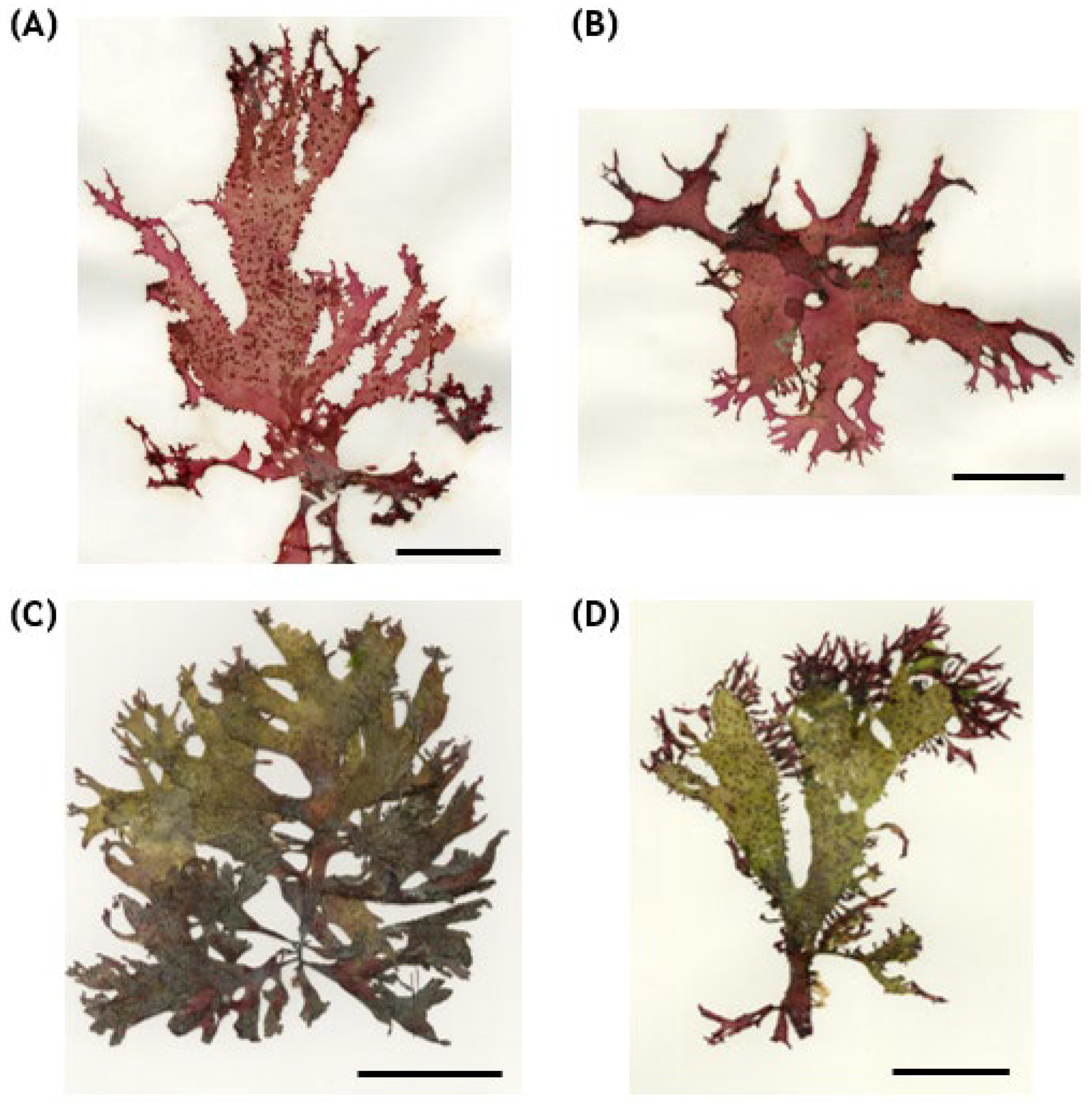
In this study, herbarium specimens of Meristotheca papulosa from the NIBR (Korea) were analyzed (Table 1 and Table 2; Figure 1). We focused on the molecular analyses of specimens identified as M. papulosa from previous field surveys based on morphological examination.
Considering the collection sites and dates, we selected 22 sheets of M. papulosa herbarium specimens collected around the Korean Peninsula and successfully identified 12 specimens (Table 1 and Table 2; Figure 1). We obtained a small amount (<0.5 cm2) of sample from a single herbarium specimen for DNA extraction; the extracted DNA was subsequently subjected to polymerase chain reaction (PCR) analysis and sequencing as described previously [11]. Total genomic DNA was extracted using the DNeasy Plant Mini Kit (Qiagen, Germantown, MD, USA) following previously described protocols [11].
We used multiple molecular markers based on reference sequences deposited in GenBank (National Center for Biotechnology Information, NCBI). Two organelle-coding genes (rbcL, a plastid gene; cox1, a mitochondrial gene) were selected as molecular markers. New primers for the rbcL and cox1 regions were designed. Forward (rbcL-Red-8F; 5′-AATCTGTAGAAGAACGGACA-3′) and reverse (rbcL-Gig-978R; 5′-TACACCWGCCATACGCATCC-3′) primers were designed to amplify a 971-bp fragment in the rbcL region of the herbarium specimens (Figure 2A).
For the amplification of the cox1 region, two sets of cox1 primers were designed. For Meristotheca species, forward (cox1-Mer-84F; 5′-TGGTGCYTTTTCAGGTTTAATWGGA-3′) and reverse (cox1-Gig-749R; 5′-TCAGGGTGGCCRAARAAYCA-3′) primers were designed (Figure 2B) with 666-bp amplicons. For G. textorii, a different cox1-GraT-378F/cox1-Gig-749R primer set was used (cox1-GraT-378F (5′- CGAAGTTGGTGTAGGGACAGTA 3′)) with 372-bp amplicons (Figure 2C).
PCR was performed with an initial denaturation step at 94 °C for 3 min, followed by 40 cycles at 94 °C for 30 s, 50 °C for 30 s, and 72 °C for 1 min; and a final extension step at 72 °C for 7 min using Gene Amp-PCR-System-9700 (Applied Biosystems, Foster City, CA, USA). AmfiXpand PCR Master Mix (GenDEPOT, Katy, TX, USA) was used for PCR, and the products were sequenced using a commercial sequencing service provider (GenoTech, Daejeon, Republic of Korea). Chromatograms of sequencing were assembled in both directions using the Sequencher 5.4.6 software (Gene Codes, Ann Arbor, MI, USA). The sequencing quality was checked using the chromatograms, and we used the high-quality region in the sequencing data.
We successfully isolated the rbcL and cox1 sequences from 12 herbarium specimens of M. papulosa. The DNA sequences have been deposited in GenBank (the accession numbers are presented in Table 1 and Table 2). DNA sequences (rbcL and cox1) isolated from Korean herbarium specimens were compared with reference sequences deposited in GenBank at the NCBI (Meristotheca pilulaora (rbcL and cox1) and Gracilaria textorii (ptDNA NC_046043 and mtDNA NC_037892) (Figure 3).
For molecular phylogenetic analyses, reference sequences for cox1 were obtained from GenBank (NCBI) (Figure 3). Molecular phylogenetic analyses were conducted using MEGA ver. 6 [15] using the neighbor-joining and maximum likelihood methods with 2000 bootstrap replicates. The pairwise distances were calculated using Kimura’s two-parameter method. Outgroups were selected based on a previous phylogenetic study of Solieriaceae [16].

3. Results

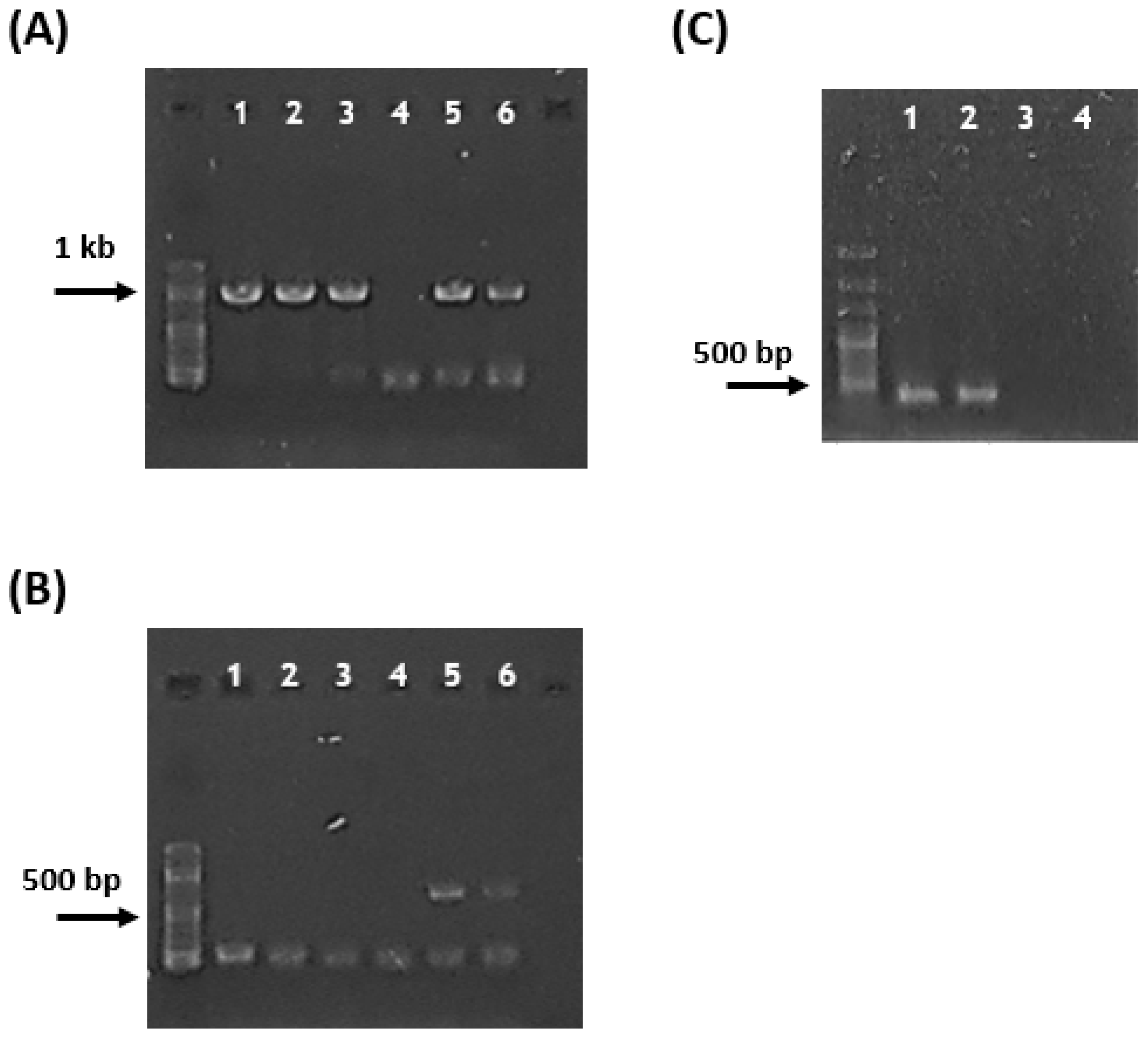
We obtained four rbcL gene sequences [OP554369–OP554371 (878 bp) and OP554372 (836 bp)] and four cox1 gene sequences (622 bp of OQ594746–OQ594749 (622 bp)] from six specimens (Meristotheca pilulaora; Table 1, Figure 2). We isolated six rbcL [PX613529–PX613534 (931 bp)] and six cox1 [PX613535—PX613540 (330 bp)] DNA sequences from six specimens and used them for species identification (Gracilaria textorii; Table 2, Figure 2). The primer pair of cox1 marker (cox1-Mer-84F/cox1-Gig-751R) produced 668-bp amplicons from M. pilulaora DNA templates, but not from G. textorii DNA samples (Figure 2B). The primer combination cox1-GraT-378F/cox1-Gig-751R of cox1 marker for Gracilaria species produced 374-bp amplicons from G. textorii DNA templates (Figure 2C).
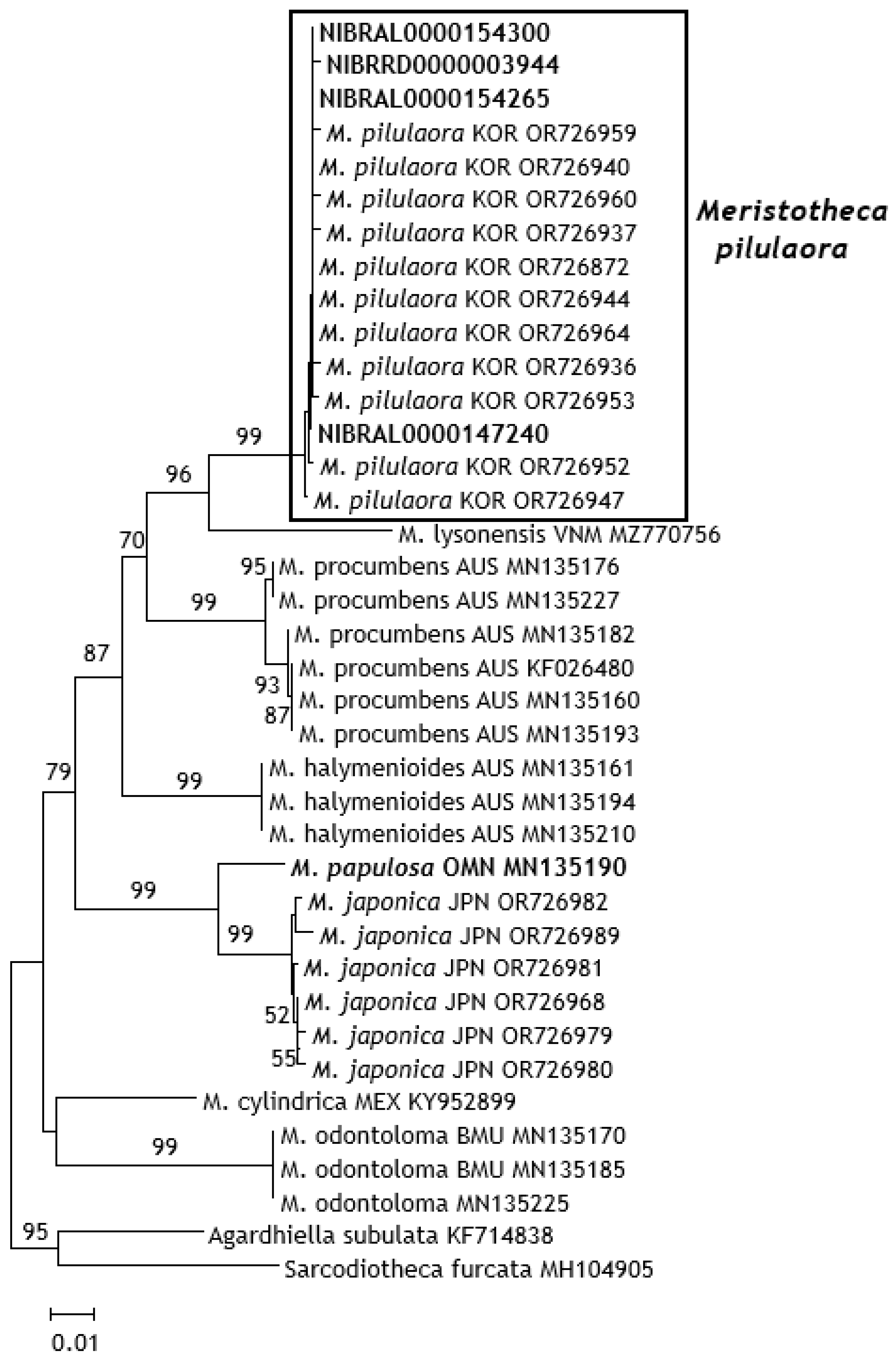
Using BLAST search (GenBank, NCBI), we identified six “M. papulosa” specimens as M. pilulaora, recently established in Korea [6] (Table 1, Figure 3). Moreover, the other six “M. papulosa” specimens exhibited 100% identity with G. textorii (ptDNA NC_046043 and mtDNA NC_037892) (Table 2).
The rbcL sequences of five “M. papulosa” specimens contained the same DNA sequence and showed 100% identity with those of M. pilulaora populations. The cox1 gene of four “M. papulosa” specimens showed a difference of just one base among the specimens (NIBRRD0000003944 differed by one base from the sequences of the other specimens), demonstrating 99.8–100% identity with that of the M. pilulaora population in GenBank. Moreover, the “M. papulosa” specimens showed 93.7–89.8% cox1 sequence variation at the interspecific level. Therefore, the “M. papulosa” specimens examined in this study could be re-identified as M. pilulaora, as reported previously [6] (Figure 3).
In this study, we revealed a high level of misidentification (i.e., 50%, corresponding to 6 out of 12 specimens) of G. textorii, which was originally identified as M. papulosa. Moreover, we developed molecular markers for effective identification of M. pilulaora and G. textorii herbarium specimens. Moreover, M. pilulaora and G. textorii were successfully distinguished by the electrophoresis experiments using cox1 molecular markers (Figure 2B,C).

4. Discussion

The herbarium DNA barcoding has enabled to identify the biodiversity [8,9,10,11,12,13,14,15]. During the taxonomic re-examination of herbarium specimens of M. papulosa in the NIBR, we identified new genetic and species diversity in the algal herbarium (e.g., [11]).
Six of the 12 “M. papulosa” specimens examined were identified as M. pilulaora (Gigartinales; Solieriaceae) and the other six as G. textorii (Gracilariales; Gracilariaceae). Although M. papulosa and M. coacta have been reported by previous studies on Korean algal flora [4,5], they were not identified in this study. In a previous study [6], M. pilulaora was found only in the coastal regions of Jeju Island (Korea). In contrast, the herbarium DNA barcoding method used in the present study revealed the distribution of M. pilulaora, for the first time, on Ulleung Island, Korea (Table 1).
Regarding the Korean species of the genus Gracilaria, molecular phylogenetic studies were conducted with morphological observations [17,18]. We uncovered a misidentification at the inter-ordinal level between M. pilulaora and G. textorii (6/12 samples) (Table 2). Thus, most herbarium specimens lacking evidence of DNA sequences could have been taxonomically misidentified (e.g., [11]). Therefore, taxonomic re-examination is required to verify herbarium specimens. Our approach can provide a case study for the DNA barcoding method for herbarium specimens, and the molecular markers developed in this study represented an effective molecular tool for the species-level identification between M. pilulaora and G. textorii.

5. Conclusions

Many taxonomists worldwide have spent considerable time searching for new and unrecorded species. Moreover, numerous herbarium specimens have been deposited without DNA evidence to confirm species identification. Our work represents a case study for establishing misidentification in herbarium specimens and finding a new geographic distribution. Therefore, the DNA barcoding analysis for herbarium specimens can provide the useful information for algal taxonomic studies.

Author Contributions

Conceptualization, S.-R.L.; methodology, S.J.L., B.Y.K. and E.-Y.L.; software, S.-R.L.; validation, S.-R.L., S.J.L., B.Y.K. and E.-Y.L.; formal analysis, S.J.L. and E.-Y.L.; investigation, S.-R.L., S.J.L. and E.-Y.L.; resources, E.-Y.L. and B.Y.K.; data curation, S.-R.L. and S.J.L.; writing—original draft preparation, S.-R.L.; writing—review and editing, B.Y.K., E.-Y.L. and S.J.L.; visualization, S.J.L. and E.-Y.L.; supervision, S.-R.L.; project administration, S.-R.L.; funding acquisition, S.J.L. and E.-Y.L. All authors have read and agreed to the published version of the manuscript.

Funding

This research was funded by the National Fishery Products Quality Management Service (Development and Management of Disease Control Program for Aquatic Life), grant number NFQS2026001, and the National Institute of Biological Resources (NIBR), grant number NIBR202602103, funded by the Korea Ministry of Environment (MOE), Republic of Korea.

Institutional Review Board Statement

Not applicable.

Informed Consent Statement

Not applicable.

Data Availability Statement

The sequence data have been deposited in GenBank under accession numbers (https://www.ncbi.nlm.nih.gov).

Conflicts of Interest

The authors declare no conflicts of interest.

Abbreviations

The following abbreviations are used in this manuscript:
NCBINational Center for Biotechnology Information
NIBRNational Institute of Biological Resources
PCRPolymerase chain reaction

References

  1. Faye, E.J.; Shimada, S.; Kawaguchi, S.; Masuda, M. Characterization of the edible red alga Meristotheca papulosa (Gigartinales, Solieriaceae) from Japan. Phycol. Res. 2005, 53, 234–245. [Google Scholar] [CrossRef]
  2. Kim, B.Y.; Ko, J.C.; Shan, T.; Choi, H.G. Reproductive capacity of Meristotheca papulosa (Solieriaceae, Rhodophyta) and effects of temperature on carpospore release and sporeling growth. Phycol. Res. 2025, 73, 70–78. [Google Scholar] [CrossRef]
  3. Guiry, M.D.; Guiry, G.M. AlgaeBase; World-Wide Electronic Publication; National University of Ireland: Galway, Ireland, 2025. Available online: www.algaebase.org (accessed on 4 December 2025).
  4. Lee, Y.P.; Kang, S.Y. A Catalogue of the Seaweeds in Korea; Jeju National University Press: Jeju, Republic of Korea, 2001; p. 425. [Google Scholar]
  5. National Institute of Biological Resources. 2024 Biodiversity Statistics of Korea; National Institute of Biological Resources: Incheon, Republic of Korea, 2024; Available online: https://kbr.go.kr/content/view.do?menuKey=799&contentKey=174 (accessed on 11 December 2025).
  6. Yang, M.Y.; Kang, J.C.; Fujita, D.; Kim, M.S. Molecular phylogeny and genetic diversity of the economic seaweed Meristotheca (Gigartinales, Rhodophyta) in the Northwest Pacific, with a description of M. pilulaora sp. nov. J. Appl. Phycol. 2024, 36, 485–499. [Google Scholar] [CrossRef]
  7. Nishihara, G.N.; Noro, T.; Terada, R. Effect of temperature and light on the photosynthetic performance of two edible sea-weeds: Meristotheca coacta Okamura and Meristotheca papulosa J. Agardh (Solieriaceae, Rhodophyta). Aquacult. Sci. 2012, 60, 377–388. [Google Scholar]
  8. Bebber, D.P.; Carine, M.A.; Wood, J.R.; Wortley, A.H.; Harris, D.J.; Prance, G.T.; Davidse, G.; Paige, J.; Pennington, T.D.; Robson, N.K.B.; et al. Herbaria are a major frontier for species discovery. Proc. Natl. Acad. Sci. USA 2010, 107, 22169–22171. [Google Scholar] [CrossRef] [PubMed]
  9. Nicholls, H. Time to sequence the ‘red and the dead’. Nature 2009, 458, 812–813. [Google Scholar] [CrossRef] [PubMed]
  10. Daru, B.H.; Park, D.S.; Primack, R.B.; Willis, C.G.; Barrington, D.S.; Whitfeld, T.J.; Seidler, T.G.; Sweeney, P.W.; Foster, D.R.; Ellison, A.M.; et al. Widespread sampling biases in herbaria revealed from large-scale digitization. New Phytol. 2018, 217, 939–955. [Google Scholar] [CrossRef] [PubMed]
  11. Lee, S.J.; Choi, H.G.; Kim, J.H.; Lee, E.Y.; Lee, S.-R. Genetic diversity of Cladophora oligocladoidea forming a bloom in the coastal area of Korea. Phycol. Res. 2023, 71, 77–80. [Google Scholar]
  12. Davis, C.C. The herbarium of the future. Trends Ecol. Evol. 2023, 38, 412–423. [Google Scholar] [CrossRef] [PubMed]
  13. Marín-Rodulfo, M.; Rondinel-Mendoza, K.V.; Martín-Girela, I.; Cañadas, E.M.; Lorite, J. Old meets new: Innovative and evolving uses of herbaria over time as revealed by a literature review. Plants People Planet 2024, 6, 1261–1271. [Google Scholar] [CrossRef]
  14. Eckert, I.; Bruneau, A.; Metsger, D.A.; Joly, S.; Dickinson, T.A.; Pollock, L.J. Herbarium collections remain essential in the age of community science. Nat. Commun. 2024, 15, 7586. [Google Scholar] [CrossRef] [PubMed]
  15. Swain, H.; Chakraborty, K. Science behind herbarium and its importance in recent years. Nord. J. Bot. 2024, 12, e04499. [Google Scholar] [CrossRef]
  16. Tamura, K.; Stecher, G.; Peterson, D.; Filipski, A.; Kumar, S. MEGA6: Molecular evolutionary genetics analysis version 6.0. Mol. Biol. Evol. 2013, 30, 2725–2729. [Google Scholar] [CrossRef] [PubMed]
  17. Kim, M.S.; Kim, M.; Terada, R.; Yang, E.C.; Boo, S.M. Gracilaria parvispora is the correct name of the species known as G. bursa-pastoris in Korea and Japan. Taxon 2008, 57, 231–237. [Google Scholar]
  18. Yang, M.Y.; Kim, M.S. Molecular analyses for identification of the Gracilariaceae (Rhodophyta) from the Asia–Pacific region. Genes Genom. 2015, 37, 775–787. [Google Scholar] [CrossRef]
Figure 1. Morphological similarity between Korean Meristotheca pilulaora and Gracilaria textorii deposited in the algal herbarium of the National Institute of Biological Resources (NIBR). Those specimens were originally identified as Meristotheca papulosa and reidentified using DNA barcoding in this study. (Meristotheca pilulaora ((A)—NIBRAL0000147240 (Hado-ri, Jeju Island), (B)—NIBRAL0000138926 (Daejeong-eup, Jeju Island)); G. textorii ((C)—NIBRAL0000115411 (Geoje-si, Gyeongsangnam-do), (D)—NIBRAL0000147886 (Geoje-si, Gyeongsangnam-do)) (Scale bars = 5 cm).
Biology 15 00424 g001
Figure 2. Amplification of rbcL and cox1 regions in Korean Meristotheca pilulaora and Gracilaria textorii herbarium specimens deposited in the algal herbarium of the National Institute of Biological Resources (NIBR) under M. papulosa. (A) Universal rbcL amplification for Gracilaria and Meristotheca species (G. textorii; line 1—NIBRAL0000147886, line 2—NIBRAL0000148336, line 3—NIBRAL0000148567) and M. pilulaora; line 5—NIBRAL0000154265, line 6—NIBRAL0000154300). (B) Meristotheca pilulaora cox1 amplification (line 5—NIBRAL0000154265, line 6—NIBRAL0000154300); no amplification for G. textorii. (C) Gracilaria textorii cox1 amplification (G. textorii; line 1—NIBRAL0000115705, line 2—NIBRAL0000143530); no amplification for M. pilulaora (line 3—NIBRAL0000154265, line 4—NIBRAL0000154300).
Biology 15 00424 g002
Figure 3. Phylogenetic tree of cox1 gene sequences constructed using neighbor-joining (Kimura 2-parameter model). Agardhiella and Sarcodiotheca species were selected as outgroups. Bootstrap values are presented on the branches (>50%).
Biology 15 00424 g003
Table 1. Revised Meristotheca pilulaora specimens previously listed under Meristotheca papulosa.
Collection SiteHerbarium NumberCollection DaterbcLcox1
Cheonbu-ri, Ulleung IslandNIBRAL000015426519 May 2015OP554370OQ594746
Jeodong-ri, Ulleung IslandNIBRAL000015430020 May 2015OP554369OQ594747
Hallim-eup, Jeju IslandNIBRRD00000039445 May 2019OP554371OQ594748
Daejeong-eup, Jeju IslandNIBRAL000013892630 May 2013OP554371-
Hado-ri, Jeju IslandNIBRAL000014724011 August 2014-OQ594749
Munseom, Jeju IslandNIBRRD000000597326 July 2010OP554372-
Table 2. Revised Gracilaria textorii specimens previously listed under Meristotheca papulosa.
Collection SiteHerbarium NumberCollection DaterbcLcox1
Geoje-si, Gyeongsangnam-doNIBRAL000011541123 June 2009PX613529PX613535
Geoje-si, Gyeongsangnam-doNIBRAL000011570524 June 2009PX613530PX613536
Namhae-gun, Gyeongsangnam-doNIBRAL00001435304 July 2013PX613531PX613537
Geoje-si, Gyeongsangnam-doNIBRAL000014788612 July 2014PX613532PX613538
Jindo-gun, Jeollanam-doNIBRAL000014833628 July 2014PX613533PX613539
Wando-gun, Jeollanam-doNIBRAL000014856726 September 2014PX613534PX613540
Disclaimer/Publisher’s Note: The statements, opinions and data contained in all publications are solely those of the individual author(s) and contributor(s) and not of MDPI and/or the editor(s). MDPI and/or the editor(s) disclaim responsibility for any injury to people or property resulting from any ideas, methods, instructions or products referred to in the content.