
Article

The Impact of Significant Geographical Barriers on the Invasion Risk of Non-Native Aquatic Animals: A Case Study of the Qinling Mountains, China

1
Resource and Environmental Research Center, Chinese Academy of Fishery Sciences, Beijing 100141, China
2
State Key Laboratory of Animal Biodiversity Conservation and Integrated Pest Management, Institute of Zoology, Chinese Academy of Sciences, Beijing 100101, China
3
National Demonstration Center for Experimental Fisheries Science Education, Shanghai Ocean University, Shanghai 201306, China
4
Shanxi Provincial Aquatic Technology Extension Service Center, Xiaodian District, Taiyuan 030006, China
*
Authors to whom correspondence should be addressed.
Biology 2026, 15(4), 329; https://doi.org/10.3390/biology15040329
Submission received: 12 January 2026 / Revised: 10 February 2026 / Accepted: 10 February 2026 / Published: 13 February 2026
(This article belongs to the Special Issue Biological Invasions in Freshwater Ecosystems)

Simple Summary

Biological invasions are an important cause of biodiversity loss. The Qinling Mountains form a key natural barrier in central China: they separate the warmer south from the colder north, and they also lie between the Yangtze and Yellow River basins. Using field surveys and existing distribution records, we examined whether this barrier affects the invasion risk of non-native aquatic animals and whether their distributions differ on the two sides of the mountains. Our results show that temperature is the strongest factor shaping invasion risk. Species that tolerate colder conditions are more common north of the Qinling Mountains, while species that prefer warmer conditions are more common to the south. However, human activities—such as water-transfer projects, dam building, and aquaculture—can reduce the barrier effect by creating new pathways for movement between river basins. We therefore suggest giving priority to monitoring areas where water systems are connected by engineering projects and strengthening early detection and rapid action to reduce potential ecological harm.

Abstract

Biological invasion is a major driver of biodiversity loss and ecosystem disruption, with non-native aquatic species threatening ecological integrity and economic stability. The Qinling Mountains, located in central China, serve as a crucial barrier between temperate and subtropical climate zones, and separate the Yellow and Yangtze River basins. This study investigates the role of these geographical barriers in regulating the distribution and invasion risk of non-native aquatic species. We identified 27 non-native species in Shaanxi Province based on occurrence records compiled from field survey conducted between 2012 and 2024 (and from 2019 to 2024 in the Yellow River mainstream of the Shanxi–Shaanxi Gorge), including 13 high-risk species, such as Trachemys scripta elegans, Procambarus clarkii, Sander lucioperca, and Hypomesus olidus. Using the Aquatic Species Invasiveness Screening Kit and species distribution models, we identified the Hanjiang River in the Yangtze basin and Weihe River estuary in the Yellow River basin as high-risk areas for these species. Mean annual temperature was the primary environmental factor influencing species distribution, with species adapted to cooler conditions predominantly found north of the Qinling Mountains, while those preferring warmer climates are more common in the south. Our findings highlight the Qinling Mountains as both a physical and climatic barrier, limiting cross-basin dispersal and creating distinct invasion patterns. However, human activities such as inter-basin water-transfer projects, damming, and aquaculture practices have gradually weakened the barrier’s effectiveness, facilitating the spread of invasive species. We recommend prioritizing monitoring efforts in cross-basin water-transfer regions, focusing on high-risk species adapted to both cooler and warmer climates, and incorporating environmental DNA (eDNA)-based monitoring in recipient areas of inter-basin water-transfer projects for early detection and control to minimize ecosystem damage.

1. Introduction

Biological invasions are a leading driver of biodiversity loss and ecosystem disruption, with significant ecological, economic, and societal impacts worldwide [1,2]. Non-native aquatic species pose particularly severe threats, often outcompeting native species, destabilizing ecosystems, and facilitating the spread of diseases [3]. Human-mediated activities, such as aquaculture, shipping, and recreational fishing, exacerbate these invasions, frequently overcoming natural dispersal barriers [4,5].
Geographical features, including elevation and topography, play a critical role in shaping environmental conditions, influencing key factors, such as temperature, moisture, and light availability, which in turn affect species establishment and spread [6,7]. In terrestrial ecosystems, climate variables like temperature and precipitation directly impact organismal survival, while topographic features such as slope and aspect create microclimatic variations that indirectly shape species distributions [8,9]. These dynamics extend to aquatic ecosystems, where they similarly determine the success of non-native species invasions [10,11].
China, as a global hotspot for non-native aquatic species introductions, exemplifies the challenges posed by biological invasions [12,13]. Rapid growth in the aquaculture and ornamental trade industries has driven the introduction of at least 439 of the 624 globally recorded non-native freshwater fish species into China, making it one of the countries with the highest number of introduced fish species [14]. Notable examples such as Oreochromis niloticus, Sander lucioperca, and Procambarus clarkii have established invasive populations with significant ecological and economic consequences [15,16,17]. The patterns of invasion and species composition vary significantly between southern and northern China, reflecting the influence of vast geographical diversity, including five distinct climatic zones and complex natural barriers [18]. Among these barriers, the Qinling Mountains serve as a pivotal natural divide, separating subtropical and temperate regions and regulating the dispersal of non-native species.
The Qinling Mountains hold an extremely important position in China’s physical geography, serving as the boundary between the northern and southern regions of the country [19,20]. The Qinling Mountains not only lie between the subtropical and warm temperate zones, but also act as a significant watershed between the Yellow River and Yangtze River systems in China [21]. North of the Qinling Mountains lies the Yellow River basin, which is primarily traversed by the Weihe River and Luohe River. To the south, the Yangtze River basin extends, featuring significant rivers like the Hanjiang and Jialingjiang Rivers [19]. Notably, the Weihe River stands as the largest tributary of the Yellow River, and the Hanjiang River is the longest tributary of the Yangtze River [22]. The Qinling Mountains act as a natural divide between northern and southern China, effectively impeding the passage of moist maritime air masses into the northwest and obstructing the incursion of cold northern air into the southern regions [23,24]. This geographical feature significantly contributes to the temperature disparities observed between these two areas. The Qinling Mountains (in the narrower sense) are confined to the southern mountainous region of Shaanxi Province, bounded by the Weihe River to the north and the Hanjiang River to the south, with the Bahe River and Danjiang River basins to the east and the Jialingjiang River to the west [22,25]. Additionally, influenced by the geological structure of the Qinling Mountains, the northern slopes are steep, with short, fast-flowing rivers, whereas the southern slopes are gentler, with longer, slower-flowing rivers [26]. This diversity in terrain and hydrology creates distinct environmental conditions on either side of the mountains, shaping the establishment and spread of aquatic species. Furthermore, the Qinling Mountains serve as a crucial biogeographic boundary in global animal geography, delineating the transition zone between the Palearctic and Oriental regions [27]. This divide influences not only climate patterns and water systems but also plays a pivotal role in the distribution and diversification of species across China [26].
Despite their recognized importance, the role of geographical barriers in regulating aquatic invasions, particularly in regions with distinct climatic gradients and complex hydrological networks, remains insufficiently quantified. Previous studies have shown that climatic regimes and basin boundaries are important factors limiting the establishment and spread of non-native aquatic species [28,29]. Most studies rely on qualitative descriptions, with limited integration of predictive modeling approaches. To address this gap, we focus on the Qinling Mountains, a significant geographical barrier in China, to evaluate its influence on the invasion risk of high-risk non-native aquatic animals across contrasting climatic zones. By combining species distribution models, random forest analysis, and geographical barriers as spatial filters, we analyze the potential distribution patterns of these species and examine how environmental factors associated with this natural barrier shape their dispersal and establishment. This study not only quantifies the extent to which the Qinling Mountains constrain species dispersal and invasion risk but also provides a robust framework for understanding how natural barriers regulate the spread of invasive species in heterogeneous landscapes. The findings will offer valuable insights to inform strategies for preventing further invasions and protecting aquatic biodiversity.

2. Materials and Methods

2.1. Collection of Species Distribution Information

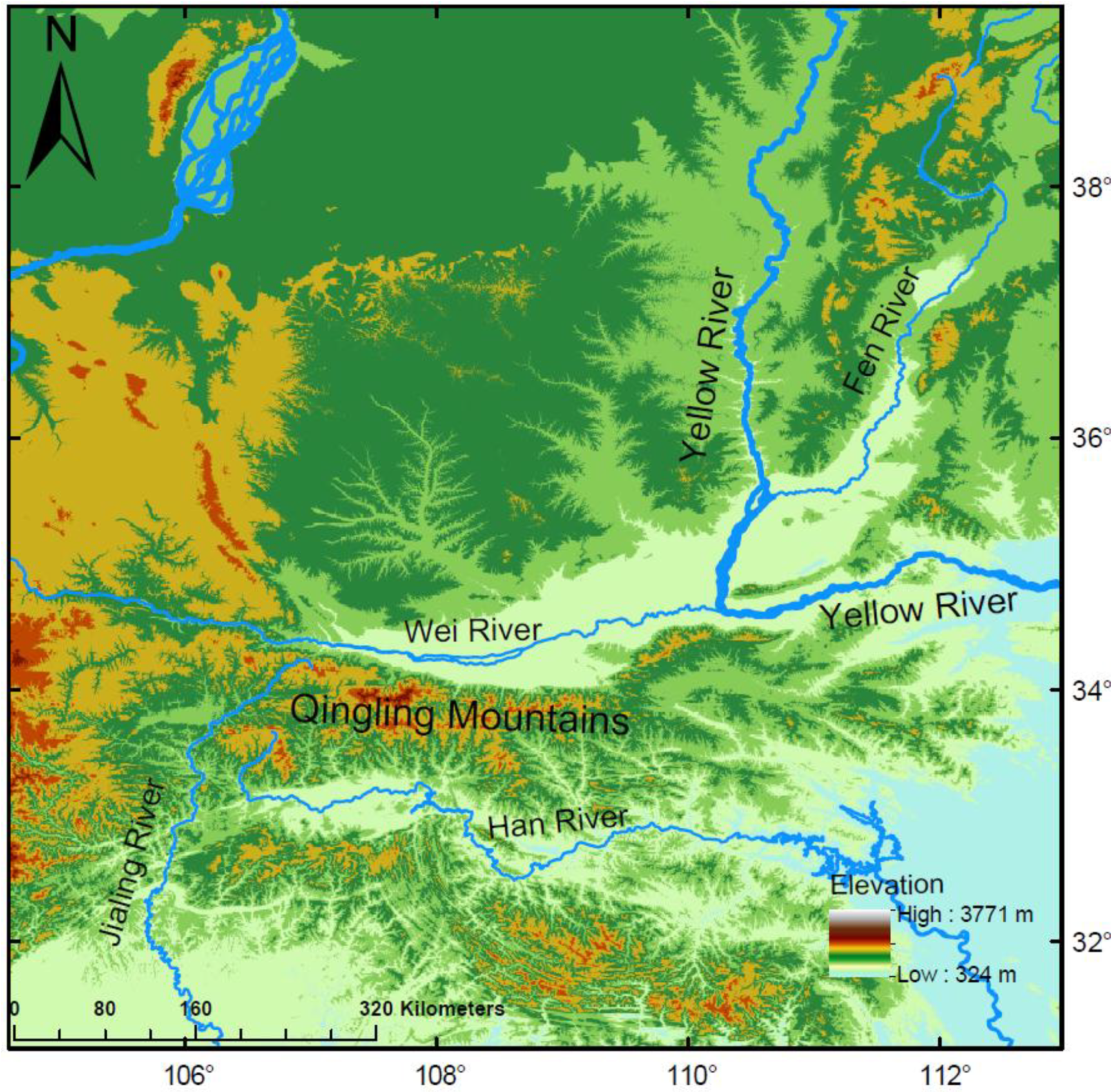
This study involves aquatic animals, primarily including fish, reptiles, and crustaceans. The data sources are divided into two parts. First, we compiled the non-native aquatic species inventory for the study area. The inventory data were primarily sourced from field surveys conducted between 2012 and 2024 in the Weihe River basin on the northern slope of the Qinling Mountains, the Hanjiang River basin on the southern slope, and from 2019 to 2024 in the Yellow River mainstream of the Shanxi–Shaanxi Gorge (Figure 1).
Additionally, historical literature records and specimen records collected from the Qinling Mountains since 1930, stored in the National Animal Collection Resource Center, Institute of Zoology, Chinese Academy of Sciences, Beijing, China (ASIZB), were also included. For the purpose of predicting the potential suitable distribution areas of non-native aquatic species, we used a broader set of species distribution data. These data, which cover a larger geographic range than the study area, were sourced from multiple platforms, including the Global Biodiversity Information Facility (GBIF) website (https://www.gbif.org/, accessed on 13 January 2024) and the World Fish Database (FishBase, https://www.fishbase.org/, accessed on 16 March 2024) [30,31], as well as historical literature records and field survey data from this study. These sources provided a more extensive view of species distribution, which was crucial for making accurate predictions across a wider region. After data integration, all collected species distribution data were rigorously screened and corrected to ensure accuracy for subsequent analyses. Specifically, we checked all occurrence records for duplicate entries, including identical geographic coordinates and repeated records from the same source. Because the target taxa are aquatic animals, we further evaluated the positional accuracy of each record based on the global river network dataset (https://www.hydrosheds.org/, accessed on 10 June 2024) at 30 s resolution. Using ArcGIS Desktop 10.8 (Esri, Redlands, CA, USA; accessed on 21 January 2024), we corrected the spatial position of occurrence points to ensure that all records were located within or adjacent to natural water bodies. Specifically, records falling outside mapped water bodies were manually checked and, when appropriate, snapped to the nearest river/lake feature so that the final coordinates were positioned within or immediately adjacent to the water network. This process minimized errors and provided a reliable foundation for predicting potential suitable areas for species.
Species introduction information is mainly divided into several aspects. (1) Sources of introduction: abroad (AB); Other regions of China (ORC); Different sections of the same river basin (DSB). (2) Pathways of introduction: Active (Aquaculture, Stocking for Fisheries, Ornamental Trade), and Passive (Unintentional transport).

2.2. Non-Native Aquatic Species Classification Criteria

In this study, we used a multi-tiered approach to determine whether species were classified as non-native aquatic animals. First, we referred to the International Union for Conservation of Nature (IUCN) Red List of Threatened Species (https://www.iucn.org/, accessed on 3 March 2024) to obtain species distribution data as the initial screening criterion. Since the IUCN data have relatively coarse resolution, we further incorporated regional sources, including the List of Invasive Alien Species in China’s Natural Ecosystems (https://www.mee.gov.cn/gkml/hbb/bgg/201612/t20161226_373636.htm, accessed on 14 March 2024), Species diversity and Distribution of Inland Fishes in China, Fishes of the Qinling Mountains, and Fishes of the Yellow River, to refine the classification of native and non-native species. To further verify species identity and distribution status, we conducted expert consultations with regional ichthyologists and taxonomists to cross-check ambiguous or conflicting records according to the predefined criteria; these consultations served only as supporting validation and were not used as the sole basis for classification. In cases where data from different sources were inconsistent, we made comprehensive judgments based on the timeliness of the data, authority, and applicability. Based on this process, we ultimately compiled a complete list of non-native aquatic animals in the study area.

2.3. Environmental Variable

The environmental data are from the BCC-CSM2-MR model of the sixth Coupled Model Intercomparison Project (CMIP6), selecting the Shared Socioeconomic Pathways (SSPs) with a moderate development scenario (SSP245) for the period of 2021–2040. This time includes 19 environmental climate variables and 1 topographic variable (Table 1), with the environmental climate variables mainly being temperature and precipitation. All environmental predictors have been previously used in modeling studies of other freshwater invasive species [32]. In addition, these data were used at a spatial resolution of 2.5 arc-minutes.

2.4. Toolkit Description

Risk screenings were undertaken using the Aquatic Species Invasiveness Screening Kit V2.3 (AS-ISK) [33]. During the assessment, the following two principles should be considered: (1) Whether the species has a history of invasion, distinguished by the numbers 1 and 0, with 1 indicating that the species has a history of invasion, and 0 indicating that the species does not have a history of invasion. (2) The ability of the species to reproduce naturally and form a stable population. The tool consists of 55 questions, with the first 49 questions for basic risk assessment and the last 6 questions for climate change risk assessment. Within AS-ISK, questions 1–49 constitute the Basic Risk Assessment (BRA), which evaluates invasion risk along the introduction, establishment/spread, and potential impact pathway. Questions 50–55 comprise the Climate Change Assessment (CCA) and examine how projected climatic conditions may modify these risks (i.e., risks related to introduction, establishment, dispersal, and impact under changing climatic scenarios), yielding a combined BRA + CCA score. Additionally, when assessing the questions, the basis for each question and the corresponding level of confidence must be provided (four levels of confidence: low = 1, medium = 2, high = 3, very high = 4). After the assessment, the total score was calculated based on the scores of the corresponding questions.
This study used the Receiver Operating Characteristic (ROC) curve to determine the accuracy of the assessment results [34,35]. The ROC curve was plotted using SPSS Statistics 26.0 (IBM Corp., Armonk, NY, USA). The horizontal axis of the ROC curve represents specificity, and the vertical axis represents sensitivity. The area under the curve ranges from 0.5 to 1, with a closer value to 1 indicating higher accuracy of the assessment results [36]. The Youden’s index was calculated using the results of the ROC curve, and then the assessment risk threshold was determined based on the Youden’s index results. The threshold is mainly used to distinguish whether the species are high-invasion-risk or middle-invasion-risk species [37].

2.5. Ecological Niche Modeling

Based on the results of the Aquatic Species Invasiveness Screening, potential suitable distribution areas were predicted for high-invasion-risk non-native aquatic animals using the MaxEnt model [38]. To ensure reliable occurrence data and reduce potential sampling bias and spatial autocorrelation, the occurrence dataset was spatially filtered prior to modeling, which also minimizes the risk of pseudo-absence. Species distribution points were cleaned using ArcGIS and Excel software. MaxEnt, a presence-only modeling approach, accounts for pseudo-absence by using background points sampled across the study area. Environmental data and species occurrence records were input into the model, with 75% of the data allocated for training and 25% for testing. This split follows a commonly used MaxEnt holdout setting (random test percentage = 25) to retain an independent subset for model evaluation [39]. Model performance was evaluated using the Area Under the Curve (AUC) of the Receiver Operating Characteristic, where AUC values above 0.7 indicate good predictive ability. Although ensemble models using multiple algorithms can enhance robustness, MaxEnt has been widely applied in species distribution modeling, including for aquatic animals, and has consistently shown high predictive performance for presence-only data [38,40]. Finally, predicted distribution areas were combined with geographic base map data from the 1:4 million national basic geographic dataset to generate the potential suitable distribution maps for high-invasion-risk aquatic animals.

2.6. High-Invasion-Risk Non-Native Aquatic Animals-Environmental Factors Relations

Environmental data were extracted from the WorldClim website (https://www.worldclim.org, accessed on 14 November 2024) for environmental and topographic factors [41], and environmental data for distribution areas were obtained through species presence data. Due to the multicollinearity among environmental variables, to ensure accurate environmental data for species distribution and to avoid fitting phenomena between data, it was necessary to select environmental variables [42]. The selection process involves saving the files as txt file format and importing them into SPSS software for bivariate correlation analysis. When the correlation |r| > 0.8, variables were retained based on the following two requirements: (1) Variables that had significant meaning for species distribution; (2) Based on the contribution rate of environmental factors. Selection was made according to these two principles. Dominance analysis was conducted using redundancy analysis (RDA), a multivariate method that explores relationships between species composition and environmental variables. In this study, the RDA used the selected environmental variables as explanatory variables and species presence/absence matrices as response variables, where “presence” indicates the species was observed in surveys or recorded historically, and “absence” indicates it was not detected during surveys. RDA combines species and environmental data through linear models to maximize the correlation between species distribution and environmental factors. The relative contribution of each environmental variable was evaluated based on the direction and length of its vector in the RDA biplot, with longer vectors indicating stronger influence on species distribution [43,44,45].

2.7. Drivers of High-Invasion-Risk Non-Native Aquatic Animals

The Random Forest (RF) model was used to establish a linear relationship between environmental factors and the distribution of high-invasion-risk non-native aquatic animals. RF is an algorithm based on classification and regression trees as meta-classifiers, referring to a widely used machine learning model that combines bagging and random features [46]. The model works by using the training dataset containing both the response and predictor variables, associated distance matrix, and distance thresholds [47]. It generates multiple classification trees, and outputs the results using voting or arithmetic averaging methods based on the results of all classification trees. At the same time, it uses the Shapley Additive exPlanations (SHAP) index for variable importance ranking to describe the contribution rate of feature variables to the results, providing a reasonable explanation [48]. The Random Forest model can smoothly handle overfitting issues between data when dealing with large datasets, and can accurately assess feature variables that affect the final results from a large number of feature variables [49,50]. By selecting the results of redundancy analysis, environmental variables of significant importance to species are included in the Random Forest model.

3. Result

3.1. Current Status of Non-Native Aquatic Animals in the Qinling Mountains

A total of 27 non-native aquatic species were identified, belonging to 2 phyla, 4 classes, 9 orders, and 16 families. Among these, fish represent the largest group, comprising 21 species across 7 orders and 10 families. Additionally, there are 2 crustacean species from 1 order and 2 families, 3 reptile species from 1 order and 3 families, and 1 amphibian species from 1 order and 1 family. Of these, 12 species/varieties were introduced from abroad (AB), 14 species/varieties were introduced from other regions of China (ORC), and 1 species/varieties were introduced from different sections of the same river basin (DSB). A breakdown of the introduction pathways shows that non-native aquatic animals in the tributaries of the Yangtze River basin (YZRB) in Shaanxi were introduced via aquaculture (8 species), Unintentional transport (1 species), Stocking for Fisheries (1 species), and Ornamental Trade (1 species). In the Yellow River basin (YRB) within Shaanxi, the non-native species were introduced through aquaculture (18 species), Unintentional transport (1 species), Stocking for Fisheries (2 species), and Ornamental Trade (4 species) (Table 2).
Additionally, statistical results show differences in species distribution between the tributaries of the YZRB and the main and tributary streams of the YRB in Shaanxi. Specifically, the Hanjiang River, the primary tributary of the YZRB, hosts 10 non-native aquatic species, while the Jialingjiang River has none. In the main stream of the YRB, 23 non-native species were recorded, and 5 species were identified in the Weihe River (Table 3).

3.2. Invasion Risk Assessment

Based on the Aquatic Species Invasiveness Screening Kit (AS-ISK) results (Table 4), assessment outcomes were divided into Basic Risk Assessment (BRA) scores and composite scores (BRA + CCA). According to the Youden index threshold calculated using SPSS software, a score of 32.75 (composite score) is the cutoff. Species with a composite score ≥ 32.75 and a documented invasion history (IS) are classified as high invasion risk. Species with a composite score greater than 1 but ≤ 32.75, and with an IS, are considered medium invasion risk. Species with a composite score less than 1 are classified as low or no invasion risk.
In total, 13 non-native aquatic species were identified as high-risk, 5 as medium-risk, and 9 as low or no invasion risk. Overall, most high-invasion-risk non-native aquatic animals showed consistently high values under both BRA and composite (BRA + CCA) scores, indicating that their invasion potential remains high even without considering climate change. However, several species exhibited moderate BRA scores but were elevated to a higher risk category after the inclusion of climate change factors (CCA), suggesting that future climatic shifts may further increase their invasion potential.

3.3. Predicted Suitable Habitats for High-Invasion-Risk Non-Native Aquatic Animals

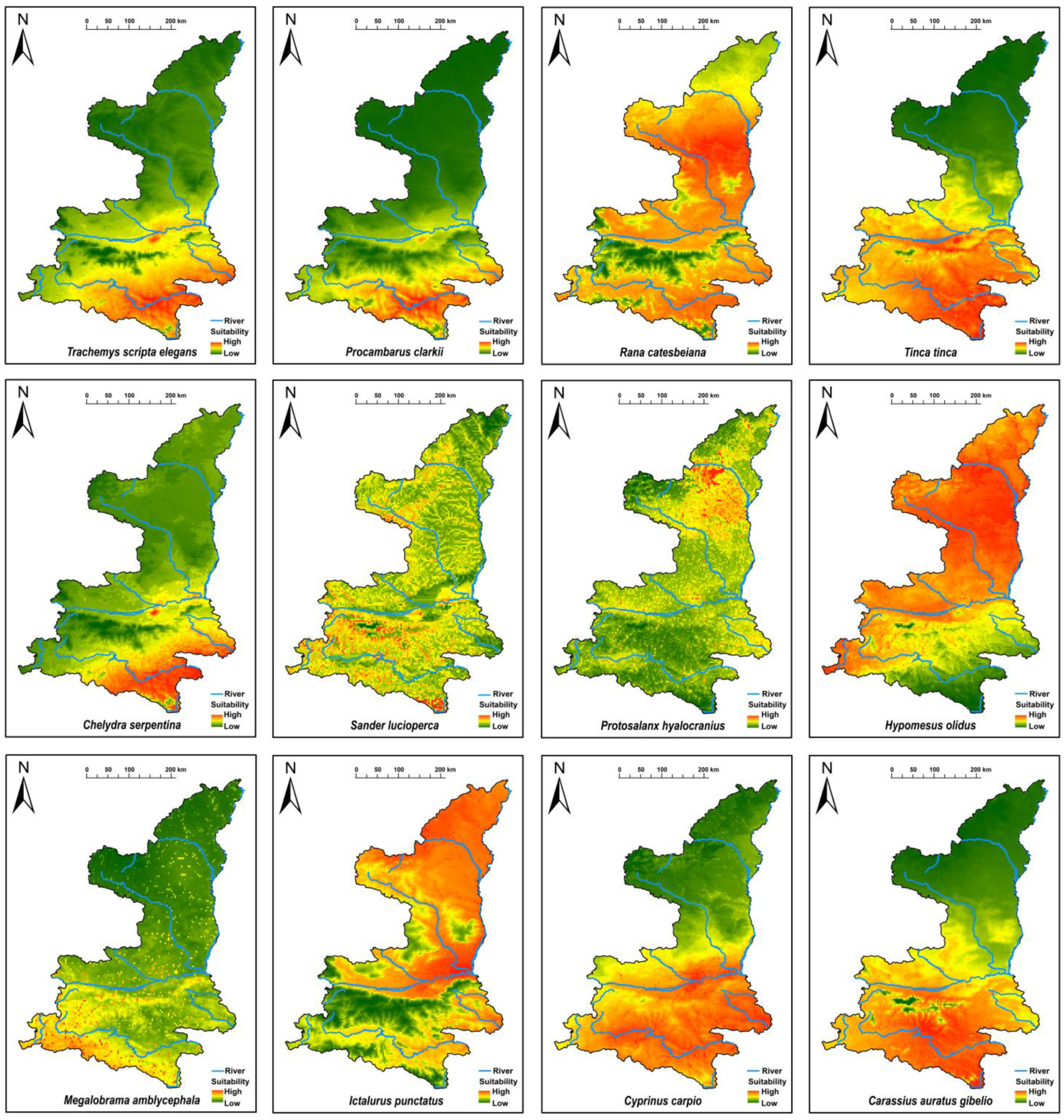
Based on the AS-ISK assessment results, a potential habitat suitability prediction analysis was conducted for high-invasion-risk non-native aquatic animals in Qinling Mountains using the Maxent model, (model performance metrics and suitability-class thresholds are provided in Table S1), as shown in Figure 2. The predicted suitable habitats for species/variety such as Sander lucioperca, Protosalanx hyalocranius, Hypomesus olidus, Ictalurus punctatus, Cyprinus carpio, and Rana catesbeiana cover relatively large areas. In contrast, species/variety like Trachemys scripta elegans, Procambarus clarkii, and Megalobrama amblycephala have smaller predicted suitable areas.
In terms of the regions on both sides of the Qinling Mountains, the invasion areas of most high-invasion-risk non-native aquatic animals are concentrated in the southern regions of the Qinling Mountains. However, a few high-invasion-risk non-native aquatic animals, such as Protosalanx hyalocranius and Hypomesus olidus, have their invasion areas primarily located in the northern regions of the Qinling Mountains (Figure 2).
Four rivers present the highest invasion risks for non-native aquatic species, with two in the YRB (Weihe River and Jinghe River) and two in the YZRB (Hanjiang River and Jialingjiang River). These river habitats are highly suitable for the invasion of most non-native animals. In contrast, compared to the rivers in southern Shaanxi, the rivers in the central region, such as the Wudinghe River, show relatively lower invasion risks.

3.4. Ordination of Environmental Factor Assemblies

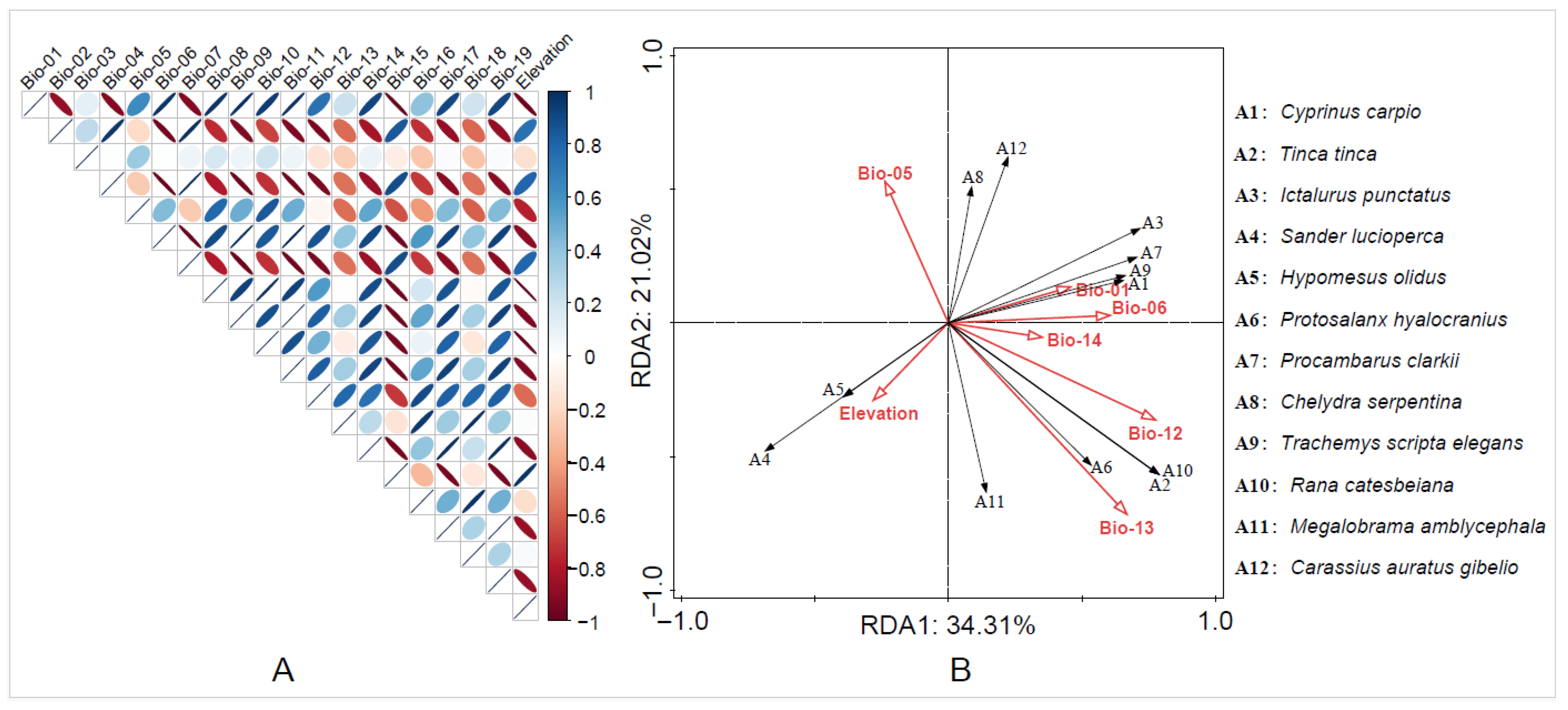
Considering the impact of extreme climate thresholds on species distribution and dispersal, seven environmental variables (Bio-01, Bio-04, Bio-05, Bio-12, Bio-13, Bio-14, and Elevation) were retained based on the Pearson correlation results (Figure 3A). These retained environmental variables were used in a redundancy analysis (RDA) (Table S2), which explained 55.75% of the distribution patterns of high-invasion-risk non-native aquatic animals based on presence data and environmental variables. The results show that environmental variables related to temperature are the main variables affecting species distribution.
The RDA1 axis was primarily aligned with environmental factors such as Bio-01 (Annual Mean Temperature), Bio-06 (Min Temperature of Coldest Month), and Elevation. The RDA2 axis is mainly explained by Bio-12 (Annual Precipitation) and Bio-13 (Precipitation of Wettest Month). In terms of species distribution, different species respond to environmental variables in distinct ways. For example, Cyprinus carpio shows a correlation with Bio-01 along the RDA1 axis, while Rana catesbeiana is associated with Bio-12 and Bio-13 on the RDA2 axis. Additionally, elevation, as a topographic variable, also showed clear alignment with the distribution patterns of multiple species (Figure 3B).

3.5. Response Degree of High-Risk Non-Native Aquatic Animals to Environmental Variables

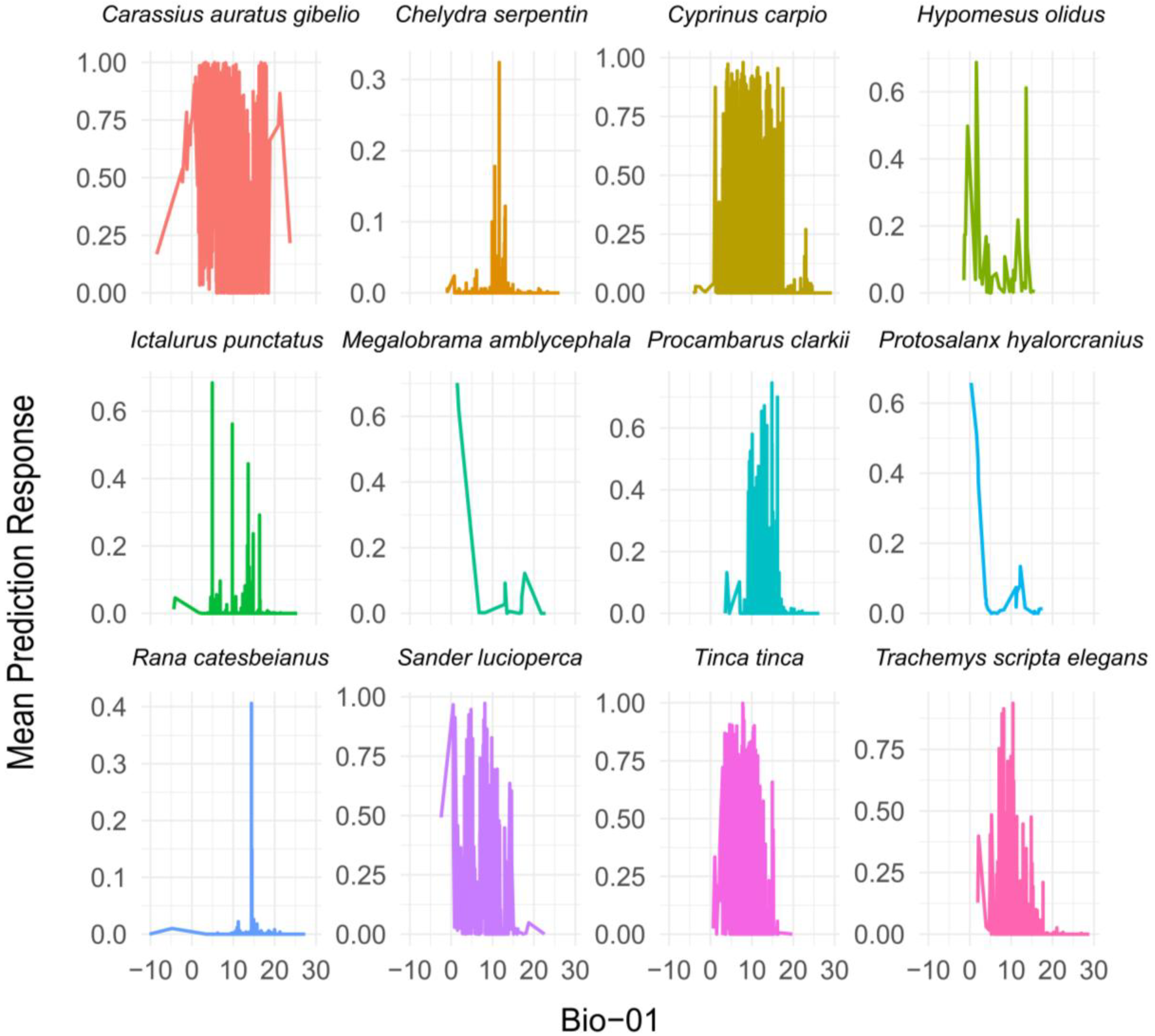
Based on the RDA results, Bio-01 was identified as the primary influencing factor and incorporated into the random forest model. The random forest analysis revealed species-specific responses to Bio-01. Most species exhibited higher suitability within the 0–20 °C range, indicating a significant influence of Bio-01 on species distribution in this temperature range. For instance, Carassius auratus gibelio, Cyprinus carpio, Sander lucioperca, and Tinca tinca showed peak responses in the range of 5–20 °C, suggesting adaptability to moderate Bio-01 conditions.
Species such as Chelydra serpentina and Megalobrama amblycephala responded strongly within the 0–5 °C range, indicating a preference for colder environments. In contrast, Rana catesbeiana and Hypomesus olidus exhibited narrower response ranges, reflecting stricter environmental requirements for Bio-01. Beyond 20 °C, the predicted suitability for most species declined sharply, suggesting that elevated Bio-01 values have minimal positive effects on species adaptability, and higher temperatures may limit the survival of most species (Figure 4).

4. Discussion

4.1. Distribution Patterns of Non-Native Aquatic Species in the Qinling Mountains Region

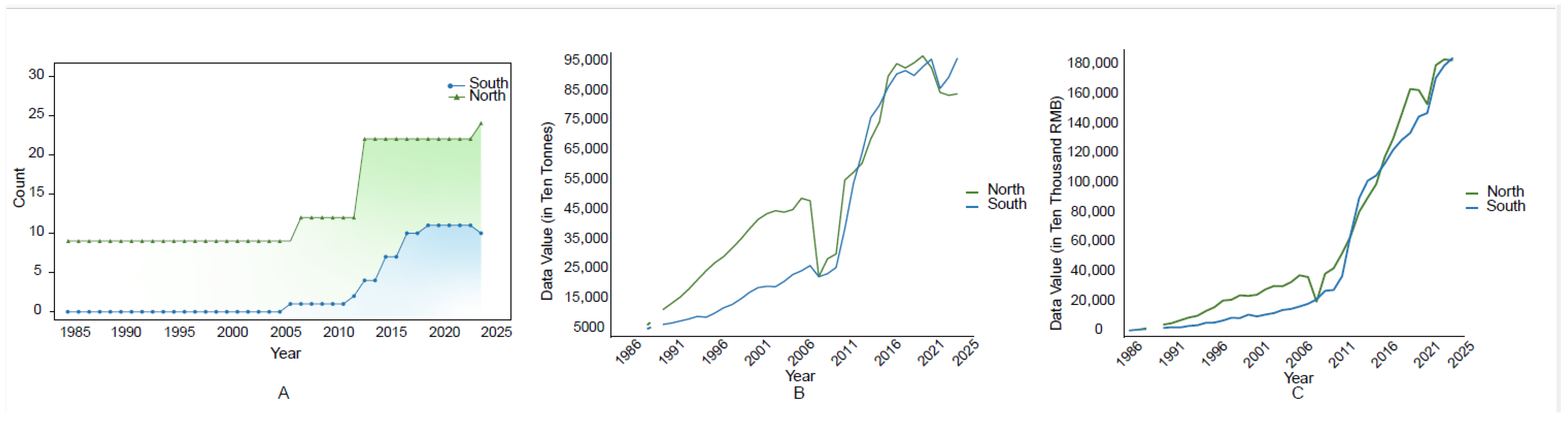
The Qinling Mountains, as a natural geographical barrier within Shaanxi Province, play a crucial role in influencing the distribution patterns of non-native aquatic species, particularly in terms of differences in species richness between the northern and southern regions (Figure 5A). In northern Shaanxi, the relatively flat terrain and favorable conditions for large-scale aquaculture have contributed to the rapid development of the aquaculture industry, characterized by significant production value and scale (Figure 5B) [62]. The growth of economic activities, particularly those related to water resource utilization and fisheries development, has created favorable conditions for the introduction of non-native species (Table S3). Studies have shown that the rapid expansion of aquaculture in northern Shaanxi is, to some extent, dependent on the farming of non-native species, further facilitating their introduction and spread [12,63].
In contrast, aquaculture in southern Shaanxi began later and historically involved a limited introduction of non-native species, resulting in relatively lower aquaculture production value. However, recent years have seen rapid development in the aquaculture industry in southern Shaanxi, particularly an increase in fisheries output, which has significantly elevated the opportunities for non-native species introduction (Figure 5C) [54,62]. Despite the natural geographical isolation provided by the Qinling Mountains, the expansion of aquaculture and increasing fisheries activities across Shaanxi Province have gradually narrowed the gap in non-native species introductions between the northern and southern regions, thereby increasing the risk of species spread. This change highlights that, although the Qinling Mountains have historically limited the north–south spread of species within Shaanxi Province, the rapid development of aquaculture and cross-regional trade activities are gradually eroding this barrier, potentially enabling the invasion of more non-native species.

4.2. Analysis of the Causes of Non-Native Aquatic Animals’ Introduction

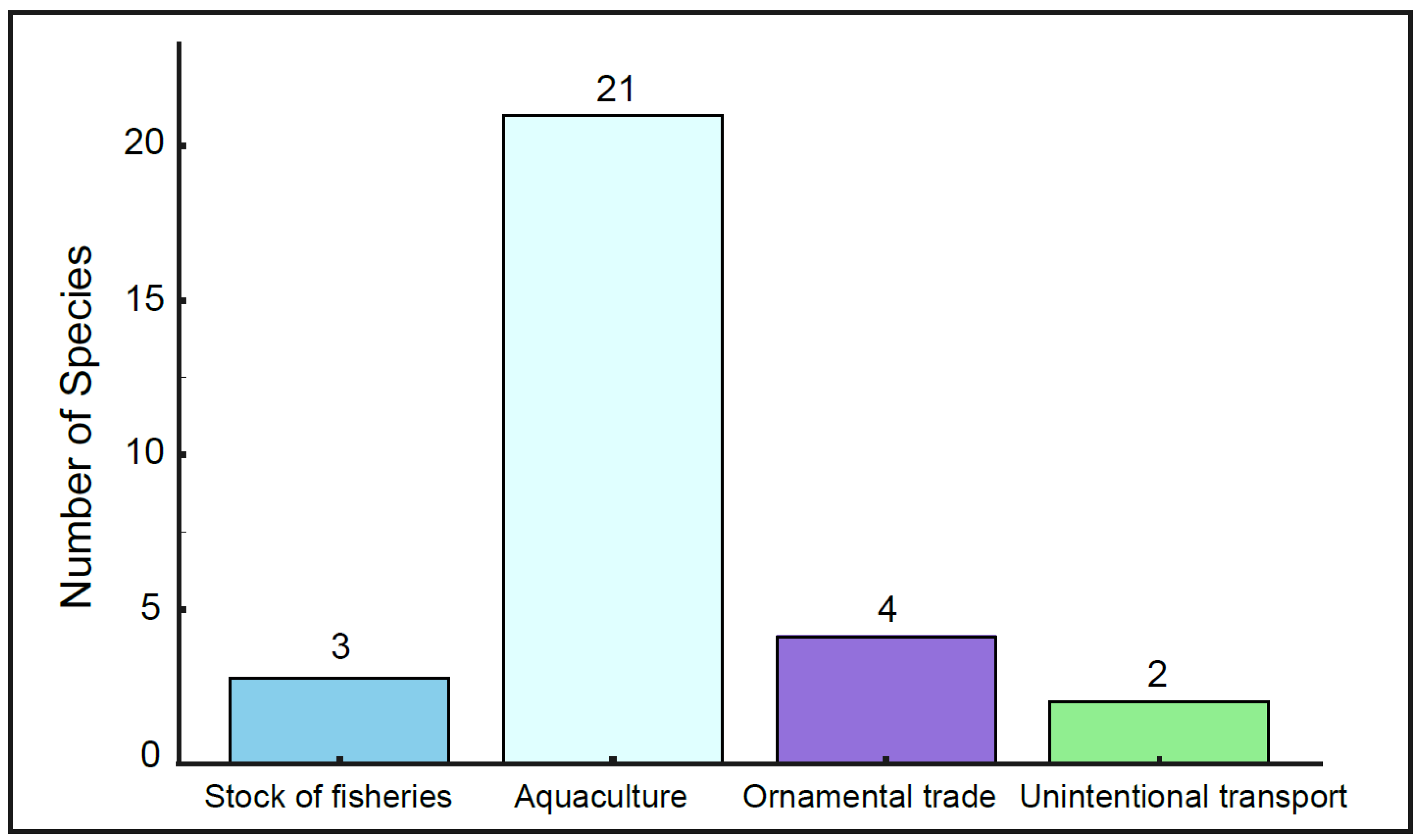
Based on the distribution status of non-native aquatic animals in Qinling Mountains, among introduction ways, aquaculture accounts for the highest number of species, with 21 species, followed by the ornamental trade, with 4 species; stock of fisheries, with 3 species; and unintentional transport, with 2 species (Figure 6). Aquaculture introductions are the most important pathway for introducing non-native aquatic species. Evidence indicates that 68 non-native aquatic species have escaped from aquaculture into natural habitats in China, successfully establishing wild populations, with 52 of these species posing risks to local aquatic ecosystems [12]. Shaanxi Province, as part of China’s northwest region, has a unique advantage in developing inland aquaculture. According to statistics from relevant departments, Shaanxi ranks first in the northwest region in terms of aquaculture area and freshwater aquaculture production [64]. For instance, I. punctatus, originally from North America, was introduced to China from Japan in the late 1970s and is primarily farmed in ponds in the upper Yellow River region. In the 1990s, H. olidus was introduced into the Liujiaxia Reservoir for large-scale farming, and surveys have shown that both H. olidus and P. hyalocranius have become dominant species in the area [65]. In the late 1980s, Shaanxi Province introduced Rana catesbeiana for special farming, mainly in the Guanzhong and southern Shaanxi regions. Due to market factors, many farmers abandoned R. catesbeiana farming, leading to the escape and spread of some R. catesbeiana and resulting in the establishment of natural populations [60]. The high invasion risks of many non-native aquatic animals in Shaanxi Province are largely due to the ongoing development of aquaculture practices. As an emerging industry, the ornamental trade has gradually become a major pathway for the introduction and establishment of fish [66].

4.3. The Barrier Role of the Qinling Mountains on Non-Native Aquatic Animals

Mountains cover a large part of the Earth’s surface and host unique ecosystems. Characterized by distinct landforms, high habitat heterogeneity, diverse climates, low human disturbance, and valuable ecosystem services, mountain regions play a crucial role in regulating species distribution and maintaining ecological balance [7,67]. The Qinling mountains range acts as a natural barrier between northern and southern China, shaping the biodiversity differences between these regions due to its unique terrain and climatic conditions [20]. Previous studies have indicated that among the most important factors for freshwater organisms are natural barriers, such as mountain ranges, which prevent the exchange of species among regions [29,68].
The number of non-native aquatic animals differs between the northern and southern sides of the Qinling Mountains. This pattern reflects the barrier function of the Qinling Mountains, operating through two complementary mechanisms that act at different stages of the invasion process. First, hydrological (physical) isolation limits cross-basin dispersal by reducing water connectivity, thereby constraining the arrival of propagules. Second, climatic differentiation between the two slopes acts as an environmental filter that affects the establishment and persistence of introduced populations once dispersal occurs. Accordingly, water connectivity plays a crucial role in dispersal in freshwater ecosystems [69]. Taking high-invasion-risk non-native aquatic animals, such as Sander lucioperca, as an example, habitat suitability predictions show that the region south of the Qinling Mountains is suitable for its survival. However, S. lucioperca has not been detected spreading south of the Qinling Mountains, likely due to the physical barrier effect of the mountains. This geographical barrier also directly affects the distribution of native species. For example, the northern slope of the Qinling Mountains has fewer fish species, with only 99 species, while the southern slope has a greater diversity, with 142 species [26]. The rapid uplift of the Qinling Mountains has distinctly divided China into northern and southern regions in terms of climate [70]. This uplift has led to warmer, wetter conditions in the south and cooler, drier conditions in the north. The Qinling Mountains block the influence of monsoons from the Indian and Pacific Oceans in the north, while preventing cold air from the north from reaching the south [20]. These climatic differences significantly affect the distribution of non-native aquatic species. Our research shows that non-native species in the north, such as Hypomesus olidus, Protosalanx hyalocranius, Sander lucioperca, and Procambarus clarkii, are typically adapted to lower temperatures or are temperature generalists. In contrast, species in the south, like Carassius carassius var. germanus, Carassius carassius var. specularis, Megalobrama amblycephala, and Rana catesbeiana, are adapted to warmer climates or are also generalists. This reflects the climatic gradient created by the mountains, where the mean annual temperature (Bio-01) is significantly lower in the north than in the south [71,72]. The Qinling Mountains act as a barrier, leading to significant temperature differences, particularly in winter. The average January temperature in the north is below 0 °C, while it exceeds 1 °C in the south. This temperature difference, which can be in the range of 6–7 °C, prevents cold air from the north from crossing into the south [73,74]. Our RDA analysis shows that Bio-01 is the primary factor influencing the invasion risk of high-risk non-native aquatic species. Species such as S. lucioperca, P. hyalocranius, and H. olidus are better suited to the cooler conditions north of the Qinling Mountains. For example, H. olidus has low habitat suitability in the south because the Bio-01 there exceeds its thermal tolerance for larval development, preventing the species from establishing populations [75]. This confirms that Bio-01 plays a critical role in shaping species distribution. Additionally, studies have shown a strong positive correlation between mean annual temperature and the richness of non-native species [28,76]. Our random forest model further supports this.

4.4. Influence of Human Activities on the Spread of Non-Native Aquatic Animals

The introduction of non-native species is a prominent issue associated with inter-basin water transfer, and aquatic invasions are becoming more frequent worldwide [77]. Inter-basin water transfers connect previously isolated watersheds, allowing aquatic organisms to disperse over long distances via artificial canals [78]. Inter-basin water transfer weakens the role of the Qinling Mountains as important geographical barriers. The water diversion from Hanjiang River to Weihe River runs through the Qinglin Mountains, which diverts water from the Yangtze River basin’s Hanjiang River to the Yellow River basin’s Weihe River, provides opportunities for cross-basin invasions by non-native aquatic animals. For example, the diversion of water through the East Route of the South-to-North Water Transfer Project (ESNT) has resulted in the invasion of the Shimofuri goby (Tridentiger bifasciatus), which has been detected in water storage lakes along the ESNT and has successfully established populations [79,80]. Additional, these transfers also modify environmental conditions, such as water physicochemical properties, hydrological patterns, and habitats, potentially disrupting recipient ecosystems and facilitating the establishment of introduced species [81,82]. For example, the Hanjiang-to-Weihe River project has created a series of reservoirs [83]. Studies have demonstrated that reservoirs are more susceptible to invasions than natural lakes, potentially due to the complex interplay of environmental factors unique to reservoir ecosystems [5]. Fluctuations in water levels driven by flood control and hydroelectric regulation disrupt native habitats by reducing large aquatic vegetation and degrading conditions suitable for native species, thereby promoting the establishment of invasive species [84]. Additionally, reservoirs create environmental conditions that favor the expansion of invasive and thermophilic species [85].
In addition to inter-basin water transfers, intentional human-mediated hybridization and selective breeding could potentially weaken the climatic filtering component of the Qinling Mountains’ barrier effect by increasing adaptive tolerance and facilitating establishment across climatic gradients [86,87]. Hybridization is considered an important source of adaptive allelic variation at the range edge, involving the interbreeding of distinct evolutionary groups or species [88,89,90]. The offspring of hybridization possess greater genetic diversity while also expanding the species’ range by transferring specific adaptive alleles [86]. For example, previous studies have shown that human activities have facilitated genetic mixing between different lineages of Sander lucioperca (invasive and native), bringing previously isolated genetic lineages into secondary contact. This has led to changes in genetic diversity, enhancing the adaptive potential of invasive populations [91]. Similar examples can also be found in the case of Hypophthalmichthys molitrix, where artificial hybridization led to the generation of multiple genotypes, accelerating the evolution of the species and enhancing the genetic capacity of H. molitri to adapt to new environments [92]. Moreover, in selective breeding, individuals that are robust (adaptable to a wide range of production environments or capable of maintaining internal balance) are often selected, allowing them to continue growing despite changes in the environment [87]. For example, selectively bred populations of Cirrhinus mrigala can naturally overwinter for over 50 days at temperatures below 10 °C, while all normal C. mrigala die under the same conditions, indicating a significant improvement in the cold resistance of the selectively bred C. mrigala [93]. Therefore, selectively bred species may adapt to harsh environments that the original populations could not, further weakening the impact of climate on changes in species distribution.

5. Conclusions

(1) Significant geographical barriers hinder the natural dispersal of non-native aquatic animals. Therefore, when monitoring, issuing early warnings, and managing non-native aquatic species in regions with geographical barriers, attention should focus on human-mediated pathways of cross-basin and cross-regional invasions. This is especially pertinent to human-engineered projects that overcome geographical barriers, such as the “Hanjiang River to Weihe River water diversion” project. In addition, it is important to remain aware of the risks posed by hybridization and selective breeding of species resulting from human activities, as these could potentially break traditional species distribution boundaries and lead to more extensive invasions. (2) Allocate monitoring resources for non-native aquatic animals based on scientific predictions of potential suitable habitats for high-risk species. This strategy will assist in identifying priority monitoring areas and establishing fixed monitoring sites for long-term tracking of species distribution and population dynamics. In areas with lower invasion risks, periodic mobile monitoring should be employed to improve overall monitoring efficiency.

Supplementary Materials

The following supporting information can be downloaded at: https://www.mdpi.com/article/10.3390/biology15040329/s1, Table S1: Model performance (AUC) for MaxEnt predictions and numeric ranges for habitat suitability classes (Figure 2); Table S2: Environmental variables used in the redundancy analysis (RDA); Table S3: Species number, fisheries output value, and aquatic product yield on the northern and southern sides of the Qinling Mountains.

Author Contributions

X.W.: Writing—original draft, Data curation, Formal analysis, Visualization, and Conceptualization. C.T.: Writing—review and editing, Methodology, and Data curation, X.J.: Writing—review and editing, Investigation, and Data curation. Y.Z.: Writing—review and editing, Project administration, Investigation, Funding acquisition, and Conceptualization. Y.X.: Writing—review and editing, Supervision, and Funding acquisition. All authors have read and agreed to the published version of the manuscript.

Funding

This work was supported by the National Natural Science Foundation of China (NSFC 32373133), the investigation project of the Ministry of Agriculture and Rural Affairs of the People’s Republic of China: “Yellow River Fisheries Resources and Environmental Survey,” the National Natural Science Foundation of China (NSFC32270464), and Sino BON—Inland Water Fish Diversity Observation Network.

Institutional Review Board Statement

Not applicable. This study did not involve human participants or human data, and it did not involve live-animal experiments, animal handling, or tissue sampling. All analyses were based on occurrence/distribution records from literature, databases, and museum collection records.

Informed Consent Statement

Not applicable.

Data Availability Statement

Data will be made available on request.

Acknowledgments

We especially thank Shaohua Xu and Zhixian Sun for their support with data visualization and guidance on examination of material. We are also grateful to Yingnan Wang and Xiaowei Meng from the National Animal Collection Resource Center, Institute of Zoology, Chinese Academy of Sciences, Beijing, China (ASIZB) for their kind help with checking the specimens.

Conflicts of Interest

The authors declare that they have no known competing financial interests or personal relationships that could have appeared to influence the work reported in this paper.

References

  1. Pyšek, P.; Hulme, P.E.; Simberloff, D.; Bacher, S.; Blackburn, T.M.; Carlton, J.T.; Dawson, W.; Essl, F.; Foxcroft, L.C.; Genovesi, P. Scientists’ warning on invasive alien species. Biol. Rev. 2020, 95, 1511–1534. [Google Scholar] [CrossRef]
  2. Simberloff, D.; Martin, J.-L.; Genovesi, P.; Maris, V.; Wardle, D.A.; Aronson, J.; Courchamp, F.; Galil, B.; García-Berthou, E.; Pascal, M. Impacts of biological invasions: What’s what and the way forward. Trends Ecol. Evol. 2013, 28, 58–66. [Google Scholar] [CrossRef]
  3. Mačić, V.; Albano, P.G.; Almpanidou, V.; Claudet, J.; Corrales, X.; Essl, F.; Evagelopoulos, A.; Giovos, I.; Jimenez, C.; Kark, S. Biological invasions in conservation planning: A global systematic review. Front. Mar. Sci. 2018, 5, 178. [Google Scholar] [CrossRef]
  4. Bernery, C.; Bellard, C.; Courchamp, F.; Brosse, S.; Gozlan, R.E.; Jarić, I.; Teletchea, F.; Leroy, B. Freshwater fish invasions: A comprehensive review. Annu. Rev. Ecol. Evol. Syst. 2022, 53, 427–456. [Google Scholar] [CrossRef]
  5. Johnson, P.T.; Olden, J.D.; Vander Zanden, M.J. Dam invaders: Impoundments facilitate biological invasions into freshwaters. Front. Ecol. Environ. 2008, 6, 357–363. [Google Scholar] [CrossRef]
  6. Gaston, K.J. The Structure and Dynamics of Geographic Ranges; Oxford University Press: Oxford, UK, 2003. [Google Scholar] [CrossRef]
  7. Pepin, N.; Arnone, E.; Gobiet, A.; Haslinger, K.; Kotlarski, S.; Notarnicola, C.; Palazzi, E.; Seibert, P.; Serafin, S.; Schöner, W. Climate changes and their elevational patterns in the mountains of the world. Rev. Geophys. 2022, 60, e2020RG000730. [Google Scholar] [CrossRef]
  8. Lembrechts, J.J.; Nijs, I.; Lenoir, J. Incorporating microclimate into species distribution models. Ecography 2019, 42, 1267–1279. [Google Scholar] [CrossRef]
  9. Holtmeier, F.-K.; Broll, G. Landform influences on treeline patchiness and dynamics in a changing climate. Phys. Geogr. 2012, 33, 403–437. [Google Scholar] [CrossRef]
  10. Catford, J.A.; Jansson, R.; Nilsson, C. Reducing redundancy in invasion ecology by integrating hypotheses into a single theoretical framework. Divers. Distrib. 2009, 15, 22–40. [Google Scholar] [CrossRef]
  11. Early, R.; Sax, D.F. Climatic niche shifts between species’ native and naturalized ranges raise concern for ecological forecasts during invasions and climate change. Glob. Ecol. Biogeogr. 2014, 23, 1356–1365. [Google Scholar] [CrossRef]
  12. Ju, R.T.; Li, X.; Jiang, J.J.; Wu, J.; Liu, J.; Strong, D.R.; Li, B. Emerging risks of non-native species escapes from aquaculture: Call for policy improvements in China and other developing countries. J. Appl. Ecol. 2020, 57, 85–90. [Google Scholar] [CrossRef]
  13. Kang, B.; Vitule, J.R.; Li, S.; Shuai, F.; Huang, L.; Huang, X.; Fang, J.; Shi, X.; Zhu, Y.; Xu, D. Introduction of non-native fish for aquaculture in China: A systematic review. Rev. Aquac. 2023, 15, 676–703. [Google Scholar] [CrossRef]
  14. Xiong, W.; Sui, X.; Liang, S.-H.; Chen, Y. Non-native freshwater fish species in China. Rev. Fish Biol. Fish. 2015, 25, 651–687. [Google Scholar] [CrossRef]
  15. Gu, D.E.; Ma, G.M.; Zhu, Y.J.; Xu, M.; Luo, D.; Li, Y.Y.; Wei, H.; Mu, X.D.; Luo, J.R.; Hu, Y.C. The impacts of invasive Nile tilapia (Oreochromis niloticus) on the fisheries in the main rivers of Guangdong Province, China. Biochem. Syst. Ecol. 2015, 59, 1–7. [Google Scholar] [CrossRef]
  16. Huang, J.; Tang, S.; Cai, F.; Lin, Y.; Wu, Z. Microsatellite evidence of dispersal mechanism of red swamp crayfish (Procambarus clarkii) in the Pearl River basin and implications for its management. Sci. Rep. 2017, 7, 8272. [Google Scholar] [CrossRef]
  17. Lu, C.; Sun, Z.; Xu, P.; Na, R.; Lv, W.; Cao, D.; Liu, T.; Zheng, X. Novel microsatellites reveal wild populations genetic variance in pike-perch (Sander lucioperca) in China. Aquac. Rep. 2022, 23, 101031. [Google Scholar] [CrossRef]
  18. Qiao, L.; Liu, C.; Su, G.; Zhang, Y.; Xie, J.; Zhang, M.; Xu, J. Spatial distribution and introduction pathways of non-native freshwater fish species in China. Water Biol. Secur. 2024, 3, 100276. [Google Scholar] [CrossRef]
  19. Zhao, X.; Ma, C.; Xiao, L. The vegetation history of Qinling mountains, China. Quat. Int. 2014, 325, 55–62. [Google Scholar] [CrossRef]
  20. Dong, Y.; Shi, X.; Sun, S.; Sun, J.; Hui, B.; He, D.; Chong, F.; Yang, Z. Co-evolution of the Cenozoic tectonics, geomorphology, environment and ecosystem in the Qinling Mountains and adjacent areas, Central China. Geosyst. Geoenviron. 2022, 1, 100032. [Google Scholar] [CrossRef]
  21. He, Y.; Hu, Y.; Song, J.; Jiang, X. Variation of runoff between southern and northern China and their attribution in the Qinling Mountains, China. Ecol. Eng. 2021, 171, 106374. [Google Scholar] [CrossRef]
  22. He, H.; Zhang, Q.; Zhou, J.; Fei, J.; Xie, X. Coupling climate change with hydrological dynamic in Qinling Mountains, China. Clim. Change 2009, 94, 409–427. [Google Scholar] [CrossRef]
  23. Zhang, J.; Zhiguang, L. Climate of China; Wiley: Chichester, UK, 1992. [Google Scholar]
  24. Ren, G.; Ding, Y.; Zhao, Z.; Zheng, J.; Wu, T.; Tang, G.; Xu, Y. Recent progress in studies of climate change in China. Adv. Atmos. Sci. 2012, 29, 958–977. [Google Scholar] [CrossRef]
  25. Li, P. Meeting the environmental challenges. Hum. Ecol. Risk Assess. Int. J. 2020, 26, 2303–2315. [Google Scholar] [CrossRef]
  26. Shaanxi Institute of Zoology; Institute of Hydrobiology, Chinese Academy of Sciences; Department of Biology, Lanzhou University. Fishes of Qinling Mountain Area; Science Press: Beijing, China, 1987; pp. 12–214. [Google Scholar]
  27. Li, H.; Han, Z.; Wu, S.; Cao, C.; Liu, H. Advance in biodiversity and its conservation measures in Qinling Mountains area of China. Guizhou Agric. Sci. 2011, 39, 32–34. [Google Scholar]
  28. Radinger, J.; Alcaraz-Hernández, J.D.; García-Berthou, E. Environmental filtering governs the spatial distribution of alien fishes in a large, human-impacted Mediterranean river. Divers. Distrib. 2019, 25, 701–714. [Google Scholar] [CrossRef]
  29. Rahel, F.J. Biogeographic barriers, connectivity and homogenization of freshwater faunas: It’s a small world after all. Freshw. Biol. 2007, 52, 696–710. [Google Scholar] [CrossRef]
  30. GBIF.org. GBIF Home Page. Available online: https://www.gbif.org (accessed on 13 January 2024).
  31. Froese, R.; Pauly, D. (Eds.) FishBase. World Wide Web Electronic Publication. Available online: www.fishbase.org (accessed on 16 March 2024).
  32. Banha, F.; Gama, M.; Anastácio, P.M. The effect of reproductive occurrences and human descriptors on invasive pet distribution modelling: Trachemys scripta elegans in the Iberian Peninsula. Ecol. Modell. 2017, 360, 45–52. [Google Scholar] [CrossRef]
  33. Copp, G.H.; Vilizzi, L.; Mumford, J.; Fenwick, G.V.; Godard, M.J.; Gozlan, R.E. Calibration of FISK, an invasiveness screening tool for nonnative freshwater fishes. Risk Anal. Int. J. 2009, 29, 457–467. [Google Scholar] [CrossRef]
  34. McNeil, B.J.; Hanley, J.A. Statistical approaches to the analysis of receiver operating characteristic (ROC) curves. Med. Decis. Mak. 1984, 4, 137–150. [Google Scholar] [CrossRef]
  35. Peterson, A.T.; Papeş, M.; Soberón, J. Rethinking receiver operating characteristic analysis applications in ecological niche modeling. Ecol. Modell. 2008, 213, 63–72. [Google Scholar] [CrossRef]
  36. Carter, J.V.; Pan, J.; Rai, S.N.; Galandiuk, S. ROC-ing along: Evaluation and interpretation of receiver operating characteristic curves. Surgery 2016, 159, 1638–1645. [Google Scholar] [CrossRef] [PubMed]
  37. Tarkan, A.S.; Vilizzi, L.; Top, N.; Ekmekçi, F.G.; Stebbing, P.D.; Copp, G.H. Identification of potentially invasive freshwater fishes, including translocated species, in Turkey using the Aquatic Species Invasiveness Screening Kit (AS-ISK). Int. Rev. Hydrobiol. 2017, 102, 47–56. [Google Scholar] [CrossRef]
  38. Elith, J.; Phillips, S.J.; Hastie, T.; Dudík, M.; Chee, Y.E.; Yates, C.J. A statistical explanation of MaxEnt for ecologists. Divers. Distrib. 2011, 17, 43–57. [Google Scholar] [CrossRef]
  39. Merow, C.; Smith, M.J.; Silander, J.A., Jr. A practical guide to MaxEnt for modeling species’ distributions: What it does, and why inputs and settings matter. Ecography 2013, 36, 1058–1069. [Google Scholar] [CrossRef]
  40. Wang, J.; Liu, X.; Mu, X.; Li, H.; Li, B.; Zhang, Y. Ensemble predictions of high trophic-level fish distribution and species association in response to climate change in the coastal waters of China. Mar. Pollut. Bull. 2025, 214, 117800. [Google Scholar] [CrossRef]
  41. Fick, S.E.; Hijmans, R.J. WorldClim 2: New 1-km spatial resolution climate surfaces for global land areas. Int. J. Climatol. 2017, 37, 4302–4315. [Google Scholar] [CrossRef]
  42. Dormann, C.F.; Elith, J.; Bacher, S.; Buchmann, C.; Carl, G.; Carré, G.; Marquéz, J.R.G.; Gruber, B.; Lafourcade, B.; Leitão, P.J. Collinearity: A review of methods to deal with it and a simulation study evaluating their performance. Ecography 2013, 36, 27–46. [Google Scholar] [CrossRef]
  43. Legendre, P.; Anderson, M.J. Distance-based redundancy analysis: Testing multispecies responses in multifactorial ecological experiments. Ecol. Monogr. 1999, 69, 1–24. [Google Scholar] [CrossRef]
  44. Vieira, T.B.; Tejerina-Garro, F.L. Relationships between environmental conditions and fish assemblages in tropical savanna headwater streams. Sci. Rep. 2020, 10, 2174. [Google Scholar] [CrossRef]
  45. Silva, P.B.; Arantes, C.C.; Freitas, C.E.; Petrere, M., Jr.; Ribeiro, F.R. Seasonal hydrology and fish assemblage structure in the floodplain of the lower Amazon River. Ecol. Freshw. Fish 2021, 30, 162–173. [Google Scholar] [CrossRef]
  46. Rigatti, S.J. Random forest. J. Insur. Med. 2017, 47, 31–39. [Google Scholar] [CrossRef] [PubMed]
  47. Benito, B. SpatialRF: Easy Spatial Regression with Random Forest. R Package Version 1.1.5. 2025. [Google Scholar] [CrossRef]
  48. He, Z.; Yang, Y.; Fang, R.; Zhou, S.; Zhao, W.; Bai, Y.; Li, J.; Wang, B. Integration of Shapley additive explanations with random forest model for quantitative precipitation estimation of mesoscale convective systems. Front. Environ. Sci. 2023, 10, 1057081. [Google Scholar] [CrossRef]
  49. Islam, M.M.; Kashem, M.A.; Uddin, J. Fish survival prediction in an aquatic environment using random forest model. Int. J. Artif. Intell. 2021, 2252, 8938. [Google Scholar] [CrossRef]
  50. Vezza, P.; Muñoz-Mas, R.; Martinez-Capel, F.; Mouton, A. Random forests to evaluate biotic interactions in fish distribution models. Environ. Model. Softw. 2015, 67, 173–183. [Google Scholar] [CrossRef]
  51. Feng, P. Comprehensive Analysis of Physical and Chemical Factors and Phytoplankton Species Composition and Abundance in Ankang Yinghu Reservoir. Master’s Thesis, Northwest A&F University, Yangling, China, 2019. [Google Scholar]
  52. Wang, Y.C.; Shen, H.B.; Zhang, J.Y.; Chen, Y.Y.; Yu, B. Species composition and community diversity of fishes in the Shaanxi section of the Yellow River mainstream. Freshw. Fish. 2017, 47, 56–60. [Google Scholar]
  53. Hou, S.; Li, W.; Wang, Y.; Wen, S.; Li, H.; Gao, Z. The current situation of aquatic animals invasion of the Shaanxi section of the Yellow River. J. Northwest Univ. (Nat. Sci. Ed.) 2016, 46, 82–86. [Google Scholar]
  54. Qi, X. Investigation on fishery resources in the upper reaches of Hanjiang River, Shaanxi Province. J. Fish. Res. 2022, 44, 21. [Google Scholar]
  55. Wang, X. Spatiotemporal Changes in Fish Species and Community Structure in the Hanjiang River (Shaanxi Section). Master’s Thesis, Northwest University, Xi’an, China, 2013. [Google Scholar]
  56. Wang, Y.; Li, W.; Hou, S.; Wen, S. Investigation on fishery resources in the Shaanxi section of the Yellow River. Freshw. Fish. 2015, 2, 97–101. [Google Scholar]
  57. Li, J.; Li, R.; Ying, S.; Wang, H.; Wang, Y. Investigation on the current status of fishery resources in the Shaanxi section of the Yellow River mainstream and the Weihe River. J. Fish. Res. 2025, 47, 238–247. [Google Scholar] [CrossRef]
  58. Geng, J.; Li, X.; Zhao, G.; Zhang, W. Aquatic food industry in Hanzhong City: Current situation and development measures. Hebei Fish. 2013, 5, 40–44. [Google Scholar]
  59. Wu, W.; Xu, Z.; Yin, X.; Yu, S. Fish community structure and the effects of environmental factors in the Wei River Basin. Acta Sci. Circumst. 2014, 34, 1298–1308. [Google Scholar]
  60. OY, Y.; Wang, Z. Current status and impacts of common invasive aquatic species in Shaanxi Province. Fish. Guide Be Rich 2015, 7, 17–19. [Google Scholar]
  61. Zhao, H.; Wang, Q.; Deng, J.; Jiang, W.; Ma, H.; Zhang, H.; Zhang, H.; Kong, F. Survey of alien turtles and invasion risk assessment in the Wei River Basin of Shaanxi Province. Chin. J. Wildl. 2021, 42, 1202–1205. [Google Scholar]
  62. Shaanxi Statistical Bureau. Shaanxi Statistical Yearbook 2021; China Statistical Press: Beijing, China, 2022. [Google Scholar]
  63. Shelton, W.L.; Rothbard, S. Exotic species in global aquaculture—A review. Isr. J. Aquac.-Bamidgeh 2006, 58, 3–28. [Google Scholar]
  64. China, B. Chinese Fishery Statistical Yearbook; China Agriculture Press: Beijing, China, 2018. [Google Scholar]
  65. Li, F.; Zhang, J.; Yuan, Y.; Feng, H.; Zhang, J.; Yang, X. Present situation and problems on fish introduction in Yellow River system. J. Anhui Agric. Sci. 2008, 36, 15024–15026. [Google Scholar]
  66. Strecker, A.L.; Campbell, P.M.; Olden, J.D. The aquarium trade as an invasion pathway in the Pacific Northwest. Fisheries 2011, 36, 74–85. [Google Scholar] [CrossRef]
  67. Pauchard, A.; Milbau, A.; Albihn, A.; Alexander, J.; Burgess, T.; Daehler, C.; Englund, G.; Essl, F.; Evengård, B.; Greenwood, G.B. Non-native and native organisms moving into high elevation and high latitude ecosystems in an era of climate change: New challenges for ecology and conservation. Biol. Invasions 2016, 18, 345–353. [Google Scholar] [CrossRef]
  68. Ricklefs, R.E.; Schluter, D. Species diversity: Regional and historical influences. Species Divers. Ecol. Communities 1993, 1, 350–363. [Google Scholar]
  69. Jones, P.E.; Tummers, J.S.; Galib, S.M.; Woodford, D.J.; Hume, J.B.; Silva, L.G.; Braga, R.R.; Garcia de Leaniz, C.; Vitule, J.R.; Herder, J.E. The use of barriers to limit the spread of aquatic invasive animal species: A global review. Front. Ecol. Evol. 2021, 9, 611631. [Google Scholar] [CrossRef]
  70. Xue, X.; Zhang, Y. The Uplift Stages and amplitudes of the Qin Ling mountains by analyzing the distribution and character of the fossils found in the mountains. Geol. Rev. 1996, 42, 30–36. [Google Scholar]
  71. Liu, Y.; Linderholm, H.W.; Song, H.; Cai, Q.; Tian, Q.; Sun, J.; Chen, D.; Simelton, E.; Seftigen, K.; Tian, H. Temperature variations recorded in Pinus tabulaeformis tree rings from the southern and northern slopes of the central Qinling Mountains, central China. Boreas 2009, 38, 285–291. [Google Scholar] [CrossRef]
  72. Jiang, C.; Mu, X.; Wang, F.; Zhao, G. Analysis of extreme temperature events in the Qinling Mountains and surrounding area during 1960–2012. Quat. Int. 2016, 392, 155–167. [Google Scholar] [CrossRef]
  73. Huang, J. Control of Qinling tectonic zone on climate and eco-environment in Shaanxi. J. Earth Sci. Environ. 2015, 37, 81–86. [Google Scholar]
  74. Lei, Y.; Liao, R.; Su, Y.; Zhang, X.; Liu, D.; Zhang, L. Variation characteristics of temperature and rainfall and their relationship with geographical factors in the Qinling Mountains. Atmosphere 2023, 14, 696. [Google Scholar] [CrossRef]
  75. Li, B.; Xie, Y. Effects of Temperature, Salinity and Alkalinity on Embryo Development of Pond Smelt. Chin. J. Ecol. 1992, 11, 18. [Google Scholar]
  76. Román-Palacios, C.; Wiens, J.J. Recent responses to climate change reveal the drivers of species extinction and survival. Proc. Natl. Acad. Sci. USA 2020, 117, 4211–4217. [Google Scholar] [CrossRef]
  77. Gallardo, B.; Aldridge, D.C. Inter-basin water transfers and the expansion of aquatic invasive species. Water Res. 2018, 143, 282–291. [Google Scholar] [CrossRef]
  78. Meador, M.R. Inter-basin water transfer: Ecological concerns. Fisheries 1992, 17, 17–22. [Google Scholar] [CrossRef]
  79. Qin, J.; Cheng, F.; Zhang, L.; Schmidt, B.V.; Liu, J.; Xie, S. Invasions of two estuarine gobiid species interactively induced from water diversion and saltwater intrusion. Manag. Biol. Invasions 2019, 10, 139–150. [Google Scholar] [CrossRef]
  80. Qin, J.; Xiang, M.; Jia, M.; Cheng, F.; Schmidt, B.V.; Liu, J.; Xie, S. Combined opportunistic and equilibrium life-history traits facilitate successful invasions of the Shimofuri goby (Tridentiger bifasciatus). Aquat. Invasions 2020, 15, 514. [Google Scholar] [CrossRef]
  81. Bunn, S.E.; Arthington, A.H. Basic principles and ecological consequences of altered flow regimes for aquatic biodiversity. Environ. Manag. 2002, 30, 492–507. [Google Scholar] [CrossRef] [PubMed]
  82. Dudgeon, D.; Arthington, A.H.; Gessner, M.O.; Kawabata, Z.-I.; Knowler, D.J.; Lévêque, C.; Naiman, R.J.; Prieur-Richard, A.-H.; Soto, D.; Stiassny, M.L. Freshwater biodiversity: Importance, threats, status and conservation challenges. Biol. Rev. 2006, 81, 163–182. [Google Scholar] [CrossRef] [PubMed]
  83. Zhao, Y.; Niu, C.; Li, X.; Liu, H.; Sun, G.; Luo, Z.; Zhao, Y. Fish diversity and resource status in the Yangxian Section of the Hanjiang River under the context of inter-basin water transfer. Biodivers. Sci. 2021, 29, 361. [Google Scholar] [CrossRef]
  84. Havel, J.E.; Lee, C.E.; Vander Zanden, J.M. Do reservoirs facilitate invasions into landscapes? BioScience 2005, 55, 518–525. [Google Scholar] [CrossRef]
  85. Bates, A.E.; McKelvie, C.M.; Sorte, C.J.; Morley, S.A.; Jones, N.A.; Mondon, J.A.; Bird, T.J.; Quinn, G. Geographical range, heat tolerance and invasion success in aquatic species. Proc. R. Soc. B Biol. Sci. 2013, 280, 20131958. [Google Scholar] [CrossRef]
  86. Pfennig, K.S.; Kelly, A.L.; Pierce, A.A. Hybridization as a facilitator of species range expansion. Proc. R. Soc. B Biol. Sci. 2016, 283, 20161329. [Google Scholar] [CrossRef]
  87. Sae-Lim, P.; Kause, A.; Mulder, H.; Olesen, I. Breeding and genetics symposium: Climate change and selective breeding in aquaculture. J. Anim. Sci. 2017, 95, 1801–1812. [Google Scholar] [CrossRef]
  88. Hamilton, J.A.; Miller, J.M. Adaptive introgression as a resource for management and genetic conservation in a changing climate. Conserv. Biol. 2016, 30, 33–41. [Google Scholar] [CrossRef]
  89. Arnold, M.L. Natural Hybridization and Evolution; Oxford University Press: Oxford, UK, 1997. [Google Scholar]
  90. Hedrick, P.W. Adaptive introgression in animals: Examples and comparison to new mutation and standing variation as sources of adaptive variation. Mol. Ecol. 2013, 22, 4606–4618. [Google Scholar] [CrossRef]
  91. Eschbach, E.; Nolte, A.W.; Kohlmann, K.; Kersten, P.; Kail, J.; Arlinghaus, R. Population differentiation of zander (Sander lucioperca) across native and newly colonized ranges suggests increasing admixture in the course of an invasion. Evol. Appl. 2014, 7, 555–568. [Google Scholar] [CrossRef]
  92. Wang, J.; Gaughan, S.; Lamer, J.T.; Deng, C.; Hu, W.; Wachholtz, M.; Qin, S.; Nie, H.; Liao, X.; Ling, Q. Resolving the genetic paradox of invasions: Preadapted genomes and postintroduction hybridization of bigheaded carps in the Mississippi River Basin. Evol. Appl. 2020, 13, 263–277. [Google Scholar] [CrossRef]
  93. Li, W.; Zhou, Z.; Tian, X.; Li, H.; Su, J.; Liu, Q.; Wu, P.; Wang, S.; Hu, J.; Shen, Z. Gynogenetic Cirrhinus mrigala produced using irradiated sperm of Cyprinus carpio exhibit better cold tolerance. Reprod. Breed. 2023, 3, 8–16. [Google Scholar] [CrossRef]
Figure 1. Geomorphological map of the Qinling Mountains.
Biology 15 00329 g001
Figure 2. Prediction results of potential suitable region for non-native aquatic animals with a high invasion risk in Shaanxi Province. Note: Map was created using the administrative boundaries of Shaanxi Province for reference.
Biology 15 00329 g002
Figure 3. (A) Principal component analysis (PCA) results based on environmental variables; (B) redundancy analysis (RDA) results for high-invasion-risk non-native aquatic animals. Note: Species abbreviations A1–A12 correspond to the twelve focal non-native aquatic animal species and are used as codes (“A” + number) in the figure.
Biology 15 00329 g003
Figure 4. Result of response curves of high-risk non-native aquatic animals to Bio-01 based on random forest.
Biology 15 00329 g004
Figure 5. Changes in the increase in non-native aquatic species on the northern and southern sides of the Qinling Mountains (A). Changes in production on the northern and southern sides of the Qinling Mountains (B). Changes in fishery production value on the northern and southern sides of the Qinling Mountains (C). Note: As there are no records of production values for 1986, 1987, and 1989 in (B), as well as for 1989 in (C), these data points are not displayed in the figures.
Biology 15 00329 g005
Figure 6. Pathways for the introduction of non-native aquatic animals.
Biology 15 00329 g006
Table 1. Description of environment variables.
Environment VariableVariable DescriptionUnits
Bio-01Annual Mean Temperature°C (×10)
Bio-02Mean Diurnal Range°C (×10)
Bio-03Isothermality% (×100)
Bio-04Temperature Seasonality°C (×100)
Bio-05Max Temperature of Warmest Month°C (×10)
Bio-06Min Temperature of Coldest Month°C (×10)
Bio-07Temperature Annual Range°C (×10)
Bio-08Mean Temperature of Wettest Quarter°C (×10)
Bio-09Mean Temperature of Driest Quarter°C (×10)
Bio-10Mean Temperature of Warmest Quarter°C (×10)
Bio-11Mean Temperature of Coldest Quarter°C (×10)
Bio-12Annual Precipitationmm
Bio-13Precipitation of Wettest Monthmm
Bio-14Precipitation of Driest Monthmm
Bio-15Precipitation Seasonality1
Bio-16Precipitation of Wettest Quartermm
Bio-17Precipitation of Driest Quartermm
Bio-18Precipitation of Warmest Quartermm
Bio-19Precipitation of Coldest Quartermm
ElevationElevationm
Table 2. Catalog of non-native aquatic species and distribution in the Qinling Mountains (narrow sense). Note: AB, abroad; ORC, other regions of China; DSB, different sections of the same river basin.
Species/VarietyABORCDSBBasin
Distribution
LongitudeLatitudeIntroduction MethodsNative/
Non-Native
Data Source
Cyprinus carpio
var. germanus
+ YRB110.489658336.46724986AquacultureNon-nativeField Collection
YZRB108.839172632.59056207Non-native[51]
Cyprinus carpio Red
var wuyuanensis
+ YRB110.282199234.60939743Ornamentals TradeNon-native[52]
Cyprinus carpio
var. specularis
+ YRB111.061097839.02323666AquacultureNon-native[53]
YZRB108.868663232.57220189Non-native[54]
Tinca tinca + YZRB107.53698533.590466AquacultureNon-nativeField Collection
108.239379933.13554845Non-native[55]
Carassius auratus + YRB110.609864234.60986417AquacultureNon-native[53]
Carassius auratus gibelio + YRB110.609864234.60986417AquacultureNon-native[53]
110.364020135.14246161Non-native
111.060455239.02374077Non-native
Megalobrama amblycephala + YRB110.609864234.60986417AquacultureNon-native[56]
Hemibarbus umbrifer + YRB110.609864234.60986417Unintentional transportNon-native[53]
Luciobarbus capito+ YRB110.907225534.6897459AquacultureNon-nativeField Collection
110.609864234.60986417Non-native[53]
Rhodeus fangi + YRB110.609864234.60986417Unintentional transportNon-native[57]
YZRB107.148617733.08442392Non-native[54]
Myxocyprinus asiaticus + YRB110.609864234.60986417Ornamentals TradeNon-native[57]
Clarias gariepinus+ YRB110.631770937.39504955AquacultureNon-nativeField Collection
Silurus meridionalis + YRB111.060455239.02374077AquacultureNon-native[53]
Ictalurus punctatus+ YRB110.497504835.356952AquacultureNon-nativeField Collection
YZRB107.028697533.05141128Non-native[58]
Oreochromis niloticus+ YRB110.364020135.14246161AquacultureNon-native[53]
Sander lucioperca+ YRB111.415407539.49586436AquacultureNon-nativeField Collection
Hypomesus olidus + YRB110.633585337.38954325AquacultureNon-nativeField Collection
Protosalanx hyalocranius + YRB110.170280834.63822908AquacultureNon-native[59]
YZRB110.119119932.81353236Non-native[55]
Acipenser gueldenstaedti+ YRB110.609864234.60986417AquacultureNon-native[53]
110.364020135.14246161Non-native
111.060455239.02374077Non-native
Hemiculterella sauvagei + YZRB108.839172632.59056207Stocking for FisheriesNon-native[54]
Spinibarbus denticulatus + YZRB108.839172632.59056207AquacultureNon-native[54]
Procambarus clarkii+ YRB110.609864234.60986417AquacultureNon-native[53]
110.364020135.14246161Non-native
YZRB107.052054933.04479526Non-native[60]
Eriocheir sinensis + YRB110.609864234.60986417AquacultureNon-native[53]
110.364020135.14246161Stocking for FisheriesNon-native
111.060455239.02374077 Non-native
Chelydra serpentina+ YRB110.364020135.14246161Ornamentals TradeNon-native[53]
108.718789634.32788695Non-native[61]
Trachemys scripta elegans+ YRB108.718789634.32788695AquacultureNon-native[61]
107.159322334.36127724Non-native
109.016880834.4316423Non-native
YZRB109.046668732.70392889Ornamentals TradeNon-native[60]
Trionyx Sinensis +YRB110.633585337.38954325AquacultureNon-nativeField Collection
YRB108.718789634.32788695Stocking for FisheriesNon-native[61]
Rana catesbeiana+ YZRB107.018311233.04927819AquacultureNon-native[53]
Table 3. Distribution of non-native aquatic animals across different basins within the Qinling Mountains (narrow sense).
WatershedMainstreamTributariesNumber
Yangtze River Basin Hanjiang River11
Jialingjiang River0
0
Yellow River BasinMainstream of the Yellow River 23
Weihe River5
Table 4. Invasion risk assessment scores of non-native aquatic animals in Qinling Mountains. Note: IS, invasion history (1 = yes; 0 = no); BRA, Basic Risk Assessment score; CCA, Climate Change Assessment score; BRA + CCA, combined risk score; Level, invasion risk level based on the corresponding score.
Species/Variety Evaluate ResultsConfidence
ISBRALevelBRA + CCALevelBRA + CCABRACCA
Trachemys scripta elegans140High52High0.50.490.63
Procambarus clarkii136.5High48.5High0.540.540.5
Rana catesbeiana135.5High47.5High0.540.510.83
Tinca tinca134High46High0.520.510.63
Chelydra serpentina133.5High45.5High0.550.530.67
Sander lucioperca135High43High0.580.590.5
Protosalanx hyalocranius136High42High0.520.510.63
Hypomesus olidus135High41High0.510.50.58
Megalobrama amblycephala131.5High37.5High0.540.540.54
Ictalurus punctatus130.5High36.5High0.530.530.5
Cyprinus carpio var. germanus126Medium34High0.630.620.67
Cyprinus carpio var. specularis125.5Medium33.5High0.620.620.67
Carassius auratus gibelio127High33High0.530.510.71
Silurus soldatovi meridionalis112Medium10Medium0.610.60.71
Oreochromis niloticus1−1Low−7Low0.850.880.63
Clarias gariepinus1−2Low−8Low0.90.881
Luciobarbus capito026.5Medium32.5Medium0.610.630.46
Carassius auratus025Medium27Medium0.570.560.67
Cyprinus carpio Red var wuyuanensis015Medium21Medium0.610.590.83
Acipenser gueldenstaedti018Medium18Medium0.530.50.79
Trionyx Sinensis0−2Low−2Low0.9210.25
Eriocheir sinensis0−2Low−2Low0.920.930.88
Myxocyprinus asiaticus0−3Low−9Low0.920.920.88
Hemiculterella sauvagei0−4Low−6Low0.540.540.58
Spinibarbus denticulatus0−5Low−5Low0.570.560.63
Rhodeus fangi0−8Low−12Low0.920.940.75
Hemibarbus umbrifer0−7Low−13Low0.910.91
Disclaimer/Publisher’s Note: The statements, opinions and data contained in all publications are solely those of the individual author(s) and contributor(s) and not of MDPI and/or the editor(s). MDPI and/or the editor(s) disclaim responsibility for any injury to people or property resulting from any ideas, methods, instructions or products referred to in the content.