Article

Genome-Wide Characterization of the ZIP Transporter Family in Sea Island Cotton (Gossypium barbadense L.) and Expression Profiling Under Heavy Metal and Pathogen Stresses

1
Xinjiang Key Laboratory of Cotton Genetic Improvement and Intelligent Production, National Cotton Engineering Technology Research Center, Cotton Research Institute of Xinjiang Uyghur Autonomous Region Academy of Agricultural Sciences, Urumqi 830091, China
2
College of Agronomy, Xinjiang Agricultural University, 311 Nongda East Road, Urumqi 830052, China
*
Authors to whom correspondence should be addressed.
These authors contributed equally to this work.
Biology 2026, 15(17), 1455; https://doi.org/10.3390/biology15171455
Submission received: 24 July 2026 / Revised: 19 August 2026 / Accepted: 21 August 2026 / Published: 26 August 2026
(This article belongs to the Special Issue Advances in Plant Genomics and Genome Editing)

Simple Summary

Sea Island cotton (Gossypium barbadense L.) is widely cultivated for its high-grade extra-long staple fiber and excellent disease resistance. However, its cultivation is increasingly threatened by soil heavy metal contamination (such as cadmium toxicity) and fungal diseases (such as Verticillium wilt caused by Verticillium dahliae). Zinc/iron-regulated transporter-like proteins (ZIPs) serve as essential membrane transporters that manage transition metal homeostasis and modulate stress responses in plants. In this study, we systematically identified 46 GbZIP genes across the G. barbadense genome and comprehensively evaluated their structural characteristics, evolutionary origin, cis-regulatory elements, and expression patterns. Transcriptional analysis demonstrated that several key GbZIP members dynamically respond to cadmium exposure, fungal infection, and their combined occurrence. These findings highlight crucial candidate genes for molecular breeding aimed at improving stress resilience and metal tolerance in premium cotton germplasm.

Abstract

G. barbadense represents an indispensable germplasm resource for high-quality textile fiber and disease resistance; nevertheless, systematic information regarding its ZRT/IRT-like protein (ZIP) gene family remains limited. Here, a total of 46 GbZIP genes were identified across the G. barbadense genome. Comprehensive bioinformatic investigations revealed uneven chromosomal distribution and confirmed that segmental/whole-genome duplications, supplemented by localized tandem duplications, drove family expansion. Members clustered within the same phylogenetic clades shared conserved motif organization and gene architecture, while promoter regions harbored abundant cis-acting elements associated with phytohormone and stress signaling. Transcriptome profiling indicated distinct expression patterns across vegetative/reproductive tissues, fiber and ovule developmental stages, and diverse abiotic stress conditions (cold, hot, drought, and salt). Quantitative Real-Time PCR (qRT-PCR) further validated that several GbZIP candidates exhibited temporal expression variations upon exposure to cadmium toxicity, V. dahliae infection, and combined Cd-V. dahliae stress. Specifically, GbZIP13, GbZIP18, GbZIP27, and GbZIP36 displayed prominent broad-spectrum responses to all three stress conditions, whereas GbZIP16, GbZIP29, and GbZIP30 showed stress-specific regulatory divergence. Overall, this study aims to systematically analyze the evolutionary characteristics and expression patterns of the GbZIP family, and to specifically evaluate the response differences under Cd stress, V. dahliae stress, and combined stress, in order to identify potential key candidate genes.

1. Introduction

Cotton (Gossypium spp.) stands as an indispensable economic crop globally, supplying essential natural raw materials to the textile industry. Among the four cultivated cotton species, Sea Island cotton (Gossypium barbadense L.) is highly valued for its superior fiber fineness, length, and strength [1]. Despite its immense agricultural value, production is severely threatened by soil-borne vascular diseases, most notably Verticillium wilt caused by the fungal pathogen Verticillium dahliae Kleb [2]. Following infection through the root system, V. dahliae colonizes xylem vessels, producing hyphae and conidia that physically obstruct water transport alongside cell-wall-degrading enzymes and phytotoxins [2]. This vascular disruption leads to severe leaf chlorosis, plant wilting, and yield declines exceeding 50% [2]. In contrast to G. hirsutum, which accounts for the vast majority of commercial acreage but exhibits limited genetic resistance to V. dahliae, G. barbadense germplasm harbors rich innate resistance reservoirs [3]. Genomic analyses and functional gene discoveries have pinpointed key factors governing Verticillium wilt resistance in G. barbadense, including GbOSM1 [4], GbVIP1 [5], and GbCYP72A2 [6]. Nevertheless, functional characterization of broader resistance-related gene networks in G. barbadense remains incomplete.
Concurrently, modern agricultural ecosystems suffer from abiotic stress factors, including heavy metal accumulation driven by rapid industrial activities [7]. Cadmium (Cd) represents one of the most hazardous phytotoxic heavy metals, lacking known biological functions while inhibiting seed germination, biomass accumulation, and fiber elongation [7,8]. Physiological and metabolic responses to Cd vary substantially among cotton cultivars, negatively altering root ultrastructure, photosynthetic capacity, and fiber quality parameters [8]. Importantly, heavy metal contamination and fungal pathogens often coexist in field environments [7,9]. Cd accumulation disrupts cellular homeostasis and alters rhizosphere conditions, which can in turn modulate pathogen colonization and host defense signaling [7,9]. Understanding how cotton integrates responses to combined heavy metal toxicity and biotic stress represents an urgent priority for crop stress biology.
The ZRT/IRT-like protein (ZIP) superfamily constitutes a vital class of transmembrane transporters that regulate divalent metal ion uptake, intracellular trafficking, and systemic homeostasis [10]. Members of this family mediate the transport of essential micronutrients such as Zn2+, Fe2+, and Mn2+, while also facilitating the translocation of non-essential toxic ions such as Cd2+ [10,11]. Extensive studies across major crops have demonstrated the dual functions of ZIP transporters in nutrient acquisition and metal detoxification [11]. For instance, OsZIP2 mediates root-to-shoot Cd translocation [12], rice OsZIP1 functions as a metal efflux transporter [13], and OsZIP3 participates in intervascular transfer alongside co-expression networks [14]. Similarly, wheat TpZIP3-2A [15], maize ZmHMA3 [16], and potato StZIP5 [17] contribute significantly to metal ion redistribution under Cd toxicity.
Despite these insights in model plants and cereals, comprehensive genome-wide analysis of the ZIP family in G. barbadense has not been systematically reported. Although 45 GhZIP genes were identified in G. hirsutum, their functional roles under combined biotic and abiotic stresses remain largely unexplored [18]. Island cotton possesses both excellent fiber quality and strong adaptability. However, in actual production, it still simultaneously faces the dual stress of heavy metal pollution and pathogen infection. Therefore, analyzing the role of the GbZIP family in multiple stresses holds significant theoretical and practical value.
In this study, GbZIP members were systematically identified from the G. barbadense genome. We performed comprehensive structural, phylogenetic, promoter, and synteny analyses, complemented by expression profiling across tissues, developmental stages, and abiotic stress treatments. Furthermore, protein interaction networks were modeled, and qRT-PCR was conducted to validate candidate gene expression under single and combined Cd and V. dahliae stresses. The findings provide valuable genetic targets and theoretical insights into the stress-adaptation networks of extra-long staple cotton.

2. Materials and Methods

2.1. Identification of GbZIP Gene Family Members

The genome sequence, protein sequences, and structural annotation files (FASTA and GFF3 formats) of G. barbadense acc. 3-79 (HAU 2.0) were retrieved from the CottonGen database (https://www.cottongen.org, accessed on 6 May 2026). Arabidopsis (Arabidopsis thaliana) ZIP family protein sequences were collected from TAIR (https://www.arabidopsis.org, accessed on 6 May 2026). ZIP protein sequences for G. hirsutum acc. TM-1 (ZJU) were also extracted from CottonGen (https://www.cottongen.org, accessed on 6 May 2026).
Candidate GbZIP members were identified using a dual search approach combining BLASTP + 2.14.0 and hidden Markov model (HMM) profile screening. Known Arabidopsis ZIP protein sequences were used as queries to perform BLASTP searches against the G. barbadense protein database (E-value < 1 × 10⁻⁵)). Simultaneously, the HMM profile corresponding to the ZIP domain (PF02535) was obtained from Pfam (https://www.ebi.ac.uk/interpro/entry/pfam/, accessed on 6 May 2026) and searched against the G. barbadense proteome using HMMER 3.4 (E-value < 1 × 10⁻⁵). Non-redundant hits were verified for conserved ZIP domains using InterPro (https://www.ebi.ac.uk/interpro/, accessed on 6 May 2026), the NCBI Conserved Domain Database (CDD, https://www.ncbi.nlm.nih.gov/cdd/, accessed on 6 May 2026), and SMART (http://smart.embl-heidelberg.de/, accessed on 6 May 2026) [19].

2.2. Physicochemical Properties and Subcellular Localization Prediction

Physicochemical parameters of GbZIP proteins, including amino acid length, theoretical isoelectric point (pI), molecular weight (MW), instability index, aliphatic index, and grand average of hydropathicity (GRAVY), were calculated using ExPASy ProtParam (https://web.expasy.org/protparam/, accessed on 10 May 2026). Subcellular localization was predicted using Plant-mPLoc (http://www.csbio.sjtu.edu.cn/bioinf/plant-multi/, accessed on 10 May 2026).

2.3. Chromosomal Mapping

Physical locations (chromosome assignment and coordinate boundaries) of GbZIP genes were extracted from the genome annotation files. Mapping visualizations were generated using TBtools v2.360 and refined with Adobe Illustrator CS6 [20]. Confirmed members were designated as GbZIP1 through GbZIP46 based on their physical positions on the chromosomes.

2.4. Phylogenetic Analysis

Multiple sequence alignments of ZIP proteins from G. barbadense, G. hirsutum, and A. thaliana were performed using ClustalW (gap opening penalty = 10.0, gap extension penalty = 0.2, BLOSUM weight matrix). Alignments were trimmed using Gblocks v0.91b to eliminate divergent and poorly aligned regions. whereas combined maximum likelihood (ML) trees for G. barbadense, G. hirsutum, and A. thaliana were constructed with 1000 bootstrap replicates. Final tree topologies were displayed using iTOL v6.7.6 [21].

2.5. Conserved Motif and Gene Structure Analysis

Conserved protein motifs were identified using the MEME Suite (https://meme-suite.org/meme/, accessed on 13 May 2026) with parameters set to a maximum of 10 motifs, motif width between 5 and 50 amino acids, and zero or one occurrence per sequence (zoops). Exon-intron structures were extracted from GFF3 annotations. Integrated diagrams of phylogenetic trees, conserved motifs, and gene structures were constructed using TBtools v1.098 [22].

2.6. Promoter Cis-Acting Element Identification

Genomic sequences 2000 bp upstream of the start codon (ATG) of each GbZIP gene were extracted and submitted to PlantCARE (http://bioinformatics.psb.ugent.be/webtools/plantcare/html/, accessed on 13 May 2026) for cis-element prediction [23]. Cis-acting elements involved in light responsiveness, hormone signaling (ABA, MeJA, SA, GA, and IAA), stress adaptation, and tissue-specific expression were categorized and visualized via heatmaps.

2.7. Syntenic and Gene Duplication Analysis

All-against-all BLASTP alignments (E-value < 1 × 10⁻⁵, top 5 matches) were conducted across the G. barbadense proteome. Synteny blocks and duplicated gene pairs were identified using MCScanX (https://github.com/wyp1125/MCScanX, accessed on 13 May 2026) under default parameters [24]. Duplication events were classified using the duplicate_gene_classifier module of MCScanX. Intraspecific synteny maps were visualized using the Advanced Circos tool in TBtools v2.360 [25]. The types of repetitive events, including large-scale duplication and tandem duplication, were determined based on the correlation between them and the relative positions of the genes on the chromosome.

2.8. Protein Tertiary Structure and Interaction Network Prediction

Transmembrane helices were predicted using TMHMM 2.0 (https://services.healthtech.dtu.dk/services/TMHMM-2.0/, accessed on 15 May 2026). Protein tertiary structure homology modeling was executed via SWISS-MODEL (https://swissmodel.expasy.org/, accessed on 15 May 2026). Protein-protein interaction (PPI) networks were constructed based on orthology mapping to A. thaliana. Reciprocal best hits from BLASTP searches (E-value < 1 × 10⁻⁵) clustering within corresponding phylogenetic clades were assigned as putative orthologs. Corresponding Arabidopsis IDs were queried against STRING v12.0 (https://string-db.org/, accessed on 15 May 2026) with a minimum confidence score threshold of 0.400. Interaction networks were visualized in Cytoscape v3.10.3, and topological metrics (node degree, betweenness centrality) were determined via NetworkAnalyzer [26].

2.9. Transcriptomic Expression Profiling

Publicly available RNA-seq datasets for G. barbadense acc. Hai7124 (NCBI accession SRP166405, https://www.ncbi.nlm.nih.gov/sra/?term=SRP166405, accessed on 10 April 2026) were utilized to evaluate expression across ten tissues (root, stem, leaf, petal, anther, bract, filament, pistil, sepal, and torus), ovule and fiber developmental stages, and abiotic stress conditions (cold, drought, hot, and salt). Clean reads were processed using fastp, aligned to the reference genome using HISAT2 v2.2.1 (https://daehwankimlab.github.io/hisat2/, accessed on 15 May 2026), and quantified via feature Counts (https://subread.sourceforge.net/, accessed on 15 May 2026) [27]. Read counts were converted to transcripts per million (TPM) and normalized as log2(TPM + 1). Expression heatmaps with row Z-score scaling were generated using TBtools [28].

2.10. Plant Growth, Stress Treatments, and qRT-PCR Validation

H7124 seeds with full grains were selected and sown in vermiculite. When the seedlings had developed two cotyledons, they were transferred to hydroponic bottles, and the nutrient solution (distilled water supplemented with Hoagland’s solution) was renewed every 3 days. The growth conditions were set at 28 °C/25 °C (day/night) with a 16 h/8 h light/dark photoperiod. At the three-true-leaf stage, plants were subjected to: (1) V. dahliae spore suspension inoculation (1 × 10⁸ spores/mL), in this study, the highly virulent V. dahliae strain K11 was used for inoculation, and no wounding treatment was applied; plants were simply placed in the bacterial suspension for treatment; (2) Cd stress (350 µmol/L CdCl2); (3) combined Cd + V. dahliae stress treatment was performed by simultaneous application of both stresses.; and (4) sterile water mock control [29]. Root tissues were harvested at 0, 24, 36, and 48 h post-treatment, immediately frozen in liquid nitrogen, and stored at −80 °C (three independent biological replicates).
Total RNA was extracted using the RNAprep Pure Kit (Tiangen Biotech, Beijing, China), and first-strand cDNA was synthesized using the EasyScript One-Step gDNA Removal and cDNA Synthesis SuperMix (TransGen Biotech, Beijing, China). Gene-specific primers were designed using Primer Premier 5 (Table S1). qRT-PCR was conducted on an Applied Biosystems StepOne Real-Time PCR System using TransStart Top Green qPCR SuperMix [30]. The amplification profile consisted of 95 °C for 30 s, followed by 40 cycles of 95 °C for 5 s and 60 °C for 30 s, ending with melting curve analysis. Given that both H7124 and 3-79 are well-known resistant materials against cotton wilt disease in islands, in this study, the cDNA of H7124 was used as the template for fluorescence quantitative PCR. GbUBQ7 served as the internal reference gene, and relative expression levels were calculated using the 2−ΔΔCt method. Asterisks indicate significant differences compared to 0 h (* p < 0.05, ** p < 0.01; ns, not significant). Three technical replicates were performed per biological sample.

3. Results

3.1. Characterization and Subcellular Localization of GbZIP Proteins

A total of 46 GbZIP family members were identified in G. barbadense (Table 1). The length of GbZIP proteins ranged from 221 amino acids (GbZIP31) to 595 amino acids (GbZIP4, GbZIP24, and GbZIP36), with corresponding molecular weights between 24,589.19 Da and 62,108.04 Da. Theoretical pI values varied from 5.62 to 9.25, indicating both acidic and basic proteins. Forty GbZIP members exhibited instability indices below 40, suggesting overall structural stability. Aliphatic index values ranged from 86.34 to 115.98. GRAVY values were predominantly positive for 44 members (−0.092 to 0.790), consistent with hydrophobic transmembrane properties. Subcellular localization predictions indicated that 38 GbZIP proteins localize to the plasma membrane, whereas 8 members target the chloroplast (Table 1).

3.2. Chromosomal Distribution

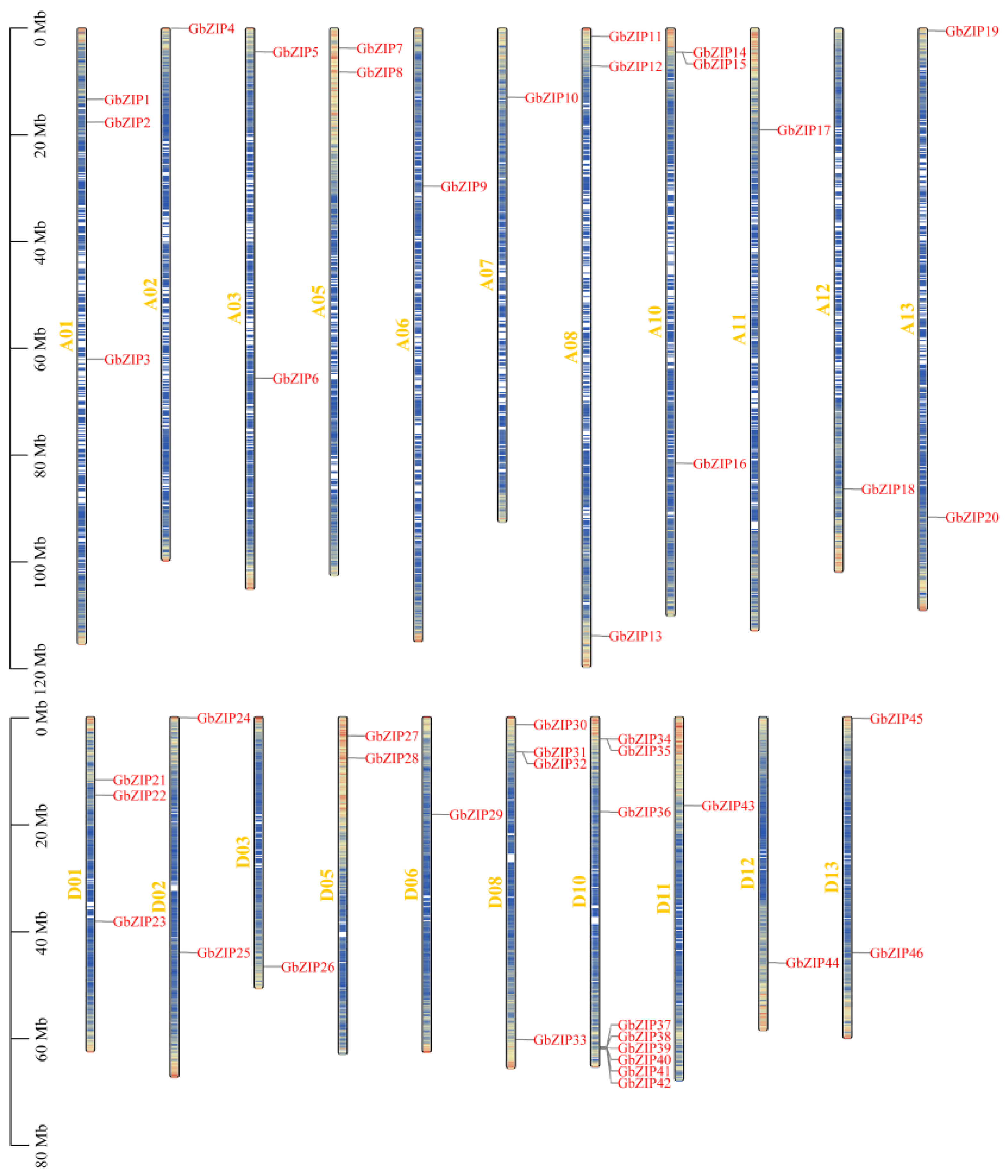
Chromosomal mapping showed that 46 GbZIP genes were non-uniformly distributed across 21 chromosomes, with 20 assigned to the At subgenome and 26 to the Dt subgenome (Figure 1). Chromosomes A04, A09, D04, D07, and D09 contained no GbZIP genes. Member counts per chromosome ranged from 1 to 9, with chromosome D10 carrying the highest gene density (9 members). Localized tandem clusters were observed, such as GbZIP7/GbZIP8 on A05 and GbZIP37GbZIP42 on D10 (Figure 1).

3.3. Phylogenetic Classification, Gene Structure and Conserved Motif Analyses

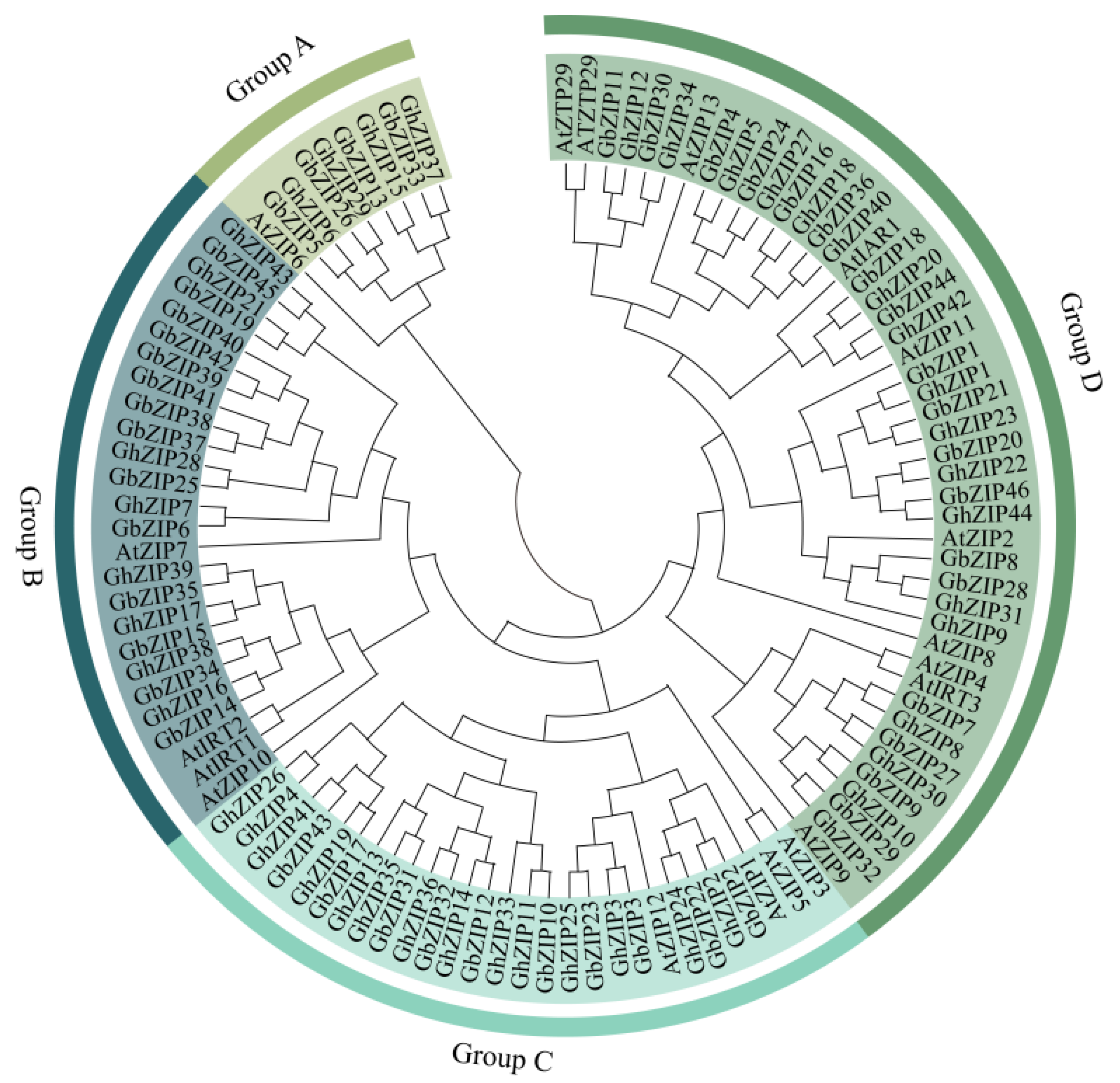
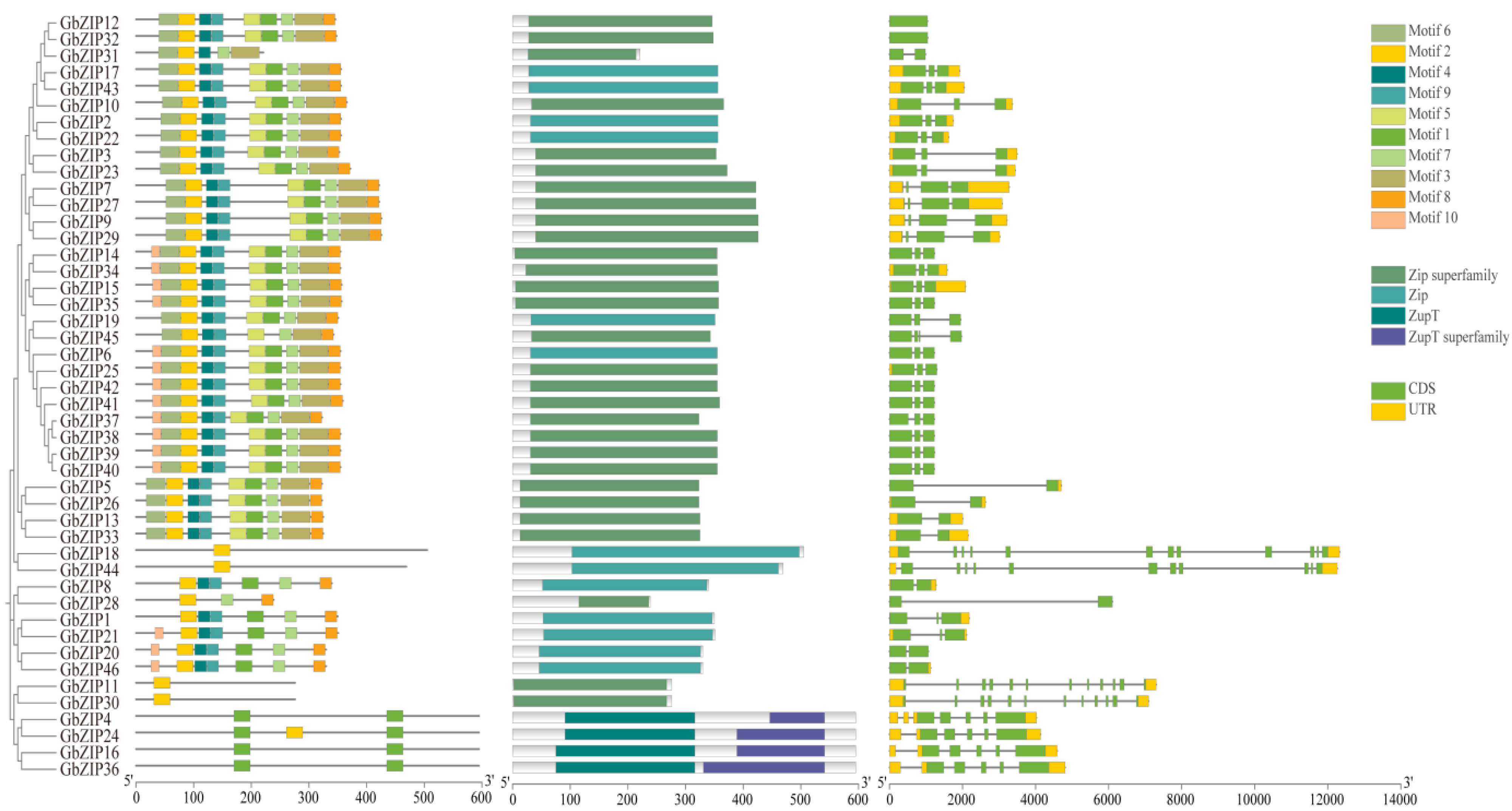
Phylogenetic evaluation of ZIP proteins from G. barbadense, G. hirsutum, and A. thaliana grouped the members into four distinct evolutionary clades: Group A, Group B, Group C, and Group D (Figure 2). GbZIP proteins exhibited stronger orthologous clustering with G. hirsutum GhZIPs than with Arabidopsis AtZIPs, reflecting shared allotetraploid evolutionary history. Structural characterization revealed high structural conservation within phylogenetic subclades (Figure 3). Most GbZIP members possessed conserved N-terminal motif configurations and domain architectures assigned to the Zip or Zip superfamily domains. Exon-intron structural organizations were largely conserved among closely related paralogs, whereas divergent members displayed expanded intron lengths and altered motif distributions (Figure 3).

3.4. Syntenic Duplication and Evolutionary Relationships

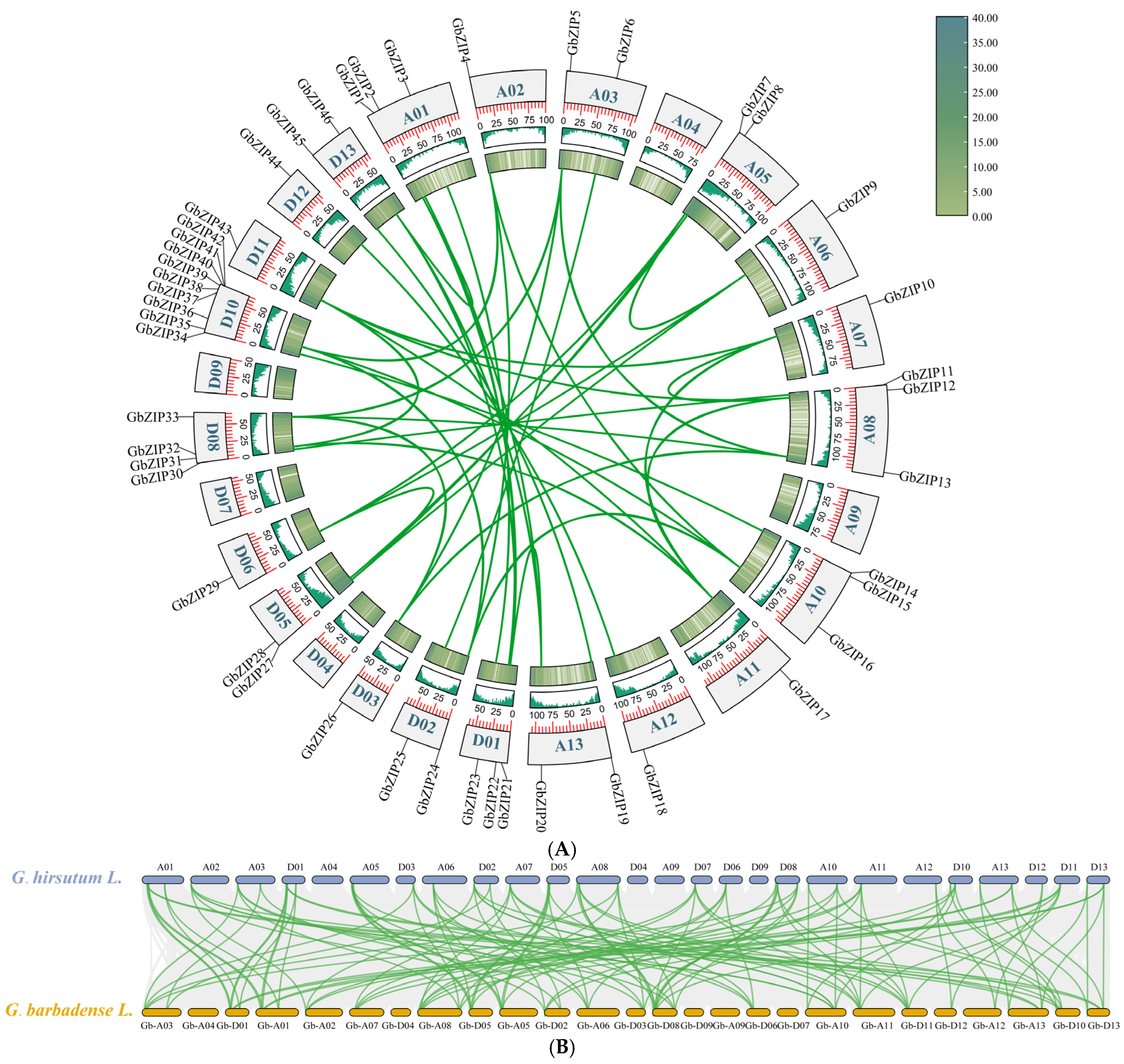
Intraspecific synteny analysis detected extensive collinear gene pairs across the G. barbadense genome, indicating that whole-genome duplication (WGD) and segmental duplication events drove the expansion of the GbZIP family (Figure 4A). Comparative interspecific synteny demonstrated high collinearity between G. barbadense and G. hirsutum ZIP loci, supporting evolutionary stability following polyploidization (Figure 4B).

3.5. Promoter Cis-Acting Element Profiling

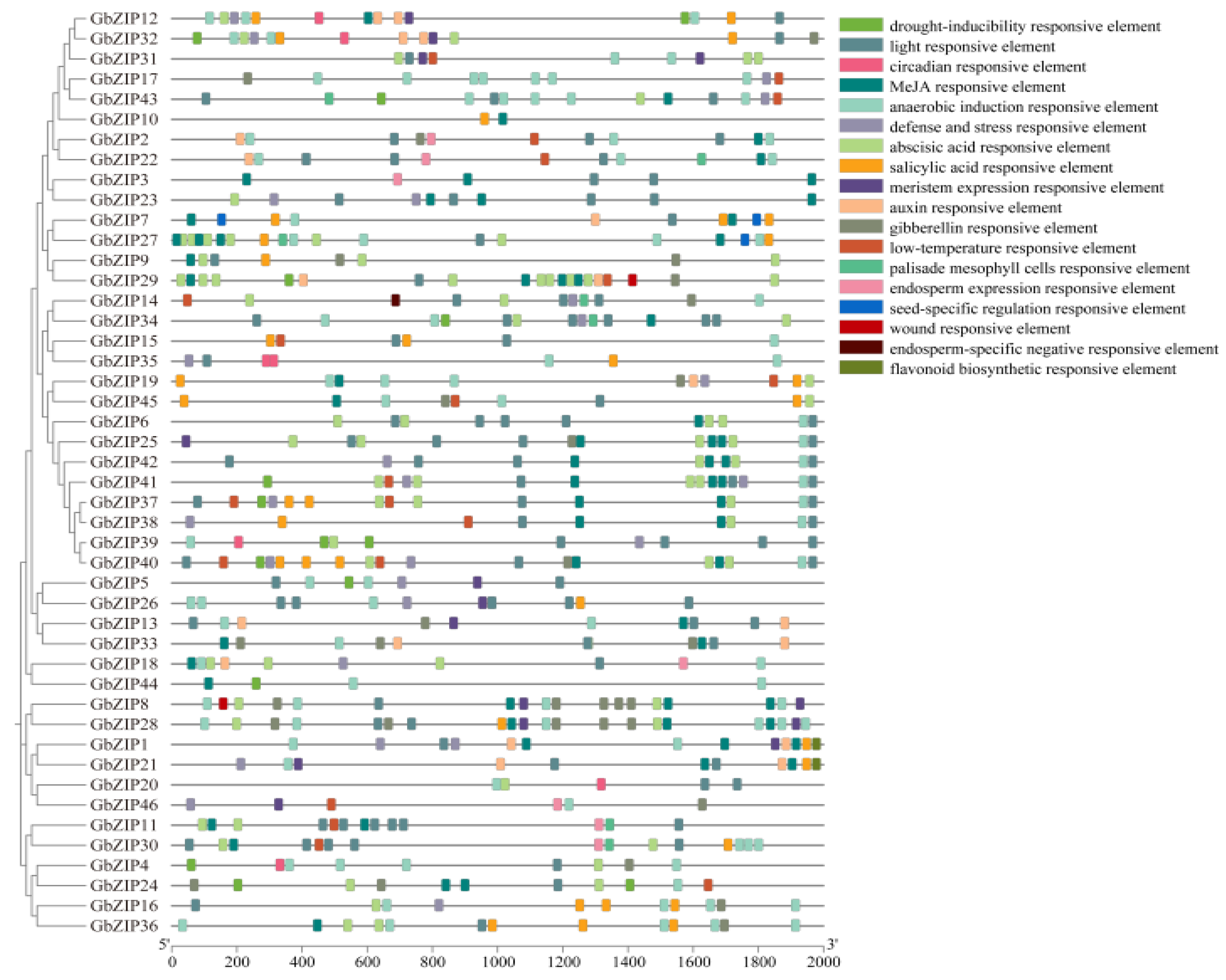
Promoter region analysis revealed widespread presence of light-responsive, phytohormone-responsive (ABA, MeJA, SA, GA, IAA), and stress-responsive elements (drought, low temperature, defense/stress, and anaerobic induction) across GbZIP upstream regions (Figure 5). In addition, developmental regulation elements (meristem expression, seed-specific control, endosperm expression) were identified, suggesting multi-layered transcriptional regulation under diverse physiological conditions (Figure 5).

3.6. Protein 3D Structure Modeling and Interaction Network

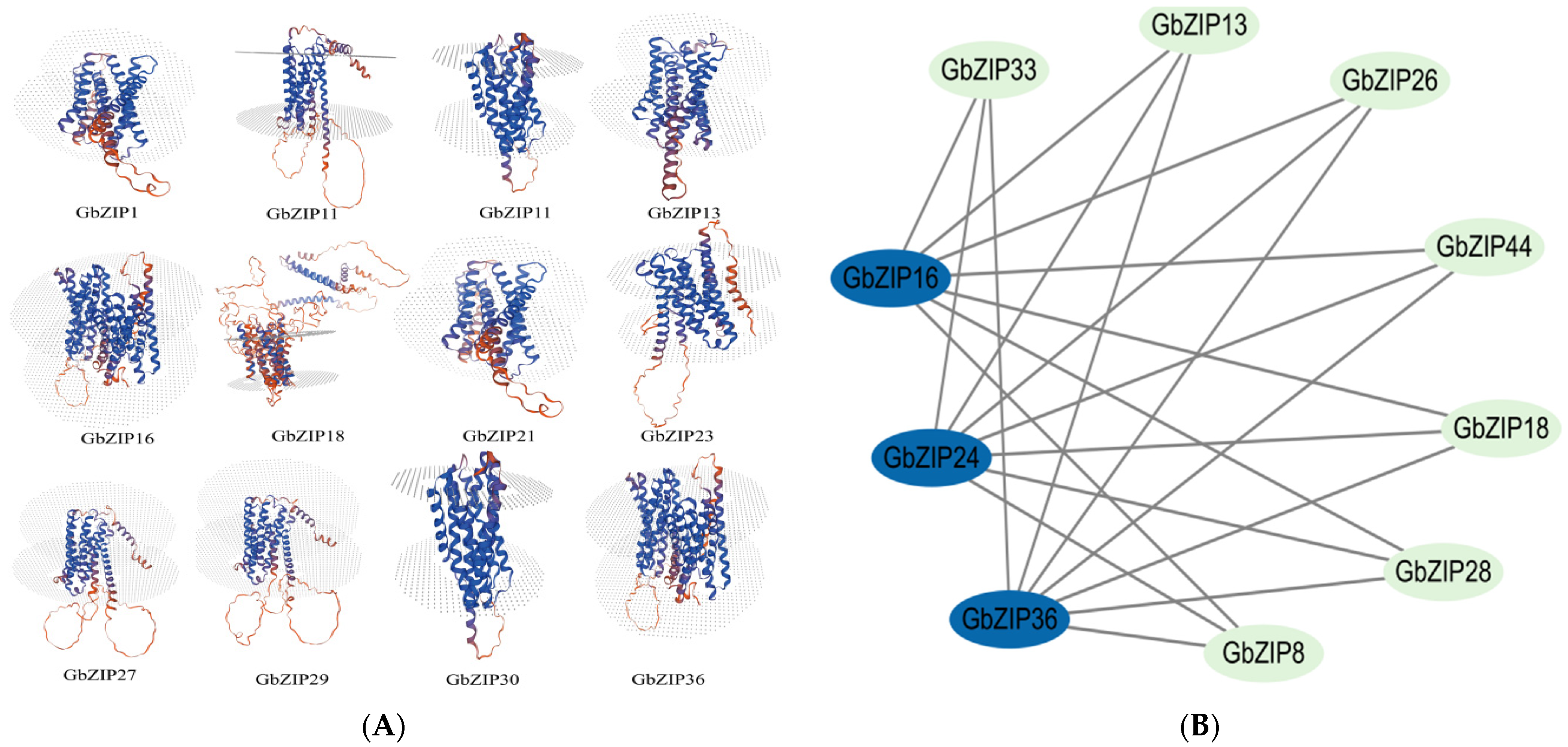
Three-dimensional structure predictions confirmed that GbZIP proteins adopt multi-pass α-helical transmembrane bundle topologies (Figure 6A). Protein interaction network modeling positioned GbZIP16, GbZIP24, and GbZIP36 as central hub nodes interacting with secondary nodes including GbZIP13, GbZIP18, GbZIP26, GbZIP28, and GbZIP44 (Figure 6B).

3.7. Expression Patterns Across Tissues and Fiber Development

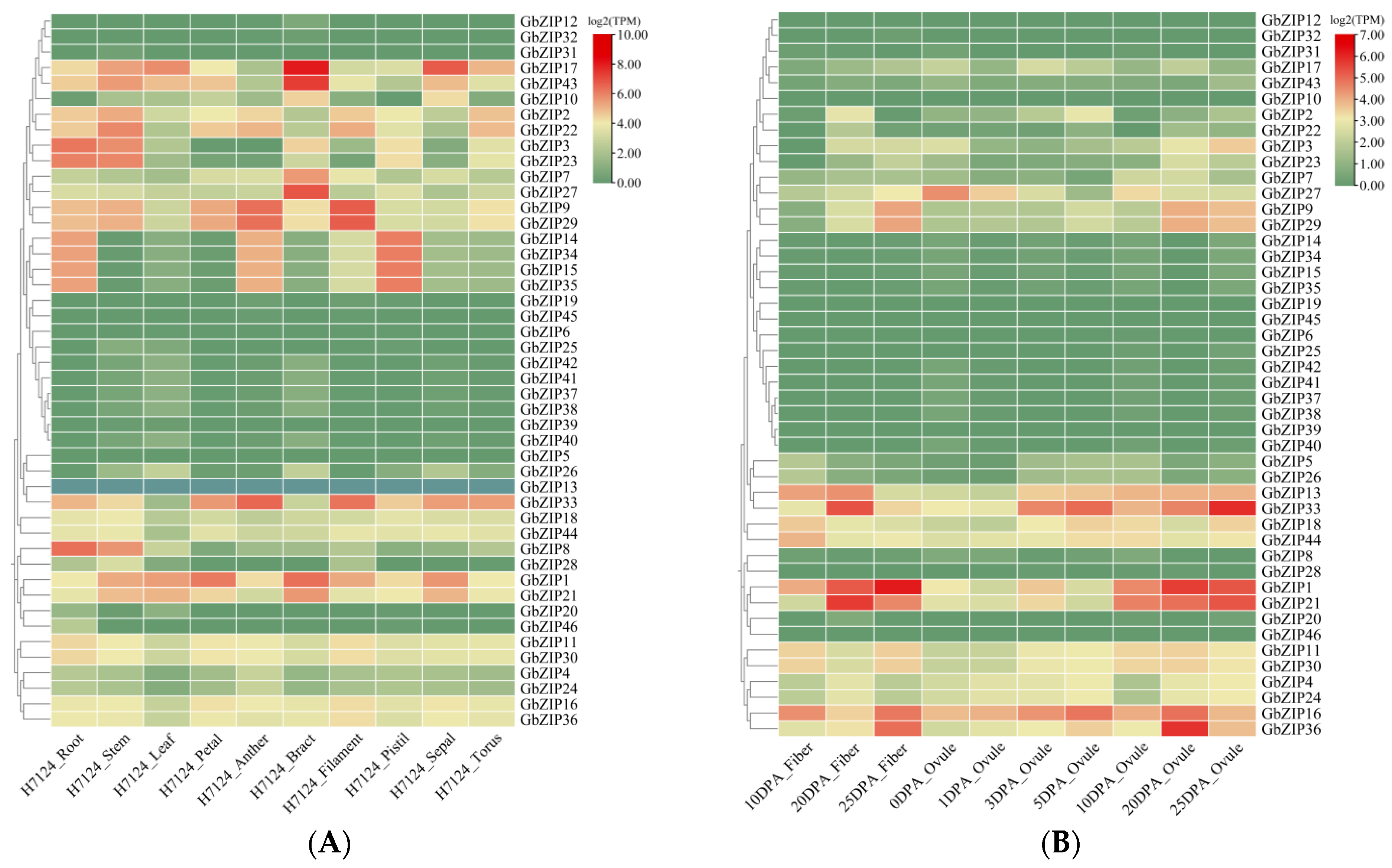
Tissue-specific RNA-seq profiling showed that GbZIP3 and GbZIP23 were preferentially expressed in roots and stems, GbZIP9 and GbZIP29 in reproductive floral tissues (anthers and filaments), and GbZIP14, GbZIP15, GbZIP34, and GbZIP35 in pistils (Figure 7A). During fiber and ovule differentiation, GbZIP1 and GbZIP21 showed relatively high expression across multiple stages, while GbZIP27 displayed stage-specific accumulation, suggesting possible roles in fiber development (Figure 7B).

3.8. Abiotic Stress Expression Profiling

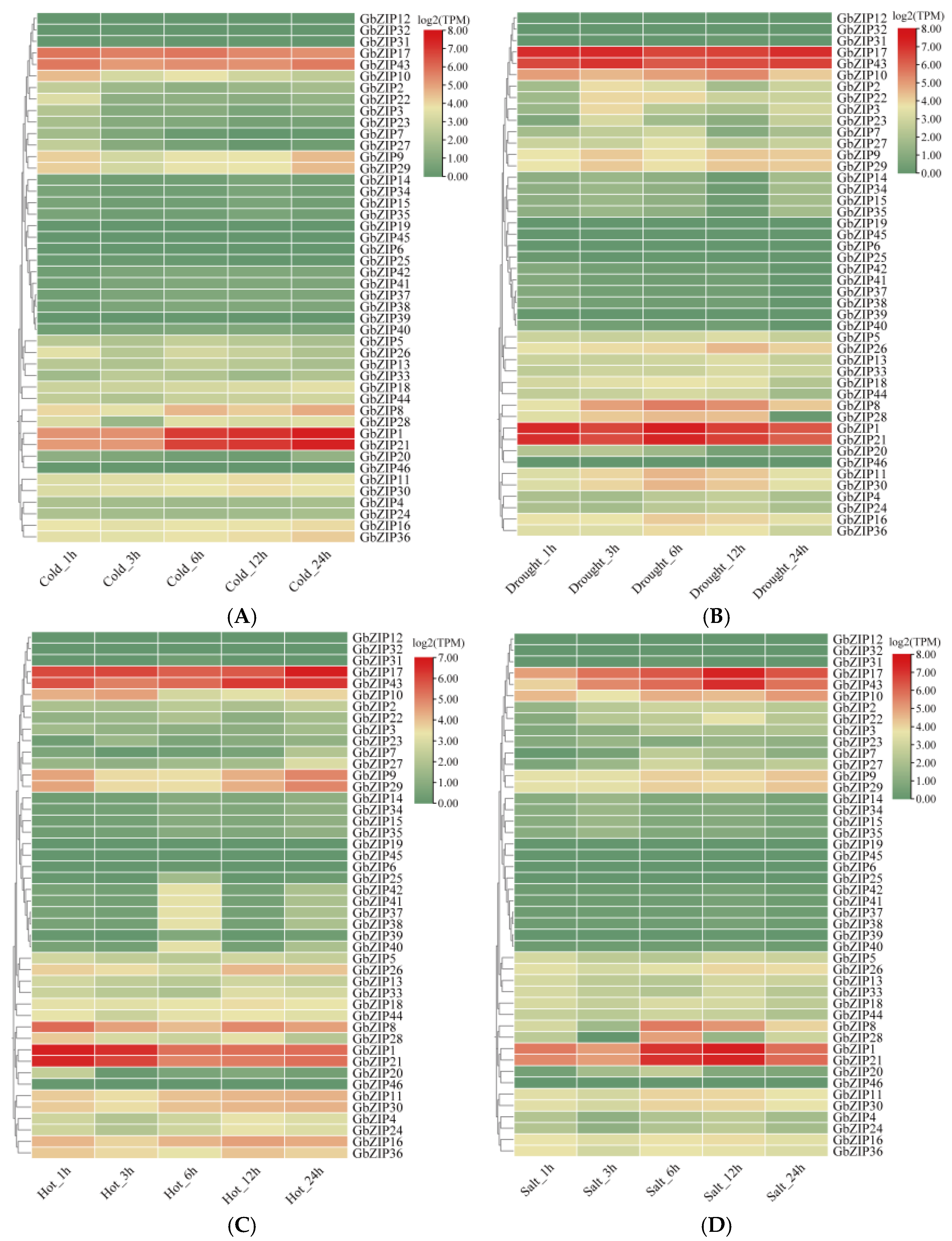
Under abiotic stress conditions, GbZIP members exhibited divergent responses (Figure 8). GbZIP17, GbZIP43, GbZIP1, and GbZIP21 were strongly upregulated across cold, drought, hot, and salinity treatments. GbZIP8 and GbZIP28 responded prominently during late-stage drought, while GbZIP16 and GbZIP36 were specifically induced by high temperature and salt stress (Figure 8).

3.9. Expression Validation Under Cadmium, V. dahliae, and Combined Stress

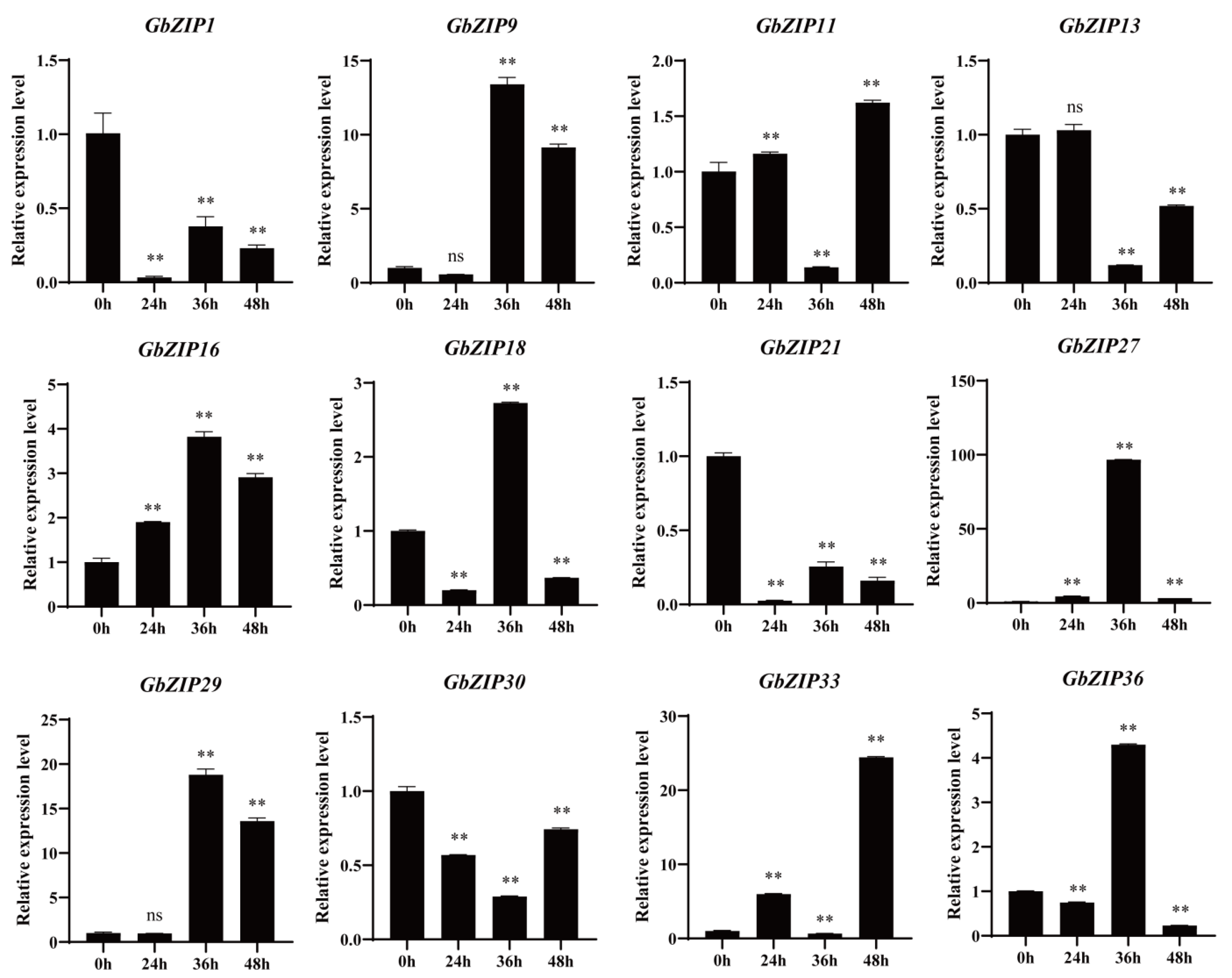
Furthermore, the expression levels of GbZIPs under single and combined Cd and V. dahliae treatments was analyzed by qRT-PCR. Under V. dahliae challenge, GbZIP9, GbZIP16, GbZIP18, GbZIP27, GbZIP29, and GbZIP36 were dramatically upregulated at 36 h, with GbZIP27 displaying a nearly 100-fold induction relative to the control (Figure 9). GbZIP33 peaked at 48 h with a 24-fold increase.
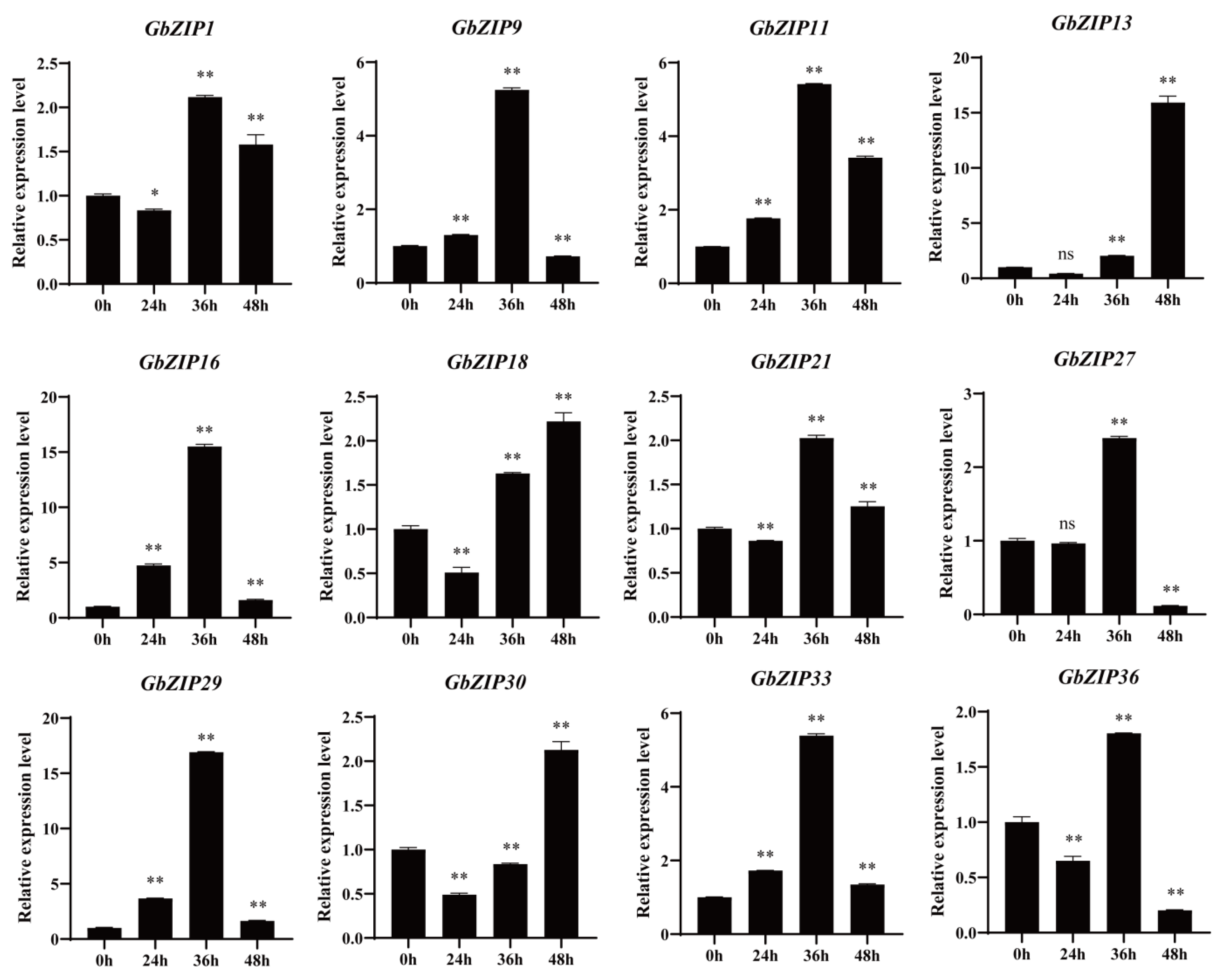
Under Cd toxicity, GbZIP16 and GbZIP29 reached peak expression at 36 h (15-fold and 17-fold induction, respectively), whereas GbZIP13 exhibited strong late-stage upregulation at 48 h (16-fold induction) (Figure 10).
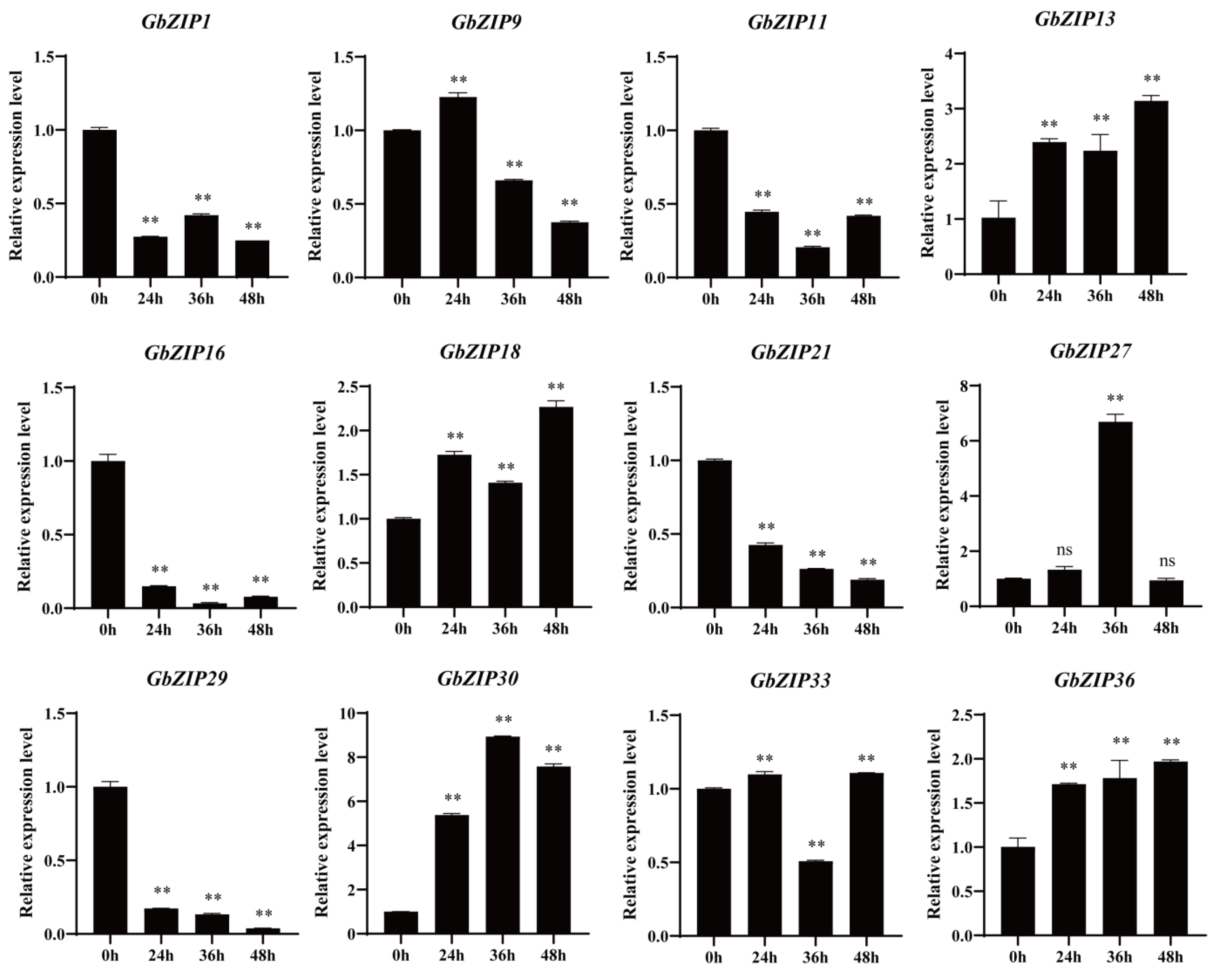
Under combined Cd-V. dahliae stress, GbZIP13, GbZIP18, GbZIP27, GbZIP30, and GbZIP36 showed sustained upregulation, with GbZIP27 and GbZIP30 displaying 6.7-fold and 9.0-fold increases at 36 h (Figure 11). Conversely, GbZIP16 and GbZIP29, which were strongly induced under individual stresses, were markedly repressed under combined stress conditions, revealing complex transcriptomic cross-talk (Figure 11).

4. Discussion

ZIP transporters act as pivotal regulators of cellular metal ion transport, governing the absorption, intracellular allocation, and systemic movement of essential divalent cations (Zn2+, Fe2+, Mn2+) and heavy metal pollutants such as Cd2+ [31]. While ZIP family characteristics have been established in various crops, systematic evaluation in G. barbadense has remained incomplete. Here, 46 GbZIP genes were identified and evaluated. Genomic duplication analyses demonstrated that whole-genome/segmental duplications, accompanied by selective tandem duplications, were the primary drivers of family expansion. Structural analysis confirmed high conservation of exon-intron patterns and protein motifs within individual clades, supporting evolutionary functional stability [32].
Promoter analysis revealed abundant stress- and hormone-responsive cis-acting elements across GbZIP upstream regions, aligning with transcriptomic findings that GbZIP genes respond dynamically to environmental perturbations. Tissue and developmental stage expression profiling revealed specialized physiological roles. High expression of GbZIP3 and GbZIP23 in root tissues indicates potential involvement in primary metal uptake from soil, whereas elevated levels of GbZIP1, GbZIP21, GbZIP16, and GbZIP36 during fiber development suggest that may be involved in fiber elongation and cell wall synthesis [32].
Under abiotic stresses (cold, drought, hot, and salt), multiple GbZIP members displayed pronounced induction. Because divalent metal cations modulate reactive oxygen species (ROS) balance, membrane integrity, and stress signaling, ZIP transporters represent potential candidate genes involved in metal homeostasis and stress tolerance [33]. Protein interaction network modeling highlighted GbZIP16, GbZIP24, and GbZIP36 as central hubs, suggesting integrated roles in transport and stress regulation.
qRT-PCR validation under heavy metal and pathogen stress further clarified functional specialization. Under Cd stress, GbZIP16, GbZIP29, and GbZIP13 exhibited strong time-dependent induction, indicating roles in metal sensing and translocation. In response to V. dahliae infection, GbZIP27 displayed rapid and pronounced upregulation (nearly 100-fold), supporting the connection between metal homeostasis and plant immune responses [34]. Under combined stress of Cd and V. dahliae stress, distinct regulatory cross-talk was observed: GbZIP13, GbZIP18, GbZIP27, GbZIP30, and GbZIP36 maintained multi-stress responsiveness, whereas GbZIP16 and GbZIP29 were suppressed relative to single-stress treatments. These findings demonstrate that combined biotic and abiotic stresses trigger specific transcriptomic re-programming rather than simple additive responses [35].

5. Conclusions

This study provides a comprehensive genome-wide analysis of the ZIP gene family in G. barbadense. The 46 identified GbZIP members evolved primarily through duplication-driven expansion while retaining core structural conservation. Expression profiling established their involvement in organ development, fiber maturation, and abiotic stress responses. Furthermore, qRT-PCR analysis further identified GbZIP13, GbZIP18, GbZIP27, and GbZIP36 as candidate genes responsive to both cadmium stress and fungal infection. In addition, GbZIP16, GbZIP29, and GbZIP30 exhibited distinct stress-dependent expression patterns, with GbZIP30 showing different regulatory behaviors under different stress conditions. Unlike previous studies that only focused on a single stress or a single expression profile, this research incorporates heavy metal stress, pathogen stress, and combined stress into the same analytical framework, which is conducive to revealing the synergistic regulatory patterns of the GbZIP gene in complex environments.

Supplementary Materials

The following supporting information can be downloaded at: https://www.mdpi.com/article/10.3390/biology15171455/s1, Table S1: List of gene-specific primers used for qRT-PCR.

Author Contributions

Conceptualization, Y.D. and N.Z.; methodology, Y.D.; software, Y.D.; validation, Y.D. and J.S.; formal analysis, Y.D.; investigation, J.L., M.W., Y.L. and J.Y.; resources, Z.L., J.Z., W.K. and A.A.; data curation, Y.W., Z.Z., C.L. and L.R.; writing-original draft preparation, Y.D. and N.Z.; writing-review and editing, N.Z.; supervision, J.K. and W.W.; project administration, J.K. and W.W.; funding acquisition, Y.D. and N.Z. All authors have read and agreed to the published version of the manuscript.

Funding

This research was funded by the Project of Fund for Stable Support to Agricultural Sci-Tech Renovation (grant number: xjnkywdzc-2026001-13-08 and xjnkywdzc-2026001-15), Xinjiang Uygur Autonomous Region Tianchi Talent-Young Doctor for Yahui Deng (Study on the molecular mechanism of upland cotton’s resistance to Verticillium wilt through phosphorylation modification of GhCPK1-GhMAPKKKI7-GhSD25 module) and Nan Zhao (Gene mining and functional dissection of growth period in Sea Island cotton), and the project of Xinjiang Research Institute of Agriculture in Arid Areas (grant number Hqny-2025002).

Informed Consent Statement

Not applicable.

Data Availability Statement

All data supporting the findings of this study are available within the article and its Supplementary Materials. Further inquiries should be addressed to the corresponding author.

Acknowledgments

We acknowledge supports given by the editors for processing the manuscript and to the reviewers for their constructive comments.

Conflicts of Interest

The authors declare no conflicts of interest.

Abbreviations

The following abbreviations are used in this manuscript:
ZIPZinc/iron-regulated transporter-like proteins (ZRT/IRT-like protein)
CdCadmium
qRT-PCRQuantitative real-time PCR
HMMHidden Markov model
CDDConserved Domain Database
pIIsoelectric point
MWMolecular weight
GRAVYGrand average of hydropathicity
NJNeighbor-Joining
MLMaximum likelihood
WGDWhole-genome duplication
PPIProtein-protein interaction
TPMTranscripts per million
ROSReactive oxygen species

References

  1. Wang, N.; Li, Y.; Meng, Q.; Chen, M.; Wu, M.; Zhang, R.; Xu, Z.; Sun, J.; Zhang, X.; Nie, X.; et al. Genome and haplotype provide insights into the population differentiation and breeding improvement of Gossypium barbadense. J. Adv. Res. 2023, 54, 15–27. [Google Scholar] [CrossRef] [Scilit]
  2. Fradin, E.F.; Thomma, B.P.H.J. Physiology and molecular aspects of Verticillium wilt diseases caused by V. dahliae and V. albo-atrum. Mol. Plant Pathol. 2006, 7, 71–86. [Google Scholar] [CrossRef] [Scilit]
  3. Wang, M.; Tu, L.; Lin, M.; Lin, Z.; Wang, P.; Yang, Q.; Ye, Z.; Shen, C.; Li, J.; Zhang, L.; et al. Asymmetric subgenome selection and cis-regulatory divergence during cotton domestication. Nat. Genet. 2017, 49, 579–587. [Google Scholar] [CrossRef] [Scilit]
  4. Wang, G.; Zhang, D.; Wang, H.; Kong, J.; Chen, Z.; Ruan, C.; Deng, C.; Zheng, Q.; Guo, Z.; Liu, H.; et al. Natural SNP variation in GbOSM1 promoter enhances Verticillium wilt resistance in cotton. Adv. Sci. 2024, 11, 2406522. [Google Scholar] [CrossRef] [Scilit]
  5. Zhang, K.; Zhao, P.; Wang, H.; Zhao, Y.; Chen, W.; Gong, H.; Sang, X.; Cui, Y. Isolation and characterization of the GbVIP1 gene and response to Verticillium wilt in cotton and tobacco. J. Cotton Res. 2019, 2, 2. [Google Scholar] [CrossRef] [Scilit]
  6. Xu, J.; Xiao, S.; Zhao, J.; Liu, J. GbCYP72A2 Gene from Sea Island Cotton, Its Encoded Protein and Application. Chinese Patent CN111635906B, 30 December 2025. [Google Scholar] [CrossRef] [Scilit]
  7. Clemens, S.; Aarts, M.G.M.; Thomine, S.; Verbruggen, N. Plant science: The key to preventing slow cadmium poisoning. Trends Plant Sci. 2013, 18, 92–99. [Google Scholar] [CrossRef] [Scilit]
  8. Daud, M.K.; Variath, M.T.; Ali, S.; Najeeb, U.; Jamil, M.; Hayat, Y.; Dawood, M.; Khan, M.I.; Zaffar, M.; Cheema, S.A.; et al. Cadmium-induced ultramorphological and physiological changes in leaves of two transgenic cotton cultivars and their wild relative. J. Hazard. Mater. 2009, 177, 555–564. [Google Scholar] [CrossRef] [Scilit]
  9. Zeng, X.; Wei, X.; Zhan, J.; Lu, Y.; Lei, Y.; Shen, X.; Ge, X.; Chen, Q.; Qu, Y.; Li, F.; et al. Uncovering miRNA-mRNA regulatory modules of cotton in response to cadmium stress. Plant Physiol. Biochem. 2025, 221, 109614. [Google Scholar] [CrossRef] [Scilit]
  10. Guerinot, M.L. The ZIP family of metal transporters. Biochim. Biophys. Acta Biomembr. 2000, 1465, 190–198. [Google Scholar] [CrossRef] [Scilit]
  11. Zhang, X.; Kong, J.; Yu, L.; Wang, A.; Yang, Y.; Li, X.; Wang, J. Functional characterization of Fagopyrum tataricum ZIP gene family as a metal ion transporter. Front. Plant Sci. 2024, 15, 1373066. [Google Scholar] [CrossRef] [Scilit]
  12. Li, M.Z.; Hu, D.W.; Liu, X.Q.; Zhang, R.; Liu, H.; Tang, Z.; Zhao, F.-J.; Huang, X.Y. The OsZIP2 transporter is involved in root-to-shoot translocation and intervascular transfer of cadmium in rice. Plant Cell Environ. 2024, 47, 3878–3892. [Google Scholar] [CrossRef] [Scilit]
  13. Liu, X.S.; Feng, S.J.; Zhang, B.Q.; Wang, M.Q.; Cao, H.W.; Rono, J.K.; Chen, X.; Yang, Z.M. OsZIP1 functions as a metal efflux transporter limiting excess zinc, copper and cadmium accumulation in rice. BMC Plant Biol. 2019, 19, 283. [Google Scholar] [CrossRef] [Scilit]
  14. Tian, S.; Liang, S.; Qiao, K.; Wang, F.; Zhang, Y.; Chai, T. Co-expression of multiple heavy metal transporters changes the translocation, accumulation, and potential oxidative stress of Cd and Zn in rice (Oryza sativa). J. Hazard. Mater. 2019, 380, 120853. [Google Scholar] [CrossRef] [Scilit]
  15. Cheng, Y.; Shuai, W.; Chen, J.; Long, D.; Fan, X.; Kang, H.; Zhou, Y.; Hu, X.; Jiang, Y.; Wang, Y. Wheat ZIP3-2A encodes a metal transporter for Cd influx. Plant Physiol. Biochem. 2025, 221, 109893. [Google Scholar] [CrossRef] [Scilit]
  16. Liao, C.; Li, Y.; Wu, X.; Wu, W.; Zhang, Y.; Zhan, P.; Meng, X.; Hu, G.; Yang, S.; Lin, H. ZmHMA3, a member of the heavy-metal-transporting ATPase family, regulates Cd and Zn tolerance in maize. Int. J. Mol. Sci. 2023, 24, 13496. [Google Scholar] [CrossRef] [Scilit]
  17. Xi, Y.; Wang, D.; Yang, L.; Gao, Q.; Zeng, X.; Lv, C.; Lin, Y.; Xiong, X.; Hu, X. Zinc-mediated alleviation of cadmium stress in potato via suppressing StZIP5 induced Cd uptake and enhancing StPCR9 induced Cd efflux. Ecotoxicol. Environ. Saf. 2025, 306, 119310. [Google Scholar] [CrossRef] [Scilit]
  18. Ni, W.; Gong, Y.; Xu, Z.; Guo, S.; Shu, H.; Jiang, L. Genome-wide analysis of the GhZIP gene family in Upland cotton. Acta Agric. Boreali-Sin. 2015, 30, 8–16. [Google Scholar]
  19. Wang, X.; Chen, B.; Ma, C.; Qiao, K.; Li, Z.; Wang, J.; Peng, R.; Fan, S.; Ma, Q. Systematical characterization of YUCCA gene family in five cotton species, and potential functions of YUCCA22 gene in drought resistance of cotton. Ind. Crops Prod. 2021, 162, 113290. [Google Scholar] [CrossRef] [Scilit]
  20. Deng, Y.; Zhao, N.; Ning, S.; Wang, Y.; Wang, W.; Wang, M.; Zhou, Z.; Li, Y.; Li, C.; Ran, L.; et al. Genome-wide identification analysis of the MAPKKK gene family in cotton and its role in development and stress response. Int. J. Mol. Sci. 2026, 27, 1124. [Google Scholar] [CrossRef] [Scilit]
  21. Hamid, R.; Panahi, B.; Nezarat, A.; Ghorbanzadeh, Z.; Jacob, F.; Lakhani, K.G.; Ghaffari, M.R. Genome-wide identification of GhEDS1 gene family members in cotton and expression analysis in response to biotic and abiotic stresses. BMC Plant Biol. 2025, 25, 1229. [Google Scholar] [CrossRef] [Scilit]
  22. Leng, H.; Zhang, Y.; Zhang, X.; Dai, H.; Zhang, T.; Zhang, L.; Cui, J.; Liu, H.; Zhang, T. Genome-wide identification and abiotic stress response analysis of the oat bHLH gene family. Front. Plant Sci. 2026, 17, 1832370. [Google Scholar] [CrossRef] [Scilit]
  23. Qiu, J.; Huang, K.; Liu, J.; Yang, X.; Lian, W.; Wang, Y. Identification of L-type LecRK genes and functional characterization of GhLecRK-VIa and GhLecRK-VId in salt resistance in Upland cotton. J. Plant Growth Regul. 2026, 45, 2436–2449. [Google Scholar] [CrossRef] [Scilit]
  24. Zhang, S.; Jiao, H.; Zuo, D.; Wang, Q.; Lv, L.; Zhang, Y.; Yang, Y.; Song, G.; Cheng, H. Genome-wide identification and expression analysis of IDD gene family in Gossypium hirsutum L. BMC Plant Biol. 2026, 26, 140. [Google Scholar] [CrossRef] [Scilit]
  25. Yang, X.; Bai, Z.; He, Y.; Wang, N.; Sun, L.; Li, Y.; Yin, Z.; Wang, X.; Zhang, B.; Han, M.; et al. Genome-wide characterization of DNA methyltransferase family genes implies GhDMT6 improving tolerance of salt and drought on cotton. BMC Plant Biol. 2024, 24, 312. [Google Scholar] [CrossRef] [Scilit]
  26. Li, M.; Wang, X.; Zhang, F.; Zhang, W.; Song, J.; Su, C.; Deng, M.; Cai, Z.; Wu, Y. Identification of BGLC gene family in watermelon and analysis of its expression pattern under abiotic stresses. Funct. Plant Biol. 2025, 52, FP24258. [Google Scholar] [CrossRef] [Scilit]
  27. Zhong, W.; Aminu, I.M.; Zhang, Y.; Zhu, S.; Yao, J.; Li, Y.; Pan, J.; Chen, W.; Rong, J. A genome-wide analysis of YUCCA genes in cotton and the functional study of GhYUC19 in plant development. BMC Plant Biol. 2026, 26, 1095. [Google Scholar] [CrossRef] [Scilit]
  28. Jia, B.; Feng, P.; Xi, H.; Zhao, W.; Song, J.; Ma, J.; Pei, W.; Zhang, B.; Wang, L.; Gao, J.; et al. Genome-wide identification of the Protein Arginine Methyltransferase (PRMT) gene family and functional exploration of GhPRMT5 in cotton. Plant Physiol. Biochem. 2026, 232, 111075. [Google Scholar] [CrossRef] [Scilit]
  29. Hu, Z.; Yuan, J.; Zou, R.; Wang, Y.; Peng, X.; Yang, X.; Xie, C. Identification and functional analysis of BAG gene family contributing to Verticillium wilt resistance in Upland cotton. Plant Sci. 2025, 356, 112501. [Google Scholar] [CrossRef] [Scilit]
  30. Xia, Y.; Jiang, S.; Ren, Y.; Zhang, Y.; Jiang, C.; Zhao, X.; Kang, X. Genome-wide identification of MADS-box gene family members in poplar and functional characterization of PagMADS23a in the regulation of stomatal density. Ind. Crops Prod. 2026, 241, 122735. [Google Scholar] [CrossRef] [Scilit]
  31. Li, S.; Liu, X.; Zhou, X.; Li, Y.; Yang, W.; Chen, R. Improving zinc and iron accumulation in maize grains using the zinc and iron transporter ZmZIP5. Plant Cell Physiol. 2019, 60, 2077–2085. [Google Scholar] [CrossRef] [Scilit]
  32. Yang, Y.; Chen, S.; Liu, H.; Chen, H.; Lu, Z.; Qiao, G.; Xu, J.; Qiu, W.; Zhuo, R.; Han, X. Plant ZIP transporter: Functional analysis on metal uptake, transport, and homeostasis. Plant Physiol. Biochem. 2025, 229, 110336. [Google Scholar] [CrossRef] [Scilit]
  33. He, X.; Wang, T.; Zhu, W.; Wang, Y.; Zhu, L. GhHB12, a HD-ZIP I transcription factor, negatively regulates the cotton resistance to Verticillium dahliae. Int. J. Mol. Sci. 2018, 19, 3997. [Google Scholar] [CrossRef] [Scilit]
  34. Shanmugam, V.; Lo, J.C.; Yeh, K.C. Control of Zn uptake in Arabidopsis halleri: A balance between Zn and Fe. Front. Plant Sci. 2013, 4, 281. [Google Scholar] [CrossRef] [Scilit]
  35. Han, Z.; Li, C.; Li, S.; Xu, J.; Li, W.; Wang, H.; Liu, Y.; Wang, Y. Genome-wide identification and expression analysis of DnaJ gene family in Gossypium barbadense reveals candidate heat tolerance genes. Front. Plant Sci. 2026, 16, 1728216. [Google Scholar] [CrossRef] [Scilit]
Figure 1. Chromosomal positioning of GbZIP genes across the G. barbadense subgenomes. The red font in the figure indicates the location names of the GbZIP family genes, while the yellow font represents the chromosome numbers. The blue and orange bands on the chromosome represent different chromosome segments or characteristic distributions.
Biology 15 01455 g001
Figure 2. Maximum likelihood phylogenetic tree depicting evolutionary relationships among ZIP proteins from G. barbadense, G. hirsutum, and A. thaliana.
Biology 15 01455 g002
Figure 3. Integrated phylogenetic relationship, conserved protein motifs, domain structure, and exon-intron organizations of GbZIP family members.
Biology 15 01455 g003
Figure 4. Syntenic analysis of ZIP genes. (A) Intraspecific collinearity among GbZIP genes in G. barbadense; (B) interspecific synteny between G. barbadense and G. hirsutum ZIP loci.
Biology 15 01455 g004
Figure 5. Distribution map of predicted cis-acting regulatory elements in the 2000 bp upstream promoter regions of GbZIP genes. The left panel shows the phylogenetic relationship of GbZIP genes, with the x-axis indicating the position in the promoter region (5′–3′) and different colored boxes representing various types of Cis-acting elements.
Biology 15 01455 g005
Figure 6. Protein 3D structure and interaction characterization. (A) Predicted three-dimensional tertiary structures of representative GbZIP proteins; (B) modeled protein–protein interaction network of the GbZIP family.
Biology 15 01455 g006
Figure 7. Transcriptional profiling of GbZIP genes. (A) Expression across 10 vegetative and floral tissues; (B) dynamic expression profiles during ovule and fiber developmental stages.
Biology 15 01455 g007
Figure 8. Transcriptional expression heatmaps of GbZIP family members under (A) cold, (B) drought, (C) hot, and (D) salt stress treatments.
Biology 15 01455 g008
Figure 9. qRT-PCR expression analysis of candidate GbZIP genes in roots of G. barbadense H7124 at 0, 24, 36, and 48 h under V. dahliae inoculation. Relative expression levels were calculated using the 2−ΔΔCt method and normalized to the 0 h control. Error bars denote SD (n = 3). Asterisks indicate significant differences compared to 0 h (** p < 0.01; ns, not significant).
Biology 15 01455 g009
Figure 10. qRT-PCR expression analysis of candidate GbZIP genes in roots of G. barbadense H7124 at 0, 24, 36, and 48 h under cadmium stress. Error bars denote SD (n = 3). Relative expression levels were calculated using the 2−ΔΔCt method and normalized to the 0 h control. Asterisks indicate significant differences compared to 0 h (* p < 0.05, ** p < 0.01; ns, not significant).
Biology 15 01455 g010
Figure 11. qRT-PCR expression analysis of candidate GbZIP genes in roots of G. barbadense H7124 at 0, 24, 36, and 48 h under combined Cd-V. dahliae stress. Error bars denote SD (n = 3). Relative expression levels were calculated using the 2−ΔΔCt method and normalized to the 0 h control. Asterisks indicate significant differences compared to 0 h (** p < 0.01; ns, not significant).
Biology 15 01455 g011
Table 1. Physicochemical characteristics and predicted subcellular localization of the GbZIP protein family in G. barbadense.
Gene IDGene NameAAMW (Da)pIInstability IndexAliphatic IndexGRAVYSubcellular Localization
Gbar_A01G008050.1GbZIP135037,663.785.8131.09102.290.509Cell membrane
Gbar_A01G009170.1GbZIP235638,137.586.5541.12113.20.549Cell membrane
Gbar_A01G013670.1GbZIP335337,992.998.2231.14110.230.571Cell membrane
Gbar_A02G000100.5GbZIP459562,054.087.1634.31112.490.790Cell membrane
Gbar_A03G003470.1GbZIP532334,287.517.6432.51108.730.664Chloroplast
Gbar_A03G012150.1GbZIP635538,429.548.0432.38110.990.588Cell membrane
Gbar_A05G003850.2GbZIP742245,171.785.8543.6694.810.292Chloroplast
Gbar_A05G009050.1GbZIP834036,989.26.1822.85109.290.588Cell membrane
Gbar_A06G009360.1GbZIP942645,442.286.0540.18100.560.325Chloroplast
Gbar_A07G008820.1GbZIP1036639,305.756.8233.16103.960.444Cell membrane
Gbar_A08G001730.1GbZIP1127629,449.969.2537.91113.120.672Cell membrane
Gbar_A08G005620.1GbZIP1234636,950.356.327.99113.610.544Cell membrane
Gbar_A08G021680.1GbZIP1332534,601.827.1825.62111.350.692Chloroplast
Gbar_A10G004990.1GbZIP1435538,141.348.6336.18112.370.643Cell membrane
Gbar_A10G005000.2GbZIP1535738,255.78.9733.31114.680.723Cell membrane
Gbar_A10G016380.7GbZIP1659562,062.076.4930.54112.320.777Cell membrane
Gbar_A11G016140.1GbZIP1735638,114.56.1936.1111.290.453Cell membrane
Gbar_A12G016610.3GbZIP1850554,1116.2927.5986.34−0.087Cell membrane
Gbar_A13G000570.1GbZIP1935138,255.326.8231.19109.170.556Cell membrane
Gbar_A13G014710.1GbZIP2033035,679.535.8832.07106.940.645Cell membrane
Gbar_D01G008370.1GbZIP2135137,698.685.6227.85101.710.513Cell membrane
Gbar_D01G009600.1GbZIP2235637,993.426.7240.39112.670.550Cell membrane
Gbar_D01G014420.2GbZIP2337240,053.418.9730.61104.350.518Cell membrane
Gbar_D02G000200.1GbZIP2459562,108.047.1634.04112.960.767Cell membrane
Gbar_D02G014170.1GbZIP2535538,368.417.630.01110.680.599Cell membrane
Gbar_D03G014930.1GbZIP2632334,385.617.133.85109.910.655Chloroplast
Gbar_D05G004390.1GbZIP2742245,169.855.7944.0396.420.323Chloroplast
Gbar_D05G009500.1GbZIP2823926,046.677.0826.48113.10.707Cell membrane
Gbar_D06G009540.1GbZIP2942645,586.56.1641.39100.80.317Chloroplast
Gbar_D08G001760.1GbZIP3027629,450.98.7638.91113.120.673Cell membrane
Gbar_D08G005840.1GbZIP3122124,589.196.0434112.940.662Cell membrane
Gbar_D08G005860.1GbZIP3234837,240.66.8229.68111.840.507Cell membrane
Gbar_D08G022440.1GbZIP3332534,637.847.724.2111.350.679Chloroplast
Gbar_D10G004840.1GbZIP3435538,046.158.4835.99110.730.639Cell membrane
Gbar_D10G004850.1GbZIP3535738,303.728.8733.01112.770.696Cell membrane
Gbar_D10G011770.1GbZIP3659562,060.166.6930.51112.150.788Cell membrane
Gbar_D10G024340.1GbZIP3732334,537.238.6831.85112.630.738Cell membrane
Gbar_D10G024370.1GbZIP3835538,214.228.0431.03109.320.586Cell membrane
Gbar_D10G024420.1GbZIP3935538,370.47.5831.05110.140.583Cell membrane
Gbar_D10G024430.1GbZIP4035538,327.388.0431.16109.860.584Cell membrane
Gbar_D10G024460.1GbZIP4135938,929.148.3231.34112.450.586Cell membrane
Gbar_D10G024520.1GbZIP4235538,324.317.630.51110.680.564Cell membrane
Gbar_D11G016920.1GbZIP4335638,112.455.9939.15112.110.456Cell membrane
Gbar_D12G016680.2GbZIP4446950,587.936.0430.6990.26−0.092Cell membrane
Gbar_D13G000360.1GbZIP4534337,316.488.1730.1115.980.640Cell membrane
Gbar_D13G014440.1GbZIP4633035,743.615.7532.92107.240.658Cell membrane
Disclaimer/Publisher’s Note: The statements, opinions and data contained in all publications are solely those of the individual author(s) and contributor(s) and not of MDPI and/or the editor(s). MDPI and/or the editor(s) disclaim responsibility for any injury to people or property resulting from any ideas, methods, instructions or products referred to in the content.