Gut Microbiome Disruption in Shelter Cats with Feline Panleukopenia: Virome Co-Detection and Enteric Dysbiosis

 ,
,  , , ,
, , ,  ,
,  ,
,  , , and
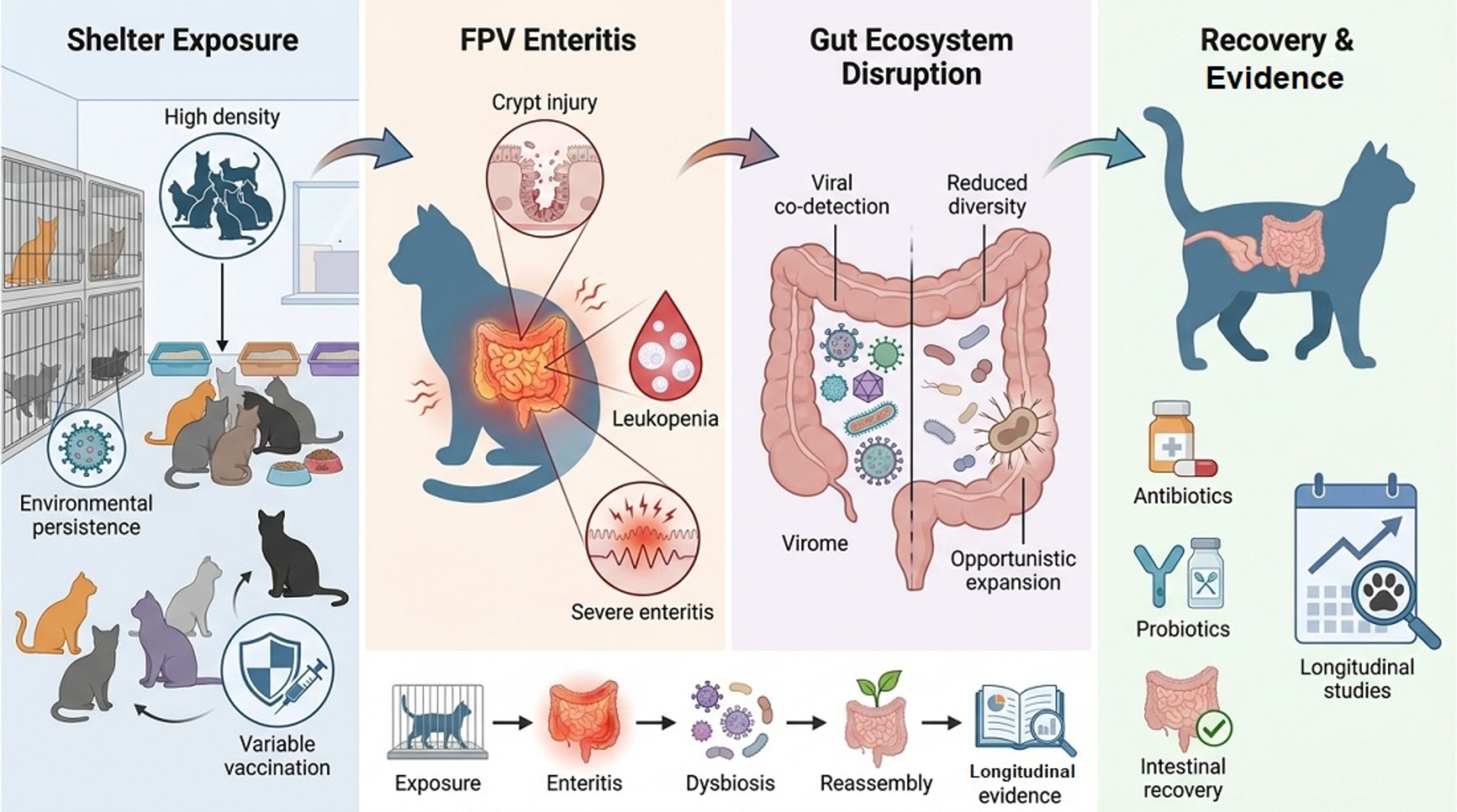
Simple Summary
Abstract
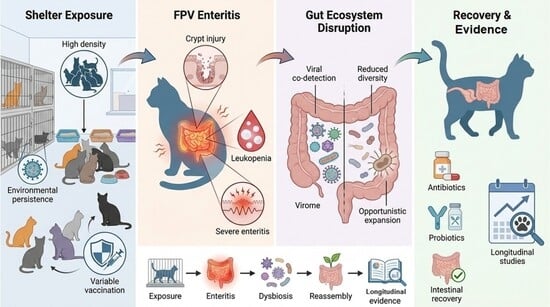
1. Introduction
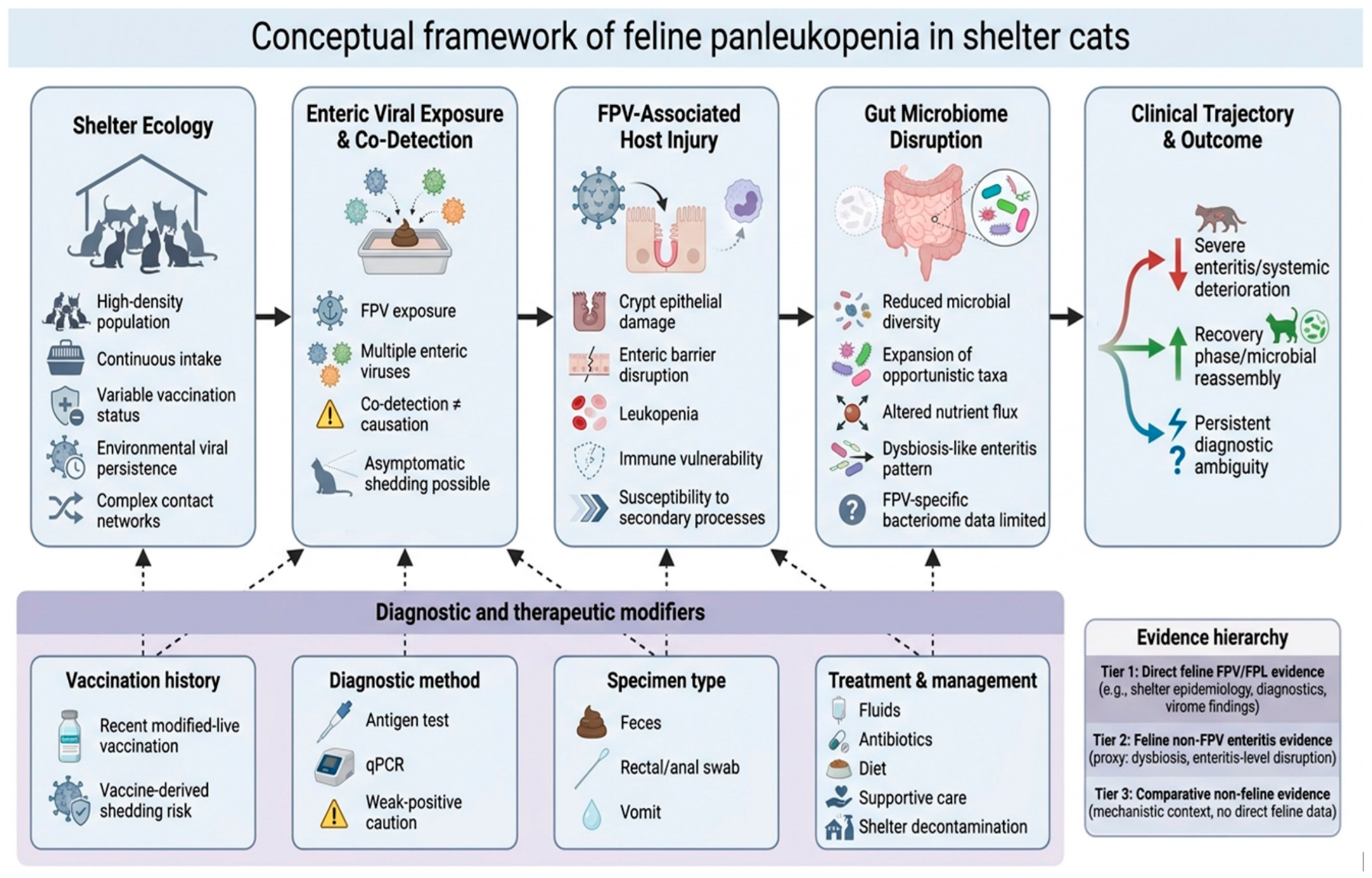
Evidence Tiers and Boundaries of Inference
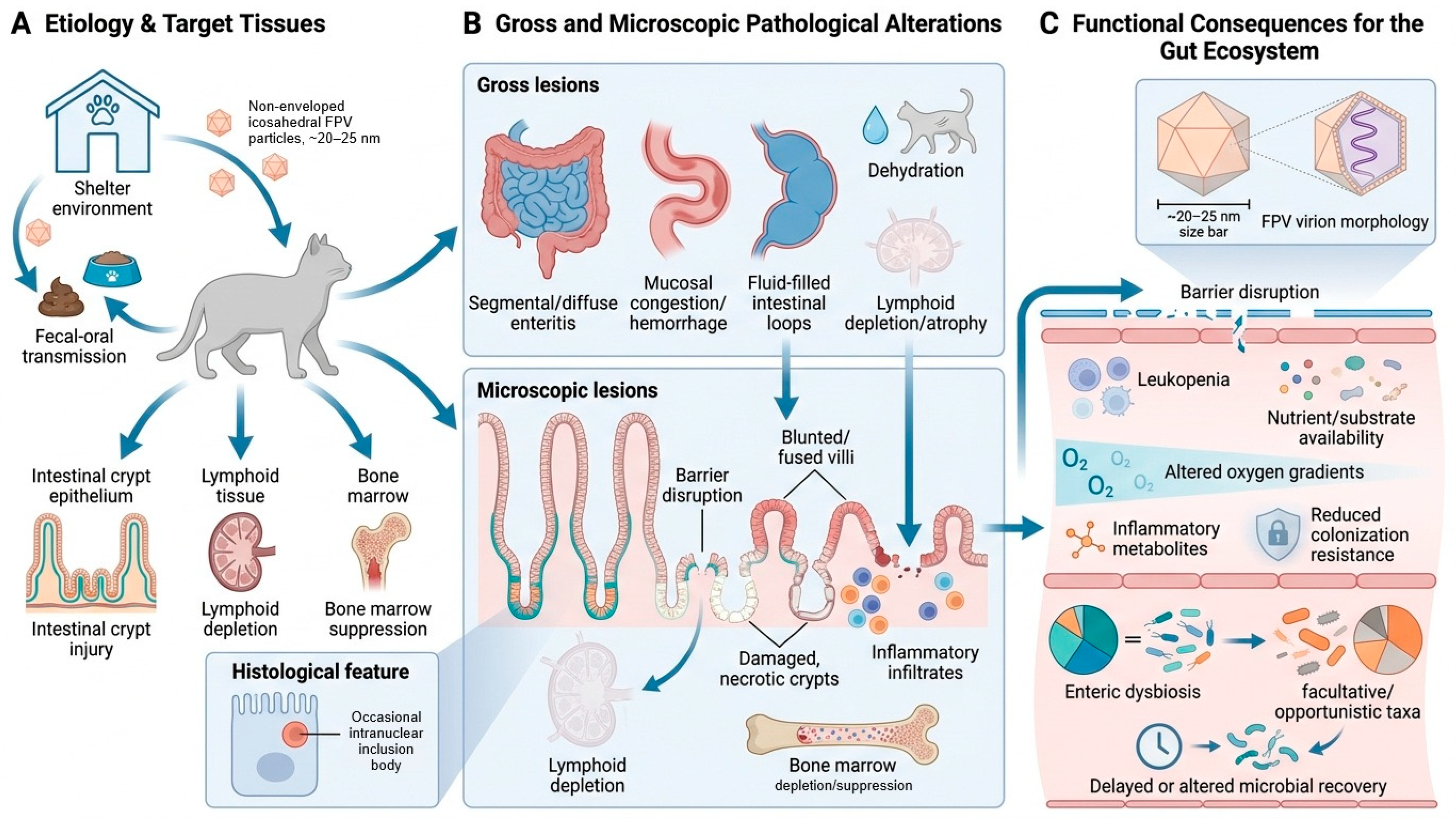
2. Enteric Virome and Co-Detection Ecology in Shelter Cats
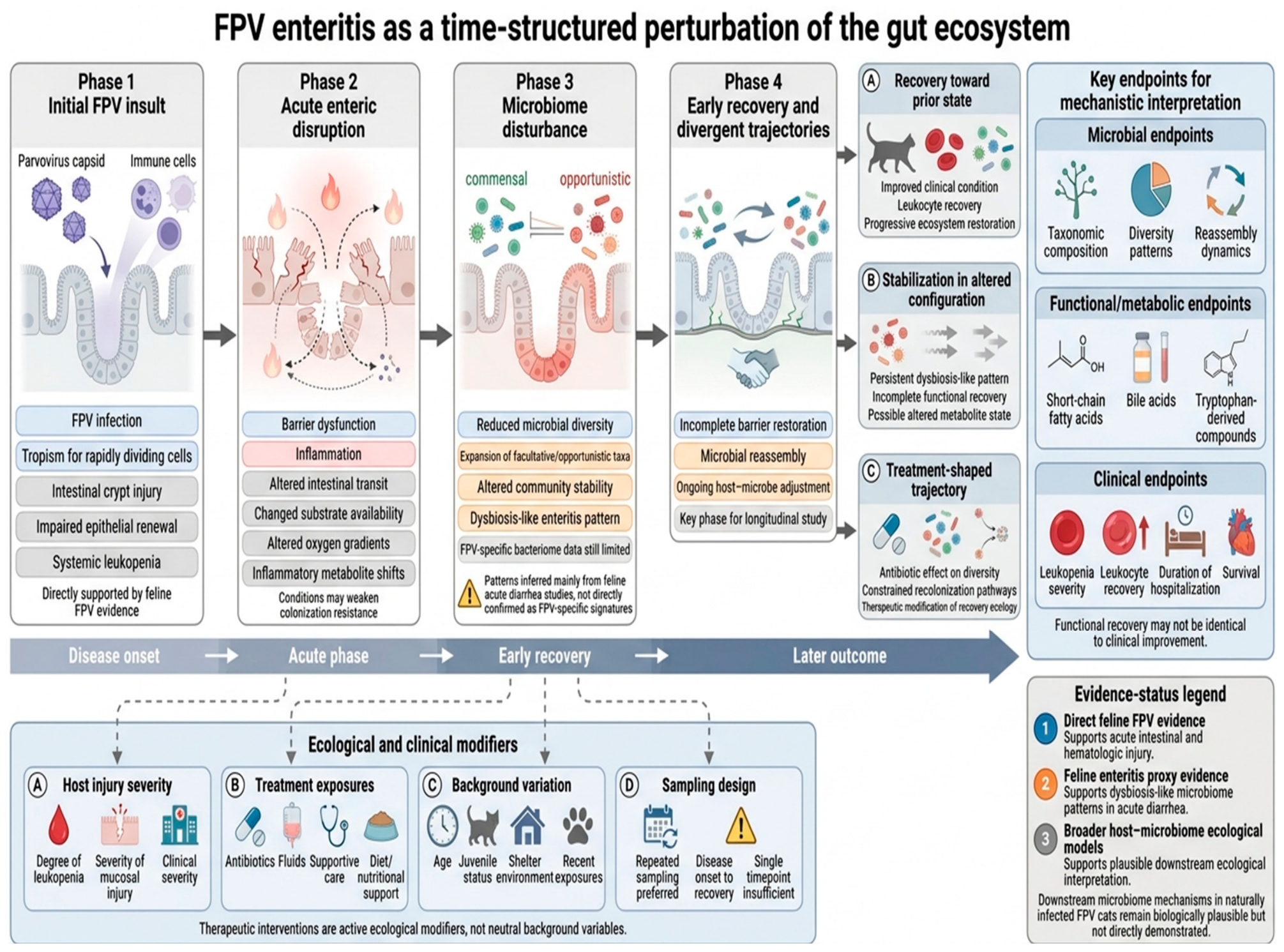
3. FPV Enteritis as a Time-Structured Perturbation of the Gut Ecosystem
4. Defining Reference Baselines for Microbiome Interpretation in Household, Shelter, and Juvenile Cats
5. Acute Enteric Perturbation and Dysbiosis: Proxy Evidence and Constraints
6. Recovery, Reassembly and Ecological Trajectories
7. Interventions as Ecological Modifiers in FPV-Associated Enteritis
8. Research Agenda, Methodological Priorities and Limitations
Limitations of the Current Evidence Base
9. Conclusions
Author Contributions
Funding
Institutional Review Board Statement
Informed Consent Statement
Data Availability Statement
Acknowledgments
Conflicts of Interest
Abbreviations
| ABCD | European Advisory Board on Cat Diseases |
| CPV | Canine parvovirus |
| Ct | Cycle threshold |
| DNA | Deoxyribonucleic acid |
| FCoV | Feline coronavirus |
| FIPV | Feline infectious peritonitis virus |
| FPL | Feline panleukopenia |
| FPV | Feline panleukopenia virus |
| HRM | High-resolution melting analysis |
| MGB | Minor-groove-binder |
| MLV | Modified-live vaccine |
| PCR | Polymerase chain reaction |
| PCR-RFLP | Polymerase chain reaction–restriction fragment length polymorphism |
| qPCR | Quantitative polymerase chain reaction |
| qPCR-HRM | Quantitative polymerase chain reaction with high-resolution melting analysis |
| RNA | Ribonucleic acid |
| rRNA | Ribosomal ribonucleic acid |
| SCFA | Short-chain fatty acid |
| VP2 | Viral protein 2 |
| WSAVA | World Small Animal Veterinary Association |
References
- Truyen, U.; Addie, D.; Belák, S.; Boucraut-Baralon, C.; Egberink, H.F.; Frymus, T.; Gruffydd-Jones, T.; Hartmann, K.; Hosie, M.J.; Lloret, A.; et al. Feline Panleukopenia. ABCD Guidelines on Prevention and Management. J. Feline Med. Surg. 2009, 11, 538–546. [Google Scholar] [CrossRef] [PubMed]
- Tuzio, H. Feline Panleukopenia. In Infectious Disease Management in Animal Shelters, 2nd ed.; Miller, L., Janeczko, S., Hurley, K.F., Eds.; Wiley-Blackwell: Hoboken, NJ, USA, 2021; pp. 337–366. [Google Scholar] [CrossRef]
- Truyen, U.; Parrish, C.R. Feline Panleukopenia Virus: Its Interesting Evolution and Current Problems in Immunoprophylaxis against a Serious Pathogen. Vet. Microbiol. 2013, 165, 29–32. [Google Scholar] [CrossRef] [PubMed]
- Allison, A.B.; Kohler, D.J.; Fox, K.A.; Brown, J.D.; Gerhold, R.W.; Shearn-Bochsler, V.I.; Dubovi, E.J.; Parrish, C.R.; Holmes, E.C. Frequent Cross-Species Transmission of Parvoviruses among Diverse Carnivore Hosts. J. Virol. 2013, 87, 2342–2347. [Google Scholar] [CrossRef] [PubMed]
- Stuetzer, B.; Hartmann, K. Feline Parvovirus Infection and Associated Diseases. Vet. J. 2014, 201, 150–155. [Google Scholar] [CrossRef] [PubMed]
- Barrs, V.R. Feline Panleukopenia: A Re-Emergent Disease. Vet. Clin. N. Am. Small Anim. Pract. 2019, 49, 651–670. [Google Scholar] [CrossRef]
- Rehme, T.; Hartmann, K.; Bergmann, M. Parvovirus-Infektionen bei Katzen in Tierheimen [Parvovirus Infections in Cats in Animal Shelters]. Tierarztl. Prax. Ausg. K Kleintiere Heimtiere 2023, 51, 107–115. [Google Scholar] [CrossRef] [PubMed]
- Rehme, T.; Hartmann, K.; Truyen, U.; Zablotski, Y.; Bergmann, M. Feline Panleukopenia Outbreaks and Risk Factors in Cats in Animal Shelters. Viruses 2022, 14, 1248. [Google Scholar] [CrossRef] [PubMed]
- Litster, A.; Benjanirut, C. Case Series of Feline Panleukopenia Virus in an Animal Shelter. J. Feline Med. Surg. 2014, 16, 346–353. [Google Scholar] [CrossRef] [PubMed]
- DiGangi, B.A. Strategies for Infectious Disease Management in Shelter Cats. In August’s Consultations in Feline Internal Medicine; Little, S., Ed.; Elsevier: St. Louis, MO, USA, 2016; Volume 7, pp. 674–685. [Google Scholar] [CrossRef]
- Purec, D.; Iorgoni, V.; Iancu, I.; Costinar, L.; Badea, C.; Gligor, A.; János, D.; Pascu, C.; Florea, B.A.; Vlad, F.; et al. A Case Report of Two Panleukopenia Cats Infected after Sterilization. Rom. J. Vet. Sci. 2024, 58, 77–82. [Google Scholar] [CrossRef]
- Eterpi, M.; McDonnell, G.; Thomas, V. Disinfection Efficacy against Parvoviruses Compared with Reference Viruses. J. Hosp. Infect. 2009, 73, 64–70. [Google Scholar] [CrossRef] [PubMed]
- Kara, H.; Parlatır, Y. Comparison of Plasma Citrulline Levels, Hemogram Parameters and Some Clinical Findings in Feline Panleukopenia (FPV) and Healthy Cats. J. Adv. VetBio Sci. Tech. 2025, 10, 205–211. [Google Scholar] [CrossRef]
- Leisewitz, A.L. Canine and Feline Parvovirus Infection. In Textbook of Veterinary Internal Medicine, 8th ed.; Ettinger, S.J., Feldman, E.C., Côté, E., Eds.; Elsevier: St. Louis, MO, USA, 2017; pp. 991–996. [Google Scholar]
- Pacini, M.I.; Forzan, M.; Franzo, G.; Tucciarone, C.M.; Fornai, M.; Bertelloni, F.; Sgorbini, M.; Cantile, C.; Mazzei, M. Feline Parvovirus Lethal Outbreak in a Group of Adult Cohabiting Domestic Cats. Pathogens 2023, 12, 822. [Google Scholar] [CrossRef] [PubMed]
- Suchodolski, J.S. Diagnosis and Interpretation of Intestinal Dysbiosis in Dogs and Cats. Vet. J. 2016, 215, 30–37. [Google Scholar] [CrossRef] [PubMed]
- Berg, G.; Rybakova, D.; Fischer, D.; Cernava, T.; Vergès, M.C.; Charles, T.; Chen, X.; Cocolin, L.; Eversole, K.; Corral, G.H.; et al. Microbiome Definition Re-Visited: Old Concepts and New Challenges. Microbiome 2020, 8, 103. [Google Scholar] [CrossRef] [PubMed]
- Gibson, G.R.; Hutkins, R.; Sanders, M.E.; Prescott, S.L.; Reimer, R.A.; Salminen, S.J.; Scott, K.; Stanton, C.; Swanson, K.S.; Cani, P.D.; et al. Expert Consensus Document: The International Scientific Association for Probiotics and Prebiotics Consensus Statement on the Definition and Scope of Prebiotics. Nat. Rev. Gastroenterol. Hepatol. 2017, 14, 491–502. [Google Scholar] [CrossRef] [PubMed]
- Hill, C.; Guarner, F.; Reid, G.; Gibson, G.R.; Merenstein, D.J.; Pot, B.; Morelli, L.; Canani, R.B.; Flint, H.J.; Salminen, S.; et al. Expert Consensus Document: The International Scientific Association for Probiotics and Prebiotics Consensus Statement on the Scope and Appropriate Use of the Term Probiotic. Nat. Rev. Gastroenterol. Hepatol. 2014, 11, 506–514. [Google Scholar] [CrossRef] [PubMed]
- Zhang, W.; Li, L.; Deng, X.; Kapusinszky, B.; Pesavento, P.A.; Delwart, E. Faecal Virome of Cats in an Animal Shelter. J. Gen. Virol. 2014, 95, 2553–2564. [Google Scholar] [CrossRef] [PubMed]
- Ng, T.F.F.; Mesquita, J.R.; Nascimento, M.S.J.; Kondov, N.O.; Wong, W.; Reuter, G.; Knowles, N.J.; Vega, E.; Esona, M.D.; Deng, X.; et al. Feline Fecal Virome Reveals Novel and Prevalent Enteric Viruses. Vet. Microbiol. 2014, 171, 102–111. [Google Scholar] [CrossRef]
- Van Brussel, K.; Wang, X.; Shi, M.; Carrai, M.; Feng, S.; Li, J.; Holmes, E.C.; Beatty, J.A.; Barrs, V.R. The Enteric Virome of Cats with Feline Panleukopenia Differs in Abundance and Diversity from Healthy Cats. Transbound. Emerg. Dis. 2022, 69, e2952–e2966. [Google Scholar] [CrossRef] [PubMed]
- Cattaneo, G.; McCallum, A. Feline Enteropathogens and Molecular Diagnostics: Benefits, Limitations and Clinical Applications. J. Feline Med. Surg. 2025, 27, 1098612X251352746. [Google Scholar] [CrossRef] [PubMed]
- Bergmann, M.; Schwertler, S.; Speck, S.; Truyen, U.; Reese, S.; Hartmann, K. Faecal Shedding of Parvovirus Deoxyribonucleic Acid Following Modified Live Feline Panleucopenia Virus Vaccination in Healthy Cats. Vet. Rec. 2019, 185, 83. [Google Scholar] [CrossRef] [PubMed]
- Jacobson, L.S.; Janke, K.J.; Ha, K.; Giacinti, J.A.; Weese, J.S. Feline Panleukopenia Virus DNA Shedding Following Modified Live Virus Vaccination in a Shelter Setting. Vet. J. 2022, 279, 105783. [Google Scholar] [CrossRef]
- Awad, R.A.; Khalil, W.K.B.; Attallah, A.G. Epidemiology and Diagnosis of Feline Panleukopenia Virus in Egypt: Clinical and Molecular Diagnosis in Cats. Vet. World 2018, 11, 578–584. [Google Scholar] [CrossRef] [PubMed]
- Jacobson, L.S.; Janke, K.J.; Giacinti, J.; Weese, J.S. Diagnostic Testing for Feline Panleukopenia in a Shelter Setting: A Prospective, Observational Study. J. Feline Med. Surg. 2021, 23, 1192–1199. [Google Scholar] [CrossRef]
- Battilani, M.; Balboni, A.; Ustulin, M.; Giunti, M.; Scagliarini, A.; Prosperi, S. Genetic Complexity and Multiple Infections with More Parvovirus Species in Naturally Infected Cats. Vet. Res. 2011, 42, 43. [Google Scholar] [CrossRef] [PubMed]
- Borrego-Ruiz, A.; Borrego, J.J. The Gut Microbiome in Enteric Viral Infections: Underlying Mechanisms and Therapeutic Approaches. Microorganisms 2025, 13, 2247. [Google Scholar] [CrossRef] [PubMed]
- Bai, H.; Liu, T.; Wang, S.; Gong, W.; Shen, L.; Zhang, S.; Wang, Z. Identification of Gut Microbiome and Metabolites Associated with Acute Diarrhea in Cats. Microbiol. Spectr. 2023, 11, e00590-23. [Google Scholar] [CrossRef]
- Suchodolski, J.S.; Foster, M.L.; Sohail, M.U.; Leutenegger, C.; Queen, E.V.; Steiner, J.M.; Marks, S.L. The Fecal Microbiome in Cats with Diarrhea. PLoS ONE 2015, 10, e0127378. [Google Scholar] [CrossRef] [PubMed]
- Barko, P.C.; McMichael, M.A.; Swanson, K.S.; Williams, D.A. The Gastrointestinal Microbiome: A Review. J. Vet. Intern. Med. 2018, 32, 9–25. [Google Scholar] [CrossRef] [PubMed]
- Xie, A.; Zhang, Y.; Tang, Z.; Robinson, J.M.; Huang, Q.; Su, J.-Q.; Sun, X. Gut Microbiome Disruption in Free-Roaming Cats: Do Antibiotics Reduce or Restructure Zoonotic Risk? One Health 2025, 21, 101186. [Google Scholar] [CrossRef] [PubMed]
- Weersma, R.K.; Zhernakova, A.; Fu, J. Interaction between Drugs and the Gut Microbiome. Gut 2020, 69, 1510–1519. [Google Scholar] [CrossRef] [PubMed]
- Ramirez, J.; Guarner, F.; Bustos Fernandez, L.; Maruy, A.; Sdepanian, V.L.; Cohen, H. Antibiotics as Major Disruptors of Gut Microbiota. Front. Cell. Infect. Microbiol. 2020, 10, 572912. [Google Scholar] [CrossRef]
- Fishbein, S.R.S.; Mahmud, B.; Dantas, G. Antibiotic Perturbations to the Gut Microbiome. Nat. Rev. Microbiol. 2023, 21, 772–788. [Google Scholar] [CrossRef] [PubMed]
- Horecka, K.; Neal, S. Critical Problems for Research in Animal Sheltering, a Conceptual Analysis. Front. Vet. Sci. 2022, 9, 804154. [Google Scholar] [CrossRef] [PubMed]
- Shi, N.; Li, N.; Duan, X.; Niu, H. Interaction between the Gut Microbiome and Mucosal Immune System. Mil. Med. Res. 2017, 4, 14. [Google Scholar] [CrossRef] [PubMed]
- Khan, I.; Bai, Y.; Zha, L.; Ullah, N.; Ullah, H.; Shah, S.R.H.; Sun, H.; Zhang, C. Mechanism of the Gut Microbiota Colonization Resistance and Enteric Pathogen Infection. Front. Cell. Infect. Microbiol. 2021, 11, 716299. [Google Scholar] [CrossRef]
- Garud, N.R.; Good, B.H.; Hallatschek, O.; Pollard, K.S. Evolutionary Dynamics of Bacteria in the Gut Microbiome within and across Hosts. PLoS Biol. 2019, 17, e3000102. [Google Scholar] [CrossRef] [PubMed]
- Ducarmon, Q.R.; Zwittink, R.D.; Hornung, B.V.H.; van Schaik, W.; Young, V.B.; Kuijper, E.J. Gut Microbiota and Colonization Resistance against Bacterial Enteric Infection. Microbiol. Mol. Biol. Rev. 2019, 83, e00007-19. [Google Scholar] [CrossRef] [PubMed]
- Park, J.S.; Guevarra, R.B.; Kim, B.-R.; Lee, J.H.; Lee, S.H.; Cho, J.H.; Kim, H.; Cho, J.H.; Song, M.; Lee, J.-H.; et al. Intestinal Microbial Dysbiosis in Beagles Naturally Infected with Canine Parvovirus. J. Microbiol. Biotechnol. 2019, 29, 1391–1400. [Google Scholar] [CrossRef] [PubMed]
- Stecher, B.; Maier, L.; Hardt, W.-D. ‘Blooming’ in the Gut: How Dysbiosis Might Contribute to Pathogen Evolution. Nat. Rev. Microbiol. 2013, 11, 277–284. [Google Scholar] [CrossRef] [PubMed]
- Kilian, E.; Suchodolski, J.S.; Hartmann, K.; Mueller, R.S.; Wess, G.; Unterer, S. Long-Term Effects of Canine Parvovirus Infection in Dogs. PLoS ONE 2018, 13, e0192198. [Google Scholar] [CrossRef] [PubMed]
- Cao, Z.; Sugimura, N.; Burgermeister, E.; Ebert, M.P.; Zuo, T.; Lan, P. The Gut Virome: A New Microbiome Component in Health and Disease. eBioMedicine 2022, 81, 104113. [Google Scholar] [CrossRef] [PubMed]
- Barreto, H.C.; Gordo, I. Intrahost Evolution of the Gut Microbiota. Nat. Rev. Microbiol. 2023, 21, 590–603. [Google Scholar] [CrossRef] [PubMed]
- Callaway, H.M.; Welsch, K.; Weichert, W.; Allison, A.B.; Hafenstein, S.L.; Huang, K.; Iketani, S.; Parrish, C.R. Complex and Dynamic Interactions between Parvovirus Capsids, Transferrin Receptors, and Antibodies Control Cell Infection and Host Range. J. Virol. 2018, 92, e00460-18. [Google Scholar] [CrossRef] [PubMed]
- Allison, A.B.; Organtini, L.J.; Zhang, S.; Hafenstein, S.L.; Holmes, E.C.; Parrish, C.R. Single Mutations in the VP2 300 Loop Region of the Three-Fold Spike of the Carnivore Parvovirus Capsid Can Determine Host Range. J. Virol. 2016, 90, 753–767. [Google Scholar] [CrossRef]
- Hoelzer, K.; Parrish, C.R. The Emergence of Parvoviruses of Carnivores. Vet. Res. 2010, 41, 39. [Google Scholar] [CrossRef] [PubMed]
- Di Martino, B.; Di Profio, F.; Melegari, I.; Marsilio, F. Feline Virome—A Review of Novel Enteric Viruses Detected in Cats. Viruses 2019, 11, 908. [Google Scholar] [CrossRef] [PubMed]
- Di Martino, B.; Lanave, G.; Di Profio, F.; Melegari, I.; Marsilio, F.; Camero, M.; Catella, C.; Capozza, P.; Bányai, K.; Barrs, V.R.; et al. Identification of Feline Calicivirus in Cats with Enteritis. Transbound. Emerg. Dis. 2020, 67, 2579–2588. [Google Scholar] [CrossRef] [PubMed]
- Li, Y.; Gordon, E.; Idle, A.; Altan, E.; Seguin, M.A.; Estrada, M.; Deng, X.; Delwart, E. Virome of a Feline Outbreak of Diarrhea and Vomiting Includes Bocaviruses and a Novel Chapparvovirus. Viruses 2020, 12, 506. [Google Scholar] [CrossRef] [PubMed]
- Xue, R.; Wang, R.; Zhang, H.; Xu, W.; Liu, Y.; Cao, D.; Huang, J.; Chen, J.; Liu, S.; Zhou, H.; et al. Genetic Characterization and Isolation of Feline Astrovirus in Domestic Cats in Guangxi, China. Virology 2026, 615, 110774. [Google Scholar] [CrossRef] [PubMed]
- Cui, H.; Zhang, Z.; Xu, X.; Zuo, K.; Ji, J.; Guo, G.; Kan, Y.; Yao, L.; Xie, Q.; Bi, Y. Molecular Identification of Carnivore Chaphamaparvovirus 2 (Feline Chaphamaparvovirus) in Cats with Diarrhea from China. Front. Vet. Sci. 2023, 10, 1252628. [Google Scholar] [CrossRef] [PubMed]
- Weese, J.S.; MacNicol, J. Feline Chaphamaparvovirus (Feline Fechavirus) in Different Cat Populations. J. Feline Med. Surg. 2026, 28, 1098612X261428723. [Google Scholar] [CrossRef] [PubMed]
- Oh, Y.I.; Seo, K.W.; Kim, D.H.; Cheon, D.S. Prevalence, Co-Infection and Seasonality of Fecal Enteropathogens from Diarrheic Cats in the Republic of Korea (2016–2019): A Retrospective Study. BMC Vet. Res. 2021, 17, 367. [Google Scholar] [CrossRef] [PubMed]
- Abayli, H.; Can-Sahna, K. First Detection of Feline Bocaparvovirus 2 and Feline Chaphamaparvovirus in Healthy Cats in Turkey. Vet. Res. Commun. 2022, 46, 127–136. [Google Scholar] [CrossRef] [PubMed]
- Van Brussel, K.; Carrai, M.; Lin, C.; Kelman, M.; Setyo, L.; Aberdein, D.; Brailey, J.; Lawler, M.; Maher, S.; Plaganyi, I.; et al. Distinct Lineages of Feline Parvovirus Associated with Epizootic Outbreaks in Australia, New Zealand and the United Arab Emirates. Viruses 2019, 11, 1155. [Google Scholar] [CrossRef] [PubMed]
- Wang, X.; Shi, M.; Lin, C.; Feng, S.; Carrai, M.; Jänsch, C.; Beatty, J.A.; Barrs, V.R.; Holmes, E.C.; Van Brussel, K. Low Intrahost and Interhost Genetic Diversity of Carnivore Protoparvovirus 1 in Domestic Cats during a Feline Panleukopenia Outbreak. Viruses 2022, 14, 1614. [Google Scholar] [CrossRef] [PubMed]
- Janke, K.J.; Jacobson, L.S.; Giacinti, J.A.; Weese, J.S. Fecal Viral DNA Shedding Following Clinical Panleukopenia Virus Infection in Shelter Kittens: A Prospective, Observational Study. J. Feline Med. Surg. 2022, 24, 337–343. [Google Scholar] [CrossRef] [PubMed]
- Liu, L.; Gong, T.; Tao, W.; Lin, B.; Li, C.; Zheng, X.; Zhu, S.; Jiang, W.; Zhou, R. Commensal Viruses Maintain Intestinal Intraepithelial Lymphocytes via Noncanonical RIG-I Signaling. Nat. Immunol. 2019, 20, 1681–1691. [Google Scholar] [CrossRef] [PubMed]
- Schunck, B.; Kraft, W.; Truyen, U. A Simple Touch-Down Polymerase Chain Reaction for the Detection of Canine Parvovirus and Feline Panleukopenia Virus in Feces. J. Virol. Methods 1995, 55, 427–433. [Google Scholar] [CrossRef] [PubMed]
- Tucciarone, C.M.; Franzo, G.; Legnardi, M.; Lazzaro, E.; Zoia, A.; Petini, M.; Furlanello, T.; Caldin, M.; Cecchinato, M.; Drigo, M. Genetic Insights into Feline Parvovirus: Evaluation of Viral Evolutionary Patterns and Association between Phylogeny and Clinical Variables. Viruses 2021, 13, 1033. [Google Scholar] [CrossRef] [PubMed]
- Horiuchi, M.; Yuri, K.; Soma, T.; Katae, H.; Nagasawa, H.; Shinagawa, M. Differentiation of Vaccine Virus from Field Isolates of Feline Panleukopenia Virus by Polymerase Chain Reaction and Restriction Fragment Length Polymorphism. Vet. Microbiol. 1996, 53, 283–293. [Google Scholar] [CrossRef] [PubMed]
- Decaro, N.; Desario, C.; Lucente, M.S.; Amorisco, F.; Campolo, M.; Elia, G.; Cavalli, A.; Martella, V.; Buonavoglia, C. Specific Identification of Feline Panleukopenia Virus and Its Rapid Differentiation from Canine Parvoviruses Using Minor Groove Binder Probes. J. Virol. Methods 2008, 147, 67–71. [Google Scholar] [CrossRef] [PubMed]
- Streck, A.F.; Rüster, D.; Truyen, U.; Homeier, T. An Updated TaqMan Real-Time PCR for Canine and Feline Parvoviruses. J. Virol. Methods 2013, 193, 6–8. [Google Scholar] [CrossRef] [PubMed]
- Sun, Y.; Cheng, Y.; Lin, P.; Zhang, H.; Yi, L.; Tong, M.; Cao, Z.; Li, S.; Cheng, S.; Wang, J. Simultaneous Detection and Differentiation of Canine Parvovirus and Feline Parvovirus by High Resolution Melting Analysis. BMC Vet. Res. 2019, 15, 141. [Google Scholar] [CrossRef]
- Balboni, A.; Facile, V.; Urbani, L.; Magliocca, M.; Gallina, L.; Vigato, M.; Battilani, M. Feline Panleukopenia Virus and Canine Parvovirus: Development of Two qPCR Assays with High-Resolution Melting Analysis and Molecular Epidemiology in Dogs and Cats from Northern Italy in 2017–2023. Front. Vet. Sci. 2026, 13, 1789452. [Google Scholar] [CrossRef] [PubMed]
- Jeba, N.; Mia, R.; Tarafder, M.M.B.; Mozumder, A.; Farazi, R.; Hasan, S.M.N.; Bostami, M.B.; Rahman, A.K.M.A.; Mannan, A.; Akter, S.; et al. Comparative Detection and Genetic Characterization of Feline Panleukopenia Virus in Bangladesh. Vet. Med. Sci. 2025, 11, e70594. [Google Scholar] [CrossRef] [PubMed]
- Lin, Q.; Lin, S.; Fan, Z.; Liu, J.; Ye, D.; Guo, P. A Review of the Mechanisms of Bacterial Colonization of the Mammal Gut. Microorganisms 2024, 12, 1026. [Google Scholar] [CrossRef]
- Deng, P.; Swanson, K.S. Gut Microbiota of Humans, Dogs and Cats: Current Knowledge and Future Opportunities and Challenges. Br. J. Nutr. 2015, 113, S6–S17. [Google Scholar] [CrossRef] [PubMed]
- Ganz, H.H.; Jospin, G.; Rojas, C.A.; Martin, A.L.; Dahlhausen, K.; Kingsbury, D.D.; Osborne, C.X.; Entrolezo, Z.; Redner, S.; Ramirez, B.; et al. The Kitty Microbiome Project: Defining the Healthy Fecal “Core Microbiome” in Pet Domestic Cats. Vet. Sci. 2022, 9, 635. [Google Scholar] [CrossRef]
- Sung, C.-H.; Marsilio, S.; Chow, B.; Zornow, K.A.; Slovak, J.E.; Pilla, R.; Lidbury, J.A.; Steiner, J.M.; Park, S.Y.; Hong, M.-P.; et al. Dysbiosis Index to Evaluate the Fecal Microbiota in Healthy Cats and Cats with Chronic Enteropathies. J. Feline Med. Surg. 2022, 24, e1–e12. [Google Scholar] [CrossRef] [PubMed]
- Alves, B.S.G.; Monterroso, P.; Bacon, A.; Alves, P.C.; Santos, N. Synthesising Insights on Viral Infections in the Felinae: A Call to Bridge Global Disparities and Enhance Conservation Strategies. Mammal Rev. 2026, 56, e70011. [Google Scholar] [CrossRef]
- Deusch, O.; O’Flynn, C.; Colyer, A.; Swanson, K.S.; Allaway, D.; Morris, P. A Longitudinal Study of the Feline Faecal Microbiome Identifies Changes into Early Adulthood Irrespective of Sexual Development. PLoS ONE 2015, 10, e0144881. [Google Scholar] [CrossRef] [PubMed]
- Bermingham, E.N.; Young, W.; Butowski, C.F.; Moon, C.D.; Maclean, P.H.; Rosendale, D.; Cave, N.J.; Thomas, D.G. The Fecal Microbiota in the Domestic Cat (Felis catus) Is Influenced by Interactions between Age and Diet: A Five Year Longitudinal Study. Front. Microbiol. 2018, 9, 1231. [Google Scholar] [CrossRef] [PubMed]
- Pilla, R.; Suchodolski, J.S. The Gut Microbiome of Dogs and Cats, and the Influence of Diet. Vet. Clin. N. Am. Small Anim. Pract. 2021, 51, 605–621. [Google Scholar] [CrossRef] [PubMed]
- Wernimont, S.M.; Radosevich, J.; Jackson, M.I.; Ephraim, E.; Badri, D.V.; MacLeay, J.M.; Jewell, D.E.; Suchodolski, J.S. The Effects of Nutrition on the Gastrointestinal Microbiome of Cats and Dogs: Impact on Health and Disease. Front. Microbiol. 2020, 11, 1266. [Google Scholar] [CrossRef] [PubMed]
- Martini, S.E.; Schmidt, T.; Huang, W.; Blake, A.B.; Cavasin, J.P.; Suchodolski, J.S.; Swanson, K.S. Effects of Metronidazole on the Fecal Microbiota, Fecal Metabolites, and Serum Metabolites of Healthy Adult Cats. Pets 2025, 2, 19. [Google Scholar] [CrossRef]
- Suchodolski, J.S. Analysis of the Gut Microbiome in Dogs and Cats. Vet. Clin. Pathol. 2022, 51, 6–17. [Google Scholar] [CrossRef] [PubMed]
- Cho, H.-Y.; Park, H.-J.; Choi, J.-S.; Kim, S.-H.; Ryu, M.-O.; Seo, K.-W. Delineating the Fecal Microbiome of Healthy Domestic Short-Hair Cats in South Korea. Front. Vet. Sci. 2025, 12, 1571107. [Google Scholar] [CrossRef] [PubMed]
- Lyu, Y.; Li, E.; Deng, X.; Delwart, E.; Suchodolski, J.S. Past, Present, and Future of Gastrointestinal Microbiota Research in Cats. Front. Microbiol. 2020, 11, 1661. [Google Scholar] [CrossRef]
- Pimienta, M.; Florez-Rios, H.; Patiño-Montoya, A.; Florez, A.; Mejia, L.; Sedano, R.; Castillo, A. Applied Metagenomic Profiling of Domestic Cat Feces from Cali, Colombia: An Exploratory Approach. Appl. Microbiol. 2025, 5, 67. [Google Scholar] [CrossRef]
- AlShawaqfeh, M.K.; Wajid, B.; Minamoto, Y.; Markel, M.E.; Lidbury, J.A.; Steiner, J.M.; Serpedin, E.; Suchodolski, J.S. A Dysbiosis Index to Assess Microbial Changes in Fecal Samples of Dogs with Chronic Inflammatory Enteropathy. FEMS Microbiol. Ecol. 2017, 93, fix136. [Google Scholar] [CrossRef] [PubMed]
- Cassmann, E.; White, R.; Atherly, T.; Wang, C.; Sun, Y.; Khoda, S.; Mosher, C.; Ackermann, M.; Jergens, A. Alterations of the Ileal and Colonic Mucosal Microbiota in Canine Chronic Enteropathies. PLoS ONE 2016, 11, e0147321. [Google Scholar] [CrossRef]
- Ellegaard, K.M.; Engel, P. Beyond 16S rRNA Community Profiling: Intra-Species Diversity in the Gut Microbiota. Front. Microbiol. 2016, 7, 1475. [Google Scholar] [CrossRef] [PubMed]
- Jovel, J.; Patterson, J.; Wang, W.; Hotte, N.; O’Keefe, S.; Mitchel, T.; Perry, T.; Kao, D.; Mason, A.L.; Madsen, K.L.; et al. Characterization of the Gut Microbiome Using 16S or Shotgun Metagenomics. Front. Microbiol. 2016, 7, 459. [Google Scholar] [CrossRef]
- Koh, A.; Bäckhed, F. From Association to Causality: The Role of the Gut Microbiota and Its Functional Products on Host Metabolism. Mol. Cell 2020, 78, 584–596. [Google Scholar] [CrossRef] [PubMed]
- Comito, R.; Porru, E.; Interino, N.; Conti, M.; Terragni, R.; Gotti, R.; Candela, M.; Simoni, P.; Roda, A.; Fiori, J. Metabolic Bile Acid Profile Impairments in Dogs Affected by Chronic Inflammatory Enteropathy. Metabolites 2023, 13, 980. [Google Scholar] [CrossRef] [PubMed]
- Guard, B.C.; Barr, J.W.; Reddivari, L.; Klemashevich, C.; Jayaraman, A.; Steiner, J.M.; Vanamala, J.; Suchodolski, J.S. Characterization of Microbial Dysbiosis and Metabolomic Changes in Dogs with Acute Diarrhea. PLoS ONE 2015, 10, e0127259. [Google Scholar] [CrossRef] [PubMed]
- Marsilio, S.; Pilla, R.; Sarawichitr, B.; Chow, B.; Hill, S.L.; Ackermann, M.R.; Estep, J.S.; Lidbury, J.A.; Steiner, J.M.; Suchodolski, J.S. Characterization of the Fecal Microbiome in Cats with Inflammatory Bowel Disease or Alimentary Small Cell Lymphoma. Sci. Rep. 2019, 9, 19208. [Google Scholar] [CrossRef]
- Loya, K.; Muhee, A.; Hussain, S.A. Effects of Filgrastim on Severe Leucopenia Associated with Feline Panleucopenia in Cats. Appl. Vet. Res. 2025, 3, 2024009. [Google Scholar] [CrossRef]
- Porporato, F.; Horzinek, M.C.; Hofmann-Lehmann, R.; Ferri, F.; Gerardi, G.; Contiero, B.; Vezzosi, T.; Rocchi, P.; Auriemma, E.; Lutz, H.; et al. Survival Estimates and Outcome Predictors for Shelter Cats with Feline Panleukopenia Virus Infection. J. Am. Vet. Med. Assoc. 2018, 253, 188–195. [Google Scholar] [CrossRef] [PubMed]
- Gebremariam, A.A.; Iqbal, M.M.; Wang, D.; Peng, W.P.; Shi, Y.; Peng, G. Dynamic Shifts in Gut Microbiota Composition of Cats Following Oral Infection with the Virulent FIPV Strain rQS-79 and Treatment with GS-441524. Vet. Microbiol. 2025, 308, 110646. [Google Scholar] [CrossRef] [PubMed]
- Decaestecker, E.; Van de Moortel, B.; Mukherjee, S.; Gurung, A.; Stoks, R.; De Meester, L. Hierarchical Eco–Evo Dynamics Mediated by the Gut Microbiome. Trends Ecol. Evol. 2024, 39, 165–174. [Google Scholar] [CrossRef]
- Ferreiro, A.; Crook, N.; Gasparrini, A.J.; Dantas, G. Multiscale Evolutionary Dynamics of Host-Associated Microbiomes. Cell 2018, 172, 1216–1227. [Google Scholar] [CrossRef] [PubMed]
- Saar, R.; Dodd, S. Microbiome-Centric Management of Dysbiosis. In Small Animal Microbiomes and Nutrition; Saar, R., Dodd, S., Eds.; Wiley: Hoboken, NJ, USA, 2023; pp. 112–125. [Google Scholar] [CrossRef]
- Sivamaruthi, B.S.; Kesika, P.; Chaiyasut, C.; Fukngoen, P.; Sisubalan, N. A Review of Probiotic Supplementation and Its Impact on the Health and Well-Being of Domestic Cats. Vet. Sci. 2025, 12, 703. [Google Scholar] [CrossRef] [PubMed]
- Yang, Q.; Wu, Z. Gut Probiotics and Health of Dogs and Cats: Benefits, Applications, and Underlying Mechanisms. Microorganisms 2023, 11, 2452. [Google Scholar] [CrossRef] [PubMed]
- Bybee, S.N.; Scorza, A.V.; Lappin, M.R. Effect of the Probiotic Enterococcus faecium SF68 on Presence of Diarrhea in Cats and Dogs Housed in an Animal Shelter. J. Vet. Intern. Med. 2011, 25, 856–860. [Google Scholar] [CrossRef]
- Bakde, R.A.; Rathish, R.L.; John, L.; Deepa, P.M.; Vijayakumar, K. A Novel Loop-Mediated Isothermal Amplification (LAMP) Assay to Diagnose Feline Panleukopenia. J. S. Afr. Vet. Assoc. 2024, 95, 4–10. [Google Scholar] [CrossRef] [PubMed]
- Su, X.; Zhou, H.; Jiang, W.; Xu, F.; Xiao, B.; Zhang, J.; Qi, Q.; Yang, B. Isolation and Evolutionary Analysis of Feline Panleukopenia Virus Strains FPV-BJ-J2 and FPV-BJ-J3 (T440A, N564S, A568G) in Beijing, China. Front. Vet. Sci. 2026, 13, 1745551. [Google Scholar] [CrossRef] [PubMed]
- Little, S.; Levy, J.; Hartmann, K.; Hofmann-Lehmann, R.; Hosie, M.; Olah, G.; Denis, K.S. 2020 AAFP Feline Retrovirus Testing and Management Guidelines. J. Feline Med. Surg. 2020, 22, 5–30. [Google Scholar] [CrossRef] [PubMed]



| Evidence Tier | Type of Evidence | Role in This Review | Limit of Inference |
|---|---|---|---|
| Tier 1 | Direct FPV/FPL evidence in cats | Supports statements on FPV pathogenesis, diagnosis, shedding, shelter outbreaks, prognosis, and virome findings. | Strongest relevance, but microbiome-specific data remain limited. |
| Tier 2 | Feline enteric microbiome evidence not specific to FPV | Supports interpretation of diarrhea-associated dysbiosis, baseline variability, and feline gut ecosystem disturbance. | Indicates feline enteric patterns, but does not prove FPV-specific causation. |
| Tier 3 | Comparative, mechanistic, or conceptual microbiome evidence | Provides context for dysbiosis, colonization resistance, recovery, reassembly, resilience, and functional disruption. | Hypothesis-generating only; cannot replace FPV-specific feline evidence. |
| Diagnostic Context | Possible Interpretation | What It Does Not Prove | Key Requirement |
|---|---|---|---|
| Antigen or PCR positive in a clinically ill cat | Possible active FPV infection | FPV as the only cause of disease | Integrate clinical signs, leukopenia, co-detection, and outbreak context |
| Strong qPCR positivity in a compatible, unvaccinated cat | High suspicion of active FPV infection | Disease severity or prognosis alone | Consider viral load, leukocyte count, and timing |
| Positive result after recent modified-live vaccination | Possible vaccine-associated detection or shedding | Field infection or clinical disease | Record vaccine type and timing |
| Low-level PCR positivity or late detection | Residual viral DNA, prolonged shedding, or contamination | Ongoing active disease | Assess viral load, recovery stage, and repeated tests |
| Viral detection in a clinically healthy cat | Exposure, subclinical infection, or asymptomatic shedding | Disease presence or progression | Consider shelter exposure and population turnover |
| Single-time-point detection | Viral material present at sampling | Temporal sequence or causality | Interpret with disease stage and sampling phase |
| Sequencing, PCR-RFLP, MGB probes, or HRM | Better strain-level interpretation | Routine availability or pathogenic proof | Use with clinical correlation |
| Viral co-detection in panels or metagenomics | Shared exposure or possible disease modifier | Synergistic pathogenicity | Consider co-detection bias, contamination, and microbiome disruption |
| Domain | Pattern | What Current Evidence Supports | FPV Specific? | Main Limitation |
|---|---|---|---|---|
| Virome | Viral co-detection in shelter cats | FPV cases may show more Frequent co-detection of additional enteric viruses than controls | Partly | Cross-sectional data do not establish temporal order, interaction, or severity effects |
| Virome | Asymptomatic shedding and vaccine-associated signal | Detection may reflect exposure, carriage, or recent vaccination rather than active etiologic disease | Yes | Detection alone does not establish causation |
| Bacteriome | Reduced diversity and dysbiosis in feline acute diarrhea | Acute enteritis is associated with community disruption and loss of ecological stability | No | Enteritis-level proxy evidence, not FPV-specific profiling |
| Bacteriome | Expansion of facultative/ opportunistic taxa | Disturbed gut environments may favor aerotolerant or opportunistic groups | No | Cause–effect relationship remains unresolved |
| Functional layer | Metabolic disruption and loss of anaerobic function | Dysbiosis may affect SCFA production, bile acid metabolism and barrier-associated functions | No | FPV-specific functional data are lacking |
| Recovery layer | Incomplete or unstable ecological recovery | Clinical recovery may not coincide with microbiological or virological resolution | No | FPV-specific longitudinal trajectories remain insufficiently defined |
| Domain | Minimum Variables | Why Required | Risk If Missing |
|---|---|---|---|
| Host background | Age, juvenile/adult status, retroviral status where available | Shapes susceptibility, severity and microbiome baseline | Confounding of disease and baseline effects |
| Vaccination context | Vaccine history and interval from vaccination to sampling | Needed to distinguish vaccine-associated detection from field infection | Misclassification of infection status |
| Clinical Phenotype | Leukopenia, gastrointestinal signs, dehydration, outcome | Links virome/ microbiome findings to biological relevance | Data remain descriptive only |
| Temporal Sampling | Sampling phase: intake, acute illness, recovery | Required to interpret detection, shedding and recovery dynamics | No temporal inference |
| Treatment Exposure | Antibiotics and major supportive therapies | Major modifiers of microbial trajectories | Disease effects cannot be separated from treatment effects |
| Shelter context | Density, turnover, cohorting/isolation practices | Defines exposure pressure and epidemiological background | Poor cross-study comparability |
| Diagnostic Context | Assay type, specimen type and key interpretation variables | Determines how positive results should be interpreted | Ambiguous diagnostic meaning |
Disclaimer/Publisher’s Note: The statements, opinions and data contained in all publications are solely those of the individual author(s) and contributor(s) and not of MDPI and/or the editor(s). MDPI and/or the editor(s) disclaim responsibility for any injury to people or property resulting from any ideas, methods, instructions or products referred to in the content. |
© 2026 by the authors. Licensee MDPI, Basel, Switzerland. This article is an open access article distributed under the terms and conditions of the Creative Commons Attribution (CC BY) license.
Share and Cite
Purec, D.; Iorgoni, V.; Iancu, I.; Dégi, J.; Pascu, C.; Costinar, L.; Badea, C.; Gligor, A.; Nistor, P.; Udrea, A.; et al. Gut Microbiome Disruption in Shelter Cats with Feline Panleukopenia: Virome Co-Detection and Enteric Dysbiosis. Biology 2026, 15, 1087. https://doi.org/10.3390/biology15131087
Purec D, Iorgoni V, Iancu I, Dégi J, Pascu C, Costinar L, Badea C, Gligor A, Nistor P, Udrea A, et al. Gut Microbiome Disruption in Shelter Cats with Feline Panleukopenia: Virome Co-Detection and Enteric Dysbiosis. Biology. 2026; 15(13):1087. https://doi.org/10.3390/biology15131087
Chicago/Turabian StylePurec, David, Vlad Iorgoni, Ionica Iancu, János Dégi, Corina Pascu, Luminița Costinar, Corina Badea, Alexandru Gligor, Paula Nistor, Alexandru Udrea, and et al. 2026. "Gut Microbiome Disruption in Shelter Cats with Feline Panleukopenia: Virome Co-Detection and Enteric Dysbiosis" Biology 15, no. 13: 1087. https://doi.org/10.3390/biology15131087
APA StylePurec, D., Iorgoni, V., Iancu, I., Dégi, J., Pascu, C., Costinar, L., Badea, C., Gligor, A., Nistor, P., Udrea, A., Dreghiciu, I. C., & Herman, V. (2026). Gut Microbiome Disruption in Shelter Cats with Feline Panleukopenia: Virome Co-Detection and Enteric Dysbiosis. Biology, 15(13), 1087. https://doi.org/10.3390/biology15131087