Soil Bacterial Community Structure and Functional Potential in the Caspian Drylands of Western Kazakhstan
 , , ,
, , ,
Simple Summary
Abstract
1. Introduction
2. Materials and Methods
2.1. Study Area and Soil Sampling
2.2. Soil Physicochemical Analyses
2.3. DNA Extraction, Amplification, and Sequencing
2.4. Sequence Processing and Taxonomic Annotation
2.5. Community Composition, Diversity, Environmental Association, and Functional Prediction
3. Results
3.1. Soil Physicochemical Properties of the Caspian Region
3.2. Bacterial Diversity and Community Composition Analysis
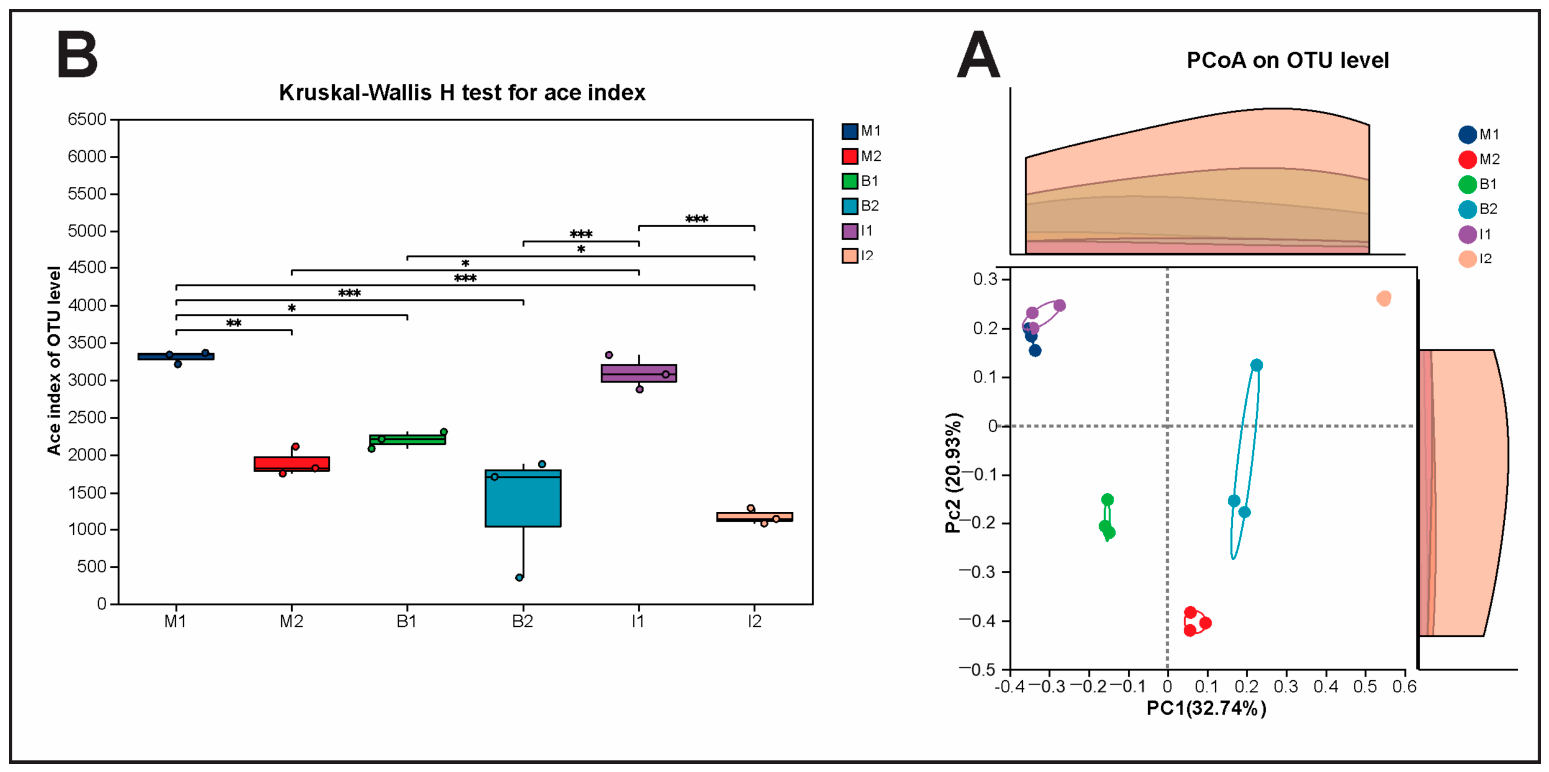
3.2.1. Bacterial Diversity and Community Structure Across Sampling Sites
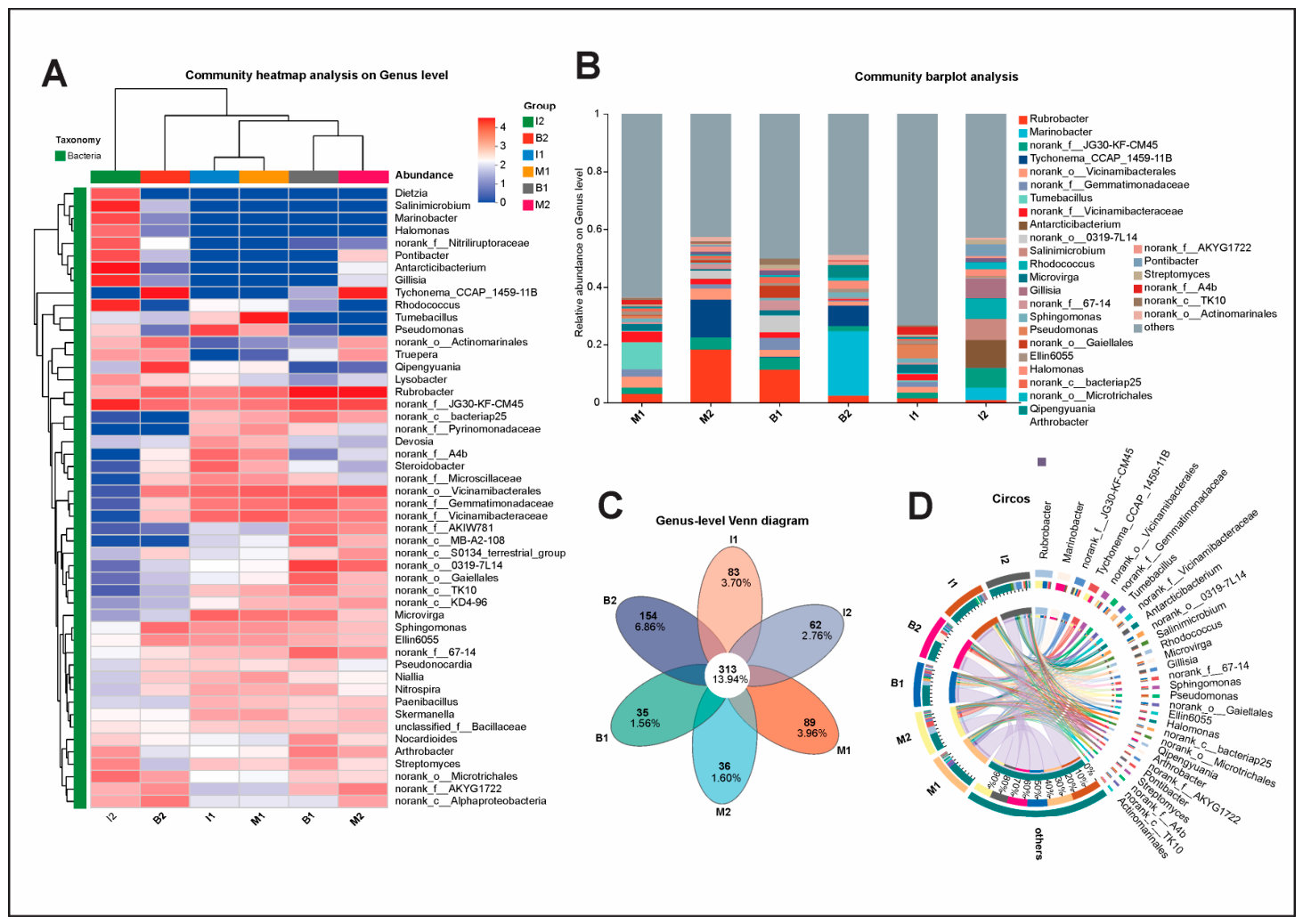
3.2.2. Community Composition Analysis
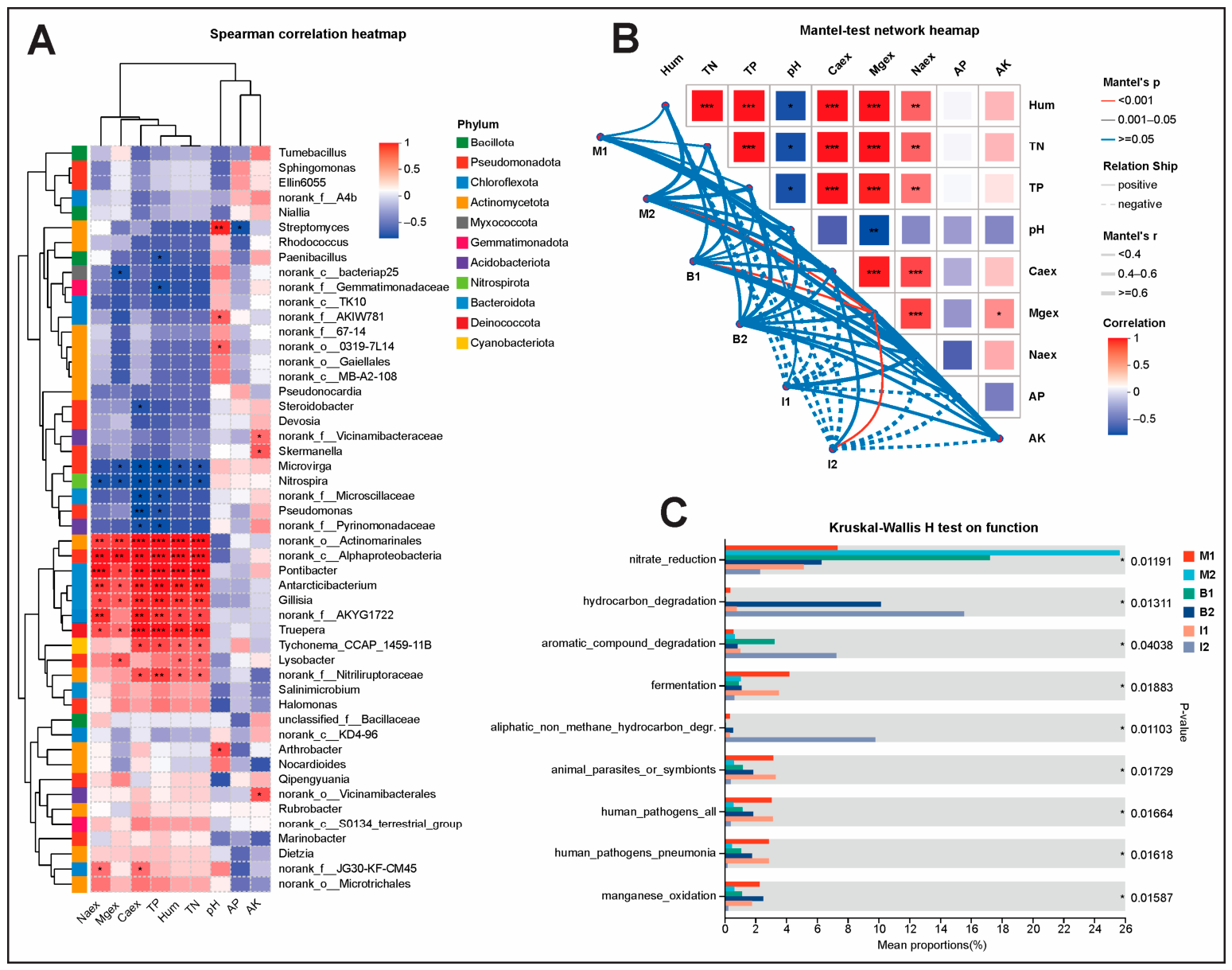
3.3. Associations Between Soil Properties, Bacterial Taxa and Predicted Functions
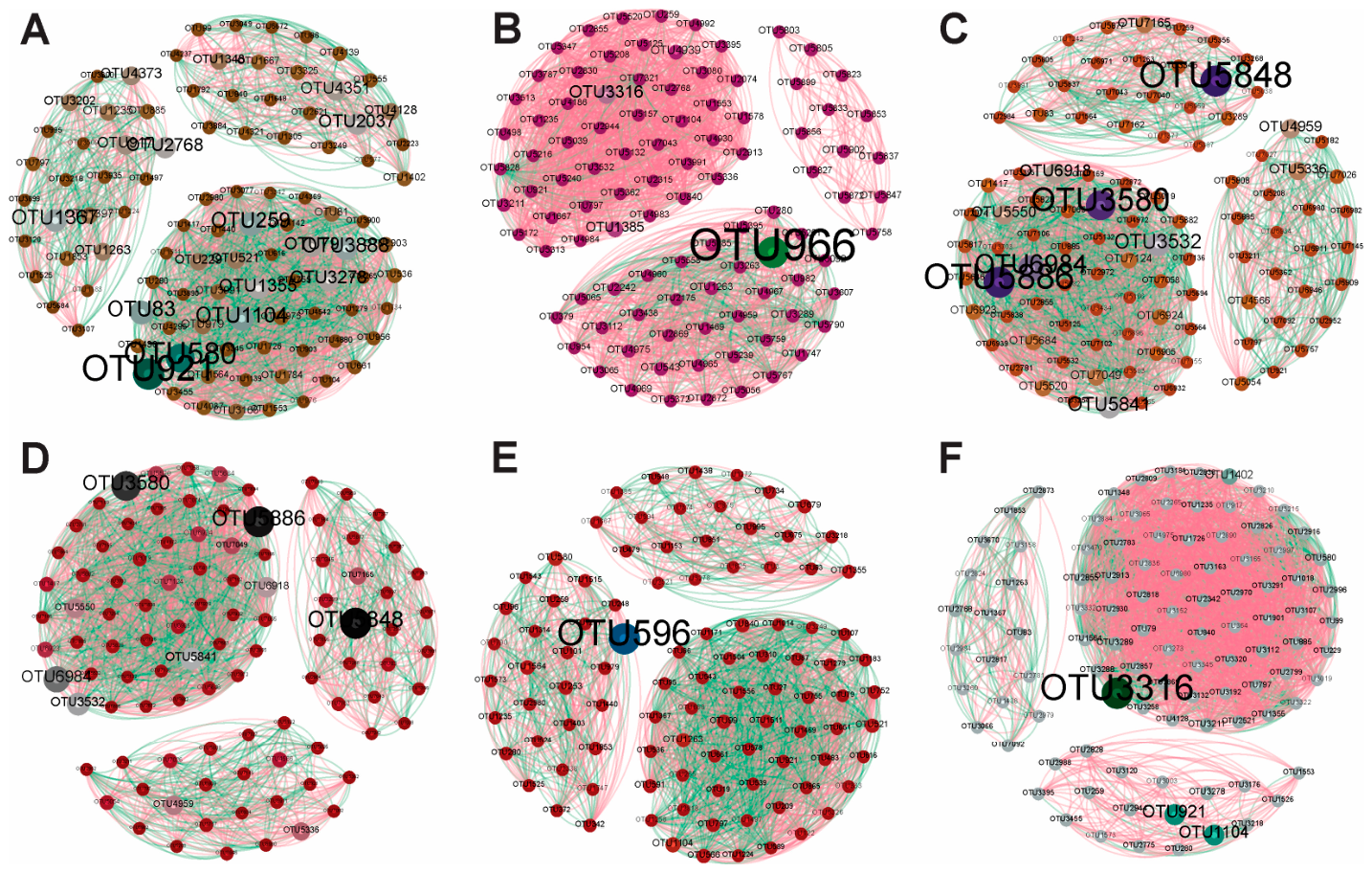
3.4. Exploratory ASV/Taxon-Level Association Network Analysis
4. Discussion
4.1. Shared and Site-Specific Bacterial Patterns Across the Sampled Soils
4.2. Soil Physicochemical Properties and the Non-Significant Mantel Result
4.3. Conservative Interpretation of Stress-Associated and Hydrocarbon-Related Taxa
4.4. Functional Prediction as Hypothesis Rather than Measured Activity
4.5. Exploratory Network Analysis and Practical Implications
5. Conclusions
Supplementary Materials
Author Contributions
Funding
Institutional Review Board Statement
Informed Consent Statement
Data Availability Statement
Acknowledgments
Conflicts of Interest
Abbreviations
| 16S rRNA | 16S ribosomal ribonucleic acid |
| ASV | Amplicon sequence variant |
| DNA | Deoxyribonucleic acid |
| PCR | Polymerase chain reaction |
| OTU | Operational taxonomic unit |
| FAPROTAX | Functional Annotation of Prokaryotic Taxa |
| TN | Total nitrogen |
| TP | Total phosphorus |
| AP | Available phosphorus |
| AK | Available potassium |
| pH | Measure of soil acidity or alkalinity |
References
- Sadvakasova, A.K.; Zaletova, D.E.; Kossalbayev, B.D.; Bauenova, M.O.; Shabala, S.; Allakhverdiev, S.I. Advanced strategies for the development of synthetic microbiomes for effective pesticide biodegradation. Eng. Environ. 2026, 20, 140. [Google Scholar] [CrossRef]
- Delgado-Baquerizo, M.; Oliverio, A.M.; Brewer, T.E.; Benavent-González, A.; Eldridge, D.J.; Bardgett, R.D.; Maestre, F.T.; Singh, B.K.; Fierer, N. A global atlas of the dominant bacteria found in soil. Science 2018, 359, 320–325. [Google Scholar] [CrossRef] [PubMed]
- Sadvakasova, A.K.; Balouch, H.; Bauenova, M.O.; Kossalbayev, B.D.; Allakhverdiev, S.I.; Shabala, S. Strategies to intensify CO(2) capture by microalgae for the circular bioeconomy. Trends Plant Sci. 2026, 31, 456–468. [Google Scholar] [CrossRef] [PubMed]
- Zhakypbek, Y.; Kossalbayev, B.D.; Tursbekov, S.; Tursbekova, G.; Berdaliyeva, Z.; Belkozhayev, A.M. Application of Beneficial Bacteria to Enhance Plant Drought Resilience. Plants 2026, 15, 753. [Google Scholar] [CrossRef] [PubMed]
- Vásquez-Dean, J.; Maza, F.; Morel, I.; Pulgar, R.; González, M. Microbial communities from arid environments on a global scale. A systematic review. Biol. Res. 2020, 53, 29. [Google Scholar] [CrossRef] [PubMed]
- Asylbekkyzy, L.; Kossalbayev, B.D.; Ahmad, F.; Wang, J.; Sadvakasova, A.K.; Bauenova, M.O.; Abseyt, A.A.; Zaletova, D.E. Environmental Filtering of Bacterial Communities Driven by Pesticide Residue Profiles in the Almaty Region, Kazakhstan. Biology 2026, 15, 712. [Google Scholar] [CrossRef] [PubMed]
- Neilson, J.W.; Califf, K.; Cardona, C.; Copeland, A.; van Treuren, W.; Josephson, K.L.; Knight, R.; Gilbert, J.A.; Quade, J.; Caporaso, J.G.; et al. Significant impacts of increasing aridity on the arid soil microbiome. mSystems 2017, 2, e00195-16. [Google Scholar] [CrossRef] [PubMed]
- Chen, L.; Li, C.; Zhang, Z.; Feng, Q.; Xi, H.; Guo, R.; Zhang, C.; Wei, Y. Landscape differentiation of soil bacteria and bacteria-soil-vegetation interactions in desert-oasis ecosystems. Glob. Planet. Change 2024, 232, 104323. [Google Scholar] [CrossRef]
- Zhakypbek, Y.; Toktar, M.; Kossalbayev, B.D.; Baktygali, A.; Kamarkhan, Z.; Tursbekov, S.; Abdalimov, E.; Bektayev, M.E.; Bakbergen, T.; Belkozhayev, A.M.; et al. Effects of Gold Mining on the Physicochemical Properties of Soils at the Akbakai Gold Deposit. Eng. Sci. 2025, 36, 1670. [Google Scholar] [CrossRef]
- Ramazanova, E.; Bahetnur, Y.; Yessenbayeva, K.; Lee, S.H.; Lee, W. Spatiotemporal evaluation of water quality and risk assessment of heavy metals in the northern Caspian Sea bounded by Kazakhstan. Mar. Pollut. Bull. 2022, 181, 113879. [Google Scholar] [CrossRef] [PubMed]
- Narmanova, R.; Delegan, Y.; Kocharovskaya, Y.; Bogun, A.; Puntus, I.; Akhmetov, L.; Vetrova, A.; Baraboshkina, A.; Chayka, N.; Kuzhamberdieva, S.; et al. Impact of Oil on the Bacterial Community of the Sierozems of the ‘Daulet Asia’ Landfill in Southern Kazakhstan. Processes 2025, 13, 3730. [Google Scholar] [CrossRef]
- Müller, F.; Wang, H.; Reinhard, A.; Omirbekova, A.; Berzhanova, R.; Mukasheva, T.; Urich, T.; Mikolasch, A. The hydrocarbon-degrading bacteria and fungi in oil contaminated soils of Kazakhstan: Microbiome composition, enrichment, isolation and bioremediation potential. Environ. Microbiome 2026, 21, 49. [Google Scholar] [CrossRef] [PubMed]
- Sandybayeva, S.K.; Sadvakasova, A.K.; Nazymbetova, G.S.; Kossalbayev, B.D.; Bauenova, M.O.; Zaletova, D.E.; Aknur, A.; Allakhverdiev, S.I. Engineering strategies to enhance microalgal pigment production: From stress physiology to industrial application. Funct. Plant Biol. 2026, 53, FP26058. [Google Scholar] [CrossRef]
- Yilmaz, P.; Kottmann, R.; Field, D.; Knight, R.; Cole, J.R.; Amaral-Zettler, L.; Gilbert, J.A.; Karsch-Mizrachi, I.; Johnston, A.; Cochrane, G.; et al. Minimum information about a marker gene sequence (MIMARKS) and minimum information about any (x) sequence (MIxS) specifications. Nat. Biotechnol. 2011, 29, 415–420. [Google Scholar] [CrossRef] [PubMed]
- Sahin, M.; Laws, T.R.; Dyson, H.; Celebi, O.; Doganay, M.; Buyuk, F.; Baillie, L. Soil sample analysis of Bacillus anthracis contaminated animal burial sites. Microorganisms 2024, 12, 1944. [Google Scholar] [CrossRef] [PubMed]
- Penton, C.R.; Gupta, V.V.; Yu, J.; Tiedje, J.M. Size Matters: Assessing Optimum Soil Sample Size for Fungal and Bacterial Community Structure Analyses Using High Throughput Sequencing of rRNA Gene Amplicons. Front. Microbiol. 2016, 7, 824. [Google Scholar] [CrossRef] [PubMed]
- Ranjard, L.; Lejon, D.P.; Mougel, C.; Schehrer, L.; Merdinoglu, D.; Chaussod, R. Sampling strategy in molecular microbial ecology: Influence of soil sample size on DNA fingerprinting analysis of fungal and bacterial communities. Environ. Microbiol. 2003, 5, 1111–1120. [Google Scholar] [CrossRef] [PubMed]
- Sadanov, A.K.; Baimakhanova, G.; Baimakhanova, B.B.; Orazymbet, S.; Ratnikova, I.A.; Smirnova, I.; Aitkaliyeva, G.S.; Belkozhayev, A.M.; Kossalbayev, B.D. Microorganism-Based Biological Products for Agriculture: From Strain Selection to Production Organization. Microorganisms 2026, 14, 775. [Google Scholar] [CrossRef] [PubMed]
- Lauber, C.L.; Zhou, N.; Gordon, J.I.; Knight, R.; Fierer, N. Effect of storage conditions on the assessment of bacterial community structure in soil and human-associated samples. FEMS Microbiol. Lett. 2010, 307, 80–86. [Google Scholar] [CrossRef] [PubMed]
- Carini, P.; Marsden, P.J.; Leff, J.W.; Morgan, E.E.; Strickland, M.S.; Fierer, N. Relic DNA is abundant in soil and obscures estimates of soil microbial diversity. Nat. Microbiol. 2016, 2, 16242. [Google Scholar] [CrossRef] [PubMed]
- Keeney, D.R.; Nelson, D.W. Nitrogen--Inorganic Forms. In Methods of Soil Analysis: Part 2 Chemical and Microbiological Properties; Page, A.L., Miller, R.H., Keeney, D.R., Eds.; Agronomy Monograph; American Society of Agronomy: Madison, WI, USA, 1982; Volume 9, pp. 643–698. [Google Scholar]
- Walkley, A.; Black, I.A. An Examination of the Degtjareff Method for Determining Soil Organic Matter, and a Proposed Modification of the Chromic Acid Titration Method. Soil Sci. 1934, 37, 29–38. [Google Scholar] [CrossRef]
- Naliukhin, A.N.; Vinogradova, S.B. Modern methods for determining the content of mobile phosphorus in soils. Agric. Chem. 2025, 12, 93–101. [Google Scholar] [CrossRef]
- Food and Agriculture Organization of the United Nations. Standard Operating Procedure for Soil Organic Carbon: Tyurin Titrimetric Method; Food and Agriculture Organization of the United Nations: Rome, Italy, 2021. [Google Scholar]
- Kabała, C.; Jędrzejewski, S. Comparison of cation exchange capacity extraction methods for soil data harmonization and soil classification in Central and East Europe. Geoderma 2024, 450, 117044. [Google Scholar] [CrossRef]
- FAO. FAO Standard Operating Procedure for Soil pH Determination; Food and Agriculture Organization of the United Nations: Rome, Italy, 2021. [Google Scholar]
- FAO. FAO Standard Operating Procedure for Cation Exchange Capacity and Exchangeable Bases: 1 N Ammonium Acetate, pH 7.0 Method; Food and Agriculture Organization of the United Nations: Rome, Italy, 2022. [Google Scholar]
- FAO. FAO Standard Operating Procedure for Soil Nitrogen: Kjeldahl Method; Food and Agriculture Organization of the United Nations: Rome, Italy, 2021. [Google Scholar]
- Salter, S.J.; Cox, M.J.; Turek, E.M.; Calus, S.T.; Cookson, W.O.; Moffatt, M.F.; Turner, P.; Parkhill, J.; Loman, N.J.; Walker, A.W. Reagent and laboratory contamination can critically impact sequence-based microbiome analyses. BMC Biol. 2014, 12, 87. [Google Scholar] [CrossRef] [PubMed]
- Bauenova, M.O.; Sadvakasova, A.K.; Kossalbayev, B.D.; Yilmaz, G.; Huang, Z.; Wang, J.; Balouch, H.; Zaletova, D.E.; Lyaguta, M.A.; Alharby, H.F.; et al. Optimising microalgae-derived butanol yield. Int. J. Hydrogen Energy 2024, 49, 593–601. [Google Scholar] [CrossRef]
- Klindworth, A.; Pruesse, E.; Schweer, T.; Peplies, J.; Quast, C.; Horn, M.; Glöckner, F.O. Evaluation of general 16S ribosomal RNA gene PCR primers for classical and next-generation sequencing-based diversity studies. Nucleic Acids Res. 2013, 41, e1. [Google Scholar] [CrossRef] [PubMed]
- Ren, Y.; Yu, G.; Shi, C.; Liu, L.; Guo, Q.; Han, C.; Zhang, D.; Zhang, L.; Liu, B.; Gao, H.; et al. Majorbio Cloud: A one-stop, comprehensive bioinformatic platform for multiomics analyses. Imeta 2022, 1, e12. [Google Scholar] [CrossRef] [PubMed]
- Callahan, B.J.; McMurdie, P.J.; Rosen, M.J.; Han, A.W.; Johnson, A.J.A.; Holmes, S.P. DADA2: High-resolution sample inference from Illumina amplicon data. Nat. Methods 2016, 13, 581–583. [Google Scholar] [CrossRef] [PubMed]
- Quast, C.; Pruesse, E.; Yilmaz, P.; Gerken, J.; Schweer, T.; Yarza, P.; Peplies, J.; Glöckner, F.O. The SILVA ribosomal RNA gene database project: Improved data processing and web-based tools. Nucleic Acids Res. 2013, 41, D590–D596. [Google Scholar] [CrossRef] [PubMed]
- McMurdie, P.J.; Holmes, S. Waste Not, Want Not: Why Rarefying Microbiome Data Is Inadmissible. PLoS Comput. Biol. 2014, 10, e1003531. [Google Scholar] [CrossRef] [PubMed]
- Schloss, P.D. Rarefaction is currently the best approach to control for uneven sequencing effort in amplicon sequence analyses. mSphere 2024, 9, e0035423. [Google Scholar] [CrossRef] [PubMed]
- Louca, S.; Parfrey, L.W.; Doebeli, M. Decoupling function and taxonomy in the global ocean microbiome. Science 2016, 353, 1272–1277. [Google Scholar] [CrossRef] [PubMed]
- Somers, K.M.; Jackson, D.A. Putting the Mantel test back together again. Ecology 2022, 103, e3780. [Google Scholar] [CrossRef] [PubMed]
- Sansupa, C.; Wahdan, S.F.M.; Hossen, S.; Disayathanoowat, T.; Wubet, T.; Purahong, W. Can We Use Functional Annotation of Prokaryotic Taxa (FAPROTAX) to Assign the Ecological Functions of Soil Bacteria? Appl. Sci. 2021, 11, 688. [Google Scholar] [CrossRef]
- Friedman, J.; Alm, E.J. Inferring Correlation Networks from Genomic Survey Data. PLoS Comput. Biol. 2012, 8, e1002687. [Google Scholar] [CrossRef] [PubMed]
- Kurtz, Z.D.; Müller, C.L.; Miraldi, E.R.; Littman, D.R.; Blaser, M.J.; Bonneau, R.A. Sparse and Compositionally Robust Inference of Microbial Ecological Networks. PLoS Comput. Biol. 2015, 11, e1004226. [Google Scholar] [CrossRef] [PubMed]
- Bastian, M.; Heymann, S.; Jacomy, M. Gephi: An Open Source Software for Exploring and Manipulating Networks. In Proceedings of the International AAAI Conference on Web and Social Media; AAAI Press: Washington, DC, USA, 2009. [Google Scholar]
- J.S.C. Information About the Region. Invest in Atyrau Region. 2026. Available online: https://atyrau.invest.gov.kz/about/info/ (accessed on 6 June 2026).
- Makhalanyane, T.P.; Valverde, A.; Gunnigle, E.; Frossard, A.; Ramond, J.-B.; Cowan, D.A. Microbial ecology of hot desert edaphic systems. FEMS Microbiol. Rev. 2015, 39, 203–221. [Google Scholar] [CrossRef] [PubMed]
- Ziyat, A.; Goddfellow, M.; Nurgozhina, A.; Sergazy, S.; Nurgaziev, M. Novel actinobacterial diversity in Kazakhstan deserts soils as a source of new drug leads. J. Microbiol. Biotechnol. Food Sci. 2019, 8, 1057–1065. [Google Scholar] [CrossRef]
- Kutovaya, O.V.; Lebedeva, M.P.; Tkhakakhova, A.K.; Ivanova, E.A.; Andronov, E.E. Metagenomic characterization of biodiversity in the extremely arid desert soils of Kazakhstan. Eurasian Soil Sci. 2015, 48, 493–500. [Google Scholar] [CrossRef]
- Pershina, E.V.; Ivanova, E.A.; Korvigo, I.O.; Chirak, E.L.; Sergaliev, N.H.; Abakumov, E.V.; Provorov, N.A.; Andronov, E.E. Investigation of the core microbiome in main soil types from the East European plain. Sci. Total Environ. 2018, 631–632, 1421–1430. [Google Scholar] [CrossRef] [PubMed]
- Wang, X.-B.; Lü, X.-T.; Yao, J.; Wang, Z.-W.; Deng, Y.; Cheng, W.-X.; Zhou, J.-Z.; Han, X.-G. Habitat-specific patterns and drivers of bacterial β-diversity in China’s drylands. ISME J. 2017, 11, 1345–1358. [Google Scholar] [CrossRef] [PubMed]
- Maestre, F.T.; Delgado-Baquerizo, M.; Jeffries, T.C.; Eldridge, D.J.; Ochoa, V.; Gozalo, B.; Quero, J.L.; García-Gómez, M.; Gallardo, A.; Ulrich, W.; et al. Increasing aridity reduces soil microbial diversity and abundance in global drylands. Proc. Natl. Acad. Sci. USA 2015, 112, 15684–15689. [Google Scholar] [CrossRef] [PubMed]
- Lüneberg, K.; Schneider, D.; Siebe, C.; Daniel, R. Drylands soil bacterial community is affected by land use change and different irrigation practices in the Mezquital Valley, Mexico. Sci. Rep. 2018, 8, 1413. [Google Scholar] [CrossRef] [PubMed]
- Fierer, N.; Jackson, R.B. The diversity and biogeography of soil bacterial communities. Proc. Natl. Acad. Sci. USA 2006, 103, 626–631. [Google Scholar] [CrossRef] [PubMed]
- Lauber, C.L.; Hamady, M.; Knight, R.; Fierer, N. Pyrosequencing-Based Assessment of Soil pH as a Predictor of Soil Bacterial Community Structure at the Continental Scale. Appl. Environ. Microbiol. 2009, 75, 5111–5120. [Google Scholar] [CrossRef] [PubMed]
- Bai, Z.; Jia, A.; Li, H.; Wang, M.; Qu, S. Explore the soil factors driving soil microbial community and structure in Songnen alkaline salt degraded grassland. Front. Plant Sci. 2023, 14, 1110685. [Google Scholar] [CrossRef] [PubMed]
- Mohammadipanah, F.; Wink, J. Actinobacteria from Arid and Desert Habitats: Diversity and Biological Activity. Front. Microbiol. 2016, 6, 1541. [Google Scholar] [CrossRef] [PubMed]
- Gauthier, M.J.; Lafay, B.; Christen, R.; Fernandez, L.; Acquaviva, M.; Bonin, P.; Bertrand, J.-C. Marinobacter hydrocarbonoclasticus gen. nov., sp. nov., a New, Extremely Halotolerant, Hydrocarbon-Degrading Marine Bacterium. Int. J. Syst. Evol. Microbiol. 1992, 42, 568–576. [Google Scholar] [CrossRef] [PubMed]
- Van Trappen, S.; Vandecandelaere, I.; Mergaert, J.; Swings, J. Gillisia limnaea gen. nov., sp. nov., a new member of the family Flavobacteriaceae isolated from a microbial mat in Lake Fryxell, Antarctica. Int. J. Syst. Evol. Microbiol. 2004, 54, 445–448. [Google Scholar] [CrossRef] [PubMed]
- Yang, Y.; Shi, Y.; Fang, J.; Chu, H.; Adams, J.M. Soil Microbial Network Complexity Varies with pH as a Continuum, Not a Threshold, Across the North China Plain. Front. Microbiol. 2022, 13, 895687. [Google Scholar] [CrossRef] [PubMed]
- Djemiel, C.; Maron, P.-A.; Terrat, S.; Dequiedt, S.; Cottin, A.; Ranjard, L. Inferring microbiota functions from taxonomic genes: A review. GigaScience 2022, 11, giab090. [Google Scholar] [CrossRef] [PubMed]
- Marasco, R.; Rolli, E.; Ettoumi, B.; Vigani, G.; Mapelli, F.; Borin, S.; Abou-Hadid, A.F.; El-Behairy, U.A.; Sorlini, C.; Cherif, A.; et al. A Drought Resistance-Promoting Microbiome Is Selected by Root System under Desert Farming. PLoS ONE 2012, 7, e48479. [Google Scholar] [CrossRef] [PubMed]
- Kuts, O.; Kokoiko, V.; Mykhailyn, V.; Syromyatnikov, Y.; Zhernova, O. Fertilisation system influence on the main agrochemical indicators of soil and productivity of white cabbage. Sci. Horiz. 2023, 26, 69–79. [Google Scholar] [CrossRef]
- Syromiatnykov, Y. Sustainable soybean cultivation using nitrogen-fixing bacteria and humic products derived from agricultural waste: A review. Asian J. Water Environ. Pollut. 2025, 22, 1–20. [Google Scholar] [CrossRef]
- Vircava, I.; Yakovlieva, A.; Semenenko, S.; Fiļipovičs, M.; Snitko, V. Seed inoculation with Rizoline-R and foliar application of Kalnini enhance organic soybean growth and yield. Res. Rural. Dev. Proc. 2025, 40, 60–67. [Google Scholar] [CrossRef]



| Group | Soil Organic Matter (%) | TN (%) | TP (%) | pH (1:2.5 H2O) | Caex (cmol(+) kg−1) | Mgex (cmol(+) kg−1) | Naex (cmol(+) kg−1) | Available Phosphorus (mg 100 g−1) | Available K (mg 100 g−1) |
|---|---|---|---|---|---|---|---|---|---|
| M1 | 0.38 ± 0.12 | 0.025 ± 0.006 | 0.037 ± 0.012 | 8.33 ± 0.06 | 8.00 ± 0.80 | 1.60 ± 0.00 | 0.404 ± 0.429 | 0.36 ± 0.15 | 52.48 ± 2.44 |
| M2 | 1.19 ± 0.31 | 0.069 ± 0.018 | 0.110 ± 0.020 | 8.65 ± 0.05 | 11.60 ± 0.40 | 1.60 ± 0.00 | 0.875 ± 0.425 | 0.87 ± 0.34 | 37.56 ± 0.84 |
| B1 | 0.14 ± 0.09 | 0.009 ± 0.006 | 0.023 ± 0.006 | 9.00 ± 0.17 | 2.80 ± 0.80 | 0.40 ± 0.00 | 0.063 ± 0.006 | 0.84 ± 0.66 | 9.84 ± 3.74 |
| B2 | 2.39 ± 0.04 | 0.129 ± 0.158 | 0.113 ± 0.076 | 7.80 ± 0.10 | 9.33 ± 7.21 | 1.87 ± 1.22 | 0.223 ± 0.190 | 2.00 ± 1.04 | 12.32 ± 1.34 |
| I1 | 0.22 ± 0.08 | 0.015 ± 0.005 | 0.023 ± 0.006 | 8.80 ± 0.26 | 1.47 ± 0.23 | 0.67 ± 0.23 | 0.095 ± 0.059 | 1.82 ± 0.94 | 27.36 ± 6.89 |
| I2 | 0.69 ± 0.21 | 0.041 ± 0.011 | 0.077 ± 0.025 | 8.70 ± 0.17 | 9.60 ± 0.80 | 1.60 ± 0.00 | 0.465 ± 0.401 | 0.40 ± 0.13 | 30.96 ± 5.36 |
Disclaimer/Publisher’s Note: The statements, opinions and data contained in all publications are solely those of the individual author(s) and contributor(s) and not of MDPI and/or the editor(s). MDPI and/or the editor(s) disclaim responsibility for any injury to people or property resulting from any ideas, methods, instructions or products referred to in the content. |
© 2026 by the authors. Licensee MDPI, Basel, Switzerland. This article is an open access article distributed under the terms and conditions of the Creative Commons Attribution (CC BY) license.
Share and Cite
Zhakypbek, Y.; Toktar, M.; Kossalbayev, B.D.; Yang, Q.; Shi, Q.; Tursbekov, S.; Belkozhayev, A.M.; Abseyt, A.S.; Kezembayeva, G.; Kamarkhan, T. Soil Bacterial Community Structure and Functional Potential in the Caspian Drylands of Western Kazakhstan. Biology 2026, 15, 969. https://doi.org/10.3390/biology15120969
Zhakypbek Y, Toktar M, Kossalbayev BD, Yang Q, Shi Q, Tursbekov S, Belkozhayev AM, Abseyt AS, Kezembayeva G, Kamarkhan T. Soil Bacterial Community Structure and Functional Potential in the Caspian Drylands of Western Kazakhstan. Biology. 2026; 15(12):969. https://doi.org/10.3390/biology15120969
Chicago/Turabian StyleZhakypbek, Yryszhan, Murat Toktar, Bekzhan D. Kossalbayev, Qiuli Yang, Qingdong Shi, Serik Tursbekov, Ayaz M. Belkozhayev, Altynbek S. Abseyt, Gulmira Kezembayeva, and Tileu Kamarkhan. 2026. "Soil Bacterial Community Structure and Functional Potential in the Caspian Drylands of Western Kazakhstan" Biology 15, no. 12: 969. https://doi.org/10.3390/biology15120969
APA StyleZhakypbek, Y., Toktar, M., Kossalbayev, B. D., Yang, Q., Shi, Q., Tursbekov, S., Belkozhayev, A. M., Abseyt, A. S., Kezembayeva, G., & Kamarkhan, T. (2026). Soil Bacterial Community Structure and Functional Potential in the Caspian Drylands of Western Kazakhstan. Biology, 15(12), 969. https://doi.org/10.3390/biology15120969