Development of a Multiplex PCR Assay for Selected Escherichia coli Virulence Genes, Clostridium perfringens cpa and Cryptosporidium 18S rRNA in Faecal Samples from Diarrheic Dairy Calves
 and
and
Simple Summary
Abstract
1. Introduction
2. Materials and Methods
2.1. Genomic DNA Isolation
2.2. Construction of Recombinant Plasmids
2.3. Primer Design
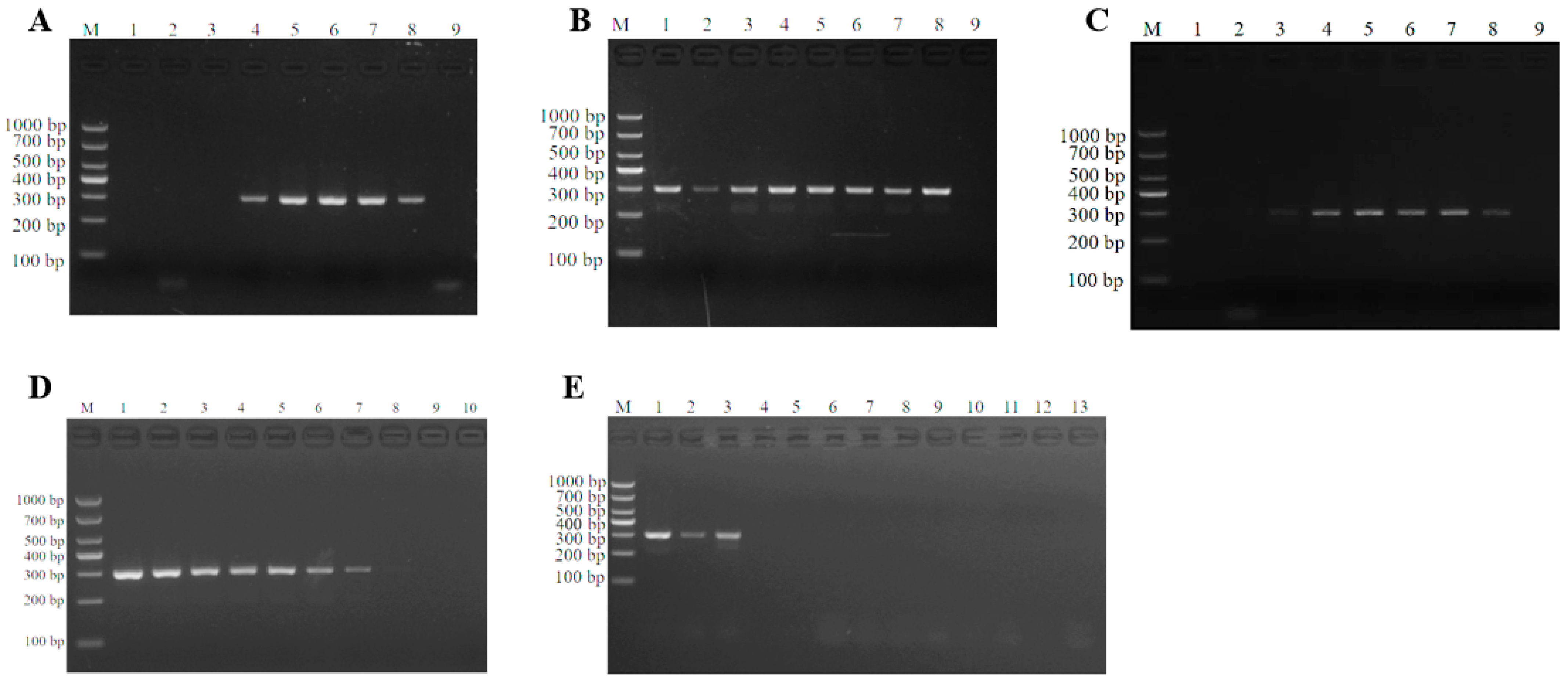
2.4. Establishment of Gene-Specific PCRs for Detecting Selected E. coli Virulence Genes, C. perfringens cpa and Cryptosporidium 18S rRNA
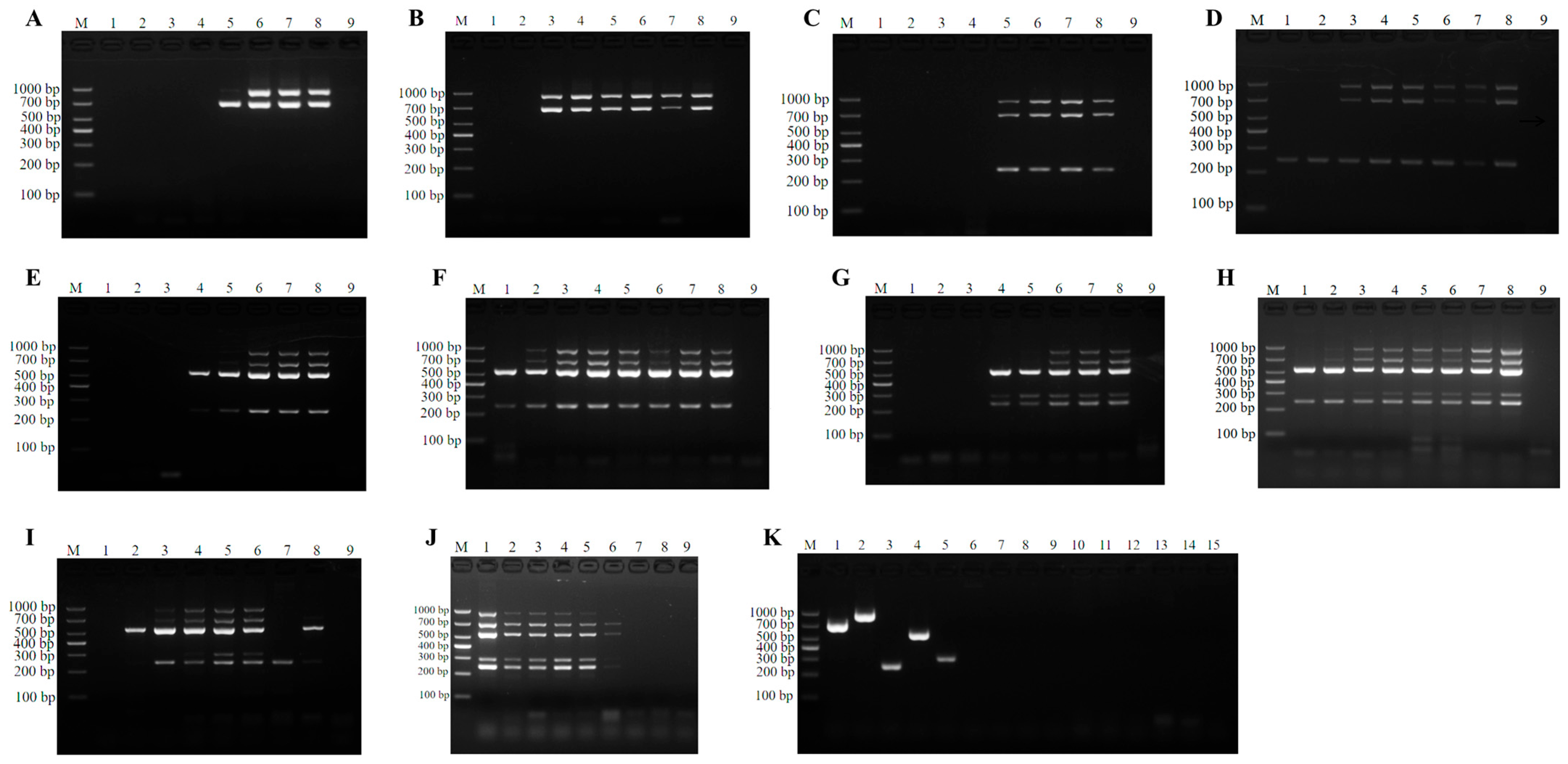
2.5. Establishment of a Multiplex PCR for Simultaneously Detecting Selected E. coli Virulence Genes, C. perfringens cpa and Cryptosporidium 18S rRNA
2.5.1. Optimization of the Multiplex PCR for Detecting the stx1 and stx2 Genes of E. coli
2.5.2. Optimization of the Multiplex PCR for Detecting the stx1, stx2 and eaeA Genes of E. coli
2.5.3. Optimization of the Multiplex PCR for Detecting Selected E. coli Virulence Genes and C. perfringens cpa
2.5.4. Optimization of the Multiplex PCR for Detecting Selected E. coli Virulence Genes, C. perfringens cpa and Cryptosporidium 18S rRNA
2.5.5. Sensitivity Test
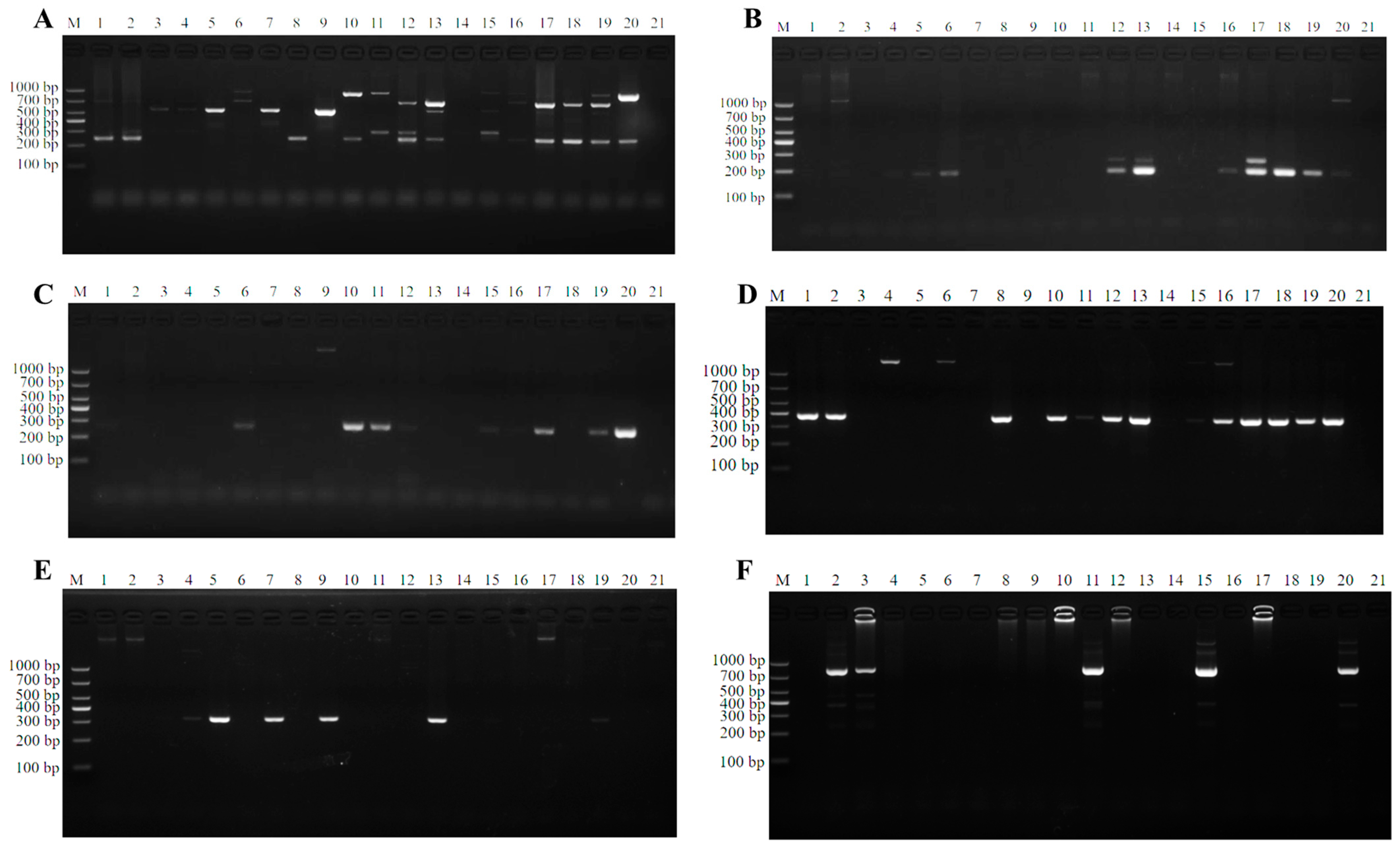
2.5.6. Specificity Test
2.5.7. Clinical Sample Test
2.5.8. Statistical Analysis
3. Results
3.1. Establishment of Gene-Specific PCRs
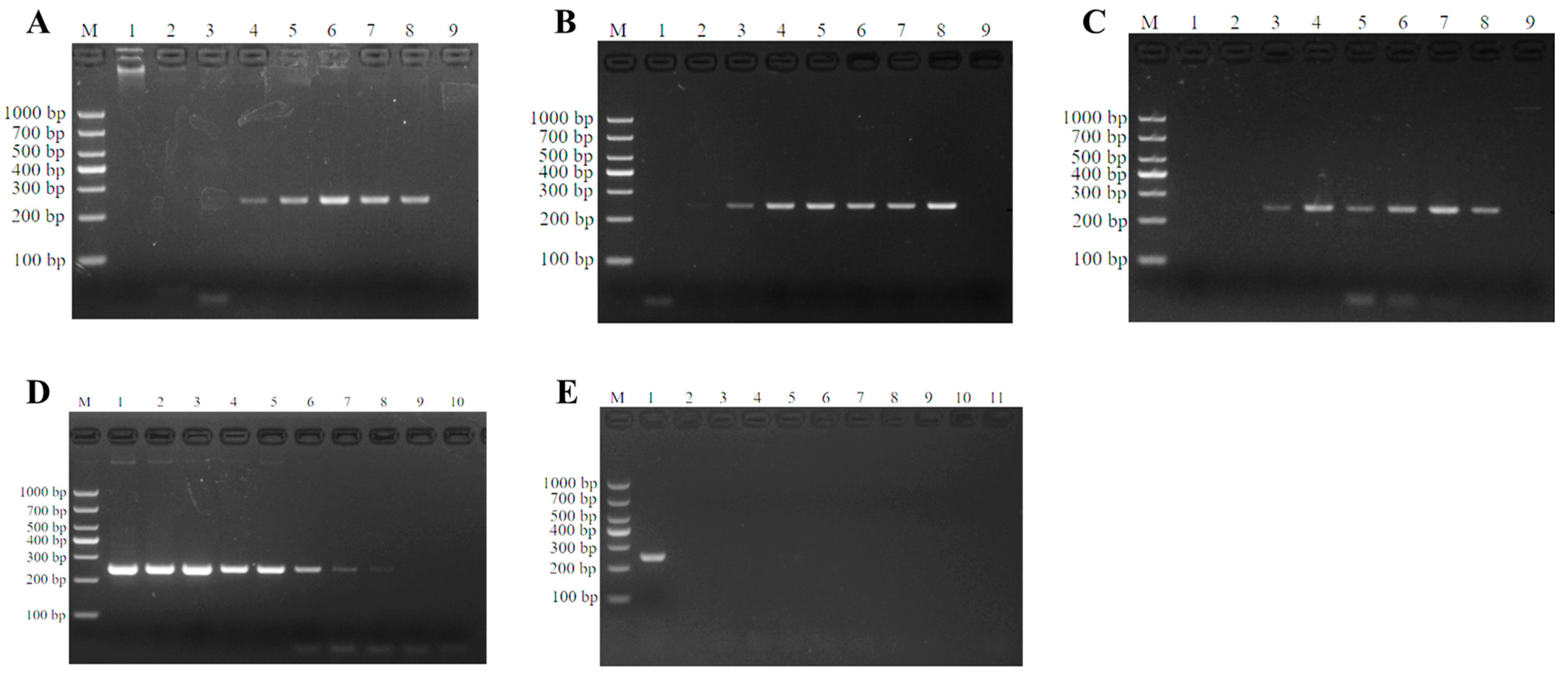
3.1.1. Optimal Reaction Conditions and Reaction System for the Gene-Specific PCR Targeting E. coli eaeA
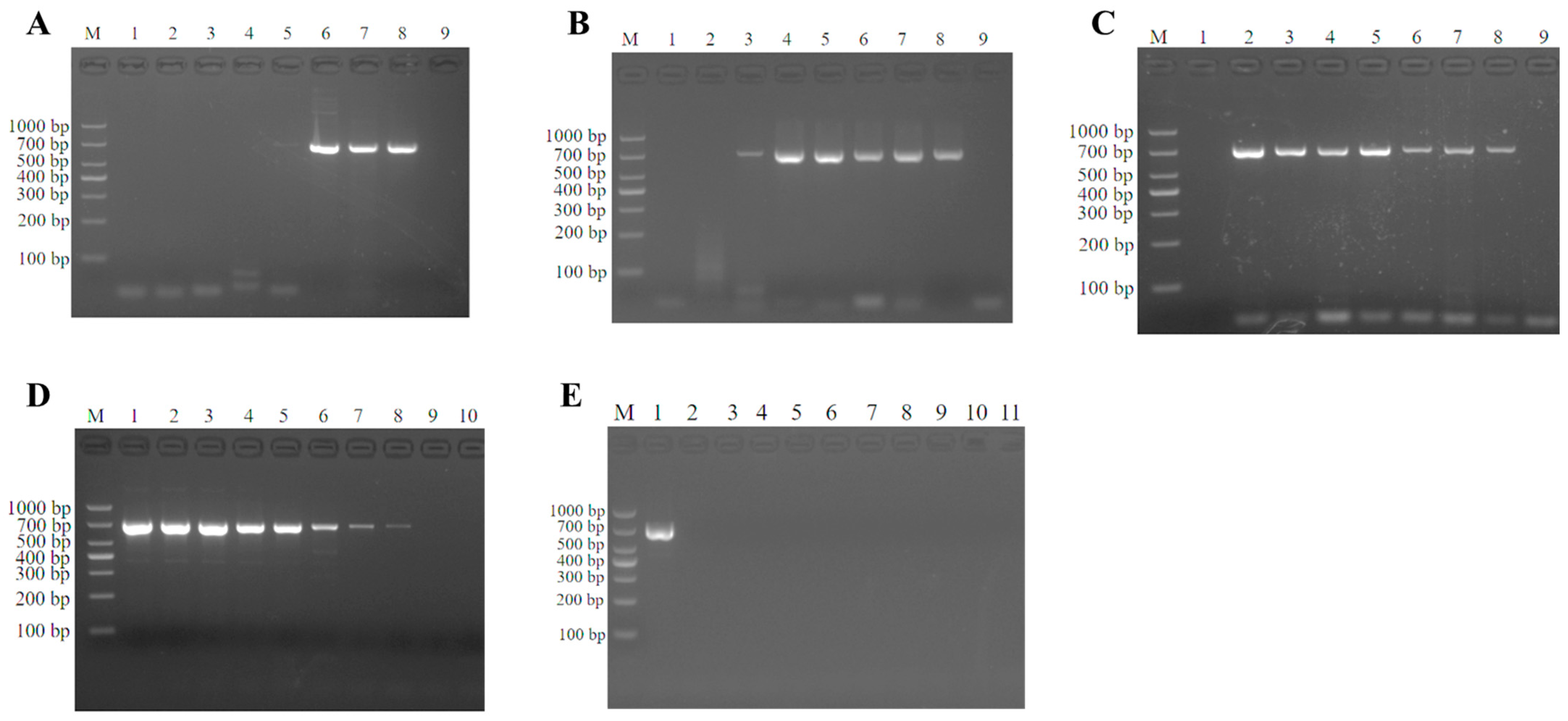
3.1.2. Optimal Reaction Conditions and Reaction System for the Gene-Specific PCR Targeting E. coli stx1
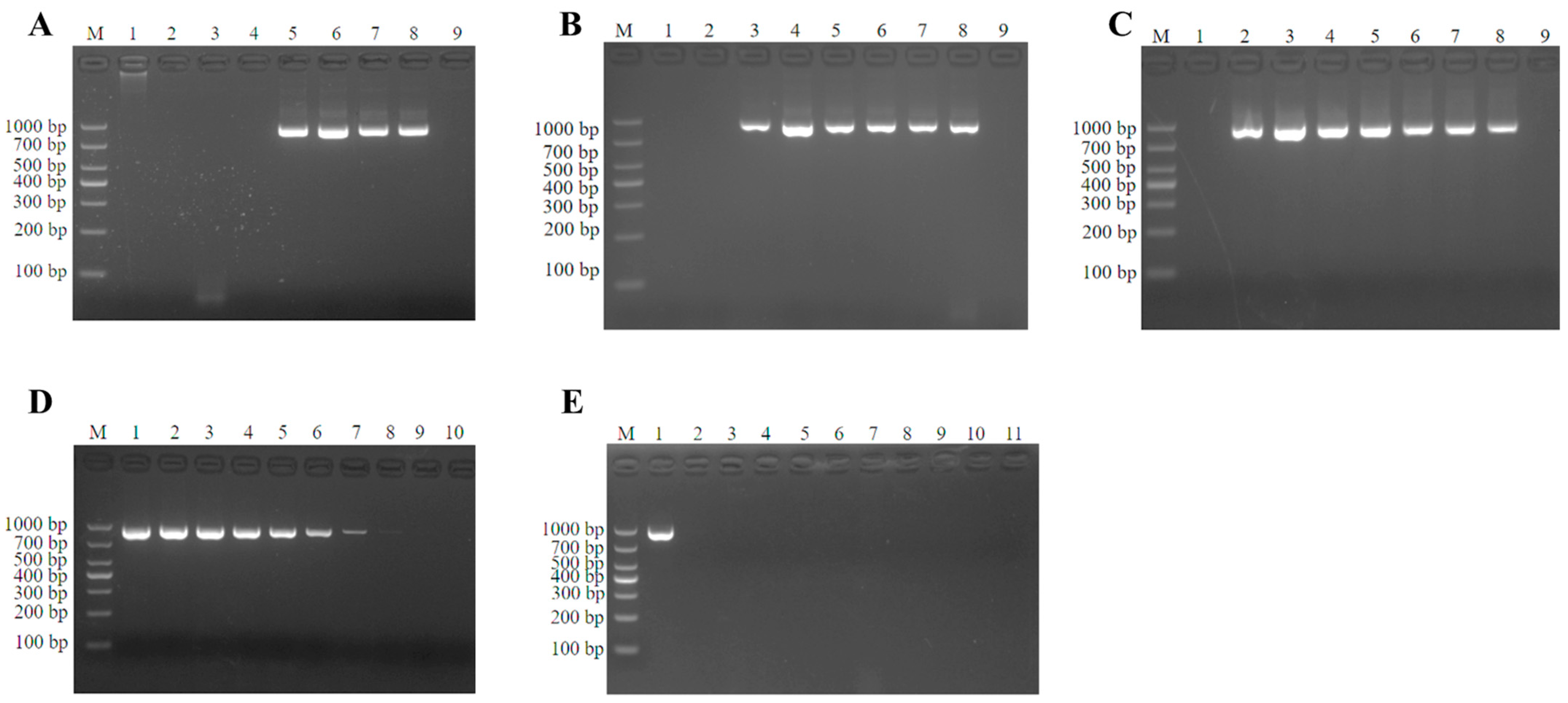
3.1.3. Optimal Reaction Conditions and Reaction System for the Gene-Specific PCR Targeting E. coli stx2
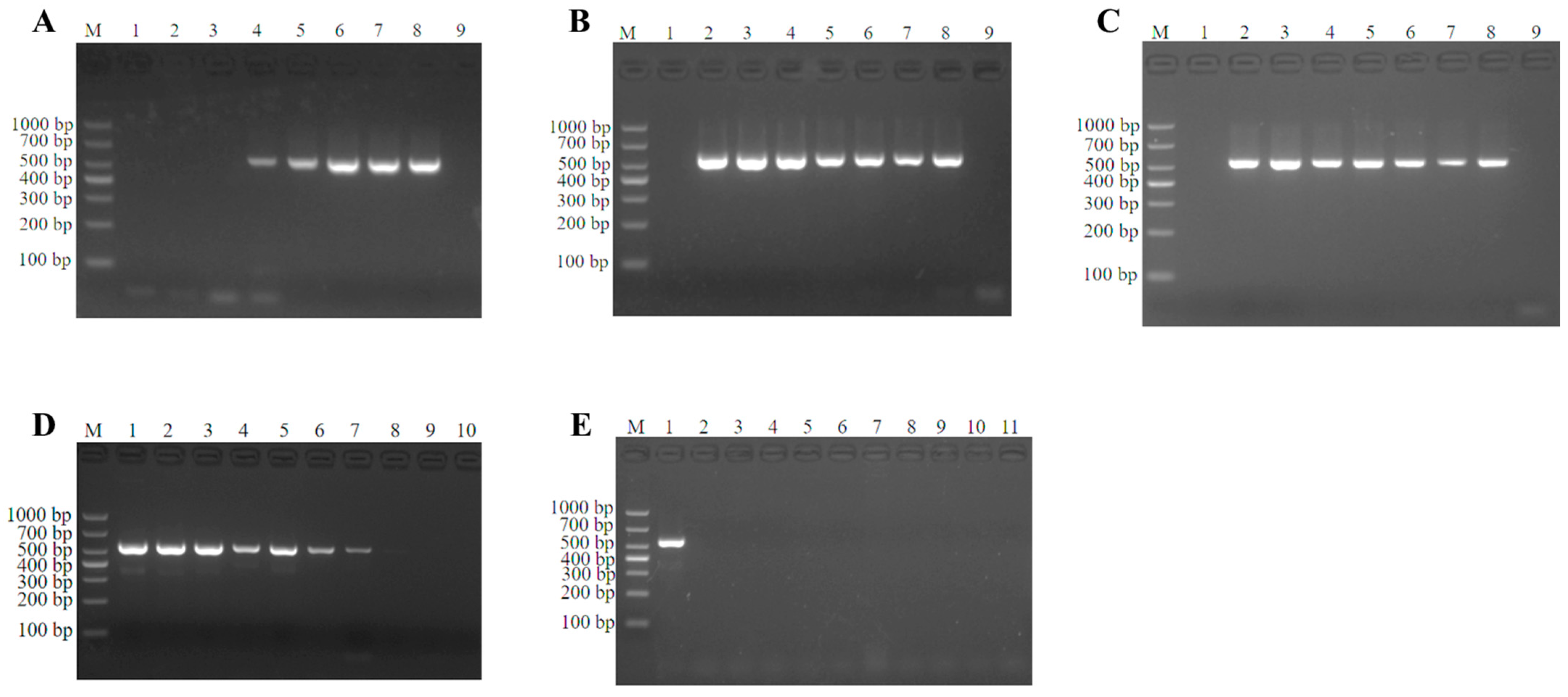
3.1.4. Optimal Reaction Conditions and Reaction System for the Gene-Specific PCR Targeting C. perfringens cpa
3.1.5. Optimal Reaction Conditions and Reaction System for the Gene-Specific PCR Targeting Cryptosporidium 18S rRNA
3.2. Establishment of Multiplex PCRs
3.2.1. Optimization of Multiplex PCR
3.2.2. Sensitivity Test of Multiplex PCR
3.2.3. Specificity Test of Multiplex PCR
3.2.4. Application of Multiplex PCR in Clinical Sample Test
4. Discussion
5. Conclusions
Supplementary Materials
Author Contributions
Funding
Institutional Review Board Statement
Informed Consent Statement
Data Availability Statement
Conflicts of Interest
References
- Cho, Y.I.; Yoon, K.J. An overview of calf diarrhea-infectious etiology, diagnosis, and intervention. J. Veter Sci. 2014, 15, 1–17. [Google Scholar] [CrossRef]
- Bartels, C.J.; Holzhauer, M.; Jorritsma, R.; Swart, W.A.; Lam, T.J. Prevalence, prediction and risk factors of enteropathogens in normal and non-normal faeces of young Dutch dairy calves. Prev. Veter Med. 2010, 93, 162–169. [Google Scholar] [CrossRef]
- Aghakeshmiri, F.; Azizzadeh, M.; Farzaneh, N.; Gorjidooz, M. Effects of neonatal diarrhea and other conditions on subsequent productive and reproductive performance of heifer calves. Veter Res. Commun. 2017, 41, 107–112. [Google Scholar] [CrossRef]
- Bernal-Córdoba, C.; Branco-Lopes, R.; Alonso-López, Y.; Minjee-Lee, C.; Pérez-Solano, D.; Fausak, E.D.; Pereira, V.R.; Silva-Del-Río, N. Antimicrobial drugs used in the prevention and control of protozoal and bacterial calf diarrhea: A scoping review. Prev. Veter Med. 2025, 241, 106543. [Google Scholar] [CrossRef] [PubMed]
- Lynch, C.; Leishman, E.M.; Miglior, F.; Kelton, D.; Schenkel, F.S.; Baes, C.F. Review: Opportunities and challenges for the genetic selection of dairy calf disease traits. Animal 2024, 18, 101141. [Google Scholar] [CrossRef]
- Díaz, P.; Navarro, E.; Remesar, S.; García-Dios, D.; Martínez-Calabuig, N.; Prieto, A.; López-Lorenzo, G.; López, C.M.; Panadero, R.; Fernández, G.; et al. The Age-related Cryptosporidium species distribution in asymptomatic cattle from North-Western SPAIN. Animals 2021, 11, 256. [Google Scholar] [CrossRef]
- Katsowich, N.; Elbaz, N.; Pal, R.R.; Mills, E.; Kobi, S.; Kahan, T.; Rosenshine, I. Host cell attachment elicits posttranscriptional regulation in infecting enteropathogenic bacteria. Science 2017, 355, 735–739. [Google Scholar] [CrossRef]
- Lamas, A.; Miranda, J.M.; Regal, P.; Vázquez, B.; Franco, C.M.; Cepeda, A. A comprehensive review of non-enterica subspecies of Salmonella enterica. Microbiol. Res. 2018, 206, 60–73. [Google Scholar] [CrossRef] [PubMed]
- Smulski, S.; Turlewicz-Podbielska, H.; Wylandowska, A.; Włodarek, J. Non-antibiotic possibilities in prevention and treatment of calf diarrhoea. J. Veter Res. 2020, 64, 119–126. [Google Scholar] [CrossRef]
- Padalino, B.; Cirone, F.; Zappaterra, M.; Tullio, D.; Ficco, G.; Giustino, A.; Ndiana, L.A.; Pratelli, A. Factors affecting the development of bovine respiratory disease: A cross-sectional study in beef steers shipped from france to Italy. Front. Veter Sci. 2021, 8, 627894. [Google Scholar] [CrossRef] [PubMed]
- Santiana, M.; Ghosh, S.; Ho, B.A.; Rajasekaran, V.; Du, W.L.; Mutsafi, Y.; De Jésus-Diaz, D.A.; Sosnovtsev, S.V.; Levenson, E.A.; Parra, G.I.; et al. Vesicle-cloaked virus clusters are optimal units for inter-organismal viral transmission. Cell Host Microbe 2018, 24, 208–220.e8. [Google Scholar] [CrossRef]
- Singasa, K.; Songserm, T.; Lertwatcharasarakul, P.; Arunvipas, P. Molecular and phylogenetic characterization of bovine coronavirus virus isolated from dairy cattle in Central Region, Thailand. Trop. Anim. Health Prod. 2017, 49, 1523–1529. [Google Scholar] [CrossRef] [PubMed]
- Li, N.; Zhao, W.; Song, S.; Ye, H.; Chu, W.; Guo, Y.; Feng, Y.; Xiao, L. Diarrhea outbreak caused by coinfections of Cryptosporidium parvum subtype IIdA20G1 and rotavirus in pre-weaned dairy calves. Transbound. Emerg. Dis. 2022, 69, e1606–e1617. [Google Scholar] [CrossRef]
- Qin, P.; Tao, Z.; Shi, K.; Zhao, J.; Huang, B.; Liu, H.; Wang, C.; Yin, J.; Zhu, G.; Cacciò, S.M.; et al. Molecular epidemiology of Cryptosporidium spp., Giardia duodenalis, and Enterocytozoon bieneusi in Guizhou angus calves: Dominance of angus cattle-adapted genotypes and zoonotic potential of E. bieneusi. Microorganisms 2025, 13, 1735. [Google Scholar] [CrossRef]
- Zhang, Z.; Su, D.; Meng, X.; Liang, R.; Wang, W.; Li, N.; Guo, Y.; Guo, A.; Li, S.; Zhao, Z.; et al. Cryptosporidiosis outbreak caused by Cryptosporidium parvum subtype IIdA20G1 in neonatal calves. Transbound. Emerg. Dis. 2022, 69, 278–285. [Google Scholar] [CrossRef]
- Zhao, J.Q.; Fan, Y.Y.; Lei, Y.D.; Liu, D.; Wang, J.W.; Yang, X.; Song, J.K.; Zhao, G.H. Molecular characterization of common zoonotic protozoan parasites and bacteria causing diarrhea in dairy calves in Ningxia Hui Autonomous Region, China. Parasite 2024, 31, 60. [Google Scholar] [CrossRef] [PubMed]
- Hu, W.S.; Kim, H.; Koo, O.K. Molecular genotyping, biofilm formation and antibiotic resistance of enterotoxigenic Clostridium perfringens isolated from meat supplied to school cafeterias in South Korea. Anaerobe 2018, 52, 115–121. [Google Scholar] [CrossRef]
- Jiang, J.; Alderisio, K.A.; Xiao, L. Distribution of Cryptosporidium genotypes in storm event water samples from three watersheds in New York. Appl. Environ. Microbiol. 2005, 71, 4446–4454. [Google Scholar] [CrossRef]
- Toma, C.; Lu, Y.; Higa, N.; Nakasone, N.; Chinen, I.; Baschkier, A.; Rivas, M.; Iwanaga, M. Multiplex PCR assay for identification of human diarrheagenic Escherichia coli. J. Clin. Microbiol. 2003, 41, 2669–2671. [Google Scholar] [CrossRef]
- Trefz, F.M.; Lorch, A.; Feist, M.; Sauter-Louis, C.; Lorenz, I. Construction and validation of a decision tree for treating metabolic acidosis in calves with neonatal diarrhea. BMC Veter Res. 2012, 8, 238. [Google Scholar] [CrossRef] [PubMed]
- Meganck, V.; Hoflack, G.; Piepers, S.; Opsomer, G. Evaluation of a protocol to reduce the incidence of neonatal calf diarrhoea on dairy herds. Prev. Veter Med. 2015, 118, 64–70. [Google Scholar] [CrossRef] [PubMed]
- Golbeck, L.; Cohrs, I.; Leonhard-Marek, S.; Grünberg, W. Effect of dehydration and acidemia on the potassium content of muscle tissue and erythrocytes in calves with neonatal diarrhea. J. Dairy Sci. 2018, 101, 9339–9349. [Google Scholar] [CrossRef]
- Sedky, D.; Ghazy, A.A.; Abou-Zeina, H.A.A. Advances in diagnosis of diseases causing diarrhea in newborn calves. Veter Res. Commun. 2025, 49, 293. [Google Scholar] [CrossRef]
- Jessop, E.; Li, L.; Renaud, D.L.; Verbrugghe, A.; Macnicol, J.; Gamsjäger, L.; Gomez, D.E. Neonatal calf diarrhea and gastrointestinal microbiota: Etiologic agents and microbiota manipulation for treatment and prevention of diarrhea. Veter Sci. 2024, 11, 108. [Google Scholar] [CrossRef]
- Keles, İ.; Ekinci, G.; Tüfekçi, E.; Citil, M.; Gunes, V.; Aslan, Q.; Onmaz, A.C.; Bekdik, I.K.; Varol, K.; Deniz, O. Etiological and predisposing factors in calves with neonatal diarrhea: A clinical study in 270 case series. Kafk. Univ. Vet. Fak. Derg. 2022, 28, 315–326. [Google Scholar]
- Dryden, M.W.; Payne, P.A.; Ridley, R.; Smith, V. Comparison of common fecal flotation techniques for the recovery of parasite eggs and oocysts. Vet. Ther. 2005, 6, 15–28. [Google Scholar]
- Muktar, Y.; Mamo, G.; Tesfaye, B.; Belina, D. A review on major bacterial causes of calf diarrhea and its diagnostic method. J. Vet. Med. Anim. Health 2015, 7, 173–185. [Google Scholar]
- Hamedian-Asl, M.; Zakian, A.; Azimpour, S.; Davoodi, F.; Kahroba, H. Evaluation of diagnostic methods for the detection of bovine coronavirus and rotavirus in feces of diarrheic calves. J. Hell. Veter Med. Soc. 2022, 73, 3951–3960. [Google Scholar] [CrossRef]
- Golaviya, A.; Mathakiya, R.; Jakhesara, S.; Koringa, P. Determining genetic diversity of prevalent G and P genotype of bovine rotavirus A from neonatal calves of Gujarat, India. J. Veter Sci. 2024, 25, e55. [Google Scholar] [CrossRef]
- Chang, L.; Li, Y.; Cai, Y.; Li, C. Establishment of multiplex PCR for detection of calf diarrhea associated virus and analysis of its clinical infection status. Pak. J. Zool. 2023, 55, 2829–2835. [Google Scholar] [CrossRef]
- Abed, A.H.; Menshawy, A.M.S. Escherichia coli neonatal calf diarrhea in middle Egypt: Prevalence, phenotypes, genotypes and pathotypes. World J. Veter Sci. 2019, 7, 14–23. [Google Scholar]
- Pansri, P.; Svensmark, B.; Liu, G.; Thamsborg, S.M.; Kudirkiene, E.; Nielsen, H.V.; Goecke, N.B.; Olsen, J.E. Evaluation of a novel multiplex qPCR method for rapid detection and quantification of pathogens associated with calf diarrhoea. J. Appl. Microbiol. 2022, 133, 2516–2527. [Google Scholar] [CrossRef]
- Yepsen, E.; Haddadin, Z.; Rankin, D.A.; McHenry, R.; Stewart, L.S.; Halasa, N.B. 685. Comparison of singleplex qPCR and the Luminex MAGPIX platform for the detection of viral pathogens. Open Forum Infect. Dis. 2020, 7, S396. [Google Scholar] [CrossRef]
- Songjaeng, A.; Thiemmeca, S.; Mairiang, D.; Punyadee, N.; Kongmanas, K.; Hansuealueang, P.; Tangthawornchaikul, N.; Duangchinda, T.; Mongkolsapaya, J.; Sriruksa, K.; et al. Development of a Singleplex real-time reverse transcriptase PCR assay for Pan-Dengue virus detection and quantification. Viruses 2022, 14, 1271. [Google Scholar] [CrossRef] [PubMed]
- Natonek-Wiśniewska, M.; Piestrzynska-Kajtoch, A.; Koseniuk, A.; Krzyścin, P. Current analytical methods and research trends are used to identify domestic pig and wild boar DNA in meat and meat products. Genes 2022, 13, 1825. [Google Scholar] [CrossRef] [PubMed]
- Thomas, P.; Arun, T.; Nair, S.S.; Subbaiyan, A.; Abhishek; Abdel-Glil, M.Y.; Dandapat, P. Chapter Seven—Advanced strategies for target selection, primer design, and development of multiplex PCR assays for pathogen genotyping. Methods Microbiol. 2025, 57, 177–201. [Google Scholar]



| Pathogen | Gene | Primer Name | Primer Sequence (5′–3′) | Fragment Size (bp) |
|---|---|---|---|---|
| E. coli | eaeA | F | TATGCTTAGTGCTGGTTTAGGA | 248 |
| R | CCTTCATCATTTCGCTTTCA | |||
| stx1 | F | ATTACAGACTATTTCATCAGGAGG | 706 | |
| R | CGGACACATAGAAGGAAACTCA | |||
| stx2 | F | GGTTTTTCTTCGGTATCCTATTC | 950 | |
| R | CGCCATAAACATCTTCTTCATACT | |||
| C. perfringens | cpa | F | TAGGTTCTACTTATCCAGATTATG | 550 |
| R | GCTGTTCCTTTTTGAGAGTTAG | |||
| Cryptosporidium | 18S rRNA | F | TTTACTTTGAGAAAATTAGAGTGCTT | 300 |
| R | CAATCTCTAGTTGGCATA |
Disclaimer/Publisher’s Note: The statements, opinions and data contained in all publications are solely those of the individual author(s) and contributor(s) and not of MDPI and/or the editor(s). MDPI and/or the editor(s) disclaim responsibility for any injury to people or property resulting from any ideas, methods, instructions or products referred to in the content. |
© 2026 by the authors. Licensee MDPI, Basel, Switzerland. This article is an open access article distributed under the terms and conditions of the Creative Commons Attribution (CC BY) license.
Share and Cite
Hou, J.-J.; Zhao, J.-Q.; Fan, Y.-Y.; Zhang, M.-Y.; Song, J.-K.; Yang, X.; Zhao, G.-H. Development of a Multiplex PCR Assay for Selected Escherichia coli Virulence Genes, Clostridium perfringens cpa and Cryptosporidium 18S rRNA in Faecal Samples from Diarrheic Dairy Calves. Biology 2026, 15, 921. https://doi.org/10.3390/biology15120921
Hou J-J, Zhao J-Q, Fan Y-Y, Zhang M-Y, Song J-K, Yang X, Zhao G-H. Development of a Multiplex PCR Assay for Selected Escherichia coli Virulence Genes, Clostridium perfringens cpa and Cryptosporidium 18S rRNA in Faecal Samples from Diarrheic Dairy Calves. Biology. 2026; 15(12):921. https://doi.org/10.3390/biology15120921
Chicago/Turabian StyleHou, Jian-Jun, Jia-Qi Zhao, Ying-Ying Fan, Ming-Yi Zhang, Jun-Ke Song, Xin Yang, and Guang-Hui Zhao. 2026. "Development of a Multiplex PCR Assay for Selected Escherichia coli Virulence Genes, Clostridium perfringens cpa and Cryptosporidium 18S rRNA in Faecal Samples from Diarrheic Dairy Calves" Biology 15, no. 12: 921. https://doi.org/10.3390/biology15120921
APA StyleHou, J.-J., Zhao, J.-Q., Fan, Y.-Y., Zhang, M.-Y., Song, J.-K., Yang, X., & Zhao, G.-H. (2026). Development of a Multiplex PCR Assay for Selected Escherichia coli Virulence Genes, Clostridium perfringens cpa and Cryptosporidium 18S rRNA in Faecal Samples from Diarrheic Dairy Calves. Biology, 15(12), 921. https://doi.org/10.3390/biology15120921