Article

Massilia varians P2-4 Supplementation Enhances Immunity, Antioxidant Capability, Intestinal Microbiota Diversity, and Disease Resistance Against Pseudomonas aeruginosa Infection in Chinese Mitten Crab Eriocheir sinensis


1
National Pathogen Collection Center for Aquatic Animals, Shanghai Engineering Research Center of Aquaculture, Shanghai Ocean University, Shanghai 201306, China
2
Marine Science Research Institute of Shandong Province (National Oceanographic Center, Qingdao), Qingdao 266104, China
3
Department of Clinical Laboratory, Quzhou Affiliated Hospital of Wenzhou Medical University, Quzhou 324000, China
*
Authors to whom correspondence should be addressed.
These authors contributed equally to this work.
Biology 2026, 15(12), 908; https://doi.org/10.3390/biology15120908
Submission received: 30 April 2026 / Revised: 6 June 2026 / Accepted: 8 June 2026 / Published: 10 June 2026

Simple Summary

Pseudomonas aeruginosa is a clinically significant bacterial pathogen that poses a serious threat to the health and aquaculture sustainability of Eriocheir sinensis. However, there is currently limited information regarding the use of Massilia varians to confer E. sinensis against P. aeruginosa infection. Here, we performed a 40-day feeding trial to evaluate the effects of dietary supplementation with M. varians P2-4 on immunity, antioxidant capability, intestinal microbiota, and resistance to P. aeruginosa infection in E. sinensis. Comprehensive analyses revealed that M. varians P2-4 supplementation could improve immune and antioxidant responses, modulate intestinal microbiota, and enhance resistance to P. aeruginosa infection in E. sinensis. Our data elucidate M. varians P2-4 supplementation as a biocontrol strategy to confer effective protection in E. sinensis against P. aeruginosa infection.

Abstract

Massilia varians has potential as a probiotic to inhibit bacterial pathogens in aquaculture, but very limited information is available regarding its use in Chinese mitten crab Eriocheir sinensis for enhancing host immunity, antioxidant ability and intestinal microbiota homeostasis. In this study, a 40-day feeding trial was conducted to evaluate the protective effects of dietary supplementation with M. varians P2-4 on nonspecific immune response, antioxidant status, intestinal microbiota and resistance against Pseudomonas aeruginosa infection in E. sinensis. Results demonstrated that dietary supplementation with M. varians P2-4 at 6.0 × 10⁶ to 6.0 × 10⁸ CFU/g diet significantly boosted nonspecific immunity and improved antioxidant capability of E. sinensis, mainly as evidenced by markedly increased activities of plasma lysozyme, plasma superoxide dismutase, hepatopancreatic superoxide dismutase and catalase. Furthermore, crabs fed M. varians P2-4-supplemented diets exhibited markedly improvements in intestinal microbiota composition and diversity, and showed substantially enhanced survival following P. aeruginosa challenge, with 7-day relative percentage survival ranging from 76.9% to 100.0%. To the best of our knowledge, this is the first study to reveal that M. varians P2-4 supplementation functions as a new biocontrol strategy in E. sinensis by effectively improving the non-specific immunity, antioxidant status and intestinal microbiota to mitigate P. aeruginosa infection.

1. Introduction

The Chinese mitten crab Eriocheir sinensis is an economically vital freshwater aquaculture species in China and other East Asian countries [1], and now represents the dominant contributor to global crab production owing to its high market value and consumer demand [2]. Especially in China, rapid advancements in intensive aquaculture technologies have elevated annual production of this crab to over 888,000 tons [3]. However, bacterial infections have become one of the major bottlenecks in sustainable E. sinensis aquaculture. For example, Pseudomonas aeruginosa infection has emerged as a critical threat to E. sinensis farming, triggering serious diseases such as hepatopancreatic necrosis disease and resulting in a mortality of over 40% [4]. Consequently, there is an urgent need to develop sustainable preventive strategies against P. aeruginosa infection in this species.
The genus Massilia belongs to the family Oxalobacteraceae within the class Betaproteobacteria [5]. Although a few Massilia isolates are occasionally associated with human septicemia and osteomyelitis [6], members of Massilia are increasingly recognized as a promising probiotic candidate [7] and exhibit great potential for the biocontrol of bacterial pathogens [8,9]. For instance, M. varians P2-4, an avirulent predatory bacterium possessing bacteriolytic ability and showing no virulence genes and non-pathogenicity to E. sinensis [8,10], exhibits potent antibacterial activity against pathogenic Aeromonas hydrophila, A. caviae, Photobacterium damselae, and Shewanella algae in aquaculture [8]. However, scarce information is available concerning the modulatory effects of probiotic Massilia on immunity, antioxidant status, intestinal microbiota and disease resistance in E. sinensis.
In the present study, a 40-day feeding trial was conducted in E. sinensis to evaluate whether dietary supplementation with M. varians P2-4 could improve immune and antioxidant responses, modulate intestinal microbiota, and enhance resistance to P. aeruginosa infection in E. sinensis. To our knowledge, this is the first study to reveal the beneficial effects of M. varians supplementation on innate immunity, antioxidant capability, intestinal microbiota, and resistance to P. aeruginosa infection in E. sinensis.

2. Materials and Methods

2.1. Animal Ethics

All the experimental procedures in this study were under the ethics committee of Shanghai Ocean University (No. SHOU-DW-2023-030).

2.2. Probiotic Strain

M. varians strain P2-4, a predatory bacterium previously isolated from aquaculture pond sediment and identified using phenotypical and molecular methods [8], was maintained at 30 °C on nutrient agar (NA; Sinopharm Chemical Reagent Co., Ltd., Shanghai, China) slants, and used in this study.

2.3. Experimental Diet Preparation

Prior to experimental diet preparation, M. varians P2-4 suspension was prepared following the protocol described by Huang et al. [11]. Specifically, M. varians P2-4 was inoculated into nutrient broth (NB; Sinopharm Chemical Reagent Co., Ltd., Shanghai, China), and incubated at 30 °C for 24 h with shaking at 180 r/min. M. varians P2-4 cells were harvested by centrifugation at 4000 r/min for 10 min, washed with sterile distilled water, and suspended in sterile distilled water to yield a uniform cell suspension. The suspension was quantified through counting colony forming units (CFU) on NA plates from a series of 10-fold dilutions in sterile distilled water [12]. The resulting suspension was diluted with sterile distilled water, and the dilutions were then uniformly sprayed onto a sterile commercial basal diet (Suqian Hongxiang Feed Co., Ltd., Suqian, China), whose formulation and proximate composition were previously reported by Cao et al. [13]. The mixtures were air-dried for 16 h under aseptic conditions at 25 °C until the suspension was fully absorbed by the diets. The viable cell counts in the diets were checked immediately after diet preparation, and quantified as 6.0 × 10⁶, 6.0 × 10⁷ and 6.0 × 10⁸ CFU/g diet based on the CFU enumeration on NA plates following a 10-fold serial dilution in sterile distilled water. The basal diet, subjected to the same handling procedure as the supplemented diets, was used as the control. All the experimental diets were prepared regularly at weekly intervals according to Kumar et al. [14], and were stored at 4 °C.

2.4. Crab Culture

Juvenile Chinese mitten crabs (17.51 ± 1.28 g in weight) were sourced from a crab farm in Nantong, Jiangsu, China, and acclimatized to laboratory conditions for 14 days, following the health status assessment through sampling 10 crabs for a careful examination of external appearance, physical behavior and absence of parasites, viruses and bacterial pathogens according to Feng et al. [15], Yang et al. [16], and Ding et al. [17]. Briefly, following a check of limb intactness, strong viability, and high shell hardness, a squash of organs (gill, hepatopancreas, and muscle) were made and examined as wet mounts for parasites under the microscope (YS100, Nikon, Tokyo, Japan). Simultaneously, the hepatopancreas was homogenized in sterile normal saline (1:1, w/v) for 15 min, and the resulting homogenate was centrifuged at 10,000 r/min for 20 min at 4 °C, and the supernatant was filtered through 0.22 µm-pore-size membrane filter, and the filtrate was dropped onto a formvar-coated copper grid, negatively stained with 2% sodium phosphotungstate, and observed under a transmission electron microscope (HT770, Hitachi, Tokyo, Japan) [17]. In addition, the hepatopancreas was directly streaked onto NA plates, and observed for the presence of bacteria following 24 h of incubation at 28 °C [18]. The crabs were distributed to 12 replicate aquaria (78 cm × 52 cm × 48 cm) with 120 L aerated tap water at pH 7.0–8.0, dissolved oxygen ≥ 6.0 mg/L, total ammonia ≤ 0.2 mg/L and 28 °C. Each aquarium as an experimental unit was equipped with three tiles placed at the bottom as shelters to avoid cannibalism [19]. Three replicate treatment aquaria (n = 50 crabs per aquarium as recommended by Dai et al. [20]) received experimental diets supplied with 6.0 × 10⁶, 6.0 × 10⁷ and 6.0 × 10⁸ CFU/g diet of M. varians P2-4, respectively, and three additional replicate aquaria (n = 50 crabs per aquarium) served as the control group and were fed the sterile basal diet under identical experimental conditions. All diets were offered twice daily (8:00 and 18:00) at a fixed feeding rate of 3% of the total body weight to apparent satiation for 40 days [21]. Experimental conditions were standardized by maintaining a 12 h dark: 12 h light photoperiod [22]. Uneaten food was siphoned from aquaria 2 h post-prandially, 1/3 of the aquarium water was replaced daily with fresh aerated tap water to support consistent growth and survival [4].

2.5. Plasma Immunity and Antioxidant Capacity Assay

Immediately following the feeding trial, haemolymph was collected from the base of third pleopods of five crabs from each aquarium in both control and treatment groups, using ice-chilled acid citrate dextrose (ACD) anticoagulant tubes [13]. The haemolymph of these five individuals from each aquarium were pooled into a single sample. The pooled plasma was subsequently separated by centrifugation at 4000 r/min for 20 min at 4 °C. Thereafter, the plasma acid phosphatase (ACP; catalog number A060-2-2), alkaline phosphatase (AKP; catalog number A059-2-2), lysozyme (LZM; catalog number A050-1-1), superoxide dismutase (SOD; catalog number A001-2-2), and catalase (CAT; catalog number A007-1-1) activities were quantified using commercial assay kits (Nanjing Jiancheng Bioengineering Institute, Nanjing, China) as recommended by Xu et al. [23], strictly adhering to the manufacturer’s instructions.

2.6. Hepatopancreatic Immunity and Antioxidant Capability Assay

Immediately post the feeding trial, the hepatopancreas tissues were rapidly dissected from five crabs from each aquarium in both control and treatment groups, and pooled into a single sample, which was kept on ice throughout the sampling process and stored at −80 °C for further analysis. The time interval from tissue dissection to final storage was strictly controlled within 30 min [24]. The pooled hepatopancreas sample was homogenized with sterile normal saline (1:9, w/v) for 15 min at 4 °C [23] using a homogenizer (Shanghai Jingxin Industrial Development Co., Ltd., Shanghai, China). The resulting homogenate was centrifuged at 2500 r/min for 10 min at 4 °C, and the supernatant was collected for determination of hepatopancreatic ACP, AKP, SOD, and CAT activities according to the protocol of commercial assay kits (Nanjing Jiancheng Bioengineering Institute, Nanjing, China) as recommended by Xu et al. [23].

2.7. Intestinal Microbiota Assay

Following the feeding trial, the intestines were aseptically excised from five randomly selected crabs in each aquarium across all control and treatment groups. Intestinal contents of these five individuals from each aquarium were then carefully collected following the method described by Hou et al. [25], and pooled into a single sample. Total genomic DNA was extracted from the pooled intestinal content samples using the DNA extraction kits (Tiangen Biotech. (Beijing) Co., Ltd., Beijing, China) following the manufacturer’s instruction. DNA integrity and approximate concentration were preliminarily assessed by 1% agarose gel electrophoresis. Subsequent quantification was performed using a NanoDrop 2000 UV-Vis spectrophotometer (Thermo Scientific, Wilmington, NC, USA). The V3–V4 hypervariable region of the bacterial 16S rRNA gene was amplified using primers (forward primers: 5′-ACTCCTACGGGAGGCAGCAG-3′, reverse primers: 5′-GGACTACHVGGGTWTCTAAT-3′), as described by Chen et al. [26]. Amplification products were extracted from 2% agarose gel, and purified using the AxyPrep DNA gel extraction kit (Axygen Biosciences, Union City, CA, USA) according to the manufacturer’s protocol. Purified amplicons were quantified fluorometrically using Quantus™ Fluorometer (Promega, Madison, WA, USA). High-quality amplicons were subjected to high-throughput sequencing by Majorbio Bio-Pharm Technology Co., Ltd., Shanghai, China. Raw sequencing reads were demultiplexed, trimmed, and merged using fastp (version 0.23.4) and FLASH (version 1.2.7), respectively. High-quality merged reads were clustered into operational taxonomic units (OTUs) at 97% sequence identity using UPARSE (version 11), with chimeric sequences identified and removed during clustering. Taxonomic assignment of representative OTU sequences was conducted using RDP Classifier (version 11.5) against the silva138/16s_bacteria database, with a confidence threshold of 0.7, as recommended by Wang et al. [27]. Sequences classified as chloroplast or mitochondrial origin were filtered out to eliminate host-derived contamination and primer bias artifacts. The resulting high-quality, taxonomy-annotated OTU table was used for all subsequent microbial community analyses. Sequencing depth (66,913 reads per sample) and Good’s coverage (99.83%) were calculated to evaluate sequencing completeness, and rarefaction analysis was performed to normalize samples to the same sequencing depth and eliminate the bias of uneven sequencing volume [28]. Alpha-diversity indices (Ace and Shannon) were calculated using MOTHUR software (version 1.30.2). The diagrams of Venn, bacterial community composition, principal co-ordinates analysis (PCoA) and heatmap were generated using the R software (version 3.3.1) [25].

2.8. Resistance to P. aeruginosa Infection Assay

Prior to the bacterial challenge, P. aeruginosa HX-1, originally isolated from the hepatopancreas of E. sinensis and subsequently identified phenotypically and molecularly [4], was employed as the challenge strain. P. aeruginosa HX-1 was inoculated into NB and incubated at 30 °C and 180 r/min for 24 h. Cells were harvested by centrifugation at 4000 r/min for 10 min at 4 °C, washed with sterile distilled water, and suspended in sterile distilled water to yield a uniform cell suspension [4]. The suspension was then uniformly sprayed onto the sterile commercial basal diet described in Section 2.3, thoroughly mixed, and air-dried under aseptic conditions at 25 °C [29]. The cell density in the feed was verified as 5.0 × 10⁶ CFU/g diet by plating serial dilutions on NA plates following 10-fold serial dilution in sterile distilled water. Ten crabs were randomly selected from each of the control and treatment aquaria immediately post the feeding trial, and transferred to challenge aquaria (78 cm × 52 cm × 48 cm) supplied with 120 L aerated tap water at 28 °C [4]. Three replicate challenge aquaria per group (10 crabs per aquarium) were orally challenged as recommended by Cao et al. [13] by being fed the 5.0 × 10⁶ CFU/g diet [13] of P. aeruginosa—supplemented diets twice daily (8:00 and 18:00) to apparent satiation, at 3% of the total body weight as described by Fu et al. [21]. Throughout the 7-day challenge period as recommended by Cao et al. [30], the test crabs were maintained under a 12 h dark: 12 h light photoperiod, uneaten food was removed from aquaria 2 h post-prandially, and 1/3 of the aquarium water was replaced daily with fresh aerated tap water [4]. Mortality was recorded daily, and cumulative survival rates were calculated over the 7-day observation period. All deceased crabs were promptly removed, and their hepatopancreas tissues were aseptically excised for re-isolation and molecular identification to confirm the challenge strain-attributed mortality. Relative percentage survival (RPS) was calculated using the formula proposed by Abdel-Latif et al. [31].
RPS (%) = (1 − mortality in experimental group/mortality in control group) × 100%

2.9. Statistical Analysis

All data are expressed as the mean ± standard deviation (SD). The enzymatic activity data were analyzed using non-parametric Kruskal–Wallis H test with a statistical confidence level of 95%. Microbiota community data were subjected to non-parametric multivariate analysis. Survival rates were analyzed using Kaplan–Meier method and log rank test in the SPSS 18.0 software (SPSS Inc., Chicago, IL, USA). Statistical difference is defined at p < 0.05.

3. Results

3.1. Effect of M. varians P2-4 Supplementation on Nonspecific Immunity of Crabs

The effect of M. varians P2-4 supplementation on nonspecific immune parameters in crabs is shown in Table 1. Neither molting nor mortality was observed in all experimental groups. Compared with the control, M. varians P2-4 supplementation at 6.0 × 10⁶ to 6.0 × 10⁷ CFU/g diet significantly increased plasma LZM activity in crabs by 9.09% (p < 0.05)~24.24% (p < 0.05). In contrast, plasma ACP and AKP activities were slightly elevated by 117.94% (p > 0.05)~226.91% (p > 0.05) and 34.51% (p > 0.05)~39.61% (p > 0.05), respectively. Similarly, across the same supplementation range, hepatopancreatic ACP and AKP activities were slightly raised by 18.46% (p > 0.05)~20.00% (p > 0.05) and 2.50% (p > 0.05)~5.00% (p > 0.05), respectively. Notably, in the test crabs fed diets containing 6.0 × 10⁸ CFU/g diet of M. varians P2-4, plasma ACP, AKP and LZM activities were significantly enhanced by 290.50% (p < 0.05), 56.98 (p < 0.05) and 43.94% (p < 0.05), respectively. Meanwhile, hepatopancreatic AKP activity was significantly raised by 7.50% (p < 0.05) while hepatopancreatic ACP activity was only increased by 26.15% (p > 0.05). Collectively, these findings demonstrate that dietary supplementation with M. varians P2-4 boosts nonspecific immune responses in E. sinensis.

3.2. Effect of M. varians P2-4 Supplementation on Antioxidant Capability in Crabs

The effect of M. varians P2-4 supplementation on antioxidant capability in crabs is presented in Table 2. Compared with the control, hepatopancreatic SOD and CAT activities were significantly elevated by 16.07% (p < 0.05)~29.46% (p < 0.05) and 2.00% (p < 0.05)~4.78% (p < 0.05), respectively, in the test crabs fed diets containing 6.0 × 10⁶ to 6.0 × 10⁸ CFU/g diet of M. varians P2-4. Similarly, across the same supplementation range, plasma SOD activity was significantly increased by 2.32% (p < 0.05)~17.16% (p < 0.05) while plasma CAT activity was slightly raised by 26.48% (p > 0.05)~44.66% (p > 0.05). Collectively, these findings revealed that dietary supplementation with M. varians P2-4 enhances antioxidant capability in E. sinensis.

3.3. Effect of M. varians P2-4 Supplementation on Intestinal Microbiota of Crabs

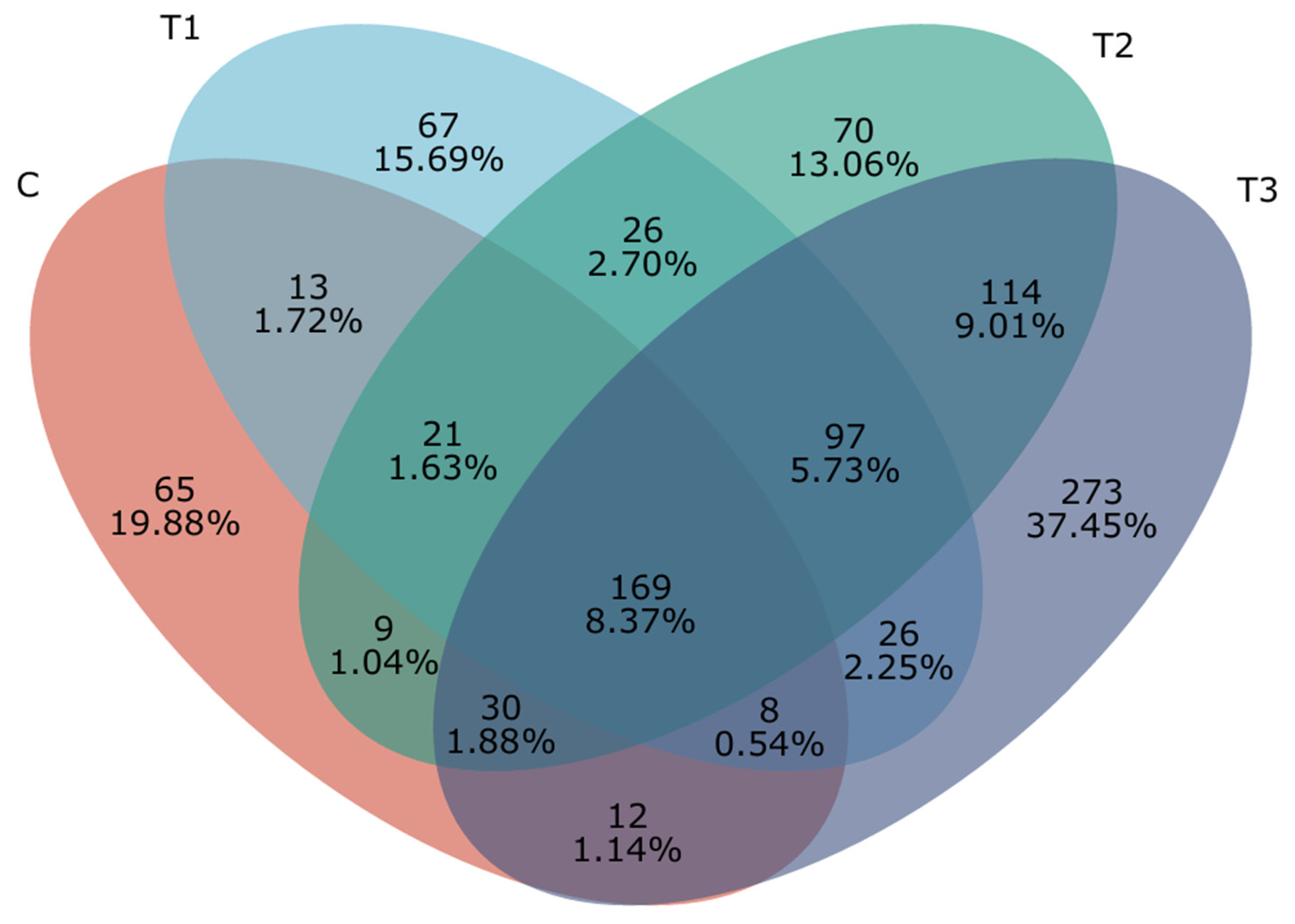
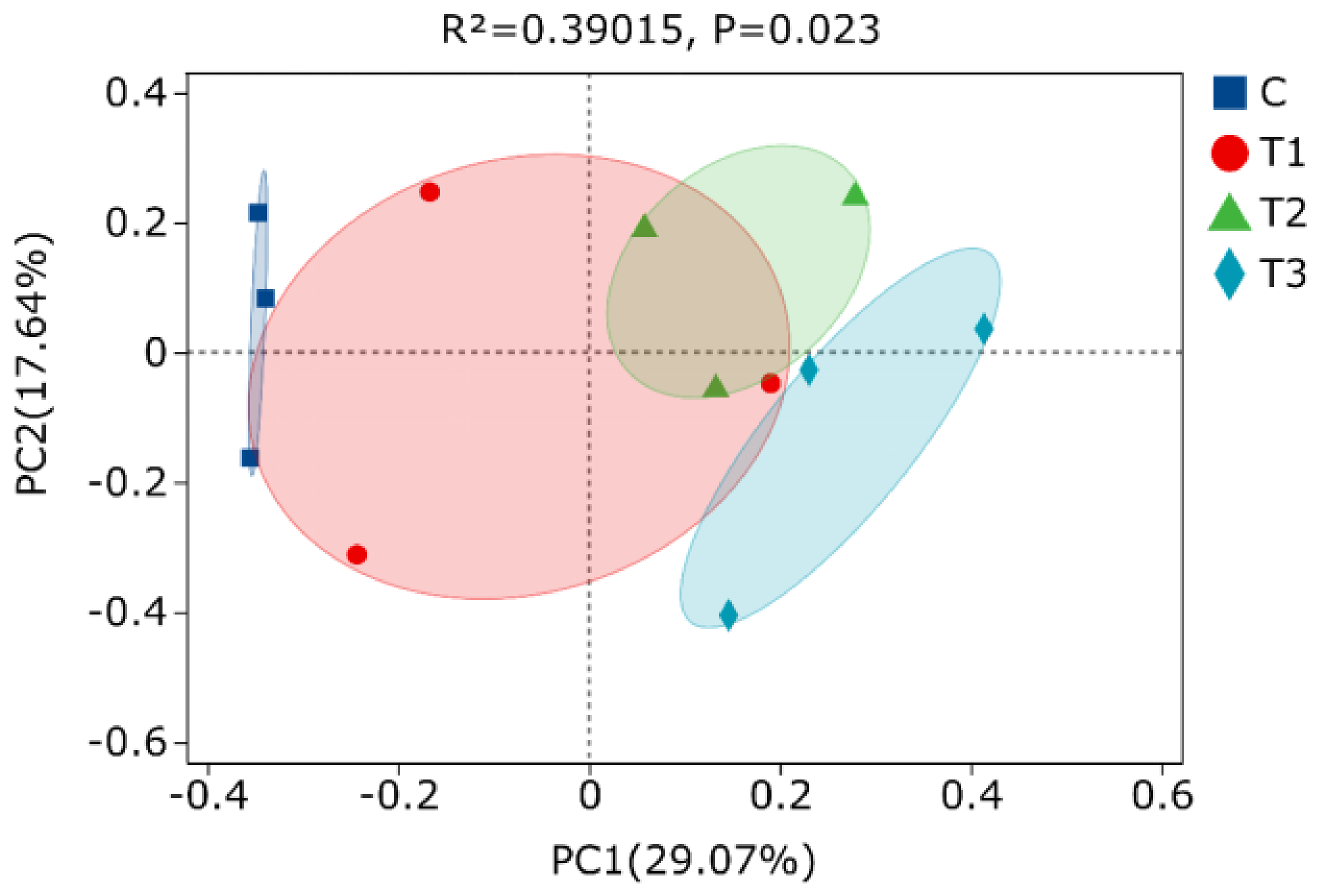
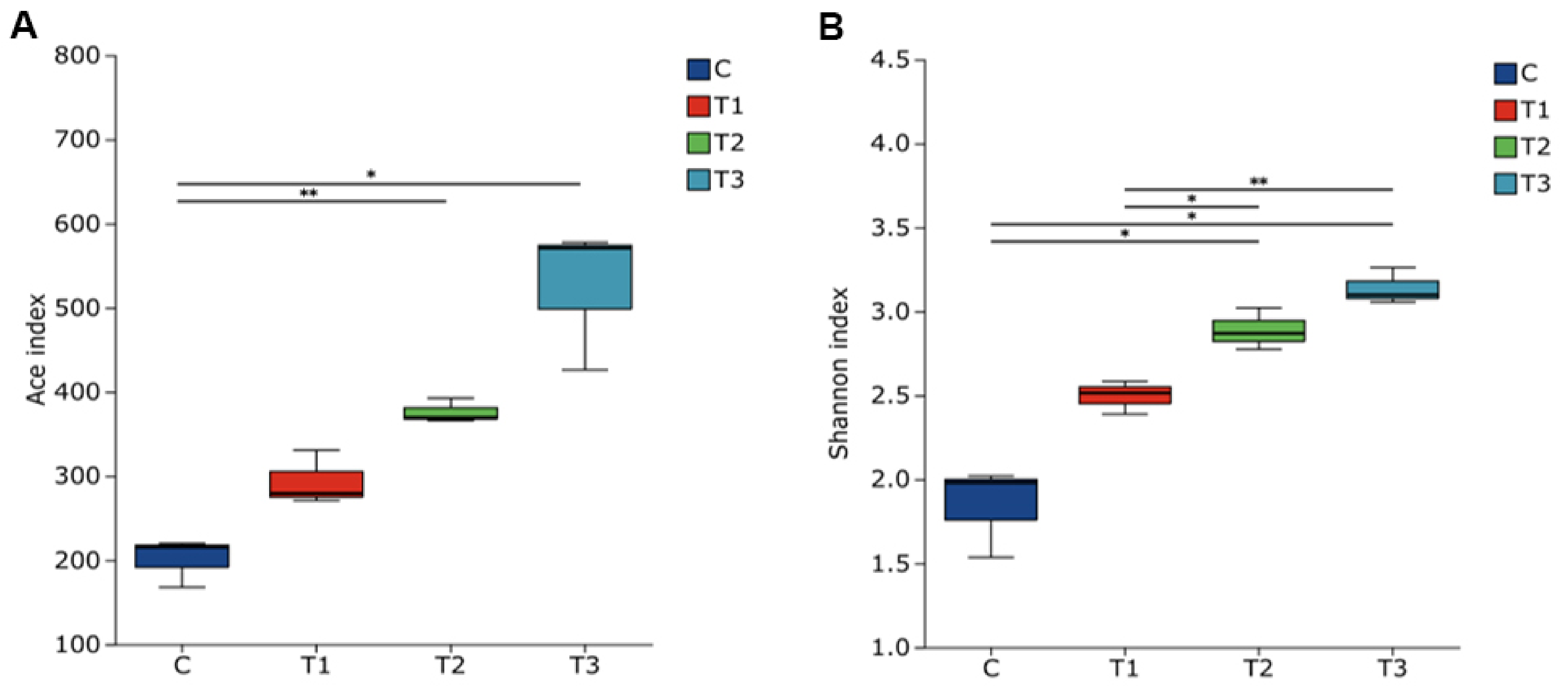
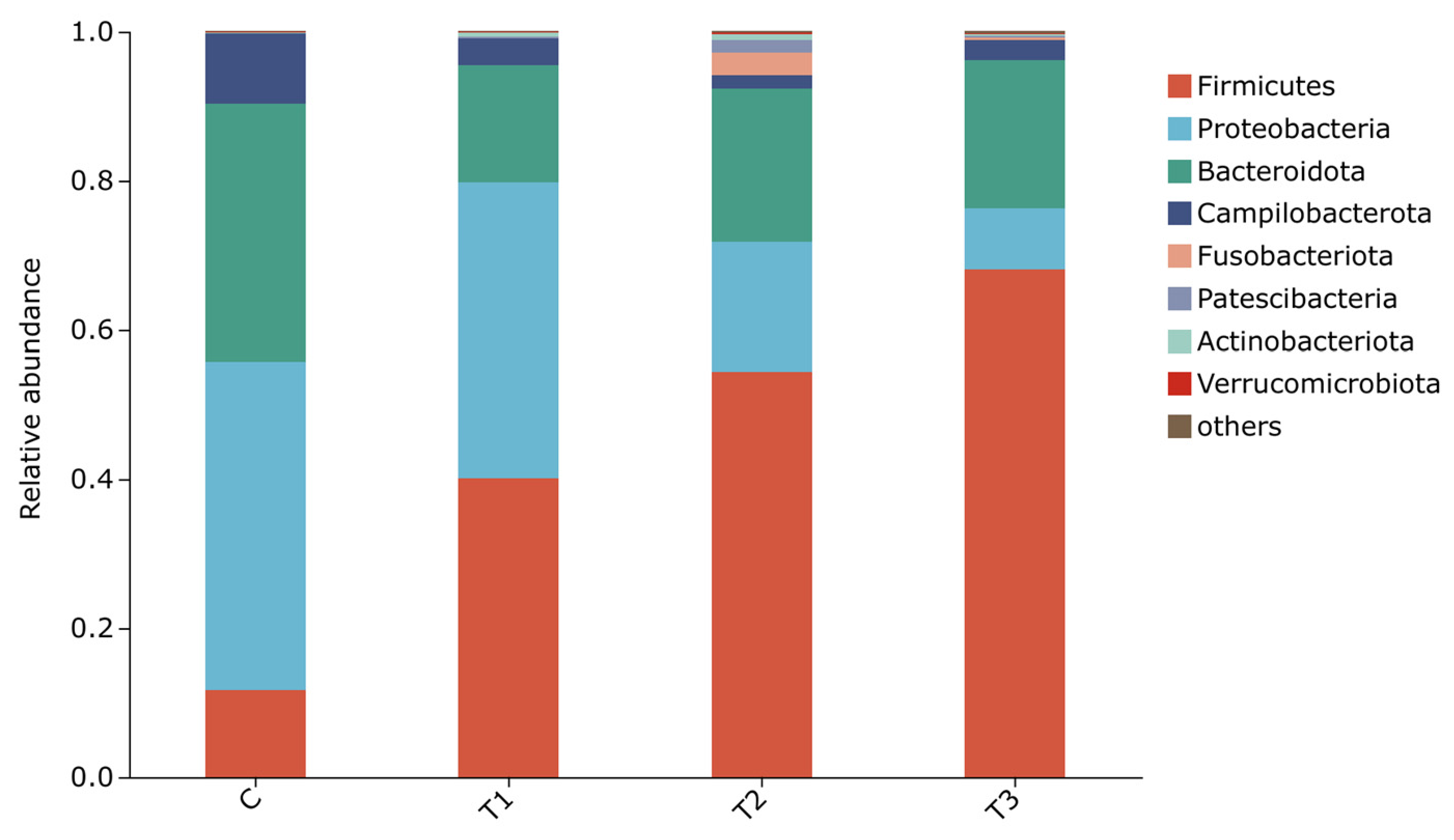
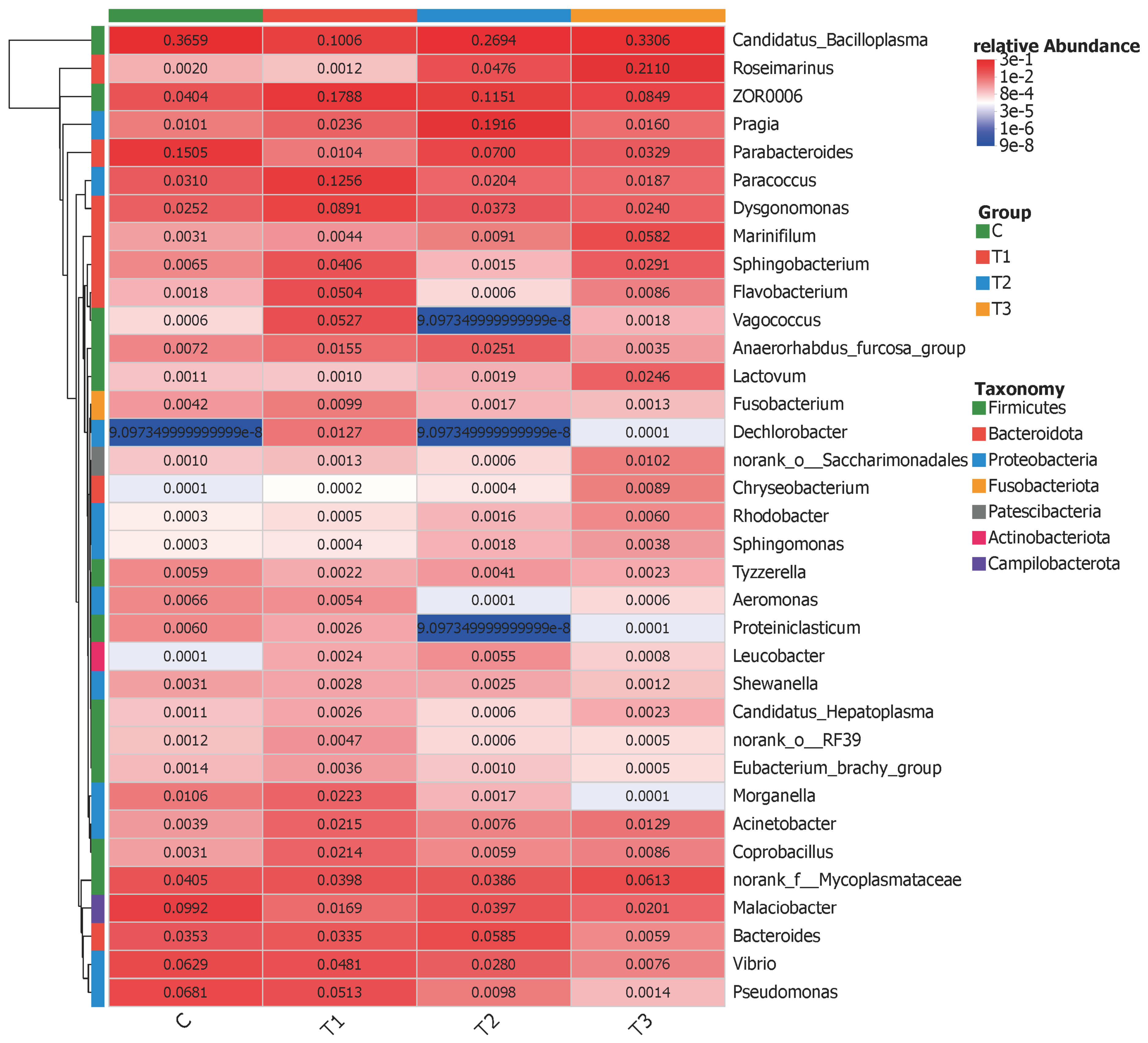
A total of 65, 67, 70, and 273 unique OTUs were detected in the intestinal microbiota of control crabs and those fed diets supplemented with 6.0 × 10⁶ to 6.0 × 10⁸ CFU/g diet of M. varians P2-4, respectively. Notably, 169 OTUs were shared between the control and M. varians P2-4-fed crabs (Figure 1), which mainly belonged to Firmicutes (44.22%), Proteobacteria (27.19%), Bacteroidota (23.42%), and Campilobacterota (4.69%). PCoA revealed distinct clustering patterns, indicating significant differences in intestinal microbial community composition between the control and M. varians P2-4-fed crabs (Figure 2). Compared with the control, 6.0 × 10⁶ CFU/g diet of M. varians P2-4 supplementation caused slight increases of 46.14% (p > 0.05) in Ace index and 35.33% (p > 0.05) in Shannon index. Notably, the Ace and Shannon indices were significantly elevated by 87.12% (p < 0.05)~161.17% (p < 0.05) and 57.07% (p < 0.05)~70.65% (p < 0.05), respectively, in crabs fed 6.0 × 10⁷ to 6.0 × 10⁸ CFU/g diet of M. varians P2-4-supplemented diets (Figure 3), suggesting enhanced microbial richness and diversity. At the phylum level, compared with the control, the abundance of Firmicutes was significantly increased by 242.36% (p < 0.05)~481.21% (p < 0.05) in 6.0 × 10⁶ to 6.0 × 10⁸ CFU/g diet of M. varians P2-4-fed crabs, while the abundance of Bacteroidota decreased markedly by 40.71% (p < 0.05)~54.93% (p < 0.05). Furthermore, the abundance of Proteobacteria was significantly reduced by 60.45% (p < 0.05)~81.23% (p < 0.05) in crabs fed diets containing 6.0 × 10⁷ to 6.0 × 10⁸ CFU/g diet of M. varians P2-4, and only slightly decreased by 9.61% (p > 0.05) at 6.0 ×10⁶ CFU/g diet (Figure 4). At the genus level, although no live Massilia were detected in the intestine, the abundance of Rhodobacter increased significantly by 66.67% (p < 0.05)~1900.00% (p < 0.05) in 6.0 × 10⁶ to 6.0 × 10⁸ CFU/g diets of M. varians P2-4-fed crabs compared to the control. Meanwhile the abundance of Aeromonas decreased markedly by 18.18% (p < 0.05)~98.48% (p < 0.05) (Figure 5). Collectively, these findings demonstrate that dietary supplementation with M. varians P2-4 improves both composition and diversity of intestinal microbiota in E. sinensis.

3.4. Effect of M. varians P2-4 Supplementation on Resistance of Crabs to P. aeruginosa Infection

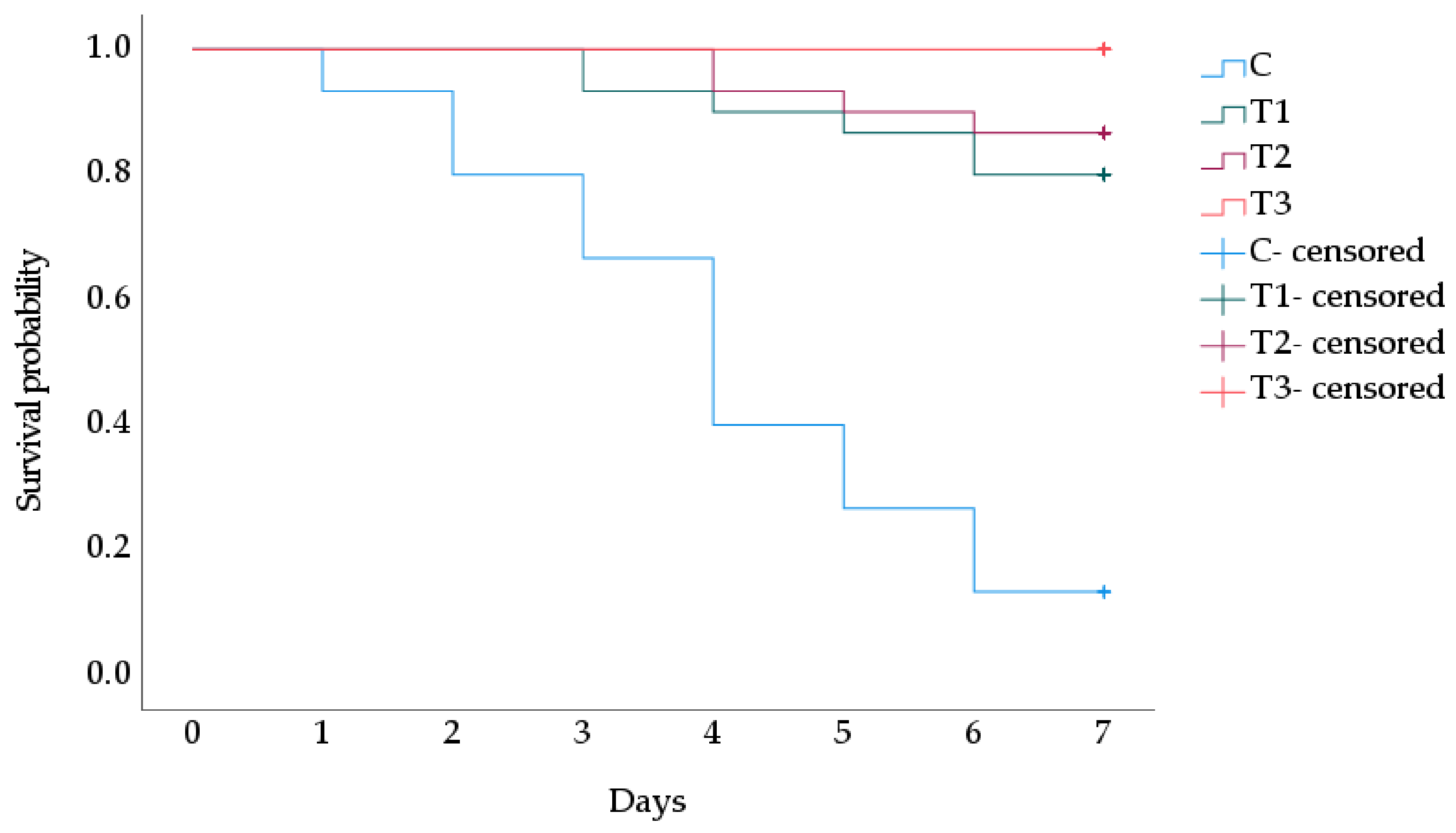
The effect of M. varians P2-4 supplementation on resistance of crabs to P. aeruginosa infection is shown in Figure 6. In the control group, acute mortality was observed following challenge with P. aeruginosa, with cumulative mortality reaching 86.67% by day 6. In contrast, crabs fed diets supplemented with 6.0 × 10⁶ to 6.0 × 10⁸ CFU/g diet of M. varians P2-4 exhibited significantly higher survival rates of 80.00%, 86.67%, and 100.00%, corresponding to survival rates significantly increased by 66.67% (p < 0.05), 73.34% (p < 0.05) and 86.67% (p < 0.05) as compared to the control. Consequently, the 7-day RPS of M. varians P2-4 at 6.0 × 10⁶ to 6.0 × 10⁸ CFU/g diet ranged from 76.9% to 100.0% following P. aeruginosa challenge. The challenge strain was successfully re-isolated from the deceased crabs and confirmed via phenotypic and molecular identification (Table S1, Figure S1). Collectively, these findings demonstrate that dietary M. varians significantly enhances resistance to P. aeruginosa infection in E. sinensis.

4. Discussion

To date, P. aeruginosa infection in E. sinensis can be managed mostly through the use of antibiotics [32,33]. However, such antibiotic-based interventions are economically unsustainable for aquaculturists and pose significant risks to environmental integrity and public health [34]. In response, several alternative strategies have recently emerged for controlling pathogenic P. aeruginosa in aquaculture, including the use of Melaleuca alternifolia essential oil, Yucca extract, Chaetomorpha linum extract, grape pomace flour, bacteriophages, Bacillus coagulans, Bdellovibrio powder, Padina boergesenii, and levamisole [4,35,36,37,38,39,40,41,42]. Despite this, evidence supporting the use of M. varians strains as a dietary intervention to prevent bacterial infection in crabs remains entirely lacking. In this study, we systematically evaluated the modulatory effects of M. varians P2-4 on nonspecific immunity, antioxidant capability, intestinal microbiota and resistance to P. aeruginosa infection in E. sinensis. Notably, M. varians P2-4 at 6.0 × 10⁸ CFU/g diet presented 16.67% higher RPS against P. aeruginosa infection in E. sinensis than Bdellovibrio powder at 15 g/kg diet [4], suggesting M. varians P2-4 as a promising agent against P. aeruginosa infection in E. sinensis. However, the current study has several inherent limitations that should be acknowledged, such as limited mechanistic evidence, absence of histopathology, lack of direct colonization and growth performance data, and uncertainty regarding the specific mode of protection.
In crustaceans, the innate immune system provides a critical first line of defense against invading pathogens through rapid nonspecific immune responses [43]. ACP, AKP and LZM are well-established enzymatic markers of innate immunity and play indispensable roles in pathogen recognition, microbial clearance, and immune homeostasis in crustaceans [44,45,46]. Elevated activities of these enzymes have been consistently associated with enhanced disease resistance in E. sinensis [47,48]. In this study, dietary supplementation with M. varians P2-4 significantly increased plasma ACP, AKP and LZM activities as well as hepatopancreatic ACP and AKP activities, collectively indicating a robust activation of the innate immune response in E. sinensis. It is speculated that such immunomodulatory effects might be related to changes in gene expression [49].
Crustaceans rely on free radicals during innate immune defense to exert antimicrobial function and defend themselves against invading pathogens [50]. However, excessive free radicals can induce significant oxidative stress, leading to cytotoxic damage such as DNA damage, lipid peroxidation and protein oxidation [51,52]. SOD and CAT are pivotal enzymatic scavengers of excessive free radicals during immune response, and constitute essential components of the first line of cellular defense against pathogen-induced oxidative injury [51,52]. Elevated activities of these enzymes have been consistently correlated with enhanced resistance to various pathogens in crustaceans [53]. In this study, dietary supplementation with M. varians P2-4 significantly increased SOD and CAT activities in both plasma and hepatopancreas of crabs, suggesting that M. varians P2-4 confers protection against oxidative damage that occurs during the pathogen challenge. The observed effects might be associated with the regulation of these antioxidant enzymes’ gene expression [49].
Dietary supplementation with probiotic microorganisms has been shown to enhance intestinal microbial diversity in E. sinensis [13,47]. Likewise, the present study demonstrated that dietary supplementation with M. varians P2-4 significantly increased intestinal microbial diversity, as indicated by the increased alpha-diversity indices combined with PCoA, collectively indicating a more stable intestinal microbiota community structure in M. varians P2-4-fed E. sinensis compared to control. Such enhanced microbial stability significantly contributes to inhibiting the invasion of pathogenic bacteria and enhancing host non-specific immunity [54]. Furthermore, M. varians P2-4 supplementation markedly increased the abundance of Firmicutes and Rhodobacter. These taxa have been reported to participate in the immunity and disease resistance of E. sinensis via improving immune-related enzyme activities and intestinal metabolism [13,47,48,55]. Similar findings have also been reported in E. sinensis after intervention with probiotics such as B. licheniformis and R. sphaeroides [47,48]. In addition, M. varians P2-4 supplementation markedly reduced the abundance of Aeromonas, which has been documented to correlate with hepatopancreatic necrosis syndrome, enteritis and other severe infections in E. sinensis [56,57,58]. This underscores the capacity of M. varians P2-4 to promote intestinal microeubiosis and host health. The underlying mechanism may mainly rely on direct predation in the intestine [8], and might also involve secretion of antimicrobial compounds that potentially inhibit pathogen colonization [9,59].
Bacterial disease outbreaks have become the most preventive factor in crab production under intensive culture [48]. P. aeruginosa, as an emerging bacterial pathogen of E. sinensis [4], is ubiquitous in natural settings such as soil and water [60]. This bacterium possesses numerous virulence factors that mediate bacterial adhesion, biofilm formation, and the secretion of exoenzymes and exotoxins [4]. It also exhibits multiple drug resistance to aminoglycosides, fluoroquinolones, and penicillins commonly used in aquaculture [4]. Therefore, P. aeruginosa is a major threat to E. sinensis, and development of defense strategies to survive its infection is urgently required to avoid the spread of this threat [4]. In the present study, dietary supplementation with M. varians P2-4 at 6.0 × 10⁶ to 6.0 × 10⁸ CFU/g diet increased the survival rate of E. sinensis in the challenge test to above 80.00%. The observed protective effect is speculated to be associated with the modulation of host immune response and intestinal microecology [61]. However, given the absence of higher and lower dose groups in the present study, we cannot confirm whether the maximum tested dose reached a plateau effect, nor accurately determine the exact minimum effective dose. Further multi-gradient dose verification is required in the future to elaborate the specific pattern of this dose–response relationship.

5. Conclusions

Dietary supplementation with M. varians P2-4 effectively improved antioxidant and immune enzyme status, reshaped intestinal microbial community structure and diversity, and enhanced survival of E. sinensis to P. aeruginosa infection in E. sinensis. These findings establish M. varians P2-4 supplementation as a promising biocontrol strategy for enhancing disease resistance in E. sinensis.

Supplementary Materials

The following supporting information can be downloaded at https://www.mdpi.com/article/10.3390/biology15120908/s1, Table S1: The phenotypic features of the reisolate from the experimentally deceased crabs. Figure S1: The 16S rRNA phylogenetic tree constructed using neighbor-joining method for the reisolate from the experimentally deceased crabs and 11 known bacteria.

Author Contributions

Y.L.: Writing—original draft, Data curation. Y.Y.: Investigation, Data curation. X.Z.: Formal analysis, Visualization. H.C.: Writing—original draft, Writing—review and editing, Project administration. C.G.: Supervision, Resources, Funding acquisition, Visualization. W.Y.: Visualization, Writing—review and editing, Formal analysis, Funding acquisition. All authors have read and agreed to the published version of the manuscript.

Funding

This work was supported by the Earmarked Fund for China Agriculture Research System (No. CARS-48) and Medical and Health Talents Scientific Research Initiation Fund Category G of Quzhou (No. KYQD2023-07).

Data Availability Statement

The data that support the findings of this study are available from the corresponding author upon reasonable request.

Conflicts of Interest

The authors declare that they have no known competing financial interests or other conflict of interests.

References

  1. Song, Y.; Wu, M.; Cheng, Y.; Niu, C.; Yu, X.; Pang, Y.; Yang, X. The protective effects of microbe derived antioxidants on digestive tissue morphology, functions, and intestinal microbiota diversity of Eriocheir sinensis exposed to glyphosate. Aquac. Nutr. 2024, 2024, 2620217. [Google Scholar] [CrossRef]
  2. Wang, A.; Ma, X.; Xu, J.; Lu, W. Methane and nitrous oxide emissions in rice-crab culture systems of northeast China. Aquac. Fish. 2019, 4, 134–141. [Google Scholar] [CrossRef]
  3. Wang, D.; Gao, H. China Fishery Statistical Yearbook; China Agriculture Press: Beijing, China, 2024; p. 34. [Google Scholar]
  4. He, L.; Yang, Y.; Liu, Y.; Liu, M.; Cao, H.; Gai, C.; Ye, W. Pseudomonas aeruginosa in Chinese mitten crab Eriocheir sinensis: Identification, pathogenic potential and control with Bdellovibrio powder. J. Invertebr. Pathol. 2026, 217, 108604. [Google Scholar] [CrossRef]
  5. Amirhosseini, K.; Alizadeh, M.; Azarbad, H. Harnessing the ecological and genomic adaptability of the bacterial genus Massilia for environmental and industrial applications. Microb. Biotechnol. 2025, 18, e70156. [Google Scholar] [CrossRef]
  6. Lindquist, D.; Murrill, D.; Burran, W.P.; Winans, G.; Janda, J.M.; Probert, W. Characteristics of Massilia timonae and Massilia timonae-like isolates from human patients, with an emended description of the species. J. Clin. Microbiol. 2003, 41, 192–196. [Google Scholar] [CrossRef]
  7. Yang, E.; Cui, D.; Wang, W. Rsearch progress on the genus Massilia. Microbiol. China 2019, 46, 1537–1548. [Google Scholar]
  8. An, J.; Cao, H.; Yang, Y.; He, L.; Liu, Y. A Predatory Strain of Massilia varians and Its Application. CN120442457A, 8 August 2025. [Google Scholar]
  9. Sedláček, I.; Holochová, P.; Sedlář, K.; Staňková, E.; Šedo, O.; Kralova, S.; Umair, M.; Koublová, V.; Švec, P. Two new psychrotolerant Massilia species inhibit plant pathogens Clavibacter and Curtobacterium. Sci. Rep. 2025, 15, 26134. [Google Scholar] [CrossRef]
  10. Liu, Y.; Yang, Y.; Liu, M.; Chen, S.; Cao, H.; Gai, C.; Ye, W. Massilia varians P2-4, A potential biocontrol agent against pathogenic Pseudomonas aeruginosa in Eriocheir sinensis. bioRxiv 2026. [Google Scholar] [CrossRef]
  11. Huang, Q.; Wang, R.; Ding, Q.; Liao, F.; Zhu, L.; Huang, M.; Li, J.; Zeng, J.; Shen, Q.; Wang, M. Low-nitrogen input enriches Massilia bacteria in the phyllosphere to improve blast resistance in rice. New Phytol. 2025, 248, 3151–3167. [Google Scholar] [CrossRef] [PubMed]
  12. Amankwah, F.K.D.; Gbedema, S.Y.; Boakye, Y.D.; Bayor, M.T.; Boamah, V.E. Antimicrobial potential of extract from a Pseudomonas aeruginosa isolate. Scientifica 2022, 2022, 4230397. [Google Scholar] [CrossRef] [PubMed]
  13. Cao, H.; Zhang, S.; An, J.; Diao, J.; Xu, L.; Gai, C. Rhodobacter azotoformans supplementation improves defense ability of Chinese mitten crab Eriocheir sinensis against citrobacteriosis. Fish Shellfish Immunol. 2022, 131, 991–998. [Google Scholar] [CrossRef]
  14. Kumar, N.R.; Raman, R.P.; Jadhao, S.B.; Brahmchari, R.K.; Kumar, K.; Dash, G. Effect of dietary supplementation of Bacillus licheniformis on gut microbiota, growth and immune response in giant freshwater prawn, Macrobrachium rosenbergii (de Man, 1879). Aquac. Int. 2013, 21, 387–403. [Google Scholar] [CrossRef]
  15. Feng, Y.; Huang, X.; Wang, K.; Chen, H.; Wang, J. Evaluation of the leading physical indicators of hepatopancreatic necrosisdisease of Chinese mitten crab (Eriocheir sinensis). J. Fish. China 2020, 44, 858–869. [Google Scholar]
  16. Yang, Z.; Zhang, Y.; Hu, K.; Liu, L.; Cai, H.; Zhang, F.; Yang, X. Etiological and histopathological study on hepatopancreatic necrosis syndrome in Eriocheir sinensis. Acta Hydrobiol. Sin. 2018, 42, 17–25. [Google Scholar]
  17. Ding, Z.; Yao, Y.; Zhang, F.; Wan, J.; Sun, M.; Liu, H.; Zhou, G.; Tang, J.; Pan, J.; Xue, H. The first detection of white spot syndrome virus in naturally infected cultured Chinese mitten crabs, Eriocheir sinensis in China. J. Virol. Methods 2015, 220, 49–54. [Google Scholar] [CrossRef]
  18. Xiang, A.; Chen, J.; Sun, J.; Weng, C.; Cheng, Y.; Yang, X. Dietary trehalose activates autophagy potentially via MAPK signaling pathway to alleviate oxidative stress induced by air exposure stress in Chinese mitten crab (Eriocheir sinensis). Aquac. Nutr. 2025, 2025, 5002677. [Google Scholar] [CrossRef] [PubMed]
  19. Wang, X.; Huang, Z.; Wang, C.; Qi, C.; Gu, Z.; Li, E.; Qin, J.G.; Chen, L. A comparative study on growth and metabolism of Eriocheir sinensis juveniles under chronically low and high pH stress. Front. Physiol. 2020, 11, 885. [Google Scholar] [CrossRef] [PubMed]
  20. Dai, F.; Song, L.; Gao, J.; Tai, X.; Chu, L.; Zhuang, H.; Shao, N.; Hu, J.; Nei, Z.; Wang, Y. Effect of stocking density on mortality rate, physiological status and nutrient contents of Chinese mitten crab Eriocheir sinensis during overwintering cultivation. Aquac. Rep. 2020, 16, 100241. [Google Scholar] [CrossRef]
  21. Fu, L.; Zhou, G.; Pan, J.; Li, Y.; Lu, Q.; Zhou, J.; Li, X. Effects of Astragalus polysaccharides on antioxidant abilities and non-specific immune responses of Chinese mitten crab, Eriocheir sinensis. Aquac. Int. 2017, 25, 1333–1343. [Google Scholar] [CrossRef]
  22. Li, Y.; Chai, X.; Wu, H.; Jing, W.; Wang, L. The response of metallothionein and malondialdehyde after exclusive and combined Cd/Zn exposure in the crab Sinopotamon henanense. PLoS ONE 2013, 8, e80475. [Google Scholar] [CrossRef]
  23. Xu, H.; Dou, J.; Wu, Q.; Ye, Y.; Song, C.; Mu, C.; Wang, C.; Ren, Z.; Shi, C. Investigation of the light intensity effect on growth, molting, hemolymph lipid, and antioxidant capacity of juvenile swimming crab Portunus trituberculatus. Front. Mar. Sci. 2022, 9, 922021. [Google Scholar] [CrossRef]
  24. Mager, S.; Oomen, M.H.; Morente, M.M.; Ratcliffe, C.; Knox, K.; Kerr, D.J.; Pezzella, F.; Riegman, P.H. Standard operating procedure for the collection of fresh frozen tissue samples. Eur. J. Cancer 2007, 43, 828–834. [Google Scholar] [CrossRef]
  25. Hou, M.; Pang, Y.; Niu, C.; Zhang, D.; Zhang, Y.; Liu, Z.; Song, Y.; Shi, A.; Chen, Q.; Zhang, J. Effects of dietary L-TRP on immunity, antioxidant capacity and intestinal microbiota of the Chinese mitten crab (Eriocheir sinensis) in pond culture. Metabolites 2022, 13, 1. [Google Scholar] [CrossRef]
  26. Chen, X.; Chen, H.; Liu, Q.; Ni, K.; Ding, R.; Wang, J.; Wang, C. High plasticity of the gut microbiome and muscle metabolome of Chinese mitten crab (Eriocheir sinensis) in diverse environments. J. Microbiol. Biotechnol. 2020, 31, 240. [Google Scholar] [CrossRef]
  27. Wang, Q.; Garrity, G.M.; Tiedje, J.M.; Cole, J.R. Naive Bayesian classifier for rapid assignment of rRNA sequences into the new bacterial taxonomy. Appl. Environ. Microbiol. 2007, 73, 5261–5267. [Google Scholar] [CrossRef]
  28. Neuendorf, E.; Gajer, P.; Bowlin, A.K.; Marques, P.X.; Ma, B.; Yang, H.; Fu, L.; Humphrys, M.S.; Forney, L.J.; Myers, G.S. Chlamydia caviae infection alters abundance but not composition of the guinea pig vaginal microbiota. Pathog. Dis. 2015, 73, ftv019. [Google Scholar] [CrossRef]
  29. Chauhan, A.; Singh, R. Isolation and evaluation of putative probiotic strains from different teleost to prevent Pseudomonas aeruginosa infection in Cyprinus carpio. Aquac. Res. 2019, 50, 3616–3627. [Google Scholar] [CrossRef]
  30. Cao, H.; Zhang, S.; Zheng, X.; Xu, L.; Diao, J.; Wang, Y.; Gai, C.; Ye, H. Safety assessment of Rhodobacter azotoformans SY5 for potential application in Chinese mitten crab Eriocheir sinensis. Benef. Microbes 2023, 14, 641–651. [Google Scholar] [CrossRef] [PubMed]
  31. Abdel-Latif, H.M.; Abdel-Tawwab, M.; Khafaga, A.F.; Dawood, M.A. Dietary origanum essential oil improved antioxidative status, immune-related genes, and resistance of common carp (Cyprinus carpio L.) to Aeromonas hydrophila infection. Fish Shellfish Immunol. 2020, 104, 1–7. [Google Scholar] [PubMed]
  32. Kholil, M.I.; Hossain, M.M.M.; Neowajh, M.S.; Islam, M.S.; Kabir, M. Comparative efficiency of some commercial antibiotics against Pseudomonas infection in fish. Int. J. Fish. Aquat. Stud. 2015, 2, 114–117. [Google Scholar] [CrossRef]
  33. Ali, N.G.; Ali, T.E.-S.; Aboyadak, I.M.; Elbakry, M.A. Controlling Pseudomonas aeruginosa infection in Oreochromis niloticus spawners by cefotaxime sodium. Aquaculture 2021, 544, 737107. [Google Scholar] [CrossRef]
  34. Founou, L.L.; Founou, R.C.; Essack, S.Y. Antibiotic resistance in the food chain: A developing country-perspective. Front. Microbiol. 2016, 7, 1881. [Google Scholar] [CrossRef]
  35. Souza, C.F.; Baldissera, M.D.; Santos, R.C.; Raffin, R.P.; Baldisserotto, B. Nanotechnology improves the therapeutic efficacy of Melaleuca alternifolia essential oil in experimentally infected Rhamdia quelen with Pseudomonas aeruginosa. Aquaculture 2017, 473, 169–171. [Google Scholar] [CrossRef]
  36. El-Keredy, M.A.; Naena, N.A. Yucca plant as treatment for Pseudomonas aeruginosa infection in Nile tilapia farms with emphasis on its effect on growth performance. Alex. J. Vet. Sci. 2020, 66, 64–75. [Google Scholar]
  37. Thanigaivel, S.; Thomas, J.; Vickram, A.; Gulothungan, G.; Nanmaran, R.; Jenila Rani, D. Antioxidant and antibacterial efficacy of Chaetomorpha linum and its toxicological evaluation for the prophylactic treatment against Pseudomonas aeruginosa infection in Labeo rohita. J. Appl. Aquac. 2023, 35, 350–369. [Google Scholar] [CrossRef]
  38. Baldissera, M.D.; Souza, C.F.; Descovi, S.N.; Verdi, C.M.; Zeppenfeld, C.C.; de Lima Silva, L.; Gindri, A.L.; Cunha, M.A.; Santos, R.C.; Baldisserotto, B. Effects of dietary grape pomace flour on the purinergic signaling and inflammatory response of grass carp experimentally infected with Pseudomonas aeruginosa. Aquaculture 2019, 503, 217–224. [Google Scholar] [CrossRef]
  39. Richards, G.P. Bacteriophage remediation of bacterial pathogens in aquaculture: A review of the technology. Bacteriophage 2014, 4, e975540. [Google Scholar] [CrossRef] [PubMed]
  40. Ji, T.; Cao, Y.; Cao, Q.; Zhang, Y.; Yang, H. The antagonistic effect and protective efficacy of gram-positive probiotics Bacillus coagulans to newly identified pathogens Pseudomonas aeruginosa in crucian carp Carassius auratus gibelio. Aquac. Rep. 2022, 24, 101126. [Google Scholar] [CrossRef]
  41. Ragunath, C.; Ramasubramanian, V. Dietary effect of Padina boergesenii on growth, immune response, and disease resistance against Pseudomonas aeruginosa in Cirrhinus mrigala. Appl. Biochem. Biotechnol. 2022, 194, 1881–1897. [Google Scholar] [CrossRef]
  42. El-Gammal, G.A.; El-Gamal, A.M.; Rashed, M.; Kassab, A.S.; Saif, A.S.; Fadl, S.E. An experimental study of levamisole incorporated diet on fish health and resistance against Pseudomonas aeruginosa isolated from Oreochromas niloticus. Sci. Rep. 2025, 15, 14658. [Google Scholar] [CrossRef]
  43. He, Y.; Yuan, X.; Li, J.; Tian, X.; He, Z.; Zeng, C.; Xie, Y.; Liu, L.; Deng, S.; Wang, D. Citrobacter freundii caused head ulcer disease and immune response in juvenile Procambarus clarkii. Fishes 2025, 10, 70. [Google Scholar] [CrossRef]
  44. Wang, C.; Wang, R.; Yang, H.; Wang, Y.; Zhang, Z. Gene cloning and transcriptional regulation of the alkaline and acid phosphatase genes in Scylla paramamosain. Gene 2022, 810, 146057. [Google Scholar] [CrossRef] [PubMed]
  45. Li, W.J.; Li, T.; Qiao, H.L.; Wang, C.; Jin, Z.Y.; Zhang, H.W.; Xia, X.-H.; Zhang, X.W. Immune function of a novel lysozyme in Litopenaeus vannamei and its application as a feed supplement. Int. J. Biol. Macromol. 2025, 322, 146846. [Google Scholar] [CrossRef] [PubMed]
  46. Chen, J.; Du, Y.; Zhang, M.; Wang, J.; Ming, J.; Shao, X.; Wang, A.; Tian, H.; Zhang, W.; Xia, S. Effects of melatonin on the growth and diurnal variation of non-specific immunity, antioxidant capacity, digestive enzyme activity, and circadian clock-related gene expression in crayfish (Procambarus clarkii). Fishes 2025, 10, 114. [Google Scholar] [CrossRef]
  47. Cao, H.; Zheng, X.; Teng, C.; Xu, L.; Wang, Y.; Gai, C.; Ye, H. Rhodobacter sphaeroides supplementation improves defense ability of Chinese mitten crab Eriocheir sinensis against Shewanella putrefaciens infection via intestinal flora and metabolism regulation. J. Invertebr. Pathol. 2024, 204, 108120. [Google Scholar] [CrossRef]
  48. Cao, H.; Huang, X.; Gu, Y.; Zheng, X.; Xu, L.; Gai, C. Protective effects of Bacillus licheniformis against Citrobacter freundii infection in Chinese mitten crab Eriocheir sinensis. J. Invertebr. Pathol. 2022, 193, 107805. [Google Scholar] [CrossRef]
  49. Ji, P.F.; Yao, C.L.; Wang, Z.Y. Immune response and gene expression in shrimp (Litopenaeus vannamei) hemocytes and hepatopancreas against some pathogen-associated molecular patterns. Fish Shellfish Immunol. 2009, 27, 563–570. [Google Scholar] [CrossRef]
  50. Rattanachai, A.; Hirono, I.; Ohira, T.; Takahashi, Y.; Aoki, T. Cloning of kuruma prawn Marsupenaeus japonicus crustin-like peptide cDNA and analysis of its expression. Fish. Sci. 2004, 70, 765–771. [Google Scholar] [CrossRef]
  51. Ren, X.; Lv, J.; Gao, B.; Li, J.; Liu, P. Immune response and antioxidant status of Portunus trituberculatus inoculated with pathogens. Fish Shellfish Immunol. 2017, 63, 322–333. [Google Scholar] [CrossRef] [PubMed]
  52. He, Q.; Feng, W.; Chen, X.; Xu, Y.; Zhou, J.; Li, J.; Xu, P.; Tang, Y. H2O2-induced oxidative stress responses in Eriocheir sinensis: Antioxidant defense and immune gene expression dynamics. Antioxidants 2024, 13, 524. [Google Scholar] [CrossRef]
  53. Larbi Ayisi, C.; Zhao, J.; Wu, J.-W. Replacement of fish oil with palm oil: Effects on growth performance, innate immune response, antioxidant capacity and disease resistance in Nile tilapia (Oreochromis niloticus). PLoS ONE 2018, 13, e0196100. [Google Scholar] [CrossRef]
  54. Mazón-Suástegui, J.M.; Salas-Leiva, J.S.; Medina-Marrero, R.; Medina-García, R.; García-Bernal, M. Effect of Streptomyces probiotics on the gut microbiota of Litopenaeus vannamei challenged with Vibrio parahaemolyticus. MicrobiologyOpen 2020, 9, e967. [Google Scholar] [CrossRef]
  55. Zhou, R.; Liu, J.; Shi, X.; Fu, C.; Jiang, Y.; Zhang, R.; Wu, Y.; Yang, C. Garlic powder supplementation improves growth, nonspecific immunity, antioxidant capacity, and intestinal flora of Chinese mitten crabs (Eriocheir sinensis). Aquac. Nutr. 2022, 2022, 6531865. [Google Scholar] [CrossRef]
  56. Zheng, N.; Wang, N.; Wang, Z.; Abdallah, G.; Zhang, B.; Wang, S.; Yao, Q.; Chen, Y.; Wang, Q.; Zhang, D. Effect of infection with Aeromonas hydrophila on antioxidant capacity, inflammation response, and apoptosis proteins in Chinese mitten crab (Eriocheir sinensis). Comp. Biochem. Physiol. C Toxicol. Pharmacol. 2022, 252, 109220. [Google Scholar] [CrossRef]
  57. Zhou, H.; Huang, X.; An, J.; Cao, H.; Yang, X. Isolation, identification and antibiotic susceptbility of pathogenic Aeromonas veronii in Chinese mitten crab Eriocheir sinensis and its histopathological observations. J. South. Agric. 2019, 50, 1851–1859. [Google Scholar]
  58. Cao, H.; Wen, L.; Bai, J.; Zhang, F.; He, S. Isolation, identification and antimicrobial susceptibility of Aeromonas punctata from Eriocheir sinensis. Prog. Vet. Med. 2015, 36, 110–113. [Google Scholar]
  59. Sedláček, I.; Holochová, P.; Busse, H.-J.; Koublová, V.; Králová, S.; Švec, P.; Sobotka, R.; Staňková, E.; Pilný, J.; Šedo, O. Characterisation of waterborne psychrophilic Massilia isolates with violacein production and description of Massilia antarctica sp. nov. Microorganisms 2022, 10, 704. [Google Scholar] [CrossRef] [PubMed]
  60. Crone, S.; Vives-Flórez, M.; Kvich, L.; Saunders, A.M.; Malone, M.; Nicolaisen, M.H.; Martínez-García, E.; Rojas-Acosta, C.; Catalina Gomez-Puerto, M.; Calum, H. The environmental occurrence of Pseudomonas aeruginosa. APMIS 2020, 128, 220–231. [Google Scholar] [CrossRef] [PubMed]
  61. Ayiku, S.; Shen, J.; Tan, B.; Dong, X.; Liu, H. Effects of dietary yeast culture on shrimp growth, immune response, intestinal health and disease resistance against Vibrio harveyi. Fish Shellfish Immunol. 2020, 102, 286–295. [Google Scholar] [CrossRef]
Figure 1. Venn diagram showing the distribution of OTUs presented in the intestine of crabs fed with M. varians P2-4-supplemented diets. The numbers indicate the correlated OTUs in the intestine of M. varians P2-4−fed crabs. C, 0 CFU/g diet; T1, 6.0 × 10⁶ CFU/g diet; T2, 6.0 × 10⁷ CFU/g diet; T3, 6.0 × 10⁸ CFU/g diet.
Biology 15 00908 g001
Figure 2. Principal coordinate analysis (PCoA) of intestinal bacterial communities in crabs fed with M. varians P2-4−supplemented diets, plotted using Bray–Curtis dissimilarity and ADONIS test. C, 0 CFU/g diet; T1, 6.0 × 10⁶ CFU/g diet; T2, 6.0 × 10⁷ CFU/g diet; T3, 6.0 × 10⁸ CFU/g diet.
Biology 15 00908 g002
Figure 3. Alpha diversity of intestinal microbiota in crabs fed with M. varians P2-4−supplemented diets. (A). Richness of intestinal microbiota indicated by Ace index; (B). Diversity of intestinal microbiota indicated by Shannon index. C, 0 CFU/g diet; T1, 6.0 × 10⁶ CFU/g diet; T2, 6.0 × 10⁷ CFU/g diet; T3, 6.0 × 10⁸ CFU/g diet. Values are presented as mean ± SD (n = 3). Asterisks indicate statisti-cally significant difference (*, p < 0.05; **, p < 0.01).
Biology 15 00908 g003
Figure 4. Composition of intestinal bacterial communities in crabs fed with M. varians P2-4−supplemented diets at the phylum level. C, 0 CFU/g diet; T1, 6.0 × 10⁶ CFU/g diet; T2, 6.0 × 10⁷ CFU/g diet; T3, 6.0 × 10⁸ CFU/g diet.
Biology 15 00908 g004
Figure 5. Heatmap analysis of intestinal bacterial communities in crabs fed with M. varians P2-4−supplemented diets at the genus level. C, 0 CFU/g diet; T1, 6.0 × 10⁶ CFU/g diet; T2, 6.0 × 10⁷ CFU/g diet; T3, 6.0 × 10⁸ CFU/g diet.
Biology 15 00908 g005
Figure 6. Effect of M. varians P2-4 supplementation on resistance of crabs to P. aeruginosa infection. C, 0 CFU/g diet; T1, 6.0 × 10⁶ CFU/g diet; T2, 6.0 × 10⁷ CFU/g diet; T3, 6.0 × 10⁸ CFU/g diet.
Biology 15 00908 g006
Table 1. Effect of M. varians P2-4 supplementation on nonspecific immune parameters in E. sinensis.
Cell Density
(CFU/g)
Plasma Immune Enzymes
(U/mL)
Hepatopancreatic Immune Enzymes
(U/mg Protein)
ACPAKPLZMACPAKP
03.79 ± 0.60 a8.81 ± 0.52 a5.28 ± 0.16 a1.30 ± 0.05 a0.40 ± 0.01 a
6.0 × 1068.26 ± 3.32 ab11.85 ± 0.19 ab5.76 ± 0.11 b1.54 ± 0.21 a0.41 ± 0.02 ab
6.0 × 10712.39 ± 2.38 ab12.30 ± 0.50 ab6.56 ± 0.58 c1.56 ± 0.09 a0.42 ± 0.01 ab
6.0 × 10814.80 ± 2.06 b13.83 ± 0.32 b7.60 ± 0.10 d1.64 ± 0.23 a0.43 ± 0.01 b
Values are presented as mean ± SD (n = 3). Data represented by different superscript letters in the same column indicate statistically significant difference (p < 0.05). ACP, acid phosphatase; AKP, alkaline phosphatase; LZM, lysozyme.
Table 2. Effect of M. varians P2-4 supplementation on antioxidant parameters in E. sinensis.
Cell Density
(CFU/g)
Plasma Antioxidant Enzymes (U/mL)Hepatopancreatic Antioxidant
Enzymes (U/mg Protein)
SODCATSODCAT
042.20 ± 0.19 a2.53 ± 0.81 a1.12 ± 0.04 a44.58 ± 0.12 a
6.0 × 10643.18 ± 0.14 b3.20 ± 0.12 a1.30 ± 0.03 b45.47 ± 0.13 b
6.0 × 10743.70 ± 0.30 c3.62 ± 0.43 a1.34 ± 0.02 b45.82 ± 0.16 c
6.0 × 10849.44 ± 0.19 d3.66 ± 0.23 a1.45 ± 0.01 c46.71 ± 0.09 d
Values are presented as mean ± SD (n = 3). Data represented by different superscript letters in the same column indicate statistically significant difference (p < 0.05). SOD, superoxide dismutase; CAT, catalase.
Disclaimer/Publisher’s Note: The statements, opinions and data contained in all publications are solely those of the individual author(s) and contributor(s) and not of MDPI and/or the editor(s). MDPI and/or the editor(s) disclaim responsibility for any injury to people or property resulting from any ideas, methods, instructions or products referred to in the content.