Responses of Methane Emissions to Different Soil Amendments in Paddy Soil: Soil Properties, Microbial Communities, and Functional Genes

Simple Summary
Abstract
1. Introduction
2. Materials and Methods
2.1. Materials
2.2. Soil Sample Collection and Microcosm Incubation Experiment
2.3. Gas Emission and Soil Property Measurements
2.4. Kinetic Analysis of Methanogenesis
2.5. DNA Extraction and Illumina Amplicon Sequencing
2.6. Quantitative PCR Analysis
2.7. Statistical Analysis
3. Results
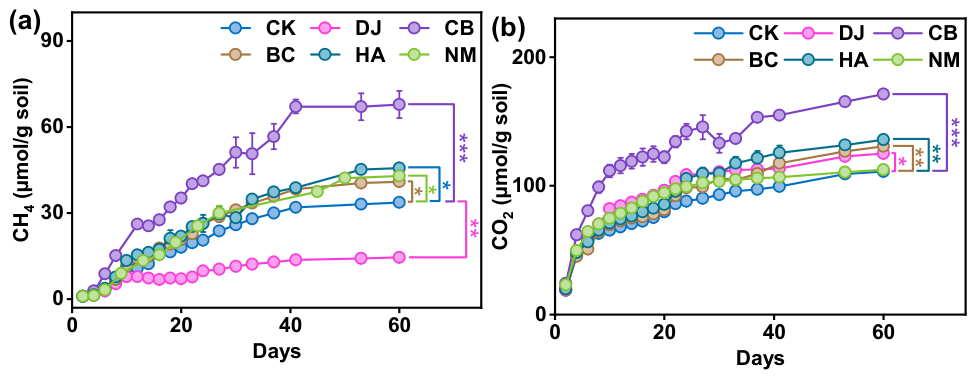
3.1. Effects of Soil Amendments on CH4 and CO2 Emissions from Paddy Fields
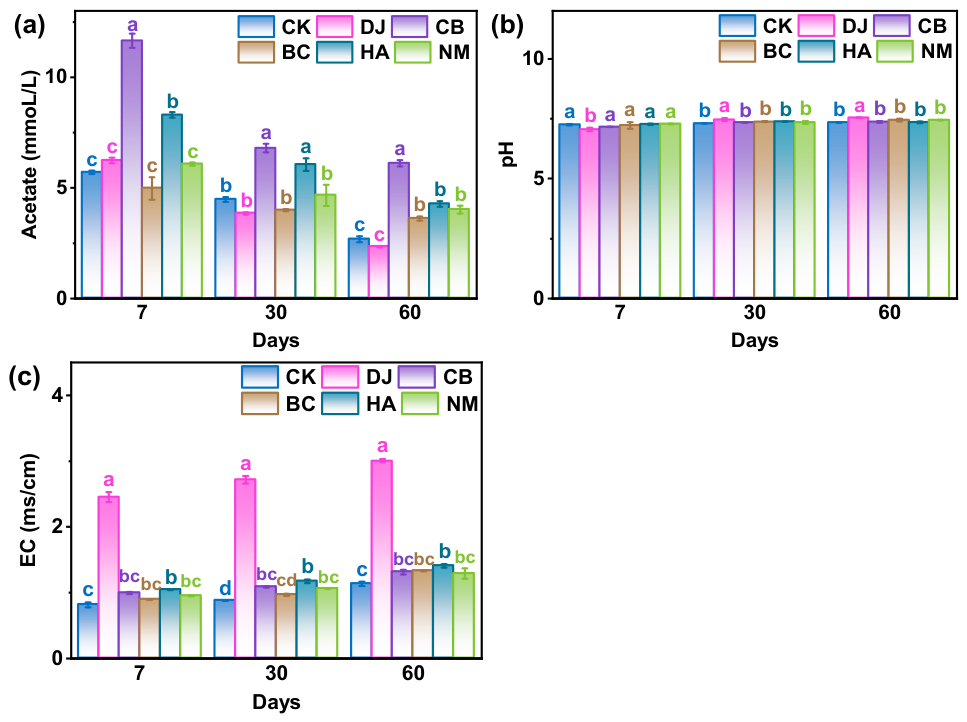
3.2. Effects of Soil Amendments on the Physicochemical Properties
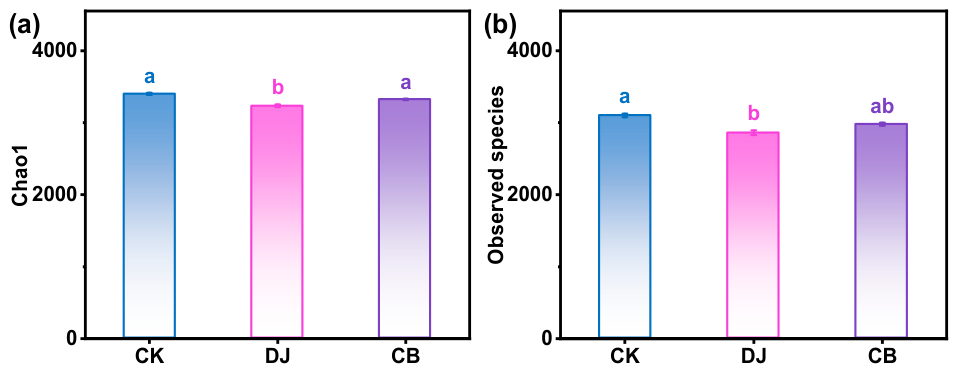
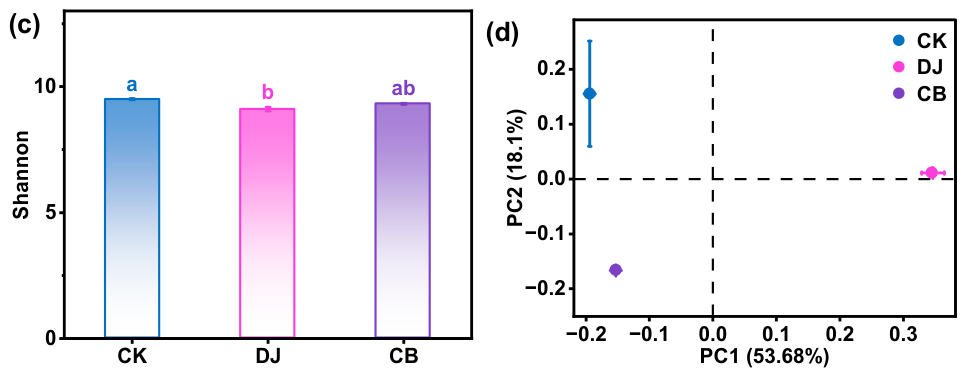
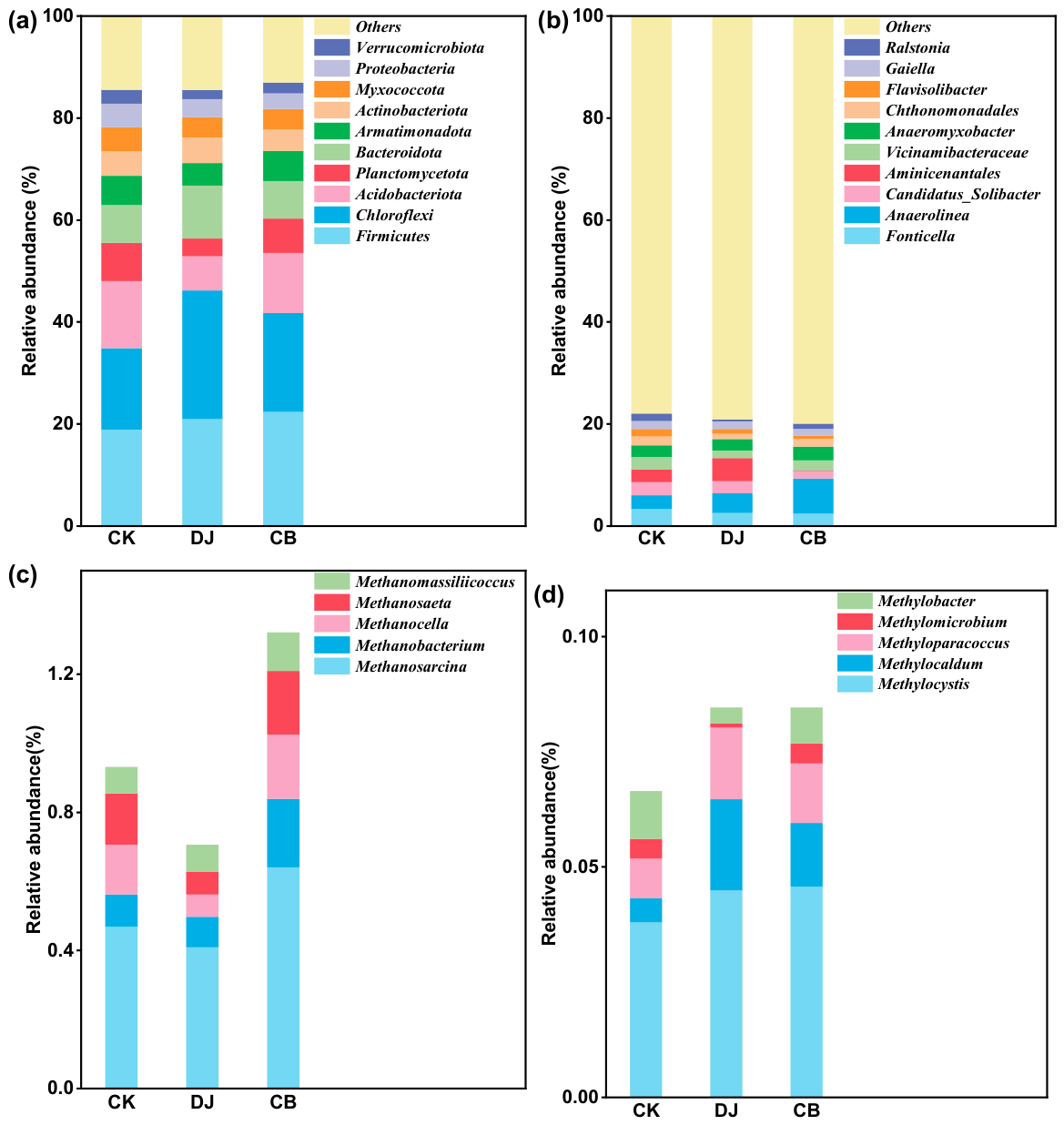
3.3. Effects of DJ and CB Amendments on Microbial Community
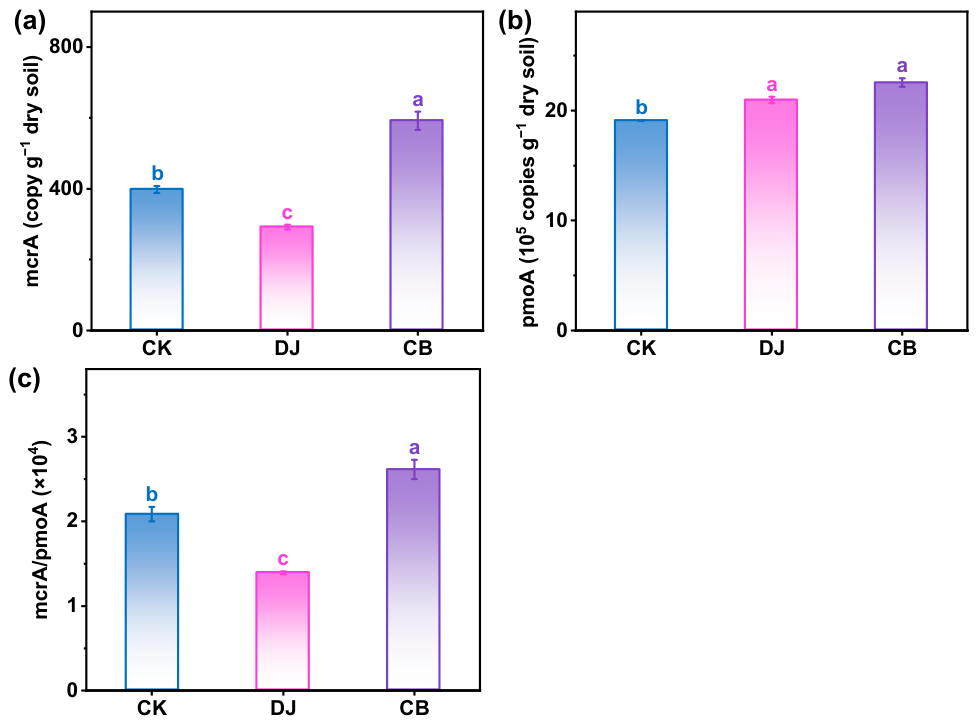
3.4. Effects of DJ and CB Amendments on Methanogenic and Methanotrophic Communities and Functional Genes
4. Discussion
4.1. Greenhouse Gas Emission and Soil Physicochemical Responses to Soil Amendments
4.2. Microbial Community Restructuring Associated with Carbon Transformation
4.3. Microbial Methane-Cycling Responses
4.4. Environmental Implications and Limitations
5. Conclusions
Supplementary Materials
Author Contributions
Funding
Institutional Review Board Statement
Informed Consent Statement
Data Availability Statement
Conflicts of Interest
References
- Jin, Y.; Liu, T.; Hu, J.; Sun, K.; Xue, L.; Bettembourg, M.; Bedada, G.; Hou, P.; Hao, P.; Tang, J.; et al. Reducing methane emissions by developing low-fumarate high-ethanol eco-friendly rice. Mol. Plant 2025, 18, 333–349. [Google Scholar] [CrossRef] [PubMed]
- Kwon, Y.; Jin, Y.; Lee, J.-H.; Sun, C.; Ryu, C.-M. Rice rhizobiome engineering for climate change mitigation. Trends Plant Sci. 2024, 29, 1299–1309. [Google Scholar] [CrossRef]
- Sakai, S.; Imachi, H.; Sekiguchi, Y.; Ohashi, A.; Harada, H.; Kamagata, Y. Isolation of Key Methanogens for Global Methane Emission from Rice Paddy Fields: A Novel Isolate Affiliated with the Clone Cluster Rice Cluster I. Appl. Environ. Microbiol. 2007, 73, 4326–4331. [Google Scholar] [CrossRef]
- Guérin, F.; Abril, G.; de Junet, A.; Bonnet, M.-P. Anaerobic decomposition of tropical soils and plant material: Implication for the CO2 and CH4 budget of the Petit Saut Reservoir. Appl. Geochem. 2008, 23, 2272–2283. [Google Scholar] [CrossRef]
- Liu, Z.; Mao, X.; Wu, Y.; Xia, L.; Yu, H.; Tang, W.; Qi, Y.; Zhang, Z.; Xiao, F.; Ji, H. Methanogenic community characteristics and its influencing factors in reservoir sediments on the northeastern Qinghai Plateau. Biology 2024, 13, 615. [Google Scholar] [CrossRef]
- Huang, H.; Wang, Z.; Ma, Y.; Zhu, P.; Zhang, X.; Chen, H.; Li, H.; Zheng, R. The impact of rice–frog co-cultivation on greenhouse gas emissions of reclaimed paddy fields. Biology 2025, 14, 861. [Google Scholar] [CrossRef]
- Abubaker, J.; Cederlund, H.; Arthurson, V.; Pell, M. Bacterial community structure and microbial activity in different soils amended with biogas residues and cattle slurry. Appl. Soil Ecol. 2013, 72, 171–180. [Google Scholar] [CrossRef]
- Cui, H.; Zhu, H.; Zhang, F.-M.; Wang, X.-Y.; Hou, S.-N.; Feng, W.-D. Soil amendments reduce CH4 and CO2 but increase N2O and NH3 emissions in saline-alkali paddy fields. Sci. Total Environ. 2024, 924, 171673. [Google Scholar] [CrossRef]
- Wang, N.; Chang, Z.-Z.; Xue, X.-M.; Yu, J.-G.; Shi, X.-X.; Ma, L.Q.; Li, H.-B. Biochar decreases nitrogen oxide and enhances methane emissions via altering microbial community composition of anaerobic paddy soil. Sci. Total Environ. 2017, 581–582, 689–696. [Google Scholar] [CrossRef] [PubMed]
- Johnson, J.M.; Radanielson, A.M.; Saito, K. Climate change mitigation in rice fields: A global synthesis of agronomic interventions. J. Environ. Manag. 2026, 404, 129365. [Google Scholar] [CrossRef]
- Iqbal, A.; Tang, X.; Ali, I.; Yuan, P.; Khan, R.; Khan, Z.; Adnan, M.; Wei, S.; Jiang, L. Integrating low levels of organic fertilizer improves soil fertility and rice yields in paddy fields by influencing microbial communities without increasing CH4 emissions. Appl. Soil Ecol. 2023, 189, 104951. [Google Scholar] [CrossRef]
- Wang, L.; Qin, T.; Liu, T.; Guo, L.; Li, C.; Zhai, Z. Inclusion of microbial inoculants with straw mulch enhances grain yields from rice fields in central China. Food Energy Secur. 2020, 9, e230. [Google Scholar] [CrossRef]
- Hou, P.; Xue, L.; Wang, J.; Petropoulos, E.; Deng, X.; Qiao, J.; Xue, L.; Yang, L. Continuous milk vetch amendment in rice-fallow rotation improves soil fertility and maintains rice yield without increasing CH4 emissions: Evidence from a long-term experiment. Agric. Ecosyst. Environ. 2022, 325, 107774. [Google Scholar] [CrossRef]
- Li, Q.; Cui, K.; Lv, J.; Zhang, J.; Peng, C.; Li, Y.; Gu, Z.; Song, X. Biochar amendments increase soil organic carbon storage and decrease global warming potentials of soil CH4 and N2O under N addition in a subtropical Moso bamboo plantation. For. Ecosyst. 2022, 9, 100054. [Google Scholar] [CrossRef]
- Garbowski, T.; Bar-Michalczyk, D.; Charazińska, S.; Grabowska-Polanowska, B.; Kowalczyk, A.; Lochyński, P. An overview of natural soil amendments in agriculture. Soil Tillage Res. 2023, 225, 105462. [Google Scholar] [CrossRef]
- Agegnehu, G.; Nelson, P.N.; Bird, M.I. Crop yield, plant nutrient uptake and soil physicochemical properties under organic soil amendments and nitrogen fertilization on Nitisols. Soil Tillage Res. 2016, 160, 1–13. [Google Scholar] [CrossRef]
- Rieder, S.; Conen, F.; Krauss, M. Microbial inoculant has little effect on greenhouse gas emissions following cover crop incorporation. Agric. Ecosyst. Environ. 2025, 379, 109332. [Google Scholar] [CrossRef]
- Du, S.; Chen, P.; Lin, G.; Zhang, Z.; Song, J.; Guan, S.; Han, Y.; Deng, M.; Liu, M.; Qi, Z.; et al. Controlled irrigation and straw-decomposing microbial inoculant mitigate CH4 emissions and increase rice yield in straw return mollisols of paddy fields. Agric. Water Manag. 2026, 327, 110269. [Google Scholar] [CrossRef]
- Valenzuela, E.I.; Cervantes, F.J. The role of humic substances in mitigating greenhouse gases emissions: Current knowledge and research gaps. Sci. Total Environ. 2021, 750, 141677. [Google Scholar] [CrossRef]
- Fan, Z.; Wu, J.; Li, R.; Li, H.; Xu, Y. Co-application of organic fertilizer and biochar ameliorates the triple composite pollution of microplastics, antibiotic resistance genes, and heavy metals in soil. J. Hazard. Mater. 2026, 506, 141520. [Google Scholar] [CrossRef] [PubMed]
- Zhang, C.; Zeng, G.; Huang, D.; Lai, C.; Chen, M.; Cheng, M.; Tang, W.; Tang, L.; Dong, H.; Huang, B.; et al. Biochar for environmental management: Mitigating greenhouse gas emissions, contaminant treatment, and potential negative impacts. Chem. Eng. J. 2019, 373, 902–922. [Google Scholar] [CrossRef]
- Xu, Y.; Liang, X.; Xu, Y.; Qin, X.; Huang, Q.; Wang, L.; Sun, Y. Remediation of Heavy Metal-Polluted Agricultural Soils Using Clay Minerals: A Review. Pedosphere 2017, 27, 193–204. [Google Scholar] [CrossRef]
- Du, X.; Guang, W.; Cheng, Y.; Hou, Z.; Liu, Z.; Yin, H.; Huo, L.; Lei, R.; Shu, C. Thermodynamics analysis of the adsorption of CH4 and CO2 on montmorillonite. Appl. Clay Sci. 2020, 192, 105631. [Google Scholar] [CrossRef]
- Ji, M.Y.; Xiao, L.R.; Usman, M.; Liu, C.; Sang, W.J.; Treu, L.; Campanaro, S.; Luo, G.; Zhang, Y.L. Different microplastics in anaerobic paddy soils: Altering methane emissions by influencing organic matter composition and microbial metabolic pathways. Chem. Eng. J. 2023, 469, 144003. [Google Scholar] [CrossRef]
- Ren, S.; Usman, M.; Tsang, D.C.W.; O-Thong, S.; Angelidaki, I.; Zhu, X.; Zhang, S.; Luo, G. Hydrochar-Facilitated Anaerobic Digestion: Evidence for Direct Interspecies Electron Transfer Mediated through Surface Oxygen-Containing Functional Groups. Environ. Sci. Technol. 2020, 54, 5755–5766. [Google Scholar] [CrossRef]
- Peiffer, J.A.; Spor, A.; Koren, O.; Jin, Z.; Tringe, S.G.; Dangl, J.L.; Buckler, E.S.; Ley, R.E. Diversity and heritability of the maize rhizosphere microbiome under field conditions. Proc. Natl. Acad. Sci. USA 2013, 110, 6548–6553. [Google Scholar] [CrossRef]
- He, C.; Zhang, B.; Yan, W.; Ding, D.; Guo, J. Enhanced Microbial Chromate Reduction Using Hydrogen and Methane as Joint Electron Donors. J. Hazard. Mater. 2020, 395, 122684. [Google Scholar] [CrossRef] [PubMed]
- Yu, X.; Yang, X.; Wu, Y.; Peng, Y.; Yang, T.; Xiao, F.; Zhong, Q.; Xu, K.; Shu, L.; He, Q.; et al. Sonneratia apetala introduction alters methane cycling microbial communities and increases methane emissions in mangrove ecosystems. Soil Biol. Biochem. 2020, 144, 107775. [Google Scholar] [CrossRef]
- Kim, J.; Yoo, G.; Kim, D.; Ding, W.; Kang, H. Combined application of biochar and slow-release fertilizer reduces methane emission but enhances rice yield by different mechanisms. Appl. Soil Ecol. 2017, 117–118, 57–62. [Google Scholar] [CrossRef]
- Holmes, A.J.; Costello, A.; Lidstrom, M.E.; Murrell, J.C. Evidence that participate methane monooxygenase and ammonia monooxygenase may be evolutionarily related. FEMS Microbiol. Lett. 1995, 132, 203–208. [Google Scholar] [CrossRef]
- Zhang, Y.; Wu, X.H.; Chen, C.J.; Xu, J.; Dong, F.S.; Liu, X.A.; Li, X.G.; Zheng, Y.Q. Application of thifluzamide alters microbial network structure and affects methane cycle genes in rice-paddy soil. Sci. Total Environ. 2022, 838, 155769. [Google Scholar] [CrossRef] [PubMed]
- Peng, W.; Lu, J.; Kuang, J.; Tang, R.; Guan, F.; Xie, K.; Zhou, L.; Yuan, Y. Enhancement of hydrogenotrophic methanogenesis for methane production by nano zero-valent iron in soils. Environ. Res. 2024, 247, 118232. [Google Scholar] [CrossRef]
- Lu, J.R.; Hou, R.; Peng, W.J.; Guan, F.Y.; Yuan, Y. Responses of methane production and methanogenic pathways to polystyrene nanoplastics exposure in paddy soil. J. Hazard. Mater. 2024, 465, 133197. [Google Scholar] [CrossRef]
- Baldwin, D.S.; Rees, G.N.; Mitchell, A.M.; Watson, G.; Williams, J. The short-term effects of salinization on anaerobic nutrient cycling and microbial community structure in sediment from a freshwater wetland. Wetlands 2006, 26, 455–464. [Google Scholar] [CrossRef]
- Sharma, S.B.; Sayyed, R.Z.; Trivedi, M.H.; Gobi, T.A. Phosphate solubilizing microbes: Sustainable approach for managing phosphorus deficiency in agricultural soils. SpringerPlus 2013, 2, 587. [Google Scholar] [CrossRef]
- Chen, Y.; Chen, F.F.; Xie, M.D.; Jiang, Q.Q.; Chen, W.Q.; Ao, T.Q. The impact of stabilizing amendments on the microbial community and metabolism in cadmium-contaminated paddy soils. Chem. Eng. J. 2020, 395, 125132. [Google Scholar] [CrossRef]
- Huang, J.; Gao, K.; Yang, L.; Lu, Y. Successional action of Bacteroidota and Firmicutes in decomposing straw polymers in a paddy soil. Environ. Microbiome 2023, 18, 76. [Google Scholar] [CrossRef] [PubMed]
- Wegner, C.E.; Liesack, W. Microbial community dynamics during the early stages of plant polymer breakdown in paddy soil. Environ. Microbiol. 2016, 18, 2825–2842. [Google Scholar] [CrossRef]
- Wu, Y.; Zhu, Z.; Sun, P.; Zhao, Z.; Zheng, X.; Long, M.; Chen, Y. Enhanced short-chain fatty acids production from food waste with magnetic biochar via anaerobic fermentation: Linking interfacial, extracellular, and intracellular electron transfer. Chem. Eng. J. 2024, 488, 150853. [Google Scholar] [CrossRef]
- Bovio-Winkler, P.; Cabezas, A.; Etchebehere, C. Unveiling the hidden diversity and functional role of Chloroflexota in full-scale wastewater treatment plants through genome-centric analyses. ISME Commun. 2024, 4, ycae050. [Google Scholar] [CrossRef]
- Liang, B.; Wang, L.Y.; Mbadinga, S.M.; Liu, J.F.; Yang, S.Z.; Gu, J.D.; Mu, B.Z. Anaerolineaceae and Methanosaeta turned to be the dominant microorganisms in alkanes-dependent methanogenic culture after long-term of incubation. AMB Express 2015, 5, 117. [Google Scholar] [CrossRef]
- Flieder, M.; Buongiorno, J.; Herbold, C.W.; Hausmann, B.; Rattei, T.; Lloyd, K.G.; Loy, A.; Wasmund, K. Novel taxa of Acidobacteriota implicated in seafloor sulfur cycling. ISME J. 2021, 15, 3159–3180. [Google Scholar] [CrossRef]
- Cheng, B.Y.; Wang, Y.Y.; Zhang, D.; Wu, D.; Zan, F.X.; Ma, J.; Miao, L.; Wang, Z.P.; Chen, G.H.; Guo, G. Thiosulfate pretreatment enhancing short-chain fatty acids production from anaerobic fermentation of waste activated sludge: Performance, metabolic activity and microbial community. Water Res. 2023, 238, 120013. [Google Scholar] [CrossRef]
- Li, D.; Ping, Q.; Guo, W.; Chen, Y.; Wang, L.; Li, Y.J.C. Evaluating effects of biochar on anaerobic digestion of dewatered waste activated sludge: Digester performance, microbial co-metabolism and underlying mechanism. Chemosphere 2023, 341, 140139. [Google Scholar] [CrossRef] [PubMed]
- Li, X.; Bei, Q.; Rabiei Nematabad, M.; Peng, J.; Liesack, W. Time-shifted expression of acetoclastic and methylotrophic methanogenesis by a single Methanosarcina genomospecies predominates the methanogen dynamics in Philippine rice field soil. Microbiome 2024, 12, 39. [Google Scholar] [CrossRef]
- Angel, R.; Claus, P.; Conrad, R. Methanogenic archaea are globally ubiquitous in aerated soils and become active under wet anoxic conditions. ISME J. 2012, 6, 847–862. [Google Scholar] [CrossRef] [PubMed]
- Lü, Z.; Lu, Y. Methanocella conradii sp. nov., a thermophilic, obligate hydrogenotrophic methanogen, isolated from Chinese rice field soil. PLoS ONE 2012, 7, e35279. [Google Scholar] [CrossRef]
- Buan, N.R. Methanogens: Pushing the boundaries of biology. Emerg. Top. Life Sci. 2018, 2, 629–646. [Google Scholar] [CrossRef]
- Mizukami, S.; Takeda, K.; Akada, S.; Fujita, T. Isolation and Characteristics of Methanosaeta in Paddy Field Soils. Biosci. Biotechnol. Biochem. 2006, 70, 828–835. [Google Scholar] [CrossRef] [PubMed][Green Version]
- Narayanan, N.; Krishnakumar, B.; Anupama, V.N.; Manilal, V.B.J.R.i.m. Methanosaeta sp., the major archaeal endosymbiont of Metopus es. Res. Microbiol. 2009, 160, 600–607. [Google Scholar] [CrossRef]
- Jiang, H.; Chen, Y.; Jiang, P.; Zhang, C.; Smith, T.J.; Murrell, J.C.; Xing, X.-H. Methanotrophs: Multifunctional bacteria with promising applications in environmental bioengineering. Biochem. Eng. J. 2010, 49, 277–288. [Google Scholar] [CrossRef]
- Das, S.; Jena, S.N.; Bhuiyan, M.S.I.; Kim, G.W.; Kim, P.J. Mechanism of slag-based silicate fertilizer suppressing methane emissions from paddies. J. Clean. Prod. 2022, 373, 133799. [Google Scholar] [CrossRef]
- Bordel, S.; Rodríguez, Y.; Hakobyan, A.; Rodríguez, E.; Lebrero, R.; Muñoz, R. Genome scale metabolic modeling reveals the metabolic potential of three Type II methanotrophs of the genus Methylocystis. Metab. Eng. 2019, 54, 191–199. [Google Scholar] [CrossRef]
- Zhao, Y.; Liu, Y.; Cao, S.; Hao, Q.; Liu, C.; Li, Y. Anaerobic oxidation of methane driven by different electron acceptors: A review. Sci. Total Environ. 2024, 946, 174287. [Google Scholar] [CrossRef]
- Yang, R.; Peng, C.; Mo, Y.; Kleindienst, S.; Li, S.; Wang, J.; Kappler, A.; Wang, Z.; Lu, L. Electron acceptors modulate methane oxidation and active methanotrophic communities in anoxic urban wetland sediments. Appl. Environ. Microbiol. 2025, 91, e00386-25. [Google Scholar] [CrossRef]
- Hanson, R.S.; Hanson, T.E. Methanotrophic bacteria. Microbiol. Rev. 1996, 60, 439–471. [Google Scholar] [CrossRef] [PubMed]
- Duan, Y.F.; Reinsch, S.; Ambus, P.; Elsgaard, L.; Petersen, S.O. Activity of type I methanotrophs dominates under high methane concentration: Methanotrophic activity in slurry surface crusts as influenced by methane, oxygen, and inorganic nitrogen. J. Environ. Qual. 2017, 46, 767–775. [Google Scholar] [CrossRef] [PubMed]
- Sharma, R.; Ryan, K.; Hao, X.; Larney, F.J.; McAllister, T.A.; Topp, E. Real-Time Quantification of mcrA, pmoA for Methanogen, Methanotroph Estimations during Composting. J. Environ. Qual. 2011, 40, 199–205. [Google Scholar] [CrossRef]
- Thauer, R.K.; Kaster, A.-K.; Seedorf, H.; Buckel, W.; Hedderich, R. Methanogenic archaea: Ecologically relevant differences in energy conservation. Nat. Rev. Microbiol. 2008, 6, 579–591. [Google Scholar] [CrossRef]
- Hua, Z.-S.; Wang, Y.-L.; Evans, P.N.; Qu, Y.-N.; Goh, K.M.; Rao, Y.-Z.; Qi, Y.-L.; Li, Y.-X.; Huang, M.-J.; Jiao, J.-Y.; et al. Insights into the ecological roles and evolution of methyl-coenzyme M reductase-containing hot spring Archaea. Nat. Commun. 2019, 10, 4574. [Google Scholar] [CrossRef]
- Timmers, P.H.A.; Welte, C.U.; Koehorst, J.J.; Plugge, C.M.; Jetten, M.S.M.; Stams, A.J.M. Reverse Methanogenesis and Respiration in Methanotrophic Archaea. Archaea 2017, 2017, 1654237. [Google Scholar] [CrossRef]
- Chen, H.; Gan, Q.; Fan, C. Methyl-Coenzyme M Reductase and Its Post-translational Modifications. Front. Microbiol. 2020, 11, 578356. [Google Scholar] [CrossRef] [PubMed]
- Cai, Y.; Zheng, Y.; Bodelier, P.L.E.; Conrad, R.; Jia, Z. Conventional methanotrophs are responsible for atmospheric methane oxidation in paddy soils. Nat. Commun. 2016, 7, 11728. [Google Scholar] [CrossRef] [PubMed]
- Lawton, T.J.; Rosenzweig, A.C. Methane-Oxidizing Enzymes: An Upstream Problem in Biological Gas-to-Liquids Conversion. J. Am. Chem. Soc. 2016, 138, 9327–9340. [Google Scholar] [CrossRef] [PubMed]
- Qi, Z.-w.; Wang, L.; Guan, J.; Zhang, B.; Wang, L.; Feng, C.-c.; Wang, D.; Zhang, Y. Phycosphere microbial assembly reinforces microalgae-driven soil organic carbon sequestration and methane mitigation in black soil paddies. J. Clean. Prod. 2026, 560, 148208. [Google Scholar] [CrossRef]
- Narengerile, A.; Deng, A.; Dong, W.; Raheem, A.; Li, J.; Wang, S.; Shang, Z.; Chen, Z.; Song, H.; Zhang, J. Integrated effects of aerobic tillage and controlled irrigation on rice yield and greenhouse gas emissions in a high-latitude rice growing region. Crop J. 2026, in press. [Google Scholar] [CrossRef]



| Amendments | Methane Production (μmol/g Soil) | Pmax (μmol/g Soil) | Rm (μmol/g Soil/d) | λ (d) | R2 |
|---|---|---|---|---|---|
| CK | 33.8 ± 0.09 | 34.75 ± 0.89 | 1.04 ± 0.05 | 2.14 ± 0.71 | 0.989 |
| DJ | 14.49 ± 0.71 | 14.85 ± 0.21 | 0.45 ±0.01 | 1.48 ± 0.52 | 0.998 |
| CB | 67.87 ± 4.76 | 70.86 ± 3.07 | 1.91 ± 0.13 | 1.04 ± 1.17 | 0.978 |
| BC | 41.00 ± 1.26 | 42.00 ± 1.00 | 1.29 ± 0.05 | 2.87 ± 0.64 | 0.991 |
| HA | 45.70 ± 0.82 | 47.13 ± 2.04 | 1.22 ± 0.08 | 1.70 ± 1.09 | 0.981 |
| NM | 42.89 ± 1.10 | 43.06 ± 1.16 | 1.37 ± 0.09 | 4.16 ± 0.84 | 0.991 |
Disclaimer/Publisher’s Note: The statements, opinions and data contained in all publications are solely those of the individual author(s) and contributor(s) and not of MDPI and/or the editor(s). MDPI and/or the editor(s) disclaim responsibility for any injury to people or property resulting from any ideas, methods, instructions or products referred to in the content. |
© 2026 by the authors. Licensee MDPI, Basel, Switzerland. This article is an open access article distributed under the terms and conditions of the Creative Commons Attribution (CC BY) license.
Share and Cite
Wu, Q.; Deng, D.; Zhang, Y.; Liang, W.; Li, Y.; Zhang, Y.; Wang, Y. Responses of Methane Emissions to Different Soil Amendments in Paddy Soil: Soil Properties, Microbial Communities, and Functional Genes. Biology 2026, 15, 883. https://doi.org/10.3390/biology15110883
Wu Q, Deng D, Zhang Y, Liang W, Li Y, Zhang Y, Wang Y. Responses of Methane Emissions to Different Soil Amendments in Paddy Soil: Soil Properties, Microbial Communities, and Functional Genes. Biology. 2026; 15(11):883. https://doi.org/10.3390/biology15110883
Chicago/Turabian StyleWu, Qiong, Dalu Deng, Yuwen Zhang, Weiwen Liang, Yifan Li, Yaping Zhang, and Yi Wang. 2026. "Responses of Methane Emissions to Different Soil Amendments in Paddy Soil: Soil Properties, Microbial Communities, and Functional Genes" Biology 15, no. 11: 883. https://doi.org/10.3390/biology15110883
APA StyleWu, Q., Deng, D., Zhang, Y., Liang, W., Li, Y., Zhang, Y., & Wang, Y. (2026). Responses of Methane Emissions to Different Soil Amendments in Paddy Soil: Soil Properties, Microbial Communities, and Functional Genes. Biology, 15(11), 883. https://doi.org/10.3390/biology15110883