Disrupting the Undruggable: Emerging Modalities for Targeting Protein–Protein Interactions in Oncology

 , ,
, ,
Simple Summary
Abstract
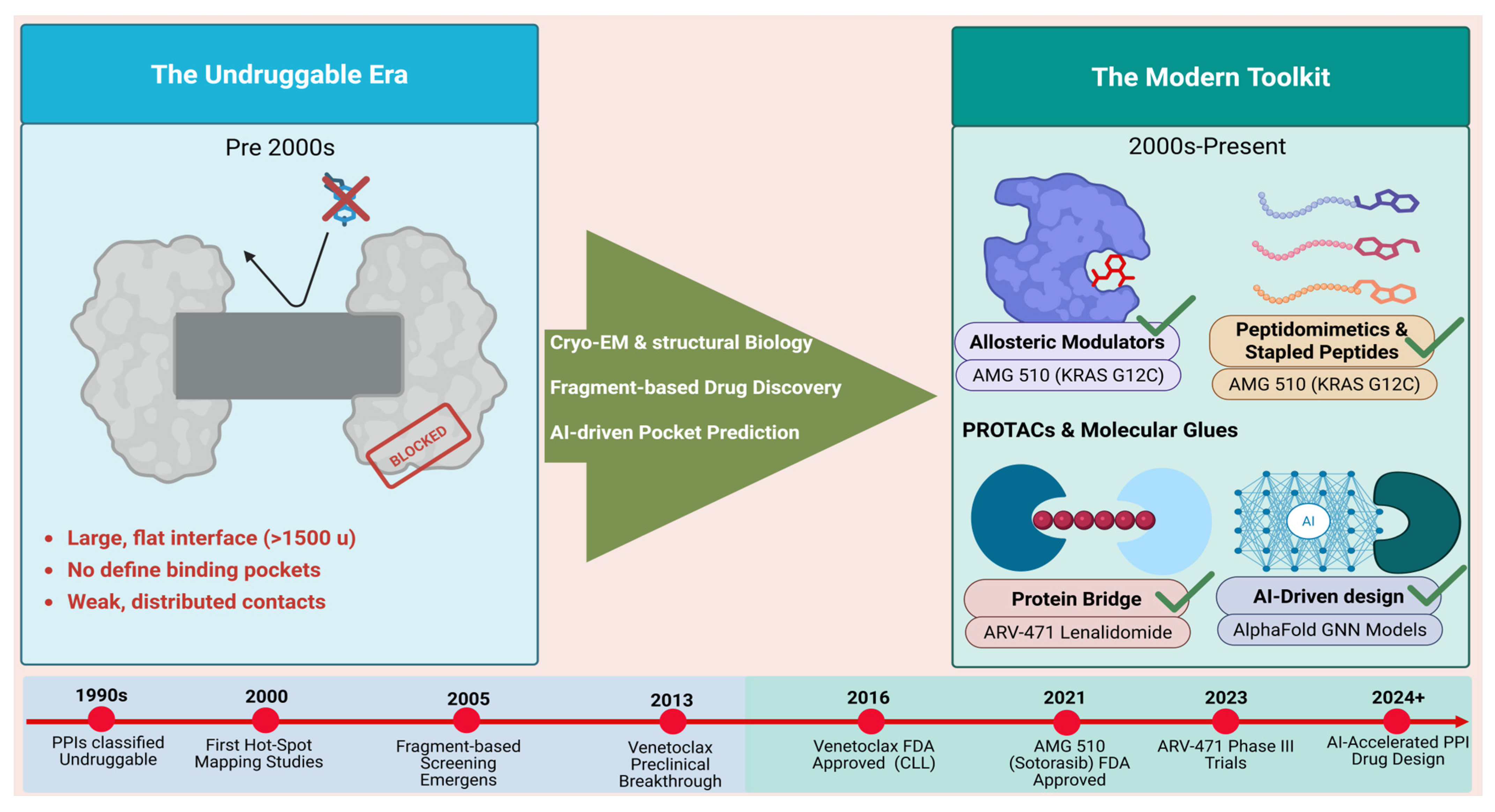
1. Introduction
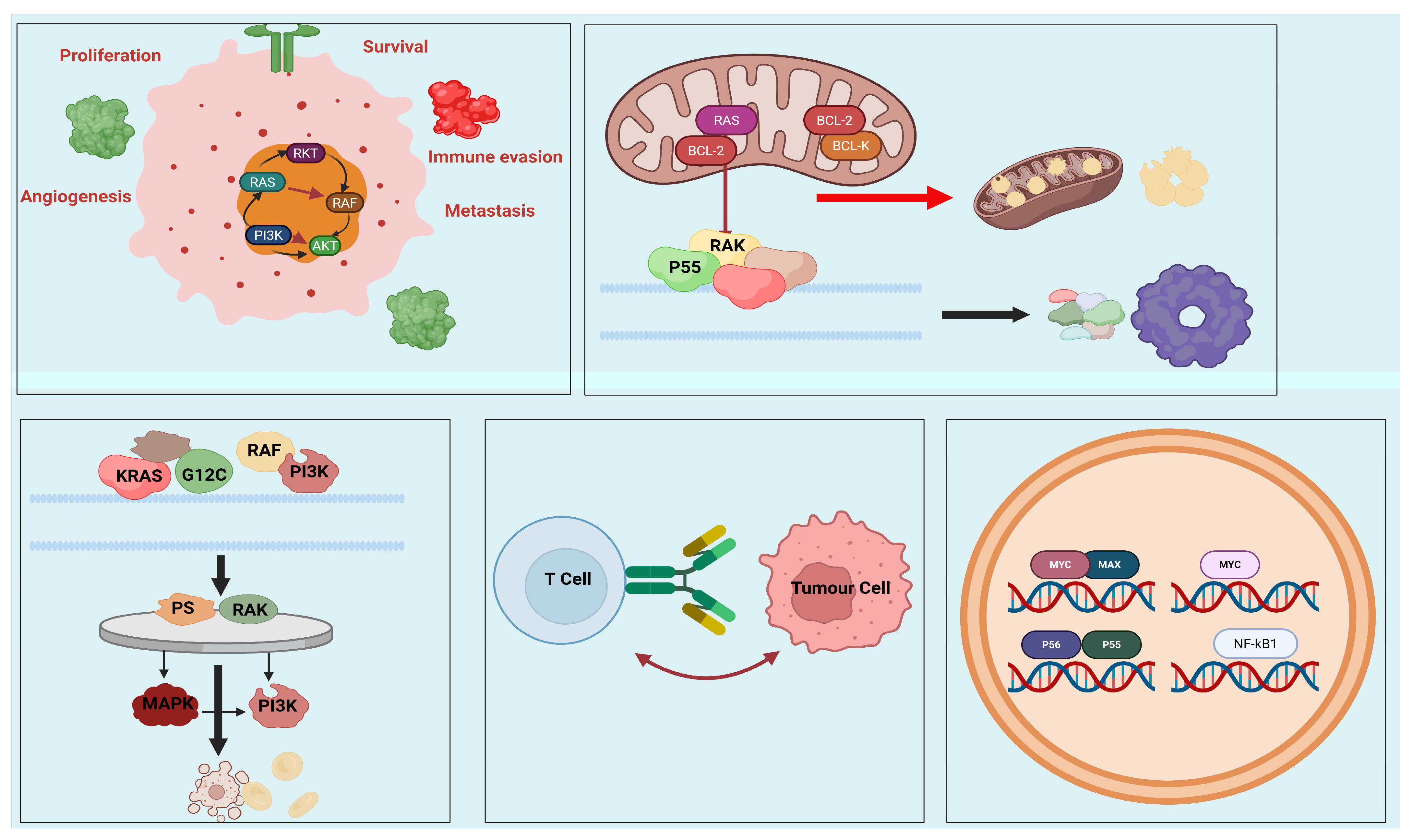
2. Mechanistic Overview of PPIs in Cancer Biology
Experimental Mapping of PPIs: Methods and Use-Cases
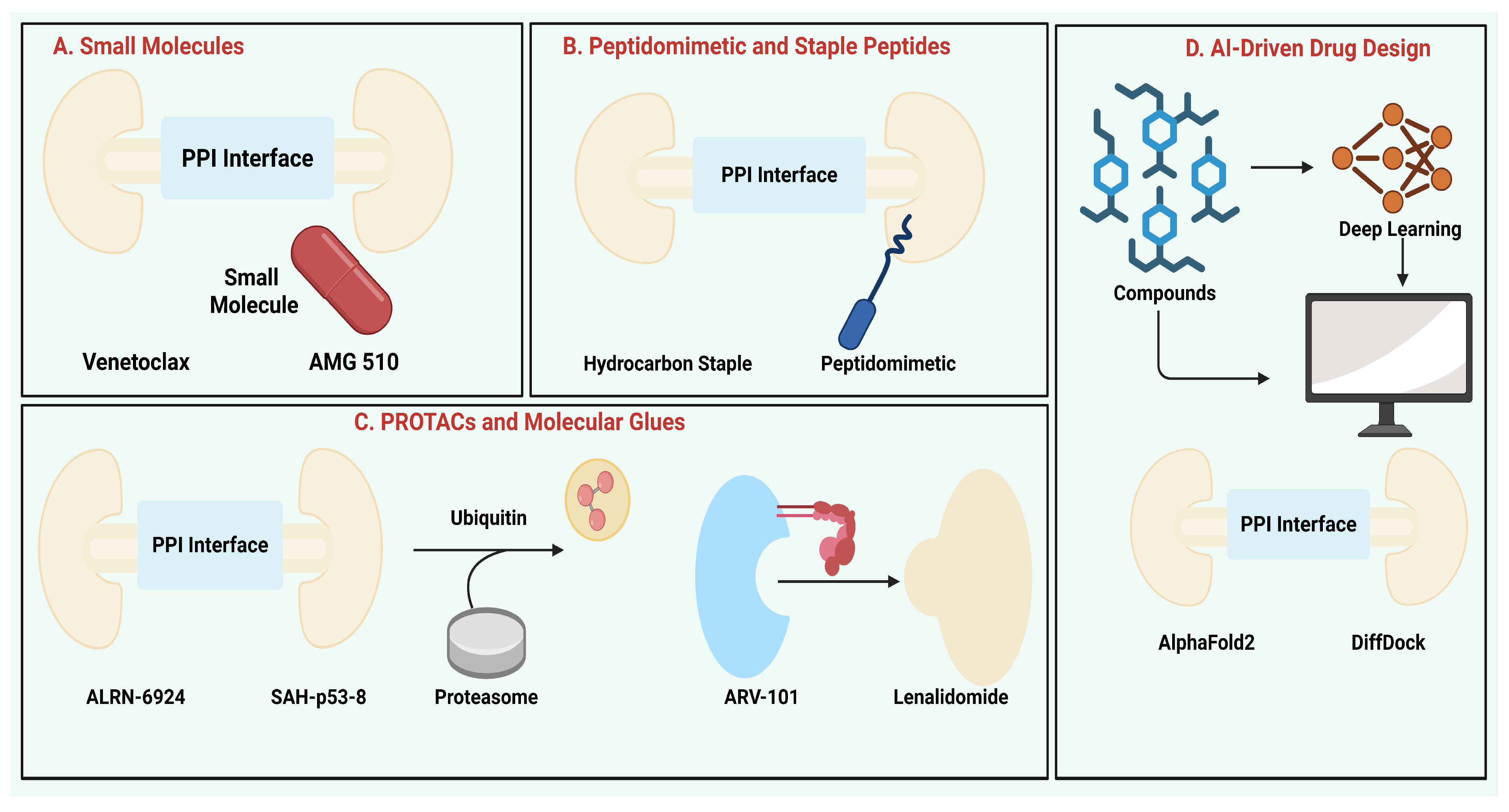
3. Emerging Modalities for Targeting PPIs
3.1. Small Molecules
3.2. Peptidomimetics and Stapled Peptides
3.3. PROTACs and Molecular Glues
3.4. AI-Driven Drug Design
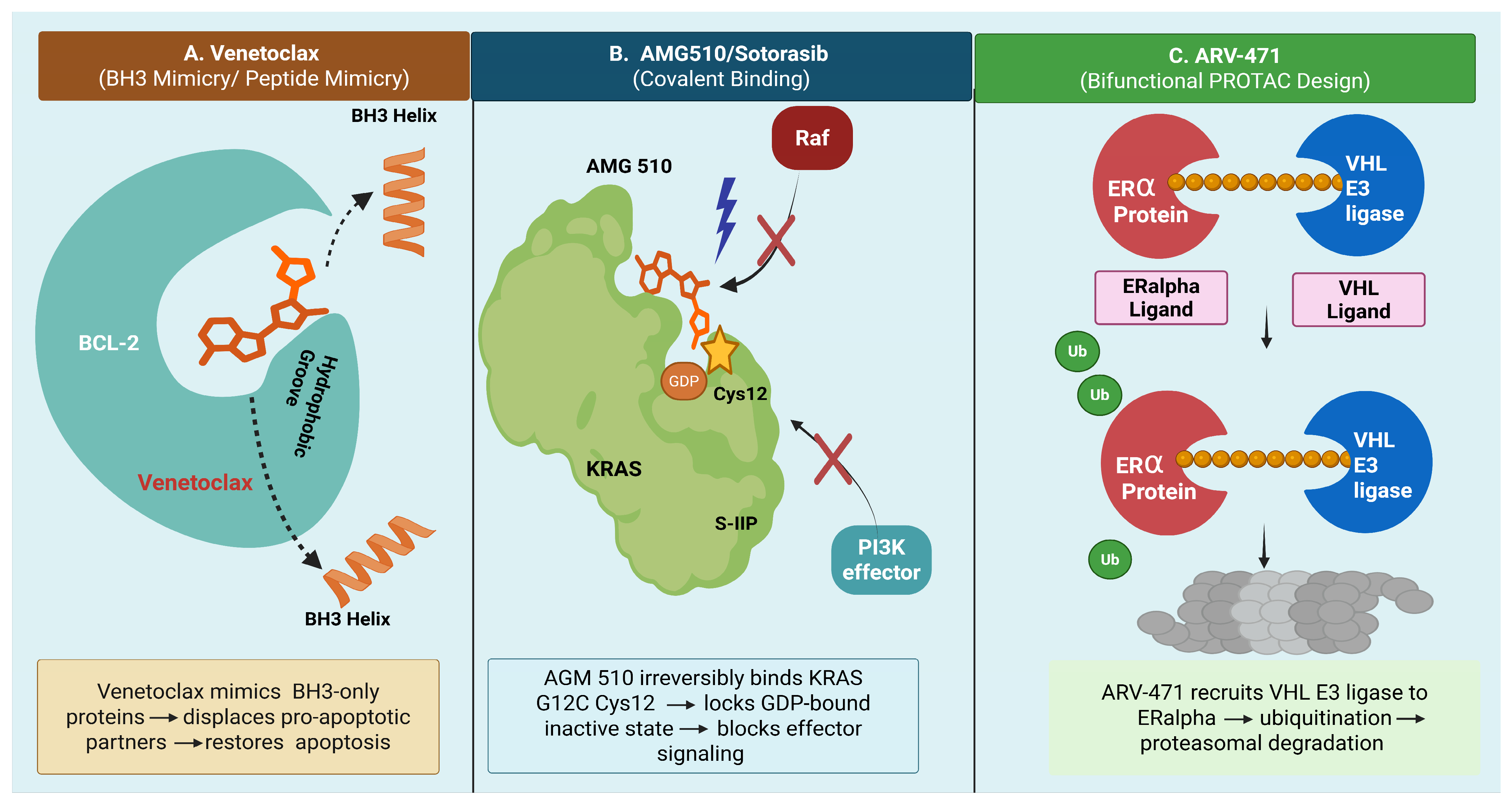
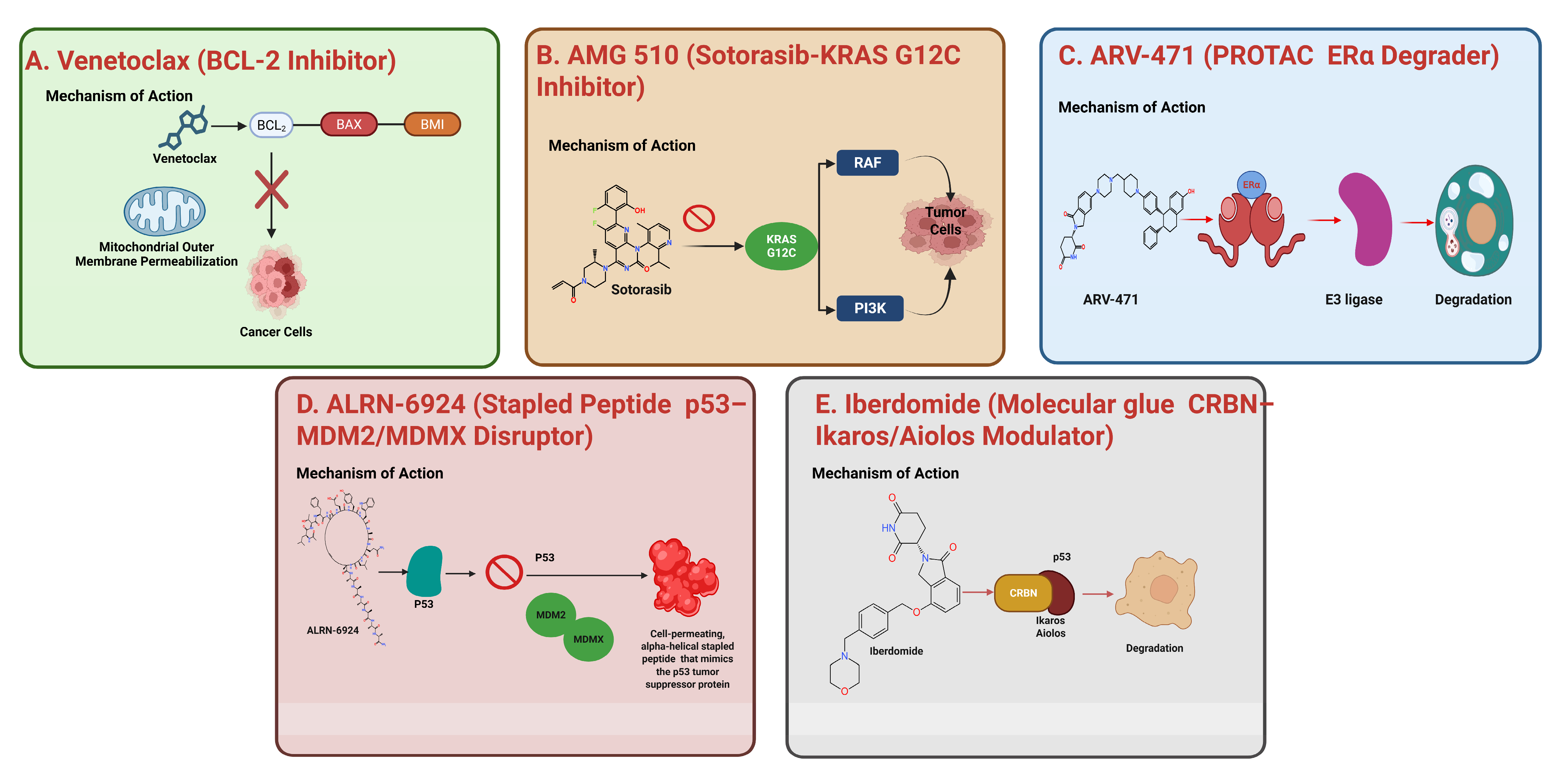
4. Case Studies of PPI-Targeting Drugs in Oncology
4.1. Venetoclax (BCL-2 Inhibitor)
4.2. AMG 510 (Sotorasib—KRAS G12C Inhibitor)
4.3. ARV-471 (PROTAC—ERα Degrader)
4.4. ALRN-6924 (Stapled Peptide—p53/MDM2/MDMX Disruptor)
4.5. Iberdomide (Molecular Glue—CRBN/Ikaros/Aiolos Modulator)
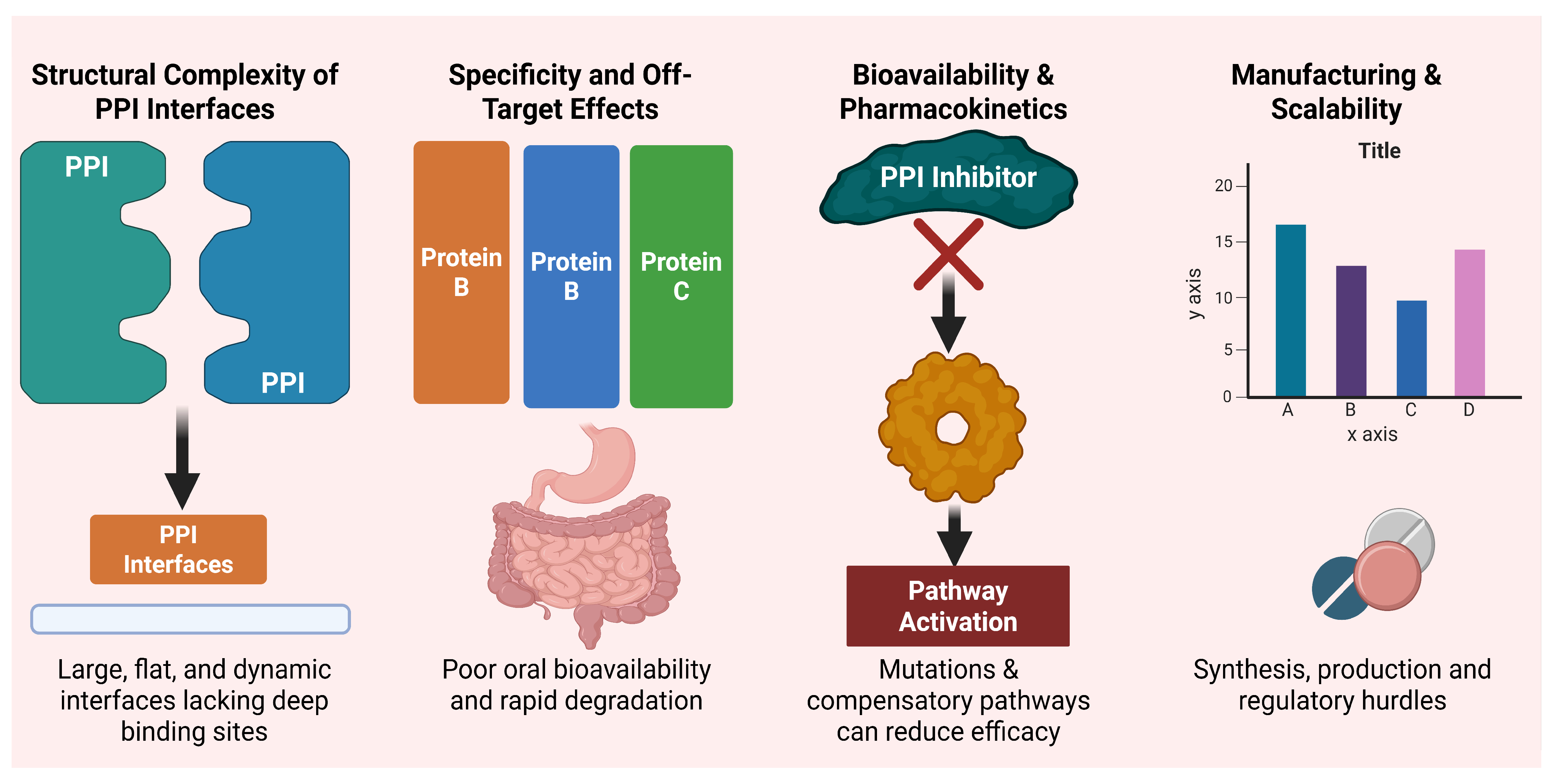
5. Challenges in Targeting PPIs
5.1. Structural Complexity of PPI Interfaces
5.2. Specificity and Off-Target Effects
5.3. Bioavailability and Pharmacokinetics
5.4. Resistance Mechanisms
5.5. Manufacturing and Scalability
5.6. Cross-Modality Comparison and Clinical Limitations
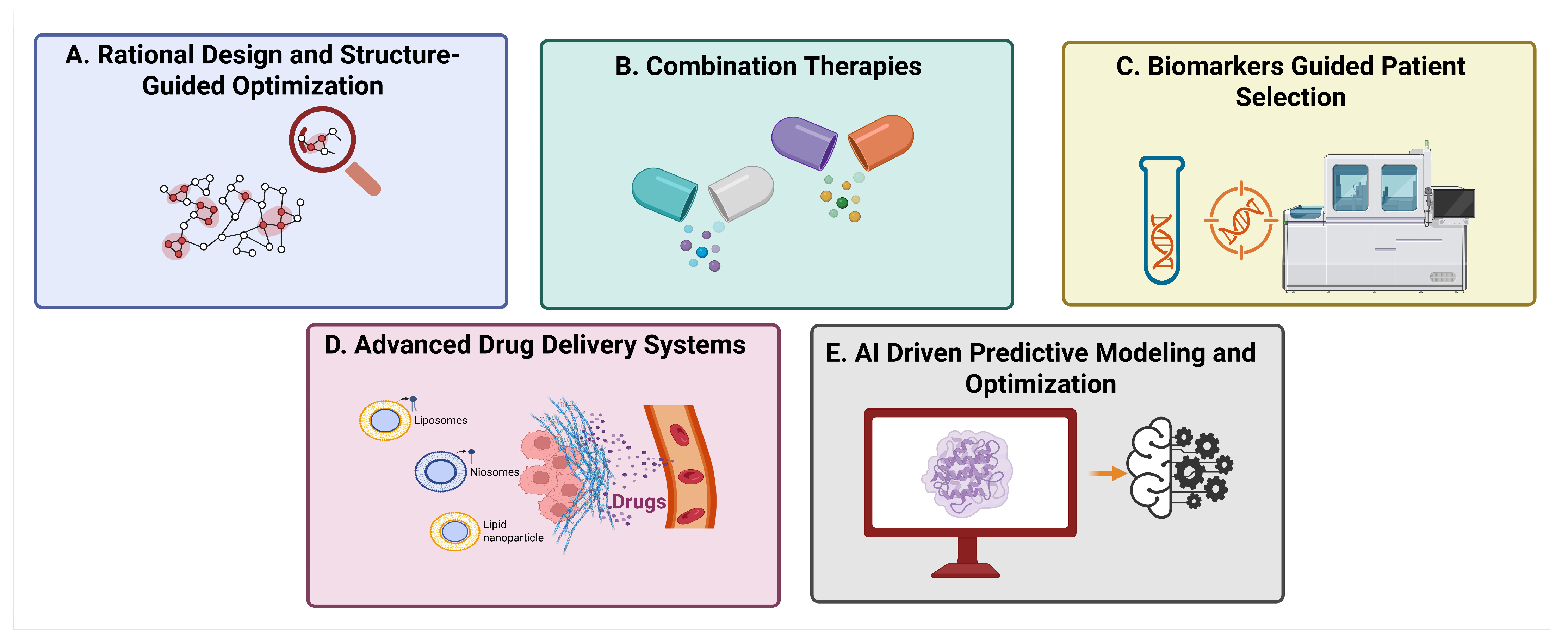
6. Strategies to Overcome These Challenges
6.1. Rational Design and Structure-Guided Optimization
6.2. Combination Therapies
6.3. Biomarker-Guided Patient Selection
6.4. Advanced Drug Delivery Systems
6.5. AI-Driven Predictive Modeling and Optimization
6.6. Regulatory and Manufacturing Innovations
7. Future Directions and Clinical Translation
7.1. Expansion of the Druggable PPI Landscape
7.2. Personalized Medicine and Biomarker Integration
7.3. AI-Enhanced Drug Discovery and Predictive Modeling
7.4. Novel Modalities and Delivery Platforms
7.5. Combination Therapies and Synthetic Lethality
7.6. Regulatory and Commercial Considerations
8. Conclusions
Author Contributions
Funding
Institutional Review Board Statement
Informed Consent Statement
Data Availability Statement
Acknowledgments
Conflicts of Interest
Abbreviations
| ADCC | Glycine-to-Cysteine substitution at codon 12 |
| AML | Acute Myeloid Leukemia |
| AP-MS | Affinity Purification–Mass Spectrometry |
| APEX | Engineered Ascorbate Peroxidase |
| ASO | Antisense Oligonucleotide |
| AI | Artificial Intelligence |
| AR | Androgen Receptor |
| BAK | BCL-2 Homologous Antagonist/Killer |
| BAX | BCL-2-Associated X Protein |
| BCL-2 | B-cell Lymphoma 2 |
| BCL-XL | B-cell Lymphoma-extra Large |
| BioID | Proximity-dependent Biotin Identification |
| BH3 | BCL-2 Homology Domain 3 |
| CLL | Chronic Lymphocytic Leukemia |
| cryo-EM | Cryo-Electron Microscopy |
| CRBN | Cereblon |
| CDK4/6 | Cyclin-Dependent Kinases 4 and 6 |
| DUBTAC | Deubiquitinase-Targeting Chimera |
| DNA | Deoxyribonucleic Acid |
| Erα | Estrogen Receptor Alpha |
| E3 | Ubiquitin Ligase Enzyme |
| ESR1 | Estrogen Receptor 1 Gene |
| FDA | Food and Drug Administration |
| FLT3 | Fms-like Tyrosine Kinase 3 |
| GDP | Guanosine Diphosphate |
| HMA | Hypomethylating Agent |
| HR+ | Hormone Receptor Positive |
| IMiDs | Immunomodulatory Drugs |
| KRASG12C | Kirsten Rat Sarcoma Viral Oncogene Homolog Glycine-to-Cysteine substitution at codon 12 |
| MAX | MYC-Associated Factor X |
| MDM2 | Mouse Double Minute 2 Homolog |
| MDMX | Mouse Double Minute X |
| mRNA | Messenger RNA |
| NF-κB | Nuclear Factor Kappa-light-chain-enhancer of Activated B Cells |
| NMR | Nuclear Magnetic Resonance |
| NSCLC | Non-Small Cell Lung Cancer |
| PK | Pharmacokinetics |
| PD | Pharmacodynamics |
| PD-1 | Programmed Cell Death Protein 1 |
| PD-L1 | Programmed Death-Ligand 1 |
| PI3K | Phosphoinositide 3-Kinase |
| PPI | Protein–Protein Interaction |
| PROTAC | Proteolysis-Targeting Chimera |
| RAF | Rapidly Accelerated Fibrosarcoma Kinase |
| RAS | Rat Sarcoma |
| RTK | Receptor Tyrosine Kinase |
| RNA | Ribonucleic Acid |
| SERD | Selective Estrogen Receptor Degrader |
| siRNA | Small Interfering RNA |
| SLiM | Short Linear Motif |
| SHP2 | Src Homology Region 2-containing Protein Tyrosine Phosphatase-2 |
| TP53 | Tumor Protein p53 Gene |
| TurboID | Engineered Biotin Ligase Variant |
| UPS | Ubiquitin–Proteasome System |
| X-ray | X-ray Crystallography |
References
- Ahn, B.; Chou, C.; Chou, C.; Chen, J.; Zug, A.; Baykara, Y.; Claus, J.; Hacking, S.M.; Uzun, A.; Gamsiz Uzun, E.D. Atlas of Protein–Protein Interactions in Cancer (APPIC)—A webtool to visualize and analyze cancer subtypes. NAR Cancer 2025, 7, zcae047. [Google Scholar] [CrossRef]
- González-García, E.; Miró-Rodríguez, C.; Ulzurrun, E.; Toledano, Ó.; Pérez-Suarez, S.; Aguado, L.; Sánchez-Barrena, M.J.; Mansilla, A.; Naveiro, R.; Campillo, N.E. An AI-based approach accelerates the discovery of protein–protein interaction modulators targeting NCS-1. Eur. J. Med. Chem. 2026, 309, 118739. [Google Scholar] [CrossRef] [PubMed]
- Oughtred, R.; Rust, J.; Chang, C.; Breitkreutz, B.J.; Stark, C.; Willems, A.; Boucher, L.; Leung, G.; Kolas, N.; Zhang, F.; et al. The BioGRID database: A comprehensive biomedical resource of curated protein, genetic, and chemical interactions. Protein Sci. 2021, 30, 187–200. [Google Scholar] [CrossRef]
- Poluri, K.M.; Gulati, K.; Tripathi, D.K.; Nagar, N. Protein–Protein Interactions in Cancer. In Protein–Protein Interactions; Springer: Singapore, 2023; pp. 43–100. [Google Scholar] [CrossRef]
- Cheng, S.-S.; Yang, G.-J.; Wang, W.; Leung, C.-H.; Ma, D.-L. The design and development of covalent protein–protein interaction inhibitors for cancer treatment. J. Hematol. Oncol. 2020, 13, 26. [Google Scholar] [CrossRef]
- Xu, S.; Lu, T.; Wang, Z.; Zhai, J. SCMPPI: Supervised contrastive multimodal framework for predicting protein–protein interactions. arXiv 2025, arXiv:2504.02698. [Google Scholar] [CrossRef]
- Ambrose, M.; Lee, J.; Syed, A.; Ahmed, Z.; Peng, G. Non-enzymatic protein targeting agents as a promising strategy for cancer treatment. Front. Drug Discov. 2025, 5, 1520734. [Google Scholar] [CrossRef]
- Ye, Q.; Ma, B.; Li, L.; Wang, Z.; Lu, M.; Kang, J.; Lei, Y.; Xu, S.; Wang, K.; Jian, Y.; et al. A peptide-based PROTAC degrader of BRCA2 sensitizes metastatic castration-resistant prostate cancer to PARP inhibition. Cancer Res. 2025, 85, 3490–3502. [Google Scholar] [CrossRef] [PubMed]
- Ferrero, J.-M.; Gal, J.; Mograbi, B.; Milano, G. PROTACs and glues: Striking perspectives for engineering cancer therapy à la carte. Pharmaceuticals 2025, 18, 1397. [Google Scholar] [CrossRef]
- Shen, Y.; Wen, W.; Chen, L.; Zhang, N.; Cong, W.; Hu, H. Recent advances in targeted protein degradation molecular glues as anticancer drugs. Clin. Exp. Pharmacol. Physiol. 2025, 52, e70064. [Google Scholar] [CrossRef]
- Wang, C.; Zhang, Y.; Chen, W.; Wu, Y.; Xing, D. New-generation advanced PROTACs as potential therapeutic agents in cancer therapy. Mol. Cancer 2024, 23, 110. [Google Scholar] [CrossRef]
- Wang, X.; Zhuang, Z.; Zhang, C.; Zhang, B.; Zhan, W.; Wang, Y.; Liu, Z.; Yuan, S.; Niu, W.; He, Q.; et al. MolGlueDB: An online database of molecular glues. Nucleic Acids Res. 2025, 54, D1510–D1518. [Google Scholar] [CrossRef] [PubMed]
- Zhang, C.; Li, J.; Tang, Q.; Li, L.; Cao, D. Targeting proteostasis for cancer therapy: Current advances, challenges, and future perspectives. Mol. Cancer 2025, 24, 265. [Google Scholar] [CrossRef]
- Vikal, A.; Maurya, R.; Patel, B.B.; Sharma, R.; Patel, P.; Patil, U.K.; Kurmi, B.D. PROTACs in cancer therapy: Mechanisms, design, clinical trials, and future directions. Drug Deliv. Transl. Res. 2025, 15, 1801–1827. [Google Scholar] [CrossRef]
- Xu, M.; Qian, P.; Zhao, Z.; Zeng, Z.; Chen, J.; Liu, W.; Yang, X. Graph neural networks for protein–protein interactions—A short survey. arXiv 2024, arXiv:2404.10450. [Google Scholar] [CrossRef]
- Zhao, S.; Cui, Z.; Zhang, G.; Su, L. MGPPI: Multiscale graph neural networks for explainable protein–protein interaction prediction. Front. Genet. 2024, 15, 1440448. [Google Scholar] [CrossRef]
- Özcan Şimşek, N.Ö.; Özgür, A.; Gürgen, F. GNNMutation: A heterogeneous graph-based framework for cancer detection. BMC Bioinform. 2025, 26, 153. [Google Scholar] [CrossRef]
- van Wier, S.P.; Beekman, A.M. Peptide design to control protein–protein interactions. Chem. Soc. Rev. 2025, 54, 1684–1698. [Google Scholar] [CrossRef]
- Rubach, P.; Minor, W. Advances in cryo-electron microscopy (cryoEM) and X-ray for structure-based drug discovery. Struct. Dyn. 2025, 12, A162. [Google Scholar] [CrossRef]
- Cho, S.C.; Park, H.W. Methods for detecting protein–protein interactions. Mol. Cells 2025, 49, 100301. [Google Scholar] [CrossRef] [PubMed]
- Gogoshin, G.; Rodin, A.S. Graph neural networks in cancer and oncology research: Merging and future trends. Cancers 2023, 15, 5858. [Google Scholar] [CrossRef] [PubMed]
- Wali, Z.; Tiwari, P.; El-Tanani, M.; Rabbani, S.; Parvez, S. Aging and Alzheimer’s: The critical role of mitochondrial dysfunction and synaptic alterations. Front. Synaptic Neurosci. 2025, 17, 1676317. [Google Scholar] [CrossRef]
- McCubrey, J.A.; Steelman, L.S.; Chappell, W.H.; Abrams, S.L.; Montalto, G.; Cervello, M.; Nicoletti, F.; Fagone, P.; Malaponte, G.; Mazzarino, M.C.; et al. Mutations and deregulation of Ras/Raf/MEK/ERK and PI3K/PTEN/Akt/mTOR cascades which alter therapy response. Oncotarget 2012, 3, 954. [Google Scholar] [CrossRef] [PubMed]
- Yin, H.; Tang, Q.; Xia, H.; Bi, F. Targeting RAF dimers in RAS mutant tumors: From biology to clinic. Acta Pharm. Sin. B 2024, 14, 1895–1923. [Google Scholar] [CrossRef]
- Cui, J.W.; Li, Y.; Yang, Y.; Yang, H.K.; Dong, J.M.; Xiao, Z.H.; He, X.; Guo, J.H.; Wang, R.Q.; Dai, B.; et al. Tumor immunotherapy resistance: Revealing the mechanism of PD-1/PD-L1-mediated tumor immune escape. Biomed. Pharmacother. 2024, 171, 116203. [Google Scholar] [CrossRef]
- Aboul-Ella, H.; Gohar, A.; Ali, A.A.; Ismail, L.M.; Mahmoud, A.E.E.R.; Elkhatib, W.F.; Aboul-Ella, H. Monoclonal antibodies: From magic bullet to precision weapon. Mol. Biomed. 2024, 5, 47. [Google Scholar] [CrossRef]
- Duan, Y.; Liu, Z.; Wang, Q.; Zhang, J.; Liu, J.; Zhang, Z.; Li, C. Targeting MYC: Multidimensional regulation and therapeutic strategies in oncology. Genes Dis. 2025, 12, 101435. [Google Scholar] [CrossRef]
- Zhou, Y.; Gao, X.; Yuan, M.; Yang, B.; He, Q.; Cao, J. Targeting Myc interacting proteins as a winding path in cancer therapy. Front. Pharmacol. 2021, 12, 748852, Correction in Front. Pharmacol. 2021, 12, 785732. [Google Scholar] [CrossRef]
- Naderiyan, Z.; Shoari, A. Protein engineering paving the way for next-generation therapies in cancer. Int. J. Transl. Med. 2025, 5, 28. [Google Scholar] [CrossRef]
- Gareri, C.; Polimeni, A.; Giordano, S.; Tammè, L.; Curcio, A.; Indolfi, C. Antisense oligonucleotides and small interfering RNA for the treatment of dyslipidemias. J. Clin. Med. 2022, 11, 3884. [Google Scholar] [CrossRef]
- Chen, L.; Deng, Z.; Xiong, Y.; Liu, J.; Huang, D.; Wang, J.; Chen, Y.; Inuzuka, H.; Xie, L.; Chen, X.; et al. Deubiquitinase-targeting chimeras mediated stabilization of tumor suppressive E3 ligase proteins as a strategy for cancer therapy. J. Am. Chem. Soc. 2025, 147, 29875–29883. [Google Scholar] [CrossRef] [PubMed]
- Modell, A.E.; Blosser, S.L.; Arora, P.S. Systematic targeting of protein–protein interactions. Trends Pharmacol. Sci. 2016, 37, 702–713. [Google Scholar] [CrossRef]
- Arkin, M.R.; Tang, Y.; Wells, J.A. Small-molecule inhibitors of protein–protein interactions: Progressing toward the reality. Chem. Biol. 2014, 21, 1102–1114. [Google Scholar] [CrossRef] [PubMed]
- Bon, M.; Bilsland, A.; Bower, J.; McAulay, K. Fragment-based drug discovery—The importance of high-quality molecule libraries. Mol. Oncol. 2022, 16, 3761–3777. [Google Scholar] [CrossRef]
- Bissaro, M.; Sturlese, M.; Moro, S. The rise of molecular simulations in fragment-based drug design (FBDD): An overview. Drug Discov. Today 2020, 25, 1693–1701. [Google Scholar] [CrossRef]
- Yuan, L.; Ji, W.; Dwyer, B.G.; Lu, J.; Bian, J.; Colombo, G.M.; Martinez, M.J.; Fernandez, D.; Phillips, N.A.; Tang, M.T.; et al. Defining the antitumor mechanism of action of a clinical-stage compound as a selective degrader of the nuclear pore complex. Cancer Discov. 2025, 15, 271. [Google Scholar] [CrossRef] [PubMed]
- Tang, Y.-T.; Chen, T.-Y.; Liu, Z.-Y.; Luo, M.-Y.; Gong, M.-M.; Shen, Y. Metabolic enzyme-associated protein–protein interactions (mPPIs) in cancer: Potential vulnerability for cancer treatment? Acta Pharmacol. Sin. 2025, 46, 3154–3162. [Google Scholar] [CrossRef]
- Gomari, M.M.; Abkhiz, S.; Pour, T.G.; Lotfi, E.; Rostami, N.; Monfared, F.N.; Ghobari, B.; Mosavi, M.; Alipour, B.; Dokholyan, N.V. Peptidomimetics in cancer targeting. Mol. Med. 2022, 28, 146. [Google Scholar] [CrossRef]
- Kim, D.H.; Kang, S.M. Stapled peptides: An innovative and ultimate future drug offering a highly powerful and potent therapeutic alternative. Biomimetics 2024, 9, 537. [Google Scholar] [CrossRef]
- Marei, H.E.; Bedair, K.; Hasan, A.; Al-Mansoori, L.; Gaiba, A.; Morrione, A.; Cenciarelli, C.; Giordano, A. Targeting CDKs in cancer therapy: Advances in PROTACs and molecular glues. npj Precis. Oncol. 2025, 9, 931. [Google Scholar] [CrossRef]
- Pan, Y.; Wang, Y.; Gou, S. Proteolysis targeting chimera, molecular glue degrader and hydrophobic tag tethering degrader for targeted protein degradation: Mechanisms, strategies and application. Bioorg. Chem. 2025, 161, 108491. [Google Scholar] [CrossRef] [PubMed]
- Xie, H.; Liu, J.; Glison, D.M.A.; Fleming, J.B. The clinical advances of proteolysis targeting chimeras in oncology. Explor. Target. Anti Tumor Ther. 2021, 2, 511. [Google Scholar] [CrossRef] [PubMed]
- Konstantinidou, M.; Arkin, M.R. Molecular glues for protein–protein interactions: Progressing toward a new dream. Cell Chem. Biol. 2024, 31, 1064–1088. [Google Scholar] [CrossRef]
- Ozdemir, E.S.; Jang, H.; Nussinov, R.; Gursoy, A.; Keskin, O. Repurposing AI for protein interactions and dynamics: Opportunities, limitations, and lessons. Front. Bioinform. 2026, 6, 1749317. [Google Scholar] [CrossRef]
- Koh, H.Y.; Zheng, Y.; Yang, M.; Arora, R.; Webb, G.I.; Pan, S.; Li, L.; Church, G.M. AI-driven protein design. Nat. Rev. Bioeng. 2025, 3, 349–366. [Google Scholar] [CrossRef]
- Kater, A.P.; Harrup, R.; Kipps, T.J.; Eichhorst, B.; Owen, C.J.; Assouline, S.; Lamanna, N.; Robak, T.; de la Serna, J.; Jaeger, U.; et al. The MURANO study: Final analysis and retreatment/crossover substudy results of VenR for patients with relapsed/refractory CLL. Blood 2025, 145, 2733–2745. [Google Scholar] [CrossRef]
- Li, H.Y.; Qi, W.L.; Wang, Y.X.; Meng, L.H. Covalent inhibitor targets KRasG12C: A new paradigm for drugging the undruggable and challenges ahead. Genes Dis. 2023, 10, 403–414. [Google Scholar] [CrossRef]
- Kegyes, D.; Muresan, X.; Bancos, A.; Mesaros, O.; Tigu, A.B.; Borlea, B.; Gulei, D.; Bumbea, H.; Buruiana, S.; Zdrenghea, M.; et al. Integrating venetoclax-based targeted and/or immune therapies for chronic lymphocytic leukemia. Crit. Rev. Oncol. Hematol. 2026, 222, 105267. [Google Scholar] [CrossRef]
- Cheng, J.; Fu, H.; Jiang, L.; Huang, Y.; Zhang, Y.; Long, Z.; Jiang, X. Clinical efficacy and safety of venetoclax combined with hypomethylating agents in relapsed high-risk acute myeloid leukemia patients after allogeneic hematopoietic stem cell transplantation. Front. Med. 2025, 12, 1638176. [Google Scholar] [CrossRef] [PubMed]
- Dou, Y.N.; Grimstein, C.; Mascaro, J.; Wang, J. Biomarkers for precision patient selection in cancer therapy approvals in the US, from 2011 to 2023. Clin. Pharmacol. Ther. 2024, 116, 304–314. [Google Scholar] [CrossRef] [PubMed]
- Kawakatsu, R.; Tadagaki, K.; Yamasaki, K.; Yoshida, T. Venetoclax efficacy on acute myeloid leukemia is enhanced by the combination with butyrate. Sci. Rep. 2024, 14, 4975. [Google Scholar] [CrossRef]
- Wang, X.; Wu, J.; Xiao, A.; Wang, J.; Tian, J. Evolution of direct RAS inhibitors: From undruggable target to clinical breakthroughs. Mol. Cancer 2025, 24, 229. [Google Scholar] [CrossRef]
- Marković, F.; Milin-Lazović, J.; Nikolić, N.; Golubović, A.; Stjepanović, M.; Kontić, M. KRAS mutations as predictive biomarkers for first-line immune checkpoint inhibitor monotherapy in advanced NSCLC: A systematic review and meta-analysis. Curr. Oncol. 2025, 32, 365. [Google Scholar] [CrossRef]
- Tang, C.; Tian, B.; Zhang, B.; Zhang, Y.; Ke, C.; Chen, M.; Wei, M.; Wang, W.; Deng, X.; Zhang, Q.; et al. Insights into Vepdegestrant (ARV-471): The first-in-class estrogen receptor proteolysis-targeting chimera approaching FDA approval for breast cancer. ChemMedChem 2026, 21, e202501111. [Google Scholar] [CrossRef] [PubMed]
- Arvinas. ARV-471: Phase 2 VERITAC Trial Results. 2022. Available online: https://ir.arvinas.com/static-files/e0d56eb4-13c4-43e9-935d-f24a18d2fe6e (accessed on 18 April 2026).
- Barghi, F.; Saadatzadeh, M.R.; Dobrota, E.A.; Shannon, H.E.; Bailey, B.J.; Young, C.; Malko, R.; Justice, R.; Riyahi, N.; Davis, C.; et al. Dual CDK4/6–PI3K/mTOR inhibition reinforces cytostatic programs and tumor control in preclinical models of primary and metastatic osteosarcoma. Neoplasia 2026, 72, 101266. [Google Scholar] [CrossRef] [PubMed]
- Saleh, M.N.; Patel, M.R.; Bauer, T.M.; Goel, S.; Falchook, G.S.; Shapiro, G.I.; Chung, K.Y.; Infante, J.R.; Conry, R.M.; Rabinowits, G.; et al. Phase 1 trial of ALRN-6924, a dual inhibitor of MDMX and MDM2, in patients with solid tumors and lymphomas bearing wild-type TP53. Clin. Cancer Res. 2021, 27, 5236–5247. [Google Scholar] [CrossRef] [PubMed]
- Li, Y.; Wu, M.; Fu, Y.; Xue, J.; Yuan, F.; Qu, T.; Rissanou, A.N.; Wang, Y.; Li, X.; Hu, H. Therapeutic stapled peptides: Efficacy and molecular targets. Pharmacol. Res. 2024, 203, 107137. [Google Scholar] [CrossRef]
- Schafer, P.H.; Ye, Y.; Wu, L.; Kosek, J.; Ringheim, G.; Yang, Z.; Liu, L.; Thomas, M.; Palmisano, M.; Chopra, R. Cereblon modulator iberdomide induces degradation of the transcription factors Ikaros and Aiolos. Ann. Rheum. Dis. 2018, 77, 1516–1523. [Google Scholar] [CrossRef]
- Rivellese, F.; Manou-Stathopoulou, S.; Mauro, D.; Goldmann, K.; Pyne, D.; Rajakariar, R.; Lewis, M.J. Effects of targeting the transcription factors Ikaros and Aiolos on B cell activation and differentiation in systemic lupus erythematosus. Lupus Sci. Med. 2021, 8, e000479. [Google Scholar] [CrossRef]
- Lonial, S.; Dimopoulos, M.A.; Berdeja, J.G.; Richardson, P.G.; Quach, H.; Rodríguez-Otero, P.; Maciag, P.; Hong, K.; Amatangelo, M.; Chen, M.; et al. EXCALIBER-RRMM: A phase III trial of iberdomide, daratumumab, and dexamethasone in relapsed/refractory multiple myeloma. Future Oncol. 2025, 21, 1761–1769. [Google Scholar] [CrossRef]
- Oláh, J.; Szénási, T.; Lehotzky, A.; Norris, V.; Ovádi, J. Challenges in discovering drugs that target protein–protein interactions of disordered proteins. Int. J. Mol. Sci. 2022, 23, 1550. [Google Scholar] [CrossRef]
- Shin, W.H.; Kumazawa, K.; Imai, K.; Hirokawa, T.; Kihara, D. Current challenges and opportunities in designing protein–protein interaction targeted drugs. Adv. Appl. Bioinform. Chem. 2020, 13, 11–25. [Google Scholar] [CrossRef] [PubMed]
- Yuan, R.; Zhang, J.; Zhou, J.; Cong, Q. Recent progress and future challenges in structure-based protein–protein interaction prediction. Mol. Ther. 2025, 33, 2252–2268. [Google Scholar] [CrossRef] [PubMed]
- Wu, D.; Li, Y.; Zheng, L.; Xiao, H.; Ouyang, L.; Wang, G.; Sun, Q. Small molecules targeting protein–protein interactions for cancer therapy. Acta Pharm. Sin. B 2023, 13, 4060–4088. [Google Scholar] [CrossRef]
- Ali, A.M.; Atmaj, J.; Van Oosterwijk, N.; Groves, M.R.; Dömling, A. Stapled peptide inhibitors: A new window for target drug discovery. Comput. Struct. Biotechnol. J. 2019, 17, 263–281. [Google Scholar] [CrossRef]
- Wang, B.; Li, M.; He, X.; Zhang, X.; Zhang, Y.; Zhang, T.; Liu, J.; Zhao, M. A study on the efficacy, safety and mechanism of venetoclax combined with CAR-T targeting CLL1 in the treatment of acute myeloid leukemia. Blood 2025, 146, 3453. [Google Scholar] [CrossRef]
- Zheng, B.; Wang, X.; Guo, M.; Tzeng, C.M. Therapeutic peptides: Recent advances in discovery, synthesis, and clinical translation. Int. J. Mol. Sci. 2025, 26, 5131. [Google Scholar] [CrossRef]
- Laraia, L.; McKenzie, G.; Spring, D.R.; Venkitaraman, A.R.; Huggins, D.J. Overcoming chemical, biological, and computational challenges in the development of inhibitors targeting protein–protein interactions. Chem. Biol. 2015, 22, 689–703. [Google Scholar] [CrossRef]
- Goodwin, H.V.; Atkinson, N.S. PPI-ID: Streamlining protein–protein interaction prediction through domain and SLiM mapping. bioRxiv 2025. [Google Scholar] [CrossRef] [PubMed]
- Yan, L.; Duan, B.; Wang, T.; Wang, T.; Chi, H.; Gao, H. Omics-enhanced nanomedicine: Integrating multi-omics for precision cancer diagnosis and therapy. Discov. Oncol. 2025, 17, 97. [Google Scholar] [CrossRef] [PubMed]
- AlKharboush, D.F.; Kozielski, F.; Wells, G.; Porta, E.O. Fragment-based drug discovery: A graphical review. Curr. Res. Pharmacol. Drug Discov. 2025, 9, 100233. [Google Scholar] [CrossRef]
- Riedl, J.M.; Matsubara, H.; McNeil, R.; Patel, P.S.; de la Cruz, F.F.; Gulhan, D.C.; Corcoran, R.B. Emerging landscape of KRAS inhibitors in cancer treatment. Cancer Cell 2026, 44, 471–497. [Google Scholar] [CrossRef]
- Báez-Gutiérrez, N.; Rodríguez-Ramallo, H.; Moreno, M.A.P.; Arboli, E.R.; Abdel-Kader Martín, L. Venetoclax combination therapy with hypomethylating agents in young adults with relapsed/refractory acute myeloid leukaemia. Ther. Adv. Hematol. 2021, 12, 20406207211040335. [Google Scholar] [CrossRef]
- Camps-Fajol, C.; Cavero, D.; Minguillón, J.; Surrallés, J. Targeting protein–protein interactions in drug discovery: Modulators approved or in clinical trials for cancer treatment. Pharmacol. Res. 2025, 211, 107544. [Google Scholar] [CrossRef] [PubMed]
- Boessen, R.; Heerspink, H.J.; De Zeeuw, D.; Grobbee, D.E.; Groenwold, R.H.; Roes, K.C. Improving clinical trial efficiency by biomarker-guided patient selection. Trials 2014, 15, 103. [Google Scholar] [CrossRef]
- AlDoughaim, M.; AlSuhebany, N.; AlZahrani, M.; AlQahtani, T.; AlGhamdi, S.; Badreldin, H.; Al Alshaykh, H. Cancer biomarkers and precision oncology: A review of recent trends and innovations. Clin. Med. Insights Oncol. 2024, 18, 11795549241298541. [Google Scholar] [CrossRef] [PubMed]
- Ezike, T.C.; Okpala, U.S.; Onoja, U.L.; Nwike, C.P.; Ezeako, E.C.; Okpara, O.J.; Okoroafor, C.C.; Eze, S.C.; Kalu, O.L.; Odoh, E.C.; et al. Advances in drug delivery systems, challenges and future directions. Heliyon 2023, 9, e17488. [Google Scholar] [CrossRef]
- Buddhiraju, H.S.; Yadav, D.N.; Dey, S.; Eswar, K.; Padmakumar, A.; Rengan, A.K. Advances in peptide-decorated targeted drug delivery. ACS Appl. Bio Mater. 2023, 7, 4879–4893. [Google Scholar] [CrossRef]
- Ciftci, F.; Özarslan, A.C.; Kantarci, I.C.; Yelkenci, A.; Tavukcuoglu, O.; Ghorbanpour, M. Advances in drug targeting and nanotechnology applications in cancer treatment. Pharmaceutics 2025, 17, 121. [Google Scholar] [CrossRef] [PubMed]
- Herráiz-Gil, S.; Nygren-Jiménez, E.; Acosta-Alonso, D.N.; León, C.; Guerrero-Aspizua, S. Artificial Intelligence-Based Methods for Drug Repurposing and Development in Cancer. Appl. Sci. 2025, 15, 2798. [Google Scholar] [CrossRef]
- Lombardi, L.; Genio, V.D.; Albericio, F.; Williams, D.R. Advances in peptidomimetics for next-generation therapeutics: Strategies, modifications, and applications. Chem. Rev. 2025, 125, 7099–7166. [Google Scholar] [CrossRef]
- Lu, H.; Zhou, Q.; He, J.; Jiang, Z.; Peng, C.; Tong, R.; Shi, J. Recent advances in the development of protein–protein interaction modulators: Mechanisms and clinical trials. Signal Transduct. Target. Ther. 2020, 5, 213. [Google Scholar] [CrossRef]
- Nada, H.; Choi, Y.; Kim, S.; Jeong, K.S.; Meanwell, N.A.; Lee, K. New insights into protein–protein interaction modulators in drug discovery and therapeutic advance. Signal Transduct. Target. Ther. 2024, 9, 341. [Google Scholar] [CrossRef]
- Trepte, P.; Secker, C.; Olivet, J.; Blavier, J.; Kostova, S.; Maseko, S.B.; Minia, I.; Ramos, E.S.; Cassonnet, P.; Golusik, S.; et al. AI-guided pipeline for protein–protein interaction drug discovery identifies a SARS-CoV-2 inhibitor. Mol. Syst. Biol. 2024, 20, 428. [Google Scholar] [CrossRef] [PubMed]
- Jeyaraj, G.; Rajendran, A.K.; Sathishkumar, K.; Almutairi, B.O.; Vadivelu, A.; Chokkakula, S.; Tu, Y.; Xie, W. High-resolution protein modeling through Cryo-EM and AI: Current trends and future perspectives—A review. Front. Mol. Biosci. 2025, 12, 1688455. [Google Scholar] [CrossRef]
- Ong, F.S.; Das, K.; Wang, J.; Vakil, H.; Kuo, J.Z.; Blackwell, W.-L.B.; Lim, S.W.; Goodarzi, M.O.; Bernstein, K.E.; Rotter, J.I.; et al. Personalized medicine and pharmacogenetic biomarkers: Progress in molecular oncology testing. Expert Rev. Mol. Diagn. 2012, 12, 593–602. [Google Scholar] [CrossRef]
- Clark, A.J.; Lillard, J.W., Jr. A comprehensive review of bioinformatics tools for genomic biomarker discovery driving precision oncology. Genes 2024, 15, 1036. [Google Scholar] [CrossRef] [PubMed]
- Garcia-Carbonero, N.; Martinez-Useros, J.; Li, W.; Orta, A.; Perez, N.; Carames, C.; Hernandez, T.; Moreno, I.; Serrano, G.; Garcia-Foncillas, J. KRAS and BRAF mutations as prognostic and predictive biomarkers for standard chemotherapy response in metastatic colorectal cancer: A single institutional study. Cells 2020, 9, 219. [Google Scholar] [CrossRef] [PubMed]
- Serrano, D.R.; Luciano, F.C.; Anaya, B.J.; Ongoren, B.; Kara, A.; Molina, G.; Ramirez, B.I.; Sánchez-Guirales, S.A.; Simon, J.A.; Tomietto, G.; et al. Artificial intelligence (AI) applications in drug discovery and drug delivery: Revolutionizing personalized medicine. Pharmaceutics 2024, 16, 1328. [Google Scholar] [CrossRef]
- Ocana, A.; Pandiella, A.; Privat, C.; Bravo, I.; Luengo-Oroz, M.; Amir, E.; Gyorffy, B. Integrating artificial intelligence in drug discovery and early drug development: A transformative approach. Biomark. Res. 2025, 13, 45. [Google Scholar] [CrossRef]
- Xiao, W.; Jiang, W.; Chen, Z.; Huang, Y.; Mao, J.; Zheng, W.; Hu, Y.; Shi, J. Advance in peptide-based drug development: Delivery platforms, therapeutics and vaccines. Signal Transduct. Target. Ther. 2025, 10, 74. [Google Scholar] [CrossRef]
- Ahator, S.D.; Franze, S.; Obuobi, S.; Anderluzzi, G.; Flaten, G.E.; Škalko-Basnet, N. Overcoming barriers to delivery of biologics by novel approaches and advanced delivery systems. Adv. Drug Deliv. Rev. 2026, 234, 115875. [Google Scholar] [CrossRef]
- Li, J.; Zhang, L.; Shang, Y.; Liu, J.; Zhao, H. Synthetic lethality in cancer therapy: Mechanisms, models and clinical translation for overcoming therapeutic resistance. Clin. Transl. Med. 2026, 16, e70586. [Google Scholar] [CrossRef]
- Koirala, M.; DiPaola, M. Overcoming cancer resistance: Strategies and modalities for effective treatment. Biomedicines 2024, 12, 1801. [Google Scholar] [CrossRef]
- Cossins, B.P.; Lawson, A.D. Small molecule targeting of protein–protein interactions through allosteric modulation of dynamics. Molecules 2015, 20, 16435–16445. [Google Scholar] [CrossRef]
- Cabri, W.; Cantelmi, P.; Corbisiero, D.; Fantoni, T.; Ferrazzano, L.; Martelli, G.; Mattellone, A.; Tolomelli, A. Therapeutic peptides targeting PPI in clinical development: Overview, mechanism of action and perspectives. Front. Mol. Biosci. 2021, 8, 697586. [Google Scholar] [CrossRef] [PubMed]
- Pei, J.; Zhang, J.; Cong, Q. Computational analysis of protein–protein interactions of cancer drivers in renal cell carcinoma. FEBS Open Bio 2024, 14, 112–126. [Google Scholar] [CrossRef]
- Verma, V.; Kumar, D. Artificial intelligence and machine learning in drug discovery: From lead discovery to clinical validation (2020–2025). Lett. Drug Des. Discov. 2026, 22, 100341. [Google Scholar] [CrossRef]
- Dalton, K.M.; Krytska, K.; Lochmann, T.L.; Sano, R.; Casey, C.; D’AUlerio, A.; Khan, Q.A.; Crowther, G.S.; Coon, C.; Cai, J.; et al. Venetoclax-based rational combinations are effective in models of MYCN-amplified neuroblastoma. Mol. Cancer Ther. 2021, 20, 1400–1411. [Google Scholar] [CrossRef]
- Epstein, R.J. The unpluggable in pursuit of the undruggable: Tackling the dark matter of the cancer therapeutics universe. Front. Oncol. 2013, 3, 304. [Google Scholar] [CrossRef] [PubMed]
- Wu, J.; He, J.; Ni, Q.; Li, Z.; Lin, X.; Zhao, Z.; Qiu, L.; Wang, H.; Li, S.; Shi, C.; et al. AI-driven drug discovery: Focus on targets for solid tumors. Pharmaceutics 2026, 18, 329. [Google Scholar] [CrossRef]



| Assay | Detects | Throughput | Strengths | Limitations | Best-Fit Use-Cases | Key References |
|---|---|---|---|---|---|---|
| Yeast two-hybrid | Binary direct PPIs | High | Simple, scalable | False positives; nuclear context | Partner discovery | [3] |
| AP-MS | Complex-centric associations | Medium | Native; network-level insight | Indirect interactions; affinity bias | Interactome mapping | [3] |
| Proximity labeling (BioID/TurboID/APEX) | Spatial proximity | Medium–High | Captures weak/transient interactions | Labeling radius; background noise | Dynamic networks; organelles | [20] |
| Crosslinking MS | Distance-constrained contacts | Medium | Provides interface geometry | Crosslink bias; technical complexity | Structural restraints | [19] |
| Cryo-EM/X-ray/NMR | Atomic-level structures | Low–Medium | High-resolution structural detail | Sample preparation challenges | Structure-guided drug design | [19] |
| Modality | PPI Effect | Intracellular Access | Oral Feasibility | Safety Themes | Examples | Stage | Key References |
|---|---|---|---|---|---|---|---|
| Small molecules | Block/allosteric modulation | High | Often yes | Off-target effects; metabolism issues | BH3 mimetics; KRAS G12C inhibitors | Approved | [5] |
| Stapled peptides | Block (α-helix mimic) | Moderate–High (optimized) | Rare | Immunogenicity; poor PK | ALRN-6924 | Phase I/II | [20] |
| PROTACs | Targeted protein degradation | High | Rare | Ligase-related toxicity; on-target effects | ARV-471 | Phase II | [11,14] |
| Molecular glues | Stabilize ligase–substrate interaction | High | Sometimes | Neosubstrate specificity risks | Iberdomide | Phase III/Approved | [10,33] |
| Antibodies/nanobodies | Block/bridge/ADCC | Extracellular | Not applicable | Infusion reactions; immune effects | PD-(L)1 inhibitors; bispecific antibodies | Approved | [7] |
| RNA therapeutics | Knockdown/decoy | High (with delivery systems) | Parenteral | Immune activation; delivery challenges | siRNA, ASO, mRNA | Clinical/Preclinical | [30] |
| Stabilizers (DUBTACs) | Stabilize protective PPIs | High (emerging) | Unknown | Risk of over-stabilization | Experimental DUBTACs | Preclinical | [31] |
| Task | Model Class | Representative Tools | Deliverable | Validation | Pros/Cons | Key References |
|---|---|---|---|---|---|---|
| Complex structure prediction | Deep learning (multimer models) | AlphaFold-Multimer; ML-assisted docking | PPI interface structures and binding hypotheses | Benchmarking vs. experimental structures; limited for transient PPIs | Fast and scalable; may miss conformational dynamics | [45] |
| Druggability scoring | Graph neural networks (GNNs); ensemble ML | Graph-based pocket predictors; hotspot mapping tools | Identification of druggable sites and cryptic pockets | Emerging validation datasets | Interpretable features; limited generalization | [15,16,21] |
| Ligand/design generation | Diffusion models; reinforcement learning | DiffDock; generative RL frameworks | Novel small molecules, peptides, and modulators | Increasing prospective validation studies | Expands chemical space; requires filtering/optimization | [44] |
| Degrader design (PROTACs/glues) | Physics–ML hybrid models | Ternary complex modeling tools | Linker optimization; cooperativity prediction | Preclinical and early experimental validation | Sensitive to geometry and ligase selection | [11,41,43] |
| ADMET/Toxicity prediction | Multitask machine learning | Property prediction platforms | PK/PD properties; toxicity flags | Widely used in industry pipelines | Fast screening; risk of bias and uncertainty | [13,24] |
| Target/Pathway | Agent | Modality | Cancer Type | Biomarker | Efficacy | Resistance | Notes | Key References |
|---|---|---|---|---|---|---|---|---|
| BCL-2 | Venetoclax | Small molecule | CLL/AML | BCL-2 expression; TP53 status | Deep remissions in subsets | BCL-XL/MCL-1 bypass | Combination with HMAs, FLT3 inhibitors | [48,49,51] |
| KRAS G12C | Sotorasib | Covalent small molecule | NSCLC | KRAS G12C mutation | Responses in pretreated patients | Secondary KRAS mutations; RTK/SHP2 bypass | Ongoing combination studies | [47,52,53] |
| ERα | ARV-471 | PROTAC | HR+ Breast cancer | ESR1 mutation/degradation | Enhanced ER degradation and response | Ligase dependency; ternary complex stability | Combined with CDK4/6 inhibitors | [54,55] |
| p53–MDM2/X | ALRN-6924 | Stapled peptide | WT p53 tumors | Wild-type TP53 | Reactivation of p53 pathway | Delivery limitations; PK challenges | Combined with DNA-damaging agents | [58,59] |
| CRBN–Ikaros/Aiolos | Iberdomide | Molecular glue | Multiple myeloma/lymphoma | CRBN expression | Activity in refractory disease | Limited neosubstrate scope | Improved potency vs. earlier IMiDs | [60,61] |
Disclaimer/Publisher’s Note: The statements, opinions and data contained in all publications are solely those of the individual author(s) and contributor(s) and not of MDPI and/or the editor(s). MDPI and/or the editor(s) disclaim responsibility for any injury to people or property resulting from any ideas, methods, instructions or products referred to in the content. |
© 2026 by the authors. Licensee MDPI, Basel, Switzerland. This article is an open access article distributed under the terms and conditions of the Creative Commons Attribution (CC BY) license.
Share and Cite
El-Tanani, M.; Rabbani, S.A.; Wali, A.F.; El-Tanani, Y.; Sharma, S. Disrupting the Undruggable: Emerging Modalities for Targeting Protein–Protein Interactions in Oncology. Biology 2026, 15, 759. https://doi.org/10.3390/biology15100759
El-Tanani M, Rabbani SA, Wali AF, El-Tanani Y, Sharma S. Disrupting the Undruggable: Emerging Modalities for Targeting Protein–Protein Interactions in Oncology. Biology. 2026; 15(10):759. https://doi.org/10.3390/biology15100759
Chicago/Turabian StyleEl-Tanani, Mohamed, Syed Arman Rabbani, Adil Farooq Wali, Yahia El-Tanani, and Shrestha Sharma. 2026. "Disrupting the Undruggable: Emerging Modalities for Targeting Protein–Protein Interactions in Oncology" Biology 15, no. 10: 759. https://doi.org/10.3390/biology15100759
APA StyleEl-Tanani, M., Rabbani, S. A., Wali, A. F., El-Tanani, Y., & Sharma, S. (2026). Disrupting the Undruggable: Emerging Modalities for Targeting Protein–Protein Interactions in Oncology. Biology, 15(10), 759. https://doi.org/10.3390/biology15100759