3.1. Hydroalcoholic Extract and the Ethyl Acetate Fraction from E. oleracea Seeds Are Rich in Catechins and Procyanidins
The extracts were characterized using ESI/MS and HPLC/MS-MS analyses. Compounds were tentatively identified by comparing their molecular ions with data reported in the literature. The chemical profiles of the hydroalcoholic extract and the ethyl acetate fraction of
E. oleracea seeds are presented in
Table 1, while the profiles of the remaining fractions (hexane, dichloromethane, and aqueous) have been previously reported by our group [
28]. Overall, the chemical compositions of the extract and fractions of
E. oleracea seeds are consistent those described in earlier studies [
31,
32].
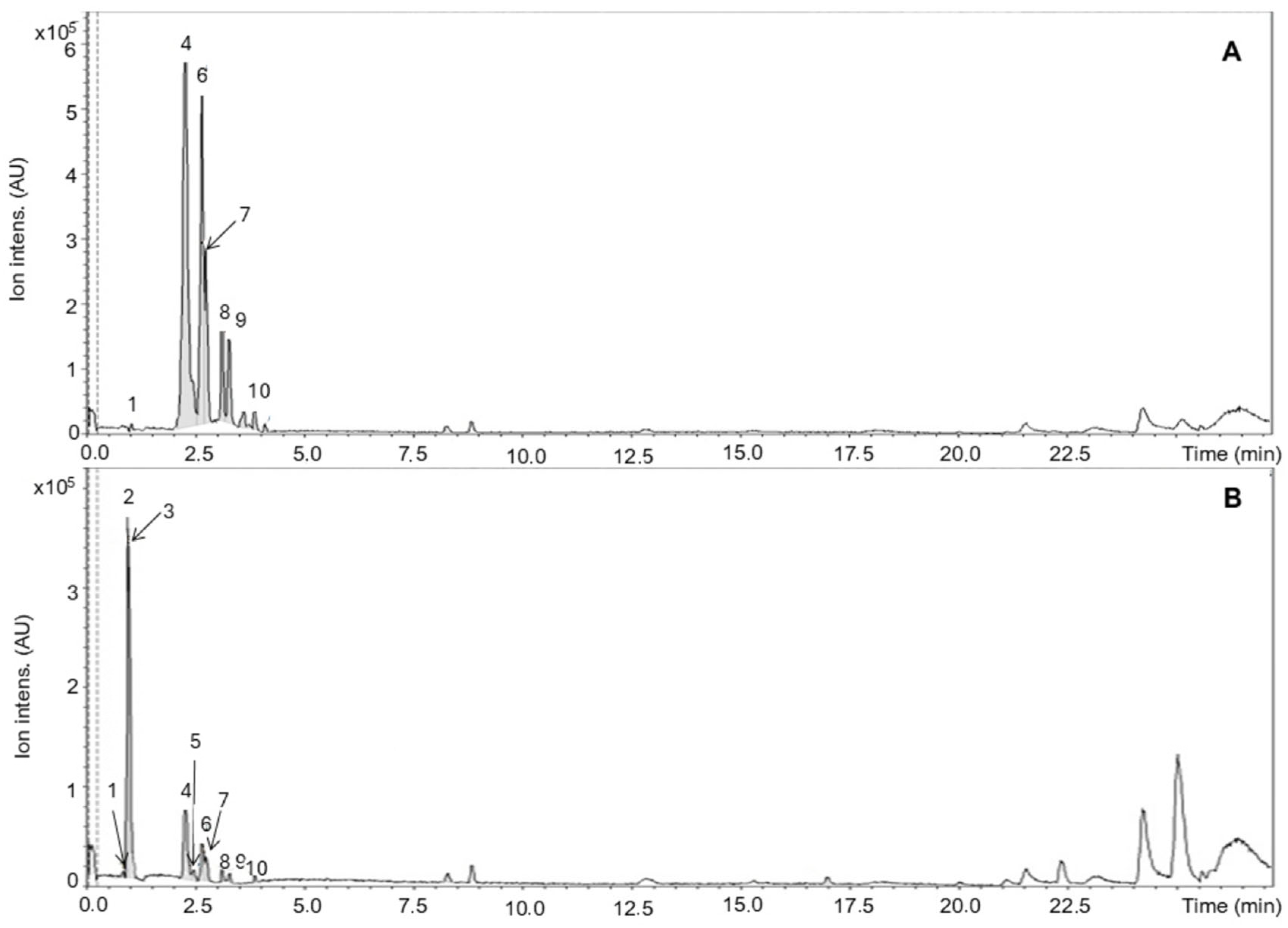
Figure 1 shows the HPLC–MS/MS chromatograms of the hydroalcoholic extract and ethyl acetate fraction derived from
E. oleracea seeds. In both chromatograms, peaks corresponding predominantly to polar compounds were observed, indicating their high abundance in the analyzed samples. Data obtained from ESI/MS analyses were essential to corroborate the presence of specific compounds previously detected by LC–MS/MS. Both samples exhibited signals corresponding to catechin (
m/
z 288.91), procyanidin dimer B1 (
m/
z 577.06), and petunidin 3-O-(6″-p-coumaroyl-glucoside) (
m/
z 623.25).
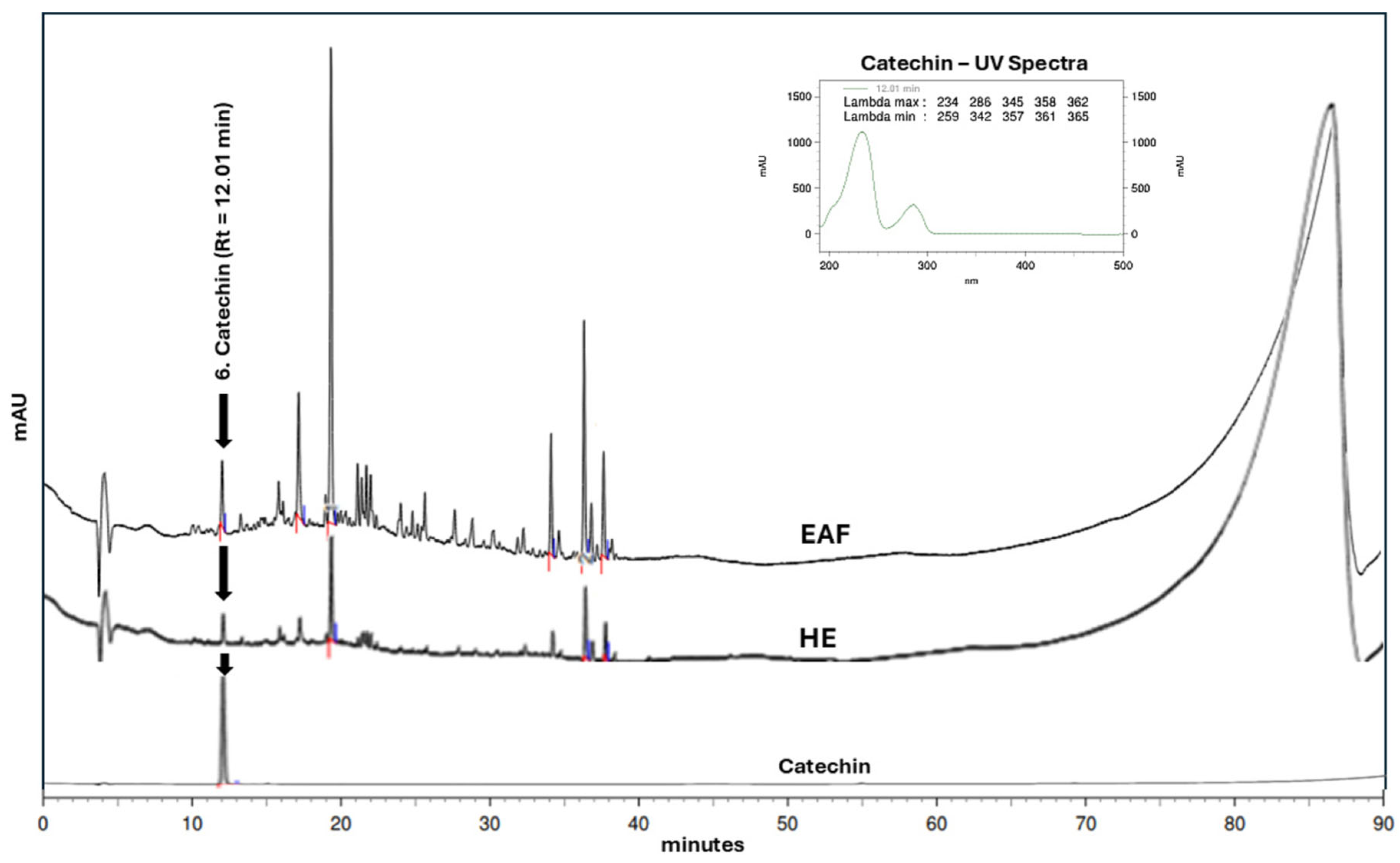
To confirm the presence of catechin in both samples, HPLC analyses were performed by comparing the chromatographic profiles of the hydroalcoholic extract and the ethyl acetate fraction with that of a catechin reference standard (
Figure 2). These data, together with the mass spectrometry results described above, confirmed the presence of catechin in both the hydroalcoholic extract (HE) and the ethyl acetate fraction (EAF). Moreover, differences in signal intensity between the samples suggest a higher catechin content in the ethyl acetate fraction.
Overall, the chromatographic profiles of the analyzed samples were highly similar, differing mainly in the relative concentrations of specific constituents.
As reported by our group and other authors, catechins and procyanidins are the predominant compounds in bioproducts derived from açaí seeds [
28,
32,
33,
34,
35]. These molecules belong to the flavonoid class of polyphenols and are widely recognized for their diverse biological activities. Previous studies have demonstrated that catechins and procyanidins exhibit strong antioxidant properties, contributing to the regulation of oxidative stress, a process implicated in both parasite survival and host–parasite interactions during
T. cruzi infection [
36]. In addition, their anti-inflammatory effects have been extensively documented, including the modulation of proinflammatory mediators. This activity is particularly relevant in the context of Chagas disease, in which inflammation plays a central role in tissue damage and disease progression [
37]. Collectively, these properties place catechins and procyanidins as promising bioactive molecules in the search for novel antiparasitic agents or adjuvants for Chagas disease therapy.
Within this antiparasitic framework, the evaluation of potential synergistic, additive, or antagonistic interactions between catechin and procyanidin becomes particularly relevant. Combination-based approaches have gained increasing attention as strategies to enhance therapeutic efficacy, reduce required drug concentrations, and potentially mitigate toxicity and resistance associated with current chemotherapeutic options [
38]. Natural products often act on multiple cellular targets, and the combined effects of structurally related polyphenols may potentiate parasite killing or modulate stress-response pathways in
T. cruzi. Accordingly, future studies should investigate these interactions using established pharmacological tools, such as isobologram analysis and the determination of the fractional inhibitory concentration index (FICI), which are widely applied to assess compound interactions in antiparasitic and antimicrobial research [
38,
39]. Such analyses would enable a more refined evaluation of whether catechins and procyanidins act synergistically against
T. cruzi, thereby supporting the rational development of optimized combinations or phytochemical-based therapeutic strategies for Chagas disease.
3.2. Treatment with Hydroalcoholic Extract and Fractions of E. oleracea Exhibits Low or No Toxicity to Peritoneal Macrophages
Assessing the cell viability of extracts and their fractions is essential for elucidating potential cytotoxic effects [
40]. In this study, the cytotoxic effects of the hydroalcoholic extract and the ethyl acetate, aqueous, hexane, and dichloromethane fractions obtained from açaí seeds was evaluated in peritoneal macrophages derived from Swiss Webster mice. Murine peritoneal macrophages were selected as a biologically relevant primary cell model, as these immune cells play a central role in
Trypanosoma cruzi infection and parasite control in vivo, particularly through nitric oxide-mediated mechanisms. Moreover, their use enables the assessment of intracellular amastigote survival and host–parasite interactions, thereby complementing data generated using immortalized cell lines.
No significant cytotoxicity was observed after 24 or 48 h of treatment, with CC
50 values exceeding 500 µg/mL for all extracts and fractions tested. After 72 h of exposure, the hydroalcoholic extract exhibited a CC
50 of 433 µg/mL, while the aqueous fraction presented a CC
50 of 467.5 µg/mL, indicating a time-dependent increase in cytotoxicity toward peritoneal macrophages (
Table 2).
Comparable findings were reported by Filho et al. (2023) [
31], who evaluated the cytotoxic effects of a hydroalcoholic extract from açaí seeds on CCD-1072Sk fibroblasts. In that study, cytotoxicity was both time- and concentration-dependent, with significant effects observed only after a 72 h exposure [
31].
In contrast, the ethyl acetate, hexane, and dichloromethane fractions did not exhibit cytotoxic effects), even after 72 h of treatment, with CC
50 values remaining above 500 µg/mL (
Table 2). These results are consistent with those reported by Xavier et al. (2021) [
32], who demonstrated the absence of cytotoxicity of the ethyl acetate fraction in RAW 264.7 macrophages following 48 h of exposure [
32].
Supporting these observations, Barros Dias et al. (2024) [
41], published a comprehensive review analyzing 72 studies on the biological activities and pharmacological properties of açaí seeds, concluding that these bioproducts generally do not exhibit cytotoxic effects and present a promising safety profile. Nevertheless, the authors emphasized the need for further clinical investigations to elucidate the bioavailability, metabolic pathways, and pharmacokinetic properties of açaí seed extracts. Such data are essential for accurately assessing their safety and therapeutic potential [
41].
Although the hydroalcoholic extract and fractions of E. oleracea seeds did not induce marked cytotoxicity in peritoneal macrophages under the experimental conditions employed in this study, this favorable safety profile should be interpreted with caution. Phenolic compounds, including catechins and proanthocyanidins, which are among the main constituents reported for açaí seeds, have been widely documented to exert dose-dependent cytotoxic effects in various mammalian cell types, particularly epithelial and cancer cell lines. Therefore, the lack of cytotoxicity observed in macrophages does not necessarily imply generalized cellular safety. In this context, further investigations addressing the pharmacokinetics, bioavailability, metabolic fate, and comprehensive toxicity profiles of E. oleracea seed-derived bioproducts in both in vitro and in vivo models are warranted to better define their therapeutic window and translational potential.
3.3. Antiparasitic Activity of the Hydroalcoholic Extract and Fractions from Euterpe oleracea Seeds
The antiparasitic activity of the hydroalcoholic extract, ethyl acetate fraction, and the aqueous fraction obtained from açaí seeds was evaluated against epimastigotes, bloodstream tripomastigotes, cell culture-derived trypomastigotes (CCTs) and intracellular amastigote forms of T. cruzi (Y strain).
Regarding epimastigote forms, all samples exhibited weak and time-dependent inhibitory effects, with no detectable trypanocidal activity after 24 or 48 h of exposure (IC
50 > 500 μg/mL). Only after prolonged incubation (72 h) did the hydroalcoholic extract and the ethyl acetate fraction show a reduction in IC
50 values, with the ethyl acetate fraction presenting the lowest IC
50 (199.4 ± 1.43 μg/mL). Nevertheless, all samples were markedly less active than benznidazole, and overall activity against epimastigotes was low, as shown in
Table 3.
In contrast, both hydroalcoholic extract and the ethyl acetate fraction exhibited trypanocidal activity against bloodstream trypomastigotes of
T. cruzi Y strain after 24 h of exposure, with IC
50 values of 308.30 µg/mL and 115.12 µg/mL, respectively (
Table 4). The ethyl acetate fraction showed higher activity against this infective stage, and a superior selectivity index compared with the hydroalcoholic extract.
Evaluation of activity against cell culture-derived trypomastigote forms demonstrated that both the hydroalcoholic extract and its fractions exerted inhibitory effects. Notably, the ethyl acetate fraction displayed the most potent activity, with the lowest IC
50 (123.46 ± 2.52 µg/mL) and the highest selectivity index (SI = 4.05) for this developmental stage, as detailed in
Table 5.
Intracellular amastigote forms were treated with the hydroalcoholic extract and the ethyl acetate fraction for 72 h. The hydroalcoholic extract exhibited a lower IC
50 value (40.04 ± 1.05 μg/mL) and a higher selectivity index (SI = 10.81) than the ethyl acetate fraction (IC
50 = 67.02 ± 1.15 μg/mL; SI = 7.46), indicating selective targeting of
T. cruzi by the hydroalcoholic extract (
Table 6). As expected, benznidazole showed low IC
50 values across all infective stages.
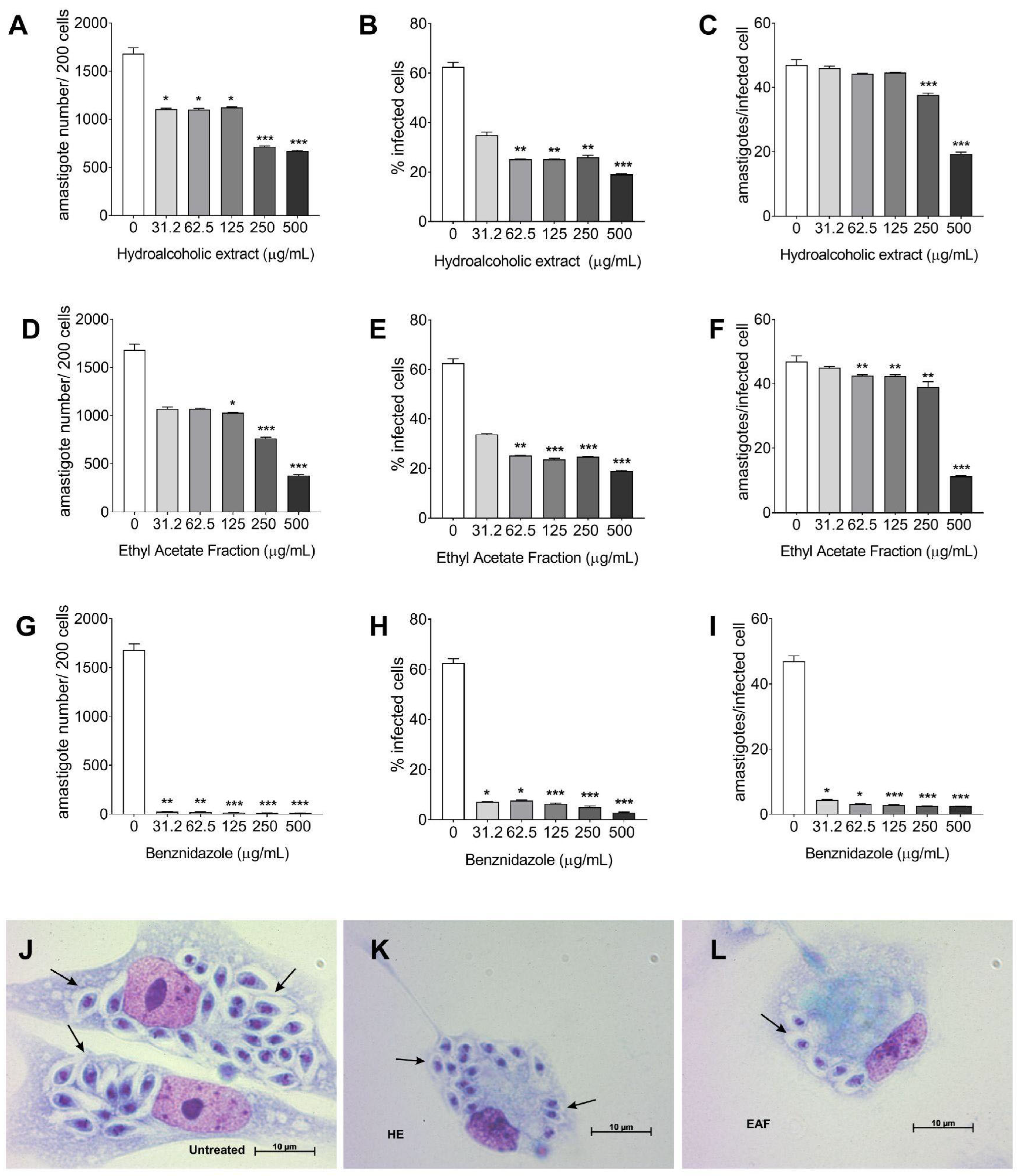
Analysis of infection parameters revealed that treatment with both the hydroalcoholic extract, and the ethyl acetate fraction resulted in a marked reduction in the total number of intracellular amastigotes and a decreased percentage of infected cells after 72 h at all tested concentrations (
Figure 3A–F). Notably, the ethyl acetate fraction demonstrated superior efficacy in reducing both the total number of amastigotes and the mean number of amastigotes per infected cell after 72 h, particularly at 500 µg/mL (
Figure 3F). Benznidazole treatment also significantly reduced all evaluated infection parameters.
The therapeutic potential of natural products against parasitic diseases has been extensively documented. Numerous studies have demonstrated trypanocidal activity of plant-derived bioproducts and have associated this activity with the presence of phenolic compounds, particularly flavonoids [
42]. In this context, the hydromethanolic extract of
Plinia cauliflora Mart. Kausel (jabuticaba) has been reported to exhibit anti-
Trypanosoma cruzi activity, attributed to its phenolic with antioxidant, antimicrobial, and antiparasitic properties. Phenolic compounds are known to interact with membrane lipids, proteins, and enzymes, leading to enzyme inactivation, mitochondrial dysfunction, and inhibition of metabolic pathways essential for parasite survival and differentiation [
43].
Similarly, Castañeda et al. (2021) [
44] evaluated the trypanocidal activity of ethanolic extracts obtained from six plant species against epimastigote and trypomastigote forms of
T. cruzi (Colombiana 058PUJ), while assessing cytotoxicity in peripheral blood mononuclear cells (PBMCs). Extracts from
Ageratina vacciniaefolia,
Clethra fimbriata, and
Siparuna sessiliflora exhibited significant antiparasitic activity against with low cytotoxicity. Chemical profiling revealed a predominance of flavonoids and terpenoids, likely contributing to the observed bioactivity [
44].
Additional evidence supporting the antiparasitic role of phenolic comes from studies on vestitol isolated from Brazilian red propolis, which demonstrated a strong correlation between flavonoid content and efficacy against
T. cruzi, reinforcing the therapeutic potential of these phytochemicals for Chagas disease (CD) [
40]. Likewise, flavonoids isolated from the aerial parts of
Delphinium staphisagria showed pronounced antiproliferative activity against epimastigote and amastigote forms of
T. cruzi in both in vitro and in vivo models [
45]. This activity has been largely attributed to catechins, identified as major constituents of active fractions [
46].
Catechin-class phenolic compounds have been consistently reported to exert antiparasitic activity against trypanosomatids, including
T. cruzi. Their mechanisms of action are primarily linked to interference with essential cellular processes, particularly those involved in redox homeostasis. Given the unique antioxidant metabolism of
T. cruzi, these compounds may increase parasite susceptibility to oxidative stress, leading to mitochondrial dysfunction, reduced ATP production, and parasite death. Gallated catechins have also been shown to interact directly with key parasitic enzymes. Although most mechanistic studies have been performed in
Leishmania species, the functional conservation of enzymes such as trypanothione reductase among trypanosomatids supports the hypothesis that similar mechanisms may operate in
T. cruzi [
46,
47].
Despite these promising findings, most available studies remain limited to in vitro assays, underscoring the need for further investigations to better elucidate the therapeutic potential of these compounds. Notably, to date, no studies have evaluated the trypanocidal activity of açaí seed extracts or their fractions, highlighting the innovative aspect of the present research.
Although epimastigote forms of
T. cruzi are not clinically relevant targets for drug discovery in Chagas disease, since this developmental stage occurs exclusively in the digestive tract of triatomine vectors, epimastigotes remain useful for preliminary screening due to their ease of cultivation and experimental reproducibility [
40,
44,
48]. Moreover, targeting this stage may contribute indirectly to transmission control by reducing parasite burden in triatomine vectors [
49].
Taken together, these findings indicate that açaí seed extracts and fractions display limited activity against epimastigote forms of T. cruzi, reinforcing that this developmental stage is not predictive of therapeutic efficacy. Therefore, the interpretation of antiparasitic potential in this study is primarily based on results obtained against infective trypomastigote forms and intracellular amastigotes, which are directly relevant to mammalian infection and disease progression.
According to the Drugs for Neglected Diseases initiative (DNDi), promising drug candidates for Chagas disease should exhibit activity against both intracellular amastigotes and trypomastigotes, with a selectivity index greater than 10 [
2]. The inclusion of both evolutionary forms in drug discovery studies is essential due to their central role in parasite infectivity and persistence within vertebrate hosts [
50].
When screening trypanocidal activity against trypomastigote forms, it is critical to consider that these parasites do not replicate and exhibit a limited lifespan. As a result, assays must be conducted within a 24 h period to prevent loss of viability or differentiation into epimastigote-like forms. Typically, bloodstream trypomastigotes and those derived from cell cultures—whether genetically modified or not—are employed. These infective stages predominate during the acute phase of Chagas disease [
50]. The experimental design using these evolutive forms may underestimate the activity of slow-acting compounds, whose trypanocidal effects might require longer exposure times to become evident. Accordingly, while the 24 h exposure provides a robust and standardized assessment of acute trypanocidal activity, additional assays using alternative experimental approaches may be necessary in future studies to better evaluate delayed or cumulative antiparasitic effects.
While the hydroalcoholic extract and fractions from açaí seeds showed measurable activity against both cell culture-derived and bloodstream trypomastigote forms, all selectivity indices remained below the recommended threshold for progression in the Chagas disease drug discovery pipeline [
2]. These results suggest that these bioproducts may be classified as early-stage hits, warranting further investigation through bioactivity-guided fractionation and optimization to enhance potency and selectivity [
2].
An essential aspect of CD drug screening is the use of experimental models that accurately reproduce the interactions between
T. cruzi and host immune cells. Targeting the intracellular amastigotes of
T. cruzi is critical, considering their persistence in infected individuals throughout the disease’s progression. Additionally, the chronic phase of CD remains a significant challenge, as effective therapeutic options are lacking at that stage [
50]. Assays targeting the intracellular amastigotes in macrophages are particularly informative, as macrophage activation and nitric oxide production play central roles in parasite control [
51]. In this context, treatment of
T. cruzi-infected peritoneal macrophages demonstrated that the hydroalcoholic extract achieved a selectivity index greater than 10, indicating selective targeting of intracellular amastigotes.
Although a favorable selectivity index was observed only for the hydroalcoholic extract against intracellular amastigotes, complementary studies, including in vivo assays, pharmacokinetic analyses, and toxicity profiling, are necessary to further define the therapeutic potential of Euterpe oleracea seed-derived bioproducts against T. cruzi.
3.4. The Treatment with Hydroalcoholic Extract and the Ethyl Acetate Fraction of E. oleracea Seeds Reduces the Cell Viability of Cell-Derived Culture Trypomastigotes Inducing Death by Late Apoptosis
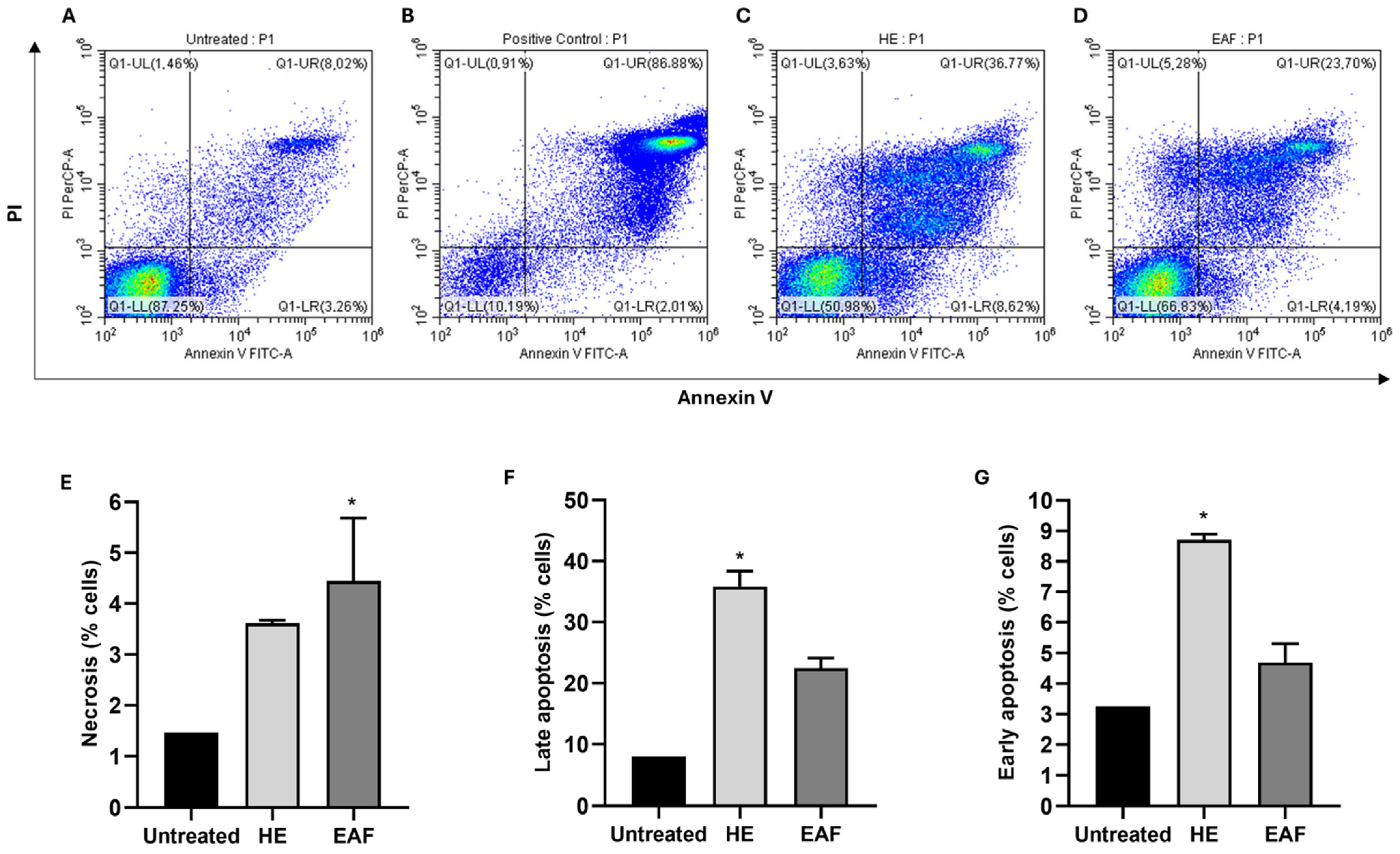
To investigate the cellular effects induced by the hydroalcoholic extract and the ethyl acetate fraction of Euterpe oleracea seeds on culture-derived Trypanosoma cruzi trypomastigotes, flow cytometry analysis using Annexin V-FITC and propidium iodide (PI) staining was employed as an exploratory approach. This strategy allowed the characterization of alterations in plasma membrane integrity and cell death–associated phenotypes, providing mechanistic insight into the cellular impact of these candidate antiparasitic compounds. The combined staining enables discrimination between parasites exhibiting phosphatidylserine (PS) externalization and those with advanced membrane permeabilization, which are commonly interpreted as early and late stages of cell death in eukaryotic cells.
Treatment with 253 µg/mL of the hydroalcoholic extract for 24 h resulted in a pronounced reduction in parasite viability, decreasing from 87% in untreated controls to 50%. Within the treated population, 8.71% of parasites were Annexin V–positive, 3.61% were exclusively PI–positive, and a substantial fraction (35.81%) exhibited dual Annexin V/PI staining, indicative of extensive membrane damage. Similarly, exposure to 123 µg/mL of the ethyl acetate fraction for 24 h reduced viability from 87% to 67%, with 4.69% Annexin V–positive cells, 4.44% PI–positive cells, and 22.48% dual-stained parasites (
Table 7;
Figure 4A–F).
Although Annexin V/PI cytometry is widely used to classify apoptotic and necrotic cell populations in metazoans [
52], its interpretation in trypanosomatids requires particular caution. Genomic and biochemical studies have demonstrated that
Trypanosoma and
Leishmania species lack several key components of the canonical apoptotic machinery, including caspases, Bcl-2 family proteins, and death receptors, which are central to apoptosis signaling in higher eukaryotes [
53,
54,
55]. Consequently, Annexin V binding and PI uptake in
T. cruzi trypomastigotes should be interpreted primarily as indicators of PS externalization and loss of plasma membrane integrity, respectively, rather than as definitive evidence of apoptosis.
Despite these limitations, the use of apoptosis-like markers remains a valuable phenotypic tool to assess drug-induced cellular damage in trypanosomatids, particularly when interpreted within an appropriate conceptual framework. Similar Annexin V/PI profiles, characterized by a predominance of dual-stained parasites suggestive of late-stage or irreversible cellular damage, have been reported for other natural products with trypanocidal activity, including the ethanolic extract of
Physalis angulata, which induced extensive membrane disruption and loss of parasite viability in
T. cruzi [
56,
57]. In this context, our findings demonstrate that both the hydroalcoholic extract and the ethyl acetate fraction of
E. oleracea seeds significantly compromise parasite viability, with a marked accumulation of Annexin V/PI–positive populations.
Taken together, these results support the conclusion that the tested treatments induce severe and irreversible cellular damage consistent with apoptosis-like or late-stage cell death phenotypes in T. cruzi trypomastigotes. While the underlying molecular pathways cannot be definitively classified as apoptotic, the observed membrane alterations and loss of parasite viability reinforce the antiparasitic potential of E. oleracea seed-derived products. These findings warrant further investigation using complementary approaches, including assays of mitochondrial membrane potential and alternative markers of regulated cell death, to better elucidate the mechanisms involved.



 ,
,