Ecological Restoration of Limestone Tailings in Arid Regions: A Synergistic Substrate–Plant Approach
Simple Summary
Abstract
1. Introduction
2. Materials and Methods
2.1. Experimental Materials
2.2. The Design of the Experiment
2.3. Greenhouse Conditions and Growth Management
2.4. Harvest and Sampling
2.5. Soil Physicochemical Analysis
2.6. Statistical Analyses
3. Results
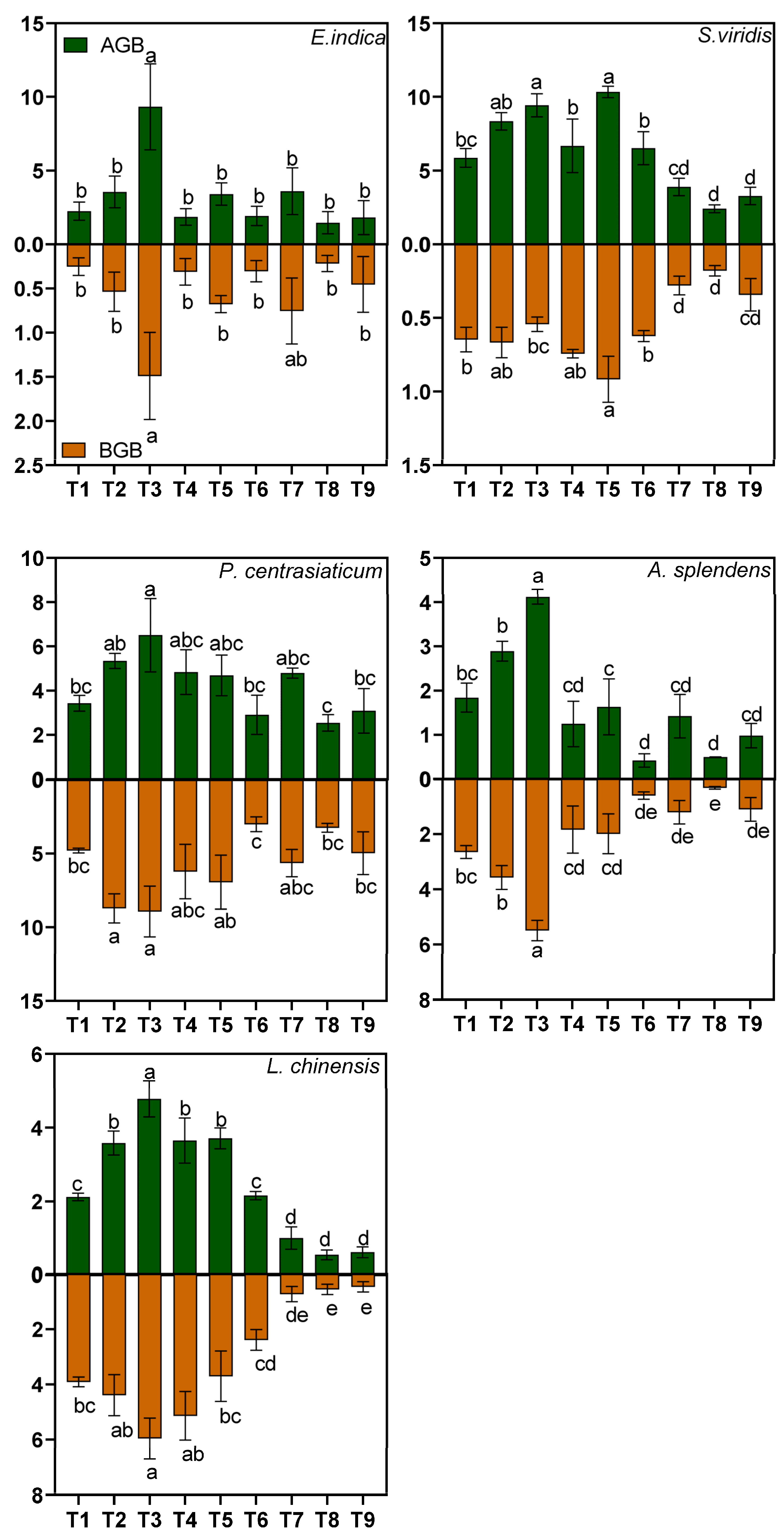
3.1. Plant Biomass Responses to Substrate, Water, and Fertilization Treatments
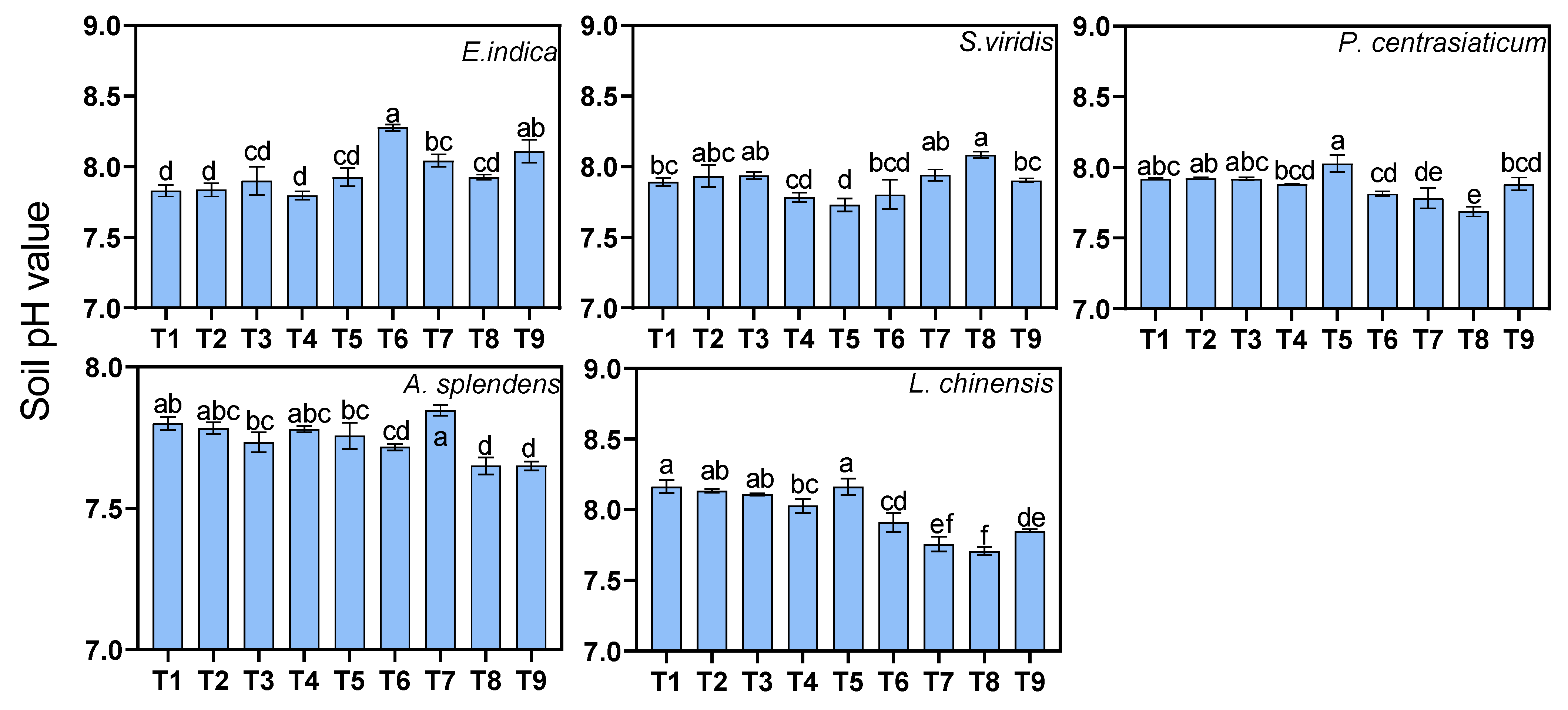
3.2. Soil pH Responses
3.3. Soil Nutrient Dynamics Responses
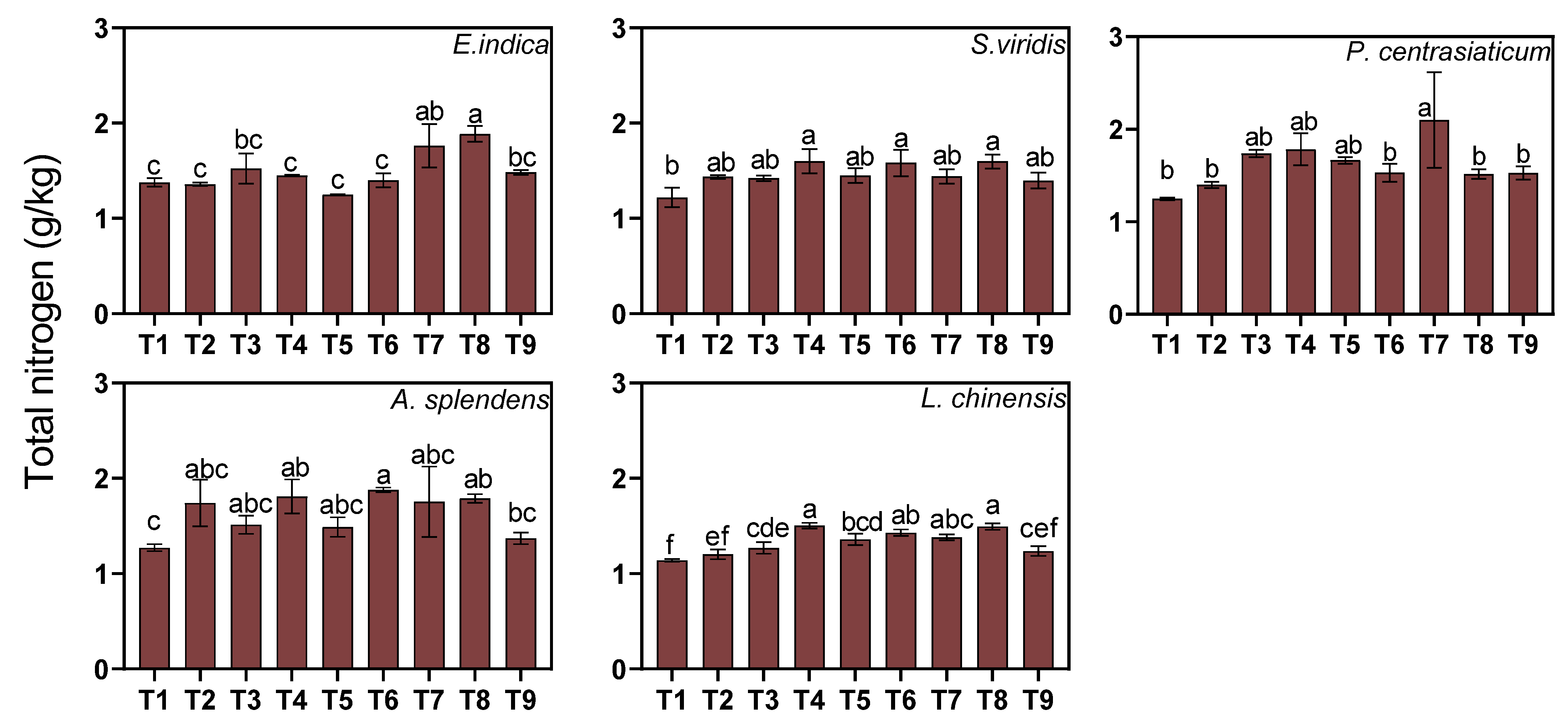
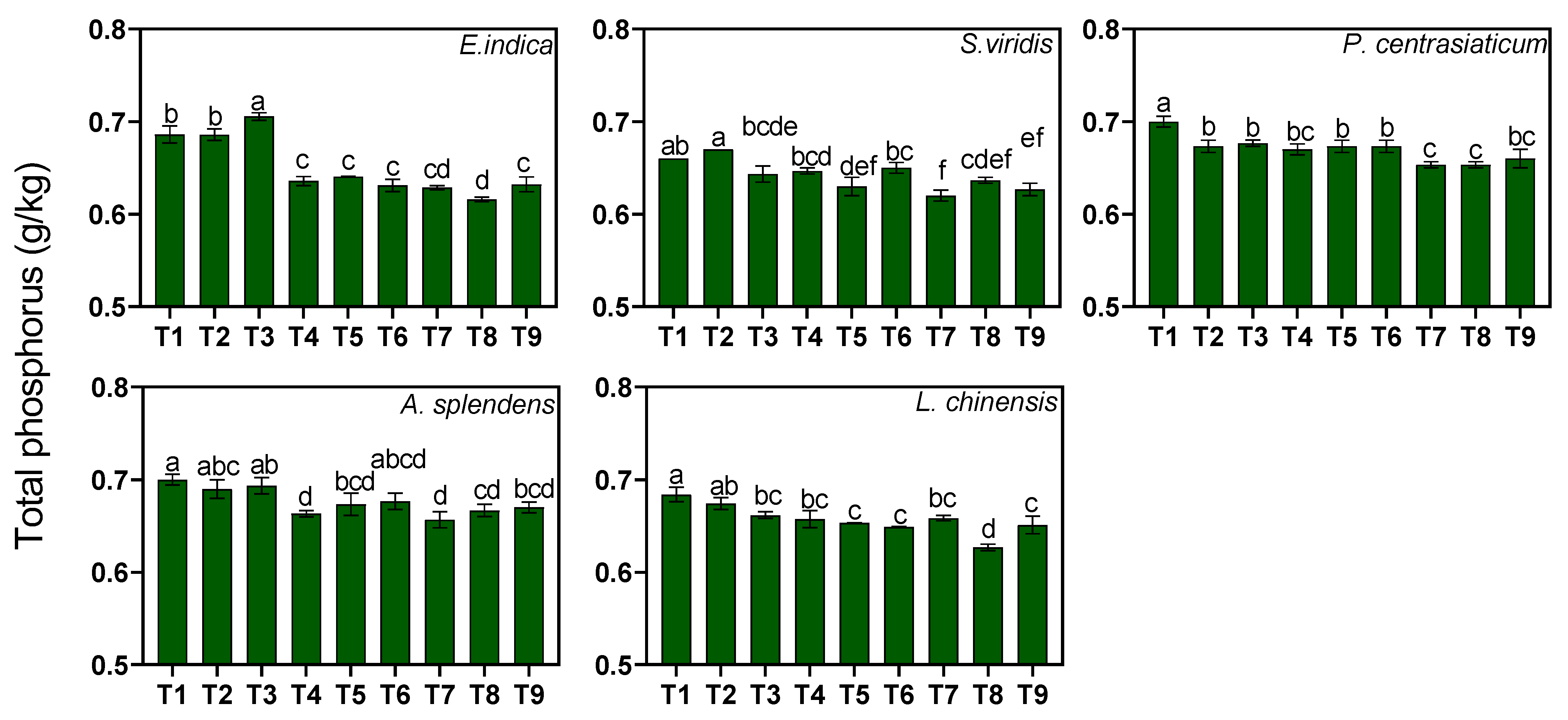
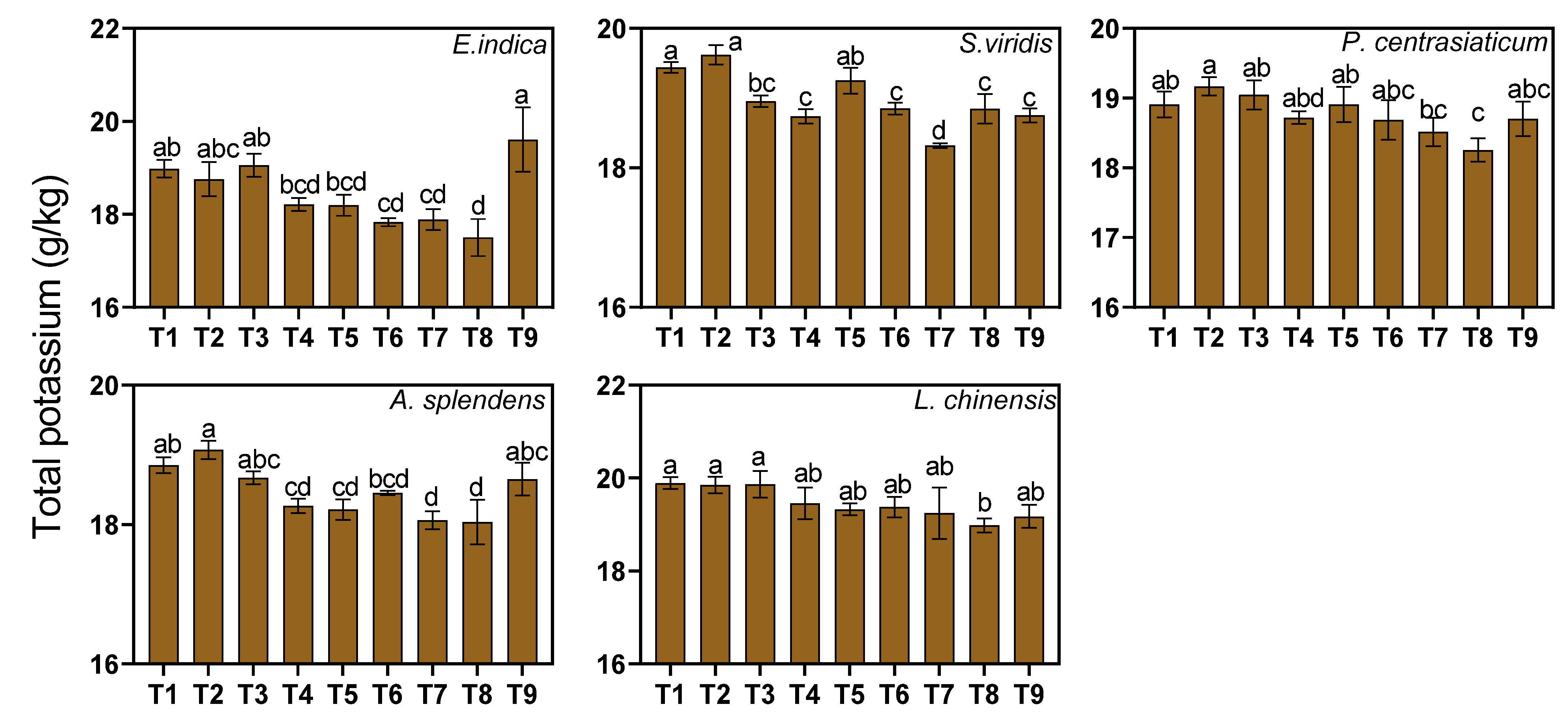
3.3.1. Changes in Total Soil Nutrients
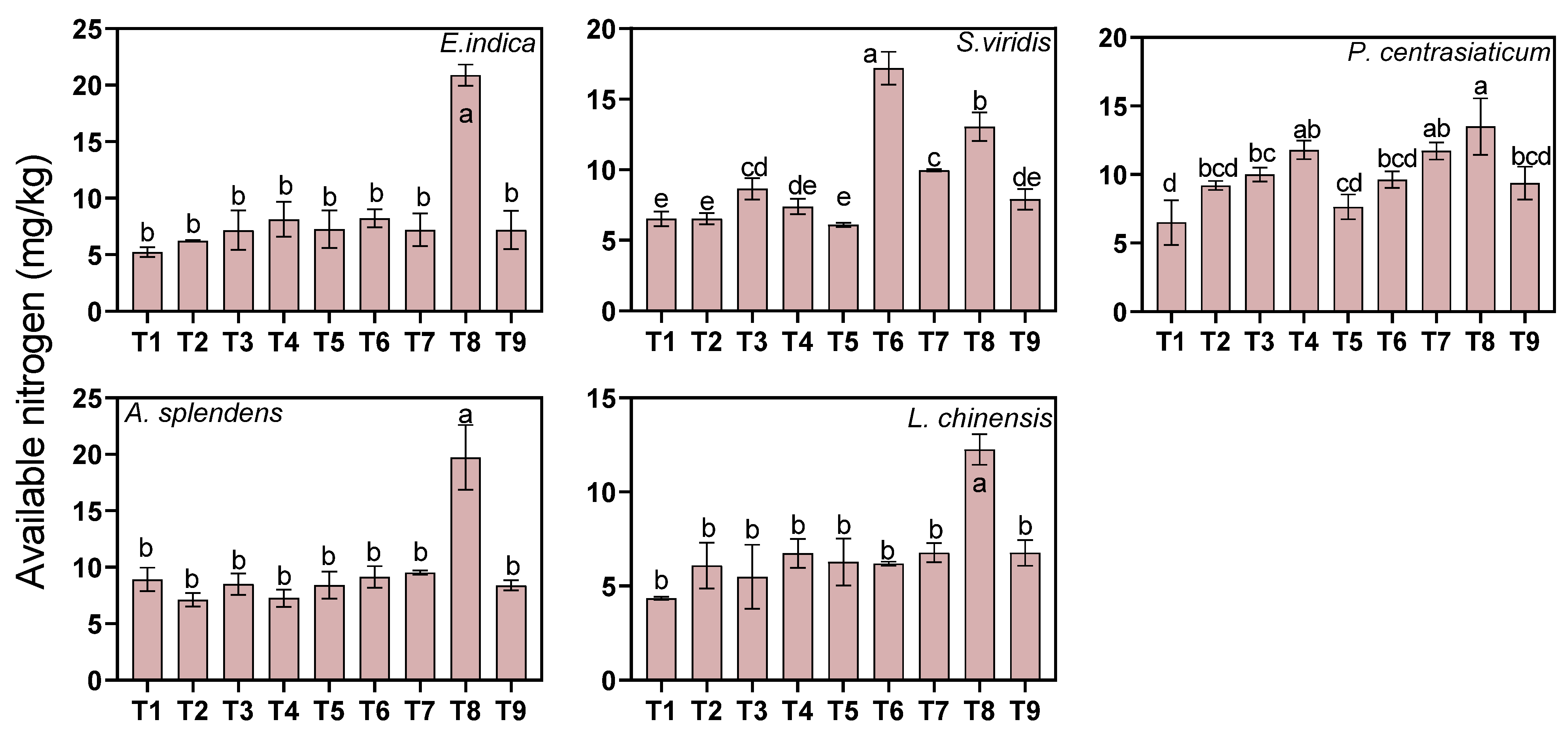
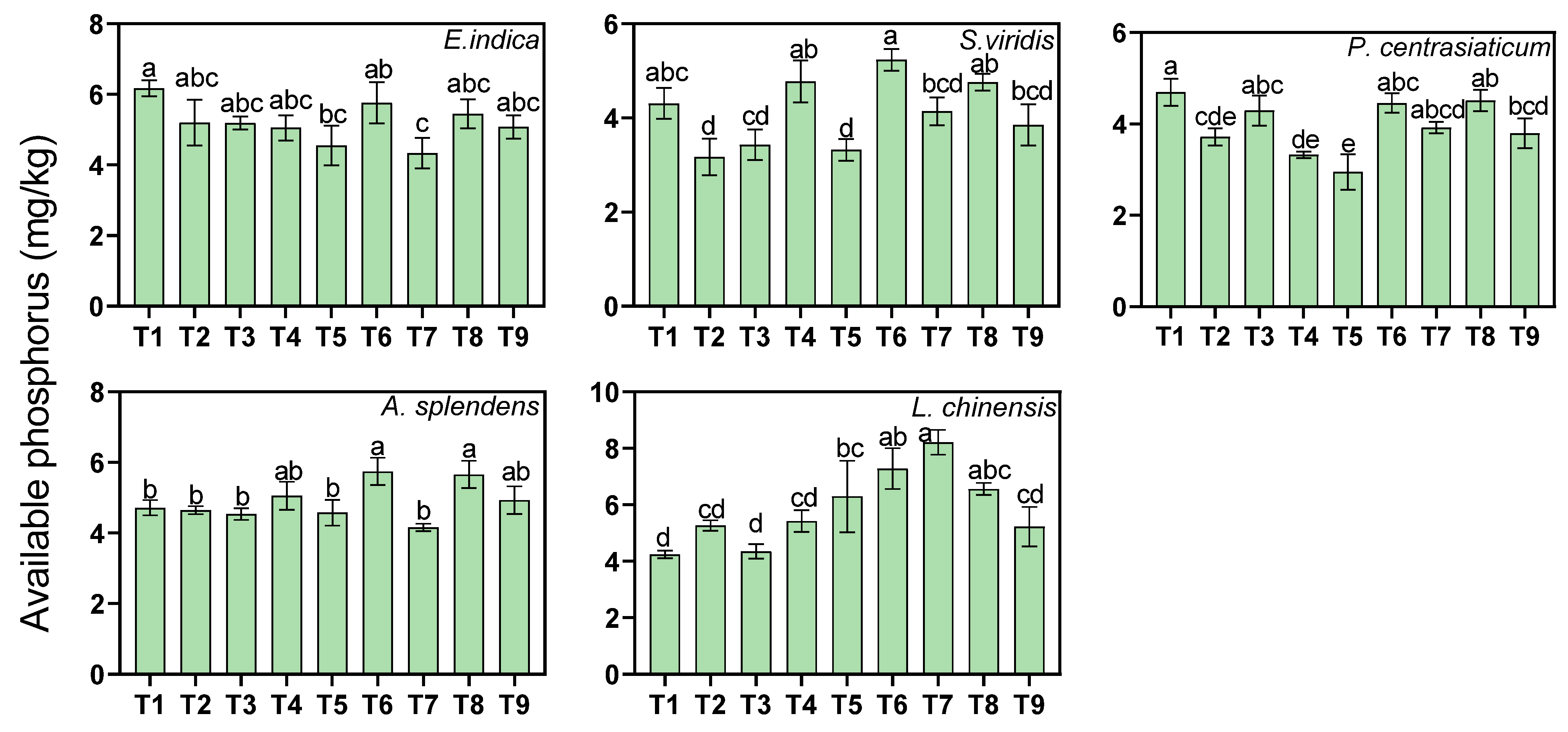
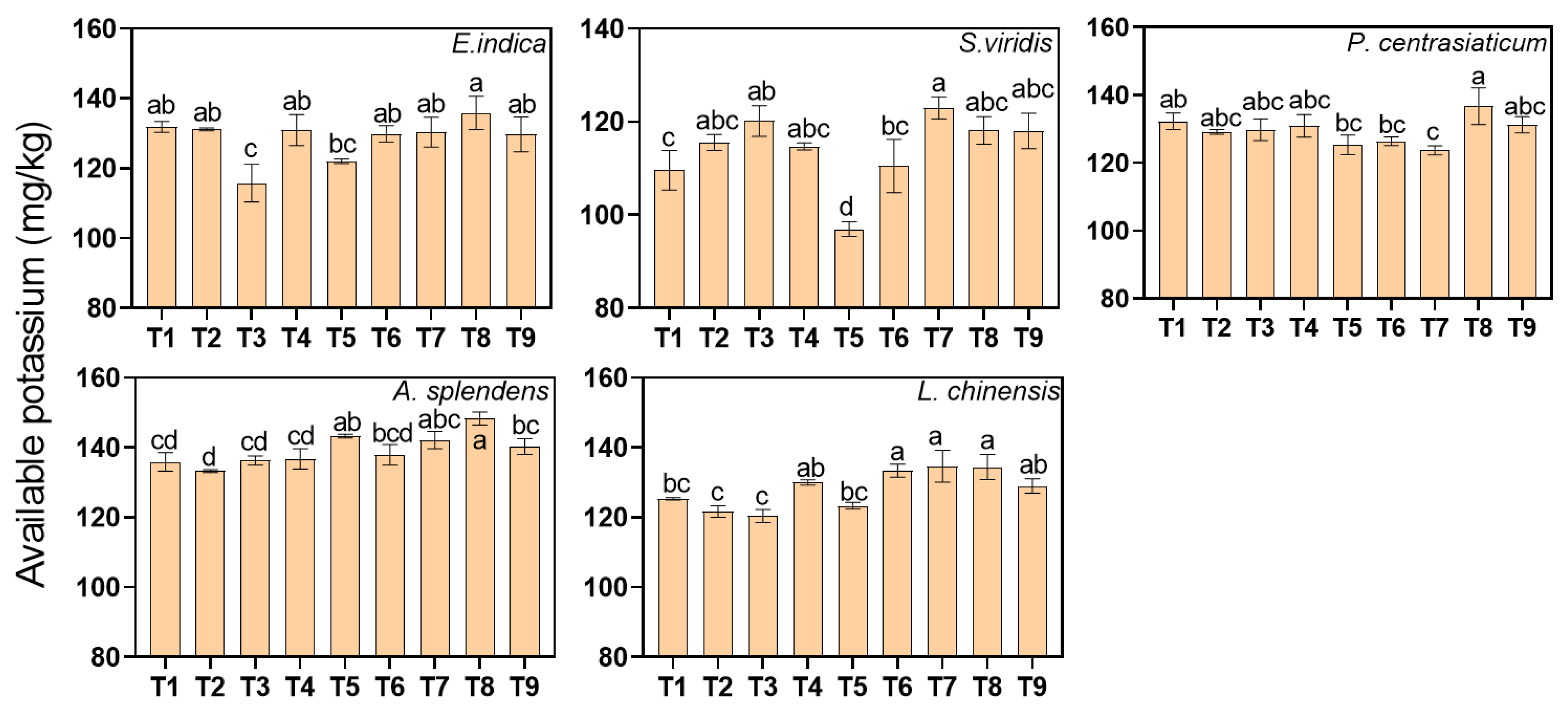
3.3.2. Changes in Soil Available Nutrients
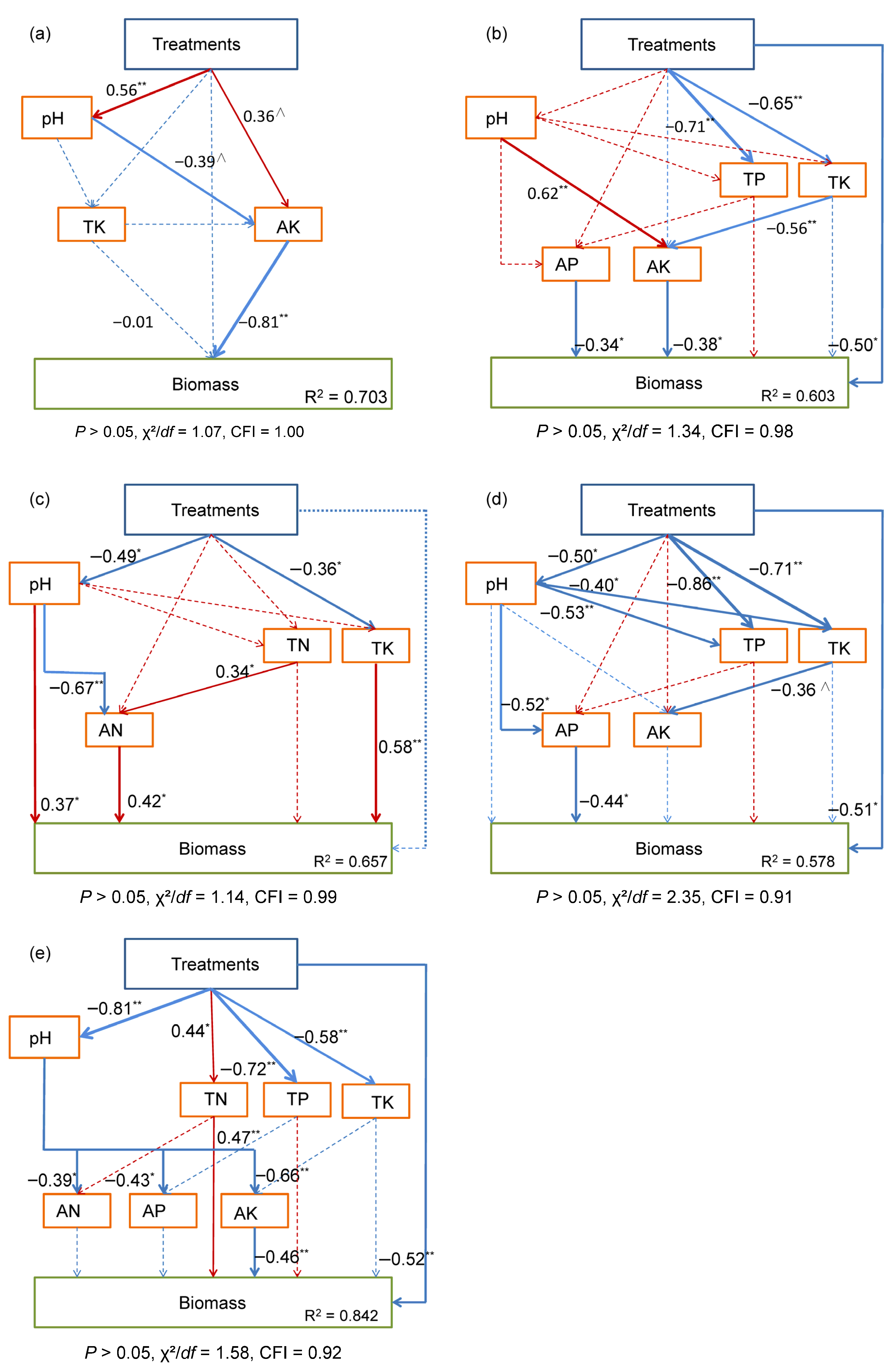
3.4. Relationships Between Plant Biomass and Soil Physicochemical Properties
3.5. Optimal Plant Selection
4. Discussion
4.1. Substrate and Water–Nutrient Regulation
4.2. Shifts in Potassium Pool Equilibrium Driven by Plant–Soil Interactions
4.3. Optimal Plant Selection
5. Conclusions
Author Contributions
Funding
Institutional Review Board Statement
Informed Consent Statement
Data Availability Statement
Acknowledgments
Conflicts of Interest
References
- Mohd Isha, N.S.; Mohd Kusin, F.; Ahmad Kamal, N.M.; Syed Hasan, S.N.M.; Molahid, V.L.M. Geochemical and mineralogical assessment of sedimentary limestone mine waste and potential for mineral carbonation. Environ. Geochem. Health 2021, 43, 2065–2080. [Google Scholar] [CrossRef] [PubMed]
- Zhou, W.; Yang, K.; Bai, Z.; Cheng, H.; Liu, F. The development of topsoil properties under different reclaimed land uses in the Pingshuo opencast coalmine of Loess Plateau of China. Ecol. Eng. 2017, 100, 237–245. [Google Scholar] [CrossRef]
- Xu, H.; Ai, Z.; Qu, Q.; Wang, M.; Liu, G.; Xue, S. Invasibility and recoverability of a plant community following invasion depend on its successional stages. Soil Ecol. Lett. 2022, 4, 171–185. [Google Scholar] [CrossRef]
- Araujo, F.S.; Taborda-Llano, I.; Nunes, E.B.; Santos, R.M. Recycling and reuse of mine tailings: A review of advancements and their implications. Geosciences 2022, 12, 319. [Google Scholar] [CrossRef]
- Wang, L.L.; Wang, F.; Wang, S.F.; Huang, Y.; Zhang, Z.; Bai, Z.; Cao, Y. Analysis of differences in chemical properties of reconstructed soil under different proportions of topsoil substitute materials. Environ. Sci. Pollut. Res. 2021, 28, 31230–31245. [Google Scholar] [CrossRef]
- Zhu, Q.; Hu, Q.; Liu, X.; Wu, Y. Topsoil alternatives selection for surface coal-mined land reclamation in Inner Mongolia, China: An experimental study. Int. J. Min. Reclam. Environ. 2021, 35, 421–434. [Google Scholar] [CrossRef]
- Du, T.; Wang, D.; Bai, Y.; Zhang, Z. Optimizing the formulation of coal gangue planting substrate using wastes: The sustainability of coal mine ecological restoration. Ecol. Eng. 2020, 143, 105669. [Google Scholar] [CrossRef]
- Bateman, A.M.; Erickson, T.E.; Merritt, D.J.; Veneklaas, E.J.; Muñoz-Rojas, M. Native plant diversity is a stronger driver for soil quality than inorganic amendments in semi-arid post-mining rehabilitation. Geoderma 2021, 394, 115001. [Google Scholar] [CrossRef]
- Hu, Z.; Kang, J.T.; Wei, X.J.; Ji, J.J.; Wang, W.J. Experimental research on improvement of reclaimed soil properties and plant production based on different ratios of coal-based mixed materials. Trans. Chin. Soc. Agric. Eng. 2007, 23, 120–124. (In Chinese) [Google Scholar] [CrossRef]
- Duan, X.W.; Zuo, W.Q.; Yang, S.K.; Liu, Y.W.; Jia, H.L. Study on ecological restoration of grassland in alpine and anoxic mining areas—Taking the Muli coalfield in Qinghai Province as an example. Min. Res. Dev. 2020, 40, 156–160. [Google Scholar] [CrossRef]
- Zornoza, R.; Faz, A.; Carmona, D.M.; Martínez-Martínez, S.; Acosta, J.A. Plant cover and soil biochemical properties in a mine tailing pond five years after application of marble wastes and organic amendments. Pedosphere 2012, 22, 22–32. [Google Scholar] [CrossRef]
- Kabas, S.; Faz, A.; Acosta, J.A.; Zornoza, R.; Martínez-Martínez, S.; Carmona, D.M.; Bech, J. Effect of marble waste and pig slurry on the growth of native vegetation and heavy metal mobility in a mine tailing pond. J. Geochem. Explor. 2012, 123, 69–76. [Google Scholar] [CrossRef]
- Miyasaka, S.C.; Grunes, D.L. Root zone temperature and calcium effects on phosphorus, sulfur, and micronutrients in winter wheat forage. Agron. J. 1997, 89, 743–748. [Google Scholar] [CrossRef]
- Zhang, L.; Wang, J.; Bai, Z.; Lv, C. Effects of vegetation on runoff and soil erosion on reclaimed land in an opencast coal-mine dump in a loess area. Catena 2015, 128, 44–53. [Google Scholar] [CrossRef]
- Tripathi, N.; Singh, R.S.; Hills, C.D. Soil carbon development in rejuvenated Indian coal mine spoil. Ecol. Eng. 2016, 90, 482–490. [Google Scholar] [CrossRef]
- Bacchetta, G.; Cappai, G.; Carucci, A.; Tamburini, E. Use of native plants for the remediation of abandoned mine sites in Mediterranean semiarid environments. Bull. Environ. Contam. Toxicol. 2015, 94, 326–333. [Google Scholar] [CrossRef]
- Karaca, O.; Cameselle, C.; Reddy, K.R. Mine tailing disposal sites: Contamination problems, remedial options and phytocaps for sustainable remediation. Rev. Environ. Sci. Biotechnol. 2018, 17, 205–228. [Google Scholar] [CrossRef]
- Gastauer, M.; Ramos, S.J.; Caldeira, C.F.; Siqueira, J.O. Reintroduction of native plants indicates the return of ecosystem services after iron mining at the Urucum Massif. Ecosphere 2021, 12, e03762. [Google Scholar] [CrossRef]
- Baribault, T.W.; Kobe, R.K.; Finley, A.O. Tropical tree growth is correlated with soil phosphorus, potassium, and calcium, though not for legumes. Ecol. Monogr. 2012, 82, 189–203. [Google Scholar] [CrossRef]
- Zhao, H.; Wang, Q.R.; Fan, W.; Song, G.H. The Relationship between Secondary Forest and Environmental Factors in the Southern Taihang Mountains. Sci. Rep. 2017, 16431. [Google Scholar] [CrossRef]
- Bremner, J.M.; Mulvaney, C. Nitrogen—Total. In Methods of Soil Analysis: Part 2 Chemical and Microbiological Properties; John Wiley & Sons, Inc.: Hoboken, NJ, USA, 1982; pp. 595–624. [Google Scholar] [CrossRef]
- Olsen, S.R.; Cole, C.V.; Watanabe, F.S.; Dean, L.A. Estimation of Available Phosphorus in Soils by Extraction with Sodium Bicarbonate; US Department of Agriculture: Washington, DC, USA, 1954.
- Knudsen, D.; Peterson, G.A.; Pratt, P.F. Lithium, sodium, and potassium. In Methods of Soil Analysis: Part 2 Chemical and Microbiological Properties, 2nd ed.; ASA and SSSA: Madison, WI, USA, 1982; Agronomy Monograph No. 9; pp. 225–246. [Google Scholar]
- Bao, S.D. Soil Analytical Methods of Agronomic Chemistry; China Agricultural Science and Technology Press: Beijing, China, 2005. (In Chinese) [Google Scholar]
- Li, Y.; Yang, Y.; He, J.; Guo, S.; An, X.; Li, Y.; Guo, R.; Lin, Y.; Zhang, R. Effects of different water and fertilizer treatments on the matrix properties and plant growth of tailings waste. Sci. Rep. 2025, 15, 3231. [Google Scholar] [CrossRef] [PubMed]
- Ma, Y.; Feng, T.; Li, Y.; Jin, Q. Adaptability of the Hippophae rhamnoides seedlings on different degrees of soil dressing for rocky desertification. J. Desert Res. 2021, 41, 228–233. (In Chinese) [Google Scholar] [CrossRef]
- Bulot, A.; Potard, K.; Bureau, F.; Bérard, A.; Dutoit, T. Ecological restoration by soil transfer: Impacts on restored soil profiles and topsoil functions. Restor. Ecol. 2017, 25, 354–366. [Google Scholar] [CrossRef]
- Trueman, I.; Mitchell, D.; Besenyei, L. The effects of turf translocation and other environmental variables on the vegetation of a large species-rich mesotrophic grassland. Ecol. Eng. 2007, 31, 79–91. [Google Scholar] [CrossRef]
- Nguyen, T.T.N.; Wallace, H.M.; Xu, C.Y.; Xu, Z.; Farrar, M.B.; Joseph, S.; Van Zwieten, L.; Bai, S.H. Short-term effects of organo-mineral biochar and organic fertilisers on nitrogen cycling, plant photosynthesis, and nitrogen use efficiency. J. Soils Sediments 2017, 17, 2763–2774. [Google Scholar] [CrossRef]
- Eziz, A.; Yan, Z.; Tian, D.; Han, W.; Tang, Z.; Fang, J. Drought effect on plant biomass allocation: A meta-analysis. Ecol. Evol. 2017, 7, 11002–11010. [Google Scholar] [CrossRef]
- Sherstneva, O.; Khlopkov, A.; Gromova, E.; Yudina, L.; Vetrova, Y.; Pecherina, A.; Kuznetsova, D.; Krutova, E.; Sukhov, V.; Vodeneev, V. Analysis of chlorophyll fluorescence parameters as predictors of biomass accumulation and tolerance to heat and drought stress of wheat (Triticum aestivum) plants. Funct. Plant Biol. 2021, 49, 155–169. [Google Scholar] [CrossRef]
- Liu, Z.P.; Shao, M.A.; Wang, Y.Q. Spatial patterns of soil total nitrogen and soil total phosphorus across the entire Loess Plateau region of China. Geoderma 2013, 197–198, 67–78. [Google Scholar] [CrossRef]
- Ashley, M.K.; Grant, M.; Grabov, A. Plant responses to potassium deficiencies: A role for potassium transport proteins. J. Exp. Bot. 2006, 57, 425–436. [Google Scholar] [CrossRef]
- Zörb, C.; Senbayram, M.; Peiter, E. Potassium in agriculture—Status and perspectives. J. Plant Physiol. 2014, 171, 656–669. [Google Scholar] [CrossRef]
- Das, S.K.; Ghosh, G.K. Developing biochar-based slow-release N-P-K fertilizer for controlled nutrient release and its impact on soil health and yield. Biomass Convers. Biorefinery 2023, 13, 13051–13063. [Google Scholar] [CrossRef]
- Etesami, H.; Emami, S.; Alikhani, H.A. Potassium solubilizing bacteria (KSB): Mechanisms, promotion of plant growth, and future prospects A review. J. Soil Sci. Plant Nutr. 2017, 17, 897–911. [Google Scholar] [CrossRef]
- Basak, B.B.; Biswas, D.R. Influence of potassium solubilizing microorganism (Bacillus mucilaginosus) and waste mica on potassium uptake dynamics by Sudan grass (Sorghum vulgare Pers.) grown under two Alfisols. Plant Soil 2009, 317, 235–255. [Google Scholar] [CrossRef]
- Chen, Y.; Ye, J.; Kong, Q. Potassium-solubilizing activity of bacillus aryabhattai SK1-7 and its growth-promoting effect on Populus alba L. Forests 2020, 11, 1348. [Google Scholar] [CrossRef]
- Olaniyan, F.T.; Alori, E.T.; Adekiya, A.O.; Ayorinde, B.B.; Daramola, F.Y.; Osemwegie, O.O.; Babalola, O.O. The use of soil microbial potassium solubilizers in potassium nutrient availability in soil and its dynamics. Ann. Microbiol. 2022, 72, 45. [Google Scholar] [CrossRef]
- Zhang, M.; Riaz, M.; Liu, B.; Xia, H.; Desouki, Z.; Jiang, C. Two-year study of biochar: Achieving excellent capability of potassium supply via alter clay mineral composition and potassium-dissolving bacteria activity. Sci. Total Environ. 2020, 717, 137286. [Google Scholar] [CrossRef]
- Niu, S.; Li, Z.; Xia, J.; Han, Y.; Wu, M.; Wan, S. Climatic warming changes plant photosynthesis and its temperature dependence in a temperate steppe of northern China. Environ. Exp. Bot. 2008, 63, 91–101. [Google Scholar] [CrossRef]
- Lundgren, M.R.; Osborne, C.P.; Christin, P.A. Deconstructing Kranz anatomy to understand C4 evolution. J. Exp. Bot. 2014, 65, 3357–3369. [Google Scholar] [CrossRef]
- Luo, Y.; Zhao, X.; Qu, H.; Zuo, X.; Wang, S.; Huang, W.; Luo, Y.Y.; Chen, M. Photosynthetic performance and growth traits in Pennisetum centrasiaticum exposed to drought and rewatering under different soil nutrient regimes. Acta Physiol. Plant. 2014, 36, 381–388. [Google Scholar] [CrossRef][Green Version]
- Luo, Y.; Zhao, X.; Allington, G.R.H.; Wang, L.; Huang, W.; Zhang, R.; Luo, Y.Y.; Xu, Z. Photosynthesis and growth of Pennisetum centrasiaticum (C4) is superior to Calamagrostis pseudophragmites (C3) during drought and recovery. Plants 2020, 9, 991. [Google Scholar] [CrossRef]
- Ren, A.Z.; Gao, Y.B.; Wang, J.L. Morphological plasticity of Pennisetum centrasiaticum clones in abandoned farmland in ecotone of farming and animal husbandry. J. Desert Res. 2000, 20, 34–38. (In Chinese) [Google Scholar]
- Ren, A.Z.; Gao, Y.B.; Liang, Y.; Chen, S.P.; Liu, S.; Liu, N. Effect of drought stress on clonal growth of Pennisetum Centrasiaticum and Leymus secalinus. J. Desert Res. 1999, 19, 30–34. (In Chinese) [Google Scholar]
- Liu, S.; Gao, Y.B.; Chen, S.P.; Ren, A.Z.; Liang, Y.; Liu, N. A preliminary study on the clonal growth and adaptive strategy of Pennisetum centrasiaticum and Leymus secalinus. J. Desert Res. 1999, 19, 76–79. (In Chinese) [Google Scholar]
- Chen, S.P.; Gao, Y.B.; Ren, A.Z.; Liang, Y.; Liu, S.; Liu, N. Ecological adaptability of Pennisetum centrasiaticum clones on farmland-sand dune ecotone of Keerqin sandy land. Chin. J. Appl. Ecol. 2002, 13, 45–49. (In Chinese) [Google Scholar] [CrossRef]
- Guo, J.; Li, Q. Effects of clonal integration on clonal growth in Pennisetum centrasiaticum. Chin. J. Grassl. 2008, 30, 43–48. [Google Scholar]
- Xu, Y.; Zhang, J.; Li, F. Germination, growth and rhizosphere effect of Setaria viridis grown in iron mine tailings. In Proceedings of the 2010 4th International Conference on Bioinformatics and Biomedical Engineering, Chengdu, China, 18–20 June 2010; IEEE: Piscataway, NJ, USA, 2010. [Google Scholar] [CrossRef]
- Nong, H.; Liu, J.; Chen, J.; Zhao, Y.; Wu, L.; Tang, Y.; Liu, W.; Yang, G.; Xu, Z. Woody plants have the advantages in the phytoremediation process of manganese ore with the help of microorganisms. Sci. Total Environ. 2023, 863, 160995. [Google Scholar] [CrossRef]
- Dekker, J. The foxtail (Setaria) species-group. Weed Sci. 2003, 51, 641–656. [Google Scholar] [CrossRef]
- Song, Z.; Wang, R.; Gao, J.; Fu, W.; Ma, T.; Yuan, Z.; Zhang, G. Community diversity analysis of phosphorus solubilizing bacteria in rhizosphere of spiny burrgrass Cenchrus longispinus. J. Plant Prot. 2022, 49, 1358–1366. [Google Scholar] [CrossRef]
- Zhong, W.; Shuai, Q.; Zeng, P.; Guo, Z.; Hu, K.; Wang, X.; Zeng, F.; Zhu, J.; Feng, X.; Lin, S. Effect of ecologically restored vegetation roots on the stability of shallow aggregates in ionic rare earth tailings piles. Agronomy 2023, 13, 993. [Google Scholar] [CrossRef]
- Hu, F.; An, M.; Wang, W.; Tian, X. Effects of artificial grass planting on ecological restoration of soil erosion areas in Hhigh-intensity karst rocky desertification. Guizhou For. Sci. Technol. 2024, 53, 1–5. (In Chinese) [Google Scholar] [CrossRef]
- Wang, Y.; Bai, D.; Luo, X.; Zhang, Y. Effects of Setaria viridis on heavy metal enrichment tolerance and bacterial community establishment in high-sulfur coal gangue. Chemosphere 2024, 351, 141265. [Google Scholar] [CrossRef]
- Hoekstra, N.J.; Suter, M.; Finn, J.A.; Husse, S.; Lüscher, A. Do belowground vertical niche differences between deep- and shallow-rooted species enhance resource uptake and drought resistance in grassland mixtures? Plant Soil 2015, 394, 21–34. [Google Scholar] [CrossRef]
- Ding, Y.; Huang, X.; Li, Y.; Liu, H.; Zhang, Q.; Liu, X.; Xu, J.; Di, H. Nitrate leaching losses mitigated with intercropping of deep-rooted and shallow-rooted plants. J. Soils Sediments 2021, 21, 364–375. [Google Scholar] [CrossRef]
- Ma, X.F.; Zhu, J.; Wang, Y.; Yan, W.; Zhao, C. Variations in water use strategies of sand-binding vegetation along a precipitation gradient in sandy regions, northern China. J. Hydrol. 2021, 600, 126539. [Google Scholar] [CrossRef]
- Zhang, Y.; Zhang, M.J.; Qu, D.Y.; Wang, S.; Argirious, A.A.; Wang, J.; Yang, Y. Water use characteristics of different pioneer shrubs at different ages in western Chinese Loess Plateau: Evidence from δ2H offset correction. J. Arid Land 2022, 14, 653–672. [Google Scholar] [CrossRef]
- Li, J.; Hu, S.J.; Sheng, Y.; He, X. Whole-plant water use and hydraulics of Populus euphratica and Tamarix ramosissima seedlings in adaption to groundwater variation. Water 2022, 14, 1869. [Google Scholar] [CrossRef]



| Experimental Group | Factors | Configuration Combination | ||
|---|---|---|---|---|
| A: Substrate Composition | B: Soil Moisture, % | C: Nitrogen Fertilization, g N·km−2 | ||
| T1 | Soil:tailings = 2:1 | 30 | 0 | A1B1C1 |
| T2 | Soil:tailings = 2:1 | 45 | 200 | A1B2C2 |
| T3 | Soil:tailings = 2:1 | 60 | 400 | A1B3C3 |
| T4 | Soil:tailings = 1:1 | 45 | 400 | A2B2C3 |
| T5 | Soil:tailings = 1:1 | 60 | 0 | A2B3C1 |
| T6 | Soil:tailings = 1:1 | 30 | 200 | A2B1C2 |
| T7 | Soil:tailings = 1:2 | 60 | 200 | A3B3C2 |
| T8 | Soil:tailings = 1:2 | 30 | 400 | A3B1C3 |
| T9 | Soil:tailings = 1:2 | 45 | 0 | A3B2C1 |
| E. indica | S. viridis | P. centrasiaticum | A. splendens | L. chinensis | |||||||||||
|---|---|---|---|---|---|---|---|---|---|---|---|---|---|---|---|
| A | B | C | A | B | C | A | B | C | A | B | C | A | B | C | |
| K1 | 52.23 | 19.21 | 26.58 | 76.43 | 48.77 | 64.14 | 113.18 | 59.79 | 83.74 | 61.68 | 19.01 | 30.58 | 31.47 | 14.50 | 19.36 |
| K2 | 25.46 | 25.60 | 32.06 | 77.47 | 60.16 | 60.97 | 85.81 | 99.53 | 91.23 | 23.19 | 34.89 | 30.35 | 28.56 | 23.56 | 20.25 |
| K3 | 24.94 | 57.81 | 43.99 | 31.17 | 76.14 | 59.96 | 72.82 | 112.49 | 96.84 | 16.62 | 47.59 | 40.56 | 6.53 | 28.50 | 26.95 |
| k1 | 5.80 | 2.13 | 2.95 | 8.49 | 5.42 | 7.13 | 12.58 | 6.64 | 9.30 | 6.85 | 2.11 | 3.40 | 3.50 | 1.61 | 2.15 |
| k2 | 2.83 | 2.84 | 3.56 | 8.61 | 6.68 | 6.77 | 9.53 | 11.06 | 10.14 | 2.58 | 3.88 | 3.37 | 3.17 | 2.62 | 2.25 |
| k3 | 2.77 | 6.42 | 4.89 | 3.46 | 8.46 | 6.66 | 8.09 | 12.50 | 10.76 | 1.85 | 5.29 | 4.51 | 0.73 | 3.17 | 2.99 |
| R | 3.03 | 4.29 | 1.93 | 5.03 | 3.04 | 0.46 | 4.48 | 5.86 | 1.46 | 5.01 | 3.18 | 1.13 | 2.77 | 1.56 | 0.84 |
| Optimal Level | 1 | 3 | 3 | 2 | 3 | 1 | 1 | 3 | 3 | 1 | 3 | 3 | 1 | 3 | 3 |
| Species | Dependent Variable | Predictor Variable | Standardized β | p-Value | Model Fit Adjusted R2 |
|---|---|---|---|---|---|
| AGB | AK | −0.825 | <0.001 | 0.667 | |
| E. indica | BGB | AK | −0.813 | <0.001 | 0.647 |
| TB | AK | −0.823 | <0.001 | 0.679 | |
| AGB | AP | −0.434 | <0.05 | 0.349 | |
| AK | −0.404 | <0.05 | |||
| S. viridis | BGB | PH | −0.615 | <0.001 | 0.534 |
| TK | 0.397 | <0.05 | |||
| TB | AK | −0.427 | <0.05 | 0.361 | |
| AP | −0.423 | <0.05 | |||
| AGB | TK | 0.603 | <0.05 | 0.338 | |
| P. centrasiaticum | BGB | TK | 0.543 | <0.05 | 0.267 |
| TB | TK | 0.589 | <0.05 | 0.320 | |
| AGB | AP | −0.458 | <0.05 | 0.403 | |
| AK | −0.391 | <0.05 | |||
| A. splendens | BGB | AK | −0.568 | <0.05 | 0.295 |
| TB | AK | −0.455 | <0.05 | 0.386 | |
| AP | −0.379 | <0.05 | |||
| AGB | pH | 0.757 | <0.001 | 0.557 | |
| L. chinensis | BGB | pH | 0.726 | <0.001 | 0.508 |
| TB | pH | 0.756 | <0.001 | 0.555 |
| Variables | PC 1 | PC 2 | PC 3 | PC 4 |
|---|---|---|---|---|
| Aboveground biomass | 0.774 | 0.383 | −0.155 | −0.331 |
| Belowground biomass | 0.567 | 0.209 | 0.597 | 0.422 |
| Biomass | 0.853 | 0.378 | 0.27 | 0.048 |
| Soil pH | 0.331 | 0.022 | −0.436 | 0.711 |
| Soil total carbon content | −0.427 | 0.616 | −0.183 | 0.375 |
| Soil total nitrogen content | −0.36 | 0.595 | 0.379 | 0.055 |
| Soil total phosphorus content | 0.344 | −0.431 | 0.694 | −0.085 |
| Soil total potassium content | 0.635 | −0.445 | −0.115 | 0.128 |
| Soil available nitrogen content | −0.502 | 0.474 | 0.16 | −0.196 |
| Soil available phosphorus content | −0.458 | −0.559 | −0.08 | 0.148 |
| Soil available potassium content | −0.611 | −0.238 | 0.602 | 0.264 |
| Eigenvalue | 3.427 | 2.044 | 1.710 | 1.093 |
| Contribution rate | 31.155% | 18.580% | 15.541% | 9.936% |
| Cumulative contribution rate | 31.155% | 49.735% | 65.276% | 75.212% |
| Species | Comprehensive Score | Ranking |
|---|---|---|
| E. indica | −1.338055576 | 5 |
| S. viridis | −0.377783044 | 2 |
| P. centrasiaticum | 0.432640691 | 1 |
| A. splendens | −1.287534172 | 4 |
| L. chinensis | −0.916406638 | 3 |
Disclaimer/Publisher’s Note: The statements, opinions and data contained in all publications are solely those of the individual author(s) and contributor(s) and not of MDPI and/or the editor(s). MDPI and/or the editor(s) disclaim responsibility for any injury to people or property resulting from any ideas, methods, instructions or products referred to in the content. |
© 2025 by the authors. Licensee MDPI, Basel, Switzerland. This article is an open access article distributed under the terms and conditions of the Creative Commons Attribution (CC BY) license.
Share and Cite
Hou, W.; Pubu, D.; Bianba, D.; Dan, Z.; Jin, Z.; Gama, Q.; Hu, J.; Li, Y.; Mao, Z. Ecological Restoration of Limestone Tailings in Arid Regions: A Synergistic Substrate–Plant Approach. Biology 2026, 15, 82. https://doi.org/10.3390/biology15010082
Hou W, Pubu D, Bianba D, Dan Z, Jin Z, Gama Q, Hu J, Li Y, Mao Z. Ecological Restoration of Limestone Tailings in Arid Regions: A Synergistic Substrate–Plant Approach. Biology. 2026; 15(1):82. https://doi.org/10.3390/biology15010082
Chicago/Turabian StyleHou, Wei, Dunzhu Pubu, Duoji Bianba, Zeng Dan, Zengtao Jin, Qunzong Gama, Jingjing Hu, Yang Li, and Zhuxin Mao. 2026. "Ecological Restoration of Limestone Tailings in Arid Regions: A Synergistic Substrate–Plant Approach" Biology 15, no. 1: 82. https://doi.org/10.3390/biology15010082
APA StyleHou, W., Pubu, D., Bianba, D., Dan, Z., Jin, Z., Gama, Q., Hu, J., Li, Y., & Mao, Z. (2026). Ecological Restoration of Limestone Tailings in Arid Regions: A Synergistic Substrate–Plant Approach. Biology, 15(1), 82. https://doi.org/10.3390/biology15010082