
BAK and BAX: Therapeutic Targets for Acute Myocardial Infarction and Myocardial Ischemia-Reperfusion Injury

 ,
,
Simple Summary
Abstract
1. Introduction
2. Apoptosis and MPTP-Driven Cell Death

3. Protection of AMI- or IR-Related Mortality by Inhibitions of Myocardial Cell Apoptosis and/or Necroptosis
3.1. Rapid Calcium Overload and/or ROS Are Two Major Components Causing Myocardial Cell Death During AMI and IR
3.2. Myocardial Cell Apoptosis and Necroptosis Are Both Regulated by BCL2 Family Proteins
3.2.1. Recent Advances on Structural Changes in BAX and BAK During MOMP
3.2.2. MOMP-Dependent Apoptosis in the Process of AMI and IR
3.2.3. MPTP-Driven Necroptosis Is Also Regulated by BCL2 Family Proteins During IR
3.2.4. Inhibiting MPTP-Driven Cell Death to Protect Myocardial Cell Death
3.3. Multiple Upstream Pathways Directly or Indirectly Regulate BCL2 Protein-Mediated Myocardial Cell Apoptosis and Necroptosis
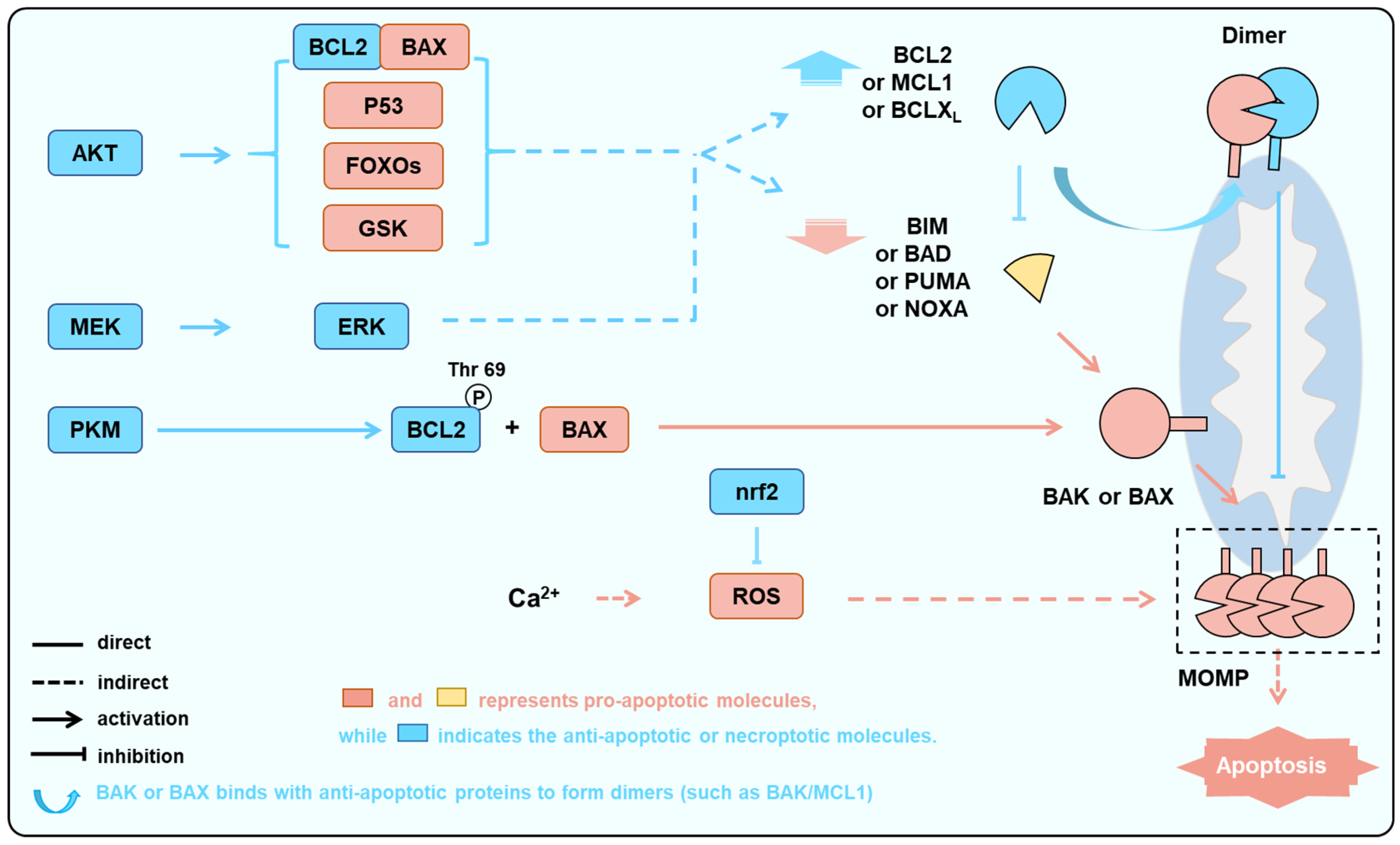
3.3.1. Multiple Upstream Pathways Regulate BCL2 Phosphorylation to Regulate Myocardial Cell Death
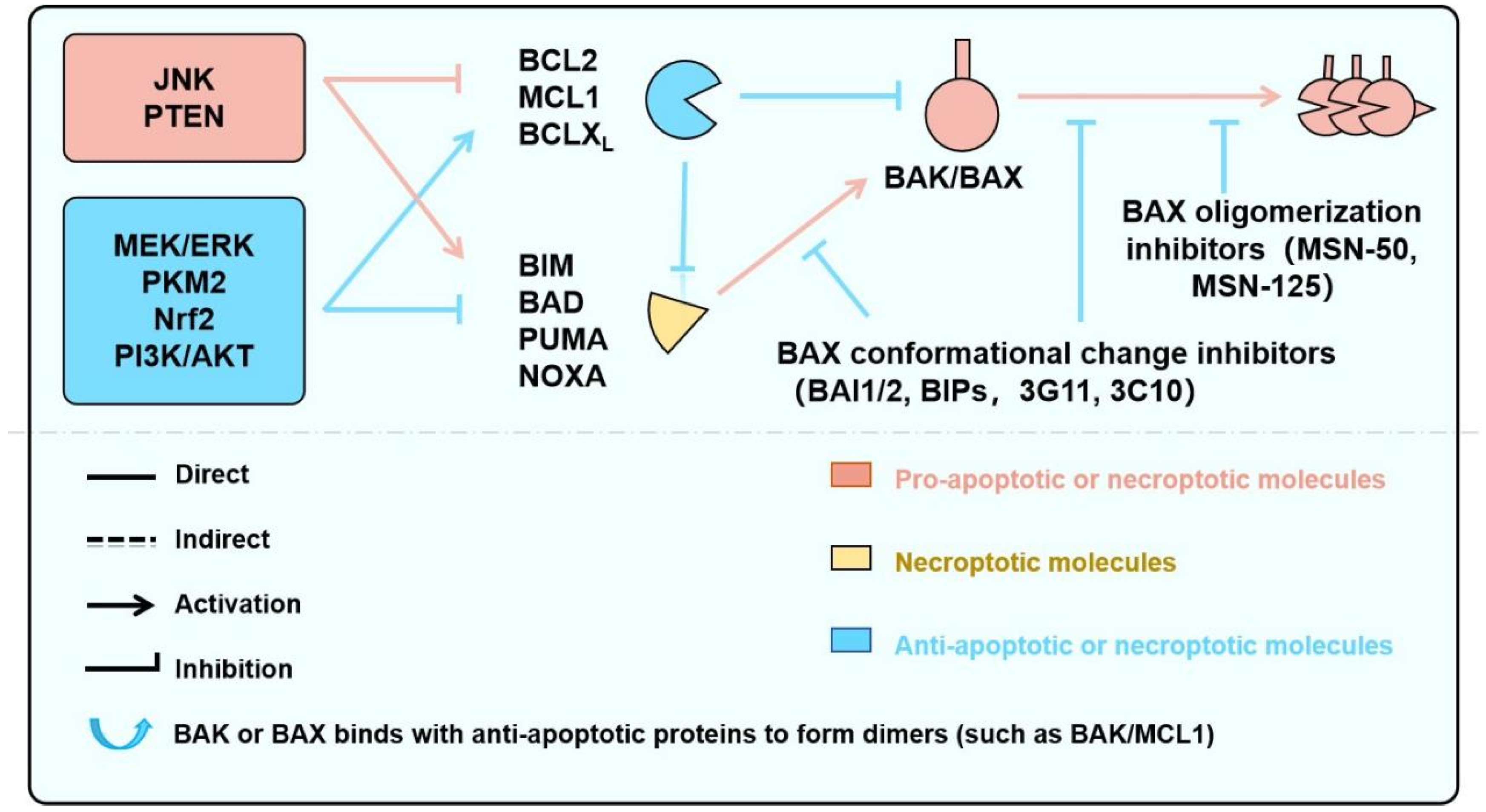
3.3.2. Multiple Pathways Directly or Indirectly Regulate Expression Levels or Activities of BCL2 Family Proteins
3.4. Inhibiting BAX/BAK-Regulated Cell Death Function Is Crucial for Achieving Cardiac Function Protection
3.5. Effective Protection Against Cell Death by Inhibiting BAX/BAK with Small Molecules
4. Discussion and Prospect
5. Conclusions
Author Contributions
Funding
Institutional Review Board Statement
Informed Consent Statement
Data Availability Statement
Acknowledgments
Conflicts of Interest
References
- Ye, Q.; Zhang, J.; Ma, L. Predictors of All-Cause 1-Year Mortality in Myocardial Infarction Patients. Medicine 2020, 99, e21288. [Google Scholar] [CrossRef]
- Dani, S.S.; Lone, A.N.; Javed, Z.; Khan, M.S.; Zia, K.M.; Kaluski, E.; Virani, S.S.; Shapiro, M.D.; Cainzos-Achirica, M.; Nasir, K.; et al. Trends in Premature Mortality from Acute Myocardial Infarction in the United States, 1999 to 2019. J. Am. Heart Assoc. 2022, 11, e21682. [Google Scholar] [CrossRef] [PubMed]
- Foa, A.; Pabon, M.A.; Braunwald, E.; Jering, K.; Vaduganathan, M.; Claggett, B.L.; Kober, L.; Lewis, E.F.; Granger, C.B.; van der Meer, P.; et al. Mortality After High-Risk Myocardial Infarction Over the Last 20 Years: Insights from the Valiant and Paradise-Mi Trials. Eur. J. Heart Fail. 2025, 27, 589–597. [Google Scholar] [CrossRef] [PubMed]
- Wencker, D.; Chandra, M.; Nguyen, K.; Miao, W.; Garantziotis, S.; Factor, S.M.; Shirani, J.; Armstrong, R.C.; Kitsis, R.N. A Mechanistic Role for Cardiac Myocyte Apoptosis in Heart Failure. J. Clin. Investig. 2003, 111, 1497–1504. [Google Scholar] [CrossRef] [PubMed]
- Olivetti, G.; Abbi, R.; Quaini, F.; Kajstura, J.; Cheng, W.; Nitahara, J.A.; Quaini, E.; Di Loreto, C.; Beltrami, C.A.; Krajewski, S.; et al. Apoptosis in the Failing Human Heart. N. Engl. J. Med. 1997, 336, 1131–1141. [Google Scholar] [CrossRef]
- Kajstura, J.; Cheng, W.; Reiss, K.; Clark, W.A.; Sonnenblick, E.H.; Krajewski, S.; Reed, J.C.; Olivetti, G.; Anversa, P. Apoptotic and Necrotic Myocyte Cell Deaths are Independent Contributing Variables of Infarct Size in Rats. Lab. Investig. 1996, 74, 86–107. [Google Scholar]
- Sam, F.; Sawyer, D.B.; Chang, D.L.; Eberli, F.R.; Ngoy, S.; Jain, M.; Amin, J.; Apstein, C.S.; Colucci, W.S. Progressive Left Ventricular Remodeling and Apoptosis Late After Myocardial Infarction in Mouse Heart. Am. J. Physiol. Heart Circ. Physiol. 2000, 279, H422–H428. [Google Scholar] [CrossRef]
- Brocheriou, V.; Hagege, A.A.; Oubenaissa, A.; Lambert, M.; Mallet, V.O.; Duriez, M.; Wassef, M.; Kahn, A.; Menasche, P.; Gilgenkrantz, H. Cardiac Functional Improvement by a Human Bcl-2 Transgene in a Mouse Model of Ischemia/Reperfusion Injury. J. Gene Med. 2000, 2, 326–333. [Google Scholar] [CrossRef]
- Jia, X.F.; Liang, F.G.; Kitsis, R.N. Multiple Cell Death Programs Contribute to Myocardial Infarction. Circ. Res. 2021, 129, 397–399. [Google Scholar] [CrossRef]
- Lee, P.; Sata, M.; Lefer, D.J.; Factor, S.M.; Walsh, K.; Kitsis, R.N. Fas Pathway is a Critical Mediator of Cardiac Myocyte Death and Mi During Ischemia-Reperfusion In Vivo. Am. J. Physiol. Heart Circ. Physiol. 2003, 284, H456–H463. [Google Scholar] [CrossRef]
- Chen, Z.; Chua, C.C.; Ho, Y.S.; Hamdy, R.C.; Chua, B.H. Overexpression of Bcl-2 Attenuates Apoptosis and Protects Against Myocardial I/R Injury in Transgenic Mice. Am. J. Physiol. Heart Circ. Physiol. 2001, 280, H2313–H2320. [Google Scholar] [CrossRef] [PubMed]
- Baines, C.P.; Kaiser, R.A.; Purcell, N.H.; Blair, N.S.; Osinska, H.; Hambleton, M.A.; Brunskill, E.W.; Sayen, M.R.; Gottlieb, R.A.; Dorn, G.W.; et al. Loss of Cyclophilin D Reveals a Critical Role for Mitochondrial Permeability Transition in Cell Death. Nature 2005, 434, 658–662. [Google Scholar] [CrossRef]
- Newton, K.; Dugger, D.L.; Maltzman, A.; Greve, J.M.; Hedehus, M.; Martin-McNulty, B.; Carano, R.A.; Cao, T.C.; van Bruggen, N.; Bernstein, L.; et al. Ripk3 Deficiency or Catalytically Inactive Ripk1 Provides Greater Benefit than Mlkl Deficiency in Mouse Models of Inflammation and Tissue Injury. Cell Death Differ. 2016, 23, 1565–1576. [Google Scholar] [CrossRef]
- Shi, H.; Gao, Y.; Dong, Z.; Yang, J.; Gao, R.; Li, X.; Zhang, S.; Ma, L.; Sun, X.; Wang, Z.; et al. Gsdmd-Mediated Cardiomyocyte Pyroptosis Promotes Myocardial I/R Injury. Circ. Res. 2021, 129, 383–396. [Google Scholar] [CrossRef]
- Li, W.; Feng, G.; Gauthier, J.M.; Lokshina, I.; Higashikubo, R.; Evans, S.; Liu, X.; Hassan, A.; Tanaka, S.; Cicka, M.; et al. Ferroptotic Cell Death and Tlr4/Trif Signaling Initiate Neutrophil Recruitment After Heart Transplantation. J. Clin. Investig. 2019, 129, 2293–2304. [Google Scholar] [CrossRef] [PubMed]
- Fang, X.; Wang, H.; Han, D.; Xie, E.; Yang, X.; Wei, J.; Gu, S.; Gao, F.; Zhu, N.; Yin, X.; et al. Ferroptosis as a Target for Protection Against Cardiomyopathy. Proc. Natl. Acad. Sci. USA 2019, 116, 2672–2680. [Google Scholar] [CrossRef]
- Bonora, M.; Giorgi, C.; Pinton, P. Molecular Mechanisms and Consequences of Mitochondrial Permeability Transition. Nat. Rev. Mol. Cell Biol. 2022, 23, 266–285. [Google Scholar] [CrossRef]
- Giorgio, V.; von Stockum, S.; Antoniel, M.; Fabbro, A.; Fogolari, F.; Forte, M.; Glick, G.D.; Petronilli, V.; Zoratti, M.; Szabo, I.; et al. Dimers of Mitochondrial Atp Synthase Form the Permeability Transition Pore. Proc. Natl. Acad. Sci. USA 2013, 110, 5887–5892. [Google Scholar] [CrossRef] [PubMed]
- Alavian, K.N.; Beutner, G.; Lazrove, E.; Sacchetti, S.; Park, H.A.; Licznerski, P.; Li, H.; Nabili, P.; Hockensmith, K.; Graham, M.; et al. An Uncoupling Channel within the C-Subunit Ring of the F1Fo Atp Synthase is the Mitochondrial Permeability Transition Pore. Proc. Natl. Acad. Sci. USA 2014, 111, 10580–10585. [Google Scholar] [CrossRef]
- Giorgio, V.; Burchell, V.; Schiavone, M.; Bassot, C.; Minervini, G.; Petronilli, V.; Argenton, F.; Forte, M.; Tosatto, S.; Lippe, G.; et al. Ca2+ Binding to F-Atp Synthase Beta Subunit Triggers the Mitochondrial Permeability Transition. Embo Rep. 2017, 18, 1065–1076. [Google Scholar] [CrossRef]
- Piamsiri, C.; Maneechote, C.; Siri-Angkul, N.; Chattipakorn, S.C.; Chattipakorn, N. Targeting Necroptosis as Therapeutic Potential in Chronic Myocardial Infarction. J. Biomed. Sci. 2021, 28, 25. [Google Scholar] [CrossRef] [PubMed]
- Spitz, A.Z.; Gavathiotis, E. Physiological and Pharmacological Modulation of Bax. Trends Pharmacol. Sci. 2022, 43, 206–220. [Google Scholar] [CrossRef] [PubMed]
- Spitz, A.Z.; Zacharioudakis, E.; Reyna, D.E.; Garner, T.P.; Gavathiotis, E. Eltrombopag Directly Inhibits Bax and Prevents Cell Death. Nat. Commun. 2021, 12, 1134. [Google Scholar] [CrossRef] [PubMed]
- Amgalan, D.; Garner, T.P.; Pekson, R.; Jia, X.F.; Yanamandala, M.; Paulino, V.; Liang, F.G.; Corbalan, J.J.; Lee, J.; Chen, Y.; et al. A Small-Molecule Allosteric Inhibitor of Bax Protects Against Doxorubicin-Induced Cardiomyopathy. Nat. Cancer 2020, 1, 315–328. [Google Scholar] [CrossRef]
- Liu, W.; Shen, J.; Li, Y.; Wu, J.; Luo, X.; Yu, Y.; Zhang, Y.; Gu, L.; Zhang, X.; Jiang, C.; et al. Pyroptosis Inhibition Improves the Symptom of Acute Myocardial Infarction. Cell Death Dis. 2021, 12, 852. [Google Scholar] [CrossRef]
- Newton, K.; Strasser, A.; Kayagaki, N.; Dixit, V.M. Cell Death. Cell 2024, 187, 235–256. [Google Scholar] [CrossRef]
- Yuan, J.; Ofengeim, D. A Guide to Cell Death Pathways. Nat. Rev. Mol. Cell Biol. 2024, 25, 379–395. [Google Scholar] [CrossRef]
- Galluzzi, L.; Vitale, I.; Aaronson, S.A.; Abrams, J.M.; Adam, D.; Agostinis, P.; Alnemri, E.S.; Altucci, L.; Amelio, I.; Andrews, D.W.; et al. Molecular Mechanisms of Cell Death: Recommendations of the Nomenclature Committee on Cell Death 2018. Cell Death Differ. 2018, 25, 486–541. [Google Scholar] [CrossRef]
- Czabotar, P.E.; Garcia-Saez, A.J. Mechanisms of Bcl-2 Family Proteins in Mitochondrial Apoptosis. Nat. Rev. Mol. Cell Biol. 2023, 24, 732–748. [Google Scholar] [CrossRef]
- Singh, R.; Letai, A.; Sarosiek, K. Regulation of Apoptosis in Health and Disease: The Balancing Act of Bcl-2 Family Proteins. Nature Reviews. Mol. Cell Biol. 2019, 20, 175–193. [Google Scholar] [CrossRef]
- Dai, H.; Meng, X.W.; Kaufmann, S.H. Mitochondrial Apoptosis and Bh3 Mimetics. F1000Research 2016, 5, 2804. [Google Scholar] [CrossRef]
- Dai, H.; Smith, A.; Meng, X.W.; Schneider, P.A.; Pang, Y.P.; Kaufmann, S.H. Transient Binding of an Activator Bh3 Domain to the Bak Bh3-Binding Groove Initiates Bak Oligomerization. J. Cell Biol. 2011, 194, 39–48. [Google Scholar] [CrossRef] [PubMed]
- Halestrap, A.P. The Mitochondrial Permeability Transition: Its Molecular Mechanism and Role in Reperfusion Injury. Biochem. Soc. Symp. 1999, 66, 181–203. [Google Scholar] [CrossRef]
- Halestrap, A.P.; Doran, E.; Gillespie, J.P.; O’Toole, A. Mitochondria and Cell Death. Biochem. Soc. Trans. 2000, 28, 170–177. [Google Scholar] [CrossRef]
- Casin, K.M.; Bustamante, M.; Amanakis, G.; Sun, J.; Liu, C.; Kitsis, R.N.; Murphy, E. Loss of Cyclophilin D Prolyl Isomerase Activity Desensitizes Mitochondrial Permeability Transition Pore Opening in Isolated Cardiac Mitochondria, but Does Not Protect in Myocardial Ischemia-Reperfusion Injury. J. Mol. Cell. Cardiol. 2023, 183, 67–69. [Google Scholar] [CrossRef]
- Yan, S.; Du, F.; Wu, L.; Zhang, Z.; Zhong, C.; Yu, Q.; Wang, Y.; Lue, L.F.; Walker, D.G.; Douglas, J.T.; et al. F1F0 Atp Synthase-Cyclophilin D Interaction Contributes to Diabetes-Induced Synaptic Dysfunction and Cognitive Decline. Diabetes 2016, 65, 3482–3494. [Google Scholar] [CrossRef] [PubMed]
- Kinnally, K.W.; Peixoto, P.M.; Ryu, S.Y.; Dejean, L.M. Is Mptp the Gatekeeper for Necrosis, Apoptosis, Or Both? Biochim. Biophys. Acta 2011, 1813, 616–622. [Google Scholar] [CrossRef]
- Bonora, M.; Wieckowski, M.R.; Chinopoulos, C.; Kepp, O.; Kroemer, G.; Galluzzi, L.; Pinton, P. Molecular Mechanisms of Cell Death: Central Implication of Atp Synthase in Mitochondrial Permeability Transition. Oncogene 2015, 34, 1475–1486. [Google Scholar] [CrossRef] [PubMed]
- Waseem, M.; Wang, B.D. Promising Strategy of Mptp Modulation in Cancer Therapy: An Emerging Progress and Future Insight. Int. J. Mol. Sci. 2023, 24, 5564. [Google Scholar] [CrossRef]
- Karch, J.; Kanisicak, O.; Brody, M.J.; Sargent, M.A.; Michael, D.M.; Molkentin, J.D. Necroptosis Interfaces with Momp and the Mptp in Mediating Cell Death. PLoS ONE 2015, 10, e130520. [Google Scholar] [CrossRef]
- Joiner, M.L.; Koval, O.M.; Li, J.; He, B.J.; Allamargot, C.; Gao, Z.; Luczak, E.D.; Hall, D.D.; Fink, B.D.; Chen, B.; et al. Camkii Determines Mitochondrial Stress Responses in Heart. Nature 2012, 491, 269–273. [Google Scholar] [CrossRef]
- Gui, L.; Guo, X.; Zhang, Z.; Xu, H.; Ji, Y.W.; Wang, R.J.; Zhu, J.H.; Chen, Q.H. Activation of Camkiideltaa Promotes Ca2+ Leak From the Sarcoplasmic Reticulum in Cardiomyocytes of Chronic Heart Failure Rats. Acta Pharmacol. Sin. 2018, 39, 1604–1612. [Google Scholar] [CrossRef] [PubMed]
- Zhu, P.; Hu, S.; Jin, Q.; Li, D.; Tian, F.; Toan, S.; Li, Y.; Zhou, H.; Chen, Y. Ripk3 Promotes Er Stress-Induced Necroptosis in Cardiac Ir Injury: A Mechanism Involving Calcium Overload/Xo/Ros/Mptp Pathway. Redox Biol. 2018, 16, 157–168. [Google Scholar] [CrossRef]
- Ni, R.; Cao, T.; Ji, X.; Peng, A.; Zhang, Z.; Fan, G.C.; Stathopulos, P.; Chakrabarti, S.; Su, Z.; Peng, T. Dna Damage-Inducible Transcript 3 Positively Regulates Ripk1-Mediated Necroptosis. Cell Death Differ. 2025, 32, 306–319. [Google Scholar] [CrossRef]
- Liu, J.; Wu, X.L.; Zhang, J.; Li, B.; Wang, H.Y.; Wang, J.; Lu, J.X. The Structure of Mouse Ripk1 Rhim-Containing Domain as a Homo-Amyloid and in Ripk1/Ripk3 Complex. Nat. Commun. 2024, 15, 6975. [Google Scholar] [CrossRef]
- Chen, W.; Zhou, Z.; Li, L.; Zhong, C.Q.; Zheng, X.; Wu, X.; Zhang, Y.; Ma, H.; Huang, D.; Li, W.; et al. Diverse Sequence Determinants Control Human and Mouse Receptor Interacting Protein 3 (Rip3) and Mixed Lineage Kinase Domain-Like (Mlkl) Interaction in Necroptotic Signaling. J. Biol. Chem. 2013, 288, 16247–16261. [Google Scholar] [CrossRef] [PubMed]
- Upton, J.W.; Shubina, M.; Balachandran, S. Ripk3-Driven Cell Death During Virus Infections. Immunol. Rev. 2017, 277, 90–101. [Google Scholar] [CrossRef]
- Premadasa, L.S.; McDew-White, M.; Romero, L.; Gondo, B.; Drawec, J.A.; Ling, B.; Okeoma, C.M.; Mohan, M. Epigenetic Modulation of the Nlrp6 Inflammasome Sensor as a Therapeutic Modality to Reduce Necroptosis-Driven Gastrointestinal Mucosal Dysfunction in Hiv/Siv Infection. Cell Commun. Signal. 2025, 23, 199. [Google Scholar] [CrossRef]
- Bustamante, J.; Nutt, L.; Orrenius, S.; Gogvadze, V. Arsenic Stimulates Release of Cytochrome C From Isolated Mitochondria Via Induction of Mitochondrial Permeability Transition. Toxicol. Appl. Pharmacol. 2005, 207, 110–116. [Google Scholar] [CrossRef]
- Zhang, D.; Lu, C.; Whiteman, M.; Chance, B.; Armstrong, J.S. The Mitochondrial Permeability Transition Regulates Cytochrome C Release for Apoptosis During Endoplasmic Reticulum Stress by Remodeling the Cristae Junction. J. Biol. Chem. 2008, 283, 3476–3486. [Google Scholar] [CrossRef] [PubMed]
- Yu, C.H.; Davidson, S.; Harapas, C.R.; Hilton, J.B.; Mlodzianoski, M.J.; Laohamonthonkul, P.; Louis, C.; Low, R.; Moecking, J.; De Nardo, D.; et al. Tdp-43 Triggers Mitochondrial Dna Release Via Mptp to Activate Cgas/Sting in Als. Cell 2020, 183, 636–649. [Google Scholar] [CrossRef]
- Elmore, S.P.; Qian, T.; Grissom, S.F.; Lemasters, J.J. The Mitochondrial Permeability Transition Initiates Autophagy in Rat Hepatocytes. FASEB J. 2001, 15, 2286–2287. [Google Scholar] [CrossRef] [PubMed]
- Carreira, R.S.; Lee, Y.; Ghochani, M.; Gustafsson, A.B.; Gottlieb, R.A. Cyclophilin D is Required for Mitochondrial Removal by Autophagy in Cardiac Cells. Autophagy. 2010, 6, 462–472. [Google Scholar] [CrossRef]
- Robichaux, D.J.; Harata, M.; Murphy, E.; Karch, J. Mitochondrial Permeability Transition Pore-Dependent Necrosis. J. Mol. Cell. Cardiol. 2023, 174, 47–55. [Google Scholar] [CrossRef]
- Ouyang, W.; Wang, S.; Yan, D.; Wu, J.; Zhang, Y.; Li, W.; Hu, J.; Liu, Z. The Cgas-Sting Pathway-Dependent Sensing of Mitochondrial Dna Mediates Ocular Surface Inflammation. Signal Transduct. Target. Ther. 2023, 8, 371. [Google Scholar] [CrossRef]
- Ding, Y.N.; Tang, X. Sensing Mitochondrial Dna Stress in Cardiotoxicity. Trends Endocrinol. Metab. 2023, 34, 688–690. [Google Scholar] [CrossRef]
- Roth, G.A.; Mensah, G.A.; Johnson, C.O.; Addolorato, G.; Ammirati, E.; Baddour, L.M.; Barengo, N.C.; Beaton, A.Z.; Benjamin, E.J.; Benziger, C.P.; et al. Global Burden of Cardiovascular Diseases and Risk Factors, 1990–2019: Update From the Gbd 2019 Study. J. Am. Coll. Cardiol. 2020, 76, 2982–3021. [Google Scholar] [CrossRef]
- Sabatine, M.S.; Bergmark, B.A.; Murphy, S.A.; O’Gara, P.T.; Smith, P.K.; Serruys, P.W.; Kappetein, A.P.; Park, S.J.; Park, D.W.; Christiansen, E.H.; et al. Percutaneous Coronary Intervention with Drug-Eluting Stents Versus Coronary Artery Bypass Grafting in Left Main Coronary Artery Disease: An Individual Patient Data Meta-Analysis. Lancet 2021, 398, 2247–2257. [Google Scholar] [CrossRef]
- Doenst, T.; Haverich, A.; Serruys, P.; Bonow, R.O.; Kappetein, P.; Falk, V.; Velazquez, E.; Diegeler, A.; Sigusch, H. Pci and Cabg for Treating Stable Coronary Artery Disease: Jacc Review Topic of the Week. J. Am. Coll. Cardiol. 2019, 73, 964–976. [Google Scholar] [CrossRef] [PubMed]
- McCarthy, C.P.; Vaduganathan, M.; McCarthy, K.J.; Januzzi, J.J.; Bhatt, D.L.; McEvoy, J.W. Left Ventricular Thrombus After Acute Myocardial Infarction: Screening, Prevention, and Treatment. JAMA Cardiol. 2018, 3, 642–649. [Google Scholar] [CrossRef] [PubMed]
- Welt, F.; Batchelor, W.; Spears, J.R.; Penna, C.; Pagliaro, P.; Ibanez, B.; Drakos, S.G.; Dangas, G.; Kapur, N.K. Reperfusion Injury in Patients with Acute Myocardial Infarction: Jacc Scientific Statement. J. Am. Coll. Cardiol. 2024, 83, 2196–2213. [Google Scholar] [CrossRef]
- Hausenloy, D.J.; Kharbanda, R.K.; Møller, U.K.; Ramlall, M.; Aarøe, J.; Butler, R.; Bulluck, H.; Clayton, T.; Dana, A.; Dodd, M.; et al. Effect of Remote Ischaemic Conditioning on Clinical Outcomes in Patients with Acute Myocardial Infarction (Condi-2/Eric-Ppci): A Single-Blind Randomised Controlled Trial. Lancet 2019, 394, 1415–1424. [Google Scholar] [CrossRef] [PubMed]
- LeBaron, T.W.; Kura, B.; Kalocayova, B.; Tribulova, N.; Slezak, J. A New Approach for the Prevention and Treatment of Cardiovascular Disorders. Molecular Hydrogen Significantly Reduces the Effects of Oxidative Stress. Molecules 2019, 24, 2076. [Google Scholar] [CrossRef] [PubMed]
- Oerlemans, M.I.; Liu, J.; Arslan, F.; den Ouden, K.; van Middelaar, B.J.; Doevendans, P.A.; Sluijter, J.P. Inhibition of Rip1-Dependent Necrosis Prevents Adverse Cardiac Remodeling After Myocardial Ischemia-Reperfusion In Vivo. Basic Res. Cardiol. 2012, 107, 270. [Google Scholar] [CrossRef]
- Horvath, C.; Young, M.; Jarabicova, I.; Kindernay, L.; Ferenczyova, K.; Ravingerova, T.; Lewis, M.; Suleiman, M.S.; Adameova, A. Inhibition of Cardiac Rip3 Mitigates Early Reperfusion Injury and Calcium-Induced Mitochondrial Swelling without Altering Necroptotic Signalling. Int. J. Mol. Sci. 2021, 22, 7983. [Google Scholar] [CrossRef]
- Luo, Y.; Apaijai, N.; Liao, S.; Maneechote, C.; Chunchai, T.; Arunsak, B.; Benjanuwattra, J.; Yanpiset, P.; Chattipakorn, S.C.; Chattipakorn, N. Therapeutic Potentials of Cell Death Inhibitors in Rats with Cardiac Ischaemia/Reperfusion Injury. J. Cell. Mol. Med. 2022, 26, 2462–2476. [Google Scholar] [CrossRef]
- Zhang, Y.; Tian, L.; Huang, G.; Ge, X.; Kong, F.; Wang, P.; Xu, Y.; Shi, Y. Structural Basis of Bax Pore Formation. Science 2025, 388, eadv4314. [Google Scholar] [CrossRef]
- Hofstra, L.; Liem, I.H.; Dumont, E.A.; Boersma, H.H.; van Heerde, W.L.; Doevendans, P.A.; De Muinck, E.; Wellens, H.J.; Kemerink, G.J.; Reutelingsperger, C.P.; et al. Visualisation of Cell Death in Vivo in Patients with Acute Myocardial Infarction. Lancet 2000, 356, 209–212. [Google Scholar] [CrossRef]
- Misao, J.; Hayakawa, Y.; Ohno, M.; Kato, S.; Fujiwara, T.; Fujiwara, H. Expression of Bcl-2 Protein, an Inhibitor of Apoptosis, and Bax, an Accelerator of Apoptosis, in Ventricular Myocytes of Human Hearts with Myocardial Infarction. Circulation 1996, 94, 1506–1512. [Google Scholar] [CrossRef]
- Zhang, H.; Yin, Y.; Liu, Y.; Zou, G.; Huang, H.; Qian, P.; Zhang, G.; Zhang, J. Necroptosis Mediated by Impaired Autophagy Flux Contributes to Adverse Ventricular Remodeling After Myocardial Infarction. Biochem. Pharmacol. 2020, 175, 113915. [Google Scholar] [CrossRef] [PubMed]
- Bernardi, P.; Gerle, C.; Halestrap, A.P.; Jonas, E.A.; Karch, J.; Mnatsakanyan, N.; Pavlov, E.; Sheu, S.S.; Soukas, A.A. Identity, Structure, and Function of the Mitochondrial Permeability Transition Pore: Controversies, Consensus, Recent Advances, and Future Directions. Cell Death Differ. 2023, 30, 1869–1885. [Google Scholar] [CrossRef]
- Xiang, Q.; Yi, X.; Zhu, X.H.; Wei, X.; Jiang, D.S. Regulated Cell Death in Myocardial Ischemia-Reperfusion Injury. Trends Endocrinol. Metab. 2024, 35, 219–234. [Google Scholar] [CrossRef]
- Zhang, Y.; Murugesan, P.; Huang, K.; Cai, H. Nadph Oxidases and Oxidase Crosstalk in Cardiovascular Diseases: Novel Therapeutic Targets. Nat. Rev. Cardiol. 2020, 17, 170–194. [Google Scholar] [CrossRef]
- Rabinovich-Nikitin, I.; Lieberman, B.; Martino, T.A.; Kirshenbaum, L.A. Circadian-Regulated Cell Death in Cardiovascular Diseases. Circulation 2019, 139, 965–980. [Google Scholar] [CrossRef]
- Boengler, K.; Heusch, G.; Schulz, R. Mitochondria in Postconditioning. Antioxid. Redox Signal. 2011, 14, 863–880. [Google Scholar] [CrossRef]
- Heusch, G.; Andreadou, I.; Bell, R.; Bertero, E.; Botker, H.E.; Davidson, S.M.; Downey, J.; Eaton, P.; Ferdinandy, P.; Gersh, B.J.; et al. Health Position Paper and Redox Perspectives on Reactive Oxygen Species as Signals and Targets of Cardioprotection. Redox Biol. 2023, 67, 102894. [Google Scholar] [CrossRef]
- Korshunova, A.Y.; Blagonravov, M.L.; Neborak, E.V.; Syatkin, S.P.; Sklifasovskaya, A.P.; Semyatov, S.M.; Agostinelli, E. Bcl2-Regulated Apoptotic Process in Myocardial Ischemia-Reperfusion Injury (Review). Int. J. Mol. Med. 2021, 47, 23–36. [Google Scholar] [CrossRef] [PubMed]
- Turkieh, A.; El, M.Y.; Pinet, F.; Dubois-Deruy, E. Mitophagy Regulation Following Myocardial Infarction. Cells 2022, 11, 199. [Google Scholar] [CrossRef] [PubMed]
- D’Arcy, M.S. Mitophagy in Health and Disease. Molecular Mechanisms, Regulatory Pathways, and Therapeutic Implications. Apoptosis 2024, 29, 1415–1428. [Google Scholar] [CrossRef]
- Heusch, G. Myocardial Ischaemia–Reperfusion Injury and Cardioprotection in Perspective. Nat. Rev. Cardiol. 2020, 17, 773–789. [Google Scholar] [CrossRef] [PubMed]
- Vogel, B.; Claessen, B.E.; Arnold, S.V.; Chan, D.; Cohen, D.J.; Giannitsis, E.; Gibson, C.M.; Goto, S.; Katus, H.A.; Kerneis, M.; et al. St-Segment Elevation Myocardial Infarction. Nat. Rev. Dis. Primers. 2019, 5, 39. [Google Scholar] [CrossRef] [PubMed]
- Geng, Y.; Wang, Z.; Zhou, J.; Zhu, M.; Liu, J.; James, T.D. Recent Progress in the Development of Fluorescent Probes for Imaging Pathological Oxidative Stress. Chem. Soc. Rev. 2023, 52, 3873–3926. [Google Scholar] [CrossRef] [PubMed]
- Penna, C.; Perrelli, M.G.; Pagliaro, P. Mitochondrial Pathways, Permeability Transition Pore, and Redox Signaling in Cardioprotection: Therapeutic Implications. Antioxid. Redox Signal. 2013, 18, 556–599. [Google Scholar] [CrossRef]
- Jia, D.; Chen, S.; Bai, P.; Luo, C.; Liu, J.; Sun, A.; Ge, J. Cardiac Resident Macrophage-Derived Legumain Improves Cardiac Repair by Promoting Clearance and Degradation of Apoptotic Cardiomyocytes After Myocardial Infarction. Circulation 2022, 145, 1542–1556. [Google Scholar] [CrossRef]
- Dai, H.; Ding, H.; Peterson, K.L.; Meng, X.W.; Schneider, P.A.; Knorr, K.; Kaufmann, S.H. Measurement of Bh3-Only Protein Tolerance. Cell Death Differ. 2018, 25, 282–293. [Google Scholar] [CrossRef]
- Brokatzky, D.; Dorflinger, B.; Haimovici, A.; Weber, A.; Kirschnek, S.; Vier, J.; Metz, A.; Henschel, J.; Steinfeldt, T.; Gentle, I.E.; et al. A Non-Death Function of the Mitochondrial Apoptosis Apparatus in Immunity. EMBO J. 2019, 38, e100907. [Google Scholar] [CrossRef]
- Gavathiotis, E.; Suzuki, M.; Davis, M.L.; Pitter, K.; Bird, G.H.; Katz, S.G.; Tu, H.C.; Kim, H.; Cheng, E.H.; Tjandra, N.; et al. Bax Activation is Initiated at a Novel Interaction Site. Nature 2008, 455, 1076–1081. [Google Scholar] [CrossRef] [PubMed]
- Kim, H.; Tu, H.C.; Ren, D.; Takeuchi, O.; Jeffers, J.R.; Zambetti, G.P.; Hsieh, J.J.; Cheng, E.H. Stepwise Activation of Bax and Bak by Tbid, Bim, and Puma Initiates Mitochondrial Apoptosis. Mol. Cell 2009, 36, 487–499. [Google Scholar] [CrossRef]
- Letai, A.; Bassik, M.C.; Walensky, L.D.; Sorcinelli, M.D.; Weiler, S.; Korsmeyer, S.J. Distinct Bh3 Domains Either Sensitize or Activate Mitochondrial Apoptosis, Serving as Prototype Cancer Therapeutics. Cancer Cell 2002, 2, 183–192. [Google Scholar] [CrossRef]
- Czabotar, P.E.; Westphal, D.; Dewson, G.; Ma, S.; Hockings, C.; Fairlie, W.D.; Lee, E.F.; Yao, S.; Robin, A.Y.; Smith, B.J.; et al. Bax Crystal Structures Reveal How Bh3 Domains Activate Bax and Nucleate its Oligomerization to Induce Apoptosis. Cell 2013, 152, 519–531. [Google Scholar] [CrossRef]
- Liao, C.; Zhang, Z.; Kale, J.; Andrews, D.W.; Lin, J.; Li, J. Conformational Heterogeneity of Bax Helix 9 Dimer for Apoptotic Pore Formation. Sci. Rep. 2016, 6, 29502. [Google Scholar] [CrossRef]
- Zhang, Z.; Subramaniam, S.; Kale, J.; Liao, C.; Huang, B.; Brahmbhatt, H.; Condon, S.G.; Lapolla, S.M.; Hays, F.A.; Ding, J.; et al. Bh3-in-Groove Dimerization Initiates and Helix 9 Dimerization Expands Bax Pore Assembly in Membranes. EMBO J. 2016, 35, 208–236. [Google Scholar] [CrossRef] [PubMed]
- Salvador-Gallego, R.; Mund, M.E.; Cosentino, K.; Schneider, J.; Unsay, J.D.; Schraermeyer, U.; Engelhardt, J.; Ries, J.; García-Sáez, A.J. Bax Assembly into Rings and Arcs in Apoptotic Mitochondria is Linked to Membrane Pores. EMBO J. 2016, 35, 389–401. [Google Scholar] [CrossRef] [PubMed]
- Brouwer, J.M.; Westphal, D.; Dewson, G.; Robin, A.Y.; Uren, R.T.; Bartolo, R.; Thompson, G.V.; Colman, P.M.; Kluck, R.M.; Czabotar, P.E. Bak Core and Latch Domains Separate During Activation, and Freed Core Domains Form Symmetric Homodimers. Mol. Cell 2014, 55, 938–946. [Google Scholar] [CrossRef] [PubMed]
- Dai, H.; Pang, Y.P.; Ramirez-Alvarado, M.; Kaufmann, S.H. Evaluation of the Bh3-Only Protein Puma as a Direct Bak Activator. J. Biol. Chem. 2014, 289, 89–99. [Google Scholar] [CrossRef]
- Dai, H.; Peterson, K.L.; Flatten, K.S.; Meng, X.W.; Venkatachalam, A.; Correia, C.; Ramirez-Alvarado, M.; Pang, Y.P.; Kaufmann, S.H. A Bak Subdomain that Binds Mitochondrial Lipids Selectively and Releases Cytochrome C. Cell Death Differ. 2023, 30, 794–808. [Google Scholar] [CrossRef]
- Uren, R.T.; O’Hely, M.; Iyer, S.; Bartolo, R.; Shi, M.X.; Brouwer, J.M.; Alsop, A.E.; Dewson, G.; Kluck, R.M. Disordered Clusters of Bak Dimers Rupture Mitochondria During Apoptosis. eLife 2017, 6, e19944. [Google Scholar] [CrossRef]
- Diepstraten, S.T.; Anderson, M.A.; Czabotar, P.E.; Lessene, G.; Strasser, A.; Kelly, G.L. The Manipulation of Apoptosis for Cancer Therapy Using Bh3-Mimetic Drugs. Nature Reviews. Cancer 2022, 22, 45–64. [Google Scholar]
- Bhatt, S.; Pioso, M.S.; Olesinski, E.A.; Yilma, B.; Ryan, J.A.; Mashaka, T.; Leutz, B.; Adamia, S.; Zhu, H.; Kuang, Y.; et al. Reduced Mitochondrial Apoptotic Priming Drives Resistance to Bh3 Mimetics in Acute Myeloid Leukemia. Cancer Cell 2020, 38, 872–890. [Google Scholar] [CrossRef]
- Ye, K.; Meng, W.X.; Sun, H.; Wu, B.; Chen, M.; Pang, Y.; Gao, J.; Wang, H.; Wang, J.; Kaufmann, S.H.; et al. Characterization of an Alternative Bak-Binding Site for Bh3 Peptides. Nat. Commun. 2020, 11, 3301. [Google Scholar] [CrossRef]
- Dai, H.; Ding, H.; Meng, X.W.; Peterson, K.L.; Schneider, P.A.; Karp, J.E.; Kaufmann, S.H. Constitutive Bak Activation as a Determinant of Drug Sensitivity in Malignant Lymphohematopoietic Cells. Genes Dev. 2015, 29, 2140–2152. [Google Scholar] [CrossRef] [PubMed]
- García-Sáez, A.J. The Bcl-2 Family Saga. Nature Reviews. Mol. Cell Biol. 2020, 21, 564–565. [Google Scholar]
- Roberts, A.W.; Wei, A.H.; Huang, D. Bcl2 and Mcl1 Inhibitors for Hematologic Malignancies. Blood 2021, 138, 1120–1136. [Google Scholar] [CrossRef]
- Ye, K.; Ni, J.; Liu, D.; Yang, S.; Li, Y.; Chen, M.; Shah, F.A.; Chen, H.; Ji, W.; Zheng, Y.; et al. Melatonin Sensitizes Leukemia Cells to the Mcl1 Inhibitors S63845 and a-1210477 through Multiple Pathways. J. Pineal Res. 2024, 76, e12943. [Google Scholar] [CrossRef]
- Liu, D.; Hou, X.; Wu, W.; Zanfagnin, V.; Li, Y.; Correia, C.; Zhao, Z.; Zhao, C.; Liu, Z.; Zhang, T.; et al. Constitutive Bak/Mcl1 Complexes Predict Paclitaxel and S63845 Sensitivity of Ovarian Cancer. Cell Death Dis. 2021, 12, 789. [Google Scholar] [CrossRef]
- Budhram-Mahadeo, V.; Fujita, R.; Bitsi, S.; Sicard, P.; Heads, R. Co-Expression of Pou4F2/Brn-3B with P53 May be Important for Controlling Expression of Pro-Apoptotic Genes in Cardiomyocytes Following Ischaemic/Hypoxic Insults. Cell Death Dis. 2014, 5, e1503. [Google Scholar] [CrossRef]
- Webster, K.A. Mitochondrial Membrane Permeabilization and Cell Death During Myocardial Infarction: Roles of Calcium and Reactive Oxygen Species. Future Cardiol. 2012, 8, 863–884. [Google Scholar] [CrossRef] [PubMed]
- Chen, Q.; Lesnefsky, E.J. Blockade of Electron Transport During Ischemia Preserves Bcl-2 and Inhibits Opening of the Mitochondrial Permeability Transition Pore. FEBS Lett. 2011, 585, 921–926. [Google Scholar] [CrossRef]
- Chen, Q.; Xu, H.; Xu, A.; Ross, T.; Bowler, E.; Hu, Y.; Lesnefsky, E.J. Inhibition of Bcl-2 Sensitizes Mitochondrial Permeability Transition Pore (Mptp) Opening in Ischemia-Damaged Mitochondria. PLoS ONE 2015, 10, e118834. [Google Scholar] [CrossRef] [PubMed]
- Quarato, G.; Llambi, F.; Guy, C.S.; Min, J.; Actis, M.; Sun, H.; Narina, S.; Pruett-Miller, S.M.; Peng, J.; Rankovic, Z.; et al. Ca2+-Mediated Mitochondrial Inner Membrane Permeabilization Induces Cell Death Independently of Bax and Bak. Cell Death Differ. 2022, 29, 1318–1334. [Google Scholar] [CrossRef]
- Del Re, D.P.; Amgalan, D.; Linkermann, A.; Liu, Q.; Kitsis, R.N. Fundamental Mechanisms of Regulated Cell Death and Implications for Heart Disease. Physiol. Rev. 2019, 99, 1765–1817. [Google Scholar] [CrossRef]
- Karch, J.; Kwong, J.Q.; Burr, A.R.; Sargent, M.A.; Elrod, J.W.; Peixoto, P.M.; Martinez-Caballero, S.; Osinska, H.; Cheng, E.H.; Robbins, J.; et al. Bax and Bak Function as the Outer Membrane Component of the Mitochondrial Permeability Pore in Regulating Necrotic Cell Death in Mice. eLife. 2013, 2, e772. [Google Scholar] [CrossRef]
- Bertheloot, D.; Latz, E.; Franklin, B.S. Necroptosis, Pyroptosis and Apoptosis: An Intricate Game of Cell Death. Cell Mol. Immunol. 2021, 18, 1106–1121. [Google Scholar] [CrossRef] [PubMed]
- Mendoza, A.; Patel, P.; Robichaux, D.; Ramirez, D.; Karch, J. Inhibition of the Mptp and Lipid Peroxidation is Additively Protective Against I/R Injury. Circ. Res. 2024, 134, 1292–1305. [Google Scholar] [CrossRef]
- Tsujimoto, Y.; Cossman, J.; Jaffe, E.; Croce, C.M. Involvement of the Bcl-2 Gene in Human Follicular Lymphoma. Science 1985, 228, 1440–1443. [Google Scholar] [CrossRef]
- Bakhshi, A.; Jensen, J.P.; Goldman, P.; Wright, J.J.; McBride, O.W.; Epstein, A.L.; Korsmeyer, S.J. Cloning the Chromosomal Breakpoint of T(14;18) Human Lymphomas: Clustering Around Jh On Chromosome 14 and Near a Transcriptional Unit On 18. Cell 1985, 41, 899–906. [Google Scholar] [CrossRef] [PubMed]
- Cleary, M.L.; Smith, S.D.; Sklar, J. Cloning and Structural Analysis of Cdnas for Bcl-2 and a Hybrid Bcl-2/Immunoglobulin Transcript Resulting From the T(14;18) Translocation. Cell 1986, 47, 19–28. [Google Scholar] [CrossRef]
- Correia, C.; Lee, S.H.; Meng, X.W.; Vincelette, N.D.; Knorr, K.L.; Ding, H.; Nowakowski, G.S.; Dai, H.; Kaufmann, S.H. Emerging Understanding of Bcl-2 Biology: Implications for Neoplastic Progression and Treatment. Biochim. Biophys. Acta 2015, 1853, 1658–1671. [Google Scholar] [CrossRef]
- Chen, L.; Willis, S.N.; Wei, A.; Smith, B.J.; Fletcher, J.I.; Hinds, M.G.; Colman, P.M.; Day, C.L.; Adams, J.M.; Huang, D.C. Differential Targeting of Prosurvival Bcl-2 Proteins by their Bh3-Only Ligands Allows Complementary Apoptotic Function. Mol. Cell 2005, 17, 393–403. [Google Scholar] [CrossRef]
- Dai, H.; Meng, X.W.; Lee, S.H.; Schneider, P.A.; Kaufmann, S.H. Context-Dependent Bcl-2/Bak Interactions Regulate Lymphoid Cell Apoptosis. J. Biol. Chem. 2009, 284, 18311–18322. [Google Scholar] [CrossRef] [PubMed]
- Smith, A.J.; Dai, H.; Correia, C.; Takahashi, R.; Lee, S.H.; Schmitz, I.; Kaufmann, S.H. Noxa/Bcl-2 Protein Interactions Contribute to Bortezomib Resistance in Human Lymphoid Cells. J. Biol. Chem. 2011, 286, 17682–17692. [Google Scholar] [CrossRef]
- Brenner, C.; Cadiou, H.; Vieira, H.L.; Zamzami, N.; Marzo, I.; Xie, Z.; Leber, B.; Andrews, D.; Duclohier, H.; Reed, J.C.; et al. Bcl-2 and Bax Regulate the Channel Activity of the Mitochondrial Adenine Nucleotide Translocator. Oncogene 2000, 19, 329–336. [Google Scholar] [CrossRef]
- Shimizu, S.; Konishi, A.; Kodama, T.; Tsujimoto, Y. Bh4 Domain of Antiapoptotic Bcl-2 Family Members Closes Voltage-Dependent Anion Channel and Inhibits Apoptotic Mitochondrial Changes and Cell Death. Proc. Natl. Acad. Sci. USA 2000, 97, 3100–3105. [Google Scholar] [CrossRef]
- Fang, G.; Chang, B.S.; Kim, C.N.; Perkins, C.; Thompson, C.B.; Bhalla, K.N. “Loop” Domain is Necessary for Taxol-Induced Mobility Shift and Phosphorylation of Bcl-2 as Well as for Inhibiting Taxol-Induced Cytosolic Accumulation of Cytochrome C and Apoptosis. Cancer Res. 1998, 58, 3202–3208. [Google Scholar] [PubMed]
- Ling, Y.H.; Tornos, C.; Perez-Soler, R. Phosphorylation of Bcl-2 is a Marker of M Phase Events and Not a Determinant of Apoptosis. J. Biol. Chem. 1998, 273, 18984–18991. [Google Scholar] [CrossRef] [PubMed]
- Ito, T.; Deng, X.; Carr, B.; May, W.S. Bcl-2 Phosphorylation Required for Anti-Apoptosis Function. J. Biol. Chem. 1997, 272, 11671–11673. [Google Scholar] [CrossRef]
- Haldar, S.; Jena, N.; Croce, C.M. Inactivation of Bcl-2 by Phosphorylation. Proc. Natl. Acad. Sci. USA 1995, 92, 4507–4511. [Google Scholar] [CrossRef] [PubMed]
- Yamamoto, K.; Ichijo, H.; Korsmeyer, S.J. Bcl-2 is Phosphorylated and Inactivated by an Ask1/Jun N-Terminal Protein Kinase Pathway Normally Activated at G(2)/M. Mol. Cell. Biol. 1999, 19, 8469–8478. [Google Scholar] [CrossRef]
- Vilahur, G.; Juan-Babot, O.; Peña, E.; Oñate, B.; Casaní, L.; Badimon, L. Molecular and Cellular Mechanisms Involved in Cardiac Remodeling After Acute Myocardial Infarction. J. Mol. Cell. Cardiol. 2011, 50, 522–533. [Google Scholar] [CrossRef]
- Magadum, A.; Singh, N.; Kurian, A.A.; Munir, I.; Mehmood, T.; Brown, K.; Sharkar, M.; Chepurko, E.; Sassi, Y.; Oh, J.G.; et al. Pkm2 Regulates Cardiomyocyte Cell Cycle and Promotes Cardiac Regeneration. Circulation 2020, 141, 1249–1265. [Google Scholar] [CrossRef]
- Zhang, Z.; Deng, X.; Liu, Y.; Liu, Y.; Sun, L.; Chen, F. Pkm2, Function and Expression and Regulation. Cell Biosci. 2019, 9, 52. [Google Scholar] [CrossRef]
- Liang, J.; Cao, R.; Wang, X.; Zhang, Y.; Wang, P.; Gao, H.; Li, C.; Yang, F.; Zeng, R.; Wei, P.; et al. Mitochondrial Pkm2 Regulates Oxidative Stress-Induced Apoptosis by Stabilizing Bcl2. Cell Res. 2017, 27, 329–351. [Google Scholar] [CrossRef]
- Yao, X.; Zhu, J.; Li, L.; Yang, B.; Chen, B.; Bao, E.; Zhang, X. Hsp90 Protected Chicken Primary Myocardial Cells from Heat-Stress Injury by Inhibiting Oxidative Stress and Calcium Overload in Mitochondria. Biochem. Pharmacol. 2023, 209, 115434. [Google Scholar] [CrossRef]
- Chen, X.; Li, X.; Zhang, W.; He, J.; Xu, B.; Lei, B.; Wang, Z.; Cates, C.; Rousselle, T.; Li, J. Activation of Ampk Inhibits Inflammatory Response During Hypoxia and Reoxygenation through Modulating Jnk-Mediated Nf-Kappab Pathway. Metabolism 2018, 83, 256–270. [Google Scholar] [CrossRef]
- Syeda, M.Z.; Fasae, M.B.; Yue, E.; Ishimwe, A.P.; Jiang, Y.; Du, Z.; Yang, B.; Bai, Y. Anthocyanidin Attenuates Myocardial Ischemia Induced Injury Via Inhibition of Ros-Jnk-Bcl-2 Pathway: New Mechanism of Anthocyanidin Action. Phytother. Res. 2019, 33, 3129–3139. [Google Scholar] [CrossRef]
- Wei, Y.; Sinha, S.; Levine, B. Dual Role of Jnk1-Mediated Phosphorylation of Bcl-2 in Autophagy and Apoptosis Regulation. Autophagy 2008, 4, 949–951. [Google Scholar] [CrossRef] [PubMed]
- Ke, X.; Yu, S.; Situ, S.; Lin, Z.; Yuan, Y. Morroniside Inhibits Beclin1-Dependent Autophagic Death and Bax-Dependent Apoptosis in Cardiomyocytes through Repressing Bcl2 Phosphorylation. In Vitro Cell Dev. Biol. Anim. 2023, 59, 277–288. [Google Scholar] [CrossRef] [PubMed]
- Pihán, P.; Carreras-Sureda, A.; Hetz, C. Bcl-2 Family: Integrating Stress Responses at the Er to Control Cell Demise. Cell Death Differ. 2017, 24, 1478–1487. [Google Scholar] [CrossRef] [PubMed]
- Yang, Y.; Zhang, Y.; Yang, J.; Zhang, M.; Tian, T.; Jiang, Y.; Liu, X.; Xue, G.; Li, X.; Zhang, X.; et al. Interdependent Nuclear Co-Trafficking of Aspp1 and P53 Aggravates Cardiac Ischemia/Reperfusion Injury. Circ. Res. 2023, 132, 208–222. [Google Scholar] [CrossRef]
- Yu, P.; Song, S.; Zhang, X.; Cui, S.; Wei, G.; Huang, Z.; Zeng, L.; Ni, T.; Sun, A. Downregulation of Apoptotic Repressor Aven Exacerbates Cardiac Injury After Myocardial Infarction. Proc. Natl. Acad. Sci. USA 2023, 120, e1992485176. [Google Scholar] [CrossRef]
- Qiao, Z.; Xu, Y. Salvianolic Acid B Alleviating Myocardium Injury in Ischemia Reperfusion Rats. Afr. J. Tradit. Complement. Altern. Med. 2016, 13, 157–161. [Google Scholar] [CrossRef]
- Carter, A.N.; Born, H.A.; Levine, A.T.; Dao, A.T.; Zhao, A.J.; Lee, W.L.; Anderson, A.E. Wortmannin Attenuates Seizure-Induced Hyperactive Pi3K/Akt/Mtor Signaling, Impaired Memory, and Spine Dysmorphology in Rats. eNeuro 2017, e0354-16. [Google Scholar] [CrossRef] [PubMed]
- Very, N.; Vercoutter-Edouart, A.S.; Lefebvre, T.; Hardivillé, S.; El, Y.I. Cross-Dysregulation of O-Glcnacylation and Pi3K/Akt/Mtor Axis in Human Chronic Diseases. Front. Endocrinol. 2018, 9, 602. [Google Scholar] [CrossRef] [PubMed]
- Chi, Y.; Ma, Q.; Ding, X.Q.; Qin, X.; Wang, C.; Zhang, J. Research on Protective Mechanism of Ibuprofen in Myocardial Ischemia-Reperfusion Injury in Rats through the Pi3K/Akt/Mtor Signaling Pathway. Eur. Rev. Med. Pharmacol. Sci. 2019, 23, 4465–4473. [Google Scholar]
- Ma, Q.; Zhu, C.; Zhang, W.; Ta, N.; Zhang, R.; Liu, L.; Feng, D.; Cheng, H.; Liu, J.; Chen, Q. Mitochondrial Pip3-Binding Protein Fundc2 Supports Platelet Survival Via Akt Signaling Pathway. Cell Death Differ. 2019, 26, 321–331. [Google Scholar] [CrossRef]
- Li, Y.; Du, L.; Ye, K.; Sun, X.; Hu, L.; Gao, S.; Dai, H. Akt Inhibition Sensitizes Acute Leukemia Cells to S63845-Induced Apoptosis. Hematology 2023, 28, 2214465. [Google Scholar] [CrossRef]
- Wang, Y.; Liang, Z.; Song, W.; Qin, Y.; Todd, N.; Gao, M. Traxoprodil Produces Antidepressant-Like Behaviors in Chronic Unpredictable Mild Stress Mice through Bdnf/Erk/Creb and Akt/Foxo/Bim Signaling Pathway. Oxid. Med. Cell. Longev. 2023, 2023, 1131422. [Google Scholar] [CrossRef] [PubMed]
- Li, Q.; Park, K.; Xia, Y.; Matsumoto, M.; Qi, W.; Fu, J.; Yokomizo, H.; Khamaisi, M.; Wang, X.; Rask-Madsen, C.; et al. Regulation of Macrophage Apoptosis and Atherosclerosis by Lipid-Induced Pkcdelta Isoform Activation. Circ. Res. 2017, 121, 1153–1167. [Google Scholar] [CrossRef]
- Dasgupta, S.; Ghosh, T.; Dhar, J.; Bhuniya, A.; Nandi, P.; Das, A.; Saha, A.; Das, J.; Guha, I.; Banerjee, S.; et al. Rgs5-Tgfβ-Smad2/3 Axis Switches Pro- To Anti-Apoptotic Signaling in Tumor-Residing Pericytes, Assisting Tumor Growth. Cell Death Differ. 2021, 28, 3052–3076. [Google Scholar] [CrossRef]
- Liang, K.; Ye, Y.; Wang, Y.; Zhang, J.; Li, C. Formononetin Mediates Neuroprotection Against Cerebral Ischemia/Reperfusion in Rats Via Downregulation of the Bax/Bcl-2 Ratio and Upregulation Pi3K/Akt Signaling Pathway. J. Neurol. Sci. 2014, 344, 100–104. [Google Scholar] [CrossRef]
- Feng, Q.; Li, X.; Qin, X.; Yu, C.; Jin, Y.; Qian, X. Pten Inhibitor Improves Vascular Remodeling and Cardiac Function After Myocardial Infarction through Pi3K/Akt/Vegf Signaling Pathway. Mol. Med. 2020, 26, 111. [Google Scholar] [CrossRef]
- Nef, H.M.; Mollmann, H.; Hilpert, P.; Troidl, C.; Voss, S.; Rolf, A.; Behrens, C.B.; Weber, M.; Hamm, C.W.; Elsasser, A. Activated Cell Survival Cascade Protects Cardiomyocytes from Cell Death in Tako-Tsubo Cardiomyopathy. Eur. J. Heart Fail. 2009, 11, 758–764. [Google Scholar] [CrossRef] [PubMed]
- Li, M.; Zheng, H.; Han, Y.; Chen, Y.; Li, B.; Chen, G.; Chen, X.; Huang, S.; He, X.; Wei, G.; et al. Lncrna Snhg1-Driven Self-Reinforcing Regulatory Network Promoted Cardiac Regeneration and Repair After Myocardial Infarction. Theranostics 2021, 11, 9397–9414. [Google Scholar] [CrossRef] [PubMed]
- Li, C.M.; Shen, S.W.; Wang, T.; Zhang, X.H. Myocardial Ischemic Post-Conditioning Attenuates Ischemia Reperfusion Injury Via Pten/Akt Signal Pathway. Int. J. Clin. Exp. Med. 2015, 8, 15801–15807. [Google Scholar]
- Fasolo, F.; Jin, H.; Winski, G.; Chernogubova, E.; Pauli, J.; Winter, H.; Li, D.Y.; Glukha, N.; Bauer, S.; Metschl, S.; et al. Miatlong Noncoding Rna Controls Advanced Atherosclerotic Lesion Formation and Plaque Destabilization. Circulation 2021, 144, 1567–1583. [Google Scholar] [CrossRef] [PubMed]
- Champhekar, A.; Heymans, R.; Saco, J.; Turon, F.G.; Gonzalez, C.; Gao, A.; Pham, J.; Lee, J.; Maryoung, R.; Medina, E.; et al. Erk Mediates Interferon Gamma-Induced Melanoma Cell Death. Mol. Cancer 2023, 22, 165. [Google Scholar] [CrossRef]
- Pan, R.; Ruvolo, V.; Mu, H.; Leverson, J.D.; Nichols, G.; Reed, J.C.; Konopleva, M.; Andreeff, M. Synthetic Lethality of Combined Bcl-2 Inhibition and P53 Activation in Aml: Mechanisms and Superior Antileukemic Efficacy. Cancer Cell 2017, 32, 748–760. [Google Scholar] [CrossRef]
- Sun, G.; Ye, N.; Dai, D.; Chen, Y.; Li, C.; Sun, Y. The Protective Role of the Topk/Pbk Pathway in Myocardial Ischemia/Reperfusion and H2O2-Induced Injury in H9C2 Cardiomyocytes. Int. J. Mol. Sci. 2016, 17, 267. [Google Scholar] [CrossRef]
- Sun, M.H.; Chen, X.C.; Han, M.; Yang, Y.N.; Gao, X.M.; Ma, X.; Huang, Y.; Li, X.M.; Gai, M.T.; Liu, F.; et al. Cardioprotective Effects of Constitutively Active Mek1 Against H2O2-Induced Apoptosis and Autophagy in Cardiomyocytes Via the Erk1/2 Signaling Pathway. Biochem. Biophys. Res. Commun. 2019, 512, 125–130. [Google Scholar] [CrossRef]
- Tu, W.; Wang, H.; Li, S.; Liu, Q.; Sha, H. The Anti-Inflammatory and Anti-Oxidant Mechanisms of the Keap1/Nrf2/are Signaling Pathway in Chronic Diseases. Aging Dis. 2019, 10, 637–651. [Google Scholar] [CrossRef]
- Strom, J.; Chen, Q.M. Loss of Nrf2 Promotes Rapid Progression to Heart Failure Following Myocardial Infarction. Toxicol. Appl. Pharmacol. 2017, 327, 52–58. [Google Scholar] [CrossRef] [PubMed]
- Bei, W.; Jing, L.; Chen, N. Cardio Protective Role of Wogonin Loaded Nanoparticle Against Isoproterenol Induced Myocardial Infarction by Moderating Oxidative Stress and Inflammation. Colloids Surf. B Biointerfaces 2020, 185, 110635. [Google Scholar] [CrossRef] [PubMed]
- Zhang, H.; Chen, H.; Li, J.; Bian, Y.; Song, Y.; Li, Z.; He, F.; Liu, S.; Tsai, Y. Hirudin Protects Against Isoproternol-Induced Myocardial Infraction by Alleviating Oxidative Via an Nrf2 Dependent Manner. Int. J. Biol. Macromol. 2020, 162, 425–435. [Google Scholar] [CrossRef] [PubMed]
- Abdelzaher, W.Y.; Ahmed, S.M.; Welson, N.N.; Alsharif, K.F.; Batiha, G.E.; Labib, D. Dapsone Ameliorates Isoproterenol-Induced Myocardial Infarction Via Nrf2/ Ho-1; Tlr4/ Tnf-A Signaling Pathways and the Suppression of Oxidative Stress, Inflammation, and Apoptosis in Rats. Front. Pharmacol. 2021, 12, 669679. [Google Scholar] [CrossRef]
- Baraka, S.A.; Tolba, M.F.; Elsherbini, D.A.; El-Naga, R.N.; Awad, A.S.; El-Demerdash, E. Rosuvastatin and Low-Dose Carvedilol Combination Protects Against Isoprenaline-Induced Myocardial Infarction in Rats: Role of Pi3K/Akt/Nrf2/Ho-1 Signalling. Clin. Exp. Pharmacol. Physiol. 2021, 48, 1358–1370. [Google Scholar] [CrossRef]
- Kusmic, C.; Barsanti, C.; Matteucci, M.; Vesentini, N.; Pelosi, G.; Abraham, N.G.; L’Abbate, A. Up-Regulation of Heme Oxygenase-1 After Infarct Initiation Reduces Mortality, Infarct Size and Left Ventricular Remodeling: Experimental Evidence and Proof of Concept. J. Transl. Med. 2014, 12, 89. [Google Scholar] [CrossRef]
- Cao, J.; Tsenovoy, P.L.; Thompson, E.A.; Falck, J.R.; Touchon, R.; Sodhi, K.; Rezzani, R.; Shapiro, J.I.; Abraham, N.G. Agonists of Epoxyeicosatrienoic Acids Reduce Infarct Size and Ameliorate Cardiac Dysfunction Via Activation of Ho-1 and Wnt1 Canonical Pathway. Prostaglandins Other Lipid Mediat 2015, 116–117, 76–86. [Google Scholar] [CrossRef]
- Green, D.R. The Mitochondrial Pathway of Apoptosis Part II: The Bcl-2 Protein Family. Cold Spring Harb Perspect Biol. 2022, 14, a041046. [Google Scholar] [CrossRef]
- Kristen, A.V.; Ackermann, K.; Buss, S.; Lehmann, L.; Schnabel, P.A.; Haunstetter, A.; Katus, H.A.; Hardt, S.E. Inhibition of Apoptosis by the Intrinsic but Not the Extrinsic Apoptotic Pathway in Myocardial Ischemia-Reperfusion. Cardiovasc. Pathol. 2013, 22, 280–286. [Google Scholar] [CrossRef]
- Ono, M.; Sawa, Y.; Ryugo, M.; Alechine, A.N.; Shimizu, S.; Sugioka, R.; Tsujimoto, Y.; Matsuda, H. Bh4 Peptide Derivative from Bcl-Xl Attenuates Ischemia/Reperfusion Injury Thorough Anti-Apoptotic Mechanism in Rat Hearts. Eur. J. Cardiothorac. Surg. 2005, 27, 117–121. [Google Scholar] [CrossRef]
- Toth, A.; Jeffers, J.R.; Nickson, P.; Min, J.Y.; Morgan, J.P.; Zambetti, G.P.; Erhardt, P. Targeted Deletion of Puma Attenuates Cardiomyocyte Death and Improves Cardiac Function During Ischemia-Reperfusion. Am. J. Physiol. Heart Circ. Physiol. 2006, 291, H52–H60. [Google Scholar] [CrossRef]
- Gao, J.; Zhang, L.; Wang, W.L.; Ma, Q.; Chu, H.C. Post-Conditioning Anti-Puma Treatment Protects Mice Against Mice Heart I/R Injury. Eur. Rev. Med. Pharmacol. Sci. 2016, 20, 1623–1627. [Google Scholar]
- Weisleder, N.; Taffet, G.E.; Capetanaki, Y. Bcl-2 Overexpression Corrects Mitochondrial Defects and Ameliorates Inherited Desmin Null Cardiomyopathy. Proc. Natl. Acad. Sci. USA 2004, 101, 769–774. [Google Scholar] [CrossRef]
- Bi, W.; Wang, J.; Jiang, Y.; Li, Q.; Wang, S.; Liu, M.; Liu, Q.; Li, F.; Paul, C.; Wang, Y.; et al. Neurotrophin-3 Contributes to Benefits of Human Embryonic Stem Cell-Derived Cardiovascular Progenitor Cells Against Reperfused Myocardial Infarction. Stem Cells Transl. Med. 2021, 10, 756–772. [Google Scholar] [CrossRef]
- Mersmann, J.; Zacharowski, P.A.; Schmitz, I.; Zacharowski, K. Caspase Inhibitor Zvad.Fmk Reduces Infarct Size After Myocardial Ischaemia and Reperfusion in Rats but Not in Mice. Resuscitation 2008, 79, 468–474. [Google Scholar] [CrossRef]
- Yaoita, H.; Ogawa, K.; Maehara, K.; Maruyama, Y. Attenuation of Ischemia/Reperfusion Injury in Rats by a Caspase Inhibitor. Circulation 1998, 97, 276–281. [Google Scholar] [CrossRef]
- Huang, J.Q.; Radinovic, S.; Rezaiefar, P.; Black, S.C. In Vivo Myocardial Infarct Size Reduction by a Caspase Inhibitor Administered After the Onset of Ischemia. Eur. J. Pharmacol. 2000, 402, 139–142. [Google Scholar] [CrossRef] [PubMed]
- Souktani, R.; Pons, S.; Guegan, C.; Bouhidel, O.; Bruneval, P.; Zini, R.; Mandet, C.; Onteniente, B.; Berdeaux, A.; Ghaleh, B. Cardioprotection Against Myocardial Infarction with Ptd-Bir3/Ring, a Xiap Mimicking Protein. J. Mol. Cell. Cardiol. 2009, 46, 713–718. [Google Scholar] [CrossRef] [PubMed]
- Inserte, J.; Cardona, M.; Poncelas-Nozal, M.; Hernando, V.; Vilardosa, U.; Aluja, D.; Parra, V.M.; Sanchis, D.; Garcia-Dorado, D. Studies on the Role of Apoptosis After Transient Myocardial Ischemia: Genetic Deletion of the Executioner Caspases-3 and -7 Does Not Limit Infarct Size and Ventricular Remodeling. Basic Res. Cardiol. 2016, 111, 18. [Google Scholar] [CrossRef]
- Hochhauser, E.; Cheporko, Y.; Yasovich, N.; Pinchas, L.; Offen, D.; Barhum, Y.; Pannet, H.; Tobar, A.; Vidne, B.A.; Birk, E. Bax Deficiency Reduces Infarct Size and Improves Long-Term Function After Myocardial Infarction. Cell Biochem. Biophys. 2007, 47, 11–20. [Google Scholar] [CrossRef] [PubMed]
- Niu, X.; Brahmbhatt, H.; Mergenthaler, P.; Zhang, Z.; Sang, J.; Daude, M.; Ehlert, F.; Diederich, W.E.; Wong, E.; Zhu, W.; et al. A Small-Molecule Inhibitor of Bax and Bak Oligomerization Prevents Genotoxic Cell Death and Promotes Neuroprotection. Cell Chem. Biol. 2017, 24, 493–506. [Google Scholar] [CrossRef]
- Jensen, K.; WuWong, D.J.; Wong, S.; Matsuyama, M.; Matsuyama, S. Pharmacological Inhibition of Bax-Induced Cell Death: Bax-Inhibiting Peptides and Small Compounds Inhibiting Bax. Exp. Biol. Med. 2019, 244, 621–629. [Google Scholar] [CrossRef] [PubMed]
- Garner, T.P.; Amgalan, D.; Reyna, D.E.; Li, S.; Kitsis, R.N.; Gavathiotis, E. Small-Molecule Allosteric Inhibitors of Bax. Nat. Chem. Biol. 2019, 15, 322–330. [Google Scholar] [CrossRef] [PubMed]
- Rivas-Carrillo, J.D.; Soto-Gutierrez, A.; Navarro-Alvarez, N.; Noguchi, H.; Okitsu, T.; Chen, Y.; Yuasa, T.; Tanaka, K.; Narushima, M.; Miki, A.; et al. Cell-Permeable Pentapeptide V5 Inhibits Apoptosis and Enhances Insulin Secretion, Allowing Experimental Single-Donor Islet Transplantation in Mice. Diabetes 2007, 56, 1259–1267. [Google Scholar] [CrossRef] [PubMed]
- Lee, Y.H.; Mungunsukh, O.; Tutino, R.L.; Marquez, A.P.; Day, R.M. Angiotensin-II-Induced Apoptosis Requires Regulation of Nucleolin and Bcl-Xl by Shp-2 in Primary Lung Endothelial Cells. J. Cell Sci. 2010, 123, 1634–1643. [Google Scholar] [CrossRef]
- Zhu, H.; Li, M.; Wu, J.; Yan, L.; Xiong, W.; Hu, X.; Lu, Z.; Li, C.; Cai, H. Identification and Validation of Apoptosis-Related Genes in Acute Myocardial Infarction Based on Integrated Bioinformatics Methods. Peerj 2024, 12, e18591. [Google Scholar] [CrossRef]



| Model and Protocol | Role Played in IR Injury and Cardioprotection | Mechanism | |
|---|---|---|---|
| JNK | ① Neonatal mice cardiomyocytes or H9C2 treated with H2O2 to induce oxidative stress (a major contributor to MI injury) ② diabetic rats after ischemia/reperfusion (I/R) | Injury | Induce phosphorylation of BCL2 ser87/70, resulting in the loss of its anti-apoptotic function |
| PKM2 | U87 or U251 cells were treated with or without H2O2 | protect | Induce phosphorylation of BCL2 Thr69, reducing BCL2 protein degradation |
| PI3K/AKT | myocardial ischemia–reperfusion injury in rats | protect | increase BCL2/BAX ratio |
| PTEN | Left anterior descending arteries (LAD) of mice ligated to induce MI | Injure | increase BAX level |
| ERK | H2O2-induced injury in h9c2 cardiomyocytes | protect | increase BCL2/BCLXL level, decrease BIM/BAD level |
| NRF2 | Left anterior descending arteries (LAD) of mice ligated to induce MI | protect | decrease ROS and increase SOD |
| BCL2/BCLXL | a rabbit or pig model of ischemia–reperfusion injury | protect | MOMP or MPTP |
| BAK/BAX | a mouse model of ischemia–reperfusion injury, and knockout BAK and BAX | Injury | MOMP or MPTP |
| PUMA | a mouse model of ischemia–reperfusion injury and knockout PUMA | Injure | MOMP or MPTP |
Disclaimer/Publisher’s Note: The statements, opinions and data contained in all publications are solely those of the individual author(s) and contributor(s) and not of MDPI and/or the editor(s). MDPI and/or the editor(s) disclaim responsibility for any injury to people or property resulting from any ideas, methods, instructions or products referred to in the content. |
© 2025 by the authors. Licensee MDPI, Basel, Switzerland. This article is an open access article distributed under the terms and conditions of the Creative Commons Attribution (CC BY) license.
Share and Cite
Xu, Z.; Meng, F.; Yang, H.; Liu, Y.; Ye, K.; Qin, F.; Liu, D.; Dai, H. BAK and BAX: Therapeutic Targets for Acute Myocardial Infarction and Myocardial Ischemia-Reperfusion Injury. Biology 2026, 15, 81. https://doi.org/10.3390/biology15010081
Xu Z, Meng F, Yang H, Liu Y, Ye K, Qin F, Liu D, Dai H. BAK and BAX: Therapeutic Targets for Acute Myocardial Infarction and Myocardial Ischemia-Reperfusion Injury. Biology. 2026; 15(1):81. https://doi.org/10.3390/biology15010081
Chicago/Turabian StyleXu, Zejun, Fei Meng, Hongjun Yang, Yaling Liu, Kaiqin Ye, Fei Qin, Dongyan Liu, and Haiming Dai. 2026. "BAK and BAX: Therapeutic Targets for Acute Myocardial Infarction and Myocardial Ischemia-Reperfusion Injury" Biology 15, no. 1: 81. https://doi.org/10.3390/biology15010081
APA StyleXu, Z., Meng, F., Yang, H., Liu, Y., Ye, K., Qin, F., Liu, D., & Dai, H. (2026). BAK and BAX: Therapeutic Targets for Acute Myocardial Infarction and Myocardial Ischemia-Reperfusion Injury. Biology, 15(1), 81. https://doi.org/10.3390/biology15010081