1. Introduction
Camellia oleifera Abel, a member of the genus Camellia within the Theaceae family, stands as one of the world’s most important woody oil plants, boasting a cultivation history in China that spans over 2300 years [
1]. This species thrives in subtropical hilly regions, favoring warm and humid climates [
2]. In China,
C. oleifera is predominantly cultivated south of the Yangtze River, with major production areas in provinces such as Hunan, Jiangxi, and Guangxi [
3]. Hunan Province is the leading producer, with a planting area reaching 13.79 million hectares, which constitutes one-third of China’s total planting area [
4]. The region’s subtropical monsoon climate, characterized by warm, humid conditions, low mountains, hilly terrain, and slightly acidic soil, provides ideal conditions for extensive cultivation [
5].
The health and productivity of plants are deeply intertwined with their associated microorganisms [
6]. Root-associated microbes, in particular, form complex symbiotic relationships with plants, utilize root exudates and assist in nutrient conversion, thereby promoting plant growth, adaptation, and biodiversity [
7], influencing nutrient acquisition, stress tolerance, and overall fitness [
8]. The assemblage of these microbial communities is not random but is influenced by factors such as soil type, climate, and plant genotype [
9,
10]. For instance, Peiffer et al. [
10] demonstrated that the host genotype significantly influences the maize rhizosphere microbiome, while Wang et al. [
11] identified notable differences in microbial community structure between rhizosphere and non-rhizosphere soils of
Panax quinquefolius L. at various growth stages, highlighting a rhizosphere effect. Furthermore, distinct microbial niches exist from the bulk soil to the root endosphere, with a general trend of decreasing diversity from the rhizosphere soil towards the root interior, as observed in rice by Eisen et al. [
12].
Despite its economic importance, research on the C. oleifera microbiome remains limited, with most studies focusing on fungal communities or the impact of specific diseases. A critical knowledge gap exists regarding how different C. oleifera varieties, each with unique genetic and physiological traits, shape their root-associated bacterial communities. Understanding this relationship is essential for harnessing the potential of the microbiome for crop improvement. Based on evidence from other crops, we hypothesize that different C. oleifera varieties host distinct root-associated bacterial communities, which are also strongly structured by the root compartment. employs Illumina MiSeq high-throughput sequencing technology to examine the bacterial community structure and diversity in the rhizosphere soil, rhizosphere, and endosphere of various C. oleifera varieties. The primary objectives of this study were to: (1) characterize the bacterial community structure and diversity across different root zones of C. oleifera; (2) determine the influence of plant variety on these communities; and (3) identify potential keystone taxa within the bacterial co-occurrence networks. Key terms in this study are defined as follows: (1) Non-rhizosphere soil: soil not adhering to roots and without direct interaction with root exudates; (2) Rhizosphere soil: soil adhering to roots within ~1 mm; (3) Rhizosphere: the root surface and the immediate soil interface; (4) Endosphere: the internal tissues of roots.
2. Materials and Methods
2.1. Overview of the Experimental Site
The experiment was conducted at the Xiangtan Forestry Research Institute Nursery (112°42′ E, 27°51′ N; elevation: 71.13 m), Hunan Province, China. The site experiences a subtropical monsoon humid climate, with an annual average temperature of 16.7–18.3 °C and precipitation of 1300 mm. Soil physicochemical properties (3 replicates per plot) were measured via standard methods: pH (potentiometric method, soil–water = 1:2.5) 5.3 ± 0.2; organic matter (potassium dichromate oxidation) 2.8% ± 0.3; total nitrogen (Kjeldahl method) 0.15% ± 0.02; available phosphorus (Olsen method) 12.5 ± 1.3 mg/kg; available potassium (flame photometry) 85.3 ± 4.2 mg/kg All plants were cultivated under natural field conditions without controlled environmental interventions.
2.2. Sample Collection and Processing
In May 2023, non-rhizosphere soil, rhizosphere soil, rhizosphere, and endosphere samples were collected from three C. oleifera varieties (‘Huashuo’, ‘Huajin’, ‘Huaxin’) at the experimental site. For each variety, 9 healthy plants with consistent growth were randomly selected. Roots (diameter < 1 mm) were collected at a depth of 5–20 cm and 1 m from the trunk. Non-rhizosphere soil was collected from the same plot, 20 cm away from the plant roots (to avoid root exudate influence). Rhizosphere soil was defined as soil adhering to roots within ~1 mm, collected by gently brushing the root surface.
Sample processing for composite samples: (1) Non-rhizosphere soil: 3 samples from each variety were randomly mixed into 1 composite sample, with 3 replicates (total 3 samples); (2) Rhizosphere soil: 3 samples from 3 plants of the same variety were mixed into 1 composite sample, 3 replicates per variety (total 9 samples); (3) Rhizosphere and endosphere: 3 root samples from 3 plants of the same variety were mixed into 1 composite sample, 3 replicates per variety (total 18 samples). A total of 30 samples were obtained (3 non-rhizosphere + 9 rhizosphere soil + 9 rhizosphere + 9 endosphere). All samples were stored in sterile sealed bags on ice and transported to the laboratory within 4 h.
Root surface sterilization and endosphere isolation: (1) Roots were cleaned with sterile brushes to remove loose soil, then placed in sterile tubes with 10 mL of 0.1 M potassium phosphate buffer (pH 8.0) and vigorously shaken for 5 min (twice). (2) Roots were transferred to 50 mL vials with 20 mL phosphate buffer and ultrasonicated for 10 min (40 kHz, 100 W). The combined wash solutions were filtered through a 0.22 μm membrane to collect rhizosphere bacteria [
13]. (3) Surface sterilization: Washed roots were soaked in 70% ethanol for 30 s, followed by 5% sodium hypochlorite for 5 min, then rinsed 5 times with sterile water. The final rinse water was plated on LB medium to check for sterility (no colonies indicated successful sterilization) [
14]. (4) Sterilized roots were stored at −80 °C for endosphere bacterial analysis, while rhizosphere membranes and soil samples were stored at −80 °C.
2.3. DNA Extraction and PCR Amplification
DNA was extracted from 0.5 g soil samples and 0.2 g root samples using the Power Soil
® DNA Isolation Kit (Qiagen, Hilden, Germany). DNA purity (A260/A280 ratio: 1.8–2.0) and concentration (≥50 ng μL
−1) were determined by agarose gel electrophoresis (1%) and a NanoDrop 2000 spectrophotometer (Thermo Fisher Scientific, Waltham, MA, USA). The V5–V7 variable region of the 16S rRNA gene was selected for amplification due to its high resolution for rhizosphere bacterial communities. Primer pairs 799F (5′-AACMGGATTAGATACCCKG-3′) and 1193R (5′-ACGTCATCCCCACCTTCC-3′) were used. PCR reactions were performed in 25 μL volumes containing 1 μL DNA template (50 ng μL
−1), 12.5 μL 2×Taq PCR MasterMix, 1 μL each primer (10 μM), and 9.5 μL sterile water. Positive controls (
E. coli DH5α DNA) and negative controls (sterile water) were included. PCR conditions: initial denaturation at 95 °C for 3 min; 35 cycles of 94 °C for 50 s, 58 °C for 60 s, 72 °C for 60 s; final extension at 72 °C for 10 min. PCR products were verified by 1% agarose gel electrophoresis. Purification was performed using the Qiagen PCR Purification Kit (Qiagen, Hilden, Germany), and concentrations were quantified with a Qubit 3.0 fluorometer (Thermo Fisher Scientific, Waltham, MA, USA). Purified products were pooled in equimolar amounts and sequenced on the Illumina MiSeq PE250 platform (Illumina, San Diego, CA, USA) with dual-index barcoding. Demultiplexing was performed using Illumina bcl2fastq software (v2.20) [
15].
2.4. High-Throughput Sequencing Data Analysis
Raw paired-end reads were processed using fastp software (v0.19.6) for quality control: trimming reads with tail-end quality scores < 20, applying a 50 bp sliding window (average quality < 20 was trimmed), removing reads < 50 bp and those containing N bases. FLASH software (v1.2.11) was used for read merging with a minimum overlap length of 10 bp and a maximum mismatch ratio of 0.2 in the overlap region [
16].
UPARSE software (v7.1) was used to cluster sequences into OTUs at a 97% similarity threshold, and chimeras were removed using UCHIME. Chloroplast and mitochondrial sequences were excluded. Sequences from each sample were rarefied to 20,000 reads (based on the minimum sequencing depth across samples) to standardize sequencing effort. The average sequence coverage per sample was 99.09% [
17].
Taxonomic annotations were assigned using the RDP classifier (v2.11) against the Silva 16S rRNA gene database (v138, 2021) with a confidence level of 70% [
18]. Community composition was summarized at the phylum, class, order, family, and genus levels [
19].
2.5. Data Statistics
Statistical analyses were performed using SPSS v19.0 and R software (v3.6.3) [
20].
- (1)
Alpha diversity analysis
Alpha diversity indices (Shannon, Simpson, Chao1) were calculated using mothur software (v1.44.3). Differences in alpha diversity among groups were tested using one-way ANOVA followed by Tukey’s HSD test (p < 0.05).
- (2)
Beta diversity analysis
Beta diversity was analyzed using principal coordinate analysis (PCoA) based on Bray–Curtis distances. PERMANOVA (permutational multivariate analysis of variance) was performed to test differences in community structure among groups (999 permutations, p < 0.05).
- (3)
Identification of dominant taxa
Dominant taxa were defined as those with a relative abundance > 5% (phylum level) or >1% (genus level). Linear discriminant analysis effect size (LEfSe) was used to identify differentially abundant taxa (LDA score > 3.0, p < 0.05).
- (4)
Co-occurrence network analysis
Spearman’s correlation analysis was performed to construct co-occurrence networks (|r| > 0.6,
p < 0.05). Network topology parameters (nodes, edges, density, modularity, clustering coefficient) were calculated using Networkx software (v2.6.3) [
21]. Centrality indices (degree, closeness, betweenness) were used to identify key taxa. Network stability was evaluated by sequentially removing the 50 least abundant nodes and comparing changes in centrality indices.
3. Results
3.1. Sequencing Data Analysis
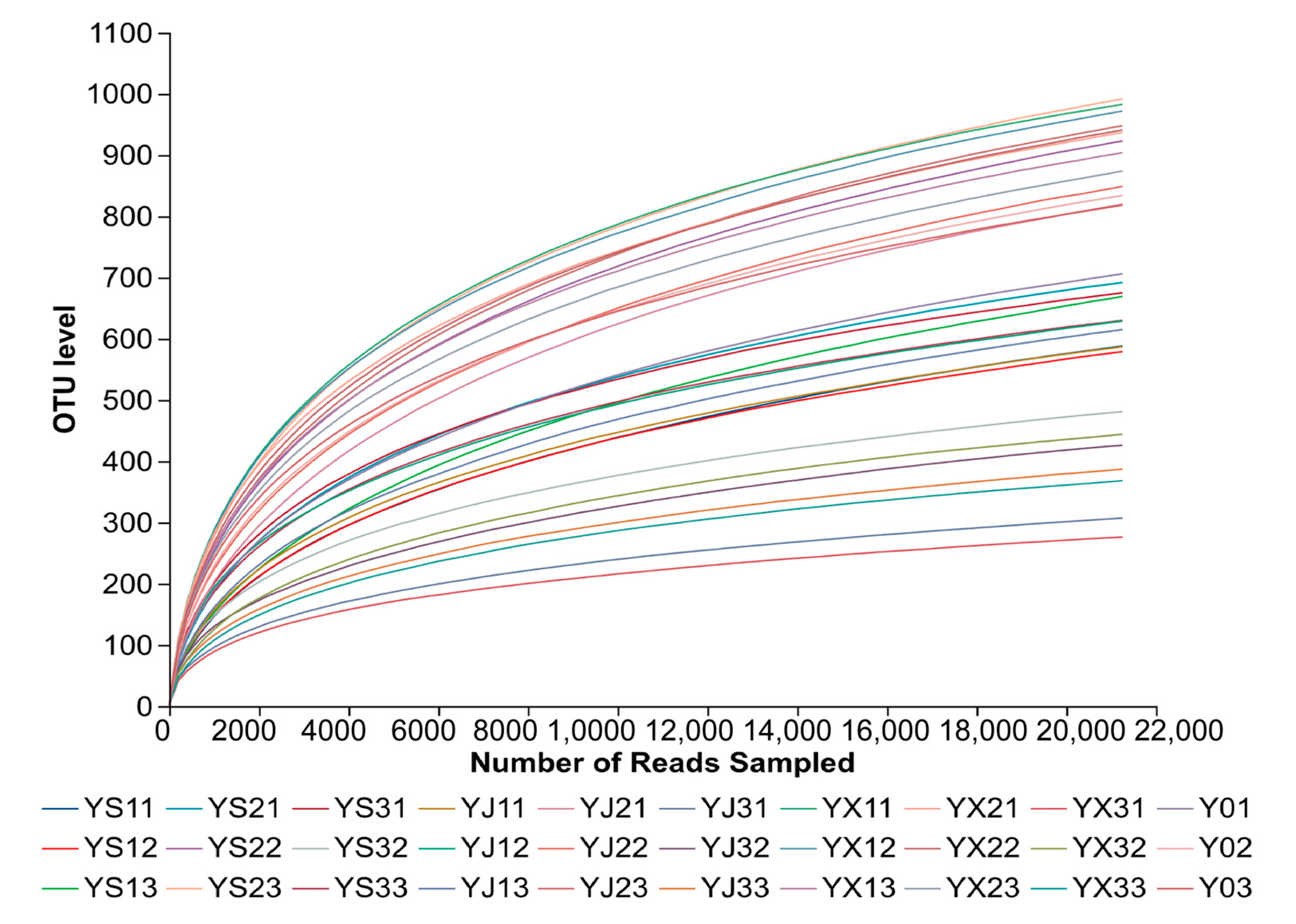
High-throughput sequencing of 30 samples (3 non-rhizosphere soil, 9 rhizosphere soil, 9 rhizosphere, 9 endosphere) generated 1,511,857 valid reads, with an average of 50,395 reads per sample. The rarefaction curves approached saturation, indicating sufficient sequencing depth (
Figure 1). Sequencing was performed on the Illumina MiSeq PE250 platform, with a read length of 250 bp. OTUs were clustered at 97% similarity using UPARSE, and 2045 OTUs were obtained after removing chimeras, chloroplast, and mitochondrial sequences. After rarefaction to 20,000 reads, the average sequence coverage was 99.09%, and rare OTUs (<0.01% relative abundance) were removed.
3.2. Analysis of Alpha Diversity of Bacterial Communities in the Root System of C. oleifera
We compared the alpha diversity of bacterial communities in the root systems of different
C. oleifera varieties, as shown in
Table 1. The Shannon, Simpson, and Chao1 indices revealed differences in the richness and diversity of bacterial communities among the three varieties.
Alpha diversity indices of root-associated bacterial communities among different
C. oleifera varieties and root compartments are shown in
Table 1. Among the three varieties, no statistically significant differences were observed in Shannon, Simpson, or Chao1 indices (
p > 0.05). For root compartments, the Shannon index was significantly higher in the rhizosphere (4.721 ± 0.4369) than in the endosphere (3.76 ± 0.4649) (
p < 0.05). The Simpson index was significantly lower in the rhizosphere (0.03574 ± 0.02696) than in the endosphere (0.07092 ± 0.02582) (
p < 0.05), indicating higher community evenness in the rhizosphere (since lower Simpson index values reflect higher evenness). The Chao1 index was significantly higher in the rhizosphere (1202 ± 75.14) than in the endosphere (630.5 ± 154.3) (
p < 0.05), suggesting higher species richness in the rhizosphere.
The Shannon, Simpson, and Chao1 indices showed no significant differences among the bacterial communities in the root systems of various C. oleifera varieties. However, significant differences emerged in the Shannon and Simpson indices when comparing the rhizosphere and endosphere bacterial communities across different root compartments. The Chao1 index revealed significant differences between the endosphere and the other three compartments, as well as between the rhizosphere soil and the rhizosphere bacterial community.
3.3. Analysis of the Basic Composition and Structure of Bacterial Communities in the Root System of C. oleifera
We analyzed the composition and relative abundance of bacterial communities in the root-associated microbiota of
C. oleifera at the phylum and genus taxonomic levels (
Figure 2 and
Figure 3). Bacterial groups with a relative abundance of less than 1% in the samples were categorized as “other”.
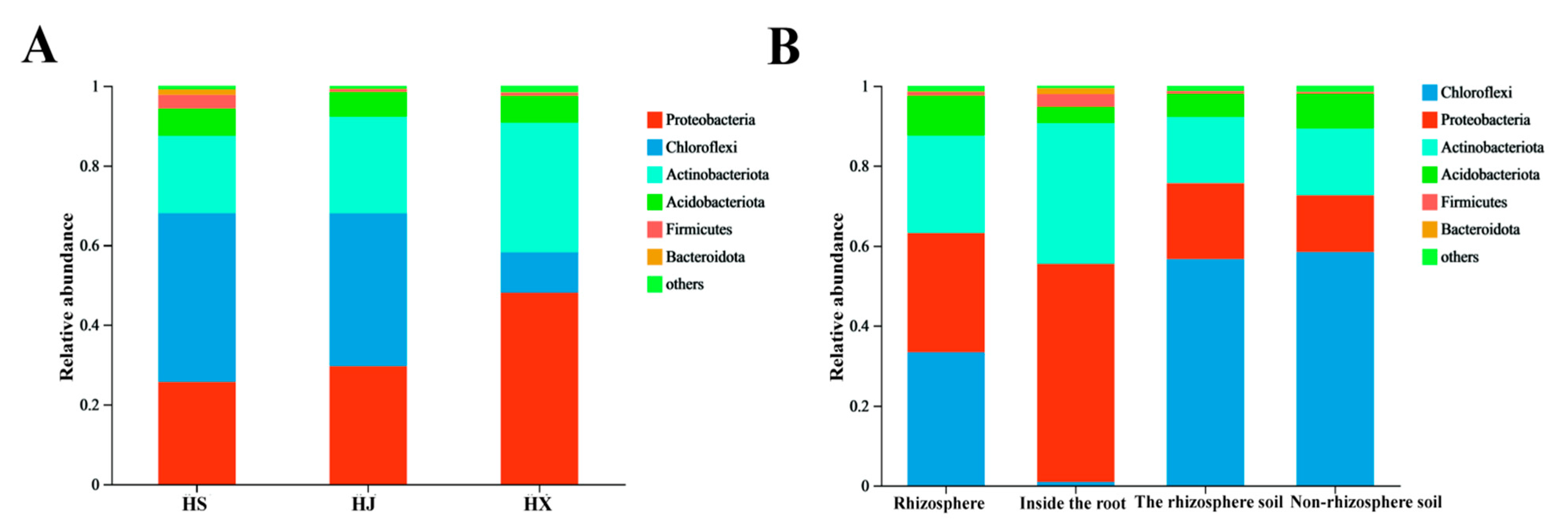
At the phylum level, the bacterial communities within the root system primarily consist of six phyla: Proteobacteria, Chloroflexi, Actinobacteria, Acidobacteriota, Firmicutes, and Bacteroidetes.
The root bacterial communities of various
C. oleifera varieties share dominant bacterial groups, including Proteobacteria, Chloroflexi, Actinobacteria, and Acidobacteriota. Despite this commonality, the relative abundances of these phyla differ among the three varieties. In ‘Huaxin’
C. oleifera, Proteobacteria exhibited the highest relative abundance at 48.0%. In contrast, Chloroflexi reached up to 40% in both ‘Huashuo’ and ‘Huajin’
C. oleifera, while it constituted only 10% in ‘Huaxin’ (
Figure 2A).
The composition and relative abundance of dominant bacterial groups in
C. oleifera vary across different root compartments. In non-rhizosphere soil, rhizosphere soil, and the rhizosphere, the dominant bacterial groups include Chloroflexi, Proteobacteria, Actinobacteria, and Acidobacteriota. In contrast, the endosphere is primarily dominated by Proteobacteria and Actinobacteria. Notably, Chloroflexi constitutes less than 1% of the endosphere bacterial community, a lower proportion compared to the other two root compartments. Firmicutes are prevalent in the endosphere, accounting for 54.5% of the bacterial community, whereas they represent only 14.2% in rhizosphere soil. The relative abundance of Chloroflexi decreases progressively from rhizosphere soil to the rhizosphere and endosphere. In contrast, the relative abundance of Proteobacteria and Actinobacteria exhibits a significant decreasing trend from the interior to the exterior (
Figure 2B).
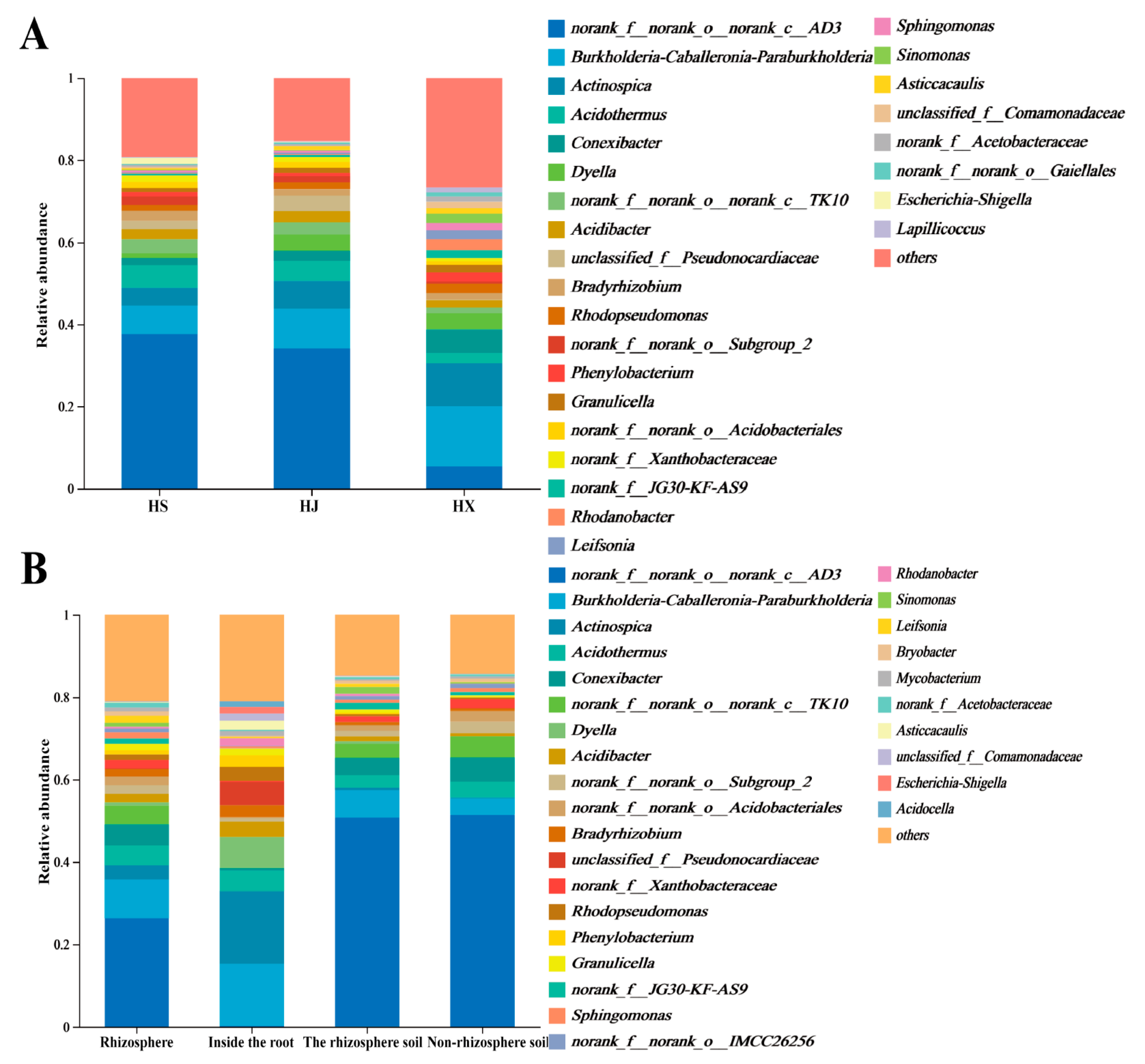
At the genus level, excluding Norank and Unclassified groups, differences exist in the composition and relative abundance of dominant bacterial groups within the root bacterial communities across different samples.
Among the various
C. oleifera varieties, ‘Huashuo’ and ‘Huajin’ share dominant bacterial groups, including
Burkholderia–Caballeronia–Paraburkholderia,
Actinospica, and
Acidothermus. In contrast, ‘Huaxin’
C. oleifera comprises
Burkholderia–Caballeronia–Paraburkholderia,
Actinospica, and
Conexibacter. The relative abundances of these genera differ among the three varieties. Notably,
Burkholderia–Caballeronia–Paraburkholderia and
Actinospica exceed 10% in relative abundance in ‘Huaxin’, which is higher than in ‘Huashuo’ and ‘Huajin’ (
Figure 3A).
In various root compartments, distinct bacterial communities are observed. The endosphere is primarily populated by
Burkholderia–Caballeronia–Paraburkholderia,
Actinospica,
Acidothermus, and
Dyella. In contrast, the rhizosphere is dominated by
Burkholderia–Caballeronia–Paraburkholderia and
Conexibacter, while the rhizosphere soil is predominantly occupied by
Burkholderia–Caballeronia–Paraburkholderia alone. Notably,
Conexibacter constitutes less than 1% of the endosphere bacterial community, which is lower than its presence in the rhizosphere bacterial community.
Actinospica represents 17.59% of the endosphere samples but is found at less than 1% in the rhizosphere soil.
Dyella is a leading genus in the endosphere samples, yet it accounts for less than 1% in the other two root compartments. Additionally, the relative abundance of
Burkholderia–Caballeronia–Paraburkholderia increases progressively from the rhizosphere soil to the rhizosphere and then to the endosphere (
Figure 3B).
Burkholderia–Caballeronia–Paraburkholderia is a monophyletic group with similar ecological functions, so it was analyzed as a composite genus.
3.4. Differences in Bacterial Community Structure of C. oleifera Root Systems
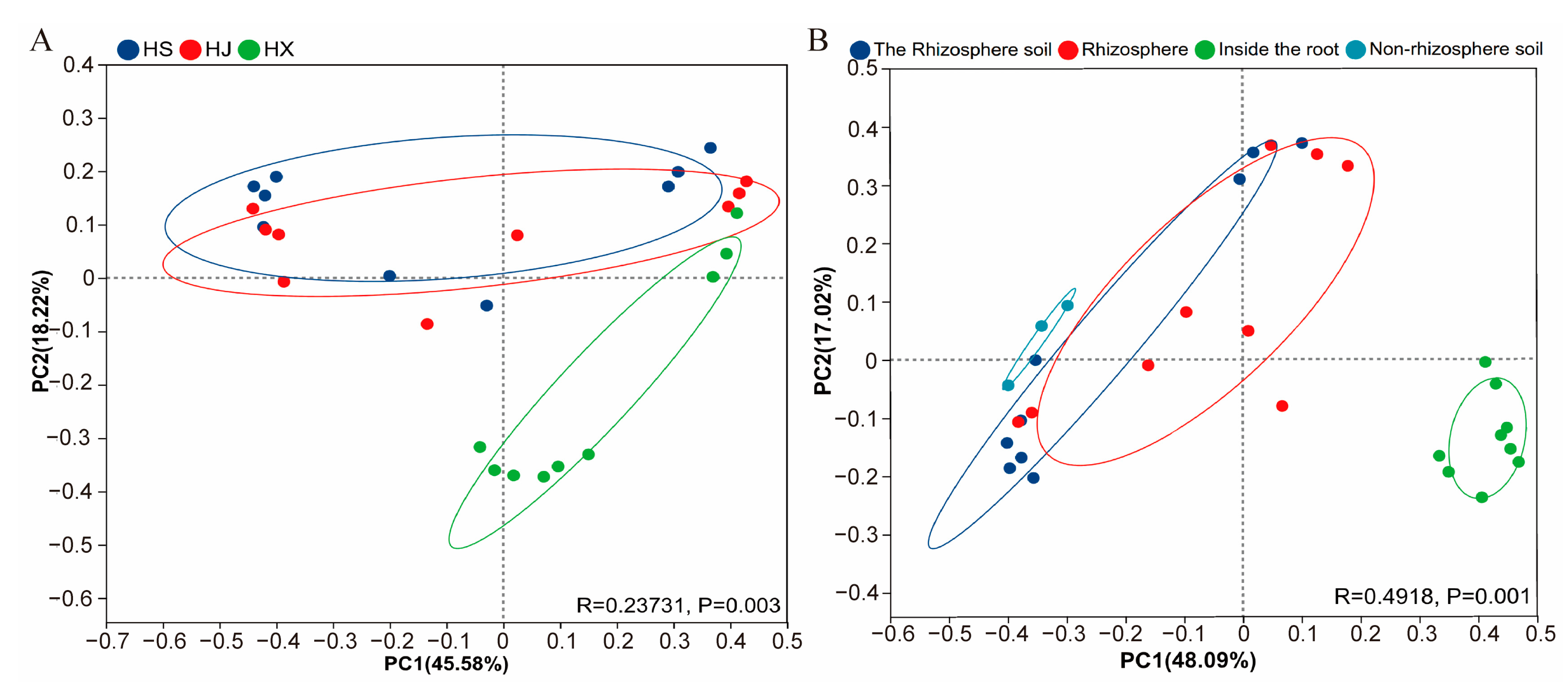
PCoA analysis based on Bray–Curtis distances showed that the bacterial community of ‘Huaxin’ was significantly separated from ‘Huashuo’ and ‘Huajin’ (PERMANOVA, R = 0.2373,
p = 0.003), while no significant difference was observed between ‘Huashuo’ and ‘Huajin’. This indicates that the variety significantly influenced the bacterial community structure of
C. oleifera root systems, with an explanatory rate of 45.58% (
Figure 4A).
For root compartments, the endosphere community was significantly separated from other compartments (PERMANOVA, R = 0.4918,
p = 0.001), while no significant difference was found between rhizosphere and rhizosphere soil. Furthermore, a separation was noted between the non-rhizosphere soil and root bacterial communities. These findings indicate that different root zones significantly influenced the bacterial community structure of
C. oleifera root systems, accounting for 48.09% of the variation (
Figure 4B).
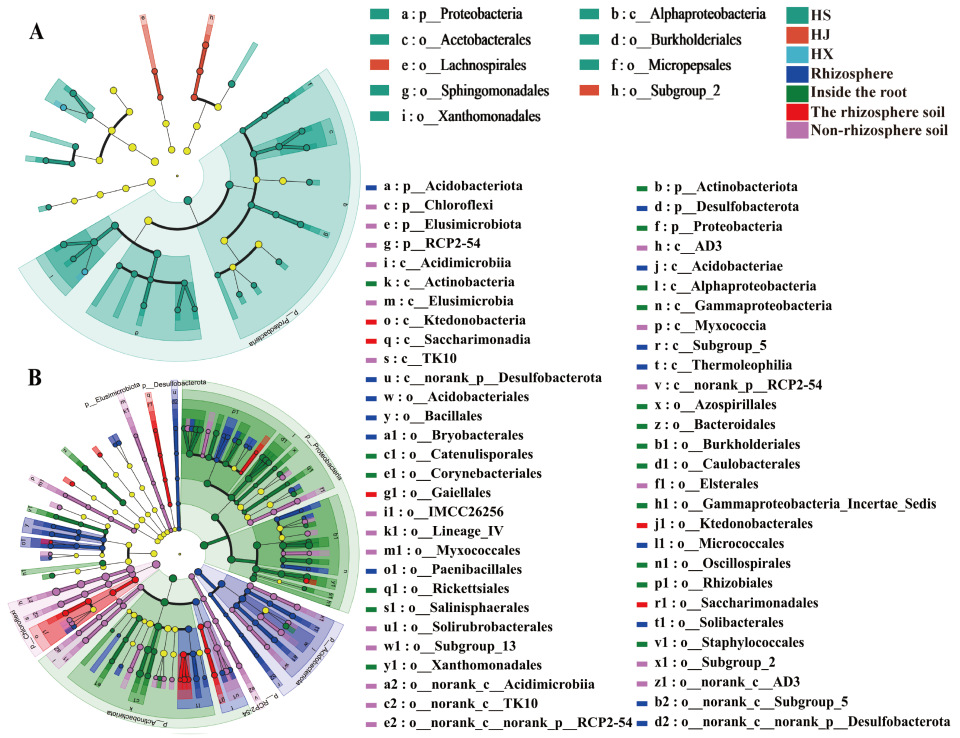
We employed LEfSe analysis to identify taxa with significantly different abundances and used Linear Discriminant Analysis (LDA) to assess the impact of each species’ relative abundance on these differences. Our findings revealed that the diameter of each circle is proportional to the relative abundance of the corresponding taxon. The circles, arranged from inner to outer, represent taxonomic levels from phylum to genus. Only taxa with LDA scores exceeding 3 are shown (
Figure 5A,B).
At the detectable genus level, excluding Norank and Unclassified taxa, bacterial taxa with LDA scores greater than 3 varied across samples. Specifically, ‘Huashuo’ had 1 distinct genus, ‘Huajin’ had 2, and ‘Huaxin’ had 12. In the rhizosphere, there were 11 distinct genera, the endosphere had 19, rhizosphere soil had 4, and non-rhizosphere soil had 6. Among the bacterial communities of the three C. oleifera varieties, ‘Huashuo’ and ‘Huajin’ exhibited the fewest different genera, whereas ‘Huaxin’ had the most. The number of distinct genera in the bacterial communities decreased progressively from the inner to the outer regions of the root system.
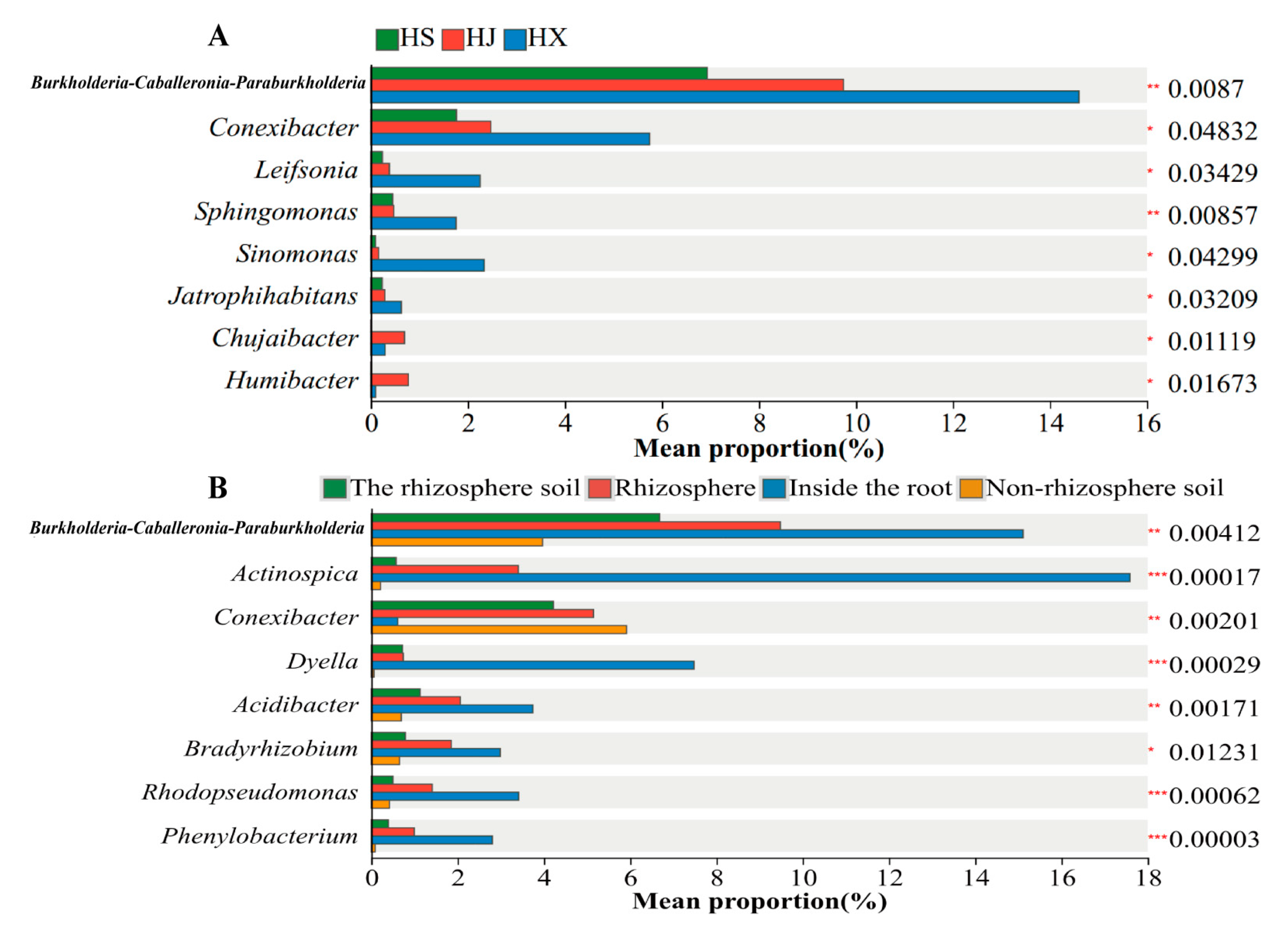
The intergroup significance test results indicated that, at the genus level (excluding Norank and Unclassified taxa), the top eight most abundant bacterial taxa in the root bacterial communities of different
C. oleifera varieties were
Burkholderia–Caballeronia–Paraburkholderia,
Conexibacter,
Leifsonia,
Sphingomonas,
Sinomonas,
Jatrophihabitans,
Chujaibacter, and
Humibacter. The relative abundances of these taxa varied across samples. Notably,
Burkholderia–Caballeronia–Paraburkholderia and
Sphingomonas exhibited highly significant differences (
p < 0.01), whereas the other six genera showed significant differences (
p < 0.05) (
Figure 6A).
In examining the bacterial communities across various root zones of
C. oleifera, the top eight most abundant genera, excluding Norank and Unclassified taxa, were identified. These genera and their relative abundances in each sample included
Burkholderia–Caballeronia–Paraburkholderia,
Actinospica,
Conexibacter,
Dyella,
Acidibacter,
Rhodopseudomonas,
Phenylobacterium, and
Granulicella, which demonstrated extremely significant differences (
p < 0.01) (
Figure 6B).
3.5. C. oleifera Root Bacterial Interaction Network
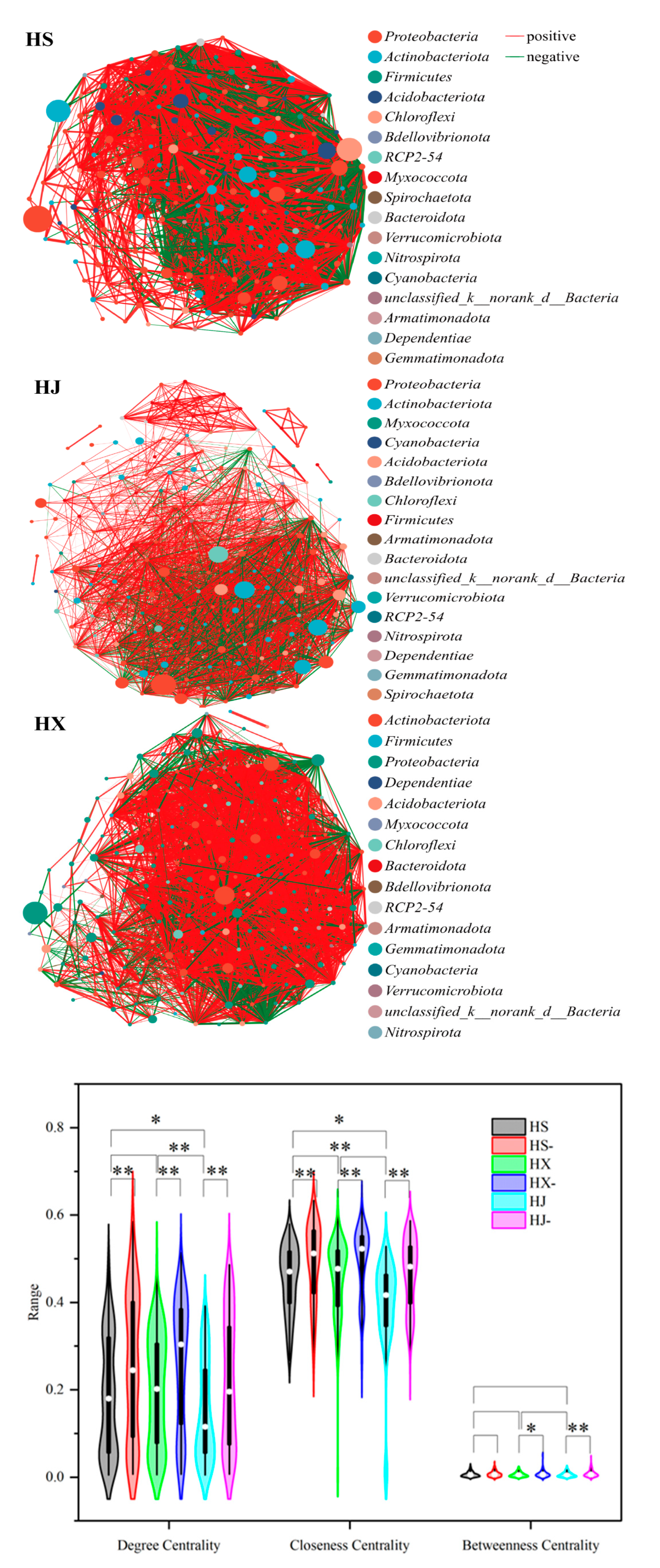
Co-occurrence networks were constructed based on Spearman’s correlation analysis of genus-level data (|r| > 0.6,
p < 0.05) (
Figure 7). The network topology analysis revealed distinct characteristics for each
Camellia oleifera variety. ‘Huaxin’ network exhibited the highest density at 0.197265, followed by ‘Huashuo’ network at 0.182663, while ‘Huajin’ network was the sparsest at 0.148291; their modularity values were extremely close to 0 (‘Huaxin’: 0.003395, ‘Huajin’: 0.035889, ‘Huashuo’: 0.008702), far below the threshold of 0.3 required for significant community clustering. The rhizosphere bacterial interaction network of ‘Huashuo’ consisted of 198 nodes and 3634 connections, with 2123 positive and 1511 negative correlations. In contrast, the ‘Huaxin’ network comprised 194 nodes and 3693 connections, featuring 2800 positive and 893 negative correlations. Meanwhile, ‘Huajin’ included 200 nodes and 2951 connections, with 1968 positive and 983 negative correlations. Among the varieties, ‘Huaxin’ exhibited higher connectivity due to its fewer nodes but more edges. Within these networks,
Colidextribacter,
Uliginosibacterium, and
Aliidongia were the most connected species in ‘Huashuo’, ‘Huaxin’, and ‘Huajin’, respectively.
The species exhibiting high centrality and correlation varied across the three networks. In the ‘Huashuo’ network, the bacterial genera with the highest centrality coefficients were Colidextribacter, Aliidongia, Bifidobacterium, Romboutsia, and Acidicapsa. In contrast, the ‘Huaxin’ network featured Uliginosibacterium, Ralstonia, Acidothermus, Occallatibacter, and Acidicapsa as the top genera. Meanwhile, in the ‘Huajin’ network, the leading genera were Asticcacaulis, Aliidongia, Bacillus, Nitrospira, and Paenibacillus. These species likely play a crucial role in maintaining the stability of the microbial ecological network.
Network stability was evaluated by removing the 50 least abundant nodes (consistent with the average number of rare genera across networks). Initially, no significant differences in centralities were found between ‘Huashuo’ and ‘Huaxin’, whereas ‘Huajin’ exhibited notable differences in degree and closeness centrality compared to the other two varieties. Post-removal, all three varieties showed significant changes in degree and closeness centrality. In terms of betweenness centrality, ‘Huashuo’ experienced minimal change, ‘Huaxin’ showed significant differences, and ‘Huajin’ displayed highly significant differences. These results suggest that the rhizosphere bacterial network of ‘Huashuo’ is more stable, while ‘Huajin’ is the least stable.
4. Discussion
Roots host a diverse microbial ecosystem, where rhizosphere microorganisms and their environment form a complex system essential for plant growth and development. Research indicates that the structure and diversity of plant root microbial communities are shaped by factors such as plant species, host genotype, season, geographical location, and environmental conditions.
C. oleifera, a significant oilseed plant, has primarily been studied concerning rhizosphere fungi and the impact of external interventions on microbial communities. However, research on its root bacterial communities remains limited [
22,
23,
24]. To gain deeper insights into the root bacterial communities of
C. oleifera, this study examined the diversity and community structure of rhizosphere soil, rhizosphere, and endorhizosphere bacterial communities across three different
C. oleifera varieties. The findings revealed that while bacterial community diversity and richness were generally consistent across different
C. oleifera varieties, there were notable differences in diversity and richness among various root zones.
Compared to other rhizosphere compartments, the bacterial community structure and composition within plant roots are highly specific, with a notable reduction in bacterial diversity. This suggests that the plant root surface selectively influences which bacteria enter the rhizosphere [
25,
26]. Lundberg [
26] examined the rhizosphere microbial communities of 600 Arabidopsis thaliana samples and discovered that the Shannon diversity in the rhizosphere was significantly lower than in the rhizosphere soil community. Similarly, Yuan et al. [
27] found that microbial diversity within the roots of Paeonia lactiflora was considerably lower than in the rhizosphere and non-rhizosphere environments. In our study, the bacterial community diversity and richness within the roots of
C. oleifera were significantly lower than those in the rhizosphere and rhizosphere soil, indicating that only a subset of bacteria can colonize and thrive in the rhizosphere environment of
C. oleifera. Furthermore, most microorganisms enriched in the endorhizosphere are also present in the rhizosphere and non-rhizosphere environments [
28]. At the phylum level, Proteobacteria and Actinobacteria dominate the bacterial communities in
C. oleifera across different root zones. Additionally, bacteria with low abundance in the rhizosphere tend to exhibit low abundance in the endorhizosphere as well. In summary, the root surface acts as a filter, screening bacteria for colonization within the root. The number and diversity of bacteria in the rhizosphere and rhizosphere soil exceed those in non-rhizosphere environments, influenced by root exudates from plant root metabolism. For instance, in poplar plantations, rhizosphere bacterial diversity is higher than in non-rhizosphere environments [
29]. Peiffer et al. [
10] also observed significant differences in the diversity and richness of microbial communities between the rhizosphere and surrounding soil of maize, with higher microbial activity in the rhizosphere. However, in this study, while rhizosphere bacterial diversity was higher than in rhizosphere soil and non-rhizosphere soil, rhizosphere soil bacterial diversity was lower than in non-rhizosphere soil.
Plant variety significantly influences the structure of root bacterial communities. ‘Huashuo’, ‘Huajin’, and ‘Huaxin’ exhibited low similarity in their bacterial communities, suggesting that different
C. oleifera varieties impact their rhizosphere bacterial communities differently, even under identical environmental conditions. This phenomenon is not unique to
C. oleifera and aligns with previous findings in other plants. For instance, Li et al. [
30] identified differences in the rhizosphere bacterial community structure among four pepper cultivars, while Liu et al. [
31] reported variations in soil fungal diversity and community composition among pecan cultivars. ‘Huaxin’ harboring a distinct community. This may be attributed to differences in root exudate composition among varieties [
32].
At the phylum level, Proteobacteria and Actinobacteriota dominated all compartments, reflecting their adaptability to root environments. Proteobacteria possess an outer membrane primarily composed of lipopolysaccharides, which safeguard their genetic material from external disturbances [
33]. Actinobacteriota produce antibiotics and promote plant growth, contributing to disease resistance [
34]. Dominant bacterial groups are crucial in managing ecological functions [
32]. This group includes various pathogenic and nitrogen-fixing bacteria, demonstrating strong environmental adaptability and the ability to rapidly colonize the rhizosphere of diverse plants [
35]. For instance,
Burkholderia can colonize plant surfaces and rhizospheres, fix nitrogen, solubilize phosphorus, reduce plant ethylene levels, and produce auxins [
36]. Actinomycetes and their derivatives not only promote plant growth but also serve as biopesticides. More than half of the over 10,000 antibiotics produced by microorganisms originate from Actinomycetes [
37]. Previous research on plant leaf and root microbial communities has identified Proteobacteria, Actinobacteria, Bacteroidetes, and Firmicutes as stable components of plant microbiomes [
38]. Besides the two dominant groups, Chloroflexi exhibited notable variations in bacterial communities across different root zones. Chloroflexi plays a crucial role in plant CO
2 fixation and has been shown to interact closely with other microorganisms within the community [
39,
40,
41]. This is mainly because, apart from the root interior, other root zones are exposed to the external environment, allowing Chloroflexi to become a dominant group in these root communities.
Co-occurrence network analysis revealed dominant positive interactions, indicating cooperative relationships (e.g., nutrient exchange) among bacteria [
42]. All three networks fall into the “sparse network” category (density < 0.2), which aligns with the typical structural pattern of natural microbial ecosystems where species interactions are selective rather than random. ‘Huaxin’ network had the highest connectivity (99.0% of nodes in one component) and average degree (38.07), reinforcing its role as the most interconnected system. ‘Huajin’ network, despite its lowest density, maintained a high connectivity rate (94.5%) and an average degree of 29.51, suggesting efficient information transfer despite fewer total interactions. ‘Huashuo’ network stood out for its balanced positive-negative interaction ratio: with 58.4% positive edges (synergistic relationships) and 41.6% negative edges (competitive/inhibitory relationships), it had a higher proportion of negative interactions than ‘Huaxin’ and ‘Huajin’, indicating more intense interspecific competition in the ‘Huashuo’ environment. These findings indicate that the root bacterial community of
C. oleifera is rich in probiotics that contribute to metabolizing various nutrients in the roots, supplying essential nutrients and hormones for plant growth and development. Key taxa with high centrality (e.g.,
Acidothermus,
Sphingomonas) are involved in organic matter decomposition and stress resistance [
43,
44].
Acidothermus degrades cellulose, providing carbon sources for other bacteria [
43], while
Sphingomonas enhances plant drought resistance [
44]. These taxa are potential candidates for developing microbial inoculants to improve
C. oleifera productivity.
This study has limitations: (1) It was conducted at a single site and time, so future studies should include multiple sites and seasons; (2) Root exudate composition was not analyzed, which would help explain varietal differences; (3) Functional verification of key taxa was not performed. Future research should focus on isolating key bacteria and testing their effects on C. oleifera growth and disease resistance. Additionally, breeding programs could consider selecting varieties with beneficial microbial associations to enhance sustainable production.







 and
and