1. Introduction
The central nervous system (CNS), consisting of the brain and spinal cord, is the most complex of all biological organs. The brain includes the cerebrum (which controls thought, memory, voluntary movement), cerebellum (which regulates balance, coordination), brainstem (which coordinates basic life functions like breathing and heartbeat), and subcortical structures (which coordinate emotion, motivation); the spinal cord acts as a communication highway between the brain and the rest of the body, transmitting sensory input and motor commands.
CNS processing information, controlling movement, sensation, thought, and emotion, is essential for every aspect of human life, and its study not only advances medicine but also fuels breakthroughs in psychology, technology, and education.
In medicine, it is the foundation of neurology and neurosurgery, disciplines dedicated to diagnosing and treating disorders that affect the brain and spinal cord, such as epilepsy, stroke or Parkinson’s disease. Neuropharmacology also relies on this knowledge to develop drugs that act on neurotransmitters, offering new therapeutic options for conditions like depression, anxiety, and neurodegenerative diseases. Rehabilitation, too, benefits from the study of the CNS, since the principle of neuroplasticity makes it possible to design therapies that help patients recover functions after brain injuries or spinal cord trauma.
Psychology and psychiatry use insights into the CNS to better understand mental health conditions such as schizophrenia and mood disorders. They also apply this knowledge in therapeutic approaches, including cognitive–behavioral therapies, which exploit the mechanisms of brain functioning to improve emotional regulation and behavioral responses.
In the realm of technology and engineering, its applications are equally groundbreaking. Brain–computer interfaces allow paralyzed individuals to control external devices using their brain signals, restoring autonomy and communication. Artificial intelligence and robotics take inspiration from neural networks in the brain to create increasingly sophisticated systems capable of learning and adapting. Neuroprosthetics, meanwhile, enable the development of artificial limbs that respond directly to neural activity, integrating seamlessly with the body and enhancing patients’ independence.
Education and cognitive enhancement also benefit from CNS research. Studies on learning, memory, and attention help refine teaching methods and lead to the creation of cognitive training programs designed to slow age-related decline and promote effective lifelong learning.
In summary, the study of the central nervous system goes far beyond understanding how the human body works. It translates into practical applications that range from treating neurological diseases to creating advanced technologies and improving cognitive abilities. It is a field where science, health, and innovation converge, with profound and lasting impacts on society.
All this makes understanding the brain’s biochemical processes one of the most intriguing scientific pursuits. The CNS is mainly characterized by two types of cells immersed in the cerebrospinal fluid: neurons (excitable) and glial cells (not excitable). Cerebrospinal fluid has a composition largely similar to that of blood plasma, except for the protein content, which is much lower. This fluid assists the brain by providing protection and nourishment. Each neuron is generally in contact with thousands of synaptic terminals from which it receives information and transmits output signals in the form of action potentials via a single axon [
1,
2]. Over the years, neurons undergo important morphological and functional changes initially (up to about 20 years) linked to the maturation of the brain, and then progressively linked to the deterioration of normal aging [
3]. These changes, affecting the cellular and subcellular structures and the numerous neuronal interconnections, characterize the entire organ and cause a general decline in cognitive activities. Sometimes, this compromise can also affect genetic factors and become well localized so as to give rise to the most common neurodegenerative diseases, including Alzheimer’s, Parkinson’s, Huntington’s and Amyotrophic Lateral Sclerosis [
4,
5,
6]. The greatest damage to cellular structures is due to reactive oxygen species (ROS), also in consideration of the daily high oxygen demand of the brain. Curiously, both neurological changes due to age and pathologies deriving from the main neurodegenerative diseases ultimately involve oxidative stress produced during energy metabolism [
7,
8]. In reality, alterations of normal mitochondrial functions seem to be the main causes of neurological damage, and in this context, a clear dividing line between the damage caused by neurodegenerative diseases and aging is also not clearly deducible. For this reason, studying the changes in the brain caused by aging can also help to better understand the evolution of neurodegenerative diseases.
Significant advances have been made in the non-invasive field of neuroimaging technology, which has provided a deeper understanding of brain development. These techniques include magnetic resonance imaging, one of the most important neuroimaging techniques applied to the “in vivo” study of brain structures that can be used to evaluate changes in volume or thickness of specific structures over time; functional magnetic resonance imaging, an imaging method that demonstrates regional and time-varying changes in brain metabolism; positron emission tomography, which relies on the short half-life properties of radionuclides that emit positrons to map brain systems; and electroencephalography (EEG) and magneto–encephalography (MEG), two techniques based on ion currents caused by the exchange of information from neurons. EEG detects the electrical activity of active neurons using electrodes attached to the scalp, and MEG detects the oscillations of the magnetic field caused by these electrical currents. Near-infrared spectroscopy exploits the ability of light in the near infrared (650–900 nm) to penetrate biological tissues. The great diversity of these techniques means that each of them is a potential tool for studying a particular feature of the brain. In this paper, we propose an alternative technique for the study of the brain’s structure that makes use of the principles of rheology, a branch of physics that studies the deformation and flow of matter [
9]. It is widely used to study the viscoelastic properties of soft biological materials, such as in the diagnosis of liver and breast tumors, because, by measuring parameters such as viscosity, elastic modulus and relaxation, the viscoelastic properties of a material characterize its ability to combine viscous (fluid) and elastic (solid) behavior when subjected to deformation or stress. These properties are crucial for study of body tissues as long as it is very difficult (if not impossible) to carry out experimental measurements on soft tissues, because there are great difficulties in the mechanical coupling between the sample and the measuring instrument. This occurs because these quantities are mechanical (stress) and kinematic (deformation) in nature. The study becomes significantly complicated when dynamic measurements are performed by subjecting the sample to a harmonic shear. However, complementary techniques have been developed that allow us to provide information on the quantities that characterize mechanical relaxation phenomena. One of these techniques, using elastic waves (ultrasound) and the relaxation described above, can be characterized by the so-called dynamic modules G1 and G2 by measuring the speed and attenuation of these waves (as a function of frequency) [
10]. Another technique that can provide information of this type is multifrequency magnetic resonance elastography (MRE) [
11].
The purpose of this study is to use of the MRE technique for the analysis of the viscoelastic properties of the brain with the application of a new mathematical approach of non-equilibrium thermodynamics. To this end, a complex mathematical reworking of the measurements made by Sack et al. was carried out that allowed for the thermodynamic characterization of the brain [
11].
2. Materials and Methods
From a thermodynamic point of view, the brain and, in general, all living matter are out of equilibrium, and this is the reason why the characterization of our study applies the application of non-equilibrium thermodynamics. We used the thermodynamic approach with internal variables formulated by De Groot, Mazur, and Kluitenberg [
12,
13,
14,
15,
16,
17], which was developed and deepened in subsequent studies [
18], for the thermodynamic quantities calculation of the theory using experimental data. This was possible because we determined the interconnected relationships between the thermodynamic functions of the theory and the quantities that are experimentally measured in both the mechanical [
10,
18] and electrodynamic [
19] cases. The data used in this paper are derived from multifrequency magnetic resonance elastography measurements on healthy human brains of 55 volunteers (31 males, age range 21 to 84 years; 24 females, age range 18 to 88 years) [
11]. In detail, the application of four vibration frequencies in an acoustic range from 25 to 62.5 Hz and the use of the rheological spring model allowed for the determination of two parameters describing the solid–fluid behavior and microstructure of the brain tissue [
11].
2.1. Non-Equilibrium Thermodynamic Approach with Internal Variables
The basic concepts of Kluitenberg’s theory and the subsequent developments are recalled here [
12,
13,
14,
15,
16,
17,
18,
19]. We will make extensive use of concepts regarding elastic and anelastic phenomena related to the respective deformations; for this reason, we specify below what is meant by elastic and anelastic deformations [
20].
- (1)
Elastic deformation is that part of the deformation that is instantly recovered; therefore, it is a reversible process (it does not appear in the production of entropy).
- (2)
Anelastic deformation is the deforming part recovered after a finite time; therefore, with finite speed. According to Planck, it is irreversible and dissipative (it appears in the production of entropy). In the real world, elastic deformation does not exist—it is approximated.
2.2. Theoretical Thermodynamic Approach
Kluitenberg’s theory is based on the idea that the usual variables of non-equilibrium thermodynamic are insufficient to describe some phenomena that occur in a medium when it is subject to perturbation. In particular, they are insufficient to describe relaxation dielectric phenomena in a continuous media (we neglect the magnetic effects).
Generally, it is assumed that the specific entropy
s of an elastic dielectric is a function of the specific internal energy u and the strain tensor
εik:
The new Kluitenberg idea consists of the assumption that there is a vector field
that plays the role of the thermodynamic internal degree of freedom, which influences the strain. In the theory, it is assumed that the specific entropy (which we indicate with s) has the following functional dependence [
17]:
The tensor strain is additively composed of two parts
and
[
14]:
Moreover, it can be shown that the change of both and contributes to entropy production, and therefore, they represent two irreversible processes.
So, we can introduce the viscous stress tensor
:
Here, is the stress tensor that occurs in indefinite equations. If the irreversible field (4) vanishes, the change in does not contribute to the entropy production, i.e., changes in are reversible processes.
2.3. Phenomenological Equations
From Equation (2), we obtain:
The entropy production per unit of volume and per unit of time is given by [
17]:
In agreement with the method of non-equilibrium thermodynamics developed by De Groot and Mazur, there will be linear relations among these quantities, which, for an isotropic media, can be written as [
12,
13,
14,
15,
16,
17,
18]:
where
are phenomenological coefficients, and we assume that they are constant over time. The coefficients
are connected with possible cross effects that may occur between the two types of mechanical relaxation phenomena described by Equations (7) and (8), and they satisfy the Onsager–Casimir reciprocal relations:
If we neglect the cross effect described by coefficients (
), we observe that the coefficient
, which has the dimension of a viscosity, is connected to irreversible processes related to the change of Ɛ, while
, which has the dimension of a fluidity, is related to change of
and the corresponding intensive variable
. However, Equations (7) and (8) are connected with irreversible changes of the strain [
15].
For a tissue like the one we are studying in this work, it is reasonable to assume that is constant for each element in order to verify the fundamental axioms on local and instantaneous equilibrium.
2.4. Linear Response Theory
In this paper, the mechanical relaxation phenomena will be studied, so the medium under examination is assumed as being subjected to harmonic stress. In this context, the perturbation is an extensive quantity (cause), and the corresponding intensive quantity (effect) will be studied. It will be assumed that:
extensive variable (cause).
And thus it will be [
21,
22]:
intensive variable (effect) where
is a phase lag.
We do not go into the details of Equations (9) and (10) that are part of the linear response theory. We simply want to introduce the complex dynamic module G = G1 + iG2.
From Equation (10), it is:
Equation (12) is written [
21]:
G1 and G2, called storage and the loss modulus, are related to elastic and dissipative phenomena, respectively.
2.5. State and Phenomenological Coefficients (Explicit Form)
The medium studied is supposed to undergo a shear deformation of the type:
The following relationship between phenomenological and state coefficients and G
1 and G
2 can be shown [
18]:
To complete the system, the following equation is introduced [
19]:
where
G2R is the relaxed value of G
2 [
18]. We justify Equation (19). The viscous phenomenon associated with
is a dissipative phenomenon, and therefore, it must be somehow “contained” in G
2, representing all the dissipative phenomena, both viscous and anelastic. Now, if G
2 represents only viscous phenomena, it is known that
=
. But it is known that the viscous phenomena are more evident at low frequencies where G
2 varies little, and therefore, it seems reasonable to approximate
=
with Equation (19). From Equation (19), the term follows:
which can be considered the inelastic “part” of the loss modulus G
2 as the viscous part is subtracted. Module
will be called the anelastic loss modulus. Equations (16)–(19) give the four coefficients as a function of the perturbation frequency
. It is easy to see that they are positive.
2.6. Relaxation Equation
In the following, we assume that T = constant, in agreement with physiological phenomena. The importance of the phenomenological and state coefficients is that they characterize the medium specifying the amount of the type of phenomena correlated to each of them.
It is important to observe that their constancy refers to the time for each type of perturbation that acts on the medium. But they vary with the change of the perturbation. For example, if the perturbation is of harmonic type with frequency ω, then the coefficients will depend on ω (we will see this in the next section), which can be considered the parameter in the functional dependence of the coefficients. In this case, we will call dynamical coefficients.
2.7. Thermodynamic Functions
Considering the thermodynamic functions introduced above, we can define a matrix that we will yield “Thermodynamic Matrix Dynamic Behavior” (TMDB):
It is easy to calculate the explicit form of the elements of this matrix as a function of the coefficients and, therefore, of the frequency of perturbation.
Writing this matrix for an isotropic viscoelastic medium means characterizing it in an almost univocal way. For further information on the formulas used, see
Appendix A.
3. Results
The fit curves with the Zener model were extracted from the study of Sack et al. [
11]; the results obtained allow for a comparison between young and old brains. For our considerations, we consider only the results up to 100 Hz even if the curve representation goes up to 500 Hz. Coefficients and thermodynamic functions referring to the old brain and young brain will be indicated with “o” and “y”, respectively.
Now, two new quantities are introduced by assuming that the CNS is made up of two parts with different anelastic characteristics: the glia and the neural tissue. Anelastic deformation
(1) is attributed to the glia indicated by
and to the neurons indicated with
, such that:
This will allow us to evaluate the prevalence of anelastic deformation in glia and neurons, assuming for them different states of inelasticity. Here, the individual components of the glia (astrocytes, microglia, and oligodendrocytes) will be neglected and considered as one body. The term “elastic deformation” will be used for
(0); this must not be misleading since its temporal derivative appears in the expression of entropy production. So, this term will be used only to distinguish it from the inelastic one, remembering that it is a non-elastic and therefore dissipative phenomenon.
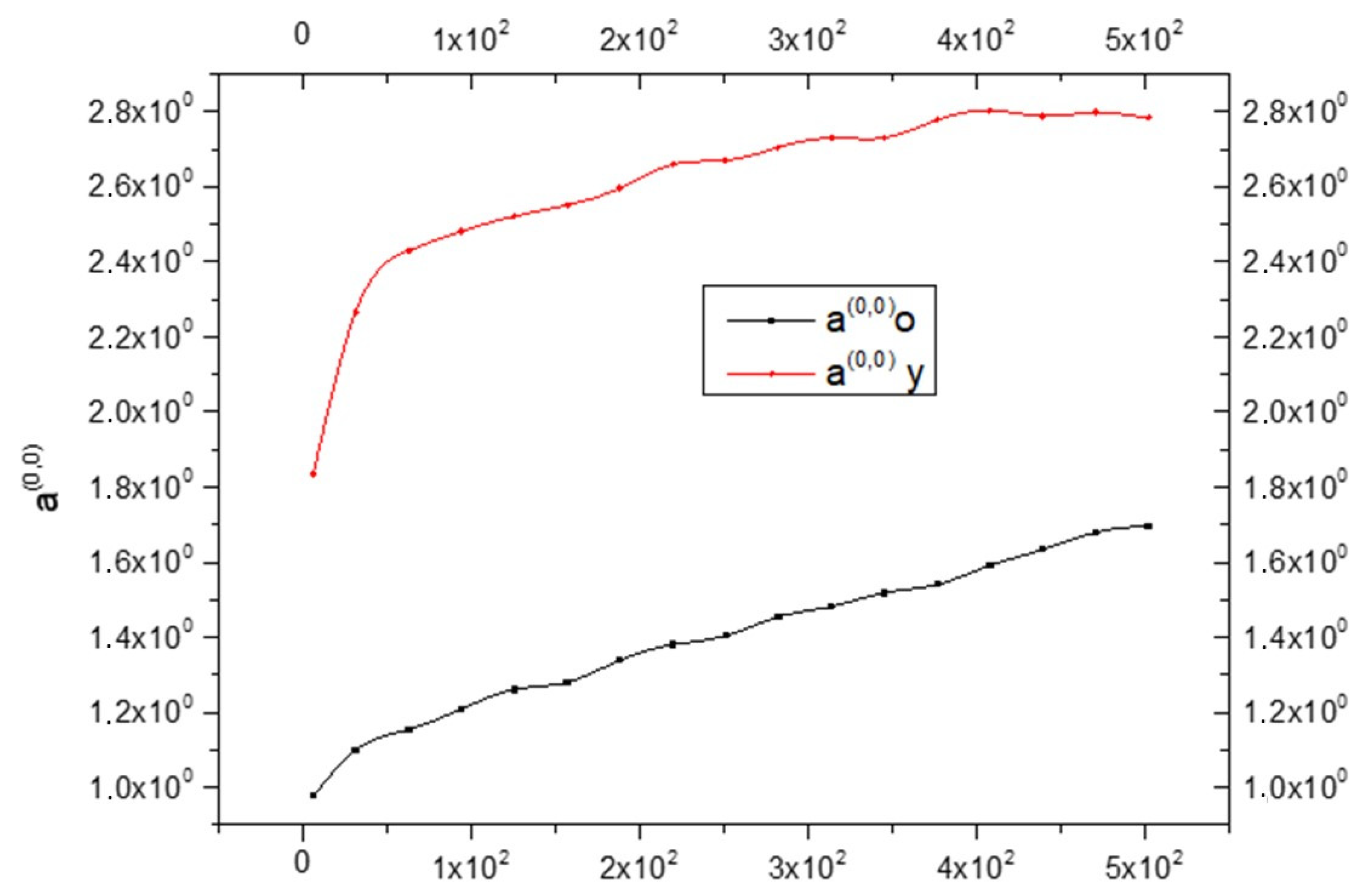
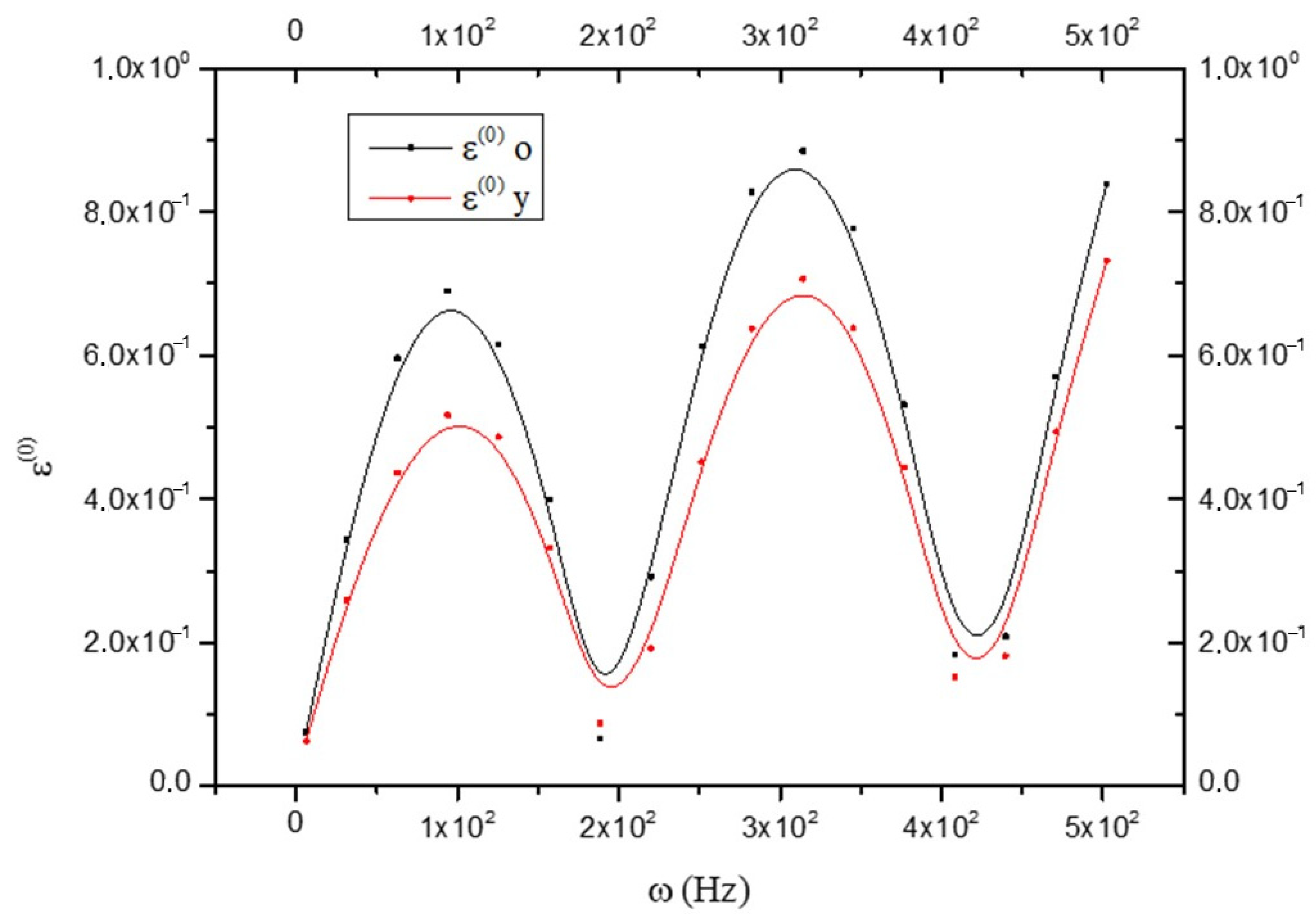
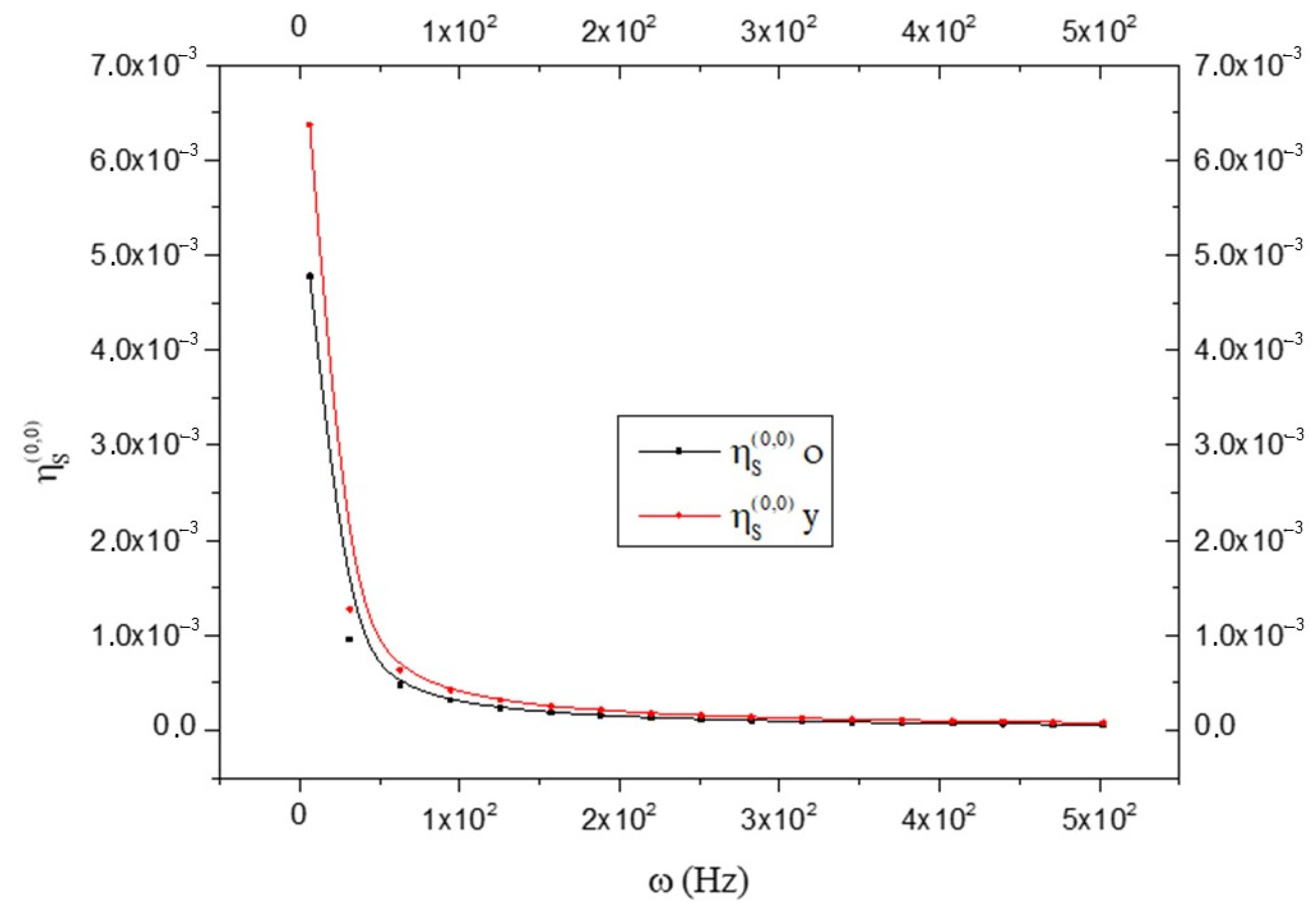
Figure 1 shows that it is always:
Since a
(0,0) is related to rigidity, therefore, it is possible to say that the CNS
(y) is more rigid than the CNS
(o). The same is shown in
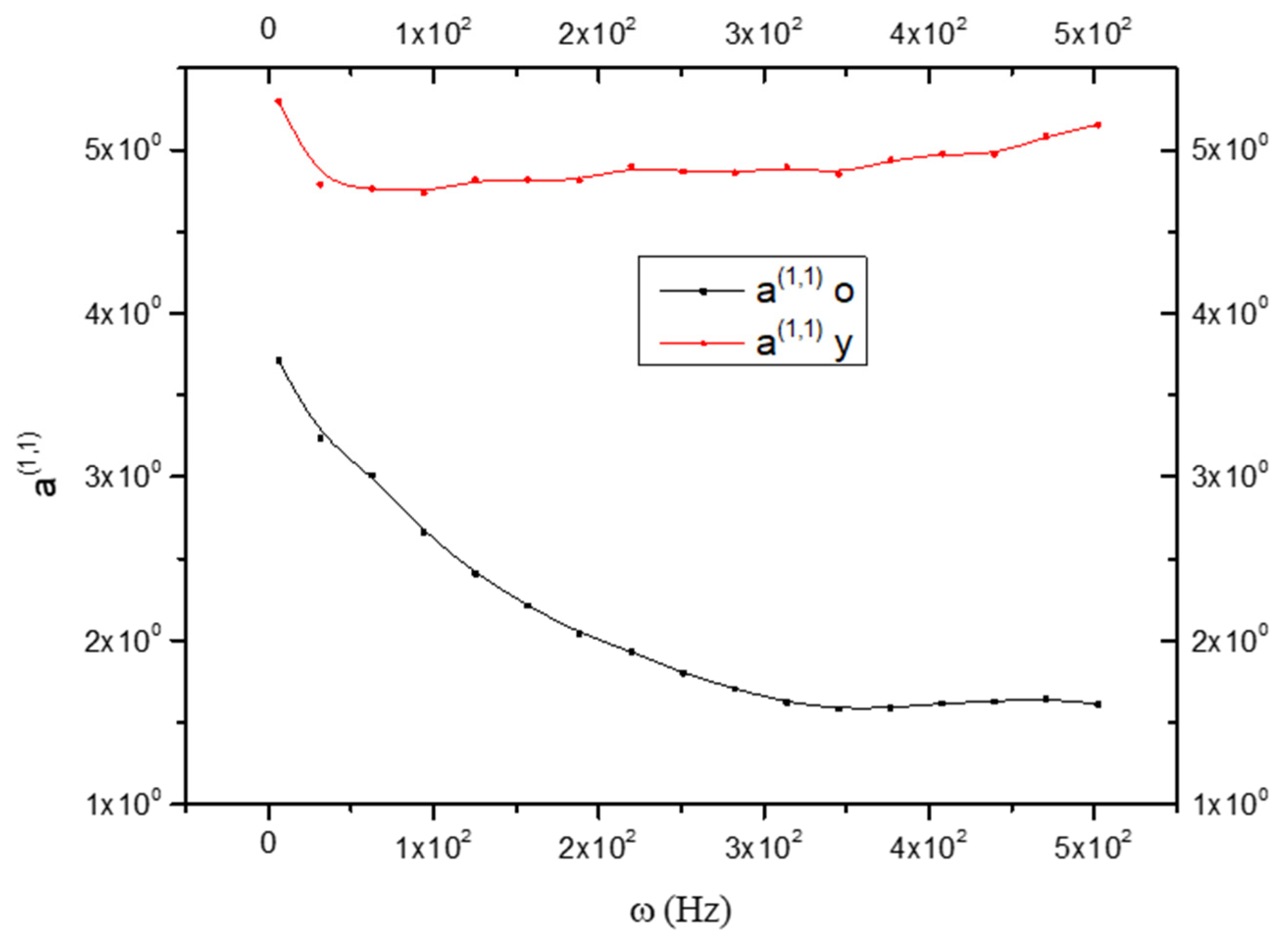
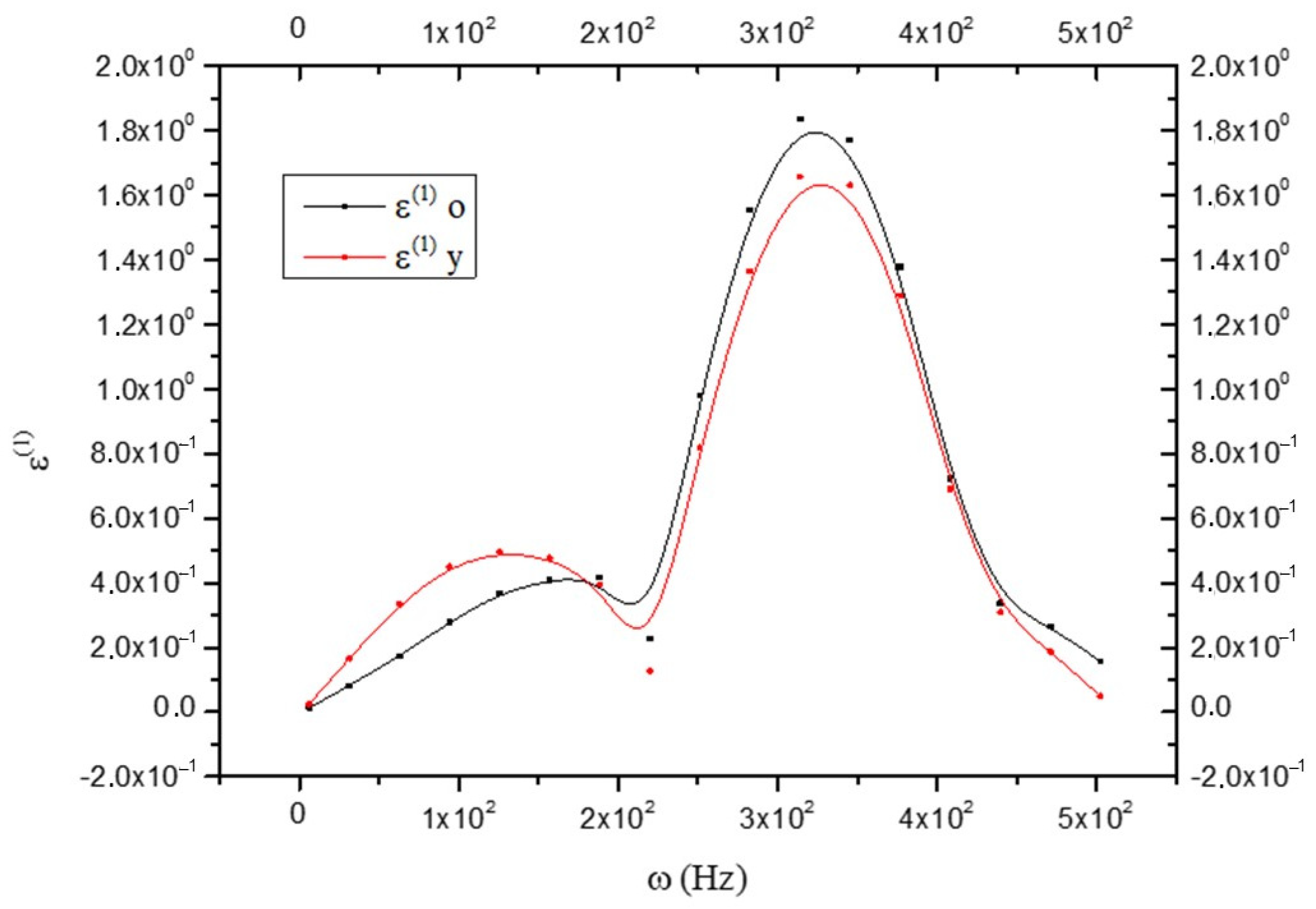
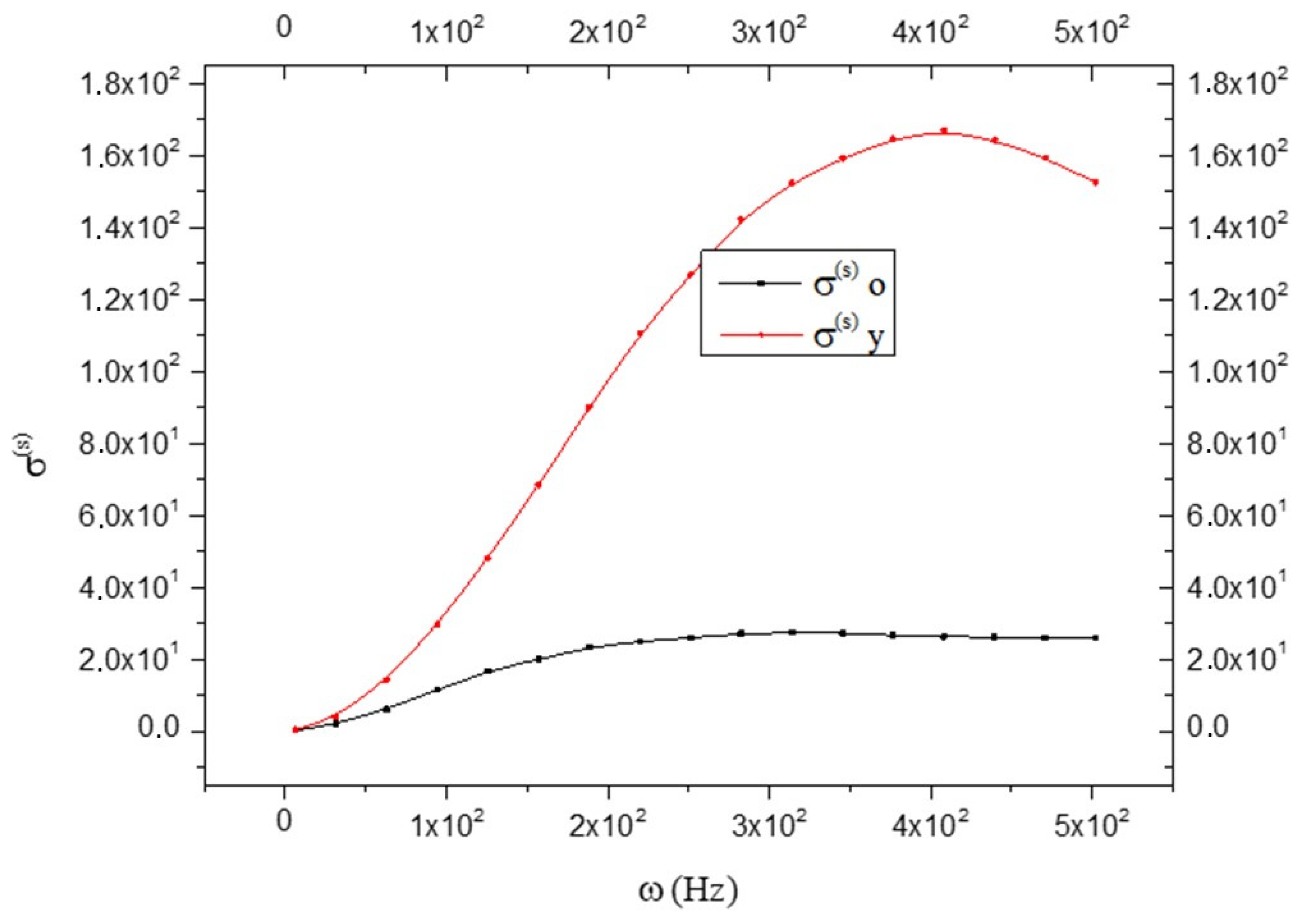
Figure 2, but while
is an increasing function,
is a decreasing function.
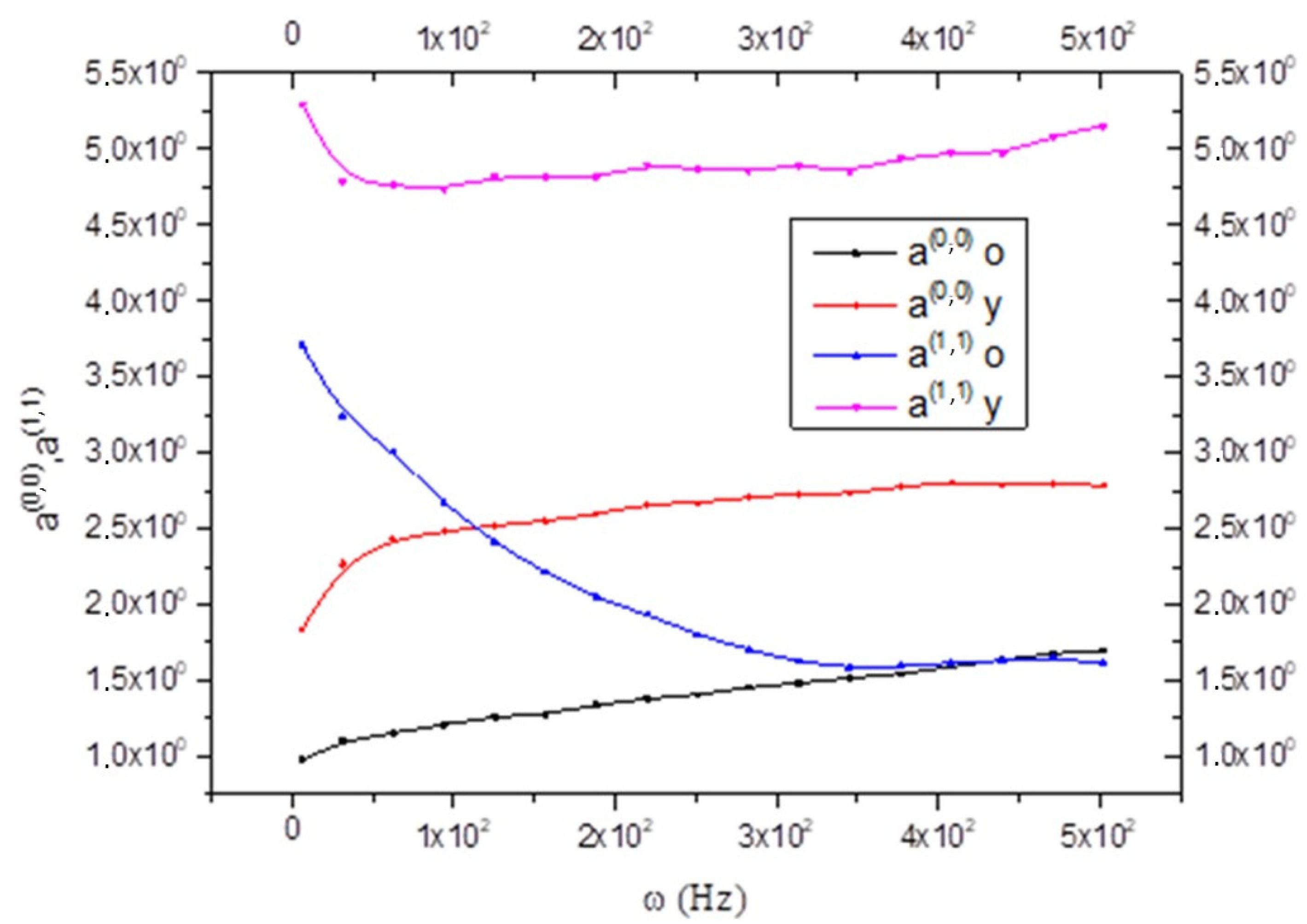
The different trend between the two coefficients is better seen by joining the two graphs together, as can be seen in
Figure 3.
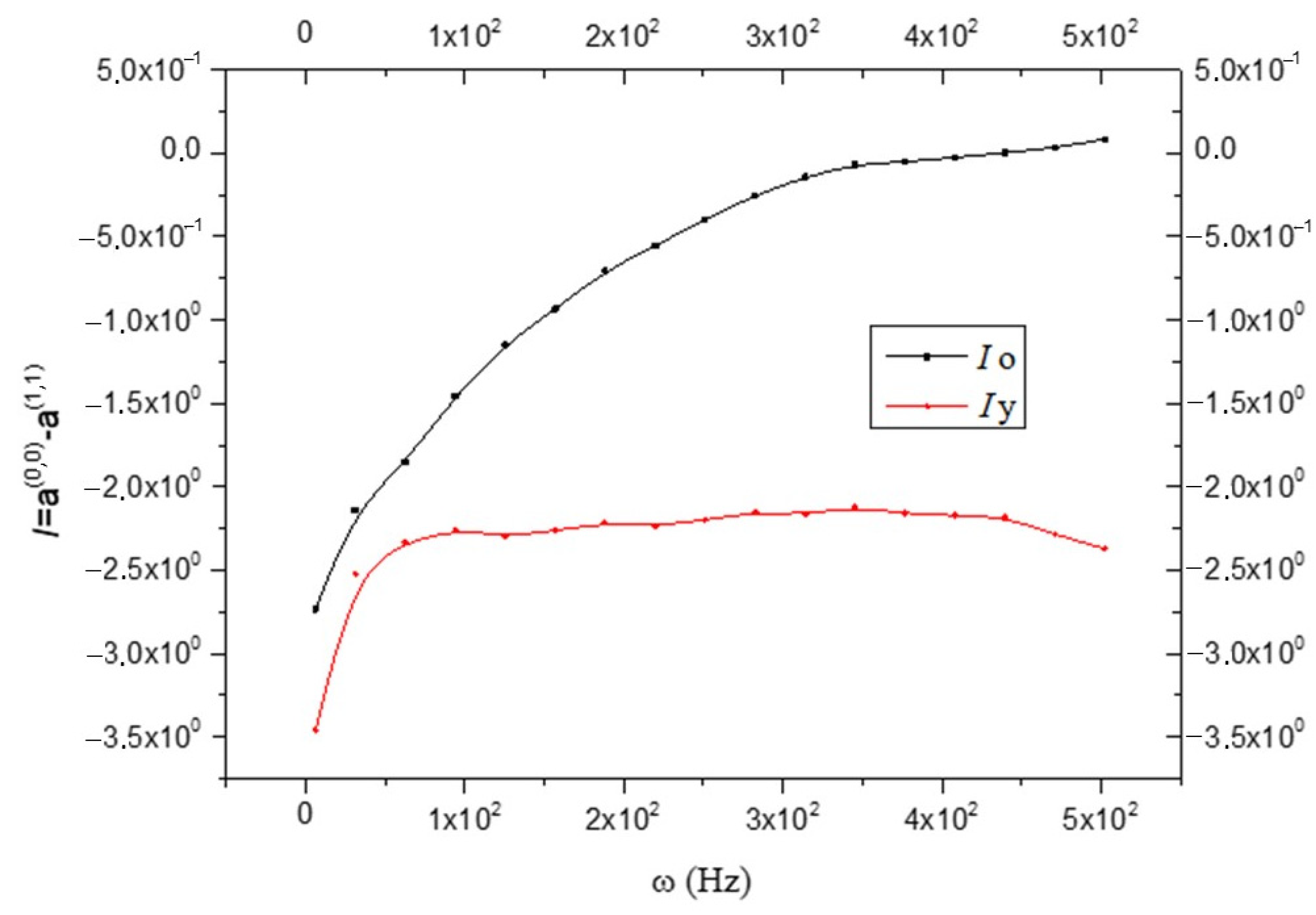
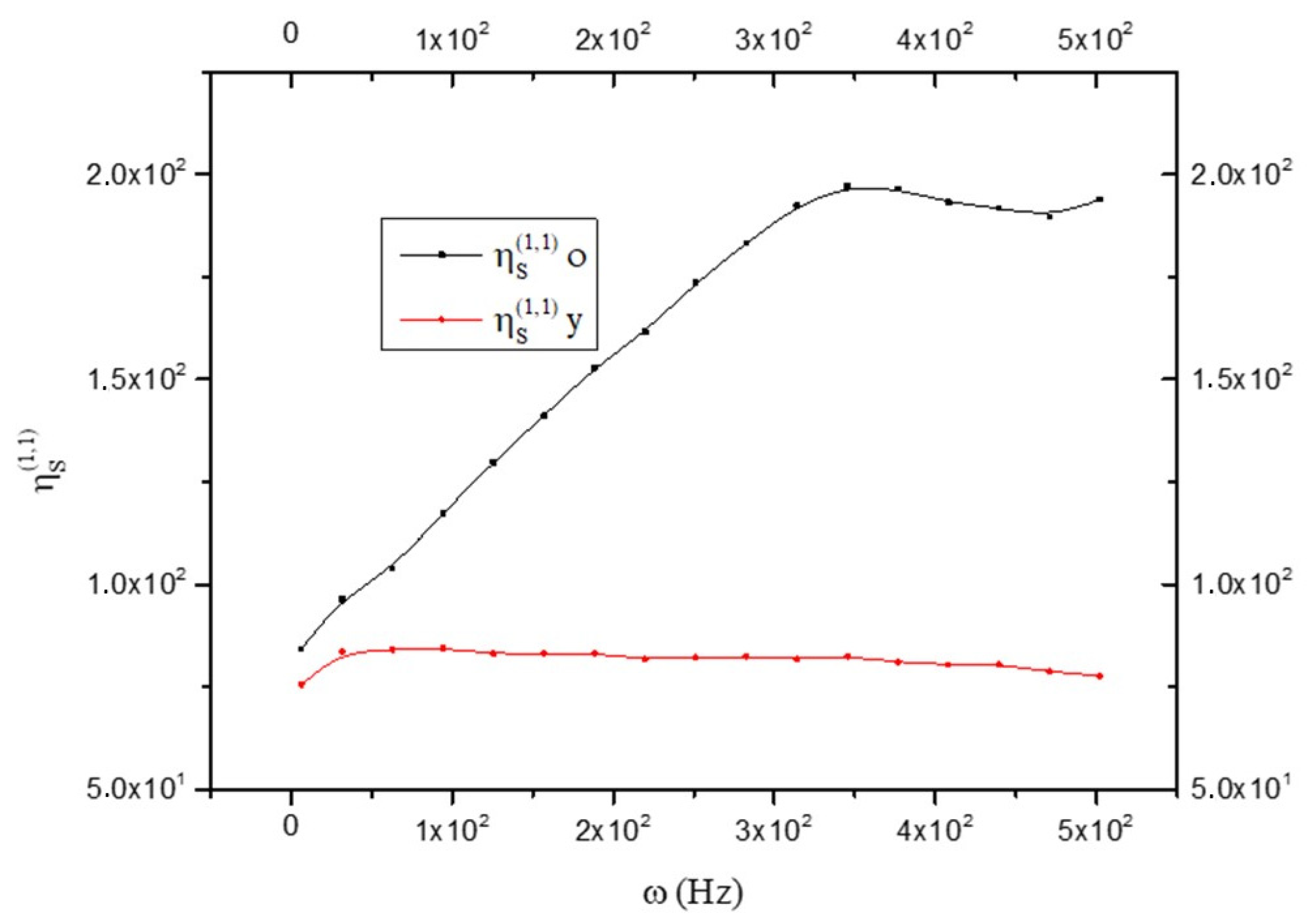
Opposite behavior is shown in
Figure 4, where the anelastic coefficient
is greater in the CNS
(o) than in the CNS
(y):
In this case, anelasticity is prevented to a greater extent than in the old brain.
(y) remains practically constant at each frequency, which means that the anelastic characteristics do not change with the variation of ω; while
(o) increases with ω (see
Figure 4). In the expressions of
(0),
(1), and
, even if not specified, only absolute values will be considered. This is because the numerical value of the functions, and not the sign introduced by the trigonometric functions that appear in the expressions, are of interest. Furthermore, the phenomena studied are related to the displacements from equilibrium induced by the harmonic perturbation of shear, regardless of the direction in which it occurs (the medium is assumed to be isotropic). It is good to keep in mind that as the oscillation frequency increases, “smaller” elements and fewer large elements are affected. Looking at
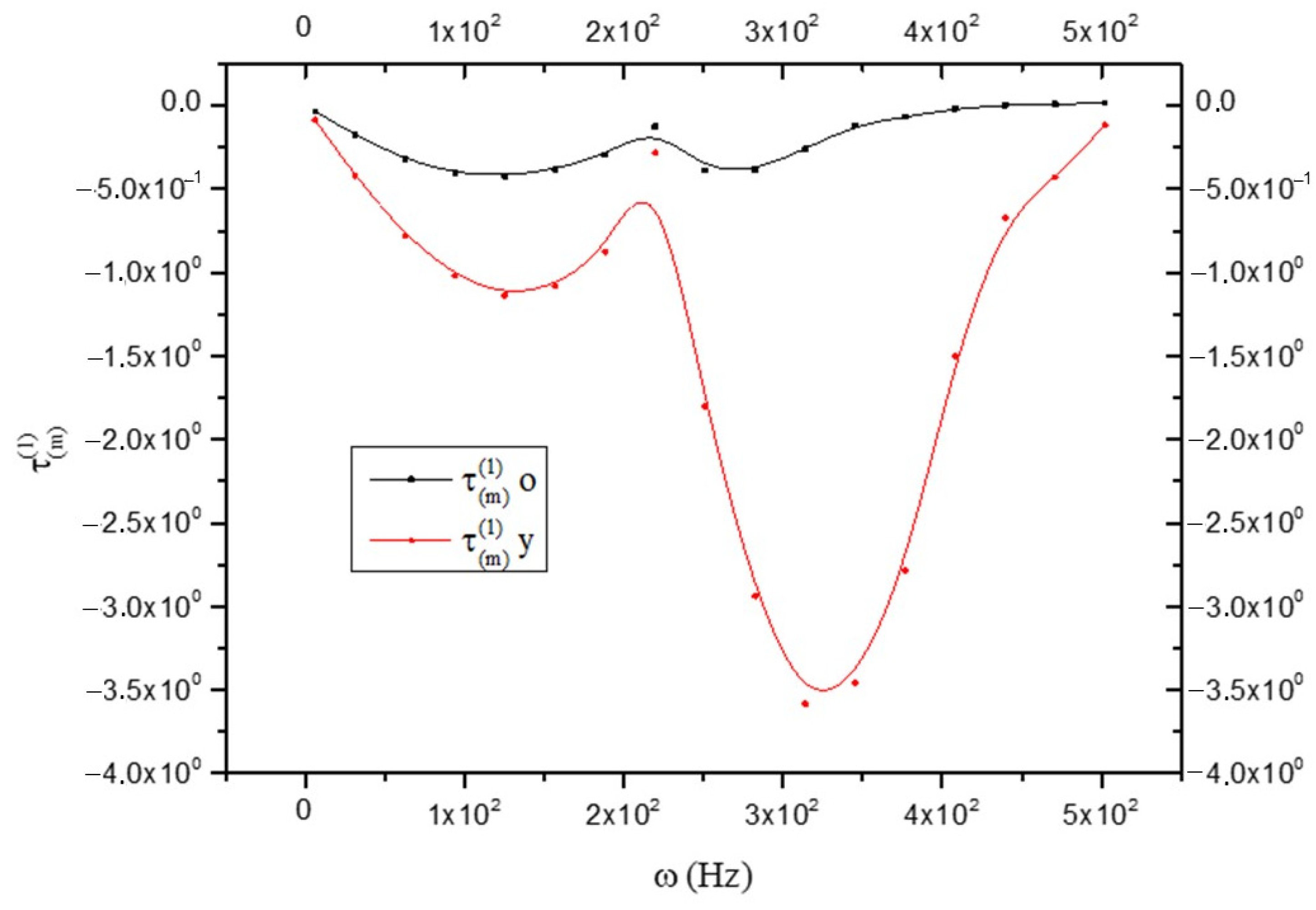
Figure 5, it results that:
That is, the elastic part of the deformation is greater in the CNS(o) than in the CNS(y).
This accords well with Equation (22), which shows a greater rigidity of the CNS
(y) compared to the CNS
(o). By observing
Figure 6, it results that
for
Hz. That is, the anelastic part of the deformation is greater in the CNS
(y) but in a small range of frequencies, while, in accordance with Equation (24), it results that
for
(see
Figure 6).
That is, our results indicate a minor rigidity of the CNS
(o) compared to the CNS
(y); this causes an anelasticity increase (see
Figure 6). The anelastic coefficient
= (a
(0,0) − a
(1,1)) is considered to be composed of a part related to the glia and one to the neurons, such that:
where
(g) is the part related to the glia and
(n) is related to the neurons. From Equation (24), it results that:
or:
If the CNS
(o) loses neurons, it acquires a greater anelasticity, and therefore:
and from Equation (31):
That is, the anelastic component of the glia coefficient is greater in the CNS
(o) than in the CNS
(y). Recalling that the glia is composed of various elements but physiological aging is accompanied by degenerations of neurons and oligodendrocytes [
23], for aging purposes, we only consider oligodendrocytes of the glia:
where “g” stands for glia, “ol” stands for oligodendrocytes, and “x” is the elements of the glia whose effects are neglected because they do not participate in aging. The Equation (32) is rewritten:
Oligodendrocytes, due to their constitution, may not have cross effects with x; therefore, we can write:
and Equation (34) becomes:
Since, as mentioned above, physiological aging is accompanied by the degeneration of oligodendrocytes and neurons, in Equation (36) it results that:
and:
the anelastic component of the coefficient
of “ol” is greater in the CNS
(o). It is important to underline that for the whole CNS, Equation (27) has been obtained (see
Figure 4). This allows us to identify in the oligodendrocyte of the CNS
(o) the anelastic component that justifies Equation (24). Of course, if the CNS
(o) is more anelastic than the CNS
(y), as shown by Equation (32), it will “react” with greater stress; therefore, it will be as follows (remembering that
:
according to
Figure 4 and
Figure 6 and
Figure 7.
By observing
Figure 8, we note that the following results:
This means that the old brain is more fluid than the young brain. On the contrary, the viscosity is greater in the young brain than in the old one; i.e.:
as shown in
Figure 9.
Figure 10 shows the trend of entropy production. We note that it is clearly greater in the CNS
(y) than in the CNS
(o). This means that there is a greater “disorder” in the CNS
(y) in respect to the CNS
(o). 4. Discussion
This study applies the non-equilibrium thermodynamic theory with internal variables to analyze the rheological properties of the brain, focusing on the in-depth analysis of the viscoelastic properties. It uses data derived from multifrequency magnetic resonance elastography measurements on the healthy human brains of 55 volunteers while not considering the difference based on gender, only age groups [
11]. In detail, the application of four vibration frequencies in an acoustic range from 25 to 62.5 Hz and the use of the rheological spring model allowed for the determination of two parameters describing the solid–fluid behavior and microstructure of the brain tissue. From the results, it is evident that the CNS
(y) is more rigid than the CNS
(o). This is explained by remembering that the neural tissue is more rigid than the glia, and the CNS
(o) is characterized by neuron degeneration with partial myelin loss. Also, the minor rigidity of CNS
(o) compared to the CNS
(y) may be related to the loss of neurons with age, confirming what has been reported in the literature [
23,
24]; this causes an anelasticity increase, as is evident from
Figure 4 and
Figure 6.
Remembering that the anelastic coefficient
is due to a part related to the glia and one to the neurons since physiological aging is accompanied by the degeneration of oligodendrocytes and neurons, the anelastic component of the coefficient
of “ol” is greater in the CNS
(o) [
25]. Then, we can identify in the oligodendrocyte of the CNS
(o) the anelastic component. Also, if CNS
(o) is more anelastic than CNS
(y), it will “react” with greater stress.
Analyzing the other studies’ results, it clearly emerges that the old brain is more fluid than the young brain; on the contrary, the viscosity is greater in the young brain than in the old one, as confirmed by other studies on the subject [
26]. This can be justified by considering that in an old brain, the neuron degeneration causes a loss of “compactness”.
Furthermore, the entropy production is greater in the CNS
(y) than in the CNS
(o). Recalling that living systems constantly exchange matter and energy with the surrounding environment, for this reason, they can be considered complex dynamic systems far from a thermodynamic equilibrium condition [
27]. Further, the degree of entropy generation in cells decreases with age, the generation of entropy is three times higher in infants than in the elderly [
28], and the lower degree of entropy measured in the old human brain can be seen as a biological marker of age. In addition, according to Sohal’s theory, the age and metabolic degrees of organisms are inversely related [
29]. In the brain, the oxidation of glucose for energy purposes is associated with the production of entropy. Therefore, the lower degree of entropy production monitored in the old brain compared to the young one inevitably indicates the lower metabolic activity of the neurons. Furthermore, changes in brain viscosity can affect the movement of molecules, including neurotransmitters, within the brain, disrupting normal neuronal function and signaling [
30].
Aging can lead to a reduction in the number of synapses, impacting neuronal communication and cognitive function. Dendritic regression and the loss of these extensions are a common feature of aging and neurodegenerative diseases [
31]. In this context, also based on data from the literature, the calculated statements
>
and
<
could be interpreted as the result of the dendritic regression associated with neuronal death, both potential consequences of an increased production of ROS due to reduced antioxidant defenses and/or an altered mitochondrial dysfunction in aging [
32]. The slow but progressive altered mitochondrial functionality leads to an impaired Ca
2+ handling [
33,
34,
35]. A shift in Ca
2+ regulation is strictly related to changes in cell excitability and synaptic plasticity, resulting in a functional lesion of the hippocampus [
36,
37]. Aging induces an increase in Ca
2+ channel activity in the plasma membrane of brain neurons, leading to augmentation of cellular calcium content and resulting in alterations in bilayer fluidity relevant to the enzyme activity [
38].