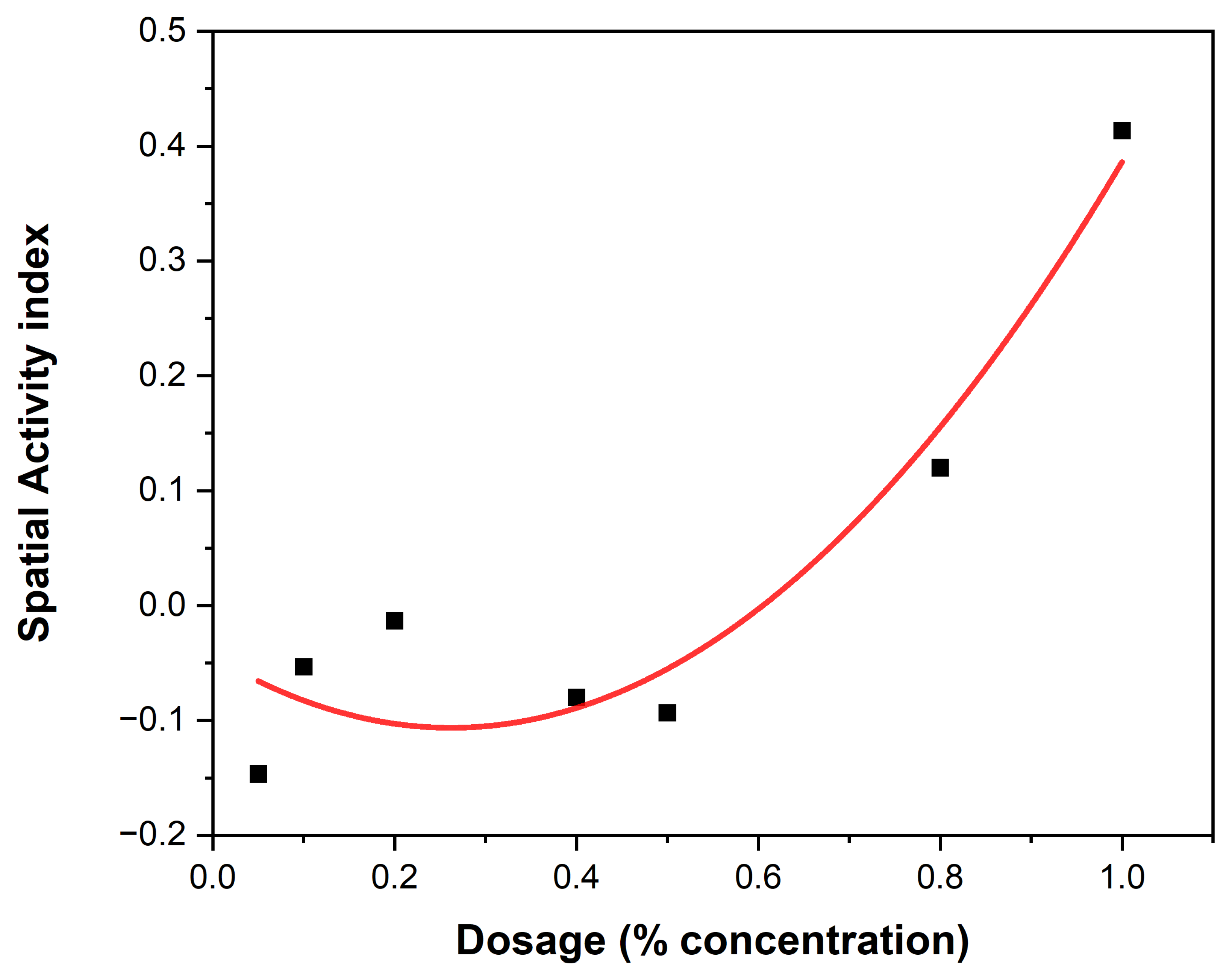
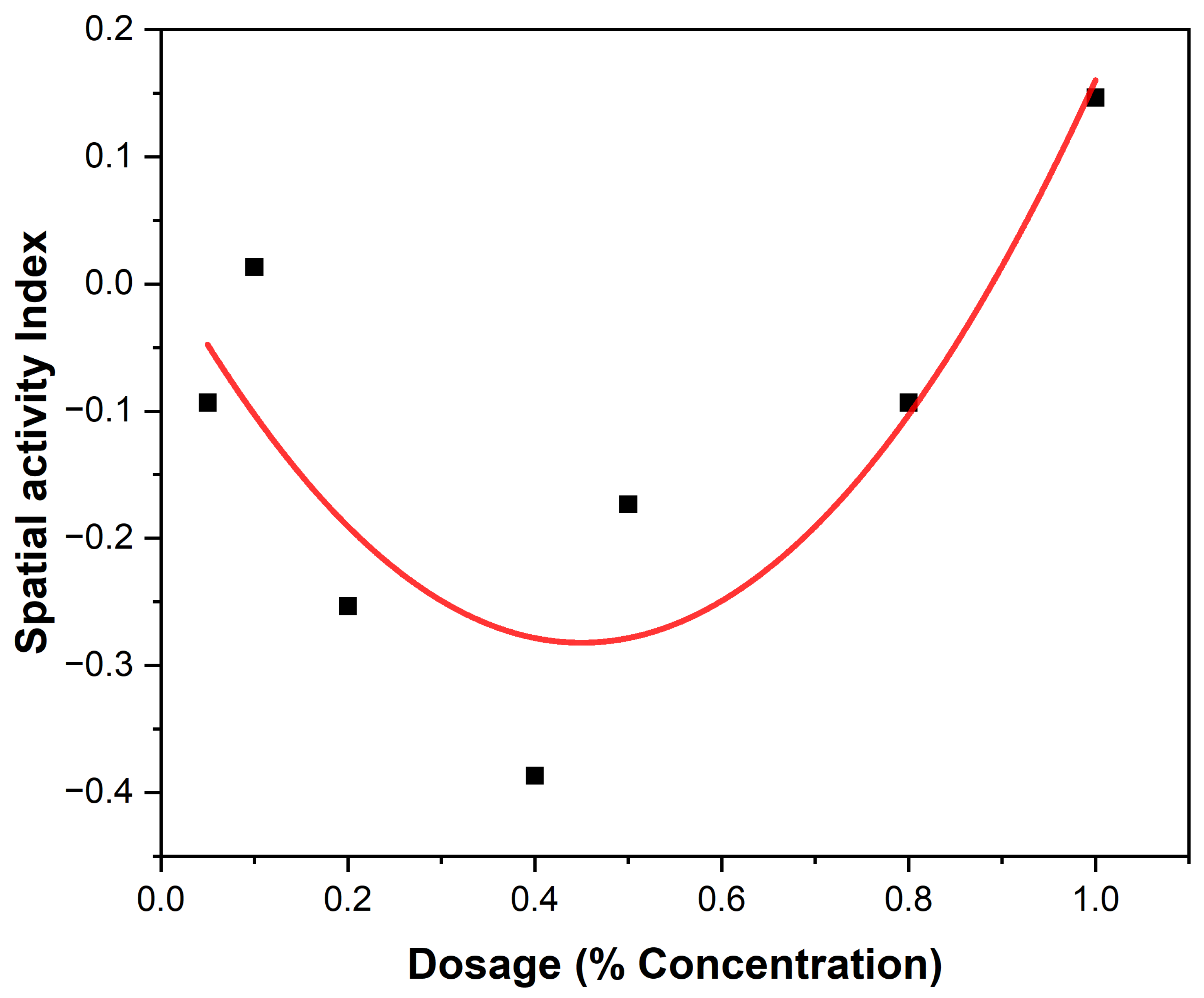
Spatial Exposure Responses of Malaria Vectors to Eucalyptus grandis (W. Hill ex Maiden) and Cymbopogon citratus (DC.) Stapf Essential Oils

 ,
,
Simple Summary
Abstract
1. Introduction
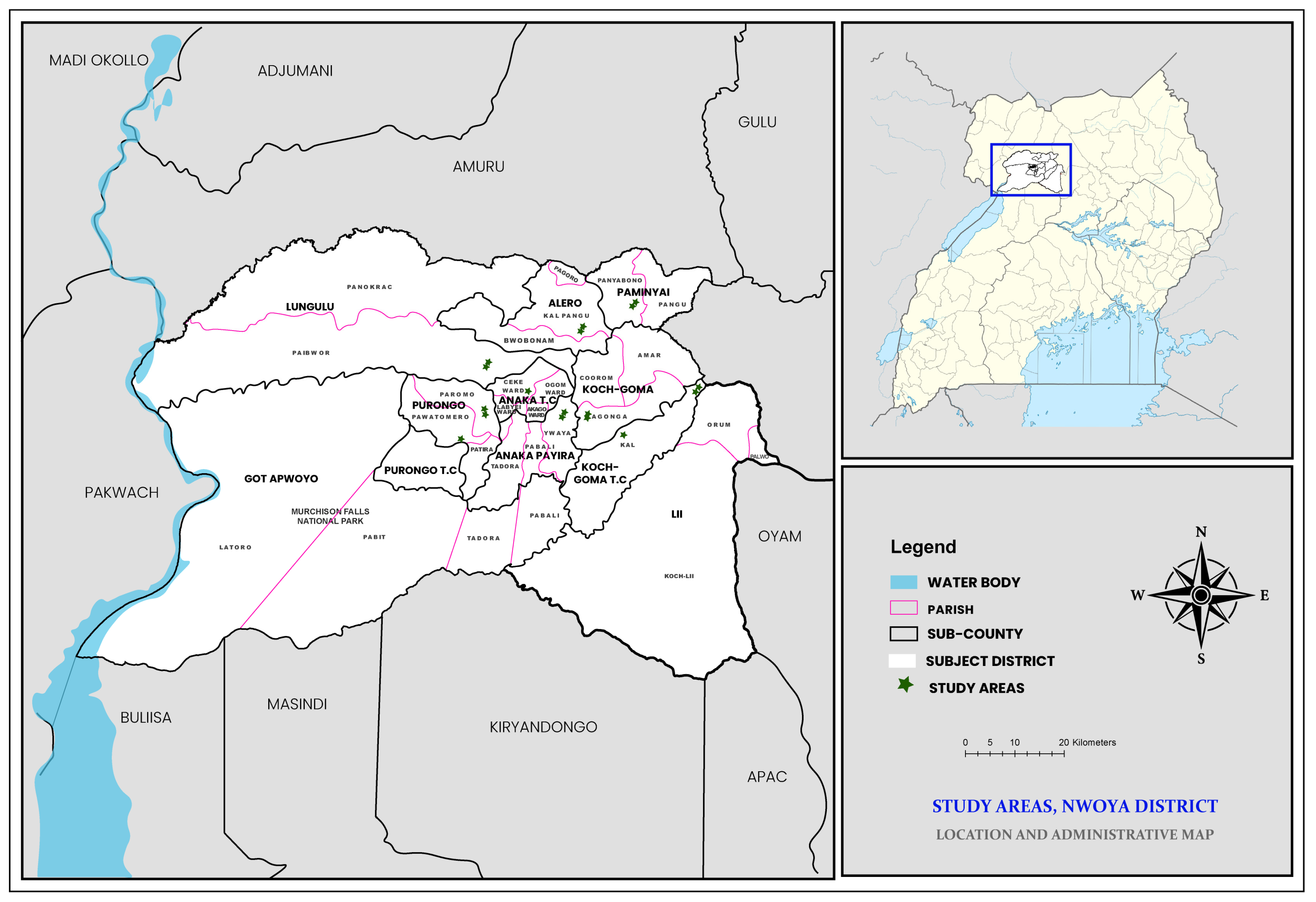
2. Materials and Methods Study Area
2.1. Study Design
2.2. Aromatic Plant Essential Oil Extraction
2.3. Mosquito Culture
2.4. Dilution of Test Compounds
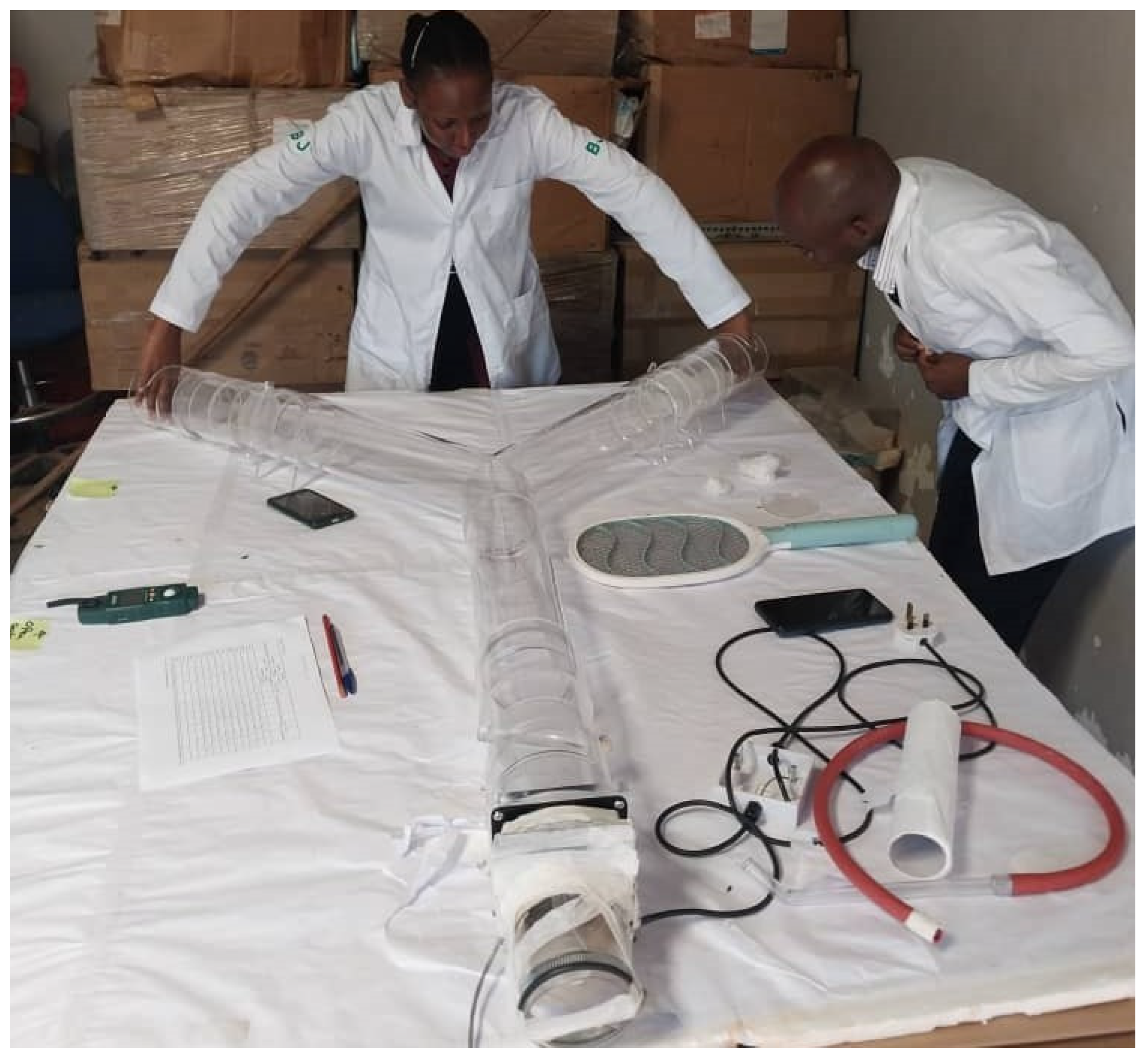
2.5. Spatial Repellency Assay
2.6. Repellence Testing Procedure
2.7. Data Analysis
2.8. Gas Chromatography–Mass Spectrometry (GC-MS) Analysis
3. Results
3.1. Plant Identification
3.2. Mosquito Confirmation
3.3. Isolating and Fractionating the Essential Oils
3.4. Essential Oil Yield
3.5. GC-MS Analysis
3.6. Repellency and Spatial Repellent Index
4. Discussion
5. Limitations
6. Conclusions
Author Contributions
Funding
Institutional Review Board Statement
Data Availability Statement
Acknowledgments
Conflicts of Interest
References
- Asadollahi, A.; Khoobdel, M.; Zahraei-Ramazani, A.; Azarmi, S.; Mosawi, S.H. Effectiveness of plant-based repellents against different Anopheles species: A systematic review. Malar. J. 2019, 18, 436. [Google Scholar] [CrossRef]
- Noguera-Gahona, M.; Peña-Moreno, C.; Quiñones-Sobarzo, N.; Weinstein-Oppenheimer, C.; Guerra-Zúñiga, M.; Collao-Ferrada, X. Repellents against Aedes aegypti bites: Synthetic and natural origins. Front. Insect Sci. 2025, 4, 1510857. [Google Scholar] [CrossRef]
- da Silva, M.R.M.; Eduardo Ricci-Júnior, E. An approach to natural insect repellent formulations: From basic research to technological development. Acta Trop. 2020, 212, 105419. [Google Scholar] [CrossRef]
- Lee, M.Y. Essential Oils as Repellents against Arthropods. BioMed Res. Int. 2018, 2, 6860271. [Google Scholar] [CrossRef]
- Diaz, J.H. Chemical and plant-based insect repellents: Efficacy, safety, and toxicity. Wilderness Environ. Med. 2016, 27, 153–163. [Google Scholar] [CrossRef] [PubMed]
- Pavela, R.; Benelli, G. Ethnobotanical knowledge on botanical repellents employed in the African region against mosquito vectors—A review. Exp. Parasitol. 2016, 167, 103–108. [Google Scholar] [CrossRef] [PubMed]
- Maia, M.F.; Moore, S.J. Plant-based insect repellents: A review of their efficacy, development and testing. Malar. J. 2011, 10 (Suppl. S1), S11. [Google Scholar] [CrossRef]
- Afify, A.; Potter, C.J. Insect repellents mediate species-specific olfactory behaviours in mosquitoes. Malar. J. 2020, 19, 127. [Google Scholar] [CrossRef] [PubMed]
- Olonisakin, A. Essential oil composition and biological activity of Cymbopogon citratus from Keffi, Nigeria. J. Chem. Soc. 2010, 35, 99–104. [Google Scholar]
- Dickens, C.; Bohbot, J.D. Mini review: Mode of action of mosquito repellents. Pestic. Biochem. Physiol. 2013, 106, 149–155. [Google Scholar] [CrossRef]
- Syed, Z.; Leal, W.S. Mosquitoes smell and avoid the insect repellent DEET. Proc. Natl. Acad. Sci. USA 2008, 105, 13598–13603. [Google Scholar] [CrossRef]
- Ghosh, A.; Chowdhury, N.; Chandra, G. Plant extracts as potential mosquito larvicides. Indian J. Med. Res. 2011, 135, 581–598. [Google Scholar]
- Alphian, Z.; Marpaung, H.; Taufik, M.; Andriayani; Lanny, S.; Samosir, S.J. GC-MS Analysis of Chemical Contents and Physical Properties of Essential Oil of Eucalyptus grandis from PT. Toba Pulp Lestari. Asian J. Chem. 2019, 31, 2319–2322. [Google Scholar] [CrossRef]
- Jaenson, T.G.T.; Palsson, K.; Borg-Karlson, A.-K. Evaluation of Extracts and Oils of Mosquito (Diptera: Culicidae) Repellent Plants from Sweden and Guinea-Bissau. J. Med. Entomol. 2006, 43, 113–119. [Google Scholar] [CrossRef]
- Shiekh, R.A.E.; Atwa, A.M.; Elgindy, A.M.; Mustafa, A.M.; Senna, M.M.; Alkabbani, M.A.; Ibrahim, K.M. Therapeutic applications of eucalyptus essential oils. Inflammopharmacology 2025, 33, 163–182. [Google Scholar] [CrossRef]
- de Sousa, D.P.; Damasceno, R.O.S.; Amorati, R.; Elshabrawy, H.A.; de Castro, R.D.; Bezerra, D.P.; Nunes, V.R.V.; Gomes, R.C.; Lima, T.C. Essential Oils: Chemistry and Pharmacological Activities. Biomolecules 2023, 13, 1144. [Google Scholar] [CrossRef]
- Owolabi, T.A.; Okubor, P.C.; Danga, J.; Onimisi, I. Insecticidal effect of Essential Oils of Citrus limon, Cymbopogon citratus and Syzygium aromaticum and their Synergistic Combinations Against Anopheles Mosquitoes. Acta Biol. Slov. 2025, 68, 14–27. [Google Scholar] [CrossRef]
- Radünz, A.L.; Radünz, M.; Bizolloa, A.R.; Tramontina, M.A.; Radünz, L.L.; Mariotd, M.P.; Tempel-Stumpfd, E.R.; Calistoe, J.F.F.; Zaniole, F.; Albeny-Simõese, D.; et al. Insecticidal and repellent activity of native and exotic lemon grass on Maize weevil. Braz. J. Biol. 2024, 84, e252990. [Google Scholar]
- Aïzoun, N.; Honvoh, E.; Codjia, S.; Chougourou, D. Repellent activities of ethanolic extract of Cymbopogon citratus (Poaceae) and Ocimum basilicum L. (Lamiaceae) leaves against Aedes aegypti mosquitoes in Dogbo district in south-western Benin, West Africa. GSC Biol. Pharm. Sci. 2025, 30, 365–371. [Google Scholar] [CrossRef]
- Sheikh, Z.; Amani, A.; Basseri, H.R.; Kazemi, S.H.M.; Sedaghat, M.M.; Azam, K.; Azizi, M.; Amirmohammadi, F. Repellent Efficacy of Eucalyptus globulus and Syzygium aromaticum Essential Oils against Malaria Vector, Anopheles stephensi (Diptera: Culicidae). Iran J. Public Health 2021, 50, 1668–1677. [Google Scholar]
- Nazmin, F.; Barek, M.A.; Miah, A.M.; Hossen, S.; Islam, M.S.; Ahmed, J. Mosquito repellent and larvicidal activity of essential oils of aromatic plant growing in Bangladesh: A review. Clin. Phytosci. 2025, 11, 7. [Google Scholar] [CrossRef]
- Osanloo, M.; Sedaghat, M.M.; Sanei-Dehkordi, A.; Amir Amani, A. Plant-Derived Essential Oils; Their Larvicidal Properties and Potential Application for Control of Mosquito-Borne Diseases. Galen Med. J. 2019, 8, e1532. [Google Scholar] [CrossRef] [PubMed]
- Rini, P.; Rini, P. Chemical compositions and repellent activity of Eucalyptus tereticornis and Eucalyptus deglupta essential oils against Culex quinquefasciatus mosquito. Thai J. Pharm. Sci. 2017, 41, 4. [Google Scholar] [CrossRef]
- Farag, S.M.; Moustafa, M.A.M.; Fónagy, A.; Kamel, O.M.H.M.; Abdel-Haleem, D.R. Chemical composition of four essential oils and their adulticidal, repellence, and field oviposition deterrence activities against Culex pipiens L. (Diptera: Culicidae). Parasitol. Res. 2024, 123, 110. [Google Scholar] [CrossRef]
- Govindarajan, M.; Benelli, G. α-Humulene and β-elemene from Syzygium zeylanicum (Myrtaceae) essential oil: Highly effective and eco-friendly larvicides against Anopheles subpictus, Aedes albopictus, and Culex tritaeniorhynchus (Diptera: Culicidae). Parasitol. Res. 2016, 115, 2771–2778. [Google Scholar] [CrossRef] [PubMed]
- Al-Sarar, A. Chemical composition, adulticidal and repellent activity of essential oils from Mentha longifolia L. And Lavandula dentata L. Against Culex pipiens L. J. Plant Prot. Path 2014, 5, 817–826. [Google Scholar] [CrossRef]
- Soonwera, M. Mosquito repellent from Thai essential oils against dengue fever mosquito (Aedes aegypti L.) and filaria mosquito vector (Culex quinquefasciatus Say). J. Agric. Tech. 2015, 11, 77–88. [Google Scholar]
- Pavela, R.; Pavela, R. Essential oils for the development of eco-friendly mosquito larvicides: A review. Ind. Crop. Prod. 2016, 76, 174–187. [Google Scholar] [CrossRef]
- Ahmad, B.; Tyagi, S.; Aarim, M.; Khan, M.S.; Khan, A.F. Biosynthesis of Essential Oil in Aromatic Plant Species: A review. Biomed. Biosci. Adv. 2024, 1, 40–63. [Google Scholar] [CrossRef]
- Manh, H.D.; Hue, D.T.; Hieu, N.T.T.; Tuyen, D.T.T.; Tuyet, O.T. The MosquitoLarvicidal Activity of Essential Oils from Cymbopogon and Eucalyptus Species in Vietnam. Insects 2020, 11, 128. [Google Scholar] [CrossRef]
- Masyita, A.; Sari, R.M.; Astuti, A.D.; Yasir, B.; Rumata, N.R.; Emran, T.B.; Nainu, F.; Simal-Gandara, J. Terpenes and terpenoids as main bioactive compounds of essential oils, their roles in human health and potential application as natural food preservatives. Food Chem. X 2022, 13, 100217. [Google Scholar] [CrossRef]
- Mukarram, M.; Choudhary, S.; Khan, M.A.; Poltronieri, P.; Khan, M.M.A.; Ali, J.; Kurjak, D.; Shahid, M. Lemongrass Essential Oil Components with Antimicrobial and Anticancer Activities. Antioxidants 2022, 11, 20. [Google Scholar] [CrossRef]
- Tang, Y.; Li, H.; Song, Q. Lemon grass essential oil and its major component citronellol: Evaluation of larvicidal activity and acetylcholinesterase inhibition against Anopheles sinensis. Parasitol. Res. 2024, 123, 315. [Google Scholar] [CrossRef] [PubMed]
- Prabakaran, P.; Sivasubramanian, C.; Veeramani, R.; Prabhu, S. Review Study on Larvicidal and Mosquito Repellent Activity of Volatile Oils Isolated from Medicinal Plants. Int. J. Environ. Agric. Biotechnol. 2017, 2, 3132–3138. [Google Scholar] [CrossRef]
- Bassolé, I.H.N.; Juliani, H.R. Essential oils in combination and their antimicrobial properties. Molecules 2012, 17, 3989–4006. [Google Scholar] [CrossRef]
- Jankowska, M.; Rogalska, J.; Wyszkowska, J.; Stankiewicz, M. Molecular Targets for Components of Essential Oils in the Insect Nervous System—A Review. Molecules 2018, 23, 34. [Google Scholar] [CrossRef]
- Tyagi, V.; Islam, J.; Agnihotri, A.; Goswani, D.; Rabha, B.; Talukdar, P.K.; Dhiman, S.K.; Chattopadhyay, P.; Veer, V. Repellent efficacy of some essential oils against Aedes albopictus. J. Parasit. Dis. Diagn. Ther. 2016, 1, 1–5. [Google Scholar]
- Bekele, D. Review on insecticidal and repellent activity of plant products for malaria mosquito control. Biomed. Res. Rev. 2018, 2, 1–7. [Google Scholar] [CrossRef]
- Pandey, R.R.; Dubey, R.C.; Saini, S. Phytochemical and antimicrobial studies on essential oils of some aromatic plants. Afr. J. Biotechnol. 2010, 9, 4364–4368. [Google Scholar]
- Govindarajan, M.; Benelli, G. One-pot green synthesis of silver nano crystals using Hymenodictyon orixense: A cheap and effective tool against malaria, chikungunya and Japanese encephalitis mosquito vectors? RSC Adv. 2016, 6, 59021–59590. [Google Scholar] [CrossRef]
- Govindarajan, M.; Kadaikunnan, S.; Alharbi, N.S.; Benelli, G. Acute toxicity and repellent activity of the Origanum scabrum Boiss. & Heldr. (Lamiaceae) essential oil against four mosquito vectors of public health importance and its biosafety on non-target aquatic organisms. Environ. Sci. Pollut. Res. 2016, 23, 23228–23238. [Google Scholar] [CrossRef] [PubMed]
- Gnankiné, O.; Bassolé, I.H.N. Essential Oils as an Alternative to Pyrethroids’ Resistance against Anopheles Species Complex Giles (Diptera: Culicidae). Molecules 2017, 22, 1321. [Google Scholar] [CrossRef]
- Gillij, Y.G.; Gleiser, R.M.; Zygadlo, J.A. Mosquito repellent activity of essential oils of aromatic plants growing in Argentina. Bioresour. Technol. 2008, 99, 2507–2515. [Google Scholar] [CrossRef] [PubMed]
- Ndou, T.T.; von Wandruszka, R.M.A. Essential oils of South African Eucalyptus species (Myrtaceae). S. Afr. Tydskr. Chern. 1986, 39, 95–100. [Google Scholar]
- Wangrawa, D.W.; Chandrasegaran, K.; Upshur, F.; Borovsky, D.; Sharakhov, I.V.; Inauger, C.; Badolo, A.; Sanon, A.; Lahondère, C. Behavioral response of Aedes aegypti (Diptera: Culicidae) to essential oils of Cymbopogon nardus (L.) Eucalyptus camaldulensis (Dehnh) and their blend in Y-maze olfactometer. Front. Trop. Dis. 2024, 5, 1443952. [Google Scholar] [CrossRef]
- Khasanah, L.U.; Ariviani, S.; Purwanto, E.; Praseptiangga, D. Chemical composition and citral content of essential oil of lemongrass (Cymbopogon citratus (DC.) Stapf) leaf waste prepared with various production methods. J. Agric. Food Res. 2025, 19, 101570. [Google Scholar] [CrossRef]
- Mihajilov-Krstev, T.; Jovanović, B.; Jović, J.; Ilić, B.; Miladinović, D.; Matejić, J.; Rajković, J.; Dorđević, L.; Cvetković, V.; Zlatković, B. Antimicrobial, antioxidative, and insect repellent effects of Artemisia absinthium essential oil. Planta Med. 2014, 80, 1698–1705. [Google Scholar]
- Weather Spark. Available online: https://weatherspark.com/countries/UG (accessed on 17 September 2024).
- UBOS 2014 Statistical Abstract. Available online: www.ubos.org (accessed on 23 August 2024).
- Boutekedijiret, C.; Bentahar, R.; Belabbes, J.; Bessire, J.M. Extraction of rosemary essential oil by steam distillation and hydrodistillation. Flavour. Fragr. J. 2003, 18, 481–484. [Google Scholar] [CrossRef]
- Grieco, J.P.; Achee, N.L.; Sardelis, M.R.; Chauhan, K.R.; Roberts, D.R. A novel high-throughput screening system to evaluate the behavioral response of adult mosquitoes to chemicals. J. Am. Mosq. Control Assoc. 2005, 21, 404–411. [Google Scholar] [CrossRef]
- Achee, N.L.; Bangs, M.J.; Farlow, R.; Killeen, G.F.; Lindsay, S.; Logan, J.G.; Moore, S.J.; Rowland, M.; Sweeney, K.; Torr, S.J.; et al. Spatial repellents: From discovery and development to evidence-based validation. Malar. J. 2012, 11, 164. [Google Scholar] [CrossRef]
- Scott, J.A.; Brogdon, W.G.; Collins, F.H. Identification of single specimens of the Anopheles gambiae complex by the polymerase chain reaction. Am. J. Trop. Med. Hyg. 1993, 49, 520–529. [Google Scholar] [CrossRef]
- WHO. Guidelines for Efficacy Testing of Spatial Repellents; World Health Organization: Geneva, Switzerland, 2013. [Google Scholar]
- Farooq, M.; Bangonan, L.; Xue, R.-D.; Talbalaghi, A. Evaluation of essential oils as spatial repellents against Aedes aegypti in an olfactometer. J. Am. Mosq. Cont. Ass. 2022, 38, 261–267. [Google Scholar]
- Siddique, A.; Naeem, J.; Ang, K.L.; Abid, S.; Xu, Z.; Khawar, M.T.; Saleemi, S.; Abdullah, M.; Adeel. Cinnamon and Eucalyptus Extracts: A Promising Natural Approach for Durable Mosquito-Repellent Fabrics with Multifunctionality. ACS Omega 2024, 26, 41468–41479. [Google Scholar] [CrossRef] [PubMed]
- Kim, D.I.; Kim, S.-I.; Jung, J.W.; Ilyasov, R.A.; Jang, D.; Lee, S.-H.; Kwon, H.W. Spatial releasing properties and mosquito repellency of cellulose-based beads containing essential oils and vanillin. J. Asia-Pac. Entomol. 2019, 22, 409–416. [Google Scholar] [CrossRef]
- de Oliveira, M.S.; Almeida, M.M.; Salazar, M.d.L.A.R.; Pires, F.C.S.; Bezerra, F.W.F.; Cunha, V.M.B.; Cordeiro, R.M.; Olivo Urbina, G.R.; da Silva, M.P.; Souza e Silva, A.P.; et al. Potential of Medicinal Use of Essential Oils from Aromatic Plants; InTech: London, UK, 2018. [Google Scholar] [CrossRef]
- Vasanthan, A.; Senthilkumar, K.L.; Gokulan, P.D.; Vignesh, A.; Vishnu, V. Formulation and evaluation of mosquito repellent cream by eucalyptus oil. Int. Res. J. Mod. Eng. Technol. Sci. 2023, 5, 2366–2369. [Google Scholar]
- Trigg, J.K. Evaluation of a eucalyptus-based repellent against anopheles spp. in Tanzania. J. Am. Mosq. Cont. Ass. 1996, 12, 243–246. [Google Scholar]
- Onen, H.; Luzala, M.M.; Kigozi, S.; Sikumbili, R.M.; Muanga, C.-J.K.; Zola, E.N.; Wendji, S.N.; Buya, A.B.; Balciunaitiene, A.; Viškelis, J.; et al. Mosquito-Borne Diseases and Their Control Strategies: An Overview Focused on Green Synthesized Plant-Based Metallic Nanoparticles. Insects 2023, 14, 221. [Google Scholar] [CrossRef] [PubMed]
- Mohamed, A.A.; Alotaibi, B.M. Essential oils of some medicinal plants and their biological activities: A mini review. J.Umm Al-Qura Univ. Appll. Sci. 2023, 9, 40–49. [Google Scholar] [CrossRef]
- Böröczky, K.; Wada-Katsumata, A.; Batchelor, D.; Zhukovskaya, M.; Schal, C. Insects groom their antennae to enhance olfactory acuity. Proc. Natl. Acad. Sci. USA 2012, 110, 3615–3620. [Google Scholar] [CrossRef]
- Sukkanon, C.; Karpkird, T.; Saeung, M.; Leepasert, T.; Panthawong, A.; Suwonkerd, W.; Bangs, M.J.; Chareonviriyaphap, T. Excito-repellency activity of Andrographis paniculata (Lamiales: Acanthaceae) against colonized mosquitoes. J. Med. Entomol. 2020, 57, 192–203. [Google Scholar] [CrossRef]
- Estrada, J.L.T.; Moscoso, K.E.P.; Salas, I.F.; Achee, N.L.; Grieco, J.P. Spatial repellency and other effects of transfluthrin and linalool on Aedes aegypti and Aedes albopictus. J. Vec. Ecol. 2019, 44, 89–93. [Google Scholar] [CrossRef] [PubMed]
- Norris, E.J.; Coats, J.R. Current and future repellent technologies: The potential of spatial repellents and their place in mosquito-borne disease control. Int. J. Environ. Res. Public Health 2017, 14, 124. [Google Scholar] [CrossRef] [PubMed]
- Sirisopa, P.; Leepasert, T.; Karpkird, T.; Nararak, J.; Thanispong, K.; Ahebwa, A.; Chareonviriyaphap, T. High-Throughput Screening System Evaluation of Andrographis paniculata (Burm.f.) Extracts and Their Fractions against Mosquito Vectors. Insects 2024, 15, 712. [Google Scholar] [CrossRef] [PubMed]
- Liu, Z.; Wang, J.; Yin, M.; Liu, M.; Gao, W. Gas chromatography-mass spectrometry analysis of variations in the essential leaf oil of 6 Eucalyptus Species and allelopathy of mechanism 1,8-cineole. Ciência Rural 2023, 53, e20210687. [Google Scholar] [CrossRef]
- Ocheng, F.; Bwanga, F.; Joloba, M.; Softrata, A.; Azeem, M.; Pütsep, K.; Borg-Karlson, A.K.; Obua, C.; Gustafsson, A. Essential Oils from Ugandan Aromatic Medicinal Plants: Chemical Composition and Growth Inhibitory Effects on Oral Pathogens. Evid. Based Complement. Alternat. Med. 2015, 2015, 230832. [Google Scholar] [CrossRef]
- Cortes-Torres, A.G.; López-Castillo, G.N.; Marín-Torres, J.L.; Portillo-Reyes, R.; Luna, F.; Baca, B.E.; Sandoval-Ramírez, J.; Carrasco-Carballo, A. Cymbopogon citratus Essential Oil: Extraction, GC–MS, Phytochemical Analysis, Antioxidant Activity, and in Silico Molecular Docking for Protein Targets Related to CNS. Curr. Issues Mol. Biol. 2023, 45, 5164–5179. [Google Scholar] [CrossRef]
- Kainat, R.; Mushtaq, Z.; Nadeem, F. Derivatization of Essential Oil of Eucalyptus to Obtain Valuable Market Products—A Comprehensive Review. Int. J. Chem. Biochem. Sci. 2019, 15, 58–68. [Google Scholar]
- Polito, F.; Fratianni, F.; Nazzaro, F.; Amri, I.; Kouki, H.; Khammassi, M.; Hamrouni, L.; Malaspina, P.; Cornara, L.; Khedhri, S.; et al. Essential Oil Composition, Antioxidant Activity and Leaf Micromorphology of Five Tunisian Eucalyptus Species. Antioxidants 2023, 12, 867. [Google Scholar] [CrossRef]
- Adeniran, O.I.; Fabiyi, E. A cream formulation of an effective mosquito repellent: A topical product from lemongrass oil (Cymbopogon citratus) Stapf. J. Nat. Prod. Plant Resour. 2012, 2, 322–327. [Google Scholar]
- Yip, C.; Yee Ho, L.; Wu, T.-Y.; Sit, N.M. Chemical composition and bioactivities of Eucalyptus essential oils from selected pure and hybrid species: A review. Ind. Crops Prod. 2024, 222, 120118. [Google Scholar] [CrossRef]
- Chen, Y.; Zhang, L.L.; Wang, W.; Wang, G. Recent updates on bioactive properties of α-terpineol. J. Essentail Oil Res. 2023, 35, 274–288. [Google Scholar] [CrossRef]
- Soleimani, M.; Sheikholeslami, M.A.; Ghafghazi, S.; Pouriran, R.; Parvardeh, S. Analgesic effect of α-terpineol on neuropathic pain induced by chronic constriction injury in rat sciatic nerve: Involvement of spinal microglial cells and inflammatory cytokines. Iran. J. Basic Med. Sci. 2019, 22, 1445–1451. [Google Scholar] [PubMed]
- Gouveia, D.N.; Costa, J.S.; Oliveira, M.A.; Rabelo, T.K.; e Silva, A.M.D.O.; Carvalho, A.A.; Miguel-dos-Santos, R.; Lauton-Santos, S.; Scotti, L.; Scotti, M.T.; et al. α-Terpineol reduces cancer pain via modulation of oxidative stress and inhibition of iNOS. Biomed. Pharmacother. 2018, 105, 652–661. [Google Scholar] [CrossRef] [PubMed]
- Solon, I.G.; Santos, W.S.; Branco, L.G.S. Citral as an anti-inflammatory agent: Mechanisms, therapeutic potential, and perspectives. Pharmacol. Res. Nat. Prod. 2025, 7, 100253. [Google Scholar] [CrossRef]
- Majewska, E.; Kozłowska, M.; Gruczyńska-Sękowska, E.; Kowalska, D.; Tarnowska, K. Lemongrass (Cymbopogon citratus) Essential Oil: Extraction, Composition, Bioactivity and Uses for Food Preservation—A Review. Pol. J. Food Nutr. Sci. 2019, 69, 327–341. [Google Scholar] [CrossRef]



| Run | Weight (g) | Yield (mL) |
|---|---|---|
| 1 | 173.5 | 1.7 |
| 2 | 173.5 | 1.8 |
| 3 | 173.5 | 1.7 |
| 4 | 173.5 | 1.6 |
| 5 | 173.5 | 1.6 |
| Run | Weight (g) | Yield (mL) |
|---|---|---|
| 1 | 210 | 0.6 |
| 2 | 210 | 0.7 |
| 3 | 210 | 0.7 |
| 4 | 210 | 0.7 |
| 5 | 210 | 0.8 |
| 6 | 210 | 0.7 |
| 7 | 210 | 0.8 |
| 8 | 210 | 0.6 |
| Name of Compound | Eucalyptus grandis | Cymbopogon citratus |
|---|---|---|
| Relative Percentage Amount | ||
| (+)-1-Cyano-d-camphidine | 4.53 | - |
| (+)-4-Carene | 1.56 | - |
| (+/−)-Lavandulol, methyl ether | - | 47.21 |
| (E)-gamma-Atlantone | 3.37 | - |
| 14-Hydrocycaryophyllene | 1.56 | 0.25 |
| 2,2, 5,5-Terthiophene | 1.14 | - |
| 2,3-Epoxyjuanislamin | 1.63 | - |
| 2,4-Cholestadien-1-one | 1.83 | - |
| 4-Hydroxy- beta-ionone | 2.41 | - |
| Alpha-Campholenal | 6.96 | - |
| Caryophyllene | - | 1.94 |
| Caryophyllene oxide | - | 3.35 |
| Citral | - | 12.63 |
| Ethyl geranate | - | 0.18 |
| Eucalyptol | 18.88 | - |
| Eugenol | - | 5.97 |
| Gamma-Muurolene | - | 6.46 |
| Gamma-Terpinene | 8.98 | - |
| Geranyl acetate | - | 3.12 |
| Geranyl citronellate | - | 3.95 |
| Gossonorol | - | 0.52 |
| L-alpha- Terpineol | 33.21 | - |
| Lanost-8-en-3-ol, (3 beta)- | 0.03 | - |
| Levomenol | - | 0.15 |
| Linalool | - | 5.79 |
| Lithocholic acid | 1.32 | - |
| Marrubiin | 0.05 | - |
| Methanone | 1.38 | - |
| Phytol | 5.81 | - |
| Phytyl decanoate | 2.2 | - |
| Sesquirosefuran | - | 1.97 |
| Tau-muurolol | - | 0.36 |
| Trans-geranyl geraniol | - | 4.42 |
| Trans-isoeugenol | - | 1.03 |
| Trans-sesquisabinene hydrate | - | 0.3 |
| Unibelliprenin | - | 0.38 |
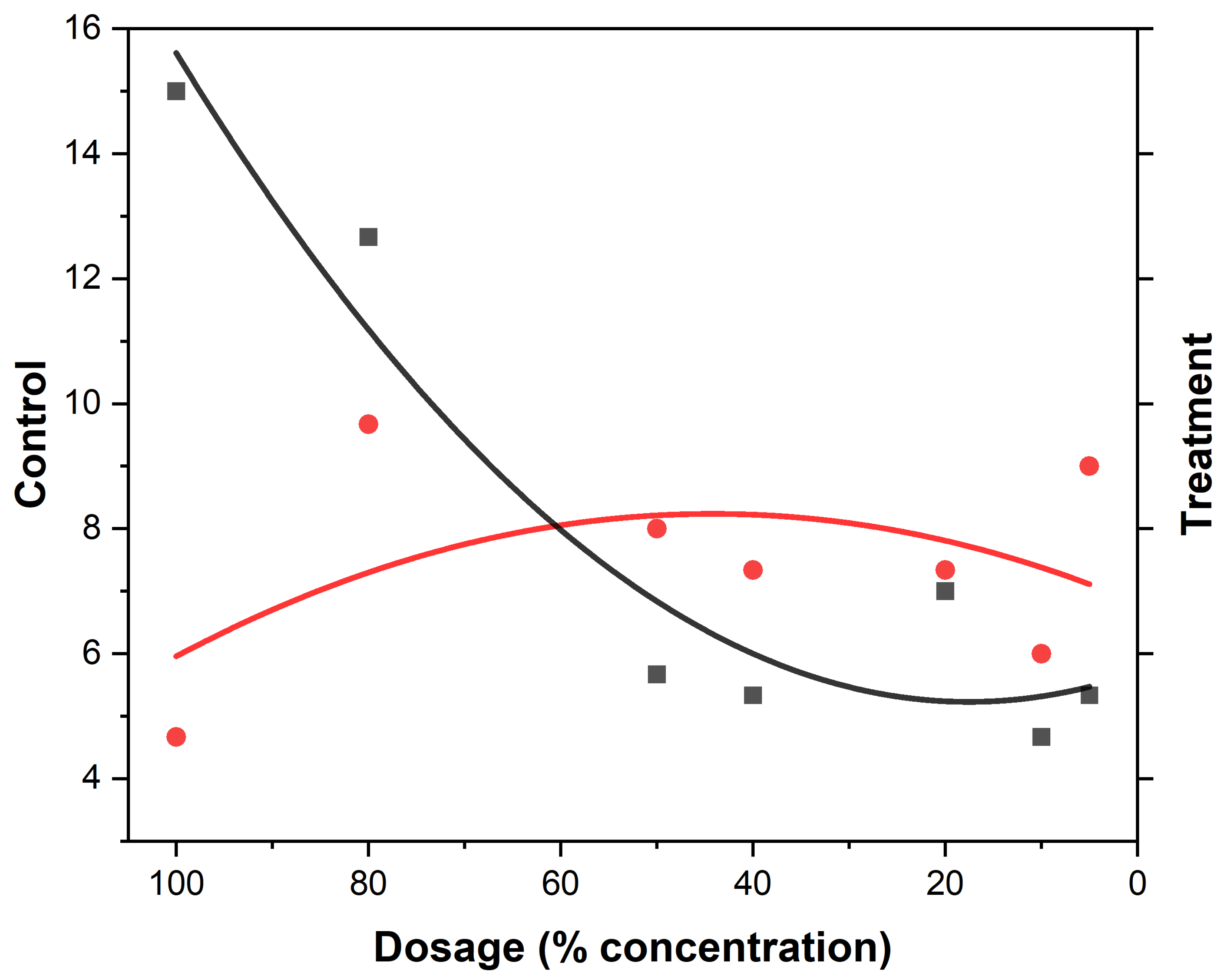
| Run (N) | Treatment | Control | Non-Reactants | (Mean Treatment ± SE) | (Mean Control ± SE) |
|---|---|---|---|---|---|
| 1 (25) | 10 | 15 | 0 | 10 ± 1.7 | 13.7 ± 1.7 |
| 2 (25) | 11 | 10 | 4 | ||
| 3 (25) | 9 | 16 | 0 | ||
| 1 (25) | 13 | 10 | 2 | 13.33 ± 0.9 | 11 ± 0.9 |
| 2 (25) | 13 | 12 | 0 | ||
| 3 (25) | 14 | 11 | 0 | ||
| 1 (25) | 11 | 14 | 0 | 14.67 ± 2.2 | 10.33± 2.2 |
| 2 (25) | 17 | 8 | 0 | ||
| 3 (25) | 16 | 9 | 0 | ||
| 1 (25) | 17 | 3 | 5 | 16 ± 3.6 | 6.33 ± 3.6 |
| 2 (25) | 19 | 6 | 0 | ||
| 3 (25) | 12 | 10 | 3 | ||
| 1 (25) | 10 | 9 | 6 | 11.33 ± 2.8 | 5 ± 2.8 |
| 2 (25) | 16 | 4 | 5 | ||
| 3 (25) | 8 | 2 | 15 | ||
| 1 (25) | 10 | 12 | 3 | 10.7 ± 0.8 | 11 ± 0.8 |
| 2 (25) | 10 | 12 | 3 | ||
| 3 (25) | 12 | 9 | 4 | ||
| 1 (25) | 7 | 5 | 13 | 7 ± 1.2 | 4.67 ± 1.2 |
| 2 (25) | 9 | 3 | 13 | ||
| 3 (25) | 5 | 6 | 14 |
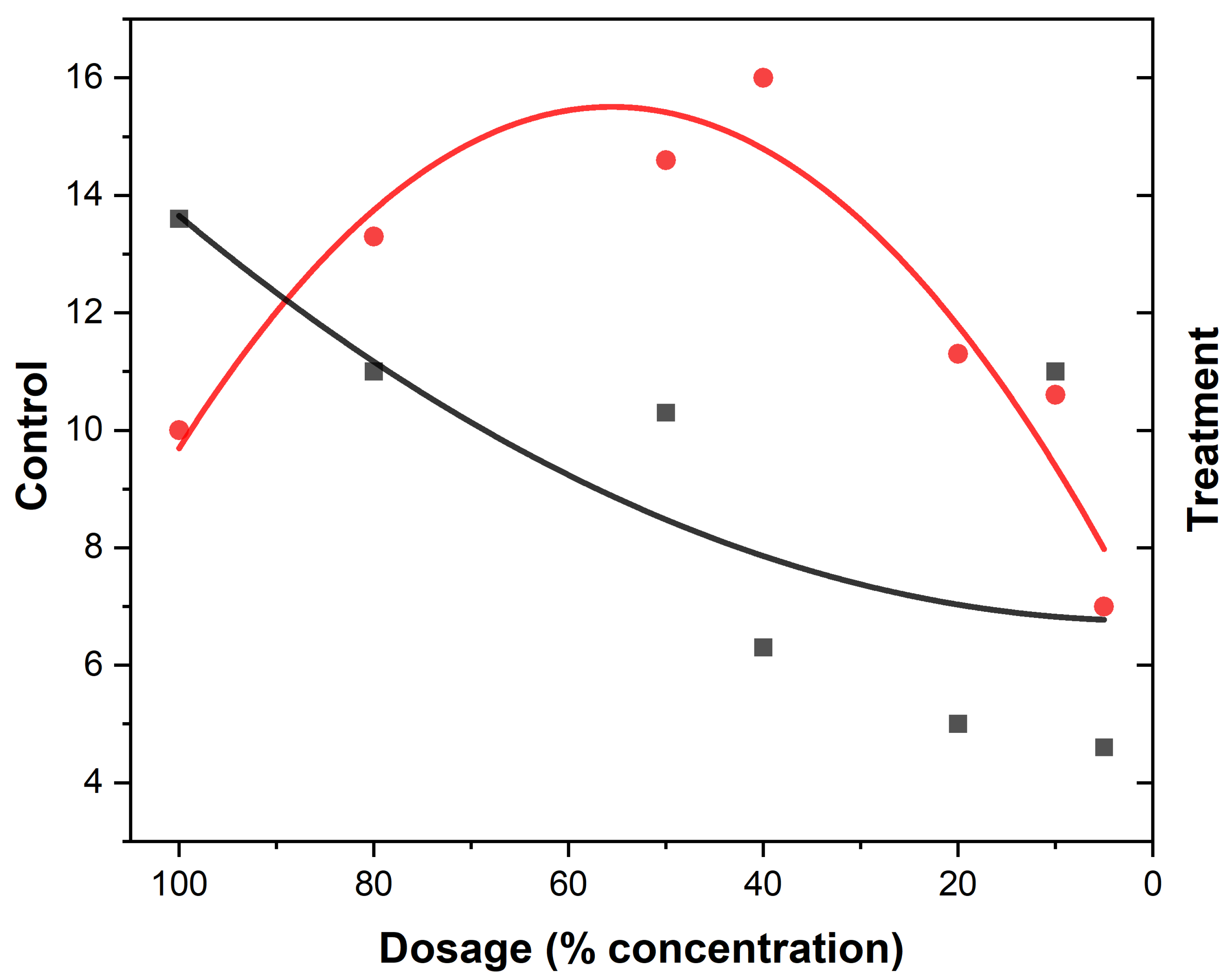
| Dosage | Run (N) | Treatment | Control | Non-Reactants | (Mean Treatment ± SE) | (Mean Control ± SE) |
|---|---|---|---|---|---|---|
| 100% | 1 | 10 | 5 | 10 | 15 ± 4.52 | 4.67 ± 4.52 |
| 100% | 2 | 11 | 8 | 6 | ||
| 100% | 3 | 24 | 1 | 0 | ||
| 80% | 1 | 13 | 4 | 8 | 12.67 ± 2.41 | 9.67 ± 2.41 |
| 80% | 2 | 15 | 10 | 0 | ||
| 80% | 3 | 10 | 15 | 0 | ||
| 50% | 1 | 6 | 7 | 11 | 5.67 ± 1.12 | 8 ± 1.12 |
| 50% | 2 | 4 | 10 | 10 | ||
| 50% | 3 | 7 | 7 | 9 | ||
| 40% | 1 | 6 | 10 | 5 | 5.33 ± 1.6 | 7.33 ± 1.6 |
| 40% | 2 | 8 | 5 | 8 | ||
| 40% | 3 | 2 | 7 | 15 | ||
| 20% | 1 | 5 | 5 | 14 | 7 ± 1.4 | 7.3 ± 1.4 |
| 20% | 2 | 9 | 6 | 8 | ||
| 20% | 3 | 7 | 11 | 7 | ||
| 10% | 1 | 3 | 6 | 15 | 4.7 ± 1.2 | 6 ± 1.2 |
| 10% | 2 | 8 | 5 | 15 | ||
| 10% | 3 | 3 | 7 | 15 | ||
| 5% | 1 | 4 | 8 | 13 | 5.3 ± 1.3 | 9 ± 1.3 |
| 5% | 2 | 6 | 10 | 6 | ||
| 5% | 3 | 6 | 9 | 7 |
Disclaimer/Publisher’s Note: The statements, opinions and data contained in all publications are solely those of the individual author(s) and contributor(s) and not of MDPI and/or the editor(s). MDPI and/or the editor(s) disclaim responsibility for any injury to people or property resulting from any ideas, methods, instructions or products referred to in the content. |
© 2025 by the authors. Licensee MDPI, Basel, Switzerland. This article is an open access article distributed under the terms and conditions of the Creative Commons Attribution (CC BY) license (https://creativecommons.org/licenses/by/4.0/).
Share and Cite
Kaddumukasa, M.A.; Mutekanga, N.M.; Kula, F.; Batume, C.; Kato, A.B. Spatial Exposure Responses of Malaria Vectors to Eucalyptus grandis (W. Hill ex Maiden) and Cymbopogon citratus (DC.) Stapf Essential Oils. Biology 2025, 14, 1768. https://doi.org/10.3390/biology14121768
Kaddumukasa MA, Mutekanga NM, Kula F, Batume C, Kato AB. Spatial Exposure Responses of Malaria Vectors to Eucalyptus grandis (W. Hill ex Maiden) and Cymbopogon citratus (DC.) Stapf Essential Oils. Biology. 2025; 14(12):1768. https://doi.org/10.3390/biology14121768
Chicago/Turabian StyleKaddumukasa, Martha A., Norah M. Mutekanga, Faisal Kula, Charles Batume, and Agapitus B. Kato. 2025. "Spatial Exposure Responses of Malaria Vectors to Eucalyptus grandis (W. Hill ex Maiden) and Cymbopogon citratus (DC.) Stapf Essential Oils" Biology 14, no. 12: 1768. https://doi.org/10.3390/biology14121768
APA StyleKaddumukasa, M. A., Mutekanga, N. M., Kula, F., Batume, C., & Kato, A. B. (2025). Spatial Exposure Responses of Malaria Vectors to Eucalyptus grandis (W. Hill ex Maiden) and Cymbopogon citratus (DC.) Stapf Essential Oils. Biology, 14(12), 1768. https://doi.org/10.3390/biology14121768