Type species. Mongolodiaptomus formosanus Kiefer, 1937
urn:lsid:zoobank.org:pub:D6C9734D-A577-4A4F-9661-65B30073DACE
Type locality. A landscape pool (21°52′25.1544″ N, 101°19′22.1952″ E) at Xishuangbanna Tropical Botanical Garden, Chinese Academy of Sciences, Yunnan Province, China.
Material examined. Holotype: China; one ♂ (adult); a landscape pool at Xishuangbanna Tropical Botanical Garden, Chinese Academy of Sciences, Yunnan Province, accession number: THNHM-lv-21123; dissected, mounted on one slide in glycerol, covered with a coverslip, and sealed with nail polish, collected on 17 April 2010, leg. Shusen Shu.
Allotype: China; one ♀ (adult); location, date, and collectors as for holotype; accession number: THNHM-lv-21124, completely dissected, mounted on one slide in glycerol, covered with a coverslip, and sealed with nail polish.
Paratypes: China; one ♂ (adult) and one ♀ (adult); date and collectors as for holotype; accession number: THNHM-lv-21125, mounted on one slide in glycerol, covered with a coverslip, and sealed with nail polish, and undissected and preserved in 4% formalin.
Etymology. The specific name parabirulai is a combination of the Greek prefix para-, meaning to resemble, and the specific name birulai, referring to the fact that the male P5 of the new species resembles Mongolodiaptomus birulai (Rylov, 1922).
Description of adult male. Total body length, measured from anterior margin of rostrum to posterior margin of caudal rami, is 0.70–0.72 mm. (mean = 0.61 mm,
n = 5); (
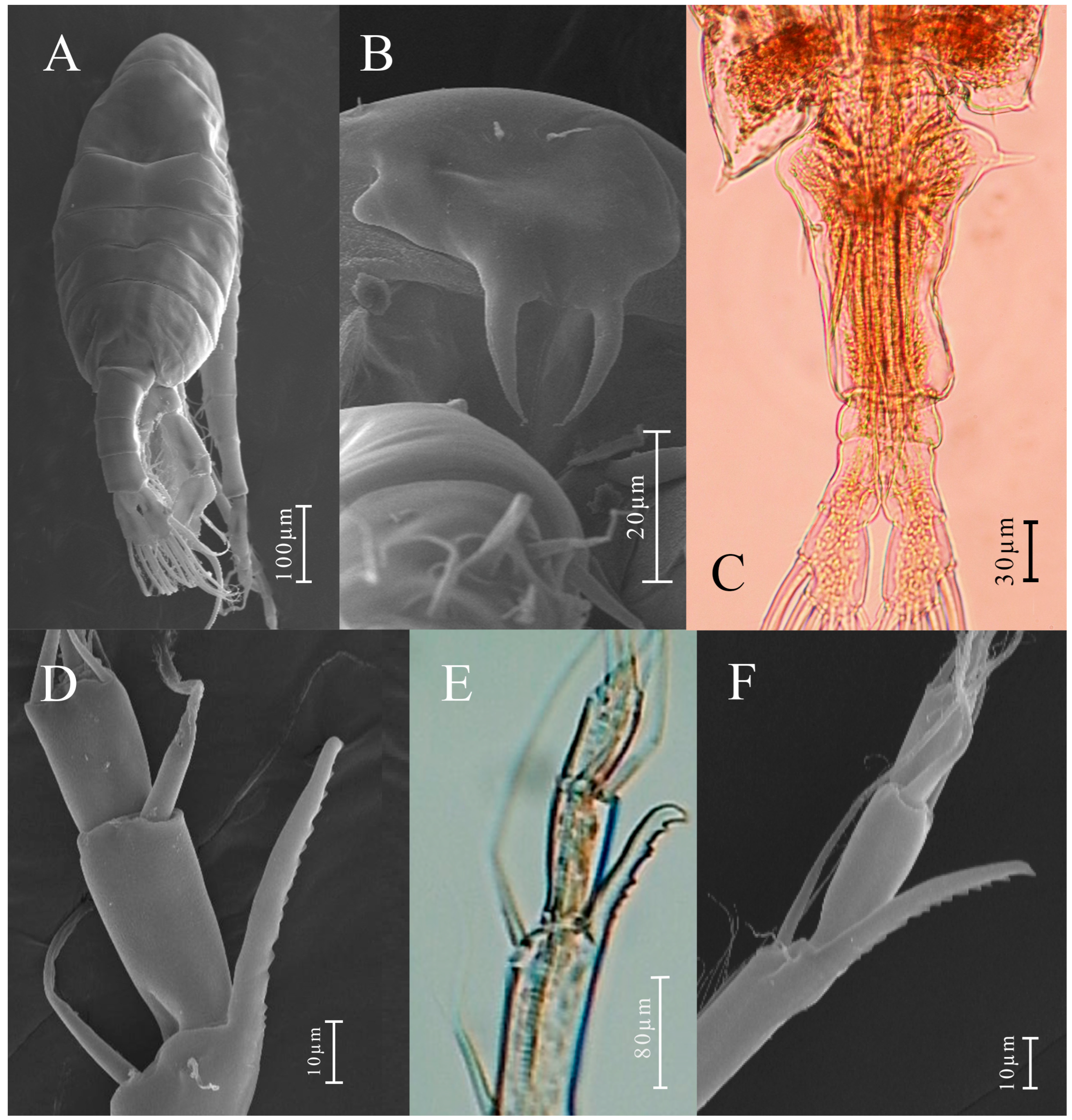
Figure 1A). Body smaller and more slender than that of females. Prosome ~ 3.0 × as long as urosome (
Figure 1D). Pdg4 and Pdg5 completely fused (
Figure 1D). Lateral wings of Pdg5 slightly asymmetrical; right postero-lateral wing rounded, larger and shorter than left one; each wing with one thin postero-lateral spine (
Figure 1D).
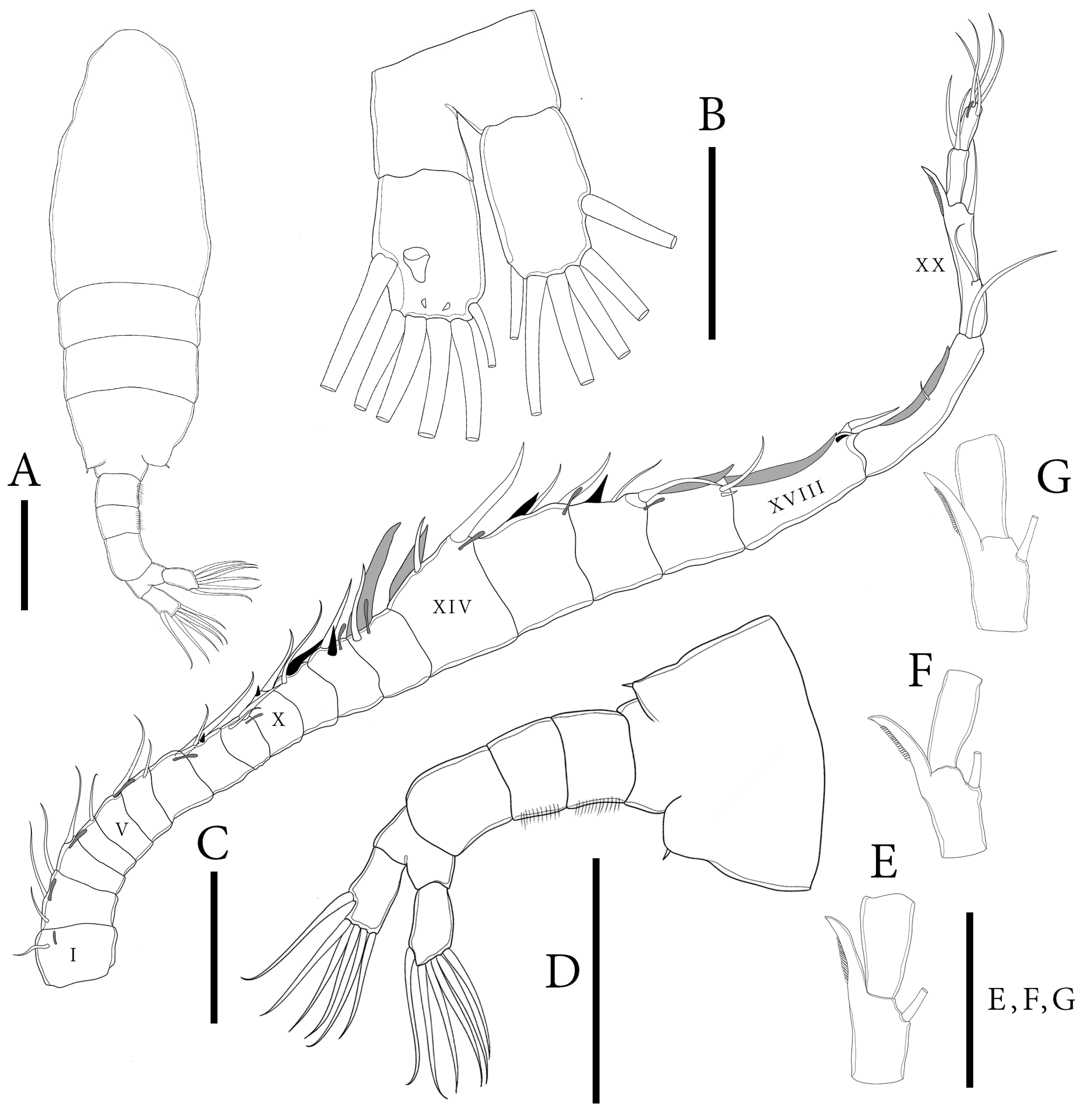
Urosome with five somites (
Figure 1A,D). Genital somite shorter than its width, lacking spines on posterolateral corners on both sides. Urosomites 2–3 slightly wider than long each. Both urosomites 2–3 with a patch of hairs on ventral side (
Figure 1D). Urosomite 4 squarish, has a convex distal end, and longer than urosomites 2–3. Anal somite asymmetrical, with right side longer than left one. Anal somite and caudal rami bent or twisted to right side. Caudal rami appear symmetrical (
Figure 1D); each ramus approximately 1.7 times longer than wide, and they have a hairy inner margin. Right ramus armed with three triangular knobs on ventral surface; a large knob located at middle of segment, along with two tiny knobs distally (
Figure 1B). Each ramus has six setae, subequal in length and size and plumose: dorsal seta bare and thinner than others.
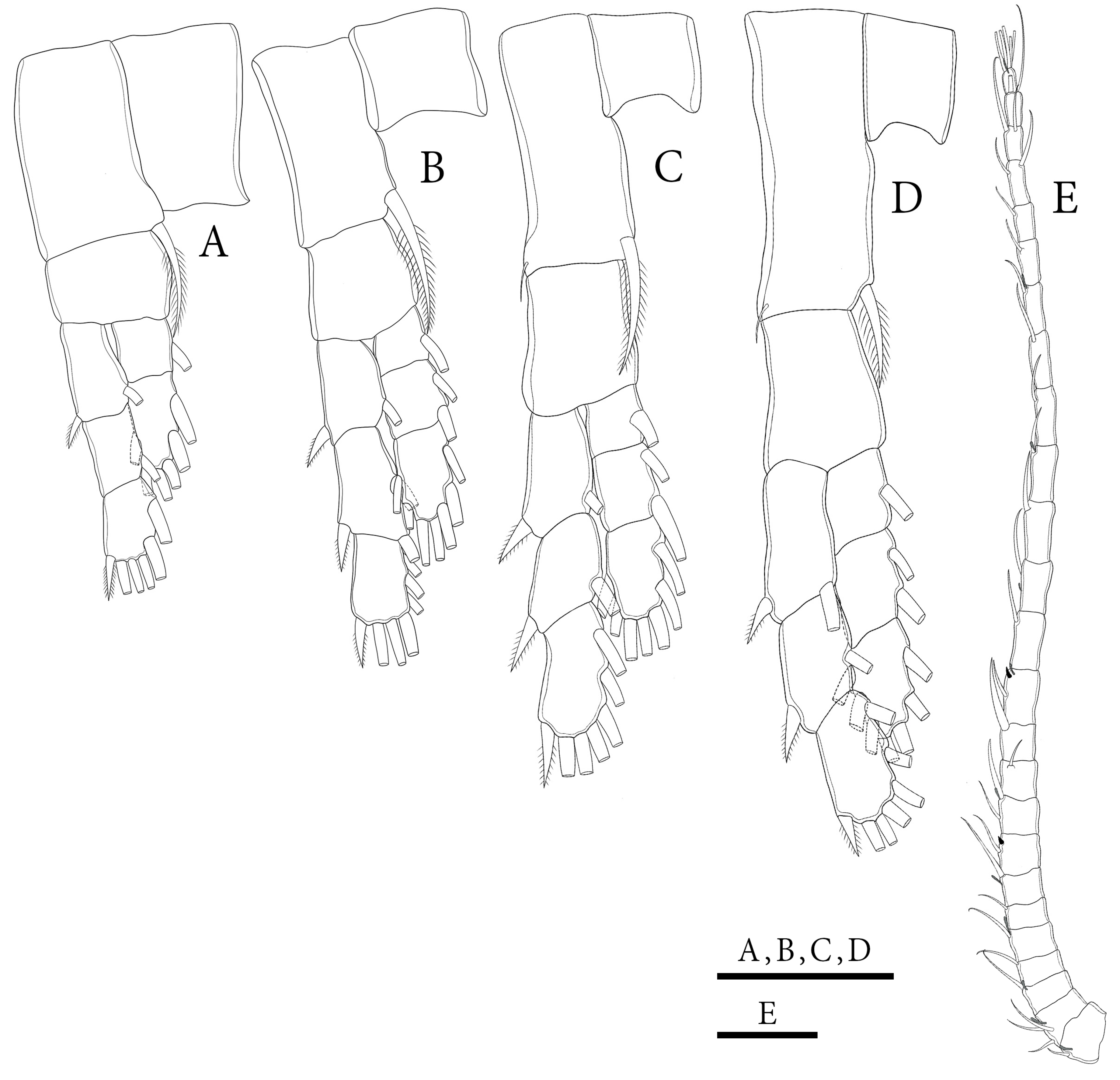
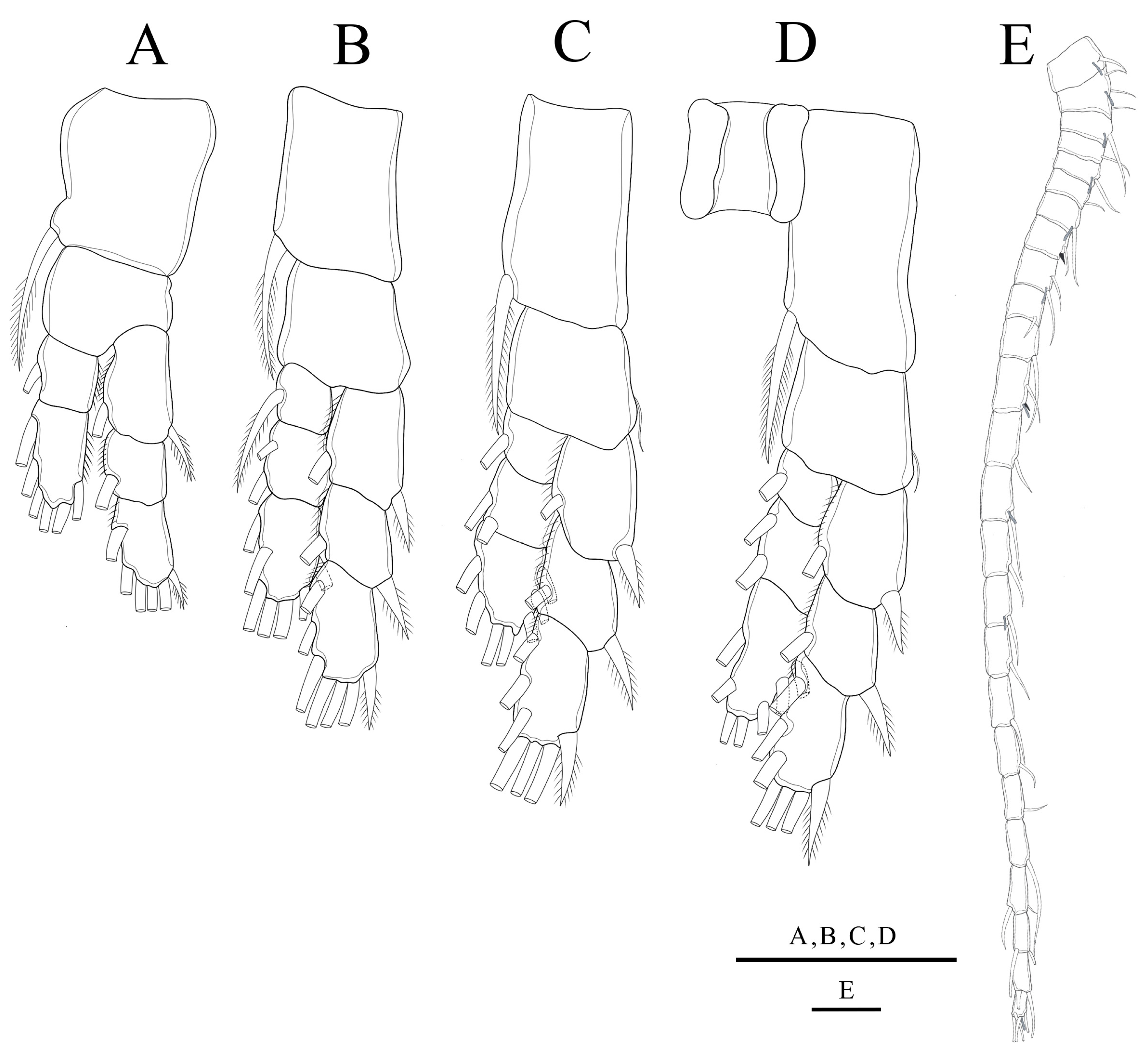
Antennules asymmetrical, extending beyond end of the caudal setae. Left antennule 25-segmented (
Figure 3E). Armature formulae as in
Table 1. Right antennule geniculated, consisting of 22 segments (
Figure 1C). Segment 20 (antepenultimate segment) has a sickle-shaped spiniform process, reaching ~2/3 length of segment 21 (
Figure 1C,E–G). Armature formulae as in
Table 2.
Figure 1.
Mongolodiaptomus parabirulai sp. nov. male: (A) habitus, dorsal view; (B) urosome (anal somite) and caudal rami, ventral view; (C) right antennule; (D) urosome and caudal rami, lateral view; (E–G) right antennule, distal part of segment 20 showing length variations of spiniform process, and segment 21. Scale bars = 100 µm.
Figure 1.
Mongolodiaptomus parabirulai sp. nov. male: (A) habitus, dorsal view; (B) urosome (anal somite) and caudal rami, ventral view; (C) right antennule; (D) urosome and caudal rami, lateral view; (E–G) right antennule, distal part of segment 20 showing length variations of spiniform process, and segment 21. Scale bars = 100 µm.
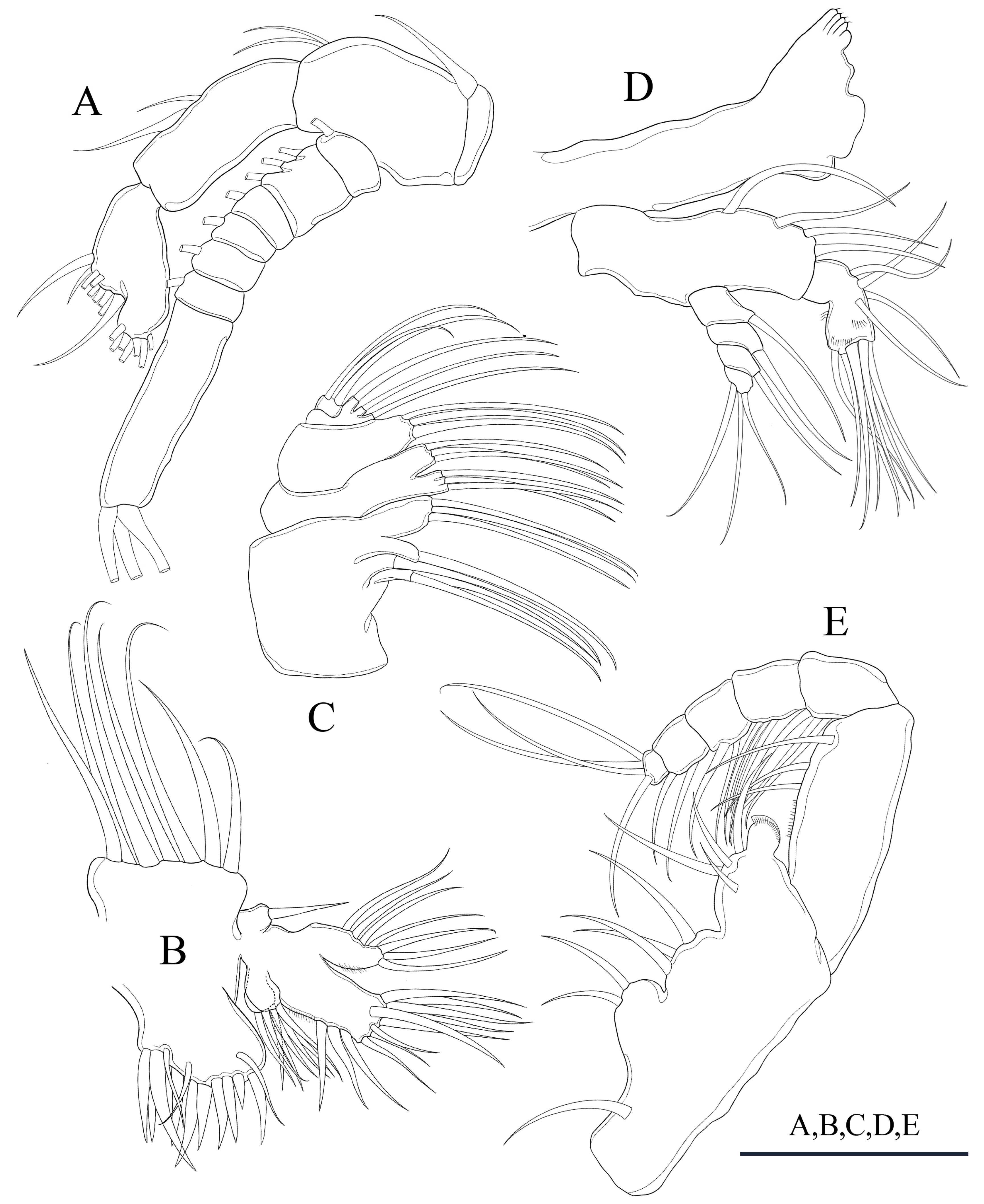
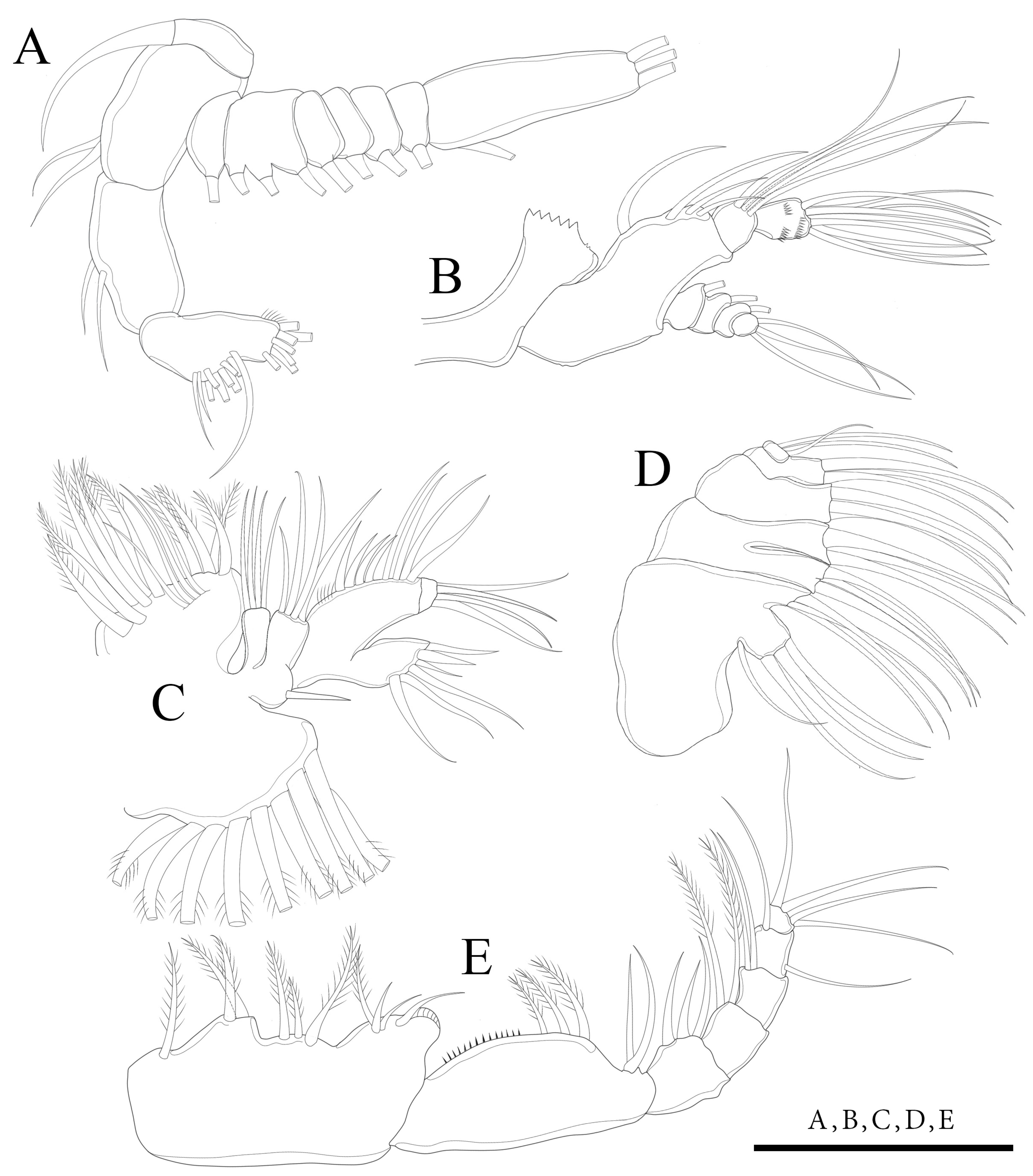
Figure 2.
Mongolodiaptomus parabirulai sp. nov. male: (A) antenna; (B) maxillule (C) maxilla; (D) mandible; (E) maxilliped. Scale bar = 100 µm.
Figure 2.
Mongolodiaptomus parabirulai sp. nov. male: (A) antenna; (B) maxillule (C) maxilla; (D) mandible; (E) maxilliped. Scale bar = 100 µm.
Figure 3.
Mongolodiaptomus parabirulai sp. nov. male: (A) P1; (B) P2; (C) P3; (D) P4; (E) left antennule. Scale bars = 100 µm.
Figure 3.
Mongolodiaptomus parabirulai sp. nov. male: (A) P1; (B) P2; (C) P3; (D) P4; (E) left antennule. Scale bars = 100 µm.
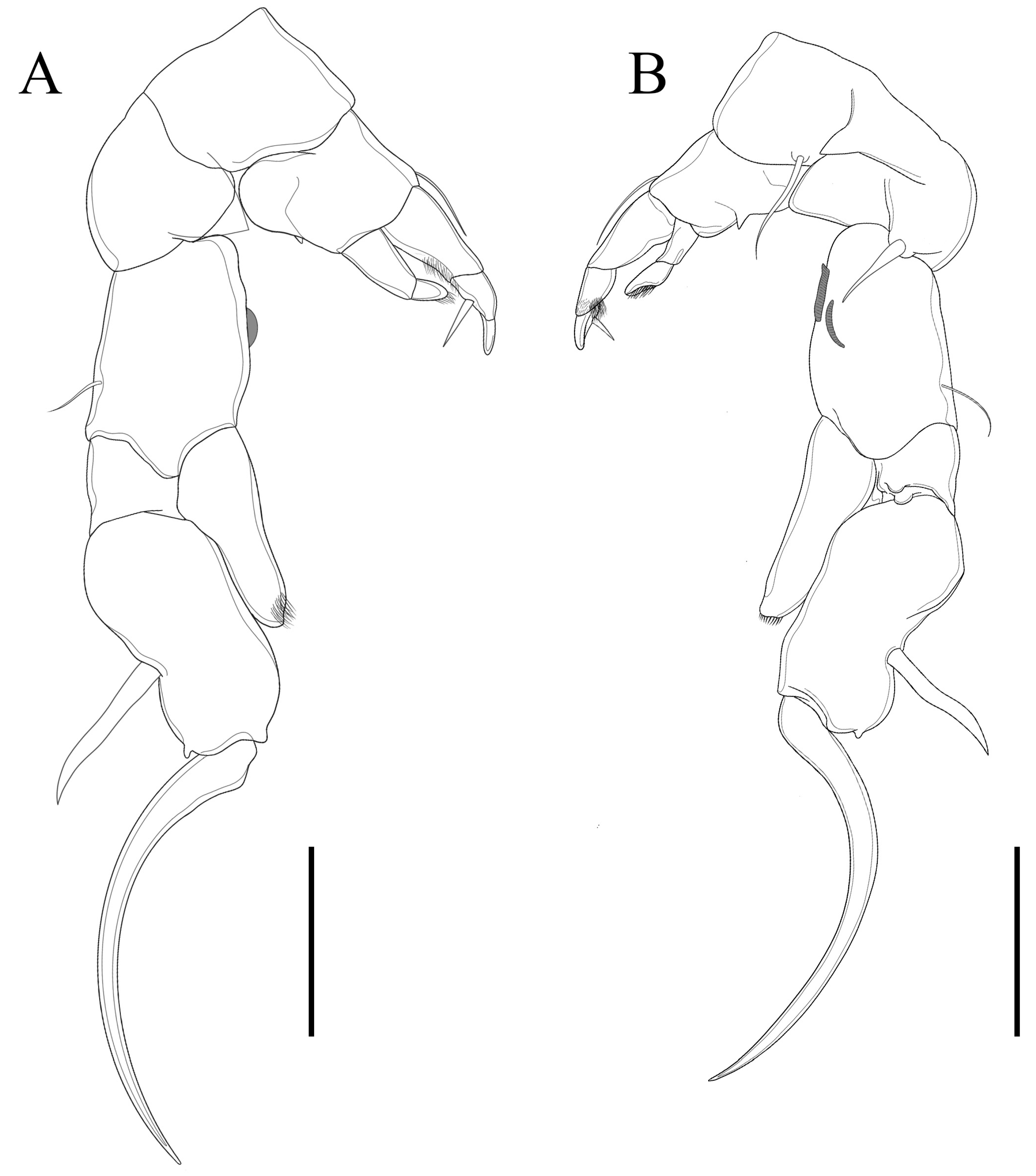
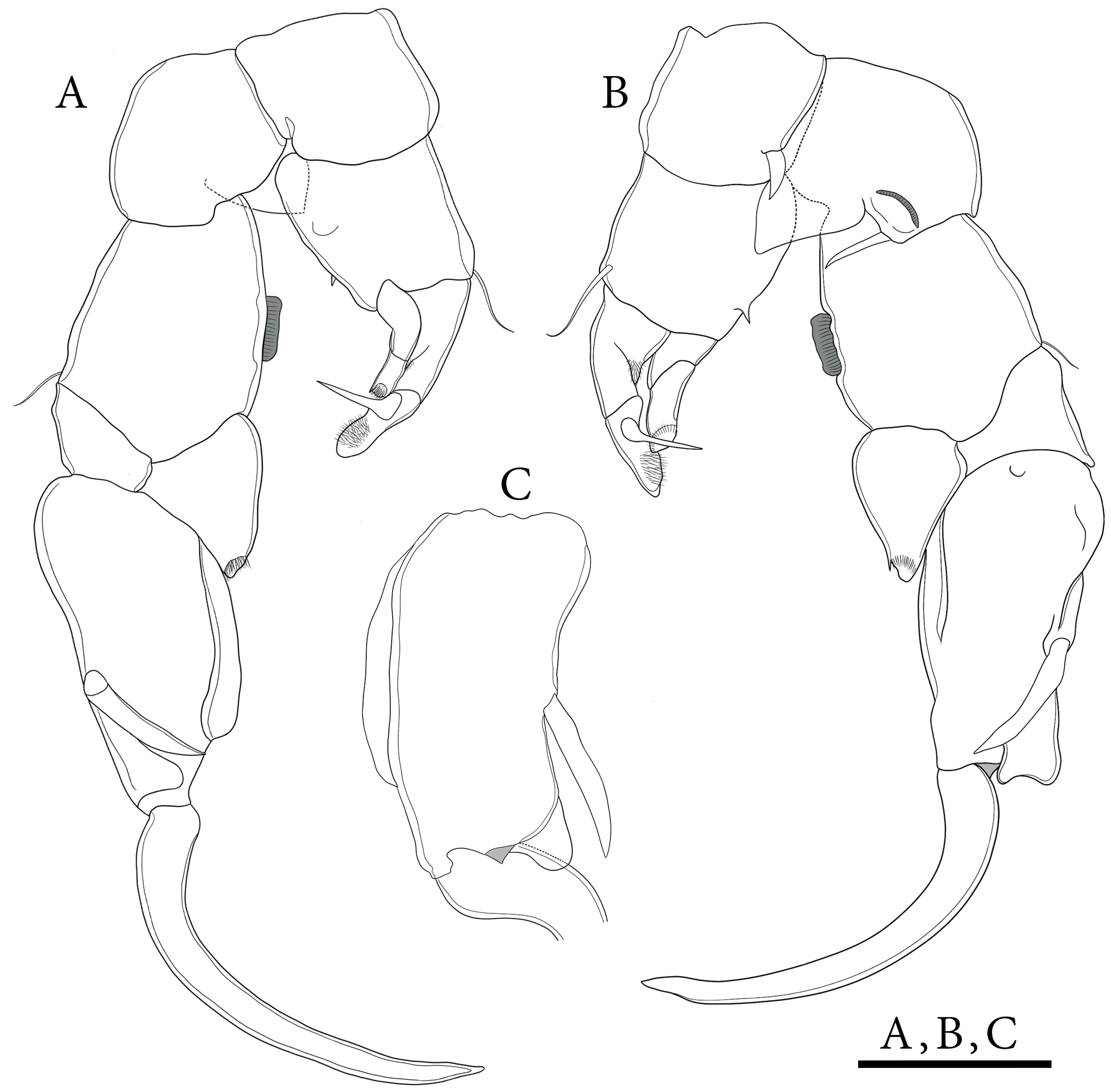
Figure 4.
Mongolodiaptomus parabirulai sp. nov. male: (A) P5, posterior view; (B) P5, anterior view; (C) right P5, Exp-2, posterior view. Scale bar = 200 µm.
Figure 4.
Mongolodiaptomus parabirulai sp. nov. male: (A) P5, posterior view; (B) P5, anterior view; (C) right P5, Exp-2, posterior view. Scale bar = 200 µm.
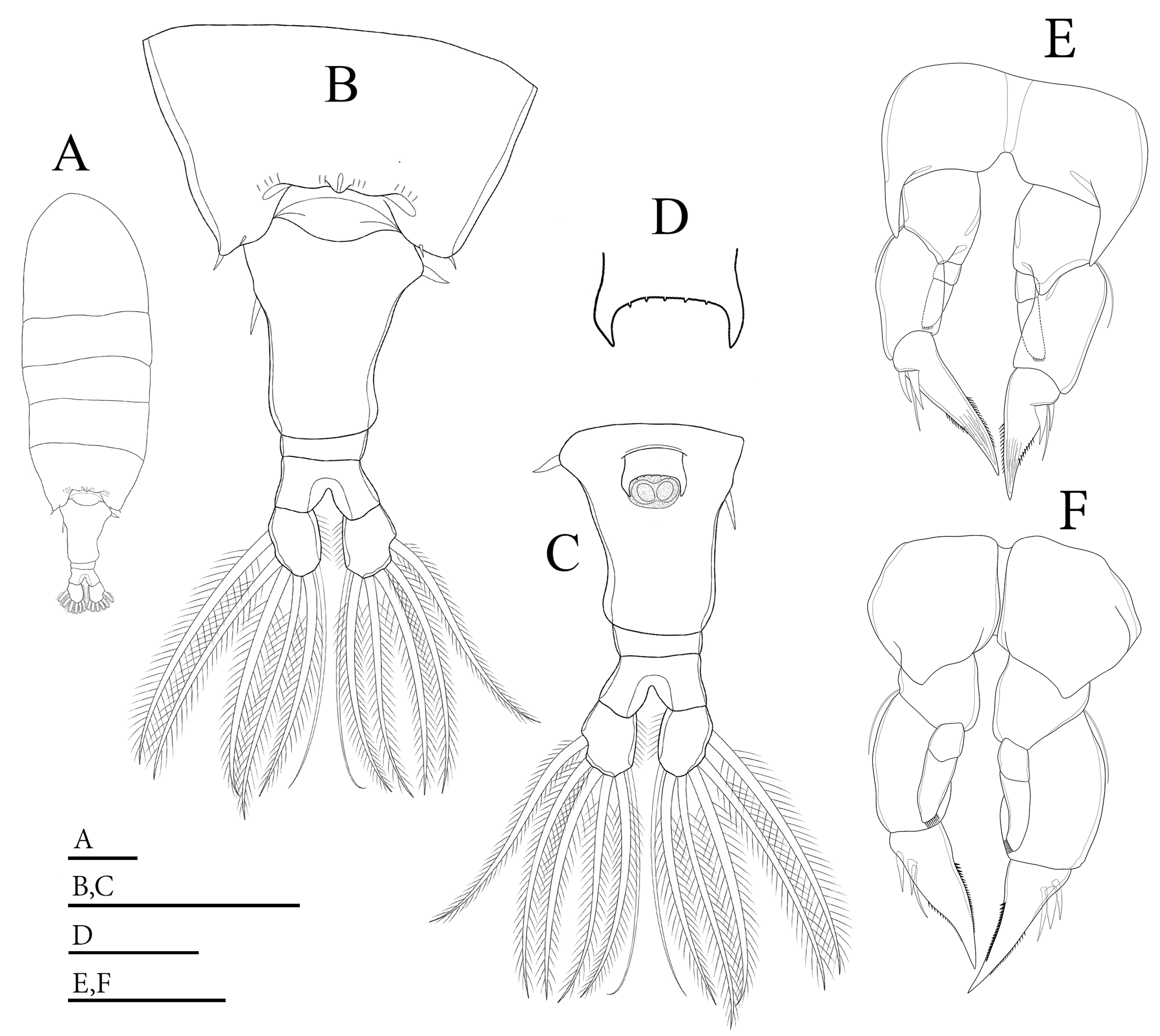
Figure 5.
Mongolodiaptomus parabirulai sp. nov. female (A–C) and male (D,E): (A) habitus, dorsal view; (B) last pedigerous somites, and urosome, dorsal view; (C) last pedigerous somites, urosome and caudal rami, dorsal view; (D) P5, posterior view; (E) middle part of P5, posterior view.
Figure 5.
Mongolodiaptomus parabirulai sp. nov. female (A–C) and male (D,E): (A) habitus, dorsal view; (B) last pedigerous somites, and urosome, dorsal view; (C) last pedigerous somites, urosome and caudal rami, dorsal view; (D) P5, posterior view; (E) middle part of P5, posterior view.
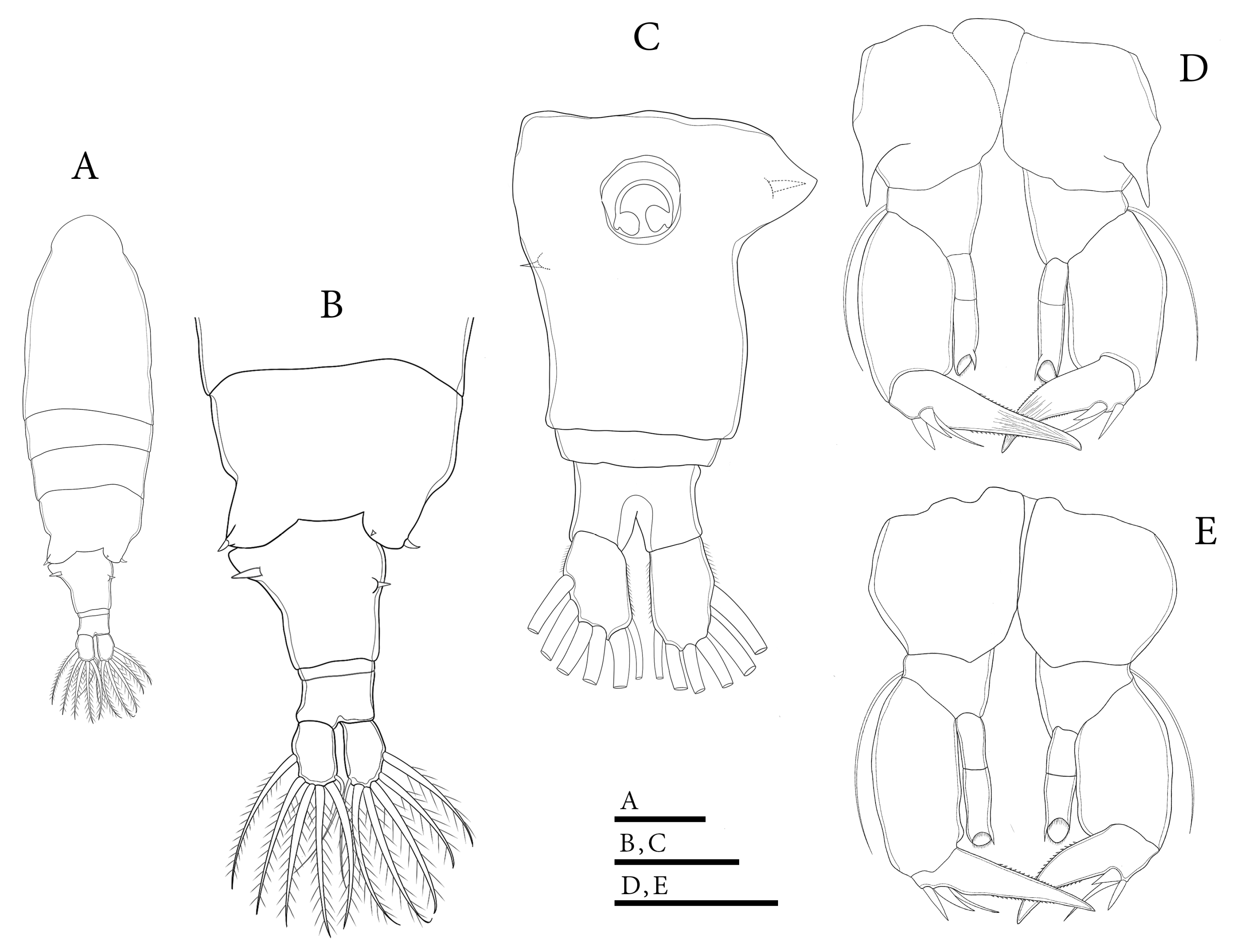
Figure 6.
Mongolodiaptomus parabirulai sp. nov. female: (A) habitus, dorsal view; (B) pediger 5, urosome, and caudal rami, dorsal view; (C) urosome and caudal rami, ventral view; (D) P5, posterior view; (E) P5, anterior view. Scale bars = 100 µm.
Figure 6.
Mongolodiaptomus parabirulai sp. nov. female: (A) habitus, dorsal view; (B) pediger 5, urosome, and caudal rami, dorsal view; (C) urosome and caudal rami, ventral view; (D) P5, posterior view; (E) P5, anterior view. Scale bars = 100 µm.
Antenna biramous (
Figure 2A). Coxa and basis possess one and two simple setae on inner distal corner, respectively. Enp bifurcated; Enp-1 possesses two setae along inner margin; Enp-2 contains nine setae along inner margin and seven setae apically; all setae lack setal ornamentation. Exp seven-segmented; Exp-1–6 possessing 1, 3, 1, 1, 1, 1 setae along inner margin; Exp-7 exhibiting three setae apically; all setae naked.
Mandible (
Figure 2D): coxa with ~ five teeth on coxal gnathobase dorsally. Basis with four bare setae; one medially and three distally along inner margin. Enp two-segmented; Enp-1 with four inner setae apically. Enp-2 with nine setae apically and two transverse rows of spinules close to apical end. Exp-1 to Exp-3 each possess one seta on inner border; Exp-4 contains three setae apically; all setae naked.
Maxillule (
Figure 2B): praecoxal arthrite containing seven robust setae laterally and three delicate submarginal setae. Coxal endite possessing four setae; coxal epipodite containing seven setae; two proximal-most setae smaller than remaining ones. Two basal endites united to a segment that supports them: proximal and distal endite, each possessing four apical setae; basal exopodite contains one short seta. Enp-1 and Enp-2 each possess four setae apically, with proximal segment united to basis. Exp with six naked setae apically.
Maxilla (
Figure 2C): praecoxa combined with coxa. Proximal endites on praecoxa possess one seta proximally and three setae apically. Distal endites on praecoxa possessing three setae apically. Proximal coxal endites possessing three setae apically. Distal coxal endites possessing three setae apically. Allobasis containing three setae apically. Enp bifurcated into two segments; each bearing three setae.
Maxilliped (
Figure 2E): four medial lobes on syncoxa, with a setal formula of 1, 2, 3, and 4, respectively; subdistal inner margin expanded into a spherical lobe with a cluster of minute spinules. Basis with a row of tiny spinules proximately and three setae along the inner margin. Enp five-segmented, with 3, 2, 2, 2, and 4 bare setae, respectively.
P1–P4 (
Figure 3A–D): biramous, coxa bearing a pinnate seta at innermost distal corner. Coxa of P3 and P4 with a smaller bare seta on outer distal margin (
Figure 3C,D), but the basis lacks setae. Exp longer than Enp; two-segmented Enp and three-segmented Exp on P1, three-segmented Enp and Exp on P2–P4. Armature formula of P1–P4 as in
Table 3.
P5 (
Figure 4 and
Figure 5D,E): asymmetrical, right leg highly enlarged. Intercoxal sclerite produced into a triangular tongue-like plate at the distal inner corner (
Figure 4B).
Right P5: coxa somewhat squarish with a small, pointed spine, mounted on a small lobe at the distal-medial margin on the posterior surface (
Figure 4B and
Figure 5D). Basis strongly sturdy and trapezoidal (
Figure 4B), ~1.1 × as long as wide, with a narrow, longitudinal hyaline lamella located the medial inner margin (
Figure 4B). Sensory seta at the distal corner of the basis are short, barely reaching ~1/4 length of Exp-1 proximally. Exp two-segmented; Exp-1 shorter than wide, outer distal margin unproduced (
Figure 4A,B). Exp-2 slightly incurved, with bulging inner margin, outer margin concave, proximal and distal parts of outer margin enlarged, ~2.0 × as long as wide. Distal outer portion of Exp-2 produced into wing-shaped protrusion (
Figure 4B,C and
Figure 5E). Outer margin of Exp-2 contains principal lateral spine located slightly posterior to mid-length of segment (
Figure 4A,B), along with a minor accessory spine located near insertion of end-claw (
Figure 4B,C). Principal lateral spine short, ~1/2 length of segment, slightly curved, bent inward towards distal inner margin of Exp-2 segment (
Figure 4A,B) or closely pointed against outer margin (
Figure 4C). End-claw thick, short, sickle-shaped, ~as long as preceding two segments combined, gently curved, gradually attenuating to blunt extremity. Enp one-segmented, sturdy triangular shaped, reaching ~1/3 length of Exp-2 segment, gradually tapering to distal end, tipped with tiny spinules distally (
Figure 4A,B and
Figure 5D,E).
Left P5: coxa squarish with a small, pointed spine at distal inner corner on posterior surface, (
Figure 4B), ~1/2 length of spine on right coxa. Basis sturdy, trapezoidal, proximal portion broader than distal end, with tiny spine on 2/3 length of inner margin (
Figure 4A, B); and long, thin posterolateral seta on posterior outer corner, extending ~1/2 length of Exp-1. Exp three-segmented: Exp-1 longer than wide, gradually tapering in posterior end; with inner serrate margin at distal half. Exp-2 conical, smaller than Exp-1; with inner robust seta, longer than Exp-2 (
Figure 4A,B) and inner serrate margin. Exp-3 reduced to bare apical process with blunt-tip, ~2/3 length of Exp-2. Enp two-segmented, longer than Exp-1, with spinulated tip (
Figure 4A,B).
Description of adult female. Total body length, measured from anterior margin of rostrum to posterior margin of caudal rami, 0.65–0.87 mm (mean = 0.80 mm,
n = 5) (
Figure 5A and
Figure 6A). Prosome:urosome ratio ~ 2.8:1.0. Prosome similar to that of male. Fourth and fifth pedigerous somites completely fused (
Figure 6A,B). Fifth pediger with sub-asymmetrical posterolateral wings (
Figure 6A,B); both wings rounded, left wing slightly larger than right wing; left postero-lateral spine larger than left one, right wing with a minute spine on medial inner margin.
Urosome (
Figure 6B,C) three-segmented, with strongly asymmetrical genital double-somite. Genital double-somite exceeds total length of urosomite 2, anal somite, and caudal rami (
Figure 6B,C); strongly asymmetrical, left portion largely expanded than right one, both portions gradually tapering to distal end, left spine located at proximal dilated portion and laterally pointed, right proximal spine laterally pointed. A pair of gonopores and copulatory pores located centrally at ~1/3 length of genital double-somite (
Figure 6C). Urosomite 2 smallest, shorter than wide. Anal somite symmetrical, as long as length of caudal rami. Caudal rami parallel, symmetrical; both rami with hairy inner margins (
Figure 6C). All principal caudal setae slightly dilated anteriorly; dorsal seta approximately as long as principal setae.
Antennules symmetrical; left antennule, antenna, mouthparts, and P1–P4 as in male.
P5: asymmetrical (
Figure 6D,E). Intercoxal sclerite somewhat wide, triangular in posterior view. Distal outer border of coxa extends posteriorly into spiniform apophysis that reaches distal portion of basis (
Figure 6D). Basis contains a slender, bare seta on distolateral margin, extending approximately 4/5 length of Exp-1. Exp three-segmented (
Figure 6D,E). Exp-1 sub-rectangular, ~2.0 as long as wide, with a convex outer margin and straight inner margin. Exp-2 symmetrical, triangular shaped, with a row of spinules along both margins. Lateral spine on Exp-2 ~ same length of outer spine on Exp-3. Exp-3 small and united with proximal outer margin of Exp-2, provided with two unequal spiniform setae apically; inner spine possesses finely serrate margins and extending to approximately half the length of Exp-2. Enp one-segmented (
Figure 6D,E), elongated rectangle, equivalent in length to Exp-1; containing obliquely truncate and finely spinulose tip.
Distribution. M. parabirulai sp. nov. has so far been found in the type locality in Yunnan, China. Some specimens that were previously identified as
M. birulai in the tropical areas of China [
20,
21] may turn out to be this new species.
urn:lsid:zoobank.org:act:3BF49F10-E90A-4F51-A5A9-FA1B06E9B222
Mongolodiaptomus formosanus: Chaicharoen and Sanoamuang (2022): 1, 5, 6, 7, 8, 12, 13, 14.
Type locality. A temporary pond (13°05′18” N, 106°10′48” E), in Cambodia, Kratie Province, Kratie District.
Material examined. Holotype: Cambodia; one ♂ (adult); a temporary pond in Kratie Province, Kratie District, accession number: THNHM-lv-21112; dissected, mounted on one slide in glycerol, covered with a coverslip, and sealed with nail polish, collected on 15 February 2007, leg. Rachada Chaicharoen; water temperature 33.4 °C, pH 6.8, and conductivity 93 µS cm−1.
Allotype: Cambodia; one ♀ (adult); location, date and collectors as for holotype; accession number: THNHM-lv-21113, completely dissected, mounted on one slide in glycerol, covered with a coverslip, and sealed with nail polish.
Paratypes: Cambodia; three ♂ (adult) and three ♀ (adult); date and collectors as for holotype; accession number: THNHM-lv-21114, undissected and preserved in 4% formalin.
Etymology. The Latin term serratus means toothed like a saw. Thus, the specific name longiserratus refers to the long and serrated spiniform process on the antepenultimate segment of the male grasping antennule. The name is an adjective in the nominative singular, masculine gender.
Description of adult male. Total body length, measured from anterior margin of rostrum to posterior margin of caudal rami, 0.60–0.62 mm. (mean = 0.61 mm,
n = 5); (
Figure 7A and
Figure 8A). Body smaller and more slender than in female. Prosome approximately 2.2 times the length of urosome urosome (
Figure 8A). Rostrum well developed, having two spiniform processes (
Figure 7B). Cephalosome with transversal groove dorsally at anterior part of somite. Pedigers 4 and 5 incompletely fused (
Figure 8A). Lateral wings of Pdg 5 slightly asymmetrical; right postero-lateral wing shorter and smaller than left one; each wing with one thin postero-lateral spine (
Figure 8C).
Urosome (
Figure 8A,C,D) with five somites. Genital somite shorter than wide, having a slender spine at posterolateral corner on right side. Urosomites 2–4 slightly wider than long each. Urosomites 2 and 3 with a patch of hairs on ventral side (
Figure 8D). Anal somite asymmetrical and twisted to right side. Caudal rami symmetrical (
Figure 8B), with each ramus approximately 0.95 times as long as wide, inner border hairy. Right ramus armed with three small, semicircular, chitinous knobs on ventral surface; one situated on middle of segment and two knobs distally (
Figure 8B). Each ramus possesses six setae, about equal in length and size, plumose in nature; dorsal seta lacks of plumosity and thinner than others.
Antennules: asymmetrical, extending not beyond end of caudal setae. Left antennule (
Figure 10E): 25-segmented. Armature formula as presented in
Table 4. Right antennule comprises of 22 segments (
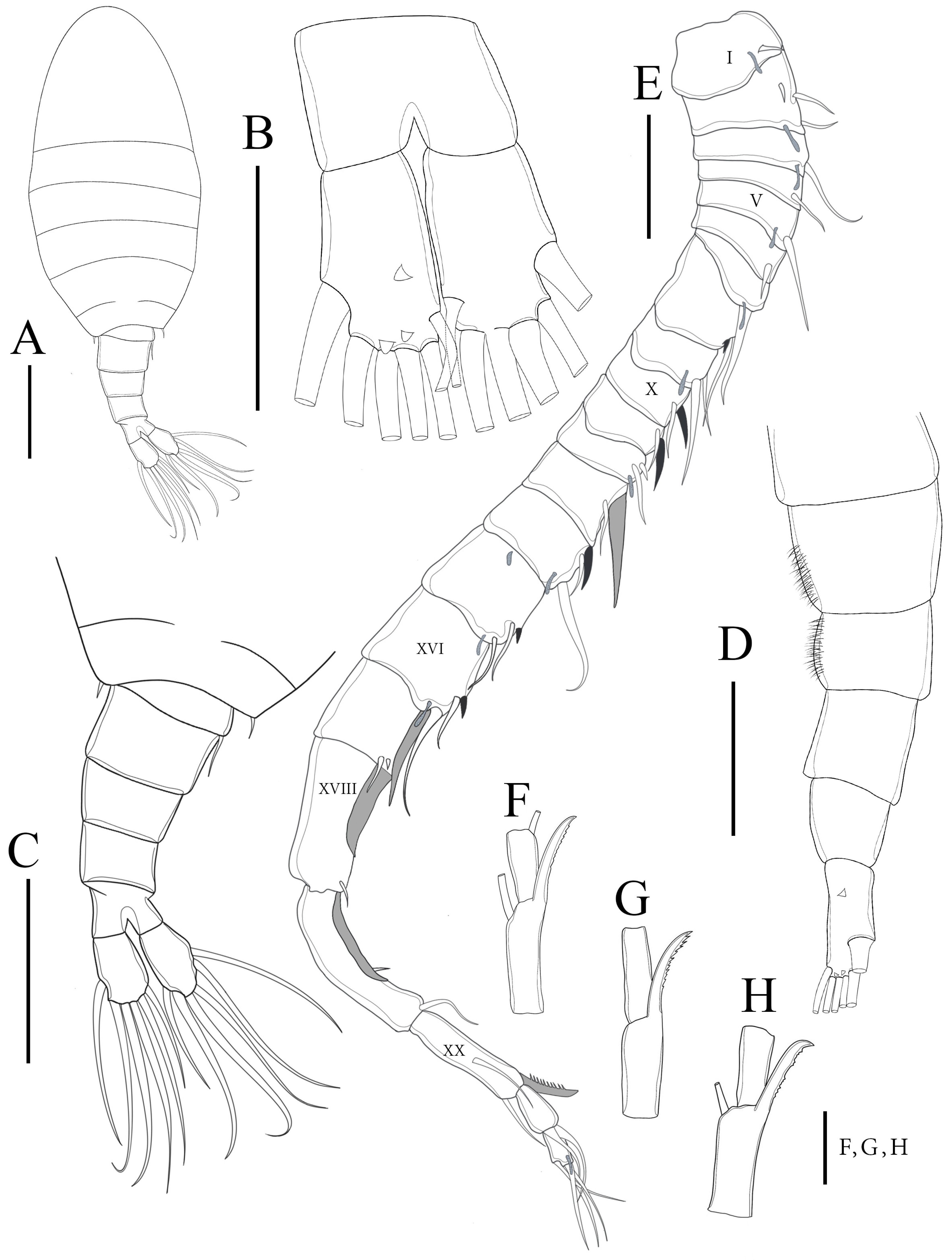
Figure 7D–F and
Figure 8E–H). Armature formula as presented in
Table 5. Segment 20 (antepenultimate segment) possesses an elongated, serrated, sickle-shaped spiniform process extending beyond length of segment 21 (
Figure 7D–F and
Figure 8F–H).
Antenna (
Figure 9A) biramous. Coxa and basis possess one and two bare setae on inner distal corner, respectively. Enp bifurcated; Enp-1 possesses two setae along inner border; Enp-2 contains nine setae along inner border, seven setae apically; all setae lack of ornamentation. Exp seven-segmented; Exp-1–6 with 1, 3, 1, 1, 1, 1 setae along inner border; Exp-7 has one seta on inner border and three setae apically; all setae naked.
Mandible (
Figure 9B): coxa with 6 teeth on coxal gnathobase dorsally. Basis with four bare setae; one medially and three distally along inner margin. Enp two-segmented; Enp-1 with four inner setae apically. Enp-2 with nine inner setae apically and three transverse rows of spinules close to apical end. Exp-1–3 each with one seta on inner margin; Exp-4 with three setae apically; all setae bare.
Maxillule (
Figure 9C): praecoxal arthrite with ten strong setae laterally and four slender submarginal setae. Coxal endite with four setae; coxal epipodite with nine setae; two proximal-most setae smaller than others. Two basal endites fused to segment bearing them: proximal and distal endite, each with four setae apically; basal exopodite with one short seta. Enp-1 and Enp-2 each with four setae apically, proximal segment fused to basis. Exp with six bare setae apically.
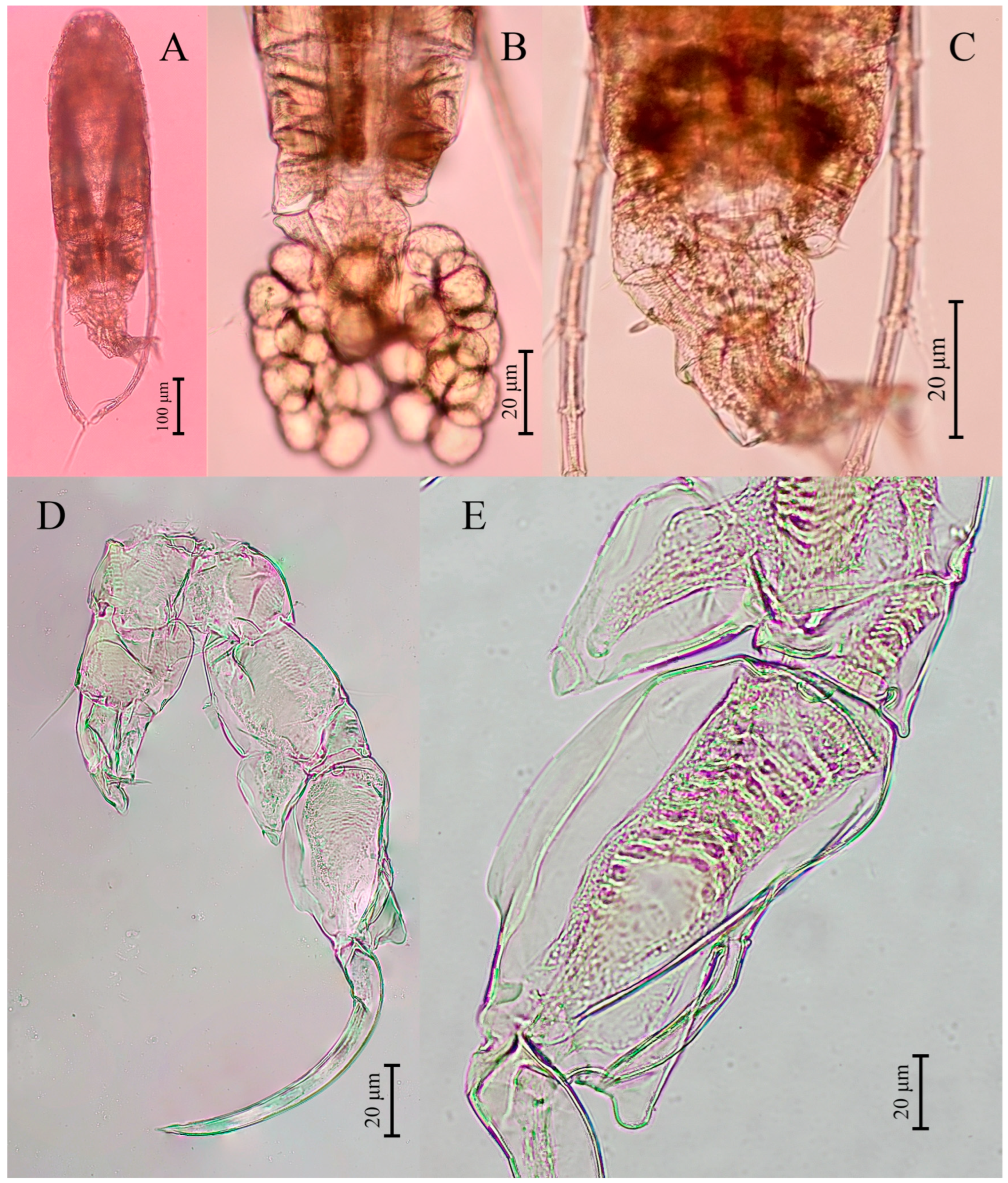
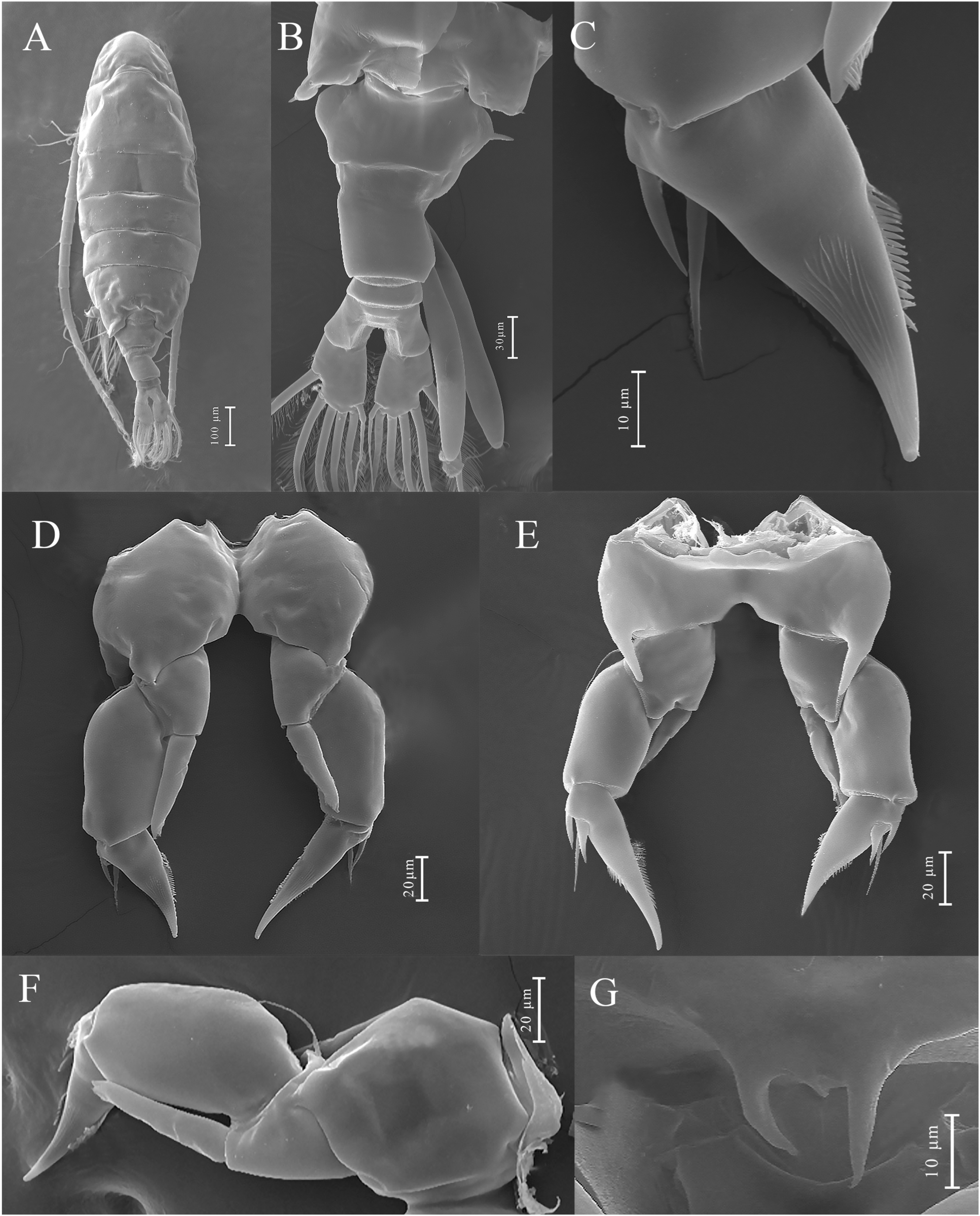
Figure 7.
Mongolodiaptomus longiserratus sp. nov., SEM and light microscopic photographs of male (A,B,D–F) and female (C): (A) habitus, dorsal view; (B) rostrum; (C) last pedigerous somites, urosome and caudal rami, dorsal view; (D–F) spiniform processes on antepenultimate segment of right antennule.
Figure 7.
Mongolodiaptomus longiserratus sp. nov., SEM and light microscopic photographs of male (A,B,D–F) and female (C): (A) habitus, dorsal view; (B) rostrum; (C) last pedigerous somites, urosome and caudal rami, dorsal view; (D–F) spiniform processes on antepenultimate segment of right antennule.
Figure 8.
Mongolodiaptomus longiserratus sp. nov. male: (A) habitus, dorsal view; (B) urosome (anal somite) and caudal rami, ventral view; (C) pediger 5, urosome, and caudal rami, dorsal view; (D) urosome and caudal rami, lateral view; (E) right antennule; (F–H) right antennule, segments 20–21. Scale bars = 100 µm.
Figure 8.
Mongolodiaptomus longiserratus sp. nov. male: (A) habitus, dorsal view; (B) urosome (anal somite) and caudal rami, ventral view; (C) pediger 5, urosome, and caudal rami, dorsal view; (D) urosome and caudal rami, lateral view; (E) right antennule; (F–H) right antennule, segments 20–21. Scale bars = 100 µm.
Figure 9.
Mongolodiaptomus longiserratus sp. nov. male: (A) antenna; (B) mandible; (C) maxillule; (D) maxilla; (E) maxilliped. Scale bar = 100 µm.
Figure 9.
Mongolodiaptomus longiserratus sp. nov. male: (A) antenna; (B) mandible; (C) maxillule; (D) maxilla; (E) maxilliped. Scale bar = 100 µm.
Figure 10.
Mongolodiaptomus longiserratus sp. nov. male: (A) P1; (B) P2; (C) P3; (D) P4; (E) left antennule. Scale bars = 100 µm.
Figure 10.
Mongolodiaptomus longiserratus sp. nov. male: (A) P1; (B) P2; (C) P3; (D) P4; (E) left antennule. Scale bars = 100 µm.
Figure 11.
Mongolodiaptomus longiserratus sp. nov. male: (A) P5, posterior view; (B) P5, anterior view. Scale bars = 200 µm.
Figure 11.
Mongolodiaptomus longiserratus sp. nov. male: (A) P5, posterior view; (B) P5, anterior view. Scale bars = 200 µm.
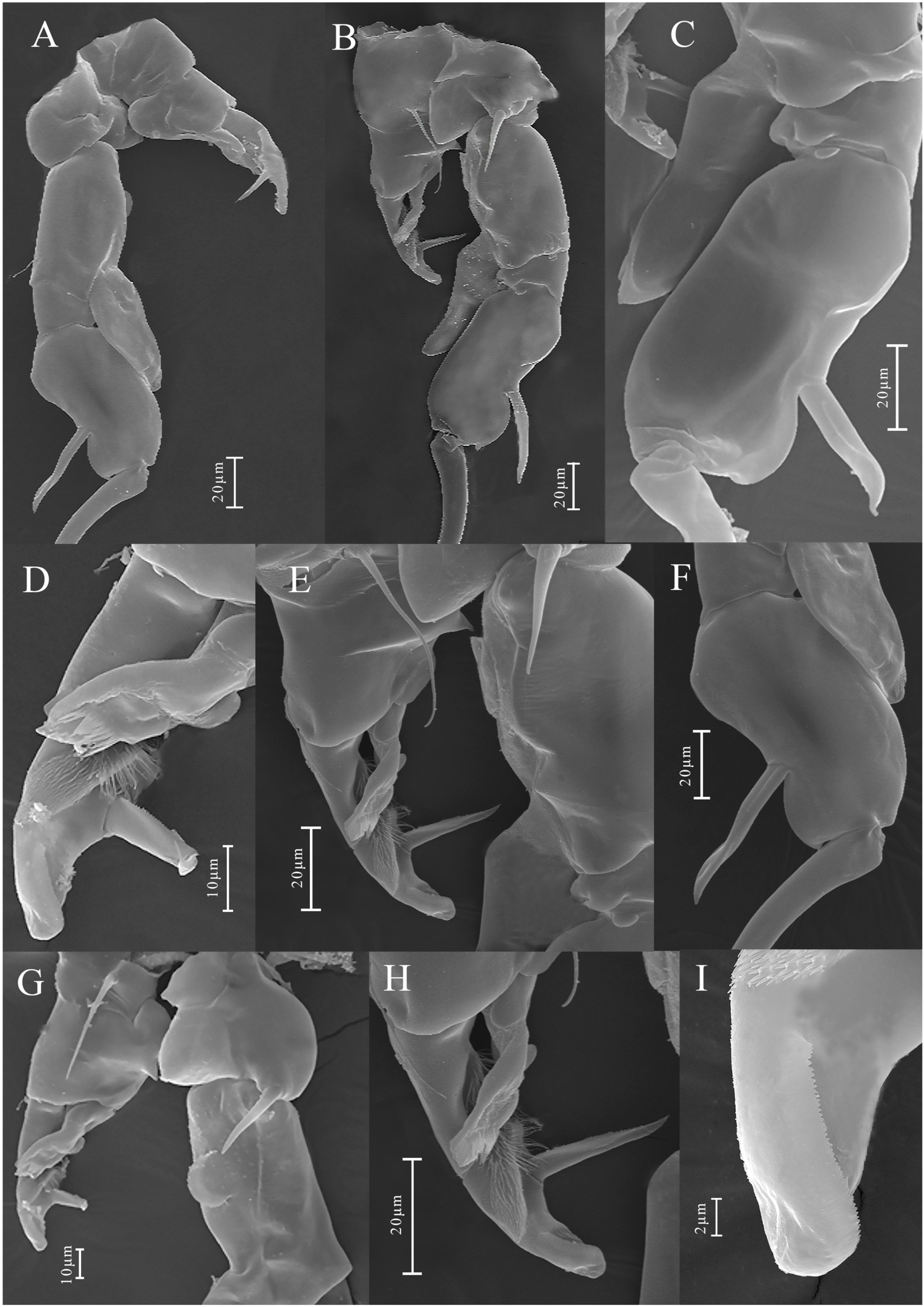
Figure 12.
Mongolodiaptomus longiserratus sp. nov., SEM photographs of male P5: (A) P5, anterior view; (B) P5, posterior view; (C) right P5 distal part of basis, Exp-1–2, and Enp, posterior view; (D) distal part of left P5, posterior view; (E) left P5 and proximal part of right P5, posterior view; (F) right P5 Exp-1–2, and Enp, anterior view; (G) left P5 and proximal part of right P5, posterior view; (H,I) distal part of left P5, posterior view.
Figure 12.
Mongolodiaptomus longiserratus sp. nov., SEM photographs of male P5: (A) P5, anterior view; (B) P5, posterior view; (C) right P5 distal part of basis, Exp-1–2, and Enp, posterior view; (D) distal part of left P5, posterior view; (E) left P5 and proximal part of right P5, posterior view; (F) right P5 Exp-1–2, and Enp, anterior view; (G) left P5 and proximal part of right P5, posterior view; (H,I) distal part of left P5, posterior view.
Figure 13.
Mongolodiaptomus longiserratus sp. nov. female: (A) habitus, dorsal view; (B) pediger 5, urosome, and caudal rami, dorsal view; (C) urosome and caudal rami, ventral view; (D) genital operculum; (E) P5, posterior view; (F) P5, anterior view.
Figure 13.
Mongolodiaptomus longiserratus sp. nov. female: (A) habitus, dorsal view; (B) pediger 5, urosome, and caudal rami, dorsal view; (C) urosome and caudal rami, ventral view; (D) genital operculum; (E) P5, posterior view; (F) P5, anterior view.
Figure 14.
Mongolodiaptomus longiserratus sp. nov., SEM photographs of female: (A) habitus, dorsal view; (B) pediger 5, urosome, and caudal rami, dorsal view; (C) P5 Exp-1–2, posterior view; (D) P5, posterior view; (E) P5, anterior view; distal part of left; (F) left P5, posterior view; (G) rostrum.
Figure 14.
Mongolodiaptomus longiserratus sp. nov., SEM photographs of female: (A) habitus, dorsal view; (B) pediger 5, urosome, and caudal rami, dorsal view; (C) P5 Exp-1–2, posterior view; (D) P5, posterior view; (E) P5, anterior view; distal part of left; (F) left P5, posterior view; (G) rostrum.
Maxilla (
Figure 9D): praecoxa united with coxa. Proximal endites on praecoxa possess one seta proximally and three setae apically. Distal endites on praecoxa possess three setae apically. Two coxal endites, each bearing three apical setae. Allobasis possessing three apical setae. Enp bifurcated into two segments; each bearing three setae.
Maxilliped (
Figure 9E): four medial lobes on syncoxa, with setal formula 1, 2, 3, 4, respectively; subdistal inner border extends into a spherical lobe bearing a patch of minute spinules. Basis with a row of minute spinules proximately, three setae along medial inner border, and two bare setae apically. Enp composed of five segments, bearing 3, 2, 2, 2, and 4 bare setae, respectively.
P1–P4 (
Figure 10A–D): biramous, with coxa bearing a pinnate seta at innermost distal corner. P1 and P2 basis lacking setae; but having a reduced bare seta on outer distal border of P3 and P4. Exp longer than Enp; two-segmented Enp and three-segmented Exp on P1, three-segmented Enp and Exp on P2–P4. Armature formula of P1–P4 as presented in
Table 6.
P5 (
Figure 11 and
Figure 12): asymmetrical, right leg highly enlarged. Intercoxal sclerite produced into two structures; a smaller triangular spine at proximal-medial corner and a larger tongue-like plate at distal inner corner (
Figure 11B,D and
Figure 12E,G).
Right P5: coxa somewhat squarish with a moderately large, pointed spine, mounted on large lobe at distal-medial margin on posterior surface (
Figure 11B and
Figure 12B). Basis rectangular (
Figure 11B and
Figure 12A,B,G), ~1.7 × as long as wide; with a narrow, longitudinal hyaline lamella on proximal inner margin (
Figure 11B and
Figure 12B,E), and a semicircular hyaline lamella at middle inner margin (
Figure 11B and
Figure 12E,G). Sensory seta at distal corner of basis short, barely reaching ~1/3 length of Exp-1 segment proximally. Exp two-segmented; Exp-1 narrower than wide, having two chitinous knobs at distal inner corner; outer distal border extended into sharp tip (
Figure 11A,B and
Figure 12A,B). Exp-2 slightly incurved, inner border convex, proximal and distal regions of outer border expanded, and overall length approximately twice the width. Outer border has a principal lateral spine located slightly posterior to midpoint of segment (
Figure 11A,B and
Figure 12C,F), along with a small accessory spine located near insertion point of end-claw (
Figure 11B and
Figure 12B). Principal lateral spine appears slender (
Figure 12A–C), having a straight or slightly curved contour, extending approximately two-thirds of segment’s length. End-claw sickle-shaped, elongated, and slender, having a serrated inner border and an acute point; approximately 1.5 times the length of Exp-2. Enp one-segmented, slender truncated cone (
Figure 11A,B and
Figure 12A–C), ~2/3 length of Exp-2 segment gradually tapering to distal end, tipped with tiny spinules distally.
Left P5: coxa with thin seta inserted on posterior lobe at distal inner margin (
Figure 11B and
Figure 12B,G), reaching beyond 2/3 length of basis. Basis trapezoidal, proximal portion broader than distal one, with tiny spine on mid-length of inner margin (
Figure 11B and
Figure 12A); and long, thin posterolateral seta on posterior outer corner, extending ~2/3 length of Exp-1. Exp three-segmented: Exp-1 longer than wide, gradually tapering in posterior end; with inner strongly serrate margin at distal half (
Figure 11A and
Figure 12G,H). Exp-2 conical, smaller than Exp-1; with inner robust seta, longer than Exp-2 (
Figure 12G,H) and inner serrate margin. Exp-3 reduced to bare apical process with blunt-tip, ~2/3 length of Exp-2, outer margin folded into two layers as in
Figure 12I. Enp two-segmented, slightly longer than Exp-1, with spinulated tip (
Figure 12G,H).
Description of adult female. Total body length, measured from anterior margin of rostrum to posterior margin of caudal rami, 0.95–1.08 mm (mean = 1.016 mm,
n = 5) (
Figure 13A and
Figure 14A). Prosome to urosome ratio approximately 3.1:1.0. Prosome resembling that of male. Rostrum fused, asymmetrical, and sharply pointed (
Figure 14G). Fourth and fifth pedigerous somites fully fused (
Figure 13A,B). Fifth pediger with small dorso-medial ridge and sub-asymmetrical posterolateral wings (
Figure 13B and
Figure 14A); right wing convex, whereas left wing triangular and longer than right one. Urosome three-segmented, having almost symmetrical genital double-somite (
Figure 13B,C and
Figure 14B). Genital double-somite exceeding combined length of urosomite 2, anal somite, and caudal rami (
Figure 13B,C and
Figure 14B); left and right portions equally dilated, both portions gradually tapering to distal end, left spine located at one-third of segment and distally pointed, right proximal spine laterally pointed. A pair of gonopores and copulatory pores located centrally at ~1/3 length of genital double-somite (
Figure 13C). Genital field as in
Figure 13D. Urosomite 2 asymmetrical, smallest in size, and shorter than wide. Anal somite symmetrical, approximately equal in length to caudal rami (
Figure 13B,C and
Figure 14B). Caudal rami parallel, symmetrical; both rami with hairy inner margins (
Figure 13B,C). All principal caudal setae slightly dilated anteriorly; dorsal seta approximately as long as principal setae.
Antennules: symmetrical; left antennule, antenna, mouthparts, and P1–P4 as in male.
P5: asymmetrical (
Figure 13E,F and
Figure 14C–F). Intercoxal sclerite narrow, triangular. Distal outer margin of coxa extended on posterior surface into spiniform apophysis reaching distal part of basis, right apophysis slightly larger than left one (
Figure 13E and
Figure 14E). Basis with thin, bare seta on distolateral margin, reaching ~1/3 length of Exp-1. Exp three-segmented (
Figure 13E,F and
Figure 14D,E). Exp-1 sub-rectangular, ~2.03 × as long as wide, with a convex outer margin and straight inner margin. Exp-2 triangular, left side slender and longer than right one, with a row of spinules along both margins, and longitudinal grooves (conveyor canals) on posterior view (
Figure 13E). Lateral spine on Exp-2 slightly shorter than outer spine on Exp-3. Exp-3 small and fused with proximal outer margin of Exp-2, armed with two unequal spiniform setae apically; inner spine with finely serrate margins and extending to ~2/3 as long as Exp-2, outer spine larger and shorter than inner spine. Enp two-segmented (
Figure 14F), subconical, as long as Exp-1; with obliquely truncate and finely spinulose apex.
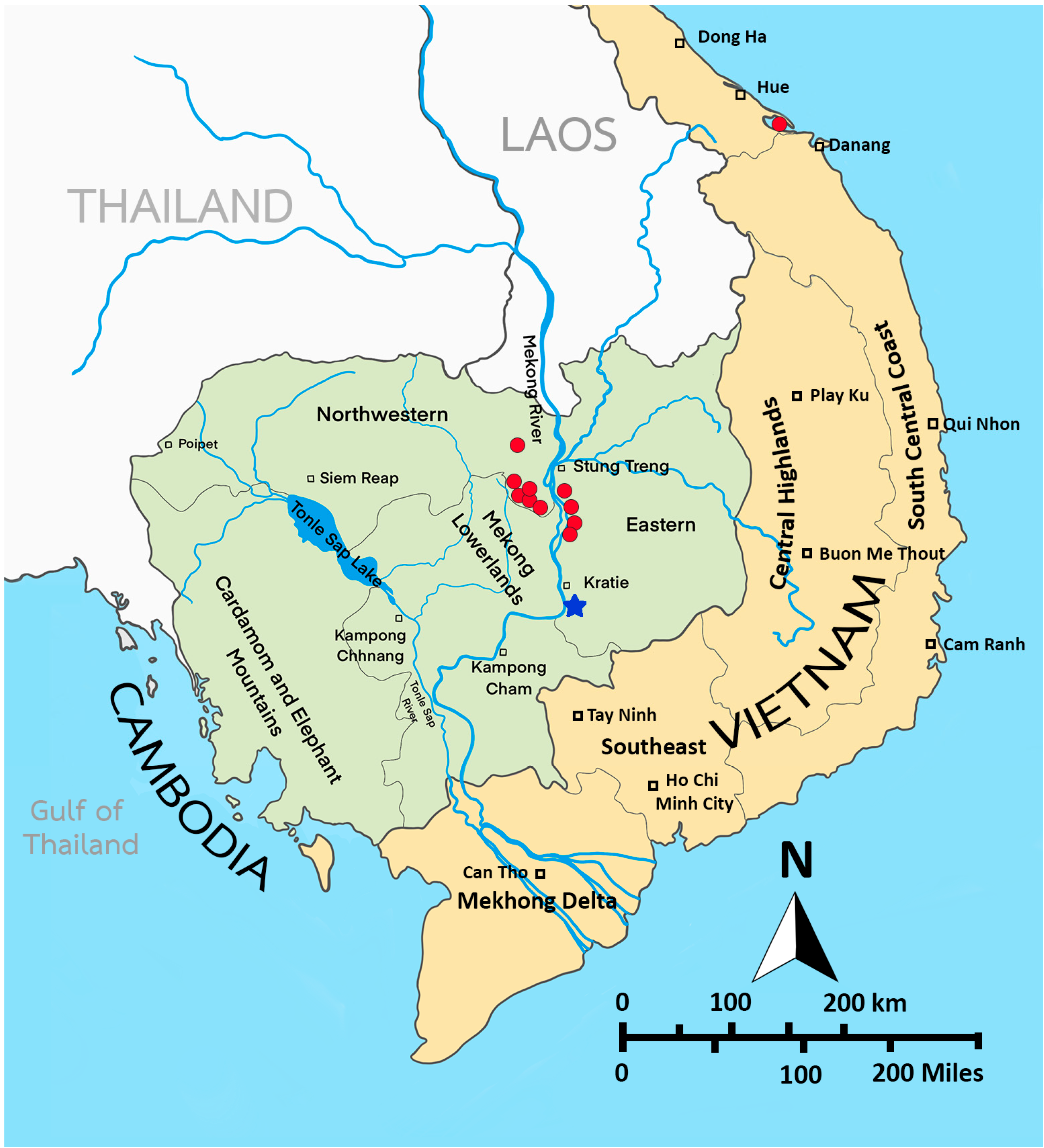
Distribution. Cambodia and Vietnam. In Cambodia, it was recorded in 11 of 237 freshwater sampling sites in Kratie and Stung Treng provinces (
Figure 15).
M. longiserratus sp. nov. was found in all three seasons: dry (February), early monsoon (June), and late monsoon (October) [
16]. In Vietnam, it has so far been found only in a permanent pond at Lang Co Bay, Phu Loc District, Thua Thien Hue Province, central Vietnam. The new species has been recorded in temporary and permanent ponds, canals, and rivers. Diaptomid species that co-occur with
M. longiserratus sp. nov. are
Eodiaptomus draconisignivomi Brehm, 1952;
E. phuvongi Sanoamuang and Sivongxay, 2004;
Mongolodiaptomus botulifer (Kiefer, 1974);
M. mekongensis Sanoamuang and Watiroyram, 2018;
Phyllodiaptomus parachristineae Sanoamuang and Watiroyram, 2023;
Tropodiaptomus oryzanus Kiefer, 1937; and
Vietodiaptomus blachei (Brehm, 1951).