Melatonin: Both a Messenger of Darkness and a Participant in the Cellular Actions of Non-Visible Solar Radiation of Near Infrared Light



1
Department of Cell Systems and Anatomy, UT Health San Antonio, Long School of Medicine, San Antonio, TX 78229, USA
2
Silas, Inc., Basking Ridge, NJ 07920, USA
3
Johann Friedric Blumenbach Institute of Zoology and Anthropology, University of Göttingen, D-37073 Göttingen, Germany
*
Author to whom correspondence should be addressed.
Biology 2023, 12(1), 89; https://doi.org/10.3390/biology12010089
Submission received: 10 December 2022
/
Revised: 25 December 2022
/
Accepted: 4 January 2023
/
Published: 6 January 2023
(This article belongs to the Section Physiology)
Simple Summary
Environmental light exposure is an important factor for human health that impacts the biological clock of organisms. Melatonin usually serves as a chemical expression of darkness since light exposure suppresses its synthesis. The low level of melatonin is associated with a spectrum of disorders since melatonin is a potent endogenous antioxidant; therefore, individuals should avoid visible light exposure at night. However, evidence also shows that near infrared radiation (NIR), which occupies a major portion of the wavelengths of sunlight, promotes melatonin production and the beneficial effects of sun baths or photobiomodulation therapy may be, at least, partially mediated by the increased local melatonin production induced by NIR. Unlike visible light, NIR can penetrate deep into the human body including the muscle, brain, and even the bones, and its effects on human biology remain to be clarified. Thus, the avoidance of light at night and exposure to sun during the day are equally important to improve melatonin production and human well-being.
Abstract
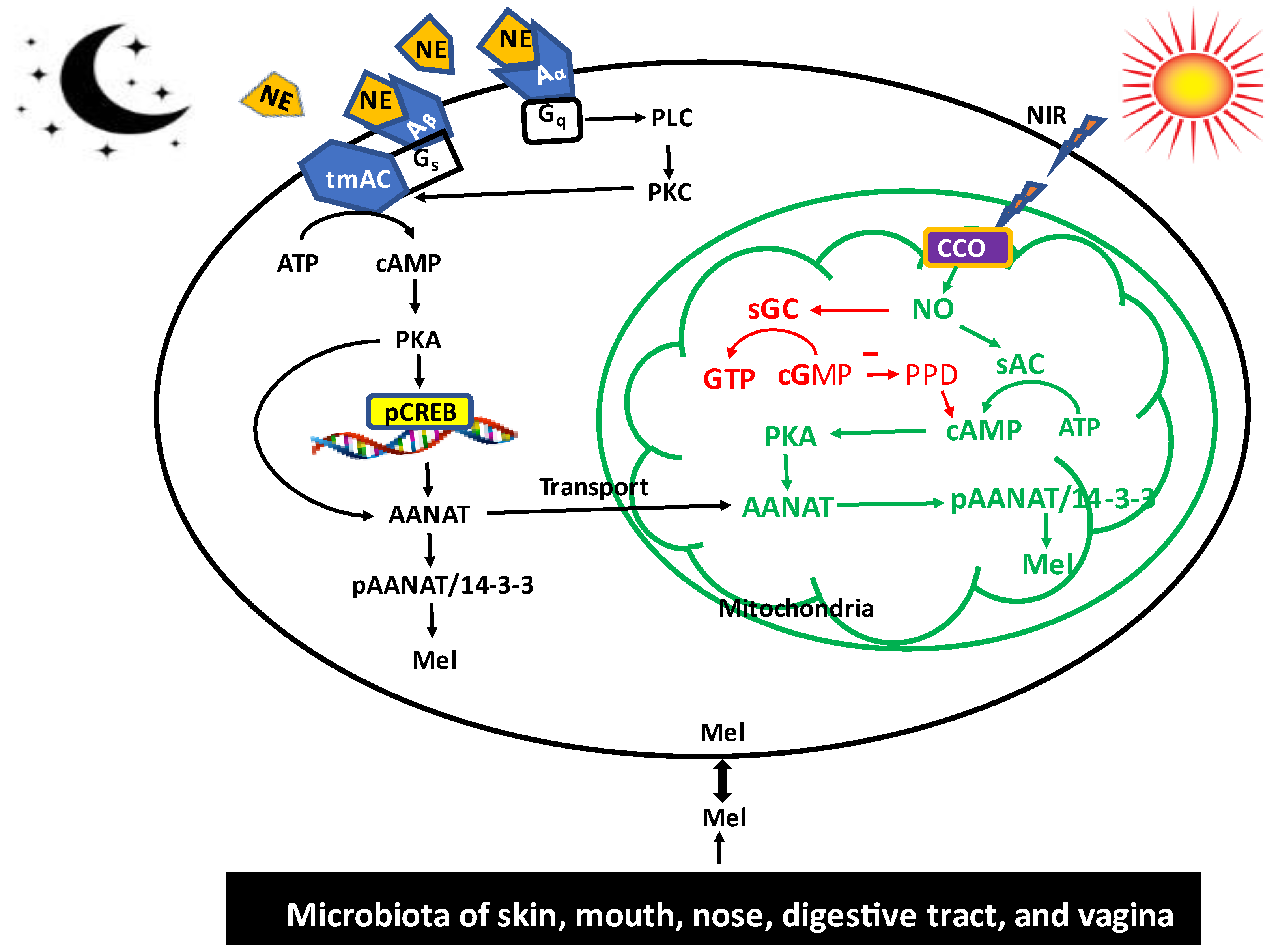
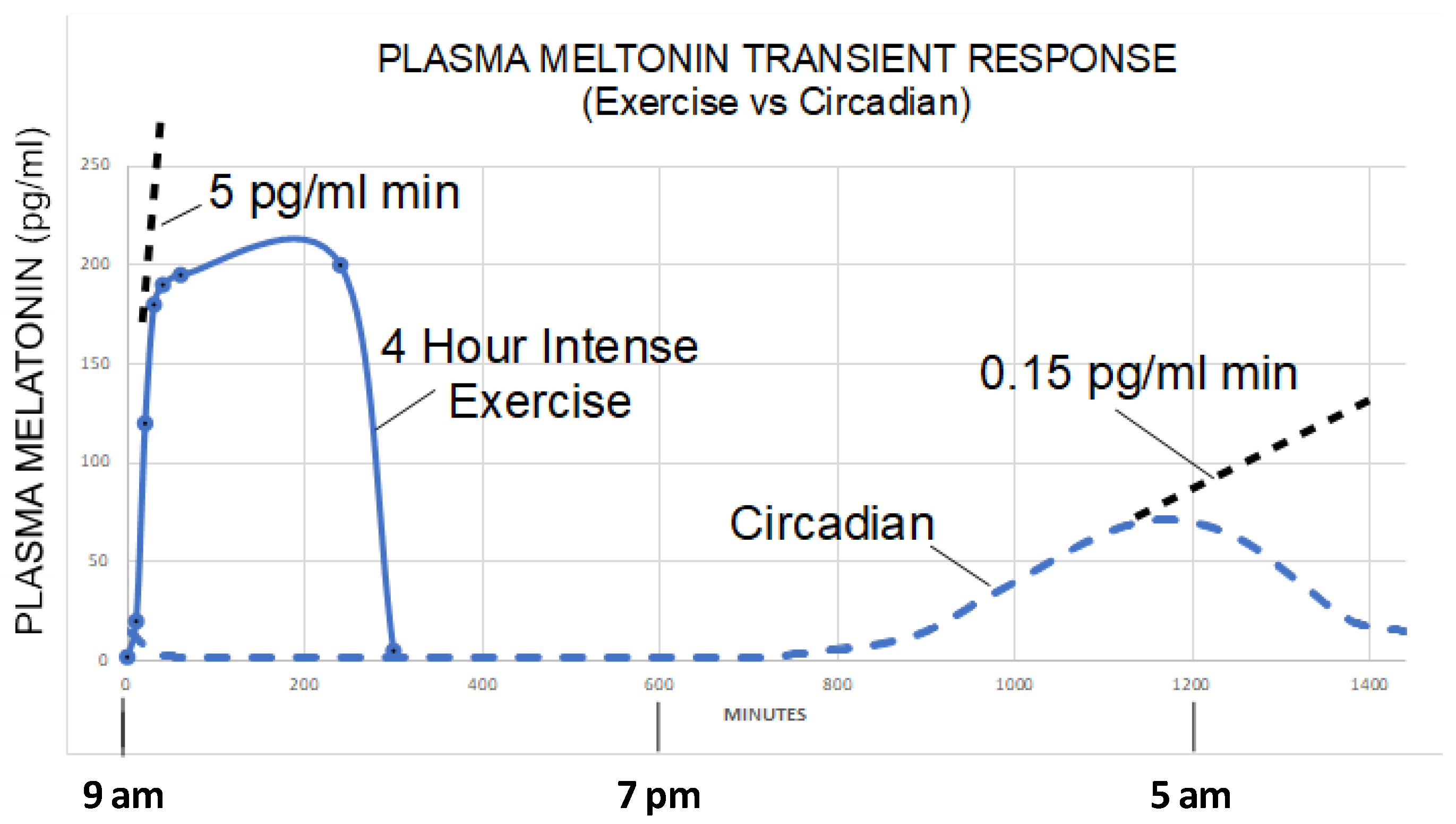
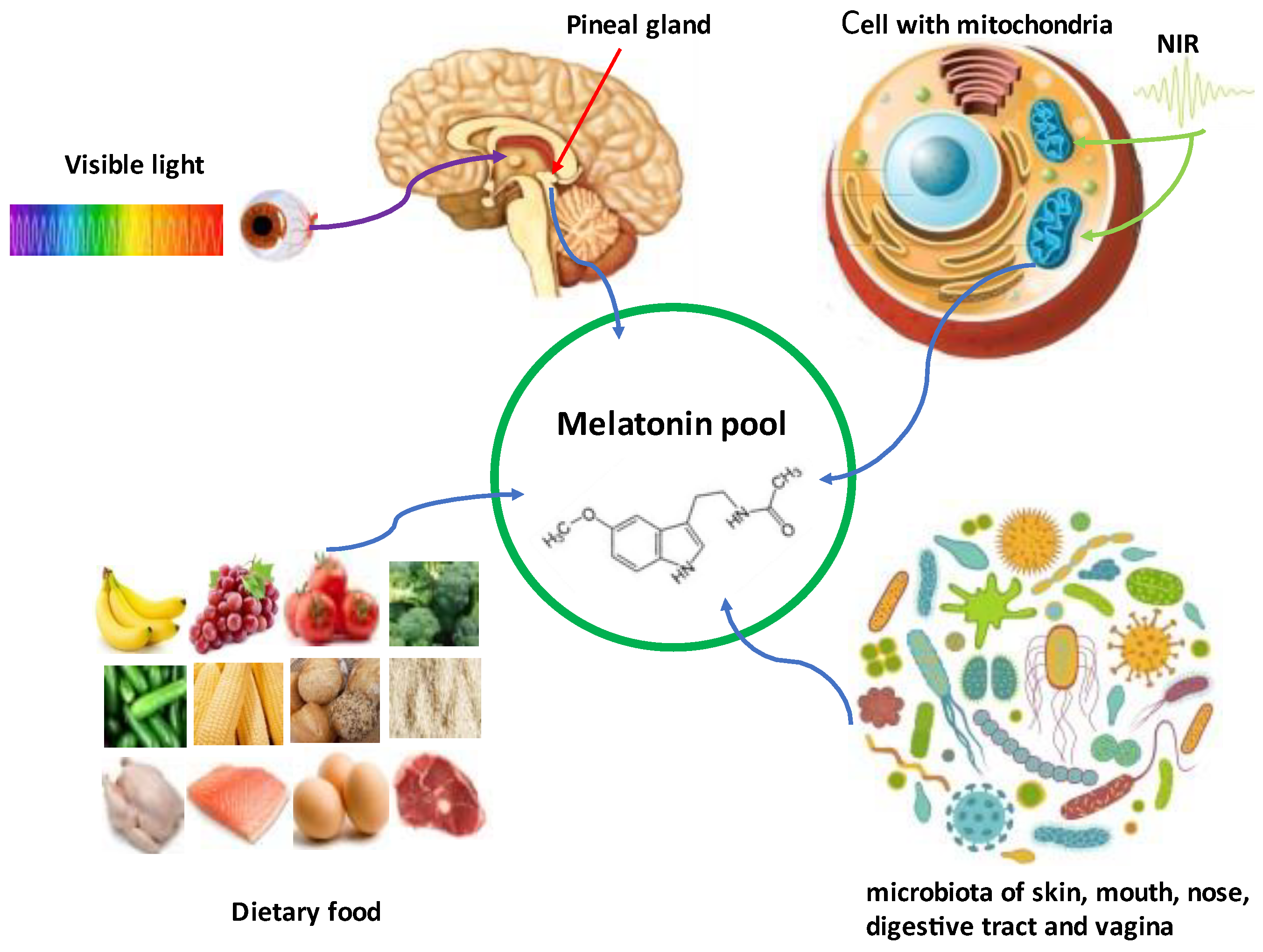
Throughout the history of melatonin research, almost exclusive focus has been on nocturnally-generated pineal melatonin production, which accounts for its circadian rhythm in the blood and cerebrospinal fluid; these light/dark melatonin cycles drive the daily and seasonal photoperiodic alterations in organismal physiology. Because pineal melatonin is produced and secreted primarily at night, it is referred to as the chemical expression of darkness. The importance of the other sources of melatonin has almost been ignored. Based on current evidence, there are at least four sources of melatonin in vertebrates that contribute to the whole-body melatonin pool. These include melatonin produced by (1) the pineal gland; (2) extrapineal cells, tissues, and organs; (3) the microbiota of the skin, mouth, nose, digestive tract, and vagina as well as (4) melatonin present in the diet. These multiple sources of melatonin exhibit differentially regulated mechanisms for its synthesis. Visible light striking the retina or an intense physical stimulus can suppress nocturnal pineal melatonin levels; in contrast, there are examples where extrapineal melatonin levels are increased during heavy exercise in daylight, which contains the whole range of NIR radiation. The cumulative impact of all cells producing augmented extrapineal melatonin is sufficient to elevate sweat concentrations, and potentially, if the exposure is sustained, to also increasing the circulating values. The transient increases in sweat and plasma melatonin support the premise that extrapineal melatonin has a production capacity that exceeds by far what can be produced by the pineal gland, and is used to maintain intercellular homeostasis and responds to rapid changes in ROS density. The potential regulatory mechanisms of near infrared light (NIR) on melatonin synthesis are discussed in detail herein. Combined with the discovery of high levels of melanopsin in most fat cells and their response to light further calls into question pineal centric theories. While the regulatory processes related to microbiota-derived melatonin are currently unknown, there does seem to be crosstalk between melatonin derived from the host and that originating from microbiota.