1. Introduction
The composite materials have gained significant attention in modern high-tech industries and in advanced applications due to their superior mechanical properties, low weight, and multifunctional capabilities compared with single-constituent or conventional materials [
1]. The composite materials can be fabricated using different types of reinforcements, such as metals, polymers, ceramics, and natural fibers. Among these, polymeric composites are widely adopted in FDM printing because they provide a favorable mechanical strength, durability, and prolonged service life. However, the major drawbacks of polymeric composites include the release of certain volatile compounds, extremely long degradation times, and their contribution to carbon emissions, which significantly affect ecosystems, pollute the environment, and accelerate global warming [
2]. In recent years, natural fiber-reinforced composites (NFRCs) have gained significant attention due to their ability to provide satisfactory mechanical properties and performance, including adequate strength, wide availability, recyclability, biodegradability, and low manufacturing cost. Most importantly, NFRCs align well with circular economy principles when compared with conventional synthetic or polymeric composites. Moreover, NFRCs are capable of mitigating the presence of volatile organic compounds commonly found in conventional polymer-based composites. In addition to these advantages, the use of natural fibers contributes to reduced carbon emissions and helps address climate change concerns, which are key industrial demands of the 21st century [
3]. Consequently, the market size and production rates of NFRCs are increasing significantly as replacements for conventional or polymeric materials, with applications in biomedical, building and construction, automotive, aerospace, and related industries [
2,
3]. Natural fibers are primarily classified based on their sources; for example, plant fibers include wood, jute, bamboo, and PLAF, while animal fibers include sheep wool and others. Among these, plant fibers and their particles are extensively adopted into the composite industry due to their low preprocessing requirements, reduced fabrication complexity, and minimal post-processing needs [
2,
4].
Lattice structures are an advanced class of structures that are widely adopted in current industries, where voids are intentionally introduced to reduce the weight and material usage while achieving a high strength-to-weight ratio compared with conventional solid or block-type structures. Particularly in the aviation, aerospace, and automobile industries, the primary objective is to reduce structural weight to improve fuel efficiency. Consequently, lattice structures have become a preferred choice in these industries [
5]. The application of lattice structures further depends on the component location, the functional requirements, and the design intent. In the biomedical industry, lattice structures are primarily used to promote biological responses, such as cell adhesion and proliferation, while maintaining a low weight and adequate mechanical strength [
6]. Based on the type of lattice structures, the lattice can be categorized into simple cubic (SC), face-centered cubic (FCC), body-centered cubic (BCC), diamond-centered cubic, octet-centered cubic, truss-centered cubic, and so on [
7]. However, among the various lattice structures, the simple cubic (SC) lattice is relatively simple in geometry, offers high design flexibility, and can provide superior mechanical properties. For instance, this study reported that SC lattices exhibited higher stiffness, yield strength, plateau stress, and energy absorption compared with other topology-optimized structures and body-centered cubic (BCC) lattices [
8], which reflects that the types of lattices are responsible for providing different mechanical properties and performances. For any type of lattice structure, geometric parameters, such as the strut diameter, the strut volume fraction, and the repeating unit cell, are critical factors in addition to the unit cell topology itself. These parameters can significantly influence—and even markedly alter—the mechanical responses that are under investigation. For example, this research conducted a comparison between different strut diameters (0.5–1.5 mm), strut lengths (12–18 mm), and repeating units (3 × 3 × 3 and 6 × 6 × 6). The study revealed that a higher number of repeating units (6 × 6 × 6) with a strut diameter of 1.5 mm provided superior compressive properties compared with structures having fewer repeating units (3 × 3 × 3) [
9]. However, the complexity of these structures arises because the repeating unit size, strut diameter, and strut length are not always identical, making it challenging to establish a standardized experimental procedure. This variation occurs because strut geometry, orientation, and connectivity differ depending on the lattice type, leading to changes in the structural configuration and mechanical responses. An earlier study investigated the effects of unit cell size and strut volume fraction, revealing that variations in these parameters significantly increased or decreased the compressive strength, elastic modulus, and other mechanical properties as their values changed [
10]. However, the study established certain linear relationships, showing that an increase in lattice volume fraction led to a higher compressive modulus and strength. This behavior is primarily attributed to an increased stress concentration and load-bearing capacity around the pores. Conversely, an increase in unit cell size resulted in a reduction in the overall mechanical properties of the structure [
10].
To fabricate the lattice structures, a wide range of conventional and advanced manufacturing technologies has been developed. Among these, additive manufacturing (AM) is particularly advantageous due to its design freedom, sustainability, lower carbon emissions, reduced energy consumption, and capability to produce intricate geometries. Based on dimensional flexibility, AM technologies are commonly classified into three-dimensional (3D), four-dimensional (4D), and five-dimensional (5D) printing [
2]. In 4D printing, stimulus-responsive behavior is introduced as an additional functional feature. However, compared with 4D and 5D printing, 3D printing is more widely adopted in the current composite industries because it enables the fabrication of complex geometries with fewer complications, shorter production times, and lower costs. 3D printing technologies are broadly categorized into seven types, including material extrusion, vat photopolymerization, sheet lamination, powder bed fusion, material jetting, binder jetting, and directed energy deposition [
11]. Among these, material extrusion, commonly known as fused deposition modeling (FDM) or fused filament fabrication (FFF), has gained significant attention due to its low manufacturing time, ease of material handling, wide range of feedstock materials, relatively low energy consumption, and strong alignment with circular economy principles. Consequently, FDM-based 3D printing is extensively employed for fabricating intricate geometries such as lattice structures in current applications [
12]. In FDM printing machines, manufacturing parameters have a significant influence on the mechanical properties of the printed parts. In addition, the structural performance of components may also depend on the selected manufacturing parameters. For example, this research investigated the effects of key manufacturing parameters—namely layer height, printing speed, nozzle temperature, and infill density—using the Taguchi method on hexagonal lattice structures fabricated from a PLA/walnut shell composite. The results revealed that each parameter had a significant influence on compressive strength. Among these, layer height and nozzle temperature showed the highest contributions, accounting for 37.07% and 38.05%, respectively [
13]. The relationship between the manufacturing parameters and the response variables is not always linear or identical. A similar approach was applied to a PLA-based fluorite lattice structure. The investigation revealed that, among the parameters that were considered, nozzle temperature made the most significant contribution (72.44%), followed by printing speed (22.81%), while layer height showed a negligible effect. The optimal results were obtained at a layer height of 0.16 mm and a nozzle temperature of 205 °C, yielding a compressive strength of 12.22 MPa [
14]. These findings indicate that lattice performance depends not only on FDM fabrication parameters but also significantly on the material used.
Particularly in composite-based lattice structures, significant research efforts have been carried out. For example, a study designed a planar lattice structure using polyamide reinforced with carbon fiber and reported favorable thermal dimensional stability when fabricated using the FDM method [
15]. In another investigation, polylactide (PLA)/polyhydroxyalkanoate (PHA)-based lattice composites with different variants of triply periodic minimal surface (TPMS) structures—such as gyroid, Kelvin, and Schwarz-D—were fabricated using FDM. A comparative analysis revealed that the gyroid TPMS exhibited the highest elastic modulus of approximately 252.32 MPa [
16]. A similar approach was adopted in another study, which considered three different lattice geometries (gyroid, diamond, and primitive) with cell sizes of 8 mm and 12 mm. Based on the data analysis, the diamond lattice with an 8 mm cell size showed a superior mechanical performance, achieving an elastic modulus of 0.549 GPa and a compressive strength of 12.28 MPa. In contrast, the 12 mm cell size resulted in a lower elastic modulus of 0.364 GPa and a compressive strength of 11.41 MPa. These results indicate that both the lattice geometry and the dimensional parameters significantly influence the mechanical performance in addition to the material selection [
17]. Furthermore, a comparative experimental and finite element method (FEM) study was conducted on the FDM-fabricated TPMS gyroid lattice structures with varying unit cell configurations. The investigation found that the 2 × 2 × 2 unit cell configuration exhibited a higher elastic modulus compared to the other configurations, while similar elastic moduli were observed for the 4 × 4 × 4 unit cell arrangement [
18]. In another research, carbon fiber-reinforced polyethylene terephthalate glycol (PETG) composite octagonal lattice structures were fabricated using FDM, maintaining a constant cell size of 3 mm while varying the manufacturing parameters such as layer height, printing speed, nozzle temperature, line width, and infill density. The statistical analysis revealed that most of the considered parameters had negligible effects on the mechanical responses; however, the layer height showed a notable contribution of 49.347% to the compressive strength [
19]. A similar approach was also adopted in a study involving the FDM-printed carbon fiber-reinforced PLA matrix composites with an advanced hybrid lattice design. The results demonstrated substantial improvements compared to the conventional lattice structures, including increases of 12.7 times in the elastic modulus, 5.4 times in the yield strength, and 4.4 times in the energy absorption capacity [
20].
Artificial intelligence (AI) and machine learning (ML) are advanced predictive techniques that have been widely adopted in modern industries to estimate mechanical performance and material properties with high accuracy, reducing the complexity associated with the traditional statistical and theoretical computation methods [
21]. Numerous machine learning models have recently been applied in the composite materials industry [
3]. Among these, classical ML models such as linear regression, decision trees, random forests, and support vector machines are commonly used. In contrast, ensemble methods, including XGBoost, CatBoost, and LightGBM, are particularly effective for handling complex datasets and capturing nonlinear relationships. Furthermore, neural networks and deep learning approaches are increasingly employed in dense network frameworks and multimodal frameworks for advanced predictive investigations [
3]. The prediction accuracy is commonly evaluated using performance metrics such as R
2, MAE, MSE, RMSE, and MAPE.
In the context of composite material performance and property prediction, ML models have been extensively adopted. Artificial neural network (ANN) models have been used to predict the influence of FDM process parameters, such as infill density and printing orientation, on polyamide–carbon fiber and polyamide–glass fiber composites. These studies reported a high prediction accuracy, with the R
2 values approaching 0.99 for tensile strength and elastic modulus prediction, outperforming the conventional statistical methods [
22]. Similarly, XGBoost models applied to the FDM-printed natural fiber-reinforced composites (NFRCs) achieved R
2 values in the range of 0.99–1.00 for predicting tensile, flexural, and impact properties, surpassing the linear regression and SVM models [
23]. However, a multi-objective optimization framework was developed in this research for the FDM-printed carbon fiber-reinforced nylon composites using different AI models. The ANN model outperformed linear regression, achieving an R
2 value of approximately 0.99 when predicting tensile and impact strength, while the PSI–VIKOR method was used to determine the optimal manufacturing parameters [
24].
For triply periodic minimal surface (TPMS) lattices, a machine learning framework has been developed for the FDM-printed PLA-based lattice structures. The comparative studies among different ML models revealed that random forest and decision tree models outperformed the others, achieving R
2 values of 0.99–1.00 and RMSE values between 0.08 and 0.12, outperforming the CNN and Bayesian regression models [
25]. In another study, an auxetic foam-type lattice structure was designed, and its mechanical performance was predicted based on the lattice type, cell size, and wall thickness using various ML models. Among these, ANN achieved the best performance, outperforming linear regression, random forest, and decision tree models, with an R
2 value of 0.93 and demonstrating low prediction errors. The results indicated that cell size and wall thickness were the most influential parameters governing the mechanical behavior [
26].
Despite the growing interest in ML-based prediction of lattice composite performance, studies focusing specifically on lattice-reinforced composites remain limited. To predict the flexural properties of the FDM-printed Kevlar-reinforced ABS lattice composites, several ML models—including linear regression, ANN, random forest, and SVM—were applied to TPMS lattice geometries such as gyroid and diamond. The results demonstrated that the random forest model achieved the best prediction performance, with R
2 = 0.93, RMSE = 0.09, and MAE = 0.07 [
21]. Similarly, an AI-integrated framework was employed to investigate the performance of the TPMS lattice structures that were fabricated via FDM from the PLA/HAP/GO composites, considering parameters such as strut thickness, porosity, and cell geometry. The study reported approximately 20% improvement in energy absorption and a 15% enhancement in thermo-mechanical properties compared to traditional designs. In this framework, AI primarily functioned to correlate the structural parameters with mechanical properties and to guide lattice optimization, ultimately demonstrating suitability for bone scaffold applications [
27].
From the above literature review, it is evident that although the FDM-based 3D printing of lattice structures, the influence of printing parameters on their mechanical properties, and the machine learning based prediction of composite mechanics have been widely studied, their integration with a natural fiber-reinforced composite (NFRC) lattice remains limited. The existing studies primarily focus on the conventional polymers or advanced lattice geometries, whereas less attention is given to the wood–PLA-based lattice structures and their compressive behavior. In addition, most machine learning investigations emphasize a discrete property prediction rather than capturing the continuous stress–strain response as a function of the process parameters. Therefore, there is a need for a systematic framework that combines experimental characterization with data-driven modeling for NFRC lattice structures.
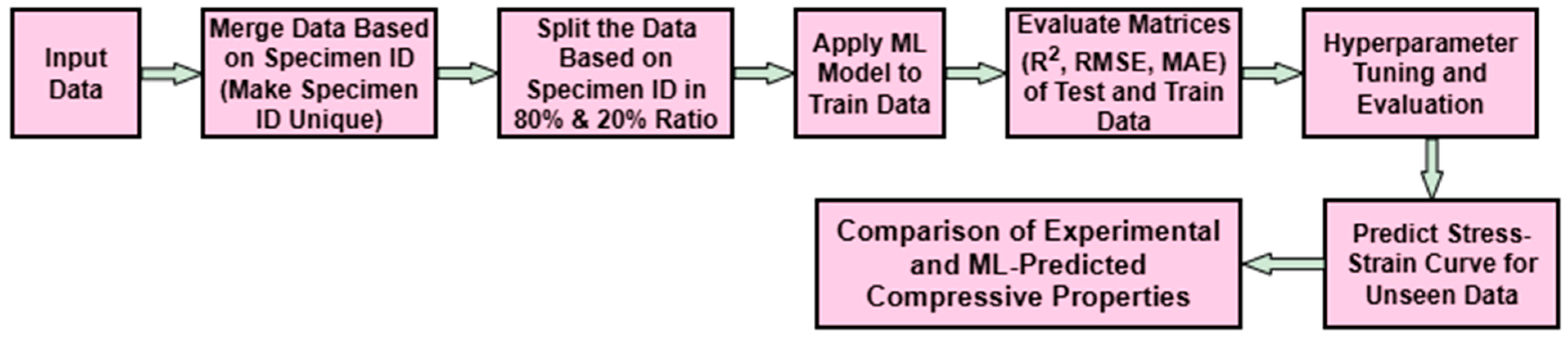
Accordingly, the primary objective of this study is to investigate the influence of FDM printing parameters on the compressive behavior of wood–PLA lattice structures, to identify optimal parameter combinations using a statistical design framework, and to develop a machine learning-based model that is capable of predicting their mechanical response directly from the printing parameters within the defined design space. In this manuscript,
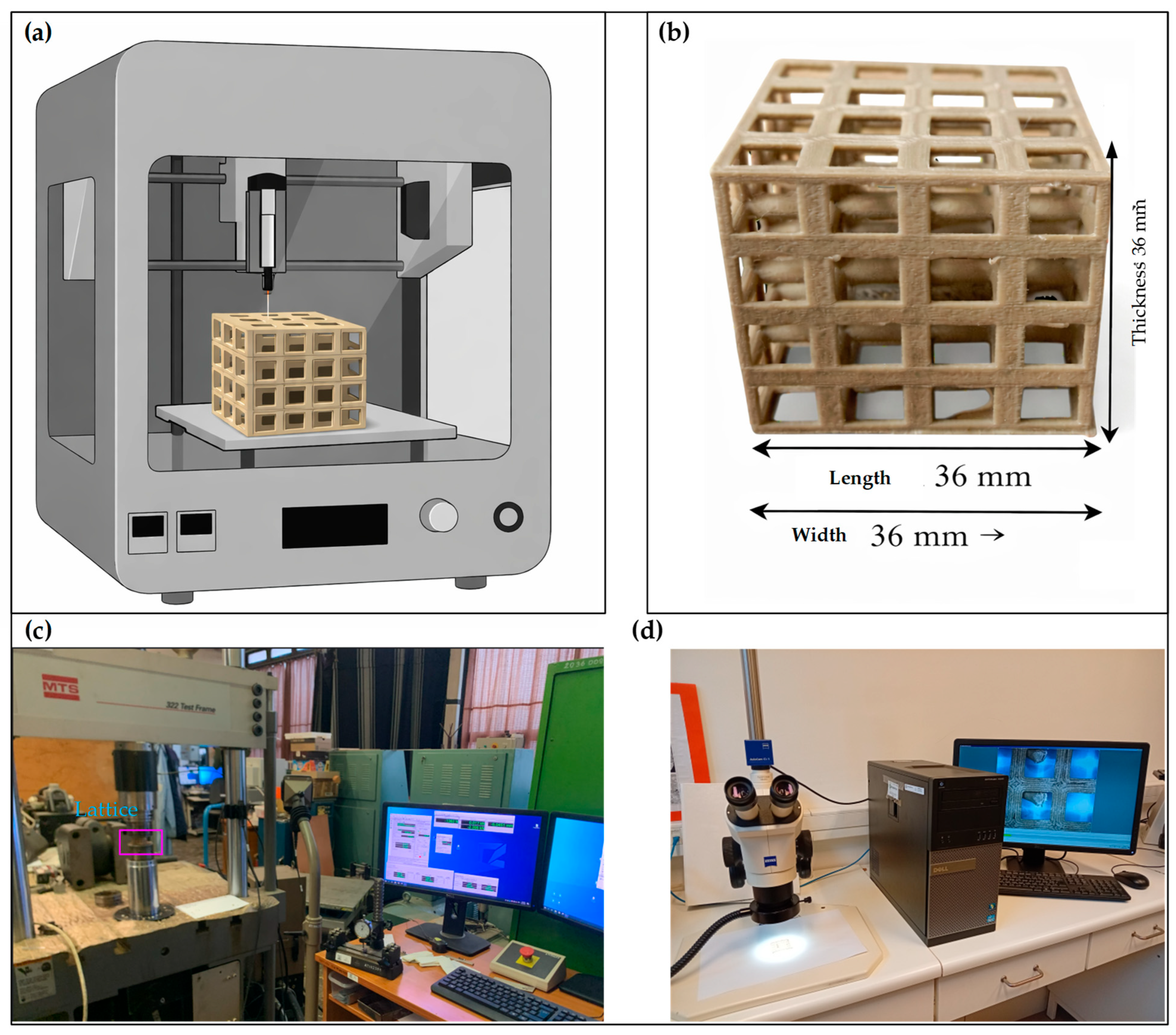
Section 2 presents the material selection, fabrication process, and design of experiments, and
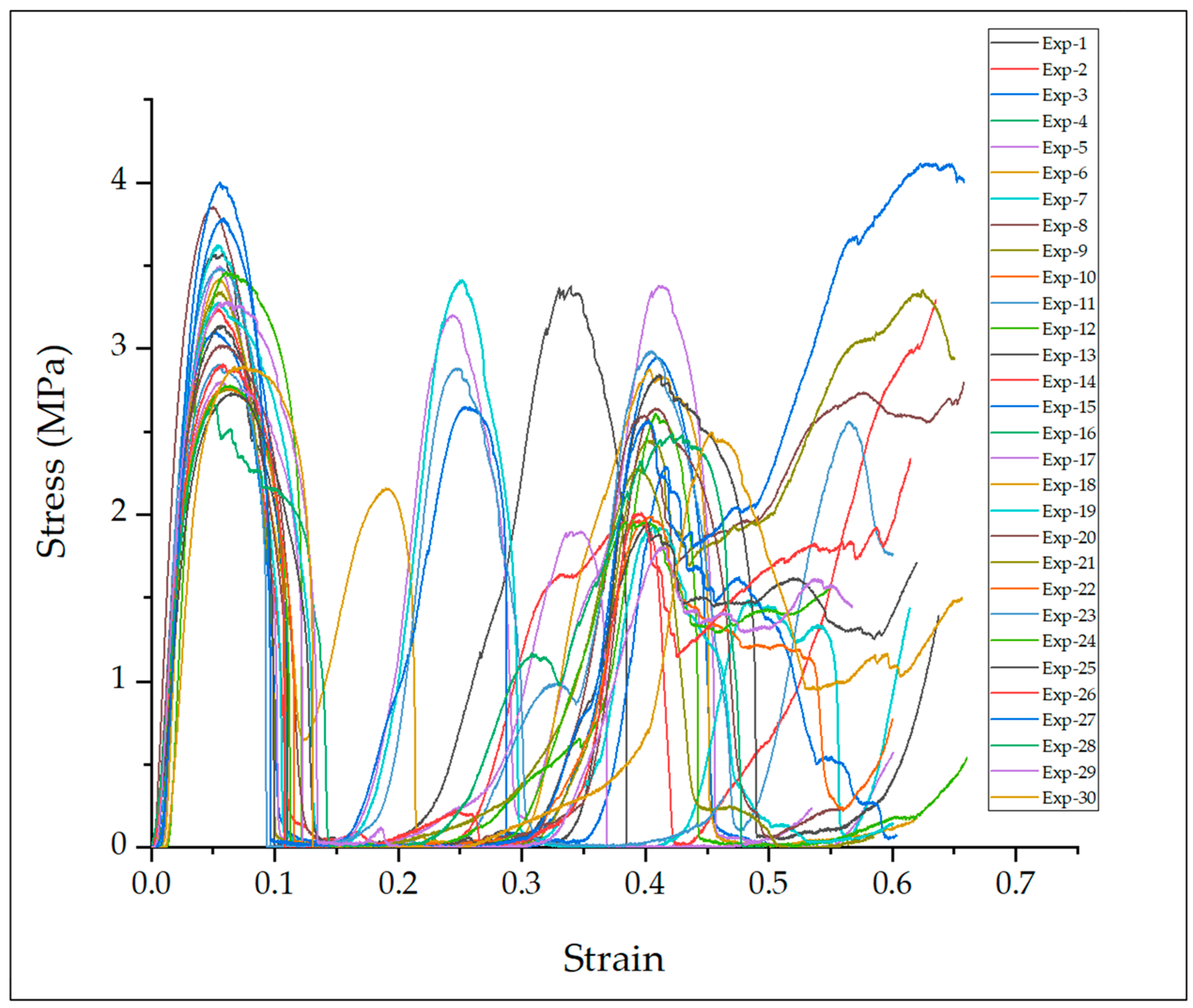
Section 3 discusses the stress–strain behavior obtained for each design of experiments (DOE). In
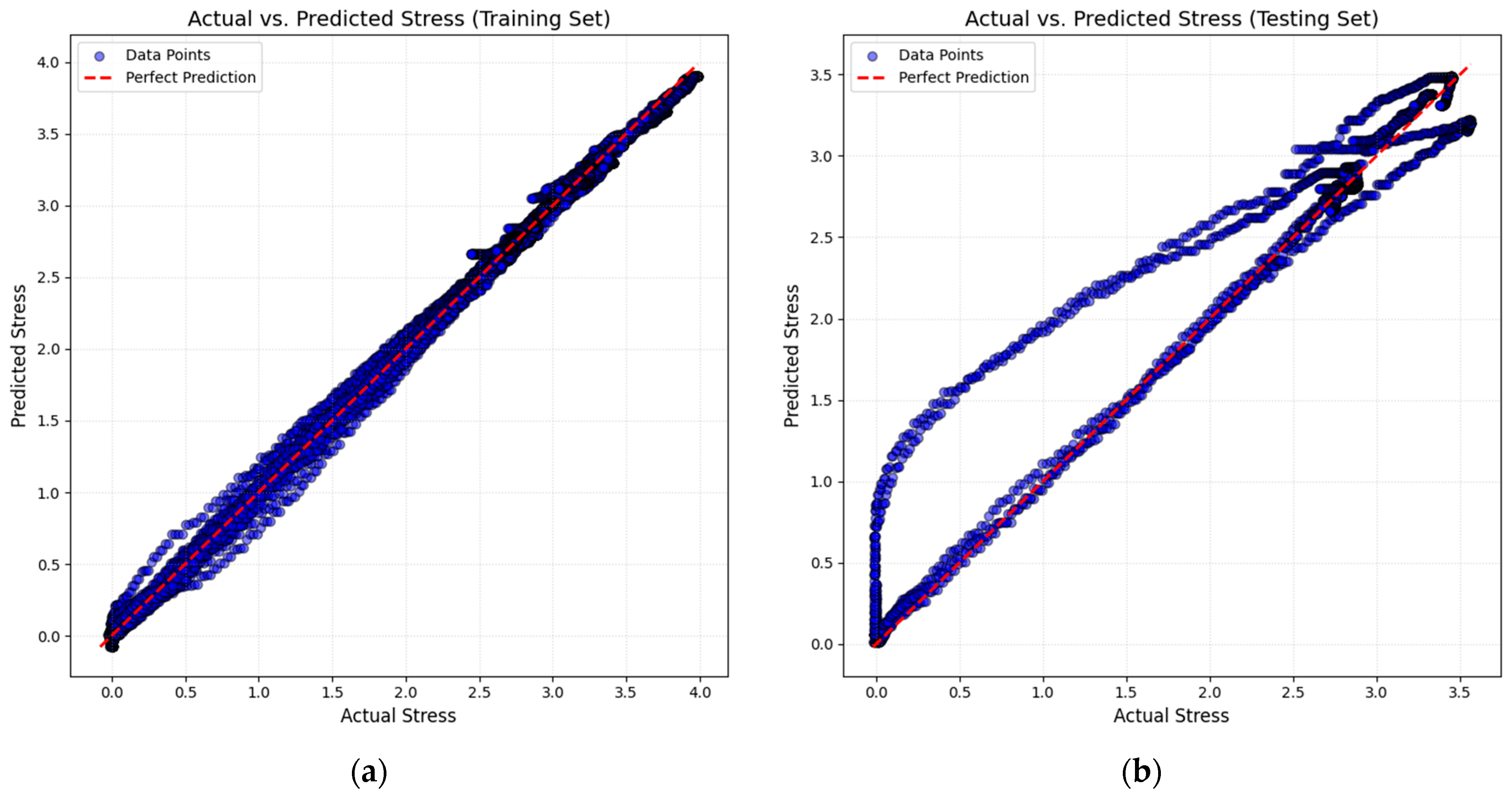
Section 3, the experimental results corresponding to each DOE are analyzed in detail, including machine learning-based prediction and optimization.
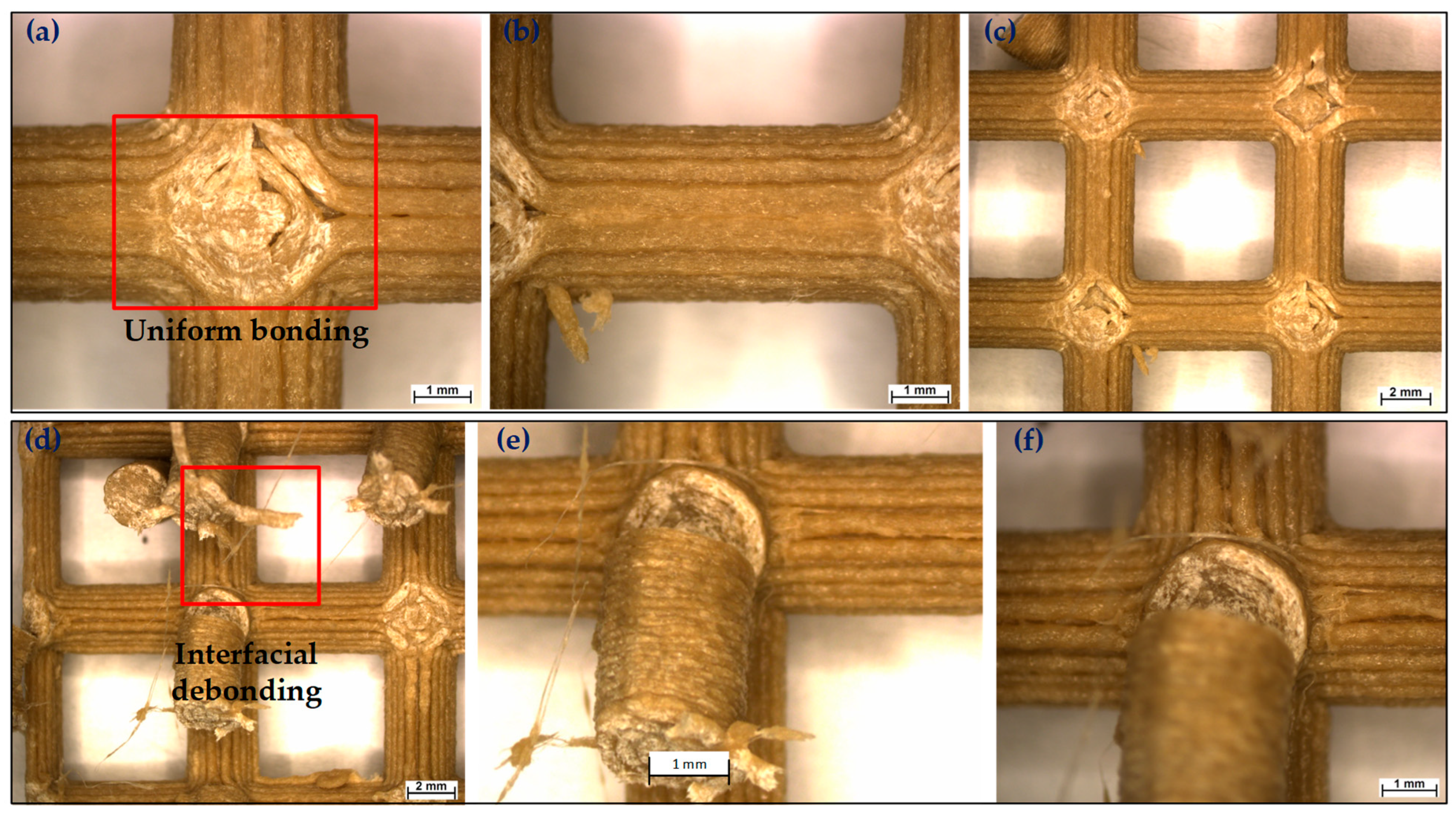
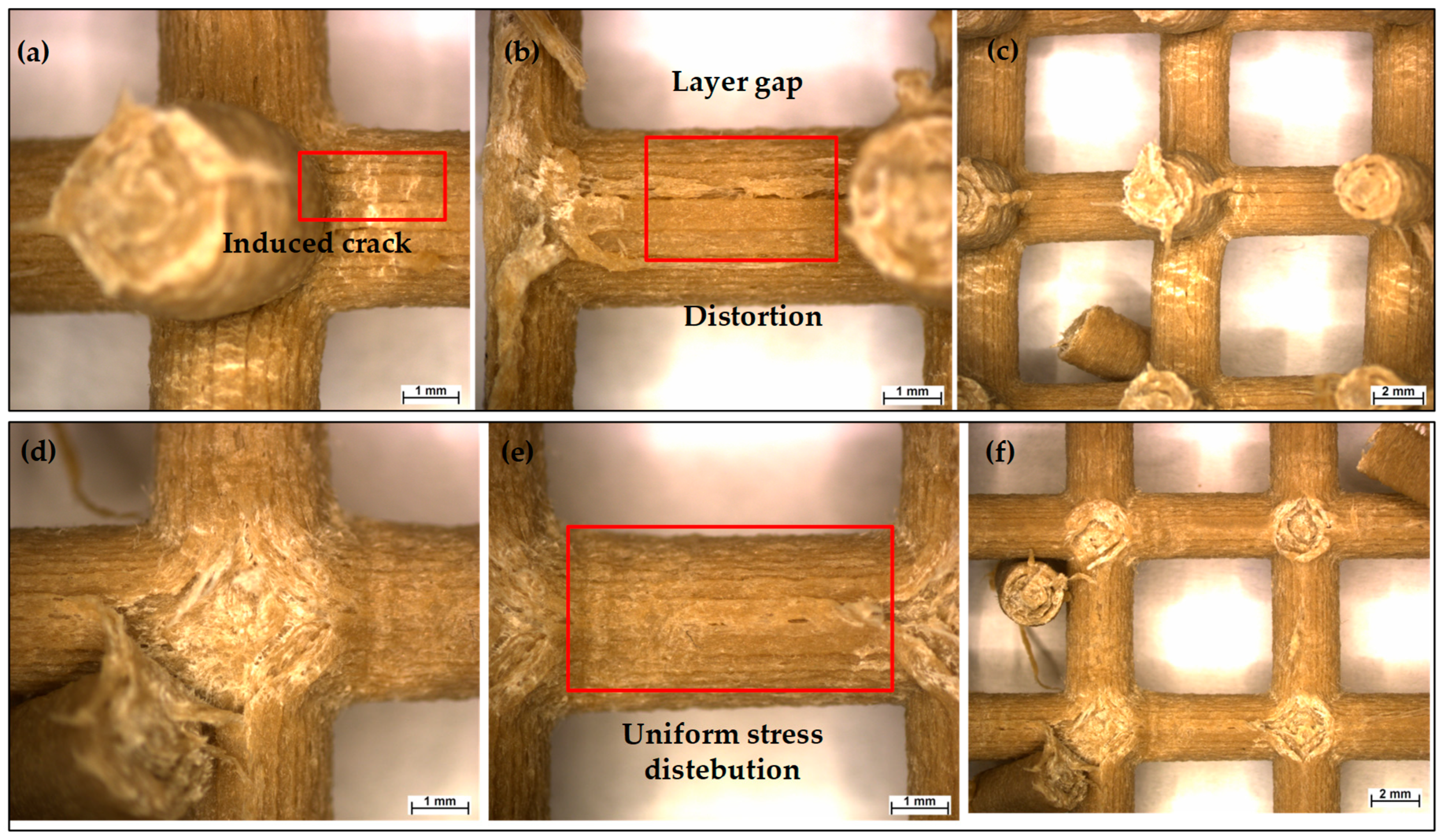
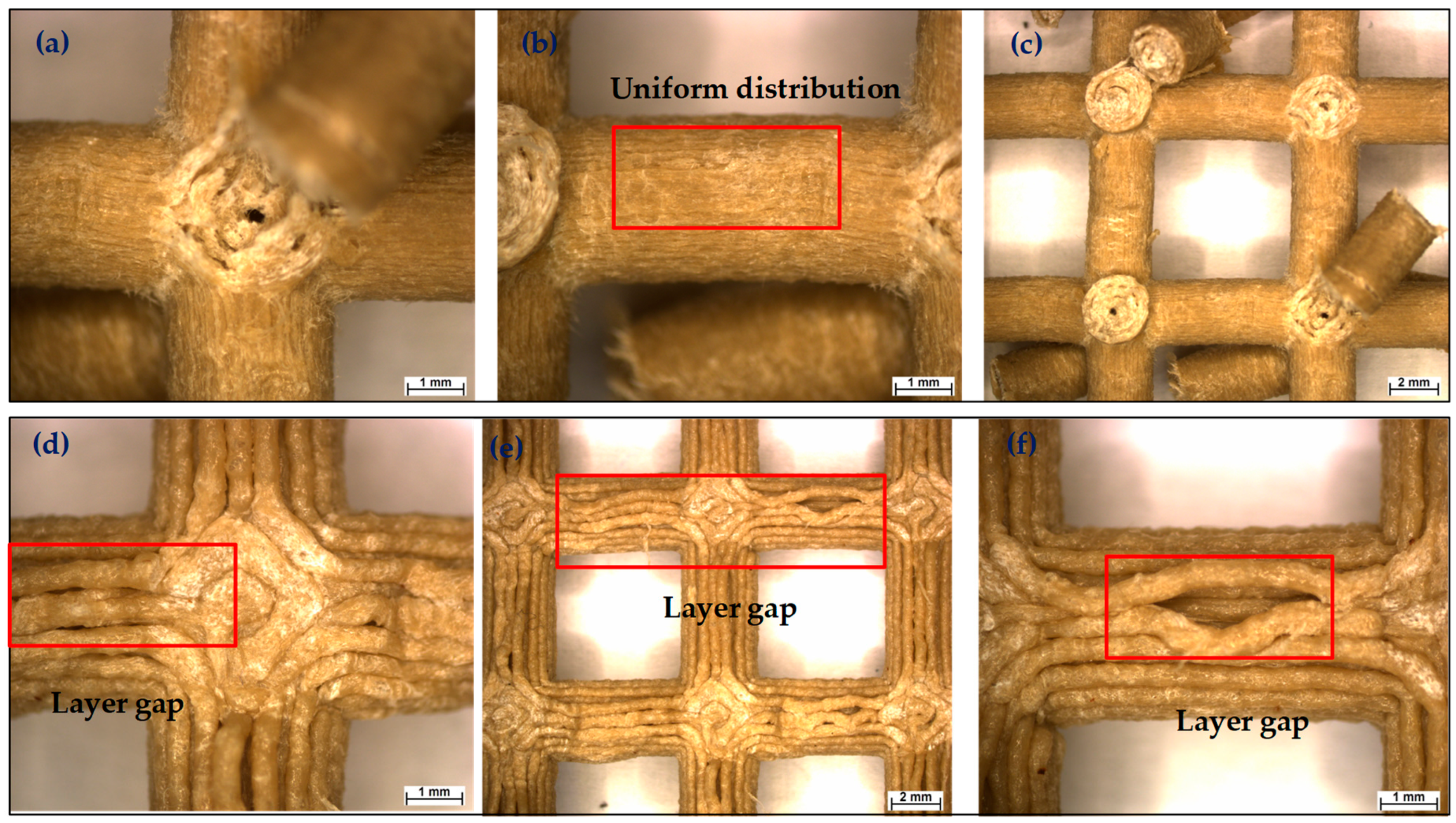
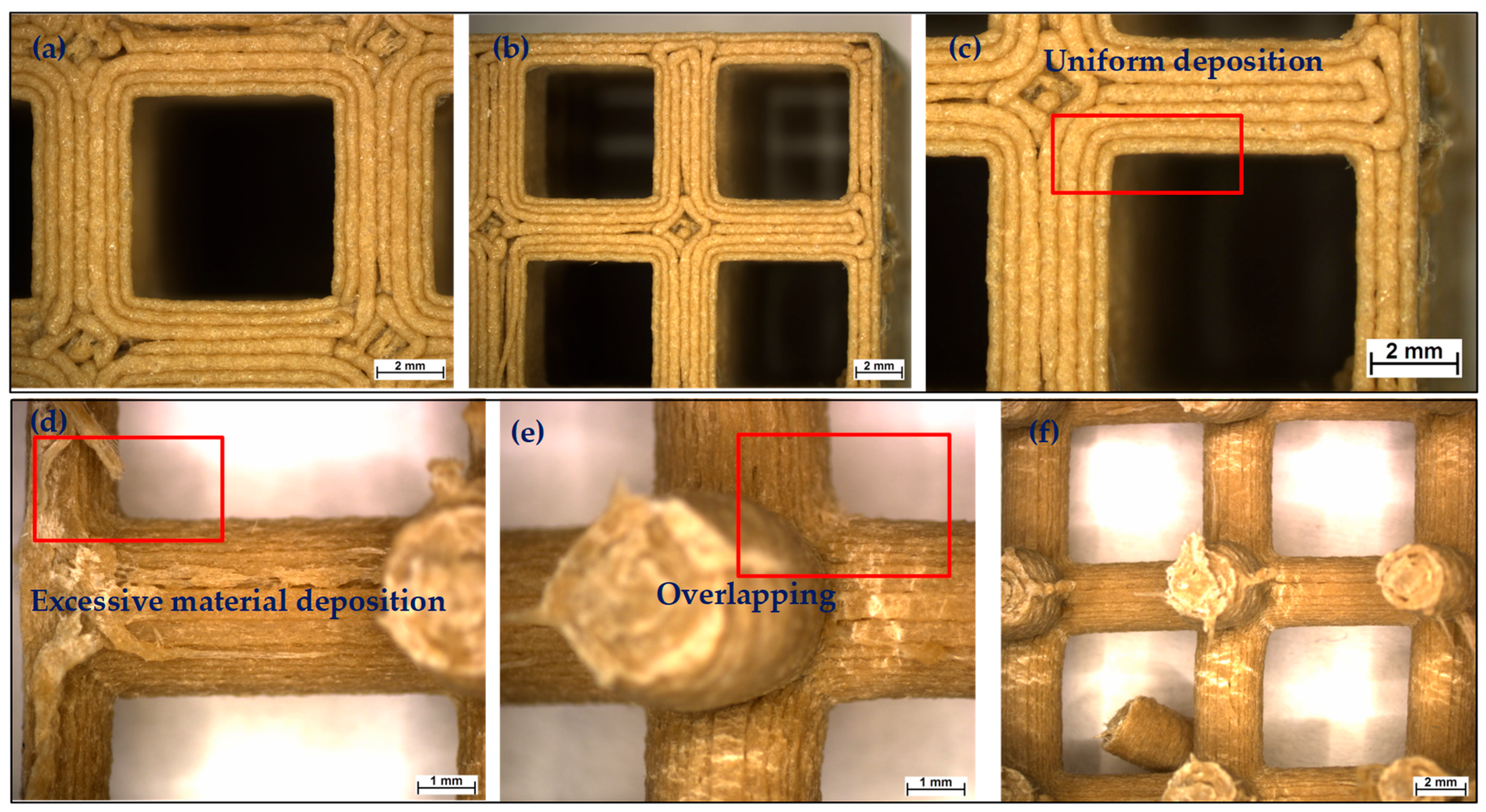
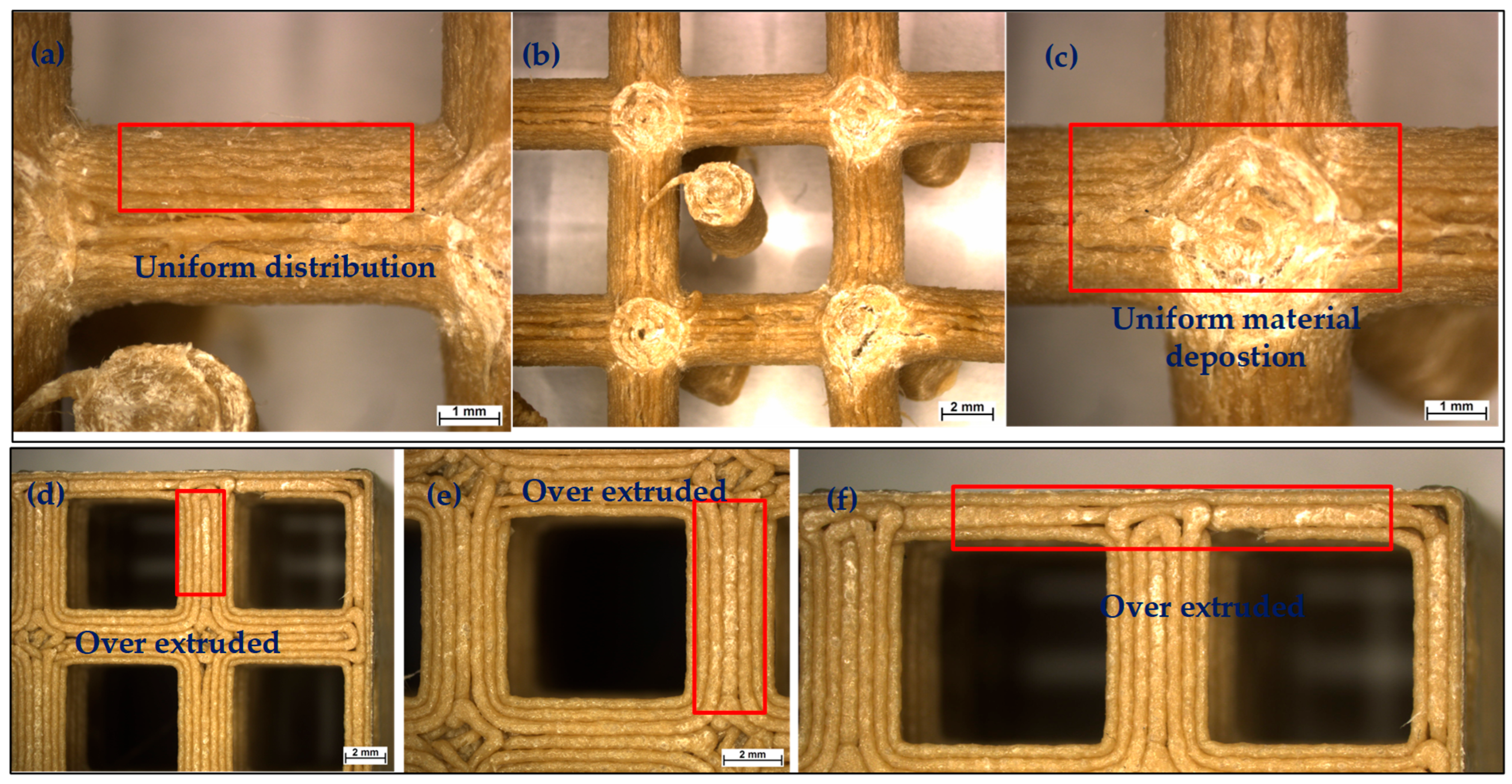
Section 3 also focuses on microscopic analysis and provides mechanistic interpretations of the observed behavior with respect to the selected parameters. Finally,
Section 4 outlines future research perspectives and
Section 5 summarizes the key conclusions.
4. Future Perspectives
This research investigated the compressive behavior of a lattice wood–PLA composite fabricated using an FDM 3D printing machine. Although the study incorporated artificial intelligence approaches to enhance the material performance and included microscopic analysis, several scientific gaps remain that can be addressed in future work.
The study primarily compared the compressive strength and the compressive modulus. While these comparisons are appropriate and effective for evaluating wood–PLA lattice structures, future research could explore the correlation between the manufacturing parameters and the mechanical performance using statistical methods such as ANOVA, regression analysis, and multi-objective optimization. Such investigations may provide deeper insights into how printing conditions influence structural integrity.
The mechanical properties were compared and analyzed through microscopic analysis to understand how manufacturing defects are linked to the deterioration of strength. However, further studies could be conducted to gain a deeper understanding of their effects on the outcomes through scanning electron microscopy (SEM) analysis.
This research focused on the compressive behavior of wood–PLA composite simple cubic lattice structures, particularly the compressive strength and the compressive modulus. However, the porosity is also an important parameter that can significantly influence the mechanical properties of lattice structures. Therefore, future studies will investigate the influence of manufacturing parameters on the porosity of wood–PLA composite lattice structures and their relationship with mechanical performance.
In addition to porosity, future research could focus on the tensile, flexural, impact, and fatigue resistance, as well as the surface roughness of wood–PLA composites, particularly for lattice structures. Different machine learning approaches could also be applied to further improve the mechanical properties and the overall performance of these structures.
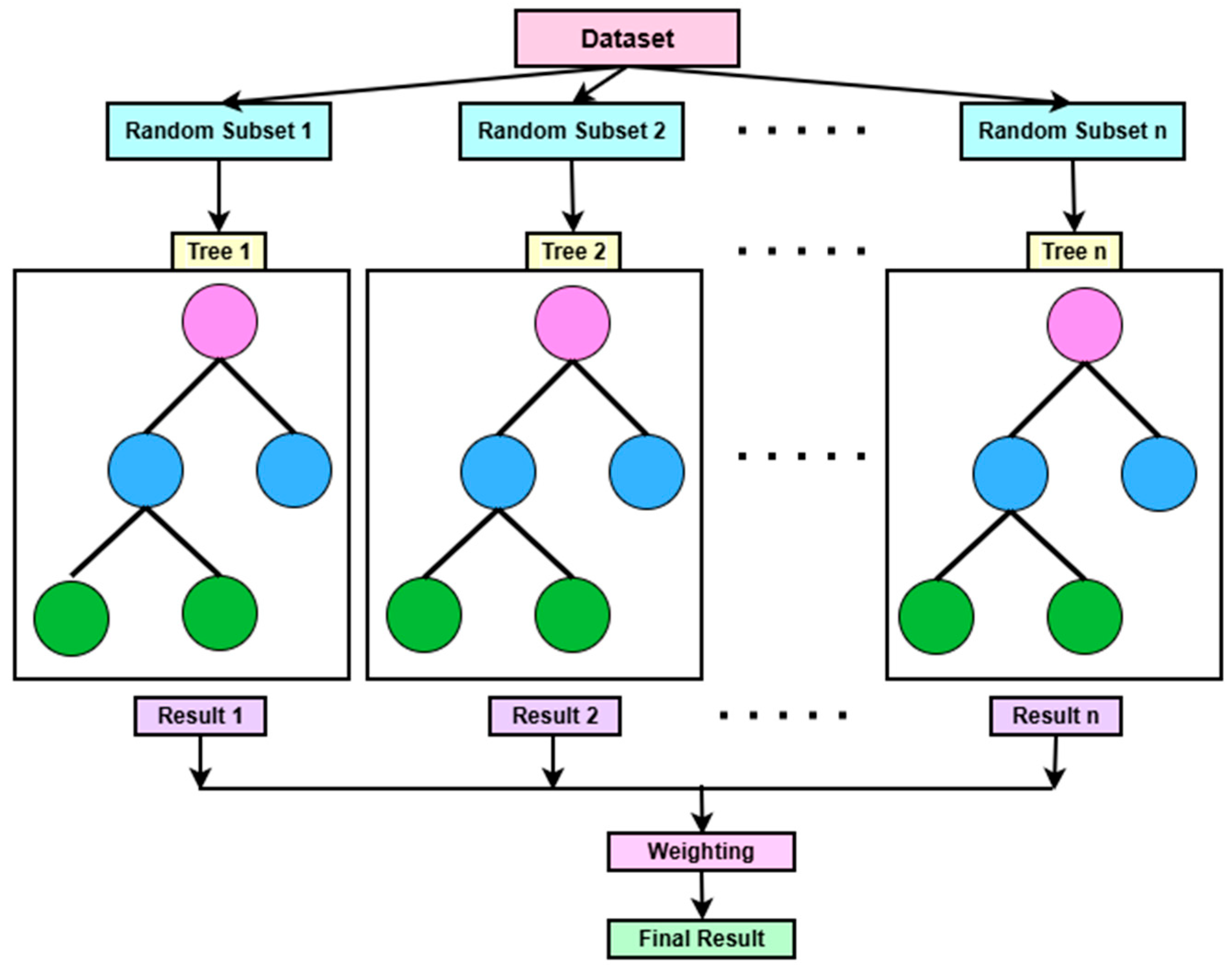
This research only focused on the XGBoost model prediction of compressive properties. However, future research could be conducted by considering other machine learning models and comparing them with the existing literature to improve prediction efficacy and to better understand the compressive performance of different types of materials, particularly for the lattice structures.
Although suitable mechanical strength was achieved, the applicability of this lattice composite for specific engineering fields remains unclear. Future studies should identify the potential real-life applications, including the types of loads and environments in which this material can be effectively utilized.
In addition, the sustainability aspects of the wood–PLA lattice composite were not examined. Important factors such as recyclability, renewability, and environmental impact require further investigation before the material can be proposed for large-scale commercial applications.
This study was limited to experimental analysis; however, future work could integrate numerical approaches such as finite element modeling to better predict the failure mechanisms and improve the lattice design.
Finally, only one machine learning model was employed in this research. Further improvements could be achieved by implementing advanced deep learning techniques to optimize configuration, enhance service life prediction, and provide industries with a clearer understanding of how different processing parameters affect mechanical properties.
5. Conclusions
Natural fiber-reinforced composites (NFRCs) have attracted significant attention in engineering industries due to their sustainability and favorable mechanical properties. This study comprehensively investigated the effect of FDM printing parameters on the compressive behavior of wood–PLA composite lattice structures, with particular emphasis on the compressive strength and the compressive modulus. In addition, a machine learning model was employed to enhance the prediction of stress–strain behavior and improve the accuracy of mechanical performance estimation. The key findings of this research are summarized as follows:
A moderate layer height (0.2 mm) and infill density (85%), as observed in DOE-1, DOE-4, DOE-10, DOE-14, DOE-16, and DOE-18, produced more stable stress–strain curves compared to other design configurations. However, lower nozzle temperatures and lower printing speeds also resulted in an improved mechanical performance of the wood–PLA lattice composites.
The highest compressive strengths of 4.00 MPa and 4.11 MPa were achieved in DOE-15 and DOE-27, respectively. These specimens were printed with a small layer height (0.1 mm), nozzle temperatures ranging from 195 to 215 °C, low printing speed (40 mm/s), and relatively low infill density (70%). However, the lowest compressive strength and modulus were observed in DOE-28, which was printed with a larger layer height (0.3 mm), nozzle temperature of 195 °C, higher printing speed (60 mm/s), and full infill density (100%).
Validation using unseen test specimens confirmed the ML algorithm’s practical reliability. The prediction error for compressive strength ranged between 2.14 and 6.74%, while the compressive modulus errors ranged between 1.82 and 8.14%. These low discrepancies demonstrate that the tuned XGBoost model can reliably estimate both strength and stiffness directly from the printing parameters.
The microscopic analysis revealed important morphological features of the lattice composites, including fiber–matrix adhesion quality, interlayer gaps, material distribution uniformity, and fracture regions. The microstructural observations further validated the findings obtained from the DOE analysis.
In most cases, the specimens printed with a low layer height (0.1 mm), low printing speed (40 mm/s), moderate nozzle temperature (185–195 °C), and infill density ranging from 70% to 85% exhibited an improved fiber–matrix adhesion, reduced interlayer gaps, and more uniform material distribution within the lattice structure. Moreover, these optimized parameter combinations corresponded to the higher compressive strength and compressive modulus values, indicating a strong relationship between microstructural integrity and mechanical performance.
This study investigated the compressive behavior of sustainable wood–PLA composite lattice structures fabricated using FDM, incorporating one popular AI-based ensemble machine learning method. The investigation provided a thorough analysis of the effectiveness of key printing parameters on the compressive properties of the lattice composites. The findings offer valuable insights for manufacturers and researchers by supporting the adoption of this systematic approach into decision-making processes and improving the understanding of how processing parameters influence the mechanical performance of wood–PLA lattice structures. Furthermore, due to their sustainability, low cost, and acceptable compressive strength, these wood–PLA FDM-printed lattice composites can be considered for engineering applications involving low-load requirements, particularly within the compressive strength range of approximately 2.0–4.2 MPa.




 ,
,