Abstract
Fibers from milkweed, which grows in Quebec (Canada), offer a distinct and outstanding advantage compared to other natural fibers: their ultra-lightweight hollow structure provides excellent acoustic and thermal insulation properties for the automobile industry. To highlight the properties of milkweed fibers and reduce the use of synthetic materials in vehicles, nonwoven carpeting made from a blend of milkweed fibers and polylactic acid (PLA) fibers was produced using the air-laid process. Some of the nonwovens were compressed to investigate the effects of increased mass per unit area on their thermal, acoustic, and mechanical properties. The nonwovens’ mass per unit area, thermal insulation, sound absorption coefficient, airflow resistivity, compression, and resistance to moisture were evaluated and compared to other carpets made of natural and synthetic fibers. The findings indicate that milkweed and PLA carpets have lower thermal conductivity values of 37.45 (mW/m·K), (mW/m·K) less than carpets made from cotton and polypropylene. At low frequencies, none of the carpets absorbed sound. At high frequencies, milkweed and PLA carpets showed sound absorption values of at least 0.6, which provide better acoustic insulation than nonwoven materials made from jute and polyethylene (PE) fibers. Milkweed and PLA carpets exhibited better compression values than polypropylene (PP) carpets.
1. Introduction
While cars remain the most used means of transportation, several studies estimate that 35 kg of textile materials are required to manufacture one car [1,2,3]. Synthetic fibers are the most used for manufacturing these materials, with polyethylene terephthalate (PET) and polyamide (PA) fibers being the most common [4]. These synthetic fibers are used because of their low cost, easy processing (melt spinning), and good thermal and acoustic insulation properties values (117 to 243 mW/m·K) [5,6,7,8]. Given such characteristics, they are deemed suitable to be transformed or processed into porous nonwovens for automobiles. Inside cars, nonwovens can be used as floor carpets (representing 43% of the surface), insulation (17%), trunk (13%), hoodliner (10%), headliners (6%), seating (6%), package trays (3%), door panels (1%), and other items (1%). In cars, floor carpets are widely used for two main reasons: reduction of noise and aesthetics [9].
The automotive industry is recognized as a significant contributor to pollution and environmental degradation due to its numerous needs in textile materials; the carbon footprint related to the transportation of materials is an aggravating environmental problem. While on the one hand, the use of fibers is necessary to limit the noise pollution produced by cars, on the other hand, it is crucial to find an environmentally friendly alternative. One proposed solution is to use natural hollow fibers [10,11].
Hollow fibers such as kapok and Asclepias syriaca, also known as milkweed, show excellent thermal and acoustic insulation properties due to their wide lumen and very thin wall [12,13,14,15,16,17]. Hollow fiber production also presents a low carbon footprint [14]. For environmental reasons, the source of these fibers should be local.
Milkweed—a North American native plant that grows easily on poor soils and does not require pesticides nor fertilizers—seems to be a good alternative compared to other natural fibers because of its hypoallergenic nature, low density, and smooth wall providing softness [13,14,18]. In contrast to other cellulosic fibers, milkweed is hydrophobic due to the presence of waxes and lignin on the surface [15,19,20]. However, like all-natural fibers, milkweed is sensitive to moisture and exhibits some morphological irregularities that result in poor mechanical properties [21,22,23,24,25].
Nevertheless, this can be countered by reinforcing milkweed fibers with synthetic and manmade fibers, such as PLA fibers, which are semi-crystalline, sustainable, bio-based, and often combined with natural fibers like flax and kapok [26].
A plethora of research has been conducted on acoustic properties of nonwoven materials made with natural fibers, particularly aiming to produce either nonwovens or fiber slivers for spinning through a carding process [10,11,27,28,29,30,31]. Karthik and Murugan studied the cohesion between cotton and Pergularia Daemia B fibers (a variety of milkweed) during the carding process. They found that milkweed fibers (Pergularia Daemia B) resulted in more significant fiber loss than a blend made of 100% cotton. This loss increases with the percentage of Pergularia Daemia B fibers. They claimed that it was due to the brittleness of hollow fibers. By the same token, during the carding process, Sakthivel, Mukhopadhyay, and Palanisamy asserted the same outcome by evaluating a nonwoven compound of cotton and Mudar fibers (another variety of milkweed). They came to the same conclusion that the smooth surface of milkweed fibers led to a weaker cohesion between fibers. S. Davoodi examined the effect of the path of milkweed fibers on carding cylinders, and by observing them with a scanning electron microscopy (SEM), they noticed that many fibers were deteriorated.
The acoustic properties of needle-punched nonwoven materials made from milkweed fiber materials were assessed by Hasani H, Zarrebini M, Zare M, and Hassanzadeh S [32]. Several blends of hollow polyester and milkweed fibers were prepared with different weight proportions. The authors found that the acoustic absorption increased with the percentage of milkweed fiber due to the difference in diameter size. D.V. Bihola investigated the sound absorption coefficient of a needle-punched nonwoven composed of modal and Estabragh fibers, another variety of milkweed, by varying some ratios, such as milkweed fiber percentages, mass per unit area (Ma), and thickness (TH) [33]. For a nonwoven containing 70% Estabragh fibers and 30% modal fibers, it was found that the sound absorption coefficient reached at least 0.75 and increased with the mass per unit area. This result is due to the hollow structure and the low density of milkweed fiber. Similarly, D.V. Bihola and Hakamada et al., studied the effect of the porous structure in nonwovens made up of hollow fibers. They found that the sound absorption coefficient increases with the porosity due to the numerous small pores.
Nonwovens composed of milkweed fibers have been proven to be an excellent choice for acoustic and thermal insulation, but it is not certain whether they can be used for a specific application such as carpeting cars. Carpets need to have high compressive resistance and good short-term compression recovery properties to keep their shape, but they also have to be resistant to moisture, to be hypoallergic, and to be soft for greater comfort.
Based on this statement, biodegradable and compostable nonwovens made of milkweed and PLA fibers have been elaborated on using an air-laid process specifically for carpeting cars. To the best of the authors’ knowledge, air-laid processing has never been used with milkweed fibers, and contrary to carding processing, air-laid is a non-invasive aerodynamic process that does not deteriorate fibers.
This study aims to investigate whether natural and biodegradable nonwovens manufactured through air-laid processing are relevant to be used as thermo-acoustic carpets. For this reason, the properties of the nonwovens were analyzed, including mass per unit area, thermal insulation, sound absorption coefficient, airflow resistivity, compressibility, resilience, and moisture resistance.
2. Materials and Methods
2.1. Material
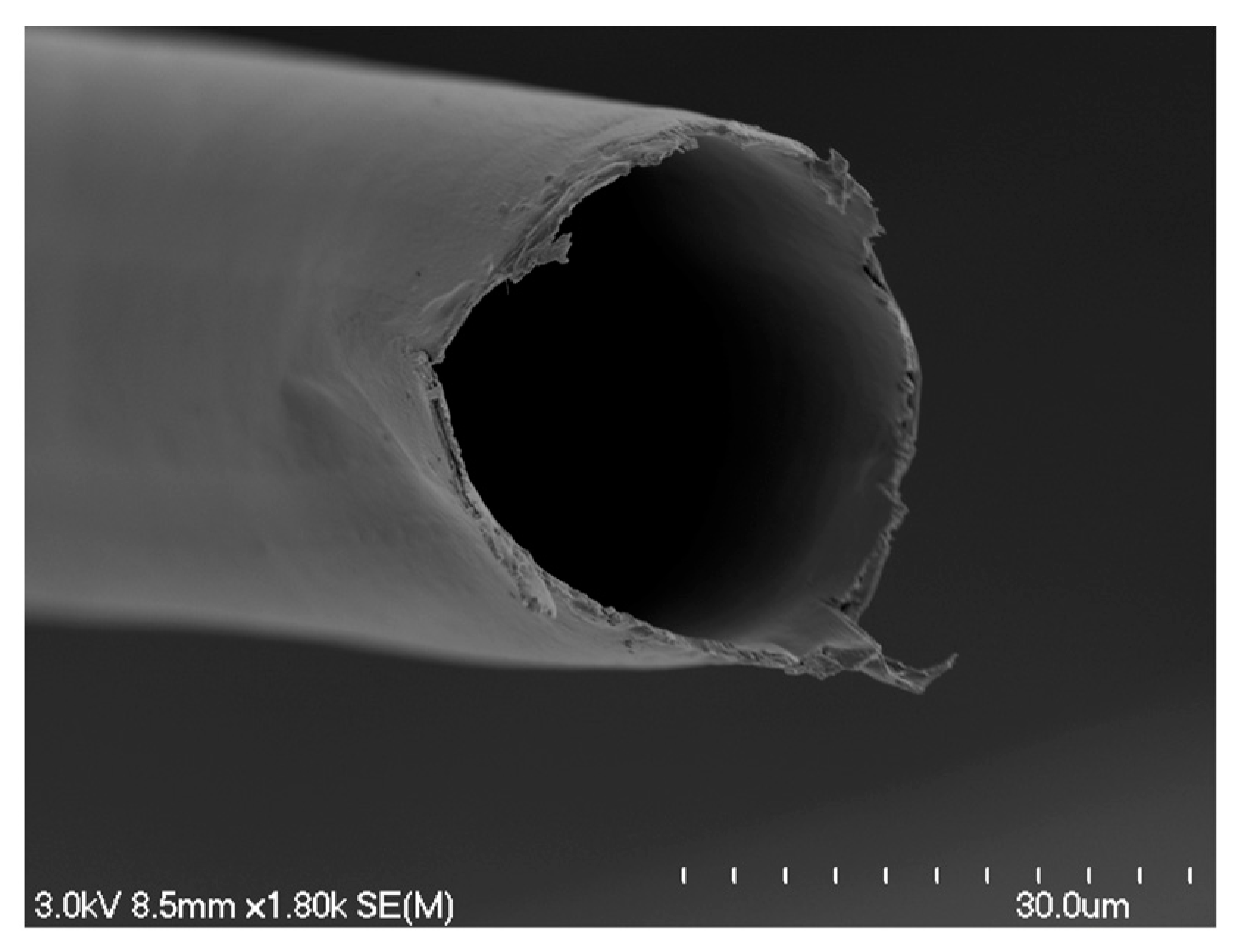
Milkweed fibers were supplied by Coop Monark. The fiber density was equal to 0.30 g/cm3 [13].The average diameter, length, and thickness measured by SEM were equal to 22 ± 6 μm, 25 ± 3 mm, and 1.50 ± 0.23 μm, respectively. Figure 1 shows the hollow structure of a milkweed fiber. PLA fibers were purchased from Ingéo Nature Works. Their density was equal to 1.26 g/cm3.
Figure 1.
Milkweed fiber.
2.2. Sample Preparation
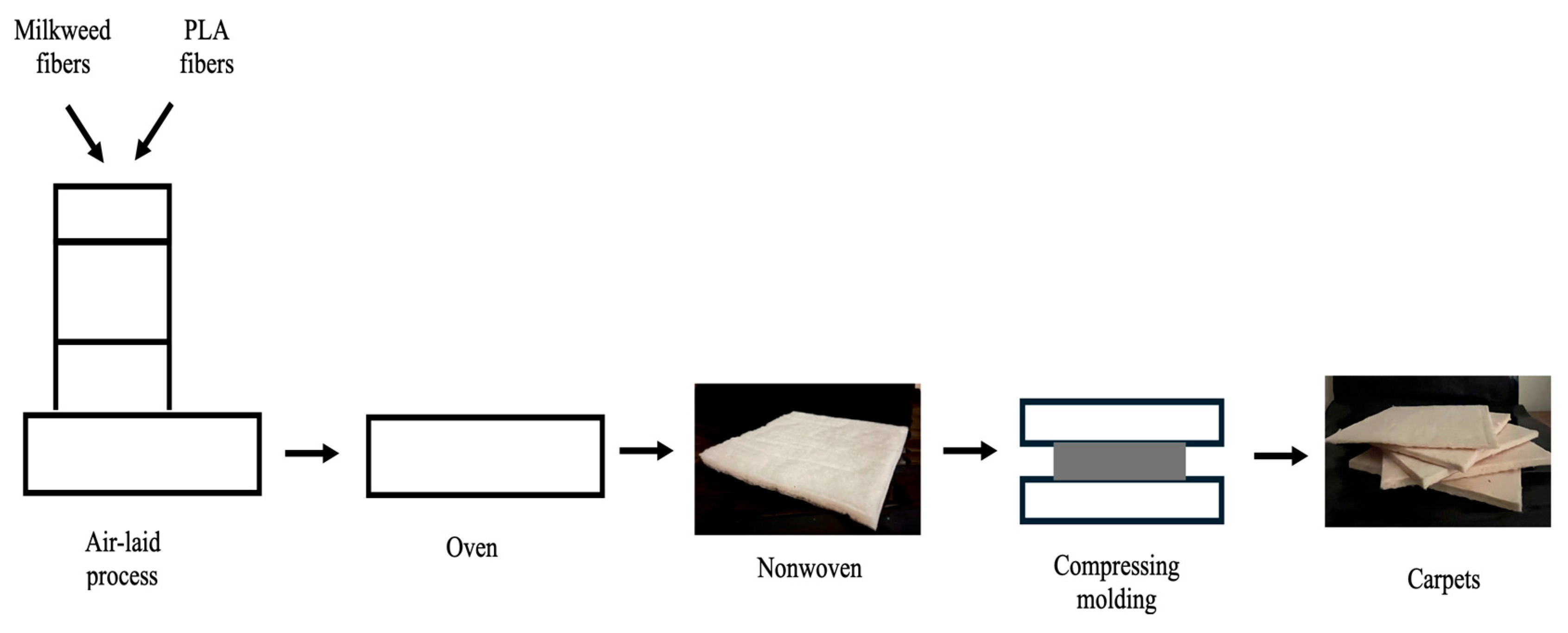
To process carpets from nonwovens, it was necessary to process the nonwovens using a SPIKE system with milkweed fibers and PLA fibers in a weight ratio of 75 to 25. During the air-laid process, a 10% loss of milkweed fibers was calculated due to their volatile nature, which was significantly better than the carding process. Indeed, Gharehaghaji and Davood observed a 50% fiber loss during the carding process of a nonwoven composed of 90% Estabragh and 10% PET fibers [34]. This difference is explained by the fact that the air-laid process was carried out in a closed chamber and the carding process in an opened chamber. Figure 2 displays a scheme of nonwoven and carpet manufacturing using the air-laid process.
Figure 2.
The manufacturing process of nonwoven mats and carpets using the air-laid process.
Once the nonwovens were obtained, they were thermally bonded through an oven at a temperature of 150 °C to melt PLA fibers and form the matrix. This temperature was much lower than the degradation temperature of milkweed (350 °C) and the melting temperature of PLA (175 °C) [13,26]. It did not damage the material.
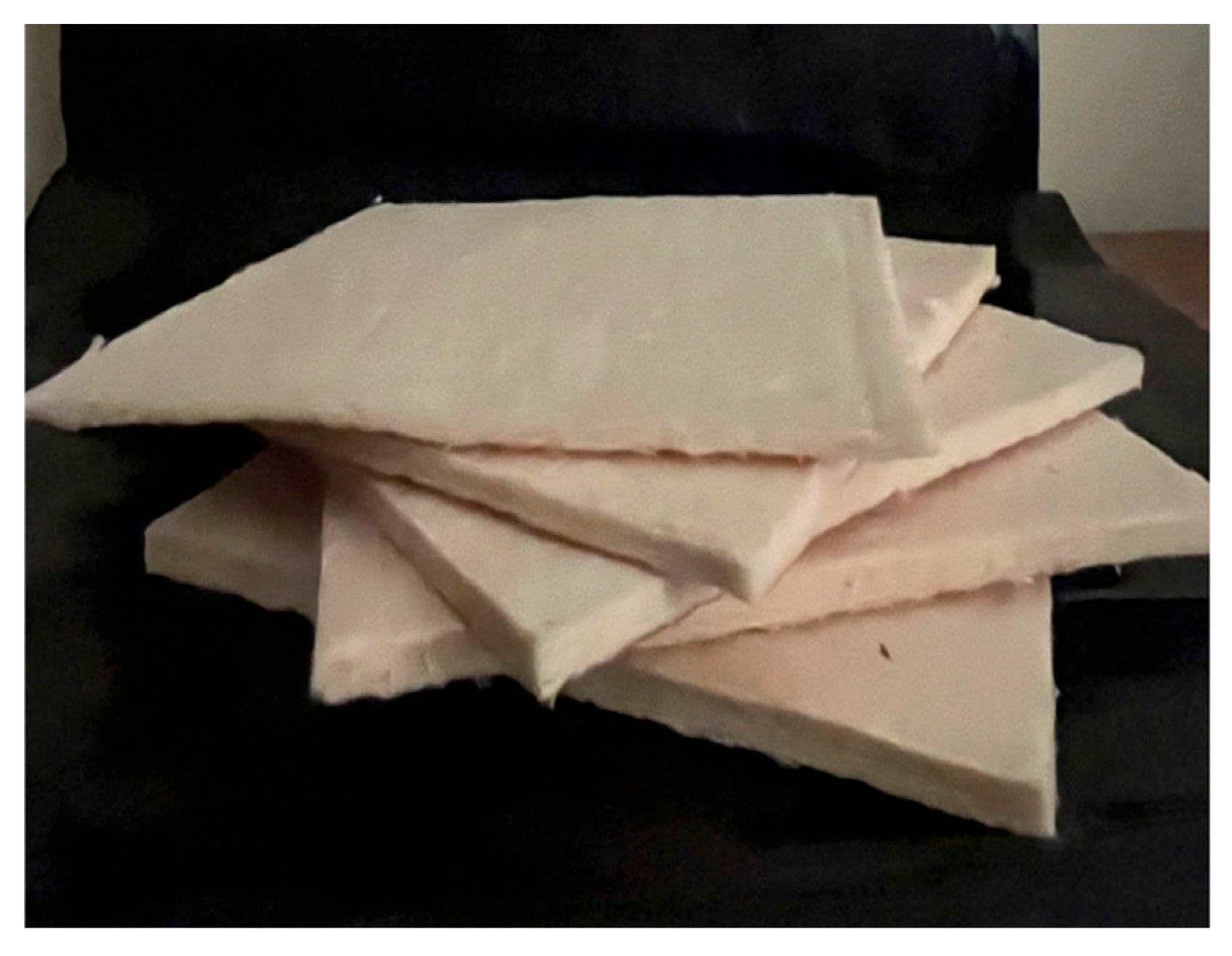
A nonwoven with a mass per unit area of 150 g/m2 and a thickness of 15 mm was obtained. Afterwards, different nonwoven layers were overlaid using a Teflon mold and compressed into a hydraulic hot press in order to obtain some floor coverings of varying mass per unit area for the same thickness. A pressure of 0.5 tones and a temperature of 200 °C were applied on the mold for 2 min. The nonwoven process aimed to stabilize the PLA matrix for three-dimensional stability, while the carpet production aimed to melt the PLA fibers without any damage. Based on the melting temperature of PLA and the degradation temperature of milkweed, a temperature of 200 °C was selected to ensure the complete fusion of the PLA without any degradation of milkweed. Figure 3 shows the different carpets.
Figure 3.
Carpets.
Table 1 reports the different parameters of nonwoven and carpet production.
Table 1.
Specifications for the production of nonwoven and carpet samples.
2.3. Characterization of the Samples
2.3.1. Physical Properties
Mass per unit area (Ma) in g/m2 and thickness (TH) were measured according to ISO 9073-1 [35] and ISO 9073-2 [36], respectively. At least 10 measurements were carried out for both tests.
Density, was calculated from Equation (1):
2.3.2. Porosity
The porosity was assessed by the ratio of the number of void ( over the total volume of the nonwoven ( according to the equation:
where is the volume of fibers, the nonwoven surface, the fibers mass, and the density of the fibers.
The mass of pores () is negligible compared to the mass of the nonwoven (). Therefore, it can be assumed that
2.3.3. Compression and Recovery Properties
Compression and recovery properties were measured for the different nonwovens according to ASTM D6571-22 [37].
For each value, at least 8 measurements were conducted.
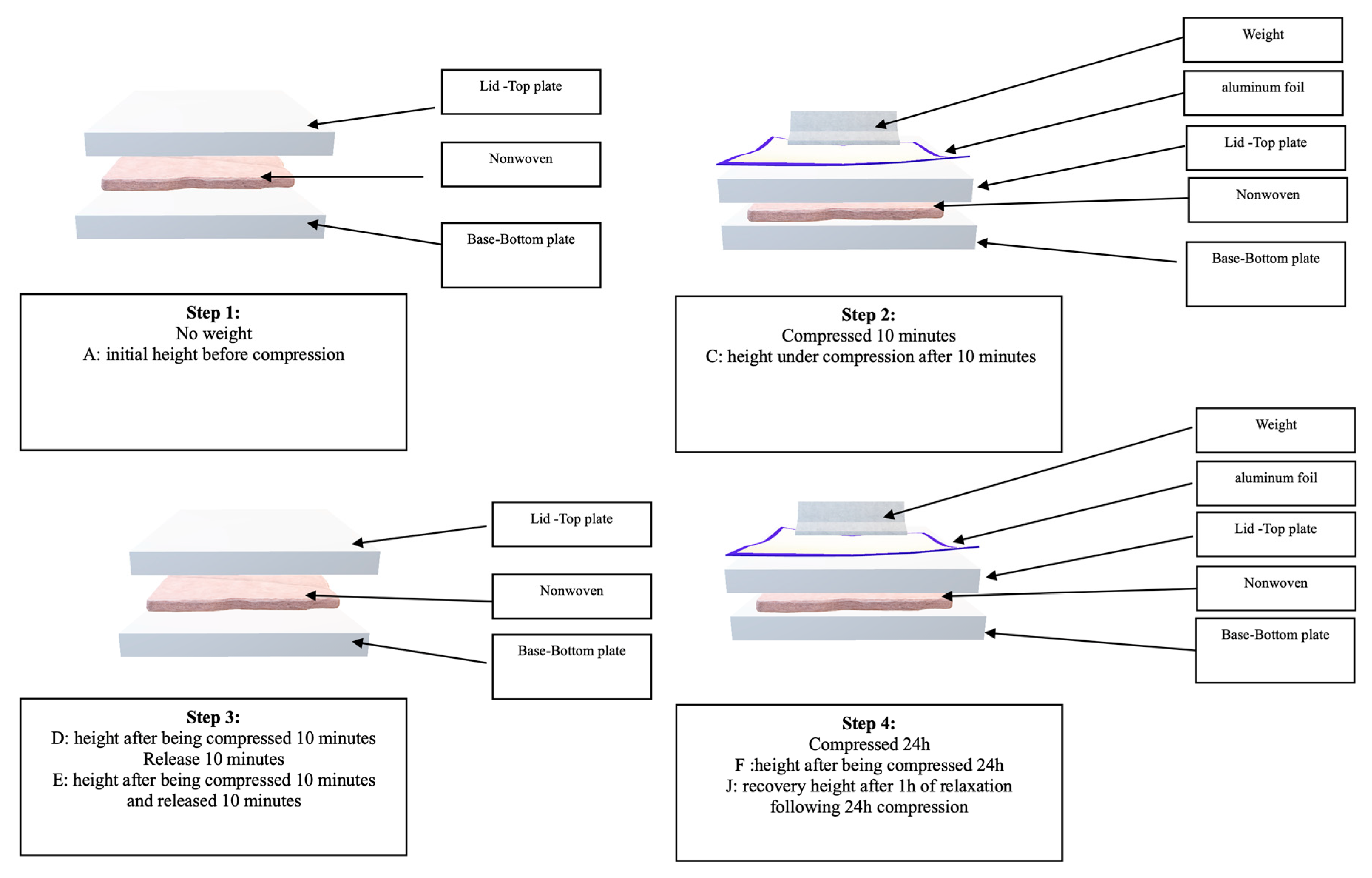
Step 1: The average height (A), which represents the height before compression, was measured.
Step 2: The nonwoven was compressed for 10 min into two plastic plates with a weight of 7.26 kg, and (C), the average height under compression, was estimated.
Step 3: The weight was removed, and then, the average height (D), corresponding to the height after being compressed for 10 min, was measured. After 10 min of releasing, the average height (E) was measured.
Step 4: The weight was added once again for 24 h. Then, the nonwoven was taken off, and the height, F, which is the average height after being compressed during 24 h, was measured. Finally, the nonwoven was left untouched for 1 h, and (J), the average recovery height, was estimated.
Figure 4 shows the different steps to measure the compression resistance and recovery of the samples.
Figure 4.
Steps to calculate the compression resistance and recovery (ASTM D6571-22).
The compressive resistance (L) was calculated using Equation (4).
The short-term compression recovery (N) was calculated using Equation (5).
2.3.4. Moisture Regain
Moisture regain of nonwovens was evaluated according to ASTM D2654-22 [38] and D1776/D1776M-20 [39]. First, the samples were dried in an oven for 24 h at 60 °C before to be placed in a humidity chamber at 21 °C and a relative humidity of 80%. Afterwards, their mass was weighed every 24 h until the mass variation was less than 0.01%. Moisture regain was determined by the following equation:
where is the percentage of moisture regain, the mass of the wet sample, and .
2.3.5. Microstructure Analysis
A SEM Hitachi S3000-N at 5 kV and 10 kV was used to evaluate the morphology of milkweed fibers before and after being thermo-compressed. Individual milkweed fibers were taken from the UC nonwoven for comparison with the morphology of milkweed found in the different carpets (C1, C2, C3, C4, and C5).
2.3.6. Thermo-Acoustic Insulating Properties
The thermal conductivity of the samples was measured following ASTM C518 using a heat-flow meter FOX 314 (TA instruments, New Castle, DE, USA) to calculate the thermal insulation of clothing () in clo as defined by ASHRAE Standard, which is the temperature to maintain the thermal equilibrium for a human in an environment at 21 °C [40]. For this reason, the nonwoven was compressed into two plates at two different temperatures. One represents the temperature of the human body and the other the temperature of the external environment. was determined by the following equation:
where and “” is the thickness of the nonwoven in meters; “Q” stands for the input power in Watts; and are, respectively, the temperatures of the hot and cold plates; “S” represents the area of the nonwoven in square meters; and “K” is a constant (0.155 m2.°C/clo W). depicts the temperature of a human body and set at 37 °C, whereas portrays the external environment fixed at 21 °C.
The thermal resistance R was calculated from Equation (8):
2.3.7. Sound Absorption
The sound absorption coefficient of samples was measured with an impedance tube with an internal diameter of 44 mm (Mecanum Instruments, Sherbrooke, QC, Canada) for a frequency range ranging from 250 to 4300 Hz at a relative humidity of 52% and a room temperature of 21 °C following ASTM E-1050 [41]. Two tests were carried out. In the first one, the sound absorption was measured with the sample directly in contact with the tube. In the other one, the sound absorption was measured using a 30 mm deep cavity set behind the sample.
2.3.8. Airflow Resistivity
Airflow resistivity was carried out with an airflow resistance meter with a sample diameter of 99.8 mm (Mecanum Instruments, Sherbrooke, QC, Canada) according to ASTM C522-03 [42].
3. Results and Discussion
3.1. Microstructural Analysis
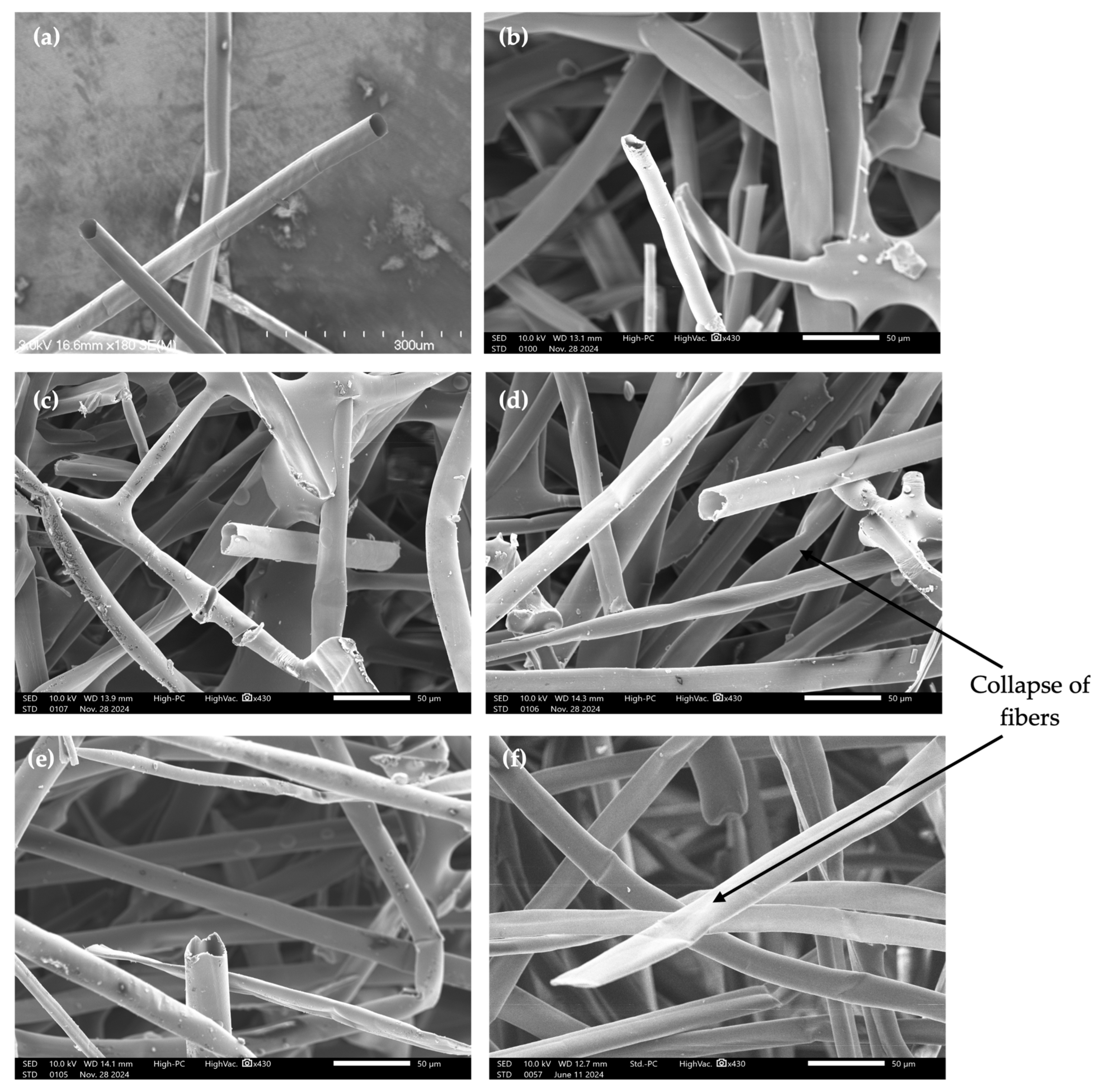
Figure 5 shows SEM images of milkweed fibers taken from the UC nonwoven (a) and the morphology of fibers for C1, C2, C3, C4, and C5 (b to f). It can be observed that the structure of fibers extracted from the UC nonwoven is preserved, which shows that the air-laid process does not affect the fiber integrity. Figure 5b–f illustrate that some milkweed fibers collapsed, while others maintained their hollow structure, resulting from the thermocompression step.
Figure 5.
SEM images of milkweed fibers from (a) UC nonwoven, (b) C1, (c) C2, (d) C3, (e) C4, and (f) C5.
3.2. Thermal Insulation
Table 2 shows the different values of thermal conductivity, thermal resistance, and thermal insulation for the UC nonwoven and carpets.
Table 2.
Values of thermal conductivity (λ), thermal resistance, and thermal insulation.
All carpets exhibit thermal conductivity values below 32.55 mW/m·K, lower than those of the cotton/polypropylene carpets studied by Küçük et al., which presented thermal conductivity values between 54.7 mW/m·K and 72.4 mW/m·K [43]. As thermal conductivity corresponds to the capacity of a material to allow for the transfer of heat, the lower it is, the better the material keeps the heat. The thermal resistance values of C2 to C5 are higher than wool and synthetic carpets. Furthermore, thermal resistance values of C2 to C5 are higher than wool and synthetic carpets [44]. Diswat et al. investigated the thermal resistance of carpets made of wool, nylon, and acrylic, and they found R values of 0.23 m2·K/W, 0.13 m2·K/W, and 0.21 m2·K/W, respectively [44]. The UC nonwoven presents a R value of 0.31 m2·K/W, which is better than the carpets C1 to C5 and the carpets made of wool, nylon, and acrylic. C3, C4, and C5 show identical thermal insulation due to their equal thermal resistance values. Additionally, thermal resistance is influenced by porosity and carpet composition, which are very similar for C3, C4, and C5. The UC nonwoven presents a thermal insulation value of 2.02 clo, which is similar to estimates by Crews et al. [45]. They found that a layer of 11 mm Thinsulate®, a commercially synthetic insulation material, provided an insulation capacity of 2.15 clo. The UC nonwoven exhibits a CLO value comparable to the synthetic nonwoven for the same thickness. In addition, the UC nonwoven exhibits a higher porosity (98%) and thickness (11.97 mm) than carpets. The clo value depends on the thickness of the nonwoven fabric. The UC nonwoven has good thermal insulation, so it may be a good choice for other applications, such as manufacturing thermal insulation filling for winter jackets and gears.
3.3. Analysis of Sound Absorption Coefficient
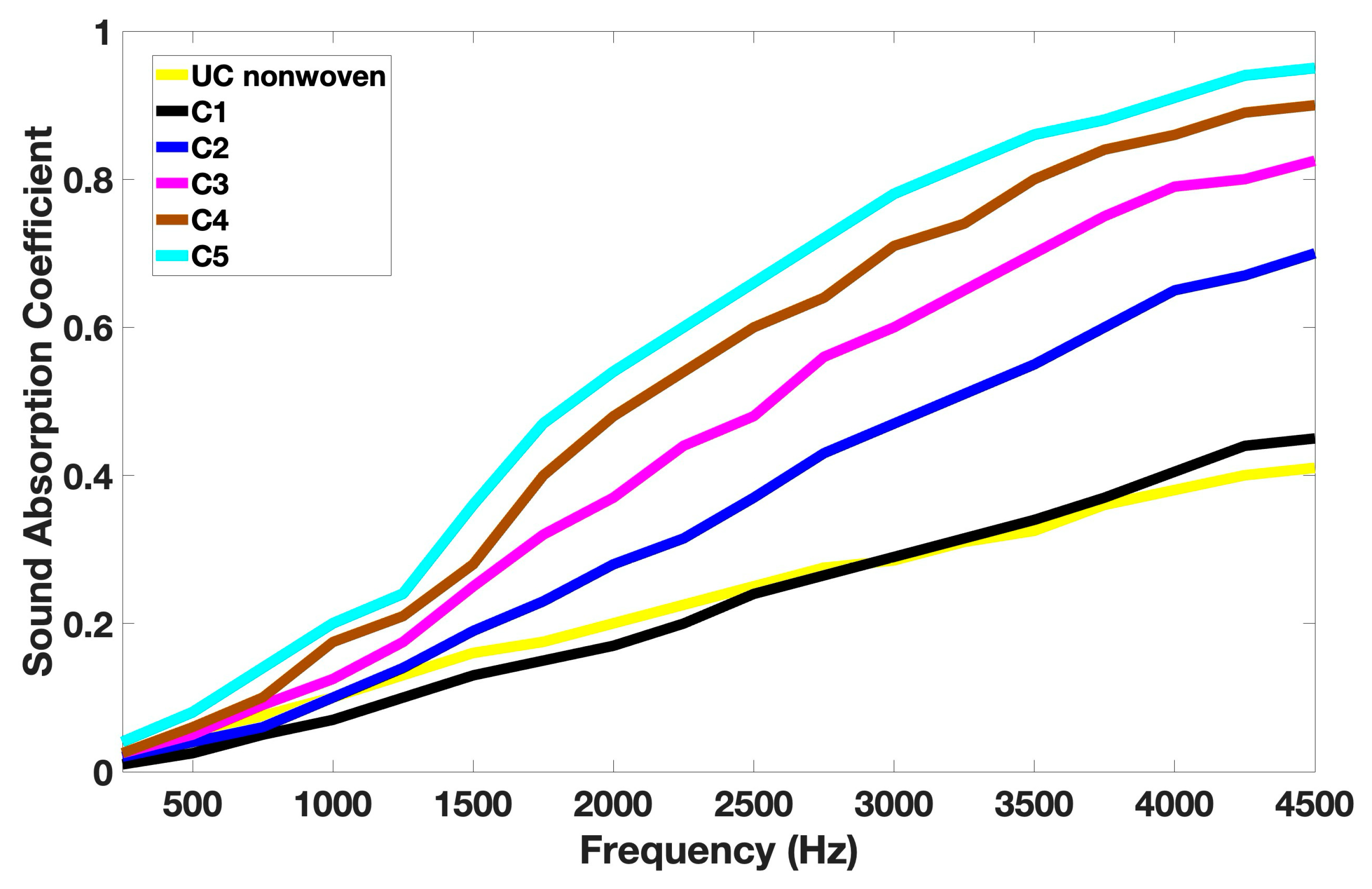
Figure 6 shows the sound absorption coefficient for the UC nonwoven and the different carpets at frequencies ranging from 250 to 4500 Hz.
Figure 6.
The sound absorption coefficient versus the frequency for the nonwoven and the carpets.
At low frequencies, from 250 to 1000 Hz, none of the materials absorb the sound. The same outcome was found by Xueting Liu et al. [46]. A limited enhancement of sound absorption is observed for medium frequencies between 1000 and 2000 Hz, whereas the absorption mainly occurs at higher frequencies. It can be stated that the thermocompression of the nonwovens does not impact the sound absorption. Moreover, the thermocompression, i.e., the density of the material, improves the acoustic absorption. When comparing low and high frequencies, the sound absorption coefficient values at high frequencies almost double for all of the samples. Therefore, carpets made of milkweed and PLA fibers are excellent sound insulators, with some sound absorption coefficient values near 0.9.
3.3.1. Effect of the Incorporation of a 30 mm Deep Cavity on Sound Absorption Coefficient
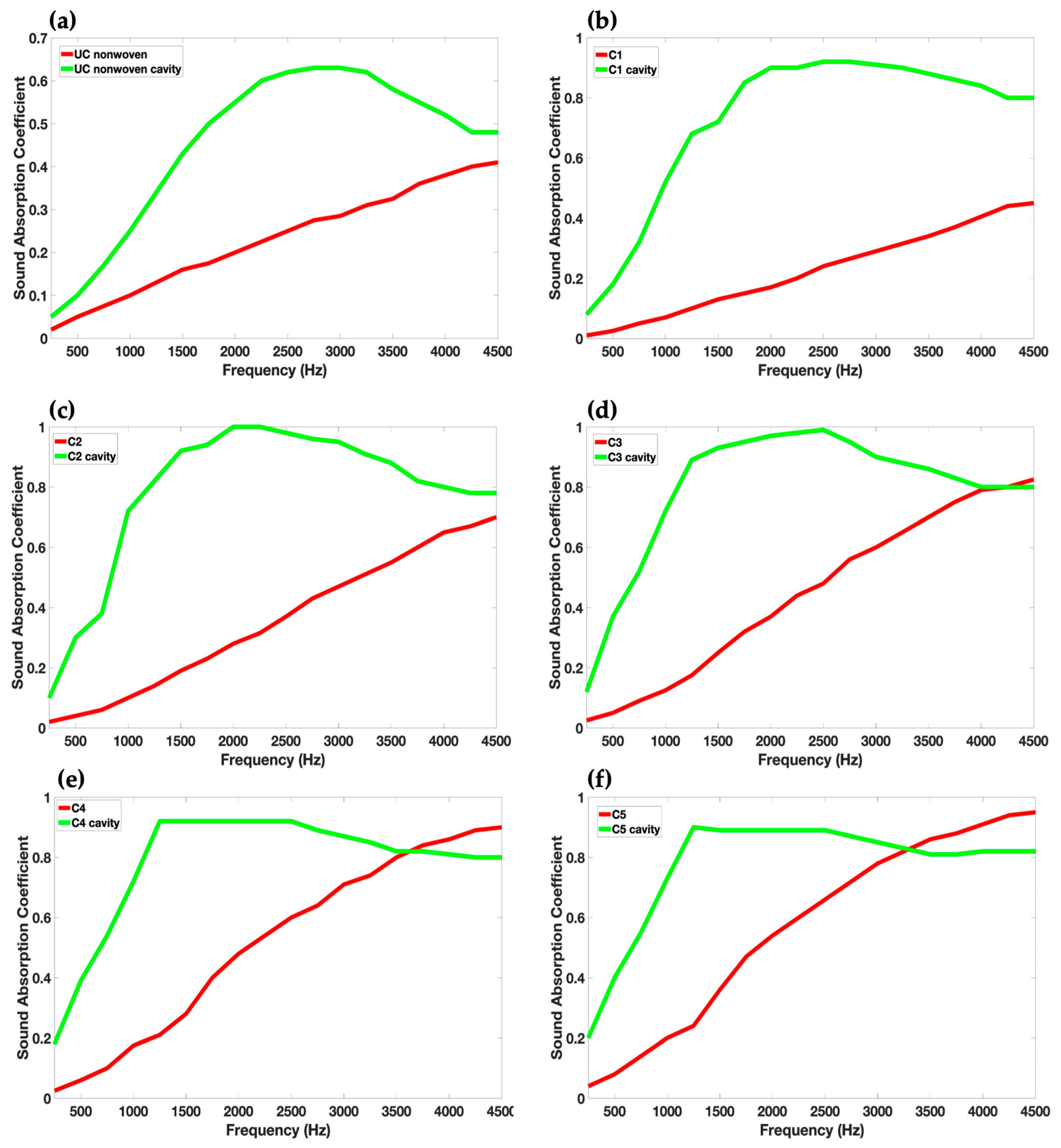
Figure 7 shows the sound absorption coefficient for the UC nonwoven and the carpets at frequencies ranging from 250 to 4500 Hz with and without the 30 mm deep cavity.
Figure 7.
Sound absorption coefficient values versus the frequency for the nonwoven and the carpets with and without a 30 mm deep cavity, (a) the UC nonwoven, (b) C1, (c) C2, (d) C3, (e) C4, (f) C5.
The addition of a 30 mm deep cavity leads to an improvement of sound absorption for frequencies from 250 to 3000 Hz.
When comparing the sound absorption coefficient values with and without a cavity, they at least quadrupled for all samples with a cavity, except for the UC nonwoven, which doubled. This difference can be explained by the lower density of the UC nonwoven compared to the carpets, which were compressed and, therefore, denser. In fact, the sound absorption coefficient increases with greater mass per unit area and, consequently, density, leading to enhanced sound absorption.
At medium frequencies, all samples have at least doubled their sound absorption coefficient values compared to values without a cavity. Nevertheless, this phenomenon is not true for all frequencies; there is little or no enhancement of the sound absorption coefficient values from 3500 Hz. From 3500 Hz, the densest carpets, C3, C4, and C5, present a loss of sound absorption. For instance, C4 and C5 exhibit a loss of 6% and 10%, respectively, compared to sound absorption coefficient values without a cavity. This result is due to the added thickness of the 30 mm deep cavity. When the incident sound waves meet the material, they strike not only the material but also the air cavity positioned just behind it.
In addition, several studies asserted that the sound absorption value is maximal when the material thickness measures one-tenth of the wavelength of the incident wave [47,48].
Therefore, materials at low frequencies require a thick material or the addition of an extra air cavity to absorb the sound [47,48].
3.3.2. Effect of the Mass per Unit Area on the Sound Absorption Coefficient
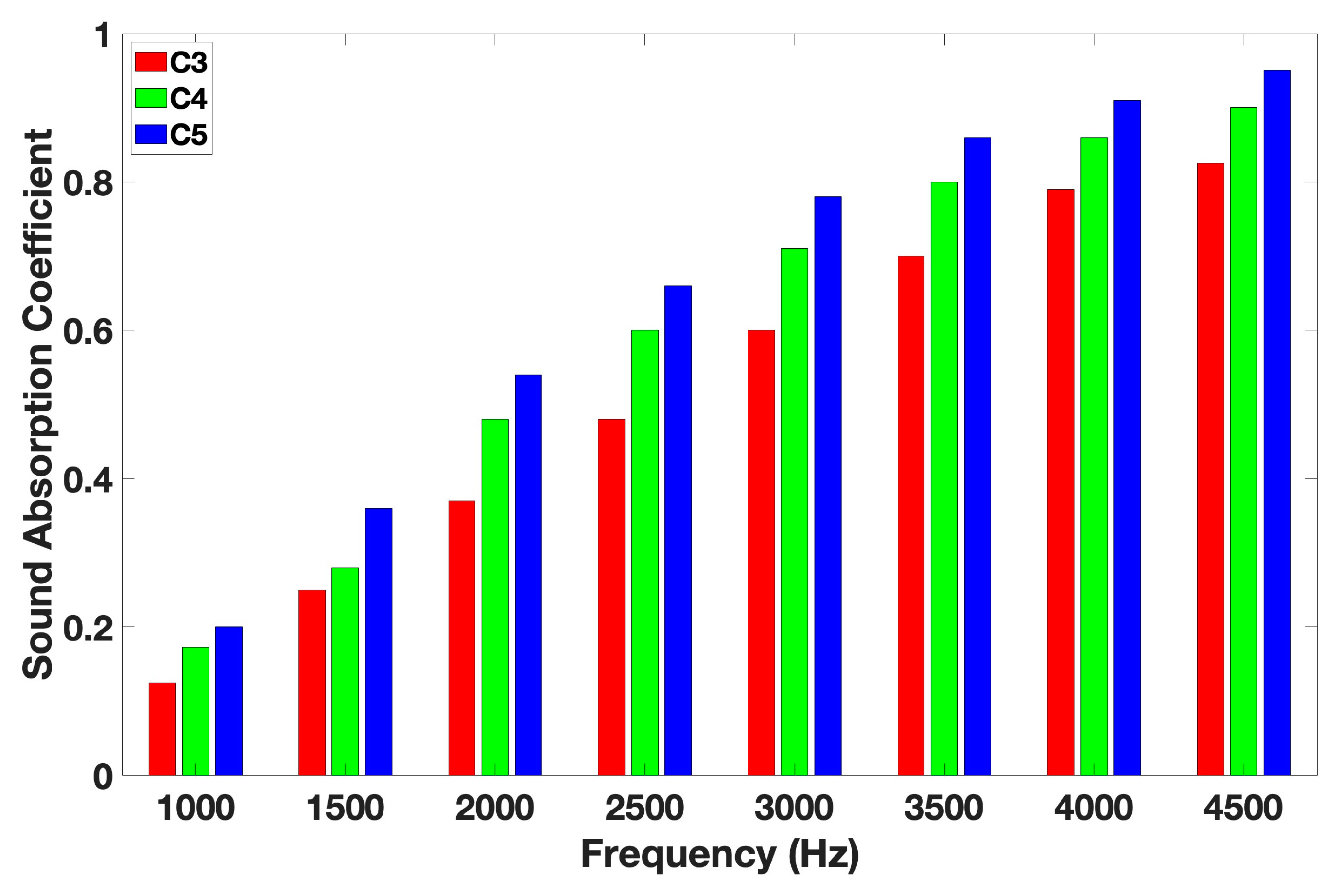
Figure 8 shows the effect of the mass per unit area on sound absorption for samples with a thickness of 8.65 mm.
Figure 8.
Sound absorption coefficient values versus the frequency for carpets with the same thickness of 8.65 mm.
The influence of the mass per unit area on the sound absorption was studied for carpets C3, C4, and C5, having a mass per unit area of 445 g/m2, 550 g/m2, and 635 g/m2, respectively.
The sound absorption coefficient increases with mass per unit area. This result is attributed to a higher number of fibers per unit area, which causes more interaction between fibers and energy dissipation. The same result was found by Hassanzadeh et al. [10].
Hassanzadeh et al. and D.V. Bihola reported that sound absorption is improved using hollow fibers due to a better entrapment of air by the large lumen [10,33]. Furthermore, it can be stated that the few fibers collapsed during the thermocompression step does not impact the insulation properties. Indeed, D.V. Bihola also compared the sound absorption for several carded nonwovens made up of milkweed and modal in a weight ratio of 70 to 30 with a thickness of 10 mm [33]. They found sound absorption coefficient values of 0.30 and 0.68 for 2000 and 4000 Hz frequencies, respectively. However, the carpets of this study present higher sound absorption values for both frequencies (Figure 6, Figure 7 and Figure 8). Zakriya et al. studied the sound absorption of a nonwoven composed of jute and polyethylene fibers in a mass proportion 50/50 [49]. They found sound absorption coefficient values of 0.738 and 0.515 for 2500 Hz and 3000 Hz frequencies for an 8.37 mm thick nonwoven.
As a result of the hollow structure of milkweed fibers, these carpets absorb sound more effectively than those made from natural fibers [10,50].
3.4. Effect of Density and Porosity on Airflow Resistivity
Table 3 shows the values of density and porosity for the UC nonwoven and the carpets.
Table 3.
Values of density and porosity for the UC nonwoven and the carpets.
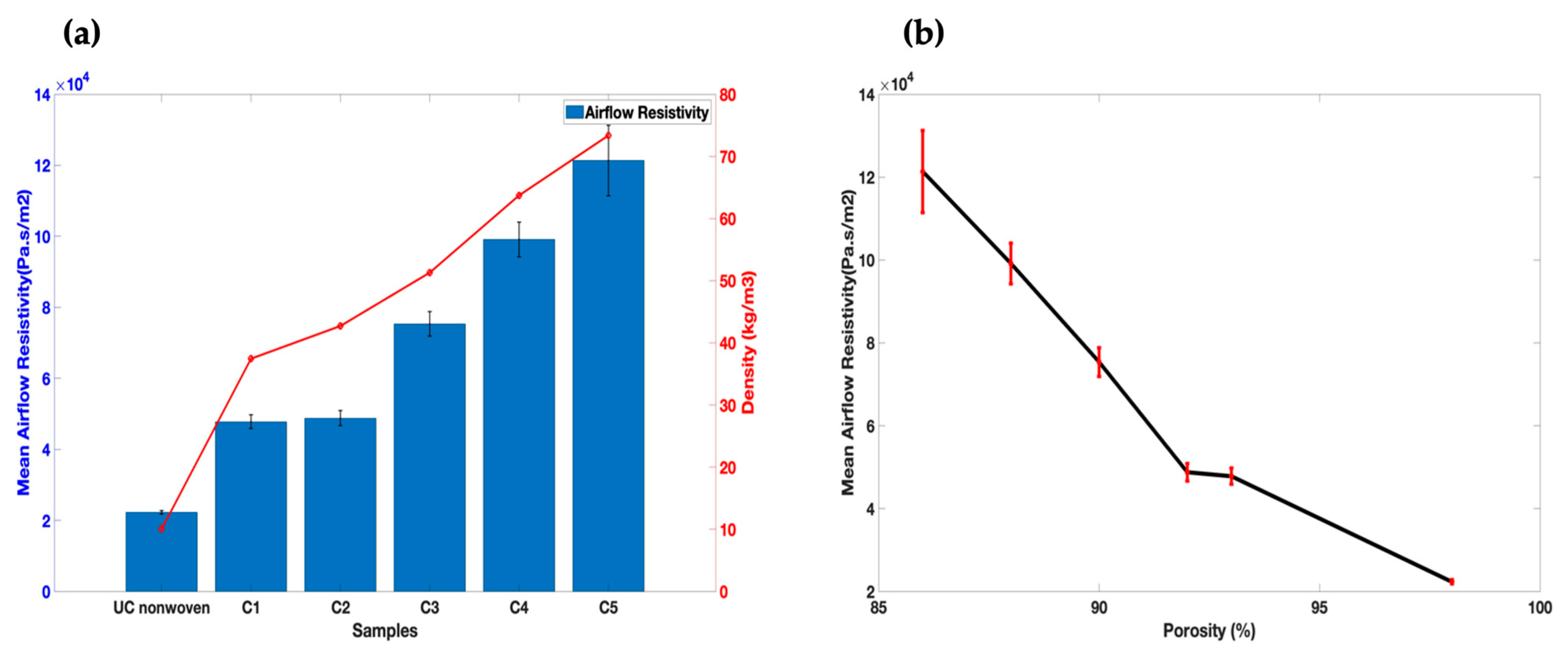
Figure 9 represents the influence of the density and porosity on airflow resistivity values.
Figure 9.
Airflow resistivity values versus (a) density and (b) porosity.
Airflow resistivity depends on density and porosity, as noted by Parikshit et al. [51]. This can be attributed to the nonwoven structure. As porosity decreases and density increases, the airflow resistivity increases. Indeed, a denser and consequently less porous material is going to be more resistant to the airflow. Therefore, the material absorbs more than it transmits. As shown in Figure 6, Figure 7, Figure 8 and Figure 9, airflow resistivity and sound absorption values are directly correlated, as it has just been demonstrated when airflow resistivity raises the sound absorption. Rey et al. found the same result [52].
3.5. Analysis of Compression Resistance and Short-Term Compression Recovery
Table 4 shows the compression resistance and short-term compression recovery values for the samples.
Table 4.
Compression resistance (L) and short-term compression recovery (N) for the nonwovens.
All carpets show compression values below 8.1%, which is better than polypropylene carpets [53]. Ümit et al. studied the compression and some short-term compression recovery of polypropylene carpets. They found values of 43.50% and 71.03%, respectively [53]. Therefore, all carpets (C1 to C5) are resistant to compression and recover almost all their shape, with short-term compression recovery values of at least 98%, which is higher than that of polypropylene carpets.
Compressive resistance and compression recovery are essential for acoustic properties because a material more compressible is going to result in less good acoustic properties due to a thickness loss, as Castagne et al. have demonstrated [54].
3.6. Analysis of Moisture Regain
Table 5 stands for the moisture regain values at 21 °C and a relative humidity of 80%. The UC nonwoven and carpets exhibit lower moisture regain values than natural fibers, ranging from 8 to 12% for flax and 9 to 14.5% for bamboo, respectively [25,55,56].
Table 5.
Moisture regain values for UC nonwoven and carpets.
Indeed, contrary to other natural fibers, which are hydrophilic and tend to absorb water, milkweed fibers are hydrophobic due to their chemical composition: 40–45% cellulose, 35–40% hemicellulose, 15% lignin, 3% free sugars, and 3% wax [20].
4. Conclusions
In this study, biodegradable, compostable nonwovens and carpets made up of milkweed and PLA fibers were processed through an air-laid process.
The following conclusions can be elaborated:
In terms of performance, the air-laid process exhibits an overall yield rate of 90%, approximately twice as much as the carding process. In addition, contrary to the carding process, the air-laid process does not damage the milkweed fibers and, subsequently, does not promote the nonwoven structure. However, even if some fiber collapses during the thermocompression step, the properties of carpets are not impacted.
All carpets exhibit low thermal conductivities close to 0.32 mW/m·K, which is lower than carpets made of cotton and polypropylene.
At low frequencies, neither nonwovens nor carpets absorb sound with values lower than 0.2, whereas at high frequencies, the sound coefficient reaches 0.9. Comparing carpet samples 8.37 mm thick, the sound absorption coefficient increases with the mass per unit area due to the higher number of fibers per unit area. Carpets composed of milkweed and PLA fibers show better acoustic insulation than those made of jute and polyethylene fibers. For the same physical properties, at 3000 Hz, milkweed carpets exhibit a 35% improvement.
The addition of a 30 mm deep cavity allowed for a significant increase in sound absorption for the low and medium frequencies for the nonwoven and carpets.
All carpets present low compression values below 8.1% and recover at least 98% of their shape after compression, which is better than polypropylene carpets.
Therefore, it has just been demonstrated that milkweed carpets have good functional properties, which are required for carpeting cars, and they are suitable to be composted and biodegradable. Even though the UC nonwoven does not have the required properties to be used as automotive carpets, it may seem that other applications, such as thermal insulation materials, could be suitable, but further investigation is required.
Author Contributions
Several authors worked on this paper. Conceptualization, D.L.; methodology, D.L.; formal analysis, D.L.; investigation, D.L.; writing—original draft preparation, D.L.; writing—review and editing, D.L. and M.R.; supervision, S.E. and M.R. All authors have read and agreed to the published version of the manuscript.
Funding
This study was funded by MITACS.
Data Availability Statement
All the data are available in the manuscript.
Acknowledgments
The measures of sound absorption and airflow resistivity were performed at Mecanum Instruments, Sherbrooke, QC, Canada. Thanks to them for their professionalism and their expertise. We would like also to thank H. Arruda for his help, advice, and comments.
Conflicts of Interest
The authors declare no conflicts of interest.
References
- Infographie: Mobilité: Les Modes de Transport Les Plus Utilisés au Quotidien. Available online: https://fr.statista.com/infographie/28271/modes-transport-les-plus-utilises-par-pays-mobilite-domicile-travail (accessed on 5 August 2024).
- Normand, X. Recycling of automotive textiles. In Textile Advances in the Automotive Industry; Shishoo, R., Ed.; Woodhead Publishing in Textiles: Cambridge, UK, 2008; pp. 86–109. [Google Scholar]
- Kellie, G. Developments in composite nonwovens and related materials. In Advances in Technical Nonwovens; Woodhead Publishing in Textiles: Cambridge, UK, 2016; p. 219. [Google Scholar]
- Saricam, C.; Nazan, O. Polyester Usage for Automotive Application. In Polyester—Production, Characterization and Innovative Applications; Camlibel, N.O., Ed.; IntechOpen: Rijeka, Croatia, 2018; pp. 69–71. [Google Scholar]
- Hagege, R. Filage textile. In Materiaux/Plastiques et Composites; Techniques de l’ingénieur, Ed.; Techniques de l’ingénieur: Paris, France, 1998; Réf AM3740 V1. [Google Scholar]
- Mcneil, S. The Thermal Properties of Wool Carpets; Technical Bulletin; AgResearch: Lincoln, New Zeland, 2016. [Google Scholar]
- Pollock, C.M. Nonwoven materials for automotive applications. In Proceedings of the 37th Annual Nonwoven Fabrics Conference; Clemson University Professional Advancement and Continuing Education: Clemson, SC, USA, 2008. [Google Scholar]
- Smith, C. Nonwovens in automotives-more than just a pretty face. Int. Nonwovens J. 2004, 3, 60–63. [Google Scholar] [CrossRef]
- Atakan, R.; Sezer, S.; Karakas, H. Development of nonwoven automotive carpets made of recycled PET fibers with improved abrasion resistance. J. Ind. Text. 2020, 49, 835–857. [Google Scholar] [CrossRef]
- Hassanzadeh, S.; Zarrebini, M.; Hasani, H. An Investigation into Acoustic Properties of Lightly Needled Estabragh Nonwovens Using the Taguchi Method. J. Eng. Fibers Fabr. 2014, 9, 155892501400900303. [Google Scholar] [CrossRef]
- Liu, X.; Yan, X.; Zhang, H. Sound absorption model of kapok-based fiber nonwoven fabric. Text. Res. J. 2015, 85, 969–979. [Google Scholar] [CrossRef]
- Mussig, J. What Are Natural Fibres. In Industrial Applications of Natural Fibres: Structure, Properties and Technical Applications; Müssig, J., Ed.; John Wiley & Sons Ltd.: Hoboken, NJ, USA, 2010; pp. 41–46. [Google Scholar]
- Ovlaque, P. Valorisation de la fibre d’asclépiade pour le renforcement de matrices organiques. Ph.D. Thesis, University of Sherbrooke, Sherbrooke, QC, Canada, June 2019. [Google Scholar]
- Yang, X.; Huang, L.Q.; Cheng, L.D. Study on the Structure and the Properties of Akund Fiber. Appl. Mech. Mater. 2012, 217–219, 617–621. [Google Scholar]
- Sanchez-Diaz, S.; Ouellet, C.; Elkoun, S.; Robert, M. Evaluating the Properties of Native and Modified Milkweed Floss for Applications as a Reinforcing Fiber. J. Nat. Fibers 2023, 20, 2174630. [Google Scholar] [CrossRef]
- Campeau, S.; Panneton, R.; Elkoun, S. Experimental Validation of an Acoustical Micro-Macro Model for Random Hollow Fibre Structure. Acta Acust. United Acust. 2019, 105, 240–247. [Google Scholar] [CrossRef]
- Müller, U.; Jost, T.; Kurzböck, C.; Stadlmann, A.; Wagner, W.; Kirschbichler, S.; Baumann, G.; Pramreiter, M.; Feist, F. Crash simulation of wood and composite wood for future automotive engineering. Wood Mater. Sci. Eng. 2020, 15, 312–324. [Google Scholar] [CrossRef]
- Karthik, T.; Murugan, R. A Potential Sustainable Natural Fibre Crop. In Sustainable Fibres for Fashion Industry; Muthu, S.S., Gardetti, M., Eds.; Springer: Singapore, 2016; pp. 111–146. [Google Scholar]
- Azwa, Z.N.; Yousif, B.F.; Manalo, A.C.; Karunasena, W. A review on the degradability of polymeric composites based on natural fibres. Mater. Des. 2013, 47, 424–442. [Google Scholar] [CrossRef]
- Richard, C.; Cousin, P.; Foruzanmehr, M.; Elkoun, S.; Robert, M. Characterization of components of milkweed floss fiber. Sep. Sci. Technol. 2019, 54, 3091–3099. [Google Scholar] [CrossRef]
- Baley, C. Fibres naturelles de renfort pour matériaux composites. In Archives; Techniques de l’ingénieur, Ed.; Techniques de l’ingénieur: Paris, France, 2013; Réf AM5130 V2. [Google Scholar]
- Oksman, K. High Quality Flax Fibre Composites Manufactured by the Resin Transfer Moulding Process. J. Reinf. Plast. Compos. 2001, 20, 621–627. [Google Scholar] [CrossRef]
- Oksman, K.; Wallström, L.; Berglund, L.; Toledo Filho, R. Morphology and mechanical properties of unidirectional sisal– epoxy composites. J. Appl. Polym. Sci. 2002, 84, 2358–2365. [Google Scholar] [CrossRef]
- Hornsby, P.; Hinrichsen, E.; Tarverdi, K. Preparation and properties of polypropylene composites reinforced with wheat and flax straw fibres: Part I Fibre characterization. J. Mater. Sci. 1997, 32, 443–449. [Google Scholar] [CrossRef]
- Olhan, S.; Khatkar, V.; Behera, B.K. Review: Textile-based natural fibre-reinforced polymeric composites in automotive lightweighting. J. Mater. Sci. 2021, 56, 18867–18910. [Google Scholar] [CrossRef]
- Penu, C.; Helou, M. Acide polylactique (PLA). In Matériaux | Matériaux Fonctionnels—Matériaux Biosourcés; Techniques de l’ingénieur, Ed.; Techniques de l’ingénieur: Paris, France, 2017; Réf AM3317 V1. [Google Scholar]
- Santhanam, S.; Temesgen, S.; Atalie, D.; Ashagre, G. Recycling of cotton and polyester fibers to produce nonwoven fabric for functional sound absorption material. J. Nat. Fibers 2019, 16, 300–306. [Google Scholar] [CrossRef]
- Parikh, D.V.; Chen, Y.; Sun, L. Reducing Automotive Interior Noise with Natural Fiber Nonwoven Floor Covering Systems. Text. Res. J. 2006, 76, 813–820. [Google Scholar] [CrossRef]
- Oldham, D.J.; Egan, C.A.; Cookson, R.D. Sustainable acoustic absorbers from the biomass. Appl. Acoust. 2011, 72, 350–363. [Google Scholar] [CrossRef]
- Ganesan, P.; Karthik, T. Development of acoustic nonwoven materials from kapok and milkweed fibres. J. Text. Inst. 2016, 107, 477–482. [Google Scholar] [CrossRef]
- Veerakumar, A.; Selvakumar, N. A preliminary investigation on kapok/polypropylene nonwoven composite for sound absorption. Indian J. Fibre Text. Res. 2012, 37, 385–388. [Google Scholar]
- Hasani, H.; Zarrebini, M.; Zare, M.; Hassanzadeh, S. Evaluating the Acoustic Properties of Estabragh (Milkweed)/Hollow- Polyester Nonwovens vfor Automotive Applications. J. Text. Sci. Eng. 2014, 4. [Google Scholar]
- Dharmendrasinh Vikramsinh, B. Study Acoustic Properties of Estrabragh-Kapok Natural Fiber Fabric for Technical Uses. Ph.D. Thesis, Maharaja Sayajirao University of Baroda, Vadodara, India, 2020. [Google Scholar]
- Gharehaghaji, A.A.; Davoodi, S.H. Mechanical damage to estabragh fibers in the production of thermobonded layers. J. Appl. Polym. Sci. 2008, 109, 3062–3069. [Google Scholar] [CrossRef]
- ISO 9073-1:2023; Nonwovens—Test Methods—Part 1: Determination of Mass Per Unit Area. ISO: Geneva, Switzerland, 2023.
- ISO 9073-2:21995; Nonwovens—Test Methods—Part 2: Determination of Thickness. ISO: Geneva, Switzerland, 1995.
- ASTM D6571-22; Standard Test Method for Determination of Compression Resistance and Recovery Properties of Highloft Nonwoven Fabric Using Static Force Loading. ASTM: West Conshohocken, PA, USA, 2022.
- ASTM D2654-22; Standard Test Methods for Moisture in Textiles. ASTM: West Conshohocken, PA, USA, 2022.
- ASTM D1776/D1776M-20; Standard Practice for Conditioning and Testing Textiles. ASTM: West Conshohocken, PA, USA, 2020.
- ASTM C518-21; Standard Test Method for Steady-State Thermal Transmission Properties by Means of the Heat Flow Meter Apparatus. ASTM: West Conshohocken, PA, USA, 2021.
- ASTM E1050-19; Standard Test Method for Impedance and Absorption of Acoustical Materials Using a Tube, Two Microphones and a Digital Frequency Analysis System. ASTM: West Conshohocken, PA, USA, 2019.
- ASTM C522-03-16; Standard Test Method for Airflow Resistance of Acoustical Materials. ASTM: West Conshohocken, PA, USA, 2016.
- Küçük, M.; Korkmaz, Y. Acoustic and Thermal Properties of Polypropylene Carpets: Effect of Pile Length and Loop Density. Fibers Polym. 2019, 20, 1519–1525. [Google Scholar] [CrossRef]
- Diswat, J.; Hes, L.; Bal, K. Thermal resistance of cut pile hand tufted carpet and its prediction. Text. Res. J. 2016, 86, 1759–1767. [Google Scholar] [CrossRef]
- Crews, P.C.; Sievert, S.A.; Woeppel, L.T.; Mccullough, E.A. Evaluation of Milkweed Floss as an Insulative Fill Material. Text. Res. J. 1991, 61, 203–210. [Google Scholar] [CrossRef]
- Liu, X.; Yan, X.; Li, L.; Zhang, H. Sound-Absorption Properties of Kapok Fiber Nonwoven Fabrics at Low Frequency. J. Nat. Fibers. 2015, 12, 311–322. [Google Scholar] [CrossRef]
- Coates, M.; Kierzkowski, M. Acoustic textiles—Lighter, thinner and more absorbent. Tech. Text.-Int. 2002, 17, 15–18. [Google Scholar]
- Pfretzschner, J.; Simón, F.; Colina, C. Acoustic Absorbent Panels with Low Perforation Coefficient. 2004. Available online: https://digital.csic.es/bitstream/10261/8589/1/ID48.PDF (accessed on 8 August 2024).
- Zakriya, M.; Ramakrishnan, G.; Gobi, N.; Palaniswamy, N.; Srinivasan, J. Jute-reinforced non-woven composites as a thermal insulator and sound absorber. J. Reinf. Plast. Compos. 2017, 36, 206–213. [Google Scholar] [CrossRef]
- Mahmoud, A.; El-Shenawy, G.; Ramadan, E. Using Nonwoven Hollow Fibers to Improve Cars Interior Acoustic Properties. Res. J. Text. Appar. 2012, 16, 49–56. [Google Scholar] [CrossRef]
- Paul, P.; Ahirwar, M.; Behera, B.K. Influence of airflow resistance on acoustic behaviour of needle-punched nonwoven structures. J. Text. Inst. 2024, 1–13. [Google Scholar] [CrossRef]
- Rey, R.D.; Alba, J.; Arenas, J.P.; Ramis, J. Technical Notes: Evaluation of Two Alternative Procedures for Measuring Airflow Resistance of Sound Absorbing Materials. Arch. Acoust. 2023, 38, 547–554. [Google Scholar] [CrossRef]
- Erdoğan, Ü.H. Effect of pile fiber cross section shape on compression properties of polypropylene carpets. J. Text. Inst. 2012, 103, 1369–1375. [Google Scholar] [CrossRef]
- Castagne, B.; Aknine, A.; Brouard, B.; Tarnow, V. Effects of compression on the sound absorption of fibrous materials. Appl. Acoust. 2000, 61, 173–182. [Google Scholar] [CrossRef]
- Dunne, R.; Desai, D.; Sadiku, R.; Jayaramudu, J. A review of natural fibres, their sustainability and automotive applications. J. Reinf. Plast. Compos. 2016, 35, 1041–1050. [Google Scholar] [CrossRef]
- Abednigo Jabu, M.; Alugongo, A.; Nkomo, N. Application of Natural Fibre Composites in Interior Panels in the Automotive Industry: A Review. Int. J. Eng. Trends Technol. 2024, 72, 91–98. [Google Scholar] [CrossRef]
Disclaimer/Publisher’s Note: The statements, opinions and data contained in all publications are solely those of the individual author(s) and contributor(s) and not of MDPI and/or the editor(s). MDPI and/or the editor(s) disclaim responsibility for any injury to people or property resulting from any ideas, methods, instructions or products referred to in the content. |
© 2025 by the authors. Licensee MDPI, Basel, Switzerland. This article is an open access article distributed under the terms and conditions of the Creative Commons Attribution (CC BY) license (https://creativecommons.org/licenses/by/4.0/).