

The Effect of Texturing of the Surface of Concrete Substrate on the Pull-Off Strength of Epoxy Resin Coating



Abstract
1. Introduction
2. Materials and Methods
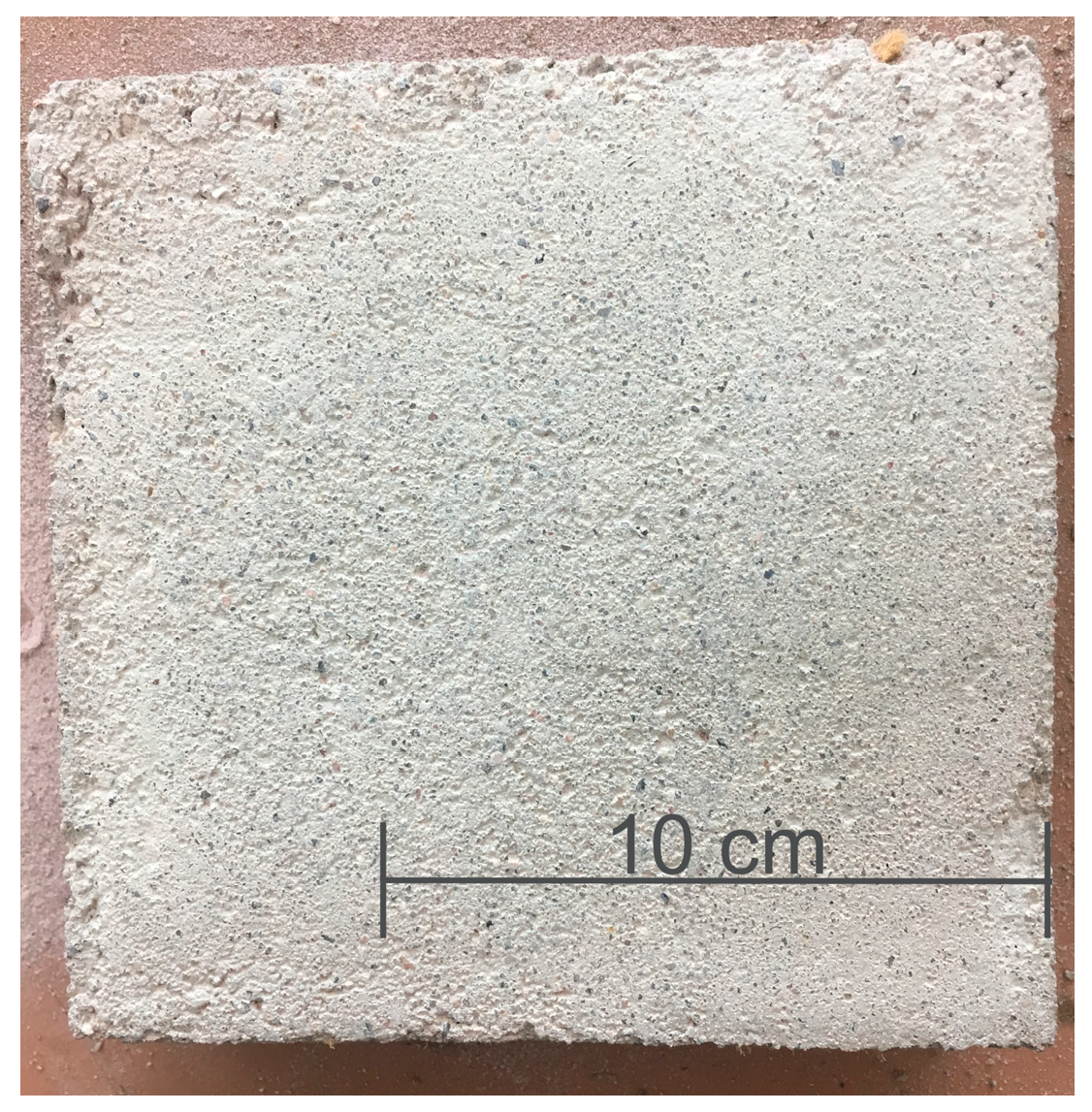
2.1. Concrete Substrate
2.2. Texturing of the Surface of the Concrete Substrate
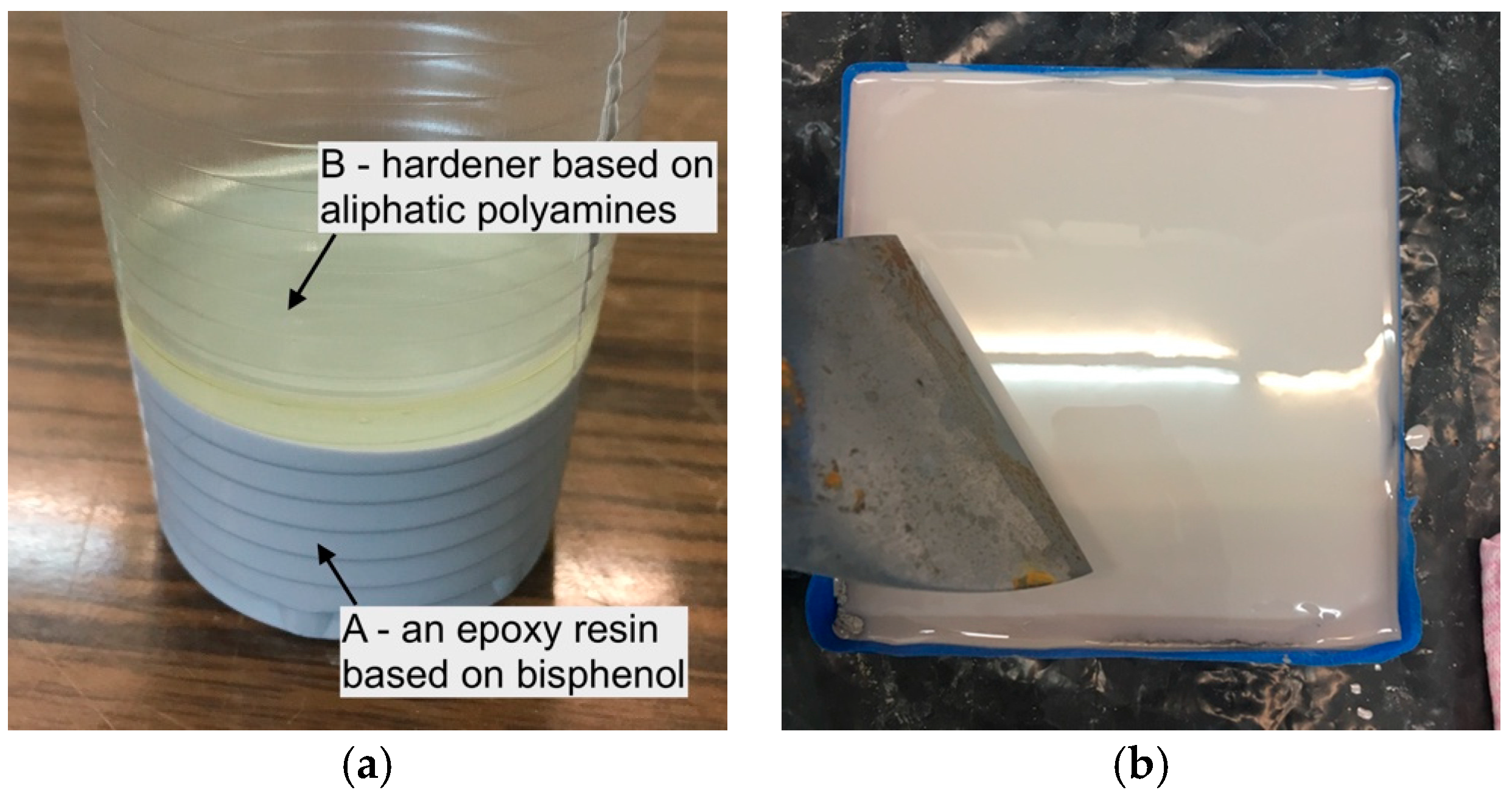
2.3. Epoxy Resin Coating
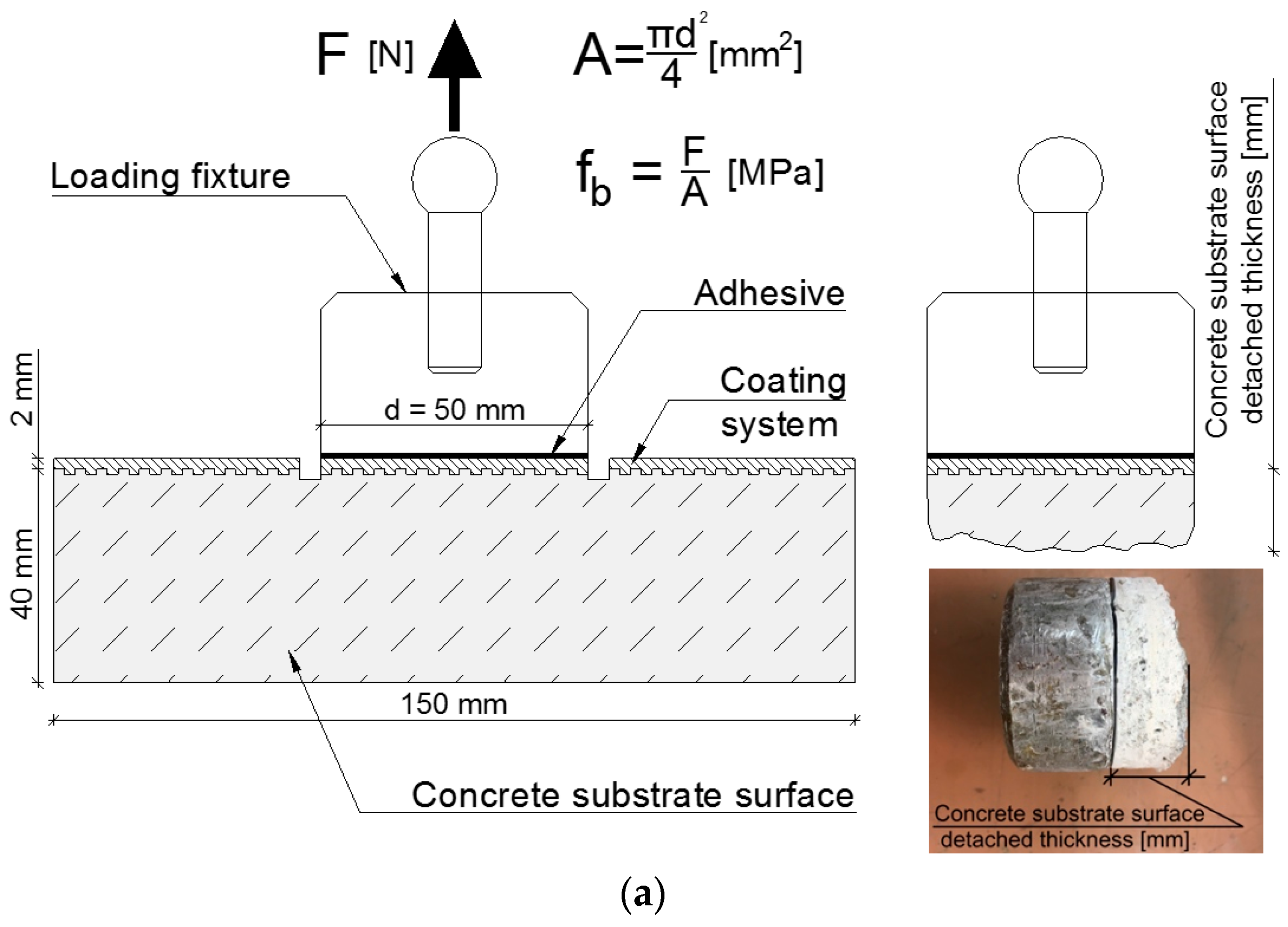
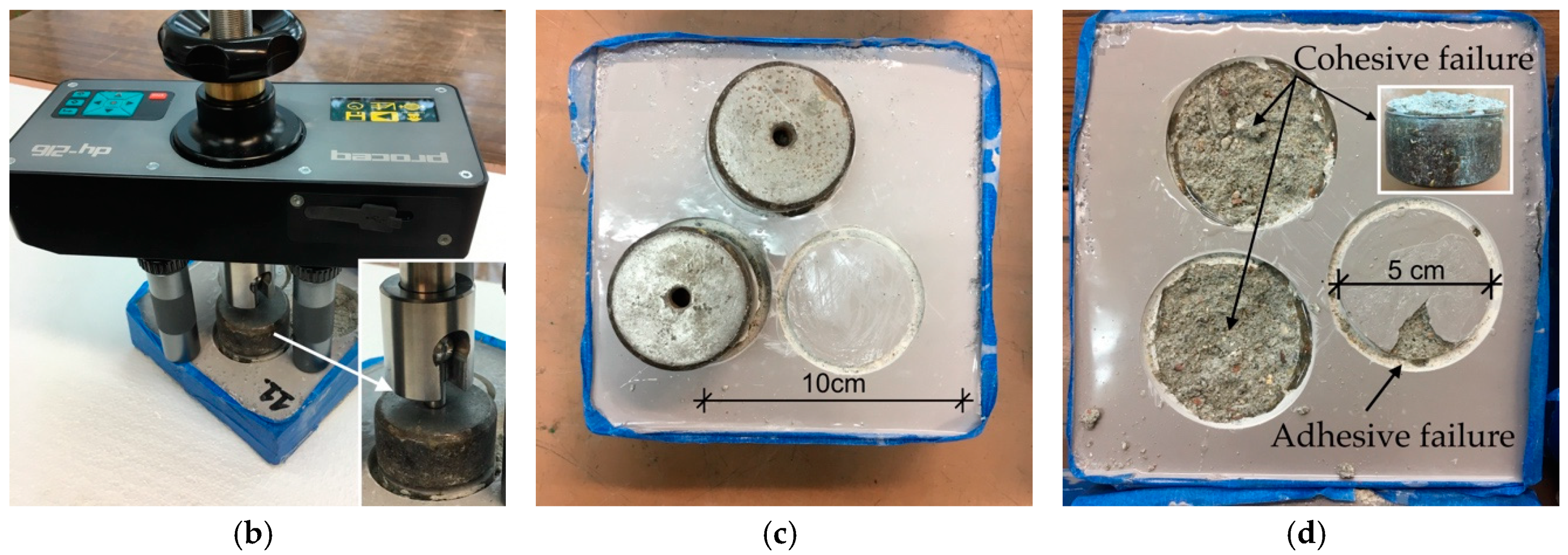
2.4. Pull-Off Strength Tests
3. Results
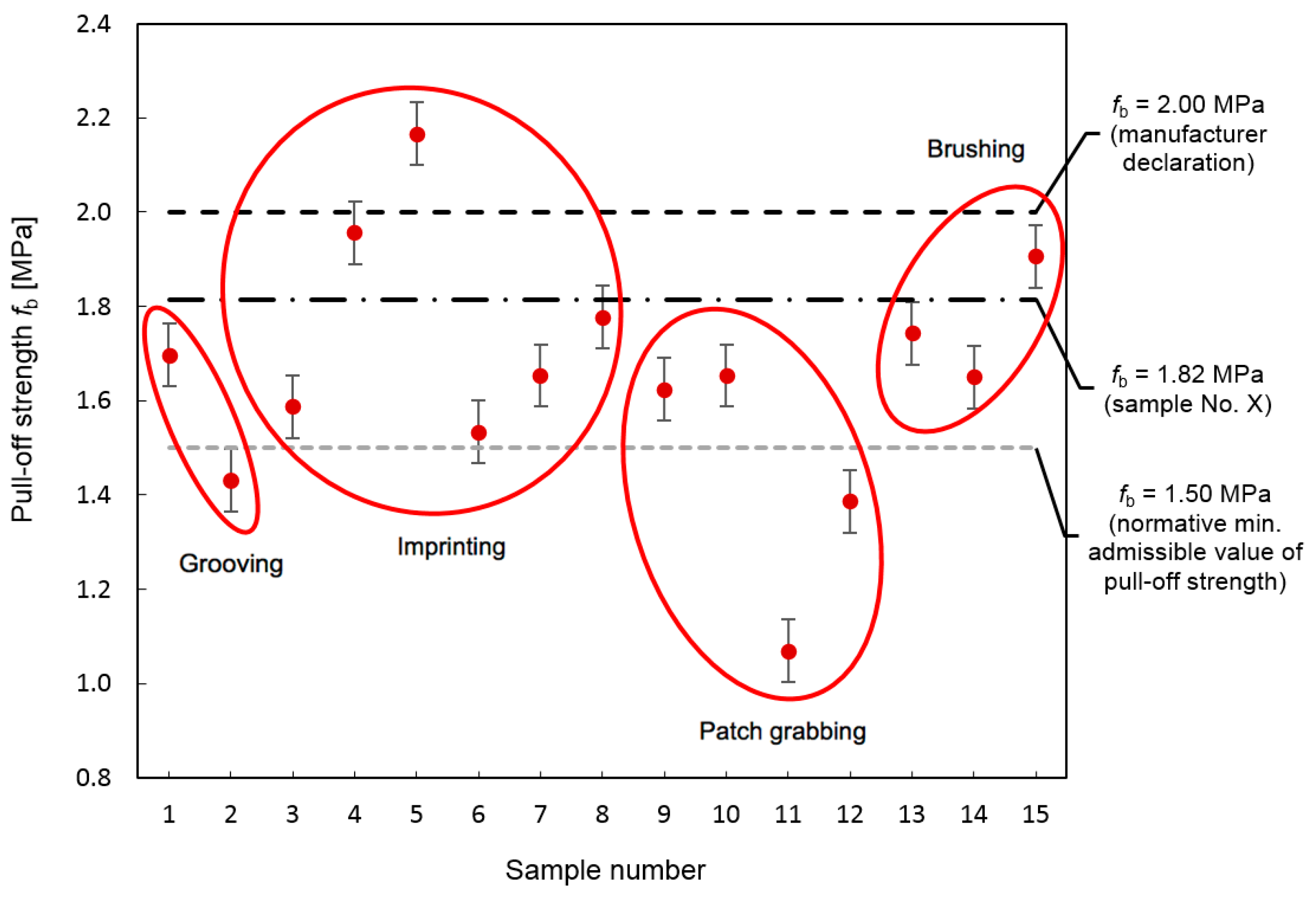
3.1. Pull-Off Strength
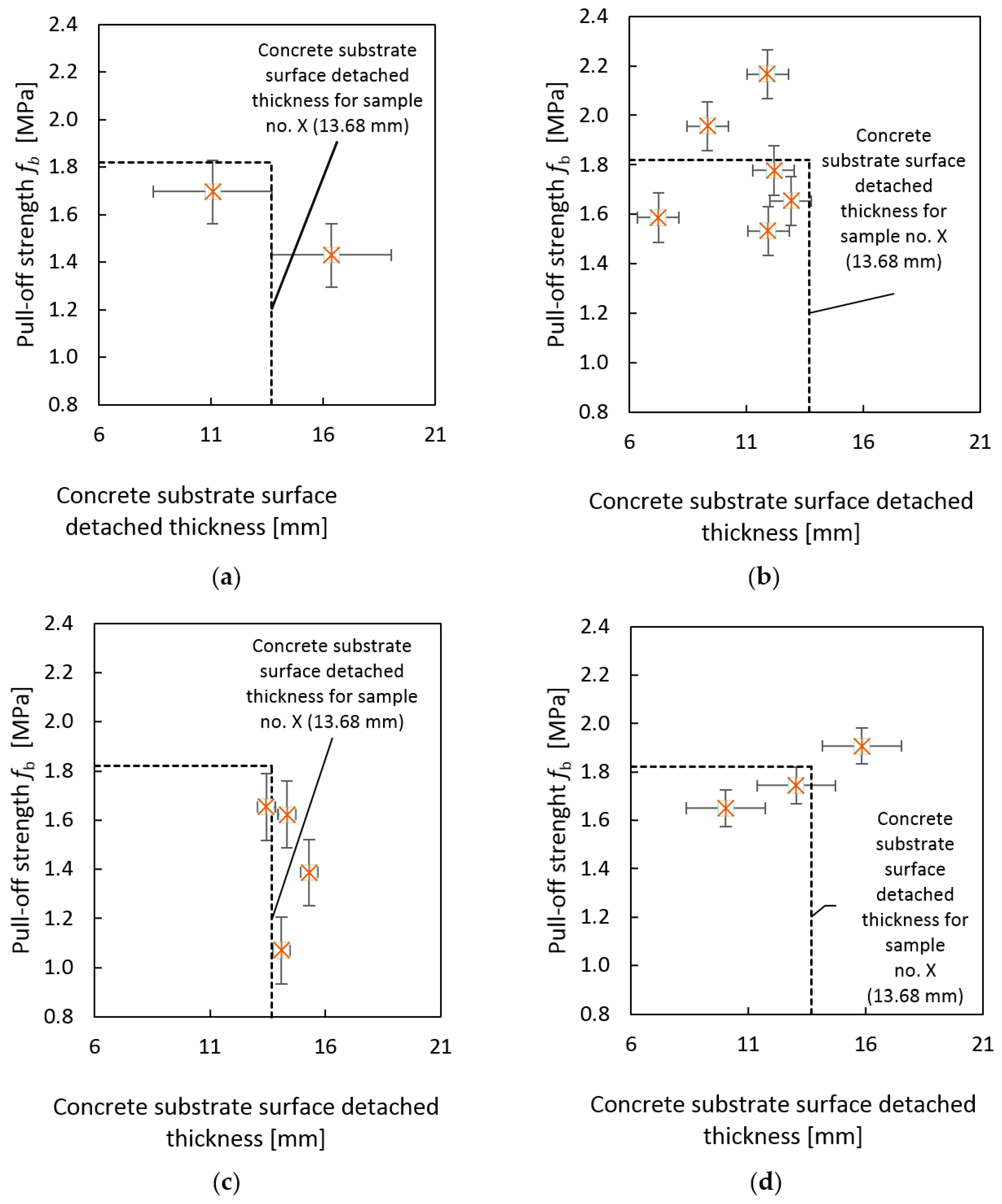
3.2. Detached Thickness
4. Conclusions
- The treatment of the surface of the concrete substrate by grinding, cleaning, and applying a primer can be replaced by many different texturing methods that can give similar pull-off strength results.
- Brushing with a painting brush achieved the most similar results to those obtained for the sample after grinding (No. X). It shows that a simple brushing method should be used instead of grinding.
- The best texturing method turned out to be imprinting (No. 5. with crosses type “+”). The pull-off strength for this sample was equal to 2.17 MPa. This is more than that declared by the manufacturer when the surface of a concrete substrate was prepared according to their recommendations (2.00 MPa). Imprinting can be easily used for texturing a concrete substrate surface, as it creates a higher pull-off strength of the epoxy resin coating.
- The concrete substrate surface detached thickness depends on the depth and area of the textured surface. The surface of concrete substrate should be prepared using a method in which the concrete substrate surface detached thickness value is close to 12 mm. This enables the best possible pull-off strength results to be obtained. Such information can be used during the design and construction stage.
Author Contributions
Funding
Acknowledgments
Conflicts of Interest
References
- Gruszczyński, M. The use of thin cement-polymer layers to repair and strengthening concrete floors. Materiały Budowlane 2018, 9, 30–33. (In Polish) [Google Scholar] [CrossRef] [Scilit]
- Sadowski, Ł. Adhesion in Layered Cement Composites, 1st ed.; Springer International Publishing: Cham, Switzerland, 2018. [Google Scholar]
- Sadowski, Ł. Multi-scale evaluation of the interphase zone between the overlay and concrete substrate: Methods and descriptors. Appl. Sci. 2017, 7, 893. [Google Scholar] [CrossRef] [Scilit]
- Basheer, L.; Kropp, J.; Cleland, D.J. Assessment of the durability of concrete from its permeation properties: A review. Constr. Build. Mater. 2001, 15, 93–103. [Google Scholar] [CrossRef] [Scilit]
- Brown, P.W.; Doerr, A. Chemical changes in concrete due to the ingress of aggressive species. Cem. Concr. Res. 2000, 30, 411–418. [Google Scholar] [CrossRef] [Scilit]
- Safiuddin, M. Concrete damage in field conditions and protective sealer and coating systems. Coatings 2017, 7, 90. [Google Scholar] [CrossRef] [Scilit]
- Rodrigues, M.P.M.C.; Costa, M.R.N.; Mendes, A.M.; Marques, M.E. Effectiveness of surface coatings to protect reinforced concrete in marine environments. Mater. Struct. 2000, 33, 618–626. [Google Scholar] [CrossRef] [Scilit]
- Wang, S.; Li, Q.; Zhang, W.; Zhou, H. Crack resistance test of epoxy resin under thermal shock. Polym. Test. 2002, 21, 195–199. [Google Scholar] [CrossRef] [Scilit]
- Garcia, J.; De Brito, J. Inspection and diagnosis of epoxy resin industrial floor coatings. J. Mater. Civ. Eng. 2008, 20, 128–136. [Google Scholar] [CrossRef] [Scilit]
- Figueira, R.B. Hybrid sol-gel coatings: Erosion-corrosion protection. In Production, Properties, and Applications of High Temperature Coatings; Pakseresht, A.H., Ed.; IGI Global: Hershey, PA, USA, 2018; pp. 334–380. [Google Scholar]
- Figueira, R.; Callone, E.; Silva, C.; Pereira, E.; Dirè, S. Hybrid coatings enriched with tetraethoxysilane for corrosion mitigation of hot-dip galvanized steel in chloride contaminated simulated concrete pore solutions. Materials 2017, 10, 306. [Google Scholar] [CrossRef] [Scilit] [PubMed]
- Mynarčík, P. Technology and trends of concrete industrial floors. Procedia Eng. 2013, 65, 107–112. [Google Scholar] [CrossRef] [Scilit]
- Sánchez, M.; Faria, P.; Ferrara, L.; Horszczaruk, E.; Jonkers, H.M.; Kwiecień, A.; Mosa, J.; Peled, A.; Pereira, A.S.; Snoeck, D.; et al. External treatments for the preventive repair of existing constructions: A review. Constr. Build. Mater. 2018, 193, 435–452. [Google Scholar] [CrossRef] [Scilit]
- Sadowski, Ł.; Czarnecki, S.; Hoła, J. Evaluation of the height 3D roughness parameters of concrete substrate and the adhesion to epoxy resin. Int. J. Adhes. Adhes. 2016, 67, 3–13. [Google Scholar] [CrossRef] [Scilit]
- Li, Y.; Liu, X.; Li, J. Experimental study of retrofitted cracked concrete with FRP and nanomodified epoxy resin. J. Mater. Civ. Eng. 2016, 29, 04016275. [Google Scholar] [CrossRef] [Scilit]
- Rousakis, T.C.; Kouravelou, K.B.; Karachalios, T.K. Effects of carbon nanotube enrichment of epoxy resins on hybrid FRP–FR confinement of concrete. Composites Part B 2014, 57, 210–218. [Google Scholar] [CrossRef] [Scilit]
- Chowaniec, A.; Ostrowski, K. Epoxy resin coatings modified with waste glass powder for sustainable construction. Czasopismo Techniczne 2018, 8, 99–109. [Google Scholar] [CrossRef] [Scilit]
- Do, J.; Soh, Y. Performance of polymer-modified self-leveling mortars with high polymer–cement ratio for floor finishing. Cem. Concr. Res. 2003, 33, 1497–1505. [Google Scholar] [CrossRef] [Scilit]
- Ahn, N. Effects of diacrylate monomers on the bond strength of polymer concrete to wet substrates. J. Appl. Polym. Sci. 2003, 90, 991–1000. [Google Scholar] [CrossRef] [Scilit]
- Czarnecki, L.; Taha, M.R.; Wang, R. Are polymers still driving forces in concrete technology? In Proceedings of the International Congress on Polymers in Concrete (ICPIC 2018), Washington, DC, USA, 29 April–1 May 2018; Taha, M.M.R., Ed.; Springer: Cham, Switzerland, 2018; pp. 219–225. [Google Scholar]
- Bissonnette, B.; Courard, L.; Garbacz, A. Concrete Surface Engineering, 1st ed.; CRC Press: Boca Raton, FL, USA, 2015. [Google Scholar]
- He, Y.J.; Mote, J.; Lange, D.A. Characterization of microstructure evolution of cement paste by micro computed tomography. J. Cent. South Univ. 2013, 20, 1115–1121. [Google Scholar] [CrossRef] [Scilit]
- Mirmoghtadaei, R.; Mohammadi, M.; Samani, N.A.; Mousavi, S. The impact of surface preparation on the bond strength of repaired concrete by metakaolin containing concrete. Constr. Build. Mater. 2015, 80, 76–83. [Google Scholar] [CrossRef] [Scilit]
- EN 1542 Products and Systems for the Protection and Repair of Concrete Structures–Test Methods–Measurement of Bond Strength by Pull-Off; British Standard Institution: London, UK, 2006.
- ASTM D4541-95e1 Standard Test Method for Pull-off Strength of Coatings using Portable Adhesion Testers; ASTM International: West Conshohocken, PA, USA, 2002.
- Czarnecki, S. Ultrasonic Evaluation of the pull-off adhesion between added repair layer and a concrete substrate. IOP Conf. Ser. Mater. Sci. Eng. 2017, 245, 032037. [Google Scholar] [CrossRef] [Scilit]
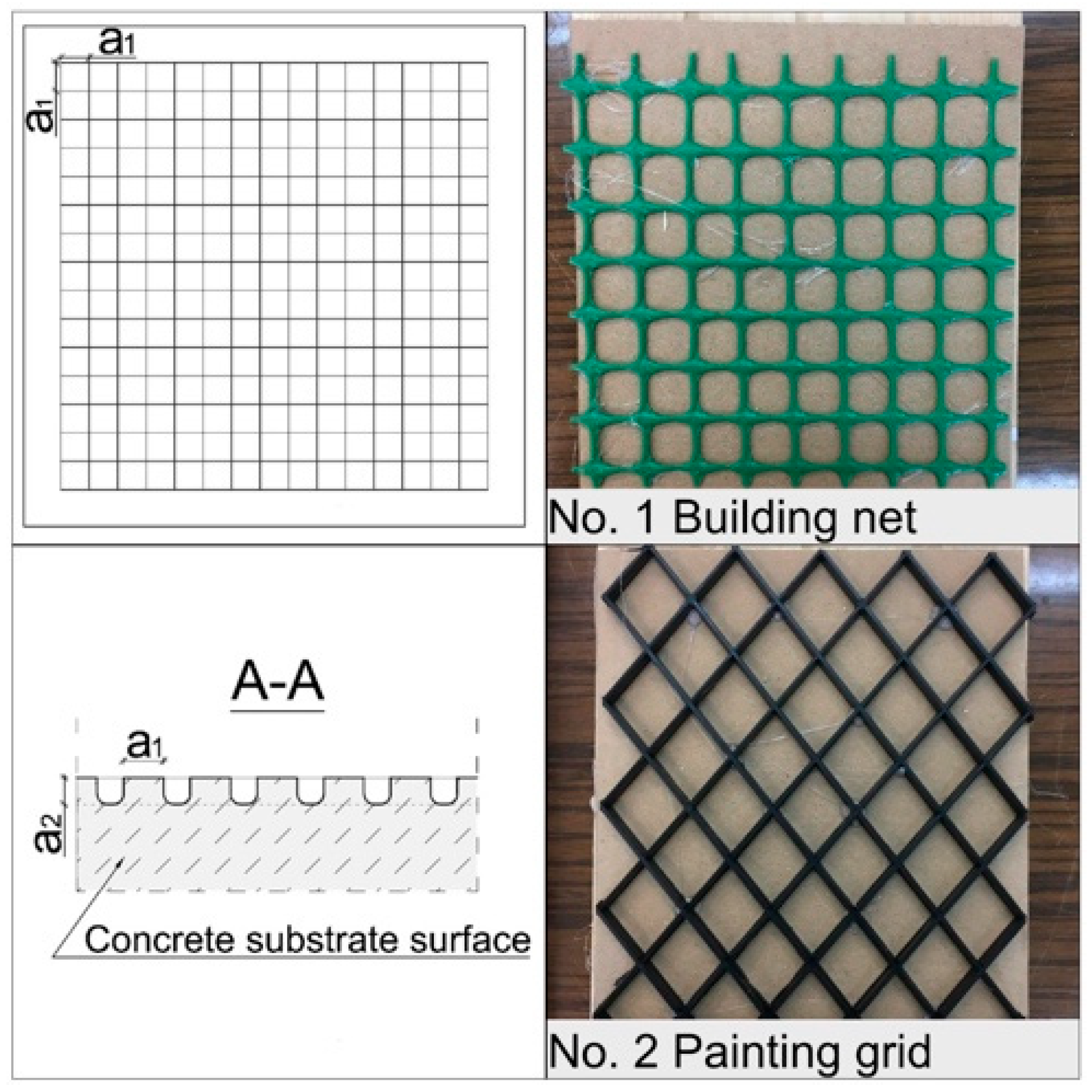
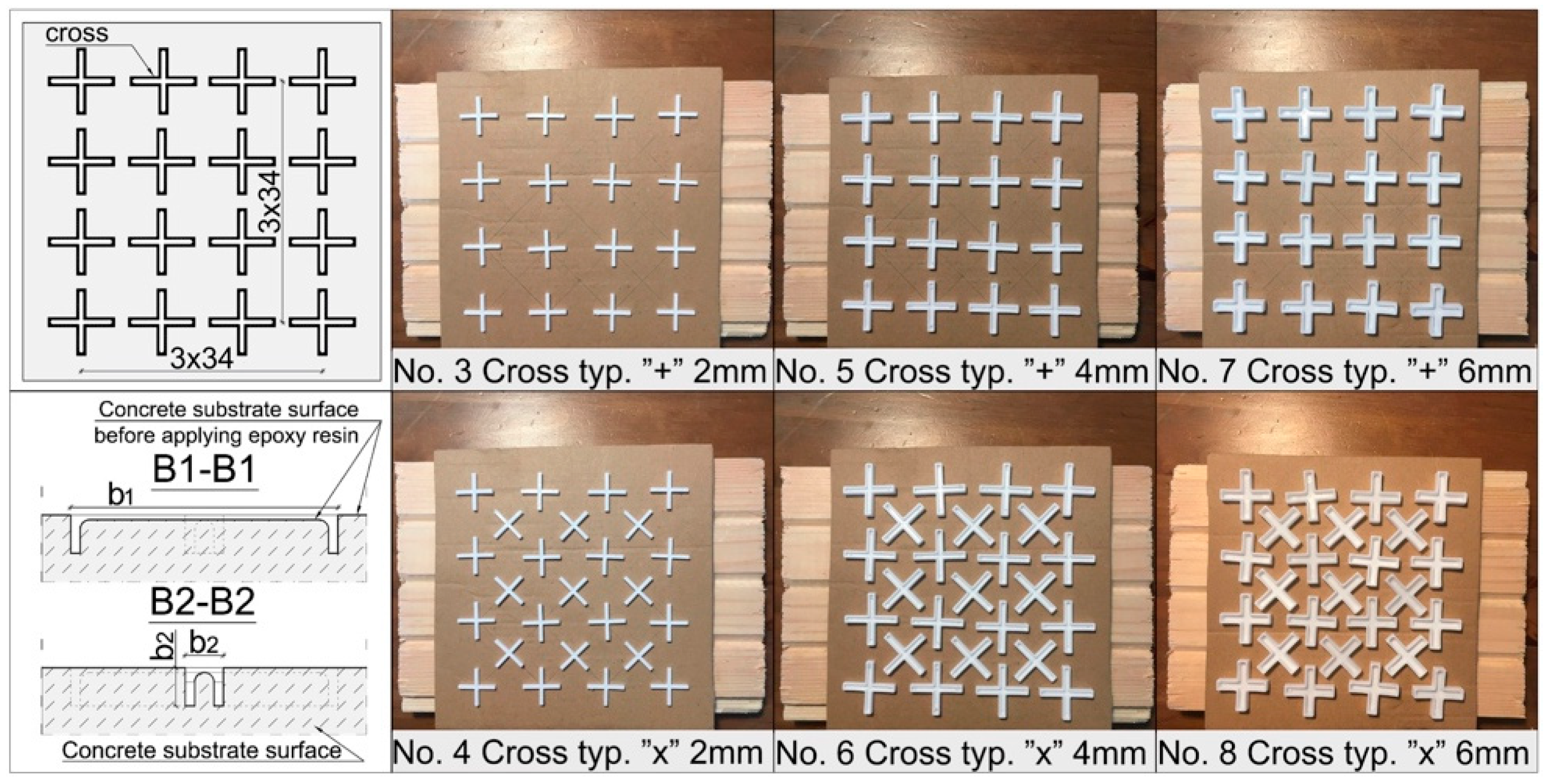
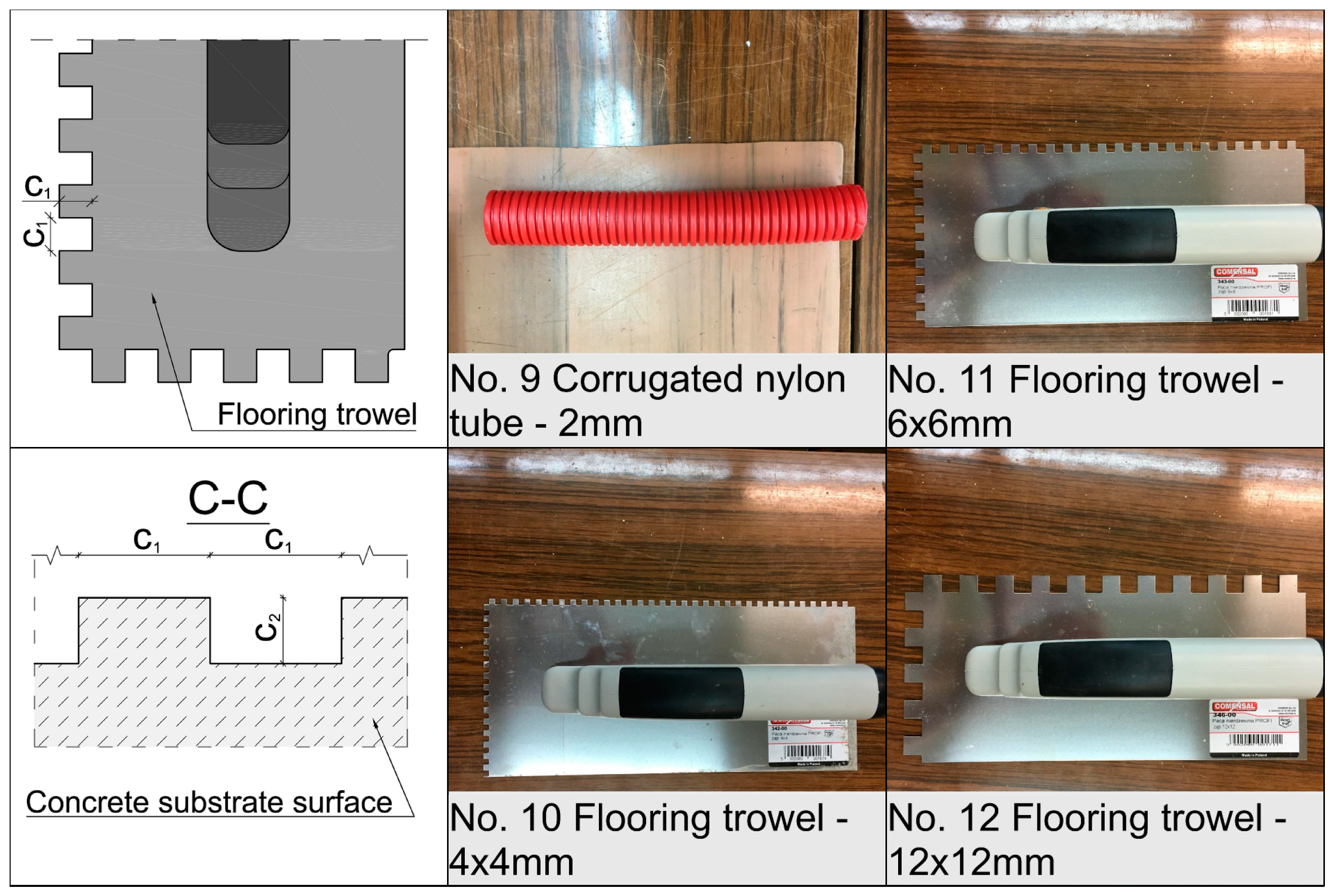
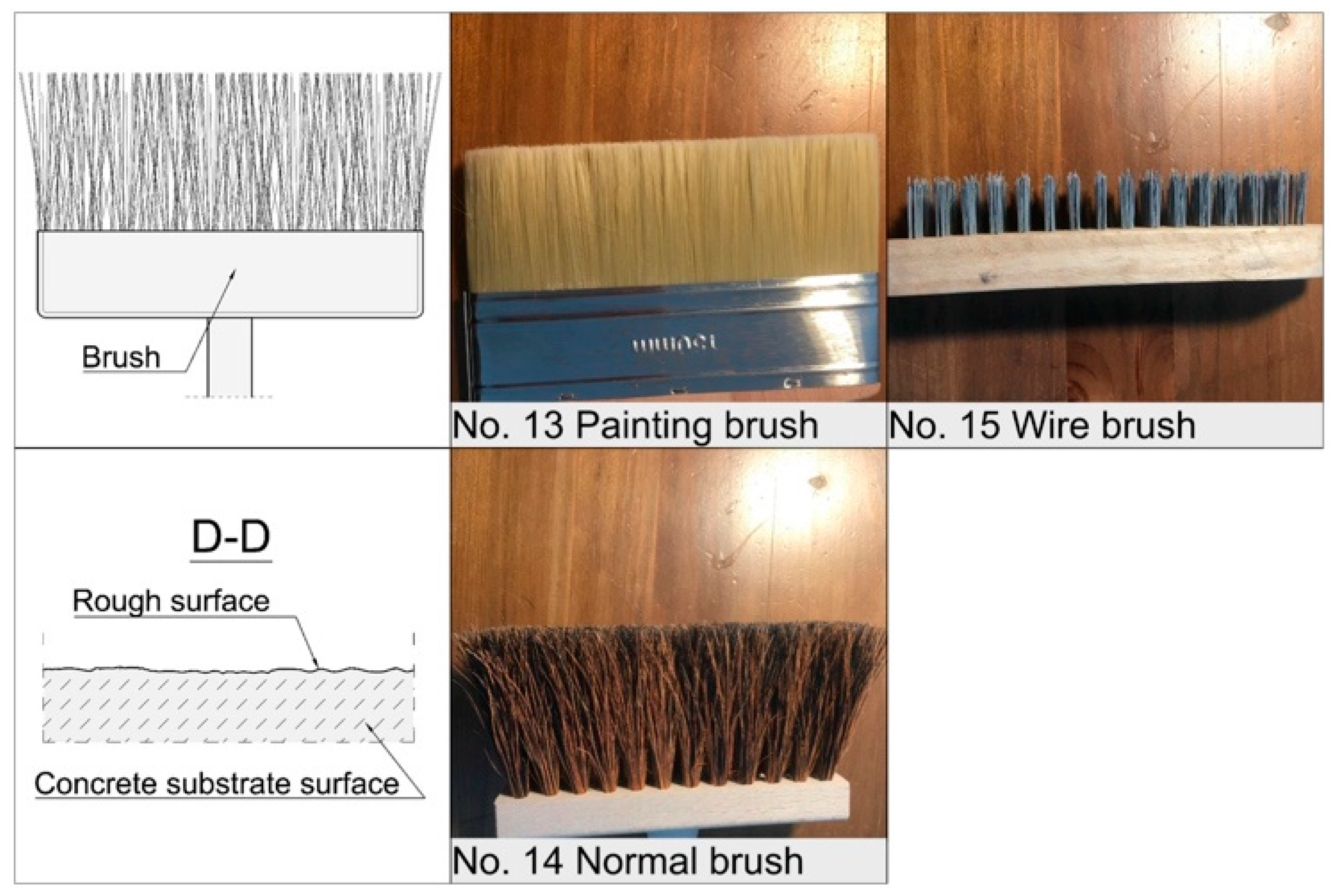
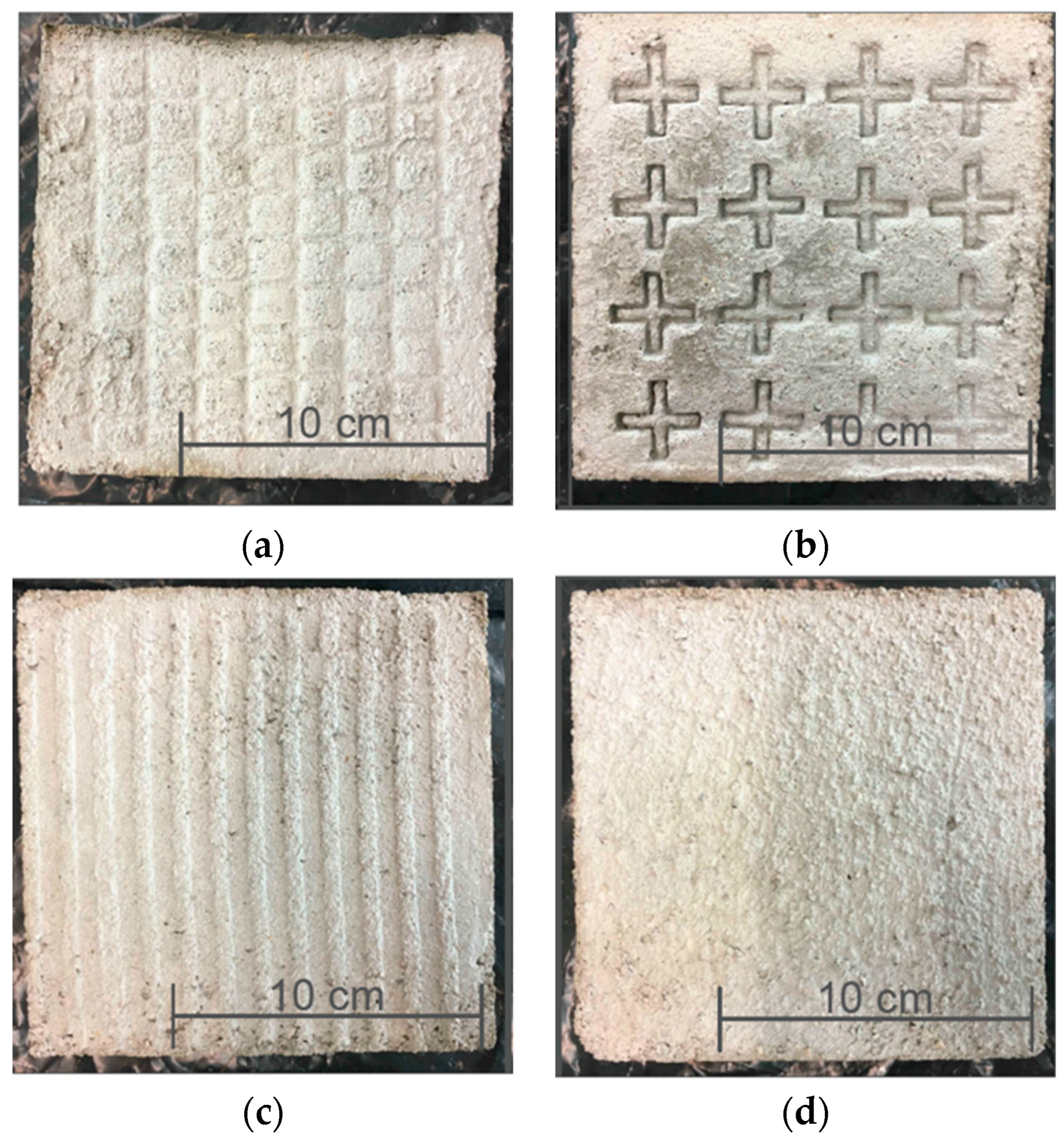

| Name of the Texturing Method | Sample Number | Description of Applied Texturing Method |
|---|---|---|
| Grooving | 1 | Grooving using a building net to produce a series of grooves with a depth of 1 ± 0.5 mm and a gap from 7 to 9 mm between each other |
| 2 | Grooving using a painting grid to produce a series of grooves with a depth of 8 ± 0.5 mm and with a gap from 9 to 11 mm between each other | |
| Imprinting | 3 | Imprinting using small cross plastic spacers type “+” with a thickness of 2 mm in regular spacing of 34 mm |
| 4 | Imprinting using small cross plastic spacers type “x” with a thickness of 2 mm in regular spacing of 24 and 34 mm | |
| 5 | Imprinting using small cross plastic spacers type “+” with a thickness of 4 mm in regular spacing of 34 mm | |
| 6 | Imprinting using small cross plastic spacers type “x” with thickness of 4 mm in regular spacing of 24 and 34 mm | |
| 7 | Imprinting using small cross plastic spacers type “+” with a thickness of 6 mm in regular spacing of 34 mm | |
| 8 | Imprinting using small cross plastic spacers type “x” with thickness of 6 mm in regular spacing of 24 and 34 mm | |
| Patch grabbing | 9 | Patch grabbing with a rotated corrugated nylon tube with the diameter of 2 mm |
| 10 | Patch grabbing with a flooring trowel with size of 4 × 4 mm2 | |
| 11 | Patch grabbing with a flooring trowel with size of 6 × 6 mm2 | |
| 12 | Patch grabbing with a flooring trowel with size of 12 × 12 mm2 | |
| Brushing | 13 | Brushing with a painting brush with width of 150 mm |
| 14 | Brushing with a wire brush with width of 190 mm | |
| 15 | Brushing with a normal brush with width of 140 mm |
© 2019 by the authors. Licensee MDPI, Basel, Switzerland. This article is an open access article distributed under the terms and conditions of the Creative Commons Attribution (CC BY) license (http://creativecommons.org/licenses/by/4.0/).
Share and Cite
Krzywiński, K.; Sadowski, Ł. The Effect of Texturing of the Surface of Concrete Substrate on the Pull-Off Strength of Epoxy Resin Coating. Coatings 2019, 9, 143. https://doi.org/10.3390/coatings9020143
Krzywiński K, Sadowski Ł. The Effect of Texturing of the Surface of Concrete Substrate on the Pull-Off Strength of Epoxy Resin Coating. Coatings. 2019; 9(2):143. https://doi.org/10.3390/coatings9020143
Chicago/Turabian StyleKrzywiński, Kamil, and Łukasz Sadowski. 2019. "The Effect of Texturing of the Surface of Concrete Substrate on the Pull-Off Strength of Epoxy Resin Coating" Coatings 9, no. 2: 143. https://doi.org/10.3390/coatings9020143
APA StyleKrzywiński, K., & Sadowski, Ł. (2019). The Effect of Texturing of the Surface of Concrete Substrate on the Pull-Off Strength of Epoxy Resin Coating. Coatings, 9(2), 143. https://doi.org/10.3390/coatings9020143

