1. Introduction
Laser Directed Energy Deposition (L-DED) has emerged as an effective additive manufacturing technology for the repair, refurbishment, and maintenance of high-value engineering components, particularly in defense, naval and aerospace applications such as propulsion systems, turbine assemblies, and structural airframes. By enabling localized material deposition with minimal waste and reduced processing time, L-DED offers a practical solution for restoring damaged or worn components while extending their operational lifespan. Owing to its capability to rebuild complex geometries directly onto existing structures or substrates, the process has become increasingly attractive for Maintenance, Repair, and Overhaul (MRO) operations.
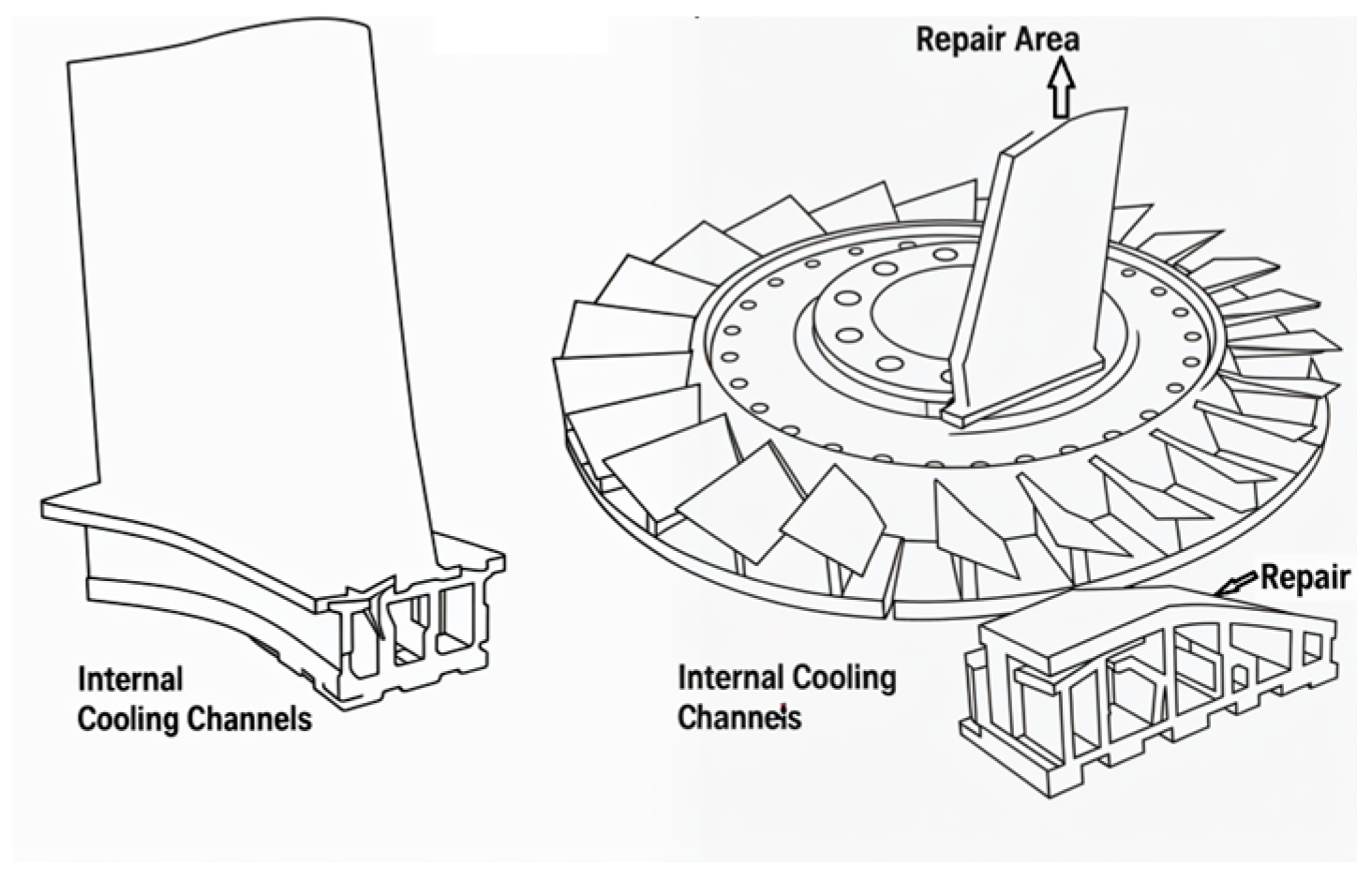
Despite these advantages, the concentrated energy input associated with L-DED generates steep thermal gradients and rapid heating–cooling cycles that significantly influence melt pool behavior, microstructural evolution, residual stress development, and defect formation. The thermal history experienced during deposition governs the quality and integrity of the repaired component, making heat dissipation a critical factor in process stability. Most existing thermal models assume a homogeneous semi-infinite substrate to simplify heat transfer calculations. However, practical repair scenarios rarely satisfy these assumptions. Industrial components often contain thin walls, internal cavities, cooling channels, and other complex geometric features that alter local heat transfer pathways and reduce the effectiveness of the substrate as a thermal sink (
Figure 1). Consequently, non-uniform heat dissipation may lead to dimensional inaccuracies, residual stress accumulation, distortion, and reduced structural reliability [
1,
2,
3,
4].
To mitigate these thermal effects, several active thermal management strategies have been investigated, including substrate preheating, auxiliary cooling systems, and controlled processing environments. Such approaches have demonstrated the ability to reduce thermal gradients and improve deposition quality; however, they often introduce additional equipment requirements, increased operational complexity, and higher processing costs [
5,
6,
7,
8]. An alternative approach involves passive thermal management through geometric design, whereby the internal architecture of the substrate is engineered to influence heat flow and cooling behavior without modifying process parameters or introducing additional control systems. In parallel with these developments, significant advances have been made in intelligent process monitoring and data-driven quality assurance for laser additive manufacturing. Infrared thermography (IR Camera), pyrometry, high-speed imaging, and multi-sensor monitoring platforms have been increasingly employed to capture thermal signatures associated with melt pool dynamics and defect formation [
9,
10,
11,
12]. And machine learning-assisted research methods have been developed to establish process–structure–property relationships, enabling predictive quality assessment and adaptive process control based on in-situ thermal data. These approaches have demonstrated considerable potential for improving process reliability and defect detection. Nevertheless, the majority of existing studies focus on monitoring, predicting, or compensating for process instabilities after they arise [
13,
14]. Comparatively less attention has been directed toward understanding how substrate geometry itself influences thermal dissipation mechanisms and melt pool stability under constant processing conditions. Although several studies have investigated the influence of substrate architecture on residual stress and distortion, a fundamental understanding of the relationship between internal geometric features, transient cooling behavior, and melt pool dynamics remains limited. In particular, the role of subsurface features in regulating thermal dissipation and stabilizing the deposition process has not been systematically quantified [
15,
16,
17,
18].
Although conventional infrared (IR) thermography provides valuable data, it fails to directly quantify the temporal and hydrodynamic stability of the melt pool response. Frequency-domain approaches offer a powerful alternative by characterizing the distribution of thermal energy across distinct oscillatory modes. To address this diagnostic limitation, this work combines Short-Time Fourier Transform (STFT) analysis with a normalized Spectral Entropy (Hs) index to evaluate melt pool oscillatory dynamics and isolate geometry-dependent thermal behaviors that are invisible to time-domain measurements.
This methodology is deployed to characterize the deposition of AISI 316L stainless steel with L-DED across three substrate of which two of them engineered geometries under constant processing parameters: a solid reference block (Alpha) Figure 4, a blind-hole configuration (Bravo) Figure 4, and a channeled geometry (Charlie) Figure 5. By integrating multi-spectral IR thermography, conduction-mode transient Finite Element Method (FEM) simulations, and STFT-based spectral entropy analysis, this study demonstrates that internal substrate architecture governs melt-pool dynamics through modifications of local heat-transfer pathways rather than through substantial changes in peak surface temperature. The results reveal that frequency-domain metrics provide greater sensitivity to geometry-induced thermal behavior than conventional temperature-based monitoring. These findings establish a data-driven method for passive thermal management and process-stability assessment in the repair of complex, high-value components using Laser DED.
2. Materials and Methods
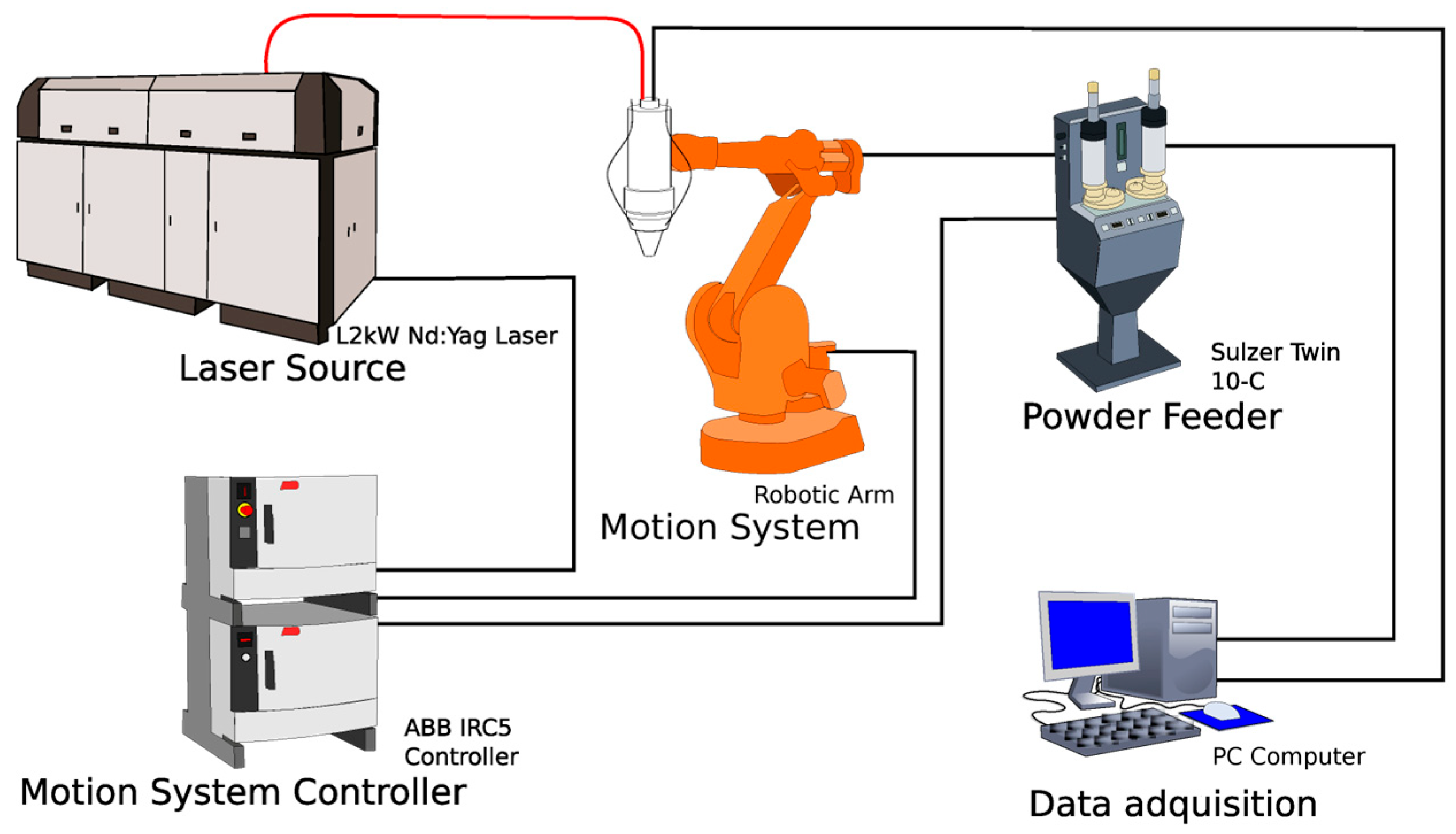
Tests were conducted using a robotic Laser Powder Directed Energy Deposition (LP-DED) system to achieve controlled and repeatable material deposition. The experimental setup consisted of an ABB IRB 2400 (M2000) robotic manipulator with a payload capacity of 16 kg (ABB, Zürich, Switzerland) integrated with a Sulzer Metco Twin powder feeder (Oerlikon Metco, Winterthur, Switzerland), as illustrated in
Figure 2. Robotic cell schematic [Laser DED]. The system was operated through a custom-developed Python-based user interface by the LAIL group that enabled process parameter control. Motion planning, scan-path generation, and process simulation were performed using ABB RobotStudio 2023 (ABB, Zürich, Switzerland) software in conjunction with an ABB IRC5 controller.
2.1. Equipment Description
The DED system was controlled through a Python 3.0-based software suite that enabled adjustment of critical process parameters,
Laser power (maximum output power of 2200 W) generated using a Nd:YAG laser operating at a wavelength of 1064 nm (ROFIN-SINAR, Hamburg, Germany);
Powder feed rate controlled through feeder rotational speed input;
Robotic arm velocity and scan-path definition.
Single-track deposits with heights ranging between approximately (0.35–0.45 mm) were fabricated on both conventional and modified substrate geometries. Powder delivery was achieved using a Sulzer Metco Twin 150 powder feeder (Oerlikon, Winterthur, Switzerland), which provided a stable and repeatable powder feed rate. Powder transport and shielding were achieved using either nitrogen or argon gas. The powder feed system utilized a PID-controlled rotating feed disk mechanism, where the feeder input voltage regulated the powder delivery rate to the deposition zone. The shielding gas served three primary functions.
Transporting powder particles from the feeder to the deposition region.
Providing protection against atmospheric contamination during deposition.
Promoting homogeneous powder distribution within the melt pool region.
2.2. Material Selection and Substrate Design
AISI 316L stainless steel was selected as both the substrate and powder feedstock material owing to its widespread use in additive manufacturing, repair, and remanufacturing applications. The material provides a representative baseline study for investigating thermal behavior during laser-directed energy deposition and serves as a foundation for future repair and fabrication studies. A conventional solid substrate was used as the reference configuration, while modified substrate designs incorporating internal cavities and channel features were developed to alter heat dissipation characteristics. These geometric modifications increase the effective surface area available for heat transfer and provide a passive approach for regulating thermal gradients during deposition.
The substrate designs were developed to investigate the influence of internal geometry on thermal behavior during laser cladding and repair operations. Previous studies have demonstrated that substrate design can significantly influence heat flow, residual stress development, and component distortion during directed energy deposition. Accordingly, the present work focuses on the thermal effects associated with geometry-induced variations in heat transfer and cooling behavior [
1,
7,
15,
16,
17,
18,
19].
2.3. Thermal Monitoring
Thermal behavior during the DED process was monitored in real time using an Optris PI thermal imaging system (Optris GmbH, Berlin, Germany). Infrared (IR) images and thermal videos were acquired using two calibrated temperature ranges to capture both substrate and melt-pool thermal phenomena.
The first measurement range (22–925 °C) was used to monitor substrate thermal evolution, heat diffusion, and cooling behavior, while the second range (950–2450 °C) was dedicated to melt pool observation and thermal stability assessment. This dual-camera configuration enabled simultaneous characterization of localized melt pool dynamics and global heat transfer within the substrate.
Temperature data were recorded as spatiotemporal thermal fields and exported in .dat format. Raw temperature-time datasets were processed and smoothed using MATLAB R2025a (MathWorks Inc., Natick, MA, USA) prior to analysis and FEM validation. The thermal measurements were subsequently used to compare experimental and numerical temperature histories for the different substrate geometries [
12,
20].
2.4. Numerical Modeling
Transient thermal finite element simulations were performed using ANSYS
® 2024 R1 Research Edition (ANSYS Inc., Canonsburg, PA, USA) to investigate heat transfer and cooling behavior during the DED process. The experimental conditions used for the simulations are summarized in
Table 1.
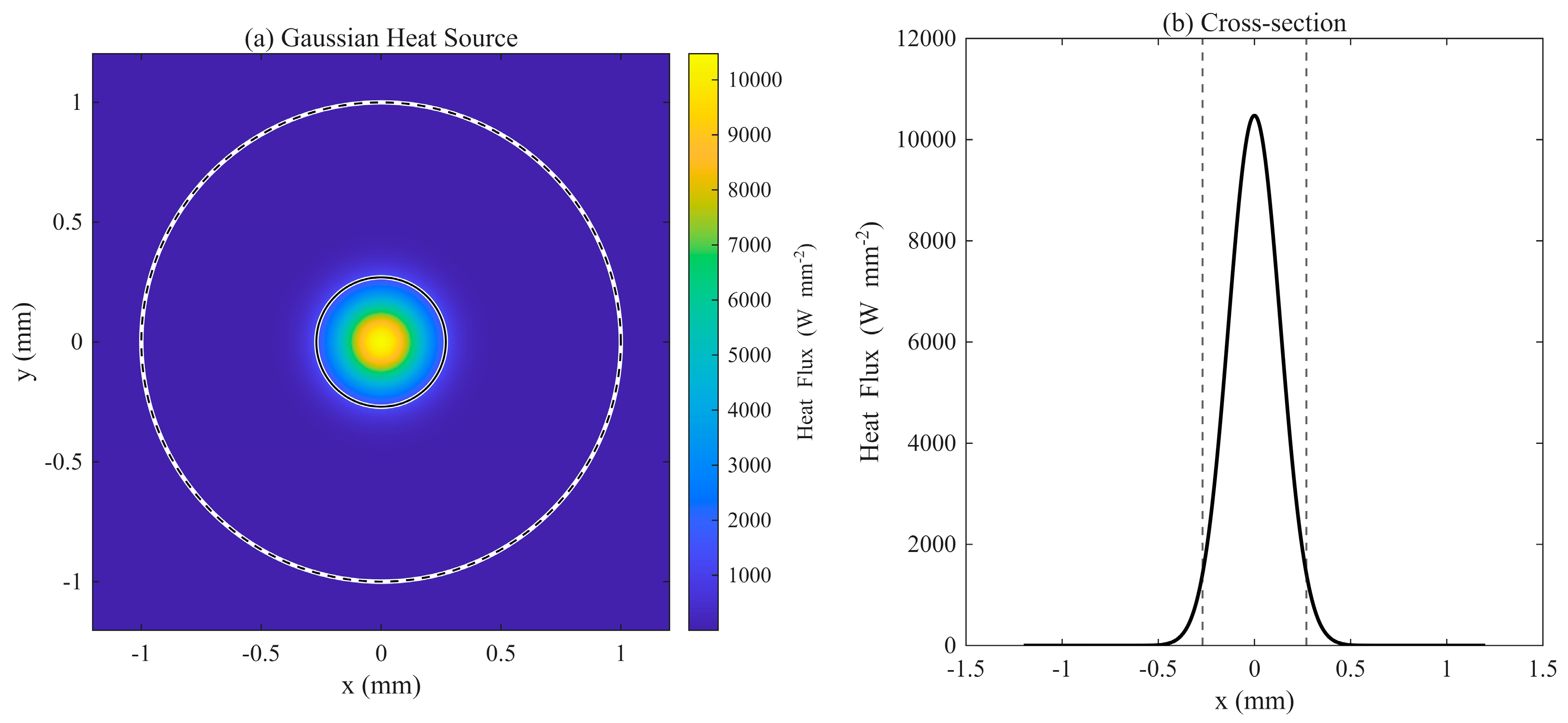
From
Figure 3 with a beam radius of 2 mm has been calculated value of power for simulations from the above Equations (1) and (2). Where (
P) Power in Watts, (
T) Temperature_surroundings Deg °C/Kelvin(K), (
ϵ) Emissivity, (
σ) Stefan-Boltzmann constant (5.67 × 10
−8 W/m
2K
4) [
8,
20,
21].
A moving Gaussian heat source was adopted to represent laser energy input. The peak heat flux was calculated using Equations (1)–(4).
Radiative heat loss was incorporated through the Stefan–Boltzmann relation.
where (
P) is laser power,
(r) is beam radius, (
ε) is emissivity, and (
σ) is the Stefan–Boltzmann constant (5.67 × 10
−8 W/m
2K
4).
Heat transfer within the substrate was governed by the heat conduction equation.
where (
ρ), density (
cp) specific heat capacity and (
k) represent thermal conductivity, respectively, while
Q denotes the moving laser heat source.
The Gaussian heat source distribution was defined as below.
where (
r) beam radius and
r_ (
x,
y,
t) represent the is the effective beam radius.
Temperature-dependent thermophysical properties of AISI 316L were incorporated to account for thermal behavior at elevated temperatures. In addition to the Gaussian formulation, Goldak’s double-ellipsoidal heat source model was evaluated for comparison [
5]. The simulation workflow included geometry creation, material assignment, mesh generation, Boundary conditions, transient thermal solution, and comparison with experimental infrared measurements. Model validation was performed through spatial and temporal correlation of simulated temperature histories with IR thermography data obtained from the Alpha, Bravo, and Charlie substrate configurations. Agreement between simulation and experiment, quantified using RMSE metrics, confirmed the model’s capability to capture geometry-dependent heat transfer behavior [
2,
6,
22].
2.5. Geometry and FE Model
The substrate geometries were developed using FreeCAD 0.20 2022 software and imported as STEP or IGES format into ANSYS
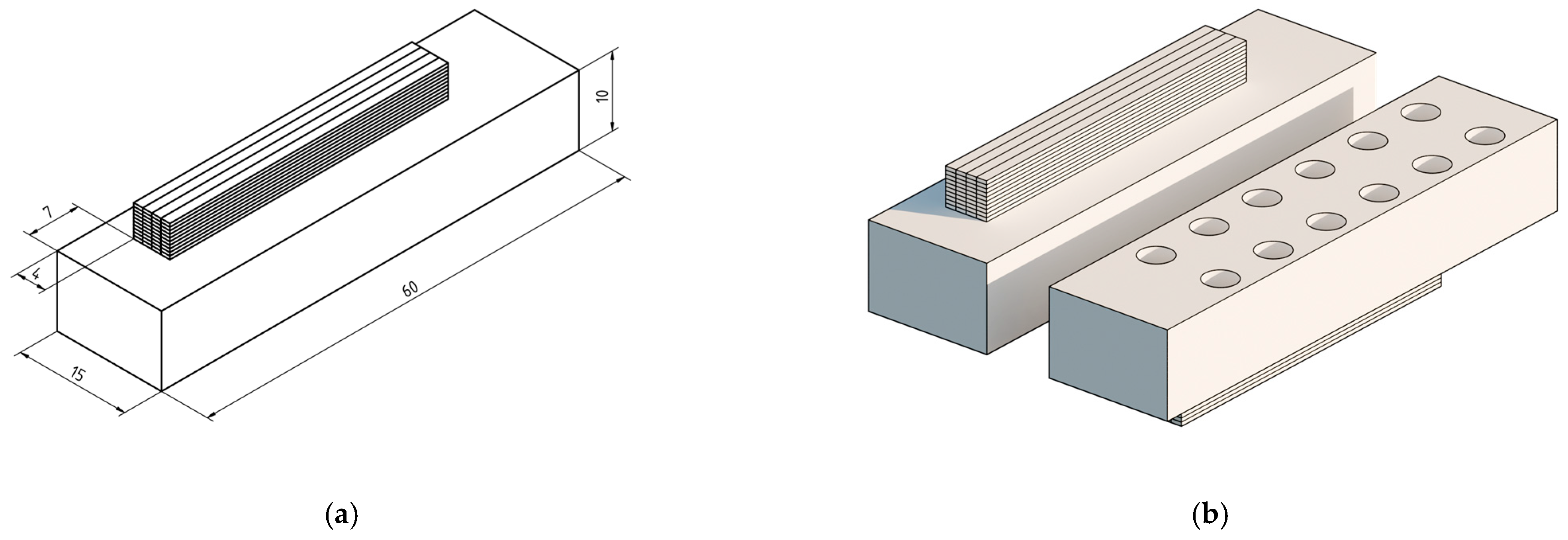
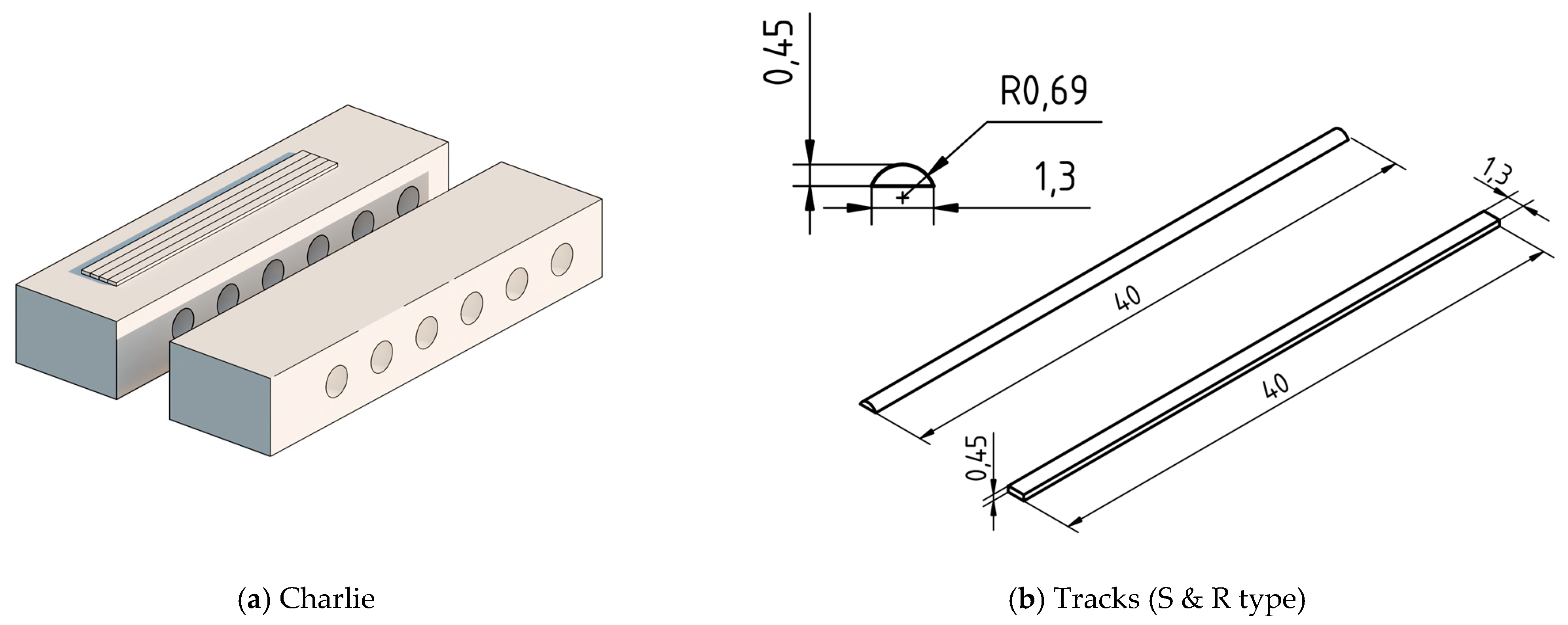
® for finite element analysis. Three substrate configurations, designated Alpha (A), Bravo (B), and Charlie (C), were investigated to evaluate the influence of internal geometric features on heat dissipation and cooling behavior during the Laser DED process (
Figure 4. Substrate Dimensions of Alpha (a) and Bravo (b) CAD models and
Figure 5. Charlie CAD & the Track Dimensions Semi-Circle (S) and Rectangular (R)).
Validation methodology: The FEM model was primarily validated against infrared thermography measurements obtained under identical processing conditions. Additional confidence in the adopted thermal modeling is provided by previous studies conducted by the authors. In a related AISI 316L Laser-DED investigation, FEM-predicted cooling rates showed consistency with experimentally measured secondary dendrite arm spacing (SDAS), indicating that the model adequately captured the thermal conditions governing solidification behavior [
23]. Furthermore, similar conduction-based FEM validation methodologies have been successfully applied by the authors for experimentally validated aerospace part for thermal loads subjected to localized heating, supporting the suitability of the present approach for transient heat-transfer analysis [
24]. The adopted validation strategy is also consistent with established thermal modeling approaches reported in the literature [
5,
17,
20,
25].
Substrate Models
The baseline substrate (Alpha) consisted of a rectangular prism with dimensions of 60 mm × 15 mm × 10 mm. Two modified geometries, Bravo and Charlie, were designed with internal features that increased the effective surface area available for heat transfer while maintaining the same external dimensions. The substrate variants and corresponding surface areas are summarized in
Table 2.
A single deposited bead was represented using an idealized geometry with a length of 40 mm, width of 1.3 mm, and height of 0.45 mm. Rectangular (R) and semi-circular (S) track profiles were initially considered; however, the semi-circular profile was adopted for the majority of simulations to provide a consistent basis for comparing thermal responses across the different substrate geometries. The geometric properties of the deposited tracks are summarized in
Table 3. [
15,
17,
18].
Tracks cross section: On all substrate geometries, a single layer bead deposit was modeled with 4 tracks each as an idealized prismatic bead with a length of 40 mm, a nominal width of 1.3 mm, and a nominal height of 0.45 mm. Variants were based on the single bead deposit geometry. The simplification of the single bead deposit of two different shapes to study bead geometry in SET-1 and the SET-2 experiments of the research model utilized only the Semi-Circle (S) type, this allowed for a consistent assessment of thermal performance across all substrate geometries [
11,
16].
2.6. Boundary Conditions
The thermal boundary conditions were defined based on the experimental DED process parameters. An effective laser beam radius (r_) of (~0.27–0.67 mm) was determined through iterative calibration against experimentally measured track dimensions and was used throughout the simulations. The principal simulation parameters are summarized in
Table 4. Natural and forced convection were incorporated using heat transfer coefficients of 0.00005 W/mm
2·°C and 0.0001 W/mm
2·°C, respectively. Forced convection accounted for shielding gas flow during deposition, while natural convection represented heat loss to the surrounding environment at an ambient temperature of 22 °C. Radiative heat transfer was included using a constant emissivity value of 0.4, consistent with values commonly reported for AISI 316L in thermal modeling studies. The progressive addition of deposited material was represented using the element birth–death technique available within ANSYS
®. Elements corresponding to undeployed material were initially deactivated and subsequently activated as the moving heat source progressed along the deposition path, thereby simulating material addition during the DED process.
Meshing
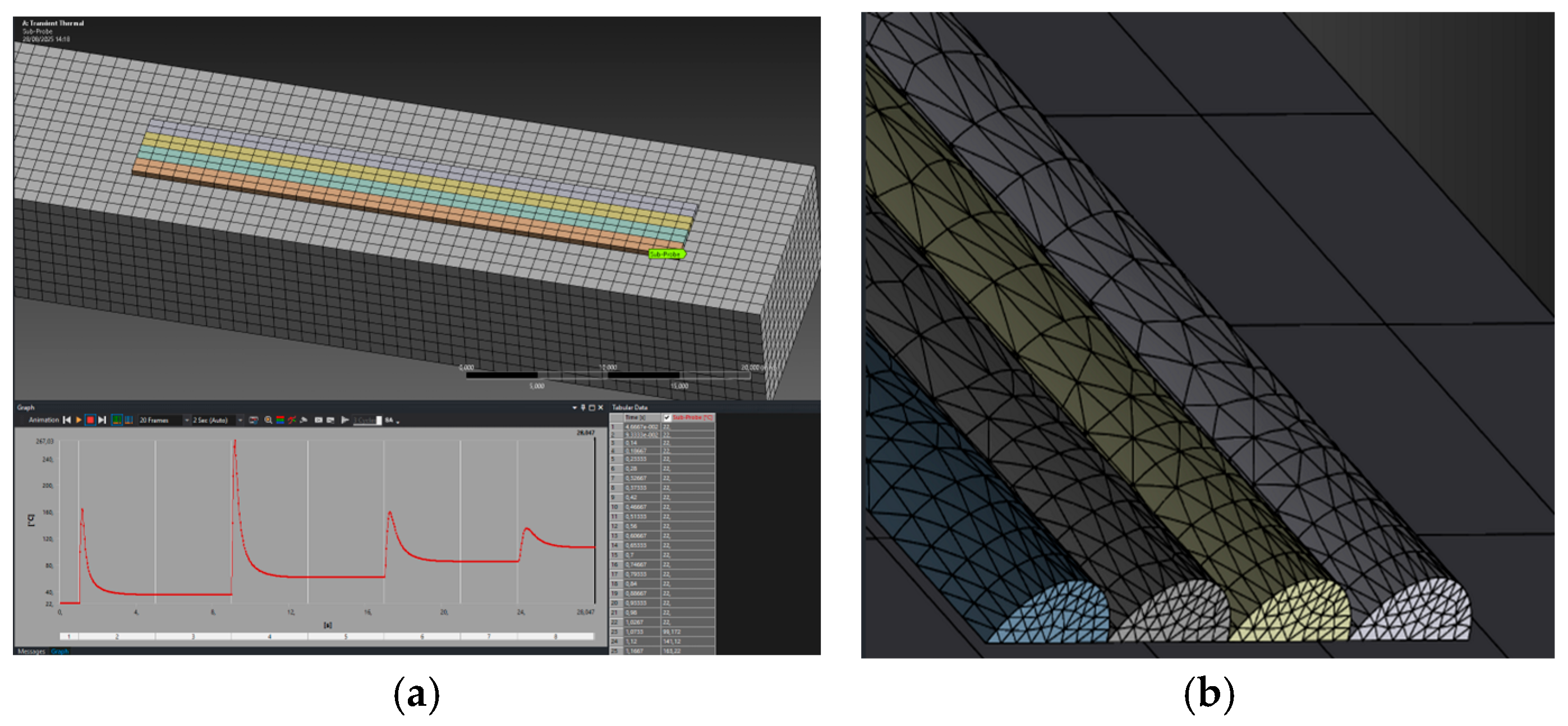
A mesh sensitivity study was conducted to establish an appropriate balance between computational efficiency and solution accuracy (
Figure 6). Mesh refinement was concentrated in regions experiencing high thermal gradients, particularly within the deposited track and heat-affected zone. The final mesh configuration was selected following convergence analysis, where further refinement resulted in negligible changes in predicted temperatures and thermal gradients. The same meshing strategy was applied to all substrate configurations to ensure numerical consistency and comparability [
26,
27].
2.7. Thermal Signal Processing and Spectral Analysis
Thermal signals extracted from the infrared thermography measurements were further analyzed in the frequency domain to investigate dynamic thermal behavior during the DED process. While conventional thermal analysis focuses primarily on peak temperatures and cooling rates, frequency-domain analysis enables the identification of transient oscillatory phenomena that may not be apparent in time-domain observations.
The recorded temperature–time data were processed using the Short-Time Fourier Transform (STFT), which provides simultaneous time–frequency localization of thermal events. The STFT was employed to evaluate the evolution of frequency components during deposition and to identify variations in thermal stability associated with different substrate geometries and process conditions. The STFT is expressed as in Equation (5a).
where
x(
t) is the temperature signal,
w(
t − τ) is the sliding window function,
τ is time localization, and
ω is angular frequency.
The Spectral Entropy Index (SEI) proposed in this study is calculated using the normalized Shannon spectral entropy formulation, providing a dimensionless measure of spectral disorder (Chaos) within the thermal oscillation signal and enabling quantification of the distribution of thermal energy across the frequency spectrum.
where
X(
k) represents the spectral amplitude at frequency bin
k, and
p(
k) denotes the normalized spectral energy distribution within the selected frequency range.
The complexity and distribution of thermal oscillations were further quantified using normalized spectral entropy Index (SEI) denoted as (H
s).
where (H
s) represents the Spectral Entropy Index (SEI), and (N_
bins) is the total number of frequency bins considered within the analysis bandwidth.
Lower SEI [H
s] values indicate a concentrated and predictable frequency response, whereas higher SEI [H
s] values indicate broader spectral distributions and increased thermal complexity. The resulting spectral descriptors were subsequently used to evaluate thermal stability during deposition and to explore the feasibility of frequency-domain indicators for process monitoring and quality assessment. The application of these metrics to the experimental datasets is presented in
Section 3.6.
3. Results
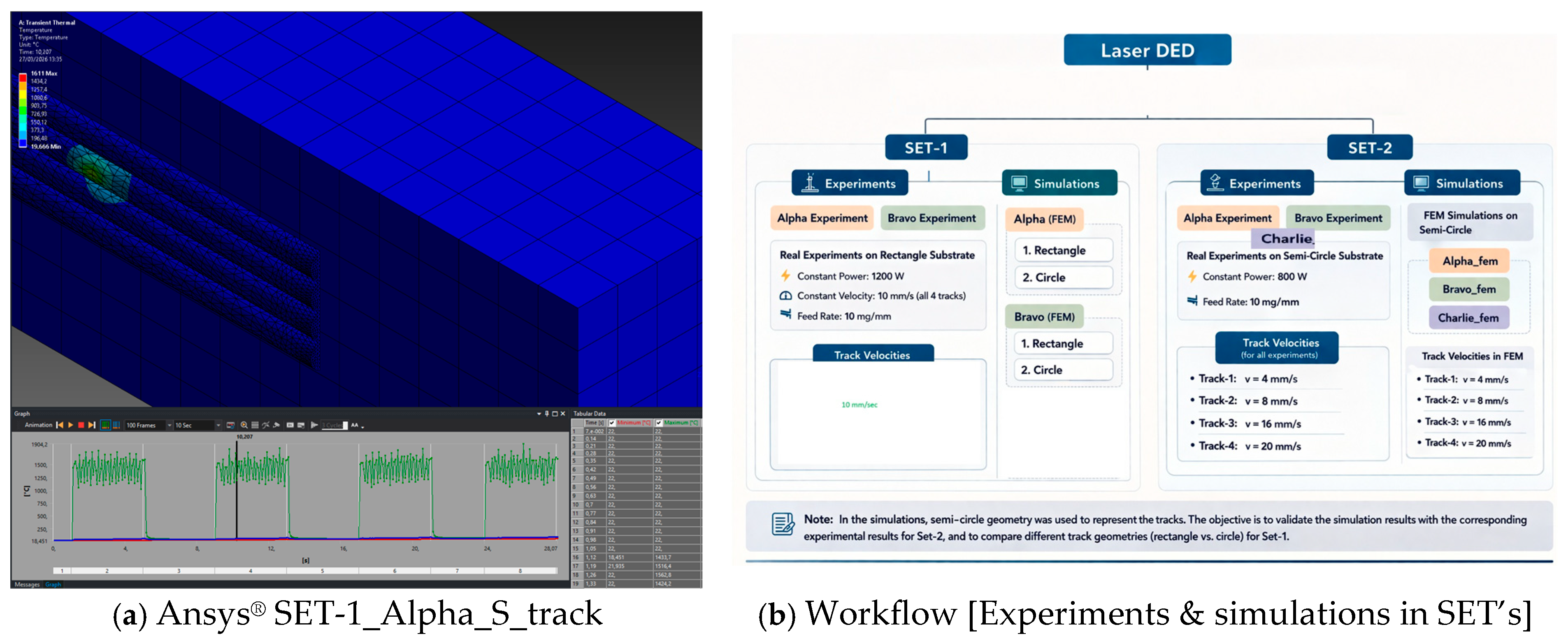
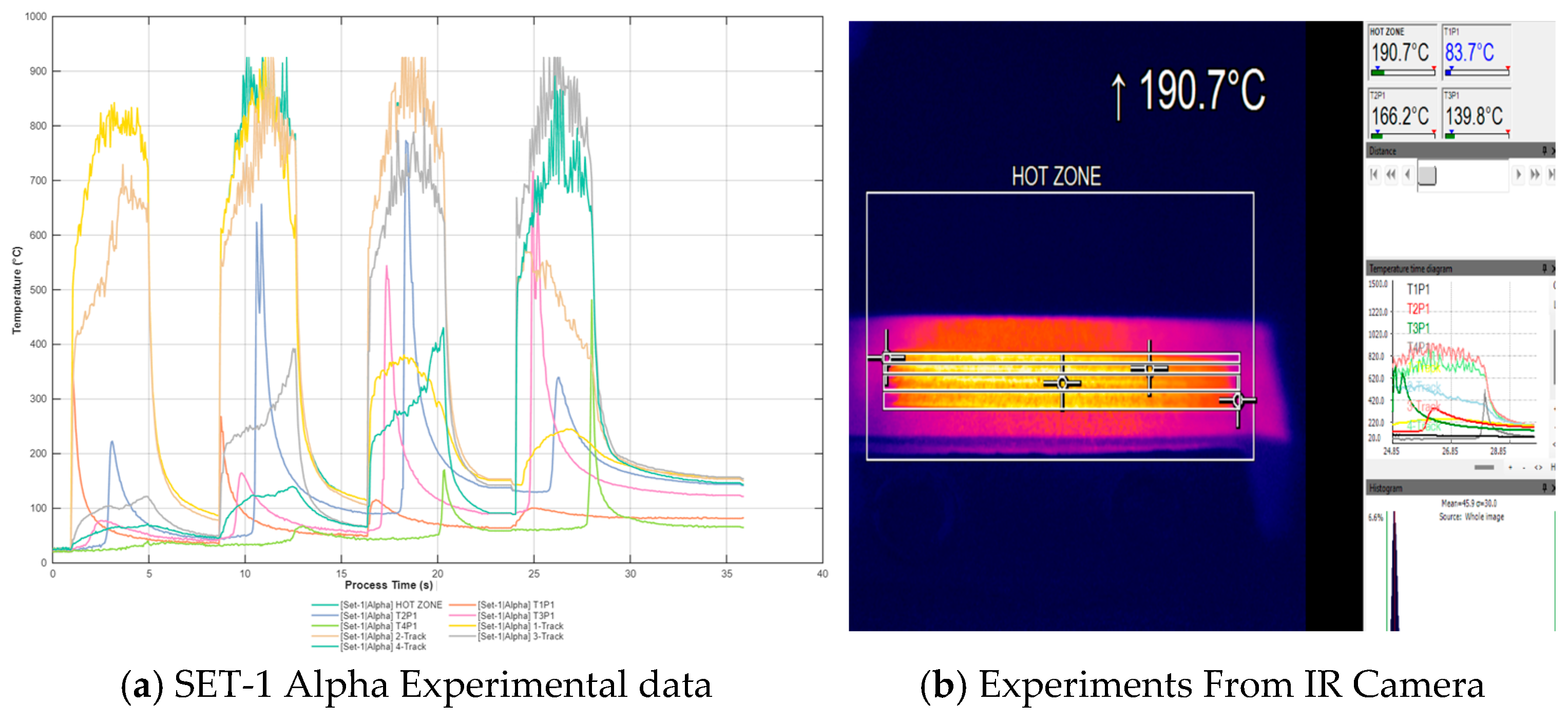
Localized thermal transients were observed during the first thermal cycle of the deposition process, as shown in
Figure 7a. Temporary temperature reductions occurred during the time intervals of 10–14 s (Blue, T2P1) and 25–30 s (Pink, T3P1), followed by recovery prior to reaching the maximum temperature. This behavior is attributed to the injection of cold powder particles into the melt pool. Part of the laser energy is consumed in heating and melting the incoming powder, resulting in a temporary reduction in measured temperature. Although the Gaussian heat-source model captures the overall conductive thermal behavior, it does not explicitly account for particle-scale powder interactions. Nevertheless, agreement between simulations and experiments improves during subsequent thermal cycles as conduction becomes the dominant heat-transfer mechanism. Consequently, the simplified Gaussian model was considered sufficient for evaluating global thermal behavior and cooling characteristics [
8].
3.1. Comparison of Tracks Geometry
Two deposited track geometries, Rectangular (R) and Semi-Circular (S), were evaluated in the initial FEM study using the Alpha substrate. The Semi-Circular (S) track geometry demonstrated better agreement with experimental measurements than the Rectangular (R) geometry. Model accuracy was quantified using the Root Mean Square Error (RMSE):
The Semi-Circular track model produced an RMSE of approximately 700 °C, whereas the Rectangular model yielded an RMSE of approximately 1100 °C with 20% effective power. The Rectangular geometry exhibited larger deviations during transient heating and cooling stages. Therefore, the Semi-Circular track geometry was selected for all subsequent analyses (
Figure 8).
3.2. Set-1 FEM vs. Experiments Results
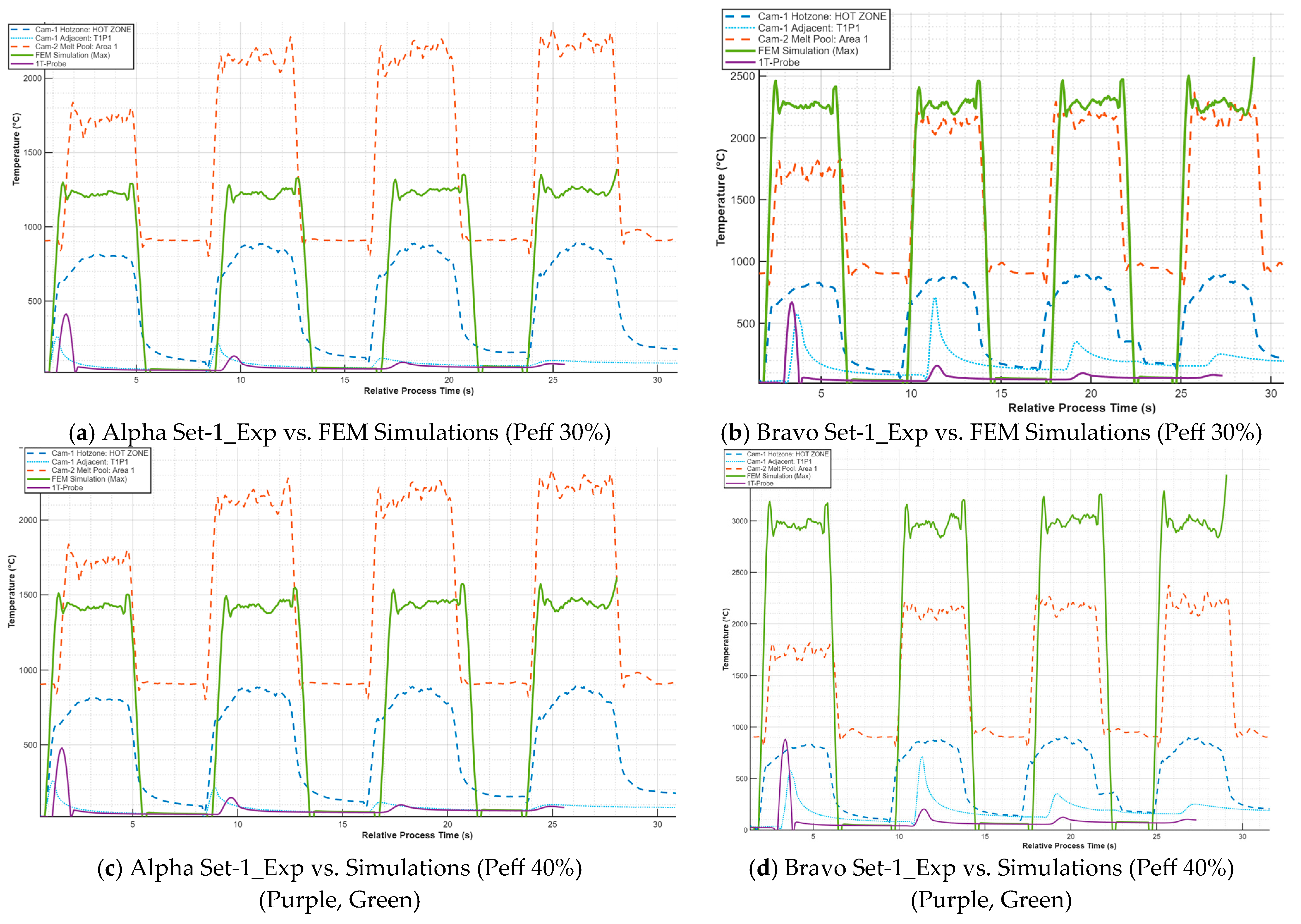
Simulation results from the track-probe locations were compared with the experimental thermal histories obtained from infrared thermography, as shown in
Figure 9. Partial agreement was observed between the FEM predictions and experimental measurements for both Alpha and Bravo substrates in far field IR camera data, confirming the capability of the transient thermal model to capture the overall thermal response of the DED process.
For the baseline Alpha substrate, the model reproduced the thermal cycles and cooling behavior with reasonable accuracy. In contrast, the modified geometries (Bravo and Charlie) exhibited increased heat accumulation due to the presence of internal features that altered the heat conduction pathways. Consequently, simulations using an effective power (Peff = 40%), tended to over predict peak temperatures, particularly for the modified substrate configurations. These results indicate that lower effective power values provide a more realistic representation of the thermal behavior observed experimentally.
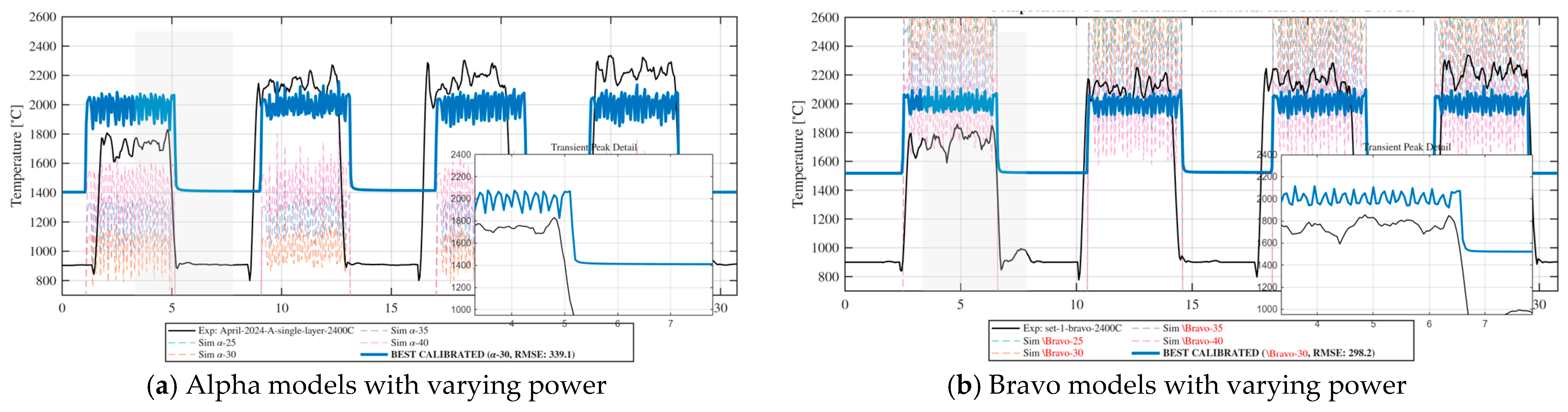
3.3. Sensitivity Studies of Process Parameters (Power)
A sensitivity analysis was conducted to evaluate the influence of effective laser power (P
eff) on the predicted thermal response of the Alpha and Bravo Substrates
Figure 10. Increasing (P
eff) improved the agreement with experimental peak temperatures; however, higher values also resulted in excessive heat accumulation and overprediction of the baseline temperature between thermal cycles.
As summarized in
Table 5, (P
eff) values between 30% and 35% (P
30%–35%) provided the best overall agreement with the experimental data, yielding the lowest global RMSE while maintaining realistic thermal trends. Lower effective power values (20%–25%) resulted in an underestimated peak temperatures, whereas higher values power (40%–45%) led to an overprediction of the response and energy density measured. Therefore, an effective power (P
eff) range of 30%–35% was adopted for subsequent simulations, as it yielded the closest agreement with lowest RMSE with the experimental data.
3.4. SET-2 Experimental Results
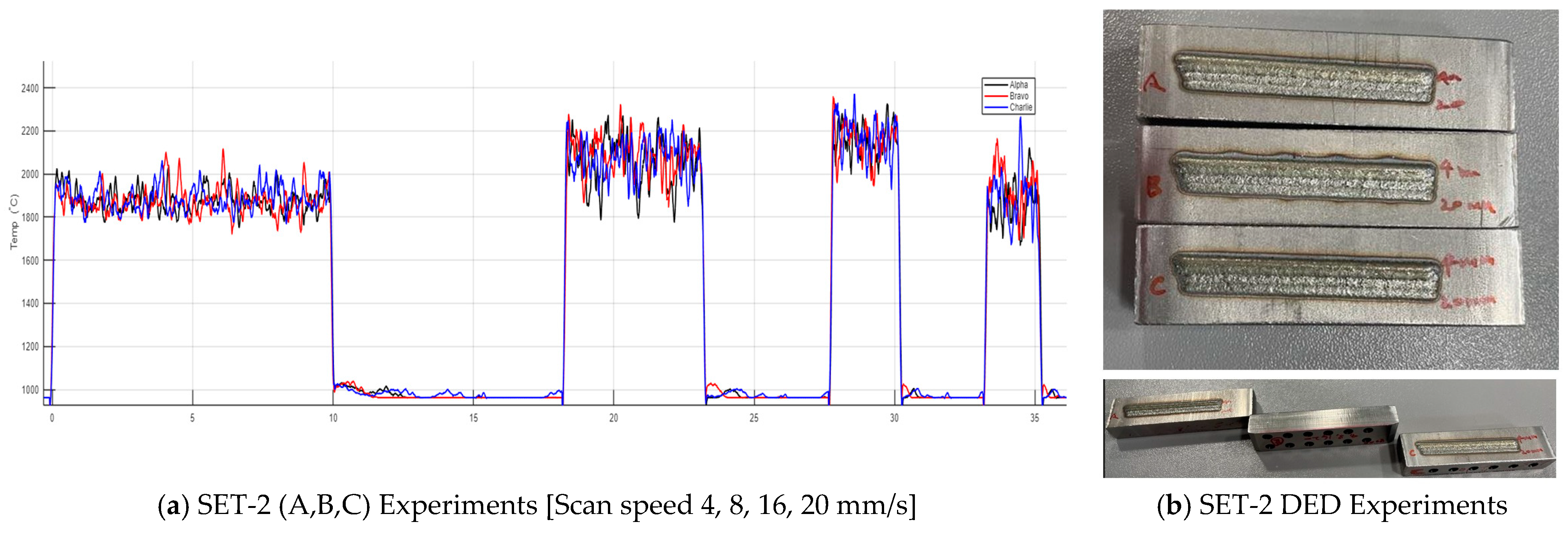
The experimental thermal histories obtained for Alpha, Bravo, and Charlie substrates at scan speeds of 4, 8, 16, and 20 mm/s are shown below. The maximum melt-pool temperature remained relatively constant across all scan speeds and substrate configurations.
Although visual differences in deposited material and localized heating effects were observed, particularly in the Bravo substrate (
Figure 11b) in the middle burn out marks, no significant variation (Red Curve) in peak temperature (
Figure 11a) was detected among the three geometries. This behavior suggests that the melt pool operates within a self-regulating thermal regime, where additional energy is primarily consumed through increased melting and heat dissipation mechanisms rather than further temperature increase. These observations indicate that scan speed and substrate geometry have a greater influence on melt-pool size and heat distribution than on the maximum melt-pool temperature itself [
11,
26].
3.5. Set-2: Validation of FEM Analysis Against Experiment Results
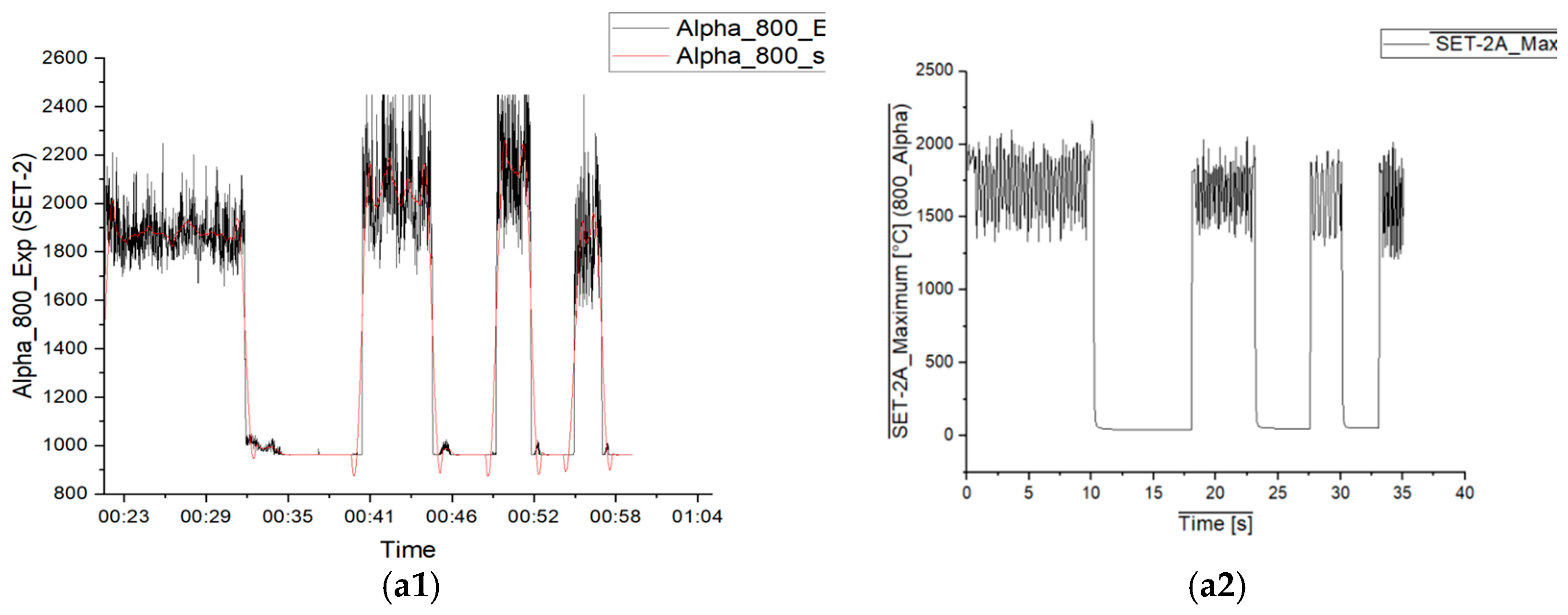
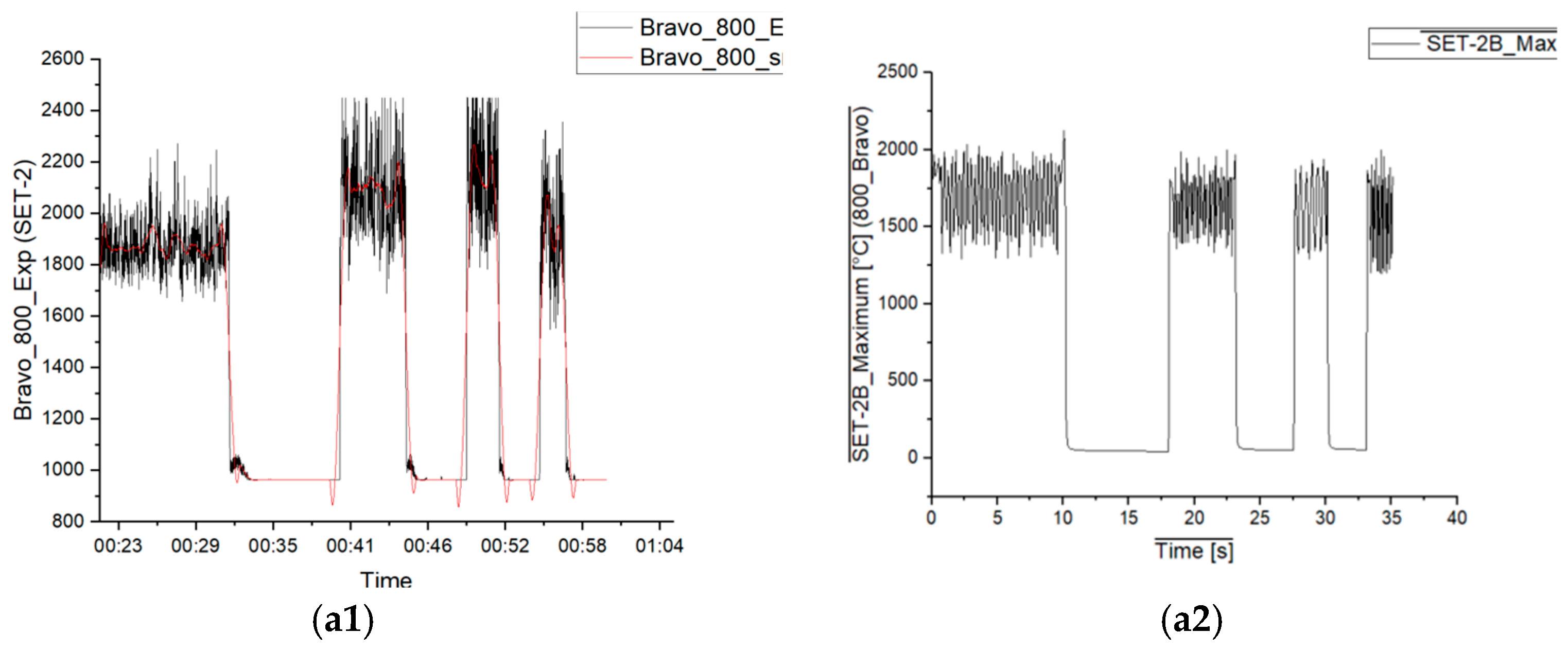
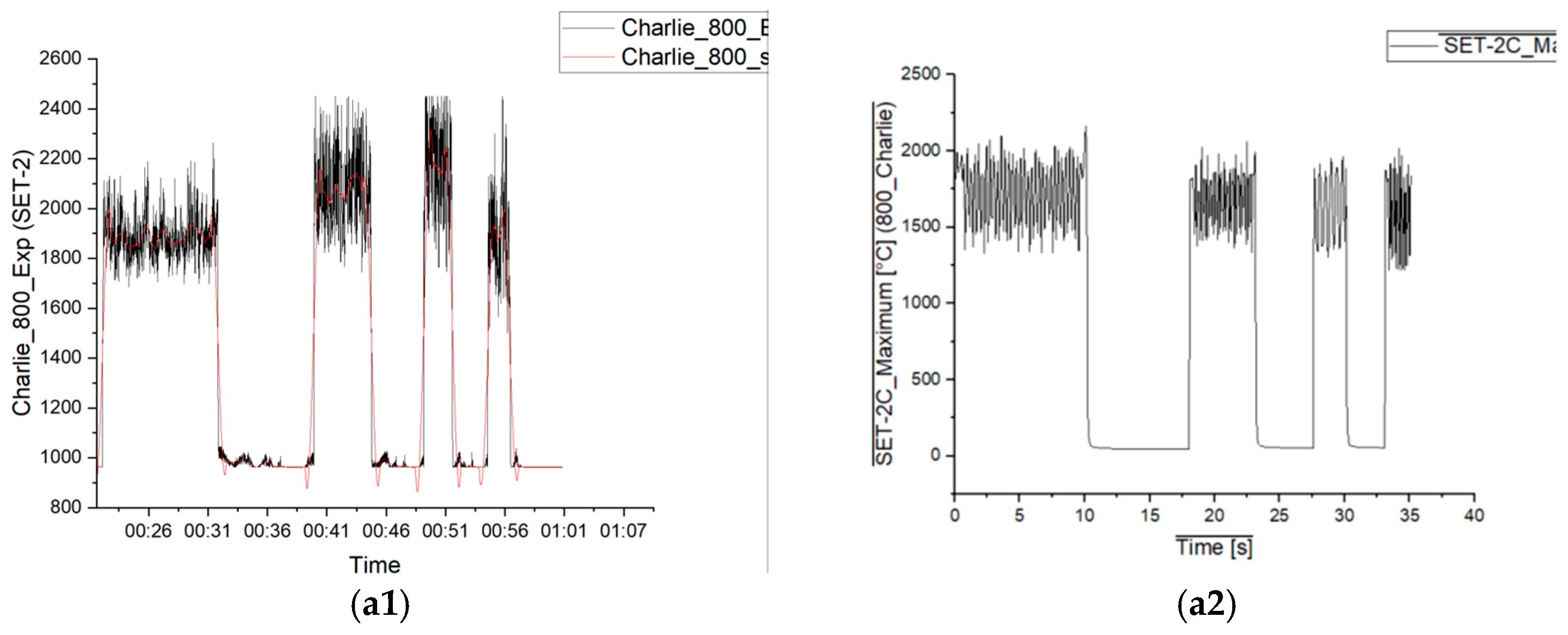
The predictive capability of the transient thermal finite element model was evaluated using the SET-2 experimental dataset obtained from the Alpha, Bravo, and Charlie substrate configurations under scan speeds (4, 8, 16, 20 mm/s) at a constant laser power of 800 W. Thermal histories recorded via dual infrared thermography were systematically compared with transient finite element simulations. For each substrate configuration (
Figure 12,
Figure 13 and
Figure 14), the left panel (a1) shows the experimental temperature evolution, with the red line representing the Savitzky-Golay smoothed data, while the right panel (a2) presents the corresponding finite element predictions.
The simulations reproduced the principal thermal trends observed experimentally across all substrate configurations. The predicted thermal histories exhibited agreement with the measured cyclic heating and cooling responses associated with successive track deposition. The results indicate that the adopted transient heat transfer model, incorporating a moving Gaussian heat source (Conduction) and temperature-dependent properties of the material, adequately captures the dominant thermal mechanisms governing the DED process.
Minor discrepancies were observed in the prediction of peak temperatures, Experimental temperatures (Peak) for Alpha and Bravo substrates were typically within the range of 1800–2200 °C, whereas the FEM model predicted peak temperatures between approximately 1700 and 2100 °C. These differences are attributed to uncertainties associated with infrared thermography, including emissivity variations, surface oxidation, and plume effects, as well as simplifications inherent to the thermal model.
The influence of substrate geometry on peak melt-pool temperature was found to be limited. Despite the introduction of blind holes (Bravo) and channels (Charlie), the measured thermal histories remained comparable to those of the solid substrate (Alpha), with variations generally falling within the uncertainty range of the infrared measurement system (±100 °C)
Figure 11a. This observation suggests that localized laser energy input dominates the measured surface thermal response during single-track deposition, while the influence of subsurface geometric features is less evident when considering peak temperatures obtained from thermography.
The calibrated FEM model (Peff = 30%) demonstrated good agreement with the experimental measurements, particularly in reproducing thermal transients and inter-pass cooling behavior. For the reference Alpha configuration, the model achieved a root mean square error (RMSE) of under 50 °C in far field IR camera vs. FEM Validation, confirming its suitability for comparative thermal analysis of the investigated substrate architectures.
Thermal histories appeared similar across all geometries, subtle oscillatory characteristics were observed within the transient temperature signals. These features are not readily distinguishable in the time domain and motivate the frequency-domain analysis presented in the subsequent
Section 3.6, where thermal stability metrics are introduced to quantify geometry-dependent thermal behavior.
3.6. Frequency-Domain Thermal Analysis
Peak melt-pool temperatures and thermal histories exhibited similar trends across the Alpha, Bravo, and Charlie substrate
Figure 11 configurations (
Section 3.4). However, these metrics alone were insufficient to resolve the influence of subsurface geometric modifications on melt-pool dynamics. The infrared measurements primarily captured the macroscopic thermal response, whereas localized thermal oscillations associated with fluid flow, heat redistribution, and transient instability remained embedded within the thermal signal.
To investigate these hidden dynamics, Short-Time Fourier Transform (STFT) analysis was applied to the thermal data acquired from the infrared monitoring system. Unlike the conventional Fast Fourier Transform (FFT), which provides a time-averaged frequency spectrum, STFT enables simultaneous time-frequency characterization of non-stationary signals and is therefore more suitable for laser (DED), where melt-pool conditions evolve continuously throughout deposition [
12,
13,
22,
28,
29,
30].
3.6.1. STFT Analysis of Melt-Pool Oscillatory Dynamics
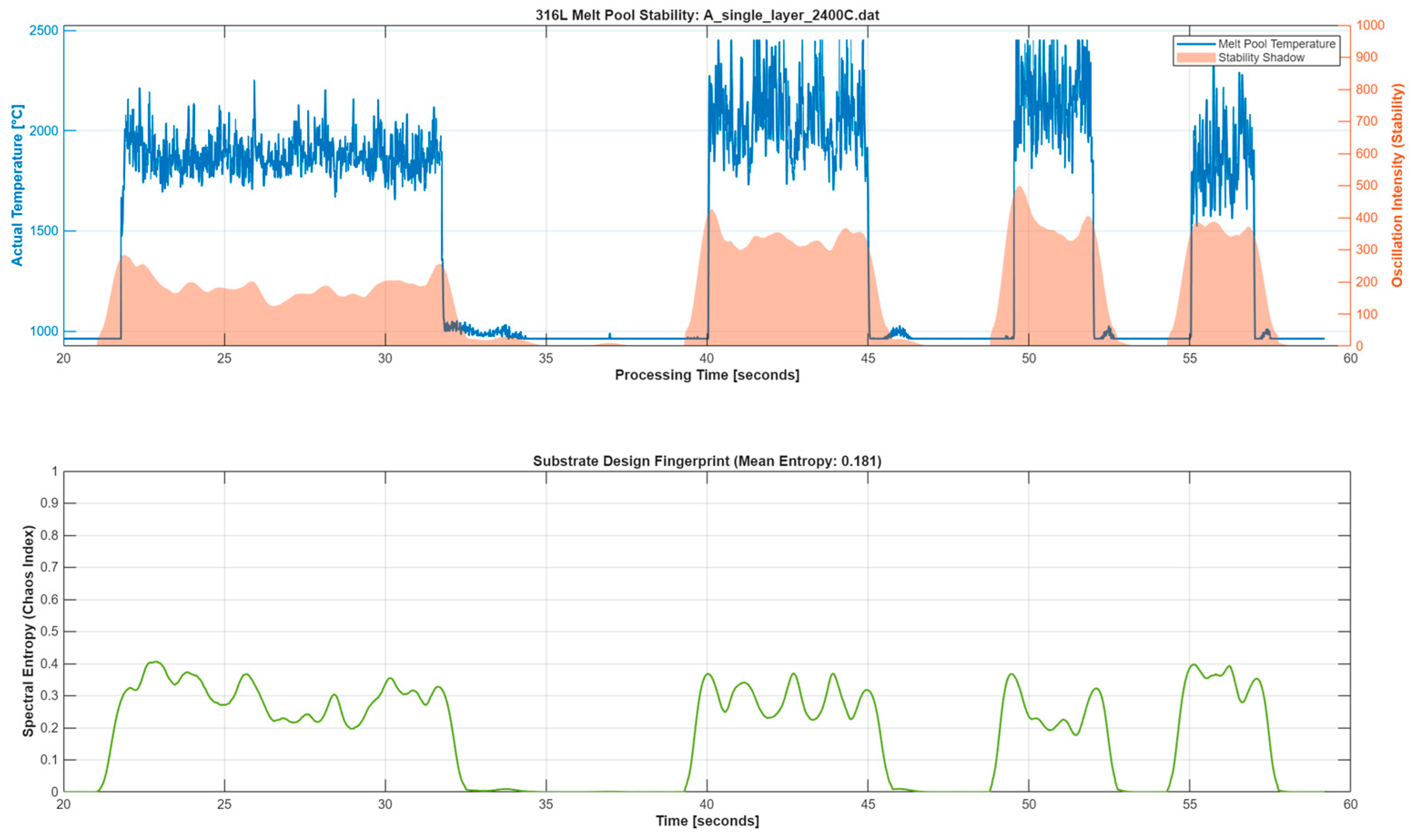
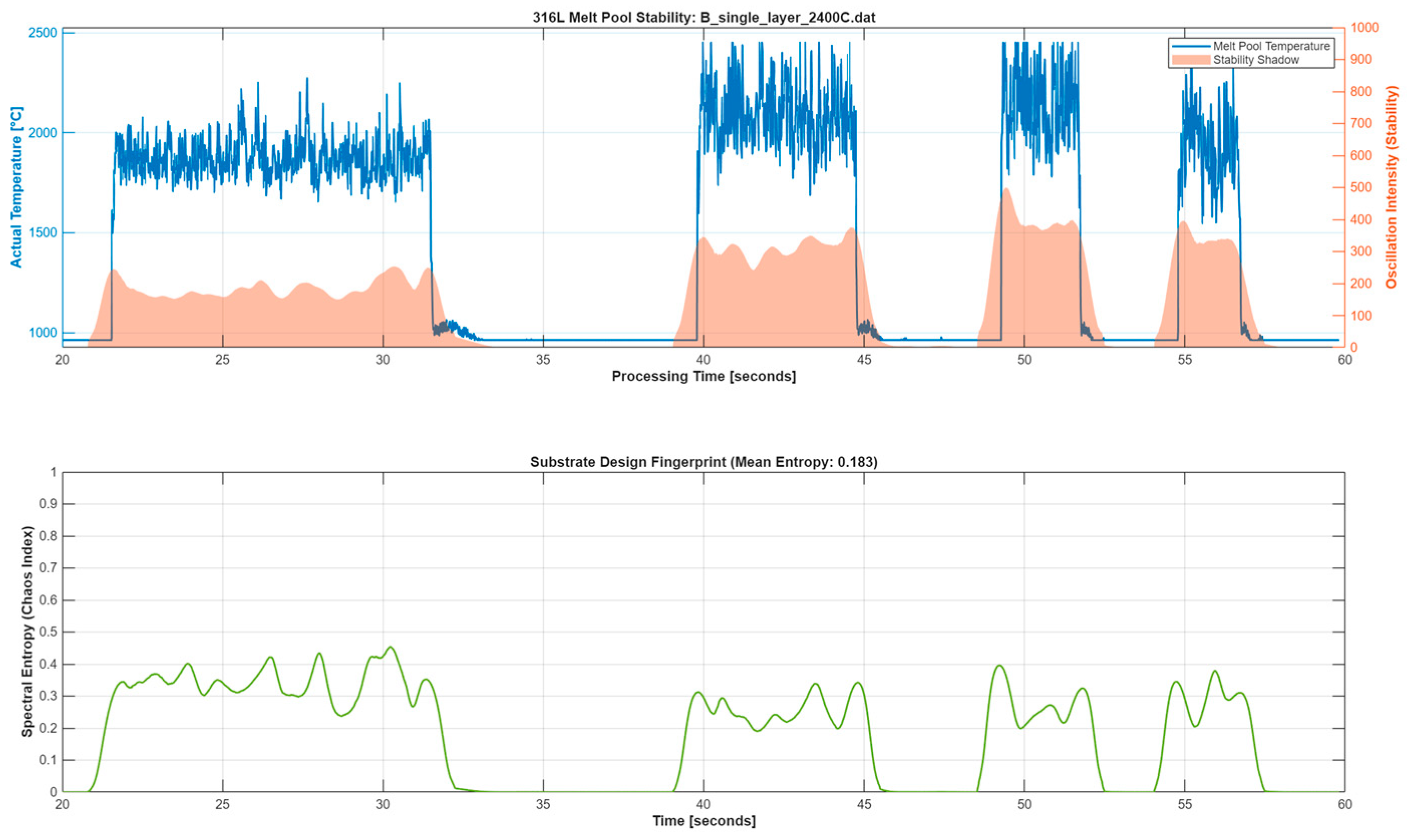
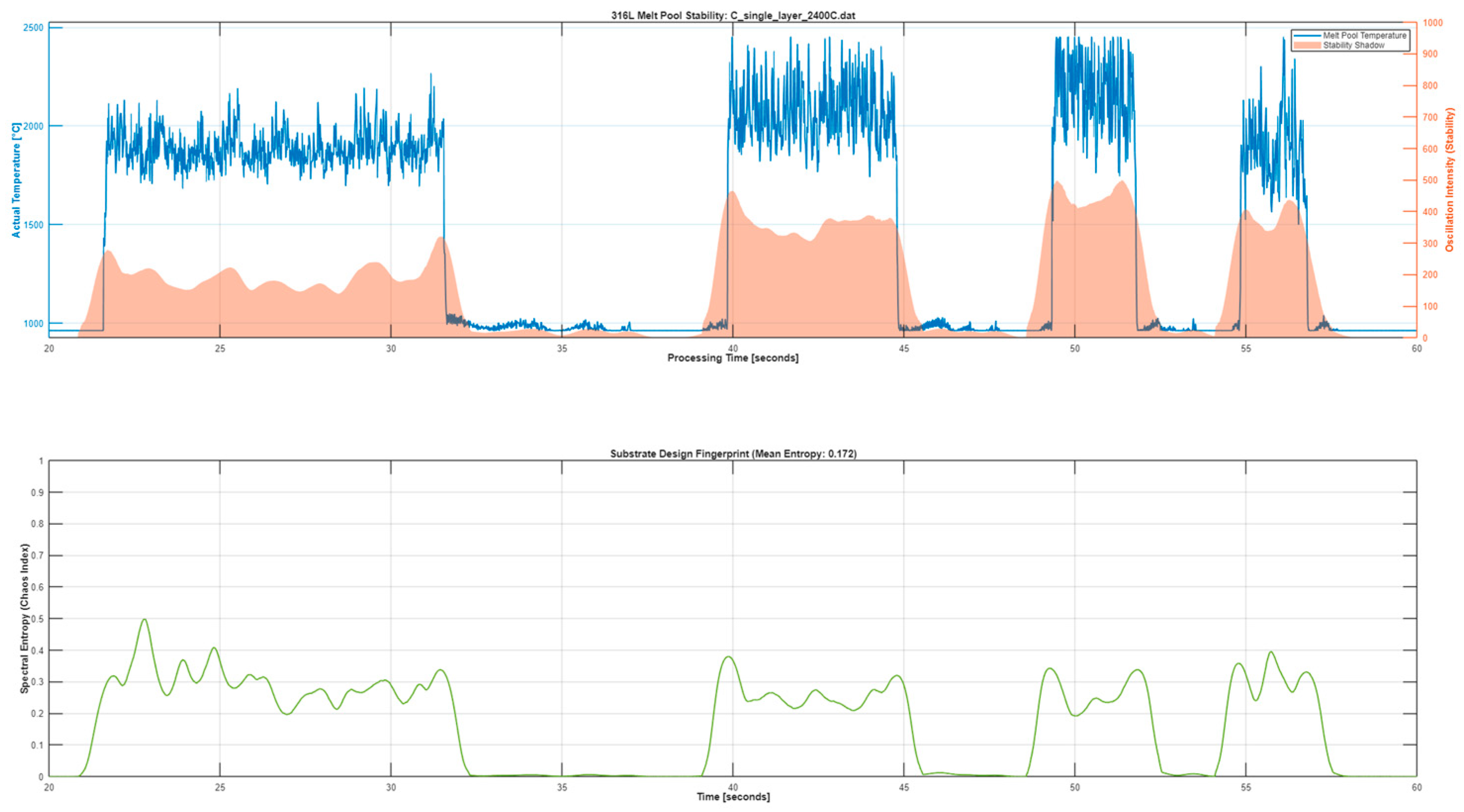
Short-Time Fourier Transform (STFT) analysis was applied to the infrared thermal signals to investigate underlying melt-pool dynamics that could not be resolved using conventional temperature metrics. Where thermal conditions continuously evolve due to moving heat sources, changing melt-pool geometry, and transient heat transfer mechanisms. The thermal signal was decomposed into localized frequency bands using STFT spectrograms (
Figure 15,
Figure 16 and
Figure 17). Based on the acquisition frequency of 100 Hz, the corresponding Nyquist frequency (
fN = 50 Hz) enabled analysis of thermal oscillations within the 0–30 Hz frequency range without aliasing. To quantify the spectral characteristics of the process, complementary indicators were evaluated.
Spectral Entropy Analysis
Band 1 (00–05 Hz) Quasi-static drift and primary thermal evolution.
Band 2 (05–15 Hz) Low-frequency hydrodynamic oscillations.
Band 3 (15–30 Hz) Mid-frequency spectral associated with transient instabilities.
where (SEI) represents the relative dominance of stable low-frequency behavior, here the H
s is the actual Shannon entropy metric and SEI is an derived engineering indicator while Instability Ratioquantifies the contribution of higher-frequency fluctuations associated with transient thermal disturbances. The normalized Shannon Spectral Entropy—hereby called as the (SEI) Spectral Entropy Index from
Section 2.7 Equation (5c)—(H
s) was calculated to evaluate the distribution of spectral energy within the active frequency range. Lower entropy values indicate a concentrated and predictable frequency response, whereas higher entropy values indicate broader spectral distributions and increased stochastic behavior.
3.6.2. Physical Interpretation of Thermal Oscillations
The thermal oscillations observed within the STFT spectrograms are associated with dynamic interactions between heat transfer, melt-pool morphology, and surface-tension-driven fluid flow. While the measured surface temperature may remain relatively constant during deposition, the underlying molten region can experience continuous fluctuations in flow velocity, melt-pool geometry, and thermal gradients.
The characteristic oscillation frequency of the molten region approximated as (ƒ).
where (
γ) represents the effective surface tension and (
m) corresponds to the effective molten mass participating in the oscillatory motion.
Thermal gradients generated during laser-material interaction produce surface tension variations throughout the melt pool. These gradients can be expressed as below.
Which subsequently generate Marangoni shear stresses.
The resulting fluid motion modifies the thermal field and contributes to the observed frequency content within the infrared signal. Consequently, changes in the STFT response may, therefore, provide indirect insight into melt-pool stability, heat redistribution mechanisms, and transient behavior that is not evident from peak-temperature measurements.
3.6.3. Spectral Stability Shadow and Spectral Entropy Index (Hs)
The STFT spectrograms shown in (
Figure 15,
Figure 16 and
Figure 17) reveal a distinct frequency-domain envelope, herein termed the Spectral Stability Shadow (orange region). The first image superimposed on the Thermal plots (Blue) in the figures represents the spectral response associated with quasi-stable melt-pool behavior during deposition.
The central frequency and the width of the stability shadow are determined by the inherent oscillation frequency (ƒ) of the fluid, from Equation (7) which depends on the balance between surface tension (γ) and the effective mass (m) of the fluid. Any transient effects in the heat field correspond to the change in the spectral modulation; the ripples in the heat field indicate changes in the shape of the melt pool, thus resulting in frequency modulation in the stability range. It is expected that the shadow will begin to shift or bloom when the laser moves over the internal channels. The spectral signature will indicate how the flow dynamics in the molten pool respond even when the maximum temperature remains constant from infrared (IR) camera view.
The position, width, and temporal evolution of the stability shadow are governed by the balance between thermal gradients, surface-tension forces, and molten material dynamics. Under stable deposition conditions, the shadow remains relatively compact and concentrated within a limited frequency range. Conversely, transient disturbances manifest as localized broadening, shifting, or blooming of the spectral envelope.
Although the macroscopic thermal histories recorded by infrared thermography exhibit similar peak temperatures among the Alpha, Bravo, and Charlie substrates, the corresponding spectral signatures demonstrate measurable differences in frequency distribution and temporal modulation. These variations indicate that subsurface geometric modifications influence melt-pool dynamics even when their effect on peak surface temperature remains limited.
The observed spectral behavior suggests that frequency-domain thermal analysis provides additional information beyond conventional temperature-based monitoring approaches. Consequently, spectral descriptors such as SEI (Hs) may offer a quantitative method for assessing process stability and identifying subtle changes in melt-pool behavior that are otherwise difficult to detect using temperature measurements.
Alpha (Solid)—Baseline Reference (Mean
Hs = 0.181). As shown in
Figure 15, the Alpha substrate exhibits a relatively stable spectral response throughout the deposition sequence. The Spectral Stability Shadow and the Spectral Entropy Index(SEI) remains concentrated within a limited frequency range, indicating repeatable thermal oscillations during melt-pool evolution. As a fully solid substrate, Alpha provides an uninterrupted conductive heat-transfer path and serves as the baseline thermal condition for comparison. The corresponding (SEI) entropy value (H
s = 0.181) reflects a moderate level of spectral disorder and establishes the reference state against which the modified geometries are evaluated.
Bravo (Blind-Hole)—Localized Thermal Resistance (Mean
Hs = 0.183).
Figure 16 shows that the Bravo configuration exhibits the highest spectral entropy among the investigated geometries. Although the overall thermal histories remain comparable to those of the Alpha substrate, the Spectral Stability Shadow displays increased temporal modulation and a broader frequency distribution. The blind-hole feature introduces a localized interruption to conductive heat flow, promoting heat accumulation beneath the deposition region. This behavior is consistent with the slightly elevated entropy value (H
s = 0.183), suggesting a less ordered thermal response and increased spectral variability compared with the baseline configuration.
Charlie (Channeled)—Regularized Spectral Response (Mean Hs = 0.172). The Charlie substrate exhibits the lowest spectral entropy of all investigated configurations. In comparison with Alpha and Bravo, the Spectral Stability Shadow appears more compact and confined within a narrower frequency range, indicating a more ordered thermal response. While peak temperatures remain comparable to those measured in the other geometries, the frequency-domain behavior suggests that the internal channel modifies heat dissipation pathways and influences melt-pool oscillatory dynamics. The reduced entropy value (Hs = 0.172) indicates lower spectral stochasticity and a more repeatable thermal signature, demonstrating that geometry-induced differences become more evident in the frequency domain than in conventional temperature-based analysis.
4. Discussion
4.1. Geometry-Induced Thermal Capacitance and Spectral Stability Dynamics
DED repair studies commonly assume a semi-infinite substrate acting as the dominant heat sink, represented in the present work by the Alpha Substrate. However, (
Table 6) the results demonstrate that subsurface geometric modifications influence melt-pool dynamics even when the measured peak temperatures remain comparable. Infrared thermography indicated similar macroscopic thermal histories across Alpha, Bravo, and Charlie; the STFT analysis and Spectral Entropy Index (SEI) revealed distinct frequency-domain responses.
A notable observation is the persistence of peak temperatures within a relatively narrow range (~1700–2100 °C) despite substantial differences in substrate geometry and effective thermal mass{(malpha) > (mbravo) > (mcharlie)}. This behavior suggests that the thermal response is governed primarily by localized laser–material interactions and phase-change mechanisms. As the melt pool approaches melting and vaporization conditions, additional energy is increasingly dissipated through latent heat effects and fluid-flow phenomena rather than further temperature increases.
The STFT analysis showed that each substrate geometry produced a distinct spectral signature. The blind-hole Bravo configuration exhibited the highest spectral complexity and entropy values (
Table 6), indicating increased thermal fluctuations and less predictable melt-pool behavior. In contrast, the channeled Charlie configuration produced the lowest entropy values and the most compressed spectral stability shadow, suggesting a more regular and predictable thermal response. The Bravo configuration exhibited the highest spectral complexity (H
s = 0.183), characterized by broadening and modulation of the spectral stability shadow. The blind-hole geometry introduces localized thermal resistance, promoting heat accumulation and increasing thermal gradients. According to Equation (9), increasing thermal gradients enhance Marangoni shear stresses, generating stronger thermocapillary flow and increasing spectral stochasticity.
The Charlie configuration exhibited the lowest entropy value (Hs = 0.172) and the most compressed spectral stability shadow. The internal channel architecture modifies heat-transfer pathways and promotes a more regular thermal response. The reduced entropy and confined frequency envelope suggest a more predictable oscillatory regime associated with regulated melt-pool dynamics. As indicated by Equation (7), the characteristic oscillation frequency depends on the balance between effective surface tension and molten mass, implying that geometric modifications can indirectly alter the observed spectral response through changes in local thermo-fluid behavior.
These findings indicate that subsurface geometry influences melt-pool stability more strongly than peak temperature measurements suggest. While conventional thermal histories appear similar, frequency-domain analysis reveals measurable differences in the underlying thermal dynamics.
4.2. Multi-Fidelity Validation and Model Limitations
The transient FEM model successfully reproduced the dominant thermal behavior observed experimentally across all substrate configurations. Agreement was strongest during the far-field (Conduction regime), where heat transfer is primarily conduction dominated. For the Alpha configuration, far-field RMSE values were as low as (~46 °C), demonstrating good predictive capability of the conduction-based thermal model.
Table 6 summarizes the validation results and spectral metrics obtained for the investigated substrate configurations [
1,
15,
25,
31].
Larger discrepancies were observed within the near-field melt-pool region, where RMSE values ranged between approximately 250 and 310 °C. These deviations are expected because the present FEM formulation does not explicitly account for melt-pool fluid flow, recoil pressure, vapor–plume interactions, or dynamic Marangoni convection. Consequently, the model captures the dominant thermal response but cannot fully reproduce high-frequency transient fluctuations observed experimentally.
Interestingly, the configurations exhibiting larger RMSE values also showed increased spectral complexity. Bravo displayed both the highest entropy value (Hs = 0.183) and the largest far-field deviation (108 °C), whereas Charlie exhibited lower entropy (Hs = 0.172) and improved thermal regularity. This relationship suggests that residual FEM errors may contain information regarding unresolved thermo-fluid phenomena rather than simple modeling inaccuracies.
The combined use of FEM, infrared thermography, and STFT analysis therefore provides a multi-fidelity validation capable of separating conduction-dominated thermal behavior from dynamic melt-pool phenomena.
4.3. Feasibility of DED-Repair for Channeled Components
The channeled Charlie configuration demonstrates the feasibility of performing laser DED repair over internal cavities while maintaining a stable thermal response. Although the subsurface channel introduces a significant geometric discontinuity, the macroscopic thermal histories remain comparable to the solid Alpha substrate due to the localized thermal equilibrium discussed in
Section 4.1 More importantly, time-frequency analysis reveals a distinct compression of the spectral stability shadow within the channeled region, indicating a more regularized oscillatory response despite the reduced local thermal mass.
This observation suggests that process parameters developed for conventional solid substrates may retain physical applicability, when transferred to components containing internal channels or thin-walled features. The reduced spectral entropy observed in the Charlie configuration further indicates that channel-assisted heat dissipation can maintain predictable melt-pool behavior even when deposition occurs directly above embedded cavities. Frequency-domain analysis revealed that the Charlie configuration exhibited the lowest spectral entropy (Hs = 0.172) and the most stable spectral response among all investigated geometries. The compressed stability-shadow envelope indicates that thermal oscillations remain confined within a narrow and predictable frequency range.
These findings are particularly relevant for repair applications involving internal cooling passages, such as combustion liners, regeneratively cooled rocket components, heat exchangers, and aerospace thermal-management systems. The results suggest that internal channels do not necessarily introduce thermal instability during deposition and may contribute to a more regularized thermal response by modifying local heat-transfer pathways. Although real-time control was not implemented in the present study, the combination of thermal validation, STFT analysis, and spectral entropy assessment suggests that frequency-domain monitoring may provide a practical pathway for the restoration of components containing embedded cooling passages and complex geometries.
4.4. Industrial and Aerospace Implications
Beyond repair applications, the present results demonstrate the potential of frequency-domain thermal analysis as an additional process-monitoring layer for Welding and Laser based additive manufacturing systems for advancement. While conventional thermal monitoring focuses primarily on temperature magnitude, the proposed methodology captures dynamic thermal behavior associated with melt-pool oscillations and transient heat-transfer mechanisms.
The ability of the Spectral Entropy Index (SEI) to differentiate substrate configurations exhibiting similar thermal histories suggests that frequency-domain metrics may provide a more sensitive indicator of process-state variations than temperature measurements alone. Such information could support the future development of quality-assurance methodologies, anomaly detection systems, and adaptive process-control strategies.
The regularized spectral response observed in the channeled configuration suggests that engineered internal cooling architectures may contribute to improved thermal management during large-scale DED operations, potentially reducing thermal accumulation, distortion, and residual stress development.
4.5. Future Work
The present work focused on thermal characterization using infrared thermography, transient FEM modeling, and frequency-domain analysis. Future studies should investigate direct correlations between the proposed Spectral Entropy Index (SEI) and metallurgical outcomes, including melt-pool morphology, dilution behavior, porosity formation, residual stress development, and microstructural evolution.
Particular attention should be directed toward establishing quantitative relationships between spectral signatures and part quality. Such correlations would enable the transformation of (SEI) from a thermal monitoring metric into a process-quality indicator.
Future researchers are recommended to investigate real-time implementation of STFT-based monitoring for closed-loop DED cladding for repair validation. The concept of a baseline spectral fingerprint introduced in this work through API may provide the foundation for predictive maintenance and conduction-based remanufacturing of components containing complex internal cooling architectures.




 ,
,