
Accelerated Carbonation as a Potential Alternative for Autoclaved Fiber Cement Material—A Comparison in Macro and Micro Scale

 ,
,  , and
, and 
Abstract
1. Introduction
2. Materials and Methods
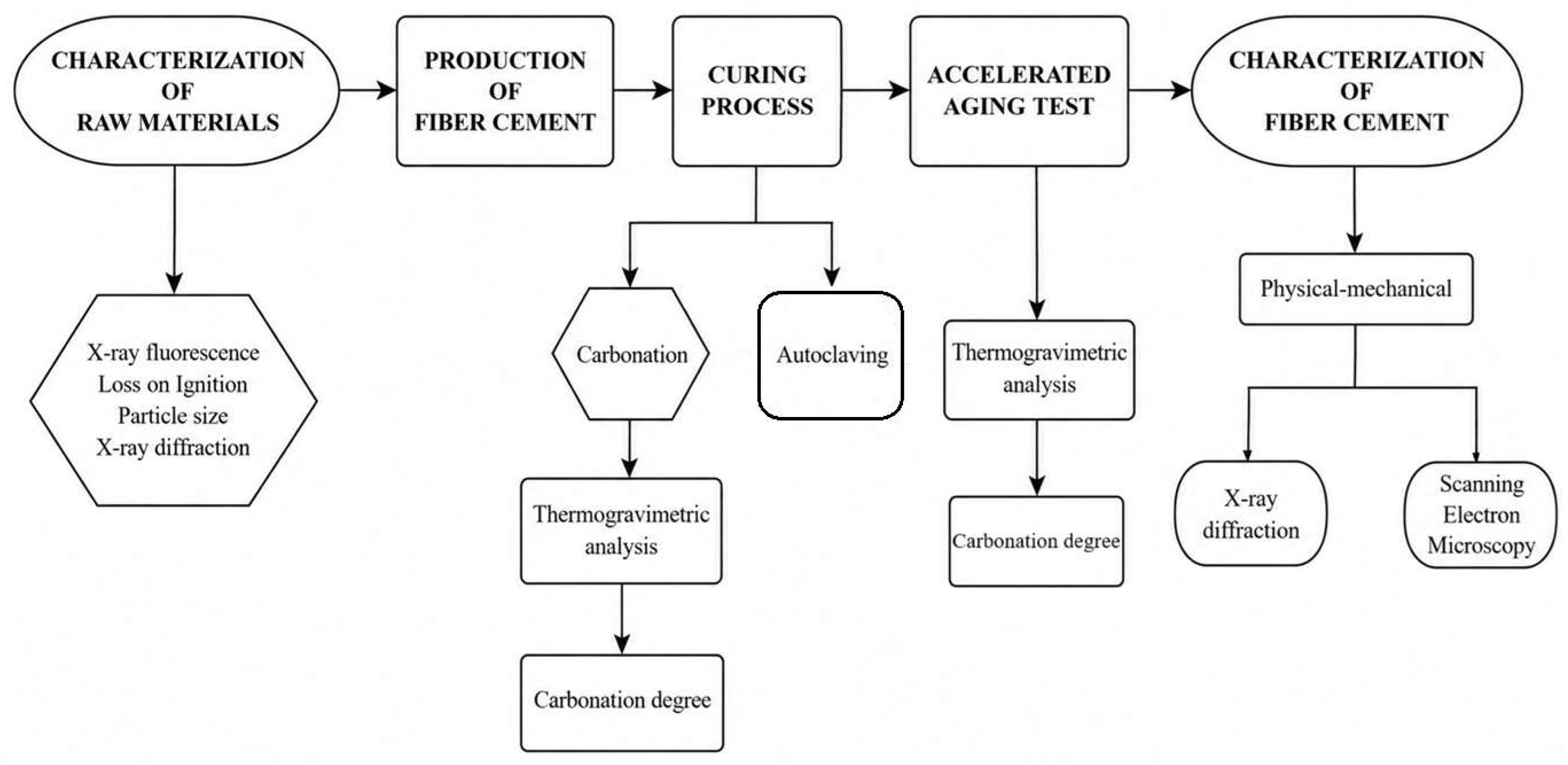
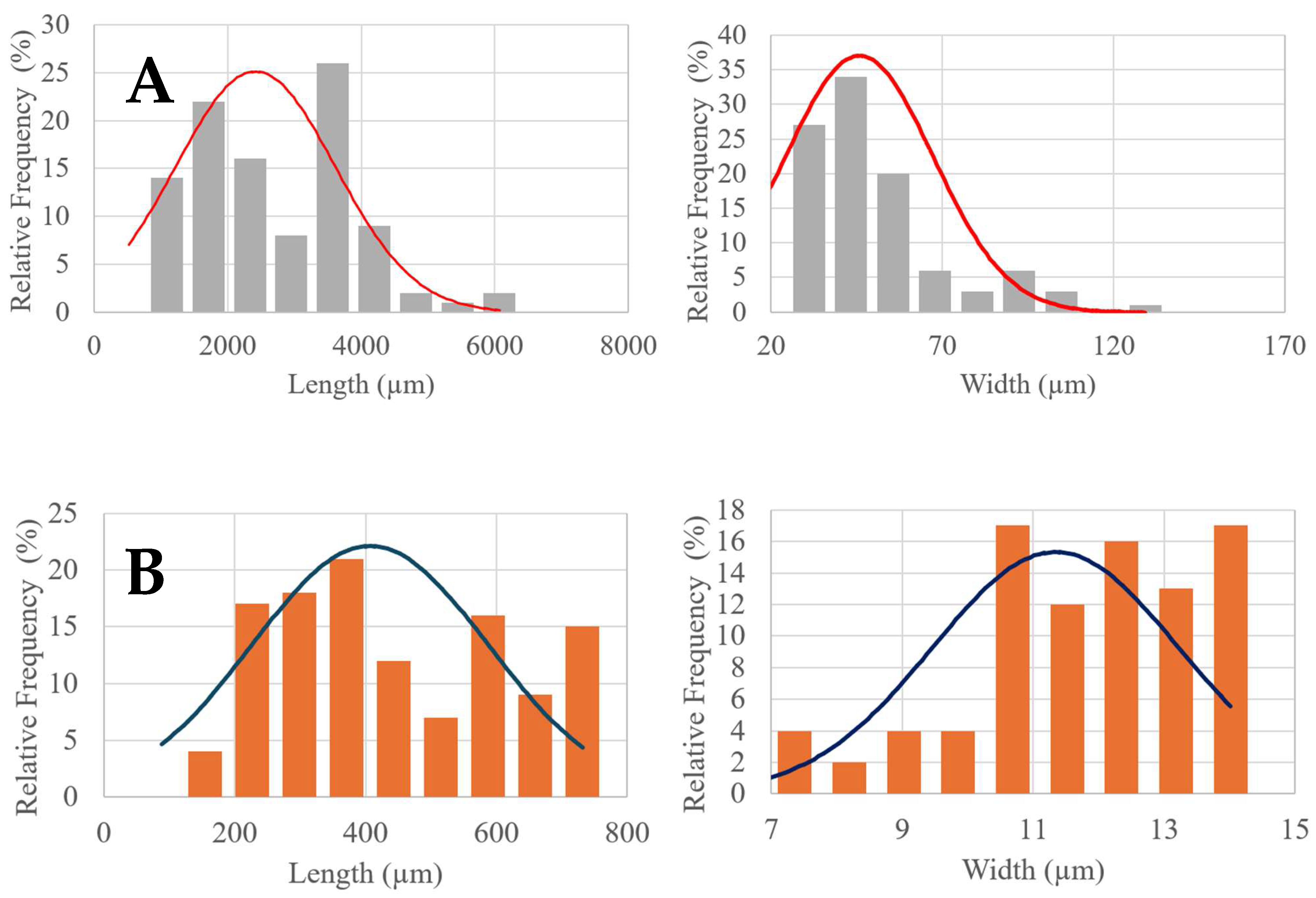
2.1. Characterization of Raw Materials
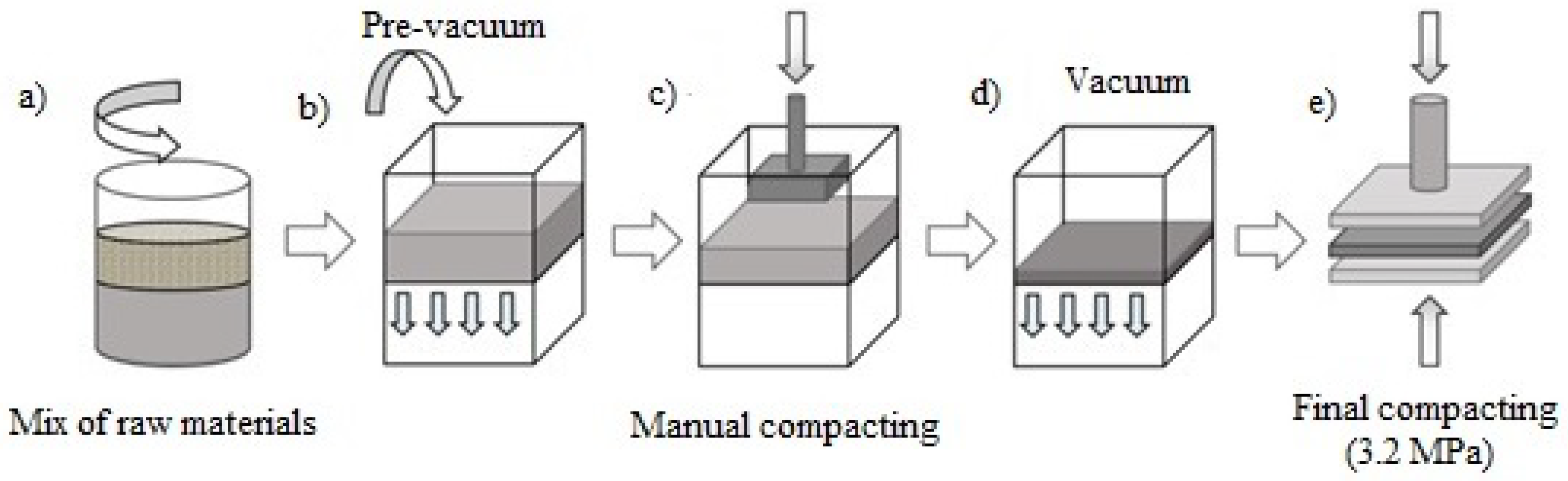
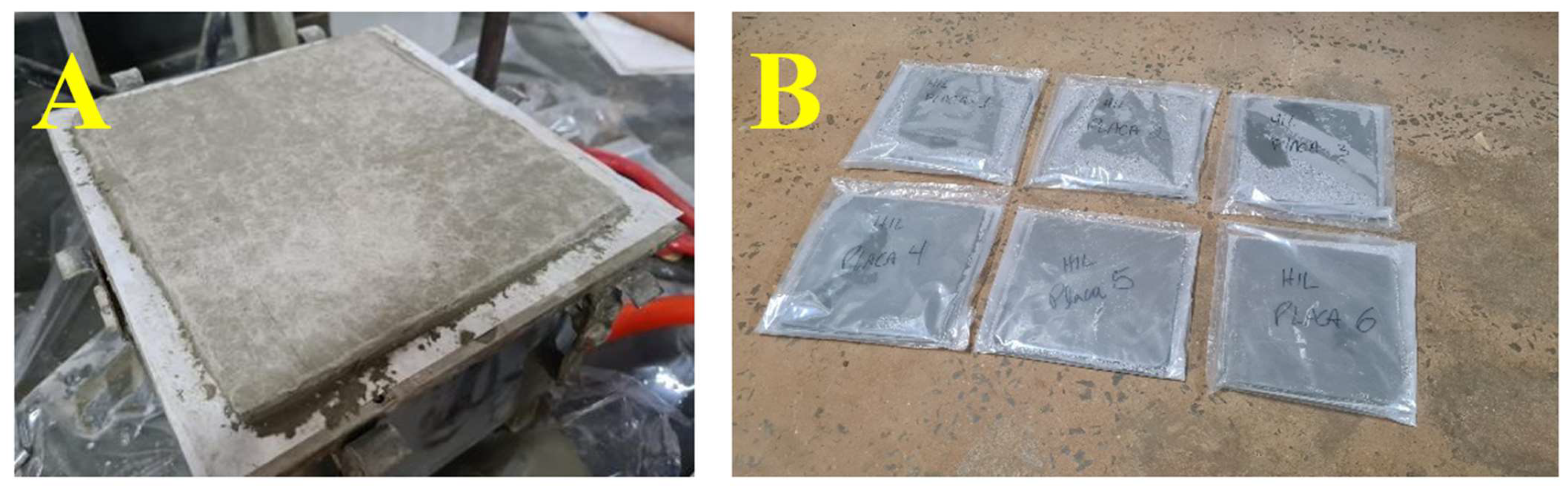
2.2. Production of Fiber Cement


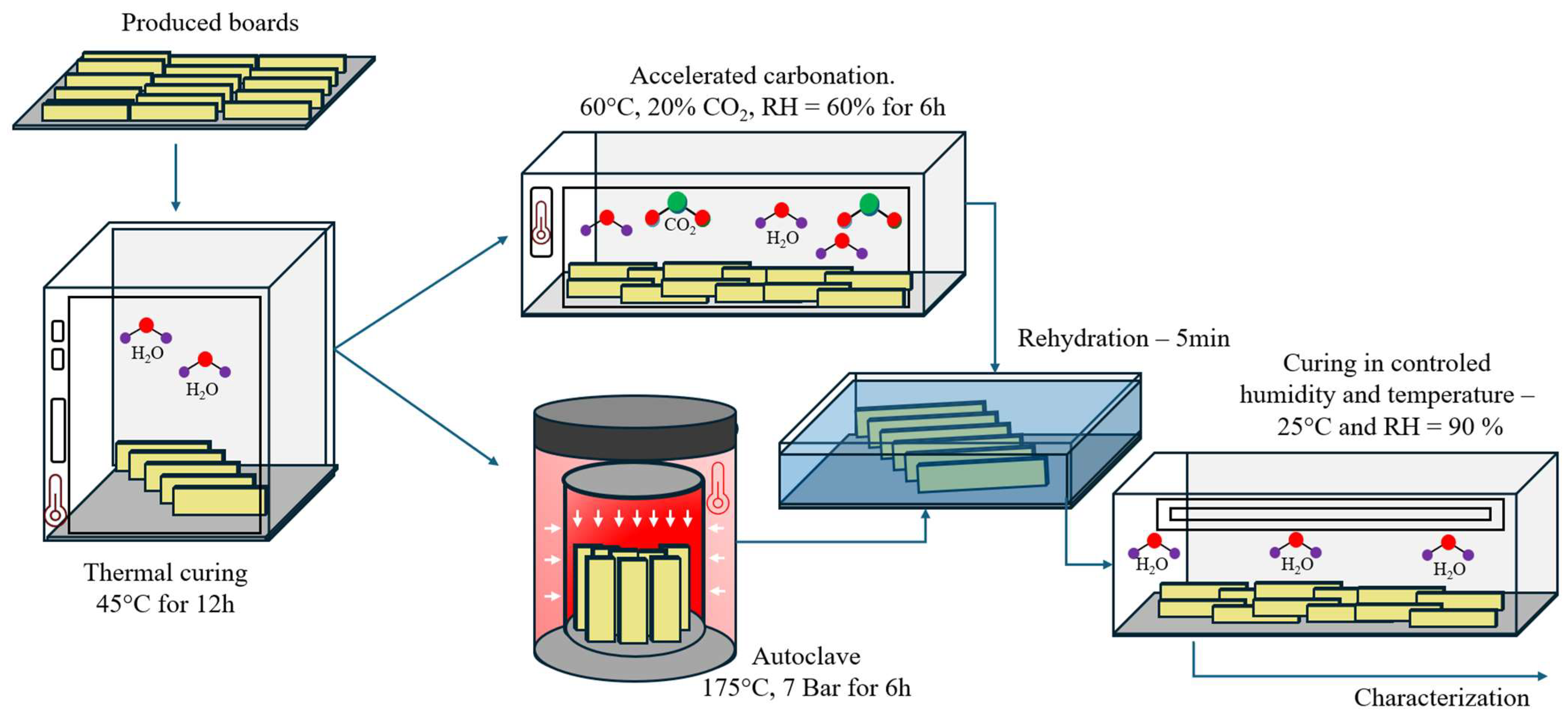
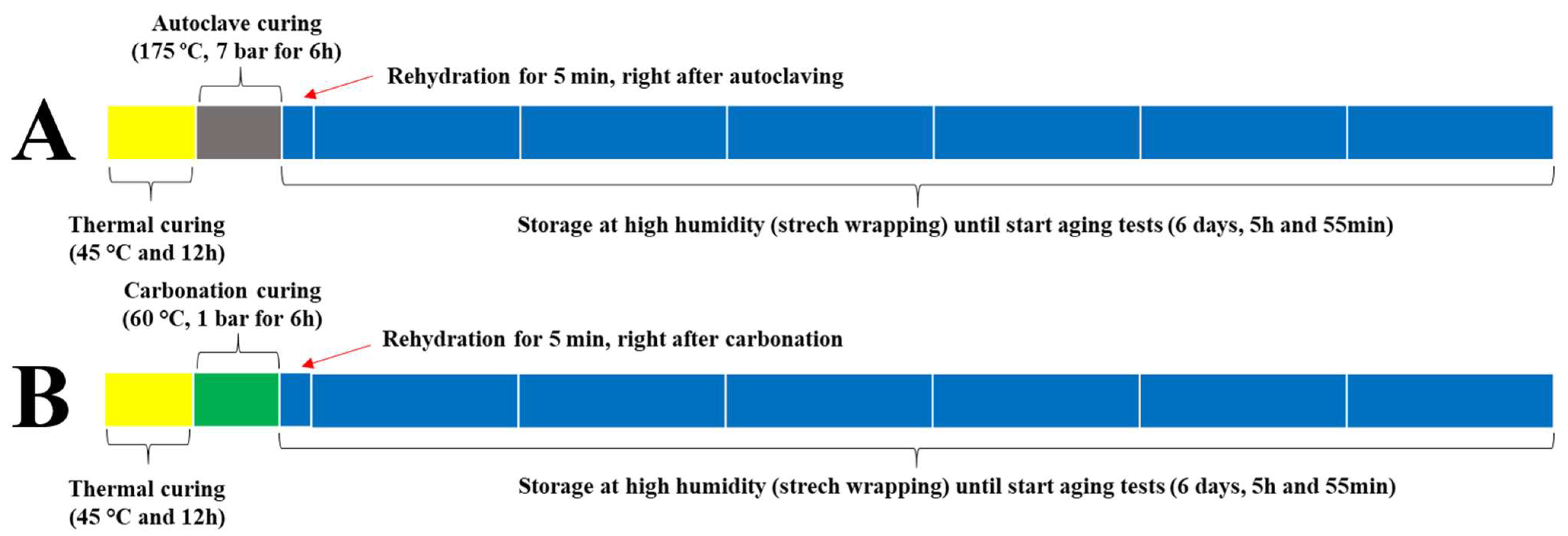
2.3. Curing Process
2.3.1. Autoclave Curing
2.3.2. Accelerated Carbonation Curing
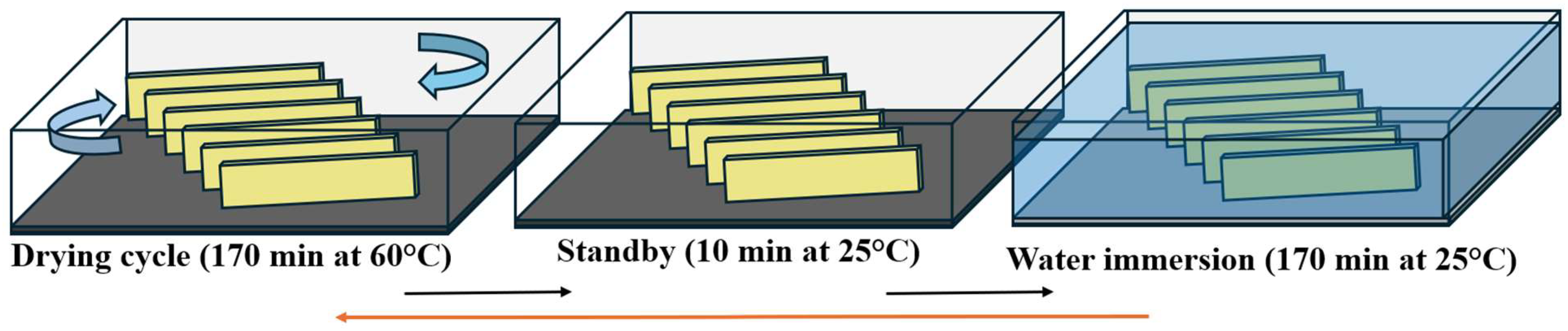
2.4. Accelerated Ageing Test
2.5. Thermogravimetry Analysis
2.6. Physical–Mechanical Tests
2.7. Microstructural Analysis
3. Results
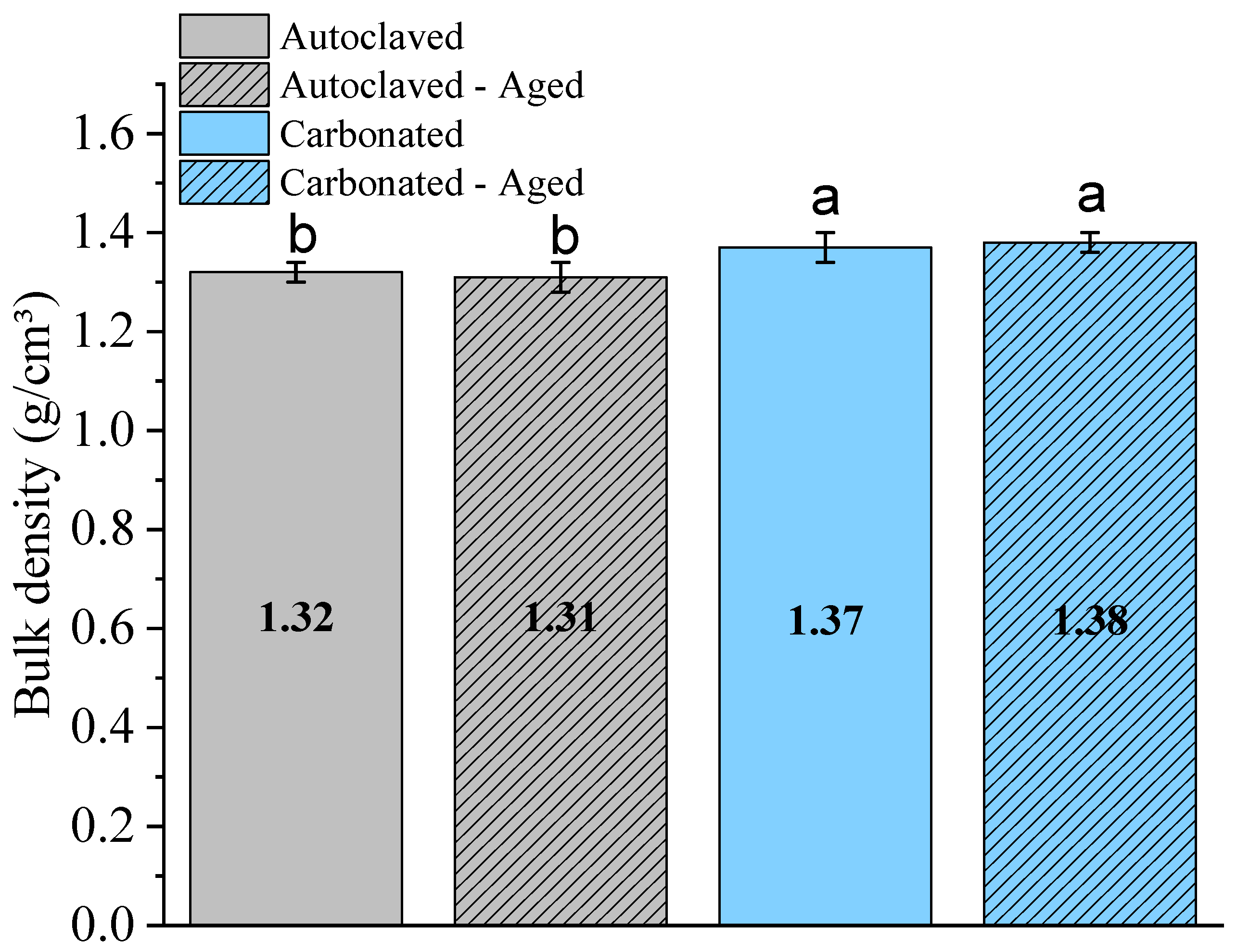
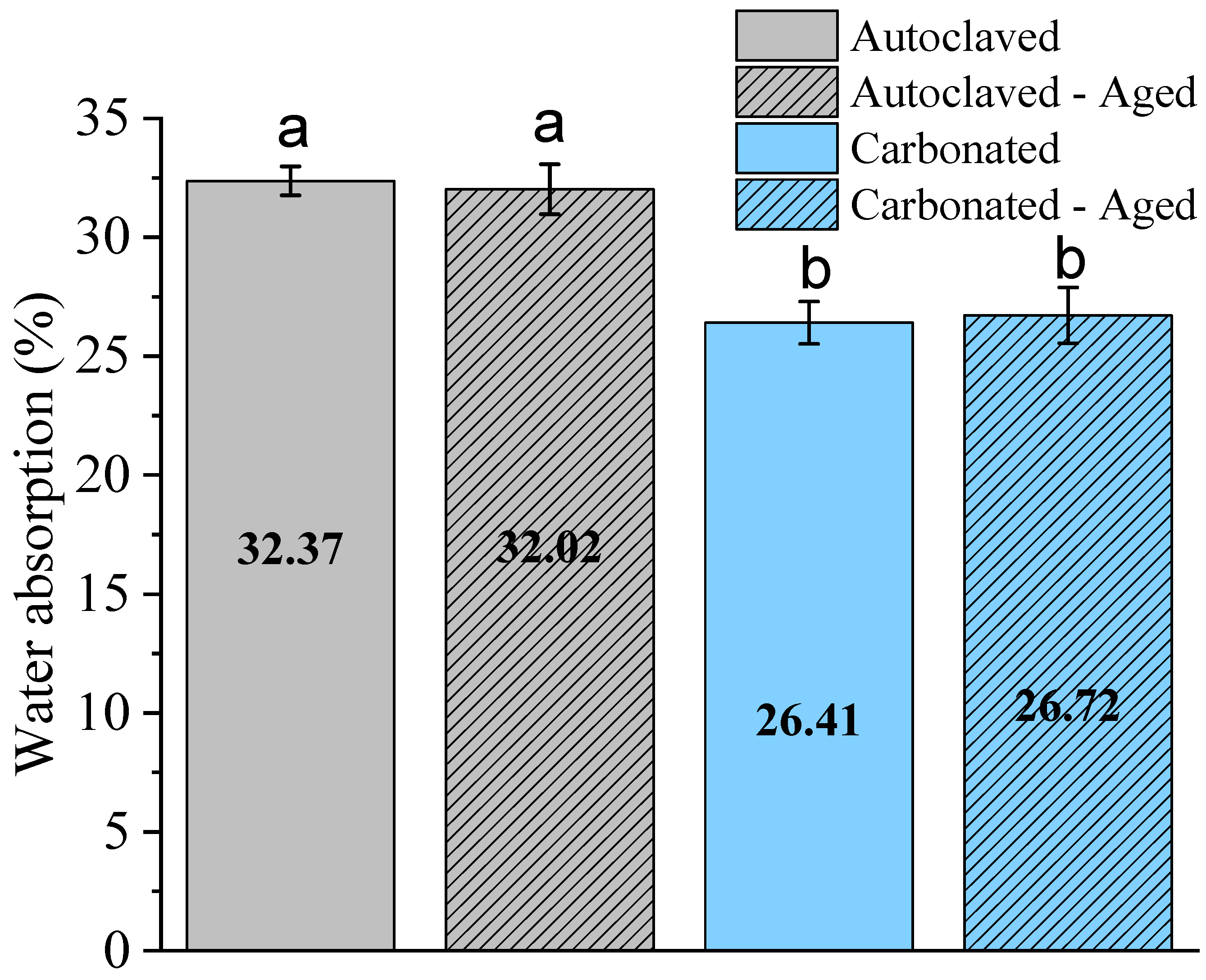
3.1. Physical Properties
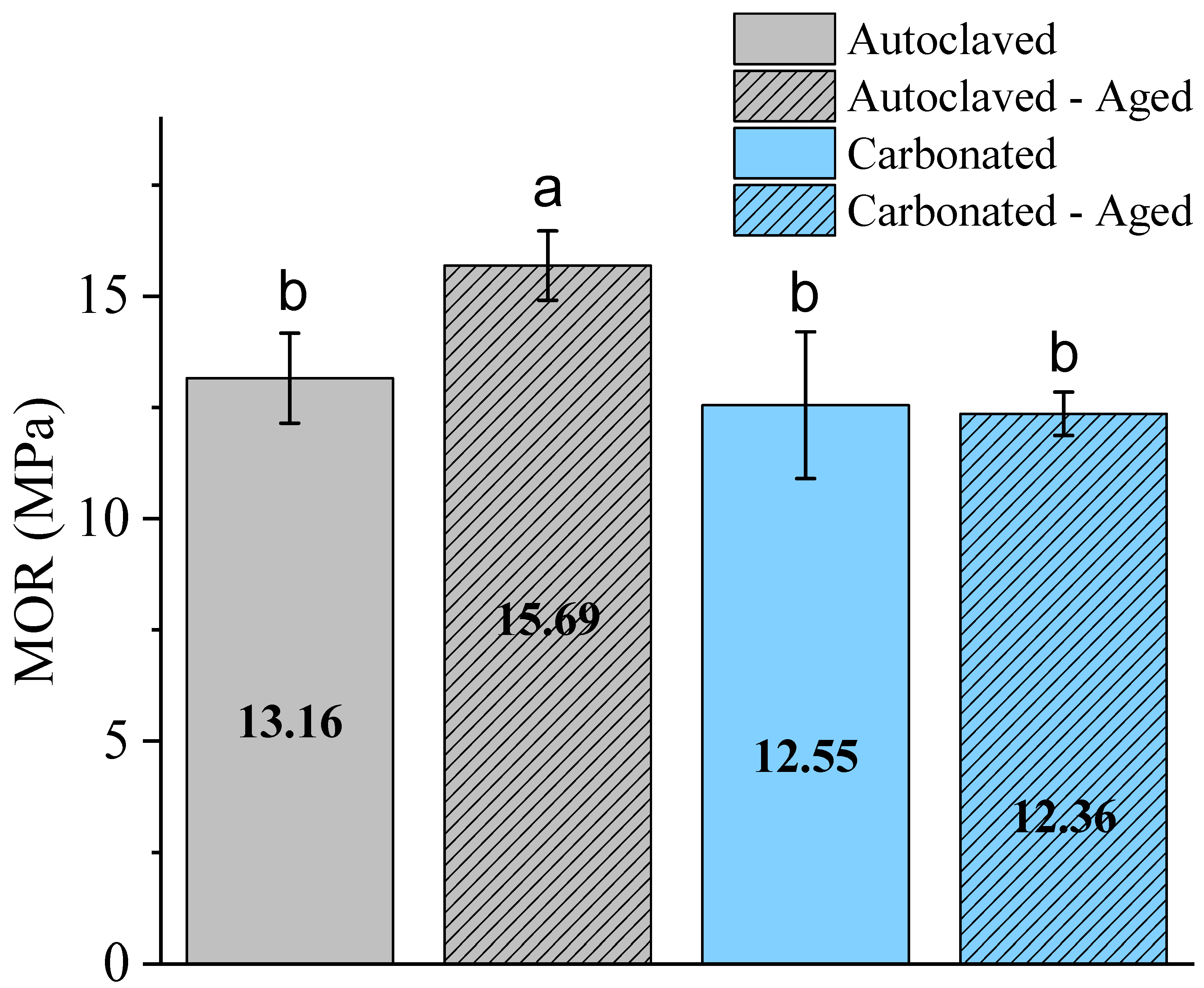
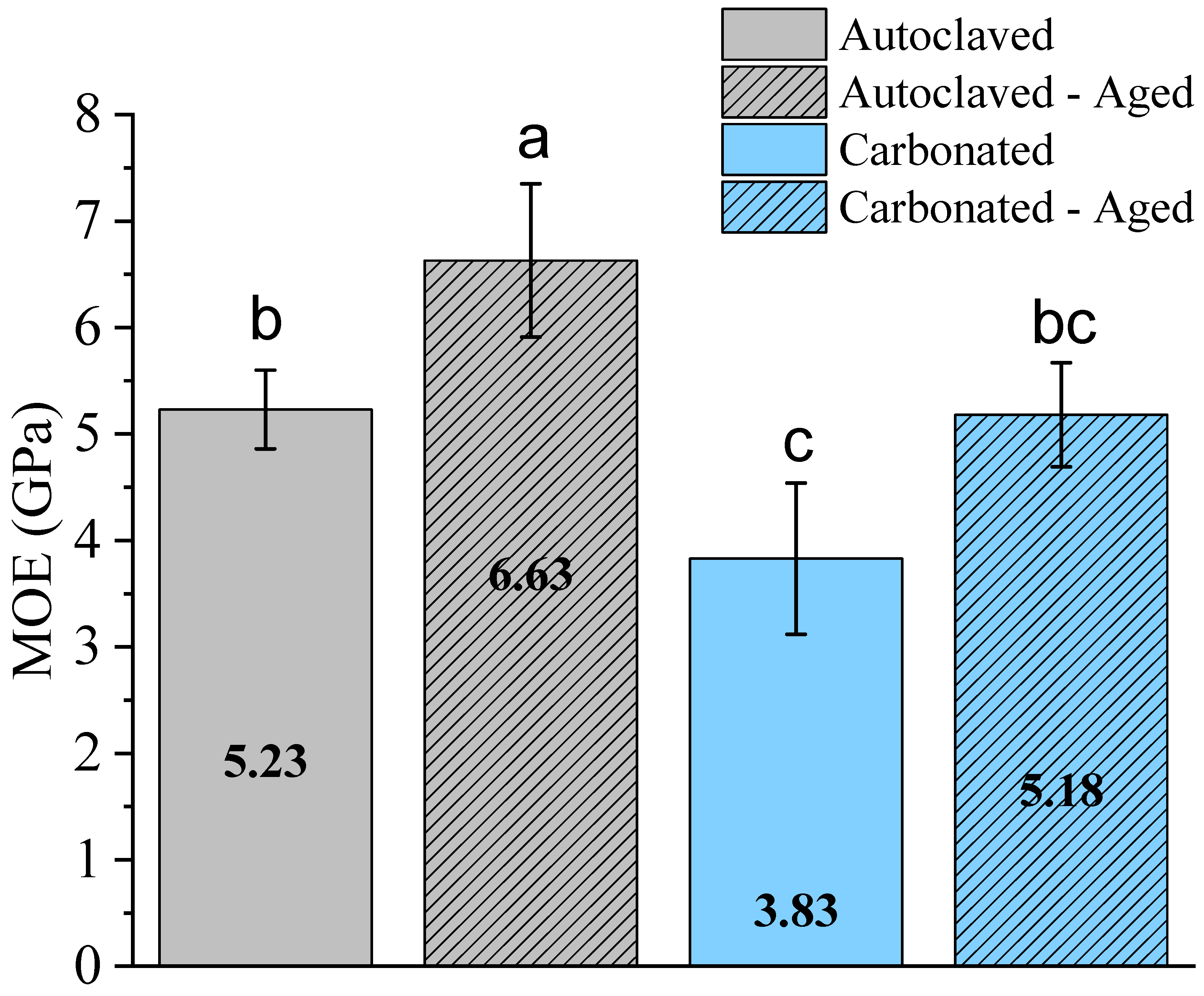
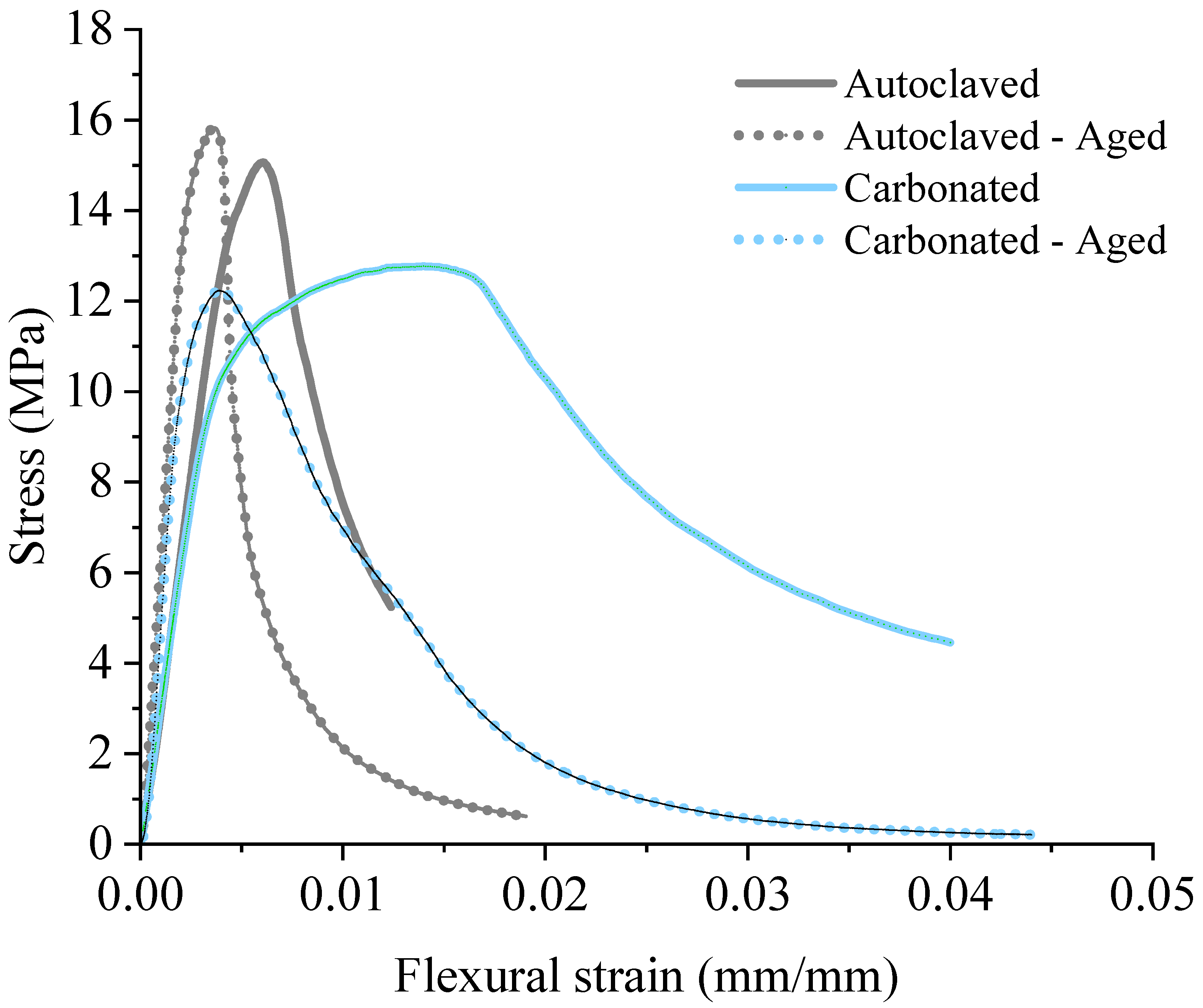
3.2. Mechanical Properties
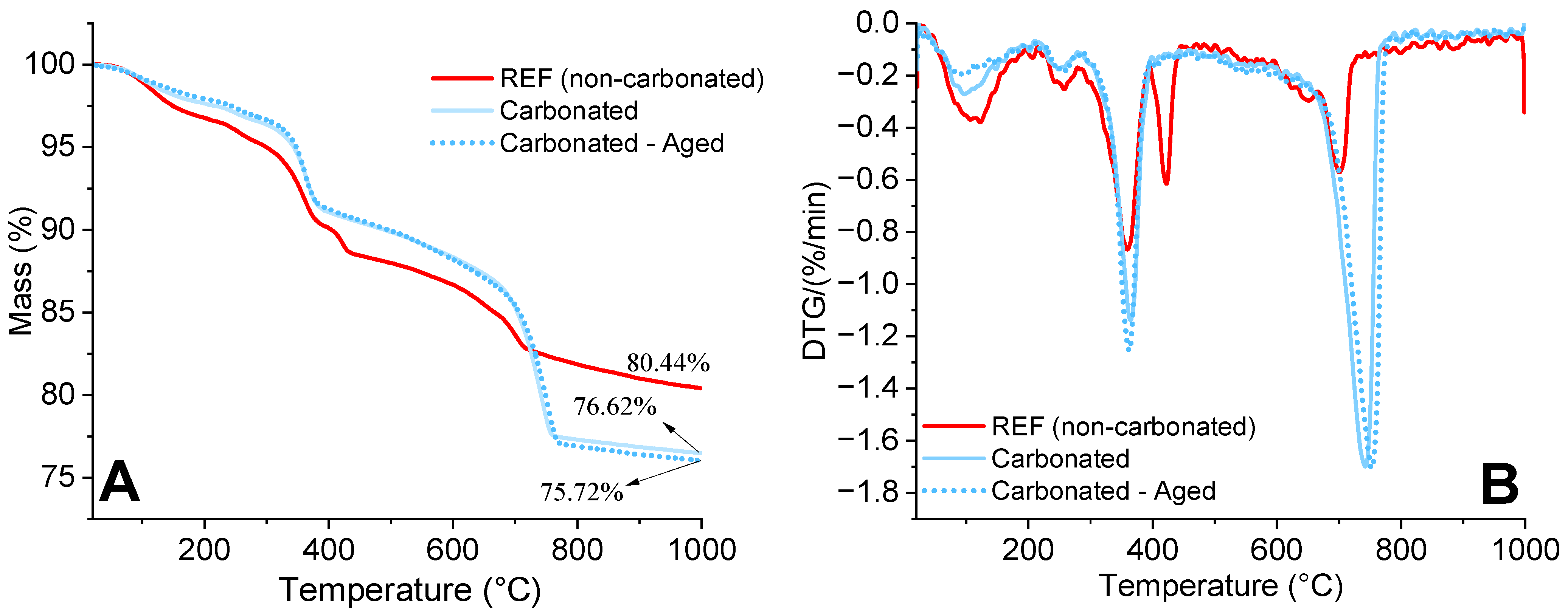
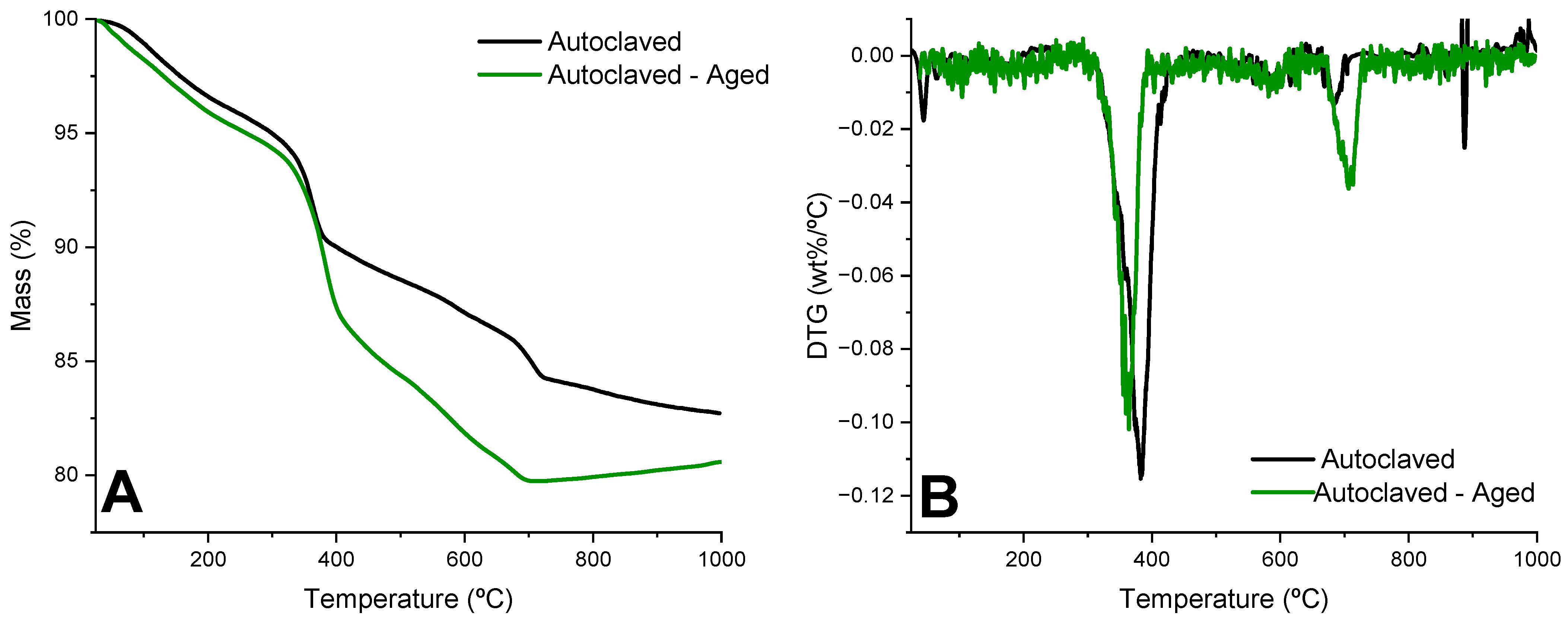
3.3. Thermogravimetry (TG)
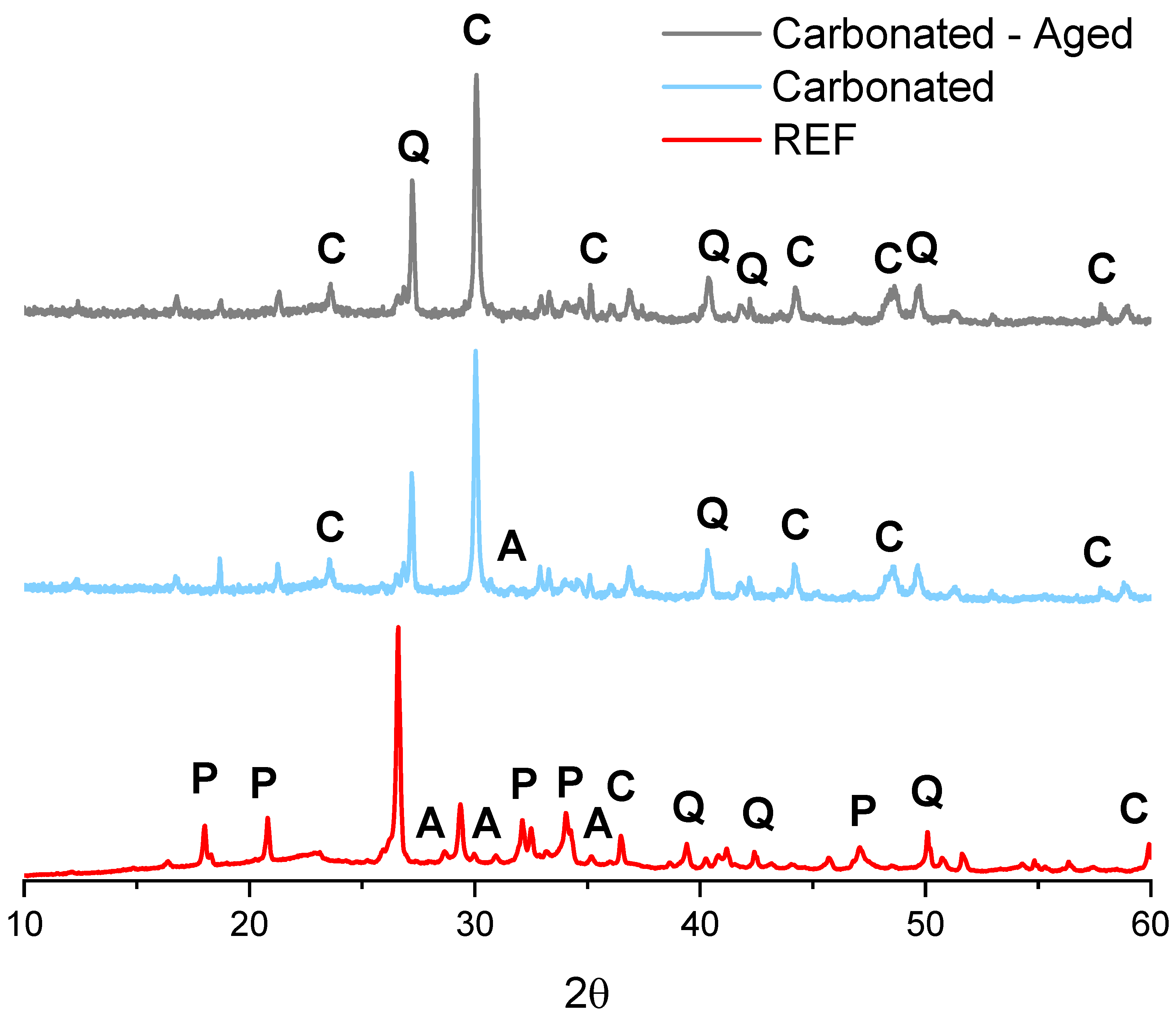
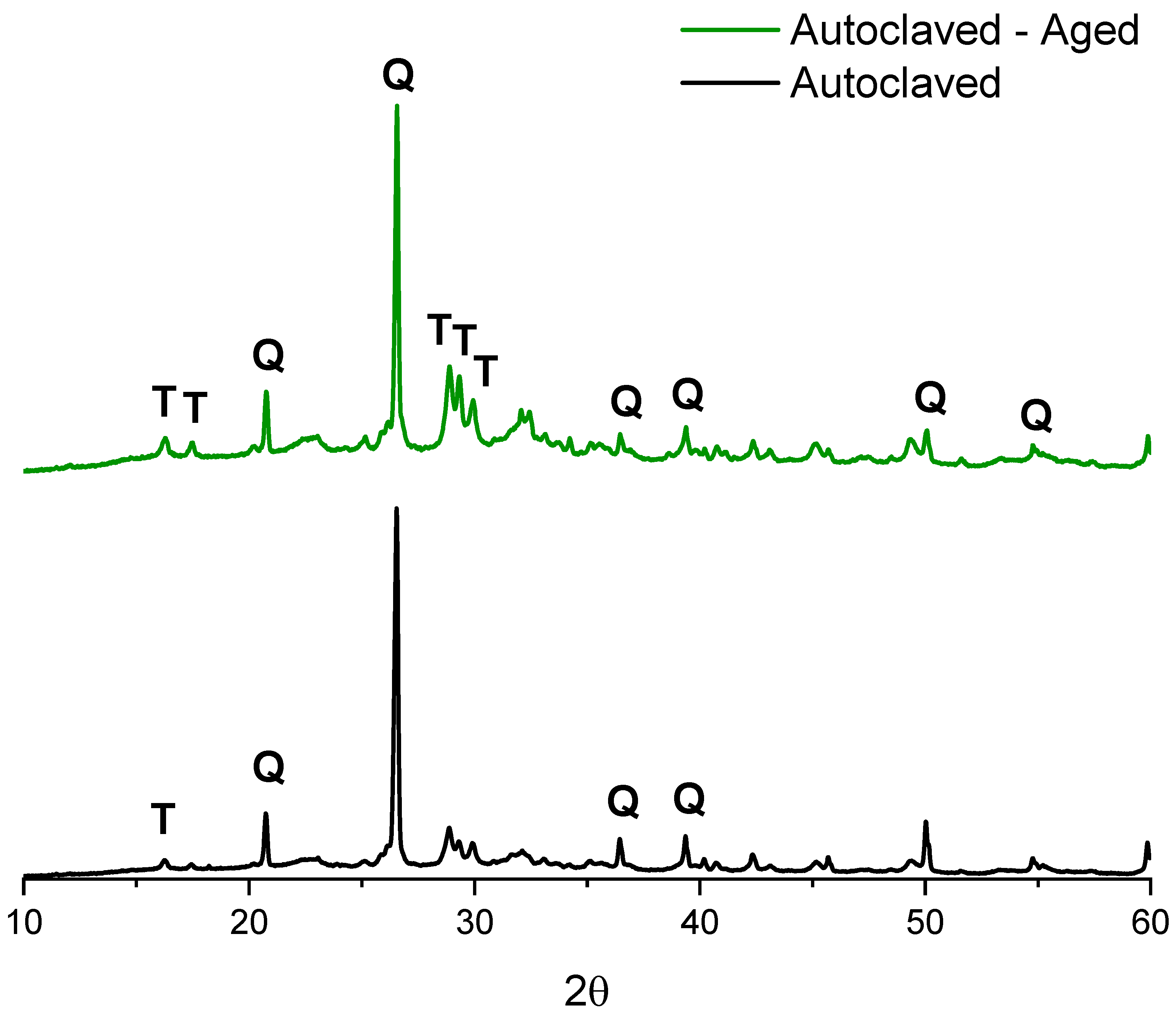
3.4. Phases Analysis
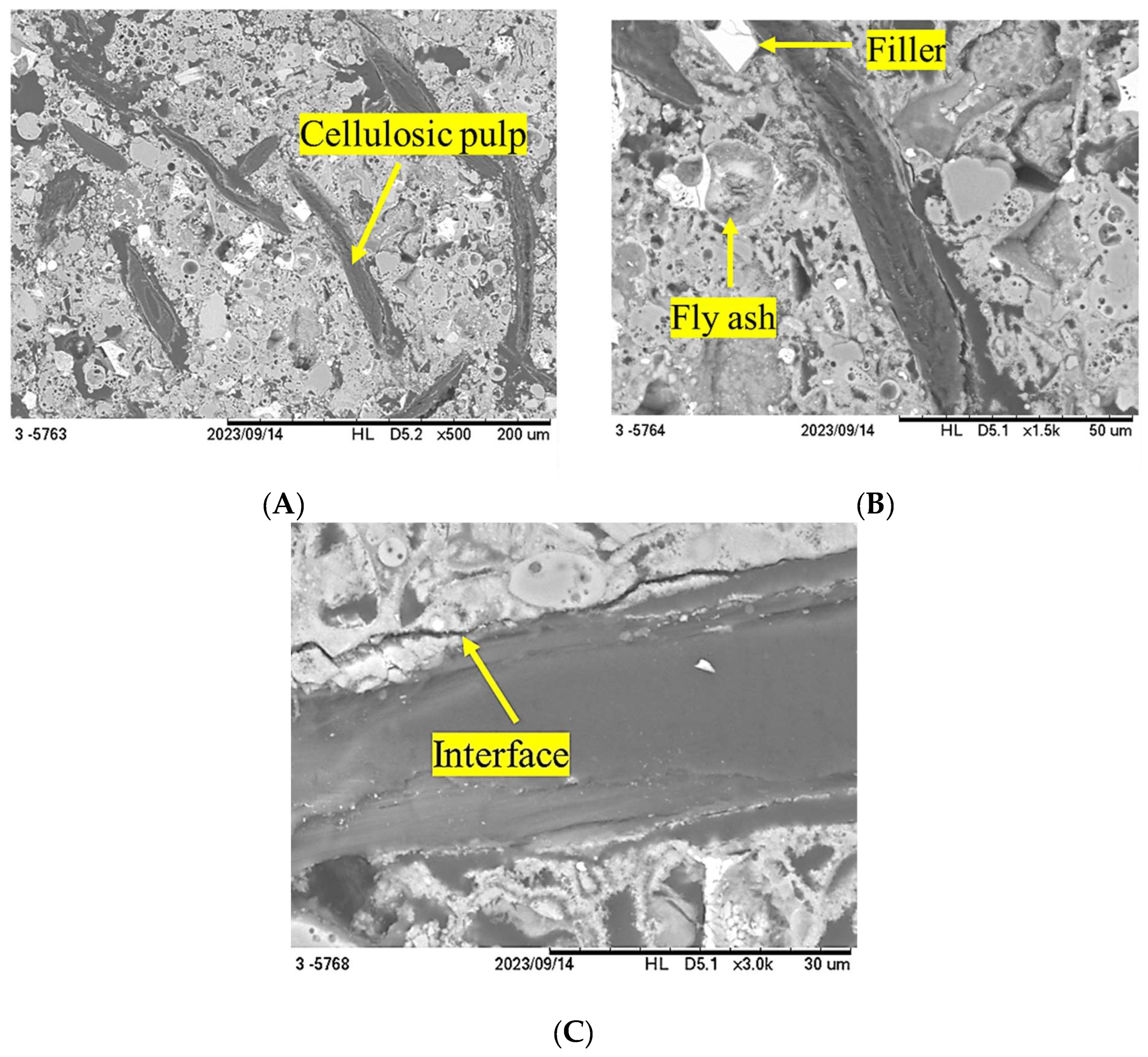
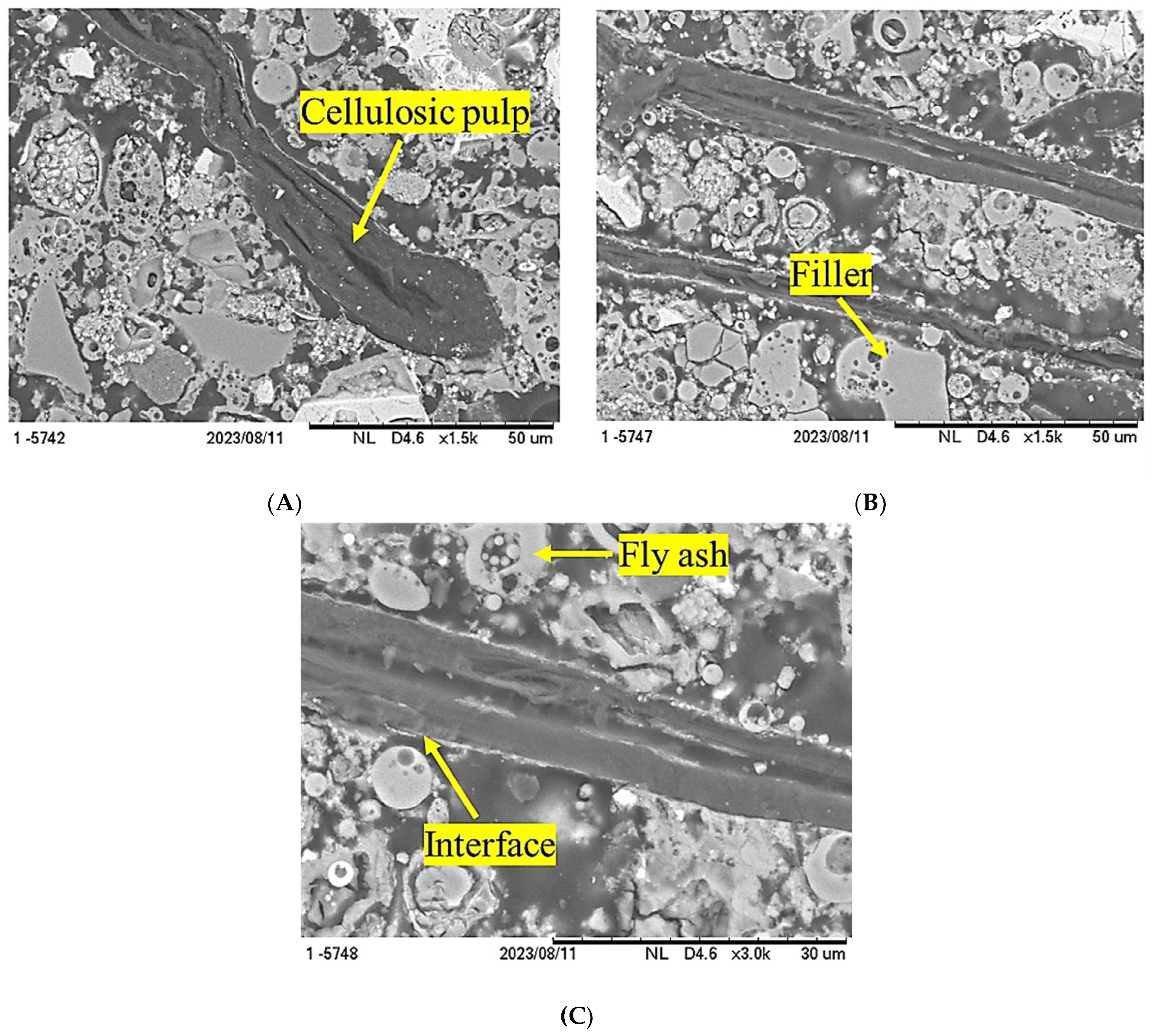
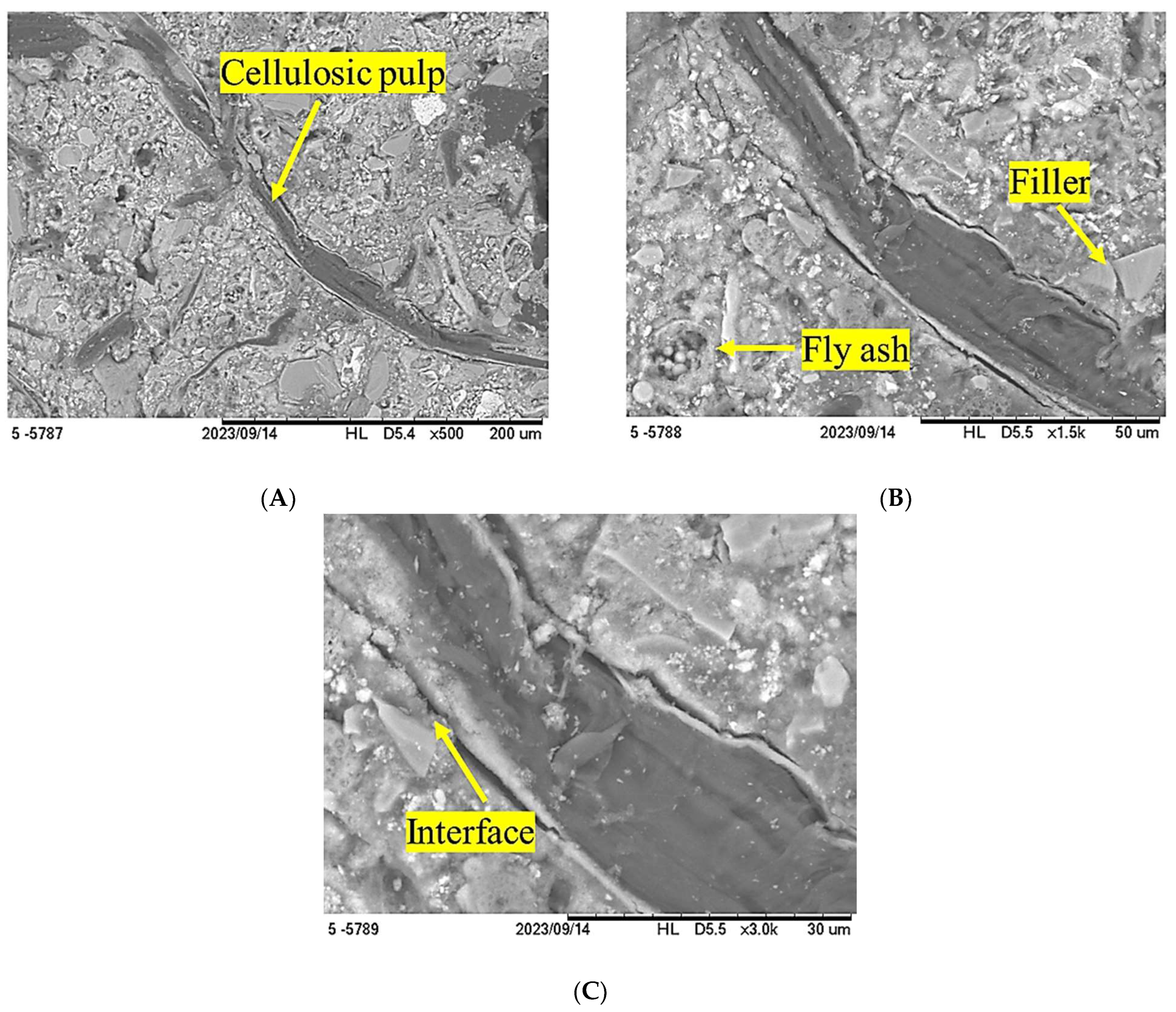
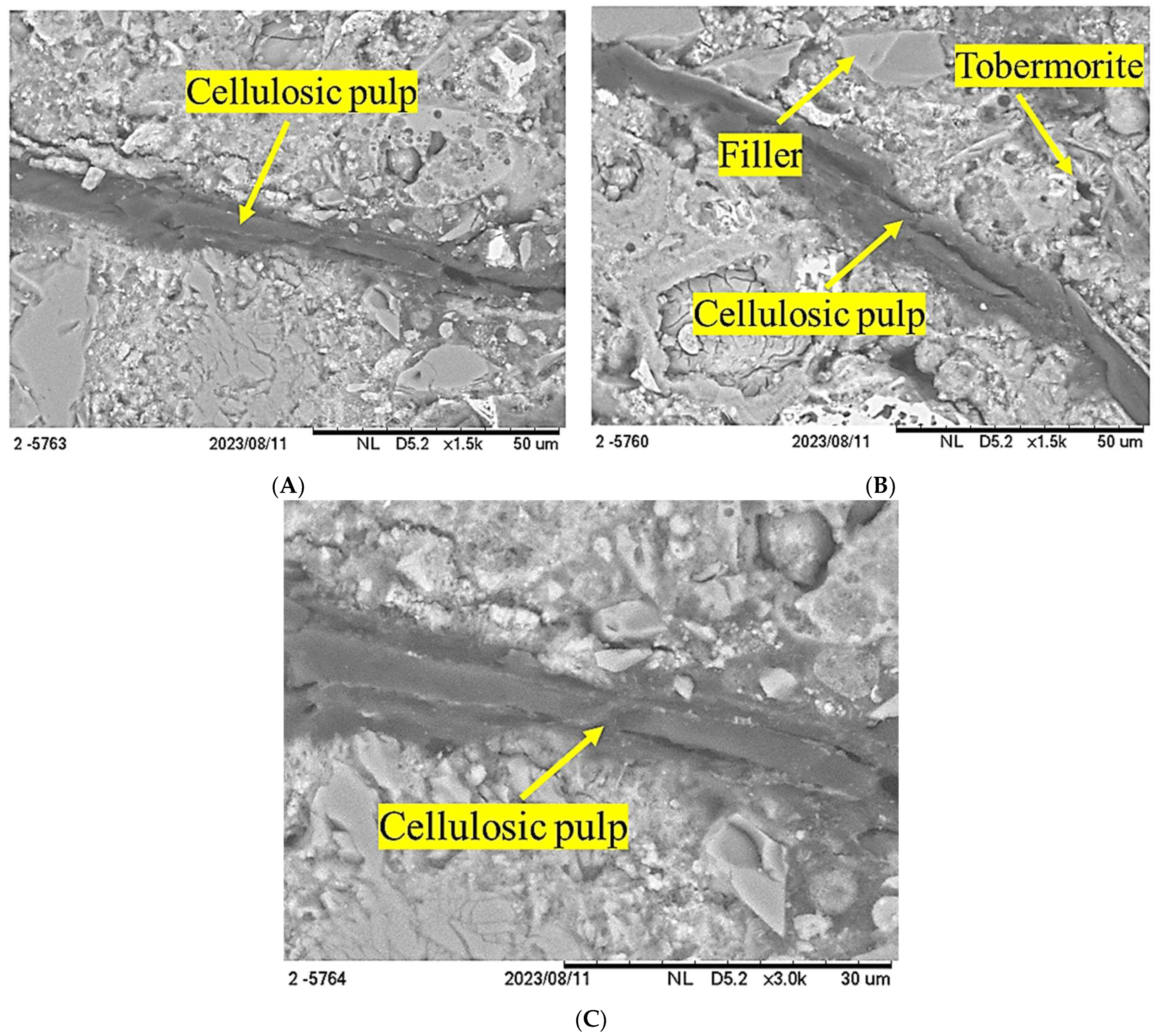
3.5. SEM Analysis
4. Conclusions
- •
- Carbonation-cured composites achieved modulus of rupture (MOR) values comparable to autoclaved materials, indicating that high flexural strength can be obtained without hydrothermal curing;
- •
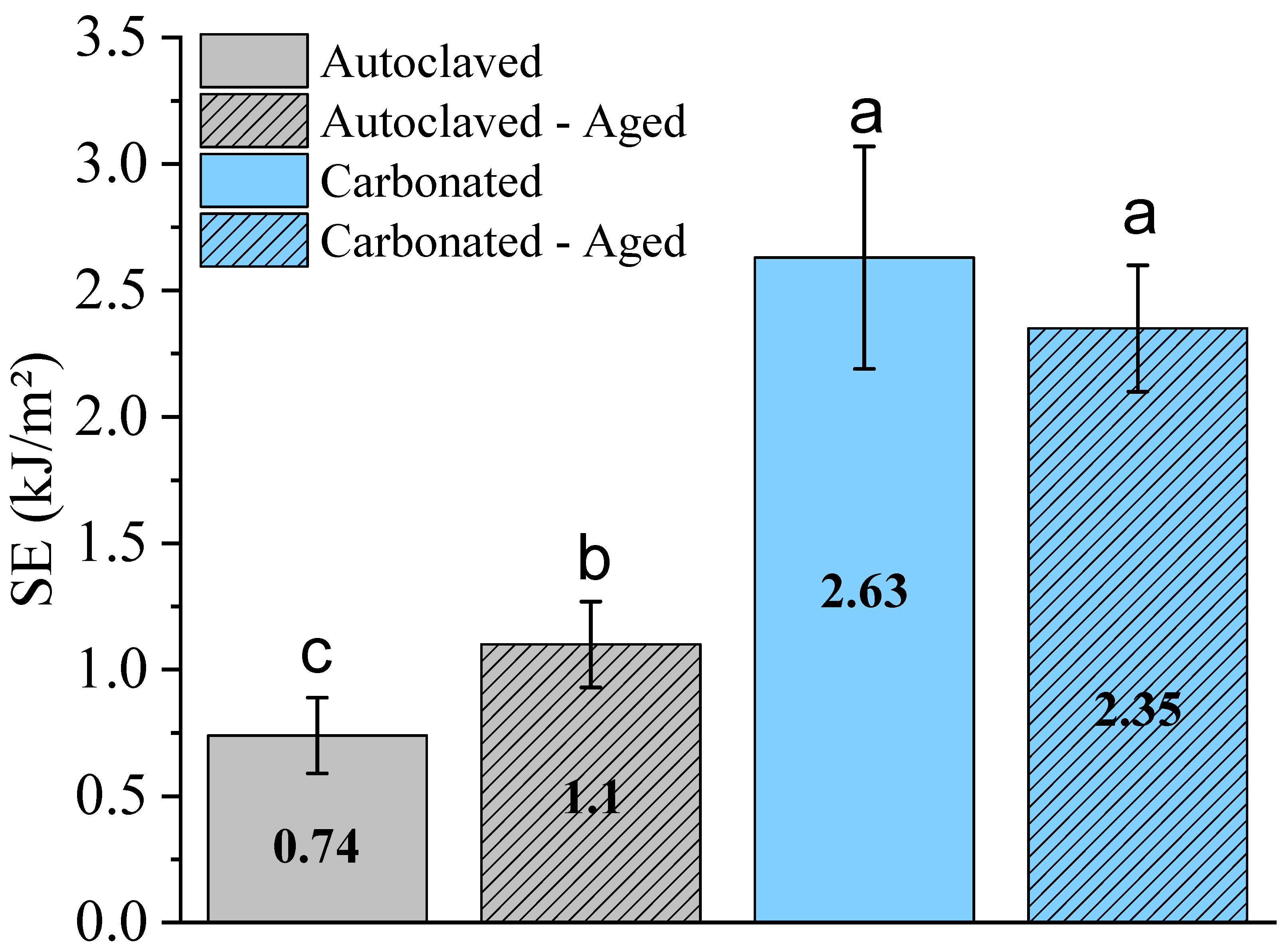
- Despite similar strength levels, carbonated composites exhibited higher deformation capacity and specific energy, reflecting improved post-cracking behavior and more efficient fiber bridging;
- •
- Autoclave curing led to a more rigid but brittle response, associated with tobermorite formation and partial degradation of lignocellulosic fibers under high temperature and pressure;
- •
- Accelerated carbonation promoted pore refinement and matrix densification through the formation of calcium carbonate, while also enhancing fiber–matrix interfacial bonding, which is critical for energy absorption and crack control;
- •
- After accelerated aging, both systems maintained stable MOR values; however, a reduction in deformation capacity was observed, attributed to matrix stiffening and progressive fiber degradation, particularly affecting post-cracking performance;
- •
- The carbonation process enabled the production of fiber cement composites without the need for hydrothermal curing, representing a significant reduction in energy consumption and a more sustainable processing route.
Author Contributions
Funding
Institutional Review Board Statement
Informed Consent Statement
Data Availability Statement
Conflicts of Interest
References
- Galvánková, L.; Másilko, J.; Solný, T.; Štěpánková, E. Tobermorite Synthesis Under Hydrothermal Conditions. Procedia Eng. 2016, 151, 100–107. [Google Scholar] [CrossRef]
- Qu, X.; Zhao, X. Previous and Present Investigations on the Components, Microstructure and Main Properties of Autoclaved Aerated Concrete—A Review. Constr. Build. Mater. 2017, 135, 505–516. [Google Scholar] [CrossRef]
- Wongkeo, W.; Thongsanitgarn, P.; Pimraksa, K.; Chaipanich, A. Compressive Strength, Flexural Strength and Thermal Conductivity of Autoclaved Concrete Block Made Using Bottom Ash as Cement Replacement Materials. Mater. Des. 2012, 35, 434–439. [Google Scholar] [CrossRef]
- Tunega, D.; Zaoui, A. Understanding of Bonding and Mechanical Characteristics of Cementitious Mineral Tobermorite from First Principles. J. Comput. Chem. 2011, 32, 306–314. [Google Scholar] [CrossRef] [PubMed]
- Sonprasarn, P.; Prakaypan, W.; Polsilapa, S.; Kongkajun, N.; Laitila, E.A.; Chuankrerkkul, N.; Chakartnarodom, P. The Influence of Different Crystal Modifiers on Ultra-Low Embodied Energy Curing Fiber-Reinforced Cement Composites. J. Met. Mater. Miner. 2022, 32, 93–100. [Google Scholar] [CrossRef]
- Michelini, E.; Ferretti, D.; Miccoli, L.; Parisi, F. Autoclaved Aerated Concrete Masonry for Energy Efficient Buildings: State of the Art and Future Developments. Constr. Build. Mater. 2023, 402, 132996. [Google Scholar] [CrossRef]
- Veliseicik, T.; Zurauskiene, R.; Kligys, M.; Dauksevic, M. Influence of Short Carbon Fibers on the Properties of Autoclaved Fiber Cement in Standard Fire Environment. Materials 2023, 16, 2513. [Google Scholar] [CrossRef]
- Pehlivanlı, Z.O.; Uzun, İ.; Demir, İ. Mechanical and Microstructural Features of Autoclaved Aerated Concrete Reinforced with Autoclaved Polypropylene, Carbon, Basalt and Glass Fiber. Constr. Build. Mater. 2015, 96, 428–433. [Google Scholar] [CrossRef]
- Zhao, Y.; Zhang, Y.; Chen, T.; Chen, Y.; Bao, S. Preparation of High Strength Autoclaved Bricks from Hematite Tailings. Constr. Build. Mater. 2012, 28, 450–455. [Google Scholar] [CrossRef]
- Filomeno, R.H.; Fioroni, C.A.; Azevedo, A.G.S.; Savastano, H., Jr. Influence of Different Curing Regimes and Accelerated Carbonation on the Physical, Mechanical, and Aging Performances of Fiber Cement. J. Build. Eng. 2023, 78, 107791. [Google Scholar] [CrossRef]
- Song, Y.; Guo, C.; Qian, J.; Ding, T. Effect of the Ca-to-Si Ratio on the Properties of Autoclaved Aerated Concrete Containing Coal Fly Ash from Circulating Fluidized Bed Combustion Boiler. Constr. Build. Mater. 2015, 83, 136–142. [Google Scholar] [CrossRef]
- Azevedo, A.G.S.; Baltazar, L.; Faria, P.; Savastano, H. Durability Assessment of MgO-Based Fiber Cement Reinforced with Lignocellulosic Fibers and Cured in a CO2-Rich Atmosphere. J. Build. Eng. 2025, 104, 112327. [Google Scholar] [CrossRef]
- Azevedo, A.G.S.; Filomeno, R.; Gonçalves, M.M.; Faria, P.; Savastano, H. Innovative MOS-Based Fiber Cement Boards: Effect of Kraft Pulp Mills Waste and Curing by Accelerated Carbonation. Constr. Build. Mater. 2024, 431, 136525. [Google Scholar] [CrossRef]
- Kottititum, B.; Phung, Q.; Maes, N.; Prakaypan, W.; Srinophakun, T. Early Age Carbonation of Fiber-Cement Composites under Real Processing Conditions: A Parametric Investigation. Appl. Sci. 2018, 8, 190. [Google Scholar] [CrossRef]
- Dias, E.A.P.; Azevedo, A.G.S.; Savastano Junior, H.; Borges, P.H.R. Accelerated Carbonation of Steel Slag for Enhanced Carbon Capture and Utilization as Aggregate in Alkali-Activated Materials. Carbon Capture Sci. Technol. 2024, 12, 100219. [Google Scholar] [CrossRef]
- Xie, F.; Zhou, D.; Zhang, M. Research Progress on Carbon Dioxide Curing of Cementitious Materials: A Review. Can. J. Civ. Eng. 2025, 52, 1045–1059. [Google Scholar] [CrossRef]
- Steiner, S.; Lothenbach, B.; Proske, T.; Borgschulte, A.; Winnefeld, F. Effect of Relative Humidity on the Carbonation Rate of Portlandite, Calcium Silicate Hydrates and Ettringite. Cem. Concr. Res. 2020, 135, 106116. [Google Scholar] [CrossRef]
- Pizzol, V.D.; Mendes, L.M.; Frezzatti, L.; Savastano, H., Jr.; Tonoli, G.H.D. Effect of Accelerated Carbonation on the Microstructure and Physical Properties of Hybrid Fiber-Cement Composites. Miner. Eng. 2014, 59, 101–106. [Google Scholar] [CrossRef]
- Filomeno, R.H.; Rodier, L.B.; Ballesteros, J.E.M.; Rossignolo, J.A.; Savastano, H. Optimizing the Modified Atmosphere Parameters in the Carbonation Process for Improved Fiber-Cement Performance. J. Build. Eng. 2020, 32, 101676. [Google Scholar] [CrossRef]
- Xu, Z.; Zhang, Z.; Huang, J.; Yu, K.; Zhong, G.; Chen, F.; Chen, X.; Yang, W.; Wang, Y. Effects of Temperature, Humidity and CO2 Concentration on Carbonation of Cement-Based Materials: A Review. Constr. Build. Mater. 2022, 346, 128399. [Google Scholar] [CrossRef]
- Yang, X.; Cui, C.; Cui, X.; Tang, G.; Ma, H. High-Temperature Phase Transition and the Activity of Tobermorite. J. Wuhan Univ. Technol. Sci. Ed. 2014, 29, 298–301. [Google Scholar] [CrossRef]
- Zhang, D.; Ghouleh, Z.; Shao, Y. Review on Carbonation Curing of Cement-Based Materials. J. CO2 Util. 2017, 21, 119–131. [Google Scholar] [CrossRef]
- Kunchariyakun, K.; Asavapisit, S.; Sombatsompop, K. Properties of Autoclaved Aerated Concrete Incorporating Rice Husk Ash as Partial Replacement for Fine Aggregate. Cem. Concr. Compos. 2015, 55, 11–16. [Google Scholar] [CrossRef]
- EN 494:2004 + A3:2007; Fibre-Cement Profiled Sheets and Fittings for Roofing—Products Specification and Test Methods. European Committee for Standardization: Brussels, Belgium, 2007.
- Matsushita, F.; Aono, Y.; Shibata, S. Carbonation Degree of Autoclaved Aerated Concrete. Cem. Concr. Res. 2000, 30, 1741–1745. [Google Scholar] [CrossRef]
- ASTM C948-81; Standard Test Method for Dry and Wet Bulk Density, Water Absorption, and Apparent Porosity of Thin Sections of Glass-Fiber Reinforced Concrete. ASTM—American Society for Testing Materials: West Conshohocken, PA, USA, 2016.
- Zhou, Q.; Li, G.; Yuan, K.; Su, Y.; Shao, N.; Bai, W.; Shen, X.; Zhang, Z. Pore Structure and Strength Evolution in Alkali-Activated Slag Mortars Induced by Accelerated Carbonation. Metall. Mater. Trans. B 2026, 57, 1765–1775. [Google Scholar] [CrossRef]
- Gu, X.; Wang, S.; Liu, J.; Wang, H.; Xu, X.; Wang, Q.; Zhu, Z. Effect of Hydroxypropyl Methyl Cellulose (HPMC) as Foam Stabilizer on the Workability and Pore Structure of Iron Tailings Sand Autoclaved Aerated Concrete. Constr. Build. Mater. 2023, 376, 130979. [Google Scholar] [CrossRef]
- RILEM Reunion Internationale Des Laboratooires d’essais et Des Recheches Sur Les Materiaux et Les Constructions. RILEM Technical Committee 49TFR: Testing Methods for Fibre Reinforced Cement-Based Composites. Mater. Constr. 1984, 17, 441–456.
- Azevedo, A.G.S.; Savastano, H. Assessment of Carbonation as a Complementary Strategy to Increase the Durability of Magnesium Oxysulfate (MOS)-Based Fiber Cement Boards. Constr. Build. Mater. 2024, 438, 137086. [Google Scholar] [CrossRef]
- Urrea-Ceferino, G.E.; Rempe, N.; dos Santos, V.; Savastano Junior, H. Definition of Optimal Parameters for Supercritical Carbonation Treatment of Vegetable Fiber-Cement Composites at a Very Early Age. Constr. Build. Mater. 2017, 152, 424–433. [Google Scholar] [CrossRef]
- Baspinar, M.S.; Demir, I.; Kahraman, E.; Gorhan, G. Utilization Potential of Fly Ash Together with Silica Fume in Autoclaved Aerated Concrete Production. KSCE J. Civ. Eng. 2014, 18, 47–52. [Google Scholar] [CrossRef]
- Azevedo, A.G.S.; Molano, J.C.A.; Parente, I.; Freitas, T.O.G.; Camões, A.; Faria, P.; Savastano, H. Effect of the Rehydration Method on the Physical–Mechanical Properties of CO2-Cured Magnesium-Based Fiber Cement Boards. CivilEng 2024, 5, 247–264. [Google Scholar] [CrossRef]









| Oxides | %-wt | |||
|---|---|---|---|---|
| OPC | Fly Ash | Silica Powder | Limestone | |
| SiO2 | 19.40 | 62.50 | 99.00 | 3.99 |
| Al2O3 | 4.41 | 26.50 | <1.00 | 1.03 |
| Fe2O3 | 3.83 | 4.36 | <0.05 | 0.42 |
| CaO | 63.1 | 1.13 | <0.05 | 43.90 |
| MgO | 1.31 | 0.52 | <0.05 | 7.60 |
| SO3 | 3.00 | 0.16 | <0.05 | 0.13 |
| Na2O | 0.30 | 0.30 | <0.05 | - |
| K2O | 0.39 | 1.26 | <0.05 | 0.22 |
| TiO2 | 0.38 | 1.70 | <0.05 | 0.06 |
| P2O5 | 0.20 | 0.26 | <0.05 | 0.05 |
| MnO | 0.06 | <0.05 | <0.05 | 0.09 |
| SrO | 0.05 | <0.05 | <0.05 | <0.03 |
| LOI | 3.87 | 1.48 | 0.04 | 42.4 |
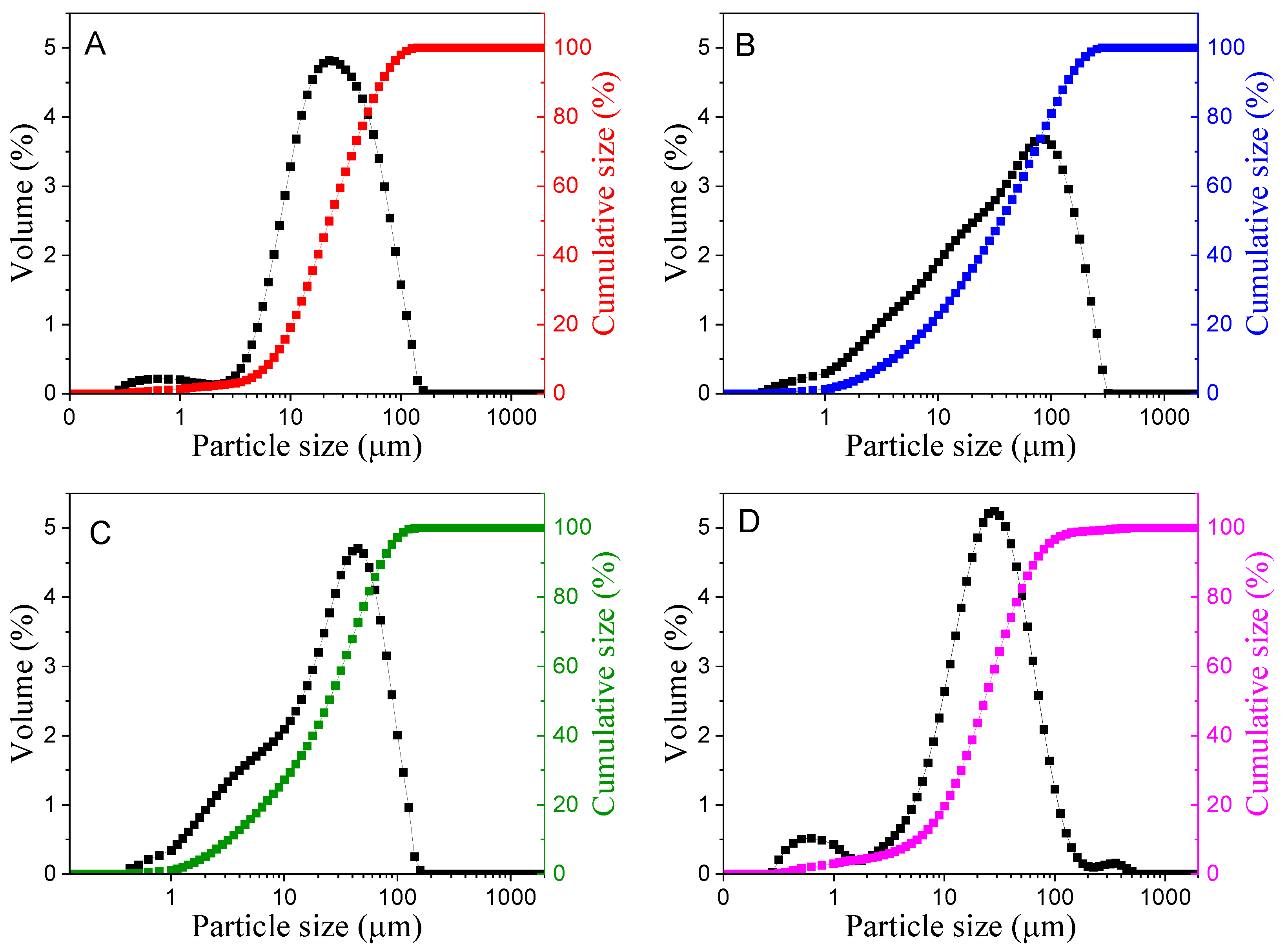
| Raw Material | D10 (µm) | D50 (µm) | D90 (µm) |
|---|---|---|---|
| OPC | 6.89 | 22.44 | 66.31 |
| Fly ash | 3.89 | 35.61 | 137.32 |
| Silica powder | 3.24 | 24.87 | 72.13 |
| Carbonate-based filler | 2.20 | 11.70 | 51.90 |
| Fiber | Fiber Length (mm) | Fiber Width (µm) | Aspect Ratio |
|---|---|---|---|
| Wood pulp | 2.35 | 35.3 | 66.6 |
| Recycled textile fiber | 0.4 | 11.3 | 35.4 |
| Raw Material | %wt 1 | |
|---|---|---|
| Autoclaved | Carbonated | |
| OPC | 36 | 50 |
| Fly ash | 25 | 36.5 |
| Silica powder | 25.5 | 0 |
| Carbonate-based filler | 5.5 | 5.5 |
| Recycled textile fiber | 4 | 4 |
| Wood pulp | 4 | 4 |
| Total | 100 | 100 |
| Procedure | Parameter | Time |
|---|---|---|
| Dispersion of cellulose pulp in water | 3000 rpm, room temperature | 5 min |
| Dry materials mixed with water and pulp cellulose | 2500 rpm, room temperature | 2.5 min |
| Casting | Pouring into moulds manually and application of vacuum at −0.8 bar | 0.5 min |
| Pressing | 3.2 MPa | 5 min |
| Initial curing | Saturated air at 45 °C | 12 h |
| Sample | Carbonation Degree (CD) (%) | Embodied CO2 (kg of CO2/m3 of Fiber Cement) |
|---|---|---|
| Carbonated | 16 | 33.6 |
| Carbonated—Aged | 17 | 35.8 |
Disclaimer/Publisher’s Note: The statements, opinions and data contained in all publications are solely those of the individual author(s) and contributor(s) and not of MDPI and/or the editor(s). MDPI and/or the editor(s) disclaim responsibility for any injury to people or property resulting from any ideas, methods, instructions or products referred to in the content. |
© 2026 by the authors. Licensee MDPI, Basel, Switzerland. This article is an open access article distributed under the terms and conditions of the Creative Commons Attribution (CC BY) license.
Share and Cite
Azevedo, A.G.S.; Parente, I.M.S.; Fioroni, C.A.; Savastano, H., Jr. Accelerated Carbonation as a Potential Alternative for Autoclaved Fiber Cement Material—A Comparison in Macro and Micro Scale. Coatings 2026, 16, 681. https://doi.org/10.3390/coatings16060681
Azevedo AGS, Parente IMS, Fioroni CA, Savastano H Jr. Accelerated Carbonation as a Potential Alternative for Autoclaved Fiber Cement Material—A Comparison in Macro and Micro Scale. Coatings. 2026; 16(6):681. https://doi.org/10.3390/coatings16060681
Chicago/Turabian StyleAzevedo, Adriano Galvão Souza, Igor Machado Silva Parente, Carlos Alexandre Fioroni, and Holmer Savastano, Jr. 2026. "Accelerated Carbonation as a Potential Alternative for Autoclaved Fiber Cement Material—A Comparison in Macro and Micro Scale" Coatings 16, no. 6: 681. https://doi.org/10.3390/coatings16060681
APA StyleAzevedo, A. G. S., Parente, I. M. S., Fioroni, C. A., & Savastano, H., Jr. (2026). Accelerated Carbonation as a Potential Alternative for Autoclaved Fiber Cement Material—A Comparison in Macro and Micro Scale. Coatings, 16(6), 681. https://doi.org/10.3390/coatings16060681