

Infiltration Behavior of the Molten Ca33Mg9Al13Si45 Layer on SiCf/SiC Under Air and Water-Vapor Conditions at 1300 °C
 ,
,
Abstract
1. Introduction
2. Materials and Methods
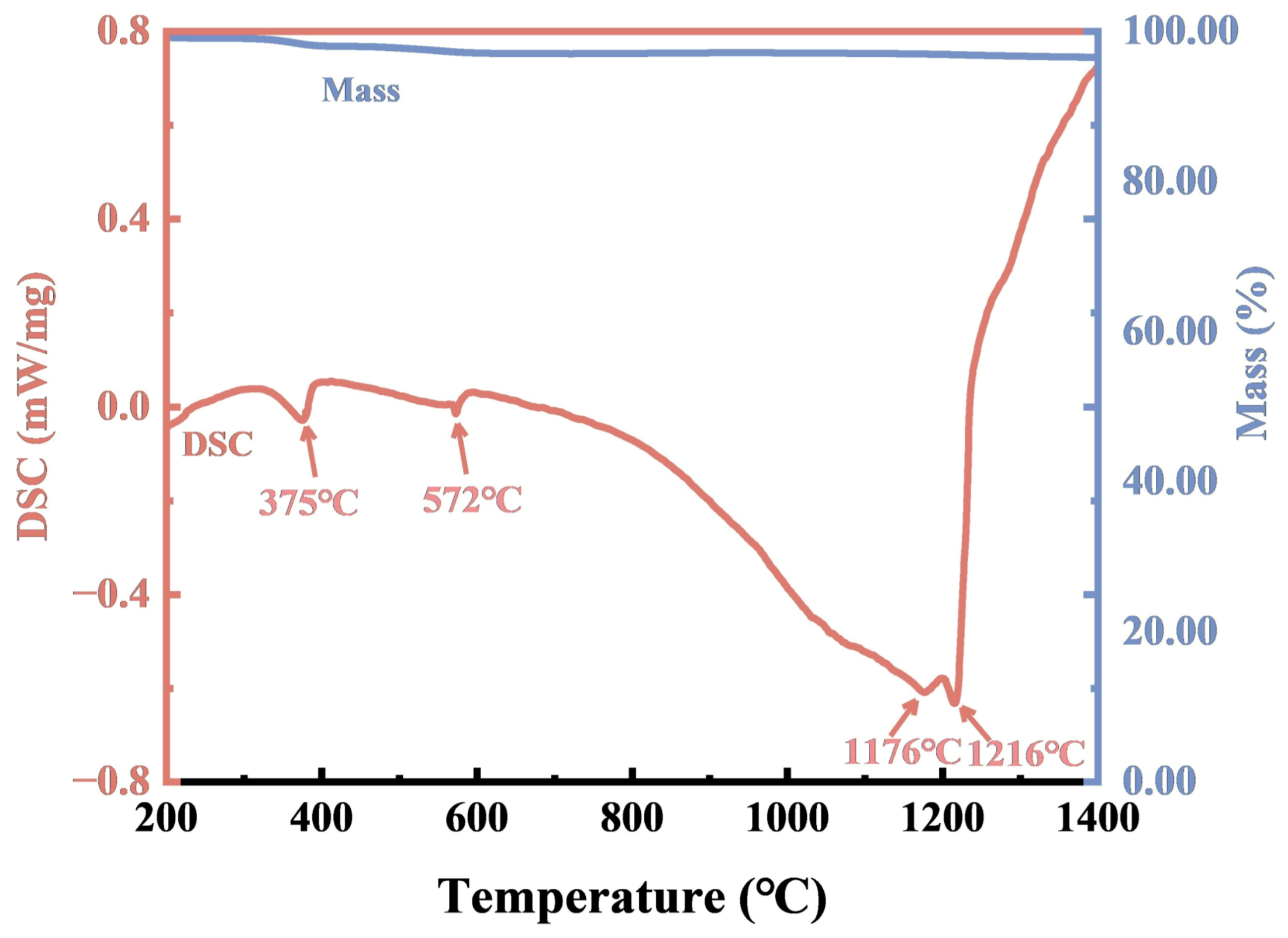
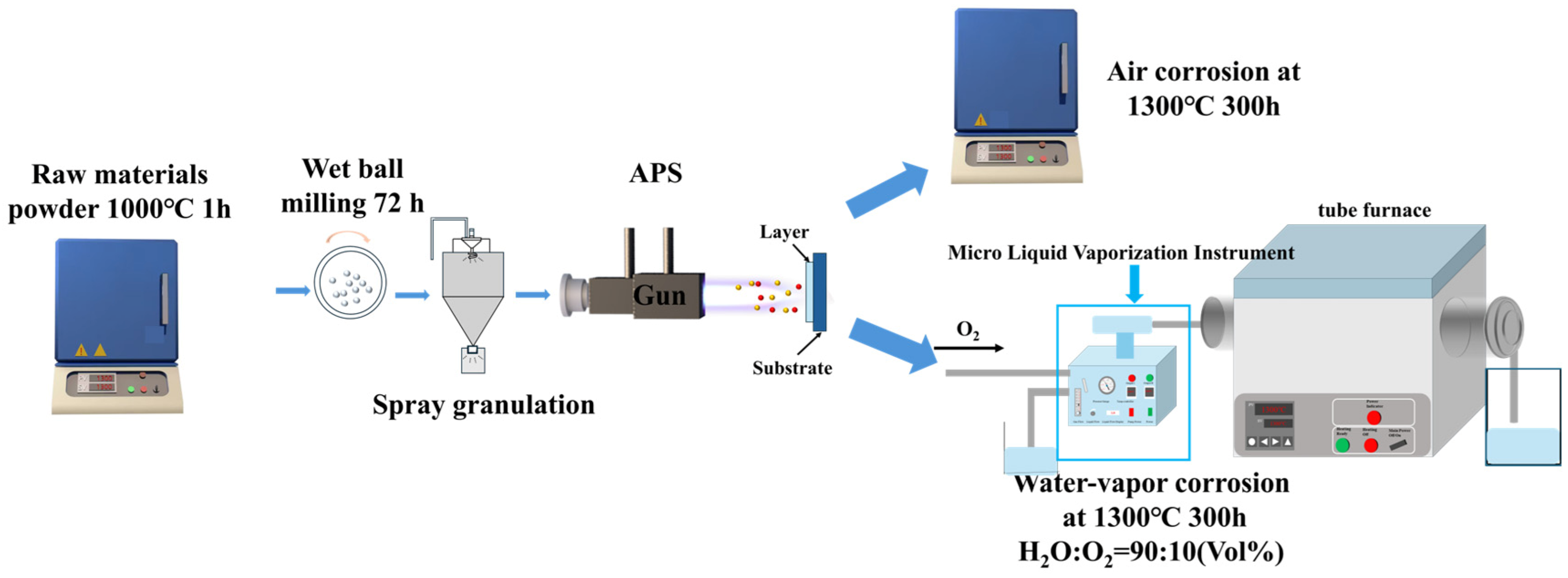
2.1. Preparation of the Ca33Mg9Al13Si45 Powders
2.2. Preparation of the Ca33Mg9Al13Si45 Layer
2.3. Infiltration Experiment of the Molten Ca33Mg9Al13Si45
2.4. Corrosion Environments of the Molten Ca33Mg9Al13Si45
- (1)
- High-temperature air corrosion
- (2)
- High-temperature water-vapor corrosion
2.5. Flexural Strength Test
2.6. Characterization
3. Results
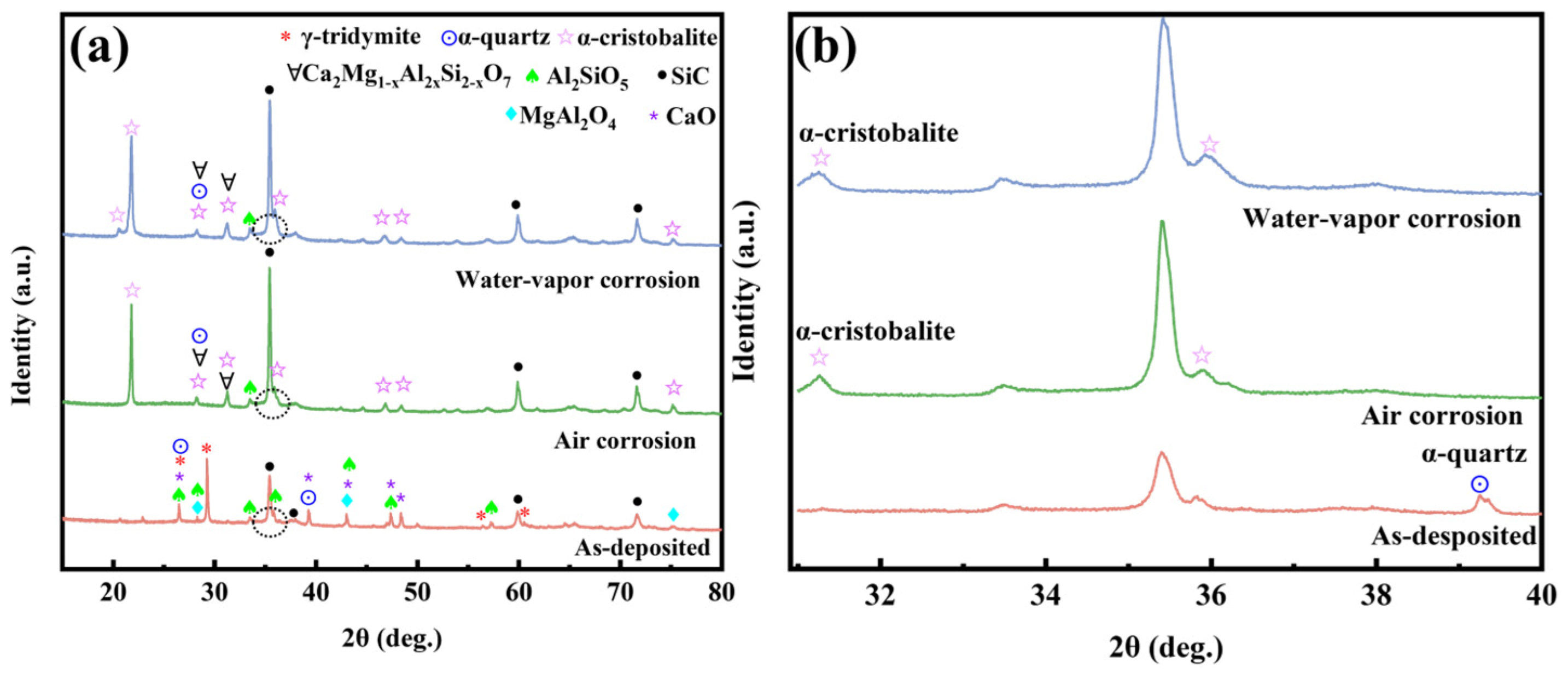
3.1. The Phase of the Ca33Mg9Al13Si45 Layer
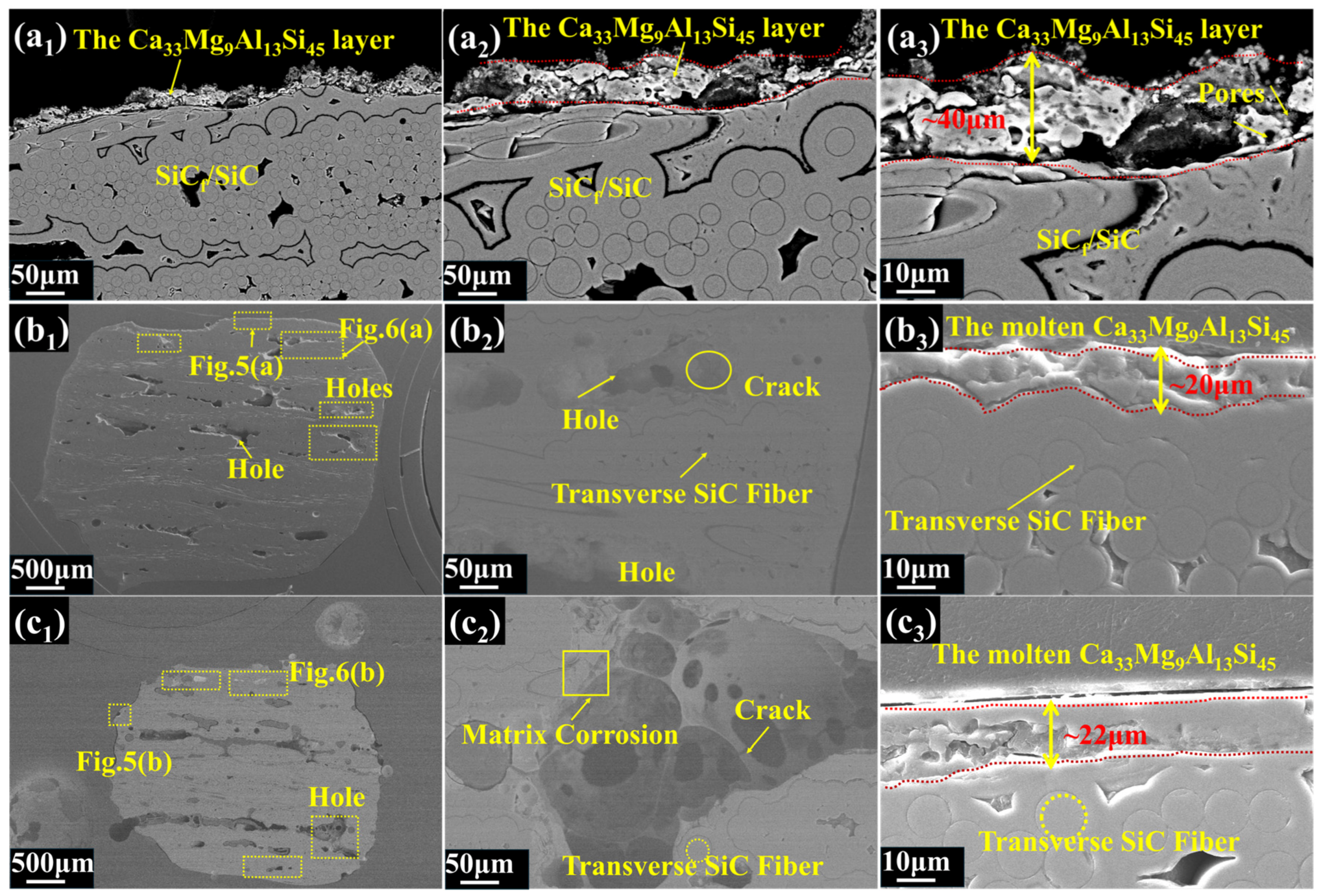
3.2. Morphology Analysis
3.3. Bending Resistance Performance
4. Discussion
4.1. Phase Evolution of the Ca33Mg9Al13Si45 Layer
4.2. Infiltration Behavior of the Molten Ca33Mg9Al13Si45
4.3. Bending Performance
- (1)
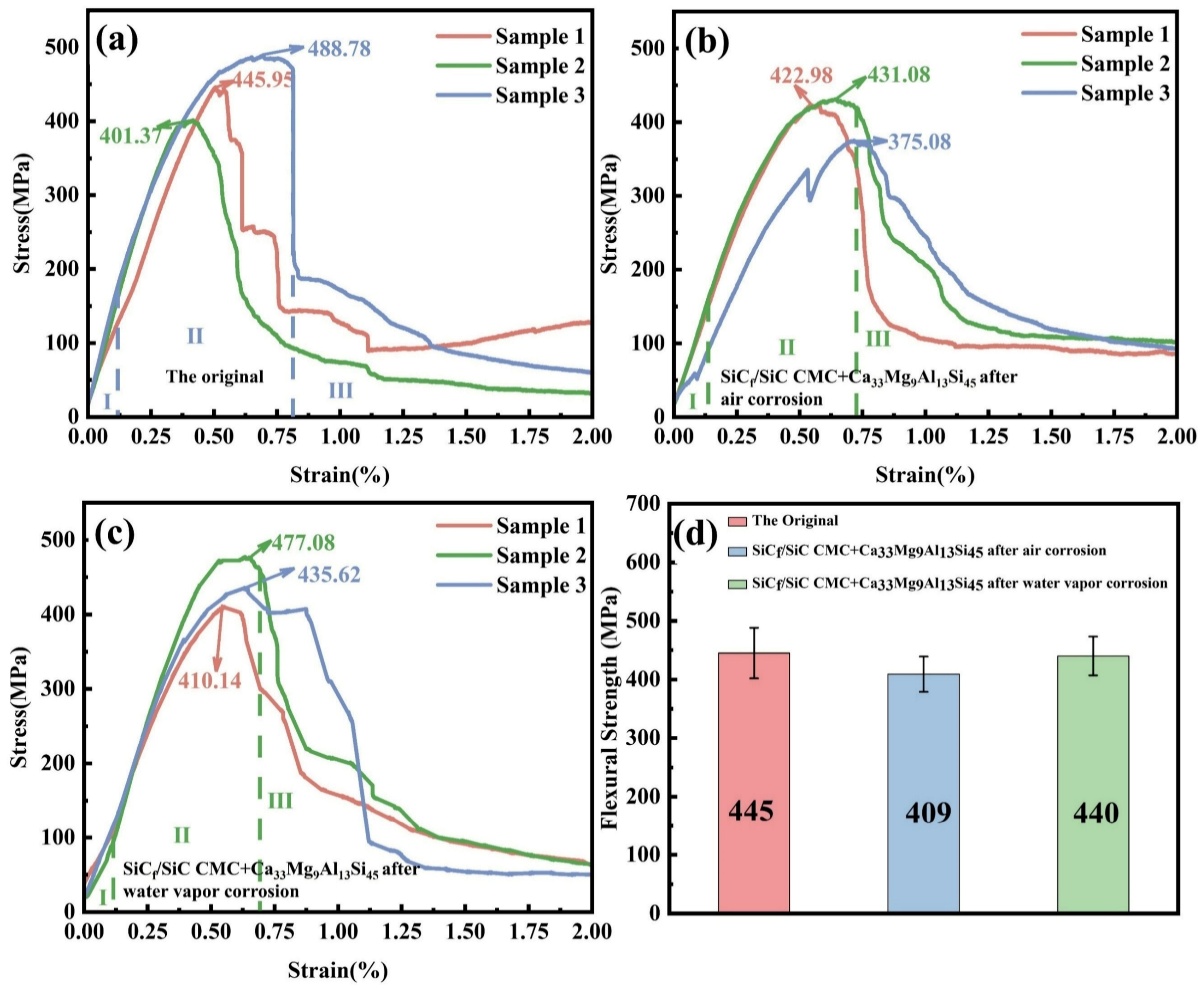
- In stage I, the stress–strain curve remained nearly linear, with only slight changes in slope corresponding to the elastic modulus of SiCf/SiC. During this stage, fibers deformed elastically without damage, and the fiber–matrix interface remained stable. Deformation occurred primarily within the SiC matrix during this stage.
- (2)
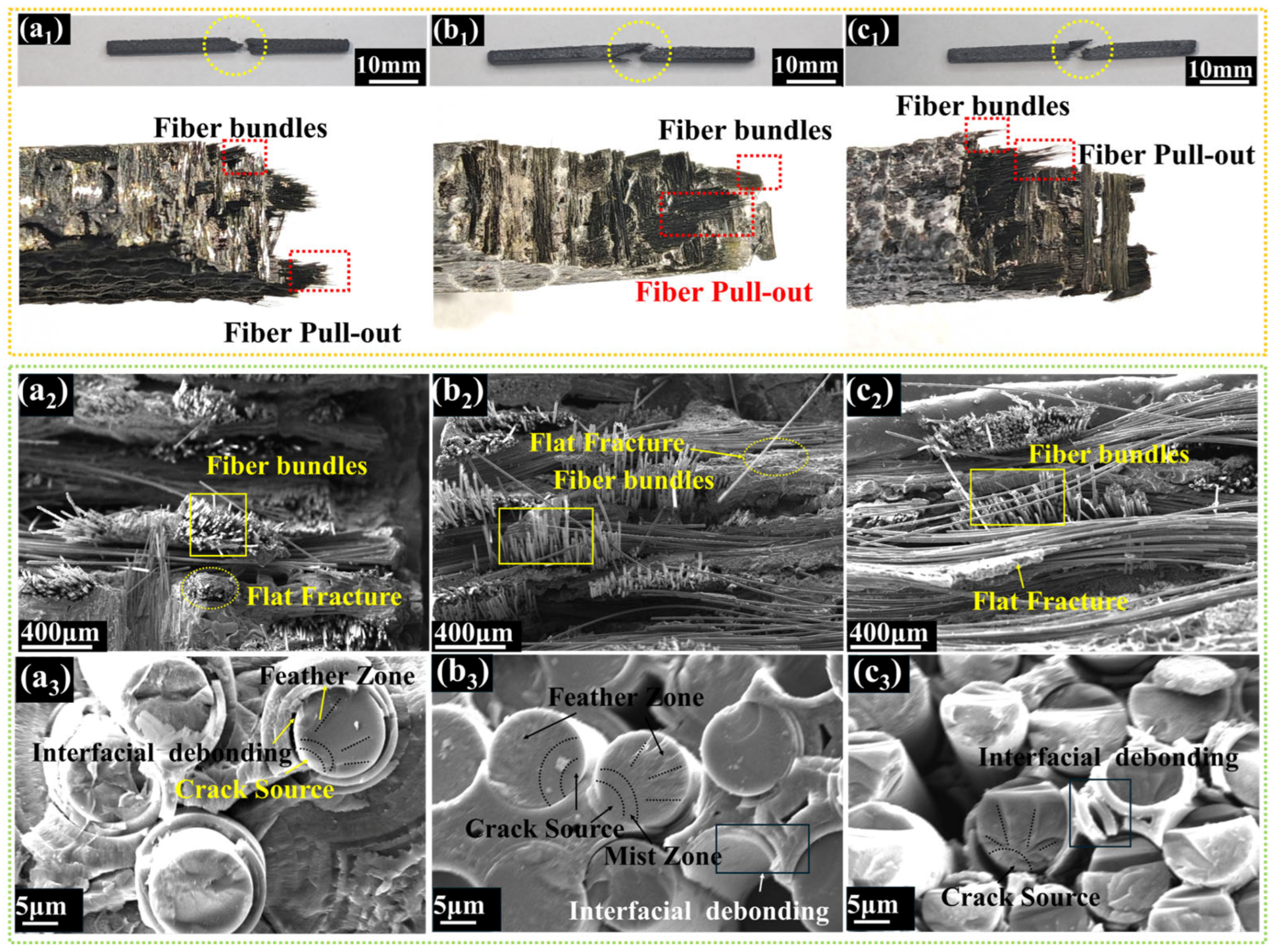
- Subsequently, the stress–strain curve exhibited a parabolic shape with a gradually decreasing slope in stage II. The stress increased with strain until reaching the peak value, after which the curve entered a plateau region. During this stage, the applied load was borne by the fibers, while microcracks progressively developed within the matrix. Different degrees of interfacial debonding were observed under different corrosion conditions. The fracture photograph in Figure 11 further confirmed that the occurrence of interfacial debonding and fiber pull-out in all samples, although the degree of damage was different. In the original state in Figure 11(a1), the pull-out of fiber bundles was clearly observed. The SEM image in Figure 11(a3) further showed that only slight splitting and debris on the surface after pull-out occurred, indicating minimal interfacial damage. Following air corrosion, the fracture surface shown in Figure 11(b1) appeared relatively smooth, with only a slight fiber pull-out. As shown in Figure 11(b3), the debonding intensified, and the interface characteristics were still relatively obvious after fibers were pulled out. In contrast, clear fiber pull-out was observed on the fracture surface of the SiCf/SiC in Figure 11(c1). Consistent with the SEM image in Figure 11(c3), the interface was nearly fully deboned, accompanied by more pronounced surface undulations and longer fiber pull-out lengths. Moreover, the fiber pull-out length increased from air corrosion to water-vapor corrosion.
- (3)
- After the stress reached its peak, the curve dropped rapidly and exhibited a stepped shape in stage III, indicating that the fibers were gradually pulled out under interfacial frictional force. Once most fibers were fractured or pulled out (Figure 11(a1–c1)), the remaining fibers could no longer sustain the applied load, leading to overall failure. Pronounced fiber pull-out and flat regions parallel to the matrix fracture surface were observed in all three states in Figure 11(a2–c2). Figure 11(a3–c3) further shows the fracture characteristics of the fibers themselves. Clear mist regions, feather areas, and crack sources were observed on the fiber fracture surfaces, exhibiting typical brittle fracture behavior [44].
5. Conclusions
- (1)
- Based on the Gibbs free energy change, reconstructive and displacive transformation, the transition from α-quartz to α-cristobalite was thermodynamically favored during long-term exposure at 1300 °C, and γ-tridymite was not detected after corrosion. The substitution of Al3+ and the incorporation of Mg2+/Ca2+ stabilized the Si-O tetrahedral framework and facilitated the formation of melilite (Ca2Mg1−xAl2xSi2−xO7). As a result, the Ca33Mg9Al13Si45 layer after corrosion on the surface of SiCf/SiC consisted mainly of α-quartz, α-cristobalite, and melilite.
- (2)
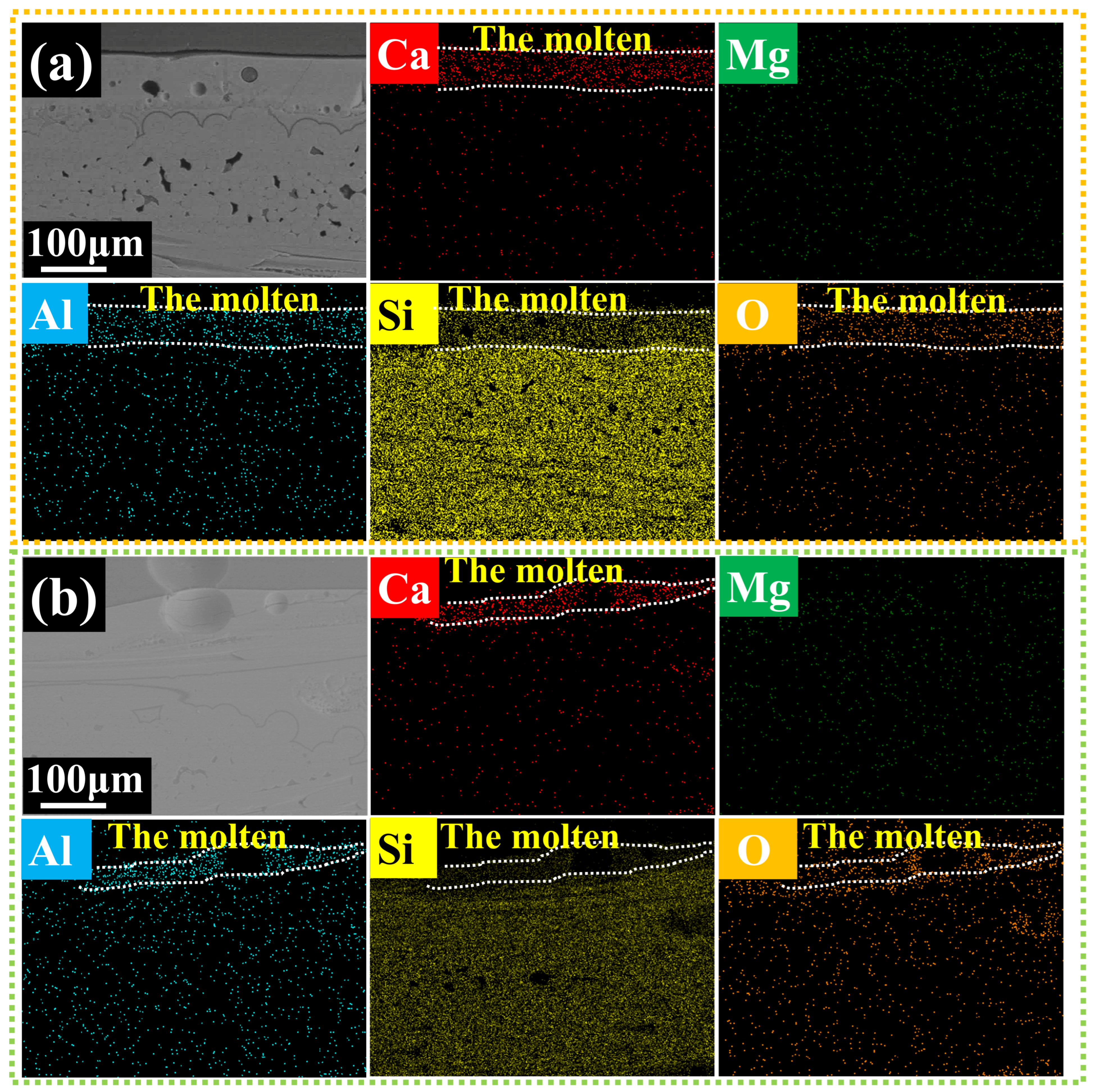
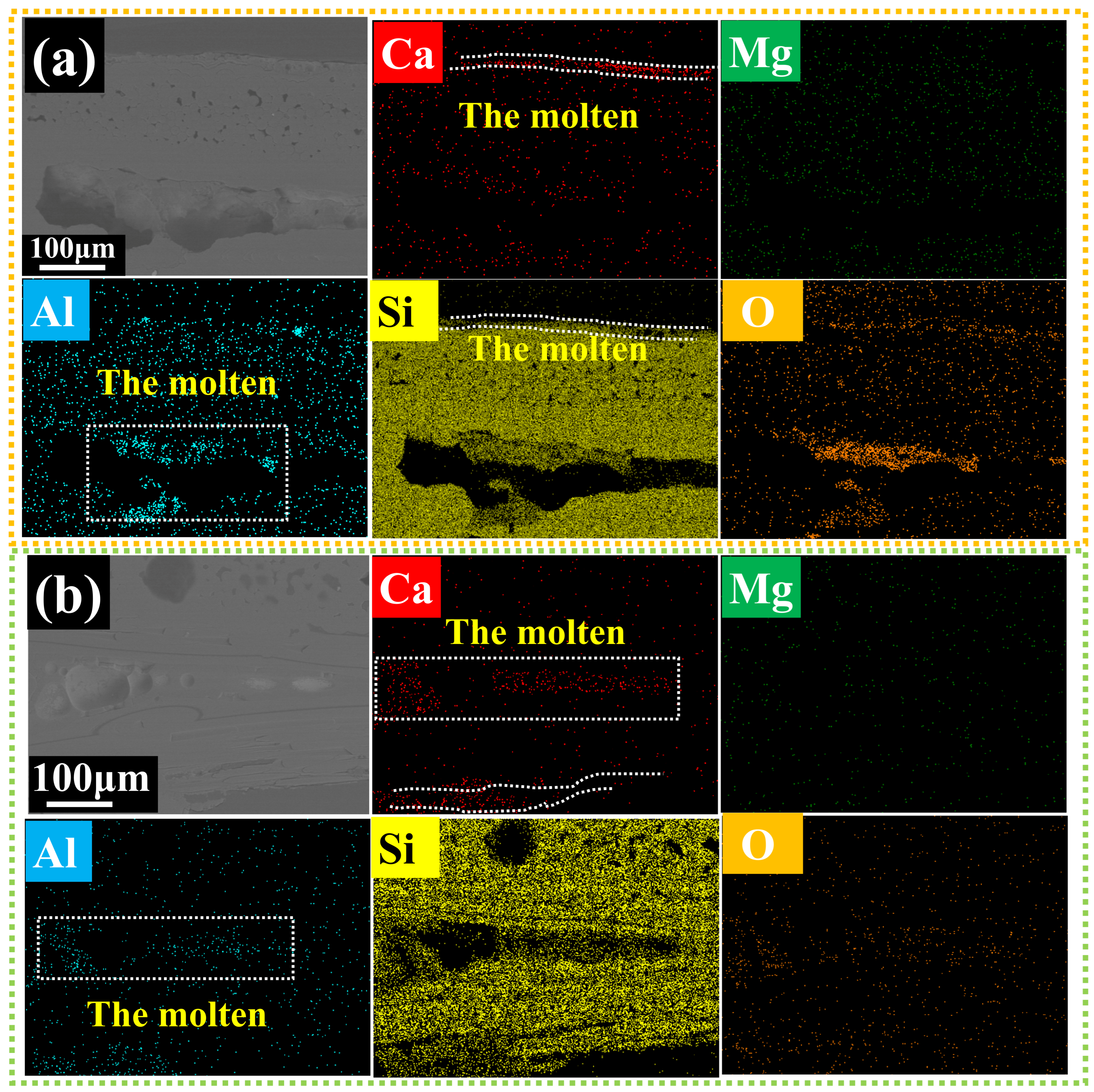
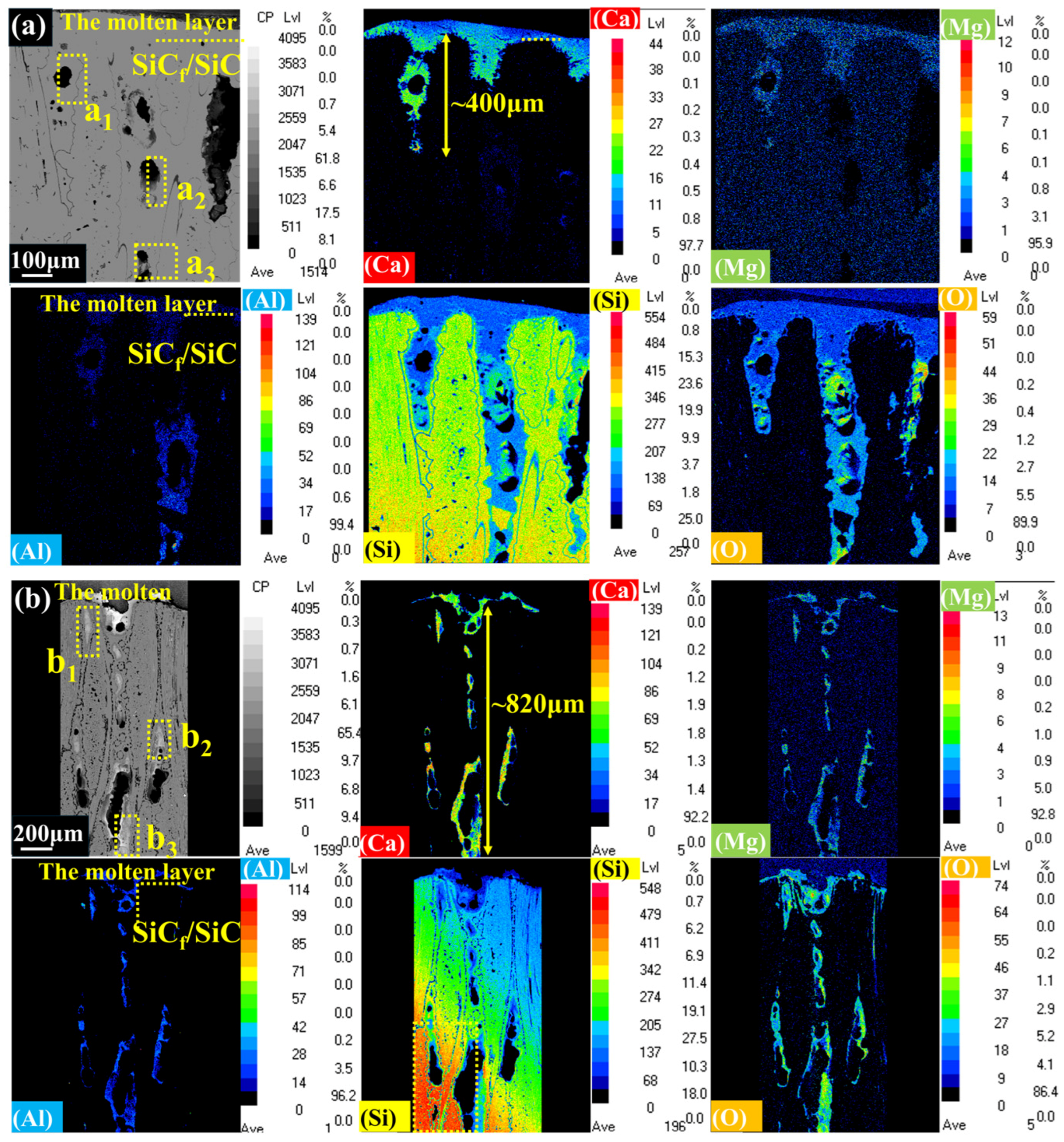
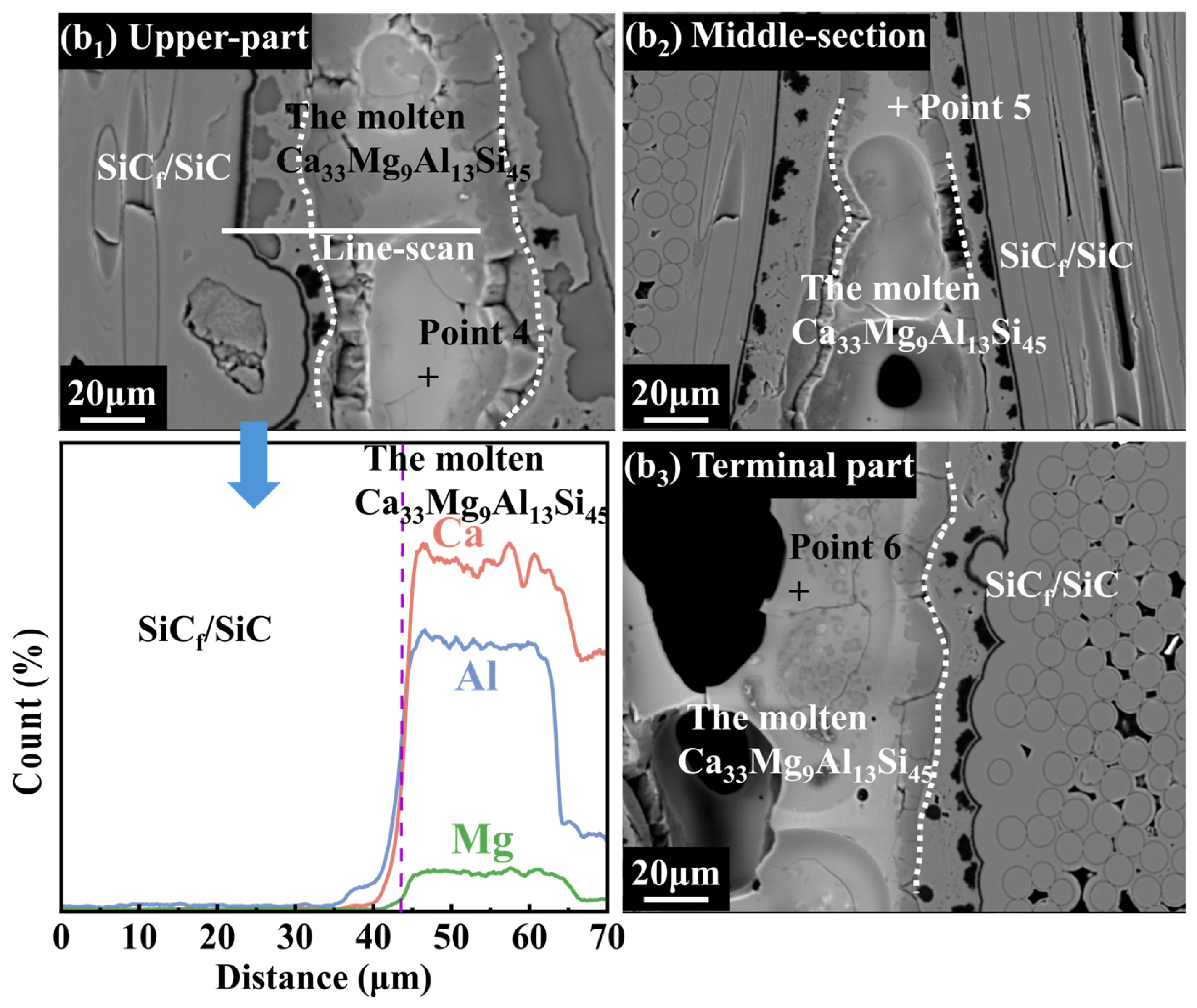
- The molten Ca33Mg9Al13Si45 melted at 1300 °C and infiltrated through the interconnected pores into the SiCf/SiC. The elemental infiltration depth was controlled by the chemical potential differences and diffusion coefficients. The elements Ca and Mg were mainly concentrated in the upper part of the pores during air corrosion, but they infiltrated into the bottom of the pores during water-vapor corrosion. The element Al stably substituted in the Si-O-Al framework and infiltrated to full depth under both corrosion conditions.
- (3)
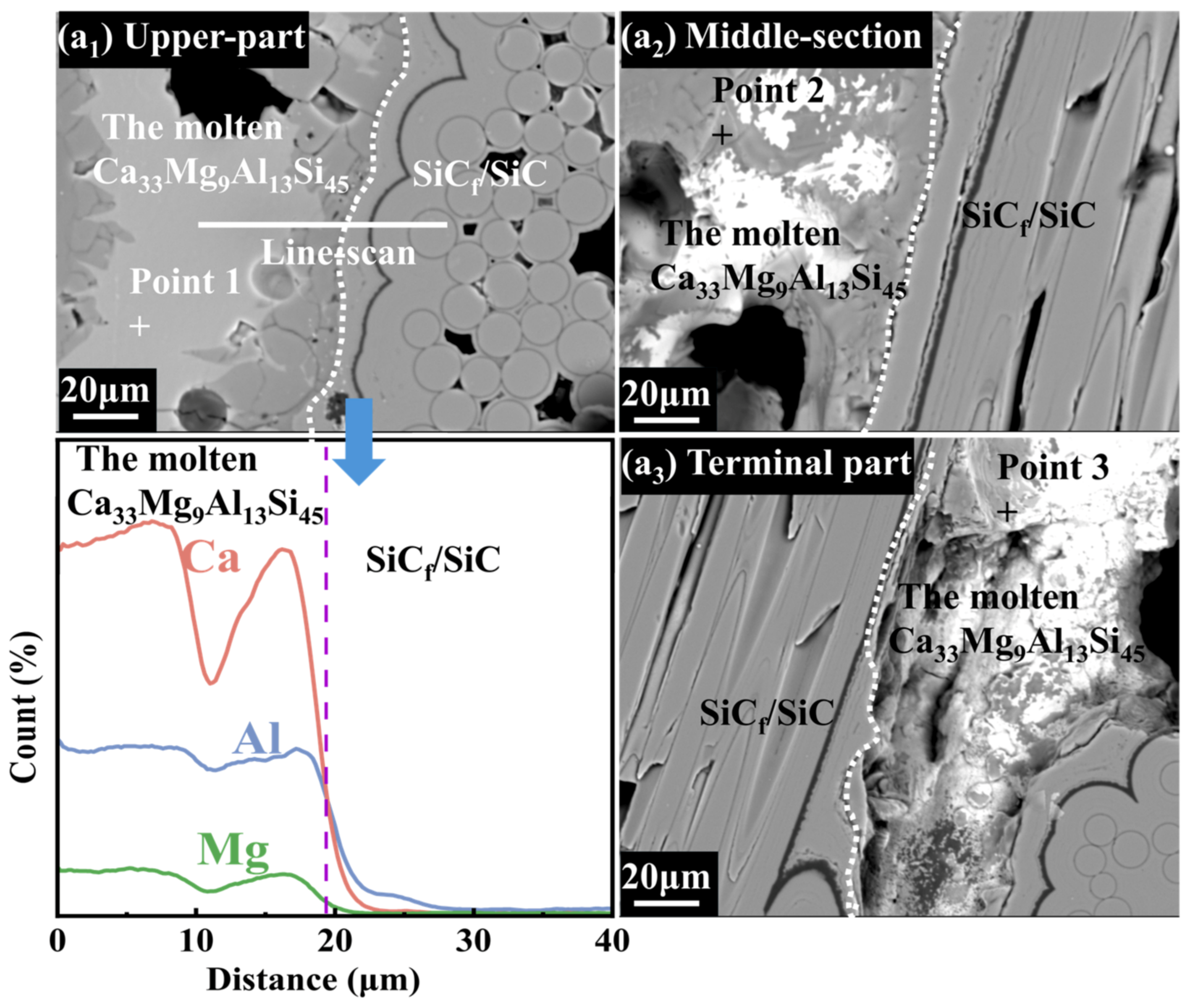
- The molten Ca33Mg9Al13Si45 infiltrated into the pores of SiCf/SiC predominantly through physical infiltration at high temperature. No significant interdiffusion was detected at the interface between the molten Ca33Mg9Al13Si45 and SiCf/SiC, indicating that the molten Ca33Mg9Al13Si45 did not undergo a chemical reaction with SiCf/SiC and the interface remained chemically stable.
- (4)
- The flexural strength of the SiCf/SiC showed only a slight decrease, with strength retention rates of 92% and 99% after air and water-vapor corrosion relative to the original state. This result could be attributed to interfacial chemical stability and the reduction in the effective porosity in SiCf/SiC by the molten Ca33Mg9Al13Si45 infiltration.
Author Contributions
Funding
Institutional Review Board Statement
Informed Consent Statement
Data Availability Statement
Conflicts of Interest
References
- Deijkers, J.A.; Begley, M.R.; Wadley, H.N.G. Failure mechanisms in model thermal and environmental barrier coating systems. J. Eur. Ceram. Soc. 2022, 42, 5129–5144. [Google Scholar] [CrossRef]
- Vasechko, V.; Flucht, F.; Rahner, N. Mechanical investigation of weak regions in a wound oxide-oxide ceramic matrix composite. J. Eur. Ceram. Soc. 2018, 38, 5192–5199. [Google Scholar] [CrossRef]
- Chen, B.; Sun, H.; Ye, Y.; Ji, C.; Pan, S.; Wang, B. Research Status and Development Trends of Joining Technologies for Ceramic Matrix Composites. Materials 2025, 18, 871. [Google Scholar] [CrossRef]
- Ohnabe, H.; Masaki, S.; Onozuka, M.; Miyahara, K.; Sasa, T. Potential application of ceramic matrix composites to aero-engine components. Compos. Part A-Appl. Sci. Manuf. 1999, 30, 489–496. [Google Scholar] [CrossRef]
- Cao, G.; Wang, S.; Ding, Z.; Wang, Y.; Liu, Z.; Ouyang, J.; Wang, Y.; Wang, Y. High temperature corrosion behavior and the inhibition of apatite formation evolving from corrosion of (Y1−xYbx)2SiO5 in water vapor environment. Appl. Surf. Sci. 2022, 601, 154284. [Google Scholar] [CrossRef]
- Opila, E.J. Oxidation and Volatilization of Silica Formers in Water Vapor. J. Am. Ceram. Soc. 2003, 86, 1238–1248. [Google Scholar] [CrossRef]
- Li, G.; Qin, L.; Cao, X.; Lu, X.; Tu, Y.; Zhang, H.; Jiang, J.; Deng, L.; Dong, S.; Liu, L.; et al. Water vapor corrosion resistance and failure mechanism of SiCf/SiC composites completely coated with plasma sprayed tri-layer EBCs. Ceram. Int. 2022, 48, 7082–7092. [Google Scholar] [CrossRef]
- Hu, Q.; Zhou, X.; Tu, Y.; Lu, X.; Huang, J.; Jiang, J.; Deng, L.; Dong, S.; Cao, X. High-temperature mechanical properties and oxidation resistance of SiCf/SiC ceramic matrix composites with multi-layer environmental barrier coatings for turbine applications. Ceram. Int. 2021, 47, 30012–30019. [Google Scholar] [CrossRef]
- Nasiri, N.A.; Patra, N.; Ni, N.; Jayaseelan, D.D.; Lee, W.E. Oxidation behaviour of SiC/SiC ceramic matrix composites in air. J. Eur. Ceram. Soc. 2016, 36, 3293–3302. [Google Scholar] [CrossRef]
- Krause, A.R.; Garces, H.F.; Dwivedi, G.; Ortiz, A.L.; Sampath, S.; Padture, N.P. Calcia-magnesia-alumino-silicate (CMAS)-induced degradation and failure of air plasma sprayed yttria-stabilized zirconia thermal barrier coatings. Acta Mater. 2016, 105, 355–366. [Google Scholar] [CrossRef]
- Jamali, H.; Mozafarinia, R.; Shoja-Razavi, R.; Ahmadi-Pidani, R. Comparison of hot corrosion behaviors of plasma-sprayed nanostructured and conventional YSZ thermal barrier coatings exposure to molten vanadium pentoxide and sodium sulfate. J. Eur. Ceram. Soc. 2014, 34, 485–492. [Google Scholar] [CrossRef]
- Levi, C.G.; Hutchinson, J.W.; Vidal-Sétif, M.; Johnson, C.A. Environmental degradation of thermal-barrier coatings by molten deposits. MRS Bull. 2012, 37, 932–941. [Google Scholar] [CrossRef]
- Aygun, A.; Vasiliev, A.L.; Padture, N.P.; Ma, X. Novel thermal barrier coatings that are resistant to high-temperature attack by glassy deposits. Acta Mater. 2007, 55, 6734–6745. [Google Scholar] [CrossRef]
- Guo, F.; Chen, X.; Yang, J.; Zhang, X.; Hu, J.; Kan, Y.; Zhou, H.; Xue, Y.; Qin, H.; You, X.; et al. Stress-corrosion behavior of SiCf/SiC under CMAS-wet-oxygen environments. Corros. Sci. 2024, 228, 111844. [Google Scholar] [CrossRef]
- Zhang, J.; Liu, R.; Jian, Y.; Wan, F.; Wang, Y. Degradation mechanism of SiCf/SiC composites after long-time water vapor and oxygen corrosion at 1300 °C. Corros. Sci. 2022, 197, 110099. [Google Scholar] [CrossRef]
- Zok, F.W.; Maxwell, P.T.; Kawanishi, K.; Callaway, E.B. Degradation of a SiC-SiC composite in water vapor environments. J. Am. Ceram. Soc. 2020, 103, 1927–1941. [Google Scholar] [CrossRef]
- Mohan, A.; Udayakumar, A.; Gandhi, A.S. High temperature oxidation behaviour of CVD β-SiC seal coated SiCf/SiC composites in static dry air and combustion environment. Ceram. Int. 2017, 43, 9472–9480. [Google Scholar] [CrossRef]
- Wu, S.; Cheng, L.; Zhang, L. Oxidation behavior of 3D Hi-Nicalon/SiC composite exposed in wet and simulated air environments. Corros. Sci. 2013, 66, 111–117. [Google Scholar] [CrossRef]
- Krämer, S.; Yang, J.; Levi, C.G.; Johnson, C.A. Thermochemical Interaction of Thermal Barrier Coatings with Molten CaO–MgO–Al2O3–SiO2 (CMAS) Deposits. J. Am. Ceram. Soc. 2006, 89, 3167–3175. [Google Scholar] [CrossRef]
- Ji, S. A generalized mixture rule for estimating the viscosity of solid-liquid suspensions and mechanical properties of polyphase rocks and composite materials. J. Geophys. Res. Solid Earth 2004, 109, 2004JB003124. [Google Scholar] [CrossRef]
- Nair, R.B.; Brabazon, D. Calcia magnesia alumino silicate (CMAS) corrosion attack on thermally sprayed thermal barrier coatings: A comprehensive review. npj Mater. Degrad. 2024, 8, 44. [Google Scholar] [CrossRef]
- Pagliari, L.; Dapiaggi, M.; Pavese, A.; Francescon, F. A kinetic study of the quartz–cristobalite phase transition. J. Eur. Ceram. Soc. 2013, 33, 3403–3410. [Google Scholar] [CrossRef]
- Ramasamy, S.; Tewari, S.N.; Lee, K.N.; Bhatt, R.T.; Fox, D.S. Slurry based multilayer environmental barrier coatings for silicon carbide and silicon nitride ceramics—I. Processing. Surf. Coat. Technol. 2010, 205, 258–265. [Google Scholar] [CrossRef]
- Bhatt, R.T.; Jaskowiak, M.H. Creep and cyclic durability of CVI SiC/SiC composites. J. Eur. Ceram. Soc. 2024, 44, 4437–4451. [Google Scholar] [CrossRef]
- Morscher, G.N. Modeling the elastic modulus of 2D woven CVI SiC composites. Compos. Sci. Technol. 2006, 66, 2804–2814. [Google Scholar] [CrossRef]
- Richet, P.; Bottinga, Y. Thermochemical properties of silicate glasses and liquids: A review. Rev. Geophys. 1986, 24, 1–25. [Google Scholar] [CrossRef]
- Linstrom, P.J.; Mallard, W.G. The NIST Chemistry WebBook: A Chemical Data Resource on the Internet. J. Chem. Eng. Data 2001, 46, 1059–1063. [Google Scholar] [CrossRef]
- Trachenko, K. Fundamental physical constants, operation of physical phenomena and entropy increase. J. Phys.-Condes. Matter 2025, 37, 151501. [Google Scholar] [CrossRef]
- Zeng, Q.; Du, Z.; Han, X.; Wang, B.; Wu, G.; Liu, E. Observation of atomically displacive transformation out of the boundary-reconstructive phase competition. Acta Mater. 2024, 262, 119429. [Google Scholar] [CrossRef]
- Damby, D.E.; Llewellin, E.W.; Horwell, C.J.; Williamson, B.J.; Najorka, J.; Cressey, G.; Carpenter, M. The α–β phase transition in volcanic cristobalite. J. Appl. Crystallogr. 2014, 47, 1205–1215. [Google Scholar] [CrossRef] [PubMed]
- Uhlmann, D.R. A kinetic treatment of glass formation. J. Non-Cryst. Solids 1972, 7, 337–348. [Google Scholar] [CrossRef]
- Greaves, G.N.; Fontaine, A.; Lagarde, P.; Raoux, D.; Gurman, S.J. Local structure of silicate glasses. Nature 1981, 293, 611–616. [Google Scholar] [CrossRef]
- Zhou, Y.; Hirao, K.; Yamauchi, Y.; Kanzaki, S. Effects of rare-earth oxide and alumina additives on thermal conductivity of liquid-phase-sintered silicon carbide. J. Mater. Res. 2003, 18, 1854–1862. [Google Scholar] [CrossRef]
- Kulkarni, K.N. Derivation of expressions for interdiffusion and intrinsic diffusion flux in presence of chemical potential gradient in a multicomponent system with composition dependent molar volume. Oxf. Open Mater. Sci. 2023, 3, itad018. [Google Scholar] [CrossRef]
- Porter, D.A.; Easterling, K.E.; Sherif, M.Y. Phase Transformations in Metals and Alloys, 4th ed.; CRC Press: Boca Raton, FL, USA, 2022. [Google Scholar]
- Bai, T.B.; van Groos, A.F.K. Diffusion of chlorine in granitic melts. Geochim. Cosmochim. Acta 1994, 58, 113–123. [Google Scholar] [CrossRef]
- Gin, S.; Delaye, J.; Angeli, F.; Schuller, S. Aqueous alteration of silicate glass: State of knowledge and perspectives. npj Mater. Degrad. 2021, 5, 42. [Google Scholar] [CrossRef]
- Watson, E.B. Diffusion in magmas at depth in the Earth: The effects of pressure and dissolved H2O, Earth Planet. Sci. Lett. 1981, 52, 291–301. [Google Scholar] [CrossRef]
- Stolper, The speciation of water in silicate melts. Geochim. Cosmochim. Acta 1982, 46, 2609–2620. [CrossRef]
- Huang, S.; Wang, W.; Jiang, H.; Zhao, H.; Ma, Y. Network Structure and Properties of Lithium Aluminosilicate Glass. Materials 2022, 15, 4555. [Google Scholar] [CrossRef] [PubMed]
- Ahlborg, N.L.; Zhu, D. Calcium–magnesium aluminosilicate (CMAS) reactions and degradation mechanisms of advanced environmental barrier coatings. Surf. Coat. Technol. 2013, 237, 79–87. [Google Scholar] [CrossRef]
- Wolf, M.; Mack, D.E.; Guillon, O.; Vaßen, R. Resistance of pure and mixed rare earth silicates against calcium-magnesium-aluminosilicate (CMAS): A comparative study. J. Am. Ceram. Soc. 2020, 103, 7056–7071. [Google Scholar] [CrossRef]
- Li, G.; Deng, L.; Jiang, J.; Xiong, Y.; Chen, W.; Cao, X. Water vapor corrosion and cyclic oxidation behavior of SiCf/SiC coated with Si/YbDS-YbMS/YbMS/LMA coating. Mater. Charact. 2025, 222, 114821. [Google Scholar] [CrossRef]
- Sawyer, L.C.; Jamieson, M.; Brikoeski, D.; Haider, M.I.; Chen, R.T. Strength, Structure, and Fracture Properties of Ceramic Fibers Produced from Polymeric Precursors: I, Base-Line Studies. J. Am. Ceram. Soc. 1987, 70, 798–810. [Google Scholar] [CrossRef]
- Rebillat, F.; Lamon, J.; Guette, A. The concept of a strong interface applied to SiC/SiC composites with a BN interphase. Acta Mater. 2000, 48, 4609–4618. [Google Scholar] [CrossRef]
- Hu, J.; Liu, C.; Ye, F.; Cheng, L.; Wei, Y. A review on high-performance SiCf/SiC composites prepared by PIP process. J. Mater. Res. Technol. 2024, 33, 7216–7235. [Google Scholar] [CrossRef]



| Layer | Power (kW) | Spraying Distance (mm) | Powder Feeding (g/min) | Thickness (μm) |
|---|---|---|---|---|
| Ca33Mg9Al13Si45 | 36 | 100 | 13 | 50 ± 10 |
| Phase | JCPDS NO. |
|---|---|
| γ-tridymite | 83-1831 |
| α-quartz | 85-0865 |
| Al2SiO5 | 72-1441 |
| MgAl2O4 | 33-0853 |
| CaO | 28-0775 |
| α-quartz | 79-1914 |
| α-cristobalite | 89-3434 |
| Ca2Mg1−xAl2xSi2−xO7 | 79-2424 |
| H°1573 K − H°298.15 K (kJ/mol) | S°1573 K (J·mol−1·K−1) | G = H1573 K − TS1573 K (kJ/mol) | ΔG from Quartz to Cristobalite (kJ/mol) | |
|---|---|---|---|---|
| cristobalite | 83.06 | 150.27 | −1061.66 | −4.62 |
| quartz | 86.52 | 148.46 | −1057.04 |
| Point | Ca (at.%) | Mg (at.%) | Al (at.%) | Si (at.%) | O (at.%) |
|---|---|---|---|---|---|
| 1 | 6.5 | 1.9 | 3.3 | 25.0 | 63.3 |
| 2 | 0.1 | 0.00 | 3.6 | 30.3 | 66.0 |
| 3 | 0.3 | 0.2 | 1.2 | 32.0 | 66.3 |
| 4 | 5.7 | 1.6 | 5.4 | 24.0 | 63.3 |
| 5 | 5.6 | 1.8 | 5.2 | 24.1 | 63.3 |
| 6 | 5.9 | 1.8 | 5.1 | 23.9 | 63.3 |
| Upper Part | Middle Section | Terminal Part | |
|---|---|---|---|
| air corrosion | Ca18.7Mg5.4Al4.8Si71.1 | Ca0.4Al5.5Si94.1 | Ca0.8Mg0.3Al3.1Si95.8 |
| water-vapor corrosion | Ca16.7Mg4.9Al8.0Si70.4 | Ca16.6Mg5.5Al7.4Si70.5 | Ca17.2Mg5.5Al7.4Si69.9 |
| Corrosion Conditions | Al | Ca | Mg |
|---|---|---|---|
| air corrosion | −12,975 | −7449 | −6632 |
| water-vapor corrosion | −6349 | −8907 | −7951 |
| Corrosion Conditions | Al | Ca | Mg |
|---|---|---|---|
| air corrosion | 1.169 × 10⁻¹ | 3.144 × 10⁻² | 6.408 × 10⁻² |
| water-vapor corrosion | 9.101 × 10⁻¹ | 7.015 × 10⁻¹ | 1.156 |
Disclaimer/Publisher’s Note: The statements, opinions and data contained in all publications are solely those of the individual author(s) and contributor(s) and not of MDPI and/or the editor(s). MDPI and/or the editor(s) disclaim responsibility for any injury to people or property resulting from any ideas, methods, instructions or products referred to in the content. |
© 2026 by the authors. Licensee MDPI, Basel, Switzerland. This article is an open access article distributed under the terms and conditions of the Creative Commons Attribution (CC BY) license.
Share and Cite
Zhang, M.; Chen, W.; Li, X.; Li, G.; Xiong, Y.; Zhang, Y.; Wang, B.; Liu, L.; Deng, L.; Jiang, J.; et al. Infiltration Behavior of the Molten Ca33Mg9Al13Si45 Layer on SiCf/SiC Under Air and Water-Vapor Conditions at 1300 °C. Coatings 2026, 16, 670. https://doi.org/10.3390/coatings16060670
Zhang M, Chen W, Li X, Li G, Xiong Y, Zhang Y, Wang B, Liu L, Deng L, Jiang J, et al. Infiltration Behavior of the Molten Ca33Mg9Al13Si45 Layer on SiCf/SiC Under Air and Water-Vapor Conditions at 1300 °C. Coatings. 2026; 16(6):670. https://doi.org/10.3390/coatings16060670
Chicago/Turabian StyleZhang, Man, Wenbo Chen, Xusheng Li, Gui Li, Ying Xiong, Yixin Zhang, Bo Wang, Li Liu, Longhui Deng, Jianing Jiang, and et al. 2026. "Infiltration Behavior of the Molten Ca33Mg9Al13Si45 Layer on SiCf/SiC Under Air and Water-Vapor Conditions at 1300 °C" Coatings 16, no. 6: 670. https://doi.org/10.3390/coatings16060670
APA StyleZhang, M., Chen, W., Li, X., Li, G., Xiong, Y., Zhang, Y., Wang, B., Liu, L., Deng, L., Jiang, J., Dong, S., & Cao, X. (2026). Infiltration Behavior of the Molten Ca33Mg9Al13Si45 Layer on SiCf/SiC Under Air and Water-Vapor Conditions at 1300 °C. Coatings, 16(6), 670. https://doi.org/10.3390/coatings16060670