Article

Study on the Microstructure and Properties of Nb/ZrO2/HA Composite Coatings by Plasma Spraying Process Parameters

1
School of Mechanical Engineering (School of Intelligent Manufacturing), Nantong Institute of Technology, Nantong 226002, China
2
School of Mechanical Engineering, Nantong University, Nantong 226019, China
3
School of Materials Science and Engineering, Jiangsu University, Zhenjiang 212013, China
*
Author to whom correspondence should be addressed.
Coatings 2026, 16(5), 525; https://doi.org/10.3390/coatings16050525
Submission received: 29 March 2026 / Revised: 17 April 2026 / Accepted: 23 April 2026 / Published: 27 April 2026
(This article belongs to the Special Issue Plasma Deposition Coatings and Surface Treatment)

Highlights

What are the main findings?
Nb/ZrO2/HA composite coatings were successfully fabricated on ZK60 magnesium alloy via plasma spraying under different powers and powder feeding rates.
The surface hardness of the composite coatings increased as the power increased and the powder feeding rate decreased.
Coated surfaces changed from hydrophobic (substrate) to hydrophilic and showed significantly improved corrosion resistance, which was enhanced by lower roughness and higher hardness.
Under optimized parameters (33 kW, 18 g/min), the coating exhibited a dense, flat morphology, with hardness and corrosion resistance increased by 28% and 56% respectively compared to pure HA coating.
Doping Nb into ZrO2/HA coatings effectively enhanced cell activity and biological performance.
What are the implications of the main findings?
Plasma spraying parameters can be flexibly adjusted to tailor the hardness and corrosion resistance of composite coatings on magnesium alloys.
The prepared Nb/ZrO2/HA coating improves surface wettability and corrosion protection, which is beneficial for the service performance of ZK60 magnesium alloy.
Optimized spraying parameters enable the preparation of dense, low-roughness coatings with significantly improved mechanical and anticorrosive properties.
Nb doping provides a feasible strategy to enhance the biological activity of HA-based composite coatings.
This coating design shows potential for biomedical applications of magnesium alloys, though further biological verification is still required for clinical translation.

Abstract

In this study, niobium/zirconium dioxide/hydroxyapatite (Nb/ZrO2/HA) composite coating was deposited on ZK60 magnesium alloy by the plasma spraying technique. The effects of spraying power and the powder feeding rate on the surface morphology, corrosion resistance, surface hardness, and surface roughness were investigated in this study. Tests were conducted through the optimal parameter combination obtained during the optimization process. The Nb/ZrO2/HA coating consisted of α/β-TCP, TTCP, Nb2O5, HA, Nb, and t-ZrO2 phases. The results suggest that the Ca/P ratio of the coating approached the ideal calcium-to-phosphorus ratio characteristic of bone implant material surfaces. Under the parameters of 33 kw and 18 g/min, the coating exhibited a dense, flattened morphology with significantly reduced roughness of Ra = 2.128 μm. Compared to the pure HA coating, the surface hardness and corrosion resistance of the Nb/ZrO2/HA-coated sample increased by 28% and 56%, respectively. Furthermore, the mass loss rate in simulated body fluid (SBF) was considerably decreased by 33% compared to the HA coating. In vitro cytotoxicity assay reveals that the cell proliferation activity of the Nb/ZrO2/HA composite coating was higher than that of the HA/ZrO2 composite coating and the HA coating. Hence, the composite coating possessed favorable degradation controllability and biocompatibility.

1. Introduction

Attributed to the differences between mechanical properties, there is a loss of bone density between conventional implants and human bone under the stress shielding effect [1,2]. In recent years, suitable alternatives to permanent metallic implants used in orthopedic applications have been developed. Titanium alloys and stainless steel, with excellent moldability and corrosion resistance, have been preferred as permanent implants for bone reconstruction. However, these implants require a secondary surgical procedure for their removal, leading to severe complications and additional costs associated with the secondary surgical procedure [3,4,5]. Additionally, the use of biodegradable polymers such as PLA is common in orthopedic engineering, whereas they are not suitable for weight-bearing applications because of their poor mechanical properties [6,7].
The new generation of orthopedic implants combines appropriate mechanical properties with biocompatibility. Implants should dissolve completely in vivo after recovery of the bone tissue, and the decomposition process can provide adequate mechanical support during the healing process, but should not release toxic products [8,9]. Although iron, zinc, and magnesium are regarded as the metals with the greatest potential for biodegradability, the high cost of iron- and zinc-based materials has limited their development for orthopedic implants [10,11]. In contrast, magnesium has bone-like properties, an ideal combination of strength and ductility, while the degradation products are non-toxic and aid in tissue growth and healing, in addition to magnesium’s antimicrobial properties that lower the risk of infection [12,13,14,15]. Nonetheless, magnesium alloys are subjected to premature degradation in the humoral environment, bringing about loss of mechanical properties of the tissue before healing [16,17].
To handle rapid degradation of ZK60 Mg alloy and improve the cytocompatibility of Mg alloy in orthopedic applications, Wang et al. [18] prepared a hydroxyapatite (HA) coating on the surface of ZK60 Mg alloy using the chemical conversion method. Their experimental results demonstrate that the degradation rate of the coated ZK60 Mg alloy samples was significantly curtailed. The compatibility of the L929 cells was significantly improved. However, the HA coating has a low bonding strength with the matrix, which limits its long-term service performance and is a potential weakness in its application. Khor et al. [19] improved the mechanical properties of HA coatings by adding yttrium oxide-stabilized zirconia to hydroxyapatite. The results of the study suggest that adding zirconia to HA was beneficial in improving the phase composition of the composite coating and enhancing its mechanical properties. Although zirconia is biocompatible, it can lessen the overall bioactivity of the coating and impact the osseointegration effect [20]. Balraj Singh et al. [21] prepared Nb-reinforced HA/Nb composite coatings of varying masses on magnesium alloy surfaces using the plasma spraying technique. Compared with the surface hardness of the HA coating, the addition of Nb significantly improved the microhardness of the coating. Corrosion resistance tests exhibited that the HA/Nb composite coating was more effective at shielding the corrosion rate of magnesium alloys than pure HA and pure Nb coatings. Singh’s team also prepared a plasma-sprayed Nb-reinforced hydroxyapatite (HA) coating on the surface of a cobalt–chromium alloy. The results showed that the HA composite coating containing 30% niobium (Nb) exhibited superior microhardness and corrosion resistance compared to other coatings, and cytotoxicity experiments showed that the coating had a significantly better inhibitory effect on cell proliferation than the cobalt–chromium alloy substrate [22].
In this study, a Nb-doped elemental modification strategy was proposed for the insufficient bioactivity of HA/ZrO2 composite coatings, considering that Nb has good biocompatibility and promotes the value added by osteoblasts to enhance osteointegration [23]. A novel Nb/ZrO2/HA composite coating was prepared on ZK60 Mg alloy substrate by a plasma spraying technique. The effects of plasma spraying power and the powder feeding rate on the surface morphology, hardness, roughness, and corrosion resistance of the coating were optimized. Additionally, three coatings, HA, HA/ZrO2, and Nb/ZrO2/HA, were prepared under the optimal parameters and tested for cytotoxicity. Consequently, theoretical support is provided for the development of new degradable magnesium-based implants with both controlled degradability and bioactivity.

2. Materials and Methods

2.1. Material and Deposition of Coatings

Magnesium alloy (ZK60) (Nextgen steel and alloys, Maharashtra, India) was utilized as a substrate. The magnesium alloy plate was cut into rectangular samples each having a size of (10 × 10 × 15) mm. The spraying powders used in this work are medical-grade hydroxyapatite (HA) powder (Medicoat, Etupes, France) having a particle size (40–60 μm), yttria-stabilized zirconia (ZrO2) powder (Nano Labs, Jharkhand, India) with particle distribution (30–40 μm), and medical-grade niobium (Nb) powder (Medicoat, Etupes, France) with a particle size (35–70 μm). The homogeneity of HA, ZrO2, and Nb mixtures was homogenized using a planetary ball mill. Before coating, the substrates were grit-blasted using brown fused alumina particles to create a rough surface. To remove any residual grit, ultrasonic cleaning with anhydrous ethanol was subsequently performed on the substrates. Further, the cleaning of the samples was done with acetone and they were left to dry at room temperature. Plasma spraying was employed to fabricate a pure HA/ZrO2/Nb coating on ZK60 substrates. Table 1 summarizes the spraying parameters.

2.2. Characterization of Coatings

The phase structure of composite powders and coated ZK60 substrates was obtained by X-ray diffraction (XRD) (X’Pert Pro PANalytical PW-3050/60, Almelo, The Netherlands). The spectrum parameters were Cu-Kα radiation, voltage (45 kV), and current (40 mA). XRD examination was performed over a 2θ range of 20–80° with a scanning speed of 0.4°/min.
The surface morphology and elemental composition of the coating were analyzed after plasma spraying using scanning electron microscopy (SEM) and energy-dispersive X-ray spectroscopy (EDS) (JEOL JSM-6510LV, Akishima, Tokyo, Japan). The microstructure was examined from the surface of the experimental substrates. Preparation of the samples was done by applying low-speed precision saw and, after cutting, the substrates under examination were fixed in epoxy resin.
We used a JB-4C surface roughness step profiler (Mitutoyo SJ-210, Kawasaki, Japan) to measure the roughness of our samples. To determine average roughness (Ra) five measurements were taken from each sample. A goniometer (First Ten Angstroms FTA2000, Portsmouth, NH, USA) was used to determine the contact angle of the samples by using SBF solution droplets. The surface behavior (hydrophilic and hydrophobic) was observed by the wettability of the exposed surface. To record the average value of the contact angle every sample was measured five times. The microhardness of the samples was carried out by the microhardness testing machine (Wolpert Wilson 402MVD, Aachen, Germany). The parameters for testing were a dwell time of 15 s and a load of 100 gf.

2.3. Corrosion Behavior Analysis

The corrosion resistance of the samples was analyzed using potentiodynamic polarization. Electrochemical corrosion tests were conducted on an electrochemical workstation (CHI660C, Gamry G-750, Warminster, PA, USA) using a standard three-electrode system. The working electrode was the sample, the counter electrode was a platinum electrode, and the reference electrode was a saturated calomel electrode. The conductive medium was SBF solution. Freshly prepared SBF solution was used for each test. During the test, the potential scan range relative to the open circuit potential was −0.25 V (initial potential) to 0.25 V (final potential), with a scan rate of 1 mV/s. The corrosion rate was calculated using the Tafel extrapolation method based on the electrochemical parameters [24,25]. Before conducting corrosion tests, all other surfaces of each sample were coated with epoxy resin to precisely determine the 1 cm2 exposed surface area, and SBF solution was used as the electrolyte. To ensure the accuracy of the experimental data, all measurements were repeated three times.

2.4. Weight Loss Test

In the SBF solution, the immersion test was carried out for 20 days. The samples were placed in separate beakers, each containing 30 mL of SBF simulated body fluid, with their coated surfaces fully immersed by inverted suspension, and then maintained in an incubator at 37 °C for immersion treatment. During the immersion test, the pH values of the simulated body fluid were recorded daily for the first 5 days and every 3 days for the subsequent 15 days, using a pH meter to monitor the changes in solution pH throughout the immersion process. The samples were then taken out, rinsed with DI water, and dried with a blow dryer after 20 days of immersion. The gravimetric method (weight loss method) was applied to calculate the mass loss fraction. The equation W = (M0 − M1)/M0 helped determine the mass loss fraction, where W is the dimensionless ratio, M0 is the initial mass of the sample (g), and M1 is the mass after 20 days of immersion (g).

2.5. Cytocompatibility Evaluation

The cytocompatibility test was performed using rat bone marrow mesenchymal stem cells (BMSCs, Nanjing Herbal Biotechnology Co., Ltd., Nanjing, China). Cells were cultured on different coatings for 1–5 days. Initially, the BMSCs were thawed, and then the BMSC suspension was slowly added to 25 mL cell culture flasks and incubated at 37 °C in a 5% CO2 incubator. Before analysis, the samples were autoclaved and dried in an oven for 24 h. Afterward, the treated samples were placed in 24-well plates, with 900 µL of cell culture solution added to each well for pre-culturing. The preparation of the cell mother liquor was determined according to experimental needs. The 24-well plates containing the pre-culture coating were removed from the incubator, the culture solution was removed, and 100 µL of BMSC suspension at a concentration of 1 × 10⁴ cells/well was added to each well, followed by 900 µL of fresh culture solution for further incubation. The proliferation of BMSCs on different samples was detected using the CCK8 colorimetric assay. The culture solution was removed after 1, 3, and 5 days of incubation, and the cells were washed three times with PBS solution to remove dead cells. Subsequently, 300 µL of cell culture solution and 15 µL of CCK8 solution were added to each well. After incubation for 24 h, 100 µL of the above solution was added to each well of the 96-well plate, and the absorbance value was measured at 450 nm using a microplate reader. To ensure the accuracy of the results, all experiments were repeated three times under the same experimental conditions.

3. Results and Discussion

3.1. Morphology and Composition of the Coating

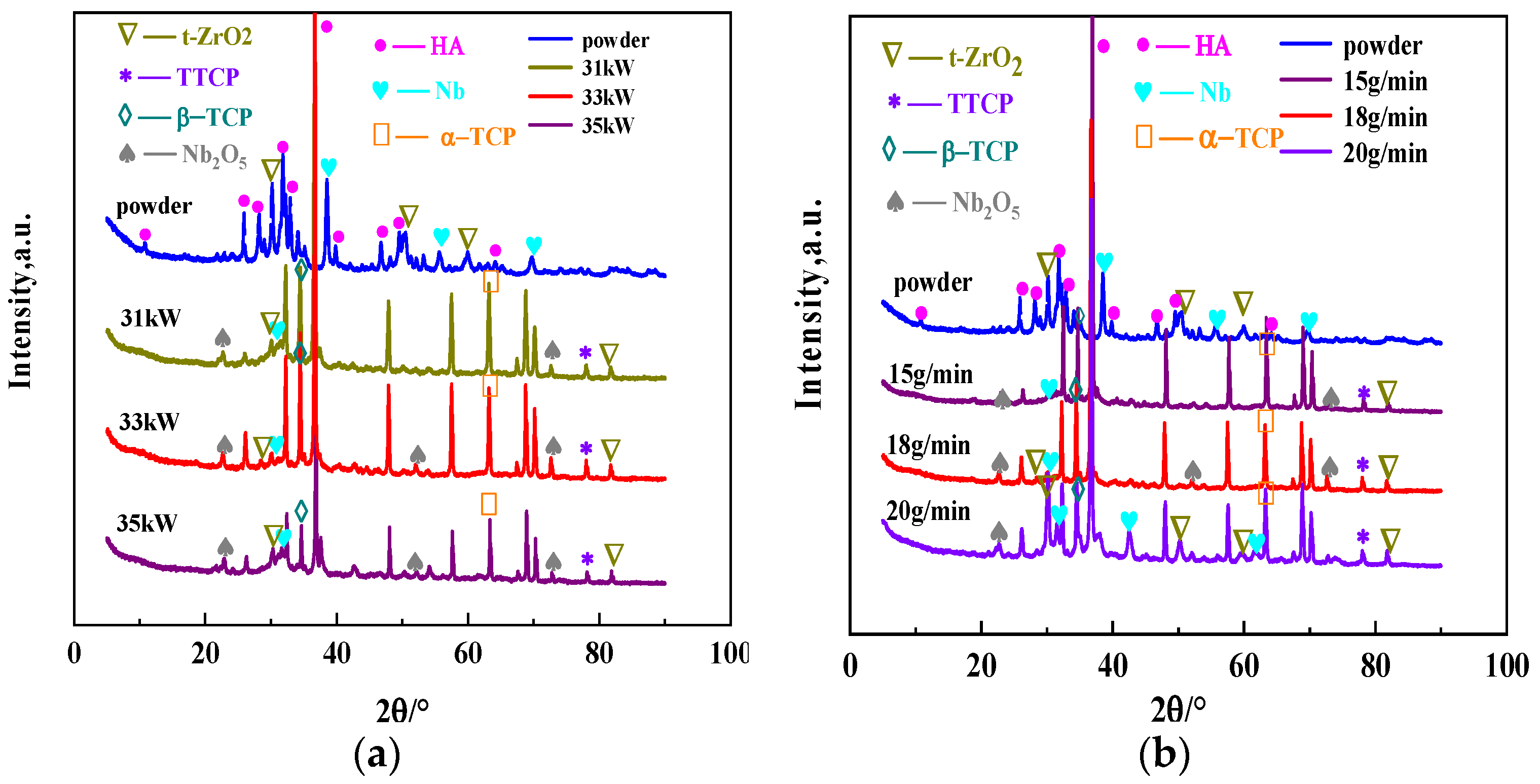
XRD patterns of Nb/zirconia/hydroxyapatite coatings prepared under different conditions are shown in Figure 1. The pristine powder consists of HA, Nb, and t-ZrO2. After plasma spraying, new α/β-TCP, TTCP, and Nb2O5 phases, originating from HA decomposition and Nb oxidation triggered by high temperatures (10,000–20,000 °C), were added to the coatings [19]. The retention of α-TCP was attributed to the higher cooling rate than the phase transition rate. While the stronger diffraction peaks at 33 kW power reflect a more adequate fusion deposition, the presence of a higher number of 20 g/min diffraction peaks for Nb indicates incomplete melting of Nb. Moreover, the diffraction peaks of the Nb2O5 and t-ZrO2 phases in the coating at 18 g/min exhibit similar characteristics to those of the coating prepared at 15 g/min.
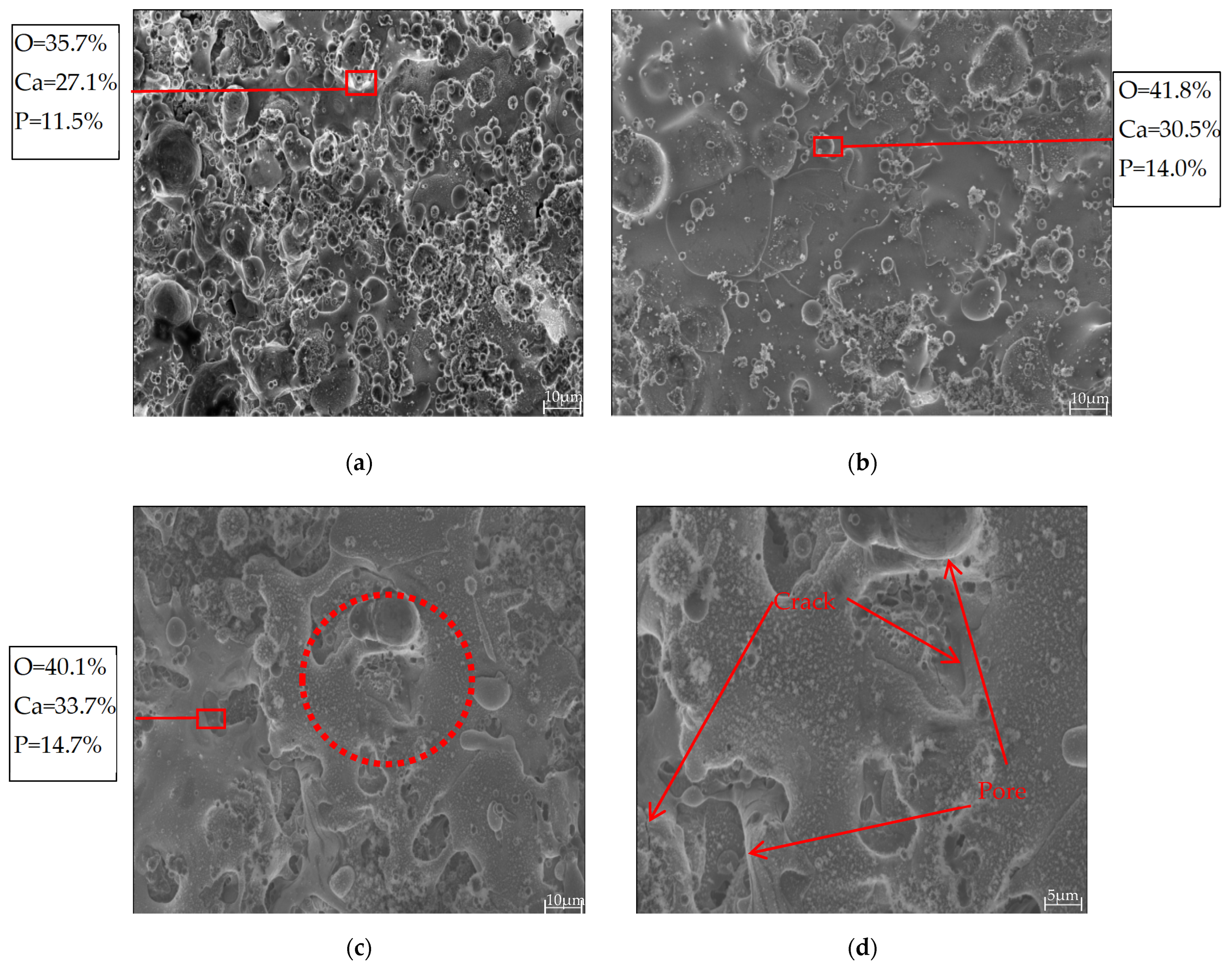
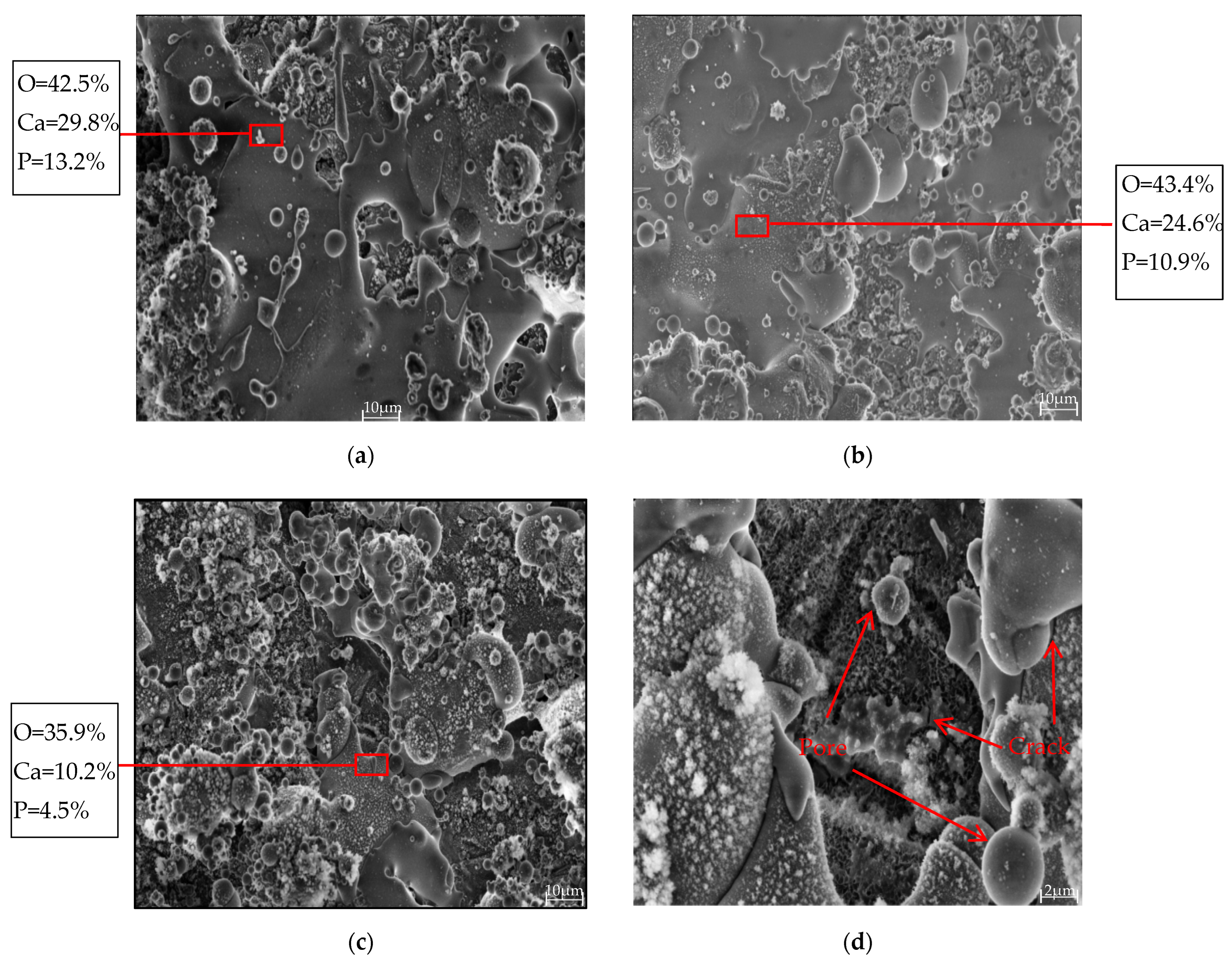
The effects of plasma spraying power and the powder feed rate on the surface morphology of the coating were studied by SEM, as shown in Figure 2 and Figure 3. When the power was 31 kW, most of the particles on the surface were melted, and the laminar features appeared. Due to insufficient heating, more unmelted particles and insufficient deformation of the powder upon impact with the substrate were observed, resulting in a rough coating surface and an elevated Ca/P ratio of 1.8 [26]. As the power increased to 33 kW, the improvement of particle velocity and melting state led to the formation of a dense laminar structure, the inter-particle bonding was more adequate, and the Ca/P ratio decreased to 1.7 [27]. Nonetheless, the high energy input at 35 kW contributed to the reduction in the surface energy of the molten droplets, which were atomized and fragmented by the high-speed plasma flame stream. Meanwhile, the increase in the interlayer temperature gradient triggered the residual stress, elevating the pores and cracks in the coatings, and increasing the Ca/P ratio to 1.8 [28,29]. A similar law was reflected in the regulation of the powder feeding rate. At 15 g/min, the surface energy of the molten droplets was curtailed because of overheating, the spreading of the broken droplets was limited, and the porosity ratios were significantly elevated, even though the Ca/P remains at 1.7 [29]. Furthermore, the optimal equilibrium state was reached at 18 g/min, allowing the molten particles to be fully spread out to obtain dense coatings (Ca/P = 1.7). Additionally, the feeding rate of 20 g/min was too high, inducing the entrapment of the unmolten particles, which increased the porosity and cracks. The high feeding rate at 20 g/min brought about the inclusion of unmelted particles (“entrapment” phenomenon). The insufficient temperature of the powder impacting the substrate stimulated insufficient deformation. This increased the Ca/P ratio to 1.8, accompanied by the expansion of pores and cracks.

3.2. Analysis of Surface Properties

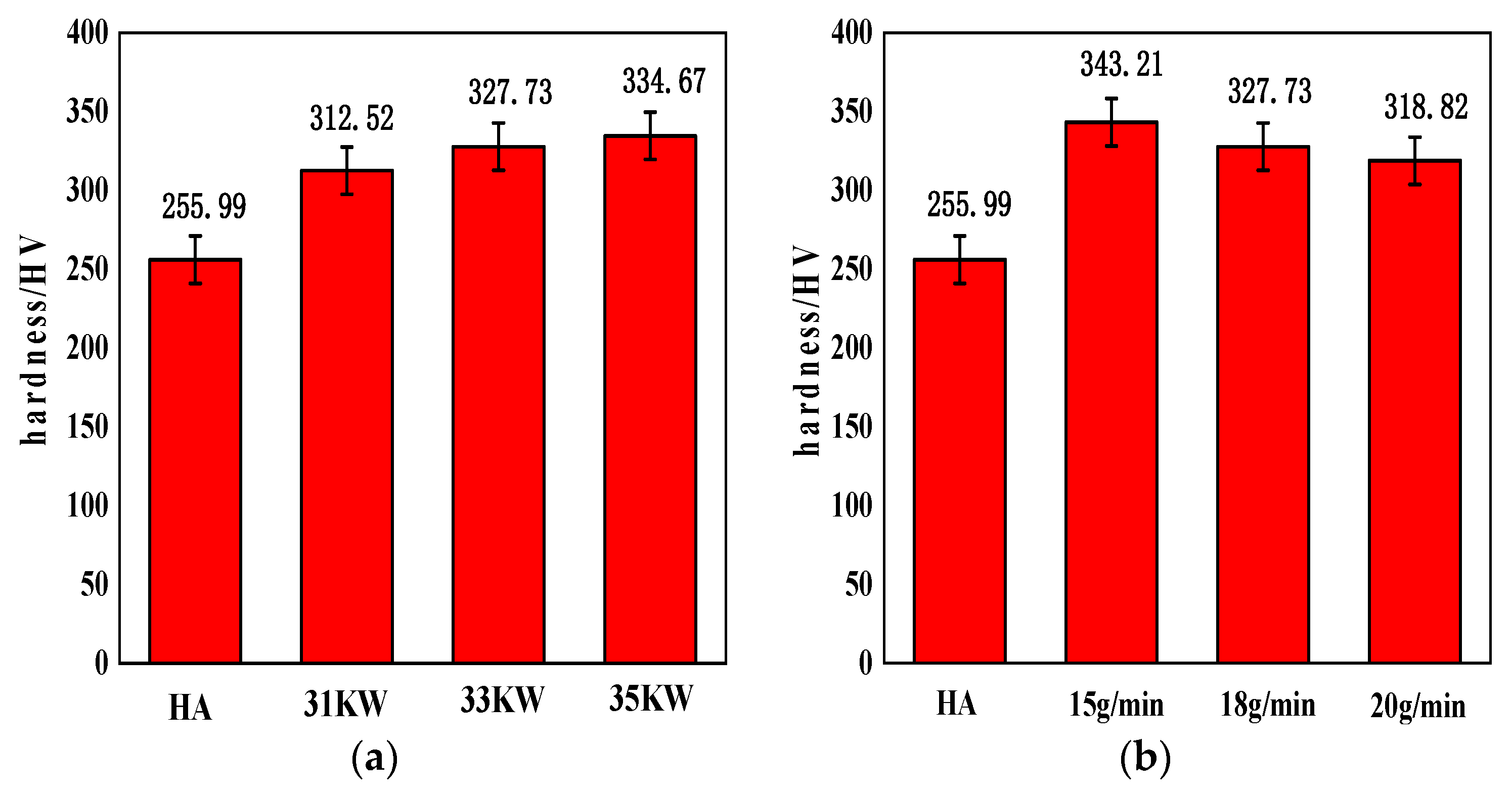
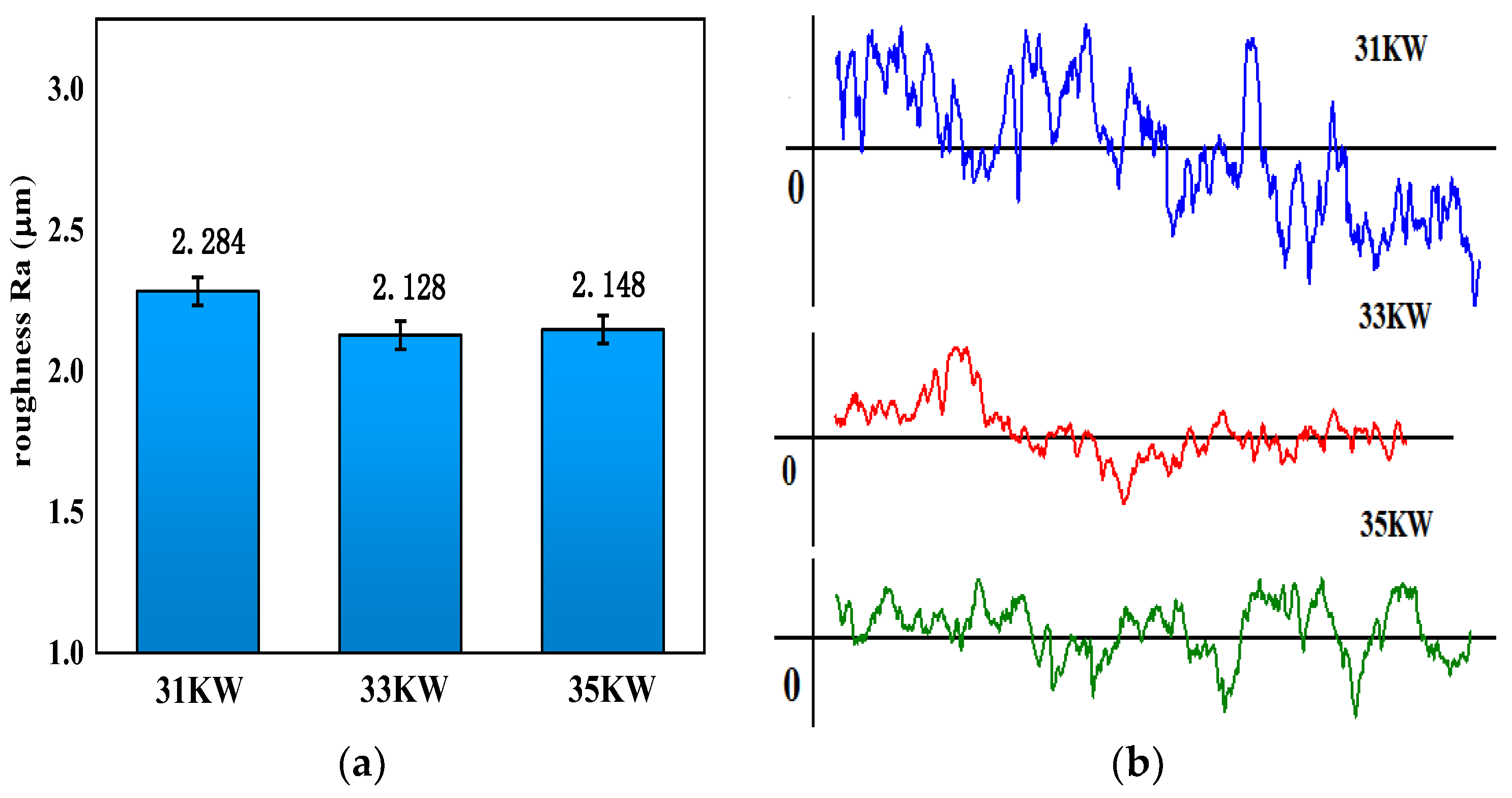
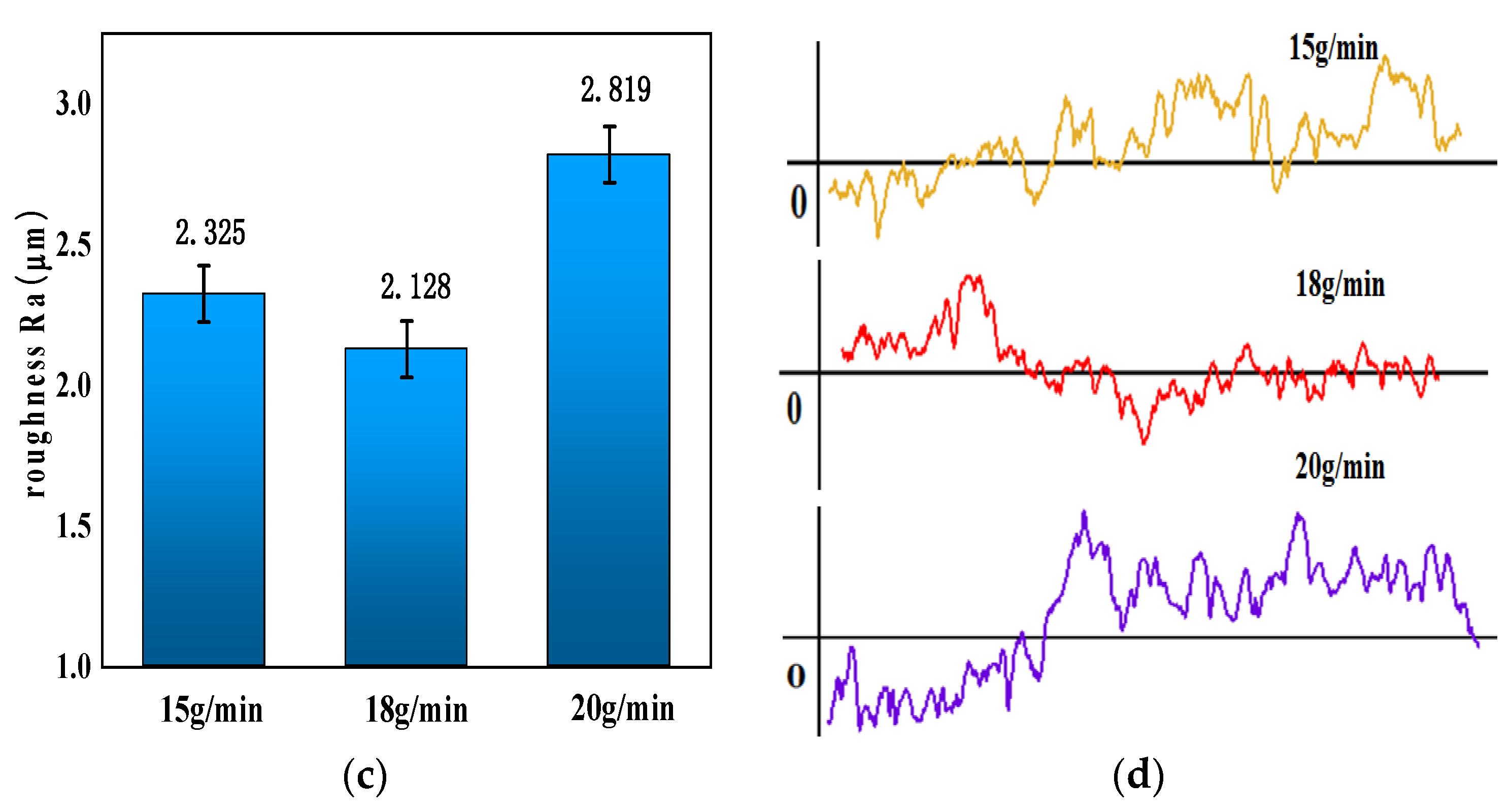
As revealed in Figure 4 and Figure 5, the effect of plasma spraying process parameters on the properties of Nb/ZrO2/HA composite coatings manifests as a synergistic change in roughness and hardness. This synergistic change is critical for implant function. The coating surface roughness Ra in the range of 2–6 µm is most favorable for cell adhesion [30]. When the power was 31 kW, the roughness was larger, and the hardness was lowest, but still higher than the pure HA coating. It can be suggested that the larger roughness was triggered by the presence of unmelted particles and pore defects on the surface of the coating, and that the lowest hardness was induced by the insufficient melting of the high hardness and high melting point Nb and ZrO2 particles. When the power increased to 35 kW, the optimization of the melting state enabled the Nb and ZrO2 particles to be sufficiently diffuse and strengthened. Meanwhile, the hardness was further increased to 334.67 HV, whereas the roughness stemming from microcracks under overheating was still higher than that of the samples under the 33 kW condition. The 33 kW power balanced the melt state and thermal stress control to ensure the Nb and ZrO2 reinforcing phases increase the hardness while maintaining the appropriate roughness to promote osseointegration. Similarly, the feeding rate influenced the coating densification by changing the residence time of the molten droplets, demonstrating the highest hardness and higher roughness at 15 g/min. This is because the powder can be retained in the plasma flame stream for too long a period under too low feeding rates, provoking overheating of the powder. This consequently led to the full melting of the Nb and ZrO2 and the generation of bubble expansion. Moreover, the bubbles did not have enough kinetic energy and ruptured when these bubble-containing molten particles impinged on the substrate, resulting in inadequate spreading of the molten droplets. Additionally, at 20 g/min, the number of unmelted or semi-melted particles increases, resulting in insufficient plastic deformation capacity and inability to spread effectively, leading to a lower hardness and higher roughness. These unmelted or semi-molten particles impacted the substrate, their plastic deformation capacity was insufficient, and it was difficult to achieve effective spread. Nevertheless, 18 g/min can balance the melt state and thermal stress control, thus synergistically optimizing the coating microhardness and roughness.
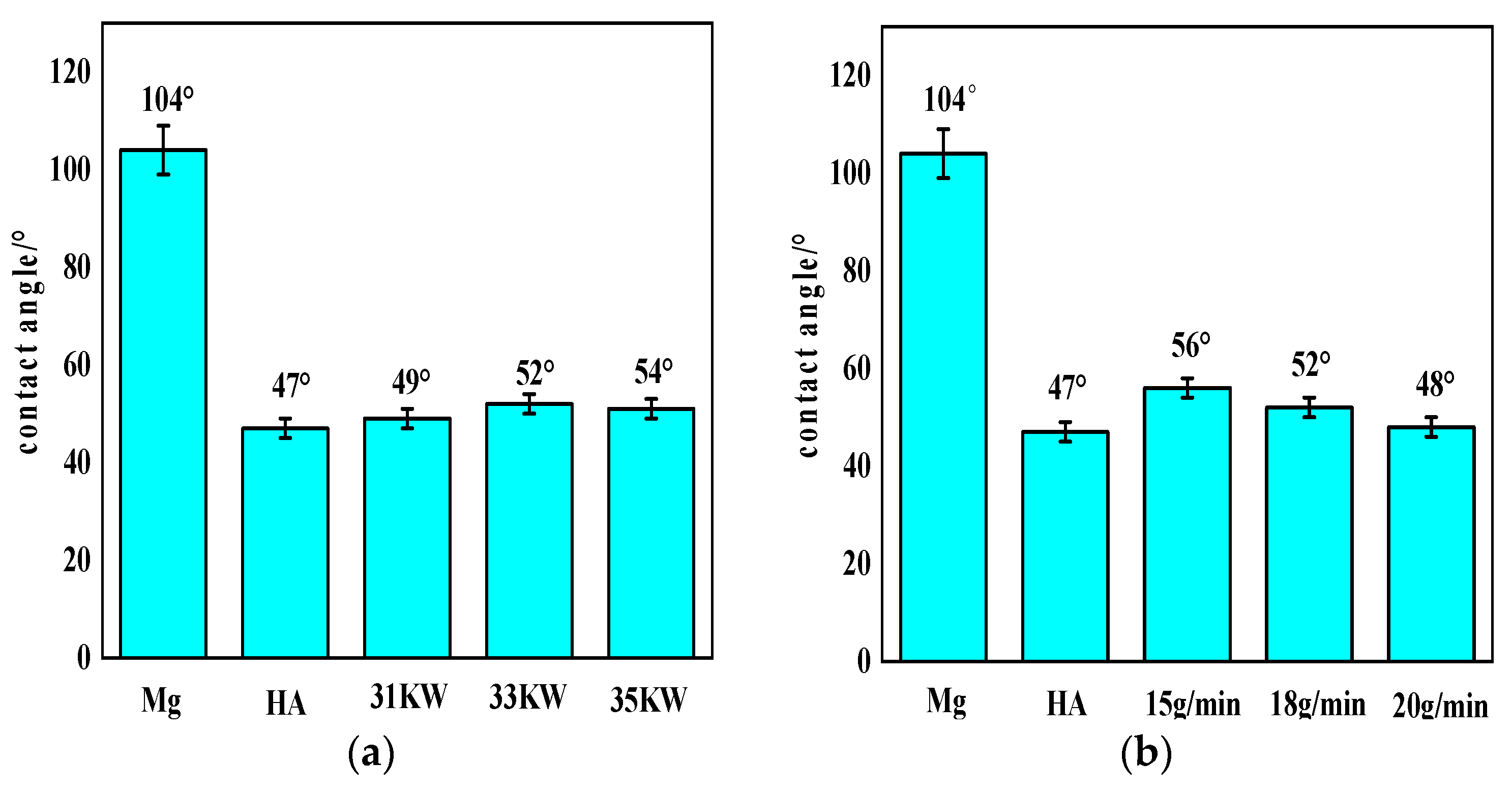
The contact angle results of uncoated ZK60 magnesium substrate, pure hydroxyapatite coating, and Nb/zirconia/hydroxyapatite coating prepared at different spraying powers and powder feed rates are shown in Figure 6. The uncoated magnesium substrate exhibited hydrophobic behavior, while the Nb/ZrO2/HA-coated samples displayed minor variations in contact angles following the applied power and feeding rate. Nevertheless, all coatings maintained hydrophilicity, contributing to significantly enhancing cell adhesion capability [31].

3.3. Corrosion Behavior Analysis

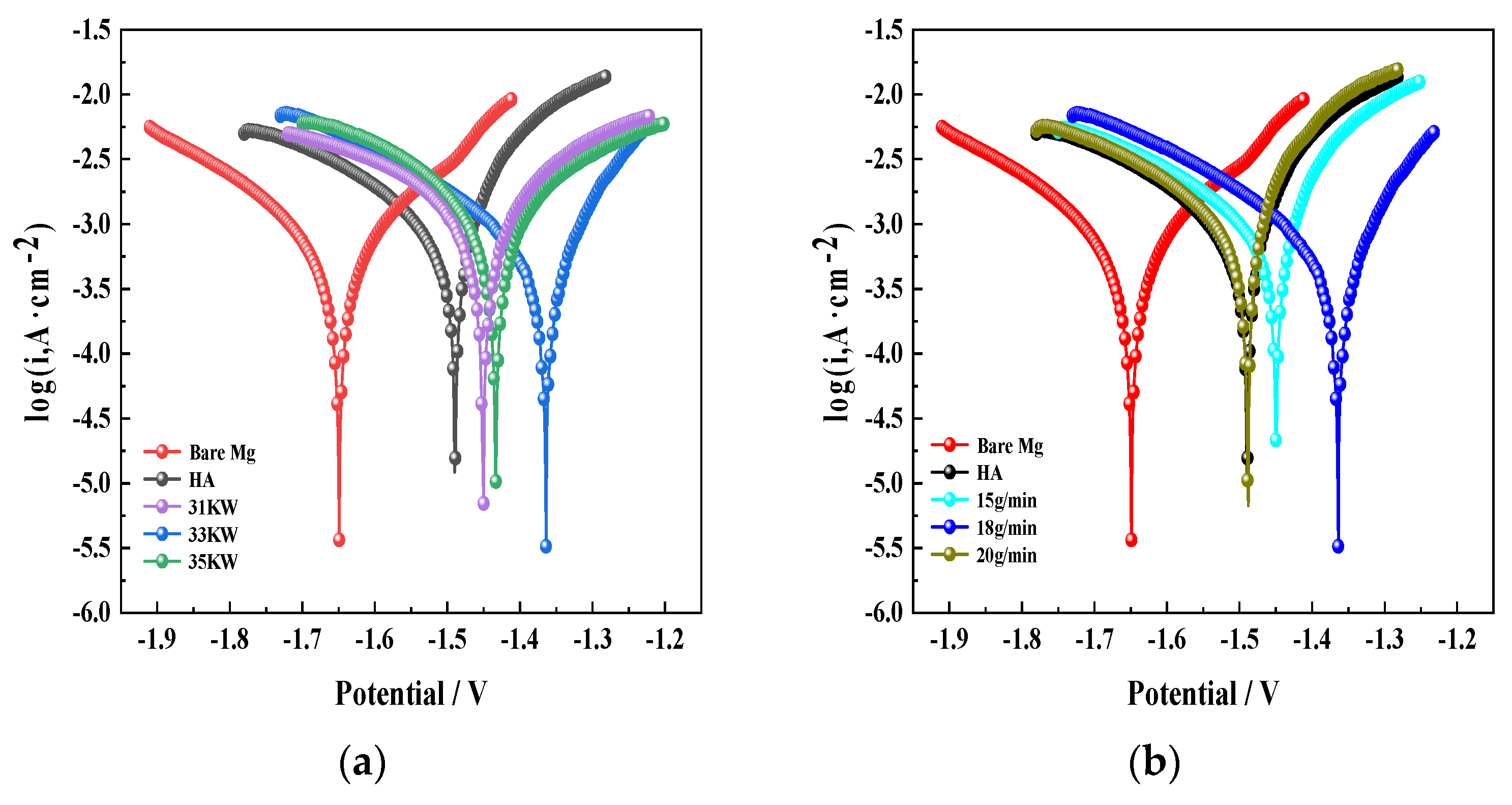
The dynamic potential polarization curves of the ZK60 substrate and its surface coating (31 KW–35 KW, 15 g/min–20 g/min) are shown in Figure 7. In this study, the Tafel extrapolation method was employed to assess the corrosion behavior of the materials. The crucial parameters of the polarization curves were corrosion potential (Ecorr), corrosion current density (Icorr), cathodic Tafel slope (βc), and anodic Tafel slope (βa). The corrosion behavior of the coating and substrate was compared and analyzed with a focus on two critical parameters: corrosion current density (Icorr) and corrosion potential (Ecorr). Additionally, the polarization resistance (RP) and protection efficiency (PE) were utilized to validate the corrosion resistance of the specimens, as detailed in Table 2. The calculation formulas are as follows [24,25]. Specifically, I0 denotes the corrosion current density of uncoated magnesium alloy; I represents the corrosion current density of magnesium alloy containing a coating.
R P = β c β a 2.3 I C o r r ( β a + β c )
P E = I 0 I I 0 × 100 %
The electrochemical characterization results reveal that the Nb/ZrO2/HA composite coating exhibited superior corrosion protection performance for ZK60 magnesium alloy compared with the pure hydroxyapatite (HA) coating. After the introduction of Nb and ZrO2 reinforced phases at 33 KW 18 g/min, the corrosion current density (ICorr) was significantly enhanced by 56% compared with the HA coating. Ions generated from the corrosion of metal implants may affect cellular metabolism (that is, cellular behavior may be affected by corrosion currents), suggesting that Nb/ZrO2/HA composite coatings may have superior bioactivity than HA coatings [32].
In this study, differences in coating surface roughness explained the variation in corrosion resistance. Rougher surfaces were more prone to pit formation compared to smoother surfaces, and pit formation led to pitting, resulting in less protection of the surface. Consequently, corrosion resistance decreases with increasing surface roughness [33]. Additionally, there was not much difference in the surface roughness of the coatings at 33 kW and 18 g/min versus 35 kW and 15 g/min, whereas the difference in corrosion resistance was larger. This was a result of the synergistic effect of the surface roughness and the microhardness. The higher surface hardness inhibited the rapid corrosion of Mg implants during implantation, bringing about the difference in corrosion resistance [34].
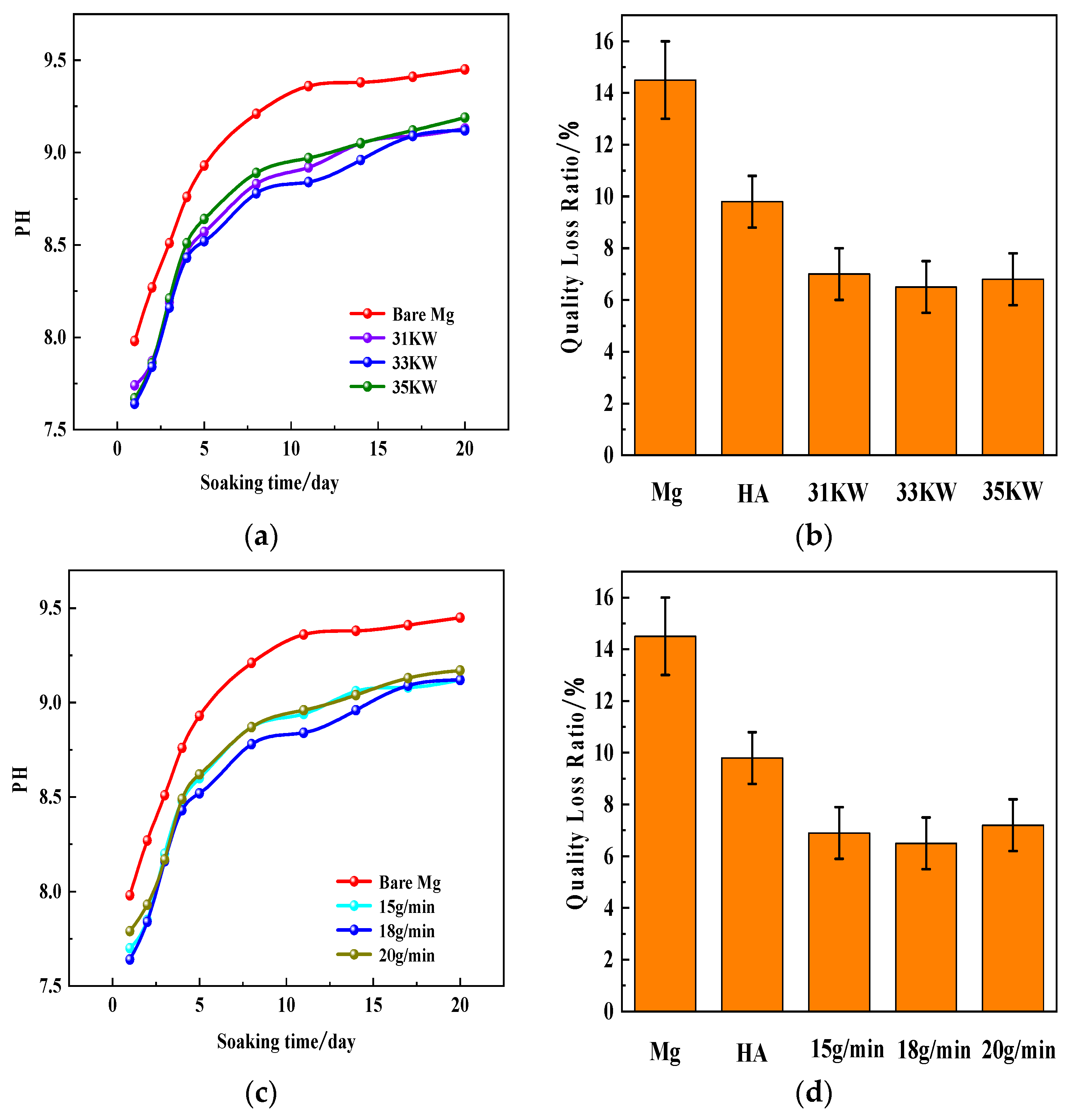
The pH value and mass loss rate of the sample were lowest under the conditions of 33 kW and 18 g/min, which is consistent with the results of previous corrosion resistance studies, and these are shown in Figure 8. In addition, the PH value increased significantly in the early stage and slowed down in the late stage. This can be explained as follows. The specimen degradation produced Mg(OH)2 corrosion products in the process of immersion, leading to a significant increase in the PH value in the early stage. In the late stage, the protection of corrosion products and the presence of chlorine ions in the SBF solution allowed Mg(OH)2 to convert into the more easily dissolved MgCl2, and thus, it loses its Mg(OH)2 protective effect, inducing a slow increase in the PH value [35].

3.4. Cell Culture Experiment

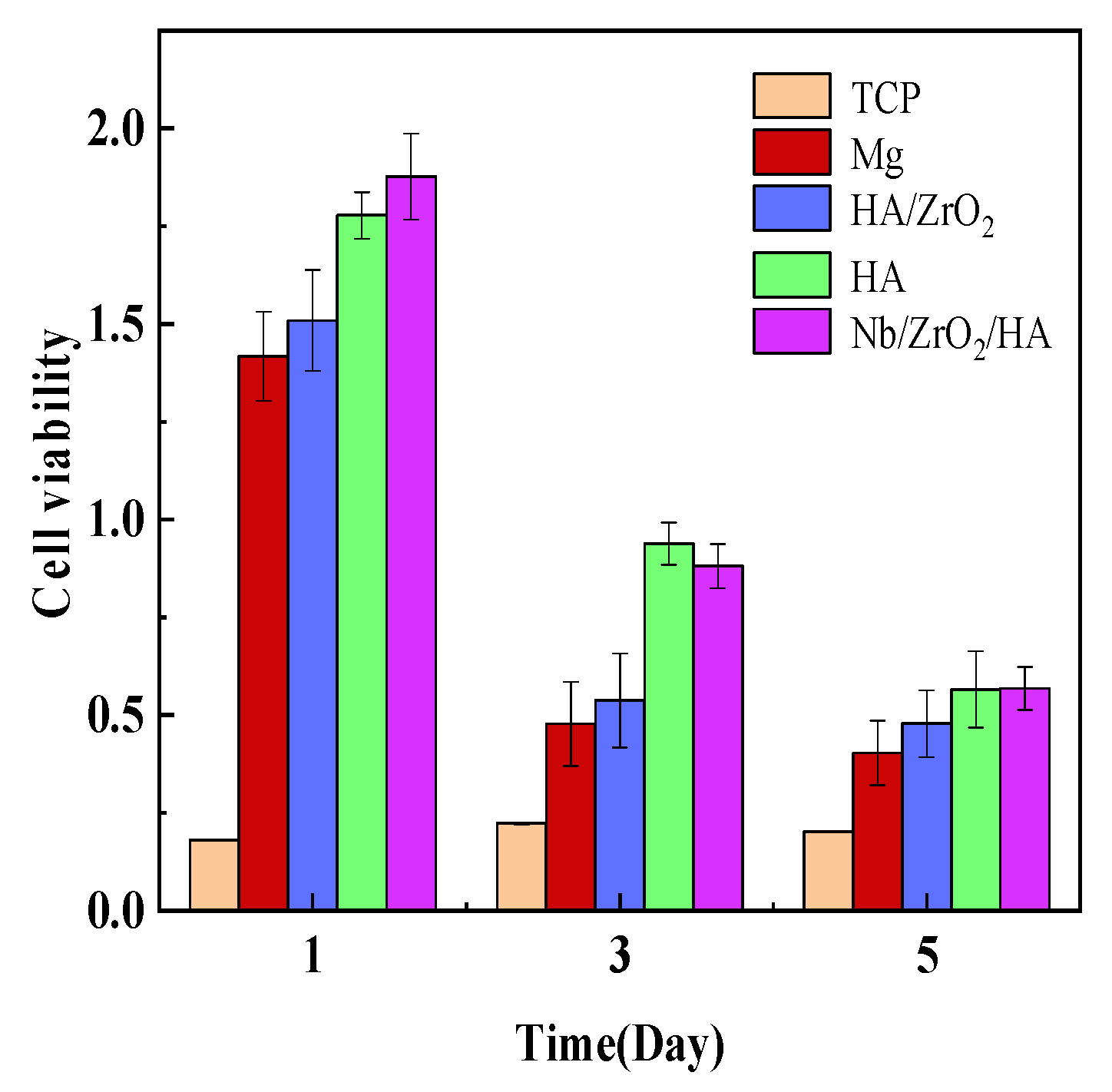
Specimens containing HA, HA/ZrO2, and Nb/ZrO2/HA coatings were prepared with a parameter of 33 kw18 g/min, and cytotoxicity tests were performed on the specimens. The results of the cell culture experiments are exhibited in Figure 9. Specifically, the cell activity of the uncoated group was significantly lower than that of the coated group. This was associated with higher cytotoxicity due to the elevated pH and Mg2+ concentration in the culture solution. Notably, all specimens demonstrated a decrease in cell activity with increasing incubation time during culture because the degradation of the specimens brought about a change in the solution environment. Additionally, the cellular activity on the HA/ZrO2 coating was consistently lower than that on HA during the incubation period, as mentioned by Jagadeeshanayaka et al. [20]. The addition of zirconium oxide to HA was beneficial in improving the phase composition of the composite coating, but weakened the overall biological activity of the coating. Particularly, the cellular activity of Nb/ZrO2/HA coating was significantly higher than that of HA/ZrO2 coating on the first day of incubation. Although the cellular activity decreased with the extension of the incubation time, the Nb/ZrO2/HA-coated specimens maintained superior cellular activity to that of the HA/ZrO2 coating. This phenomenon stemmed from the synergistic effect of Nb and ZrO2, which resulted in a more homogeneous and dense coating microstructure. Moreover, its excellent corrosion resistance effectively inhibited the degradation of the magnesium alloy matrix and lessened the Mg2+ concentration, contributing to the creation of a more favorable microenvironment for cell proliferation [32]. These results fully verify that the addition of Nb is indeed favorable for promoting cell adhesion and growth.

4. Conclusions

In this study, Nb/ZrO2/HA composite coatings were successfully prepared on the surface of ZK60 magnesium alloy by the plasma spraying technique with varying spraying powers (31–35 kW) and powder feeding rates (15–20 g/min). The results reveal that the surface hardness increased with increasing power and a decreasing powder feeding rate. The uncoated ZK60 substrate demonstrated hydrophobicity, and the coated ZK60 surfaces all exhibited hydrophilicity. Additionally, the corrosion resistance of all coated specimens was significantly better than that of the uncoated substrate, and the corrosion resistance gradually increased with the synergistic effect of decreasing roughness and increasing hardness. Under the parameters of 33 kw and 18 g/min, the coated surface presented a dense flattened morphology with lower roughness (Ra = 2.128 um). Meanwhile, the hardness and corrosion resistance were enhanced by 28% and 56%, respectively, compared with those of the pure HA coating. The addition of Nb effectively reinforced the cell activity. The combined results specify that the doping of Nb elements in ZrO2/HA composite coatings effectively strengthened the cellular activity. Nevertheless, further biological studies should be performed to explore the biological responses and translate this strategy into clinical applications.

Author Contributions

Conceptualization, S.S. and G.X.; methodology, H.G.; validation, J.L.; formal analysis, S.S. and G.X.; investigation, R.G.; resources, S.S.; writing—original draft preparation, J.L.; writing—review and editing, S.S.; visualization, J.L.; supervision, G.X.; project administration, S.S.; funding acquisition, S.S. and H.G. All authors have read and agreed to the published version of the manuscript.

Funding

This research was funded by Jiangsu Provincial Industry–University Research Cooperation Project, Nantong Major Scientific and Technological Achievement Transformation Project, and International Cooperation Project of Jiangsu Province, grant number BY20250705, XA2025012, and BZ2025016.

Institutional Review Board Statement

Not applicable.

Informed Consent Statement

Not applicable.

Data Availability Statement

The original contributions presented in this study are included in the article. Further inquiries can be directed to the corresponding author.

Conflicts of Interest

The authors declare no conflicts of interest.

References

  1. Kumar, P.; Kudva, S.A.; Anilkumar, T.; Ramesh, S.; Ramesh, M.R.; Prabhu, A.; Anne, G. Synthesis and characteristics of Fe/Ni/Cr oxide nanoparticles/PLA hybrid composite coatings on Mg-Zn-Ca alloy. J. Mater. Res. Technol. 2025, 35, 2573–2583. [Google Scholar] [CrossRef]
  2. Johari, M.; Tabaian, S.H.; Saeedi, S. Microstructural Characterization and Investigation on Corrosion Properties of Mg-Zn-RE-Ca Alloy as a Possible Biomedical Implant. Met. Mater. Int. 2022, 28, 1386–1400. [Google Scholar] [CrossRef]
  3. Sarraf, M.; Rezvani Ghomi, E.; Alipour, S.; Ramakrishna, S.; Liana Sukiman, N. A state-of-the-art review of the fabrication and characteristics of titanium and its alloys for biomedical applications. Bio-Des. Manuf. 2022, 5, 371–395. [Google Scholar] [CrossRef]
  4. Feng, L.; Wu, Z.; Huang, Y.; Shen, L.; Qiao, B.; Wu, J.; Wen, N.; Hu, J.; Deng, B. Degradation behavior, osteogenesis, and antimicrobial properties of Ga-coated ZK60 Mg alloys for medical implants. J. Magnes. Alloy. 2025. [Google Scholar] [CrossRef]
  5. Kumar, K.; Das, A.; Prasad, S.B. Recent developments in biodegradable magnesium matrix composites for orthopaedic applications: A review based on biodegradability, mechanical and biocompatibility perspective. Mater. Today Proc. 2021, 44, 2038–2042. [Google Scholar] [CrossRef]
  6. Liu, A.; Zhang, Z.; Liang, Y.; Wang, X.; Chen, L.; Li, M.; Zheng, Y.; Li, Y.; Wen, P. Magnesium-induced strengthening, degradation and osteogenesis for additively manufactured Zn-Mg orthopedic implants. Acta Biomater. 2025, 197, 495–506. [Google Scholar] [CrossRef]
  7. Sim, E.J.; Sakthiabirami, K.; Jung, T.G.; Jo, S.K.; Lee, S.J.; Xu, P.; Sung, H.K.; Lee, E.H.; Yoon, K.C.; Kang, K.S.; et al. Bioabsorbable PLA/PHA composite pins for orthopedic applications: In vitro and in vivo study. J. Ind. Eng. Chem. 2025, 146, 861–870. [Google Scholar] [CrossRef]
  8. Saberi, A.; Bakhsheshi-Rad, H.R.; Abazari, S.; Ismail, A.F.; Sharif, S.; Ramakrishna, S.; Daroonparvar, M.; Berto, F. A Comprehensive Review on Surface Modifications of Biodegradable Magnesium-Based Implant Alloy: Polymer Coatings Opportunities and Challenges. Coatings 2021, 11, 747. [Google Scholar] [CrossRef]
  9. Bagheri, A.; Sedighi, M.; Shamsi, M. Effect of PCL/HA nanocomposite coating on the degradation rate and mechanical integrity of Mg/HA Biocomposites during exposure in SBF. Arab. J. Sci. Eng. 2024, 49, 2077–2094. [Google Scholar] [CrossRef]
  10. Chen, L.; Wu, X.; Li, D.; Jia, S.; Yu, J.; Li, B.; Li, J.; Bai, L.; Guan, S. Magnesium alloy implant with photothermal-enhanced ferroptosis towards a multimodal therapy strategy for osteosarcoma. Chem. Eng. J. 2025, 509, 161350. [Google Scholar] [CrossRef]
  11. Sezer, N.; Evis, Z.; Koc, M. Additive manufacturing of biodegradable magnesium implants and scaffolds: Review of the recent advances and research trends. J. Magnes. Alloys 2021, 9, 392–415. [Google Scholar] [CrossRef]
  12. Zhang, Y.; Zhang, H.; Jiang, M.; Cao, X.; Ge, X.; Song, B.; Lan, J.; Zhou, W.; Qi, Z.; Gu, X.; et al. Neuroprotection on ischemic brain injury by Mg2+/H2 released from endovascular Mg implant. Bioact. Mater. 2024, 42, 124–139. [Google Scholar] [CrossRef]
  13. Narita, K.; Hiromoto, S.; Kobayashi, E.; Sato, T. Effects of Incorporating Β-Tricalcium Phosphate with Reaction Sintering into Mg-Based Composites on Degradation and Mechanical Integrity. Metals 2021, 11, 227. [Google Scholar] [CrossRef]
  14. Uppal, G.; Thakur, A.; Chauhan, A.; Bala, S. Magnesium based implants for functional bone tissue regeneration—A review. J. Magnes. Alloys 2022, 10, 356–386. [Google Scholar] [CrossRef]
  15. Wang, H.; Guan, S.; Wang, X.; Ren, C.; Wang, L. In vitro degradation and mechanical integrity of Mg–Zn–Ca alloy coated with Ca-deficient hydroxyapatite by the pulse electrodeposition process. Acta Biomater. 2010, 6, 1743–1748. [Google Scholar] [CrossRef] [PubMed]
  16. Choudhary, L.; Raman, R.K.S. Mechanical integrity of magnesium alloys in a physiological environment: Slow strain rate testing based study. Eng. Fract. Mech. 2013, 103, 94–102. [Google Scholar] [CrossRef]
  17. Wang, J.-L.; Xu, J.-K.; Hopkins, C.; Chow, D.H.-K.; Qin, L. Biodegradable magnesium-based implants in orthopedics-A general Review and Perspectives. Adv. Sci. 2020, 7, 1902443. [Google Scholar] [CrossRef]
  18. Wang, B.; Huang, P.; Ou, C.; Li, K.; Yan, B.; Lu, W. In vitro corrosion and cytocompatibility of ZK60 magnesium alloy coated with hydroxyapatite by a simple chemical conversion process for orthopedic applications. Int. J. Mol. Sci. 2013, 14, 23614–23628. [Google Scholar] [CrossRef] [PubMed]
  19. Khor, K.; Fu, L.; Lim, V.; Cheang, P. The effects of ZrO2 on the phase compositions of plasma sprayed HA/YSZ composite coatings. Mater. Sci. Eng. A 2000, 276, 160–166. [Google Scholar] [CrossRef]
  20. Jagadeeshanayaka, N.; Awasthi, S.; Jambagi, S.C.; Srivastava, C. Bioactive surface modifications through thermally sprayed hydroxyapatite composite coatings: A review of selective reinforcements. Biomater. Sci. 2022, 10, 2484–2523. [Google Scholar] [CrossRef]
  21. Singh, B.; Singh, G.; Sidhu, B.S.; Bhatia, N. In-vitro assessment of HA-Nb coating on mg alloy ZK60 for biomedical applications. Mater. Chem. Phys. 2019, 231, 138–149. [Google Scholar] [CrossRef]
  22. Singh, B.; Singh, G.; Sidhu, B.S. Investigation of the in vitro corrosion behavior and biocompatibility of niobium (Nb)-reinforced hydroxyapatite (HA) coating on CoCr alloy for medical implants. J. Mater. Res. 2019, 34, 1678–1691. [Google Scholar] [CrossRef]
  23. Wei, P.; Fang, J.; Fang, L.; Wang, K.; Lu, X.; Ren, F. Novel niobium and silver toughened hydroxyapatite nanocomposites with enhanced mechanical and biological properties for load-bearing bone implants. Appl. Mater. Today 2019, 15, 531–542. [Google Scholar] [CrossRef]
  24. Shimura, T.; Aramaki, K. Preparation of one-dimensional polymer films by modification of a hydroxymethylbenzene self-assembled monolayer on iron with alkyltriethoxysilanes for preventing iron corrosion. Corros. Sci. 2007, 49, 3742–3758. [Google Scholar] [CrossRef]
  25. Stern, M.; Geary, A.L. Electrochemical polarization: I. A theoretical analysis of the shape of polarization curves. J. Electrochem. Soc. 1957, 104, 56. [Google Scholar] [CrossRef]
  26. Wang, C.; Li, K.; Shi, X.; Huo, C.; He, Q.; Zhang, Y. Effect of spraying power on oxidation resistance and mechanical properties of plasma sprayed La-Mo-Si coating. Surf. Coat. Technol. 2017, 311, 138–150. [Google Scholar] [CrossRef]
  27. Lv, M.; Zhang, G.; Geng, H. Effect of spraying power on the microstructure and thermoelectric performance of plasma sprayed higher manganese silicides films. Surf. Coat. Technol. 2019, 363, 152–160. [Google Scholar] [CrossRef]
  28. Yin, J.; Wang, C.; Zheng, H.; Zhang, L.; Zhang, M.; Ma, X.; Shen, T.; Zhang, W.; Weng, X.; Jiang, S.; et al. Power controlled microstructure and infrared properties of air plasma spraying based on YSZ coatings. Surf. Coat. Technol. 2021, 426, 127768. [Google Scholar] [CrossRef]
  29. Zhu, T.; Baeva, M.; Testrich, H.; Kewitz, T.; Foest, R. Effect of a Spatially Fluctuating Heating of Particles in a Plasma Spray Process. Plasma Chem. Plasma Process. 2023, 43, 1–24. [Google Scholar] [CrossRef]
  30. Gross, K.A.; Babovic, M. Influence of abrasion on the surface characteristics of thermally sprayed hydroxyapatite coatings. Biomaterials 2002, 23, 4731–4737. [Google Scholar] [CrossRef]
  31. Durdu, S.; Korkmaz, K.; Aktug, S.L.; Cakir, A. Characterization and bioactivity of hydroxyapatite-based coatings formed on steel by electro-spark deposition and micro-arc oxidation. Surf. Coat. Technol. 2017, 326, 111–120. [Google Scholar] [CrossRef]
  32. Fathi, M.H.; Azam, F. Novel hydroxyapatite/tantalum surface coating for metallic dental implant. Mater. Lett. 2007, 61, 1238–1241. [Google Scholar] [CrossRef]
  33. Bansal, P.; Singh, G.; Sidhu, H.S. Investigation of surface properties and corrosion behavior of plasma sprayed HA/ZnO coatings prepared on AZ31 Mg alloy. Surf. Coat. Technol. 2020, 401, 126241. [Google Scholar] [CrossRef]
  34. Hasan, M.F.; Wang, J.; Berndt, C. Determination of the Mechanical Properties of Plasma-Sprayed Hydroxyapatite Coatings Using the Knoop Indentation Technique. J. Therm. Spray Technol. 2015, 24, 865–877. [Google Scholar] [CrossRef]
  35. Zhang, Q.; Zhang, L.; Yang, M.; Hong, Q.; Yang, Z.; Liu, S.; Xiong, Q.; Pan, C. Construction of Chi(Zn/BMP2)/HA composite coating on AZ31B magnesium alloy surface to improve the corrosion resistance and biocompatibility. Nanotechnol. Rev. 2021, 10, 870–882. [Google Scholar] [CrossRef]
Figure 1. XRD pattern. (a) XRD patterns of coatings and their powders at different spray powers; (b) XRD patterns of coated and pristine powders under different powder feeding rates.
Coatings 16 00525 g001
Figure 2. SEM images and EDS analysis of plasma-sprayed coatings at different powers. (a) 31 KW; (b) 33 KW; (c) 35 KW; (d) enlargement of red border in (c).
Coatings 16 00525 g002
Figure 3. SEM images and EDS analysis of plasma-sprayed coatings at different powder feeding rates. (a) 15 g/min; (b) 18 g/min; (c) 20 g/min; (d) enlargement of red border in (c).
Coatings 16 00525 g003
Figure 4. Roughness of plasma-sprayed coatings. (a) Surface roughness of coatings at different powers; (b) coating roughness profile curves under different powers; (c) coating surface roughness at different powder feeding rates; (d) coating roughness curves at different powder feeding rates.
Coatings 16 00525 g004aCoatings 16 00525 g004b
Figure 5. Microhardness of plasma-sprayed coatings. (a) Microhardness of coatings at different powers. (b) Microhardness of coatings at different powder feeding rates.
Coatings 16 00525 g005
Figure 6. Contact angle of plasma spray coating. (a) Surface contact angle of coatings at different powers. (b) Surface contact angle of coatings at different powder feeding rates.
Coatings 16 00525 g006
Figure 7. Dynamic potential polarization curves for plasma-sprayed coatings. (a) Dynamic potential polarization curves of coatings at different powers. (b) Kinetic potential polarization curves of coatings at different powder feeding rates.
Coatings 16 00525 g007
Figure 8. Submerged PH and weight loss of plasma-sprayed coatings. (a) PH change curves of coatings immersed in SBF solution for 20 days under different powers; (b) mass loss rate of coatings at different powers; (c) PH change curves of coatings immersed in SBF solution for 20 days at different powder feeding rates; (d) mass loss rate of coatings at different powder feeding rates.
Coatings 16 00525 g008
Figure 9. Cellular activity of BMSCs cultured in uncoated magnesium alloys and coated specimens.
Coatings 16 00525 g009
Table 1. Spraying parameters.
Serial NumberSpraying Power (kW)ConstantPowder Feed Rate (g/min)
Main Gas Flow
(Ar2 L/min)
Auxiliary Gas Flow
(H2 L/min)
Spraying Distance
(mm)
13140108018
23340108018
33540108018
43340108015
53340108020
Table 2. Electrochemical parameters of the specimen.
Serial NumberEcorr
(V)
Icorr
(A·cm−2)
βα (V/decade)βc (V/decade)Rp
(Ω·cm2)
PE
(%)
Mg−1.6491.030 × 10−26.0765.317119.70
HA−1.4901.169 × 10−35.1924.356911.3988.65
31 kW−1.4501.130 × 10−36.1824.322980.4489.03
33 kW−1.3645.109 × 10−48.0624.9192599.8595.04
35 kW−1.4331.086 × 10−36.6884.315993.3489.46
15 g/min−1.4491.128 × 10−36.2754.356985.7989.05
18 g/min−1.3645.109 × 10−48.0624.9192599.8595.04
20 g/min−1.4881.156 × 10−34.6564.976962.9888.78
Disclaimer/Publisher’s Note: The statements, opinions and data contained in all publications are solely those of the individual author(s) and contributor(s) and not of MDPI and/or the editor(s). MDPI and/or the editor(s) disclaim responsibility for any injury to people or property resulting from any ideas, methods, instructions or products referred to in the content.