
Article

Two-Dimensional rGO-Supported Mo2S3 Catalysts with Tunable Electronic Structure for Efficient Electrochemical Water Splitting


School of Chemical Engineering, Yeungnam University, Gyeongsan 38541, Gyeongsanbuk-do, Republic of Korea
*
Author to whom correspondence should be addressed.
Coatings 2026, 16(4), 445; https://doi.org/10.3390/coatings16040445
Submission received: 10 March 2026 / Revised: 31 March 2026 / Accepted: 3 April 2026 / Published: 7 April 2026

Highlights

-
Interfacial coupling tunes the electronic structure of Mo2S3 for enhanced catalytic activity.
-
rGO-Mo2S3-2 exhibits low OER overpotential of 166 mV at 10 mA cm−2 in alkaline media.
-
Favorable Tafel slope (38.1 mV dec−1) indicates fast reaction kinetics.
-
Strong rGO-Mo2S3 electronic interaction optimizes adsorption of reaction intermediates.
-
Nanohybrid catalyst demonstrates excellent durability and long-term electrochemical stability.

Abstract

The rational design of cost-effective and highly active electrocatalysts for overall water splitting remains a critical challenge for sustainable hydrogen production. Herein, we report a two-dimensional reduced graphene oxide (rGO)-supported Mo2S3 nanohybrid catalyst with a tunable electronic structure engineered through interfacial coupling. The intimate integration of Mo2S3 nanoflakes with conductive rGO nanosheet facilitates rapid electron transport, enhanced active site exposure, and optimized adsorption energetics for reaction intermediates. Structural and spectroscopic analyses confirm strong electronic interaction between Mo2S3 and rGO, leading to modulated charge density distribution and improved intrinsic catalytic activity. Electrochemical evaluations reveal significantly reduced overpotentials for oxygen evolution reaction (OER) with 166 mV overpotential at 10 mA cm−2 current density, along with favorable Tafel kinetics with 38.1 mV dec−1 and long-term operational stability in alkaline electrolyte. The rGO-Mo2S3-2||Pt-C cell delivers 10 mA cm−2 at 1.64 V, indicating efficient alkaline water splitting. The enhanced performance is attributed to synergistic effects arising from electronic modulation, enhanced active sites, and accelerated interfacial charge transfer.

1. Introduction

The widespread dependence on fossil fuels has caused significant environmental challenges, including pollution, greenhouse gas emissions, and the depletion of natural energy resources [1,2]. These issues have accelerated the need for sustainable and eco-friendly energy alternatives. Among the various clean energy carriers, hydrogen has emerged as a promising candidate due to its high energy density and the fact that water is the only by product produced during its utilization, making it a carbon-neutral energy source [3]. Water electrolysis is considered one of the most promising and environmentally benign technologies for hydrogen production [4]. In this process, water molecules are split through two electrochemical half-reactions: the hydrogen evolution reaction (HER) at the cathode and the oxygen evolution reaction (OER) at the anode. The HER involves a relatively simple two-electron transfer pathway, whereas the OER follows a more complex four-electron transfer mechanism. Due to this multi-electron process, the OER typically requires higher activation energy and exhibits sluggish reaction kinetics, resulting in an additional overpotential beyond the theoretical water-splitting voltage of 1.23 V [5]. Therefore, improving the efficiency of the OER is crucial for enhancing the overall performance of water electrolysis systems. Noble metal catalysts such as platinum (Pt), iridium (Ir), and ruthenium (Ru) have demonstrated excellent catalytic activity for oxygen evolution reactions [6,7,8]. However, their practical application is significantly restricted by their scarcity and high cost. To address this limitation, considerable research efforts have been directed toward developing catalysts based on earth-abundant transition metals. In particular, nickel (Ni), cobalt (Co), and iron (Fe) based materials have shown promising catalytic activity and good stability when used in micro- and nanostructured electrode systems [9,10,11,12]. Owing to their low cost, wide availability, and favorable electrochemical properties, these materials are considered strong candidates for replacing noble metal catalysts. Consequently, the development of efficient and economically viable non-precious metal catalysts has become a key research direction for advancing large-scale hydrogen production through water electrolysis.
In recent years, these nanostructures have been rationally designed by integrating them with various low-dimensional carbonaceous materials, such as reduced graphene oxide (rGO) sheets, carbon nanotubes, and mesoporous carbon frameworks. These hybrid architectures provide enhanced electrical conductivity, abundant exposed edge sites, and improved structural stability [13,14,15]. Recently, several rGO-based composite electrocatalysts have been explored to enhance OER activity. For instance, a CuO/NiO/rGO nanocomposite synthesized via a facile chemical co-precipitation method demonstrated notable catalytic performance, achieving an overpotential of approximately 200 mV at a current density of 10 mA cm−2 [16]. Similarly, manganese vanadate (Mn2V2O7, MVO) integrated with rGO has been investigated for both supercapacitor and electrocatalytic applications. In the case of OER, the rGO@Mn2V2O7 electrode exhibited an overpotential of 225 mV at 10 mA cm−2 along with a relatively low Tafel slope of 54 mV dec−1 [17]. Furthermore, a Ni3B-rGO hybrid nanocomposite prepared through a solution-based synthetic approach showed effective catalytic activity, requiring an overpotential of 290 mV to achieve a current density of 10 mA cm−2, accompanied by a Tafel slope of 88.4 mV dec−1 [18].
Transition metal sulfides (TMSs) are an affordable and abundant alternative to precious metal catalysts [19,20,21]. At the same time, it has drawn the attention of researchers due to its moderate electronic band gap, band location, and highly exposed active sites [22,23]. Researchers have recently selected molybdenum sulfide-based (MoSx) catalysts over many other TMSs due to their high catalytic performance over a wide pH range and relatively low overvoltage needs [24,25]. Molybdenum sesquisulfide (Mo2S3), a one-dimensional member of the molybdenum chalcogenide family, has garnered little interest as an electrocatalyst in OER research. Unlike conventional MoS2, which suffers from poor intrinsic conductivity and limited active edge sites, Mo2S3 exhibits enhanced electrical conductivity and superior structural stability, enabling sustained catalytic activity under harsh electrochemical conditions [26,27,28]. Furthermore, compared to ternary molybdenum-based sulfides (e.g., Ni-Mo-S or Co-Mo-S), Mo2S3 offers a structurally simpler system with intrinsically tunable electronic properties, avoiding compositional complexity while still delivering efficient catalytic performance [29]. Mo2S3 has shorter Mo-Mo bond lengths than metallic Mo, causing electron delocalization in the lattice [30,31]. This electrical manipulation can significantly alter the adsorption and desorption behavior of oxygen-containing intermediates (such as OH*, O*, and OOH*), resulting in faster reaction kinetics and increased overall OER catalytic efficiency, particularly under alkaline circumstances. The FeS/Co3S4/Mo2S3 ternary heterojunction catalyst with a three-dimensional hierarchical nanoflower architecture was successfully fabricated on a NF substrate through a stepwise hydrothermal synthesis approach. The resulting electrocatalyst demonstrated efficient OER activity, requiring a relatively low overpotential of 222 mV to reach a current density of 10 mA cm−2 [29]. In another study, an acanthosphere-like bimetallic sulfide electrocatalyst composed of Cu9S5/Mo2S3 grown on NF was synthesized via a simple one-pot strategy, exhibiting remarkable catalytic performance. For OER operation, the Cu9S5/Mo2S3/NF electrode delivered an overpotential of 224 mV at a current density of 10 mA cm−2, accompanied by a Tafel slope of 62.7 mV dec−1, indicating favorable reaction kinetics and efficient charge transfer during the oxygen evolution process [32].
In this work, a two-dimensional rGO-Mo2S3 heterostructured electrocatalyst was successfully synthesized via a facile hydrothermal approach. The conductive rGO nanosheets provide an interconnected framework, while Mo2S3 nanoflakes serve as active centers for OER. Electrochemical measurements reveal that the optimized rGO-Mo2S3-2 catalyst exhibits outstanding OER activity with a low overpotential of 166 mV at 10 mA cm−2 and a small Tafel slope of 38.1 mV dec−1, indicating rapid reaction kinetics. The catalyst also demonstrates a low charge-transfer resistance and a high electrochemically active surface area compared with other synthesized samples. The enhanced performance can be attributed to the synergistic effects between the conductive rGO matrix and the Mo2S3 active phase.

2. Experimental Section

2.1. Chemicals

Sodium molybdate dihydrate (Na2MoO4.2H2O, ≥99%) and thiourea (NH2CSNH2, ≥99%) were purchased from Sigma-Aldrich (Saint Louis, MO, USA) and used as received. Potassium hydroxide (KOH, >85%) was obtained from DaeJung Chemicals & Metals, Gyeonggi-do, Republic of Korea. Nickel foam substrates employed for electrode fabrication were supplied by NARA Cell-Tech Corporation (Seoul, Republic of Korea). All reagents were of analytical grade and were utilized without any further purification. Throughout the experimental procedures, deionized (DI) water was used exclusively to prepare all solutions, ensuring experimental consistency and reliability.

2.2. Preparation of rGO-Mo2S3 Composite

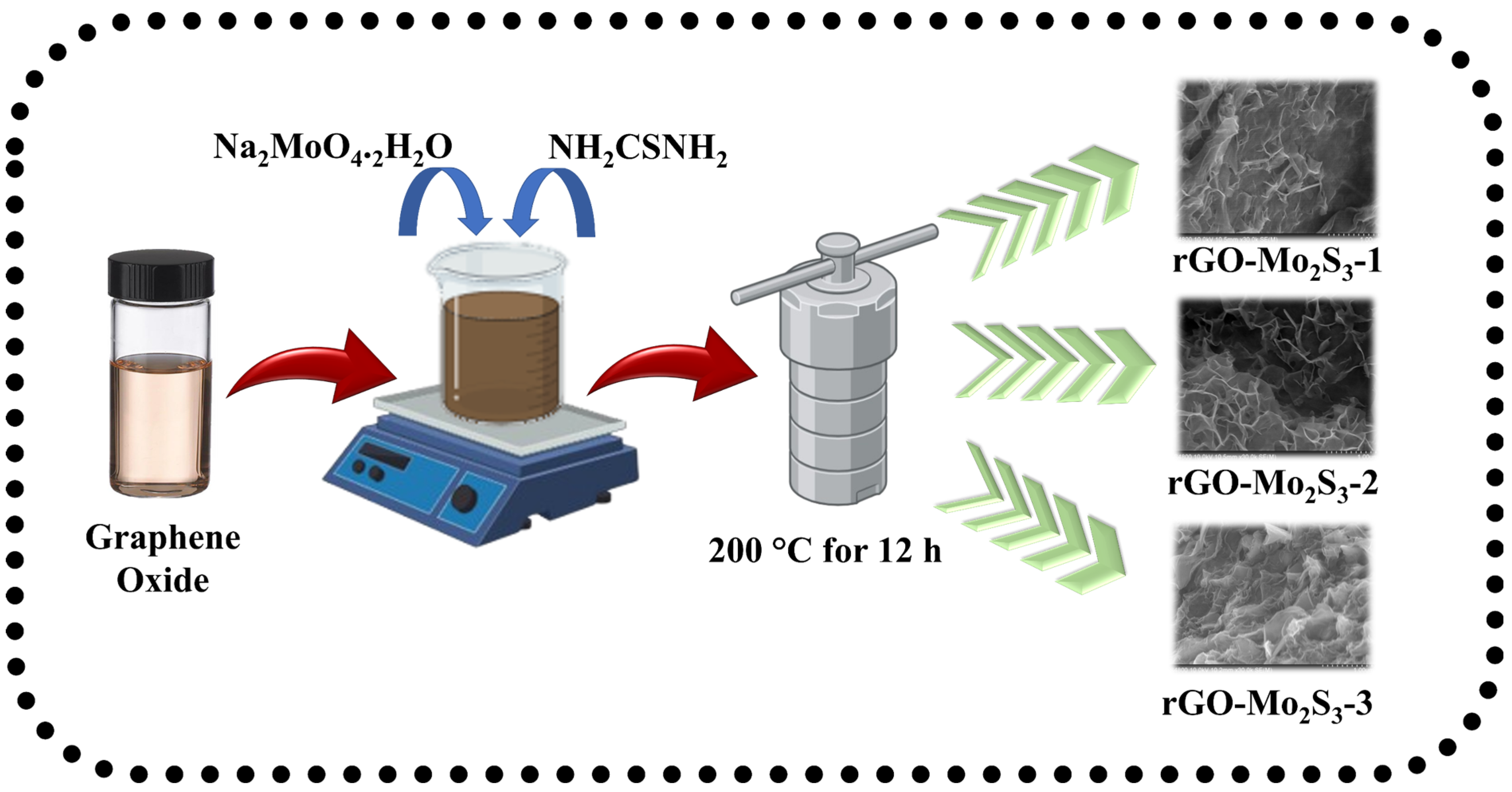
The rGO-Mo2S3 electrocatalyst was synthesized through a facile one-step hydrothermal method, as demonstrated in Figure 1. Firstly, 50 mg of graphene oxide (GO) (Graphenez, Chungju, Chungcheongbuk-do, Republic of Korea) was dispersed in 20 mL of deionized (DI) water using ultrasonication to obtain a uniform and stable suspension. Subsequently, predetermined amounts of Na2MoO4.2H2O and NH2CSNH2 were introduced into the GO dispersion, followed by ultrasonication for 10 min to ensure complete dissolution of the precursors and homogeneous mixing. The total volume of the reaction mixture was then adjusted to 35 mL by adding an additional 15 mL of DI water. The resulting solution was further ultrasonicated for another 10 min and subsequently subjected to magnetic stirring for 1 h to promote effective interaction between the reactants. After thorough stirring, pre-cleaned nickel foam (NF) substrates were immersed into the reaction mixture and transferred into a Teflon-lined stainless-steel autoclave (4science.net, Seongnam-si, Gyeonggi-do, Republic of Korea). The hydrothermal reaction was carried out at 200 °C for 12 h to facilitate the in situ growth of the Mo2S3 phase on the conductive rGO framework. Upon completion of the reaction, the obtained samples were collected, repeatedly washed with DI water and ethanol to remove residual impurities, and then dried at 60 °C overnight. To investigate the influence of precursor concentration on the resulting composite structure, different concentrations of Na2MoO4.2H2O (20, 40, and 60 mM) were employed, along with corresponding molar amounts of NH2CSNH2 (4, 8, and 12 mM). The resulting composites were systematically denoted as rGO-Mo2S3-1, rGO-Mo2S3-2, and rGO-Mo2S3-3, respectively.

2.3. Material Characterization

The crystallographic structure of the synthesized nanomaterials was characterized using X-ray diffraction (XRD) analysis performed on an X’Pert Pro diffractometer (PANalytical, Almelo, The Netherlands) employing Cu Kα radiation as the X-ray source. The surface chemical composition and corresponding oxidation states of the constituent elements were further analyzed by X-ray photoelectron spectroscopy (XPS) using a Thermo Scientific K-Alpha surface analysis system. Moreover, the surface morphology, elemental composition, and spatial elemental mapping of the prepared samples were systematically examined using field-emission scanning electron microscopy (FE-SEM, HITACHI S-4800, Tokyo, Japan) coupled with an energy-dispersive X-ray spectroscopy (EDX) detector.

2.4. Electrochemical Analysis

Electrochemical analysis was performed using a Biologic WBCS3000 battery cycler (Biologic Instruments, Gieres, France) to comprehensively evaluate the electrocatalytic performance of the prepared materials. A conventional three-electrode configuration was employed, where NF served as the working electrode, a Ag/AgCl electrode functioned as the reference electrode, and a platinum plate was used as the counter electrode. Prior to catalyst deposition, the NF substrates were carefully pretreated through sequential ultrasonication in deionized water, acetone, and ethanol for 20 min each to remove surface contaminants, followed by drying at 70 °C overnight to ensure a clean and active surface. The mass loading of the catalyst on the electrode was carefully controlled to be approximately 5.7, 5.2, 5.6, and 5.4 mg cm−2 for rGO, rGO-Mo2S3-1, rGO-Mo2S3-2, and rGO-Mo2S3-3, respectively.
All electrochemical experiments were conducted in a 1 M KOH aqueous electrolyte. Cyclic voltammetry (CV) measurements were carried out within the non-faradaic potential region of 0.1–0.2 V at varying scan rates of 5, 10, 15, 20, and 25 mV s−1 to evaluate the electrochemically active surface area (ECSA) and capacitive characteristics of the catalysts. Linear sweep voltammetry (LSV) measurements were subsequently performed at a scan rate of 5 mV s−1 over a potential range of 0–1 V to determine the overpotential required to drive the OER. All measured potentials were converted to the reversible hydrogen electrode (RHE) scale to ensure accurate comparison of electrochemical performance.
The durability and operational stability of the catalysts were further investigated through accelerated stability tests consisting of 5000 continuous CV cycles. The catalytic stability was evaluated by comparing the LSV curves obtained before and after the cycling tests. In addition, long-term operational stability was examined using chronopotentiometry (CP) measurements conducted at a constant current density of 10 mA cm−2, providing further insight into the sustained catalytic performance under prolonged electrolysis conditions.

3. Result and Discussion

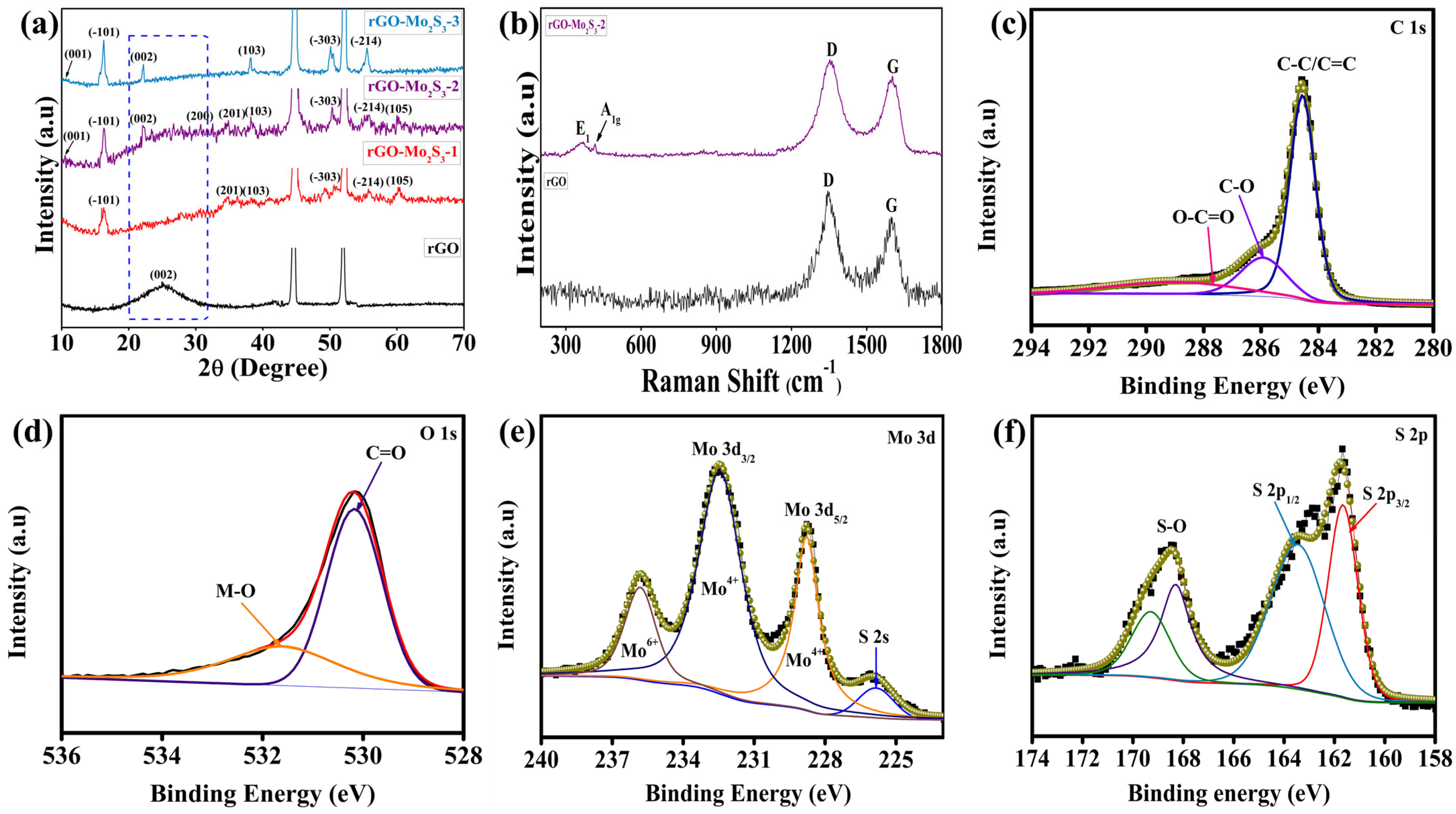
The crystallographic features and phase purity of the synthesized materials were systematically investigated using X-ray diffraction (XRD) analysis. Figure 2a displays the XRD patterns of rGO, rGO-Mo2S3-1, rGO-Mo2S3-2, and rGO-Mo2S3-3 composites, providing detailed insights into their phase composition and crystalline structure. The diffraction pattern of rGO exhibits a broad hump at 25° which is attributed to the (002) reflection plane, indicating a partially disordered graphitic structure. Additionally, a weak peak observed at 42.5° corresponds to the (111) plane, suggesting the partial restoration of graphitic domains during the reduction process [33]. For Mo2S3, characteristic diffraction peaks are observed at 10.5°, 16.2°, 22.1°, 30.0°, 34.8°, 38.2°, 50.3°, 55.5°, and 60.0°, which can be indexed to the (001), (−101), (002), (200), (201), (103), (−303), (−214), and (105) lattice planes, respectively. These reflections are consistent with the monoclinic phase of Mo2S3 (JCPDS No. 01-081-2031) [30], confirming the formation of crystalline Mo2S3 domains within the composite. Furthermore, a systematic increase in diffraction peak intensity with higher Mo2S3 content clearly indicates the progressive incorporation of Mo2S3 into the rGO matrix. This trend evidences the successful hybridization between Mo2S3 and the rGO support. The enhanced crystallinity and phase purity of the rGO-Mo2S3 composites underline their potential as efficient electrocatalytic materials, where well-ordered crystalline phases are known to enhance both catalytic activity and structural stability during electrochemical operation.
Raman spectroscopy was employed to further evaluate the defect density and graphitic nature of the synthesized materials, as illustrated in Figure 2b. The Raman spectrum of rGO exhibits two prominent peaks at approximately 1343 and 1601 cm−1, corresponding to the characteristic D and G bands, respectively. The D band is associated with disordered carbon structures and defects related to sp3-hybridized carbon atoms, whereas the G band arises from the in-plane vibration of sp2-hybridized carbon atoms within the graphitic framework. The higher intensity of the D band relative to the G band in rGO indicates a significant degree of structural defects within the carbon lattice [34,35]. For the rGO-Mo2S3-2 composite, a slight shift in the D and G bands to around 1353 and 1602 cm−1 is observed, suggesting electronic interaction and structural coupling between rGO and Mo2S3. In addition, the Raman spectrum of Mo2S3 displays distinct vibrational modes at approximately 369, and 417 cm−1, corresponding to the E1 and A1g modes, respectively. The A1g mode is attributed to the out-of-plane vibration of sulfur atoms, while the E1 mode originates from the in-plane vibration of molybdenum and sulfur atoms [36,37]. Furthermore, the ratio of the D-band to G-band intensities (ID/IG) serves as a key indicator of defect density and graphitization degree. The ID/IG ratio of pristine rGO is 0.83, which slightly increases to 0.84 for the rGO-Mo2S3-2 composite, indicating an increased density of structural defects and disorder within the carbon framework upon incorporation of Mo2S3 [38].
The surface chemical composition and valence states of the synthesized rGO-Mo2S3-2 catalyst was further investigated using X-ray photoelectron spectroscopy (XPS). The high-resolution C 1s spectrum (Figure 2c) reveals three distinct components after peak deconvolution, located at binding energies of approximately 284.5, 285.1, and 288.6 eV. These peaks correspond to sp2/sp3 hybridized C-C/C=C bonds, C-O functionalities, and O-C=O groups, respectively, confirming the presence of oxygen-containing functional groups on the rGO framework. Such functional groups are beneficial for enhancing interfacial interaction between rGO and the Mo2S3 phase, thereby facilitating effective charge transport [34,39,40]. The high-resolution O 1s spectrum (Figure 2d) further indicates the presence of multiple oxygen species within the composite structure. Deconvolution of the O 1s peak identifies characteristic contributions at approximately 530.1 eV and 531.7 eV, which can be attributed to C=O and metal-oxygen (M-O) bonding environments, respectively. The existence of these oxygen-related species suggests partial surface oxidation and strong electronic coupling between the Mo2S3 component and the rGO matrix [41,42]. The Mo 3d high-resolution spectrum, as shown in Figure 2e, provides further insight into the chemical state of molybdenum in the heterostructure. The peak observed at around 226.0 eV is assigned to the S 2s orbital. Meanwhile, the characteristic doublet located at 228.7 eV and 232.4 eV corresponds to Mo4+ species, representing the Mo 3d5/2 and Mo 3d3/2 orbitals, respectively. In addition, a minor peak appearing at approximately 235.8 eV is associated with Mo6+, which likely arises from slight surface oxidation during exposure to air [43]. Surface oxidation can introduce polar oxygen-containing groups, which enhance wettability and electrolyte accessibility, promoting more efficient mass transport at the catalyst-electrolyte interface. The high-resolution S 2p spectrum (Figure 2f) exhibits two dominant peaks at binding energies of 161.63 eV and 162.95 eV, which are assigned to S 2p3/2 and S 2p1/2, respectively, confirming the presence of sulfide species in the Mo2S3 structure. Furthermore, additional peaks located at approximately 168.2 eV and 169.3 eV are attributed to S-O bonding configurations, indicating the formation of surface sulfate or oxidized sulfur species. These features collectively verify the successful formation of the rGO-Mo2S3 heterostructure and reveal the coexistence of multiple chemical states that may contribute to enhanced electrochemical activity [29,43,44].
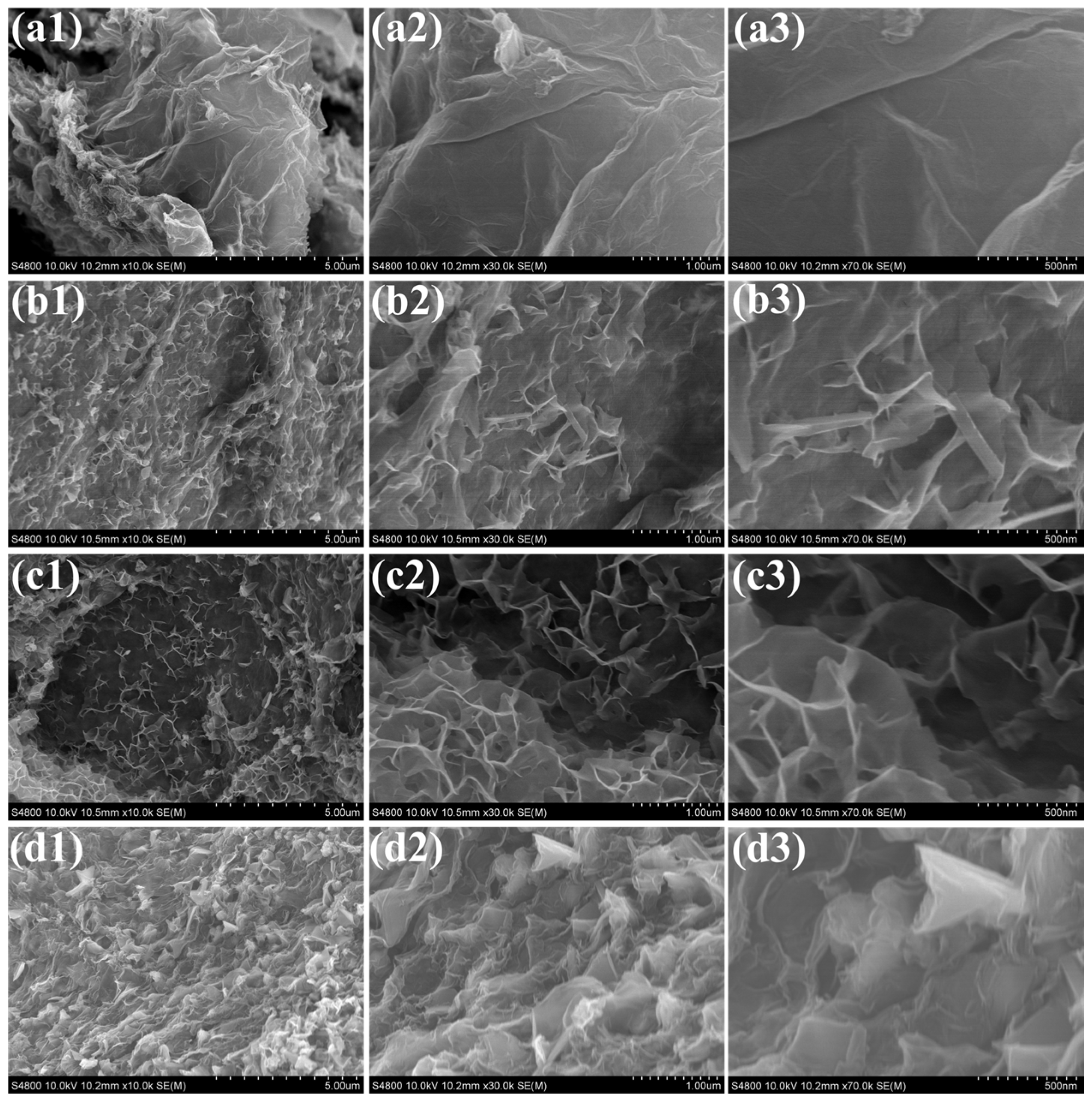
The SEM analysis highlights the distinct morphological features of rGO and rGO-Mo2S3 composites in Figure 3. Figure 3(a1–a3) shows that rGO consists of thin, wrinkled nanosheets forming a continuous, layered network. These nanosheets exhibit a corrugated and folded surface, which is beneficial for exposing more active area. In the rGO-Mo2S3-1, Figure 3(b1–b3), the underlying rGO nanosheet framework remains visible, while small Mo2S3 nanoflake-like features begin to decorate the surface. The partial coverage of rGO by these nanoflakes suggests an initial stage of Mo2S3 incorporation, leading to an additional potential catalytic site, but still with relatively sparse Mo2S3 distribution. The rGO-Mo2S3-2 images displayed in Figure 3(c1–c3) reveal a more uniformly distributed and densely anchored population of Mo2S3 nanoflakes integrated within the rGO nanosheet network. This well-interconnected hybrid architecture, with Mo2S3 nanoflakes intimately merged into and between rGO sheets, creates abundant exposed edges and interfaces, and short electron-transport pathways, which collectively underpin its outstanding OER activity. For rGO-Mo2S3-3 (Figure 3(d1–d3)), the surface appears more densely packed with Mo2S3 features, and some regions show larger or more aggregated nanoflakes on the rGO support. Although this high loading further increases surface roughness, the onset of aggregation may partially block rGO surfaces and reduce the optimal exposure of active interfaces, which is consistent with slightly lower OER performance compared with rGO-Mo2S3-2.
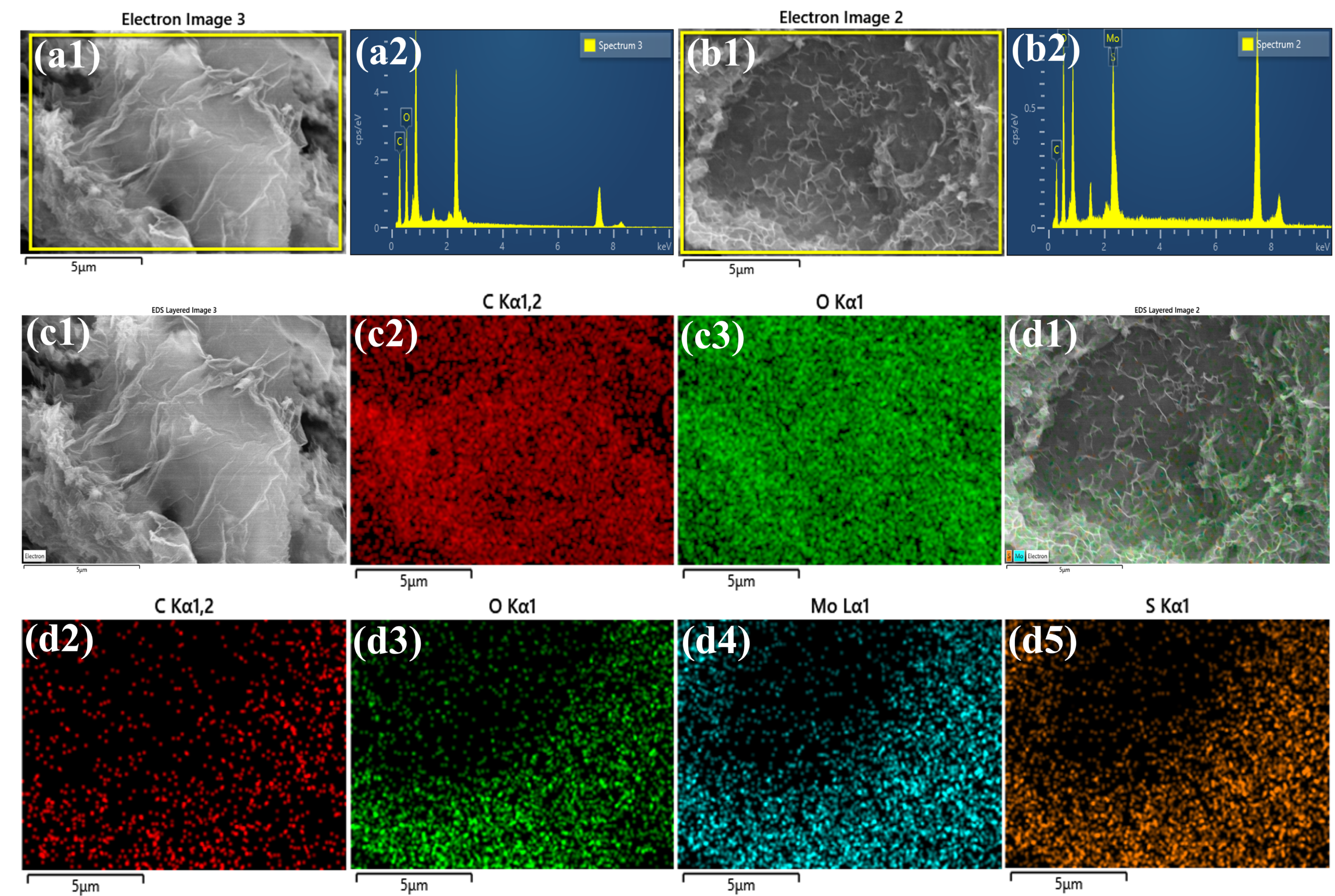
The elemental composition and spatial distribution of the synthesized electrocatalysts were systematically analyzed using energy-dispersive X-ray spectroscopy (EDX). For pristine rGO (Figure 4(a1,a2)), the elemental composition consisted of 29.29 wt% carbon and 70.71 wt% oxygen, confirming the successful formation of the reduced graphene oxide framework with abundant oxygen-containing functionalities. In contrast, the rGO-Mo2S3-2 composite (Figure 4(b1,b2)) exhibited the presence of additional elements, with measured contents of 23.31 wt% C, 70.02 wt% O, 2.08 wt% Mo, and 4.59 wt% S. The appearance of Mo and S signals clearly confirms the successful incorporation of the Mo2S3 phase within the rGO matrix, indicating the formation of the intended heterostructured composite. Furthermore, elemental mapping analysis was carried out to investigate the spatial distribution of the constituent elements. As illustrated in Figure 4(c1–d5), the mapping images reveal a uniform distribution of C and O across the rGO framework, while Mo and S are homogeneously dispersed throughout the rGO-Mo2S3-2 composite. This uniform elemental distribution suggests intimate interfacial integration between the conductive rGO sheets and the Mo2S3 active phase.
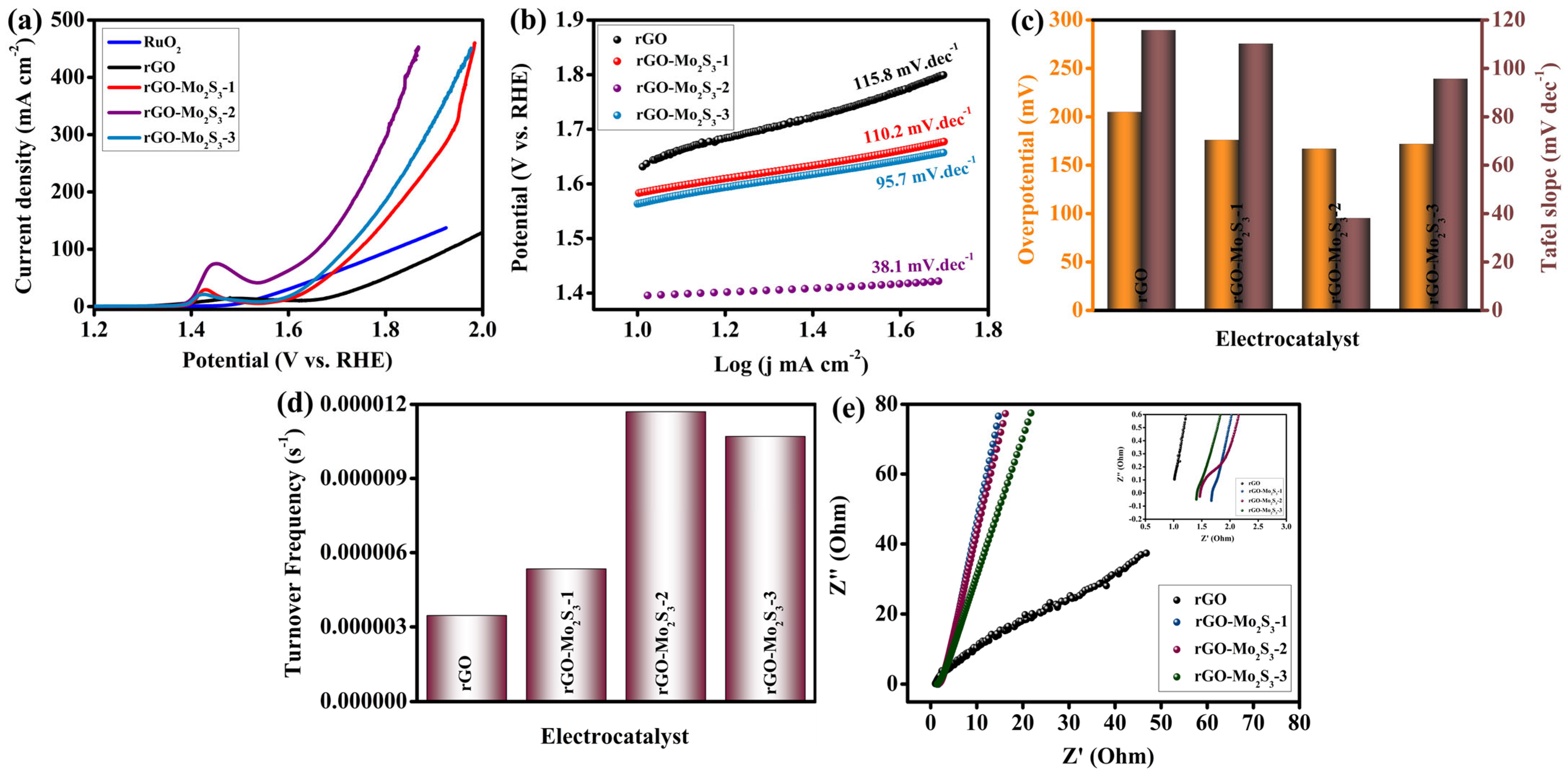
The oxygen evolution reaction (OER) activity of the synthesized electrocatalysts was comprehensively investigated using a conventional three-electrode configuration in 1 M KOH electrolyte. The corresponding LSV measurements were conducted at a scan rate of 5 mV s−1 under non-iR-compensated conditions to evaluate the overpotential (η), which serves as a key metric of catalytic efficiency. The corresponding LSV curves for RuO2, rGO, rGO-Mo2S3-1, rGO-Mo2S3-2, and rGO-Mo2S3-3 are depicted in Figure 5a, with the comparative overpotential values summarized in Figure 5c. Among the investigated catalysts, rGO-Mo2S3-2 exhibited the most prominent OER performance, delivering a notably low overpotential of 166 mV at a current density of 10 mA cm−2. In comparison, RuO2, rGO, rGO-Mo2S3-1, and rGO-Mo2S3-3 required higher overpotentials of 292, 205, 176, and 171 mV, respectively, indicating comparatively lower activity under identical conditions. The superior catalytic efficiency of rGO-Mo2S3-2 can be ascribed to its optimized composition and well-established synergistic interaction between rGO and Mo2S3, which collectively augment the active sites and facilitate rapid electron transport. This performance trend suggests a strong correlation between Mo2S3 content and OER activity, emphasizing the significance of compositional tuning for improved catalytic behavior. To gain further insights into the OER kinetics, Tafel slope analysis was performed as shown in Figure 5b,c. The rGO-Mo2S3-2 electrode exhibited the lowest Tafel slope of 38.1 mV dec−1, confirming its favorable charge-transfer kinetics and superior intrinsic activity. This value is significantly lower than those obtained for rGO (115.8 mV dec−1), rGO-Mo2S3-1 (110.2 mV dec−1), and rGO-Mo2S3-3 (95.7 mV dec−1), further validating the efficiency of the rGO-Mo2S3 heterostructure in accelerating the OER process. The turnover frequency (TOF) is a crucial kinetic parameter that reflects the intrinsic catalytic activity by quantifying the number of oxygen molecules generated per active site per second during the OER. In this study, the TOF values were calculated based on the integrated analysis of the corresponding redox peak areas. Among all the investigated samples, the rGO-Mo2S3-2 catalyst exhibits the highest TOF value of 1.17 × 10⁻⁵ s−1, which is significantly greater than those of rGO (3.46 × 10⁻⁶ s−1), rGO-Mo2S3-1 (5.34 × 10⁻⁶ s−1), and rGO-Mo2S3-3 (1.07 × 10⁻⁵ s−1), as shown in Figure 5d. This enhanced TOF value clearly demonstrates the superior intrinsic activity of rGO-Mo2S3-2, indicating a more efficient catalytic turnover at the active sites. Electrochemical impedance spectroscopy (EIS) was employed to probe the interfacial resistance and charge-transfer characteristics during OER. The Nyquist plots in Figure 5e reveal that rGO-Mo2S3-2 displays the smallest semicircle diameter, indicative of the lowest charge-transfer resistance (Rct) and rapid interfacial electron migration. The extracted Rct values for rGO, rGO-Mo2S3-1, rGO-Mo2S3-2, and rGO-Mo2S3-3 were 3.49, 3.02, 0.25, and 2.69 Ω, respectively. The notably low Rct for rGO-Mo2S3-2 underscores its efficient electrical conductivity and abundance of accessible surface-active sites arising from the intimate rGO-Mo2S3 interfacial coupling. This synergistic architecture promotes accelerated electron transport and enhanced mass diffusion, ultimately leading to superior OER kinetics and remarkable catalytic stability. Hence, rGO-Mo2S3-2 emerges as a highly promising electrocatalyst for advanced alkaline water-splitting applications.
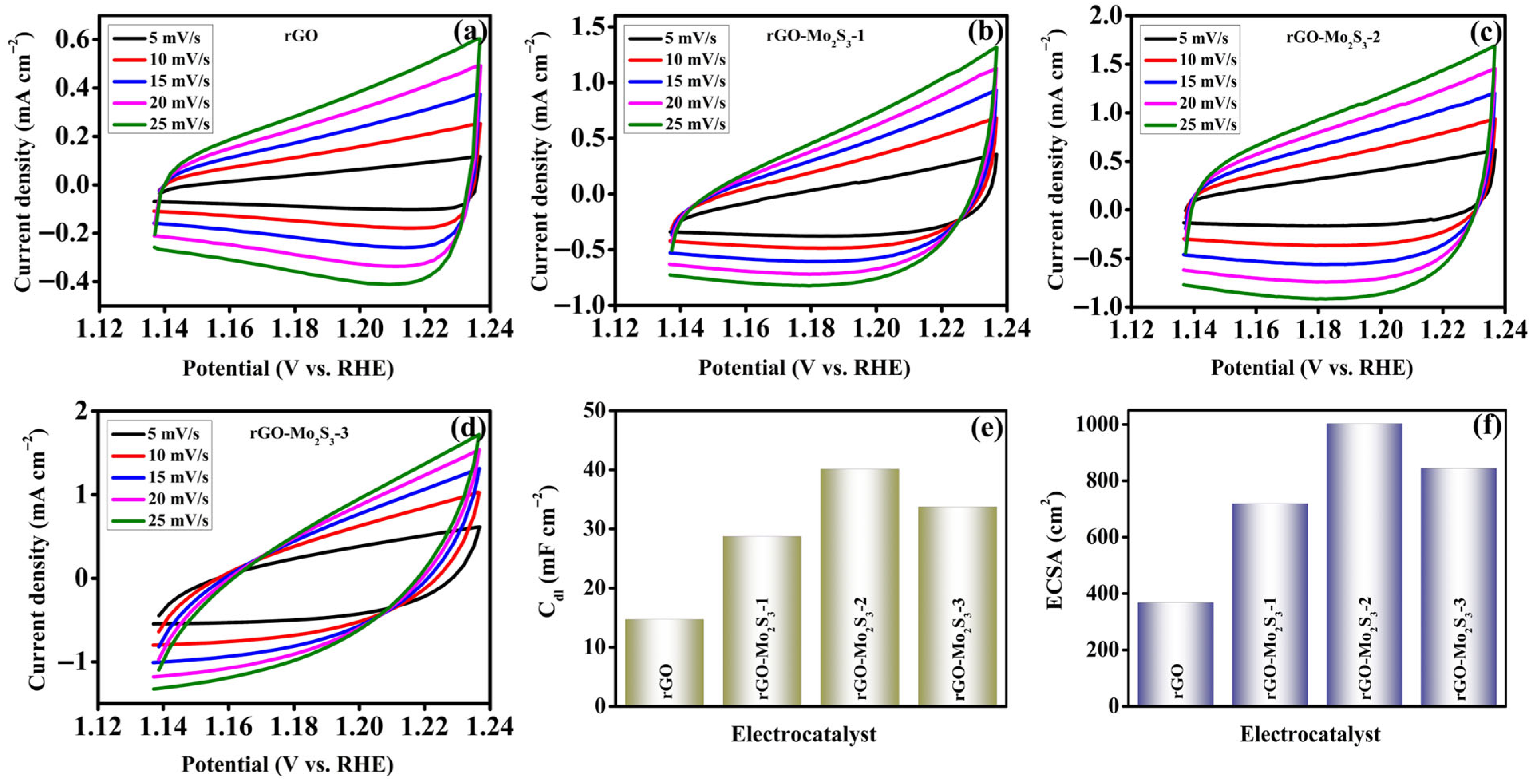
Figure 6 illustrates the cyclic voltammetry (CV) profiles of the synthesized samples recorded at various scan rates to evaluate their electrochemical characteristics. The CV curves for rGO (Figure 6a), rGO-Mo2S3-1 (Figure 6b), rGO-Mo2S3-2 (Figure 6c), and rGO-Mo2S3-3 (Figure 6d) display a consistent increase in current response with the rising scan rate. This behavior highlights the strong dependence of electrocatalytic activity on the scan rate, suggesting efficient and reversible charge transport processes across the electrode-electrolyte interface. To quantitatively estimate the electrochemically active surface area (ECSA), the double-layer capacitance (Cdl) was derived from CV curves obtained at different scan rates, as shown in Figure 6e. The calculated Cdl values for rGO, rGO-Mo2S3-1, rGO-Mo2S3-2, and rGO-Mo2S3-3 were 29.44, 28.76, 40.14, and 33.76 mF cm−2, respectively. Since Cdl is proportional to the accessible surface area, these results directly correlate with the number of electrochemically active sites present on the catalyst surface. The ECSA was then estimated using the relation ECSA = Cdl/Cs, where Cs represents the specific capacitance of a smooth surface in 1 M KOH (typically ~0.040 mF cm−2) [45]. Figure 6f presents the derived ECSA values of 368, 719, 1003, and 844 cm2 for rGO, rGO-Mo2S3-1, rGO-Mo2S3-2, and rGO-Mo2S3-3, respectively. Among these, rGO-Mo2S3-2 shows the highest ECSA, signifying a larger population of active catalytic sites. This superior surface accessibility can be attributed to the well-balanced incorporation of Mo2S3 within the rGO host lattice, yielding a highly conductive and hierarchically porous composite. Such architecture offers abundant charge transport channels and maximizes reactive surface exposure, collectively enhancing the electrocatalytic efficiency of rGO-Mo2S3-2 toward the OER.
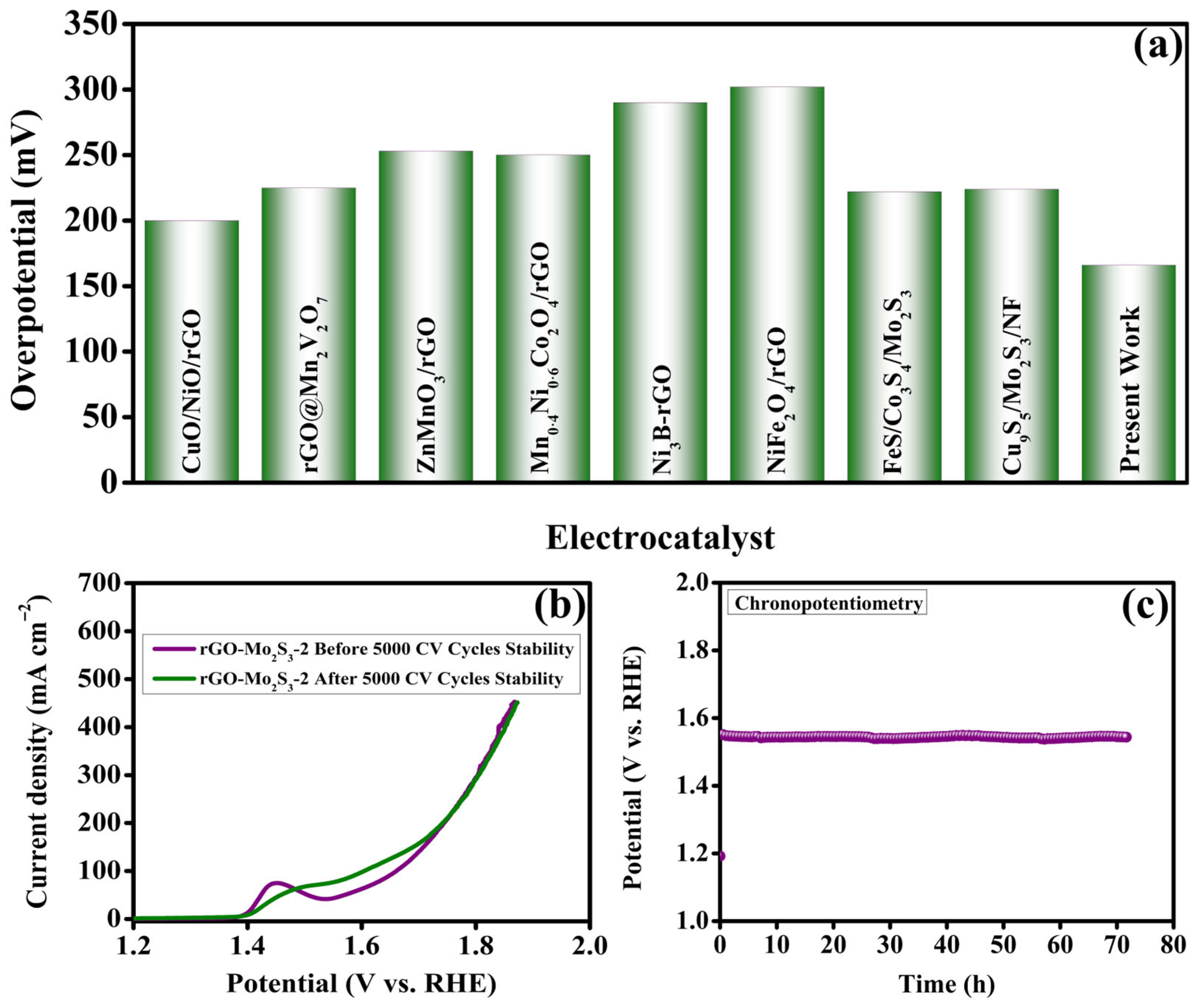
The comparative evaluation of rGO-Mo2S3-2 with recently reported electrocatalysts (Figure 7a) highlights its superior OER performance and the electrochemical performance parameters are summarized in Table 1. This enhanced activity is primarily attributed to the synergistic coupling between conductive rGO and Mo2S3, which promotes rapid charge transfer and efficient electrolyte diffusion, thereby improving overall catalytic kinetics. The long-term durability of electrocatalysts is a critical parameter for evaluating their practical applicability in electrochemical energy conversion systems. To investigate the structural integrity and electrochemical robustness of the heterostructured rGO-Mo2S3-2 electrocatalyst in alkaline media, CV cycling and chronopotentiometry tests were systematically performed in 1.0 M KOH electrolyte. The durability of the catalyst was first examined through accelerated CV cycling at a scan rate of 50 mV s−1, which simulates prolonged electrochemical operation. As illustrated in Figure 7b, polarization curves recorded before and after 5000 continuous CV cycles reveal negligible degradation in catalytic performance. Notably, the rGO-Mo2S3-2 electrode retained an overpotential of approximately 173 mV at a current density of 10 mA cm−2 after cycling, which is nearly identical to the initial value, indicating excellent catalytic stability and resistance to structural degradation. To further evaluate the operational endurance of the catalyst, a chronopotentiometry test was conducted at a constant current density of 10 mA cm−2 for 72 h (Figure 7c). The rGO-Mo2S3-2 electrode exhibits a highly stable potential profile with negligible fluctuation throughout the prolonged electrolysis, indicating excellent electrochemical stability. The slight and negligible variation in potential observed over time may be associated with minor surface reconstruction or oxidation of active sites [46]. Furthermore, the sustained performance can be attributed to the robust interfacial interaction between rGO and Mo2S3, which facilitates efficient charge transport and prevents structural degradation during continuous operation. Moreover, the strong adhesion of the catalyst to the substrate minimizes material detachment under vigorous gas evolution conditions. These results collectively confirm that the rGO-Mo2S3-2 electrocatalyst possesses excellent long-term electrochemical stability and is a promising candidate for alkaline water-splitting applications.
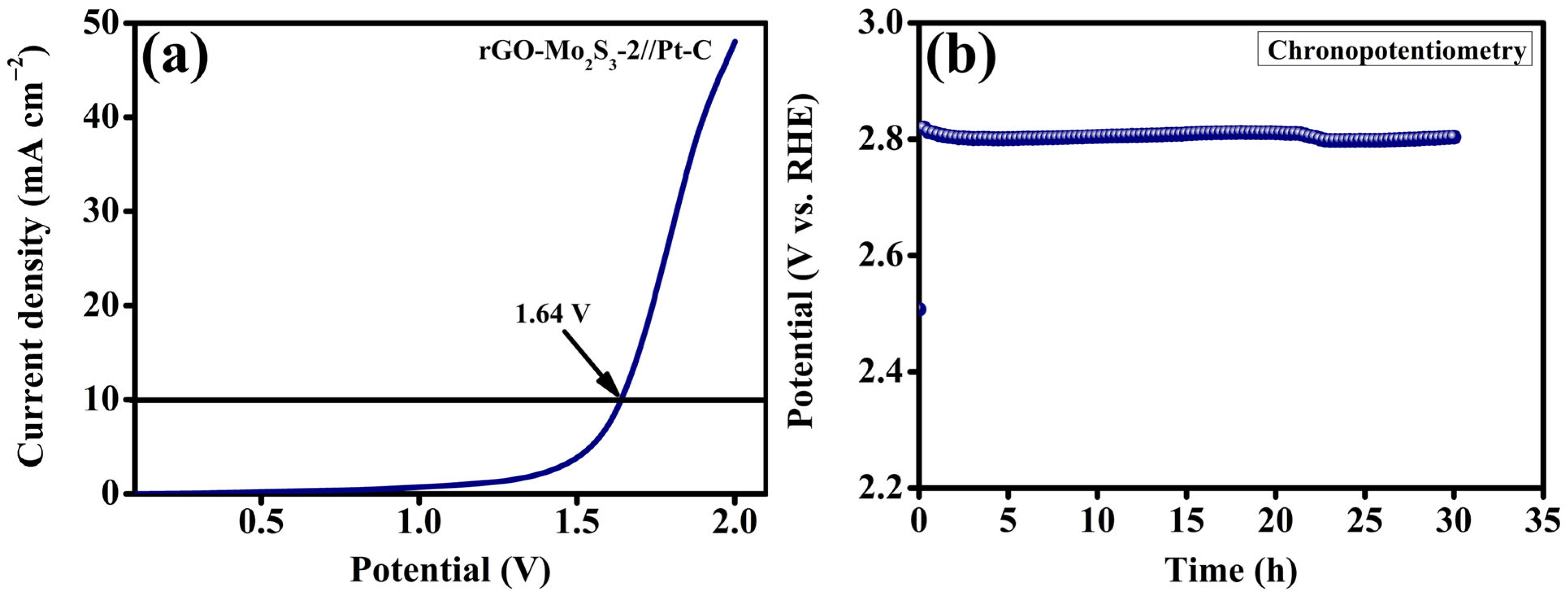
Based on the comprehensive electrochemical evaluation, the rGO-Mo2S3-2 sample was identified as the most efficient OER electrocatalyst among the investigated materials. To further assess its practical applicability, a two-electrode overall water-splitting system was constructed using rGO-Mo2S3-2 as the anode and Pt-C as the cathode (rGO-Mo2S3-2||Pt-C) in 1.0 M KOH electrolyte. The assembled electrolyzer exhibited promising performance, achieving a current density of 10 mA cm−2 at a cell voltage of 1.64 V (Figure 8a), demonstrating its efficient catalytic activity, particularly toward the oxygen evolution process. The long-term operational stability of the device was further examined through chronopotentiometric measurements at a constant current density of 10 mA cm−2 (Figure 8b). The system maintained a nearly stable potential over 30 h of continuous operation, with only a marginal increase compared to the initial value, indicating minimal performance degradation. This sustained electrochemical behavior highlights the excellent durability and structural robustness of the rGO-Mo2S3-2||Pt-C configuration. The enhanced overall water-splitting performance of the rGO-Mo2S3-2||Pt-C system can be attributed to the synergistic effects of optimized surface coverage, favorable morphology, and improved electronic interaction between rGO and Mo2S3, which collectively facilitate efficient charge transfer and catalytic kinetics [50].

4. Conclusions

In this study, a two-dimensional rGO-supported Mo2S3 heterostructured electrocatalyst was successfully synthesized via a hydrothermal method for efficient OER. The integration of Mo2S3 nanoflakes with conductive rGO nanosheets created a hybrid architecture with enhanced electrical conductivity and abundant catalytic active sites. The optimized rGO-Mo2S3-2 catalyst exhibited superior OER performance with a low overpotential of 166 mV at 10 mA cm−2. It also delivered a small Tafel slope of 38.1 mV dec−1, indicating favorable reaction kinetics and efficient charge transfer. Additionally, the catalyst showed a high electrochemically active surface area of 1003 cm2, suggesting the presence of numerous accessible catalytic sites. The improved catalytic activity is mainly attributed to the synergistic interaction between Mo2S3 and rGO that enhances electron transport and active site exposure. This work highlights the potential of rGO-supported transition metal sulfide catalysts as efficient and cost-effective electrocatalysts for sustainable hydrogen production through water electrolysis.

Author Contributions

M.B.: Conceptualization, Methodology, Investigation, Writing—original draft; A.A.P.: Review and editing; C.-W.J.: Supervision, Writing—review and editing, Project administration, Funding acquisition. All authors have read and agreed to the published version of the manuscript.

Funding

This research did not receive any specific grant from funding agencies in the public, commercial, or not-for-profit sectors.

Institutional Review Board Statement

Not applicable.

Informed Consent Statement

Not applicable.

Data Availability Statement

The data presented in this study are available on request from the corresponding author, due to privacy or ethical restrictions.

Conflicts of Interest

The authors declare no conflicts of interest.

References

  1. Jiang, W.; Li, J.; Zhao, C.; Cheng, W.; Liu, J.; Chen, Y. OER performance of water electrolysis by micron MoS2 enhanced nickel-cobalt composite electrode. Int. J. Hydrogen Energy 2024, 51, 1486–1496. [Google Scholar] [CrossRef]
  2. Chen, N.; Usman, M. Energy use, energy depletion, and environmental degradation: Exploitation of natural resources. In Natural Resources Forum; Wiley Online Library: Hoboken, NJ, USA, 2025; pp. 3984–3995. [Google Scholar]
  3. Ahmed, A.; Al-Amin, A.Q.; Ambrose, A.F.; Saidur, R. Hydrogen fuel and transport system: A sustainable and environmental future. Int. J. Hydrogen Energy 2016, 41, 1369–1380. [Google Scholar] [CrossRef]
  4. Kumar, S.S.; Himabindu, V. Hydrogen production by PEM water electrolysis—A review. Mater. Sci. Energy Technol. 2019, 2, 442–454. [Google Scholar]
  5. Raveendran, A.; Chandran, M.; Dhanusuraman, R. A comprehensive review on the electrochemical parameters and recent material development of electrochemical water splitting electrocatalysts. RSC Adv. 2023, 13, 3843–3876. [Google Scholar] [CrossRef] [PubMed]
  6. Oni, B.A. A review on electrochemical water splitting electrocatalysts for green H2 production: Unveiling the fundamentals and recent advances. Langmuir 2025, 41, 10742–10767. [Google Scholar] [CrossRef] [PubMed]
  7. Liu, J.; Li, Y.; Zhou, X.; Jiang, H.; Yang, H.G.; Li, C. Positively charged Pt-based cocatalysts: An orientation for achieving efficient photocatalytic water splitting. J. Mater. Chem. A 2020, 8, 17–26. [Google Scholar] [CrossRef]
  8. Creus, J.; De Tovar, J.; Romero, N.; García-Antón, J.; Philippot, K.; Bofill, R.; Sala, X. Ruthenium nanoparticles for catalytic water splitting. ChemSusChem 2019, 12, 2493–2514. [Google Scholar] [CrossRef]
  9. Li, Y.; Bao, X.; Chen, D.; Wang, Z.; Dewangan, N.; Li, M.; Xu, Z.; Wang, J.; Kawi, S.; Zhong, Q. A minireview on nickel-based heterogeneous electrocatalysts for water splitting. ChemCatChem 2019, 11, 5913–5928. [Google Scholar] [CrossRef]
  10. Wang, J.; Cui, W.; Liu, Q.; Xing, Z.; Asiri, A.M.; Sun, X. Recent progress in cobalt-based heterogeneous catalysts for electrochemical water splitting. Adv. Mater. 2016, 28, 215–230. [Google Scholar] [CrossRef]
  11. Du, P.; Eisenberg, R. Catalysts made of earth-abundant elements (Co, Ni, Fe) for water splitting: Recent progress and future challenges. Energy Environ. Sci. 2012, 5, 6012–6021. [Google Scholar] [CrossRef]
  12. Chatterjee, A.; Chakraborty, P.; Kumar, B.; Mandal, S.; Dey, S.K. Fe-based materials for electrocatalytic water splitting: A mini review. ChemCatChem 2024, 16, e202400622. [Google Scholar] [CrossRef]
  13. Zhao, M.; Zhou, G.; Liu, X.; Shen, X.; Lv, J.; Hu, C.; Wang, Y.; Tan, W.; Sun, S.; Ma, Y. One step hydrothermal synthesis of Ni-MoS2-RGO bifunctional electrocatalysts for HER and OER. Int. J. Electrochem. Sci. 2021, 16, 210323. [Google Scholar] [CrossRef]
  14. Selvaraj, S.; Natesan, K.; Bhargav, P.B.; Nafis, A. Revolutionizing water treatment: Exploring the efficacy of MoS2/BN/rGO ternary nanocomposite in organic dye treated water for OER and HER applications. J. Water Process Eng. 2023, 54, 104033. [Google Scholar] [CrossRef]
  15. Zhou, J.; Xiao, H.; Zhou, B.; Huang, F.; Zhou, S.; Xiao, W.; Wang, D. Hierarchical MoS2–rGO nanosheets with high MoS2 loading with enhanced electro-catalytic performance. Appl. Surf. Sci. 2015, 358, 152–158. [Google Scholar] [CrossRef]
  16. Mohana, P.; Yuvakkumar, R.; Ravi, G.; Arunmetha, S. Enhanced electrochemical performance of CuO/NiO/rGO for oxygen evolution reaction. Electrochim. Acta 2024, 473, 143464. [Google Scholar] [CrossRef]
  17. Kamar, E.; Qasim, K.; Mousa, M. Supercapacitor and oxygen evolution reaction performances based on rGO and Mn2V2O7 nanomaterials. Electrochim. Acta 2022, 430, 141106. [Google Scholar] [CrossRef]
  18. Arivu, M.; Masud, J.; Umapathi, S.; Nath, M. Facile synthesis of Ni3B/rGO nanocomposite as an efficient electrocatalyst for the oxygen evolution reaction in alkaline media. Electrochem. Commun. 2018, 86, 121–125. [Google Scholar] [CrossRef]
  19. Wei, G.; Wang, C.; Zhao, X.; Wang, S.; Kong, F. Plasma-assisted synthesis of Ni4Mo/MoO2@ carbon nanotubes with multiphase-interface for high-performance overall water splitting electrocatalysis. J. Alloys Compd. 2023, 939, 168755. [Google Scholar] [CrossRef]
  20. Xiao, Y.; Yao, J.; Zhang, T.; Ma, X.; Xu, D.; Gao, H. Three-dimensional cross-linked Co-MoS2 catalyst on carbon cloth for efficient hydrogen evolution reaction. Dalton Trans. 2022, 51, 638–644. [Google Scholar] [CrossRef] [PubMed]
  21. Wang, L.; Huang, M.; Gao, M.; Isimjan, T.T.; Yang, X. Electron-transfer enhancement of urchin-like CoP–Ce2 (CO3)2 O/NF as an ultra-stable bifunctional catalyst for efficient overall water splitting. Mater. Chem. Front. 2023, 7, 2628–2636. [Google Scholar] [CrossRef]
  22. Yang, J.; An, Y.; Guo, K.; Ren, X.; Jiang, B. Nitrogen doped FeCoNiS nanoparticles on N, S-co-doped vertical graphene as bifunctional electrocatalyst for water splitting. Int. J. Hydrogen Energy 2023, 48, 4143–4157. [Google Scholar] [CrossRef]
  23. Zheng, Y.; Wang, L.; Pang, J.; Sun, K.; Hou, J.; Wang, G.; Guo, W.; Chen, L. Ni3S2/Co9S8 embedded poor crystallinity NiCo layered double hydroxides hierarchical nanostructures for efficient overall water splitting. J. Colloid Interface Sci. 2023, 637, 85–93. [Google Scholar] [CrossRef]
  24. Chua, X.J.; Pumera, M. Molybdenum sulfide electrocatalysis is dramatically influenced by solvents used for its dispersions. ACS Omega 2018, 3, 14371–14379. [Google Scholar] [CrossRef]
  25. Yan, Y.; Xia, B.; Xu, Z.; Wang, X. Recent development of molybdenum sulfides as advanced electrocatalysts for hydrogen evolution reaction. Acs Catal. 2014, 4, 1693–1705. [Google Scholar] [CrossRef]
  26. Huang, G.; Chao, W.; Chang, J.; Liao, H.; Ling, D.; Chien, F.; Wu, M. Diamagnetic and Electrical Properties of SixMo2S3−x (x=0.1, 0.2, 0.33, 0.5) and A0.1Mo2S3−x (A=C, B, and Ru). J. Supercond. Nov. Magn. 2013, 26, 503–510. [Google Scholar] [CrossRef]
  27. Sun, R.; Zhao, Z.; Su, Z.; Li, T.; Zhao, J.; Shang, Y. Multi-interface MoS2/Ni3S4/Mo2S3 composite as an efficient electrocatalyst for hydrogen evolution reaction over a wide pH range. Dalton Trans. 2022, 51, 6825–6831. [Google Scholar] [CrossRef]
  28. Alinejadian, N.; Odnevall, I.; Meisnar, M.; Jafari, D. Transition Metal Dichalcogenide-Based Composites in Powder Bed Additive Manufacturing for Electrochemical Applications—A Review. Adv. Mater. Technol. 2025, 10, 2401251. [Google Scholar] [CrossRef]
  29. Yang, Y.; Sun, Q.; Xu, D.; Zhou, M.; Zhang, W.; Li, Y.; Hu, Z. FeS/Co3S4/Mo2S3 Ternary Heterojunction Nanoflowers Regulated by Interfacial Electronic Rearrangement as an Efficient Bifunctional Electrocatalyst for Water Splitting. Electrochim. Acta 2026, 557, 148505. [Google Scholar] [CrossRef]
  30. Chaubey, P.; Sarkar, S.; Sharma, P.K. A multi-interface SnO2-Co3O4-Mo2S3 nanocomposite for enhanced electrocatalytic water splitting. Surf. Interfaces 2025, 72, 107099. [Google Scholar] [CrossRef]
  31. Zhou, X.; Zhao, W.; Pan, J.; Fang, Y.; Wang, F.; Huang, F. Urchin-like Mo2S3 prepared via a molten salt assisted method for efficient hydrogen evolution. Chem. Commun. 2018, 54, 12714–12717. [Google Scholar] [CrossRef] [PubMed]
  32. Qin, N.; Dai, F.; Xue, Y.; Gao, D.; Liu, Y.; Zhang, Y.; Chen, J.; Yang, Q. Acanthosphere-like bimetallic sulfide Cu9S5/Mo2S3/NF as bifunctional catalyst for water splitting. J. Electroanal. Chem. 2024, 964, 118338. [Google Scholar] [CrossRef]
  33. Madhura, T.R.; Kumar, G.G.; Ramaraj, R. Reduced graphene oxide supported 2D-NiO nanosheets modified electrode for urea detection. J. Solid State Electrochem. 2020, 24, 3073–3081. [Google Scholar] [CrossRef]
  34. Bhosale, M.; Thangarasu, S.; Magdum, S.S.; Jeong, C.; Oh, T.-H. Enhancing the electrocatalytic performance of vanadium oxide by interface interaction with rGO and NiO nanostructures for electrochemical water oxidation. Int. J. Hydrogen Energy 2024, 54, 1449–1460. [Google Scholar] [CrossRef]
  35. Le, T.K.; Kang, M.; Kim, S.W. Relation of photoluminescence and sunlight photocatalytic activities of pure V2O5 nanohollows and V2O5/RGO nanocomposites. Mater. Sci. Semicond. Process. 2019, 100, 159–166. [Google Scholar]
  36. Zhang, B.; Guo, P.; You, C.; Zhang, P.; Wang, R.; Zhang, Z. Synergistic effect-driven Mo2S3/CdS heterojunction photocatalyst: Interface charge dynamics and enhanced full-spectrum photocatalytic performance. J. Alloys Compd. 2025, 1039, 182907. [Google Scholar] [CrossRef]
  37. Zhang, Y.; Qiao, X.; Han, X.; Wang, Y.; Tian, G. Amorphous Mo2S3 Thin Films as Highly Efficient Electrocatalysts for the Hydrogen Evolution Reaction. SSRN Preprint 2024, 4852054. [Google Scholar]
  38. Chen, L.; Xu, C.; Yang, L.; Zhou, M.; He, B.; Chen, Z.; Li, Z.; Shi, M.; Hou, Z.; Kuang, Y. Nitrogen-doped holey carbon nanotubes: Dual polysulfides trapping effect towards enhanced lithium-sulfur battery performance. Appl. Surf. Sci. 2018, 454, 284–292. [Google Scholar] [CrossRef]
  39. Rubab, S.; Alyousef, H.A.; Alrowaily, A.W.; Alotaibi, B.; Somaily, H.; Henaish, A. Improvement in electrochemical performance of SrTiO3 with rGO via composite (SrTiO3/rGO) strategy fabricated via solvothermal approach. Ceram. Int. 2024, 50, 44762–44772. [Google Scholar] [CrossRef]
  40. Wang, Y.; Cheng, F.; Huang, Y.; Cai, C.; Fu, Y. Vertically-oriented growth of MgMOF layer via heteroepitaxial guidance for highly stable magnesium-metal anode. Energy Storage Mater. 2023, 61, 102911. [Google Scholar] [CrossRef]
  41. Moghaddam, M.S.; Bahari, A.; Litkohi, H.R. Using the synergistic effects of MoS2/rGO and bimetallic hybrids as a high-performance nanoelectrocatalyst for oxygen reduction reaction. Int. J. Hydrogen Energy 2023, 48, 33139–33154. [Google Scholar] [CrossRef]
  42. Zhang, C.; Sun, L.; Ouyang, Y.; Xu, F.; Zou, Y.; Chu, H.; Zhang, K.; Li, B.; Pan, H. Improved electrochemical water splitting by RuNi nanoparticles supported on rGO@ mesoporous N-doped carbon nanosheets. J. Alloys Compd. 2023, 937, 168334. [Google Scholar] [CrossRef]
  43. Zhao, H.; Liu, M.; Du, X.; Zhang, X. Synthesis of M-NiS/Mo2S3 (M=Co, Fe, Ce and Bi) nanoarrays as efficient electrocatalytic hydrogen evolution reaction catalyst in fresh and seawater. Int. J. Hydrogen Energy 2024, 62, 532–540. [Google Scholar]
  44. Wan, L.; Liu, J.; Li, X.; Zhang, Y.; Chen, J.; Du, C.; Xie, M. Fabrication of core-shell NiMoO4@ MoS2 nanorods for high-performance asymmetric hybrid supercapacitors. Int. J. Hydrogen Energy 2020, 45, 4521–4533. [Google Scholar]
  45. Pan, U.N.; Singh, T.I.; Paudel, D.R.; Gudal, C.C.; Kim, N.H.; Lee, J.H. Covalent doping of Ni and P on 1T-enriched MoS2 bifunctional 2D-nanostructures with active basal planes and expanded interlayers boosts electrocatalytic water splitting. J. Mater. Chem. A 2020, 8, 19654–19664. [Google Scholar]
  46. Vo, T.-G.; Hidalgo, S.D.S.; Chiang, C.-Y. Controllable electrodeposition of binary metal films from deep eutectic solvent as an efficient and durable catalyst for the oxygen evolution reaction. Dalton Trans. 2019, 48, 14748–14757. [Google Scholar] [CrossRef]
  47. Hussain, M.; Alrowaily, A.W.; Alyousef, H.A.; Alotaibi, B.; Alotiby, M.F.; Khan, M.J.; Al-Sehemi, A.G.; Saleem, M.I. Improving the electrocatalytic efficiency of hydrothermally developed ZnMnO3 with rGO for oxygen evolution reaction activity. Int. J. Hydrogen Energy 2024, 82, 828–835. [Google Scholar] [CrossRef]
  48. Rebekah, A.; Kumar, E.A.; Viswanathan, C.; Ponpandian, N. Effect of cation substitution in MnCo2O4 spinel anchored over rGO for enhancing the electrocatalytic activity towards oxygen evolution reaction (OER). Int. J. Hydrogen Energy 2020, 45, 6391–6403. [Google Scholar] [CrossRef]
  49. Shinde, P.; Rout, C.S.; Late, D.; Tyagi, P.K.; Singh, M.K. Optimized performance of nickel in crystal-layered arrangement of NiFe2O4/rGO hybrid for high-performance oxygen evolution reaction. Int. J. Hydrogen Energy 2021, 46, 2617–2629. [Google Scholar] [CrossRef]
  50. Kandel, M.R.; Pan, U.N.; Dhakal, P.P.; Ghising, R.B.; Sidra, S.; Kim, D.H.; Kim, N.H.; Lee, J.H. Manganese-Doped Bimetallic (Co, Ni) 2P Integrated CoP in N, S Co− Doped Carbon: Unveiling a Compatible Hybrid Electrocatalyst for Overall Water Splitting. Small 2024, 20, 2307241. [Google Scholar] [CrossRef]
Figure 1. Schematic illustration of synthesis of rGO-Mo2S3 electrocatalysts.
Coatings 16 00445 g001
Figure 2. (a) XRD spectra of all the electrocatalysts, (b) Raman spectra of rGO and rGO-Mo2S3-2, and high resolution XPS spectra of (c) C 1s, (d) O 1s, (e) Mo 3d, and (f) S 2p of rGO-Mo2S3-2 composite.
Coatings 16 00445 g002
Figure 3. SEM micrograph images of (a1a3) rGO, (b1b3) rGO-Mo2S3-1, (c1c3) rGO-Mo2S3-2, and (d1d3) rGO-Mo2S3-3 electrocatalyst.
Coatings 16 00445 g003
Figure 4. Energy-dispersive X-ray spectroscopy analysis of (a1a2) rGO, and (b1b2) rGO-Mo2S3-2. Elemental mapping data of (c1c3) rGO, and (d1d5) rGO-Mo2S3-2 electrocatalyst.
Coatings 16 00445 g004
Figure 5. Electrochemical characterizations of electrocatalyst OER performances: (a) LSV curves at 5 mV/s scan rate, (b) equivalent Tafel slopes, (c) The OER performance concerning overpotential at 10 mA cm−2 and Tafel slope, (d) Turnover frequency, and (e) EIS spectra of all the electrocatalysts.
Coatings 16 00445 g005
Figure 6. Cyclic voltammetry analysis at different scan rate (a) rGO, (b) rGO-Mo2S3-1, (c) rGO-Mo2S3-2, and (d) rGO-Mo2S3-3, (e) Cdl graph, and (f) ECSA graph of all the electrocatalysts.
Coatings 16 00445 g006
Figure 7. (a) Comparative OER overpotential results of rGO-Mo2S3-2 with other reported electrocatalysts, (b) LSV curves of rGO-Mo2S3-2 before and after 5000 CV cycles, and (c) Chronopotentiometry analysis for 72 h.
Coatings 16 00445 g007
Figure 8. (a) Polarization curve, and (b) Chronopotentiometry investigation of the rGO-Mo2S3-2||Pt-C asymmetric two-electrode system.
Coatings 16 00445 g008
Table 1. Comparison of present electrocatalyst OER performance result with other reported electrocatalysts.
ElectrocatalystsOverpotential (mV @ 10 mA cm−2)Ref.
CuO/NiO/rGO200[16]
rGO@Mn2V2O7225[17]
ZnMnO3/rGO253[47]
Mn0·4Ni0·6Co2O4/rGO250[48]
Ni3B-rGO290[18]
NiFe2O4/rGO302[49]
FeS/Co3S4/Mo2S3222[29]
Cu9S5/Mo2S3/NF224[32]
rGO-Mo2S3-2166Present work
Disclaimer/Publisher’s Note: The statements, opinions and data contained in all publications are solely those of the individual author(s) and contributor(s) and not of MDPI and/or the editor(s). MDPI and/or the editor(s) disclaim responsibility for any injury to people or property resulting from any ideas, methods, instructions or products referred to in the content.