Article

Study on Permeability Performance of OGFC Steel Slag Skid-Resistant Wearing Course Based on Interconnected Void Characteristics


1
Road & Bridge International Co., Ltd., Beijing 100027, China
2
Road & Bridge South China Engineering Co., Ltd., Zhongshan 528400, China
3
School of Intelligent Transportation and Engineering (School of Future Transportation), Guangzhou Jiaotong University (Preparatory)/Guangzhou Maritime University, Guangzhou 510725, China
4
Guangdong Provincial Key Laboratory of Green Construction and Intelligent Operation & Maintenance for Offshore Infrastructure, Guangzhou Jiaotong University (Preparatory)/Guangzhou Maritime University, Guangzhou 510725, China
*
Author to whom correspondence should be addressed.
Coatings 2026, 16(4), 440; https://doi.org/10.3390/coatings16040440
Submission received: 24 February 2026 / Revised: 26 March 2026 / Accepted: 31 March 2026 / Published: 5 April 2026

Abstract

To investigate the effects of distribution characteristics of microscopic voids (including the connectivity degree, pore-throat morphology, and size) on the permeability performance of open-graded friction course (OGFC) asphalt mixtures with steel slag as the anti-skid wearing course, two-dimensional computed tomography (CT) images of OGFC steel slag asphalt mixture specimens were first obtained via X-ray technology. The MATLAB R2022b-based image subtraction algorithm was then adopted to identify the interconnected voids inside the specimens to quantitatively characterize the morphological differences in interconnected voids in OGFC steel slag asphalt mixtures with different gradations. Furthermore, Finite Element simulation by ANSYS 2021 R1 was conducted to explore the influences of the diversion angle of interconnected voids on the water flow characteristics of OGFC steel slag asphalt mixtures, involving the variation laws of water flow velocity, water pressure and flow path in the diversion structure, thereby analyzing the resultant effects on the permeability performance of the mixtures. The results show that the combination of X-ray CT scanning and image processing technology enables more convenient, accurate and intuitive characterization of the internal void distribution characteristics of the mixtures. It was found that the pore-throat properties, including size, length, quantity and equivalent diameter, are the dominant factors restricting the permeability capacity of OGFC steel slag asphalt mixtures. As the diversion angle increases from 20° to 60°, the pressure gradient increases by up to 103.92%. After passing through the diversion section, the flow velocity increases by approximately four times. The streamline density at the channel axis is 4.2–4.5 times that near the channel wall. This study realizes the rapid extraction of void characteristics and the identification of key influencing factors on the permeability performance of OGFC steel slag asphalt mixtures, an achievement that cannot be attained by the previous macroscopic research on the permeability performance of such mixtures.

1. Introduction

Statistical data reveal that the total accumulated stock of diverse steel slag varieties across China has surpassed 2 billion tons, while the annual output of steel slag currently stands at over 100 million tons [1,2]. However, the utilization ratio of steel slag in China is still less than 30%, a circumstance that not only occupies vast tracts of land for stockpiling but also triggers a host of environmental problems, such as water pollution and dust emission hazards [3,4]. Given the over-exploitation of natural aggregates, the inadequate supply of such natural materials can no longer meet the raw material requirements of highway construction and maintenance projects. Therefore, it is imperative to develop cost-effective, high-performance aggregates as substitutes for natural aggregates. In contrast to basalt aggregates, steel slag demonstrates distinct advantages, including low manufacturing cost, high bulk density, excellent interparticle interlocking performance, rough and wear-resistant surface morphology, and strong interfacial bonding strength with asphalt binders [5].
As a typical surface functional layer, the ultra-thin wearing course has been extensively adopted by highway engineering practitioners in China’s highway construction practices due to its superior performance [6,7]. Aggregate characteristics are the core factors governing the service performance of ultra-thin wearing courses. With the steady development of China’s economy and society, high-quality aggregates have become progressively scarce. In recent years, numerous scholars have utilized steel slag as a high-performance aggregate in conventional asphalt mixtures to improve their pavement performance [8,9]. Nevertheless, research on the application of steel slag in an open-graded friction course (OGFC) is still inadequate.
Steel slag OGFC, with a designed void content ranging from 18% to 25%, boasts excellent functions such as drainage, noise reduction and anti-spattering and is widely applied as the surface layer of urban and expressway pavements [10]. When the rainfall intensity is low, and all rainwater infiltrates into the interior of the OGFC pavement without forming a surface water film, the flow field characteristics and drainage capacity inside the pavement are mainly governed by the void distribution characteristics. Therefore, accurately extracting the meso-morphological characteristics of OGFC voids and analyzing their correlation with the permeability performance of the mixture are crucial for improving the drainage capacity of steel slag OGFC asphalt pavements [11].
From the perspective of porous media seepage mechanics, the flow in OGFC often deviates from the linear Darcy’s law and conforms to the Forchheimer equation due to high porosity and complex pore structure.
Traditional Darcy’s law is only applicable to low-velocity laminar flow in dense porous media, while Forchheimer’s equation incorporates inertial terms to characterize non-Darcy flow in highly permeable OGFC. However, most existing studies apply these equations macroscopically and fail to link non-Darcy flow behavior directly to mesoscale interconnected void morphology.
It has been found in relevant studies that the internal void structure of an OGFC asphalt mixture is a critical factor affecting its permeability performance [12]. However, the data obtained by traditional macroscopic void testing methods exhibit a relatively large coefficient of variation, which fails to explain a series of in-depth problems occurring in practical engineering. In contrast, the mesoscopic research method can quantify the void structure from multiple perspectives, thereby clarifying the influence mechanism of the void structure on the performance of an OGFC mixture [13,14].
To characterize the mesoscopic void distribution features of OGFC asphalt mixtures, scholars usually resort to digital image processing techniques to extract and optimize the two-dimensional image information obtained via computed tomography (CT) [15,16,17]. On this basis, they further analyze the effects of void distribution characteristics (including air content, total void area, and number of large voids) on the permeability performance of OGFC [15,16,17,18,19,20]. However, several critical mesoscopic morphological characteristics of voids, such as tortuosity, equivalent radius, and throat equivalent radius, have not been effectively described [21,22]. To obtain more accurate parameter information regarding void structural characteristics, Song et al. [23] extracted and analyzed the void structure of OGFC through CT scanning, image processing, and three-dimensional (3D) reconstruction. Chen [24] and Ma et al. [25] reconstructed the 3D void structure of OGFC by means of CT scanning and image processing technologies, and found that the hydraulic diameter, void content, and void number of vertically interconnected voids are the primary factors causing the directional differences in permeability coefficient. Xu et al. [26] accurately identified voids by means of CT scanning technology and AVIZO software (AVIZO, Version 6.2), and analyzed the mesoscopic structural characteristics of voids in asphalt mixtures under different compaction degrees. Senlin et al. [27] quantitatively calculated parameters, including void content, void size, and equivalent diameter based on 3D reconstructed models, and further explored the effects of these parameters on the permeability paths of OGFC by combining permeability tests and permeability simulations. Zhang et al. [28] fitted the relationship between permeability velocity and pressure gradient using the nonlinear Forchheimer equation based on 3D permeability simulation results, and evaluated the permeability performance of the mixture by means of the permeability coefficient.
CT scanning integrated with digital image processing techniques allows for a more distinct characterization of the mesoscopic void distribution features of OGFC asphalt mixtures [29]. When integrated with the permeability coefficients derived from Permeability tests or numerical simulations, this approach can provide technical support for analyzing and simulating the variations in the internal mesoscopic void structure of OGFC and their impacts on permeability performance.
However, the vast majority of current research has concentrated mainly on the global distribution characteristics of voids [30,31], whereas the properties of interconnected voids inside steel slag OGFC have received inadequate research attention. In fact, the characteristics of interconnected voids are the key determinants of the permeability of steel slag OGFC [32]. Specifically, parameters such as the size, tortuosity, equivalent radius of interconnected voids, and the radius of throats (the channels connecting adjacent voids) directly govern the water flow behavior inside the asphalt mixture.
The scientific gap of current research is summarized as: (1) the quantitative relationship between interconnected void throat geometry/tortuosity and effective permeability coefficient remains unclear; (2) the influence mechanism of void branching structure on non-Darcy seepage characteristics lacks mesomechanical interpretation; (3) steel slag OGFC has unique aggregate morphology, but its void-permeability mechanism is rarely studied under a unified transport theory framework.
Research Hypothesis: The permeability performance of steel slag OGFC is dominantly controlled by interconnected void throat size, equivalent diameter, tortuosity, and branching diversion angle; the pressure gradient and flow velocity amplification effect in branching structures can be quantitatively predicted by mesostructural parameters.
Therefore, on the basis of previous studies, industrial CT scanning was performed on steel slag OGFC specimens with three gradations (coarse, medium, and fine). Through image processing, a quantitative analysis was conducted on the spatial distribution law of voids and the morphological differences in connected voids in steel slag asphalt mixtures. Based on the flow diversion characteristics of connected voids, finite element numerical simulation was employed to investigate the influence of void diversion structure on the internal water flow characteristics, which provides important indicators for evaluating the permeability capacity of steel slag OGFC friction courses.

2. Materials

2.1. Steel Slag

The steel slag adopted in this study was converter steel slag manufactured by Liuzhou Iron and Steel Group, Liuzhou, Guangxi Zhuang Autonomous Region, China, with a weathering period of one year. The basic properties of steel slag were tested by the authors.
Steel slag particles smaller than 4.75 mm were discarded. In the mix proportion design of steel slag asphalt mixtures, limestone aggregates with a particle size less than 4.75 mm were employed to substitute for steel slag in the identical particle size range. The test results are presented in Table 1.

2.2. Asphalt

High-viscosity modified asphalt was provided by Nanyue Logistics Asphalt Co., Ltd. (Dongguan, China), and used directly without secondary preparation. High-viscosity modified asphalt binder was selected as the asphalt binder in this research. The fundamental properties were tested by the authors, and the corresponding test results are listed in Table 2. It can be observed from the tabulated data that all performance parameters of the high-viscosity modified asphalt utilized in this study comply with the technical criteria specified in the relevant specification.

3. Gradation Design of OGFC

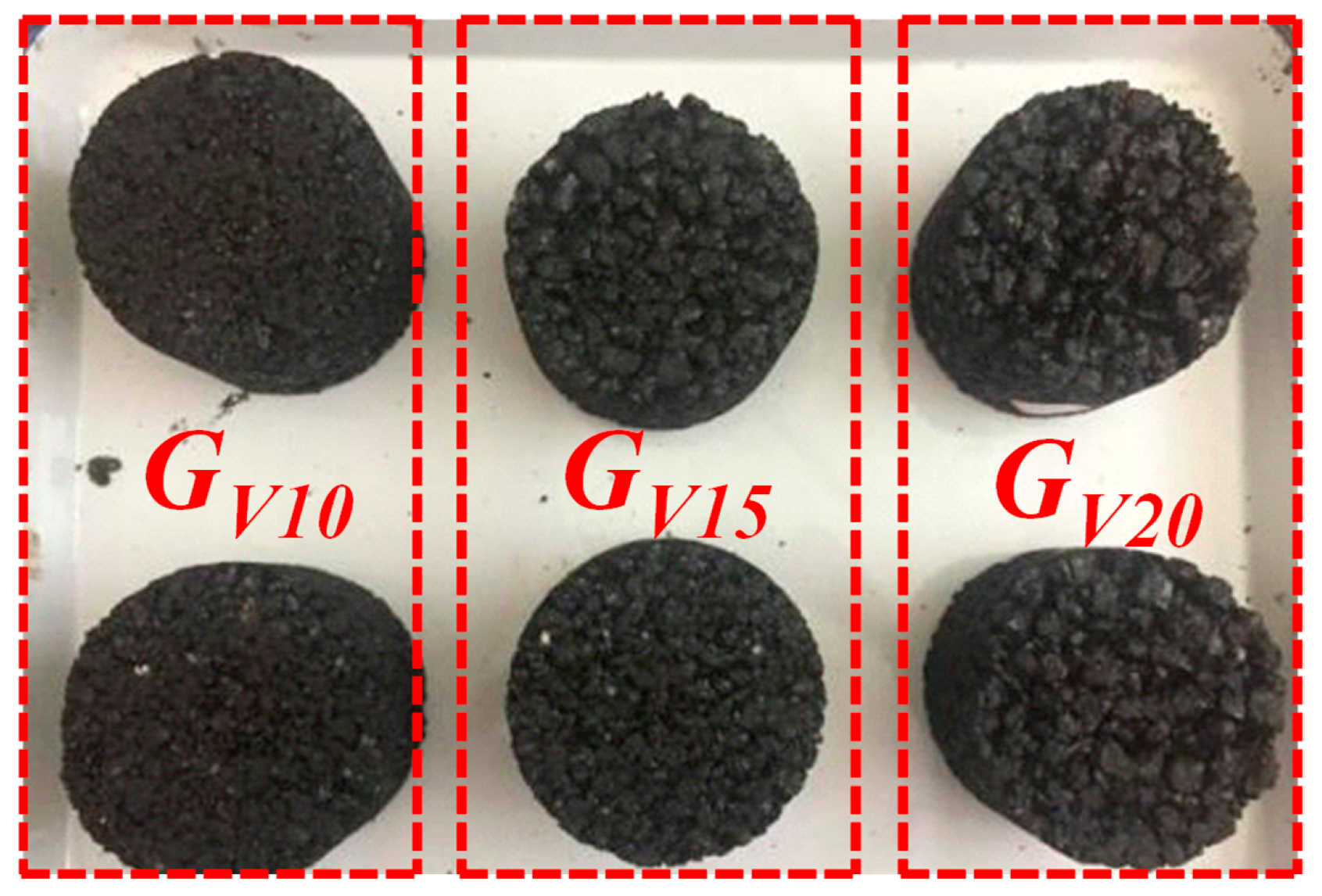
The target void contents of the coarse-, medium-, and fine-graded mixtures were set at 20%, 15%, and 10%, respectively, which are denoted as Gv20, Gv15, and Gv10 in the subsequent sections. Sieving was conducted according to the standard sieving method for asphalt mixtures (JTG E42-2005). Coarse, medium, and fine gradations were tentatively formulated with steel slag contents of approximately 80%, 70%, and 60%, respectively. To achieve the target void contents, three sets of comparative gradations with varying passing rates at the 2.36 mm sieve were further designed for each tentative gradation, resulting in a total of nine gradation combinations. The compositions of the preliminary gradations are presented in Table 3, and the prepared steel slag OGFC asphalt mixture specimens are depicted in Figure 1.
After demolding, the related performance indices of the Marshall specimens were tested following the Standard Test Methods of Bituminous Mixtures for Highway Engineering (JTG E20-2011). All the measured results are summarized in Table 4.
Based on the test results of the preliminary gradations, Gradation 3, Gradation 5, and Gradation 8 exhibited void contents close to the target values, while their stabilities also met the specification requirement (≥3.5 KN, specified in Technical Specifications for Construction of Highway Asphalt Pavements JTG F40-2004). Accordingly, these three gradations were selected for subsequent research.

4. Methods

This study establishes a multiscale characterization framework from mesostructural identification of interconnected voids to seepage mechanical simulation: (1) X-ray CT scanning and MATLAB image subtraction are used to extract interconnected voids; (2) key morphological parameters (throat radius, tortuosity, and branching angle) are quantified; (3) ANSYS FEM is used to simulate non-Darcy flow in branched void structures; (4) the quantitative relationship between mesostructure and permeability is revealed.

4.1. CT Scanning

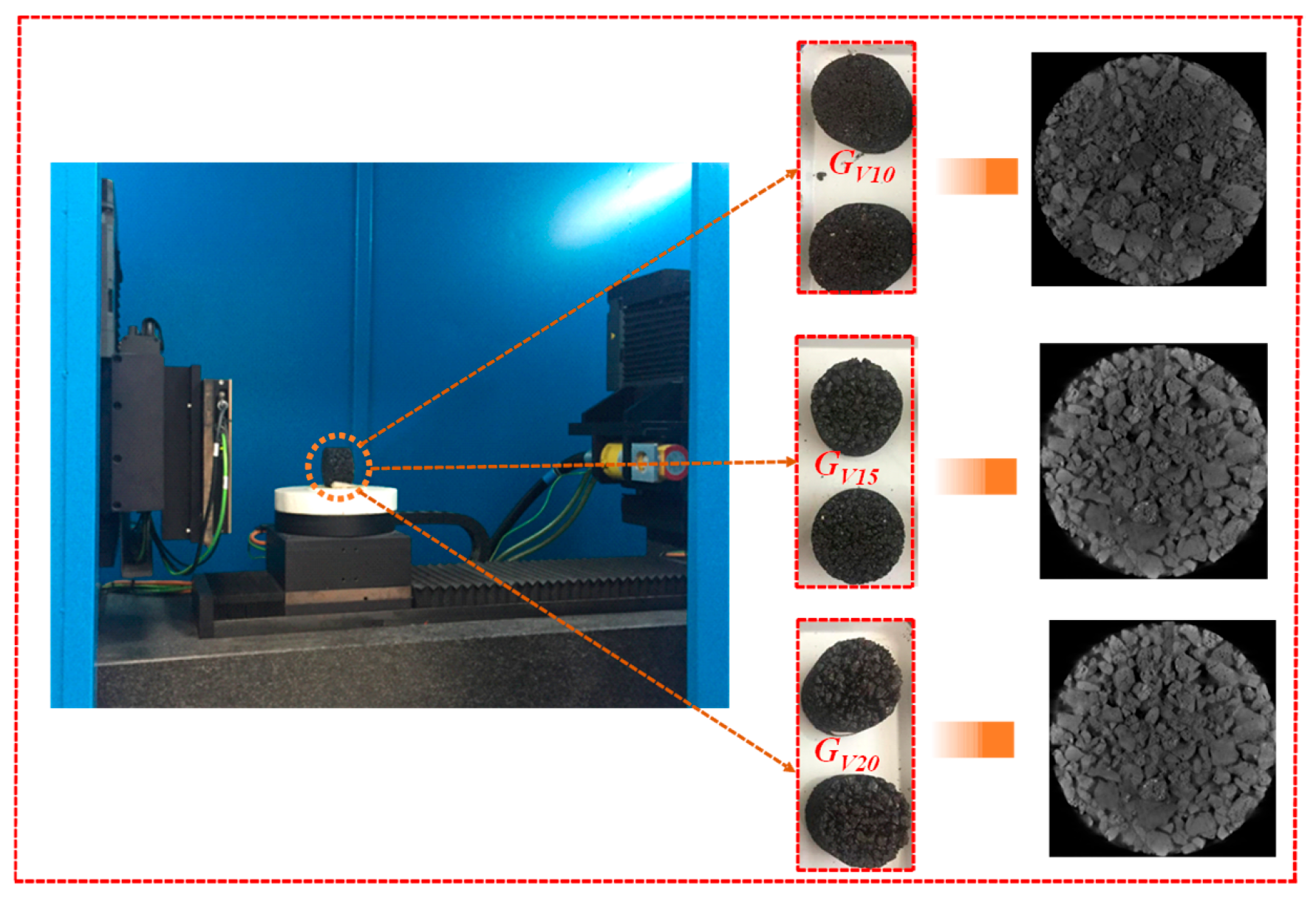
Industrial CT (Compact-225, YXLON International GmbH, Hamburg, Germany) was utilized to scan the steel slag Marshall specimens at an interlayer scanning interval of 0.1 mm. The image resolution is 0.1 mm per pixel (1 pixel = 0.1 mm × 0.1 mm). Scanning parameters: voltage 225 kV, current 0.22 mA.
For each individual specimen, an average of roughly 630 horizontal cross-sectional images and 1000 vertical scanning images was obtained. The horizontal cross-sectional CT images of specimens in each group are presented in Figure 2.

4.2. Identification of Interconnected Voids

The scanned CT images were processed to identify the three constituent phases of voids, aggregates and mortar within the images. The interconnected voids were extracted, with their morphological indices further quantified, including the number, volume and ratio of interconnected voids, as well as tortuosity, equivalent radius, and the equivalent throat radius of interconnected voids. Tortuosity τ is defined as: τ = L_actual/L_straight, where L_actual is the length of the real seepage path, L_straight is the linear distance along the flow direction. Two-value image processing and the connected domain analysis method were adopted for the identification of interconnected voids, which required the sequential elimination of all disconnected voids starting from the top surface of the specimen.
Given the characteristic that the matrix values of binarized images are either 0 or 1, MATLAB R2022b (MathWorks, Natick, MA, USA) was employed to identify the connected voids. Two-round connectivity screening (top-to-bottom and bottom-to-top) was performed to ensure persistent through-voids.
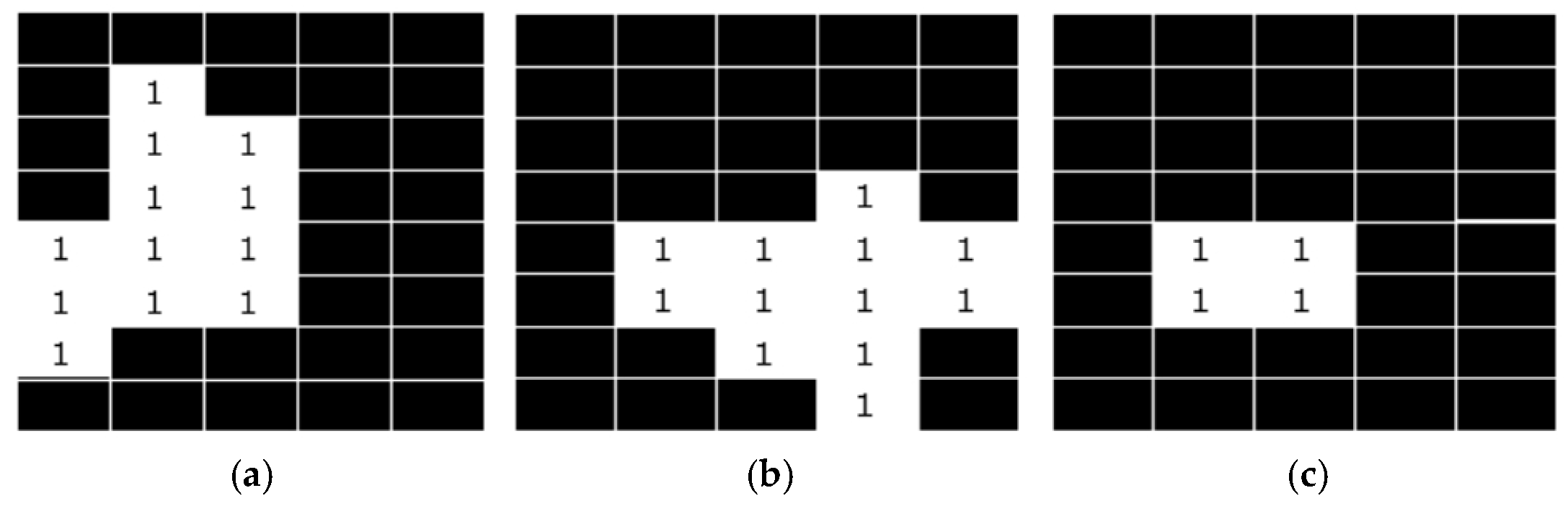
The methodology is described as follows: For a pixel at a specific location in the images, if the corresponding value in the previous image A is 1 (i.e., the pixel appears white, representing voids) while that in the subsequent image B is 0 (i.e., the pixel appears black, representing solid phases), it indicates that the voids at this specific location are not interconnected between the two images. Conversely, if the value at the same location in image B is 1, the voids at this position are considered interconnected between the two images. This criterion can be extended to a small local region: if the pixel matrices with a value of 1 at the same location overlap between the two consecutive images, the voids within this region are deemed interconnected; otherwise, they are not.
As shown in Figure 3, Plot a represents the void distribution of the foregoing Image A, where a value of 1 represents voids and 0 denotes solid phases (aggregates and asphalt), while Plot b shows the void distribution of Image B. By comparing the positions of value 1 in the same locations of Images A and B, the overlapping positions of value 1 were retained, and the non-overlapping positions were converted to 0, yielding Image C. The regions with a value of 1 in Image C correspond to the overlapping void areas between Images A and B, indicating that the voids in the two images are interconnected. If there are no overlapping positions of value 1 between the two images, the voids are disconnected. Subsequently, the original overlapping regions in the two images were labeled separately, and these overlapping regions were defined as interconnected voids.
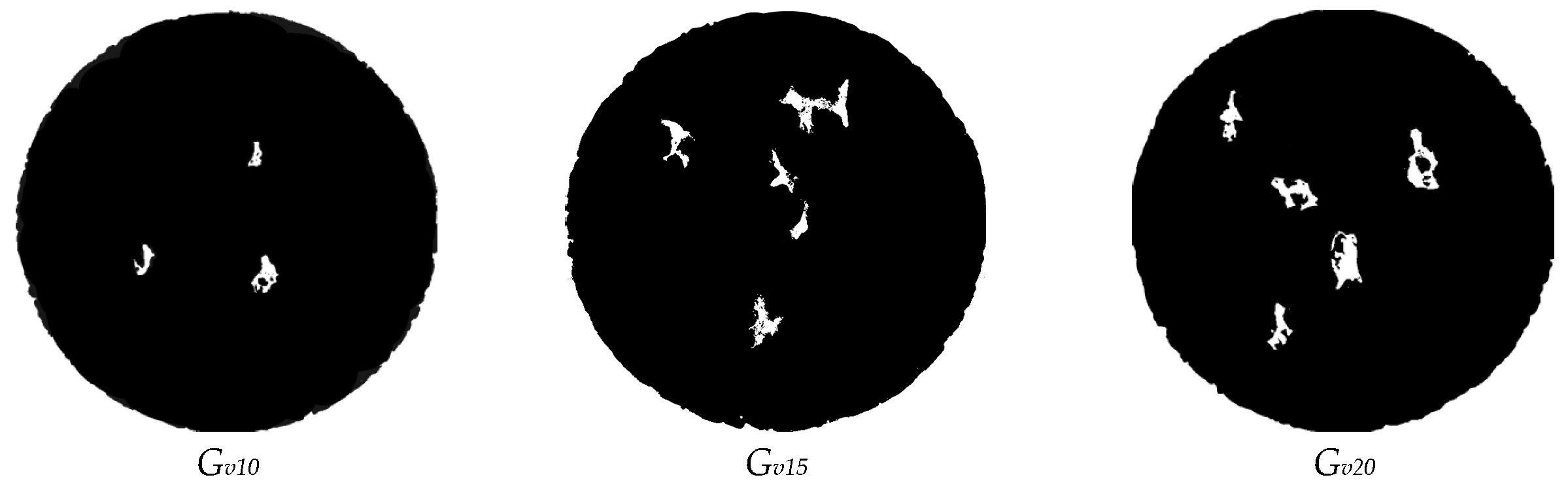
Based on the aforementioned methodology, an image subtraction operation was implemented in Matlab to compare two consecutive images, visualize the overlapping regions, and assign unique labels to the overlapping voids. A void was defined as a connected void only if it maintained connectivity from the first image to the last one in the sequence. If a void lost its connectivity in any intermediate image, it was excluded from the subsequent image comparisons. Consequently, the number of voids requiring connectivity verification gradually decreased starting from the first image, and the overlapping voids presented in the last image were identified as the connected voids within the specimen. Two rounds of screening were conducted: the first round was performed from the first image to the last one, and the second round was carried out in the reverse direction from the last image to the first one. Ultimately, the void regions retained in every single image after the two screening processes were the exclusive connected voids of the specimen, as illustrated in Figure 4.

4.3. Permeability Simulation

To further investigate the effect of the shunt structure of interconnected voids on water seepage inside the specimen, numerical simulations were carried out using ANSYS 2021 R1 (ANSYS Inc., Canonsburg, PA, USA) [33].
The steady state flow simulation was carried out under incompressible laminar flow conditions. Inlet flow velocity was set to 0.01 m/s; outlet pressure was 0 Pa; wall boundary was no slip. Forchheimer’s equation was used to characterize non-Darcy flow in porous channels.
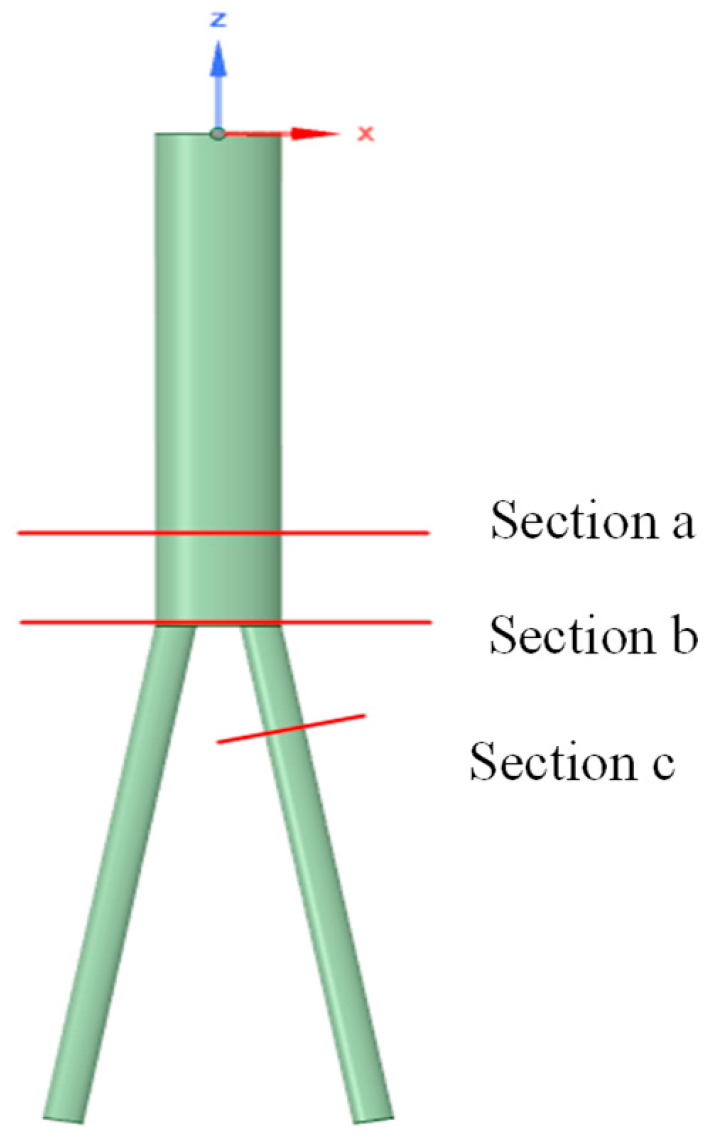
The shunt structure model was designed on the basis of the actual measured values of the shunt structure for interconnected voids. Considering the influence of pore throats on water flow, the minimum equivalent radius of the upper pipeline of the shunt structure was measured along the flow path, as shown in Figure 5. In detail, Section a is the cross-section perpendicular to the pipe wall above the shunt section, Section b refers to the shunt section, and Section c represents the cross-section perpendicular to the shunt pipe wall below the shunt section. To examine the influence of water flow under different shunt angles, the shunt angles were set to 20°, 40° and 60°, respectively.

5. Results and Discussion

5.1. Analysis of Morphological Differences in Interconnected Voids

Based on the aforementioned interconnected void indices, the area measurement was conducted on the screened interconnected voids, with the results presented in Table 5.
(1) The number of interconnected voids inside the OGFC steel slag asphalt mixture specimens of Groups Gv10, Gv15 and Gv20 showed little difference, basically ranging from three to five. For steel slag asphalt mixtures featuring a void content between 10% and 20%, the quantity of interconnected voids per unit volume of the mixture remained essentially constant. However, as the total void content of the specimens increased, the average equivalent radius of the interconnected voids increased, which resulted in a rise in the cumulative volume of interconnected voids as well as an enhancement in the overall interconnected void content of the specimens.
(2) The void throat corresponded to the region of minimum cross-sectional area within the interconnected void. The throat was significantly affected by the aggregate distribution, and its location showed almost no discernible regularity. However, with a reduction in the overall void content of the specimen, the mean throat equivalent radius of all internal interconnected voids within the specimen presented a declining tendency.
(3) The void difference was obtained by subtracting the corresponding interconnected void content in Table 5 from the total void content of Gradation 3, Gradation 5 and Gradation 8 in Table 4, which could reach 6.9% for Group Gv10 specimens, 5.3% for Group Gv15 specimens and 4.4% for Group Gv20 specimens, respectively. It can be concluded that the interconnected void content was approximately 4%–7% lower than the total void content of the tested specimens, with the discrepancy between these two indices declining as the total void content of the specimens increased.
(4) For the OGFC steel slag asphalt mixture specimens with varied void contents, the tortuosity values varied. The average tortuosity was 1.94 for Group Gv10 specimens, 1.83 for Group Gv15, and 1.65 for Group Gv20. This finding demonstrates an increase in the average tortuosity of interconnected voids as the total void content of the specimens gradually reduced. Compared with the study of Ling et al. [27], the tortuosity variation law of steel slag OGFC in this study was consistent, but the pore-throat radius was larger due to the high hardness of steel slag aggregates.

5.2. The Influence of Branch Structures of Interconnected Voids on Permeability Performance

5.2.1. Analysis of Permeability Water Pressure Distribution

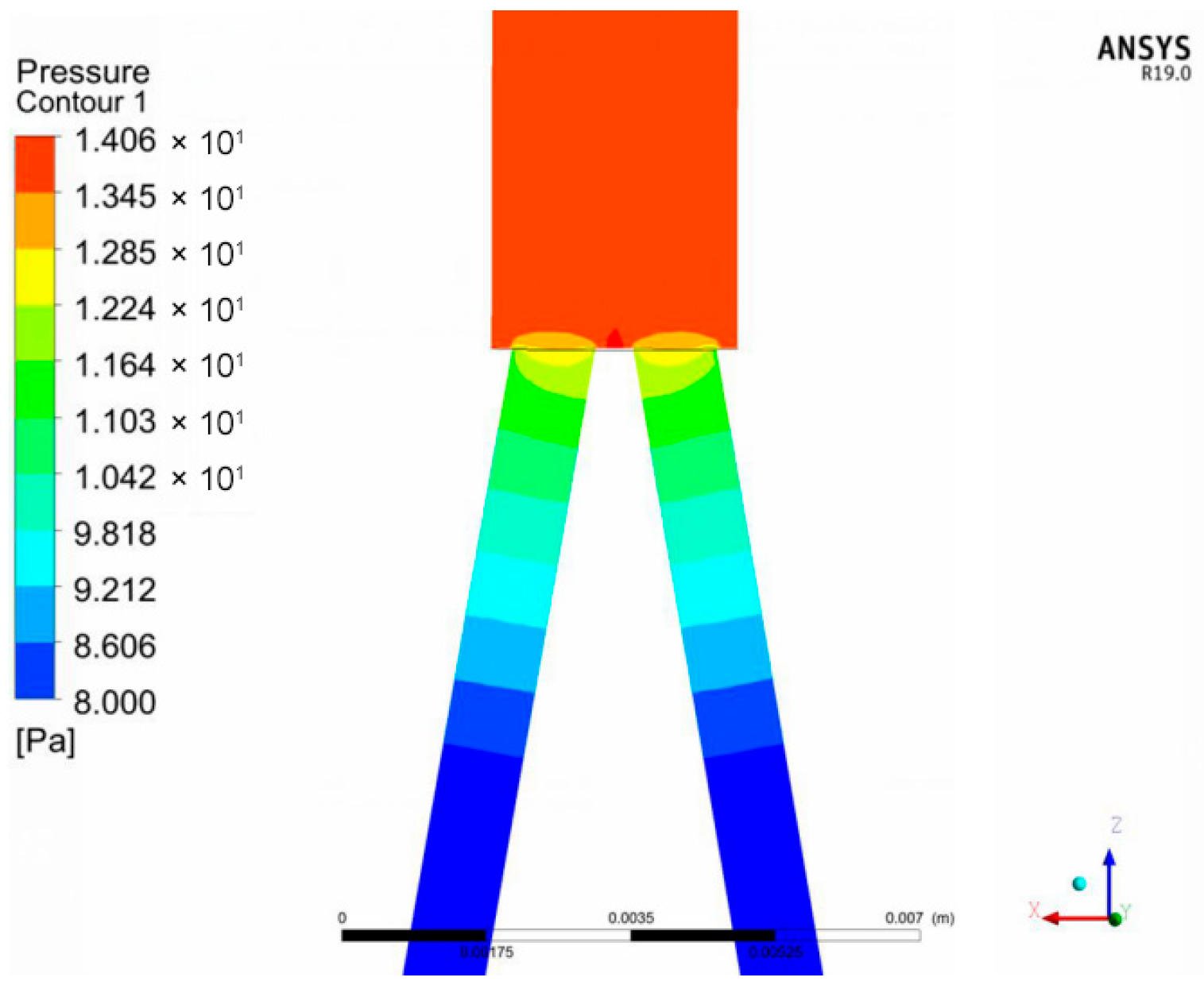
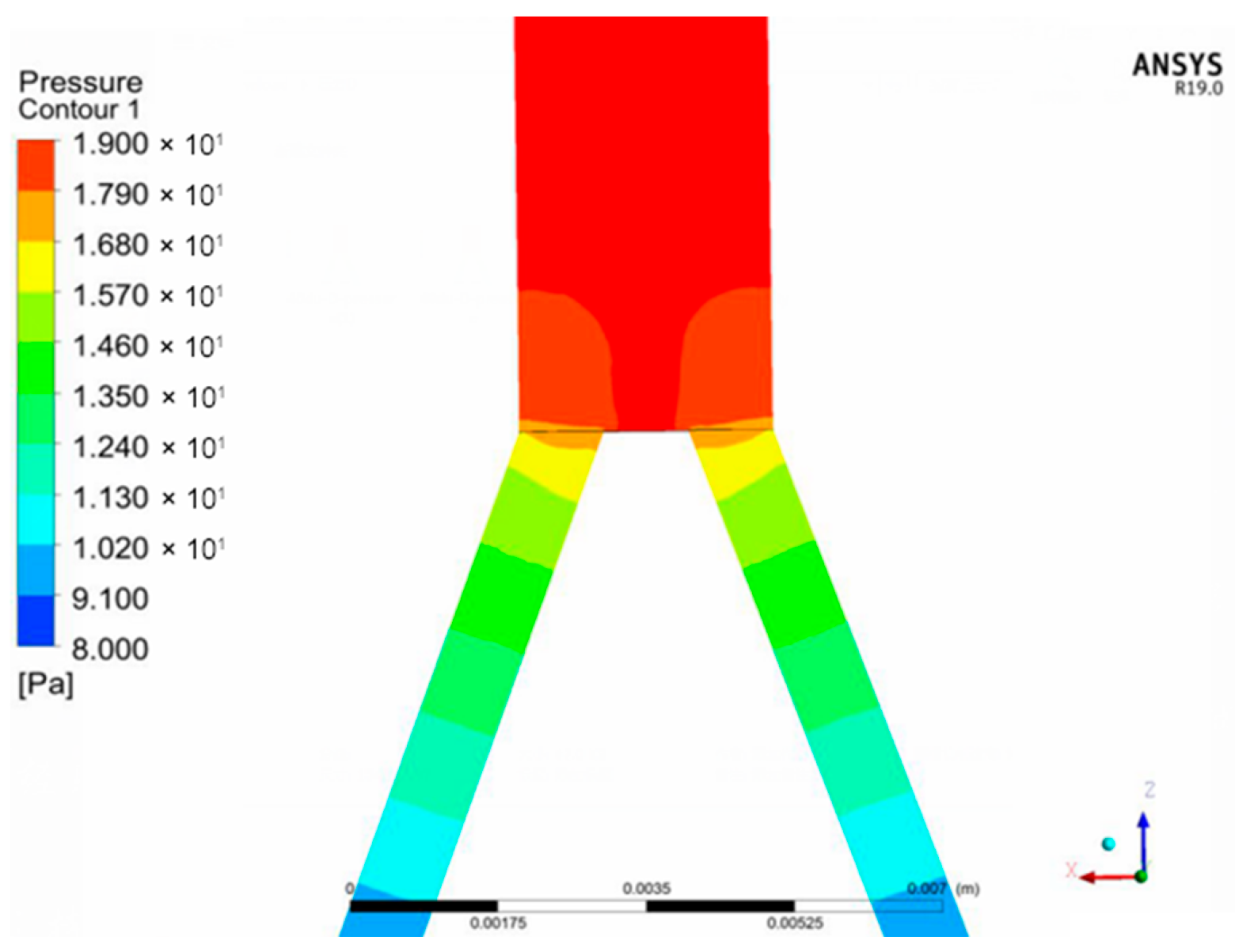
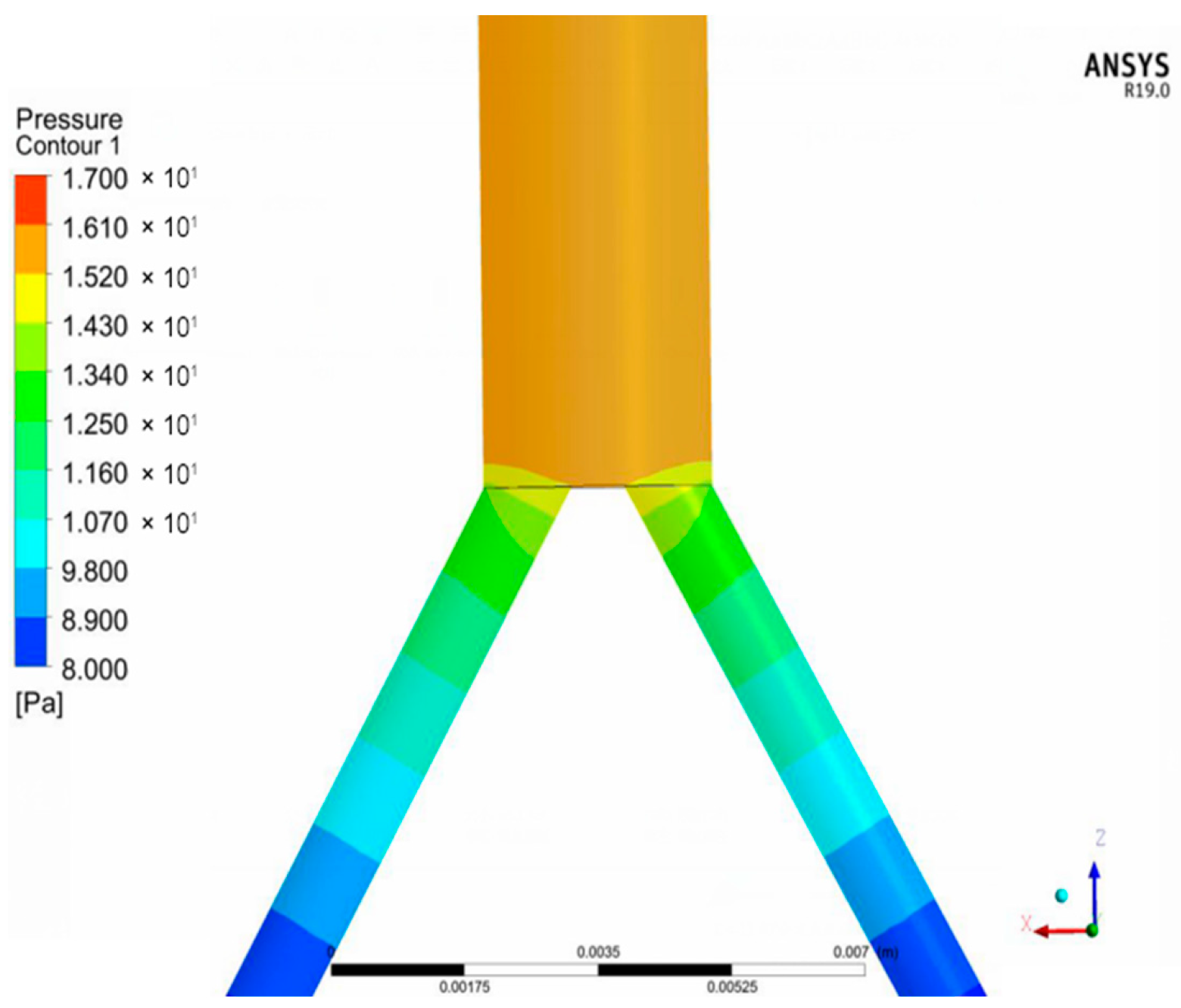
The water pressure contours are shown in Figure 6, Figure 7 and Figure 8.
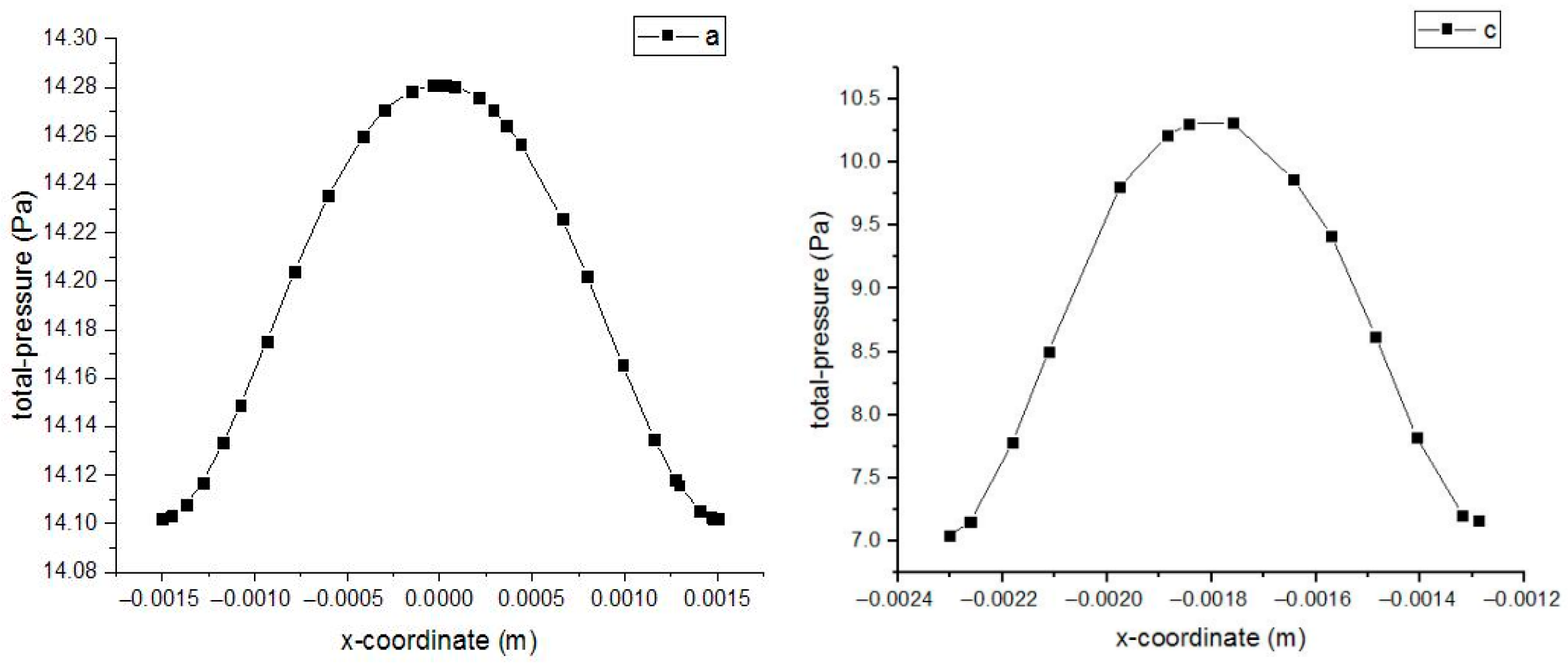
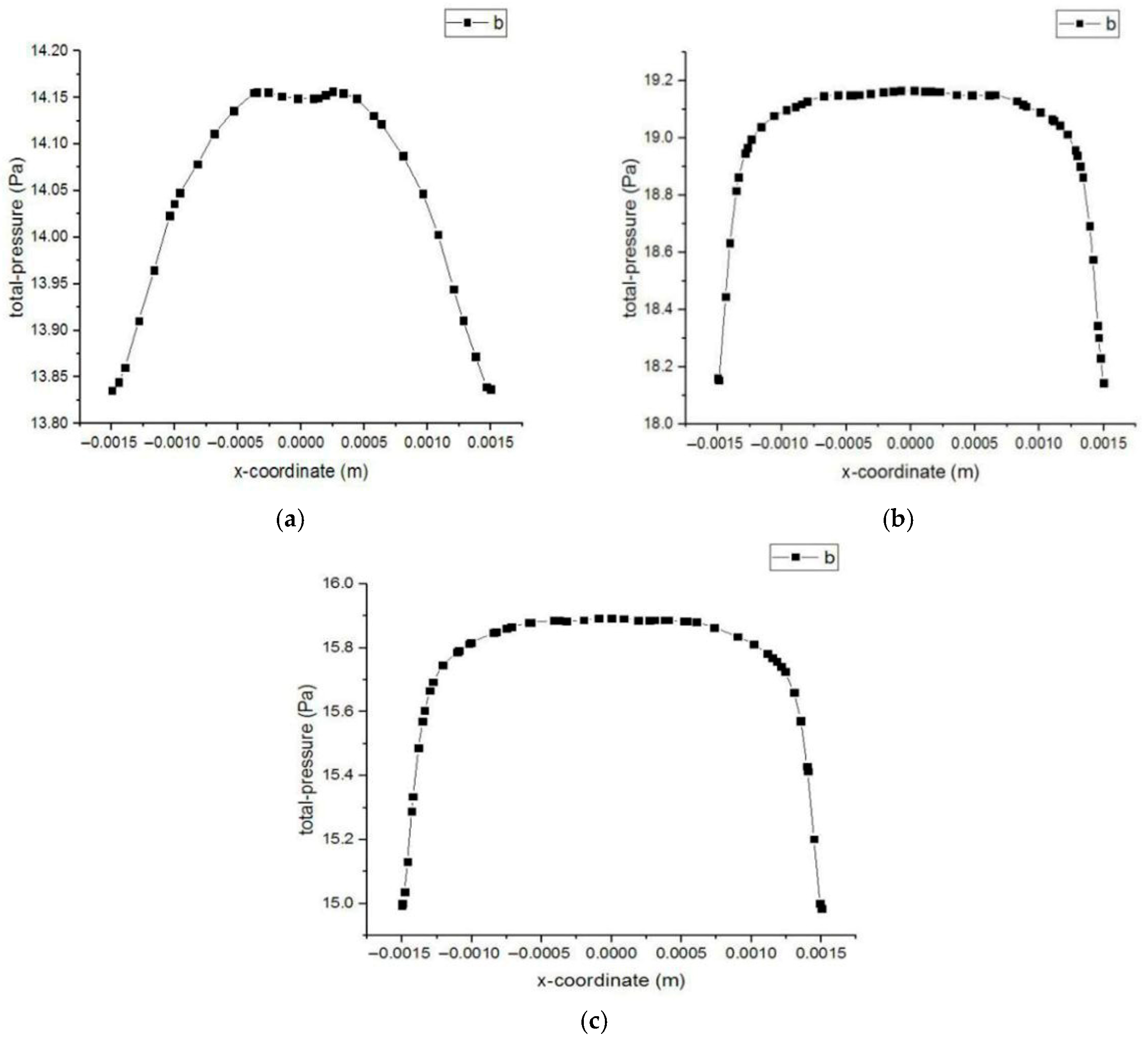
The water pressure distributions at each section are shown in Figure 9 and Figure 10.
From the aforementioned simulation results, the distribution law of water flow pressure within the branch structures can be summarized as follows:
From the perspective of the overall pressure distribution, the water pressure decreases gradually along the flow direction as water flows through the interconnected voids. At the branching cross-sections, the water pressure gradient reaches its maximum value, with the most significant reduction in water pressure per unit height.
The sharp pressure drop at the diversion section is caused by contraction loss, directional change loss, and wall friction loss in the narrow throat. The increase in pressure gradient with diversion angle follows the momentum change principle: a larger angle induces stronger normal momentum loss, leading to higher energy dissipation.
This phenomenon arises from the decreased effective flow area and reduced pipe cross-sectional radius at the branching cross-sections, which result in considerable frictional head loss along the flow path.
A high pressure gradient is likely to induce high shear stress, which may induce premature debonding of the asphalt film adhering to aggregates in the branching regions. In addition, the pressure gradient of water flow within the branched channels increases progressively with the increasing branching angle. This is because water flow in the interconnected voids is also subjected to the action of gravity; a larger branching angle leads to a greater component of gravity perpendicular to the wall of the branched channels.
Quantitatively, the pressure drop at the diversion section is 3.25% (20°), 4.97% (40°), and 6.62% (60°) of the inlet pressure, respectively. The pressure gradient increases by 103.92% as the diversion angle rises from 20° to 60°, thus resulting in more substantial energy loss due to friction and a consequently faster reduction in water pressure.
At the branching cross-sections, the water pressure exhibits a trapezoidal distribution pattern, with comparatively low pressure values detected adjacent to channel walls and the peak pressure concentrated along the channel axis. This pressure distribution feature stems from clogging aggregates situated in the central zone of branching cross-sections, which hinder water flow and thus give rise to increased water pressure. In contrast, the branched channels adjacent to the channel walls provide unobstructed flow paths for water, resulting in relatively lower pressure in these regions.
Furthermore, both before and after the branching process, the water pressure at the channel axis is consistently higher than that near the channel walls, presenting a symmetric distribution pattern with the channel axis serving as the axis of symmetry.

5.2.2. Analysis of Permeability Flow Line Distribution

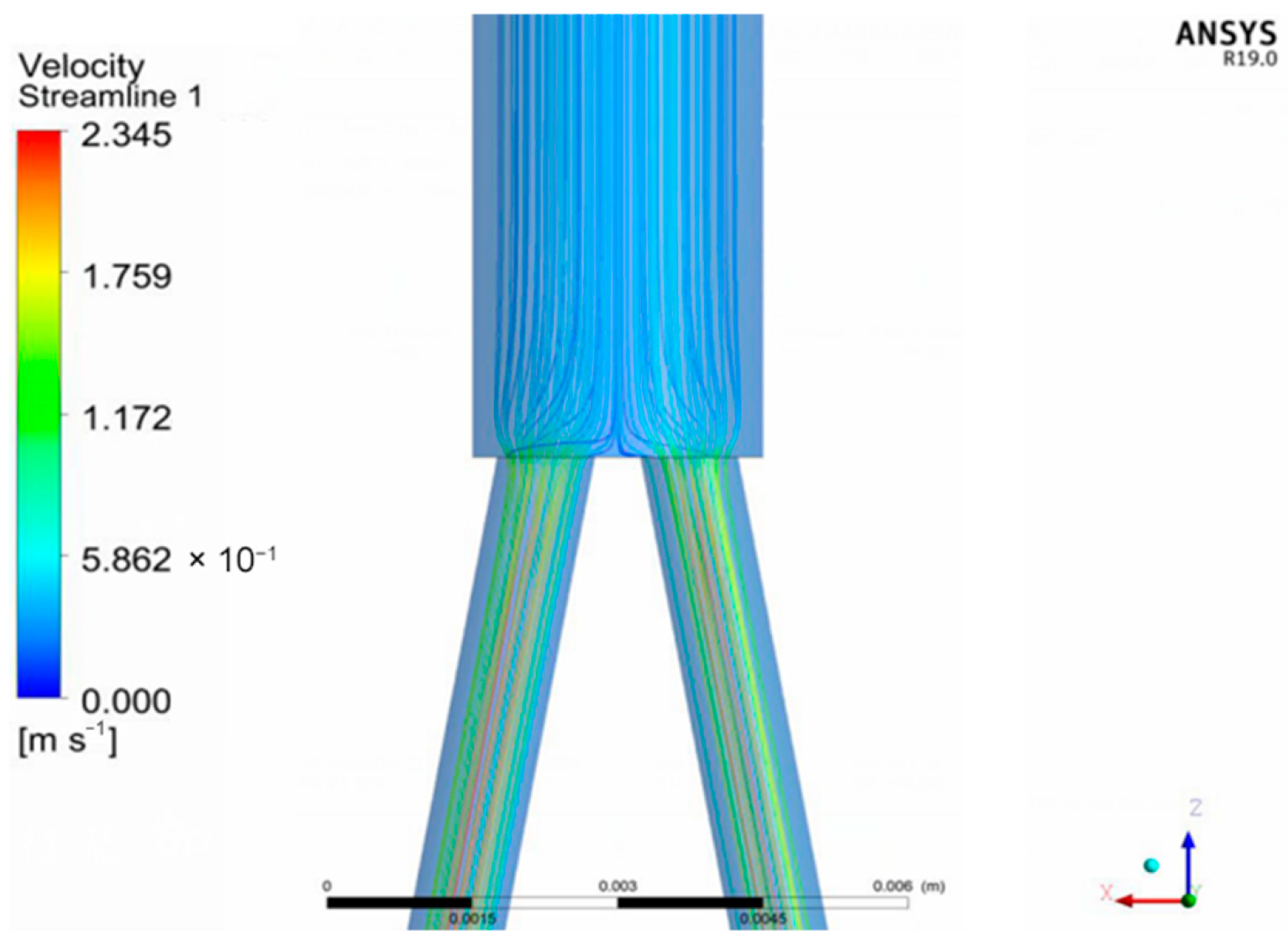
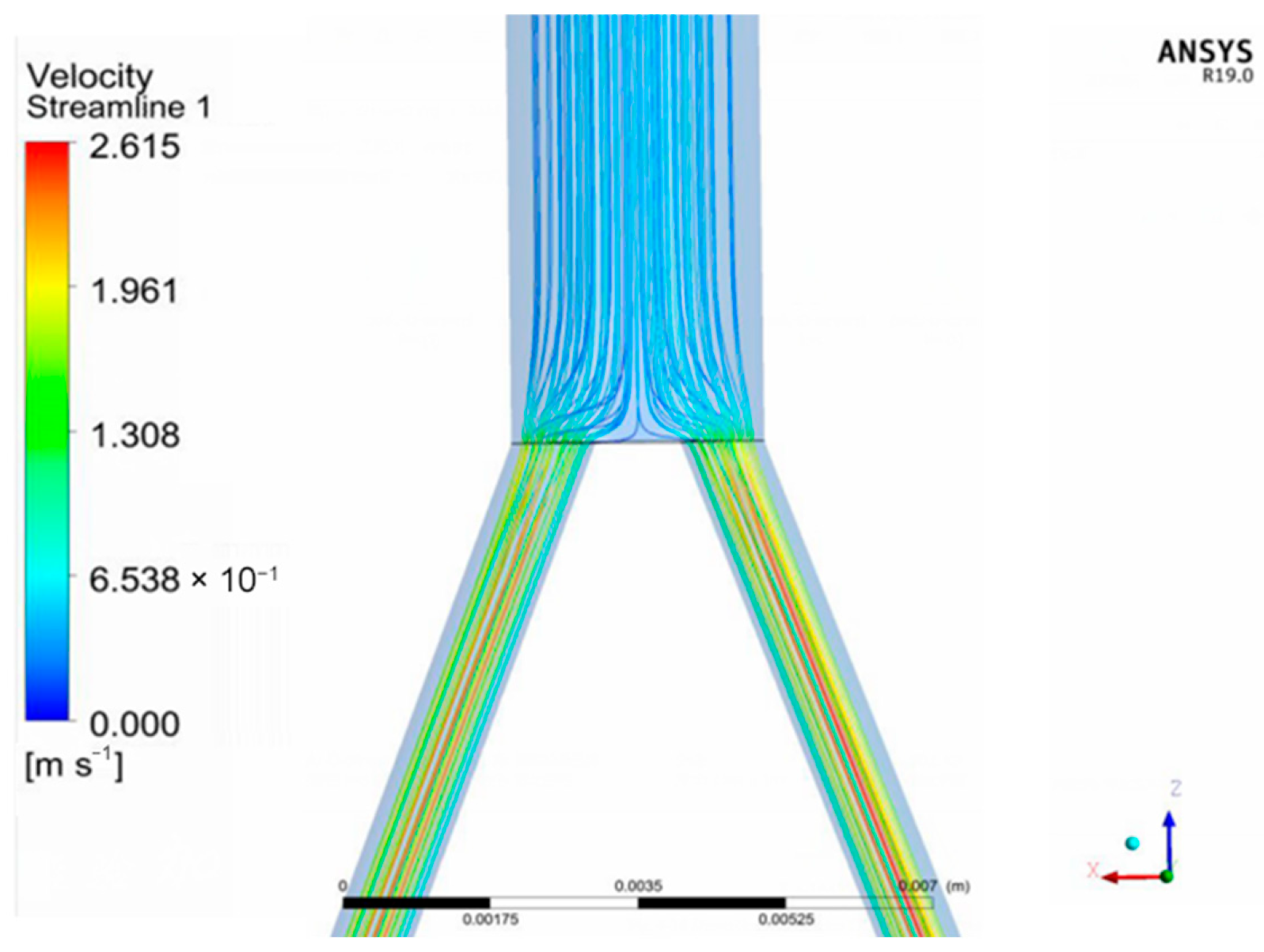
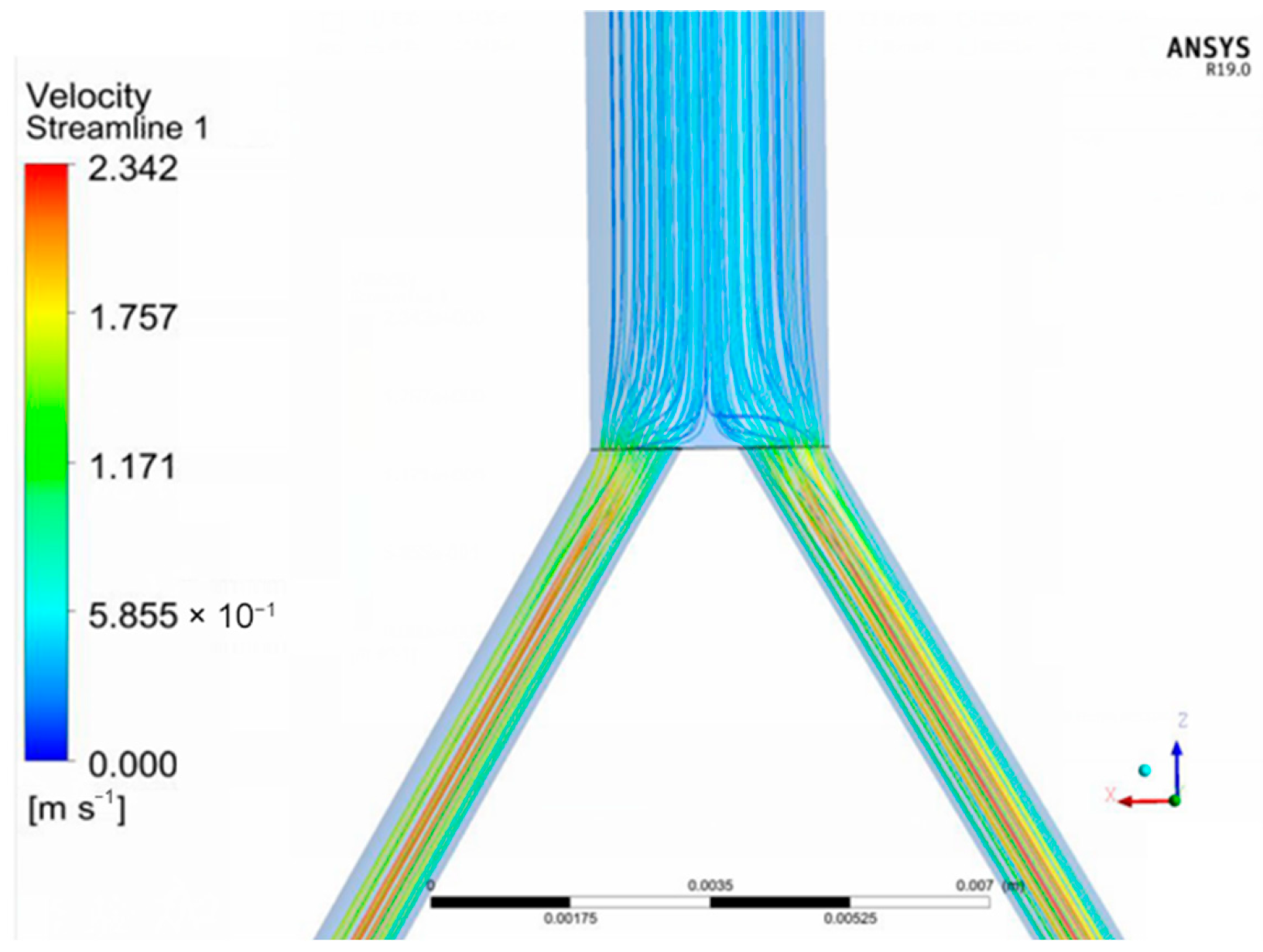
The streamline distribution diagrams are shown in Figure 11, Figure 12 and Figure 13.
It can be observed from the streamline distribution diagrams that:
Before water branching, the streamlines are relatively uniformly distributed within the interconnected voids, with a slightly higher concentration along the channel axis. However, the number of streamlines is nearly zero near the channel walls. Quantitatively, the streamline density at the channel axis is 4.2–4.5 times that near the wall. This is because the friction effect of the channel walls was incorporated into the simulation, resulting in an almost zero flow velocity at the wall surfaces. It can thus be inferred that negligible water flow occurs near the channel walls, which accounts for the sparse distribution of streamlines in these regions.
At the branching cross-sections, the streamlines bend significantly, and the flow paths rearrange themselves. Moreover, the larger the branching angle, the more pronounced the rearrangement of the water flow. The streamlines are thinly distributed in the cross-sectional central zone and converge towards the areas deviated from the channel axis, with the densest distribution observed at the centers of the branched channels.
This streamline distribution pattern may induce the formation of water flow vortices at the inlets of the branched channels. However, no vortices were detected in this study. This phenomenon occurs because vortex intensity varies in direct proportion to the 8th power of flow velocity, while the flow velocity inside the channels was relatively low in the simulation, thus precluding the generation of vortices. Nevertheless, in practical engineering scenarios, vehicles exert rolling compaction on the water that fails to drain in a timely manner, which increases the flow velocity of water within the interconnected voids. As a result, the formation of water flow vortices may still occur.

5.2.3. Permeability Flow Velocity Distribution Analysis

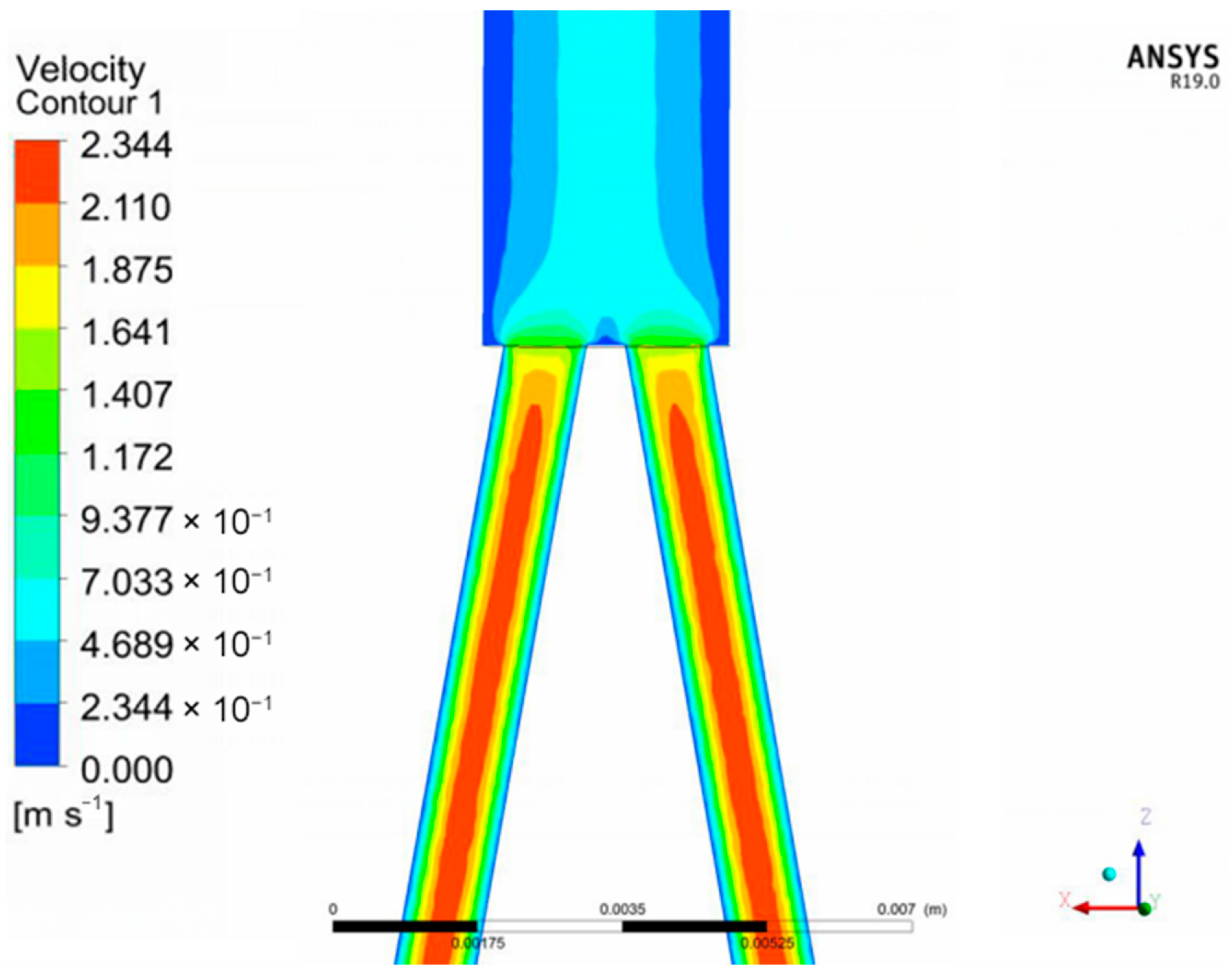
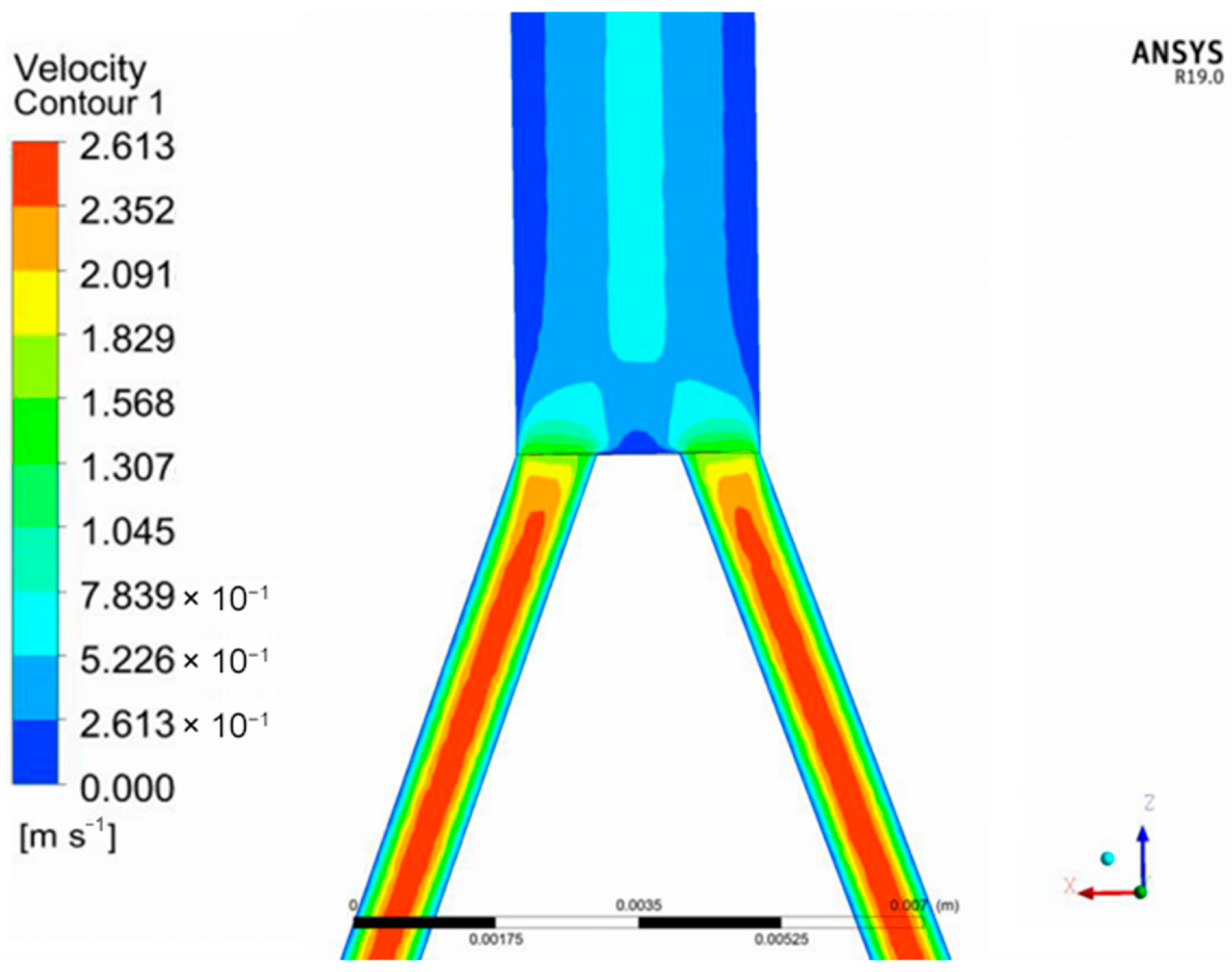
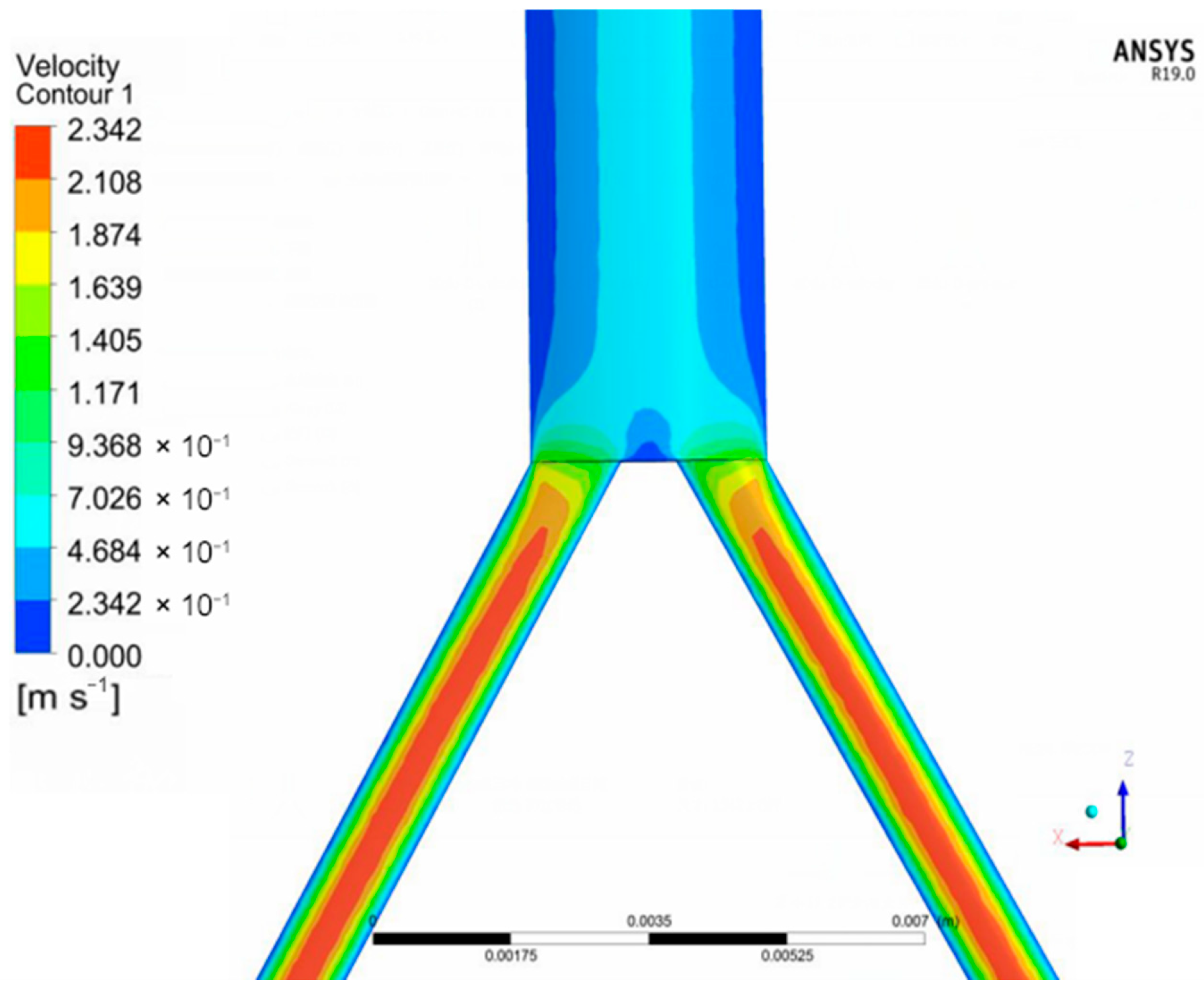
The water velocity contours are shown in Figure 14, Figure 15 and Figure 16.
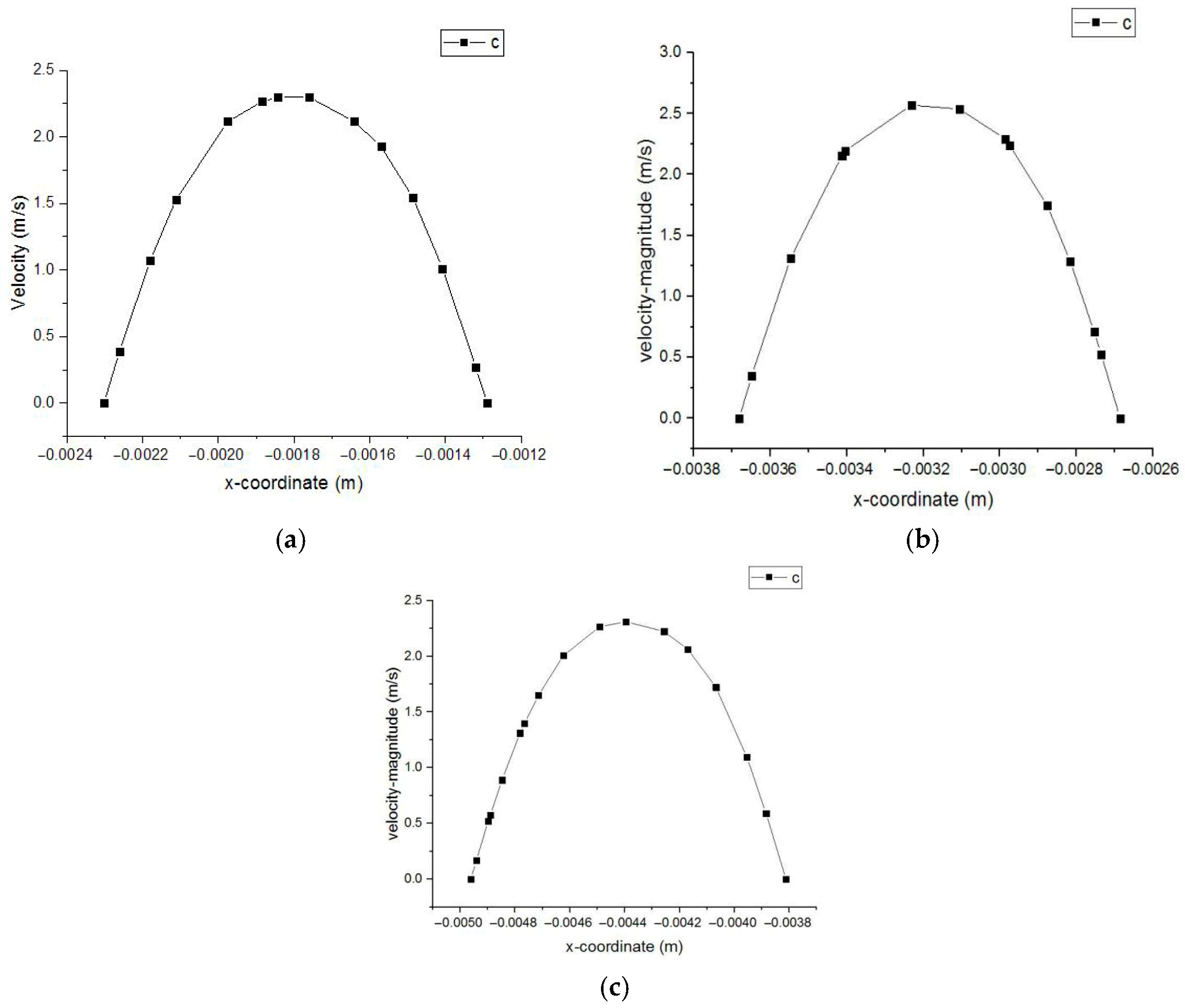
The velocity distribution curve of Section c is shown in Figure 17.
Based on the flow velocity nephograms and flow velocity distribution curves, it can be concluded that the velocity distribution on the cross-section is non-uniform when water flows through the interconnected voids.
The velocity amplification (≈4 times) after the diversion section is attributed to the continuity equation of fluid mechanics: constant flow rate and reduced cross-sectional area at throats lead to a significant velocity increase.
Specifically, the flow velocity inside the circular pipe is proportional to the square of the pipe diameter, exhibiting a symmetric distribution pattern with the pipe axis as the axis of symmetry, where the velocity gradually decreases radially until reaching zero. Notably, the flow velocity remains consistent at the same radial distance from the pipe axis. This distribution characteristic is attributed to the adhesion and frictional resistance exerted by the pipe wall, which reduces the fluid velocity. The farther the fluid is from the pipe wall (or the closer it is to the pipe axis), the less pronounced the influence of these two forces becomes, leading to a higher flow velocity. Eventually, the flow velocity attains its maximum value at the pipe axis.
Under different branching angles, the water flow velocity at Section c is approximately consistent, and the velocity distribution across the section is identical to that before branching, presenting a parabolic distribution pattern. This demonstrates that the branching cross-sectional area acts as the primary factor governing water flow. When the branching area remains constant, the water flow velocity remains essentially unchanged after passing through branching structures with different branching angles. In addition, the flow velocity increases significantly after water passes through the branching cross-section. After passing through the diversion section, the flow velocity increases by approximately 4 times (20°), 3.96 times (40°), and 3.97 times (60°), respectively, with a difference of less than 1% among different angles.

6. Conclusions

Integration of X-ray CT scanning and image processing enables a far more convenient, accurate, and intuitive characterization of internal void distribution features within the mixture. MATLAB-driven image subtraction was adopted to conduct pairwise comparative calculations on adjacent images, so as to screen the interconnected voids in the images. On this basis, the characteristic parameters of interconnected voids were measured, and the morphological differences in interconnected voids among OGFC steel slag anti-skid wearing course specimens with different void ratios were compared and analyzed. Furthermore, permeability simulations were performed on the branching structures of interconnected voids to investigate the water flow behavior within such branching structures. Through this research, it was found that:
(1) Pore-throat properties are the critical factors limiting water permeability. When the target void content increases from 10% to 20%, the average throat equivalent radius increases from 0.68 mm to 0.97 mm, and the connected void content rises from 3.6% to 16.1%. Pore-throat properties, including size, length, quantity and equivalent diameter, serve as the critical factors limiting water permeability of OGFC steel slag asphalt mixtures. As the void ratio of steel slag asphalt mixture specimens declines, the mean equivalent radius of internal interconnected voids and that of throats both reduce, whereas the tortuosity of interconnected voids rises correspondingly.
(2) The water pressure within the interconnected void channels follows a parabolic distribution, with the pressure at the channel axis center being higher than that near the channel walls. At the branching cross-sections, affected by clogging substances, the water pressure presents a trapezoidal distribution, where the pressure at the cross-section center exceeds that adjacent to the channel walls. In addition, the branching cross-sections induce an abrupt reduction in water pressure; the pressure drop at the diversion section is 3.25% (20°), 4.97% (40°), and 6.62% (60°) of the inlet pressure, respectively. The pressure gradient increases by 103.92% as the diversion angle rises from 20° to 60°, which gives rise to shear stress and thus accelerates the debonding of the asphalt film covering the aggregates within the branching regions.
(3) The branching structures induce the redistribution of streamlines and the change in water flow direction. Moreover, the larger the branching angle, the more concentrated the streamlines distribute toward the two sides of the channel walls; the streamline density at the channel axis is 4.2–4.5 times that near the wall. No vortices appear under laboratory low-flow velocity, but vortices may occur under vehicle compaction in engineering and the sparser the streamlines in the central region. No vortices were observed in this study. This is because the intensity of vortices varies in proportion to the 8th power of flow velocity, while the flow velocity inside the channels was relatively low, thus preventing the generation of vortices. However, in practical engineering scenarios, vehicles exert rolling compaction on the water that fails to drain in a timely manner, which increases the flow velocity of water within the interconnected voids. As a result, the formation of water flow vortices may still occur.
(4) When water flows through the interconnected voids, the velocity distribution on the cross-section is non-uniform. Specifically, the flow velocity inside the circular pipe is proportional to the square of the pipe diameter, exhibiting a symmetric distribution pattern with the pipe axis as the axis of symmetry. In this pattern, the velocity gradually decreases along the radial direction until reaching zero, and the flow velocity remains consistent at the same radial distance from the pipe axis.
(5) In the interconnected void channels, the flow velocity presents a symmetric distribution pattern with the pipe axis as the axis of symmetry, decreasing gradually along the radial direction until reaching zero. The flow velocity increases after water passes through the branching cross-sections. The branching angle exerts a negligible effect on the flow velocity of water; specifically, the flow velocity of water remains essentially unchanged after passing through the branching structures with three different angles (i.e., 20°, 40°, and 60°).
(6) This study only considers three gradations; more gradations and steel slag types should be included. The clogging effect of debris in actual roads on interconnected voids is not considered. The long-term field permeability attenuation law needs to be further verified.

Author Contributions

Y.L.: Writing—original draft; S.Z.: Software; D.H.: Investigation; C.W.: Methodology. All authors have read and agreed to the published version of the manuscript.

Funding

This publication was funded by the National Natural Science Foundation of China (No. 52068005); the Tertiary Education Scientific research project of Guangzhou Municipal Education Bureau (2024312126); the Guangdong Province Innovation Team Project for Ordinary Universities, Scientific Research Start-up Project for Talent Introduction of Guangzhou Maritime University (K42025004); and the Guangzhou Maritime University of “Qinglan E Plan” (QLE2025A004).

Data Availability Statement

The original contributions presented in this study are included in the article. Further inquiries can be directed to the corresponding author.

Acknowledgments

The authors thank all those who contributed to the experimental part of this study.

Conflicts of Interest

Authors Yanjun Liu and Dengyun Hou were employed by the company Road & Bridge International Co., Ltd. Authors Yanjun Liu and Dengyun Hou were employed by the company Road & Bridge South China Engineering Co., Ltd. The remaining authors declare that the research was conducted in the absence of any commercial or financial relationships that could be construed as a potential conflict of interest.

References

  1. Guo, J.; Bao, Y.; Wang, M. Steel slag in China: Treatment, recycling, and management. Waste Manag. 2018, 78, 318–330. [Google Scholar] [CrossRef]
  2. Yang, J.; Ma, R.; Dong, B.; Ma, H.; Wang, Y.; Gao, M.; Sun, Y.; Jin, Y. Research Progress and Hotspots of Steel Slag Application in Road Construction: A Bibliometric Perspective. Infrastructures 2025, 10, 54. [Google Scholar] [CrossRef]
  3. Li, Z.; Xing, Y.; Ma, M.; Su, W.; Cui, Y.; Tian, J.; Fei, F. Towards the co-benefits of carbon capture, utilization and sequestration: A life cycle assessment study for steel slag disposal. J. Clean. Prod. 2024, 443, 141166. [Google Scholar] [CrossRef]
  4. Piatak, N.M.; Parsons, M.B.; Seal, R.R., II. Characteristics and environmental aspects of slag: A review. Appl. Geochem. 2015, 57, 236–266. [Google Scholar] [CrossRef]
  5. Cui, P.; Wu, S.; Xiao, Y.; Yang, C.; Wang, F. Enhancement mechanism of skid resistance in preventive maintenance of asphalt pavement by steel slag based on micro-surfacing. Constr. Build. Mater. 2020, 239, 117870. [Google Scholar] [CrossRef]
  6. Wan, C.; Zheng, S.; Zhong, M.; Yang, J.; Yu, Y.; Zhao, Y.; Fang, S. Mesoscopic pore characteristics of steel slag ultra-thin wear layer asphalt mixture and their impact on performance. Coatings 2024, 14, 1549. [Google Scholar] [CrossRef]
  7. Wang, J.; Li, Q.; Song, G.; Luo, S.; Ge, D. Investigation on the comprehensive durability and interface properties of coloured ultra-thin pavement overlay. Case Stud. Constr. Mater. 2022, 17, e01341. [Google Scholar] [CrossRef]
  8. Zhao, X.; Sheng, Y.; Lv, H.; Jia, H.; Liu, Q.; Ji, X.; Xiong, R.; Meng, J. Laboratory investigation on road performances of asphalt mixtures using steel slag and granite as aggregate. Constr. Build. Mater. 2022, 315, 125655. [Google Scholar] [CrossRef]
  9. Yan, Z.; Hao, Z. Study on preparation and performance of steel slag asphalt mixture based on steel slag aggregate. In IOP Conference Series: Materials Science and Engineering; IOP Publishing: Bristol, UK, 2019; p. 022067. [Google Scholar]
  10. Georgiou, P.; Loizos, A. Environmental assessment of warm mix asphalt incorporating steel slag and high reclaimed asphalt for wearing courses: A case study. Road Mater. Pavement Des. 2021, 22, S662–S671. [Google Scholar] [CrossRef]
  11. Guan, B.; Cao, X.; Wang, A.; Zhao, H.; He, Z. Investigation on void connectivity characteristics of steel slag asphalt mixture subjected to dry–wet cycles and microwave heating utilizing computed tomography technology. Mater. Struct. 2025, 58, 47. [Google Scholar] [CrossRef]
  12. Chen, J.-S.; Wei, S.-H. Engineering properties and performance of asphalt mixtures incorporating steel slag. Constr. Build. Mater. 2016, 128, 148–153. [Google Scholar] [CrossRef]
  13. Sun, J.; Zhang, H.; Yu, T.; Shi, Y.; Liu, Y. Microscopic void characteristics of OGFC in Sponge City and its effect on noise reduction performance using X-ray CT. Constr. Build. Mater. 2023, 408, 133729. [Google Scholar] [CrossRef]
  14. Zhou, Y.; Cheng, Z.; Zheng, X.; Wang, T.; Wu, X.; Yu, X.; Xie, S. A holistic exploration of porous asphalt mixtures: From durability and permeability to low-temperature and functional properties. Heliyon 2025, 11, e41437. [Google Scholar] [CrossRef]
  15. Hu, M.; Gu, T.; Sun, G.; Lu, T.; Zhang, J. Void structure-induced aging gradient characteristic and performance degradation of OGFC asphalt mixtures under weathering aging. Constr. Build. Mater. 2025, 500, 144197. [Google Scholar] [CrossRef]
  16. Ning, W.; Zhou, S.; Long, K.; Xie, B.; Ai, C.; Yan, C. Investigation of key morphological parameters of pores in different grades of asphalt mixture based on CT scanning technology. Constr. Build. Mater. 2024, 434, 136770. [Google Scholar] [CrossRef]
  17. Wan, C.; Zhong, M.; Yinghao, Z. A study on the three-dimensional contact quantitative analysis of coarse aggregate in steel slag asphalt mixture based on X-ray CT. Case Stud. Constr. Mater. 2024, 21, e03600. [Google Scholar]
  18. Ma, X.; Wu, B.; Xu, J.; Jiang, J.; Huang, F.; Wang, X. The Influence of Key Design Factors on Voids Characterisation and Performance Balance of Porous Asphalt Concrete. Available online: https://ssrn.com/abstract=5406207 (accessed on 20 March 2026).
  19. Yang, B.; Li, H.; Zhang, H.; Xie, N.; Zhou, H. Laboratorial investigation on effects of microscopic void characteristics on properties of porous asphalt mixture. Constr. Build. Mater. 2019, 213, 434–446. [Google Scholar] [CrossRef]
  20. Zhang, J.; Wang, Y.; Tang, Y.; Wang, X.; Gu, F.; Xiao, J.; Li, J.; Zhang, M. Effect of untreated and thermoactivated construction spoil on microstructure and properties of low-carbon foam concrete. Constr. Build. Mater. 2026, 506, 144969. [Google Scholar] [CrossRef]
  21. Xu, H.; Xing, C.; Zhang, H.; Li, H.; Tan, Y. Moisture seepage in asphalt mixture using X-ray imaging technology. Int. J. Heat Mass Transf. 2019, 131, 375–384. [Google Scholar] [CrossRef]
  22. Xu, H.; Yao, X.; Wang, D.; Tan, Y. Investigation of anisotropic flow in asphalt mixtures using the X-ray image technique: Pore structure effect. Road Mater. Pavement Des. 2019, 20, 491–508. [Google Scholar] [CrossRef]
  23. Song, W.; Xu, F.; Wu, H.; Zhan, Y. Characterization of OGFC pore structure considering the influence of tack coat migration. J. Cent. South Univ. (Sci. Technol.) 2023, 54, 2449–2787. [Google Scholar]
  24. Chen, J.; Yao, C.; Zhou, R. Directional difference of water permeability of porous asphalt mixture and influence of pore structure. J. Southeast Univ. (Nat. Sci. Ed.) 2018, 48, 920–926. [Google Scholar]
  25. Xie, M.; Jun, C. Permeability Anisotropy of Open Graded Friction Courses Due to Heterogeneous Distribution of Air Voids. J. Hebei Univ. Eng. (Nat. Sci. Ed.) 2019, 36, 25–30. [Google Scholar]
  26. Jie, X.; Dongya, R.; Zhen, L.; Xueyou, L. Investigation on mesoscopic pore characteristics in asphalt mixtures under varied compaction levels based on CT technology. J. Chang. Univ. Sci. Technol. (Nat. Sci.) 2024, 21, 12–21. [Google Scholar]
  27. Ling, S.; Sun, Y.; Sun, D.; Jelagin, D. Pore characteristics and permeability simulation of porous asphalt mixture in pouring semi-flexible pavement. Constr. Build. Mater. 2022, 330, 127253. [Google Scholar] [CrossRef]
  28. Zhang, J.; Ma, G.; Dai, Z.; Ming, R.; Cui, X.; She, R. Numerical study on pore clogging mechanism in pervious pavements. J. Hydrol. 2018, 565, 589–598. [Google Scholar] [CrossRef]
  29. Teng, X.Q.; Zhao, D.D.; Zhang, F.Q. Study on damage of the OGFC mixture based on characteristics of void distribution. Adv. Mater. Sci. Eng. 2022, 2022, 1844556. [Google Scholar] [CrossRef]
  30. Sun, J.; Zhang, H.; Yu, M.; Sun, A.; Deng, Z. A multi-gradient analysis of microscopic void characteristics’ influence on the mechanical properties of open-graded friction course bituminous pavement. J. Build. Eng. 2024, 91, 109595. [Google Scholar] [CrossRef]
  31. Yu, L.; Liu, Z.; Zhang, H.; Sun, Q. Study on microstructure influence mechanism to mechanical behavior of OGFC asphalt mixture. Can. J. Civ. Eng. 2020, 47, 506–515. [Google Scholar] [CrossRef]
  32. Yang, C.; Huang, Z.; Wu, S.; He, X.; Su, Y.; Zhao, Z.; Xu, H.; Wang, F.; Zhang, L. Recycling steel slag as aggregate in developing an ultra-thin friction course with high comprehensive road performance. Constr. Build. Mater. 2024, 449, 138539. [Google Scholar] [CrossRef]
  33. Stolarski, T.; Nakasone, Y.; Yoshimoto, S. Engineering Analysis with ANSYS Software; Butterworth-Heinemann: Oxford, UK, 2018. [Google Scholar]
Figure 1. Marshall specimens of steel slag asphalt mixture with different gradations [6].
Coatings 16 00440 g001
Figure 2. Compact-225 industrial CT instrument and CT images of different gradation [6].
Coatings 16 00440 g002
Figure 3. Schematic diagram of overlapping gap areas. (a) Void distribution of Image A; (b) void distribution of Image B; (c) the image after overlapping voids between Image A and Image B.
Coatings 16 00440 g003
Figure 4. Screening results of connected voids for each group of specimens (sectional images at 11 mm of specimens).
Coatings 16 00440 g004
Figure 5. The shunt structure model.
Coatings 16 00440 g005
Figure 6. Pressure distribution profile for a 20° branching angle.
Coatings 16 00440 g006
Figure 7. Pressure distribution profile for a 40° branching angle.
Coatings 16 00440 g007
Figure 8. Pressure distribution profile for a 60° branching angle.
Coatings 16 00440 g008
Figure 9. Pressure curves of cross-sections a and c at a branching angle of 20°.
Coatings 16 00440 g009
Figure 10. Pressure distribution diagram of branching cross-sections. (a): Branching angle of 20°, (b): branching angle of 40°, (c): branching angle of 60°.
Coatings 16 00440 g010
Figure 11. Streamline distribution diagram at a branching angle of 20°.
Coatings 16 00440 g011
Figure 12. Streamline distribution diagram at a branching angle of 40°.
Coatings 16 00440 g012
Figure 13. Streamline distribution diagram at a branching angle of 60°.
Coatings 16 00440 g013
Figure 14. Contour plot of flow velocity at a 20°diversion angle.
Coatings 16 00440 g014
Figure 15. Contour plot of flow velocity at a 40°diversion angle.
Coatings 16 00440 g015
Figure 16. Contour plot of flow velocity at a 60°diversion angle.
Coatings 16 00440 g016
Figure 17. Flow velocity distribution curves of Section c: (a) For 20° diversion angle, (b) for 40° diversion angle, (c) for 60° diversion angle.
Coatings 16 00440 g017
Table 1. Basic properties of steel slag.
ItemsUnitTest ResultCriteria
Apparent specific gravity15–20 mm/3.285≥2.9
10–15 mm3.386
5–10 mm3.426
3–5 mm3.465
Water absorption15–20 mm%2.566≤3
10–15 mm2.651
5–10 mm2.773
Crushing value%18.9≤26
Los Angeles wear value%20.8≤26
Polishing value%65.2≥42
Needle flake content%4.2≤15
Adhesion grade%5≥4
Soft stone content%0.4≤3.0
Table 2. Specification of the asphalt.
Asphalt IndexUnitCriteriaValue
Penetration @ 25 °C, 100 g, 5 s0.1 mm40–5547
Softening point °C≥7576
Ductility @ 5 °C, 5 cm/mincm>2033
Solubility %≥99.599.9
Flash point°C≥230335
Elasticity recovery%≥8596
After rolling thin film oven test Mass difference%±0.8−0.002
Penetration difference @ 25 °C%≥6572
Ductility @ 5 °Ccm≥1517
Table 3. Gradation composition of three groups of Marshall specimens.
Gradation TypeGroupPassing Rate of Each Sieve Aperture (%)
1613.29.54.752.361.180.60.30.150.075
Gv10110094.874.041.020.716.512.08.85.94.2
21009573.841.521.217.012.78.55.84.2
310095.573.241.822.017.813.29.06.04.2
Gv15410093.664.828.614.511.58.86.75.33.9
510094.165.725.716.512.29.26.75.33.9
610093.865.225.517.512.99.76.65.43.9
Gv20710092.565.716.511.510.18.06.34.53.6
810092.066.517.312.811.58.86.84.83.6
910092.267.118.614.513.09.37.04.93.6
Table 4. Summary tables of 9 groups of Marshall test results for gradation.
Gradation Group123456789
Void Content (%)12.011.310.516.615.414.521.820.519.2
Connected Void Content (%)6.55.84.311.210.79.418.016.215.7
Bulk Density/(g/cm3)2.202.262.312.472.522.572.752.792.83
Stability/(KN)10.510.910.79.09.69.27.67.88.2
Table 5. Measuring indicators of connected voids.
GroupGv10Gv15Gv20
Number of Connected Voids355
Total Volume of Connected Voids/(cm3)26.8352.4482.16
Connected Void Content (%)3.610.116.1
Average Throat Area/(mm2)1.432.062.95
Average Equivalent Radius of Throats/(mm)0.680.810.97
Average Tortuosity1.941.831.65
Disclaimer/Publisher’s Note: The statements, opinions and data contained in all publications are solely those of the individual author(s) and contributor(s) and not of MDPI and/or the editor(s). MDPI and/or the editor(s) disclaim responsibility for any injury to people or property resulting from any ideas, methods, instructions or products referred to in the content.