Article

Preparation and Performance of a Photocurable Degradable Waterborne Boron-Containing Polyurethane Acrylate Anti-Fouling Coating

School of Materials Science and Engineering, Nanchang Hangkong University, Nanchang 330063, China
*
Author to whom correspondence should be addressed.
These authors contributed equally to this work.
Coatings 2026, 16(3), 393; https://doi.org/10.3390/coatings16030393
Submission received: 26 February 2026 / Revised: 15 March 2026 / Accepted: 20 March 2026 / Published: 23 March 2026
(This article belongs to the Special Issue Polymer Coatings: Fundamentals and Applications)

Abstract

Biofouling has a detrimental effect on marine infrastructure and poses a severe challenge to the global marine industry. Therefore, developing efficient and environmentally friendly anti-fouling coatings to protect those facilities has become extremely necessary nowadays. To address marine biofouling, a series of photocurable degradable waterborne boron-containing polyurethane acrylate (WPU-PTPBx) anti-fouling coatings were prepared by grafting pyridine-triphenylborane (PTPB) onto polyurethane side chains and UV curing. FTIR and 1H NMR confirmed the successful grafting of PTPB. The WPU-PTPBx aqueous dispersions had a particle size of 30~75 nm with excellent thermal storage stability. DSC and XRD characterizations revealed the amorphous structure of the coatings, which favored biodegradation. All coatings exhibited adhesion strength over 2 MPa, meeting marine application requirements. Antibacterial and anti-algal tests showed that PTPB content positively correlated with anti-fouling performance: the coating achieved a 99.66% inhibition rate against Escherichia coli and reduced the adhesion density of Nitzschia closterium to only 36.9 cells/mm2. With favorable degradability and outstanding anti-fouling performance, WPU-PTPBx coatings are promising green anti-fouling materials for marine applications.

1. Introduction

Biofouling covers a broad range of organisms, including microorganisms, plants and animals. They prefer to adhere to the surfaces of ships and marine installations, causing an increase in the roughness and weight of those facilities, which results in greater fuel consumption and navigational resistance, and thereby endows significant negative impacts on the marine economy and human maritime activities [1]. The transportation of fouling organisms by ships into non-native waters also poses a severe threat of biological invasion [2]. Presently, maritime transport has assumed 90% of global trade and has contributed a crucial support for economic development. Therefore, developing effective protective technologies has become a global priority to address the challenge of marine biofouling and ensure the sustainability of maritime operations [3].
Anti-fouling coating, recognized as the most convenient, economical, and effective method of protection against biofouling, has been extensively adopted in the shipping industry [4,5]. Particularly, developing environmentally friendly anti-fouling coating has become the top priority in this field due to the severe teratogenic effects of tributyltin, which has been completely banned by the International Maritime Organization since 2008 [6]. In the ongoing effort to combat marine biofouling, several innovative technologies have been developed, including tin-free self-polishing coatings [7,8], fouling release coatings [9], biodegradable coatings [10], amphiphilic polymers [11,12], and biomimetic coatings [13]. Nowadays, biodegradable coatings are increasingly accepted as an effective and eco-friendly anti-fouling solution. Their self-polishing behavior significantly diminishes interactions with fouling organisms, allowing for their easier removal, and their decomposition into smaller, less environmentally harmful monomers or oligomers in seawater avoids the formation of microplastic pollution [14,15,16,17,18].
Biodegradable polyurethanes (BPU) show a wide range of applications in the fields of tissue engineering, drug delivery, and marine anti-fouling due to their excellent mechanical properties, outstanding adhesion, and flexible structural properties [19,20]. For instance, Jiang et al. [21] developed an artificial bile duct (ABD) for extrahepatic bile duct regeneration by utilizing BPU and ureteral acellular matrix (UAM) as raw materials. Their outcomes manifested that the ABD made from the BPU-UAM composite not only possessed excellent mechanical strength but also displayed favorable cytocompatibility. In addition, Pan et al. [22] synthesized polyurethane based on bio-sourced poly(lactic acid) with hydrolyzable triisopropylsilyl acrylate side groups via thiol-ene reaction, and prepared coatings in combination with the environmentally friendly anti-fouling agent butylenolactone to inhibit the adhesion of the marine bacterium Pseudomonas aeruginosa. The coatings demonstrated an excellent anti-fouling effect, maintaining their protective properties for up to three months and more. However, it should be noted that traditional polyurethane coatings rely on organic solvent systems, releasing a large amount of volatile organic compounds (VOCs), and posing potential threats to both human health and the natural environment, which goes against the widely promoted global concept of green development and environmental protection. Consequently, waterborne polyurethane (WPU), with water as the main solvent, has attracted widespread attention because of its low pollution, safety and reliability [23,24,25]. Nevertheless, WPU typically requires harsh curing conditions, such as high curing temperature and long curing time, causing high energy consumption and low production efficiency [26,27]. UV curing technology, possessing “5E” characteristics of high efficiency, environmental protection, energy conservation, economy, and wide adaptability, has been developed into a green industrial technology in the 21st century [28]. It has been extensively utilized in multiple industrial fields, for instance, waterborne coatings and inks [29,30]. Owing to its rapid curing and low energy consumption, this approach has demonstrated remarkable advantages in these fields.
Common degradable materials, such as polycaprolactone (PCL), polylactic acid (PLA), and polybutylene succinate (PBS), still retain a relatively high level of crystallinity when combined with polyurethane, resulting in a sluggish degradation rate and thereby severely influencing the anti-fouling performance of the coatings. To improve the anti-fouling properties of degradable polyurethane, the conventional approach involves blending fungicides into the coating physically. However, this method has difficulty in controlling the release rate, leading to a decrease in anti-fouling activity and an increase in environmental risks. To overcome this issue, the bactericidal component was designed to be chemically anchored in the polyurethane chain to prevent its continuous release into the marine environment during the immersion process, thereby reducing toxicity and prolonging the service life of the anti-fouling coating [31,32,33,34]. Song et al. [35] fabricated a PBAB polymer containing both isobornyl and borane by grafting the structure of natural anti-fouling agent borneol derivatives onto the side chains of acrylic resin and adding pyridine-triphenylborane (PTPB). Their experimental results demonstrated that PBABs have a significant anti-fouling effect and a relatively small impact on the environment.
It is worth noting, however, that most existing chemically anchored anti-fouling systems, including the PBABs mentioned above, are primarily based on resins dissolved in organic solvents, which inherently release volatile organic compounds (VOCs) during film formation. Moreover, such systems rarely combine biodegradability with UV-curing technology. Herein, we report a distinct strategy in which covalently incorporating PTPB into a biodegradable waterborne polyurethane backbone enables the fabrication of an anti-fouling coating via UV curing. This design offers several integrated advantages: (i) water-based formulation to minimize VOC emissions; (ii) degradable polyurethane backbone for enhanced environmental compatibility; (iii) UV curing technology for improved processing efficiency; and (iv) chemically anchored PTPB to mitigate environmental impact upon release. To the best of our knowledge, this combination of biodegradability, waterborne formulation, and UV-curing capability in a PTPB-functionalized anti-fouling coating has not been previously reported. Previously reported boron-containing anti-fouling coatings were shown in Table 1.
In this study, a series of photocurable degradable WPU-PTPBx dispersions with varying amounts of PTPB side groups was successfully synthesized by employing isophorone diisocyanate, polycaprolactone, and hydroxyethyl acrylate as raw materials, selecting dimethylolpropionic acid as the hydrophilic chain extender, and grafting PTPB onto the side chains of the polyurethane resin. The particle size and stability of the dispersion were characterized using a laser particle size analyzer, and the results revealed that the waterborne dispersion exhibited excellent stability. Furthermore, rapid and efficient preparation of WPU-PTPBx anti-fouling coatings was accomplished through UV curing technology. The experiments manifested that the coatings not only boasted excellent substrate adhesion and biodegradability but also displayed significant effects in the antibacterial test and diatom sedimentation test. This study offers an innovative avenue for the development and application of marine anti-fouling coatings.

2. Experimental Section

2.1. Materials

Isophorone diisocyanate (IPDI) was supplied by Wanhua Chemical Group Co., Ltd. (Yantai, China). The reagent is a respiratory sensitizer and is fatal if inhaled. Polycaprolactone diol (PCL, Mn = 2000 g/mol) from Juren Chemical New Material Technology Co., Ltd. (Yueyang, China) was dried under vacuum at 60 °C for 2 h prior to use. Dimethylolpropionic acid (DMPA) was obtained from Yuanda New Material Co., Ltd. (Guangzhou, China). Pyridine Triphenyl Borane (PTPB, 95%), which was purified by recrystallization before use, and Dibutyltin dilaurate (DBTDL, 95%) were provided by Titan Technology Co., Ltd. (Shanghai, China). 2-Hydroxyethyl acrylate (HEA) was acquired by Ruipu New Material Co., Ltd. (Liyang, China). 4-Methoxyphenol (MEHQ, 99%) was purchased from Macklin Reagent Co., Ltd. (Shanghai, China). Diphenyl(2,4,6-trimethylbenzoyl) phosphine oxide (TPO, 97%) was obtained from Aladdin Biochemical Technology Co., Ltd. (Shanghai, China). Acetone and Toluene were supplied by Xinguang Electronics Technology Co., Ltd. (Nanchang, China) and were dried with 4A molecular sieves before use. Artificial seawater was prepared according to the standard ASTM D1141-98 (2021) [40].

2.2. Synthesis of Degradable Waterborne Polyurethane Acrylate Dispersion

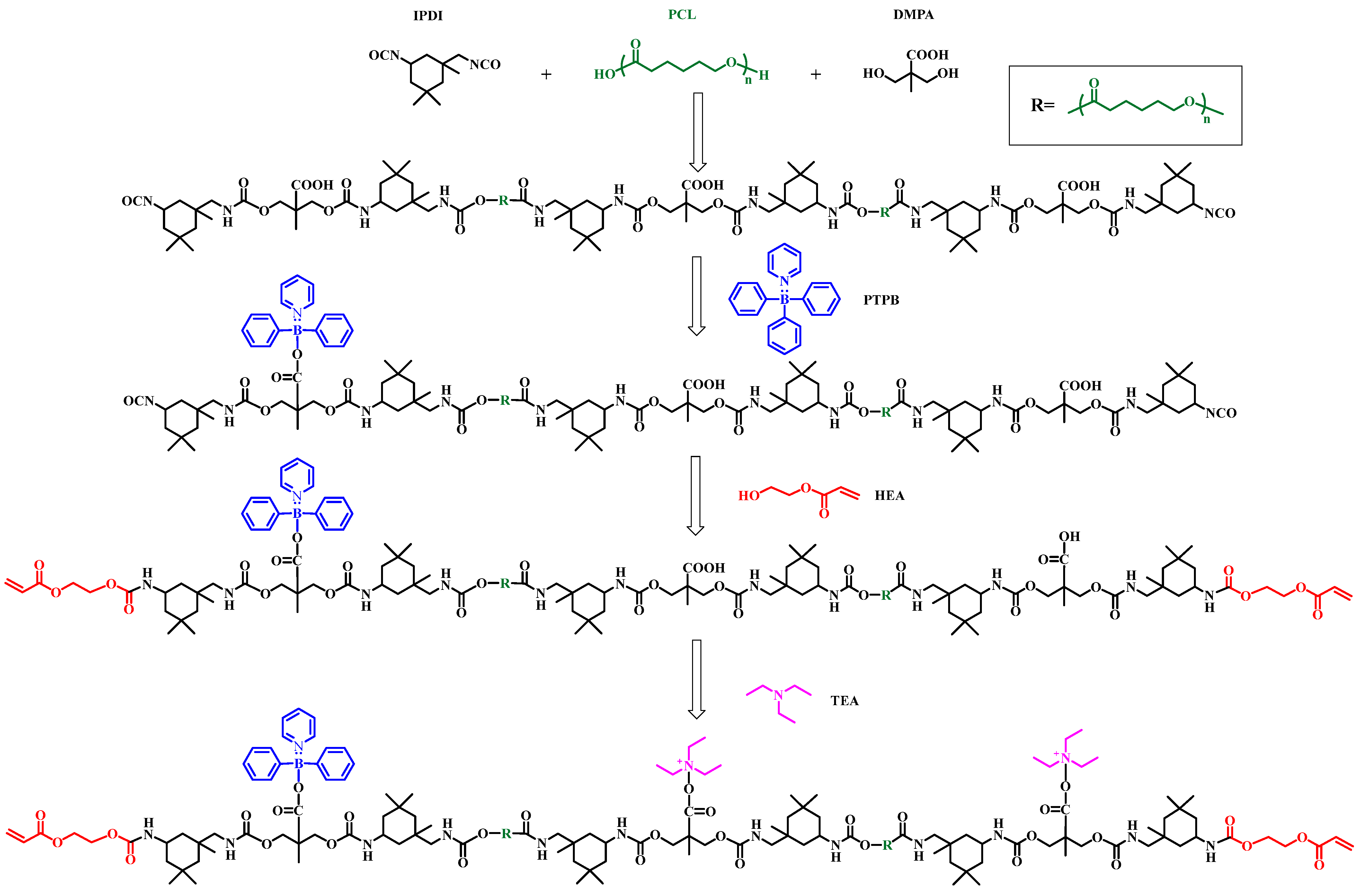
A series of degradable waterborne polyurethane acrylate grafted with various contents of PTPB was first synthesized according to the reaction route shown in Scheme 1, and the obtained polymers were named as WPU-PTPBx (x = 0, 2, 4 and 6). The value of “x” represents the mass percentage of PTPB.
Specifically, the synthetic process of WPU-PTPBx was described as follows. First, PCL, IPDI and DMPA were added to a 250 mL four-necked flask equipped with a nitrogen inlet, mechanical stirring, a reflux device and a thermometer, and the reaction was stirred at 70 °C for 3 h. Then the toluene-solubilized PTPB was added and reacted with the DMPA on the polymer chain at 80–85 °C for 15 h. To provide acrylate functionality at the terminuses, the product was further reacted with HEA, and the reaction was carried out at 75 °C for 8 h. Then TEA was added to neutralize carboxyl groups in the hydrophilic chain extender and stirred for 0.5 h after the system temperature decreased to 50 °C. Finally, the unreacted PTPB was filtered to obtain the WPU-PTPBx polymers. The detailed formulation used to synthesize the WPU-PTPBx polymers is shown in Table 2.
To get the dispersion, a certain amount of WPU-PTPBx polymers was added into a 250 mL beaker and stirred vigorously at 3000 rpm by a high-speed shear disperser, while deionized water was added slowly and stirred for 0.5 h. The double-bond-capped polyurethane emulsion with a solid content of around 30.0% was finally obtained.

2.3. Preparation of WPU-PTPBx Coatings

A series of WPU-PTPBx coatings was prepared via UV irradiation. Typically, 4 wt.% photoinitiator TPO was added to the WPU-PTPBx dispersion and stirred for 5 min by ultrasonic. Then the dispersion was coated on a glass slide (76.2 mm × 25.4 mm), which was further dried in a thermostatic drying oven at 60 °C for 2 h, and irradiated for 40 s with a UV point light source (Shenzhen Blue Spectrum Rich Ltd., Shenzhen, China, 20 W/cm2). Coatings on epoxy and tinplate substrates were prepared via a similar procedure. These coatings were further used to examine the water contact angle, degradation behavior, and marine anti-fouling properties.

2.4. Characterization

2.4.1. Fourier Transform Infrared Spectroscopy (FTIR)

The structure of the WPU-PTPBx polymers was characterized with a Bruker Vertex70 FTIR spectrometer (Bruker, Karlsruhe, Germany). Specifically, the transmission spectra of the samples were scanned in the range of 4000–400 cm−1 with a resolution of 4 cm−1.
To get the attenuated total reflection Fourier transform infrared spectroscopy (ATR-FTIR) for the WPU-PTPBx coatings, the samples were first immersed in 1 M NaOH solution for 1 h at 25 °C. The spectrum was recorded in the range of 4000–600 cm−1 with a resolution of 4 cm−1.

2.4.2. Nuclear Magnetic Resonance Spectroscopy (1H NMR)

The 1H NMR spectrum was acquired on a 400 MHz AVANCE III Bruker NMR spectrometer (Bruker, Karlsruhe, Germany), using CDCl3 as the deuterated solvent. The grafting rate of PTPB was calculated using the 1H NMR spectrum, with the calculation formula shown in (1):
G r a f t i n g   r a t e = { I P T P B N 1 I D M P A N 2 × n -COOH / n P T P B } × 100 %
herein, I P T P B and I D M P A represent the integral values of the methylene protons in DMPA and the aromatic protons in the grafted PTPB, respectively; N 1 and N 2 represent the number of protons corresponding to these signals (i.e., the proton numbers of the methylene group in DMPA and the aromatic group in PTPB, respectively); and n -COOH and n P T P B represent the total moles of DMPA and PTPB, respectively.

2.4.3. Photocuring Behavior of WPU-PTPBx Coatings

The photocuring behavior of WPU-PTPBx coatings was studied to understand the impact of curing duration on the performance of the coatings. Typically, a WPU-PTPBx coating was exposed to a GHS-UVLEDLG 756068 UVLED curing lamp (Kouwas Technology Co., Ltd., Shenzhen, China) with an intensity of 25 mW/cm2 for different times. The infrared spectra of the coatings at different light curing intervals (0 s, 4 s, 8 s, 12 s, 16 s, 20 s, 24 s, 28 s, 32 s, 36 s, and 40 s) were recorded and analyzed by using an FTIR spectrum. An ester peak with consistent peak intensity, position, and area in the infrared spectrum was selected as the internal standard, denoted as A , while the peak area corresponding to the carbon-carbon double bonds (-C=C-) was recorded as S . The conversion rate of the -C=C- bonds was calculated by Equation (2):
C o n v e r s i o n = 1 S t A t S 0 A 0 × 100 %
herein, A 0 and S 0 represent the initial characteristic absorption peak areas of the ester group at 1730 cm−1 and the -C=C- bond at 810 cm−1, respectively. Similarly, A t and S t denote the characteristic absorption peak areas of the ester group at 1730 cm−1 and the -C=C- bond at 810 cm−1 at time t, respectively.

2.4.4. Particle Size and Thermal Storage Stability of WPU-PTPBx Dispersion

The particle size and distribution of WPU-PTPBx dispersion were characterized using a 90Plus zeta potential and particle size analyzer (Brookhaven Instruments Co., Nashua, NH, USA) at 25 °C. Specifically, the dispersion was diluted with deionized water at a ratio of vemulsion:vwater = 1:20 and filled into a standard cuvette. The dispersion was kept in a thermostatic drying oven at 50 °C and monitored continuously for seven days. The change in the average particle size was analyzed to assess the storage stability of the dispersion.

2.4.5. Differential Scanning Calorimetry (DSC)

A 6220 type DSC (Seiko instruments Inc., Chiba, Japan) was employed to characterize the thermal properties of the coating samples. During the test, a sample weighing between 5 and 10 mg was first placed in an aluminum crucible, and the test was carried out under a nitrogen atmosphere, with a cooling and heating rate of 20 °C/min from −30 °C to 150 °C and a holding time of 3 min.

2.4.6. X-Ray Diffraction (XRD)

XRD patterns were recorded using a D8ADVANCE-A25 X-ray diffractometer (Bruker, Karlsruhe, Germany) with Cu Kα radiation at 40 kV and 30 mA, and a scan rate of 4°/min.

2.4.7. Adhesion Testing

The adhesion strength of the coatings to the epoxy panel substrate was measured by using a BGD 500/S automatic adhesion tester (BiuGed Laboratory Instruments Co., Ltd., Guangzhou, China) according to the ASTM Standard D 4541-09 [41]. An aluminum ingot with a diameter of 20 mm was bonded to the coating surface using an epoxy adhesive, and the data were collected by pulling the ingot apart at a speed of 0.2 MPa/s. Five regions were tested for each sample and the results were averaged.

2.4.8. Assay of Coatings Mass Loss by Immersion

During the experiment, the epoxy plates (60 mm × 90 mm × 2 mm) were first sanded with 400-grit sandpaper and weighed ( W 0 ). Then, the coating was coated on the epoxy plates and the mass ( W 1 ) was recorded after complete curing. Afterward, the coating sample was immersed in artificial seawater at 25 °C. The coating sample was removed at regular intervals, with the coated surface gently rinsed with deionized water and then dried in a vacuum drying oven at 60 °C. After drying, the sample mass was marked as W t . The mass loss ratio ( W L ) was then calculated by Equation (3):
W L = W 1 W t W 1 W 0 × 100 %

2.4.9. Water Contact Angle (WCA)

The WCA value of the coatings was measured using a JC2000C1 water contact angle meter (Zhongchen Digital Technic Apparatus Co., Ltd., Shanghai, China) by placing 2 μL liquid droplets onto the coating surface at 25 °C. Following exposure to artificial seawater for different time periods, the WCA value of the hydrolyzed samples was determined using a consistent methodology. Each sample was measured five times and averaged.

2.4.10. Surface Morphology of WPU-PTPBx Coatings

The three-dimensional morphology and roughness of the surface of WPU-PTPBx coating before and after immersion in artificial seawater were observed using a KH-7700 three-dimensional video microscope (Hirox, Tokyo, Japan), with a test area of 0.66 mm × 0.88 mm.

2.4.11. Antibacterial Test

The antibacterial performance of the coatings was investigated against Escherichia coli (E. coli, ATCC 25922) by using the plate count method. Firstly, the samples (20 mm × 30 mm) were sterilized with a UV lamp (20 W, 253.7 nm) for 30 min, and the cultured bacterial suspension was diluted to a concentration of 106 CFU/mL using sterile PBS buffer. Subsequently, the samples were placed onto Petri dishes and 4 mL of diluted bacterial solution was added. Then, the Petri dishes were incubated in a constant-temperature incubator at 37 °C for 24 h. After culture, the medium was diluted with sterile PBS buffer to a countable concentration, and 100 μL of the diluted liquid medium sample was evenly scraped onto the LB solid medium and incubated for 18 h at 37 °C. The number of colonies was determined by plate count ager, and the assays were repeated three times. The antibacterial rate was calculated by the following Equation (4):
A E = 1 N c N b × 100 %
where N b and N c are the average number of bacteria on the blank and coated samples, respectively.

2.4.12. Anti-Diatom Adhesion Performance

To evaluate the anti-fouling performance of WPU-PTPBx coatings, a typical kind of diatom, Nitzschia closterium, was selected as the testing organism. The diatoms were cultured in f/2 liquid medium in an incubator with a light/dark period of 12 h/12 h, light at 3000 Lux, temperature at 21 °C ± 2 °C, and gently shaken twice a day. Different coatings were placed in the same concentration of diatom nutrient solution (at least 1 × 10⁵ diatom cells/mL in the suspension solution) and cultured under the same conditions. The samples were taken out at 24 h, the floating diatoms on the surface were carefully washed with deionized water, and then the adhesion of diatoms on the surface of the coating was observed with an MP41 microscope (Mingmei Optoelectronic Technology Co., Ltd., Guangzhou, China).

2.4.13. Diatom Growth Curve Test

The growth inhibition test procedure for Chlamydomonas reinhardtii is as follows: First, using a UV-visible spectrophotometer (UV-1900i, Shimadzu Kyoto, Japan) and a hemocytometer (Yancheng Yuecheng Trading Co., Ltd., Yancheng, China), determine the absorbance at 680 nm and the corresponding cell concentration of diluted diatom solutions, respectively, to establish a standard curve relating diatom cell concentration to absorbance. Subsequently, 60 mL of diatom suspension at a concentration of 3.80 × 10⁶ cells/mL was placed into 100 mL conical flasks coated with different WPU-PTPBx (x = 0, 2, 4, 6), with blank coverslips serving as the control group. Samples were collected periodically during cultivation. Each sample was thoroughly mixed prior to measurement. Absorbance at 680 nm was determined using a UV-visible spectrophotometer. Each sample was measured in triplicate, and results are presented as the mean value. Absorbance values were converted to diatom cell concentration based on the previously established standard curve, and a diatom growth curve was plotted accordingly.

3. Results and Discussion

3.1. Characterization of Chemical Structure

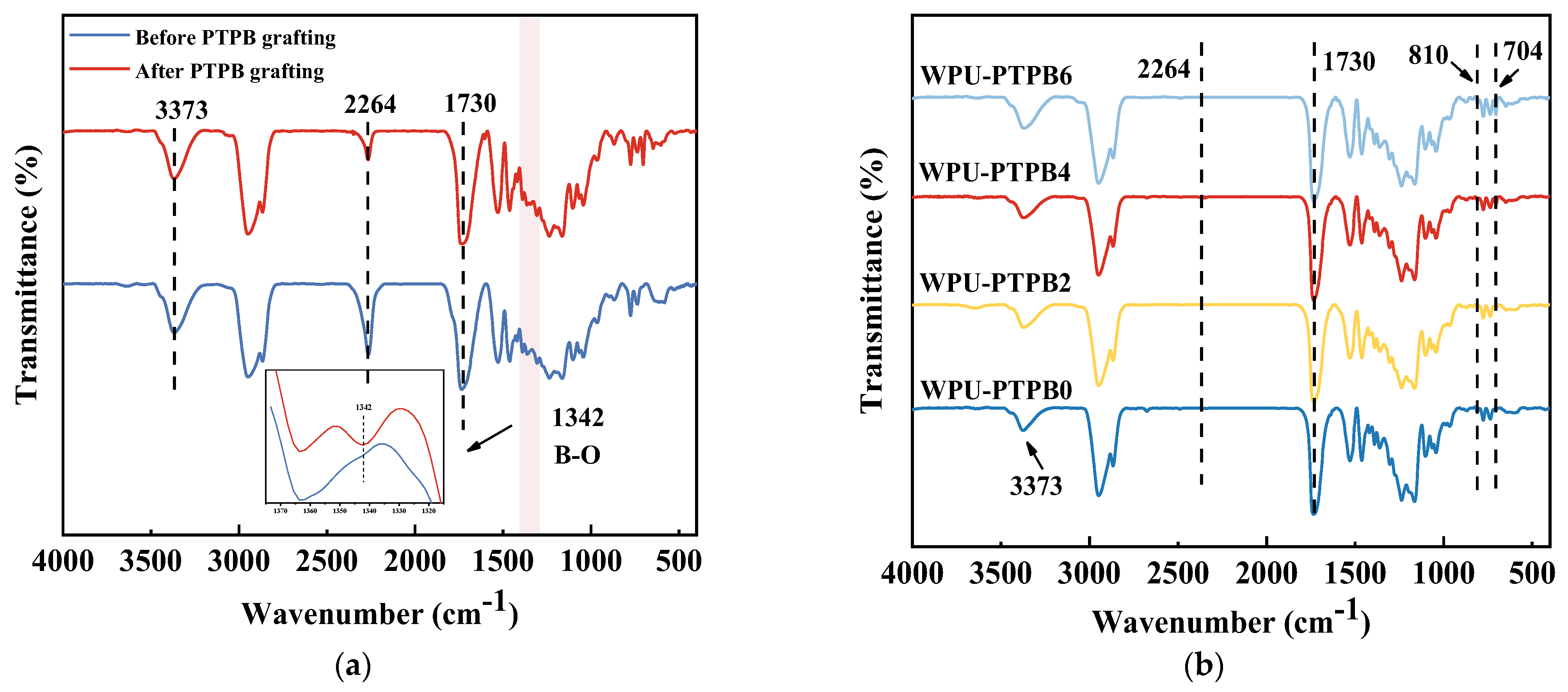
Figure 1 depicts the FTIR spectra of polyurethane prepolymer before and after PTPB grafting. The characteristic absorption peaks appearing in Figure 1a near 3373 cm−1, 2264 cm−1, and 1730 cm−1 correspond to the -NH stretching vibration, the incompletely reacted -NCO stretching vibration and the -C=O stretching vibration, respectively. The appearance of the characteristic B-O stretching vibration at 1342 cm−1 confirms the chemical incorporation of PTPB into the polyurethane backbone, and the observed absence of the characteristic absorption peak of -NCO at 2264 cm−1 suggests a complete consumption of IPDI. The stretching vibration peaks of -NH at 3321 cm−1 and C=O at 1730 cm−1 also show that the polyurethane was made by IPDI and PCL by generating the carbamate structure (-NHCOO-). Furthermore, the characteristic peaks at 810 cm−1 and 704 cm−1, which belong to the functional group -C=C- in HEA and the aromatic ring in PTPB, confirmed that the HEA cross-linker and PTPB were successfully introduced into WPU and WPU-PTPBx polymers were obtained.
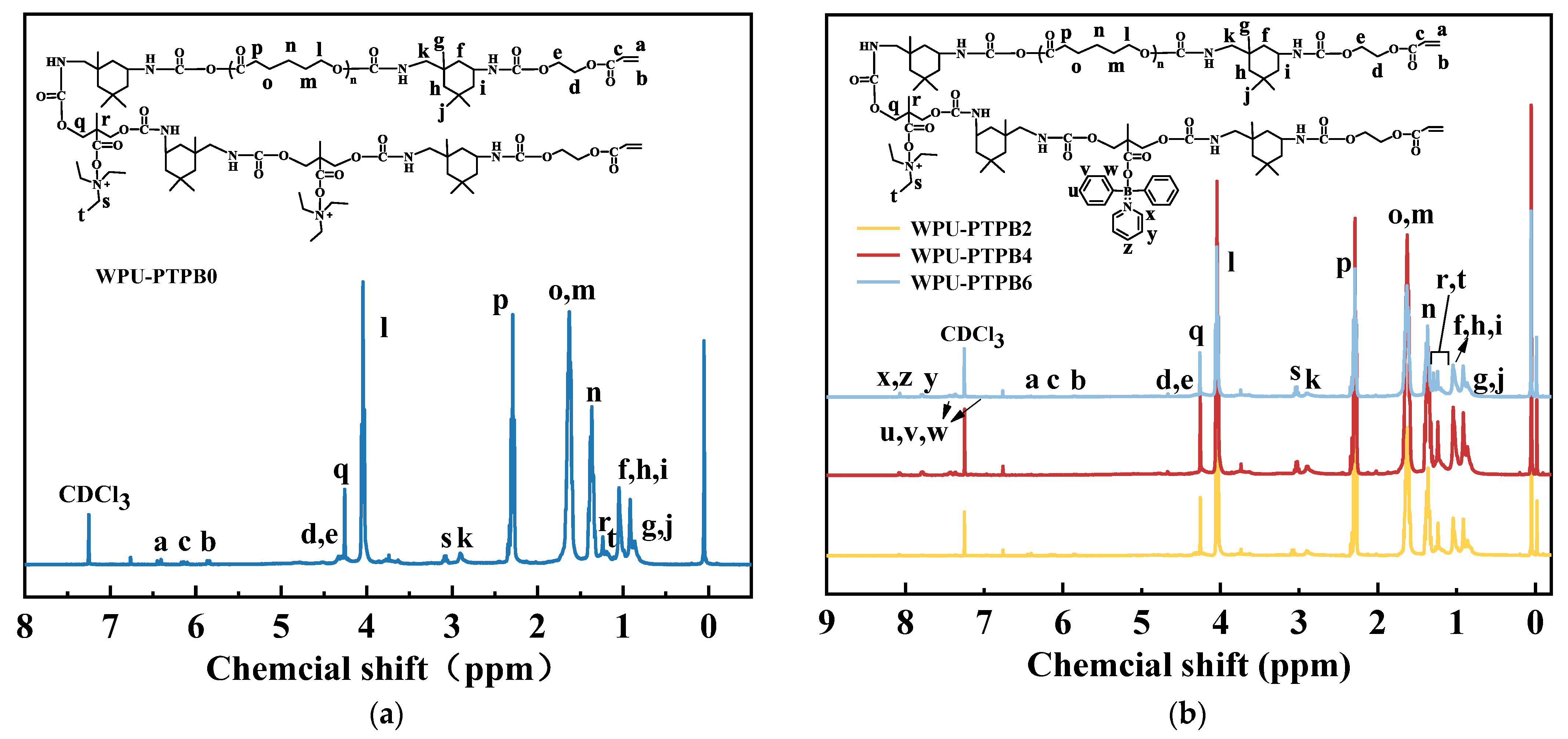
Figure 2 displays the 1H NMR spectra of WPU-PTPBx polymers. The peaks at 0.86 ppm and 1.04 ppm correspond to the -CH3 and -CH2 groups of IPDI, respectively, and the peaks at 1.37 ppm, 1.62 ppm, 2.29 ppm, and 4.05 ppm correspond to the protons on the alkyl chain (-COCH2CH2CH2CH2O-) within the main polymer structure. The characteristic peaks at 1.29 ppm and 3.04 ppm are attributed to the -CH3 and -CH2 in triethylamine, and the peaks at 1.23 ppm and 4.26 ppm are attributed to -CH3 and -CH2 of the DMPA. Additionally, the peaks between 5.84 and 6.45 ppm can be observed and confirm the presence of -C=C- bonds. Furthermore, the characteristic peaks at 6.97 ppm and within the range of 7.36–8.05 ppm correspond to the aromatic ring of PTPB.
The spectroscopic analysis verifies the successful synthesis of polyurethane acrylate polymers containing boron. The actual grafting rate of PTPB was calculated using the -CH2 proton peak area of DMPA and the aromatic ring proton peak area of PTPB in the 1H NMR spectra. For the WPU-PTPBx (x = 2, 4, 6) systems, the integral value of the aromatic proton peak at 8.05 ppm was calibrated as 1.00. Calculations yielded integral values for the methylene (-CH2) protons in DMPA as 22.40, 11.51, and 5.30, respectively, and for the aromatic protons in grafted PTPB as 4.73, 8.75, and 6.61, respectively. The calculated PTPB grafting rates are listed in Table 2.

3.2. Particle Size and Thermal Storage Stability of WPU-PTPB Dispersion

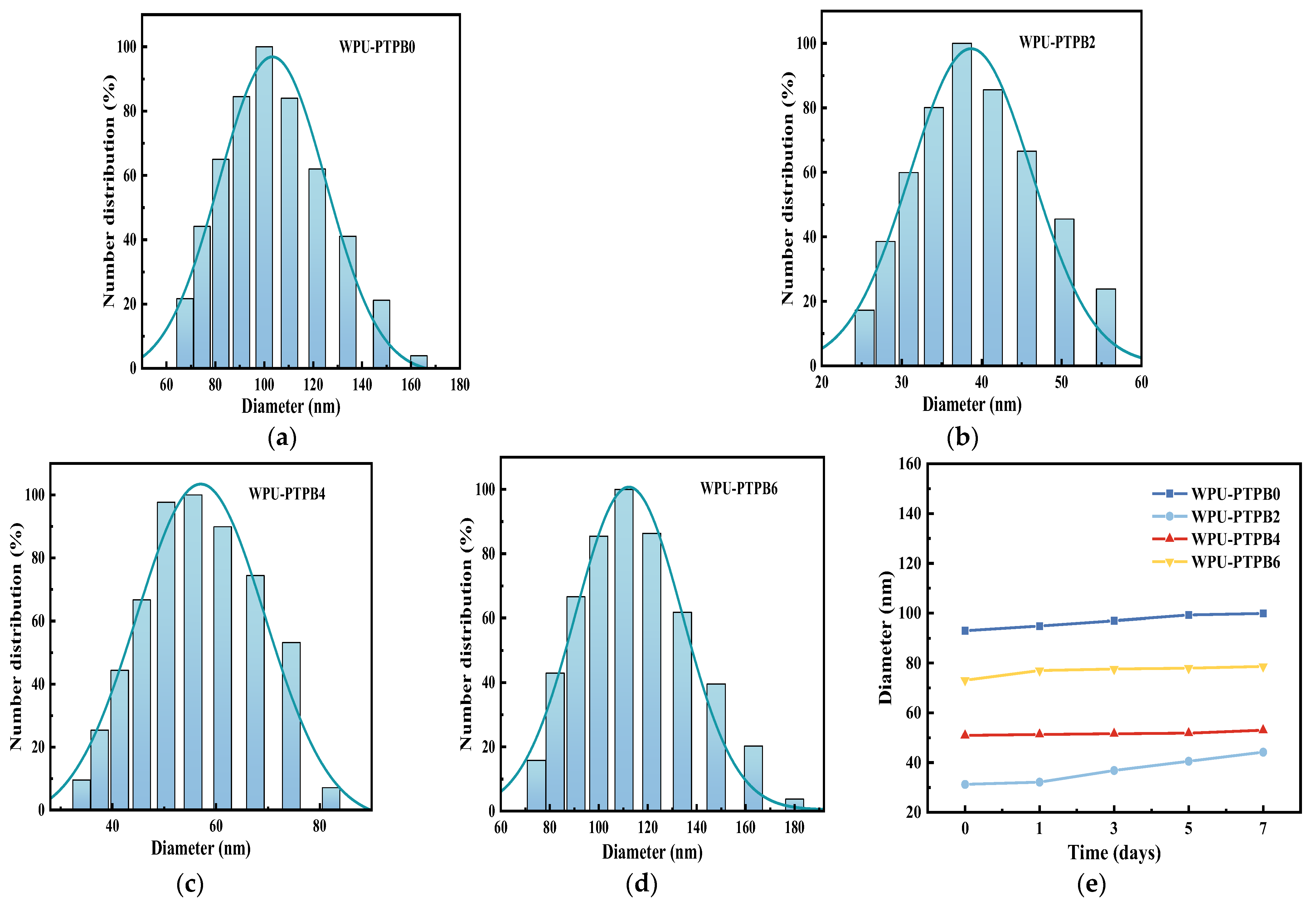
As depicted in Figure 3a–d, the average particle size for WPU-PTPB0, WPU-PTPB2, WPU-PTPB4, and WPU-PTPB6 is 101.71 nm, 31.23 nm, 50.89 nm, and 73.10 nm, respectively. The WPU-PTPB0 dispersion exhibits the largest average particle size, while the average particle size of WPU-PTPBx dispersion gradually increases when increasing PTPB content from 2.0 wt.% to 6.0 wt.%. To elucidate this trend, the residual carboxyl content in each system was calculated based on the formulation details in Table 2. The residual -COOH amounts for WPU-PTPB0, WPU-PTPB2, WPU-PTPB4, and WPU-PTPB6 are 0.024, 0.0274, 0.0271, and 0.0247 mol, respectively. Thus, the hydrophilicity order follows WPU-PTPB2 > WPU-PTPB4 > WPU-PTPB6 > WPU-PTPB0. Higher residual carboxyl content enhances the hydrophilicity of the polymer chains, facilitating finer dispersion and leading to smaller particle sizes. This explains why WPU-PTPB2 exhibits the smallest particle size, while the size increases as PTPB content further increases due to the gradual decrease in residual -COOH groups. In general, the average particle size of dispersion is influenced by several factors, including hydrophilicity, cross-linked structure, molecular chain flexibility, and the OH/NCO ratio, DMPA content, and neutralizer amount. Consistent with the above analysis, the presence of residual polar -COOH groups in the WPU-PTPBx (x = 2, 4, 6) systems enhances the hydrophilicity of the polymer and improves its dispersion in water, as evidenced by studies on the distribution of hydrophilic groups in waterborne polyurethane dispersion [42,43]. However, the absence of benzene ring structures in the WPU-PTPB0 dispersion results in a more flexible molecular chain, leading to a narrower particle size distribution. On the other hand, the increased presence of rigid benzene ring structures within the polymer chain segments enhances the polymer hydrophobicity, causing an increase in the particle diameter in water.
Figure 3e illustrates the thermal storage stability of the dispersion. The results indicate that the particle size of WPU-PTPBx dispersion remained essentially unchanged after 7 days of storage at 50 °C. Consequently, it can be reasonably deduced that the WPU-PTPBx dispersion systems exhibit excellent thermal storage stability of over six months under ambient conditions [44].

3.3. Photocuring Behavior of WPU-PTPBx Resin

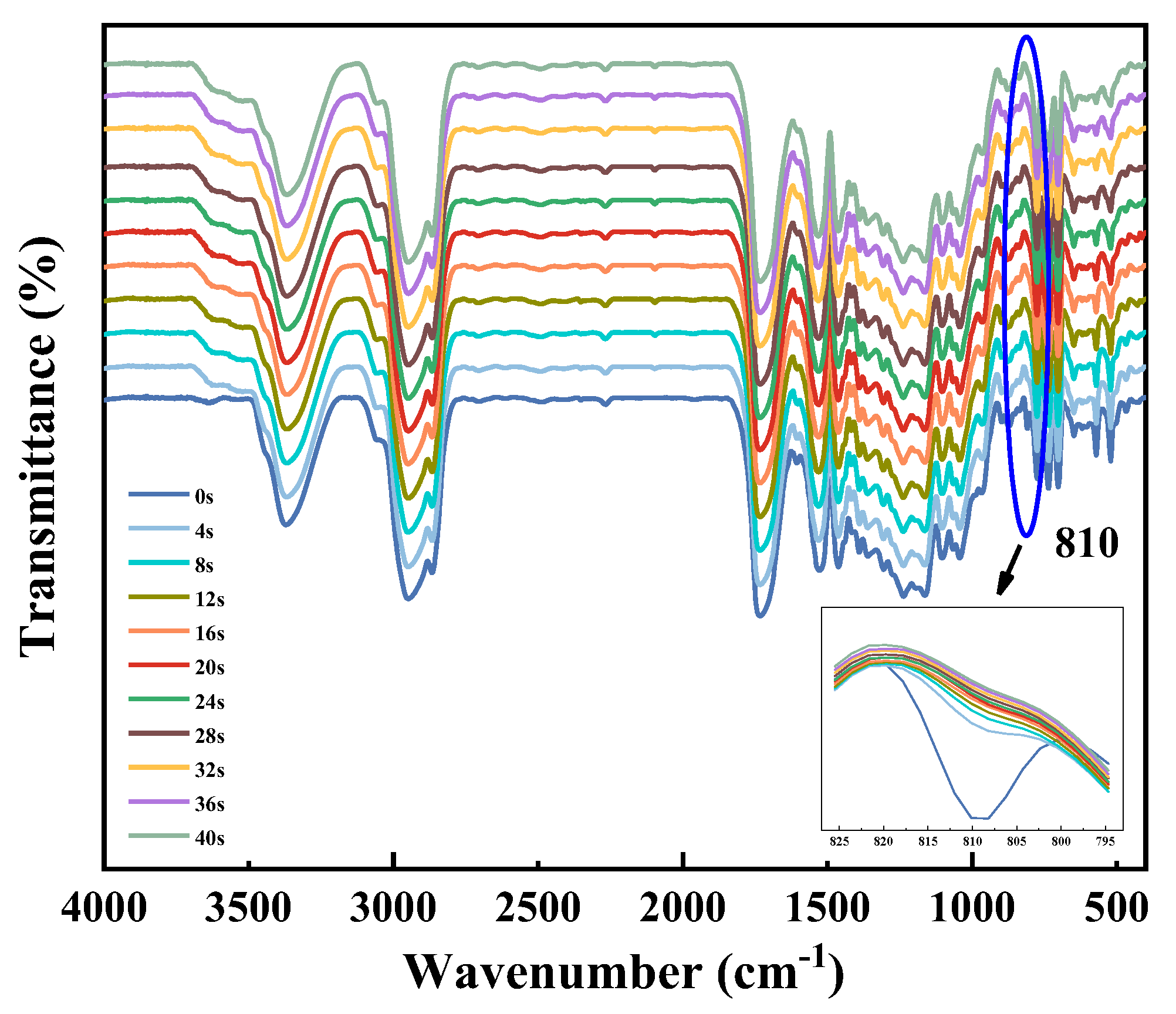
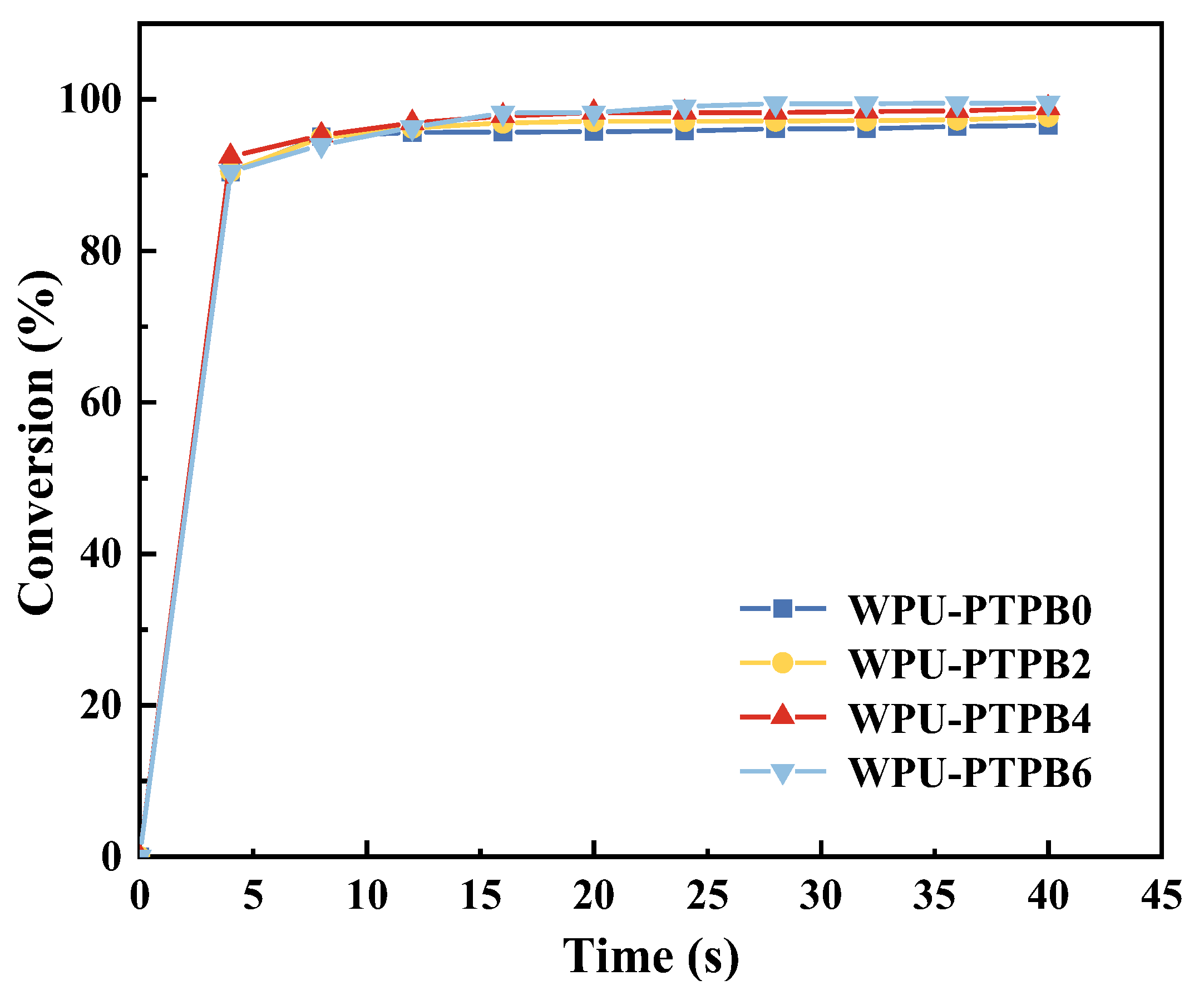
Figure 4 shows the FTIR spectra of the WPU-PTPB6 resin system at various photocuring intervals, featuring the magnified characteristic absorption peak of -C=C- bonds at 810 cm−1. It is evident that the intensity of the double bonds decreases significantly as the irradiating time progresses. The trend is particularly pronounced within the initial 4 s, as shown in Figure 5. This phenomenon can be attributed to the change in the rheological properties of the system. Prior to curing, the resin system remained in a flow state without forming a cross-linked network structure, resulting in a large free volume within the system and minimal spatial hindrance. Upon irradiation, rapid cross-linking of -C=C- bonds occurred and, therefore, the intensity of the characteristic absorption peaks significantly decreased. However, as the cross-linked network structure formed, the free volume within the system gradually diminished, restricting the movement of the polyurethane molecular chains and thereby limiting the polymerization rate of the double bonds. Consequently, the intensity of the characteristic peak of double bonds started to weaken progressively. Figure 5 also demonstrates a rapid curing speed of the resin systems, with nearly complete curing achieved within 10 s. Furthermore, with an irradiation duration of 40 s, the double bond conversion rate for all resin systems surpasses 96%, without significant oxygen inhibition observed during the polymerization process.

3.4. Properties of WPU-PTPBx Coatings

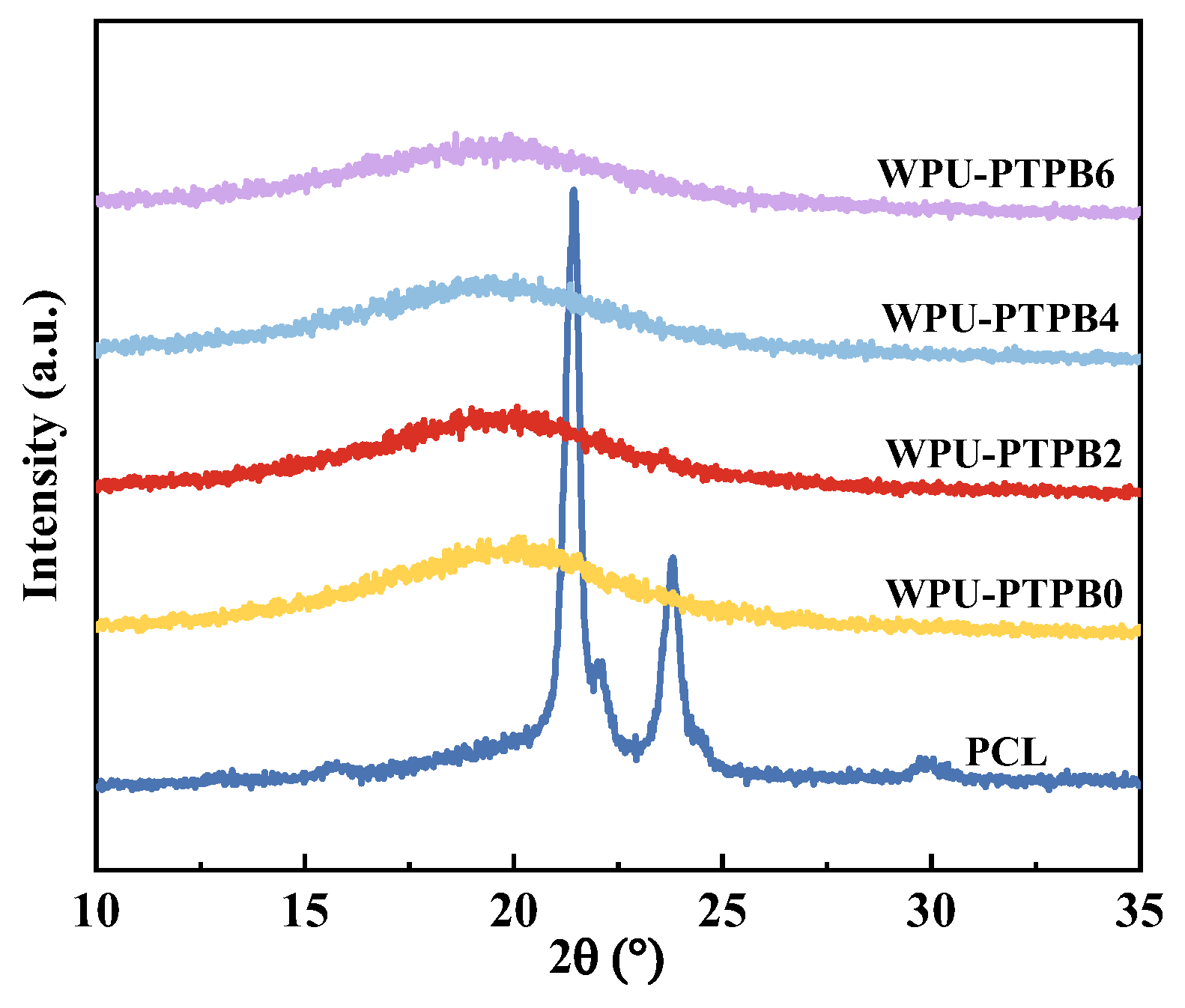
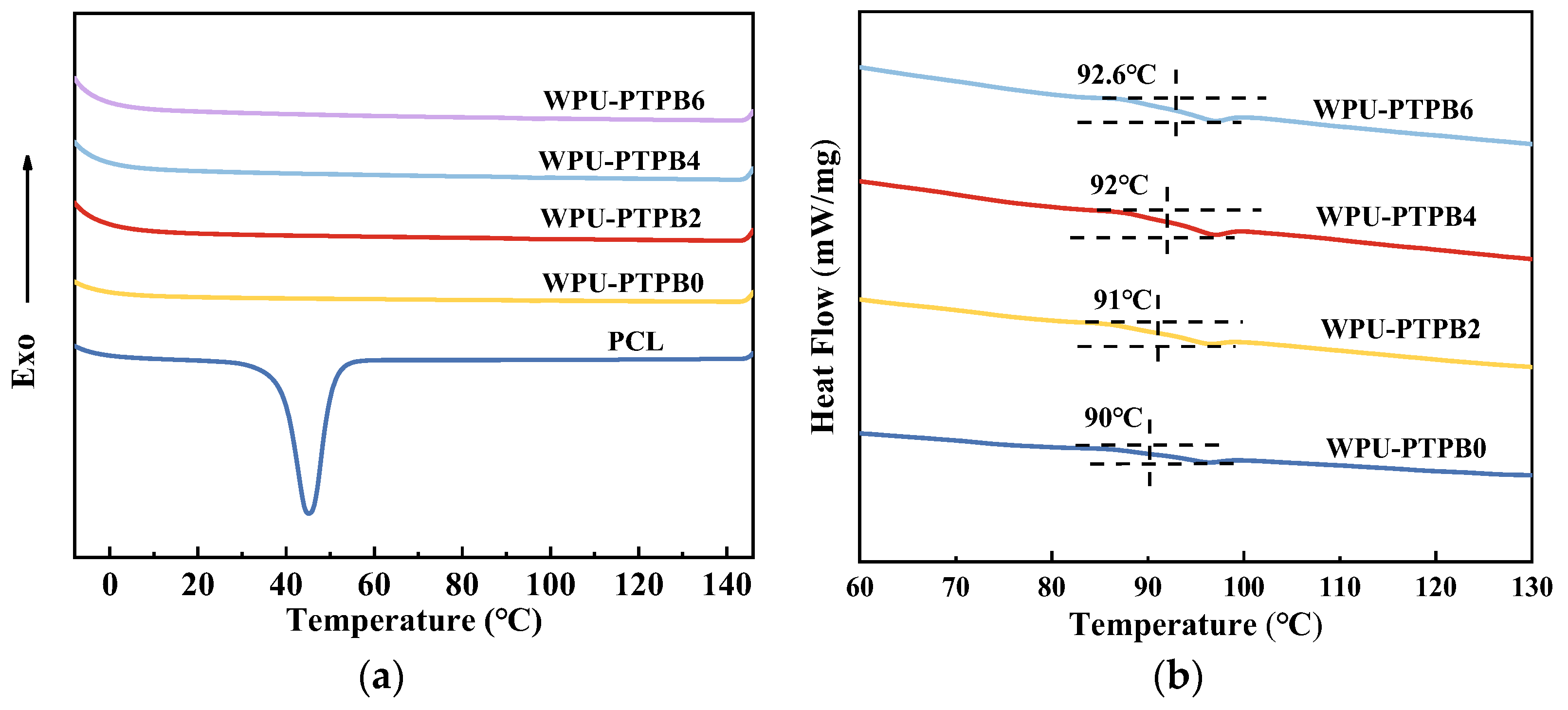
The crystallinity of WPU-PTPBx coatings will affect their biodegradability. Figure 6 and Figure 7 depict the DSC curves and XRD patterns of WPU-PTPBx coatings. Except for the pure PCL sample, the WPU-PTPBx coatings do not show any melting peaks, as shown in Figure 6. It can be inferred that the introduction of DMPA and anti-fouling agent destroyed the crystalline structure of PCL segments. The cross-linked structure also hindered the crystallization process of the polymer to a certain extent [45,46,47]. The broad and diffuse peaks without discernible sharp diffraction peaks, as shown in Figure 7, indicate that WPU-PTPBx coatings exhibit amorphous characteristics, which is favorable for the coatings to degrade in a marine environment [15]. The glass transition temperature (Tg) for WPU-PTPBx coatings shown in Figure 6b is between 90~93 °C, which exceeds the temperature of the marine environment, meaning it remains in a relatively stable glassy state within this setting.
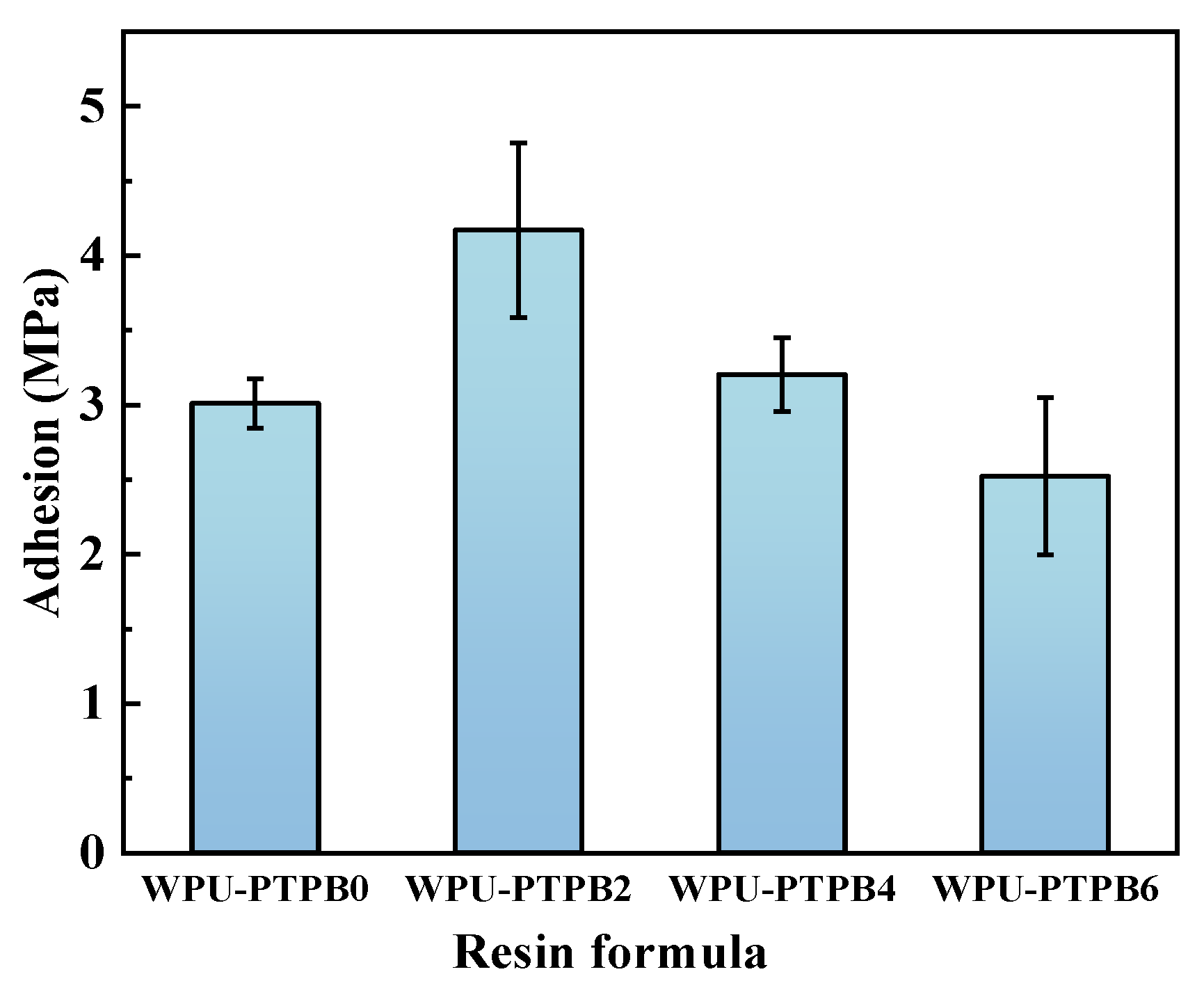
Figure 8 shows the results of adhesion tests with WPU-PTPBx coatings that were cured on epoxy resin boards, revealing an adhesion strength of 3.01 MPa for pure WPU, and 4.17 MPa, 3.20 MPa, and 2.52 MPa for the WPU-PTPBx (x = 2, 4, 6) coatings, respectively. All tested coatings exhibited bond strengths exceeding 2 MPa, surpassing the minimum requirement of 0.7 MPa for marine applications.
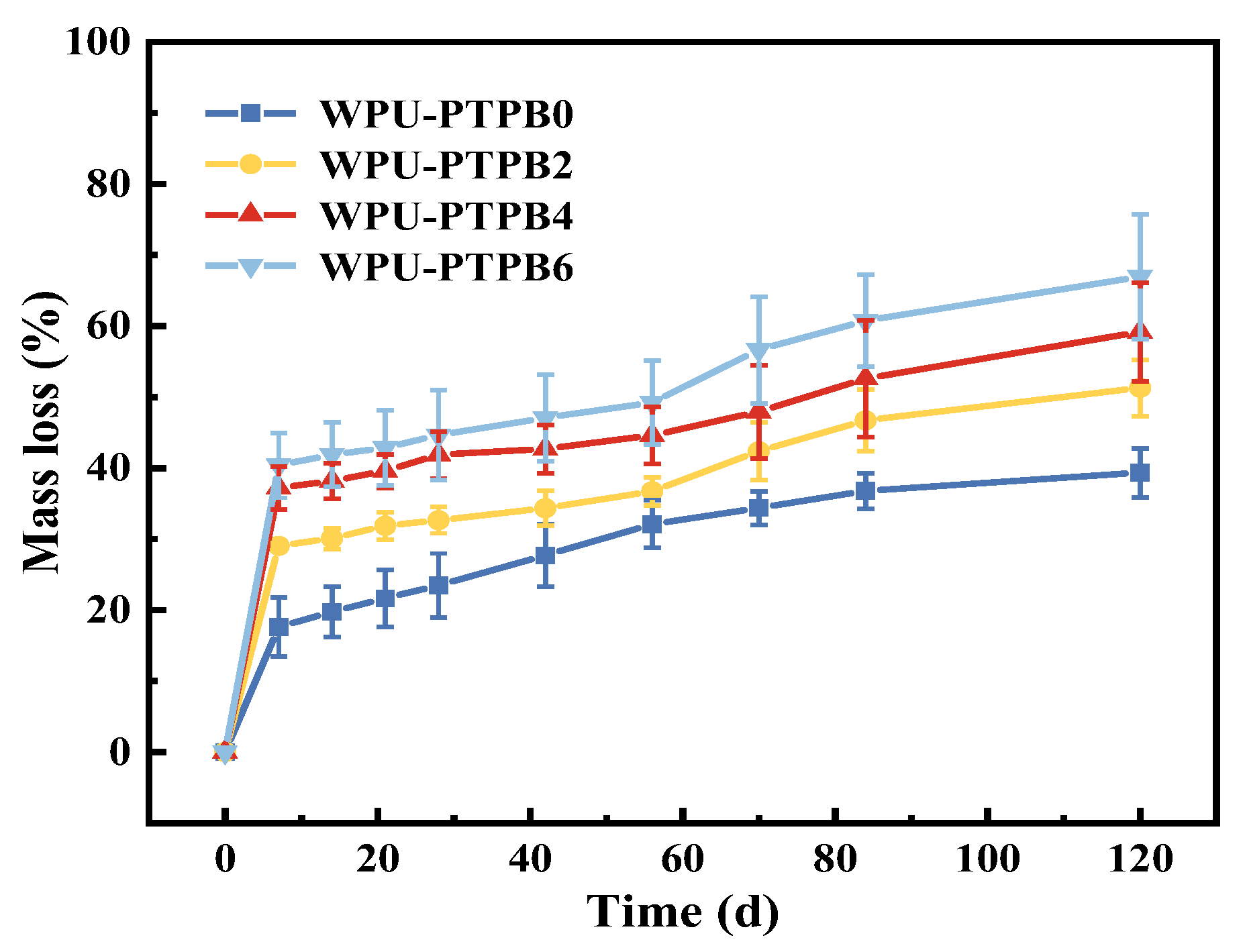
The hydrolysis rate and surface wettability significantly influence the overall performance of the WPU-PTPBx coatings. When immersed in artificial seawater, the coatings are easy to hydrolyze, and the hydrolysis rate of the coating was found to increase with increasing PTPB content, as shown in Figure 9. The enhancement can be attributed to the higher density of ester groups in the matrix. On the other hand, the carboxyl groups exposed during hydrolysis serve as hydrophilic functional groups, which may accelerate the hydrolysis process. During the initial immersion stages, the coatings experienced significant mass loss, which could be predominantly attributed to the swift discharge of low molecular weight components [48,49].
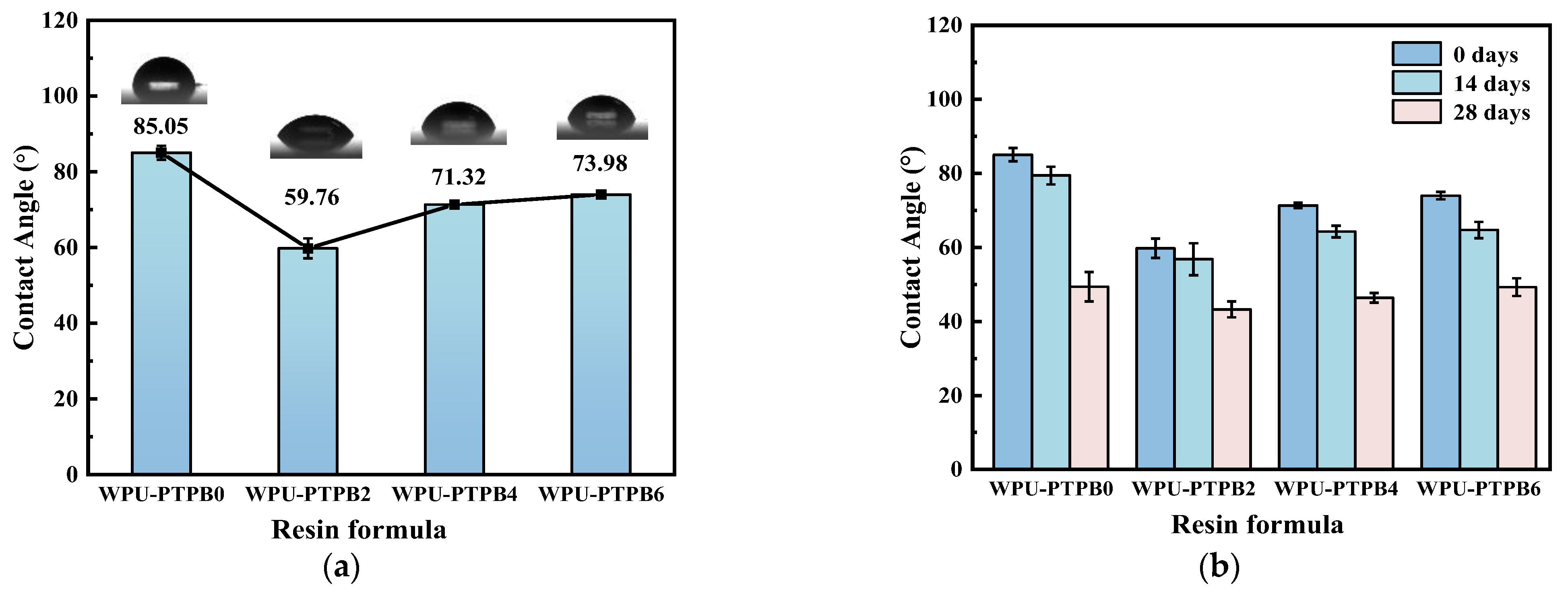
Figure 10 shows the changes in contact angle before and after the immersion experiment. Prior to immersion, the pure WPU coating exhibits a high contact angle of 85.5°, while the WPU-PTPBx coatings display a decreased contact angle. This is due to the presence of a certain proportion of hydrophilic carboxyl groups in WPU-PTPBx. However, the hydrophobicity of WPU-PTPBx coatings increases with increasing PTPB content, resulting in a gradual increase in the contact angle. The contact angle of each coating after being immersed in artificial seawater for 14 and 28 days drops significantly as the immersion time increases. This is mainly attributed to the hydrolysis of ester groups into carboxylate ions.
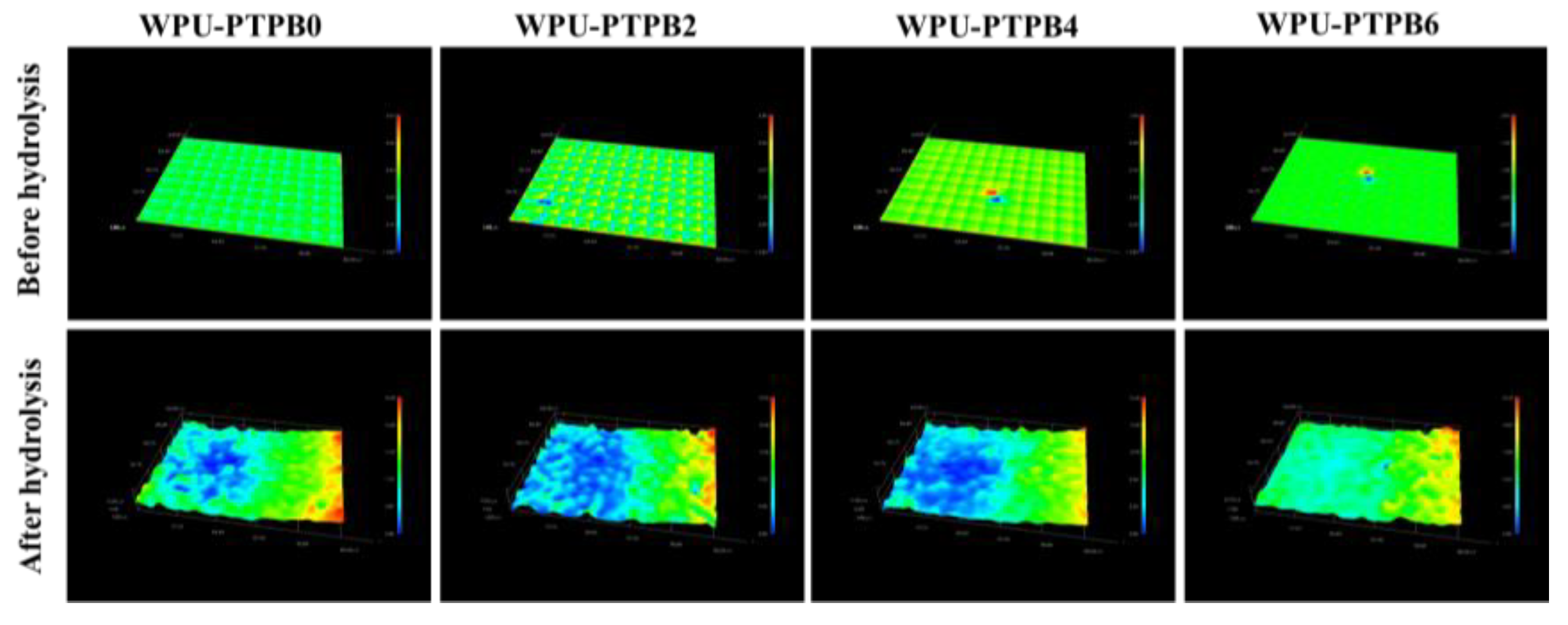
Figure 11 presents the 3D surface morphology of the coatings before and after immersion in artificial seawater. Prior to immersion, the coating surfaces were relatively smooth and flat, with surface roughness values below 2.1 μm. Following immersion in artificial seawater, the surface morphology became significantly rougher, and the surface roughness increased markedly to approximately 19 μm. This demonstrates that the coatings underwent degradation during artificial seawater immersion.
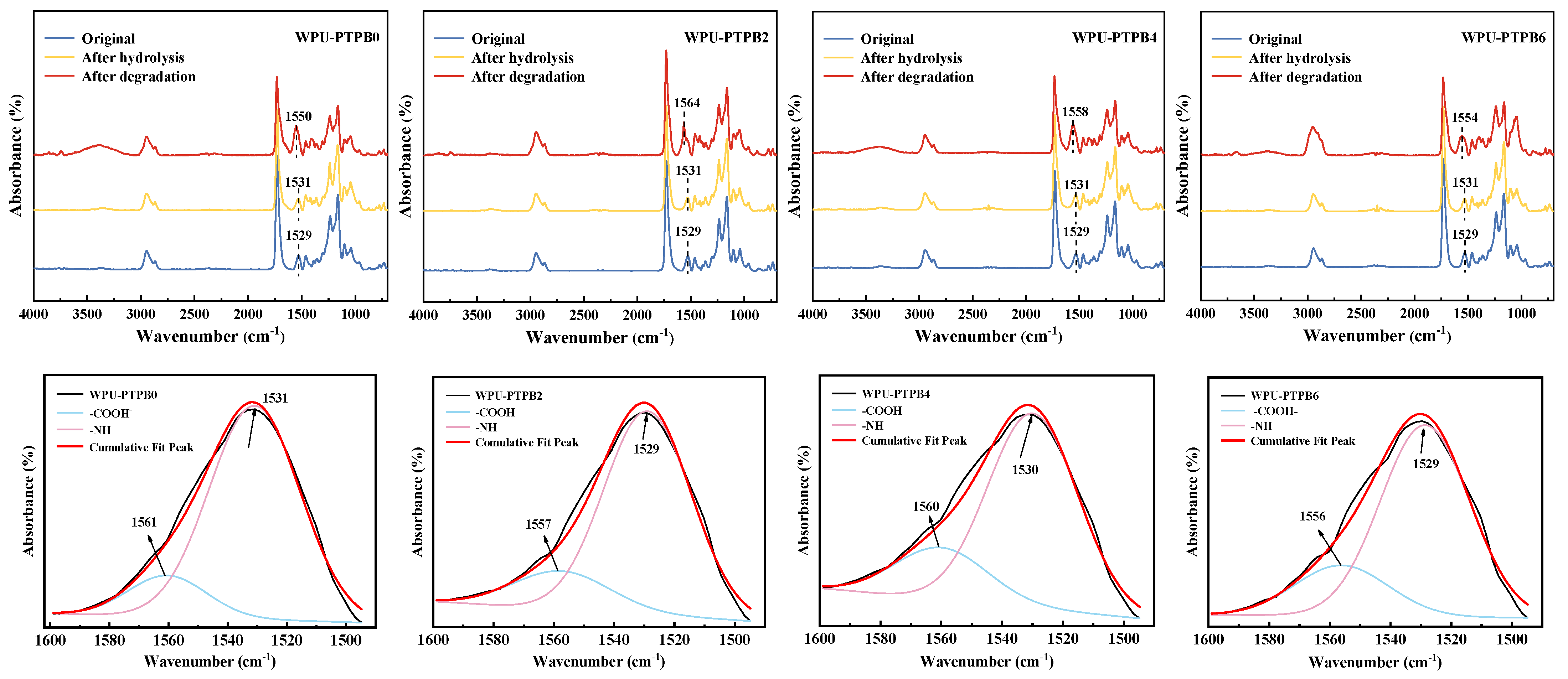
Figure 12(top) presents the ATR-IR spectra of the coatings before and after immersion in artificial seawater or sodium hydroxide aqueous solution. It can be seen that the characteristic peak at 1529 cm−1 corresponding to the secondary amide C-N-H bending vibration shifts to a certain extent after immersion. The main reason for this phenomenon is due to the hydrolysis reaction of partial ester groups in the coatings when immersed in artificial seawater, generating carboxylate ions near 1560 cm−1 [50]. The infrared absorption peaks of carboxylate ions and secondary amides will overlap in the spectrum when they co-exist in the sample, causing a shift in peak position. The peak deconvolution method was usually adopted to analyze the peaks of the coating polymer subsequent to its immersion in seawater within the range of 1602~1492 cm−1 [51]. The processing results are shown in Figure 12(down), which clearly indicates that the characteristic absorption peak for carboxylate ions, typically associated with the νₐₛ(COO) stretching vibration of carboxylic acids, is observed near 1560 cm−1 for the coating following exposure to artificial seawater. Additionally, the coating immersed in sodium hydroxide aqueous solution also has an obvious vibration peak of carboxylate ions near 1560 cm−1. This result indicates that the WPU-PTPBx coatings prepared in this paper have the characteristic of hydrolysis in seawater.

3.5. Anti-Fouling Performance of WPU-PTPBx Coatings

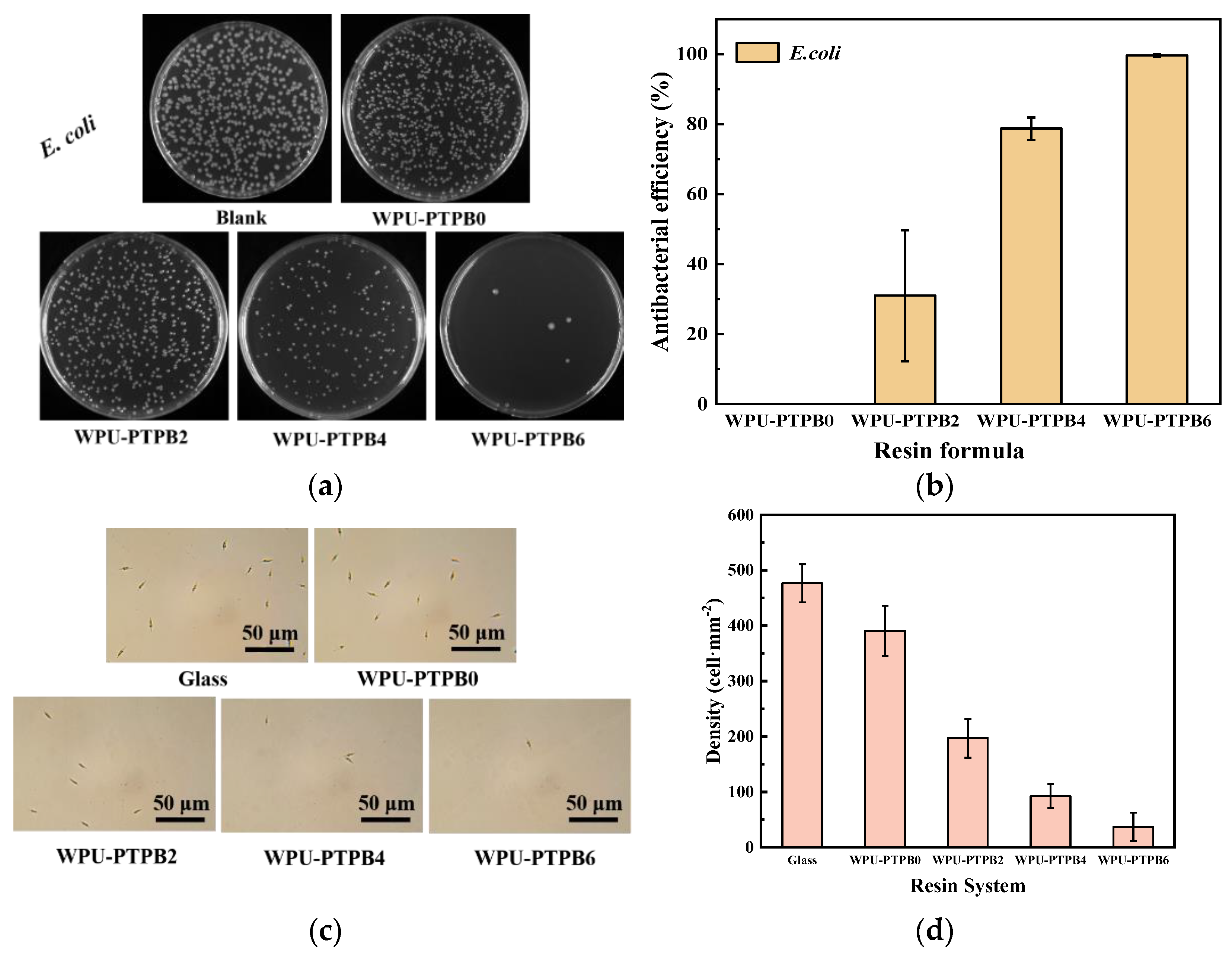
As the second stage of marine biofouling formation, bacterial adhesion affects the colonization of biofouling [52]. To evaluate the antibacterial property, E. coli (Gram-negative bacteria) was selected as a representative of the broad-spectrum antibacterial evaluation. Images of bacterial colony growth on different coating samples are shown in Figure 13a. The antibacterial effectiveness of the WPU-PTPBx (x = 2, 4, 6) coatings against E. coli are 31.03%, 78.76% and 99.66%, respectively, whereas WPU-PTPB0 coating is non-inhibitory, which can be attributed to the lack of antimicrobial fraction PTPB on the coating surface, suggesting that the addition of PTPB significantly enhances the antimicrobial properties of the coating, as evidenced clearly by the results shown in Figure 13b.
The algal attachment gradually occurs at the early stage of marine biofouling after the formation of biofilm by proteins, bacteria, etc., and provides a conducive environment for the growth of other microorganisms [11]. Our study examines the effectiveness of WPU-PTPBx coatings in reducing the adhesion of diatoms, using Nitzschia closterium as a model organism. Figure 13c depicts the adherence of Nitzschia closterium to various sample surfaces. The results indicate that, as the PTPB content increases, the number of diatom colonies on the coating surface significantly decreases. As illustrated in Figure 13d, following a 24 h immersion period, the densities of Nitzschia closterium on the blank glass slides and WPU-PTPBx coatings are observed to be 476.6 cells/mm2 for the glass slide, 390.5 cells/mm2 for WPU-PTPB0, 196.8 cells/mm2 for WPU-PTPB2, 92.3 cells/mm2 for WPU-PTPB4, and 36.9 cells/mm2 for WPU-PTPB6, respectively. The results demonstrate that the incorporation of PTPB effectively inhibits the adhesion of Nitzschia closterium.
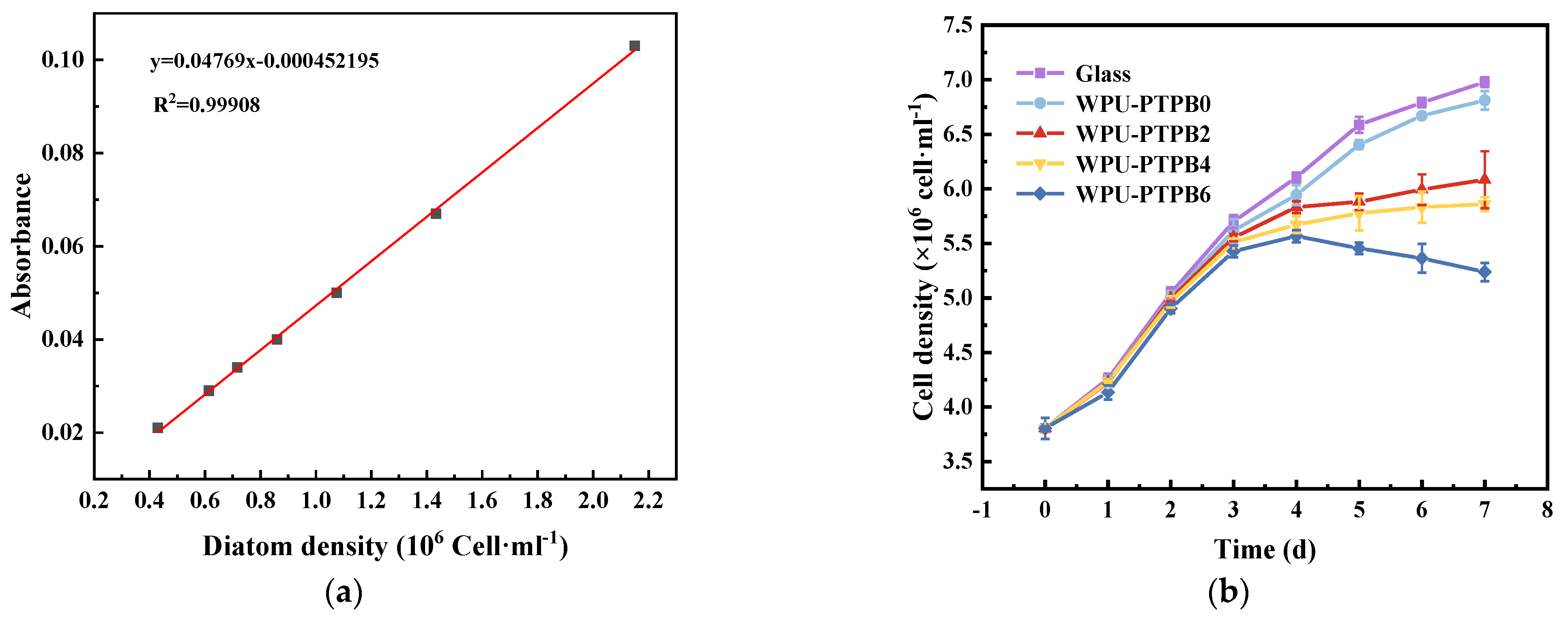
To assess the toxic effects of coatings on marine biofouling, Nitzschia closterium was further selected as the test species. A diatom concentration versus absorbance standard curve was established in Figure 14a using UV-Vis spectrophotometry. The seven-day growth dynamics of Nitzschia closterium exposed to various coatings were systematically monitored in algal suspensions. The results in Figure 14b demonstrate that Nitzschia closterium concentration exhibits an initial increase followed by a leveling off or even a decline with increasing PTPB content, confirming the significant regulatory effect of WPU-PTPBx coatings on Nitzschia closterium growth. After seven days of cultivation, Nitzschia closterium concentrations in the blank glass control group and WPU-PTPBx coating treatment groups with varying PTPB contents reach 6.99 × 10⁶, 6.88 × 10⁶, 5.94 × 10⁶, 5.85 × 10⁶, and 5.25 × 10⁶ numbers/mL, respectively. These data indicate that WPU-PTPBx coatings effectively suppress Nitzschia closterium adhesion and colonization in the simulated marine environments.
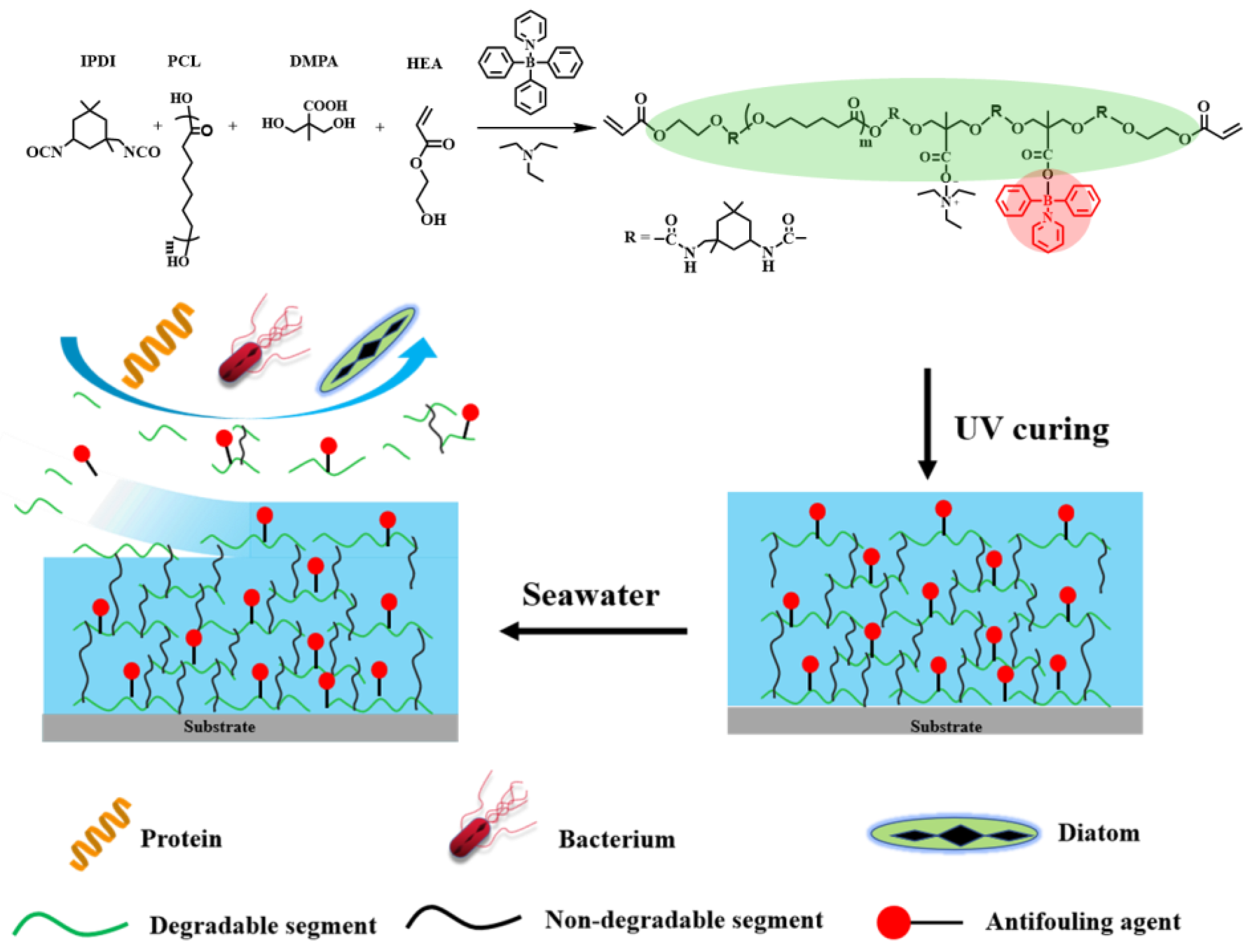
Figure 15 illustrates the anti-fouling mechanism of WPU-PTPBx coating. When the coating is immersed in seawater, the anti-fouling agent PTPB side groups in the system hydrolyze and release into the seawater environment, inhibiting the attachment of marine fouling organisms such as bacteria and diatoms to the coating surface. At the same time, the ester groups in the PCL segments of the polyurethane acrylate polymer chain will also break, causing the cross-linked network in the coating to disintegrate and finally achieve the degradability of the coating and the self-renewal of its surface. The self-renewal will also cause bacteria and diatoms to desorb from the anti-fouling coating surface. Therefore, the presence of PTPB introduced through grafting, as well as the self-renewing surface derived from degradability, endows pronounced anti-fouling performance to the WPU-PTPB coatings.

4. Conclusions

This work reports the synthesis of a photocurable degradable waterborne boron-containing polyurethane acrylate (WPU-PTPBx). The chemical structure of the synthesized polymer was characterized by FTIR and 1H NMR, confirming the successful grafting of the boron-containing anti-fouling agent PTPB. The particle size of the prepared aqueous dispersion of WPU-PTPBx is between 30 and 75 nm, and the dispersion exhibits excellent thermal storage stability. DSC and XRD testing indicate that the obtained WPU-PTPBx polymers have an amorphous structure, which facilitates their biodegradability. Substrate adhesion tests demonstrate that the prepared WPU-PTPBx coatings have excellent adhesion properties, with all coatings maintaining adhesion strengths no less than 2 MPa. Antibacterial and anti-algal adhesion tests demonstrated that WPU-PTPBx coatings have enhanced performance due to the grafting of PTPB, as a remarkable 99.66% inhibition rate against Escherichia coli and a significantly reduced algal adhesion density of only 36.9 cells/mm2 was achieved. Therefore, the WPU-PTPBx anti-fouling coatings can be considered a promising new class of anti-fouling materials that have great potential in marine applications.

Author Contributions

Conceptualization: G.-F.H., J.-P.Z., H.-B.L., C.-H.Z. and H.-P.X.; Methodology: G.-F.H., J.-P.Z., H.-B.L., C.-H.Z. and H.-P.X.; Validation: J.-L.Y., G.-F.H. and J.-P.Z.; Formal analysis: J.-L.Y., G.-F.H., J.-P.Z., H.-B.L., C.-H.Z. and H.-P.X.; Investigation: J.-L.Y. and G.-F.H.; Data curation: J.-L.Y., G.-F.H., J.-P.Z. and H.-P.X.; Writing—original draft preparation: J.-L.Y. and G.-F.H.; Writing—review and editing: G.-F.H., J.-P.Z. and H.-B.L.; Visualization: G.-F.H. and H.-P.X.; Supervision: G.-F.H. and J.-P.Z.; Project administration: G.-F.H. and J.-P.Z.; Funding acquisition: J.-P.Z., C.-H.Z. and H.-P.X. All authors have read and agreed to the published version of the manuscript.

Funding

This research was funded by the National Natural Science Foundation of China (Grant No.52163004, No.52263018), the Natural Science Foundation of Jiangxi Province (Grant number 20252BAC240407) and Nanchang Major Science and Technology Tackling Project (Contract Number: 2024zdxm018).

Data Availability Statement

All data involved in this study are included in this paper.

Conflicts of Interest

The authors declare no conflicts of interest.

References

  1. Gu, Y.; Yu, L.; Mou, J.; Wu, D.; Xu, M.; Zhou, P.; Ren, Y. Research strategies to develop environmentally friendly marine antifouling coatings. Mar. Drugs 2020, 18, 371. [Google Scholar] [CrossRef] [Scilit]
  2. Jin, H.; Tian, L.; Bing, W.; Zhao, J.; Ren, L. Bioinspired marine antifouling coatings: Status, prospects, and future. Prog. Mater. Sci. 2022, 124, 100889. [Google Scholar] [CrossRef] [Scilit]
  3. Li, S.; Feng, K.; Li, J.; Li, Y.; Li, Z.; Yu, L.; Xu, X. Marine antifouling strategies: Emerging opportunities for seawater resource utilization. Chem. Eng. J. 2024, 486, 149859. [Google Scholar] [CrossRef] [Scilit]
  4. Pan, J.; Ai, X.; Ma, C.; Zhang, G. Degradable vinyl polymers for combating marine biofouling. Accounts Chem. Res. 2022, 55, 1586–1598. [Google Scholar] [CrossRef] [Scilit] [PubMed]
  5. Chambers, L.D.; Stokes, K.R.; Walsh, F.C.; Wood, R.J.K. Modern approaches to marine antifouling coatings. Surf. Coat. Technol. 2006, 201, 3642–3652. [Google Scholar] [CrossRef] [Scilit]
  6. Tong, Z.; Guo, H.; Di, Z.; Chen, S.; Song, L.; Hu, J.; Hou, Y.; Zhan, X.; Zhang, Q.P. pavoninus-inspired smart slips marine antifouling coating based on Coumarin: Antifouling durability and adaptive adjustability of lubrication. Adv. Funct. Mater. 2024, 34, 2310702. [Google Scholar] [CrossRef] [Scilit]
  7. Sha, J.; Yu, J.; Chen, R.; Liu, Q.; Liu, J.; Zhu, J.; Liu, P.; Li, R.; Wang, J. Eco-friendly self-polishing antifouling coating via eugenol ester hydrolysis. Prog. Org. Coat. 2022, 172, 107077. [Google Scholar] [CrossRef] [Scilit]
  8. Yu, Y.; Xia, W.; Wang, W.; Wu, Z.; Chen, H. PEG-functionalized aliphatic polycarbonate brushes with self-polishing dynamic antifouling properties. Colloids Surf. B Biointerfaces 2024, 239, 113936. [Google Scholar] [CrossRef] [Scilit]
  9. An, X.; Cheng, J.; Li, Q.; Tang, J.; Li, Z.; Liu, L.; Yang, H.; Wei, C. Development of a mechanically robust silicon-based cross-linking polymer for the sustainable marine antifouling coatings. Sustain. Mater. Technol. 2024, 41, e01015. [Google Scholar] [CrossRef] [Scilit]
  10. Ma, C.; Zhang, W.; Zhang, G.; Qian, P.-Y. Environmentally friendly antifouling coatings based on biodegradable polymer and natural antifoulant. ACS Sustain. Chem. Eng. 2017, 5, 6304–6309. [Google Scholar] [CrossRef] [Scilit]
  11. Lu, G.; Tian, S.; Li, J.; Xu, Y.; Liu, S.; Pu, J. Fabrication of bio-based amphiphilic hydrogel coating with excellent antifouling and mechanical properties. Chem. Eng. J. 2021, 409, 128134. [Google Scholar] [CrossRef] [Scilit]
  12. Xu, K.; Xie, H.; Sun, C.; Lin, W.; You, Z.; Zheng, G.; Zheng, X.; Xu, Y.; Chen, J.; Lin, F. Sustainable coating based on Zwitterionic functionalized polyurushiol with antifouling and antibacterial properties. Molecules 2023, 28, 8040. [Google Scholar] [CrossRef] [Scilit]
  13. Zhang, J.; Bai, X.; Chen, R.; Yu, J.; Liu, P.; Liu, Q.; Liu, J.; Zhu, J.; Wang, J. Bionic transparent antifouling coatings with linalool inspired by salvia: Investigating the inhibition mechanism on typical fouling organism. Prog. Org. Coat. 2024, 196, 108679. [Google Scholar] [CrossRef] [Scilit]
  14. Xie, Q.; Pan, J.; Ma, C.; Zhang, G. Dynamic surface antifouling: Mechanism and systems. Soft Matter 2019, 15, 1087–1107. [Google Scholar] [CrossRef] [Scilit]
  15. Ali, A.; Amin, B.U.; Yu, W.; Gui, T.; Cong, W.; Zhang, K.; Tong, Z.; Hu, J.; Zhan, X.; Zhang, Q. Eco-friendly biodegradable polyurethane based coating for antibacterial and antifouling performance. Chin. J. Chem. Eng. 2023, 54, 80–88. [Google Scholar] [CrossRef] [Scilit]
  16. Tamburri, M.N.; Soon, Z.Y.; Scianni, C.; Øpstad, C.L.; Oxtoby, N.S.; Doran, S.; Drake, L.A. Understanding the potential release of microplastics from coatings used on commercial ships. Front. Mar. Sci. 2022, 9, 1074654. [Google Scholar] [CrossRef] [Scilit]
  17. Onduka, T.; Ojima, D.; Ito, M.; Ito, K.; Mochida, K.; Fujii, K. Toxicity of degradation products of the antifouling biocide pyridine triphenylborane to marine organisms. Arch. Environ. Contam. Toxicol. 2013, 65, 724–732. [Google Scholar] [CrossRef] [Scilit]
  18. Zhou, X.; Okamura, H.; Nagata, S. Abiotic degradation of triphenylborane pyridine (TPBP) antifouling agent in water. Chemosphere 2007, 67, 1904–1910. [Google Scholar] [CrossRef] [Scilit]
  19. Ou, B.; Chen, M.; Huang, R.; Zhou, H. Preparation and application of novel biodegradable polyurethane copolymer. RSC Adv. 2016, 6, 47138–47144. [Google Scholar] [CrossRef] [Scilit]
  20. Pedersen, D.D.; Kim, S.; Wagner, W.R. Biodegradable polyurethane scaffolds in regenerative medicine: Clinical translation review. J. Biomed. Mater. Res. Part A 2022, 110, 1460–1487. [Google Scholar] [CrossRef] [Scilit] [PubMed]
  21. Jiang, X.; Xiong, X.; Lin, Y.; Lu, Y.; Cheng, J.; Cheng, N.; Zhang, J. A composite scaffold fabricated with an acellular matrix and biodegradable polyurethane for the in vivo regeneration of pig bile duct defects. Acta Biomater. 2022, 150, 238–253. [Google Scholar] [CrossRef] [Scilit] [PubMed]
  22. Pan, J.; Xie, Q.; Chiang, H.; Peng, Q.; Qian, P.-Y.; Ma, C.; Zhang, G. “From the nature for the nature”: An eco-friendly antifouling coating consisting of poly(lactic acid)-based polyurethane and natural antifoulant. ACS Sustain. Chem. Eng. 2020, 8, 1671–1678. [Google Scholar] [CrossRef] [Scilit]
  23. Xiong, W.; Chen, B.; Peng, J.; Luo, X.; Pan, X.; Xiao, Z.; Gong, W.; Huang, Z.; Chu, Z.; Zhang, X.; et al. A dual-crosslinking strategy for waterborne polyurethane coatings to achieve outstanding anti-smudge and anti-corrosion properties. Chem. Eng. J. 2024, 490, 151509. [Google Scholar] [CrossRef] [Scilit]
  24. Man, L.; Feng, Y.; Hu, Y.; Yuan, T.; Yang, Z. A renewable and multifunctional eco-friendly coating from novel tung oil-based cationic waterborne polyurethane dispersions. J. Clean. Prod. 2019, 241, 118341. [Google Scholar] [CrossRef] [Scilit]
  25. Kang, S.Y.; Ji, Z.; Tseng, L.F.; Turner, S.A.; Villanueva, D.A.; Johnson, R.; Albano, A.; Langer, R. Design and synthesis of waterborne polyurethanes. Adv. Mater. 2018, 30, 1706237. [Google Scholar] [CrossRef] [Scilit] [PubMed]
  26. Luo, H.; Wei, H.; Wang, Z.; Li, H.; Chen, Y.; Xiang, J.; Fan, H. Fabrication of UV-curable waterborne polyurethane coatings with self-cleaning, anti-graffiti performance, and corrosion resistance. Colloids Surf. A Physicochem. Eng. Asp. 2023, 676, 132177. [Google Scholar] [CrossRef] [Scilit]
  27. Ma, J.; Cai, K.; Yang, C.; Li, M.; Pan, X.; Huang, Y.; Yao, J.; Zheng, J.; Shao, J. Synthesis and properties of photocurable polyurethane acrylate for textile artificial leather. Prog. Org. Coat. 2022, 171, 107017. [Google Scholar] [CrossRef] [Scilit]
  28. Dong, X.; Ren, J.; Duan, Y.; Wu, D.; Lin, L.; Shi, J.; Jia, R.; Xu, X.; He, X. Preparation and properties of green UV-curable itaconic acid cross-linked modified waterborne polyurethane coating. J. Appl. Polym. Sci. 2022, 139, 52042. [Google Scholar] [CrossRef] [Scilit]
  29. Puyadena, M.; Pajares, E.; Martin, L.; Barrio, A.; González, A.; Irusta, L. UV-curable acrylic end-capped amphoteric waterborne polyurethane coatings. Prog. Org. Coat. 2024, 188, 108229. [Google Scholar] [CrossRef] [Scilit]
  30. Guo, Y.; Ji, Z.; Zhang, Y.; Wang, X.; Zhou, F. Solvent-free and photocurable polyimide inks for 3D printing. J. Mater. Chem. A 2017, 5, 16307–16314. [Google Scholar] [CrossRef] [Scilit]
  31. Dai, G.; Xie, Q.; Chen, S.; Ma, C.; Zhang, G. Biodegradable poly(ester)-poly(methyl methacrylate) copolymer for marine anti-biofouling. Prog. Org. Coat. 2018, 124, 55–60. [Google Scholar] [CrossRef] [Scilit]
  32. Zhao, Y.; Wei, D.; Xu, X.; Guan, Y. Long lasting marine antifouling polyurethane coating chemically bonded with poly(hexamethylene guanidine). Polym. Adv. Technol. 2024, 35, e6314. [Google Scholar] [CrossRef] [Scilit]
  33. Tong, Z.; Rao, Q.; Chen, S.; Song, L.; Hu, J.; Hou, Y.; Gao, X.; Lu, J.; Zhan, X.; Zhang, Q. Sea slug inspired smart marine antifouling coating with reversible chemical bonds: Controllable UV-responsive coumarin releasing and efficient UV-healing properties. Chem. Eng. J. 2022, 429, 132471. [Google Scholar] [CrossRef] [Scilit]
  34. Tang, J.; Chen, R.; Huo, X.; Sun, G.; Yu, J.; Li, R.; Liu, P.; Liu, Q.; Wang, J. Constructing micro-dynamic surface of boron-polyurethane with endurable antifouling properties. Prog. Org. Coat. 2023, 174, 107243. [Google Scholar] [CrossRef] [Scilit]
  35. Song, F.; Wang, J.; Zhang, L.; Chen, R.; Liu, Q.; Liu, J.; Yu, J.; Liu, P.; Duan, J. Synergistically improved antifouling efficiency of a bioinspired self-renewing interface via a borneol/boron acrylate polymer. J. Colloid Interface Sci. 2022, 612, 459–466. [Google Scholar] [CrossRef] [Scilit] [PubMed]
  36. Zhang, Z.; Li, Y.; Chen, R.; Liu, Q.; Liu, J.; Yu, J.; Zhang, H.; Song, D.; Wang, J. Photocatalytic antifouling coating based on carbon nitride with dynamic acrylate boron fluorinated polymers. New J. Chem. 2021, 45, 780–787. [Google Scholar] [CrossRef] [Scilit]
  37. Zhang, Z.; Chen, R.; Song, D.; Yu, J.; Sun, G.; Liu, Q.; Han, S.; Liu, J.; Zhang, H.; Wang, J. Guanidine-functionalized graphene to improve the antifouling performance of boron acrylate polymer. Prog. Org. Coat. 2021, 159, 106396. [Google Scholar] [CrossRef] [Scilit]
  38. Sun, X.; Zhang, L.; Chen, R.; Liu, J.; Yu, J.; Zhu, J.; Liu, P.; Wang, J.; Liu, Q. Constructing three-dimensional network C, O Co-doped nitrogen-deficient carbon nitride regulated by acrylic fluoroboron overall marine antifouling. J. Colloid Interface Sci. 2022, 608, 1802–1812. [Google Scholar] [CrossRef] [Scilit] [PubMed]
  39. Wang, H.; Zhang, L.; Chen, R.; Liu, Q.; Liu, J.; Yu, J.; Liu, P.; Duan, J.; Wang, J. Surface morphology properties and antifouling activity of Bi2WO6/boron-grafted polyurethane composite coatings realized via multiple synergy. J. Colloid Interface Sci. 2022, 626, 815–823. [Google Scholar] [CrossRef] [Scilit]
  40. ASTM D1141-98; Standard Practice for Preparation of Substitute Ocean Water. ASTM International: West Conshohocken, PA, USA, 2021.
  41. ASTM D4541-09; Standard Test Method for Pull-Off Strength of Coatings Using Portable Adhesion Testers. ASTM International: West Conshohocken, PA, USA, 2009.
  42. Qian, Y.; Dong, F.; Guo, L.; Xu, X.; Liu, H. Terpene derivative-containing silicone two-component waterborne polyurethane for coatings. Prog. Org. Coat. 2021, 153, 106137. [Google Scholar] [CrossRef] [Scilit]
  43. Sui, Z.; Li, Y.; Guo, Z.; Zhang, Q.; Xu, Y.; Zhao, X. Preparation and properties of polysiloxane modified fluorine-containing waterborne polyurethane emulsion. Prog. Org. Coat. 2022, 166, 106783. [Google Scholar] [CrossRef] [Scilit]
  44. Ha, Z.; Lei, L.; Xia, Y.; Chen, X.; Mao, P.; Fan, B.; Shi, S. A facile strategy to resolve the contradiction between dispersion stability and coating anti-smudge performance of bio-based waterborne polyurethane under ambient condition. Prog. Org. Coat. 2024, 197, 108813. [Google Scholar] [CrossRef] [Scilit]
  45. Hu, L.; Pu, Z.; Zhong, Y.; Liu, L.; Cheng, J.; Zhong, J. Effect of different carboxylic acid group contents on microstructure and properties of waterborne polyurethane dispersions. J. Polym. Res. 2020, 27, 129. [Google Scholar] [CrossRef] [Scilit]
  46. Ma, J.; Ma, C.; Yang, Y.; Xu, W.; Zhang, G. Biodegradable polyurethane carrying antifoulants for inhibition of marine biofouling. Ind. Eng. Chem. Res. 2014, 53, 12753–12759. [Google Scholar] [CrossRef] [Scilit]
  47. Sundararajan, S.; Samui, A.B.; Kulkarni, P.S. Synthesis and characterization of poly(ethylene glycol) (PEG) based hyperbranched polyurethanes as thermal energy storage materials. Thermochim. Acta 2017, 650, 114–122. [Google Scholar] [CrossRef] [Scilit]
  48. Xie, L.; Hong, F.; He, C.; Ma, C.; Liu, J.; Zhang, G.; Wu, C. Coatings with a self-generating hydrogel surface for antifouling. Polymer 2011, 52, 3738–3744. [Google Scholar] [CrossRef] [Scilit]
  49. Chen, S.; Ma, C.; Zhang, G. Biodegradable polymer as controlled release system of organic antifoulant to prevent marine biofouling. Prog. Org. Coat. 2017, 104, 58–63. [Google Scholar] [CrossRef] [Scilit]
  50. Mei, L.; Ai, X.; Ma, C.; Zhang, G. Surface-fragmenting hyperbranched copolymers with hydrolysis-generating zwitterions for antifouling coatings. J. Mater. Chem. B 2020, 8, 5434–5440. [Google Scholar] [CrossRef] [Scilit]
  51. Ying, W.B.; Yu, Z.; Kim, D.H.; Lee, K.J.; Hu, H.; Liu, Y.; Kong, Z.; Wang, K.; Shang, J.; Zhang, R.; et al. Waterproof, highly tough, and fast self-healing polyurethane for durable electronic skin. ACS Appl. Mater. Interfaces 2020, 12, 11072–11083. [Google Scholar] [CrossRef] [Scilit]
  52. Qiu, Q.; Gu, Y.; Ren, Y.; Ding, H.; Hu, C.; Wu, D.; Mou, J.; Wu, Z.; Dai, D. Research progress on eco-friendly natural antifouling agents and their antifouling mechanisms. Chem. Eng. J. 2024, 495, 153638. [Google Scholar] [CrossRef] [Scilit]
Scheme 1. Synthetic route of WPU-PTPBx polymers.
Coatings 16 00393 sch001
Figure 1. FTIR spectra of prepolymer before and after grafting PTPB onto polyurethane acrylate (a), and WPU−PTPBx polymers (b).
Coatings 16 00393 g001
Figure 2. 1H NMR spectra of WPU-PTPB0 (a) and WPU−PTPBx (x = 2, 4, 6) (b).
Coatings 16 00393 g002
Figure 3. Particle size distribution (ad) and thermal storage stability curves (e) of the WPU−PTPBx dispersion.
Coatings 16 00393 g003
Figure 4. FTIR spectra of WPU−PTPB6 at different curing times.
Coatings 16 00393 g004
Figure 5. Double bond conversion curves of WPU−PTPBx.
Coatings 16 00393 g005
Figure 6. The DSC curves show the melting peaks (a) and glass transition temperature of PCL and WPU−PTPBx coatings (b).
Coatings 16 00393 g006
Figure 7. XRD patterns of PCL and WPU−PTPBx coatings.
Coatings 16 00393 g007
Figure 8. Adhesion strength of WPU−PTPBx coatings on epoxy substrate.
Coatings 16 00393 g008
Figure 9. Mass loss ratios of WPU−PTPBx coatings in artificial seawater.
Coatings 16 00393 g009
Figure 10. The WCA value (a) and immersion experimental results (b) of WPU−PTPBx coatings.
Coatings 16 00393 g010
Figure 11. The 3D images of the surface of WPU−PTPBx coatings before and after immersion in artificial seawater for 120 days at 25 °C.
Coatings 16 00393 g011
Figure 12. ATR−IR spectra (top) and the characteristic peaks at 1602~1492 cm−1 (down) before and after the hydrolysis of WPU−PTPBx coatings.
Coatings 16 00393 g012
Figure 13. Anti−biofouling performance of WPU−PTPBx coatings: antibacterial images against E.coli. (a); antibacterial efficiency (b); microscopy images for samples immersed in Nitzschia closterium solutions after 1 day (c); the density of diatoms attached to different WPU−PTPBx coatings (d).
Coatings 16 00393 g013
Figure 14. Nitzschia closterium concentration standard curve (a); growth curve of Nitzschia closterium on different coating surfaces (b).
Coatings 16 00393 g014
Figure 15. The anti−fouling mechanism of WPU−PTPBx coatings.
Coatings 16 00393 g015
Table 1. Previously reported boron-containing anti-fouling coatings.
Coating SystemResin TypeCuring MethodChemically Anchored PTPBDegradabilityReference
CNP (Carbon nitride/acrylic fluoroboron polymer)Solvent-based acrylic resinRoom temperature dryingYesNoZhang et al. [36], 2021
BAP/GNG (Guanidine-functionalized graphene/boron acrylate polymer)Solvent-based acrylic resinThermal dryingYesNoZhang et al. [37], 2021
CNBFP (C,O co-doped carbon nitride/acrylic fluoroboron polymer)Solvent-based acrylic resinThermal dryingYesNoSun et al. [38], 2022
BwOB (Bi2WO6/boron-grafted polyurethane)Solvent-based polyurethaneThermal dryingYesNoWang et al. [39], 2022
PBAB (Borneol/boron acrylate polymer)Solvent-based acrylic resinThermal curingYesNoSong et al. [35], 2022
BIT (Boron-polyurethane with micro-dynamic surface)Solvent-based polyurethaneThermal curingYesNoTang et al. [34], 2023
Table 2. The experimental formulation was used to synthesize the WPU-PTPBx polymers, total -COOH content, actual grafting rate of PTPB as calculated by 1H NMR and residual -COOH content.
SampleIPDIDMPAPCLHEAPTPBTotal (-COOH)Grafting Rate of PTPBResidual (-COOH)
(g)(g)(g)(g)(g)(mol)(%)(mol)
WPU-PTPB0153.27557.5043.33500.024/0.0240
WPU-PTPB2153.92950.9942.9582.0270.02927.10.0274
WPU-PTPB4154.50445.2712.6263.830.03457.50.0271
WPU-PTPB6155.01840.1592.3295.4450.03772.50.0247
Disclaimer/Publisher’s Note: The statements, opinions and data contained in all publications are solely those of the individual author(s) and contributor(s) and not of MDPI and/or the editor(s). MDPI and/or the editor(s) disclaim responsibility for any injury to people or property resulting from any ideas, methods, instructions or products referred to in the content.