


Abstract
To enhance the protection of zirconium alloys during loss-of-coolant accident conditions, the water vapor corrosion resistance of Y3+-stabilized zirconia coatings fabricated by plasma electrolytic oxidation on zirconium alloy was remarkably improved in this study. The corrosion resistance mechanisms of the coating were disclosed by simulating water vapor reaction processes in cubic zirconia (c-ZrO2) and tetragonal zirconia (t-ZrO2). The results revealed that the mass fraction of c-ZrO2 in the coatings was increased from 9% to 32% by adjusting the Y3+ concentration. The mass gain and corrosion rate of the enhanced coating were approximately 60% and 37% after 3600 s water vapor corrosion at 1000 °C separately compared to those of traditional zirconia coating. This enhancement is attributed to the slower reaction rates of c-ZrO2 with water vapor than t-ZrO2, which suppresses corrosion and reduces the formation of Zr(OH)4. Thus, less cracks appeared in coatings with higher c-ZrO2 fractions, as their corrosion layers contained fewer corrosion products that induced stress concentration, which, in turn, protects the subsurface coatings from further corrosion. This study provides a viable strategy for developing coatings to protect zirconium alloys against water vapor corrosion in nuclear energy applications.
1. Introduction
Owing to their low thermal neutron absorption cross-section, superior mechanical strength, moderate density and favorable irradiation resistance [1,2,3,4], zirconium (Zr) alloys are broadly deemed to be optimal metallic structural materials in the nuclear industry, serving as fuel cladding of water-cooled reactors. Nevertheless, the alloys are susceptible to severe corrosion in high-temperature water vapor environments, accompanied by significant hydrogen gas release [5,6,7,8]. The released hydrogen dissolves into the Zr matrix and precipitates as brittle hydrides, leading to sharp declines in the mechanical properties of Zr alloy cladding and further environmental risk [8,9,10]. After the 2011 Fukushima Daiichi nuclear accident, the high-temperature water vapor corrosion behavior of Zr alloys under loss-of-coolant accident (LOCA) conditions has emerged as a major focus in the nuclear community [11,12]. Thus, aiming to extend response time under beyond design basis accident (BDBA) conditions, it is imperative to improve the high-temperature water vapor resistance of Zr alloys.
To date, enhancing the corrosion resisting property of Zr alloys can be achieved by fabricating zirconia (ZrO2) coatings on the alloy surface. Varied surface treatments containing chemical vapor deposition, anodic oxidation, thermal spraying and plasma electrolytic oxidation (PEO) are currently adopted to fabricate ZrO2 coatings [13,14,15,16,17]. Among these, PEO technology is viewed as a highly promising surface modification method, primarily due to its ability to produce composition-controllable ceramic coatings with exceptional adhesion and corrosion resistance in situ on the surface of the alloy, providing a distinct advantage [18,19]. However, PEO-fabricated ZrO2 coatings without deliberate phase stabilization fail to effectively protect zirconium alloys due to poor phase stability [20]. Moreover, the protective function of zirconia coatings is highly dependent on crystalline phase composition and phase content, which are significantly affected by electrolyte additives during PEO treatment [21].
Research has demonstrated that the chemical composition and microstructure of ZrO2 coatings can be directly modulated by adjusting the electrolyte formulations [22]. The crystalline structure of ZrO2 can be maintained by introducing nanoparticle additives such as Yb2O3 [23], CaO [24] and Gd2O3 [25] into the electrolyte during the PEO process and can indeed improve corrosion resistance at room temperature to a certain extent, but the improvement is not obvious at elevated temperature, mainly due to differences in thermal expansion coefficients between the substrate and nanoparticles, which can induce particle peeling and speed up corrosion. To solve this issue, yttrium ions (Y3+) have been widely used as a phase stabilizer for ZrO2. During PEO, Zr4+ is partially substituted by Y3+ to form solid solutions [26], which regulate the crystalline evolution at the lattice level and reduce delamination risks. Da et al. [27] pointed out that the proportion of the cubic zirconia (c-ZrO2) and the tetragonal zirconia (t-ZrO2) in ZrO2 significantly influences mechanical properties. On this basis, it is proposed that variations in the c-ZrO2 and t-ZrO2 proportion may also affect the chemical stability of zirconia coatings in high-temperature water vapor environments. However, up to now, few publications have investigated the effect of variations in phase fraction between c-ZrO2 and t-ZrO2 caused by Y3+ on the high-temperature water vapor corrosion mechanism of ZrO2 coatings on zirconium alloys.
This study aimed to prepare YSZ coatings with varying contents of c-ZrO2 by controlling the concentration of Y3+ in the PEO process. Based on this, the influence of c-ZrO2 content on the water vapor corrosion resistance of the coatings was investigated. The mechanism by which the reactivity difference between t-ZrO2 and c-ZrO2 with water vapor directly affected the corrosion resistance of ZrO2 coatings was elucidated. It was found that c-ZrO2 exhibited less facile adsorption and dissociation with water vapor compared to t-ZrO2, thereby inhibiting the formation of Zr(OH)4 and consequently enhancing the water vapor corrosion resistance of ZrO2 coatings. The phase composition-regulated YSZ coatings by content control studied in this work provided guiding significance for optimizing the corrosion resistance of zirconium alloy coatings.
2. Materials and Methods
2.1. PEO Process of Zirconium Alloy Surface
The substrate material was Zr-4 alloy fabricated by casting, with a composition of 1.45% Sn, 0.9% Si, 0.23% Fe, 0.12% Cr, ≤0.03% Ni and margin Zr (all in wt%), which was machined into circular samples of φ10 × 3 mm utilizing wire-cut electrical discharge machining (WEDM). The surfaces of the samples were polished sequentially with 300 # to 2000 # grit SiC sandpapers until they were free of scratches. Subsequently, the polished samples were cleaned by ultrasonic waves in alcohol solution and then prepared for PEO treatment. The main components of (NaPO3)6 (0.4 mol/L), NaOH (0.8 mol/L), H3BO3 (0.1 mol/L), NaF (0.14 mol/L) and distilled water were selected to compose the electrolyte system for the PEO process. PEO coatings were fabricated by using varying concentrations of Y(NO3)3 (0, 0.5, 1.5 and 2.5 mol/L) in the above electrolyte. To elucidate the effect of Y(NO3)3 on the corrosion ability of the PEO coatings in high-temperature water vapor environments, the coating fabricated by the electrolyte system without Y(NO3)3 was designated as “conventional coating.” The PEO equipment operating in constant current mode was employed to treat pre-processed zirconium alloy samples. The following experimental parameters were used: termination voltage of 410 V, frequency of 800 Hz and process duration of 15 min separately. In this treatment setup, the sample served as the anode, while the stainless-steel plate was used as the cathode. The electrolysis temperature was maintained at 30 °C by a cryostat.
2.2. Corrosion Test in Water Vapor at High Temperature
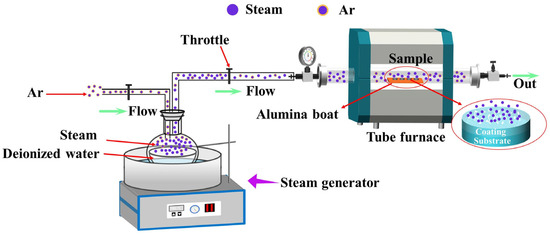
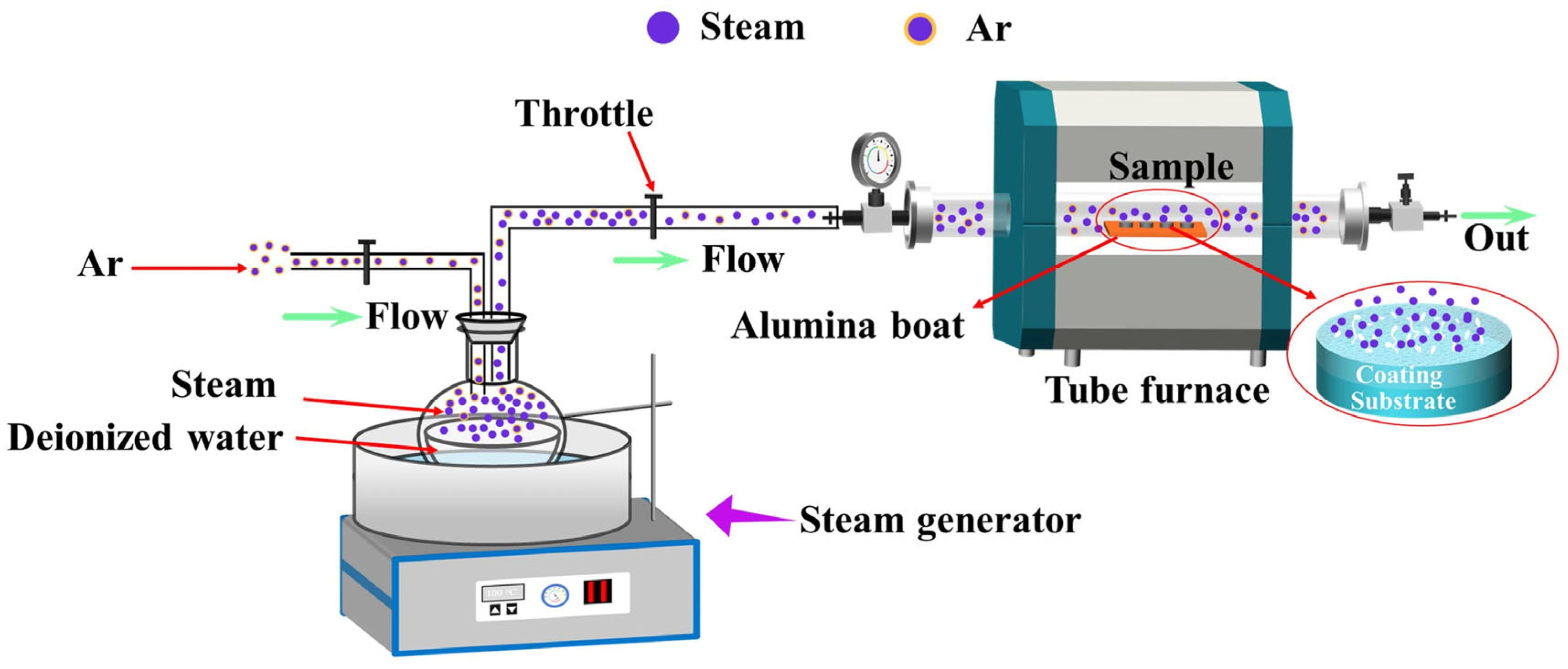
Water vapor corrosion tests of coatings were carried out by a self-constructed system, consisting of a tube furnace (OTF-1200X, KJMTI, Hefei, China) and a water vapor generator (see Figure 1). The aluminum crucible containing the coated samples was positioned in the middle of the furnace tube to ensure uniform exposure to the water vapor environment. The furnace temperature was elevated from room temperature (RT) to the set corrosion temperature (1000 °C) at a heating rate of 40 °C/min, while 30 sccm of argon was continuously injected as a protective atmosphere throughout the heating process. Upon reaching the target temperature, a stable gas mixture of 60 sccm water vapor and 20 sccm argon was injected into the furnace using a Bronkhorst flow control system. The coated samples were simultaneously tested in the isothermal zone, and the corrosion duration was 3600 s. After the test, samples were cooled to RT in the tube furnace at a cooling rate of 40 °C/min under a 30 sccm argon flow. The weight changes of each sample before and after corrosion were measured by an electronic balance with a sensitivity of 10−4 g. The average mass gain was determined from four parallel samples in each group to investigate the corrosion resistance mechanism of the coatings.
Figure 1.
Schematic diagram of a self-assembled water vapor corrosion test device.
2.3. Characterization Methods
X-ray diffraction (XRD) and X-ray photoelectron spectroscopy (XPS) were applied to analyze the physical composition and valence states of various elements in the coatings before and after water vapor corrosion to disclose the role of Y3+ in regulating the phase content of the coatings and how phase content influenced the corrosion properties of the coatings. XRD was performed using Cu Kα radiation (λ = 0.15418 nm) operated at 40 kV and 150 mA. The scanning angle ranged from 25 to 80 degrees, with a scanning speed of 5 degrees and a step size of 0.02 degrees. XPS was conducted by using a Thermo Scientific K-Alpha spectrometer, which was a US-manufactured instrument. The obtained spectra were processed using peak fitting in Avantage software, and all binding energies were calibrated based on the work function proposed by Li et al. [28]. The sin2ψ method was applied to precisely measure the residual tensile stresses of the corroded samples. The (2 0 1) and (3 2 0) diffraction planes of Zr(OH)4 at 40° and 64° are selected for residual stress measurement, and the angle ψ is set at 30°. The surface and cross-sectional morphology after corrosion were observed by a Hitachi S-4800 field emission scanning electron microscope. After corrosion, the samples were embedded in epoxy resin to ensure full curing of the resin and tight bonding with the samples and were ground to 7000 grits followed by polishing with alumina suspensions at room temperature, preparing for the cross-section analysis. Elemental compositions of the coatings were examined by EDS detectors, and point scanning with an accelerating voltage of 200 kV was performed by Bruker, Ettlingen, Germany.
3. Results and Discussion
3.1. Phase and Chemical Composition of the Pristine Coatings
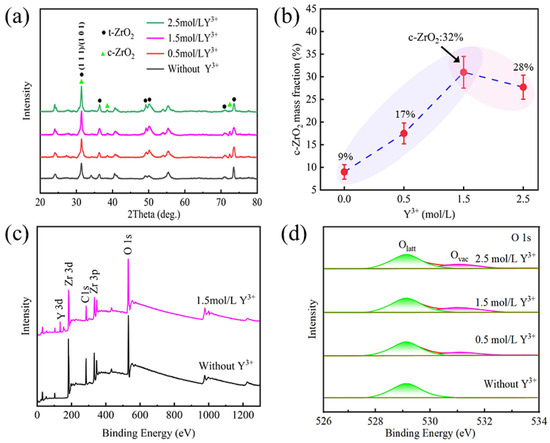
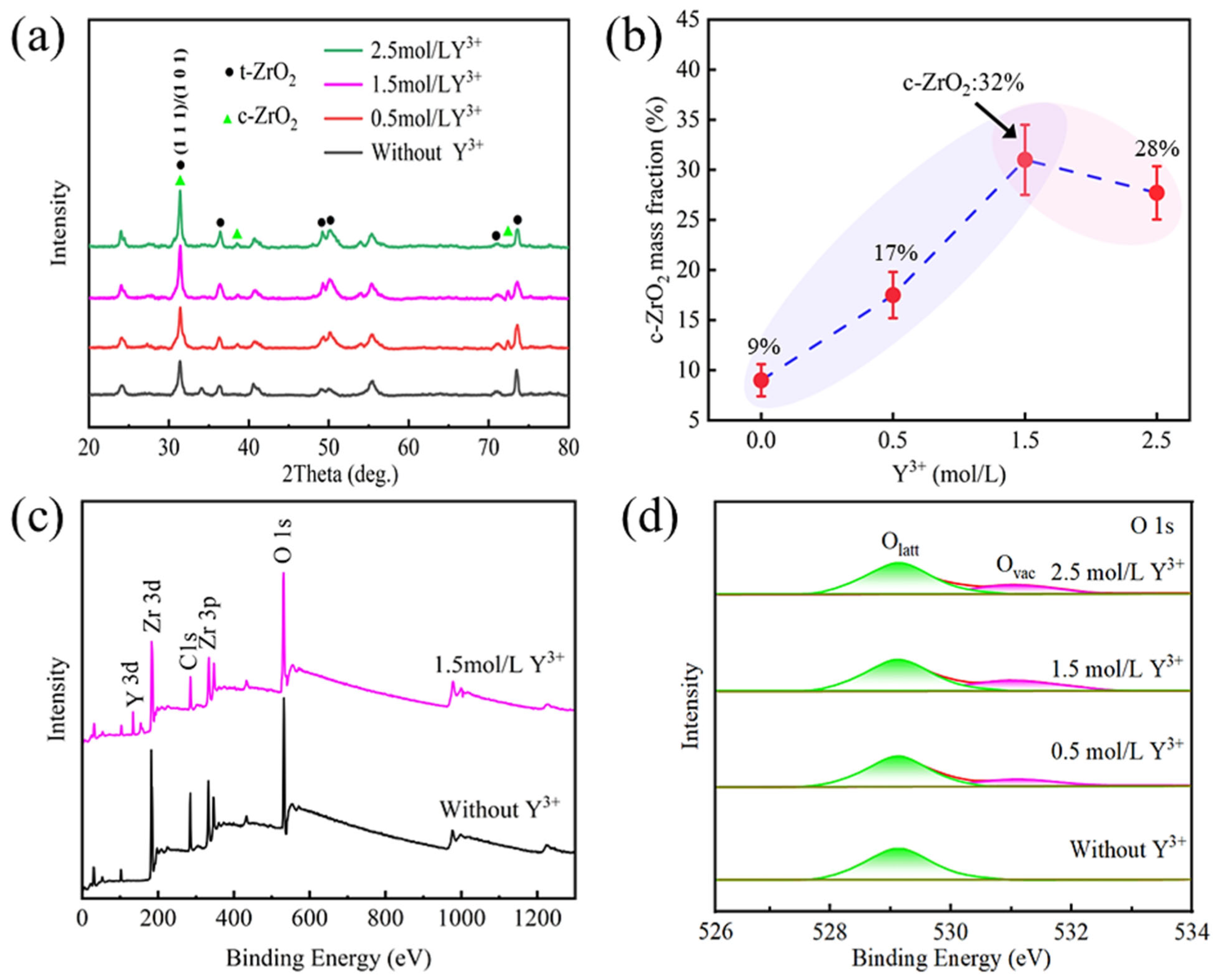
XRD was used to identify the phase components of different coatings (Figure 2a). The XRD pattern implies that the compositions of the coatings are predominantly composed of c-ZrO2 and t-ZrO2, derived from the Zr alloy substrate. Characteristic peaks corresponding to the (111) plane of c-ZrO2 and (101) plane of t-ZrO2 were observed in all samples, and no heterogeneous phases were detected with the introduction of Y3+. As shown, the peak intensity of c-ZrO2 (111) gradually increased with Y3+ addition. This is due to the fact that the introduction of Y3+ induces a larger orientation difference angle in ZrO2 during the PEO process, suppressing the phase transition from the cubic to tetragonal phase (c-t) and stabilizing cubic zirconia [27]. The c-ZrO2 content in the coatings was calculated [29]. With the increase in Y3+ concentration in the electrolyte (from 0 to 1.5 mol/L), the mass fraction of c-ZrO2 in the coatings increased from 9% to 32%, an about 72% increase compared to traditional ZrO2 coating. However, when the Y3+ concentration further increased to 2.5 mol/L, the mass fraction of c-ZrO2 slowly decreased (Figure 2b), which is attributable to the solubility limitations of yttrium ions substituting zirconium ions to form the solid solution and weakening the phase stabilization effect. The total XPS spectrum of the coatings is presented in Figure 2c, which reflects the successful incorporation of Y3+. Y3+ incorporation alters the lattice structure of c-ZrO2 by occupying lattice sites or partial interstitial positions, disrupting the ordered arrangement of atoms in the c-ZrO2 lattice [30,31]. This leads to the breaking of Zr-O bonds and the migration of Zr4+ ions, eventually generating abundant oxygen vacancies [32]. To characterize oxygen vacancies in the coatings, Figure 2d shows high-resolution XPS O 1s spectra with various Y3+ contents. The characteristic peak near 529.8 eV corresponds to lattice oxygen (O2−), while the peak near 531.1 eV belongs to defective oxygen or low-coordination surface oxygen ions [32,33]. Calculated from the peak area ratio in the O 1s spectrum, the oxygen vacancy fractions at varying Y3+ contents were 16% (0.5 mol/L), 20.4% (1.5 mol/L) and 18.4% (2.5 mol/L). The variation of oxygen vacancies in the coatings confirms that the ordered atomic arrangement of c-ZrO2 is obviously destroyed by Y3+. The presence of oxygen vacancies reduces repulsive forces between oxygen atoms and mitigates lattice distortion in the coordination layer [34], thus maintaining the crystal structure of c-ZrO2 to form a substitutional solid solution during the PEO process and preserving it at room temperature.
Figure 2.
The phase identification of the coatings: (a) XRD pattern of the coatings; (b) the mass fraction of c-ZrO2 with varying Y3+ content; (c) XPS survey spectrum; (d) O 1s XPS spectra with varying Y3+ content.
3.2. Cycle Water Vapor Corrosion Rate
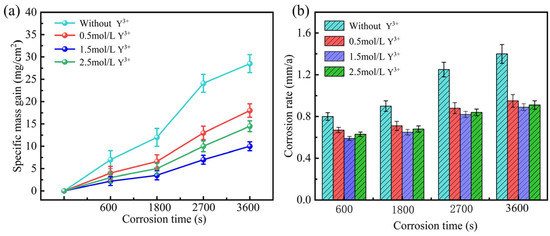
The corrosion mass gain curves of the four coatings after cyclic water vapor corrosion test are plotted in Figure 3a [35]. Corrosion products generated by the corrosion reaction alter the sample mass, which implies that the greater the mass change, the more severe the corrosion reaction of the samples. The corrosion test results indicate that the weight gain value of four coatings gradually rose as the corrosion time prolonged, and the weight change of the conventional coating was the highest. However, the weight increment of the Y3+-addition coatings was dramatically lower than that of the conventional coating. Particularly, the final mass gain of the coating prepared by 1.5 mol/L Y3+ was reduced by 60% after 3600 s water vapor corrosion at 1000 °C compared with that of the traditional ZrO2 coating, which testifies that the addition of Y3+ remarkably enhances the protective capability of the coatings and improves the long-term corrosion resistance of zirconium alloys in high-temperature water vapor environments.
Figure 3.
Mass gain and corrosion rates of four coatings after varying periods of cyclic water vapor corrosion: (a) mass gain; (b) corrosion rates.
The corrosion rates calculated after varying water vapor corrosion periods are given in Figure 3b to further study the protection ability of the coatings according to the weight gain curves [36]. The corrosion rates showed a gradual rise with the extension of the corrosion time. The corrosion rates of the coatings with Y3+ addition were somewhat lower than that of the conventional coating in the first 600 s, while they became prominently lower than that of the conventional coating after 2700 s. The corrosion rate of the Y3+-addition coatings was decreased by approximately 33%–37% compared to that of the conventional coating after 2700 and 3600 s. This finding suggests that the introduction of Y3+ exerts a prominent effect on the corrosion resistance of coatings, probably owing to its beneficial regulation of the coating compositions. Throughout the experiment, the corrosion rate of the coating with 1.5 mol/L Y3+ was lower than that of the other coatings, showing that the addition of 1.5 mol/L Y3+ provides optimal corrosion resistance. The additions of the Y3+ exceeding the level have a negligible or even adverse effect on corrosion resistance.
3.3. Morphologies of Coatings After Water Vapor Corrosion
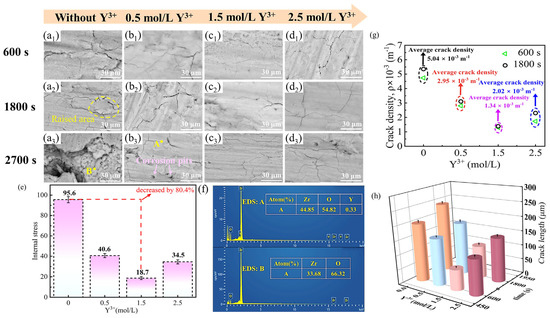
The corrosion resistance of all coatings was investigated by analyzing surface morphology evolution after exposure to water vapor corrosion for 600–2700 s (Figure 4(a1–d3)). It can be seen that the coatings show various degrees of surface damage after corrosion, but the extent of surface damage in the Y3+-containing coatings was slighter than that of the conventional coating as the corrosion time increased. Exposure to the steam environment induced the transformation of the surface ceramic oxide into an amorphous state, resulting in significant volume expansion and lattice mismatch [37], which resulted in the concentration of tensile stress on the top corrosion product layer. When the internal stress reached a critical value, the stress releases triggered the formation of microcracks [38]. Accordingly, the comparative morphological analysis indicated that the Y3+-containing coatings may generate fewer corrosion products compared to the conventional coating.
Figure 4.
Surface corrosion morphologies of coatings with different Y3+ contents after various corrosion periods: (a1–a3) without Y3+; (b1–b3) 0.5 mol/L Y3+; (c1–c3) 1.5 mol/L Y3+; (d1–d3) 2.5 mol/L Y3+; (e) tensile stress of four coatings after the 1800 s corrosion; (f) EDS point analysis at points A and B; (g) crack density; (h) crack length.
To validate the relationship between corrosion products and the stresses of coatings, the tensile stresses of four coatings after corroding for 1800 s were calculated [39], as shown in Figure 4e. It is worth noting that the tensile stresses of the Y3+-containing coatings were lower than that of the conventional coating. Compared with the conventional coating (95.6 MPa), the internal tensile stress of the coating with 1.5 mol/L Y3+ concentration was reduced to 18.7 MPa, about 80.4% less than that of the conventional coating. The upper surface of the conventional coating was adhered by thicker corrosion products, indicating more severe corrosion with the corrosion progress in. The substantial tensile stress induced the formation of large-scale cracks in the corrosion layer. These cracks facilitated further corrosion of the subsurface layer, thus accelerating the corrosion process and causing surface bulge (Figure 4(a2)). Conversely, the corrosion layer of the Y3+-containing coatings remains relatively intact (Figure 4(b1–d3)), indicating that the coatings presented much higher corrosion resistance due to their low corrosion reaction rate. Crack propagation intensified as corrosion time continually extended. The formation of inhomogeneous corrosion layers was detected on the detached area of the traditional coatings, and the higher oxygen content in the detached area also revealed that the substrate surface had been corroded (Figure 4f). Meanwhile, the Y3+-containing coatings also became coarse, accompanied by the development of corrosion pitting on the surface (Figure 4(b3)). The results manifested that the enhanced corrosion resistance of the coatings was attributed to the introduction of Y3+, which regulated the phase composition, thereby diminishing the reactivity of corrosion reactions and alleviating stress concentration and crack initiation.
It is well known that quantification of the crack is essential to evaluate the corrosion resistance of the coatings. Considering that coating detachment affected crack length and density and to enhance data comparability and reliability, these coatings were not included in the calculations after 1800 s corrosion. Hence, systematical analysis of the SEM images in Figure 4(a1–d2) was performed using open-source software (Image J) to obtain the surface crack lengths and total crack areas of all selected regions in the coatings. Moreover, crack density was determined from Equation (1) [40]:
where ρ means the surface crack density (m−1), l denotes the crack length (μm), and s represents the total crack area (μm2), respectively, and the results are shown in Figure 4g,h. Compared to the conventional coating, the surface crack density and length of coatings evidently declined with the increase in Y3+ concentration. The average crack density of the traditional coating was 5.04 × 10⁻³ m−1. When 1.5 mol/L Y3+ is added, the average crack density of the coating reached a minimum value of 1.34 × 10⁻³ m−1, and its crack length was shorter than other groups. The lower crack density and length on the surface reduced paths for corrosion medium (such as water vapor) penetrating into the coating depth, effectively inhibiting secondary corrosion and coating degradation, which corresponds to the results of corrosion weight gain (Figure 3a).
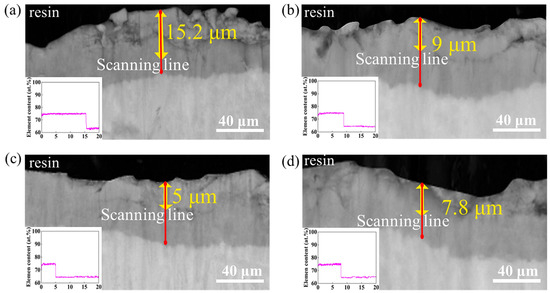
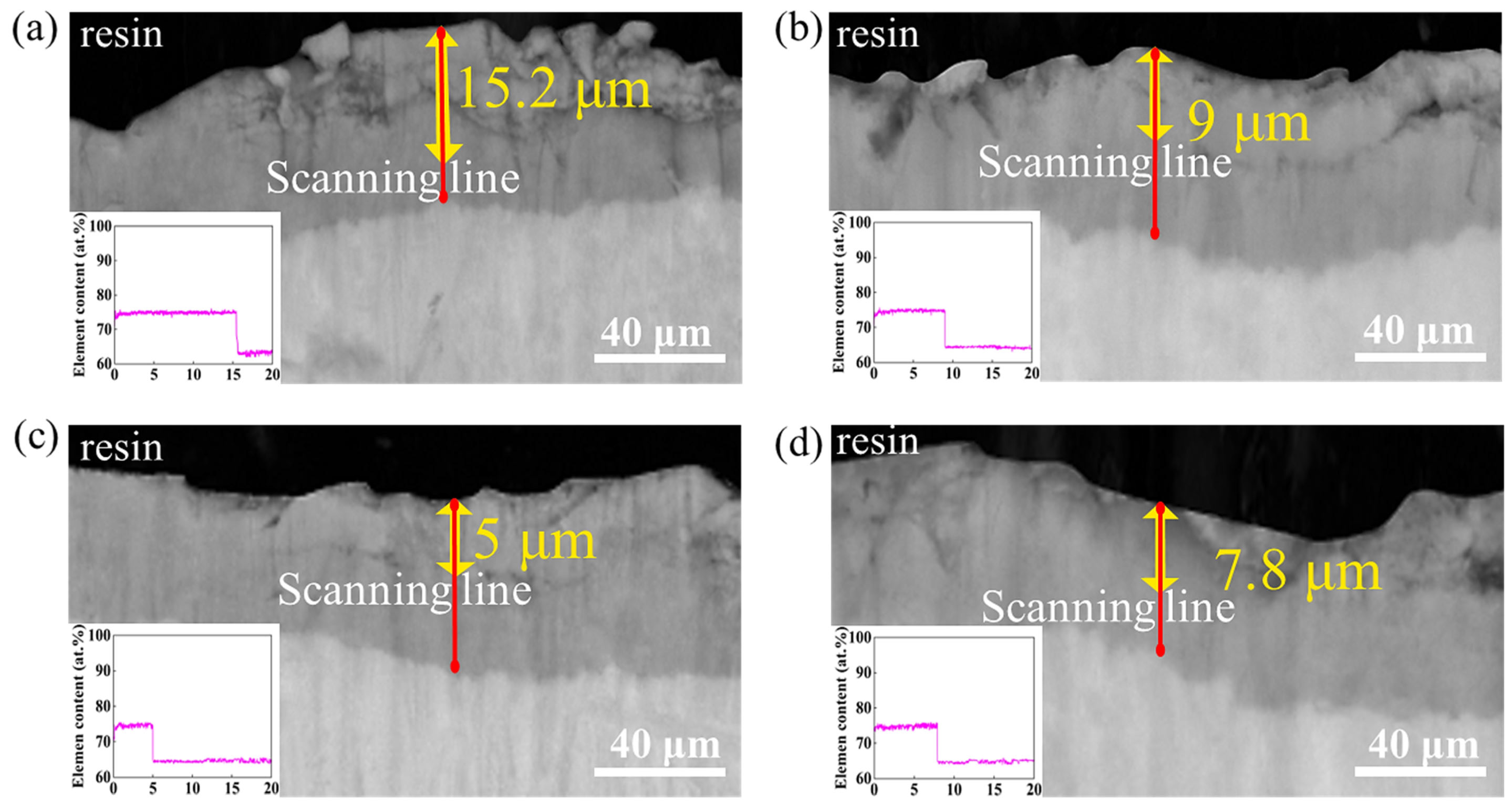
The cross-sectional morphologies of the four coatings after 1800 s corrosion are shown in Figure 5. Corrosion depth can stand for the anti-corrosion property of the coatings to some extent. The deeper the corrosion depth, the faster the corrosion rate of the coatings. The reaction between zirconia and water vapor at elevated temperatures generates zirconium hydroxide, a process that is accompanied by substantial oxygen migration into the corrosion zone. Thus, oxygen content acts as an effective indicator for determining corrosion depth. With the increase in Y3+ content, the corrosion depth decreased initially and increased slightly, reaching the minimum when 1.5 mol/L Y3+ was added. It is noteworthy that the corrosion depth of coatings exhibited an inverse trend to the c-ZrO2 phase fraction of uncorroded coatings (Figure 2b), indicating that the anti-corrosion performance of coatings is associated with c-ZrO2 in a high-temperature water vapor environment.
Figure 5.
Corrosion depth after 1800 s water vapor corrosion for coatings with varying Y3+ content: (a) without Y3+; (b) 0.5 mol/L Y3+; (c) 1.5 mol/L Y3+; (d) 2.5 mol/L Y3+ (EDS line scan results of oxygen are indicated by pink lines, and the depth of corrosion is indicated by the yellow arrow in (a–c)).
3.4. Phase Evolution of Coatings After Water Vapor Corrosion
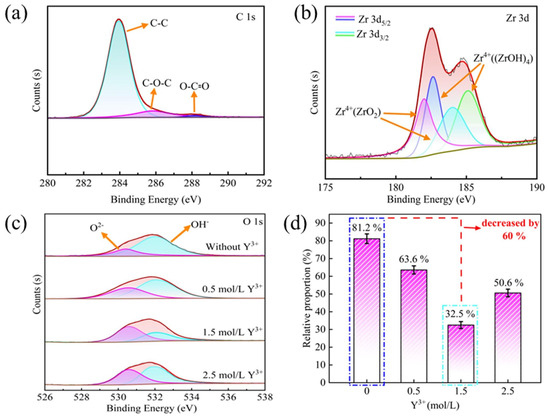
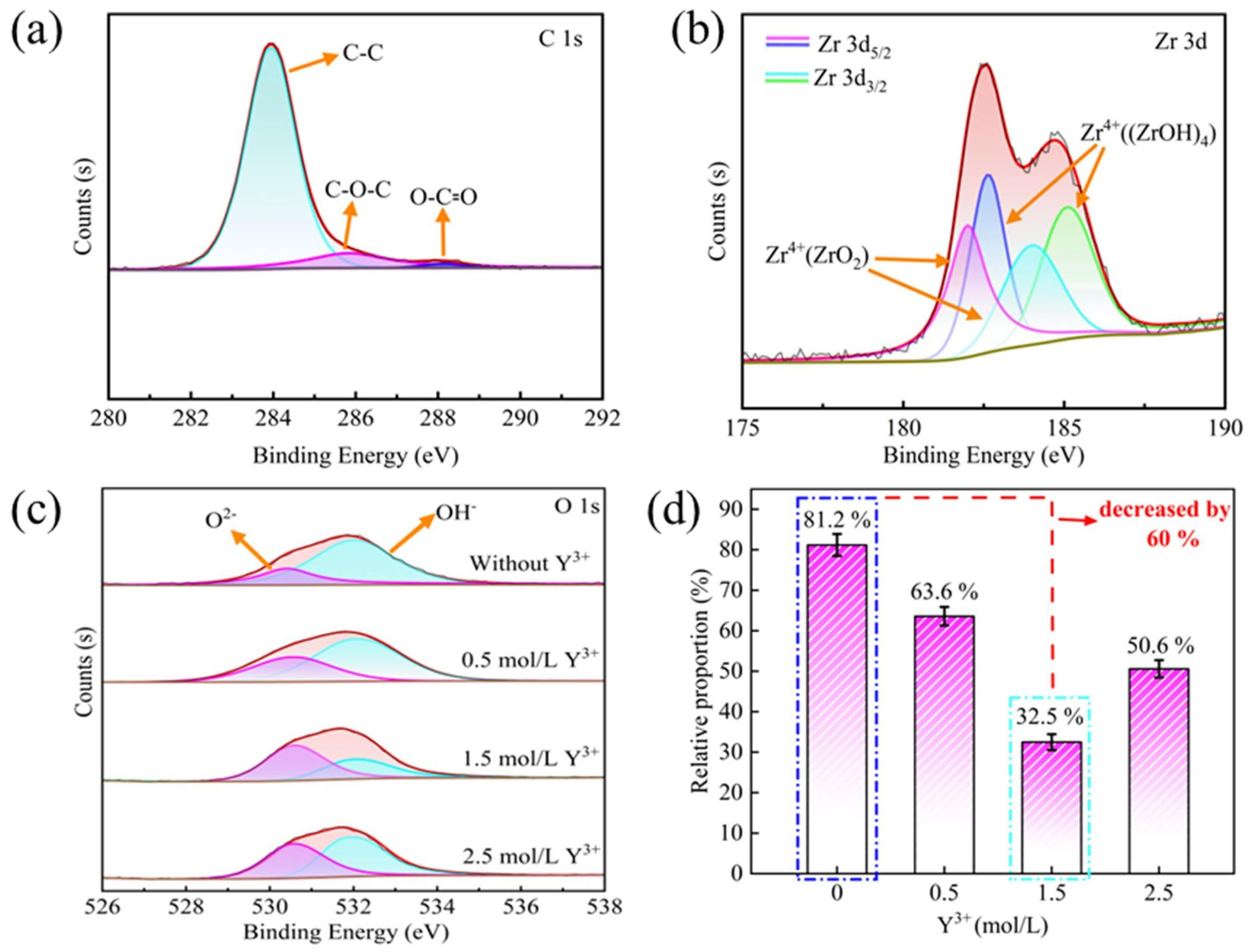
The XPS technique was conducted on the corrosion layer of different coatings after the coatings were corroded for 1800 s to clarify chemical states of elements corresponding to the C 1s, Zr 3d and O 1s photoelectron peaks in the coatings (Figure 6). As shown in Figure 6a, the calibrated C 1s spectra of the coatings were fitted with multiple peaks corresponding to distinct carbon chemical states, featuring C-C, C-O-C and O-C=O, which are typically attributed to surface carbonaceous species. Figure 6b displays the XPS spectra and peak fitting results for the Zr 3d in coatings. Peaks of Zr 3d5/2 with approximate binding energies of 182.6 eV and 183.7 eV were observed, corresponding to the Zr4+ oxidation state. The XPS fine spectrum of the O 1s is shown in Figure 6c, and there were two peaks of O2− and OH−. The O2− denotes the metal oxide in the coatings, while the OH− signal is indicative of hydroxyl groups. Their XPS signals demonstrate that ZrO2 in the coatings underwent chemical reaction with water vapor to produce zirconium hydroxide (Zr(OH)4) in the water vapor atmosphere. Zr(OH)4 is unstable and detrimental to the corrosion resistance of the coatings, as it damages the integrity of the protective coating. Figure 6d shows the relative proportions of corrosion products in the coatings based on the fitting results. It was found that the Zr(OH)4 content in the corrosion layer of the Y3+-addition coatings was appreciably lower than that of coating without Y3+; this difference is due to the fact that Y3+ promotes the formation of c-ZrO2, which exhibits lower reactivity with water vapor compared to t-ZrO2. As a consequence, the reaction between zirconium oxides and water vapor was reduced, in accordance with the corrosion rate shown in Figure 3b. The results strongly confirm when the fraction of c-ZrO2 in the coatings is appropriately increased, the coatings show enhanced anti-water vapor corrosion.
Figure 6.
XPS results after 1800 s corrosion for varying coatings: (a) high-resolution spectrum of C; (b) high-resolution spectrum of Zr; (c) high-resolution spectrum of O of coatings with varying Y3+ content after 1800 s corrosion; (d) content of corrosion product.
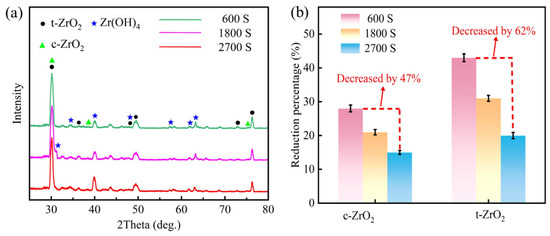
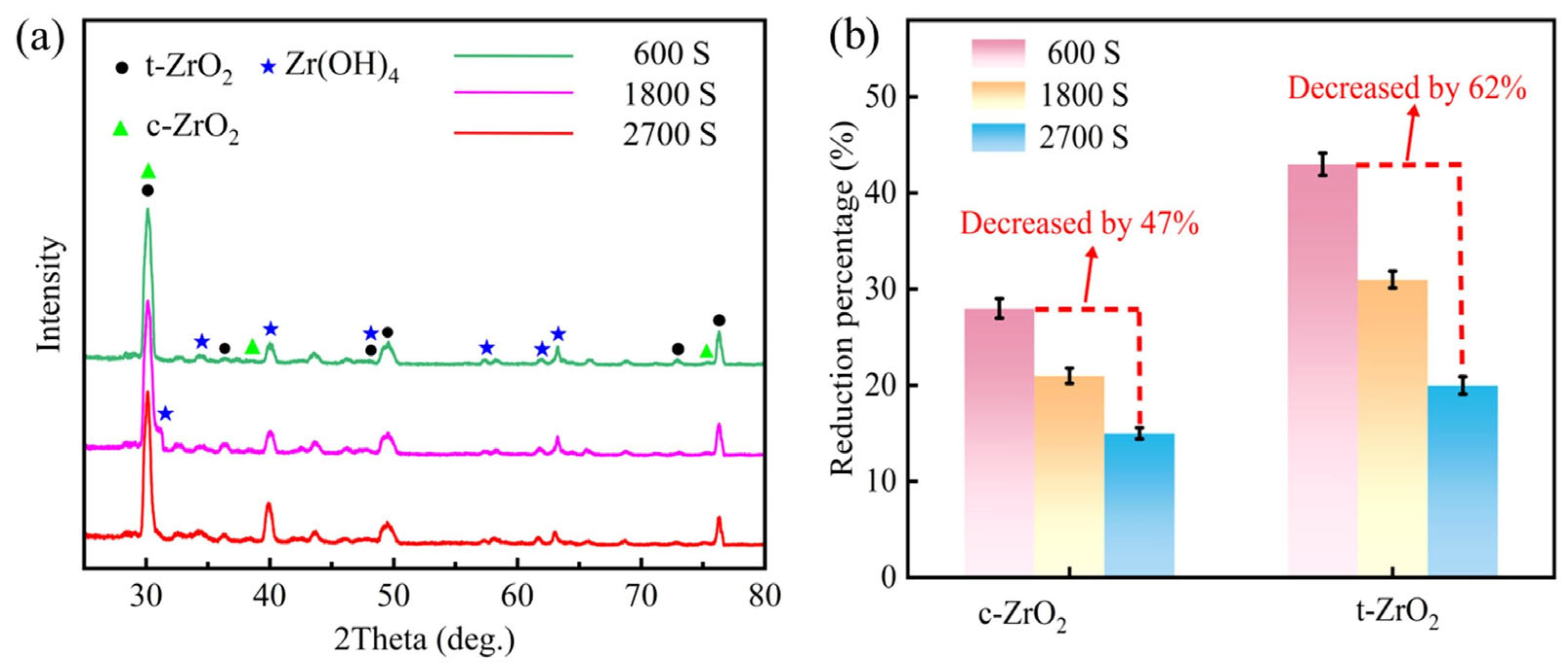
To further analyze the phase evolution of c-ZrO2 and t-ZrO2 in the coating, the XRD phase analysis results of the coating with 1.5 mol/L Y3+ after water vapor tests for different periods are displayed in Figure 7. Observations show that Zr(OH)4 was formed on the corroded surface of the coating. Similar findings have been noted in the literature [41]. As the corrosion period extended, the peak intensity of Zr(OH)4 gradually rose (Figure 7a), indicating that the amount of Zr(OH)4 increased with the corrosion time. For the XRD result, the phase types of the corrosion layer in the coatings were the same, but their contents varied. The relative contents of c-ZrO2 and t-ZrO2 were obtained by the “adiabatic method”, and their percentage reductions in their contents were subsequently calculated; the result is shown in Figure 7b [29]. It is evident that the percentage reduction of c-ZrO2 in the coating was considerably lower than that of t-ZrO2 after the equivalent corrosion duration. The above findings further confirm that c-ZrO2 is more stable compared with t-ZrO2 in water vapor conditions.
Figure 7.
XRD analysis of the coating with 1.5 mol/L Y3+ after varying periods of cyclic water vapor corrosion: (a) XRD patterns of the coatings; (b) reduction percentage of c-ZrO2 and t-ZrO2 phases.
4. Anti-Corrosion Mechanism of Coatings
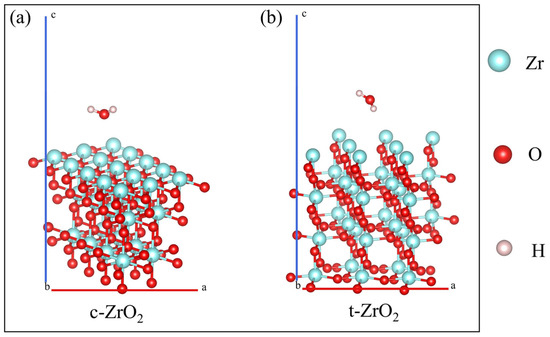
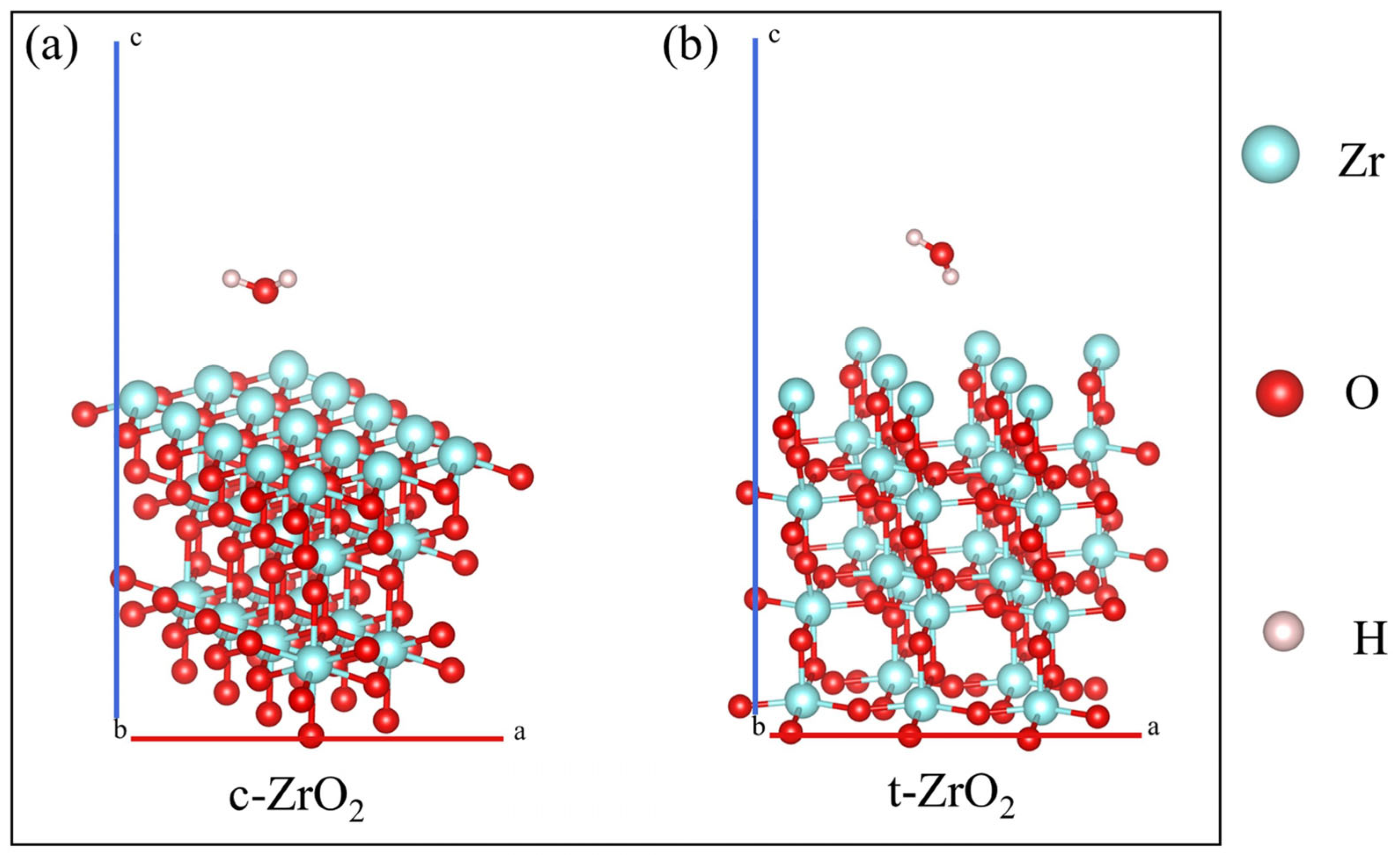
To supplement the experimental studies, a model shown in Figure 8a,b was constructed for first-principles calculations to disclose the water vapor adsorption behaviors of c-ZrO2 and t-ZrO2. The electronic interactions and exchange correlation effects were characterized by the projector augmented-wave (PAW) method and the Perdew–Burke-Ernzerhof (PBE) generalized gradient approximation (GGA) [42,43], as implemented in the Castep Module. The iterative self-consistent cycles were performed until the total energy difference was less than 10−5 eV and the force acting on the atom was less than 0.02 eV/Å. K-point sampling was conducted using a Gamma algorithm with a size of 5 × 4 × 1, and the plane-wave cut-off energy was set to 700 eV. A vacuum layer of 20 Å was introduced perpendicular to the plane of the plate to prevent interlayer interactions, and the single water molecule was initially placed at a height of 2.5 Å above the selected surface. Taking into account computational accuracy and efficiency, the atoms in the bottom layer of the model were fixed.
Figure 8.
Adsorption models of H2O on c-ZrO2 and t-ZrO2: (a) c-ZrO2; (b) t-ZrO2.
The adsorption energy of the single water molecule was derived by Equation (2) [44] following geometry optimization:
Here, Eabs(H2O) was the single water molecule absorption energy on the model. E(surf + H2O) and E(surf) were the obtained total energies of the c-ZrO2 surface and t-ZrO2 surface with and without the water molecule, respectively. E(H2O) was the computed total energy of the single water molecule in the free state.
In order to better unveil the potential mechanisms between the coating with water vapor, first-principles molecular dynamics (FPMD) [45] simulations were carried out in a representative canonical ensemble (NVT) as well. These simulations employed the Nosé–Hoover algorithm [46]. The model including the water molecule was implemented at 1273 K. The overall simulation duration and the corresponding time step were assigned values of 2 ps and 0.5 fs separately.
4.1. First-Principles Reaction Simulation
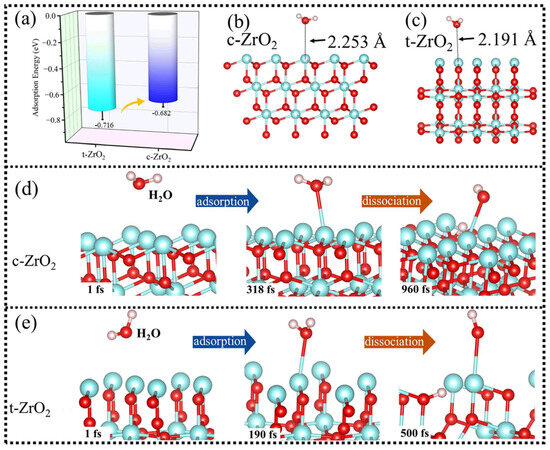
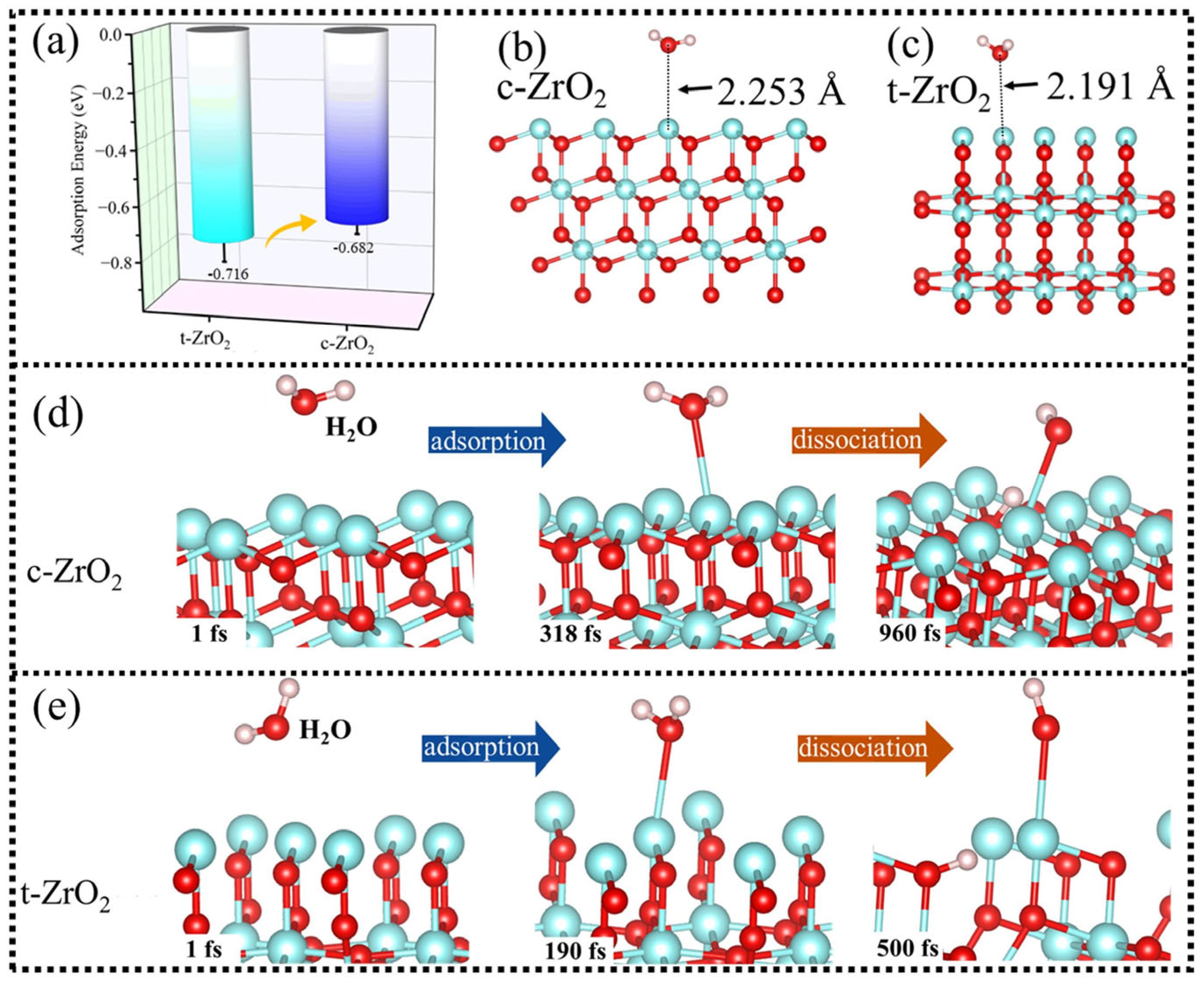
The calculated adsorption energies of the water molecules in the adsorption system are illustrated in Figure 9a. The adsorption energy of c-ZrO2 is −0.682 eV, while that of t-ZrO2 is −0.716 eV. Generally, a more negative adsorption energy indicates a more stable adsorption configuration [47]. Hence, water vapor is preferentially adsorbed on the t-ZrO2 surface due to its more negative adsorption energy. A large number of adsorbed water molecules lead to increased chemical reactions and the deposition of corrosion products on the coating surface, which can accelerate coating failure. By contrast, the c-ZrO2 surface displays greater resistance to water-induced degradation owing to its less negative adsorption energy. Meanwhile, the relaxed configurations of water molecules adsorbed on c-ZrO2 and t-ZrO2 surfaces support findings, as seen in Figure 9b,c. It is critical to note that the water molecule interacts with the surface via the oxygen atoms close to the surface and the hydrogen atoms oriented away from it, which is the same as the work reported in the previous literature [48]. The Zr-O bond length of c-ZrO2 is 2.253 Å, while that of t-ZrO2 is shortened to 2.191 Å. These results reveal that t-ZrO2 is more susceptible to reacting with water vapor, resulting in the generation of more loose corrosion products on the structural surface to destroy coating integrity.
Figure 9.
Adsorption and dissociation processes of H2O on c-ZrO2 and t-ZrO2: (a) adsorption energies of H2O on c-ZrO2 and t-ZrO2; side view of relaxed H2O adsorption configuration on (b) c-ZrO2 and (c) t-ZrO2; time evolution of H2O adsorption and dissociation on (d) c-ZrO2 and (e) t-ZrO2.
Further simulations on the reaction process of H2O on the c-ZrO2 and t-ZrO2 surfaces were executed using the FPMD method [45] so as to better study the reaction mechanism. The H2O reaction process on the surface could be divided into the adsorption process and the dissociation process according to the calculation results of FPMD. As shown in Figure 9d,e, the water molecules in the vacuum layer were first adsorbed onto the two substrate surfaces, and then the adsorbed water molecules dissociated at elevated temperatures as time passed. The adsorption duration, particularly the shorter dissociation time, demonstrates that H2O is more reactive with the substrates. Regarding the water molecule dissociation time, the dissociation duration of c-ZrO2 (960 fs) was longer than that of t-ZrO2 (500 fs). From the FPMD results, the water molecules were inclined to adsorb onto Zr atoms of the coating, while hydrogen atoms from H2O are trapped by the oxygen atoms on the coating surface, resulting in the formation of two (OH)4− anions. In the end, these (OH)4− anions separate from one another and vibrate into their equilibrium positions, corresponding to the lowest energy state of the system at elevated temperatures. On the basis of the above findings, it can be inferred that c-ZrO2 is less likely to react with water vapor compared to t-ZrO2 in high-temperature conditions.
4.2. Analysis of Corrosion Resistance Mechanisms
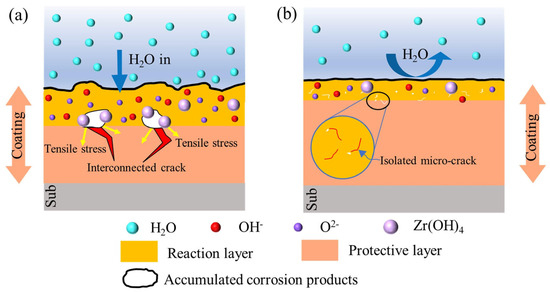
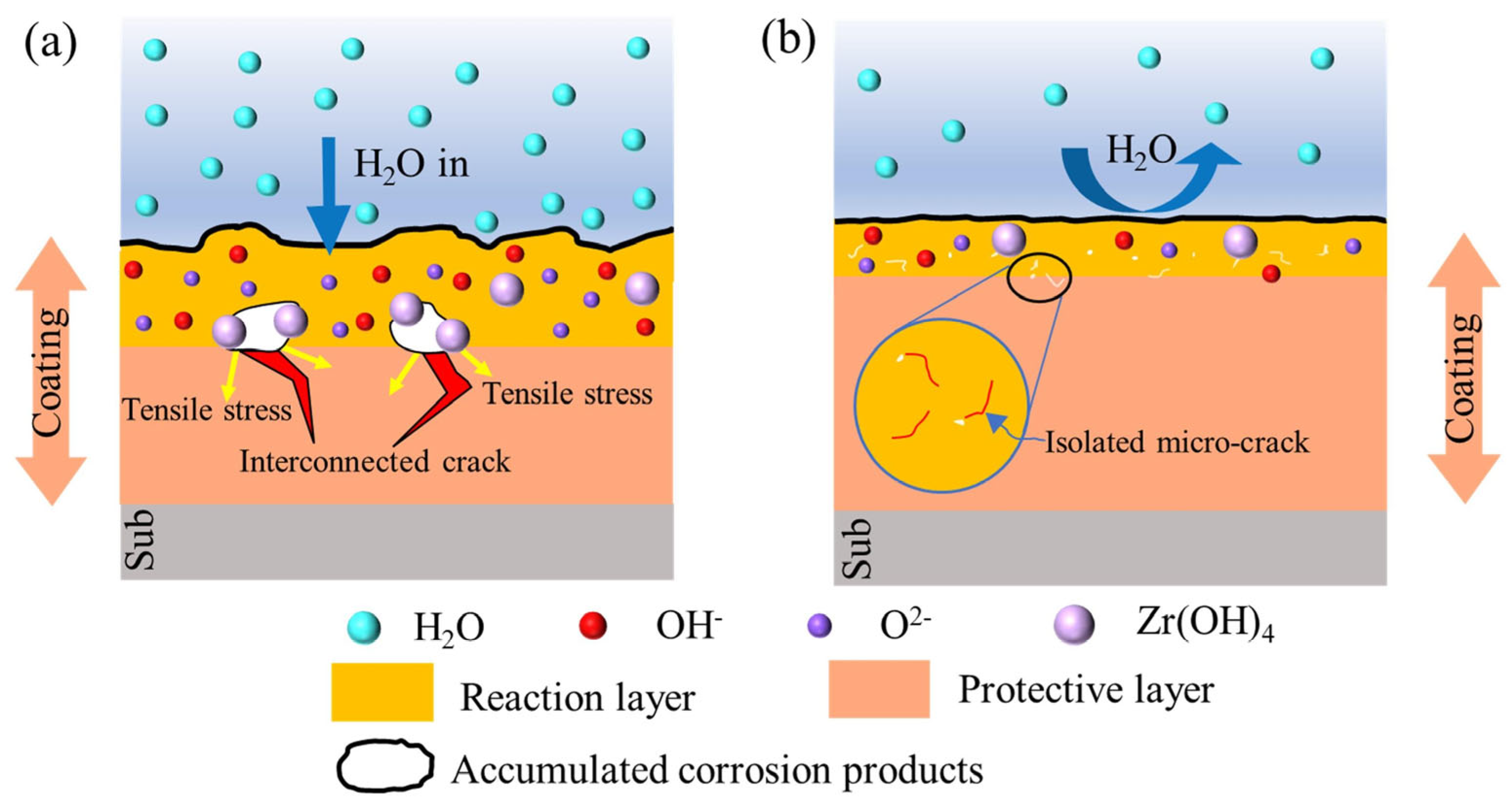
The degradation mechanism can be clearly identified after the corrosion behaviors and microstructure evolution of coatings were systematically analyzed. Based on these findings, Figure 10 depicts a mechanistic diagram of the corrosion mechanisms of the coatings in the 1000 °C water vapor environment. In the initial stage, the t-ZrO2 phase on the traditional coating is strongly bound to OH− ions from the water molecules (Figure 10a). In contrast, due to its higher stability, the c-ZrO2 phase on the enhanced coating does not tend to form Zr(OH)4 with OH− ions, thus preventing the formation of Zr(OH)4. Hydroxides have a more porous structure, which is more likely to impair the compactness of the coating. Moreover, the volume of corrosion products expands distinctly because of the large difference in the volume ratio of Zr(OH)4 to ZrO2 (PBR, 2.26), generating a great deal of residual tensile stress at the coating [49]. With increasing steam exposure time, corrosion products gradually accumulate, leading to a continuous rise in tensile stress. High tensile stress makes microdefects more prone to developing into crack initiation sites, enhances the local stress intensity factor at crack tips and promotes crack propagation [50], which augments the susceptibility of coatings to cracking. As shown in the corrosion morphology in Figure 4(a1–a3), traditional coatings experienced more severe corrosion-induced cracking, resulting in numerous connected cracks. The connected cracks provide rapid diffusion channels for water vapor to penetrate into the inner layers of the coating, further promoting corrosion [51] and coating spallation. In summary, the present findings imply that the improvement of the anti-corrosion ability of the coatings in high-temperature water vapor conditions is ascribed to the lower reactivity of c-ZrO2 compared with t-ZrO2, and the lower reactivity considerably retards corrosion reactions and inhibits water vapor infiltration into the deeper layers of the coating.
Figure 10.
Mechanism diagram of anti-water vapor corrosion of coatings: (a) traditional coating and (b) enhanced coating.
5. Conclusions
To sum up, in this comprehensive study, the high-temperature water vapor corrosion behavior of Y3+-stabilized zirconia coatings fabricated by PEO on Zr alloy was investigated. The mechanism of enhancing water vapor corrosion of the coating at elevated temperatures was disclosed by detail characterizations and model simulation. The key findings derived from the present study are listed as follows:
- (1)
- The phase transformation of c-ZrO2 to t-ZrO2 can be inhibited by Y3+ solid solution into the c-ZrO2 lattice. The fraction of c-ZrO2 in the zirconia coatings gradually increased (from 9% to 32%) by adjusting the Y3+ concentrations during the PEO treatment.
- (2)
- The increase in c-ZrO2 fraction greatly enhanced the water vapor corrosion resistance of zirconia coatings at elevated temperature. Particularly, the mass gain and corrosion rate of the coating with 1.5 mol/L Y3+ were approximately 60% and 37% of those of traditional ZrO2 coating after 3600 s of water vapor corrosion at 1000 °C separately. The model simulations indicated that the distinct enhancement in the corrosion resistance property of zirconia coatings is ascribed to the suppressed water vapor reaction in c-ZrO2 compared to t-ZrO2.
- (3)
- The reduction of the corrosion product (Zr(OH)4) formed in the corrosion layer plays an important role in enhancing the corrosion resistance of the coatings. The volume expansion induced by the phase transformation of t-ZrO2 to Zr(OH)4 is effectively mitigated, further inhibiting tensile stress concentration and microcrack initiation, which impedes rapid penetration of water vapor into the depth of the coatings.
Author Contributions
Conceptualization and methodology, Y.Z. and Y.L.; software, Y.L. and G.L.; validation, Y.L. and Y.Z.; formal analysis, Y.L. and F.J.; investigation and resources, Y.Z.; data curation, G.L.; writing—original draft preparation, Y.L.; writing—review and editing, Y.Z.; visualization, Y.L.; supervision, project administration and funding acquisition, Y.Z. All authors have read and agreed to the published version of the manuscript.
Funding
This work was supported by the State Key Laboratory of Powder Metallurgy of China (Sklpm-KF-2025013).
Institutional Review Board Statement
Not applicable.
Informed Consent Statement
Not applicable.
Data Availability Statement
Data are contained within the article.
Conflicts of Interest
The authors declare no conflicts of interest.
References
- Luan, B.F.; Wang, J.M.; Qiu, R.S.; Tao, B.R.; He, W.J.; Zhang, X.Y.; Liu, R.P.; Liu, Q. The distribution trends and site preferences of alloying elements in precipitates within a Zr alloy: A combined first-principles and experimental study. J. Alloys Compd. 2016, 678, 456–462. [Google Scholar] [CrossRef] [Scilit]
- Zinkle, S.J.; Was, G.S. Materials challenges in nuclear energy. Acta Mater. 2013, 61, 735–758. [Google Scholar] [CrossRef] [Scilit]
- Echols, J.; Garrison, L.; Silva, C.; Lindquist, E. Temperature and time effects of post-weld heat treatments on tensile properties and microstructure of Zircaloy-4. J. Nucl. Mater. 2021, 551, 152952. [Google Scholar] [CrossRef] [Scilit]
- Begrambekou, L.B.; Evsin, A.E.; Grunin, A.V.; Gumarov, A.I.; Kaplevsky, A.S.; Kashapov, N.F.; Luchkin, A.G.; Vakhitov, I.R.; Yanilkin, I.V.; Tagirov, L.R. Irradiation with hydrogen atoms and ions as an accelerated hydrogenation test of zirconium alloys and protective coatings. Int. J. Hydrogen Energy 2019, 44, 17154–17162. [Google Scholar] [CrossRef] [Scilit]
- Cox, B. Some thoughts on the mechanisms of in-reactor corrosion of zirconium alloys. J. Nucl. Mater. 2005, 336, 331–368. [Google Scholar] [CrossRef] [Scilit]
- Sun, H.Z.; Zhang, Y.; Zhu, X.Y.; Xu, C.R.; Sun, C.; Luan, B.F. Study of oxidation behavior and associated microstructure evolution of Zircaloy-4 exposed to high temperature pure steam. Vacuum 2023, 211, 111892. [Google Scholar] [CrossRef] [Scilit]
- Motta, A.T.; Couet, A.; Comstock, R.J. Corrosion of Zirconium Alloys Used for Nuclear Fuel Cladding. Annu. Rev. Mater. Res. 2015, 45, 311–343. [Google Scholar] [CrossRef] [Scilit]
- Cekic, B.; Ciric, K.; Iordoc, M.; Markovic, S.; Mitric, M.; Stojic, D. Kinetics of hydrogen absorption in Zr-based alloys. J. Alloys Compd. 2013, 559, 162–166. [Google Scholar] [CrossRef] [Scilit]
- Zinkle, S.J.; Terrani, K.A.; Gehin, J.C.; Ott, L.J.; Snead, L.L. Accident tolerant fuels for LWRs: A perspective. J. Nucl. Mater. 2014, 448, 374–379. [Google Scholar] [CrossRef] [Scilit]
- Pint, B.A.; Terrani, K.A.; Brady, M.P.; Cheng, T.; Keiser, J.R. High temperature oxidation of fuel cladding candidate materials in steam-hydrogen environments. J. Nucl. Mater. 2013, 440, 420–427. [Google Scholar]
- Yan, Y.; Burtseva, T.A.; Billone, M.C. High-temperature steam-oxidation behavior of Zr-1Nb cladding alloy E110. J. Nucl. Mater. 2009, 393, 433–448. [Google Scholar] [CrossRef] [Scilit]
- Le Saux, M.; Brachet, J.C.; Vandenberghe, V.; Rouesne, E.; Urvoy, S.; Ambard, A.; Chosson, R. Effect of a pre-oxide on the high temperature steam oxidation of Zircaloy-4 and M5Framatome alloys. J. Nucl. Mater. 2019, 518, 386–399. [Google Scholar]
- Rani, R.; Shamim, M.K.; Maudez, W.; Wagner, E.; Rai, R.; Sharma, S.; Benvenuti, G. Structural and dielectric investigation of thermal treated TiO2/ZrO2 composite thin films grown by chemical beam vapor deposition. Thin Solid Films. 2023, 778, 139883. [Google Scholar] [CrossRef] [Scilit]
- Simka, W.; Sowa, M.; Socha, R.P.; Maciej, A.; Michalska, J. Anodic oxidation of zirconium in silicate solutions. Electrochim. Acta 2013, 104, 518–525. [Google Scholar] [CrossRef] [Scilit]
- Duan, Z.G.; Yang, H.L.; Kano, S.; Murakami, K.; Satoh, Y.; Takeda, Y.; Abe, H. Oxidation and electrochemical behaviors of Al2O3 and ZrO2 coatings on Zircaloy-2 cladding by thermal spraying. Surf. Coat. Technol. 2018, 334, 319–327. [Google Scholar] [CrossRef] [Scilit]
- Michalska, J.; Sowa, M.; Stolarczyk, A.; Warcho, F.; Nikiforow, K.; Pisarek, M.; Dercz, G.; Pogorielov, M.; Mishchenko, O.; Simka, W. Plasma electrolytic oxidation of Zr-Ti-Nb alloy in phosphate-formate-EDTA electrolyte. Electrochim. Acta 2022, 419, 140375. [Google Scholar] [CrossRef] [Scilit]
- Al Afghani, F.; Anawati, A. Plasma electrolytic oxidation of zircaloy-4 in a mixed alkaline electrolyte. Surf. Coat. Technol. 2021, 426, 127786. [Google Scholar] [CrossRef] [Scilit]
- Sovík, J.; Kajánek, D.; Trško, L.; Florková, Z.; Pastorková, J.; Buchtík, M.; Hadzima, B. Improvement of corrosion resistance of DC PEO coating on AZ80 magnesium alloy through two-step PEO process combined with laser cleaning. Surf. Coat. Technol. 2025, 502, 131935. [Google Scholar]
- Dai, W.B.; Yuan, L.X.; Li, C.Y.; He, D.; Jia, D.W.; Zhang, Y.M. The effect of surface roughness of the substrate on fatigue life of coated aluminum alloy by micro-arc oxidation. J. Alloys Compd. 2018, 765, 1018–1025. [Google Scholar] [CrossRef] [Scilit]
- Cao, G.Q.; Yun, Y.F.; Xu, H.J.; Yuan, G.H.; Hu, J.H.; Shao, G.S. A mechanism assessment for the anti-corrosion of zirconia coating under the condition of subcritical water corrosion. Corros. Sci. 2019, 152, 54–59. [Google Scholar] [CrossRef] [Scilit]
- Mashtalyar, D.; Imshinetsky, I.; Sinebryukhov, S.; Gnedenkov, S. Characterization of PEO-Coatings on the MA8 Magnesium Alloy Formed in Electrolyte Containing ZrO2/SiO2 Nanoparticles. Mater. Today Proc. 2019, 11, 134–138. [Google Scholar] [CrossRef] [Scilit]
- Luo, H.H.; Cai, Q.Z.; Wei, B.K.; Yu, B.; He, J.; Li, D.J. Study on the microstructure and corrosion resistance of ZrO2-containing ceramic coatings formed on magnesium alloy by plasma electrolytic oxidation. J. Alloys Compd. 2009, 474, 551–556. [Google Scholar] [CrossRef] [Scilit]
- Song, X.M.; Ding, Y.; Zhang, J.M.; Dai, M.Q.; Jiang, C.F.; Peng, F.; Zheng, W.; Zeng, Y. Preparation, thermophysical properties, and thermal shock resistance of Yb2O3-doped YSZ coatings. Ceram. Int. 2024, 50, 11304–11319. [Google Scholar] [CrossRef] [Scilit]
- Li, K.Q.; Chen, J.; Peng, J.H.; Koppala, S.; Omran, M.; Chen, G. One-step preparation of CaO-doped partially stabilized zirconia from fused zirconia. Ceram. Int. 2020, 46, 6484–6490. [Google Scholar]
- Jiang, K.; Liu, S.B.; Wang, X. Low–thermal–conductivity and high–toughness CeO2–Gd2O3 co–stabilized zirconia ceramic for potential thermal barrier coating applications. J. Eur. Ceram. Soc. 2018, 38, 3986–3993. [Google Scholar]
- Wang, P.; Li, J.P.; Guo, Y.C.; Yang, Z.; Wang, J.L. Effects of yttrium ion on formation mechanism of ZrO2-Y2O3 ceramic coatings formed by plasma electrolytic oxidation on Al-12Si alloy. J. Wuhan Univ. Technol. 2014, 29, 1044–1048. [Google Scholar]
- Da, Y.L.; Xiao, Y.; Zhong, Z.; Pan, Z.H.; Jiao, Z.J. Predictions on conductivity and mechanical property evolutions of yttria-stabilized zirconia in solid oxide fuel cells based on phase-field modeling of cubic-tetragonal phase transformation. J. Eur. Ceram. Soc. 2022, 42, 3489–3499. [Google Scholar]
- Li, Z.M.; Mi, B.S.; Ma, X.; Liu, P.; Ma, F.C.; Zhang, K.; Chen, X.H.; Zhu, X.F.; Meng, Y.; Lu, H.M.; et al. Preparation and characterization of chromium oxide thin films: The response of morphology, crystal structure, and electrical properties to oxygen pressure under magnetron sputtering. Vacuum 2024, 228, 113518. [Google Scholar] [CrossRef] [Scilit]
- Wang, H.H.; Teng, L.; Xu, J.; Kong, J.A.; Zhang, P.F.; Feng, G.H.; Shi, X.H.; Li, H.J. Enhanced oxidation resistance of Mo-modified Si-SiC coating on C/C composites by laser-inducing. Appl. Surf. Sci. 2022, 575, 151786. [Google Scholar] [CrossRef] [Scilit]
- Licata, O.G.; Zhu, M.L.; Hwang, J.W.; Mazumder, B. Nanoscale chemistry and ion segregation in zirconia-based ceramic at grain boundaries by atom probe tomography. Scr. Mater. 2022, 213, 114603. [Google Scholar] [CrossRef] [Scilit]
- Bayati, R.; Molaei, R.; Richmond, A.; Nori, S.; Wu, F.; Kumar, D.; Narayan, J.; Reynolds, J.G.; Reynolds, C.L. Modification of Properties of Yttria Stabilized Zirconia Epitaxial Thin Films by Excimer Laser Annealing. ACS Appl. Mater. Interfaces 2014, 6, 22316–22325. [Google Scholar] [CrossRef] [Scilit] [PubMed]
- Li, M.C.; Deng, J.; Yin, X.Y.; Wang, W.; Zhao, Y.; Xu, H.D.; Wang, J.L.; Chen, Y.Q. Effect of lauric acid on the grain growth of CeO2-ZrO2-Y2O3-La2O3 in different periods. J. Alloys Compd. 2022, 894, 162301. [Google Scholar] [CrossRef] [Scilit]
- Du, X.Y.; Qin, Y.Y.; Gao, B.; Wang, K.; Li, D.; Li, Y.H.; Ding, S.J.; Song, Z.X.; Su, Y.Q.; Xiao, C.H. Plasma-assisted and oxygen vacancy-engineered In2O3 films for enhanced electrochemical reduction of CO2. Appl. Surf. Sci. 2021, 563, 150405. [Google Scholar] [CrossRef] [Scilit]
- Liens, A.; Reveron, H.; Douillard, T.; Blanchard, N.; Lughi, V.; Sergo, V.; Laquai, R.; Müller, B.R.; Bruno, G.; Schomer, S.; et al. Phase transformation induces plasticity with negligible damage in ceria-stabilized zirconia-based ceramics. Acta Mater. 2020, 183, 261–273. [Google Scholar]
- Aniołek, K.; Kupka, M.; Łuczuk, M.; Barylski, A. Isothermal oxidation of Ti–6Al–7Nb alloy. Vacuum 2015, 114, 114–118. [Google Scholar]
- Zheng, C.W.; Wang, Q.; Chen, R.R.; Wei, W.; Su, Y.Q.; Fu, H.Z. Effect of rare earth oxide (Pr4O7) second phase and fine grain on the corrosion behavior of Ti-0.3Mo-0.8Ni. Corros. Sci. 2024, 241, 112549. [Google Scholar] [CrossRef] [Scilit]
- Xia, S.J.; Yue, R.; Rateick, R.G.; Birss, V.I. Electrochemical Studies of AC/DC Anodized Mg Alloy in NaCl Solution. J. Electrochem. Soc. 2004, 151, B179. [Google Scholar] [CrossRef] [Scilit]
- Duan, H.P.; Du, K.Q.; Yan, C.W.; Wang, F.H. Electrochemical corrosion behavior of composite coatings of sealed MAO film on magnesium alloy AZ91D. Electrochim. Acta 2006, 51, 2898–2908. [Google Scholar] [CrossRef] [Scilit]
- Liu, C.Y.; Lv, Y.; Su, S.; Wang, K.Y.; Ning, Z.L.; Zhang, Q.; Sun, J.F.; Şopu, D.; Eckert, J.; Ngan, A.H.W.; et al. The corrosion behaviors of Inconel 718 fabricated by additive-subtractive hybrid manufacturing in marine environment. Corros. Sci. 2025, 255, 113133. [Google Scholar] [CrossRef] [Scilit]
- Reddy, B.S.; Rao, A.B.K.; Janardhana, G.R. Multi-objective optimization of surface roughness, recast layer thickness and surface crack density in WEDM of Al2124/SiCp using desirability approach. Mater. Today Proc. 2020, 39, 1320–1326. [Google Scholar] [CrossRef] [Scilit]
- Manzoor, S.; Abid, A.G.; Nisa, M.U.; Hussain, F.; Shah, A.; Pashameah, R.A.; Alzahrani, E.; El-Bahy, S.M.; Taha, T.A.; Ashiq, M.N. Energy conversion performance of porous ZrTe hybrid derived from chemical transformation of Zr(OH)4. Fuel 2022, 328, 125264. [Google Scholar] [CrossRef] [Scilit]
- Zhang, M.H.; Zhuang, J.Y.; Yu, Y.Z. A DFT study on ZrO2 surface in the process of ethanol to 1,3-butadiene: A comprehensive mechanism elucidation. Appl. Surf. Sci. 2018, 458, 1026–1034. [Google Scholar] [CrossRef] [Scilit]
- Perdew, J.P.; Burke, K.; Ernzerhof, M. Generalized Gradient Approximation Made Simple. Phys. Rev. Lett. 1996, 77, 3865. [Google Scholar] [CrossRef] [Scilit]
- Hsieh, H.-Y.; Shen, C.-C.; Liu, P.-L. Machine learning prediction of work functions for NO, NO2, CO, CO2, and H2S gas molecules adsorbed on ZnGa2O4(111) surfaces. Surf. Coat. Technol. 2025, 516, 132746. [Google Scholar] [CrossRef] [Scilit]
- Wang, S.X.; Zhang, P. Adsorption and dissociation of water molecules on the α-Pu2O3(111) surface from an ab-initio molecular dynamics study. J. Nucl. Mater. 2022, 566, 153743. [Google Scholar] [CrossRef] [Scilit]
- Nosé, S. A molecular dynamics method for simulations in the canonical ensemble. Mol. Phys. 2002, 100, 191–198. [Google Scholar] [CrossRef] [Scilit]
- Li, K.; Li, N.; Yan, N.N.; Wang, T.Y.; Zhang, Y.T.; Song, Q.; Li, H.J. Adsorption of small hydrocarbons on pristine, N-doped and vacancy graphene by DFT study. Appl. Surf. Sci. 2020, 515, 146028. [Google Scholar] [CrossRef] [Scilit]
- Xu, R.; Zhou, Z.C.; Wang, Y.Y.; Xiao, H.P.; Xu, L.N.; Ding, Y.H.; Li, X.H.; Li, A.D.; Fang, G.Y. First-Principles Molecular Dynamics Simulations on Water–Solid Interface Behavior of H2O-Based Atomic Layer Deposition of Zirconium Dioxide. Nanomaterials 2022, 12, 4362. [Google Scholar] [CrossRef] [Scilit] [PubMed]
- Xu, Z.H.; He, S.M.; He, L.M.; Mu, R.D.; Huang, G.H.; Cao, X.Q. Novel thermal barrier coatings based on La2(Zr0.7Ce0.3)2O7/8YSZ double-ceramic-layer systems deposited by electron beam physical vapor deposition. J. Alloys Compd. 2011, 509, 4273–4283. [Google Scholar]
- Liu, X.D.; Frankel, G.S. Effects of compressive stress on localized corrosion in AA2024-T3. Corros. Sci. 2006, 48, 3309–3329. [Google Scholar] [CrossRef] [Scilit]
- Zhang, W.Q.; Fang, K.W.; Hu, Y.J.; Wang, S.Y.; Wang, X.L. Effect of machining-induced surface residual stress on initiation of stress corrosion cracking in 316 austenitic stainless steel. Corros. Sci. 2016, 108, 173–184. [Google Scholar] [CrossRef] [Scilit]
Disclaimer/Publisher’s Note: The statements, opinions and data contained in all publications are solely those of the individual author(s) and contributor(s) and not of MDPI and/or the editor(s). MDPI and/or the editor(s) disclaim responsibility for any injury to people or property resulting from any ideas, methods, instructions or products referred to in the content. |
© 2026 by the authors. Licensee MDPI, Basel, Switzerland. This article is an open access article distributed under the terms and conditions of the Creative Commons Attribution (CC BY) license.