

Employing Glycerol for Improving Diffraction Efficiency, Photosensitivity and Pressure Sensitivity in Holographic Recording Layers


Abstract
1. Introduction
2. Photopolymer Materials Containing Glycerol
2.1. Bisacrylamide (BA)-Based Holographic Photopolymer
2.1.1. Composition of the BA-Based Holographic Photopolymer
2.1.2. Preparation of Photopolymer Layers to Record Reflection Gratings
2.1.3. Experimental Set-Up
2.1.4. Results and Discussion
- Refraction Index Modulation
- 2.
- Recording of Reflection Holograms in a BA-Based Photopolymer
2.1.5. Summary
2.2. Diacetone Acrylamide-Based Photopolymer
2.2.1. Composition of the DA-Based Holographic Photopolymer

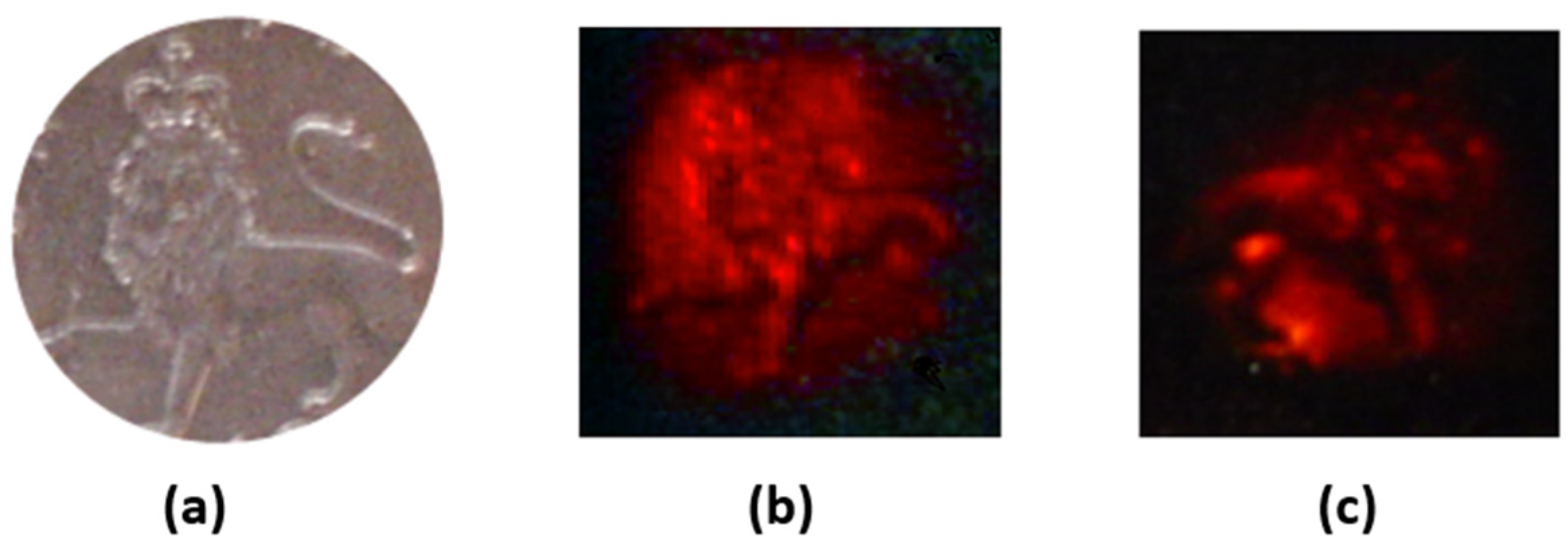
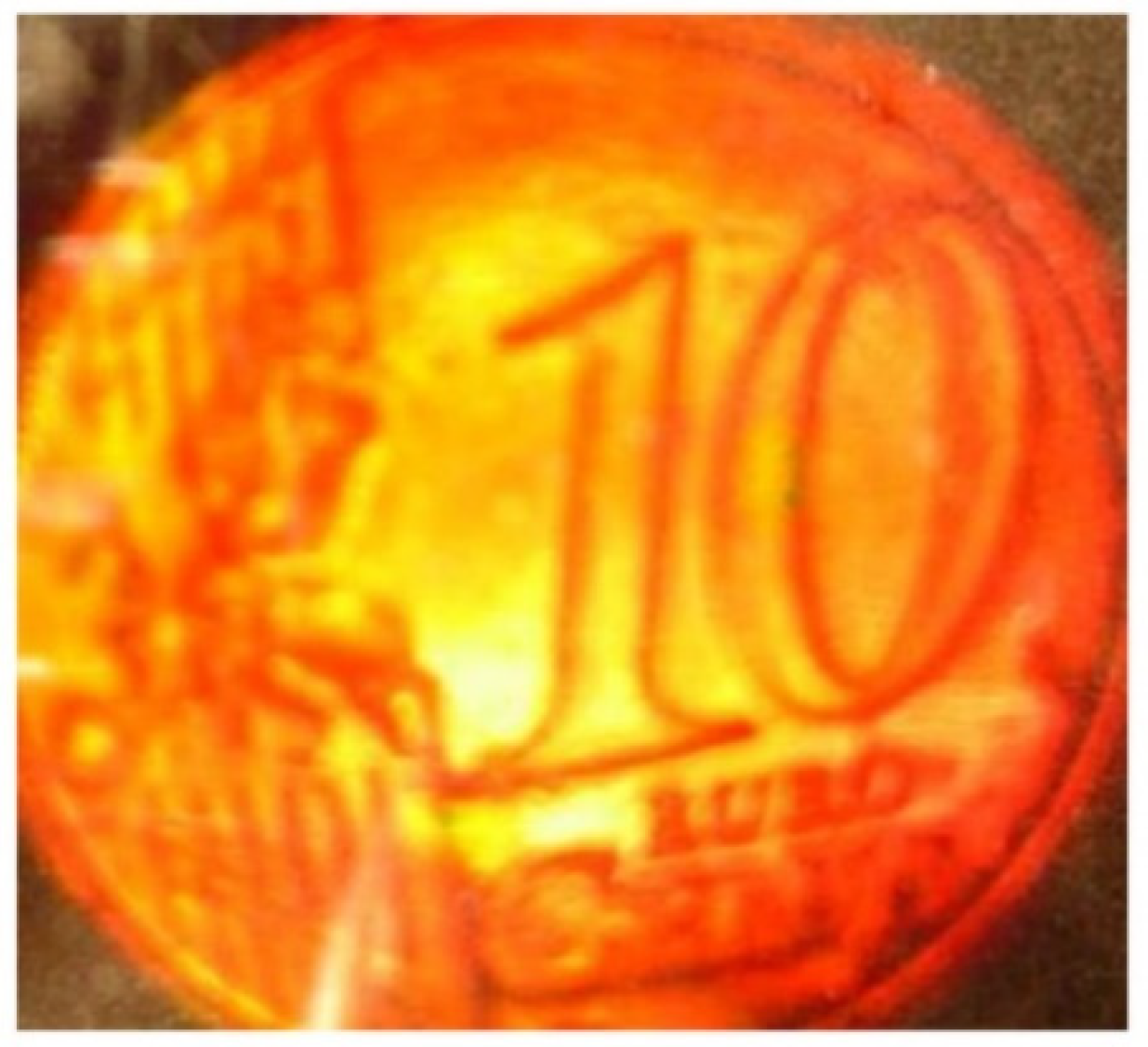
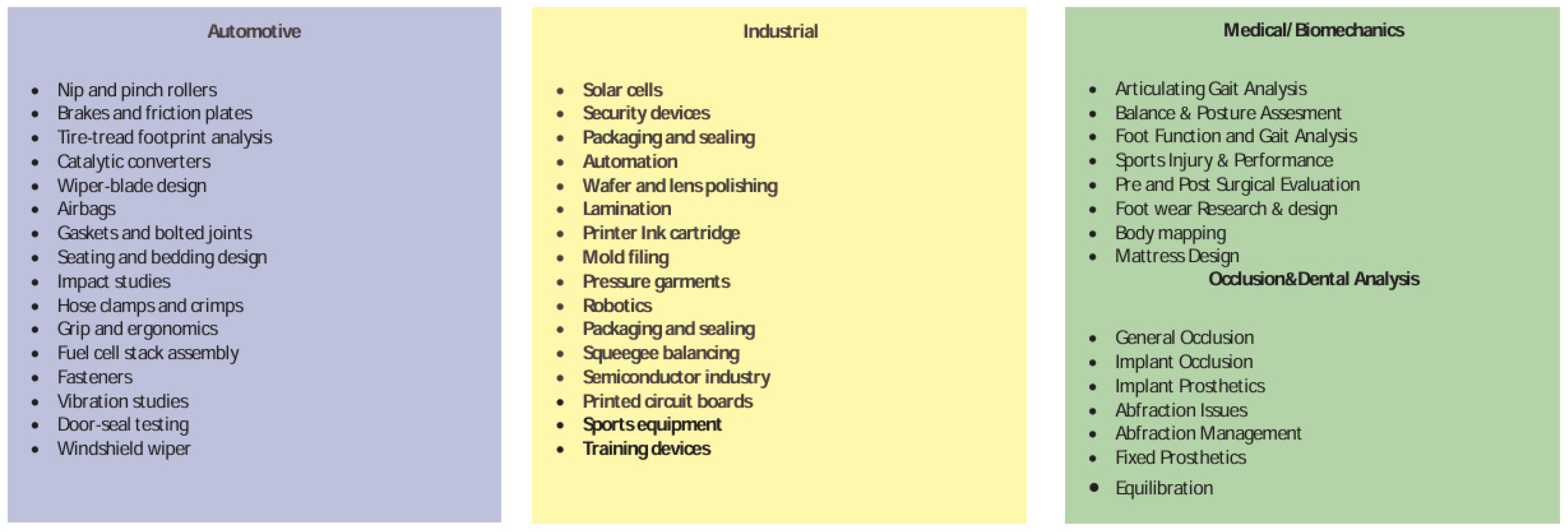
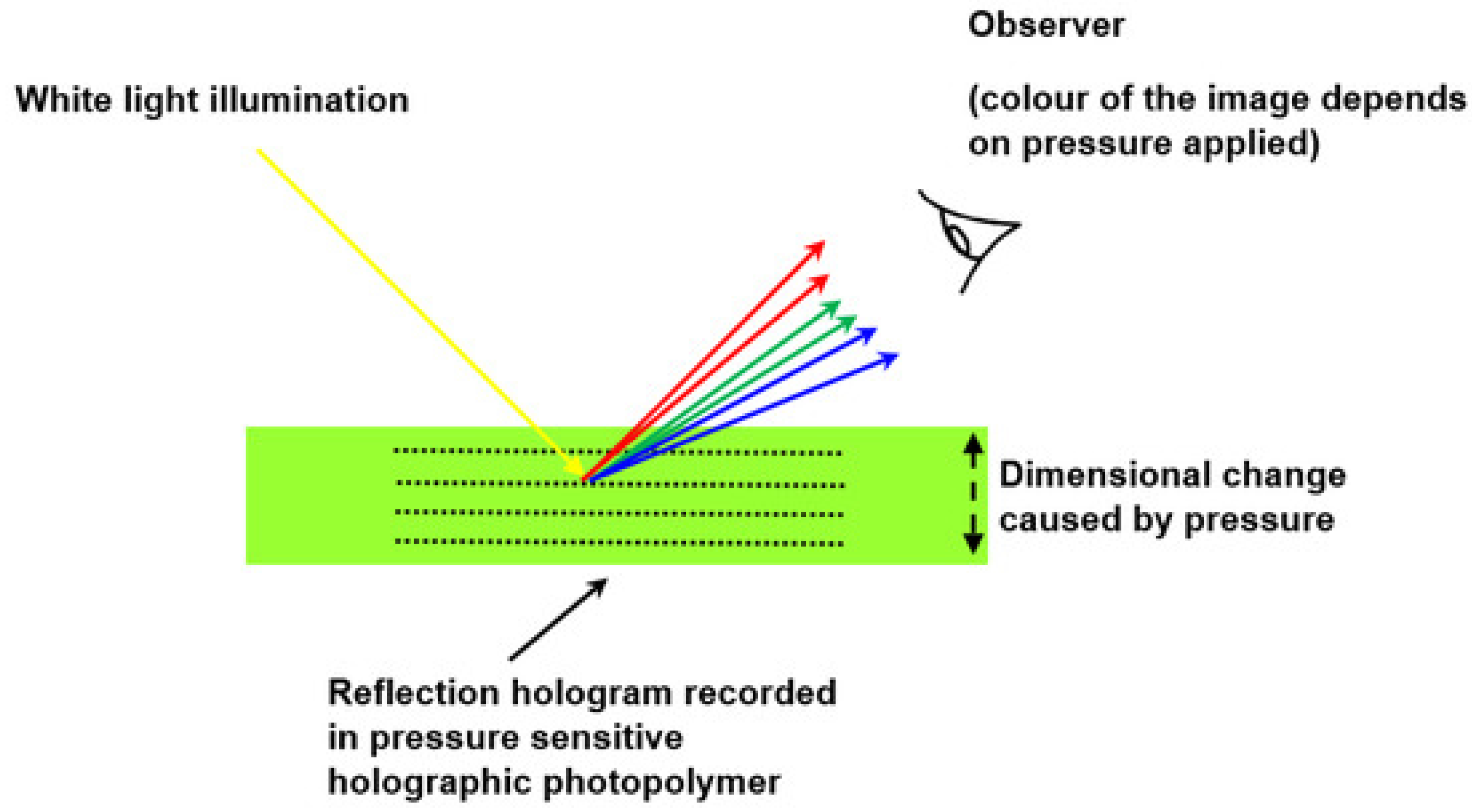
2.2.2. Holographic Pressure Sensors in a DA-Based Photopolymer
2.2.3. Summary
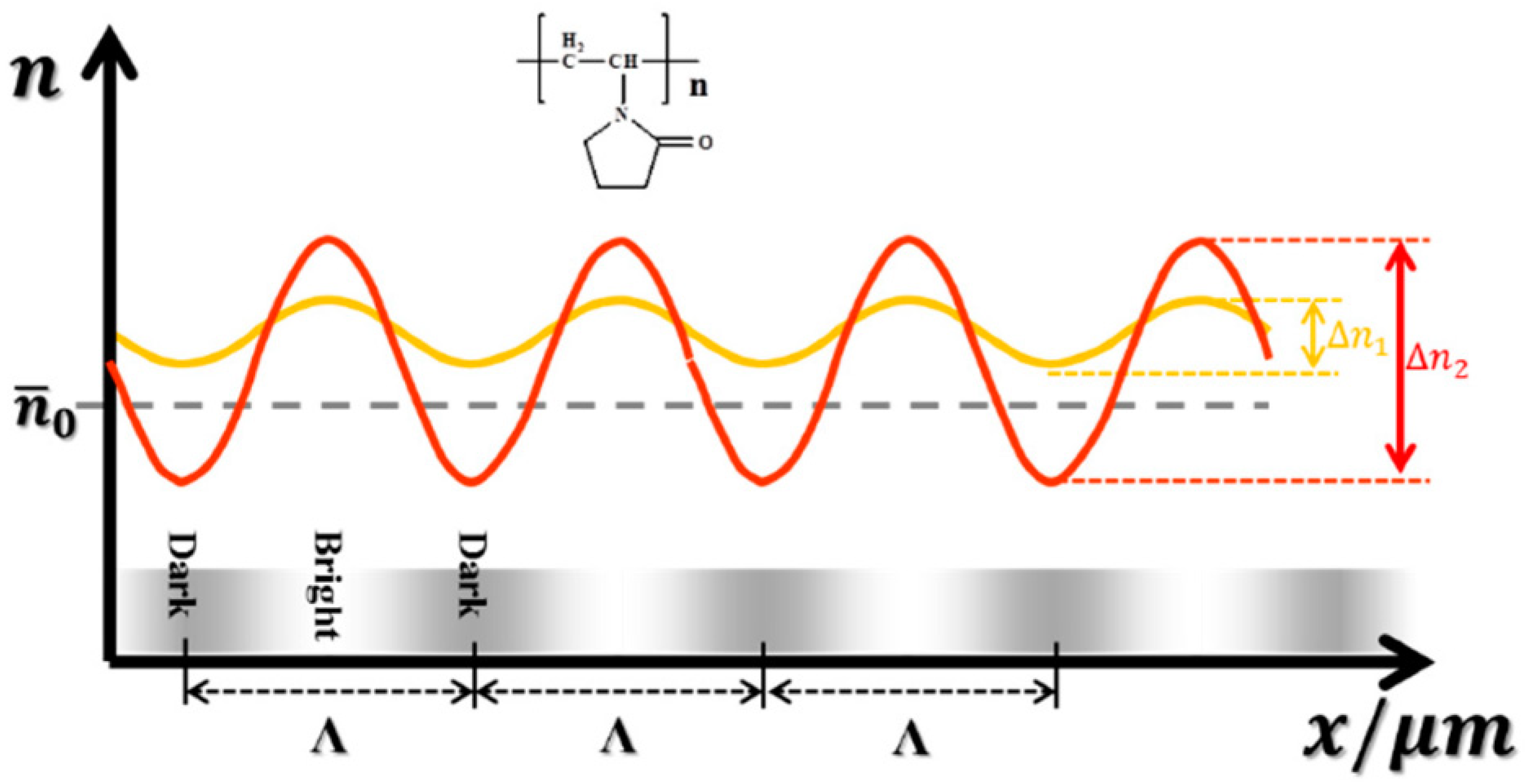
2.3. N-Vinylpyrrolidone-Based Photopolymer
2.3.1. Preparation of N-Vinylpyrrolidone-Based Photopolymer Layers with Different Concentrations of Glycerol
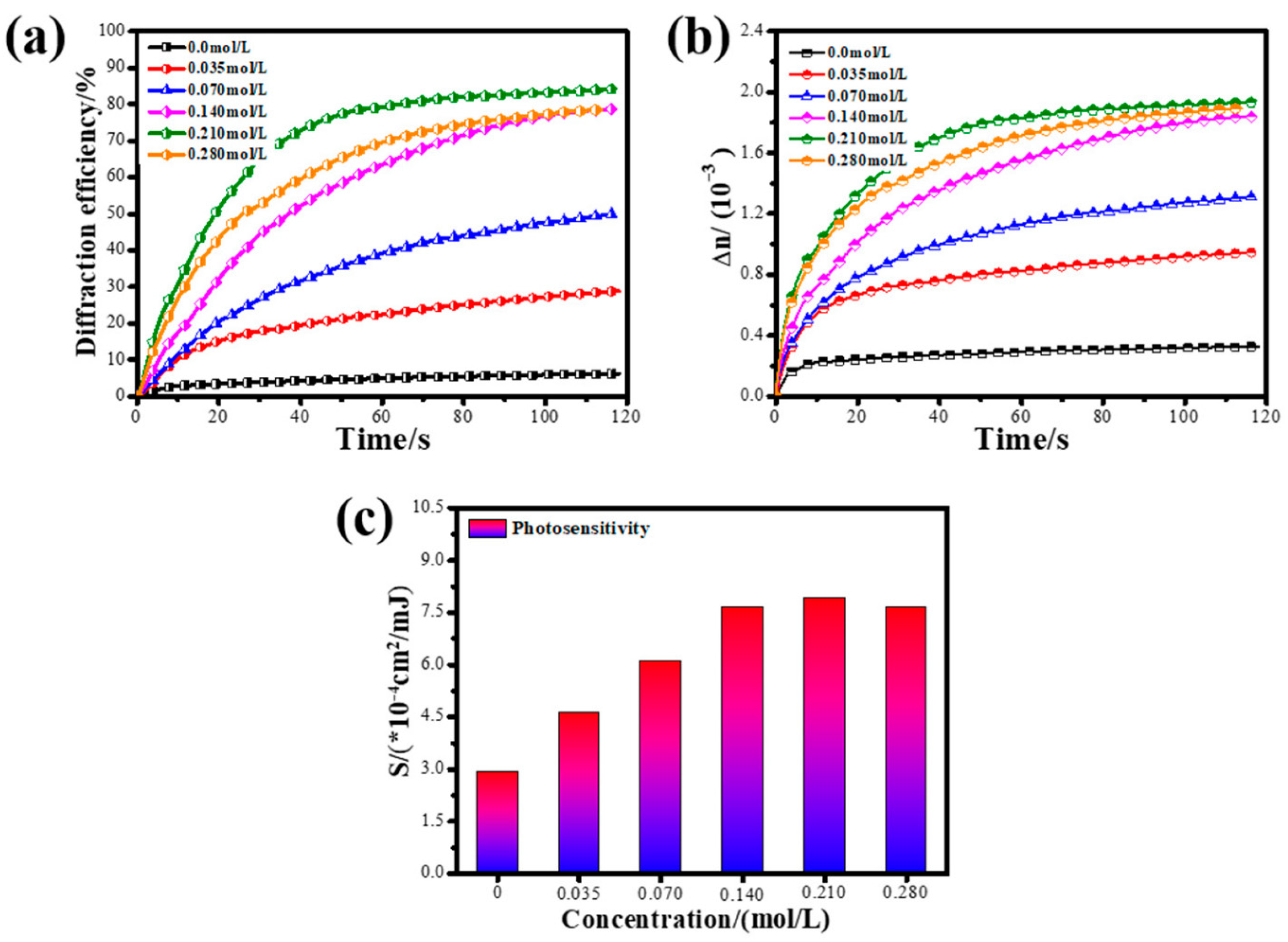
2.3.2. Effect of Glycerol on Holographic Parameters
2.3.3. Summary
2.4. N-Isopropylacrylamide (NIPA) Photopolymers for Holographic Recording
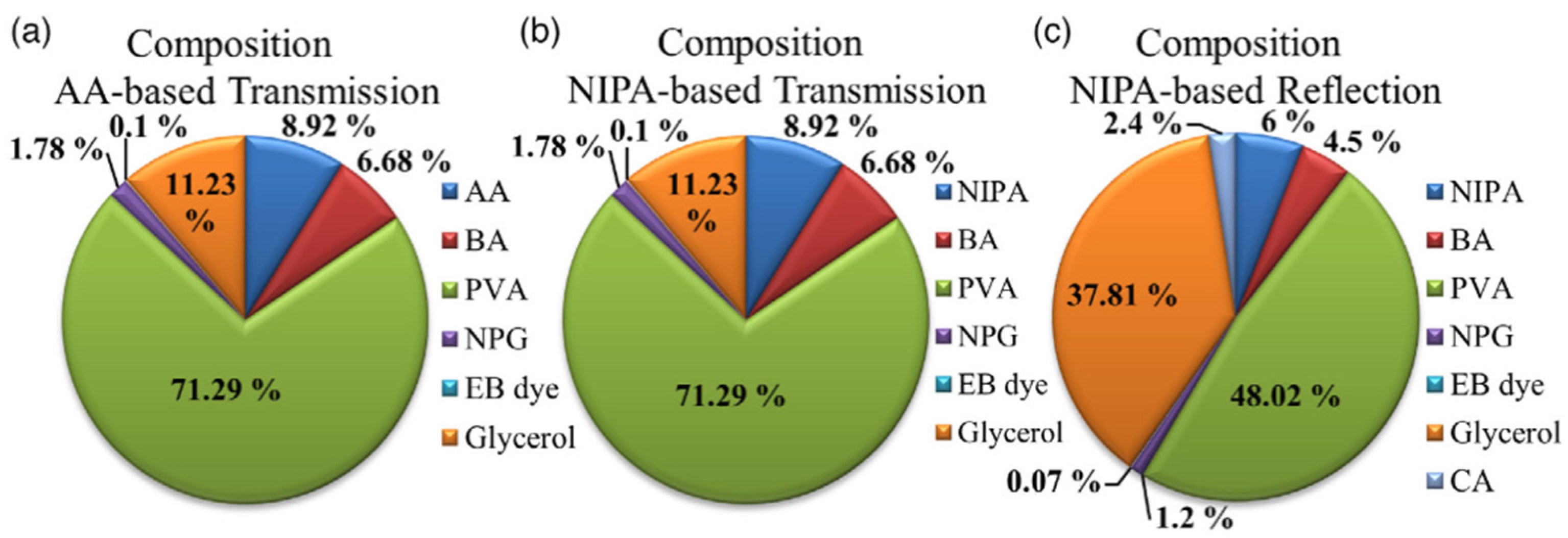
2.4.1. Composition of Thermosensitive NIPA Photopolymer for Holographic Recording in Transmission and Reflection Modes
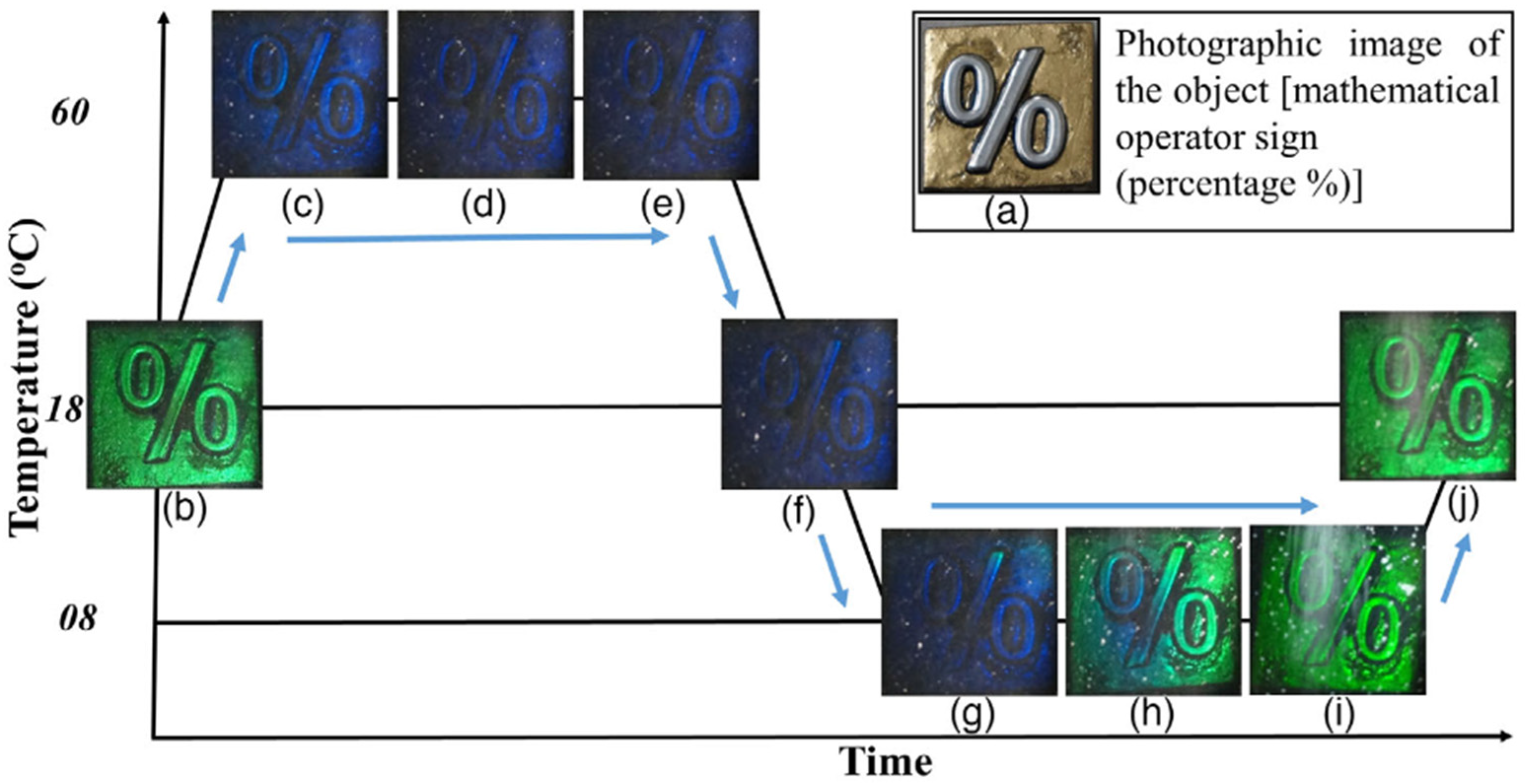
2.4.2. Temperature Response
- 1.
- Transmission Gratings
- 2.
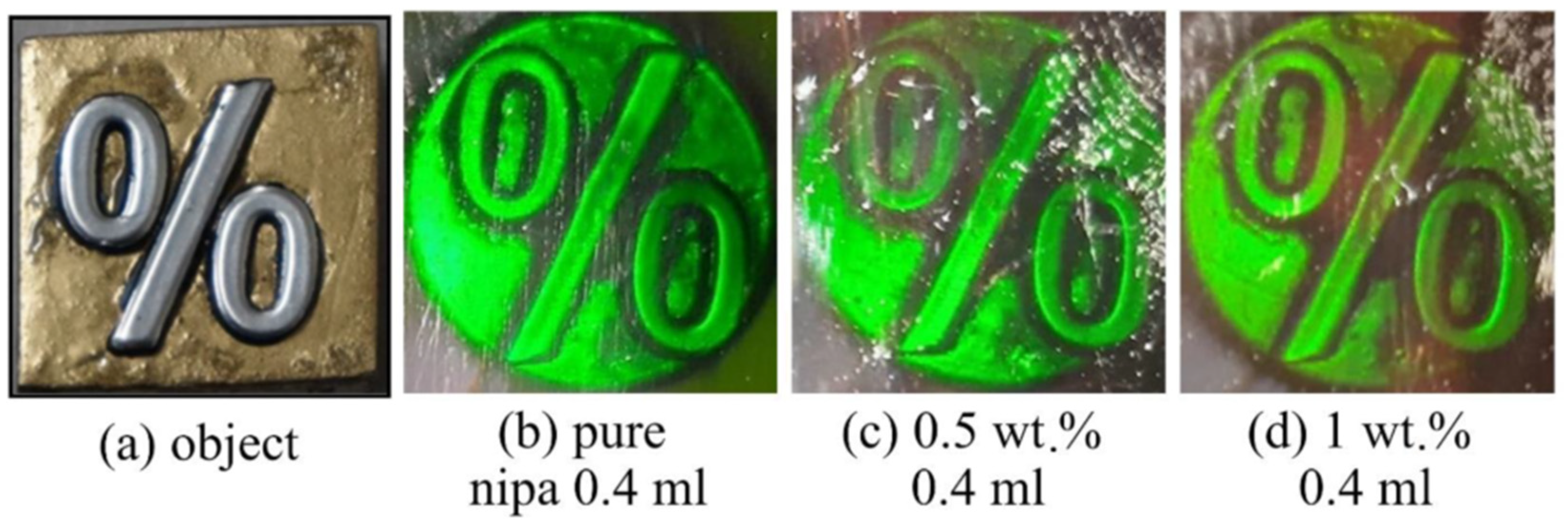
- Reflection Gratings
2.4.3. Summary
2.5. A Magnetic Nanoparticle-Doped Photopolymer for Holographic Recording
2.5.1. Composition of the Photopolymer [32]
2.5.2. Denisyuk Reflection Gratings
2.5.3. Summary
3. Conclusions
4. Future Perspectives
Funding
Institutional Review Board Statement
Informed Consent Statement
Data Availability Statement
Conflicts of Interest
References
- Calixto, S. Dry polymer for holographic recording. Appl. Opt. 1987, 26, 3904–3910. [Google Scholar] [CrossRef] [PubMed]
- Fimia, A.; Lopez, N.; Mateos, F.; Sastre, R.; Pineda, J.; Amat-Guerri, F. Acrylamide photopolymers for use in real-time holography: Improving energetic sensitivity. Proc. SPIE 1992, 1732, 105–110. [Google Scholar]
- Fimia, A.; Lopez, N.; Mateos, F.; Sastre, R.; Pineda, J.; Amat-Guerri, F. Elimination of Oxygen Inhibition in Photopolymer Systems Used as Holographic Recording Materials. J. Mod. Opt. 1993, 40, 699–706. [Google Scholar] [CrossRef]
- Martin, S.; Leclere, P.; Renotte, Y.; Toal, V.; Lion, Y. Characterisation of an acrylamide-based dry photopolymer holographic recording material. Opt. Eng. 1994, 33, 3942–3946. [Google Scholar]
- Blaya, S.; Mallavia, R.; Carretero, L.; Fimia, A.; Madrigal, R.F. Highly sensitive photopolymerisable dry film for use in real time holography. Appl. Phys. Lett. 1998, 73, 1628–1630. [Google Scholar] [CrossRef]
- Blaya, S.; Carretero, L.; Fimia, A.; Mallavia, R.; Madrigal, R.F.; Sastre, R.; Amat-Guerri, F. Optimal composition of an acrylamide and N,N′-methylenebisacrylamide holographic recording material. J. Mod. Opt. 1998, 45, 2573–2584. [Google Scholar] [CrossRef]
- Deng, Y.; Yi, S.; Wang, Y.; Xian, J. Synthesis and photoluminescence characteristics of Ln3+ (Ln = Sm, Er and Dy)-doped BaGd (Mo2O4)4 phosphors. Opt. Mater. 2014, 36, 1378–1383. [Google Scholar] [CrossRef]
- Pashova, T.; Kostova, I.; Eftimov, T.; Tonchev, D. Analysis of fluorescence spectra of oxyfluoride compositions doped with samarium oxide (Sm2O3) and samarium fluoride (SmF3). Bulg. Chem. Commun. 2015, 47, 9–14. [Google Scholar]
- Tonchev, D.; Kostova, I.; Okada, G.; Chapman, D.; Kasap, S.O. NATO Science for Peace and Security Series A: Chemistry and Biology. In Nanoscience Advances in CBRN Agents Detection, Information and Energy Security; Springer: Berlin/Heidelberg, Germany, 2015; Volume 39, pp. 347–358. [Google Scholar]
- Eftimov, T.; Tonchev, D.; Kostova, I.; Patronov, G.; Pashova, T. NATO Science for Peace and Security Series B: Physics and Biophysics, Part F2; Springer: Berlin/Heidelberg, Germany, 2018; pp. 375–387. [Google Scholar]
- Cody, D.; Naydenova, I.; Mihaylova, E. New non-toxic holographic photopolymer. J. Opt. 2012, 14, 015601. [Google Scholar] [CrossRef]
- Ortuño, M.; Fernández, E.; Gallego, S.; Beléndez, A.; Pascual, I. New photopolymer holographic recording material with sustainable design. Opt. Express 2007, 15, 12425–12435. [Google Scholar] [CrossRef]
- Ortuño, M.; Gallego, S.; Márquez, A.; Neipp, C.; Pascual, I.; Beléndez, A. Biophotopol: A Sustainable Photo-polymer for Holographic Data Storage Applications. Materials 2012, 5, 772–783. [Google Scholar] [CrossRef]
- Navarro-Fuster, V.; Ortuño, M.; Gallego, S.; Márquez, A.; Beléndez, A.; Pascual, I. Biophotopol’s energetic sensitivity improved in 300 μm layers by tuning the recording wavelength. Opt. Mater. 2016, 52, 111–115. [Google Scholar] [CrossRef]
- Navarro-Fuster, V.; Ortuño, M.; Fernández, R.; Gallego, S.; Márquez, A.; Beléndez, A.; Pascual, I. Peristrophic multiplexed holograms recorded in a low toxicity photopolymer. Opt. Mater. Express 2016, 7, 133–147. [Google Scholar] [CrossRef]
- Cody, D.; Gribbin, S.; Mihaylova, E.; Naydenova, I. Low-Toxicity Photopolymer for Reflection Holography. ACS Appl. Mater. Interfaces 2016, 8, 18481–18487. [Google Scholar] [CrossRef] [PubMed]
- Mikulchyk, T.; Martin, S.; Naydenova, I. N-isopropylacrylamide-based photopolymer for holographic recording of thermosensitive transmission and reflection gratings. Appl. Opt. 2017, 56, 6348–6356. [Google Scholar] [CrossRef]
- Cody, D.; Gul, S.E.; Mikulchyk, T.; Irfan, M.; Kharchenko, A.; Goldyn, K.; Martin, S.; Mintova, S.; Cassidy, J.; Naydenova, I. Self-processing photopolymer materials for versatile design and fabrication of holographic sensors and interactive holograms. Appl Opt. 2018, 57, E173–E183. [Google Scholar] [CrossRef]
- Vather, D.; Naydenova, I.; Cody, D.; Zawadzka, M.; Martin, S.; Mihaylova, E.; Curran, S.; Duffy, P.; Portillo, J.; Connell, D.; et al. Serialized holography for brand protection and authentication. Appl Opt. 2018, 57, E131–E137. [Google Scholar] [CrossRef] [PubMed]
- Kogelnik, H. Coupled wave theory for thick hologram gratings. Bell Syst. Tech. J. 1969, 48, 2909–2947. [Google Scholar] [CrossRef]
- Mihaylova, E.M. Photosensitive Holographic Recording Medium Comprising Glycerol. Application GB0922068A, 17 December 2009. [Google Scholar]
- Shipp, A.; Lawrence, G.; Gentry, R.; McDonald, T.; Bartow, H.; Bounds, J.; Macdonald, N.; Clewell, H.; Allen, B.; Van Landingham, C. Acrylamide: Review of Toxicity Data and Dose-Response Analyses for Cancer and Noncancer Effects. Crit. Rev. Toxicol. 2006, 36, 481–608. [Google Scholar] [CrossRef]
- King, D.J.; Noss, R.R. Toxicity of polyacrylamide and acrylamide monomer. Rev. Environ. Health 1998, 8, 3–16. [Google Scholar] [CrossRef] [PubMed]
- World Health Organization. Health Implications of Acrylamide in Food: Report of a Joint FAO/WHO Consultation; WHO: Geneva, Switzerland, 2002. [Google Scholar]
- McCollister, D.; Oyen, F.; Rowe, V. Toxicology of Acrylamide. Toxicol. Appl. Pharm. 1964, 6, 172–181. [Google Scholar] [CrossRef] [PubMed]
- Acrylamide; Sigma-Aldrich. Available online: http://https://www.sigmaaldrich.com/BG/en/product/mm/800830#product-documentation (accessed on 3 January 2026).
- Cody, D.; Naydenova, I.; Mihaylova, E. Effect of glycerol on a diacetone acrylamide-based holographic photopolymer material. Appl. Opt. 2013, 53, 489–494. [Google Scholar] [CrossRef] [PubMed]
- Mihaylova, E.M. Water-Soluble Holographic Photopolymers for a Sustainable Future—A Review. Coatings 2022, 12, 1765. [Google Scholar] [CrossRef]
- Mihaylova, E.; Cody, D.; Naydenova, I.; Martin, S.; Toal, V. Research on Holographic Sensors and Novel Photopolymers at the Centre for Industrial and Engineering Optics. In Holography—Basic Principles And Contemporary Applications; Intech: Tokyo, Japan, 2013; pp. 89–102. [Google Scholar]
- Pi, H.; Li, W.; Shi, Z.; Chen, H.; Jiang, X. Effect of Glycerol on an N-Vinylpyrrolidone-Based Photopolymer for Transmission Holography. Polymers 2021, 13, 1754. [Google Scholar] [CrossRef]
- Irfan, M.; Martin, S.; Naydenova, I. Temperature-Sensitive Holograms with Switchable Memory. Adv. Photonics Res. 2021, 2, 2100062. [Google Scholar] [CrossRef]
- Irfan, M.; Martin, S.; Obeidi, M.A.; Miller, S.; Kuster, F.; Brabazon, D.; Naydenova, I. A Magnetic Nanoparticle-Doped Photopolymer for Holographic Recording. Polymers 2022, 14, 1858. [Google Scholar] [CrossRef]
- Fernández, R.; Gallego, S.; Márquez, A.; Francés, J.; Martínez, F.J.; Beléndez, A. Influence of index matching on AA/PVA photopolymers for low spatial frequency recording. Appl. Opt. 2015, 54, 3132–3140. [Google Scholar] [CrossRef] [PubMed]
- Fernández, R.; Bleda, S.; Gallego, S.; Neipp, C.; Márquez, A.; Tomita, Y.; Pascual, I.; Beléndez, A. Holographic waveguides in photopolymers. Opt. Express 2019, 27, 827–840. [Google Scholar] [CrossRef]
- Fernández, R.; Gallego, S.; Márquez, A.; Francés, J.; Martínez, F.J.; Pascual, I.; Beléndez, A. Analysis of holographic polymer-dispersed liquid crystals (HPDLCs) for tunable low frequency diffractive optical elements recording. Opt. Mater. 2018, 76, 295–301. [Google Scholar] [CrossRef]
- Semkin, A.; Sharangovich, S. Holographic formation of non-uniform diffraction structures by arbitrary polarized recording beams in liquid crystal-photopolymer compositions. Polymers 2019, 11, 861. [Google Scholar] [CrossRef]
- Smirnova, T.N.; Kokhtich, L.M.; Sakhno, O.V.; Stumpe, J. Holographic nanocomposites for recording polymer–nanoparticle periodic structures: I. General approach to choice of components of nanocomposites and their holographic properties. Opt. Spectrosc. 2011, 110, 129–136. [Google Scholar] [CrossRef]
- Smirnova, T.N.; Kokhtich, L.M.; Sakhno, O.V.; Stumpe, J. Holographic nanocomposites for recording polymer–nanoparticle periodic structures: II. Mechanism of formation of polymer–nanoparticle bulk periodic structure and effect of parameters of forming field on structure efficiency. Opt. Spectrosc. 2011, 110, 137–144. [Google Scholar] [CrossRef]
- Tomita, Y.; Hata, E.; Momose, K.; Takayama, S.; Liu, X.; Chikama, K.; Klepp, J.; Pruner, C.; Fally, M. Photopolymerizable nanocomposite photonic materials and their holographic applications in light and neutron optics. J. Mod. Opt. 2016, 63, S1–S31. [Google Scholar] [CrossRef] [PubMed]
- Liu, P.; Chang, F.; Zhao, Y.; Li, Z.; Sun, X. Ultrafast volume holographic storage on PQ/PMMA photopolymers with nanosecond pulsed exposures. Opt. Express 2018, 26, 1072–1082. [Google Scholar] [CrossRef]
- Borisov, V.N.; Angervaks, A.E.; Ryskin, A.I.; Veniaminov, A.V. Two-model spectral study of volume holograms in materials with diffusion-based mechanisms. Opt. Eng. 2019, 58, 024102. [Google Scholar] [CrossRef]
- Guo, J.; Gleeson, M.R.; Sheridan, J.T. A review of the optimisation of photopolymer materials for holographic data storage. Phys. Res. Int. 2012, 2012, 803439. [Google Scholar] [CrossRef]
- Malallah, R.; Li, H.; Kelly, D.; Healy, J.; Sheridan, J. A review of hologram storage and self-written waveguides formation in photopolymer media. Polymers 2017, 9, 337. [Google Scholar] [CrossRef]
- Pratheep, H.R.; Balamurugan, A. A review of holographic optical elements in solar concentrator applications. IJARIIT 2018, 4, 214–222. [Google Scholar]
- Ferrara, M.A.; Striano, V.; Coppola, G. Volume holographic optical elements as solar concentrators: An Overview. Appl. Sci. 2019, 9, 193. [Google Scholar] [CrossRef]
- Alfaro, E.; Lloret, T.; Vilardy, J.M.; Bastidas, M.; Morales-Vidal, M.; Pascual, I. Photopolymer Holographic Lenses for Solar Energy Applications: A Review. Polymers 2024, 16, 732. [Google Scholar] [CrossRef]
- Ferri, M.; Bravo, J.M.; Redondo, J.; Jiménez-Gambín, S.; Jiménez, N.; Camarena, F.; Sánchez-Pérez, J.V. On the Evaluation of the Suitability of the Materials Used to 3D Print Holographic Acoustic Lenses to Correct Transcranial Focused Ultrasound Aberrations. Polymers 2019, 11, 1521. [Google Scholar] [CrossRef] [PubMed]


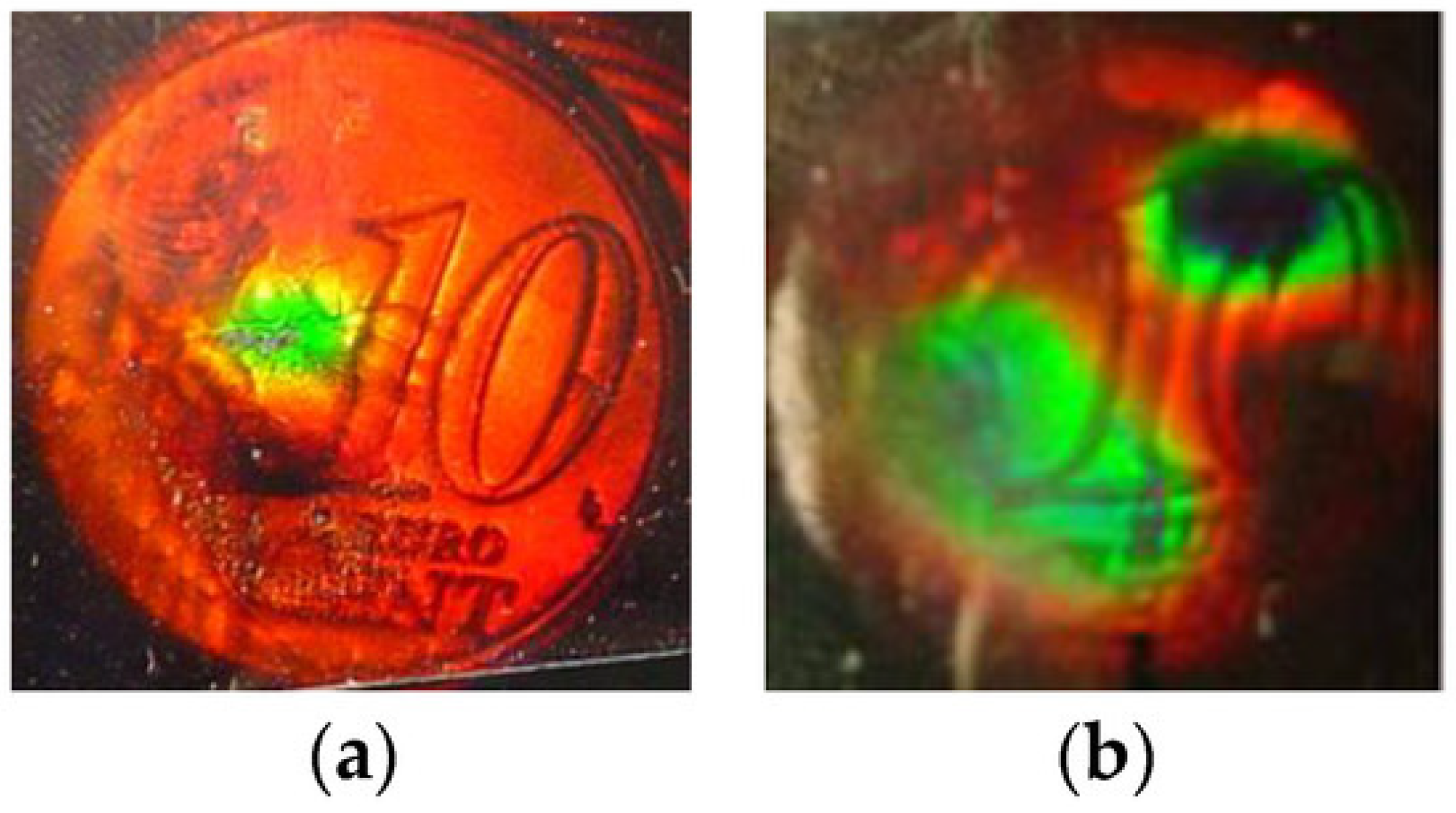



| Component | Function | Photopolymer BA1 | Photopolymer BA2 | Photopolymer BA3 |
|---|---|---|---|---|
| N, N’-Methylene bisacrylamide (BA) (g) | Monomer/ Cross-linker | 0.4 | 0.3 | 0.3 |
| Polyvinyl alcohol (PVA) 10% w/v (mL) | Binder | 20 | 20 | 20 |
| Triethanolamine (TEA) (mL) | Free radical generator | 2 | 1 | 1 |
| Methylene Blue dye (MB) 0.11% w/v (mL) | Sensitising dye | 4 | 4 | 2 |
| Glycerol (mL) | Plasticizer/Free radical scavenger | 2 | 2 | 1 |
| Component | Function | Quantity |
|---|---|---|
| Diacetone-acrylamide (g) | Monomer | 1 |
| N, N’-Methylene bisacrylamide (BA) (g) | Monomer/cross-linker | 0.2 |
| Polyvinyl alcohol (PVA) 10% w/v (mL) | Binder | 20 |
| Triethanolamine (TEA) (mL) | Free radical generator | 2 |
| Methylene Blue dye (MB) 0.11% w/v (mL) | Sensitising dye | 4 |
| Glycerol (mL) | Plasticizer/free radical scavenger | 2 |
| Chemical Reagent | Chemical Compound | Transmission Mode | Reflection Mode |
|---|---|---|---|
| Polyvinyl alcohol |  | 8.79% w/v | 8.42% w/v |
| N-phenylglycine |  | 0.0145 M | 0.0139 M |
| N,N’-methylene bisacrylamide |  | 0.053 M | 0.051 M |
| Erythrosin B |  | 1.37 × 10⁻⁴ M | 1.32 × 10⁻⁴ M |
| N-isopropyl acrylamide |  | 0.097 M | 0.093 M |
| Citric acid |  | - | 0.022 M |
| Glycerol |  | 0.15 M | 0.72 M |
| Function/Role | Chemical Component * | Dry Layer Samples | |||||||||
|---|---|---|---|---|---|---|---|---|---|---|---|
| (C)-Trans Pure NIPA | (D)-Trans Nanocomposite (MNPs in NIPA) | (E)-Reflect Nanocomposite (MNPs in NIPA) | |||||||||
| Binder | PVA 10% wt./vol, mL | 16 | 16 | 16 | |||||||
| Monomer | NIPA, g | 0.2 | 0.2 | 0.2 | |||||||
| Cross-linker | BA, g | 0.15 | 0.15 | 0.15 | |||||||
| Free-radical generator | NPG, g | 0.04 | 0.04 | 0.04 | |||||||
| Sensitising dye | Er B 0.11% wt./vol, mL | 2 | 2 | 2 | |||||||
| Plasticiser/free radical scavenger | Glycerol, mL | 0.2 | 0.2 | 1 | |||||||
| Chain transfer agent | CA, g | - | - | 0.08 | |||||||
| magnetic nanoparticles (MNP) | Fe2O3 Alpha 20–30 nm | concentrations of MNPs in dry layer (% wt./wt.) | |||||||||
| - | 0.5 | 1 | 2 | 5 | 10 | 0 | 0.5 | 1 | |||
| Fe3O4 20 nm | - | 0.5 | 1 | 2 | 5 | 10 | - | ||||
Disclaimer/Publisher’s Note: The statements, opinions and data contained in all publications are solely those of the individual author(s) and contributor(s) and not of MDPI and/or the editor(s). MDPI and/or the editor(s) disclaim responsibility for any injury to people or property resulting from any ideas, methods, instructions or products referred to in the content. |
© 2026 by the author. Licensee MDPI, Basel, Switzerland. This article is an open access article distributed under the terms and conditions of the Creative Commons Attribution (CC BY) license.
Share and Cite
Mihaylova, E.M. Employing Glycerol for Improving Diffraction Efficiency, Photosensitivity and Pressure Sensitivity in Holographic Recording Layers. Coatings 2026, 16, 249. https://doi.org/10.3390/coatings16020249
Mihaylova EM. Employing Glycerol for Improving Diffraction Efficiency, Photosensitivity and Pressure Sensitivity in Holographic Recording Layers. Coatings. 2026; 16(2):249. https://doi.org/10.3390/coatings16020249
Chicago/Turabian StyleMihaylova, Emilia Mitkova. 2026. "Employing Glycerol for Improving Diffraction Efficiency, Photosensitivity and Pressure Sensitivity in Holographic Recording Layers" Coatings 16, no. 2: 249. https://doi.org/10.3390/coatings16020249
APA StyleMihaylova, E. M. (2026). Employing Glycerol for Improving Diffraction Efficiency, Photosensitivity and Pressure Sensitivity in Holographic Recording Layers. Coatings, 16(2), 249. https://doi.org/10.3390/coatings16020249