Article

Biodegradable Polymer Films Based on Hydroxypropyl Methylcellulose and Blends with Zein and Investigation of Their Potential as Active Packaging Material


Department of Physics, Faculty of Physics and Technology, University of Plovdiv Paisii Hilendarski, 4000 Plovdiv, Bulgaria
*
Author to whom correspondence should be addressed.
Coatings 2026, 16(1), 66; https://doi.org/10.3390/coatings16010066
Submission received: 30 November 2025 / Revised: 25 December 2025 / Accepted: 4 January 2026 / Published: 6 January 2026
(This article belongs to the Special Issue Preparation and Applications of Bio-Based Polymer Coatings)

Abstract

Active packages have become a significant center of attention, and especially those based on biodegradable materials, due to their ability to enhance food preservation and extend shelf life. A suitable base for obtaining such types of packages has turned out to be polymers with natural origin, such as hydroxylpropyl methylcellulose (HPMC) and zein. Therefore, the present study is focused on developing films using the casting method based on pure HPMC and blends between HPMC and zein. Three types of polymer matrices were developed: pure HPMC film, HPMC 3:1 zein, and HPMC 1:1 zein. Further, all of them were loaded with curcumin to improve their biological activity, and mainly their antioxidant activity. In order to investigate the potential of these films, some of their most vital properties in terms of potential application as packaging material are established, such as mechanical properties (strain at break, Young’s modulus), barrier properties (water vapor transmission rate), and morphology. A significant change in the Young’s modulus was present after the addition of zein; it went from 276.98 ± 28.48 MPa for pure HPMC to 52.17 ± 10.19 MPa in a 1:1 ratio between the polymers. Meanwhile, strain at break showed a slight drop from 86.74 ± 8.64% to 72.44 ± 9.62%. Barrier properties were also influenced by the formation of composite film and the addition of polyphenol, lowering the water vapor transmission rate from 913.07 ± 74.01 g/m2.24 h for pure HPMC to 873.05 ± 9.07 g/m2.24 h for 1:1 ratio film and further to 826.35 ± 33.67 g/m2.24 h after the addition of rutin to the latter. Additional characterization of radical scavenging ability towards DPPH free radicals showed a similar A-shaped trend to the values of Young’s modulus, due to the presence of hydrogen bonds, which affect both properties of the film structures. Thermal behavior and phase state investigation of the films obtained by differential scanning calorimetry prior to and after polyphenol addition was carried out, indicating full phase transition of rutin from crystalline to amorphous state.

1. Introduction

Active packaging represents a modern approach to food preservation, enhancing the quality and extending the shelf life of food. Its effectiveness is due to the interaction between the packaging and the product or the headspace inside the package. These systems function by releasing active compounds such as antioxidants or antimicrobials, or by absorbing harmful substances like oxygen, ethylene, or excess moisture, which helps inhibit microbial growth, delay oxidation, and maintain sensory attributes [1,2]. Active packaging technologies include oxygen scavengers, ethylene absorbers for fruits and vegetables, antimicrobial coatings, and biodegradable films containing natural extracts or essential oils. More advanced solutions involve controlled-release and stimuli-responsive systems, which activate the release of protective substances under specific conditions such as increased humidity, temperature changes, or microbial activity, offering more targeted and efficient preservation [2,3].
Recent developments focus on biodegradable, bio-based matrices—such as PLA, protein films, and polysaccharide-based materials—combined with natural antioxidant or antimicrobial compounds. These materials are eco-friendly and support environmental sustainability while actively improving food shelf life. Experimental studies demonstrate that biodegradable active films can reduce weight loss, suppress microbial growth, and delay oxidative processes in fresh-cut fruits and vegetables. Incorporating natural flavonoids such as rutin further enhances the antioxidant and antimicrobial performance of these films, making them promising candidates for environmentally friendly active packaging solutions [4].
Hydroxypropyl methylcellulose (HPMC) is a semi-synthetic cellulose derivative that is widely used in edible coatings and packaging due to its excellent film-forming ability, transparency, and processability [5]. However, its limitations—especially high water sensitivity, plasticization at elevated humidity, and modest mechanical strength—restrict its broader use in packaging applications [6,7]. These weaknesses have motivated extensive efforts to improve HPMC films by blending, cross-linking, and incorporation of nano- and micro-structured fillers. Indeed, several studies show that HPMC composite films reinforced with nanocellulose or polysaccharides exhibit improved tensile strength, reduced gas permeability, and better stability under humidity fluctuations [8,9].
Zein, a hydrophobic prolamin protein from corn, is another promising packaging material. It is characterized by low oxygen permeability [10] and good film-forming properties [11]. Its intrinsic hydrophobic character can improve moisture and gas-barrier behavior when incorporated in blends [12]. However, zein films are brittle and require plasticizers or blending partners to attain adequate mechanical flexibility [13].
Blending hydrophilic HPMC with hydrophobic zein therefore presents an attractive strategy to tune the water sensitivity, barrier properties, and mechanical behavior of the resulting composite films. Recent experimental work demonstrated that the combination of HPMC and zein resulted in films whose morphology, transparency, and mechanical properties were governed by polymer–polymer interactions, solvent polarity, and drying conditions. In particular, the use of water/ethanol mixed solvents promoted controlled phase separation, creating distinct HPMC–zein microstructures that influence tensile strength, elongation, and moisture resistance [14]. Processing factors such as polymer ratio, casting solvent, and plasticizer type have been further shown to control composite miscibility and microphase structures [15].
In addition to structural modification, there is increasing focus on designing active packaging films that incorporate antimicrobial and antioxidant agents. Essential oils (EOs), plant extracts, and natural antimicrobial and antioxidant agents can extend food shelf life, but their volatility and sensitivity require encapsulation strategies to ensure stability and controlled release. Zein nanoparticles, lipophilic nanocarriers, and Pickering emulsions have emerged as highly effective carriers for embedding essential oils within hydrophilic polymer films [16,17]. HPMC-based films stabilized with nanocarriers have shown improved retention of active compounds and enhanced antimicrobial performance [18].
Despite promising progress, several challenges remain for scaling up HPMC–zein active films, including controlling phase morphology during solvent evaporation, guaranteeing shelf stability of encapsulated active agents, achieving consistent performance under variable humidity and temperature cycles, and meeting regulatory standards for food-contact materials.
In this study, HPMC and HPMC–zein composite films, loaded with curcumin to enhance their antioxidant activity, were prepared and characterized in terms of their structural, physicochemical, mechanical, thermal, barrier, and antioxidant properties. The novelty of this study lies in directly linking the HPMC–zein ratio to hydrogen-bond-mediated interactions and to the functional performance of active films. In addition, the study clarifies how rutin immobilized within the polymer matrix influences the film behavior. By linking composition, structure, and performance, this study offers clear design guidelines for biodegradable HPMC–zein active films intended for food packaging applications.

2. Materials and Methods

2.1. Materials

Hydroxypropyl methylcellulose (HPMC, Mw ≈ 80,103 g/mol), zein (Z, extracted from maize, Mw = 20,103 g/mol, poly(ethylene glycol) (PEG, Mw = 400 g/mol), 2,2-diphenyl-1-picrylhydrazyl (DPPH, Mw = 394.32 g/mol), and rutin trihydrate (R, Mw = 664.57 g/mol) were purchased from Sigma Aldrich (Taufkirchen, Germany). All solvents were used as obtained, with an analytical grade of purity, and no further modification was made.

2.2. Film Fabrication

To obtain the examined films, the casting method was employed. Namely, 3 types of polymer films were prepared: pure HPMC, HPMC 3:1 Z, and HPMC 1:1 Z. For this purpose, a total of 1 g of dry material in the mentioned ratios was dissolved in an ethanol/water mixture at a 70/30 ratio [19]. This solution was kept at 70 °C for 1 h and stirred at 1000 rpm. Afterwards, it was cast into a petri dish and dried at 60 °C for 1 h and then at 30 °C until a dry structure was obtained. This protocol was kept the same for the preparation of rutin-loaded structures, but rutin was added along with the polymer mass at a concentration of 3.8 mg/mL or equal to 2 mg/cm2 of the film surface.

2.3. Film Characterization

2.3.1. SEM

The surface morphology of the as-prepared samples was visualized through scanning electron microscopy (SEM). Films with dimensions 2 × 2 cm were placed on an aluminum holder, coated with carbon and gold by a Quorum Q150T Plus vacuum evaporator (Quorum Technologies, West Sussex, UK), and images were taken via a back-scattering electron detector (Prisma E SEM, Thermo Scientific, Waltham, MA, USA) at different magnification. All images are shown with a scale bar of 10 µm.

2.3.2. FTIR

Fourier-transform infrared (FTIR) spectra were obtained using a Jasco FT/IR-4X spectrophotometer (Jasco, Hachioji, Japan). The spectral range was 4000–400 cm−1. To minimize instrument background noise, with a resolution of 2 cm−1, the instrument scanned each sample 32 times using a specialized filter holder. The display shows the averaged FTIR spectrum.

2.3.3. Mechanical Properties

To evaluate the Young’s modulus (YM) of all samples, along with stress and strain, a destructive test was performed. The films were cut into strips with dimensions of 10 × 40 mm and fastened by rubber-sealed pneumatic clamps with a gauge distance of 20 mm and deformed with a speed of tension of 1 mm/s. For each sample type, at least 10 repetitions were performed. Young’s modulus was calculated based on the linear region of stress–strain curves. The values given are averages along with their standard deviation.

2.3.4. Barrier Properties

The water vapor transmission rate of the resultant structures was evaluated by a gravimetric method. For this purpose, an instrument model W3/031 (Labthink, Jinan, China) was used. The test was conducted under the following conditions: a constant humidity difference of 80% between the two sides of the film, a temperature of 38 °C, and a time of point collection of 60 min. A total of three repetitions were performed for each sample type, and the presented results are the average of these with standard deviations.

2.3.5. Surface Properties and Hydrophilicity

The hydrophobic properties of the prepared composite films were investigated in standard conditions (room temperature and normal atmospheric pressure) with the use of two different liquids (water and diiodomethane CH2I2). Small droplets of 2 μL of each of the liquids were carefully deposited on the surface of the films with the use of a precise 10 μL micro-syringe (Innovative Labor System GmbH, Ilmenau, Germany). On the surface of the films, 6 droplets of each liquid were deposited, after which the collected results were utilized for the determination of the hydrophobic properties of each sample. The contact angles were determined by measuring the angle created by the tangent of the drop profile and the surface of the films from images, captured with the use of a high-resolution camera. ImageJ v1.51k software, National Institutes of Health, Bethesda, MD, USA was used for the analysis of the captured images.
Following the equation (theory) of Owens and Wendt [20], the surface free energy of a solid, γs, can be expressed as a sum of contributions from γsd and γsp components. Both can be determined from the contact angle data of polar and non-polar liquids with known dispersion, for non-polar, γlvd, and polar, γlvp, parts of their interfacial energy:
γ l v ( 1 + cos θ ) = 2 γ s d γ l v d + 2 γ s p γ l v p
where θ is the contact angle and γ l v = γ l v d + γ l v p .

2.3.6. Thermal Stability and Phase State Investigation

The thermal behavior and phase state of polymer films before and after the addition of rutin were studied using the differential scanning calorimetry method (DSC) 204F1 Phoenix instrument (Netzsch Gerätebau GmbH, Selb, Germany). The apparatus was calibrated with an indium standard (Tm = 156.6 °C, ΔHm = 28.5 J/g) regarding heat flow and temperature. About 2–5 mg of each sample type was put into an aluminum pan and sealed before measurement. The temperature interval for this study was set between 25 °C and 300 °C with a heating step of 10 °C/min.

2.3.7. Antioxidant Activity

To evaluate the antioxidant activity, and hence the active packaging potential of these structures, their scavenging ability against the free radical solution (DPPH) was examined. Films were cut into 3 pieces with dimensions 1 × 1 cm and incubated in 2 mL of ethanol for 1 h. From these solutions, 0.1 mL was taken and added to 2.5 mL of 0.1 mM DPPH ethanolic solution. This mixture was incubated in the dark for 45 min at room temperature and measured at 517 nm using a spectrophotometer (Metertech SP-8001; Metertech Inc., Nangang, Taipei, Taiwan). The scavenging activity was calculated by the given formula:
S c a v e n g i n g   a c t i v i t y , % = A 0 A 45 A 0 × 100 ,
where A0 is the absorbance of DPPH solution at the starting time, and A45 is the absorbance of DPPH at the ending time after 45 min.

2.3.8. Statistical Analysis

To find the significant differences between the films with different composition, the results were analyzed by two-way ANOVA test using Statistica (ver. 14.) software.

3. Results and Discussion

3.1. Surface Morphology Examination

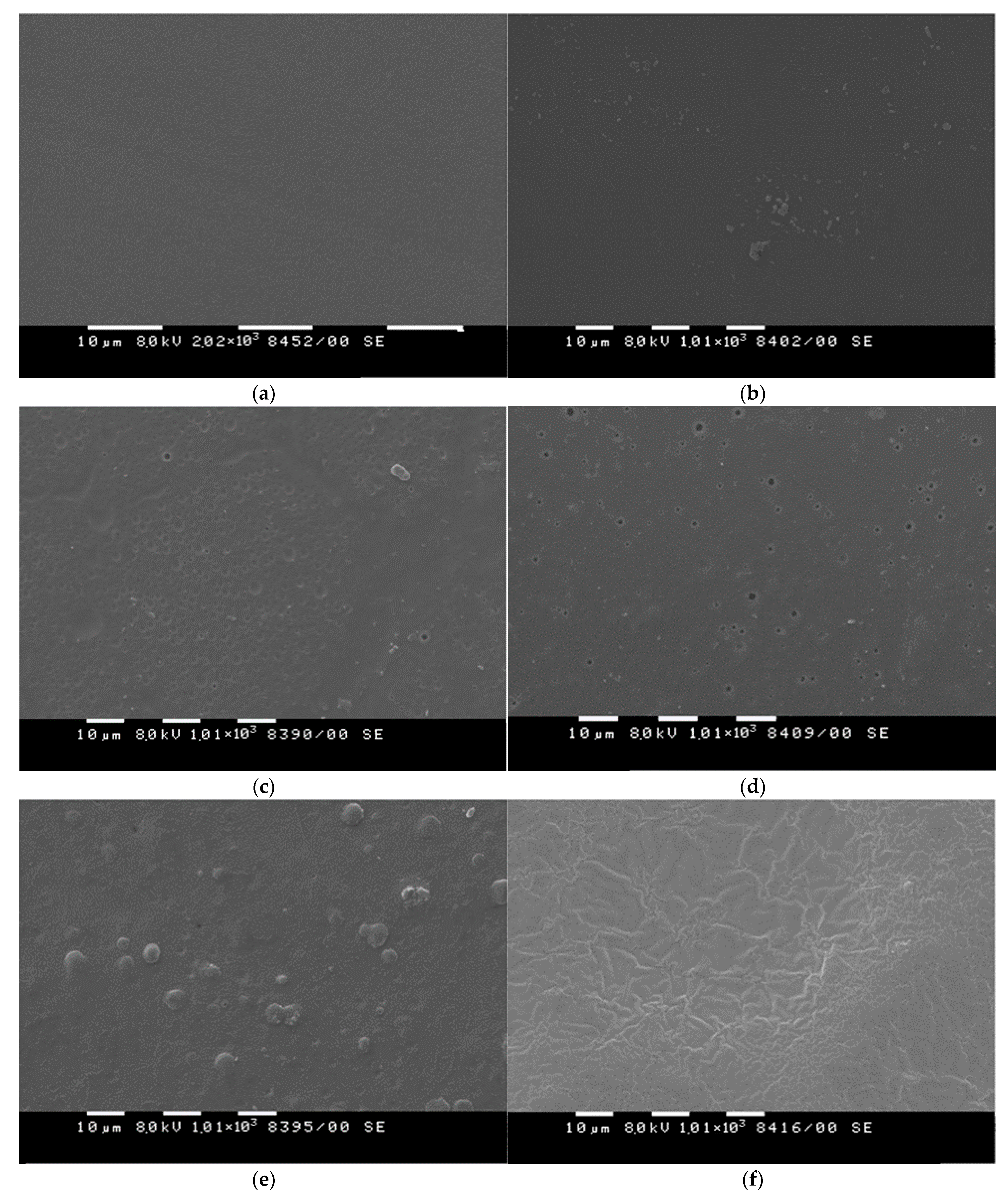
The surface of the film based on pure HPMC, shown in Figure 1a, is smooth and homogeneous, without the presence of surface defects or roughness. When rutin was added to this film, the presence of small formations was observed, which is probably due to the poor solubility of rutin in water (Figure 1b). Previous studies have shown that it dissolves well in ethanol or ethanol-rich media [21]. Therefore, for the preparation of the present series of films, an ethanol–water mixture was selected with a predominance of ethanol, so that this mixture provides appropriate solubility for each of the components of the composite films. It turns out that although the amount of water in the dissolution medium is relatively low (only 30%), some of the rutin remains dissolved or insufficiently homogeneously distributed in the volume of the HPMC film, which is the reason for the partial migration to the surface and the change in the morphology of this film. In order to improve the surface and barrier properties of the film based on pure HPMC, films were also developed in which zein was added in different mass amounts relative to HPMC. At a ratio of 3:1 in favor of HPMC, the formation of oval dips is observed, which are of relatively uniform size and evenly distributed over the entire surface, as seen from Figure 1c. When rutin is added to this model film, the appearance of small pores with an average diameter of about 1–1.2 µm is observed (Figure 1d).
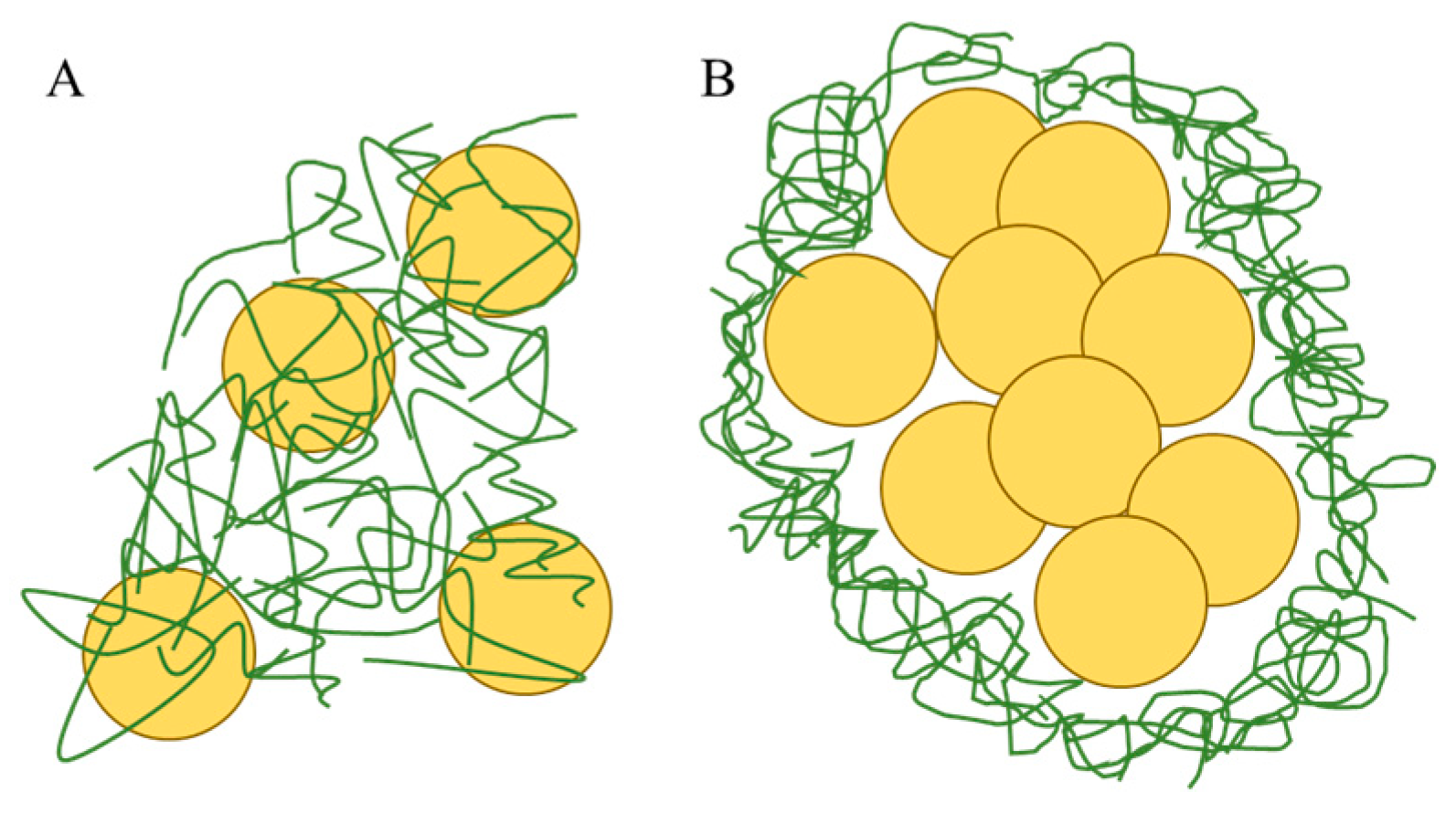
This may be due to two facts: the use of a water-soluble plasticizer in the preparation of the films (PEG 400), which forms pores in the zein matrix, as reported by Giteru et al. 2019 [22], or the fact that zein and HPMC have different solubility and affinity for different types of solvents. Zein is a hydrophobic polymer, prone to aggregate and form particles in the presence of water, and also, when used in combination with a water-soluble polymer, voids are observed, as seen in the current images and by other researchers [23]. This behavior of zein is confirmed and manifested in the preparation of a composite film based on equal mass ratios between it and HPMC. In the micrograph in Figure 1e, it is observed that in addition to the presence of spherical depressions, the formation of spherical and oval particles with an average diameter of about 3.30 µm is observed. Since the dry amount used to prepare the films is always the same, when the amount of zein increases, that of HPMC decreases. Therefore, a phase separation process is observed due to the reduced viscosity of the total solution and the increase in hydrophobicity. As a result, the formation of zein particles and the presence of surface defects are more clearly observed [14]. The inclusion of rutin in this type of film again leads to a noticeable change in the surface morphology, shown in Figure 1f. Some of the zein particles are visible on the top layer of this film, but in addition to them, there is the presence of significant roughness and folds. This type of change in morphology is characteristic of systems in which the arrangement of the polymer chains is disturbed by other structural elements in the matrix, such as rutin [24]. According to some authors, this may be due to the formation of intermolecular hydrogen bonds between the polymers themselves or the polymers and the active substance [25,26,27] (Figure 2).

3.2. Fourier-Transform Infrared Spectra of Native Compounds and Obtained Structures

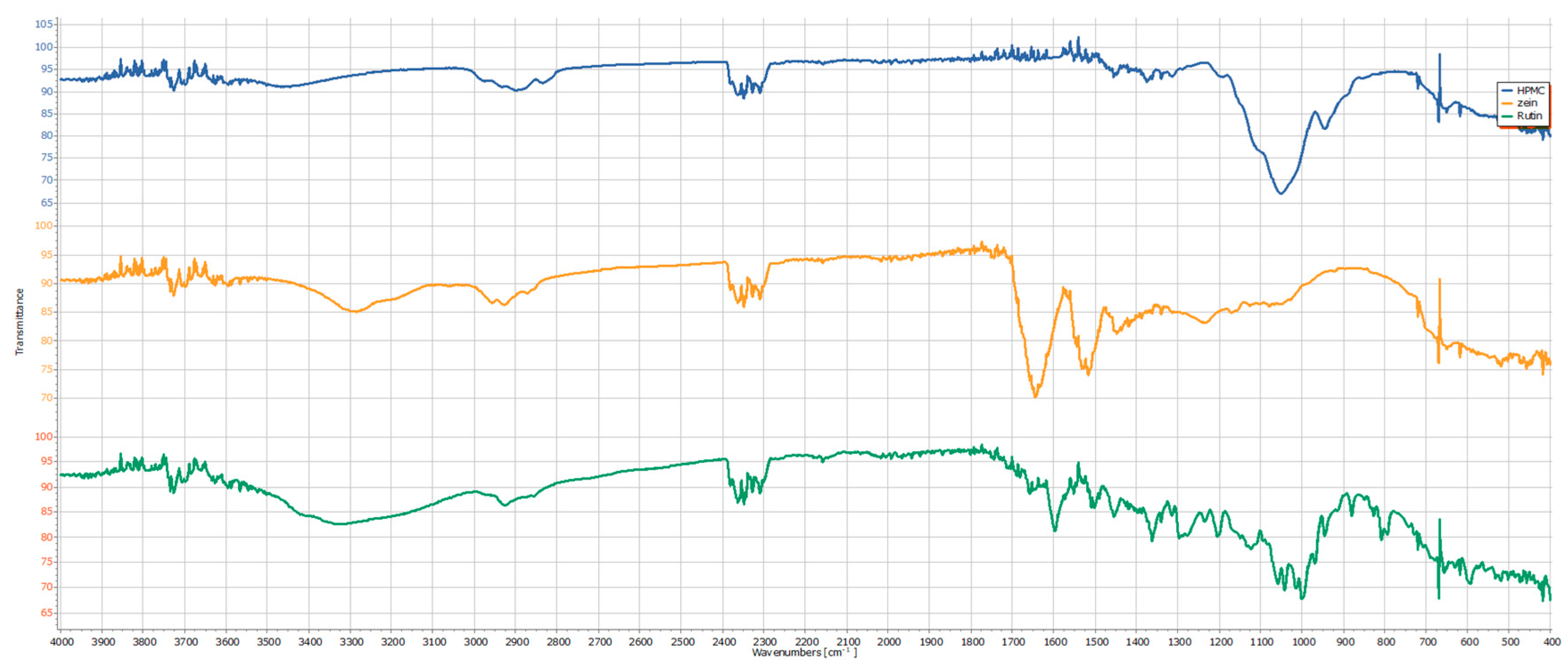
To assess the compatibility and the presence of potential interactions between the substances used to obtain the present structures, infrared Fourier-transform spectroscopy was used. The obtained spectra are presented in Figure 3, Figure 4, Figure 5, Figure 6 and Figure 7.
Figure 3 presents spectra of all compounds in their pure form. Based on them, the following wavelength numbers can be pointed out as characteristic peaks for HPMC: 3460 cm−1 (–OH groups), 2901 cm−1 and 2835 cm−1 (asymmetric and symmetric stretching of methylene groups in the substituents), 1456 cm−1 (bending of –CH2 in methyl groups), 1050 cm−1 (stretching vibrations of CO and COC groups), and 944 cm−1 (associated with vibrations of the backbone of HPMC macromolecules and amorphous regions and specifically CO deformations and –CH2 rocking) [28,29,30]. In the zein spectrum, the following characteristic bands can be reported: Zein—3284 cm−1 (–OH and –NH stretching in the hydroxyl and amino groups), 2927 cm−1 and 2871 cm−1 (–CH stretching in the –CH3 and –CH2 groups, respectively), 1648 cm−1 (C=O stretching in the primary amide), 1544 cm−1 (NH bending and CN stretching in the secondary amide), and 1236 cm−1 (complex vibrations in the tertiary amide, including CN stretching and NH bending) [31,32,33]. Typical wavelength numbers for rutin discussed by other authors and observed in the given spectrum are as follows: 3327 cm−1 (broad peak due to –OH groups in alcohol and phenolic ones), 2926 cm−1 (CH stretching in aromatic and aliphatic CH bonds), 1657 cm−1 (weak peak due to conjugated carbonyl group in flavonoid structure), 1596 cm−1 (benzene rings), 1300 cm−1 to 1000 cm−1 (CO and CC stretching in aromatic rings), and 879–720 cm−1 (CH bending in aromatic groups) [34,35,36].
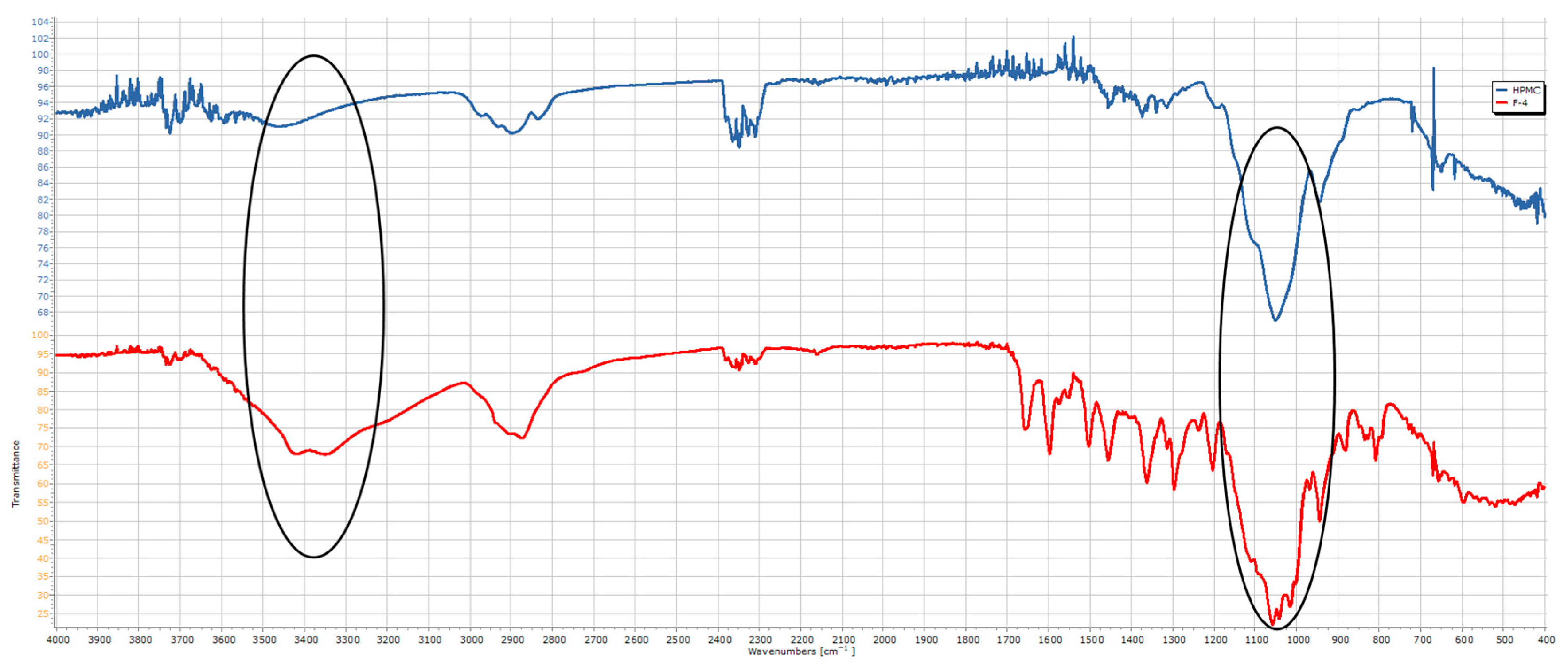
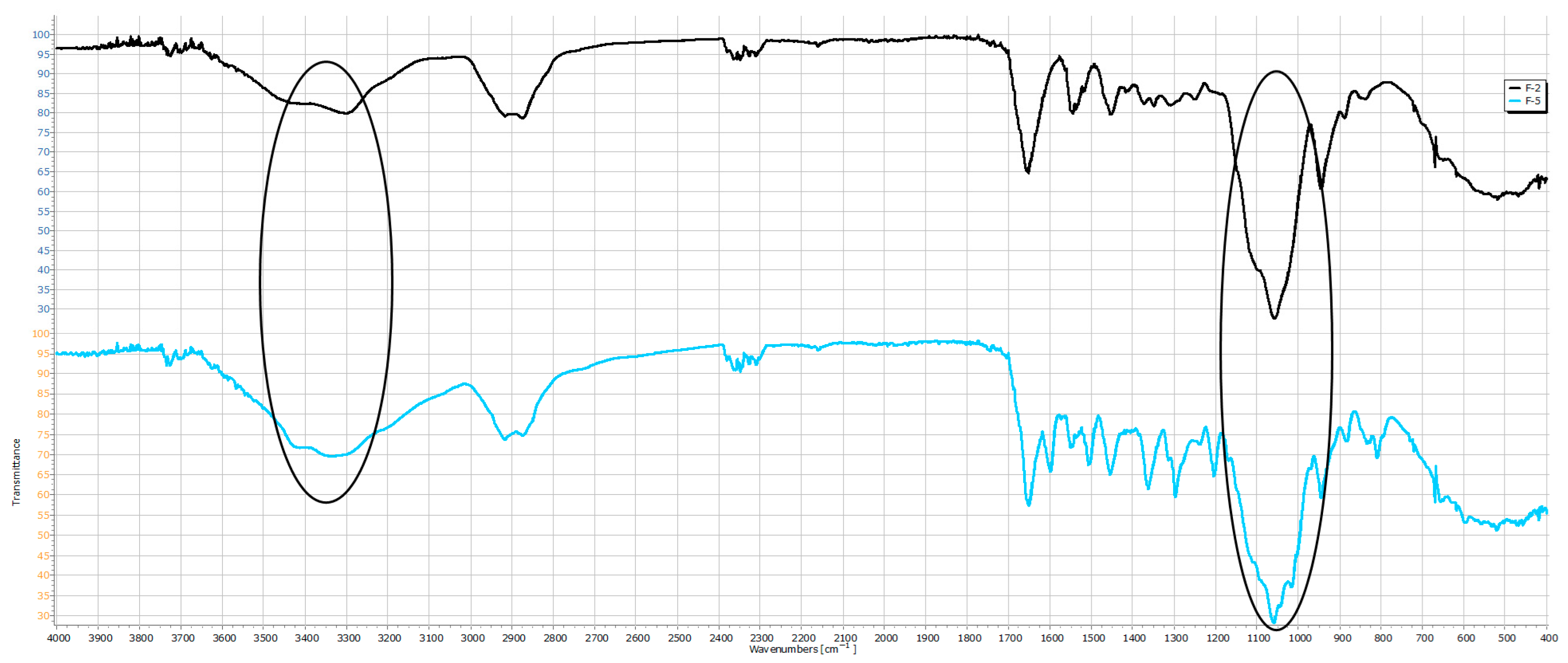
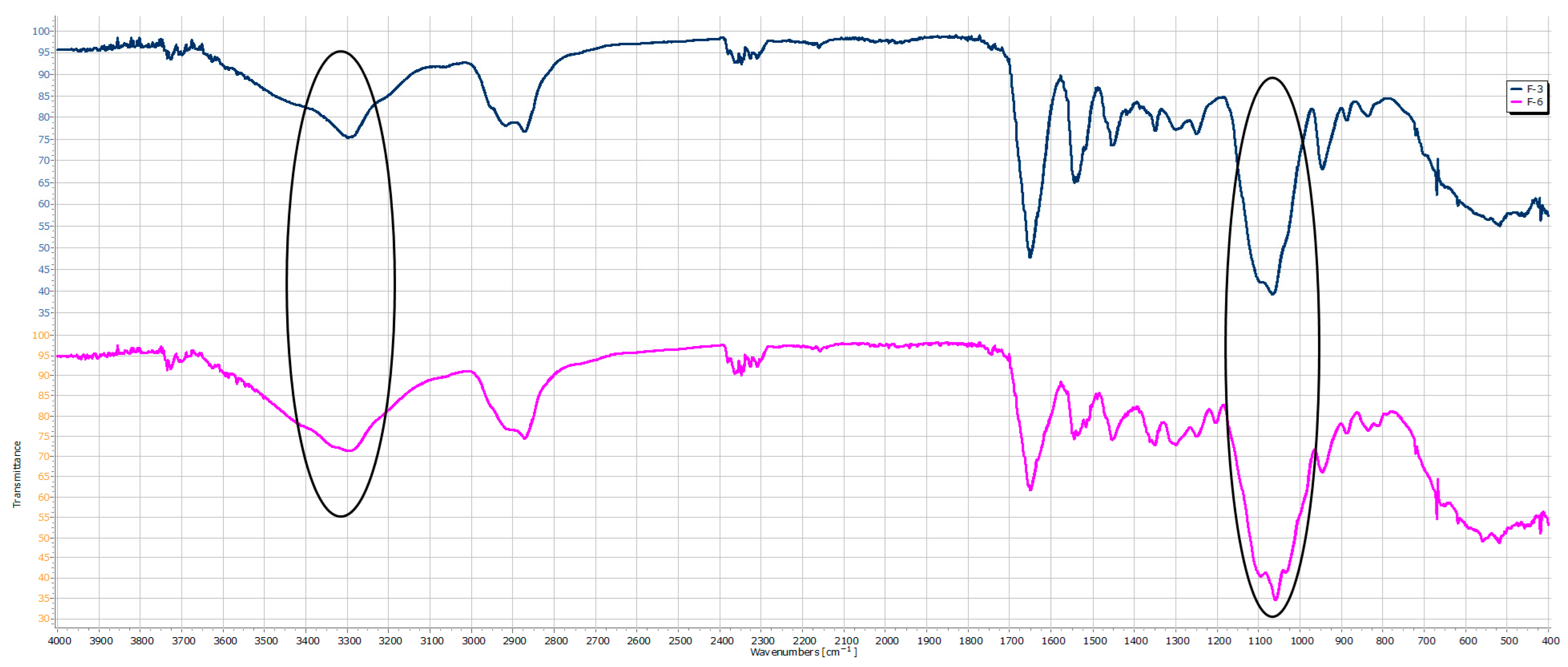
To check for the presence of an interaction between the substances, changes in these characteristic bands will be monitored, such as a change in their intensity, a shift in the wavenumber value, their complete disappearance, or the appearance of new ones. In all polymer structures loaded with rutin (Figure 4, Figure 5 and Figure 6), a change in the intensity or shape of the peaks in the range of 3500–3200 cm−1, as well as 1100–1000 cm−1, is observed compared to the pure substance, as shown in Figure 6. According to various research groups, when hydrogen bonds are formed, a change in the peak is expected for the –OH groups, as they would potentially be involved, as well as the bands indicating the stretching of the CO bond, since hydrogen bonds involving hydroxyl groups can change the environment of the C–O bond [37,38]. The differences described here are exactly in these ranges for the values of the wavenumber, which confirms the presence of the formation of hydrogen bonds between the polyphenol and the polymer matrix, regardless of its composition.
When considering the peaks of HPMC and zein, and comparing them with the obtained structure, changes are noted in the following regions: 3500–3300 cm−1, 1700–1600 cm−1, and 1100–1000 cm−1. The change in the first peak is expressed in a slight shift of the individual characteristic bands of the polymers themselves, as well as a significant broadening of this peak. The next change is in the primary amine region, which indicates a change in the secondary structure of the protein, due to interaction with HPMC. The interaction with zein can cause slight changes or changes in intensity in the latter region, reflecting changes in the environment of the polymer matrix. These changes are due to the formation of hydrogen bonds between the two substances. The cellulose structure is rich in –OH groups, which act as donors, and the carbonyl C=O groups of zein act as acceptors. This explains the changes in the peaks of the observed spectra [14,36]. In addition to this, in the above-mentioned regions of interest for the wavenumber, a difference in the intensity of the peaks of the final structures is observed. This can be explained by the principle of operation of the method. In the presence of more intense hydrogen bonds, broader and rounder peaks or even peaks with lower intensity are observed. In the transmission mode, a shallower peak means stronger absorption at that frequency, which may indicate more molecules participating in the interaction, or stronger dipole changes during vibration, which is an indication of a more intense interaction [39]. This is observed in the spectrum of mass ratio 3:1, where the ratio of active groups involved in the formation of hydrogen bonds, based on the weight of polymers and their active groups’ number per gram, is 2.1:1.4 in favor of the –OH groups of HPMC, while at a mass ratio of 1:1, this ratio changes to 1.81:2.9, but already in favor of the C=O groups of zein. When rutin is added to the 3:1 ratio, additional broadening of peak in the region 3500–3200 cm−1 is observed. Changes in rutin’s characteristic peaks at 1362 cm−1, 1014 cm−1, and 808 cm−1 are also noticeable, suggesting additional hydrogen bond formation.
In the spectrum of 1:1 mass ratio film prior to and after rutin incorporation, the same changes can be seen, but with weaker intensity of the bands. At this mass ratio, a higher amount of free acceptors in zein’s chains is left, which can interact with –OH groups in rutin.

3.3. Mechanical and Barrier Properties of the Investigated Samples

In Table 1, the values for Young’s modulus and various parameters at the break point (stress and strain) are shown, along with the barrier parameters.
The Young’s modulus values for pure HPMC-based films are in good agreement with other reports for pure polymer-based films. Interestingly, in the study by Athanasopoulou et al. 2025, using similar amounts of plasticizer but using glycerol, values of nearly five times higher Young’s modulus and a relative deformation of only 8% were reported [39]. This high Young’s modulus indicates a significantly more compact structure and arrangement of the macromolecules, which also leads to these low values for the deformation. This is due to the difference in the molecular weights of the two plasticizers, that of glycerol is about four times smaller than that of PEG 400. Therefore, such structures developed according to the present methodology have a 10 times greater relative deformation, from which it follows that PEG 400 has better compatibility with HPMC and a plasticizing effect. After the addition of zein to the pure HPMC-based film in a ratio of 3:1, an increase in the value of the Young’s modulus is observed, but both values fall into the same statistical group, making these values statistically insignificant. Further addition of zein until reaching a mass ratio of 1:1, results in significant difference for this parameter. This type of behavior for Young’s modulus of this quantity has also been reported by other authors [40]. The reason for this tendency could be the formation and presence of hydrogen bonds, which hinder the mobility of macromolecules between regions of different electronegativity in the chains of the two polymers. The fact that the films were obtained from a common solution rich in ethanol further facilitates the process of formation of these bonds, as well as the phase separation observed in the SEM micrographs [14]. In the presence of formed hydrogen bonds, a denser and more compact structure is obtained, which is also more rigid. As a result, the interaction and formation of hydrogen bonds weakens, the process of separation of the two phases is enhanced, and the compactness of the arrangement of the macromolecules of the two polymers is reduced [23]. This leads to a significant decrease in Young’s modulus, as noted by a change in relative strain and morphology as well. The values of breaking stress and strain decrease monotonically with increasing zein concentration, due to phase separation between the two polymers with different solubility [23]. The barrier properties are also significantly influenced by the presence of zein in the overall structure. As a result of its inclusion, a slight decrease in the water vapor transmission rate is observed. This behavior is expected, given the hydrophobic nature of zein, because the process of diffusion and passage of water molecules through the volume of the sample is slowed down. The obtained values for the polymer films about this parameter fall into the same statistical group. The addition of rutin to the films leads to an increase in the Young’s modulus values for all samples by between 18% and 85%, and all of them belong to statistically significant groups. The same goes for the other two parameters, namely stress and strain at break. The change is the weakest for the pure HPMC film, and the largest change is in the film with equal mass ratios. It is probable that at a 1:1 ratio, there are free hydrogen bond acceptors in the zein chains to interact with the rutin molecules, which are also rich in –OH groups; therefore, there is the largest change in the hardness of the film. For the barrier properties, an additional decrease in water vapor transmission rate is observed with rutin addition. In addition to its poor water solubility, inclusion of rutin further slows down the process of migration and passage of water molecules through the volume of the films. Again, values of water vapor transmission rate are not statistically different.

3.4. Wettability and Contact Angle Measurements

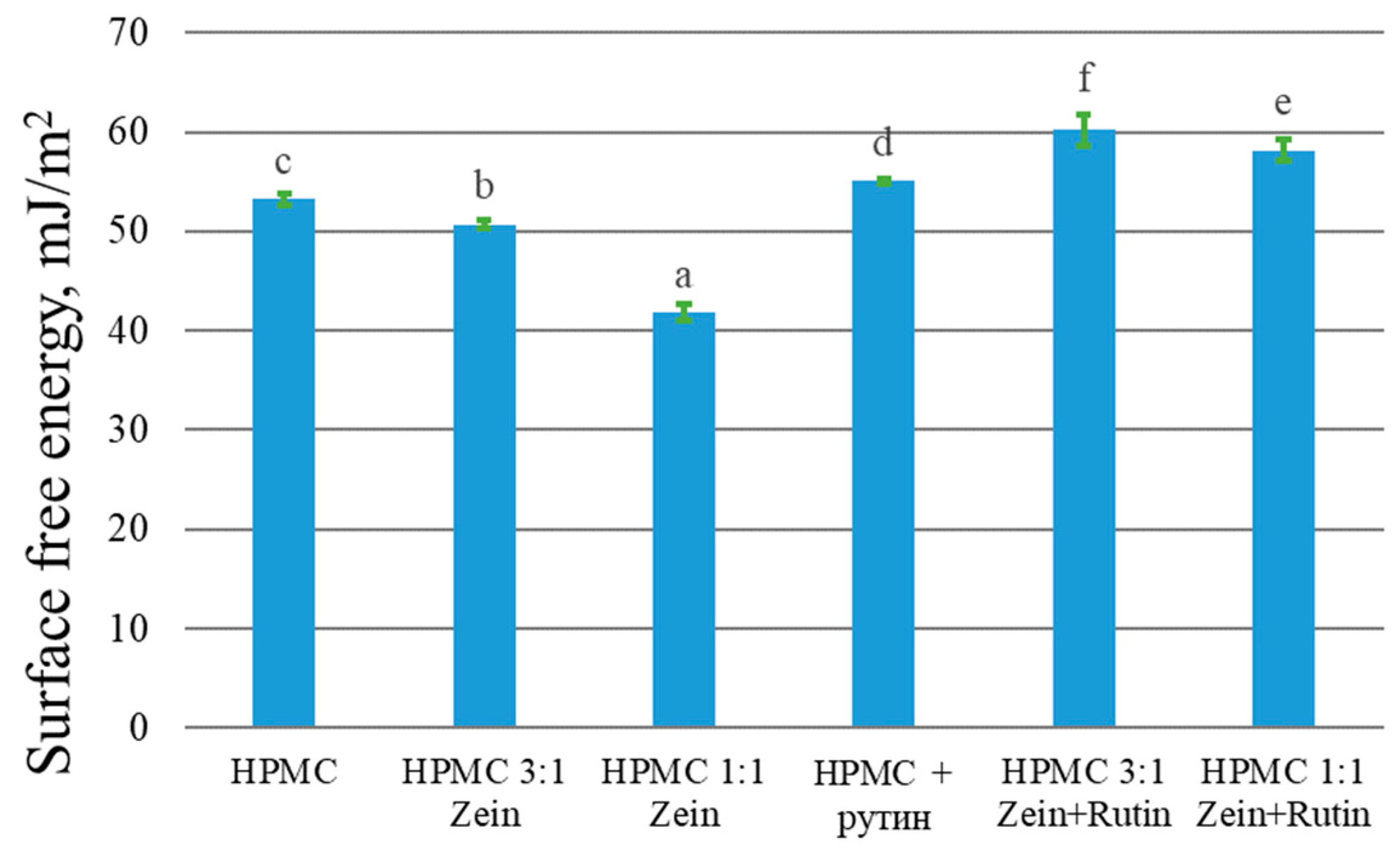
The surface hydrophobicity of pure HPMC films, HPMC 1:1 zein films, HPMC 1:1 zein with included rutin films, HPMC 3:1 zein films, and HPMC 3:1 zein with included rutin films was measured using the static water contact angle method. Following the theory of Owens and Wendt, the total surface free energy of all investigated composite films was calculated. The results obtained are presented in Figure 7.
Zein is a hydrophobic protein, while HPMC is a hydrophilic polysaccharide. Combining them, we create a material with balanced or modified surface properties depending on their ratio and interaction. The results presented in Figure 7 show that the introduction of a zein in HPMC matrix leads to decrease in the surface free energy and promotes hydrophobicity. The analogous results for pure HPMC films are obtained in [40,41]. On the other hand, the data shown in Figure 7 demonstrate that the inclusion of the polyphenol rutin results in an increase in the surface free energy of the tested samples. The introduction of rutin in the structure causes an increase in the surface free energy from 53.29 ± 0.58 mJ/m2 (measured in pure HPMC films) to 55.04 ± 0.24 mJ/m2 in HPMC films with rutin, from 41.87 ± 0.84 mJ/m2 (measured in HPMC 1:1 zein films) to 58.13 ± 1.10 mJ/m2 in HPMC 1:1 zein films with rutin, and from 50.73 ± 0.46 mJ/m2 (measured in HPMC 3:1 zein films) to 60.19 ± 1.64 mJ/m2 in HPMC 3:1 zein films with rutin. These values indicate that the hydrophilicity of the composites increases with the addition of the polyphenol rutin in their structure.
This may be caused by the hydrophilic polyphenol groups, which can increase the interactions between the surface of the film and water, resulting in the observed surface free energy increase and contact angle decrease.
The hydrophilic properties of the films can also be influenced by the zein molecules in the films. A study by Yang et al. [42] has shown that zein is relatively hydrophobic due to the high concentration of hydrophobic amino acids in its structure. Although zein is considered to be a water-insoluble protein, it has a contact angle of less than 90°, which may be caused by the fact that zein still contains a portion of hydrophilic amino acids such as glutamic acid. This may be a result of the disruption of the creation of hydrogen bonds in the molecular chain of zein, which would result in an increase in the number of hydroxyl or free amino groups existing in the zein matrix. In their paper, Xu et al. [43] demonstrate that the hydrogen content of samples containing only zein is the highest, and decreases with the addition of polyphenols to the films, which can result in their surface becoming more hydrophilic. The protein’s hydrogen content is determined by the number and position of non-polar groups in the molecular chain, and any introduction of more hydrophilic hydroxyl groups by the incorporated polyphenols can lead to a decrease in the overall hydrogen content. Another cause of such a decrease may be the introduction of polarity around the tyrosine residues. In combination with the polyphenols, the hydrophobic sites of zein influenced the folding patterns of the protein, thus burying the aromatic heterocyclic hydrophobic groups in the tyrosine residues of zein, which caused the increase in the hydrophilicity of the investigated polyphenol–zein films.

3.5. Phase State and Thermal Behavior

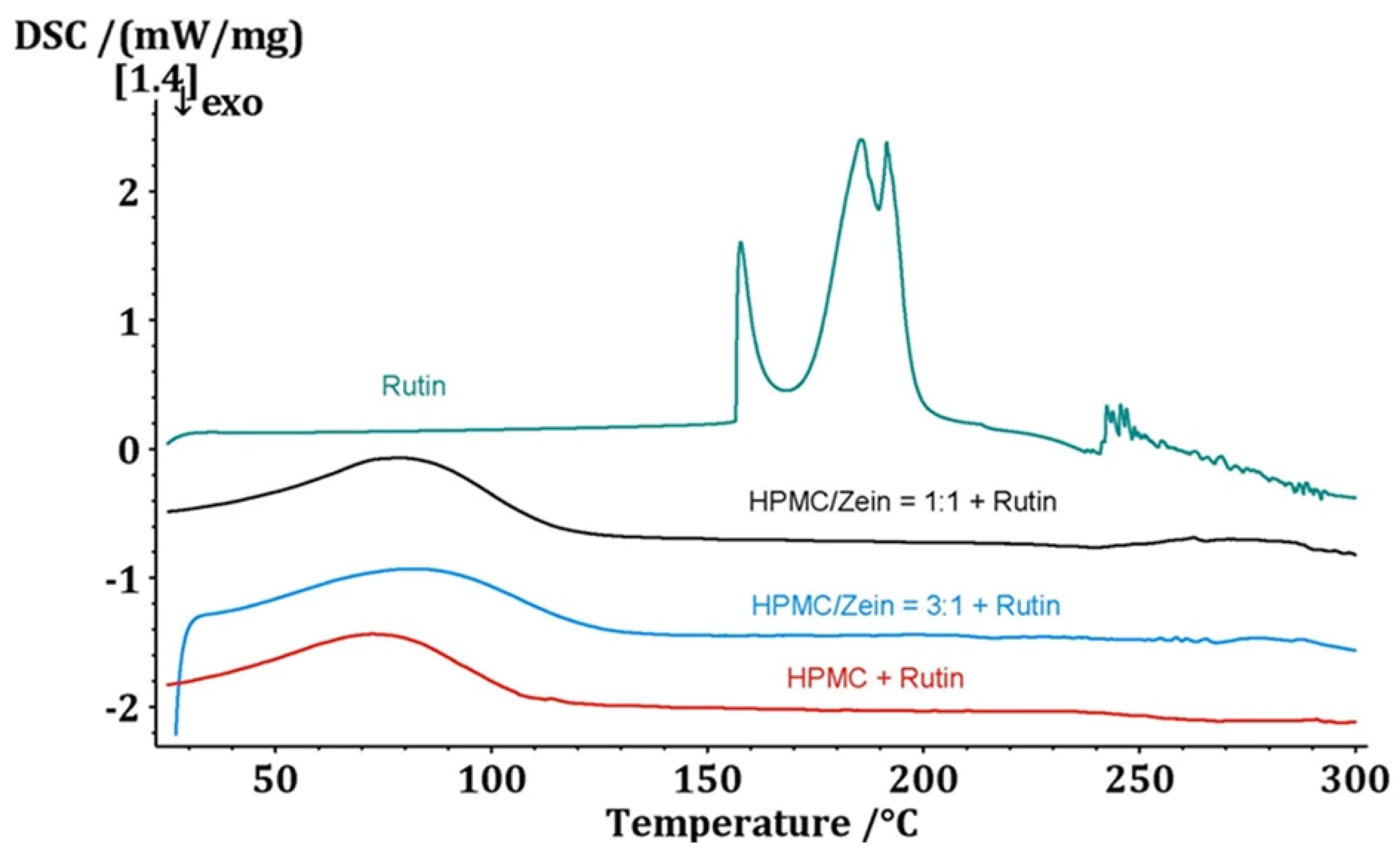
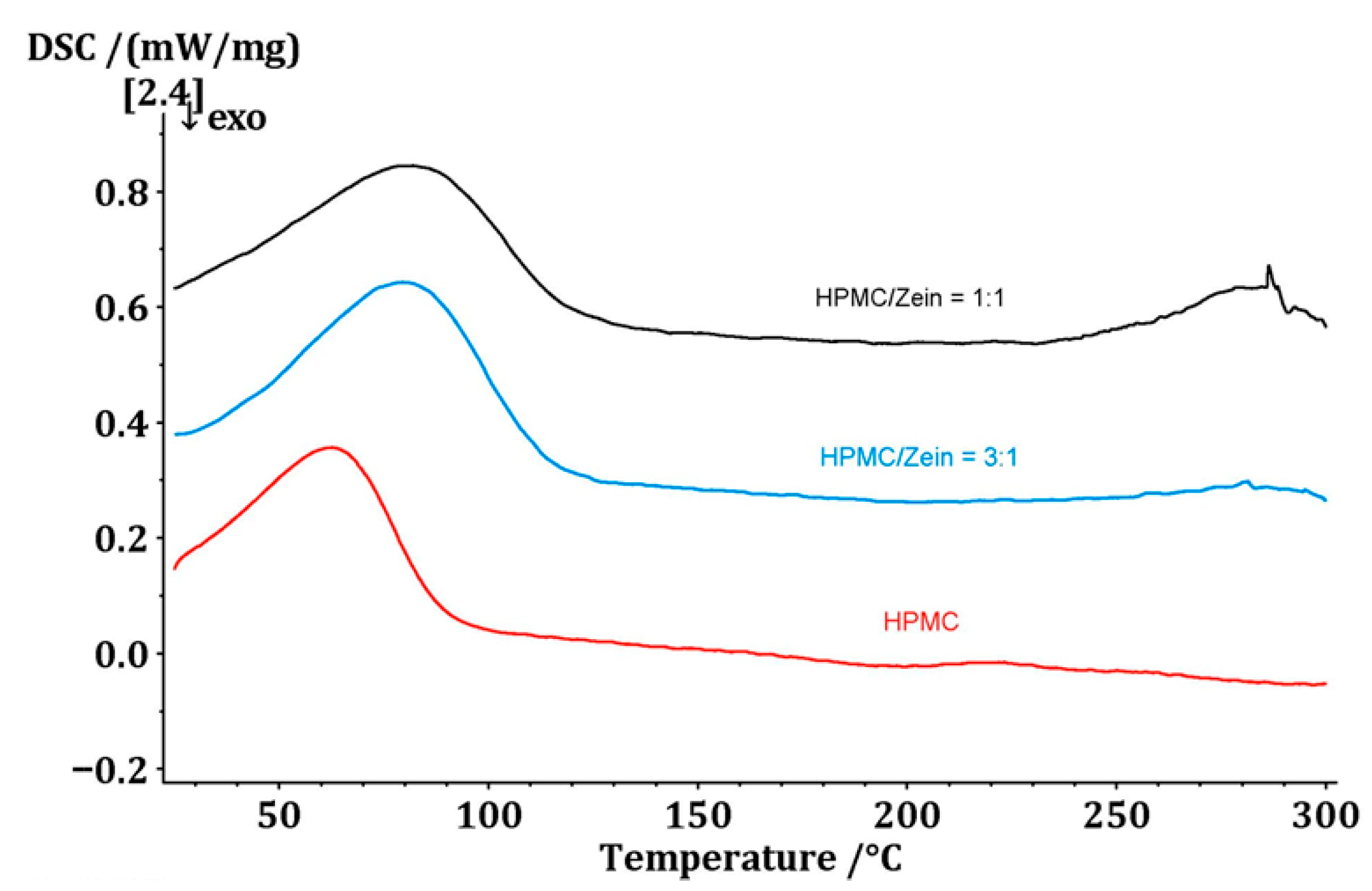
The thermal stability as well as the phase state of the substances used in the present study are shown in Figure 8 and Figure 9.
In the thermograms of the pure films, one large broad peak is observed, starting around 50 °C and ending around or shortly after 100 °C. It is associated with the evaporation of unbound water molecules [15]. A glass transition of HPMC is usually observed around 160–170 °C, which can be very weakly expressed depending on the mass of the sample [44]. For zein, glass transition temperatures between 94 °C and 98 °C have been reported, depending on the film preparation conditions and the degree of particle aggregation [45]. Due to the presence of hydrophilic polymer and residual unbound water in the structures, the temperature region of evaporation and this transition for zein overlap and cannot be accounted for. An additional endothermic peak is observed around 280 °C, associated with the thermal destruction of zein. The area under this peak is proportional to the amount of zein in the overall structure [15]. For pure rutin, thermal events can be noted at around 160 °C, two neighboring ones between 185 °C and 200 °C, and another small endothermic peak after 250 °C. The first peak is associated with the transition from the solid to the liquid state of the active substance, also known as melting. The subsequent doublet peaks are an indication of thermal degradation or, in the case of the latter, deconstruction of rutin [46].

3.6. Antioxidant Activity Against DPPH Free Radical Solution

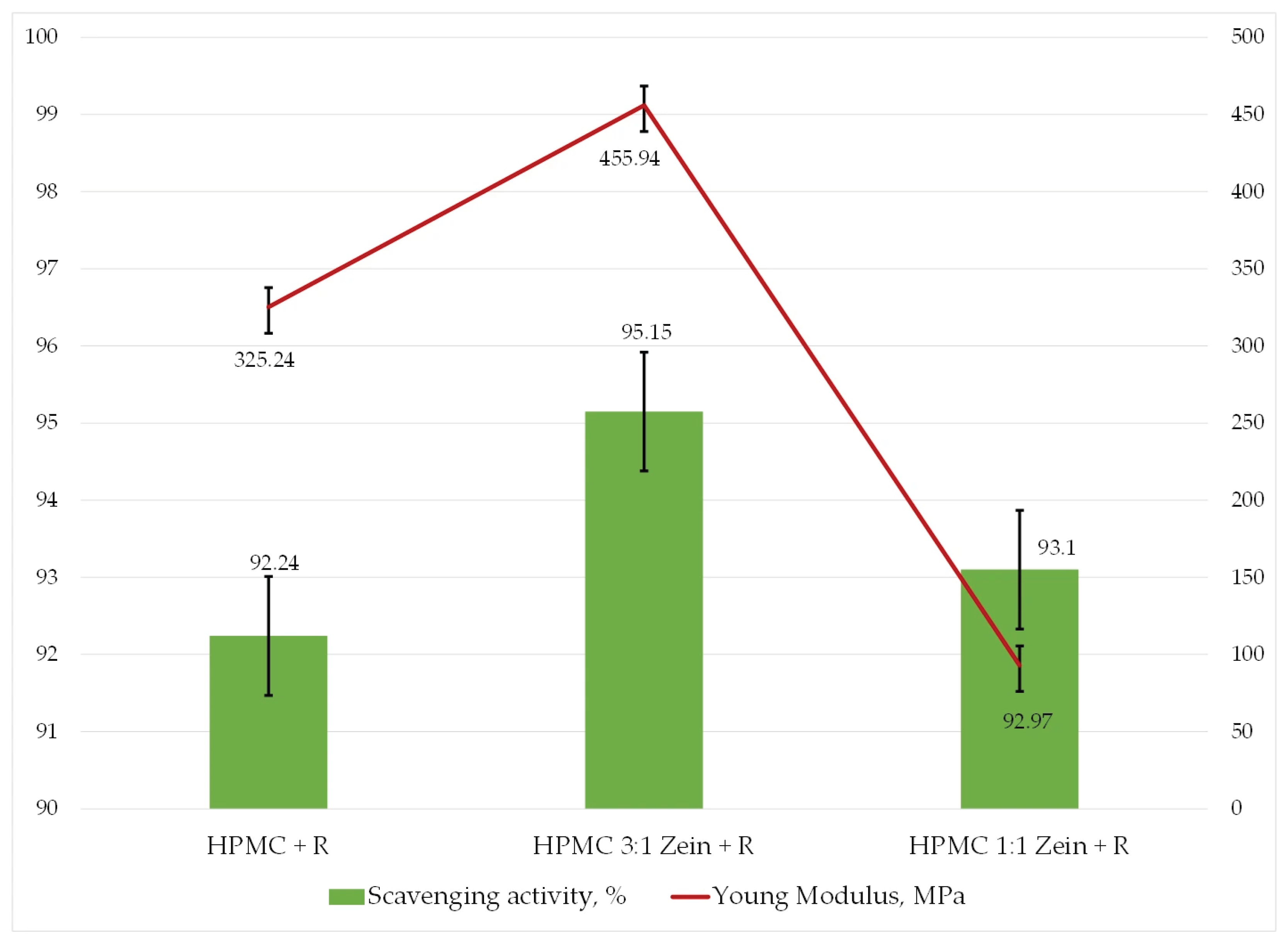
In Figure 10, the antioxidant activity values of rutin-loaded films (bar graph) and the change in Young’s modulus (linear graph) are shown.
The reason these results are presented together is that there is a recurring trend in the values for them, and the change in the values of these parameters is due to the same root cause, namely, hydrogen bonds. The presence of such bonds and the interaction between the matrix and the polyphenol through them lead to an increase in its stability, as well as an improvement in its inhibitory activity against active radicals [47]. All samples exhibit an oxidative radical scavenging capacity of over 90%, with the highest value observed for the 3:1 sample, favoring HPMC. This sample also has the highest value of Young’s modulus. As previously indicated, from the ratios studied so far, optimal compatibility and film formation between the two polymers are observed at a mass ratio of 3:1. Films with strong hydrogen bonds and a compact structure often show improved antioxidant properties, as observed in HPMC films functionalized with zein and active agents, preventing the active substances from degradation by limiting the permeability of oxygen and moisture, thus increasing the overall antioxidant efficacy of the composite film [48]. In second place in terms of antioxidant activity is the film again with the presence of zein, due to more extensive networks of hydrogen bonds. At the same time, HPMC itself can form such bonds only with water molecules, with a significantly lower intensity. Therefore, films based on pure HPMC have weak antioxidant activity, and their functionalization with other polymers and active substances is required to achieve optimal antioxidant and potentially packaging properties [7,48].

4. Conclusions

This study demonstrates that HPMC–zein multicomponent films, when enriched with rutin, possess strong potential as sustainable active packaging materials. Blending HPMC with zein resulted in controlled phase separation and hydrogen-bond formation, which influenced the films’ morphology, mechanical properties, and barrier performance. The HPMC–zein = 3:1 formulation showed the most balanced behavior, combining improved stiffness, reduced water vapor transmission, and stable microstructure. Rutin incorporation further enhanced film rigidity, modified surface hydrophilicity, and significantly increased antioxidant activity, with all rutin-loaded films achieving scavenging efficiencies above 90%. These improvements arise from strong interactions between the polyphenol and the polymer matrix, which promote stability and functional performance. The results indicate that HPMC–zein films enriched with rutin represent a promising biodegradable platform for active food packaging, particularly for applications where enhanced rigidity and antioxidant protection are desirable. Future studies should focus on tuning film flexibility and moisture sensitivity for specific food categories, evaluating their performance in real food systems, and optimizing active compound release to ensure practical applicability across a broader range of products.

Author Contributions

Conceptualization, S.M. and A.V.; methodology, S.M., M.M., and A.V.; formal analysis, S.M., M.M., and A.V.; investigation, A.V.; resources, A.V.; data curation, M.M.; writing—original draft preparation, S.M.; writing—review and editing, M.M. and A.V.; visualization, S.M.; supervision, S.M.; project administration, A.V.; funding acquisition, A.V. All authors have read and agreed to the published version of the manuscript.

Funding

This research was funded by the European Union NextGenerationEU program, through the National Recovery and Resilience Plan of the Republic of Bulgaria, project DUECOS BG-RRP-2.004-0001-C01, D24-FTF-009.

Institutional Review Board Statement

Not applicable.

Informed Consent Statement

Not applicable.

Data Availability Statement

The original contributions presented in this study are included in the article. Further inquiries can be directed to the corresponding authors.

Conflicts of Interest

The authors declare no conflicts of interest.

References

  1. Ahmed, M.W.; Haque, M.A.; Mohibbullah, M.; Khan, M.S.I.; Islam, M.A.; Mondal, M.H.T.; Ahmmed, R. A review on active packaging for quality and safety of foods: Current trends, applications, prospects and challenges. Food Packag. Shelf Life 2022, 33, 100913. [Google Scholar] [CrossRef]
  2. Vasile, C.; Baican, M. Progresses in food packaging, food quality, and safety—Controlled-release antioxidant and/or antimicrobial packaging. Molecules 2021, 26, 1263. [Google Scholar] [CrossRef] [PubMed]
  3. Du, H.; Sun, X.; Chong, X.; Yang, M.; Zhu, Z.; Wen, Y. A review on smart active packaging systems for food preservation: Applications and future trends. Trends Food Sci. Technol. 2023, 141, 104200. [Google Scholar] [CrossRef]
  4. Narasagoudr, S.S.; Hegde, V.G.; Chougale, R.B.; Masti, S.P.; Vootla, S.; Malabadi, R.B. Physico-chemical and functional properties of rutin induced chitosan/poly(vinyl alcohol) bioactive films for food packaging applications. Food Hydrocoll. 2020, 109, 106096. [Google Scholar] [CrossRef]
  5. Tang, P.; Li, X.; Li, H.; Li, J.; Tang, B.; Zheng, T. Development of active film based on collagen and hydroxypropyl methylcellulose incorporating apple polyphenol for food packaging. Int. J. Biol. Macromol. 2024, 273, 132960. [Google Scholar] [CrossRef]
  6. Bilbao-Sáinz, C.; Avena-Bustillos, R.J.; Wood, D.F.; Williams, T.G.; McHugh, T.H. Composite edible films based on hydroxypropyl methylcellulose reinforced with microcrystalline cellulose nanoparticles. J. Agric. Food Chem. 2010, 58, 3753–3760. [Google Scholar] [CrossRef]
  7. Ghadermazi, R.; Hamdipour, S.; Sadeghi, K.; Ghadermazi, R.; Khosrowshahi Asl, A. Effect of various additives on properties of films and coatings derived from hydroxypropyl methylcellulose—A review. Food Sci. Nutr. 2019, 7, 3363–3377. [Google Scholar] [CrossRef]
  8. Zheng, M.; Chen, J.; Tan, K.B.; Chen, M.; Zhu, Y. Development of hydroxypropyl methylcellulose film with xanthan gum and its application as a food packaging biomaterial in enhancing banana shelf life. Food Chem. 2022, 374, 131794. [Google Scholar] [CrossRef] [PubMed]
  9. Sun, Y.; Ma, Y.; Hou, Y.; Jia, S.; Cheng, S.; Su, W.; Tan, M.; Zhu, B.; Wang, H. Preparation of a pH-responsive smart film based on soy lipophilic protein/hydroxypropyl methylcellulose for salmon freshness monitoring. Food Packag. Shelf Life 2025, 47, 101436. [Google Scholar] [CrossRef]
  10. Gillgren, T.; Stading, M. Mechanical and barrier properties of avenin, kafirin, and zein films. Food Biophys. 2008, 3, 287–294. [Google Scholar] [CrossRef]
  11. Singh, N.; Singh, S.; Kaur, A.; Singh Bakshi, M. Zein: Structure, production, film properties and applications. In Natural Polymers; RSC Publishing: Cambridge, UK, 2012. [Google Scholar] [CrossRef]
  12. Bayer, I.S. Zein in food packaging. In Sustainable Food Packaging Technology; Wiley-VCH: Weinheim, Germany, 2021; pp. 199–224. [Google Scholar] [CrossRef]
  13. Özçalık, O. Preparation and Characterization of Corn Zein Nanocomposite Coated Polypropylene Films for Food Packaging Applications. Master’s Thesis, Izmir Institute of Technology, İzmir, Turkey, 2010. [Google Scholar]
  14. Zhang, Y.; Bonilla, J.; Joye, I.J.; Lim, L.T. Physicochemical properties of edible films formed by phase separation of zein and hydroxypropyl methylcellulose. LWT 2025, 218, 117504. [Google Scholar] [CrossRef]
  15. Ferreira, J.O.; Zambuzi, G.C.; Camargos, C.H.; Carvalho, A.C.; Ferreira, M.P.; Rezende, C.A.; de Freitas, O.; Francisco, K.R. Zein and hydroxypropyl methylcellulose acetate succinate microfibers for periodontal treatment. Int. J. Biol. Macromol. 2024, 261, 129701. [Google Scholar] [CrossRef] [PubMed]
  16. Sharma, S.; Mulrey, L.; Byrne, M.; Jaiswal, A.K.; Jaiswal, S. Encapsulation of essential oils in nanocarriers for active food packaging. Foods 2022, 11, 2337. [Google Scholar] [CrossRef]
  17. Ge, S.; Li, Q.; Jia, R.; Liu, W.; Liu, M.; Liu, H.; Zheng, M.; Cai, D.; Liu, J. Zein/gallic acid composite nanoparticles to improve the oxidation stability of corn oil Pickering emulsion. Food Sci. 2022, 43, 78–85. [Google Scholar] [CrossRef]
  18. Du, J.; Zhu, Q.; Guo, J.; Gu, J.; Guo, J.; Wu, Y.; Ren, L.; Yang, S.; Jiang, J. Preparation and characterization of edible films from gelatin and HPMC/CMC. Heliyon 2025, 11, e41613. [Google Scholar] [CrossRef]
  19. Wang, Y.; Padua, G.W. Formation of zein microphases in ethanol−water. Langmuir 2010, 26, 12897–12901. [Google Scholar] [CrossRef]
  20. Owens, D.K.; Wendt, R.C. Estimation of polymer surface free energy. J. Appl. Polym. Sci. 1969, 13, 1741–1747. [Google Scholar] [CrossRef]
  21. Krewson, C.F.; Naghski, J. Some physical properties of rutin. J. Am. Pharm. Assoc. 1952, 41, 582–587. [Google Scholar] [CrossRef] [PubMed]
  22. Giteru, S.G.; Ali, M.A.; Oey, I. Solvent strength and biopolymer blending effects on zein–chitosan–PVA films. Food Hydrocoll. 2019, 87, 270–286. [Google Scholar] [CrossRef]
  23. Tian, Y.; Yang, X.; Cao, C.; Lv, Z.; Han, C.; Guo, Q.; Duan, Y.; Zhang, J. Improved antioxidant activities of edible films with curcumin-containing zein/polysaccharide. Food Biosci. 2024, 57, 103538. [Google Scholar] [CrossRef]
  24. Zhang, S.; Zhao, H. Preparation and properties of zein–rutin composite nanoparticle/corn starch films. Carbohydr. Polym. 2017, 169, 385–392. [Google Scholar] [CrossRef]
  25. Kraisit, P.; Limmatvapirat, S.; Nunthanid, J.; Sriamornsak, P.; Luangtana-Anan, M. HPMC/polycarbophil mucoadhesive blend films via mixture design. Chem. Pharm. Bull. 2017, 65, 284–294. [Google Scholar] [CrossRef]
  26. Naeem, A.; Yu, C.; Zang, Z.; Zhu, W.; Deng, X.; Guan, Y. Synthesis and Evaluation of Rutin–Hydroxypropyl β-Cyclodextrin Inclusion Complexes Embedded in Xanthan Gum-Based (HPMC-g-AMPS) Hydrogels for Oral Controlled Drug Delivery. Antioxidants 2023, 12, 552. [Google Scholar] [CrossRef] [PubMed]
  27. Tivano, F.; Chiono, V. Zein as a renewable material for green nanoparticles. Front. Biomater. Sci. 2023, 2, 1156403. [Google Scholar] [CrossRef]
  28. Zaltariov, M.F. FTIR investigation on crystallinity of HPMC blends. Cellul. Chem. Technol. 2021, 55, 981–988. [Google Scholar] [CrossRef]
  29. Zaltariov, M.F.; Filip, D.; Varganici, C.D.; Macocinschi, D. ATR-FTIR and Thermal Behavior Studies of New Hydrogel Formulations Based on HPMC/PAA Polymeric Blends. Cellul. Chem. Technol. 2018, 52, 619–631. [Google Scholar]
  30. Akinosho, H.; Hawkins, S.; Wicker, L. HPMC substituent analysis and rheology. Carbohydr. Polym. 2013, 98, 276–281. [Google Scholar] [CrossRef]
  31. Karthikeyan, K.; Vijayalakshmi, E.; Korrapati, P.S. Interactions of zein microspheres with drugs. AAPS PharmSciTech 2014, 15, 1172–1180. [Google Scholar] [CrossRef]
  32. Dong, S.; Gao, A.; Zhao, Y.; Li, Y.T.; Chen, Y. Properties of cold plasma–modified zein. Food Bioprod. Process. 2017, 106, 65–74. [Google Scholar] [CrossRef]
  33. Liu, G.; An, D.; Li, J.; Deng, S. Zein-based nanoparticles: Preparation, characterization, and pharmaceutical application. Front. Pharmacol. 2023, 14, 1120251. [Google Scholar] [CrossRef]
  34. Immaculate, A.A.; Vimala, J.R.; Takuwa, D.T. Isolation and characterization of rutin from Cadaba aphylla and Adenia glauca. Orient. J. Chem. 2022, 38, 1404–1412. [Google Scholar] [CrossRef]
  35. Paczkowska, M.; Lewandowska, K.; Bednarski, W.; Mizera, M.; Podborska, A.; Krause, A.; Cielecka-Piontek, J. Spectroscopic identification of quercetin-3-O-rutinoside. Spectrochim. Acta A 2015, 140, 132–139. [Google Scholar] [CrossRef]
  36. Nutrizio, M.; Jurić, S.; Kucljak, D.; Švaljek, S.L.; Vlahoviček-Kahlina, K.; Jambrak, A.R.; Vinceković, M. Encapsulation of rosemary extracts in alginate/zein/HPMC microparticles. Foods 2023, 12, 1570.
  37. Madkour, D.A.; Ahmed, M.; Elkirdasy, A.F.; Orabi, S.H.; Mousa, A.A. Rutin: Chemical and biological properties. Matrouh J. Vet. Med. 2024, 4, 26–34. [Google Scholar] [CrossRef]
  38. Krysa, M.; Szymańska-Chargot, M.; Zdunek, A. FT-IR and FT-Raman fingerprints of flavonoids. Food Chem. 2022, 393, 133430. [Google Scholar] [CrossRef]
  39. Athanasopoulou, E.; Maurizzi, E.; Bigi, F.; Quartieri, A.; Pulvirenti, A.; Tsironi, T. Comparative effect of different plasticizers on physicochemical properties of hydroxypropyl methyl cellulose (HPMC)-based films appropriate for gilthead seabream packaging. Carbohydr. Polym. Technol. Appl. 2025, 10, 100839. [Google Scholar] [CrossRef]
  40. Gilbert, J.; Cheng, C.J.; Jones, O.G. Vapor barrier and mechanical properties of HPMC/zein nanoparticle films. Food Biophys. 2018, 13, 25–36. [Google Scholar] [CrossRef]
  41. Luner, P.E.; Oh, E. Characterization of surface free energy of cellulose ether films. Colloids Surf. A 2001, 181, 31–48. [Google Scholar] [CrossRef]
  42. Yang, J.; Xie, J.; Paximada, E. Electrosprayed zein/quercetin particles: Formation and properties. Food Bioprocess. Technol. 2025, 18, 2840–2853. [Google Scholar] [CrossRef]
  43. Xu, Y.; Wei, Z.; Xue, C.; Huang, Q. Assembly of zein–polyphenol conjugates. LWT 2022, 154, 112708. [Google Scholar] [CrossRef]
  44. McPhillips, H.; Craig, D.Q.M.; Royall, P.G.; Hill, V.L. Glass transition of HPMC using MTDSC. Int. J. Pharm. 1999, 180, 83–90. [Google Scholar] [CrossRef]
  45. Bisharat, L.; Berardi, A.; Perinelli, D.R.; Bonacucina, G.; Casettari, L.; Cespi, M.; AlKhatib, H.S.; Palmieri, G.F. Aggregation of zein in ethanol dispersions: Effect on film properties. Int. J. Biol. Macromol. 2018, 106, 360–368. [Google Scholar] [CrossRef]
  46. Marudova, M.; Viraneva, A.; Milenkova, S.; Shivachev, B.; Titorenkova, R.; Tarassov, M. Polyphenols/PLA blends—structure, thermal and electret properties. Bulg. Chem. Commun. 2025, 57, 5–10. [Google Scholar]
  47. Gagliardi, A.; Voci, S.; Paolino, D.; Fresta, M.; Cosco, D. Influence of model compounds on zein-based gels. Molecules 2020, 25, 3174. [Google Scholar] [CrossRef] [PubMed]
  48. Yao, L.; Man, T.; Xiong, X.; Wang, Y.; Duan, X.; Xiong, X. HPMC films functionalized by zein/CTG emulsions. Int. J. Biol. Macromol. 2023, 238, 124053. [Google Scholar] [CrossRef] [PubMed]
Figure 1. Scanning electron microscope micrographs of samples based on HPMC (a), HPMC with rutin (b), HPMC 3:1 zein (c), HPMC 3:1 zein + rutin (d), HPMC 1:1 zein (e), and HPMC 1:1 zein + rutin (f).
Coatings 16 00066 g001
Figure 2. Example illustration of the arrangement of zein clusters/particles (yellow) between HPMC chains (green): (A) for a 3:1 ratio, (B) for a 1:1 ratio.
Coatings 16 00066 g002
Figure 3. FTIR spectra of HPMC (blue line), zein (yellow line), and rutin (green line).
Coatings 16 00066 g003
Figure 4. FTIR spectra of HPMC (blue line) and rutin-loaded HPMC film (red line).
Coatings 16 00066 g004
Figure 5. FTIR spectra of HPMC 3:1 zein (black line), HPMC 3:1 zein + rutin (blue line).
Coatings 16 00066 g005
Figure 6. FTIR spectra of HPMC 1:1 zein (dark blue), HPMC 1:1 zein + rutin (magenta line).
Coatings 16 00066 g006
Figure 7. Surface free energy of all investigated composite films. The small letters in the figure (a–f) indicate differences in the results with a significance level p < 0.05. All data presented in the figure are statistically different.
Coatings 16 00066 g007
Figure 8. Thermograms of films based on pure HPMC, HPMC 3:1 zein, and HPMC 1:1 zein.
Coatings 16 00066 g008
Figure 9. Thermograms of films based on pure rutin and all films with rutin added to them.
Coatings 16 00066 g009
Figure 10. Young’s modulus and scavenging activity of films with rutin added to them.
Coatings 16 00066 g010
Table 1. Values of various mechanical and barrier parameters for the obtained films before and after incorporation of rutin.
Title 1HMPCHPMC 3:1 ZeinHPMC 1:1 ZeinHPMC + RutinHPMC 3:1 Zein + RutinHPMC 1:1 Zein + Rutin
Young’s modulus, MPa276.98 ± 28.48 c307.67 ± 30.73 c52.17 ± 10.19 a325.24 ± 69.78 d455.94 ± 57 e92.97 ± 15.80 b
Stress at break, MPa39.75 ± 3.68 d20.54 ± 5.34 b10.88 ± 1.87 a30.39 ± 5.17 c25.36 ± 3.75 b13.55 ± 1.82 a
Strain at break, %86.74 ± 8.64 d77.14 ± 12.20 c72.44 ± 9.62 c58.34 ± 9.30 b16.41 ± 2.55 a82.51 ± 9.61 d
Water vapor transmission rate, g/m2.24 h913.07 ± 74.01 c878.01 ± 6.29 bc873.05 ± 9.07 bc769.26 ± 40.85 a762.70 ± 22.18 a826.35 ± 33.67 ab
a, b, c, d and e show significant differences (p < 0.05) between the mean values in the rows during storage.
Disclaimer/Publisher’s Note: The statements, opinions and data contained in all publications are solely those of the individual author(s) and contributor(s) and not of MDPI and/or the editor(s). MDPI and/or the editor(s) disclaim responsibility for any injury to people or property resulting from any ideas, methods, instructions or products referred to in the content.