Article

Design and Experiment of a Reflective Baffle Based on High-Modulus Carbon Fiber Composite Materials

1
School of Mechanical Engineering, Wuhan Polytechnic University, Wuhan 430048, China
2
School of Mechanical Science and Engineering, Huazhong University of Science and Technology, Wuhan 430074, China
3
Beijing Institute of Space Mechanics and Electricity, Beijing 100094, China
*
Author to whom correspondence should be addressed.
Coatings 2026, 16(2), 234; https://doi.org/10.3390/coatings16020234
Submission received: 30 December 2025 / Revised: 31 January 2026 / Accepted: 6 February 2026 / Published: 12 February 2026
(This article belongs to the Section Environmental Aspects in Colloid and Interface Science)

Abstract

A reflective baffle for the optical system of a satellite camera based on the carbon fiber composite materials is designed and validated. Firstly, two typical reflective baffles including elliptical type and Stavroudis type are studied. High modulus carbon fiber composite materials are selected to achieve lightweight and high rigidity. The aluminum film is coated on the surface of vanes to enhance the surface spectral reflectivity. Then, temperature field under typical external heat flow is calculated and stray light suppression characteristics are analyzed. Finally, the finite element simulation and mechanical vibration experiment are performed to verify the reliability of the baffle structure. The results show that the reflective baffle meets the requirements of mechanical environment during the launch phase of satellite camera. It provides a reference for the design of the satellite camera baffles structure.

1. Introduction

With the rapid development of space remote sensing technology, spaceborne cameras have become indispensable equipment in Earth observation and environmental monitoring. The optical system is interfered with by stray light and thermal radiation in complex spatial environments. The imaging quality and structural reliability will be severely affected by these factors [1,2]. Therefore, the stray light is effectively suppressed, and ensuring that the optical system operates within a suitable temperature range is key to improve the performance of satellite cameras.
Baffles are usually installed outside spacecraft to suppress stray light. According to the requirements of space optical systems in orbit, their structures mainly include pyramids, cubes, cylinders, cones and so on [3,4,5]. Hu Xiaodong et al. [6] proposed a honeycomb shaped entrance design to reduce the size of the baffles. Subsequently, Sun et al. [7] adopted an internal baffle design, which shortens the length of the external baffle of the optical system and has better ability to suppress stray light. For the suppression strategy of stray light, cutting off the transmission path of stray light can be achieved through structural parameters of vanes and light blocking rings [8]. For the Simons optical observation satellite, 3D printing technology is used to install a metal connection structure on the inner wall of the baffle. The structure has better thermodynamic performance and it can improve the sensitivity of the optical system [9]. Wang et al. [10] designed a structure suppressing the stray light of a space-based infrared optical system. The structure consists of vanes whose outward facing surfaces are ellipsoids and whose backward facing surfaces are hyperboloids of one sheet. Xie et al. [11] proposed an optimized design of a conical reflective baffle. The volume of the optimized baffle is reduced by 25% compared with the baffle designed by the original method. Then, Yeon proposed an optimized baffle design for the simultaneous suppression of external and internal stray light in an LWIR catadioptric optical payload [12].
When a micro satellite is launched with a rocket, it is exposed to severe mechanical conditions. These mechanical environments mainly consist of static accelerations, dynamic vibrations, and impact shocks [13]. Tumarina et al. [14] have developed and fabricated a new type of catadioptric space telescope which features a wide FOV, a high resolution, ultra-compact size, and low costs. And the vibration and thermal-vacuum tests are performed according to specifications for launch and operation in space. Yalagach et al. [15] developed an analytical model for deployable conical baffles to trade off various design parameters. Further, the 20 g vibration tests confirmed the survivability of the deployable system against the launch environment. Liu et al. [16] have studied the issue of precision electronic equipment being affected by vibration and shock during satellite launch. The dynamic characteristics and frequency response behavior are revealed through sine sweep tests and simulation analyses.
Composite material has the characteristics of better specific strength, specific stiffness, and designability [17,18]. Therefore, it has been applied to satellite support structures, frames, adapters and so on [19,20,21]. Delkowski et al. [22] developed a space qualifiable carbon-fiber-reinforced polymer featuring 10–20 times greater resistance to cracking without affecting the stiffness of dimensionally stable structures. Sun et al. [23] discussed the excellent dimensional stability of high-performance carbon fiber-reinforced plastic (CFRP). The thermal deformations of the tube and frame made of CFRP reached 0.468 μm/m and 4.579 μm/m, respectively, with a temperature variation of 4 °C. Then, Proietti et al. [24] reported that the hybrid carbon fiber epoxy/PEEK laminate compression-molded at 250 °C showed the highest mechanical properties with a bending strength of 340 MPa and an elastic moules of 50 GPa. Regarding surface coatings, Chan et al. [25] prepared an effective radiative cooling coating based on Polyethylene terephthalate (PET) aluminized film. The radiative cooling coating can theoretically cool 45 °C below the ambient temperature in the nighttime. For the ultrablack coating [26], the reflected light is further diminished by scattering incident light, and it demonstrates an exceptionally high integral light absorption of 99.34% within the wavelength range of 1500–1800 nm. Truong et al. [27] used carbon-based super black coatings on optical devices to achieve superior stray light suppression for applications in astronomy. CNF-grown Al(6061) substrates offer above 99% broadband light absorption and low light reflectance below 1% in UV–vis–NIR and mid-IR ranges. At present, the design of satellite baffles focuses on structural optimization and optical path control but fails to co-optimize the structure with material selection.
To summarize the above research, an elliptical baffle based on high modulus carbon fiber composite materials is proposed in this article. The structural reliability of the baffle is comprehensively evaluated by finite element simulation and a mechanical vibration experiment. The results show that the designed baffle has better structural reliability. It provides a theoretical basis and technical reference for the structural design and engineering application of baffles in space optical systems.

2. Structure Design of the Baffle

The design process of the baffle includes structural selection, material selection, and surface treatment. Light weight and high rigidity are achieved by selecting high modulus carbon fiber composite materials. The stray light suppression and thermal control are achieved through reflective configuration and aluminum film coating.

2.1. Configuration of the Baffle

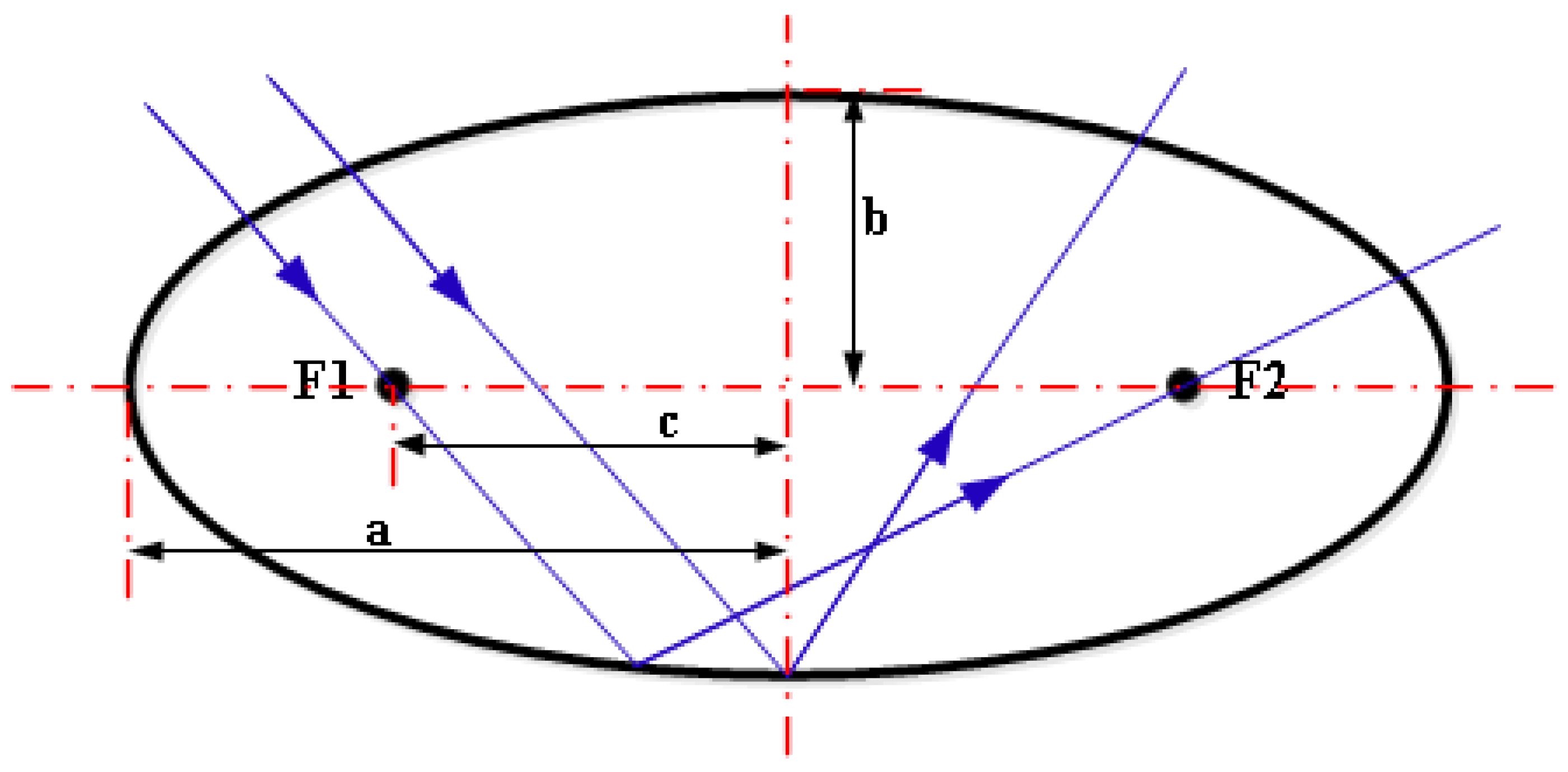
The elliptical baffle has an elliptical curved surface structure, and its vanes are symmetrically distributed along the axis. The side of the incident light is the reflective surface, and the other side is the black absorbing surface. The elliptic equation expression is as follows:
x2/a2 + y2/b2 = 1
where a is the semi-major axis of the ellipse, b is the semi-minor axis of the ellipse, and the elliptical focal length c satisfies c2 = a2 − b2.
The ellipse has the following optical properties: when sunlight is illuminated from a focal point F1, the reflected light must pass through another focal point F2. The sunlight is illuminated between the two focal points, and the reflected light also must be located between the two focal points. Figure 1 shows its optical refraction principle.
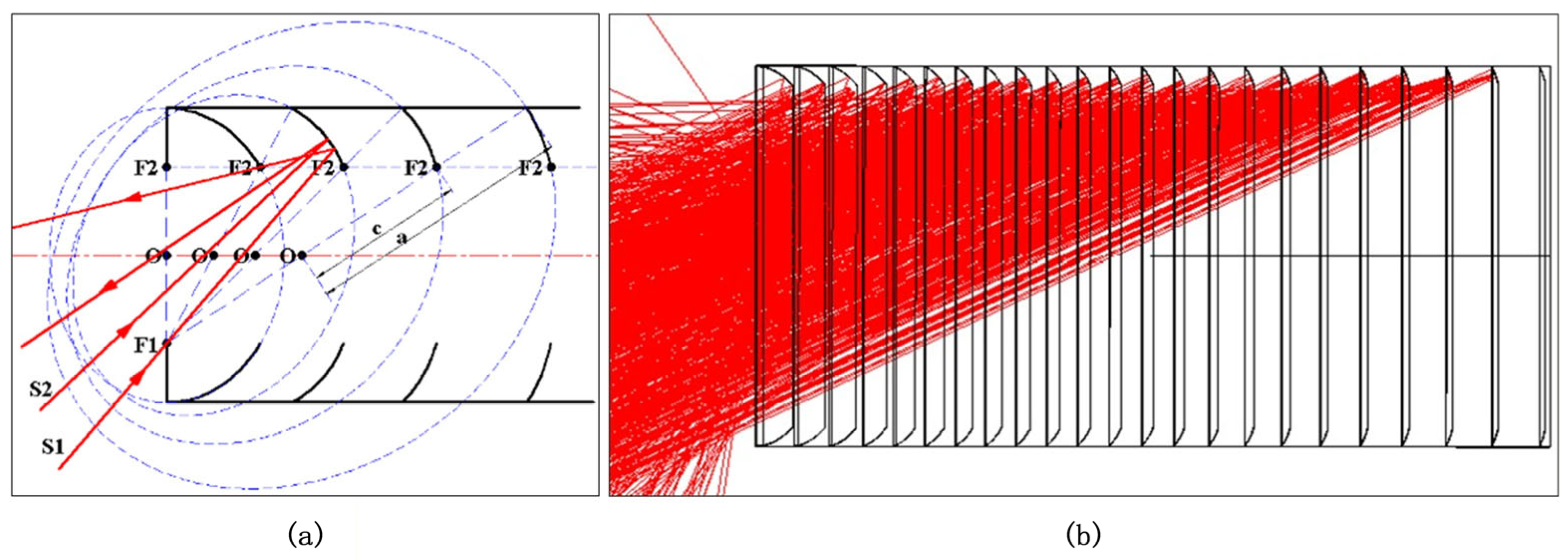
Optical properties of the ellipse are taken in the elliptical baffle. The schematic diagram of the meridian plane section shows the focal point and busbar, as well as the principle of reflecting sunlight (Figure 2a). The baffle is composed of a tube and a series of vanes. The first vane is a straight vane to determine the light aperture. The second vane is formed by a section of elliptical arc rotated around the center line of the baffle. Focal points of the busbar are composed of two inner vertices F1 and F2 of the first straight vane, and the long axis end point is located on the tube wall. The focal points of the third vane busbar are composed of the inner vertex of the first straight vane and the inner vertex of the previous vane. The long axis end point is the intersection between the focal point connecting line and the tube wall. The rest of the vanes are analogous. The incident sunlight on the central section of the elliptical baffle will be completely reflected. A part of the incident light cannot be reflected theoretically when the incident light is far away from the central section. Figure 2b shows the Trace Pro light tracking results. Because the elliptical reflectors are ideal mirrors, most of the incident light is reflected.
Incident light is absorbed by the traditional absorbing baffle through internal straight vanes with absorbing materials. The general principle and design method of light blocking rings can be referenced to design the traditional absorbing baffle [28]. Hyperbolic surfaces are used in Stavroudis baffles. These surfaces are arranged in a specific way so that all the focal points are located at the aperture of the baffle. The hyperbolic equation is as follows:
x2/a2 − y2/b2 = 1
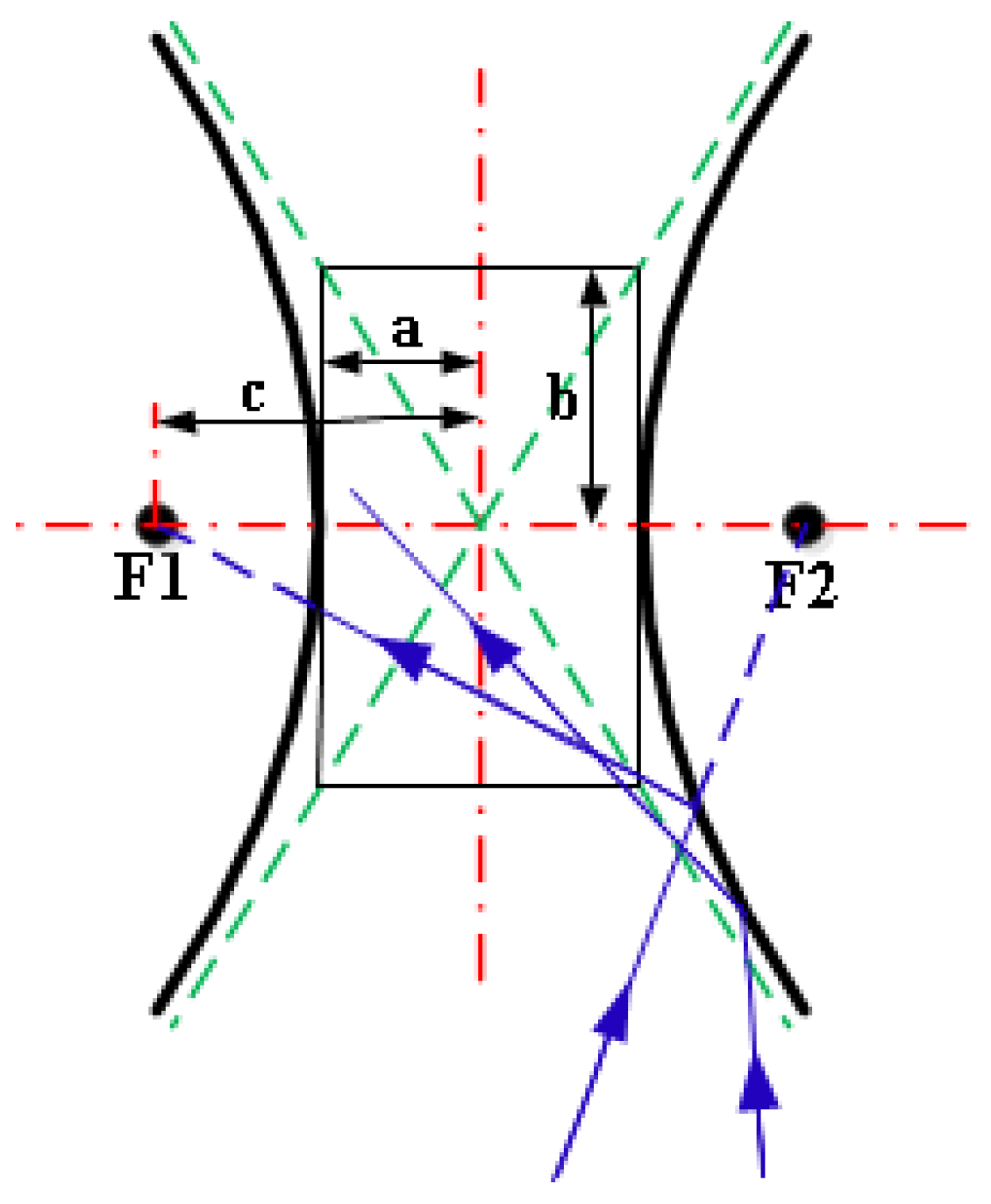
where a is the long half axis of the hyperbola, b is the short half axis of the hyperbola, and the focal length c of the hyperbola satisfies c2 = a2 + b2.
The hyperbola and ellipse have similar optical properties. Figure 3 shows its optical refraction principle.
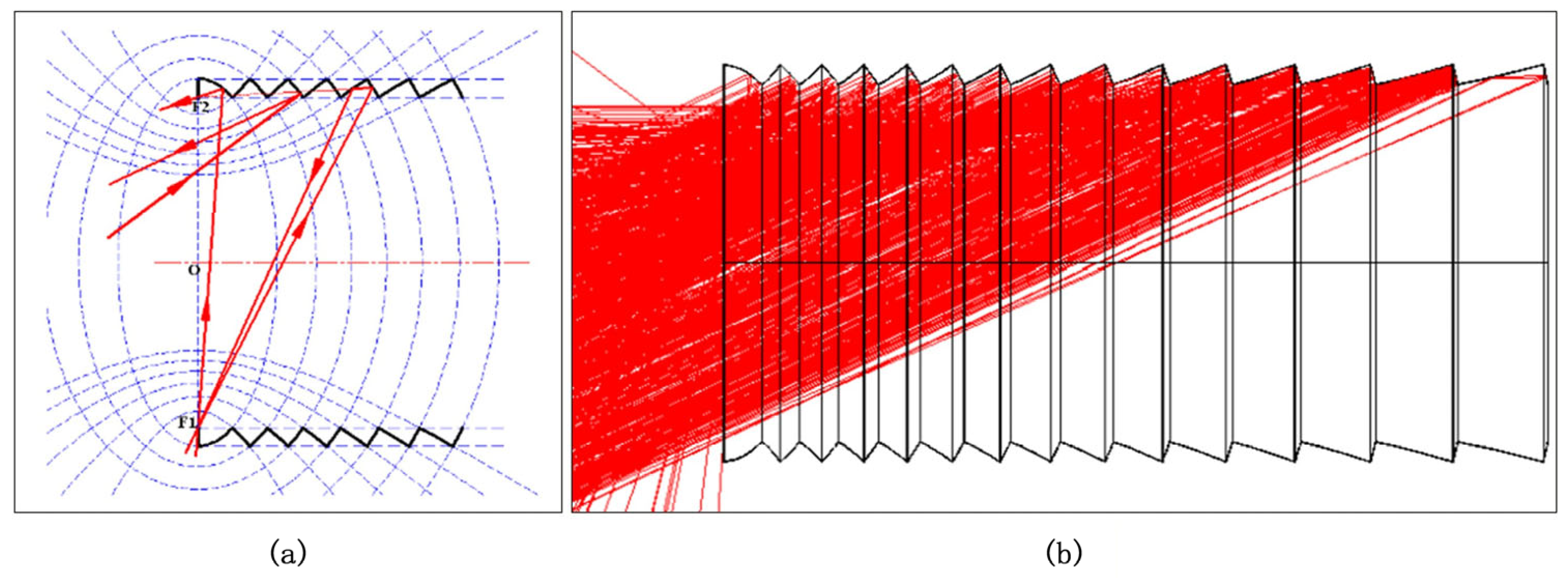
The optical properties of the ellipse and hyperbola are taken in the Stavroudis baffle. The Stavroudis baffle schematic diagram of the meridian plane cross-section is symmetrically distributed along the axis (Figure 4a). The first vane of the baffle is a straight vane to determine the aperture of the light. Then, a series of elliptical arcs and hyperbolic arcs are rotated around the baffle axial. These focal points of the hyperbolas and ellipses are composed of the two inner endpoints of the first straight vane, as shown by points F1 and F2. Figure 4b shows the Trace Pro light tracking results. Because the elliptical and hyperboloid reflectors are ideal mirrors, the incident light is reflected mostly.

2.2. Materials Selection

In order to meet the structural stiffness requirements of the minimum mass, high-modulus carbon fiber is selected for the baffle. The performance parameters of common high-modulus carbon fibers have been compared in Table 1. It is adapted from references [29,30,31].
It can be seen that M55J carbon fiber has higher modulus, strength, thermal conductivity and a lower coefficient of thermal expansion than others. The working environment and material technology of the satellite baffle have been analyzed to select high-modulus carbon fiber M55J.
Epoxy resin is commonly used in the composite matrix of satellite camera baffles. It not only has high thermal dimensional stability, but also has dimensional stability caused by moisture absorption. However, the thermosetting cyanate ester resin has better electrical insulation and dimensional stability, lower moisture absorption rate, and higher heat resistance than epoxy resin. Its mechanical properties and molding process are similar to the epoxy resin. The performance advantages and disadvantages have been compared between cyanate ester resin and epoxy resin in Table 2. It is adapted from references [32,33].
Taking into account the above factors, medium temperature cyanate ester resin is selected for composite material of the baffle. Through experimental research, the composite material of the cyanate ester resin meets the material performance requirements of typical space environments, for example, electron irradiation with a total dose of 3–3.5 × 10³ Gy and ultraviolet irradiation with a total dose of 1.5 × 10⁹ J/m2.
The overall structure is made of M55J high-modulus carbon fiber reinforced cyanate ester composite materials. The outer surface is reinforced with T300-3k carbon cloth. The thermal control measures are implemented on the surface of the baffle. Thermal control white paint and thermal control black paint are sprayed on the outer and inner surfaces of the baffle, respectively. The outer and inner surfaces of the support tube are coated with thermal control white film and thermal control black film, respectively.
The vanes of the baffle are made of 1035O aluminum alloy materials. The aluminum film is coated on the light-facing surface of vanes to enhance the surface spectral reflectivity. Surface roughness of the coating area should be better than 0.8 to enhance the adhesion and uniformity of the coating.

3. Characteristics Analysis of the Baffle

Temperature control characteristics and stray light suppression performance of elliptical baffles, Stavroudis baffles, and traditional absorbing baffles are compared in this chapter.

3.1. Temperature Control Characteristic

In this section, the temperature field under typical external heat flow of three reflective baffles including elliptical type, Stavroudis type and traditional absorbing type is analyzed.
The models of traditional absorbing baffle, elliptical baffle and Stavroudis baffle are established in Pro/E. The outer diameter, inner diameter, length, and wall thickness of the baffle are 0.9 m, 1.0 m, 2.0 m, and 0.002 m, respectively. The BRDF scattering model is used in Trace Pro, where parameter A represents the amplitude factor of reflectivity, parameter B is related to the surface scattering characteristics and parameter G is related to the material characteristics (surface roughness or polish). Table 3 shows the specific parameters of the absorbing and reflecting surfaces of the baffles.
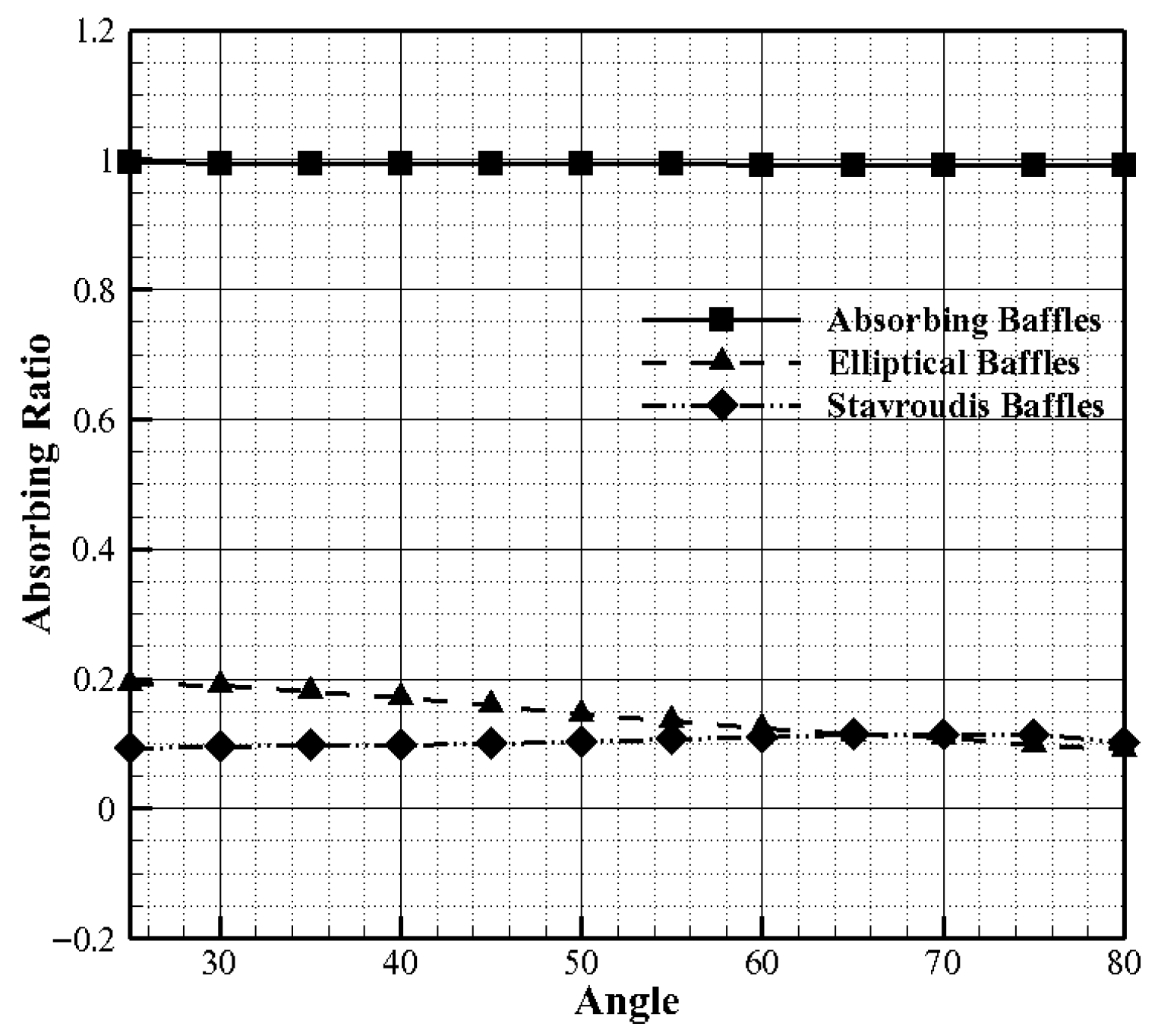
It is defined that all the sunlight is incident into the baffle. There are 10,000 tracing rays, and the tracing threshold is set to 1 × 10⁻⁴. The solar absorbing ratio is defined as the ratio between the energy of the baffle and the energy of incident sunlight. Figure 5 shows the simulation results of the solar absorbing ratio of three types of baffles. The solar absorbing ratio of the traditional baffle is close to 100%, while the sunlight energy of the reflection baffle is basically reflected. Among them, the solar absorbing ratio of the Stavroudis baffle is slightly lower than the elliptical baffle, and only about 10% of the sunlight energy is absorbed.
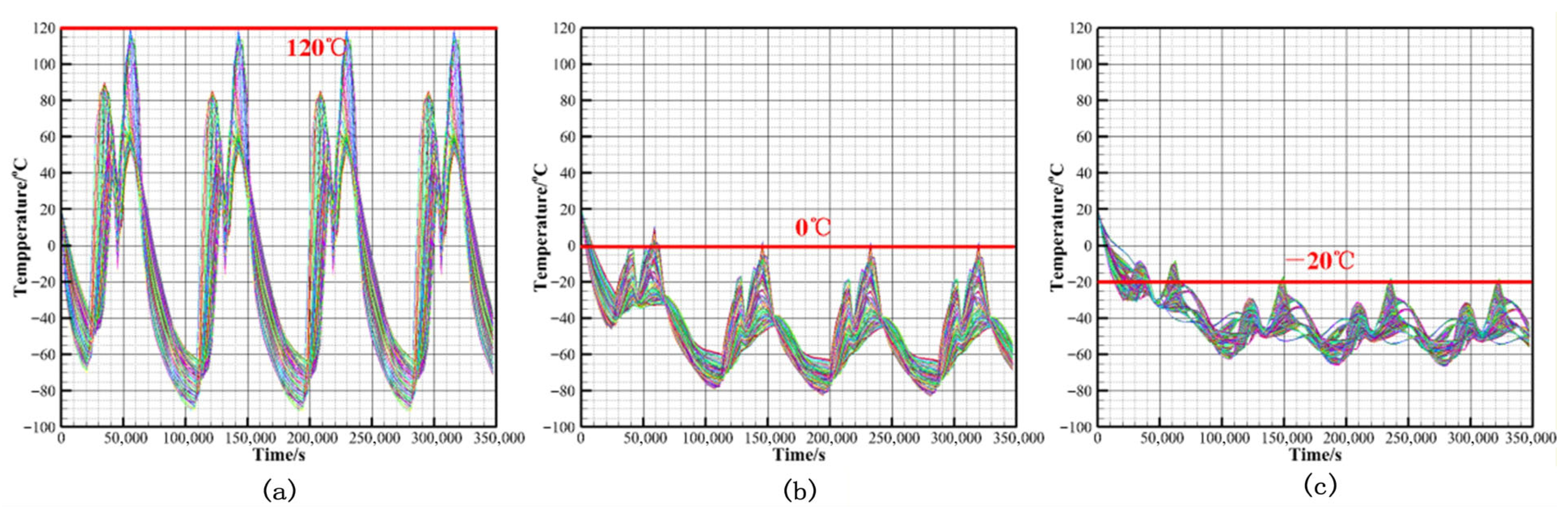
Temperature field under typical external heat flow of this baffle is calculated in Thermal Desktop. The dimensions and surface characteristic parameters of the aforementioned baffle models will continue to be used. The three types of baffles are all located in geostationary orbit, with an orbital inclination of 0°. Light entrance is always set to face the center of the earth. The bottom of the baffle is set with adiabatic boundary conditions, and the initial temperature is set to 20 °C. Figure 6 shows the temperature change curve of all unit nodes of the three kinds of baffles in orbit. It can be seen that the temperature of the baffles has been basically stable and changed periodically. The maximum temperatures for the traditional absorbing type baffle, elliptical type baffle, and Stavroudis baffle are 120 °C, 0 °C, and −20 °C, respectively. Two types of reflective baffles have higher minimum temperatures than the traditional absorbing baffles. The Stavroudis baffle has a lower average temperature and a more uniform temperature distribution than the elliptical baffle. It indicates that the Stavroudis baffle has batter temperature control characteristics.
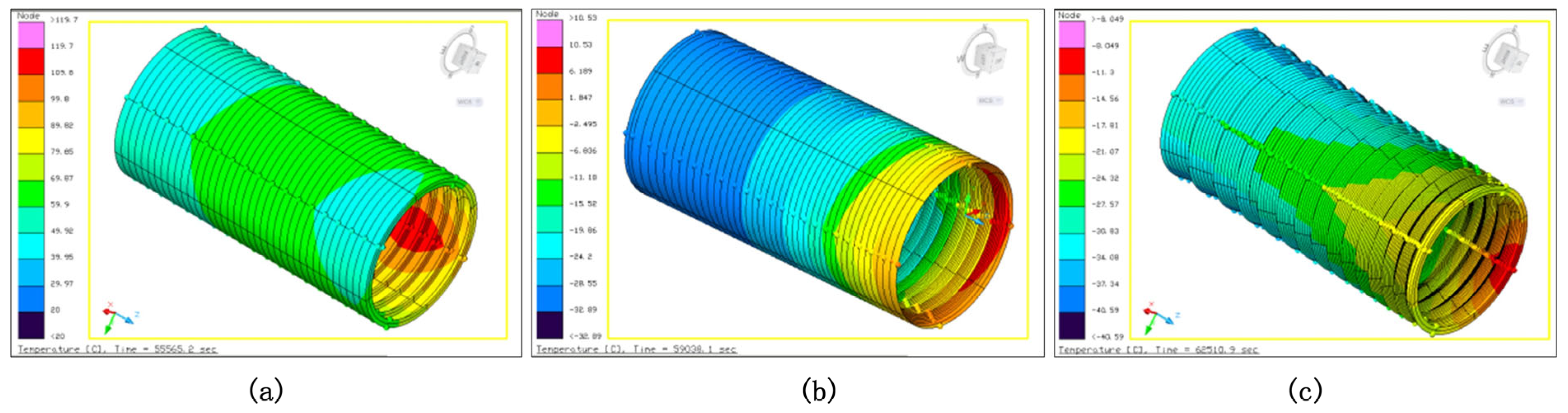
Figure 7 shows temperature distribution of the three types of baffles at the highest temperature moment in orbit. It can be seen that the highest temperature of the traditional absorbing baffle appears in the middle and upper part (Figure 7a). The highest temperature of the elliptical baffle and Stavroudis baffle appears near the vane of the light entrance (Figure 7b,c). The corresponding structure can be improved based on the temperature distribution cloud map at the location of the highest temperature.

3.2. Stray Light Suppression Characteristic

The stray light suppression ability of three types of reflective baffles is analyzed in this section. Stray light suppression performance of the Stavroudis baffle with different surface roughness is compared. PST is usually used to measure the ability of optical systems to suppress stray light in the field of satellite cameras, that is, Point Source Transmission. PST is a transfer function of the optical systems, and its characteristics are closely related to the work spectrum and the incident angle of the stray light source. The smaller the PST of the optical system, the stronger the ability to suppress stray light, and the better the imaging quality of the camera. Mathematical expression of the baffles PST is as follows [34]:
PST (θ) = Ei (θ)/Eo (θ)
where θ is the angle between the incident direction of sunlight and the axis of the baffles, Ei is the irradiance at the entrance of the baffles, and Eo is the irradiance at the exit of the baffles.
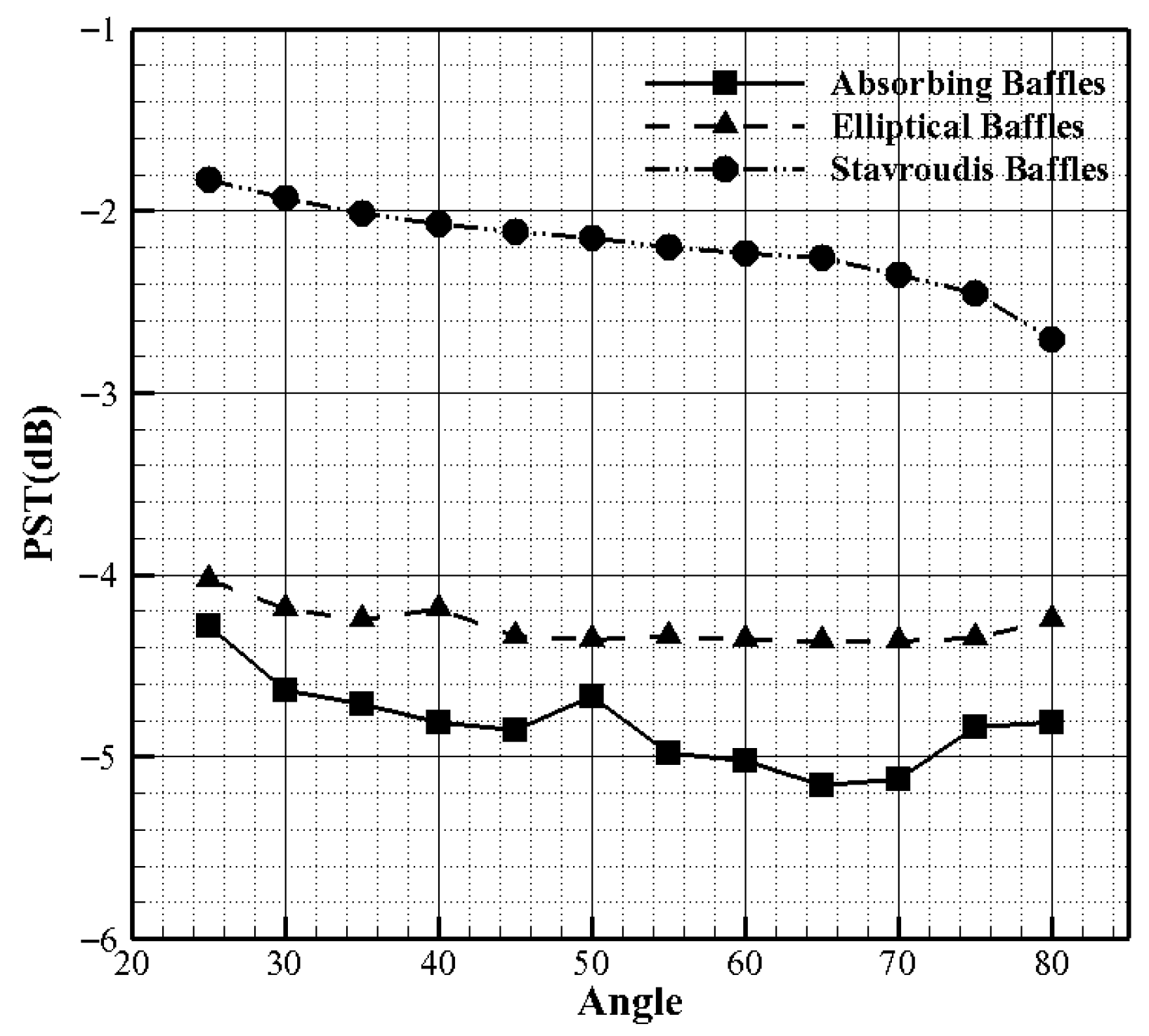
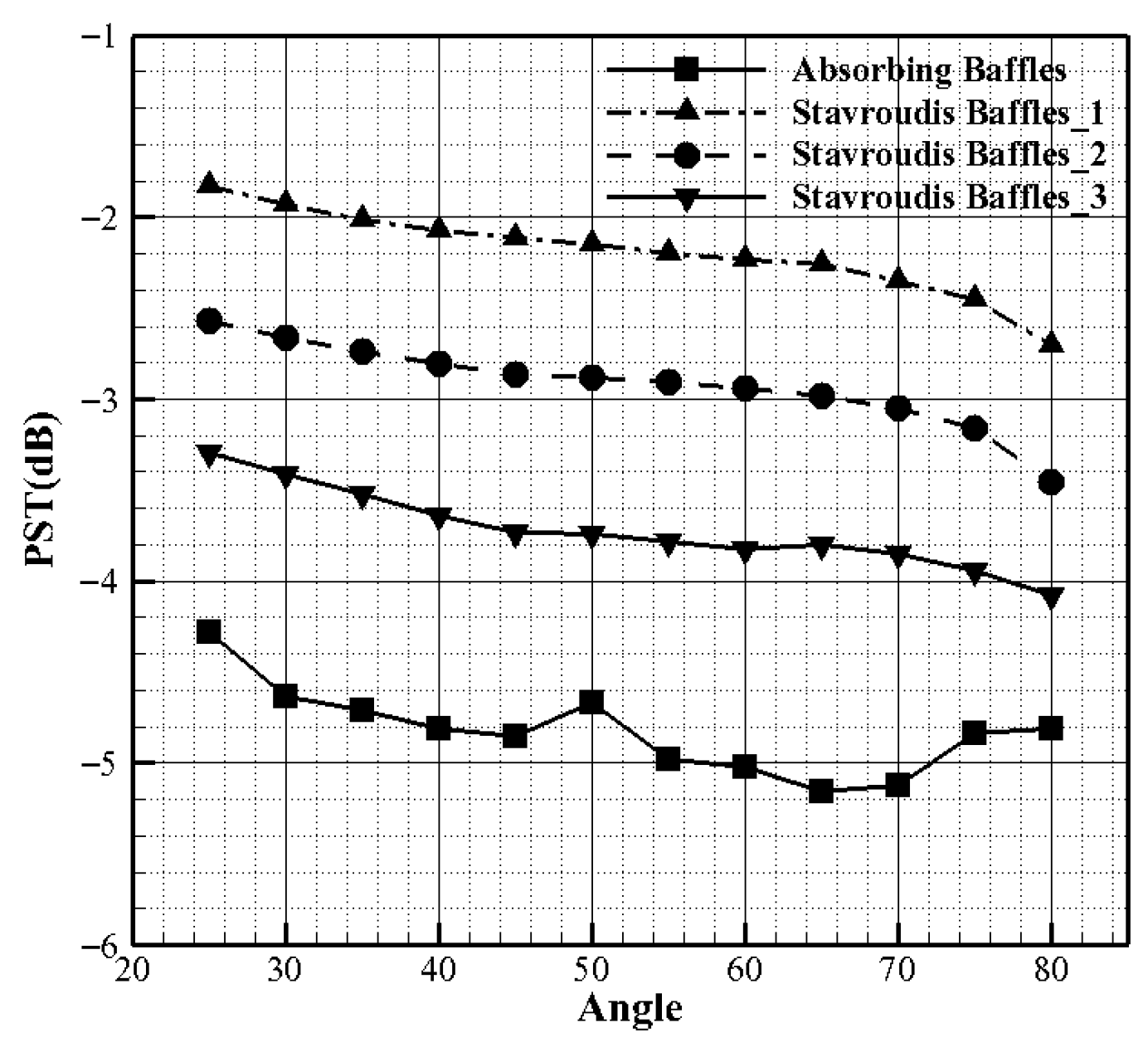
The geometric dimensions and surface properties of the baffles are set to be the same as the Trace Pro simulation. Figure 8 shows the PST simulation results of three types of baffles. It can be seen that the stray light suppression ability of the traditional absorbing baffle is the strongest. The elliptical baffle shows better performance in suppressing stray light than the Stavroudis baffle, which shows the worst performance. The main reason is that the Stavroudis baffle has a reflective surface facing the baffle outlet, and system PST will be improved because of diffuse reflection effect. The outlet surface of elliptical baffle is still an absorbing surface, so its ability to suppress stray light is much better than that of the Stavroudis baffle.
The stray light suppression ability of reflective baffles will be reduced due to the diffuse reflection. Surface diffuse reflection is closely related to surface roughness. The performance of the Stavrouis baffle has been analyzed based on the surface roughness. The surface roughness of the reflector and its corresponding surface parameters are presented in Table 4. And the surface roughness of the reflector 3 has reached the level of an optical mirror.
Reflective surfaces of the Stavroudis baffle are set to 1, 2, and 3. The other simulation settings in Trace Pro remain unchanged. The PST of different roughness reflective surfaces of the Stavroudis baffle and traditional absorbing baffle have been compared in Figure 9. With the decreases in the surface roughness, the PST of the Stavroudis baffle decreases significantly. When the roughness of the reflective surface is set to optical mirror level, the PST at different angles drops below −3 dB. The stray light suppression ability of the Stavroudis baffle has been improved to meet the stray light suppression index requirements of general baffles.

4. Simulation and Experimental Verification

According to the aforementioned analysis results, the traditional absorbing baffles cannot meet the requirements due to the high temperature. Therefore, the reflective baffles scheme can be adopted. In Section 3.2 mentioned above, when the general stray light suppression requirements of the Stavroudis baffles are met, the reflective surface has reached the level of an optical mirror. Furthermore, there is little difference in temperature control performance between elliptical and Stavroudis baffles. Therefore, in order to ensure the stray light suppression performance and processing accuracy, the elliptical baffle is preferred. Based on this, a reflective baffle is designed. Details regarding the high-modulus carbon fiber composite materials used in the experiment are presented in Table 5. The structural reliability of the reflective baffle is systematically evaluated by finite element analysis and vibration experiments. It provides a basis for its application in satellite cameras.

4.1. Simulation Modeling

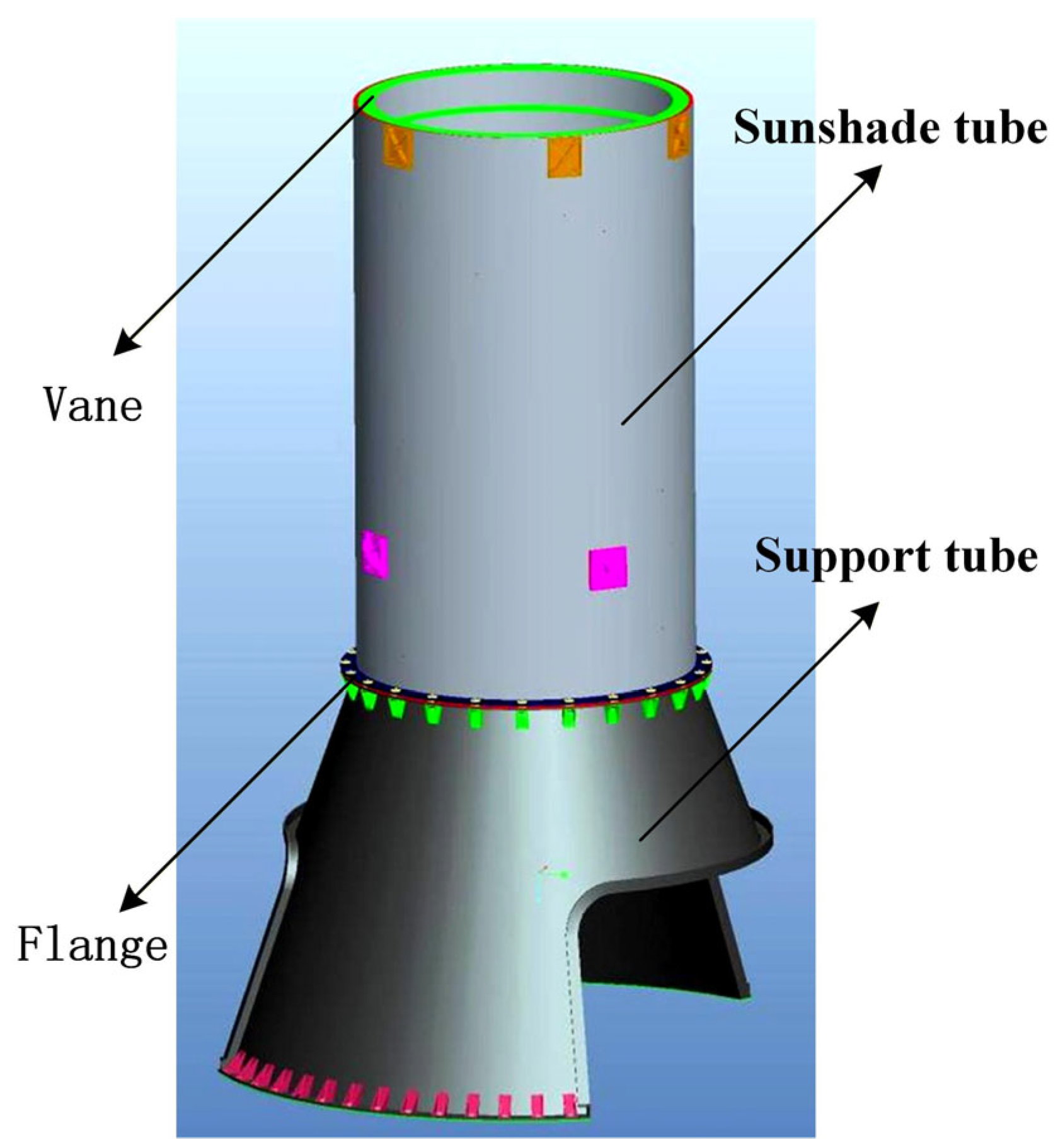
The reflective baffle consists of a sunshade tube and a support tube (Figure 10). The sunshade tube is used to eliminate stray light, and the support tube is used to support the sunshade tube and connect it with the satellite platform bracket. The maximum diameter and height of the sunshade tube are 910 mm and 1440 mm, respectively. The maximum diameter and height of the support tube are 910 mm and 1440 mm, respectively. The overall height of the component is 2423 mm.
Due to the high mechanical and thermal performance requirements of the baffle component, honeycomb sandwich is applied to the load-bearing structure of the sunshade tube. The underside of the tube is glued with an L-shaped flange to provide a connection interface for the support tube. Different sizes of vanes are fixed internal the sunshade tube. The wall thickness of the vane is set to 1–2 mm, and the edge of the internal opening is an elliptical sharp edge. It is connected to the tube through a combination of adhesive bonding and embedded screws.
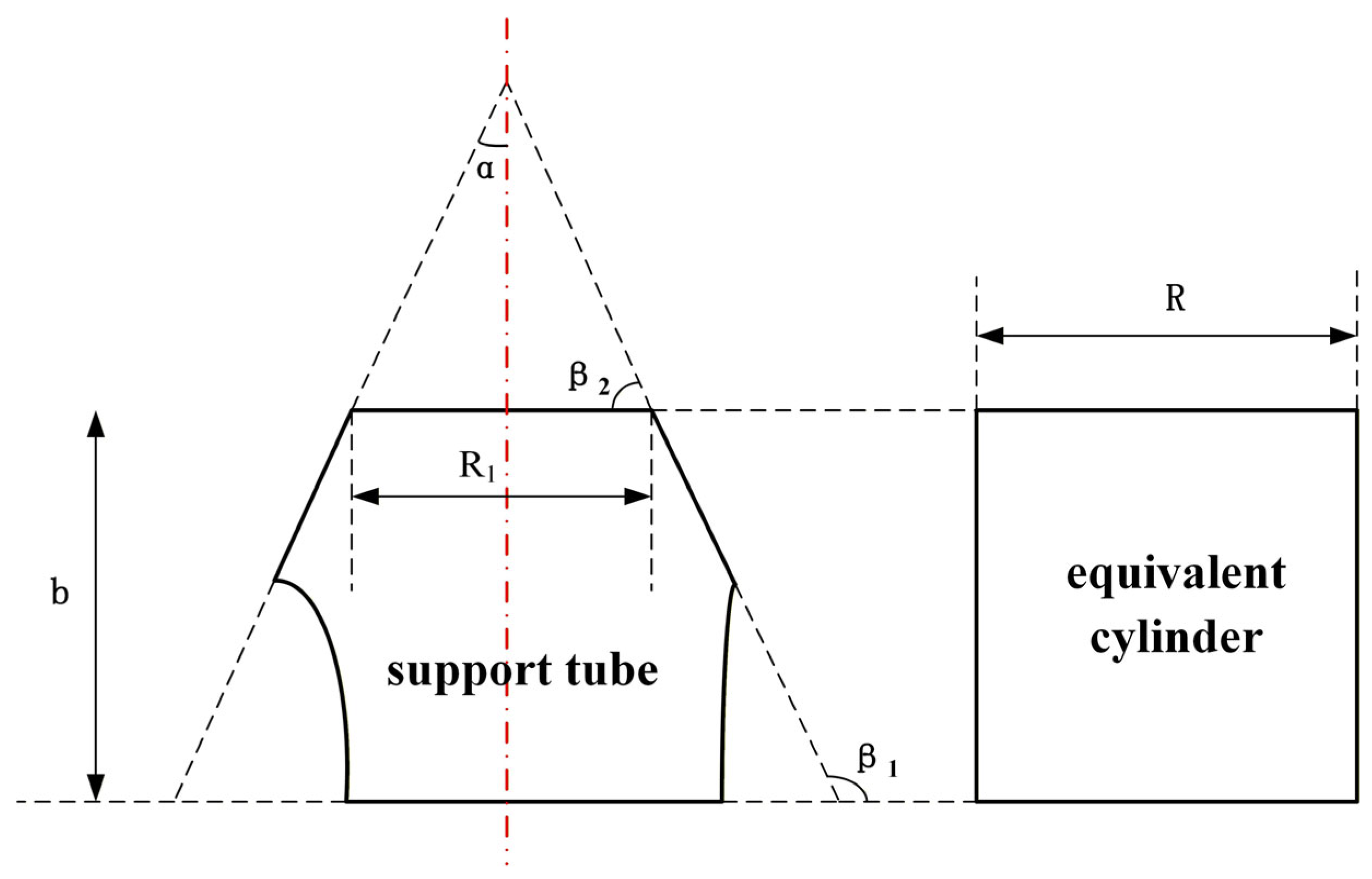
The support tube of the baffle is made of a thin-walled structure based on high-modulus carbon fiber-reinforced composite material. The schematic diagram is shown in Figure 11. The β2 and β1, α, b, R1 represent the opening angles of the upper and bottom, the half apex angle, the width, and the upper diameter of the support tube, respectively. It is conical in shape and has independent reinforced curved plates on both sides of the lower end opening. Therefore, when excessive lateral load is imposed, the support tube will become unstable. The conical curved plate can be simplified into a cylindrical curved plate to obtain an equivalent diameter R:
R = R1/cos (α/2)
According to the opening angles β1 and β2, the equivalent width b of the curved plate can be obtained:
b = πR(360 − β1 − β2)/360
The lateral critical stress of the support tube is
σα = (t/b)2 Kcπ2E/(12 − 12ν2)
where Kc is the buckling coefficient; E is the elastic modulus; t is the thickness of the support tube; and ν is Poisson’s ratio.
The support tube is composed of a carbon cone tube, gaskets, corner pieces and inserts, and a thin-walled structure is adopted on it. The wall thickness t and upper diameter R1 of the support tube are 5 mm and 1580 mm, respectively. The half apex angle α, opening angle β1 and β2 of the support tube are 39.12°, 125° and 65°, respectively. The buckling coefficient, elastic modulus of composite materials and Poisson’s ratio are 100, 94,000 MP and 0.3, respectively. Critical stress of the support tube can be obtained by substituting the parameters of the support tube into Equations (4)–(6):
σα = (t/b)2 Kcπ2E/(12 − 12ν2) = 255 MPa
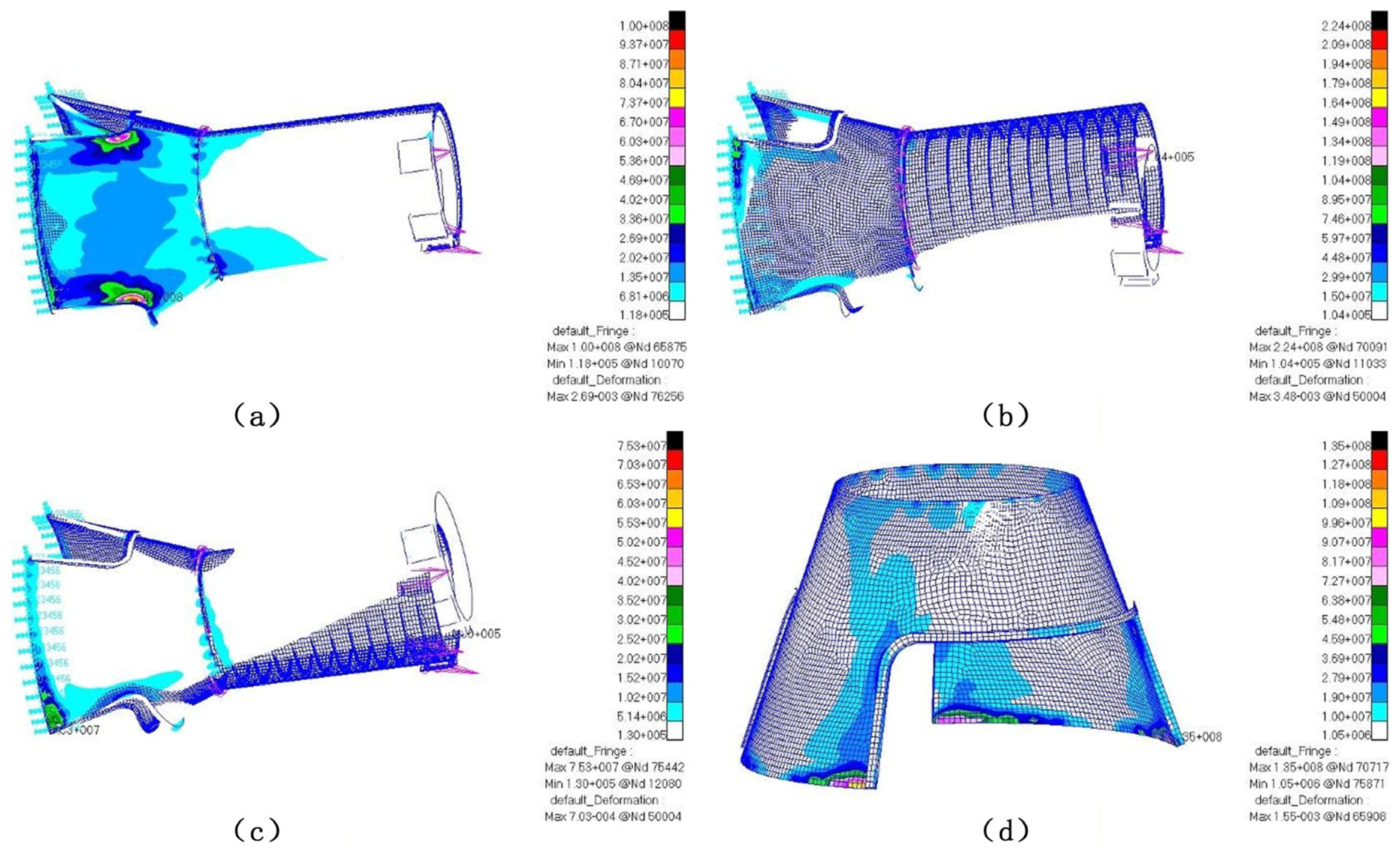
Three types of baffles finite element models are established in MSC/Patran. The 4-node plate shell element is used on the tubes and vanes. Local openings are ignored and the bottom of the support tube is constrained. A 20 g acceleration overload is applied to the baffle for the X, Y, and Z static overload calculation in MSC/Nastran. Figure 11 shows the stress distribution cloud maps of the baffle and support tube after simulation calculation. The maximum overload stresses in the X, Y, and Z directions of the baffle are 100 MPa, 224 MPa, and 75.3 MPa, respectively (Figure 12a–c). The maximum stress of the support tube is 135 MPa, and it appears near the installation point (Figure 12d).
Satellites experience complex vibrational environments during their launch and operation, potentially leading to structural failures and equipment damage. A 20 g overload acceleration is calculated to verify the baffle structure against the launch environment loads. The maximum structural stress of support tube is 135 MPa. The simulation result has less stress than the theoretical calculation of 225 MPa. It indicates that the baffle meets the requirements for structural stability during the launch phase.

4.2. Experimental Validation

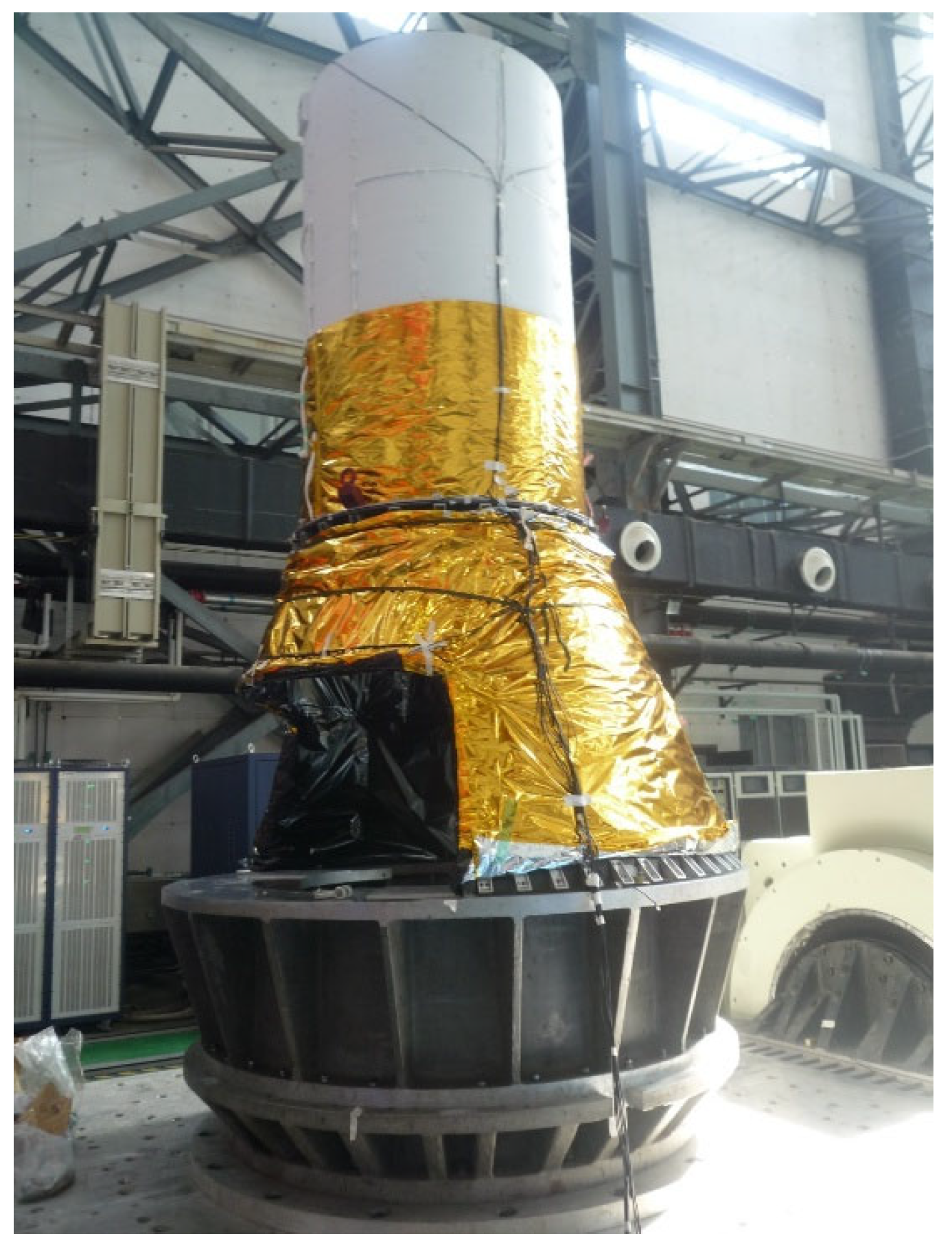
The rationality and reliability of the baffle structure have been verified thro ugh noise and mechanical environment experiments. Its experiment fixture is shown in Figure 13. The sunshade tube and support tube are connected with screws, and the baffle is connected to the surface of the vibration workwear with screws.
To ensure that the reflective baffle can withstand the harsh mechanical environment during the satellite launch phase, three-direction sinusoidal sweep vibration experiments are conducted. The conditions are specified in Table 6.
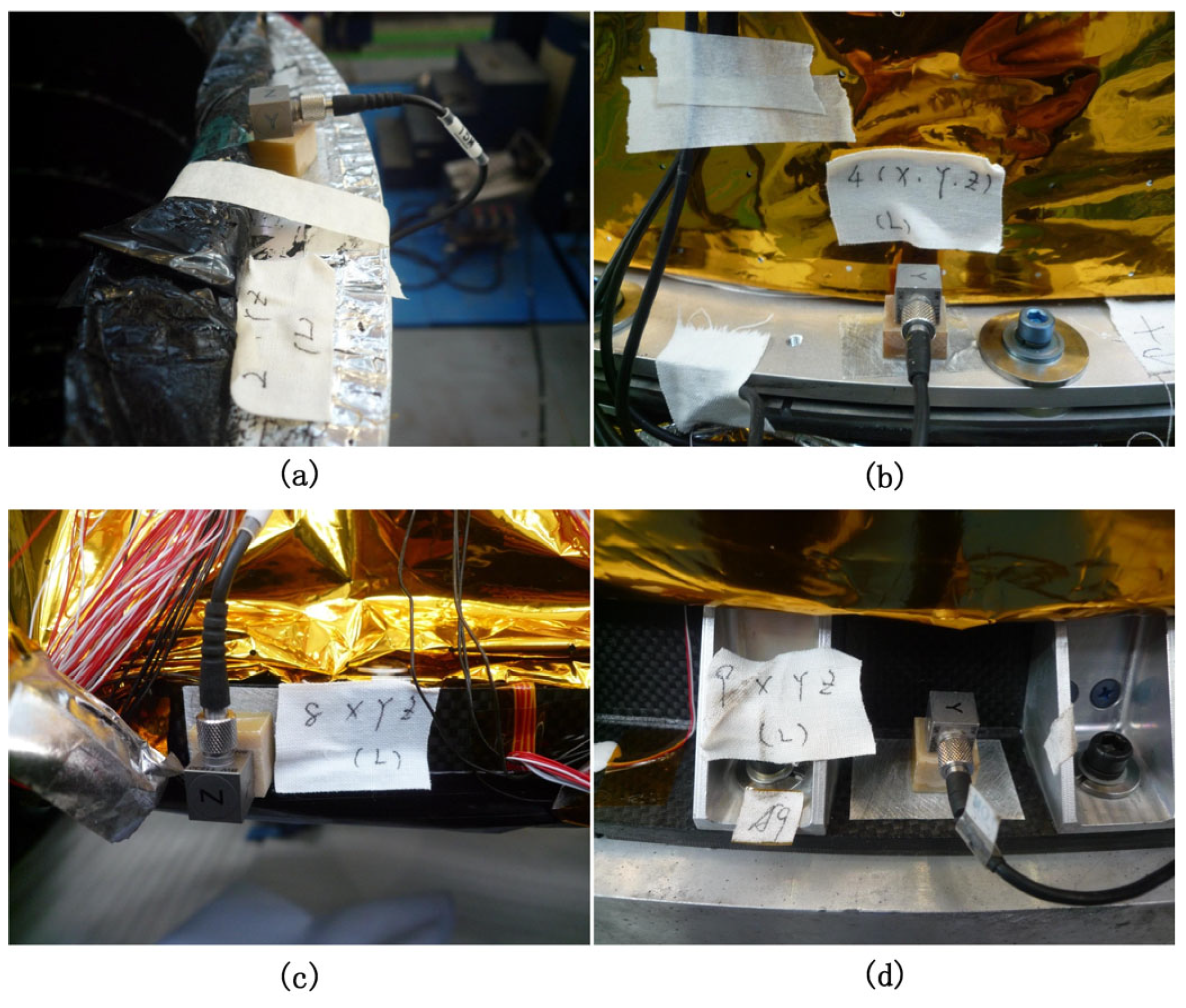
During the experiment, accelerometers are installed at key locations of the baffle to monitor the vibration response in real time. The measuring points for the mechanical experiment have been shown in Figure 14. After the experiment, a visual inspection and non-destructive examination were performed to check for any damage such as cracks, debonding, or permanent deformation.
The experimental acceleration response is shown in Table 7. The results show that no abnormal resonance amplification occurred over the entire frequency range. The baffle remained intact and fully functional after the vibration experiment, meeting the mechanical environmental requirements for the satellite launch phase. This experimental conclusion is consistent with the static overload simulation result presented in Section 4.1. And it further verified the structural reliability and stability of the baffle under high-level dynamic vibration conditions.
In order to analyze the micro-vibration response distribution and evaluate the structural reliability of the baffle, characteristic noise level and certification noise level experiments are implemented. The acoustic pressure fluctuation is used to directly affect entire outer surface of the baffle in the certification noise level experiments. Functional reliability and structural integrity of the thin-walled structure under noise vibration are tested. The main purpose of the characteristic noise level experiment is to study the dynamic characteristic parameters of the baffle under the action of noise. The response mechanism of noise excitation can be understood. And it provides an important data foundation for noise reduction and optimization design. The test conditions of characteristic noise level and certification noise level have been shown in Table 8.
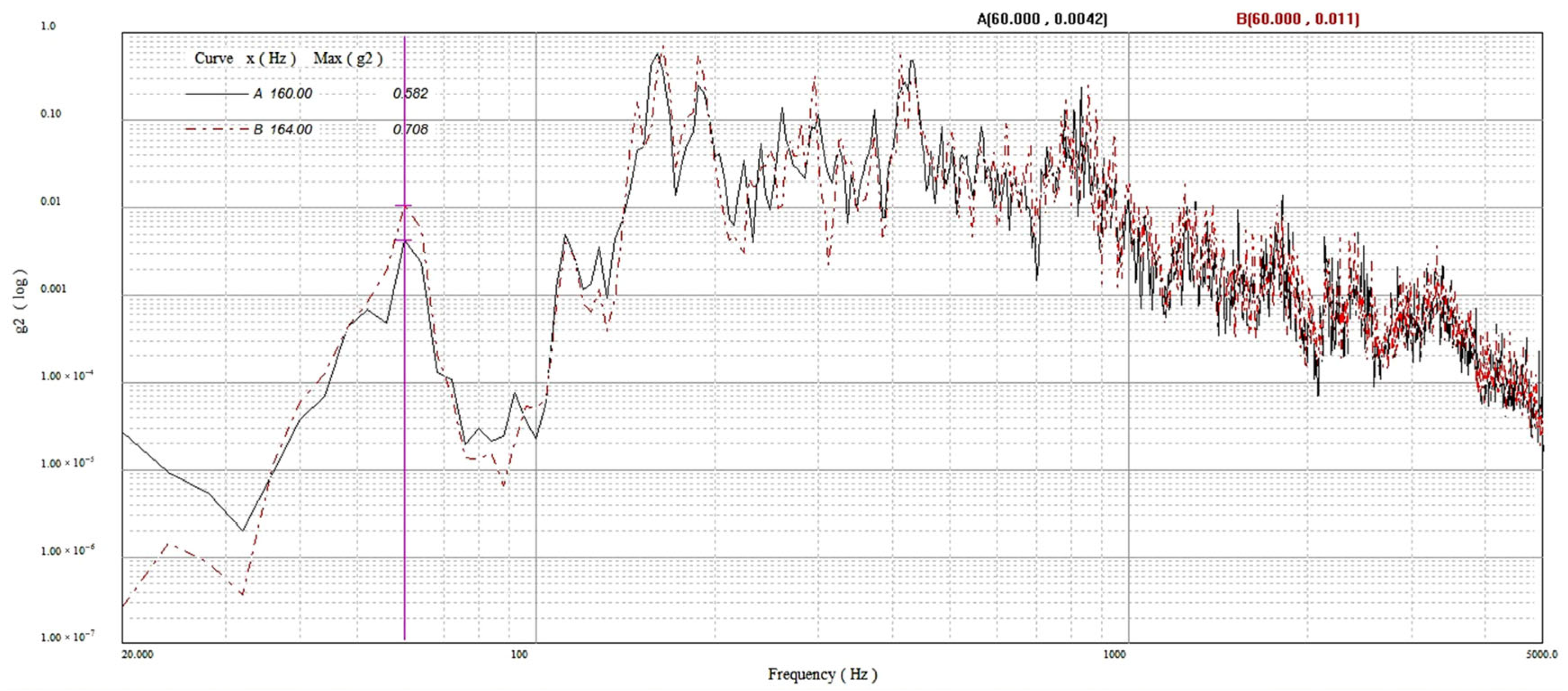
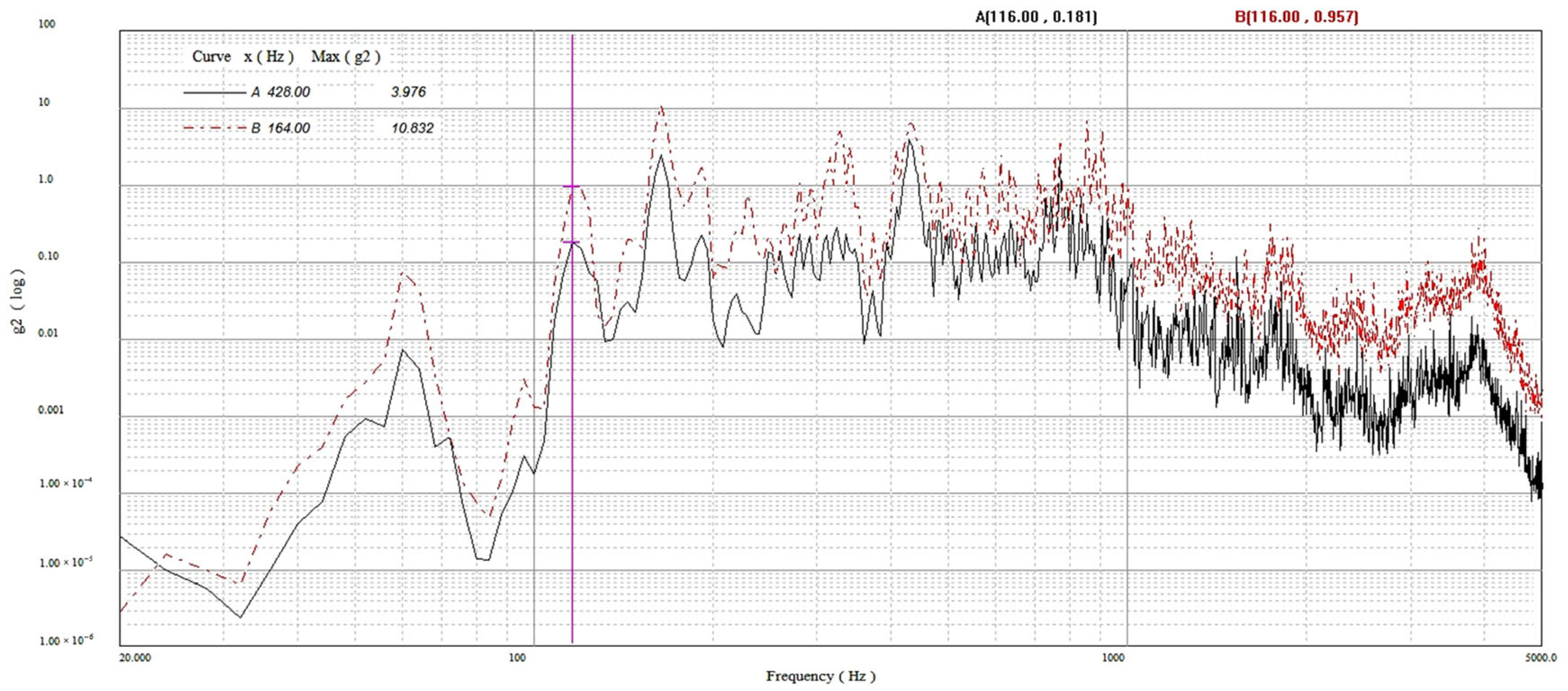
The test data are collected and processed. From the analysis of the noise test data, the responses of the two characteristic noise level experiments are highly consistent in the low frequency band (Figure 15). The first-order frequency and second-order frequency of the baffle are 60 Hz and 116 Hz, respectively. The peak of the certification noise level experiment has no drift with the two characteristic noise level experiments (Figure 16). The structure of the baffle has been confirmed, it has no obvious damage after the certification noise level experiment, and it meets the requirements of design.

5. Conclusions

In order to meet the requirements of high reflection characteristics for satellite camera baffles, a reflective baffle is designed in this article. High-modulus carbon fiber composite materials are selected to achieve light weight and high rigidity. The comprehensive performance of the elliptical baffle, Stavroudis baffle and traditional absorbing baffle are compared based on the principle of baffle configurations. The baffle with an elliptical configuration has better stray light suppression characteristics, and its PST remains below −4 dB at different incident light angles. Finite element overload simulation and a noise vibration experiment are performed. The results show that the baffle has better structural reliability with mechanical load and acoustic vibration environment. It provides important references for the subsequent structure design and optimization of the baffle.

Author Contributions

Conceptualization, Y.L. and W.T.; Methodology, J.Y.; Software, Y.L.; Validation, Y.W.; Formal analysis, X.S. and J.Y.; Resources, J.Y.; Data curation, H.Z. and Y.L.; Writing—original draft, X.S.; Writing—review & editing, H.Z. and W.T.; Visualization, X.S.; Supervision, H.Z.; Project administration, Y.W.; Funding acquisition, Y.W. All authors have read and agreed to the published version of the manuscript.

Funding

This research received no external funding.

Institutional Review Board Statement

Not applicable.

Informed Consent Statement

Not applicable.

Data Availability Statement

The original contributions presented in this study are included in the article. Further inquiries can be directed to the corresponding author.

Conflicts of Interest

The authors declare no conflict of interest.

References

  1. Du, Z.C.; Hou, H.F.; Wang, Z.G.; Yang, J.G. Thermal deformation isolation for satellite platforms via flexible connections. Int. J. Precis. Eng. Manuf. 2017, 18, 1821–1832. [Google Scholar] [CrossRef]
  2. Shao, X.; Wu, X.Q.; Yu, F.F.; Cao, C.Y. Characterization and monitoring of GOES-16 ABI stray light and comparison with Himawari-8 AHI and GOES-17 ABI. J. Appl. Remote Sens. 2021, 15, 017503. [Google Scholar] [CrossRef]
  3. Risquez, D.; van Leeuwen, F.; Brown, A.G.A. Dynamical attitude model for Gaia. Exp. Astron. 2012, 34, 669–703. [Google Scholar] [CrossRef][Green Version]
  4. Sutherland, W.; Emerson, J.; Dalton, G.; Atad-Ettedgui, E.; Beard, S.; Bennett, R.; Bezawada, N.; Born, A.; Caldwell, M.; Clark, P.; et al. The visible and infrared survey telescope for astronomy (VISTA): Design, technical overview, and performance. Astron. Astrophys. 2015, 575, A25. [Google Scholar] [CrossRef]
  5. Zhong, X.; Su, Z.Q.; Zhang, G.; Chen, Z.G.; Meng, Y.; Li, D.; Liu, Y. Analysis and reduction of solar stray light in the nighttime imaging camera of Luojia-1 satellite. Sensors 2019, 19, 1130. [Google Scholar] [CrossRef]
  6. Hu, X.D.; Wang, W.K.; Hu, Q.; Lei, X.; Wei, Q.; Liu, Y.Z.; Wan, J.L. Design of Cassegrain telescope baffles with honeycomb entrance. Chin. Opt. Lett. 2014, 12, 072901. [Google Scholar] [CrossRef]
  7. Sun, L.; Cui, Q.F.; Xie, N.; Wang, J.F. Design of a built-in baffle for a Ritchey–Chretien optical system. Appl. Opt. 2018, 57, 10264–10270. [Google Scholar] [CrossRef]
  8. Lee, S.; Saleem, R.; Lee, S.-S. Micro star tracker with a curved vane for a short baffle length and sharp stray light attenuation. Appl. Opt. 2020, 59, 4131–4142. [Google Scholar] [CrossRef]
  9. Kiuchi, K.; Adachi, S.; Ali, A.M.; Arnold, K.; Ashton, P.; Austermann, J.E.; Bazako, A.; Beall, J.A.; Chinone, Y.; Coppi, G.; et al. Simons observatory small aperture telescope overview. In Proceedings of the Ground-Based and Airborne Telescopes VIII, Virtual, 14–22 December 2020; SPIE: Bellingham, WA, USA; Volume 11445, p. 114457L. [CrossRef]
  10. Wang, C.C.; Wei, L.M.; Tian, X.; Zhang, L.; Xie, Y. New baffle design and analysis of long-wave infrared camera. Optik 2021, 242, 166820. [Google Scholar] [CrossRef]
  11. Xie, X.L.; Zhu, J.C.; Zhao, Z.H.; Shen, W.M. Optimize design of thermal infrared reflective baffle. In Proceedings of the Advanced Fiber Laser Conference (AFL2022), Changsha, China, 11–13 November 2022; SPIE: Bellingham, WA, USA; p. 12595. [CrossRef]
  12. Yeon, H.N.; Hong, D.K.; Lee, C.; Lee, J.H.; Park, K.W. Optimized Baffle Design for the Simultaneous Suppression of External and Internal Stray Light in an LWIR Catadioptric Optical Payload. Curr. Opt. Photon. 2025, 9, 65–71. [Google Scholar] [CrossRef]
  13. Okuyama, K.-i.; Yoshikawa, K.; Oue, C. A Simple Method for Identifying the Natural Frequency of a Micro Satellite with a Primary Structure Made of Aluminum Alloy. Aerospace 2024, 11, 436. [Google Scholar] [CrossRef]
  14. Tumarina, M.; Ryazanskiy, M.; Jeong, S.; Hong, G.; Vedenkin, N.; Park, I.H.; Milov, A. Design, fabrication and space suitability tests of wide field of view, ultra-compact, and high resolution telescope for space application. Opt. Express 2018, 26, 2390–2399. [Google Scholar] [CrossRef] [PubMed]
  15. Yalagach, A.; Honeth, M.; Gandhi, R.; Aglietti, G.S.; Ingram, C.; Saxena, A. Development of a deployable mechanism for a conical optical baffle for a small satellite. Adv. Space Res. 2024, 73, 870–884. [Google Scholar] [CrossRef]
  16. Liu, J.; Liu, X.; Wang, H.; Ye, Z.; Xue, X. Structural Design and Vibro-Mechanical Characterization Analysis of Variable Cross-Sectional Metal Rubber Isolator. Symmetry 2025, 17, 382. [Google Scholar] [CrossRef]
  17. May, M.; Rupakula, G.D.; Matura, P. Non-polymer-matrix composite materials for space applications. Compos. Part C-Open 2020, 3, 100057. [Google Scholar] [CrossRef]
  18. Adeniran, O.; Cong, W.; Aremu, A. Material design factors in the additive manufacturing of Carbon Fiber Reinforced Plastic Composites: A state-of-the-art review. Adv. Ind. Manuf. Eng. 2022, 5, 100100. [Google Scholar] [CrossRef]
  19. Zhang, M.; Xu, P.; Peng, H.X.; Qin, F.X. A rational design of core-shell-satellite structured BaTiO3 fillers for epoxy-based composites with enhanced microwave dielectric constant and low loss. Compos. Part B-Eng. 2021, 215, 108764. [Google Scholar] [CrossRef]
  20. Eugeni, M.; Quercia, T.; Bernabei, M.; Boschetto, A.; Costantino, F.; Lampani, L.; Spaccamela, M.A.; Lombardo, A.; Mecella, M.; Querzoni, L.; et al. An industry 4.0 approach to large scale production of satellite constellations. The case study of composite sandwich panel manufacturing. Acta Astronaut. 2022, 192, 276–290. [Google Scholar] [CrossRef]
  21. Iqbal, S.; Jamil, T.; Murtuza Mehdi, S. Numerical simulation and validation of MWCNT CFRP hybrid composite structure in lightweight satellite design. Compos. Struct. 2023, 303, 116323. [Google Scholar] [CrossRef]
  22. Delkowski, M.; Smith, C.T.G.; Anguita, J.V.; Silva, S.R.P. Increasing the robustness and crack resistivity of high-performance carbon fiber composites for space applications. iScience 2021, 24, 102692. [Google Scholar] [CrossRef]
  23. Sun, B.L.; Xue, C.; Shang, W.H.; An, M.G.; Zhao, H.J.; Zhang, H.S. The performance characterization of carbon fiber–reinforced plastic for space applications. J. Reinf. Plast. Compos. 2022, 42, 844–853. [Google Scholar] [CrossRef]
  24. Proietti, A.; Noqra, D.; Quadrini, F.; Santo, L. Review and Experimental Update on Manufacturing of Hybrid Carbon Fiber Composites for Space Use. Appl. Sci. 2025, 15, 9863. [Google Scholar] [CrossRef]
  25. Chen, M.; Li, W.; Tao, S.; Fang, Z.; Lu, C.; Xu, Z. A Pragmatic and High-Performance Radiative Cooling Coating with Near-Ideal Selective Emissive Spectrum for Passive Cooling. Coatings 2020, 10, 144. [Google Scholar] [CrossRef]
  26. Wang, X.; Wang, Y.L.; Xiao, Y.H.; Li, C.L. Robust ultrablack coating for omnidirectional broadband light absorption. Adv. Opt. Mater. 2024, 13, 2402289. [Google Scholar] [CrossRef]
  27. Truong, T.K.; Yuk, G.T.; Kim, J.B.; Youn, H.; Rho, J. Super Black Coating on the Commercial Black Anodized Al (6061) by Direct and Scalable CVD–Growth of Carbon Nanofibers. Adv. Mater. Interfaces 2024, 11, 2400032. [Google Scholar] [CrossRef]
  28. Asadnezhad, M.; Eslamimajd, A.; Hajghassem, H. Stray light analysis, baffle, and optical design of a high-resolution satelliste camera. J. Appl. Remote Sens. 2018, 12, 026009. [Google Scholar] [CrossRef]
  29. Newcomb, B.A. Processing, structure, and properties of carbon fibers. Compos. Part A-Appl. Sci. Manuf. 2016, 91, 262–282. [Google Scholar] [CrossRef]
  30. Tanaka, F.; Ishikawa, T.; Tane, M. A comprehensive review of the elastic constants of carbon fibers: Implications for design and manufacturing of high-performance composite materials. Adv. Compos. Mater. 2024, 33, 269–289. [Google Scholar] [CrossRef]
  31. Xu, X.Y.; Peng, G.Q.; Zhang, B.Y.; Shi, F.H.; Gao, L.; Gao, J. Material performance, manufacturing methods, and engineering applications in aviation of carbon fiber reinforced polymers: A comprehensive review. Thin-Walled Struct. 2025, 209, 112899. [Google Scholar] [CrossRef]
  32. Nair, C.P.R.; Mathew, D.; Ninan, K.N. Cyanate ester resins, recent developments. In New Polymerization Techniques and Synthetic Methodologies; Advances in Polymer Science; Springer: Berlin/Heidelberg, Germany, 2001; Volume 155, pp. 1–99. [Google Scholar] [CrossRef]
  33. Mohan, P. A Critical Review: The Modification, Properties, and Applications of Epoxy Resins. Polym.-Plast. Technol. Eng. 2013, 52, 107–125. [Google Scholar] [CrossRef]
  34. Liu, X.; Xing, F.; Fan, S.; You, Z. A Compressed and High-Accuracy Star Tracker with On-Orbit Deployable Baffle for Remote Sensing CubeSats. Remote Sens. 2021, 13, 2503. [Google Scholar] [CrossRef]
Figure 1. Elliptical parameters and optical properties.
Coatings 16 00234 g001
Figure 2. Elliptical baffle: (a) principle of elliptical baffle; (b) Trace Pro of elliptical baffle.
Coatings 16 00234 g002
Figure 3. Hyperbola parameters and optical properties.
Coatings 16 00234 g003
Figure 4. Stavroudis baffle: (a) principle of stavroudis baffle; (b) Trace Pro of stavroudis baffle.
Coatings 16 00234 g004
Figure 5. Solar absorbing ratio.
Coatings 16 00234 g005
Figure 6. Multiple thermal loads on three different baffles: (a) absorbing baffles; (b) elliptical baffles; (c) Stavroudis baffles.
Coatings 16 00234 g006
Figure 7. Temperature distribution of three different baffles at the moment of highest temperature: (a) absorbing baffles; (b) elliptical baffles; (c) Stavroudis baffles.
Coatings 16 00234 g007
Figure 8. PST for different baffles.
Coatings 16 00234 g008
Figure 9. PST for different surface roughness.
Coatings 16 00234 g009
Figure 10. Overall structure of the baffle.
Coatings 16 00234 g010
Figure 11. Schematic diagram of support tube.
Coatings 16 00234 g011
Figure 12. Finite element overload calculation: (a) X-direction stress distribution; (b) Y-direction stress distribution; (c) Z-direction overload distribution; (d) overload stress distribution of support cylinder.
Coatings 16 00234 g012
Figure 13. The baffle noise test fixture.
Coatings 16 00234 g013
Figure 14. Measurement point distribution: (a) top of the baffle; (b) bottom of the sunshade tube; (c) top of the support tube; (d) bottom of the baffle.
Coatings 16 00234 g014
Figure 15. Comparison of characteristic noise level response curves.
Coatings 16 00234 g015
Figure 16. Comparison of characteristic noise level and certification noise level response curves.
Coatings 16 00234 g016
Table 1. High-modulus carbon fiber performance comparison.
TypeTensile Strength
(MPa)
Tensile
Modulus
(GPa)
Coefficient of
Thermal Expansion
(ppm/°C)
Thermal
Conductivity
(W/mK)
Elongation
(%)
Density
(g/cm3)
M40J4410377−0.8368.661.21.77
M46J4210436−0.984.571.01.84
M50J4120475−1.097.970.81.88
M55J4020540−1.1155.750.81.91
M60J3920588−1.1151.980.71.93
Table 2. Comparison between cyanate ester resin and epoxy resin.
PropertiesEpoxy ResinMedium Temperature Cyanate EsterHigh Temperature Cyanate Ester
Coefficient of Thermal Expansionmedium/highhighmedium
Hygroscopicityhighlowlow
Curing Shrinkage Ratemedium/highlowlow
Low Temperature Characteristicspoorexcellentgood
Craft Stabilityexcellentmediumgood
Inheritanceexcellentgoodgood
Table 3. Surface parameters.
Surface TypeReflectanceAbsorptivityParameter AParameter BParameter g
Absorption Surface0.020.950.010.10
Reflective Surface0.90.051.25 × 10−31 × 10−42.172
Table 4. Surface parameters for different roughness.
Surface TypeSurface RoughnessReflectanceAbsorptivityParameter AParameter BParameter g
Reflective Surface 120 nm0.90.051.25 × 10−31 × 10−42.172
Reflective Surface 210 nm0.950.042.5 × 10−41 × 10−42.172
Reflective Surface 34 nm0.950.0451.25 × 10−41 × 10−42.172
Table 5. Details regarding the high-modulus carbon fiber composite materials.
MaterialsTensile Strength (MPa)Tensile
Modulus (GPa)
Coefficient of
Thermal Expansion (ppm/°C)
Modulus of Elasticity (MPa)Temperature Lmits (°C)Manufacturer
M55J4020540−1.194,000−243~240Toray Carbon Fibers Europe
(Lacq, France)
Table 6. Mechanical test conditions.
MotivateSweep Rate (oct/min)Frequency (Hz)Magnitude (g)
sine25–103.5
10–354.5
35–1006
Table 7. Experimental acceleration response.
Measurement
Point
X-Direction
Response (g)
Y-Direction
Response (g)
Z-Direction
Response (g)
Frequency (Hz)Response (g)Frequency (Hz)Response (g)Frequency (Hz)Response (g)
a60.476.460.029.760.025.4
b60.0213.460.026.260.025.3
c59.575.167.680.2160.020.44
d79.833.979.830.4860.020.35
Table 8. Noise test conditions.
Sound FieldFrequency Range (Hz)Certification Acoustic Pressure (dB)Characteristic Acoustic Pressure (dB)
Reverberation Field0–31.5124138
31.5–63130138
63–125135138
125–250141138
250–500139138
500–1000137138
1000–2000130138
2000–4000127138
4000–8000119137
Disclaimer/Publisher’s Note: The statements, opinions and data contained in all publications are solely those of the individual author(s) and contributor(s) and not of MDPI and/or the editor(s). MDPI and/or the editor(s) disclaim responsibility for any injury to people or property resulting from any ideas, methods, instructions or products referred to in the content.