Article

Tribological Performance of High-Speed Laser-Cladded cBN Reinforced Composite Coatings: The Influence of Ag Additions

1
CCCC Second Harbor Engineering Company Ltd., Wuhan 400430, China
2
The First Construction Company of CCCC Second Harbor Engineering Company Ltd., Wuhan 430040, China
3
CCCC Highway Bridge National Engineering Research Centre Co., Ltd., Beijing 100120, China
4
National-local Joint Engineering Laboratory of Intelligent Manufacturing Oriented Automobile Die & Mould, Tianjin University of Technology and Education, Tianjin 300222, China
5
State Key Laboratory for Mechanical Behavior of Materials, School of Materials Science and Engineering, Xi’an Jiaotong University, Xi’an 710049, China
6
National Engineering Research Center for Remanufacturing, Army Academy of Armored Forces, Beijing 100072, China
*
Author to whom correspondence should be addressed.
Coatings 2026, 16(2), 196; https://doi.org/10.3390/coatings16020196

Submission received: 30 September 2025 / Revised: 18 November 2025 / Accepted: 8 December 2025 / Published: 4 February 2026
(This article belongs to the Section High-Energy Beam Surface Engineering and Coatings)

Abstract

cBN-reinforced particle Ti-based composite coatings were deposited by high-speed laser cladding technology to enhance the wear resistance of Ti alloy. In this work, the influence of Ag addition on the microstructure and tribological behavior was systematically investigated. The microstructure and phase composition of the coatings were characterized using SEM/EDS and XRD. And the microhardness and tribological performance of coatings with Ag addition were assessed from room temperature up to 500 °C. The results show that the solidification process evolves with different Ag content. At lower Ag concentrations, Ag dissolves in the Ti-based solid solution, whereas higher Ag concentrations lead to the precipitation of Ag and Ag-Ti intermetallic. Due to the solid-solution strengthening effect and the formation of high-hardness intermetallic phases, the hardness of the coating increases with increasing Ag content. However, excessive Ag addition (>2.5 wt.%) results in a decrease in hardness. Tribological tests reveal that the friction coefficient and wear volume at room temperature decrease with increasing Ag content. With 10 wt.% Ag added, the friction coefficient of the coating decreases by 15% to 0.56, and the wear volume reduces by 28%, with the wear mechanism evolving from adhesive and fatigue wear to oxidative wear. At elevated temperatures (300 °C–500 °C), the friction-reducing effect is further enhanced due to the “sweating” of Ag and the formation of an oxide film, leading to reductions in the friction coefficient of 18%, 13%, and 7% at 300 °C, 400 °C, and 500 °C, respectively, for coatings with 5 wt.% Ag compared to coatings without Ag. Moreover, the formation of hard phases improves the coating’s high-temperature softening resistance and wear resistance property, as evidenced by an 85% reduction in wear volume at 500 °C for coatings containing 5 wt.% Ag.

1. Introduction

Titanium alloys are extensively employed in aerospace, biomedical, and automotive industries owing to their exceptional specific strength, low density, and outstanding corrosion resistance [1,2]. However, the inherent limitations of titanium alloys, such as insufficient hardness and poor tribological properties [3,4], restrict their applications. Surface engineering techniques provide an effective approach for enhancing surface properties of titanium alloys and improving their tribological performance [5,6].
High-speed laser cladding technology was developed in 2017 by the Fraunhofer Institute for Laser Technology and RWTH-Aachen University, which further overcame the efficiency limitations of conventional laser cladding technology. This advanced technique achieves powder utilization rates exceeding 80% while offering distinct advantages in producing metallurgically bonded coatings with low dilution rates and superior surface finish. Consequently, it has attracted extensive research attention and has been widely applied in recent years [7,8,9,10,11,12].
Metal-matrix composite (MMC) coatings consist of a metallic matrix and reinforced ceramic phases. The metallic matrix provides ductility and toughness, while the ceramic reinforcement phase enhances strength, hardness, and wear resistance; thus, the coating can exhibit excellent comprehensive performance [13,14,15,16,17,18,19,20]. Due to their ultrahigh hardness, high melting point, strong chemical inertness, superior thermal stability, excellent high-temperature resistance, high thermal conductivity, and remarkable compressive strength, cubic boron nitride (cBN) is commonly used as an important reinforcement particle in composite coatings [21,22,23,24,25]. Liu et al. [26] prepared Ti60-cBN and Ti60-cBN(Ni) coatings on TC11 substrates via high-speed laser cladding technology, and the results revealed that the Ti60-cBN(Ni) coating exhibited higher hardness (1200 HV0.3) and superior wear resistance, with a wear rate only 28% of TC11 and 78% of the Ti60-cBN coating. In previous studies [26,27] on the modulation of the microstructure of cBN particle-reinforced composite coatings prepared by high-speed laser cladding, it was found that the thermal input regulation enabled precise control over in situ-formed reinforcing phases (TiN, TiB, etc.), thereby enhancing coating hardness and wear resistance.
Research has demonstrated that incorporating solid lubricants into composite coatings can significantly improve their tribological properties, particularly in terms of friction reduction and self-lubrication [28]. Common solid lubricants can be classified into three main categories: (1) lamellar solid lubricants (e.g., graphene, h-BN, MoS2, and WS2) [29,30,31]; (2) soft metals (e.g., Ag, Sn, In, Au, and Pt) [32,33,34]; and (3) fluorides (e.g., CaF2 and BaF2) [35]. The laser cladding process is characterized by extremely high temperatures, typically exceeding 1000 °C. However, lamellar solid lubricants generally possess poor thermal stability and tend to decompose or lose effectiveness under such high-temperature environments, adversely affecting their lubricating performance [36,37]. Fluoride-based solid lubricants may release hazardous gases (e.g., HF) upon exposure to laser irradiation, resulting in increased porosity and reduced densification of the cladded layer, and posing potential safety risks to operators as well as the environment [38,39]. Moreover, at elevated temperatures, fluoride lubricants can react with reactive metals (e.g., Ti, Al), forming brittle metal fluorides (e.g., TiF3), which significantly degrade the coating’s toughness and strength, thereby impairing its mechanical properties [40,41].
Soft metals (e.g., Ag, Sn, In, Au, and Pt) exhibit excellent friction-reducing properties due to their low shear strength and high diffusion coefficients, which facilitate the formation of a lubricating film at the friction interface. Among these materials, silver (Ag) has attracted extensive research interest owing to its high thermal conductivity and low toxicity. For instance, studies have demonstrated that the addition of Ag to titanium alloys significantly reduces their coefficient of friction [42,43,44]. Li [45] deposited TiN and TiN-Ag composite coatings with varying Ag content on TC4 substrates via magnetron sputtering.
Compared to pure TiN coatings, the TiN-Ag coating with a Ag content of 70.42% exhibited a significant reduction in friction coefficients by 54.3% (at 10 N) and 37.1% (at 20 N). This improvement was attributed to the formation and diffusion of Ag nanoparticles at the friction interface, which acted as an effective solid lubricant. Liu et al. [46] prepared NiCrAlYTa-Ag composite coatings with different Ag contents (0–20 wt.%) on Inconel 718 substrates by explosive spraying. The coating hardness exhibited an inverse relationship with Ag content, decreasing progressively with increasing Ag content. While pure NiCrAlYTa coatings demonstrated friction coefficients exceeding 0.7 at both room temperature and 400 °C, the addition of 20 wt.% Ag significantly reduced these values to 0.43 and 0.37, respectively. This friction-reduction mechanism primarily stemmed from Ag’s intrinsic properties as a soft metal, which facilitates the formation of a continuous lubricating film through shear-induced plastic deformation at the sliding interface.
Therefore, this study further investigates the influence of Ag addition on cBN-reinforced coatings, and high-speed laser cladding was adopted to prepare cBN-Ag composite coatings. The deposition behavior and microstructure evolution with varying Ag contents were analyzed, and the effects on microhardness and tribological performance under both room-temperature and elevated-temperature systematically evaluated.

2. Experimental Procedures

2.1. Materials

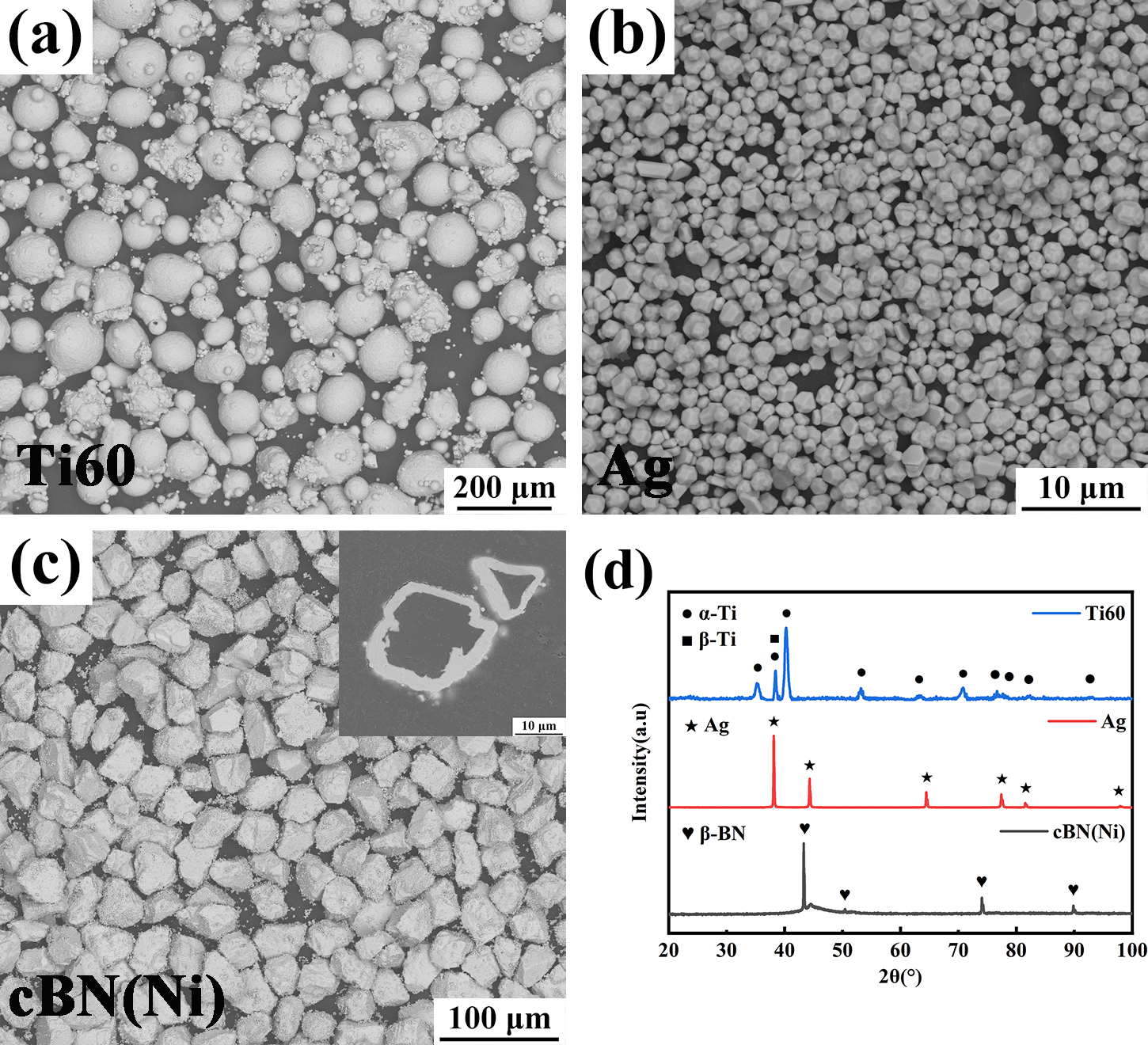
The substrate was TC11 high-temperature titanium alloy with dimensions of 100 × 100 × 5 mm. To improve the thermal compatibility between the coating and the substrate, titanium alloy powder was selected to prepare the Ti-based cBN composite coating, and Ti60 alloy powder was used in this research. The chemical compositions of the TC11 substrate and Ti60 powder are shown in Table 1. The Ti60 alloy powder was spherical, with a particle size distribution between 50 and 150 μm, as shown in Figure 1a. The morphology of the Ag powder is shown in Figure 1b, indicating that the Ag powder exhibited good sphericity with a particle size distribution between 1 and 2 μm. To enhance the flowability of the Ti-based cBN composite powder, the cBN ceramic particles were chemically plated with Ni before cladding, and the Ni-coated cBN was denoted as cBN(Ni).

2.2. Composite Powder Preparation

The cBN(Ni) particles exhibited an average size of 30–40 μm, with a uniform and continuous Ni coating layer (2–3 μm thick) encapsulating the cBN cores, as shown in Figure 1c. XRD analysis of the Ti60, Ag, and cBN(Ni) powders (Figure 1d) revealed that the cBN(Ni) powder primarily consisted of β-BN phases accompanied by diffuse amorphous peaks, which were attributable to the amorphous Ni surface coating. The Ti60 powder was predominantly composed of α-Ti with minor β-Ti phases.
Owing to the high density (10.49 g/cm3) and fine particle size of Ag powder, a two-step powder processing approach was employed to ensure homogeneous distribution within the composite system. First, the Ag and Ti60 powders were mechanically alloyed (400 r/min, ball-to-powder ratio of 10:1, duration of 4 h). Subsequently, the resultant mixture was mechanically blended with cBN(Ni) powder (300 r/min, duration of 1 h). The composite powders and corresponding coatings were designated as 0 wt.% Ag, 2.5 wt.% Ag, 5 wt.% Ag, 7.5 wt.% Ag and 10 wt.% Ag, respectively. Prior to use, all powders were dried at 80 °C for 120 min to remove moisture.

2.3. Coating Preparation

The TC11 substrate was mechanically ground using SiC sandpaper to remove surface impurities and oxides prior to cladding, followed by ethanol cleaning and ultrasonic cleaning. High-speed laser cladding was performed using a 3 kW HDR06-AW laser system (Hall) with a circular beam spot diameter of 2.4 mm. High-purity argon (>99.9%) was used as both the powder carrier gas and the shielding atmosphere. To prevent high-temperature oxidation and nitridation of the titanium alloy substrate, the entire preparation process was conducted within an Ar-filled glove box. Based on previous studies, the coatings were prepared using an optimized fusion coating process, with the parameters listed in Table 2. The resulting Ag-added Ti-based cBN(Ni) coatings were designated as cBN(Ni)-Ag.

2.4. Characterization of Coating Microstructure

The prepared coatings were cut into samples of 10×10×5 mm by wire cutting and cleaned by ultrasonic cleaning with alcohol. Standard metallographic preparation was then performed, involving mounting in resin, sequential grinding with SiC abrasive papers, and final polishing with diamond suspensions to achieve a mirror-like surface finish for microstructural characterization. The crystal and phase structures of the coatings were characterized using X-ray diffraction (XRD, Bruker D8 ADVANCE A25, Germany). The XRD analysis was performed with Cu-Ka radiation at 40 kV, a current of 40 mA, a 2θ range of 10–90°, a step size of 0.1°, and a scanning speed of 5°/min. Microstructural characterization of the coatings was conducted using a Hitachi S-3400N field emission scanning electron microscope (SEM; TESCAN MIR3LMH, Czech Republic) equipped with an energy-dispersive spectroscopy (EDS) system (Aztec, Oxford Instruments, UK). ImageJ software was used to measure the thickness of the coatings at different Ag contents and calculate the percentage fraction of cBN in the coatings. The coating thickness was calculated using the following formula to improve the accuracy of the results:
δ c o a t = ( c r o s s - s e c t i o n a l   c o a t   a r e a ) ( c r o s s - s e c t i o n a l   l e n g t h   o f   c o a t )

2.5. Coating Performance Test

The microhardness of the coatings was measured using a Vickers hardness indenter (Buehler 5103, America) under a load of 200 gf with a dwell time of 15 s. Hardness was measured along the coating-substrate direction, with each point separated by 30 μm. Three points at different depths were selected to calculate the average value and minimize measurement error. It should be noted that the hardness of cBN particles is extremely high; to prevent interference with the coating hardness distribution curve, the testing position was shifted horizontally if cBN particles were present.
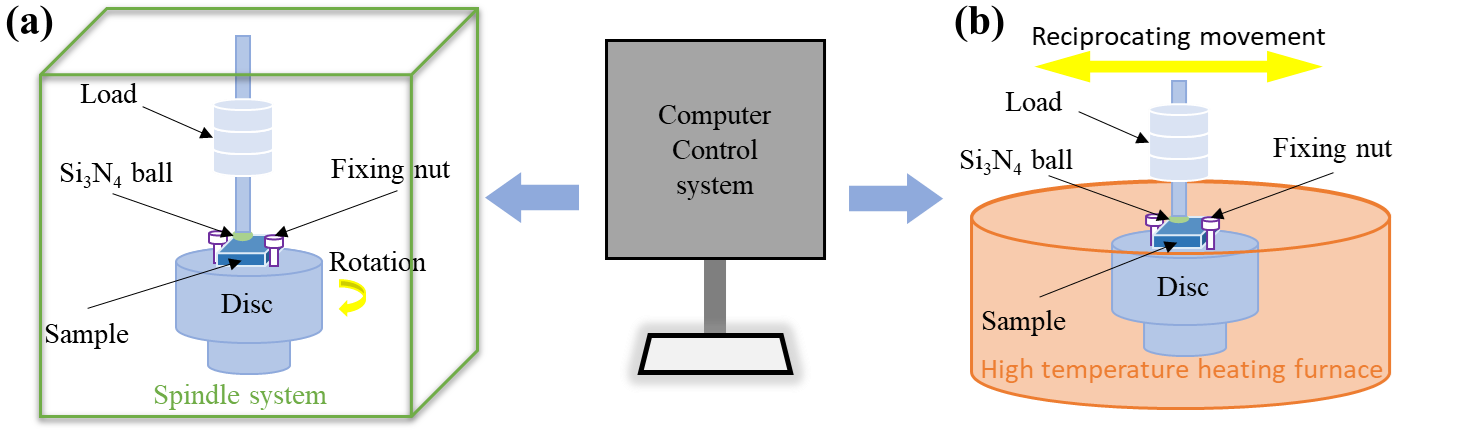
The friction and wear performance of the coatings was evaluated at both room and elevated temperatures. Room-temperature tribological tests were conducted using a ball-on-disk setup with an Rtec MFT-2000 friction tester, Switzerland (Figure 2a). Testing was performed under a load of 35 N, a friction radius of 3 mm, a rotational speed of 200 rpm, and a duration of 30 min. High-temperature experiments were carried out using reciprocal friction and wear tests on a Zhongke Kaihua GF-I friction and abrasion tester, China (Figure 2b) at temperatures of 300 °C, 400 °C, and 500 °C. Prior to testing, each specimen was heated in a high-temperature chamber and held at the desired temperature for 3–5 min to achieve uniform temperature profiles. The high-temperature tests were performed at a load of 35 N, a reciprocating stroke of 5 mm, a frequency of 2 Hz, and a duration of 30 min. To ensure repeatability and mitigate the influence of experimental uncertainties, each test condition was evaluated three times. Due to the high overall hardness of the coatings, Si3N4 ceramic balls, China (1400–1700 HV), characterized by superior hardness, were selected as friction counterparts in both room-temperature and high-temperature friction tests. The diameter of the balls was 6.35 mm.
Post-test analysis included the following:
Wear track profilometry using an OLYMPUS LEXT OLS5100 laser confocal microscope;
Quantitative wear assessment (track width/depth and volume loss) via ImageJ software (NIH, USA);
Surface morphology and compositional analysis using SEM/EDS (Hitachi S-3400N with Oxford Aztec EDS).

3. Results and Discussion

3.1. Microstructure of the Coatings

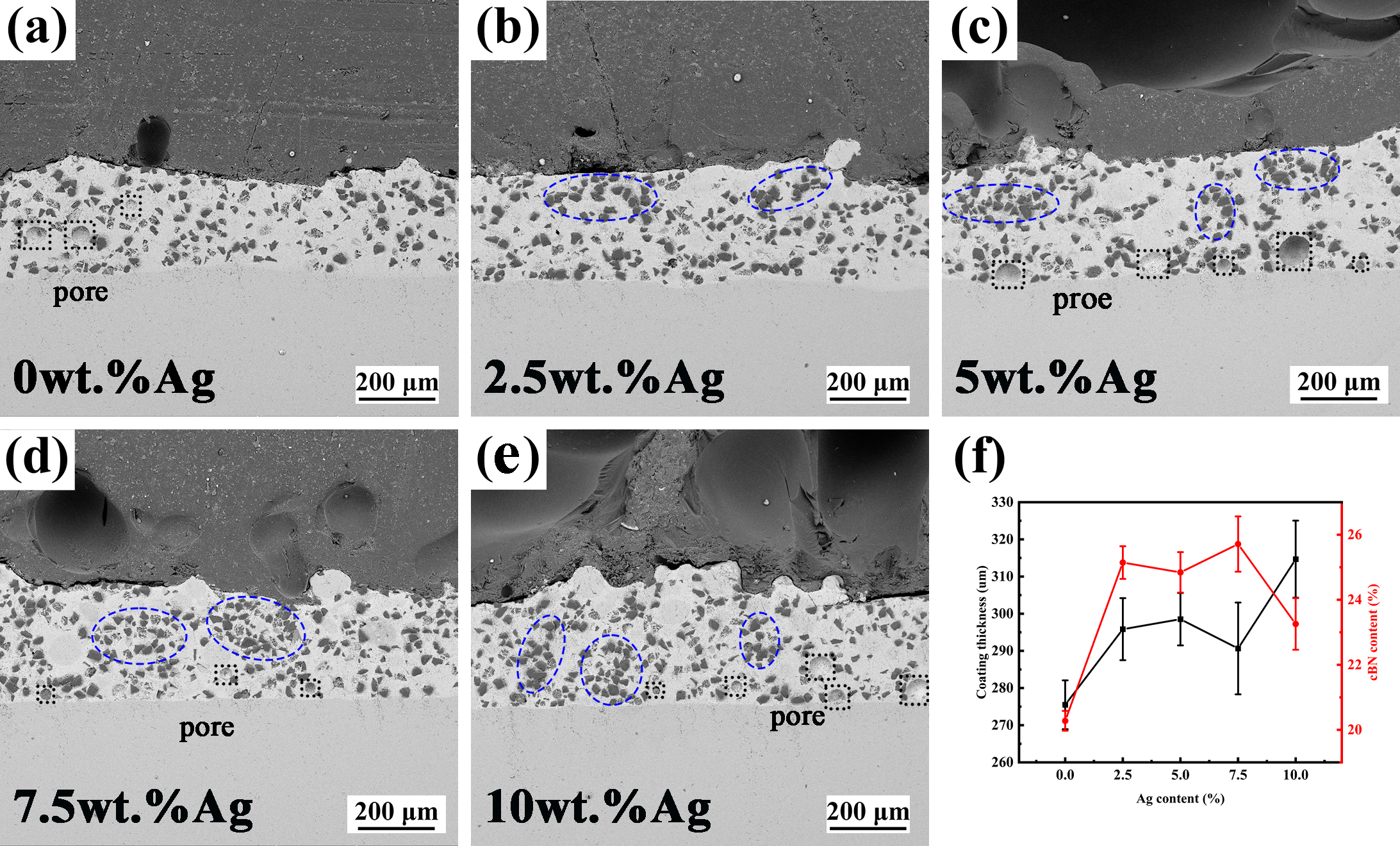
Figure 3a–e present the cross-sectional morphologies of cBN(Ni)-Ag composite coatings with varying Ag contents (2.5–10 wt.%). All coatings exhibited excellent structural integrity, characterized by crack-free microstructures and metallurgical bonding to the substrate. The straight coating–substrate interface indicated minimal dilution. Notably, coatings with Ag contents exceeding 2.5 wt.% display limited pores, which were attributed to N2 entrapment during rapid solidification following partial cBN decomposition.
The surface roughness of the coatings exhibited larger undulation with increasing Ag content (Figure 3a–e), which was attributed to the elevated viscosity of molten Ag impeding melt pool fluidity during solidification. The 0 wt.%Ag coating displayed a uniform cBN distribution, whereas 2.5–10 wt.% Ag coatings showed localized cBN clusters, which werelinked to the deterioration of the melt pool fluidity.
As shown in Figure 3f, under the same process parameters, the coating thickness slowly increased from 276 ± 7 μm to 315 ± 10 μm with the increasing Ag content. This behavior may be attributed to the fact that, although an increase in Ag content deteriorated the flowability of the melt pool, the flowability of the composite powders was simultaneously enhanced with increasing Ag content, resulting in improved powder deposition efficiency and a gradual increase in coating thickness. Meanwhile, the cBN content in the coating increased from 20.3 ± 0.3% to 25.7 ± 0.8% with increasing Ag content and then gradually decreased to 23.3 ± 0.8%. This phenomenon is attributed to the fact that, within a certain range, the addition of Ag enhanced the deposition efficiency of cBN particles due to the improved powder flowability; however, excessive Ag addition may lead to melt pool overheating or compositional inhomogeneity, thereby inhibiting the effective deposition of cBN particles.
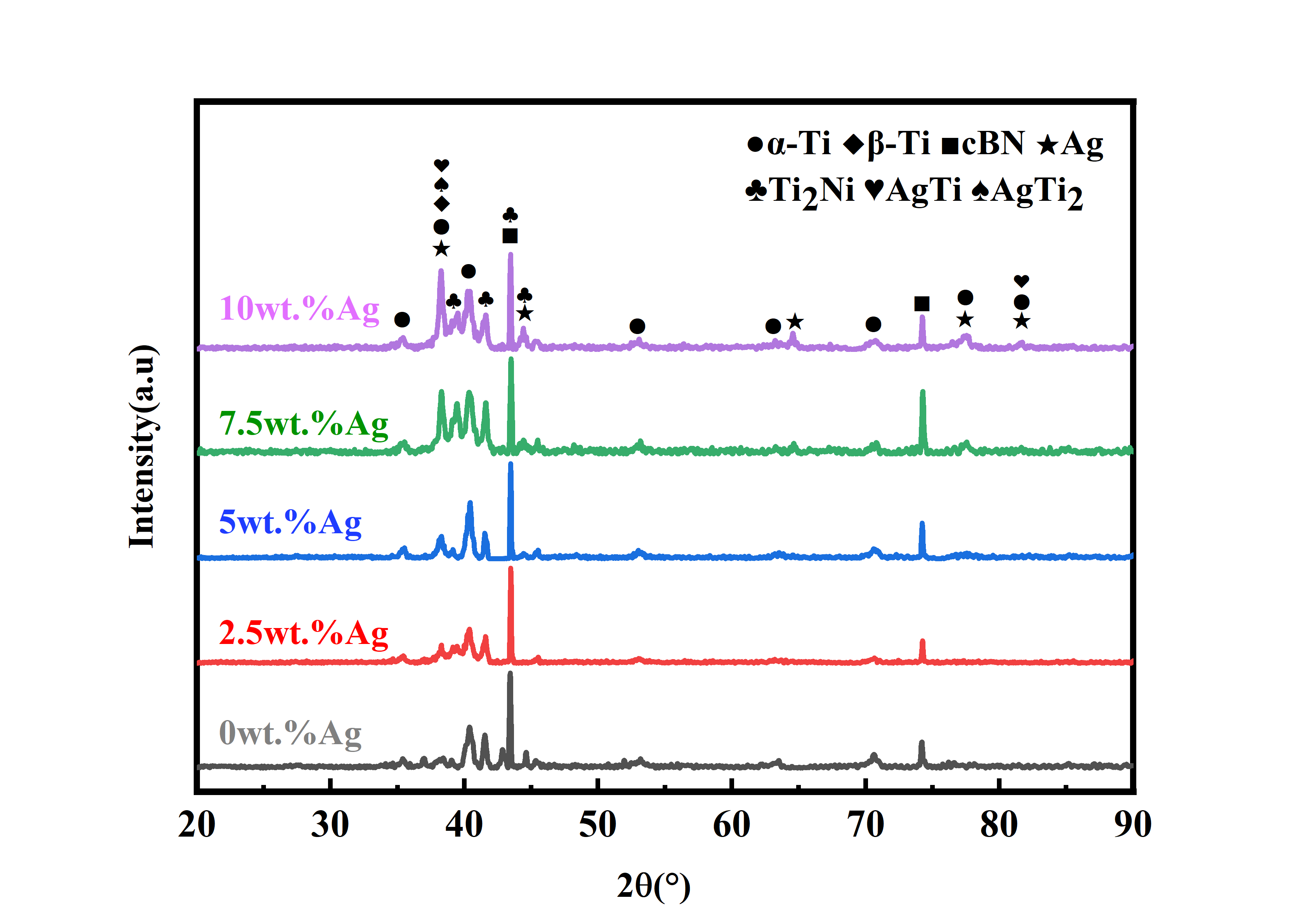
Figure 4 presents the XRD patterns of the coatings, revealing distinct diffraction peaks corresponding to α-Ti, β-Ti, cBN, and Ti2Ni phases in the 0 wt.% Ag coatings. Notably, no TiN or TiB reinforcement phases were detected, which can be attributed to two key factors: (1) the deliberately reduced laser power (maintained below 2.1 kW) to prevent decomposition of low-melting-point Ag (Tm = 2212 °C), and (2) the protective effect of the Ni coating on cBN particles. These factors collectively suppressed cBN decomposition and the subsequent in situ formation of TiN/TiB under moderate thermal conditions. The presence of Ti2Ni was attributed to the reaction between Ni on the surface of the cBN(Ni) particles and Ti.
For the Ag-containing coating, the XRD pattern exhibited diffraction peaks corresponding to Ag, AgTi, and AgTi2 simultaneously, indicating that part of the Ag remained unreacted in the coating, while the remainder reacted with Ti to form Ag-Ti intermetallic compounds. With increasing Ag content, the intensities of the Ag, AgTi, and AgTi2 peaks gradually increased, suggesting a corresponding increase in the content of these phases.
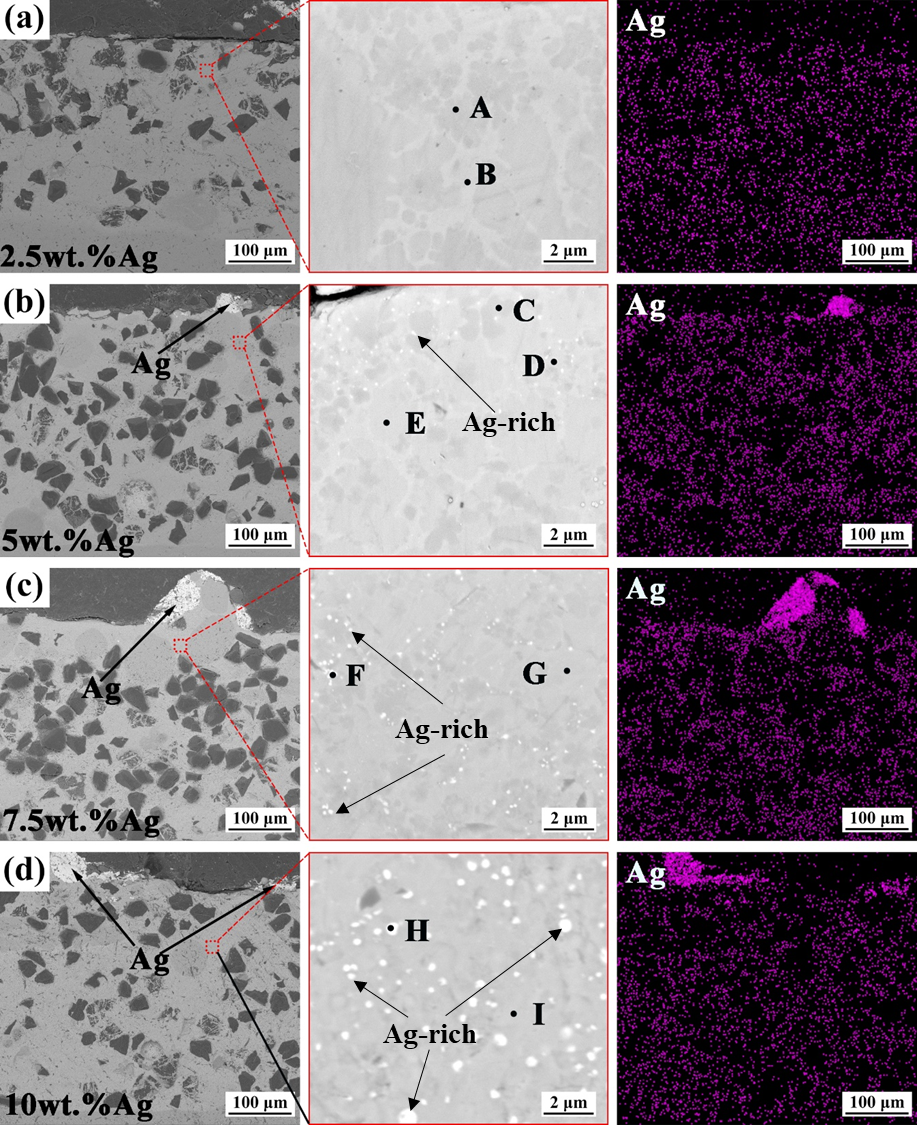
The microstructures of cBN(Ni)-Ag composite coatings with different Ag additions were further observed, as shown in Figure 5, and the corresponding EDS analysis results are presented in Table 3. Notably, although EDS measurements of light elements (N, B) exhibit relatively large errors, phase identification could be reliably determined through the XRD analysis results and those of previous studies. It can be seen that dark gray and light gray phases were present in the coatings with different Ag contents, while a white phase appeared in the coatings when the Ag doping exceeded 5 wt.%. Microstructural analysis revealed that both the dark gray (points A and C) and light gray (points B, E, G, and I) phases consisted predominantly of Ti-based constituents, and both phases dissolved a certain amount of Ni due to the partial dissolution of the Ni layer of the cBN(Ni) particles during laser cladding. However, EDS results (Table 3) indicated that the dark gray phases (points A and C) also contained a substantial amount of Ni. Previous studies [26,27] have shown that cBN particles can decompose and subsequently react with Ti in the melt pool, generating in situ reinforcing phases such as TiN and TiB. Although the lower laser power employed in the current study suppressed the decomposition of most cBN particles, a small fraction still decomposed into Ni and B atoms. Due to their smaller atomic radius, Ni atoms exhibited a higher diffusion coefficient within the molten pool. Therefore, the dark gray phases (points A and C) were identified as Ti-based solid solutions containing dissolved Ni, N, and B, whereas the light gray phases (points B, E, G, and I) were Ti-based solid solutions with small amounts of Ag and Ni. According to the EDS analysis, the white dotted regions (points D, F, and H) represented Ag-rich phases, primarily composed of Ti and Ag. Additionally, as the amount of Ag incorporated into the coatings increased, the Ag concentration within these Ag-rich phases correspondingly increased.
For the 2.5 wt.% Ag coating, the low Ag content resulted in a solid solution of Ag in the Ti substrate without the formation of an Ag-rich phase. The Ti60 alloy used for coating preparation consisted primarily of α-Ti (HCP, atomic radius = 0.1445 nm) with a minor β-Ti phase (BCC, atomic radius = 0.156 nm). Ag exhibits an FCC structure with an atomic radius of 0.144 nm. Due to differences in atomic radius between Ag and Ti and the relatively limited interstitial space in the hexagonal close-packed (hcp) structure of α-Ti, it is generally difficult for Ag atoms to occupy interstitial lattice sites. Instead, Ag atoms predominantly formed substitutional solid solutions within the α-Ti lattice. However, owing to the tightly packed nature of the α-Ti structure, the solid solubility of Ag atoms remained relatively low. Additionally, the incorporation of Ag atoms resulted in slight modifications of the lattice parameters, leading to a certain degree of lattice distortion. In contrast, within the β-Ti structure, Ag atoms could enter either substitutional positions, replacing Ti atoms, or occupy interstitial lattice sites to some extent. Due to the structural characteristics of β-Ti, the solid solubility of Ag atoms was typically higher in β-Ti than in α-Ti. Furthermore, the β-Ti lattice was more accommodating toward foreign atoms. Thus, although the incorporation of Ag atoms into β-Ti also caused lattice distortion, the extent of distortion was generally smaller compared to that observed in α-Ti. According to the Ag-Ti binary phase diagram [47], the maximum solubility of Ag in α-Ti is approximately 1 at.% at room temperature, whereas in β-Ti, the maximum solubility reaches about 20 at.% at around 1300 °C. Ti60 alloy is classified as a near-α-Ti high-temperature titanium alloy, which contains both α and β phases at elevated temperatures. During the high-speed laser cladding process, due to rapid solidification, both the high-temperature α and β phases were retained in the resulting coating. Table 3 shows that the solid-solution Ag content in the Ti substrate reached approximately 0.92 at.% and 1.75 at.% in the dark gray and light gray phases, respectively. This supersaturated solid solution formed because Ag atoms became “frozen” in the Ti lattice during rapid non-equilibrium solidification, resulting in solid-solution strengthening.
As the Ag content in the coating increased beyond its solid solubility limit in the Ti substrate, Ag-rich phases precipitated as white dot-like particles. In the 5 wt.% Ag coating, these Ag-rich phases exhibited a fine and homogeneous distribution, with particle sizes ranging from 40 to 110 nm. At 7.5 wt.% Ag coating, the Ag-rich phase maintained similar particle sizes but showed an increased phase fraction. Further increasing the Ag content to 10 wt.% resulted in a significant increase in size of the Ag-rich phase (150–500 nm), along with enhanced phase distribution density. Surface elemental mapping revealed a uniform distribution of Ag throughout the coating. Ye et al. [48] demonstrated uniform Ag aggregation on microbeam plasma-deposited Ni60+Ag coatings on Q235 substrates. In this study, the high-speed laser melting process induced rapid non-equilibrium solidification, resulting in localized Ag surface enrichment while maintaining a uniform elemental distribution throughout the coating.
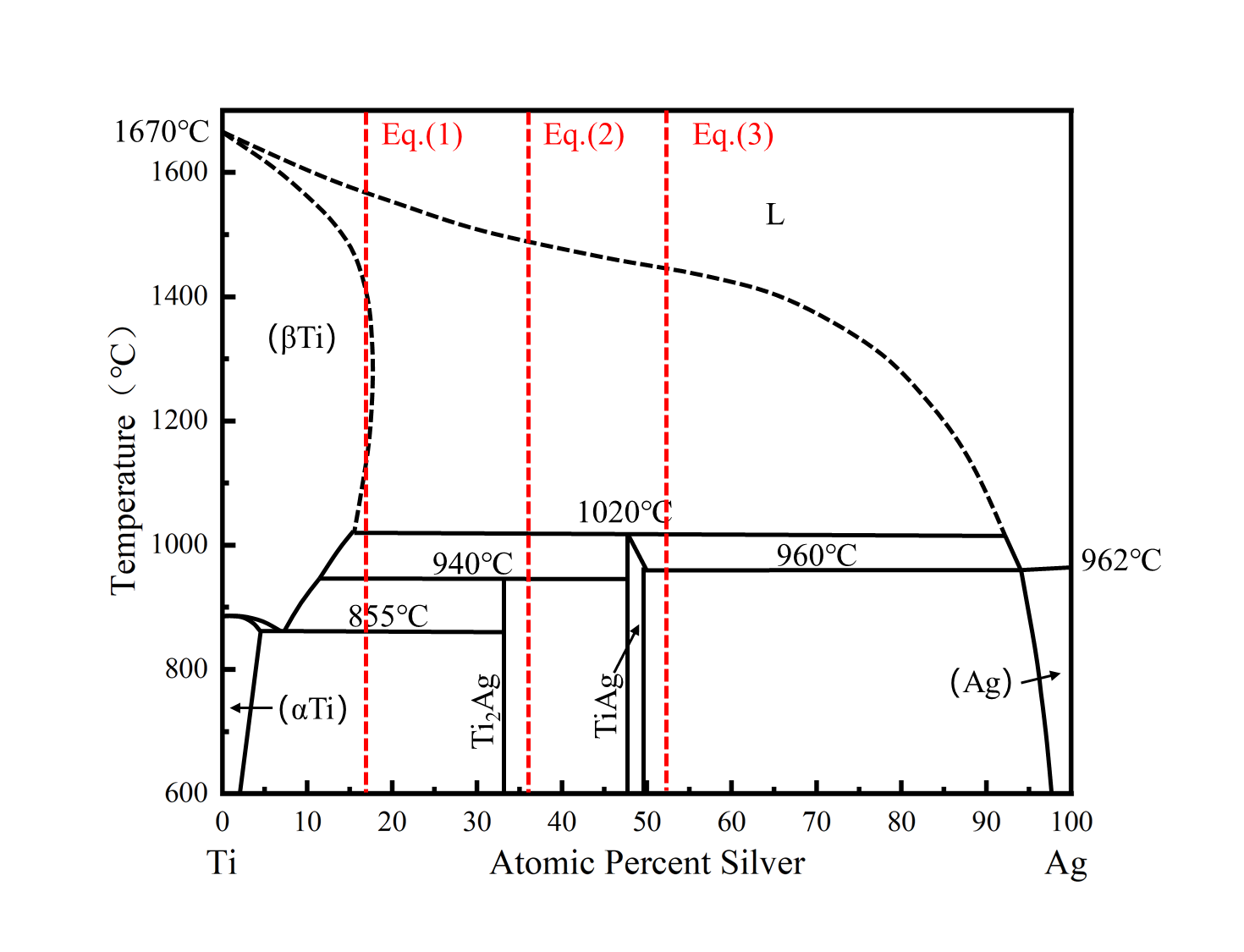
The 5 wt.% Ag coating exhibited an Ag-rich phase (16 at.% Ag, Point D in Table 3 EDS analysis). According to the Ag-Ti binary phase diagram [47], the solidification sequence could be described as follows: initially, β-Ti precipitated from the molten pool (L). With decreasing temperature, the Ag concentration in the melt increased until reaching the eutectic point at 1020 °C, where simultaneous precipitation of β-Ti and AgTi occurred. Further cooling to 940 °C triggered a eutectic reaction between AgTi and residual Ti, forming β-Ti and AgTi2. Below 855 °C, β-Ti transformed to α-Ti, resulting in a final microstructure consisting of α-Ti/AgTi mixtures. This observation is consistent with the EDS results (Point D in Table 3), where the Ti content significantly exceeded the Ag content in the Ag-rich phase.
The 7.5 wt.% Ag coating developed an Ag-rich phase (Point F) containing approximately 37 at.% Ag. The solidification sequence proceeded as follows (Equation (2)): initially, β-Ti precipitated from the molten pool, followed by AgTi formation as the Ag concentration increased. At 940 °C, the elevated Ag concentration promoted partial transformation of AgTi into AgTi2 through a coprecipitation reaction. Consequently, the final microstructure comprised a mixture of AgTi2 and AgTi phases. This observation agreed well with EDS results, showing an Ag:Ti atomic ratio of approximately 4:5, intermediate between the 1:1 (AgTi) and 1:2 (AgTi2) stoichiometric ratios.
The 10 wt.% Ag coating developed an Ag-rich phase (Point H) containing 53 at.% Ag. The solidification sequence (Equation (3)) initiated with β-Ti precipitation from the molten pool (L), consistent with reactions (1) and (2). At 1020 °C, the elevated Ag concentration triggered direct precipitation of AgTi through a peritectic reaction. Further cooling to 960 °C increased the Ag concentration sufficiently to induce a eutectic reaction, simultaneously precipitating Ag and AgTi phases. Consequently, the final microstructure consisted of an Ag/AgTi composite, in excellent agreement with the EDS results.
L → L + β-Ti → β-Ti + AgTi → β-Ti + AgTi2 → α-Ti + AgTi2
L → L + β-Ti → β-Ti + AgTi → AgTi2 + AgTi
L → L + β-Ti → L + AgTi → Ag + AgTi
AgTi and AgTi2 are hard intermetallic compounds with hardness values of 600–800 HV and 700–900 HV, respectively. These high-strength phases are dispersed throughout the coating as secondary phases, significantly enhancing the overall hardness, wear resistance, and deformation resistance of the coating. Both compounds exhibit excellent thermal stability, with melting points of 1100–1200 °C (AgTi) and 1000–1100 °C (AgTi2), demonstrating resistance to decomposition and oxidation in high-temperature environments. Their low thermal expansion coefficients further contributed to superior thermal shock resistance and long-term stability at elevated temperatures.
Ti and Ag atoms exhibited heightened activity in the presence of high-energy laser irradiation during high-speed laser cladding. The melt pool developed both temperature and concentration gradients that promoted atomic diffusion. Maintaining Ti60 and Ag in the liquid state enabled enhanced mobility of Ti and Ag atoms. When these atoms encountered each other in the molten pool at sufficient concentrations, they reacted to form intermetallic compounds [49]. From a chemical kinetics perspective, the elevated temperature and liquid environment lowered the reaction activation energy, thereby facilitating Ti-Ag intermetallic formation [50]. The rapid solidification process restricted atomic diffusion. Although Ti and Ag atoms formed mixed microstructures primarily composed of AgTi and/or AgTi2 intermetallics according to stoichiometric ratios in the melt pool, the insufficient time for complete atomic diffusion and rearrangement characteristic of equilibrium solidification resulted in “freezing” of these intermetallic phases in the coating. Notably, the composition of the Ag-rich microstructure varied with the Ag content in the coating (Figure 6).

3.2. Microhardness of the Coatings

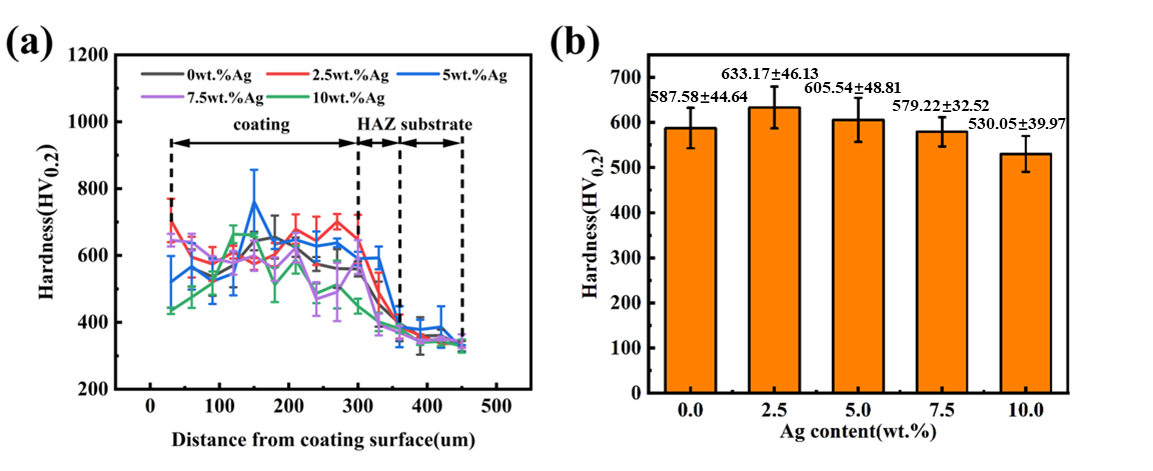
Figure 7a presents the cross-sectional microhardness profile of coatings with varying Ag contents. The microhardness values ranged between 500 HV0.2 and 700 HV0.2. The average surface microhardness of each coating was determined from measurements taken within the top 250 μm smooth region. Figure 7b shows the relationship between coating microhardness and Ag content. As shown in the figure, the microhardness of the Ag-added coating initially increased and then decreased compared with that of the 0 wt.% Ag coating.
For the 2.5 wt.% and 5 wt.% Ag coatings, the average microhardness improved due to the following factors: (i) solid-solution strengthening from Ag dissolved in the Ti substrate, (ii) dispersion strengthening caused by the increased cBN content in the coatings, and (iii) the formation of AgTi and AgTi2 intermetallic compounds via Ag-Ti reactions in the molten pool [4]. However, as Ag is a soft phase, further increases in Ag content resulted in a gradual reduction in coating microhardness. The highest average microhardness (~633.2 HV0.2) was achieved in 2.5 wt.% Ag coating.
In previous studies, cBN(Ni) particle-reinforced composite coatings exhibited microhardness values exceeding 1200 HV0.3, primarily attributed to cBN decomposition and the in situ formation of reinforced phases (TiN and TiB) under high heat input (2500 W). In contrast, this study employed a lower heat input (1800 W) (Table 2), which suppressed cBN decomposition (Figure 3f), resulting in microhardness values fluctuating between 500 HV0.2 and 700 HV0.2.

3.3. The Room-Temperature Tribological Properties of the Coatings

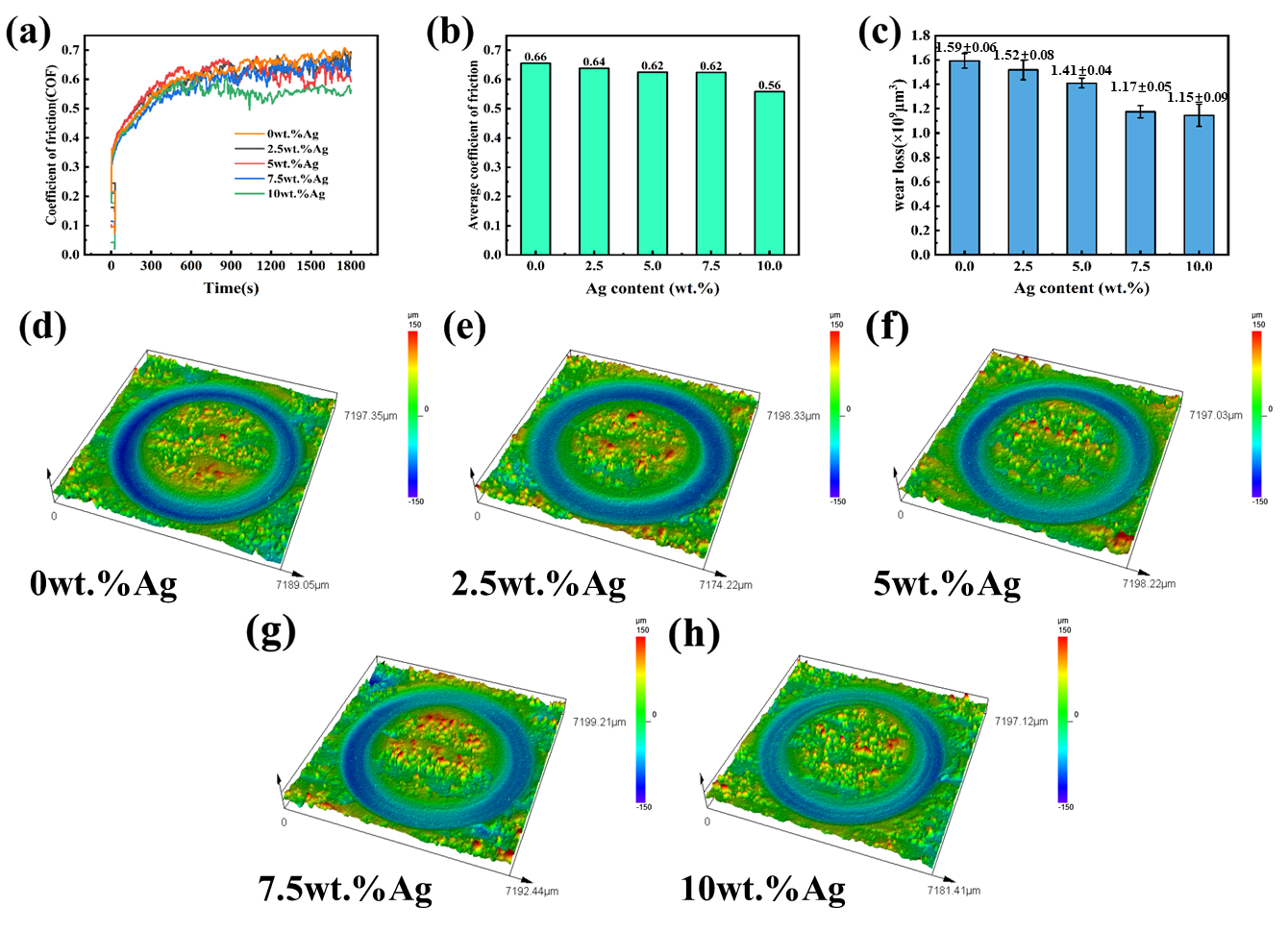
Figure 8a,b present the room temperature friction and wear coefficient curves for coatings with varying Ag contents, along with their relationship to Ag content. As shown in Figure 8a, the friction coefficients of the coatings exhibited a similar trend over time. The initial friction stage displayed more pronounced oscillations, attributable to increased friction resistance from the coating surfaces and the micro-bumps on the counterpart ball. As friction progressed, the contact interface between the counter-abrasive pair gradually became smoother, reaching a steady-state stage where the friction coefficient stabilized with minimal fluctuations. The steady-state coefficient of friction (COF) is defined as the period during a tribological test when the system reaches a dynamic equilibrium, and the COF fluctuates around a stable mean value with a variation of less than ±10%. During this stable period, the five sample groups exhibited consistent friction coefficients ranging from 0.5 to 0.7.
The relationship between the average friction coefficient and Ag content of the coatings after friction stabilization (600 s) is shown in Figure 8b. The results indicated a significant correlation between the coating friction coefficient and Ag content: the friction coefficient decreased progressively with increasing Ag content. The average friction coefficient of the coating was 0.66 without Ag addition, and it decreased to 0.56 when the Ag content reached 10 wt.%, demonstrating a significant improvement in the coating friction-reducing performance. This improvement was attributed to the homogeneous dispersion of fine Ag particles within the coating substrate. During friction, these particles underwent plastic deformation and extrusion, forming localized lubricating films. The low shear strength of Ag reduced interfacial shear stresses, thereby lowering the friction coefficient through effective lubrication.
Figure 8c–h illustrate the variation in coating wear volume with Ag content and the 3D morphology of abrasion marks on coatings with different Ag contents. As shown in Figure 8c, the wear volume decreased gradually with increasing Ag content. The wear volume of the 0 wt.%Ag coating was (1.59 ± 0.06) × 109 μm3, and was reduced to (1.15 ± 0.09) × 109 μm3 when the Ag content reached 10 wt.%, indicating an improvement in the wear resistance of the coating. The 2.5 wt.% and 5 wt.% Ag coatings exhibited enhanced hardness and wear resistance due to two concurrent strengthening mechanisms: (1) dispersion strengthening from the increased cBN deposition, and (2) solid-solution strengthening resulting from the dissolution of B, N, and Ag atoms in the Ti lattice. For the 7.5 wt.% and 10 wt.% Ag coatings, although the increased Ag content reduced hardness, it significantly enhanced tribological performance. The lower friction coefficients delayed shear-induced damage at the wear interface, ultimately reducing wear volume.
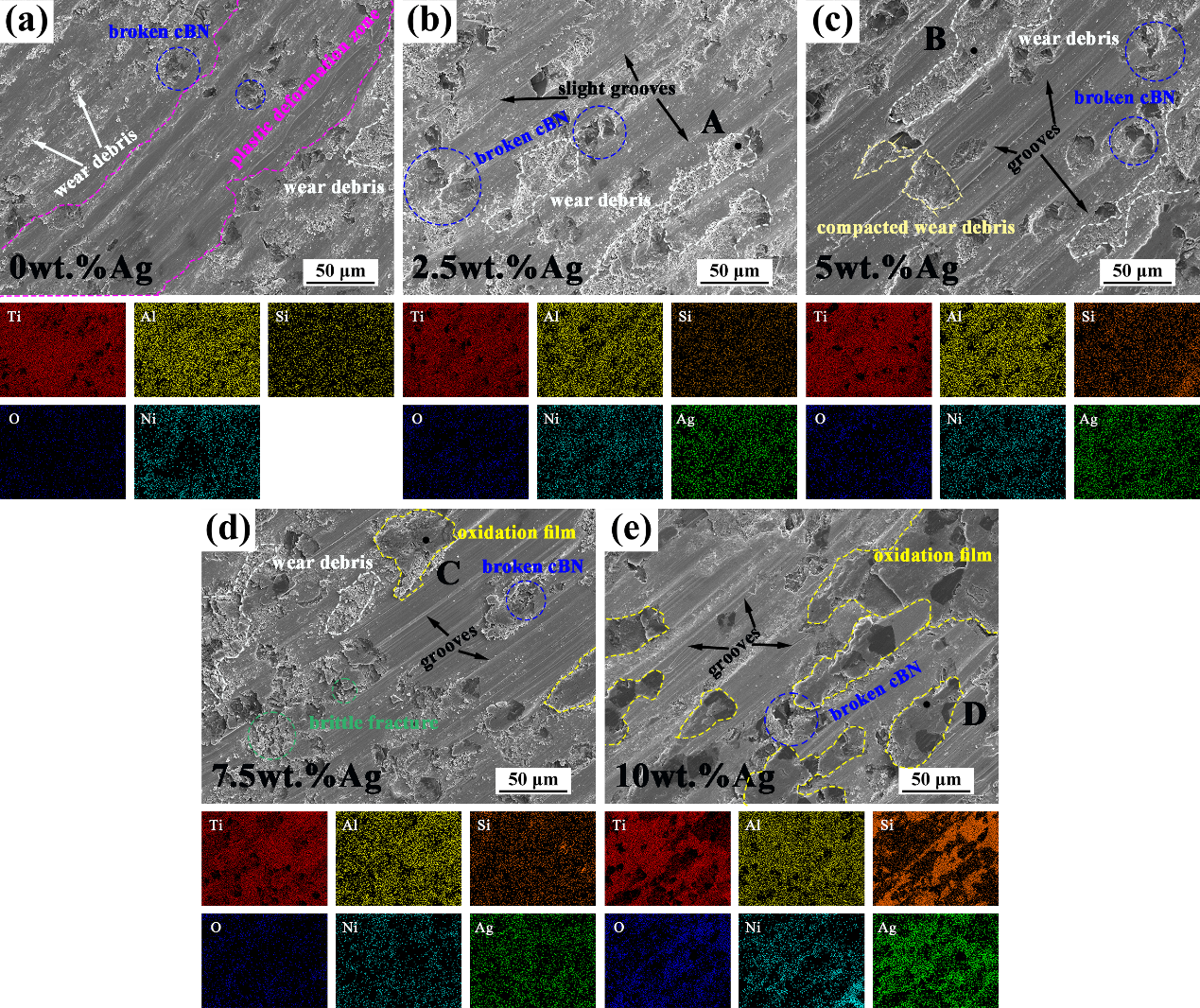
To elucidate the wear mechanisms, the coating surfaces were analyzed via SEM/EDS (Figure 9). The wear scar composition primarily comprised Ti, Al, Si, O, and Ni, with Ag detected in the 2.5–10 wt.% Ag coatings. Ti and Al originated from the coating substrate, while Si was derived from counterpart material transfer during friction. Ni originated from the Ni layer on the cBN(Ni) particles. The detection of O confirmed oxidative wear occurred in all coatings. Additionally, the presence of broken cBN particles on the wear surface indicated that the coatings underwent different levels of fatigue wear.
The wear surface of 0 wt.% Ag coating exhibited pronounced plastic deformation and cBN particle fragmentation, demonstrating dominant adhesive and fatigue wear mechanisms. The high hardness of the Si3N4 counterpart caused micro-bumps on the surface to press into the metal substrate coating under normal load. Under the influence of tangential stress and the transient high temperatures generated by friction, the coating substrate material softened and became ductile, leading to plastic deformation. Under cyclic stress loading, the plastically deformed material underwent tearing and spalling, exposing the cBN particles. Subsequent interfacial contact between the friction ball and cBN particles led to particle fragmentation upon reaching their fatigue strength. The spalled substrate material and broken cBN particles together formed numerous abrasive chips under the grinding action of the grinding pairs.
The wear scars of the 2.5–7.5 wt.% Ag coatings exhibited characteristic abrasive wear features, including substantial debris accumulation and distinct parallel grooves. Notably, the 5–7.5 wt.% Ag coatings displayed more pronounced grooves, attributable to their reduced microhardness relative to the 2.5 wt.% Ag coating, rendering them more susceptible to abrasive damage. Due to the high hardness of cBN, less abrasion occurs during friction, leading to the formation of bumps. The resulting abrasive chips were extruded by the grinding ball, forming a buildup around the cBN particles. Under the extrusion of frictional forces and the sintering caused by transient high temperatures, the accumulated abrasive chips form a discontinuous, small-area oxidation film. The 10 wt.% Ag coating developed a continuous oxide film on its wear surface, exhibiting shallower grooves and significantly less abrasive debris compared to the 7.5 wt.% Ag coating, indicating dominant oxidative wear. EDS analysis revealed that the oxide film primarily consisted of Ti and Si oxides with substantial Ag enrichment. This protective oxide film reduced direct surface contact and provided self-lubrication, thereby lowering both the friction coefficient and wear loss.
The wear resistance of the coating was critically influenced by three key characteristics of the oxide film: its chemical composition, mechanical hardness, and structural integrity. For the 2.5–10 wt.% Ag coatings, the amount of abrasive debris on the wear scar surface decreased, while the area covered by the oxide film gradually increased with increasing Ag content. This observation suggested that the incorporation of higher Ag content significantly reduced abrasive wear.
EDS spot analysis was conducted on both the abrasive debris (2.5–5 wt.% Ag coatings) and oxide films (7.5–10 wt.% Ag coatings), with quantitative results presented in Table 4. The EDS results revealed significantly lower Ti content in these wear products compared to the original Ti60 powder (Table 1), suggesting probable TiO2 formation based on elemental stoichiometry. The oxide films enhanced surface hardness while reducing interfacial shear stresses. Notably, the diminished N content at point D indicated reduced cBN fragmentation, demonstrating that oxide film formation effectively decreases frictional stresses on cBN particles.

3.4. The High-Temperature Tribological Properties of the Coatings

Since excessive Ag content can negatively influence melt pool fluidity, causing uneven distribution and segregation of cBN particles and consequently reducing coating uniformity, the 5 wt.% Ag coating (which exhibited a relatively uniform cBN particle distribution) and the 0 wt.% Ag coating were selected in this study for comparative evaluation. Friction and wear tests were carried out at elevated temperatures of 300 °C, 400 °C, and 500 °C to systematically investigate and clarify the effects of Ag addition on the high-temperature tribological performance of the coatings.
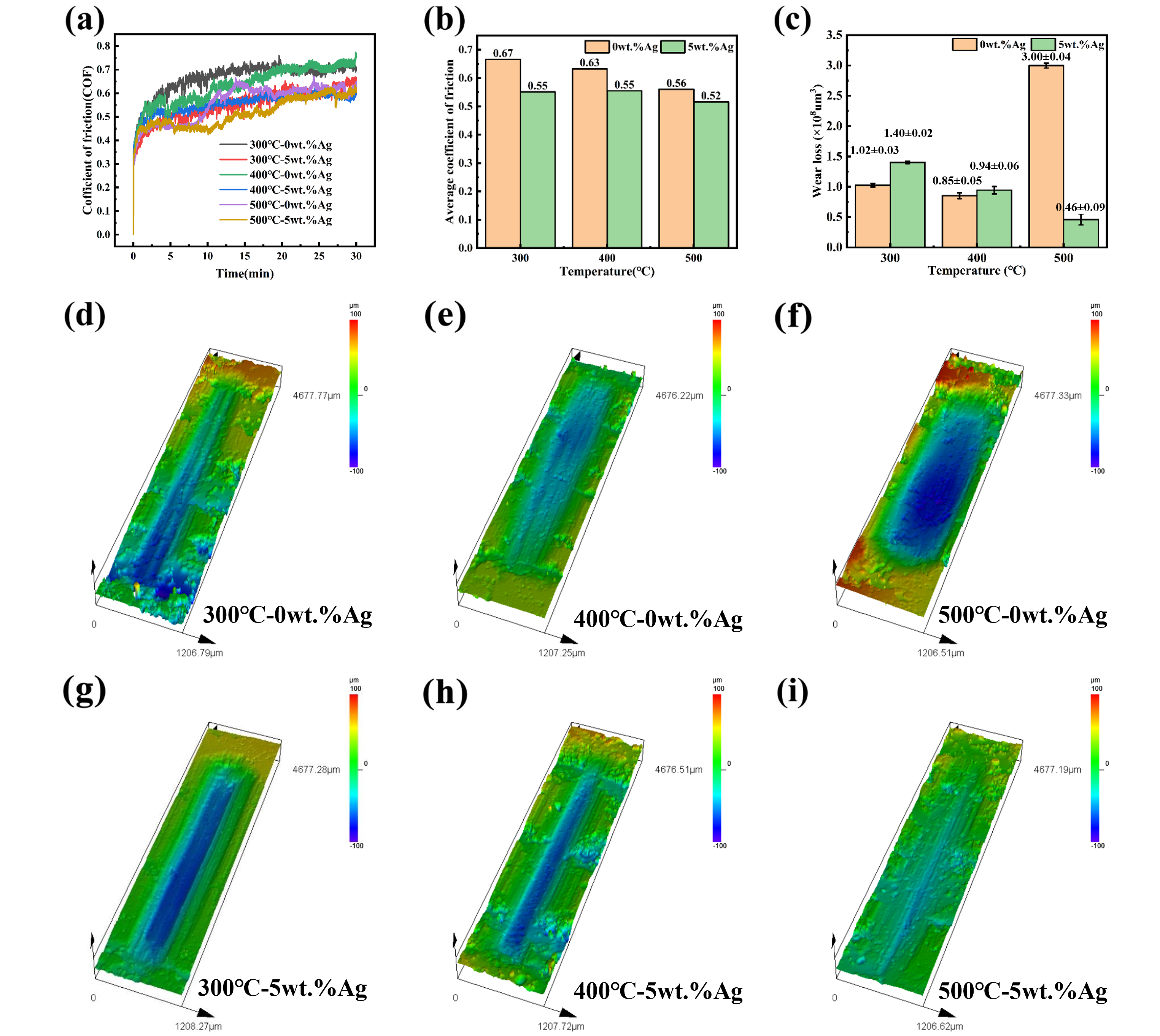
Figure 10a,b show the friction coefficients of the 0 wt.% Ag and 5 wt.% Ag coatings at 300 °C, 400 °C, and 500 °C. At the lower temperature (300 °C), the friction coefficient of the 0 wt.% Ag coating was higher, and after stabilization, the average friction coefficient was 0.67. The 5 wt.% Ag coating exhibited a significantly lower stabilized friction coefficient (0.55), indicating improved tribological performance through reduced interfacial friction between contacting surfaces due to the addition of Ag. Following 400 °C wear testing, the 0 wt.% Ag coating maintained a friction coefficient above 0.6, while the 5 wt.% Ag coating exhibited comparable performance to its 300 °C results. At a higher temperature (500 °C), the friction coefficient of the coating without Ag addition significantly decreased, stabilizing at an average value of approximately 0.56. Similarly, the friction coefficient of the coating containing 5 wt.% Ag was also reduced, stabilizing at around 0.52. These results indicated enhanced friction-reduction performance of both coatings at elevated temperatures. This improvement was primarily attributed to the oxidation of the coating surfaces at elevated temperatures; under cyclic frictional stress, an oxide film readily forms, providing lubricating effects and significantly reducing friction. Additionally, for the 5 wt.% Ag coating, thermal expansion at high temperature led to the migration and precipitation of Ag onto the friction surface (“sweating” effect). Under shear stress, this Ag precipitate formed a localized lubricating film, further lowering the friction coefficient and effectively enhancing the friction-reduction and self-lubricating capabilities of the coating.
The wear loss values from the high-temperature friction tests for the 0 wt.% Ag and 5 wt.% Ag coatings are shown in Figure 10c. For the 0 wt.% Ag coating, the wear loss was approximately 1.02 × 108 μm3 after friction testing at 300 °C. When the test temperature was raised to 400 °C, the wear loss decreased to about 0.85 × 108 μm3, showing a reduction of approximately 16.7%. However, when the temperature was increased to 500 °C, the wear loss dramatically increased to approximately 3.00 × 108 μm3, nearly 2.94 times higher than the value obtained at 300 °C. For the 5 wt.% Ag coatings, the wear loss was around 1.40 × 108 μm3 after testing at 300 °C. At 400 °C, the wear loss dropped to 0.94 × 108 μm3, a reduction of approximately 32.9%. At 500 °C, the wear loss further decreased to 0.46 × 108 μm3, which was about 32.9% of the wear loss at 300 °C. Compared to the 0 wt.% Ag coatings, the 5 wt.% Ag coatings exhibited more stable wear and friction-reduction performance at high temperatures, with their wear resistance progressively improving as the temperature increased.
Notably, the 5 wt.% Ag coating exhibited greater wear loss than the 0 wt.% Ag coating at 300 °C and 400 °C (Figure 10c). This phenomenon may have originated from the non-uniform distribution of cBN reinforcement particles in the Ag-containing coating. As cBN particles significantly enhance coating hardness through dispersion strengthening, their nonuniform distribution created localized hardness variations: regions with particle clustering demonstrated elevated hardness, while particle-deficient zones remained relatively soft. During tribological testing, concentrated cBN regions bore higher contact stresses, while the unsupported metal matrix in adjacent areas became susceptible to plastic deformation and abrasive grooving by the counterface material.
This local stress concentration promoted accelerated surface material removal, thereby increasing the overall wear rate. At elevated temperatures (500 °C), the oxide film underwent thermal softening and delamination, followed by fragmentation during tribological contact. Concurrently, thermal expansion induced Ag segregation (“thermal sweating”) at the wear interface. In particle-deficient regions, this process facilitated effective storage and uniform release of both fractured oxide debris and solid lubricants. Consequently, the 5 wt.% Ag coating demonstrated superior wear resistance at 500 °C through this synergistic lubrication mechanism.
Figure 10d–i present the 3D morphology of both 0 wt.% and 5 wt.% Ag coatings tested at 300 °C, 400 °C, and 500 °C. The 0 wt.% coating exhibited a shallow wear scar at 300 °C. At 400 °C, the wear scar dimensions decreased significantly due to the formation of lubricious TiO2 oxides. However, at 500 °C, the coating displayed substantially wider and deeper abrasion marks, likely caused by thermal softening that led to abrupt increases in wear loss.
The 5 wt.% Ag coating demonstrated slightly more pronounced wear scars than the 0 wt.% Ag coating at 300 °C. However, both the width and depth of abrasion marks decreased substantially with increasing temperature. This improvement stemmed from two synergistic effects: (1) enhanced formation of protective TiO2 layers at elevated temperatures, and (2) microstructural stabilization through Ag solid-solution strengthening and precipitation of AgTi/AgTi2 intermetallic phases, which collectively mitigated thermal softening while maintaining coating hardness.
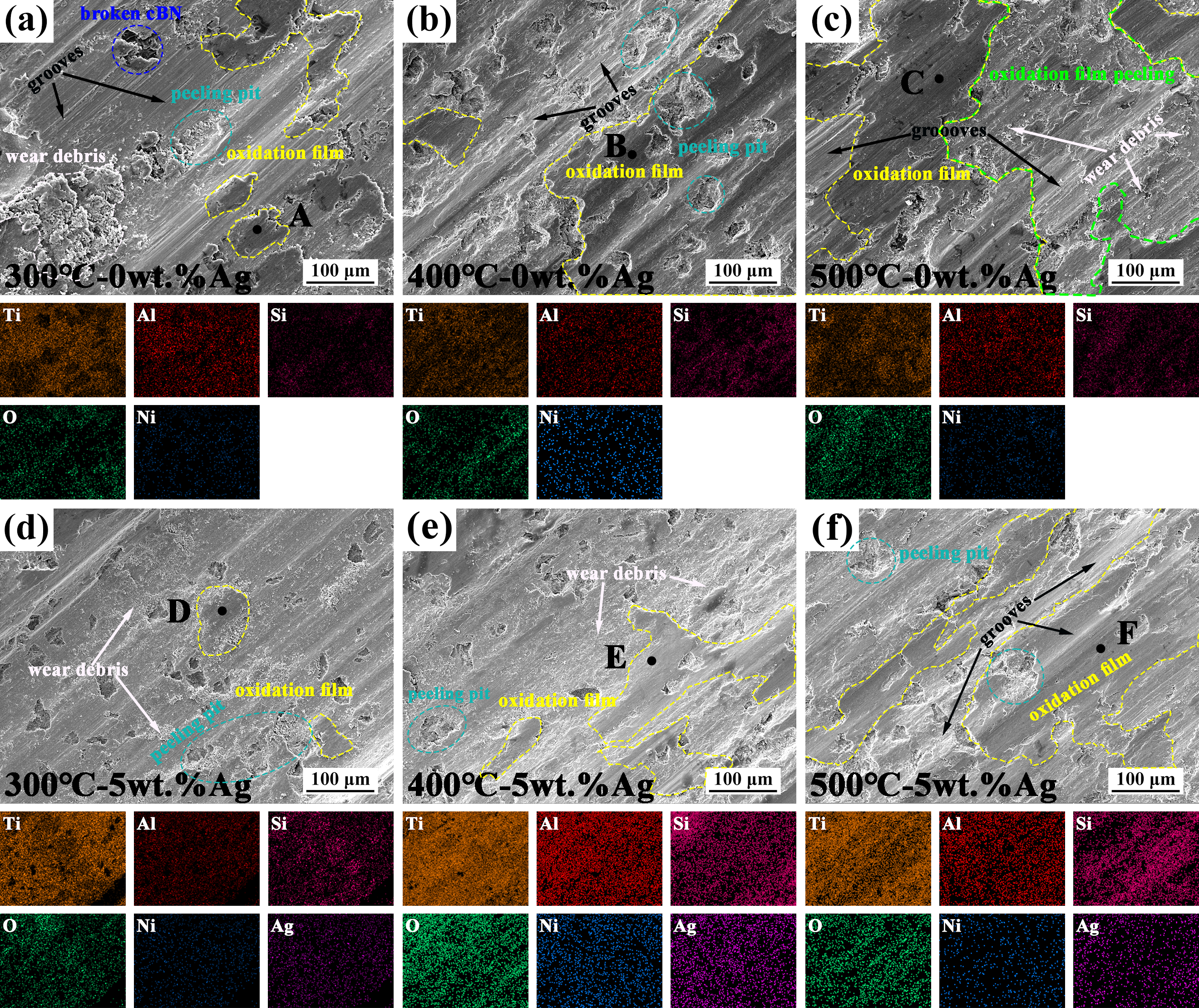
To elucidate the high-temperature wear mechanisms of the coating, post-test surface characterization was performed (Figure 11). The 0 wt.% Ag coating exhibited substantial abrasive debris accumulation and distinct grooves alongside minimal oxidation film formation after prolonged 300 °C testing, indicating combined abrasive and oxidative wear mechanisms with predominant abrasive wear. With increasing temperature, the 0 wt.% Ag coating demonstrated progressive reduction in abrasive debris and expansion of oxidation film coverage, facilitated by thermal softening and enhanced metal ductility. However, at 500 °C, oxidation film delamination occurred, leading to protective layer failure. This temperature-dependent behavior reflected an evolutionary transition in dominant wear mechanisms: from predominant abrasive/limited oxidative wear at lower temperatures to combined oxidative and fatigue wear at elevated temperatures.
The 5 wt.% Ag coating tested at 300 °C exhibited abundant fine abrasive debris and minimal oxygen content on wear surfaces, indicating predominantly abrasive wear mechanisms. As the wear temperature increased, the surface became smoother, and there was no significant generation of abrasives at 400 °C, where the Ag content was highest. Meanwhile, the O content increased. Due to the relatively low content of Ag in the coating powder and its uniform distribution, Ag was extruded onto the friction surface under external loading, reducing interfacial shear stresses. During cyclic loading, Ag formed localized lubricating films through a thermal “sweating” mechanism. Simultaneously, a substantial amount of oxides on the surface formed an oxide film due to the repeated actions of crushing, aggregation, compaction, and sintering. It was proposed that an oxidation film containing Ag formed on the surface of the 5 wt.% Ag coating at 400 °C. At 500 °C, as the oxidation film failed, larger grooves were generated. However, due to the presence of Ag, no fine grooves were formed on the wear surface, in contrast to the 0 wt.% Ag coating.
After the high-temperature friction test, the EDS analysis of the oxidation film on the surface of the wear scars is presented in Table 5. The oxidation films of both coatings exhibited a gradual increase in O content with rising temperature, indicating an increase in the degree of coating oxidation. The Si content was higher than that of the Ti60 coating substrate composition (Table 1), with the excess Si originating from the transfer of Si3N4 friction balls during the friction process. At the same temperature, the Si content in the oxidation film of the 5 wt.% Ag coating was lower, suggesting that friction in the 0 wt.% Ag coating was more intense, and Ag plays a significant role in reducing friction. At 400 °C, the oxidation film contained a higher amount of Ag.

4. Conclusions

cBN particle-reinforced Ti-based composite coatings were successfully deposited with Ag added as a lubricating phase on TC11 titanium substrate by high-speed laser cladding. The evolution of microstructure, microhardness, and tribological properties of the coatings with different content of Ag was analyzed at both room and high temperatures. The main conclusions were as follows:
(1)
Excessive Ag content decreases the fluidity of the molten pool and reduces the surface roughness of the coating. As Ag content increases, coating thickness slightly increases, while cBN content first increases and then decreases, reaching a maximum of 25.7 ± 0.8%.
(2)
Ag distributes uniformly in the coating. At lower Ag concentration (<2.5 wt.%), Ag dissolves in the Ti-based solid solution, whereas higher Ag concentrations lead to the precipitation of Ag-rich phases, including Ag and Ag-Ti intermetallic.
(3)
Due to the solid-solution strengthening effect, the increase in cBN content, and the formation of Ag-Ti intermetallic phases, the microhardness of the coatings is enhanced with Ag addition; however, excessive Ag addition (>5 wt.%) can soften the coating.
(4)
Ag improves the room temperature tribological performance of the coatings: both the friction coefficient and wear volume decrease with increasing Ag content. With 10 wt.% Ag added, the friction coefficient decreases by 15% to 0.56, and wear volume reduces by 28%, with the wear mechanism evolving from adhesive and fatigue wear to oxidative wear.
(5)
At elevated temperatures (300 °C–500 °C) during friction and wear testing, the “sweating” of Ag and formation of oxide film enhances the friction-reducing effect of coatings with 5 wt.% Ag. High-temperature softening resistance and wear resistance are also improved due to the formation of hard phases.

Author Contributions

Conceptualization, L.L. and C.L.; Methodology, J.H., L.L. and H.W.; Investigation, J.Y.; Resources, Z.X.; Data curation, J.H., Z.B. and Z.C.; Writing—review & editing, J.H. and Z.B.; Visualization, T.X.; Supervision, Y.L. All authors have read and agreed to the published version of the manuscript.

Funding

This work was financially supported by the Tianjin Education Committee (No. 2020KJ108) and the National Natural Science Foundation of China (No. 52501112 and No. 5213050).

Data Availability Statement

The data presented in this study are available on request from the corresponding author. The data are not publicly available due to privacy and ethical restrictions.

Conflicts of Interest

Author Huang Jian was employed by CCCC Second Harbor Engineering Company Ltd., The First Construction Company of CCCC Second Harbor Engineering Company Ltd. and CCCC Highway Bridge National Engineering Research Centre Co., Ltd.; Author Jia Yang was employed by The First Construction Company of CCCC Second Harbor Engineering Company Ltd. The remaining authors declare that the research was conducted in the absence of any commercial or financial relationships that could be construed as a potential conflict of interest.

References

  1. Najafizadeh, M.; Yazdi, S.; Bozorg, M.; Ghasempour-Mouziraji, M.; Hosseinzadeh, M.; Zarrabian, M.; Cavaliere, P. Classification and applications of titanium and its alloys: A review. J. Alloys Compd. Commun. 2024, 3, 100019. [Google Scholar] [CrossRef]
  2. Yang, X.W.; Lin, B.; Zhang, H.L.; Tang, J.L.; Zhou, T.G.; Wang, Y.Y.; Zheng, H.P.; Kuang, Y. Influence of stress on the corrosion behavior of Ti alloys: A review. J. Alloys Compd. 2024, 985, 173346. [Google Scholar] [CrossRef]
  3. Bian, Y.M.; Cao, L.; Zeng, D.H.; Li, W.; Yu, Z.T.; Zhang, P. The tribological properties of two-phase hard and soft composite wear-resistant coatings on titanium alloys. Surf. Coat. Technol. 2023, 456, 129256. [Google Scholar] [CrossRef]
  4. Zhao, S.; Meng, F.Y.; Fan, B.L.; Dong, Y.; Wang, J.B.; Qi, X.W. Evaluation of wear mechanism between TC4 titanium alloys and self-lubricating fabrics. Wear 2023, 512, 204532. [Google Scholar] [CrossRef]
  5. Abakay, E.; Armağan, M.; Yıldıran Avcu, Y.; Guney, M.; Yousif, B.; Avcu, E. Advances in improving tribological performance of titanium alloys and titanium matrix composites for biomedical applications: A critical review. Front. Mater. 2024, 11, 1452288. [Google Scholar] [CrossRef]
  6. Wang, H.; Shin, K.H.; Kim, H.S. Development and characterization of Ni60 alloy and SiC ceramic reinforced metal matrix composite coating on Ti-6Al-4V using laser cladding with coaxial powder feeding system. Int. J. Adv. Manuf. Technol. 2023, 128, 2705–2718. [Google Scholar] [CrossRef]
  7. Schopphoven, T.; Gasser, A.; Backes, G. EHLA: Extreme High-Speed Laser Material Deposition. Laser Tech. J. 2017, 45, 26–29. [Google Scholar] [CrossRef]
  8. Ge, T.; Chen, L.; Gu, P.F.; Ren, X.D.; Chen, X.M. Microstructure and corrosion resistance of TiC/Inconel 625 composite coatings by extreme high speed laser cladding. Opt. Laser Technol. 2022, 150, 107919. [Google Scholar] [CrossRef]
  9. Lou, L.Y.; Zhang, Y.; Jia, Y.J.; Li, Y.; Tian, H.F.; Cai, Y.J.; Li, C.X. High speed laser cladded Ti-Cu-NiCoCrAlTaY burn resistant coating and its oxidation behavior. Surf. Coat. Technol. 2020, 392, 125697. [Google Scholar] [CrossRef]
  10. Liu, K.C.; Lou, L.Y.; Cai, Z.H.; Li, C.J.; Wang, H.D.; Li, C.X. High temperature oxidation behavior of NiCoCrAlFeY high entropy bond coating fabricated by high-speed laser cladding. Corros. Sci. 2024, 226, 111659. [Google Scholar] [CrossRef]
  11. Lou, L.Y.; Chen, S.N.; Liu, Y.; Ji, G.; Chen, H.D.; Jia, Y.J.; Li, C.J.; Li, C.X. Microstructure and mechanical properties of lightweight AlxCrNbTiV(x = 0.2, 0.5, 0.8) refractory high entropy alloys. Int. J. Refract. Met. Hard Mater. 2022, 104, 105784. [Google Scholar] [CrossRef]
  12. Lou, L.Y.; Liu, K.C.; Jia, Y.J.; Ji, G.; Wang, W.; Li, C.J.; Li, C.X. Microstructure and properties of lightweight Al0.2CrNbTiV refractory high entropy alloy coating with different dilutions deposited by high speed laser cladding. Surf. Coat. Technol. 2022, 447, 128873. [Google Scholar] [CrossRef]
  13. Moghadamian, S.R.; Esfahani, H.; Lin, N.; Nouri, M. Development of high hard TiB–TiB2 coatings on Ti implants for bio-tribological applications; applying Box-Behnken design and actual wear analyzing in simulated body fluids. Results Surf. Interfaces 2024, 16, 100276. [Google Scholar] [CrossRef]
  14. He, B.M.; Liu, X.B.; Zhang, F.Z.; Zhang, S.Y.; Liu, Z.Y.; Zhang, S.H. Tribological and oxidation behaviors of TiN reinforced Co matrix composite coatings on Inconel718 alloy by laser cladding. Tribol. Int. 2023, 188, 108781. [Google Scholar] [CrossRef]
  15. Hidalgo-Badillo, J.A.; Hernández-Casco, I.; Herrera Hernández, H.; Soriano-Vargas, O.; Contla-Pacheco, A.D.; González Morán, C.O.; Morales Hernández, J.; Flores Cuautle, J.d.J.A. A Tribological Study of CrN and TiBN Hard Coatings Deposited on Cobalt Alloys Employed in the Food Industry. Coatings 2024, 14, 1278. [Google Scholar] [CrossRef]
  16. Zhang, H.F.; Zhang, S.; Wu, H.L.; Wang, R.; Zhang, C.H.; Wu, C.L.; Chen, J.; Chen, H.T. Mechanical properties and corrosion resistance of laser cladding iron-based coatings with two types of NbC reinforcement. Surf. Coat. Technol. 2024, 479, 130558. [Google Scholar] [CrossRef]
  17. Wu, H.L.; Wang, L.; Zhang, S.; Wu, C.L.; Zhang, C.H.; Sun, X.Y.; Chen, J. Tribological properties and sulfuric acid corrosion resistance of laser clad CoCrFeNi high entropy alloy coatings with different types of TiC reinforcement. Tribol. Int. 2023, 188, 108870. [Google Scholar] [CrossRef]
  18. Shikalov, V.S.; Katanaeva, D.A.; Vidyuk, T.M.; Golyshev, A.A.; Kosarev, V.F.; Kornienko, E.E.; Malikov, A.G.; Atuchin, V.V. Microstructural Modification of Cold-Sprayed Ti-Cr3C2 Composite Coating by Laser Remelting. J. Compos. Sci. 2023, 7, 500. [Google Scholar] [CrossRef]
  19. Jiang, J.; Sun, T.; Huang, G.Q.; Feng, X.M.; Shen, Y.F. Microstructure evolution and tribological behavior of laser cladded Al1.8CrCuFeNi2/WC composite coatings on Ti-6Al-4V. Int. J. Refract. Met. Hard Mater. 2023, 114, 106254. [Google Scholar] [CrossRef]
  20. Fan, L.; Chen, H.Y.; Zhu, G.K.; Cao, Q.Z.; Dong, L.H. Tribological Properties Laser-Cladded Spherical WB-Reinforced Co-Based Coatings under Low-Temperature Friction. Materials 2023, 16, 6444. [Google Scholar] [CrossRef] [PubMed]
  21. Brown, J.M.; Vishwakarma, S.; Smith, D.J.; Nemanich, R.J. Nucleation of cubic boron nitride on boron-doped diamond via plasma enhanced chemical vapor deposition. J. Appl. Phys. 2023, 133, 215303. [Google Scholar] [CrossRef]
  22. Haque, A.; Taqy, S.; Narayan, J. Recent Progress in Cubic Boron Nitride (c-BN) Fabrication by Pulsed Laser Annealing for Optoelectronic Applications. J. Electron. Mater. 2024, 53, 4308–4340. [Google Scholar] [CrossRef]
  23. Fu, S.R.; Yang, L.J.; Wang, P.; Wang, S.P.; Li, Z.X. Comparison of the Microstructure Evolution and Wear Resistance of Ti6Al4V Composite Coatings Reinforced by Hard Pure or Ni-Plated Cubic Boron Nitride Particles Prepared with Laser Cladding on a Ti6Al4V Substrate. Coatings 2020, 10, 702. [Google Scholar] [CrossRef]
  24. Kumar, S.; Mandal, A.; Das, A.K. The effect of process parameters and characterization for the laser cladding of cBN based composite clad over the Ti6Al4V alloy. Mater. Chem. Phys. 2022, 288, 126410. [Google Scholar] [CrossRef]
  25. Zhao, Y.; Li, R.F.; Wu, M.F.; Yue, H.Y.; Li, T.T.; Chen, Y. Effect of c-BN on the microstructure and high temperature wear resistance of laser cladded Ni-based composite coating. Surf. Coat. Technol. 2021, 421, 127466. [Google Scholar] [CrossRef]
  26. Liu, K.C.; Lou, L.Y.; Cai, Z.H.; Xing, Z.G.; Wang, H.D.; Li, C.X. High-speed laser cladding Ni-coated c-BN particles reinforced wear-resistant composite coating and its wear behavior. China Surf. Eng. 2024, 37, 337–345. [Google Scholar]
  27. Bi, Z.J.; Liu, K.C.; Cai, Z.H.; Chen, T.H.; Shuai, R.H.; Zhou, J.; Lou, L.Y.; Wang, H.D.; Li, C.X. Influence of Decomposition and Microstructure Evolution of cBN on the Wear Resistance of Ti-Based cBN Composite Coatings Deposited by High-Speed Laser Cladding. J. Therm. Spray Technol. 2025, 34, 1177–1194. [Google Scholar]
  28. Zhang, G.Q.; Tang, J.; Yang, K.; Wang, R.L.; Chen, Y.; Xiong, Y.H.; Wu, C.; Li, Z.J.; Wang, Y.Q.; Lin, H.B. Important contributions of metal interfaces on their tribological performances: From influencing factors to wear mechanisms. Compos. Struct. 2024, 337, 118027. [Google Scholar] [CrossRef]
  29. Liu, J.; Shi, Y. Microstructure and wear behavior of laser-cladded Ni-based coatings decorated by graphite particles. Surf. Coat. Technol. 2021, 412, 127044. [Google Scholar] [CrossRef]
  30. Yuan, J.H.; Yao, Y.G.; Zhuang, M.X.; Du, Y.Y.; Wang, L.; Yu, Z.S. Effects of Cu and WS2 addition on microstructural evolution and tribological properties of self-lubricating anti-wear coatings prepared by laser cladding. Tribol. Int. 2021, 157, 106872. [Google Scholar] [CrossRef]
  31. Sun, G.F.; Tong, Z.P.; Fang, X.Y.; Liu, X.J.; Ni, Z.H.; Zhang, W. Effect of scanning speeds on microstructure and wear behavior of laser-processed NiCr–Cr3C2–MoS2–CeO2 on 38CrMoAl steel. Opt. Laser Technol. 2016, 77, 80–90. [Google Scholar] [CrossRef]
  32. Cao, S.L.; Liang, J.; Wang, L.Q.; Zhou, J.S. Effects of NiCr intermediate layer on microstructure and tribological property of laser cladding Cr3C2 reinforced Ni60A-Ag composite coating on copper alloy. Opt. Laser Technol. 2021, 142, 106963. [Google Scholar] [CrossRef]
  33. Singhal, V.; Pandey, O.P. Wear and friction behavior of Gr/Sn solid lubricated dual reinforced AMCs. Silicon 2022, 14, 5629–5645. [Google Scholar] [CrossRef]
  34. Gao, X.M.; Hu, M.; Fu, Y.L.; Weng, L.J.; Liu, W.M.; Sun, J.Y. MoS2-Au/Au multilayer lubrication film with better resistance to space environment. J. Alloys Compd. 2020, 815, 152483. [Google Scholar] [CrossRef]
  35. Piasecki, A.; Kulka, M.; Kotkowiak, M. Wear resistance improvement of 100CrMnSi6-4 bearing steel by laser boriding using CaF2 self-lubricating addition. Tribol. Int. 2016, 97, 173–191. [Google Scholar] [CrossRef]
  36. Sharma, S.; Late, D.J. Molybdenum Disulfide (MoS2) as an Efficient Solid Lubricant. In Science and Technology of 2D MoS2; Springer Nature: Singapore, 2024; pp. 79–103. [Google Scholar]
  37. Jiang, G.Y.; Xu, Z.Y. Microstructure and tribological performance of laser cladding co-based laser coatings with h-BN and Fe addition. Mater. Today Commun. 2024, 39, 108896. [Google Scholar] [CrossRef]
  38. Guo, X.; Wang, Y. Preparation and frictional wear properties of laser melting Ni60/BaF2-CaF2 self-lubricating coating on H13 steel. In Proceedings of the Fourth International Conference on Optoelectronic Science and Materials (ICOSM 2022), Henfei, China, 19–21 August 2022; SPIE: Bellingham, WA, USA, 2023; Volume 12553, pp. 128–135. [Google Scholar]
  39. Sunil, K.J.; Vinay, K.M.; Dinesh, K.S.; Thukkaram, D. Fluoride in the environment and its metabolism in humans. Rev. Environ. Contam. Toxicol. 2011, 211, 121–142. [Google Scholar] [PubMed]
  40. Sui, R.; Lin, Q. Significant improvement in wettability of molten tin and indium on calcium fluoride surface by titanium metalization. Colloids Surf. A Physicochem. Eng. Asp. 2025, 715, 136643. [Google Scholar] [CrossRef]
  41. Eustathopoulos, N.; Nicholas, M.G.; Drevet, B. (Eds.) Wettability at High Temperatures; Elsevier: Amsterdam, The Netherlands, 1999; Volume 3. [Google Scholar]
  42. Liu, S.; Pang, M.; Ji, F. Tribological properties of laser cladding nickel-based WC reinforced Ag self-lubricating coating on RuT450 surface. Opt. Laser Technol. 2023, 163, 109393. [Google Scholar] [CrossRef]
  43. Shi, X.L.; Xu, Z.S.; Wang, M.; Zhai, W.Z.; Yao, J.; Song, S.Y.; Qamar ud Din, A.; Zhang, Q.X. Tribological behavior of TiAl matrix self-lubricating composites containing silver from 25 to 800° C. Wear 2013, 303, 486–494. [Google Scholar] [CrossRef]
  44. Xu, Z.S.; Shi, X.L.; Wang, M.; Zhai, W.Z.; Yao, J.; Song, S.Y.; Zhang, Q.X. Effect of Ag and Ti3SiC2 on tribological properties of TiAl matrix self-lubricating composites at room and increased temperatures. Tribol. Lett. 2014, 53, 617–629. [Google Scholar] [CrossRef]
  45. Li, T. Ag-TiN Thin Films Deposited on Magnetron Sputtered Ti-6Al-4V Surface and Their Properties. Master’s Thesis, Guilin University Of Electronic Technology, Guilin, China, 2020. [Google Scholar]
  46. Liu, J.X.; Chen, W.Y.; Chen, J.J.; Cheng, J.; Cao, X.J.; Zhu, S.Y.; Yang, J. Tribological properties of NiCrAlYTa-Ag self-lubricating coatings at wide temperature range by detonation spraying. Tribol. Int. 2023, 186, 108662. [Google Scholar] [CrossRef]
  47. Murray, J.L.; Bhansali, K.J. The Ag−Ti (silver-titanium) system. Bull. Alloy Phase Diagr. 1983, 4, 178–183. [Google Scholar] [CrossRef]
  48. Ye, F.X.; Lou, Z.; Wang, Y.H.; Liu, W.S. Wear mechanism of Ag as solid lubricant for wide range temperature application in micro-beam plasma cladded Ni60 coatings. Tribol. Int. 2022, 167, 107402. [Google Scholar] [CrossRef]
  49. Qian, Q. Investigation of Corrosion, Mechanical and Antibacterial Properties of Cu/Ag-Bearing Ti-Based Coatings Fabricated by Laser Surface Alloying. Ph.D. Thesis, University of Macau, Macau, China, 2023. [Google Scholar]
  50. Wang, L.Y.; Wang, H.; Zou, Q.Y.; Li, Y.; Lei, M.; Wang, W.Q.; Li, Y.L. Experimental study and molecular dynamics simulation of Ag/Ti diffusion bonding. Surf. Interfaces 2024, 55, 105296. [Google Scholar] [CrossRef]
Figure 1. Morphology and XRD of powders: (a) morphology of Ti60; (b) morphology of Ag; (c) morphology of cBN(Ni); (d) XRD of powders.
Coatings 16 00196 g001
Figure 2. Schematic diagram of tribological characterization: (a) room temperature; (b) high temperature.
Coatings 16 00196 g002
Figure 3. (ae) Cross-sectional morphology of cBN(Ni)-Ag composite coatings; (f) variation in coating thickness and cBN content in coatings with Ag content.
Coatings 16 00196 g003
Figure 4. XRD patterns of cBN(Ni)-Ag composite coatings.
Coatings 16 00196 g004
Figure 5. The microstructures of cBN(Ni)-Ag composite coatings.
Coatings 16 00196 g005
Figure 6. Ag-Ti binary phase diagram.
Coatings 16 00196 g006
Figure 7. Microhardness of cBN(Ni)-Ag composite coatings: (a) microhardness distribution; (b) average microhardness value.
Coatings 16 00196 g007
Figure 8. (a) Friction coefficient-time diagram; (b) average friction coefficient with Ag content; (c) wear loss with Ag content; (dh) 3D morphology of wear scars with different Ag contents.
Coatings 16 00196 g008
Figure 9. Surface morphology of abrasion marks with different Ag contents.
Coatings 16 00196 g009
Figure 10. High-temperature tribological properties of 0 wt.% Ag coatings and 5 wt.% Ag coatings: (a) coefficient of friction; (b) average coefficient of friction; (c) wear loss; (di) 3D abrasion marks morphology.
Coatings 16 00196 g010
Figure 11. Morphology of high-temperature abrasion marks of 0 wt.% Ag coating and 5 wt.% Ag coating.
Coatings 16 00196 g011
Table 1. Chemical composition of TC11 and Ti60 (wt.%).
Chemical Composition
TC11TiAlMoZrSiFeothers
88.286.173.141.730.290.050.34
Ti60TiAlSnZrMoSiNd
85.205.804.802.001.000.350.85
Table 2. Process parameters of HSLC.
Laser
Power (W)
Scanning
Speed (mm/s)
Overlap
Ratio (%)
Powder Feed
Rate
(GPM)
Powder Gas
Flow Rate
(L/min)
Carrier Gas
Flow Rate
(L/min)
Atmosphere
18001507021520Ar
Table 3. EDS results of the cBN(Ni)-Ag composite coatings microstructure morphology at different positions (at.%).
PointNAlSnTiNiZrAg
A19.1 ± 1.27.57 ± 0.41.35 ± 0.0554.00 ± 2.2213.18 ± 0.533.88 ± 0.510.92 ± 0.04
B-1.75 ± 0.261.82 ± 0.5372.53 ± 3.728.78 ± 0.315.29 ± 0.531.75 ± 0.21
C9.46 ± 3.563.42 ± 0.520.68 ± 0.1960.38 ± 2.218.93 ± 3.1415.06 ± 4.152.07 ± 0.60
D2.42 ± 0.436.99 ± 0.621.03 ± 0.3956.45 ± 3.1111.74 ± 1.835.49 ± 1.0515.87 ± 0.59
E-8.11 ± 0.720.38 ± 0.2759.09 ± 0.3626.91 ± 2.093.69 ± 1.711.84 ± 0.2
F-7.13 ± 0.240.55 ± 0.1046.80 ± 3.597.38 ± 2.491.47 ± 1.7536.67 ± 7.32
J-10.98 ± 0.471.85 ± 0.0871.25 ± 0.265.98 ± 0.521.36 ± 1.118.59 ± 0.81
H1.06 ± 0.984.50 ± 1.330.35 ± 0.2634.25 ± 10.844.99 ± 1.341.95 ± 0.4152.88 ± 13.34
I-9.26 ± 0.961.23 ± 0.8865.86 ± 5.1114.65 ± 5.914.03 ± 1.164.97 ± 1.88
Table 4. EDS analysis of different regions of the wear surface of the coatings (at.%).
PointNOAlSiTiNiZrAg
A19.6 ± 1.2145.22 ± 2.433.75 ± 0.295.55 ± 2.5921.68 ± 2.222.46 ± 0.531.4 ± 0.510.35 ± 0.04
B23.97 ± 0.835.96 ± 0.824.29 ± 0.364.9 ± 1.6526.44 ± 1.722.17 ± 1.231.51 ± 0.590.75 ± 0.21
C19.99 ± 243.53 ± 2.523.89 ± 0.13.55 ± 0.6223.55 ± 2.352.83 ± 0.751.52 ± 0.331.14 ± 0.27
D11.55 ± 1.6153.36 ± 1.73.72 ± 0.259.34 ± 2.3917.9 ± 0.122.2 ± 0.120.94 ± 0.121.3 ± 0.27
Table 5. EDS analysis of different regions of the abrasion marks (at.%).
PointTiAlSiONiAg
A20.34 ± 5.343.3 ± 0.229.08 ± 2.9653.58 ± 1.31.56 ± 0.27-
B13.41 ± 1.542.77 ± 0.1210.71 ± 0.6556.91 ± 6.081.31 ± 0.41-
C15.17 ± 1.692.85 ± 0.168.21 ± 0.363.92 ± 1.481.69 ± 0.05-
D41.06 ± 6.013.75 ± 0.384.05 ± 1.0847.87 ± 8.391.59 ± 0.560.35 ± 0.08
E25.22 ± 6.263.76 ± 0.473.76 ± 2.3963.53 ± 4.761.98 ± 0.320.45 ± 0.05
F23.4 ± 3.573.43 ± 0.365.59 ± 1.864.72 ± 3.661.65 ± 0.090.33 ± 0.02
Disclaimer/Publisher’s Note: The statements, opinions and data contained in all publications are solely those of the individual author(s) and contributor(s) and not of MDPI and/or the editor(s). MDPI and/or the editor(s) disclaim responsibility for any injury to people or property resulting from any ideas, methods, instructions or products referred to in the content.