Article

Road Performance of Polyurethane Mixtures and Load Response Behaviors of Typical Polyurethane Pavement Structures


1
Shandong Provincial Key Laboratory of Intelligent Construction and Operation & Maintenance for Highway Transportation Infrastructure, Jinan 250101, China
2
School of Transportation Civil Engineering, Shandong Jiaotong University, Jinan 250357, China
3
School of Transportation Engineering, Shandong Jianzhu University, Jinan 250101, China
4
Shandong Luqiao Group Co., Ltd., Jinan 250014, China
*
Authors to whom correspondence should be addressed.
Coatings 2026, 16(2), 185; https://doi.org/10.3390/coatings16020185
Submission received: 30 December 2025 / Revised: 19 January 2026 / Accepted: 22 January 2026 / Published: 2 February 2026

Abstract

In order to clarify the road performance and load response behavior of polyurethane mixtures, a low-temperature bending test, dynamic modulus test, rutting test, Hamburg rutting test, and four-point bending fatigue test were conducted on multi-crushed stone polyurethane concrete (SPC-16) and polyurethane concrete (PC-20) as the test objects, and the results were compared with the road performance of an asphalt mastic crushed stone mixture (SMA-13). The differences in the load response between two typical polyurethane mixture pavement structures and a typical asphalt pavement structure were analyzed under four working conditions: a normal-temperature standard load, normal-temperature heavy load, high-temperature standard load, and high-temperature heavy load. The results showed that the low-temperature flexural tensile strength of the polyurethane mixture was 1.3–1.7-times that of SMA-13, the maximum flexural tensile strain was 1.1–1.8-times that of SMA-13, the dynamic stability of the polyurethane mixture was more than 15-times that of SMA-13, and the fatigue life of the polyurethane mixture was 8–12-times that of SMA-13. The surface deflection, base stress, and surface strain of the typical asphalt pavement structures and two typical polyurethane mixture pavement structures at the same temperature all increased with an increase in the load. The load response of the polyurethane mixture pavement structures under high-temperature conditions was relatively stable.

1. Introduction

Polyurethane mixtures, as a new type of pavement material [1,2,3,4], are suitable for heavy-duty traffic sections [5,6,7,8], bridge deck paving [9,10], and road engineering in special low-temperature climate areas [11,12,13]. Their road performance, such as high-temperature stability, low-temperature crack resistance, and fatigue resistance [14,15,16], is superior to that of traditional asphalt mixtures. Polyurethane mixtures have significant advantages in improving the durability and safety of bridges and heavy-duty road surfaces. Promoting their research and development applications is of great value in addressing facility aging, load growth, and climate challenges. However, the mechanical properties of polyurethane mixtures are not clear, and the response of polyurethane mixtures to pavement loads under different temperatures and loads is still unclear [17,18], which limits the transformation of polyurethane mixtures from indoor research to practical engineering applications.
At present, many scholars have conducted relevant research on the road performance of polyurethane mixtures and the load response of typical pavement structures. Sun et al. [19] optimized the proportioning of polyurethane concrete based on the design principle of multi-crushed stone asphalt concrete and evaluated the road performance of multi-crushed stone polyurethane concrete through multiple performance testing systems. Yang et al. [20] conducted a comprehensive evaluation of the pavement performance of a polyurethane thin-layer overlay and found that the mechanical strength of the polyurethane mixture was positively correlated with its content. Chen et al. [21] pointed out that the material can meet low-temperature performance requirements. The interfacial shear performance between a porous polyurethane mixture (PPM) and an asphalt mixture with different bonding materials was studied. The shear strength of the interface between the PPM and the asphalt mixture was affected by the thickness of the adhesive layer, the temperature, and the freeze–thaw state. Lin et al. [22] used polyurethane (PU) as a modifier for warm-mix asphalt and introduced a silane coupling agent (SCA) to improve the low-temperature performance and water damage of polyurethane-modified asphalt. Microscopic analysis determined the optimal PU content and evaluated its performance from both macroscopic and microscopic perspectives. Cong et al. [23] found that the fatigue life of porous polyurethane mixtures was increased by more than an order of magnitude compared to conventional asphalt mixtures of the same grade, and its structural stability index was more than three-times that of asphalt mixtures. Gao et al. [24] designed a new type of mixture (PRPM) composed of rubber particles and polyurethane composite, and the results showed that the mixture has excellent road performance. Zhuang et al. [25] used finite element theory to calculate the load response of composite pavement structures. Compared with typical asphalt pavement, temperature had little effect on the load response of polyurethane mixture composite pavement structures, while high temperature significantly increased the load response of typical asphalt pavement structures. Yahye et al. [26] explored the basic mechanical properties such as failure mechanism, compressive and flexural strength of new concrete, and a new fiber-reinforced polyurethane elastic concrete (FRPEC) with short solidification time and high initial strength was developed. It was found that reducing the P/CS ratio from 1:1.5 to 1:3 can improve its mechanical properties. Zhuang et al. [27] used epoxy asphalt rubber as a repair material to investigate the effect of temperature dynamic load coupling on the mechanical response characteristics of the interface and pointed out that this coupling effect significantly exacerbated the interface stress.
It can be seen that a large amount of research has been conducted on the road performance of polyurethane mixtures, demonstrating the feasibility of applying polyurethane mixtures to pavement structures. However, there is still a need to compare the road performance and mechanical properties of different types of polyurethane mixtures, in order to provide parameters for the design of polyurethane mixture pavement layers and the calculation of polyurethane mixture pavement load response. The method of using finite element analysis to calculate the load response of pavement structures is relatively mature. However, research on the load response behavior of polyurethane mixture pavement structures still needs to be strengthened. In response to this, this study conducted low-temperature bending tests, rutting tests, and Humboldt rutting tests on two types of polyurethane mixtures to study the road performance. The load response behavior of the two types of polyurethane mixtures polyurethane pavement structures was compared and analyzed with typical asphalt pavement structures, providing theoretical support for the promotion and application of polyurethane mixture pavement materials.

2. Raw Materials and Experimental Design

2.1. Raw Materials

The polyurethane adhesive used in this study was a one-component, moisture-curing product formulated for road applications, supplied by Wanhua Chemical Co., Ltd. (Yantai, Shandong Province, China). The key performance indicators are shown in Table 1. The aggregate and mineral powder, both derived from limestone, met all the requirements specified in the Technical Specifications for Construction of Highway Asphalt Pavements [28].

2.2. Polyurethane Mixture Mixing

The polyurethane mixture was prepared following these steps: First, the prepared limestone aggregate was introduced into the mixing tank and thoroughly stirred for 90 s to ensure homogeneity. Subsequently, the polyurethane binder was added with care to minimize splashing onto the tank wall, followed by continued mixing. Finally, mineral powder was incorporated, and mixing proceeded for another 90 s. The resulting mixture attained a uniformly dark-black color.

2.3. Mix Proportion Design of Polyurethane Mixture

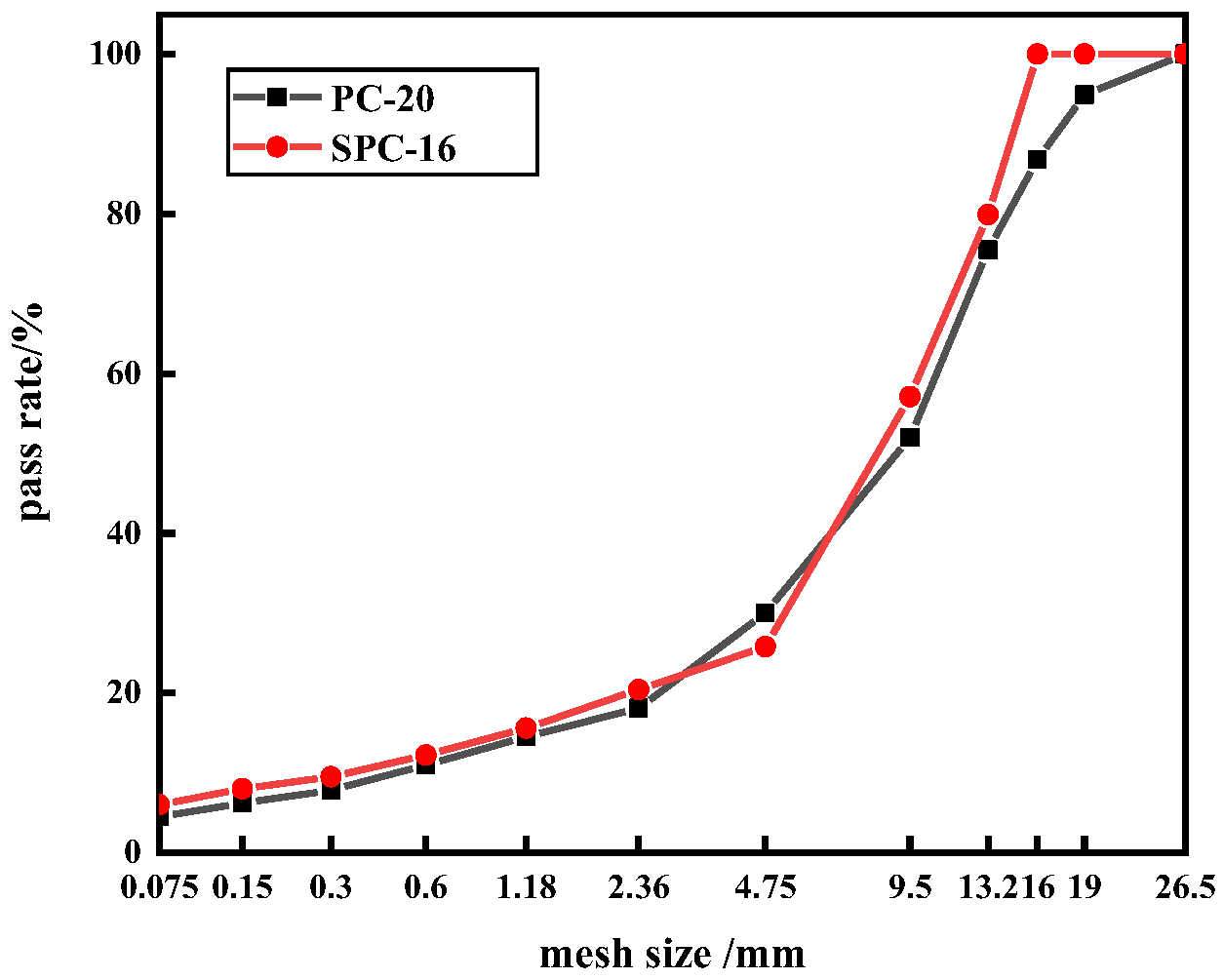
The composition design of polyurethane concrete (PC-20) was based on the mineral aggregate gradation of dense graded asphalt concrete in the Technical Specifications for Construction of Highway Asphalt Pavements [28], with an oil stone ratio of 4.8%. The design concept of multi-crushed stone asphalt concrete composition was adopted for the mineral composition design of multi-crushed stone polyurethane concrete (SPC-16), and the oil stone ratio was determined to be 4.5% based on the splitting tensile strength, scattering loss rate, and freeze–thaw splitting strength ratio. The grading curves of two types of polyurethane mixtures are shown in Figure 1. To clarify the road performance of PC-20 and SPC-16, the performance was compared with the asphalt mastic crushed stone mixture (SMA-13) that met the requirements of the Technical Specifications for Construction of Highway Asphalt Pavements [28].
The grading composition of SPC-16 and PC-20 is shown in Table 2.

2.4. Experimental Plan

2.4.1. Rutting Test

Using the T 0713-2025 wheel rolling method in the Standard Test Methods of Asphalt and Asphalt Mixtures for Highway Engineering [29], 300 mm × 300 mm × 50 mm rutting specimens were formed. The rutting test was conducted according to T0719-2025, with a test temperature of 60 °C and a standard load of 780 ± 20 N.

2.4.2. Low-Temperature Bending Test

The low-temperature bending test of polyurethane mixture was conducted in accordance with T 0715-2025 in the Standard Test Methods of Asphalt and Asphalt Mixtures for Highway Engineering [29], with a test temperature of −10 °C ± 0.5 °C, a loading rate of 50 mm/min, and a specimen size of 250 mm × 30 mm × 35 mm, with three parallel specimens.

2.4.3. Dynamic Modulus Test

The dynamic modulus test was performed according to T 0738-2011 [29]. The cylindrical specimen (initial dimensions: 150 mm in diameter × 170 mm in height) was prepared via rotary compaction. After curing at room temperature for 12 h, it was demolded and then cured for 7 days. Subsequently, core sampling was conducted, and both ends were trimmed to obtain the final test specimen with dimensions of Φ100 mm × 150 mm.
The dynamic modulus test employed a sinusoidal loading waveform under load-controlled uniaxial compression. Testing was conducted at six temperatures, 5, 15, 25, 35, 45, and 55 °C, and at nine loading frequencies, 25, 20, 10, 5, 2, 1, 0.5, 0.2, and 0.1 Hz. The dynamic modulus and phase angle were measured for each condition.

2.4.4. Hamburg Wheel Rut Test

The Hamburg rutting test was conducted according to AASHTO T324-2014 in a 50 °C water bath environment [30]. The test was loaded with a wheel width of 47 mm, a wheel pressure load of 705 N, and a loading rate of 52 ± 2 times/min. The equipment was loaded in a reciprocating cycle. When the cumulative loading of 20,000 times was completed or the rut depth of the specimen reached 20 mm, the test was automatically stopped. The test pieces were formed via rotary compaction and then cut into cylindrical shapes with a size of Φ150 mm and a height of 65 mm.

2.4.5. Four-Point Bending Fatigue Test

The four-point bending fatigue test on polyurethane mixtures was conducted according to the Standard Test Methods of Asphalt and Asphalt Mixtures for Highway Engineering [29]. The specimen size was 380 mm × 50 mm × 63.5 mm, formed through the wheel rolling method, and the test temperature was 20 °C. The experimental process was as follows: Firstly, a static load test was conducted using displacement control mode with a loading rate of 0.01 mm/s, to determine the failure load of the specimen. Secondly, a four-point bending fatigue test was conducted using a stress control mode with a stress ratio of 0.5, applying an uninterrupted asymmetric equal-amplitude sine wave load with a loading frequency of 10 Hz. Three parallel specimens were tested for each mixture, and we took the average of the test results.

3. Calculation Method for Load Response Behavior

3.1. Typical Structural Forms of Polyurethane Mixture Pavement

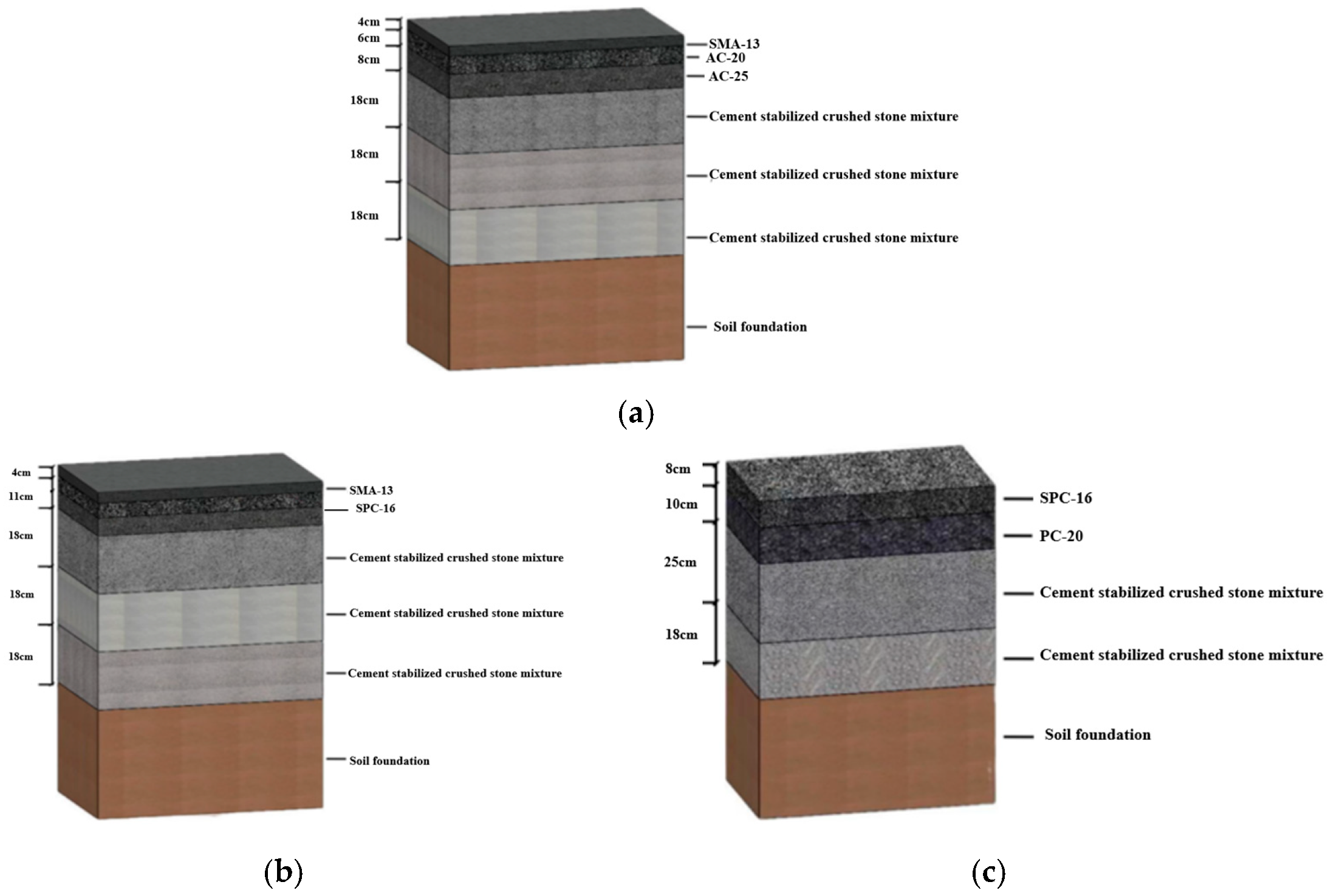
Figure 2 shows three typical pavement structures, among which Figure 2a shows the typical structure of high-grade asphalt pavement (structure I). Due to the strong shear strength, anti-rutting performance, and high dynamic modulus of the polyurethane mixture, it can reduce the thickness of the surface layer and base layer to a certain extent. Based on previous research results, two typical pavement structures of polyurethane mixture were recommended. Figure 2b shows the pavement structure of the polyurethane mixture with reduced surface layer thickness (structure II), and Figure 2c shows the pavement structure of the polyurethane mixture with reduced base layer thickness (structure III).

3.2. Pavement Structure Model and Calculation Indicators

3.2.1. Load Response Model of Pavement Structure

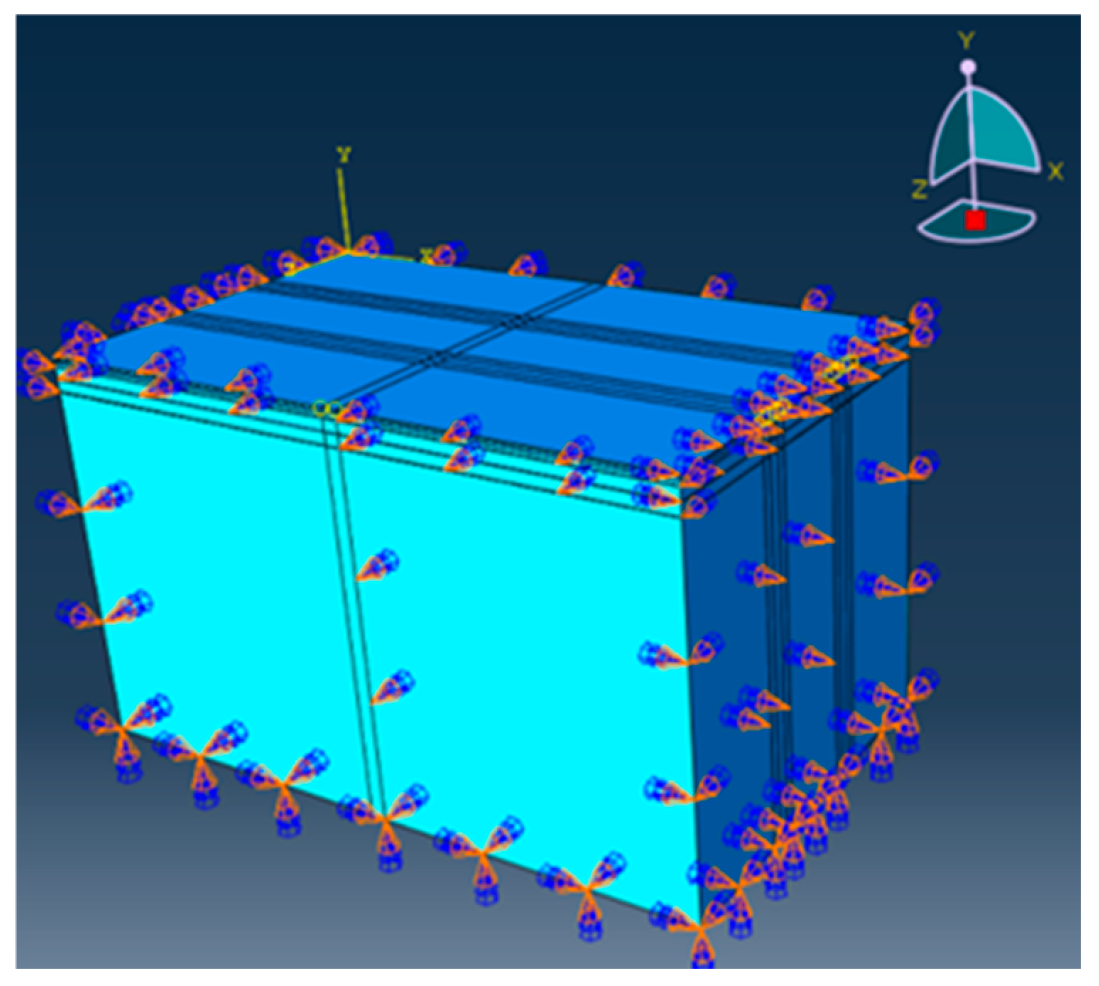
ABAQUS (version 2023, Dassault Systèmes Simulia Corp., Johnston, RI, USA) finite element software was used to simulate different pavement structures. The model dimensions were length × width × height = 10 m × 6 m × 6 m (X × Y × Z). The X-axis represented the longitudinal direction; the Y-axis, the depth direction; and the Z-axis, the transverse direction. The pavement structures were assumed to be perfectly continuous, with interlayer connections modeled using tie constraints. The applied boundary conditions are illustrated in Figure 3, with the roadbed surface fully fixed and all other boundaries free.
When conducting numerical simulations, the wheel load was approximated as a single rectangular uniformly distributed load, with an equivalent length of 22.65 cm and a width of 15.6 cm in the rectangular area. Four load-moving bands were set on the upper layer to simulate the load combination of a single-axle double-wheel driving load, and the moving load was implemented through the ABAQUS subroutine Dload.

3.2.2. Calculation Indicators for Load Response of Pavement Structure

The semi-rigid base polyurethane mixture pavement structure exhibited minimal deformation under load, with the surface layer primarily subjected to compressive stress. Although the tensile strain at the bottom of the surface layer was not significant, the layer remained in a state of high shear stress. The mechanical response of the surface layer was characterized by indicators, such as pavement surface deflection, tensile stress at the bottom of the semi-rigid base, and interlayer shear stress. For interlayer zones, the repeated action of vehicular loads was considered a potential cause of distresses (e.g., displacement and crushing); consequently, interlayer shear stress was adopted as a key calculation index for this pavement structure. Based on the above analysis, the following load response indicators were determined for evaluation: surface deflection, interlayer shear stress, tensile stress at the base bottom, bending tensile strain at the surface layer bottom, and vertical compressive strain at the top of the subgrade.

3.2.3. Calculation Conditions and Parameters

The material parameters of the three pavement structures are shown in Table 3. The dynamic moduli of SPC-16, PC-20, and SMA-13 were taken from the measured values in this study, while AC-20 and AC-25 adopt the recommended values in the Specifications for Design of Highway Asphalt Pavement (JTG D50-2017) [31]. The standard load axle load was taken as 0.7 MPa, and the overload was taken as 0.9 MPa.

3.3. Finite Element Model Validation and Grid Convergence Analysis

3.3.1. Grid Convergence Analysis

The element size of the finite element model directly influences both computational accuracy and efficiency. To determine an appropriate mesh density, a convergence analysis was conducted on structure II (the pavement with a thinned polyurethane mixture surface layer) under standard loading (0.7 MPa) and ambient temperature (25 °C) conditions. Using the key response indicators of surface deflection and tensile stress at the base bottom, the analysis proceeded by progressively refining the global element size from 100 mm down to 20 mm while monitoring the variation in numerical results.
Convergence was defined as the state where further mesh refinement produced a change of less than 2% in the target response values. The results of this analysis are presented in Table 4, using structure II under standard conditions as an example.
When the element size was reduced below 50 mm, the variation rates for both surface deflection and base tensile stress fell below 2%, indicating that the numerical solution had converged. Balancing computational efficiency with accuracy, a global element size of 30 mm was adopted for all models in this study.

3.3.2. Model Validation

Comparing the static load response of the finite element model with the theoretical calculation results of the elastic layered system, taking a typical asphalt pavement (structure I) as an example, under standard axial load (0.7 MPa), the finite element surface deflection was 0.192 mm, the theoretical solution was 0.186 mm, and the relative error was about 3.2%, which met the engineering accuracy requirements [25].

3.3.3. Model Limitations Explanation

The model was developed based on the following simplifying assumptions, which introduce certain limitations: (1) perfect bonding (full continuity) is assumed between structural layers, neglecting any potential interlayer slippage; (2) the tire load is simplified as a uniformly distributed rectangular pressure, ignoring the actual non-uniform distribution of tire–pavement contact stress; and (3) a uniform temperature field is assumed, without simulating temperature gradient effects. Nevertheless, the model maintains sufficient reliability for comparative structural analysis and trend assessment, rendering it appropriate for achieving the research objectives of this study.

4. Results and Discussion

4.1. Road Performance of Polyurethane Mixture

4.1.1. Results of Rutting Test

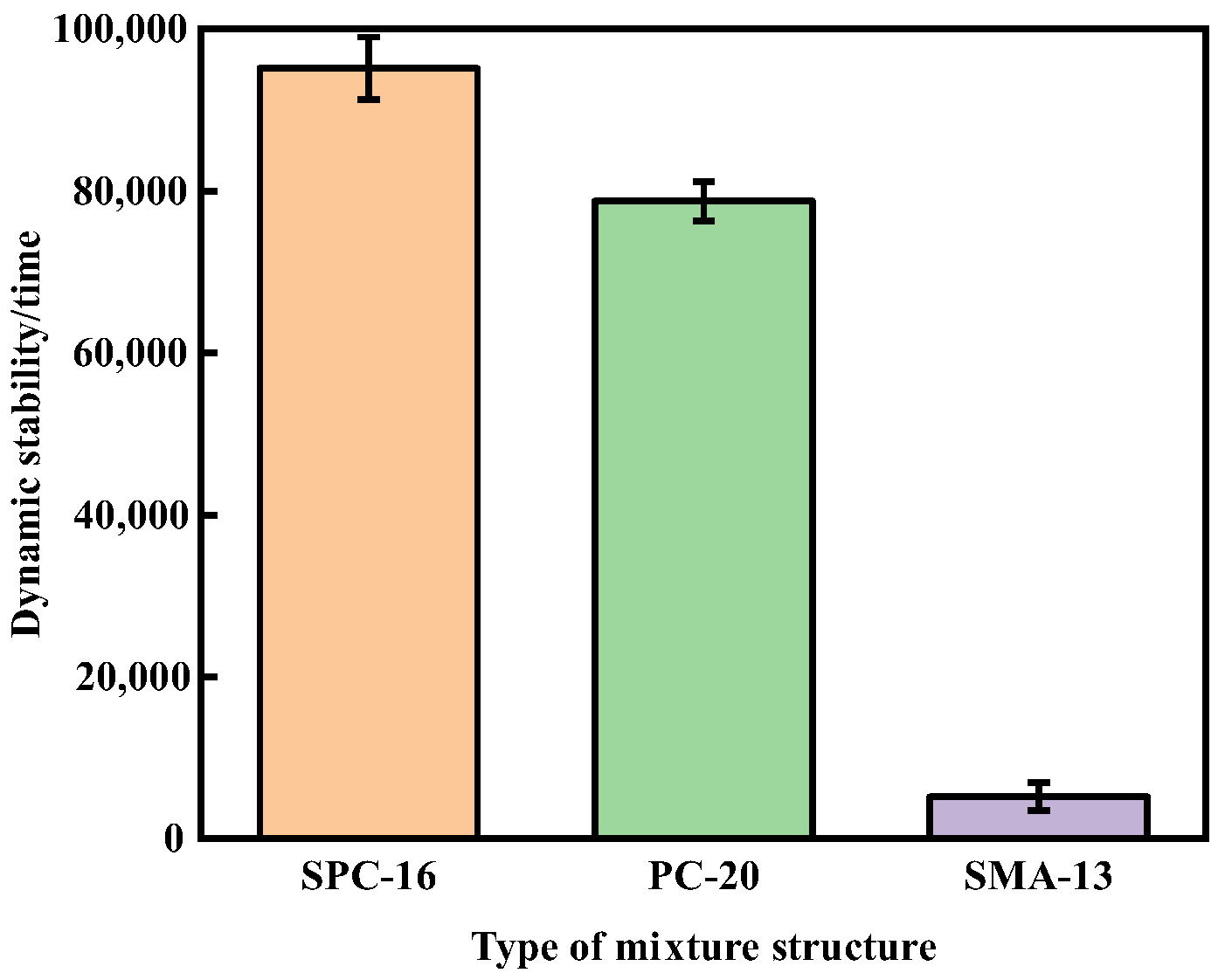
The dynamic stability is shown in Figure 4. The dynamic stability of SPC-16 and PC-20 was 18.3-times and 15.2-times that of SMA-13, respectively, indicating that the high-temperature stability of the polyurethane mixture was significantly higher than that of the asphalt mastic crushed stone mixture. After testing, no obvious rutting marks were observed on the surfaces of the SPC-16 and PC-20 specimens. Polyurethane is a polymer compound formed through the addition polymerization of isocyanates and polyols. The soft segment provides excellent mechanical properties for polyurethane, while the hard segment contributes to its high-temperature resistance and stiffness. In addition, compared to asphalt mixtures, polyurethane mixtures exhibit lower temperature sensitivity after complete curing.

4.1.2. Low-Temperature Bending Test Results

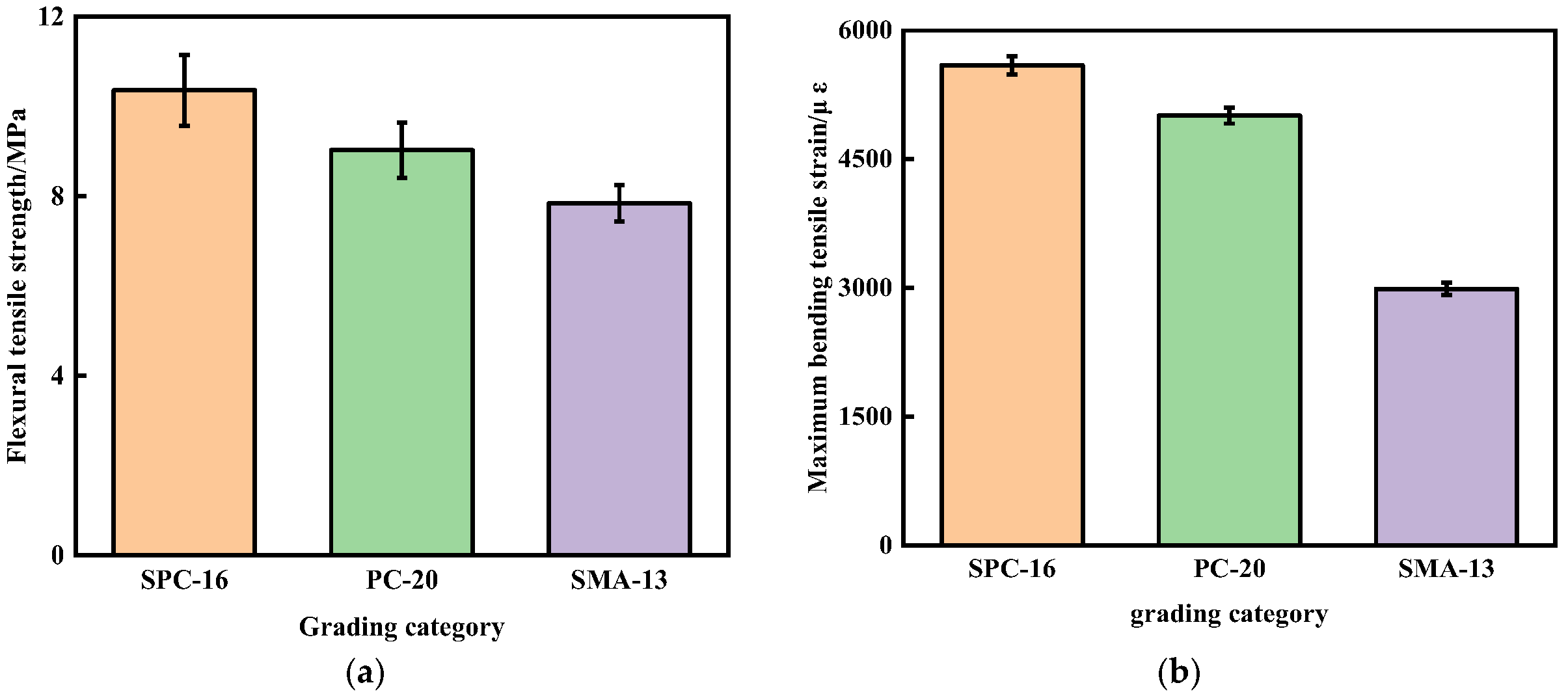
The low-temperature bending test of polyurethane concrete was carried out in accordance with the provisions of the T 0715-2025 specifications [29], and the test results are shown in Figure 5.
The low-temperature flexural tensile strength of SPC-16 and PC-20 was 1.32-times and 1.68-times that of SMA-13, respectively. The maximum low-temperature flexural tensile strain was 1.87-times and 1.15-times that of SMA-13, respectively. Therefore, the low-temperature crack resistance of the polyurethane mixture is better than that of the asphalt mastic crushed stone mixture, and the polyurethane mixture can meet the requirements of low-temperature working conditions.

4.1.3. Hamburg Wheel Rut Test Results

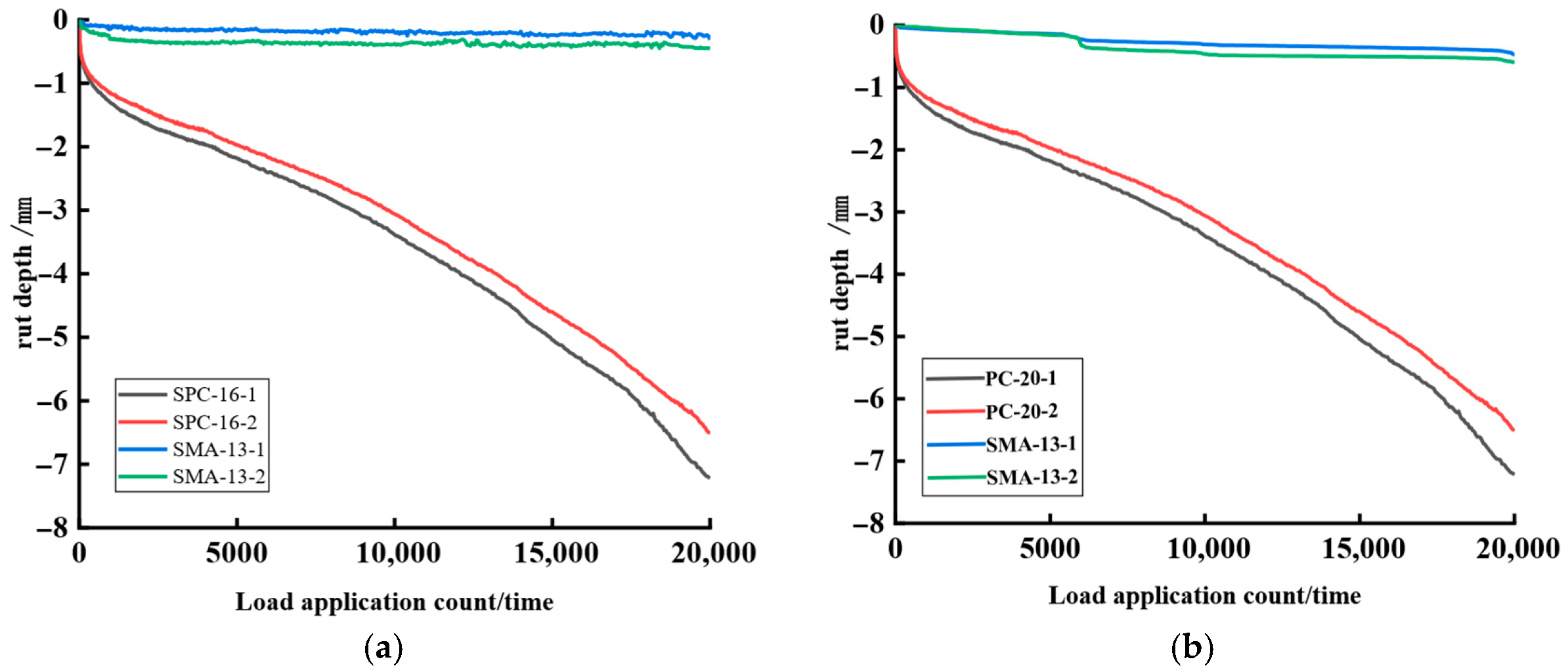
The variation curves of rut depth for three types of mixtures are shown in Figure 6.
As illustrated in Figure 6, the Hamburg wheel-tracking curves for SPC-16 and PC-20 exhibited no stripping stage until the test conclusion. In contrast, SMA-13 entered the stripping stage after approximately 15,000 loading cycles. The maximum rut depth and creep slope of SPC-16 and PC-20 were merely 7% and 10% of those of SMA-13, respectively. This marked performance superiority is attributed to the stable and dense skeletal structure of the polyurethane mixture. Through a wet-curing reaction, the polyurethane binder forms urea groups, which confer high strength and stability, low temperature sensitivity, and enhanced resistance to the combined actions of moisture, temperature, and mechanical loading.

4.1.4. Four-Point Bending Test Results

The fatigue test results of the three mixtures are summarized in Table 5.
The flexural tensile strength of SPC-16 and PC-20 was 3.1-times and 2.6-times that of SMA-13, respectively, indicating that polyurethane concrete exhibits significantly superior strength and resistance to deformation and damage compared to asphalt mastic crushed stone mixtures. Furthermore, under a stress ratio of 0.5, the fatigue life of SPC-16 and PC-20 was 12.1-times and 8.0-times that of SMA-13, respectively. This demonstrates that polyurethane mixtures possess markedly enhanced flexural tensile performance and fatigue characteristics, which supports their potential application as an anti-fatigue layer in pavement structures.

4.2. Results and Analysis of Dynamic Modulus Test

4.2.1. Dynamic Modulus Results and Analysis

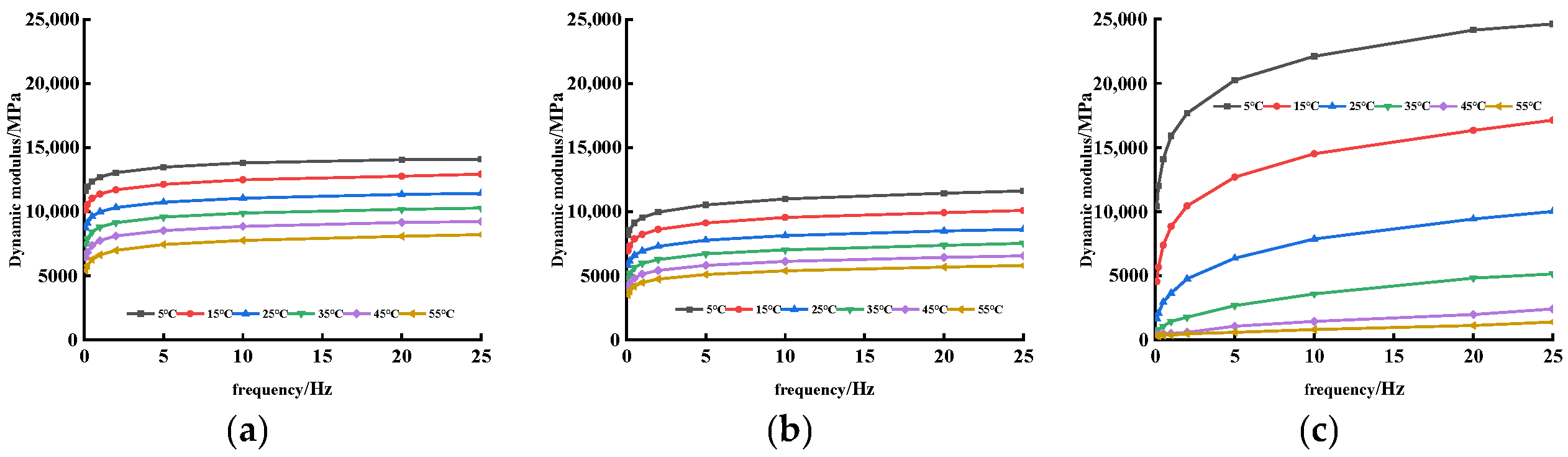
The frequency-dependent dynamic modulus curves of SPC-16, PC-20, and SMA-13 are shown in Figure 7.
As shown in Figure 7, the dynamic modulus of all three mixtures increased consistently with loading frequency under isothermal conditions, reaching its minimum at 0.1 Hz and maximum at 25 Hz. When the frequency increased from 0.1 Hz to 25 Hz, the dynamic modulus of SMA-13 increased by 130% to 640% across the tested temperatures, whereas the polyurethane mixture exhibited a much smaller increase of 20% to 65%.
Conversely, at a fixed loading frequency, the dynamic modulus decreased with rising temperature. This temperature dependence was most pronounced for SMA-13: its dynamic modulus dropped by approximately 94% to 97% as temperature increased from 5 °C to 55 °C. Under the same conditions, the polyurethane mixture showed a reduction of only 43% to 55%, demonstrating its significantly better temperature stability compared to the asphalt macadam mixture [19].

4.2.2. Phase Angle Results and Analysis

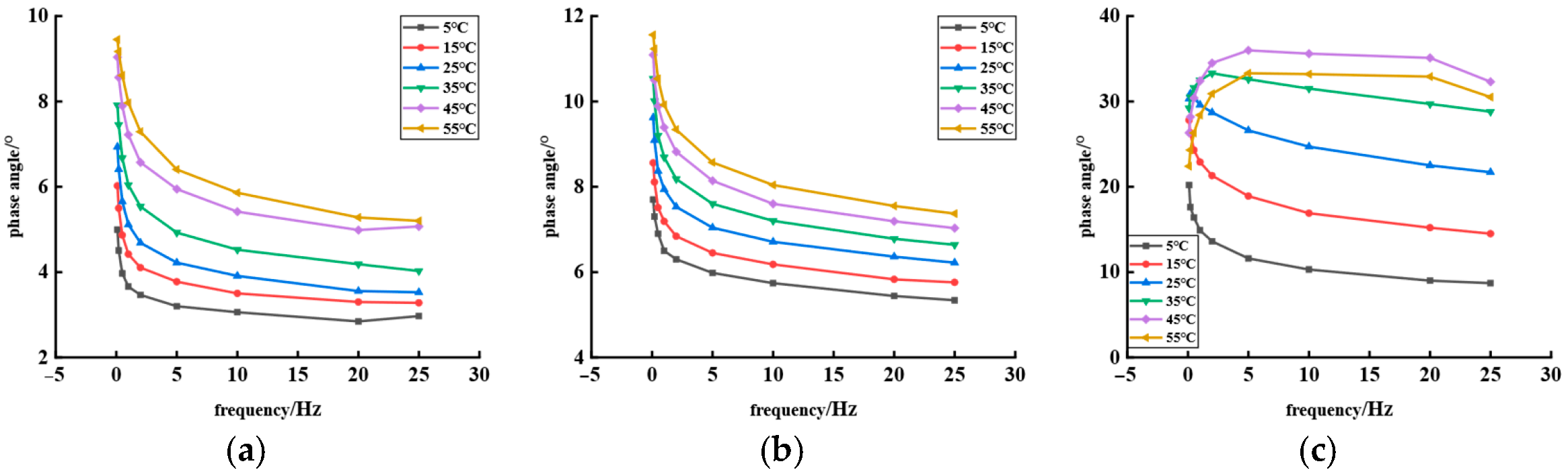
The phase angle variation curves of SPC-16, PC-20, and SMA-13 with frequency are shown in Figure 8.
From Figure 8, it can be seen that under the same loading frequency, the phase angle of SMA-13 was higher than that of SPC-16 and PC-20, the phase angle increased with temperature, and the differences between the materials also expand accordingly. The phase angle of the polyurethane mixture continued to decrease with increasing loading frequency, indicating that it maintained its elastic properties, and the viscous effect gradually appeared but did not dominate. For SMA-13, when the temperature was ≤15 °C, the phase angle decreased with increasing frequency; when the temperature was ≥25 °C, due to its sensitivity to temperature, the phase angle first rose to the peak with increasing frequency and then decreased again [19]. This indicated that SMA-13 was in an elastic state at low temperatures and gradually shifted towards a viscous dominant state as the temperature increased.

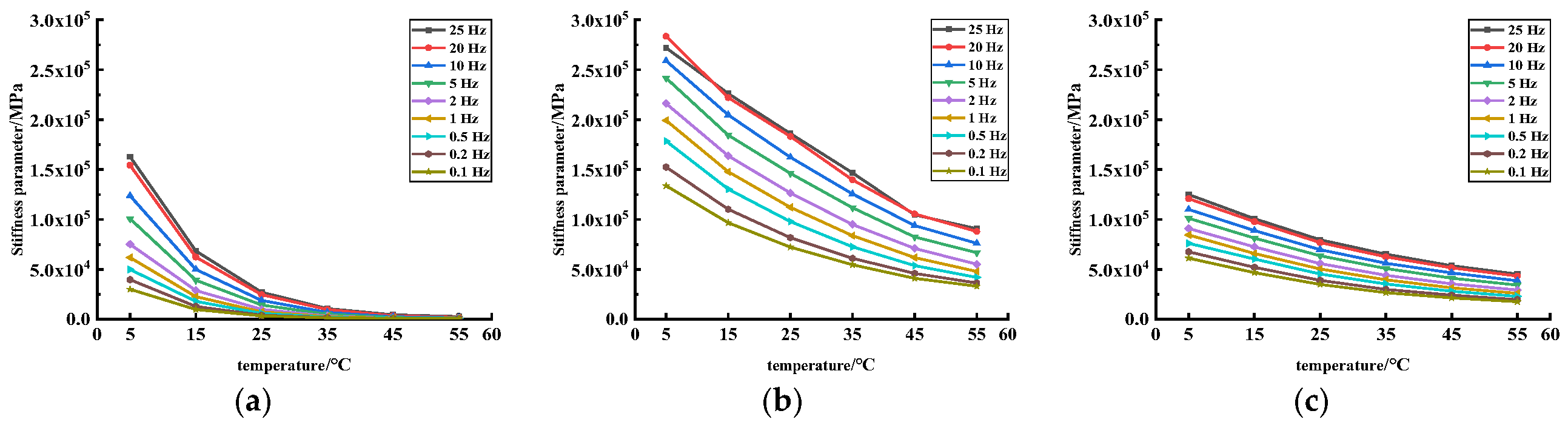
4.2.3. Comparison of Stiffness Parameters (E*/sin σ)

The stiffness parameter (E*/sin σ) refers to the ratio of the amplitude of the dynamic modulus (|E*|) to the sine value of the phase angle (σ) of a viscoelastic material under sinusoidal alternating dynamic loads. It is used to comprehensively evaluate a material’s resistance to viscous deformation under dynamic loads. The larger the parameter, the higher the proportion of elastic response of the material under cyclic loads, the smaller the viscous flow deformation, and the better the resistance to permanent deformation (such as rutting). The temperature-dependent curves of the stiffness parameters of the three types of mixtures are shown in Figure 9.
According to Figure 9, under the same experimental temperature conditions, the stiffness parameters of the three mixtures increased with the increase in loading frequency. Under the same loading frequency conditions, the stiffness parameters of SMA-13 decreased sharply with increasing temperature, while the stiffness parameters of PC-20 and SPC-16 were relatively stable. Compared with the asphalt mastic crushed stone mixture, the stiffness parameters of the polyurethane mixture have lower temperature sensitivity and excellent resistance to high-temperature deformation.

4.2.4. Temperature Sensitivity Analysis

Dynamic modulus testing revealed that polyurethane mixtures (SPC-16, PC-20) possess superior temperature stability compared to the asphalt macadam mixture (SMA-13) across a wide range of temperatures and loading frequencies. Specifically, when the temperature increased from 5 °C to 55 °C, the dynamic modulus of SMA-13 decreased drastically by 94%–97%, whereas the polyurethane mixtures exhibited a much smaller reduction of only 43%–55%. This pronounced difference stems from the unique chemical structure and curing mechanism of polyurethane. The binder forms a stable, three-dimensional chemically cross-linked network through wet curing. This network restricts excessive molecular segment movement at elevated temperatures. Furthermore, the microphase-separated structure formed by the hard and soft segments after curing acts synergistically to buffer modulus fluctuations induced by temperature changes.
Although a full master curve model was not developed in this study, the comparative analysis of the dynamic modulus under multiple temperature and frequency conditions sufficiently demonstrated the excellent temperature stability and service reliability of the polyurethane mixtures.

4.3. Load Response of Polyurethane Mixture Pavement Structure

The surface deflection, interlayer shear stress, base layer bottom tensile stress, surface layer bottom bending tensile strain, and subgrade top vertical compressive strain of three pavement structures were calculated under four working conditions: 0.7 MPa normal temperature, 0.7 MPa high temperature, 0.9 MPa normal temperature, and 0.9 MPa high temperature.

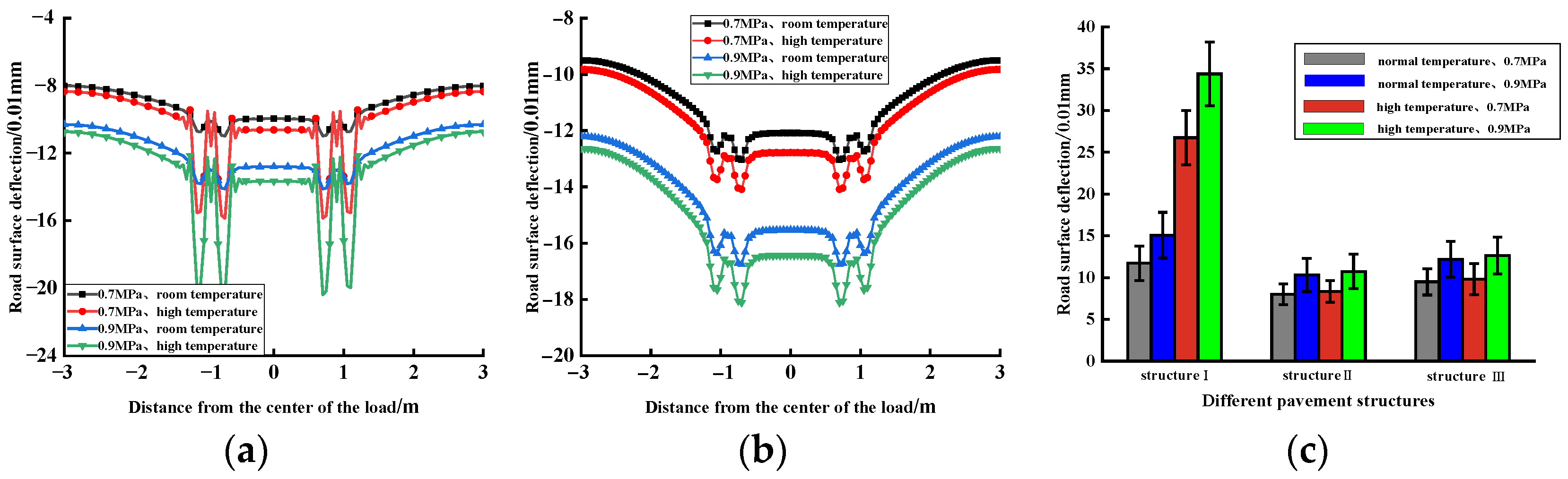
4.3.1. Road Surface Deflection

Figure 10 shows the calculation results of road surface deflection for three types of pavement structures, and the road surface deflection showed symmetry along the centerline of the two wheels. When the temperature was constant, the surface deflection of structures I, II, and III increased by 28%–30% with the increase in load. When the load was constant, the surface deflection of structures I, II, and III increased by 28%, 4%, and 3%, respectively, with the increase in temperature. Under different working conditions, it decreased with the increase in load distance, and the maximum deflection of the road surface was “Structure I > Structure III > Structure II”. The polyurethane mixture pavement structure had a stronger resistance to load [32].

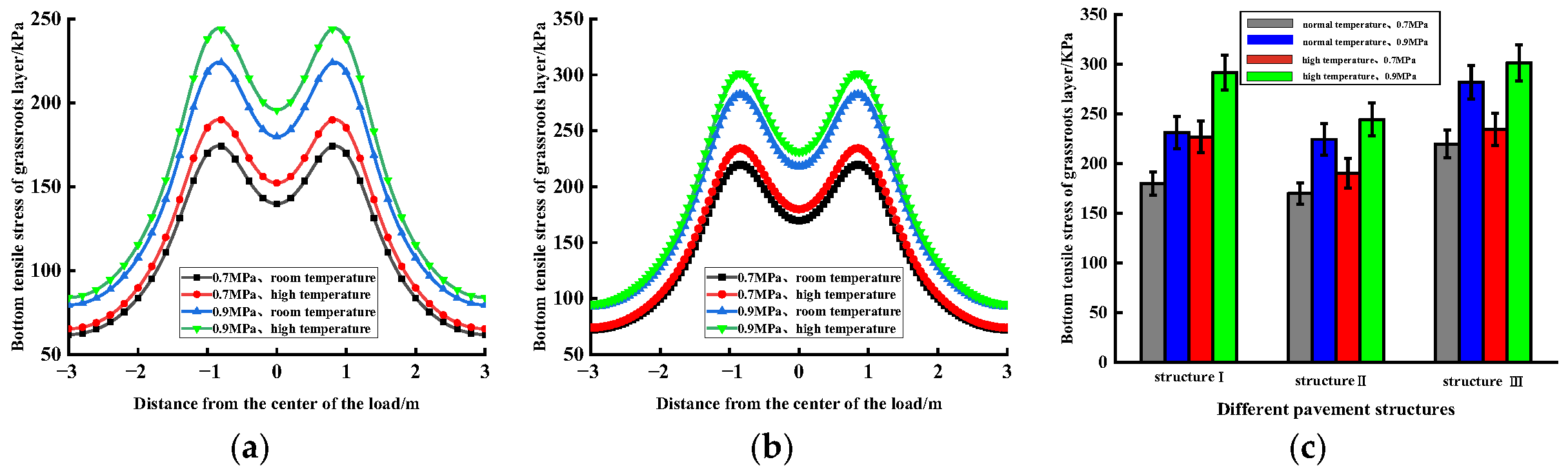
4.3.2. Bottom Tensile Stress of Base Layer

Figure 11 shows the calculation results of the tensile stress at the bottom of the base layer. Under different working conditions, the distribution characteristics of the tensile stress at the bottom of the base layer were similar to those of the road surface deflection curve, and they were symmetrical along the centerline of the two wheels. The tensile stress at the bottom of the base layer decreased with the increase in the load distance. As the temperature increased and the vehicle load increased, the effect of temperature on the bottom bending tensile stress of the polyurethane mixture layer was relatively small, and the larger the load, the greater the bottom bending tensile stress of the polyurethane mixture layer. The maximum tensile stress at the base layer of structures I and III was relatively close, while the maximum tensile stress at the bottom layer of structure II was the smallest.

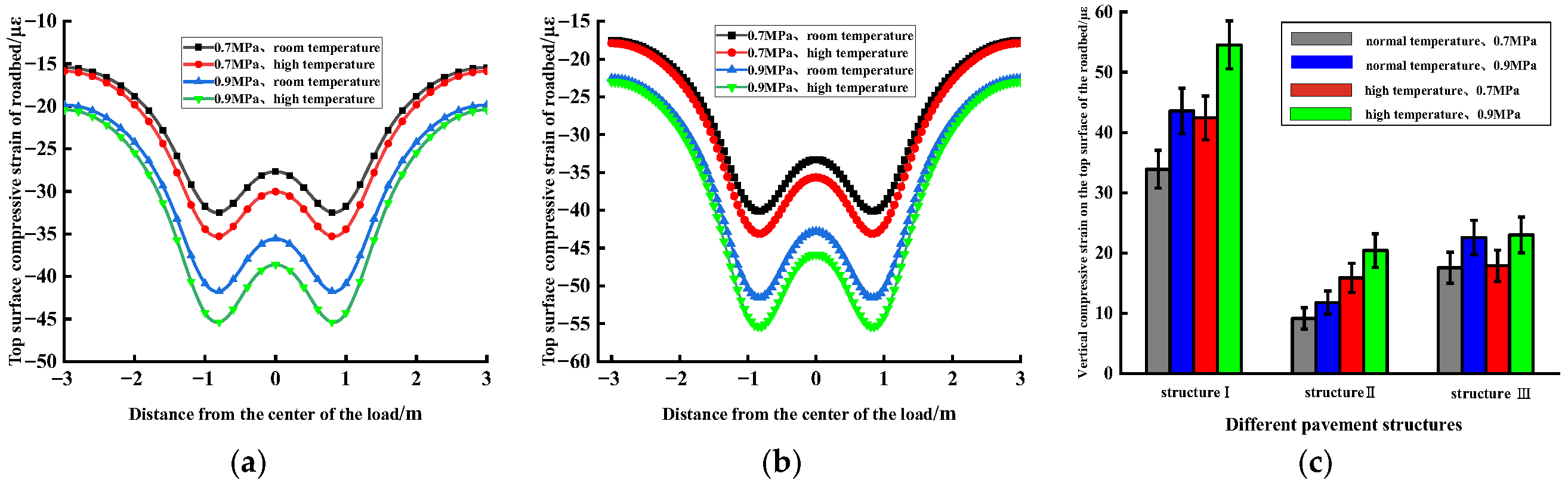
4.3.3. Top Surface Compressive Strain of Roadbed

Figure 12 shows the calculation results of the top surface compressive strain of three pavement structures. The top surface compressive strain of the subgrade was symmetrically distributed along the load point 0, and the maximum strain occurred at a distance of 1 m from the load. Structure I, structure II, and structure III increased with an increase in temperature and load. Among them, at a constant temperature, the top surface pressure strain of the three pavement structures increased by about 28% with the increase in load. When the load was constant, the top surface compressive strain of the three pavement structures increased by 25%, 28%, and 28%, respectively, with the temperature rise. Under the four working conditions, the vertical compressive strain on the top surface of the roadbed was “Structure I > Structure III > Structure II”, and the polyurethane mixture pavement structure was relatively stable.

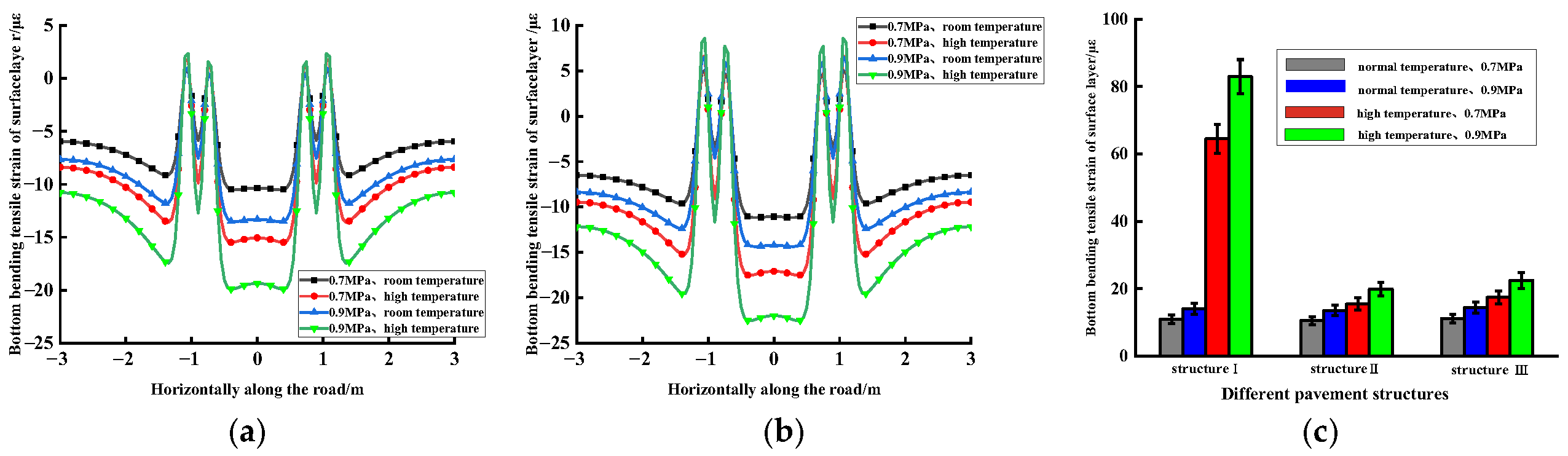
4.3.4. Bottom Bending Tensile Strain of Surface Layer

Figure 13 shows the calculation results of the bending tensile strain at the bottom of the surface layer. It can be seen that the distribution of bending tensile strain at the bottom of the surface layer under different working conditions was symmetrical along the centerline of the two wheels. As the temperature increased, the tensile strain response value of the bottom bending of the surface layer increased by about 47%. As the vehicle load increased, the tensile strain response value of the bottom bending of the surface layer increased by about 28%. Compared with the vehicle load, the change in temperature had a greater impact on the tensile strain of the bottom bending of the surface layer. Under normal-temperature conditions, the maximum bending tensile strain of the bottom layer of the three pavement structures was comparable, while under high-temperature conditions, the maximum bending tensile strain of the bottom layer of structure I was much greater than that of structure II and structure III, indicating that the polyurethane mixture pavement still had good stability under high-temperature conditions [33].

5. Preliminary Evaluation of Performance Reliability and Engineering Economy

To comprehensively evaluate the reliability and engineering applicability of the experimental results of this study, this section systematically discusses the statistical characteristics and sources of uncertainty in the data. And an evaluation is presented on the differences in performance, material usage, and structural design, especially for structure I (traditional asphalt pavement), structure II (reduced thickness polyurethane mixture surface layer), and structure III (polyurethane mixture pavement with reduced base layer).

5.1. Data Statistics and Uncertainty Discussion

All indoor tests in this study, such as low-temperature test, rutting test, Hamburg rutting test, four-point bending fatigue test, and dynamic modulus test, were conducted as three parallel tests. The results shown were the averages of the three tests. Based on similar research experience and experimental process control, the coefficient of variation (CV) of the experimental data can be estimated as follows.
(1)
The low-temperature flexibility strength and strain CV of polyurethane mixtures were generally less than 8%, while the CV of asphalt mixtures was about 10%–15%, which was related to the high homogeneity and low-temperature sensitivity of polyurethane materials.
(2)
The fatigue test data usually followed a logarithmic normal distribution, and the logarithmic standard deviation of the fatigue life of polyurethane mixtures was about 0.15–0.25, which was lower than that of asphalt mixtures (0.25–0.35).
(3)
At the same temperature and frequency, the CV of the dynamic modulus of the polyurethane mixture was usually less than 5%, demonstrating good frequency stability and experimental repeatability.
(4)
The rut depth CV of the polyurethane mixture was about 5%–10%, which was much lower than that of the asphalt mixture (15%–25%), indicating that its performance was more stable under water temperature load coupling.
The significant magnitude of the performance differences mentioned above was sufficient to support the main conclusions of this study.

5.2. Road Surface Structure Cost

From a cost perspective, although the initial material cost of polyurethane mixtures (structures II and III) is higher than that of the conventional asphalt mixture (structure I), their superior mechanical performance enables a significant reduction in pavement thickness. Furthermore, their enhanced durability is expected to lower the frequency of maintenance and reconstruction over the entire service life. Consequently, in harsh environments characterized by heavy traffic, high temperatures, or heavy rainfall, polyurethane mixture pavements may demonstrate better lifecycle cost-effectiveness. Future research should incorporate specific engineering cases to perform more systematic cost–benefit analyses, thereby facilitating the broader application of this high-performance material.

6. Conclusions

(1)
Polyurethane mixtures (SPC-16, PC-20) were significantly superior to traditional asphalt mixtures in terms of high-temperature stability, low-temperature crack resistance, water stability, flexural tensile strength, and fatigue life, providing a material foundation for their application in heavy traffic and alternating high- and low-temperature environments.
(2)
Polyurethane mixtures had low-temperature sensitivity and high-elasticity characteristics. The dynamic modulus and stiffness parameters remained stable at high temperatures, and the phase angle decreased monotonically with frequency. This characteristic made it particularly suitable for high-temperature areas and road sections with significant temperature stress, which can effectively delay the development of ruts and temperature cracks.
(3)
Finite element analysis showed that the load response of polyurethane pavement structures (especially the surface layer thinning structure II) was more stable under high temperature and heavy load, and the indicators such as surface deflection, base tensile stress, and subgrade compressive strain were significantly lower than those of the traditional asphalt pavement. This indicated that polyurethane pavement may meet or even improve load-bearing requirements while thinning the structural layer, with significant potential for material savings and structural optimization.
(4)
Based on the advantages of fatigue life and water damage resistance, the polyurethane mixture can be used as an anti-fatigue layer or functional layer in long-life pavement, combined with the asphalt surface layer, significantly extending the service life of pavements and reducing the maintenance cost throughout the lifecycle.
(5)
It was suggested to carry out experimental section paving and long-term performance monitoring in the next step, focusing on verifying its durability, interlayer bonding performance, and construction process adaptability in real environments, and promoting the standardization and engineering application of polyurethane pavement technology.
(6)
This study considers polyurethane mixtures as linear elastic materials, simplifies vehicle loads to static uniformly distributed loads, and only focuses on short-term performance, without considering their viscoelastic properties, vehicle dynamic traffic behavior, and long-term aging effects. Subsequently, a viscoelastic constitutive model can be established, a dynamic moving load model can be introduced combined with measured traffic load spectra, and accelerated aging tests can be conducted to more accurately simulate the time-varying response of materials, analyze the dynamic response under complex working conditions, and establish a multi-field coupled durability evaluation system.

Author Contributions

Conceptualization, C.P. and H.L.; methodology and data curation, L.G. and M.S.; validation and investigation, J.S. and C.P.; formal analysis, M.S. and Z.H.; resources, L.G.; writing—original draft preparation, M.S.; writing—review and editing, Z.H.; supervision, J.S.; and funding acquisition, H.L. All authors have read and agreed to the published version of the manuscript.

Funding

The work was supported by project ZR2024ME093, ZR2024LZN020 and ZR2022QE054 supported by the Shandong Provincial Natural Science Foundation.

Institutional Review Board Statement

Not applicable.

Informed Consent Statement

Not applicable.

Data Availability Statement

The original contributions presented in this study are included in the article. Further inquiries can be directed to the corresponding authors.

Conflicts of Interest

Author Huihui Li was employed by the company Shandong Luqiao Group Co., Ltd. The remaining authors declare that the research was conducted in the absence of any commercial or financial relationships that could be construed as a potential conflict of interest.

References

  1. Zhang, Z.; Ji, J.; Li, X.; Shi, Z.; Wang, J. Study of interface adhesion between polyurethane and aggregate based on surface free energy theory and molecular dynamics simulation. Appl. Sci. 2025, 15, 606. [Google Scholar] [CrossRef]
  2. Zheng, Y.-Y.; Han, S.; Zheng, H.-Y. Design, fabrication, and laboratory performance evaluation of polyurethane poroelastic road surfaces (PERS) mixtures. Constr. Build. Mater. 2025, 473, 141030. [Google Scholar] [CrossRef]
  3. Jia, M.; Sha, A.; Lin, J.; Zhang, Z.; Qi, B.; Yuan, D. Polyurethane asphalt binder: A promising candidate for steel bridge deck-paving material. Int. J. Pavement Eng. 2022, 23, 3920–3929. [Google Scholar] [CrossRef]
  4. Baral, D.; De, P.P.; Nando, G.B. Thermal characterization of mica-filled thermoplastic polyurethane composites. Poly Mer. Degrad. Stab. 1999, 65, 47–51. [Google Scholar] [CrossRef]
  5. Chen, J.; Ma, X.; Wang, H.; Xie, P.; Huang, W. Experimental study on anti-icing and deicing performance of polyurethane concrete as road surface layer. Constr. Build. Mater. 2018, 161, 598–605. [Google Scholar] [CrossRef]
  6. Sun, M.; Huang, Z.-l.; Sun, Y.-c.; Ren, S.-y.; Gu, L.-y.; Bi, Y.-f. Influence of temperature on mechanical properties and constitutive relationship for polyurethane mixtures. J. Chang. Univ. (Nat. Sci. Ed.) 2025, 45, 13–28. [Google Scholar]
  7. Chen, T.K.; Tien, Y.I.; Wei, K.H. Synthesis and characterization of novel segmented polyurethane/clay nanocomposite. Polymer 2000, 41, 1345–1353. [Google Scholar] [CrossRef]
  8. Zhao, H.; Gao, W.; Cui, S.; Zhang, W.; Ma, S.; Miao, B.; Su, C.; Wei, J.; Liu, S.; Liu, F. Study on the Construction of Dynamic Modulus Master Curve of Polyurethane Mixture with Dense Gradation. Coatings 2023, 13, 835. [Google Scholar] [CrossRef]
  9. Carrera, V.; Garcia-Morales, M.; Partal, P.; Gallegos, C. Novel bitumen/isocyanate-based reactive polymer formulations for the paving industry. Rheol. Acta 2010, 49, 563–572. [Google Scholar] [CrossRef]
  10. Roobankumar, R.; SenthilPandian, M. Investigating the correlation between ultrasonic pulse velocity and compressive strength in polyurethane foam concrete. Sci. Rep. 2025, 15, 23995. [Google Scholar] [CrossRef]
  11. Sun, M.; Qu, G.; Geng, L.; Hou, D.; Jing, S. Fatigue Properties and Damage Characteristics of Polyurethane Mixtures under a Stress Control Mode. Sustainability 2022, 14, 10966. [Google Scholar] [CrossRef]
  12. Laqsum, S.A.; Zhu, H.; Haruna, S.I.; Bo, Z.; Al-shawafi, A.; Amer, M. Impact resistance properties of U-shaped fiber-reinforced concrete modified with PU binder. J. Build. Eng. 2023, 80, 108068. [Google Scholar] [CrossRef]
  13. Afshar, A.; Jahandari, S.; Rasekh, H.; Shariati, M.; Afshar, A.; Shokrgozar, A. Corrosion resistance evaluation of rebars with various primers and coatings in concrete modified with different additives. Constr. Build. Mater. 2020, 262, 120034. [Google Scholar] [CrossRef]
  14. Wu, K.X.; Zhu, H.; Ibrahim, Y.E.; Jiang, W.; Haruna, S.I.; Shao, J.; Adamu, M. Performance evaluation of bond strength and fiber type on the mechanical properties of polyurethane-based polymer mortar. Case Stud. Constr. Mater. 2023, 18, e02114. [Google Scholar] [CrossRef]
  15. Hua, G.-w.; Tong, S.-j.; Cheng, X.-s. Comparative Analysis of Two Flexible Base Asphalt Pavement Rutting Based on Abaqus. J. China Foreign Highw. 2015, 35, 62–66. [Google Scholar]
  16. Lu, G.; Renken, L.; Li, T.; Wang, D.; Li, H.; Oeser, M. Experimental study on the polyurethane-bound pervious mixtures in the application of permeable pavement. Constr. Build. Mater. 2019, 202, 838–850. [Google Scholar] [CrossRef]
  17. Bin, S. Structural Analysis of Asphalt Pavement of Combined Base on Finite Element Method. Master’s Thesis, Chongqing Jiaotong University, Chongqing, China, 2017. [Google Scholar]
  18. Hardy, M.S.A.; Cebon, D. Response of Continuous Pavements to Moving Dynamic Loads. Am. Soc. Civ. Eng. 2014, 119, 1762–1780. [Google Scholar] [CrossRef]
  19. Sun, M.; Hou, D.; Geng, L.; Yan, Z.; Bi, Y.; Huang, Z.; Ren, S.; Wang, B. Road performances and mechanical properties of multi-gravel polyurethane concrete. Bull. Chin. Ceram. Soc. 2024, 43, 746–756. [Google Scholar]
  20. Yang, F.; Cong, L.; Shi, J.; Tan, L.; Guo, G.; Ren, M. Laboratory Evaluation on Pavement Performance of Polyurethane Mixture for Thin Overlay. J. Mater. Civ. Eng. 2021, 33, 04021212. [Google Scholar] [CrossRef]
  21. Chen, J.; Yao, C.; Wang, H.; Huang, W.; Ma, X.; Qian, J. Interface Shear Performance between Porous Polyurethane Mixture and Asphalt Sublayer. Appl. Sci. 2018, 8, 623. [Google Scholar] [CrossRef]
  22. Lin, Z.; Sima, W.; Gao, X.; Liu, Y.; Li, J. Microscopic Mechanism of Asphalt Mixture Reinforced by Polyurethane and Silane Coupling Agent: A Molecular Dynamics Simulation-Based Study. Polymers 2025, 17, 1602. [Google Scholar] [CrossRef]
  23. Cong, L.; Wang, T.; Tan, L.; Yuan, J.; Shi, J. Laboratory evaluation on performance of porous polyurethane mixtures and OGFC. Constr. Build. Mater. 2018, 169, 436–442. [Google Scholar] [CrossRef]
  24. Gao, J.; Wang, H.; Chen, J.; Meng, X.; You, Z. Laboratory evaluation on comprehensive performance of polyurethane rubber particle mixture. Constr. Build. Mater. 2019, 224, 29–39. [Google Scholar]
  25. Zhuang, W.; Bi, Y.; Liu, B.; Hou, D.; Jing, S.; Lu, X.; Sun, M. Mechanical Properties of Polyurethane Mixture and Load Response Behaviour of Polyurethane Composite Pavement. Polymers 2023, 15, 417. [Google Scholar] [CrossRef] [PubMed]
  26. Yahye, M.A.; Liu, L.J.; WU, H.L.; Sun, Y.M.; Sun, H.; Ma, J.; Zhang, L.Z. Experimental research on mechanical properties of Fiber-Reinforced Polyurethane Elastic Concrete (FRPEC). Constr. Build. Mater. 2022, 328, 126929. [Google Scholar] [CrossRef]
  27. Zhuang, Y.; Liu, K.; Zhan, X. Analysis of Mechanical Response of Epoxy Asphalt-Repaired Pavement in Pothole Interface on Steel Bridge Deck under Coupled Temperature-Dynamic Loading. Buildings 2024, 14, 599. [Google Scholar] [CrossRef]
  28. JTG F40-2004; Tehnical Specifications for Construction of Highway Asphalt Pavements. People’s Republic of China Ministry of Transportation: Beijing, China, 2004.
  29. JTG 3410-2025; Test Methods of Asphalt and Asphalt Mixtures for Highway Engineering. People’s Republic of China Ministry of Transportation: Beijing, China, 2025.
  30. AASHTO T324-2014; Standard Method of Test for Hamburg Wheel-Track Testing of Compacted Hot Mix Asphalt (HMA). AASHTO: Washington, DC, USA, 2014.
  31. JTG D50-2017; Specifications for Design of Highway Asphalt Pavement. People’s Republic of China Ministry of Transportation: Beijing, China, 2017.
  32. Zhang, Q.; Wang, S.-K.; Lv, R.-P.; Wu, J.; Qi, H. Viscoelastic mechanical performance of dense polyurethane mixtures based on dynamic and static modulus testing and creep testing. Constr. Build. Mater. 2022, 320, 126207. [Google Scholar] [CrossRef]
  33. Wang, H.; Zhan, S.; Liu, G. The Effects of Asphalt Migration on the Dynamic Modulus of Asphalt Mixture. Appl. Sci. 2019, 9, 2747. [Google Scholar] [CrossRef]
Figure 1. Mineral grading curve.
Coatings 16 00185 g001
Figure 2. Typical roadway structure of polyurethane mixture. (a) Structure I (traditional asphalt); (b) structure II; (c) structure III.
Coatings 16 00185 g002
Figure 3. Boundary condition setup for pavement structure.
Coatings 16 00185 g003
Figure 4. Rutting test results.
Coatings 16 00185 g004
Figure 5. Low-temperature bending test results of different mixtures. (a) Low-temperature flexural tensile strength. (b) Maximum flexural tensile strain.
Coatings 16 00185 g005
Figure 6. Curve of rut depth variation for different mixtures. (a) The SPC-16 and SMA-13 test results. (b) The PC-20 and SMA-13 test results.
Coatings 16 00185 g006
Figure 7. Dynamic modulus versus frequency curve. (a) SPC-16. (b) PC-20. (c) SMA-13.
Coatings 16 00185 g007
Figure 8. Phase angle variation curve with frequency. (a) SPC-16. (b) PC-20. (c) SMA-13.
Coatings 16 00185 g008
Figure 9. Temperature-dependent curve of stiffness parameters of polyurethane mixture. (a) SMA-13. (b) SPC-16. (c) SMA-13.
Coatings 16 00185 g009
Figure 10. Calculation results of road surface deflection. (a) Structure II. (b) Structure III. (c) Maximum surface deflection.
Coatings 16 00185 g010
Figure 11. Calculation results of tensile stress at the bottom of the base layer. (a) Structure II. (b) Structure III. (c) Maximum tensile stress at the bottom of the base layer.
Coatings 16 00185 g011
Figure 12. Calculation results of compressive strain on the top surface of the roadbed. (a) Structure II. (b) Structure III. (c) Maximum compressive strain on the top surface of the roadbed.
Coatings 16 00185 g012
Figure 13. Calculation results of bending and tensile strain at the bottom of the surface layer. (a) Structure II. (b) Structure III. (c) Maximum bending tensile strain at the bottom of the surface layer.
Coatings 16 00185 g013
Table 1. Technical indicators of polyurethane grouting material.
Technical IndicatorsUnitTechnical RequirementsTesting Indicators
Viscosity/25 °CmPa·s800–22001790
Density/25 °Cg/cm31.05~1.111.08
Tensile strength/25 °CMPa≥1525.3
Elongation at break/25 °C%≥80240
Table 2. Grading composition.
Mesh Size0.0750.150.30.61.182.364.759.513.216.019.026.5
SPC-168.310.414.319.326.234.066.284.292.0100.0100.0100.0
PC-205.67.89.112.116.120.228.252.467.991.696.8100.0
Table 3. Material parameter values at different temperatures.
Material TypeDynamic Modulus/MPaPoisson’s Ratio
25 °C55 °C
SMA-1378698030.35
AC-2091007500.25
AC-2511,0009200.25
SPC-1611,06777690.30
PC-20814353960.25
Cement stabilized crushed stone base16,00016,0000.25
Soil foundation70700.4
Table 4. Results of grid convergence analysis.
Grid Size (mm)Unit Number (Ten Thousand)Surface Deflection (mm)Grassroots Tensile Stress (Mpa)Rate of Deflection Change (%)Stress Change Rate (%)
1008.20.1850.062--
8015.60.1780.0583.786.45
5032.40.1750.0551.695.17
3078.90.1740.0540.571.82
20162.30.1730.0530.571.85
Table 5. Four-point bending fatigue test results.
Test Piece TypeFatigue Upper Limit/kNFatigue Lower Limit/kNFlexural Tensile Strength/MPaFatigue Life/Time
SPC-162.990.3016.8722,304
PC-202.520.2514.2114,688
SMA-130.970.0985.501836
Disclaimer/Publisher’s Note: The statements, opinions and data contained in all publications are solely those of the individual author(s) and contributor(s) and not of MDPI and/or the editor(s). MDPI and/or the editor(s) disclaim responsibility for any injury to people or property resulting from any ideas, methods, instructions or products referred to in the content.