Review

Advanced Electronic Materials for Liquid Thermal Management of Lithium-Ion Batteries: Mechanisms, Materials and Future Development Directions

1
School of Electrical Engineering, Weihai Innovation Research Institute, Qingdao University, Qingdao 266071, China
2
Shandong Suoxiang Intelligent Technology Co., Ltd., Weifang 261101, China
3
Shandong Guangyu Technology Co., Ltd., Dongying 257000, China
4
Research & Development Affairs Office, Tsinghua University, Beijing 100084, China
5
CRRC Qingdao Sifang Rolling Stock Research Institute Co., Ltd., Qingdao 260000, China
6
School of Control Science and Engineering, Shandong University, Jinan 250061, China
*
Authors to whom correspondence should be addressed.
Coatings 2026, 16(1), 59; https://doi.org/10.3390/coatings16010059
Submission received: 21 October 2025 / Revised: 11 November 2025 / Accepted: 25 November 2025 / Published: 5 January 2026

Abstract

The rapid expansion of lithium-ion battery applications calls for efficient and reliable thermal management to ensure safety and performance. Liquid thermal management systems (LTMS) offer high cooling efficiency and uniform temperature control, effectively preventing thermal runaway. This review focuses on composite LTMS that integrate phase change materials and nanofluids and discusses how thermal modeling optimizes key material parameters. Despite notable progress, challenges remain in compatibility, stability, and sustainability. Emerging smart, self-healing, and AI-assisted materials are expected to drive the next generation of intelligent battery cooling systems. Compared with air-cooling systems (maximum temperature ≈ 55 °C, temperature difference ΔT ≈ 10 °C), liquid-based systems can reduce the peak temperature to below 42 °C and improve temperature uniformity (ΔT ≤ 5 °C). Particularly, nanofluid-enhanced LTMS achieve up to 15%~20% higher heat transfer efficiency and 3~5 °C lower surface temperature compared with conventional water-glycol cooling. Direct immersion cooling using dielectric fluids such as HFE-7000 further decreases the maximum temperature to ≈37 °C with ΔT ≈ 3.5 °C, achieving a cooling efficiency above 88%. Thermal modeling results show that accurate representation of material parameters (e.g., interfacial thermal resistance R(int) and thermal conductivity k) can reduce simulation error by more than 30%. This work uniquely bridges materials science with thermal system engineering through AI-driven innovation, providing a data-guided route for next-generation adaptive LTMS design.

1. Introduction

Lithium-ion batteries (LIBs) have become a critical enabler of modern energy systems, powering a wide range of applications from electric vehicles (Evs) and consumer electronics to aerospace systems and grid-scale energy storage. As demand for higher energy and power densities increases, maintaining thermal stability becomes a core challenge for both battery safety and performance. During charging and discharging, LIBs generate heat through electrochemical reactions, internal resistance, and parasitic side reactions [1]. If not properly managed, the resulting temperature rise can lead to cell degradation, electrolyte decomposition, capacity fade, and—in severe cases—thermal runaway and catastrophic failure.
As battery energy density and power requirements increase, thermal management of batteries becomes especially critical. Maintaining an optimal operating temperature range (typically between 20 °C and 40 °C for most LIB chemistries) is essential to ensure high efficiency, prolonged cycle life, and reliable performance. Moreover, non-uniform temperature distribution within a battery pack can accelerate aging and cause imbalanced degradation among individual cells, which compromises the system’s reliability and usable capacity. Thus, thermal management systems (TMS) have become indispensable in advanced battery applications, especially those involving high-rate charging, frequent cycling, or variable ambient environments [2,3].
Among the available battery thermal management strategies—such as air cooling, phase change materials (PCM), and thermoelectric devices—liquid cooling stands out as the most effective solution for high-power-density applications. Liquid thermal management systems leverage the high thermal conductivity, specific heat, and convective heat transfer capacity of engineered fluids to quickly dissipate heat from battery surfaces [4]. In addition to superior cooling efficiency, liquid cooling offers key advantages, including enhanced temperature uniformity, design flexibility for compact packs, and scalability for both mobile and stationary systems. It is particularly well suited to electric vehicles and energy storage systems where space constraints and power variability are significant.
Figure 1 visually summarizes the composition and functions of key electronic materials in the liquid thermal management system of lithium-ion batteries in a four-quadrant format. The upper left quadrant shows the heat transfer mechanisms during battery operation; the upper right quadrant presents functional coolants, including ionic fluids and nanofluids; the lower left quadrant focuses on thermal interface materials and cell contact structures; and the lower right quadrant lists typical liquid cooling system structures, such as cold plates, immersion cooling, and heat pipe integration solutions [5]. The overall illustration emphasizes the critical value of materials in enhancing the efficiency, safety, and intelligence of the thermal management system.
I
Thermal transport mechanisms: Battery work, the internal chemical reaction or electrical energy loss heat production, heat first by heat conduction (orange arrow, such as the battery shell and other solid intermolecular collision transfer) from the core to the surface diffusion; contact with the surrounding fluid, the start of thermal convection (red ripples, relying on the flow of fluid to take away the heat) to move away from the heat; at the same time, the heat radiation (in the form of electromagnetic waves, the diffusion of ripples in the figure illustrates) to the low-temperature environment of the spontaneous radiation, the three modalities Collaboration to realize the heat “move out” is the basic principle of thermal management, explaining the heat transfer path from the internal battery to the external environment.
II
Functional fluids: Used in scenarios where there is a need for insulation (e.g., coolant for electronic equipment) and transferring heat and at the same time avoiding short-circuiting by means of chemical properties (stable molecular structure, non-conducting) to safeguard heat dissipation and safety. Typical examples are submerged coolants; coolant takes away heat by means of a phase change (evaporation/condensation) or sensible heat (change in temperature), such as water-glycol and refrigerant, commonly used in automobile tanks and computer water-cooling. The model implies that the chemical composition can be adjusted to adapt to the scene; the liquid cooling system heat transfer is the “carrier”.
III
Interface materials: Fill the gap between the battery and the heat dissipation structure, changing “point contact” to “surface contact”, reducing the interface thermal resistance (the obstruction to heat transfer when two solids are in contact), and making the heat conduction smoother.
IV
Liquid cooling systems: A cold plate, with flow channels machined inside (the orange lines represent the coolant channels), is directly pressed onto the surface of the heat-generating component. The coolant circulates to absorb heat. Immersion, by immersing the heat-generating component directly into the coolant, achieves 360° heat exchange without any dead zones, enhancing the heat dissipation efficiency. Heat pipes, relying on the “phase change magic”, transfer heat remotely. The working medium (water, ammonia, etc.) in the pipe evaporates at the heated end to absorb heat, releases heat at the condensation end and liquefies, and the liquid flows back through the capillary structure. It can “instantly transfer” heat to a distant location.
This review aims to provide a comprehensive perspective on the role of advanced electronic materials in liquid thermal management systems for lithium-ion batteries. We begin by examining the types and properties of functional coolants and dielectric fluids. Next, we explore the use of thermally conductive interface materials (TIMs) in managing interfacial heat transfer. We then discuss structural and hybrid materials used in cooling components, followed by recent progress in modeling and simulation strategies that incorporate material parameters [6]. Finally, we address practical challenges in material integration and conclude with a forward-looking discussion on smart, tunable, and AI-driven material innovations. Through this structure, we aim to bridge the gap between materials science and thermal system design and to provide insights for advancing high-performance battery cooling technologies. While there have been studies exploring materials and technologies in liquid thermal management systems, there is still less research on smart materials, self-healing materials, and AI-driven material discovery platforms, and this paper will focus on analyzing the potential of these emerging technologies for next-generation battery thermal management.
Unlike previous reviews that mainly focused on system-level cooling architectures or single-material improvements, this work uniquely emphasizes the material-level mechanisms and quantitative performance correlations governing liquid thermal management. It integrates multiscale modeling, material characterization, and comparative data analysis to establish direct links between microscopic properties (e.g., thermal conductivity, interfacial resistance, and specific heat) and macroscopic system behavior. Furthermore, this paper introduces the concept of intelligent LTMS based on self-healing TIMs, smart fluids, and AI-assisted material discovery—offering a novel and data-driven pathway for next-generation adaptive thermal management design.

2. The Working Principle and Thermal Characteristics of Lithium-Ion Batteries

2.1. Working Principle of Lithium-Ion Battery

When charging and discharging lithium-ion batteries, the electrode reaction and internal resistance will generate a large amount of heat, if the heat is not dissipated in time, the temperature will be too high to accelerate the decomposition of the electrolyte, triggering a side reaction, and even lead to thermal runaway; while the temperature is too low to significantly reduce the ionic conductivity and the efficiency of charging and discharging. Compared with air thermal management, liquids (e.g., water, glycol solution, mineral oil, etc.) have higher specific heat capacity and thermal conductivity, which can absorb and transfer heat more efficiently, and are especially suitable for high-energy-density, high-power battery systems.
During the operation of the battery energy storage system, the internal electrochemical reaction of lithium batteries generates a large amount of heat, which adversely affects the performance and life of the battery. It is crucial to design a reasonable and efficient battery thermal management system. Some studies have proposed to use Phase Change Slurry (PCS) instead of water, and at the same time combined with topology optimization design strategy for cold plate optimization design to obtain a more efficient cold plate structure, so as to improve the overall efficiency of the thermal management system.
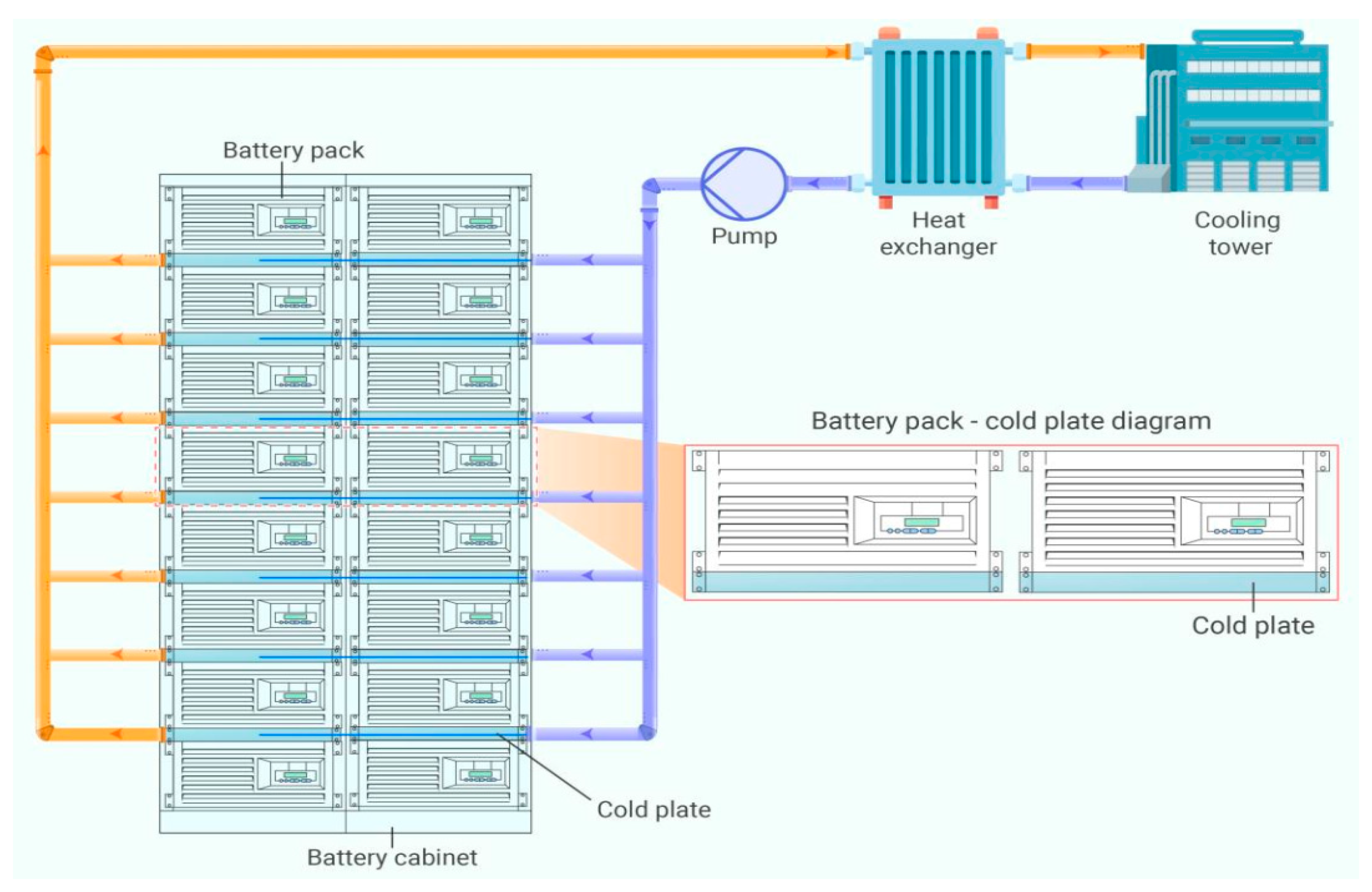
The system shown in Figure 2 [7] utilizes PCS as the cooling mass to transfer the heat generated by each layer of the battery pack. The heat is transferred to the heat exchanger through the PCS in the cold plate, and then distributed to the environment through the cooling tower. The battery modules and cold plates are arranged in a “sandwich type”, with two cold plates in each layer. As the battery cabinets are connected in series, the current is kept constant and the heat generation is similar. The study of the performance of the cold plate of a single battery pack can provide a basis for the subsequent performance analysis of the entire battery thermal management system.
During charging and discharging, LIBs generate heat due to electrochemical reactions and internal resistance losses. Without timely heat dissipation, excessive temperature may accelerate electrolyte decomposition and trigger thermal runaway, while excessively low temperature reduces ionic conductivity and reaction kinetics. To maintain the optimal operating range of 25~40 °C, LTMS employ circulating liquid media to transfer and dissipate heat efficiently.
The heat transfer process can be represented by a simplified energy balance equation:
Q gen = Q cond + Q conv + Q rad
where Q gen denotes the total heat generated inside the battery, and Q cond , Q conv , and Q rad represent heat dissipation through conduction, convection, and radiation, respectively. Among these, conduction and convection dominate under normal operating conditions.
In an LTMS, heat produced within the cell is first conducted through the casing to the cooling plate and then carried away by the circulating liquid to an external heat exchanger, forming a closed-loop cycle of generation–transfer–dissipation.
Experimental studies have shown that liquid cooling can reduce the maximum cell surface temperature from approximately 55 °C (air cooling) to below 42 °C, while improving temperature uniformity from ΔT ≈ 10 °C to ≤5 °C. When nanofluids or PCM are incorporated, the peak temperature can be further decreased by 3–5 °C, and overall cooling efficiency enhanced by 15%–25%. These results highlight the superior thermal control and safety benefits of liquid-based management, particularly under high-power and fast-charging conditions.
In the liquid thermal management system, the liquid work material is the “carrier” for heat transfer, and its performance directly affects the heat dissipation efficiency, applicable scenarios and safety of the whole system. There are significant differences in the specific heat capacity, thermal conductivity, insulation and other key indicators of different types of liquid work materials, and the selection needs to be combined with specific needs (such as heat dissipation capacity, low temperature adaptability, cost control, etc.) for comprehensive consideration. Table 1 is a comparison of the characteristics of several common liquid substances.
The core principle of liquid thermal management for lithium-ion batteries can be summarized as three closely intertwined steps of heat collection, transport and release, which work together to achieve precise regulation of the battery temperature. The heat generated by the battery is transferred through heat conduction to the cooling plate that is in contact with the battery surface, which in turn transfers it to the liquid mass flowing inside. To enhance heat transfer efficiency, the cooling plate is usually designed to fit snugly against the battery case, and some solutions apply thermally conductive silicone grease to the contact surface to reduce contact thermal resistance. The heat-absorbing liquid flows along a flow path driven by a pump to transport heat from the battery pack to the heat sink. After the heat-carrying liquid reaches the heat sink, it transfers the heat to the air through convection heat transfer, and eventually radiates to the outside world. In the case of low-temperature heating scenarios, the liquid is heated by a heater and then reversed to heat the battery.

2.2. Thermal Characteristics of Batteries

The thermal characteristics of lithium-ion power batteries are pivotal in determining their performance, safety, and longevity. These characteristics encompass the changes in internal temperature of the batteries that occur due to electrochemical reactions, internal resistance losses, and other side reactions during the charging and discharging processes. Understanding these thermal behaviors is essential for optimizing battery design and ensuring reliable operation. Battery performance and life are significantly affected by temperature [11]. Appropriate operating temperature can improve the efficiency and cycle stability of the battery. However, extreme temperatures (too high or too low) can cause damage to the battery, reducing the number of cycles and life of the battery.
Effective thermal management is essential to mitigate the adverse effects of temperature extremes and ensure that lithium-ion batteries operate within their optimal temperature range. This involves both cooling and heating strategies, depending on the ambient conditions and the specific application requirements. For instance, in electric vehicles, thermal management systems must dissipate heat generated during high-power discharges and rapid charging while also providing heating to maintain performance in cold environments. Advanced thermal management technologies, such as liquid cooling systems, PCM and hybrid systems, are increasingly being employed to address these challenges and enhance battery performance and safety.

3. Overview of Liquid Thermal Management Techniques

3.1. Function of Liquid Thermal Management Technology

A Liquid Cooling System (LCS) is a thermal management technology that uses a liquid medium to absorb, transfer, and dissipate heat. Such a system usually consists of coolant, pump, heat exchanger, sensor, radiator, etc.
It is mainly used to cool devices that generate a lot of heat during operation, such as electronic devices, power converters, computer servers, and, in particular, lithium-ion power batteries.
The liquid thermal management system works by using the circulating flow of coolant to absorb and transfer the heat generated by the battery. The pump pushes the coolant through the liquid cooling plate, which absorbs the heat from the battery and transfers the heat to the coolant [12]. The heated coolant then flows into the heat exchanger, where the heat is transferred to the environment and the cooled coolant circulates back to the liquid cooling plate again, forming a continuous cooling cycle.

3.2. Classification of Liquid Thermal Management Techniques

Liquid thermal management technologies can be systematically classified based on heat transfer mechanism, coolant–battery contact mode, and structural configuration (Table 2).
By consolidating overlapping categories such as immersion, spray, and direct-contact cooling, the framework provides clearer logical boundaries between conduction-, convection and phase-change–dominated processes. Such an organization facilitates comparative evaluation of thermal performance, reliability, and integration complexity across different liquid cooling technologies. Moreover, it highlights the progressive evolution from conventional single-phase systems toward hybrid and microchannel architectures that balance efficiency, safety, and structural compactness in advanced battery applications.

3.3. Comparative Performance of Different Liquid Cooling Techniques

To quantitatively evaluate the effectiveness of different liquid thermal management strategies for lithium-ion batteries, representative performance data from recent experimental and numerical studies are summarized in Table 3.
This comparison highlights the trade-offs among cooling technologies in terms of maximum temperature, temperature uniformity (ΔT), energy consumption, and overall cooling efficiency under comparable operational conditions.
As summarized in Table 3, direct-contact liquid cooling and nanofluid-based systems provide superior temperature uniformity and overall cooling efficiency compared to air or PCM-assisted cooling. However, challenges remain in fluid compatibility, insulation reliability, and material stability, which underscores the importance of structural material design and interface optimization, discussed in the following section.
To further quantify the performance enhancement achieved by composite LTMS, a comparative benchmark was established between traditional air cooling, single-phase liquid cooling, and hybrid composite systems integrating PCM and nanofluids. Representative performance data from recent experimental and numerical studies are summarized in Table 4, demonstrating the superior cooling efficiency and thermal uniformity of the composite architectures.
In addition to conventional single-phase liquid and air-cooling systems, composite cooling architectures that integrate PCM with nanofluids or dielectric liquids have demonstrated remarkable quantitative advantages. Experimental evidence indicates that the maximum cell surface temperature can be reduced from approximately 42 °C (for traditional liquid cooling) to 36–38 °C with PCM-nanofluid composites, while temperature uniformity (ΔT) improves from 5 °C to 2~3 °C. Moreover, the overall cooling efficiency exceeds 90%, representing a 10%~15% improvement over single-phase systems [18].
The synergistic mechanism arises from the complementary functions of the hybrid components: PCM provides latent heat absorption during transient thermal spikes, whereas nanofluids enhance convective heat transfer through increased thermal conductivity and micro-scale Brownian motion. Together, these effects yield a significant reduction in thermal resistance, improved dynamic stability, and superior safety performance. This quantitative benchmark highlights the practical potential of material-level hybridization for next-generation liquid thermal management systems.
In low-temperature liquid thermal management systems, introducing phase change materials (PCMs) notably affects hydraulic resistance and pumping power. When PCMs are dispersed within the coolant (e.g., as phase change slurry, PCS), solid–liquid coexistence during melting alters fluid rheology and increases viscosity by about 15%~40% near the transition range. This leads to a higher frictional pressure drop in microchannels or serpentine paths, raising the required pumping power by roughly 10%~25% compared with single-phase liquid cooling under identical flow conditions.
Nevertheless, the strong latent heat capacity of PCMs offsets the additional resistance by reducing the coolant flow rate needed for equivalent heat removal. Hence, the overall pumping energy of PCM-based or hybrid cooling systems remains comparable to, or only slightly higher than, that of conventional liquid cooling, while maintaining lower peak temperatures and improved thermal uniformity (ΔT ≤ 3 °C). Optimizing PCM content (typically 5~15 wt%) and particle size is therefore essential to balance enhanced heat storage with acceptable hydraulic performance in low-temperature LTMS.

4. Structural Materials for Liquid Cooling Systems

4.1. Indirect Contact Liquid Cooling

In indirect cooling architectures, cold plates are commonly placed in contact with battery module surfaces to conduct heat away into the circulating coolant. These plates often integrate microchannel or serpentine flow passages to enhance convective heat transfer. For immersion-based systems, enclosures or tanks filled with dielectric fluids allow battery cells to be fully or partially submerged, providing uniform temperature regulation. In some hybrid designs, heat pipes—sealed capillary-driven systems containing a working fluid—transfer heat from localized hotspots on the battery surface to an external cold plate or radiator [19,20].
Each structural component must maintain mechanical stability under thermal cycling, be resistant to degradation in contact with fluids, and remain compatible with other system elements such as seals, thermal interfaces, and battery casings. Material compatibility with the coolant (e.g., avoidance of corrosion or leaching) is particularly critical in systems that rely on long-term dielectric stability.
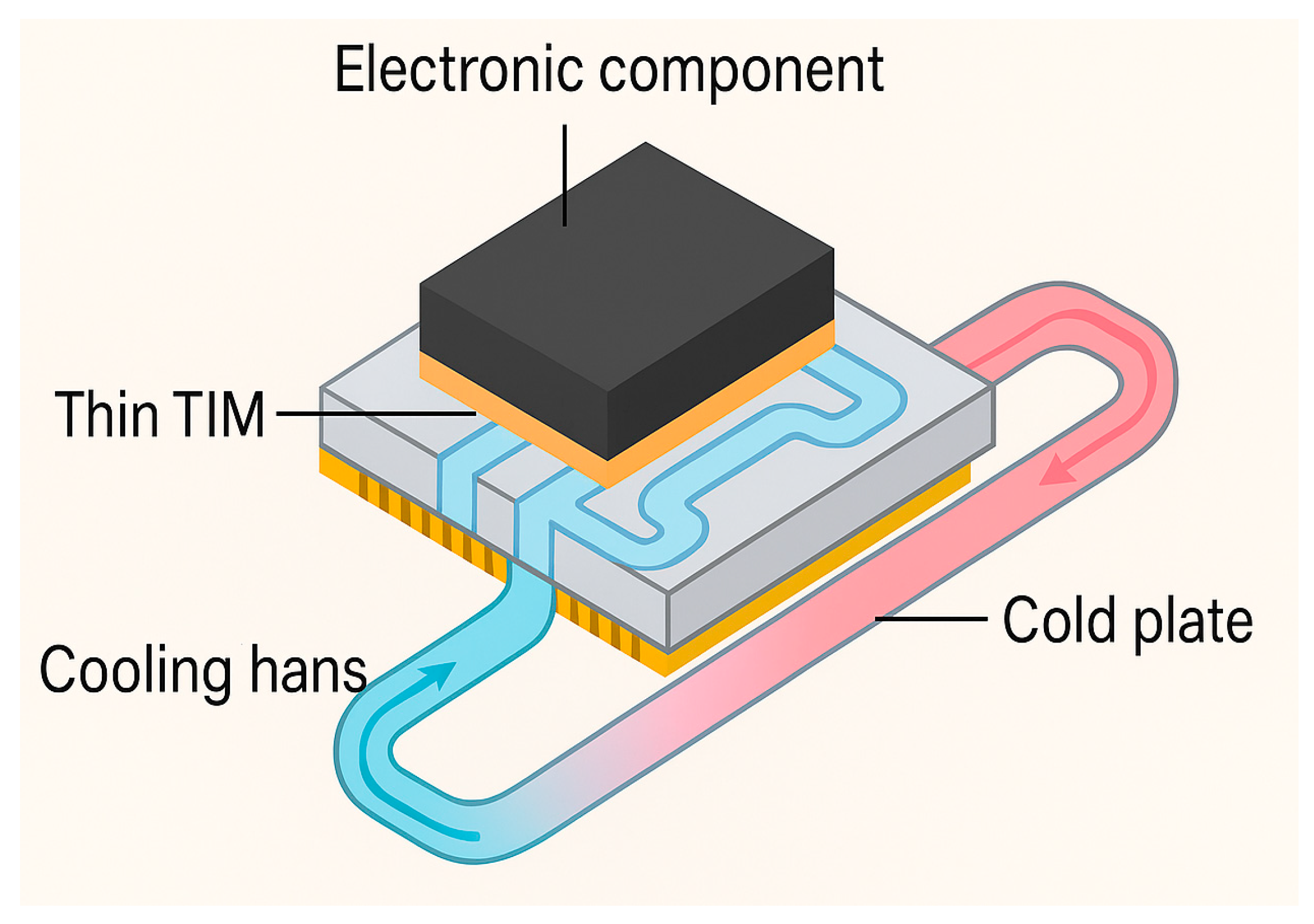
To illustrate how heat is extracted from battery modules through internal fluid circulation, a schematic of a typical cold plate design is presented in Figure 3. The diagram shows the internal flow channels that guide the coolant beneath the battery surface, allowing for effective heat transfer while maintaining electrical isolation. The serpentine or parallel flow paths are optimized to maximize surface contact and ensure uniform thermal performance across the module.
In a typical indirect liquid cooling system, battery modules or electronic devices are mounted onto or clamped against liquid-cooled cold plates, which are often constructed from aluminum alloys, copper, or composite laminates with internal microchannels or serpentine channels. A thin thermal interface material layer is often introduced between the cold plate and the heat source to minimize interfacial thermal resistance [21]. The coolant flows through these channels, absorbing heat and carrying it to a secondary heat exchanger (e.g., radiator or CDU—coolant distribution unit) for dissipation. The system relies heavily on good thermal contact and uniform clamping pressure to maintain consistent heat transfer across cell interfaces.
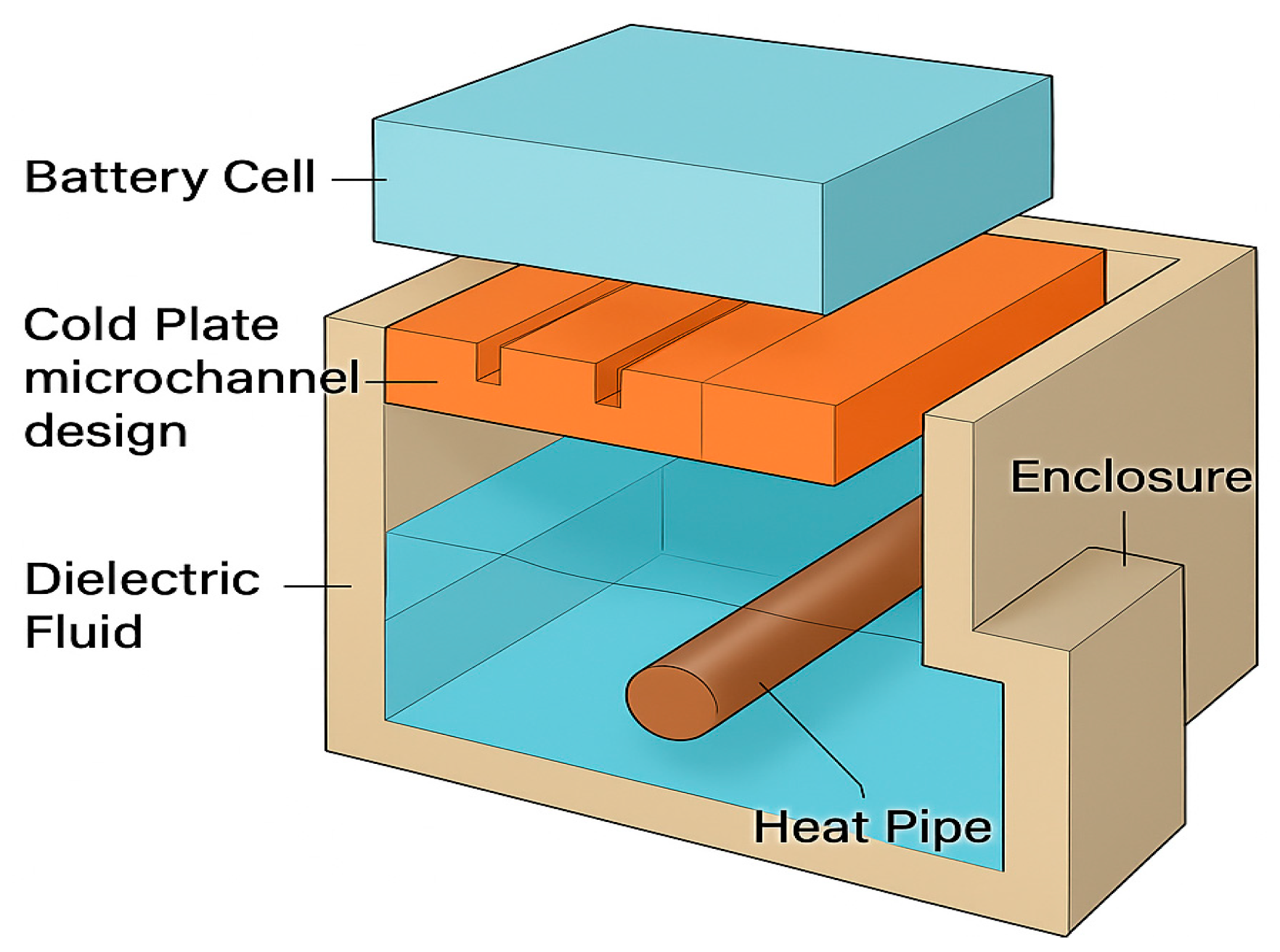
To better illustrate the spatial configuration and material integration within a typical liquid cooling system, Figure 4 presents a cross-sectional schematic of a representative thermal management module. The diagram highlights key components including the battery cell, microchannel-embedded cold plate, dielectric fluid region, heat pipe, and external enclosure. Each of these elements contributes distinctively to the system’s thermal conduction, convection, insulation, and structural support functions [22]. The interrelationship between these layers reflects the increasing complexity and performance demands placed on structural materials in advanced battery applications.

4.1.1. Liquid Cooled Plate

Liquid cooled plate cooling is an efficient thermal management technology, which is widely used in battery thermal management, especially for lithium-ion power batteries. The working principle is achieved by liquid cooling plates, which are usually made of highly thermal materials and are designed with small channels for the flow of coolant. When the battery generates heat, this heat is transferred to the liquid cooling plate through thermal conduction, and then the coolant absorbs this heat during the flow process, and takes the heat away through the circulation system, and finally achieves the cooling effect. In practical applications, the liquid cooling plate cooling system usually includes a primary side cycle and a secondary side cycle. The primary side cycle is responsible for transferring heat from the liquid cooling plate to the cold source, while the secondary side cycle is responsible for transferring heat from the liquid cooling plate to the server or other heating components [23,24,25].
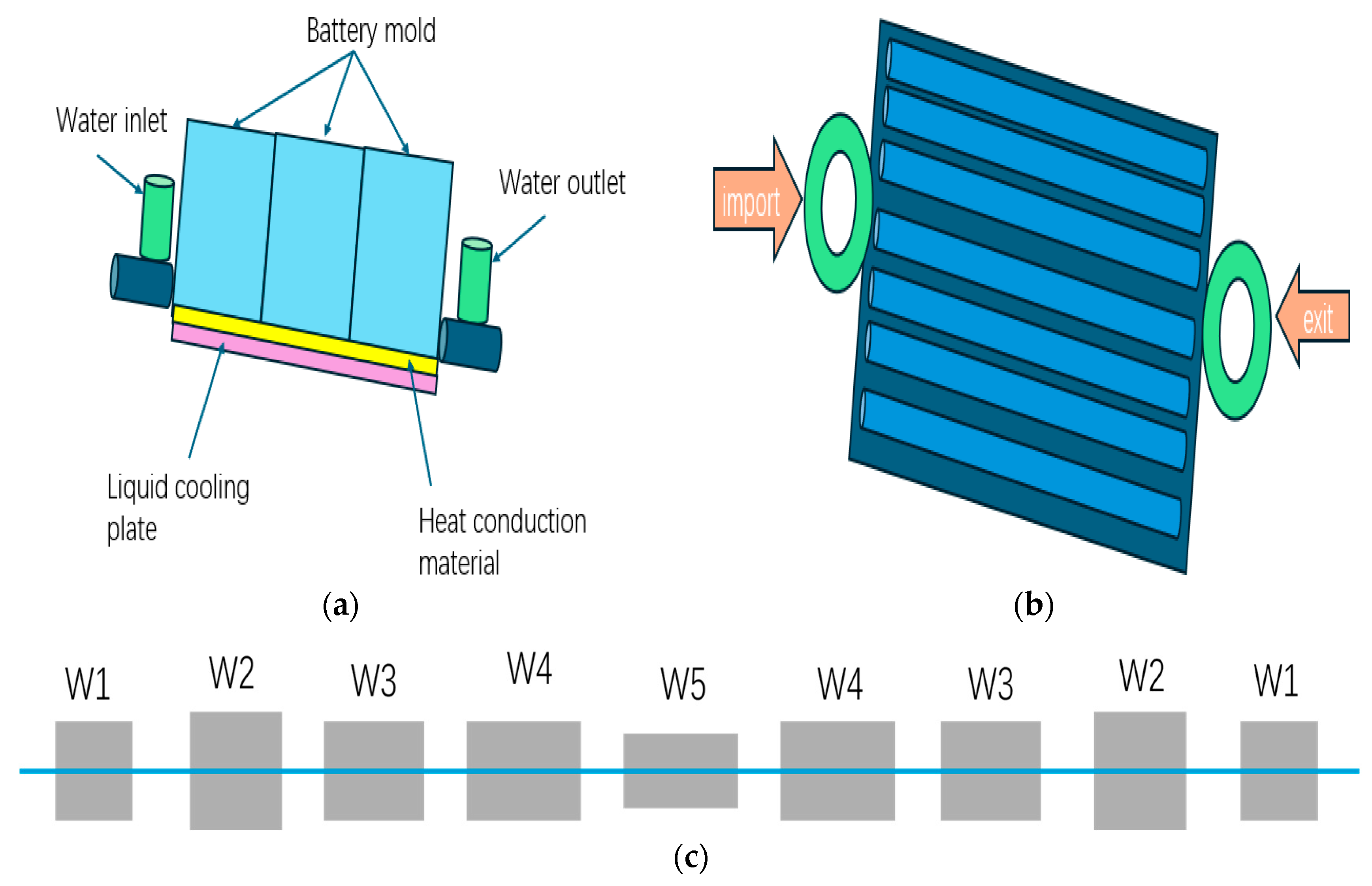
Venkateswarlu, B et al. designed a double-layer liquid cooling plate cooling system for battery packs. The influence of inlet flow rate of double layer liquid cooling plate on the heat dissipation effect of the whole package is studied. The results show that the cooling effect of double layer liquid cooling plate cooling system is good, and the temperature rise and temperature difference in the system are relatively small [26,27]. Swamy, K.A. et al. designed a liquid-cooled plate with 9 parallel flow paths, as shown in Figure 5, and explored the influence of the width of the flow path on the performance of the liquid-cooled plate. In addition to the parallel flow channels, various other flow channel designs such as stepped flow channels and wavy flow channels have also been extensively studied.
Straight or parallel channels provide a simple and low-cost design with minimal pressure loss; however, they tend to exhibit non-uniform temperature distributions along the flow direction due to uneven coolant velocity. Serpentine channels enhance fluid mixing and improve thermal uniformity, often reducing the temperature difference (ΔT) by approximately 15%~25% compared to straight channels, but at the expense of a 10%~20% increase in pumping power. Wavy and stepped channels generate secondary vortices that strengthen local turbulence, effectively lowering surface temperature peaks while maintaining a manageable pressure drop.
Tapered channels—whose cross-sectional area gradually narrows along the flow direction—can achieve a more balanced velocity distribution, improving thermal uniformity (ΔT ≤ 4 °C) without significantly increasing energy consumption. In contrast, grooved microchannels enlarge the heat transfer area and boost convective efficiency by about 5%~10%, though they may induce localized flow recirculation and are more difficult to manufacture [16]. Comparative analyses from numerical and experimental studies consistently demonstrate that variable cross-section or wavy channel plates offer the best compromise between heat dissipation capability and hydraulic performance. Under comparable coolant flow rates of approximately 0.005~0.01 kg·s−1, these designs can maintain the maximum cell surface temperature below 45 °C and the temperature difference within 3~4 °C, while keeping pumping energy within 10% of conventional serpentine layouts.

4.1.2. Liquid Cooled Pipe Type

Due to the flat shape of the liquid cooling plate, this method is easy to realize the arrangement in the square battery, and in the cylindrical battery, it is necessary to fit the liquid cooling plate on the outer surface of the cylindrical battery. Although the cooling effect of the liquid cooling plate is good, the volume and mass of the liquid cooling plate are large, in order to carry out the lightweight research of the liquid cooling system, some researchers have carried out the design of the liquid cooling pipe. Poorshakoor, E et al. developed a liquid cooling tube with three curved contact surfaces to cool the cylindrical battery [28]. Through numerical calculation, the influences of the flow rate, inner diameter, contact surface height and contact surface Angle of the thermal conductivity tube on the heat dissipation performance and quality were studied. It is found that the inner diameter is the most important factor, the height of the contact surface is the secondary factor, and the Angle of the contact surface is the least influential factor.
While ensuring the cooling performance of the liquid cooling tube, the quality of the liquid cooling tube needs to be reduced, so the structure of the liquid cooling tube needs to be optimized. The results show that the optimized liquid cooling tube structure can control the maximum temperature of the battery below 40 °C, meeting the heat dissipation requirements of the battery [29].
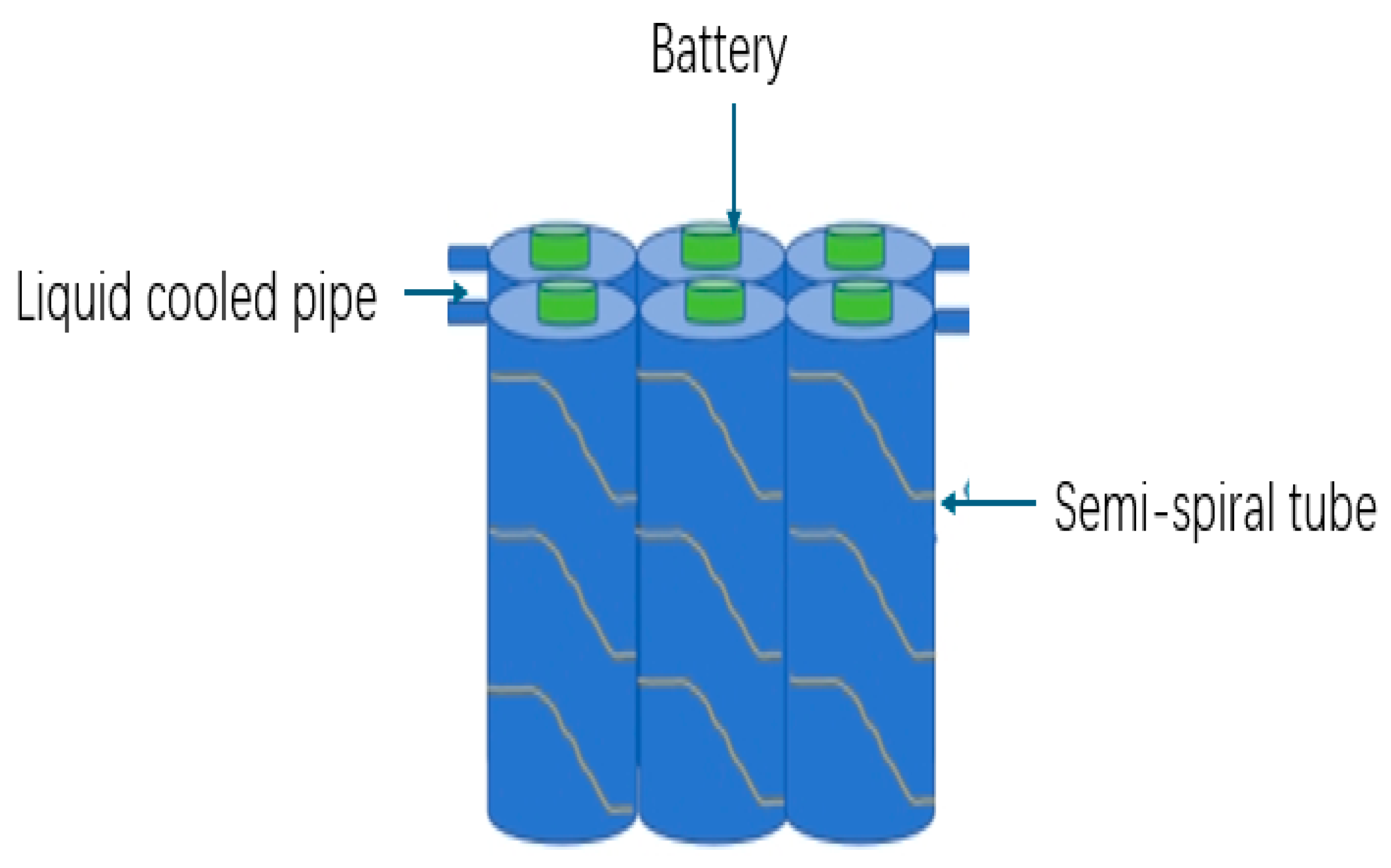
Nehra, M et al. proposed a liquid cooling method based on semi-spiral tubes, the specific structure of which is shown in Figure 6. The effects of inlet flow rate, spiral tube pitch and spiral tube diameter on the thermal performance of the battery were analyzed by numerical analysis. The results show that under the temperature condition of 25 °C, the maximum temperature and temperature difference decrease gradually with the increase in inlet flow [30,31]. When the inlet flow rate is 3 × 10⁻⁴ kg/s, the cooling performance is not significantly improved by changing the pitch and the number of spiral tubes. When the diameter of the semi-spiral tube is in the range of 2.0~3.8 mm, the temperature difference is kept within 4.3 °C, but the highest temperature is close to 30.9 °C, slightly higher than 30.5 °C, and the scheme has a good heat dissipation effect.
To further evaluate the performance characteristics and structural differences among representative indirect contact liquid cooling methods, a comparative summary is provided [32,33]. Table 5 presents a comparison of various indirect contact liquid cooling methods.

4.2. Direct Contact Liquid Cooling

Direct contact liquid cooling is a highly efficient and compact thermal management solution that centers on direct contact between the battery and the coolant, eliminating the intermediate heat transfer between the cooling panels and the battery that occurs in traditional indirect liquid cooling. This design allows the surface of the battery to have a much larger contact area with the coolant-whether it is the curved surface of a cylindrical battery, the flat surface of a square battery, or the flexible shell of a pack battery, all of them can form an all-around or large-area contact with the coolant, which allows for a more direct and fuller transfer of heat. Compared to indirect liquid cooling, which relies on local conduction in the cooling plate, direct contact liquid cooling can significantly reduce thermal resistance, especially for high power density battery packs, which can quickly respond to transient heat production peaks and avoid localized temperature surges. However, the direct-contact nature of the cooling fluid imposes stringent insulation requirements. Due to the potential difference between the battery monomer, and the coolant will be directly infiltrated electrode leads, lugs and other conductive parts, if the coolant conductive, it may trigger an internal short circuit in the battery, resulting in leakage, increased energy consumption and even potential safety hazards [34].
Immersion and non-immersion cooling systems represent two primary strategies for liquid thermal management in lithium-ion batteries. In non-immersion systems, coolant circulates through cold plates or flow channels and thermally couples with battery cells via solid interfaces. However, the safety and long-term reliability of immersion cooling systems largely depend on the dielectric properties and chemical stability of the coolant. Under high-voltage operation, dielectric liquids may experience local polarization and charge accumulation at the electrode–fluid interface. When the electric field strength exceeds the liquid’s dielectric limit, microdischarges or localized plasma channels can form, initiating chemical bond scission and the generation of conductive degradation products. Such processes gradually reduce the dielectric strength and accelerate the thermal and electrical aging of the coolant [13,35].

4.2.1. Immersion Type

The most common direct contact liquid cooling is submerged liquid cooling, the battery pack is partially or completely immersed in a well-sealed box composed of coolant, submerged liquid cooling technology because of high heat dissipation efficiency, good temperature uniformity, flexible layout and other characteristics, in the field of Internet data centers has been large-scale applications.
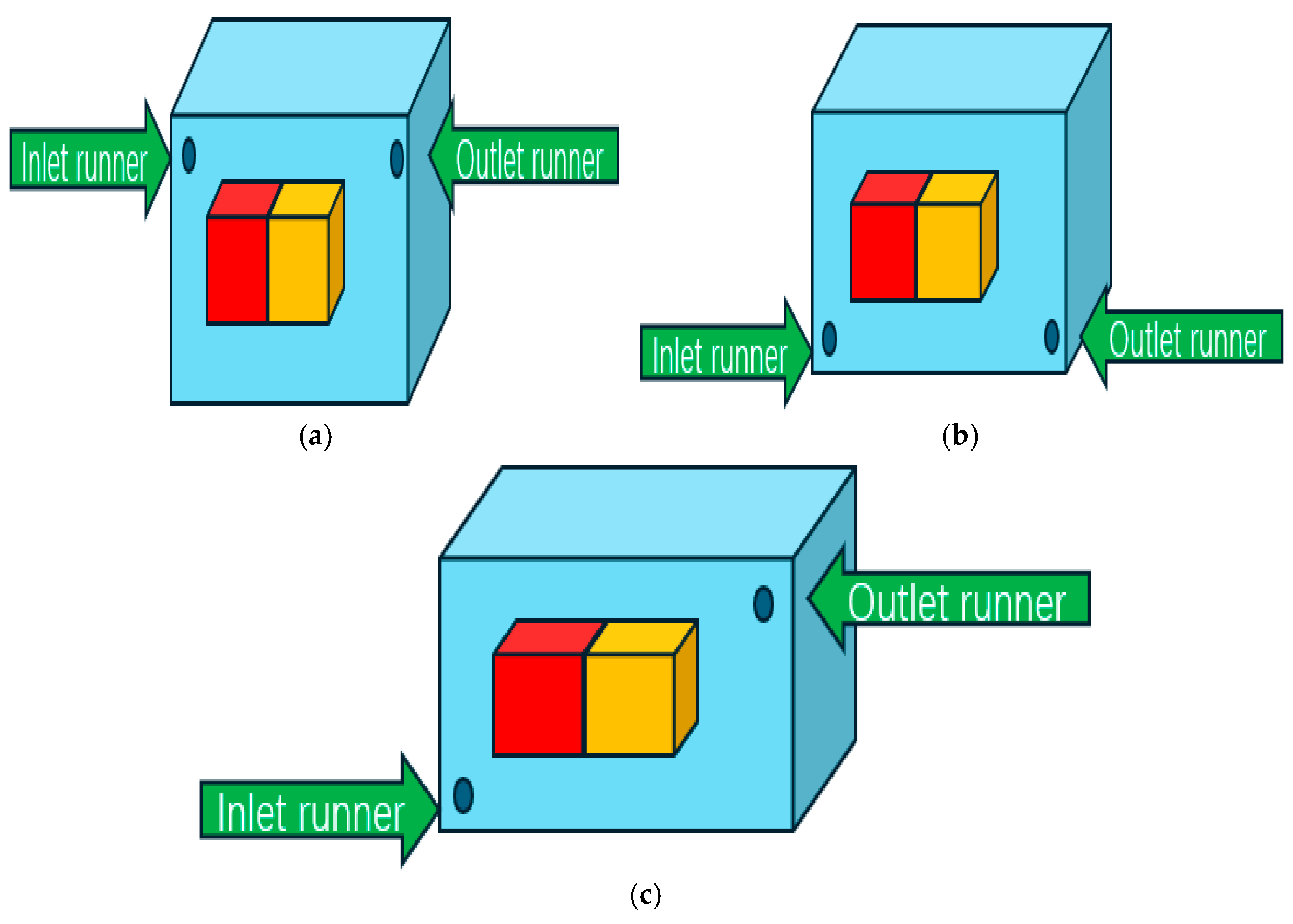
In terms of research on single battery, Amer et al. studied the heat dissipation capacity of submerged liquid-cooled battery pack with R134a as coolant at different liquid level heights through CFD simulation. The results show that there is a positive correlation between the heat dissipation capacity of the battery and the liquid level height of the coolant. In general, submerged liquid cooling has obvious advantages over indirect liquid cooling under high rate discharge [14,36,37]. Relevant researchers studied the module composed of 12 square batteries and designed three different flow channel structures with parallel “U” channel at the top, parallel “U” channel at the bottom and staggered “U” channel at high and low levels, as shown in Figure 7.
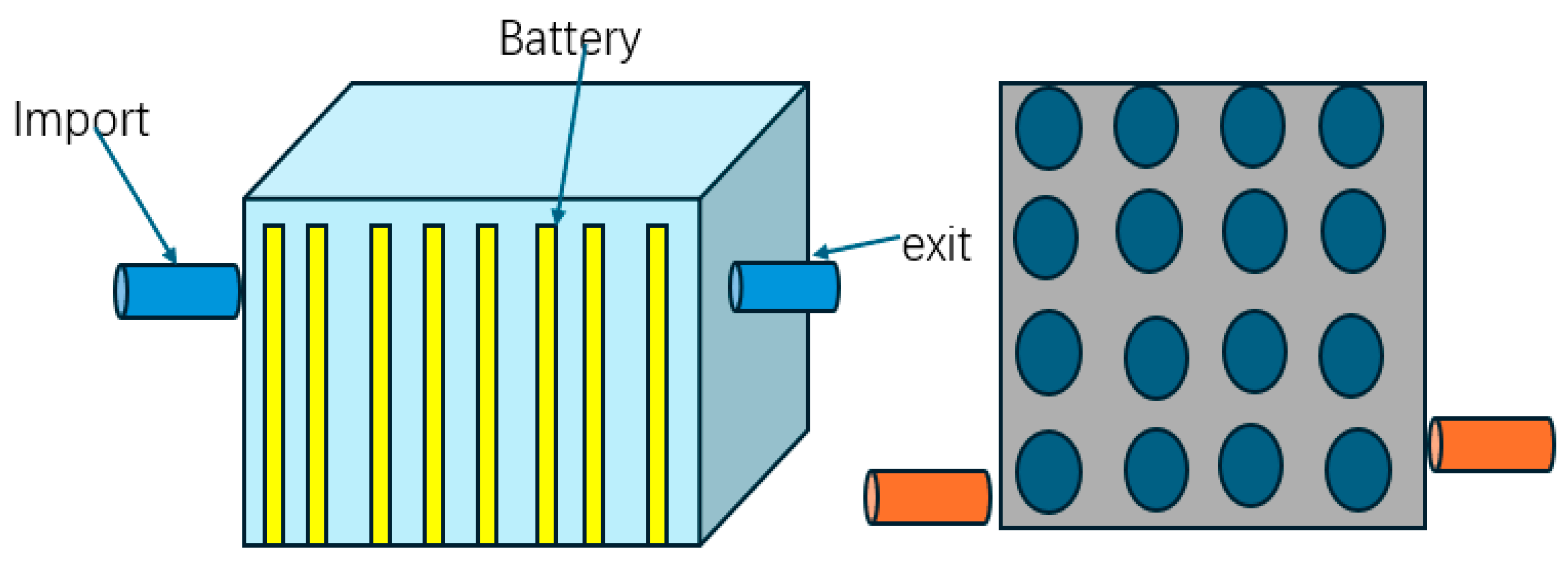
CFD simulation is used to analyze the heat dissipation effect of the three flow channel structures. The results show that under the temperature environment of 25 °C, the high and low staggered “U” flow channel structure has the best heat dissipation effect. When the discharge rate of 3C and the flow rate of coolant is 1 m/s, The maximum temperature and maximum temperature difference in the battery pack are 39.8 °C and 3.5 °C, respectively, indicating that the system can meet the heat dissipation requirements [8,15,17]. Yang, H et al. built an submerged liquid-cooled battery module consisting of 60 lithium-ion batteries, as shown in Figure 8. Using dielectric, non-combustible, low boiling HFE-7000 refrigerant, the thermal performance of the system was studied by simulation and test. Since the refrigerant flows and boils on the surface of the cell wall, this reduces the contact thermal resistance and enhances the heat transfer process. Therefore, the thermal performance of the battery module is improved. When the inlet flow rate is 0.1 m/s, the HFE-7000 steam is mainly saturated boiling heat transfer. In this case, the ambient temperature is 25 °C, and the maximum temperature and temperature difference in the battery pack at 1C discharge rate are 37.20 °C and 3.71 °C, respectively, indicating that the system can meet the heat dissipation requirements [38,39].

4.2.2. Non-Submerged Type

According to the relevant optimization design of the existing problems, inspired by drip irrigation technology, Hou Nairen designed a new type of drip contact cooling system. The system uses the direct contact between the liquid and the battery to accelerate the heat transfer efficiency. The structure of the system is simple, the distance between the single battery is small, the heat transfer efficiency is high, and the all-round contact with the battery makes the heat dissipation system have better temperature consistency [40]. The heat dissipation performance of a battery pack composed of 4 cells in parallel under different liquid flow rates at 25 °C at 1C constant discharge to cutoff voltage was analyzed through experiments, and the heat dissipation performance of the battery pack at 1C, 1.5C, 2C discharge rates at 25 °C at a liquid flow rate of 5.5 mL/min. The test results show that when the battery pack is discharged at 1C at 5 °C, the liquid dripping velocity is 3.16 mL/min, 5.5 mL/min and 7.2 mL/min [41]. The maximum temperature of the battery pack is 39.5 °C, 36.63 °C and 32.16 °C, respectively, all of which do not exceed 40 °C. The maximum temperature difference in the battery pack under the three flow rates does not exceed 2 °C, indicating that the heat dissipation performance of the system meets the design requirements.
Non-submerged cooling technology plays an important role in the thermal management of lithium-ion power batteries, especially air cooling and cold plate liquid cooling technology, which meet the needs of thermal management in a variety of application scenarios with low cost and relatively simple system structure. Non-submerged liquid thermal management technology has been proven to have good cooling effects in electric vehicles and energy storage plants. For example, the snakelike cooling plate inside the Tesla 4680CTC battery pack is an application of this technology, which improves the cooling effect by increasing the contact area. Future research will likely focus on advanced cooling structures, optimized airflow, mixing systems, and the use of artificial intelligence and machine learning to further optimize non-submerged liquid thermal management systems [9,42,43].
The advantages and disadvantages of various types of direct contact liquid cooling are summarized, as shown in Table 6.
Furthermore, when nanofluids are used as dielectric or hybrid coolants in direct or indirect configurations, maintaining dispersion stability and ensuring material compatibility become critical for long-term system reliability. Surfactants and stabilizers maintain the long-term dispersion stability of nanofluids by preventing nanoparticle agglomeration. They adsorb onto particle surfaces, forming electrostatic or steric barriers that reduce van der Waals attraction and surface tension. This ensures uniform particle distribution, minimizes sedimentation, and preserves thermal conductivity during continuous circulation. Proper use of these additives also limits viscosity increase, maintaining efficient flow and stable cooling performance in liquid thermal management systems.

5. Simulation Research

5.1. Research Status

Accurate thermal modeling of lithium-ion battery systems requires careful incorporation of key material-level thermal parameters, which fundamentally govern the reliability and resolution of simulation outputs. Among these, thermal conductivity (k) and interfacial thermal resistance (Rint) are among the most influential [44,45]. Thermal conductivity determines how efficiently heat spreads within and across materials, while interfacial resistance quantifies the barrier to heat flow at material interfaces—particularly critical at junctions such as battery cell-to-TIM or TIM-to-cold-plate. Neglecting these effects often results in underprediction of hotspot severity and poor guidance for system-level design.
In high-resolution simulations, especially for high-C-rate or fast-charging scenarios, the inclusion of anisotropic thermal conductivity in layered materials (e.g., prismatic cells or laminated composites) becomes important. Moreover, contact pressure, surface roughness, and wetting quality at interfaces (such as cell-TIM-cold plate) can cause order-of-magnitude variations in Rint, making its accurate characterization and inclusion vital.
To capture the full thermal behavior from microscale material interactions to macroscale pack-level temperature distributions, multiscale modeling frameworks are increasingly used. These approaches integrate the thermal properties of functional materials, including:
Thermal diffusivity (α = k/ρCp), influencing transient response times;
Specific heat capacity (Cp), controlling thermal inertia;
Dielectric constant (εr), in electro-thermal coupled systems;
Volumetric heat generation (q′) based on electrochemical load.
Multiphysics simulations such as the finite element method (FEM) and finite volume method (FVM) are commonly employed to integrate these parameters into the governing heat conduction and convection equations. In some frameworks, electrochemical-thermal coupling is also achieved via models like Newman’s P2D or pseudo-2D methods, enabling temperature-dependent degradation and heat generation feedback [10,46,47].
Such modeling not only aids in the material selection process but also allows engineers to conduct parametric sensitivity analysis, design space exploration, and lifetime prediction under various operating conditions. In next-generation applications, data-driven surrogate models trained on high-fidelity multiscale simulations are being developed to accelerate real-time thermal management decision-making.

5.2. Influence of Material Parameters on Numerical Thermal Simulations

The predictive accuracy of thermal simulations in battery systems is fundamentally dependent on the precise representation of material properties. Key parameters—including thermal conductivity (k), specific heat capacity (Cp), density (ρ), and interfacial thermal resistance (Rint)—govern heat transfer behaviors within and between system components. Misrepresentation or oversimplification of these properties can significantly distort simulated temperature fields, heat fluxes, and hotspot predictions, ultimately compromising the effectiveness of thermal management system design [48,49,50,51].
Accurate thermal simulation of lithium-ion battery systems relies on solving the transient heat conduction equation that governs temperature evolution within the cell and cooling structures [52]. The general three-dimensional heat transfer model can be expressed by Fourier’s law with a convective boundary condition:
ρ C p T t = k T + q
k T n = h T T
where ρ is the density, C p is the specific heat capacity, k is the thermal conductivity, and q denotes the volumetric heat generation from electrochemical and resistive processes. The second equation represents the convective boundary condition at the cooling interface, where h is the convective heat transfer coefficient, T is the coolant temperature, and n is the normal direction at the boundary [53].
Thermal conductivity (k) determines how efficiently heat propagates through individual materials. It plays a dominant role in the simulation of cold plates, battery cells, heat pipes, and interface layers. Notably, several materials used in battery systems exhibit anisotropic conductivity—for example, layered electrodes and graphite-based TIMs often have much higher in-plane than through-thickness thermal conductivities [54,55,56]. Ignoring such anisotropy in simulations can lead to an unrealistic portrayal of thermal spreading and localized overheating.
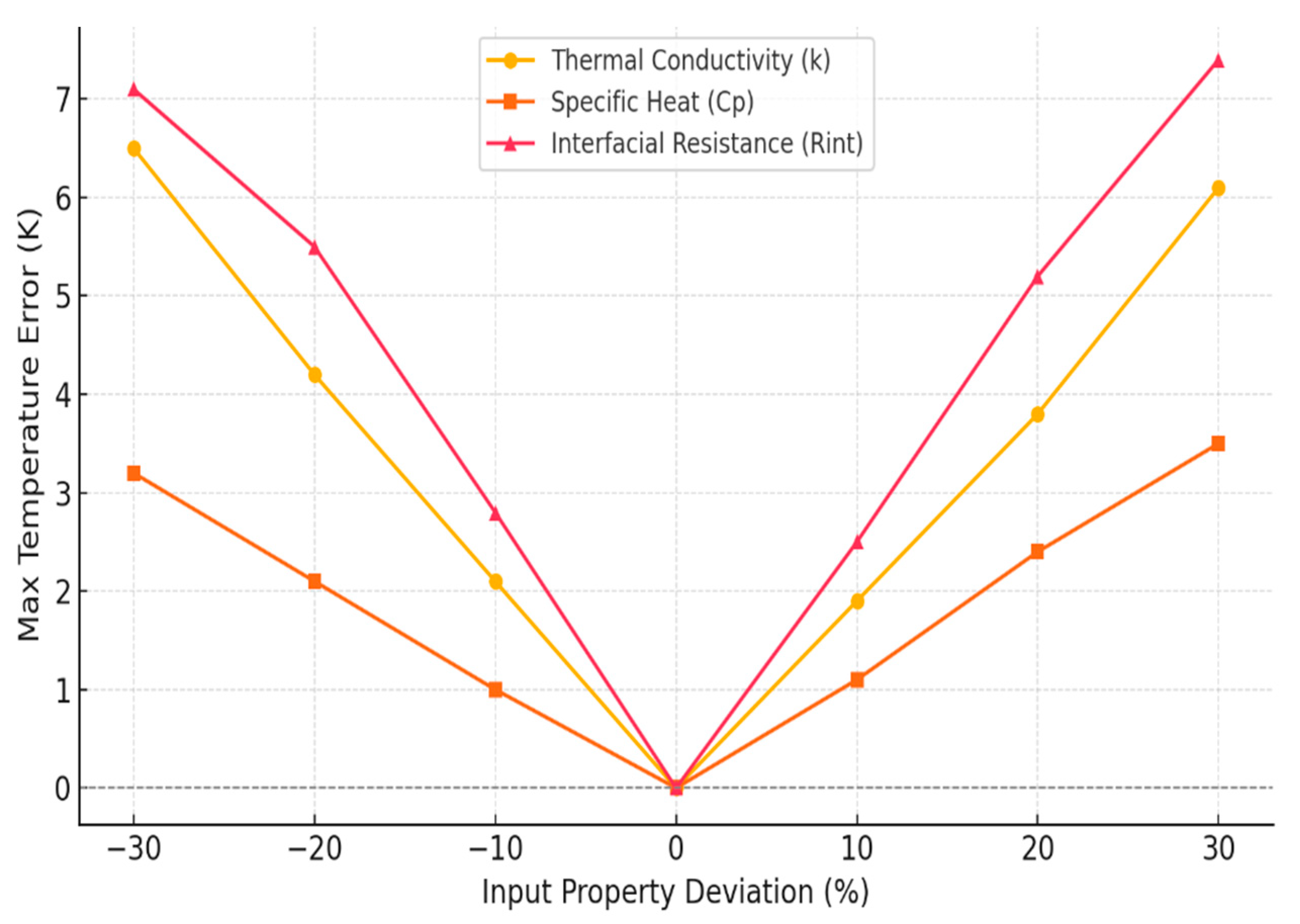
In practical thermal simulations, the accuracy of the predicted temperature field is strongly influenced by the reliability of material property inputs. However, many material parameters—such as thermal conductivity, specific heat capacity, and interfacial thermal resistance—are known to vary due to manufacturing tolerances, aging, or limited experimental precision [57]. To quantify the influence of such uncertainties, a parametric sensitivity analysis was conducted. Figure 9 illustrates how ±10%–30% deviations in these material inputs affect the predicted maximum temperature error. It is evident that interfacial thermal resistance (Rint) is the most sensitive parameter, while specific heat capacity (Cp) shows comparatively less impact. This underscores the importance of accurate interface characterization in thermal modeling [58].
Specific heat capacity (Cp) represents a material’s ability to store thermal energy and directly affects how quickly temperatures rise during battery operation. In transient simulations involving fast charging, discharging, or pulsed loads, Cp significantly influences thermal response times. An underestimated Cp can exaggerate thermal sensitivity, while an overestimated value can mask critical temperature spikes [59].
Together with thermal conductivity and Cp, density (ρ) defines thermal diffusivity (α = k/ρCp), which characterizes the speed of thermal response in a material. Materials with low α may cause thermal lag or hotspots due to poor diffusion, while high α materials contribute to rapid thermal equilibrium. Proper accounting of α is essential for simulating short-term dynamic behavior and designing responsive thermal control strategies [60].
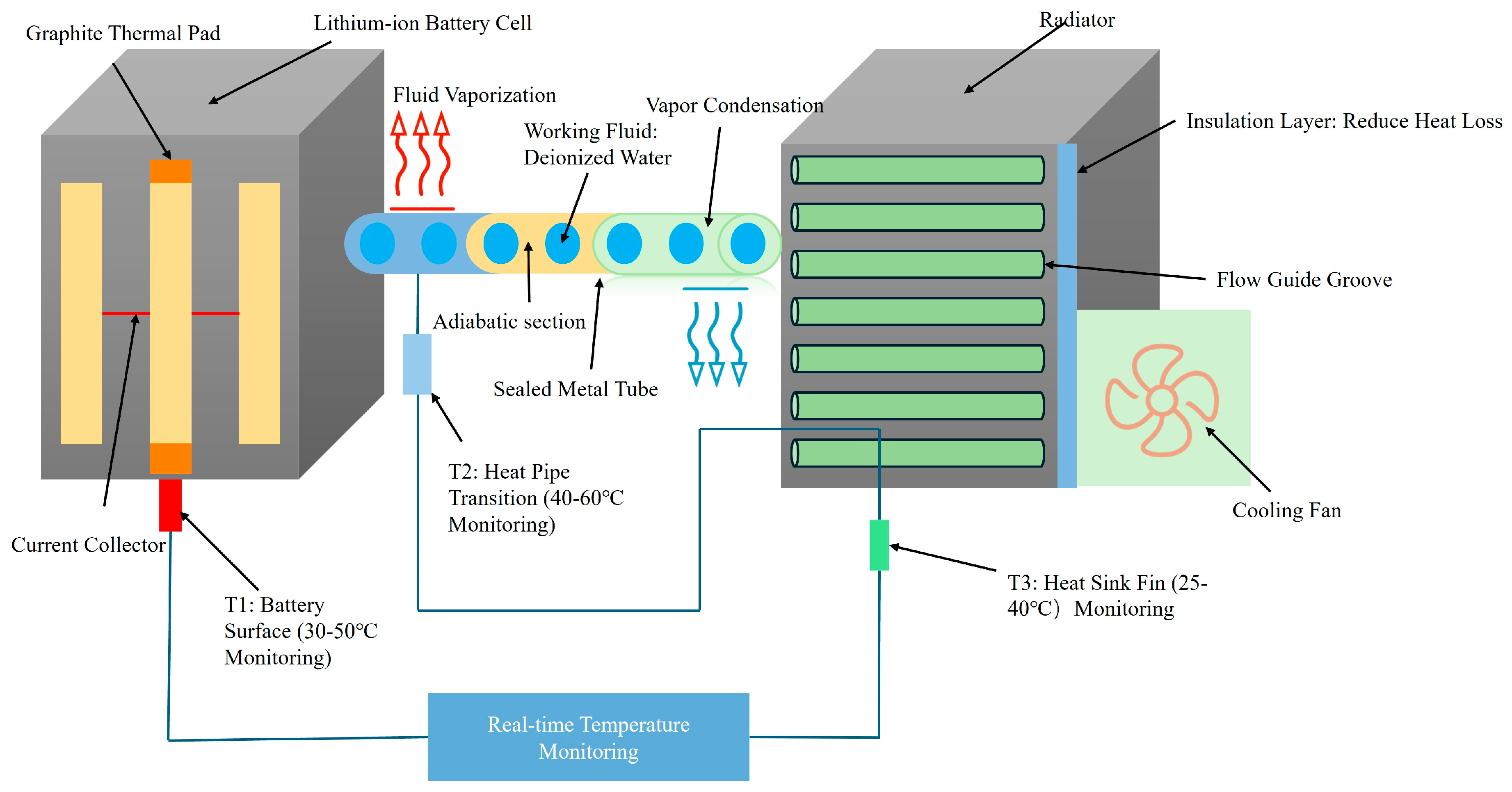
By investigating the effectiveness of different thermal management strategies using heat sinks and heat pipes to enhance thermal dissipation. Figure 10 illustrates the configuration of a heat sink and heat pipe system [15], where heat is introduced at the base, and the thermal energy is dissipated through the fins and pipes. The system is also equipped with K-type thermocouples to measure temperature gradients and monitor the heat flow within the structure.
Equally important is interfacial thermal resistance (Rint), which quantifies the impedance to heat flow at the interfaces between dissimilar materials—such as between the cell casing and TIM or between TIM and cooling plates. Even with high-conductivity bulk materials, a large Rint can act as a dominant thermal bottleneck. Rint is affected by contact pressure, surface roughness, material compatibility, and long-term degradation. Failure to incorporate realistic Rint values into thermal models may result in significant underprediction of surface temperatures and completely overlook potential hotspot zones [61].
Sensitivity analyses across various studies consistently highlight that interface-related properties can have a greater influence on thermal resistance than the properties of bulk materials themselves. For instance, variations in Rint can lead to 20%–50% changes in predicted cell surface temperatures, especially under high-load or fast-charging scenarios. These findings emphasize the necessity of experimentally informed, temperature-dependent, and spatially resolved material parameters in advanced numerical simulations.
In conclusion, material parameters serve as the backbone of numerical thermal models. Their correct implementation is essential for achieving simulation fidelity, enabling informed thermal management design decisions, and ensuring system safety and performance across diverse operating conditions.

5.3. Challenges

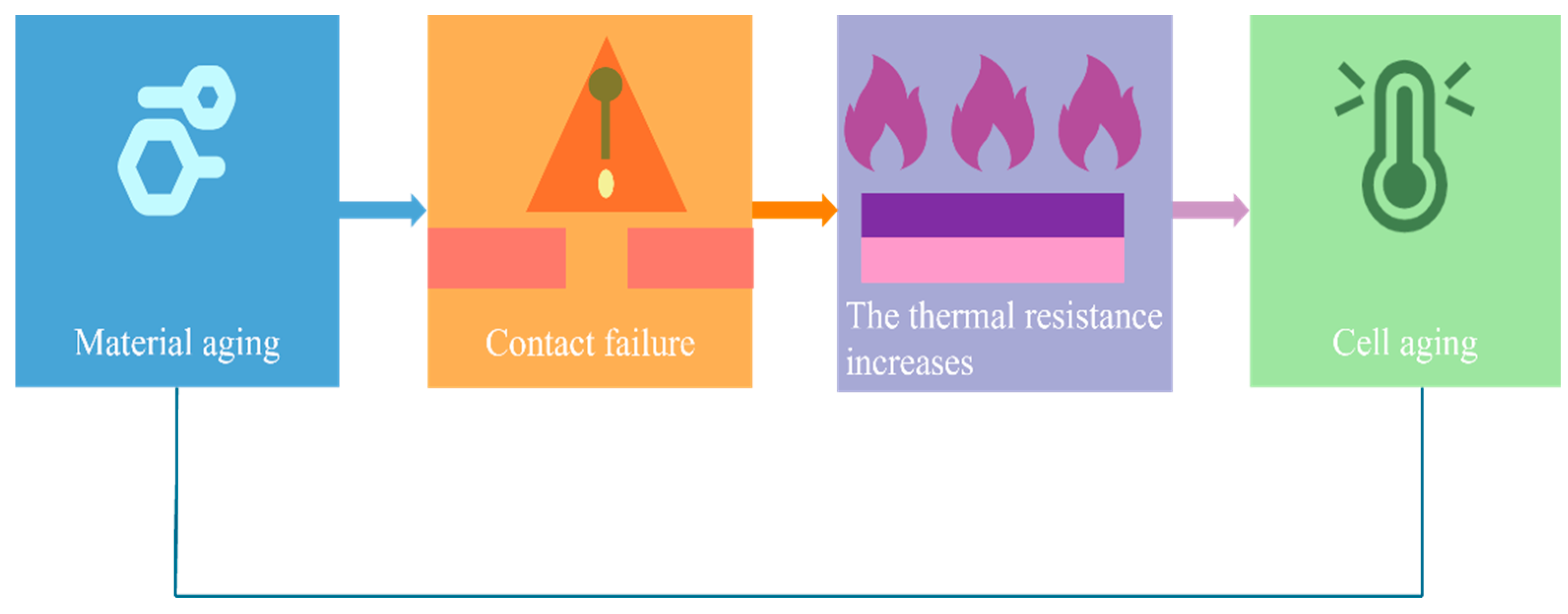
In order to address the cascading effects of material-level failures on system-level performance, it is crucial to understand how localized issues can propagate and affect the overall battery thermal management system. Figure 10 presents a failure pathway diagram, highlighting the potential progression of material degradation and interface failures from the microscale to the macroscale. This diagram illustrates how issues such as material aging, interfacial thermal resistance (Rint), and thermal runaway may lead to system-level failures, including increased thermal resistance, localized hotspots, and ultimately battery performance degradation or thermal runaway. Understanding these pathways is key to optimizing material selection and improving system robustness [62].
To fully understand the cascading effects of material degradation on the overall performance of thermal management systems, it is crucial to examine how issues at the material level propagate to affect the entire system. Figure 11 illustrates the failure pathway, starting with material aging and progressing through contact failure, leading to an increase in thermal resistance, and ultimately accelerating cell aging. This diagram highlights the critical steps in the failure process and emphasizes the importance of maintaining material integrity to ensure optimal thermal management and system longevity.
The failure and integration difficulty roadmap shows how material-level failures gradually propagate to system-level performance issues. This diagram describes how material degradation, thermal interface failure, etc., lead to increased thermal resistance, thereby forming hot spots and accelerating battery aging, and ultimately may cause thermal runaway or systemic failure.
Despite significant advancements in the development of high-performance materials for battery cooling, the practical integration of these materials into liquid thermal management systems remains constrained by several critical technical and engineering challenges. These issues arise at the interface of materials science, manufacturing, system design, and real-world reliability, limiting the scalable deployment of many promising innovations.
One of the foremost challenges lies in ensuring chemical compatibility and thermal stability under actual battery operating conditions. Materials such as dielectric fluids and nanofluid coolants must operate reliably at elevated temperatures and high voltages without degrading, evaporating, or reacting with surrounding components. However, some fluorinated liquids or hydrocarbon-based coolants show long-term instability due to moisture uptake, additive leaching, or thermal decomposition. Similarly, certain thermal interface materials exhibit polymer softening, filler-matrix delamination, or oxidative degradation after prolonged exposure to thermal cycling or battery outgassing products.
Another significant issue is the mechanical reliability of thermal interfaces and structural elements. Repetitive heating and cooling cycles in electric vehicle applications lead to thermal expansion mismatch between cells, TIMs, and cold plates. This often results in microcracking, void formation, or mechanical delamination—especially in layered or sandwich-type designs. Even if the bulk materials retain favorable thermal conductivity, degradation at the interfaces can sharply increase the effective thermal resistance, leading to uneven heat dissipation, temperature rise, and localized cell aging.
Manufacturability and scalability present another major bottleneck. Many advanced cooling materials, including graphene-enhanced polymers, self-healing TIMs, and nanostructured PCM composites, are either cost-prohibitive or incompatible with standard large-scale production processes. Achieving uniform dispersion of nanoparticles, controlling filler orientation, and maintaining interface adhesion during module assembly require tight process control and quality assurance, which may not be economically viable at scale. Furthermore, high thermal conductivity materials like copper or aluminum increase weight, while polymer alternatives often require chemical modification or filler loading to reach target performance levels—introducing new fabrication challenges.

6. Summary and Prospect

6.1. Summary

This paper provides a comprehensive overview of the latest advancements in liquid thermal management systems for lithium-ion batteries, with a particular focus on the role of advanced electronic materials. The integration of high-performance materials such as TIMs, dielectric fluids, and heat-resistant composites plays a pivotal role in enhancing the efficiency and safety of battery thermal management. Through multiscale modeling and a deep analysis of material properties such as thermal conductivity, interfacial resistance, and specific heat capacity, we present a detailed understanding of how material choices impact the overall thermal performance of battery systems.
The use of artificial intelligence to assist in material discovery to optimize coolant formulations or thermal interface materials has become a trend; it offers an efficient approach to optimize coolant formulations and TIMs by combining experimental data, simulations, and predictive modeling. In this study framework, material-specific properties—such as thermal conductivity, viscosity, density, interfacial resistance, and latent heat—are compiled from literature, molecular dynamics, and differential scanning calorimetry experiments. These data serve as the foundation for machine-learning models that predict thermal performance and guide material design.
The optimization process integrates feature representation, property prediction, and iterative design. Material descriptors include nanoparticle type, size, concentration, surfactant content, and base-fluid characteristics. Models such as XGBoost, random forest, or Gaussian process regression are trained to estimate thermal conductivity and flow resistance [63]. Using Bayesian optimization or active learning, new candidate formulations are proposed with the highest expected improvement, experimentally validated, and fed back into the model for refinement. This closed-loop strategy minimizes experimental cost while efficiently identifying high-performance, low-viscosity, and thermally stable materials. Moreover, AI-assisted analysis helps quantify trade-offs between thermal enhancement and system constraints such as energy consumption, manufacturability, and cost.
Through multiscale modeling and quantitative analysis of key material parameters, this study established a quantitative correlation between material selection and overall cooling performance.
From a scalability perspective, liquid cooling systems demonstrate superior temperature uniformity and modular design capability compared to air cooling or single-phase change material cooling under high power density and compact packaging conditions. Nanofluid-enhanced LTMS achieves a 15%–25% improvement in heat transfer efficiency but imposes stringent requirements on component stability and long-term dispersion. Without cost optimization, this will limit its large-scale application. PCM–nanofluid hybrid systems offer outstanding transient thermal buffering and temperature uniformity (ΔT ≤ 3 °C), though they slightly increase manufacturing complexity and pumping energy consumption, impacting scalability in vehicles and energy storage systems. Dielectric liquid immersion cooling systems, despite higher material costs, provide significant advantages in structural simplification, insulation safety, and modular maintenance.
From a cost perspective, traditional water-glycol liquid cooling systems remain the most economical (approximately $4–6/kWh module cost). Nanofluid and dielectric liquid systems incur roughly 15%–35% higher costs due to nanoparticle synthesis and coolant formulation complexities. However, improved cooling efficiency can reduce system energy consumption by 10%–20%, partially offsetting initial investments [64].
Regarding environmental impact, life cycle assessments indicate that nanofluid systems exhibit higher energy and carbon footprints (approximately 2.8–3.5 MJ Wh−1; 40–55 g CO2-eq Wh−1), slightly exceeding traditional water–ethylene glycol systems (2.5–3.0 MJ Wh−1; 35–45 g CO2-eq Wh−1). In contrast, bio-based PCMs and polymer–graphene composite TIMs reduce carbon emissions by 30%–40%, demonstrating potential for green, low-carbon LTMS design.

6.2. Prospect

In addition to advancements in liquid thermal management systems, emerging technologies such as smart materials, self-healing thermal interface materials, and AI-assisted material discovery platforms are poised to play a critical role in the development of next-generation, high-performance battery thermal management systems.
Smart materials offer significant potential to enhance the adaptability and efficiency of thermal management solutions. These materials can dynamically adjust their properties in response to temperature or stress variations, enabling real-time optimization of thermal performance. For example, thermochromic materials, which alter their thermal conductivity in response to temperature changes, could optimize heat dissipation in battery packs under varying operational conditions. Additionally, self-healing TIMs represent a breakthrough in ensuring long-term reliability and performance of thermal interfaces. These materials autonomously repair damage caused by thermal cycling or mechanical stress, such as cracks or voids at material interfaces, thereby reducing maintenance needs and ensuring consistent thermal contact. The use of self-healing TIMs can significantly extend the operational lifespan and effectiveness of thermal management systems.
Furthermore, AI-assisted material discovery platforms hold great promise in accelerating the development of new materials for thermal management. These platforms utilize machine learning algorithms and extensive material databases to predict the properties and performance of novel materials before physical synthesis. By narrowing the search for high-performance materials, AI can substantially reduce experimental time and costs, enabling the rapid identification of materials with superior thermal conductivity, dielectric properties, and environmental sustainability.
Future liquid thermal management must balance thermal enhancement with system complexity and cost. Advanced methods such as PCM–nanofluid composites improve temperature uniformity but may increase flow resistance, energy use, and fabrication difficulty. This study highlights a material-level approach to achieve efficient cooling without excessive structural complexity. Using multifunctional coolants, high-conductivity interfaces, and intelligent materials enhances heat transfer while minimizing pumping and manufacturing demands.
The integration of intelligent and self-healing thermal interface materials into liquid thermal management systems can substantially enhance long-term battery reliability and reduce maintenance requirements. During continuous charge–discharge cycling, conventional TIMs gradually develop interfacial microcracks, voids, and delamination, resulting in increased contact thermal resistance and uneven temperature distribution.
By preserving intimate contact between the battery surface and cooling components, self-healing TIMs mitigate hotspot formation, suppress local overtemperature, and stabilize temperature uniformity, thereby extending the operational lifetime of battery modules. Their adaptive viscoelastic and thermally conductive properties also enable recovery from mechanical stress and thermal fatigue, minimizing the need for periodic disassembly or interface replacement.
Beyond thermal and mechanical performance, the environmental sustainability of proposed cooling materials must be quantitatively evaluated. Lifecycle assessment studies show that conventional liquid cooling systems using water–glycol mixtures have an embodied energy of approximately 2.5~3.0 MJ per Wh of cooling capacity and contribute about 35~45 g CO2-eq per Wh when including coolant production and pump energy. In contrast, nanofluids incorporating metal oxide nanoparticles can increase the embodied energy by 15%~25%, mainly due to nanoparticle synthesis and surface treatment processes [65].
For PCMs, paraffin-based systems typically yield a carbon footprint of 1.2~1.8 kg CO2-eq per kg of PCM, while bio-based or fatty-acid PCMs reduce this impact by 30%~40% owing to renewable sourcing. Similarly, replacing metallic fillers in thermal interface materials with carbon-based or polymer–graphene composites can lower environmental impact by 20%~35% without sacrificing thermal conductivity. These quantitative metrics can guide the design of next-generation eco-efficient LTMS materials that achieve high performance with minimal environmental cost.
The integration of smart materials, self-healing technologies, and AI-driven design will not only enhance the safety and efficiency of thermal management systems but also support the broader goals of sustainability and long-term reliability in energy storage technologies.

Funding

This work was supported by Qingdao Science and Technology Plan Park Cultivation Plan Project (No. 25-1-1-yqpy-33-qy), the Central guidance local funding project (No. YDZX2024060) and the first batch of key projects in Shandong Province’s marine service industry in 2025. This work was supported in part by the Natural Science Foundation of Shandong Province under Award ZR2023QE047.

Institutional Review Board Statement

Not applicable.

Informed Consent Statement

Not applicable.

Data Availability Statement

No new data were created or analyzed in this study.

Conflicts of Interest

Author Enqian Su was employed by the company Shandong Guangyu Technology Co., Ltd. Author Honglei Shi was employed by the company CRRC Qingdao Sifang Rolling Stock Research Institute Co., Ltd. Author Chengcong Tan was employed by the company Shandong Suoxiang Intelligent Technology Co., Ltd. The remaining authors declare that the research was conducted in the absence of any commercial or financial relationships that could be construed as a potential conflict of interest.

References

  1. Zhou, L.; Jin, X.; Chun, E.; Wang, Z.; Liu, J. Thermal behavior and failure mechanisms of lithium-ion battery under high discharging rate. Appl. Therm. Eng. 2025, 278, 127043. [Google Scholar] [CrossRef]
  2. Jiang, W.; Wang, J.; Guo, R.; Wang, J.; Song, J.; Wang, K. Electrode Materials and Prediction of Cycle Stability and Remaining Service Life of Supercapacitors. Coatings 2026, 16, 41. [Google Scholar] [CrossRef]
  3. Wang, S.; Xu, Z.; Zhang, J.; Guo, F.; Wei, Z.; Zhang, T.; Zhao, Y. Highly hygroscopic nee dle-punche d carbon fiber felt with high evaporative cooling efficiency and fire resistance for safe operation of ultrahigh-rate lithium-ion batteries. J. Mater. Sci. Technol. 2025, 220, 43–53. [Google Scholar] [CrossRef]
  4. Pan, Y.; Xu, K.; Chen, Z.; Wang, K. Advanced Techniques for Internal Temperature Monitoring in Lithium-Ion Batteries: A Review of Recent Developments. Coatings 2025, 15, 268. [Google Scholar] [CrossRef]
  5. Mattia, L.; Beiranvand, H.; Zamboni, W.; Liserre, M. Lithium-ion battery thermal modelling and characterisation: A comprehensive review. J. Energy Storage 2025, 129, 117114. [Google Scholar] [CrossRef]
  6. Li, W.; Yang, T.; Chen, L.; Shi, J.; Zhang, T.; Zeng, C.; Liu, R.; Tang, S. Thermal management study of cylindrical battery using novel thermally conductive anisotropic flexible phase change material. Case Stud. Therm. Eng. 2025, 73, 106508. [Google Scholar] [CrossRef]
  7. Hou, P.; Ma, F.; Li, Y.; Gu, L.; Wang, G.; Shen, R.; Wang, J.; Zhao, J. Investigation on topology optimization of cold plate for battery thermal management based on phase change slurry. Innov. Energy Учредители Innov. Press Co. Ltd. 2025, 2, 100061. [Google Scholar] [CrossRef]
  8. Yang, H.; Wang, Z.; Li, M.; Ren, F.; Feng, Y. A manifold channel liquid cooling system with low-cost and high temperature uniformity for lithium-ion battery pack thermal management. Therm. Sci. Eng. Prog. 2023, 41, 101857. [Google Scholar] [CrossRef]
  9. Cheng, S.; Guo, X.; Tan, P.; Yan, B.; Lin, M.; Cai, J.; Zhang, Y.; Cai, W.; Zhang, X.-A. A graphene aerogel with reversibly tunable thermal resistance for battery thermal management. J. Mater. Chem. A 2023, 11, 17779–17786. [Google Scholar]
  10. Wang, H.; Pan, Y.; Liu, X.; Cao, Y.; Liu, Y.; Zhang, X.; Mao, Y.; Liu, B. Criteria and design guidance for lithium-ion battery safety from a material perspective. J. Mater. Chem. A 2022, 10, 6538–6550. [Google Scholar] [CrossRef]
  11. Ghadim, H.B.; Godin, A.; Veillere, A.; Duquesne, M.; Haillot, D. Review of thermal management of electronics and phase change materials. Renew. Sustain. Energy Rev. 2025, 208, 115039. [Google Scholar] [CrossRef]
  12. Ganeshkumar, P.; Kumar, G.P.; Sivalingam, V.; Divya, S.; Oh, T.H. Revolutionizing microelectronics cooling: Thermal management with nano-enhanced PCMs, hybrid cooling, conductive foams, and porous structures. Renew. Sustain. Energy Rev. 2025, 222, 115954. [Google Scholar] [CrossRef]
  13. Hu, Y.; Du, H.; Lu, J.; Zhang, H.; Li, S.; Du, X. Interface synergistic stabilization of zinc anodes via polyacrylic acid doped polyvinyl alcohol ultra-thin coating. J. Energy Storage 2024, 87, 111444. [Google Scholar] [CrossRef]
  14. Amer, M.M.; Shouman, M.A.; Salem, M.S.; Kannan, A.M.; Hamed, A.M. Advances in thermal management systems for Li-Ion batteries: A review. Therm. Sci. Eng. Prog. 2024, 53, 102714. [Google Scholar] [CrossRef]
  15. Thawkar, V.; Dhoble, A.S. A review of thermal management methods for electric vehicle batteries based on heat pipes and PCM. J. Braz. Soc. Mech. Sci. Eng. 2023, 45, 90. [Google Scholar] [CrossRef]
  16. Wang, G.; Jiang, B.; Liu, Y.; Wang, L.; Zhang, Y.; Yan, J.; Wang, K. Source-Load Coordinated Optimization Framework for Distributed Energy Systems Using Quasi-Potential Game Method. Prot. Control Mod. Power Syst. 2025, 10, 103–122. [Google Scholar] [CrossRef]
  17. Li, L.; Zhou, Y.; Gao, Y.; Feng, X.; Zhang, F.; Li, W.; Zhu, B.; Tian, Z.; Fan, P.; Zhong, M.; et al. Large-scale assembly of isotropic nanofiber aerogels based on columnar-equiaxed crystal transition. Nat. Commun. 2023, 14, 5410. [Google Scholar] [CrossRef]
  18. Wu, L.; Hu, Y.; Du, X.; Lu, J.; Li, Z.; Cao, N.; Zhang, S.; Du, H. Movable SiO2 reinforced polymethyl methacrylate dual network coating for highly stable zinc anodes. J. Energy Storage 2025, 132, 117752. [Google Scholar] [CrossRef]
  19. Du, Z.; Lu, R. Physics-Informed Neural Networks for Advanced Thermal Management in Electronics and Battery Systems: A Review of Recent Developments and Future Prospects. Batteries 2025, 11, 204. [Google Scholar] [CrossRef]
  20. Chen, Z.; Hu, J.; Xia, X.; Liu, Y.; Zhang, Y.; Liu, Y.; Shen, J.; Wei, F. Grouping optimization of dual-system mixed lithium-ion battery pack considering thermal characteristics. J. Energy Storage 2025, 118, 116281. [Google Scholar] [CrossRef]
  21. Chen, J.; Xu, W.; Tian, H.; Cao, Y.; Gu, J.; Zhou, H.; Jin, Y. Review on Lithium-Ion Battery Heat Dissipation Based on Microchannel-PCM Coupling Technology. Energies 2025, 18, 631. [Google Scholar] [CrossRef]
  22. Zhao, J.; Feng, X.; Pang, Q.; Fowler, M.; Lian, Y.; Ouyang, M.; Burke, A.F. Battery safety: Machine learning-based prognostics. Prog. Energy Combust. Sci. 2024, 102, 101142. [Google Scholar] [CrossRef]
  23. Zhang, B.; Yuan, N.; Kong, B.; Zou, Y.; Shi, H. Simulation of hybrid air-cooled and liquid-cooled systems for optimal lithium-ion battery performance and condensation prevention in high-humidity environments. Appl. Therm. Eng. 2024, 257, 124455. [Google Scholar] [CrossRef]
  24. Wang, X.; Cai, J.; Sheng, D. Recent advances in polymerized lithium-ion battery separators. Eng. Plast. Appl. 2024, 52, 154–164. [Google Scholar]
  25. Wang, H.; Guo, Y.; Ren, Y.; Yeboah, S.; Wang, J.; Long, F.; Zhang, Z.; Jiang, R. Investigation of the thermal management potential of phase change material for lithium-ion battery. Appl. Therm. Eng. 2024, 236, 121590. [Google Scholar] [CrossRef]
  26. Venkateswarlu, B.; Kim, S.C.; Joo, S.W.; Chavan, S. Numerical Investigation of Nanofluid as a Coolant in a Prismatic Battery for Thermal Management Systems. J. Therm. Sci. Eng. Appl. 2024, 16, 031003. [Google Scholar] [CrossRef]
  27. Swamy, K.A.; Verma, S. Experimental and Numerical Investigation for Optimization of a Hybrid Battery Thermal Management System Based on Phase Change Material and Air Convection. J. Therm. Sci. Eng. Appl. 2024, 16, 121004. [Google Scholar] [CrossRef]
  28. Poorshakoor, E.; Darab, M. Advancements in the development of nanomaterials for lithium-ion batteries: A scientometric review. J. Energy Storage 2024, 75, 109638. [Google Scholar] [CrossRef]
  29. Niu, J.; Yuan, W.; Zhang, Z.; Gao, X. A pourable, thermally conductive and electronic insulated phase change material for thermal management of lithium-ion battery. Chem. Eng. J. 2024, 489, 151310. [Google Scholar] [CrossRef]
  30. Nehra, M.; Dilbaghi, N.; Kumar, R.; Srivastava, S.; Tankeshwar, K.; Kim, K.-H.; Kumar, S. Catalytic applications of phosphorene: Computational design and experimental performance assessment. Crit. Rev. Environ. Sci. Technol. 2024, 54, 185–209. [Google Scholar] [CrossRef]
  31. Mhin, S. Recovery of Ni-Co-Mn Oxides from End-of-Life Lithium-Ion Batteries for the Application of a Negative Temperature Coefficient Sensor. Inorganics 2024, 12, 105. [Google Scholar] [CrossRef]
  32. Li, Z.; Cong, J.; Ding, Y.; Yang, Y.; Huang, K.; Ge, X.; Chen, K.; Zeng, T.; Huang, Z.; Fang, C.; et al. Strategies for Intelligent Detection and Fire Suppression of Lithium-Ion Batteries. Electrochem. Energy Rev. 2024, 7, 32. [Google Scholar] [CrossRef]
  33. Kumari, P.; Samadder, S.R. Urban mining for graphite recovery from retired lithium-ion batteries and its valorization to valuable graphene materials: A comprehensive characterization study. J. Energy Storage 2024, 102, 113873. [Google Scholar] [CrossRef]
  34. Khan, R.R.U.; Iqbal, N.; Noor, T.; Ali, M.; Khan, A.; Nazar, M.W. Thermal management of Li-ion battery by using eutectic mixture of phase-change materials. J. Energy Storage 2024, 90, 111858. [Google Scholar] [CrossRef]
  35. Li, P.; Li, Y.; Liang, Q.; Niu, Y.; Zheng, S.; Zhuo, Z.; Luo, Y.; Liang, B.; Yang, D.; Yin, J. Uncovering the Critical Role of Ni on Surface Lattice Stability in Anionic Redox Active Li1.2Ni0.2Mn0.6O2. Carbon Energy 2025, 7, e699. [Google Scholar] [CrossRef]
  36. Chen, X.; Xu, X.; Shen, J.; Wen, N.; Qian, J.; Su, Y.; Wang, X.; Zhou, F. Performance of flexible composite phase change material with hydrophobic surface for battery thermal management. J. Energy Storage 2024, 103, 114273. [Google Scholar] [CrossRef]
  37. Bhosale, A.; Deshmukh, V.; Chaudhari, M. A comprehensive assessment of emerging trends in battery thermal management systems. J. Braz. Soc. Mech. Sci. Eng. 2024, 46, 145. [Google Scholar] [CrossRef]
  38. Li, J.; Li, P.; Wang, M.; Chen, C.; Yan, L.; Gao, Y.; Yang, S.; Chen, M.; Zhao, C.; Mao, J. Research progress of thermal management technology for lithium-ion batteries. Chin. J. Process Eng. 2023, 23, 1102–1117. [Google Scholar]
  39. Li, H.; Ranneberg, M.; Fischlschweiger, M. High-Temperature Phase Behavior of Li2O-MnO with a Focus on the Liquid-to-Solid Transition. JOM 2023, 75, 5796–5807. [Google Scholar] [CrossRef]
  40. Hu, L.; An, Y.; Zhang, L.; Mai, L.; Ma, T.; An, Q.; Wang, Q. Shape-stabilized phase change material based on MOF-derived oriented carbon nanotubes for thermal management of lithium-ion battery. J. Energy Storage 2023, 72, 108520. [Google Scholar] [CrossRef]
  41. Hawkins, B.Z. Understanding Failure Mechanisms using Multi-Scale Analyses to Improve the Performance of Zinc Metal and Lithium-ion Batteries. Ph.D. Thesis, The City College of New York, New York, NY, USA, 2023. [Google Scholar]
  42. Dobo, Z.; Dinh, T.; Kulcsar, T. A review on recycling of spent lithium-ion batteries. Energy Rep. 2023, 9, 6362–6395. [Google Scholar] [CrossRef]
  43. Coskun, T.; Cetkin, E. Cold plate enabling air and liquid cooling simultaneously: Experimental study for battery pack thermal management and electronic cooling. Int. J. Heat Mass Transf. 2023, 217, 124702. [Google Scholar] [CrossRef]
  44. Xiang, C.; Wu, C.-W.; Zhou, W.-X.; Xie, G.; Zhang, G. Thermal transport in lithium-ion battery: A micro perspective for thermal management. Front. Phys. 2022, 17, 13202. [Google Scholar] [CrossRef]
  45. Gao, K.; Zhang, Y.; Yi, J.; Dong, F.; Chen, P. Overview of Surface Modification Techniques for Titanium Alloys in Modern Material Science: A Comprehensive Analysis. Coatings 2024, 14, 148. [Google Scholar] [CrossRef]
  46. Wang, M.; Wang, Y.; Zhang, C.; Yu, F. Cascade phase change based on hydrate salt/carbon hybrid aerogel for intelligent battery thermal management. J. Energy Storage 2022, 45, 103771. [Google Scholar] [CrossRef]
  47. Torrisi, A.; Tabarelli, F.; Brunelli, D. Battery Thermal Dissipation Characterization with External Coating Comparison. In Proceedings of the 2022 IEEE International Workshop on Metrology for Industry 40 & Iot (IEEE Metroind40&Iot), Rome, Italy, 10–12 June 2022; IEEE: New York, NY, USA, 2022; pp. 190–194. [Google Scholar]
  48. Sengupta, J.; Hussain, C.M. Graphene-Induced Performance Enhancement of Batteries, Touch Screens, Transparent Memory, and Integrated Circuits: A Critical Review on a Decade of Developments. Nanomaterials 2022, 12, 3146. [Google Scholar] [CrossRef] [PubMed]
  49. Sadeghi, G. Energy storage on demand: Thermal energy storage development, materials, design, and integration challenges. Energy Storage Mater. 2022, 46, 192–222. [Google Scholar] [CrossRef]
  50. Roman-Ramirez, L.A.; Marco, J. Design of experiments applied to lithium-ion batteries: A literature review. Appl. Energy 2022, 320, 119305. [Google Scholar] [CrossRef]
  51. Mozafari, M.; Lee, A.; Cheng, S. Improvement on the cyclic thermal shock resistance of the electronics heat sinks using two-objective optimization. J. Energy Storage 2022, 46, 103923. [Google Scholar] [CrossRef]
  52. Liu, Z.; Jiang, Y.; Li, Y.; Wang, P. Physics-informed machine learning for battery pack thermal management. In Proceedings of the 2025 Annual Reliability and Maintainability Symposium (RAMS), Miramar Beach, FL, USA, 27–30 January 2025; IEEE: New York, NY, USA, 2025; pp. 1–7. [Google Scholar]
  53. Wang, F.; Zhai, Z.; Zhao, Z.; Di, Y.; Chen, X. Physics-informed neural network for lithium-ion battery degradation stable modeling and prognosis. Nat. Commun. 2024, 15, 4332. [Google Scholar] [CrossRef]
  54. Lu, Q.; Wang, X.; Zhao, H.-W.; Wang, X.-R.; Zhao, J.-Q.; Kong, H.-R.; Wang, T.; Liang, C.; Li, J.-H.; Xu, W.Q. A hierarchically encapsulated phase-change film with multi-stage heat management properties and conformable self-interfacing contacts for enhanced interface heat dissipation. J. Mater. Chem. A 2022, 10, 23617–23629. [Google Scholar] [CrossRef]
  55. Liu, Y.; Zheng, R.; Li, J. High latent heat phase change materials (PCMs) with low melting temperature for thermal management and storage of electronic devices and power batteries: Critical review. Renew. Sustain. Energy Rev. 2022, 168, 112783. [Google Scholar] [CrossRef]
  56. Lin, B.; Cen, J.; Jiang, F. A Lightweight Compact Lithium-Ion Battery Thermal Management System Integratable Directly with EV Air Conditioning Systems. J. Therm. Sci. 2022, 31, 2363–2373. [Google Scholar] [CrossRef]
  57. Held, M.; Tuchschmid, M.; Zennegg, M.; Figi, R.; Schreiner, C.; Mellert, L.D.; Welte, U.; Kompatscher, M.; Hermann, M.; Nachef, L. Thermal runaway and fire of electric vehicle lithium-ion battery and contamination of infrastructure facility. Renew. Sustain. Energy Rev. 2022, 165, 112474. [Google Scholar] [CrossRef]
  58. Afaynou, I.; Faraji, H.; Choukairy, K.; Djebali, R.; Rezk, H. Comprehensive Analysis and Thermo-Economic Optimization of a Hybrid Phase Change Material-Based Heat Sink for Electronics Cooling. Heat Transf. 2025, 54, 3754–3774. [Google Scholar] [CrossRef]
  59. Ji, C.; Dai, J.; Zhai, C.; Wang, J.; Tian, Y.; Sun, W. A review on lithium-ion battery modeling from mechanism-based and data-driven perspectives. Processes 2024, 12, 1871. [Google Scholar] [CrossRef]
  60. Zhao, G.; Wang, X.; Negnevitsky, M.; Zhang, H. A review of air-cooling battery thermal management systems for electric and hybrid electric vehicles. J. Power Sources 2021, 501, 230001. [Google Scholar] [CrossRef]
  61. Yang, H.; Li, Y.; Zhang, L.; Zhu, Y. Thermal performance enhancement of phase change material heat sinks for thermal management of electronic devices under constant and intermittent power loads. Int. J. Heat Mass Transf. 2021, 181, 121899. [Google Scholar] [CrossRef]
  62. Liang, L.; Yuan, W.; Chen, X.; Liao, H. Flexible, nonflammable, highly conductive and high-safety double cross-linked poly(ionic liquid) as quasi-solid electrolyte for high performance lithium-ion batteries. Chem. Eng. J. 2021, 421, 130000. [Google Scholar] [CrossRef]
  63. Li, Q.; Liang, Q.; Zhang, H.; Jiao, S.; Zhuo, Z.; Wang, J.; Li, Q.; Zhang, J.N.; Yu, X. Unveiling the high-valence oxygen degradation across the delithiated cathode surface. Angew. Chem. 2023, 135, e202215131. [Google Scholar] [CrossRef]
  64. Ma, C.; Hou, D.; Jiang, J.; Fan, Y.; Li, X.; Li, T.; Ma, Z.; Ben, H.; Xiong, H. Elucidating the synergic effect in nanoscale MoS2/TiO2 heterointerface for Na-ion storage. Adv. Sci. 2022, 9, 2204837. [Google Scholar] [CrossRef] [PubMed]
  65. Spampinato, C.; Valastro, S.; Calogero, G.; Smecca, E.; Mannino, G.; Arena, V.; Balestrini, R.; Sillo, F.; Ciná, L.; La Magna, A.; et al. Improved radicchio seedling growth under CsPbI3 perovskite rooftop in a laboratory-scale greenhouse for Agrivoltaics application. Nat. Commun. 2025, 16, 2190. [Google Scholar] [CrossRef] [PubMed]
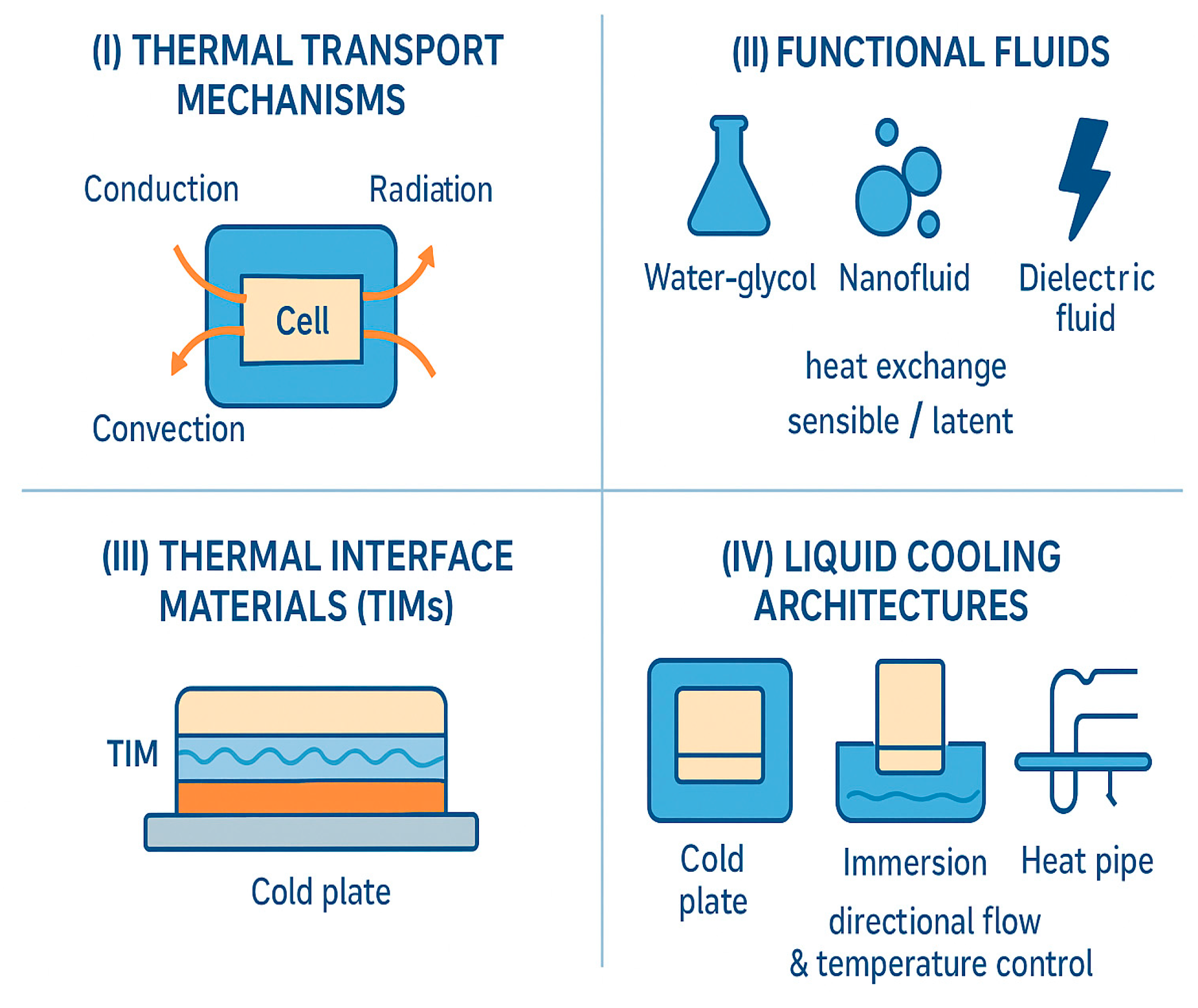
Figure 1. Heat transfer mechanism—functional fluid—interface material—cooling architecture schematic diagram.
Coatings 16 00059 g001
Figure 2. Battery Thermal Management System Schematic [7].
Coatings 16 00059 g002
Figure 3. A structural illustration of the internal flow path of the cold plate.
Coatings 16 00059 g003
Figure 4. Typical cooling structure section.
Coatings 16 00059 g004
Figure 5. Different types of liquid cooling plates. (a) Single-channel liquid cooling plate; (b) Parallel flow path liquid cooling plate; (c) flow channel size design parameters.
Coatings 16 00059 g005
Figure 6. Half spiral liquid cooling pipe cooling.
Coatings 16 00059 g006
Figure 7. Submerged runner design. (a) Top parallel “U” runner. (b) Bottom parallel “U” runner. (c) High and low staggered “U” runner.
Coatings 16 00059 g007
Figure 8. Submerged liquid cooled battery module.
Coatings 16 00059 g008
Figure 9. Effect of material parameter errors on thermal simulation results.
Coatings 16 00059 g009
Figure 10. Heat pipe system with heat sink and cooling setup.
Coatings 16 00059 g010
Figure 11. Fault and Integration Difficulty Roadmap.
Coatings 16 00059 g011
Table 1. Comparison table of the properties of different liquid media.
Type of Work MaterialSpecific Heat Capacity (J kg−1 K−1)Thermal Conductivity (W m−1 K−1)Applicable ScenariosReference
Water—Glycol solutionApproximately 3400–4200Approximately 0.5–0.6Electric vehicles, low temperature environment[8]
mineral oilApproximately 1600–2000Approximately 0.15–0.25Scenarios with high security requirements[9]
FluorideApproximately 1000–1500Approximately 0.1–0.15Immersion cooling systems[10]
Table 2. Classification of liquid thermal management techniques.
CategoryCooling Principle
Single-phase liquid coolingHeat is transferred by the sensible heat of the liquid without phase change; coolant circulates through channels or cold plates to remove heat.
Two-phase liquid coolingUtilizes liquid–vapor phase change to transfer latent heat efficiently under high heat flux.
Indirect-contact liquid coolingHeat is conducted from the cell to an intermediate solid, then convected to the circulating liquid coolant.
Direct-contact liquid coolingCoolant directly contacts the battery surface, dissipating heat through convection; includes immersion and spray cooling.
Hybrid coolingCombines multiple mechanisms to enhance transient control and thermal uniformity.
Microchannel coolingEmploys forced convection in micro- or mini-channels to increase heat transfer area and improve local temperature control.
Table 3. Performance comparison of representative battery cooling technologies.
Cooling
Technology
Coolant
Type
Max Temperature (°C)ΔT (°C)Energy
Consumption
(W)
Cooling
Efficiency (%)
Reference
Air CoolingAir55103060[13]
PCM HybridPCM + Air4872572[14]
Liquid CoolingWater-Glycol4252080[15]
Nanofluid CoolingAl2O3/EG3831885[16]
Direct ImmersionDielectric fluid373.51588[17]
Table 4. Quantitative comparison of conventional and composite cooling systems for lithium-ion batteries.
Cooling StrategyCoolant/MaterialMax Temperature (°C)ΔT (°C)Energy Consumption (W)Cooling Efficiency (%)Key Advantages
Air CoolingForced Air55103060Simple structure, low cost
Single-Phase Liquid CoolingWater–Glycol4252080High thermal conductivity, good uniformity
PCM + NanofluidPCM + Al2O3/EG nanofluid36218–2090–92Lower peak temperature, enhanced stability, transient buffering
Nanofluid HFE-7000Dielectric fluid + nanoparticles35≤315–18>92Excellent safety, fast transient cooling
Table 5. Comparison of various indirect contact liquid cooling.
TypeAdvantageShortcomingScope of Application
Liquid cooling plateCooling effect is good, various forms, low costThe structure of the system is complex and the mass is largeAll applicable
Liquid cooling pipeLow system massT system structure is not compact enoughCylindrical cell
Table 6. The advantages and disadvantages of various types.
TypeAdvantageShortcomingScope of Application
submergedGood cooling effect, simple structure, high heat transfer efficiencyHigh system massAll applicable
Non-submergedThe cooling effect is good, the heat transfer is sufficient, and the system mass is smallMore complex systemCylindrical cell
Disclaimer/Publisher’s Note: The statements, opinions and data contained in all publications are solely those of the individual author(s) and contributor(s) and not of MDPI and/or the editor(s). MDPI and/or the editor(s) disclaim responsibility for any injury to people or property resulting from any ideas, methods, instructions or products referred to in the content.