
Article

Study on the Flow Behavior of Molten Pool in K-TIG Welding of Invar 36 and Stainless Steel Dissimilar Materials

1
School of Materials Science and Engineering, Shanghai University of Engineering Science, Shanghai 201620, China
2
Shanghai No.1 Machine Tool Works Co., Ltd., Shanghai 200131, China
3
Shanghai Aircraft Manufacturing Co., Ltd., Shanghai 201324, China
4
Jiaxing Haiyan County Science and Technology Service Center, Jiaxing 314300, China
*
Authors to whom correspondence should be addressed.
Coatings 2026, 16(1), 58; https://doi.org/10.3390/coatings16010058 (registering DOI)
Submission received: 17 November 2025 / Revised: 19 December 2025 / Accepted: 30 December 2025 / Published: 4 January 2026

Abstract

The paper investigates the arc behavior and molten metal flow during Keyhole tungsten inert gas (K-TIG) welding of dissimilar materials, Invar 36 and stainless steel (types 304, 316, 309, and 310) specifically. A high-speed camera was used to capture the contour of the molten pool in real time. Results showed that in stainless steel welding, the arc shape is bell-shaped, and the distance from the tip of the molten pool to the keyhole decreases with increasing thermal conductivity (6.76–10.86 mm). When Invar 36 was butt-welded, the arc contracted. However, when Invar 36 was welded with dissimilar materials of stainless steel, the arc deflected to the Invar 36 side. The deflection angle ranged from 29.9° to 37°, resulting in an asymmetric arc shape. The distance from the tip of the molten pool to the keyhole increased to 10.88–13.33 mm, which was about 42% higher than that of the same material welding. Metallographic analysis showed that the width of the heat affected zone on the Invar 36 side increases with the decrease in thermal conductivity of the stainless steel (1.77–2.03 mm). Differences in thermophysical properties and viscosity further led to asymmetric molten pool flow and metal accumulation behavior. This study quantified the formation mechanism of arc deflection and weld pool asymmetry in K-TIG welding of dissimilar materials.

1. Introduction

Invar 36 exhibits an extremely low thermal expansion coefficient and is widely used in composite molds, Liquefied Natural Gas (LNG) storage tanks, and aerospace components that require high dimensional stability [1,2,3]. Austenitic stainless steel is widely used in shipbuilding, oil and gas, petrochemical, and other industries due to its excellent ductility, toughness, corrosion resistance, and weldability [4,5,6]. Although stainless steels have a higher thermal expansion coefficient than Invar 36, a reliable welded joint between them can still be achieved, enabling composite structures that combine the dimensional stability of Invar 36 with the good weldability of 316L stainless steel. Such a design not only utilizes the complementary advantages of the two materials but also reduces the overall cost. Therefore, the metallurgical bonding of Invar 36 and stainless steel has important theoretical research significance and practical value.
Invar 36 has a high viscosity, resulting in poor fluidity of its molten metal. Melt Inert Gas (MIG) welding of Invar 36 often results in numerous pores and poor weld formation quality [7]. Traditionally, Invar 36 is welded primarily using Tungsten Inert Gas (TIG) welding; however, for welding medium- and thick-plate materials, it is necessary to open a groove at the edge of the weldment. During the welding process, welding wire is added, or multilayer, multipass welding is employed, resulting in low efficiency and inconsistent quality [8]. To improve TIG efficiency, the energy density and arc pressure of the arc were increased by optimizing the torch design, enabling keyhole-mode welding. This new welding process is known as K-TIG [9]. In K-TIG welding, the flow behavior of metal is an important factor affecting the welding stability and joint quality [10]. Molten metal flow consists mainly of surface flow on the pool and internal circulation within it. Due to the differing thermophysical properties of dissimilar materials, the weld pool exhibit greater instability compared to that of similar materials, leading to defects such as undercutting, porosity, and cracks. Therefore, it is necessary to study the formation mechanism of molten pool flow during K-TIG welding of dissimilar materials and propose corresponding solutions to improve welding stability.
In the welding process, the flow and heat transfer characteristics of the molten metal directly determine the forming quality of the weld. Many researchers have used high-speed imaging and numerical modeling to investigate molten pool flow and heat transfer during welding. Wu et al. [11] simulated the fully penetrated molten pool in plasma arc welding and analyzed molten pool convection in keyhole plasma arc welding by incorporating arc forces obtained from an arc model. Cui et al. [12] established a mathematical model of K-TIG welding and compared the simulated keyhole morphology with high-speed-camera observations. Their results revealed the molten metal flow behavior near the keyhole outlet. Zhan et al. [13] studied the flow field distribution in the molten pool of Invar 36 laser-MIG hybrid welding and discussed the influence of different heat source models on the temperature field and flow behavior of the molten pool. Based on the three-dimensional transient model of the finite volume method, Xu et al. [14] simulated the formation of the molten pool in the process of Polyethylene terephthalate (PET) and SUS304 laser transmission and compared the simulation results with the experimental results. Their results showed that the molten pool size along the heat-source movement direction mainly depends on the heat input and the cooling rate. Zhang et al. [15] used an adaptive integral model composed of arc current density, arc pressure, electromagnetic force and arc heat to study the molten pool behavior during TIG-MIG hybrid welding.
During molten pool flow, the liquid metal is influenced by several forces, including arc pressure, Marangoni force, and surface-tension gradients. Many researchers have systematically investigated the influence of these forces on molten pool flow by developing numerical models. Wang et al. [16] used a unified model to study the internal flow behavior of the high-current TIG molten pool. They presented the heat flux, current density, Marangoni force, and plasma resistance on the surface of the molten pool to understand the heat and momentum transfer from the arc plasma to the molten pool and evaluated the relative importance of the driving forces. Tanaka et al. [17] developed a two-dimensional unified model incorporating arc plasma, the tungsten electrode, and the molten pool. They studied the energy balance between arc plasma and molten pool and the influence of various driving forces on the formation of the TIG molten pool. Duggirala et al. [18] developed a transient three-dimensional thermal fluid model to quantitatively analyze the temperature-driven surface tension and its effect on the geometry of the molten pool by changing the input parameters. Fan et al. [19] conducted a numerical analysis of fluid flow driven by electromagnetic force, buoyancy, arc pressure, and surface tension gradient in a partially or fully penetrated molten pool in stationary gas tungsten arc welding (GTAW). Zhu et al. [20] numerically investigated molten pool behavior in NG-GTAW root welding. Their results showed that at high welding currents, molten pool behavior is dominated by electromagnetic force, and the evolution of electromagnetic vortices largely determines the pool morphology.
At present, research on molten pool flow behavior mainly focuses on similar-material welding, while studies on dissimilar materials remain relatively limited. In particular, how the change in material composition affects the molten pool flow during dissimilar welding remains poorly understood. Additionally, most existing analyses of molten pool flow rely on numerical simulations, with little research on real-time flow behavior during welding. In this paper, butt welding experiments were conducted on 10 mm thick Invar 36 and four grades of stainless steel (304, 316, 309, 310). The flow behavior of the molten pool during dissimilar welding was also investigated. The difference in molten pool flow behavior between Invar 36 and different stainless steels was systematically analyzed by monitoring the molten pool flow during the welding process and observing the metallographic structure of the weld cross-section. Combined with comparative analysis of arc morphology, the mechanism by which the paramagnetic behavior of Invar 36 influences arc shape was clarified. On this basis, the effects of thermophysical-property mismatches on surface flow characteristics and internal molten metal flow patterns were further elucidated.

2. Materials and Methods

In this study, Invar 36 alloy and stainless steels (grades 304, 316, 309, and 310), supplied by Baosteel Special Metals Co., Ltd. (Shanghai, China), with dimensions of 150 × 50 × 10 mm, were used for welding. The composition of the five different materials is shown in Table 1 (sorted by nickel content from low to high). The physical parameters of the five different materials are shown in Table 2. Thermal conductivity and specific heat capacity are listed at room temperature. Surface tension and viscosity correspond to temperatures near the melting point of each material. The plates were ground and cleaned with anhydrous ethanol to remove the oxidation layer and contamination.
The schematic diagram of the experimental procedure is shown in Figure 1. The experimental system consists of a welding system and an imaging system. The welding system includes the K-TIG welding power source, shielding gas, and cooling water system. The imaging system (S1315M/C, Qianyanlang Vision Technology Co., Ltd., Shenzhen, China) includes the high-speed camera, auxiliary light source, and industrial computer. During the welding process, 99.99% argon gas was used as the shielding gas, with the flow rate set at 20 L/min. The welding machine model is SWS-1000LQ (Huazhi Welding & Measurement Hi-Tech Co., Ltd., Suzhou, China). The diameter of the tungsten electrode is 6.4 mm, and the end of the tungsten needle is ground to 55° by a grinding machine for welding. The distance between the electrode and the workpiece was adjusted to 2 mm before each welding. The plates were assembled in a butt-joint configuration with no root gap. No backing plate was used during welding. To maintain proper alignment and ensure keyhole stability, the workpieces were rigidly clamped on both sides using a mechanical fixture. The torch was held perpendicular (90°) to the plate surface. The K-TIG welding process was automated in the experiment. On the condition that all welds achieve stable penetration, the same parameters were used for plate butt welding. The welding parameters are shown in Table 3.
To achieve high precision, with no stress and less affected by heat, sample preparation is crucial. After K-TIG welding, the welded plates were cut into samples using an electrical discharge machining (DK7732, Suzhou EDM Machine Tool Co., Ltd., Suzhou, China) wire cutter to ensure dimensional accuracy and avoid deformation caused by machining. The samples were ground, polished, and etched sequentially. Invar 36 side of the welded joint was etched for 15 s using a corrosion liquid (75% HCl + 25% HNO3). The stainless steel side of the welded joint was etched for 13 s using a corrosion liquid (50% HCl + 50% HNO3). The macroscopic morphology of the weld was observed using an optical microscope (4XCJZ, Olympus, Tokyo, Japan).
A high-speed camera system consisting of a high-speed camera (MV-XGC51GM, Keyence, Osaka, Japan) and a laser illumination system (CAVILUX HF, Cavitar Ltd., Tampere, Finland) was used to record the weld pool flow behavior and arc behavior during welding. The central wavelength of the filter was 940 nm, and the transmittance was 85%. The frame rate of image acquisition was 200 fps, the exposure time was 0.8 µs, and the acquisition time was 10 s. The captured images were transferred from the camera to the computer via a frame-grabber unit. Through the conversion of pixel size, the actual length and width of the molten pool can be determined. The calibrated physical size corresponding to each pixel was 1 pixel = 0.05 mm. Because the lens was in the same straight line with the tungsten pole, the image size remains unchanged in the width direction. Therefore, the actual molten pool width W r can be calculated as follows:
W r = W × 0.05
The entire welding platform was arranged horizontally, and the high-speed cam-era was mounted above the platform, aligned with the welding travel direction at an angle of 60°. Under this viewing angle, the recorded molten pool length L did not match the actual physical length. Therefore, the true molten pool length L r was obtained through geometric correction based on the camera inclination angle.
L r = L × 0.05 × cos   30 °
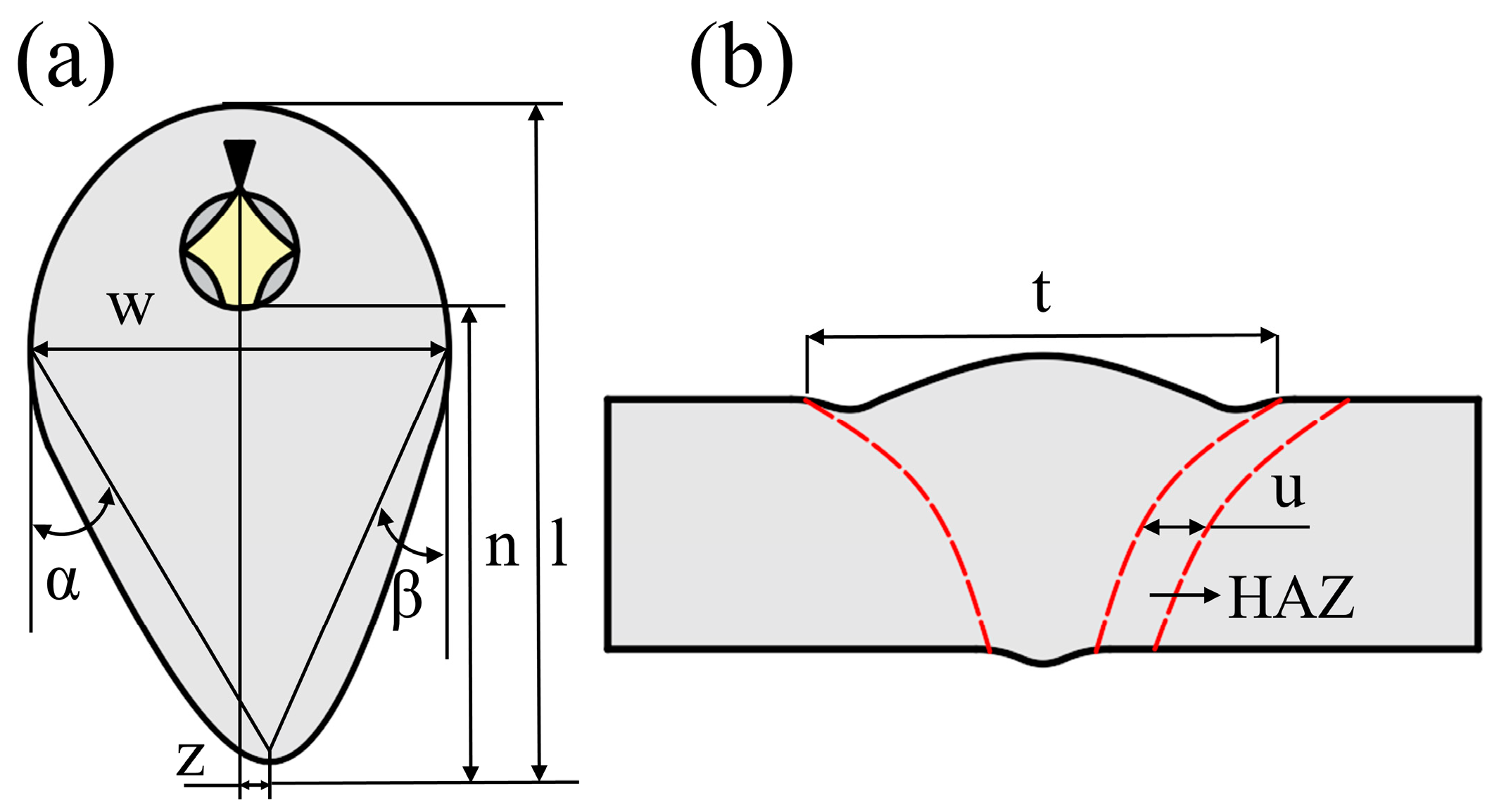
During welding, the plate was fixed on the welding platform, the welding torch was fixed, and the welding platform moved at the set speed. Under these conditions, the molten pool flow and arc behavior were recorded from a fixed viewing position. The definition of the geometrical parameters of the weld pool and the cross-section is shown in Figure 2. Three independent welding experiments were carried out for each welding combination, and each welding sample was measured once in the corresponding weld pool image or metallographic section. Since all the geometric parameters of the molten pool are obtained based on a single measurement method (high-speed camera combined with ImageJ image processing (v1.54p)), although we have improved the measurement accuracy through calibration, the lack of a second independent verification method may bring additional uncertainty.

3. Results

3.1. Weld Surface Quality Analysis

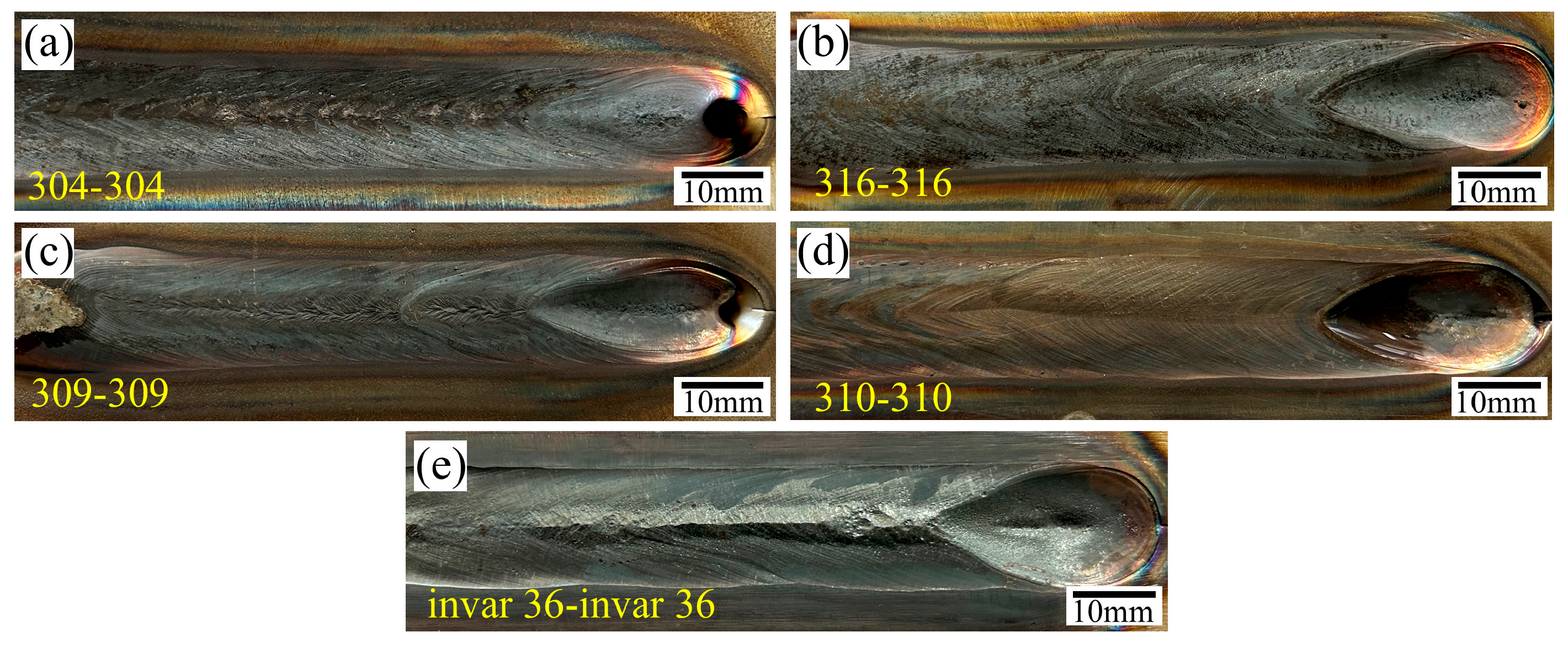
Figure 3 shows the surface quality of the same material butt welds for Invar 36 and the stainless steels 304, 316, 309, and 310. Figure 3 indicates that the weld surface is well-formed and free of defects such as lack of fusion, spatter, and porosity. In Figure 3a–e, the distance from the crater tail to the weld end is observed to increase gradually, and the Invar 36 alloy shows the largest value of 28.43 mm. This trend is attributed to the increasing nickel content from 304 stainless steel to Invar 36, which results in higher molten metal viscosity and reduced fluidity [24]. When the welding torch moved, the molten metal exhibited varying flow rates due to differences in viscosity. The higher the viscosity, the greater the internal fluid forces and resistance to flow.
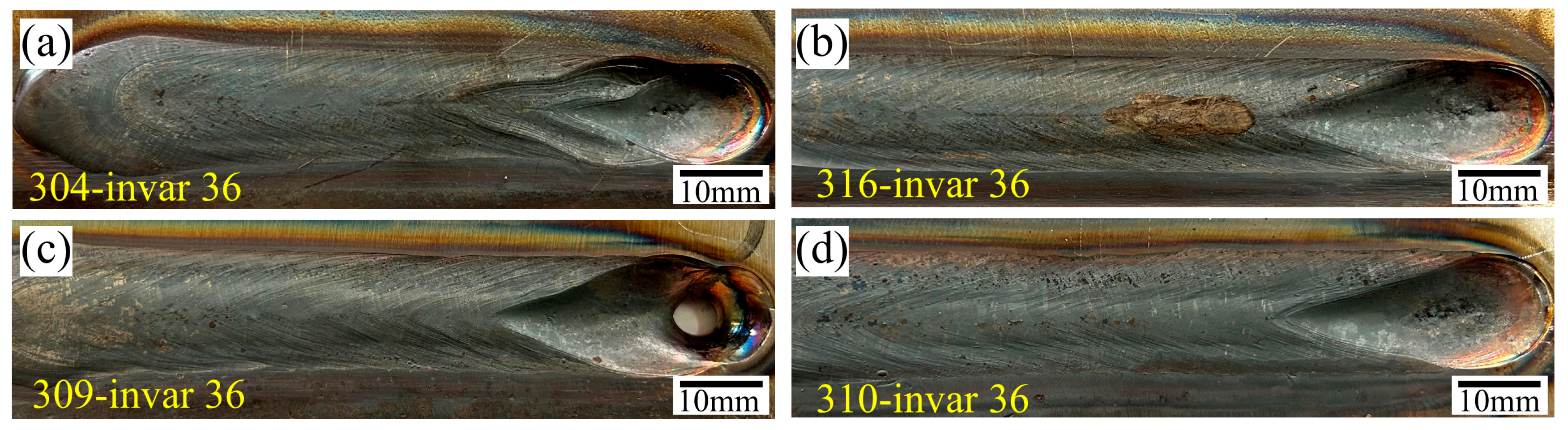
Figure 4 shows the surface quality of the dissimilar material butt welds between Invar 36 and the stainless steels. For comparison, the surface quality of Invar 36 welded to itself is also included (Figure 4d). It could be seen from the figure that whether it was the same material or dissimilar material welding, all weld surfaces were well formed, and there were no incomplete fusion defects. As shown in Figure 4c, burn-through occurred in the arc-crater region at the end of the weld. This was mainly caused by unstable keyhole closure during arc termination, which led to molten metal sagging under gravity. In addition, the crater tips of all welds showed an asymmetric shape and shifted to the Invar 36 side.
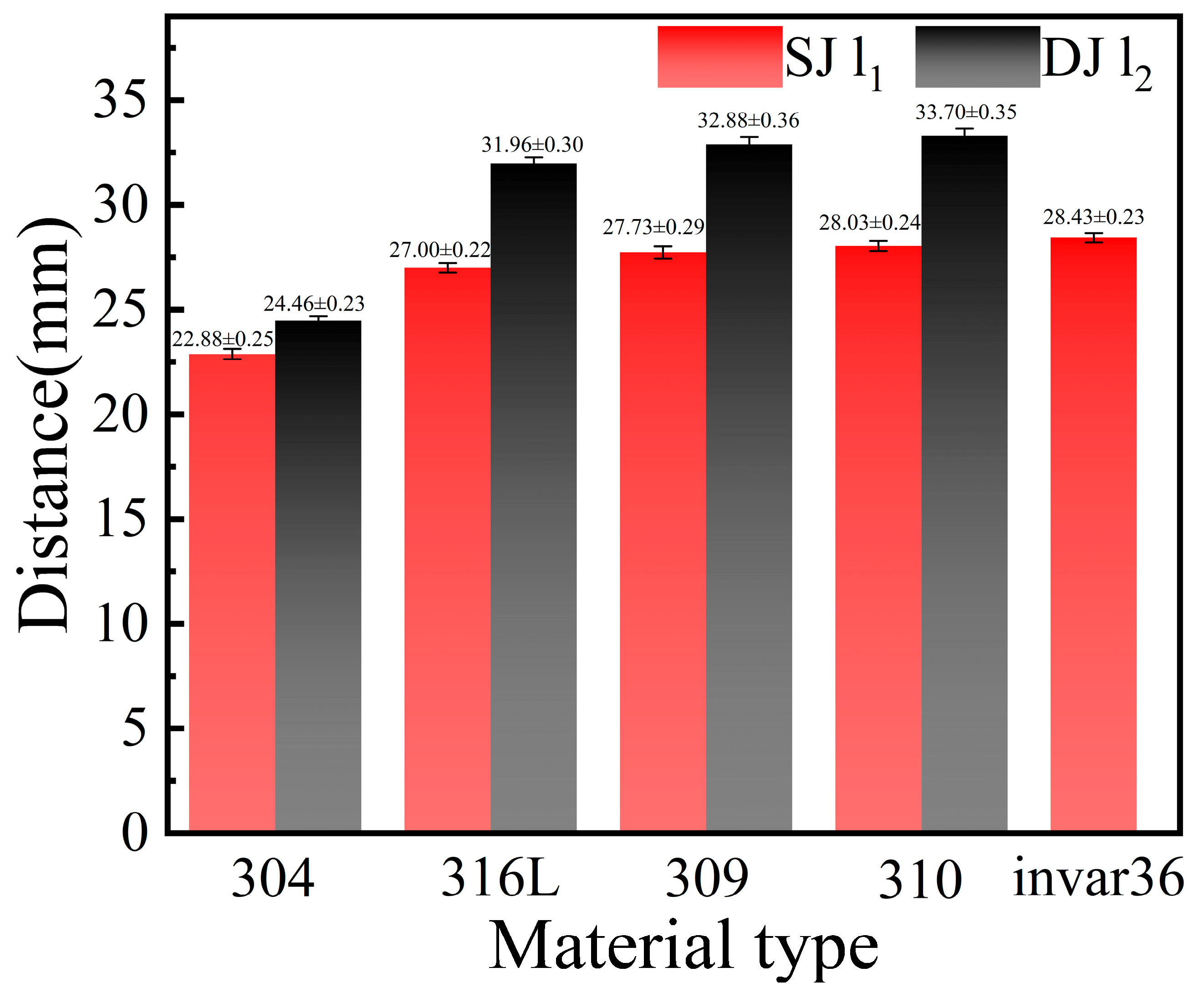
Figure 5 shows the dimensions from the tip of the end of the crater to the end of the weld of the dissimilar joint (DJ) and the same joint (SJ), l1 and l2 represent the distance from the tip of the end of the crater to the end of the weld in the same material and dissimilar material welded joints, respectively. As shown in the figure, the crater-tail distance increased progressively from 304 stainless steel to Invar 36. In all cases of dissimilar welding, the l2 values were consistently greater than the corresponding l1 values. In the welding of the same material, the measured values of l1 were 22.88 mm, 27.00 mm, 27.73 mm, 28.03 mm, and 28.43 mm for 304, 316, 309, 310 stainless steels and Invar 36, respectively. This increasing trend may be related to differences in molten metal viscosity and thermal conductivity among the alloys. Higher viscosity and lower thermal conductivity could reduce molten pool flow and solidification rates, which may contribute to the longer crater-tail distances observed. A comparison of the same material welds of 304 stainless steel and Invar 36 showed a maximum distance difference of 24%, consistent with their differences in viscosity and thermal conductivity.
The distances l2 from the arc crater tail to the end of the weld for the dissimilar joints between Invar 36 and the stainless steels (304, 316, 309, and 310) were 24.46 mm, 31.96 mm, 32.88 mm, and 33.70 mm, respectively, with a maximum difference of 37%. The variation in distance during dissimilar welding may be influenced by differences in the properties of the stainless steel side. The nickel content of stainless steel was lower than that of Invar 36, but the thermal conductivity was higher, which led to better molten metal fluidity and a faster solidification rate of molten stainless steel. This difference led to asymmetric molten pool behavior during the welding process. When molten metals with different physical properties interacted in the fusion zone, the resulting mixture likely exhibited higher viscosity and lower thermal conductivity than the stainless steel alone, which is consistent with the observation that l2 > l1.

3.2. Observation and Analysis of Molten Pool and Arc in Welding Process

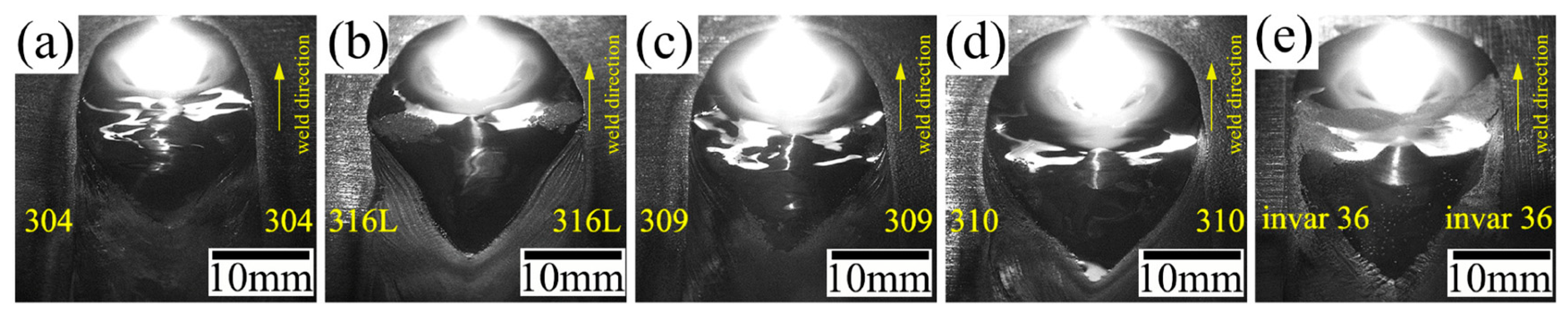
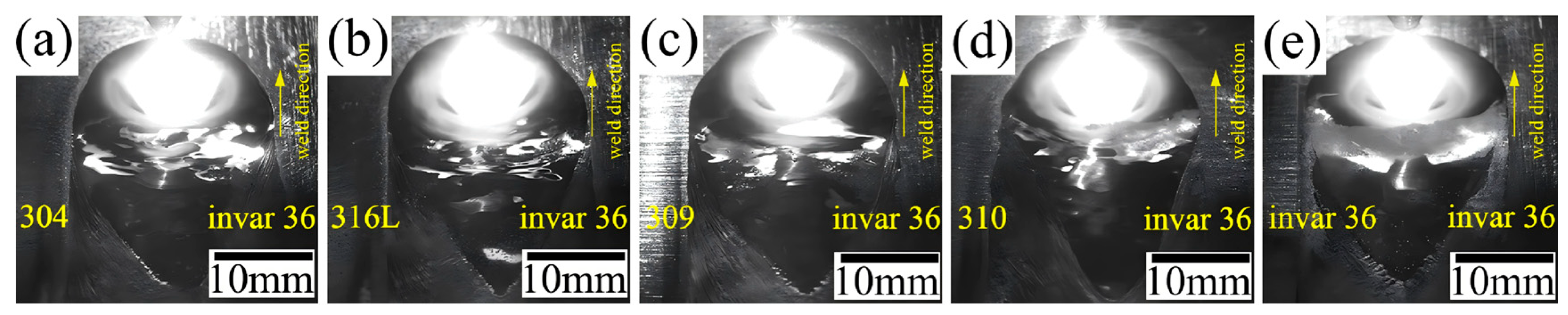
To further study molten pool flow behavior during welding, a high-speed camera was used to record the molten pool. The results are shown in Figure 6 and Figure 7. Experimental observations showed that when the same material was welded, the molten pool geometry was highly symmetrical, with symmetry exceeding 97% based on contour analysis. In addition, the arc shape was a typical bell-shaped distribution, and the symmetry of the left and right sides was excellent, indicating that the welding process had high heat input stability. During the welding process of dissimilar materials, the molten pool showed obvious asymmetry due to the thermophysical properties of the materials on both sides and the difference in the electromagnetic field distribution around the arc. As shown in Figure 7a–d, the arc shape shifted toward the Invar 36 side, possibly associated with electromagnetic forces acting on the arc plasma and variations in electron flow paths. In addition, stainless steel and Invar 36 exhibit significant differences in thermal conductivity, melting point, and thermal diffusivity, which likely lead to different temperature fields and solidification behaviors on the two sides of the molten pool. This may explain why the distance between the molten pool tip and the keyhole tends to be greater during dissimilar material welding.
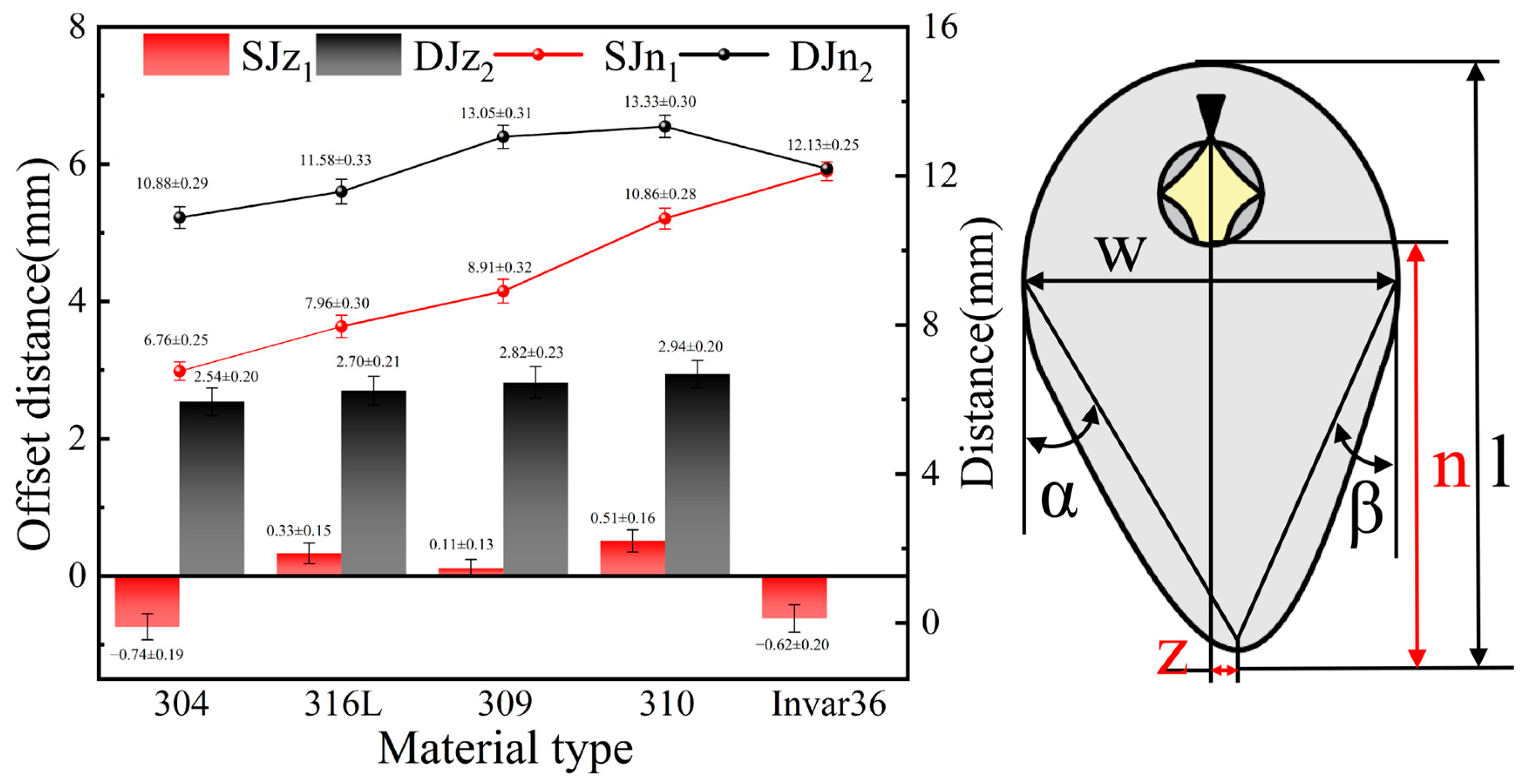
Figure 8 is the weld pool size map of the same material and dissimilar materials. As shown in the figure, the tip of the molten pool tail was offset from the weld-centerline in both same material and dissimilar material welds. These offsets are denoted as z1 and z2, respectively. In the welding of the same material, the tip of the tail of the molten pool was shifted slightly. When the same material of 304 stainless steel and Invar 36 was welded, the tip of the tail of the molten pool was shifted to the left by 0.74 mm and 0.62 mm, respectively. During the welding of 316, 309, and 310 stainless steel, the tip of the tail of the molten pool was shifted to the right side by 0.33 mm, 0.11 mm, and 0.51 mm, respectively. When dissimilar materials were welded, the tip of the molten pool tail shifted toward the Invar 36 side. The offsets for the welds with 304, 316, 309, and 310 stainless steels were 2.54 mm, 2.70 mm, 2.82 mm, and 2.94 mm, respectively.
The distance from the tip of the weld pool to the keyhole also varied with the type of material being welded. When the same material was welded, the distances from the tip of the weld pool to the keyhole (n1) of stainless steel (304, 316, 309, and 310) and Invar 36 were 6.76 mm, 7.96 mm, 8.91 mm, 10.86 mm, and 12.13 mm, respectively. As the thermal conductivity of the material decreased, the solidification rate of the molten pool slowed down, resulting in an increase in the distance between the tip of the molten pool tail and the keyhole. When Invar 36 was welded with stainless steel dissimilar materials, the distances from the tip of the molten pool tail to the keyhole (n2) were 10.88 mm, 11.58 mm, 13.05 mm, and 13.33 mm, respectively. It was found that the distance between the tip of the molten pool and the keyhole during the welding of dissimilar materials was about 42.3% higher than that of the same material.
The angle between the tip of the weld pool and the edge of the weld pool during the welding process is shown in Table 4. For the same material welds, the left angles between the weld-pool tip and the pool boundary were 38.0° for Invar 36, 36.2° for 304 stainless steel, 36.1° for 316, 36.4° for 309, and 30.2° for 310. The corresponding right angles were 34.7°, 37.4°, 39.0°, 38.2°, and 31.9°, respectively. For the dissimilar material welds between Invar 36 and stainless steels, the left angles were 37.0°, 34.1°, 33.2°, and 29.9° for the combinations with 304, 316, 309, and 310 stainless steels, while the right angles were 26.0°, 27.4°, 25.8°, and 23.5° for the same material order. Analysis of the angle data showed that the difference between the left and right angles was small when the same material was welded. When Invar 36 was welded with stainless steel, the left angle was always larger than the right angle, and the left angle decreased with the decrease in the thermal conductivity of stainless steel. At the same time, the Invar 36 side angle also decreases with the decrease in the thermal conductivity of the left stainless steel.
The reason for the decrease in the angle between the two sides of the molten pool during the welding of dissimilar materials was the difference in the thermal conductivity of the material [25,26]. The thermal conductivity of the left stainless steel was higher than that of the right Invar 36, resulting in a faster solidification rate of the molten metal on the stainless steel side. When the metal on the stainless steel side had solidified entirely, the molten metal on the Invar 36 side was still in an incomplete solidification state, so the left angle of the tip of the molten pool tail was always greater than the right angle. At the same time, the decrease in the included angle on the Invar 36 side was related to the mixing effect of molten metal: during the keyhole advance, the mixing of molten metal led to a decrease in the equivalent thermal conductivity of the whole molten pool, and this effect increased as the thermal conductivity of the stainless steel side decreased, which further inhibited the solidification rate on the Invar 36 side.

3.3. Metallographic Analysis of Weld Cross-Section

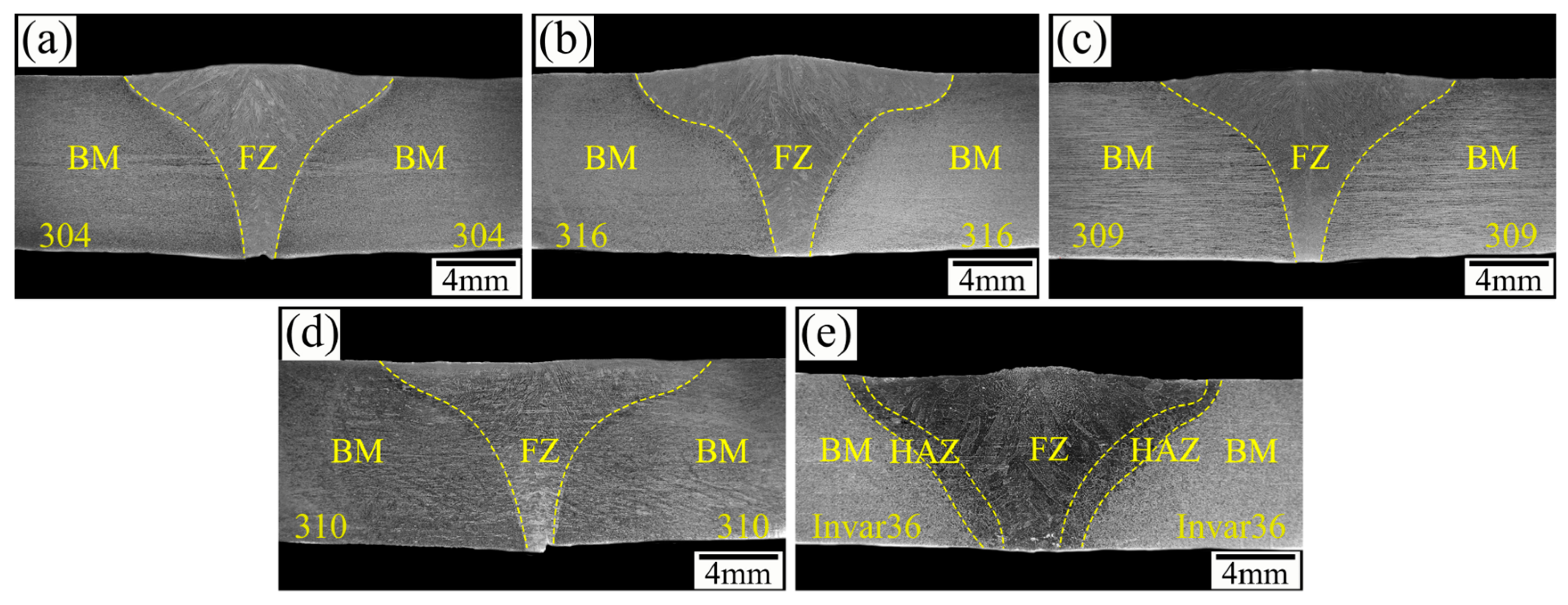
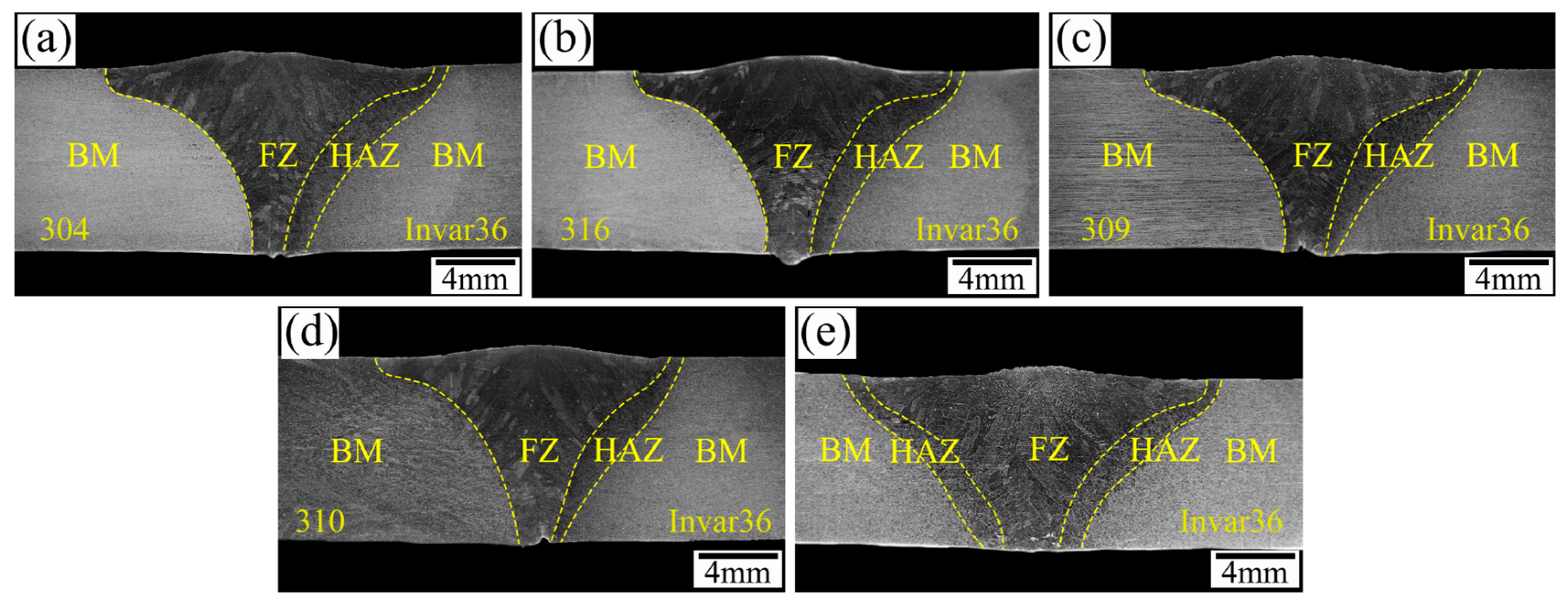
Figure 9 and Figure 10 are the cross-section metallographic images of welded joints. The metallographic section of the stainless steel welded joint was mainly composed of a fusion zone and a base metal zone. With the addition of Invar36 material, the cross-section of the welded joint was composed of a fusion zone (FZ), heat affected zone (HAZ) and base metal (BM) zone. Because stainless steel had high Cr content and low Ni content, it could effectively reduce the grain growth of the base metal on the stainless steel side, so the heat affected zone on the stainless steel side was very small [27]. Invar 36, due to the low thermal conductivity, the significant heat input led to the overheating of the molten pool, resulting in a huge temperature gradient, which promoted the growth of columnar crystals [28]. Therefore, an obvious heat affected zone was formed on the side of Invar 36, while the heat affected zone was relatively insignificant on the stainless steel side.
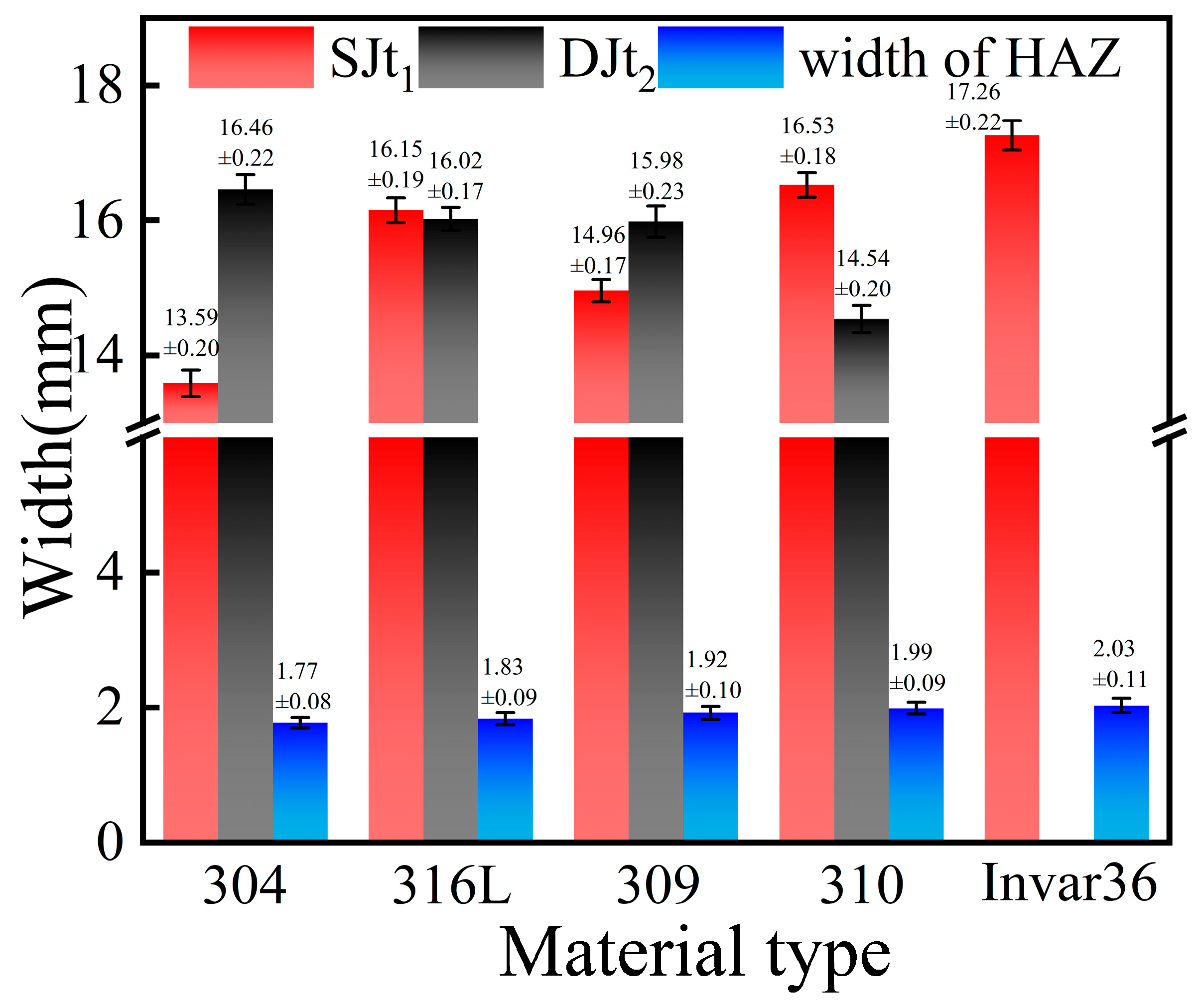
The size data of welded joints are shown in Figure 11. When the same material was welded, the weld widths of the joints t1 were 13.59 mm, 16.15 mm, 14.96 mm, 16.53 mm, and 17.26 mm, respectively. When dissimilar materials were welded, the weld widths t2 were 16.46 mm, 16.02 mm, 15.98 mm, and 14.54 mm, respectively. Among all the welding groups, the joint width of Invar 36 with the same material was always the largest. This was because Invar 36 had a low melting point and thermal conductivity, which made it difficult to dissipate heat during heat conduction, thereby reducing the temperature gradient around the molten pool and expanding the temperature range. At the same time, the increase in the amount of molten metal further enhanced its spreading ability. Figure 11 shows the width of the heat-affected zone (HAZ) on the Invar 36 side when welded with 304, 316L, 309, and 310 stainless steels, which are 1.77 mm, 1.83 mm, 1.83 mm, and 1.99 mm, respectively. This was due to the difference in the thermal conductivity of the stainless steel side. The higher the thermal conductivity, the stronger the heat dissipation capacity. Under the same heat input conditions, the higher the thermal conductivity, the more heat was lost, and the temperature influence range of the Invar 36 side was reduced, thereby inhibiting the grain coarsening and finally reducing the width of the heat affected zone on the Invar 36 side.

4. Discussion

During the welding process of Invar 36 and stainless steel dissimilar materials, the ferromagnetism of Invar 36 led to a significant deflection of the arc to the Invar 36 side. At the same time, because the thermal conductivity of Invar 36 was lower than that of stainless steel, the solidification rate of the molten pool on the side of Invar 36 decreased, resulting in apparent asymmetry of the molten pool morphology and an increase in the overall length of the molten pool. In addition, the metallographic section of the weld showed asymmetric characteristics and undercut defects appeared on the stainless steel side.

4.1. Welding Arc Deflection Mechanism of Invar 36 and Stainless Steel Dissimilar Materials

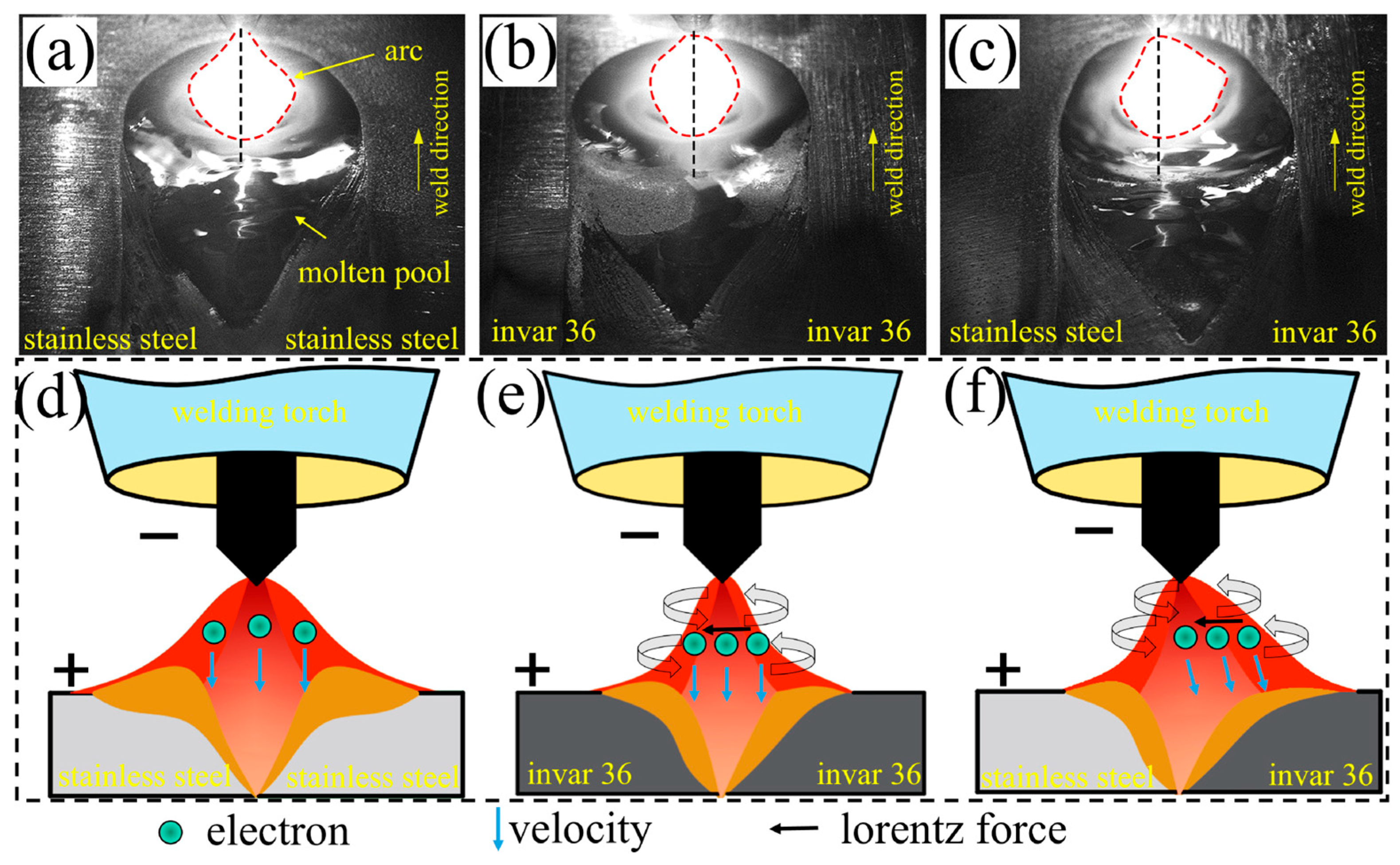
The principle of magnetic deflection of arcs during the welding of dissimilar materials is shown in Figure 12. The particle motion trajectory in the K-TIG welding arc was divided into radial motion and axial motion. When welding stainless steel of the same material, because the stainless steel was not magnetic, the particles in the arc were not affected by the magnetic field, and the radially moving particles moved downward evenly, so the arc did not shrink. When both sides of the material were Invar 36, because Invar 36 was ferromagnetic at room temperature [29], a weak magnetic field was generated around it during welding. The charged particles in the arc rotated under the action of the Lorentz force of the magnetic field, and their trajectory changed from the original radial radiation motion to the downward spiral motion.
Assuming that the magnetic field generated by Invar 36 on both sides is a uniform magnetic field and the velocity of the charged particle in the radial motion is v , the Lorentz force F of the particle is:
F = q v B
In the formula, q is the charge of the charged particles; B is the intensity of the longitudinal magnetic field.
Assuming that the radius of the spiral motion of the charged particles is r , the Lorentz force provides the centrifugal force:
F = m v 2 r
By using Formulas (3) and (4), the radius of the downward spiral motion of charged particles can be obtained as:
r = m v q B
According to Formula (5), the radius r of the circular spiral motion of the charged particles in the arc will decrease with the increase in the magnetic field strength B . When the welding material was stainless steel, no magnetic field was generated, and thus the spiral radius r was not defined. The arc shape was not affected, and the overall shape presented a bell shape (Figure 12a). When the welding material was Invar 36, the radius r of the circular spiral motion of the charged particles in the arc decreased, and the arc was compressed. Therefore, when welding Invar 36, the arc shape edge shrank compared to the welding of stainless steel (Figure 12b). When welding Invar 36 and stainless steel dissimilar materials, the charged particles in the arc would be subjected to the Lorentz force due to the presence of a magnetic field on the Invar 36 side [30]. The direction of the circumferential spiral motion of the charged particles changed from the original downward motion to a deflection toward the Invar 36 side, and the arc shape changed from an initial bell shape to an asymmetric form (Figure 12c). Although the permeability of the Invar alloy decreased as the temperature approaches the Curie point, the region near the molten pool can still retain a significant magnetic response due to the steep temperature gradient and the presence of a partially cooled ferromagnetic region. Therefore, the local magnetic field near the Invar 36 side may still affect the arc trajectory [31].

4.2. Analysis of Weld Pool Flow Behavior

4.2.1. Analysis of Molten Metal Flow Behavior on the Surface of Molten Pool

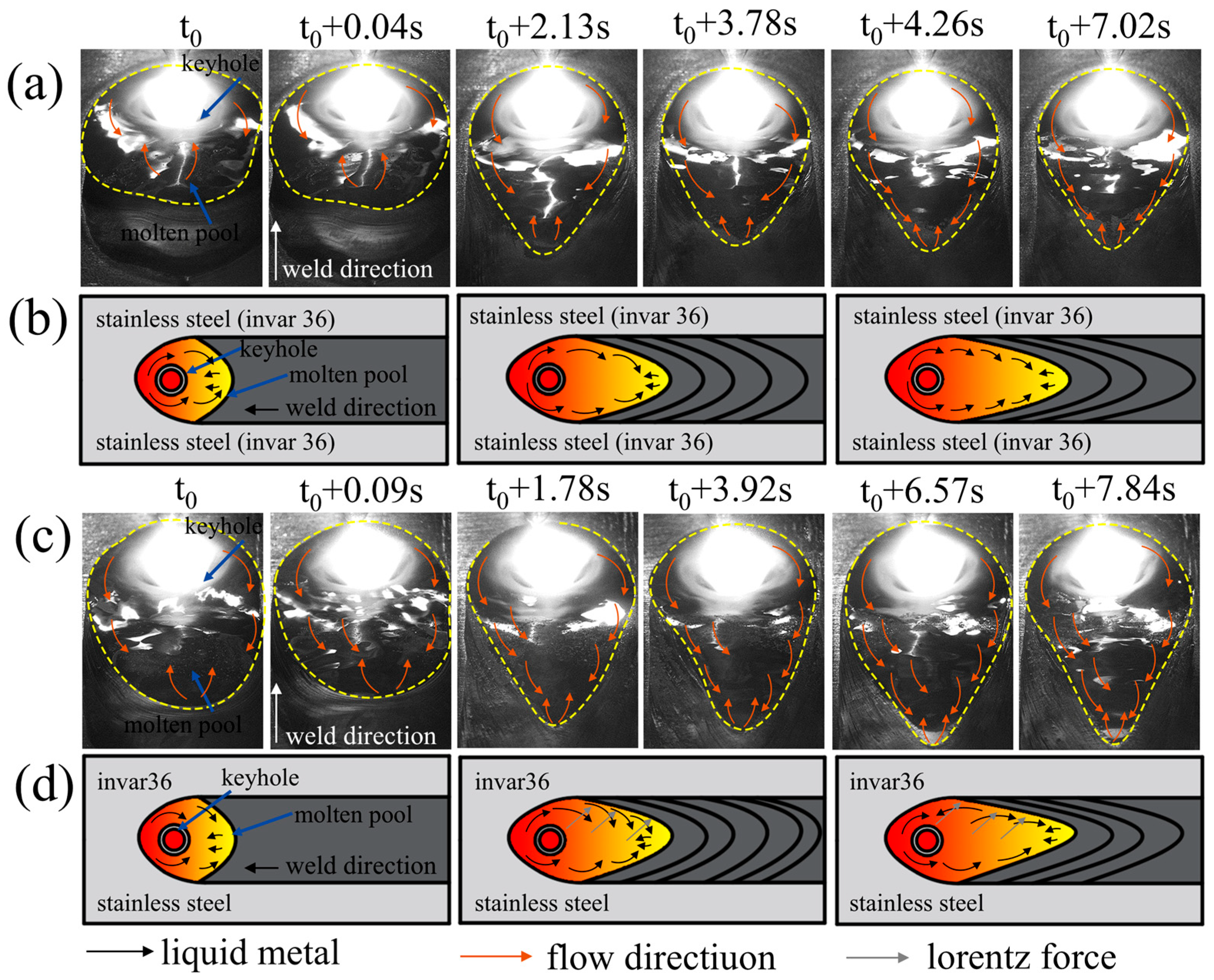
When Invar 36 was welded with stainless steel, the tip of the molten pool tail showed an asymmetric shape (Figure 7). Figure 13 shows the flow mechanism of molten metal on the surface of the molten pool. It could be seen from Figure 13a that when the same material was welded, the shape of the molten pool gradually tended to be symmetrical with the increase in welding time. Figure 13b further shows the flow process of molten metal on the surface of the molten pool. During welding, the molten metal was arranged around the arc pressure to form a keyhole. As the welding torch moved, the keyhole advanced along the weld, pushing molten metal to both sides and returning to the rear area of the keyhole to fill it. Due to the long size of the molten pool, the molten metal flow to the tail was hindered by the edge of the solidified metal, and some metal backflow occurred. When the same material was welded, the physical properties of the materials on both sides were the same. When the molten metal flowed to the rear of the keyhole, the solidification rates of the metals on both sides were the same, and the molten pool was symmetrical as a whole. In the welding process of dissimilar materials, due to the differences in the physical properties on both sides, when molten metal flowed to the back of the keyhole, the solidification rates of stainless steel and Invar 36 became asymmetric. The solidification rate of molten metal on the stainless steel side was higher than that on the Invar 36 side. This difference in solidification behavior directly led to the obvious asymmetry of the overall morphology of the molten pool.
Figure 13c is the molten metal flow diagram of the molten pool surface during the welding of Invar 36 and stainless steel dissimilar materials. As the welding torch moved, the tip of the molten pool tail continued to shift to the Invar 36 side, and the tail length gradually increased. Figure 13d reveals the formation mechanism of the weld pool surface during the welding of Invar 36 and stainless steel. Due to the ferromagnetism of Invar 36, the arc deflection occurred during the welding process, causing more arc energy to accumulate on the side of Invar 36, which increased the melting degree of the side. At the same time, because the thermal conductivity of stainless steel was higher than that of Invar 36, the heat dissipation speed of stainless steel was faster, shortening the solidification time of molten metal on the side of stainless steel, resulting in the asymmetry of the overall molten pool shape. In addition, the viscosity of Invar 36 was higher than that of stainless steel, leading to poorer fluidity of its molten metal. Combined with greater arc energy deposition, the volume of molten metal filling on the Invar 36 side exceeded that on the stainless steel side, forming an undercut defect on the stainless steel side.

4.2.2. Analysis of Molten Metal Flow Behavior in Molten Pool

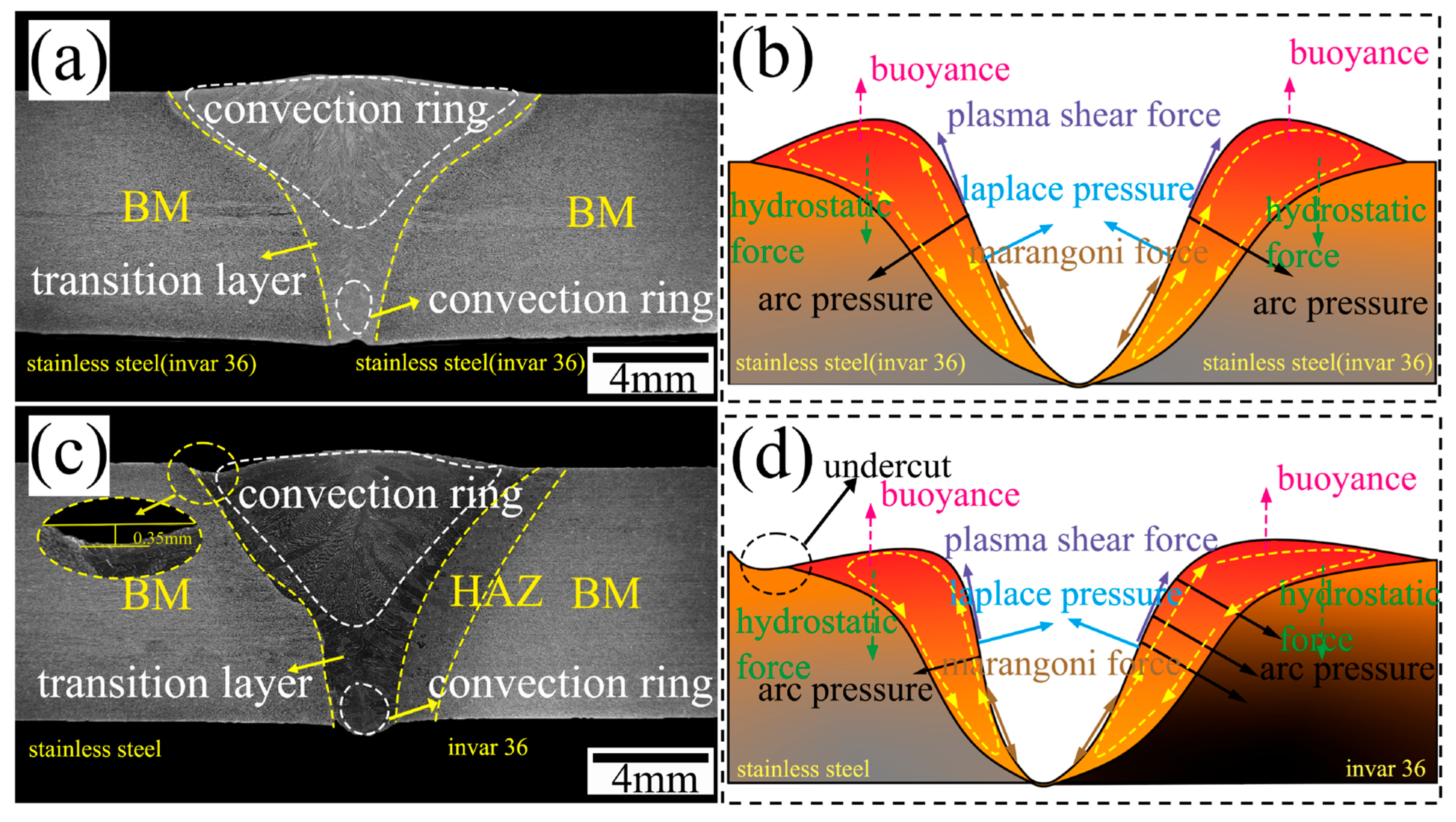
Figure 14 is the mechanism diagram of molten metal flow in the molten pool. The cross-sectional metallographic structure of the welded joint is shown in Figure 14a,c. The entire weld area could be divided into three parts: a Marangoni convection ring driven by surface tension, a bottom convection ring driven by Lorentz force and surface tension, and a transition zone between the two [32]. When the same material was welded (Figure 14a), the convection circle presented a symmetrical shape as a whole. When dissimilar materials were welded (Figure 14c), the convection ring of the welded joint showed asymmetry, and the convection-ring area on the Invar 36 side was larger than that on the stainless steel side. This asymmetric flow behavior originates from the combined effects of multiple factors, including differences in thermal conductivity, heat input distribution, solidification rate, surface tension gradient, and viscosity. Due to the low thermal conductivity of Invar 36, more arc energy was deposited and maintained on this side during the welding process, resulting in a slower cooling rate, a longer liquid-retention time, and a wider high-temperature zone. At the same time, its high viscosity increased the flow resistance. In contrast, due to the higher thermal conductivity and lower viscosity on the stainless steel side, the Marangoni convection was more active and the molten pool flow was faster on the stainless steel side [33,34].
Figure 14b,d shows the forces acting on the molten pool during the welding process. During welding, under the action of hydrostatic pressure, Lorentz force, Laplace pressure and some Marangoni forces, the molten metal flowed to the bottom of the molten pool, showing a tendency to close the keyhole. However, since the overall resultant force was smaller than the combined effects of arc pressure, plasma shear force, and part of the Marangoni force, the molten metal flow in the pool was directed from the bottom of the keyhole toward the pool surface. When Invar 36 was welded with stainless steel, the arc energy was more deposited on the Invar 36 side, and the arc pressure on the stainless steel side was reduced correspondingly, resulting in the position of the lock hole at the bottom of the weld offsetting rather than being centered (Figure 14c).
From an engineering perspective, when Invar 36 is welded with stainless steel, the thermophysical compatibility of the materials and the weld-formation quality need to be considered comprehensively. Among the four stainless steels in this study, 304 and 316, which have higher thermal conductivity, reduced the heat accumulation on the Invar 36 side during welding, thereby decreasing the molten pool asymmetry. In contrast, 309 and 310, with their lower thermal conductivity, were more likely to cause pronounced elongation of the molten pool toward the Invar 36 side and exhibited stronger asymmetry. In practical welding applications, the symmetry of the weld can be improved and undercut can be reduced by slightly offsetting the welding torch toward the stainless steel side to balance the energy input.
This study systematically analyzed the arc behavior and molten pool flow during the welding process of Invar 36 and stainless steel K-TIG, but there are still some limitations. First, the experiments were conducted using a single plate thickness, which constrained the analysis of molten pool asymmetry and heat affected zone behavior. Secondly, to highlight the influence of differences in thermophysical properties, only one fixed set of welding parameters was used in this study. Therefore, the effects of process variables such as heat input, arc length, and torch angle were not systematically investigated. In addition, this work focused primarily on arc and molten pool behavior and did not include tensile, impact, fatigue, or other mechanical-property tests, which are essential for engineering applications. Future research will further carry out multi-thickness experiments and comprehensive mechanical-property evaluations.

5. Conclusions

In this paper, the connection between Invar 36 and a stainless steel dissimilar material medium plate was realized by the K-TIG welding process, and a high-speed camera captured the contour of the weld pool in real-time. The arc characteristics and the flow behavior of molten metal in the welding process of the same and different materials were studied. The main conclusions were as follows:
[1]
In the welding process of the same material of stainless steel, the welding arc shape presented a typical bell-like shape, demonstrating good symmetry. When Invar 36 was welded with the same material, the welding arc shape also shows a typical bell shape, but there is obvious shrinkage. In the welding of Invar 36 and stainless steel dissimilar materials, the arc was influenced by the ferromagnetism of Invar 36, leading to arc deflection.
[2]
When the viscosity of the liquid metal increased and the thermal conductivity decreased, the distance l from the tip of the crater tail to the end of the weld increased significantly. When the same material was welded, l1 increased from 22.88 mm to 28.43 mm, with a maximum difference of 24%, while the l2 of dissimilar welds between stainless steel and Invar 36 increased from 24.26 mm to 33.70 mm, with a maximum difference of 37%.
[3]
In the same metal welding of stainless steel, the microstructure of the cross-section of the joint was distributed symmetrically, and the HAZ was relatively narrow. However, in the dissimilar metal welding of Invar 36 alloy and stainless steel, a significant HAZ was observed on the Invar 36 side. As the thermal conductivity of stainless steel decreased, the width of the HAZ increased from 1.77 mm to 2.03 mm.
[4]
During the welding process of dissimilar materials, the flow of molten metal on the surface of the molten pool was mainly affected by the physical properties of the material. The offset z of the tip of the molten pool to the center line increased from 2.54 mm to 2.94 mm. The molten metal in the molten pool was affected by many factors such as viscosity, thermal conductivity and uneven energy deposition, resulting in the accumulation of metal on the Invar36 side.

Author Contributions

C.L.: conceptualization, methodology, validation, formal analysis, investigation, data curation, writing—original draft, and visualization. P.X.: methodology, formal analysis, investigation, and writing—review and editing. Y.D.: conceptualization, methodology, formal analysis, investigation, resources, and writing—review and editing. J.L.: methodology, formal analysis, and investigation. H.L.: conceptualization, methodology, formal analysis, investigation, resources, writing—review and editing, supervision, project administration, and funding acquisition. F.W.: data curation and project administration. B.H.: project administration, supervision, and validation. Y.X.: formal analysis and investigation. All authors have read and agreed to the published version of the manuscript.

Funding

This research was supported by National Natural Science Foundation of China (52005320, 52175370), Yangtze River Delta Joint Research Project (YDZX20263100004013), and class III Peak Discipline of Shanghai—Materials Science and Engineering (High-Energy Beam Intelligent Processing and Green Manufacturing).

Institutional Review Board Statement

Not applicable.

Informed Consent Statement

Not applicable.

Data Availability Statement

Data are contained within the article.

Conflicts of Interest

Author Peng Xu and Yang Xuan were employed by the company Shanghai No.1 Machine Tool Works Co., Ltd. Author Yonggang Du was employed by the company Shanghai Aircraft Manufacturing Co., Ltd. The remaining authors declare that the research was conducted in the absence of any commercial or financial relationships that could be construed as a potential conflict of interest.

References

  1. Yang, Q.; Wei, K.; Yang, X. Microstructures and unique low thermal expansion of Invar 36 alloy fabricated by selective laser melting. Mater. Charact. 2020, 166, 110409. [Google Scholar] [CrossRef]
  2. Wei, K.; Yang, Q.; Ling, B. Mechanical properties of Invar 36 alloy additively manufactured by selective laser melting. Mater. Sci. Eng. A 2020, 772, 138799. [Google Scholar] [CrossRef]
  3. Akgul, B.; Mehmet, K.; Erden, F. The puzzling thermal expansion behavior of invar alloys: A review on process-structure-property relationship. Crit. Rev. Solid State Mater. Sci. 2024, 49, 254–307. [Google Scholar] [CrossRef]
  4. Sun, X. Effect of Weld Metal on the Susceptibility of Austenitic Stainless Steel to Ductility-dip Cracking. Welded Pipe Tube 2023, 46, 51–58. [Google Scholar] [CrossRef]
  5. Neissi, R.; Shamanian, M.; Hajihashemi, M. The Effect of Constant and Pulsed Current Gas Tungsten Arc Welding on Joint Properties of 2205 Duplex Stainless Steel to 316L Austenitic Stainless Steel. J. Mater. Eng. Perform. 2016, 25, 2017–2028. [Google Scholar] [CrossRef]
  6. Zheng, A.; Huang, L.; Fan, A. Application of Intelligent Pipeline Technology in the Field of Long-Distance Pipelines Corrosion Prevention. Welded Pipe Tube 2023, 46, 24–30. [Google Scholar] [CrossRef]
  7. Zhan, X.; Gao, Q.; Gu, C. The porosity formation mechanism in the laser-MIG hybrid welded joint of Invar alloy. Opt. Laser Technol. 2017, 95, 86–93. [Google Scholar] [CrossRef]
  8. Lathabai, S.; Jarvis, B.L.; Barton, K.J. Comparison of keyhole and conventional gas tungsten arc welds in commercially pure titanium. Mater. Sci. Eng. A 2001, 299, 81–93. [Google Scholar] [CrossRef]
  9. Jarvis, B.L.; Ahmed, N.U. Development of keyhole mode gas tungsten arc welding process. Sci. Technol. Weld. Join. 2000, 5, 21–1718. [Google Scholar] [CrossRef]
  10. Liu, Z.; Wu, C.; Liu, Y. Keyhole Behaviors Influence Weld Defects in Plasma Arc Welding Process. Weld. J. 2015, 94, 281–290. [Google Scholar]
  11. Wu, D.; Van Nguyen, A.; Tashiro, S. Elucidation of the weld pool convection and keyhole formation mechanism in the keyhole plasma arc welding. Int. J. Heat Mass Transf. 2019, 131, 920–931. [Google Scholar] [CrossRef]
  12. Cui, S.; Dai, P.; Ma, R. Mechanism study of flow characteristics of molten pool and keyhole dynamic behavior of K-TIG welding. Int. J. Adv. Manuf. Technol. 2024, 130, 1279–1306. [Google Scholar] [CrossRef]
  13. Zhan, X.; Zhang, Q.; Wang, Q. Numerical simulation of flow field in the Invar alloy laser-MIG hybrid welding pool based on different heat source models. Int. J. Numer. Methods Heat Fluid Flow 2018, 28, 909–926. [Google Scholar] [CrossRef]
  14. Xu, W.; Li, P.; Liu, H. Numerical simulation of molten pool formation during laser transmission welding between PET and SUS304. Int. Commun. Heat Mass Transf. 2022, 131, 105860. [Google Scholar] [CrossRef]
  15. Zhang, Y.; Li, Y.; Zhang, Y. Numerical analysis of the behavior of molten pool and the suppression mechanism of undercut defect in TIG-MIG hybrid welding. Int. J. Heat Mass Transf. 2024, 218, 124757. [Google Scholar] [CrossRef]
  16. Wang, X.; Zhang, J.; Tashiro, S. Study of molten pool dynamics in keyhole TIG welding by numerical modelling. J. Manuf. Process. 2024, 119, 827–841. [Google Scholar] [CrossRef]
  17. Tanaka, M.; Terasaki, H.; Ushio, M. A unified numerical modeling of stationary tungsten-inert-gas welding process. Metall. Mater. Trans. A 2002, 33, 2043–2052. [Google Scholar] [CrossRef]
  18. Duggirala, A.; Kalvettukaran, P.; Acherjee, B. Numerical simulation of the temperature field, weld profile, and weld pool dynamics in laser welding of aluminium alloy. Optik 2021, 247, 167990. [Google Scholar] [CrossRef]
  19. Fan, H.G.; Tsai, H.L.; Na, S.J. Heat transfer and fluid flow in a partially or fully penetrated weld pool in gas tungsten arc welding. Int. J. Heat Mass Transf. 2001, 44, 417–428. [Google Scholar] [CrossRef]
  20. Zhu, Y.; Dong, B.; Cai, X. Numerical simulation on molten pool behavior of narrow gap gas tungsten arc welding. Int. J. Adv. Manuf. Technol. 2023, 127, 4861–4876. [Google Scholar] [CrossRef]
  21. Yao, L.; Xiao, Z.; Ramesh, A. On the melt pool flow and interface shape of dissimilar alloys via selective laser melting. Int. Commun. Heat Mass Transf. 2023, 145, 106833. [Google Scholar] [CrossRef]
  22. Yang, Z.; Wang, W.; Chen, Y. An experimental and numerical study on the evolution of pores and its effect on the tensile properties of LPBF Invar36 with different energy density. J. Mater. Res. Technol. 2024, 31, 3064–3078. [Google Scholar] [CrossRef]
  23. Deng, D.; Murakawa, H. Numerical simulation of temperature field and residual stress in multi-pass welds in stainless steel pipe and comparison with experimental measurements. Comput. Mater. Sci. 2006, 37, 269–277. [Google Scholar] [CrossRef]
  24. Beltyukov, A.; Ladyanov, V.; Sterkhova, I. Effect of small nickel additions on viscosity of liquid aluminum. J. Mol. Liq. 2019, 296, 111764. [Google Scholar] [CrossRef]
  25. Amitava, D.; Tarasankar, D. A smart model to estimate effective thermal conductivity and viscosity in the weld pool. J. Appl. Phys. 2004, 95, 5230–5240. [Google Scholar] [CrossRef]
  26. Goyal, V.K.; Ghosh, P.K.; Saini, J.S. Analytical studies on thermal behaviour and geometry of weld pool in pulsed current gas metal arc welding. J. Mater. Process. Technol. 2009, 209, 1318–1336. [Google Scholar] [CrossRef]
  27. Soltani, H.M.; Tayebi, M. Comparative study of AISI 304L to AISI 316L stainless steels joints by TIG and Nd:YAG laser welding. J. Alloys Compd. 2018, 767, 112–121. [Google Scholar] [CrossRef]
  28. Xuan, Y.; Yang, J.; Liu, H. Microstructure and mechanical properties of Invar36 alloy joints using keyhole TIG welding. Sci. Technol. Weld. Join. 2020, 25, 712–718. [Google Scholar] [CrossRef]
  29. Huang, L.; Zhou, Y.; Guo, T. Investigation of temperature-dependent magnetic properties and coefficient of thermal expansion in invar alloys. Materials 2022, 15, 1504. [Google Scholar] [CrossRef]
  30. Reis, R.P.; Souza, D.; Scotti, A. Models to describe plasma jet, arc trajectory and arc blow formation in arc welding. Weld. World 2011, 55, 24–32. [Google Scholar] [CrossRef]
  31. Ananya, S.; Ayusa, A.B.; Parida, S.K. Electronic, magnetic and thermal behavior near the Invar compositions of Fe-Ni alloys. J. Electron Spectrosc. Relat. Phenom. 2025, 280, 147540. [Google Scholar] [CrossRef]
  32. Kou, S.; Wang, Y. Computer simulation of convection in moving arc weld pools. Metall. Trans. A 1986, 17, 2271–2277. [Google Scholar] [CrossRef]
  33. Sun, S.; Zhang, L.; Jahanshahi, S. From viscosity and surface tension to marangoni flow in melts. Metall. Mater. Trans. B 2003, 34, 517–523. [Google Scholar] [CrossRef]
  34. Wei, P.; Chung, F. Unsteady marangoni flow in a molten pool when welding dissimilar metals. Metall. Mater. Trans. B 2000, 31, 1387–1403. [Google Scholar] [CrossRef]
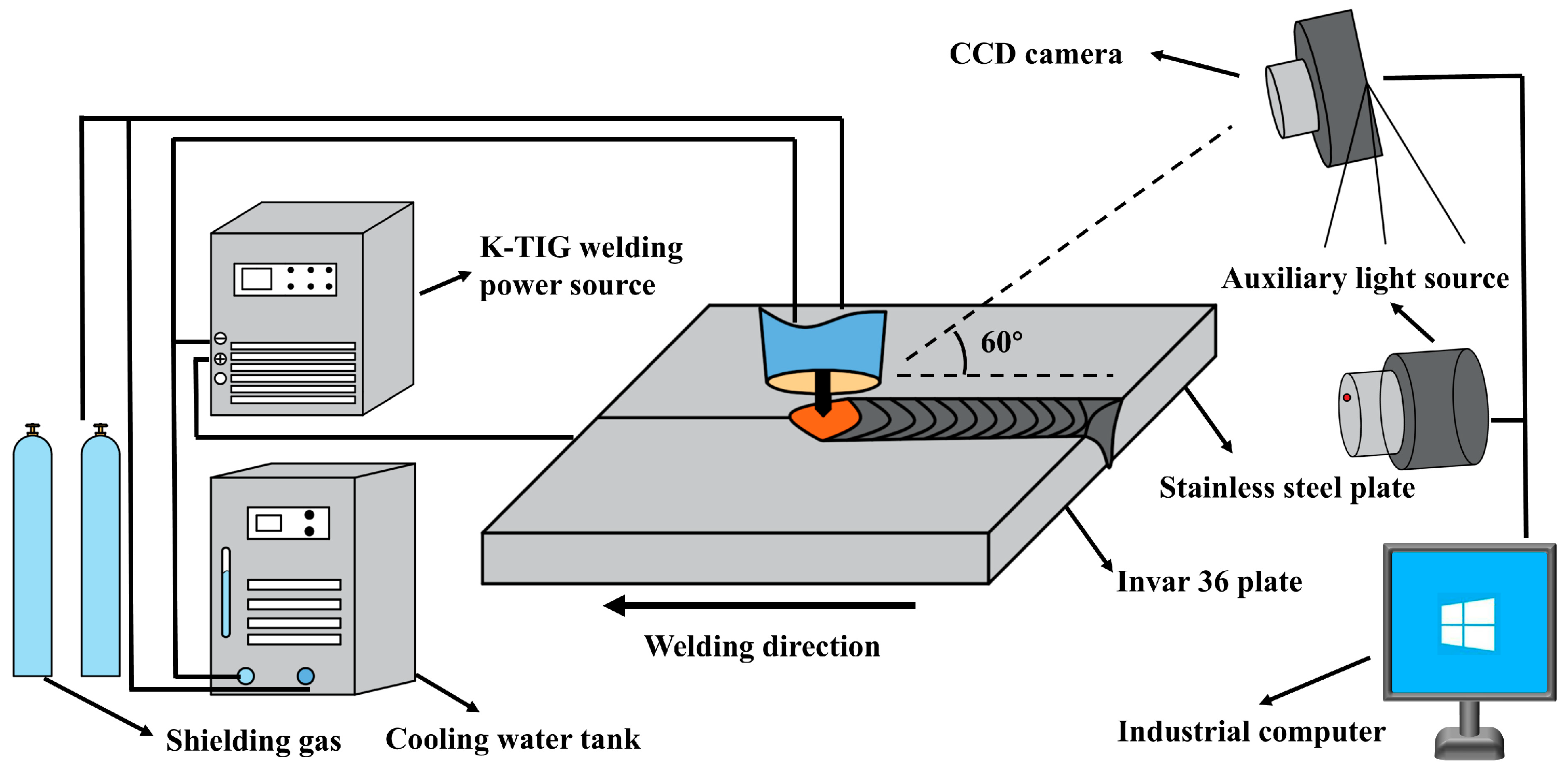
Figure 1. The schematic diagram of the experimental process.
Coatings 16 00058 g001
Figure 2. Size measurement diagram. (a) Measurement schematic diagram of molten pool. (b) Measurement schematic diagram of weld cross-section size.
Coatings 16 00058 g002
Figure 3. Surface quality of the same material welded joint: (a) 304; (b) 316; (c) 309; (d) 310; (e) Invar 36.
Coatings 16 00058 g003
Figure 4. Surface quality of dissimilar material welded joint: (a) 304; (b) 316; (c) 309; (d) 310.
Coatings 16 00058 g004
Figure 5. Dimensions of arc crater tail tip from the end of the weld (l1 represents the distance from the tip of the crater to the end of the weld in the welded joint of the same material, while l2 represents the corresponding distance in the welded joint of different materials).
Coatings 16 00058 g005
Figure 6. Same material weld pool morphology: (a) 304; (b) 316; (c) 309; (d) 310; (e) Invar 36.
Coatings 16 00058 g006
Figure 7. Dissimilar material weld pool morphology: (a) 304; (b) 316; (c) 309; (d) 310; (e) Invar 36.
Coatings 16 00058 g007
Figure 8. Welding pool size diagram (z1 and z2 represent the transverse offset of the tip of the molten pool tail relative to the center line of the molten pool in the welding of the same material and the dissimilar material, respectively. n1 and n2 represent the distance from the tip of the molten pool to the keyhole in the welding of the same material and different materials, respectively).
Coatings 16 00058 g008
Figure 9. Cross-sectional metallography of welded joints of the same material: (a) 304; (b) 316; (c) 309; (d) 310; (e) Invar 36.
Coatings 16 00058 g009
Figure 10. Cross-sectional metallography of welded joints of the dissimilar material: (a) 304; (b) 316; (c) 309; (d) 310; (e) Invar 36.
Coatings 16 00058 g010
Figure 11. Size of welded joint (t1 and t2 are the width of the welded joint of the same material and the dissimilar material, respectively. The width of HAZ is the distance from the fusion line to the heat affected zone boundary, measured from the thickness center).
Coatings 16 00058 g011
Figure 12. Arc magnetic blow mechanism. (a) Stainless steel welding with the same material. (b) Invar 36 welding with the same material. (c) Dissimilar material welding. (d) Normal arc shape. (e) Arc contraction shape. (f) Arc deflection shape. The gray spiral arrows in (e,f) represent the circular helical motion of charged particles within the arc plasma.
Coatings 16 00058 g012
Figure 13. Molten metal flow mechanism on the surface of the molten pool. (a) High-speed camera images of molten pool flow of the same material at different welding times. (b) Molten pool flow schematic diagram of same material. (c) High-speed camera images of molten pool flow of the dissimilar material at different welding times. (d) Molten pool flow schematic diagram of dissimilar material.
Coatings 16 00058 g013
Figure 14. Flow mechanism of molten metal in molten pool. (a) Weld cross-section of the same material. (b) The force diagram of the same material welding pool. (c) Weld cross-section of the dissimilar materials. (d) The force diagram of the dissimilar materials welding pool. The yellow dashed arrows indicate the flow direction of molten metal in the molten pool.
Coatings 16 00058 g014
Table 1. The chemical composition of Invar 36 and stainless steel alloys (wt%).
MaterialsCSiMnPSCrCoMoNiFe
3040.0410.0370.760.0240.00318.03--8.03Bal.
3160.0030.361.140.0350.00616.26-2.1110.31Bal.
3090.0640.581.120.0220.02422.12--12.06Bal.
3100.0620.681.040.0250.02224.15--19.25Bal.
Invar 360.050.20.40.020.020.020.07-36Bal.
Table 2. Material properties of Invar 36 and stainless steel alloys [21,22,23].
MaterialsThermal Conductivity/W·m−1·K−1Thermal Expansion Coefficient/ K−1Specific Heat
Capacity/J·Kg−1·K−1
Surface
Tension/N·m−1
Viscosity/Pa·s
30414.617.3 × 10−64521.440.004
31612.4117.6 × 10−64621.250.005
3091114.9 × 10−65021.220.007
31010.814.4 × 10−65021.170.009
Invar 366.21.2 × 10−68011.930.01
Table 3. Welding parameters in the experiment.
MaterialsWelding Speed/(mm/min)Welding Current/AVoltage/VArc Length (mm)
304-304260450182
316-316260450182
309-309260450182
310-310260450182
Invar 36-Invar 36260450182
Invar 36-304260450182
Invar 36-316L260450182
Invar 36-309260450182
Invar 36-310260450182
Table 4. Angle between the tail tip of the molten pool and the edge of the molten pool.
MaterialLeft Angle of the SJ (°)Right Angle of the SJ (°)MaterialLeft Angle of the DJ (°)Right Angle of the DJ (°)
304-30438.034.7304-Invar 3637.026.0
316-31636.237.4316-Invar 3634.127.4
309-30936.139309-Invar 3633.225.8
310-31036.438.2310-Invar 3629.923.5
Invar 36-Invar 3630.231.9Invar 36-Invar 36--
Disclaimer/Publisher’s Note: The statements, opinions and data contained in all publications are solely those of the individual author(s) and contributor(s) and not of MDPI and/or the editor(s). MDPI and/or the editor(s) disclaim responsibility for any injury to people or property resulting from any ideas, methods, instructions or products referred to in the content.