Growth Process and Formation Mechanism of Oxide Films for FSX-414 Alloy: Comparing External Surface and Narrow Crevice During Long-Term Oxidation at 900 °C

 ,
,
Abstract
1. Introduction
2. Materials and Methods
3. Results and Discussion
3.1. Oxide Film in the Narrow Crevice of FSX-414 Alloy
3.2. Oxide Film in the External Surface of FSX-414 Alloy
3.3. Discussion on the Oxidation Process of FSX-414 Alloy
4. Conclusions
- (1)
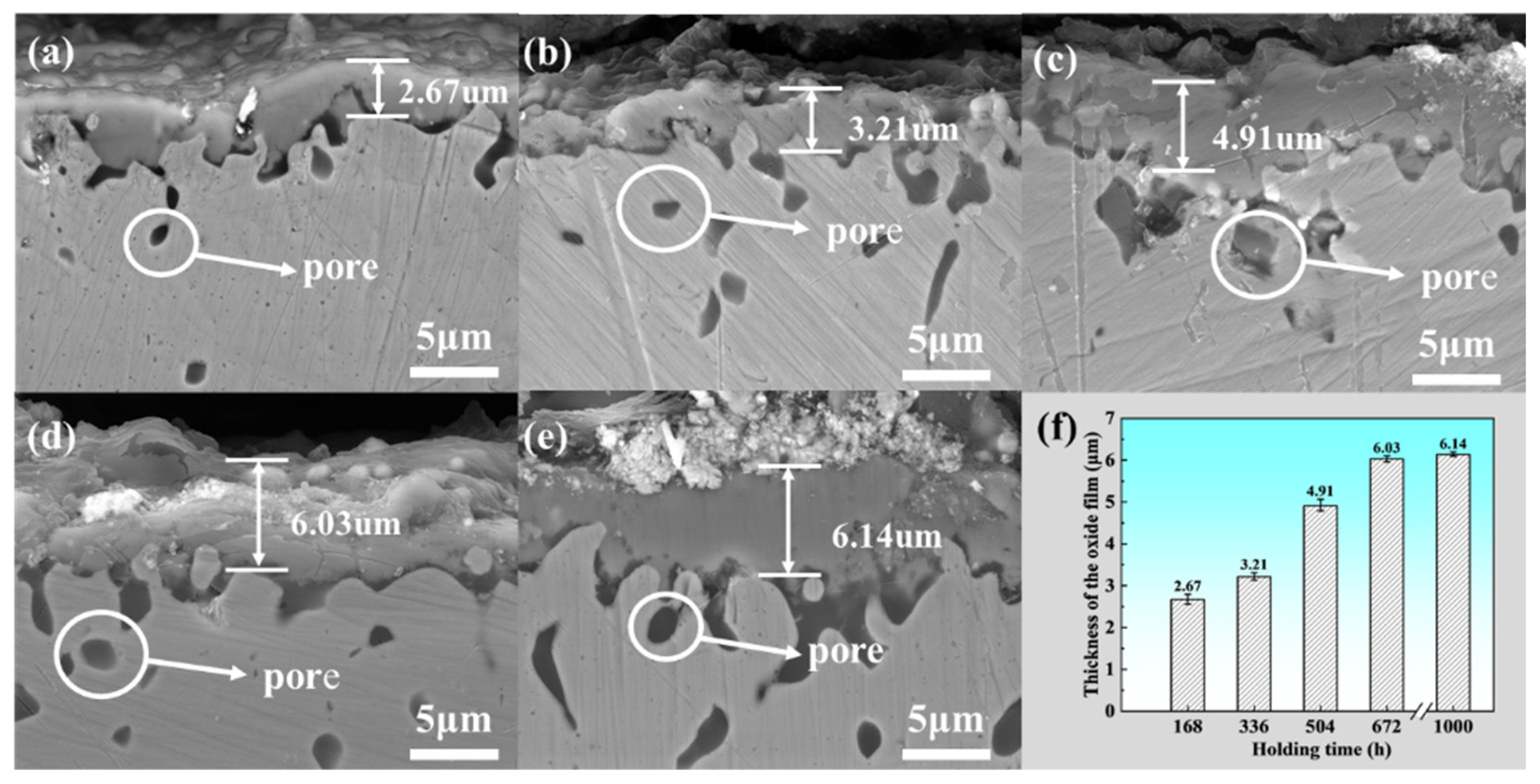
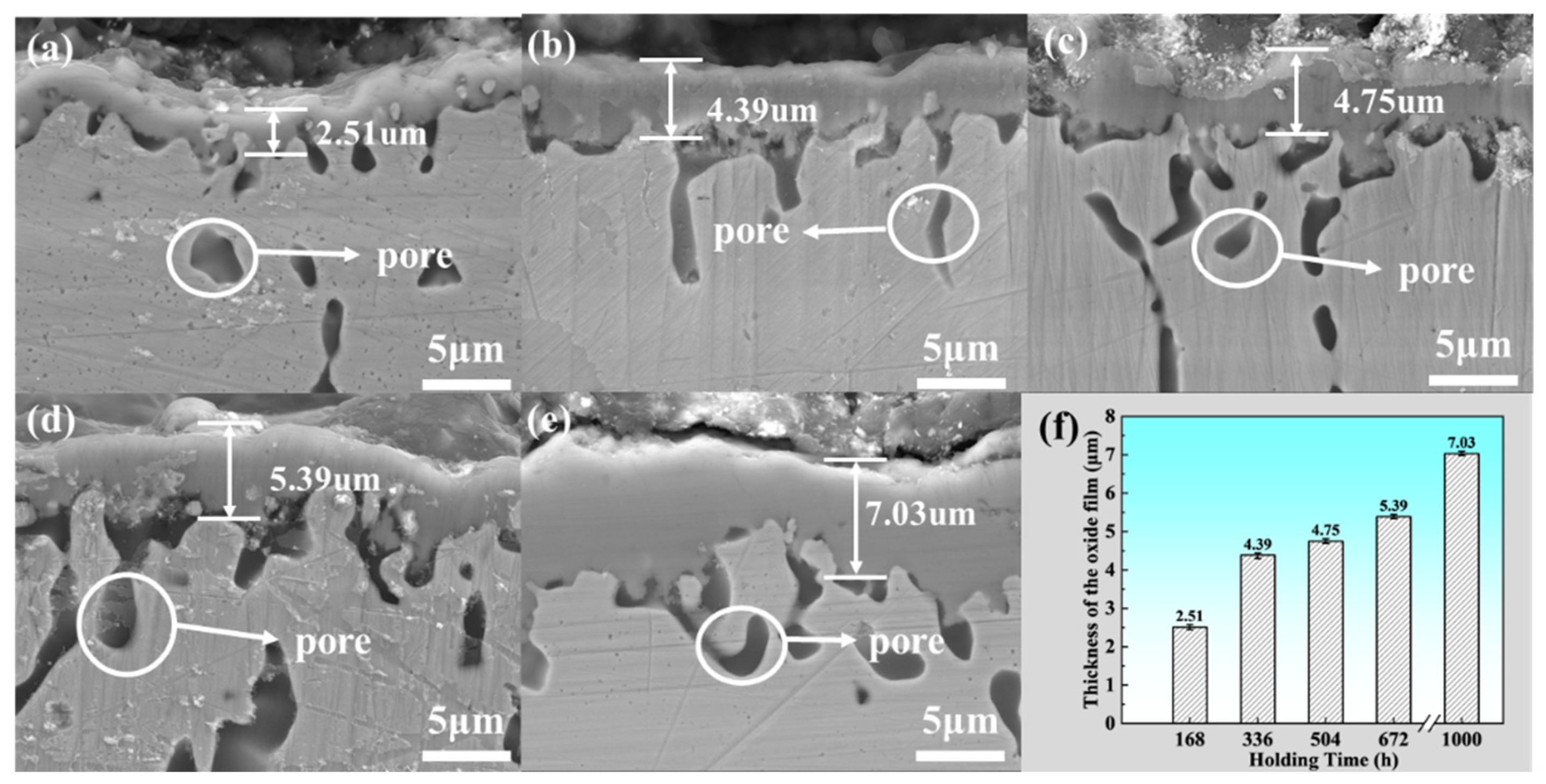
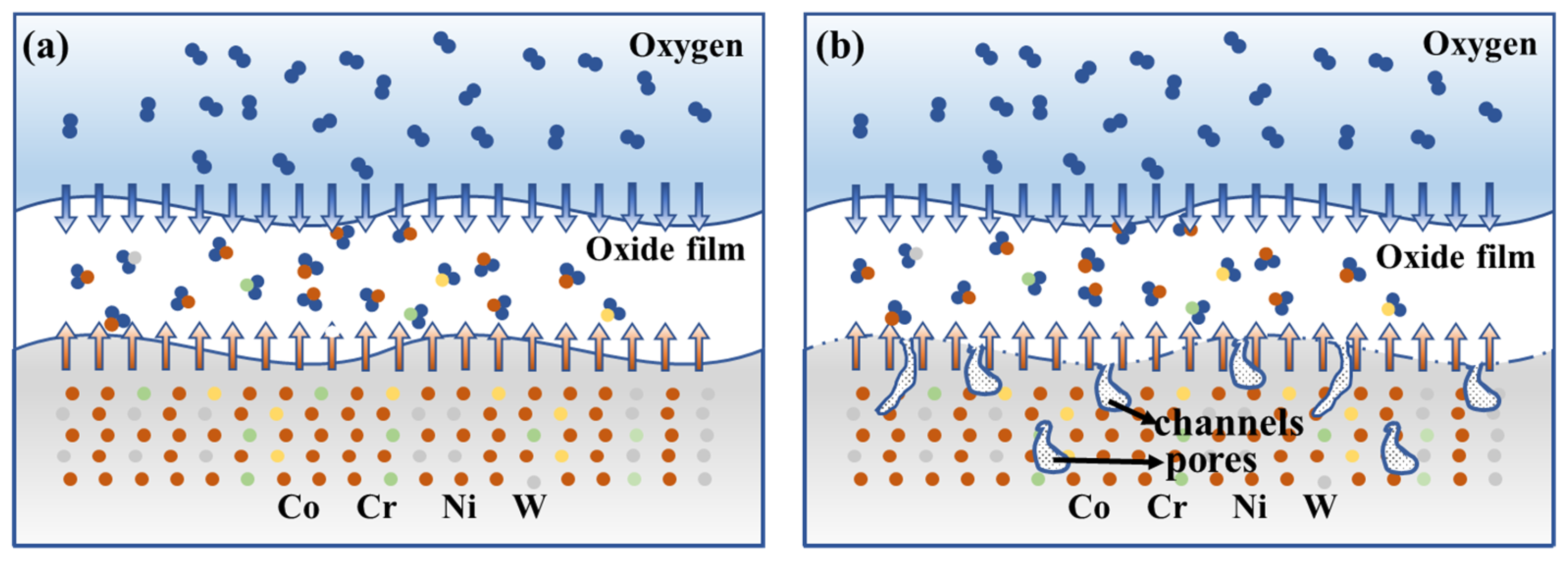
- The growth rate of the oxide film on the external surface is slightly larger than that in the narrow crevice, which slowed down after 672 h because of the space-confined geometry and the lower oxygen partial pressure.
- (2)
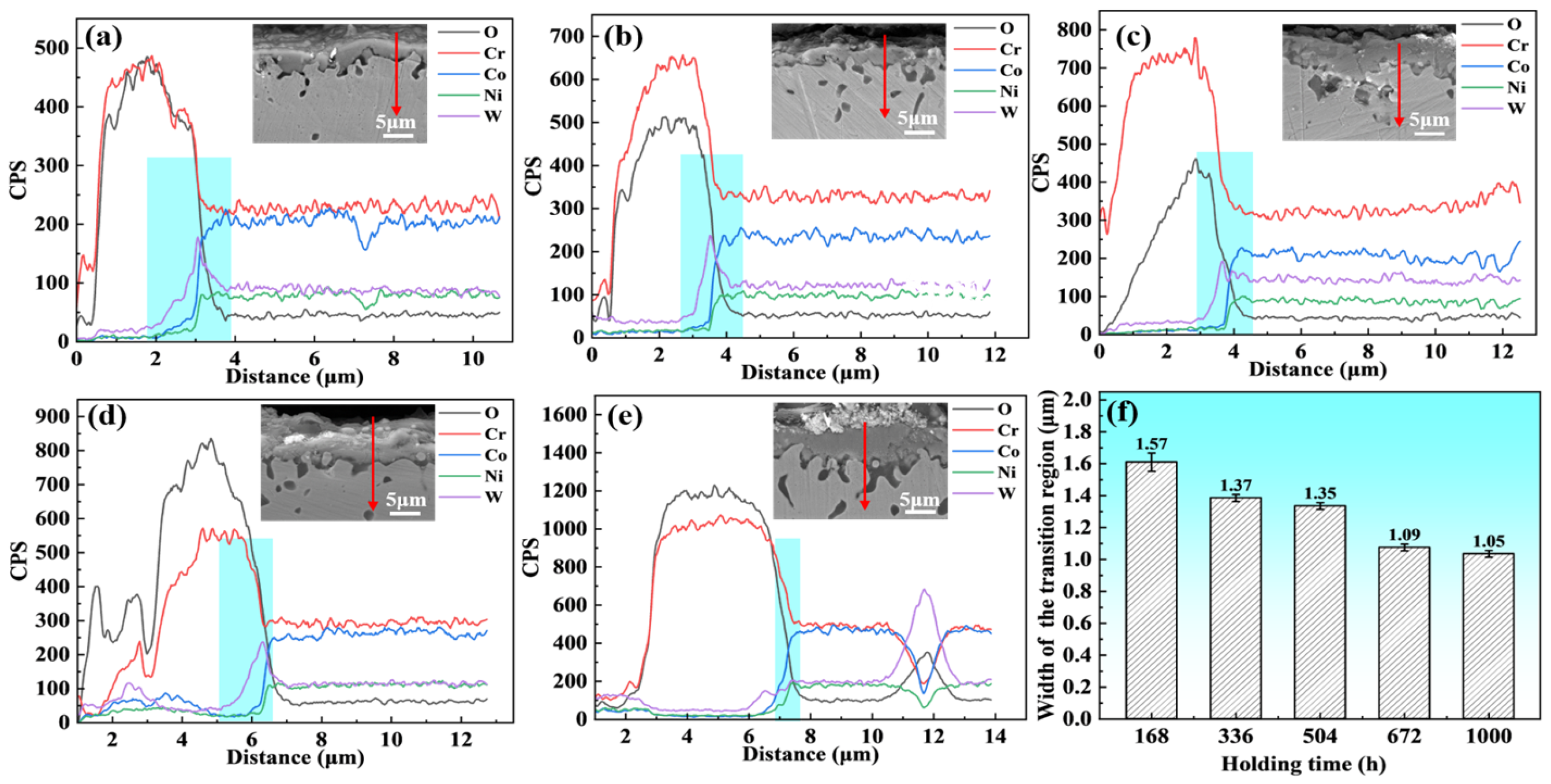
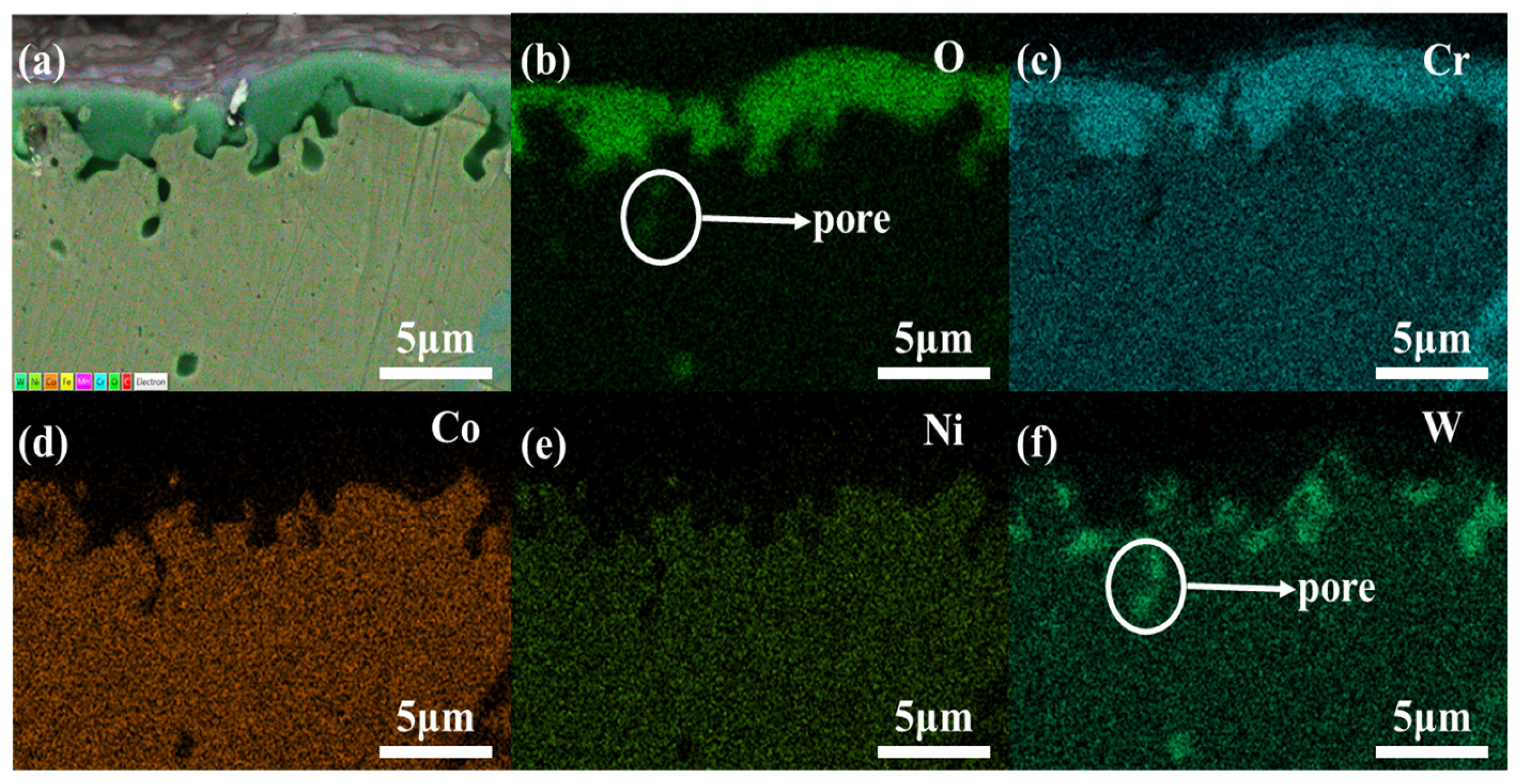
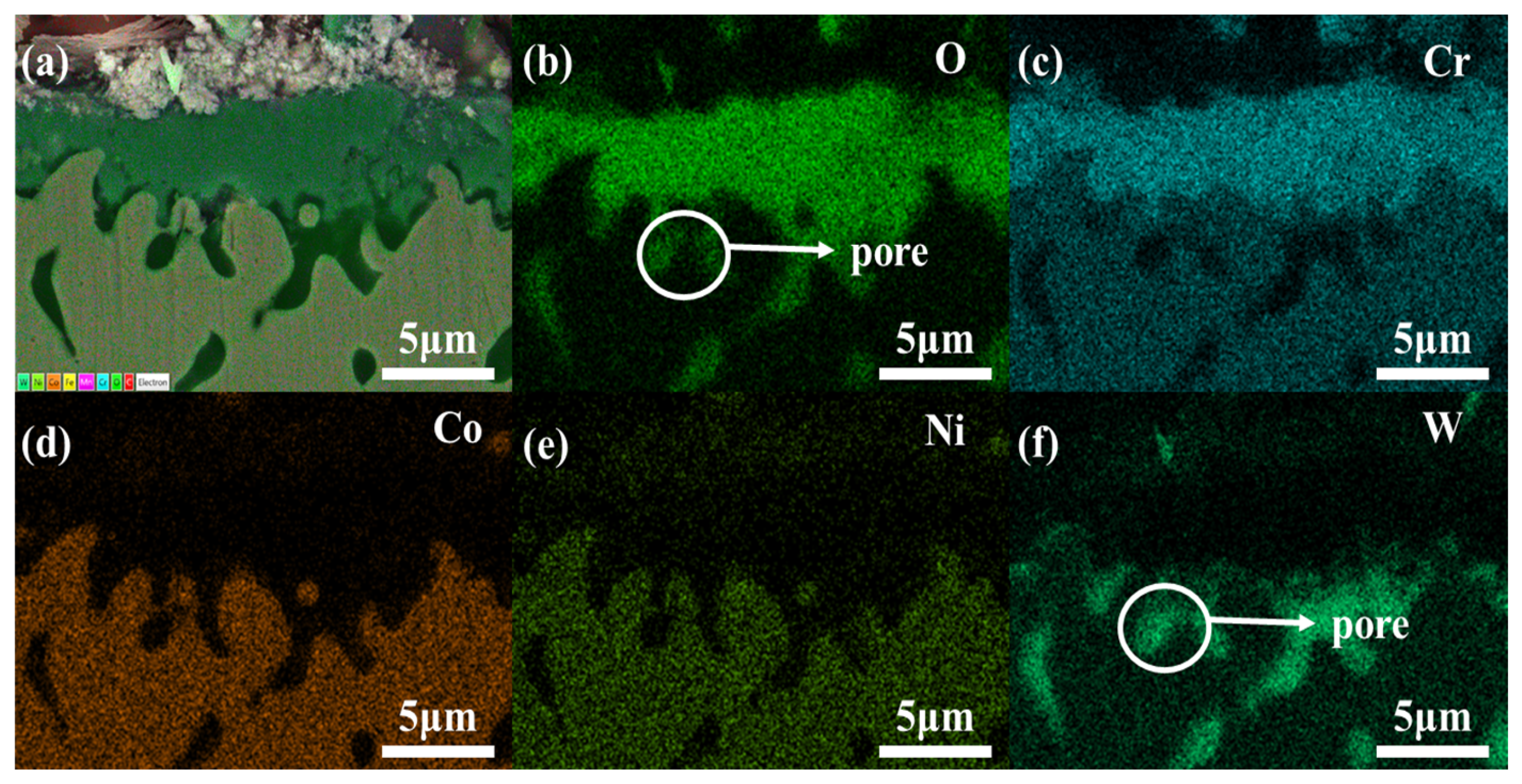
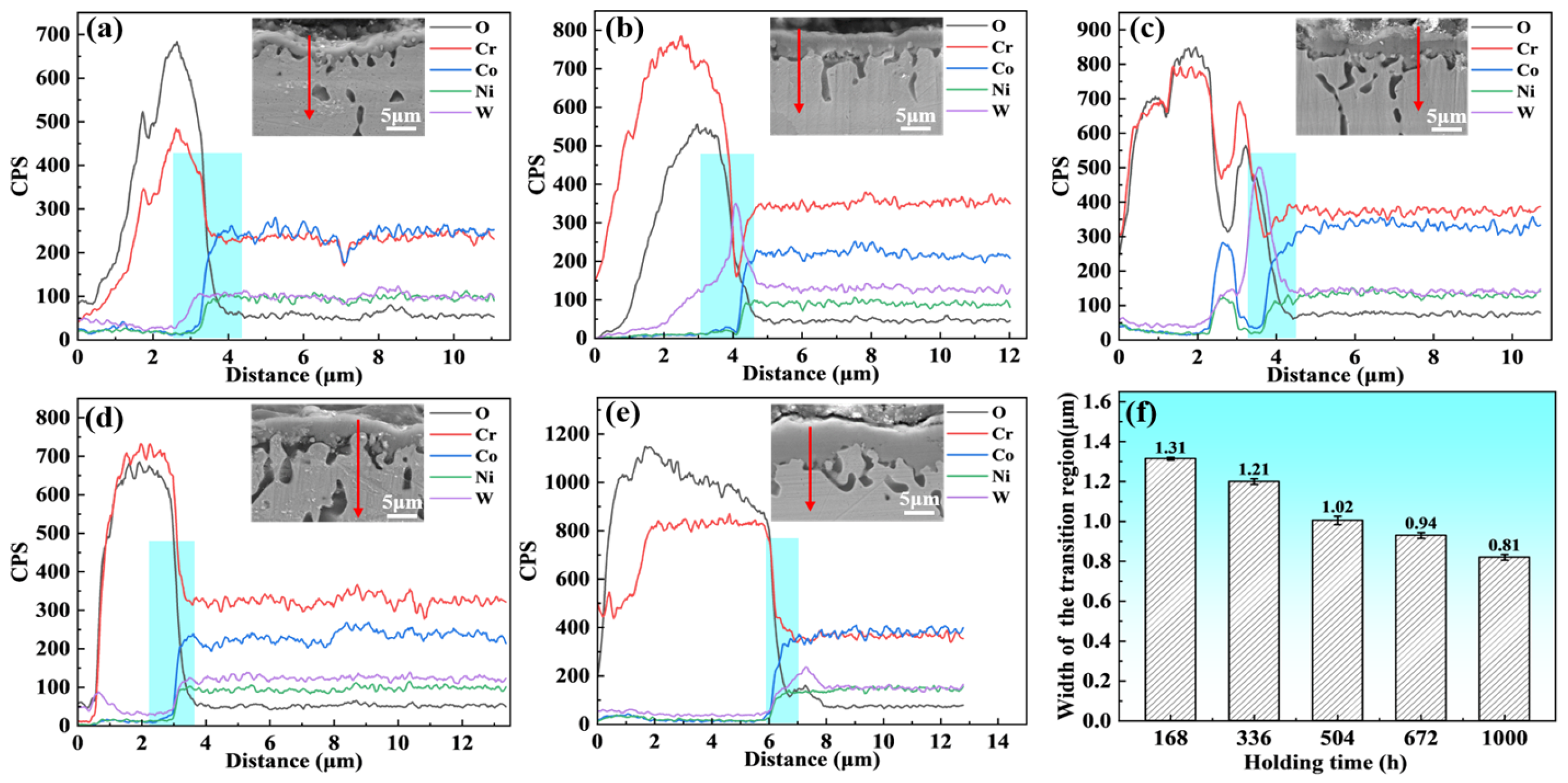
- Both oxide films were mainly composed of O and Cr elements, providing protection for the internal metal, leading to a composition transition region between the oxide film and the inner metal.
- (3)
- The width of the transition region decreased with the heating duration and was smaller on the external surface. This led to a deeper compositional gradient between the oxide film and the inner metal, which in turn facilitated the removal of the oxide during cleaning.
- (4)
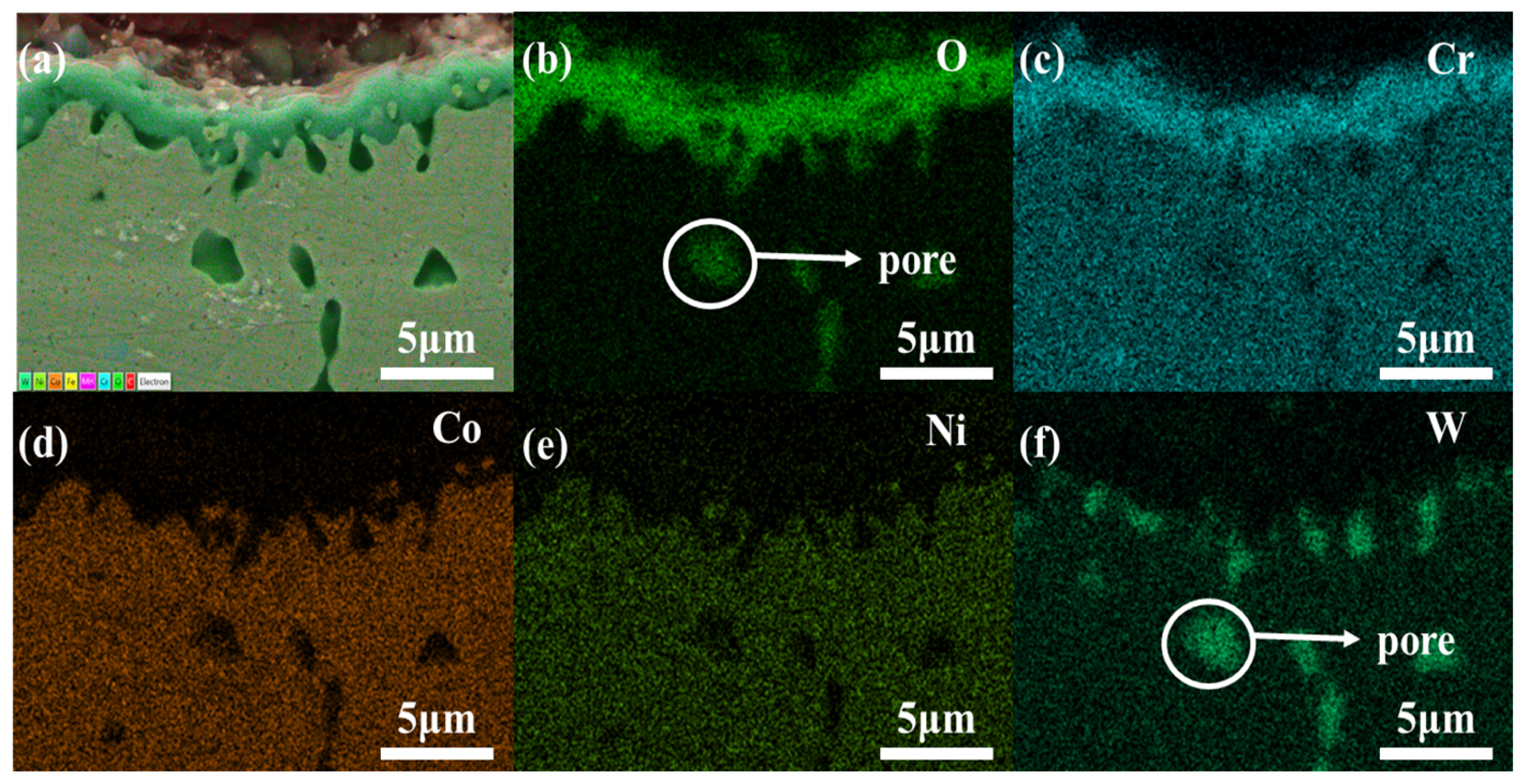
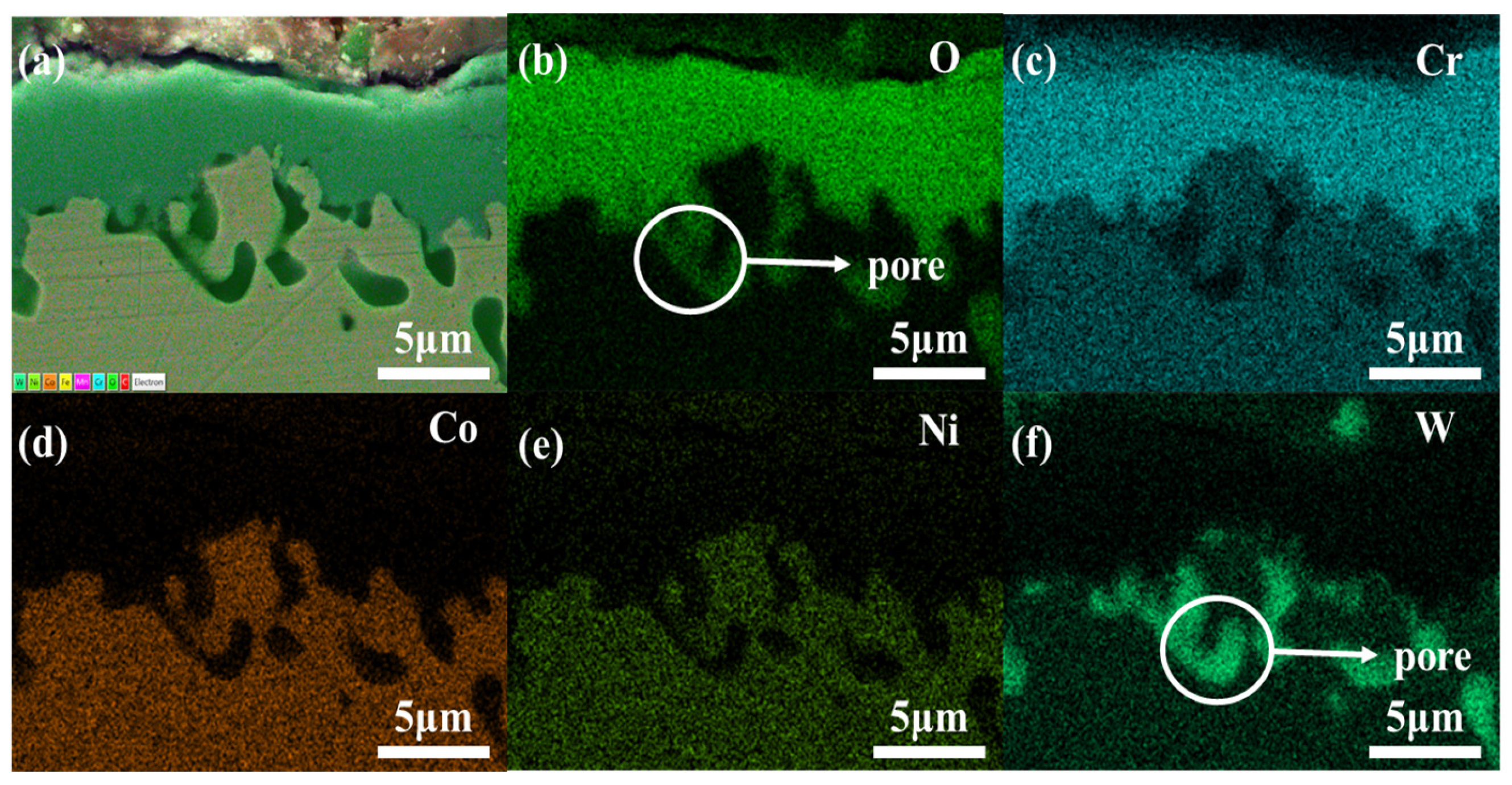
- More “pores” composed of W and O appeared near the oxide films, providing channels between the oxide film and the internal metal, accelerating the localized oxidation as the heating duration increased.
- (5)
- The depth of the pores was greater within the narrow crevice than on the surface of the metal, which further complicated the removal process.
Author Contributions
Funding
Institutional Review Board Statement
Informed Consent Statement
Data Availability Statement
Conflicts of Interest
References
- Murray, S.P.; Cervellon, A.; Cormier, J.; Pollock, T.M. Low Cycle Fatigue of a Single Crystal CoNi-Base Superalloy. Mater. Sci. Eng. A 2021, 827, 142007. [Google Scholar] [CrossRef]
- Li, W.; Li, L.; Antonov, S.; Lu, F.; Feng, Q. Effects of Cr and Al/W Ratio on the Microstructural Stability, Oxidation Property and γ′ Phase Nano-Hardness of Multi-Component Co–Ni-Base Superalloys. J. Alloys Compd. 2020, 826, 154182. [Google Scholar] [CrossRef]
- Ułanowicz, L.; Dudziński, A. Heat-Resistant Protective Coatings Applied to Aircraft Turbine Blades by Supersonic Thermal Spraying and Diffusion-Aluminizing. Coatings 2024, 14, 1554. [Google Scholar] [CrossRef]
- Ismail, F.B.; Vorontsov, V.A.; Lindley, T.C.; Hardy, M.C.; Dye, D.; Shollock, B.A. Alloying Effects on Oxidation Mechanisms in Polycrystalline Co–Ni Base Superalloys. Corros. Sci. 2017, 116, 44–52. [Google Scholar] [CrossRef]
- He, J.; Zou, M.; Li, L.; Wang, X.; Feng, Q. Creep Behaviour of a Novel CoNi-Base Single-Crystal Superalloy at High Temperature and Low Stress. Mater. Lett. 2020, 262, 127042. [Google Scholar] [CrossRef]
- Eggeler, Y.M.; Müller, J.; Titus, M.S.; Suzuki, A.; Pollock, T.M.; Spiecker, E. Planar Defect Formation in the γ′ Phase during High Temperature Creep in Single Crystal CoNi-Base Superalloys. Acta Mater. 2016, 113, 335–349. [Google Scholar] [CrossRef]
- Neumeier, S.; Freund, L.P.; Göken, M. Novel Wrought γ/γ′ Cobalt Base Superalloys with High Strength and Improved Oxidation Resistance. Scr. Mater. 2015, 109, 104–107. [Google Scholar] [CrossRef]
- Meher, S.; Carroll, L.J.; Pollock, T.M.; Carroll, M.C. Solute Partitioning in Multi-Component γ/γ′ Co–Ni-Base Superalloys with near-Zero Lattice Misfit. Scr. Mater. 2016, 113, 185–189. [Google Scholar] [CrossRef]
- Wang, X.; Cui, Y.; Zhou, Y.; Li, Z.; Zhao, Y.; Wang, J. The Microstructure Evolution of a Ni-Based Superalloy Turbine Blade at Elevated Temperature. Coatings 2025, 15, 835. [Google Scholar] [CrossRef]
- Glasbrenner, H.; Nold, E.; Voss, Z. The Influence of Alloying Elements on the Hot-Dip Aluminizing Process and on the Subsequent High-Temperature Oxidation. J. Nucl. Mater. 1997, 249, 39–45. [Google Scholar] [CrossRef]
- Itoh, Y.; Saitoh, M.; Ishiwata, Y. Influence of High-Temperature Protective Coatings on the Mechanical Properties of Nickel-Based Superalloys. J. Mater. Sci. 1999, 34, 3957–3966. [Google Scholar] [CrossRef]
- Τawancy, H.Μ.; Al-Hadhrami, L.M. Degradation of Turbine Blades and Vanes by Overheating in a Power Station. Eng. Fail. Anal. 2009, 16, 273–280. [Google Scholar] [CrossRef]
- Hadipour, A.; Jafari Eskandari, M.; Gholami, M.G.; Mehdizadeh, M. Failure Analysis of the Various Sides of a Second-Stage Gas Turbine Nozzle Made of FSX-414 Cobalt-Based Alloy. J. Fail. Anal. Prev. 2024, 24, 838–854. [Google Scholar] [CrossRef]
- Naalchian, M.; Kasiri-Asgarani, M.; Shamanian, M.; Bakhtiari, R.; Bakhsheshi-Rad, H.R. Effect of Substrate’s Heat Treatment on Microstructure and Mechanical Properties TLP Bonding of Dissimilar X-45/FSX-414 Cobalt Based Superalloys. Met. Mater. Int. 2021, 27, 4657–4668. [Google Scholar] [CrossRef]
- Pedrizzetti, G.; Genova, V.; Scrinzi, E.; Bottacchiari, R.; Conti, M.; Paglia, L.; Bartuli, C. Slurry Aluminizing Mechanisms of Nickel-Based Superalloy and Applicability for the Manufacturing of Platinum-Modified Aluminide Coatings. Coatings 2025, 15, 822. [Google Scholar] [CrossRef]
- Liu, X.; Zhao, J.; Li, T.; Meng, Z.; Qing, J.; Xu, W.; Ouyang, Y.; Zeng, Y. Effects of WC Addition on Microstructure and Properties of Plasma-Cladded AlCoCrFeNi High-Entropy Alloy Coatings. Lubricants 2025, 13, 407. [Google Scholar] [CrossRef]
- Du, S.; Liu, H.; Jiang, M.; Zhou, L.; Gao, F. The Performance of a Co-Based Alloy Tool in the Friction Stir Welding of TA5 Alloy. Wear 2022, 488, 204180. [Google Scholar] [CrossRef]
- Schafrik, R.; Sprague, R. Superalloy Technology-a Perspective on Critical Innovations for Turbine Engines. Key Eng. Mater. 2008, 380, 113–134. [Google Scholar] [CrossRef]
- Homjabok, W.; Permpoon, S.; Lothongkum, G. Pickling Behavior of AISI 304 Stainless Steel in Sulfuric and Hydrochloric Acid Solutions. J. Met. Mater. Miner. 2010, 20, 1–6. [Google Scholar]
- Lindell, D.; Pettersson, R. Pickling of Process-Oxidised Austenitic Stainless Steels in HNO3-HF Mixed Acid. Steel Res. Int. 2010, 81, 542–551. [Google Scholar] [CrossRef]
- Berthod, P.; Michon, S.; Aranda, L.; Mathieu, S.; Gachon, J.C. Experimental and Thermodynamic Study of the Microstructure Evolution in Cobalt-Base Superalloys at High Temperature. Calphad 2003, 27, 353–359. [Google Scholar] [CrossRef]
- Shi, P.; Shi, H.; Liu, C.; Jiang, M. Effect of Pickling Process on Removal of Oxide Layer on the Surface of Ferritic Stainless Steel. Can. Metall. Q. 2018, 57, 168–175. [Google Scholar] [CrossRef]
- Zheng, L.; Zhang, M.; Dong, J. Oxidation Behavior and Mechanism of Powder Metallurgy Rene95 Nickel Based Superalloy between 800 and 1000 °C. Appl. Surf. Sci. 2010, 256, 7510–7515. [Google Scholar] [CrossRef]
- Jiang, H.; Dong, J.; Zhang, M.; Guo, W. Microstructural Evolution and Oxidation Behavior of Alloy Ni-13Mo-13Cr-9W-3Fe-3Ti-2Al during Isothermal Exposure at 900 °C. Metall. Mater. Trans. A 2019, 50, 4331–4343. [Google Scholar] [CrossRef]
- Zhuang, X.; Tan, Y.; You, X.; Li, P.; Zhao, L.; Cui, C.; Zhang, H.; Cui, H. High Temperature Oxidation Behavior and Mechanism of a New Ni-Co-Based Superalloy. Vacuum 2021, 189, 110219. [Google Scholar] [CrossRef]
- Nabizadeh, M.; Boissy, C.; Baert, K.; Goderis, S.; Ottevaere, H.; Terryn, H.; Hauffman, T. The Mechanism of Thermal Oxide Film Formation on Low Cr Martensitic Stainless Steel and Its Behavior in Fluoride-Based Pickling Solution in Conversion Treatment. Corros. Sci. 2021, 181, 109206. [Google Scholar] [CrossRef]
- Pajonk, G.; Bubert, H. Influence of Pickling High Alloyed CrNi-Steels and Nickel Base Alloys with Citric Acid on the Composition of their Tarnish Oxides. Microchim. Acta 2000, 133, 289–293. [Google Scholar] [CrossRef]
- Yue, Y.; Liu, C.; Jiang, M. Formation and Evolution of Corrosion Product Film on 304 Stainless Steel in HCl-Based Pickling Solution under Chemical Oxidation. J. Mater. Eng. Perform. 2023, 32, 3995–4004. [Google Scholar] [CrossRef]
- Chen, Z.; Okamoto, N.L.; Chikugo, K.; Inui, H. On the Possibility of Simultaneously Achieving Sufficient Oxidation Resistance and Creep Property at High Temperatures Exceeding 1000 C in Co-Based Superalloys. J. Alloys Compd. 2021, 858, 157724. [Google Scholar] [CrossRef]
- Zhang, Y.; Fu, H.; Zhou, F.; Xie, J. Revealing the Effect of Al Content on the Oxidation of γ’-Strengthened Cobalt-Based Superalloys. Corros. Sci. 2022, 198, 110122. [Google Scholar] [CrossRef]
- Migas, D.; Moskal, G.; Niemiec, D. Surface Condition of New γ–γ′ Co-Al-Mo-Nb and Co-Al-W Cobalt-Based Superalloys after Oxidation at 800 °C. J. Mater. Eng. Perform. 2018, 27, 447–456. [Google Scholar] [CrossRef]
- Zhang, Y.-D.; Yang, Z.-G.; Zhang, C.; Lan, H. Oxidation Behavior of Tribaloy T-800 Alloy at 800 and 1000 °C. Oxid. Met. 2008, 70, 229–239. [Google Scholar] [CrossRef]
- Brady, M.P.; Wright, I.G.; Gleeson, B. Alloy Design Strategies for Promoting Protective Oxide-Scale Formation. JOM 2000, 52, 16–21. [Google Scholar] [CrossRef]
- Klein, L.; Shen, Y.; Killian, M.S.; Virtanen, S. Effect of B and Cr on the High Temperature Oxidation Behaviour of Novel γ/γ′-Strengthened Co-Base Superalloys. Corros. Sci. 2011, 53, 2713–2720. [Google Scholar] [CrossRef]
- Weiser, M.; Galetz, M.C.; Chater, R.J.; Virtanen, S. Growth Mechanisms of Oxide Scales on Two-Phase Co/Ni-Base Model Alloys between 800 °C and 900 °C. J. Electrochem. Soc. 2020, 167, 021504. [Google Scholar] [CrossRef]
- Yeh, A.-C.; Wang, S.-C.; Cheng, C.-F.; Chang, Y.-J.; Chang, S.-C. Oxidation Behaviour of Si-Bearing Co-Based Alloys. Oxid. Met. 2016, 86, 99–112. [Google Scholar] [CrossRef]
- Yan, H.-Y.; Vorontsov, V.A.; Dye, D. Effect of Alloying on the Oxidation Behaviour of Co–Al–W Superalloys. Corros. Sci. 2014, 83, 382–395. [Google Scholar] [CrossRef]
- Bauer, A.; Neumeier, S.; Pyczak, F.; Singer, R.F.; Göken, M. Creep Properties of Different γ′-Strengthened Co-Base Superalloys. Mater. Sci. Eng. A 2012, 550, 333–341. [Google Scholar] [CrossRef]
- Berthod, P. Kinetics of High Temperature Oxidation and Chromia Volatilization for a Binary Ni–Cr Alloy. Oxid. Met. 2005, 64, 235–252. [Google Scholar] [CrossRef]
- Abderrazik, G.B.; Moulin, G.; Huntz, A.M. Relation between Impurities and Oxide-Scale Growth Mechanisms on Ni-34Cr and Ni-20Cr Alloys. I. Influence of C, Mn, and Si: I. Influence of C, Mn, and Si. Oxid. Met. 1990, 33, 191–235. [Google Scholar] [CrossRef]
- Mallikarjuna, H.T.; Richards, N.L.; Caley, W.F. Effect of Alloying Elements and Microstructure on the Cyclic Oxidation Performance of Three Nickel-Based Superalloys. Materialia 2018, 4, 487–499. [Google Scholar] [CrossRef]
- Liu, P.S.; Liang, K.M. High-Temperature Oxidation Behavior of the Co-Base Superalloy DZ40M in Air. Oxid. Met. 2000, 53, 351–360. [Google Scholar] [CrossRef]
- Braun, R.; Rovere, F.; Mayrhofer, P.H.; Leyens, C. Environmental Protection of γ-TiAl Based Alloy Ti-45Al-8Nb by CrAlYN Thin Films and Thermal Barrier Coatings. Intermetallics 2010, 18, 479–486. [Google Scholar] [CrossRef]
- O’Neill, H.S.C.; Pownceby, M.I. Thermodynamic data from redox reactions at high temperatures. I. An experimental and theoretical assessment of the electrochemical method using stabilized zirconia electrolytes, with revised values for the Fe-”FeO”, Co-CoO, Ni-NiO and Cu-Cu2O oxygen buffer. Contrib. Mineral. Petrol. 1993, 114, 296–314. [Google Scholar] [CrossRef]
- Wright, I.G.; Wood, G.C. The Isothermal Oxidation of Co-Cr Alloys in 760 Torr Oxygen at 1000 °C. Oxid. Met. 1977, 11, 163–191. [Google Scholar] [CrossRef]
- Gu, Y.F.; Harada, H.; Ro, Y. Chromium and Chromium-Based Alloys: Problems and Possibilities for High-Temperature Service. JOM 2004, 56, 28–33. [Google Scholar] [CrossRef]
- Zhao, S.; Xie, X.; Smith, G.D.; Patel, S.J. Microstructural Stability and Mechanical Properties of a New Nickel-Based Superalloy. Mater. Sci. Eng. A 2003, 355, 96–105. [Google Scholar] [CrossRef]
- Patel, N.S.; Pavlík, V.; Boča, M. High-Temperature Corrosion Behavior of Superalloys in Molten Salts—A Review. Crit. Rev. Solid State Mat. Sci. 2017, 42, 83–97. [Google Scholar] [CrossRef]


Disclaimer/Publisher’s Note: The statements, opinions and data contained in all publications are solely those of the individual author(s) and contributor(s) and not of MDPI and/or the editor(s). MDPI and/or the editor(s) disclaim responsibility for any injury to people or property resulting from any ideas, methods, instructions or products referred to in the content. |
© 2026 by the authors. Licensee MDPI, Basel, Switzerland. This article is an open access article distributed under the terms and conditions of the Creative Commons Attribution (CC BY) license.
Share and Cite
Wu, J.; Yang, C.; Zhao, F.; Zeng, Y.; Lai, J.; Yu, J.; Guan, Y.; Gao, Z.; Gong, X. Growth Process and Formation Mechanism of Oxide Films for FSX-414 Alloy: Comparing External Surface and Narrow Crevice During Long-Term Oxidation at 900 °C. Coatings 2026, 16, 128. https://doi.org/10.3390/coatings16010128
Wu J, Yang C, Zhao F, Zeng Y, Lai J, Yu J, Guan Y, Gao Z, Gong X. Growth Process and Formation Mechanism of Oxide Films for FSX-414 Alloy: Comparing External Surface and Narrow Crevice During Long-Term Oxidation at 900 °C. Coatings. 2026; 16(1):128. https://doi.org/10.3390/coatings16010128
Chicago/Turabian StyleWu, Junjie, Changlin Yang, Fan Zhao, Yi Zeng, Jianping Lai, Jiaxin Yu, Yingbo Guan, Zhenhuan Gao, and Xiufang Gong. 2026. "Growth Process and Formation Mechanism of Oxide Films for FSX-414 Alloy: Comparing External Surface and Narrow Crevice During Long-Term Oxidation at 900 °C" Coatings 16, no. 1: 128. https://doi.org/10.3390/coatings16010128
APA StyleWu, J., Yang, C., Zhao, F., Zeng, Y., Lai, J., Yu, J., Guan, Y., Gao, Z., & Gong, X. (2026). Growth Process and Formation Mechanism of Oxide Films for FSX-414 Alloy: Comparing External Surface and Narrow Crevice During Long-Term Oxidation at 900 °C. Coatings, 16(1), 128. https://doi.org/10.3390/coatings16010128