Article

Damage Detection of Beam Structures Using Displacement Differences and an Artificial Neural Network

1
School of Civil and Transportation Engineering, Ningbo University of Technology, Ningbo 315211, China
2
Engineering Research Center of Industrial Construction in Civil Engineering of Zhejiang, Ningbo University of Technology, Ningbo 315211, China
3
Ningbo Roaby Technology Industrial Group Co., Ltd., Ningbo 315800, China
4
Key Laboratory of New Technology for Construction of Cities in Mountain Area, School of Civil Engineering, Chongqing University, Chongqing 400045, China
*
Authors to whom correspondence should be addressed.
Coatings 2025, 15(3), 289; https://doi.org/10.3390/coatings15030289

Submission received: 4 January 2025 / Revised: 26 February 2025 / Accepted: 27 February 2025 / Published: 1 March 2025
(This article belongs to the Special Issue Surface Engineering and Mechanical Properties of Building Materials)

Abstract

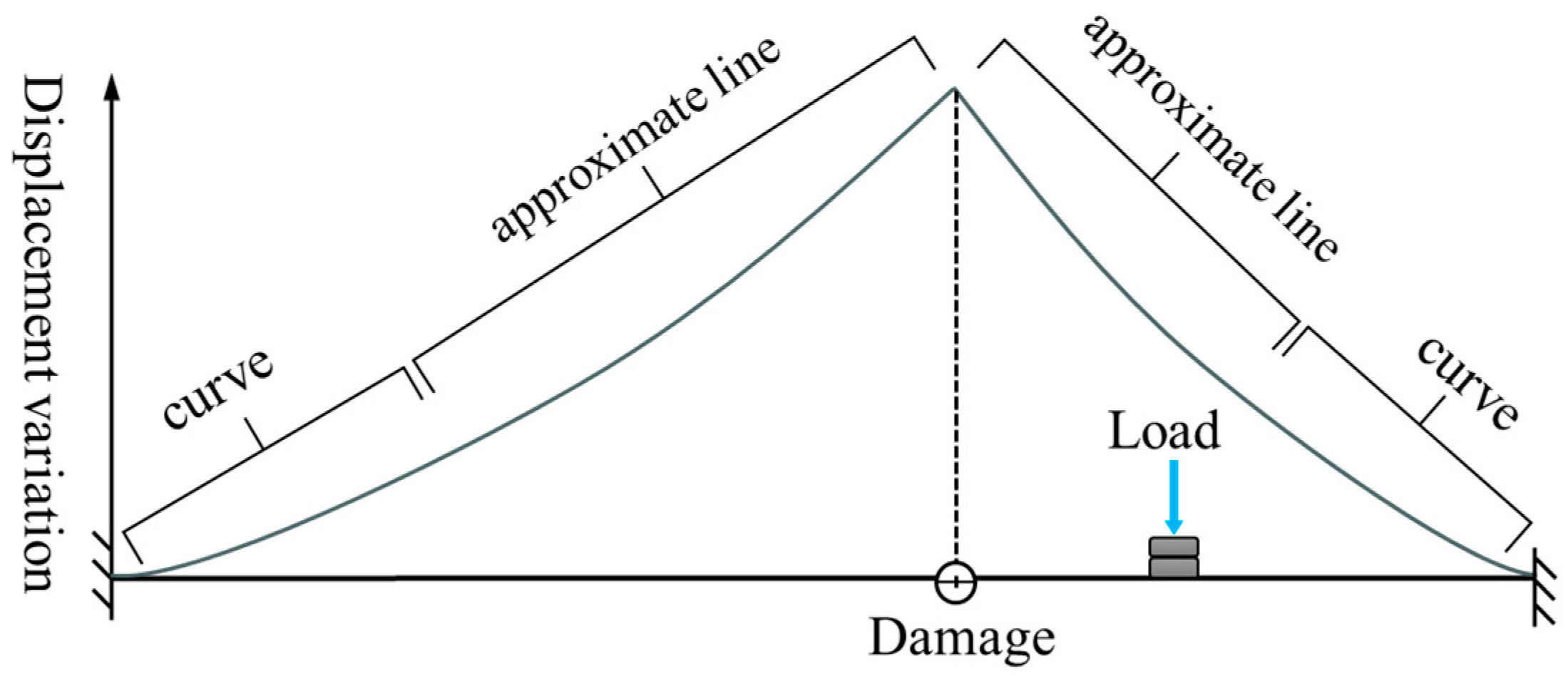
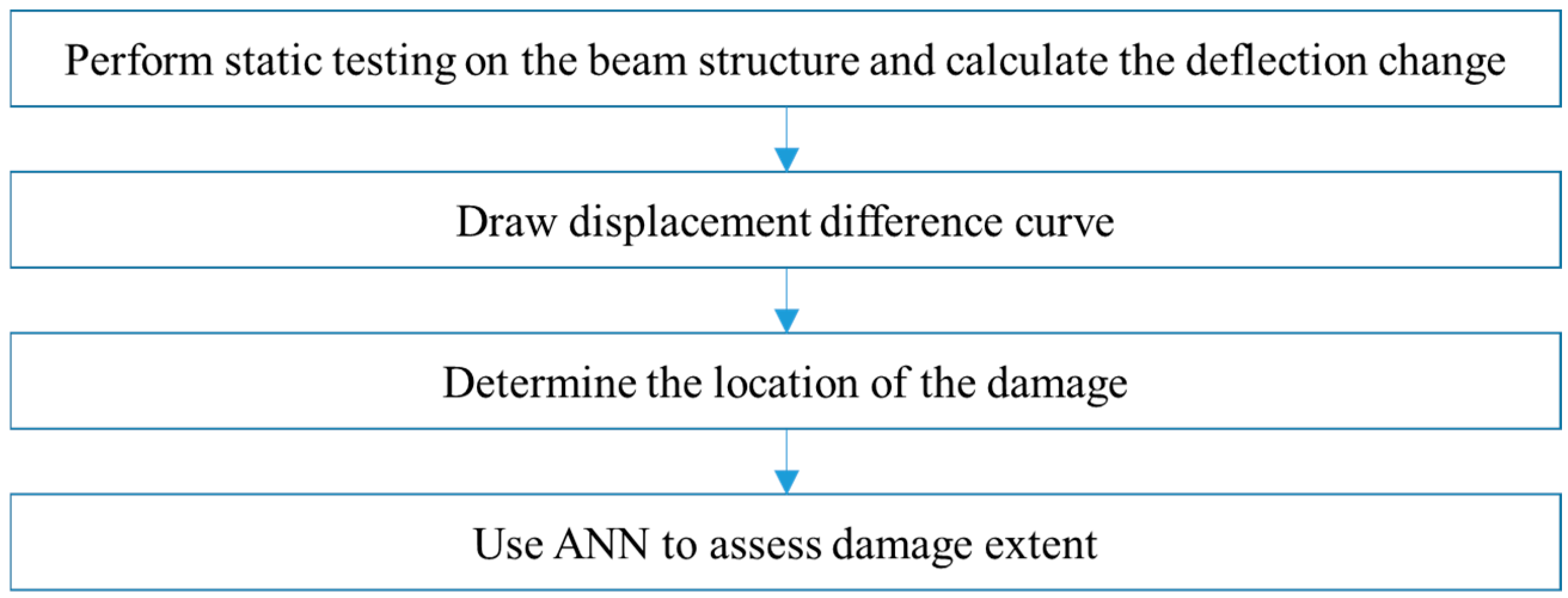
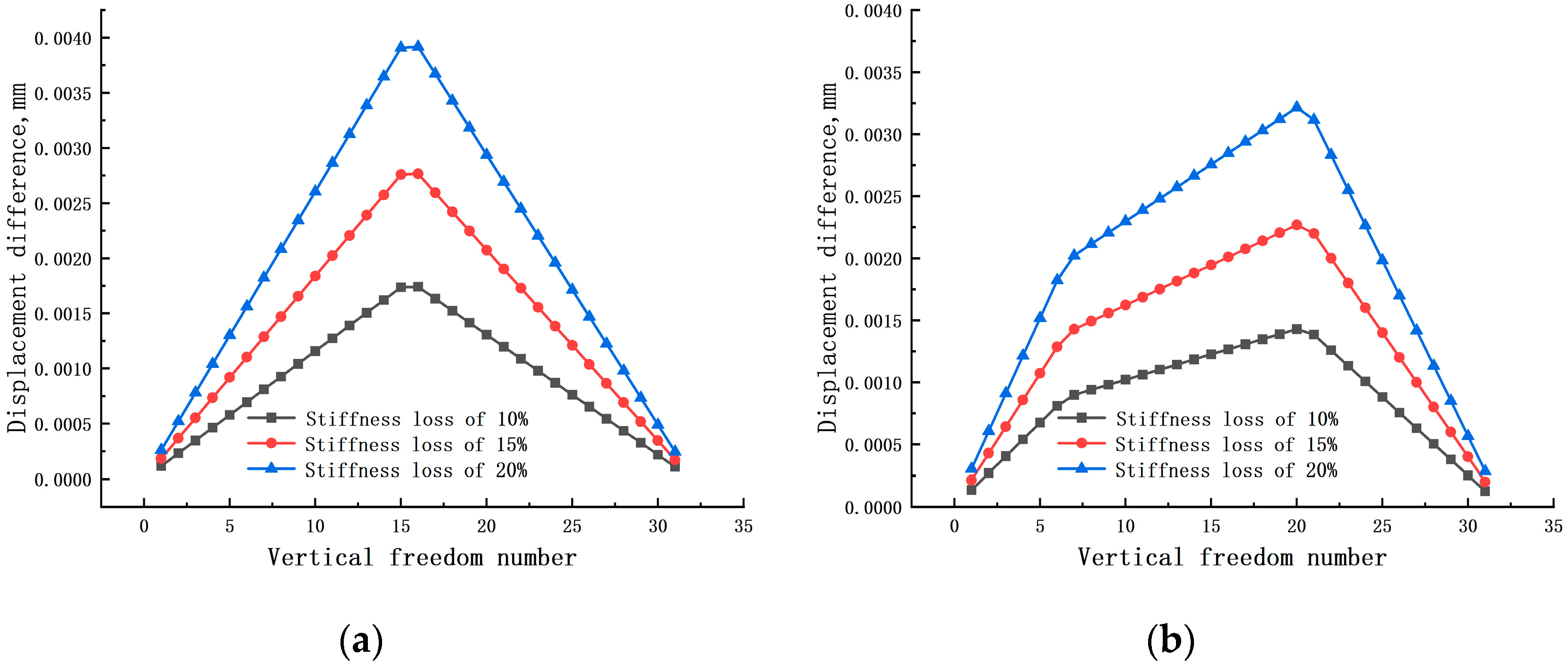
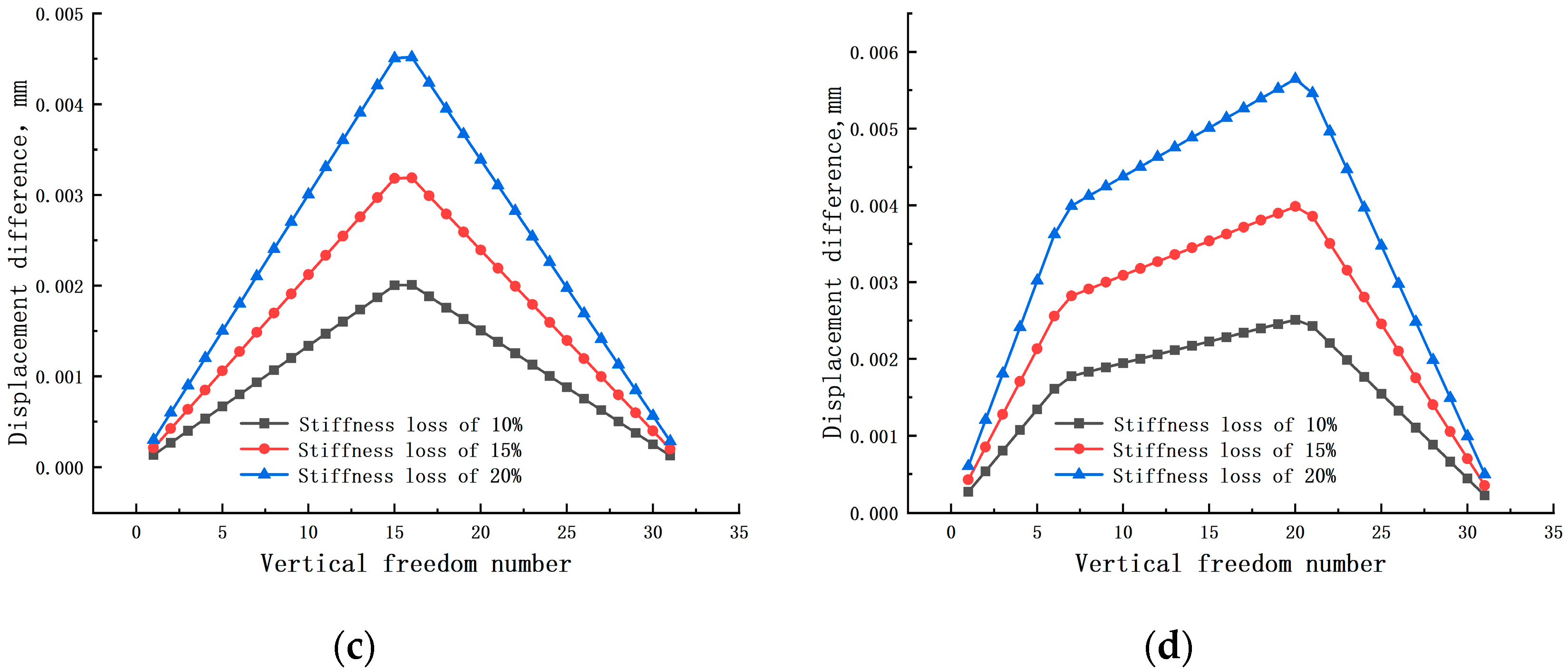
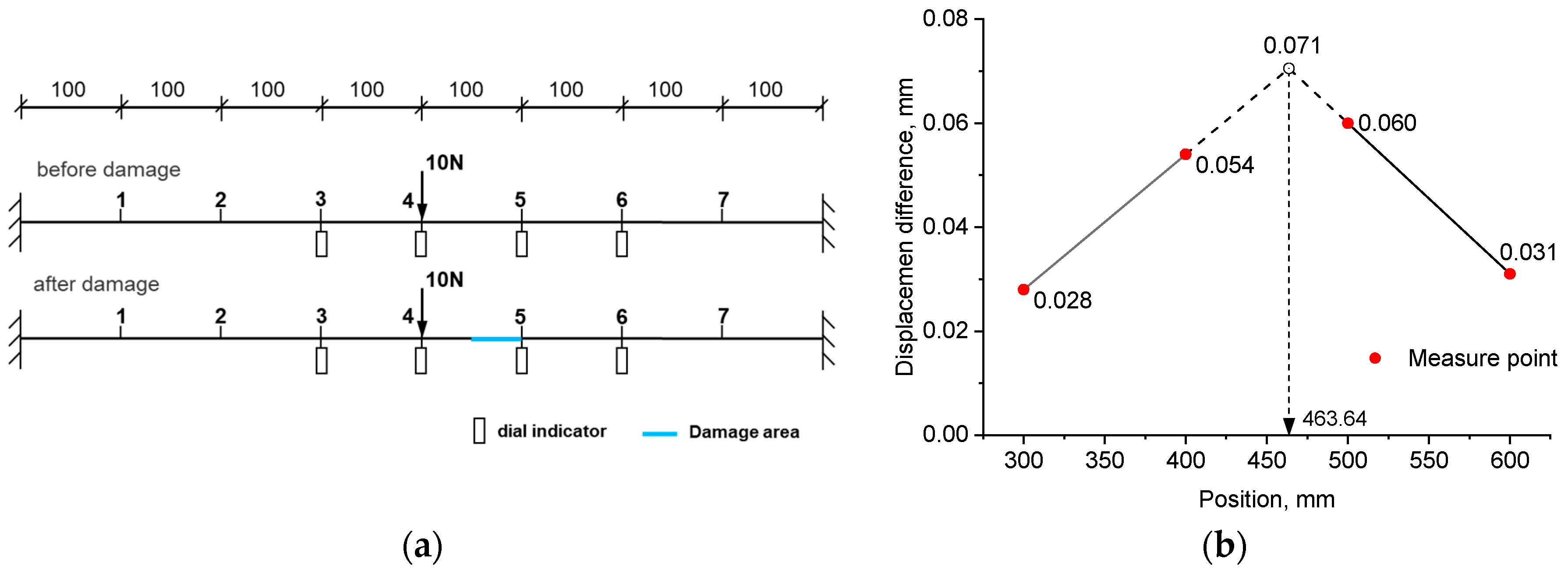
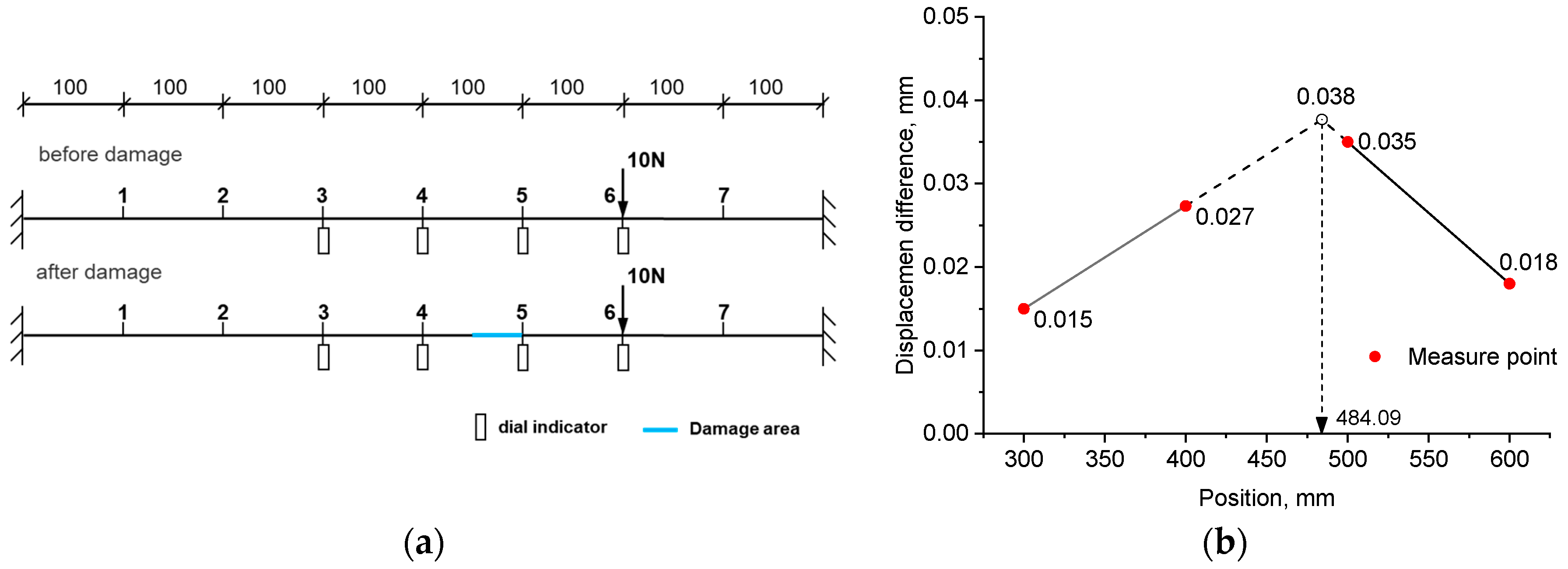
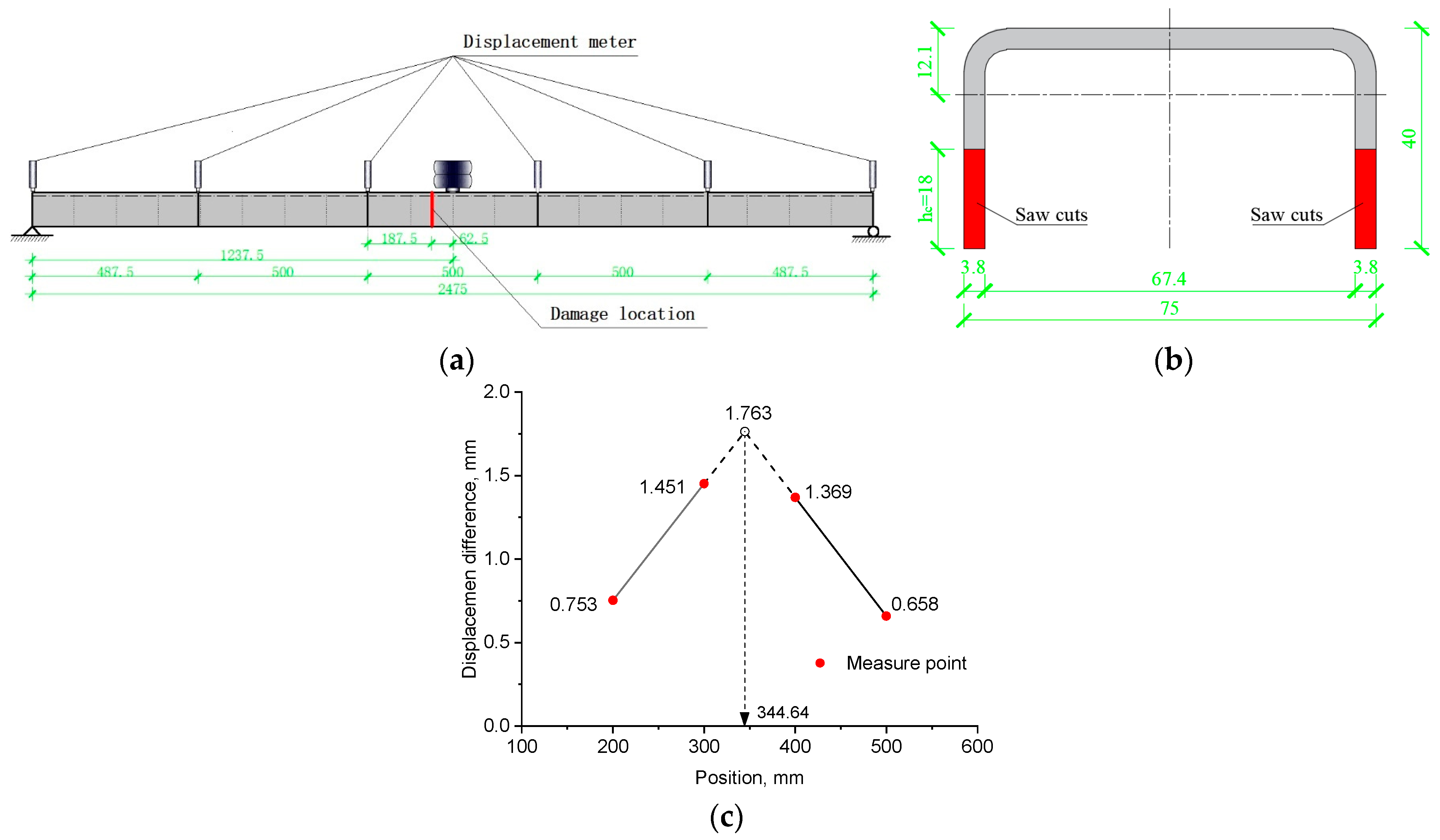
The beam structure constitutes a vital element in construction and bridge engineering. Static damage detection technology provides a method for identifying potential damage by measuring static displacements, with the advantage of being easy to implement. In this work, a two-stage damage detection method is proposed to determine the location and severity of damage in beam structures. The first stage identifies the damage location based on the displacement difference curves of the beam structure under static loading before and after the damage occurs. The second stage employs an artificial neural network to determine the severity of the damage. The proposed two-stage damage detection method has been validated in both a numerical model and an experimental model of beam structures. The following conclusions can be drawn from both numerical simulations and experimental studies. Regardless of the loading position, the turning points in the displacement difference curves always occur in the damaged regions, indicating that the damage locations in the beam structure can be determined by the turning points of the displacement difference curves. A single inflection point in the displacement difference curve indicates the presence of a single damage, while multiple inflection points indicate the existence of multiple damaged elements, with each inflection point corresponding to a damaged location. Furthermore, the severity of the damage can be accurately calculated using an artificial neural network. For experimental example 1, the damage locations identified by the proposed method all fall within the actual damage area, and the average error between the obtained damage severity and the true value is approximately 3.8%. For experimental example 2, the distance error between the damage location identified by the method and the actual damage location is approximately 1.4%, and the error between the obtained damage severity and the true value is approximately 2.8%. This two-stage damage detection method is more convenient to implement than traditional detection methods because it can precisely identify damage in beam structures using only a small amount of displacement data, providing a simple and highly practical solution for detecting defects in beam structures.
Keywords: artificial neural network; beam structures; damage detection; displacement difference artificial neural network; beam structures; damage detection; displacement difference