

Article

A Study of Speckle Materials for Digital Image Correlation (DIC): Thermal Stability and Color Change Mechanisms at High Temperatures

1
Intelligent Cruise Flight Laboratory, Institute of Engineering Thermophysics, Chinese Academy of Sciences, Beijing 100190, China
2
National Key Laboratory of Science and Technology on Advanced Light-Duty Gas-Turbine, Chinese Academy of Sciences, Beijing 100190, China
*
Authors to whom correspondence should be addressed.
Coatings 2025, 15(12), 1444; https://doi.org/10.3390/coatings15121444
Submission received: 4 November 2025 / Revised: 28 November 2025 / Accepted: 5 December 2025 / Published: 8 December 2025
(This article belongs to the Section Thin Films)

Abstract

This study focused on the measurement requirements of Digital Image Correlation (DIC) in high-temperature environments of aero-engines and systematically investigated the applicability and stability of high-temperature speckle materials. Five common coating materials (Ti, TiN, Ta, NiCr alloy, and SiC) were selected. Corresponding thin films were deposited on Al2O3 ceramic substrates using magnetron sputtering technology, and their surface color evolution from room temperature up to 1200 °C was examined. The film compositions were analyzed by Raman spectroscopy and X-ray photoelectron spectroscopy (XPS), revealing the mechanisms behind the color changes. The results indicate that Ti, TiN, Ta, and NiCr alloy exhibit significant color variations, which leads to insufficient color contrast for high-temperature speckle patterns. Further investigation shows that depositing an outer SiO2 coating can improve surface scattering and reflection, while also inhibiting oxygen penetration, thereby enhancing oxidation resistance and improving speckle contrast. The SiC/SiO2 composite structure demonstrates excellent thermal stability, making it an ideal speckle material for high-temperature DIC measurements.

1. Introduction

Aeroengines, often regarded as the “heart” of an airplane, serve as the core system providing essential propulsion, wherein hot-section parts play a critical role. These components operate under extreme service conditions characterized by high temperatures, high pressures, intense vibrations, high rotational speeds, and significant aerodynamic loads. Prolonged exposure to such harsh working environments makes hot-section parts susceptible to severe failures such as cracking, thermal erosion, and fatigue, which have become major limiting factors for engine lifespan. Therefore, timely fault diagnosis of these components relies fundamentally on real-time monitoring of their operational status under actual working conditions, along with accurate acquisition of key characteristics such as stress and strain. This enables early warnings prior to the occurrence of failures and provides an essential foundation for engineering personnel in structural design, performance verification, and failure analysis.
The performance of materials and mechanical components in high-temperature environments is a critical issue in the aviation field, directly affecting the structural integrity, safety, and reliability of aircraft. Therefore, accurately obtaining the mechanical properties of materials under high temperatures is particularly important in aircraft design [1]. Taking engine combustion chambers and turbine blades as examples, their operating temperatures often exceed 1000 °C. Traditional contact-based measurement methods face challenges such as difficulties in wiring strain gauges and thermal failure of sensors [2]. Additionally, under high-speed operation and harsh conditions, strain gauges and wiring are prone to loosening or damage, making long-term stable measurements difficult. This limits the application of contact-based methods in stress testing of aeroengines [3]. In contrast, non-contact measurement techniques offer significant advantages. As these methods do not require physical contact with the measured object, they avoid wear and damage caused by contact, thereby providing better measurement accuracy and resolution. They are also capable of high-speed data acquisition, enabling the rapid collection of large amounts of data and even real-time dynamic monitoring. Non-contact measurement exhibits strong environmental adaptability, allowing stable operation under harsh conditions such as high temperatures, high pressure, and corrosive environments, while also demonstrating high resistance to electromagnetic interference. Furthermore, this technology can be easily integrated into automated production lines, supporting efficient data recording and analysis. It is particularly suitable for complex geometries and full-field measurement scenarios. These characteristics make non-contact measurement highly competitive in applications requiring high precision, operation in complex environments, and dynamic testing.
Common non-contact measurement methods include holographic interferometry based on the principle of optical wave interference [4], moiré interferometry [5], electronic speckle pattern interferometry (ESPI) [6], blade tip timing [7], and digital image correlation (DIC) [8,9,10]. As a typical non-interferometric optical technique, DIC is widely recognized in the field of experimental solid mechanics for surface deformation measurement and is known for its robust and flexible measurement capabilities [11]. This method offers significant advantages, including a simple system setup and operational procedure, strong robustness against environmental vibrations and variations in illumination, comprehensive spatial coverage of the measurement area, as well as straightforward implementation and high accuracy. Given these attributes, DIC has been extensively applied across various spatial and temporal scales and under diverse experimental conditions for measuring the shape, motion, and deformation of various materials and structures [12]. The fundamental principle of DIC is founded on tracking the grayscale variations of a speckle pattern, which can be either natural or artificially applied, on the object’s surface. This approach enables non-contact, full-field measurement of displacement and strain. In practice, a reference image of the undeformed state is first acquired, followed by a series of images captured during deformation. By dividing the image into calculation subsets and employing correlation functions (e.g., the Zero-normalized Cross-correlation Coefficient), the algorithm iteratively searches for the most matching location of each subset in the deformed images, thereby obtaining a precise displacement vector field. Finally, the full-field strain distribution is derived by performing numerical differentiation on the displacement field, based on continuum mechanics theory.
The measurement accuracy of the DIC algorithm primarily depends on three key aspects: (1) speckle pattern fabrication, which involves preparing a deformation carrier on the specimen surface, which may be either an intrinsic material feature or artificially applied; (2) system calibration and image acquisition, where the system must be calibrated prior to image capture to correct for lens distortion and determine the intrinsic and extrinsic camera parameters, thereby ensuring the acquisition of clear images suitable for precise analysis; and (3) displacement and strain computation, in which the DIC algorithm analyzes the acquired images to extract full-field deformation information of the specimen [13]. As the initial step in the DIC process, speckle pattern fabrication is also the most critical factor affecting the accuracy of strain measurements, with its quality directly determining the reliability of the measurement results. Serving as the sole source of information in DIC analysis, speckle patterns are susceptible under extreme conditions such as high temperatures to influences including thermal radiation [14,15] and heat waves [16,17]. These factors can lead to speckle oxidation, detachment, loss of contrast, or even decorrelation [18,19,20], thereby degrading DIC measurement accuracy or even rendering the measurement infeasible. Therefore, the development of speckle materials with high-temperature resistance, high contrast, and strong adhesion is of decisive importance for advancing the engineering application of DIC technology in high-temperature aerospace environments.
Speckle patterns, serving as information carriers for surface positional characteristics, are crucial to the accuracy and precision of Digital Image Correlation (DIC) measurements. Based on their fabrication methods and characteristics, they can be broadly classified into two main categories: natural texture patterns [21] and artificially fabricated speckle patterns [12]. Although natural textures offer the advantage of convenience, most exhibit less ideal speckle characteristics compared to artificial ones. Therefore, artificially fabricated speckle patterns are more commonly employed. Y.L. Dong, B. Pan et al. [12] systematically summarized various speckle fabrication methods. For monotonic mechanical tests such as tension or compression from room temperature to high temperatures, the airbrushing and spraying method has become the mainstream approach due to its low cost and operational simplicity. Novak et al. [22] successfully prepared alumina/zirconia speckles on C/SiC composites and nickel-based superalloy substrates, achieving reliable full-field strain measurements at temperatures up to 1500 °C. Bing Pan et al. [23] employed high-temperature ceramic sputtering to fabricate speckle patterns that remained stable without degradation at 1550 °C. Spin-coating techniques combined with DIC enable the fabrication of high-resolution speckle patterns at the micro/nano scale [24,25]. However, the application of this technique in high-temperature DIC remains insufficiently explored. The compressed air method [26,27] allows precise control of speckle size, though the thermal stability of such speckles at elevated temperatures requires further investigation. Nano-Film Remodeling technology [28,29] has emerged as a promising and cost-effective speckle fabrication solution. Additionally, lithography [30,31] and focused ion beam (FIB) techniques [32,33] can generate random speckle patterns on substrate surfaces through controllable material etching processes. While these methods are primarily applied in micro/nano-scale deformation metrology, their time-consuming and costly nature limits their applicability as general-purpose speckle fabrication methods.
Magnetron sputtering, a physical vapor deposition technique, has been utilized for decades as a versatile, reliable, and highly effective method for thin-film fabrication [34]. This technique enables the deposition of a wide range of functional films, including superhard coatings, wear-resistant and corrosion-resistant coatings, superconducting films, magnetic films, and optical films [35]. Owing to its high efficiency in industrial material coating applications, sputtering deposition is widely recognized as a highly valuable thin-film deposition process [36]. Nevertheless, research on the application of magnetron sputtering for fabricating speckle patterns remains relatively limited. J.P.M. Hoefnagels et al. [37] employed magnetron sputtering of low-melting-point solder alloys to produce scalable, high-quality, and robust DIC patterns. Their study systematically adjusted deposition parameters to control speckle morphology and density, and optimized pattern characteristics using atomic force microscopy, scanning electron microscopy, optical profilometry, and optical microscopy. Karan Shah et al. [33] fabricated sub-microscale speckle patterns on single carbon fibers via magnetron sputtering and conducted in-depth investigations into the influence of various process parameters on the speckle patterns using scanning electron microscopy. As one of the most widely used thin-film deposition and surface engineering techniques, magnetron sputtering produces films with high density, fine grain structure, and strong adhesion. These characteristics underscore the significant potential of this technique in the fabrication of speckle patterns. However, the feasibility and applicability of magnetron sputtering for preparing DIC speckle patterns under high-temperature conditions still require further investigation.
Based on the aforementioned discussion, this paper investigates the selection of materials for high-temperature speckle patterns using magnetron sputtering thin-film fabrication technology. The study focuses on the evolution mechanisms and stability of color and material composition within the temperature range from room temperature to 1200 °C. Furthermore, the influence of a SiO2 protective layer on the high-temperature performance and color variation of the thin films is systematically discussed.

2. Materials and Experiments

Hot-section components of aeroengines are typically equipped with thermal protection systems to withstand prolonged high-temperature service environments, among which ceramic-based thermal barrier coatings are one of the widely applied thermal protection methods. The application of thermal barrier coatings (TBCs) technology can significantly enhance the overall performance of hot-section components in engines and extend their service life, making it one of the key technologies in the development of high-performance engines and gas turbines. Typically, TBCs appear white or grayish-white (e.g., ZrO2, Y2O3, Al2O3, MgAl2O4, La2Zr2O7, etc.). When preparing speckle patterns on a TBC substrate, it is essential to ensure that the speckle material exhibits low grayscale values and maintains high-temperature stability, thereby enhancing the contrast between the speckles and the substrate. This provides a foundation for capturing high-definition, high-contrast deformation images and enables accurate calculation of surface strain. To meet the contrast requirements for high-temperature speckle preparation, pure white Al2O3 ceramic was selected as the substrate, and dark speckle material was applied onto its surface. It should be noted that this study focuses on the evolution mechanism of the speckle material under high-temperature conditions. Therefore, the size and pattern of the speckles fall outside the scope of this discussion. The experiment employed a full-coverage form to prepare the speckles on the substrate surface.

2.1. Magnetron Sputtering Film Preparation

Magnetron sputtering, a form of physical vapor deposition (PVD), enables high-rate sputtering under low-pressure conditions. This technique offers advantages such as high deposition rates, excellent adhesion, and applicability to materials regardless of their melting points, making it suitable for large-area coating. The fundamental principles of magnetron sputtering have been thoroughly elucidated in previous studies and will not be repeated here. For detailed explanations, refer to [38,39]. The literature [40] investigates the influence of sputtering power, working pressure, and bias voltage on the deposition rate and crystallinity of thin films. The results indicate that higher sputtering power, lower working pressure, and positive bias contribute to an increased deposition rate. However, excessively low working pressure may impair crystalline quality, while crystallinity improves with increasing sputtering power and positive bias.
In this study, five high temperature resistant materials (Ti, TiN, Ta, NiCr alloy, and SiC) were selected as coating materials. Corresponding target materials with a purity of 99.99%, a diameter of 76.2 mm (3 inches), and a thickness of 3 mm were procured. The experiment was conducted using the JCP500B type magnetron sputtering coating equipment (Beijing Technode Instruments Co., Ltd., Beijing, China), the structure diagram of which is illustrated in Figure 1. To minimize potential cross-contamination between diffe1rent materials, each film was deposited using a single magnetron target onto an Al2O3 substrate. The target and substrate were replaced after each deposition cycle until all material films were fabricated. The key deposition parameters are as follows: the magnetron sputtering distance was 10 cm, the base vacuum pressure was ≤5 × 10⁻⁴ Pa, the argon flow rate was 20 sccm, the working pressure was 1 Pa, and the substrate temperature was 200 °C. Prior to deposition, the substrate was cleaned for 10 min with a bias voltage of 800 V at a 75% duty cycle. Subsequently, the DC pulsed bias voltage was adjusted to 100 V and maintained constant throughout the deposition process. A sputtering power of 200 W was applied using either a DC power supply for metallic targets or an RF power supply for compound targets, with a deposition duration of 2 h for all films. Due to the low sputtering rate of the radio frequency current, a 2 h sputtering time would result in an excessively thin film for SiC. The sputtering time for SiC has been increased to 5 h.

2.2. High-Temperature Test and Analysis

For high-temperature DIC speckle patterns, the color and contrast of the coating are critical factors affecting the quality of image acquisition. As shown in Table 1, the five materials exhibited distinct color variations at elevated temperatures. Among them, the thin films deposited with Ti and Ta appeared light gray in color, yielding low contrast against the white substrate. In contrast, the films deposited with TiN, NiCr, and SiC all displayed a dark gray coloration, which ensured high contrast with the white substrate. Notable differences in high-temperature color behavior were observed among the materials. The Ti film changed from dark blue to silver-gray with temperature increased and became decolorized in 1200 °C. The TiN film gradually faded from dark gray to white above 600 °C. The Ta film remained color-stable below 600 °C but became white powdering above 800 °C. The NiCr film lightened in color at 800 °C and transformed into a stable green after 1000 °C. The SiC film maintained color stability up to 800 °C, then became dark blue after 1000 °C.

2.3. Mechanisms of Color Change

2.3.1. Raman Spectra Analysis

After calcination at 800 °C, the Ta film disintegrated into a powdery form as a result of severe oxidation, leading to the formation of a polycrystalline Ta2O5 layer. This oxide is characterized by significant volume expansion, high brittleness, and weak adhesion to the substrate. According to the Pilling–Bedworth Ratio (PBR) theory, the PBR is defined as the ratio of the volume of the metal oxide to the volume of the metal consumed in the reaction. For the oxidation of Ta to Ta2O5, the PBR value is approximately 2.5, significantly greater than 1, resulting in the development of considerable internal stress. This stress exceeds the adhesive strength between the film and the substrate, ultimately causing cracking, delamination, and powdering of the film. Due to the relatively poor thermal stability of the Ta film, it was excluded from subsequent analysis.
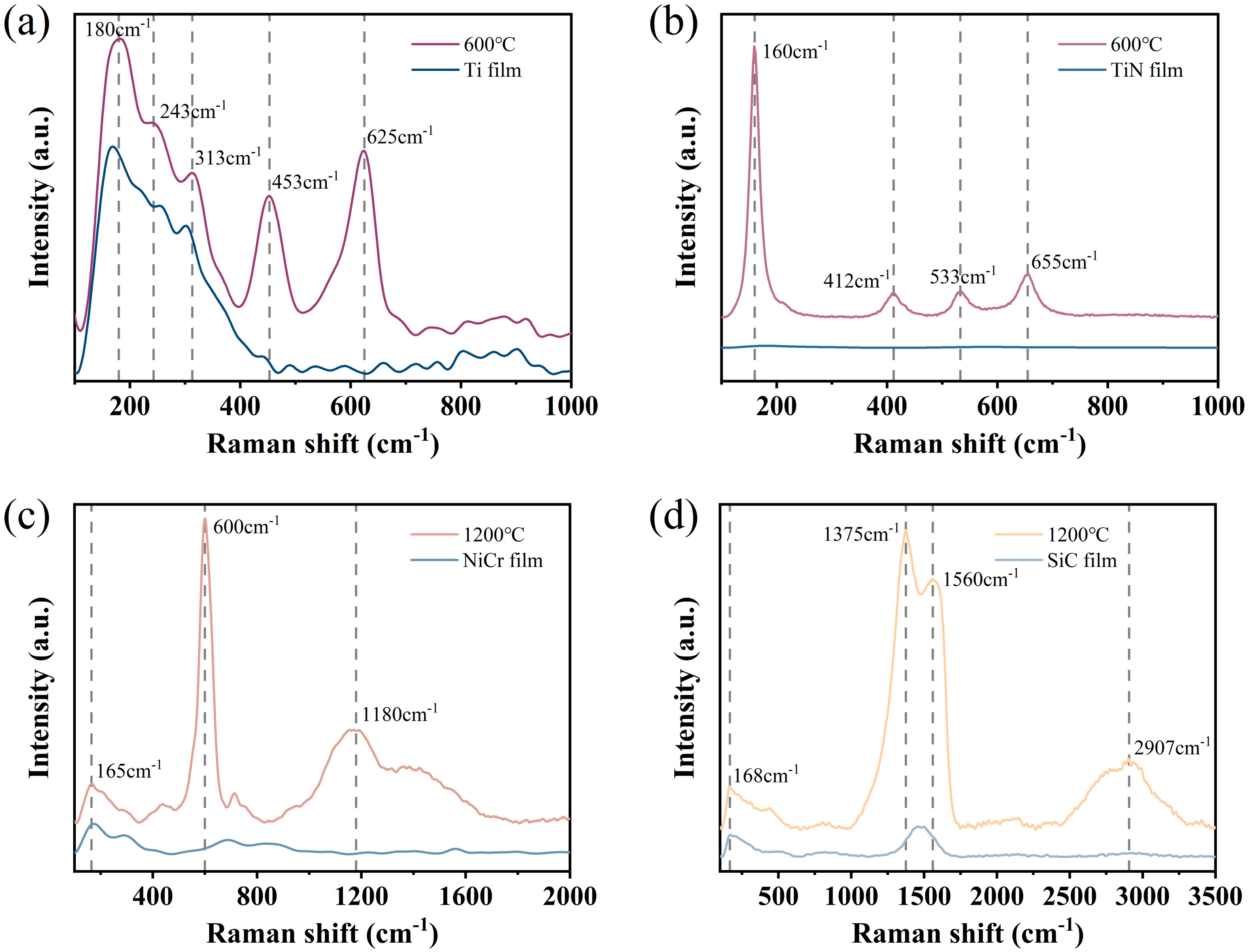
To investigate the mechanism of color change in films of different materials at high temperatures, Raman spectroscopy with a 532nm excitation wavelength was performed on the samples both at room temperature and after high-temperature treatment. Raman measurements were carried out on a LabRAM HR Evolution system (HORIBA, Ltd., Tokyo, Japan) equipped with a 50× long-working-distance objective lens having a numerical aperture (NA) of 0.5 and a focal length of 10.6 mm. The detection was achieved using a thermoelectrically cooled open-electrode CCD, and the excitation source was a 532 nm laser with an output power of 100 mW. The results are presented in Figure 2. The significant enhancement of Raman intensity in the material after high-temperature calcination can be attributed to several factors. First, the high-temperature treatment induces the formation of new crystalline phases with distinct Raman-active vibrational modes, which appear as sharp characteristic peaks in the spectra. Second, the annealing process markedly improves the overall crystallinity of the material and reduces structural disorder, thereby enhancing the intrinsic Raman vibrations. This is reflected in the increased intensity and narrowed full width at half maximum (FWHM) of the characteristic peaks. Furthermore, calcination effectively repairs crystal defects that otherwise act as scattering centers for phonons. The reduction in such defects decreases phonon scattering probability, leading to an improved signal-to-noise ratio in the Raman spectra and allowing well-defined peaks to emerge from the broad background. On the other hand, the broadening of certain Raman peaks can be explained by the following mechanisms. Firstly, the newly formed phases may introduce residual internal stresses, resulting in a distribution of vibrational frequencies for the same chemical bonds. Secondly, the high-temperature process may transform initially amorphous or microcrystalline regions into a polycrystalline structure composed of numerous nanoscale grains. This leads to scattering signals distributed over a range of frequencies near the central peak. Additionally, microstructural inhomogeneities, such as compositional fluctuations or newly generated defects, can cause continuous variation in vibrational frequencies, further contributing to the observed Raman peak broadening.
Figure 2a shows the Raman spectra of the Ti film before and after calcination at 600 °C. An overall enhancement in Raman intensity was observed following the heat treatment. The peak at 243 cm−1 corresponds to the second-order Raman mode of rutile-type TiO2, while the newly emerged peaks at 453cm−1 and 625cm−1 further confirm the formation of the rutile phase. These spectral features indicate the formation of TiO2 attributed to surface oxidation. Additionally, the peaks at 180 cm−1 and 313 cm−1 can be assigned to non-stoichiometric titanium oxides (Magnéli phase), which are also responsible for the blue coloration of the film at 600 °C. As the temperature increases further, the film composition gradually transitions to rutile-type TiO2, consequently, the final color exhibited a slightly yellowish tint.
Figure 2b shows the Raman spectra of the TiN thin film. At room temperature, no distinct Raman characteristic peaks are observed, which is attributed to the metallic bonding nature of TiN, characterized by high symmetry, metallic behavior, and a high free electron density. These properties result in a small Raman scattering cross-section and weak intrinsic signals. After calcination at 600 °C, distinct Raman peaks emerge at 160 cm−1, 412 cm−1, 533 cm−1, and 655 cm−1. Compared to the characteristic peaks of anatase TiO2 (144 cm−1, 399 cm−1, 516 cm−1, and 639 cm−1) [41], these peaks exhibit an overall blueshift. This phenomenon is attributed to the small grain size of the TiO2 formed by high-temperature oxidation, where atomic vibrations are confined by grain boundaries, combined with thermal stress resulting from the difference in the coefficients of thermal expansion between the substrate and the film. The TiN target itself possesses high purity, good crystallinity, and few defects, exhibiting a plasmon resonance effect that gives it a golden-yellow color. In contrast, the TiN film prepared by magnetron sputtering appears gray due to its nanocrystalline structure, intergranular defects, and surface roughness, which enhance light scattering and absorption while reducing reflectivity. After calcination at 1200 °C, the TiN film ultimately transforms into the stable faint yellow rutile phase of TiO2.
The Raman spectra of the NiCr films are shown in Figure 2c. At room temperature, the spectrum of the NiCr film is smooth with a weak Raman signal, consistent with typical characteristics of metallic alloys. After treatment at 1200 °C, a strong and sharp new peak emerges at 600 cm−1. The primary oxidation products on the film surface are Cr2O3 and NiO, with the NiO content increasing as oxidation progresses, accounting for the green coloration of the film. Additionally, a medium-intensity broad peak appears at 1180 cm−1, which is also consistent with the features of NiO [42].
Figure 2d displays the Raman spectra of the SiC thin films both at room temperature and after annealing at 1200 °C. Following high-temperature treatment, distinct characteristic peaks appear at 1375 cm−1 (D band), 1560 cm−1 (G band), and 2907 cm−1 (2D band), indicating carbon phase separation in the SiC film under high-temperature conditions. The observed high intensity of the D band correlated with the introduction of numerous defects, suggestive of a notable degradation in the quality of the film.

2.3.2. XPS Analysis

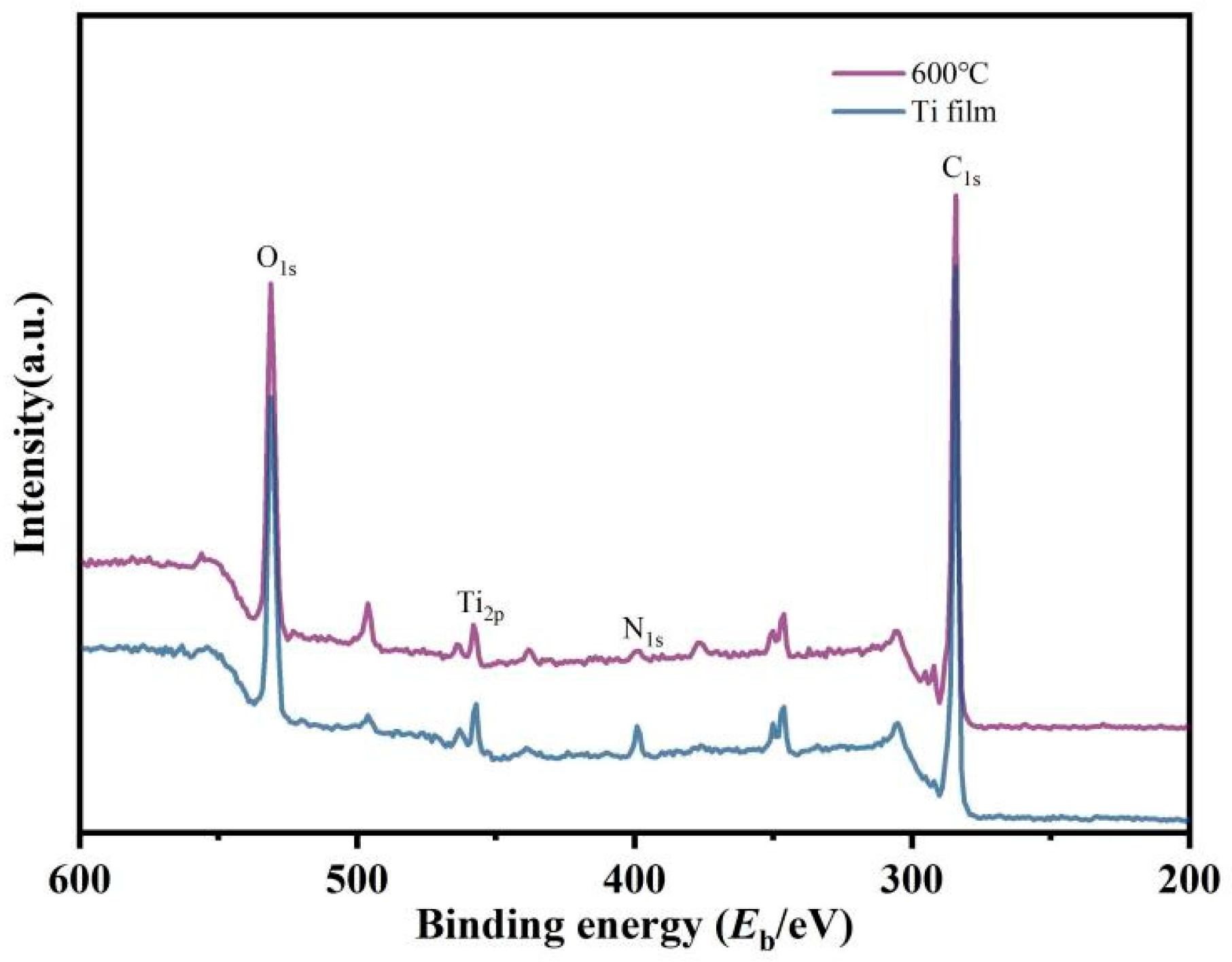
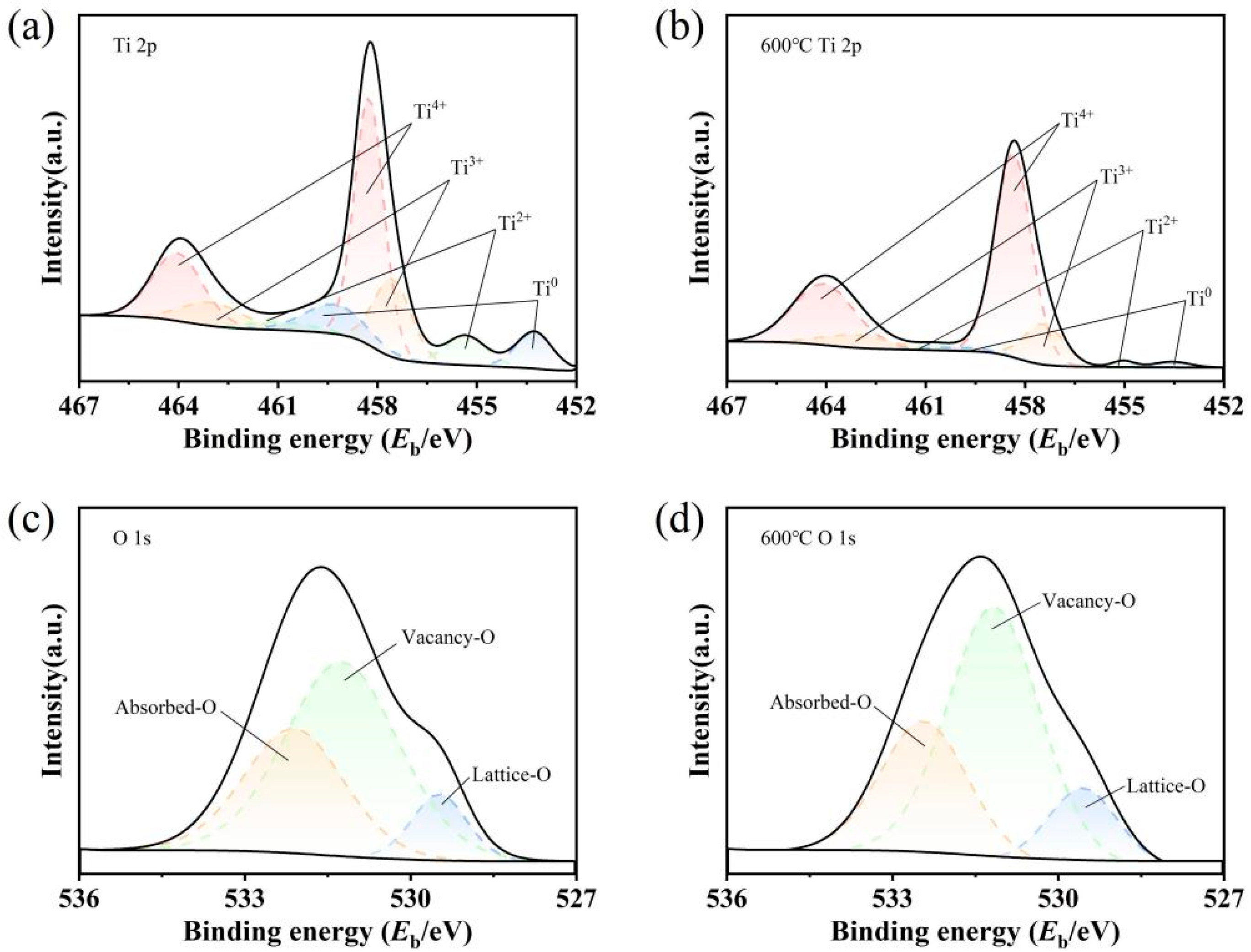
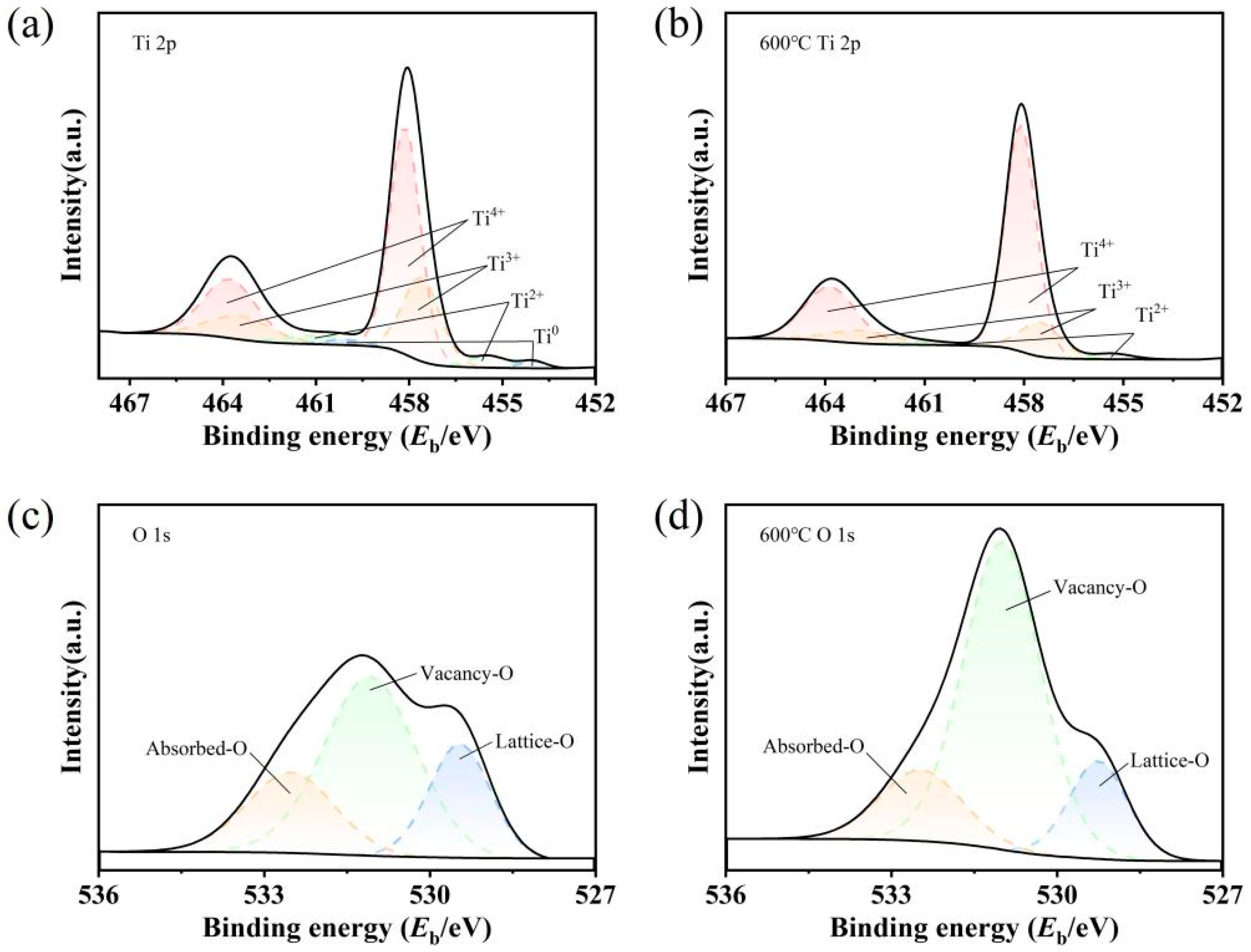
XPS analysis was performed using a ESCALAB MK II spectrometer (Thermo Fisher Scientific Inc., Waltham, MA, USA) equipped with a monochromatic Al Kα X-ray source. The measurements were conducted with a spot size of 400 μm, employing the Constant Analyzer Energy (CAE) mode at a pass energy of 150.0 eV and an energy step size of 1.0 eV. The XPS analysis results of the film surface after high-temperature oxidation are shown in Figure 3, Figure 4, Figure 5, Figure 6, Figure 7, Figure 8, Figure 9 and Figure 10. To minimize peak shift errors caused by surface charge transfer, all XPS spectra were calibrated using the standard C1s peak of contaminated carbon (284.8 eV) as a reference for elemental binding energy correction. Figure 3 illustrates the changes in elemental composition of the Ti film before and after calcination. Full-spectrum analysis indicates that the film primarily contains C, N, Ti, and O. After heating at 600 °C, the proportions of C, N, and Ti decreased, while the O content slightly increased, suggesting oxidation of the film. The fine spectra in Figure 4 further confirm this result. Through deconvolution of the peaks, components corresponding to different chemical states can be identified. As shown in Figure 4a, the Ti 2p spectrum exhibits four doublet peaks [43], corresponding to metallic state Ti0 and the oxide states Ti2+, Ti3+, and Ti4+. After calcination (Figure 4b), the proportions of Ti0, Ti2+, and Ti3+ all decreased, indicating the gradual oxidation of lower-valence Ti to Ti4+ at high temperatures. The fitting results of the fine O1s spectra (Figure 4c,d) reveal an increase in the content of lattice oxygen, defective oxygen (such as oxygen vacancy), and surface-adsorbed oxygen [44], which facilitated the oxidation process. Combined with the formation of Ti4+, it can be inferred that Ti in the film gradually transformed into TiO2.
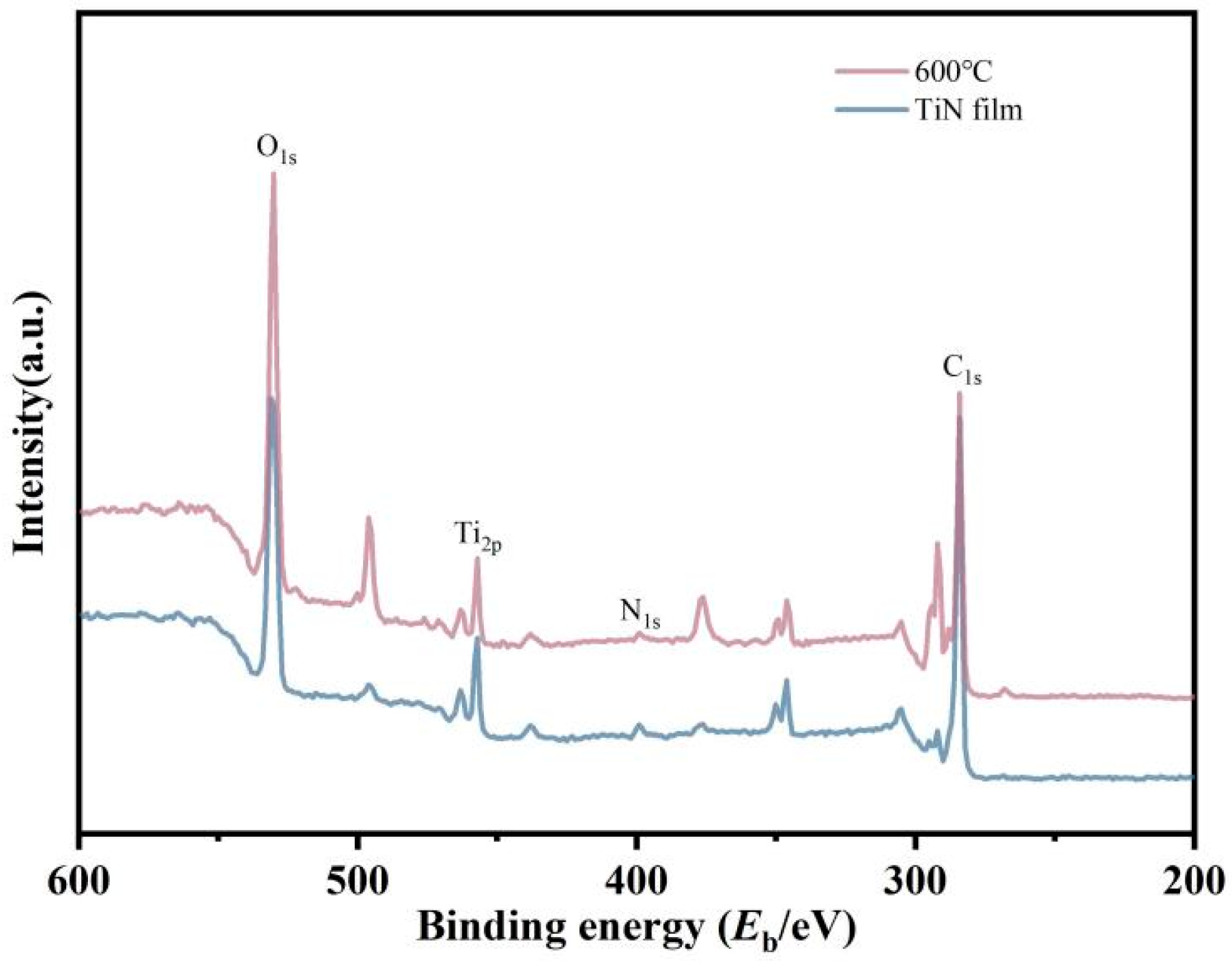
The full and the fine spectra of the TiN films are presented in Figure 5 and Figure 6, respectively. In Figure 5, characteristic peaks of elements such as C, N, Ti, and O are labeled. It can be observed that after heating at 600 °C, the relative contents of C, N, and Ti decreased, while the O content increased significantly. Figure 6 further compares the changes in the chemical states of Ti and O before and after the 600 °C heat treatment: Figure 6b reveals that, compared to Figure 6a, the contents of metallic state Ti0 and oxide state Ti2+ and Ti3+ decreased notably, transforming into Ti4+. A comparison between Figure 6c,d indicates that a higher oxygen vacancy content reflects structural instability and stronger reducibility of the film surface, making it more susceptible to oxidation. Based on the comparative analysis, the high-temperature oxidation processes of Ti and TiN films are fundamentally different. Combining the analysis of Figure 2a and Figure 4a, it is evident that the Ti film contains a higher proportion of metallic state Ti0, which is prone to non-uniform oxidation during high-temperature calcination, resulting in the formation of non-stoichiometric oxides and leading to a blue appearance on the surface. In contrast, in TiN films, Ti primarily exists in a combined state, allowing it to be directly converted into TiO2 during high-temperature treatment.
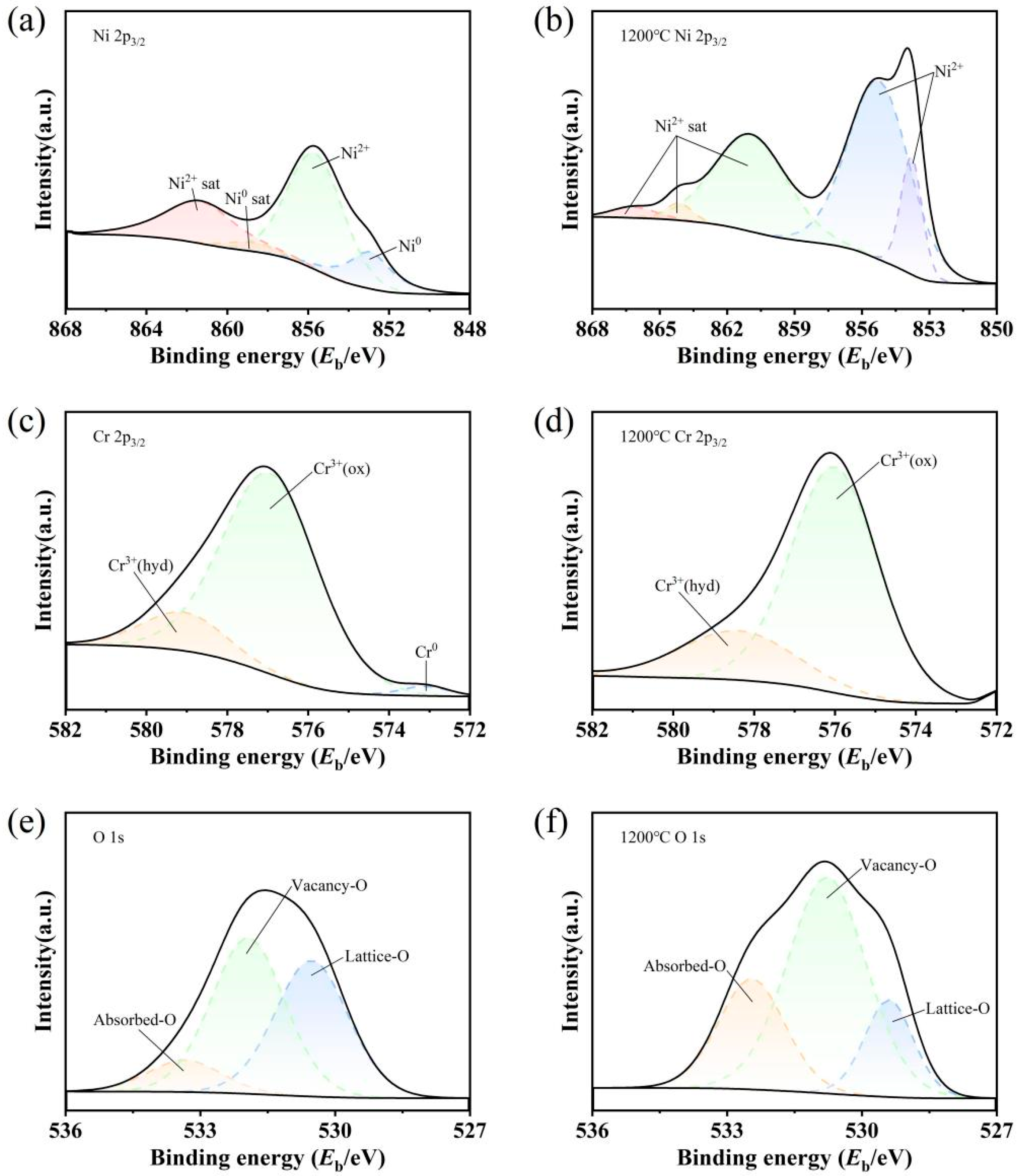
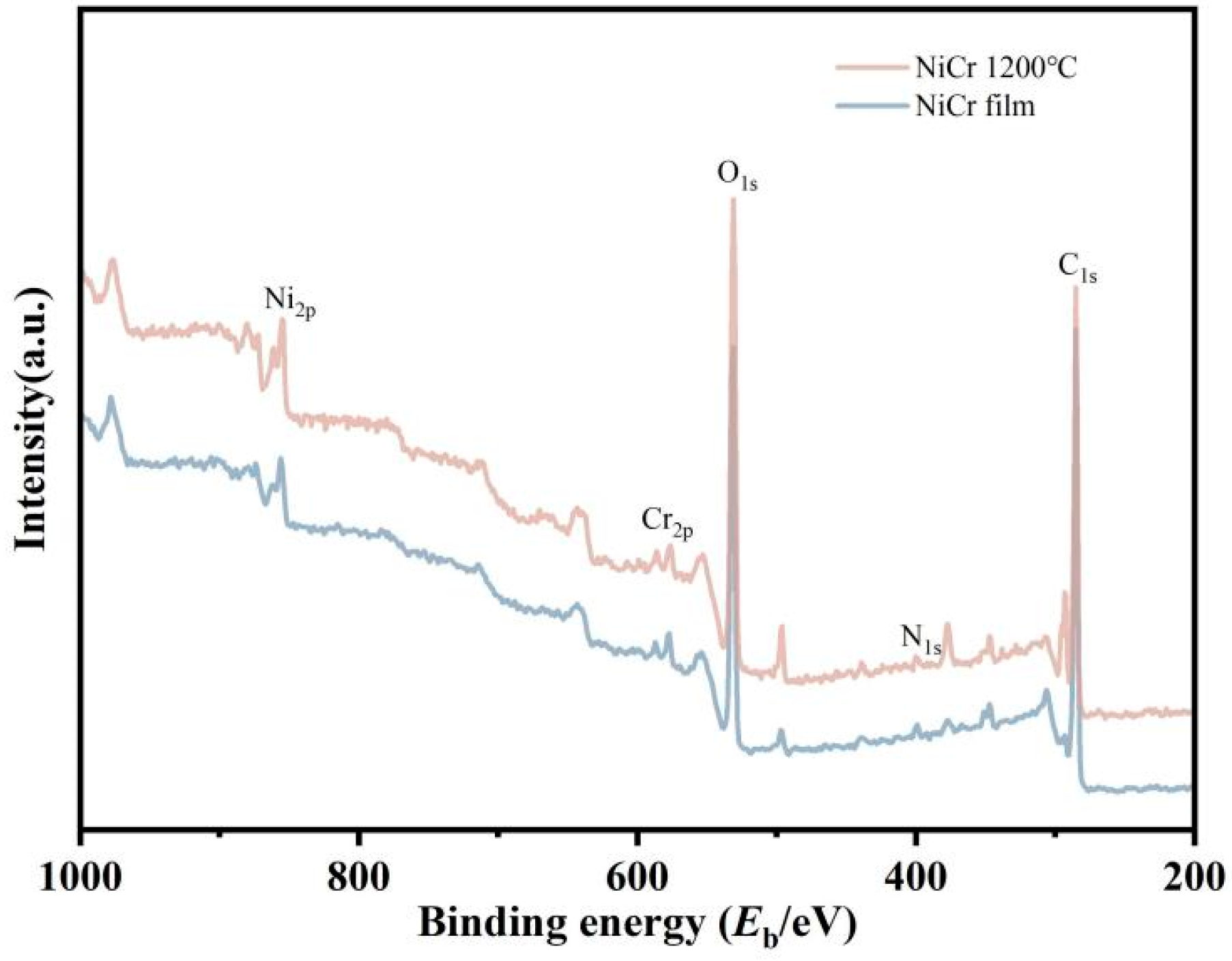
Figure 7 and Figure 8 present a comparative analysis of the XPS results for the NiCr alloy films before and after calcination at 1200 °C. As observed in Figure 7, the contents of C and N decrease slightly after calcination, while those of O and Ni increase significantly, and the Cr content remains largely unchanged. As shown in Figure 8a,b, the Ni 2p3/2 peak exhibits a characteristic NiO profile after calcination [45,46], indicating that the Ni in the film has been oxidized to NiO, which is also the main reason for the green coloration of the film. Due to the higher reactivity and stronger affinity for oxygen of Cr compared to Ni, Cr preferentially reacts with oxygen to form a dense and stable Cr2O3 passivation layer. Accordingly, as seen in Figure 8c,d, a substantial amount of Cr3+ is already present in the as-sputtered film, and its concentration remains relatively stable after calcination. Furthermore, changes in the O 1s fine spectra (Figure 8e,f) reveal a notable increase in oxygen vacancy and adsorbed oxygen content, indicating that vigorous oxidation reactions have taken place, which are closely associated with the involvement of Ni.
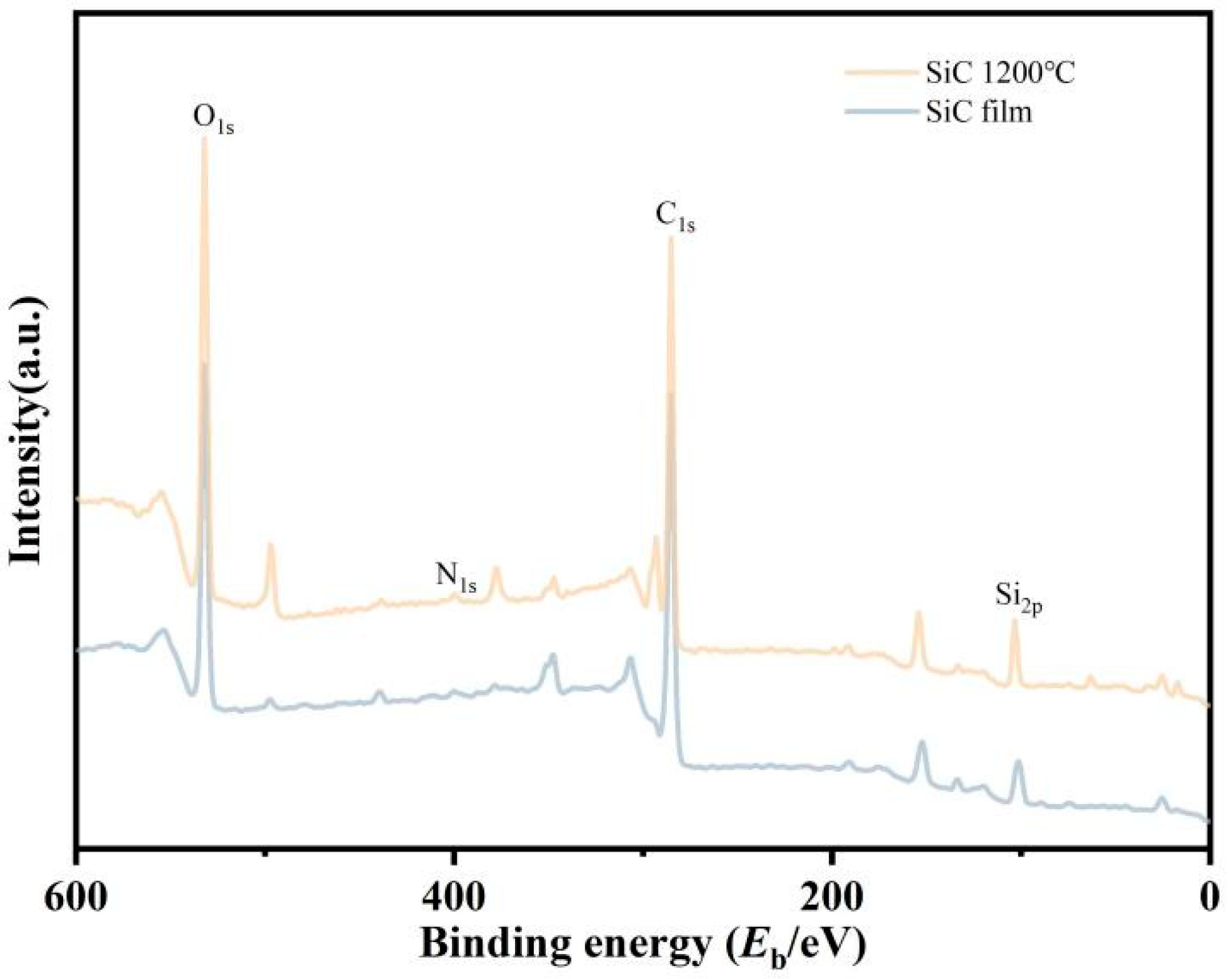
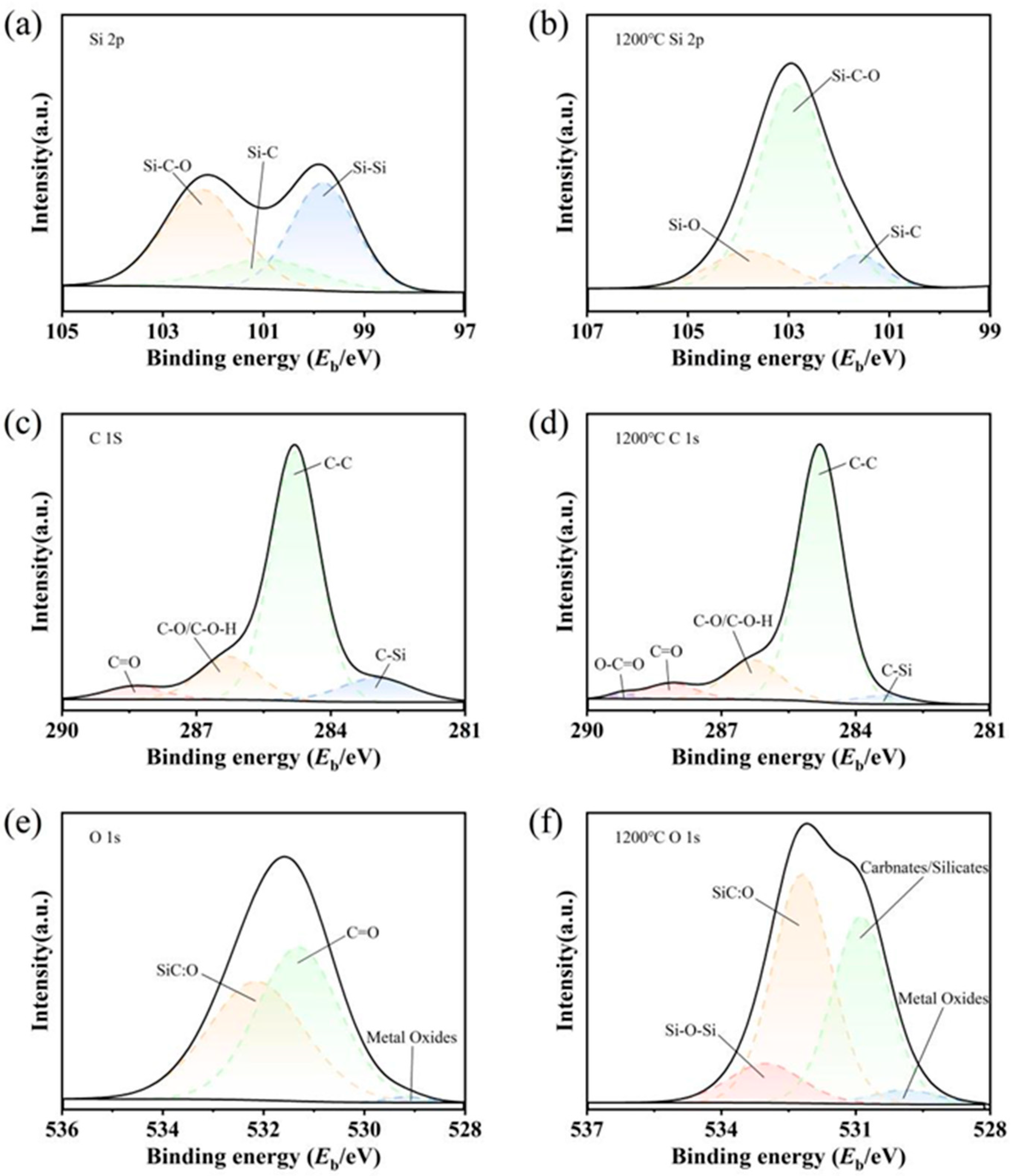
The XPS results of the SiC films are shown in Figure 9 and Figure 10, where the proportions of elements such as Si, C, N, and O increased. Figure 10a,b present the fine spectra of Si 2p, revealing the presence of three chemical states: Si–Si, Si–C, and Si–C–O. As the temperature increased from room temperature to 1200 °C, the chemical composition of Si 2p transitioned to predominantly Si–C, Si–C–O, and Si–O. The Si–C–O state can be regarded as an intermediate oxidation state, while Si–O corresponds to SiO2 formed by the reaction between SiC and O2. In the C 1s fine spectra (Figure 10c,d), the content of C–Si decreased significantly, while changes in other carbon chemical states were not prominent. Unlike metals, organic systems are more complex and cannot be simply classified in terms of lattice oxygen, oxygen vacancies, and adsorbed oxygen. Therefore, a more detailed classification of oxygen species in the SiC thin films was conducted. Comparing Figure 10e,f, the peak near 529 eV is attributed to metal oxides originating from impurities within the film. The peaks near 531.3 eV and 532.2 eV are assigned to C=O and SiC:O (oxygen in silicon oxycarbide), respectively, where SiC:O also corresponds to Si–C–O in Figure 10a. Significant oxidation occurred in the film during heating: initially, the content of metal oxides slightly increased, and carbonate and silicate ions formed in the film. Additionally, the emergence of a new peak near 533 eV (Si–O–Si) provides evidence of SiO2 formation after high-temperature oxidation. However, due to impurities in the surface-generated SiO2, an optical path difference arises from light reflection at the film’s internal and external interfaces, leading to thin-film interference effects, which is the main reason for the deep blue appearance of the film.

2.4. SiO2 Film

Since the films prepared in the previous section are prone to oxidation or decomposition at high temperatures, it is necessary to introduce a protective barrier layer to enhance their thermal stability. Silicon dioxide films are transparent, possess a melting point above 1700 °C, and exhibit a low coefficient of thermal expansion in thermal stability tests, with minimal dimensional variation under temperature fluctuations [47], making them an ideal material for protective coatings.
A SiO2 layer was deposited via magnetron sputtering on the surfaces of the four types of films prepared in the previous chapter. During the sputtering process, a radio frequency power supply was used with the power set to 200W and the deposition time maintained at 2 h, while all other parameters remained consistent with previous conditions. Due to the inherently light-colored base of the Ti film, the deposition of SiO2 did not significantly enhance its visual appearance, rendering it unsuitable for speckle pattern testing. Therefore, the Ti film was excluded from further investigation. After the introduction of a SiO2 protective coating, high-temperature experiments were conducted on the TiN, NiCr, and SiC films. The samples were heated to the target temperature and maintained at that temperature for 1 h. The experimental results are presented in Table 2.
As shown in Table 2, the colors of the three films significantly darkened after the application of the SiO2 coating. The smooth SiO2 coating effectively reduced scattering and reflection from the rough film surface, trapping most of the incident light within the coating layers and enhancing absorption, thereby rendering the films black. At elevated temperatures, both the TiN/SiO2 and NiCr/SiO2 films remained stable up to 400 °C. However, after exposure to 800 °C, the underlying materials in both films underwent oxidation, leading to noticeable color changes. Specifically, the TiN/SiO2 film gradually shifted in color from white to yellow, while the NiCr/SiO2 film transitioned from gray-green to green. In contrast, the SiC/SiO2 film maintained color stability even after calcination at 1200 °C.
While the SiO2 coating was observed to enhance the visual contrast of the thin film, its role in protecting the underlying film material against high-temperature oxidation required further investigation. To address this, we performed a comprehensive analysis using Raman spectroscopy and XPS to investigate the underlying protection mechanisms of the SiO2 layer in the three composite films.

2.4.1. Raman Spectra Analysis

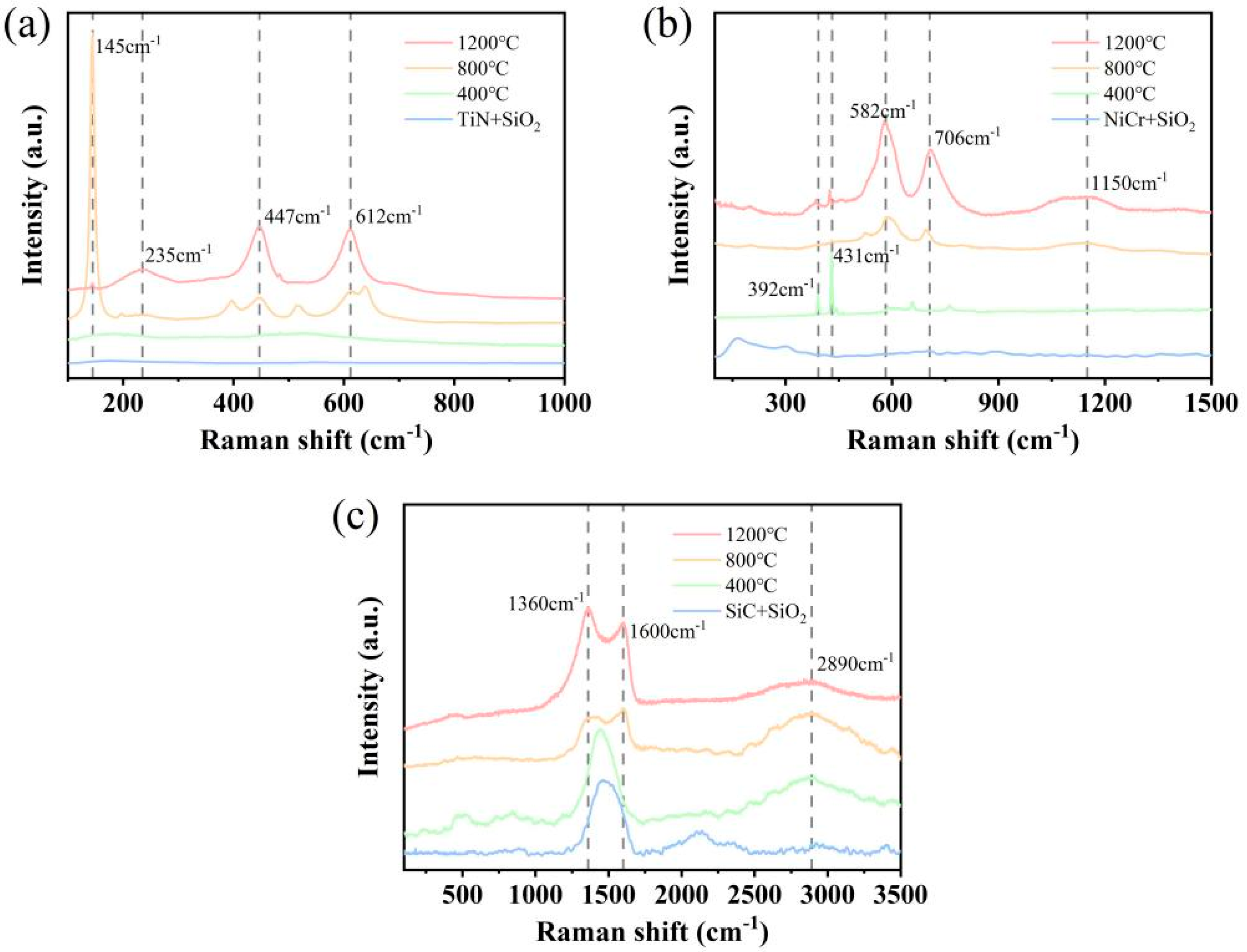
Raman spectroscopy analysis was conducted on the films corresponding to the different temperature stages listed in Table 2, with the results presented in Figure 11. The evolution of surface materials with increasing temperature can be observed for the three types of films: TiN/SiO2, NiCr/SiO2, and SiC/SiO2. As seen in Figure 11a, the TiN/SiO2 film remained relatively stable up to 400 °C. At 800 °C, anatase TiO2 appeared on the surface, which subsequently transformed into rutile TiO2 as the temperature continued to rise. This phase transition corresponds to the color changes noted in Table 2. For the NiCr/SiO2 film (Figure 11b), the spectral curves exhibited minimal variation across temperatures until prominent peaks emerged at 1200 °C. Based on the wavenumbers of the observed peaks, it can be inferred that a mixture of Cr2O3, NiO and some transient Oxides of Ni-Cr formed on the film surface. Comparison between Figure 2c and Figure 11b suggests that both the oxide concentration and the extent of oxidation in the NiCr/SiO2 film are lower than those in the NiCr film. Figure 11c displays the Raman spectra of the SiC/SiO2 film. The film remained relatively stable below 800 °C. It can be detected two weak characteristic peaks of carbon at 800 °C, which intensified after 1200 °C. It is worth noting that the XPS peaks SiC/SiO2 film has a much more gentle peak shape at 1200 °C, in contrast to the SiC film (Figure 2d), indicating that the SiO2 coating provided a protective effect on the underlying material, thereby slowing the oxidation process.

2.4.2. XPS Analysis

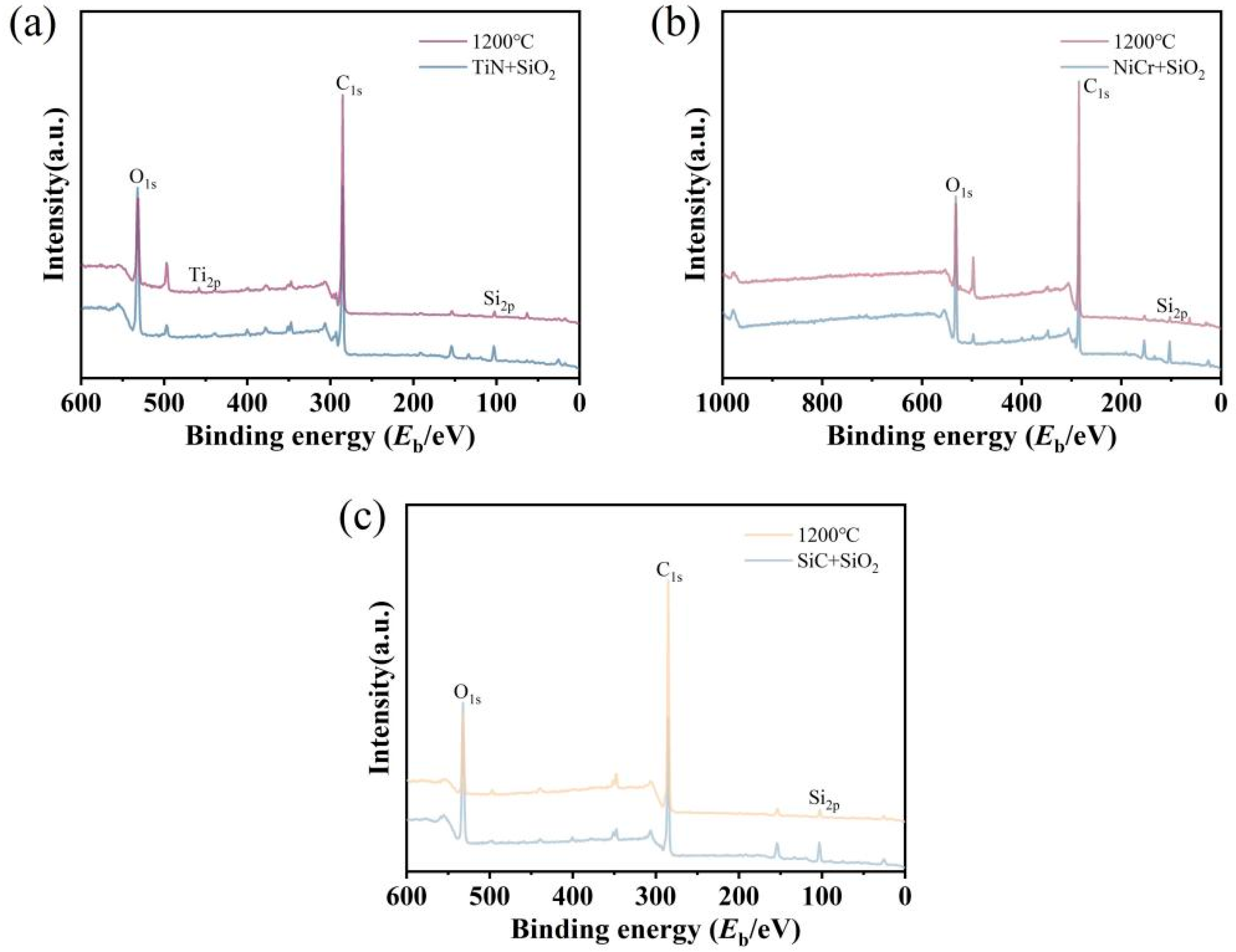
Figure 12 displays the XPS spectra of three composite films at room temperature and after high-temperature heating at 1200 °C. All three spectra exhibit a common characteristic: the proportion of carbon content increases significantly, while the proportions of oxygen and silicon decrease to varying degrees. Moreover, in the TiN/SiO2 and NiCr/SiO2 composite films, the XPS signals of ions from the underlying materials are extremely weak. Specifically, the intensity of the Ti 2p peak is low with considerable noise, while the peaks of Ni and Cr are barely detectable in the results. This is attributed to the limited penetration depth of XPS, which restricts its detection to the vicinity of the SiO2/underlying material interface. Since the TiN/SiO2 and NiCr/SiO2 composite films do not contain carbon elements, the notable increase in carbon content after heating can only be explained by carbon deposition from the air. Prolonged high-temperature calcination leads to more extensive carbon deposition. Additionally, O2 can diffuse through the SiO2 layer to the SiO2/underlying material interface and react with the underlying material, causing oxidation. Therefore, the SiO2 coating can retard the oxidation of the underlying material, which is also the main reason why the Raman signals in Figure 11 are generally weaker than those in Figure 2.
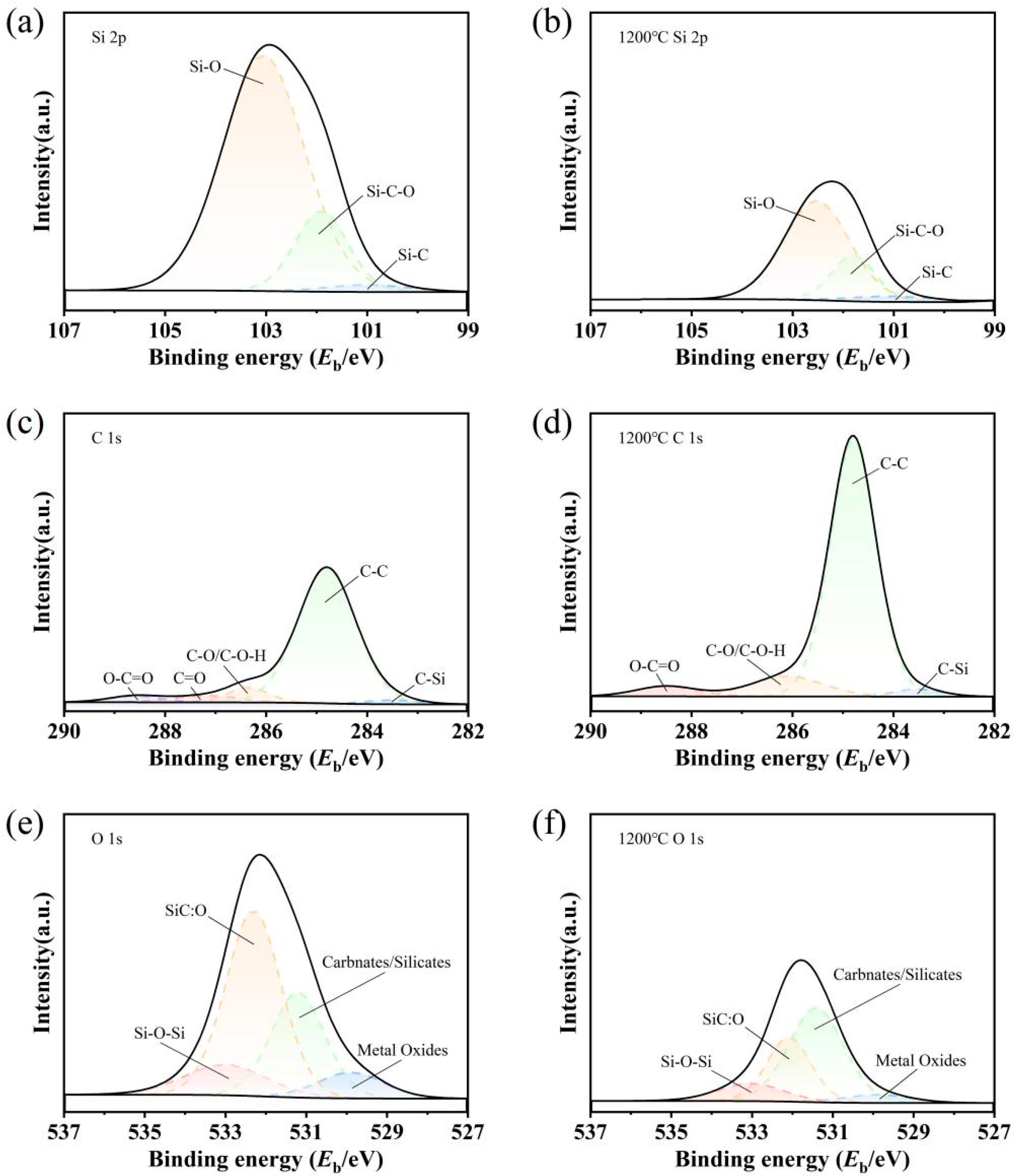
To investigate the excellent high-temperature resistance reflected by the color of the SiC/SiO2 film, the high-resolution XPS spectra (shown in Figure 13) are analyzed below. A comparison of Figure 13c,d reveals that after calcination at 1200 °C, the carbon content increases significantly, which is attributed to the introduction of carbon contaminants. This leads to a decrease in the XPS intensities of silicon and oxygen in Figure 13b,f, respectively. In the silicon spectra (Figure 13a,b), the relative proportions of the three silicon bonds Si–C, Si–C–O, and Si–O are 2.41%, 17.51%, and 80.08% before heating treatment, and 6.54%, 7.67%, and 85.79% after heating treatment, respectively. This indicated the conversion of Si–C–O bonds into Si–O bonds, confirming the oxidation of the underlying SiC material. The peak deconvolution results in Figure 13c,d suggest the presence of multiple carbon species. Apart from C–Si originating from the underlying film, the other carbon species are attributed to surface oxidation products and adsorbed carbon. Notably, the proportion of O–C=O increases from 3.49% to 4.38%, and the increase in Si-O content, which corresponds to the increased of proportions of Carbonates /Silicates observed in Figure 13e,f (from 27.99% to 53.53%). In the oxygen spectra, the proportions of Si–C:O and Si–O–Si change from 51.57% to 28.53% and from 11.98% to 12.41%, respectively. This indicates the transfer of oxygen from silicon oxycarbide to silicates, whereas the oxidation of SiC to SiO2 proceeds at a comparatively slower rate.
According to previous studies, under high-temperature oxidizing conditions, SiC materials undergo passive oxidation, leading to the formation of a SiO2 layer. The reaction can be expressed as follows [48]:
SiC   +   3 2 O 2     Si O 2   +   CO
SiC + 2 O 2     Si O 2 + C O 2
The CO and CO2 generated from the above two equations can react with the metallic impurities in the film to form carbonates. Additionally, during the SiO2 deposition and heating processes, silicates may also be produced through reactions between SiO2 and metallic impurities. Both types of compounds contribute to the Carbonates/Silicates peak observed in the O1s spectral deconvolution. Furthermore, studies have shown that the dense and smooth SiO2 layer formed via the aforementioned reactions provides surface passivation and impedes oxygen diffusion, thereby enhancing the oxidation resistance of the underlying SiC material [48,49]. Therefore, the application of a controlled SiO2 coating on SiC films represents an effective strategy for managing the oxidation process, ensuring stability of the films under high-temperature oxidative conditions.
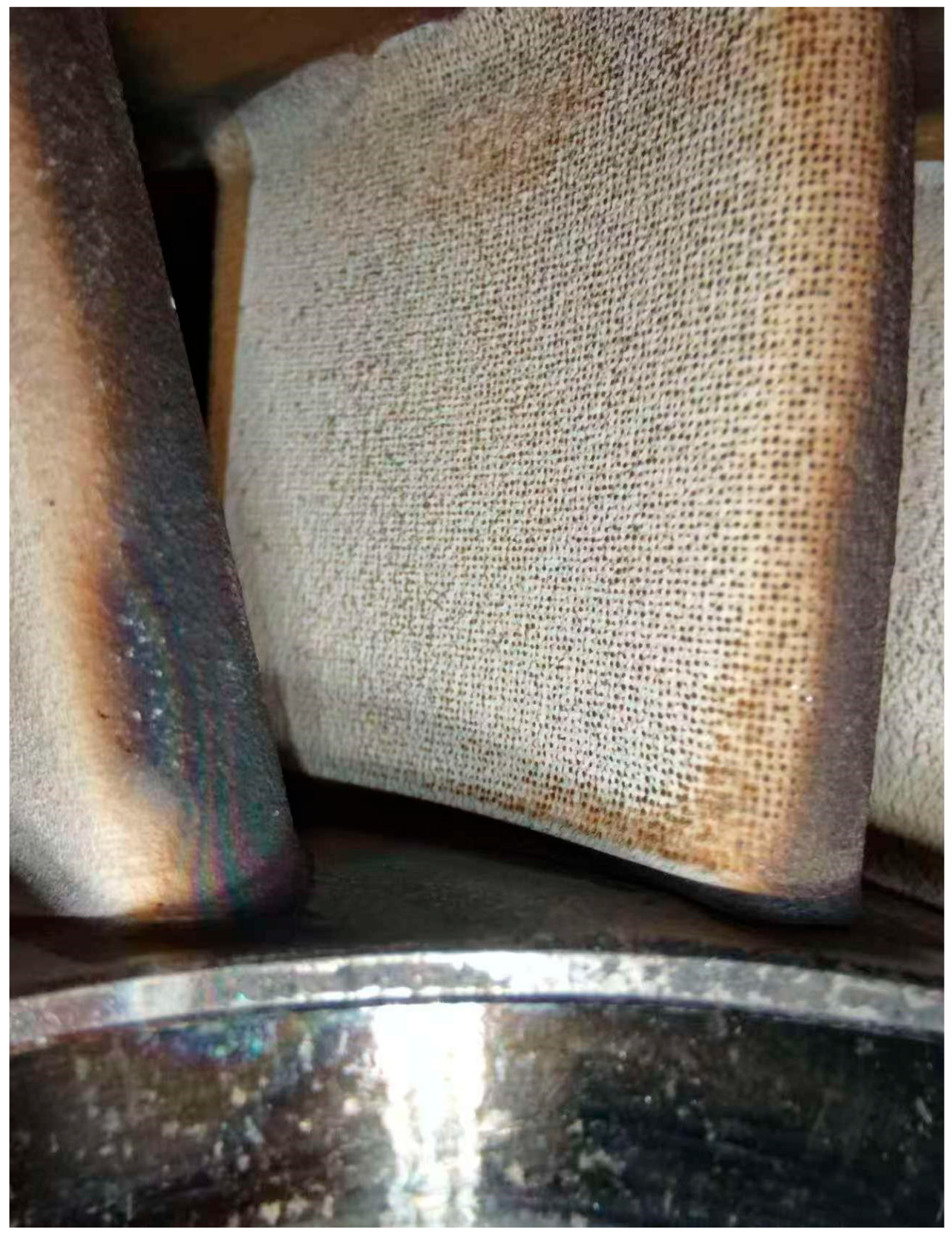
It should be noted that the sample preparation in this study is based on full-coverage magnetron sputtering on a bulk substrate. For practical speckle applications, it is necessary to pre-design the mask pattern according to the required speckle size and spacing, followed by coating the target specimens. As shown in Figure 14, a high-temperature SiC/SiO2 speckle pattern was fabricated on an aero-engine turbine blade with a thermal barrier coating. Experimental results demonstrate that the prepared speckle pattern can withstand prolonged exposure to high-temperature and high-rotation-rate conditions. Moreover, the captured high-contrast images meet the measurement requirements of the DIC technique.

3. Conclusions

This study investigated the material applicability and high-temperature stability of high-temperature speckle patterns in the context of aero-engine measurement using Digital Image Correlation (DIC) technology. Five materials (Ti, TiN, Ta, NiCr alloy, and SiC) were selected, and films were deposited on Al2O3 ceramic substrates via magnetron sputtering. Experiments were conducted from room temperature up to 1200 °C. To analyze the color changes induced by oxidation of the surface materials, Raman spectroscopy and XPS were employed to examine the high-temperature evolution of the internal composition of the films and explore the mechanism behind the color variation.
The Ta film underwent severe oxidation and exhibited poor high-temperature stability, causing film powdering after heating to 800 °C. Ti experienced non-uniform oxidation at 600 °C, forming blue non-stoichiometric titanium oxides, which transformed into the rutile phase of TiO2 as the temperature increased. TiN gradually oxidized into anatase and eventually into light-yellow rutile TiO2 above 600 °C. The NiCr alloy film changed into green after 1000 °C, which was attributed to the formation of NiO. SiC began to oxidize above 1000 °C, forming SiO2. Thin and non-uniform SiO2 layers caused interference, resulting in a dark blue appearance.
Applying an external SiO2 coating effectively reduced surface scattering and reflection, which can improve color contrast. Furthermore, the SiO2 layer acts as a barrier to oxygen diffusion, providing oxidation resistance at high temperatures. However, the coating only delays the oxidation rate and does not directly enhance the color stability of TiN and NiCr. In contrast, the passive oxidation of SiC at high temperatures generated SiO2 without altering the primary composition of the film. By fabricating a protective SiO2 layer on the surface of the SiC film, the color variation effect caused by high-temperature oxidation-induced thin-film interference is effectively suppressed. The SiC/SiO2 composite film exhibited highly stable low grayscale values under high-temperature conditions, demonstrating pronounced contrast with white substrates. This combination makes it a well-suited candidate for high-temperature speckle patterns.

Author Contributions

Conceptualization, Y.N.; Methodology, Y.N.; Validation, Y.W. and Z.Z.; Formal analysis, Z.Z.; Investigation, Y.W.; Resources, Z.Z. and H.Z.; Data curation, Y.N.; Writing—original draft, Y.N.; Writing—review & editing, Y.N.; Supervision, H.Z.; Project administration, H.Z.; Funding acquisition, H.Z. All authors have read and agreed to the published version of the manuscript.

Funding

This research was funded by Youth Innovation Promotion Association CAS grant number No. 2022142.

Institutional Review Board Statement

Not applicable.

Informed Consent Statement

Not applicable.

Data Availability Statement

The original contributions presented in this study are included in the article. Further inquiries can be directed to the corresponding author.

Conflicts of Interest

The authors declare no conflict of interest.

References

  1. Pan, B.; Jiang, T.; Wu, D. Strain measurement of objects subjected to aerodynamic heating using digital image correlation: Experimental design and preliminary results. Rev. Sci. Instrum. 2014, 85, 115102. [Google Scholar] [CrossRef]
  2. Yu, L.; Pan, B. Overview of High-temperature Deformation Measurement Using Digital Image Correlation. Exp. Mech. 2021, 61, 1121–1142. [Google Scholar] [CrossRef]
  3. Han, S.M.; Goo, N.S. High-Temperature DIC Deformation Measurement under High-Intensity Blackbody Radiation. Aerospace 2024, 11, 479. [Google Scholar] [CrossRef]
  4. Kreis, T. Digital holographic interference-phase measurement using the Fourier-transform method. J. Opt. Soc. Am. A 1986, 3, 847–855. [Google Scholar] [CrossRef]
  5. Liu, Z.; Fang, D.; Xie, H.; Lee, J.J. Study of effect of 90° domain switching on ferroelectric ceramics fracture using the moiré interferometry. Acta Mater. 2007, 55, 3911–3922. [Google Scholar] [CrossRef]
  6. Yang, L.; Xie, X.; Zhu, L.; Wu, S.; Wang, Y. Review of electronic speckle pattern interferometry (ESPI) for three dimensional displacement measurement. Chin. J. Mech. Eng. 2014, 27, 1–13. [Google Scholar] [CrossRef]
  7. Tomassini, R.; Rossi, G.; Brouckaert, J.F. On the development of a magnetoresistive sensor for blade tip timing and blade tip clearance measurement systems. Rev. Sci. Instrum. 2016, 87, 102505. [Google Scholar] [CrossRef]
  8. Peters, W.H.; Ranson, W.F. Digital Imaging Techniques In Experimental Stress Analysis. Opt. Eng. 1982, 21, 213427. [Google Scholar] [CrossRef]
  9. Sutton, M.A.; Wolters, W.J.; Peters, W.H.; Ranson, W.F.; McNeill, S.R. Determination of displacements using an improved digital correlation method. Image Vis. Comput. 1983, 1, 133–139. [Google Scholar] [CrossRef]
  10. Chu, T.C.; Ranson, W.F.; Sutton, M.A. Applications of digital-image-correlation techniques to experimental mechanics. Exp. Mech. 1985, 25, 232–244. [Google Scholar] [CrossRef]
  11. Pan, B.; Qian, K.; Xie, H.; Asundi, A. Two-dimensional digital image correlation for in-plane displacement and strain measurement: A review. Meas. Sci. Technol. 2009, 20, 062001. [Google Scholar] [CrossRef]
  12. Dong, Y.L.; Pan, B. A Review of Speckle Pattern Fabrication and Assessment for Digital Image Correlation. Exp. Mech. 2017, 57, 1161–1181. [Google Scholar] [CrossRef]
  13. Liu, B.; Lan, S.; Li, J.; Fang, Q.; Ren, Y.; He, W.; Xie, H. Digital image correlation in extreme conditions. Thin-Walled Struct. 2024, 205, 112589. [Google Scholar] [CrossRef]
  14. Pan, B.; Wu, D.; Wang, Z.; Xia, Y. High-temperature digital image correlation method for full-field deformation measurement at 1200 °C. Meas. Sci. Technol. 2011, 22, 015701. [Google Scholar] [CrossRef]
  15. Wang, S.; Yao, X.F.; Su, Y.Q.; Liu, W. The feasibility and application of gray scale adjustment method in high temperature digital image correlation. Meas. Sci. Technol. 2017, 28, 025201. [Google Scholar] [CrossRef]
  16. Jones, E.M.C.; Reu, P.L. Distortion of Digital Image Correlation (DIC) Displacements and Strains from Heat Waves. Exp. Mech. 2018, 58, 1133–1156. [Google Scholar] [CrossRef]
  17. Ma, C.; Zeng, Z.; Zhang, H.; Rui, X. A Correction Method for Heat Wave Distortion in Digital Image Correlation Measurements Based on Background-Oriented Schlieren. Appl. Sci. 2019, 9, 3851. [Google Scholar] [CrossRef]
  18. Wang, S.; Yao, X.F.; Su, Y.Q.; Ma, Y.J. High temperature image correction in DIC measurement due to thermal radiation. Meas. Sci. Technol. 2015, 26, 095006. [Google Scholar] [CrossRef]
  19. Zhu, X.; Yue, M.; Qu, Z.; Ma, Y.; Li, H.; Takagi, K.; Fang, X.; Feng, X. High-temperature DIC based on aluminium dihydrogen phosphate speckle. Measurement 2019, 133, 133–138. [Google Scholar] [CrossRef]
  20. Kaczmarek, R.; Dupré, J.-C.; Doumalin, P.; Pop, O.; Teixeira, L.; Huger, M. High-temperature digital image correlation techniques for full-field strain and crack length measurement on ceramics at 1200 °C: Optimization of speckle pattern and uncertainty assessment. Opt. Lasers Eng. 2021, 146, 106716. [Google Scholar] [CrossRef]
  21. Sánchez-Arévalo, F.M.; Pulos, G. Use of digital image correlation to determine the mechanical behavior of materials. Mater. Charact. 2008, 59, 1572–1579. [Google Scholar] [CrossRef]
  22. Novak, M.D.; Zok, F.W. High-temperature materials testing with full-field strain measurement: Experimental design and practice. Rev. Sci. Instrum. 2011, 82, 115101. [Google Scholar] [CrossRef]
  23. Pan, B.; Wu, D.; Gao, J. High-temperature strain measurement using active imaging digital image correlation and infrared radiation heating. J. Strain Anal. Eng. Des. 2014, 49, 224–232. [Google Scholar] [CrossRef]
  24. Wang, H.; Xie, H.; Li, Y.; Zhu, J. Fabrication of micro-scale speckle pattern and its applications for deformation measurement. Meas. Sci. Technol. 2012, 23, 035402. [Google Scholar] [CrossRef]
  25. Wilhelmsen, A. Characterization of Local Strain Fields in Cross-Ply Composites Under Transverse Loading. Ph.D. Thesis, University of Illinois at Urbana-Champaign, Champaign, IL, USA, 2015. [Google Scholar]
  26. Karanjgaokar, N.J.; Oh, C.S.; Chasiotis, I. Microscale Experiments at Elevated Temperatures Evaluated with Digital Image Correlation. Exp. Mech. 2011, 51, 609–618. [Google Scholar] [CrossRef]
  27. Pataky, G.J.; Sehitoglu, H. Experimental Methodology for Studying Strain Heterogeneity with Microstructural Data from High Temperature Deformation. Exp. Mech. 2015, 55, 53–63. [Google Scholar] [CrossRef]
  28. Li, N.; Sutton, M.A.; Li, X.; Schreier, H.W. Full-field Thermal Deformation Measurements in a Scanning Electron Microscope by 2D Digital Image Correlation. Exp. Mech. 2008, 48, 635–646. [Google Scholar] [CrossRef]
  29. Di Gioacchino, F.; Quinta Da Fonseca, J. Plastic Strain Mapping with Sub-micron Resolution Using Digital Image Correlation. Exp. Mech. 2013, 53, 743–754. [Google Scholar] [CrossRef]
  30. Guery, A.; Latourte, F.; Hild, F.; Roux, S. Characterization of SEM speckle pattern marking and imaging distortion by digital image correlation. Meas. Sci. Technol. 2014, 25, 015401. [Google Scholar] [CrossRef]
  31. Zhu, J.; Yan, G.; He, G.; Chen, L. Fabrication and optimization of micro-scale speckle patterns for digital image correlation. Meas. Sci. Technol. 2016, 27, 015203. [Google Scholar] [CrossRef]
  32. Li, Y.; Xie, H.; Luo, Q.; Gu, C.; Hu, Z.; Chen, P.; Zhang, Q. Fabrication technique of micro/nano-scale speckle patterns with focused ion beam. Sci. China Phys. Mech. Astron. 2012, 55, 1037–1044. [Google Scholar] [CrossRef]
  33. Shah, K.; Sockalingam, S.; O’brien, H.; Yang, G.; El Loubani, M.; Lee, D.; Sutton, M.A. Sub-microscale speckle pattern creation on single carbon fibers for scanning electron microscope-digital image correlation (SEM-DIC) experiments. Compos. Part A Appl. Sci. Manuf. 2023, 165, 107331. [Google Scholar] [CrossRef]
  34. Gudmundsson, J.T. Physics and technology of magnetron sputtering discharges. Plasma Sources Sci. Technol. 2020, 29, 113001. [Google Scholar] [CrossRef]
  35. Kelly, P.J.; Arnell, R.D. Magnetron sputtering: A review of recent developments and applications. Vacuum 2000, 56, 159–172. [Google Scholar] [CrossRef]
  36. El Garah, M.; Soubane, D.; Sanchette, F. Review on mechanical and functional properties of refractory high-entropy alloy films by magnetron sputtering. Emergent Mater. 2024, 7, 77–101. [Google Scholar] [CrossRef]
  37. Hoefnagels, J.P.M.; Van Maris, M.P.F.H.L.; Vermeij, T. One-step deposition of nano-to-micron-scalable, high-quality digital image correlation patterns for high-strain in-situ multi-microscopy testing. Strain 2019, 55, e12330. [Google Scholar] [CrossRef]
  38. Mattox, D.M. Physical vapor deposition (PVD) processes. Met. Finish. 2002, 100, 394–408. [Google Scholar] [CrossRef]
  39. Bishop, C.A. Vacuum Deposition onto Webs, Films, and Foils; William Andrew: Norwich, NY, USA, 2007; pp. 115–121. [Google Scholar]
  40. Jang, G.S.; Ahn, S.M.; Hwang, N.-M. Effects of Sputtering Power, Working Pressure, and Electric Bias on the Deposition Behavior of Ag Films during DC Magnetron Sputtering Considering the Generation of Charged Flux. Electron. Mater. Lett. 2022, 18, 57–68. [Google Scholar] [CrossRef]
  41. Ilie, A.G.; Scarisoareanu, M.; Morjan, I.; Dutu, E.; Badiceanu, M.; Mihailescu, I. Principal component analysis of Raman spectra for TiO2 nanoparticle characterization. Appl. Surf. Sci. 2017, 417, 93–103. [Google Scholar] [CrossRef]
  42. Aswathy, N.R.; Varghese, J.; Nair, S.R.; Kumar, R.V. Structural, optical, and magnetic properties of Mn-doped NiO thin films prepared by sol-gel spin coating. Mater. Chem. Phys. 2022, 282, 125916. [Google Scholar] [CrossRef]
  43. Eda, Y.; Manaka, T.; Hanawa, T.; Chen, P.; Ashida, M.; Noda, K. X-ray photoelectron spectroscopy-based valence band spectra of passive films on titanium. Surf. Interface Anal. 2022, 54, 892–898. [Google Scholar] [CrossRef]
  44. Zhao, Z.; Wang, S.; Lu, Y.; Li, J.; Li, X. Oxidation behavior of a Ni-Cr-Fe superalloy from 800 °C to 1100 °C in air: Formation and mechanism of multilayer oxide films. J. Alloys Compd. 2025, 1020, 179393. [Google Scholar] [CrossRef]
  45. Payne, B.P.; Grosvenor, A.P.; Biesinger, M.C.; Kobe, B.A.; Mcintyre, N.S. Structure and growth of oxides on polycrystalline nickel surfaces. Surf. Interface Anal. 2007, 39, 582–592. [Google Scholar] [CrossRef]
  46. Grosvenor, A.P.; Biesinger, M.C.; Smart, R.S.C.; Mcintyre, N.S. New interpretations of XPS spectra of nickel metal and oxides. Surf. Sci. 2006, 600, 1771–1779. [Google Scholar] [CrossRef]
  47. Murugesan, K.; Suresh, P.; Prabu, M.; Kavimani, V. Effect of graphene/silicon dioxide fillers addition on mechanical and thermal stability of epoxy glass fibre composite. Polym. Bull. 2024, 81, 9961–9976. [Google Scholar] [CrossRef]
  48. Nasiri, N.A.; Patra, N.; Ni, N.; Jayaseelan, D.D.; Lee, W.E. Oxidation behaviour of SiC/SiC ceramic matrix composites in air. J. Eur. Ceram. Soc. 2016, 36, 3293–3302. [Google Scholar] [CrossRef]
  49. Costello, J.A.; Tressler, R.E. Oxidation Kinetics of Silicon Carbide Crystals and Ceramics: I, In Dry Oxygen. J. Am. Ceram. Soc. 1986, 69, 674–681. [Google Scholar] [CrossRef]
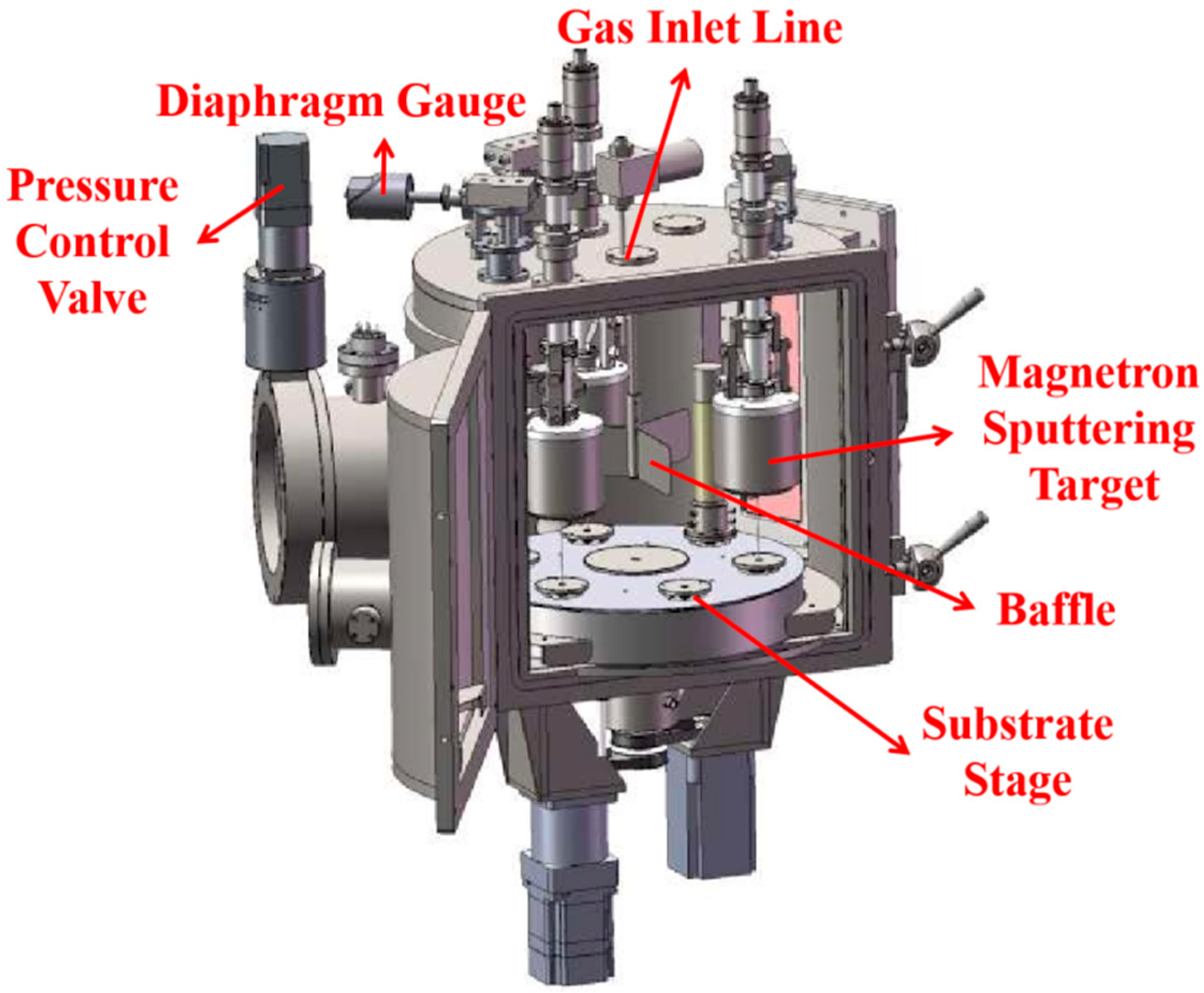
Figure 1. Schematic diagram of a magnetron sputtering system.
Coatings 15 01444 g001
Figure 2. Effect of high-temperature calcination on the Raman spectra of sputtered films: (a) Ti; (b) TiN; (c) NiCr; (d) SiC.
Coatings 15 01444 g002
Figure 3. Full XPS spectra of the Ti film.
Coatings 15 01444 g003
Figure 4. Fine XPS spectra of the Ti film: (a) Ti 2p, (b) Ti 2p after annealing at 600 °C, (c) O 1s, (d) O 1s after annealing at 600 °C.
Coatings 15 01444 g004
Figure 5. Full XPS spectra of the TiN film.
Coatings 15 01444 g005
Figure 6. Fine XPS spectra of the TiN film: (a) Ti 2p, (b) Ti 2p after annealing at 600 °C, (c) O 1s, (d) O 1s after annealing at 600 °C.
Coatings 15 01444 g006
Figure 7. Full XPS spectra of the NiCr film.
Coatings 15 01444 g007
Figure 8. Fine XPS spectra of the NiCr film: (a) Ni 2p3/2, (b) Ni 2p3/2 after annealing at 1200 °C, (c) Cr 2p3/2, (d) Cr 2p3/2 after annealing at 1200 °C, (e) O 1s, (f) O 1s after annealing at 1200 °C.
Coatings 15 01444 g008
Figure 9. Full XPS spectra of the SiC film.
Coatings 15 01444 g009
Figure 10. Fine XPS spectra of the SiC film: (a) Si 2p, (b) Si 2p after annealing at 1200 °C, (c) C 1s, (d) C 1s after annealing at 1200 °C, (e) O 1s, (f) O 1s after annealing at 1200 °C.
Coatings 15 01444 g010
Figure 11. Effect of high-temperature calcination on the Raman spectra of composite films: (a) TiN/SiO2; (b) NiCr/SiO2; (c) SiC/SiO2.
Coatings 15 01444 g011
Figure 12. Comparative Analysis of XPS Survey Spectra at Room Temperature and 1200 °C: (a) TiN/SiO2; (b) NiCr/SiO2; (c) SiC/SiO2.
Coatings 15 01444 g012
Figure 13. Fine XPS spectra of the SiC/SiO2 film: (a) Si 2p, (b) Si 2p after annealing at 1200 °C, (c) C 1s, (d) C 1s after annealing at 1200 °C, (e) O 1s, (f) O 1s after annealing at 1200 °C.
Coatings 15 01444 g013
Figure 14. Application of the speckle method to an aero-engine turbine blade with thermal barrier coating under high-temperature conditions.
Coatings 15 01444 g014
Table 1. Temperature-dependent color variation of single-material films.
Film MaterialRoom Temperature400 °C600 °C800 °C1000 °C1200 °C
TiCoatings 15 01444 i001Coatings 15 01444 i002Coatings 15 01444 i003Coatings 15 01444 i004Coatings 15 01444 i005Coatings 15 01444 i006
TiNCoatings 15 01444 i007Coatings 15 01444 i008Coatings 15 01444 i009Coatings 15 01444 i010Coatings 15 01444 i011Coatings 15 01444 i012
TaCoatings 15 01444 i013Coatings 15 01444 i014Coatings 15 01444 i015Coatings 15 01444 i016Coatings 15 01444 i017Coatings 15 01444 i018
NiCrCoatings 15 01444 i019Coatings 15 01444 i020Coatings 15 01444 i021Coatings 15 01444 i022Coatings 15 01444 i023Coatings 15 01444 i024
SiCCoatings 15 01444 i025Coatings 15 01444 i026Coatings 15 01444 i027Coatings 15 01444 i028Coatings 15 01444 i029Coatings 15 01444 i030
Table 2. Temperature-dependent color variation of composite films.
Flim MaterialRoom Temperature400 °C800 °C1200 °C
TiN/SiO2Coatings 15 01444 i031Coatings 15 01444 i032Coatings 15 01444 i033Coatings 15 01444 i034
NiCr/SiO2Coatings 15 01444 i035Coatings 15 01444 i036Coatings 15 01444 i037Coatings 15 01444 i038
SiC/SiO2Coatings 15 01444 i039Coatings 15 01444 i040Coatings 15 01444 i041Coatings 15 01444 i042
Disclaimer/Publisher’s Note: The statements, opinions and data contained in all publications are solely those of the individual author(s) and contributor(s) and not of MDPI and/or the editor(s). MDPI and/or the editor(s) disclaim responsibility for any injury to people or property resulting from any ideas, methods, instructions or products referred to in the content.