Article

Carbon Microfibers Coated with 3-Methyl-4-Phenylpyrrole for Possible Uses in Energy Storage

by
Alexandru Florentin Trandabat
1,
Romeo Cristian Ciobanu
1,* and
Oliver Daniel Schreiner
1,2
1
Department of Electrical Measurements and Materials, Gheorghe Asachi Technical University, Bdul. D. Mangeron 71, 700050 Iasi, Romania
2
Department of Medical Specialties III, Faculty of Medicine, University of Medicine and Pharmacy “Grigore T. Popa”, 700115 Iasi, Romania
*
Author to whom correspondence should be addressed.
Coatings 2025, 15(12), 1420; https://doi.org/10.3390/coatings15121420 (registering DOI)
Submission received: 31 October 2025 / Revised: 26 November 2025 / Accepted: 2 December 2025 / Published: 4 December 2025

Abstract

This research examines the electrochemical polymerization of 3-Methyl-4-phenylpyrrole on carbon microfibers and compares its electrode performance with similar structures utilizing Poly-pyrrole and Poly-3-Phenylpyrrole on carbon microfibers. For technological considerations, going beyond a rate of 90 mV/s for the electrochemical deposition of the 3-Methyl-4-phenylpyrrole polymer is not advisable. By examining the Nyquist diagram, it is noted that the highest phase angle, exceeding 80°, occurs for the carbon–polymer structure created at a deposition rate of 70 mV/s, displaying the most pronounced capacitive behavior. Similar results at a deposition rate of 70 mV/s regarding SEM and AFM images were noted, revealing a structure that resembles the shape of the deposited polymer granules as “droplets” with a reduced average roughness level, at under 60 nm, and achieving a layer thickness of over 0.7 μm. Considering the results from cyclic voltammetry and electrochemical impedance, it was observed that the carbon micro-fiber structure coated with 3-Methyl-4-phenylpyrrole polymer shows superior capacitive behavior when compared to similar structures using pyrrole and 3-Phenyl-pyrrole polymers. 3-Methyl-4-phenylpyrrole also showed a lower admittance value than 3-Phenyl-pyrrole, and presented the highest capacitance, leading to a maximum increase of +27.3% in relation to pyrrole, emphasizing the significance of studying this PPy derivative for energy storage applications.

1. Introduction

Due to their distinctive hierarchical arrangement, remarkable electrical and mechanical characteristics, and large specific surface area, hybrid assemblies based on carbon materials have been extensively studied for specific applications in energy storage, such as flexible and stretchable supercapacitors and integrated energy sources.
Polypyrrole (PPy) composites attracted significant attention during the last decades as flexible and conductive π-conjugated polymers, particularly for uses in electrodes for lithium-ion batteries and supercapacitors development [1,2,3]. Integrating a high-surface-area carbon with conductive polymers based on PPy positively influences both electrochemical double-layer capacitance and pseudocapacitance. These hybrid systems were primarily created through chemical methods [4,5,6], resulting in unavoidable chemical and structural defects that arise from the polymerization reaction, but electrochemical polymerization seems to be the most refined and atom-efficient approach, allowing the control over film thickness and morphology, thereby facilitating the creation of high-quality polymer films on carbon structures [7,8,9,10,11,12]. Regrettably, the current research concentrated more on enhancing the carbon substrate for greater porosity and surface area to effectively store and transfer energy (e.g., by use of activated carbon powder, graphene, and carbon nanotubes) [13,14,15,16] rather than on discovering new PPy derivatives. An innovative focus on developing new PPy derivatives could provide better prospects through the use of simpler carbon structures, as micro- or nano-fibers, enabling more cost-effective production. Conversely, new assemblies of carbon micro- or nano-fibers and PPy derivatives may diminish swelling and shrinking phenomena (due to a rise in crystallinity of the resultant polymers along with a lower delamination and higher smoothness), improving cycle life, an extremely important feature for energy storage applications [17,18,19,20,21,22].
The study focused on creating hybrid systems using carbon micro-fibers and PPy derivatives, examining their electrochemical performance. The paper innovatively introduces the electrochemical polymerization of 3-Methyl-4-phenylpyrrole, a naturally occurring substance discovered in certain ant species, largely utilized as an analytical standard and in chemical investigations [23]. According to the literature, which extensively refers to the features of pyrrole [4,14], and to the 3-methylpyrrole [24,25], we considered that the next step in studding monomer complexity starting from 3-methylpyrrole would be 3-methyl-4-phenylpyrrole, which benefits from being derived from a biological source as raw material for electrochemical polymerization. The study aimed to rationalize the chosen selection by making progressive comparisons of the effect of pyrrole and 3-methylpyrrole with 3-methyl-4-phenylpyrrole in coating carbon micro-fibers [26].

2. Materials, Technology and Characterization Methods

2.1. Materials

All materials used were purchased from commercial sources to demonstrate the feasibility of the technology for larger-scale applications.
PPy and its derivatives (3-Methyl-pyrrole and 3-Methyl-4-phenylpyrrole) with over 98% purity were purchased from EvitaChem (Pasadena, CA, USA). Carbon micro-fibers with a diameter of about 1 mm were obtained from SGL Carbon (Wiesbaden, Germany) as bunches of about 10,000 filaments with diameters < 10 μm. Six micro-electrodes were prepared for each electrochemical polymerization, connecting one carbon micro-fiber to a copper conductor. By adjusting the immersion length towards 3.5 cm and coating the remaining area of the fiber with silicone resin, a working electrode area of about S = 0.02 cm2 was achieved.

2.2. Technology

The electrochemical polymerization of PPy derivatives involves oxidizing monomers near anode, leading to the initial dimerization of generated radical cations followed by deprotonation. The dimer is then reoxidized and combined with another radical cation. The process of deprotonation and reoxidation continues with the formation of oligomeric structures. When the length of the oligomer chain exceeds the solubility limit for the relevant solvent, precipitation occurs. Incorporating the phenyl group into the pyrrole ring mainly creates a steric effect, affecting the interband transition energy and the polymer’s overall structure. The addition of the methyl group at the 4-position also influences the steric and electronic characteristics of the resulting polymer, impacting its conductivity and structure. The existing literature has detailed the electropolymerization process of PPy, e.g., in [10,12], and a similar one for Methyl-pyrrole, e.g., in [24,25]; thus, the explanation of these processes, even if experimentally repeated and utilized for comparison in the paper, is not specifically emphasized. The article focuses primarily on the novel application in use of 3-Methyl-4-phenylpyrrole and outlines, in specific circumstances, the comparison of its behavior with PPy and Methyl-pyrrole.
The experimental part related to carbon electrode formation was similar to [27,28]. The counter electrode was a platinum wire. For the electrochemical technology, the reference electrode was a Silver/Silver Chloride (Ag/AgCl) electrode. The electrolyte was 0.02 mol tetraethylammonium perchlorate–silver chloride in sulfuric acid solution (compatible with the reference electrode of the cell). The working electrode was submitted to repetitive potential scanning (cyclic voltammetry), up to a maximum of 8 deposited layers. To evaluate the advantages of utilizing carbon micro-fibers, a platinum electrode was additionally used under the same electropolymerization conditions.

2.3. Characterization Equipment

Scanning electron microscopy (SEM) provides insights into the surface structure and was conducted using Lyra III XMU equipment (TESCAN GROUP a.s., Brno-Kohoutovice, Czech Republic).
Atomic force microscopy (AFM) delivers high-resolution visuals to measure surface roughness at the nanoscale. AFM was performed with a Dimension Edge device from Bruker (Billerica, MA, USA) for optical applications. The roughness evaluation was performed with the following derived parameters: Ra = Roughness Average; Rsk = Skewness; RMS = Root Mean Square Roughness; Rku = Kurtosis. Average roughness values are given for 4 scanned areas on each sample type. The evaluation of the surface roughness parameters was conducted in accordance with ISO 21920-2:2021 [29,30].
A PARSTAT 4000 potentiostat/galvanostat device (AMETEK Scientific Instruments Inc., Oak Ridge, TN, USA), along with its associated software linked to a computer via the VersaStudio electrochemistry graphical interface, was used to assess electrochemical features of samples. Its K0264 Micro-Cell Kit was used as electrochemical cell assembly.
For impedance measurements, a BDS40 turn key dielectric and impedance spectrometer (frequency domain: 3 μHz to 3 GHz, from Novocontrol Technologies GmbH & Co. KG, Montabaur, Germany) was used.

3. Results and Discussion

3.1. Analysis of the Polymer Deposition Process

Figure 1 shows the voltammograms obtained using the cyclic voltammetry method for the two types of mini-electrodes coated with 3-Methyl-4-phenylpyrrole polymer. In the case of the carbon mini-electrode, a higher level of reversibility is observed, specific to mini-electrodes used, e.g., for sensor development. The electrochemical parameters obtained in the case of the characterization of two types of mini-electrodes are presented in Table 1. A more convenient process, at lower current and voltage values, was noticed for the carbon micro-electrode.
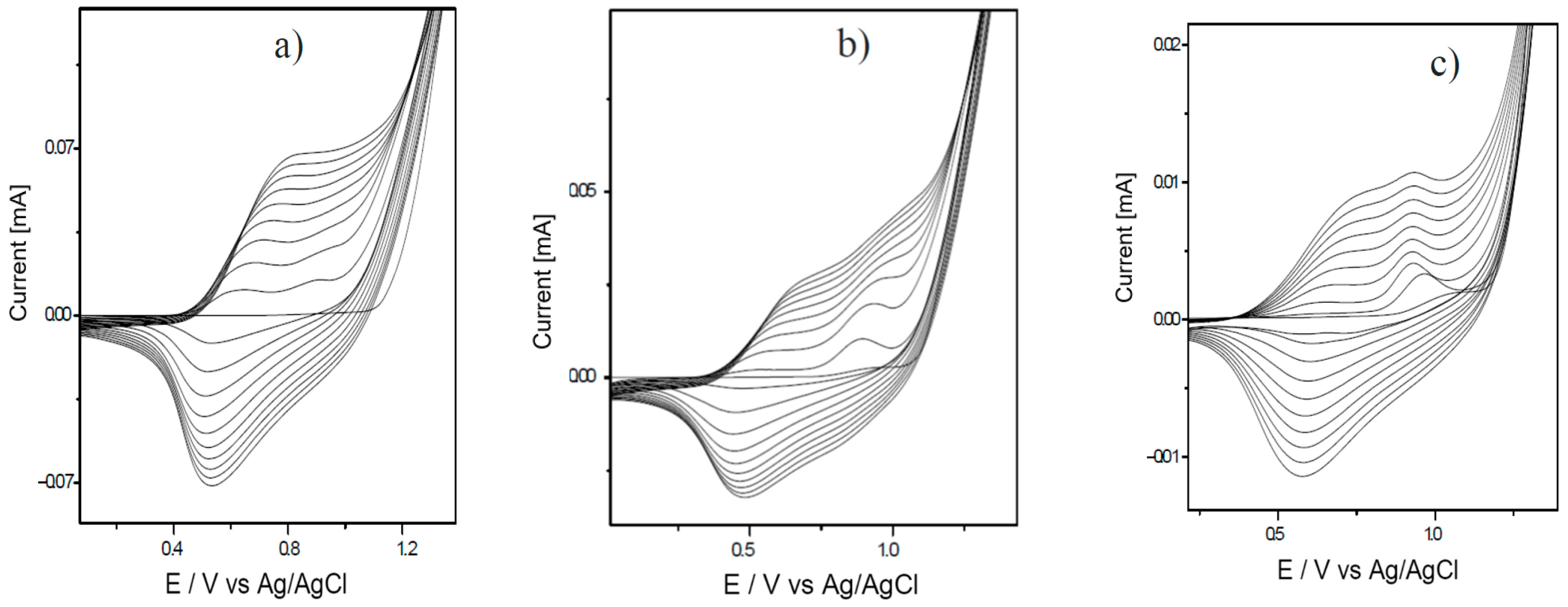
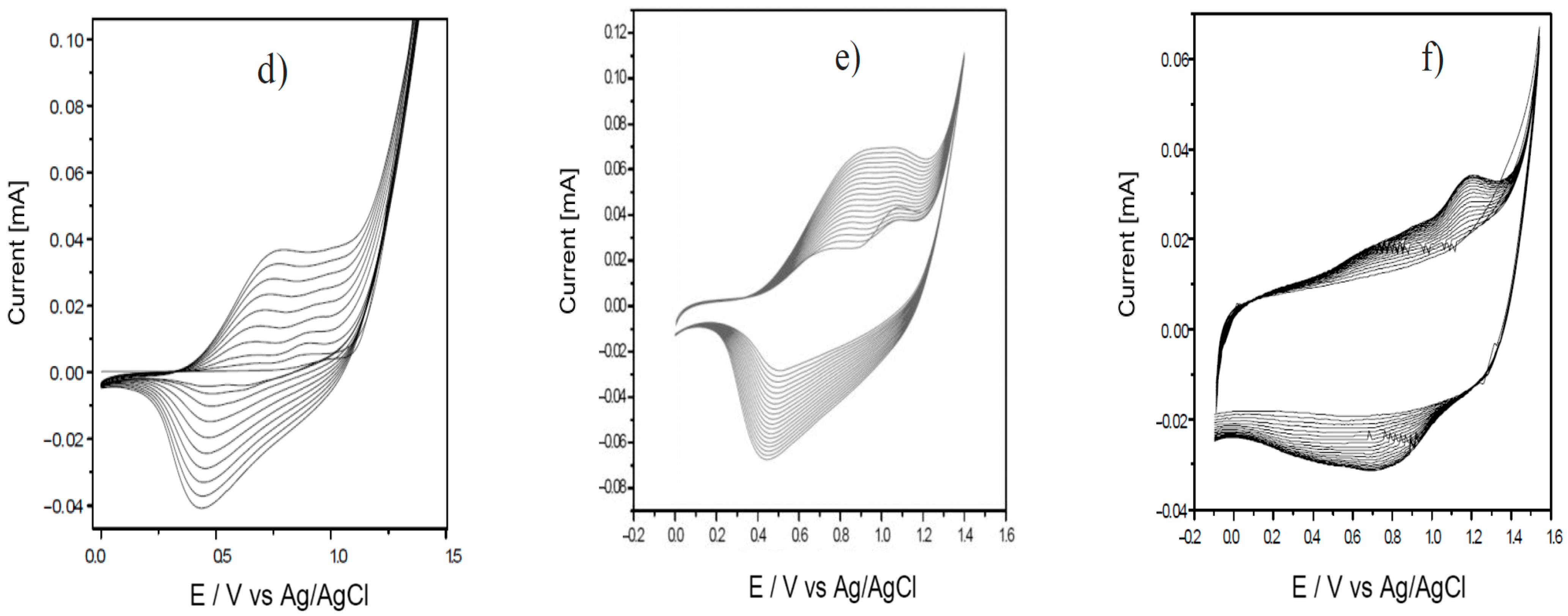
The electrode coverage level differs from one case to another, depending on the polymer deposition rate, or the growth rate of the polymer on the mini-electrode surface. Therefore, in order to observe these differences, a series of polymer depositions were performed on the carbon mini-electrode, for different deposition rates: 15, 30, 70, 90, 500, and 1000 mV/s. Figure 2 shows the voltammograms recorded for these deposition rates of 3-Methyl-4-phenylpyrrole polymer deposition on the carbon mini-electrode. Additionally, Table 2 presents the electrochemical parameters obtained in the case of characterizing the carbon–polymer structure at different rates of coating.
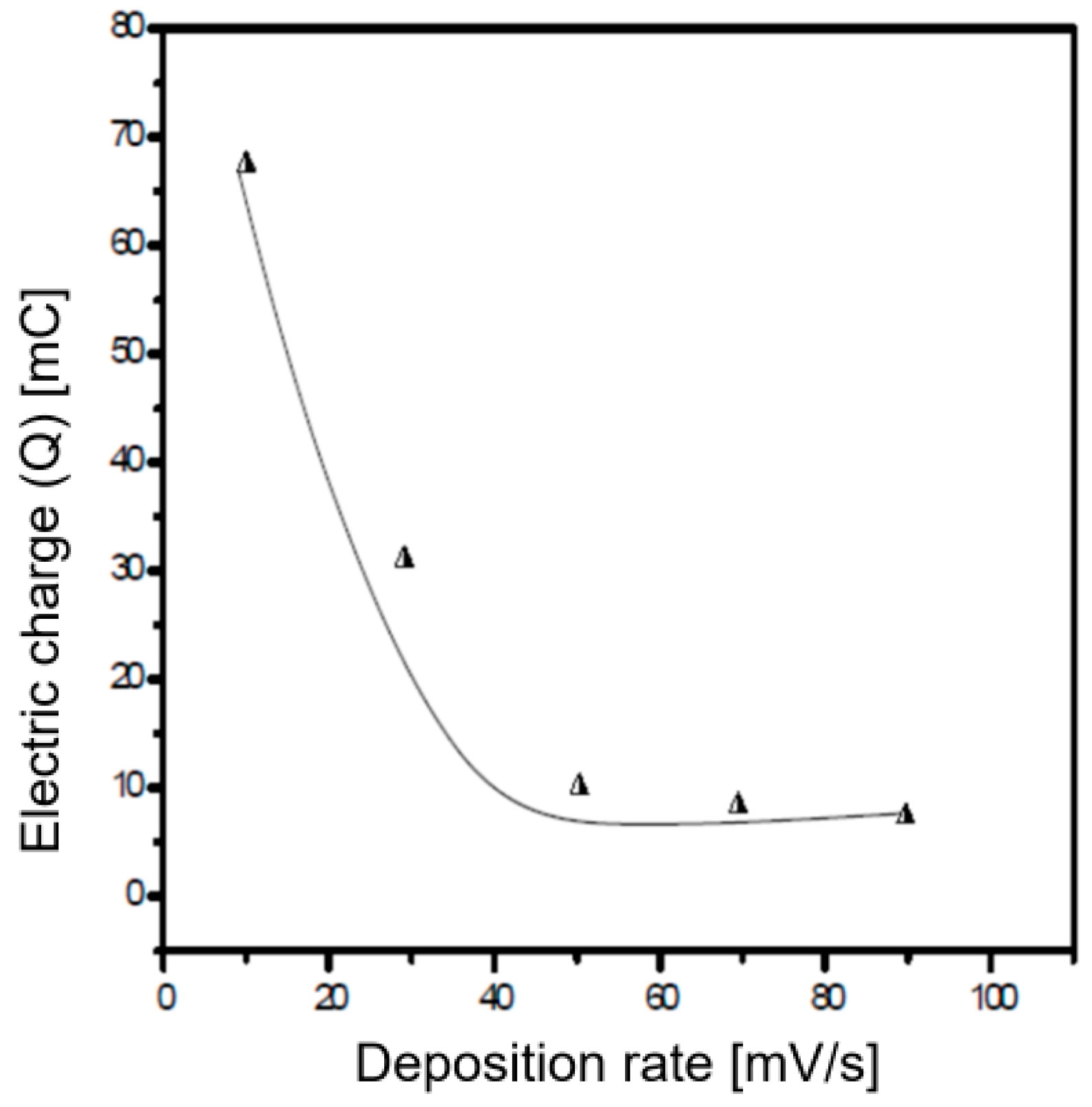
According to the specific values of the electric charges presented in Table 2, in Figure 3, the electric charge distribution is highlighted depending on the deposition rate of the 3-Methyl-4-phenylpyrrole polymer on the carbon mini-electrode. The total charge that has accumulated at the electrode is obtained from the cyclic voltammogram by integrating the current with respect to potential vs. time, by using the equipment software. The charge values are significantly affected by the polymer’s deposition rate, demonstrating a notable reduction as the deposition rate increases. In contrast, the ΔE indicates a minor rise with the increase in the deposition rate.
Thus, in the development of feasible carbon–polymer structures, it must be taken into account that higher values of the electric charge are obtained at lower deposition rates of the 3-Methyl-4-phenylpyrrole polymer. The values of the electrochemical parameters obtained in the case of the carbon-3-Methyl-4-phenylpyrrole structures are comparable to those obtained by other laboratories related to similar carbon–polymer structures, implying PPy or its derivatives [27,28,31]. Taking into account the evolution of charge values versus polymer deposition rate, exceeding the rate value of 90 mV/s is not recommended, even if possibly providing technological advantages regarding deposition efficiency.

3.2. Structural Analysis

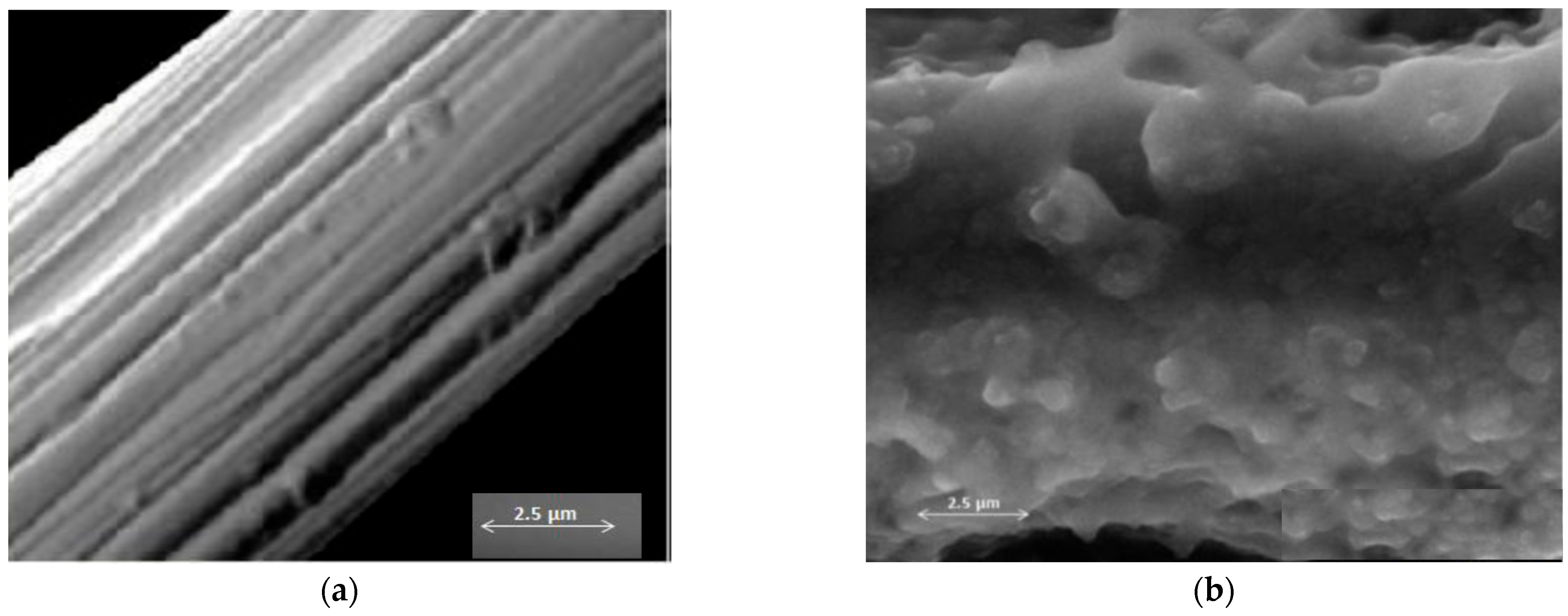
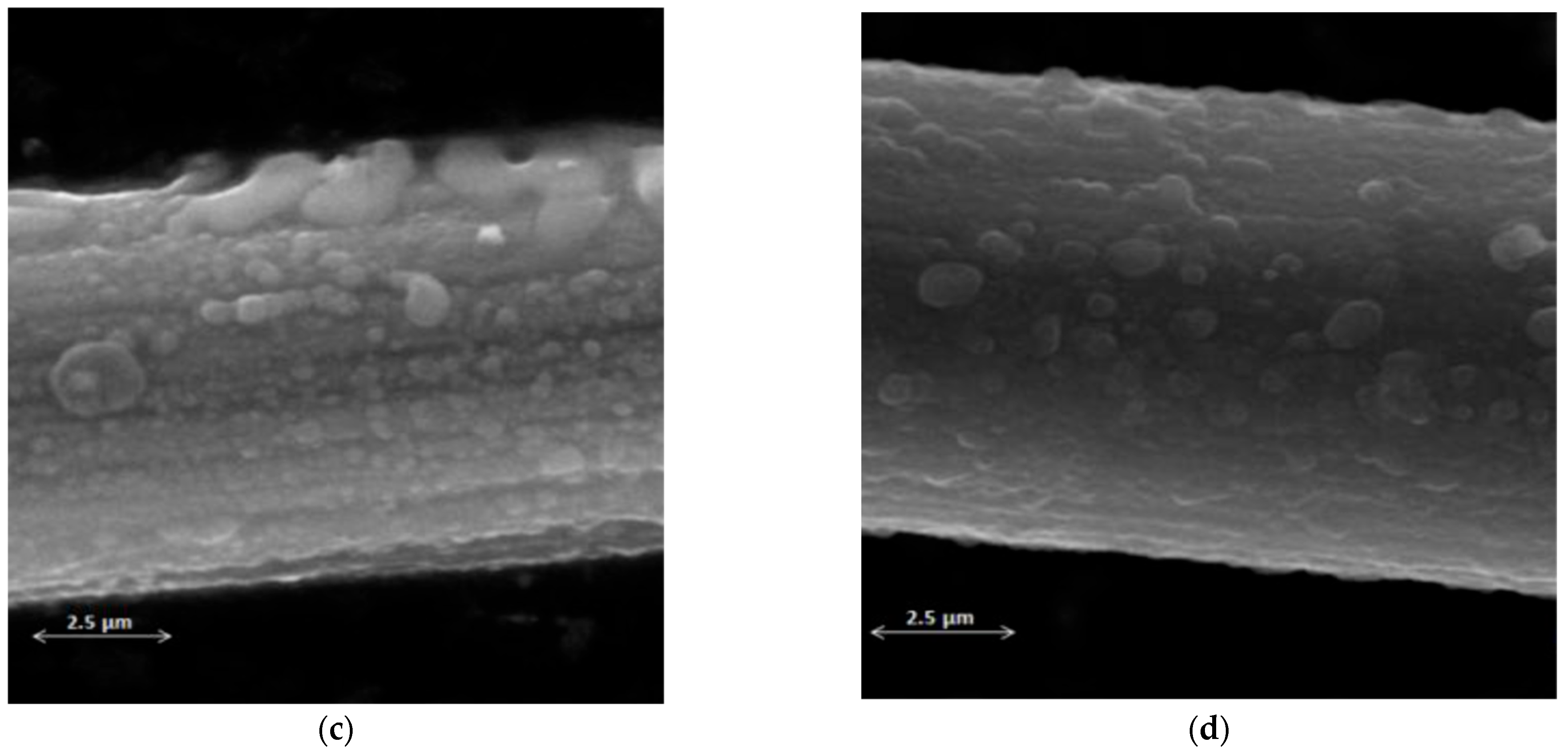
The electrode coverage level differs from one case to another, depending on the deposition rates. SEM analyses performed on the carbon-3-Methyl-4-phenylpyrrole polymer structures demonstrated that the polymer coatings of the carbon mini-electrodes are strongly influenced by the electrodeposition rate, which directly influences the electropolymerization efficiency and surface architecture. Figure 4 shows the brief results of the morphological analysis of the surface structures from SEM images obtained for the uncoated carbon micro-fiber and for the 3-Methyl-4-phenylpyrrole polymer-coated carbon micro-fiber at different deposition rates: 30 mV/s, 70 mV/s, and 90 mV/s. It is observed that the smoothness in terms of polymer granulation formation on the carbon mini-electrode depends on the deposition rate. Thus, at higher deposition speeds, the deposited polymer layer is more uniform (Figure 4d) compared to those obtained at lower deposition speeds, which present more pronounced granular formations (e.g., Figure 4a, at 15 mV/s).
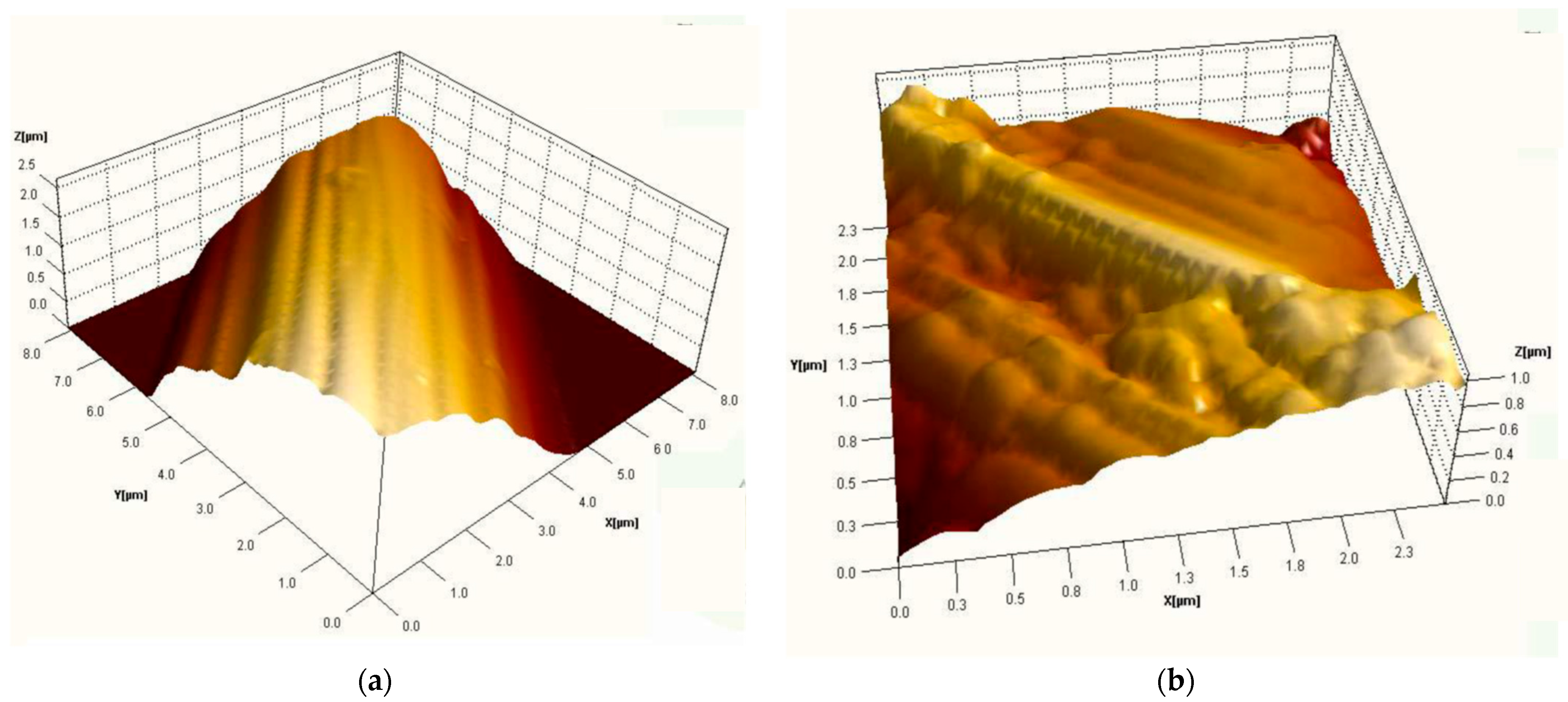
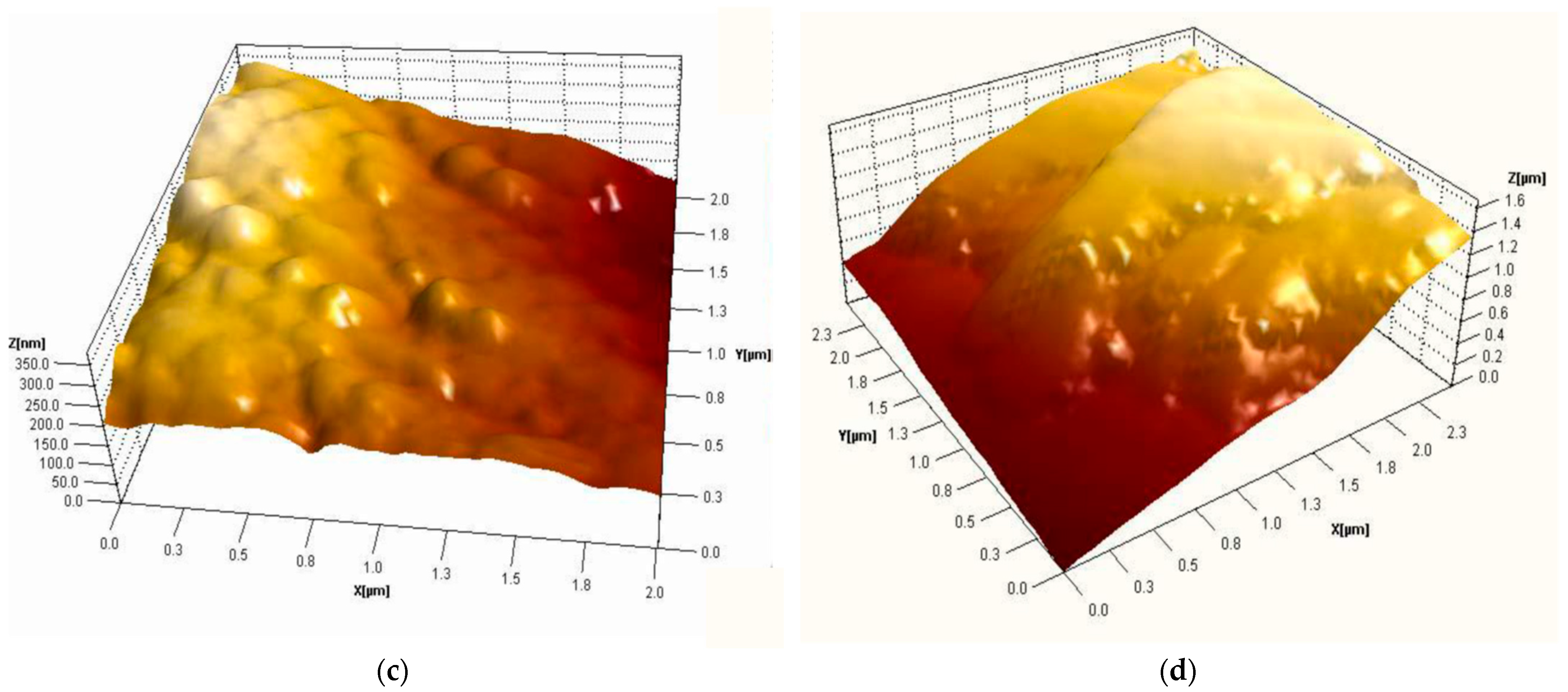
Comparable findings concerning the results linked to SEM images can be obtained by examining the AFM images (Figure 5) where the optimal smoothness is noticed at higher deposition rates too. As seen in Figure 5b, the polymer grain clusters are organized in the form of “oriented rods” following the surface architecture of the carbon micro-electrode, presenting an average layer thicknesses obtained through electrodeposition processes of approximately 0.5 μm. Figure 5c, for the 70 mV/s deposition rate, shows the shape of the polymer granules as “droplets” with a lower average roughness level compared to that obtained at 30 mV/s. It is also observed that the thickness of the layer obtained by electrodeposition is slightly higher but more uniform, exceeding 0.7 μm. In the last case, at 90 mV/s (Figure 5d) the polymer granules formed on the surface of the carbon micro-electrode are similar to the case of the 70 mV/s deposition rate, with a quasi-spherical shape but smaller, as in the previous case. The surface is smoother, but dispersed upon larger picks and valleys, in a way resembling the situation noticed for the 70 mV/s deposition rate. The thickness of the layer obtained by electrodeposition is slightly higher, close to 1 μm.
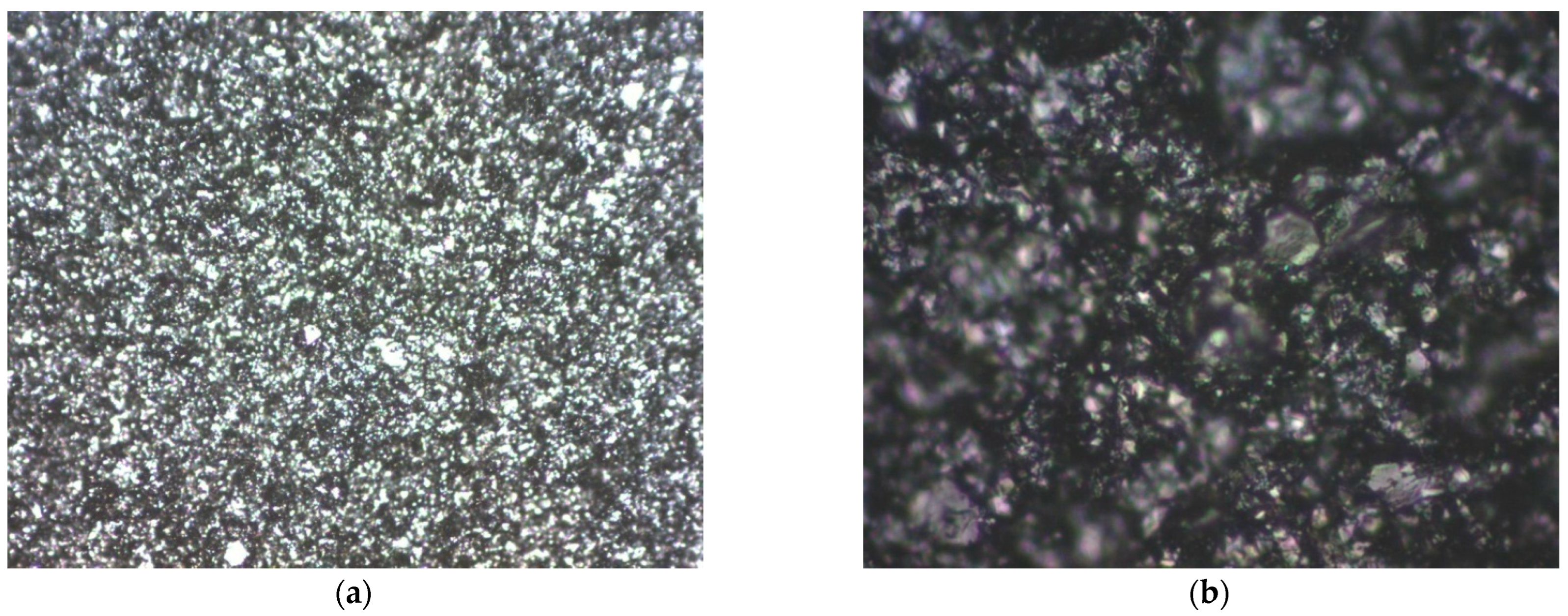
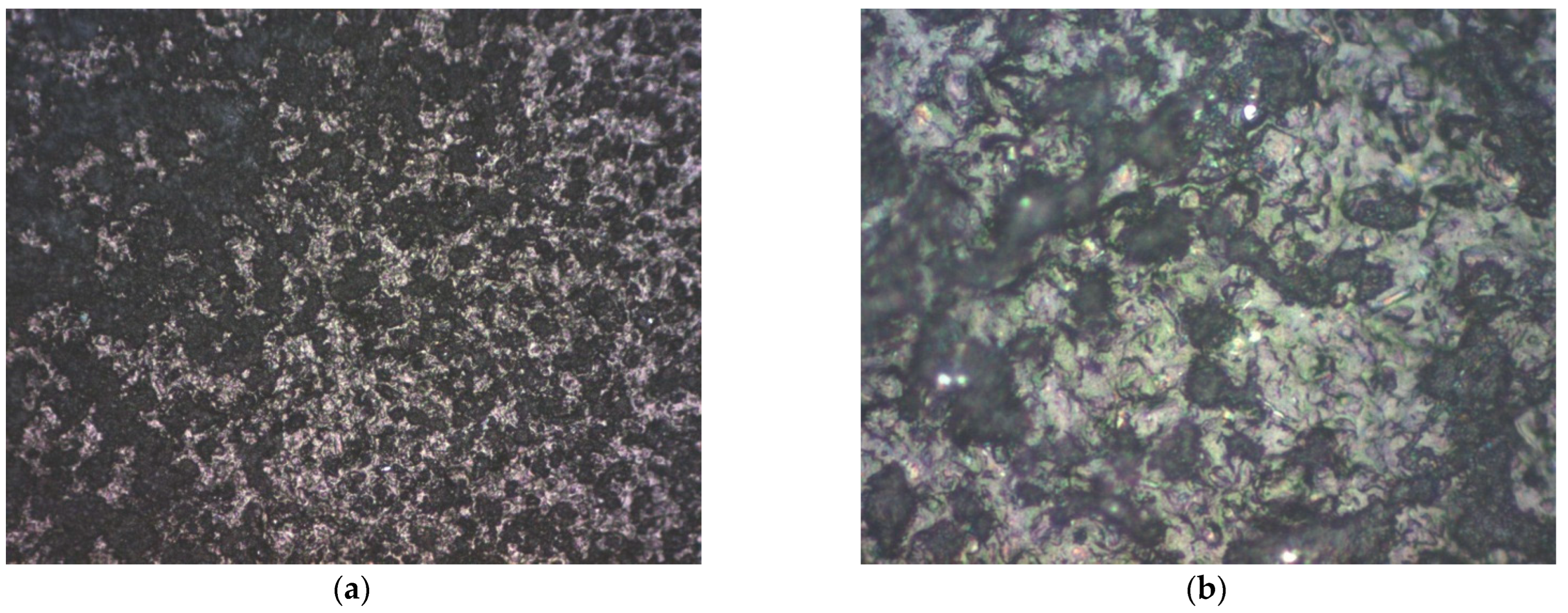
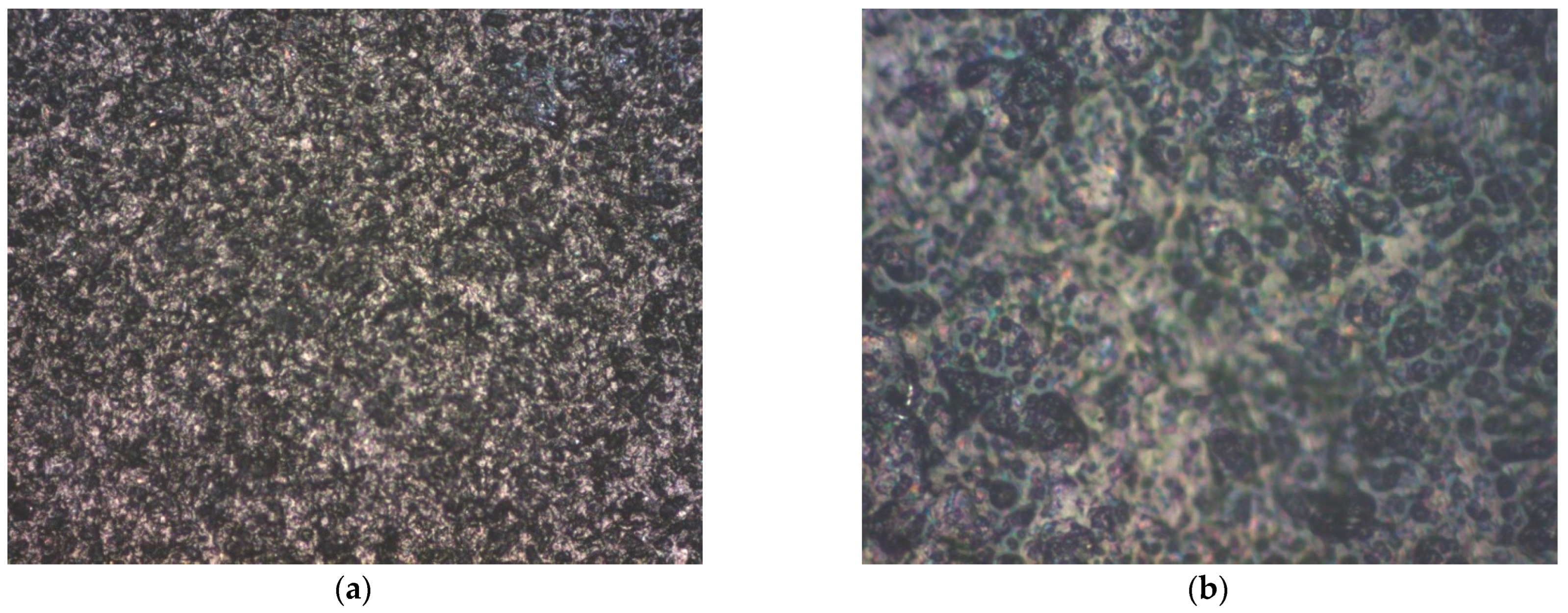
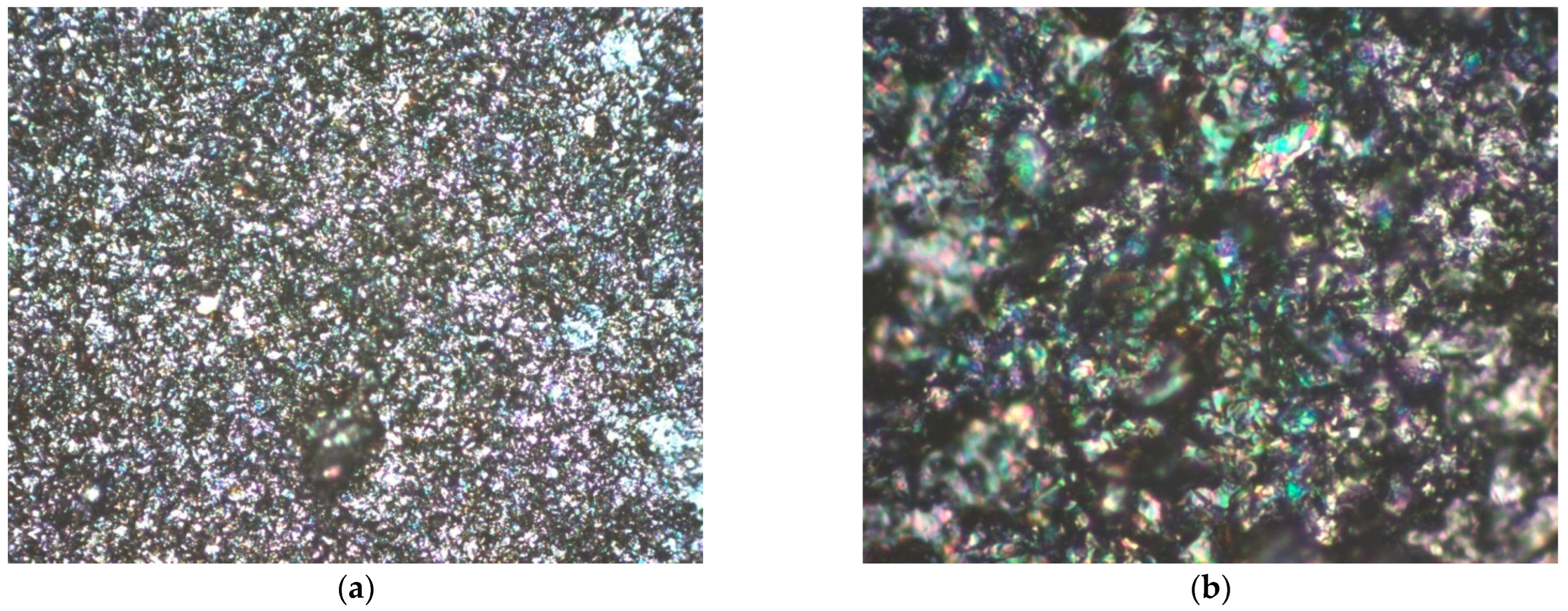
A qualitative optical analysis is presented in Figure 6, Figure 7, Figure 8 and Figure 9 at 100 and 500 magnifications. These images confirm the technical findings outlined in the pictures of the structures depicted above, concerning the creation and spread of layers on the micro-fibers’ surfaces. The images demonstrate a differing thickness of the coated layer, influencing the surface roughness discussed below.
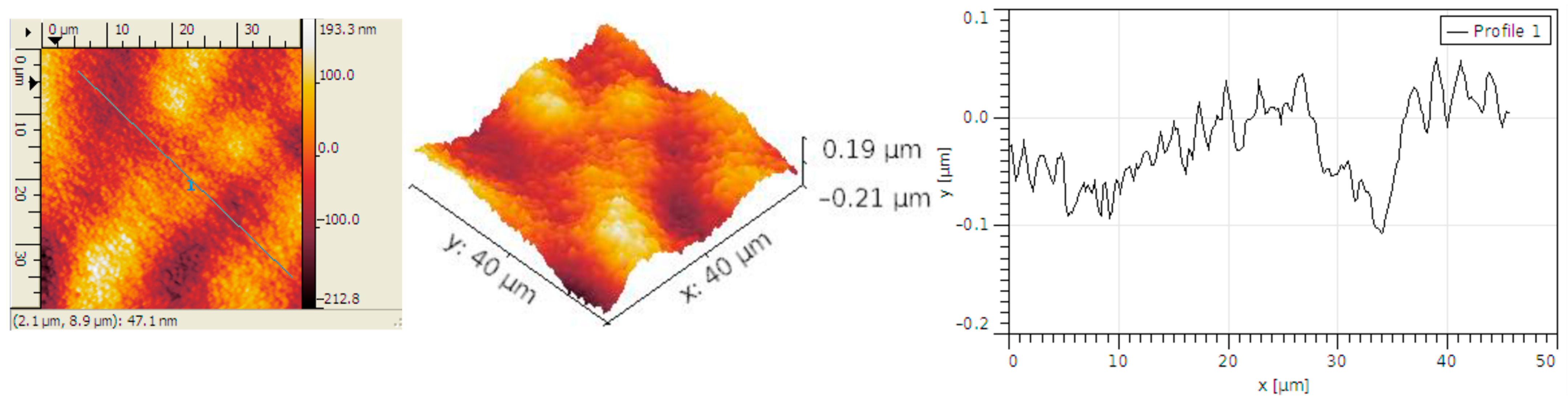
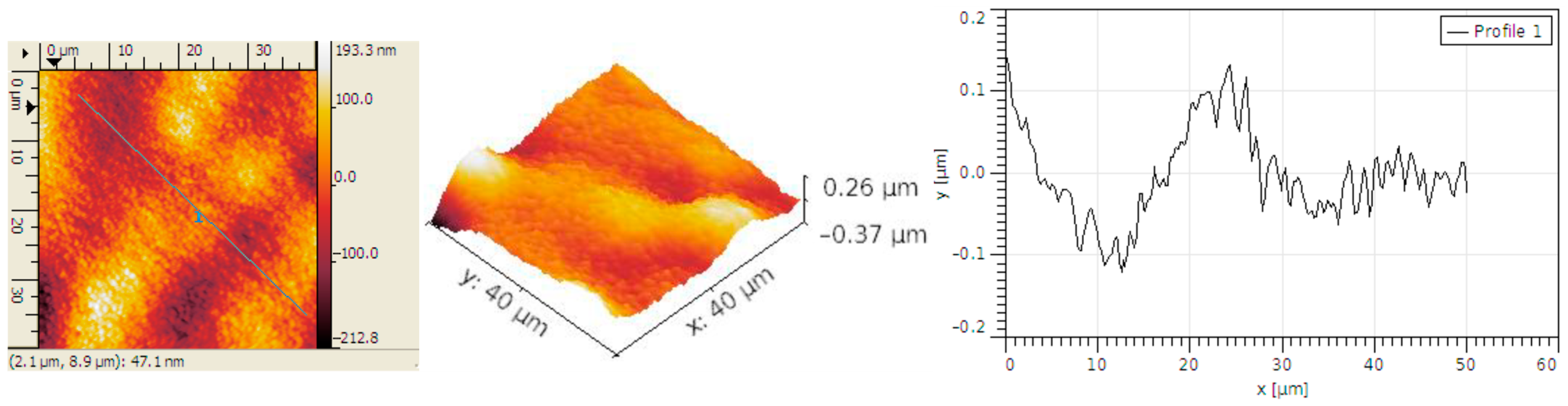
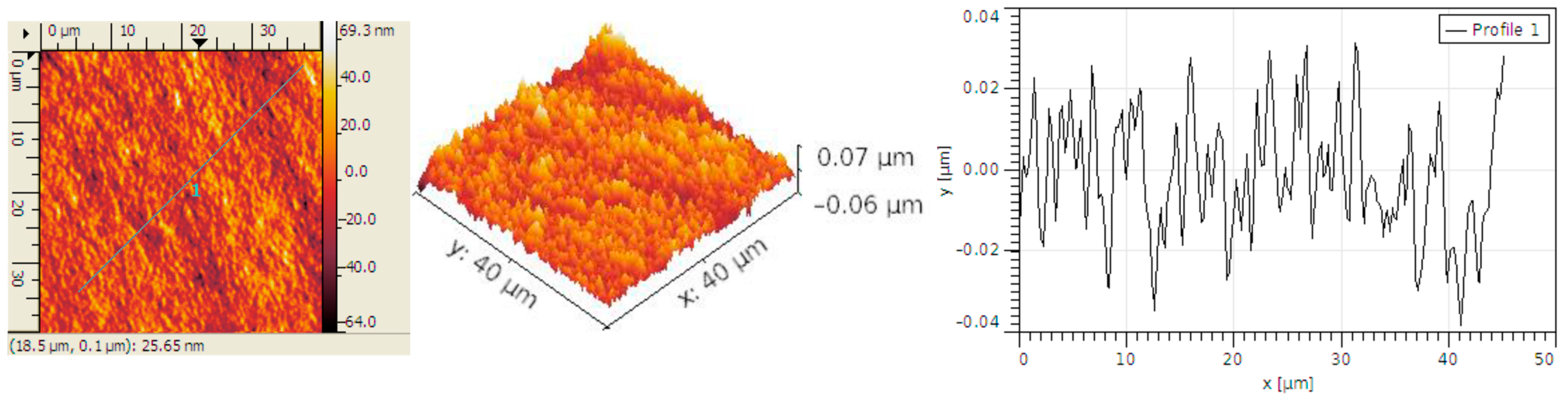
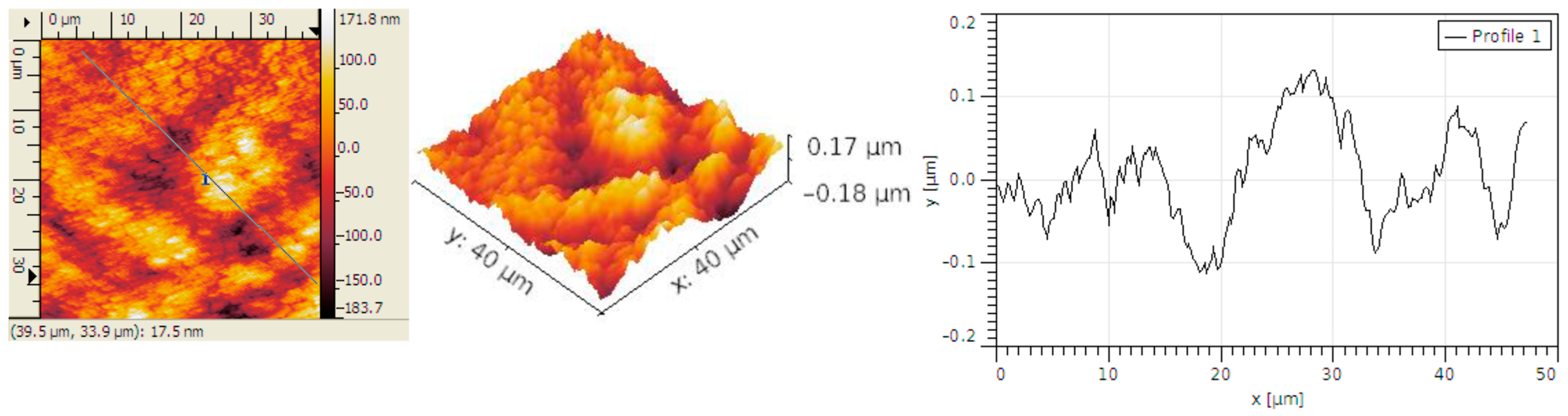
The AFM optical assessment (Figure 10, Figure 11, Figure 12 and Figure 13) reveals the grain sizes, their distribution relative to surface area, and the overall surface roughness, on a scanned area of 40 × 40 μm2.
The average roughness parameters determined by AFM lines are detailed in Table 3.
As regards the uncoated carbon micro-fiber (Figure 10) the roughness and surface architecture are determined by the carbon fiber technology, presenting a reasonable symmetry (Rku in the vicinity of 3), a balance between peaks and valleys (Rsk near zero), with peak dimensions measuring around 0.19 μm.
In Figure 11, the creation of layers at a 30 mV/s rate is presented, being defined by extensive valleys and a limited number of peaks (RSK = 0.26). The Rku value rises above 4, signaling a clear asymmetry. The peak dimensions are quite large in this case, measuring around 0.26 μm.
The peak dimensions are the lowest in the case of layers coated at a 70 mV/s rate, measuring around 0.07 μm (Figure 12) and presenting a reasonable symmetry (Rku in the vicinity of 3). The surface architecture reveals larger number of peaks and narrower valleys (RSK = 0.12), but here the density of peaks is beneficial, reducing the surface roughness under the level of uncoated carbon micro-fiber.
Finally, the layer deposited at a 90 mV/s rate is presented in Figure 13. The Rku value remained near 3, indicating that the grain distribution is still symmetrical, with a balance between peaks and valleys (Rsk near zero). Here the peak dimensions are higher, measuring around 0.17 μm, but still below those of the uncoated carbon micro-fiber.
It is important to highlight that a significant difference exists in evaluating the surface architecture when employing these hybrid structures for sensor applications, or for energy storage. In sensor applications, the granular structure at the surface is crucial, as the dimensions and balance between peaks and valleys are directly linked to the analyte’s capture. For energy storage applications, thicker coatings with uniform dimensions and lower roughness are recommended to ensure optimal electric charge storage.
Based on the findings shown in Table 2 and Table 3, respectively (Figure 4, Figure 5, Figure 10, Figure 11, Figure 12 and Figure 13), the rates of 70–90 mV/s can be accepted as optimal for energy storage applications, as they provide a good equilibrium between surface structure, which is smoother, and electrical performance, along with a reasonable thickness of the layer obtained by electrodeposition. When the rates are lower than 70 mV/s, the asymmetry is higher (Rku values going over 4), but when they exceed 90 mV/s, the asymmetry tends to become higher (Rku values decreasing towards 2) and the peaks dimension become higher, altering the surface roughness. It must be noted that it is advisable not to exceed the rate of 90 mV/s, also because of the electric charge values, which might be too low for energy storage applications. Consequently, putting in balance the process productivity and the coating optimal structure, exceeding the scan rate of 90 mV/s is not advisable, even if maybe economically more beneficial.

3.3. Comparative Analysis of the Activity Versus Carbon Micro-Fibers After Electrochemical Polymerization of PPy, 3-Methyl-Pyrrole and 3-Methyl-4-Phenylpyrrole Polymers

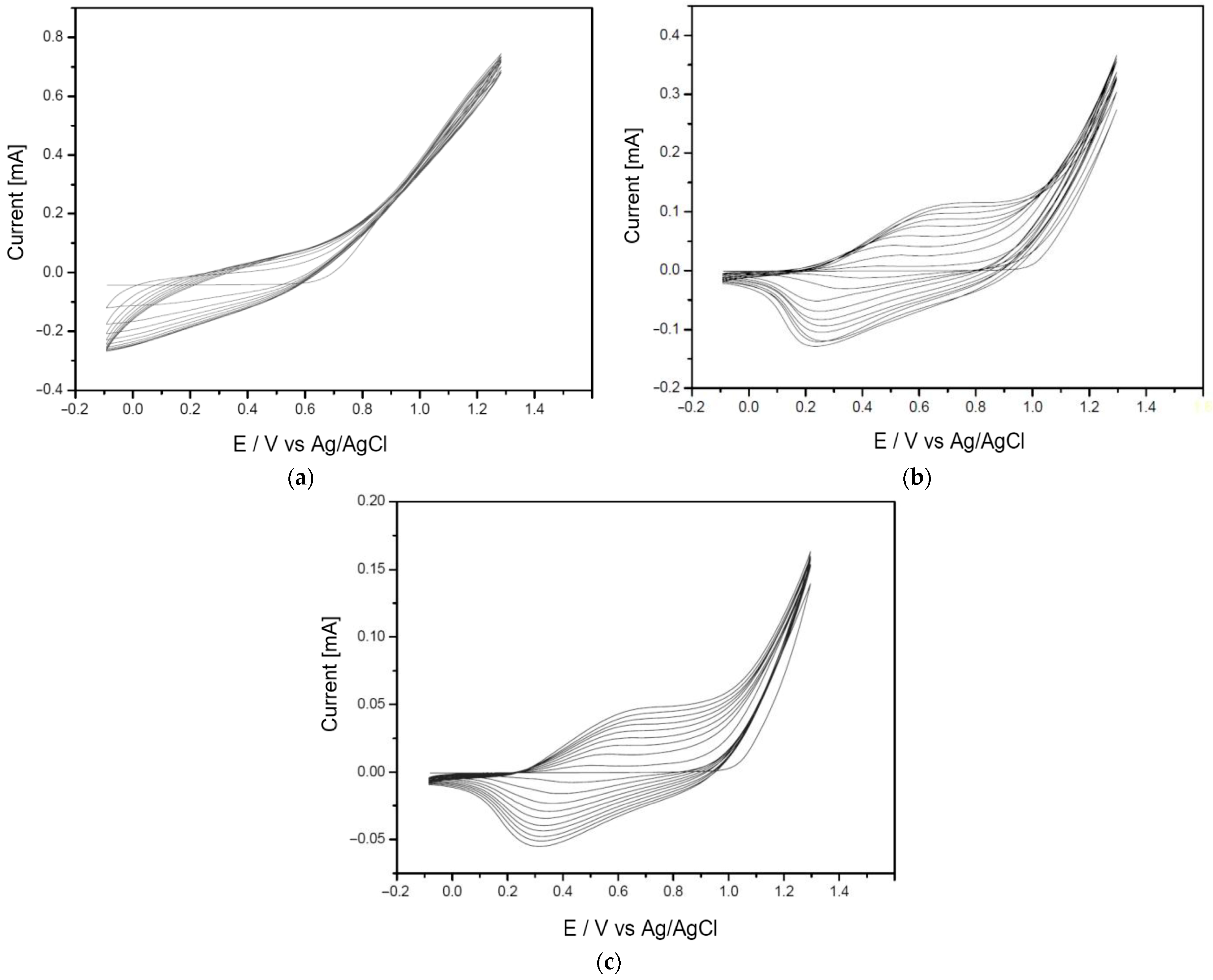
In order to compare the activity versus carbon micro-fibers after electrochemical polymerization of PPy, 3-Methyl-pyrrole and 3-Methyl-4-phenylpyrrole polymers, extended cyclic voltammograms were recorded in the potential range of −0.1 V–1.5 V, at a scan rate of 90 mV/s. The results are presented in Figure 6. The electrochemical parameters, such as oxidation onset potential, accumulated electric charge, reduction onset potential, voltammetric current ratio, and voltammetric potential difference, are presented in Table 3.
The cyclic voltammogram in Figure 14a corresponds to the deposition of pyrrole on the carbon microelectrode, from which we observe the appearance of an oxidation peak around the potential value of 0.63 V, corresponding to an oxidation process of the polymer, and a reduction peak at a potential value of 0.51 V. Corresponding to the potential peaks in the cyclic voltammogram in Figure 14b, in the case of the electroactive polymer of 3-Phenyl-pyrrole, the oxidation peak value is 0.59 V, and the reduction peak value is 0.32 V. In Figure 14c, the cyclic voltammogram is recorded for the 3-Methyl-4-phenylpyrrole polymer, where the peak corresponding to oxidation is 0.65 V and the reduction peak is 0.32 V.
When comparing the electric charge values obtained for all the carbon–polymer structures, from Table 4, it can be seen that in the case of pyrrole and 3-Phenyl-pyrrole polymers, these values are progressively higher than those of 3-Methyl-4-phenylpyrrole, due to the electron injection process that is easily performed mainly in the case of pyrrole. It is widely accepted that adding larger or more functional groups to the pyrrole ring results in a gradual decrease in polymer conductivity [32,33]. This is mainly because the functional groups disrupt the processes necessary for effective charge movement. Three elements could be taken into account: 1. Steric effects: Large functional groups create steric effects that diminish the planarity of nearby pyrrole rings in the polymer backbone. This obstructs the flow of charge carriers within the polymer backbone, decreasing the intrachain conductivity. 2. Decreased interchain transfer: The existence of functional groups expands the separation between polymer chains, thereby lowering the effectiveness of charge transfer among chains, decreasing the interchain conductivity. 3. Electronic effects: Functional groups may confine the charge carriers to specific locations, thereby decreasing their mobility. The results are confirmed when comparing the ΔE values obtained for all the carbon–polymer structures, from Table 4, as they are increasing with the complexity of the monomer.
From Figure 14, it can be seen that the pyrrole derivatives, 3-Phenyl-pyrrole and 3-Methyl-4-phenylpyrrole, are characterized by a more pronounced reversible behavior than pyrrole. The observations are confirmed by the Ipa/Ipc values in Table 4. This peculiar behavior might be particularly significant when considering uses for structural elements in batteries.

3.4. Electrochemical Impedance Analysis

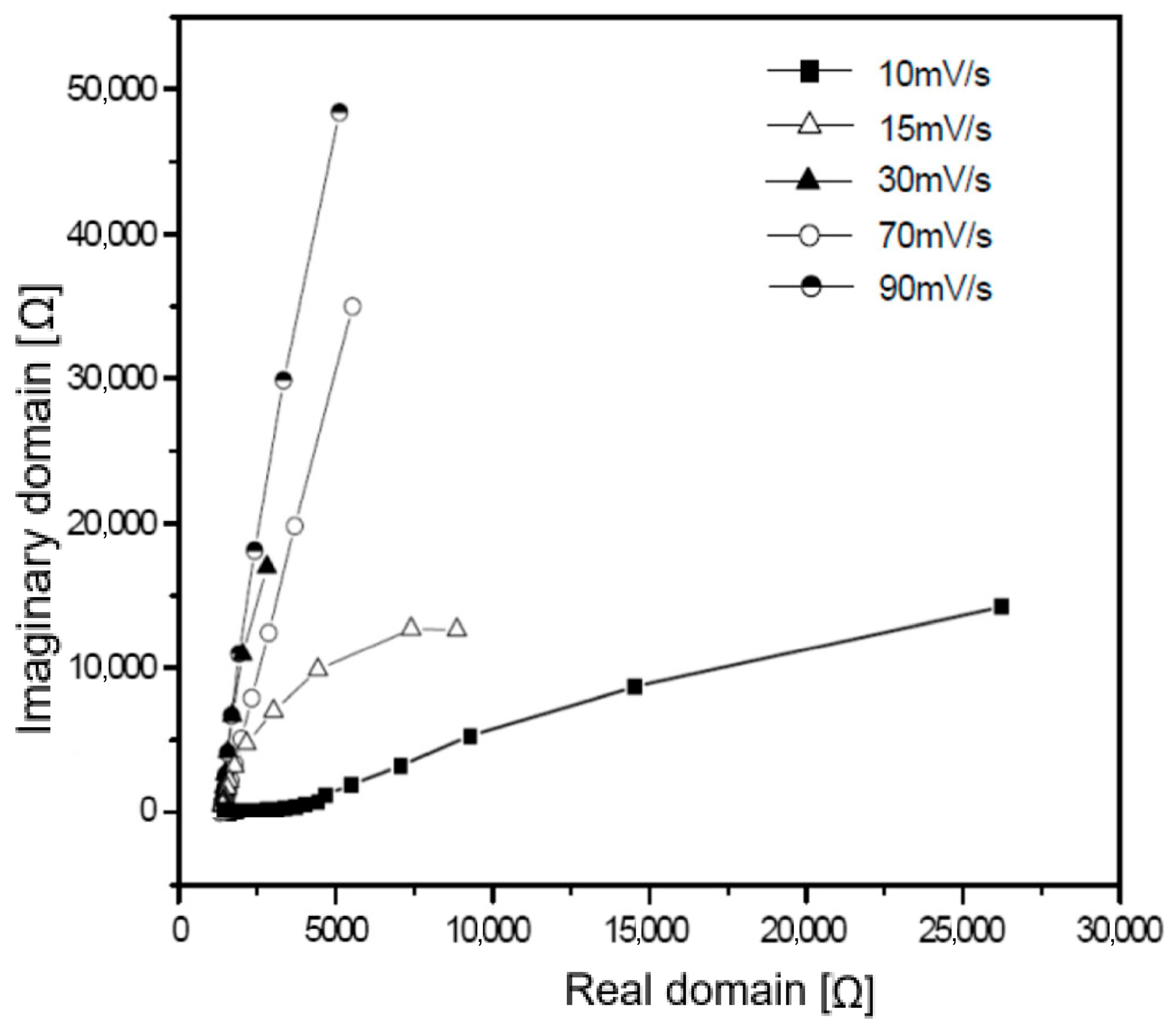
The evolution of the characteristics of the 3-Methyl-4-phenylpyrrole carbon–polymer mini-electrodes, with the variation in the polymer deposition rate, is illustrated using the Nyquist diagram and presented in Figure 15, highlighting that the capacitive characteristic rises as the deposition rate increases.
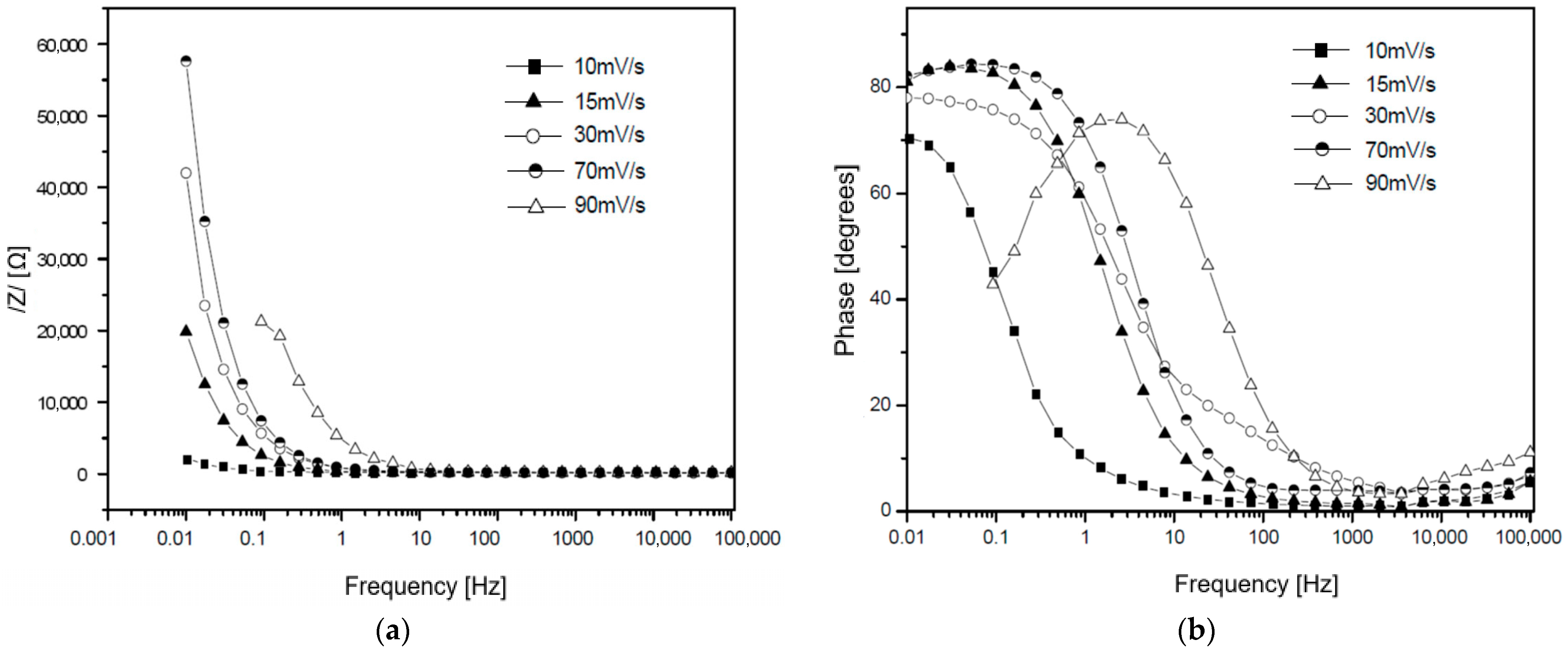
Figure 16 presents the Bode diagrams for different deposition rates, in terms of impedance, and, respectively, phase variation versus frequency. The capacitive behavior can be directly interpreted from the phase diagram of the Bode plot [34]. An ideal capacitor exhibits a constant phase angle of 90° across a larger domain of frequencies in the Bode plot. As regards the practical materials for electrical energy storage, analyzed by electrochemical impedance spectroscopy, the phase angle may not reach the ideal 90° but will show a significantly higher value, particularly at lower frequencies. Values closer to 90° indicate more ideal capacitive behavior, while lower values suggest a more resistive system. Accordingly (Figure 16b), it was noticed that the maximum phase angle, over 80°, is recorded in the case of the carbon–polymer structure obtained at a deposition rate of 70 mV/s in the frequency range 0.01 Hz–1 Hz, the structure being characterized by a higher capacitive character. For the same frequency range, it was clear that, at lower deposition rates, the structures are characterized by a similar but less capacitive behavior.
The transition phase from a capacitive to a resistive behavior generally corresponds to the frequency interval exceeding 50 Hz. In the case of the polymer-coated mini-electrode at a rate of 90 mV/s, it is noted that the capacitive feature is also lower compared to the one at a rate of 70 mV/s; however, the maximum is reached at a higher frequency, of about 8 Hz, the phase angle being only approximately 70°. Particularly in the case of a rate of 10 mV/s, the capacitive behavior is very limited, with the resistive behavior starting even from a frequency of about 1 Hz.
Taking into account the results presented in Figure 15 and Figure 16, the deposition rate of 70 mV/s seems optimal, being in line with the observations presented in Figure 12 and Table 3. Once again, it should be noted that exceeding the scan rate of 90 mV/s is not recommended.
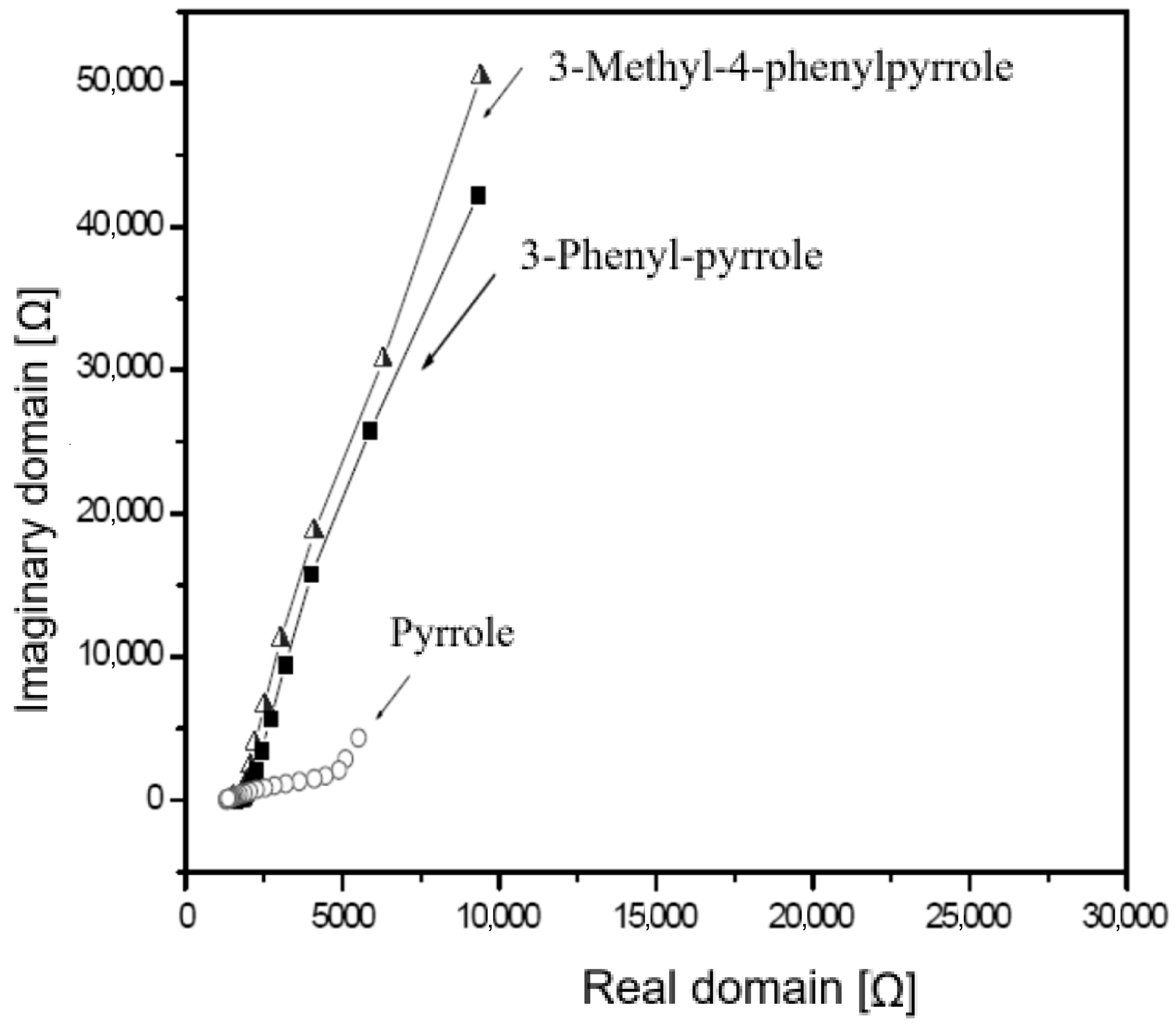
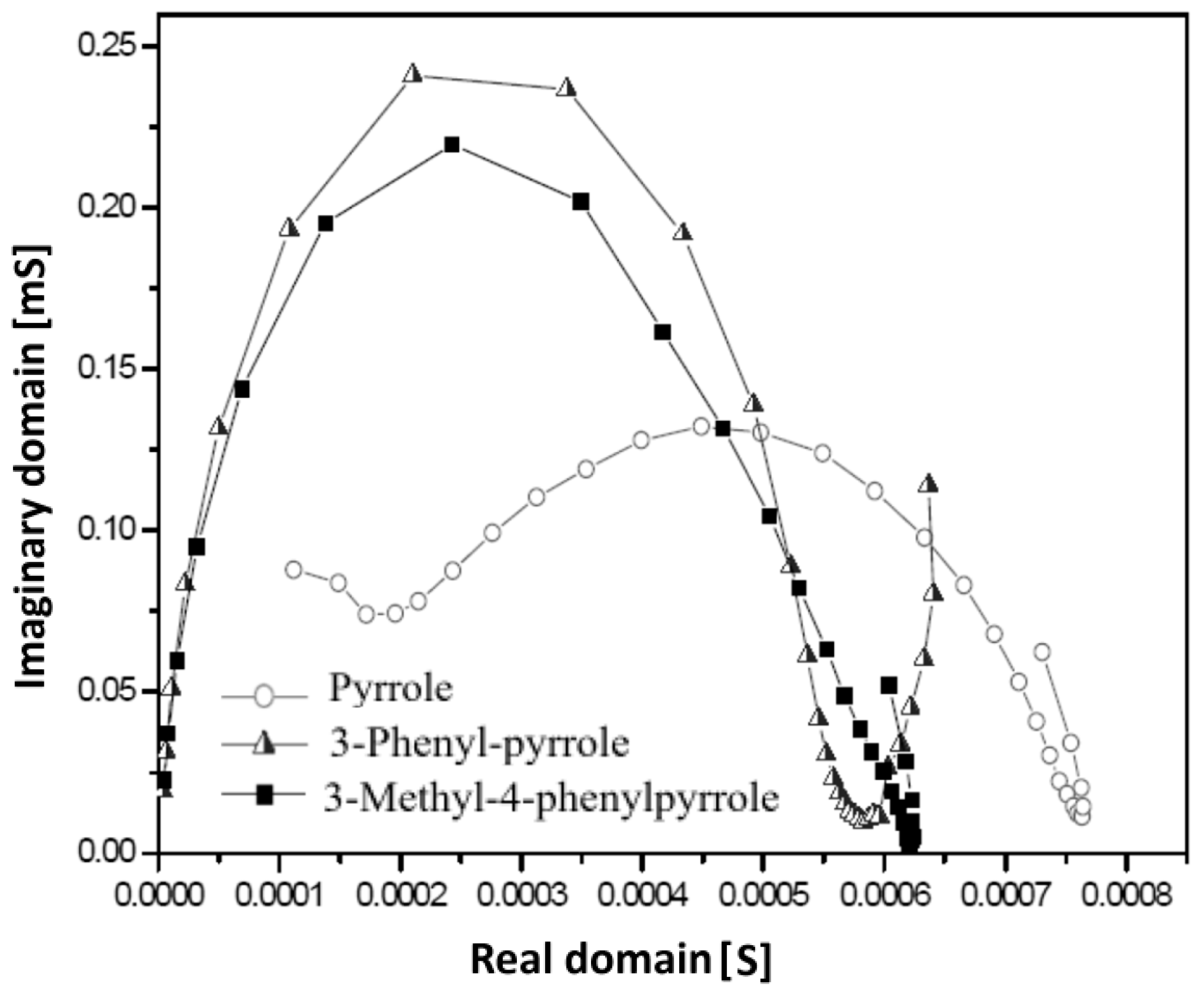
In the case of the Nyquist diagram, the axis of the real part corresponds to the resistive quantities of the analyzed system, while the axis of the imaginary part corresponds to the capacitive quantities [31,34]. In this regard, Figure 17 presents the characteristics of the structures based on the carbon micro-electrode coated with polymers derived from pyrrole, 3-Phenyl-pyrrole, and 3-Methyl-4-phenylpyrrole, at a 70 mV/s deposition rate. In the case of the pyrrole polymer, the highest conductivity values are noticed, compared to those recorded in the case of its derivatives. Accordingly, it can be observed that the 3-Methyl-4-phenylpyrrole polymer exhibits the best capacitive behavior level, compared to the pyrrole and 3-Phenyl-pyrrole polymers, an aspect already anticipated based on the cyclic voltammetry results.
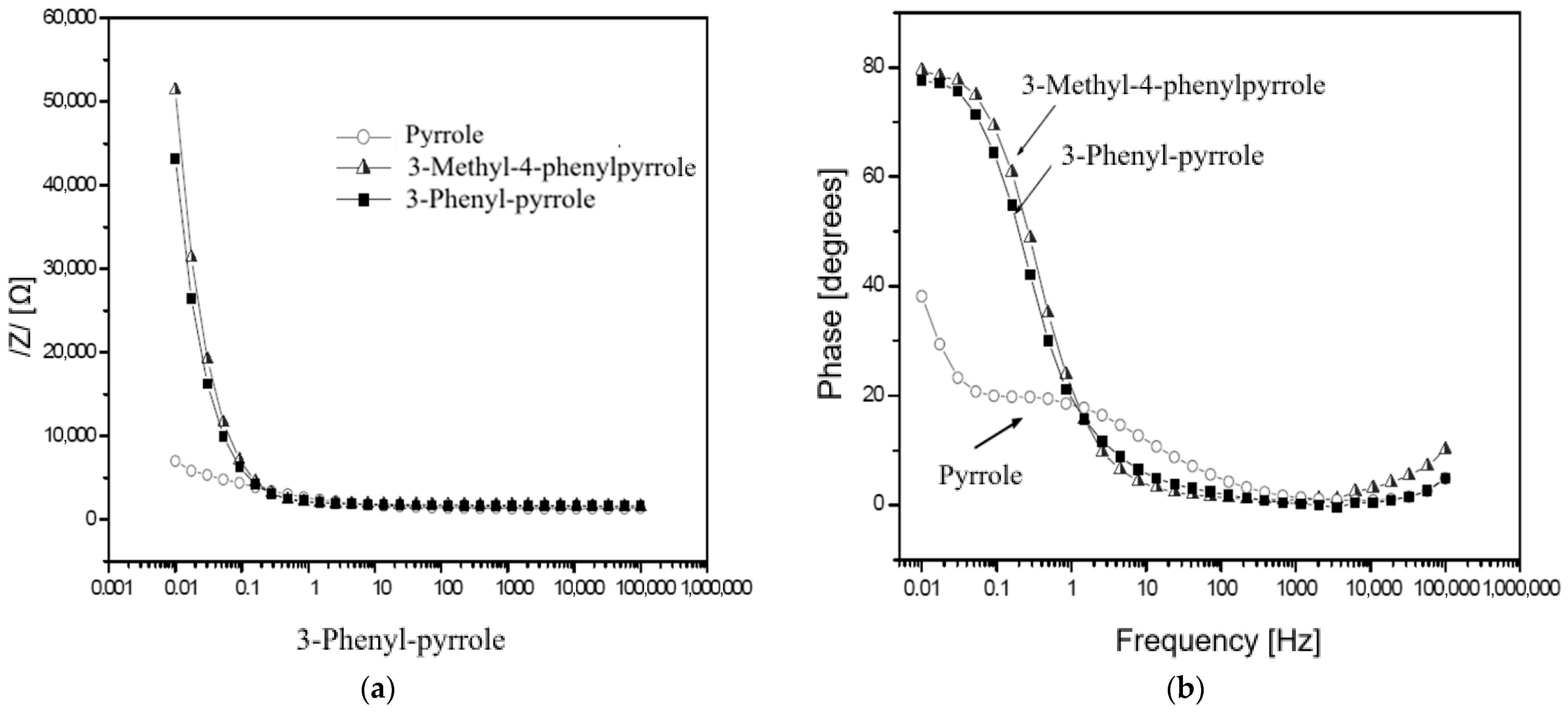
Since the data obtained through the Nyquist diagram cannot present all the details necessary for the characterization of the carbon–polymer structures, in Figure 18, the Bode diagrams are presented. From the analysis of the phase evolution versus frequency (Figure 18b), the strongest capacitive behavior is reached for all structures at lower frequencies, under 0.1 Hz. In the case of PPy derivatives, the values exceed 75°, but in the case of PPy they are much lower, about 38°, due to the higher conductivity of PPy compared to its derivatives. The explanation based on conductivity also explains the higher values of impedance for the PPy derivatives, in Figure 18a, even if the higher values of impedance might be due to the stronger capacitive effect of PPy derivatives. Therefore, the structures based on the carbon micro-electrode coated with 3-Phenyl-pyrrole and 3-Methyl-4-phenylpyrrole polymers are characterized by a more pronounced capacitive behavior, compared to that corresponding to the PPy polymer, hence being recommended for energy storage applications.
It is obvious that, only by taking into account the Nyquist and Bode diagrams, no quantitative evaluation of materials for energy storage applications may be obtained, even if some studies, such as [31], suggested a brief calculus of specific low-frequency capacitance (Csp) values based on Bode impedance analysis at 0.01 Hz. We believe that this method could be irrelevant in most cases of energy storage applications, because, although, e.g., the increased impedance of PPy derivatives is attributed to their enhanced capacitive effect, the resulting low-frequency capacitance values may be lower, leading to contradictory conclusions.
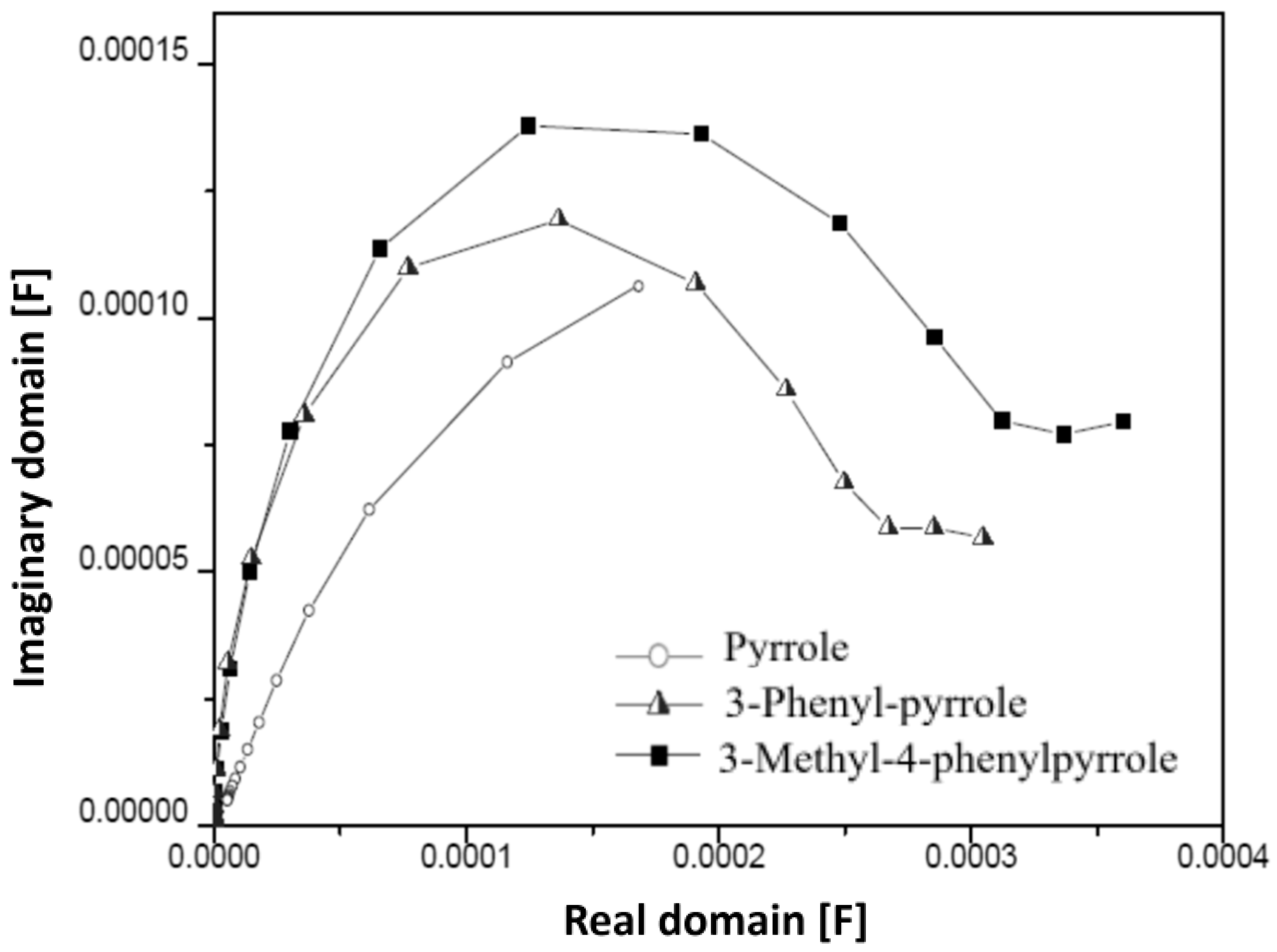
Therefore, it is necessary to observe the Nyquist diagrams of admittance and capacitance for the respective structures [34,35] (Figure 19 and Figure 20).
It can be seen that the admittance is lower for PPy, as expected, but 3-Methyl-4-phenylpyrrole also presented a slightly lower value of admittance compared to 3-Phenyl-pyrrole (Figure 19). On the other hand, the highest capacitance was obtained for 3-Methyl-4-phenylpyrrole, confirming the relevance of analyzing this PPy derivative for energy storage applications (Figure 20). The resulting maximum values of admittance and capacitance for the respective hybrid structures are presented in Table 5.
The most relevant aspect derived from the analysis of Figure 19 is related to the complexity of the electrode effect in the case of the considered polymers. As regards PPy, two quasi-circles may be identified, which was not the case when analyzing the curve shapes for the PPy derivatives. That means that, in the case of PPy, a supplementary effect of electrode capacitance with a related transfer effect may be identified, negatively impacting the electrical charge behavior. A Warburg effect can also be observed in Figure 19, due to the diffusion process occurring at the boundary between the electrode and the electrolyte, determining the ultimate increase in the Nyquist diagram once the minimal value of the quasi-circle has been reached, the effect being major in the case of 3-Phenyl-pyrrole.
Ultimately, the change in low-frequency capacitance (Csp) was assessed comparatively, considering the peak capacitance values [36], leading to a maximum increase of +27.3% for 3-Methyl-4-phenylpyrrole in relation to pyrrole, as shown in Table 5.
An estimated low-frequency capacitance (Csp) value can be calculated from the Nyquist diagram using the formula/Csp/ = 1/(2πfZ”), where f is the lowest frequency measured and Z” is the imaginary impedance component at that frequency, which can be found on the vertical axis of the Nyquist diagram., e.g., by using the data from Figure 19, for 3-Methyl-4-phenylpyrrole, with f = 0.1 Hz and Z”= 11,502 Ω (Y = 0.087 mS), a value of approximately Csp =1.38 × 10⁻⁴ F can be found, consistent with the maximum value noted in Figure 20. Based on the electrode surface area of 0.02 cm2 mentioned earlier, and assuming an average error of about 20% in its estimation due to the layer shape on carbon micro-fiber and roughness, a value of about 0.007 F/cm2 was obtained, which is in line with the results for similar electrodes in the case of using Polyaniline as conducting polymer, as described in [31]. This value might be considered lower when compared to homolog values obtained by other authors in case of nano-carbon-PPy [9,10], but this value is limited by the features of carbon micro-fiber, as in the other cases where advanced structures of carbon were employed (nanotubes or graphene).
The manufacturing of hybrid carbon-conducting polymer structures pertains to the enhanced energy storage, achieved by merging PPy derivatives, as conductive polymers, with carbon substrates, the PPy derivatives contributing with a notable pseudocapacitance [37]. This integration improves performance by utilizing the extensive surface area and conductivity of carbon micro-fibers alongside the redox properties of PPy derivatives, in our case 3-Methyl-4-phenylpyrrole, resulting in an increased capacitance.
The findings align with earlier research on electrical features of polymers based on N-Pyrrole derivatives, as presented, e.g., in [38,39,40], from which comparative inferences could be drawn.

3.5. Equivalent Circuit Modeling Based on Electrochemical Impedance Analysis

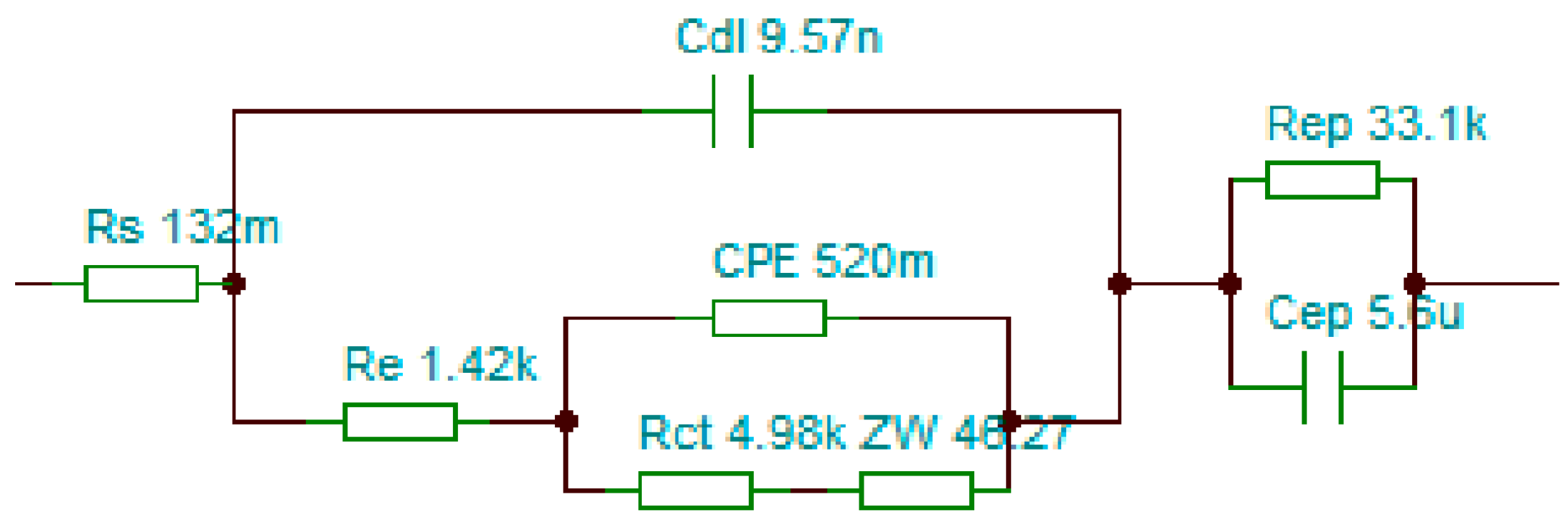
Electrochemical processes related to the interfaces can be modeled as an electric equivalent circuit consisting in our case of resistors and capacitors: the resistance of the solution (Rs), with an additional component related to the electrolyte as resistance (Re), double layer capacitance at the electrode surface (CdI), charge transfer resistance (Rct), and Warburg resistance (Zw), due to the Warburg effect mentioned above. An extra component known as a constant phase element (CPE) might be used to model the non-ideal capacitive behavior, which is obvious, as determining an irregular circle in Figure 19, due mainly to the surface porosity of the studied materials.
The most relevant aspects derived from the analysis of Figure 19 clearly impact the complexity of the electric equivalent circuit in the case of the considered polymers. In the case of PPy, the supplementary effect of electrode capacitance along with related transfer effect may be modeled with an additional RC parallel circuit, composed of an additional capacitance at the interface of carbon–polymer level (Cep), respectively, an additional resistance for charge transfer (Rep). The structure of the equivalent circuit is presented in Figure 21 (with data for the case of PPy, with the Nyquist diagram generating two quasi-circles and emphasizing the Warburg effect). The complete list of values of components for the analyzed polymers is presented in Table 6.
It can be noticed that relevant values for Cep and Rep are achieved only in the case of PPy. Accordingly, the observations related to the shape of the curves in Figure 19 are reconfirmed by the values in Table 6. Hence, for the other polymers, the parallel structure Cep//Rep can be ignored in the equivalent circuit model (the respective time constant becoming irrelevant in the context of the other values of the circuit). Finally, according to the values obtained for ZW, the larger Warburg effect of 3-Phenyl-pyrrole noticed in Figure 19 is reconfirmed. By analyzing the Rct values, it might be noticed that the charge-transfer is enhanced in the case of 3-Methyl-4-phenylpyrrole, as it is providing the lowest value for Rct.

4. Conclusions

This study presents the electrochemical polymerization process of 3-Methyl-4-phenylpyrrole on carbon microfibers and comparison of its electrode performance with homolog structures using PPy and 3-Phenyl-pyrrole on carbon microfibers.
The development of feasible carbon–polymer structures requests higher values of the electric charge to be obtained at lower deposition rates of the 3-Methyl-4-phenylpyrrole polymer, but exceeding the rate value of 90 mV/s was not recommended for technological reasons. It is also observed, by analyzing the Nyquist diagram, that the maximum phase angle, over 80°, is recorded in the case of the carbon–polymer structure obtained at a deposition rate of 70 mV/s, in the frequency range 0.01 Hz–1 Hz, the respective structure being characterized by the highest capacitive character. In addition, comparable findings concerning the results linked to SEM and, respectively, AFM images, were obtained for the 70 mV/s deposition rate, showing a structure presenting the shape of the deposited polymer granules as “droplets” with a lower average roughness level compared to that obtained at lower or higher deposition rates, and providing a reasonable thickness of the layer exceeding 0.7 μm. Accordingly, the deposition rate of 70 mV/s was considered optimal for the electrode evaluation.
Taking into account both cyclic voltammetry and electrochemical impedance results, it was noticed that the structure of carbon micro-fiber with 3-Methyl-4-phenylpyrrole polymer exhibits the best capacitive behavior level, compared to homolog structures with pyrrole and 3-Phenyl-pyrrole polymers. The admittance is observed to be lower for PPy, as anticipated, while 3-Methyl-4-phenylpyrrole exhibited a reduced admittance value compared to 3-Phenyl-pyrrole, demonstrating a distinct benefit of utilizing Methyl-4-phenylpyrrole. Conversely, the greatest capacitance was achieved with 3-Methyl-4-phenylpyrrole, leading to a maximum increase of +27.3% in relation to pyrrole, highlighting the importance of examining this PPy derivative for potential energy storage uses.

Author Contributions

Conceptualization R.C.C., methodology A.F.T., R.C.C. and O.D.S., investigation and formal analysis, A.F.T., R.C.C. and O.D.S., validation A.F.T. and R.C.C., writing—original draft preparation, R.C.C. All authors have read and agreed to the published version of the manuscript.

Funding

Financial support in preparation of the publication is included at the end of the article. Either state any funding information or declare that “This research received no external funding”.

Institutional Review Board Statement

Not applicable.

Informed Consent Statement

Not applicable.

Data Availability Statement

The original contributions presented in this study are included in the article. Further inquiries can be directed to the corresponding author.

Conflicts of Interest

The authors declare no conflicts of interest.

References

  1. Hao, L.; Dong, C.; Zhang, L.; Zhu, K.; Yu, D. Polypyrrole nanomaterials: Structure, preparation and application. Polymers 2022, 14, 5139. [Google Scholar] [CrossRef]
  2. Alam, S.; Jadoon, S.; Iqbal, M.Z.; Hegazy, H.H.; Ahmad, Z.; Yahia, I.S. Recent progress in polypyrrole and its composites with carbon, metal oxides, sulfides and other conducting polymers as an emerging electrode material for asymmetric supercapacitors. J. Energy Storage 2024, 85, 110955. [Google Scholar] [CrossRef]
  3. Hao, L.; Dong, C.; Yu, D. Polypyrrole Derivatives: Preparation, Properties and Application. Polymers 2024, 16, 2233. [Google Scholar] [CrossRef]
  4. Arul, N.S.; Han, J.I. Polypyrrole nanostructures//activated carbon based electrode for energy storage applications. J. Mater. Sci. Mater. Electron. 2019, 30, 7890–7900. [Google Scholar] [CrossRef]
  5. Devi, R.; Tapadia, K.; Maharana, T. Casting of carbon cloth enrobed polypyrrole electrode for high electrochemical performances. Heliyon 2020, 6, e03122. [Google Scholar] [CrossRef] [PubMed]
  6. Andezai, A.; Iroh, J. Sustainable Energy Storage Systems: Polypyrrole-Filled Polyimide-Modified Carbon Nanotube Sheets with Remarkable Energy Density. Energies 2025, 18, 2158. [Google Scholar] [CrossRef]
  7. Li, H.; Sun, X.; Liu, D.; Liu, X.; Du, X.; Li, S.; Xing, X.; Cheng, X.; Bi, D.; Qiu, D. Facile Synthesis of Novel Conducting Copolymers Based on N-Furfuryl Pyrrole and 3,4-Ethylenedioxythiophene with Enhanced Optoelectrochemical Performances Towards Electrochromic Application. Molecules 2025, 30, 42. [Google Scholar] [CrossRef]
  8. Kakouris, C.; Crayston, J.; Walton, J. Poly(N-hydroxypyrrole) and poly(3-phenyl-N-hydroxypyrrole): Synthesis, conductivity, spectral properties and oxidation. Synth. Met. 1992, 48, 65–77. [Google Scholar] [CrossRef]
  9. Kim, J.-Y.; Kim, K.H.; Kim, K.B. Fabrication and electrochemical properties of carbon nanotube/polypyrrole composite film electrodes with controlled pore size. J. Power Sources 2008, 176, 396–402. [Google Scholar] [CrossRef]
  10. Dang, F.; Cai, Y.; Yang, P. Electrodeposition of Graphene/Polypyrrole Electrode for Flexible Supercapacitor with Large Areal Capacitance. ACS Appl. Energy Mater. 2024, 7, 5832–5838. [Google Scholar] [CrossRef]
  11. Lin, S.; Wu, Q.; Lu, Y. Recent Progress of the Application of Electropolymerization in Batteries and Supercapacitors: Specific Design of Functions in Electrodes. ChemElectroChem 2024, 11, e202300776. [Google Scholar] [CrossRef]
  12. Schneider, S.; Füser, M.; Bolte, M.; Terfort, A. Self-assembled monolayers of aromatic pyrrole derivatives: Electropolymerization and electrocopolymerization with pyrrole. Electrochim. Acta 2017, 246, 853–863. [Google Scholar] [CrossRef]
  13. Huo, J.; Wang, X.; Zhang, X.; Zhang, L.; Yue, G.; Guo, S. Porous polypyrrole-derived carbon nanotubes as a cathode material for zinc-ion hybrid supercapacitors. J. Energy Storage 2023, 73, 108925. [Google Scholar] [CrossRef]
  14. Wang, J.; Li, X.; Du, X.; Wang, J.; Ma, H.; Jing, X. Polypyrrole composites with carbon materials for supercapacitors. Chem. Pap. 2017, 71, 293–316. [Google Scholar] [CrossRef]
  15. An, H.; Wang, Y.; Wang, X.; Zheng, L.; Wang, X.; Yi, L.; Zhang, X. Polypyrrole/carbon aerogel composite materials for supercapacitor. J. Power Sources 2010, 195, 6964–6969. [Google Scholar] [CrossRef]
  16. Chen, S.; Zhitomirsky, I. Influence of dopants and carbon nanotubes on polypyrrole electropolymerization and capacitive behavior. Mater. Lett. 2013, 98, 67–70. [Google Scholar] [CrossRef]
  17. Davoglio, R.A.; Biaggio, S.R.; Bocchi, N.; Rocha-Filho, R.C. Flexible and high surface area composites of carbon fiber, polypyrrole, and poly(DMcT) for supercapacitor electrodes. Electrochim. Acta 2013, 93, 93–100. [Google Scholar] [CrossRef]
  18. Shahid, A.; Rahman, M.; Hossain, T.; Hossain, I.; Sheikh, S.; Rahman, S.; Uddin, N.; Donne, S.W.; Hoque, I.U. Advances in Conductive Polymer-Based Flexible Electronics for Multifunctional Applications. J. Compos. Sci. 2025, 9, 42. [Google Scholar] [CrossRef]
  19. Chen, X.; Paul, R.; Da, L. Carbon-based supercapacitors for efficient energy storage. Natl. Sci. Rev. 2017, 4, 453–489. [Google Scholar] [CrossRef]
  20. Raj, J.; Manikandan, R.; Lee, W.-G.; Cho, W.-J.; Yu, K.H.; Kim, B.C. Polypyrrole thin film on electrochemically modified graphite surface for mechanically stable and high-performance supercapacitor electrodes. Electrochim. Acta 2018, 283, 1543–1550. [Google Scholar] [CrossRef]
  21. Gan, J.K.; Lim, Y.S.; Pandikumar, A.; Huang, N.M.; Lim, H.N. Graphene/polypyrrole-coated carbon nanofiber core–shell architecture electrode for electrochemical capacitors. RSC Adv. 2015, 5, 12692–12699. [Google Scholar] [CrossRef]
  22. Raj, C.J.; Kim, B.C.; Cho, W.J.; Lee, W.G.; Jung, S.D.; Kim, Y.H.; Park, S.Y.; Yu, K.H. Highly flexible and planar supercapacitors using graphite flakes/polypyrrole in polymer lapping film. ACS Appl. Mater. Interfaces 2015, 7, 13405–13414. [Google Scholar] [CrossRef]
  23. Jones, T.; Flournoy, R.C.; Torres, J.A.; Snelling, R.R.; Spande, T.F.; Garraffo, H.M. 3-Methyl-4-phenylpyrrole from the Ants Anochetus kempfi and Anochetus mayri. J. Nat. Prod. 1999, 62, 1343–1345. [Google Scholar] [CrossRef] [PubMed]
  24. Singer, F.; Rückle, D.; Killian, M.; Turhan, M.; Virtanen, S. Electropolymerization and Characterization of Poly-N-methylpyrrole Coatings on AZ91D Magnesium Alloy. Int. J. Electrochem. Sci. 2013, 8, 11924–11932. [Google Scholar] [CrossRef]
  25. Duran, B.; Bereket, G. Cyclic Voltammetric Synthesis of Poly(N-methyl pyrrole) on Copper and Effects of Polymerization Parameters on Corrosion Performance. Ind. Eng. Chem. Res. 2012, 51, 5246–5255. [Google Scholar] [CrossRef]
  26. Jarosz, T.; Ledwon, P. Electrochemically Produced Copolymers of Pyrrole and Its Derivatives: A Plentitude of Material Properties Using “Simple” Heterocyclic Co-Monomers”. Materials 2021, 14, 281. [Google Scholar] [CrossRef]
  27. Sarac, A.S.; Sezgin, S.; Ates, M.; Turhan, C.M.; Parlak, E.A.; Irfanoglu, B. Electrochemical impedance spectroscopy of poly(N-methyl pyrrole) on carbon fiber microelectrodes and morphology. Prog. Org. Coat. 2008, 62, 331–335. [Google Scholar] [CrossRef]
  28. Turhan, M.; Sarac, A.S.; Gencturk, A.; Gilsing, H.D.; Faltz, H.; Schulz, B. Electrochemical impedance characterization and potential dependence of poly[3,4-(2,2-dibutylpropylenedioxy)thiophene] nanostructures on single carbon fiber microelectrode. Synth. Met. 2012, 162, 511–515. [Google Scholar] [CrossRef]
  29. Surface Roughness Parameters. Available online: https://www.keyence.eu/ss/products/microscope/roughness/line/tab03_b.jsp (accessed on 14 October 2025).
  30. ISO 21920-2:2021; (Previously ISO 4287:1997). Geometrical Product Specifications (GPS)—Surface Texture: Profile. Part 2: Terms, Definitions and Surface Texture Parameters. ISO: Geneva, Switzerland. Available online: https://www.iso.org/standard/72226.html (accessed on 14 October 2025).
  31. Sarac, A.S.; Ates, M.; Kilic, B. Electrochemical Impedance Spectroscopic Study of Polyaniline on Platinum, Glassy Carbon and Carbon Fiber Microelectrodes. Int. J. Electrochem. Sci. 2008, 3, 777–786. [Google Scholar] [CrossRef]
  32. Aljabali, A.; Alkaraki, A.; Gammoh, O.; Qnais, E.; Alqudah, A.; Mishra, V.; Mishra, Y.; El-Tanani, M. Design, structure, and application of conductive polymer hybrid materials: A comprehensive review of classification, fabrication, and multifunctionality. RSC Adv. 2025, 15, 27493–27523. [Google Scholar] [CrossRef]
  33. Sood, Y.; Singh, K.; Mudila, H.; Lokhande, P.E.; Singh, L.; Kumar, D.; Kumar, A.; Mubarak, N.M.; Dehghani, M.H. Insights into properties, synthesis and emerging applications of polypyrrole-based composites, and future prospective: A review. Heliyon 2024, 10, e33643. [Google Scholar] [CrossRef]
  34. Lazanas, A.; Prodromidis, M. Electrochemical Impedance Spectroscopy—A Tutorial. ACS Meas. Sci. 2023, 3, 162–193. [Google Scholar] [CrossRef]
  35. Randviir, E.; Banks, C. Electrochemical impedance spectroscopy: An overview of bioanalytical applications. Anal. Methods 2013, 5, 1098–1115. [Google Scholar] [CrossRef]
  36. Magar, H.; Hassan, R.; Mulchandani, A. Electrochemical Impedance Spectroscopy (EIS): Principles, Construction, and Biosensing Applications. Sensors 2021, 21, 6578. [Google Scholar] [CrossRef]
  37. Duan, H.; Liu, Y.; Zhao, X. Recent research progress of conductive polymer-based supercapacitor electrode materials. Text. Res. J. 2023, 93, 15–16. [Google Scholar] [CrossRef]
  38. King, R.; Boussoualem, M.; Roussel, F. Spectroscopic and electrical properties of 3-alkyl pyrrole–pyrrole copolymers. Polymer 2007, 48, 4047–4054. [Google Scholar] [CrossRef]
  39. Okner, R.; Domb, A.J.; Mandler, D. Electrochemical Formation and Characterization of Copolymers Based on N-Pyrrole Derivatives. Biomacromolecules 2007, 8, 2928–2935. [Google Scholar] [CrossRef] [PubMed]
  40. Gocki, M.; Nowak, A.J.; Karoń, K. Analysis of the parameters, of supercapacitors containing, polypyrrole and its derivatives. Arch. Mater. Sci. Eng. 2023, 120, 5–14. [Google Scholar] [CrossRef]
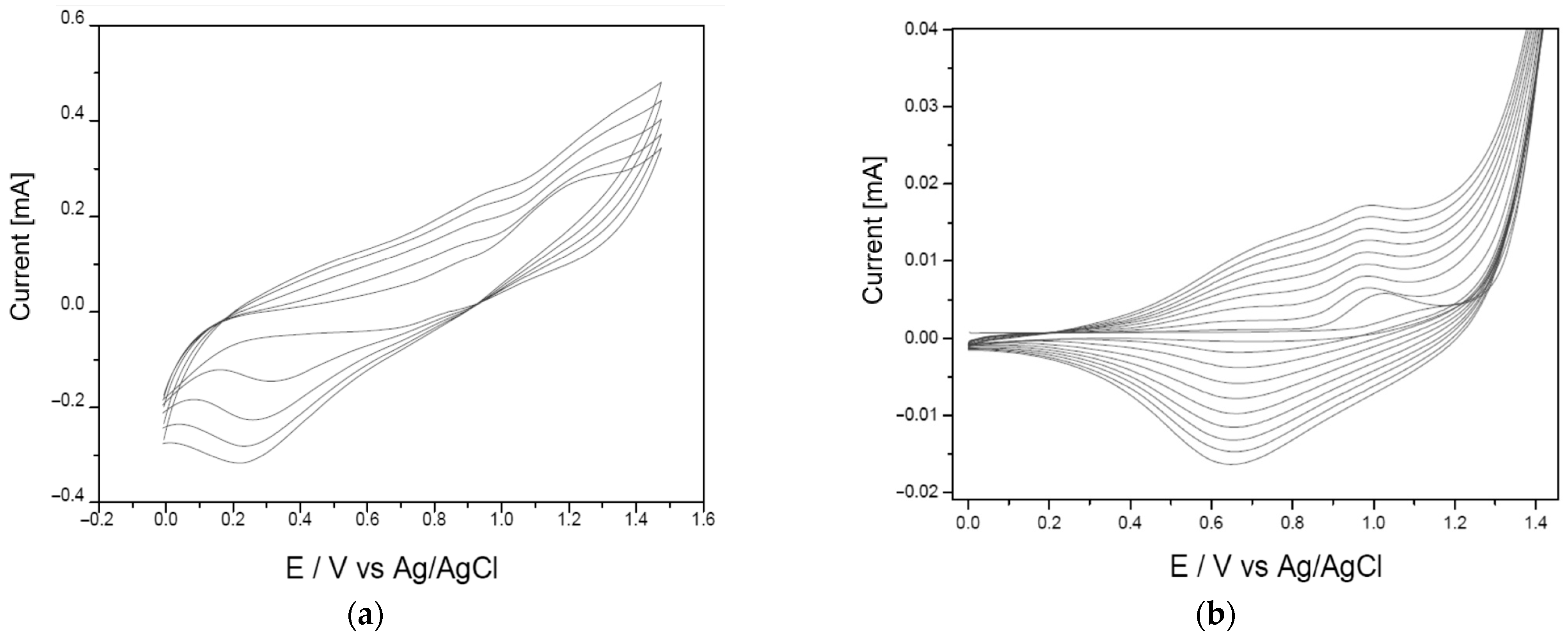
Figure 1. Electropolymerization process of (a) platinum mini-electrode and (b) carbon mini-electrode.
Coatings 15 01420 g001
Figure 2. Voltammograms obtained in the case of 3-Methyl-4-phenylpyrrole polymer deposition on the surface of the carbon mini-electrode at a rate of (a) 15 mV/s, (b) 30 mV/s, (c) 70 mV/s, (d) 90 mV/s, (e) 500 mV/s, and (f) 1000 mV/s.
Coatings 15 01420 g002aCoatings 15 01420 g002b
Figure 3. Electric charge distribution at different deposition rates.
Coatings 15 01420 g003
Figure 4. SEM images obtained for the 3-Methyl-4-phenylpyrrole polymer at different deposition rates: (a) uncoated carbon micro-fiber; (b) 30 mV/s, (c) 70 mV/s, (d) 90 mV/s.
Coatings 15 01420 g004aCoatings 15 01420 g004b
Figure 5. AFM images obtained for the 3-Methyl-4-phenylpyrrole polymer at different deposition rates: (a) uncoated carbon micro-fiber; coated carbon micro-fiber at (b) 30 mV/s, (c) 70 mV/s, (d) 90 mV/s.
Coatings 15 01420 g005aCoatings 15 01420 g005b
Figure 6. Optical analysis at (a) 100× and (b) 500× of uncoated carbon micro-fiber.
Coatings 15 01420 g006
Figure 7. Optical analysis at (a) 100× and (b) 500× of coated carbon micro-fiber at 30 mV/s rate.
Coatings 15 01420 g007
Figure 8. Optical analysis at (a) 100× and (b) 500× of coated carbon micro-fiber at 70 mV/s rate.
Coatings 15 01420 g008
Figure 9. Optical analysis at (a) 100× and (b) 500× of coated carbon micro-fiber at 90 mV/s rate.
Coatings 15 01420 g009
Figure 10. AFM topographic 2D and 3D images and profile lines of uncoated carbon micro-fiber.
Coatings 15 01420 g010
Figure 11. AFM topographic 2D and 3D images and profile lines of coated carbon micro-fiber at 30 mV/s rate.
Coatings 15 01420 g011
Figure 12. AFM topographic 2D and 3D images and profile lines of coated carbon micro-fiber at 70 mV/s rate.
Coatings 15 01420 g012
Figure 13. AFM topographic 2D and 3D images and profile lines of coated carbon micro-fiber at 90 mV/s rate.
Coatings 15 01420 g013
Figure 14. Cyclic voltammograms recorded for polymer-coated microelectrodes at a scan rate of 90 mV/s for (a) pyrrole, (b) 3-Phenyl-pyrrole and (c) 3-Methyl-4-phenylpyrrole.
Coatings 15 01420 g014
Figure 15. Nyquist diagram for different deposition rates.
Coatings 15 01420 g015
Figure 16. Bode diagrams for different deposition rates: (a) impedance; (b) phase.
Coatings 15 01420 g016
Figure 17. Nyquist diagram for PPy and derivatives on carbon micro-fibers.
Coatings 15 01420 g017
Figure 18. Bode diagrams of PPy and derivatives on carbon micro-fibers: (a) impedance; (b) phase.
Coatings 15 01420 g018
Figure 19. Nyquist diagram of admittance for PPy and derivatives on carbon micro-fibers.
Coatings 15 01420 g019
Figure 20. Nyquist diagram of capacitance for PPy and derivatives on carbon micro-fibers.
Coatings 15 01420 g020
Figure 21. The structure of the equivalent circuit.
Coatings 15 01420 g021
Table 1. Electrochemical parameters of electropolymerization process.
Mini-Electrode TypeEpA [V]EpC [V]ΔE [V]
Platinum1.150.270.88
Carbon1.120.660.46
Table 2. Electrochemical parameters of carbon–polymer structure at different rates of coating.
Polymer Deposition
Rate [mV/s]
EpA [V]EpC [V]ΔE [V]Q [mC]
150.810.490.3267.59
300.660.330.3333.86
700.890.520.3710.13
900.810.400.417.78
5001.060.410.433.41
10001.220.780.441.56
Table 3. Average roughness parameters determined by AFM lines.
SampleRMS (nm)Ra (nm)RSkRKu
Carbon micro-fiber62490.012.86
Carbon micro-fiber coated at 30 mV/s rate70530.264.2
Carbon micro-fiber coated at 70 mV/s rate15120.123.19
Carbon micro-fiber coated at 90 mV/s rate58470.022.7
Table 4. Electrochemical parameters of carbon–conductive polymers hybrid microelectrodes.
Polymer TypePyrrole3-Phenyl-Pyrrole3-Methyl-4-Phenylpyrrole
Q [mC]47.5138.4333.84
EpA [V]0.630.590.65
EpC [V]0.510.320.32
ΔE [V]0.120.270.33
/Ipa/Ipc/1.270.951.02
Table 5. Maximum values of admittance and capacitance for the hybrid structures.
Polymer TypePyrrole3-Phenyl-Pyrrole3-Methyl-4-Phenylpyrrole
Y [mS]0.1290.2370.218
C [F] × 10−41.11.21.4
Increase of Csp0+9.1%+27.3%
Table 6. Specific parameters of the equivalent circuit model.
Specific ParametersPyrrole3-Phenyl-Pyrrole3-Methyl-4-Phenylpyrrole
Rs [Ω]0.1321.0121.205
Cdl [μF]9.57 × 10−34.72 × 10−48.12 × 10⁻⁴
Re [Ω]142112841589
CPE0.5200.9250.411
Rct [Ω]4987839532
ZW46.27852296
Cep [nF]5.6 × 1033.48 × 10−44.43 × 10⁻⁴
Rep [Ω]3.31 × 1030.210.51
Disclaimer/Publisher’s Note: The statements, opinions and data contained in all publications are solely those of the individual author(s) and contributor(s) and not of MDPI and/or the editor(s). MDPI and/or the editor(s) disclaim responsibility for any injury to people or property resulting from any ideas, methods, instructions or products referred to in the content.