
Article

A Damage Model for Predicting Fatigue Life of 0Cr17Ni4Cu4Nb Stainless Steel Under Near-Yield Stress-Controlled Cyclic Loading

1
Anhui Xinli Electric Technology Consulting Co., Ltd., Hefei 230601, China
2
School of Electromechanical Engineering, Guangdong University of Technology, Guangzhou 510006, China
3
Guangdong Provincial Key Laboratory of Advanced Manufacturing Technology for Marine Energy Facilities, Guangdong University of Technology, Guangzhou 510006, China
*
Authors to whom correspondence should be addressed.
Coatings 2025, 15(11), 1318; https://doi.org/10.3390/coatings15111318
Submission received: 22 September 2025 / Revised: 24 October 2025 / Accepted: 8 November 2025 / Published: 11 November 2025

Abstract

Fatigue damage is critical for 0Cr17Ni4Cu4Nb stainless-steel components that may operate near yield under stress-controlled cycles and occasional peak holds. This work investigates the cyclic response of 0Cr17Ni4Cu4Nb stainless-steel under near-yield-stress-controlled (NYSC) loading and proposes a unified damage framework that bridges monotonic ductile fracture, near-yield stress-controlled fatigue. Building on the Enhanced Lou-Yoon model, an elastic-damage term is introduced and embedded within a continuum damage mechanics framework, allowing elastic (sub-yield) and plastic (post-yield, Ultra-Low-Cycle-Fatigue/Low-Cycle-Fatigue (ULCF/LCF)) damage to be treated in a unified, path-averaged stress-state description defined by stress triaxiality and the Lode parameter. Five stress-controlled test groups are examined, with applied load amplitudes from 20.6 to 25.1 kN (equivalent stress amplitudes 858~1044 MPa) yielding fatigue lives ranging from 32 to 13,570 cycles. The extended model captures the evolution of damage origin mechanisms from elasticity-dominated to plasticity-dominated as loading severity increases, demonstrating a unified elastic-plastic damage modeling approach. As a result, it accurately predicts fatigue lives spanning two orders of magnitude with an average absolute percentage error of approximately 14.5% across all conditions.

1. Introduction

0Cr17Ni4Cu4Nb stainless steel is a high-strength, precipitation-hardening alloy widely used in critical structural components exposed to extreme loading conditions, such as in aerospace, marine, and energy applications [1,2,3,4,5]. These components often experience severe cyclic loading near yield stress, such as during seismic events, pressure surges, or mechanical overloads [6,7]. In such service, high-strength 0Cr17Ni4Cu4Nb stainless steel components—for example in aerospace structures, marine equipment, and power-generation systems—may sustain significant cyclic loads at or near yield. Under NYSC, damage begins in the elastic regime and progressively evolves into plasticity-driven failure. Accurately capturing this transition is crucial, as fatigue of 0Cr17Ni4Cu4Nb stainless steel under extreme loads directly affects the safety and reliability of critical hardware.
Cyclic loading regimes in 0Cr17Ni4Cu4Nb stainless steel span multiple fatigue modes. LCF typically involves several hundred to thousands of cycles with substantial plastic strain, whereas ULCF refers to failure in only a few to tens of cycles under extreme loads [8,9,10,11]. By definition, ULCF occurs under high strain amplitudes and is often associated with ductile fracture features (deep dimples) that differ markedly from the transgranular cleavage seen in conventional LCF [12,13,14]. Moreover, force-controlled, post-yield cyclic loading (e.g., due to overload events) produces the classic LCF/ULCF response, while stress-controlled cycling just below yield produces a two-stage damage evolution: initially micro-damage accumulates during mainly elastic response (reducing stiffness), eventually precipitating local yielding and plastic damage growth [15,16,17]. In practice, all these regimes—sub-yield (elastic) cycling, post-yield LCF, and ULCF—can be encountered in service of high-strength alloys, making unified life prediction across them a challenging and important task.
Existing fatigue models and their limitations in near-yield stress-controlled cyclic loading Fatigue life prediction has been extensively studied using models like Coffin–Manson, Basquin, SWT, and Xue’s unified formulation. While these models provide useful frameworks for predicting fatigue life in high-cycle fatigue (HCF) and low-cycle fatigue (LCF) conditions, they present significant limitations when applied to near-yield stress-controlled cyclic loading (NYSC). The primary reason for this is that these models do not adequately address the elastic-plastic damage transition, which is a key characteristic of near-yield loading conditions. The Coffin-Manson model is a strain-life approach widely used for LCF [18,19]. It relates the plastic strain amplitude to the fatigue life, assuming pure plasticity under cyclic loading. However, under near-yield conditions, where both elastic and plastic deformation occur, the Coffin-Manson model fails to distinguish between elastic and plastic damage contributions, leading to inaccuracies in fatigue life predictions [18,20]. Basquin’s model is commonly used for high-cycle fatigue (HCF) and predicts fatigue life based on the stress amplitude and the material’s endurance limit. However, Basquin’s model does not account for plastic deformation at low cycle numbers, nor does it consider the elastic damage accumulation that dominates in near-yield regimes. As a result, its applicability is limited for stress-controlled loading in the near-yield zone, where elastic damage plays a significant role in early fatigue life. The Smith-Watson-Topper (SWT) model attempts to incorporate mean stress effects in fatigue life predictions, but it primarily focuses on high-cycle loading and assumes that plasticity is the dominant factor at failure. This model does not fully capture the behavior under near-yield loading, where the elastic-plastic transition occurs at much lower cycle counts. Furthermore, it does not adequately handle the complex interactions between stress state and damage at low-to-medium cycles, where both elastic and plastic contributions are significant. Xue’s unified fatigue model provides a more integrated approach by combining the plastic strain amplitude and mean stress to predict fatigue life. However, it does not explicitly address the elastic damage accumulation that occurs in near-yield cycles, making it less suitable for predicting failure in materials subjected to low-cycle, near-yield loading conditions. Moreover, the model does not sufficiently account for the path-dependent damage evolution that is critical in stress-controlled near-yield loading, where both elastic and plastic damage evolve simultaneously. In contrast, monotonic ductile fracture criteria, such as void-growth or stress-integral models, effectively capture fracture under varying stress states [21,22,23,24,25], but they fail to address cyclic damage in near-yield stress-controlled cyclic loading conditions. Advanced models like the Lou-Yoon ductile-fracture criterion unify stress triaxiality and Lode-angle effects, successfully capturing both shear- and void-dominated ductile failure [26,27]. Nonetheless, these models tend to underpredict damage under post-yield cyclic loading conditions. While existing models effectively address plastic damage, they do not adequately account for the elastic damage accumulation that occurs in the sub-yield regime, which further complicates modeling under near-yield loading conditions. Thus, no single existing model fully spans all fatigue regimes, from elastic cycling to LCF and ULCF.
Several recent studies have sought to develop unified fatigue damage models bridging multiple regimes or material conditions. For example, Shah et al. [28] applied the theory of critical distances to high-cycle fatigue in concrete, illustrating that while this approach can characterize fatigue behavior, it is sensitive to material factors like water-cement ratio. Ahmad et al. [29] presented a continuum damage mechanics model for cumulative fretting fatigue in steel wire ropes, capturing both crack initiation and propagation phases under complex contact loading. Similarly, Nafar Dastgerdi et al. [30] combined X-ray tomography-based defect characterization with a fracture-mechanics model to predict fatigue life in additively manufactured 316L stainless steel. These efforts represent significant advances toward unified life prediction; however, none addresses the combined elastic-plastic damage evolution under near-yield cyclic loading in high-strength alloys. Therefore, a clear gap remains for a truly unified model applicable to NYSC conditions.
In earlier work, we introduced an Enhanced Lou-Yoon damage criterion by adding a triaxiality-dependent term to improve high-triaxiality predictions [31]. In the present study, we extend that framework to NYSC loading by incorporating an explicit elastic-damage component. The resulting unified damage model (an elastic-plastic continuum-damage formulation) treats sub-yield elastic damage and post-yield plastic damage within the same stress-state description (using path-averaged triaxiality and Lode angle).
By blending elastic and plastic damage mechanisms, the proposed framework overcomes the shortcomings of classical fatigue models in the near-yield regime. It yields accurate life predictions across regimes (from sub-yield cycling to ULCF) using a single continuum-damage formulation. In summary, this work builds on the previously proposed Enhanced Lou-Yoon criterion and implements it within an elastic-plastic damage framework to address the critical challenge of predicting fatigue life under varied cyclic loading conditions.

2. Theoretical Background

2.1. Characterization of the Stress State

For isotropic metallic materials, the multiaxial stress condition is commonly represented by two dimensionless indicators: stress triaxiality ( η ) and the Lode angle parameter ( L ). These quantities are derived from the invariants of the Cauchy stress tensor. The basic invariants are defined in Equations (1)–(3).
I 1 = σ 1 + σ 2 + σ 3
J 2 = 1 6 σ 1 σ 2 2 + σ 2 σ 3 2 + σ 3 σ 1 2
J 3 = σ 1 σ ¯ σ 2 σ ¯ σ 3 σ ¯
where σ 1 , σ 2 , σ 3 are the principal stresses σ 1 σ 2 σ 3 and σ - denotes the von Mises equivalent stress.
The stress triaxiality is defined as the ratio of the hydrostatic (mean) stress to the Mises equivalent stress, see Equation (4).
η = σ m σ ¯ , σ m = 1 3 I 1
with σ m representing the hydrostatic (mean) stress.
The Lode angle parameter is computed from the third invariant of the deviatoric stress; its expression is given in Equation (5) and takes values in [−1, 1] (−1 tension, 0 pure shear, +1 compression).
L = ( 2 σ 2 σ 1 σ 3 ) ( σ 1 σ 3 )
The equivalent von Mises stress, which measures the intensity of shear, can be expressed as Equation (6).
σ ¯ = 1 2 σ 1 σ 2 2 + σ 2 σ 3 2 + σ 3 σ 1 2

2.2. Plasticity Model

Plastic deformation takes place when the internal stress induced by the applied load surpasses the material’s yield strength. As given in Equation (7), the yield criterion defines the onset of plastic flow when the von Mises equivalent stress ( σ ¯ ) equals the deformation resistance ( k ).
f ( σ , ε ¯ p ) = σ ¯ k ( ε ¯ p )
Here, deformation resistance ( k ) is modeled by a hybrid hardening formulation synthesizing Swift’s power law with Voce’s saturation function, which is governed by seven parameters α , K , ε 0 , N , σ 0 , σ s a t , b , as expressed in Equation (8) [32,33].
σ s = 1 α [ K ε ¯ p + ε 0 N ] S w i f t + α [ σ 0 + σ s a t ( 1 e b ε ¯ p ) ] V o c e

3. Experimental Methods and Ductile Fracture Criteria

3.1. Material and Experiments

The material investigated in this research is 0Cr17Ni4Cu4Nb martensitic stainless steel, with the chemical composition outlined in Table 1.
Quasi-static tests were performed to determine the parameters of the plasticity and fracture models. The test specimens were extracted from the hub platform region of a turbine blade. Standard uniaxial tensile tests were carried out on six distinct specimen geometries, as depicted in Figure 1. All experiments were conducted on a servo-mechanical loading frame equipped with a 20 mm extensometer. A constant stroke velocity of 1.0 mm/min was maintained, and the tests were performed at room temperature.

3.2. Finite Element Model

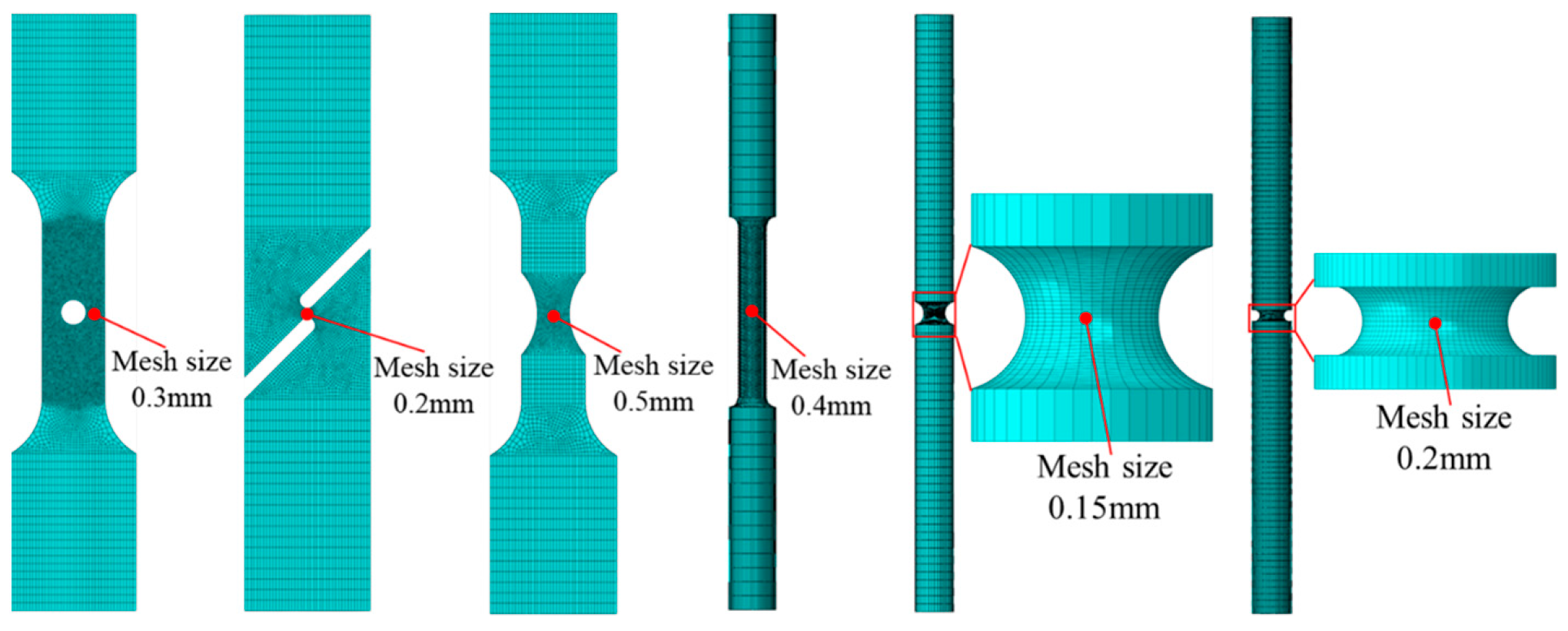
To determine the loading path at fracture initiation, a finite element analysis (FEA) was performed. Figure 2 illustrates the finite element model of the specimens. Each specimen was modeled with eight-node solid elements (Abaqus element type C3D8R with reduced integration). Based on a convergence study, the gauge section was meshed with ten elements, yielding an element size of approximately 1.0 mm. A force-displacement load was applied at the top of each specimen. The material had a density of 7.78 tonnes/m3. Its Young’s modulus and Poisson’s ratio were set to 190 GPa and 0.3, respectively [6].

3.3. Hardening Model

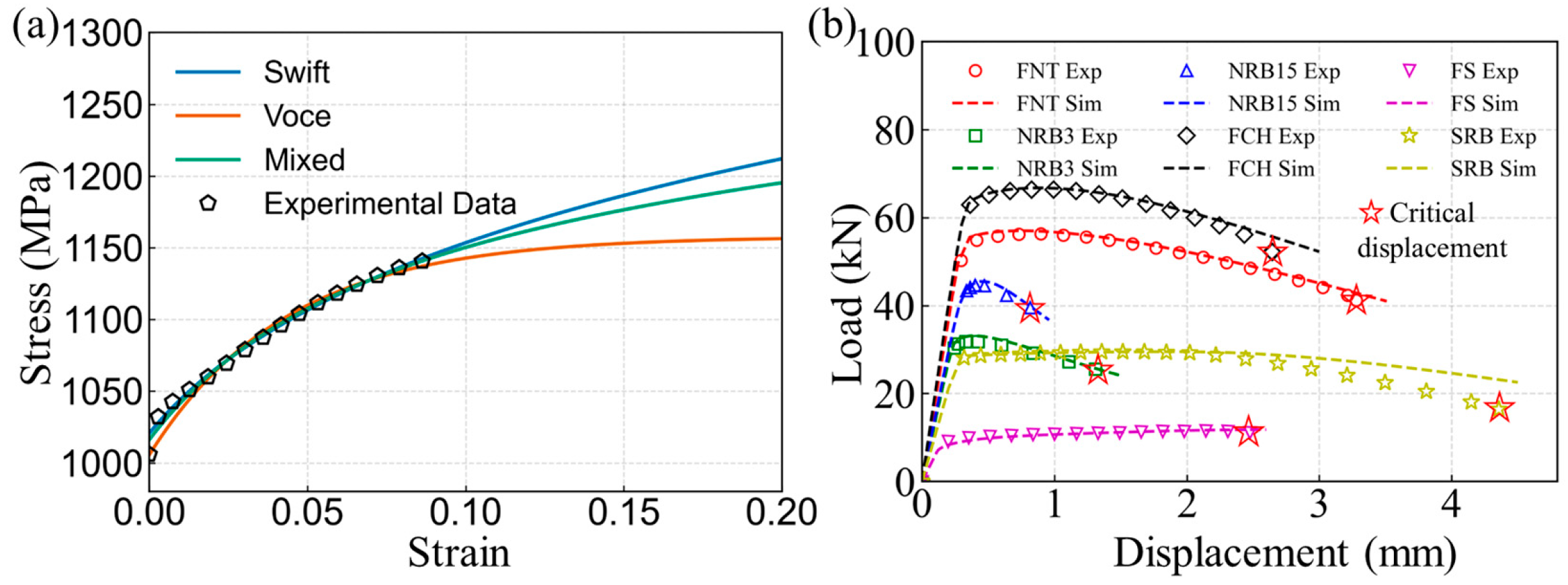
The hybrid hardening formulation, which combines Swift’s power law with a Voce-type saturation function, was identified using both experimental and numerical data; its parameter set is α , K , ε 0 , N , σ 0 , σ s a t , b . Test data from the SRB specimen was used to characterize the flow stress behavior up to the onset of necking. Beyond necking, an iterative inverse procedure was applied to calibrate the hardening parameters against the numerical responses of the other specimen geometries. The calibrated hardening parameters were found to be α = 0.3 , K = 1378.83 M P a , ε 0 = 0.0887 , σ 0 = 1005.81 , σ s a t = 152.07 and b = 23.08 . Figure 3a presents the uniaxial tensile test data for the SRB specimen alongside the strain hardening curves predicted by the hybrid hardening model. Model validation was performed by comparing FE load–displacement curves for different stress states with the corresponding experimental results, as shown in Figure 3b. The predictions closely match the experimental data.
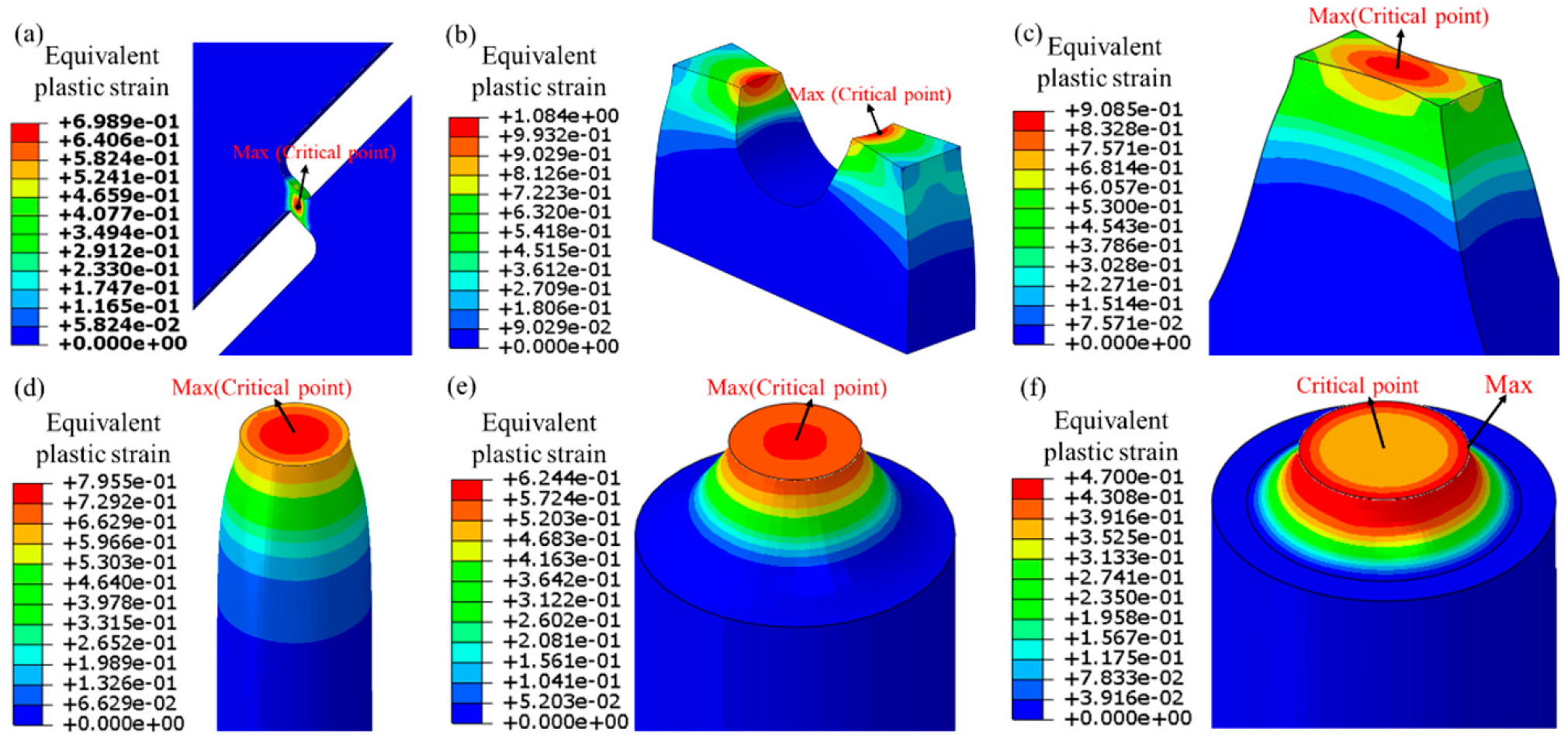
The fracture strain is taken as the maximum equivalent plastic strain observed at the onset of a marked load drop in the experimental curve. These values correspond to the equivalent plastic strain at the critical point, as illustrated in Figure 4. It can be seen that, except for the NRB1.5 specimen, the fracture location coincides with the position of maximum plastic strain. In the case of NRB1.5, the reduced radius R = 1.5 introduces a stronger geometric discontinuity, which intensifies stress concentration in the outer layer and results in higher tensile stresses. Moreover, the smaller radius amplifies the strain gradient between the inner and outer layers: the outer layer yields and plastically deforms earlier, while the inner layer, constrained by geometry, exhibits delayed deformation.

3.4. Damage Fracture Tests

In our previous study [31], which focused on ductile fracture of 0Cr17Ni4Cu4Nb stainless steel, we introduced an enhanced version of the Lou-Yoon criterion to overcome these high-triaxiality limitations. This Enhanced Lou-Yoon criterion augments the original damage model with an additional triaxiality-dependent term, yielding the modified damage accumulation integral shown in Equation (9). The key modification is the introduction of a function φ η = c 4 η c 6 within the integrand (using Macaulay bracket notation 〈*〉, which equals zero when its argument is negative). Here, c 6 serves as a threshold triaxiality: when η exceeds c 6 , the term φ η remains inactive and the model behavior reverts to the original Lode-dependent formulation. In this way, the Enhanced-Lou-Yoon retains the physical interpretation of the Lode parameter as governing shear-dominated fracture at low to moderate η , but supplements it with a separate high η damage mechanism beyond the cut-off defined by c 6 .
0 ε ¯ f p 2 L 2 + 3 c 1 η + c 5 3 L 3 L 2 + 3 + c 4 η c 6 c 2 d ε ¯ p = c 3
where c1~c6 are six material constants calibrated from experiments. c1 and c2 appear as exponents on the normalized maximum-shear term and the stress-triaxiality term, respectively, thereby tuning the relative contributions of void nucleation, hydrostatic void growth, and shear-driven coalescence. c4 is a triaxiality-sensitivity coefficient that captures the pressure dependence of damage. c5 governs the Lode-angle (third invariant) effect via the shear/torsion of voids, adjusting the Lode dependence of the triaxiality cut-off. c6 sets the triaxiality threshold at which the triaxiality modulation φ(η) becomes active.
To calibrate the damage parameters in the Lou-Yoon criterion, load–displacement histories were recorded during testing. The onset of fracture was taken as the point at which the load dropped abruptly on the recorded curve. The fracture strain was defined as the maximum equivalent plastic strain measured at that onset. Given the controlling influence of stress state on plastic flow and fracture mode, elucidation of crack initiation in 0Cr17Ni4Cu4Nb stainless steel requires tracking stress-state evolution over the entire deformation history. The mean stress state is characterized using the path-averaged stress triaxiality and Lode parameter proposed by Bao et al. [34]:
η ¯ = 1 ε ¯ f p 0 ε ¯ f p η ( ε ¯ p ) d ε ¯ p ;           L ¯ = 1 ε ¯ f p 0 ε ¯ f p L ( ε ¯ p ) d ε ¯ p
Using the same experimental dataset [31], we calibrated the Enhanced-Lou-Yoon model parameters c 1 ~ c 6 . The resulting optimized values were c 1 = 1.00 , c 2 = 0.68 , c 3 = 2.21 , c 4 = 15.89 , c 5 = 8.16 , c 6 = 0.94 . As shown by the predictive results in Table 2, the Enhanced Lou-Yoon criterion achieved a markedly better agreement with the observed fracture strains across all specimens. The overall average error in predicted fracture strain dropped from 20.94% (with the original Lou-Yoon criterion) to 13.51% with the enhanced model. In particular, for the highest-triaxiality case (specimen NRBR1.5), the Enhanced-Lou-Yoon prediction matched the experiment almost exactly (0.05% error), a dramatic improvement over the 51.82% error obtained with the original formulation. These improvements confirm that incorporating a triaxiality-sensitive damage term significantly extends the Lou-Yoon model’s applicability: providing accurate fracture predictions from shear-dominated conditions through to extreme triaxiality regimes.

4. Application to Stress-Controlled Cyclic Loading near the Yield Point

4.1. Damage-Coupled Elastoplastic Fatigue Constitutive Model

Damage is interpreted as the relative loss of load-carrying capacity. For a single plastic deformation path, the plastic-damage variable is defined in Equation (11):
D p = ε ¯ p ε ¯ f p
From Equation (9), the fracture equivalent plastic strain can be written as Equation (12):
ε ¯ f p = c 3 2 L 2 + 3 c 1 η + c 5 3 L 3 L 2 + 3 + c 4 η c 6 c 2
Actual cyclic deformation is typically nonlinear and path dependent; the loading path is not unique. To accommodate such complex strain histories while preserving identical initial and terminal boundary constraints, Equation (11) is reformulated into the nonlinear incremental form shown in Equation (13):
D p = ε ¯ p ε ¯ f p m                         δ D p = ε ¯ p ε ¯ f p m 1 ε ¯ p ε ¯ f p
In addition, to capture damage caused by stress-controlled cyclic loading slightly below yield, a high-cycle elastic damage term is introduced. Its explicit evolution law is given in Equation (14) [35]:
δ D e δ N = 1 1 D β + 1 α A I I M 0 ( 1 3 b 2 σ H , m e a n ) ( 1 D ) β
where A I I = 1 2 [ 3 2 σ d e v , m a x i j σ d e v , m i n i j σ d e v , m a x i j σ d e v , m i n i j ] 1 / 2 is the octahedral shear-stress amplitude; σ H , m e a n = 1 2 σ h y d r o , m a x + σ h y d r o , m i n is the mean hydrostatic stress over a cycle; b 2   a n d   β are material constants.
The exponent α is defined in Equation (15):
α = 1 a A I I A I I * σ u σ e q , m a x
with σ e q , m a x the maximum equivalent stress within a cycle; A I I * = σ l 0 ( 1 3 b 1 σ H , m e a n ) is the Sines fatigue limit criterion.
Generally, the deformation resistance of material is related to the damage D. Based on this concept, we adopt a unified elastoplastic fatigue-damage evolution model in which the total damage rate is given in Equation (16):
d D d N = d D e l d N + d D p l d N
where d D / d N is the total fatigue damage rate, and d D e l / d N and d D p l / d N are the elastic and plastic fatigue damage rate, respectively.
Based on the Ref. [10] and inverse iteration with the experimental results, the calibrated parameters for the fatigue damage evolution model are listed in Table 3.

4.2. Experiments on Near-Yield Stress-Controlled Cyclic Loading

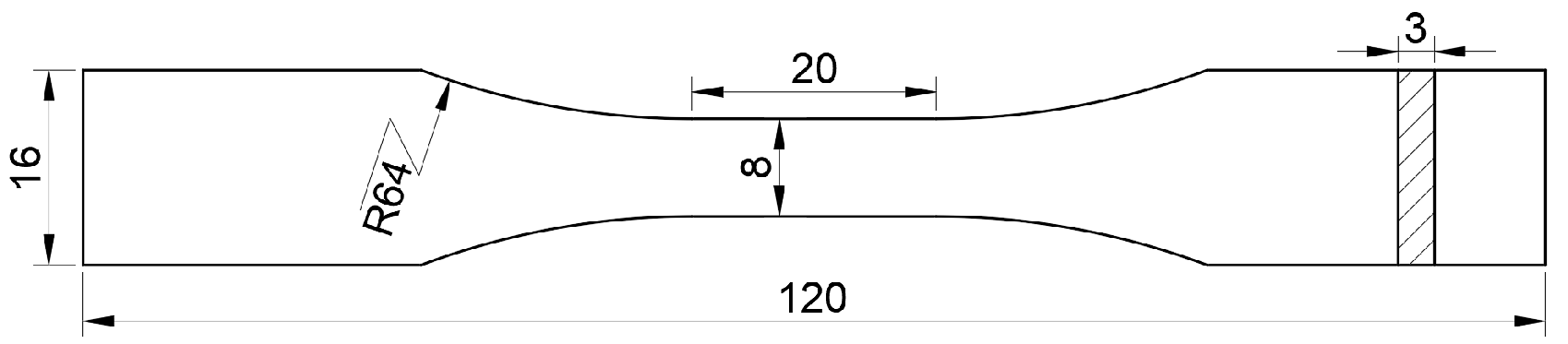
The specimen geometry used for cyclic loading is shown in Figure 5. Prior to testing, the gauge surfaces were ground/polished with abrasive paper to 800 grit to remove machining marks and burrs. Fatigue experiments were conducted under stress-controlled cyclic loading at a frequency of 5 Hz in ambient laboratory air at room temperature. A triangular waveform was applied with a stress ratio of R = σ m i n / σ m a x = 0 . Five stress levels were investigated (Table 3), with two valid replicates performed at each level.

4.3. Numerical Model

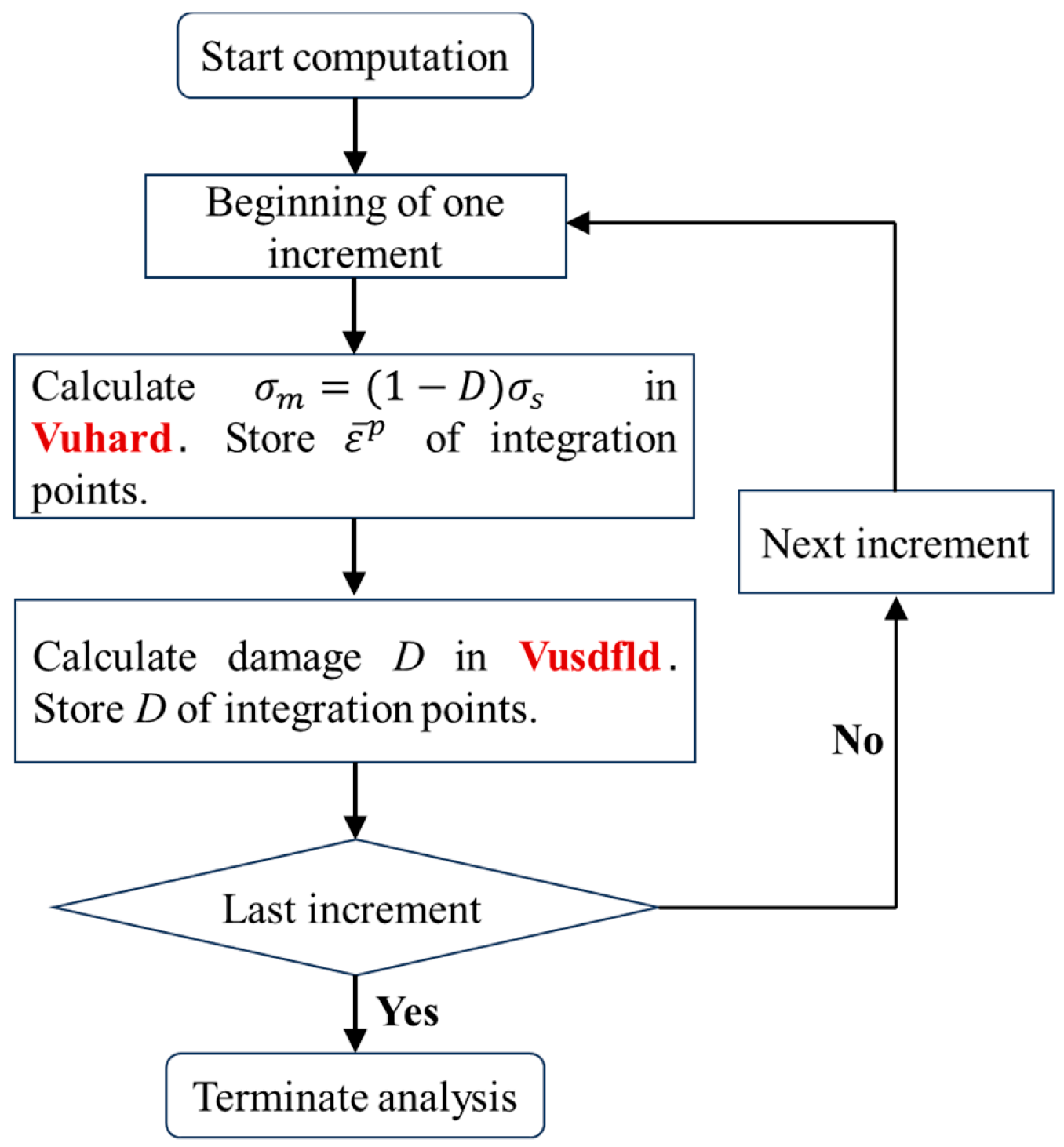
Cyclic-loading fracture simulations were carried out using the commercial finite-element code Abaqus/Explicit. The plasticity and damage formulations were implemented via the user subroutines VUHARD and VUSDFLD; a schematic of the implementation is shown in Figure 6. The damage metric combined the D e and D p . In the analysis, an element was assigned negligible stiffness and deleted from the mesh once this metric reached 1.0.
The mesh consisted of eight-node brick elements with reduced integration (Abaqus C3D8R), as shown in Figure 7. A kinematic coupling tied the nodes on the top surface to reference node(s), while the bottom surface was fully fixed. The cyclic loading was prescribed as an imposed deformation selected to match the experimental response. A rotational cyclic displacement was applied at the coupling reference node(s). Mass scaling was employed to reduce computational cost. As the model is rate-independent, a cycle period of 2 s was adopted in the simulations to ensure numerical convergence: 0~1 s for loading and 1~2 s for unloading.
Figure 7. Numerical model of cyclic loading.
Coatings 15 01318 g007

4.4. Numerical Results

Before delving into mechanism-level analyses, the model was benchmarked against five groups of stress-controlled cyclic tests spanning low- to high-life regimes (Table 4). The predicted lives reproduce the measured trend over more than two orders of magnitude, with a mean absolute percentage error of approximately 14.5% (groups ①–⑤: 15.8%, 20.5%, 12.6%, 7.4%, and 16.1%). These results substantiate the overall fidelity of the calibrated framework.

4.4.1. Damage Evolution Under Stress-Controlled Post-Yield Cyclic Loading

Under this stress-controlled ULCF condition (beyond yield) the damage evolution is dominated by plastic deformation, with elastic effects negligible. As a representative case, a nominal stress amplitude of 1043.75 MPa and a cyclic load of 25,050 N are examined.
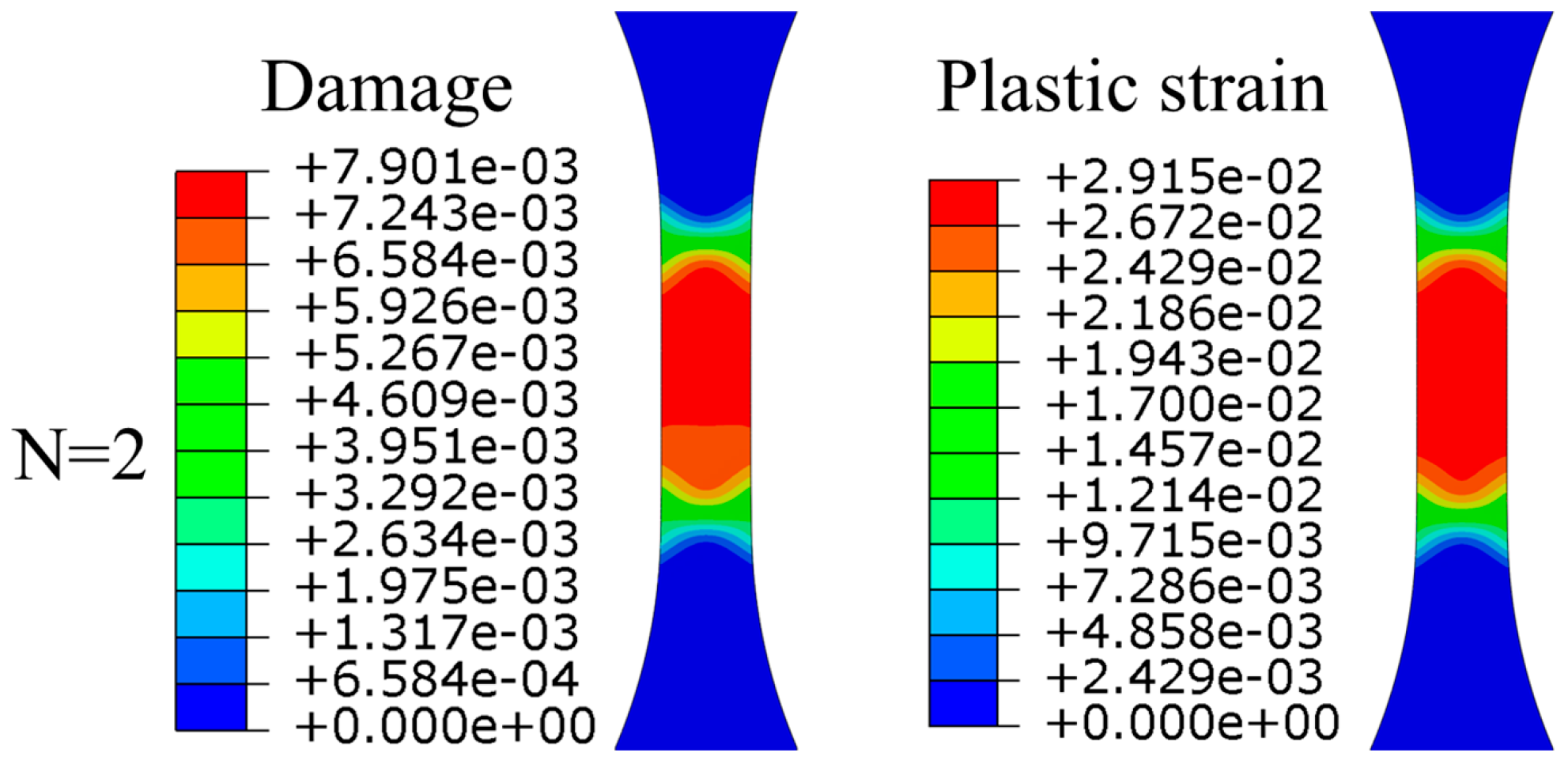
At N = 2, the FE fields show nearly uniform plastic strain across the gauge section (see Figure 8). This homogeneous response reflects strong cyclic hardening: dislocation accumulation raises the cyclic strength so that the specimen continues to deform without local necking. The computed damage variable is still very small (near its initial value); according to the constitutive law it evolves only with plastic strain (unloading is purely elastic), so any “elastic damage” is essentially zero. In other words, almost all microstructural damage at this stage is produced by the plastic work per cycle, consistent with the defining character of ULCF where plasticity drives fatigue. In practical terms, the load–deflection response up to N = 2 shows only minor reduction in stiffness, and the plate’s load-carrying capacity remains essentially intact (even slightly increased due to work-hardening).
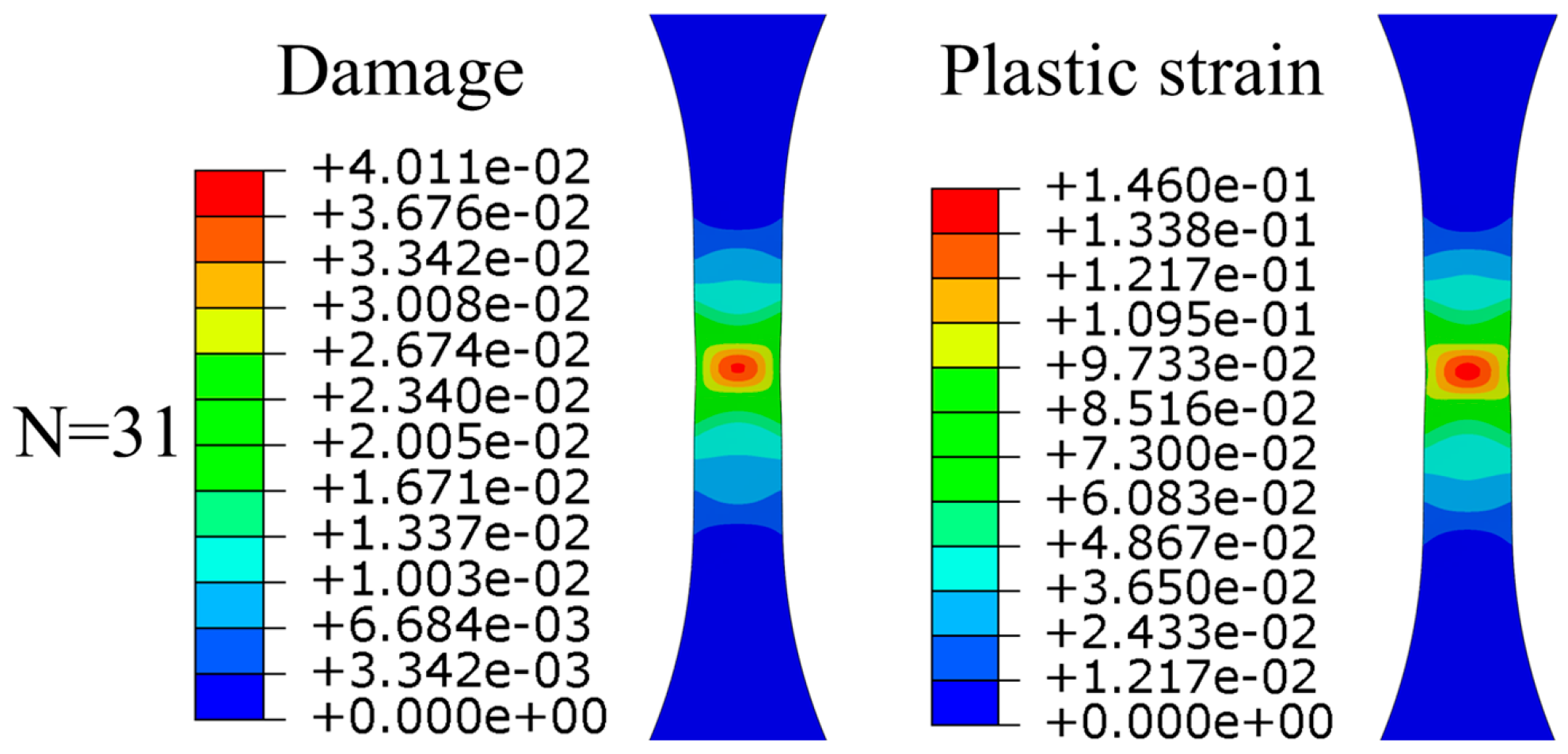
By cycle 31 the cyclic hardening has largely saturated and significant damage has accumulated (see Figure 9). The simulation predicts a rise in the damage parameter throughout the gauge: void volume fractions have grown, reducing the effective load-bearing area. Initially this damage field remains fairly uniform (especially in a smooth specimen, as in classical ULCF simulations), but subtle localization begins to appear. The cyclic stress–strain loops by N ≈ 30 typically begin to shrink (stress softening), indicating that damage-induced softening is offsetting prior hardening. Indeed, well-established ULCF behavior is that the “steady” stage features cyclic softening driven by damage, following the brief hardening of early cycles.
At this midpoint the loss of load-carrying capacity becomes evident. The continuum damage mechanics implies a reduced modulus and yield (effective stress) as D grows. Small strain concentrations begin to form: any micro-section with slightly higher plastic strain or stress (e.g., due to residual inhomogeneity or geometry) will accumulate damage faster. The stress state in the plate also shifts: plastic thinning increases hydrostatic stress, which accelerates void coalescence. Thus, damage no longer advances purely uniformly—a weak strain band starts to form where the combination of high triaxiality and accumulated damage drives localization. However, because work-hardening in earlier cycles raised the material’s strength, the deformation is still relatively widespread; the nascent neck is only just incipient. Throughout these cycles, by construction of the damage model, damage increment occurs only during plastic loading. Purely elastic segments unload without generating additional damage, so all the fatigue-driven degradation observed at N = 31 is due to the repeated plastic excursions, not elastic strain energy.
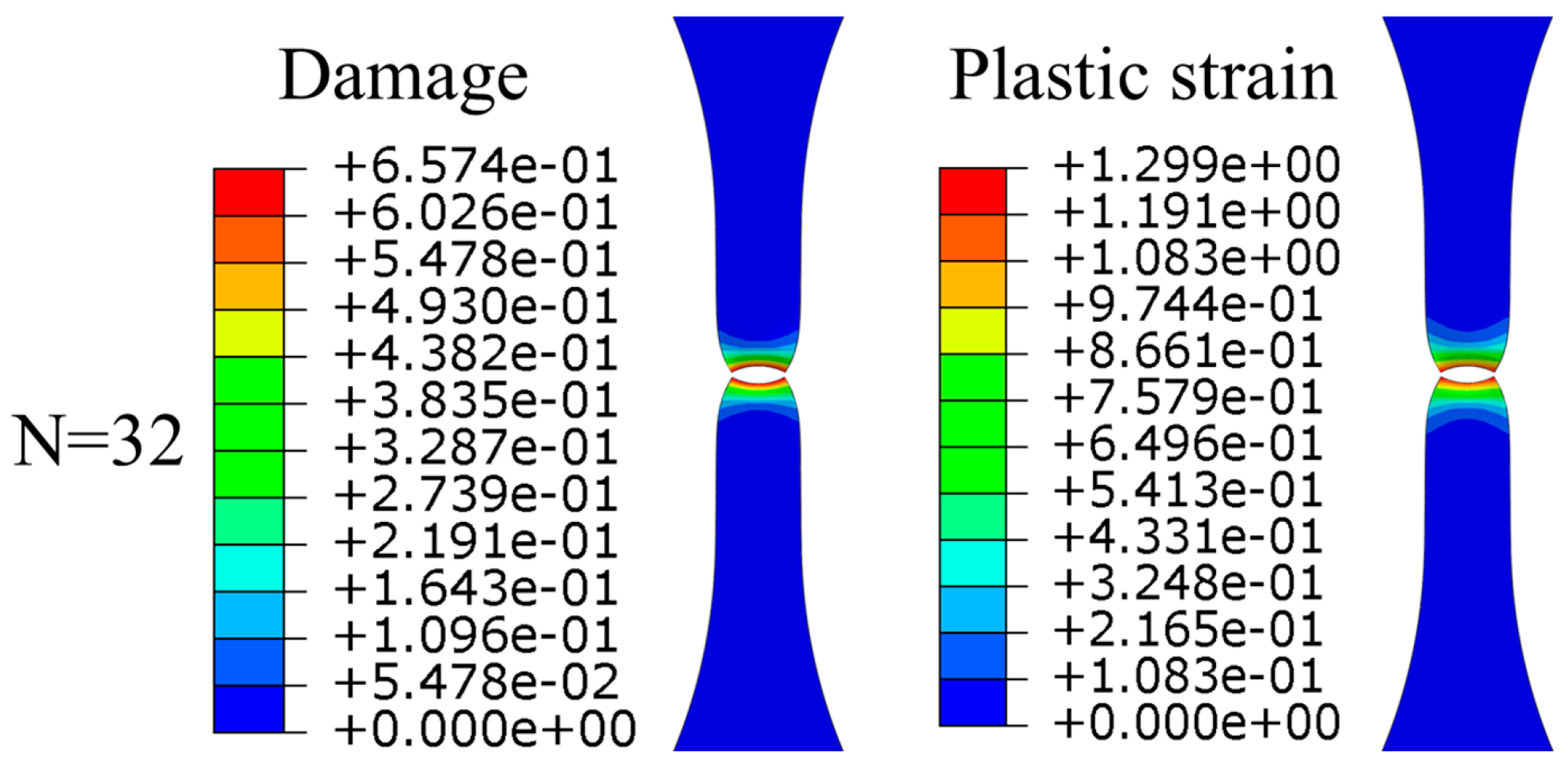
By cycle 32 the damage is critical and localization dominates (see Figure 10). The FE results reveal a pronounced neck: a sharply reduced cross-section at the center. Plastic strain concentrates here (often exceeding 50% in the localized zone), and the damage variable approaches its failure threshold. At this point essentially all further cycles are destabilized. In fact, the computed axial stress shows a precipitous drop: the plate can no longer sustain the nominal load, and a macroscopic crack has nucleated. This is the classic ductile-failure signature in ULCF. The fracture initiates in the highly damaged core of the neck, where triaxial tension and void coalescence are greatest. From there the crack propagates outward through the section, but with very little additional global deformation. Importantly, even at failure, the damage is overwhelmingly plastic in origin. The entire transition from uniform yielding to localized necking has been driven by the interplay of hardening and damage-softening: initial hardening delayed necking, but progressive void growth ultimately eroded strength and stiffness. By N = 32 the material’s effective stress–strain response reflects full softening—the peak stress collapses—consistent with other studies of ULCF that show a dramatic stress falloff in the final stage.
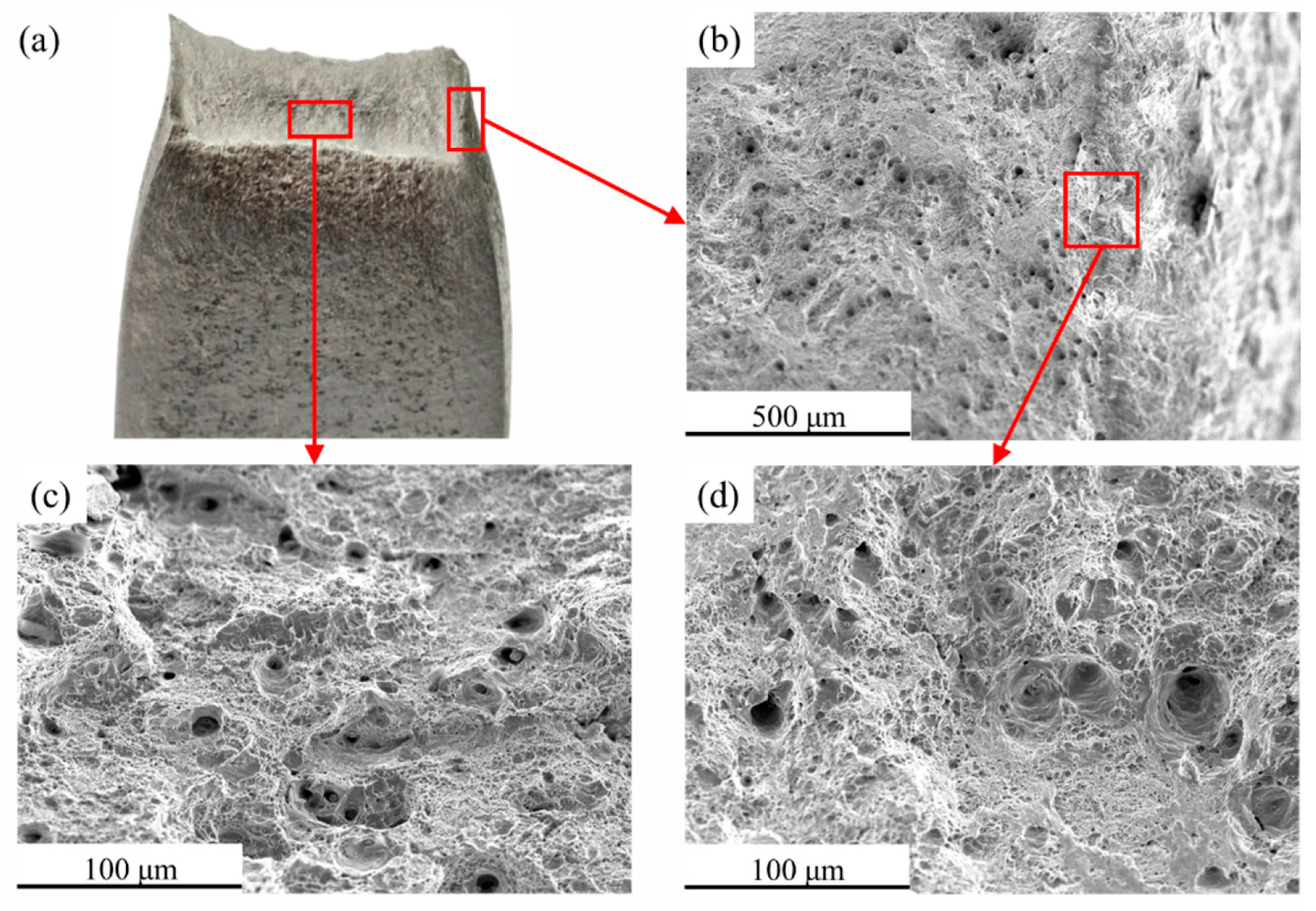
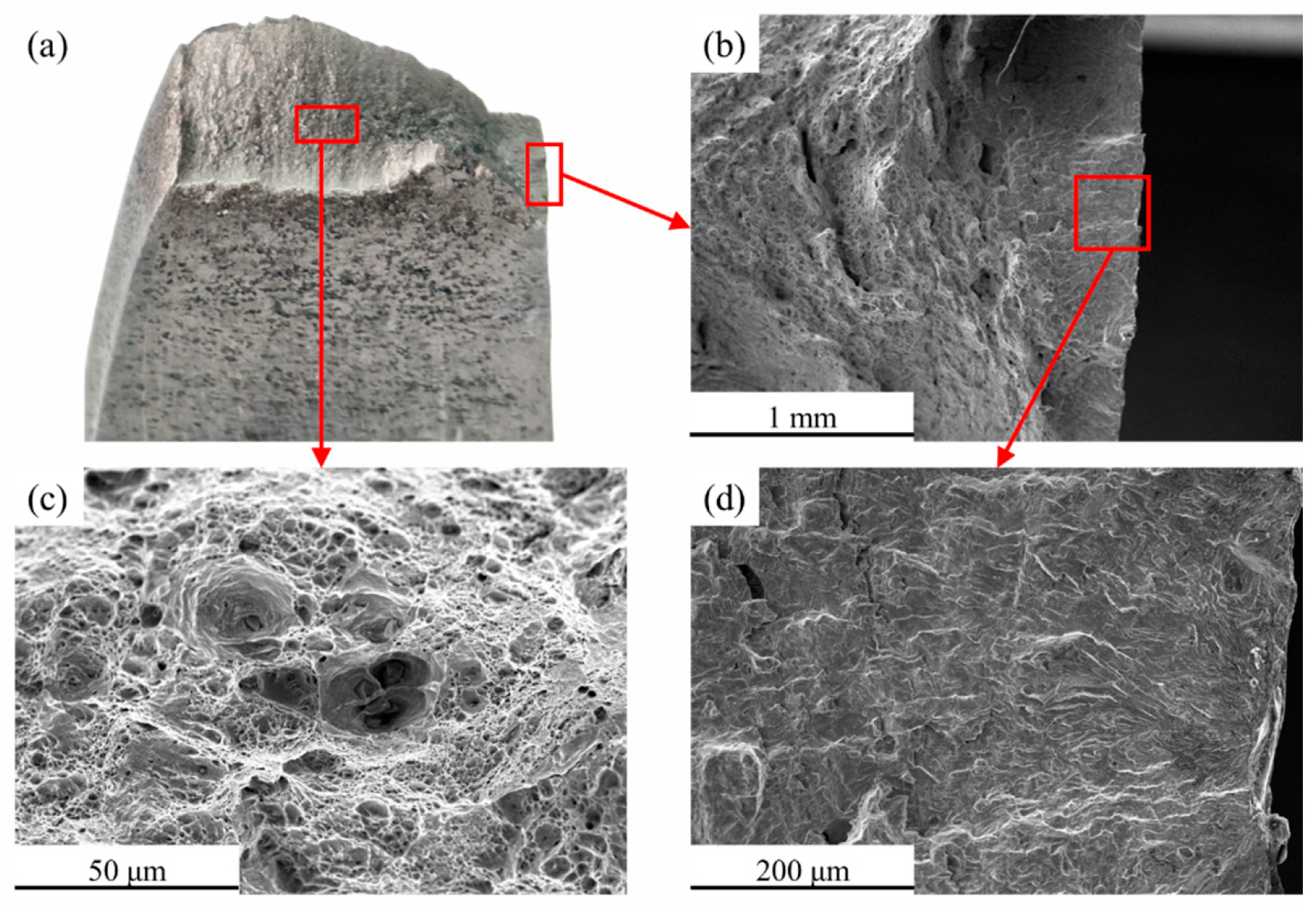
For Stress-Controlled Post-Yield Cyclic Loading, fracture observations reveal that the fracture surfaces at both the edge and the center are dominated by dimples (as shown in Figure 11). In other words, under the high stress (beyond yield) loading, the material deforms plastically until necking and void growth cause final failure. The predominance of dimples confirms that the damage evolved almost entirely under plasticity (as our model predicted).
Overall, the sequence (N = 2 → 31 → 32) reveals the ULCF failure pathway: diffuse plastic flow → localized damage → necking-triggered rapid damage growth and final fracture, with the plastic-damage mechanism dominating throughout.

4.4.2. Damage Evolution Under Cyclic Loading Below Yield

This section presents a full-field view of damage evolution in a 0Cr17Ni4Cu4Nb stainless steel specimen subjected to cyclic loading under a stress-controlled condition below the yield strength. The nominal stress amplitude is 858.33 MPa (with a corresponding cyclic load of 20,600 N), which is intentionally kept below the material’s yield stress. Nevertheless, repeated loading at this sub-yield stress leads to progressive fatigue damage accumulation, illustrating a cycle fatigue failure process initiated entirely in the elastic regime. In other words, even though each individual cycle is initially elastic, the cumulative effect of thousands of such cycles induces irreversible micro-damage and eventual fracture. This scenario underscores that fatigue damage can begin to develop at stresses lower than the static yield limit given sufficient repetitions. Figure 12, Figure 13 and Figure 14 capture how this damage starts and evolves spatially across the specimen, ultimately transitioning from an elastic-damage phase into a plastic-dominated failure as the cycles progress.
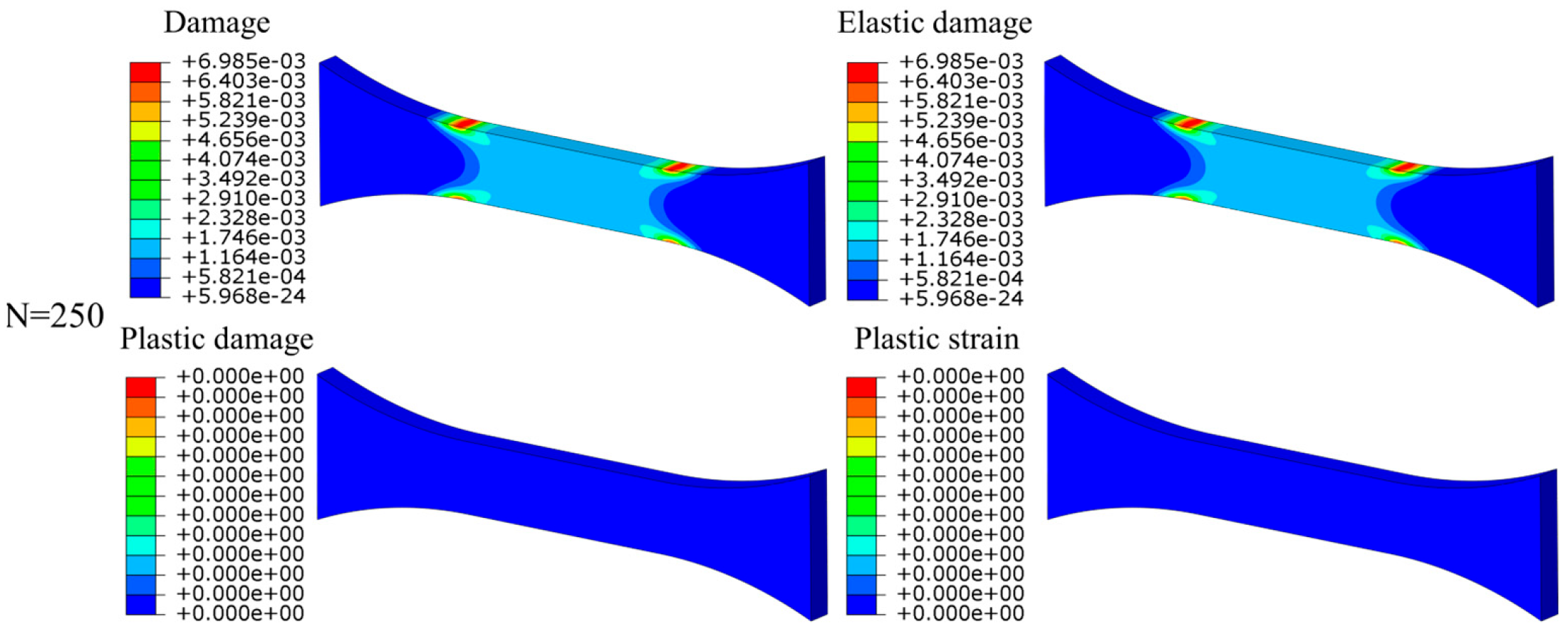
In the initial cycles (on the order of a few hundred cycles, e.g., N = 250), the material response is purely elastic with no macroscopic plastic deformation, as shown in Figure 12. However, the figure indicates the onset of micro-damage in the very early cycles, concentrated in specific regions of the specimen. Notably, damage localizes at the geometric transition zone near the gauge section (a region of stress concentration where the narrow gauge connects to the thicker shoulders). Even under elastic loading, this transition experiences slightly higher stress due to geometry, making it the prone site for damage nucleation. According to fatigue initiation theory, micro-cracks tend to form at such stress concentrators under cyclic loads. Consistent with that, the simulation shows small but nonzero damage values developing in the transition zone during the first few hundred cycles, despite the stress amplitude being below yield. This early-stage damage is entirely elastic in nature—essentially reflecting microscale crack initiation or stiffness degradation without any plastic yielding. At this stage, the material in the gauge section is still behaving elastically each cycle, and the observed damage represents the very onset of fatigue crack initiation confined to the high-stress region. No visible plastic strain is present yet, and the overall specimen’s load–displacement response remains linear and unchanged cycle to cycle. The key point is that damage can initiate in the elastic regime: the structure shows no gross yielding initially, yet microscopic damage is accumulating at the vulnerable hotspot.
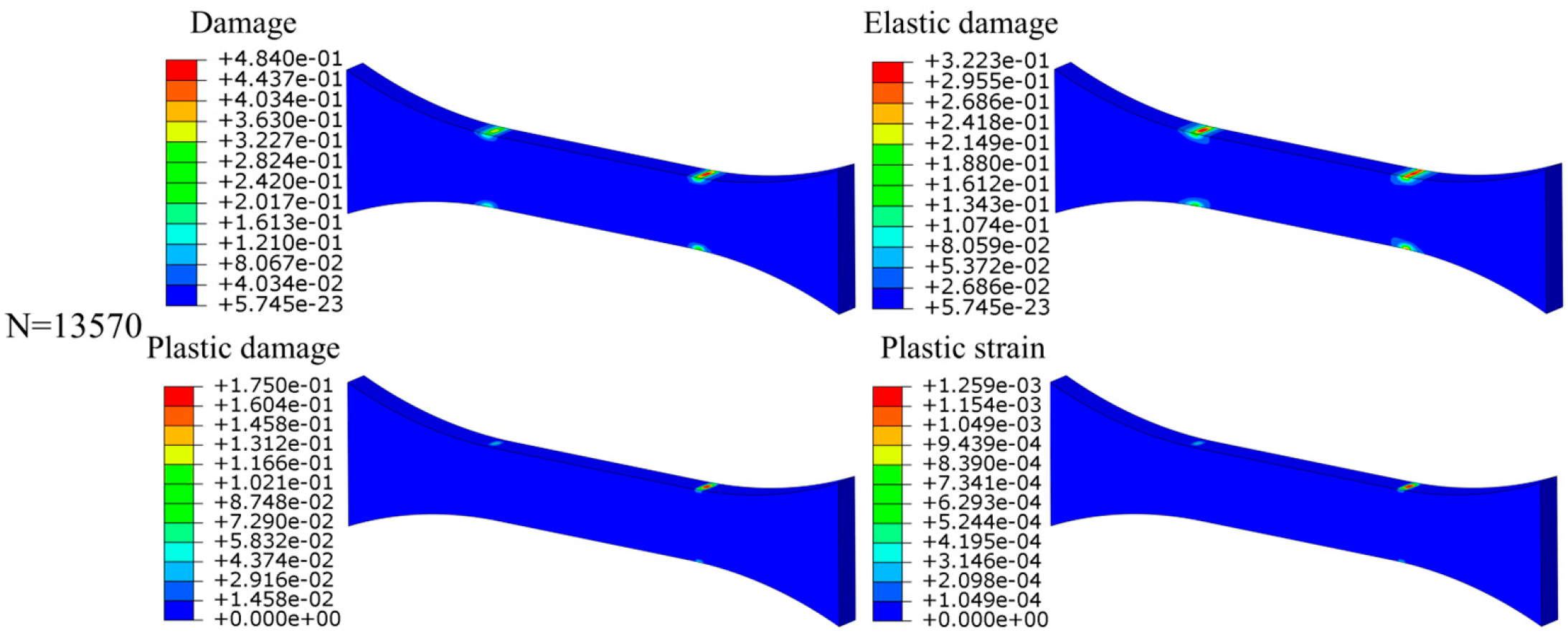
As the cyclic loading continues into the thousands of cycles (e.g., by N ≈ 17,000), Figure 13 reveals that damage in the transition zone progressively intensifies and spreads. Throughout this intermediate phase, the material still largely unloads elastically each cycle (the nominal stress is still below the original yield strength), but the damage variable has been growing cycle by cycle in the high-stress region. In continuum damage mechanics terms, this accumulated “elastic damage” corresponds to a reduction in the local stiffness or effective load-bearing area of the material. Essentially, the repeated sub-yield stress pulses cause microstructural degradation (voids, micro-cracks) that gradually erode the material’s ability to carry load. The simulation shows that by ~17,000 cycles, the damage in the critical zone has reached a notable level (though still less than the critical damage for fracture). This damage accumulation has important mechanical consequences: because damage reduces the effective cross-section and modulus, the local stress-state begins to evolve. Under stress-controlled loading (fixed nominal load amplitude), if a region’s stiffness decreases due to damage, that region will experience higher strains and concentrate more deformation. In other words, the material around the transition zone is weakening—its effective load-carrying capacity is being diminished by the growing damage. As a result, even though the applied nominal stress amplitude remains the same, the local stress and strain redistribute: the intact material nearby must carry a greater share of the load, and the damaged spot sees locally elevated stress/strain. By the latter part of this phase, the local stress in the most damaged zone approaches (or slightly exceeds) the yield limit of the material. Thus, a critical transition is imminent: the system is on the verge of local yielding at the hot-spot, triggered not by an external load increase but by the internal loss of stiffness from damage.
Notably, up to this point the damage has been primarily elastic in nature—meaning it was generated without permanent (plastic) deformation in each cycle. This is characteristic of high-cycle or elastic-damage fatigue mechanisms. The fatigue damage has been slowly nibbling away at the material’s integrity in the transition zone, cycle after cycle, all while the overall response still appeared elastic. The figure at N ≈ 17,000 likely shows a concentrated band or zone of high damage in the shoulder/gauge transition, whereas the rest of the gauge length remains mostly undamaged (since the stress is more uniform and lower there). This visualizes the concept that fatigue damage initiates at stress concentrators and can grow subcritically for a long period without immediately causing gross plasticity or failure.
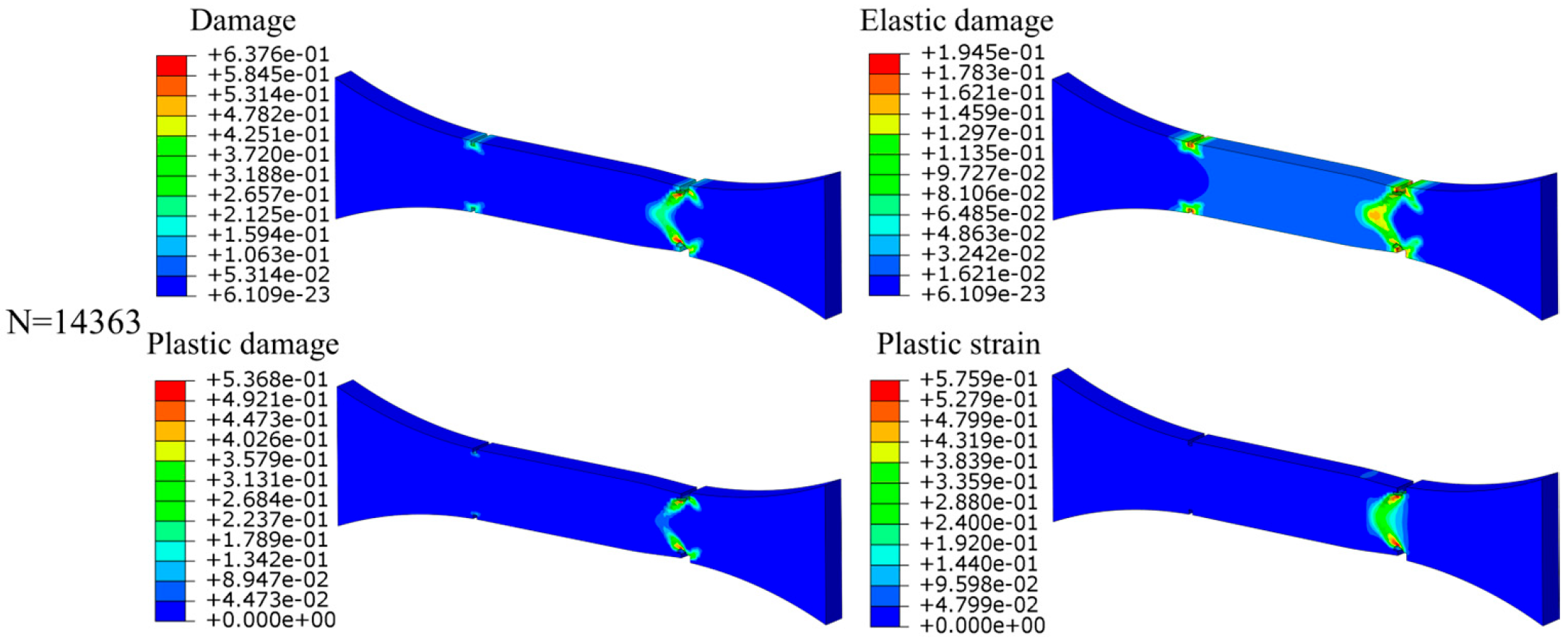
By the time the cycle count reaches ≈26,000 cycles (later stages of loading), the simulation indicates that a qualitative change in the damage mechanism has occurred. The accumulated elastic damage in the transition zone eventually reaches a threshold where the local material yields and plastic deformation begins in that area. In Figure 14, the frame corresponding to N ~26,000 cycles shows the emergence of plastic damage (often visualized as a rapidly growing damage zone) at the same location where elastic damage had been accumulating. In other words, the specimen has now entered a “beyond-yield” regime locally—the initially elastic hotspot can no longer sustain the imposed stress elastically due to its reduced load-carrying capacity, and it gives way to plastic flow. Once plasticity initiates in the damaged zone, each subsequent load cycle induces additional plastic strain there, and with it, plastic damage mechanisms such as void growth, micro-void coalescence, and ductile crack extension begin to dominate. The damage variable in the model now starts increasing much more rapidly per cycle, since plastic deformation causes a drastic growth in damage (far more than the slow accumulation during the purely elastic phase).
This marks a clear transition from an elastic-damage driven process to a plastic-dominated damage growth process. Initially, the fatigue damage was accumulating quasi-invisibly (micro-cracks) in the elastic regime; now the material’s failure mode has shifted to a ULCF-type ductile fracture mode. Ultra-low-cycle fatigue is known to be fundamentally a ductile failure mechanism, involving significant plastic deformation and void coalescence leading to fracture.
That is precisely what we observe beyond ~26,000 cycles: the damage evolution becomes governed by plasticity and ductile fracture behavior, as opposed to the nominally elastic micro-damage of earlier cycles. The figure likely shows by this stage a pronounced damaged (and plastically deformed) zone at the gauge transition—effectively a growing crack or heavily cracked region—while the rest of the specimen may still be relatively undamaged. The fracture process is now underway, fed by plastic strain each cycle. Once a crack forms and starts to extend (at the macroscopic level), the remaining cross-sectional area rapidly reduces, causing a loss of global load capacity and eventual final failure.
For Stress-Controlled Below-Yield Cyclic Loading (Figure 15), the edge region of the fracture shows fatigue crack features. Macroscopically, we observe irregular bands (resembling beach/ratchet marks), and microscopically a striped “striations-like” pattern. These features are classic signatures of fatigue crack growth under purely elastic cycling. In contrast, the central region of the fracture surface exhibits localized dimples. This indicates that once the edge cracks reduced the load-bearing area, the center finally yielded and underwent ductile overload. Thus, the fracture morphology in Figure 15 transitions from fatigue features (elastic micro-damage at the edge) to ductile dimples (plastic failure at the core). This mixed pattern (fatigue striations plus final ductile dimples) provides visual evidence of the transition from elastic-damage to plastic failure.
In summary, although the cyclic loading began entirely in the elastic regime and caused only elastic damage initially, it gradually evolved into a plasticity-dominated fracture process. The full-field snapshots at key cycle counts (e.g., N = 250, 17,000, 26,000) vividly illustrate this evolution in phases. Early on, we see localized elastic damage initiation at a stress concentration with no plasticity. As cycles accumulate, that elastic damage grows and weakens the material, until local yielding is triggered. Beyond that point, plastic damage takes over, and the fatigue failure mechanism transitions to ductile crack growth typical of ultra-low-cycle fatigue. The final outcome is that a process which started with minute elastic micro-cracks culminates in a plasticity-driven rupture of the specimen. This comprehensive view of damage evolution under sub-yield cyclic loading provides insight into how ULCF-like failure can originate from purely elastic cycling and why the damage process in such cases is sequential: first elastic degradation, then plastic localization, and finally ductile fracture. The simulation results, therefore, underscore the critical role of damage accumulation in reducing local load-bearing capacity and precipitating a transition from safe elastic behavior to ultimate failure, even without ever exceeding the yield stress in the global sense. Each phase captured in the figure corresponds to these mechanistic transitions, offering a high-fidelity visualization of the elastic-to-plastic damage progression in this high-strength stainless steel under cyclic loading.

5. Conclusions

(1) A unified damage framework was established for 0Cr17Ni4Cu4Nb stainless steel that extends the previously proposed Enhanced-Lou-Yoon criterion to stress-controlled cyclic loading near yield. The formulation blends elastic-damage accumulation (for sub-yield cycling) with plastic-damage evolution (for beyond-yield ULCF/LCF), and employs path-averaged triaxiality and Lode parameter to quantify stress-state effects with a single, self-consistent parameter set identifiable from standard tests.
(2) Beyond-yield, simulations reveal a three-stage failure pathway—early homogeneous plastic flow aided by work hardening, mid-life softening with incipient localization, and necking-triggered ductile rupture—confirming that damage is plasticity-dominated and elastic contributions are negligible.
(3) Below-yield cycling, damage initiates elastically at the gauge–shoulder transition due to stress concentration; the ensuing stiffness loss reduces the local effective load capacity, triggers local yielding, and transitions the mechanism to plastic-damage-controlled growth, eventually leading to ductile fracture.
Strengths: The proposed unified damage model captures the evolution of both elastic and plastic damage under near-yield, stress-controlled cyclic loading. It offers an effective framework for fatigue-life prediction across various loading regimes, including sub-yield and post-yield conditions, with high accuracy over more than two orders of magnitude in life.
Limitations: In this study, the model’s limitations should be acknowledged. First, the experimental dataset is relatively small, and future work will benefit from including a larger number of data points across a wider range of loading conditions. Second, the current model does not account for multiaxial loading or variable-amplitude loading, which are common in real-world applications. Extending the model to include these conditions is an important avenue for future research. Lastly, environmental factors such as temperature and corrosion have not been incorporated into the model, and these effects are crucial in real-world applications. Future studies will aim to address these limitations to improve the model’s applicability.
In summary, this study introduces a unified fatigue damage model that successfully bridges sub-yield and post-yield cyclic failure modes for 0Cr17Ni4Cu4Nb stainless steel. The model’s predictive capability and its unified treatment of elastic and plastic damage are key contributions, enabling more accurate life predictions under complex loading conditions. Acknowledging the noted limitations, future work will focus on expanding the experimental database and extending the framework to multiaxial, variable-amplitude, and environmental loading scenarios to further enhance its applicability.

Author Contributions

Conceptualization, H.W.; Software, R.W.; Validation, X.C. (Xiang Cheng) and Z.Z.; Formal analysis, H.W.; Investigation, Y.L.; Resources, X.C. (Xiang Cheng); Data curation, Y.P.; Writing – original draft, X.C. (Xiang Cheng); Writing – review & editing, X.C. (Xiang Cheng) and H.W.; Visualization, X.C. (Xiang Cheng); Supervision, X.C. (Xiaolei Chen); Funding acquisition, X.C. (Xiaolei Chen). All authors have read and agreed to the published version of the manuscript.

Funding

This research was funded by National Natural Science Foundation of China (No. 52205378); the Jiangsu Provincial Natural Science Foundation (No. BK20220337); the Special Support Plan of the Guangdong Province (No. 2023TQ07H960); Anhui Xinli Electric Technology Consulting Co., Ltd. Technology Project (2024 Consulting-KJ-01).

Institutional Review Board Statement

Not applicable.

Informed Consent Statement

Not applicable.

Data Availability Statement

Data are contained within the article.

Conflicts of Interest

Authors Xiang Cheng, Ruomin Wang, Yong Li, Zhongkang Zhou, Yingfeng Pan were employed by the company Anhui Xinli Electric Technology Consulting Co., Ltd. The remaining authors declare that the research was conducted in the absence of any commercial or financial relationships that could be construed as a potential conflict of interest.

References

  1. Romero, A.; Caminero, M.A.; García-Plaza, E.; Núñez, P.J.; Chacón, J.M.; Rodríguez, G.P.; Cañadilla, A.; Martínez, J.L. Mechanical and metrological characterisation of 17-4PH stainless steel structures processed by material extrusion additive manufacturing. J. Mater. Res. Technol. 2025, 38, 1699–1716. [Google Scholar] [CrossRef]
  2. Sun, Y.; Hebert, R.J.; Aindow, M. Effect of laser scan length on the microstructure of additively manufactured 17-4PH stainless steel thin-walled parts. Addit. Manuf. 2020, 35, 101302. [Google Scholar] [CrossRef]
  3. Liu, D.; Liu, D.; Zhang, X.; Liu, C.; Ma, A.; Xu, X.; Zhang, W. An investigation of fretting fatigue behavior and mechanism in 17-4PH stainless steel with gradient structure produced by an ultrasonic surface rolling process. Int. J. Fatigue 2020, 131, 105340. [Google Scholar] [CrossRef]
  4. McWilliams, B.; Pramanik, B.; Kudzal, A.; Taggart-Scarff, J. High strain rate compressive deformation behavior of an additively manufactured stainless steel. Addit. Manuf. 2018, 24, 432–439. [Google Scholar] [CrossRef]
  5. Yeli, G.; Auger, M.A.; Wilford, K.; Smith, G.D.W.; Bagot, P.A.J.; Moody, M.P. Sequential nucleation of phases in a 17-4PH steel: Microstructural characterisation and mechanical properties. Acta Mater. 2017, 125, 38–49. [Google Scholar] [CrossRef]
  6. Hu, P.; Meng, Q.; Fan, W.; Gu, W.; Wan, J.; Li, Q. Vibration characteristics and life prediction of last stage blade in steam turbine Based on wet steam model. Eng. Fail. Anal. 2024, 159, 108127. [Google Scholar] [CrossRef]
  7. Dong, Y.; Xu, B.; Liao, T.; Yin, C.; Tan, Z. Application of local-feature-based 3-D point cloud stitching method of low-overlap point cloud to aero-engine blade measurement. IEEE Trans. Instrum. Meas. 2023, 72, 1008913. [Google Scholar] [CrossRef]
  8. Park, S. Application of ductile fracture model for the prediction of low cycle fatigue in structural steel. Eng. Fract. Mech. 2023, 289, 109469. [Google Scholar] [CrossRef]
  9. Li, S.; Xie, X.; Cheng, C.; Tian, Q. A modified Coffin-Manson model for ultra-low cycle fatigue fracture of structural steels considering the effect of stress triaxiality. Eng. Fract. Mech. 2020, 237, 107223. [Google Scholar] [CrossRef]
  10. Devaney, R.J.; O’Donoghue, P.E.; Leen, S.B. Experimental characterisation and computational modelling for cyclic elastic-plastic constitutive behaviour and fatigue damage of X100Q for steel catenary risers. Int. J. Fatigue 2018, 116, 366–378. [Google Scholar] [CrossRef]
  11. Pereira, J.; De Jesus, A.; Fernandes, A.A. A new ultra-low cycle fatigue model applied to the X60 piping steel. Int. J. Fatigue 2016, 93, 201–213. [Google Scholar] [CrossRef]
  12. Li, S.; Lin, J.; Zhuge, H.; Xie, X.; Cheng, C. Ultra-low cycle fatigue fracture initiation life evaluation of thick-walled steel bridge piers with microscopic damage index under bidirectional cyclic loading. Structures 2022, 43, 669–681. [Google Scholar] [CrossRef]
  13. Algarni, M.; Choi, Y.; Bai, Y. A unified material model for multiaxial ductile fracture and extremely low cycle fatigue of Inconel 718. Int. J. Fatigue 2017, 96, 162–177. [Google Scholar] [CrossRef]
  14. Liu, R.; Zhang, Z.J.; Zhang, P.; Zhang, Z.F. Extremely-low-cycle fatigue behaviors of Cu and Cu–Al alloys: Damage mechanisms and life prediction. Acta Mater. 2015, 83, 341–356. [Google Scholar] [CrossRef]
  15. Chen, X.; Yue, J.; Wu, X.; Lei, J.; Fang, X. A damage coupled elasto-plastic constitutive model of marine high-strength steels under low cycle fatigue loadings. Int. J. Pres. Ves. Pip. 2023, 205, 104982. [Google Scholar] [CrossRef]
  16. Barrett, R.A.; O’Donoghue, P.E.; Leen, S.B. A physically-based constitutive model for high temperature microstructural degradation under cyclic deformation. Int. J. Fatigue 2017, 100, 388–406. [Google Scholar] [CrossRef]
  17. Sauzay, M.; Fournier, B.; Mottot, M.; Pineau, A.; Monnet, I. Cyclic softening of martensitic steels at high temperature—Experiments and physically based modelling. Mater. Sci. Eng. A 2008, 483–484, 410–414. [Google Scholar] [CrossRef]
  18. Ge, H.; Kang, L. A damage index-based evaluation method for predicting the ductile crack initiation in steel structures. J. Earthq. Eng. 2012, 16, 623–643. [Google Scholar] [CrossRef]
  19. Tateishi, K.; Hanji, T.; Minami, K. A prediction model for extremely low cycle fatigue strength of structural steel. Int. J. Fatigue 2007, 29, 887–896. [Google Scholar] [CrossRef]
  20. Xue, L. A unified expression for low cycle fatigue and extremely low cycle fatigue and its implication for monotonic loading. Int. J. Fatigue 2008, 30, 1691–1698. [Google Scholar] [CrossRef]
  21. Song, Y.; Guo, Y.; Liu, G.; Han, J.; Wang, S.; He, W.; Zhu, S. An enhanced Hosford–Coulomb fracture model for predicting ductile fracture under a wide range of stress states. Eng. Fract. Mech. 2024, 312, 110635. [Google Scholar] [CrossRef]
  22. Sun, X.; Shen, W.; Li, Y.; Hu, X.; Li, C.; Xue, F. An uncoupled ductile fracture criterion for a wide range of stress states in sheet metal forming failure prediction. Eng. Fract. Mech. 2024, 310, 110464. [Google Scholar] [CrossRef]
  23. Nambirajan, T.; Kumar, P.C.A.; Aggarwal, S.; Gurudutt, A. Uncoupled fracture model for E250, E350, and E450 grades of structural steel under monotonic loading. Eng. Fract. Mech. 2023, 292, 109638. [Google Scholar] [CrossRef]
  24. Peng, Z.; Zhao, H.; Li, X.; Yuan, L.; Zhu, T. Ductile fracture of X80 pipeline steel over a wide range of stress triaxialities and Lode angles. Eng. Fract. Mech. 2023, 289, 109470. [Google Scholar] [CrossRef]
  25. Chen, A.; Zhang, P.; Chen, B.; Li, Y.; Xing, J. A new ductile fracture model for Q460C high-strength structural steel under monotonic loading: Experimental and numerical investigation. Eng. Fract. Mech. 2023, 288, 109358. [Google Scholar] [CrossRef]
  26. Lou, Y.; Chen, L.; Clausmeyer, T.; Tekkaya, A.E.; Yoon, J.W. Modeling of ductile fracture from shear to balanced biaxial tension for sheet metals. Int. J. Solids Struct. 2017, 112, 169–184. [Google Scholar] [CrossRef]
  27. Lou, Y.; Yoon, J.W.; Huh, H. Modeling of shear ductile fracture considering a changeable cut-off value for stress triaxiality. Int. J. Plast. 2014, 54, 56–80. [Google Scholar] [CrossRef]
  28. Shah, M.S.A.; Kueh, A.B.H.; Tamin, M.N.; Kim, J.J.; Kadir, M.A.A.; Yahaya, N.; Noor, N.M. Water–Cement Ratio on High-Cycle Fatigue in the Theory of Critical Distances of Plain Concrete, Iranian Journal of Science and Technology. Trans. Civ. Eng. 2022, 46, 4281–4290. [Google Scholar]
  29. Ahmad, S.; Badshah, S.; Koloor, S.R.; Amjad, M.; Khalil, S.; Tamin, N. Cumulative fretting fatigue damage model for steel wire ropes. Fatigue Fract. Eng. M. 2024, 47, 1656–1676. [Google Scholar] [CrossRef]
  30. Dastgerdi, J.N.; Jaberi, O.; Remes, H.; Lehto, P.; Toudeshky, H.H.; Kuva, J. Fatigue damage process of additively manufactured 316 L steel using X-ray computed tomography imaging. Addit. Manuf. 2023, 70, 103559. [Google Scholar] [CrossRef]
  31. Cheng, X.; Wang, R.; Zhou, Z.; Yang, Y.; Chen, X.; Wu, H.; Chen, X.; Xu, W. Characterization of uncoupled ductile fracture criteria for 0Cr17Ni4Cu4Nb stainless steel under different stress states. J. Mater. Res. Technol. 2025, 36, 5985–6003. [Google Scholar] [CrossRef]
  32. Swift, H.W. Plastic instability under plane stress. J. Mech. Phys. Solids 1952, 1, 1–18. [Google Scholar] [CrossRef]
  33. Voce, E. The relationship between stress and strain for homogeneous deformation. J. Inst. Met. 1948, 74, 57–62. [Google Scholar]
  34. Bao, Y.; Wierzbicki, T. On fracture locus in the equivalent strain and stress triaxiality space. Int. J. Mech. Sci. 2004, 46, 81–98. [Google Scholar] [CrossRef]
  35. Xiao, Y.; Li, S.; Gao, Z. A continuum damage mechanics model for high cycle fatigue. Int. J. Fatigue 1998, 20, 503–508. [Google Scholar] [CrossRef]
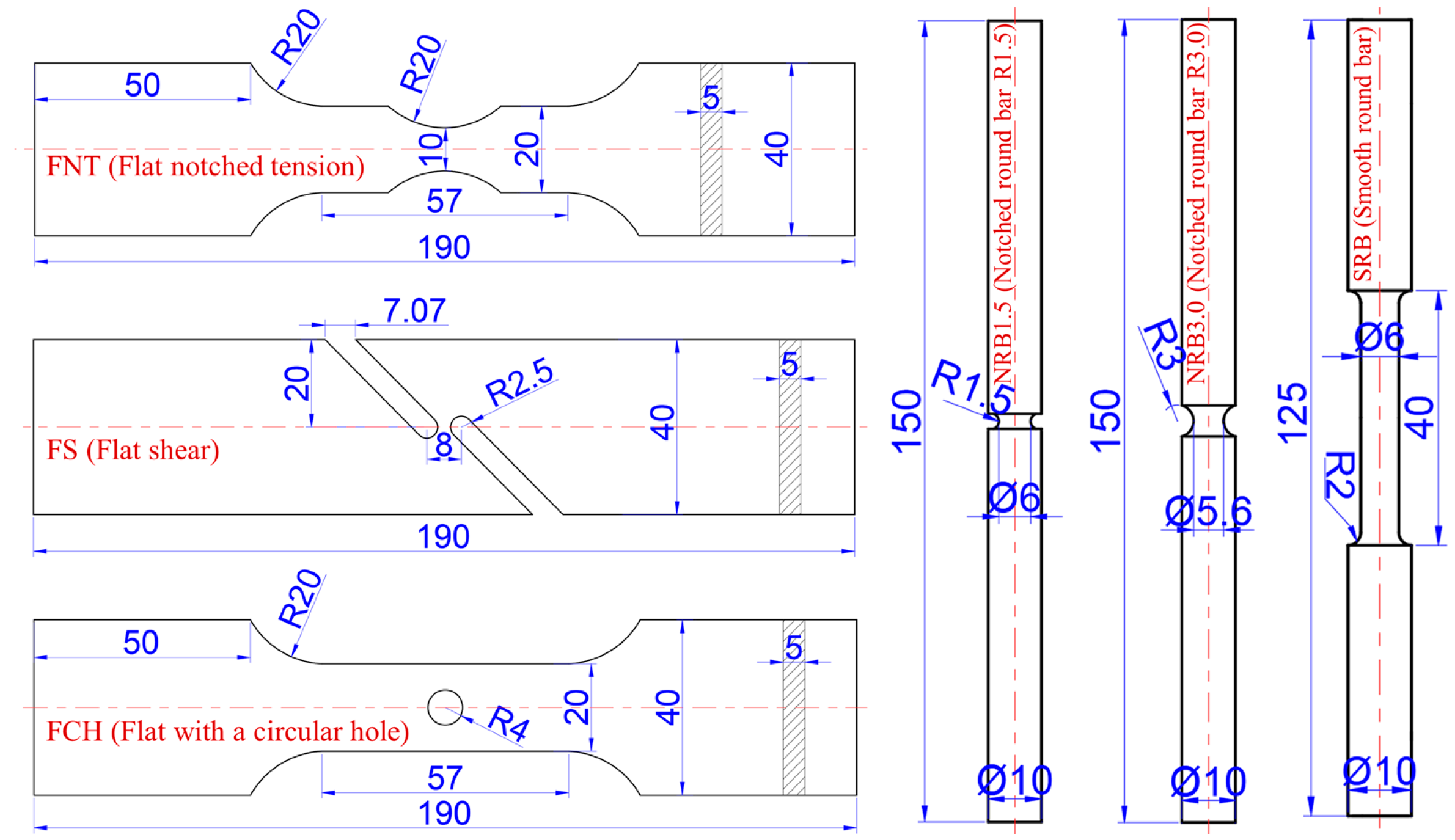
Figure 1. Specimen geometries (unit: mm).
Coatings 15 01318 g001
Figure 2. Finite element model of specimen.
Coatings 15 01318 g002
Figure 3. Hardening law calibration and validation: (a) Hybrid hardening law fit with extrapolation beyond necking; (b) Experimental vs. FE load–displacement.
Coatings 15 01318 g003
Figure 4. Distributions of equivalent plastic strain. (a) FS; (b) FCH; (c) FNT; (d) SRB; (e) NRB3.0; (f) NRB1.5.
Coatings 15 01318 g004
Figure 5. Specimen geometry for cyclic loading (unit: mm).
Coatings 15 01318 g005
Figure 6. Flow chart of Damage-coupled elastoplastic fatigue constitutive model by integrating Vuhard and Vusdfld in Abaqus.
Coatings 15 01318 g006
Figure 8. Damage evolution under cyclic loading beyond yield at N = 2.
Coatings 15 01318 g008
Figure 9. Damage evolution under cyclic loading beyond yield at N = 31.
Coatings 15 01318 g009
Figure 10. Damage evolution under cyclic loading beyond yield at N = 32.
Coatings 15 01318 g010
Figure 11. Fracture features under Stress-Controlled Post-Yield Cyclic Loading. (a) Overall view; (b) Edge region; (c) Central region; (d) Magnified view of (b).
Coatings 15 01318 g011
Figure 12. Damage evolution under cyclic loading below yield at N = 250.
Coatings 15 01318 g012
Figure 13. Damage evolution under cyclic loading below yield at N = 13,570.
Coatings 15 01318 g013
Figure 14. Damage evolution under cyclic loading below yield at N = 14,363.
Coatings 15 01318 g014
Figure 15. Fracture features under Stress-Controlled Below-Yield Cyclic Loading. (a) Overall view; (b) Edge region; (c) Central region; (d) Magnified view of (b).
Coatings 15 01318 g015
Table 1. Chemical Composition of 0Cr17Ni4Cu4Nb Martensitic Stainless Steel [31].
ElementCCrNiCuSiMnNbTiPS
Content (wt%)0.0515.544.333.510.260.260.0280.010.020.01
Table 2. Fracture strain and average stress state at the critical point for ductile fracture in physical tests and predicted results using the Lou-Yoon and Enhanced-Lou-Yoon criteria.
Specimen Average Stress Triaxility η ¯ Average Lode Parameter L ¯ ε f e x p Lou-YoonEnhanced-Lou-Yoon
ε f p r e Error ε f p r e Error
FS0.0929−0.20150.69890.70641.11%0.70641.11%
FCH0.4734−0.72971.08380.818424.86%0.730132.64%
SRB0.5861−0.99640.93280.97814.85%0.84139.81%
FNT0.6726−0.48650.83360.591728.57%0.638123.45%
NRBR31.1040−0.99540.62440.714514.43%0.537014.00%
NRBR1.51.4685−0.99550.39630.601751.82%0.39610.05%
Average Error20.94%13.51%
Table 3. Parameters of the fatigue damage model.
m a β b 1 b 2 M 0 σ l 0
1.40.7550.00250.0012582950245
Table 4. Comparison of stress-controlled cyclic tests and simulations.
GroupLoad/NStress/MPaCycles to FailureError
ExperimentSimulation
25,0501043.75383215.8%
24,7951033.131179320.5%
24,2201009.1762554612.6%
20,800866.67929899907.4%
20,600858.3311,68913,57016.1%
Disclaimer/Publisher’s Note: The statements, opinions and data contained in all publications are solely those of the individual author(s) and contributor(s) and not of MDPI and/or the editor(s). MDPI and/or the editor(s) disclaim responsibility for any injury to people or property resulting from any ideas, methods, instructions or products referred to in the content.