Article

Antimicrobial Resistance and Clinical Outcome Among Hospitalized Bacterial Pneumonia: A Retrospective Cohort Study in Indonesian Tertiary Hospital

by
Prayudi Santoso
1,2,*,†,
Ghyna Ravifa Muliandini
3,
Saniya Dhafarina Izzati
3,
Sonya Alexandra
4,
Iceu Dimas Kulsum
1,2,
Basti Andriyoko
5,6 and
Adhi Kristianto Sugianli
4,5,6,†
1
Department of Internal Medicine, Faculty of Medicine, Universitas Padjadjaran, Bandung 40161, Indonesia
2
Department of Medicine, Dr. Hasan Sadikin General Hospital, Bandung 40161, Indonesia
3
Faculty of Medicine, Universitas Padjadjaran, Bandung 40161, Indonesia
4
Research Center for Care and Control of Infectious Disease (RC3ID), Universitas Padjadjaran, Bandung 40161, Indonesia
5
Department of Clinical Pathology, Faculty of Medicine, Universitas Padjadjaran, Bandung 40161, Indonesia
6
Department of Supporting Medicine, Dr. Hasan Sadikin General Hospital, Bandung 40161, Indonesia
*
Author to whom correspondence should be addressed.
These authors contributed equally to this work.
Antibiotics 2026, 15(6), 582; https://doi.org/10.3390/antibiotics15060582
Submission received: 17 March 2026 / Revised: 1 June 2026 / Accepted: 3 June 2026 / Published: 8 June 2026
(This article belongs to the Section Antibiotics Use and Antimicrobial Stewardship)

Abstract

Background: Pneumonia is a common cause of hospitalization and a significant contributor to worldwide morbidity and mortality. Effective definitive antimicrobial therapy for pneumonia relies on accurate identification of bacterial pathogens and their resistance patterns. Therefore, this study aims to evaluate the distribution bacterial pathogens and their antimicrobial resistance patterns, as well as clinical factors associated with outcomes among hospitalized pneumonia patients. Methods: This retrospective cohort study was conducted at Dr. Hasan Sadikin General Hospital, Indonesia, and included adult patients hospitalized with pneumonia between January and December 2024. Clinical, demographic, microbiological, and outcome data were extracted from electronic medical records and the laboratory system. Bacterial distribution, antimicrobial patterns, and clinical outcomes were analyzed descriptively and compared across pneumonia types. Multivariable regression analyses were performed to identify factors associated with in-hospital mortality and length of hospital stay. Results: A total of 662 hospitalized pneumonia patients were included with Gram-negative bacteria (i.e., Klebsiella pneumonia, Acinetobacter baumannii, and Pseudomonas aeruginosa) identified as the most common pathogens. Carbapenem-resistant Acinetobacter baumannii (CR-Ab) and Klebsiella pneumoniae (CR-Kp) were the most frequently identified resistant pathogens, particularly in hospital-acquired (HAP) and ventilator-associated pneumonia (VAP). HAP and VAP were independently associated with higher in-hospital mortality and longer hospital stay compared to community-acquired pneumonia (CAP). In addition, CR-Ab and difficult-to-treat Pseudomonas aeruginosa (DTR-Psa) were associated with prolonged hospitalization. Conclusions: Type of pneumonia, bacterial pathogens and resistance patterns were associated with in-hospital mortality and length of hospital stay. These findings highlight the importance of ongoing microbiological surveillance, antimicrobial stewardship, and infection prevention strategies to optimize pneumonia management and clinical outcomes.

1. Introduction

Antimicrobial resistance (AMR) is a major global health challenge and has been identified as one of the top 10 global public health threats by the World Health Organization (WHO) [1]. AMR compromises the effectiveness of antibiotics, resulting in more difficult-to-treat infections, increased disease severity, prolonged hospitalization, and higher mortality. Globally, approximately one in six laboratory-confirmed bacterial infections were caused by antibiotic-resistant bacteria, with a median resistance level of 17.2% across 93 monitored bacterial pathogen-antibiotics combinations [2]. In 2021, an estimated 4.71 million deaths were associated with bacterial AMR, of which 1.14 million were directly attributable to it [3].
Pneumonia is an inflammation of the pulmonary parenchyma, arising from the proliferation of microbial pathogens at the alveolar level and the host’s response to them [4]. Community-acquired pneumonia (CAP) refers to lung inflammation from infections acquired outside of a hospital setting, whereas pneumonia occurring >48 h after hospital admission is hospital-acquired pneumonia (HAP). Pneumonia that develops after ≥48 h of endotracheal intubation is ventilator-associated pneumonia (VAP) [5,6]. In the United States, the incidence of CAP requiring hospitalization was 649 cases per 100,000 adults, while in Europe, it varies across countries (50–2940 per 100,000 adults) [7,8]. The incidence of HAP in the United States is estimated to be 3.63 cases per 1000 patient-days, while the incidence of VAP is at 13.5 cases per 1000 ventilator-days [9,10]. In Asia, the incidence of VAP was 15.1 cases per 1000 ventilator-days as reported by a systematic review and meta-analysis study in 2018 [11].
The Indonesian Health Survey 2023 reported a prevalence of 0.48% (95%CI 0.46–0.51%) for pneumonia across all ages [12]. Recent Indonesian studies in hospitalized patients with CAP revealed that the most frequently isolated pathogens were Acinetobacter baumannii (17.9–30.9%), Klebsiella pneumoniae (9.8–24.3%), and Pseudomonas aeruginosa (6.7–12.5%) [13,14,15,16]. The incidence of multidrug-resistant organisms in CAP patients was reported at 21.5%, with a study in Jakarta revealing a carbapenem resistance of 65% of Acinetobacter spp., 30% in Pseudomonas aeruginosa, and 29% in Klebsiella pneumoniae [13,14].
A previous study reported a 65% increase in global antibiotic consumption from 2000 to 2015 [17]. The COVID-19 pandemic drove this number further, with a meta-analysis showing that 72% of COVID-19 patients received antibiotics despite bacterial co-infection being present in only 8% of cases [18]. This pattern of inappropriate use of antibiotics will contribute to the development of AMR. While empirical antibiotic therapy is required at the initial presentation of pneumonia, the ATS/IDSA Guidelines for CAP, HAP, and VAP recommend obtaining a pretreatment culture of respiratory secretions to ensure the accurate use and de-escalation of antibiotic therapy [5,6].
The prevalence of resistant bacteria varies across nations due to factors such as geographic differences and patient demographics. Understanding the distribution of bacteria and patterns of antibiotic resistance is crucial to optimizing treatment and reducing morbidity and mortality. However, studies investigating resistant bacteria among pneumonia in Indonesia remain limited and are largely concentrated in major referral centers, with minimal data available in Bandung, Indonesia. In addition, most previous studies did not comprehensively evaluate the impact of specific multidrug-resistant pathogens, particularly carbapenem-resistant Acinetobacter baumannii (CR-Ab), carbapenem-resistant Klebsiella pneumoniae (CR-Kp), difficult-to-treat resistant Pseudomonas aeruginosa (DTR-Psa), methicillin-resistant Staphylococcus aureus (MRSA) and methicillin-resistant coagulase-negative Staphylococcus (MRCoNS), on clinical in-hospital mortality and length of hospital stay. Therefore, this study aimed to evaluate the bacterial pathogens causing pneumonia and their antimicrobial resistance profiles among hospitalized adult patients, as well as to identify clinical factors associated with patient outcomes.

2. Results

2.1. Patients’ Characteristics

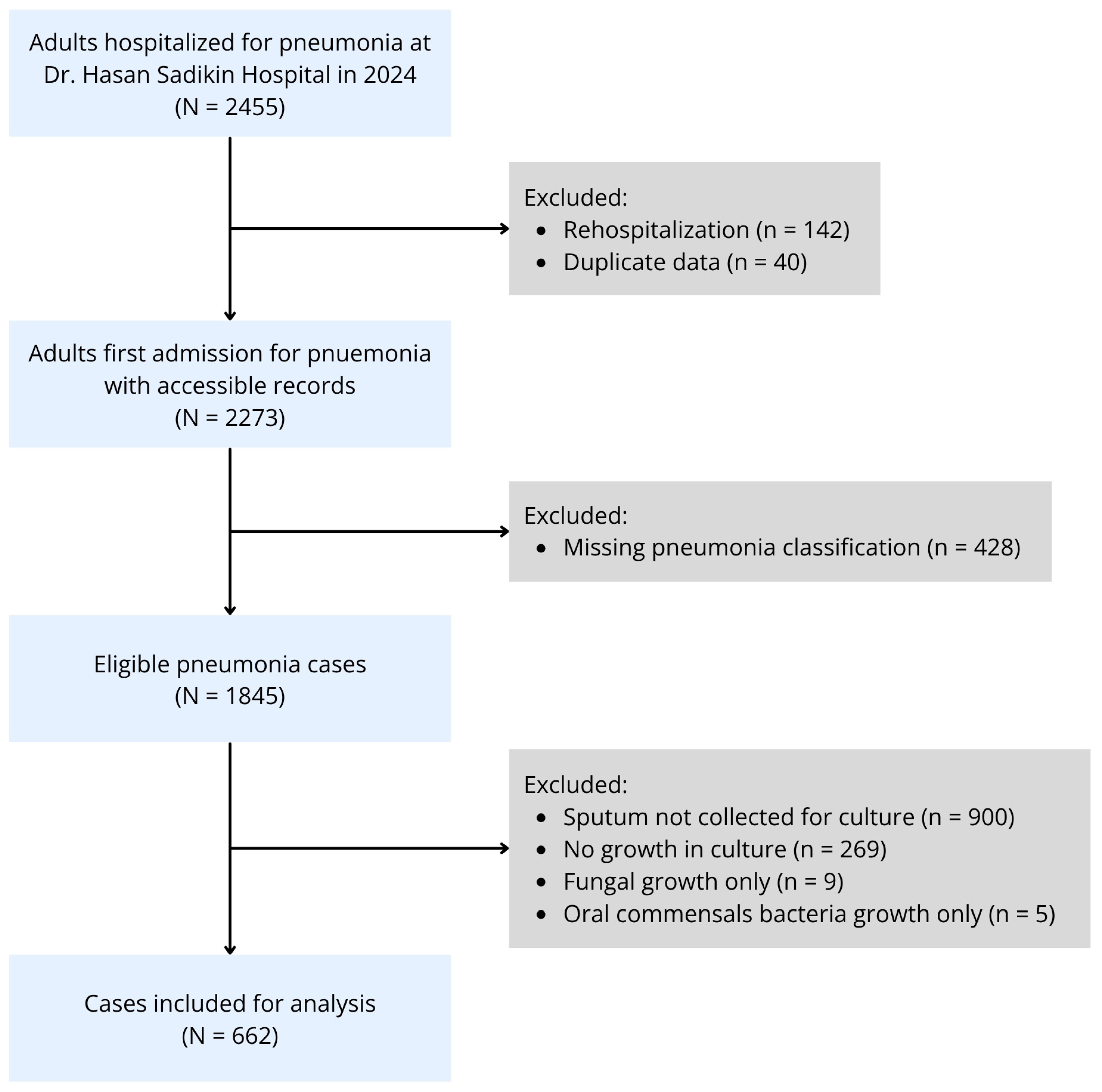
Between January and December 2024, 2455 patients were admitted for pneumonia at Dr. Hasan Sadikin General Hospital. Of these, 662 met the eligibility criteria and were included in the final analysis (Figure 1).
The overall median age was 58 years (IQR 43–68), and 56.9% of patients were male. Community-acquired pneumonia (CAP) accounted for 63.6% (n = 421), followed by hospital-acquired pneumonia (HAP) at 31.7% (n = 210) and ventilator-associated pneumonia (VAP) at 4.7% (n = 31). The general characteristics across the groups are shown in Table 1.
Patients with HAP tended to be older than patients with CAP and VAP; this was also shown by the higher proportion of patients ≥60 years old in HAP, while CAP and VAP were predominated by patients <60 years old. Hypertension and diabetes mellitus were the most common comorbidities across all groups. Notably, pulmonary tuberculosis was more frequently observed in CAP than in HAP, and no cases were identified among VAP patients. Patients with VAP experienced both the longest hospital stays and the greatest proportion of in-hospital mortality.

2.2. Bacterial and Antimicrobial Resistance Profile

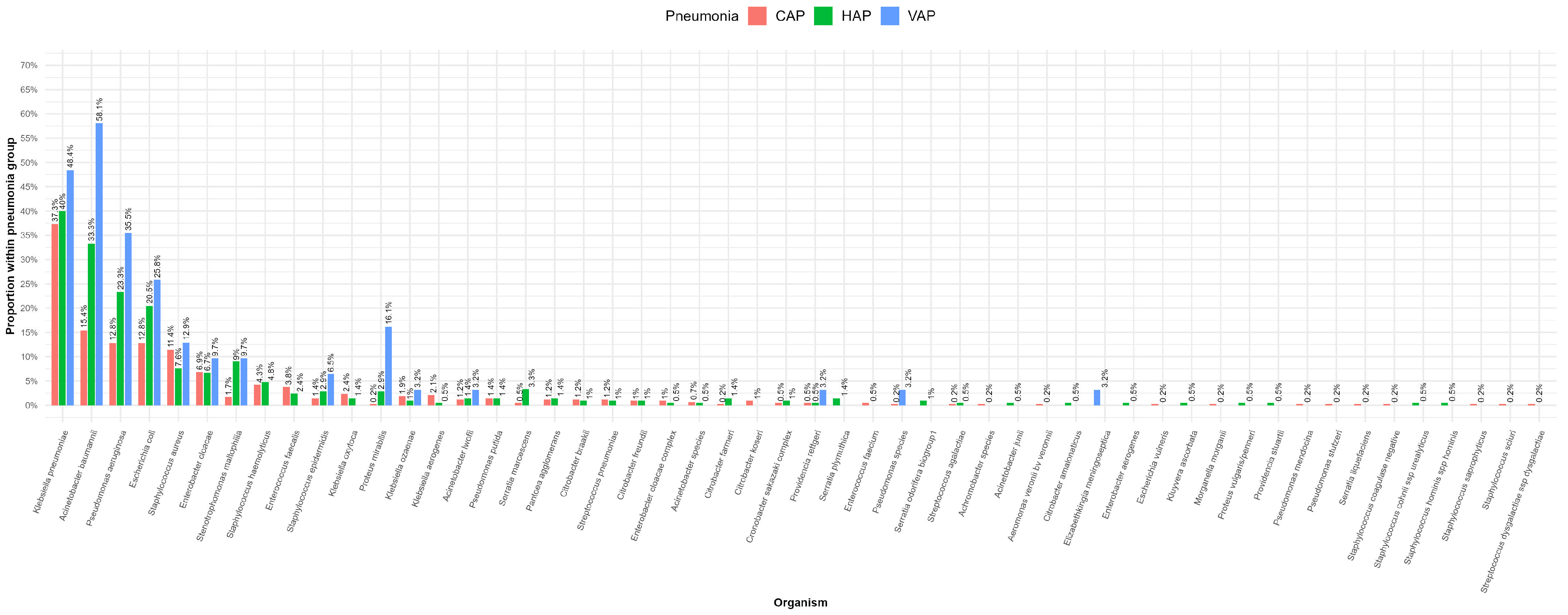
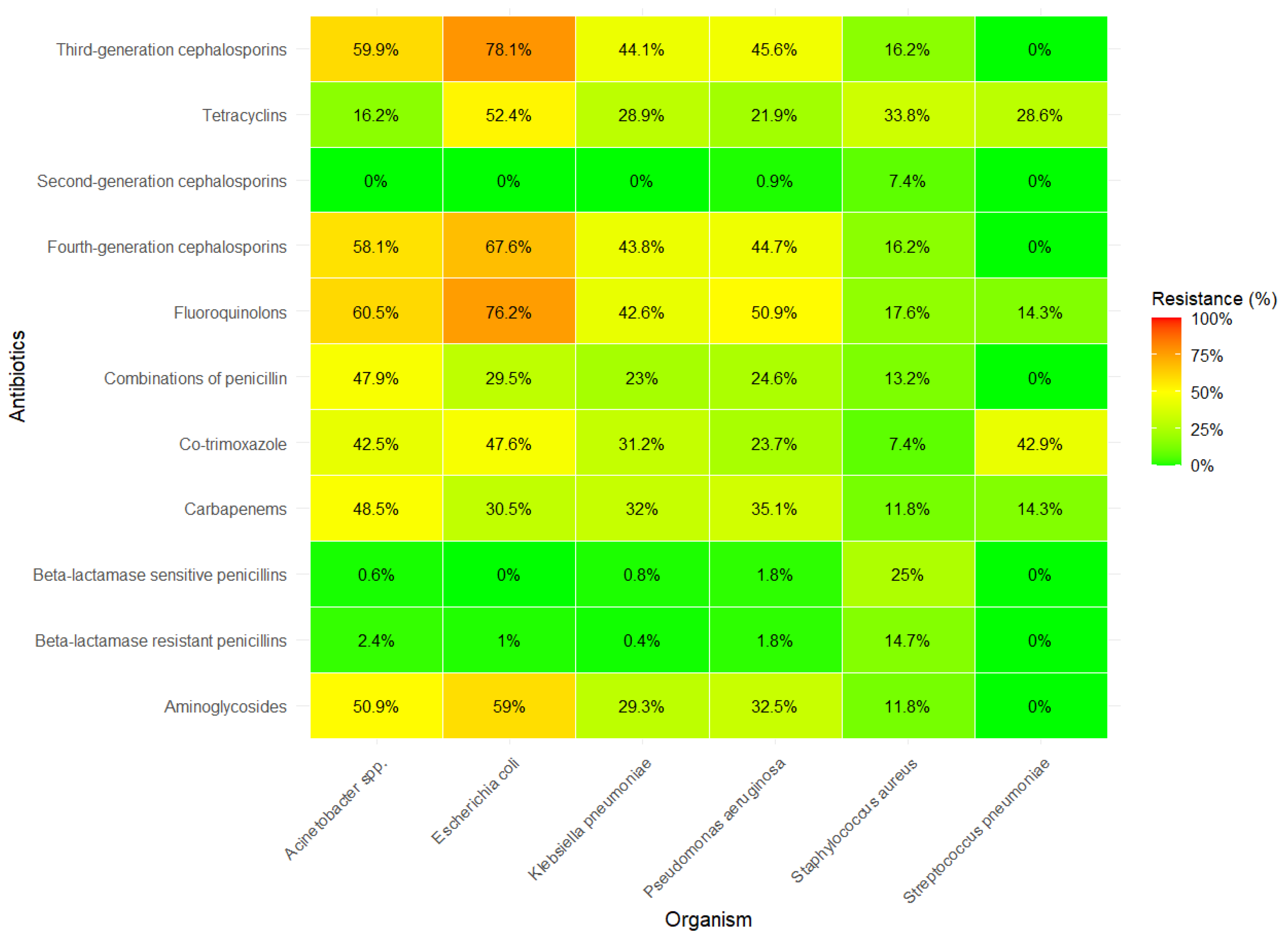
Polymicrobial growths were observed in 38.5% of the samples, yielding a total of 991 identified isolates. The distribution of bacteria across groups is shown in Figure 2 and Supplementary Material (Table S1). The most common pathogens identified were: Klebsiella pneumoniae (256, 38.7%), Acinetobacter baumannii (153, 23.1%), Pseudomonas aeruginosa (114, 17.2%), Escherichia coli (105, 15.9%), and Staphylococcus aureus (68, 10.3%). Substantial variability in antimicrobial resistance patterns was observed across bacterial pathogens and antibiotic classes (Figure 3). Escherichia coli and Acinetobacter spp. demonstrated the highest resistance rates overall, particularly to fluoroquinolones, third- and fourth-generation cephalosporins, and aminoglycosides, with resistance exceeding 50%. Frequent resistance was also identified in Klebsiella pneumoniae and Pseudomonas aeruginosa, especially against cephalosporins and carbapenems, whereas Staphylococcus aureus and Streptococcus pneumoniae generally exhibited lower resistance rates across most antibiotic groups.
Carbapenem-resistant Acinetobacter baumannii (CR-Ab) and carbapenem-resistant Klebsiella pneumoniae (CR-Kp) were the most frequently identified resistant pathogens, particularly in HAP (24.3% and 16.2%, respectively). CR-Ab predominated in VAP (41.9%), while CR-Kp and difficult-to-treat resistant Pseudomonas aeruginosa (DTR-Psa) were also common, accounting for 25.8% and 29.0%, respectively. Patients infected with resistant pathogens were generally older, a higher proportion were aged ≥60 years, and male predominance was observed across most resistance groups. Common comorbidities included hypertension and diabetes mellitus, while chronic lung disease and malignancy were also present but less consistently distributed. Methicillin-resistant Staphylococcus aureus (MRSA) and methicillin-resistant coagulase-negative Staphylococcus (MRCoNS) cases were fewer in number and showed more variable distributions across pneumonia types and comorbid conditions. Univariate analyses were conducted to explore associations between patient characteristics and specific resistant pathogens; however, multivariable analysis was not pursued, as the analysis was primarily exploratory. Detailed distributions and univariate regression analyses are provided in Supplementary Tables S2 and S3.

2.3. Mortality and Length of Stay

Hospital-acquired pneumonia (HAP) and ventilator-associated pneumonia (VAP) were associated with higher in-hospital mortality (Table 2) compared to community-acquired pneumonia (CAP), with adjusted risk ratios (aRR) of 1.5 and 1.8, respectively. Malignancy was also independently associated with increased mortality (aRR 1.4), while hypertension was associated with lower mortality (aRR 0.7). Age ≥ 60 years showed a trend toward higher mortality but did not reach statistical significance, and sex was not associated with the outcome. Other comorbidities, including diabetes mellitus, lung disease, and pulmonary tuberculosis, were not significantly associated with mortality after adjustment. Among resistant pathogens, no significant associations with mortality were observed for CR-Ab, CR-Kp, or DTR-Psa. Several variables, including heart disease, liver disease, kidney disease, extrapulmonary TB, MRSA, and MRCoNS, were not included in the final model. The model demonstrated moderate discrimination, with an area under the curve (AUC) of 0.6747 (95% CI 0.6324–0.7171). A sensitivity analysis using logistic regression (Supplementary Table S6) yielded similar results (AUC 0.675, 95% CI 0.632–0.717), indicating consistent model performance. Interaction analyses showed no statistically significant effect modification between pneumonia type and hypertension, malignancy, or CR-Ab infection (all p for interaction >0.05; Supplementary Table S7).
In the adjusted analysis (Table 3), hospital-acquired and ventilator-associated pneumonia were strongly associated with longer length of stay compared with CAP, with HAP adding 5.9 days (95% CI 3.7–8.2) and VAP adding 10.9 days (95% CI 6.0–15.8), both statistically significant. Age and gender were not significantly associated with length of stay. Among comorbidities, most showed no meaningful association, except pulmonary TB, which was associated with a shorter length of stay (−3.7 days; 95% CI −7.1 to −0.2). Regarding resistant pathogens, CR-Ab and DTR-Psa infections were significantly associated with prolonged hospitalization, increasing the length of stay by 4.3 days (95% CI 1.4–7.2) and 12.0 days (95% CI 8.0–16.1), respectively, while CR-Kp showed a non-significant trend toward longer stay. The multivariable linear regression model explained 20.1% of the variance in length of stay (R2 = 0.201; adjusted R2 = 0.189), and the mean absolute error (MAE) was 8.06 days. No statistically significant interactions were observed between pneumonia type and pulmonary tuberculosis or resistant pathogens (all p for interaction >0.05; Supplementary Table S10).

3. Discussion

This retrospective cohort study describes the microbiological characteristics, antimicrobial resistance patterns, and clinical outcomes among 662 patients with bacterial pneumonia from a tertiary hospital in Indonesia during a 1-year period. Gram-negative bacteria were the most frequently found across all pneumonia types, with resistant pathogens occurring more frequently in nosocomial pneumonia (i.e., HAP and VAP). In addition, HAP and VAP were independently associated with higher in-hospital mortality and prolonged hospitalization compared with CAP. Resistant pathogens, particularly CR-Ab and DTR-Psa, were associated primarily with longer stay rather than mortality.
The 2024 WHO Bacterial Priority Pathogens List emphasizes the increasing global threat of antibiotic-resistant bacteria by organizing clinically significant pathogens into critical, high, and medium priority groups to direct research, development, and public health efforts. Of particular concern are several Gram-negative bacteria, including Acinetobacter baumannii, Pseudomonas aeruginosa, and resistant Enterobacterales such as Klebsiella pneumoniae, which are identified as priority pathogens due to their significant impact and the scarcity of effective treatments, highlighting their crucial role in global antimicrobial resistance and pneumonia management [19]. In our cohort, Gram negative bacteria were found to be most common among isolates from patients with pneumonia. Klebsiella pneumonia, Acinetobacter baumannii, and Pseudomonas aeruginosa were the most prevalent, with Klebsiella pneumonia being the most common in both CAP and HAP, while Acinetobacter baumannii was the most frequent in VAP. This finding contrasts to the global estimate that identifies Streptococcus pneumoniae as the most prevalent cause of lower respiratory tract infections [20]. However, our findings are consistent with studies from tertiary-care settings in Asia, where Gram-negative bacteria are increasingly recognized as major causes of severe pneumonia [21,22].
Resistant Gram-negative pathogens were more frequently observed in nosocomial pneumonia (i.e., HAP and VAP). CR-Ab was the predominant resistant pathogen in both HAP and VAP, while CR-Kp and DTR-Psa were also commonly identified across the groups. Similar findings have been reported by a study from hospitals across global regions that showed that 62% of CR-Ab isolates were hospital-acquired [23]. Another study conducted in Thailand reported high carbapenem resistance rates among Acinetobacter baumannii (85.0% in HAP and 94.2% in VAP), Klebsiella pneumoniae (29.2% in HAP and 15.9% in VAP) and Pseudomonas aeruginosa (12.9% in HAP and 19.6% in VAP) [24].
In our study, HAP and VAP were independently associated with substantially worse clinical outcomes compared to CAP, including higher in-hospital mortality and significantly longer hospitalization. Patients with VAP experienced the highest mortality and longest hospital stay among all pneumonia types. These findings are consistent with several other studies, which demonstrated the mortality rate for nosocomial pneumonia in the range of 27.2–66.0% [25,26,27,28]. Several factors may contribute to poorer outcomes in HAP and VAP, including older age, comorbidities, ventilator use, and resistant pathogens [29,30].
In addition to their higher prevalence in nosocomial pneumonia, resistant pathogens were also associated with prolonged hospitalization. CR-Ab and DTR-Psa infections independently increased length of stay. However, despite their association with prolonged hospitalization, resistant pathogens were not independently associated with increased in-hospital mortality after adjustment. This finding suggests that resistant pathogens in this cohort may contribute more strongly to treatment complexity rather that mortality alone.
Malignancy was identified as a comorbidity associated with higher risk of in-hospital mortality. This finding is consistent with a meta-analysis of 22 studies including 3655 patients with severe pneumonia that identified a significant association between neoplasm and a higher risk of in-hospital mortality (OR 3.37, 91% CI 1.07–10.57, p-value 0.04) [31]. Patients with malignancy may have impaired immune responses, poorer physiological reserve, and increased susceptibility to infections due to the underlying disease or its treatment. In contrast, hypertension was associated with lower in-hospital mortality in our adjusted analysis, while chronic lung disease showed a non-significant trend toward lower mortality. Similar observations have been reported in previous studies, although the mechanisms underlying these findings remain unclear and may reflect residual confounding or differences in patient characteristics [31].
Pulmonary TB was more frequently observed among CAP patients and absent among VAP cases in our cohort. Although previous studies have reported comparable rates of concomitant pulmonary TB between CAP and nosocomial pneumonia, pulmonary TB remains an important consideration in patients presenting with community-onset respiratory infections, particularly in TB-endemic settings where it may be underrecognized [32,33,34]. The higher proportion of pulmonary TB among CAP patients in our study may therefore reflect the substantial TB burden in Indonesia and potential overlap in presentation between pulmonary TB and pneumonia. In contrast, the absence of pulmonary TB among VAP patients may reflect the distinct pathophysiology of ventilator-associated infections. Although pulmonary TB was associated with shorter hospitalization in the adjusted analysis, this finding should be interpreted cautiously due to potential unmeasured confounding, including disease severity.
A key limitation of this study is the retrospective single-center design, which may limit generalizability and introduce unmeasured confounding. Several clinically important variables, including severity-of-illness scores (e.g., CURB-65, Pneumonia Score Index), prior antibiotic exposure, timing of antimicrobial administration, and intensive care interventions, were unavailable and therefore could not be included in the analysis. Nevertheless, this study provides comprehensive data on bacterial distribution, antimicrobial resistance, and clinical outcomes across CAP, HAP, and VAP in a large cohort of hospitalized pneumonia patients from a tertiary referral center in Indonesia.
The high prevalence of antimicrobial resistance (AMR) in pneumonia is closely linked to antibiotic consumption, which creates selective pressure and promotes the emergence of resistant bacteria. Accurate and timely diagnosis is essential to ensure appropriate antibiotic treatment. To address AMR locally, antimicrobial stewardship innovations have been implemented through a digital platform system called SIMANTAP [35]. This platform strengthens efforts to raise clinicians’ awareness and enhances both the monitoring and management of antibiotic use.

4. Methods

4.1. Study Design, Settings, and Population

This retrospective cohort study was conducted at Dr. Hasan Sadikin General Hospital between January and December 2024. Dr. Hasan Sadikin General Hospital is a provincial referral hospital in West Java, a province with an estimated population of 50 million, making it the most populous in Indonesia, and 0.54% prevalence of pneumonia in 2023 [12,36]. We included adult patients (age ≥ 18 years) who were admitted with a clinical diagnosis of pneumonia during the study period. Patients were excluded if they had missing pneumonia classification, no sputum culture performed, no bacterial growth, or cultures yielding only fungal or oral flora. In cases of rehospitalization for pneumonia within the study period, only the first episode was included. The primary outcome was the characterization of bacterial pathogens identified. Secondary outcomes included length of hospital stay and in-hospital mortality.

4.2. Data Collection

Data from hospitalized patients with ICD-10 codes J13–J18.9 for pneumonia were extracted from electronic medical records. Demographic variables included age and sex, while clinical variables included comorbidities, length of hospital stay, and in-hospital mortality. Community-acquired pneumonia (CAP) is defined as pneumonia that develops in the community or within 48 h of hospital admission. Hospital-acquired pneumonia (HAP) occurs ≥48 h after hospitalization in patients not receiving mechanical ventilation, whereas ventilator-associated pneumonia (VAP) is a subset of HAP that develops ≥48 h after endotracheal intubation and initiation of mechanical ventilation. Comorbidities included in the analysis were chronic lung, heart, liver, and kidney disease, hypertension, diabetes mellitus, and malignancy as these are clinically relevant comorbidities recognized by the American Thoracic Society (ATS) Clinical Practice Guideline for Diagnosis and Treatment of Adults with Community-acquired Pneumonia 2019 [6]. In addition, tuberculosis (TB), both pulmonary and extrapulmonary, was also included as comorbidities due to the high TB burden in Indonesia, with an estimated incidence of 382 per 100,000 population in 2024 [37].

4.3. Laboratory Methods

Bacterial identification was performed on sputum samples using standard microbiological culture techniques and antibiotic susceptibility testing (AST) was conducted using the Minimum Inhibitory Concentration (MIC) method (Phoneix System, Becton Dickinson, Sparks, NV, USA) in accordance with the Clinical and Laboratory Standards Institute (CLSI) guidelines 2024 [38]. If the susceptibility interpretation was not defined by CLSI, the EUCAST guidelines were used (http://www.eucast.org/clinical_breakpoints/, accessed on 15 May 2026). Quality of microbiology procedures was monitored on a weekly basis according to the hospital standard operating procedure, manufacturer’s instructions and CLSI recommendation. Reference strains, i.e., Escherichia coli ATCC 25922 and Staphylococcus aureus ATCC 25923, were used for quality-control media performance and susceptibility testing.
In this study, AST results were categorized as either resistant or susceptible, with an intermediate result considered as resistant [39]. The list of antibiotics tested is included in the Supplementary Material (Table S10). We further classified multidrug-resistant pathogens into carbapenem-resistant pathogens (Acinetobacter baumannii and Klebsiella pneumoniae), difficult-to-treat Pseudomonas aeruginosa (DTR-Psa), and methicillin-resistant pathogens (coagulase-negative Staphylococci and Staphylococcus aureus). Carbapenem resistance is defined as resistance to at least one carbapenem antibiotic (ertapenem, meropenem, imipenem). DTR-Psa is defined as non-susceptibility to all of the following: piperacillin-tazobactam, ceftazidime, cefepime, aztreonam, meropenem, imipenem, ciprofloxacin, and levofloxacin. Methicillin resistance is determined phenotypically using oxacillin and/or cefoxitin as standardized surrogate agents, as methicillin itself is no longer used in routine susceptibility testing [40].

4.4. Data Analysis

Data analysis was performed using R statistical software (version 4.5.2; R Core Team, Vienna, Austria, 2025) and RStudio integrated development environment (version 2025.09.2; Posit, PBC, Boston, MA, USA). Descriptive statistics was used to summarize characteristics, with categorical variables presented as frequencies and percentages and continuous variables as medians and interquartile ranges (IQR). Bacterial distribution and antimicrobial resistance patterns were analyzed at the isolate level, using the total number of isolates as the denominator. Only one isolate per species was included for each patient. Clinical outcome analyses were conducted at the patient level. In polymicrobial infections, patients could belong to multiple MDR organism groups, which were included as separate binary variables within the same patient. Differences between characteristics were tested for statistical significance using Pearson’s chi-square or Fisher’s exact test for categorical variables and Wilcoxon rank-sum test for continuous variables.
Multivariable logistic regression was used to identify factors associated with in-hospital mortality, while linear regression analysis was used to identify predictors of length of hospital stay. The multivariable model was constructed using purposeful selection, including variables significant in bivariate analysis and those deemed clinically relevant based on the prior literature. Adjusted odds ratios (ORs) and beta coefficients with 95% confidence intervals (CIs) and p-values were reported. Statistical significance was defined as a p-value < 0.05. Given the relatively high incidence of in-hospital mortality, modified Poisson regression with robust standard errors was additionally performed to estimate adjusted risk ratios (RR) as a sensitivity analysis. Model discrimination for mortality was assessed using receiver operating characteristic (ROC) curves and the area under the curve (AUC). In addition, potential effect modification was assessed by including interaction terms between key variables in the multivariable models.

5. Conclusions

In this cohort of hospitalized adults with bacterial pneumonia at a tertiary hospital in West Java, Indonesia, Gram-negative bacteria were the most frequently found across all pneumonia types, with resistant pathogens occurring more frequently in nosocomial pneumonia (i.e., HAP and VAP). HAP and VAP were independently associated with higher in-hospital mortality and prolonged hospitalization compared to CAP. In addition, CR-Ab and DTR-Psa infections were associated with a longer length of stay, highlighting the substantial healthcare burden posed by resistant pathogens. These findings underscore the importance of continuous local microbiological surveillance, antimicrobial stewardship, and infection prevention strategies to guide empirical antimicrobial therapy and optimize clinical outcomes among hospitalized pneumonia patients.

Supplementary Materials

The following supporting information can be downloaded at: https://www.mdpi.com/article/10.3390/antibiotics15060582/s1, Table S1. Bacterial distribution. Table S2. Characteristics of patients with specific resistant pathogen infections. Table S3. Characteristics of patients with specific resistant pathogen infections. Table S4. In-hospital mortality. Table S5. Predictors for in-hospital mortality. Table S6. Sensitivity analysis with multivariable logistic regression. Table S7. Multivariable model with interaction terms for in-hospital mortality. Table S8. Length of stay. Table S9. Predictors of length of hospital stay. Table S10. Multivariable model with interaction terms for hospital length of stay. Table S11. List of antibiotics tested.

Author Contributions

Conceptualization: P.S. and A.K.S.; methodology: P.S. and A.K.S.; data curation: S.A., G.R.M. and S.D.I.; formal analysis: P.S., A.K.S., I.D.K., B.A. and S.A.; writing—original draft: P.S., A.K.S. and S.A.; writing—reviewing and editing: P.S., A.K.S., I.D.K., B.A. and S.A. All authors have read and agreed to the published version of the manuscript.

Funding

This research received no external funding.

Institutional Review Board Statement

The study protocol was performed according to the Declaration of Helsinki and was approved by the Ethics Committee of Dr. Hasan Sadikin General Hospital with ethics approval number DP.04.03/D.XIV.6.5/178/2025.

Informed Consent Statement

The requirement for individual patients’ written consent was waived due to the retrospective nature of this study.

Data Availability Statement

Dataset available on request from the authors.

Acknowledgments

The authors gratefully acknowledge Dr. Hasan Sadikin General Hospital and the staff of the internal medicine ward, intensive care unit, and the microbiology laboratory of the clinical pathology department for their invaluable assistance and support throughout this study.

Conflicts of Interest

The authors declare no conflicts of interest.

Abbreviations

The following abbreviations are used in this manuscript:
CAPCommunity-acquired pneumonia
HAPHospital-acquired pneumonia
VAPVentilator-associated pneumonia
CR-AbCarbapenem-resistant Acinetobacter baumannii
CR-KpCarbapenem-resistant Klebsiella pneumoniae
DTR-PsaDifficult-to-treat Pseudomonas aeruginosa
AMRAntimicrobial resistance
WHOWorld Health Organization
COVID-19Coronavirus disease 2019
ATSAmerican Thoracic Society
IDSAInfectious Disease Society of America
MDRMultidrug-resistant
ICDInternational classification of disease
TBTuberculosis
ASTAntibiotic susceptibility testing
CLSIClinical and Laboratory Standards Institute
OROdds ratio
CIConfidence interval
MRCoNSMethicillin-resistant coagulase-negative Staphylococcus
MRSAMethicillin-resistant Staphylococcus aureus
IQRInterquartile range

References

  1. World Health Organization. Ten Health Issues WHO Will Tackle This Year. Available online: https://www.who.int/news-room/spotlight/ten-threats-to-global-health-in-2019 (accessed on 2 February 2026).
  2. World Health Organization. Global Antibiotic Resistance Surveillance Report 2025: WHO Global Antimicrobial Resistance and Use Surveillance System (GLASS); World Health Organization: Geneva, Switzerland, 2025; Available online: https://www.who.int/publications/i/item/9789240116337 (accessed on 31 January 2026).
  3. Global Burden of Disease Antimicrobial Resistance Collaborators. Global burden of bacterial antimicrobial resistance 1990–2021: A systematic analysis with forecasts to 2050. Lancet 2024, 404, 1199–1226. [Google Scholar] [CrossRef]
  4. Longo, D.; Fauci, A.; Kasper, D.; Hauser, S.; Jameson, J.L.; Loscalzo, J.; Holland, S.; Langford, C. Harrison’s Principles of Internal Medicine, 22nd ed.; McGraw Hill: New York, NY, USA, 2025. [Google Scholar]
  5. Kalil, A.C.; Metersky, M.L.; Klompas, M.; Muscedere, J.; Sweeney, D.A.; Palmer, L.B.; Napolitano, L.M.; O’Grady, N.P.; Bartlett, J.G.; Carratalà, J.; et al. Management of Adults with Hospital-acquired and Ventilator-associated Pneumonia: 2016 Clinical Practice Guidelines by the Infectious Diseases Society of America and the American Thoracic Society. Clin. Infect. Dis. 2016, 63, e61–e111. [Google Scholar] [CrossRef]
  6. Metlay, J.P.; Waterer, G.W.; Long, A.C.; Anzueto, A.; Brozek, J.; Crothers, K.; Cooley, L.A.; Dean, N.C.; Fine, M.J.; Flanders, S.A.; et al. Diagnosis and Treatment of Adults with Community-acquired Pneumonia. An Official Clinical Practice Guideline of the American Thoracic Society and Infectious Diseases Society of America. Am. J. Respir. Crit. Care Med. 2019, 200, e45–e67. [Google Scholar] [CrossRef] [PubMed]
  7. Ramirez, J.A.; Wiemken, T.L.; Peyrani, P.; Arnold, F.W.; Kelley, R.; Mattingly, W.A.; Nakamatsu, R.; Pena, S.; Guinn, B.E.; Furmanek, S.P.; et al. Adults Hospitalized with Pneumonia in the United States: Incidence, Epidemiology, and Mortality. Clin. Infect. Dis. 2017, 65, 1806–1812. [Google Scholar] [CrossRef] [PubMed]
  8. Tsoumani, E.; Carter, J.A.; Salomonsson, S.; Stephens, J.M.; Bencina, G. Clinical, economic, and humanistic burden of community acquired pneumonia in Europe: A systematic literature review. Expert Rev. Vaccines 2023, 22, 876–884. [Google Scholar] [CrossRef] [PubMed]
  9. Giuliano, K.K.; Baker, D.; Quinn, B. The epidemiology of nonventilator hospital-acquired pneumonia in the United States. Am. J. Infect. Control 2018, 46, 322–327. [Google Scholar] [CrossRef]
  10. Rosenthal, V.D.; Bat-Erdene, I.; Gupta, D.; Belkebir, S.; Rajhans, P.; Zand, F.; Myatra, S.N.; Afeef, M.; Tanzi, V.L.; Muralidharan, S.; et al. International Nosocomial Infection Control Consortium (INICC) report, data summary of 45 countries for 2012-2017: Device-associated module. Am. J. Infect. Control 2020, 48, 423–432. [Google Scholar] [CrossRef]
  11. Bonell, A.; Azarrafiy, R.; Huong, V.T.L.; Viet, T.L.; Phu, V.D.; Dat, V.Q.; Wertheim, H.; van Doorn, H.R.; Lewycka, S.; Nadjm, B. A Systematic Review and Meta-analysis of Ventilator-associated Pneumonia in Adults in Asia: An Analysis of National Income Level on Incidence and Etiology. Clin. Infect. Dis. 2019, 68, 511–518. [Google Scholar] [CrossRef]
  12. Indonesian Health Survey 2023 in Numbers. Available online: https://www.badankebijakan.kemkes.go.id/ski-2023-dalam-angka/ (accessed on 25 November 2025).
  13. Soedarsono; Widyaningsih, P.D.; Mertaniasih, N.M. The Risk Factors of Multidrug-Resistant Organisms in Hospitalized Patients with Community-Acquired Pneumonia in Dr. Soetomo Hospital Surabaya, Indonesia. Acta Med. Indones. 2021, 53, 169–176. [Google Scholar]
  14. de Brabander, J.; Nelwan, E.J.; Limato, R.; Alamanda, M.; Mudia, M.; Tjoa, E.; Mauleti, I.Y.; Mayasari, M.; Firmansyah, I.; Jayati, T.M.; et al. Aetiology and Antibiotic Susceptibility of Common Bacterial Infections in Hospitalised Patients: A 2019 Multisite Cross-Sectional Survey in Jakarta, Indonesia. Trop. Med. Int. Health 2026, early view. [Google Scholar] [CrossRef]
  15. Fachri, M.; Hatta, M.; Zakia, D.; Akaputra, R.; Wahab, A.; Azhar, A.; Junita, A.R. Comparison of Length of Treatment and Comorbidities in Older and Adult Hospitalized Patients with Bacterial Community-Acquired Pneumonia. Eurasian J. Med. 2025, 57, e25910. [Google Scholar] [CrossRef] [PubMed]
  16. Rosdiana, D.; Siregar, F.M.; Ediwi, N.C.; Putri, R.T.; Nurrahma, Z.E.; Elisabet, A.; Sarassari, R.; Safari, D.; Ilmiawati, C.; Elliyanti, A. Mortality and associated factors among community-acquired pneumonia patients: A cross-sectional study in a provincial referral hospital in Indonesia. Narra J. 2025, 5, e1314. [Google Scholar] [CrossRef]
  17. Klein, E.Y.; Van Boeckel, T.P.; Martinez, E.M.; Pant, S.; Gandra, S.; Levin, S.A.; Goossens, H.; Laxminarayan, R. Global increase and geographic convergence in antibiotic consumption between 2000 and 2015. Proc. Natl. Acad. Sci. USA 2018, 115, E3463–E3470. [Google Scholar] [CrossRef]
  18. Langford, B.J.; So, M.; Raybardhan, S.; Leung, V.; Soucy, J.R.; Westwood, D.; Daneman, N.; MacFadden, D.R. Antibiotic prescribing in patients with COVID-19: Rapid review and meta-analysis. Clin. Microbiol. Infect. 2021, 27, 520–531. [Google Scholar] [CrossRef] [PubMed]
  19. World Health Organization. WHO Bacterial Priority Pathogens List, 2024: Bacterial Pathogens of Public Health Importance to Guide Research, Development and Strategies to Prevent and Control Antimicrobial Resistance; World Health Organization: Geneva, Switzerland, 2024. [Google Scholar]
  20. Bender, R.G.; Sirota, S.B.; Swetschinski, L.R.; Dominguez, R.-M.V.; Novotney, A.; Wool, E.E.; Ikuta, K.S.; Vongpradith, A.; Rogowski, E.L.B.; Doxey, M.; et al. Global, regional, and national incidence and mortality burden of non-COVID-19 lower respiratory infections and aetiologies, 1990–2021: A systematic analysis from the Global Burden of Disease Study 2021. Lancet Infect. Dis. 2024, 24, 974–1002. [Google Scholar] [CrossRef]
  21. Yin, Y.; Zhao, C.; Li, H.; Jin, L.; Wang, Q.; Wang, R.; Zhang, Y.; Zhang, J.; Wang, H.; Cares Network. Clinical and microbiological characteristics of adults with hospital-acquired pneumonia: A 10-year prospective observational study in China. Eur. J. Clin. Microbiol. Infect. Dis. 2021, 40, 683–690. [Google Scholar] [CrossRef] [PubMed]
  22. Sitompul, P.A.; Indriani, R.; Rusli, A.; Sundari, T.; Rosamarlina, R.; Hartono, T.S.; Maemun, S.; Syahril, M.; Rudiatmoko, D.R.; Setiawaty, V. Antimicrobial Sensitivity Pattern from Hospitalized Pneumonia Patients in National Referral Infectious Disease Hospital in Indonesia. Adv. Med. 2022, 2022, 3455948. [Google Scholar] [CrossRef]
  23. Wang, M.; Ge, L.; Chen, L.; Komarow, L.; Hanson, B.; Reyes, J.; Cober, E.; Alenazi, T.; Zong, Z.; Xie, Q.; et al. Clinical Outcomes and Bacterial Characteristics of Carbapenem-resistant Acinetobacter baumannii Among Patients from Different Global Regions. Clin. Infect. Dis. 2024, 78, 248–258. [Google Scholar] [CrossRef]
  24. Rongrungruang, Y.; Plongla, R.; Pleumkanitkul, S.; Hantrakun, V.; Khawcharoenporn, T. Etiology of Hospital-Acquired Pneumonia (HAP) and Ventilator-Associated Pneumonia (VAP) in Tertiary-Care Hospitals in Thailand: A Multicenter, Retrospective Cohort Study. Infect. Drug Resist. 2025, 18, 351–361. [Google Scholar] [CrossRef]
  25. Andayani, N.; Mahdani, W.; Nisyra, M.; Agustin, H. Distribution and antibacterial susceptibility pattern of isolated bacteria from endotracheal aspirates among ventilator-assisted pneumonia patients in Indonesia. Narra J. 2023, 3, e149. [Google Scholar] [CrossRef]
  26. Blonz, G.; Kouatchet, A.; Chudeau, N.; Pontis, E.; Lorber, J.; Lemeur, A.; Planche, L.; Lascarrou, J.B.; Colin, G. Epidemiology and microbiology of ventilator-associated pneumonia in COVID-19 patients: A multicenter retrospective study in 188 patients in an un-inundated French region. Crit. Care 2021, 25, 72. [Google Scholar] [CrossRef]
  27. Huang, Y.; Jiao, Y.; Zhang, J.; Xu, J.; Cheng, Q.; Li, Y.; Liang, S.; Li, H.; Gong, J.; Zhu, Y.; et al. Microbial Etiology and Prognostic Factors of Ventilator-associated Pneumonia: A Multicenter Retrospective Study in Shanghai. Clin. Infect. Dis. 2018, 67, S146–S152. [Google Scholar] [CrossRef] [PubMed]
  28. Jang, J.H.; Yeo, H.J.; Kim, T.; Cho, W.H.; Min, K.H.; Hong, S.B.; Baek, A.R.; Lee, H.K.; Kim, C.; Chang, Y.; et al. Microbiologic pattern and clinical outcome of non-ICU-acquired pneumonia: Korean HAP registry analysis. Korean J. Intern. Med. 2022, 37, 800–810. [Google Scholar] [CrossRef] [PubMed]
  29. Reyes, L.F.; Torres, A.; Olivella-Gomez, J.; Ibanez-Prada, E.D.; Nseir, S.; Ranzani, O.T.; Povoa, P.; Diaz, E.; Schultz, M.J.; Rodriguez, A.H.; et al. Factors Associated with Mortality in Nosocomial Lower Respiratory Tract Infections: An ENIRRI Analysis. Antibiotics 2025, 14, 127. [Google Scholar] [CrossRef]
  30. Sangmuang, P.; Lucksiri, A.; Katip, W. Factors Associated with Mortality in Immunocompetent Patients with Hospital-acquired Pneumonia. J. Glob. Infect. Dis. 2019, 11, 13–18. [Google Scholar] [CrossRef]
  31. Xie, K.; Guan, S.; Kong, X.; Ji, W.; Du, C.; Jia, M.; Wang, H. Predictors of mortality in severe pneumonia patients: A systematic review and meta-analysis. Syst. Rev. 2024, 13, 210. [Google Scholar] [CrossRef] [PubMed]
  32. Feng, J.Y.; Fang, W.F.; Wu, C.L.; Yu, C.J.; Lin, M.C.; Ku, S.C.; Chen, Y.C.; Chen, C.W.; Tu, C.Y.; Su, W.J.; et al. Concomitant pulmonary tuberculosis in hospitalized healthcare-associated pneumonia in a tuberculosis endemic area: A multi-center retrospective study. PLoS ONE 2012, 7, e36832. [Google Scholar] [CrossRef]
  33. Miron, M.; Blaj, M.; Ristescu, A.I.; Iosep, G.; Avadanei, A.N.; Iosep, D.G.; Crisan-Dabija, R.; Ciocan, A.; Pertea, M.; Manciuc, C.D.; et al. Hospital-Acquired Pneumonia and Ventilator-Associated Pneumonia: A Literature Review. Microorganisms 2024, 12, 213. [Google Scholar] [CrossRef]
  34. Hammoudi Halat, D.; Ayoub Moubareck, C. Hospital-acquired and ventilator-associated pneumonia caused by multidrug-resistant Gram-negative pathogens: Understanding epidemiology, resistance patterns, and implications with COVID-19. F1000Research 2023, 12, 92. [Google Scholar] [CrossRef]
  35. Alam, A. Portofolio Inovasi Program Pengendalian Resistansi Antimikroba: Aplikasi SIMANTAP; RSUP Dr. Hasan Sadikin Bandung: Bandung, Indonesia, 2025. [Google Scholar]
  36. Badan Pusat Statistik Provinsi Jawa Barat. Proyeksi Penduduk Kabupaten/Kota Provinsi Jawa Barat Hasil Sensus Penduduk 2020. 2024. Available online: https://jabar.bps.go.id/id/statistics-table/2/OTIwIzI=/proyeksi-penduduk-kabupaten-kota-provinsi-jawa-barat-hasil-sensus-penduduk-2020--ribu-jiwa-.html (accessed on 21 November 2025).
  37. World Health Organization. Global Tuberculosis Report 2025; World Health Organization: Geneva, Switzerland, 2025. [Google Scholar]
  38. Clinical and Laboratory Standards Institute. Performance Standards for Antimicrobial Susceptibility Testing, 34th ed.; Clinical and Laboratory Standards Institute: Wayne, PA, USA, 2024. [Google Scholar]
  39. Sugianli, A.K.; Ginting, F.; Kusumawati, R.L.; Pranggono, E.H.; Pasaribu, A.P.; Gronthoud, F.; Geerlings, S.; Parwati, I.; De Jong, M.D.; Van Leth, F.; et al. Antimicrobial resistance in uropathogens and appropriateness of empirical treatment: A population-based surveillance study in Indonesia. J. Antimicrob. Chemother. 2017, 72, 1469–1477. [Google Scholar] [CrossRef][Green Version]
  40. Tamma, P.D.; Heil, E.L.; Justo, J.A.; Mathers, A.J.; Satlin, M.J.; Bonomo, R.A. Infectious Diseases Society of America 2024 Guidance on the Treatment of Antimicrobial-Resistant Gram-Negative Infections. Clin. Infect. Dis. 2024, ciae403. [Google Scholar] [CrossRef] [PubMed]
Figure 1. Study flow diagram.
Antibiotics 15 00582 g001
Figure 2. Summarized bacterial distribution in CAP, HAP, and VAP.
Antibiotics 15 00582 g002
Figure 3. Prevalence of antimicrobial resistance for notable pathogens.
Antibiotics 15 00582 g003
Table 1. Baseline characteristics of the study population.
CAP (N = 421)
n (%)
HAP (N = 210)
n (%)
VAP (N = 31)
n (%)
Age (median, IQR)57 (43–67)60 (46–69)53 (38–62)
Age ≥ 60 years176 (41.8)110 (52.4)9 (29.0)
Male230 (54.6)131 (62.4)16 (51.6)
Comorbidities
Hypertension190 (45.1)93 (44.3)13 (41.9)
Diabetes mellitus83 (19.7)34 (16.2)4 (12.9)
Chronic kidney disease56 (13.3)28 (13.3)4 (12.9)
Chronic lung disease71 (16.9)9 (4.3)1 (3.2)
Chronic heart disease38 (9.0)34 (16.2)4 (12.9)
Pulmonary tuberculosis53 (12.6)6 (2.9)0 (0)
Malignancy76 (18.1)53 (25.2)3 (9.7)
Extrapulmonary tuberculosis33 (7.8)5 (2.4)0 (0)
Chronic liver disease8 (1.9)6 (2.9)0 (0)
Length of hospital stay, days (median, IQR)8 (5–12)15 (10–26)19 (14–40)
In-hospital mortality125 (29.7)101 (48.1)18 (58.1)
CAP, community-acquired pneumonia; HAP, hospital-acquired pneumonia; IQR, interquartile range; VAP, ventilator-associated pneumonia.
Table 2. Factors associated with in-hospital mortality.
Died
(N = 244)
n (%)
Survived (N = 418)
n (%)
aRR (95% CI)p-Value
Pneumonia type
CAP 125 (29.7) 296 (70.3) Ref
HAP 101 (48.1) 109 (51.9) 1.5 (1.1–1.9)0.009
VAP 18 (58.1) 13 (41.9) 1.8 (1.0–3.0)0.029
Age ≥ 60 117 (39.7) 178 (60.3) 1.3 (1.0–1.6)0.091
Male 134 (35.5) 243 (64.5) 0.9 (0.7–1.1)0.285
Comorbidities
Hypertension 90 (30.4) 206 (69.6) 0.7 (0.5–0.9)0.020
Diabetes mellitus 45 (37.2) 76 (62.8) 1.2 (0.8–1.6)0.398
Chronic lung disease 17 (21.0) 64 (79.0) 0.6 (0.4–1.0)0.092
Chronic heart disease 28 (36.8) 48 (63.2)
Chronic liver disease 6 (42.9) 8 (57.1)
Chronic kidney disease 32 (36.4) 56 (63.6)
Malignancy 66 (50.0) 66 (50.0) 1.4 (1.1–1.9)0.020
Pulmonary TB 22 (37.3) 37 (62.7) 1.2 (0.7–1.8)0.490
Extrapulmonary TB 16 (42.1) 22 (57.9)
Resistant pathogens
CR-Ab 45 (48.4) 48 (51.6) 1.2 (0.8–1.7)0.291
CR-Kp 34 (42.5) 46 (57.5) 1.0 (0.7–1.5)0.902
DTR-Psa 21 (47.7) 23 (52.3) 1.0 (0.6–1.6)0.979
MRSA 5 (50.0) 5 (50.0)
MRCoNS 12 (29.3) 29 (70.7)
CAP, community-acquired pneumonia; CR-Ab, carbapenem-resistant Acinetobacter baumannii; CR-Kp, carbapenem-resistant Klebsiella pneumoniae; DTR-Psa, difficult-to-treat Pseudomonas aeruginosa; HAP, hospital-acquired pneumonia; MRCoNS, methicillin-resistant coagulase-negative Staphylococcus; MRSA, methicillin-resistant Staphylococcus aureus; VAP, ventilator-associated pneumonia. ‘–’ indicates variable not included in the final model; ‘Ref’ indicates the reference category. Significant p-values (<0.05) are shown in bold.
Table 3. Factors associated with length of stay.
Length of Stay, Days
(Median, IQR)
Adjusted Beta
(95% CI)
p-Value
Pneumonia type
CAP8 (5–12)
HAP15 (10–26)5.9 (3.7–8.2)<0.001
VAP19 (14–41)10.9 (6.0–15.8)<0.001
Age
<609 (6–17)Ref
≥6010 (6–20)−0.2 (−2.2–1.8)0.833
Gender
Male10 (6–17)−1.1 (−3.1–0.8)0.256
Female10 (6–21)Ref
Comorbidities
Hypertension10 (7–20)
Diabetes mellitus10 (6–20)0.9 (−1.6–3.4)0.489
Chronic lung disease7 (5–12)−2.2 (−5.2–0.8)0.256
Chronic heart disease10 (7–17)
Chronic liver disease9 (7–13)
Chronic kidney disease9 (6–17)
Malignancy10 (6–17)
Pulmonary TB6 (5–11)−3.7 (−7.1–(−0.2))0.036
Extrapulmonary TB9 (5–20)
Resistant pathogens
CR-Ab20 (10–28)4.3 (1.4–7.2)0.004
CR-Kp12 (6–27)2.6 (−0.4–5.5)0.095
DTR-Psa24 (12–45)12.0 (8.0–16.1)<0.001
MRSA10 (5–13)
MRCoNS10 (7–15)
CAP, community-acquired pneumonia; CR-Ab, carbapenem-resistant Acinetobacter baumannii; CR-Kp, carbapenem-resistant Klebsiella pneumoniae; DTR-Psa, difficult-to-treat Pseudomonas aeruginosa; HAP, hospital-acquired pneumonia; MRCoNS, methicillin-resistant coagulase-negative Staphylococcus; MRSA, methicillin-resistant Staphylococcus aureus; VAP, ventilator-associated pneumonia. ‘–’ indicates variable not included in the final model; β coefficient indicates change in length of stay (days); ‘Ref’ indicates the reference category. Significant p-values (<0.05) are shown in bold.
Disclaimer/Publisher’s Note: The statements, opinions and data contained in all publications are solely those of the individual author(s) and contributor(s) and not of MDPI and/or the editor(s). MDPI and/or the editor(s) disclaim responsibility for any injury to people or property resulting from any ideas, methods, instructions or products referred to in the content.