Article

Knowledge, Attitudes, and Antibiotic Prescribing Practices Among Physicians in Two High-Demand Healthcare Settings in Saudi Arabia


by
Nahla H. Hariri
1,*,
Hanin Mohammed Alsaedi
2,
Bayan Fawaz Alzahrani
3,
Thekra Abdulhafith Alwafi
3,
Khalid Abdulrahman Basamih
3,
Donia Jamaan Alghamdi
3,
Hadeel Abdullah Alolowi
4,
Hanin Mahmoud Qadah
4,
Maryam Abdulrahim Jadw
2,
Safaa M. Alsanosi
5,
Maram H. Alshareef
1,
Mohammed A. Garout
1,
Nizar S. Bawahab
6,7,
Saleh A. K. Saleh
8 and
Heba M. Adly
1,*
1
Department of Community Medicine and Pilgrims Healthcare, College of Medicine, Umm Al-Qura University, Makkah 21955, Saudi Arabia
2
Department of Medicine and Surgery, College of Medicine, Taibah University, Madinah 42353, Saudi Arabia
3
College of Medicine, Umm Al-Qura University, Makkah 21955, Saudi Arabia
4
College of Medicine, Alrayan Medical College, Madinah 42214, Saudi Arabia
5
Department of Pharmacology and Toxicology, College of Medicine, Umm Al-Qura University, Makkah 21955, Saudi Arabia
6
Department of General Surgery, King Faisal Hospital, Ministry of Health, Makkah 24236, Saudi Arabia
7
Ministry of Health Branch in the Makkah Region, Makkah 24231, Saudi Arabia
8
Directorate of Institutional Excellence, Batterjee Medical College, Jeddah 21442, Saudi Arabia
*
Authors to whom correspondence should be addressed.
Antibiotics 2026, 15(4), 376; https://doi.org/10.3390/antibiotics15040376
Submission received: 5 March 2026 / Revised: 31 March 2026 / Accepted: 2 April 2026 / Published: 7 April 2026

Abstract

Background: Antimicrobial resistance continues to threaten effective infection management worldwide and is driven largely by inappropriate prescribing practices. In Saudi Arabia, the cities of Makkah and Al-Madinah experience intense seasonal healthcare demand due to the annual pilgrimage, creating additional challenges for rational antibiotic use. This study aimed to evaluate physicians’ knowledge, attitudes, and prescribing behaviors related to antibiotics in these high-demand settings. Methods: A cross-sectional analytic study was conducted between June and August 2024 among physicians practicing in Makkah and Al-Madinah, including those participating in Hajj services. A previously validated, structured electronic questionnaire assessed knowledge of common pathogens, perceptions of antimicrobial resistance, prescribing influences, and counseling practices. The survey was distributed electronically to eligible physicians. Descriptive statistics were generated, and associations were examined using appropriate inferential tests with a 95% confidence level. Results: A total of 487 physicians participated. Most respondents (74%) correctly identified major bacterial causes of upper respiratory tract infections, and 90% acknowledged the association between prior antibiotic exposure and resistance. Nonetheless, misconceptions persisted regarding the benefit of antibiotics in viral conditions. Workload and patient expectations influenced prescribing behavior; 77% reported a greater likelihood of prescribing antibiotics during periods of high clinical pressure. While adherence to guideline-based practice was generally reported, variability existed in counseling practices and perceptions of stewardship policies. Conclusions: Although baseline knowledge was satisfactory, contextual and behavioral factors continue to influence prescribing decisions and may contribute to unnecessary antibiotic exposure, highlighting the need for strengthened antimicrobial stewardship strategies in high-demand healthcare environments.

1. Introduction

Antimicrobial resistance (AMR) is recognized as one of the most serious global public health threats, driven largely by the misuse and overuse of antibiotics in both community and hospital settings [1]. Recent global estimates suggest that antimicrobial resistance contributes to nearly five million deaths annually, underscoring the urgent need to optimize antibiotic prescribing practices in both routine and high-demand healthcare environments [2]. Inappropriate antibiotic use contributes not only to resistance development but also to drug toxicity, adverse drug interactions, prolonged illness, therapeutic failure, and increased healthcare costs. Inappropriate antibiotic use contributes not only to resistance development but also to drug toxicity, adverse drug interactions, prolonged illness, therapeutic failure, and increased healthcare costs. Studies have shown that errors in antibiotic prescribing, whether related to indication, drug selection, dosage, administration interval, or duration, occur in approximately 30–50% of cases, even within hospital environments [2,3]. In intensive care units, unnecessary or suboptimal antibiotic use has been reported in up to 60% of prescriptions, further compounding the AMR burden [2].
To address these concerns, the World Health Organization (WHO) has emphasized strengthening prescriber awareness, improving antimicrobial stewardship practices, and implementing structured monitoring frameworks such as the AWaRe (Access, Watch, Reserve) classification system to guide rational antibiotic use [4]. Enhancing physicians’ knowledge and adherence to prescribing guidelines remains a central strategy in global AMR containment efforts [1,4].
Regions experiencing high healthcare demand present additional prescribing challenges. In Saudi Arabia, Makkah and Al-Madinah host millions of pilgrims annually during Hajj and Umrah seasons, resulting in substantial increases in patient volume and clinical workload. The Saudi Ministry of Health (MoH) has established health requirements and regulatory frameworks to ensure safe healthcare delivery during pilgrimage seasons [5]. However, the complexity of managing diverse infectious conditions in high-density settings underscores the importance of appropriate antibiotic prescribing practices.
Previous studies examining antibiotic knowledge and attitudes have demonstrated variable awareness levels among both healthcare providers and the public. Research conducted in different settings, including tertiary hospitals, medical schools, and community populations, has identified gaps in understanding antibiotic indications, resistance mechanisms, and appropriate use [2,6,7]. Among healthcare professionals, studies from Ethiopia and other regions have reported deficiencies in knowledge and beliefs regarding antimicrobial resistance [8].
Within Saudi Arabia, several investigations have evaluated physicians’ antibiotic prescribing practices. A study conducted among primary healthcare physicians in Jeddah revealed variability in knowledge, attitudes, and prescribing behaviors [9]. Similarly, research from the Qassim region demonstrated that physicians perceived antibiotic prescribing as a challenging and sometimes stressful clinical decision, with some participants questioning the necessity of laboratory confirmation before initiating therapy [10]. These findings indicate that, despite existing guidelines, gaps in knowledge and practice persist.
Recent global and regional reports (2024–2025) have further emphasized the need for continuous evaluation of prescribing behaviors, particularly in high-demand healthcare environments where diagnostic uncertainty, patient expectations, and time constraints may influence antibiotic decisions [11,12]. Strengthening antimicrobial stewardship in such contexts requires updated assessments of physicians’ knowledge, attitudes, and practices to inform targeted interventions.
Despite growing attention to antimicrobial stewardship in Saudi Arabia, contemporary data evaluating physicians’ awareness and prescribing behaviors in pilgrimage-hosting regions remain limited. Most previous studies have focused either on single institutions or on public perceptions rather than prescribing physicians operating under high clinical pressure.
Therefore, the primary objective of this study is to assess physicians’ knowledge, attitudes, and prescribing practices regarding antibiotic use and antimicrobial resistance in Makkah and Al-Madinah. Secondary objectives include evaluating knowledge related to bacterial infections and identifying factors influencing prescribing decisions. Understanding these dimensions is essential for guiding antimicrobial stewardship strategies in regions characterized by sustained healthcare demand.

2. Results

A total of 487 physicians participated in the study. The median age was 30 years (IQR 28–35). Most participants were male (66%) and Saudi nationals (90%). The majority were practicing in Al-Madinah (55%) or Makkah (40%), while 5.7% reported volunteering during the Hajj season. Regarding academic qualifications, 46% held a bachelor’s degree, 28% a master’s degree, 17% had a PhD/MD or completed fellowship training, and 8.8% held a diploma. Internal medicine was the most frequently reported specialty (20%), followed by general practice (16%), family medicine (14%), and pediatrics (13%). Nearly half of participants (45%) had less than five years of professional experience, whereas 15% had more than ten years (Table 1).
Concerning knowledge of common bacterial pathogens associated with respiratory tract infections, 74% identified Streptococcus pneumoniae, 66% identified Haemophilus influenzae, 49% selected Moraxella catarrhalis, and 33% selected Staphylococcus aureus Declines in infectious disease morbidity and mortality were most frequently attributed to vaccination (66%) and health awareness (63%), followed by antibiotic use (48%) and early diagnosis and treatment (43%). Most participants (85%) believed that antibiotics relieve symptoms, with 52% estimating the effect as great, 34% as moderate, and 14% as mild. For viral infections, 60% considered the preventive effect of antibiotics against secondary bacterial infection to be mild. The most commonly identified adverse consequences of antibiotic use were drug resistance (75%), disruption of normal flora (72%), and gastrointestinal disturbances (67%). The majority agreed that rational prescribing reduces side effects (88%), whereas 91% stated that irrational use increases adverse effects. Overuse (76%) and misuse (72%) were perceived as the principal contributors to antimicrobial resistance (Table 2).
Attitudinal responses indicated that 90% believed prior antibiotic use increases the risk of drug-resistant infection. More than half (53%) reported feeling pressured when patients expected antibiotic prescriptions, and 77% acknowledged being more likely to prescribe antibiotics during periods of heavy workload. Approximately 64% agreed that patients may perceive their illness as not being taken seriously if antibiotics are not prescribed. Institutional antibiotic guidelines were reported as available by 88% of respondents, and 94% considered guideline use essential for appropriate patient care. However, 54% believed that existing guidelines do not sufficiently account for individual patient variation. Sixty-four percent supported restriction of antibiotic prescriptions without laboratory confirmation of bacterial infection (Table 3).
With regard to prescribing practices, 72% stated that they always advise patients to complete the full course of antibiotics, and 58% always inform patients that proper antibiotic use shortens illness duration. Only 11% consistently advised stopping antibiotics once symptoms improve, while 67% reported always advising against sharing leftover antibiotics. Side effects were routinely discussed by 63% of participants (Table 4).
Most physicians (64%) recommended taking antibiotics after meals. Regarding storage, 38% tailored advice according to antibiotic type, 33% recommended room temperature storage, and 22% advised refrigeration. In cases of adverse effects, 82% advised immediate medical consultation. Inquiry about pregnancy status was reported as “always” by 53% of respondents, and 72% consistently asked about allergy history. When a dose was missed, 69% advised resuming the next scheduled dose, whereas 19% recommended taking it when remembered and 13% advised doubling the next dose (Table 5).
Age was significantly associated with perceived pressure to prescribe antibiotics (p < 0.001) and the belief that patients would feel dismissed without an antibiotic prescription (p = 0.008). Other age-related comparisons were not statistically significant (Table 6).
Gender differences were observed in perceptions regarding patient satisfaction if antibiotics were not prescribed (p = 0.007), the anticipated impact of patient education (p = 0.034), and the perceived limitations of guidelines in addressing individual patient variation (p = 0.004). No significant gender associations were found for other variables (Table 7).
Professional experience was associated with perceptions regarding side effects. Physicians with more than ten years of experience were more likely to believe that adherence minimizes adverse effects (92%; p = 0.016) and that irrational antibiotic use increases side effects (99%; p = 0.010). Other associations with years of experience were not statistically significant (Table 8).
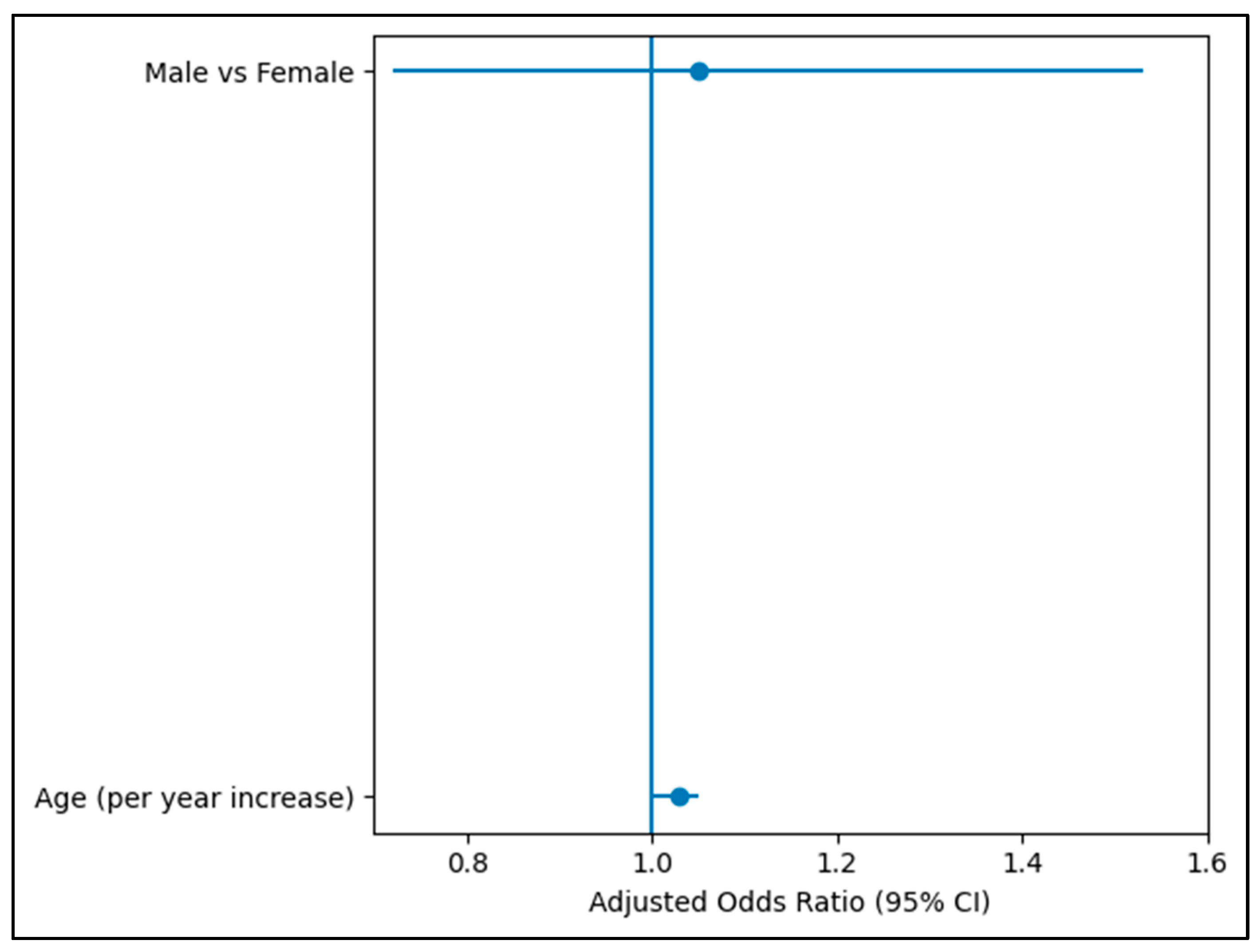
A multivariable logistic regression model was constructed to assess factors independently associated with feeling pressured to prescribe antibiotics. After adjustment, age demonstrated a borderline association with perceived prescribing pressure (adjusted OR = 1.03 per year increase, 95% CI: 1.00–1.05; p = 0.053). Gender was not significantly associated with perceived pressure (adjusted OR = 1.05; 95% CI: 0.72–1.53; p = 0.795) (Table 9).
Figure 1 Forest plot of adjusted odds ratios (AORs) for factors associated with physicians feeling pressured to prescribe antibiotics. The vertical line represents an odds ratio (OR) of 1.0 (no association). Age was not significantly associated with perceived prescribing pressure (adjusted OR = 1.03 per year increase, 95% CI: 1.00–1.05; p = 0.053). Male physicians did not differ significantly from female physicians (AOR = 1.05; 95% CI: 0.72–1.53; p = 0.795). Confidence intervals crossing 1.0 indicate a lack of statistical significance. Although age demonstrated did not reach statistical significance in the unadjusted analysis, it did not reach conventional statistical significance after adjustment.

3. Discussion

This study assessed physicians’ knowledge, attitudes, and antibiotic prescribing practices in two high-demand healthcare environments in Saudi Arabia. Overall, physicians demonstrated satisfactory foundational knowledge regarding antimicrobial resistance and common bacterial pathogens; however, prescribing decisions were frequently influenced by contextual factors such as workload pressure and patient expectations. High-intensity healthcare environments such as the Hajj pilgrimage present unique antimicrobial stewardship challenges due to sudden surges in patient volume, diagnostic uncertainty, and time pressure on clinicians. These contextual pressures may lower prescribing thresholds and increase the likelihood of unnecessary antibiotic use, highlighting the need for structured stewardship interventions in such settings.

3.1. Clinical Knowledge and Foundational Competence

Antibiotics remain indispensable in the management of bacterial infections; however, their clinical value depends entirely on appropriate selection, dosing, duration, and patient-specific considerations. The present study demonstrates that most participating physicians correctly identified common bacterial pathogens responsible for respiratory tract infections, including Streptococcus pneumoniae, Haemophilus influenzae, and Moraxella catarrhalis. This indicates adequate foundational microbiological knowledge. Nevertheless, the epidemiology of URTIs is dynamic and frequently viral in origin, and inappropriate empirical antibiotic prescribing remains common globally.
The safe use of antibiotics in special populations particularly pregnant women remains a critical area of practice. Antibiotic exposure during pregnancy must be carefully evaluated because certain agents, such as tetracyclines and fluoroquinolones, are associated with fetal risks, whereas beta-lactams and selected other agents are generally considered safer alternatives when clinically indicated [13]. Routine inquiry about pregnancy status before prescribing antibiotics is therefore not only a clinical best practice but also a patient safety imperative. Our findings suggest variability in this regard, indicating that safety screening protocols should be strengthened within prescribing workflows.

3.2. Perceived Benefits, Misconceptions, and Secondary Bacterial Infections

Although the majority of physicians acknowledged the role of vaccination and health awareness in reducing infectious disease burden, a proportion still perceived antibiotics as beneficial for preventing secondary bacterial infections. This reflects a nuanced misconception. Prevention of secondary bacterial infection is not achieved through prophylactic antibiotic use in uncomplicated viral illness; rather, it depends on appropriate management and monitoring of the primary infection. Unwarranted prophylactic prescribing may paradoxically increase resistance selection pressure. These findings highlight the need to reinforce updated evidence-based guidance regarding indications for antibiotic therapy.

3.3. Communication, Gender Differences, and Patient-Centered Care

Gender-associated differences were observed in perceptions related to patient expectations and education. Evidence from primary care settings indicates that communication style and empathic engagement may vary by physician gender, potentially influencing patient interactions and decision-making processes [14,15,16]. Female physicians often demonstrate higher empathic communication patterns, whereas male physicians may emphasize directive clinical decision-making. These patterns may influence how physicians interpret and respond to perceived patient pressure [17].
However, stewardship effectiveness depends less on demographic characteristics and more on structured communication strategies. Training physicians to manage expectations through clear explanations, delayed prescribing approaches when appropriate, and safety-netting advice has been shown to reduce unnecessary antibiotic prescriptions without compromising patient satisfaction [18,19]. Thus, communication skills training should be integrated into antimicrobial stewardship programs (ASPs).

3.4. Workload, Patient Expectations, and Prescribing Pressure

One of the most notable findings in this study is the influence of workload and perceived patient expectations on prescribing behavior. A substantial proportion of physicians reported being more likely to prescribe antibiotics under high workload conditions. This aligns with international evidence demonstrating that contextual pressures including time constraints, consultation fatigue, and perceived demand lower prescribing thresholds even when clinical indication is uncertain [20].
Importantly, stewardship research increasingly emphasizes that inappropriate prescribing is rarely driven by knowledge deficits alone; rather, it emerges from system-level and behavioral factors. Experienced antimicrobial stewardship leaders note that prescribing behavior must be addressed through structural interventions rather than relying solely on educational messaging [21]. Therefore, addressing workload-associated prescribing pressure requires institutional support, workflow redesign, and real-time decision support mechanisms.
An important observation in this study is that many physicians indicated that a patient’s financial situation can influence the choice of antibiotics. This finding likely reflects the realities of everyday clinical practice, where the cost and availability of medications, as well as the patient’s ability to afford them, can affect adherence to treatment. In such situations, physicians may opt for more affordable or readily available options, even if other antibiotics might be more appropriate from a clinical perspective. While this approach may support patient adherence, it can also lead to variation in prescribing practices and highlights the importance of ensuring equitable access to effective antimicrobial therapy.

3.5. Years of Experience and Knowledge Gradients

The study demonstrated that physicians with more than ten years of experience showed stronger agreement regarding the relationship between irrational antibiotic use and adverse outcomes. This is consistent with evidence suggesting that cumulative clinical exposure enhances risk recognition and prescribing confidence. However, the observed knowledge variability among mid-career physicians suggests the need for targeted continuing professional development interventions.
Modern medical education literature supports competency-based and case-driven training approaches rather than passive educational sessions [22]. Continuous professional development that incorporates local resistance patterns, case audits, and feedback can bridge these gaps and standardize prescribing behaviors across experience levels.

3.6. Practical Counseling: Storage, Missed Doses, and Adherence

Practical aspects of antibiotic counseling were variably addressed by participants. Proper storage of reconstituted oral antibiotic suspensions is essential to maintain pharmacological stability and therapeutic efficacy. Certain formulations require refrigeration to preserve potency, while others remain stable at room temperature; inappropriate storage may lead to reduced efficacy and perceived treatment failure [14].
Similarly, guidance regarding missed doses and course completion remains central to adherence and resistance prevention. Although most participants emphasized completion of therapy, modern stewardship also supports evidence-based shorter treatment durations where appropriate. Rational prescribing therefore requires balancing adequate duration with minimizing unnecessary exposure.

3.7. From Knowledge to Systems: The Stewardship Imperative

While awareness levels were generally satisfactory, awareness alone does not translate into optimal prescribing behavior. Antimicrobial stewardship programs are designed to operationalize rational antibiotic use through structured accountability, guideline implementation, audit and feedback, and multidisciplinary oversight [16,23].
  • Recent stewardship models emphasize several core components;
  • Leadership commitment and accountability;
  • Evidence-based prescribing pathways aligned with resistance data;
  • Diagnostic stewardship to reduce uncertainty-driven prescribing;
  • Prospective audit and feedback;
  • Education is integrated with real-time clinical decision support;
  • Measurement of prescribing indicators.
Global frameworks such as the World Health Organization (WHO) AWaRe classification provide structured guidance for antibiotic selection by promoting the preferential use of “Access” antibiotics and restricting unnecessary prescribing of “Watch” and “Reserve” agents to reduce resistance pressure while preserving clinical effectiveness [24,25]. The AWaRe framework was developed as part of the WHO Global Action Plan on Antimicrobial Resistance to support stewardship implementation and national monitoring of antibiotic consumption patterns [24]. Recent analyses have demonstrated that increasing the proportion of Access-group antibiotics within hospital formularies is associated with improved stewardship performance indicators and lower resistance selection pressure [25]. Incorporating AWaRe principles into institutional prescribing pathways, particularly in high-demand settings, may therefore strengthen antimicrobial stewardship efforts while maintaining therapeutic efficacy. Thus, incorporating the WHO AWaRe classification into institutional prescribing pathways may support more rational antibiotic selection and reduce resistance selection pressure.

3.8. Proposed Framework for Rational Antibiotic Use

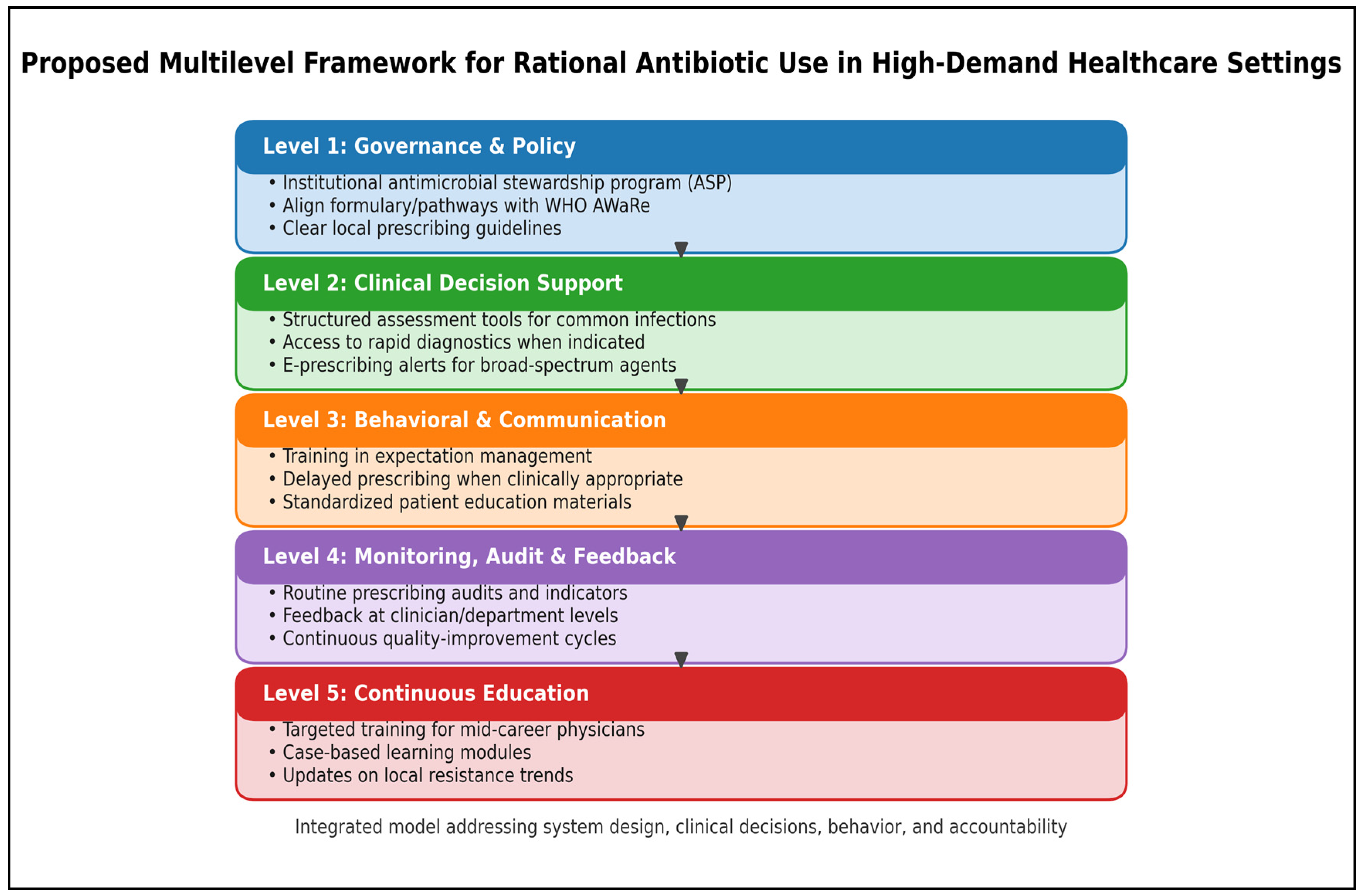
Based on the findings of this study and contemporary stewardship principles, in Figure 2, we propose this framework synthesizes the study findings with contemporary antimicrobial stewardship principles by organizing interventions into five linked levels: (1) Governance & Policy (formal ASP adoption, local guidelines, and alignment with the WHO AWaRe classification), (2) Clinical Decision Support (structured assessment tools, access to diagnostics, and electronic alerts for broad-spectrum prescribing), (3) Behavioral & Communication (training in expectation management, delayed prescribing when appropriate, and standardized education materials), (4) Monitoring, Audit & Feedback (routine audits, prescriber/department feedback, and quality-improvement cycles), and (5) Continuous Education (targeted upskilling especially for mid-career physicians and updates on local resistance trends). The model emphasizes that sustainable improvement requires coordinated system-level design and accountability rather than relying only on individual knowledge [26,27,28].

4. Subjects and Methods

4.1. Study Design and Setting

A cross-sectional analytic study was conducted between June and August 2024 in Makkah and Al-Madinah, Saudi Arabia. Makkah and Al-Madinah are the two holiest cities in Saudi Arabia and host some of the largest recurring mass gatherings worldwide. In recent years, Hajj has brought approximately 1.8–2.5 million pilgrims annually within a few days, while Umrah attracts more than 10 million visitors each year across all seasons. Under Saudi Vision 2030, the Kingdom aims to increase the number of Umrah pilgrims to 30 million annually by 2030. These sustained and seasonal population surges place exceptional pressure on healthcare systems, generating a high-intensity clinical environment that demands efficient, evidence-based medical practice, including rational and careful antibiotic prescribing.

4.2. Study Population

The study targeted licensed physicians aged ≥24 years who were practicing in hospitals located in Makkah or Al-Madinah, including those participating in healthcare services during the Hajj season.

4.3. Inclusion and Exclusion Criteria

Eligible participants were physicians who routinely prescribe antibiotics as part of their clinical duties. These included physicians working in hospital settings in Makkah or Al-Madinah and those involved in Hajj-related healthcare services.
Medical students, interns, dentists, and healthcare providers not authorized to prescribe antibiotics were excluded. Physicians whose specialties do not typically involve antibiotic prescribing (e.g., radiology and psychiatry) were also excluded.

4.4. Sample Size Calculation

The minimum required sample size was calculated using the RaoSoft® sample size calculator [29]. Based on an estimated target population of 8887 physicians, as reported in the Ministry of Health Statistical Annual Yearbook 2022 [30], the following assumptions were applied: 95% confidence level, anticipated response distribution of 50%, and design effect of 1. The calculated minimum sample size was 369 participants. To account for potential incomplete responses, the target sample was increased to 400 participants.

4.5. Study Instrument

Data were collected using a structured, self-administered electronic questionnaire in English. The instrument was adapted from a previously validated survey assessing physicians’ knowledge of antibiotic prescribing in respiratory tract infections in primary healthcare centers in Qassim [10]. The questionnaire was reviewed for clarity and contextual relevance before distribution. It comprised three sections: informed consent, demographic information, and items assessing knowledge, attitudes, and practices related to antibiotic use.

4.6. Study Procedures

The questionnaire was developed using Google Forms and distributed electronically. Eligible physicians received the survey link along with a brief explanation of the study objectives. Participation was voluntary. The survey link was circulated through professional communication channels and social media platforms commonly used by physicians in the target cities. Data collection was monitored to ensure completeness and data integrity.

4.7. Data Collection and Statistical Analysis

Data was analyzed using the Statistical Package for the Social Sciences (SPSS), version 22.0 (IBM Corp., Armonk, NY, USA). Continuous variables were presented as mean ± standard deviation (SD) for normally distributed data or median with range for non-normally distributed data. Categorical variables were summarized as frequencies and percentages. Some questionnaire items allowed multiple responses. Therefore, percentages for these variables may exceed 100%. Missing responses were excluded from analysis on a per-item basis.
Comparisons between groups were performed using the independent Student’s t-test or Mann–Whitney U test for continuous variables, as appropriate. Associations between categorical variables were assessed using the Chi-square test. A two-tailed p-value < 0.05 was considered statistically significant. The confidence interval (CI) was set at 95%.

4.8. Ethical Considerations

Ethical approval was obtained from the Institutional Review Board of Umm Al-Qura University (Approval No. HAPO-02-K-012-2024-10-2249) prior to study initiation. Participation was voluntary, and responses were collected anonymously. No identifying information was obtained. Data were stored securely and accessible only to the research team. Confidentiality was maintained throughout all stages of the study.

5. Limitations and Future Directions

This study has limitations that should be acknowledged. The reliance on self-administered responses introduces the possibility of reporting bias, as participants may unintentionally overstate adherence to recommended prescribing practices or their level of knowledge. The cross-sectional nature of the design limits interpretation to associations observed at a single time point and does not permit conclusions regarding causal pathways or changes over time. Furthermore, the sample was confined to physicians practicing in Makkah and Al-Madinah. Although these cities represent high-demand healthcare settings, regional variation across the Kingdom may limit the broader applicability of the findings. Additionally, some questionnaire items did not include all clinically appropriate response options. For example, the question regarding antibiotic intake in relation to meals did not include the option “depends on the antibiotic,” although this is clinically relevant. This may have influenced respondents’ answers and limited the interpretation of this finding. Notwithstanding these limitations, the results highlight specific domains that require attention. Strengthening formal training in antimicrobial prescribing at both undergraduate and postgraduate levels may address identified knowledge gaps. Periodic Continuing Medical Education activities grounded in current national and international recommendations, together with updates on local resistance trends, would further support appropriate prescribing behavior. Institutional antimicrobial stewardship programs, supported by clearly defined local protocols, remain central to optimizing antibiotic use.
Routine monitoring of prescribing patterns, coupled with structured feedback mechanisms, may enhance compliance with established guidelines. Educational efforts targeting both clinicians and patients should aim to clarify appropriate indications for antibiotic therapy and address misconceptions regarding their effectiveness. When clinically feasible, encouraging microbiological confirmation before initiation of broad-spectrum agents may contribute to more precise treatment decisions.
Future investigations should evaluate system-level strategies designed to reduce pressure in high-workload environments. The integration of clinical decisions supports tools and audit-driven feedback systems warrants further exploration. Additionally, research focusing on communication strategies that align patient expectations with evidence-based care may help mitigate demand-driven antibiotic use.

6. Conclusions

This study provides an updated assessment of physicians’ knowledge, attitudes, and prescribing practices regarding antibiotic use and antimicrobial resistance in two of the Kingdom’s highest-demand healthcare settings. Overall, physicians demonstrated satisfactory foundational knowledge of common bacterial pathogens and acknowledged the risks associated with irrational antibiotic use. However, prescribing behavior was influenced by contextual factors, particularly workload pressure and perceived patient expectations.
Although awareness of antimicrobial resistance was high, gaps were observed in areas related to practical counseling, individualized application of guidelines, and management of patient-driven demand. Age and professional experience showed limited influence on perceived prescribing pressure after multivariable adjustment, indicating that structural and system-level determinants may play a more decisive role than individual characteristics.
The findings underscore that improving antibiotic use requires more than knowledge reinforcement. Sustainable progress depends on strengthening institutional antimicrobial stewardship programs, integrating decision-support tools into routine practice, aligning prescribing pathways with WHO AWaRe principles, and implementing continuous audit and feedback mechanisms.
In high-demand environments such as Makkah and Al-Madinah, where clinical workload is substantial and patient turnover is high, structured stewardship interventions are essential to safeguard therapeutic effectiveness while limiting resistance selection pressure. A coordinated, multilevel framework that integrates governance, clinical decision support, behavioral strategies, monitoring systems, and continuous education may provide a practical pathway toward rational antibiotic use and long-term antimicrobial resistance containment.

Author Contributions

Conceptualization, N.H.H. and M.A.G.; methodology, N.H.H., M.A.G., and H.M.A. (Hanin Mohammed Alsaedi); software, H.M.Q. and H.A.A.; validation, N.H.H., M.A.G., and H.M.A. (Heba M. Adly); formal analysis, H.M.A. (Hanin Mohammed Alsaedi), M.A.J., M.A.G., S.M.A., and N.S.B.; investigation, H.M.A. (Hanin Mohammed Alsaedi)., B.F.A., T.A.A., K.A.B., and D.J.A.; resources, M.H.A., S.A.K.S., and N.H.H.; data curation, H.M.Q., M.A.J., and H.A.A.; writing—original draft preparation, H.M.A. (Heba M. Adly), B.F.A., T.A.A., K.A.B., D.J.A., and H.A.A.; writing—review and editing, H.M.A. (Heba M. Adly), N.H.H., S.A.K.S., and M.A.G.; visualization, H.M.Q., M.A.J., H.A.A., S.M.A., and N.S.B.; supervision, H.M.A. (Heba M. Adly); project administration, H.M.A. (Heba M. Adly); funding acquisition, S.A.K.S. and H.M.A. (Heba M. Adly). All authors have read and agreed to the published version of the manuscript.

Funding

This research work was funded by Umm Al-Qura University, Saudi Arabia, under grant number 26UQU4240001GSSR02.

Institutional Review Board Statement

Ethical approval was obtained from the Institutional Review Board of Umm Al-Qura University (Approval No. HAPO-02-K-012-2024-10-2249) prior to study initiation. Participation was voluntary, and responses were collected anonymously. No identifying information was obtained. Data were stored securely and accessible only to the research team. Confidentiality was maintained throughout all stages of the study.

Informed Consent Statement

At the beginning of the survey, participants were presented with a binary (yes/no) consent statement, describing the study’s aims, emphasizing voluntary participation, and ensuring confidentiality and data protection. No financial or material incentives were offered. Respondents retained the right to discontinue participation at any stage during the completion of the questionnaire without consequence.

Data Availability Statement

Data available on request.

Acknowledgments

This research work was funded by Umm Al-Qura University, Saudi Arabia under grant number 26UQU4240001GSSR02.

Conflicts of Interest

The authors declare no conflicts of interest.

References

  1. World Health Organization. Antimicrobial Resistance; World Health Organization: Geneva, Switzerland, 2024. [Google Scholar]
  2. Remesh, A.; Gayathri, A.M.; Singh, R.; Retnavally, K.G. The knowledge, attitude and perception of prescribers on the rational use of antibiotics and the need for an antibiotic policy: A cross-sectional survey in a tertiary care hospital. J. Clin. Diagn. Res. 2013, 7, 675–679. [Google Scholar] [CrossRef] [PubMed]
  3. Higuita-Gutiérrez, L.F.; Roncancio Villamil, G.E.; Jiménez Quiceno, J.N. Knowledge, attitude, and practice regarding antibiotic use and resistance among medical students in Colombia: A cross-sectional descriptive study. BMC Public Health 2020, 20, 1861. [Google Scholar] [CrossRef]
  4. World Health Organization. 2019 WHO AWaRe Classification Database of Antibiotics for Evaluation and Monitoring of Use; World Health Organization: Geneva, Switzerland, 2019. [Google Scholar]
  5. Ministry of Health, Saudi Arabia. Health Requirements for Pilgrims; Ministry of Health: Riyadh, Saudi Arabia. Available online: https://www.moh.gov.sa/en/healthawareness/pilgrims-health/pages/default.aspx (accessed on 1 April 2026).
  6. Jairoun, A.; Hassan, N.; Ali, A.; Jairoun, O.; Shahwan, M. Knowledge, attitude and practice of antibiotic use among university students: A cross-sectional study in UAE. BMC Public Health 2019, 19, 518. [Google Scholar] [CrossRef] [PubMed]
  7. Oh, A.L.; Hassali, M.A.; Al-Haddad, M.S.; Sulaiman, S.A.S.; Shafie, A.A.; Awaisu, A. Public knowledge and attitudes towards antibiotic usage: A cross-sectional study among the general public in the state of Penang, Malaysia. J. Infect. Dev. Ctries. 2011, 5, 338–347. [Google Scholar]
  8. Abera, B.; Kibret, M.; Mulu, W. Knowledge and beliefs on antimicrobial resistance among physicians and nurses in hospitals in Amhara Region, Ethiopia. BMC Pharmacol. Toxicol. 2014, 15, 26. [Google Scholar] [CrossRef]
  9. Althagafi, N.S.; Othman, S.S. Knowledge, attitude, and practice of antibiotics use among primary healthcare physicians, Ministry of Health, Jeddah. J. Family Med. Prim. Care 2022, 11, 4382–4388. [Google Scholar] [CrossRef]
  10. Al-Homaidan, H.T.; Barrimah, I.E. Physicians’ knowledge, expectations, and practice regarding antibiotic use in primary health care. Int. J. Health Sci. 2018, 12, 18–24. [Google Scholar]
  11. World Health Organization. Global Antimicrobial Resistance and Use Surveillance System (GLASS) Report 2025; World Health Organization: Geneva, Switzerland, 2025. [Google Scholar]
  12. Abdallah, M.S.; Al Meanazel, O.T.; Alruwaili, M.M.; AlRasheed, H.A. Healthcare Workers’ Knowledge, Awareness, and Practices Regarding Antimicrobial Use, Resistance, and Stewardship in Saudi Arabia. Infect. Drug Resist. 2025, 18, 6035–6050. [Google Scholar] [CrossRef]
  13. Baadani, A.; Baig, K.; Alfahad, W.; Aldalbahi, S.; Omrani, A. Physicians’ knowledge, perceptions, and attitudes toward antimicrobial prescribing in Riyadh, Saudi Arabia. Saudi. Med. J. 2015, 36, 613–619. [Google Scholar] [CrossRef]
  14. Stanley, C.; Igala, S. Effect of different storage conditions on the stability and efficacy of some reconstituted oral antibiotic suspensions sold in Port Harcourt, Nigeria. J. Pharm. Res. Int. 2018, 20, 1–10. [Google Scholar] [CrossRef]
  15. Bookstaver, P.B.; Bland, C.M.; Griffin, B.; Stover, K.R.; Eiland, L.S.; McLaughlin, M. A review of antibiotic use in pregnancy. Pharmacotherapy 2015, 35, 1052–1062. [Google Scholar] [CrossRef]
  16. Surchat, C.; Carrard, V.; Gaume, J.; Berney, A.; Clair, C. Impact of physician empathy on patient outcomes: A gender analysis. Br. J. Gen. Pract. 2022, 72, e99–e107. [Google Scholar] [CrossRef]
  17. Bertakis, K.D.; Azari, R. Patient-centered care: The influence of patient and resident physician gender and gender concordance in primary care. J. Womens Health 2012, 21, 326–333. [Google Scholar] [CrossRef]
  18. Barlam, T.F. The state of antibiotic stewardship programs in 2021: The perspective of an experienced steward. Antimicrob. Steward. Healthc. Epidemiol. 2021, 5, e20. [Google Scholar] [CrossRef] [PubMed]
  19. Machowska, A.; Stålsby Lundborg, C. Drivers of irrational use of antibiotics in Europe. Int. J. Environ. Res. Public Health 2019, 16, 27. [Google Scholar] [CrossRef] [PubMed]
  20. Finch, R.G.; Metlay, J.P.; Davey, P.G.; Baker, L.J. Educational interventions to improve antibiotic use in the community: Report from the International Forum on Antibiotic Resistance (IFAR) colloquium, 2002. Lancet Infect. Dis. 2004, 4, 44–53. [Google Scholar] [CrossRef] [PubMed]
  21. Madle, G.; Kostkova, P.; Mani-Saada, J.; Weinberg, J.; Williams, P. Changing public attitudes to antibiotic prescribing: Can the internet help? J. Innov. Health Inform. 2004, 12, 19–26. [Google Scholar] [CrossRef]
  22. Christensen, I.; Haug, J.B.; Berild, D.; Bjørnholt, J.V.; Skodvin, B.; Jelsness-Jørgensen, L.-P. Factors affecting antibiotic prescription among hospital physicians in a low-antimicrobial-resistance country: A qualitative study. Antibiotics 2022, 11, 98. [Google Scholar] [CrossRef]
  23. World Health Organization. The world medicines situation report 2011. In The World Medicines Situation Report 2011; World Health Organization: Geneva, Switzerland, 2011. [Google Scholar]
  24. Challa, K.T.; Sayed, A.; Acharya, Y. Modern techniques of teaching and learning in medical education: A descriptive literature review. MedEdPublish 2021, 10, 18. [Google Scholar] [CrossRef]
  25. Rice, L.B. Antimicrobial stewardship and antimicrobial resistance. Med. Clin. N. Am. 2018, 102, 805–818. [Google Scholar] [CrossRef]
  26. World Health Organization. Practical Toolkit for Antimicrobial Stewardship Programmes in Healthcare Facilities in Low- and Middle-Income Countries: 2024 Update; WHO: Geneva, Switzerland, 2024. [Google Scholar]
  27. Pulcini, C.; Binda, F.; Lamkang, A.S.; Trett, A.; Charani, E.; Goff, D.A.; Harbarth, S.; Hinrichsen, S.L.; Levy-Hara, G.; Mendelson, M.; et al. Developing core elements and checklist items for global hospital antimicrobial stewardship programmes: A consensus approach. Clin. Microbiol. Infect. 2019, 25, 20–25. [Google Scholar] [CrossRef] [PubMed]
  28. World Health Organization. Draft Global Action Plan on Antimicrobial Resistance 2026–2036; World Health Organization: Geneva, Switzerland, 2026. [Google Scholar]
  29. Raosoft, Inc. Sample Size Calculator. Available online: http://www.raosoft.com/samplesize.html (accessed on 20 February 2026).
  30. Ministry of Health, Saudi Arabia. Statistical Yearbook. Available online: https://www.moh.gov.sa/en/Ministry/Statistics/book/Pages/default.aspx (accessed on 1 April 2026).
Figure 1. Adjusted Odds Ratios for Factors Associated with Feeling Pressured to Prescribe Antibiotics.
Antibiotics 15 00376 g001
Figure 2. Proposed Multilevel Framework for Rational Antibiotic Use in High-Demand Healthcare Settings (Makkah and Al-Madinah).
Antibiotics 15 00376 g002
Table 1. Demographic and professional characteristics (n = 487).
Characteristicn (%)
Age (Years)30 (28, 35)
Sex
Female167 (34%)
Male320 (66%)
Nationality
Non-Saudi48 (9.8%)
Saudi439 (90%)
Place of work
Al-Madinah266 (55%)
Makkah193 (40%)
Volunteering in Hajj28 (5.7%)
Degree
Bachelor’s degree223 (46%)
Diploma43 (8.8%)
Master’s degree136 (28%)
PhD/MD/Fellowship85 (17%)
Specialty
Internal medicine99 (20%)
General practitioner77 (16%)
Family medicine68 (14%)
Pediatric66 (13%)
Emergency medicine60 (12%)
General surgery49 (9.9%)
* Obs/GYN24 (4.8%)
* ENT21 (4.2%)
Others19 (4.0%)
Orthopedics4 (0.8%)
Experience
Less than 5 years219 (45%)
5–10 years193 (40%)
More than 10 years75 (15%)
* Obs/GYN: Obstetrics and Gynecology; ENT: Ear, Nose, and Throat.
Table 2. Knowledge of antibiotics among physicians (n = 487).
Characteristicn (%)
Common bacterial pathogens causing respiratory tract infections *
Streptococcus pneumoniae398 (81.7%)
Haemophilus influenzae322 (66.1%)
Moraxella catarrhalis239 (49.1%)
Staphylococcus aureus162 (33.3%)
Atypical bacteria110 (22.6%)
Group A beta-hemolytic streptococci92 (18.9%)
Viridans streptococci36 (7.4%)
Factors contributing to the decline in morbidity and mortality from infectious diseases *
Vaccination322 (66.1%)
Health awareness and education305 (62.6%)
Use of antibiotics234 (48.0%)
Early diagnosis and treatment212 (43.5%)
Improvement of nutrition and hygiene184 (37.8%)
Technological improvement111 (22.8%)
Antibiotics lead to relief of symptoms
No72 (14.8%)
Yes415 (85.2%)
Estimated effect of antibiotics on symptom relief
Great253 (52.0%)
Moderate165 (33.9%)
Mild69 (14.2%)
Effect of antibiotics in preventing secondary bacterial infection in viral illness
Great48 (9.9%)
Moderate143 (29.4%)
Mild296 (60.8%)
Common side effects of antibiotic use *
Drug resistance363 (74.5%)
Disruption of normal flora (reduced immunity)350 (71.9%)
Gastrointestinal upset326 (66.9%)
Allergic reactions227 (46.6%)
General symptoms (e.g., headache, fever)48 (9.9%)
Taking antibiotics as prescribed minimizes side effects
Yes429 (88.1%)
No58 (11.9%)
Taking antibiotics without rational indication increases side effects
Yes443 (91.0%)
No44 (9.0%)
Factors contributing to antibiotic resistance *
Overuse of antibiotics368 (75.6%)
Misuse of antibiotics353 (72.5%)
Patient noncompliance181 (37.2%)
Inadequate sanitation and hygiene79 (16.2%)
* Percentages are calculated based on available responses. Some questions allowed multiple answers; therefore, totals may exceed 100%. Severity categories were self-reported by participants and reflect perceived clinical importance.
Table 3. Attitude towards antibiotic use among physicians.
CharacteristicNoYes
Do you think that previous use of antibiotics increases a person’s risk of acquiring drug resistance infection? 51 (10%)436 (90%)
Do you feel under pressure if your patient expects an antibiotic prescription227 (47%)260 (53%)
If your workload is high, are you more likely to prescribe antibiotics to relieve patient worry quickly375 (77%)112 (23%)
Do you think that if a prescription is issued, the consultation will be short251 (52%)236 (48%)
If you do not prescribe antibiotics, patients will feel their illnesses are not taken seriously. 176 (36%)311 (64%)
Do you think that educating patient regarding antibiotic use will affect their expectation in later consultation68 (14%)419 (86%)
The patient’s economic condition affects your selection of the prescribed antibiotics123 (25%)364 (75%)
Are there guidelines regarding antibiotic use in your institution59 (12%)428 (88%)
If yes, do these guidelines affect your selection of the prescribed antibiotics46 (11%)378 (89%)
I believe using guidelines for antibiotics use is needed for proper patient care. 30 (6.2%)457 (93.8%)
The available guidelines for antibiotic use do not consider the individual variation of patients’ needs.224 (46%)263 (54%)
Do you support a regulation prohibiting antibiotic prescription without laboratory confirmation of bacterial infection? 177 (36%)310 (64%)
Percentages are calculated based on available responses; totals may not equal the overall sample size due to missing data.
Table 4. Practices of antibiotic prescription among physicians.
CharacteristicAlwaysUsuallySometimesNever
Which of the following advice do you give to him/her?
Proper use of antibiotics shortens the duration of illness282 (58%)156 (32%)42 (8.6%)7 (1.4%)
When you feel better, stop taking the further antibiotic55 (11%)110 (23%)64 (13%)258 (53%)
Save the remaining antibiotics for the next time you get sick47 (9.7%)67 (14%)66 (14%)307 (63%)
Discard the remaining leftover antibiotic151 (31%)132 (27%)146 (30%)58 (12%)
You can give the leftover antibiotic to your friend/family member if they get sick42 (8.6%)56 (11%)64 (13%)325 (67%)
Complete the full course of treatment349 (72%)91 (19%)41 (8.4%)6 (1.2%)
Do not repeat the treatment without consultation298 (61%)123 (25%)58 (12%)8 (1.6%)
Do not stop the treatment without consultation298 (61%)135 (28%)47 (9.7%)7 (1.4%)
Do not decrease or increase the dosage without consultation323 (66%)110 (23%)48 (9.9%)6 (1.2%)
Inform him/her about the side effects of the prescribed antibiotic306 (63%)121 (25%)54 (11%)6 (1.2%)
Table 5. Advice related to antibiotic prescription (n = 487).
Characteristicn = 487
Advice to the patient to take the prescribed antibiotic in relation to meal
After meal310 (64%)
Before meal86 (18%)
During meal53 (11%)
It does not matter38 (7.8%)
Advice to the patient regarding the storage of the prescribed antibiotic
According to the type187 (38%)
Cold, dry place away from pediatric1 (0.2%)
In a place exposed to the sun32 (6.6%)
In the refrigerator108 (22%)
In the room temperature159 (33%)
Advice when patient experienced adverse effects
Consult the doctor immediately397 (82%)
Stop taking the antibiotic256 (53%)
Induce vomiting70 (14%)
Ask women about her pregnancy status when prescribing antibiotic
Always258 (53%)
Never24 (5.0%)
Occasionally93 (19%)
Only if antibiotics can affect fetus112 (23%)
Ask your patient about history of allergies when prescribe antibiotic
Always353 (72%)
Never27 (5.5%)
Occasionally69 (14%)
Only if antibiotics can cause allergy38 (7.8%)
Advice to patients who miss a dose
Double the next dose62 (13%)
Resume with the next dose334 (69%)
Take the dose when you remember91 (19%)
Percentages are calculated based on available responses. Some questions allowed multiple answers; therefore, totals may exceed 100%.
Table 6. Association between age (median, IQR) and knowledge and attitudes toward antibiotic use.
Characteristicn 1 = 487p-Value 2
If antibiotics are taken as prescribed will this minimize the side effects 0.3
No31 (28, 36)
Yes30 (28, 35)
If antibiotics are taken without rational indication, will this increase the side effects 0.2
No30 (28, 32)
Yes30 (28, 35)
Do you think that previous use of antibiotic increases person risk of acquiring drug resistance infection 0.2
No30 (29, 34)
Yes30 (28, 35)
Feel under pressure if your patient expects antibiotic prescription <0.001
No29 (28, 32)
Yes31 (28, 36)
If your work load is high, are you more likely to prescribe antibiotics to relieve patient worry quickly 0.089
No30 (28, 35)
Yes30 (28, 32)
Think that if a prescription is issued, the consultation will be short 0.8
No30 (28, 35)
Yes30 (28, 34)
If you do not prescribe antibiotics, patients will feel their illnesses are not taken seriously 0.008
No29 (28, 33)
Yes31 (28, 36)
Think that educating patient regarding antibiotic use will have an effect on their expectation in later consultation 0.8
No30 (28, 32)
Yes30 (28, 35)
Patient economic condition affects your selection of the prescribed antibiotics 0.5
No31 (28, 36)
Yes30 (28, 34)
Is there guidelines regarding antibiotic use in your institution 0.2
No30 (28, 34)
Yes30 (28, 35)
If yes, do these guidelines affect your selection of the prescribed antibiotics 0.5
No30 (28, 33)
Yes30 (28, 35)
Unknown63
In my opinion, use of guidelines for antibiotics use are needed for proper patient care 0.9
No30 (28, 36)
Yes30 (28, 35)
The available guidelines for antibiotics use do not consider the individual variation of patients needs 0.7
No30 (28, 35)
Yes30 (28, 35)
Support a regulation to prohibit antibiotic prescription without laboratory confirmation of bacterial infection 0.2
No31 (28, 36)
Yes30 (28, 34)
1 Age: Median (IQR); 2 Wilcoxon rank sum test; Kruskal–Wallis rank sum test. Age is presented as median (IQR). Comparisons were performed using the Wilcoxon rank-sum test or Kruskal–Wallis test as appropriate.
Table 7. Association between gender, knowledge and attitude towards antibiotics.
CharacteristicFemale, n 1 = 167Male, n = 320p-Value 2
If antibiotics are taken as prescribed will this minimize the side effects 0.6
No18 (11%)40 (13%)
Yes149 (89%)280 (88%)
If antibiotics are taken without rational indication, will this increase the side effects 0.3
No18 (11%)26 (8.1%)
Yes149 (89%)294 (92%)
Do you think that previous use of antibiotic increases person risk of acquiring drug resistance infection 0.2
No22 (13%)29 (9.1%)
Yes145 (87%)291 (91%)
Feel under pressure if your patient expects antibiotic prescription 0.4
No82 (49%)145 (45%)
Yes85 (51%)175 (55%)
If your work load is high, are you more likely to prescribe antibiotics to relieve patient worry quickly 0.15
No135 (81%)240 (75%)
Yes32 (19%)80 (25%)
Think that if a prescription is issued, the consultation will be short 0.3
No81 (49%)170 (53%)
Yes86 (51%)150 (47%)
If you do not prescribe antibiotics, patients will feel their illnesses are not taken seriously 0.007
No74 (44%)102 (32%)
Yes93 (56%)218 (68%)
Think that educating patient regarding antibiotic use will have an effect on their expectation in later consultation 0.034
No31 (19%)37 (12%)
Yes136 (81%)283 (88%)
Patient economic condition affects your selection of the prescribed antibiotics 0.3
No47 (28%)76 (24%)
Yes120 (72%)244 (76%)
Is there guidelines regarding antibiotic use in your institution 0.092
No26 (16%)33 (10%)
Yes141 (84%)287 (90%)
If yes, do these guidelines affect your selection of the prescribed antibiotics 0.4
No13 (9.2%)33 (12%)
Yes128 (91%)250 (88%)
Unknown2637
In my opinion, use of guidelines for antibiotics use are needed for proper patient care 0.3
No13 (7.8%)17 (5.3%)
Yes154 (92%)303 (95%)
The available guidelines for antibiotics use do not consider the individual variation of patients needs 0.004
No92 (55%)132 (41%)
Yes75 (45%)188 (59%)
Support a regulation to prohibit antibiotic prescription without laboratory confirmation of bacterial infection 0.4
No56 (34%)121 (38%)
Yes111 (66%)199 (62%)
1 n (%); 2 Pearson’s Chi-squared test.
Table 8. Association between experience, knowledge and attitude towards antibiotics.
Characteristic5–10 Years,
n 1 = 193
Less Than 5 Years,
n = 219
More Than 10 Years,
n = 75
p-Value 2
If antibiotics are taken as prescribed will this minimize the side effects 0.016
No33 (17%)19 (8.7%)6 (8.0%)
Yes160 (83%)200 (91%)69 (92%)
If antibiotics are taken without rational indication, will this increase the side effects 0.010
No25 (13%)18 (8.2%)1 (1.3%)
Yes168 (87%)201 (92%)74 (99%)
Do you think that previous use of antibiotic increases person risk of acquiring drug resistance infection 0.11
No26 (13%)16 (7.3%)9 (12%)
Yes167 (87%)203 (93%)66 (88%)
Feel under pressure if your patient expects antibiotic prescription 0.5
No85 (44%)109 (50%)33 (44%)
Yes108 (56%)110 (50%)42 (56%)
If your work load is high, are you more likely to prescribe antibiotics to relieve patient worry quickly 0.4
No147 (76%)166 (76%)62 (83%)
Yes46 (24%)53 (24%)13 (17%)
Think that if a prescription is issued, the consultation will be short 0.7
No95 (49%)117 (53%)39 (52%)
Yes98 (51%)102 (47%)36 (48%)
If you do not prescribe antibiotics, patients will feel their illnesses are not taken seriously >0.9
No70 (36%)80 (37%)26 (35%)
Yes123 (64%)139 (63%)49 (65%)
Think that educating patient regarding antibiotic use will have an effect on their expectation in later consultation 0.9
No27 (14%)32 (15%)9 (12%)
Yes166 (86%)187 (85%)66 (88%)
Patient economic condition affects your selection of the prescribed antibiotics 0.6
No44 (23%)58 (26%)21 (28%)
Yes149 (77%)161 (74%)54 (72%)
Is there guidelines regarding antibiotic use in your institution >0.9
No23 (12%)26 (12%)10 (13%)
Yes170 (88%)193 (88%)65 (87%)
If yes, do these guidelines affect your selection of the prescribed antibiotics 0.14
No13 (7.7%)27 (14%)6 (9.4%)
Yes155 (92%)165 (86%)58 (91%)
Unknown252711
In my opinion, use of guidelines for antibiotics use is needed for proper patient care 0.5
No15 (7.8%)12 (5.5%)3 (4.0%)
Yes178 (92%)207 (95%)72 (96%)
The available guidelines for antibiotics use do not consider the individual variation of patients’ needs 0.2
No98 (51%)91 (42%)35 (47%)
Yes95 (49%)128 (58%)40 (53%)
Support a regulation to prohibit antibiotic prescription without laboratory confirmation of bacterial infection 0.8
No71 (37%)81 (37%)25 (33%)
Yes122 (63%)138 (63%)50 (67%)
1 n (%); 2 Pearson’s Chi-squared test; Fisher’s exact test.
Table 9. Multivariable Logistic Regression Analysis for Perceived Pressure to Prescribe Antibiotics.
VariableAdjusted OR95% CIp-Value
Age (per year increase)1.031.00–1.050.053
Male (vs Female)1.050.72–1.530.795
Disclaimer/Publisher’s Note: The statements, opinions and data contained in all publications are solely those of the individual author(s) and contributor(s) and not of MDPI and/or the editor(s). MDPI and/or the editor(s) disclaim responsibility for any injury to people or property resulting from any ideas, methods, instructions or products referred to in the content.