Prospective Evaluation of ESBL Risk Factors and Appropriateness of Empirical Therapy in Hospitalized Patients with Community-Onset Pyelonephritis
 , , , ,
Abstract
1. Introduction
2. Results
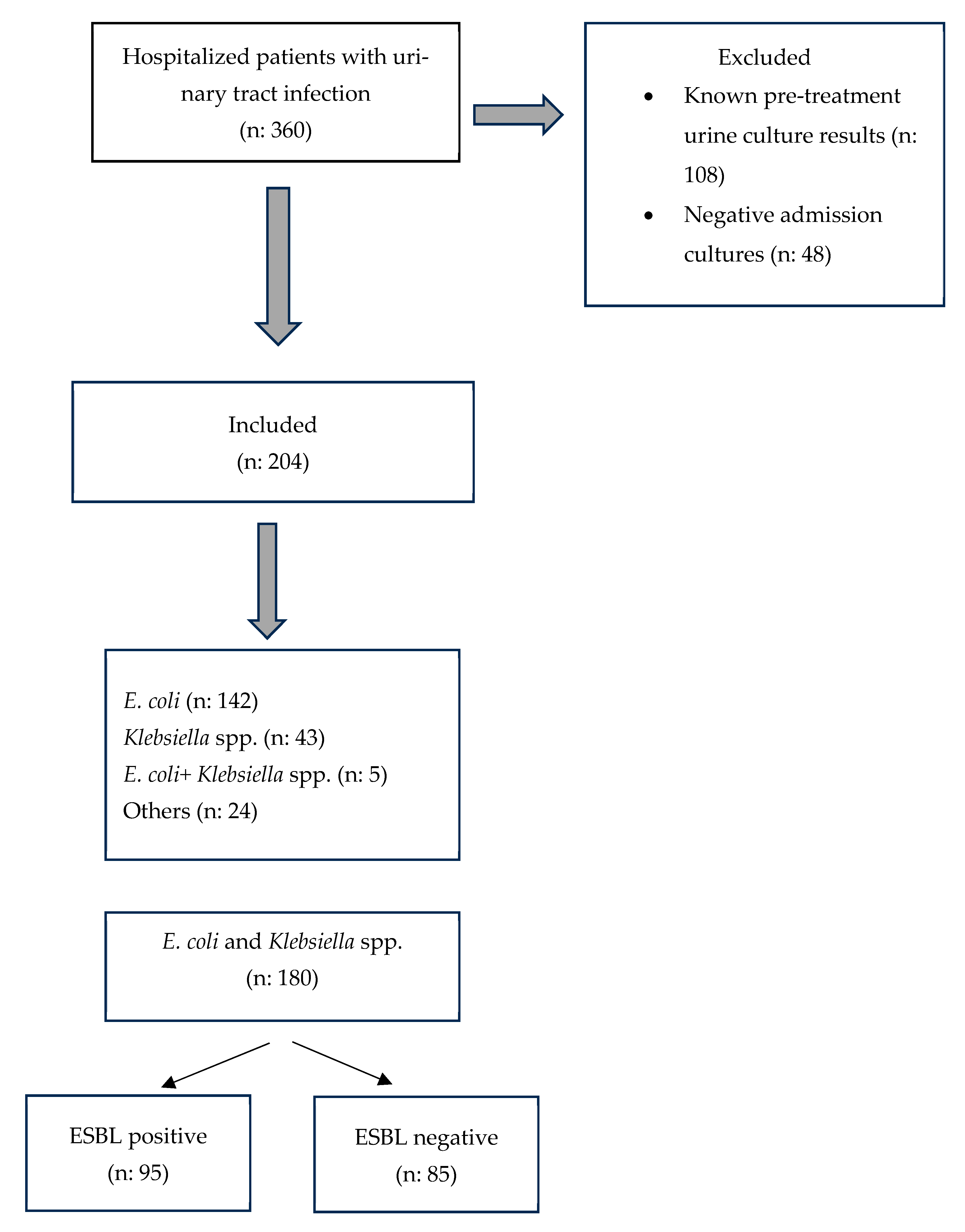
2.1. Study Population and Demographic Characteristics
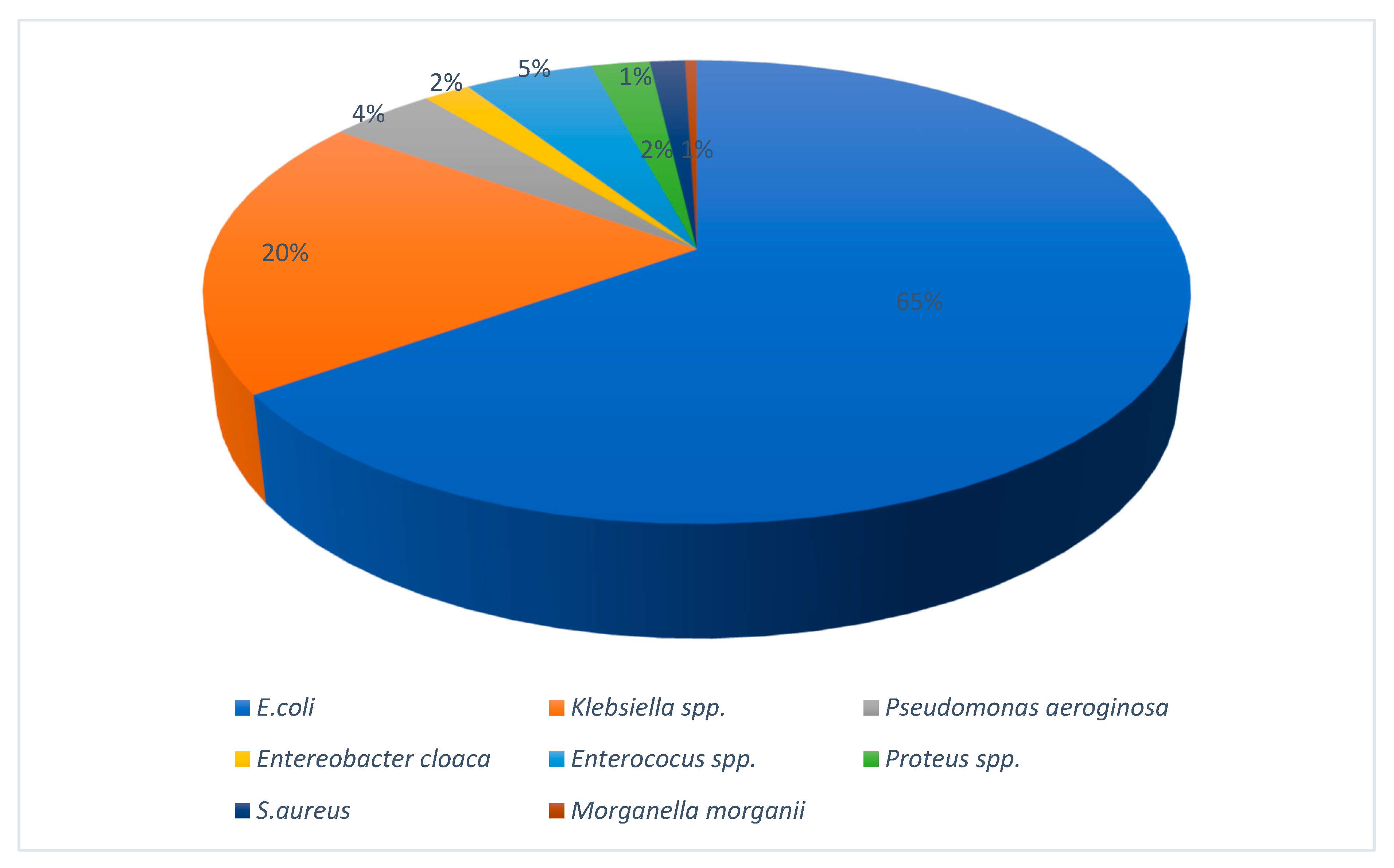
2.2. Microbiological Results
2.3. Distribution of ESBL and Associated Factors
2.4. Antimicrobial Susceptibility Results
2.5. Empirical Therapy and Treatment Modifications
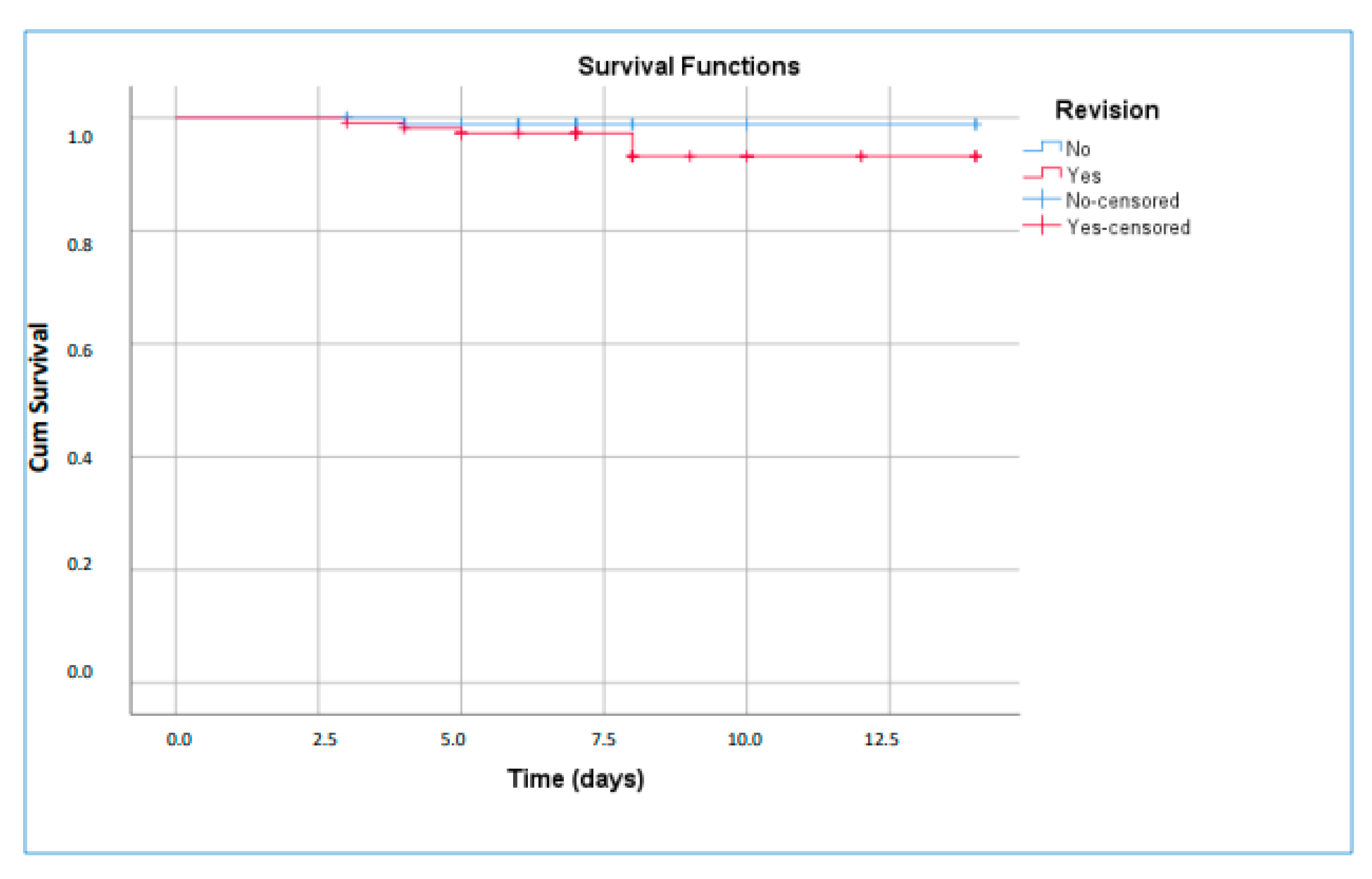
2.6. Clinical Outcomes and Mortality Rates
2.7. Changes in Laboratory Parameters and Imaging Findings
3. Discussion
4. Materials and Methods
4.1. Patient Selection and Study Population
4.2. Data Collection
4.3. Sample Processing and Microbiological Evaluation
4.4. Antimicrobial Susceptibility Testing
4.5. Antimicrobial Therapy
4.6. Study Endpoints
4.7. Statistical Analysis
5. Conclusions
Author Contributions
Funding
Institutional Review Board Statement
Informed Consent Statement
Data Availability Statement
Conflicts of Interest
Abbreviations
| ESBL | Extended spectrum beta-lactamases |
| UTI | Urinary tract infection |
| ICU | Intensive care unit |
| DM | Diabetes mellitus |
References
- Trautner, B.W.; Cortés-Penfield, N.W.; Gupta, K.; Hirsch, E.B.; Horstman, M.; Moran, G.J.; Colgan, R.; O’Horo, J.C.; Ashraf, M.S.; Connolly, S.; et al. Complicated urinary tract infections: Treatment and management. Clin. Infect. Dis. 2025, 78, 123–134. [Google Scholar]
- Foxman, B. The epidemiology of urinary tract infection. Nat. Rev. Urol. 2010, 7, 653–660. [Google Scholar] [CrossRef] [PubMed]
- Johnson, J.R.; Russo, T.A. Acute pyelonephritis in adults. N. Engl. J. Med. 2018, 378, 48–59. [Google Scholar] [CrossRef]
- Stapleton, A.E.; Endo, Z.; Blaser, B.S.; Sobel, J.D. Urinary tract infections. In Mandell, Douglas, and Bennett’s Principles and Practice of Infectious Diseases, 10th ed.; Blaser, M.J., Cohen, J.I., Holland, S.M., Eds.; Elsevier: Philadelphia, PA, USA, 2025; pp. 909–929.e5. ISBN 978-0-323-93499-2. [Google Scholar]
- Larramendy, S.; Deglaire, V.; Dusollier, P.; Fournier, J.P.; Caillon, J.; Beaudeau, F.; Moret, L. Risk factors of extended-spectrum beta-lactamases-producing Escherichia coli community-acquired urinary tract infections: A systematic review. Infect. Drug Resist. 2020, 13, 3945–3955. [Google Scholar] [CrossRef] [PubMed]
- Flores-Mireles, A.L.; Walker, J.N.; Caparon, M.; Hultgren, S.J. Urinary tract infections: Epidemiology, mechanisms of infection and treatment options. Nat. Rev. Microbiol. 2015, 13, 269–284. [Google Scholar] [CrossRef]
- Şencan, İ.; Karabay, O.; Altay, F.A.; Yıldız, S.S.; Şimşek, H.; Gözükara, M.G.; Kuzi, S.; Karlıdağ, G.E.; Kaya, Ş.; Kul, G.; et al. Multidrug resistance in pathogens of community-acquired urinary tract infections in Turkey: A multicentre prospective observational study. Turk. J. Med. Sci. 2023, 53, 780–790. [Google Scholar] [CrossRef]
- Tenney, J.; Hudson, N.; Alnifaidy, H.; Li, J.T.C.; Fung, K.H. Risk factors for acquiring multidrug-resistant organisms in urinary tract infections: A systematic literature review. Saudi Pharm. J. 2018, 26, 678–684. [Google Scholar] [CrossRef]
- Belyayeva, M.; Leslie, S.W.; Rout, P.; Jeong, J.M. Acute Pyelonephritis. [Updated 2024 Feb 28]. In StatPearls [Internet]; StatPearls Publishing: Treasure Island, FL, USA, 2025. Available online: https://www.ncbi.nlm.nih.gov/sites/books/NBK519537 (accessed on 2 January 2026).
- Angebault, C.; Andremont, A. Antimicrobial agent exposure and the emergence and spread of resistant microorganisms: Issues associated with study design. Eur. J. Clin. Microbiol. Infect. Dis. 2013, 32, 581–595. [Google Scholar] [CrossRef]
- Yıldırım, Ç.; Sarı, S.; Parmaksızoğlu Aydın, A.M.; Kilinç Toker, A.; Turunç Özdemir, A.; Erdem Kıvrak, E.; Mermer, S.; Kahraman, H.; Soysal, O.; Yıldırım, H.Ç.; et al. Extended-Spectrum Beta-Lactamase Production and Carbapenem Resistance in Elderly Urinary Tract Infection Patients: A Multicenter Retrospective Study from Turkey. Antibiotics 2025, 14, 719. [Google Scholar] [CrossRef]
- Zhou, Y.L.; Long, B.L.; Liu, H.L.; Wu, J.; Xia, H. Risk factors and drug resistance of adult community-onset urinary tract infections caused by Escherichia coli–producing extended-spectrum β-lactamase in the Chongqing region, China: A retrospective case-control study. BMJ Open 2024, 14, e090665. [Google Scholar] [CrossRef]
- Gupta, K.; Hooton, T.M.; Naber, K.G.; Wullt, B.; Colgan, R.; Miller, L.G.; Moran, G.J.; Nicolle, L.E.; Raz, R.; Schaeffer, A.J.; et al. International clinical practice guidelines for the treatment of acute uncomplicated cystitis and pyelonephritis in women: A 2010 update by the Infectious Diseases Society of America and the European Society for Microbiology and Infectious Diseases. Clin. Infect. Dis. 2011, 52, e103–e120. [Google Scholar] [CrossRef]
- Ince, D.; Fiawoo, S.; Choudhury, R.; Cosgrove, S.E.; Dobrzynski, D.; Gold, H.; Lee, J.H.; Percival, K.M.; Shulder, S.; Sony, D.; et al. Epidemiology of Gram-negative bloodstream infections in the United States: Results from a cohort of 24 hospitals. Open Forum Infect. Dis. 2023, 10, ofad265. [Google Scholar] [CrossRef]
- Zhu, H.; Chen, Y.; Hang, Y.; Luo, H.; Fang, X.; Xiao, Y.; Cao, X.; Zou, S.; Hu, X.; Hu, L.; et al. Impact of inappropriate empirical antibiotic treatment on clinical outcomes of urinary tract infections caused by Escherichia coli: A retrospective cohort study. J. Glob. Antimicrob. Resist. 2021, 26, 148–153. [Google Scholar] [CrossRef]
- Salam, M.A.; Al-Amin, M.Y.; Salam, M.T.; Pawar, J.S.; Akhter, N.; Rabaan, A.A.; Alqumber, M.A.A. Antimicrobial resistance: A growing serious threat for global public health. Healthcare 2023, 11, 1946. [Google Scholar] [CrossRef]
- Barlam, T.F.; Cosgrove, S.E.; Abbo, L.M.; MacDougall, C.; Schuetz, A.N.; Septimus, E.J.; Srinivasan, A.; Dellit, T.H.; Falck-Ytter, Y.T.; Fishman, N.O.; et al. Implementing an antibiotic stewardship program: Guidelines by the Infectious Diseases Society of America and the Society for Healthcare Epidemiology of America. Clin. Infect. Dis. 2016, 62, e51–e77. [Google Scholar] [CrossRef]
- Azap, O.K.; Arslan, H.; Serefhanoğlu, K.; Colakoğlu, S.; Erdoğan, H.; Timurkaynak, F.; Senger, S.S. Risk factors for extended-spectrum beta-lactamase positivity in uropathogenic Escherichia coli isolated from community-acquired urinary tract infections. Clin. Microbiol. Infect. 2010, 16, 147–151. [Google Scholar] [CrossRef] [PubMed]
- Kayaaslan, B.; Oktay, Z.; Hasanoglu, I.; Kalem, A.K.; Eser, F.; Ayhan, M.; Guner, R. Inasing rates of extended-spectrum β-lactamase-producing Escherichia coli and Klebsiella pneumoniae in uncomplicated and complicated acute pyelonephritis and evaluation of empirical treatments based on culture results. Eur. J. Clin. Microbiol. Infect. Dis. 2022, 41, 421–430. [Google Scholar] [CrossRef] [PubMed]
- Hsu, C.Y.; Fang, H.C.; Chou, K.J.; Chen, C.L.; Lee, P.T.; Chung, H.M. The clinical impact of bacteremia in complicated acute pyelonephritis. Am. J. Med. Sci. 2006, 332, 175–180. [Google Scholar] [CrossRef] [PubMed]
- Gofron, Z.F.; Aptekorz, M.; Gibas, K.W.; Kabała, M.; Martirosian, G. Retrospective study of the etiology, laboratory findings, and management of patients with urinary tract infections and urosepsis from a urology center in Silesia, southern Poland between 2017 and 2020. Med. Sci. Monit. 2022, 28, e935478. [Google Scholar] [CrossRef]
- Osthoff, M.; McGuinness, S.L.; Wagen, A.Z.; Eisen, D.P. Urinary tract infections due to extended-spectrum beta-lactamase-producing Gram-negative bacteria: Identification of risk factors and outcome predictors in an Australian tertiary referral hospital. Int. J. Infect. Dis. 2015, 34, 79–83. [Google Scholar] [CrossRef]
- World Health Organization. WHO Regional Office for Europe Antimicrobial Medicines Consumption (AMC) Network: AMC Data 2023; World Health Organization Regional Office for Europe: Copenhagen, Denmark, 2025; Available online: https://iris.who.int/handle/10665/380848 (accessed on 8 January 2026).
- Tamma, P.D.; Aitken, S.L.; Bonomo, R.A.; Mathers, A.J.; van Duin, D.; Clancy, C.J. Infectious Diseases Society of America 2023 Guidance on the Treatment of Antimicrobial-Resistant Gram-Negative Infections. Clin. Infect. Dis. 2023, ciad428. [Google Scholar] [CrossRef]
- Muteeb, G.; Rehman, M.T.; Shahwan, M.; Aatif, M. Origin of antibiotics and antibiotic resistance, and their impacts on drug development: A narrative review. Pharmaceuticals 2023, 16, 1615. [Google Scholar] [CrossRef]
- Alshareef, H.; Alfahad, W.; Albaadani, A.; Alyazid, H.; Talib, R.B. Impact of antibiotic de-escalation on hospitalized patients with urinary tract infections: A retrospective cohort single center study. J. Infect. Public Health 2020, 13, 985–990. [Google Scholar] [CrossRef]
- Nelson, Z.; Aslan, A.T.; Beahm, N.P.; Blyth, M.; Cappiello, M.; Casaus, D.; Dominguez, F.; Egbert, S.; Hanretty, A.; Khadem, T.; et al. Guidelines for the prevention, diagnosis, and management of urinary tract infections in pediatrics and adults: A WikiGuidelines Group consensus statement. JAMA Netw. Open 2024, 7, e2444495. [Google Scholar] [CrossRef]
- Francisco, M.Z.; Altmayer, S.; Verma, N.; Watte, G.; Brandao, M.C.; Barros, M.C.; Mohammed, T.L.; Hochhegger, B. Appropriateness of computed tomography and ultrasound for abdominal complaints in the emergency department. Curr. Probl. Diagn. Radiol. 2021, 50, 799–802. [Google Scholar] [CrossRef]
- European Committee on Antimicrobial Susceptibility Testing (EUCAST). Breakpoint Tables for Interpretation of MICs and Zone Diameters; Version 12; EUCAST: Växjö, Sweden, 2022; Available online: https://www.eucast.org (accessed on 1 October 2022).
- Koksal, E.; Tulek, N.; Sonmezer, M.C.; Temocin, F.; Bulut, C.; Hatipoglu, C.; Erdinc, F.S.; Ertem, G. Investigation of risk factors for community-a;quired urinary tract infections caused by extended-spectrum beta-lactamase Escherichia coli and Klebsiella species. Investig. Clin. Urol. 2019, 60, 46–53. [Google Scholar] [CrossRef] [PubMed]



| Variable | Yes n (%) | No n (%) |
| History of UTI | 54 (26.5) | 150 (73.5) |
| CKD/Dialysis | 27 (13.2) | 177 (86.8) |
| Transurethral catheterization | 24 (11.8) | 180 (88.2) |
| Nephrostomy | 2 (1) | 202 (99) |
| Urethral Stent | 2 (1) | 202 (99) |
| Anatomical defect | 10 (4.9) | 194 (95.1) |
| Neurogenic bladder | 11 (5.4) | 193 (94.6) |
| Vesicoureteral reflux | 2 (1) | 202 (99) |
| BPH | 46 (22.5) | 158 (77.5) |
| Prostatitis | 1 (0.5) | 203 (99.5) |
| Urolithiasis | 28 (13.7) | 176 (86.3) |
| Urinary Intervention | 31 (15.2) | 174 (84.8) |
| Variable | ESBL Positive n (%) | ESBL Negative n (%) | p Value |
| Male | 48 (64.9) | 26 (35.1) | 0.007 1 |
| Age (mean ± SD) | 68.2 ± 16.7 | 68.7 ± 18.4 | 0.831 2 |
| Uncontrolled DM | 42 (53.8) | 36 (46.2) | 0.802 1 |
| Hypertension | 54 (57.4) | 40 (42.6) | 0.190 1 |
| Heart Failure | 18 (60.0) | 12 (40.0) | 0.385 1 |
| COPD/Asthma | 15 (57.7) | 11 (42.3) | 0.587 1 |
| Neurological disease | 29 (52.7) | 26 (47.3) | 0.993 1 |
| Malignancy | 11 (55.0) | 9 (45.0) | 0.833 1 |
| Immunosuppression | 9 (69.2) | 4 (30.8) | 0.217 1 |
| CKD/Dialysis | 15 (60.0) | 10 (40.0) | 0.436 1 |
| Variable | ESBL Positive n (%) | ESBL Negative n (%) | p Value |
| Transurethral Catheterization | 0.455 1 | ||
| Yes | 11 (61.1) | 7 (38.9) | |
| No | 84 (51.9) | 78 (48.1) | |
| Nephrostomy/Urethral Stent | 0.499 2 | ||
| Yes | 2 (100.0) | 0 | |
| No | 93 (52.2) | 85 (47.8) | |
| Anatomical Defect | 0.449 2 | ||
| Yes | 5 (71.4) | 2 (28.6) | |
| No | 90 (52.0) | 83 (48.0) | |
| Neurogenic Bladder | 1.000 2 | ||
| Yes | 5 (55.6) | 4 (44.4) | |
| No | 90 (52.6) | 81 (47.4) | |
| Vesicoureteral reflux | 0.499 2 | ||
| Yes | 2 (100.0) | 0 | |
| No | 93 (52.2) | 85 (47.8) | |
| BPH | 0.149 1 | ||
| Yes | 24 (63.2) | 14 (36.8) | |
| No | 71 (50.0) | 71 (50.0) | |
| Prostatitis | 1.000 2 | ||
| Yes | 1 (100.0) | 0 | |
| No | 94 (52.5) | 85 (47.5) | |
| Urolithiasis | 0.175 1 | ||
| Yes | 14 (66.7) | 7 (33.3) | |
| No | 81 (50.9) | 78 (49.1) | |
| Uriner Intervention | 0.019 1 | ||
| Yes | 18 (75.0) | 6 (25.0) | |
| No | 77 (49.4) | 79 (50.6) | |
| Urine Culture | 0.730 1 | ||
| E. coli | 74 (52.1) | 68 (47.9) | |
| Klebsiella spp. | 21 (55.3) | 17 (44.7) | |
| Bacteremia | 0.671 1 | ||
| Yes | 22 (23.2) | 22 (25.9) | |
| No | 73 (76.8) | 63 (74.1) | |
| Hospitalization more than one month prior | <0.001 1 | ||
| Yes | 28 (80.0) | 7 (20.0) | |
| No | 67 (46.2) | 78 (53.8) | |
| Antibiotic exposure in the previous three months | 0.002 1 | ||
| Yes | 47 (67.1) | 23 (32.9) | |
| No | 48 (43.6) | 62 (56.4) | |
| History of urinary tract infection within the previous year | 0.216 1 | ||
| Yes | 29 (60.4) | 19 (39.6) | |
| No | 66 (50.0) | 66 (50.0) | |
| Duration (days) | 0.078 3 | ||
| Mean ± SD | 7.9 ± 2.5 | 7.3 ± 2.2 |
| ESBL Positive n: 91 | ESBL Negative n: 78 | p Value | |
| Amikacin | 0.001 1 | ||
| Resistant | 5 (5.5) | 0 (0) | |
| Sensitive to high doses | 7 (7.7) | 0 (0) | |
| Sensitive | 79 (86.8) | 78 (100.0) | |
| Amoxicillin–clavulanic acid | <0.001 1 | ||
| Resistant | 59 (64.8) | 9 (11.5) | |
| Sensitive | 32 (35.2) | 69 (88.5) | |
| Ciprofloxacin | <0.001 1 | ||
| Resistant | 58 (65.2) | 7 (9.0) | |
| Sensitive to high doses | 13 (14.6) | 0(0) | |
| Sensitive | 18 (20.2) | 71 (91.0) | |
| Gentamicin | 0.001 1 | ||
| Resistant | 15 (16.5) | 1 (1.3) | |
| Sensitive | 76 (83.5) | 77 (98.7) | |
| Meropenem | 0.001 1 | ||
| Resistant | 10 (11.0) | 0 (0) | |
| Sensitive to high doses | 2 (2.2) | 0 (0) | |
| Sensitive | 79 (86.8) | 0 (0) | |
| Piperacillin–Tazobactam | 0.001 1 | ||
| Resistant | 26 (28.6) | 1 (1.3) | |
| Sensitive | 65 (71.4) | 77 (98.7) |
| Antibiotic Change | n (%) |
| All treatments | |
| Present | 110 (53.9) |
| Absent | 94 (46.1) |
| Ceftriaxone | |
| Present | 70 (53.8) |
| Absent | 60 (46.2) |
| Piperacillin–Tazobactam | |
| Present | 29 (72.5) |
| Absent | 11 (27.5) |
| Ertapenem/Meropenem | |
| Present | 7 (35.0) |
| Absent | 13 (65.0) |
| Title 1 | Day of Admission | Day 3 of Treatment | Day of Discharge | p Value |
| WBC (mean ± SD) | 13.9 ± 6.2 | 9.1 ± 4.4 | 8.6 ± 3.7 | <0.001 1 |
| CRP (mean ± SD) | 140.7 ± 93.8 | 99.7 ± 76.3 | 29.2 ± 27.1 | <0.001 1 |
| PCT (mean ± SD) | 5.1 ± 9.0 | 4.0 ± 7.9 | 0.4 ± 0.4 | <0.001 1 |
| Creatinin (mean ± SD) | 1.5 ± 1.5 | 1.1 ± 0.7 | 1.0 ± 0.8 | <0.001 1 |
| GFR (mean ± SD) | 59.7 ± 30.9 | 71.0 ± 32.8 | 75.8 ± 31.5 | <0.001 1 |
| Complete urinalysis | 146.3 ± 73.7 | 17.4 ± 42.6 | - | <0.001 2 |
| Variable | ESBL Positive n (%) | ESBL Negative n (%) | p Value |
| Hospitalization more than one month prior | <0.001 1 | ||
| Yes | 28 (80.0) | 7 (20.0) | |
| No | 67 (46.2) | 78 (53.8) | |
| Antibiotic exposure in the previous three months | 0.002 1 | ||
| Yes | 47 (67.1) | 23 (32.9) | |
| No | 48 (43.6) | 62 (56.4) | |
| History of urinary tract infection within the previous year | 0.216 1 | ||
| Yes | 29 (60.4) | 19 (39.6) | |
| No | 66 (50.0) | 66 (50.0) |
| Risk Factors | Univariable Analysis | Multivariable Analysis | ||
| Odds Ratio (95% Confidence Interval) | p Value | Adjusted Odds Ratio (95% Confidence Interval) | p Value | |
| Male | 1.864 (1.064–3.266) | 0.007 | 1.853 (1.034–3.319) | 0.038 |
| Hospitalization more than one month prior | 3.455 (1.611–7.407) | 0.001 | 2.683 (1.200–6.002) | 0.016 |
| Antibiotic exposure in the previous three months | 2.220 (1.251–3.939) | 0.002 | 1.825 (0.987–3.374) | 0.055 |
| Parameter | Time Point | Treatment Revision (Yes) Mean ± SD (n = 104) | Treatment Revision (No) Mean ± SD (n = 73–75) | p Value |
| CRP (mg/L) | Day 0 | 136.6 ± 91.3 | 142.9 ± 92.8 | 0.992 |
| CRP (mg/L) | Day 3 | 94.4 ± 74.0 | 103.8 ± 76.9 | 0.416 |
| Creatinin (mg/dL) | Day 0 | 1.4 ± 1.7 | 1.5 ± 0.8 | 0.956 |
| Creatinin (mg/dL) | Day 3 | 1.1 ± 0.7 | 1.0 ± 0.5 | 0.912 |
Disclaimer/Publisher’s Note: The statements, opinions and data contained in all publications are solely those of the individual author(s) and contributor(s) and not of MDPI and/or the editor(s). MDPI and/or the editor(s) disclaim responsibility for any injury to people or property resulting from any ideas, methods, instructions or products referred to in the content. |
© 2026 by the authors. Licensee MDPI, Basel, Switzerland. This article is an open access article distributed under the terms and conditions of the Creative Commons Attribution (CC BY) license.
Share and Cite
Gelişigüzel, G.; Altun Demircan, Ş.; Aysin, M.; Kaya Kılıç, E.; Yağcı, S.; Kınıklı, S.; Berkem, R. Prospective Evaluation of ESBL Risk Factors and Appropriateness of Empirical Therapy in Hospitalized Patients with Community-Onset Pyelonephritis. Antibiotics 2026, 15, 229. https://doi.org/10.3390/antibiotics15020229
Gelişigüzel G, Altun Demircan Ş, Aysin M, Kaya Kılıç E, Yağcı S, Kınıklı S, Berkem R. Prospective Evaluation of ESBL Risk Factors and Appropriateness of Empirical Therapy in Hospitalized Patients with Community-Onset Pyelonephritis. Antibiotics. 2026; 15(2):229. https://doi.org/10.3390/antibiotics15020229
Chicago/Turabian StyleGelişigüzel, Gülşah, Şerife Altun Demircan, Murat Aysin, Esra Kaya Kılıç, Serap Yağcı, Sami Kınıklı, and Rukiye Berkem. 2026. "Prospective Evaluation of ESBL Risk Factors and Appropriateness of Empirical Therapy in Hospitalized Patients with Community-Onset Pyelonephritis" Antibiotics 15, no. 2: 229. https://doi.org/10.3390/antibiotics15020229
APA StyleGelişigüzel, G., Altun Demircan, Ş., Aysin, M., Kaya Kılıç, E., Yağcı, S., Kınıklı, S., & Berkem, R. (2026). Prospective Evaluation of ESBL Risk Factors and Appropriateness of Empirical Therapy in Hospitalized Patients with Community-Onset Pyelonephritis. Antibiotics, 15(2), 229. https://doi.org/10.3390/antibiotics15020229