Barriers and Facilitators in the Implementation of a Syndromic Antibiogram for Pediatric Patients Hospitalized in Maputo, Mozambique: A Qualitative Study Using the Dynamic Adaptation Process (DAP) Framework

 , , , ,
Abstract
1. Introduction
2. Results
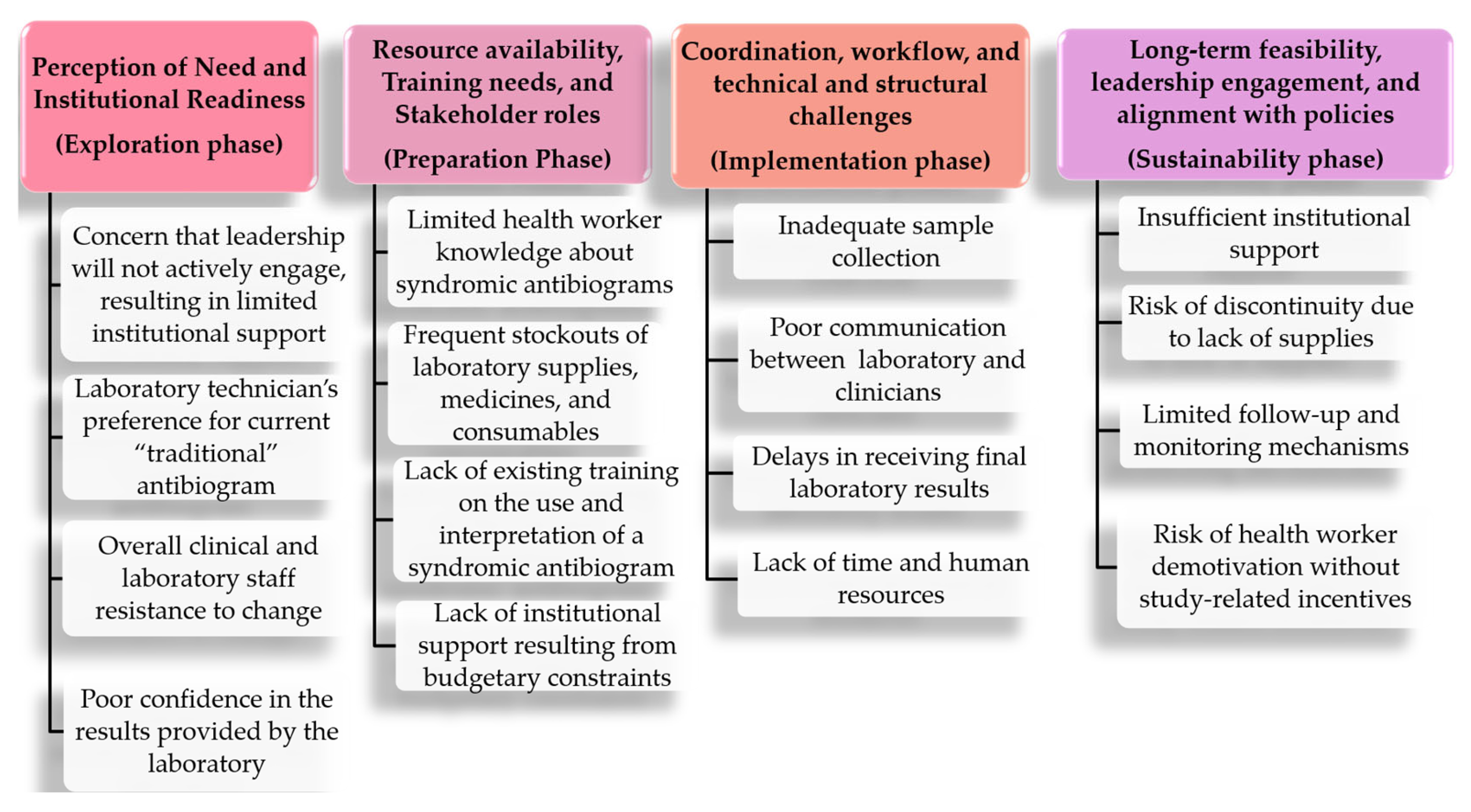
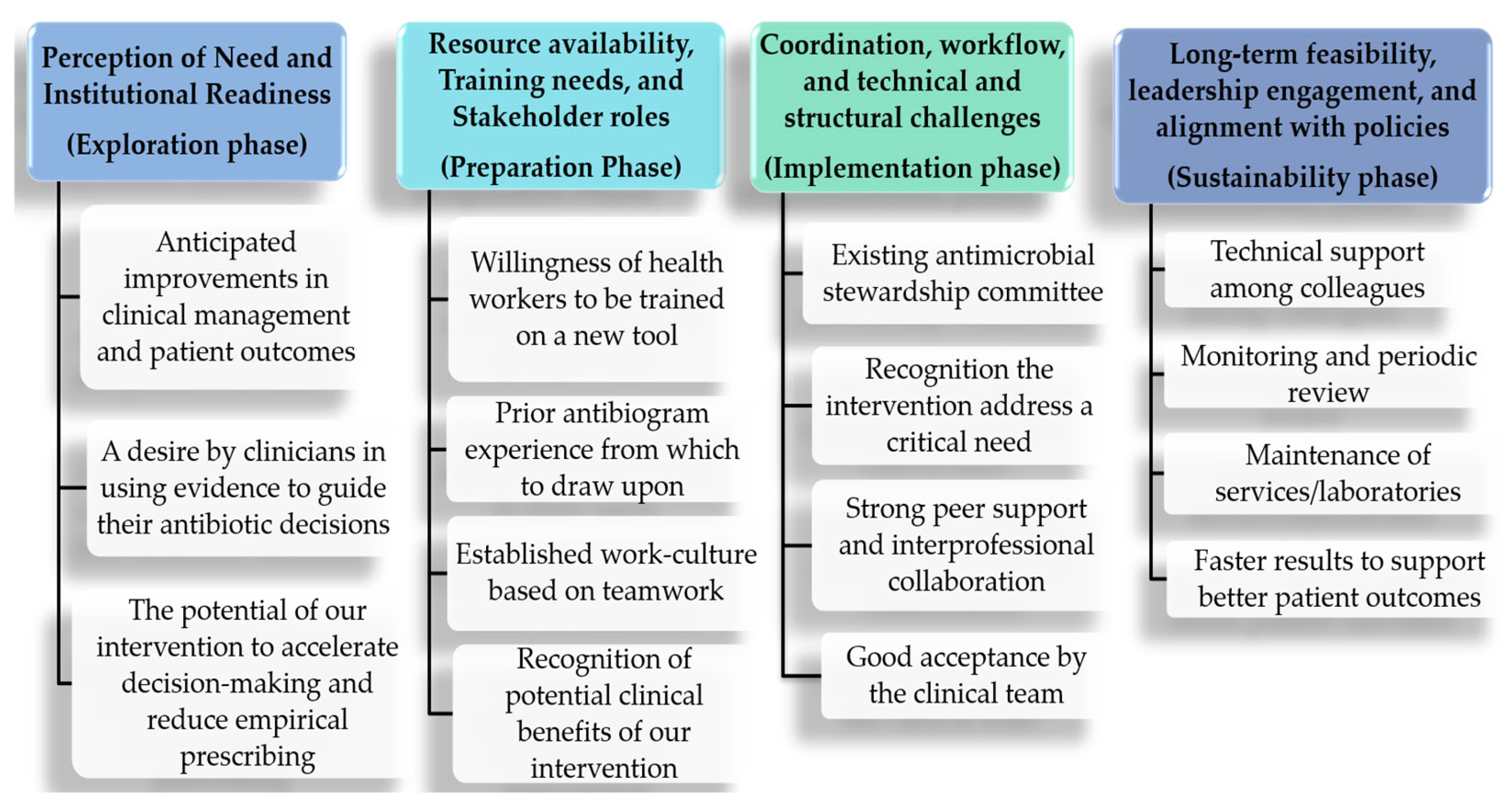
2.1. Mapping of Barriers and Facilitators According to the DAP Framework Phases
2.1.1. Exploration Phase-Perceptions of Need and Institutional Readiness
“A long time ago, there was an opportunity to do antibiograms, but in recent years, due to a shortage of resources, it is no longer done. For some time now, we have been unable to request blood cultures, and as a result, people have lost confidence in the results. If not coordinated from the top, there will always be difficulties.”(Physician 4)
“I would rather continue with the traditional method. The new approach will bring an excessive workload, especially in the first months or even years of implementation.”(Laboratory Technician 1)
“Some people are still attached to old routines and are reluctant to change. It takes time for professionals to adapt to new tools and ways of working. Change often creates uncertainty, and not everyone feels confident embracing new practices.”(Physician 6)
“We would need to convince colleagues that it [the syndromic antibiogram] was developed with good quality. Many of the existing gaps are linked to the limited microbiological capacity of the main hospital, which affects the credibility of laboratory results and confidence among clinicians.”(Physician 1)
“To ensure the success of the syndromic antibiogram, we must first build trust in the quality of its development and strengthen the hospital’s microbiological capacity. Without these foundations, it will be difficult to encourage clinicians to rely on and use its findings in practice.”(Physician 3)
“This tool would be extremely useful, as it would reduce empiric antibiotic prescribing, which is currently based primarily on the patient’s clinical presentation and the suspected pathogen. For example, in cardiology, common pathogens in endocarditis range from Streptococcus to Staphylococcus, and sometimes fungi, with treatment choices often adjusted according to the patient’s response (such as persistent fever or the need to escalate therapy). Having this instrument would allow us to decrease empiric prescribing and avoid inappropriate antibiotic use, thereby promoting a more precise and efficient therapeutic approach.”(Physician 2)
“What we do now is essentially syndromic treatment, but the syndromic antibiogram would help rationalize medication use. It will guide us toward more evidence-based prescribing rather than relying solely on clinical judgment.”(Physician 8)
“I think it will help; it is very important to have this instrument here in our sector. It will make antibiotic prescribing more systematic and encourage testing to identify the most appropriate treatment for each patient.”(Physician 5)
2.1.2. Preparation Phase-Resource Availability, Training Needs, and Stakeholder Roles
“I don’t have knowledge regarding this antibiogram; I will need training. Honestly, I have never heard of a syndromic antibiogram before, so I would need more information and guidance to understand how it works.”(Physician 10)
“Many of the challenges we face are linked to the hospital’s limited microbiological capacity. For instance, we have spent almost a year without reagents for many culture tests, and sometimes we cannot perform them at all because there are no reagents or even medicines available.”(Laboratory Technician 2)
“I don’t know how many patients will manage to have samples collected for the different syndromic presentations. The challenge is that sample collection often depends on the availability of staff and materials, which are not always consistent. Sometimes, even when patients are eligible, the lack of resources prevents proper sample collection.”(Physician 7)
“There is a perception that institutional support is insufficient, often due to budgetary constraints and a reliance on donations or external assistance. The prevailing sentiment is that limited action is taken because resources are scarce, which raises questions about what more could realistically be achieved, particularly when local practices are compared with externally funded initiatives, collaborations, or competitive programs. Overall, the impression remains that, despite time and accumulated experience, the institutional response continues to fall short of what is expected.”(Physician 3)
“We are available, and although training is undeniably necessary and a brief orientation accompanies each introduction, the response from human resources to this training is expected to be favorable in terms of attendance and dedication, because we are committed to this effort.”(Care Director)
“This was part of the work I had in the United States. Each hospital maintains its own antibiogram, thereby monitoring the prevalence of MRSA among isolated Staphylococcus aureus strains. They track resistance frequencies among Gram-negative bacteria. Subsequently, they assess the specific patterns of resistance and the susceptibility to antibiotics. Thus, you have a local antibiogram that informs local clinical practices. It can vary from state to state and from city to city.”(Physician 4)
“We conduct daily medical ward rounds, during which all team members are encouraged to ask questions, raise concerns, offer corrections when necessary, and contribute their opinions respectfully. After the ward round, we continue discussions in smaller groups, reviewing patient cases, consulting the literature, and clarifying uncertainties. This practice is actively encouraged and taught, as we are a teaching hospital. Younger clinicians are guided to ask questions and seek support whenever they encounter limitations, as the lives of patients depend on informed and collaborative decision-making.”(Care Director)
“This tool would be well received in our department, as adverse outcomes are a recurrent concern under current conditions. If we had the capacity to perform cultures and antibiograms consistently, clinicians would be able to adjust treatments with greater precision, potentially saving patients’ lives and more effectively involving families in the decision-making process.”(Care Director)
2.1.3. Implementation Phase-Coordination Processes, Workflow Integration, and Technical and Structural Challenges
“Anything new is, at times, not viewed very favorably; people tend to become complacent with existing difficulties, or they conclude that ‘this may not significantly improve our practical outcomes,’ or it may be perceived as a waste of time, or as something that ‘is attractive in theory but cannot be implemented effectively in practice.”(Physician 2)
“Nurses mainly collect samples, but medication timing can affect accuracy. Samples may need special storage, and current refrigerators might not be suitable. Quick processing is crucial, and more specific storage solutions might be needed depending on the sample type.”(Physician 3)
“Perhaps coordinating with the laboratory to establish better coordination and communication would be beneficial. If there’s a ward that, for example, has a small freezer or a small cooler where we can store all the labeled samples within 24 h so that, for example, the next day or at a designated time X, they can be processed, that would help a lot.”(Nurse 2)
“When clinicians request tests, they’re never available. I requested the test, and it still isn’t available. Then I sent the sample, but I never got the result, so I gave up requesting it. I adjust my work mentally, assuming I will never receive the result for that test. Later, the laboratory may improve and make the test available, but it will face a challenge, because the person [clinician] has already lost the habit of requesting that test, since it was never available, and they never received results.”(Physician 8)
“Delaying the initiation of antibiotic therapy in order to ensure optimal specimen collection represents a major challenge, particularly due to insufficient staffing to collect samples on time, that is, before or at least within 24 h of starting antibiotic treatment.”(Physician 7)
“We have also experienced a shortage of personnel. Currently, the laboratory technician retrieves data manually from the laboratory register. However, having a dedicated staff member specifically assigned to enter the data directly into WHONET platform would make the process much more efficient and greatly improve our workflow.”(Laboratory technician 1)
“The hospital already has a committee for the rational use of antibiotics, so there may be influential people who can help implement this initiative and act as champions for it. Their involvement would make it easier to gain acceptance and support from other staff members.”(Physician 5)
“Yes, the antibiogram is a primary need in this department, and we are interested in having it implemented. There is already a positive indication, as the level of receptivity is expected to be high. Moreover, implementation is feasible since we already have continuous training cycles and weekly clinical sessions for both physicians and nurses of different categories. Therefore, there are already existing platforms, through regular trainings, work sessions, and lectures, where such initiatives can be discussed and integrated.”(Care Director)
“During clinical rounds, we discuss each case as a team, assess the patient’s condition, and reflect on possible interventions to improve their clinical outcomes. If the patient does not show satisfactory progress, we conduct additional studies and revisit the case discussion continuously and collaboratively.”(Physician 6)
“We have a dedicated research unit responsible for the coordination and implementation of all research activities within the department. Even when a study does not originate directly from the unit, it must still be coordinated if it holds relevance or potential benefit for the department. The research unit provides valuable support through a multidisciplinary team composed of physicians and nurses who contribute as needed to facilitate the effective conduct of research activities.”(Care Director)
“I would say that this tool should be presented in the form of a leaflet or poster that we can display in our offices and treatment rooms, serving as a reminder to help us monitor and recognize when we are exceeding the recommended duration of antibiotic treatment.”(Nurse 3)
“Most clinicians in the hospital would well receive a tool of this kind. In addition, there may be local champions who can support the initiative; the hospital already has a committee dedicated to the rational use of antibiotics, and individuals with influence within this context can serve as advocates for implementation.”(Physician 10)
2.1.4. Sustainability Phase–Long-Term Feasibility, Leadership Engagement, and Alignment with Hospital Policies
“I’m not sure if it [the intervention] will be feasible, because the consumable materials we’ve been receiving lately are very limited… There’s always a shortage of everything. We don’t have consistent institutional support for these materials. Today, we might have one type of [culture] medium, but it could take another six months to get more. I think the institutional support system doesn’t really work, once supplies run out, that’s it.”(Laboratory technician 3)
“We believe this initiative will be advantageous and beneficial for all of us. However, our main concern is that it may be introduced without any follow-up or continuity. What often happens here is the recurrent lack of reagents and essential materials. We start a project, an activity, or a diagnostic process, but then it stops midway due to the absence of consistent resources and sustainability.”(Care Director)
“Yes, there should be some form of monitoring among colleagues, because at times we tend to become less attentive when no one is supervising our work. However, when there is someone present to review and ensure that activities are progressing as expected, it can be very helpful. I believe such monitoring could significantly improve our performance and the proper use of this tool, ultimately leading to meaningful gains.”(Nurse 4)
“It will have an impact, but it is essential to engage in discussions with colleagues and help them understand that this is the way it should be, even though it might represent additional work. Incentives play an important role; they motivate and encourage commitment among staff. When people receive incentives, they tend to feel more motivated and engaged in their work.”(Laboratory technician 2)
“We conduct daily medical ward rounds, during which everyone has the opportunity to ask questions, provide feedback, and make corrections as necessary, all while maintaining professionalism and respect. After the ward round, we return to our respective areas to discuss the patients further, conduct research, and clarify any doubts. This is an activity that we actively encourage and use as a teaching moment, especially for the younger staff, as this is a teaching hospital.”(Care Director)
“The antibiogram used to come out annually, and I gained trust by following those institutional recommendations. It provided a sense of guidance and consistency in clinical decision-making. Having such reliable updates helped ensure that antibiotic prescriptions were aligned with current resistance patterns.”(Physician 1)
“With the syndromic antibiogram, we will stop prescribing antibiotics empirically. Instead of rushing to broad-spectrum antibiotics, we will start with narrow-spectrum options supported by laboratory evidence.”(Physician 9)
“It could help us manage infections more promptly, as we would not need to start a treatment that may ultimately be ineffective due to resistance. Instead of the patient’s condition deteriorating while waiting, we would be able to initiate the appropriate therapy immediately, based on the results. Therefore, I believe this approach would indeed be beneficial.”(Physician 7)
2.1.5. A Concise Summary of the Most Salient Anticipated Barriers and Facilitators Identified for Each Phase

| DAP Phase | Key Barriers | Key Facilitators |
|---|---|---|
| Exploration | Limited knowledge of the syndromic antibiogram concept; lack of consolidated local data; low initial clinician awareness | Recognition of high antimicrobial resistance levels; perceived need to improve empirical prescribing; institutional interest in stewardship strategies |
| Preparation | Limited laboratory infrastructure; shortage of specialized human resources; absence of standardized protocols | Prior laboratory experience with conventional antibiograms; technical leadership support |
| Implementation | High workload; insufficient communication between laboratory and clinical services; challenges in integrating results into clinical practice | Engagement of key professionals; continuous training and capacity building; positive clinical feedback on the usefulness of the antibiogram |
| Sustainment | Dependence on external financial resources; staff turnover; lack of formalized institutional policies | Increasing institutional commitment; potential integration into stewardship programs; perceived positive impact on clinical decision-making |
3. Discussion
4. Materials and Methods
4.1. Study Design
4.2. Setting
4.3. Participants
4.4. Data Collection
4.5. Data Analysis
4.6. Ethical Approval
5. Conclusions
Author Contributions
Funding
Institutional Review Board Statement
Informed Consent Statement
Data Availability Statement
Acknowledgments
Conflicts of Interest
References
- Sartorius, B.; Gray, A.P.; Davis Weaver, N.; Robles Aguilar, G.; Swetschinski, L.R.; Ikuta, K.S.; Naghavi, M. The burden of bacterial antimicrobial resistance in the WHO African region in 2019: A cross-country systematic analysis. Lancet Glob. Health 2024, 12, e201–e216. [Google Scholar] [CrossRef]
- World Health Organization. Regional Office for Africa. Antimicrobial Resistance in the WHO African Region: A Systematic Literature Review; World Health Organization: Brazzaville, Congo, 2021. [Google Scholar]
- Wenglein, J.S.; Simon, A.; Berner, R.; Brockmeyer, H.; Forster, J.; Hamelmann, E.; Klein, W.; Liese, J.; Neubert, J.; Pfeil, J.; et al. Development and maintenance of consensus recommendations on pediatric outpatient antibiotic therapy in Germany: A framework for rational use. Eur. J. Pediatr. 2025, 184, 149. [Google Scholar] [CrossRef] [PubMed]
- Xavier, S.P.; Victor, A.; Cumaquela, G.; Vasco, M.D.; Rodrigues, O.A.S. Inappropriate use of antibiotics and its predictors in pediatric patients admitted at the Central Hospital of Nampula, Mozambique. Antimicrob. Resist. Infect. Control 2022, 11, 79. [Google Scholar] [CrossRef] [PubMed]
- Davey, P.; Marwick, C.A.; Scott, C.L.; Charani, E.; McNeil, K.; Brown, E.; Gould, I.M.; Ramsay, C.R.; Michie, S. Interventions to Improve Antibiotic Prescribing Practices for Hospital Inpatients; Cochrane Effective Practice and Organisation of Care Group, Ed.; Cochrane Database of Systematic Reviews: Oxford, UK, 2017; Volume 2017. [Google Scholar] [CrossRef]
- Pulcini, C.; Binda, F.; Lamkang, A.; Trett, A.; Charani, E.; Goff, D.; Harbarth, S.; Hinrichsen, S.; Levy-Hara, G.; Mendelson, M.; et al. Developing core elements and checklist items for global hospital antimicrobial stewardship programmes: A consensus approach. Clin. Microbiol. Infect. 2019, 25, 20–25. [Google Scholar] [CrossRef] [PubMed]
- Cook, A.; Sharland, M.; Yau, Y.; PediBSI Group*; Bielicki, J. Improving empiric antibiotic prescribing in pediatric bloodstream infections: A potential application of weighted-incidence syndromic combination antibiograms (WISCA). Expert. Rev. Anti Infect. Ther. 2022, 20, 445–456. [Google Scholar] [CrossRef]
- Dikkatwar, M.; Vaghasiya, J. Development and application of WHONET software in hospital antibiogram. Clin. Epidemiol. Glob. Health 2023, 24, 101424. [Google Scholar] [CrossRef]
- Peiffer-Smadja, N.; Poda, A.; Ouedraogo, A.-S.; Guiard-Schmid, J.-B.; Delory, T.; Le Bel, J.; Bouvet, E.; Lariven, S.; Jeanmougin, P.; Ahmad, R.; et al. Paving the Way for the Implementation of a Decision Support System for Antibiotic Prescribing in Primary Care in West Africa: Preimplementation and Co-Design Workshop With Physicians. J. Med. Internet Res. 2020, 22, e17940. [Google Scholar] [CrossRef]
- Kenga, D.B.; Sacarlal, J.; Sidat, M.; Amorim, G.; Myers, H.H.; Chicamba, V.; Kampa, K.T.; Moon, T.D. Evaluating empiric antibiotic prescribing for hospitalized children in Mozambique through the introduction of a quarterly syndromic antibiogram: An implementation science protocol. PLoS ONE 2024, 19, e0306511. [Google Scholar] [CrossRef]
- Zilberberg, M.D.; Shorr, A.F.; Micek, S.T.; Chen, J.; Ramsey, A.M.; Hoban, A.P.; Pham, V.; Doherty, J.A.; Mody, S.H.; Kollef, M.H. Hospitalizations with healthcare-associated complicated skin and skin structure infections: Impact of inappropriate empiric therapy on outcomes. J. Hosp. Med. 2010, 5, 535–540. [Google Scholar] [CrossRef]
- Kenga, D.B.; Gebretsadik, T.; Simbine, S.; Maússe, F.E.; Charles, P.; Zaqueu, E.; Fernando, H.F.; Manjate, A.; Sacarlal, J.; Moon, T.D. Community-acquired bacteremia among HIV-infected and HIV-exposed uninfected children hospitalized with fever in Mozambique. Int. J. Infect. Dis. 2021, 109, 99–107. [Google Scholar] [CrossRef]
- Klinker, K.P.; Hidayat, L.K.; Wenzler, E.; Balada-Llasat, J.-M.; Motyl, M.; DeRyke, C.A.; Bauer, K.A. Use of Novel Antibiograms to Determine the Need for Earlier Susceptibility Testing and Administration for New β-Lactam/β-Lactamase Inhibitors in the United States. Antibiotics 2022, 11, 660. [Google Scholar] [CrossRef]
- Randhawa, V.; Sarwar, S.; Walker, S.; Elligsen, M.; Palmay, L.; Daneman, N. Weighted-incidence syndromic combination antibiograms to guide empiric treatment of critical care infections: A retrospective cohort study. Crit. Care 2014, 18, R112. [Google Scholar] [CrossRef] [PubMed]
- Mao, S.; Soputhy, C.; Lay, S.; Jacobs, J.; Ku, G.M.; Chau, D.; Chhea, C.; Ir, P. The barriers and facilitators of implementing a national laboratory-based AMR surveillance system in Cambodia: Key informants’ perspectives and assessments of microbiology laboratories. Front. Public Health 2023, 11, 1332423. [Google Scholar] [CrossRef] [PubMed]
- Scheepers, L.N.; Niesing, C.M.; Bester, P. Facilitators and barriers to implementing antimicrobial stewardship programs in public South African hospitals. Antimicrob. Steward. Healthc. Epidemiol. 2023, 3, e34. [Google Scholar] [CrossRef] [PubMed]
- Aarons, G.A.; Green, A.E.; Palinkas, L.A.; Self-Brown, S.; Whitaker, D.J.; Lutzker, J.R.; Silovsky, J.F.; Hecht, D.B.; Chaffin, M.J. Dynamic adaptation process to implement an evidence-based child maltreatment intervention. Implement. Sci. 2012, 7, 32. [Google Scholar] [CrossRef]
- Rolfe, R.; Kwobah, C.; Muro, F.; Ruwanpathirana, A.; Lyamuya, F.; Bodinayake, C.; Nagahawatte, A.; Piyasiri, B.; Sheng, T.; Bollinger, J.; et al. Barriers to implementing antimicrobial stewardship programs in three low- and middle-income country tertiary care settings: Findings from a multi-site qualitative study. Antimicrob. Resist. Infect. Control 2021, 10, 60. [Google Scholar] [CrossRef]
- Kpokiri, E.E.; Ladva, M.; Dodoo, C.C.; Orman, E.; Aku, T.A.; Mensah, A.; Jato, J.; Mfoafo, K.A.; Folitse, I.; Hutton-Nyameaye, A.; et al. Knowledge, Awareness and Practice with Antimicrobial Stewardship Programmes among Healthcare Providers in a Ghanaian Tertiary Hospital. Antibiotics 2021, 11, 6. [Google Scholar] [CrossRef]
- Barlam, T.F.; Cosgrove, S.E.; Abbo, L.M.; MacDougall, C.; Schuetz, A.N.; Septimus, E.J.; Srinivasan, A.; Dellit, T.H.; Falck-Ytter, Y.T.; Fishman, N.O.; et al. Implementing an Antibiotic Stewardship Program: Guidelines by the Infectious Diseases Society of America and the Society for Healthcare Epidemiology of America. Clin. Infect. Dis. 2016, 62, e51–e77. [Google Scholar] [CrossRef]
- Harun, M.d.G.D.; Sumon, S.A.; Hasan, I.; Akther, F.M.; Islam, M.d.S.; Anwar, M.d.M.U. Barriers, facilitators, perceptions and impact of interventions in implementing antimicrobial stewardship programs in hospitals of low-middle and middle countries: A scoping review. Antimicrob. Resist. Infect. Control 2024, 13, 8. [Google Scholar] [CrossRef]
- Charani, E.; Smith, I.; Skodvin, B.; Perozziello, A.; Lucet, J.-C.; Lescure, F.-X.; Birgand, G.; Poda, A.; Ahmad, R.; Singh, S.; et al. Investigating the cultural and contextual determinants of antimicrobial stewardship programmes across low-, middle- and high-income countries—A qualitative study. PLoS ONE 2019, 14, e0209847. [Google Scholar] [CrossRef]
- Iregbu, K.; Nwajiobi-Princewill, P.; Medugu, N.; Umeokonkwo, C.; Uwaezuoke, N.; Peter, Y.; Nwafia, I.; Elikwu, C.; Shettima, S.; Suleiman, M.; et al. Antimicrobial Stewardship Implementation in Nigerian Hospitals: Gaps and Challenges. Afr. J. Clin. Exp. Microbiol. 2021, 22, 60–66. [Google Scholar] [CrossRef]
- Alghamdi, S.; Atef-Shebl, N.; Aslanpour, Z.; Berrou, I. Barriers to implementing antimicrobial stewardship programmes in three Saudi hospitals: Evidence from a qualitative study. J. Glob. Antimicrob. Resist. 2019, 18, 284–290. [Google Scholar] [CrossRef] [PubMed]
- Tuijn, C.J.; Msoka, E.; Mushi, D.L.; Sumari-de Boer, M.; Chilongola, J.; Van Den Broek, A. The interface between clinicians and laboratory staff: A field study in northern Tanzania. Afr. J. Lab. Med. 2014, 3, 1–7. [Google Scholar] [CrossRef] [PubMed]
- Suttels, V.; Van Singer, M.; Clack, L.C.; Plüss-Suard, C.; Niquille, A.; Mueller, Y.; Blanco, N.B. Factors Influencing the Implementation of Antimicrobial Stewardship in Primary Care: A Narrative Review. Antibiotics 2022, 12, 30. [Google Scholar] [CrossRef]
- Anugulruengkitt, S.; Jupimai, T.; Wongharn, P.; Puthanakit, T. Barriers in implementing antibiotic stewardship programmes at paediatric units in academic hospitals in Thailand: A qualitative study. BMJ Open 2025, 15, e092509. [Google Scholar] [CrossRef]
- Totaro, V.; Guido, G.; Cotugno, S.; De Vita, E.; Asaduzzaman, M.; Patti, G.; Segala, F.V.; Putoto, G.; Frallonardo, L.; Farkas, F.B.; et al. Antimicrobial Resistance in Sub-Saharan Africa: A Comprehensive Landscape Review. Am. J. Trop. Med. Hyg. 2025, 113, 253–263. [Google Scholar] [CrossRef]
- Vounba, P.; Loul, S.; Tamadea, L.F.; Siawaya, J.F.D. Microbiology laboratories involved in disease and antimicrobial resistance surveillance: Strengths and challenges of the central African states. Afr. J. Lab. Med. 2022, 11, a1570. [Google Scholar] [CrossRef]
- Porter, G.J.; Owens, S.; Breckons, M. A systematic review of qualitative literature on antimicrobial stewardship in Sub-Saharan Africa. Glob. Health Res. Policy 2021, 6, 31. [Google Scholar] [CrossRef]
- Souvatzi, E.; Katsikidou, M.; Arvaniti, A.; Plakias, S.; Tsiakiri, A.; Samakouri, M. Trust in Healthcare, Medical Mistrust, and Health Outcomes in Times of Health Crisis: A Narrative Review. Societies 2024, 14, 269. [Google Scholar] [CrossRef]
- Muhammad, F. The 21st Century Microbiology Profession and Professionals’ Challenges in African Countries. J. Microbiota 2024, 1, e145808. [Google Scholar] [CrossRef]
- Chetty, S.; Swe-Han, K.S.; Mahabeer, Y.; Pillay, A.; Essack, S.Y. Interprofessional education in antimicrobial stewardship, a collaborative effort. JAC-Antimicrob. Resist. 2024, 6, dlae054. [Google Scholar] [CrossRef]
- Schmid, S.; Schlosser, S.; Gülow, K.; Pavel, V.; Müller, M.; Kratzer, A. Interprofessional Collaboration between ICU Physicians, Staff Nurses, and Hospital Pharmacists Optimizes Antimicrobial Treatment and Improves Quality of Care and Economic Outcome. Antibiotics 2022, 11, 381. [Google Scholar] [CrossRef]
- Guilding, C.; Hardisty, J.; Randles, E.; Statham, L.; Green, A.; Bhudia, R.; Thandi, C.S.; Teodorczuk, A.; Scott, L.; Matthan, J. Designing and evaluating an interprofessional education conference approach to antimicrobial education. BMC Med. Educ. 2020, 20, 360. [Google Scholar] [CrossRef]
- Klinker, K.P.; Hidayat, L.K.; DeRyke, C.A.; DePestel, D.D.; Motyl, M.; Bauer, K.A. Antimicrobial stewardship and antibiograms: Importance of moving beyond traditional antibiograms. Ther. Adv. Infect. Dis. 2021, 8, 204993612110113. [Google Scholar] [CrossRef]
- Federal Ministries of Agriculture and Food Security, Environment, Health and Social Welfare. Syndromic Antibiograms Within National AMR Action Plans; Federal Ministries of Agriculture and Food Security, Environment and Health and Social Welfare: Canberra, Australia, 2024.


| Participant Characteristics | N = 18 (%) |
|---|---|
| Sex | |
| Male | 5 (27.8%) |
| Female | 13 (72.2%) |
| Age-range (years) | |
| 30–35 | 4 (22.2%) |
| 36–41 | 5 (27.8%) |
| 42–47 | 4 (22.2%) |
| ≥48 | 5 (27.8%) |
| Occupation | |
| Pediatrician | 5 (27.8%) |
| General physician | 5 (27.8%) |
| Nurse | 5 (27.8%) |
| Laboratory Technician | 3 (16.7%) |
| Work experience (years) | |
| 6–9 | 8 (44.4%) |
| 10–13 | 1 (5.6%) |
| 14–17 | 4 (22.2%) |
| ≥18 | 5 (27.8%) |
| Barriers-Themes | Strategies to Overcome Barriers | Facilitators-Themes | Strategies to Strengthen Facilitators |
|---|---|---|---|
| Weak management support | Advocate for leadership engagement; present evidence on the benefits of SA for patient care | Use of influential champions | Identify and empower clinical champions to promote adoption |
| Limited baseline knowledge of syndromic antibiograms | Embed ongoing training into routine hospital education through introductory sessions, case-based learning, targeted laboratory training, and periodic refreshers linked to antibiogram update | Recognition of clinical benefits | Share case studies and data demonstrating improved outcomes |
| Preference for traditional antibiogram | Conduct awareness sessions comparing traditional vs. syndromic methods | Familiarity with traditional antibiogram | Use as a bridge in training to introduce SA concepts |
| Insufficient clinical samples | Develop standard protocols for adequate sample collection | Team collaboration | Organize joint training and interdisciplinary workshops |
| Resistance to change | Implement change management strategies; peer-to-peer mentoring | Good acceptance by the clinical team | Reinforce positive feedback and highlight early successes |
| Lack of laboratory supplies and consumables | Strengthen supply chain planning and procurement where feasible; implement contingency strategies by prioritizing a core set of high-yield syndromes and pathogens and timing antibiogram updates to periods of reagent availability | Technical support among colleagues | Encourage peer learning and establish mentorship systems |
| Poor communication between the lab and clinicians | Establish clear communication channels; regular joint meetings | Preference for physical/visual formats | Provide user-friendly, visual reports and quick reference tools |
| Delays in receiving final results | Streamline lab processes; integrate digital reporting tools | Faster results improve prognosis | Continue optimizing turnaround times and highlight patient impact |
| Lack of time and human resources | Advocate for adequate staffing; reallocate tasks where possible | Teamwork and peer support | Institutionalize team-based approaches and recognize collaborative efforts |
| Limited institutional support | Integrate SA into hospital policies and quality improvement plans | Monitoring and periodic review | Establish regular audits and feedback systems |
| Weak monitoring and follow-up | Monitor use through peer review during ward rounds, periodic audits of antibiogram-concordant prescribing, and feedback via stewardship meetings | Maintenance of services/laboratories | Secure long-term funding and technical support |
| Risk of demotivation if incentives are not sustained | Transition to non-financial incentives (recognition, feedback, training opportunities) and integrate their use into routine clinical roles | Incentives as motivation | Ensure sustainable, fair, and transparent incentive mechanisms |
Disclaimer/Publisher’s Note: The statements, opinions and data contained in all publications are solely those of the individual author(s) and contributor(s) and not of MDPI and/or the editor(s). MDPI and/or the editor(s) disclaim responsibility for any injury to people or property resulting from any ideas, methods, instructions or products referred to in the content. |
© 2026 by the authors. Licensee MDPI, Basel, Switzerland. This article is an open access article distributed under the terms and conditions of the Creative Commons Attribution (CC BY) license.
Share and Cite
Kenga, D.B.; Moon, T.D.; Sidat, M.; Chicamba, V.; Kenga, A.N.; Manjate, Y.; Nhanala, D.; Caetano, I.C.; Pololo, R.; Cambaco, O.; et al. Barriers and Facilitators in the Implementation of a Syndromic Antibiogram for Pediatric Patients Hospitalized in Maputo, Mozambique: A Qualitative Study Using the Dynamic Adaptation Process (DAP) Framework. Antibiotics 2026, 15, 178. https://doi.org/10.3390/antibiotics15020178
Kenga DB, Moon TD, Sidat M, Chicamba V, Kenga AN, Manjate Y, Nhanala D, Caetano IC, Pololo R, Cambaco O, et al. Barriers and Facilitators in the Implementation of a Syndromic Antibiogram for Pediatric Patients Hospitalized in Maputo, Mozambique: A Qualitative Study Using the Dynamic Adaptation Process (DAP) Framework. Antibiotics. 2026; 15(2):178. https://doi.org/10.3390/antibiotics15020178
Chicago/Turabian StyleKenga, Darlenne B., Troy D. Moon, Mohsin Sidat, Valéria Chicamba, Andrea Ntanga Kenga, Yara Manjate, Dércio Nhanala, Inês C. Caetano, Ramígio Pololo, Olga Cambaco, and et al. 2026. "Barriers and Facilitators in the Implementation of a Syndromic Antibiogram for Pediatric Patients Hospitalized in Maputo, Mozambique: A Qualitative Study Using the Dynamic Adaptation Process (DAP) Framework" Antibiotics 15, no. 2: 178. https://doi.org/10.3390/antibiotics15020178
APA StyleKenga, D. B., Moon, T. D., Sidat, M., Chicamba, V., Kenga, A. N., Manjate, Y., Nhanala, D., Caetano, I. C., Pololo, R., Cambaco, O., & Sacarlal, J. (2026). Barriers and Facilitators in the Implementation of a Syndromic Antibiogram for Pediatric Patients Hospitalized in Maputo, Mozambique: A Qualitative Study Using the Dynamic Adaptation Process (DAP) Framework. Antibiotics, 15(2), 178. https://doi.org/10.3390/antibiotics15020178