Article

Six-Year Environmental Surface Hygiene Monitoring in Hungarian School Kitchens (2019–2024): Hotspots, Seasonality, and One Health Implications

1
Department of Food Hygiene, Institute of Food Chain Science, University of Veterinary Medicine Budapest, István u. 2., 1078 Budapest, Hungary
2
InDeRe Institute for Food System Research and Innovation Nonprofit Public Benefit Ltd., Budaörsi út 15. 1/11, 1118 Budapest, Hungary
3
Department of Exotic Animal and Wildlife Medicine, University of Veterinary Medicine, István u. 2., 1078 Budapest, Hungary
4
National Laboratory of Infectious Animal Diseases, Antimicrobial Resistance, Veterinary Public Health and Food Chain Safety, University of Veterinary Medicine Budapest, István u. 2., 1078 Budapest, Hungary
*
Author to whom correspondence should be addressed.
Antibiotics 2026, 15(2), 120; https://doi.org/10.3390/antibiotics15020120

Submission received: 24 December 2025 / Revised: 12 January 2026 / Accepted: 20 January 2026 / Published: 26 January 2026

Abstract

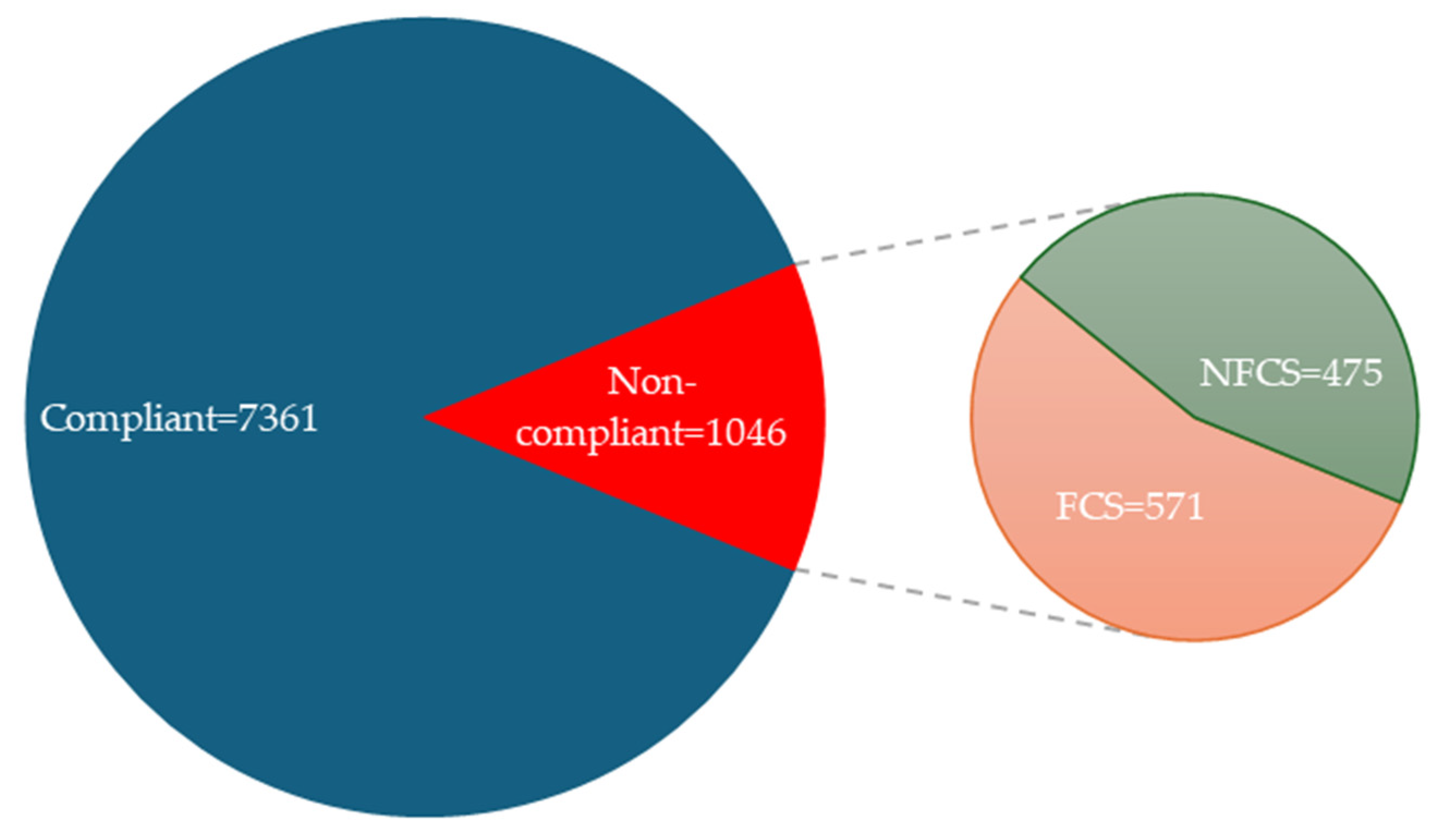
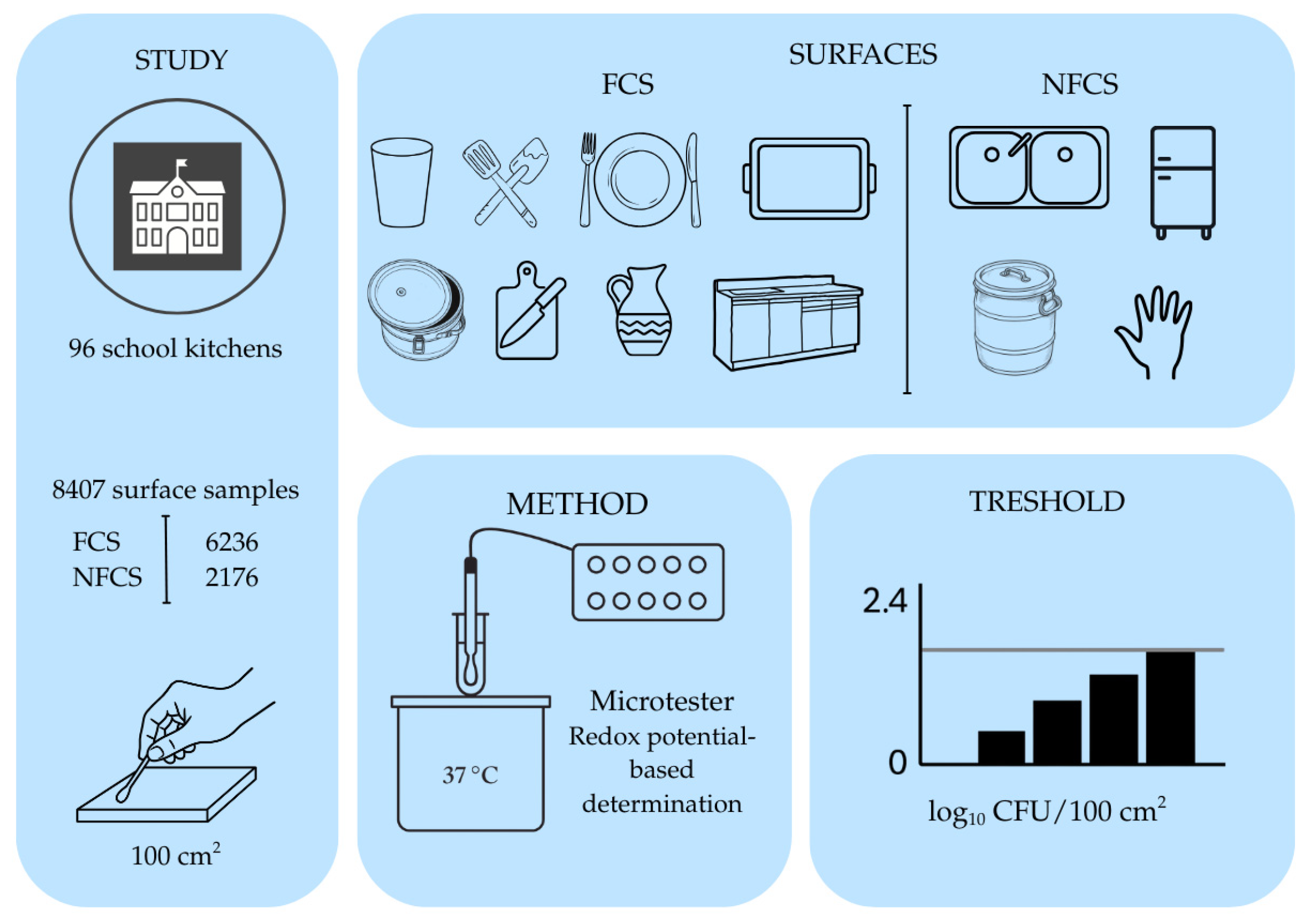
Background/Objectives: Institutional catering serves vulnerable populations, including schoolchildren. Surfaces in food preparation environments are key control points for food safety and reservoirs and transmission routes for antimicrobial-resistant (AMR) bacteria. This study characterized the hygienic status of food-contact surfaces (FCS) and non-food-contact surfaces (NFCS) in Hungarian school kitchens, identified contamination hotspots, and examined how routine monitoring can support AMR prevention. Methods: We retrospectively analyzed routine environmental hygiene monitoring records from 96 school kitchens (2019–2024). In total, 8412 swab samples were collected, 8407 had quantifiable counts, 6233 from FCS (e.g., plates, trays, boards, utensils), and 2174 from NFCS (e.g., sinks, fridges, workers’ hands). Total aerobic mesophilic counts were measured with a redox-potential method and expressed as CFU/100 cm2; 250 CFU/100 cm2 (2.4 log10) was the hygienic threshold. Results: Overall, 12.4% of surfaces exceeded the threshold. Non-food-contact surfaces were more likely to be non-compliant than food-contact surfaces (OR 2.77, 95% CI 2.43–3.17; p < 0.001). Hotspots included transport-container lids (67.2% non-compliant; OR 43.82), sink basins (32.8%; OR 10.46), and cutting boards (21.6%; OR 5.89). Seasonally, non-compliance was highest in summer (16.5%) and lowest in winter (9.0%; p < 0.001). Conclusions: Multi-year monitoring revealed substantial contamination concentrated in a few hotspots that, within a One Health framework—which recognizes the interconnectedness of human, animal, and environmental health—may represent environmental reservoirs and cross-contamination nodes relevant to AMR prevention. Targeted optimization of cleaning and disinfection for these surfaces, combined with trend analysis of indicator data and periodic AMR-focused environmental sampling, could reduce foodborne and AMR-related risks in public catering.
Keywords: institutional catering; school kitchens; food-contact surfaces; environmental monitoring; surface microbiota; antimicrobial resistance; biocides; One Health; microbiological risk assessment institutional catering; school kitchens; food-contact surfaces; environmental monitoring; surface microbiota; antimicrobial resistance; biocides; One Health; microbiological risk assessment