One-Step Acidic Hydrothermal Preparation of Dendritic Rutile TiO2 Nanorods for Photocatalytic Performance


Abstract
1. Introduction
2. Materials and Methods
2.1. Materials
2.2. Preparation of TiO2 Nanorods
2.3. Characterizations of TiO2 Nanorods
2.4. Photocatalytic Oxidation Reactions of TiO2 Nanorods
3. Results and Discussion
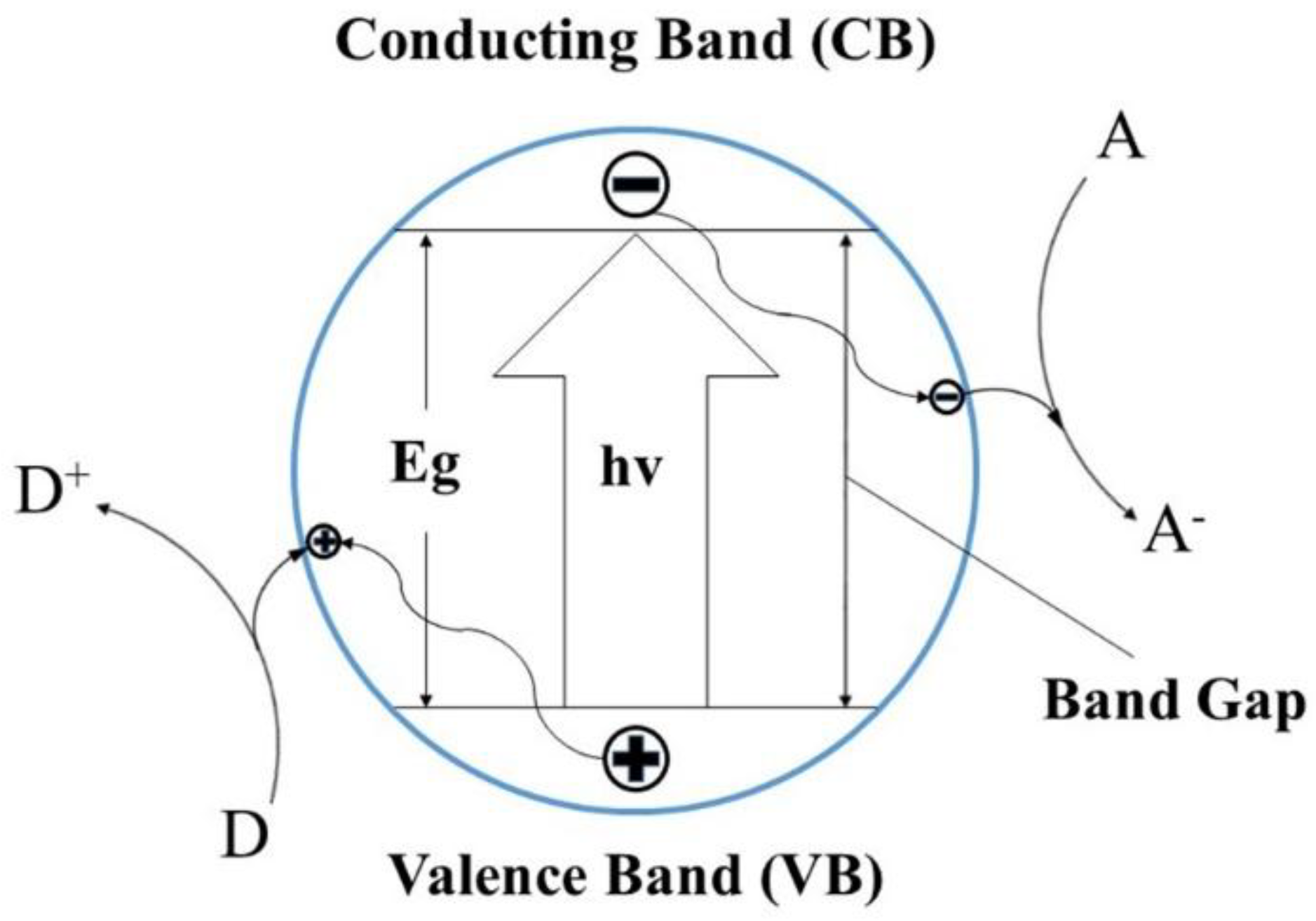
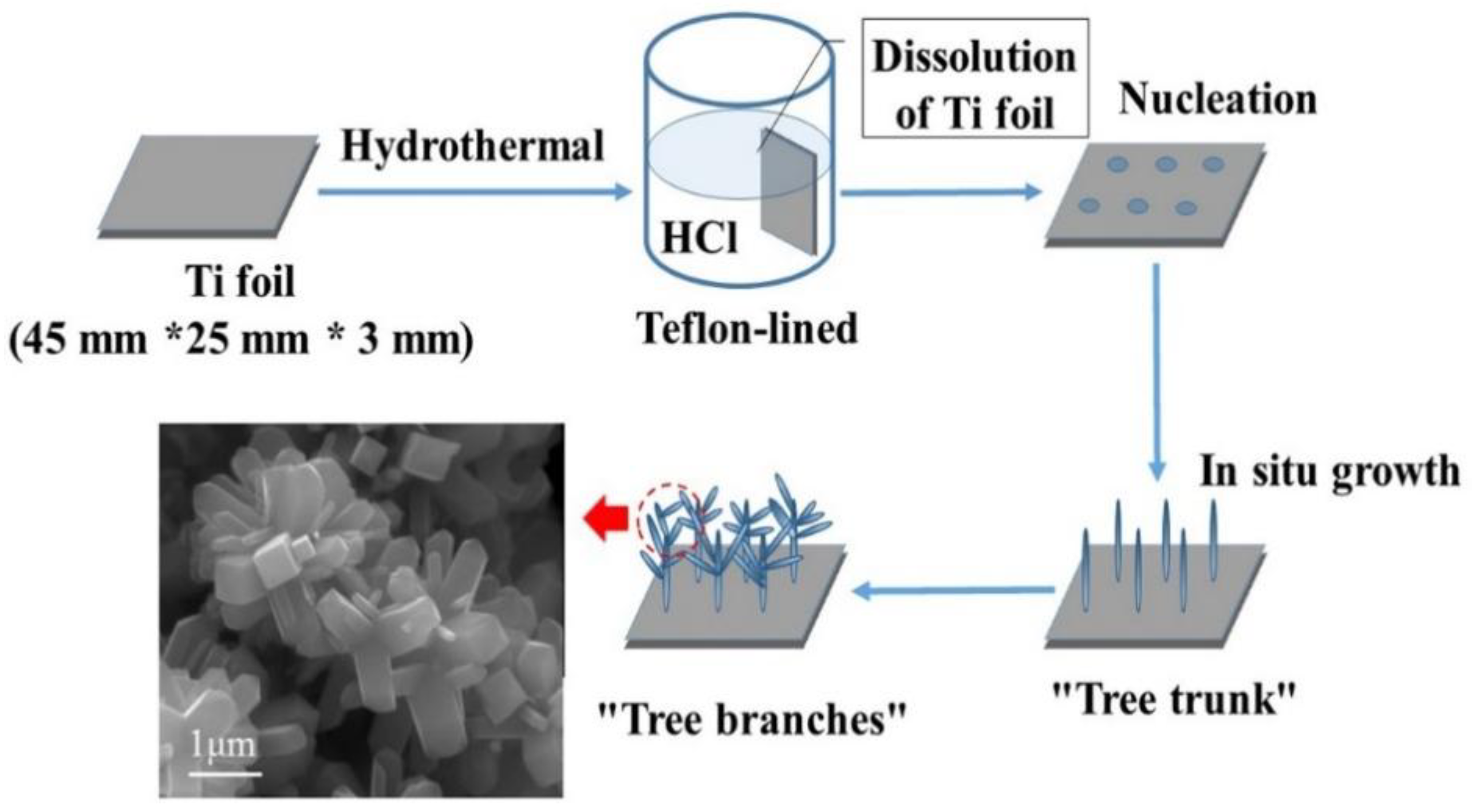
3.1. Preparation and Photocatalytic Mechanism of TiO2 Nanorods
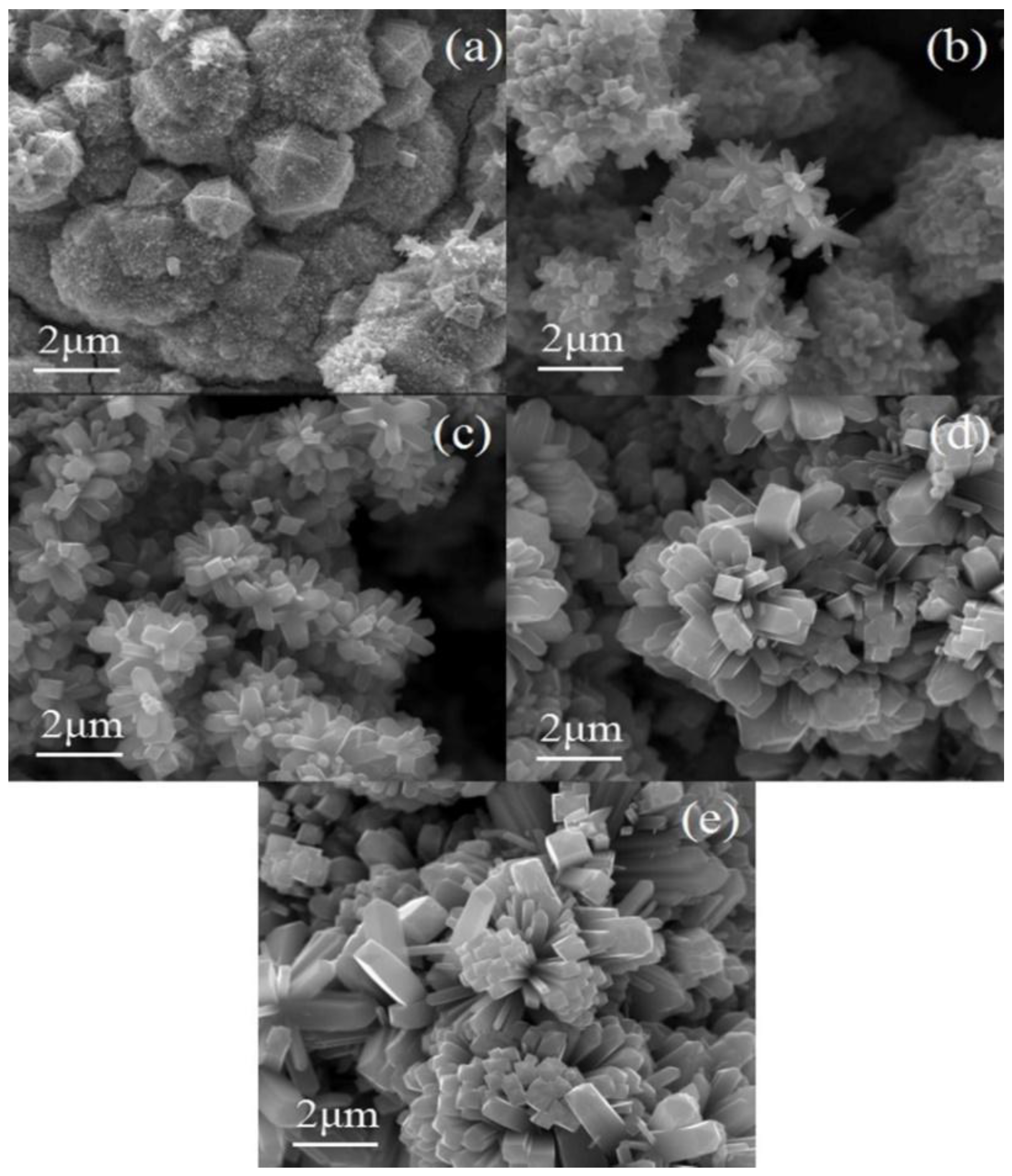
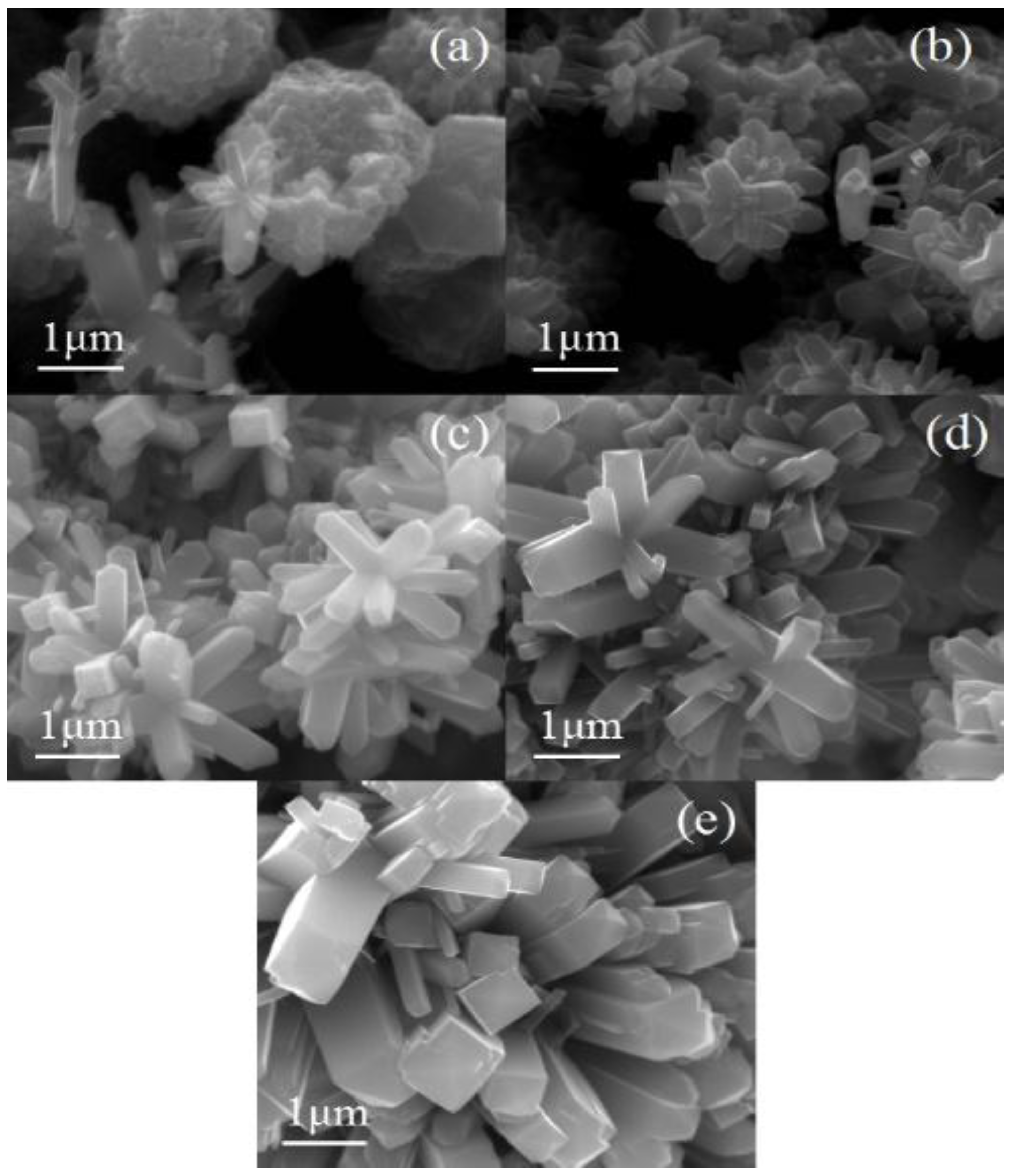
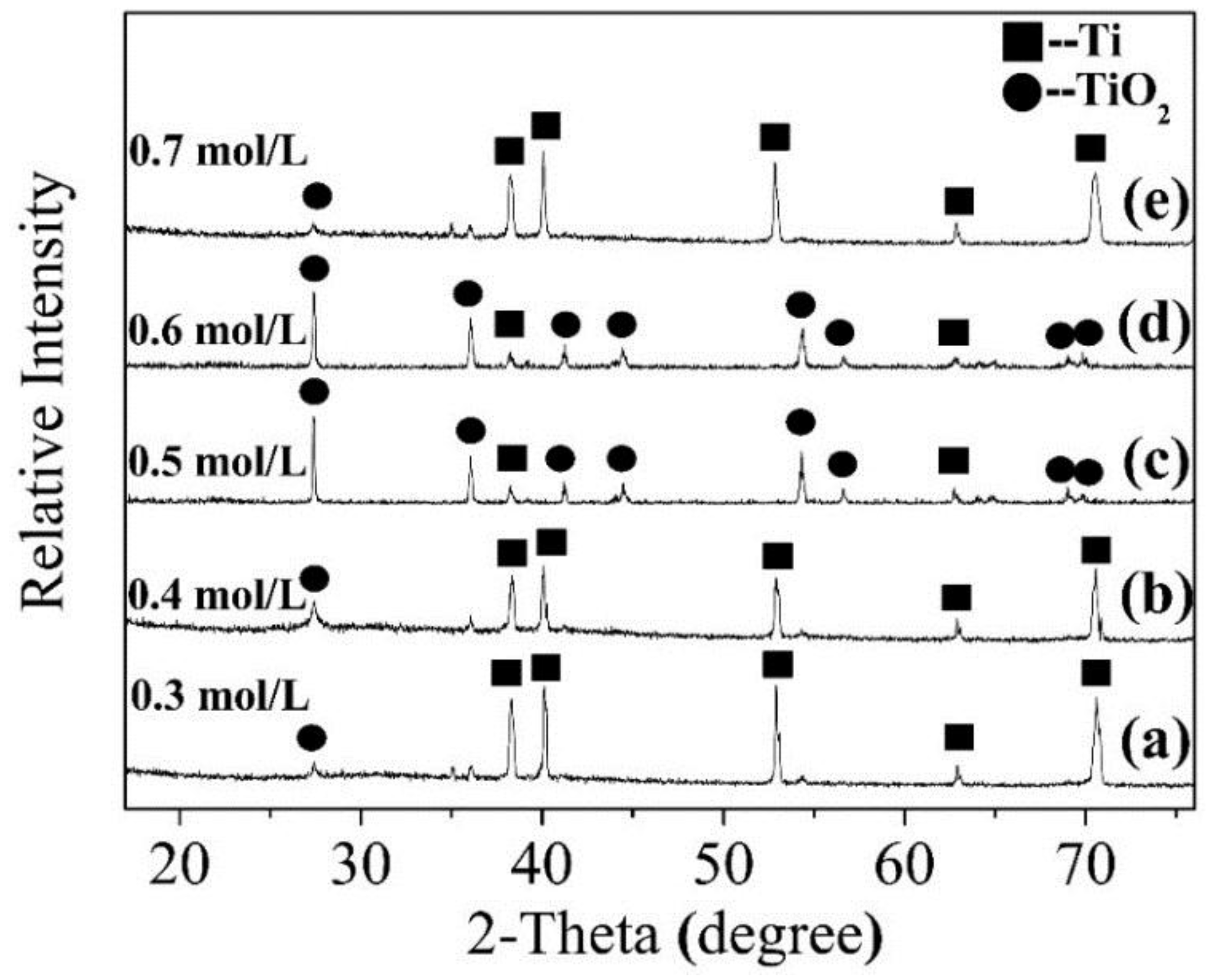
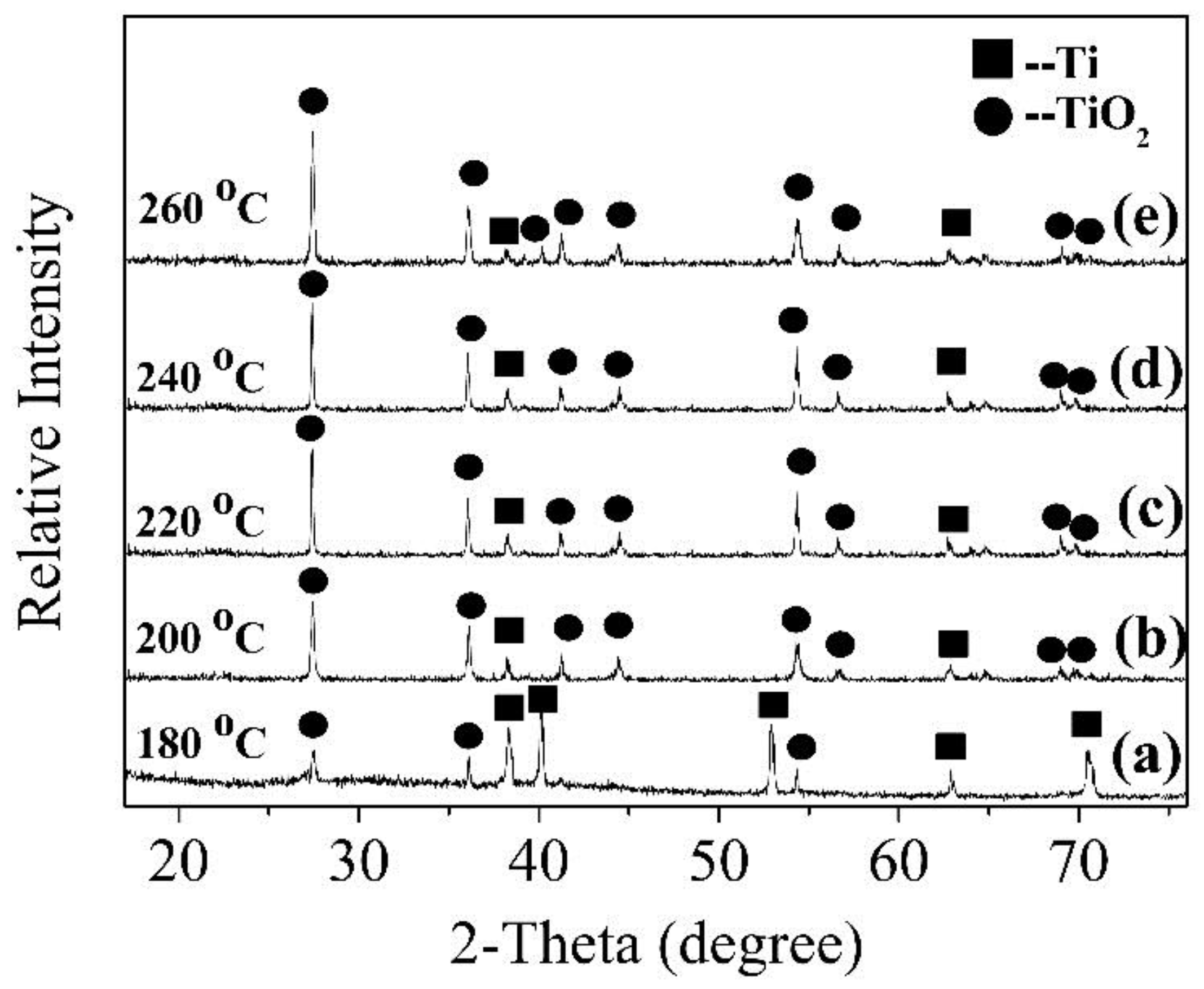
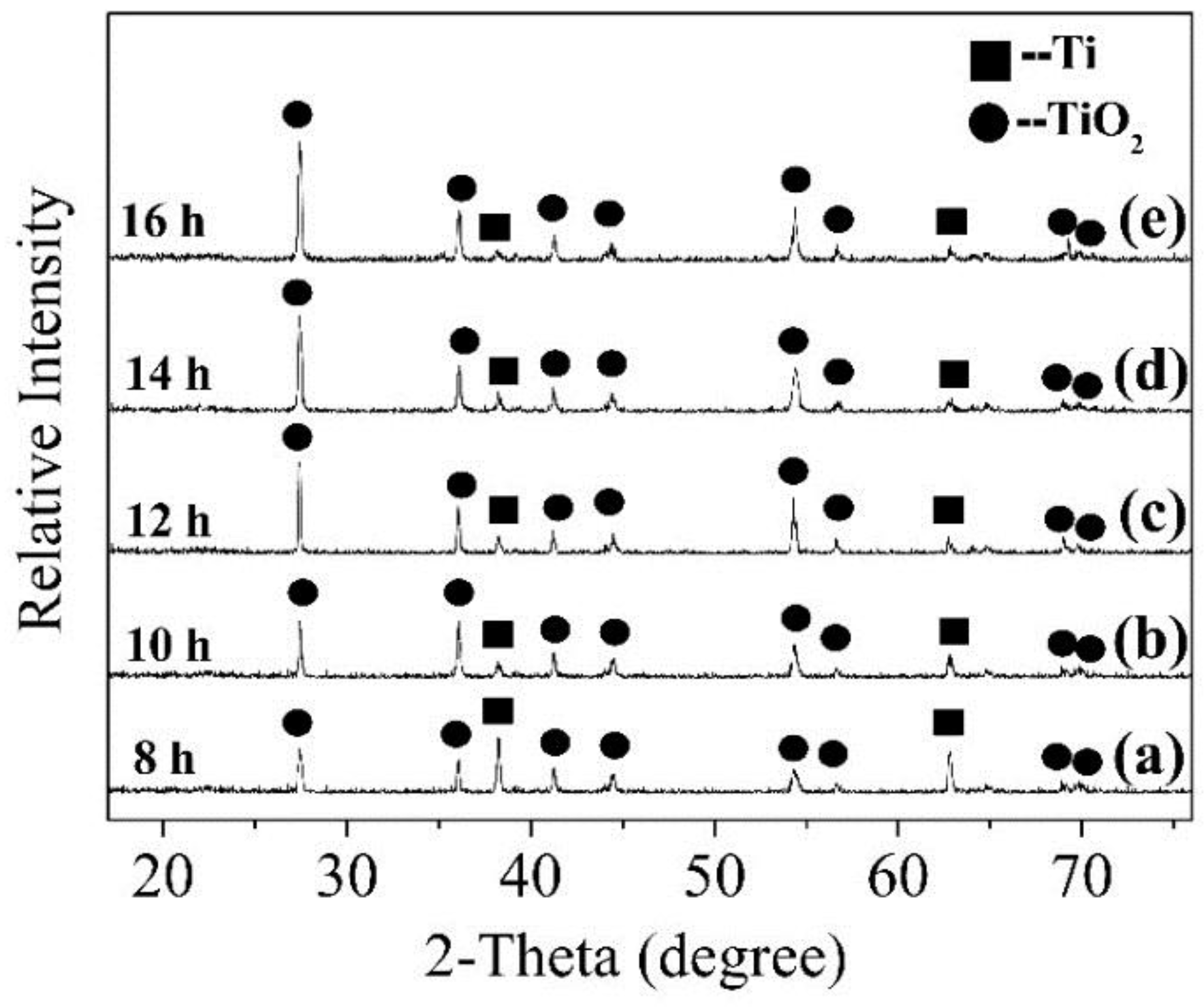
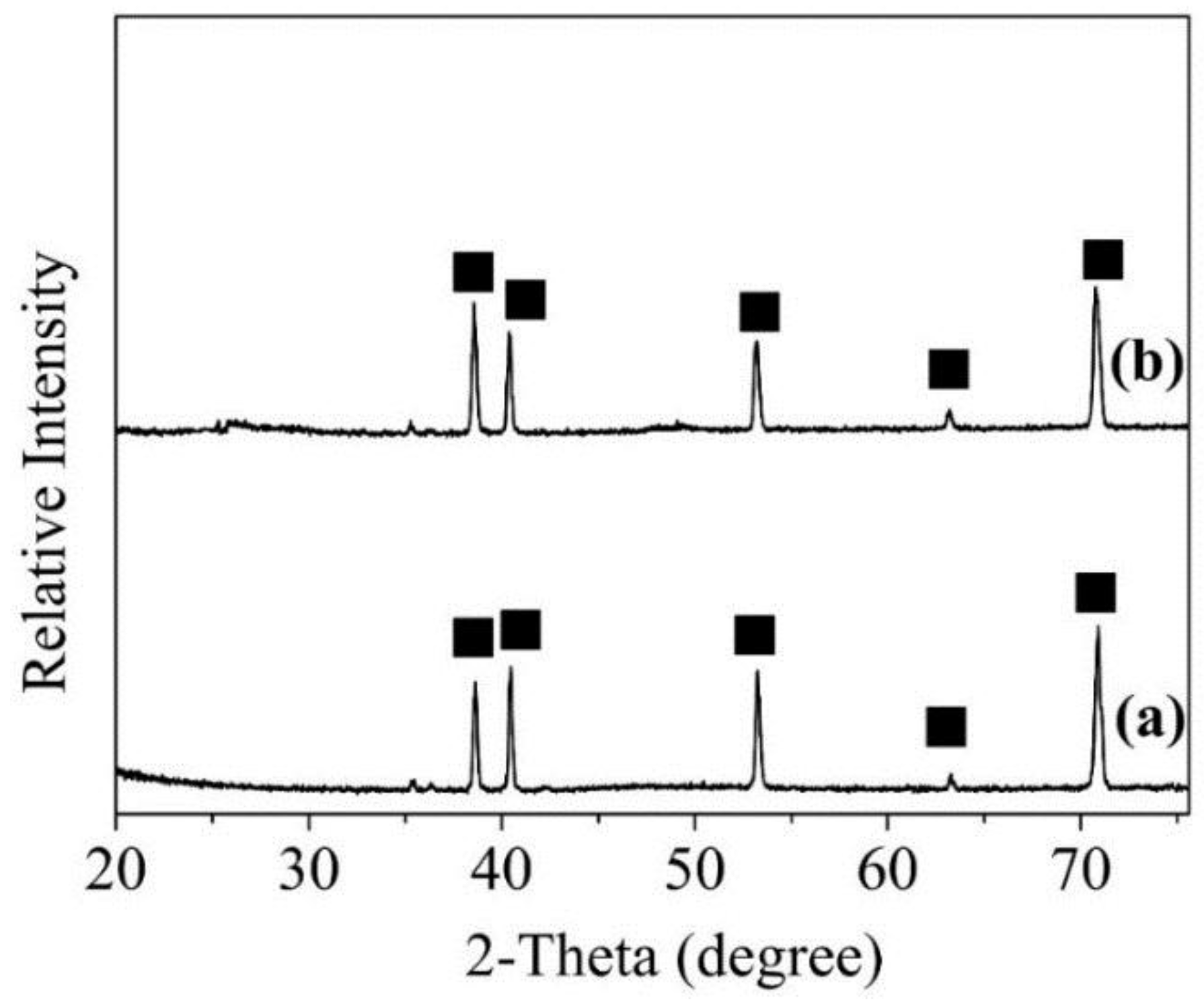
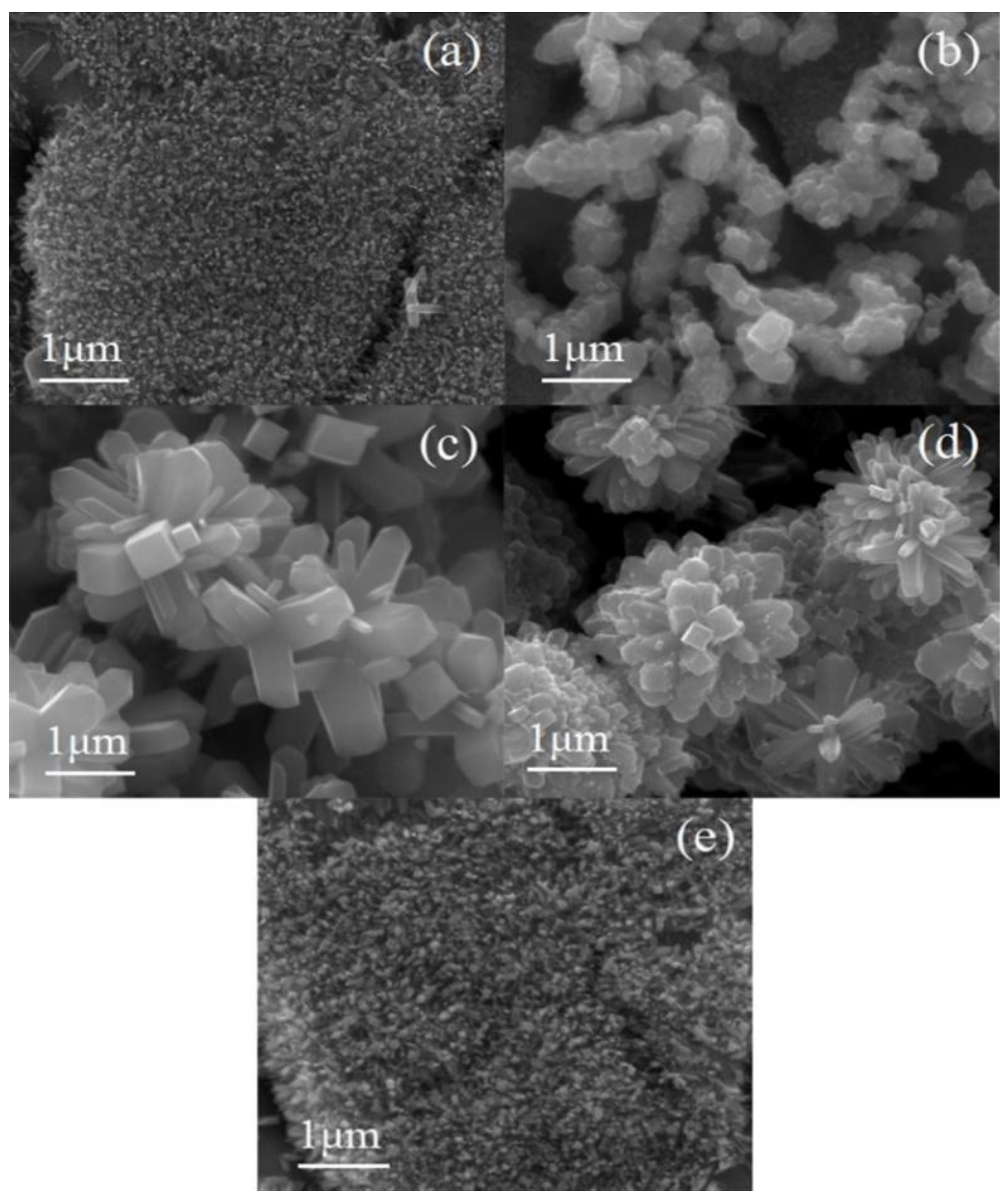
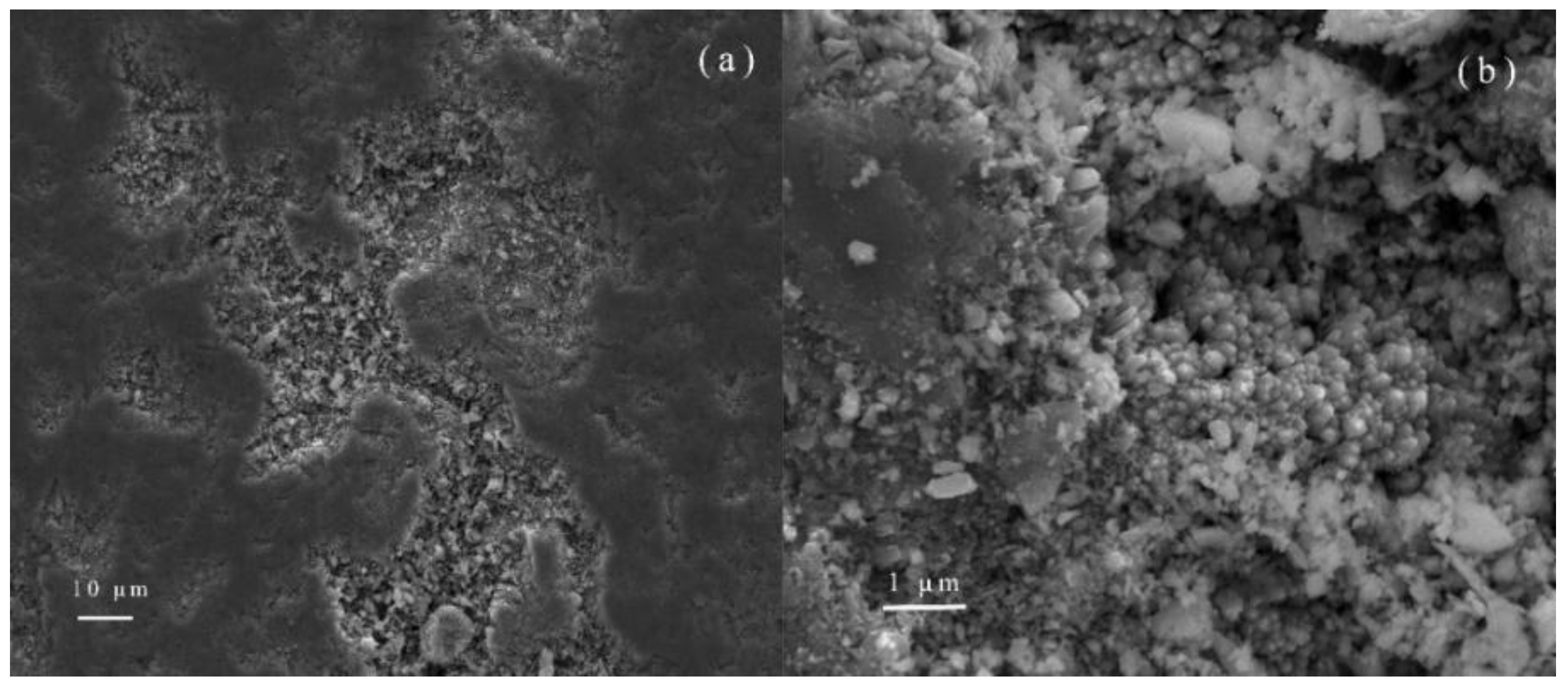
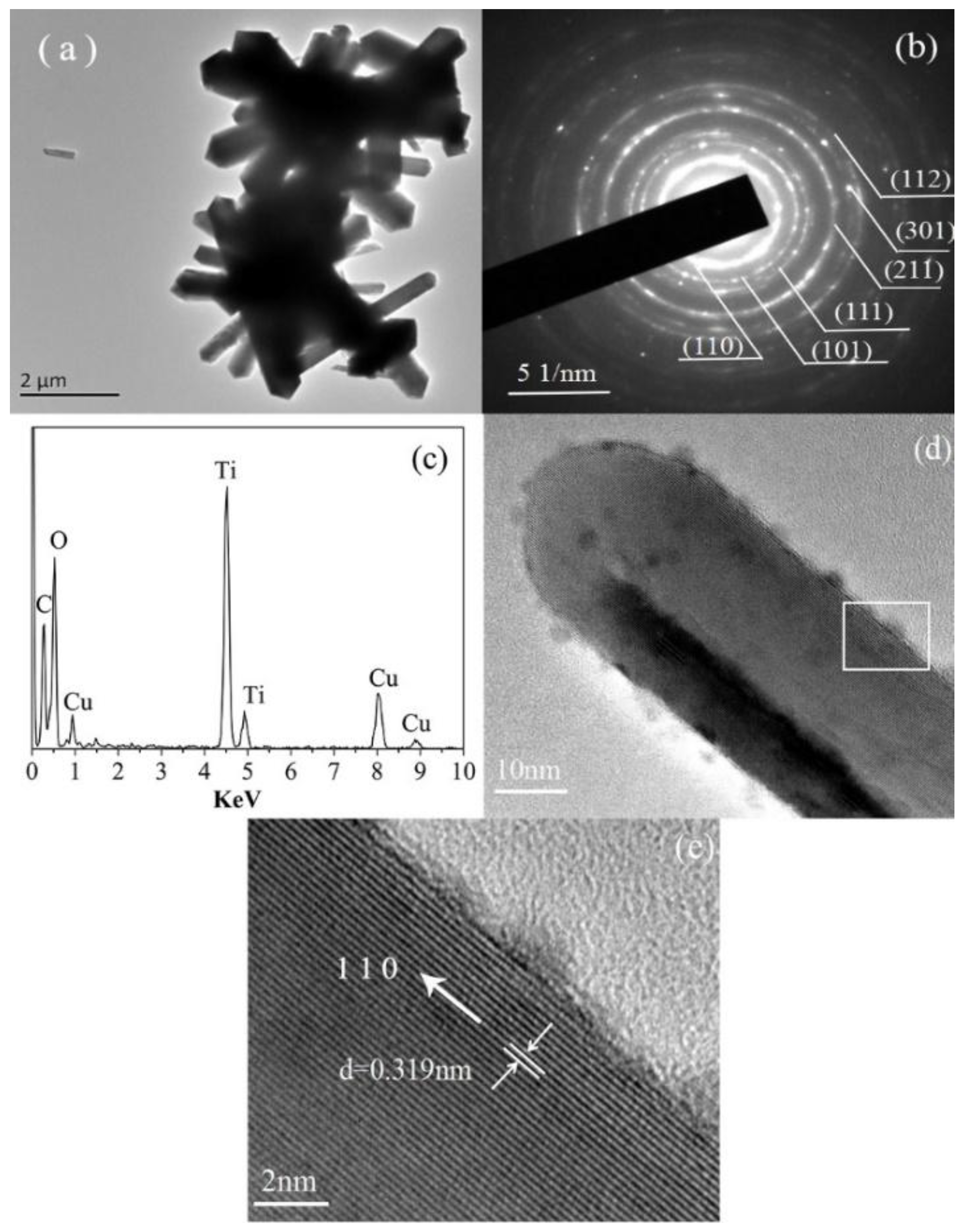
3.2. Characterizations of TiO2 Nanorods
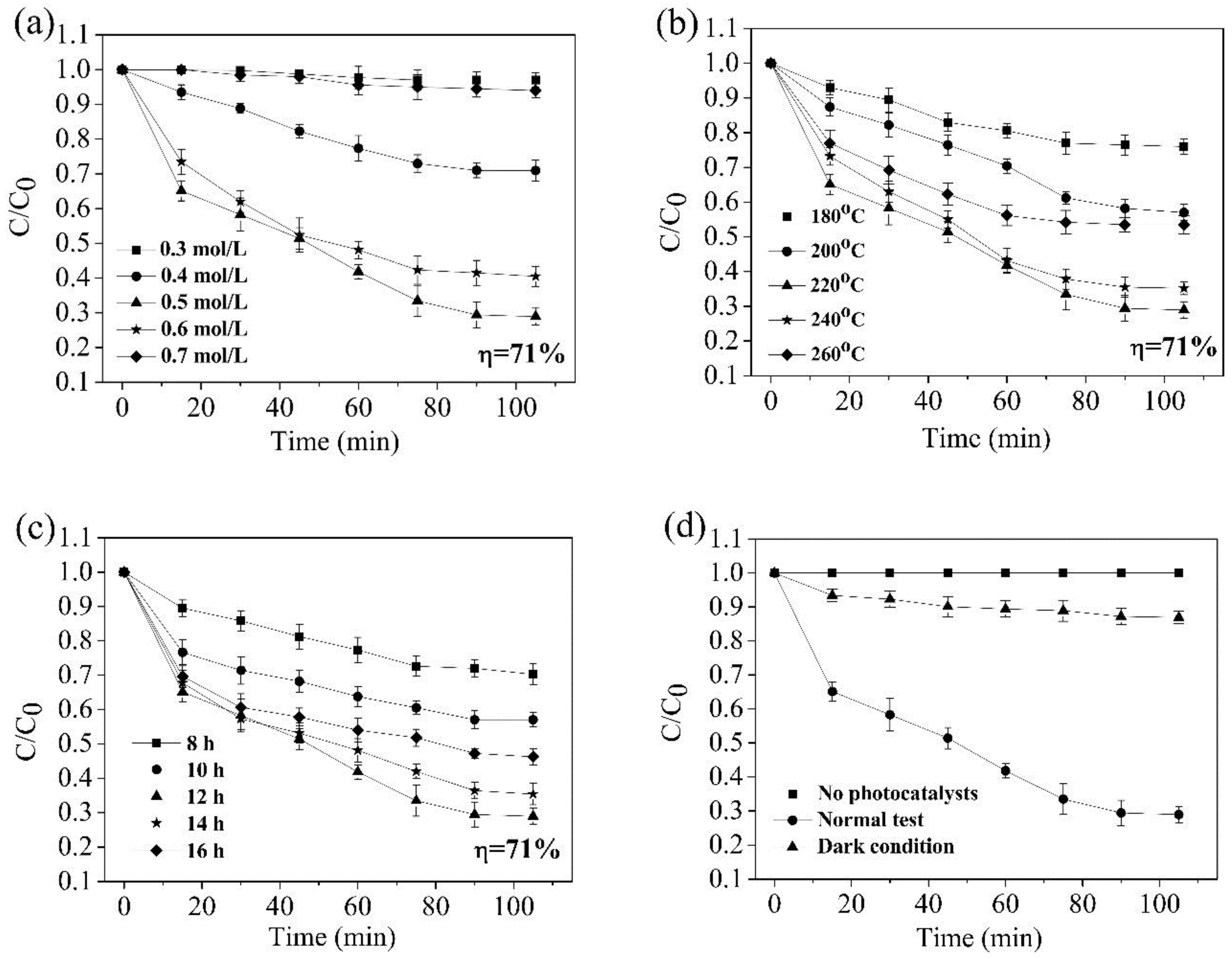
3.3. Photocatalytic Reaction of TiO2 Nanorods
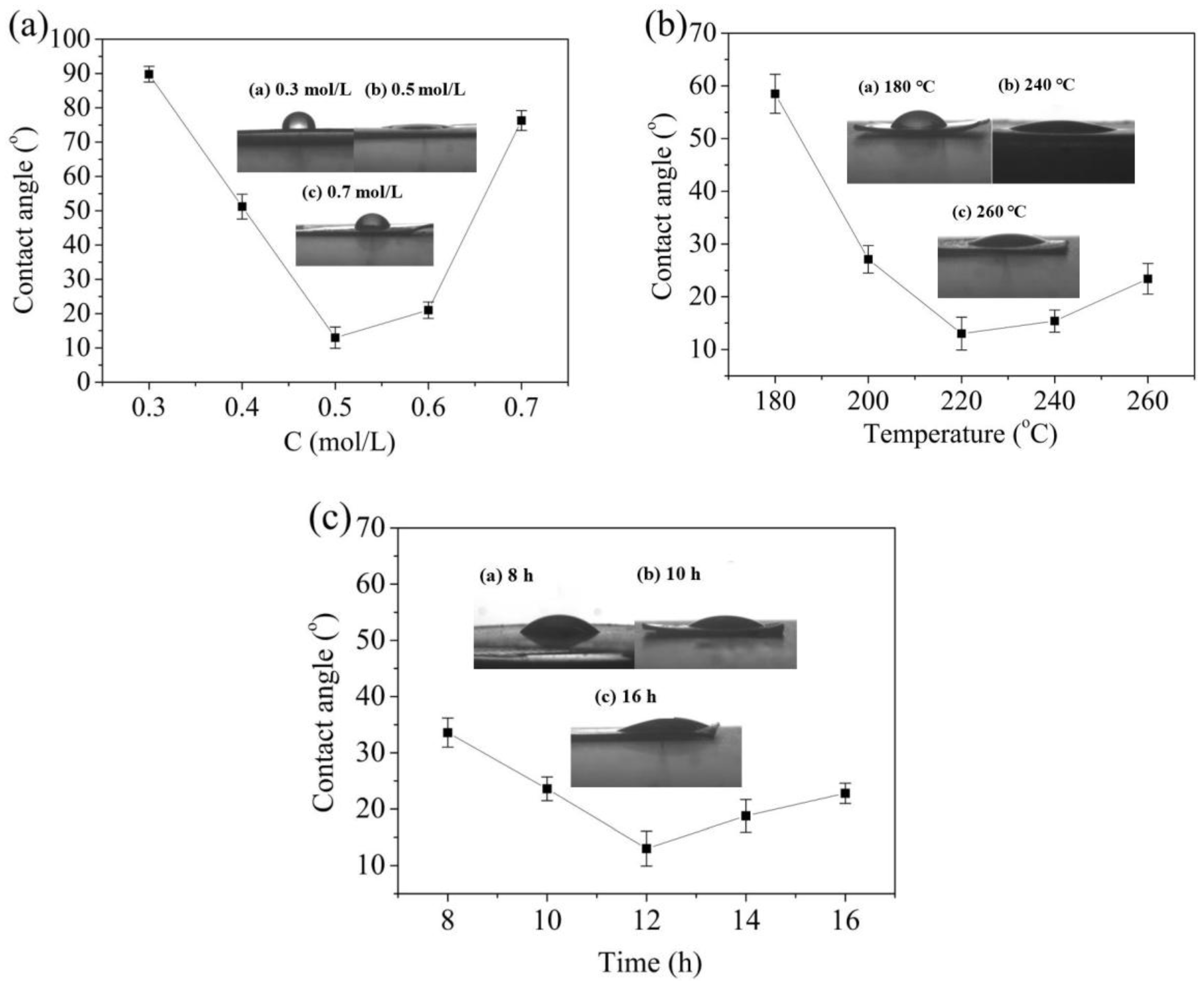
3.4. Hydrophilicity of TiO2 Nanorods
4. Conclusions
Author Contributions
Acknowledgments
Conflicts of Interest
References
- Cho, T.; Yoon, S.; Sekhon, S.S.; Kang, M.; Han, C. The effect of a sol-gel formed TiO2 blocking layer on the efficiency of dye-sensitized solar cells. B. Korean Chem. Soc. 2011, 32, 3629–3633. [Google Scholar] [CrossRef] [Scilit]
- Mashreghi, A.; Ghasemi, M. Investigating the effect of molar ratio between TiO2 nanoparticles and titanium alkoxide in Pechini based TiO2 paste on photovoltaic performance of dye-sensitized solar cells. Renew. Energy 2015, 75, 481–488. [Google Scholar] [CrossRef] [Scilit]
- Wu, J.; Zhang, T.; Zeng, Y.; Hayakawa, S.; Tsuru, K.; Osaka, A. Large-scale preparation of ordered Titania nanorods with enhanced photocatalytic activity. Langmuir 2005, 21, 6995–7002. [Google Scholar] [CrossRef] [Scilit] [PubMed]
- Paulose, M.; Varghese, O.K.; Mor, G.K.; Grimes, C.A.; Ong, K.G. Unprecedented ultra-high hydrogen gas sensitivity in undoped titania nanotubes. Nanotechnology 2006, 17, 398–402. [Google Scholar] [CrossRef] [Scilit]
- Zhang, Q.; Cao, G. Nanostructured photoelectrodes for dye-sensitized solar cells. Nano Today 2011, 6, 91–109. [Google Scholar] [CrossRef] [Scilit]
- Tachikawa, T.; Yamashita, S.; Majima, T. Evidence for crystal-face-dependent TiO2 photocatalysis from single-molecule imaging and kinetic analysis. J. Am. Chem. Soc. 2011, 133, 7197–7204. [Google Scholar] [CrossRef] [Scilit] [PubMed]
- Yang, W.; Li, J.; Wang, Y.; Zhu, F.; Shi, W.; Wan, F.; Xu, D. A facile synthesis of anatase TiO2 nanosheets-based hierarchical spheres with over 90% {001} facets for dye-sensitized solar cells. Chem. Commun. 2011, 47, 1809–1811. [Google Scholar] [CrossRef] [Scilit] [PubMed]
- Yang, W.; Wang, Y.; Shi, W. One-step synthesis of single-crystal anatase TiO2 tetragonal faceted-nanorods for improved-performance dye-sensitized solar cells. Ccrystengcomm 2011, 14, 23–234. [Google Scholar]
- Chen, X.; Mao, S.S. Titanium dioxide nanomaterials: Synthesis, properties, modifications, and applications. Chem. Rev. 2007, 107, 2891–2959. [Google Scholar] [CrossRef] [Scilit] [PubMed]
- Liao, J.; Luo, R.; Li, Y.B.; Zhang, J. Preparation of highly photocatalytically active rutile titania nanorods decorated with anatase nanoparticles produced by a titanyl-oxalato complex solution. Mat. Sci. Semicon. Proc. 2013, 16, 2032–2038. [Google Scholar] [CrossRef] [Scilit]
- Wang, Z.; Ran, S.; Liu, B.; Chen, D.; Shen, G. Multilayer TiO2 nanorod cloth/nanorod array electrode for dye-sensitized solar cells and self-powered UV detectors. Nanoscale 2012, 4, 3350–3358. [Google Scholar] [CrossRef] [Scilit] [PubMed]
- Zhu, C.; Lu, B.; Su, Q.; Xie, E.; Lan, W. A simple method for the preparation of hollow ZnO nanospheres for use as a high performance photocatalyst. Nanoscale 2012, 4, 3060–3064. [Google Scholar] [CrossRef] [Scilit] [PubMed]
- Folger, A.; Kalb, J.; Schmidt-Mende, L.; Scheu, C. Tuning the electronic conductivity in hydrothermally grown rutile TiO2 nanowires: Effect of heat treatment in different environments. Nanomaterials 2017, 7, 289. [Google Scholar] [CrossRef] [Scilit] [PubMed]
- Ren, Y.; Liu, X.; Geng, R.; Lu, Q.; Rao, R.; Tan, X.; Yang, X.; Liu, W. Increased level of α2,6-sialylated glycans on HaCaT cells induced by titanium dioxide nanoparticles under UV radiation. Nanomaterials 2018, 8, 253. [Google Scholar] [CrossRef] [Scilit] [PubMed]
- Yao, H.; Fu, W.; Liu, L.; Li, X.; Ding, D.; Su, P.; Feng, S.; Yang, H. Hierarchical photoanode of rutile TiO2 nanorods coupled with anatase TiO2 nanosheets array for photoelectrochemical application. J. Alloy Compd. 2016, 680, 206–211. [Google Scholar] [CrossRef] [Scilit]
- Zhou, Y.; Zhu, Q.; Tian, J.; Jiang, F. TiO2 nanobelt@Co9S8 composites as promising anode materials for lithium and sodium ion batteries. Nanomaterials 2017, 7, 252. [Google Scholar] [CrossRef] [Scilit] [PubMed]
- Kusior, A.; Kollbek, K.; Kowalski, K.; Borysiewicz, M.; Wojciechowski, T.; Adamczyk, A.; Trenczek-Zajac, A.; Radecka, M.; Zakrzewska, K. Sn and Cu oxide nanoparticles deposited on TiO2 nanoflower 3D substrates by inert gas condensation technique. Appl. Surf. Sci. 2016, 380, 193–202. [Google Scholar] [CrossRef] [Scilit]
- Yang, Z.; Wang, B.; Cui, H.; An, H.; Pan, Y.; Zhai, J. Synthesis of crystal-controlled TiO2 nanorods by a hydrothermal method: rutile and brookite as highly active photocatalysts. J. Phys. Chem. C 2015, 119, 16905–16912. [Google Scholar] [CrossRef] [Scilit]
- Nguyen-Phan, T.; Luo, S.; Vovchok, D.; Llorca, J.; Graciani, J.; Sanz, J.F.; Sallis, S.; Xu, W.; Bai, J.; Piper, L.F.J.; et al. Visible light-driven H2 production over highly dispersed ruthenia on rutile TiO2 nanorods. ACS Catal. 2015, 6, 407–417. [Google Scholar] [CrossRef] [Scilit]
- Jiang, S.; Li, Y.; Zhang, X.; Li, Y. Enhancing the photoelectrochemical water splitting activity of rutile nanorods by removal of surface hydroxyl groups. Catal. Today 2016, 259, 360–367. [Google Scholar] [CrossRef] [Scilit]
- Kim, H.; Lee, J.; Yantara, N.; Boix, P.P.; Kulkarni, S.A.; Mhaisalkar, S.; Grätzel, M.; Park, N. High efficiency solid-state sensitized solar cell-based on submicrometer rutile TiO2 nanorod and CH3NH3PbI3 Perovskite Sensitizer. Nano Lett. 2013, 13, 2412–2417. [Google Scholar] [CrossRef] [Scilit] [PubMed]
- Wang, C.; Chen, J.; Wang, L.; Kang, Y.; Li, D.; Zhou, F. Single crystal TiO2 nanorods: Large-scale synthesis and field emission. Thin Solid Films 2012, 520, 5036–5041. [Google Scholar] [CrossRef] [Scilit]
- Miao, Z.; Xu, D.; Ouyang, J.; Guo, G.; Zhao, X.; Tang, Y. Electrochemically Induced sol−gel preparation of single-crystalline TiO2 nanowires. Nano Lett. 2002, 2, 717–720. [Google Scholar] [CrossRef] [Scilit]
- Dong, S.; Wang, H.; Gu, L.; Zhou, X.; Liu, Z.; Han, P.; Wang, Y.; Chen, X.; Cui, G.; Chen, L. Rutile TiO2 nanorod arrays directly grown on Ti foil substrates towards lithium-ion micro-batteries. Thin Solid Films 2011, 519, 5978–5982. [Google Scholar] [CrossRef] [Scilit]
- Bakar, S.A.; Byzynski, G.; Ribeiro, C. Synergistic effect on the photocatalytic activity of N-doped TiO2 nanorods synthesised by novel route with exposed (110) facet. J. Alloy Compd. 2016, 666, 38–49. [Google Scholar] [CrossRef] [Scilit]
- Mokhtar, S.M.; Ahmad, M.K.; Soon, C.F.; Nafarizal, N.; Faridah, A.B.; Suriani, A.B.; Mamat, M.H.; Shimomura, M.; Murakami, K. Fabrication and characterization of rutile-phased titanium dioxide (TiO2) nanorods array with various reaction times using one step hydrothermal method. Optik 2018, 154, 510–515. [Google Scholar] [CrossRef] [Scilit]
- Patel, S.K.S.; Gajbhiye, N.S.; Date, S.K. Ferromagnetism of Mn-doped TiO2 nanorods synthesized by hydrothermal method. J. Alloy Compd. 2011, 509, S427–S430. [Google Scholar] [CrossRef] [Scilit]
- Lv, M.; Zheng, D.; Ye, M.; Sun, L.; Xiao, J.; Guo, W.; Lin, C. Densely aligned rutile TiO2 nanorod arrays with high surface area for efficient dye-sensitized solar cells. Nanoscale 2012, 4, 5872–5879. [Google Scholar] [CrossRef] [Scilit] [PubMed]
- Muneer, B.; Abdul, K.; Abu, M.; Mohd, T.; Kamaruzzaman, S. Synthesis and Catalytic Activity of TiO2 Nanoparticles for Photochemical Oxidation of Concentrated Chlorophenols under Direct Solar Radiation. Int. J. Electrochem. Sci. 2012, 7, 4871–4888. [Google Scholar]
- Jordan, V.; Javornik, U.; Plavec, J.; Podgornik, A.; Rečnik, A. Self-assembly of multilevel branched rutile-type TiO2 structures via oriented lateral and twin attachment. Sci. Rep. 2016, 6, 1–12. [Google Scholar] [CrossRef] [Scilit] [PubMed]
- Haider, A.J.; AL Anbari, R.H.; Kadhim, G.R.; Salame, C.T. Exploring potential environmental applications of TiO2 nanoparticles. Energy Procedia 2017, 119, 332–345. [Google Scholar] [CrossRef] [Scilit]
- Huyen, T.; Chi, T.; Dung, N.; Kosslick, H.; Liem, N. Enhanced photocatalytic activity of {110}-faceted TiO2 rutile nanorods in the photodegradation of hazardous pharmaceuticals. Nanomaterials 2018, 8, 276. [Google Scholar] [CrossRef] [Scilit] [PubMed]
- D’Amato, C.; Giovannetti, R.; Zannotti, M.; Rommozzi, E.; Minicucci, M.; Gunnella, R.; Di Cicco, A. Band gap implications on nano-TiO2 surface modification with ascorbic acid for visible light-active polypropylene coated photocatalyst. Nanomaterials 2018, 8, 599. [Google Scholar] [CrossRef] [Scilit] [PubMed]
- Xiang, L.; Zhao, X. Wet-chemical preparation of TiO2-based composites with different morphologies and photocatalytic properties. Nanomaterials 2017, 7, 310. [Google Scholar] [CrossRef] [Scilit] [PubMed]
- Chen, S.; Xiao, Y.; Wang, Y.; Hu, Z.; Zhao, H.; Xie, W. A facile approach to prepare black TiO2 with oxygen vacancy for enhancing photocatalytic activity. Nanomaterials 2018, 8, 245. [Google Scholar] [CrossRef] [Scilit] [PubMed]
- Shen, Z.; Zhou, H.; Chen, H.; Xu, H.; Feng, C.; Zhou, X. Synthesis of nano-zinc oxide loaded on mesoporous silica by coordination effect and its photocatalytic degradation property of methyl orange. Nanomaterials 2018, 8, 317. [Google Scholar] [CrossRef] [Scilit] [PubMed]
- Li, W.; Ismat Shah, S.; Huang, C.P.; Jung, O.; Ni, C. Metallorganic chemical vapor deposition and characterization of TiO2 nanoparticles. Mater. Sci. Eng. B 2002, 96, 247–253. [Google Scholar] [CrossRef] [Scilit]



© 2018 by the authors. Licensee MDPI, Basel, Switzerland. This article is an open access article distributed under the terms and conditions of the Creative Commons Attribution (CC BY) license (http://creativecommons.org/licenses/by/4.0/).
Share and Cite
Gong, C.; Du, J.; Li, X.; Yu, Z.; Ma, J.; Qi, W.; Zhang, K.; Yang, J.; Luo, M.; Peng, H. One-Step Acidic Hydrothermal Preparation of Dendritic Rutile TiO2 Nanorods for Photocatalytic Performance. Nanomaterials 2018, 8, 683. https://doi.org/10.3390/nano8090683
Gong C, Du J, Li X, Yu Z, Ma J, Qi W, Zhang K, Yang J, Luo M, Peng H. One-Step Acidic Hydrothermal Preparation of Dendritic Rutile TiO2 Nanorods for Photocatalytic Performance. Nanomaterials. 2018; 8(9):683. https://doi.org/10.3390/nano8090683
Chicago/Turabian StyleGong, Cheng, Jun Du, Xiuyun Li, Zhenjie Yu, Jiansong Ma, Wenqian Qi, Kai Zhang, Jin Yang, Mei Luo, and Hailong Peng. 2018. "One-Step Acidic Hydrothermal Preparation of Dendritic Rutile TiO2 Nanorods for Photocatalytic Performance" Nanomaterials 8, no. 9: 683. https://doi.org/10.3390/nano8090683
APA StyleGong, C., Du, J., Li, X., Yu, Z., Ma, J., Qi, W., Zhang, K., Yang, J., Luo, M., & Peng, H. (2018). One-Step Acidic Hydrothermal Preparation of Dendritic Rutile TiO2 Nanorods for Photocatalytic Performance. Nanomaterials, 8(9), 683. https://doi.org/10.3390/nano8090683